
GetMoney
878 Posts

GetMoney
Report
Block User
其实全世界的钱一直藏在你的口袋里

BTC Holder
Frequent Trader
5.4 Years
0 Following
712 Followers
43 Liked
Posts
All
Quotes
·
--
See translation
📰 八月靠低买高卖 ETH 赚到 366.6 万美元的那笔聪明钱,又出手了。地址 0x4ce…ee4a7 在监测前 1 小时从 Binance 提出 7216 ETH,单笔价值约 1997 万美元。
🔥 从昨天开始,这个地址已经累计囤积 14783 ETH,总价值约 3990 万美元,提出均价为 2699.44 美元,目前浮盈约 72 万美元。
说实话,真正让群里讨论的不是这 72 万美元浮盈,而是它刚完成过一轮成功交易,现在又把接近 4000 万美元的 ETH 提到链上。连续提币的动作很干脆,但这不代表后面一定继续上涨,聪明钱也有判断失误的时候。
👀 这笔操作至少能确认一点:该地址并没有因为八月赚到 366.6 万美元就停手,反而重新建立了更大的 ETH 持仓。后续是继续加仓,还是把 ETH 充回交易所,会比单次浮盈更有参考意义。
🤔 如果这个地址继续从 Binance 提出 ETH,你会跟着加仓,还是等它出现回充交易所的动作再判断?
原文链接:https://x.com/ai_9684xtpa/status/2102212592475467944
#ETH #链上数据 #聪明钱 #以太坊
📰 八月靠低买高卖 ETH 赚到 366.6 万美元的那笔聪明钱,又出手了。地址 0x4ce…ee4a7 在监测前 1 小时从 Binance 提出 7216 ETH,单笔价值约 1997 万美元。
🔥 从昨天开始,这个地址已经累计囤积 14783 ETH,总价值约 3990 万美元,提出均价为 2699.44 美元,目前浮盈约 72 万美元。
说实话,真正让群里讨论的不是这 72 万美元浮盈,而是它刚完成过一轮成功交易,现在又把接近 4000 万美元的 ETH 提到链上。连续提币的动作很干脆,但这不代表后面一定继续上涨,聪明钱也有判断失误的时候。
👀 这笔操作至少能确认一点:该地址并没有因为八月赚到 366.6 万美元就停手,反而重新建立了更大的 ETH 持仓。后续是继续加仓,还是把 ETH 充回交易所,会比单次浮盈更有参考意义。
🤔 如果这个地址继续从 Binance 提出 ETH,你会跟着加仓,还是等它出现回充交易所的动作再判断?
原文链接:https://x.com/ai_9684xtpa/status/2102212592475467944
#ETH #链上数据 #聪明钱 #以太坊
🔥 从昨天开始,这个地址已经累计囤积 14783 ETH,总价值约 3990 万美元,提出均价为 2699.44 美元,目前浮盈约 72 万美元。
说实话,真正让群里讨论的不是这 72 万美元浮盈,而是它刚完成过一轮成功交易,现在又把接近 4000 万美元的 ETH 提到链上。连续提币的动作很干脆,但这不代表后面一定继续上涨,聪明钱也有判断失误的时候。
👀 这笔操作至少能确认一点:该地址并没有因为八月赚到 366.6 万美元就停手,反而重新建立了更大的 ETH 持仓。后续是继续加仓,还是把 ETH 充回交易所,会比单次浮盈更有参考意义。
🤔 如果这个地址继续从 Binance 提出 ETH,你会跟着加仓,还是等它出现回充交易所的动作再判断?
原文链接:https://x.com/ai_9684xtpa/status/2102212592475467944
#ETH #链上数据 #聪明钱 #以太坊

·
--
📰 On September 21 (U.S. Eastern Time), the U.S. SOL spot ETF saw a single-day net inflow of $26.0973 million. There was no price catalyst, and no market leaderboard. This inflow alone is the most direct signal of the day.
🔥 Of that, the Bitwise Solana Staking ETF (BSOL) recorded a net inflow of $14.4431 million in one day. Its historical total net inflow has already reached $110.4 million, and it remains the product attracting the most capital.
Grayscale Solana Trust (GSOL) came next, with a net inflow of $7.7971 million in a day and a historical total net inflow of $144 million. To be honest, the gap between the two products is already quite clear—the funds are clearly more concentrated in BSOL.
💡 As of the time of publication, the total net asset value of SOL spot ETFs is $1740 million, with a SOL net asset ratio of 2.48%. The historical cumulative net inflow has reached $143.3 million. At least based on the cumulative data, this isn’t just one day of hype.
🤔 If more capital keeps flowing in later, would you pay more attention to the total scale of SOL spot ETFs, or keep focusing on BSOL’s daily net inflow?
#SOL #Solana #现货ETF #加密市场
📰 On September 21 (U.S. Eastern Time), the U.S. SOL spot ETF saw a single-day net inflow of $26.0973 million. There was no price catalyst, and no market leaderboard. This inflow alone is the most direct signal of the day.
🔥 Of that, the Bitwise Solana Staking ETF (BSOL) recorded a net inflow of $14.4431 million in one day. Its historical total net inflow has already reached $110.4 million, and it remains the product attracting the most capital.
Grayscale Solana Trust (GSOL) came next, with a net inflow of $7.7971 million in a day and a historical total net inflow of $144 million. To be honest, the gap between the two products is already quite clear—the funds are clearly more concentrated in BSOL.
💡 As of the time of publication, the total net asset value of SOL spot ETFs is $1740 million, with a SOL net asset ratio of 2.48%. The historical cumulative net inflow has reached $143.3 million. At least based on the cumulative data, this isn’t just one day of hype.
🤔 If more capital keeps flowing in later, would you pay more attention to the total scale of SOL spot ETFs, or keep focusing on BSOL’s daily net inflow?
#SOL #Solana #现货ETF #加密市场
🔥 Of that, the Bitwise Solana Staking ETF (BSOL) recorded a net inflow of $14.4431 million in one day. Its historical total net inflow has already reached $110.4 million, and it remains the product attracting the most capital.
Grayscale Solana Trust (GSOL) came next, with a net inflow of $7.7971 million in a day and a historical total net inflow of $144 million. To be honest, the gap between the two products is already quite clear—the funds are clearly more concentrated in BSOL.
💡 As of the time of publication, the total net asset value of SOL spot ETFs is $1740 million, with a SOL net asset ratio of 2.48%. The historical cumulative net inflow has reached $143.3 million. At least based on the cumulative data, this isn’t just one day of hype.
🤔 If more capital keeps flowing in later, would you pay more attention to the total scale of SOL spot ETFs, or keep focusing on BSOL’s daily net inflow?
#SOL #Solana #现货ETF #加密市场

2
·
--
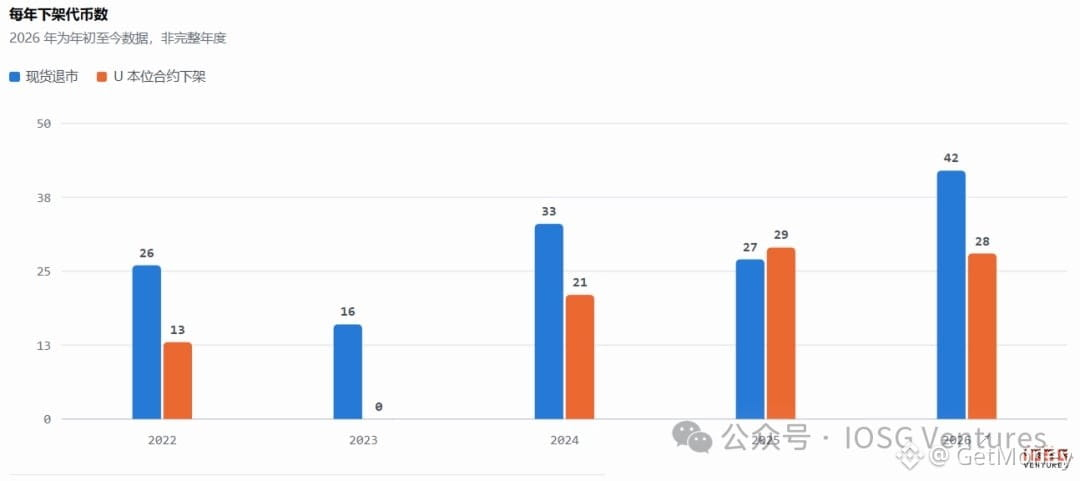
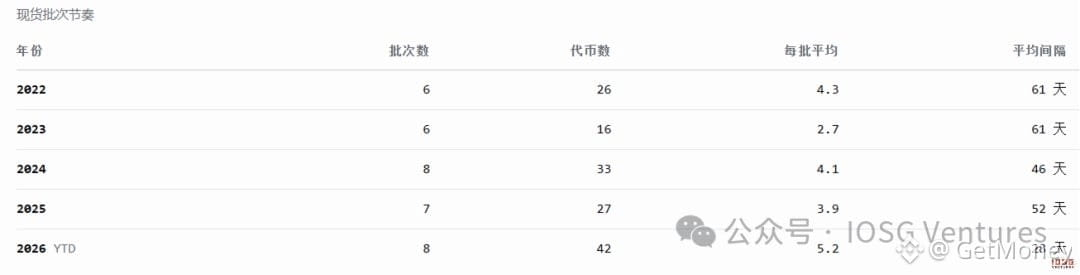
📰 This round of altcoin knockouts on Binance is happening faster than many people think. As of August 11, 2026, the total number of delistings across historical spot and futures markets is 294; in just 2026 alone, 42 tokens were delisted from the spot market, and 28 were removed from U-margined perpetual futures. On average, a batch of delisting announcements arrives every 28 days; in 2025, it was still every 52 days.
🔥 What’s even more painful is that spot and futures are two completely different games. The median survival time of spot-delisted tokens increased from 4.1 years in 2022 to 5.1 years; but for contracts it shrank from 1.3 years to 0.8 years. Simply put: spot is where old coins get cleared, while futures are where new coins are quickly wiped out.
💡 What really determines whether a coin stays or goes isn’t only trading volume. For spot tokens with FDV below $10 million, the delisting rate in 2026 reached 49%; none of the tokens with FDV above $100 million were delisted. For futures, the delisting rate for contracts with OI below $1 million was 31%, while those with OI above $20 million had a delisting rate of 0%.
👀 Trading volume may look lively, but that doesn’t necessarily mean it’s safe. On average, 10.6% are still delisted day by day; even some contracts with daily trading volumes in the millions—or higher—get removed anyway.
⚠️ After passing Binance’s own issued channels, there still isn’t a long-term seat. Among the contract tokens delisted in 2026, 63% came from Binance Alpha; among the 42 spot-delisted projects, 11 came from Launchpool or Launchpad. Honestly, making it onto a major platform only means you got some exposure—it’s not a get-out-of-jail-free card.
🤔 Where do the FDV and OI levels of the altcoin you hold fall right now—are you already close to this round’s cutoff line?
#币安 #山寨币 #代币退市 #Cryptocurrency market
📰 This round of altcoin knockouts on Binance is happening faster than many people think. As of August 11, 2026, the total number of delistings across historical spot and futures markets is 294; in just 2026 alone, 42 tokens were delisted from the spot market, and 28 were removed from U-margined perpetual futures. On average, a batch of delisting announcements arrives every 28 days; in 2025, it was still every 52 days.
🔥 What’s even more painful is that spot and futures are two completely different games. The median survival time of spot-delisted tokens increased from 4.1 years in 2022 to 5.1 years; but for contracts it shrank from 1.3 years to 0.8 years. Simply put: spot is where old coins get cleared, while futures are where new coins are quickly wiped out.
💡 What really determines whether a coin stays or goes isn’t only trading volume. For spot tokens with FDV below $10 million, the delisting rate in 2026 reached 49%; none of the tokens with FDV above $100 million were delisted. For futures, the delisting rate for contracts with OI below $1 million was 31%, while those with OI above $20 million had a delisting rate of 0%.
👀 Trading volume may look lively, but that doesn’t necessarily mean it’s safe. On average, 10.6% are still delisted day by day; even some contracts with daily trading volumes in the millions—or higher—get removed anyway.
⚠️ After passing Binance’s own issued channels, there still isn’t a long-term seat. Among the contract tokens delisted in 2026, 63% came from Binance Alpha; among the 42 spot-delisted projects, 11 came from Launchpool or Launchpad. Honestly, making it onto a major platform only means you got some exposure—it’s not a get-out-of-jail-free card.
🤔 Where do the FDV and OI levels of the altcoin you hold fall right now—are you already close to this round’s cutoff line?
#币安 #山寨币 #代币退市 #Cryptocurrency market
🔥 What’s even more painful is that spot and futures are two completely different games. The median survival time of spot-delisted tokens increased from 4.1 years in 2022 to 5.1 years; but for contracts it shrank from 1.3 years to 0.8 years. Simply put: spot is where old coins get cleared, while futures are where new coins are quickly wiped out.
💡 What really determines whether a coin stays or goes isn’t only trading volume. For spot tokens with FDV below $10 million, the delisting rate in 2026 reached 49%; none of the tokens with FDV above $100 million were delisted. For futures, the delisting rate for contracts with OI below $1 million was 31%, while those with OI above $20 million had a delisting rate of 0%.
👀 Trading volume may look lively, but that doesn’t necessarily mean it’s safe. On average, 10.6% are still delisted day by day; even some contracts with daily trading volumes in the millions—or higher—get removed anyway.
⚠️ After passing Binance’s own issued channels, there still isn’t a long-term seat. Among the contract tokens delisted in 2026, 63% came from Binance Alpha; among the 42 spot-delisted projects, 11 came from Launchpool or Launchpad. Honestly, making it onto a major platform only means you got some exposure—it’s not a get-out-of-jail-free card.
🤔 Where do the FDV and OI levels of the altcoin you hold fall right now—are you already close to this round’s cutoff line?
#币安 #山寨币 #代币退市 #Cryptocurrency market

93
·
--
📰 Bankless co-founder David Hoffman directly addresses the issue: the altcoin season has already started, and the real market move is coming sooner than people think.
Back in May this year, he also publicly said he sold out of ETH and rotated into VVV, NEAR, ZEC, HYPE, and LIT. Looking back, these tokens have indeed been outperforming ETH, which explains why the group is once again debating whether funds should rotate from BTC/ETH into altcoins.
🔥 HYPE is the one in this piece with the strongest data backing it. Hyperliquid’s open interest reached $16.36 billion. In the HIP-3 market, trading volume for perpetual contracts on the platform accounts for nearly half; at the beginning of the year, that figure was only about 2%. Add in cumulative buybacks and burns totaling more than $1.3 billion, and it’s hard to ignore the attention flowing to it.
💡 As for projects like UNI and PUMP, what they benefit from is the expectation of stock tokenization and changes in regulatory policy. Uniswap v4 is already live with Permissioned Pools, and Pump.fun has also started supporting meme pairings between coins and stocks. Honestly, once regulators create space, those once-sidelined old projects could suddenly be surfaced again by the market.
👀 But if altcoin season is truly going to last, you can’t rely on calls made for just one or two days. LIT, Morpho, and ZEC each correspond to entirely different narratives: on-chain derivatives, lending, and privacy, respectively. The logic is completely different, and capital rotation won’t necessarily be evenly distributed. Unexpectedly, the strongest momentum in this round came from ZEC, which hasn’t had as much visibility in the past.
🤔 Do you think this time marks the real start of altcoin season—or just a short-lived hot-spot rotation?
#山寨季 #HYPE #UNI #ZEC
📰 Bankless co-founder David Hoffman directly addresses the issue: the altcoin season has already started, and the real market move is coming sooner than people think.
Back in May this year, he also publicly said he sold out of ETH and rotated into VVV, NEAR, ZEC, HYPE, and LIT. Looking back, these tokens have indeed been outperforming ETH, which explains why the group is once again debating whether funds should rotate from BTC/ETH into altcoins.
🔥 HYPE is the one in this piece with the strongest data backing it. Hyperliquid’s open interest reached $16.36 billion. In the HIP-3 market, trading volume for perpetual contracts on the platform accounts for nearly half; at the beginning of the year, that figure was only about 2%. Add in cumulative buybacks and burns totaling more than $1.3 billion, and it’s hard to ignore the attention flowing to it.
💡 As for projects like UNI and PUMP, what they benefit from is the expectation of stock tokenization and changes in regulatory policy. Uniswap v4 is already live with Permissioned Pools, and Pump.fun has also started supporting meme pairings between coins and stocks. Honestly, once regulators create space, those once-sidelined old projects could suddenly be surfaced again by the market.
👀 But if altcoin season is truly going to last, you can’t rely on calls made for just one or two days. LIT, Morpho, and ZEC each correspond to entirely different narratives: on-chain derivatives, lending, and privacy, respectively. The logic is completely different, and capital rotation won’t necessarily be evenly distributed. Unexpectedly, the strongest momentum in this round came from ZEC, which hasn’t had as much visibility in the past.
🤔 Do you think this time marks the real start of altcoin season—or just a short-lived hot-spot rotation?
#山寨季 #HYPE #UNI #ZEC
Back in May this year, he also publicly said he sold out of ETH and rotated into VVV, NEAR, ZEC, HYPE, and LIT. Looking back, these tokens have indeed been outperforming ETH, which explains why the group is once again debating whether funds should rotate from BTC/ETH into altcoins.
🔥 HYPE is the one in this piece with the strongest data backing it. Hyperliquid’s open interest reached $16.36 billion. In the HIP-3 market, trading volume for perpetual contracts on the platform accounts for nearly half; at the beginning of the year, that figure was only about 2%. Add in cumulative buybacks and burns totaling more than $1.3 billion, and it’s hard to ignore the attention flowing to it.
💡 As for projects like UNI and PUMP, what they benefit from is the expectation of stock tokenization and changes in regulatory policy. Uniswap v4 is already live with Permissioned Pools, and Pump.fun has also started supporting meme pairings between coins and stocks. Honestly, once regulators create space, those once-sidelined old projects could suddenly be surfaced again by the market.
👀 But if altcoin season is truly going to last, you can’t rely on calls made for just one or two days. LIT, Morpho, and ZEC each correspond to entirely different narratives: on-chain derivatives, lending, and privacy, respectively. The logic is completely different, and capital rotation won’t necessarily be evenly distributed. Unexpectedly, the strongest momentum in this round came from ZEC, which hasn’t had as much visibility in the past.
🤔 Do you think this time marks the real start of altcoin season—or just a short-lived hot-spot rotation?
#山寨季 #HYPE #UNI #ZEC
493
·
--
📰 Good morning, BTC is currently at 86,620 USDT, up 6.70% in the last 24 hours. This move really isn’t small—the first thing you see after waking up today is that the overall market is clearly stronger.
🔥 The altcoins are even more intense: PNT is up 45.23%, FORM is up 36.59%, and PHA is up 31.57%. Honestly, with gains like this in the morning, it’s hard for the group chat not to be lively.
⚠️ But on the other side, it’s also pretty wild—NFP is down 65.85%, and BETA is down 64.00%. Same market: the winners are surging while the losers are getting smashed through. The divergence is a bit unsettling, so chasing breakouts and catching dips can’t be too casual.
💡 Right now, it’s not a broad-based rally—it's the gap between strength and weakness that’s widening fast. BTC is holding the bigger direction steady, while the altcoins are basically going their own ways. I didn’t expect the morning volatility to be this big.
🤔 Today, are you continuing to hold BTC, or are you planning to check out the coins leading the gains, like PNT and FORM?
#BTC #加密市场 #山寨币 #Market Commentary
📰 Good morning, BTC is currently at 86,620 USDT, up 6.70% in the last 24 hours. This move really isn’t small—the first thing you see after waking up today is that the overall market is clearly stronger.
🔥 The altcoins are even more intense: PNT is up 45.23%, FORM is up 36.59%, and PHA is up 31.57%. Honestly, with gains like this in the morning, it’s hard for the group chat not to be lively.
⚠️ But on the other side, it’s also pretty wild—NFP is down 65.85%, and BETA is down 64.00%. Same market: the winners are surging while the losers are getting smashed through. The divergence is a bit unsettling, so chasing breakouts and catching dips can’t be too casual.
💡 Right now, it’s not a broad-based rally—it's the gap between strength and weakness that’s widening fast. BTC is holding the bigger direction steady, while the altcoins are basically going their own ways. I didn’t expect the morning volatility to be this big.
🤔 Today, are you continuing to hold BTC, or are you planning to check out the coins leading the gains, like PNT and FORM?
#BTC #加密市场 #山寨币 #Market Commentary
🔥 The altcoins are even more intense: PNT is up 45.23%, FORM is up 36.59%, and PHA is up 31.57%. Honestly, with gains like this in the morning, it’s hard for the group chat not to be lively.
⚠️ But on the other side, it’s also pretty wild—NFP is down 65.85%, and BETA is down 64.00%. Same market: the winners are surging while the losers are getting smashed through. The divergence is a bit unsettling, so chasing breakouts and catching dips can’t be too casual.
💡 Right now, it’s not a broad-based rally—it's the gap between strength and weakness that’s widening fast. BTC is holding the bigger direction steady, while the altcoins are basically going their own ways. I didn’t expect the morning volatility to be this big.
🤔 Today, are you continuing to hold BTC, or are you planning to check out the coins leading the gains, like PNT and FORM?
#BTC #加密市场 #山寨币 #Market Commentary
180
·
--
📰 Kalshi is drawn into a “volume manipulation” controversy. The spark was a market share chart: its encrypted trading volume is labeled at $363.9 million, or 96.7%, while Polymarket is listed at $12.3 million. Former quant practitioner Beni then publicly raised doubts and said he has materials he can provide to the CFTC.
🔥 The biggest point of contention is Kalshi’s perpetual rebate program. Public filings show that for eligible taker fees, rebates can go as high as 0.3 basis points; makers can net 0.3 basis points. Matchmaking costs can therefore be kept very low. However, the documents also explicitly exclude wash trading, self-trading, and pre-arranged trades—so the low cost is real; whether volume was “faked” has not yet reached any regulatory conclusion.
👀 The ETH perpetual data Beni provided is even more striking: roughly $3.1 million in open interest corresponds to $538.6 million in daily trading volume—equivalent to about 174 turnovers per day. Yet the largest single position on the positions leaderboard is only around $17.6 thousand. Honestly, it’s hard not to think in a certain direction when you see these numbers.
💡 Another controversy comes from the prediction market. Traders claim that about 61% of Kalshi’s disclosed trading volume comes from multi-hop trades. A user buys a combo bet for $1 that wins the whole set for $14.1 in payouts; the platform may record the trade as $14.1 in volume. Their estimate of actual volume is about $136 million, while the outside figure is $1.91 billion.
🤔 Kalshi’s response is: prediction markets and perpetuals are two separate product lines, and counting by contract count is also a common industry method. What can be confirmed now is that the reporting methodology and presentation can indeed make the numbers look inflated—but “volume manipulation fraud” is still an accusation, not a conclusion. Do you think 174 turnovers looks more like normal market making, or should the CFTC dig into the trading details and get to the bottom of it?
#Kalshi #预测市场 #永续合约 #Crypto regulation
📰 Kalshi is drawn into a “volume manipulation” controversy. The spark was a market share chart: its encrypted trading volume is labeled at $363.9 million, or 96.7%, while Polymarket is listed at $12.3 million. Former quant practitioner Beni then publicly raised doubts and said he has materials he can provide to the CFTC.
🔥 The biggest point of contention is Kalshi’s perpetual rebate program. Public filings show that for eligible taker fees, rebates can go as high as 0.3 basis points; makers can net 0.3 basis points. Matchmaking costs can therefore be kept very low. However, the documents also explicitly exclude wash trading, self-trading, and pre-arranged trades—so the low cost is real; whether volume was “faked” has not yet reached any regulatory conclusion.
👀 The ETH perpetual data Beni provided is even more striking: roughly $3.1 million in open interest corresponds to $538.6 million in daily trading volume—equivalent to about 174 turnovers per day. Yet the largest single position on the positions leaderboard is only around $17.6 thousand. Honestly, it’s hard not to think in a certain direction when you see these numbers.
💡 Another controversy comes from the prediction market. Traders claim that about 61% of Kalshi’s disclosed trading volume comes from multi-hop trades. A user buys a combo bet for $1 that wins the whole set for $14.1 in payouts; the platform may record the trade as $14.1 in volume. Their estimate of actual volume is about $136 million, while the outside figure is $1.91 billion.
🤔 Kalshi’s response is: prediction markets and perpetuals are two separate product lines, and counting by contract count is also a common industry method. What can be confirmed now is that the reporting methodology and presentation can indeed make the numbers look inflated—but “volume manipulation fraud” is still an accusation, not a conclusion. Do you think 174 turnovers looks more like normal market making, or should the CFTC dig into the trading details and get to the bottom of it?
#Kalshi #预测市场 #永续合约 #Crypto regulation
🔥 The biggest point of contention is Kalshi’s perpetual rebate program. Public filings show that for eligible taker fees, rebates can go as high as 0.3 basis points; makers can net 0.3 basis points. Matchmaking costs can therefore be kept very low. However, the documents also explicitly exclude wash trading, self-trading, and pre-arranged trades—so the low cost is real; whether volume was “faked” has not yet reached any regulatory conclusion.
👀 The ETH perpetual data Beni provided is even more striking: roughly $3.1 million in open interest corresponds to $538.6 million in daily trading volume—equivalent to about 174 turnovers per day. Yet the largest single position on the positions leaderboard is only around $17.6 thousand. Honestly, it’s hard not to think in a certain direction when you see these numbers.
💡 Another controversy comes from the prediction market. Traders claim that about 61% of Kalshi’s disclosed trading volume comes from multi-hop trades. A user buys a combo bet for $1 that wins the whole set for $14.1 in payouts; the platform may record the trade as $14.1 in volume. Their estimate of actual volume is about $136 million, while the outside figure is $1.91 billion.
🤔 Kalshi’s response is: prediction markets and perpetuals are two separate product lines, and counting by contract count is also a common industry method. What can be confirmed now is that the reporting methodology and presentation can indeed make the numbers look inflated—but “volume manipulation fraud” is still an accusation, not a conclusion. Do you think 174 turnovers looks more like normal market making, or should the CFTC dig into the trading details and get to the bottom of it?
#Kalshi #预测市场 #永续合约 #Crypto regulation

172
·
--
📰 Public companies are starting to buy BTC again. As of 8:00 a.m. Eastern Time on September 21, the prior week saw global listed companies (excluding mining companies) shift from net selling to net buying BTC. The net buying amount for the week reached $183 million.
🔥 Strategy returned to the market after two weeks, spending about $75.7 million to buy 950 BTC, bringing its total holdings up to 846,000 BTC. Strive made an even bigger move: last week it invested about $108 million to buy 1,355 BTC, bringing total holdings to about 264,000 BTC.
💡 However, not all companies are adding to their positions. The Japanese listed company Metaplanet has not purchased any BTC for 10 consecutive weeks; Bitmine only added 1 BTC, and currently holds 212 BTC. Honestly, this kind of divergence feels more real than “everyone rushes in together.”
👀 The global listed companies included in the statistics currently hold a total of 1.1561 million BTC, up 2.67% from the previous week. That corresponds to a market value of about $98.65 billion, or 5.8% of BTC’s circulating market value. With company funds switching back to net buying, it suggests that at least some large players are willing to put money back in again.
🤔 If Strategy continues to increase its holdings consecutively from here, would you treat it as a new signal of company-led buying demand, or just as a routine top-up?
#BTC #Strategy #上市公司 #加密市场
📰 Public companies are starting to buy BTC again. As of 8:00 a.m. Eastern Time on September 21, the prior week saw global listed companies (excluding mining companies) shift from net selling to net buying BTC. The net buying amount for the week reached $183 million.
🔥 Strategy returned to the market after two weeks, spending about $75.7 million to buy 950 BTC, bringing its total holdings up to 846,000 BTC. Strive made an even bigger move: last week it invested about $108 million to buy 1,355 BTC, bringing total holdings to about 264,000 BTC.
💡 However, not all companies are adding to their positions. The Japanese listed company Metaplanet has not purchased any BTC for 10 consecutive weeks; Bitmine only added 1 BTC, and currently holds 212 BTC. Honestly, this kind of divergence feels more real than “everyone rushes in together.”
👀 The global listed companies included in the statistics currently hold a total of 1.1561 million BTC, up 2.67% from the previous week. That corresponds to a market value of about $98.65 billion, or 5.8% of BTC’s circulating market value. With company funds switching back to net buying, it suggests that at least some large players are willing to put money back in again.
🤔 If Strategy continues to increase its holdings consecutively from here, would you treat it as a new signal of company-led buying demand, or just as a routine top-up?
#BTC #Strategy #上市公司 #加密市场
🔥 Strategy returned to the market after two weeks, spending about $75.7 million to buy 950 BTC, bringing its total holdings up to 846,000 BTC. Strive made an even bigger move: last week it invested about $108 million to buy 1,355 BTC, bringing total holdings to about 264,000 BTC.
💡 However, not all companies are adding to their positions. The Japanese listed company Metaplanet has not purchased any BTC for 10 consecutive weeks; Bitmine only added 1 BTC, and currently holds 212 BTC. Honestly, this kind of divergence feels more real than “everyone rushes in together.”
👀 The global listed companies included in the statistics currently hold a total of 1.1561 million BTC, up 2.67% from the previous week. That corresponds to a market value of about $98.65 billion, or 5.8% of BTC’s circulating market value. With company funds switching back to net buying, it suggests that at least some large players are willing to put money back in again.
🤔 If Strategy continues to increase its holdings consecutively from here, would you treat it as a new signal of company-led buying demand, or just as a routine top-up?
#BTC #Strategy #上市公司 #加密市场

258
·
--
📰 Circle launched Digital Asset-Backed Borrowing, and this time Bitcoin holders don’t have to sell BTC first to borrow USDC.
But for now, this service isn’t available to regular users—it’s only open to institutional clients. Institutions can mint BTC into a 1:1-anchored cirBTC, then use it as collateral to borrow USDC through a third-party lending protocol.
🔥 Here’s a key detail: cirBTC is held in custody by Circle National Trust. That means the BTC isn’t sent directly into a protocol—instead, it’s first converted into cirBTC supported by custodial arrangements, and then it participates in lending.
The first lending protocol integrated is Morpho, and Aave will be supported later. The service has already been deployed on the Arbitrum and Ethereum networks.
Honestly, this design looks more like a way to give institutions a “don’t sell BTC, get liquidity first” option. As for when regular users will be able to use it, there’s no clear timeline mentioned in the official information yet.
🤔 Do you think institutions would be more willing to simply sell BTC, or to collateralize with cirBTC and borrow USDC?
#Circle #BTC #USDC #DeFi
📰 Circle launched Digital Asset-Backed Borrowing, and this time Bitcoin holders don’t have to sell BTC first to borrow USDC.
But for now, this service isn’t available to regular users—it’s only open to institutional clients. Institutions can mint BTC into a 1:1-anchored cirBTC, then use it as collateral to borrow USDC through a third-party lending protocol.
🔥 Here’s a key detail: cirBTC is held in custody by Circle National Trust. That means the BTC isn’t sent directly into a protocol—instead, it’s first converted into cirBTC supported by custodial arrangements, and then it participates in lending.
The first lending protocol integrated is Morpho, and Aave will be supported later. The service has already been deployed on the Arbitrum and Ethereum networks.
Honestly, this design looks more like a way to give institutions a “don’t sell BTC, get liquidity first” option. As for when regular users will be able to use it, there’s no clear timeline mentioned in the official information yet.
🤔 Do you think institutions would be more willing to simply sell BTC, or to collateralize with cirBTC and borrow USDC?
#Circle #BTC #USDC #DeFi
But for now, this service isn’t available to regular users—it’s only open to institutional clients. Institutions can mint BTC into a 1:1-anchored cirBTC, then use it as collateral to borrow USDC through a third-party lending protocol.
🔥 Here’s a key detail: cirBTC is held in custody by Circle National Trust. That means the BTC isn’t sent directly into a protocol—instead, it’s first converted into cirBTC supported by custodial arrangements, and then it participates in lending.
The first lending protocol integrated is Morpho, and Aave will be supported later. The service has already been deployed on the Arbitrum and Ethereum networks.
Honestly, this design looks more like a way to give institutions a “don’t sell BTC, get liquidity first” option. As for when regular users will be able to use it, there’s no clear timeline mentioned in the official information yet.
🤔 Do you think institutions would be more willing to simply sell BTC, or to collateralize with cirBTC and borrow USDC?
#Circle #BTC #USDC #DeFi

279
·
--
📰 Strategy is making a move again. Between September 14 and 20, the company bought 950 bitcoins, spending about $75.7 million, with an average price of roughly $796,700 per coin. After adding to its position, its holdings reached 846,000 BTC, with a historical cumulative cost of about $63.8 billion and an overall average price of approximately $754,160 per coin.
🔥 But this time it’s not just about buying crypto—on the other side, it also repurchased $174 million worth of STRC preferred shares, totaling 1,771,238 shares. Honestly, the repurchase amount is larger than the cash used to buy BTC. The move carries real weight.
💡 Strategy has put the STRC repurchase into its digital credit capital strategy. Currently, the remaining capacity for this repurchase plan is $875.1 million. In other words, the company isn’t simply betting on bitcoin price appreciation—it’s also managing its holdings, financing, and preferred-share arrangements at the same time.
Actually, from the balance sheet, as of September 20, the company still held $6.09 billion in assets. Unexpectedly, while continuing to build up its BTC position, Strategy is also steadily repurchasing its own preferred shares. How will this combination of actions affect the market’s valuation of it?
🤔 Do you think Strategy values continuing to accumulate BTC more, or repurchasing STRC more this time?
#BTC #Strategy #STRC #比特币 tshama
📰 Strategy is making a move again. Between September 14 and 20, the company bought 950 bitcoins, spending about $75.7 million, with an average price of roughly $796,700 per coin. After adding to its position, its holdings reached 846,000 BTC, with a historical cumulative cost of about $63.8 billion and an overall average price of approximately $754,160 per coin.
🔥 But this time it’s not just about buying crypto—on the other side, it also repurchased $174 million worth of STRC preferred shares, totaling 1,771,238 shares. Honestly, the repurchase amount is larger than the cash used to buy BTC. The move carries real weight.
💡 Strategy has put the STRC repurchase into its digital credit capital strategy. Currently, the remaining capacity for this repurchase plan is $875.1 million. In other words, the company isn’t simply betting on bitcoin price appreciation—it’s also managing its holdings, financing, and preferred-share arrangements at the same time.
Actually, from the balance sheet, as of September 20, the company still held $6.09 billion in assets. Unexpectedly, while continuing to build up its BTC position, Strategy is also steadily repurchasing its own preferred shares. How will this combination of actions affect the market’s valuation of it?
🤔 Do you think Strategy values continuing to accumulate BTC more, or repurchasing STRC more this time?
#BTC #Strategy #STRC #比特币 tshama
🔥 But this time it’s not just about buying crypto—on the other side, it also repurchased $174 million worth of STRC preferred shares, totaling 1,771,238 shares. Honestly, the repurchase amount is larger than the cash used to buy BTC. The move carries real weight.
💡 Strategy has put the STRC repurchase into its digital credit capital strategy. Currently, the remaining capacity for this repurchase plan is $875.1 million. In other words, the company isn’t simply betting on bitcoin price appreciation—it’s also managing its holdings, financing, and preferred-share arrangements at the same time.
Actually, from the balance sheet, as of September 20, the company still held $6.09 billion in assets. Unexpectedly, while continuing to build up its BTC position, Strategy is also steadily repurchasing its own preferred shares. How will this combination of actions affect the market’s valuation of it?
🤔 Do you think Strategy values continuing to accumulate BTC more, or repurchasing STRC more this time?
#BTC #Strategy #STRC #比特币 tshama

67
·
--
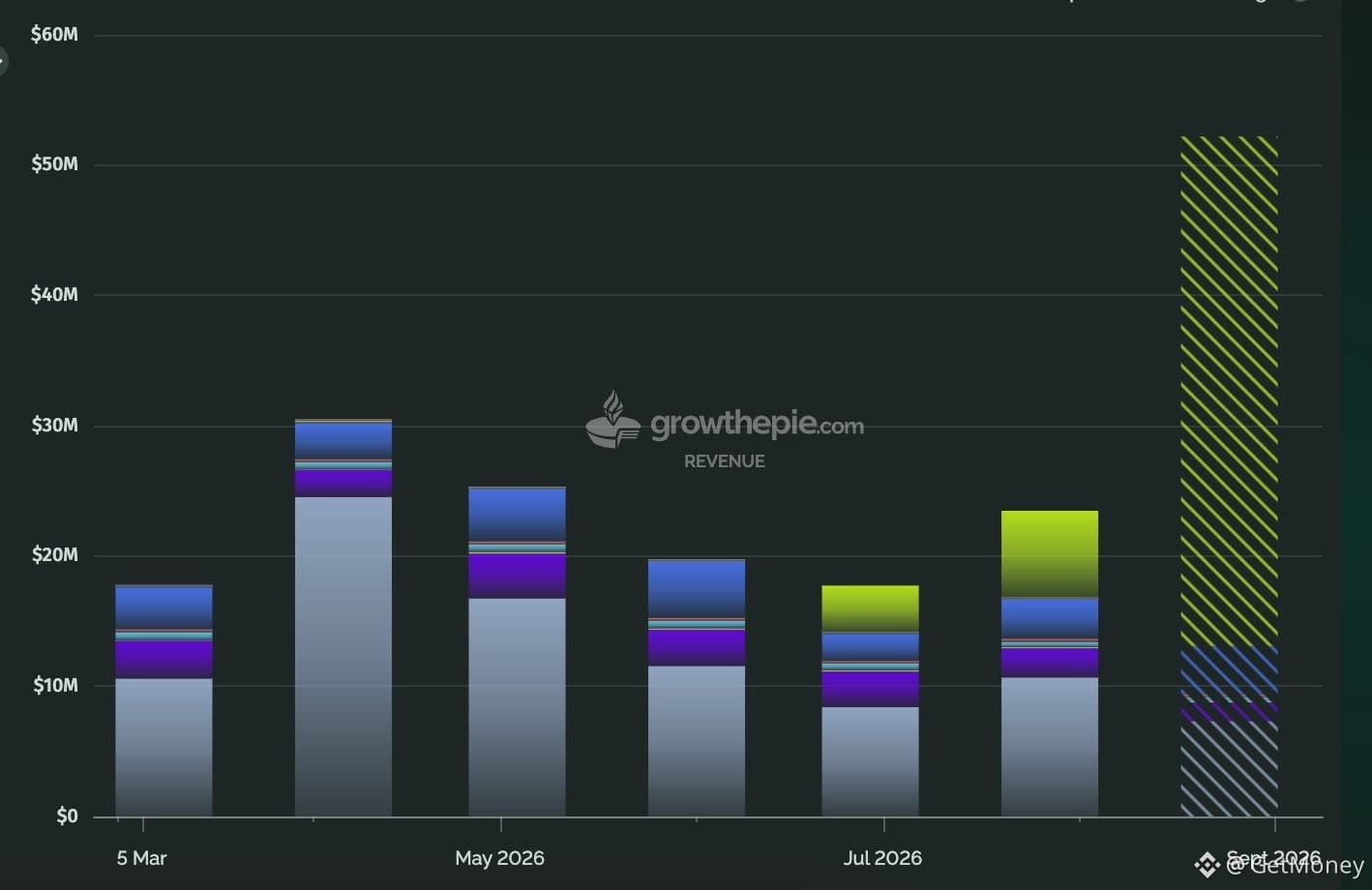
📰 L2 has been raking in huge profits, but Ethereum is starting to look more and more like a “cheap landlord.” Since this month began, the Ethereum ecosystem has earned about $52.19 million in on-chain revenue. Robinhood Chain alone has taken $39.06 million, while the Ethereum mainnet has only $7.32 million.
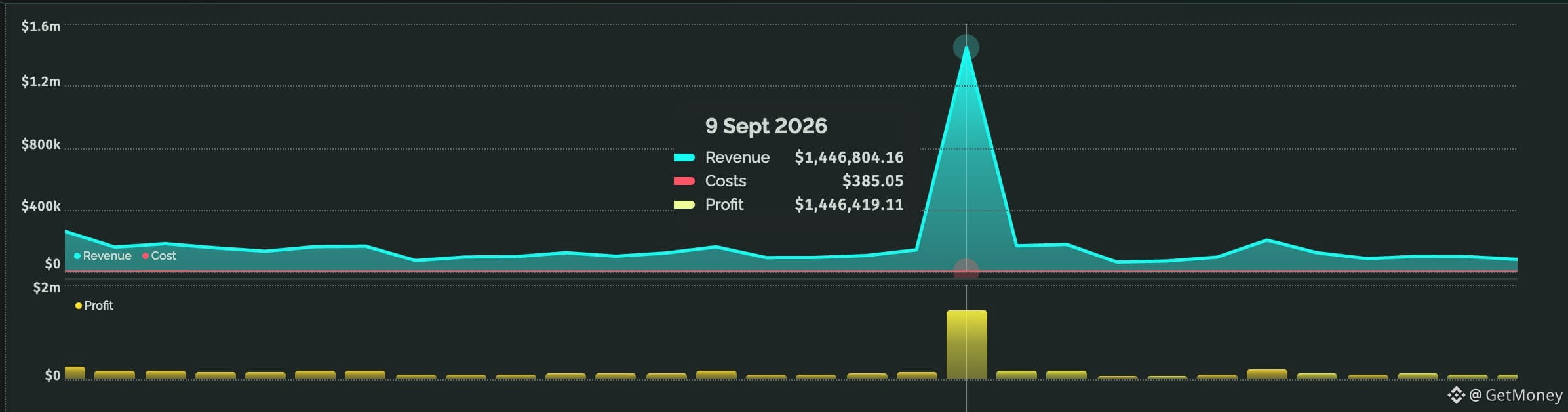
🔥 Even more striking is rent. Over the past 30 days, the L1 fees paid to the mainnet by Robinhood Chain, Base, and World Chain were only about $180,000, $100,000, and $37,000 respectively. On September 4, Robinhood Chain’s daily revenue hit $8.36 million, yet the fee it paid to Ethereum was only about $722.
💡 After the Blob upgrade went live, L2 settlement costs kept falling. Data shows that over the past 30 days, the ratio of profit to revenue for Robinhood Chain reached 100%, Base was 99.8%, and Arbitrum was 99.6%. Honestly, it’s hard not to feel good about a model where you leverage Ethereum’s security “brand” to do business and keep the vast majority of income for yourself.
👀 But this also puts Ethereum’s issue front and center: more L2 users and more transactions do not necessarily mean the mainnet’s income will rise in step. Some have proposed charging based on L2 net protocol revenue contribution, or setting fees tied to proving frequency. But once the pricing goes up, could it end up undermining L2 expansion instead? No one dares to make the call.
🤔 If you hold ETH, would you rather keep letting L2 scale with low costs, or support the mainnet charging higher “rent”?
#以太坊 #ETH #Layer2 #链上生态
📰 L2 has been raking in huge profits, but Ethereum is starting to look more and more like a “cheap landlord.” Since this month began, the Ethereum ecosystem has earned about $52.19 million in on-chain revenue. Robinhood Chain alone has taken $39.06 million, while the Ethereum mainnet has only $7.32 million.
🔥 Even more striking is rent. Over the past 30 days, the L1 fees paid to the mainnet by Robinhood Chain, Base, and World Chain were only about $180,000, $100,000, and $37,000 respectively. On September 4, Robinhood Chain’s daily revenue hit $8.36 million, yet the fee it paid to Ethereum was only about $722.
💡 After the Blob upgrade went live, L2 settlement costs kept falling. Data shows that over the past 30 days, the ratio of profit to revenue for Robinhood Chain reached 100%, Base was 99.8%, and Arbitrum was 99.6%. Honestly, it’s hard not to feel good about a model where you leverage Ethereum’s security “brand” to do business and keep the vast majority of income for yourself.
👀 But this also puts Ethereum’s issue front and center: more L2 users and more transactions do not necessarily mean the mainnet’s income will rise in step. Some have proposed charging based on L2 net protocol revenue contribution, or setting fees tied to proving frequency. But once the pricing goes up, could it end up undermining L2 expansion instead? No one dares to make the call.
🤔 If you hold ETH, would you rather keep letting L2 scale with low costs, or support the mainnet charging higher “rent”?
#以太坊 #ETH #Layer2 #链上生态
🔥 Even more striking is rent. Over the past 30 days, the L1 fees paid to the mainnet by Robinhood Chain, Base, and World Chain were only about $180,000, $100,000, and $37,000 respectively. On September 4, Robinhood Chain’s daily revenue hit $8.36 million, yet the fee it paid to Ethereum was only about $722.
💡 After the Blob upgrade went live, L2 settlement costs kept falling. Data shows that over the past 30 days, the ratio of profit to revenue for Robinhood Chain reached 100%, Base was 99.8%, and Arbitrum was 99.6%. Honestly, it’s hard not to feel good about a model where you leverage Ethereum’s security “brand” to do business and keep the vast majority of income for yourself.
👀 But this also puts Ethereum’s issue front and center: more L2 users and more transactions do not necessarily mean the mainnet’s income will rise in step. Some have proposed charging based on L2 net protocol revenue contribution, or setting fees tied to proving frequency. But once the pricing goes up, could it end up undermining L2 expansion instead? No one dares to make the call.
🤔 If you hold ETH, would you rather keep letting L2 scale with low costs, or support the mainnet charging higher “rent”?
#以太坊 #ETH #Layer2 #链上生态
109
·
--
📰 Strive bought another 1,355 BTC.
According to SEC filings, during the week of September 14 to 18, Strive completed purchases at an average price of about $79,475 per BTC (including fees). Its holdings increased from 25,000 BTC to 26,355 BTC.
🔥 This number is not small. The key point is that it isn’t a symbolic allocation mentioned in a single announcement, but a concentrated accumulation completed over a continuous week. Honestly, putting BTC on the balance sheet as a reserve company is a completely different game from ordinary funds doing short-term trading.
Strive itself is a bit special, too—it is a Bitcoin reserve company formed by the merger of Vivek Ramaswamy’s asset management firm with the listed shell company Asset Entities. That means the purchases of BTC have already been incorporated into the company’s capital arrangements, rather than being a spur-of-the-moment operation.
💡 Even more intriguing is that, over the same period, Strive’s cash reserves also increased by $25.4 million, reaching $229.6 million. It isn’t converting all its cash into BTC—in fact, at least based on this filing, both the increased holdings and the cash reserves exist at the same time.
🤔 Now the question is: when a company continues to hoard BTC while keeping more than $200 million in cash, do you think this is a more solid reserve strategy—or are they saving ammunition for more buying later?
#BTC #Strive #比特币储备 #加密市场
📰 Strive bought another 1,355 BTC.
According to SEC filings, during the week of September 14 to 18, Strive completed purchases at an average price of about $79,475 per BTC (including fees). Its holdings increased from 25,000 BTC to 26,355 BTC.
🔥 This number is not small. The key point is that it isn’t a symbolic allocation mentioned in a single announcement, but a concentrated accumulation completed over a continuous week. Honestly, putting BTC on the balance sheet as a reserve company is a completely different game from ordinary funds doing short-term trading.
Strive itself is a bit special, too—it is a Bitcoin reserve company formed by the merger of Vivek Ramaswamy’s asset management firm with the listed shell company Asset Entities. That means the purchases of BTC have already been incorporated into the company’s capital arrangements, rather than being a spur-of-the-moment operation.
💡 Even more intriguing is that, over the same period, Strive’s cash reserves also increased by $25.4 million, reaching $229.6 million. It isn’t converting all its cash into BTC—in fact, at least based on this filing, both the increased holdings and the cash reserves exist at the same time.
🤔 Now the question is: when a company continues to hoard BTC while keeping more than $200 million in cash, do you think this is a more solid reserve strategy—or are they saving ammunition for more buying later?
#BTC #Strive #比特币储备 #加密市场
According to SEC filings, during the week of September 14 to 18, Strive completed purchases at an average price of about $79,475 per BTC (including fees). Its holdings increased from 25,000 BTC to 26,355 BTC.
🔥 This number is not small. The key point is that it isn’t a symbolic allocation mentioned in a single announcement, but a concentrated accumulation completed over a continuous week. Honestly, putting BTC on the balance sheet as a reserve company is a completely different game from ordinary funds doing short-term trading.
Strive itself is a bit special, too—it is a Bitcoin reserve company formed by the merger of Vivek Ramaswamy’s asset management firm with the listed shell company Asset Entities. That means the purchases of BTC have already been incorporated into the company’s capital arrangements, rather than being a spur-of-the-moment operation.
💡 Even more intriguing is that, over the same period, Strive’s cash reserves also increased by $25.4 million, reaching $229.6 million. It isn’t converting all its cash into BTC—in fact, at least based on this filing, both the increased holdings and the cash reserves exist at the same time.
🤔 Now the question is: when a company continues to hoard BTC while keeping more than $200 million in cash, do you think this is a more solid reserve strategy—or are they saving ammunition for more buying later?
#BTC #Strive #比特币储备 #加密市场

102
·
--
📰 The evening market is getting noticeably hot: BTC’s current price is 84,887.19 USDT, up 5.46% in the past 24 hours. Bitcoin is strong, but the smaller coins are even more wildly volatile—the chart is clearly not following the same rhythm.
🔥 PHA jumped 60.99% directly, PNT is up 45.23%, and MUBARAK is also up 37.80%. Honestly, these gains are definitely eye-catching, but for the people who chase in, their heartbeat probably won’t slow down either.
⚠️ On the other side it’s even tougher: NFP is down 65.85% in 24h, and BETA is down 64.00%. In the same night, some people are taking the big wins, while others’ accounts get cut straight in half—this heat/cold contrast is a bit unreal.
💬 This kind of market is the easiest to make people act impulsively: seeing the gainer board makes you fear missing out, while seeing the decliner board makes you a little panicky. Since the volatility is already right in front of you, any last-minute chasing of rallies still needs to be thought through.
🤔 Tonight, will you keep holding BTC, or go try high-volatility coins like PHA and PNT?
#BTC #PHA #PNT #cryptocurrency market
📰 The evening market is getting noticeably hot: BTC’s current price is 84,887.19 USDT, up 5.46% in the past 24 hours. Bitcoin is strong, but the smaller coins are even more wildly volatile—the chart is clearly not following the same rhythm.
🔥 PHA jumped 60.99% directly, PNT is up 45.23%, and MUBARAK is also up 37.80%. Honestly, these gains are definitely eye-catching, but for the people who chase in, their heartbeat probably won’t slow down either.
⚠️ On the other side it’s even tougher: NFP is down 65.85% in 24h, and BETA is down 64.00%. In the same night, some people are taking the big wins, while others’ accounts get cut straight in half—this heat/cold contrast is a bit unreal.
💬 This kind of market is the easiest to make people act impulsively: seeing the gainer board makes you fear missing out, while seeing the decliner board makes you a little panicky. Since the volatility is already right in front of you, any last-minute chasing of rallies still needs to be thought through.
🤔 Tonight, will you keep holding BTC, or go try high-volatility coins like PHA and PNT?
#BTC #PHA #PNT #cryptocurrency market
🔥 PHA jumped 60.99% directly, PNT is up 45.23%, and MUBARAK is also up 37.80%. Honestly, these gains are definitely eye-catching, but for the people who chase in, their heartbeat probably won’t slow down either.
⚠️ On the other side it’s even tougher: NFP is down 65.85% in 24h, and BETA is down 64.00%. In the same night, some people are taking the big wins, while others’ accounts get cut straight in half—this heat/cold contrast is a bit unreal.
💬 This kind of market is the easiest to make people act impulsively: seeing the gainer board makes you fear missing out, while seeing the decliner board makes you a little panicky. Since the volatility is already right in front of you, any last-minute chasing of rallies still needs to be thought through.
🤔 Tonight, will you keep holding BTC, or go try high-volatility coins like PHA and PNT?
#BTC #PHA #PNT #cryptocurrency market
131
·
--
📰 Aptos validator nodes: in two years, they fell from 146 to 84—a 42% decrease. Coverage by country dropped from 22 to 13, and cities from 48 down to 28. Even more noticeable is that outside of Europe and North America, there’s basically only one node left in Tokyo; multi-city deployment across Asia is withdrawing.
🔥 This isn’t just fewer nodes—it’s that performance upgrades and operating costs are filtering who can participate. Baby Raptr upgrades and AIP-131 have pushed block times to within 50 milliseconds, making the chain faster, but latency for remote nodes can affect proposal success rates. For operators farther away from the main validator clusters, revenues are also more likely to decline.
💡 Reward pressure is equally real. Aptos annualized staking rewards dropped from 7% in Oct 2024 to 2.6% by Sep 2026. In the same period, APT fell from $9.50 to $0.58. Even though the average amount staked per node increased by 56% after the node count declined, the annualized rewards measured in dollars actually fell by 96%. More staking simply can’t make up the income gap.
Frankly, validators earn tokens, but have to pay in fiat for data center space, bandwidth, staff, and hardware. With low rewards combined with high hardware barriers, the first to be squeezed out are often small-scale operators in more distant locations; what may remain at the end is more likely exchanges, institutions, and professional nodes in Europe and North America.
🤔 What Aptos truly needs to solve next isn’t only making the chain faster, but also enabling more regions and new participants to stay. Otherwise, node numbers might remain stable, but the geographic distribution will continue to narrow. Which should be prioritized first—performance, low cost, or decentralization?
#Aptos #APT #验证者 #decentralization
📰 Aptos validator nodes: in two years, they fell from 146 to 84—a 42% decrease. Coverage by country dropped from 22 to 13, and cities from 48 down to 28. Even more noticeable is that outside of Europe and North America, there’s basically only one node left in Tokyo; multi-city deployment across Asia is withdrawing.
🔥 This isn’t just fewer nodes—it’s that performance upgrades and operating costs are filtering who can participate. Baby Raptr upgrades and AIP-131 have pushed block times to within 50 milliseconds, making the chain faster, but latency for remote nodes can affect proposal success rates. For operators farther away from the main validator clusters, revenues are also more likely to decline.
💡 Reward pressure is equally real. Aptos annualized staking rewards dropped from 7% in Oct 2024 to 2.6% by Sep 2026. In the same period, APT fell from $9.50 to $0.58. Even though the average amount staked per node increased by 56% after the node count declined, the annualized rewards measured in dollars actually fell by 96%. More staking simply can’t make up the income gap.
Frankly, validators earn tokens, but have to pay in fiat for data center space, bandwidth, staff, and hardware. With low rewards combined with high hardware barriers, the first to be squeezed out are often small-scale operators in more distant locations; what may remain at the end is more likely exchanges, institutions, and professional nodes in Europe and North America.
🤔 What Aptos truly needs to solve next isn’t only making the chain faster, but also enabling more regions and new participants to stay. Otherwise, node numbers might remain stable, but the geographic distribution will continue to narrow. Which should be prioritized first—performance, low cost, or decentralization?
#Aptos #APT #验证者 #decentralization
🔥 This isn’t just fewer nodes—it’s that performance upgrades and operating costs are filtering who can participate. Baby Raptr upgrades and AIP-131 have pushed block times to within 50 milliseconds, making the chain faster, but latency for remote nodes can affect proposal success rates. For operators farther away from the main validator clusters, revenues are also more likely to decline.
💡 Reward pressure is equally real. Aptos annualized staking rewards dropped from 7% in Oct 2024 to 2.6% by Sep 2026. In the same period, APT fell from $9.50 to $0.58. Even though the average amount staked per node increased by 56% after the node count declined, the annualized rewards measured in dollars actually fell by 96%. More staking simply can’t make up the income gap.
Frankly, validators earn tokens, but have to pay in fiat for data center space, bandwidth, staff, and hardware. With low rewards combined with high hardware barriers, the first to be squeezed out are often small-scale operators in more distant locations; what may remain at the end is more likely exchanges, institutions, and professional nodes in Europe and North America.
🤔 What Aptos truly needs to solve next isn’t only making the chain faster, but also enabling more regions and new participants to stay. Otherwise, node numbers might remain stable, but the geographic distribution will continue to narrow. Which should be prioritized first—performance, low cost, or decentralization?
#Aptos #APT #验证者 #decentralization

165
·
--
📰 Boyaa Interactive has bought another 152 BTC, spending about HK$90.63 million, which is roughly US$11.56 million. The average price per coin is about US$75,899.
After the increase, the company’s total BTC holdings have reached approximately 4,468 BTC, with an overall average holding cost of around US$68,543. This amount is no longer at the “trial” level. At least based on the announcement, Boyaa Interactive appears to be using BTC as long-term resources for its Web3 business.
🔥 The company’s stated purposes are also fairly specific: public-chain staking, cross-chain bridges, and Web3 game projects such as Pet Land and MTT Sports. In other words, these BTC are not just being kept on the balance sheet as numbers—they’re being planned as part of running projects.
To be honest, when traditional listed companies continuously allocate funds to BTC, the market usually first views it as an asset-allocation move. But Boyaa Interactive’s explanation is more like a business transformation. The key later will be whether these BTC can truly serve games and on-chain projects—not just remain in announcements.
🤔 With 4,468 BTC put into Web3 games and infrastructure businesses, do you think this is a long-term strategy, or a listed company adding chips to support its transformation?
#BTC #博雅互动 #Web3 #Bitcoin holdings
📰 Boyaa Interactive has bought another 152 BTC, spending about HK$90.63 million, which is roughly US$11.56 million. The average price per coin is about US$75,899.
After the increase, the company’s total BTC holdings have reached approximately 4,468 BTC, with an overall average holding cost of around US$68,543. This amount is no longer at the “trial” level. At least based on the announcement, Boyaa Interactive appears to be using BTC as long-term resources for its Web3 business.
🔥 The company’s stated purposes are also fairly specific: public-chain staking, cross-chain bridges, and Web3 game projects such as Pet Land and MTT Sports. In other words, these BTC are not just being kept on the balance sheet as numbers—they’re being planned as part of running projects.
To be honest, when traditional listed companies continuously allocate funds to BTC, the market usually first views it as an asset-allocation move. But Boyaa Interactive’s explanation is more like a business transformation. The key later will be whether these BTC can truly serve games and on-chain projects—not just remain in announcements.
🤔 With 4,468 BTC put into Web3 games and infrastructure businesses, do you think this is a long-term strategy, or a listed company adding chips to support its transformation?
#BTC #博雅互动 #Web3 #Bitcoin holdings
After the increase, the company’s total BTC holdings have reached approximately 4,468 BTC, with an overall average holding cost of around US$68,543. This amount is no longer at the “trial” level. At least based on the announcement, Boyaa Interactive appears to be using BTC as long-term resources for its Web3 business.
🔥 The company’s stated purposes are also fairly specific: public-chain staking, cross-chain bridges, and Web3 game projects such as Pet Land and MTT Sports. In other words, these BTC are not just being kept on the balance sheet as numbers—they’re being planned as part of running projects.
To be honest, when traditional listed companies continuously allocate funds to BTC, the market usually first views it as an asset-allocation move. But Boyaa Interactive’s explanation is more like a business transformation. The key later will be whether these BTC can truly serve games and on-chain projects—not just remain in announcements.
🤔 With 4,468 BTC put into Web3 games and infrastructure businesses, do you think this is a long-term strategy, or a listed company adding chips to support its transformation?
#BTC #博雅互动 #Web3 #Bitcoin holdings

87
·
--
📰 On September 15, TypeSafe AI released Jev. Surprisingly, within just 24 hours, about 13% of Vercel’s paying teams started using it, and Cloudflare, LangChain, and Langfuse also provided native support within a few days.
The most special thing about Jev is that it doesn’t handle chat at all. It doesn’t write articles or generate full answers—it only outputs probabilities, scores, and confidence levels. The question types are limited to true/false judgments, multiple choice, and rating.
🔥 This hits a common pain point in software automation: many systems only need to determine things like “Is this spam?” “Should we block it?” “Which route should we take?”—yet they first have to make the large model generate a paragraph, and then parse the result from it. Jev directly provides structured conclusions, reducing generation and parsing. That makes it better suited for high-volume calls in terms of speed, cost, and format consistency.
The official claim is that, for single-system tasks, Jev is 40 to 200 times faster than comparable large language models, with costs 40 to 400 times lower. In third-party tests, replacing the OpenAI model with Jev for safe command classification increased speed by 5 to 18 times. In another test, 60 AI Agents completed 13,200 decisions; Jev’s actual cost was $0.35, compared to $37.64 for leading models—a gap of about 107x.
💡 But it isn’t a replacement for chat models. Jev can only answer pre-designed judgment questions, and it provides stable output formats—but that doesn’t mean its judgments will always be correct. So-called “no hallucinations” is more about not generating unparseable content, rather than never mislabeling an email as spam.
TypeSafe AI was founded by former OpenAI researcher Diogo Almeida. The team also announced a $40 million seed round. Honestly, Jev feels more like a fast decision engine bolted onto software: it doesn’t need to be able to “talk”—it just needs to make fewer mistakes where decisions have to be made, and be cheap enough. In what kinds of products do you think this model will see large-scale adoption first?
#AI #Jev #大模型 #Developer Tools
📰 On September 15, TypeSafe AI released Jev. Surprisingly, within just 24 hours, about 13% of Vercel’s paying teams started using it, and Cloudflare, LangChain, and Langfuse also provided native support within a few days.
The most special thing about Jev is that it doesn’t handle chat at all. It doesn’t write articles or generate full answers—it only outputs probabilities, scores, and confidence levels. The question types are limited to true/false judgments, multiple choice, and rating.
🔥 This hits a common pain point in software automation: many systems only need to determine things like “Is this spam?” “Should we block it?” “Which route should we take?”—yet they first have to make the large model generate a paragraph, and then parse the result from it. Jev directly provides structured conclusions, reducing generation and parsing. That makes it better suited for high-volume calls in terms of speed, cost, and format consistency.
The official claim is that, for single-system tasks, Jev is 40 to 200 times faster than comparable large language models, with costs 40 to 400 times lower. In third-party tests, replacing the OpenAI model with Jev for safe command classification increased speed by 5 to 18 times. In another test, 60 AI Agents completed 13,200 decisions; Jev’s actual cost was $0.35, compared to $37.64 for leading models—a gap of about 107x.
💡 But it isn’t a replacement for chat models. Jev can only answer pre-designed judgment questions, and it provides stable output formats—but that doesn’t mean its judgments will always be correct. So-called “no hallucinations” is more about not generating unparseable content, rather than never mislabeling an email as spam.
TypeSafe AI was founded by former OpenAI researcher Diogo Almeida. The team also announced a $40 million seed round. Honestly, Jev feels more like a fast decision engine bolted onto software: it doesn’t need to be able to “talk”—it just needs to make fewer mistakes where decisions have to be made, and be cheap enough. In what kinds of products do you think this model will see large-scale adoption first?
#AI #Jev #大模型 #Developer Tools
The most special thing about Jev is that it doesn’t handle chat at all. It doesn’t write articles or generate full answers—it only outputs probabilities, scores, and confidence levels. The question types are limited to true/false judgments, multiple choice, and rating.
🔥 This hits a common pain point in software automation: many systems only need to determine things like “Is this spam?” “Should we block it?” “Which route should we take?”—yet they first have to make the large model generate a paragraph, and then parse the result from it. Jev directly provides structured conclusions, reducing generation and parsing. That makes it better suited for high-volume calls in terms of speed, cost, and format consistency.
The official claim is that, for single-system tasks, Jev is 40 to 200 times faster than comparable large language models, with costs 40 to 400 times lower. In third-party tests, replacing the OpenAI model with Jev for safe command classification increased speed by 5 to 18 times. In another test, 60 AI Agents completed 13,200 decisions; Jev’s actual cost was $0.35, compared to $37.64 for leading models—a gap of about 107x.
💡 But it isn’t a replacement for chat models. Jev can only answer pre-designed judgment questions, and it provides stable output formats—but that doesn’t mean its judgments will always be correct. So-called “no hallucinations” is more about not generating unparseable content, rather than never mislabeling an email as spam.
TypeSafe AI was founded by former OpenAI researcher Diogo Almeida. The team also announced a $40 million seed round. Honestly, Jev feels more like a fast decision engine bolted onto software: it doesn’t need to be able to “talk”—it just needs to make fewer mistakes where decisions have to be made, and be cheap enough. In what kinds of products do you think this model will see large-scale adoption first?
#AI #Jev #大模型 #Developer Tools

12
·
--
📰 Bloomberg ETF analyst Eric Balchunas believes that this time the Clarity Act was not able to move forward—not because the crypto industry “sabotaged itself,” but because it got stuck in partisan infighting and political maneuvering.
He said that the crypto industry has already “gone all in” on pushing the bill forward, but in the end it was still held back by political factors. Honestly, this is definitely a bit different from what many people immediately try to blame solely on the industry.
🔥 Balchunas also noted that when given various opportunities, about 90% of the media will “take shots” at the crypto industry. And especially after the current government became more friendly toward crypto, this tendency has become even more pronounced.
In fact, his contrasting viewpoint is also very direct: Bitcoin has the characteristics of censorship resistance and resistance to currency debasement, and in markets in impoverished countries it could have real value. Since those traits really exist, yet the media still habitually dismiss them—and considering its self-professed “progressive” stance—it leaves you feeling somewhat conflicted.
🤔 With the Clarity Act being blocked this time, do you think it was mainly due to partisan struggles, or the greater impact of the media’s long-term negative coverage?
#ClarityAct #比特币 #加密监管 #crypto industry
📰 Bloomberg ETF analyst Eric Balchunas believes that this time the Clarity Act was not able to move forward—not because the crypto industry “sabotaged itself,” but because it got stuck in partisan infighting and political maneuvering.
He said that the crypto industry has already “gone all in” on pushing the bill forward, but in the end it was still held back by political factors. Honestly, this is definitely a bit different from what many people immediately try to blame solely on the industry.
🔥 Balchunas also noted that when given various opportunities, about 90% of the media will “take shots” at the crypto industry. And especially after the current government became more friendly toward crypto, this tendency has become even more pronounced.
In fact, his contrasting viewpoint is also very direct: Bitcoin has the characteristics of censorship resistance and resistance to currency debasement, and in markets in impoverished countries it could have real value. Since those traits really exist, yet the media still habitually dismiss them—and considering its self-professed “progressive” stance—it leaves you feeling somewhat conflicted.
🤔 With the Clarity Act being blocked this time, do you think it was mainly due to partisan struggles, or the greater impact of the media’s long-term negative coverage?
#ClarityAct #比特币 #加密监管 #crypto industry
He said that the crypto industry has already “gone all in” on pushing the bill forward, but in the end it was still held back by political factors. Honestly, this is definitely a bit different from what many people immediately try to blame solely on the industry.
🔥 Balchunas also noted that when given various opportunities, about 90% of the media will “take shots” at the crypto industry. And especially after the current government became more friendly toward crypto, this tendency has become even more pronounced.
In fact, his contrasting viewpoint is also very direct: Bitcoin has the characteristics of censorship resistance and resistance to currency debasement, and in markets in impoverished countries it could have real value. Since those traits really exist, yet the media still habitually dismiss them—and considering its self-professed “progressive” stance—it leaves you feeling somewhat conflicted.
🤔 With the Clarity Act being blocked this time, do you think it was mainly due to partisan struggles, or the greater impact of the media’s long-term negative coverage?
#ClarityAct #比特币 #加密监管 #crypto industry

133
·
--
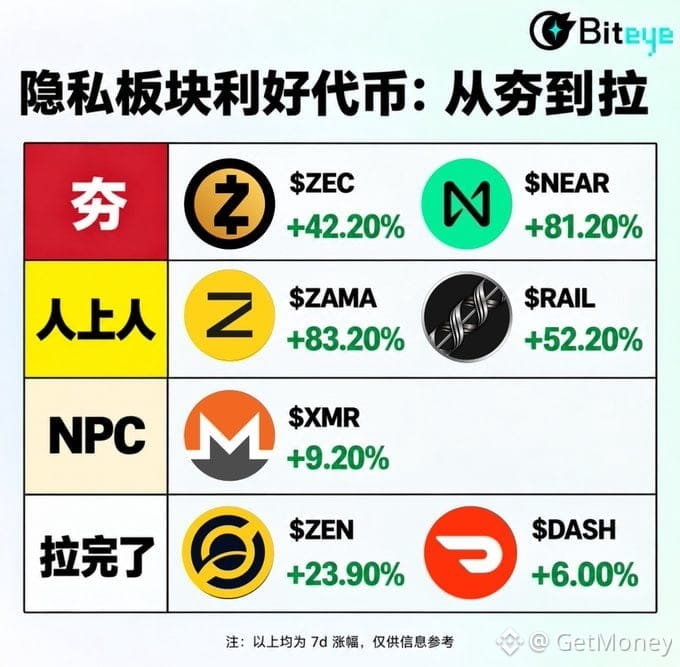
📰 This privacy segment isn’t about a single coin suddenly getting hot. Garrett Jin sliced off $30 million in ZEC short positions in one go, while also holding a large amount of ZEC spot. This move directly pulled market attention back to the privacy track.
🔥 Honestly, after rising from the bottom by nearly a hundredfold, ZEC’s rally has naturally caused funds to start spreading into nearby projects. Plus, Vitalik recently reiterated that he “won’t give up on privacy,” further boosting the sector’s momentum.
💡 The funding path outlined in this article is pretty clear: first buy the tradable privacy asset ZEC, then move to NEAR, which builds privacy features into routing; next is ZAMA, which provides fully homomorphic encrypted computation; and only then comes RAIL, ZEN, and DASH—application plugins or long-established tokens.
👀 But even among privacy projects, their situations can differ greatly. ZAMA is more focused on underlying cryptographic computation, while RAIL is deployed directly as a privacy plugin on Ethereum and various L2s. XMR, although strong in anonymity, has its liquidity clearly constrained due to compliance reviews and delistings from mainstream exchanges.
🤔 As for ZEN and DASH—one has already proactively removed the shielded pool, and the other still relies mainly on the older CoinJoin mechanism. In this wave of privacy hype, which do you think will truly stick around: ZEC, ZAMA, or RAIL?
#隐私赛道 #ZEC #ZAMA #加密市场
📰 This privacy segment isn’t about a single coin suddenly getting hot. Garrett Jin sliced off $30 million in ZEC short positions in one go, while also holding a large amount of ZEC spot. This move directly pulled market attention back to the privacy track.
🔥 Honestly, after rising from the bottom by nearly a hundredfold, ZEC’s rally has naturally caused funds to start spreading into nearby projects. Plus, Vitalik recently reiterated that he “won’t give up on privacy,” further boosting the sector’s momentum.
💡 The funding path outlined in this article is pretty clear: first buy the tradable privacy asset ZEC, then move to NEAR, which builds privacy features into routing; next is ZAMA, which provides fully homomorphic encrypted computation; and only then comes RAIL, ZEN, and DASH—application plugins or long-established tokens.
👀 But even among privacy projects, their situations can differ greatly. ZAMA is more focused on underlying cryptographic computation, while RAIL is deployed directly as a privacy plugin on Ethereum and various L2s. XMR, although strong in anonymity, has its liquidity clearly constrained due to compliance reviews and delistings from mainstream exchanges.
🤔 As for ZEN and DASH—one has already proactively removed the shielded pool, and the other still relies mainly on the older CoinJoin mechanism. In this wave of privacy hype, which do you think will truly stick around: ZEC, ZAMA, or RAIL?
#隐私赛道 #ZEC #ZAMA #加密市场
🔥 Honestly, after rising from the bottom by nearly a hundredfold, ZEC’s rally has naturally caused funds to start spreading into nearby projects. Plus, Vitalik recently reiterated that he “won’t give up on privacy,” further boosting the sector’s momentum.
💡 The funding path outlined in this article is pretty clear: first buy the tradable privacy asset ZEC, then move to NEAR, which builds privacy features into routing; next is ZAMA, which provides fully homomorphic encrypted computation; and only then comes RAIL, ZEN, and DASH—application plugins or long-established tokens.
👀 But even among privacy projects, their situations can differ greatly. ZAMA is more focused on underlying cryptographic computation, while RAIL is deployed directly as a privacy plugin on Ethereum and various L2s. XMR, although strong in anonymity, has its liquidity clearly constrained due to compliance reviews and delistings from mainstream exchanges.
🤔 As for ZEN and DASH—one has already proactively removed the shielded pool, and the other still relies mainly on the older CoinJoin mechanism. In this wave of privacy hype, which do you think will truly stick around: ZEC, ZAMA, or RAIL?
#隐私赛道 #ZEC #ZAMA #加密市场

513
·
--
📰 From this year to now, Hyperliquid’s revenue has already reached $429 million, ranking first among crypto projects, with Pump.fun following closely behind. I didn’t expect that the most money-making thing right now might not be the older, well-discussed projects everyone talks about every day—rather, the trading platform itself has come out ahead.
🔥 But on the other hand, the flow of funds isn’t as smooth. After four consecutive weeks of net inflows, last week Ethereum spot ETFs switched to net outflows of $140 million. The contrast is pretty clear: project revenue is growing, yet institutional capital is starting to show disagreement.
👀 Even more interesting is that on the Binance platform, the monthly average number of ETH withdrawal transactions has already surpassed 90,000, hitting the highest level since 2023. Just because someone is pulling money out of the ETF doesn’t mean all funds are leaving Ethereum—some holdings may simply have changed storage methods. On-chain and exchange-platform data can’t be viewed from only one side.
💡 There are also changes at the macro level. The Saudi Central Bank confirmed that it has exited mBridge, after previously taking part in the development of the project’s minimum viable product. Meanwhile, the U.S. short-term Treasury issuance over the next year could come close to $1 trillion. In traditional finance and cross-border payments, the direction is still being adjusted.
🤔 It looks like the market is truly diverging now: one side is platform revenue and continued growth in on-chain usage data, while the other side is ETF capital starting to waver. Do you care more about real revenue, or about institutional fund-flow direction?
#Hyperliquid #以太坊 #加密市场 #On-chain data
📰 From this year to now, Hyperliquid’s revenue has already reached $429 million, ranking first among crypto projects, with Pump.fun following closely behind. I didn’t expect that the most money-making thing right now might not be the older, well-discussed projects everyone talks about every day—rather, the trading platform itself has come out ahead.
🔥 But on the other hand, the flow of funds isn’t as smooth. After four consecutive weeks of net inflows, last week Ethereum spot ETFs switched to net outflows of $140 million. The contrast is pretty clear: project revenue is growing, yet institutional capital is starting to show disagreement.
👀 Even more interesting is that on the Binance platform, the monthly average number of ETH withdrawal transactions has already surpassed 90,000, hitting the highest level since 2023. Just because someone is pulling money out of the ETF doesn’t mean all funds are leaving Ethereum—some holdings may simply have changed storage methods. On-chain and exchange-platform data can’t be viewed from only one side.
💡 There are also changes at the macro level. The Saudi Central Bank confirmed that it has exited mBridge, after previously taking part in the development of the project’s minimum viable product. Meanwhile, the U.S. short-term Treasury issuance over the next year could come close to $1 trillion. In traditional finance and cross-border payments, the direction is still being adjusted.
🤔 It looks like the market is truly diverging now: one side is platform revenue and continued growth in on-chain usage data, while the other side is ETF capital starting to waver. Do you care more about real revenue, or about institutional fund-flow direction?
#Hyperliquid #以太坊 #加密市场 #On-chain data
🔥 But on the other hand, the flow of funds isn’t as smooth. After four consecutive weeks of net inflows, last week Ethereum spot ETFs switched to net outflows of $140 million. The contrast is pretty clear: project revenue is growing, yet institutional capital is starting to show disagreement.
👀 Even more interesting is that on the Binance platform, the monthly average number of ETH withdrawal transactions has already surpassed 90,000, hitting the highest level since 2023. Just because someone is pulling money out of the ETF doesn’t mean all funds are leaving Ethereum—some holdings may simply have changed storage methods. On-chain and exchange-platform data can’t be viewed from only one side.
💡 There are also changes at the macro level. The Saudi Central Bank confirmed that it has exited mBridge, after previously taking part in the development of the project’s minimum viable product. Meanwhile, the U.S. short-term Treasury issuance over the next year could come close to $1 trillion. In traditional finance and cross-border payments, the direction is still being adjusted.
🤔 It looks like the market is truly diverging now: one side is platform revenue and continued growth in on-chain usage data, while the other side is ETF capital starting to waver. Do you care more about real revenue, or about institutional fund-flow direction?
#Hyperliquid #以太坊 #加密市场 #On-chain data

93
·
--
📰 NEAR has attracted the attention of funds this time—not just because of the privacy narrative. Near’s network TVL has risen to $256 million, setting a historic high; since September 17, new capital inflows have approached $65 million, and the milestone incentives clearly seem to be working.
🔥 This “option-style airdrop” is actually pretty interesting. Eligible addresses can be allocated 333,333 milestone tokens, but the rewards are locked first. Only if NEAR’s 3-day traded volume-weighted average price remains stable at $3.33 or higher can the tokens be exchanged 1:1. Naturally, people who want the rewards are more likely, in the short term, to keep their funds in the ecosystem.
💡 There’s also something concrete on the product side. near.com has launched default-privacy derivative trading. Under the hood it integrates with Hyperliquid, allowing users’ funding sources, accounts, and positions to be hidden from the outside, while also enabling different-chain assets to be used as margin. NEAR Intents’ cumulative trading volume has reached $29.8 billion, covering more than 35 public chains.
👀 But to be honest, it’s still unclear how much of this is genuine demand versus incentive-harvesting. Over the past 30 days, NEAR’s total revenue was about $5.24 million, net revenue about $1.82 million, and the token buyback pace still hasn’t caught up with the release pace.
🤔 The real test will come when the incentives unlock. Do you think this batch of capital will continue staying in Confidential Intents, or will it exit after the conditions are met?
#NEAR #链上数据 #隐私交易 #airdrop mechanism
📰 NEAR has attracted the attention of funds this time—not just because of the privacy narrative. Near’s network TVL has risen to $256 million, setting a historic high; since September 17, new capital inflows have approached $65 million, and the milestone incentives clearly seem to be working.
🔥 This “option-style airdrop” is actually pretty interesting. Eligible addresses can be allocated 333,333 milestone tokens, but the rewards are locked first. Only if NEAR’s 3-day traded volume-weighted average price remains stable at $3.33 or higher can the tokens be exchanged 1:1. Naturally, people who want the rewards are more likely, in the short term, to keep their funds in the ecosystem.
💡 There’s also something concrete on the product side. near.com has launched default-privacy derivative trading. Under the hood it integrates with Hyperliquid, allowing users’ funding sources, accounts, and positions to be hidden from the outside, while also enabling different-chain assets to be used as margin. NEAR Intents’ cumulative trading volume has reached $29.8 billion, covering more than 35 public chains.
👀 But to be honest, it’s still unclear how much of this is genuine demand versus incentive-harvesting. Over the past 30 days, NEAR’s total revenue was about $5.24 million, net revenue about $1.82 million, and the token buyback pace still hasn’t caught up with the release pace.
🤔 The real test will come when the incentives unlock. Do you think this batch of capital will continue staying in Confidential Intents, or will it exit after the conditions are met?
#NEAR #链上数据 #隐私交易 #airdrop mechanism
🔥 This “option-style airdrop” is actually pretty interesting. Eligible addresses can be allocated 333,333 milestone tokens, but the rewards are locked first. Only if NEAR’s 3-day traded volume-weighted average price remains stable at $3.33 or higher can the tokens be exchanged 1:1. Naturally, people who want the rewards are more likely, in the short term, to keep their funds in the ecosystem.
💡 There’s also something concrete on the product side. near.com has launched default-privacy derivative trading. Under the hood it integrates with Hyperliquid, allowing users’ funding sources, accounts, and positions to be hidden from the outside, while also enabling different-chain assets to be used as margin. NEAR Intents’ cumulative trading volume has reached $29.8 billion, covering more than 35 public chains.
👀 But to be honest, it’s still unclear how much of this is genuine demand versus incentive-harvesting. Over the past 30 days, NEAR’s total revenue was about $5.24 million, net revenue about $1.82 million, and the token buyback pace still hasn’t caught up with the release pace.
🤔 The real test will come when the incentives unlock. Do you think this batch of capital will continue staying in Confidential Intents, or will it exit after the conditions are met?
#NEAR #链上数据 #隐私交易 #airdrop mechanism
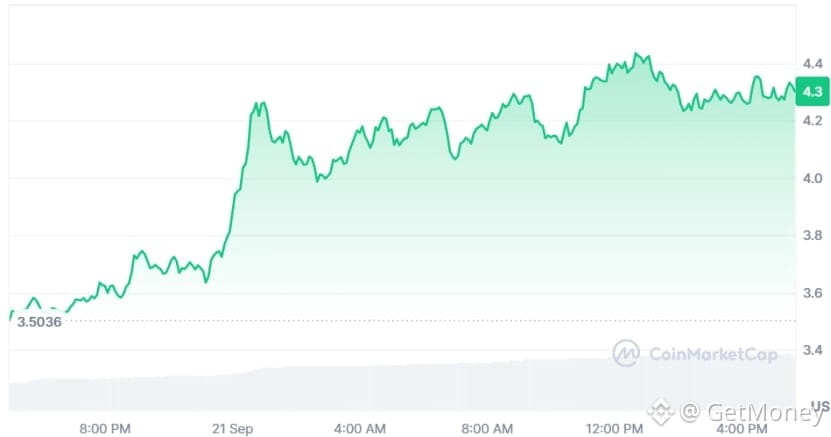
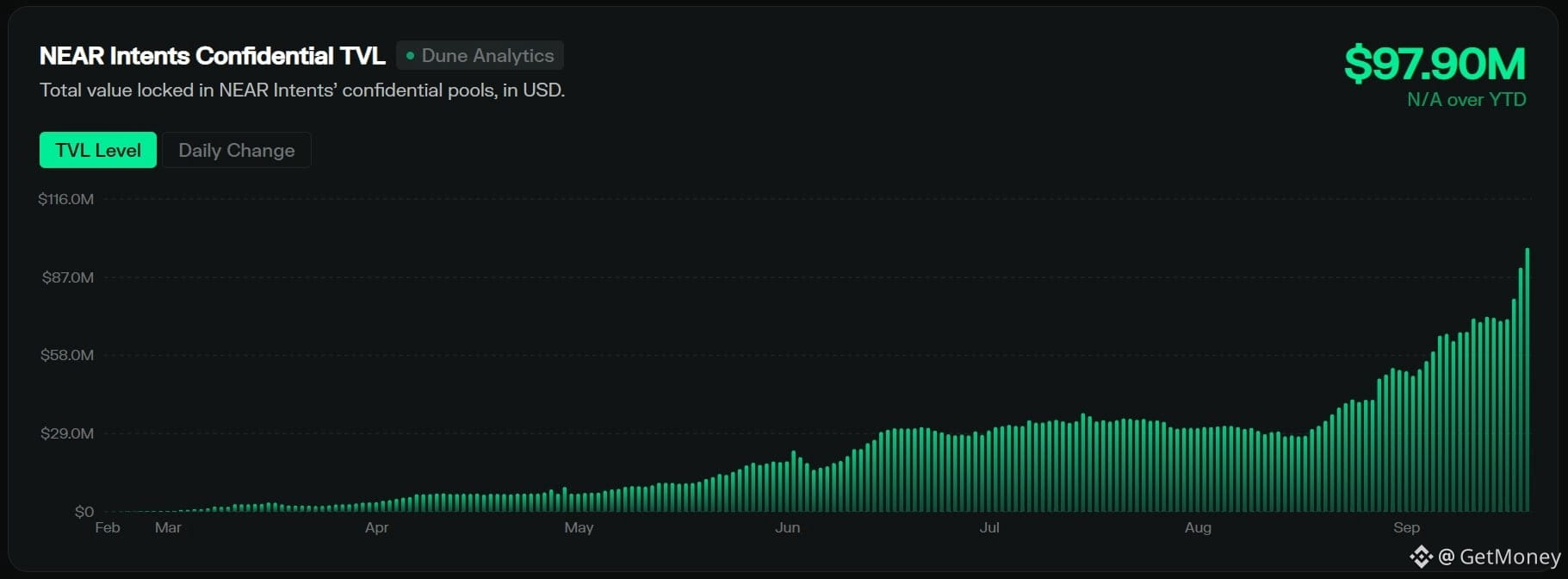
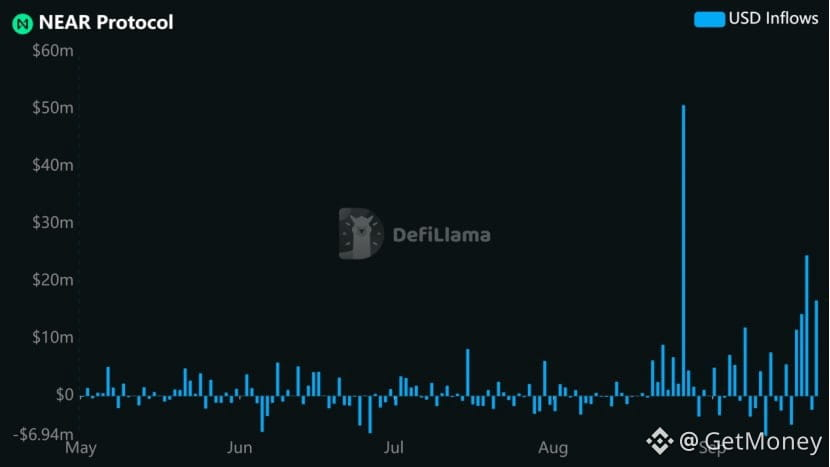
1
132
·
--
📰 Bitcoin regains the 50-week moving average; on September 21 it briefly broke above $84,000. This time, the market isn’t being driven solely by altcoins—spot ETF inflows have also shown a clear improvement, with a peak net inflow of $1.92 billion in a single week.
🔥 The SEC’s “innovation exemption” has ignited this rebound. ETH, ZEC, and NEAR also followed with strength. What’s more, Strategy has been repurchasing about 3,000 BTC since the end of August, bringing its holdings back up to 845,050 BTC—institutional activity is indeed continuing.
💡 Technically, the debate in the market right now isn’t whether it will rise, but whether $80,000 can turn resistance into support. The weekly chart has reclaimed the 50-week moving average, and the seven-day SOPR has also returned above 1.0, suggesting more selling comes from profitable positions, yet bids can still absorb the sell pressure for now.
⚠️ Honestly, things won’t be easy ahead. The quarterly options settlement on September 25 carries about 43% of BTC open contracts, and the Japanese holiday season may further thin liquidity. At the same time, the 10-year US Treasury yield has returned to 5%, meaning macro pressure hasn’t fully disappeared. Above $82,000–$83,000 there’s a dense liquidation zone; falling back to $77,500–$78,500 would require a fresh confirmation that demand can pick it up.
🤔 For this time, do you value the technical signal of the 50-week moving average more—or will you wait until after the September 25 settlement to make a call?
#比特币 #加密市场 #ETF #On-chain data
📰 Bitcoin regains the 50-week moving average; on September 21 it briefly broke above $84,000. This time, the market isn’t being driven solely by altcoins—spot ETF inflows have also shown a clear improvement, with a peak net inflow of $1.92 billion in a single week.
🔥 The SEC’s “innovation exemption” has ignited this rebound. ETH, ZEC, and NEAR also followed with strength. What’s more, Strategy has been repurchasing about 3,000 BTC since the end of August, bringing its holdings back up to 845,050 BTC—institutional activity is indeed continuing.
💡 Technically, the debate in the market right now isn’t whether it will rise, but whether $80,000 can turn resistance into support. The weekly chart has reclaimed the 50-week moving average, and the seven-day SOPR has also returned above 1.0, suggesting more selling comes from profitable positions, yet bids can still absorb the sell pressure for now.
⚠️ Honestly, things won’t be easy ahead. The quarterly options settlement on September 25 carries about 43% of BTC open contracts, and the Japanese holiday season may further thin liquidity. At the same time, the 10-year US Treasury yield has returned to 5%, meaning macro pressure hasn’t fully disappeared. Above $82,000–$83,000 there’s a dense liquidation zone; falling back to $77,500–$78,500 would require a fresh confirmation that demand can pick it up.
🤔 For this time, do you value the technical signal of the 50-week moving average more—or will you wait until after the September 25 settlement to make a call?
#比特币 #加密市场 #ETF #On-chain data
🔥 The SEC’s “innovation exemption” has ignited this rebound. ETH, ZEC, and NEAR also followed with strength. What’s more, Strategy has been repurchasing about 3,000 BTC since the end of August, bringing its holdings back up to 845,050 BTC—institutional activity is indeed continuing.
💡 Technically, the debate in the market right now isn’t whether it will rise, but whether $80,000 can turn resistance into support. The weekly chart has reclaimed the 50-week moving average, and the seven-day SOPR has also returned above 1.0, suggesting more selling comes from profitable positions, yet bids can still absorb the sell pressure for now.
⚠️ Honestly, things won’t be easy ahead. The quarterly options settlement on September 25 carries about 43% of BTC open contracts, and the Japanese holiday season may further thin liquidity. At the same time, the 10-year US Treasury yield has returned to 5%, meaning macro pressure hasn’t fully disappeared. Above $82,000–$83,000 there’s a dense liquidation zone; falling back to $77,500–$78,500 would require a fresh confirmation that demand can pick it up.
🤔 For this time, do you value the technical signal of the 50-week moving average more—or will you wait until after the September 25 settlement to make a call?
#比特币 #加密市场 #ETF #On-chain data


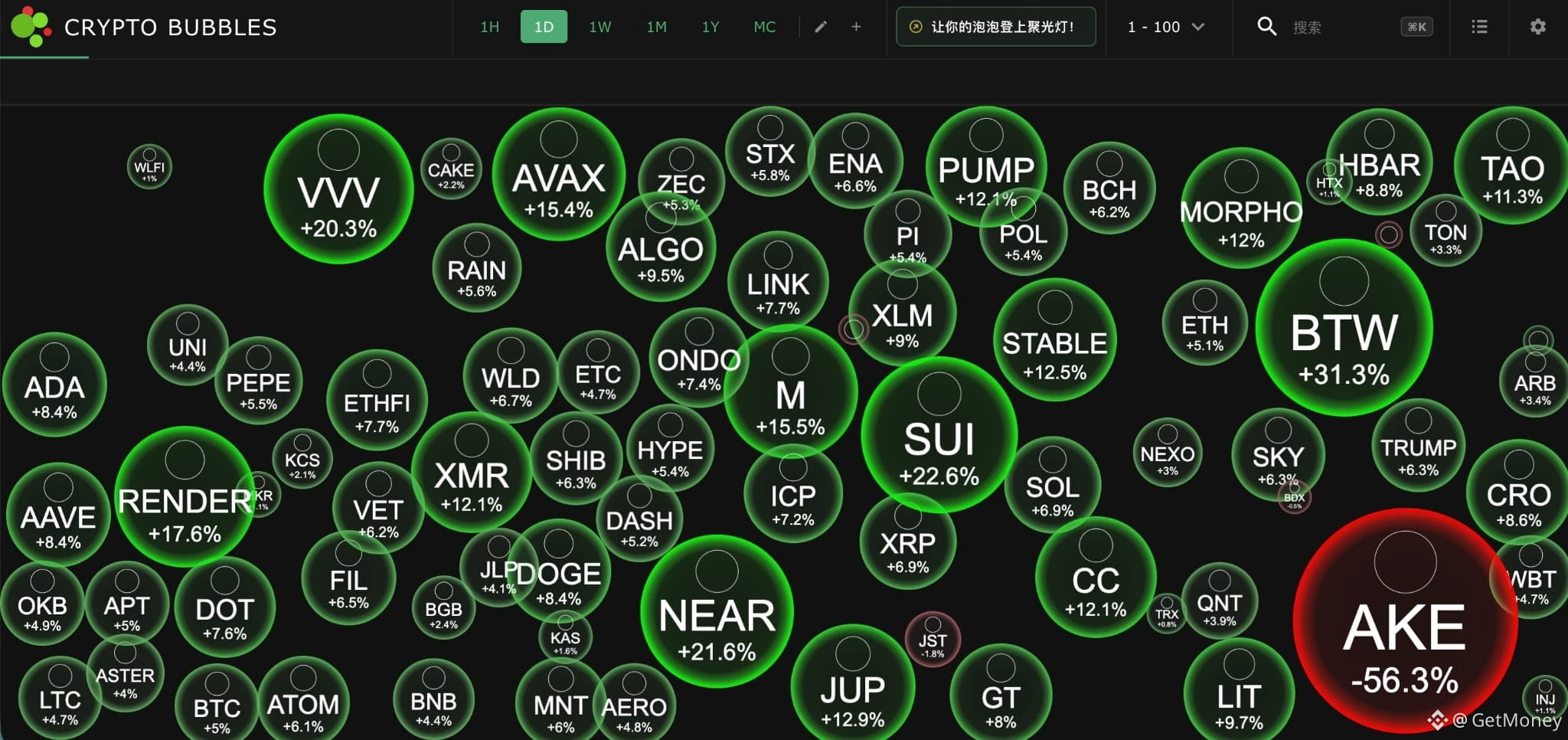

406
Log in to explore more content
Join global crypto users on Binance Square
⚡️ Get latest and useful information about crypto.
💬 Trusted by the world’s largest crypto exchange.
👍 Discover real insights from verified creators.
Email / Phone number
Trending Topics
NEARRisesNearly80%InAWeek
41,764 views
931 Discussing
#nearrisesnearly80%inaweek $NEAR just did +80% in 7 days and nobody is talking about WHY 🚀
$2.20 → $4.29 while the whole market was up only 6%.
The real drivers:
→ Intents Volume near $30B
→ Confidential Perps launch with Hyperliquid
→ TVL back to $190M + 52K active wallets
I watched it at $2.30 and did nothing. Lesson learned.
Are you holding or still watching from sidelines? 👀
$NEAR #NEARProtocol #CryptoNews
True News
·2 Likes
·790 views
MultiversXPlansHardForkRecovery
35,136 views
708 Discussing
CircleLaunchesInstitutionalBTCBackedBorrowing
33,436 views
785 Discussing