
#cryptoprivacy
cryptoprivacy
136,144 views
751 Discussing
Hot
Latest

If you're still treating privacy tokens as nothing more than simple anonymous payment tools, stop now.
Most traders ignore structural shifts until the momentum is already gone, leaving them to FOMO buy local tops and suffer brutal drawdowns. Watching a sector evolve without positioning early is how retail consistently misses out on major rotational moves.
The market remains split on the future of confidential transactions. Critics claim regulatory scrutiny will eventually wipe out the entire narrative, forcing assets off centralized order books. That skeptical argument overlooks how privacy is fundamentally shifting from isolated anonymity toward necessary execution infrastructure.
Upgrades are reviving serious institutional interest around $ZEC, proving that privacy architecture has enduring demand. Meanwhile, $NEAR is embedding confidential layers directly into cross-chain settlement and everyday decentralized trading. Privacy is no longer an isolated niche, but an essential component of modern market plumbing.
Do you think privacy infrastructure will drive the next rotational wave, or will regulatory hurdles cap its upside?
#CryptoPrivacy #Zcash #Web3Infrastructure
If you're still treating privacy tokens as nothing more than simple anonymous payment tools, stop now.
Most traders ignore structural shifts until the momentum is already gone, leaving them to FOMO buy local tops and suffer brutal drawdowns. Watching a sector evolve without positioning early is how retail consistently misses out on major rotational moves.
The market remains split on the future of confidential transactions. Critics claim regulatory scrutiny will eventually wipe out the entire narrative, forcing assets off centralized order books. That skeptical argument overlooks how privacy is fundamentally shifting from isolated anonymity toward necessary execution infrastructure.
Upgrades are reviving serious institutional interest around $ZEC , proving that privacy architecture has enduring demand. Meanwhile, $NEAR is embedding confidential layers directly into cross-chain settlement and everyday decentralized trading. Privacy is no longer an isolated niche, but an essential component of modern market plumbing.
Do you think privacy infrastructure will drive the next rotational wave, or will regulatory hurdles cap its upside?
#CryptoPrivacy #Zcash #Web3Infrastructure
Most traders ignore structural shifts until the momentum is already gone, leaving them to FOMO buy local tops and suffer brutal drawdowns. Watching a sector evolve without positioning early is how retail consistently misses out on major rotational moves.
The market remains split on the future of confidential transactions. Critics claim regulatory scrutiny will eventually wipe out the entire narrative, forcing assets off centralized order books. That skeptical argument overlooks how privacy is fundamentally shifting from isolated anonymity toward necessary execution infrastructure.
Upgrades are reviving serious institutional interest around $ZEC , proving that privacy architecture has enduring demand. Meanwhile, $NEAR is embedding confidential layers directly into cross-chain settlement and everyday decentralized trading. Privacy is no longer an isolated niche, but an essential component of modern market plumbing.
Do you think privacy infrastructure will drive the next rotational wave, or will regulatory hurdles cap its upside?
#CryptoPrivacy #Zcash #Web3Infrastructure

319

Picture this: $BTC is aggressively pushing toward $86K, liquidity is flooding the market, and most traders are too distracted by green candles to notice how fragile the underlying rails have become.
Most investors celebrate the upside while routing funds through heavily monitored, centralized bottlenecks, completely unaware that a single gatekeeper action could freeze their access overnight. We spent years chasing price action, only to hand our transactional privacy and sovereignty right back to central intermediaries.
The warning signs are already visible across the board. Whenever $ETH or broader market activity surges, the industry conversation quietly shifts away from self-custody and toward compliant choke points. Decentralization gradually became just another marketing label, leaving participants vulnerable to surveillance and counterparty risk. If moving your assets requires surrendering personal metadata at every step, the decentralization premise fails completely.
The real test is much simpler: whether people can participate and transfer value without permission or exposure. Privacy-focused architecture and open networks are addressing the exact vulnerabilities that bull runs tend to mask, building communication and settlement layers that do not rely on central points of failure.
Where do you draw the line between trading convenience and the risk of relying on central gatekeepers?
#Bitcoin #CryptoPrivacy #Web3
Picture this: $BTC is aggressively pushing toward $86K, liquidity is flooding the market, and most traders are too distracted by green candles to notice how fragile the underlying rails have become.
Most investors celebrate the upside while routing funds through heavily monitored, centralized bottlenecks, completely unaware that a single gatekeeper action could freeze their access overnight. We spent years chasing price action, only to hand our transactional privacy and sovereignty right back to central intermediaries.
The warning signs are already visible across the board. Whenever $ETH or broader market activity surges, the industry conversation quietly shifts away from self-custody and toward compliant choke points. Decentralization gradually became just another marketing label, leaving participants vulnerable to surveillance and counterparty risk. If moving your assets requires surrendering personal metadata at every step, the decentralization premise fails completely.
The real test is much simpler: whether people can participate and transfer value without permission or exposure. Privacy-focused architecture and open networks are addressing the exact vulnerabilities that bull runs tend to mask, building communication and settlement layers that do not rely on central points of failure.
Where do you draw the line between trading convenience and the risk of relying on central gatekeepers?
#Bitcoin #CryptoPrivacy #Web3
Most investors celebrate the upside while routing funds through heavily monitored, centralized bottlenecks, completely unaware that a single gatekeeper action could freeze their access overnight. We spent years chasing price action, only to hand our transactional privacy and sovereignty right back to central intermediaries.
The warning signs are already visible across the board. Whenever $ETH or broader market activity surges, the industry conversation quietly shifts away from self-custody and toward compliant choke points. Decentralization gradually became just another marketing label, leaving participants vulnerable to surveillance and counterparty risk. If moving your assets requires surrendering personal metadata at every step, the decentralization premise fails completely.
The real test is much simpler: whether people can participate and transfer value without permission or exposure. Privacy-focused architecture and open networks are addressing the exact vulnerabilities that bull runs tend to mask, building communication and settlement layers that do not rely on central points of failure.
Where do you draw the line between trading convenience and the risk of relying on central gatekeepers?
#Bitcoin #CryptoPrivacy #Web3
15

·
--
Everyone thinks buying $BTC during a massive rally means they are achieving financial independence, but actually most investors are walking right into a digital trap.
We hand over personal identification, home addresses, and sensitive data just to trade, completely forgetting why crypto was created in the first place. When central gatekeepers store your personal information on private servers, a single breach can compromise your entire financial identity.
Think of modern crypto like moving into a gated community for privacy, only to hand your house keys to a guard at the entrance. Traders constantly make three critical mistakes in this market.
First, they mistake price pumps in assets like $ETH for true network decentralization. Second, they sacrifice personal privacy for convenience. Third, they overlook privacy-focused architecture like Liberdus that enables user participation without central gatekeepers or identity leaks.
How much personal privacy are you willing to give up for convenience?
#CryptoPrivacy #Bitcoin #Decentralization
Everyone thinks buying $BTC during a massive rally means they are achieving financial independence, but actually most investors are walking right into a digital trap.
We hand over personal identification, home addresses, and sensitive data just to trade, completely forgetting why crypto was created in the first place. When central gatekeepers store your personal information on private servers, a single breach can compromise your entire financial identity.
Think of modern crypto like moving into a gated community for privacy, only to hand your house keys to a guard at the entrance. Traders constantly make three critical mistakes in this market.
First, they mistake price pumps in assets like $ETH for true network decentralization. Second, they sacrifice personal privacy for convenience. Third, they overlook privacy-focused architecture like Liberdus that enables user participation without central gatekeepers or identity leaks.
How much personal privacy are you willing to give up for convenience?
#CryptoPrivacy #Bitcoin #Decentralization
We hand over personal identification, home addresses, and sensitive data just to trade, completely forgetting why crypto was created in the first place. When central gatekeepers store your personal information on private servers, a single breach can compromise your entire financial identity.
Think of modern crypto like moving into a gated community for privacy, only to hand your house keys to a guard at the entrance. Traders constantly make three critical mistakes in this market.
First, they mistake price pumps in assets like $ETH for true network decentralization. Second, they sacrifice personal privacy for convenience. Third, they overlook privacy-focused architecture like Liberdus that enables user participation without central gatekeepers or identity leaks.
How much personal privacy are you willing to give up for convenience?
#CryptoPrivacy #Bitcoin #Decentralization
20

·
--
everyone thinks hitting new highs means we are winning, but actually most degens are walking straight into a massive surveillance trap without realizing it.
we get so blinded chasing green candles that we willingly dox our entire financial history to centralized entities and kyc gatekeepers just to trade. getting frozen or watching your data get leaked while trying to cash out is the worst feeling, ngl.
watching $BTC push back toward $86K today got me thinking about how lost the narrative has become. decentralization used to be the entire point of this space, but now it feels like a hollow buzzword slapped on protocols that still bow down to centralized middlemen.
that is why seeing projects build real privacy layers caught my eye. if an open network like liberds lets people communicate and transact without handing over personal data to central authorities, that is where actual sovereign tech lives while everyone else blindly rotates between $ETH and $SOL.
are we actually building decentralized tech or just remaking web2 finance?
#Bitcoin #CryptoPrivacy #Web3
everyone thinks hitting new highs means we are winning, but actually most degens are walking straight into a massive surveillance trap without realizing it.
we get so blinded chasing green candles that we willingly dox our entire financial history to centralized entities and kyc gatekeepers just to trade. getting frozen or watching your data get leaked while trying to cash out is the worst feeling, ngl.
watching $BTC push back toward $86K today got me thinking about how lost the narrative has become. decentralization used to be the entire point of this space, but now it feels like a hollow buzzword slapped on protocols that still bow down to centralized middlemen.
that is why seeing projects build real privacy layers caught my eye. if an open network like liberds lets people communicate and transact without handing over personal data to central authorities, that is where actual sovereign tech lives while everyone else blindly rotates between $ETH and $SOL .
are we actually building decentralized tech or just remaking web2 finance?
#Bitcoin #CryptoPrivacy #Web3
we get so blinded chasing green candles that we willingly dox our entire financial history to centralized entities and kyc gatekeepers just to trade. getting frozen or watching your data get leaked while trying to cash out is the worst feeling, ngl.
watching $BTC push back toward $86K today got me thinking about how lost the narrative has become. decentralization used to be the entire point of this space, but now it feels like a hollow buzzword slapped on protocols that still bow down to centralized middlemen.
that is why seeing projects build real privacy layers caught my eye. if an open network like liberds lets people communicate and transact without handing over personal data to central authorities, that is where actual sovereign tech lives while everyone else blindly rotates between $ETH and $SOL .
are we actually building decentralized tech or just remaking web2 finance?
#Bitcoin #CryptoPrivacy #Web3

20
If you are still chasing green candles while ignoring fundamental privacy, stop now.
Most traders get completely blinded by massive rallies, only to realize later they handed over all their personal data and control to centralized gatekeepers who can freeze funds at will.
Watching $BTC push toward $86K today reignited a major debate across the market. One side argues that institutional inflows and regulated surveillance are necessary for mass adoption, even if it compromises user anonymity. But that completely misses why this technology was created in the first place.
If people cannot communicate and transact without giving away sensitive identity details, decentralization is just a hollow marketing slogan. While majors like $ETH absorb mainstream liquidity, real sovereignty depends on open networks like Liberdus that prioritize zero-knowledge privacy and remove central intermediaries entirely.
Are we sacrificing core crypto principles just for higher price targets, or does privacy still come first for you?
#Bitcoin #CryptoPrivacy #Web3
If you are still chasing green candles while ignoring fundamental privacy, stop now.
Most traders get completely blinded by massive rallies, only to realize later they handed over all their personal data and control to centralized gatekeepers who can freeze funds at will.
Watching $BTC push toward $86K today reignited a major debate across the market. One side argues that institutional inflows and regulated surveillance are necessary for mass adoption, even if it compromises user anonymity. But that completely misses why this technology was created in the first place.
If people cannot communicate and transact without giving away sensitive identity details, decentralization is just a hollow marketing slogan. While majors like $ETH absorb mainstream liquidity, real sovereignty depends on open networks like Liberdus that prioritize zero-knowledge privacy and remove central intermediaries entirely.
Are we sacrificing core crypto principles just for higher price targets, or does privacy still come first for you?
#Bitcoin #CryptoPrivacy #Web3
Most traders get completely blinded by massive rallies, only to realize later they handed over all their personal data and control to centralized gatekeepers who can freeze funds at will.
Watching $BTC push toward $86K today reignited a major debate across the market. One side argues that institutional inflows and regulated surveillance are necessary for mass adoption, even if it compromises user anonymity. But that completely misses why this technology was created in the first place.
If people cannot communicate and transact without giving away sensitive identity details, decentralization is just a hollow marketing slogan. While majors like $ETH absorb mainstream liquidity, real sovereignty depends on open networks like Liberdus that prioritize zero-knowledge privacy and remove central intermediaries entirely.
Are we sacrificing core crypto principles just for higher price targets, or does privacy still come first for you?
#Bitcoin #CryptoPrivacy #Web3
10
·
--
Most traders celebrating every pump toward $86K forget that the majority of modern blockchains leak far more personal metadata than traditional financial apps.
We chase green candles while quietly handing over entire transaction histories to centralized RPC endpoints and third-party trackers. It feels harmless until an infrastructure breach or data leak ties your on-chain wallet balance directly to your real identity.
When $BTC rallied back near $86K, it was a solid reminder of how far the space has drifted from its original purpose. Decentralization has largely become a marketing buzzword rather than a technical standard. If moving assets still forces you to rely on centralized gatekeepers who monitor your IP address and chat data, you are taking on severe counterparty risk without realizing it.
Projects like Liberdus caught my radar because they tackle this exact vulnerability by rebuilding open, privacy-preserving networks from the ground up. Whether you are holding spot $BTC or routing transactions across $ETH, true censorship resistance requires privacy at the base communication layer, not just the financial layer.
Are we sacrificing too much fundamental privacy just for the convenience of modern trading?
#Bitcoin #CryptoPrivacy #Web3Security
Most traders celebrating every pump toward $86K forget that the majority of modern blockchains leak far more personal metadata than traditional financial apps.
We chase green candles while quietly handing over entire transaction histories to centralized RPC endpoints and third-party trackers. It feels harmless until an infrastructure breach or data leak ties your on-chain wallet balance directly to your real identity.
When $BTC rallied back near $86K, it was a solid reminder of how far the space has drifted from its original purpose. Decentralization has largely become a marketing buzzword rather than a technical standard. If moving assets still forces you to rely on centralized gatekeepers who monitor your IP address and chat data, you are taking on severe counterparty risk without realizing it.
Projects like Liberdus caught my radar because they tackle this exact vulnerability by rebuilding open, privacy-preserving networks from the ground up. Whether you are holding spot $BTC or routing transactions across $ETH , true censorship resistance requires privacy at the base communication layer, not just the financial layer.
Are we sacrificing too much fundamental privacy just for the convenience of modern trading?
#Bitcoin #CryptoPrivacy #Web3Security
We chase green candles while quietly handing over entire transaction histories to centralized RPC endpoints and third-party trackers. It feels harmless until an infrastructure breach or data leak ties your on-chain wallet balance directly to your real identity.
When $BTC rallied back near $86K, it was a solid reminder of how far the space has drifted from its original purpose. Decentralization has largely become a marketing buzzword rather than a technical standard. If moving assets still forces you to rely on centralized gatekeepers who monitor your IP address and chat data, you are taking on severe counterparty risk without realizing it.
Projects like Liberdus caught my radar because they tackle this exact vulnerability by rebuilding open, privacy-preserving networks from the ground up. Whether you are holding spot $BTC or routing transactions across $ETH , true censorship resistance requires privacy at the base communication layer, not just the financial layer.
Are we sacrificing too much fundamental privacy just for the convenience of modern trading?
#Bitcoin #CryptoPrivacy #Web3Security
7

·
--
Have you noticed how crypto platforms still force necessary cookies on you the moment you try to log in or glance at a chart?
Traders lose money to targeted scams after a simple login or form fill gets tracked. You miss clean entries and exits because the next phishing attempt arrives right on cue.
These cookies cannot be switched off in their systems. They get set whenever you adjust privacy settings, log in or submit a form. Block them in your browser and parts of the site simply stop working, so you cannot even trade $BTC, check $ETH levels or use basic $BNB features. They claim no personally identifiable information is stored.
Where do you think this tracking heads as more volume piles in?
#CryptoPrivacy #Web3 #Trading
Have you noticed how crypto platforms still force necessary cookies on you the moment you try to log in or glance at a chart?
Traders lose money to targeted scams after a simple login or form fill gets tracked. You miss clean entries and exits because the next phishing attempt arrives right on cue.
These cookies cannot be switched off in their systems. They get set whenever you adjust privacy settings, log in or submit a form. Block them in your browser and parts of the site simply stop working, so you cannot even trade $BTC , check $ETH levels or use basic $BNB features. They claim no personally identifiable information is stored.
Where do you think this tracking heads as more volume piles in?
#CryptoPrivacy #Web3 #Trading
Traders lose money to targeted scams after a simple login or form fill gets tracked. You miss clean entries and exits because the next phishing attempt arrives right on cue.
These cookies cannot be switched off in their systems. They get set whenever you adjust privacy settings, log in or submit a form. Block them in your browser and parts of the site simply stop working, so you cannot even trade $BTC , check $ETH levels or use basic $BNB features. They claim no personally identifiable information is stored.
Where do you think this tracking heads as more volume piles in?
#CryptoPrivacy #Web3 #Trading
12


BREAKING: Privacy in Web3 and AI is reaching a critical turning point! 🚨 👉 You can recover stolen crypto funds. 👉 But a leaked real identity is gone forever. 👉 Current centralized data honeypots pose massive risks. 👉 AI agents need zero-knowledge identity solutions. The crypto community needs to prioritize decentralized identity as AI expands across $BTC and $ETH networks. 🛡️ #Write2Earn #CryptoPrivacy #Web3 #Security
BREAKING: Privacy in Web3 and AI is reaching a critical turning point! 🚨 👉 You can recover stolen crypto funds. 👉 But a leaked real identity is gone forever. 👉 Current centralized data honeypots pose massive risks. 👉 AI agents need zero-knowledge identity solutions. The crypto community needs to prioritize decentralized identity as AI expands across $BTC and $ETH networks. 🛡️ #Write2Earn #CryptoPrivacy #Web3 #Security

98

·
--
Article
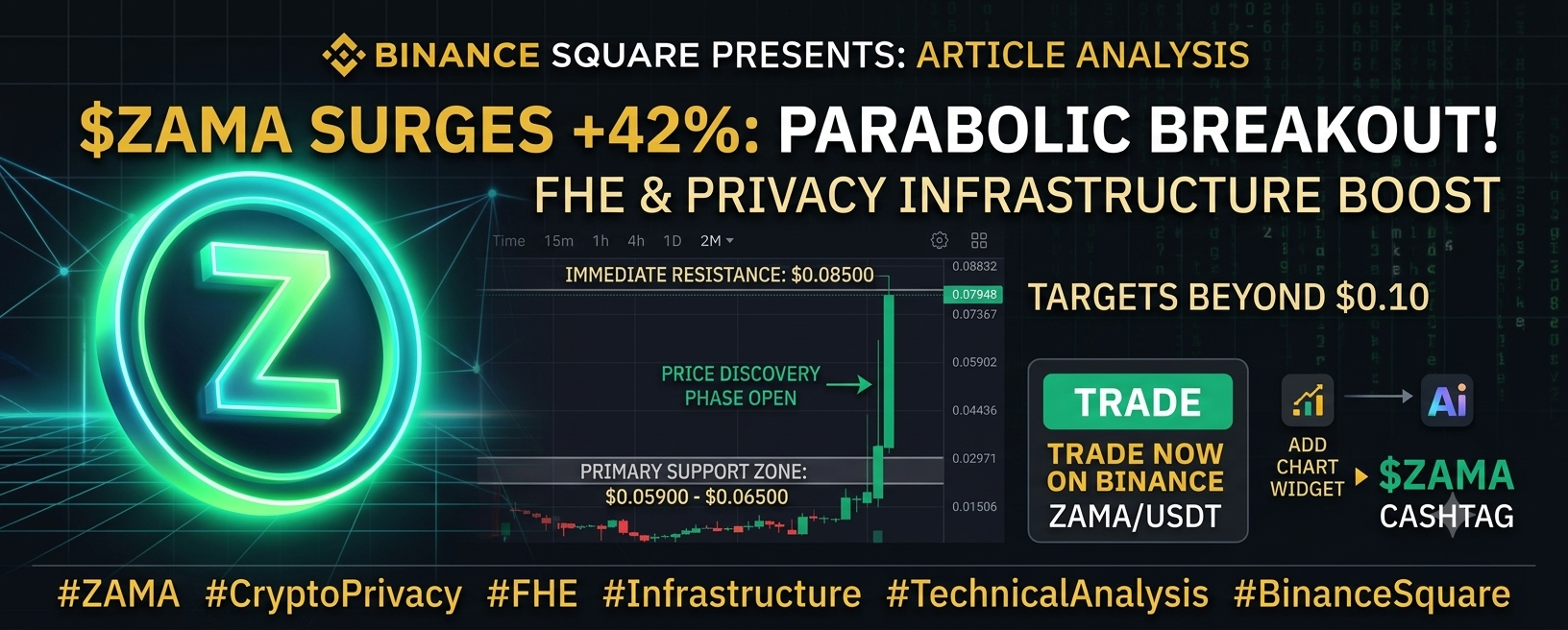
$ZAMA Surges +42% Parabolic Expansion: Privacy & FHE Infrastructure Token Hits New Highs! 🚀🔒Zama ($ZAMA)—the flagship Fully Homomorphic Encryption (FHE) infrastructure protocol powering on-chain confidentiality—has unleashed an aggressive breakout. Surging by +42.67% in 24 hours to touch an intraday high of $0.08499,$ZAMA is outperforming the broader altcoin market on heavy trading volume.
Following recent major ecosystem developments—including the rollout of confidential yield vaults, shielded USDT stablecoin integration, and expanding FHE privacy infrastructure on Ethereum—traders are evaluating whether this massive candle marks the start of a macro price discovery phase.
1. Core Narrative & Fundamental Growth Drivers
Shielded Stablecoin & DeFi Expansion: Zama's FHE technology stack recently unlocked confidential access to major yield venues, pushing shielded stablecoin volume past $130M+.
Institutional Capital & FHE Demand: Powered by zero-knowledge/FHE privacy solutions, institutional demand for on-chain encrypted execution is directing substantial liquidity into $ZAMA as a core infrastructure utility token.
Extreme Volume Surge: Over 530.94M ZAMA ($36.42M+ USDT) was traded over a 24-hour window, confirming strong institutional and retail accumulation behind this momentum candle.
2. Technical Analysis Breakdown
The Parabolic Vertical Impulse: The multi-month chart highlights a sudden vertical move starting from the $0.01839 baseline, breaking through sequential resistance levels at $0.02971, $0.04436, and $0.05902 without major pullbacks.
Immediate Overhead Resistance: $0.08500 (Local wick peak; a clean daily close above this opens price discovery toward $0.10+).
Primary Re-test Support Zone: $0.05900 – $0.06500 (Prior breakout structure that must hold during mean-reversion re-tests to keep the bullish trend intact).
Secondary Risk Defense: $0.04400 (Key mid-range structural floor).
3. Strategic Execution Scenarios
Bullish Price Discovery Play: A decisive candle close above $0.08500 on expanding volume signals market acceptance of higher valuation, setting initial targets at $0.1000 and $0.1250.
Pullback Accumulation Play: Chasing vertical green candles carries elevated short-term risk. Looking for consolidation or localized pullbacks into the $0.05900 – $0.06500 support band provides a significantly higher reward-to-risk entry setup.
Are you holding $ZAMA for the $0.10 push or waiting for a dip to re-enter? Drop your thoughts below! 👇
$ZAMA #CryptoPrivacy #FHE #Infrastructure #TechnicalAnalysis #BinanceSquare
{spot}(ZAMAUSDT)
$ZAMA Surges +42% Parabolic Expansion: Privacy & FHE Infrastructure Token Hits New Highs! 🚀🔒
Zama ($ZAMA )—the flagship Fully Homomorphic Encryption (FHE) infrastructure protocol powering on-chain confidentiality—has unleashed an aggressive breakout. Surging by +42.67% in 24 hours to touch an intraday high of $0.08499,$ZAMA is outperforming the broader altcoin market on heavy trading volume.
Following recent major ecosystem developments—including the rollout of confidential yield vaults, shielded USDT stablecoin integration, and expanding FHE privacy infrastructure on Ethereum—traders are evaluating whether this massive candle marks the start of a macro price discovery phase.
1. Core Narrative & Fundamental Growth Drivers
Shielded Stablecoin & DeFi Expansion: Zama's FHE technology stack recently unlocked confidential access to major yield venues, pushing shielded stablecoin volume past $130M+.
Institutional Capital & FHE Demand: Powered by zero-knowledge/FHE privacy solutions, institutional demand for on-chain encrypted execution is directing substantial liquidity into $ZAMA as a core infrastructure utility token.
Extreme Volume Surge: Over 530.94M ZAMA ($36.42M+ USDT) was traded over a 24-hour window, confirming strong institutional and retail accumulation behind this momentum candle.
2. Technical Analysis Breakdown
The Parabolic Vertical Impulse: The multi-month chart highlights a sudden vertical move starting from the $0.01839 baseline, breaking through sequential resistance levels at $0.02971, $0.04436, and $0.05902 without major pullbacks.
Immediate Overhead Resistance: $0.08500 (Local wick peak; a clean daily close above this opens price discovery toward $0.10+).
Primary Re-test Support Zone: $0.05900 – $0.06500 (Prior breakout structure that must hold during mean-reversion re-tests to keep the bullish trend intact).
Secondary Risk Defense: $0.04400 (Key mid-range structural floor).
3. Strategic Execution Scenarios
Bullish Price Discovery Play: A decisive candle close above $0.08500 on expanding volume signals market acceptance of higher valuation, setting initial targets at $0.1000 and $0.1250.
Pullback Accumulation Play: Chasing vertical green candles carries elevated short-term risk. Looking for consolidation or localized pullbacks into the $0.05900 – $0.06500 support band provides a significantly higher reward-to-risk entry setup.
Are you holding $ZAMA for the $0.10 push or waiting for a dip to re-enter? Drop your thoughts below! 👇
$ZAMA #CryptoPrivacy #FHE #Infrastructure #TechnicalAnalysis #BinanceSquare
Following recent major ecosystem developments—including the rollout of confidential yield vaults, shielded USDT stablecoin integration, and expanding FHE privacy infrastructure on Ethereum—traders are evaluating whether this massive candle marks the start of a macro price discovery phase.
1. Core Narrative & Fundamental Growth Drivers
Shielded Stablecoin & DeFi Expansion: Zama's FHE technology stack recently unlocked confidential access to major yield venues, pushing shielded stablecoin volume past $130M+.
Institutional Capital & FHE Demand: Powered by zero-knowledge/FHE privacy solutions, institutional demand for on-chain encrypted execution is directing substantial liquidity into $ZAMA as a core infrastructure utility token.
Extreme Volume Surge: Over 530.94M ZAMA ($36.42M+ USDT) was traded over a 24-hour window, confirming strong institutional and retail accumulation behind this momentum candle.
2. Technical Analysis Breakdown
The Parabolic Vertical Impulse: The multi-month chart highlights a sudden vertical move starting from the $0.01839 baseline, breaking through sequential resistance levels at $0.02971, $0.04436, and $0.05902 without major pullbacks.
Immediate Overhead Resistance: $0.08500 (Local wick peak; a clean daily close above this opens price discovery toward $0.10+).
Primary Re-test Support Zone: $0.05900 – $0.06500 (Prior breakout structure that must hold during mean-reversion re-tests to keep the bullish trend intact).
Secondary Risk Defense: $0.04400 (Key mid-range structural floor).
3. Strategic Execution Scenarios
Bullish Price Discovery Play: A decisive candle close above $0.08500 on expanding volume signals market acceptance of higher valuation, setting initial targets at $0.1000 and $0.1250.
Pullback Accumulation Play: Chasing vertical green candles carries elevated short-term risk. Looking for consolidation or localized pullbacks into the $0.05900 – $0.06500 support band provides a significantly higher reward-to-risk entry setup.
Are you holding $ZAMA for the $0.10 push or waiting for a dip to re-enter? Drop your thoughts below! 👇
$ZAMA #CryptoPrivacy #FHE #Infrastructure #TechnicalAnalysis #BinanceSquare
127

Financial surveillance is crossing a dangerous line. When government agencies weaponize transaction data to profile citizens' political leanings, it threatens core privacy rights. This overreach turns the financial system into a tool for predictive policing. We need stronger cryptographic protections and decentralized alternatives to ensure our spending habits remain our own business, not a state watchlist. Privacy isn't a crime; it's a fundamental right that crypto was built to protect. $BTC $XMR #CryptoPrivacy #Surveillance #DataSecurity
Financial surveillance is crossing a dangerous line. When government agencies weaponize transaction data to profile citizens' political leanings, it threatens core privacy rights. This overreach turns the financial system into a tool for predictive policing. We need stronger cryptographic protections and decentralized alternatives to ensure our spending habits remain our own business, not a state watchlist. Privacy isn't a crime; it's a fundamental right that crypto was built to protect. $BTC $XMR #CryptoPrivacy #Surveillance #DataSecurity
146

·
--
Zcash just surged over 11% in a single day — here is why privacy coins are turning heads again.
Zcash (ZEC) is built different. While Bitcoin shows every wallet address and amount publicly, Zcash uses something called "zero-knowledge proofs." Think of it like proving you know a secret password without ever typing it out. You can send money fully encrypted — hiding sender, receiver, and amount — while the network still verifies everything is legit. No trust required, just math.
With a $25B market cap and $2.3B in daily volume, traders are clearly paying attention. Whether it is growing regulatory noise around transparent chains or just a renewed appetite for financial privacy, ZEC is having a moment.
Privacy isn't about hiding; it is about choosing who sees your business.
Do you think privacy coins will become essential tools or regulatory targets in the next bull run? #Zcash #CryptoPrivacy
Zcash just surged over 11% in a single day — here is why privacy coins are turning heads again.
Zcash (ZEC) is built different. While Bitcoin shows every wallet address and amount publicly, Zcash uses something called "zero-knowledge proofs." Think of it like proving you know a secret password without ever typing it out. You can send money fully encrypted — hiding sender, receiver, and amount — while the network still verifies everything is legit. No trust required, just math.
With a $25B market cap and $2.3B in daily volume, traders are clearly paying attention. Whether it is growing regulatory noise around transparent chains or just a renewed appetite for financial privacy, ZEC is having a moment.
Privacy isn't about hiding; it is about choosing who sees your business.
Do you think privacy coins will become essential tools or regulatory targets in the next bull run? #Zcash #CryptoPrivacy
Zcash (ZEC) is built different. While Bitcoin shows every wallet address and amount publicly, Zcash uses something called "zero-knowledge proofs." Think of it like proving you know a secret password without ever typing it out. You can send money fully encrypted — hiding sender, receiver, and amount — while the network still verifies everything is legit. No trust required, just math.
With a $25B market cap and $2.3B in daily volume, traders are clearly paying attention. Whether it is growing regulatory noise around transparent chains or just a renewed appetite for financial privacy, ZEC is having a moment.
Privacy isn't about hiding; it is about choosing who sees your business.
Do you think privacy coins will become essential tools or regulatory targets in the next bull run? #Zcash #CryptoPrivacy
277
·
--
If you're still betting on privacy tech that quantum computers will crack like a cheap lock, stop now.
High fees have a way of turning winners into losers faster than any red candle. Missing your exit because of network congestion just adds insult to injury.
Liberdus is built with quantum-resistant, end-to-end encrypted messaging, designed with future privacy threats in mind while remaining fully open source. Its integration with $SHARDUS enables linear scaling through blockless dynamic sharding. Transaction capacity grows with the number of nodes while keeping speeds high and fees low.
We've all lived through the $ETH congestion eras that made simple transactions cost more than the trade itself. This setup with $LIBERDUS looks like it learned those lessons without repeating the same mistakes of earlier privacy projects.
What's your take on quantum-resistant chains versus the last generation of privacy tech?
#QuantumResistant #CryptoPrivacy #ScalingSolutions
If you're still betting on privacy tech that quantum computers will crack like a cheap lock, stop now.
High fees have a way of turning winners into losers faster than any red candle. Missing your exit because of network congestion just adds insult to injury.
Liberdus is built with quantum-resistant, end-to-end encrypted messaging, designed with future privacy threats in mind while remaining fully open source. Its integration with $SHARDUS enables linear scaling through blockless dynamic sharding. Transaction capacity grows with the number of nodes while keeping speeds high and fees low.
We've all lived through the $ETH congestion eras that made simple transactions cost more than the trade itself. This setup with $LIBERDUS looks like it learned those lessons without repeating the same mistakes of earlier privacy projects.
What's your take on quantum-resistant chains versus the last generation of privacy tech?
#QuantumResistant #CryptoPrivacy #ScalingSolutions
High fees have a way of turning winners into losers faster than any red candle. Missing your exit because of network congestion just adds insult to injury.
Liberdus is built with quantum-resistant, end-to-end encrypted messaging, designed with future privacy threats in mind while remaining fully open source. Its integration with $SHARDUS enables linear scaling through blockless dynamic sharding. Transaction capacity grows with the number of nodes while keeping speeds high and fees low.
We've all lived through the $ETH congestion eras that made simple transactions cost more than the trade itself. This setup with $LIBERDUS looks like it learned those lessons without repeating the same mistakes of earlier privacy projects.
What's your take on quantum-resistant chains versus the last generation of privacy tech?
#QuantumResistant #CryptoPrivacy #ScalingSolutions
10
Picture this: a trader I follow sent a sizable payment last month on a legacy chain and watched bots scrape the public details within hours, turning a routine transfer into a targeted phishing hit.
Most people miss how often this plays out. Crypto traders lose money from leaked transaction data that invites front-running or scams, plus simple mix-ups when they cannot attach a private note and end up sending to the wrong wallet.
Centralized apps have spent years monetizing your payment history by selling it off, which frequently lands in the hands of attackers hunting high-value wallets. Legacy chains like $ETH still offer no straightforward way to keep notes private, so details stay exposed or you skip context entirely and forget the purpose later. $BTC carries the same gap, leaving users open to both operational errors and future quantum breaks on existing encryption.
The pattern is consistent losses from data exploitation and avoidable mistakes. Liberdus $LIB combines private messaging with payments inside one quantum-secure protocol, something most have overlooked as a direct fix for these risks.
Where do you think protocols like this go from here?
#CryptoPrivacy #QuantumSecure #Payments
Picture this: a trader I follow sent a sizable payment last month on a legacy chain and watched bots scrape the public details within hours, turning a routine transfer into a targeted phishing hit.
Most people miss how often this plays out. Crypto traders lose money from leaked transaction data that invites front-running or scams, plus simple mix-ups when they cannot attach a private note and end up sending to the wrong wallet.
Centralized apps have spent years monetizing your payment history by selling it off, which frequently lands in the hands of attackers hunting high-value wallets. Legacy chains like $ETH still offer no straightforward way to keep notes private, so details stay exposed or you skip context entirely and forget the purpose later. $BTC carries the same gap, leaving users open to both operational errors and future quantum breaks on existing encryption.
The pattern is consistent losses from data exploitation and avoidable mistakes. Liberdus $LIB combines private messaging with payments inside one quantum-secure protocol, something most have overlooked as a direct fix for these risks.
Where do you think protocols like this go from here?
#CryptoPrivacy #QuantumSecure #Payments
Most people miss how often this plays out. Crypto traders lose money from leaked transaction data that invites front-running or scams, plus simple mix-ups when they cannot attach a private note and end up sending to the wrong wallet.
Centralized apps have spent years monetizing your payment history by selling it off, which frequently lands in the hands of attackers hunting high-value wallets. Legacy chains like $ETH still offer no straightforward way to keep notes private, so details stay exposed or you skip context entirely and forget the purpose later. $BTC carries the same gap, leaving users open to both operational errors and future quantum breaks on existing encryption.
The pattern is consistent losses from data exploitation and avoidable mistakes. Liberdus $LIB combines private messaging with payments inside one quantum-secure protocol, something most have overlooked as a direct fix for these risks.
Where do you think protocols like this go from here?
#CryptoPrivacy #QuantumSecure #Payments
25
Most crypto users still do not realize that every time they send a regular payment, their communication trail and transaction metadata are completely exposed on public ledgers for anyone to track.
When you attach memos or context to transfers on legacy chains like $ETH, you are essentially handing over your financial identity to surveillance firms and data brokers. One exposed transaction note is often all it takes for malicious actors to map your wallet cluster and target your assets.
Centralized platforms make fortunes monetizing user data, but the bigger risk lies in how exposed on-chain communication remains. While traders move value through standard $BTC transactions every day, legacy networks still fail to offer native private messaging alongside payments, leaving transaction histories vulnerable to long-term surveillance and emerging quantum decryption threats.
Liberdus is approaching this gap by integrating private messaging directly with payments inside a single quantum-secure protocol. Instead of leaving unencrypted trails across public block explorers, the network isolates both communication payloads and financial transfers under quantum-resistant encryption before legacy vulnerabilities can be exploited.
Do you think quantum-grade privacy will become mandatory for crypto payments sooner than expected?
#CryptoPrivacy #BlockchainSecurity #Web3
Most crypto users still do not realize that every time they send a regular payment, their communication trail and transaction metadata are completely exposed on public ledgers for anyone to track.
When you attach memos or context to transfers on legacy chains like $ETH , you are essentially handing over your financial identity to surveillance firms and data brokers. One exposed transaction note is often all it takes for malicious actors to map your wallet cluster and target your assets.
Centralized platforms make fortunes monetizing user data, but the bigger risk lies in how exposed on-chain communication remains. While traders move value through standard $BTC transactions every day, legacy networks still fail to offer native private messaging alongside payments, leaving transaction histories vulnerable to long-term surveillance and emerging quantum decryption threats.
Liberdus is approaching this gap by integrating private messaging directly with payments inside a single quantum-secure protocol. Instead of leaving unencrypted trails across public block explorers, the network isolates both communication payloads and financial transfers under quantum-resistant encryption before legacy vulnerabilities can be exploited.
Do you think quantum-grade privacy will become mandatory for crypto payments sooner than expected?
#CryptoPrivacy #BlockchainSecurity #Web3
When you attach memos or context to transfers on legacy chains like $ETH , you are essentially handing over your financial identity to surveillance firms and data brokers. One exposed transaction note is often all it takes for malicious actors to map your wallet cluster and target your assets.
Centralized platforms make fortunes monetizing user data, but the bigger risk lies in how exposed on-chain communication remains. While traders move value through standard $BTC transactions every day, legacy networks still fail to offer native private messaging alongside payments, leaving transaction histories vulnerable to long-term surveillance and emerging quantum decryption threats.
Liberdus is approaching this gap by integrating private messaging directly with payments inside a single quantum-secure protocol. Instead of leaving unencrypted trails across public block explorers, the network isolates both communication payloads and financial transfers under quantum-resistant encryption before legacy vulnerabilities can be exploited.
Do you think quantum-grade privacy will become mandatory for crypto payments sooner than expected?
#CryptoPrivacy #BlockchainSecurity #Web3
23
·
--
Have you noticed nobody is talking about how your crypto payments still lack a simple private note feature while apps quietly sell your chats?
Crypto traders keep leaking their positions through public memos or getting rugged because they can't privately message without a third party watching. That FOMO buying happens when you can't coordinate quietly with your circle.
Most people accept that $BTC and $ETH transactions broadcast everything in the open. Centralized apps then monetize whatever you type on the side. Liberdus $LIB combines private messaging directly with payments inside one quantum-secure protocol so your notes travel encrypted with the funds.
You no longer jump between apps or risk data harvests. The protocol treats the message as part of the transaction itself. This setup challenges the old split between money and communication that leaves you exposed.
If you are tired of the status quo, the actionable move is to evaluate chains that already merge these layers instead of waiting for legacy ones to catch up. Quantum security matters now because tomorrow's computers will crack today's encryption.
Where do you think this goes from here once more people realize payments and private notes belong together?
#CryptoPrivacy #QuantumSecure #Web3
Have you noticed nobody is talking about how your crypto payments still lack a simple private note feature while apps quietly sell your chats?
Crypto traders keep leaking their positions through public memos or getting rugged because they can't privately message without a third party watching. That FOMO buying happens when you can't coordinate quietly with your circle.
Most people accept that $BTC and $ETH transactions broadcast everything in the open. Centralized apps then monetize whatever you type on the side. Liberdus $LIB combines private messaging directly with payments inside one quantum-secure protocol so your notes travel encrypted with the funds.
You no longer jump between apps or risk data harvests. The protocol treats the message as part of the transaction itself. This setup challenges the old split between money and communication that leaves you exposed.
If you are tired of the status quo, the actionable move is to evaluate chains that already merge these layers instead of waiting for legacy ones to catch up. Quantum security matters now because tomorrow's computers will crack today's encryption.
Where do you think this goes from here once more people realize payments and private notes belong together?
#CryptoPrivacy #QuantumSecure #Web3
Crypto traders keep leaking their positions through public memos or getting rugged because they can't privately message without a third party watching. That FOMO buying happens when you can't coordinate quietly with your circle.
Most people accept that $BTC and $ETH transactions broadcast everything in the open. Centralized apps then monetize whatever you type on the side. Liberdus $LIB combines private messaging directly with payments inside one quantum-secure protocol so your notes travel encrypted with the funds.
You no longer jump between apps or risk data harvests. The protocol treats the message as part of the transaction itself. This setup challenges the old split between money and communication that leaves you exposed.
If you are tired of the status quo, the actionable move is to evaluate chains that already merge these layers instead of waiting for legacy ones to catch up. Quantum security matters now because tomorrow's computers will crack today's encryption.
Where do you think this goes from here once more people realize payments and private notes belong together?
#CryptoPrivacy #QuantumSecure #Web3

44
·
--
Everyone thinks crypto payments already keep your details private, but actually most blockchains still broadcast every transfer with no simple way to attach a hidden note.
You send the funds and then scramble to explain the purpose in a separate chat. That extra step leads to mix-ups and leaves you open to targeted scams once centralized apps have already sold your data.
Imagine mailing cash inside a clear plastic bag. Anyone can see the amount and there is no private card to say what it is for. That is how many legacy chains behind $BTC and $ETH still operate. Centralized apps make it worse by turning your payment habits into their product.
Liberdus $LIBERDUS takes a different approach by folding private messaging directly into payments inside one quantum-secure protocol. Think of it as a sealed envelope that holds both the money and your personal note, locked so tightly even future computers cannot peek inside.
This setup cuts the usual leaks and keeps you safer as the technology landscape shifts.
What's your take on combining messages and payments this way?
#CryptoPrivacy #QuantumSecure #Liberdus
Everyone thinks crypto payments already keep your details private, but actually most blockchains still broadcast every transfer with no simple way to attach a hidden note.
You send the funds and then scramble to explain the purpose in a separate chat. That extra step leads to mix-ups and leaves you open to targeted scams once centralized apps have already sold your data.
Imagine mailing cash inside a clear plastic bag. Anyone can see the amount and there is no private card to say what it is for. That is how many legacy chains behind $BTC and $ETH still operate. Centralized apps make it worse by turning your payment habits into their product.
Liberdus $LIBERDUS takes a different approach by folding private messaging directly into payments inside one quantum-secure protocol. Think of it as a sealed envelope that holds both the money and your personal note, locked so tightly even future computers cannot peek inside.
This setup cuts the usual leaks and keeps you safer as the technology landscape shifts.
What's your take on combining messages and payments this way?
#CryptoPrivacy #QuantumSecure #Liberdus
You send the funds and then scramble to explain the purpose in a separate chat. That extra step leads to mix-ups and leaves you open to targeted scams once centralized apps have already sold your data.
Imagine mailing cash inside a clear plastic bag. Anyone can see the amount and there is no private card to say what it is for. That is how many legacy chains behind $BTC and $ETH still operate. Centralized apps make it worse by turning your payment habits into their product.
Liberdus $LIBERDUS takes a different approach by folding private messaging directly into payments inside one quantum-secure protocol. Think of it as a sealed envelope that holds both the money and your personal note, locked so tightly even future computers cannot peek inside.
This setup cuts the usual leaks and keeps you safer as the technology landscape shifts.
What's your take on combining messages and payments this way?
#CryptoPrivacy #QuantumSecure #Liberdus
34
·
--
If you are still sending transactions on public ledgers without protecting your communications, stop now.
Most traders worry about getting front-run or having their financial history doxed every time they execute a transfer. We put up with centralized apps selling our private chats, yet we accept that modern Web3 still forces us into clunky workarounds just to attach basic payment notes.
Back when $BTC and $ETH established decentralized settlement, the entire focus was on transparent ledger verification rather than transaction privacy. Even today, legacy networks make attaching a simple encrypted message feel like a developer chore, while Web2 platforms quietly monetize every single metadata trail you leave behind.
Liberdus is taking a noticeably different route by unifying private messaging and payments directly within a quantum-secure protocol. Integrating the communication layer straight into value transfer eliminates the need to stitch third-party chat tools together with on-chain payments.
Do you think built-in private messaging will become the new standard for transfers, or are traders too comfortable using separate apps?
#CryptoPrivacy #Web3 #Blockchain
If you are still sending transactions on public ledgers without protecting your communications, stop now.
Most traders worry about getting front-run or having their financial history doxed every time they execute a transfer. We put up with centralized apps selling our private chats, yet we accept that modern Web3 still forces us into clunky workarounds just to attach basic payment notes.
Back when $BTC and $ETH established decentralized settlement, the entire focus was on transparent ledger verification rather than transaction privacy. Even today, legacy networks make attaching a simple encrypted message feel like a developer chore, while Web2 platforms quietly monetize every single metadata trail you leave behind.
Liberdus is taking a noticeably different route by unifying private messaging and payments directly within a quantum-secure protocol. Integrating the communication layer straight into value transfer eliminates the need to stitch third-party chat tools together with on-chain payments.
Do you think built-in private messaging will become the new standard for transfers, or are traders too comfortable using separate apps?
#CryptoPrivacy #Web3 #Blockchain
Most traders worry about getting front-run or having their financial history doxed every time they execute a transfer. We put up with centralized apps selling our private chats, yet we accept that modern Web3 still forces us into clunky workarounds just to attach basic payment notes.
Back when $BTC and $ETH established decentralized settlement, the entire focus was on transparent ledger verification rather than transaction privacy. Even today, legacy networks make attaching a simple encrypted message feel like a developer chore, while Web2 platforms quietly monetize every single metadata trail you leave behind.
Liberdus is taking a noticeably different route by unifying private messaging and payments directly within a quantum-secure protocol. Integrating the communication layer straight into value transfer eliminates the need to stitch third-party chat tools together with on-chain payments.
Do you think built-in private messaging will become the new standard for transfers, or are traders too comfortable using separate apps?
#CryptoPrivacy #Web3 #Blockchain
17

·
--
In a Web3 world increasingly focused on transparency, privacy remains one of the most debated topics. Among the privacy-preserving protocols, Firo, formerly known as Zcoin, stands out as a project that continues to innovate despite regulatory headwinds.
At the heart of Firo's technology is the Lelantus Spark protocol. Spark represents a massive leap forward in trustless financial privacy. It allows users to hide transaction amounts, sender and receiver addresses, and the transaction graph itself. Unlike older privacy technologies, Spark does not require a trusted setup, making it highly secure and decentralized. Additionally, Firo has been working on Spark Assets, which aims to bring these same robust privacy protections to other tokens created on its chain.
Firo also remains accessible to everyday users through its FiroPOW consensus mechanism. This algorithm is specifically optimized for GPU mining, preventing the centralization often caused by ASIC mining dominance and keeping the network secure through a distributed community.
However, the landscape for privacy coins is challenging. Major global exchanges have placed monitoring tags on privacy assets due to evolving regulatory frameworks. Firo has taken a proactive stance here. Instead of resisting compliance entirely, the team supports features like viewing keys. This tool allows users to voluntarily disclose their transaction history to third parties, such as tax authorities or auditors, while keeping their data completely private from the public blockchain.
Firo continues to advocate for the idea that privacy is not about hiding illicit activity, but about protecting personal freedom, business secrets, and financial data in a digital age. As decentralized identity and data sovereignty become hotter topics in the crypto space, Firo's technological foundation positions it as a resilient player to watch.
What are your thoughts on the future of privacy coins like Firo? Can technology and regulation find a sustainable middle ground?
#Firo #PrivacyCoins #CryptoPrivacy
In a Web3 world increasingly focused on transparency, privacy remains one of the most debated topics. Among the privacy-preserving protocols, Firo, formerly known as Zcoin, stands out as a project that continues to innovate despite regulatory headwinds.
At the heart of Firo's technology is the Lelantus Spark protocol. Spark represents a massive leap forward in trustless financial privacy. It allows users to hide transaction amounts, sender and receiver addresses, and the transaction graph itself. Unlike older privacy technologies, Spark does not require a trusted setup, making it highly secure and decentralized. Additionally, Firo has been working on Spark Assets, which aims to bring these same robust privacy protections to other tokens created on its chain.
Firo also remains accessible to everyday users through its FiroPOW consensus mechanism. This algorithm is specifically optimized for GPU mining, preventing the centralization often caused by ASIC mining dominance and keeping the network secure through a distributed community.
However, the landscape for privacy coins is challenging. Major global exchanges have placed monitoring tags on privacy assets due to evolving regulatory frameworks. Firo has taken a proactive stance here. Instead of resisting compliance entirely, the team supports features like viewing keys. This tool allows users to voluntarily disclose their transaction history to third parties, such as tax authorities or auditors, while keeping their data completely private from the public blockchain.
Firo continues to advocate for the idea that privacy is not about hiding illicit activity, but about protecting personal freedom, business secrets, and financial data in a digital age. As decentralized identity and data sovereignty become hotter topics in the crypto space, Firo's technological foundation positions it as a resilient player to watch.
What are your thoughts on the future of privacy coins like Firo? Can technology and regulation find a sustainable middle ground?
#Firo #PrivacyCoins #CryptoPrivacy
At the heart of Firo's technology is the Lelantus Spark protocol. Spark represents a massive leap forward in trustless financial privacy. It allows users to hide transaction amounts, sender and receiver addresses, and the transaction graph itself. Unlike older privacy technologies, Spark does not require a trusted setup, making it highly secure and decentralized. Additionally, Firo has been working on Spark Assets, which aims to bring these same robust privacy protections to other tokens created on its chain.
Firo also remains accessible to everyday users through its FiroPOW consensus mechanism. This algorithm is specifically optimized for GPU mining, preventing the centralization often caused by ASIC mining dominance and keeping the network secure through a distributed community.
However, the landscape for privacy coins is challenging. Major global exchanges have placed monitoring tags on privacy assets due to evolving regulatory frameworks. Firo has taken a proactive stance here. Instead of resisting compliance entirely, the team supports features like viewing keys. This tool allows users to voluntarily disclose their transaction history to third parties, such as tax authorities or auditors, while keeping their data completely private from the public blockchain.
Firo continues to advocate for the idea that privacy is not about hiding illicit activity, but about protecting personal freedom, business secrets, and financial data in a digital age. As decentralized identity and data sovereignty become hotter topics in the crypto space, Firo's technological foundation positions it as a resilient player to watch.
What are your thoughts on the future of privacy coins like Firo? Can technology and regulation find a sustainable middle ground?
#Firo #PrivacyCoins #CryptoPrivacy
76
·
--
In a Web3 landscape increasingly dominated by public ledgers and transaction tracking, privacy remains one of the most debated topics in crypto. At the heart of this conversation is Zcash (ZEC), a pioneer in financial confidentiality. Launched in 2016, Zcash stands out for its implementation of Zero-Knowledge Proofs, specifically zk-SNARKs, allowing users to shield transaction details like sender, receiver, and amount while still maintaining a secure, decentralized network.
Currently, Zcash is navigating a fascinating transitional phase. From a market perspective, privacy coins face a double-edged sword. On one hand, regulatory pressure from global watchdogs has led to some exchange delistings, creating headwinds for ZEC price action. On the other hand, the global demand for digital privacy has never been higher, especially as AI and data harvesting expand.
Technologically, the Zcash ecosystem is not standing still. The Electric Coin Company and the Zcash Foundation have been actively working on transitioning the network from Proof-of-Work to Proof-of-Stake. This shift aims to reduce the environmental footprint, introduce staking rewards for holders, and increase transaction speeds, making ZEC highly competitive in the modern blockchain era.
Furthermore, Zcash shares the same scarce tokenomics as Bitcoin, with a hard cap of 21 million coins. This built-in scarcity, combined with cutting-edge cryptographic privacy, makes ZEC a unique asset for those who view privacy not as a tool for illicit activity, but as a fundamental human right.
As regulatory frameworks like MiCA take shape in Europe, how Zcash adapts will be crucial. Will the transition to Proof-of-Stake and the integration of user-friendly mobile shielding apps spark a new accumulation phase for ZEC? One thing is certain: in the future of decentralized finance, privacy is not just a feature, it is an essential pillar.
What are your thoughts on the future of privacy coins? Is Zcash currently undervalued?
#Zcash #ZEC #CryptoPrivacy
In a Web3 landscape increasingly dominated by public ledgers and transaction tracking, privacy remains one of the most debated topics in crypto. At the heart of this conversation is Zcash (ZEC), a pioneer in financial confidentiality. Launched in 2016, Zcash stands out for its implementation of Zero-Knowledge Proofs, specifically zk-SNARKs, allowing users to shield transaction details like sender, receiver, and amount while still maintaining a secure, decentralized network.
Currently, Zcash is navigating a fascinating transitional phase. From a market perspective, privacy coins face a double-edged sword. On one hand, regulatory pressure from global watchdogs has led to some exchange delistings, creating headwinds for ZEC price action. On the other hand, the global demand for digital privacy has never been higher, especially as AI and data harvesting expand.
Technologically, the Zcash ecosystem is not standing still. The Electric Coin Company and the Zcash Foundation have been actively working on transitioning the network from Proof-of-Work to Proof-of-Stake. This shift aims to reduce the environmental footprint, introduce staking rewards for holders, and increase transaction speeds, making ZEC highly competitive in the modern blockchain era.
Furthermore, Zcash shares the same scarce tokenomics as Bitcoin, with a hard cap of 21 million coins. This built-in scarcity, combined with cutting-edge cryptographic privacy, makes ZEC a unique asset for those who view privacy not as a tool for illicit activity, but as a fundamental human right.
As regulatory frameworks like MiCA take shape in Europe, how Zcash adapts will be crucial. Will the transition to Proof-of-Stake and the integration of user-friendly mobile shielding apps spark a new accumulation phase for ZEC? One thing is certain: in the future of decentralized finance, privacy is not just a feature, it is an essential pillar.
What are your thoughts on the future of privacy coins? Is Zcash currently undervalued?
#Zcash #ZEC #CryptoPrivacy
Currently, Zcash is navigating a fascinating transitional phase. From a market perspective, privacy coins face a double-edged sword. On one hand, regulatory pressure from global watchdogs has led to some exchange delistings, creating headwinds for ZEC price action. On the other hand, the global demand for digital privacy has never been higher, especially as AI and data harvesting expand.
Technologically, the Zcash ecosystem is not standing still. The Electric Coin Company and the Zcash Foundation have been actively working on transitioning the network from Proof-of-Work to Proof-of-Stake. This shift aims to reduce the environmental footprint, introduce staking rewards for holders, and increase transaction speeds, making ZEC highly competitive in the modern blockchain era.
Furthermore, Zcash shares the same scarce tokenomics as Bitcoin, with a hard cap of 21 million coins. This built-in scarcity, combined with cutting-edge cryptographic privacy, makes ZEC a unique asset for those who view privacy not as a tool for illicit activity, but as a fundamental human right.
As regulatory frameworks like MiCA take shape in Europe, how Zcash adapts will be crucial. Will the transition to Proof-of-Stake and the integration of user-friendly mobile shielding apps spark a new accumulation phase for ZEC? One thing is certain: in the future of decentralized finance, privacy is not just a feature, it is an essential pillar.
What are your thoughts on the future of privacy coins? Is Zcash currently undervalued?
#Zcash #ZEC #CryptoPrivacy
168

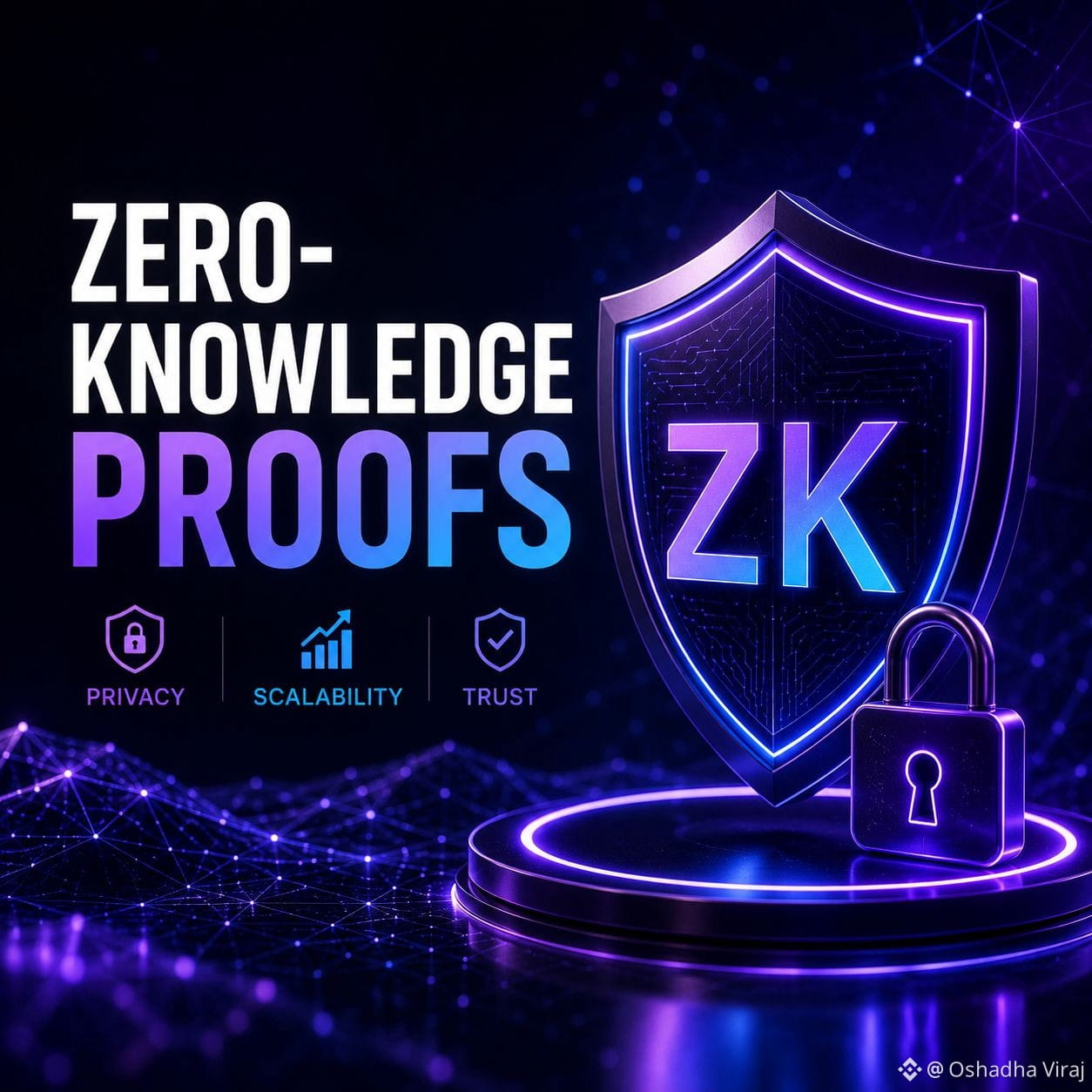
🔐 Zero-Knowledge Proofs: Is Privacy the Next Big Thing in Crypto?
Imagine proving you know something… without revealing what it is.
That’s the power of Zero-Knowledge Proofs (ZKPs) — and it could fundamentally change how crypto handles privacy, scalability, and verification.
🚀 Why ZK matters:
🔹 Privacy → Prove your identity, balance, or eligibility without exposing sensitive information.
🔹 Scalability → ZK-rollups can bundle thousands of transactions into a single proof, helping make L2s faster and cheaper.
🔹 Selective disclosure → Share only what’s necessary while keeping the rest private.
🔹 Trustless verification → Anyone can verify the proof without relying on a third party.
From zkSync and Scroll to Aztec, Polygon zkEVM, and Starknet, the ZK ecosystem is evolving rapidly.
We could be moving from:
“Transparent by default” → “Private by design.”
And the bigger question is…
🔥 Will Zero-Knowledge Proofs become a standard feature of major blockchains by 2027?
Are you bullish on ZK, or do you think transparent blockchains will remain dominant?
👇 Drop your take below.
$ZK $STRK $DUSK
#ZeroKnowledge #CryptoPrivacy #ZKRollups #Web3 #Blockchain
🔐 Zero-Knowledge Proofs: Is Privacy the Next Big Thing in Crypto?
Imagine proving you know something… without revealing what it is.
That’s the power of Zero-Knowledge Proofs (ZKPs) — and it could fundamentally change how crypto handles privacy, scalability, and verification.
🚀 Why ZK matters:
🔹 Privacy → Prove your identity, balance, or eligibility without exposing sensitive information.
🔹 Scalability → ZK-rollups can bundle thousands of transactions into a single proof, helping make L2s faster and cheaper.
🔹 Selective disclosure → Share only what’s necessary while keeping the rest private.
🔹 Trustless verification → Anyone can verify the proof without relying on a third party.
From zkSync and Scroll to Aztec, Polygon zkEVM, and Starknet, the ZK ecosystem is evolving rapidly.
We could be moving from:
“Transparent by default” → “Private by design.”
And the bigger question is…
🔥 Will Zero-Knowledge Proofs become a standard feature of major blockchains by 2027?
Are you bullish on ZK, or do you think transparent blockchains will remain dominant?
👇 Drop your take below.
$ZK $STRK $DUSK
#ZeroKnowledge #CryptoPrivacy #ZKRollups #Web3 #Blockchain
Imagine proving you know something… without revealing what it is.
That’s the power of Zero-Knowledge Proofs (ZKPs) — and it could fundamentally change how crypto handles privacy, scalability, and verification.
🚀 Why ZK matters:
🔹 Privacy → Prove your identity, balance, or eligibility without exposing sensitive information.
🔹 Scalability → ZK-rollups can bundle thousands of transactions into a single proof, helping make L2s faster and cheaper.
🔹 Selective disclosure → Share only what’s necessary while keeping the rest private.
🔹 Trustless verification → Anyone can verify the proof without relying on a third party.
From zkSync and Scroll to Aztec, Polygon zkEVM, and Starknet, the ZK ecosystem is evolving rapidly.
We could be moving from:
“Transparent by default” → “Private by design.”
And the bigger question is…
🔥 Will Zero-Knowledge Proofs become a standard feature of major blockchains by 2027?
Are you bullish on ZK, or do you think transparent blockchains will remain dominant?
👇 Drop your take below.
$ZK $STRK $DUSK
#ZeroKnowledge #CryptoPrivacy #ZKRollups #Web3 #Blockchain
2
332
Log in to explore more content
Join global crypto users on Binance Square
⚡️ Get latest and useful information about crypto.
💬 Trusted by the world’s largest crypto exchange.
👍 Discover real insights from verified creators.
Email / Phone number
Trending Topics
1
#AIStocksWhatNext
511,114 views
3,825 Discussing
2
#BitcoinTops$87KAtEightMonthHigh
1,003 views
37 Discussing
3
#ZECBreaksAbove$1600AtRecordHigh
461 views
23 Discussing
4
#BitwiseNEARStakingETPAssetsTop$100M
12,497 views
57 Discussing
5
#BitcoinBreaksAboveMayHighNears$86K
23,889 views
236 Discussing
6
#DogecoinRises15%
79,223 views
1,383 Discussing
7
#$14BBitcoinOptionsExpireFriday
6,976 views
105 Discussing
8
#BNBMarketCapPassesBNYMellon
48,582 views
1,021 Discussing
9
#CryptoMarketCapReclaims$3Trillion
10,038 views
91 Discussing
10
#MuseOvertakesChatGPTAsTopFreeIOSApp
28,698 views
779 Discussing