

#decentralizedtrading
decentralizedtrading
155,485 views
134 Discussing
Hot
Latest

Most DeFi platforms compete on features. @grvt_io is competing on experience, and that could be the difference that matters most.
The biggest barrier to decentralized trading has never been technology alone. It has been usability. Too many platforms expect users to navigate unnecessary complexity. GRVT is taking a different path by making trading intuitive, accessible, and genuinely enjoyable without sacrificing the benefits of decentralization.
What I appreciate most is their execution. They are not just shipping features. They are building with intention. Better onboarding, cleaner interfaces, educational resources, and a willingness to act on community feedback all point to a team that understands adoption is earned, not assumed.
The next phase will be even more interesting. Smarter risk management, broader asset offerings, and stronger social trading experiences could elevate the platform even further. If they continue delivering at this pace, they will be well positioned to attract both retail users and professional traders.
The projects that shape the future of DeFi will not necessarily be the loudest. They will be the ones that solve real problems, create lasting value, and keep users coming back.
@grvt_io is making a compelling case that they belong in that conversation.
Looking forward to what comes next. 🚀
#grvt #defi #cryptouniverseofficial #DecentralizedTrading
Most DeFi platforms compete on features. @grvt_io is competing on experience, and that could be the difference that matters most.
The biggest barrier to decentralized trading has never been technology alone. It has been usability. Too many platforms expect users to navigate unnecessary complexity. GRVT is taking a different path by making trading intuitive, accessible, and genuinely enjoyable without sacrificing the benefits of decentralization.
What I appreciate most is their execution. They are not just shipping features. They are building with intention. Better onboarding, cleaner interfaces, educational resources, and a willingness to act on community feedback all point to a team that understands adoption is earned, not assumed.
The next phase will be even more interesting. Smarter risk management, broader asset offerings, and stronger social trading experiences could elevate the platform even further. If they continue delivering at this pace, they will be well positioned to attract both retail users and professional traders.
The projects that shape the future of DeFi will not necessarily be the loudest. They will be the ones that solve real problems, create lasting value, and keep users coming back.
@grvt_io is making a compelling case that they belong in that conversation.
Looking forward to what comes next. 🚀
#grvt #defi #cryptouniverseofficial #DecentralizedTrading
The biggest barrier to decentralized trading has never been technology alone. It has been usability. Too many platforms expect users to navigate unnecessary complexity. GRVT is taking a different path by making trading intuitive, accessible, and genuinely enjoyable without sacrificing the benefits of decentralization.
What I appreciate most is their execution. They are not just shipping features. They are building with intention. Better onboarding, cleaner interfaces, educational resources, and a willingness to act on community feedback all point to a team that understands adoption is earned, not assumed.
The next phase will be even more interesting. Smarter risk management, broader asset offerings, and stronger social trading experiences could elevate the platform even further. If they continue delivering at this pace, they will be well positioned to attract both retail users and professional traders.
The projects that shape the future of DeFi will not necessarily be the loudest. They will be the ones that solve real problems, create lasting value, and keep users coming back.
@grvt_io is making a compelling case that they belong in that conversation.
Looking forward to what comes next. 🚀
#grvt #defi #cryptouniverseofficial #DecentralizedTrading
5
6
81

Uniswap maintains its position as the primary liquidity hub for decentralized trading, with $UNI 🚀
Entry: 6.5 🔥
Target: 8.2 🚀
Stop Loss: 5.8 ⚠️
The recent surge in Uniswap's market share on Ethereum, Arbitrum, and Base has led to a reevaluation of $UNI as a fundamental asset in the 2026 financial stack. This shift in sentiment is driven by its dominance in decentralized trading.
Not financial advice. Manage your risk.
#UNI #DecentralizedTrading #LiquidityHub
✅
Uniswap maintains its position as the primary liquidity hub for decentralized trading, with $UNI 🚀
Entry: 6.5 🔥
Target: 8.2 🚀
Stop Loss: 5.8 ⚠️
The recent surge in Uniswap's market share on Ethereum, Arbitrum, and Base has led to a reevaluation of $UNI as a fundamental asset in the 2026 financial stack. This shift in sentiment is driven by its dominance in decentralized trading.
Not financial advice. Manage your risk.
#UNI #DecentralizedTrading #LiquidityHub
✅
Entry: 6.5 🔥
Target: 8.2 🚀
Stop Loss: 5.8 ⚠️
The recent surge in Uniswap's market share on Ethereum, Arbitrum, and Base has led to a reevaluation of $UNI as a fundamental asset in the 2026 financial stack. This shift in sentiment is driven by its dominance in decentralized trading.
Not financial advice. Manage your risk.
#UNI #DecentralizedTrading #LiquidityHub
✅
38

·
--
Bullish
$XRP ledger is leading the way. Briliant strategy of #USGovernment to get rid of debt and convert #USDOLLAR debt to crypto so they can do damage control and reduce debt and move US dollar infinite supply to crypto finite supply for transparency #DecentralizedTrading
@CZ @heyi @Malik_Israr_Ahmad @Square-Creator-da2004700948
{future}(XRPUSDT)
$XRP ledger is leading the way. Briliant strategy of #USGovernment to get rid of debt and convert #USDOLLAR debt to crypto so they can do damage control and reduce debt and move US dollar infinite supply to crypto finite supply for transparency #DecentralizedTrading
@CZ @Yi He @Malik Israr Ahmad @WhaleWake
@CZ @Yi He @Malik Israr Ahmad @WhaleWake

221

·
--
Bullish
Decentralize before they centralize you.
#XINI8 — Own your story. Own your content. Own the future.
The revolution in film and media starts now.
No middlemen. No gatekeepers. Just creators and communities.
#drhainafatima #DecentralizedTrading
#Web3Film #OwnYourContent
Decentralize before they centralize you.
#XINI8 — Own your story. Own your content. Own the future.
The revolution in film and media starts now.
No middlemen. No gatekeepers. Just creators and communities.
#drhainafatima #DecentralizedTrading
#Web3Film #OwnYourContent
#XINI8 — Own your story. Own your content. Own the future.
The revolution in film and media starts now.
No middlemen. No gatekeepers. Just creators and communities.
#drhainafatima #DecentralizedTrading
#Web3Film #OwnYourContent
1
217

·
--
Article
Smart Contracts Without Ethereum Exist —And They Can Be EasierWhen you read the term “smart contract,” there’s a high chance you also think about Ethereum. You could say that's their flagship product, but they’re not the only platform that offers this software. It may not be the easiest one for beginners, either.
Several networks have explored simpler ways to automate agreements while keeping the same basic goal: letting software carry out rules that people agreed on in advance. Let's explore a bit the world of smart contracts without Ethereum.
Smart contracts aren't exclusive to Ethereum
To revisit this concept, a smart contract is a digital program that follows pre-set instructions or agreements when certain conditions are met. It usually involves cryptocurrency, and a transaction can trigger the contract when someone interacts with it or provides the required input. The contract then applies its pre-set rules to determine the outcome.
Everyone involved knows beforehand what the contract will do, so there are no surprises. Smart contracts can automate payments, exchanges, loans, bets, games, and many other applications.
Ethereum became the best-known network for smart contracts because it introduced a general-purpose environment where developers could build almost any decentralized application. Over time, it attracted a huge community, thousands of projects, and programming languages such as Solidity that let developers create complex applications. There’s a steep learning curve, though, for users and developers alike.
Past mistakes in coding have led to costly hacks or funds becoming inaccessible. Besides, transaction approval depends entirely on Ethereum’s network of “validators,” which opens the door for censorship. That’s why other crypto networks have created their own version of smart contracts, with the same use cases or even more. Programming may also be easier for developers, and their interface can be so user-friendly that average users could create their own smart contracts without coding —depending on the platform.
Among these networks that provide smart contracts without Ethereum, we have BNB Chain, Solana, Avalanche, Cardano, Polkadot, and of course, Obyte. Each one has its own approach to scalability, fees, tools, and decentralization.
Smart Contracts in Obyte
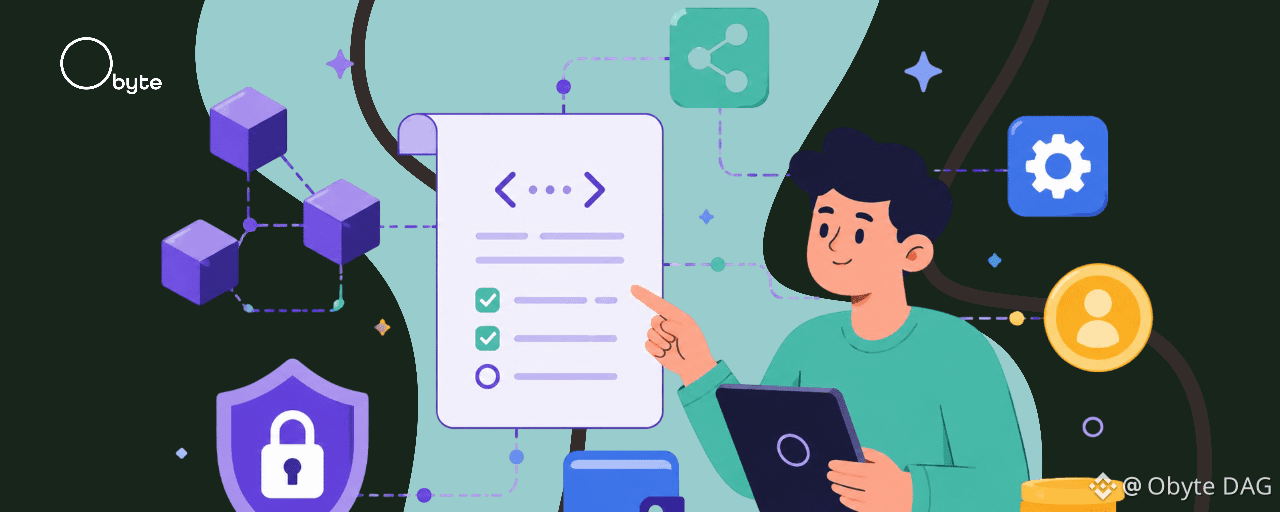
To start, smart contracts in Obyte are based on a Directed Acyclic Graph (DAG) structure instead of a blockchain. That means there’s no transaction approval: every user is its own “miner,” and every transaction added is immutable, linked with all the previous ones. Obyte has no middlemen, so it doesn’t have censorship. As for smart contracts specifically, they’re designed to be human-readable, so participants can write and review the conditions in plain language before approving them.
This way, a payment, for example, can stay locked until a package arrives, a document is signed, or several people approve the same transaction. Once the agreed condition is satisfied, the payment can be released without relying on an escrow company or another middleman. However, if you need a human professional involved to resolve potential disputes, we also have a list of available arbiters on the ArbStore to include in your smart contracts.
The ArbStore is a decentralized escrow service built on Obyte that helps two parties trade with greater protection. Funds are locked in a smart contract until the agreed conditions are met and the buyer releases funds in favor of the seller. If a dispute occurs, an independent arbiter reviews the evidence and decides who should receive the funds.
Beyond this, Obyte also supports token creation, decentralized exchanges, prediction markets, self-sovereign identity, and other DeFi applications. A freelance payment, a community crowdfunding campaign, a trading strategy, or a digital asset swap can all use the same idea: define the conditions first, then let the network carry them out. Without complex steps and including previews of the transaction results.
As you can see, smart contracts without Ethereum do exist, and they may come in handy. Now it’s your turn to choose your network.
Originally Published on Hackernoon
#SmartContracts #SmartContract #DecentralizedTrading #CryptoWallet #Obyte
Smart Contracts Without Ethereum Exist —And They Can Be Easier
When you read the term “smart contract,” there’s a high chance you also think about Ethereum. You could say that's their flagship product, but they’re not the only platform that offers this software. It may not be the easiest one for beginners, either.
Several networks have explored simpler ways to automate agreements while keeping the same basic goal: letting software carry out rules that people agreed on in advance. Let's explore a bit the world of smart contracts without Ethereum.
Smart contracts aren't exclusive to Ethereum
To revisit this concept, a smart contract is a digital program that follows pre-set instructions or agreements when certain conditions are met. It usually involves cryptocurrency, and a transaction can trigger the contract when someone interacts with it or provides the required input. The contract then applies its pre-set rules to determine the outcome.
Everyone involved knows beforehand what the contract will do, so there are no surprises. Smart contracts can automate payments, exchanges, loans, bets, games, and many other applications.
Ethereum became the best-known network for smart contracts because it introduced a general-purpose environment where developers could build almost any decentralized application. Over time, it attracted a huge community, thousands of projects, and programming languages such as Solidity that let developers create complex applications. There’s a steep learning curve, though, for users and developers alike.
Past mistakes in coding have led to costly hacks or funds becoming inaccessible. Besides, transaction approval depends entirely on Ethereum’s network of “validators,” which opens the door for censorship. That’s why other crypto networks have created their own version of smart contracts, with the same use cases or even more. Programming may also be easier for developers, and their interface can be so user-friendly that average users could create their own smart contracts without coding —depending on the platform.
Among these networks that provide smart contracts without Ethereum, we have BNB Chain, Solana, Avalanche, Cardano, Polkadot, and of course, Obyte. Each one has its own approach to scalability, fees, tools, and decentralization.
Smart Contracts in Obyte
To start, smart contracts in Obyte are based on a Directed Acyclic Graph (DAG) structure instead of a blockchain. That means there’s no transaction approval: every user is its own “miner,” and every transaction added is immutable, linked with all the previous ones. Obyte has no middlemen, so it doesn’t have censorship. As for smart contracts specifically, they’re designed to be human-readable, so participants can write and review the conditions in plain language before approving them.
This way, a payment, for example, can stay locked until a package arrives, a document is signed, or several people approve the same transaction. Once the agreed condition is satisfied, the payment can be released without relying on an escrow company or another middleman. However, if you need a human professional involved to resolve potential disputes, we also have a list of available arbiters on the ArbStore to include in your smart contracts.
The ArbStore is a decentralized escrow service built on Obyte that helps two parties trade with greater protection. Funds are locked in a smart contract until the agreed conditions are met and the buyer releases funds in favor of the seller. If a dispute occurs, an independent arbiter reviews the evidence and decides who should receive the funds.
Beyond this, Obyte also supports token creation, decentralized exchanges, prediction markets, self-sovereign identity, and other DeFi applications. A freelance payment, a community crowdfunding campaign, a trading strategy, or a digital asset swap can all use the same idea: define the conditions first, then let the network carry them out. Without complex steps and including previews of the transaction results.
As you can see, smart contracts without Ethereum do exist, and they may come in handy. Now it’s your turn to choose your network.
Originally Published on Hackernoon
#SmartContracts #SmartContract #DecentralizedTrading #CryptoWallet #Obyte
Several networks have explored simpler ways to automate agreements while keeping the same basic goal: letting software carry out rules that people agreed on in advance. Let's explore a bit the world of smart contracts without Ethereum.
Smart contracts aren't exclusive to Ethereum
To revisit this concept, a smart contract is a digital program that follows pre-set instructions or agreements when certain conditions are met. It usually involves cryptocurrency, and a transaction can trigger the contract when someone interacts with it or provides the required input. The contract then applies its pre-set rules to determine the outcome.
Everyone involved knows beforehand what the contract will do, so there are no surprises. Smart contracts can automate payments, exchanges, loans, bets, games, and many other applications.
Ethereum became the best-known network for smart contracts because it introduced a general-purpose environment where developers could build almost any decentralized application. Over time, it attracted a huge community, thousands of projects, and programming languages such as Solidity that let developers create complex applications. There’s a steep learning curve, though, for users and developers alike.
Past mistakes in coding have led to costly hacks or funds becoming inaccessible. Besides, transaction approval depends entirely on Ethereum’s network of “validators,” which opens the door for censorship. That’s why other crypto networks have created their own version of smart contracts, with the same use cases or even more. Programming may also be easier for developers, and their interface can be so user-friendly that average users could create their own smart contracts without coding —depending on the platform.
Among these networks that provide smart contracts without Ethereum, we have BNB Chain, Solana, Avalanche, Cardano, Polkadot, and of course, Obyte. Each one has its own approach to scalability, fees, tools, and decentralization.
Smart Contracts in Obyte
To start, smart contracts in Obyte are based on a Directed Acyclic Graph (DAG) structure instead of a blockchain. That means there’s no transaction approval: every user is its own “miner,” and every transaction added is immutable, linked with all the previous ones. Obyte has no middlemen, so it doesn’t have censorship. As for smart contracts specifically, they’re designed to be human-readable, so participants can write and review the conditions in plain language before approving them.
This way, a payment, for example, can stay locked until a package arrives, a document is signed, or several people approve the same transaction. Once the agreed condition is satisfied, the payment can be released without relying on an escrow company or another middleman. However, if you need a human professional involved to resolve potential disputes, we also have a list of available arbiters on the ArbStore to include in your smart contracts.
The ArbStore is a decentralized escrow service built on Obyte that helps two parties trade with greater protection. Funds are locked in a smart contract until the agreed conditions are met and the buyer releases funds in favor of the seller. If a dispute occurs, an independent arbiter reviews the evidence and decides who should receive the funds.
Beyond this, Obyte also supports token creation, decentralized exchanges, prediction markets, self-sovereign identity, and other DeFi applications. A freelance payment, a community crowdfunding campaign, a trading strategy, or a digital asset swap can all use the same idea: define the conditions first, then let the network carry them out. Without complex steps and including previews of the transaction results.
As you can see, smart contracts without Ethereum do exist, and they may come in handy. Now it’s your turn to choose your network.
Originally Published on Hackernoon
#SmartContracts #SmartContract #DecentralizedTrading #CryptoWallet #Obyte
89

·
--
Exploring the Future of Decentralized Payments and Micro-Rewards 🚀
As Web3 continues to expand, micro-reward tasks and seamless payment gateways are bridge-building tools for onboarding new users into crypto. I've been checking out the latest tasks on bpays.fun and the user experience is incredibly smooth. For anyone looking to maximize their daily Web3 activities, completing these structured tasks is a great way to stay interactive within the ecosystem.The platform provides a straightforward bridge for users looking to engage with community rewards seamlessly. Looking forward to seeing how the project expands its integration with the Binance community!💎.
CA: 0xb13003bf44de426dd2a3aae3df9c3400de0a7777
Code: BP-D99550465964
#BinanceSquareTalks #Web3 #DecentralizedTrading #Crypto2026🔥
Exploring the Future of Decentralized Payments and Micro-Rewards 🚀
As Web3 continues to expand, micro-reward tasks and seamless payment gateways are bridge-building tools for onboarding new users into crypto. I've been checking out the latest tasks on bpays.fun and the user experience is incredibly smooth. For anyone looking to maximize their daily Web3 activities, completing these structured tasks is a great way to stay interactive within the ecosystem.The platform provides a straightforward bridge for users looking to engage with community rewards seamlessly. Looking forward to seeing how the project expands its integration with the Binance community!💎.
CA: 0xb13003bf44de426dd2a3aae3df9c3400de0a7777
Code: BP-D99550465964
#BinanceSquareTalks #Web3 #DecentralizedTrading #Crypto2026🔥
As Web3 continues to expand, micro-reward tasks and seamless payment gateways are bridge-building tools for onboarding new users into crypto. I've been checking out the latest tasks on bpays.fun and the user experience is incredibly smooth. For anyone looking to maximize their daily Web3 activities, completing these structured tasks is a great way to stay interactive within the ecosystem.The platform provides a straightforward bridge for users looking to engage with community rewards seamlessly. Looking forward to seeing how the project expands its integration with the Binance community!💎.
CA: 0xb13003bf44de426dd2a3aae3df9c3400de0a7777
Code: BP-D99550465964
#BinanceSquareTalks #Web3 #DecentralizedTrading #Crypto2026🔥
27

·
--
Article
#OpenLedger🔓 OpenLedger (OPEN): The AI Blockchain Changing How the World Owns Data
The future of artificial intelligence is being built right now — and most people don't even realize they're part of it. Every time you browse the web, create content, or interact online, your data quietly feeds AI systems owned by billion-dollar corporations. You contribute. They profit. That ends with OpenLedger.
---
### 🌐 What Is OpenLedger?
OpenLedger is the world's first AI-native blockchain — built to make data, models, and agents transparent, traceable, and rewardable in real time, ensuring that contributors are credited and the AI economy becomes both explainable and fair.
The platform is built on three core components: datanets, specialized models, and attribution. It leverages datanets to collect and curate data, then uses it to train specialized models consumed by AI agents, chatbots, copilots, and various other applications.
Simply put — OpenLedger turns YOUR data into YOUR equity. Not a corporation's.
### ⚙️ How Does It Work?
Unlike general-purpose blockchains or AI projects that only focus on compute and storage, OpenLedger is AI-first at the protocol level. Its Proof of Attribution (PoA) records every dataset, training step, and model inference on-chain, ensuring contributors are credited and rewarded.
With tools like Datanets for community-owned datasets, ModelFactory for no-code fine-tuning, and OpenLoRA for cost-efficient deployment, OpenLedger transforms data, models, and agents into transparent, monetizable assets — making AI not just on-chain, but explainable, rewardable, and production-ready.
### 💰 Backed by the Best
OpenLedger is backed by $8 million in seed funding from Polychain and Borderless, along with notable angels like Sreeram Kannan of EigenLabs, ex-Coinbase CTO Balaji Srinivasan, and Polygon co-founder Sandeep Nailwal. [BingX](https://bingx.com/en/learn/article/what-is-openledger-open-ai-blockchain-how-does-it-work) This isn't a random project — this is institutional-grade infrastructure with serious believers behind it.
---
### 🚀 OpenCircle: Fueling the Ecosystem
OpenLedger committed $25 million via its new launchpad, OpenCircle, to support AI and Web3 developers building decentralized AI protocols. The initiative aims to democratize AI development, allowing contributors of code, data, or computing resources to share in the value they help create.
---
### 🎓 Investing in the Future of Decentralized AI
OpenLedger unveiled a groundbreaking $5 million grant program dedicated solely to advancing decentralized AI research, partnering with the prestigious Cambridge Blockchain Society to channel resources directly into the academic heart of innovation. The goal is to support projects that explore how blockchain technology can solve critical challenges in AI development, such as data privacy, model transparency, and equitable access.
---
### 📈 Market Opportunity
According to Research And Markets, the global AI market is expected to grow at a CAGR of 33.8%, from $184B in 2024 to $2.5T by 2033.
OpenLedger is positioning itself right at the heart of this explosive growth — combining two of the most powerful narratives in tech: AI + Blockchain.
---
### 🔥 The Bottom Line
OpenLedger turns extraction into equity. Every verified contribution is written, weighted, and rewarded through Proof of Attribution. Intelligence stops being stolen capital.
This is bigger than a token. This is a movement to give power back to the people who actually build and fuel AI. If you believe in fair, transparent, and decentralized artificial intelligence — OpenLedger deserves your attention.
DYOR. Stay informed. The AI economy is being rewritten. 🌍 $OPEN
([https://www.binance.com/en/square/profile/openledger](https://www.binance.com/en/square/profile/openledger)
---
#OpenLedgar $BTC #open #DecentralizedTrading #openledgernetwork #CryptoInvesting
#OpenLedger
🔓 OpenLedger (OPEN): The AI Blockchain Changing How the World Owns Data
The future of artificial intelligence is being built right now — and most people don't even realize they're part of it. Every time you browse the web, create content, or interact online, your data quietly feeds AI systems owned by billion-dollar corporations. You contribute. They profit. That ends with OpenLedger.
---
### 🌐 What Is OpenLedger?
OpenLedger is the world's first AI-native blockchain — built to make data, models, and agents transparent, traceable, and rewardable in real time, ensuring that contributors are credited and the AI economy becomes both explainable and fair.
The platform is built on three core components: datanets, specialized models, and attribution. It leverages datanets to collect and curate data, then uses it to train specialized models consumed by AI agents, chatbots, copilots, and various other applications.
Simply put — OpenLedger turns YOUR data into YOUR equity. Not a corporation's.
### ⚙️ How Does It Work?
Unlike general-purpose blockchains or AI projects that only focus on compute and storage, OpenLedger is AI-first at the protocol level. Its Proof of Attribution (PoA) records every dataset, training step, and model inference on-chain, ensuring contributors are credited and rewarded.
With tools like Datanets for community-owned datasets, ModelFactory for no-code fine-tuning, and OpenLoRA for cost-efficient deployment, OpenLedger transforms data, models, and agents into transparent, monetizable assets — making AI not just on-chain, but explainable, rewardable, and production-ready.
### 💰 Backed by the Best
OpenLedger is backed by $8 million in seed funding from Polychain and Borderless, along with notable angels like Sreeram Kannan of EigenLabs, ex-Coinbase CTO Balaji Srinivasan, and Polygon co-founder Sandeep Nailwal. [BingX](https://bingx.com/en/learn/article/what-is-openledger-open-ai-blockchain-how-does-it-work) This isn't a random project — this is institutional-grade infrastructure with serious believers behind it.
---
### 🚀 OpenCircle: Fueling the Ecosystem
OpenLedger committed $25 million via its new launchpad, OpenCircle, to support AI and Web3 developers building decentralized AI protocols. The initiative aims to democratize AI development, allowing contributors of code, data, or computing resources to share in the value they help create.
---
### 🎓 Investing in the Future of Decentralized AI
OpenLedger unveiled a groundbreaking $5 million grant program dedicated solely to advancing decentralized AI research, partnering with the prestigious Cambridge Blockchain Society to channel resources directly into the academic heart of innovation. The goal is to support projects that explore how blockchain technology can solve critical challenges in AI development, such as data privacy, model transparency, and equitable access.
---
### 📈 Market Opportunity
According to Research And Markets, the global AI market is expected to grow at a CAGR of 33.8%, from $184B in 2024 to $2.5T by 2033.
OpenLedger is positioning itself right at the heart of this explosive growth — combining two of the most powerful narratives in tech: AI + Blockchain.
---
### 🔥 The Bottom Line
OpenLedger turns extraction into equity. Every verified contribution is written, weighted, and rewarded through Proof of Attribution. Intelligence stops being stolen capital.
This is bigger than a token. This is a movement to give power back to the people who actually build and fuel AI. If you believe in fair, transparent, and decentralized artificial intelligence — OpenLedger deserves your attention.
DYOR. Stay informed. The AI economy is being rewritten. 🌍 $OPEN
(https://www.binance.com/en/square/profile/openledger
---
#OpenLedgar $BTC #open #DecentralizedTrading #openledgernetwork #CryptoInvesting
The future of artificial intelligence is being built right now — and most people don't even realize they're part of it. Every time you browse the web, create content, or interact online, your data quietly feeds AI systems owned by billion-dollar corporations. You contribute. They profit. That ends with OpenLedger.
---
### 🌐 What Is OpenLedger?
OpenLedger is the world's first AI-native blockchain — built to make data, models, and agents transparent, traceable, and rewardable in real time, ensuring that contributors are credited and the AI economy becomes both explainable and fair.
The platform is built on three core components: datanets, specialized models, and attribution. It leverages datanets to collect and curate data, then uses it to train specialized models consumed by AI agents, chatbots, copilots, and various other applications.
Simply put — OpenLedger turns YOUR data into YOUR equity. Not a corporation's.
### ⚙️ How Does It Work?
Unlike general-purpose blockchains or AI projects that only focus on compute and storage, OpenLedger is AI-first at the protocol level. Its Proof of Attribution (PoA) records every dataset, training step, and model inference on-chain, ensuring contributors are credited and rewarded.
With tools like Datanets for community-owned datasets, ModelFactory for no-code fine-tuning, and OpenLoRA for cost-efficient deployment, OpenLedger transforms data, models, and agents into transparent, monetizable assets — making AI not just on-chain, but explainable, rewardable, and production-ready.
### 💰 Backed by the Best
OpenLedger is backed by $8 million in seed funding from Polychain and Borderless, along with notable angels like Sreeram Kannan of EigenLabs, ex-Coinbase CTO Balaji Srinivasan, and Polygon co-founder Sandeep Nailwal. [BingX](https://bingx.com/en/learn/article/what-is-openledger-open-ai-blockchain-how-does-it-work) This isn't a random project — this is institutional-grade infrastructure with serious believers behind it.
---
### 🚀 OpenCircle: Fueling the Ecosystem
OpenLedger committed $25 million via its new launchpad, OpenCircle, to support AI and Web3 developers building decentralized AI protocols. The initiative aims to democratize AI development, allowing contributors of code, data, or computing resources to share in the value they help create.
---
### 🎓 Investing in the Future of Decentralized AI
OpenLedger unveiled a groundbreaking $5 million grant program dedicated solely to advancing decentralized AI research, partnering with the prestigious Cambridge Blockchain Society to channel resources directly into the academic heart of innovation. The goal is to support projects that explore how blockchain technology can solve critical challenges in AI development, such as data privacy, model transparency, and equitable access.
---
### 📈 Market Opportunity
According to Research And Markets, the global AI market is expected to grow at a CAGR of 33.8%, from $184B in 2024 to $2.5T by 2033.
OpenLedger is positioning itself right at the heart of this explosive growth — combining two of the most powerful narratives in tech: AI + Blockchain.
---
### 🔥 The Bottom Line
OpenLedger turns extraction into equity. Every verified contribution is written, weighted, and rewarded through Proof of Attribution. Intelligence stops being stolen capital.
This is bigger than a token. This is a movement to give power back to the people who actually build and fuel AI. If you believe in fair, transparent, and decentralized artificial intelligence — OpenLedger deserves your attention.
DYOR. Stay informed. The AI economy is being rewritten. 🌍 $OPEN
(https://www.binance.com/en/square/profile/openledger
---
#OpenLedgar $BTC #open #DecentralizedTrading #openledgernetwork #CryptoInvesting
68


·
--
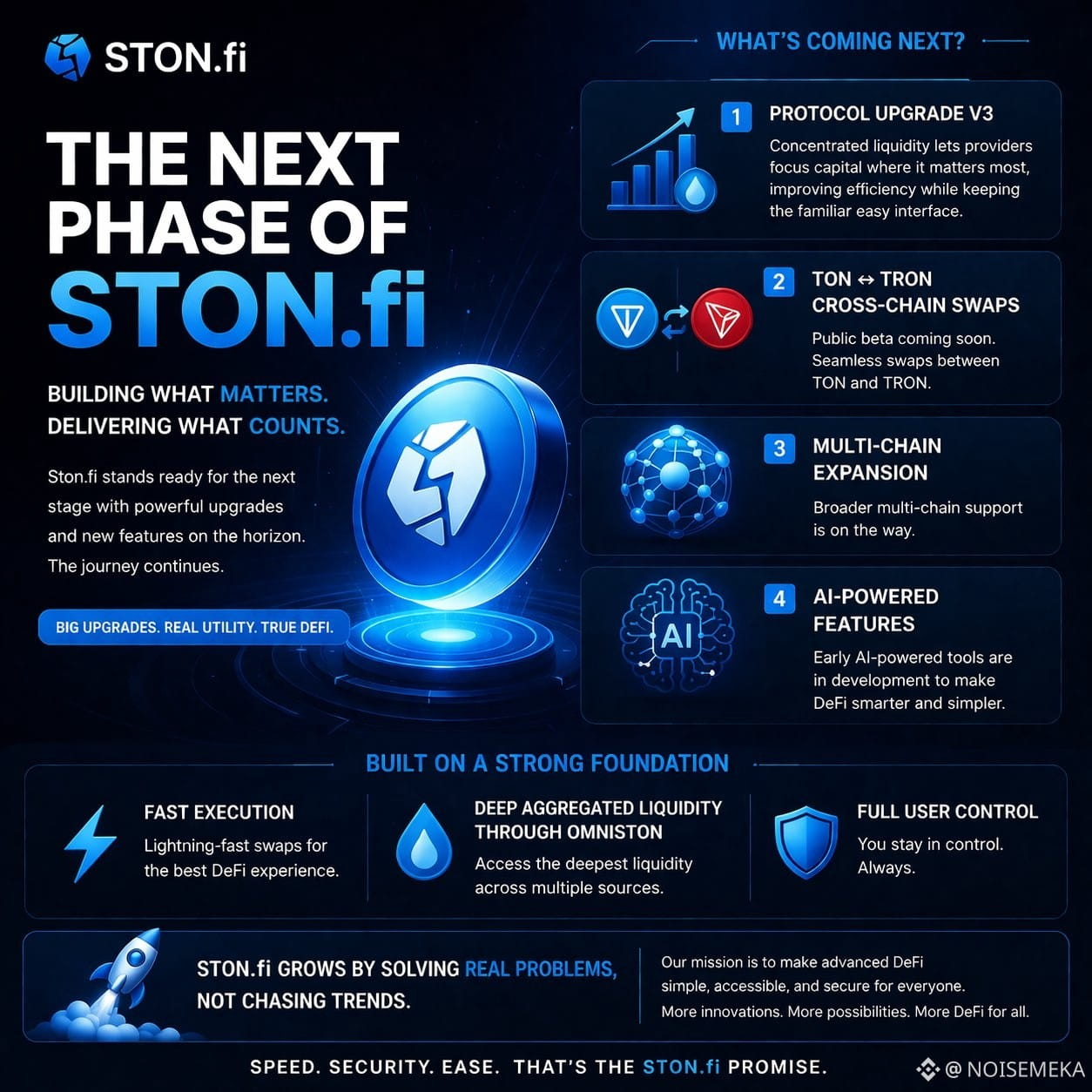
Concentrated liquidity will enable more precise capital allocation, improving efficiency without complicating the user experience. At the same time, cross-chain swaps between The $TON and $TRX are nearing public rollout, opening the door to broader interoperability.
These developments build on a proven foundation of fast execution, aggregated liquidity through Omniston, and full non-custodial control.
@stonfi continues to prioritize steady, meaningful innovation, expanding capabilities while keeping DeFi simple, accessible, and reliable for everyday users.
#TRX #TON #STONfi #BinanceSquareTalks #DecentralizedTrading
Concentrated liquidity will enable more precise capital allocation, improving efficiency without complicating the user experience. At the same time, cross-chain swaps between The $TON and $TRX are nearing public rollout, opening the door to broader interoperability.
These developments build on a proven foundation of fast execution, aggregated liquidity through Omniston, and full non-custodial control.
@STONfi DEX continues to prioritize steady, meaningful innovation, expanding capabilities while keeping DeFi simple, accessible, and reliable for everyday users.
#TRX #TON #STONfi #BinanceSquareTalks #DecentralizedTrading
These developments build on a proven foundation of fast execution, aggregated liquidity through Omniston, and full non-custodial control.
@STONfi DEX continues to prioritize steady, meaningful innovation, expanding capabilities while keeping DeFi simple, accessible, and reliable for everyday users.
#TRX #TON #STONfi #BinanceSquareTalks #DecentralizedTrading
147

Article
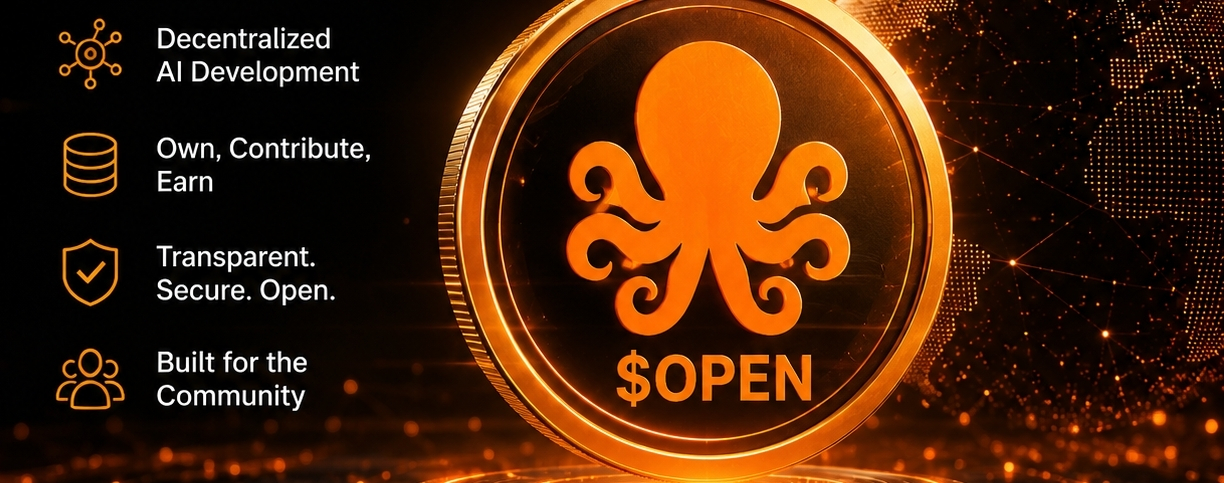
OpenLedger: Powering the Future of Decentralized AI with $OPEN 🚀The future of decentralized AI is being shaped by @openledger, a project that is bringing together blockchain, artificial intelligence, and community-driven data ownership into one powerful ecosystem. In today’s digital world, data has become one of the most valuable resources, yet most users never benefit from the value they create. OpenLedger is changing that narrative by creating a transparent and decentralized infrastructure where contributors, developers, and communities can all participate and earn fairly.
What makes $OPEN stand out is its vision of building an open economy for AI. Instead of allowing centralized companies to fully control data and AI development, OpenLedger empowers users to own, contribute, and monetize their data securely. This creates endless possibilities for innovation in Web3, machine learning, decentralized applications, and intelligent systems.
The growth potential of @openledger is massive because AI and blockchain are two of the fastest-growing technologies in the world today. By combining these sectors, $OPEN is positioning itself as a key project for the next generation of decentralized technology. Strong community support, transparency, and utility-driven development are helping OpenLedger gain increasing attention across the crypto space.
As adoption of decentralized AI continues to rise, projects like OpenLedger could become essential infrastructure for the future internet. Builders, investors, and crypto enthusiasts should keep a close eye on $OPEN because this ecosystem is focused on long-term innovation rather than short-term hype.
#openledger #OPEN #Web3 #AI #Crypto #BinanceSquare #DecentralizedTrading alizedAI
OpenLedger: Powering the Future of Decentralized AI with $OPEN 🚀
The future of decentralized AI is being shaped by @openledger, a project that is bringing together blockchain, artificial intelligence, and community-driven data ownership into one powerful ecosystem. In today’s digital world, data has become one of the most valuable resources, yet most users never benefit from the value they create. OpenLedger is changing that narrative by creating a transparent and decentralized infrastructure where contributors, developers, and communities can all participate and earn fairly.
What makes $OPEN stand out is its vision of building an open economy for AI. Instead of allowing centralized companies to fully control data and AI development, OpenLedger empowers users to own, contribute, and monetize their data securely. This creates endless possibilities for innovation in Web3, machine learning, decentralized applications, and intelligent systems.
The growth potential of @openledger is massive because AI and blockchain are two of the fastest-growing technologies in the world today. By combining these sectors, $OPEN is positioning itself as a key project for the next generation of decentralized technology. Strong community support, transparency, and utility-driven development are helping OpenLedger gain increasing attention across the crypto space.
As adoption of decentralized AI continues to rise, projects like OpenLedger could become essential infrastructure for the future internet. Builders, investors, and crypto enthusiasts should keep a close eye on $OPEN because this ecosystem is focused on long-term innovation rather than short-term hype.
#openledger #OPEN #Web3 #AI #Crypto #BinanceSquare #DecentralizedTrading alizedAI
What makes $OPEN stand out is its vision of building an open economy for AI. Instead of allowing centralized companies to fully control data and AI development, OpenLedger empowers users to own, contribute, and monetize their data securely. This creates endless possibilities for innovation in Web3, machine learning, decentralized applications, and intelligent systems.
The growth potential of @openledger is massive because AI and blockchain are two of the fastest-growing technologies in the world today. By combining these sectors, $OPEN is positioning itself as a key project for the next generation of decentralized technology. Strong community support, transparency, and utility-driven development are helping OpenLedger gain increasing attention across the crypto space.
As adoption of decentralized AI continues to rise, projects like OpenLedger could become essential infrastructure for the future internet. Builders, investors, and crypto enthusiasts should keep a close eye on $OPEN because this ecosystem is focused on long-term innovation rather than short-term hype.
#openledger #OPEN #Web3 #AI #Crypto #BinanceSquare #DecentralizedTrading alizedAI
56


·
--

Article
How High Can ASTER Go and How to Buy It on BinanceASTER is currently in the spotlight after a strong rally following its listing on Binance. Trading volume has increased, social sentiment is up, and many traders are starting to add ASTER to their watchlists. This enthusiasm does not come without reason. Its utility narrative is clear as on-chain derivative infrastructure that offers a centralized exchange-like experience while remaining non-custodial. Below is a summary of the driving factors, a reasonable projection framework, and a concise buying guide.
Why ASTER is Strengthening
How High Can ASTER Go and How to Buy It on Binance
ASTER is currently in the spotlight after a strong rally following its listing on Binance. Trading volume has increased, social sentiment is up, and many traders are starting to add ASTER to their watchlists. This enthusiasm does not come without reason. Its utility narrative is clear as on-chain derivative infrastructure that offers a centralized exchange-like experience while remaining non-custodial. Below is a summary of the driving factors, a reasonable projection framework, and a concise buying guide.
Why ASTER is Strengthening
Why ASTER is Strengthening
2
3.3k

·
--
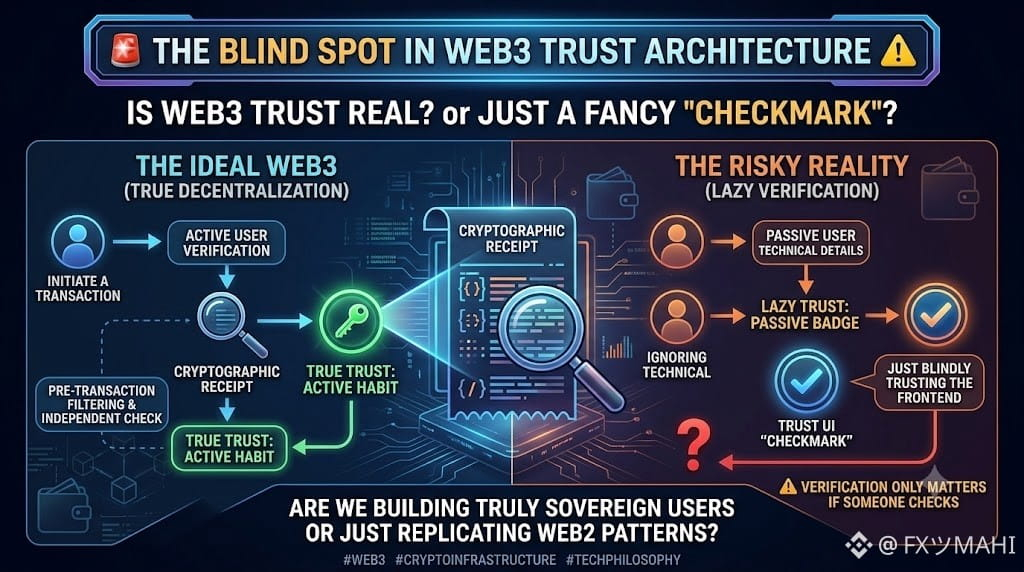
🚨 The Blind Spot in Web3 Trust Architecture 🚨
What happens when the novelty of "decentralized verification" wears off?
Cryptographic receipts aren't just for compliance paper trails—they are real-time, pre-transaction filters. They turn a leap of faith into verifiable proof.
But here’s the hard truth: Verification only matters if someone actually bothers to check.
Are we building a future of truly sovereign users who verify their own data? Or are we just going to lazily trust a frontend "checkmark" the same way we did in Web2?
True trust isn't a passive badge; it's an active habit.
$NEWT
{future}(NEWTUSDT)
#newton #Web3 #BinanceSquareTalks #DecentralizedTrading #crypto
🚨 The Blind Spot in Web3 Trust Architecture 🚨
What happens when the novelty of "decentralized verification" wears off?
Cryptographic receipts aren't just for compliance paper trails—they are real-time, pre-transaction filters. They turn a leap of faith into verifiable proof.
But here’s the hard truth: Verification only matters if someone actually bothers to check.
Are we building a future of truly sovereign users who verify their own data? Or are we just going to lazily trust a frontend "checkmark" the same way we did in Web2?
True trust isn't a passive badge; it's an active habit.
$NEWT
#newton #Web3 #BinanceSquareTalks #DecentralizedTrading #crypto
What happens when the novelty of "decentralized verification" wears off?
Cryptographic receipts aren't just for compliance paper trails—they are real-time, pre-transaction filters. They turn a leap of faith into verifiable proof.
But here’s the hard truth: Verification only matters if someone actually bothers to check.
Are we building a future of truly sovereign users who verify their own data? Or are we just going to lazily trust a frontend "checkmark" the same way we did in Web2?
True trust isn't a passive badge; it's an active habit.
$NEWT
#newton #Web3 #BinanceSquareTalks #DecentralizedTrading #crypto
94
Log in to explore more content
Join global crypto users on Binance Square
⚡️ Get latest and useful information about crypto.
💬 Trusted by the world’s largest crypto exchange.
👍 Discover real insights from verified creators.
Email / Phone number
Trending Topics
1
#BitcoinParesGainsAfterRallyTo$86.5K
15,945 views
69 Discussing
2
#CerebrasSinksNearly20%OnReportNvidiaToPowerOpenAI
28,103 views
351 Discussing
3
#SECProposesCryptoCustodyRules
56,193 views
528 Discussing
4
#SECApproves3xLongCryptoCommodityETPs
41,046 views
407 Discussing
5
#MASKHitsRecordMarketCapAbove$35M
151 views
26 Discussing
6
#G7PlansToReleaseUpTo100MBarrelsOilDiesel
35,243 views
401 Discussing
7
#ICBASuesOCCOverCryptoBankCharters
26,571 views
279 Discussing
8
#USStocksCloseHigherOnWeakJobsData
26,935 views
226 Discussing
9
#AnchorageReportedlyCuts17%Workforce
5,953 views
89 Discussing
10
#NFPWatch
11M views
19,756 Discussing