

#cryptoinsights
cryptoinsights
10.8M views
15,900 Discussing
Hot
Latest

·
--
Most on-chain metrics measure activity. The underrated ones measure the absence of it.
Every coin carries an invisible timestamp: how long since it last moved. Dormancy — often framed as coin-days — is the aggregate of those timestamps, and it tells you something volume never will: whether current owners intend to hold, or are merely renting their position.
A market with high churn is a rental market. Coins circulate fast, ownership is shallow, and price gets set by short-term flows. A market with rising dormancy is an ownership market: supply stacks into hands that do not flinch on +10% days or -10% days. That is where trends get their fuel.
The signal is not the level — it is the change. When the share of supply untouched for six months or more keeps growing through new highs, patient capital is still absorbing. When that cohort share flattens or rolls over while price pushes higher, the bid has quietly shifted from holders to renters. Tops built on rented supply do not need much of an excuse to unwind.
Activity gets the headlines. The refusal to sell is the quieter, stronger signal — and it is readable on-chain weeks before it shows up in price.
$BTC $ETH $SOL
#OnChainAnalysis #Bitcoin #CryptoInsights #MarketStructure
Most on-chain metrics measure activity. The underrated ones measure the absence of it.
Every coin carries an invisible timestamp: how long since it last moved. Dormancy — often framed as coin-days — is the aggregate of those timestamps, and it tells you something volume never will: whether current owners intend to hold, or are merely renting their position.
A market with high churn is a rental market. Coins circulate fast, ownership is shallow, and price gets set by short-term flows. A market with rising dormancy is an ownership market: supply stacks into hands that do not flinch on +10% days or -10% days. That is where trends get their fuel.
The signal is not the level — it is the change. When the share of supply untouched for six months or more keeps growing through new highs, patient capital is still absorbing. When that cohort share flattens or rolls over while price pushes higher, the bid has quietly shifted from holders to renters. Tops built on rented supply do not need much of an excuse to unwind.
Activity gets the headlines. The refusal to sell is the quieter, stronger signal — and it is readable on-chain weeks before it shows up in price.
$BTC $ETH $SOL
#OnChainAnalysis #Bitcoin #CryptoInsights #MarketStructure
Every coin carries an invisible timestamp: how long since it last moved. Dormancy — often framed as coin-days — is the aggregate of those timestamps, and it tells you something volume never will: whether current owners intend to hold, or are merely renting their position.
A market with high churn is a rental market. Coins circulate fast, ownership is shallow, and price gets set by short-term flows. A market with rising dormancy is an ownership market: supply stacks into hands that do not flinch on +10% days or -10% days. That is where trends get their fuel.
The signal is not the level — it is the change. When the share of supply untouched for six months or more keeps growing through new highs, patient capital is still absorbing. When that cohort share flattens or rolls over while price pushes higher, the bid has quietly shifted from holders to renters. Tops built on rented supply do not need much of an excuse to unwind.
Activity gets the headlines. The refusal to sell is the quieter, stronger signal — and it is readable on-chain weeks before it shows up in price.
$BTC $ETH $SOL
#OnChainAnalysis #Bitcoin #CryptoInsights #MarketStructure
1
140
·
--
Diversification is the first thing that dies in a crypto crash.
Portfolios of ten altcoins feel diversified. They aren't. They're one trade - leveraged beta on $BTC - wearing different tickers.
Correlation data is unforgiving. In calm markets, $ETH and $SOL print pairwise correlations of 0.3-0.6, and spreading capital across chains feels like genuine risk reduction. Then the drawdown arrives and correlations converge toward 1.0. Everything sells together, because the marginal seller isn't selling a thesis - they're selling risk. Margin calls, fund redemptions, and liquidations don't ask which sector you preferred.
This is the classic failure mode of diversification: it works precisely when you don't need it, and vanishes precisely when you do.
Two honest implications:
1. A ten-coin portfolio isn't ten bets. It's one bet on crypto liquidity, sized ten times larger than any single position. Manage exposure at the portfolio level, not the token level.
2. The diversifiers that survive stress are structural: uncorrelated cash, time (staggered entries instead of lump sums), and position sizing that assumes everything correlates at the worst moment.
Real diversification in crypto isn't owning more assets. It's owning the same asset class with less leverage and more patience.
Correlations converge in a crash. Build for the crash, not the calm.
#RiskManagement #PortfolioStrategy #CryptoTrading #CryptoInsights
Diversification is the first thing that dies in a crypto crash.
Portfolios of ten altcoins feel diversified. They aren't. They're one trade - leveraged beta on $BTC - wearing different tickers.
Correlation data is unforgiving. In calm markets, $ETH and $SOL print pairwise correlations of 0.3-0.6, and spreading capital across chains feels like genuine risk reduction. Then the drawdown arrives and correlations converge toward 1.0. Everything sells together, because the marginal seller isn't selling a thesis - they're selling risk. Margin calls, fund redemptions, and liquidations don't ask which sector you preferred.
This is the classic failure mode of diversification: it works precisely when you don't need it, and vanishes precisely when you do.
Two honest implications:
1. A ten-coin portfolio isn't ten bets. It's one bet on crypto liquidity, sized ten times larger than any single position. Manage exposure at the portfolio level, not the token level.
2. The diversifiers that survive stress are structural: uncorrelated cash, time (staggered entries instead of lump sums), and position sizing that assumes everything correlates at the worst moment.
Real diversification in crypto isn't owning more assets. It's owning the same asset class with less leverage and more patience.
Correlations converge in a crash. Build for the crash, not the calm.
#RiskManagement #PortfolioStrategy #CryptoTrading #CryptoInsights
Portfolios of ten altcoins feel diversified. They aren't. They're one trade - leveraged beta on $BTC - wearing different tickers.
Correlation data is unforgiving. In calm markets, $ETH and $SOL print pairwise correlations of 0.3-0.6, and spreading capital across chains feels like genuine risk reduction. Then the drawdown arrives and correlations converge toward 1.0. Everything sells together, because the marginal seller isn't selling a thesis - they're selling risk. Margin calls, fund redemptions, and liquidations don't ask which sector you preferred.
This is the classic failure mode of diversification: it works precisely when you don't need it, and vanishes precisely when you do.
Two honest implications:
1. A ten-coin portfolio isn't ten bets. It's one bet on crypto liquidity, sized ten times larger than any single position. Manage exposure at the portfolio level, not the token level.
2. The diversifiers that survive stress are structural: uncorrelated cash, time (staggered entries instead of lump sums), and position sizing that assumes everything correlates at the worst moment.
Real diversification in crypto isn't owning more assets. It's owning the same asset class with less leverage and more patience.
Correlations converge in a crash. Build for the crash, not the calm.
#RiskManagement #PortfolioStrategy #CryptoTrading #CryptoInsights
58

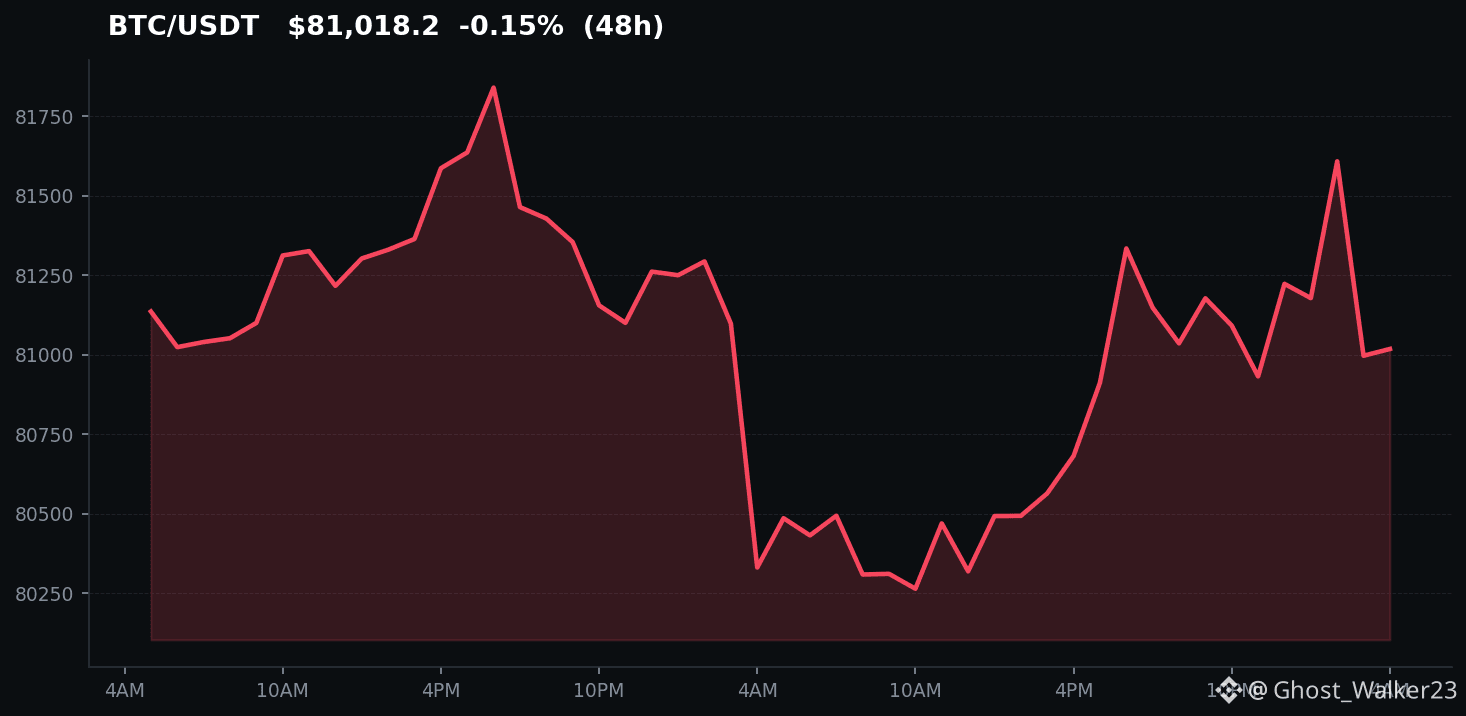
🚀 With the price of $BTC hovering at $81,021.39, and whispers from Michael Saylor hinting at potential strategies for future buys, many are curious about market movements. As you can see below, trends suggest an uptick in interest for Bitcoin despite minor fluctuations. 📊
Meanwhile, $ETH is gaining traction, currently trading at $2,649.35 (+1.15%). Are you considering a strategy shift as the crypto landscape evolves? 💡
#SaylorHintsStrategyBitcoinBuy #CryptoInsights
👀 Síguenos para estar pendiente de las próximas oportunidades.
🚀 With the price of $BTC hovering at $81,021.39, and whispers from Michael Saylor hinting at potential strategies for future buys, many are curious about market movements. As you can see below, trends suggest an uptick in interest for Bitcoin despite minor fluctuations. 📊
Meanwhile, $ETH is gaining traction, currently trading at $2,649.35 (+1.15%). Are you considering a strategy shift as the crypto landscape evolves? 💡
#SaylorHintsStrategyBitcoinBuy #CryptoInsights
👀 Síguenos para estar pendiente de las próximas oportunidades.
Meanwhile, $ETH is gaining traction, currently trading at $2,649.35 (+1.15%). Are you considering a strategy shift as the crypto landscape evolves? 💡
#SaylorHintsStrategyBitcoinBuy #CryptoInsights
👀 Síguenos para estar pendiente de las próximas oportunidades.
74

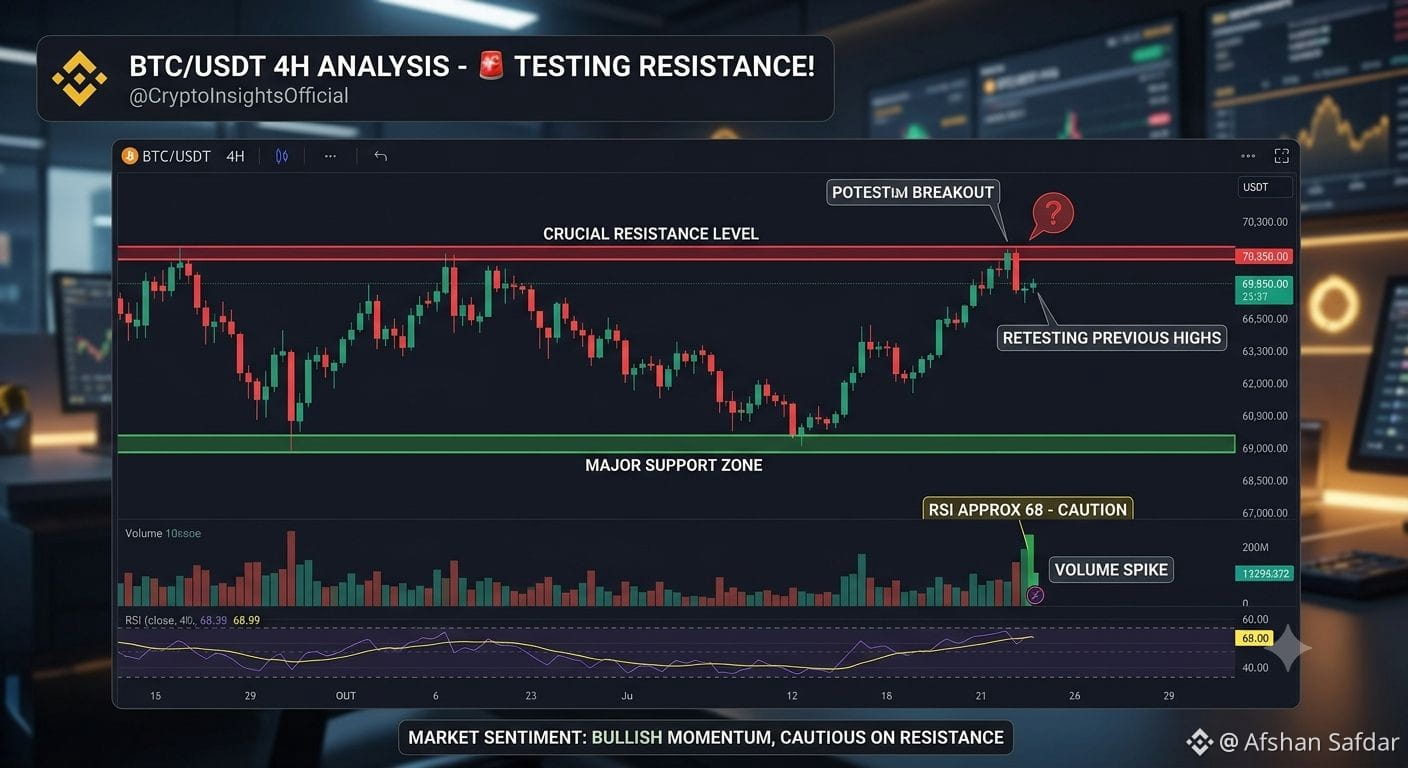
🚨 $BTC Resistance Test: Breakout or Fakeout? 👀
Bitcoin is testing a key resistance zone after a strong rebound. Volume is building, but traders are watching closely for confirmation.
📊 Key Technicals
Resistance: Key swing high level. A daily close above opens targets to higher liquidity.
Support: Strong buyer demand remains intact at lower levels.
RSI: Short-term overbought, signaling possible sideways consolidation before the next push.
💡 Quick Strategy
Wait for Confirmation: Avoid buying directly into resistance; look for a successful retest of support.
Manage Risk: Keep stop-losses strict against sudden volatility.
👇 Breakout or retest first? Drop your thoughts below!
#CryptoInsights #Bitcoin #BTC #cryptotrading
$BTC $BITCOIN
{spot}(BTCUSDT)
🚨 $BTC Resistance Test: Breakout or Fakeout? 👀
Bitcoin is testing a key resistance zone after a strong rebound. Volume is building, but traders are watching closely for confirmation.
📊 Key Technicals
Resistance: Key swing high level. A daily close above opens targets to higher liquidity.
Support: Strong buyer demand remains intact at lower levels.
RSI: Short-term overbought, signaling possible sideways consolidation before the next push.
💡 Quick Strategy
Wait for Confirmation: Avoid buying directly into resistance; look for a successful retest of support.
Manage Risk: Keep stop-losses strict against sudden volatility.
👇 Breakout or retest first? Drop your thoughts below!
#CryptoInsights #Bitcoin #BTC #cryptotrading
$BTC $BITCOIN
Bitcoin is testing a key resistance zone after a strong rebound. Volume is building, but traders are watching closely for confirmation.
📊 Key Technicals
Resistance: Key swing high level. A daily close above opens targets to higher liquidity.
Support: Strong buyer demand remains intact at lower levels.
RSI: Short-term overbought, signaling possible sideways consolidation before the next push.
💡 Quick Strategy
Wait for Confirmation: Avoid buying directly into resistance; look for a successful retest of support.
Manage Risk: Keep stop-losses strict against sudden volatility.
👇 Breakout or retest first? Drop your thoughts below!
#CryptoInsights #Bitcoin #BTC #cryptotrading
$BTC $BITCOIN
1
55

·
--

Article
The Silent Portfolio Killer: Why Your Favorite Altcoin Keeps Bleeding 🩸📉Ever bought an altcoin with great tech, massive hype, and an amazing community, yet the price just keeps dropping?
You are probably ignoring one of the most crucial metrics in crypto: Token Unlocks and FDV (Fully Diluted Valuation).
Here is the harsh reality: A project can be revolutionary, but if only 10% or 20% of its total supply is currently circulating, you are likely just exit liquidity for early venture capitalists. When millions of new tokens are unlocked and dumped into the market every month, the price will naturally bleed out due to inflation—even if the buying demand stays exactly the same.
How to protect your capital:
Check the Supply: Always compare the Circulating Supply with the Total Supply. If the gap is massive, proceed with extreme caution.Track Unlock Schedules: Never open a long position right before a massive "cliff" unlock event. Respect the King: This is exactly why $BTC remains the ultimate safe haven. Its inflation schedule is transparent, predictable, and constantly shrinking (Halving).
Before you ape into the next shiny altcoin, check the tokenomics. Good tech doesn't always equal a good price.
Do you actively track token unlocks before buying, or do you rely purely on technical analysis? Let's discuss below! 👇
#CryptoInsights #Tokenomics #TradingStrategy #BinanceSquare
$BTC $ARB $SUI
The Silent Portfolio Killer: Why Your Favorite Altcoin Keeps Bleeding 🩸📉
Ever bought an altcoin with great tech, massive hype, and an amazing community, yet the price just keeps dropping?
You are probably ignoring one of the most crucial metrics in crypto: Token Unlocks and FDV (Fully Diluted Valuation).
Here is the harsh reality: A project can be revolutionary, but if only 10% or 20% of its total supply is currently circulating, you are likely just exit liquidity for early venture capitalists. When millions of new tokens are unlocked and dumped into the market every month, the price will naturally bleed out due to inflation—even if the buying demand stays exactly the same.
How to protect your capital:
Check the Supply: Always compare the Circulating Supply with the Total Supply. If the gap is massive, proceed with extreme caution.Track Unlock Schedules: Never open a long position right before a massive "cliff" unlock event. Respect the King: This is exactly why $BTC remains the ultimate safe haven. Its inflation schedule is transparent, predictable, and constantly shrinking (Halving).
Before you ape into the next shiny altcoin, check the tokenomics. Good tech doesn't always equal a good price.
Do you actively track token unlocks before buying, or do you rely purely on technical analysis? Let's discuss below! 👇
#CryptoInsights #Tokenomics #TradingStrategy #BinanceSquare
$BTC $ARB $SUI
You are probably ignoring one of the most crucial metrics in crypto: Token Unlocks and FDV (Fully Diluted Valuation).
Here is the harsh reality: A project can be revolutionary, but if only 10% or 20% of its total supply is currently circulating, you are likely just exit liquidity for early venture capitalists. When millions of new tokens are unlocked and dumped into the market every month, the price will naturally bleed out due to inflation—even if the buying demand stays exactly the same.
How to protect your capital:
Check the Supply: Always compare the Circulating Supply with the Total Supply. If the gap is massive, proceed with extreme caution.Track Unlock Schedules: Never open a long position right before a massive "cliff" unlock event. Respect the King: This is exactly why $BTC remains the ultimate safe haven. Its inflation schedule is transparent, predictable, and constantly shrinking (Halving).
Before you ape into the next shiny altcoin, check the tokenomics. Good tech doesn't always equal a good price.
Do you actively track token unlocks before buying, or do you rely purely on technical analysis? Let's discuss below! 👇
#CryptoInsights #Tokenomics #TradingStrategy #BinanceSquare
$BTC $ARB $SUI
86

·
--
#CryptoInsights 👁️ The “Matrix Effect”: Why 90% of traders lose money when the market is green 🟩
Post body:
There’s an unwritten paradox in cryptocurrency trading: the worst financial decisions almost never happen during a Crash—they happen during days of euphoria.
Psychologically, when the market turns green, your brain activates the same dopamine circuit as a slot machine. You stop analyzing projects and start calculating how much money you would have made if you had invested more.
That thought has a name in behavioral finance: Bias of Retrospective Bias and Projected Euphoria.
Here’s the mental map that distinguishes an average investor from a professional when green candles dominate the screen:
The Average Investor:
Sees a coin rise +40% in 24 hours.
Feels the urgency not to miss out (FOMO).
Buys at the peak of the candle.
Acts as “exit liquidity” for the big funds.
The Professional Trader:
Sees a coin rise +40% in 24 hours.
Executes a partial Take Profit to secure capital.
Moves the Stop Loss to a profit zone.
Reassigns liquidity to strong projects that haven’t exploded yet.
💡 The Inverse Mirror Rule:
If the idea of buying scares you because the market is red, it’s probably a good time to analyze entries. If you feel an uncontrollable urge to buy because everything is going up, then you’re already late.
The market’s secret isn’t guessing the future—it’s mastering the chemistry of your brain before you press the Trade button.
💬 What’s been the most expensive lesson the market’s euphoria has taught you? I’m listening in the comments. 👇
#BinanceSquare
#Write2Earn
#Binance
#tradingtips
#CryptoInsights 👁️ The “Matrix Effect”: Why 90% of traders lose money when the market is green 🟩
Post body:
There’s an unwritten paradox in cryptocurrency trading: the worst financial decisions almost never happen during a Crash—they happen during days of euphoria.
Psychologically, when the market turns green, your brain activates the same dopamine circuit as a slot machine. You stop analyzing projects and start calculating how much money you would have made if you had invested more.
That thought has a name in behavioral finance: Bias of Retrospective Bias and Projected Euphoria.
Here’s the mental map that distinguishes an average investor from a professional when green candles dominate the screen:
The Average Investor:
Sees a coin rise +40% in 24 hours.
Feels the urgency not to miss out (FOMO).
Buys at the peak of the candle.
Acts as “exit liquidity” for the big funds.
The Professional Trader:
Sees a coin rise +40% in 24 hours.
Executes a partial Take Profit to secure capital.
Moves the Stop Loss to a profit zone.
Reassigns liquidity to strong projects that haven’t exploded yet.
💡 The Inverse Mirror Rule:
If the idea of buying scares you because the market is red, it’s probably a good time to analyze entries. If you feel an uncontrollable urge to buy because everything is going up, then you’re already late.
The market’s secret isn’t guessing the future—it’s mastering the chemistry of your brain before you press the Trade button.
💬 What’s been the most expensive lesson the market’s euphoria has taught you? I’m listening in the comments. 👇
#BinanceSquare
#Write2Earn
#Binance
#tradingtips
Post body:
There’s an unwritten paradox in cryptocurrency trading: the worst financial decisions almost never happen during a Crash—they happen during days of euphoria.
Psychologically, when the market turns green, your brain activates the same dopamine circuit as a slot machine. You stop analyzing projects and start calculating how much money you would have made if you had invested more.
That thought has a name in behavioral finance: Bias of Retrospective Bias and Projected Euphoria.
Here’s the mental map that distinguishes an average investor from a professional when green candles dominate the screen:
The Average Investor:
Sees a coin rise +40% in 24 hours.
Feels the urgency not to miss out (FOMO).
Buys at the peak of the candle.
Acts as “exit liquidity” for the big funds.
The Professional Trader:
Sees a coin rise +40% in 24 hours.
Executes a partial Take Profit to secure capital.
Moves the Stop Loss to a profit zone.
Reassigns liquidity to strong projects that haven’t exploded yet.
💡 The Inverse Mirror Rule:
If the idea of buying scares you because the market is red, it’s probably a good time to analyze entries. If you feel an uncontrollable urge to buy because everything is going up, then you’re already late.
The market’s secret isn’t guessing the future—it’s mastering the chemistry of your brain before you press the Trade button.
💬 What’s been the most expensive lesson the market’s euphoria has taught you? I’m listening in the comments. 👇
#BinanceSquare
#Write2Earn
#Binance
#tradingtips
267

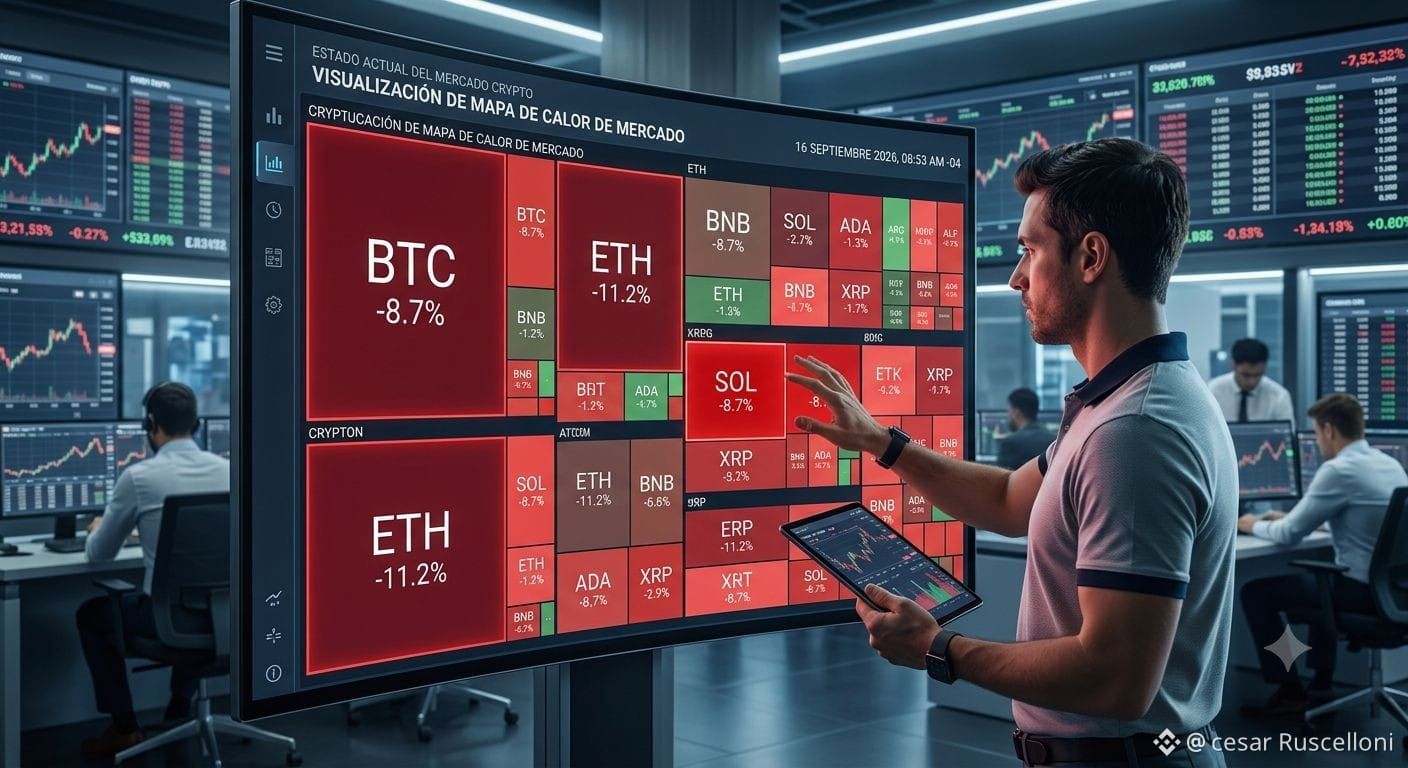
Hayes: Yen Unwind Could Fuel Crypto’s Next Liquidity Wave
Arthur Hayes says Japan’s yen carry-trade unwind plus French bond stress may force the Fed to print more dollars — creating a “money printing bonanza” for Bitcoin and Ethereum.
He sees BTC potentially reclaiming its all-time high by year-end, while ETH remains his top large-cap bet as the “most hated mega-cap.”
Why it matters
Crypto is shifting from four-year cycles to capital-flow driven moves. As Saylor put it, Bitcoin has already won as digital capital. Liquidity stress in FX and bonds now matters more than pure crypto charts.
Takeaway
Watch EUR/JPY and long-end yields. When global funding tightens, hard assets often absorb the next wave of printed money.
Clarity on market structure and institutional pipes will decide how fast that capital actually arrives.
#CryptoInsights #Marketsentimentstoday #CryptoEducation💡🚀 #Bitcoin #Ethereum
Hayes: Yen Unwind Could Fuel Crypto’s Next Liquidity Wave
Arthur Hayes says Japan’s yen carry-trade unwind plus French bond stress may force the Fed to print more dollars — creating a “money printing bonanza” for Bitcoin and Ethereum.
He sees BTC potentially reclaiming its all-time high by year-end, while ETH remains his top large-cap bet as the “most hated mega-cap.”
Why it matters
Crypto is shifting from four-year cycles to capital-flow driven moves. As Saylor put it, Bitcoin has already won as digital capital. Liquidity stress in FX and bonds now matters more than pure crypto charts.
Takeaway
Watch EUR/JPY and long-end yields. When global funding tightens, hard assets often absorb the next wave of printed money.
Clarity on market structure and institutional pipes will decide how fast that capital actually arrives.
#CryptoInsights #Marketsentimentstoday #CryptoEducation💡🚀 #Bitcoin #Ethereum
Arthur Hayes says Japan’s yen carry-trade unwind plus French bond stress may force the Fed to print more dollars — creating a “money printing bonanza” for Bitcoin and Ethereum.
He sees BTC potentially reclaiming its all-time high by year-end, while ETH remains his top large-cap bet as the “most hated mega-cap.”
Why it matters
Crypto is shifting from four-year cycles to capital-flow driven moves. As Saylor put it, Bitcoin has already won as digital capital. Liquidity stress in FX and bonds now matters more than pure crypto charts.
Takeaway
Watch EUR/JPY and long-end yields. When global funding tightens, hard assets often absorb the next wave of printed money.
Clarity on market structure and institutional pipes will decide how fast that capital actually arrives.
#CryptoInsights #Marketsentimentstoday #CryptoEducation💡🚀 #Bitcoin #Ethereum

52
Order blocks on Mira (MIRA) show a bullish breakout while trading volume surges, suggesting growing investor sentiment. Meanwhile, Jasmy (JASMY) is expanding its ecosystem with new data privacy solutions, driving adoption and liquidity. MrvLB (MRVLB) maintains steady momentum, attracting institutional interest through innovative staking protocols. Together, they illustrate a diversified momentum wave across the BSC space. 🚀 #CryptoInsights #SMC
Order blocks on Mira (MIRA) show a bullish breakout while trading volume surges, suggesting growing investor sentiment. Meanwhile, Jasmy (JASMY) is expanding its ecosystem with new data privacy solutions, driving adoption and liquidity. MrvLB (MRVLB) maintains steady momentum, attracting institutional interest through innovative staking protocols. Together, they illustrate a diversified momentum wave across the BSC space. 🚀 #CryptoInsights #SMC
1
387

·
--
📊 The latest scan gave me three very different momentum profiles.
$RAY
{spot}(RAYUSDT)
is clearly leading this group.
At $1.685, its RSI sits at 58.65, while the trend reading is +8.13%. That's a much stronger trend figure than the other two, making RAY the obvious momentum leader from this scan.
$ETHFI
{spot}(ETHFIUSDT)
is more measured.
Price: $0.677
RSI: 53.04
Trend: +2.92%
The numbers are positive, but without the same acceleration seen in RAY. Sometimes that difference matters more than simply looking for the highest RSI.
Then there is $SOL
{future}(SOLUSDT)
.
At $102.28, SOL has the highest RSI of the three at 60.65, yet its trend reading is only +0.13% in this scan.
So which signal would you trust more?
🚀 RAY — strongest trend
⚖️ ETHFI — balanced readings
🔥 SOL — strongest RSI
Different numbers can tell different stories, which is why I prefer comparing momentum instead of looking at one indicator alone.
If you had to watch one chart first, which would it be?
#CryptoTrading #Altcoins #cryptoinsights
📊 The latest scan gave me three very different momentum profiles.
$RAY
is clearly leading this group.
At $1.685, its RSI sits at 58.65, while the trend reading is +8.13%. That's a much stronger trend figure than the other two, making RAY the obvious momentum leader from this scan.
$ETHFI
is more measured.
Price: $0.677
RSI: 53.04
Trend: +2.92%
The numbers are positive, but without the same acceleration seen in RAY. Sometimes that difference matters more than simply looking for the highest RSI.
Then there is $SOL
.
At $102.28, SOL has the highest RSI of the three at 60.65, yet its trend reading is only +0.13% in this scan.
So which signal would you trust more?
🚀 RAY — strongest trend
⚖️ ETHFI — balanced readings
🔥 SOL — strongest RSI
Different numbers can tell different stories, which is why I prefer comparing momentum instead of looking at one indicator alone.
If you had to watch one chart first, which would it be?
#CryptoTrading #Altcoins #cryptoinsights
$RAY
is clearly leading this group.
At $1.685, its RSI sits at 58.65, while the trend reading is +8.13%. That's a much stronger trend figure than the other two, making RAY the obvious momentum leader from this scan.
$ETHFI
is more measured.
Price: $0.677
RSI: 53.04
Trend: +2.92%
The numbers are positive, but without the same acceleration seen in RAY. Sometimes that difference matters more than simply looking for the highest RSI.
Then there is $SOL
.
At $102.28, SOL has the highest RSI of the three at 60.65, yet its trend reading is only +0.13% in this scan.
So which signal would you trust more?
🚀 RAY — strongest trend
⚖️ ETHFI — balanced readings
🔥 SOL — strongest RSI
Different numbers can tell different stories, which is why I prefer comparing momentum instead of looking at one indicator alone.
If you had to watch one chart first, which would it be?
#CryptoTrading #Altcoins #cryptoinsights
🟢 RAY
20%
🔵 ETHFI
60%
🟣 SOL
16%
👀 None for now
4%
25 votes • Voting closed
800

·
--
🦈 $BTC REVEALS WHY DISCIPLINE OUTSHINES QUICK MEME GAIN 💥
Smart money rarely chases meme hype; they anchor in order blocks that have survived five years of net contributions. 📊 The recent liquidity sweep on the 4H chart shows institutional buyers re‑establishing a demand zone, a classic 🦈 move that signals long‑term bias.
Your 155 M VND (~$6k) stash proves that disciplined accumulation beats flash‑pump fantasies. 📈 Respect the risk, watch the liquidity pool refill, and let the market inefficiency fill the fair‑value gap. 💡
💬 Are you ready to trade discipline over hype? 👇
⚠️ Not financial advice. Always manage your risk. 🛡️
🏷️ #BTC #Discipline #LongTerm #CryptoInsights
🔥 💎
🦈 $BTC REVEALS WHY DISCIPLINE OUTSHINES QUICK MEME GAIN 💥
Smart money rarely chases meme hype; they anchor in order blocks that have survived five years of net contributions. 📊 The recent liquidity sweep on the 4H chart shows institutional buyers re‑establishing a demand zone, a classic 🦈 move that signals long‑term bias.
Your 155 M VND (~$6k) stash proves that disciplined accumulation beats flash‑pump fantasies. 📈 Respect the risk, watch the liquidity pool refill, and let the market inefficiency fill the fair‑value gap. 💡
💬 Are you ready to trade discipline over hype? 👇
⚠️ Not financial advice. Always manage your risk. 🛡️
🏷️ #BTC #Discipline #LongTerm #CryptoInsights
🔥 💎
Smart money rarely chases meme hype; they anchor in order blocks that have survived five years of net contributions. 📊 The recent liquidity sweep on the 4H chart shows institutional buyers re‑establishing a demand zone, a classic 🦈 move that signals long‑term bias.
Your 155 M VND (~$6k) stash proves that disciplined accumulation beats flash‑pump fantasies. 📈 Respect the risk, watch the liquidity pool refill, and let the market inefficiency fill the fair‑value gap. 💡
💬 Are you ready to trade discipline over hype? 👇
⚠️ Not financial advice. Always manage your risk. 🛡️
🏷️ #BTC #Discipline #LongTerm #CryptoInsights
🔥 💎


14

·
--
Article
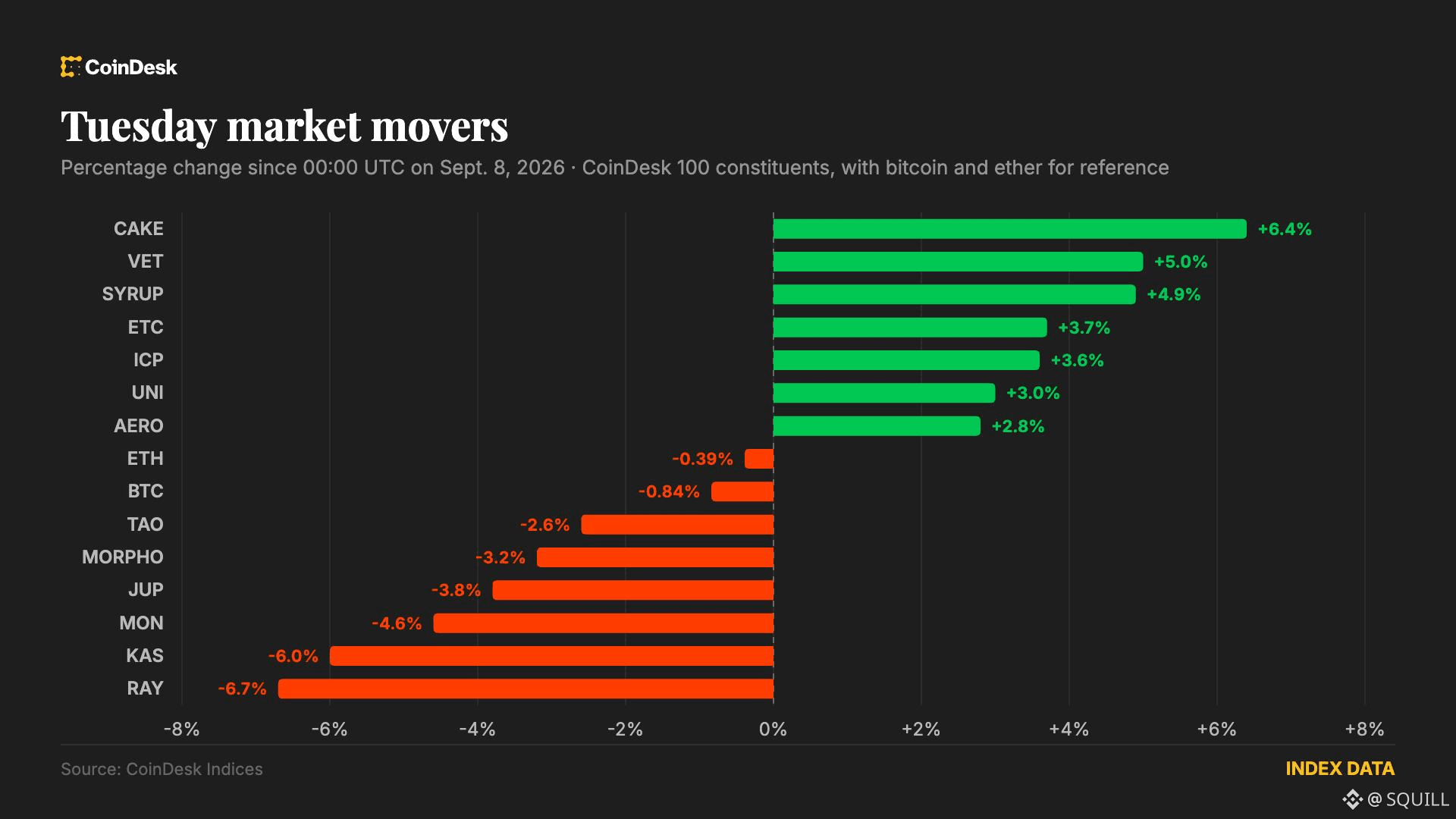
Bitcoin’s Slipping Drop: Why $BTC Fell While BNB Chain and DeFi Tokens SoarBitcoin slipped to $78,874, a 0.42% drop, yet BNB Chain tokens and DeFi assets rallied, showing a split in market sentiment. This shift highlights how different segments of the crypto ecosystem can move independently, even when the flagship coin is under pressure.
The Concept
When Bitcoin’s price dips, many investors assume the entire market will follow suit. However, the recent selloff revealed that altcoins, especially those tied to specific ecosystems like BNB Chain, can defy the broader trend. Think of Bitcoin as the market’s “benchmark” stock; its movement often sets the tone, but individual sectors—like DeFi—can chart their own course based on project fundamentals, partnerships, or network upgrades. #CryptoInsights #DeFiDynamics
Real‑World Example
On September 8th, $BTC fell just under 0.5%, settling at $78,874. In contrast, the CoinDesk 20 index, which tracks the top 20 crypto assets, edged up 0.2%, and the memecoin index gained 0.41%. BNB Chain tokens, the native coins of Binance’s smart‑contract platform, experienced a notable rally. This divergence suggests that while Bitcoin’s price was pressured by broader market sentiment or macro factors, BNB Chain’s ecosystem was buoyed by recent developments—perhaps a new DeFi protocol launch, a partnership announcement, or a network upgrade that increased user activity and demand for its native token.
Takeaway
Don’t assume a Bitcoin dip means every crypto will fall. Look at the underlying drivers for each token: network upgrades, partnership news, and user adoption. Diversifying across sectors—especially those with strong fundamentals like BNB Chain—can provide resilience against Bitcoin’s volatility. Consider adding a small allocation to BNB Chain tokens or other DeFi projects that show independent growth. #SmartInvesting
Engagement Question
What’s your strategy when Bitcoin drops but altcoins rally? Share your thoughts below!
Bitcoin’s Slipping Drop: Why $BTC Fell While BNB Chain and DeFi Tokens Soar
Bitcoin slipped to $78,874, a 0.42% drop, yet BNB Chain tokens and DeFi assets rallied, showing a split in market sentiment. This shift highlights how different segments of the crypto ecosystem can move independently, even when the flagship coin is under pressure.
The Concept
When Bitcoin’s price dips, many investors assume the entire market will follow suit. However, the recent selloff revealed that altcoins, especially those tied to specific ecosystems like BNB Chain, can defy the broader trend. Think of Bitcoin as the market’s “benchmark” stock; its movement often sets the tone, but individual sectors—like DeFi—can chart their own course based on project fundamentals, partnerships, or network upgrades. #CryptoInsights #DeFiDynamics
Real‑World Example
On September 8th, $BTC fell just under 0.5%, settling at $78,874. In contrast, the CoinDesk 20 index, which tracks the top 20 crypto assets, edged up 0.2%, and the memecoin index gained 0.41%. BNB Chain tokens, the native coins of Binance’s smart‑contract platform, experienced a notable rally. This divergence suggests that while Bitcoin’s price was pressured by broader market sentiment or macro factors, BNB Chain’s ecosystem was buoyed by recent developments—perhaps a new DeFi protocol launch, a partnership announcement, or a network upgrade that increased user activity and demand for its native token.
Takeaway
Don’t assume a Bitcoin dip means every crypto will fall. Look at the underlying drivers for each token: network upgrades, partnership news, and user adoption. Diversifying across sectors—especially those with strong fundamentals like BNB Chain—can provide resilience against Bitcoin’s volatility. Consider adding a small allocation to BNB Chain tokens or other DeFi projects that show independent growth. #SmartInvesting
Engagement Question
What’s your strategy when Bitcoin drops but altcoins rally? Share your thoughts below!
The Concept
When Bitcoin’s price dips, many investors assume the entire market will follow suit. However, the recent selloff revealed that altcoins, especially those tied to specific ecosystems like BNB Chain, can defy the broader trend. Think of Bitcoin as the market’s “benchmark” stock; its movement often sets the tone, but individual sectors—like DeFi—can chart their own course based on project fundamentals, partnerships, or network upgrades. #CryptoInsights #DeFiDynamics
Real‑World Example
On September 8th, $BTC fell just under 0.5%, settling at $78,874. In contrast, the CoinDesk 20 index, which tracks the top 20 crypto assets, edged up 0.2%, and the memecoin index gained 0.41%. BNB Chain tokens, the native coins of Binance’s smart‑contract platform, experienced a notable rally. This divergence suggests that while Bitcoin’s price was pressured by broader market sentiment or macro factors, BNB Chain’s ecosystem was buoyed by recent developments—perhaps a new DeFi protocol launch, a partnership announcement, or a network upgrade that increased user activity and demand for its native token.
Takeaway
Don’t assume a Bitcoin dip means every crypto will fall. Look at the underlying drivers for each token: network upgrades, partnership news, and user adoption. Diversifying across sectors—especially those with strong fundamentals like BNB Chain—can provide resilience against Bitcoin’s volatility. Consider adding a small allocation to BNB Chain tokens or other DeFi projects that show independent growth. #SmartInvesting
Engagement Question
What’s your strategy when Bitcoin drops but altcoins rally? Share your thoughts below!
9

·
--
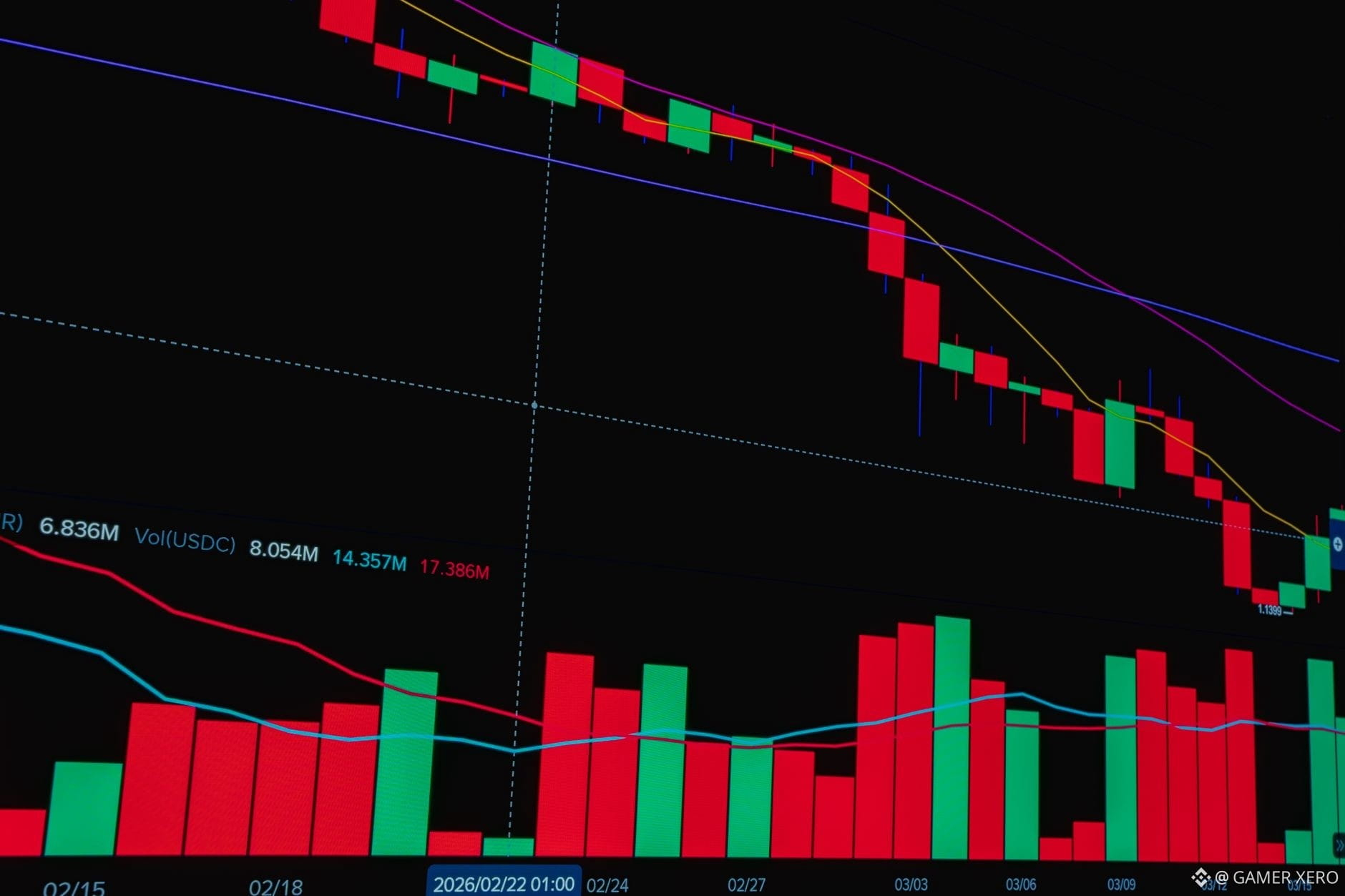
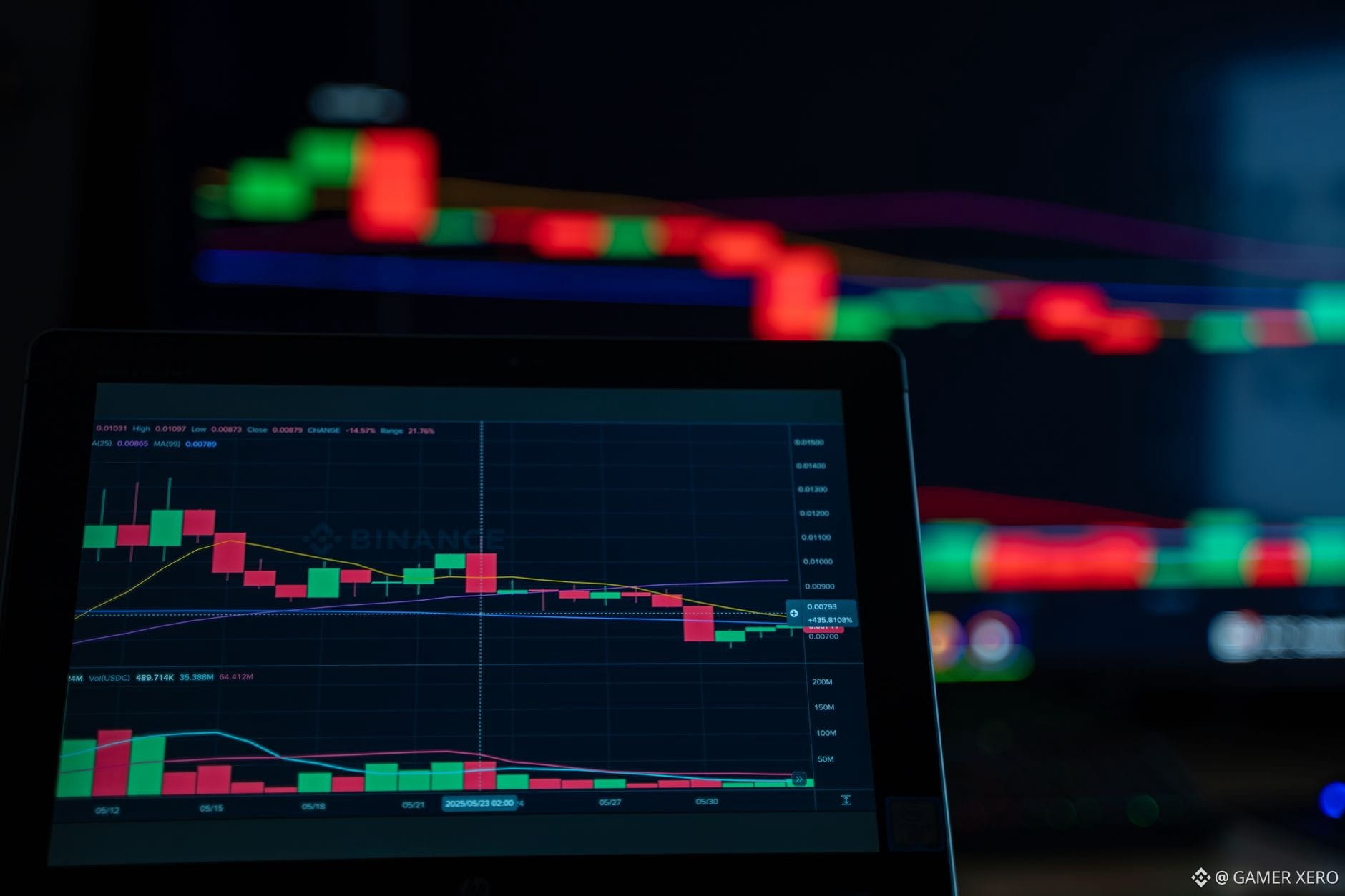
The US CPI report is looming, and the data shows inflation still running above the Fed’s target. For crypto traders that means the macro backdrop could stay tilted toward tighter monetary policy for a while, which historically adds pressure on risk assets and can tighten funding rates on margin positions. On Binance Spot, $BTC is hovering at $78,468 with a modest 1.2 % dip over the last 24 hours, while $ETH sits at $2,478, down 0.4 %. Those moves suggest the market is already pricing in a cautious tone, but the real test will be how quickly liquidity providers adjust their leverage caps once the CPI numbers land.
If funding rates rise, we may see tighter order‑book spreads and a shift toward more defensive positioning. Conversely, a softer inflation surprise could reopen room for modest upside while keeping volatility in check. Watching the bid‑ask imbalance on the spot book will give an early clue whether buyers or sellers are gaining the edge as the data rolls out.
How are you adapting your risk parameters ahead of the CPI release?
#CryptoInsights #Binance #Macro #GAMERXERO
The US CPI report is looming, and the data shows inflation still running above the Fed’s target. For crypto traders that means the macro backdrop could stay tilted toward tighter monetary policy for a while, which historically adds pressure on risk assets and can tighten funding rates on margin positions. On Binance Spot, $BTC is hovering at $78,468 with a modest 1.2 % dip over the last 24 hours, while $ETH sits at $2,478, down 0.4 %. Those moves suggest the market is already pricing in a cautious tone, but the real test will be how quickly liquidity providers adjust their leverage caps once the CPI numbers land.
If funding rates rise, we may see tighter order‑book spreads and a shift toward more defensive positioning. Conversely, a softer inflation surprise could reopen room for modest upside while keeping volatility in check. Watching the bid‑ask imbalance on the spot book will give an early clue whether buyers or sellers are gaining the edge as the data rolls out.
How are you adapting your risk parameters ahead of the CPI release?
#CryptoInsights #Binance #Macro #GAMERXERO
If funding rates rise, we may see tighter order‑book spreads and a shift toward more defensive positioning. Conversely, a softer inflation surprise could reopen room for modest upside while keeping volatility in check. Watching the bid‑ask imbalance on the spot book will give an early clue whether buyers or sellers are gaining the edge as the data rolls out.
How are you adapting your risk parameters ahead of the CPI release?
#CryptoInsights #Binance #Macro #GAMERXERO
35
·
--
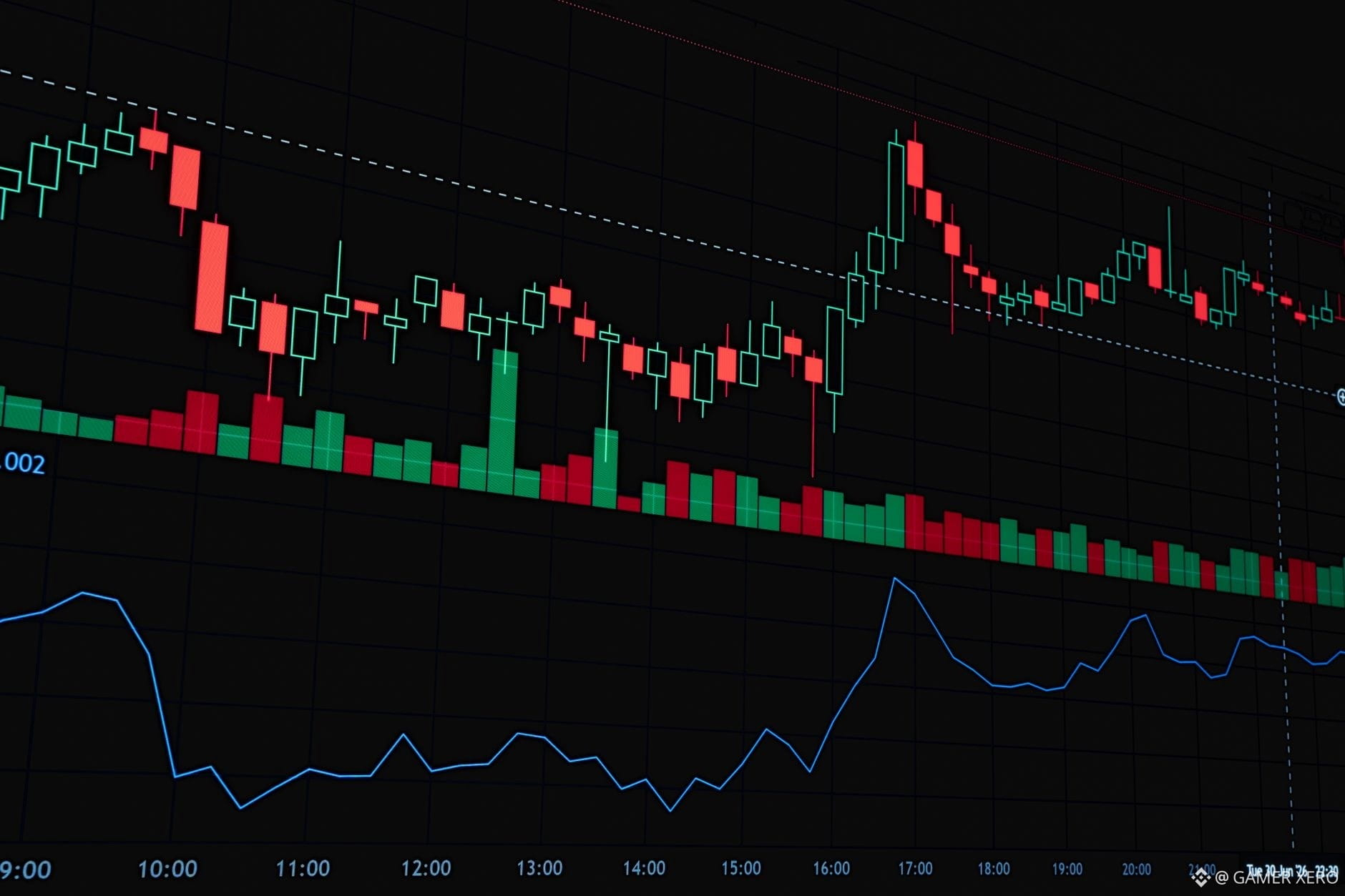
USDC’s week‑long surge of $584 million is more than a headline – it’s a signal that stablecoin liquidity is tightening around a few dominant players. On Binance, $USDC continues to anchor a growing share of spot‑margin collateral, meaning traders can lock in lower‑cost funding without chasing multiple peg tokens. The effect ripples into the broader market: when a stablecoin’s supply expands quickly, the underlying fiat inflow often supports higher‑volume order books, especially for the flagship pair $BTC/USDC that’s hovering just under $79,700. This extra depth can dampen short‑term slippage, making it easier to execute larger positions without moving the market.
At the same time, the $USDC influx puts pressure on other stablecoins to prove utility or competitive yields, which could reshape fee structures on Binance’s lending platform. For traders who rely on stablecoins for hedging or arbitrage, the growing dominance of USDC may mean tighter spreads but also a need to monitor reserve ratios and on‑chain activity for signs of stress.
How are you adjusting your stablecoin strategy as USDC tightens its grip on the market?
#CryptoInsights #Stablecoins #Binance #GAMERXERO
USDC’s week‑long surge of $584 million is more than a headline – it’s a signal that stablecoin liquidity is tightening around a few dominant players. On Binance, $USDC continues to anchor a growing share of spot‑margin collateral, meaning traders can lock in lower‑cost funding without chasing multiple peg tokens. The effect ripples into the broader market: when a stablecoin’s supply expands quickly, the underlying fiat inflow often supports higher‑volume order books, especially for the flagship pair $BTC /USDC that’s hovering just under $79,700. This extra depth can dampen short‑term slippage, making it easier to execute larger positions without moving the market.
At the same time, the $USDC influx puts pressure on other stablecoins to prove utility or competitive yields, which could reshape fee structures on Binance’s lending platform. For traders who rely on stablecoins for hedging or arbitrage, the growing dominance of USDC may mean tighter spreads but also a need to monitor reserve ratios and on‑chain activity for signs of stress.
How are you adjusting your stablecoin strategy as USDC tightens its grip on the market?
#CryptoInsights #Stablecoins #Binance #GAMERXERO
At the same time, the $USDC influx puts pressure on other stablecoins to prove utility or competitive yields, which could reshape fee structures on Binance’s lending platform. For traders who rely on stablecoins for hedging or arbitrage, the growing dominance of USDC may mean tighter spreads but also a need to monitor reserve ratios and on‑chain activity for signs of stress.
How are you adjusting your stablecoin strategy as USDC tightens its grip on the market?
#CryptoInsights #Stablecoins #Binance #GAMERXERO

26
·
--
DeFi Liquidity Is Evolving — and Most Traders Are Still Using the Old Playbook
For years, DeFi liquidity meant one thing: AMMs. You split assets 50/50, deposited into a pool, earned fees, and accepted impermanent loss as the cost of doing business.
That model still works. But it is no longer the whole story.
The shift happening right now is structural. Liquidity is moving from passive pool-based models toward intent-driven execution — where users broadcast what they want, and a competitive layer of solvers finds the optimal fill across multiple venues, chains, and liquidity sources simultaneously.
This matters because it reframes how value flows through the ecosystem.
Under the old model, liquidity was fragmented. Each pool competed independently. Capital was locked, often idle, and pricing was reactive. Under the intent model, aggregated liquidity becomes programmable. Solvers compete for execution quality. Slippage compresses. Users get outcomes, not routes.
The chains building the settlement and coordination layer that solvers run on are the ones that win this transition. $ETH remains the deepest settlement base. $BNB delivers high-throughput clearing rails. $AVAX subnet architecture enables institutional-grade execution isolation. These are not just ecosystems — they are the infrastructure stack of the next DeFi era.
DeFi liquidity is growing up. The protocols capturing institutional flow will be those treating execution quality — not just yield — as the primary product.
Watch where the solvers run. That is where DeFi value accrual is heading next.
#DeFi #Crypto #Web3 #CryptoInsights
DeFi Liquidity Is Evolving — and Most Traders Are Still Using the Old Playbook
For years, DeFi liquidity meant one thing: AMMs. You split assets 50/50, deposited into a pool, earned fees, and accepted impermanent loss as the cost of doing business.
That model still works. But it is no longer the whole story.
The shift happening right now is structural. Liquidity is moving from passive pool-based models toward intent-driven execution — where users broadcast what they want, and a competitive layer of solvers finds the optimal fill across multiple venues, chains, and liquidity sources simultaneously.
This matters because it reframes how value flows through the ecosystem.
Under the old model, liquidity was fragmented. Each pool competed independently. Capital was locked, often idle, and pricing was reactive. Under the intent model, aggregated liquidity becomes programmable. Solvers compete for execution quality. Slippage compresses. Users get outcomes, not routes.
The chains building the settlement and coordination layer that solvers run on are the ones that win this transition. $ETH remains the deepest settlement base. $BNB delivers high-throughput clearing rails. $AVAX subnet architecture enables institutional-grade execution isolation. These are not just ecosystems — they are the infrastructure stack of the next DeFi era.
DeFi liquidity is growing up. The protocols capturing institutional flow will be those treating execution quality — not just yield — as the primary product.
Watch where the solvers run. That is where DeFi value accrual is heading next.
#DeFi #Crypto #Web3 #CryptoInsights
For years, DeFi liquidity meant one thing: AMMs. You split assets 50/50, deposited into a pool, earned fees, and accepted impermanent loss as the cost of doing business.
That model still works. But it is no longer the whole story.
The shift happening right now is structural. Liquidity is moving from passive pool-based models toward intent-driven execution — where users broadcast what they want, and a competitive layer of solvers finds the optimal fill across multiple venues, chains, and liquidity sources simultaneously.
This matters because it reframes how value flows through the ecosystem.
Under the old model, liquidity was fragmented. Each pool competed independently. Capital was locked, often idle, and pricing was reactive. Under the intent model, aggregated liquidity becomes programmable. Solvers compete for execution quality. Slippage compresses. Users get outcomes, not routes.
The chains building the settlement and coordination layer that solvers run on are the ones that win this transition. $ETH remains the deepest settlement base. $BNB delivers high-throughput clearing rails. $AVAX subnet architecture enables institutional-grade execution isolation. These are not just ecosystems — they are the infrastructure stack of the next DeFi era.
DeFi liquidity is growing up. The protocols capturing institutional flow will be those treating execution quality — not just yield — as the primary product.
Watch where the solvers run. That is where DeFi value accrual is heading next.
#DeFi #Crypto #Web3 #CryptoInsights
89

·
--
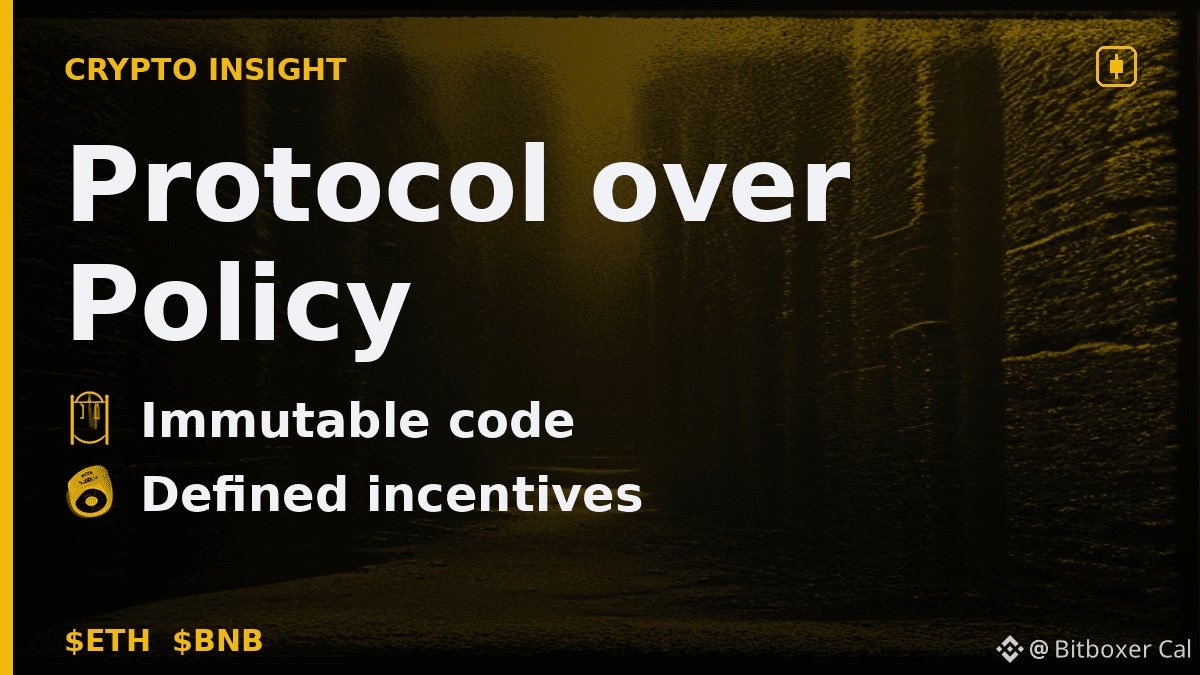
Why does the WSJ’s take on regulatory gridlock feel like watching a professional league play without a rulebook?
When $ETH or $BNB scale, they bank on the certainty of code rather than shifting policy whims. Real value stays at the protocol layer, where rules are immutable and transparent. Whether legislators ever find consensus is the only wildcard left for institutional adoption.
#CryptoInsights #RegulatoryClarity #CryptoNews
Why does the WSJ’s take on regulatory gridlock feel like watching a professional league play without a rulebook?
When $ETH or $BNB scale, they bank on the certainty of code rather than shifting policy whims. Real value stays at the protocol layer, where rules are immutable and transparent. Whether legislators ever find consensus is the only wildcard left for institutional adoption.
#CryptoInsights #RegulatoryClarity #CryptoNews
When $ETH or $BNB scale, they bank on the certainty of code rather than shifting policy whims. Real value stays at the protocol layer, where rules are immutable and transparent. Whether legislators ever find consensus is the only wildcard left for institutional adoption.
#CryptoInsights #RegulatoryClarity #CryptoNews
23
·
--
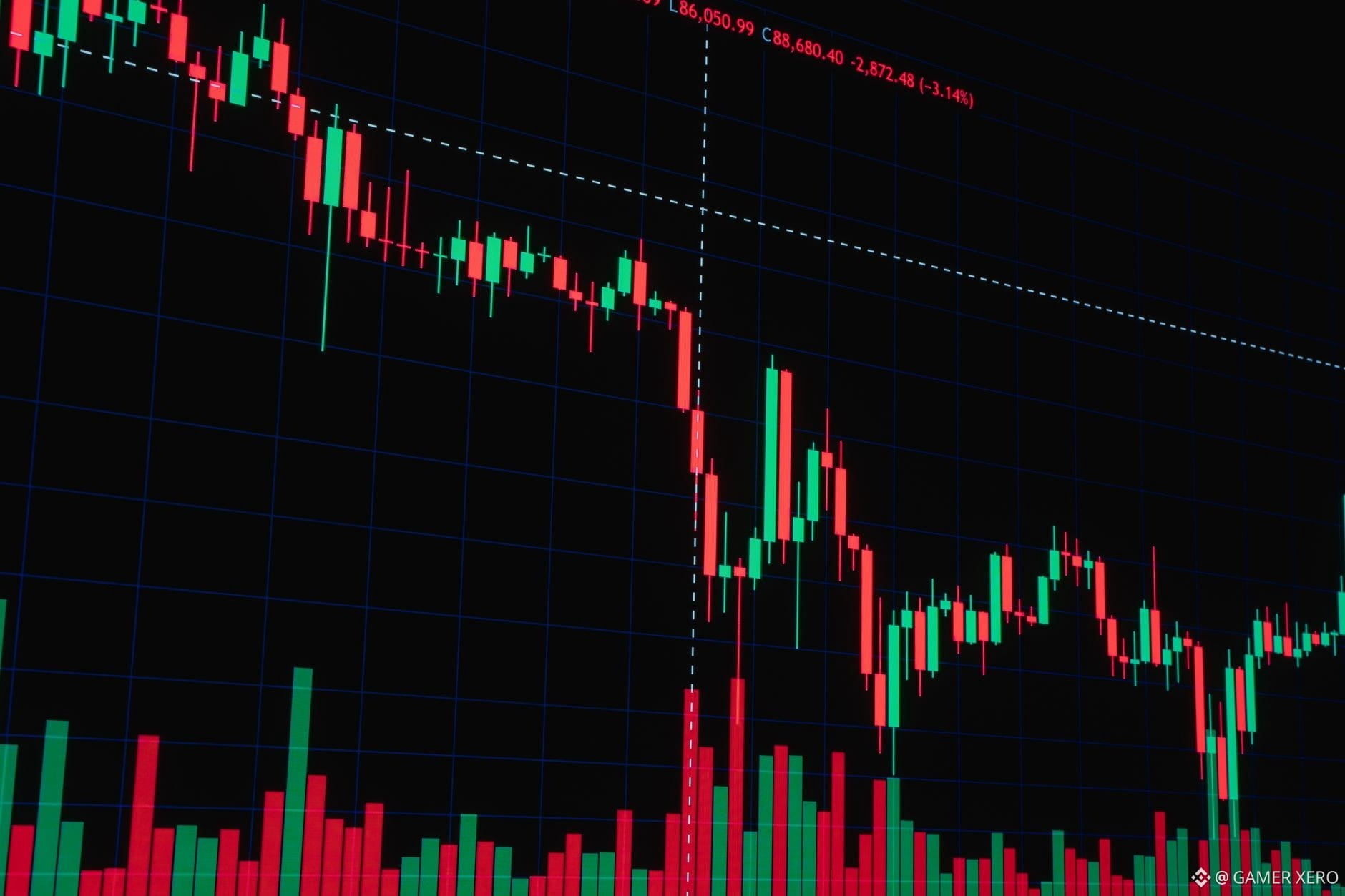
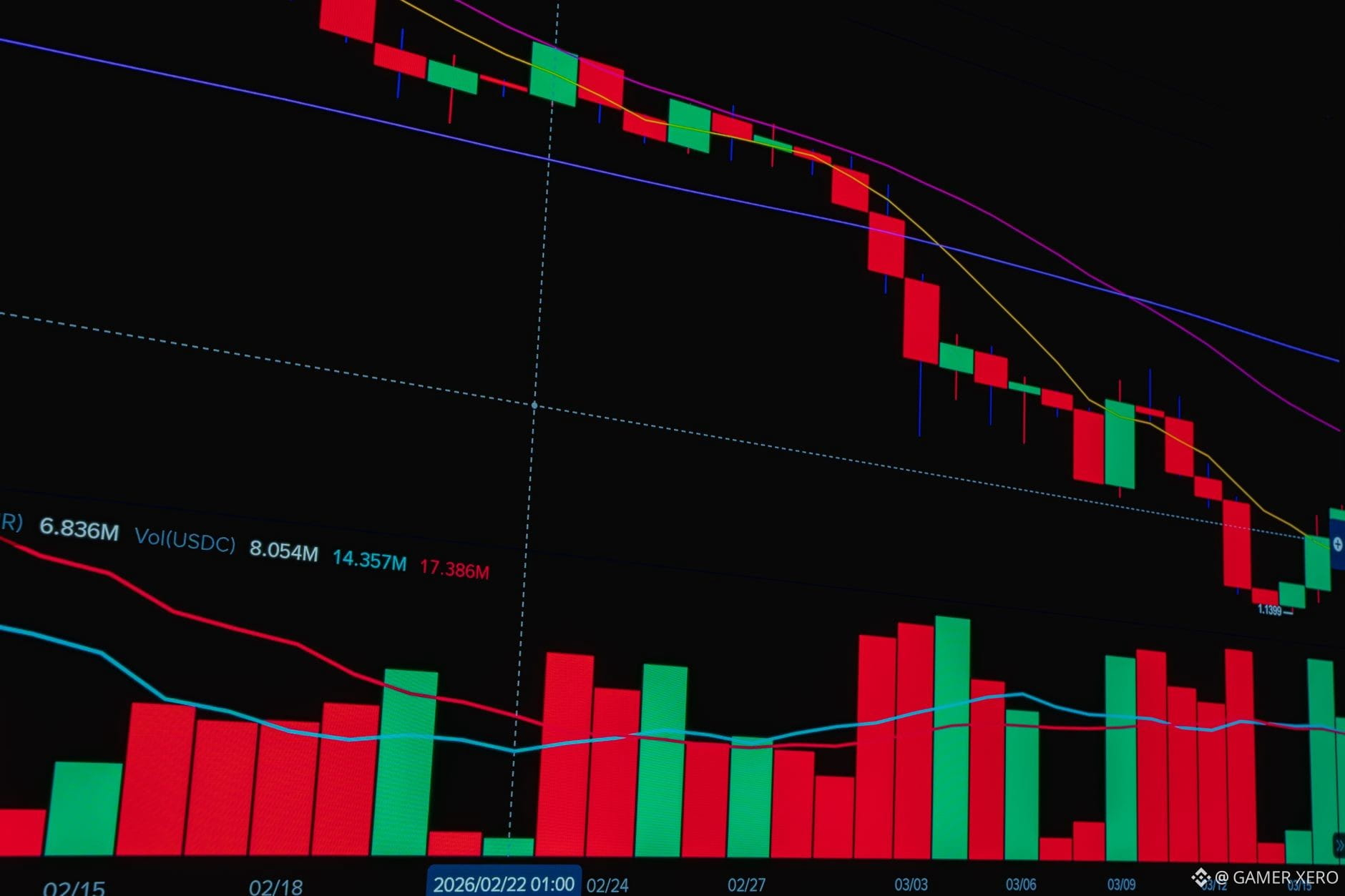
US agencies are now openly debating a post‑war Middle East blueprint, and while the talk is largely diplomatic, the ripple effects could touch crypto markets. A stable geopolitical backdrop typically eases cross‑border payments and reduces the premium on crypto as a hedge against sanctions‑driven volatility. If the plan eases tensions with Iran, we might see a modest decline in the “risk‑off” premium that often drives capital into Bitcoin and Ethereum as alternative stores of value.
For those tracking macro‑driven flows, keeping an eye on the depth tables for $BTC and $ETH might reveal whether institutional interest is lingering or fading as the geopolitical narrative evolves. How do you think a potential de‑escalation in the Middle East will influence your short‑term positioning on Bitcoin and Ethereum?
#CryptoInsights #MarketDynamics #GAMERXERO #Binance #MacroWatch
US agencies are now openly debating a post‑war Middle East blueprint, and while the talk is largely diplomatic, the ripple effects could touch crypto markets. A stable geopolitical backdrop typically eases cross‑border payments and reduces the premium on crypto as a hedge against sanctions‑driven volatility. If the plan eases tensions with Iran, we might see a modest decline in the “risk‑off” premium that often drives capital into Bitcoin and Ethereum as alternative stores of value.
For those tracking macro‑driven flows, keeping an eye on the depth tables for $BTC and $ETH might reveal whether institutional interest is lingering or fading as the geopolitical narrative evolves. How do you think a potential de‑escalation in the Middle East will influence your short‑term positioning on Bitcoin and Ethereum?
#CryptoInsights #MarketDynamics #GAMERXERO #Binance #MacroWatch
For those tracking macro‑driven flows, keeping an eye on the depth tables for $BTC and $ETH might reveal whether institutional interest is lingering or fading as the geopolitical narrative evolves. How do you think a potential de‑escalation in the Middle East will influence your short‑term positioning on Bitcoin and Ethereum?
#CryptoInsights #MarketDynamics #GAMERXERO #Binance #MacroWatch
20

📊 Glassnode Analysis: Bitcoin confined between accumulation zones and dense supply
A recent analysis by Glassnode revealed that Bitcoin’s price is trading within a narrow range, trapped between a strong support level representing investor accumulation zones and dense supply from sellers above the current price. This situation suggests that breaking through resistance will require absorbing selling pressure and potential profit-taking.
━━━━━━━━━━━━━━
📊 Impact: 📈 High
🏷️ BITCOIN
#Bitcoin #Glassnode #MarketAnalysis #CryptoInsights
📰 Source: cryptobriefing.com
📊 Glassnode Analysis: Bitcoin confined between accumulation zones and dense supply
A recent analysis by Glassnode revealed that Bitcoin’s price is trading within a narrow range, trapped between a strong support level representing investor accumulation zones and dense supply from sellers above the current price. This situation suggests that breaking through resistance will require absorbing selling pressure and potential profit-taking.
━━━━━━━━━━━━━━
📊 Impact: 📈 High
🏷️ BITCOIN
#Bitcoin #Glassnode #MarketAnalysis #CryptoInsights
📰 Source: cryptobriefing.com
A recent analysis by Glassnode revealed that Bitcoin’s price is trading within a narrow range, trapped between a strong support level representing investor accumulation zones and dense supply from sellers above the current price. This situation suggests that breaking through resistance will require absorbing selling pressure and potential profit-taking.
━━━━━━━━━━━━━━
📊 Impact: 📈 High
🏷️ BITCOIN
#Bitcoin #Glassnode #MarketAnalysis #CryptoInsights
📰 Source: cryptobriefing.com
18
·
--
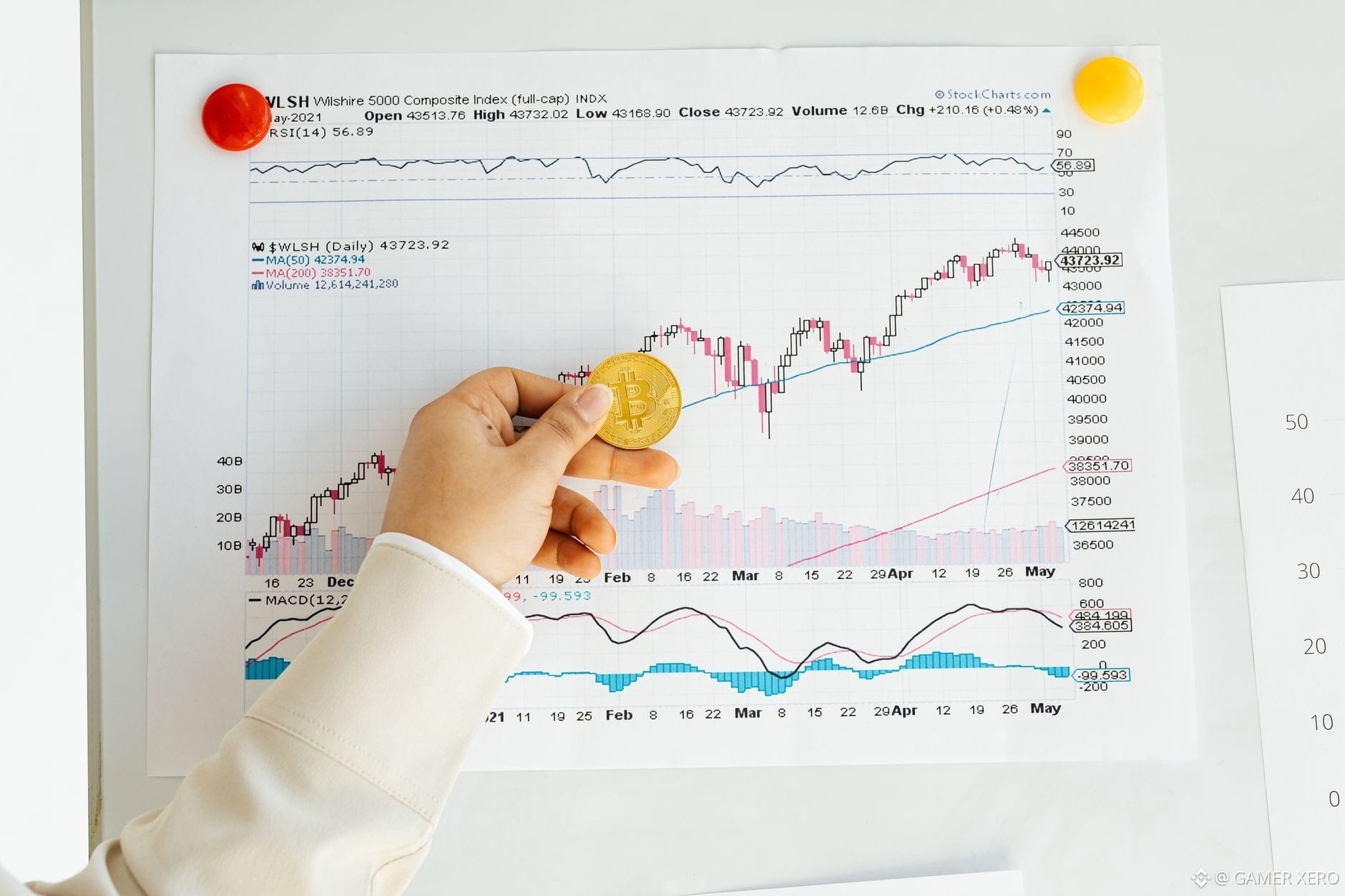
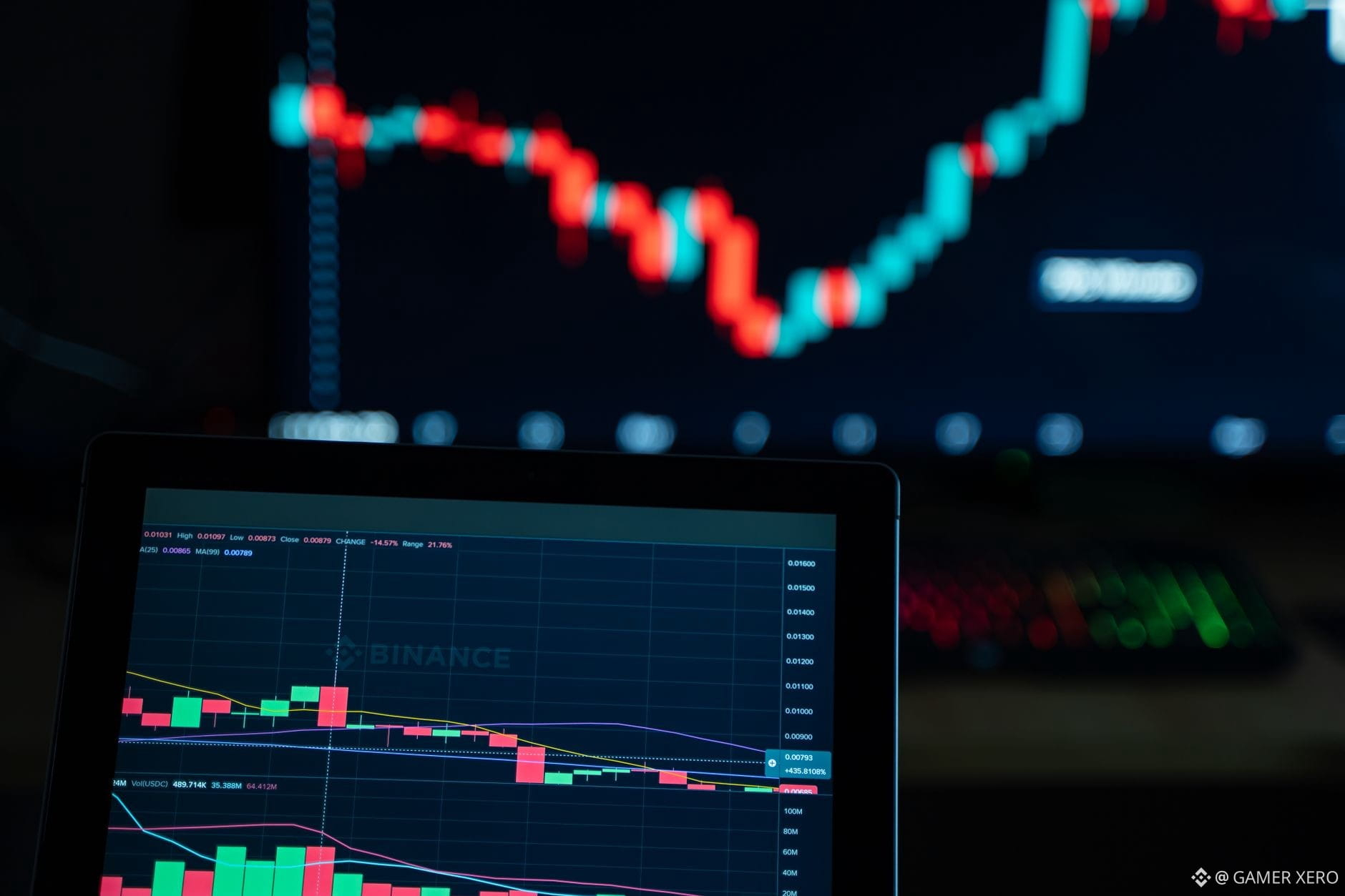
The dollar’s resilience at a near two‑week high after fresh Middle‑East tensions has quietly reshaped crypto liquidity on Binance. A stronger greenback typically nudges US‑denominated crypto pairs higher, as investors seek shelter from fiat volatility. Right now $BTC is trading at $77,472.13, just a whisker above its 24‑hour low, while $ETH sits at $2,393.03, a modest dip from its recent peak. This modest upside in the major coins reflects the broader shift: higher dollar yields can draw capital into assets that aren’t directly tied to traditional bond markets, but the effect is muted by the ongoing oil price surge feeding inflation concerns.
Given the current macro backdrop, do you see the dollar’s strength as a catalyst for more stable crypto inflows, or will the lingering inflation worries keep traders on the sidelines?
#CryptoInsights #MarketStructure #Binance #GAMERXERO
The dollar’s resilience at a near two‑week high after fresh Middle‑East tensions has quietly reshaped crypto liquidity on Binance. A stronger greenback typically nudges US‑denominated crypto pairs higher, as investors seek shelter from fiat volatility. Right now $BTC is trading at $77,472.13, just a whisker above its 24‑hour low, while $ETH sits at $2,393.03, a modest dip from its recent peak. This modest upside in the major coins reflects the broader shift: higher dollar yields can draw capital into assets that aren’t directly tied to traditional bond markets, but the effect is muted by the ongoing oil price surge feeding inflation concerns.
Given the current macro backdrop, do you see the dollar’s strength as a catalyst for more stable crypto inflows, or will the lingering inflation worries keep traders on the sidelines?
#CryptoInsights #MarketStructure #Binance #GAMERXERO
Given the current macro backdrop, do you see the dollar’s strength as a catalyst for more stable crypto inflows, or will the lingering inflation worries keep traders on the sidelines?
#CryptoInsights #MarketStructure #Binance #GAMERXERO
71

·
--
$FOR just cratered 16.85% in 24 hours on a measly 369 k volume – the market’s alarm siren blaring loud.
The real killer isn’t “greed‑driven rally” hype, it’s the pending 12 % supply unlock slated for the next 30 days. Dilution is coming and the community is still chanting bullish nonsense.
While $CLV limps along flat and $ETH keeps marching upward, smart money is already packing its bags. No one wants to sit on a token about to be swamped by a flood of new coins.
If you think $FOR can survive that massive influx, you’re buying a one‑way ticket to the bottom. Short now or brace for a brutal correction.
The only story worth watching is the unlock schedule – that’s the true trigger for the next crash.
#DeFi #Altcoins #CryptoInsights
$FOR just cratered 16.85% in 24 hours on a measly 369 k volume – the market’s alarm siren blaring loud.
The real killer isn’t “greed‑driven rally” hype, it’s the pending 12 % supply unlock slated for the next 30 days. Dilution is coming and the community is still chanting bullish nonsense.
While $CLV limps along flat and $ETH keeps marching upward, smart money is already packing its bags. No one wants to sit on a token about to be swamped by a flood of new coins.
If you think $FOR can survive that massive influx, you’re buying a one‑way ticket to the bottom. Short now or brace for a brutal correction.
The only story worth watching is the unlock schedule – that’s the true trigger for the next crash.
#DeFi #Altcoins #CryptoInsights
The real killer isn’t “greed‑driven rally” hype, it’s the pending 12 % supply unlock slated for the next 30 days. Dilution is coming and the community is still chanting bullish nonsense.
While $CLV limps along flat and $ETH keeps marching upward, smart money is already packing its bags. No one wants to sit on a token about to be swamped by a flood of new coins.
If you think $FOR can survive that massive influx, you’re buying a one‑way ticket to the bottom. Short now or brace for a brutal correction.
The only story worth watching is the unlock schedule – that’s the true trigger for the next crash.
#DeFi #Altcoins #CryptoInsights
22
·
--
$BTC is holding steady at $77,888 with only a 0.23 % dip over the last 24 hours, while $ETH sits around $2,444, down 0.29 %. The price action reflects the market’s cautious tone after Turkey’s recent accusation of genocide against Israel’s leader, a move that could reshape diplomatic narratives in the region. Geopolitical friction often translates into short‑term risk aversion, prompting traders to favor “store‑of‑value” assets over higher‑risk altcoins.
On Binance, the order‑book depth for both pairs remains balanced, suggesting liquidity providers are not rushing to unwind positions aggressively. That equilibrium, paired with the modest downside pressure, hints at a temporary hold rather than a breakout scenario.
If regional tensions intensify, we may see a modest shift toward capital preservation, with tighter spreads and increased use of stable‑coin hedges. Conversely, any diplomatic de‑escalation could restore confidence and invite modest inflows into risk‑on assets.
How do you think emerging geopolitical headlines will influence your allocation between major coins and stable‑coins in the coming weeks?
#CryptoInsights #MarketStructure #RiskManagement #GAMERXERO
$BTC is holding steady at $77,888 with only a 0.23 % dip over the last 24 hours, while $ETH sits around $2,444, down 0.29 %. The price action reflects the market’s cautious tone after Turkey’s recent accusation of genocide against Israel’s leader, a move that could reshape diplomatic narratives in the region. Geopolitical friction often translates into short‑term risk aversion, prompting traders to favor “store‑of‑value” assets over higher‑risk altcoins.
On Binance, the order‑book depth for both pairs remains balanced, suggesting liquidity providers are not rushing to unwind positions aggressively. That equilibrium, paired with the modest downside pressure, hints at a temporary hold rather than a breakout scenario.
If regional tensions intensify, we may see a modest shift toward capital preservation, with tighter spreads and increased use of stable‑coin hedges. Conversely, any diplomatic de‑escalation could restore confidence and invite modest inflows into risk‑on assets.
How do you think emerging geopolitical headlines will influence your allocation between major coins and stable‑coins in the coming weeks?
#CryptoInsights #MarketStructure #RiskManagement #GAMERXERO
On Binance, the order‑book depth for both pairs remains balanced, suggesting liquidity providers are not rushing to unwind positions aggressively. That equilibrium, paired with the modest downside pressure, hints at a temporary hold rather than a breakout scenario.
If regional tensions intensify, we may see a modest shift toward capital preservation, with tighter spreads and increased use of stable‑coin hedges. Conversely, any diplomatic de‑escalation could restore confidence and invite modest inflows into risk‑on assets.
How do you think emerging geopolitical headlines will influence your allocation between major coins and stable‑coins in the coming weeks?
#CryptoInsights #MarketStructure #RiskManagement #GAMERXERO

12
Log in to explore more content
Join global crypto users on Binance Square
⚡️ Get latest and useful information about crypto.
💬 Trusted by the world’s largest crypto exchange.
👍 Discover real insights from verified creators.
Email / Phone number
Trending Topics
1
#QNTRises39%
13,874 views
702 Discussing
2
#EthereumBreaksAbove$2700
1,582 views
75 Discussing
3
#BitgetBreachForgedRequestsNotStolenKeys
12,445 views
557 Discussing
4
#BitcoinSpotETFsTurnNetPositiveYTD
7,802 views
436 Discussing
5
#GrayscaleZcashETFHits$1BNetAssets
1,093 views
38 Discussing
6
#BitcoinSpotETFsNetInflow$191M
6,733 views
175 Discussing
7
#CFTCUpdatesGuidanceOnTokenizedAssets
46,245 views
1,445 Discussing
8
#BitgetSays$352MAffectedInHack
17,161 views
92 Discussing
9
#NYAndPolymarketSueEachOther
4,975 views
214 Discussing
10
#BinanceWillListHyperliquid(HYPE)
263,132 views
4,010 Discussing