
#portfoliostrategy
portfoliostrategy
36,932 views
268 Discussing
Hot
Latest

·
--
Most crypto portfolios look diversified until they need to be.
During normal market conditions, $BTC, $ETH, and L1 alts show decorrelated returns — different narratives, different catalyst timelines, different community behavior. You feel diversified. The spreadsheet says you are.
Then a regime transition hits. A liquidation cascade. An exchange outage. A macro shock. And suddenly every asset you hold moves in the same direction at the same time.
This isn't a bug — it's structural. Crypto correlations are regime-dependent. In calm markets, idiosyncratic factors dominate: upgrade schedules, ecosystem announcements, token burns. In stress markets, the only factor that matters is forced selling — and forced selling doesn't discriminate between chains.
The portfolios that survive regime transitions aren't the ones with the most tokens. They're the ones with:
• Duration diversity — short-dated positions alongside long-term holds
• Cash buffers sized for correlation convergence, not average drawdowns
• Uncorrelated hedges (cash, short vol) not just "different crypto"
Risk management isn't about avoiding losses. It's about ensuring that when correlation goes to 1 — and it will — your portfolio still exists on the other side.
$BNB $BTC $ETH
#CryptoRiskManagement #PortfolioStrategy #CryptoTrading #RiskManagement
Most crypto portfolios look diversified until they need to be.
During normal market conditions, $BTC , $ETH , and L1 alts show decorrelated returns — different narratives, different catalyst timelines, different community behavior. You feel diversified. The spreadsheet says you are.
Then a regime transition hits. A liquidation cascade. An exchange outage. A macro shock. And suddenly every asset you hold moves in the same direction at the same time.
This isn't a bug — it's structural. Crypto correlations are regime-dependent. In calm markets, idiosyncratic factors dominate: upgrade schedules, ecosystem announcements, token burns. In stress markets, the only factor that matters is forced selling — and forced selling doesn't discriminate between chains.
The portfolios that survive regime transitions aren't the ones with the most tokens. They're the ones with:
• Duration diversity — short-dated positions alongside long-term holds
• Cash buffers sized for correlation convergence, not average drawdowns
• Uncorrelated hedges (cash, short vol) not just "different crypto"
Risk management isn't about avoiding losses. It's about ensuring that when correlation goes to 1 — and it will — your portfolio still exists on the other side.
$BNB $BTC $ETH
#CryptoRiskManagement #PortfolioStrategy #CryptoTrading #RiskManagement
During normal market conditions, $BTC , $ETH , and L1 alts show decorrelated returns — different narratives, different catalyst timelines, different community behavior. You feel diversified. The spreadsheet says you are.
Then a regime transition hits. A liquidation cascade. An exchange outage. A macro shock. And suddenly every asset you hold moves in the same direction at the same time.
This isn't a bug — it's structural. Crypto correlations are regime-dependent. In calm markets, idiosyncratic factors dominate: upgrade schedules, ecosystem announcements, token burns. In stress markets, the only factor that matters is forced selling — and forced selling doesn't discriminate between chains.
The portfolios that survive regime transitions aren't the ones with the most tokens. They're the ones with:
• Duration diversity — short-dated positions alongside long-term holds
• Cash buffers sized for correlation convergence, not average drawdowns
• Uncorrelated hedges (cash, short vol) not just "different crypto"
Risk management isn't about avoiding losses. It's about ensuring that when correlation goes to 1 — and it will — your portfolio still exists on the other side.
$BNB $BTC $ETH
#CryptoRiskManagement #PortfolioStrategy #CryptoTrading #RiskManagement
70

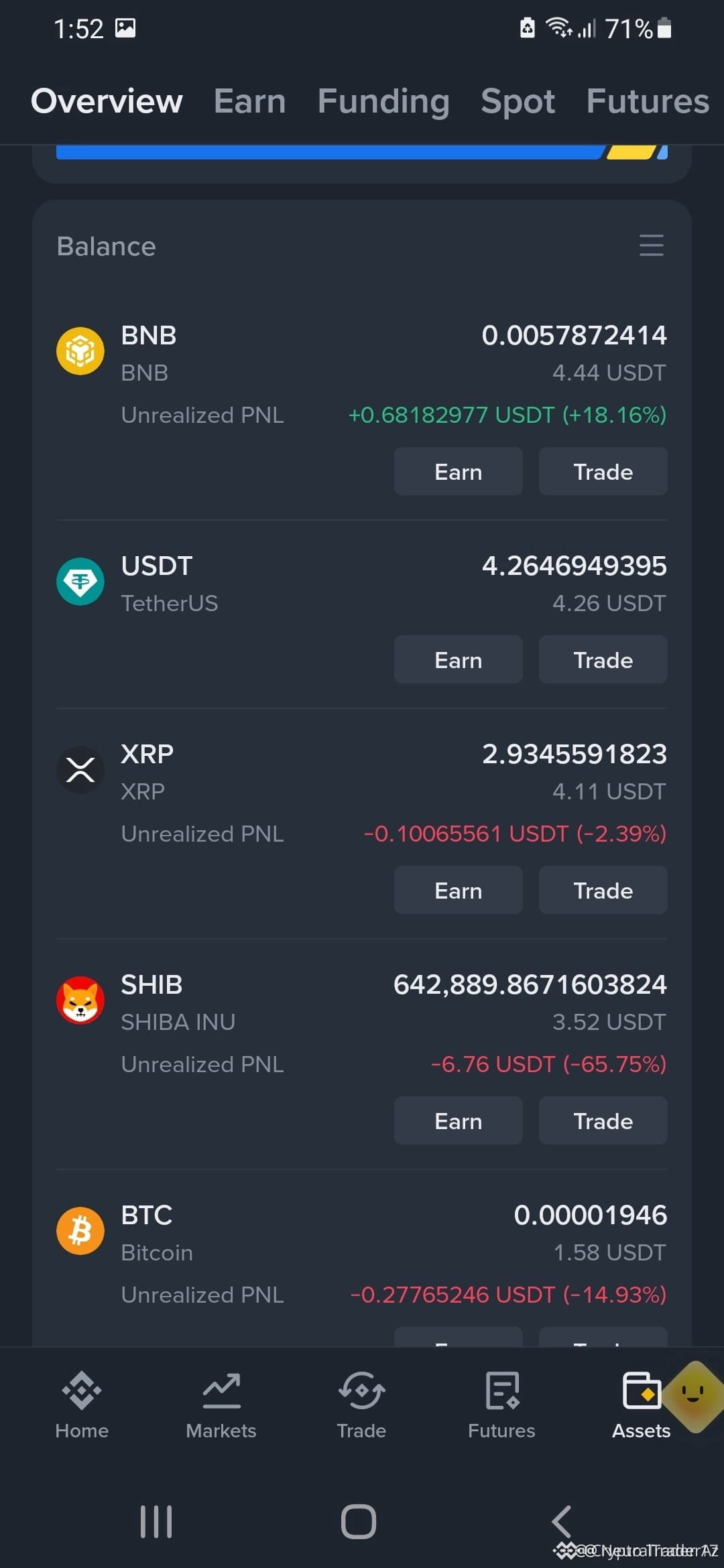
🚨 HOW TO ROTATE YOUR $BTC AND PORTFOLIO ASSETS LIKE INSTITUTIONAL SMART MONEY 🦈
Navigating portfolio allocation requires reading institutional liquidity cycles rather than reacting to emotional noise. 🔍 Smart money doesn't hold underperforming capital; it systematically rotates into high-density Fair Value Gaps and primary demand blocks.
📌 Audit your holdings by evaluating structural market strength: prune lagging positions printing structural lower lows and concentrate exposure around core market anchors with verified order flow support. 💡 Capital preservation always precedes outsized risk expansion. 💬 How are you structuring your portfolio risk ahead of the next major liquidity sweep? 👇
⚠️ Not financial advice. Always manage your risk. 🛡️
🏷️ #BTC #PortfolioStrategy #SmartMoney #CryptoAnalysis
🎯 🦈
🚨 HOW TO ROTATE YOUR $BTC AND PORTFOLIO ASSETS LIKE INSTITUTIONAL SMART MONEY 🦈
Navigating portfolio allocation requires reading institutional liquidity cycles rather than reacting to emotional noise. 🔍 Smart money doesn't hold underperforming capital; it systematically rotates into high-density Fair Value Gaps and primary demand blocks.
📌 Audit your holdings by evaluating structural market strength: prune lagging positions printing structural lower lows and concentrate exposure around core market anchors with verified order flow support. 💡 Capital preservation always precedes outsized risk expansion. 💬 How are you structuring your portfolio risk ahead of the next major liquidity sweep? 👇
⚠️ Not financial advice. Always manage your risk. 🛡️
🏷️ #BTC #PortfolioStrategy #SmartMoney #CryptoAnalysis
🎯 🦈
Navigating portfolio allocation requires reading institutional liquidity cycles rather than reacting to emotional noise. 🔍 Smart money doesn't hold underperforming capital; it systematically rotates into high-density Fair Value Gaps and primary demand blocks.
📌 Audit your holdings by evaluating structural market strength: prune lagging positions printing structural lower lows and concentrate exposure around core market anchors with verified order flow support. 💡 Capital preservation always precedes outsized risk expansion. 💬 How are you structuring your portfolio risk ahead of the next major liquidity sweep? 👇
⚠️ Not financial advice. Always manage your risk. 🛡️
🏷️ #BTC #PortfolioStrategy #SmartMoney #CryptoAnalysis
🎯 🦈
65

Wealth advisors are finally looking past just Bitcoin and Ethereum. As client demand matures, portfolios need exposure to layer-1s, utility tokens, and staking yields for true diversification. Advisors who stick strictly to the big two risk missing the structural evolution of digital assets. The advisory space is shifting from crypto curiosity to actual portfolio engineering, opening doors for broader altcoin adoption. $BTC $ETH #CryptoAdvisors #PortfolioStrategy #Altcoins
Wealth advisors are finally looking past just Bitcoin and Ethereum. As client demand matures, portfolios need exposure to layer-1s, utility tokens, and staking yields for true diversification. Advisors who stick strictly to the big two risk missing the structural evolution of digital assets. The advisory space is shifting from crypto curiosity to actual portfolio engineering, opening doors for broader altcoin adoption. $BTC $ETH #CryptoAdvisors #PortfolioStrategy #Altcoins
25
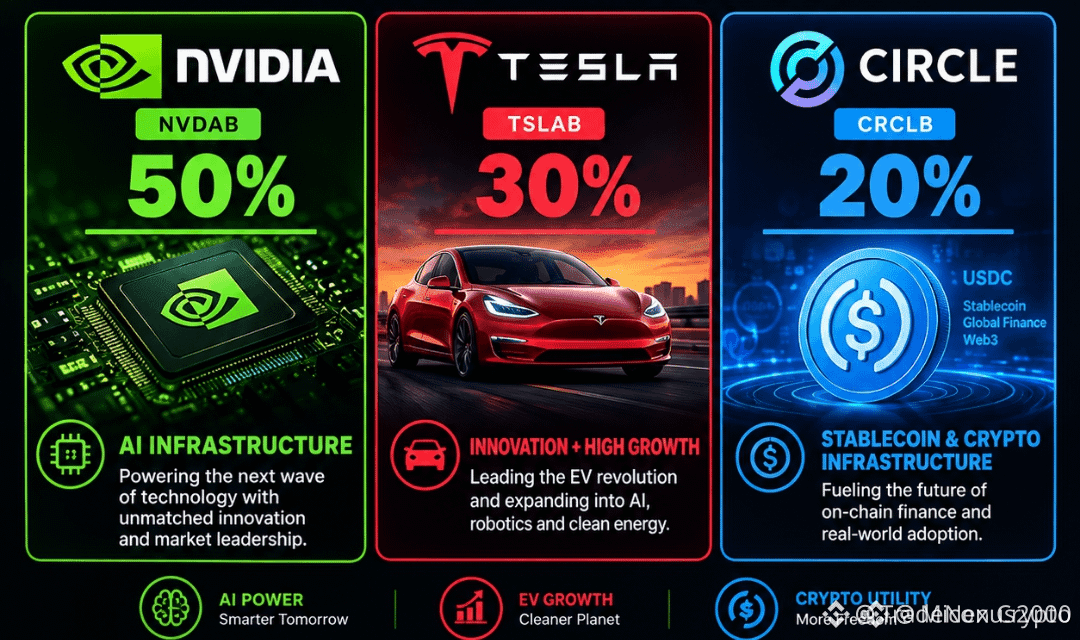
🚨 HOW SMART MONEY IS STRUCTURED FOR SEPTEMBER WITH $NVDAB EXPOSURE 🦈
When structuring macro portfolio weightings for high beta growth narratives, capital efficiency is everything. Concentrating 50% into $NVDAB locks in core AI infrastructure demand, while a 30% allocation to $TSLAB captures high-beta momentum and institutional innovation setups. 📊
The remaining 20% slice into $CRCLB establishes crucial exposure to digital asset settlement and stablecoin liquidity rails. 🏦 This tri-asset architecture balances systemic infrastructure dominance with high-reward liquidity expansion across key narrative pivots. ⚡
💬 How are you distributing your core portfolio weights heading into the final quarter of the year? 👇
⚠️ Not financial advice. Always manage your risk. 🛡️
🏷️ #NVDAB #PortfolioStrategy #Crypto #SmartMoney
🎯 🦈
🚨 HOW SMART MONEY IS STRUCTURED FOR SEPTEMBER WITH $NVDAB EXPOSURE 🦈
When structuring macro portfolio weightings for high beta growth narratives, capital efficiency is everything. Concentrating 50% into $NVDAB locks in core AI infrastructure demand, while a 30% allocation to $TSLAB captures high-beta momentum and institutional innovation setups. 📊
The remaining 20% slice into $CRCLB establishes crucial exposure to digital asset settlement and stablecoin liquidity rails. 🏦 This tri-asset architecture balances systemic infrastructure dominance with high-reward liquidity expansion across key narrative pivots. ⚡
💬 How are you distributing your core portfolio weights heading into the final quarter of the year? 👇
⚠️ Not financial advice. Always manage your risk. 🛡️
🏷️ #NVDAB #PortfolioStrategy #Crypto #SmartMoney
🎯 🦈
When structuring macro portfolio weightings for high beta growth narratives, capital efficiency is everything. Concentrating 50% into $NVDAB locks in core AI infrastructure demand, while a 30% allocation to $TSLAB captures high-beta momentum and institutional innovation setups. 📊
The remaining 20% slice into $CRCLB establishes crucial exposure to digital asset settlement and stablecoin liquidity rails. 🏦 This tri-asset architecture balances systemic infrastructure dominance with high-reward liquidity expansion across key narrative pivots. ⚡
💬 How are you distributing your core portfolio weights heading into the final quarter of the year? 👇
⚠️ Not financial advice. Always manage your risk. 🛡️
🏷️ #NVDAB #PortfolioStrategy #Crypto #SmartMoney
🎯 🦈
22
·
--
The Liquidity Illusion Is the Risk Most Crypto Traders Still Ignore
Every portfolio has two values: what the screen says it is worth, and what you would actually get if you tried to exit everything at once. In crypto that gap can be devastating.
Most risk frameworks focus on volatility — how much a position moves. But the real danger is not price movement. It is exit liquidity. When everyone wants out simultaneously the order book thins, slippage explodes, and your 20% position becomes a 35% loss before you finish selling.
This shows up most in altcoin season. Tokens with small circulating floats and thin order books show massive paper gains until you try to take profit. A $50K market sell on a low-liquidity pair can move price 8-12%. On $BTC or $ETH the same order barely registers.
The fix is not avoiding altcoins. It is sizing for liquidity not just conviction. A 5% allocation to a token with $2M daily volume carries more hidden risk than a 15% allocation to $SOL with billions in depth. Your position size should reflect not just your upside thesis but your exit cost in a stress scenario.
Three rules worth adding to any risk framework:
1. Never let a single low-liquidity position exceed 24h volume divided by 10
2. Stress-test exits assuming order books are 50% thinner than normal
3. Keep at least 30% in what you can exit in minutes without moving price — $BTC $ETH or stablecoins
Volatility is the risk you see. Liquidity is the risk you feel only when it is too late.
#RiskManagement #CryptoTrading #LiquidityRisk #PortfolioStrategy
The Liquidity Illusion Is the Risk Most Crypto Traders Still Ignore
Every portfolio has two values: what the screen says it is worth, and what you would actually get if you tried to exit everything at once. In crypto that gap can be devastating.
Most risk frameworks focus on volatility — how much a position moves. But the real danger is not price movement. It is exit liquidity. When everyone wants out simultaneously the order book thins, slippage explodes, and your 20% position becomes a 35% loss before you finish selling.
This shows up most in altcoin season. Tokens with small circulating floats and thin order books show massive paper gains until you try to take profit. A $50K market sell on a low-liquidity pair can move price 8-12%. On $BTC or $ETH the same order barely registers.
The fix is not avoiding altcoins. It is sizing for liquidity not just conviction. A 5% allocation to a token with $2M daily volume carries more hidden risk than a 15% allocation to $SOL with billions in depth. Your position size should reflect not just your upside thesis but your exit cost in a stress scenario.
Three rules worth adding to any risk framework:
1. Never let a single low-liquidity position exceed 24h volume divided by 10
2. Stress-test exits assuming order books are 50% thinner than normal
3. Keep at least 30% in what you can exit in minutes without moving price — $BTC $ETH or stablecoins
Volatility is the risk you see. Liquidity is the risk you feel only when it is too late.
#RiskManagement #CryptoTrading #LiquidityRisk #PortfolioStrategy
Every portfolio has two values: what the screen says it is worth, and what you would actually get if you tried to exit everything at once. In crypto that gap can be devastating.
Most risk frameworks focus on volatility — how much a position moves. But the real danger is not price movement. It is exit liquidity. When everyone wants out simultaneously the order book thins, slippage explodes, and your 20% position becomes a 35% loss before you finish selling.
This shows up most in altcoin season. Tokens with small circulating floats and thin order books show massive paper gains until you try to take profit. A $50K market sell on a low-liquidity pair can move price 8-12%. On $BTC or $ETH the same order barely registers.
The fix is not avoiding altcoins. It is sizing for liquidity not just conviction. A 5% allocation to a token with $2M daily volume carries more hidden risk than a 15% allocation to $SOL with billions in depth. Your position size should reflect not just your upside thesis but your exit cost in a stress scenario.
Three rules worth adding to any risk framework:
1. Never let a single low-liquidity position exceed 24h volume divided by 10
2. Stress-test exits assuming order books are 50% thinner than normal
3. Keep at least 30% in what you can exit in minutes without moving price — $BTC $ETH or stablecoins
Volatility is the risk you see. Liquidity is the risk you feel only when it is too late.
#RiskManagement #CryptoTrading #LiquidityRisk #PortfolioStrategy
145

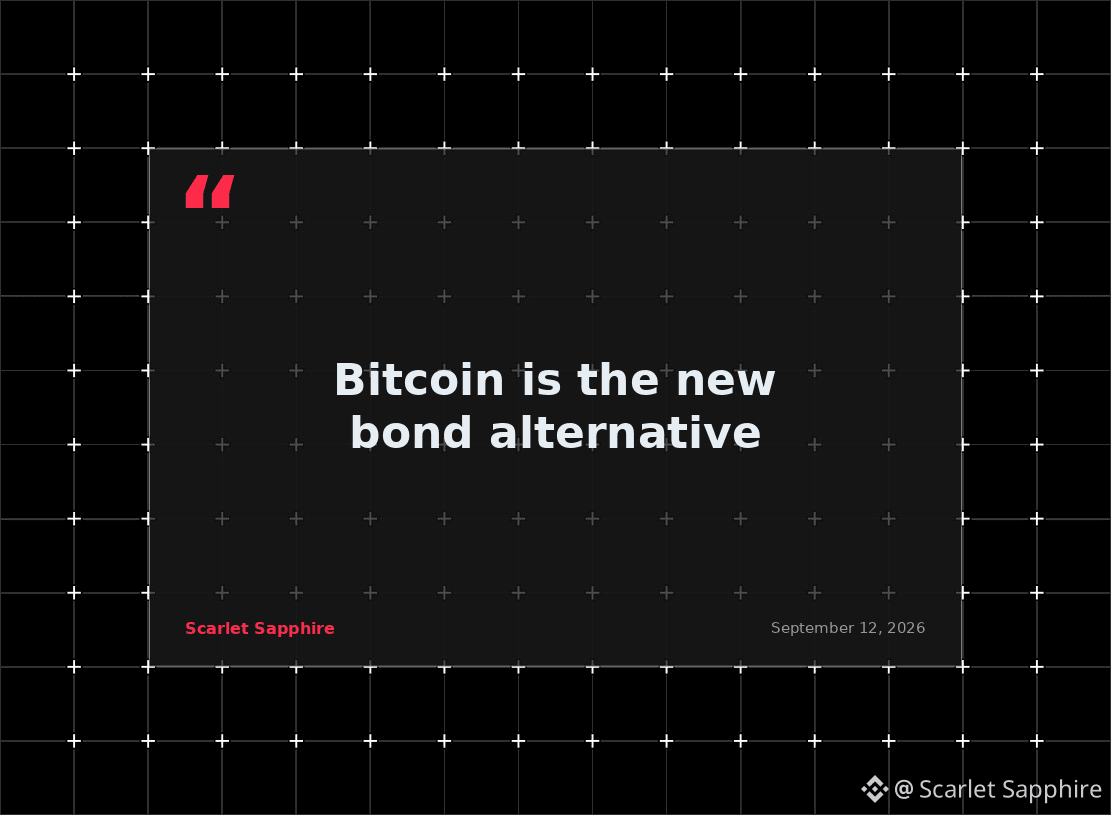
Bitcoin is the new bond alternative
Investors with AI heavy portfolios are increasingly considering Bitcoin as a strategic alternative to traditional bonds to manage risk and capture different growth drivers.
#BitcoinAllocation #PortfolioStrategy
Bitcoin is the new bond alternative
Investors with AI heavy portfolios are increasingly considering Bitcoin as a strategic alternative to traditional bonds to manage risk and capture different growth drivers.
#BitcoinAllocation #PortfolioStrategy
Investors with AI heavy portfolios are increasingly considering Bitcoin as a strategic alternative to traditional bonds to manage risk and capture different growth drivers.
#BitcoinAllocation #PortfolioStrategy
6
INSTITUTIONAL CAPITAL ALLOCATION: ARE YOU FULLY DEPLOYED OR HOLDING DRY POWDER $BTC 📊 🦈
Smart money management isn't just about identifying fair value gaps or hunting liquidity; capital allocation dictates longevity. 🏦 In complex market environments, institutional desks adjust risk exposure dynamically, retaining strategic cash reserves to capitalise on sudden structural dislocations. 📊
Whether maintaining tight spot exposure or sitting patient in stablecoins awaiting high-conviction order block retests, position sizing remains your primary line of defense. 🛡️ 🔍
💬 What percentage of your portfolio is currently deployed in active market positions right now? 👇
⚠️ Not financial advice. Always manage your risk. 🛡️
🏷️ #BTC #PortfolioStrategy #RiskManagement #Crypto
🎯 🛡️
INSTITUTIONAL CAPITAL ALLOCATION: ARE YOU FULLY DEPLOYED OR HOLDING DRY POWDER $BTC 📊 🦈
Smart money management isn't just about identifying fair value gaps or hunting liquidity; capital allocation dictates longevity. 🏦 In complex market environments, institutional desks adjust risk exposure dynamically, retaining strategic cash reserves to capitalise on sudden structural dislocations. 📊
Whether maintaining tight spot exposure or sitting patient in stablecoins awaiting high-conviction order block retests, position sizing remains your primary line of defense. 🛡️ 🔍
💬 What percentage of your portfolio is currently deployed in active market positions right now? 👇
⚠️ Not financial advice. Always manage your risk. 🛡️
🏷️ #BTC #PortfolioStrategy #RiskManagement #Crypto
🎯 🛡️
Smart money management isn't just about identifying fair value gaps or hunting liquidity; capital allocation dictates longevity. 🏦 In complex market environments, institutional desks adjust risk exposure dynamically, retaining strategic cash reserves to capitalise on sudden structural dislocations. 📊
Whether maintaining tight spot exposure or sitting patient in stablecoins awaiting high-conviction order block retests, position sizing remains your primary line of defense. 🛡️ 🔍
💬 What percentage of your portfolio is currently deployed in active market positions right now? 👇
⚠️ Not financial advice. Always manage your risk. 🛡️
🏷️ #BTC #PortfolioStrategy #RiskManagement #Crypto
🎯 🛡️
3

·
--
Using Stablecoins as Tactical Cash
Holding a percentage of your portfolio in USDT or USDC isn't passive—it's tactical ammunition to buy sharp market dips when panic hits.
#Stablecoins #PortfolioStrategy
Using Stablecoins as Tactical Cash
Holding a percentage of your portfolio in USDT or USDC isn't passive—it's tactical ammunition to buy sharp market dips when panic hits.
#Stablecoins #PortfolioStrategy
Holding a percentage of your portfolio in USDT or USDC isn't passive—it's tactical ammunition to buy sharp market dips when panic hits.
#Stablecoins #PortfolioStrategy
2

·
--
If today someone gave me $10,000 to invest, I definitely wouldn’t put it all into a single asset.
My first step wouldn’t even be about buying.
I would figure out what I need this money for.
I’d keep part of it as maximally liquid.
I’d allocate part to a long-term portfolio.
And only a small portion I’d reserve for more risky ideas.
Here I like the approach where different financial products solve different purposes.
For example, bStocks can be considered in the context of access to TradFi, and Binance Earn — as a separate tool for working with digital assets you already have.
But I wouldn’t buy something just because of a pretty APY or a loud name.
For me, it matters more to understand:
what I’m getting,
what the risk is,
how easy it is to exit the position
and what happens to my money in a negative scenario.
For me, a good portfolio isn’t one that promises the biggest returns.
It’s the one that lets you sleep well.
#PortfolioStrategy #bStocks #BinanceEarn
$TSMB
{spot}(TSMBUSDT)
$AMZNB
{spot}(AMZNBUSDT)
If today someone gave me $10,000 to invest, I definitely wouldn’t put it all into a single asset.
My first step wouldn’t even be about buying.
I would figure out what I need this money for.
I’d keep part of it as maximally liquid.
I’d allocate part to a long-term portfolio.
And only a small portion I’d reserve for more risky ideas.
Here I like the approach where different financial products solve different purposes.
For example, bStocks can be considered in the context of access to TradFi, and Binance Earn — as a separate tool for working with digital assets you already have.
But I wouldn’t buy something just because of a pretty APY or a loud name.
For me, it matters more to understand:
what I’m getting,
what the risk is,
how easy it is to exit the position
and what happens to my money in a negative scenario.
For me, a good portfolio isn’t one that promises the biggest returns.
It’s the one that lets you sleep well.
#PortfolioStrategy #bStocks #BinanceEarn
$TSMB
$AMZNB
My first step wouldn’t even be about buying.
I would figure out what I need this money for.
I’d keep part of it as maximally liquid.
I’d allocate part to a long-term portfolio.
And only a small portion I’d reserve for more risky ideas.
Here I like the approach where different financial products solve different purposes.
For example, bStocks can be considered in the context of access to TradFi, and Binance Earn — as a separate tool for working with digital assets you already have.
But I wouldn’t buy something just because of a pretty APY or a loud name.
For me, it matters more to understand:
what I’m getting,
what the risk is,
how easy it is to exit the position
and what happens to my money in a negative scenario.
For me, a good portfolio isn’t one that promises the biggest returns.
It’s the one that lets you sleep well.
#PortfolioStrategy #bStocks #BinanceEarn
$TSMB
$AMZNB
2
259
·
--
Bullish
There is one mistake I often see among beginners: people think that all financial products are used in the same way.
In reality, they are not.
For example, active trading is constant market monitoring, finding entry and exit points.
Long-term investing is a completely different approach.
Binance Earn is another model where the main thing is not constantly buying and selling.
And bStocks is interesting because it sits at the intersection of the digital environment and TradFi.
So before choosing a product, it’s worth defining your own goal.
Do you need active trading?
Long-term investing?
Income from already existing assets?
Or portfolio diversification?
Once you have the answer to these questions, choosing an instrument becomes much easier.
#Trading #BinanceEarn #bStocks #PortfolioStrategy
$BTC
{spot}(BTCUSDT)
There is one mistake I often see among beginners: people think that all financial products are used in the same way.
In reality, they are not.
For example, active trading is constant market monitoring, finding entry and exit points.
Long-term investing is a completely different approach.
Binance Earn is another model where the main thing is not constantly buying and selling.
And bStocks is interesting because it sits at the intersection of the digital environment and TradFi.
So before choosing a product, it’s worth defining your own goal.
Do you need active trading?
Long-term investing?
Income from already existing assets?
Or portfolio diversification?
Once you have the answer to these questions, choosing an instrument becomes much easier.
#Trading #BinanceEarn #bStocks #PortfolioStrategy
$BTC
In reality, they are not.
For example, active trading is constant market monitoring, finding entry and exit points.
Long-term investing is a completely different approach.
Binance Earn is another model where the main thing is not constantly buying and selling.
And bStocks is interesting because it sits at the intersection of the digital environment and TradFi.
So before choosing a product, it’s worth defining your own goal.
Do you need active trading?
Long-term investing?
Income from already existing assets?
Or portfolio diversification?
Once you have the answer to these questions, choosing an instrument becomes much easier.
#Trading #BinanceEarn #bStocks #PortfolioStrategy
$BTC
226

·
--
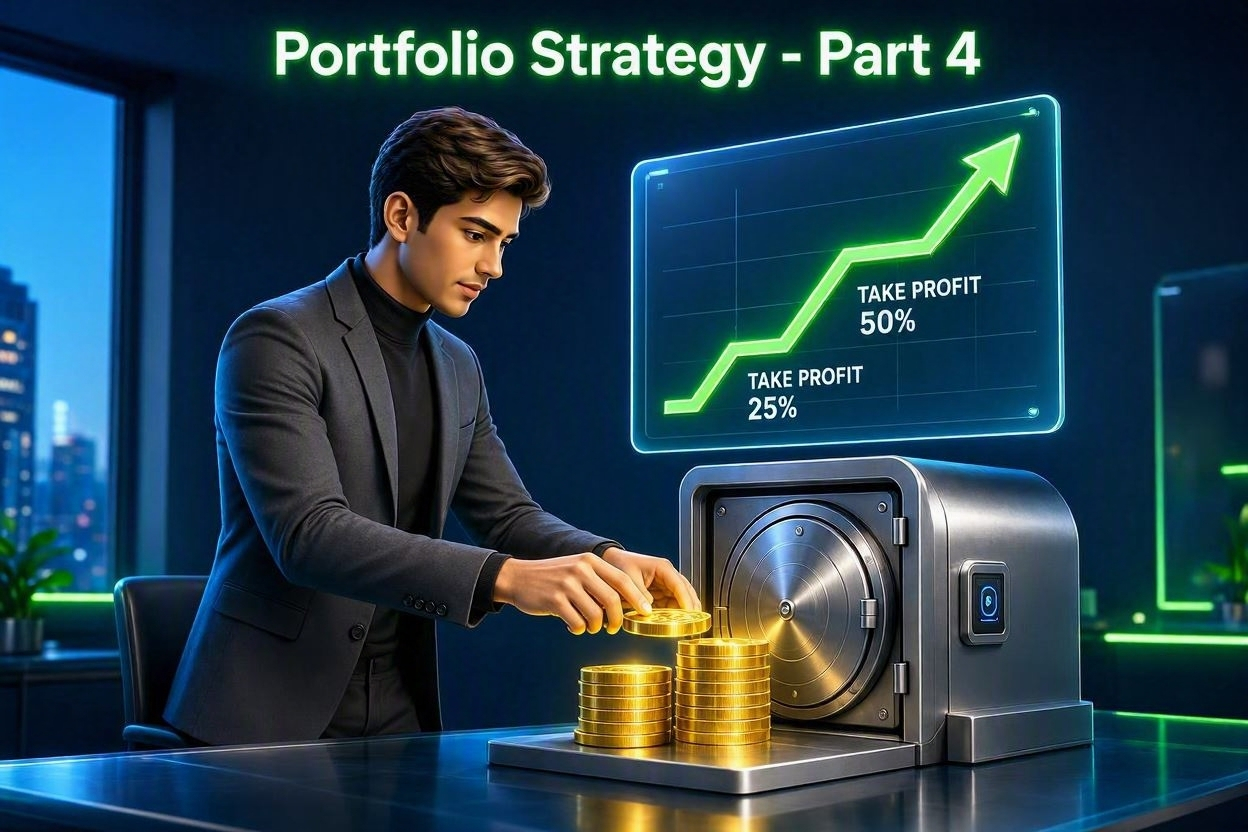
📊 Portfolio Strategy (Part 4): How I Take Profits Using DCA Selling💧💧💧
Buying a great crypto coin is only half the battle; knowing when to sell and lock in profits is where the real money is made. In my early days, I watched my portfolio pump 5x, but I never sold due to greed, only to watch it crash back to my entry price. Today, I use a disciplined Take-Profit strategy to secure my wealth.
Here is the structured profit-taking plan I follow in every major market rally:
💧(a).The Danger of Waiting for the Absolute Top
No one can accurately predict the exact market peak. Waiting for a coin to hit an imaginary high-price target before selling is a gambling mindset. I learned to suppress my emotions and start taking partial profits when the technical analysis signals market exhaustion.
💧(b). Executing DCA Selling (Dollar-Cost Averaging Out)
Just like I buy in steps, I sell in steps. When a coin hits my first target area, I take 20% to 25% of my profit. As the price goes higher, I continue selling in tranches. This DCA selling method ensures that I lock in guaranteed gains while keeping a small moonbag for further upside.
💧(c).Reinvesting Profits Back into Safety
Taking profit doesn’t mean leaving crypto completely. When I sell a highly volatile altcoin, I instantly move those realized profits into stablecoins or my core assets (BTC/ETH). Transforming risky paper gains into permanent, secure capital is how I stay wealthy.
💡 Let's Chat: Do you have a strict plan to take profits during a bull run, or do you find it hard to sell due to FOMO? What is your strategy? Share below! 👇 🎈🎈🎈
💥Disclaimer: Not financial advice. Educational only. DYOR.
#PortfolioStrategy #TakeProfit #DCASelling #CryptoInvestingTips #RiskManagement $BNB $BTC $SOL
{spot}(BNBUSDT)
📊 Portfolio Strategy (Part 4): How I Take Profits Using DCA Selling💧💧💧
Buying a great crypto coin is only half the battle; knowing when to sell and lock in profits is where the real money is made. In my early days, I watched my portfolio pump 5x, but I never sold due to greed, only to watch it crash back to my entry price. Today, I use a disciplined Take-Profit strategy to secure my wealth.
Here is the structured profit-taking plan I follow in every major market rally:
💧(a).The Danger of Waiting for the Absolute Top
No one can accurately predict the exact market peak. Waiting for a coin to hit an imaginary high-price target before selling is a gambling mindset. I learned to suppress my emotions and start taking partial profits when the technical analysis signals market exhaustion.
💧(b). Executing DCA Selling (Dollar-Cost Averaging Out)
Just like I buy in steps, I sell in steps. When a coin hits my first target area, I take 20% to 25% of my profit. As the price goes higher, I continue selling in tranches. This DCA selling method ensures that I lock in guaranteed gains while keeping a small moonbag for further upside.
💧(c).Reinvesting Profits Back into Safety
Taking profit doesn’t mean leaving crypto completely. When I sell a highly volatile altcoin, I instantly move those realized profits into stablecoins or my core assets (BTC/ETH). Transforming risky paper gains into permanent, secure capital is how I stay wealthy.
💡 Let's Chat: Do you have a strict plan to take profits during a bull run, or do you find it hard to sell due to FOMO? What is your strategy? Share below! 👇 🎈🎈🎈
💥Disclaimer: Not financial advice. Educational only. DYOR.
#PortfolioStrategy #TakeProfit #DCASelling #CryptoInvestingTips #RiskManagement $BNB $BTC $SOL
Buying a great crypto coin is only half the battle; knowing when to sell and lock in profits is where the real money is made. In my early days, I watched my portfolio pump 5x, but I never sold due to greed, only to watch it crash back to my entry price. Today, I use a disciplined Take-Profit strategy to secure my wealth.
Here is the structured profit-taking plan I follow in every major market rally:
💧(a).The Danger of Waiting for the Absolute Top
No one can accurately predict the exact market peak. Waiting for a coin to hit an imaginary high-price target before selling is a gambling mindset. I learned to suppress my emotions and start taking partial profits when the technical analysis signals market exhaustion.
💧(b). Executing DCA Selling (Dollar-Cost Averaging Out)
Just like I buy in steps, I sell in steps. When a coin hits my first target area, I take 20% to 25% of my profit. As the price goes higher, I continue selling in tranches. This DCA selling method ensures that I lock in guaranteed gains while keeping a small moonbag for further upside.
💧(c).Reinvesting Profits Back into Safety
Taking profit doesn’t mean leaving crypto completely. When I sell a highly volatile altcoin, I instantly move those realized profits into stablecoins or my core assets (BTC/ETH). Transforming risky paper gains into permanent, secure capital is how I stay wealthy.
💡 Let's Chat: Do you have a strict plan to take profits during a bull run, or do you find it hard to sell due to FOMO? What is your strategy? Share below! 👇 🎈🎈🎈
💥Disclaimer: Not financial advice. Educational only. DYOR.
#PortfolioStrategy #TakeProfit #DCASelling #CryptoInvestingTips #RiskManagement $BNB $BTC $SOL
1
132

🚨 ROTATING TRADITIONAL SAFE-HAVEN GOLD INTO $BTC TO ACCELERATE YOUTH WEALTH COMPOUNDING! 💥
A 21-year-old investor holding emergency cash and gold reserves is contemplating a major capital pivot into $BTC to escape stagnant traditional business yield. Holding passive defense assets early in your career builds safety, but real wealth velocity requires calculated market asymmetry. 📊
With traditional markets offering tight margins, rotating defensive capital into digital scarcity allows young market participants to bid structural momentum early. Dollar-cost averaging steady monthly income alongside a structured allocation keeps risk tightly controlled while capturing macro upside. 💡
💬 Would you liquidate physical gold reserves to bid $BTC right now, or build a DCA position strictly from monthly cash flow? 👇
⚠️ Not financial advice. Always manage your risk. 🛡️
🏷️ #BTC #PortfolioStrategy #WealthBuilding #Crypto
🔥 💎
🚨 ROTATING TRADITIONAL SAFE-HAVEN GOLD INTO $BTC TO ACCELERATE YOUTH WEALTH COMPOUNDING! 💥
A 21-year-old investor holding emergency cash and gold reserves is contemplating a major capital pivot into $BTC to escape stagnant traditional business yield. Holding passive defense assets early in your career builds safety, but real wealth velocity requires calculated market asymmetry. 📊
With traditional markets offering tight margins, rotating defensive capital into digital scarcity allows young market participants to bid structural momentum early. Dollar-cost averaging steady monthly income alongside a structured allocation keeps risk tightly controlled while capturing macro upside. 💡
💬 Would you liquidate physical gold reserves to bid $BTC right now, or build a DCA position strictly from monthly cash flow? 👇
⚠️ Not financial advice. Always manage your risk. 🛡️
🏷️ #BTC #PortfolioStrategy #WealthBuilding #Crypto
🔥 💎
A 21-year-old investor holding emergency cash and gold reserves is contemplating a major capital pivot into $BTC to escape stagnant traditional business yield. Holding passive defense assets early in your career builds safety, but real wealth velocity requires calculated market asymmetry. 📊
With traditional markets offering tight margins, rotating defensive capital into digital scarcity allows young market participants to bid structural momentum early. Dollar-cost averaging steady monthly income alongside a structured allocation keeps risk tightly controlled while capturing macro upside. 💡
💬 Would you liquidate physical gold reserves to bid $BTC right now, or build a DCA position strictly from monthly cash flow? 👇
⚠️ Not financial advice. Always manage your risk. 🛡️
🏷️ #BTC #PortfolioStrategy #WealthBuilding #Crypto
🔥 💎

22


·
--

Article
Where to park capital? I break down my portfolio: bStocks vs TradFi vs Binance EarnMany people ask,📊 Where to park capital? I break down my portfolio: bStocks vs TradFi vs Binance Earn
Many people ask how to properly balance assets between crypto and the traditional market. There is no universal formula, but I have developed a clear strategy for myself, where each instrument performs its specific task.
Where to park capital? I break down my portfolio: bStocks vs TradFi vs Binance EarnMany people ask,
📊 Where to park capital? I break down my portfolio: bStocks vs TradFi vs Binance Earn
Many people ask how to properly balance assets between crypto and the traditional market. There is no universal formula, but I have developed a clear strategy for myself, where each instrument performs its specific task.
Many people ask how to properly balance assets between crypto and the traditional market. There is no universal formula, but I have developed a clear strategy for myself, where each instrument performs its specific task.
194
·
--
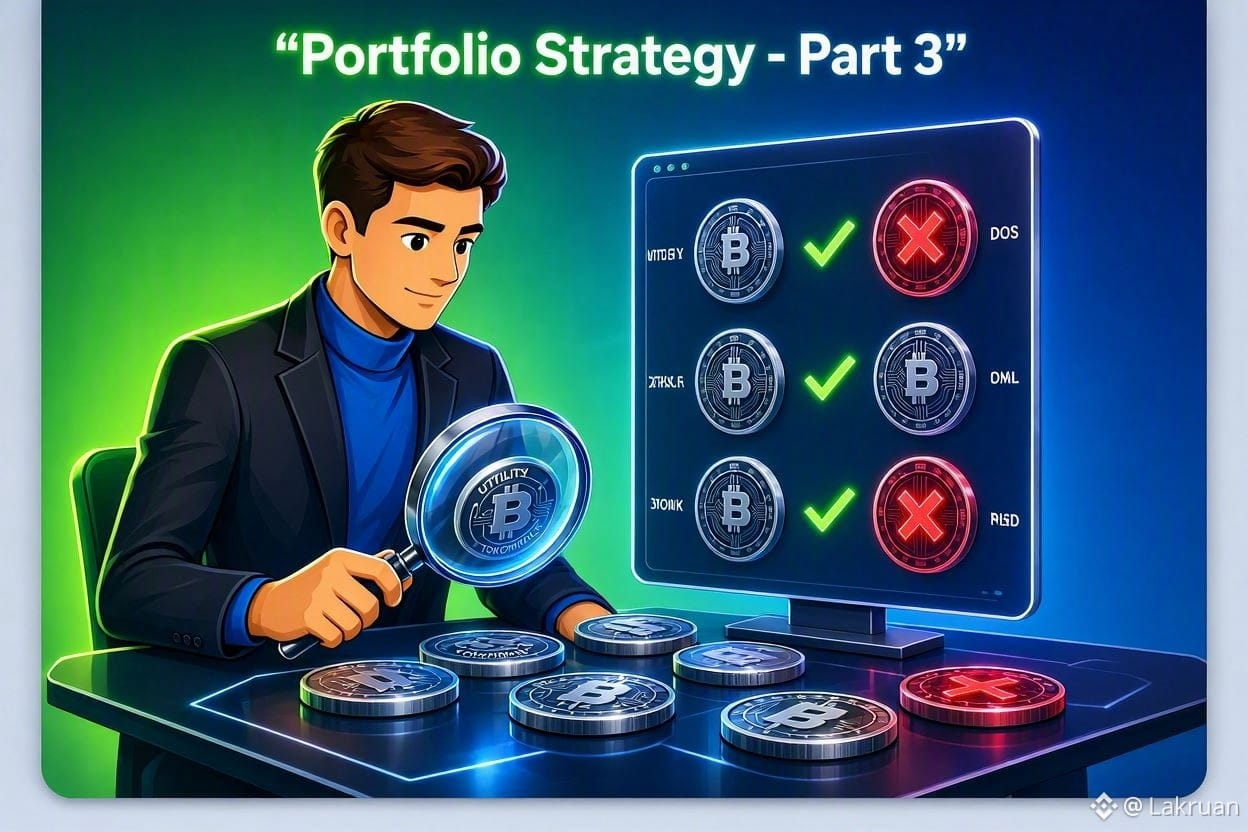
📊 Portfolio Strategy (Part 3): How I Select the Right Coins for My Portfolio 💧💧💧
With thousands of cryptocurrencies in the market, picking the right ones can be overwhelming. In my early days, I bought coins based on social media hype, which usually led to heavy losses. Today, I use a strict filtering checklist before investing a single dollar. Capital preservation starts with careful asset selection.
Here are the three ultimate criteria I follow to pick high-quality coins:
💧(a).Utility and Real-World Adoption Over Hype
I look for projects that solve real problems. Does it have working products, active decentralized applications (dApps), or a strong community? If a project only offers empty promises and marketing hype without real utility, I instantly skip it. Real adoption brings long-term value.
💧(b).Healthy Tokenomics and Supply Structure
Before buying, I always check the market cap and supply metrics on Binance. I avoid coins with massive inflation or hidden developer wallets ready to dump on retail investors. I prefer projects with clear vesting schedules and a healthy circulating supply model.
💧(c).Developer Activity and Institutional Support
A great idea is nothing without team execution. I check GitHub data to see if developers are actively upgrading the network. Furthermore, backing from reputable venture capital funds gives me confidence that the project has enough runway to survive a brutal crypto winter.
💡 Let's Chat: What is your number one rule when selecting a new altcoin for your portfolio? Do you focus on utility or tokenomics? Share your checklist below! 👇 🌹🌹🌹
💥Disclaimer: Not financial advice. Educational only. DYOR.
#PortfolioStrategy #CryptoInvesting #CoinSelection #Tokenomics #Educational $BNB $BTC $SOL
{spot}(SOLUSDT)
📊 Portfolio Strategy (Part 3): How I Select the Right Coins for My Portfolio 💧💧💧
With thousands of cryptocurrencies in the market, picking the right ones can be overwhelming. In my early days, I bought coins based on social media hype, which usually led to heavy losses. Today, I use a strict filtering checklist before investing a single dollar. Capital preservation starts with careful asset selection.
Here are the three ultimate criteria I follow to pick high-quality coins:
💧(a).Utility and Real-World Adoption Over Hype
I look for projects that solve real problems. Does it have working products, active decentralized applications (dApps), or a strong community? If a project only offers empty promises and marketing hype without real utility, I instantly skip it. Real adoption brings long-term value.
💧(b).Healthy Tokenomics and Supply Structure
Before buying, I always check the market cap and supply metrics on Binance. I avoid coins with massive inflation or hidden developer wallets ready to dump on retail investors. I prefer projects with clear vesting schedules and a healthy circulating supply model.
💧(c).Developer Activity and Institutional Support
A great idea is nothing without team execution. I check GitHub data to see if developers are actively upgrading the network. Furthermore, backing from reputable venture capital funds gives me confidence that the project has enough runway to survive a brutal crypto winter.
💡 Let's Chat: What is your number one rule when selecting a new altcoin for your portfolio? Do you focus on utility or tokenomics? Share your checklist below! 👇 🌹🌹🌹
💥Disclaimer: Not financial advice. Educational only. DYOR.
#PortfolioStrategy #CryptoInvesting #CoinSelection #Tokenomics #Educational $BNB $BTC $SOL
With thousands of cryptocurrencies in the market, picking the right ones can be overwhelming. In my early days, I bought coins based on social media hype, which usually led to heavy losses. Today, I use a strict filtering checklist before investing a single dollar. Capital preservation starts with careful asset selection.
Here are the three ultimate criteria I follow to pick high-quality coins:
💧(a).Utility and Real-World Adoption Over Hype
I look for projects that solve real problems. Does it have working products, active decentralized applications (dApps), or a strong community? If a project only offers empty promises and marketing hype without real utility, I instantly skip it. Real adoption brings long-term value.
💧(b).Healthy Tokenomics and Supply Structure
Before buying, I always check the market cap and supply metrics on Binance. I avoid coins with massive inflation or hidden developer wallets ready to dump on retail investors. I prefer projects with clear vesting schedules and a healthy circulating supply model.
💧(c).Developer Activity and Institutional Support
A great idea is nothing without team execution. I check GitHub data to see if developers are actively upgrading the network. Furthermore, backing from reputable venture capital funds gives me confidence that the project has enough runway to survive a brutal crypto winter.
💡 Let's Chat: What is your number one rule when selecting a new altcoin for your portfolio? Do you focus on utility or tokenomics? Share your checklist below! 👇 🌹🌹🌹
💥Disclaimer: Not financial advice. Educational only. DYOR.
#PortfolioStrategy #CryptoInvesting #CoinSelection #Tokenomics #Educational $BNB $BTC $SOL
1
109
·
--
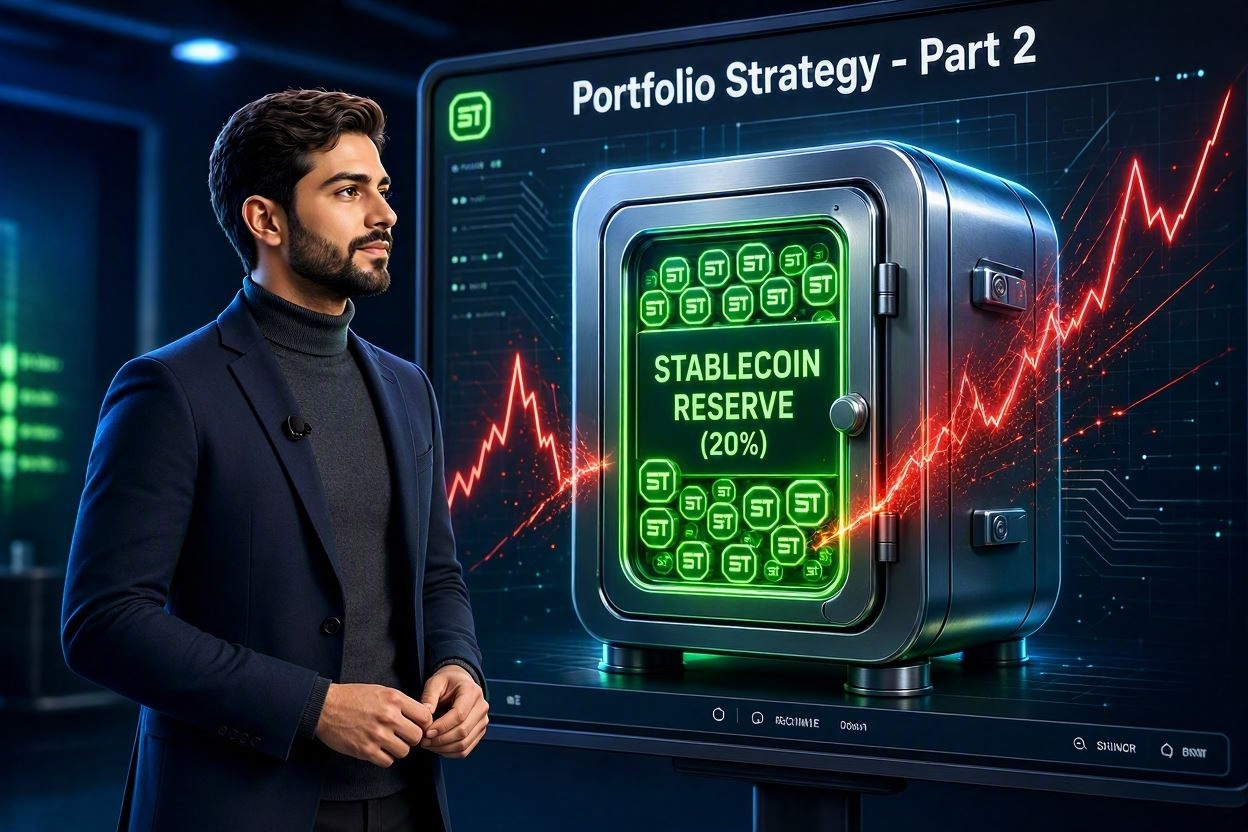
📊 Portfolio Strategy (Part 2): Why Cash Reserves Are My Ultimate Weapon 💧💧💧
In crypto, green days make people greedy, but red days are where actual wealth is built. In my early trading days, whenever the market crashed, I was 100% invested in altcoins and had zero dollars left to buy the massive discounts. I learned the hard way that maintaining a strategic cash reserve is what separates a gambler from a professional investor.
Here is how I manage my stablecoin reserves on Binance for ultimate market safety:
💧 (a). The 20% Non-Negotiable Stablecoin Vault
No matter how bullish the market looks, I never invest 100% of my wallet. I strictly keep 20% to 30% of my total portfolio value in trusted stablecoins like USDT or USDC. This isn't wasted capital; it is my financial shield and emergency dry powder.
💧(b). Buying the Blood During Major Market Crashes
When a sudden panic sell-off happens and everyone is selling in fear, my stablecoin reserve becomes a golden ticket. It allows me to calmly deploy capital into high-quality blue-chip assets at a 30% to 40% discount, turning market bloodbaths into massive profit opportunities.
💧(c).Earning Passive Yields While Waiting
I don’t just let my stablecoins sit idle. While waiting for a market correction, I utilize Binance Earn to accumulate low-risk passive rewards. This ensures that my cash reserve keeps growing safely daily, ready to execute whenever the perfect market dip presents itself.
💡 Let's Chat: What percentage of your crypto portfolio do you hold in stablecoins for sudden emergencies? Do you use Binance Earn? Drop your comments below! 👇 🌹🌹🌹
🎈Disclaimer: Not financial advice. Educational only. DYOR.
#PortfolioStrategy #RiskManagementInTrading #Stablecoins #BinanceEarn #BinanceSquare
$BNB $BTC $SOL
{spot}(BNBUSDT)
📊 Portfolio Strategy (Part 2): Why Cash Reserves Are My Ultimate Weapon 💧💧💧
In crypto, green days make people greedy, but red days are where actual wealth is built. In my early trading days, whenever the market crashed, I was 100% invested in altcoins and had zero dollars left to buy the massive discounts. I learned the hard way that maintaining a strategic cash reserve is what separates a gambler from a professional investor.
Here is how I manage my stablecoin reserves on Binance for ultimate market safety:
💧 (a). The 20% Non-Negotiable Stablecoin Vault
No matter how bullish the market looks, I never invest 100% of my wallet. I strictly keep 20% to 30% of my total portfolio value in trusted stablecoins like USDT or USDC. This isn't wasted capital; it is my financial shield and emergency dry powder.
💧(b). Buying the Blood During Major Market Crashes
When a sudden panic sell-off happens and everyone is selling in fear, my stablecoin reserve becomes a golden ticket. It allows me to calmly deploy capital into high-quality blue-chip assets at a 30% to 40% discount, turning market bloodbaths into massive profit opportunities.
💧(c).Earning Passive Yields While Waiting
I don’t just let my stablecoins sit idle. While waiting for a market correction, I utilize Binance Earn to accumulate low-risk passive rewards. This ensures that my cash reserve keeps growing safely daily, ready to execute whenever the perfect market dip presents itself.
💡 Let's Chat: What percentage of your crypto portfolio do you hold in stablecoins for sudden emergencies? Do you use Binance Earn? Drop your comments below! 👇 🌹🌹🌹
🎈Disclaimer: Not financial advice. Educational only. DYOR.
#PortfolioStrategy #RiskManagementInTrading #Stablecoins #BinanceEarn #BinanceSquare
$BNB $BTC $SOL
In crypto, green days make people greedy, but red days are where actual wealth is built. In my early trading days, whenever the market crashed, I was 100% invested in altcoins and had zero dollars left to buy the massive discounts. I learned the hard way that maintaining a strategic cash reserve is what separates a gambler from a professional investor.
Here is how I manage my stablecoin reserves on Binance for ultimate market safety:
💧 (a). The 20% Non-Negotiable Stablecoin Vault
No matter how bullish the market looks, I never invest 100% of my wallet. I strictly keep 20% to 30% of my total portfolio value in trusted stablecoins like USDT or USDC. This isn't wasted capital; it is my financial shield and emergency dry powder.
💧(b). Buying the Blood During Major Market Crashes
When a sudden panic sell-off happens and everyone is selling in fear, my stablecoin reserve becomes a golden ticket. It allows me to calmly deploy capital into high-quality blue-chip assets at a 30% to 40% discount, turning market bloodbaths into massive profit opportunities.
💧(c).Earning Passive Yields While Waiting
I don’t just let my stablecoins sit idle. While waiting for a market correction, I utilize Binance Earn to accumulate low-risk passive rewards. This ensures that my cash reserve keeps growing safely daily, ready to execute whenever the perfect market dip presents itself.
💡 Let's Chat: What percentage of your crypto portfolio do you hold in stablecoins for sudden emergencies? Do you use Binance Earn? Drop your comments below! 👇 🌹🌹🌹
🎈Disclaimer: Not financial advice. Educational only. DYOR.
#PortfolioStrategy #RiskManagementInTrading #Stablecoins #BinanceEarn #BinanceSquare
$BNB $BTC $SOL
3
432

🚨 ROTATING ILLIQUID REAL ESTATE INTO LIQUID YIELD AND $BTC ASSETS! ⚡
A trader in our community is sitting on a 3-billion unit property alongside 1.5 billion in idle bank reserves. 🔍 They are weighing a high-conviction portfolio restructuring: downsizing to a leaner residential setup and freeing up capital for active financial yield and hard assets.
📌 Shifting frozen brick-and-mortar equity into high-velocity liquid capital allows smart money to capture compound yield and front-run macro inflation. 📊 When illiquid assets get flipped into cash reserves and hard collateral, strategic positioning becomes the ultimate liquidity play.
🤔 Would you lock your net worth into static real estate, or unleash that capital into yield and gold reserves? 👇
⚠️ Not financial advice. Always manage your risk. 🛡️
🏷️ #BTC #CapitalRotation #PortfolioStrategy #WealthManagement
🔥 💎
🚨 ROTATING ILLIQUID REAL ESTATE INTO LIQUID YIELD AND $BTC ASSETS! ⚡
A trader in our community is sitting on a 3-billion unit property alongside 1.5 billion in idle bank reserves. 🔍 They are weighing a high-conviction portfolio restructuring: downsizing to a leaner residential setup and freeing up capital for active financial yield and hard assets.
📌 Shifting frozen brick-and-mortar equity into high-velocity liquid capital allows smart money to capture compound yield and front-run macro inflation. 📊 When illiquid assets get flipped into cash reserves and hard collateral, strategic positioning becomes the ultimate liquidity play.
🤔 Would you lock your net worth into static real estate, or unleash that capital into yield and gold reserves? 👇
⚠️ Not financial advice. Always manage your risk. 🛡️
🏷️ #BTC #CapitalRotation #PortfolioStrategy #WealthManagement
🔥 💎
A trader in our community is sitting on a 3-billion unit property alongside 1.5 billion in idle bank reserves. 🔍 They are weighing a high-conviction portfolio restructuring: downsizing to a leaner residential setup and freeing up capital for active financial yield and hard assets.
📌 Shifting frozen brick-and-mortar equity into high-velocity liquid capital allows smart money to capture compound yield and front-run macro inflation. 📊 When illiquid assets get flipped into cash reserves and hard collateral, strategic positioning becomes the ultimate liquidity play.
🤔 Would you lock your net worth into static real estate, or unleash that capital into yield and gold reserves? 👇
⚠️ Not financial advice. Always manage your risk. 🛡️
🏷️ #BTC #CapitalRotation #PortfolioStrategy #WealthManagement
🔥 💎

15
·
--
📊 Portfolio Strategy (Part 1): How I Balance Core Assets and High-Risk Moonshots 🎈🎈🎈
When I first entered crypto, my portfolio was a chaotic mess of random hype coins. After riding brutal market cycles, I learned that long-term survival isn't about getting lucky on one coin—it's about building a bulletproof portfolio structure. Today, I divide my capital logically to ensure steady growth with controlled risk.
Here is how I structure my personal crypto portfolio for long-term success:
🎈 i.Bitcoin and Ethereum Form My Solid Core
I treat BTC and ETH as my portfolio's foundation. No matter how exciting new projects look, 60% to 70% of my total crypto holdings always remain in these two blue-chip assets. They provide the ultimate defense during market crashes and anchor my long-term wealth creation.
🎈ii.Allocating a Small Budget for Speculative Moonshots
I love high-risk, high-reward plays like Altcoins and Memecoins, but I never gamble my core savings on them. I strictly allocate only 5% to 10% of my capital for these speculative moonshots. If they go to zero, my portfolio survives; if they pump, it’s a massive bonus.
🎈iii.Rebalancing is My Non-Negotiable Routine
When a high-risk altcoin pumps heavily, my portfolio structure gets distorted. My rule is simple: I take profits from the risky asset and move them directly into BTC, ETH, or Stablecoins. Locking in gains and feeding my core assets is how I build permanent wealth.
💡 Let's Chat: What percentage of your portfolio is in Bitcoin and Ethereum versus risky altcoins? What is your allocation rule? Share below! 👇 🌹🌹🌹
💥Disclaimer: Not financial advice. Educational only. DYOR.
#PortfolioStrategy #PortfolioStrategy #RiskManagement #Bitcoin #BinanceSquare
$BNB $ETH $SOL
{spot}(BNBUSDT)
📊 Portfolio Strategy (Part 1): How I Balance Core Assets and High-Risk Moonshots 🎈🎈🎈
When I first entered crypto, my portfolio was a chaotic mess of random hype coins. After riding brutal market cycles, I learned that long-term survival isn't about getting lucky on one coin—it's about building a bulletproof portfolio structure. Today, I divide my capital logically to ensure steady growth with controlled risk.
Here is how I structure my personal crypto portfolio for long-term success:
🎈 i.Bitcoin and Ethereum Form My Solid Core
I treat BTC and ETH as my portfolio's foundation. No matter how exciting new projects look, 60% to 70% of my total crypto holdings always remain in these two blue-chip assets. They provide the ultimate defense during market crashes and anchor my long-term wealth creation.
🎈ii.Allocating a Small Budget for Speculative Moonshots
I love high-risk, high-reward plays like Altcoins and Memecoins, but I never gamble my core savings on them. I strictly allocate only 5% to 10% of my capital for these speculative moonshots. If they go to zero, my portfolio survives; if they pump, it’s a massive bonus.
🎈iii.Rebalancing is My Non-Negotiable Routine
When a high-risk altcoin pumps heavily, my portfolio structure gets distorted. My rule is simple: I take profits from the risky asset and move them directly into BTC, ETH, or Stablecoins. Locking in gains and feeding my core assets is how I build permanent wealth.
💡 Let's Chat: What percentage of your portfolio is in Bitcoin and Ethereum versus risky altcoins? What is your allocation rule? Share below! 👇 🌹🌹🌹
💥Disclaimer: Not financial advice. Educational only. DYOR.
#PortfolioStrategy #PortfolioStrategy #RiskManagement #Bitcoin #BinanceSquare
$BNB $ETH $SOL
When I first entered crypto, my portfolio was a chaotic mess of random hype coins. After riding brutal market cycles, I learned that long-term survival isn't about getting lucky on one coin—it's about building a bulletproof portfolio structure. Today, I divide my capital logically to ensure steady growth with controlled risk.
Here is how I structure my personal crypto portfolio for long-term success:
🎈 i.Bitcoin and Ethereum Form My Solid Core
I treat BTC and ETH as my portfolio's foundation. No matter how exciting new projects look, 60% to 70% of my total crypto holdings always remain in these two blue-chip assets. They provide the ultimate defense during market crashes and anchor my long-term wealth creation.
🎈ii.Allocating a Small Budget for Speculative Moonshots
I love high-risk, high-reward plays like Altcoins and Memecoins, but I never gamble my core savings on them. I strictly allocate only 5% to 10% of my capital for these speculative moonshots. If they go to zero, my portfolio survives; if they pump, it’s a massive bonus.
🎈iii.Rebalancing is My Non-Negotiable Routine
When a high-risk altcoin pumps heavily, my portfolio structure gets distorted. My rule is simple: I take profits from the risky asset and move them directly into BTC, ETH, or Stablecoins. Locking in gains and feeding my core assets is how I build permanent wealth.
💡 Let's Chat: What percentage of your portfolio is in Bitcoin and Ethereum versus risky altcoins? What is your allocation rule? Share below! 👇 🌹🌹🌹
💥Disclaimer: Not financial advice. Educational only. DYOR.
#PortfolioStrategy #PortfolioStrategy #RiskManagement #Bitcoin #BinanceSquare
$BNB $ETH $SOL

1
81
·
--
Most portfolios still treat $BTC as a pure risk asset — correlated to Nasdaq, dumped in downturns, avoided in uncertainty. That framing is becoming outdated.
The macro picture heading into late 2026 looks different. Treasury yields are elevated. Gold is near all-time highs. The dollar has been structurally weaker. And Bitcoin has been absorbing macro shocks — rate surprises, credit downgrades, geopolitical flare-ups — without collapsing to prior cycle lows.
This is what a slow-motion re-rating looks like. Not a headline event. A quiet repricing over months.
The logic is structural. Bitcoin has a hard-capped supply, no central bank, and no counterparty. When sovereign credit credibility erodes — measurably, as it has — the case for a neutral programmable asset strengthens.
$ETH adds a second dimension: a productive infrastructure layer with fee revenue, staking yield, and a growing ecosystem of financial applications. $BNB brings exchange-native deflation, a thriving builder ecosystem, and real utility compression.
The portfolio construction question is evolving. It is no longer just about risk appetite. It is about which assets offer asymmetric upside as the macro regime shifts. That is a different conversation — and crypto is increasingly winning it.
The investors who build frameworks now will not need to chase narratives later. Clarity of thesis and patience tend to compound.
#CryptoMacro #Bitcoin #PortfolioStrategy #CryptoInvesting
Most portfolios still treat $BTC as a pure risk asset — correlated to Nasdaq, dumped in downturns, avoided in uncertainty. That framing is becoming outdated.
The macro picture heading into late 2026 looks different. Treasury yields are elevated. Gold is near all-time highs. The dollar has been structurally weaker. And Bitcoin has been absorbing macro shocks — rate surprises, credit downgrades, geopolitical flare-ups — without collapsing to prior cycle lows.
This is what a slow-motion re-rating looks like. Not a headline event. A quiet repricing over months.
The logic is structural. Bitcoin has a hard-capped supply, no central bank, and no counterparty. When sovereign credit credibility erodes — measurably, as it has — the case for a neutral programmable asset strengthens.
$ETH adds a second dimension: a productive infrastructure layer with fee revenue, staking yield, and a growing ecosystem of financial applications. $BNB brings exchange-native deflation, a thriving builder ecosystem, and real utility compression.
The portfolio construction question is evolving. It is no longer just about risk appetite. It is about which assets offer asymmetric upside as the macro regime shifts. That is a different conversation — and crypto is increasingly winning it.
The investors who build frameworks now will not need to chase narratives later. Clarity of thesis and patience tend to compound.
#CryptoMacro #Bitcoin #PortfolioStrategy #CryptoInvesting
The macro picture heading into late 2026 looks different. Treasury yields are elevated. Gold is near all-time highs. The dollar has been structurally weaker. And Bitcoin has been absorbing macro shocks — rate surprises, credit downgrades, geopolitical flare-ups — without collapsing to prior cycle lows.
This is what a slow-motion re-rating looks like. Not a headline event. A quiet repricing over months.
The logic is structural. Bitcoin has a hard-capped supply, no central bank, and no counterparty. When sovereign credit credibility erodes — measurably, as it has — the case for a neutral programmable asset strengthens.
$ETH adds a second dimension: a productive infrastructure layer with fee revenue, staking yield, and a growing ecosystem of financial applications. $BNB brings exchange-native deflation, a thriving builder ecosystem, and real utility compression.
The portfolio construction question is evolving. It is no longer just about risk appetite. It is about which assets offer asymmetric upside as the macro regime shifts. That is a different conversation — and crypto is increasingly winning it.
The investors who build frameworks now will not need to chase narratives later. Clarity of thesis and patience tend to compound.
#CryptoMacro #Bitcoin #PortfolioStrategy #CryptoInvesting
130

·
--
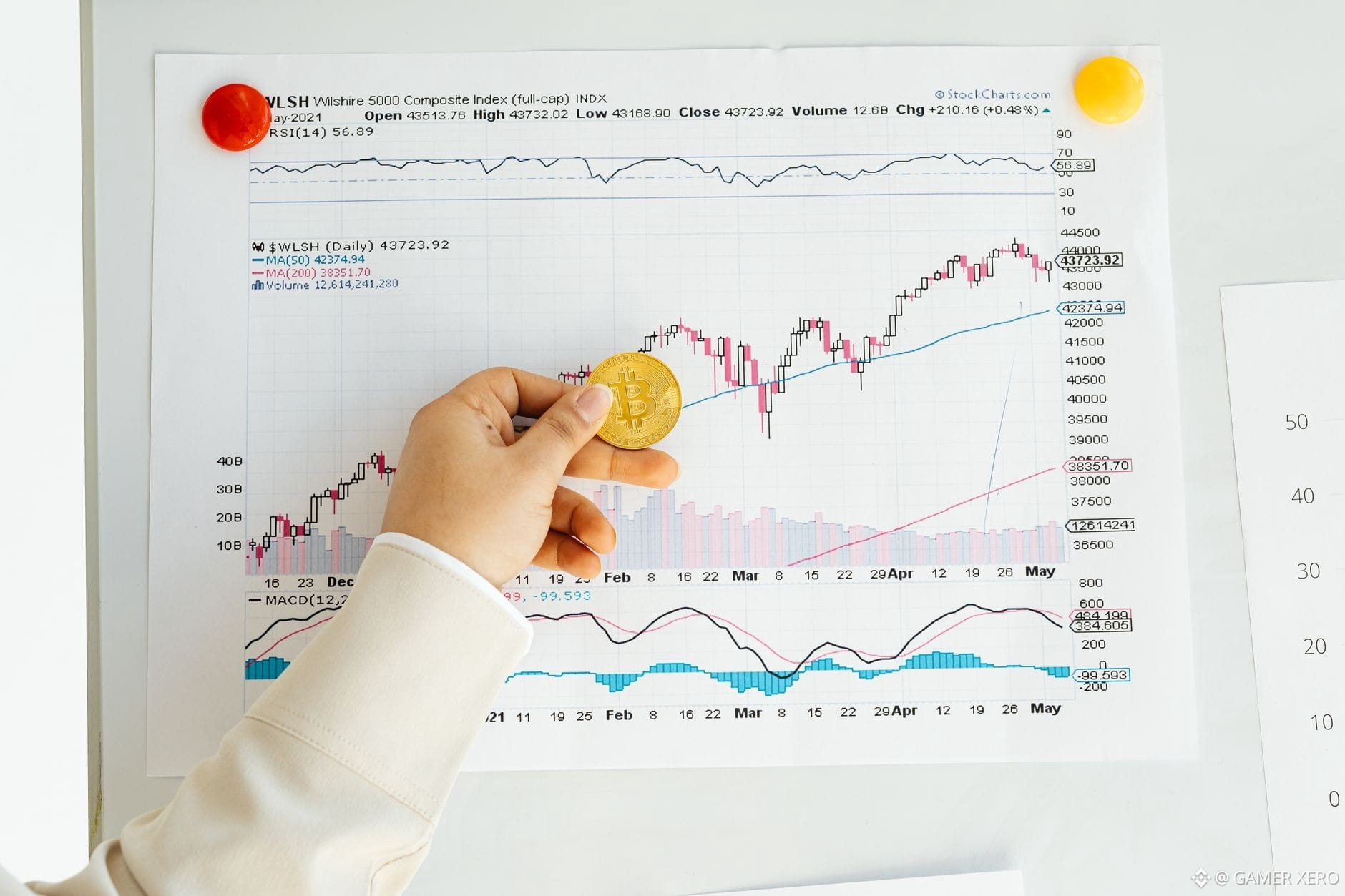
The $BTC chart has been hugging a $950 band for the past 24 hours – high $78,330, low $77,382.37 – while $ETH is trading in a tighter $37 range (high $2,467.93, low $2,430.45). When volatility compresses like this, a simple exposure rule can keep your portfolio from a single swing.
Start with a hard cap: no more than 5 % of total capital in any one position. On a $20,000 portfolio that’s $1,000. At $78,016 per $BTC that translates to roughly 0.0128 BTC; at $2,454 per $ETH it’s about 0.408 ETH. Size the trade so your stop‑loss fits the current range – a 1.5 % stop on $BTC is $1,170, comfortably inside the $950 band, leaving room for normal noise.
Next, calculate drawdown risk. A 20 % portfolio drawdown needs a 25 % upside to break even (1 / 0.8 – 1). Knowing that, you can decide whether a position’s expected move justifies the risk. If the math shows you’d need a 30 % gain to recover, you may lower the exposure limit or add a non‑correlated asset.
How do you adjust your max position size when the market squeezes into a narrow range?
#RiskManagement #PortfolioStrategy #CryptoTrading #GAMERXERO
The $BTC chart has been hugging a $950 band for the past 24 hours – high $78,330, low $77,382.37 – while $ETH is trading in a tighter $37 range (high $2,467.93, low $2,430.45). When volatility compresses like this, a simple exposure rule can keep your portfolio from a single swing.
Start with a hard cap: no more than 5 % of total capital in any one position. On a $20,000 portfolio that’s $1,000. At $78,016 per $BTC that translates to roughly 0.0128 BTC; at $2,454 per $ETH it’s about 0.408 ETH. Size the trade so your stop‑loss fits the current range – a 1.5 % stop on $BTC is $1,170, comfortably inside the $950 band, leaving room for normal noise.
Next, calculate drawdown risk. A 20 % portfolio drawdown needs a 25 % upside to break even (1 / 0.8 – 1). Knowing that, you can decide whether a position’s expected move justifies the risk. If the math shows you’d need a 30 % gain to recover, you may lower the exposure limit or add a non‑correlated asset.
How do you adjust your max position size when the market squeezes into a narrow range?
#RiskManagement #PortfolioStrategy #CryptoTrading #GAMERXERO
Start with a hard cap: no more than 5 % of total capital in any one position. On a $20,000 portfolio that’s $1,000. At $78,016 per $BTC that translates to roughly 0.0128 BTC; at $2,454 per $ETH it’s about 0.408 ETH. Size the trade so your stop‑loss fits the current range – a 1.5 % stop on $BTC is $1,170, comfortably inside the $950 band, leaving room for normal noise.
Next, calculate drawdown risk. A 20 % portfolio drawdown needs a 25 % upside to break even (1 / 0.8 – 1). Knowing that, you can decide whether a position’s expected move justifies the risk. If the math shows you’d need a 30 % gain to recover, you may lower the exposure limit or add a non‑correlated asset.
How do you adjust your max position size when the market squeezes into a narrow range?
#RiskManagement #PortfolioStrategy #CryptoTrading #GAMERXERO
82
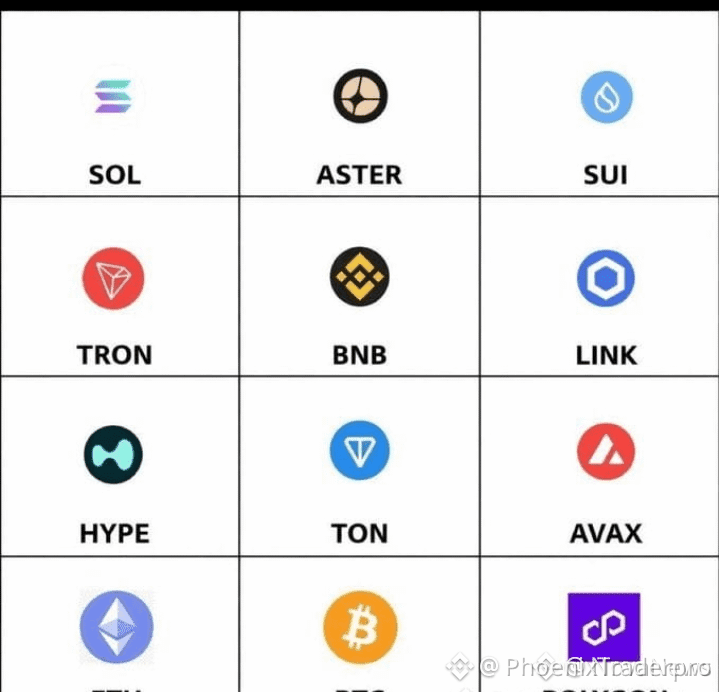
🎯 THE 2026 CONVICTION PLAY: WHICH 3 ASSETS ARE YOU STACKING ALONGSIDE $BTC ? ⚡
Chasing shiny narratives works until order books thin out and macro liquidity gets drained. 🐋 Capital is constantly rotating across high-beta heavyweights like $SOL and high-velocity layer-1s like $SUI , but surviving an extended market cycle demands underlying structural strength over short-lived hype. 📊
Market momentum rewards smart positioning over emotional chasing, yet most portfolios bleed because traders confuse temporary spikes with multi-year longevity. 💡 Smart money is quietly accumulating assets that absorb sell pressure and build real ecosystem velocity. 🔒
💬 If you had to lock in 3 non-negotiable holdings for the rest of 2026 and delete your price tracker, which ones are you taking? 👇
⚠️ Not financial advice. Always manage your risk. 🛡️
🏷️ #BTC #SOL #SUI #Crypto #PortfolioStrategy
🔥 💎
🎯 THE 2026 CONVICTION PLAY: WHICH 3 ASSETS ARE YOU STACKING ALONGSIDE $BTC ? ⚡
Chasing shiny narratives works until order books thin out and macro liquidity gets drained. 🐋 Capital is constantly rotating across high-beta heavyweights like $SOL and high-velocity layer-1s like $SUI , but surviving an extended market cycle demands underlying structural strength over short-lived hype. 📊
Market momentum rewards smart positioning over emotional chasing, yet most portfolios bleed because traders confuse temporary spikes with multi-year longevity. 💡 Smart money is quietly accumulating assets that absorb sell pressure and build real ecosystem velocity. 🔒
💬 If you had to lock in 3 non-negotiable holdings for the rest of 2026 and delete your price tracker, which ones are you taking? 👇
⚠️ Not financial advice. Always manage your risk. 🛡️
🏷️ #BTC #SOL #SUI #Crypto #PortfolioStrategy
🔥 💎
Chasing shiny narratives works until order books thin out and macro liquidity gets drained. 🐋 Capital is constantly rotating across high-beta heavyweights like $SOL and high-velocity layer-1s like $SUI , but surviving an extended market cycle demands underlying structural strength over short-lived hype. 📊
Market momentum rewards smart positioning over emotional chasing, yet most portfolios bleed because traders confuse temporary spikes with multi-year longevity. 💡 Smart money is quietly accumulating assets that absorb sell pressure and build real ecosystem velocity. 🔒
💬 If you had to lock in 3 non-negotiable holdings for the rest of 2026 and delete your price tracker, which ones are you taking? 👇
⚠️ Not financial advice. Always manage your risk. 🛡️
🏷️ #BTC #SOL #SUI #Crypto #PortfolioStrategy
🔥 💎
62
Log in to explore more content
Join global crypto users on Binance Square
⚡️ Get latest and useful information about crypto.
💬 Trusted by the world’s largest crypto exchange.
👍 Discover real insights from verified creators.
Email / Phone number
Trending Topics
1
#BOJRaisesRatesTo31YearHigh
47,074 views
946 Discussing
2
#BuffettStepsDownAsBerkshireChairman
18,812 views
418 Discussing
3
#XRPExchangeReservesHitSevenYearLow
23,684 views
414 Discussing
4
#HKCompletesFirstHKDStablecoinUseCase
56,441 views
925 Discussing
5
#VietnamPlansFirstCryptoLicensesIn2026
38,985 views
642 Discussing
6
#BTCBreaks80K
326,633 views
4,309 Discussing
7
#BitcoinMarketCapTopsTesla
60,257 views
952 Discussing
8
#SOLJumpsAbout10%
70,408 views
955 Discussing
9
#EthereumReclaims$2600
6,468 views
109 Discussing
10
#LineraShutsDownAfterFundraisingFallsShort
19,924 views
260 Discussing