
#bitcoin's
bitcoin's
530,661 views
519 Discussing
Hot
Latest

·
--
Bitcoin Funding Rates Turn Negative as $1.5 Billion Liquidation Wave Reshapes Market Sentiment#Bitcoin's derivatives market has undergone a notable shift in positioning following the sharp sell-off on 13 November 2026, with funding rates across major cryptocurrency exchanges turning negative. The development signals a reversal in leveraged market sentiment, as traders increasingly favour short positions following a wave of liquidations that wiped out billions of dollars in leveraged exposure.
The shift was captured in data shared by #coinglass , which showed Bitcoin funding rates moving below zero across several major trading platforms, including #Binance , #OKX and Bybit. This is particularly significant because funding rates had remained predominantly positive for an extended period, reflecting sustained demand for leveraged long positions.
Understanding the Significance of Funding Rates
Funding rates are periodic payments exchanged between traders holding long and short positions in perpetual futures contracts. Unlike traditional futures, perpetual contracts have no expiry date. Exchanges therefore use funding mechanisms to keep their prices aligned with the underlying spot market.
When funding rates are positive, traders holding long positions pay those holding short positions. This generally happens when perpetual futures trade above the spot price, indicating stronger demand for bullish exposure.
Conversely, negative funding rates mean short-position holders pay long-position holders. This typically occurs when perpetual futures trade below the spot price, reflecting stronger demand for bearish exposure or an imbalance in market positioning.
Although funding payments are relatively small individually, they can accumulate significantly over time, particularly for traders using leverage. Consequently, funding rates provide an important indication of how aggressively traders are positioning themselves in the derivatives market.
Bitcoin Funding Rates Flip Negative Across Major Exchanges
The CoinGlass data showed negative Bitcoin funding rates across several leading derivatives platforms:
Binance: Approximately -0.0002%.OKX: Approximately -0.0057% to -0.006%.Bybit: Approximately -0.0037%.
Other major cryptocurrencies, including Ethereum and Solana, also recorded mixed or negative funding readings across certain exchanges.
The significance of these figures lies not simply in their negative values, but in the speed and circumstances surrounding the transition. A derivatives market that had previously favoured leveraged buyers was suddenly showing stronger demand for short exposure following a substantial decline in cryptocurrency prices.
The $1.5 Billion Liquidation Cascade Behind the Shift
The change in funding rates coincided with a sharp cryptocurrency market correction on 13 November 2026. Bitcoin declined by approximately 7%, falling towards the $68,000–$68,400 range and reaching its lowest levels in several months. Ethereum and other major digital assets also experienced significant selling pressure.
According to liquidation trackers, approximately $1.3 billion to $1.5 billion in leveraged positions were liquidated across the cryptocurrency market within 24 hours, with long positions accounting for the overwhelming majority.
Several developments contributed to the broader risk-off environment. Hotter-than-expected US inflation data intensified concerns about the Federal Reserve potentially maintaining restrictive monetary policy or considering further interest rate increases. At the same time, weakness in broader risk assets, partly associated with Nvidia-related developments, added to investor caution.
As Bitcoin prices declined, leveraged long positions came under increasing pressure. Traders unable to meet margin requirements faced forced liquidations, creating additional selling pressure and accelerating the downward move.
This liquidation cascade also affected derivatives pricing. As leveraged buyers were forced out of their positions and demand for short exposure increased, perpetual futures prices traded at discounts to spot prices on several exchanges. This contributed to the transition from positive to negative funding rates.
What Negative Funding Rates Mean for the Market
The transition to negative funding rates has several implications for cryptocurrency traders and the broader market.
1. A shift towards bearish positioning
Negative funding indicates that short-position demand has become relatively stronger than long-position demand. It suggests that traders are increasingly defensive, either anticipating further downside or positioning themselves to benefit from continued market weakness.
However, negative funding does not necessarily mean that every trader is bearish. It can also reflect the rapid removal of leveraged long positions following a liquidation event.
2. Long positions begin receiving funding payments
When funding rates turn negative, traders holding long positions receive payments from short-position holders. This creates an incentive for some traders to establish or maintain long positions, particularly those seeking to benefit from funding payments while anticipating a price recovery.
Such positioning can contribute to buying interest during periods of market weakness, although the funding incentive alone is insufficient to guarantee a price reversal.
3. Increasing potential for a short squeeze
One of the more interesting consequences of deeply negative funding is the possibility of a short squeeze.
When short positions become overcrowded, even a relatively modest recovery in Bitcoin's price can force some traders to close their positions. If short sellers begin buying back Bitcoin to limit losses or meet margin requirements, their covering activity can accelerate upward price movements.
This creates the possibility of a sharp recovery even when broader market sentiment remains cautious.
Historically, periods of deeply negative funding have sometimes preceded short squeezes and temporary market recoveries. However, negative funding is not a reliable standalone indicator of an imminent bottom.
4. A potential reduction in liquidation-driven selling pressure
The large number of long liquidations suggests that a substantial amount of excessive bullish leverage has already been removed from the market.
This matters because forced selling from leveraged traders can create self-reinforcing downward movements. Once those positions have been liquidated, one source of immediate selling pressure may diminish.
If spot-market demand stabilises, the combination of reduced long-side leverage and growing short exposure could create conditions for a recovery.
What Traders Should Watch Next
The critical question is whether negative funding rates persist and whether Bitcoin can stabilise around the levels reached during the sell-off.
A sustained period of negative funding, accompanied by stabilising spot prices and declining open interest, could suggest that excessive leverage is being flushed out of the market.
Conversely, if Bitcoin continues declining while open interest and short positioning increase, it could indicate that bearish momentum remains dominant rather than signalling an exhausted sell-off.
Traders should therefore monitor funding rates alongside open interest, liquidation volumes, spot trading activity and exchange-specific perpetual futures premiums or discounts. These indicators provide a more complete picture of whether the market is undergoing a temporary leverage reset or entering a deeper bearish phase.
Conclusion
The negative funding rates highlighted by CoinGlass represent an important development in Bitcoin's derivatives market. Following an extended period of predominantly positive funding, the sharp sell-off on 13 November triggered extensive long liquidations and shifted derivatives positioning towards bearish exposure.
While the development confirms a deterioration in leveraged market sentiment, it also introduces the possibility of a different market dynamic. With excessive long leverage being cleared and short positions becoming increasingly dominant, Bitcoin could become vulnerable to a short squeeze if spot demand returns and prices begin to recover.
The important distinction is that negative funding does not automatically signal a market bottom. Rather, it indicates that the balance of leveraged positioning has changed. Whether this becomes the foundation for a recovery or an early indication of further downside will depend on how spot prices, open interest and funding rates evolve in the sessions ahead.
Bitcoin Funding Rates Turn Negative as $1.5 Billion Liquidation Wave Reshapes Market Sentiment
#Bitcoin's derivatives market has undergone a notable shift in positioning following the sharp sell-off on 13 November 2026, with funding rates across major cryptocurrency exchanges turning negative. The development signals a reversal in leveraged market sentiment, as traders increasingly favour short positions following a wave of liquidations that wiped out billions of dollars in leveraged exposure.
The shift was captured in data shared by #coinglass , which showed Bitcoin funding rates moving below zero across several major trading platforms, including #Binance , #OKX and Bybit. This is particularly significant because funding rates had remained predominantly positive for an extended period, reflecting sustained demand for leveraged long positions.
Understanding the Significance of Funding Rates
Funding rates are periodic payments exchanged between traders holding long and short positions in perpetual futures contracts. Unlike traditional futures, perpetual contracts have no expiry date. Exchanges therefore use funding mechanisms to keep their prices aligned with the underlying spot market.
When funding rates are positive, traders holding long positions pay those holding short positions. This generally happens when perpetual futures trade above the spot price, indicating stronger demand for bullish exposure.
Conversely, negative funding rates mean short-position holders pay long-position holders. This typically occurs when perpetual futures trade below the spot price, reflecting stronger demand for bearish exposure or an imbalance in market positioning.
Although funding payments are relatively small individually, they can accumulate significantly over time, particularly for traders using leverage. Consequently, funding rates provide an important indication of how aggressively traders are positioning themselves in the derivatives market.
Bitcoin Funding Rates Flip Negative Across Major Exchanges
The CoinGlass data showed negative Bitcoin funding rates across several leading derivatives platforms:
Binance: Approximately -0.0002%.OKX: Approximately -0.0057% to -0.006%.Bybit: Approximately -0.0037%.
Other major cryptocurrencies, including Ethereum and Solana, also recorded mixed or negative funding readings across certain exchanges.
The significance of these figures lies not simply in their negative values, but in the speed and circumstances surrounding the transition. A derivatives market that had previously favoured leveraged buyers was suddenly showing stronger demand for short exposure following a substantial decline in cryptocurrency prices.
The $1.5 Billion Liquidation Cascade Behind the Shift
The change in funding rates coincided with a sharp cryptocurrency market correction on 13 November 2026. Bitcoin declined by approximately 7%, falling towards the $68,000–$68,400 range and reaching its lowest levels in several months. Ethereum and other major digital assets also experienced significant selling pressure.
According to liquidation trackers, approximately $1.3 billion to $1.5 billion in leveraged positions were liquidated across the cryptocurrency market within 24 hours, with long positions accounting for the overwhelming majority.
Several developments contributed to the broader risk-off environment. Hotter-than-expected US inflation data intensified concerns about the Federal Reserve potentially maintaining restrictive monetary policy or considering further interest rate increases. At the same time, weakness in broader risk assets, partly associated with Nvidia-related developments, added to investor caution.
As Bitcoin prices declined, leveraged long positions came under increasing pressure. Traders unable to meet margin requirements faced forced liquidations, creating additional selling pressure and accelerating the downward move.
This liquidation cascade also affected derivatives pricing. As leveraged buyers were forced out of their positions and demand for short exposure increased, perpetual futures prices traded at discounts to spot prices on several exchanges. This contributed to the transition from positive to negative funding rates.
What Negative Funding Rates Mean for the Market
The transition to negative funding rates has several implications for cryptocurrency traders and the broader market.
1. A shift towards bearish positioning
Negative funding indicates that short-position demand has become relatively stronger than long-position demand. It suggests that traders are increasingly defensive, either anticipating further downside or positioning themselves to benefit from continued market weakness.
However, negative funding does not necessarily mean that every trader is bearish. It can also reflect the rapid removal of leveraged long positions following a liquidation event.
2. Long positions begin receiving funding payments
When funding rates turn negative, traders holding long positions receive payments from short-position holders. This creates an incentive for some traders to establish or maintain long positions, particularly those seeking to benefit from funding payments while anticipating a price recovery.
Such positioning can contribute to buying interest during periods of market weakness, although the funding incentive alone is insufficient to guarantee a price reversal.
3. Increasing potential for a short squeeze
One of the more interesting consequences of deeply negative funding is the possibility of a short squeeze.
When short positions become overcrowded, even a relatively modest recovery in Bitcoin's price can force some traders to close their positions. If short sellers begin buying back Bitcoin to limit losses or meet margin requirements, their covering activity can accelerate upward price movements.
This creates the possibility of a sharp recovery even when broader market sentiment remains cautious.
Historically, periods of deeply negative funding have sometimes preceded short squeezes and temporary market recoveries. However, negative funding is not a reliable standalone indicator of an imminent bottom.
4. A potential reduction in liquidation-driven selling pressure
The large number of long liquidations suggests that a substantial amount of excessive bullish leverage has already been removed from the market.
This matters because forced selling from leveraged traders can create self-reinforcing downward movements. Once those positions have been liquidated, one source of immediate selling pressure may diminish.
If spot-market demand stabilises, the combination of reduced long-side leverage and growing short exposure could create conditions for a recovery.
What Traders Should Watch Next
The critical question is whether negative funding rates persist and whether Bitcoin can stabilise around the levels reached during the sell-off.
A sustained period of negative funding, accompanied by stabilising spot prices and declining open interest, could suggest that excessive leverage is being flushed out of the market.
Conversely, if Bitcoin continues declining while open interest and short positioning increase, it could indicate that bearish momentum remains dominant rather than signalling an exhausted sell-off.
Traders should therefore monitor funding rates alongside open interest, liquidation volumes, spot trading activity and exchange-specific perpetual futures premiums or discounts. These indicators provide a more complete picture of whether the market is undergoing a temporary leverage reset or entering a deeper bearish phase.
Conclusion
The negative funding rates highlighted by CoinGlass represent an important development in Bitcoin's derivatives market. Following an extended period of predominantly positive funding, the sharp sell-off on 13 November triggered extensive long liquidations and shifted derivatives positioning towards bearish exposure.
While the development confirms a deterioration in leveraged market sentiment, it also introduces the possibility of a different market dynamic. With excessive long leverage being cleared and short positions becoming increasingly dominant, Bitcoin could become vulnerable to a short squeeze if spot demand returns and prices begin to recover.
The important distinction is that negative funding does not automatically signal a market bottom. Rather, it indicates that the balance of leveraged positioning has changed. Whether this becomes the foundation for a recovery or an early indication of further downside will depend on how spot prices, open interest and funding rates evolve in the sessions ahead.
1
1
61
·
--
Bullish
#Bitcoin's movement from the $73K region towards $68K illustrates how quickly market sentiment can deteriorate when buying demand fails to absorb selling pressure. The next meaningful recovery will require more than resting buy orders on an exchange heatmap. It will require actual demand, improving investor confidence and supportive financial conditions.
The important question is whether the current decline represents a temporary liquidity-driven correction or the beginning of a deeper repricing of risk assets.
The important question is whether the current decline represents a temporary liquidity-driven correction or the beginning of a deeper repricing of risk assets.
kaymyg
·
--
Bullish#WhatWillDriveCryptoandStocks’NextRebound?
3. Liquidity and market positioning
The current Bitcoin heatmap shows how liquidity concentrations are shifting as price moves lower. The $65K–$66.66K region is now an important area to monitor. If buyers absorb available selling pressure and defend this region, it could provide the foundation for a recovery. If those orders are withdrawn or overwhelmed, further downside remains possible.
4. Technology stocks and AI investment sentiment
The performance of major technology companies, particularly those exposed to artificial intelligence, semiconductors and data infrastructure, will remain important for equity market sentiment. Strong earnings, sustainable AI revenue growth and continued capital expenditure could restore confidence. Disappointing results or concerns about excessive valuations could prolong weakness and spill over into crypto markets.
5. The US dollar and global risk appetite
A weakening dollar, improving global liquidity and reduced demand for safe-haven assets could support a recovery in cryptocurrencies and equities. A stronger dollar, rising bond yields and increased geopolitical uncertainty could have the opposite effect by encouraging investors to reduce exposure to riskier assets.
6. Bitcoin's ability to reclaim lost support
From a technical perspective, Bitcoin needs to demonstrate that the recent decline is losing momentum. A sustained recovery above the $68K region would be an initial improvement, while reclaiming the previous $73K trading area would provide stronger evidence that buyers are regaining control. Until then, the $65K–$66.66K liquidity zone remains an important downside reference.
Overall outlook
The next rebound in crypto and stocks will likely depend on a combination of improving macroeconomic conditions, renewed institutional demand, stronger technology earnings and a recovery in market liquidity.
1
59

·
--
Bearish
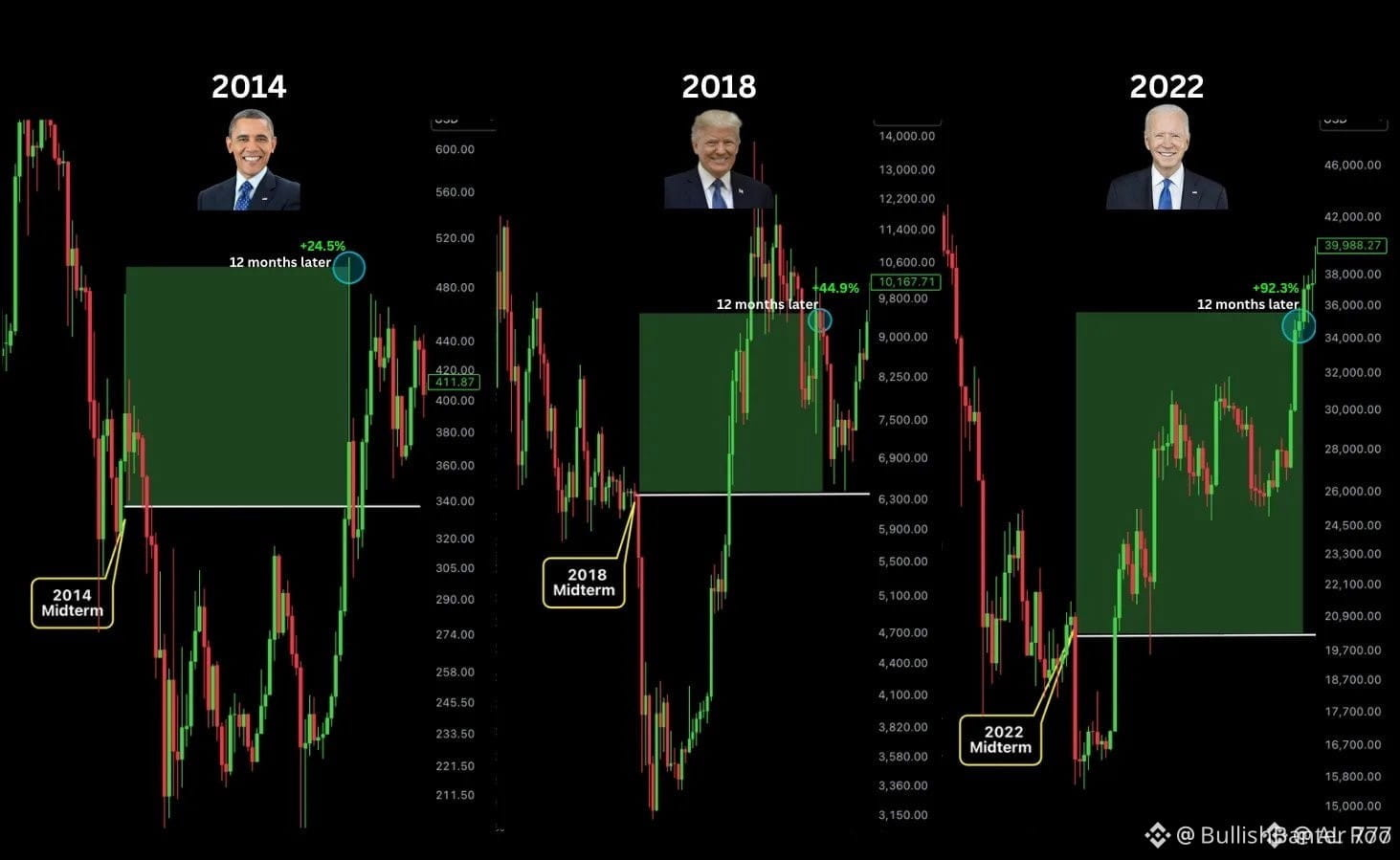
🚨 #BITCOIN'S NEXT STOP: $75K OR $67K? 📉
$BTC has dropped to $78K, just as the $81K bull trap warning suggested.
🎯 Key levels to watch:
$75K – Next downside target
$67K – Major potential bottom zone
Selling pressure is increasing, and another liquidation wave could be coming.
🔥 Will Bitcoin bounce or crash further? What's your prediction?
#BTC #bitcoin #CryptoMarket #BinanceSquare
32

·
--
$BITCOIN #AnalysisOfBitcoin
market data · October 13, 2026
$1.64 trillion
Approximate market capitalization
$BTC #SeptemberCPIWatch #BTCDominanceBackAt60% #UKHighCourtRulesChineseLawGovernsBitcoinClaims
{spot}(BTCUSDT)
price $81,700–$83,600
Circulating supply 20.1 million BTC
Maximum supply 21 million BTC
All-time high $126,080
Source: CoinGecko, October 13 data. Live prices vary by exchange and update time.
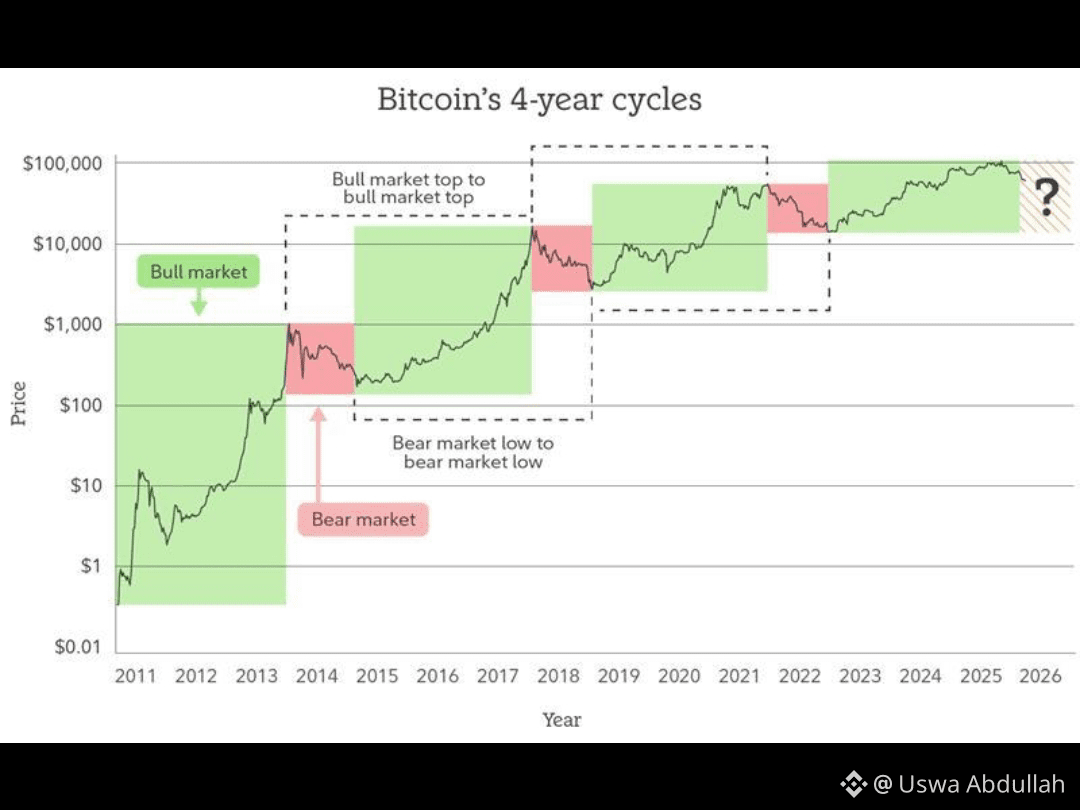
#Bitcoin's market capitalization has fallen substantially from its 2025 peak alongside its price. Market cap is calculated as price multiplied by circulating supply; it measures the market value of circulating BTC, not the amount of cash invested.Bitcoin price history: 2022–2026
Year Approx. annual price movement Main market signal
2022 $47,700 to $16,500
2023 $16,600 to $42,300
2024 $44,200 to $92,600
2025 Rose above $120,000; year-end near $88,400
2026 YTD Reached roughly $96,900 high and $58,600 low; recently around $83,000–$84,000
Figures are approximate annual open/close and high/low
$BITCOIN #AnalysisOfBitcoin
market data · October 13, 2026
$1.64 trillion
Approximate market capitalization
$BTC #SeptemberCPIWatch #BTCDominanceBackAt60% #UKHighCourtRulesChineseLawGovernsBitcoinClaims
price $81,700–$83,600
Circulating supply 20.1 million BTC
Maximum supply 21 million BTC
All-time high $126,080
Source: CoinGecko, October 13 data. Live prices vary by exchange and update time.
#Bitcoin's market capitalization has fallen substantially from its 2025 peak alongside its price. Market cap is calculated as price multiplied by circulating supply; it measures the market value of circulating BTC, not the amount of cash invested.Bitcoin price history: 2022–2026
Year Approx. annual price movement Main market signal
2022 $47,700 to $16,500
2023 $16,600 to $42,300
2024 $44,200 to $92,600
2025 Rose above $120,000; year-end near $88,400
2026 YTD Reached roughly $96,900 high and $58,600 low; recently around $83,000–$84,000
Figures are approximate annual open/close and high/low
32

·
--
Changpeng Zhao remains optimistic about #Bitcoin's long-term future despite $222.64 million in U.S. spot #Bitcoin ETF outflows. The former Binance CEO says #BTC still has the potential to reach $1 million over the next decade.
Read more:
https://cointopsecret.com/
Changpeng Zhao remains optimistic about #Bitcoin's long-term future despite $222.64 million in U.S. spot #Bitcoin ETF outflows. The former Binance CEO says #BTC still has the potential to reach $1 million over the next decade.
Read more:
https://cointopsecret.com/
Read more:
https://cointopsecret.com/

127

#Bitcoin's current price is $73,550.44, with a market cap of $1.54 trillion. The trend is bearish, with a 1.06% decrease in the last 24 hours.
$BTC
{spot}(BTCUSDT)
{alpha}(10x72e4f9f808c49a2a61de9c5896298920dc4eeea9)
#Price Predictions for 2026:
- _Conservative Estimate_: $38,639.74 - $74,814.55
- _Average Estimate_: $78,031 - $83,831.35
- _Bullish Estimate_: $150,000 - $200,000
- _Extreme Bullish Estimate_: $750,000 - $1 million
These predictions are based on various factors, including technical analysis, market sentiment, and supply/demand dynamics ¹ ² ³ ⁴ ⁵.
#Bitcoin's current price is $73,550.44, with a market cap of $1.54 trillion. The trend is bearish, with a 1.06% decrease in the last 24 hours.
$BTC
#Price Predictions for 2026:
- _Conservative Estimate_: $38,639.74 - $74,814.55
- _Average Estimate_: $78,031 - $83,831.35
- _Bullish Estimate_: $150,000 - $200,000
- _Extreme Bullish Estimate_: $750,000 - $1 million
These predictions are based on various factors, including technical analysis, market sentiment, and supply/demand dynamics ¹ ² ³ ⁴ ⁵.
44
·
--
Verified
According to a #CryptoQuant analyst, more than 50% of #Bitcoin's ($BTC ) supply is now held at a loss.
Historically, similar levels have coincided with market capitulation and major cycle bottoms, making this a key metric for investors to watch.
According to a #CryptoQuant analyst, more than 50% of #Bitcoin's ($BTC ) supply is now held at a loss.
Historically, similar levels have coincided with market capitulation and major cycle bottoms, making this a key metric for investors to watch.
Historically, similar levels have coincided with market capitulation and major cycle bottoms, making this a key metric for investors to watch.
129

{spot}(BTCUSDT)
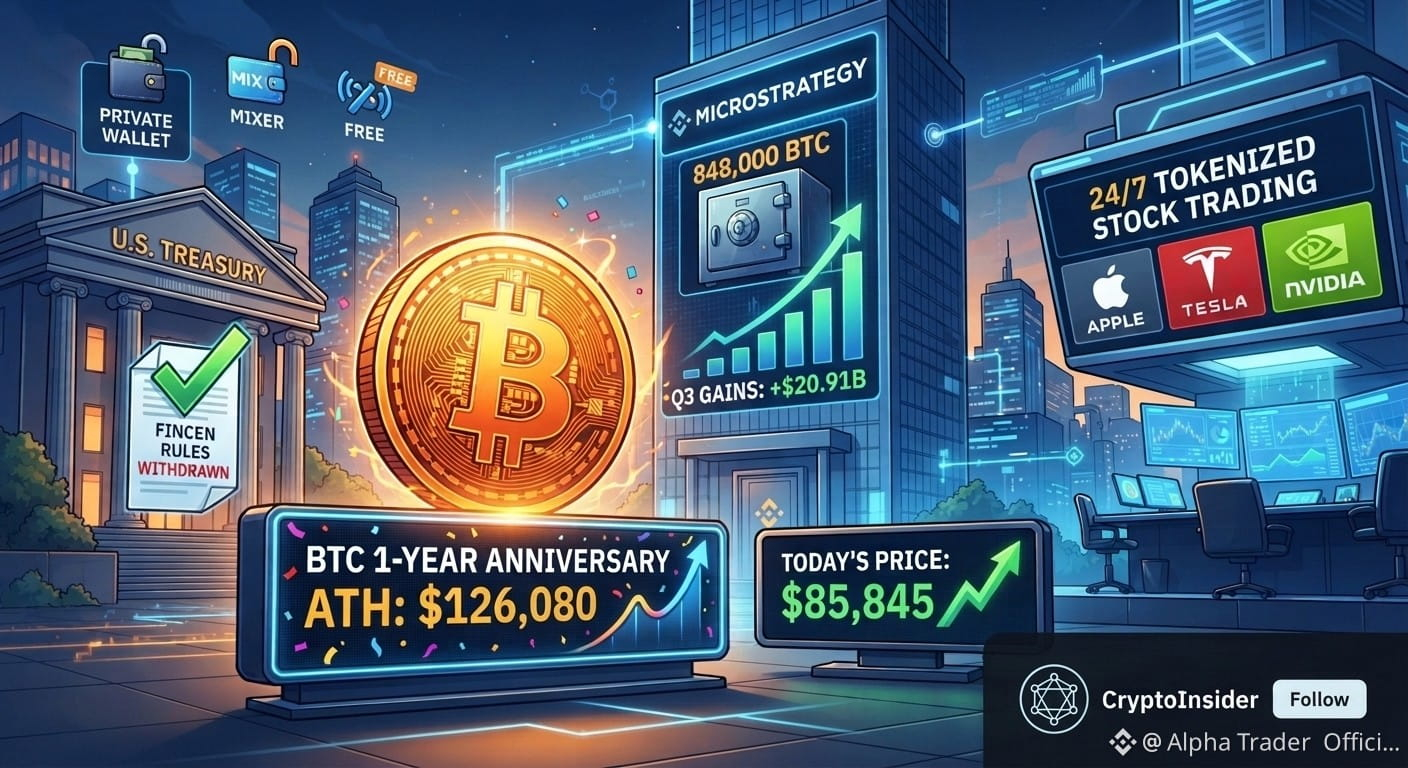
🚀 Happy 1-year anniversary since #Bitcoin's $126.1K ATH! As $BTC consolidates near $85.8K, institutional backing is exploding: MicroStrategy just pushed its stash to a record 848,000 BTC, and the US Treasury officially withdrew its controversial wallet/mixer privacy restrictions in a massive win for the industry. The macro setup looks incredibly solid—are you accumulating or waiting it out? 👇 #CryptoNews #Bitcoin
🚀 Happy 1-year anniversary since #Bitcoin's $126.1K ATH! As $BTC consolidates near $85.8K, institutional backing is exploding: MicroStrategy just pushed its stash to a record 848,000 BTC, and the US Treasury officially withdrew its controversial wallet/mixer privacy restrictions in a massive win for the industry. The macro setup looks incredibly solid—are you accumulating or waiting it out? 👇 #CryptoNews #Bitcoin
3
171

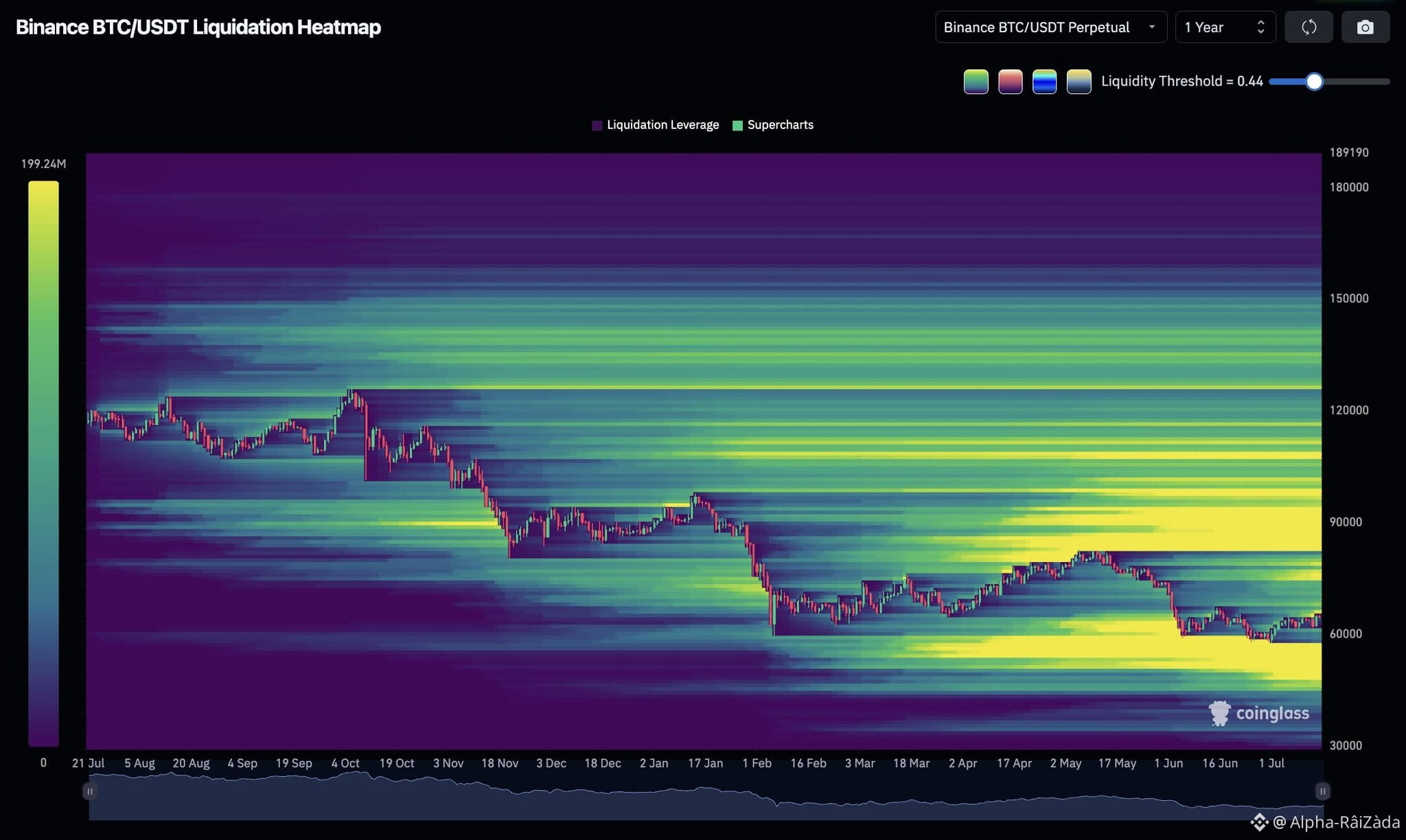
**⚡ #Bitcoin's Liquidity Map**
Massive liquidity sits above current levels — but there's a major cluster lurking below, near $40,000.
A sweep of that lower liquidity looks likely before the next leg up.
Once that happens, staying bearish stops making sense. 📉➡️📈
$BTC #bitcoin #BTC
#CryptoTrading #BinanceSquare
Massive liquidity sits above current levels — but there's a major cluster lurking below, near $40,000.
A sweep of that lower liquidity looks likely before the next leg up.
Once that happens, staying bearish stops making sense. 📉➡️📈
$BTC #bitcoin #BTC
#CryptoTrading #BinanceSquare
32

·
--
Bearish
MARA CEO Fred Thiel says #Bitcoin's role is shifting from payments to digital gold, arguing stablecoins are better suited for everyday transactions due to Bitcoin's price volatility.
He revealed MARA now controls over 4 GW of power and could theoretically relocate all mining operations to its Texas campus while converting existing sites into AI data centers. Thiel believes AI infrastructure offers far stronger economics than Bitcoin mining.
He also warned that Bitcoin's long-term security budget remains a concern as transaction fees are too low to replace declining block rewards. MARA recently sold around 20,000 BTC to reduce roughly $1 billion in convertible debt rather than accumulate more Bitcoin.

113

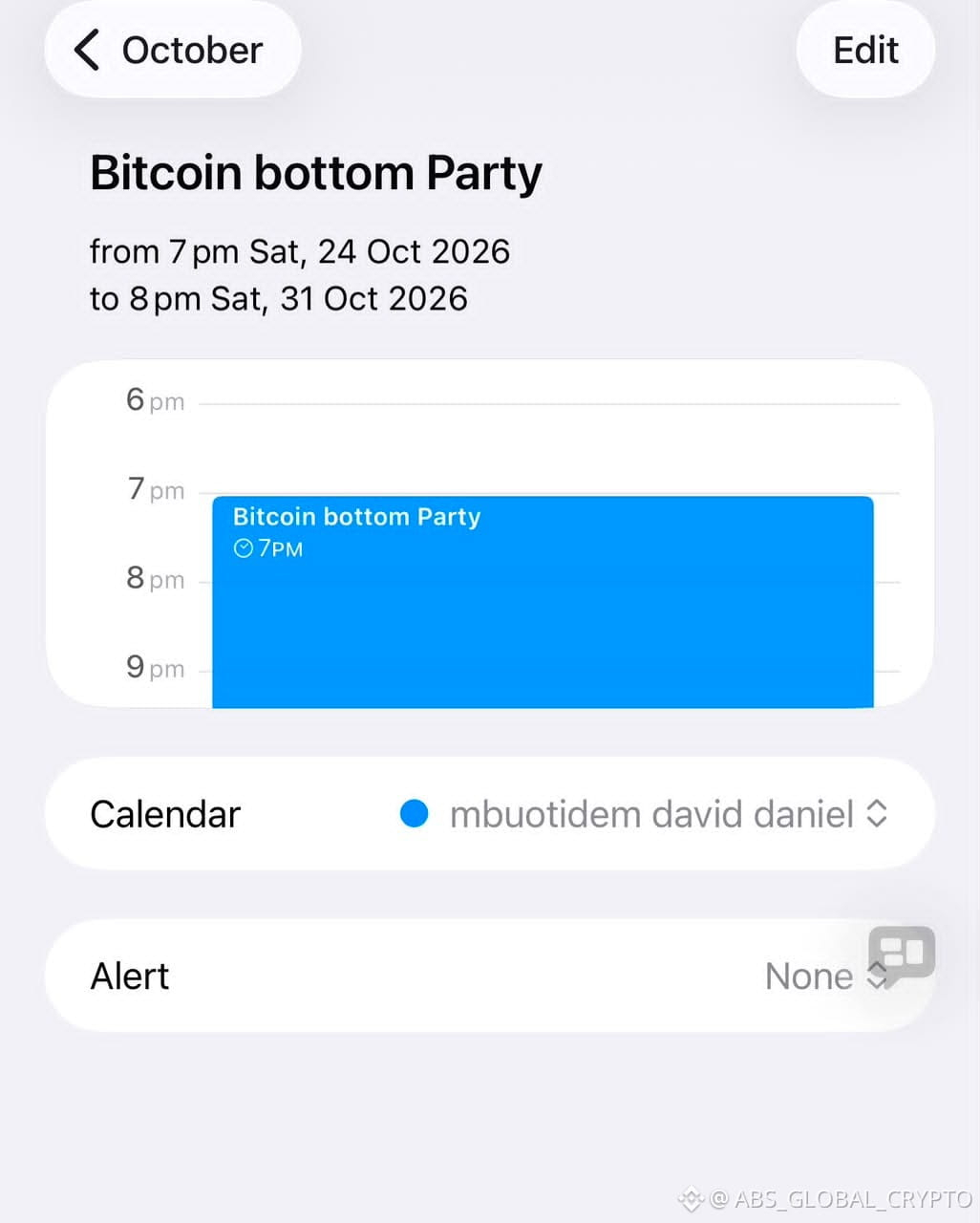
> “Mark your calendar: #Bitcoin's bottom is expected around October 24–31, 2026.”
🚨 SOMEONE ALREADY BOOKED THE $BTC BOTTOM PARTY 😂
📅 October 24–31, 2026
⏰ 7 PM
🎯 The prediction: #BTC bottom
But here's the real question:
Are we buying the dip before the party… or waiting for the invitation?
Prediction ≠ certainty. Let the market confirm the bottom.
🚨 SOMEONE ALREADY BOOKED THE $BTC BOTTOM PARTY 😂
📅 October 24–31, 2026
⏰ 7 PM
🎯 The prediction: #BTC bottom
But here's the real question:
Are we buying the dip before the party… or waiting for the invitation?
Prediction ≠ certainty. Let the market confirm the bottom.
65

·
--
Bullish
#Bitcoin❗ Trades Near $61K–$63K After Heavy Selling Pressure: What Investors Need to Know
Bitcoin is currently trading in the $61,000 to $63,000 range, following a period of intense selling pressure across the cryptocurrency market. While many investors view the recent decline with concern, experienced market participants often see such corrections as a natural part of #Bitcoin's long-term growth cycle.
The recent sell-off was driven by a combination of profit-taking, macroeconomic uncertainty, and cautious sentiment among institutional investors. As a result, Bitcoin temporarily lost momentum and tested key support levels near $60,000. Despite this pressure, the world's largest cryptocurrency has managed to maintain its position above major psychological support zones.
Historically, #Bitcoin❗ $BTC $BTC $BTC
{spot}(BTCUSDT)
has experienced multiple significant corrections throughout its journey. Each cycle has tested investor confidence, yet the asset has repeatedly demonstrated resilience and the ability to recover over time. This history is one of the reasons why long-term investors continue to monitor the current price range closely.
Market analysts believe that the $61K–$63K zone could become an important accumulation area. If buyers continue to defend these levels, Bitcoin may establish a stronger foundation for its next major move. Institutional interest, growing adoption, and Bitcoin's limited supply remain powerful long-term factors supporting its value proposition.
However, volatility remains a defining characteristic of the cryptocurrency market. Investors should remain cautious, manage risk effectively, and avoid making decisions based solely on short-term price movements. While no investment is guaranteed, many market participants believe that periods of fear and uncertainty often create opportunities for patient investors.
#Bitcoin❗ Trades Near $61K–$63K After Heavy Selling Pressure: What Investors Need to Know
Bitcoin is currently trading in the $61,000 to $63,000 range, following a period of intense selling pressure across the cryptocurrency market. While many investors view the recent decline with concern, experienced market participants often see such corrections as a natural part of #Bitcoin's long-term growth cycle.
The recent sell-off was driven by a combination of profit-taking, macroeconomic uncertainty, and cautious sentiment among institutional investors. As a result, Bitcoin temporarily lost momentum and tested key support levels near $60,000. Despite this pressure, the world's largest cryptocurrency has managed to maintain its position above major psychological support zones.
Historically, #Bitcoin❗ $BTC $BTC $BTC
has experienced multiple significant corrections throughout its journey. Each cycle has tested investor confidence, yet the asset has repeatedly demonstrated resilience and the ability to recover over time. This history is one of the reasons why long-term investors continue to monitor the current price range closely.
Market analysts believe that the $61K–$63K zone could become an important accumulation area. If buyers continue to defend these levels, Bitcoin may establish a stronger foundation for its next major move. Institutional interest, growing adoption, and Bitcoin's limited supply remain powerful long-term factors supporting its value proposition.
However, volatility remains a defining characteristic of the cryptocurrency market. Investors should remain cautious, manage risk effectively, and avoid making decisions based solely on short-term price movements. While no investment is guaranteed, many market participants believe that periods of fear and uncertainty often create opportunities for patient investors.

116

·
--
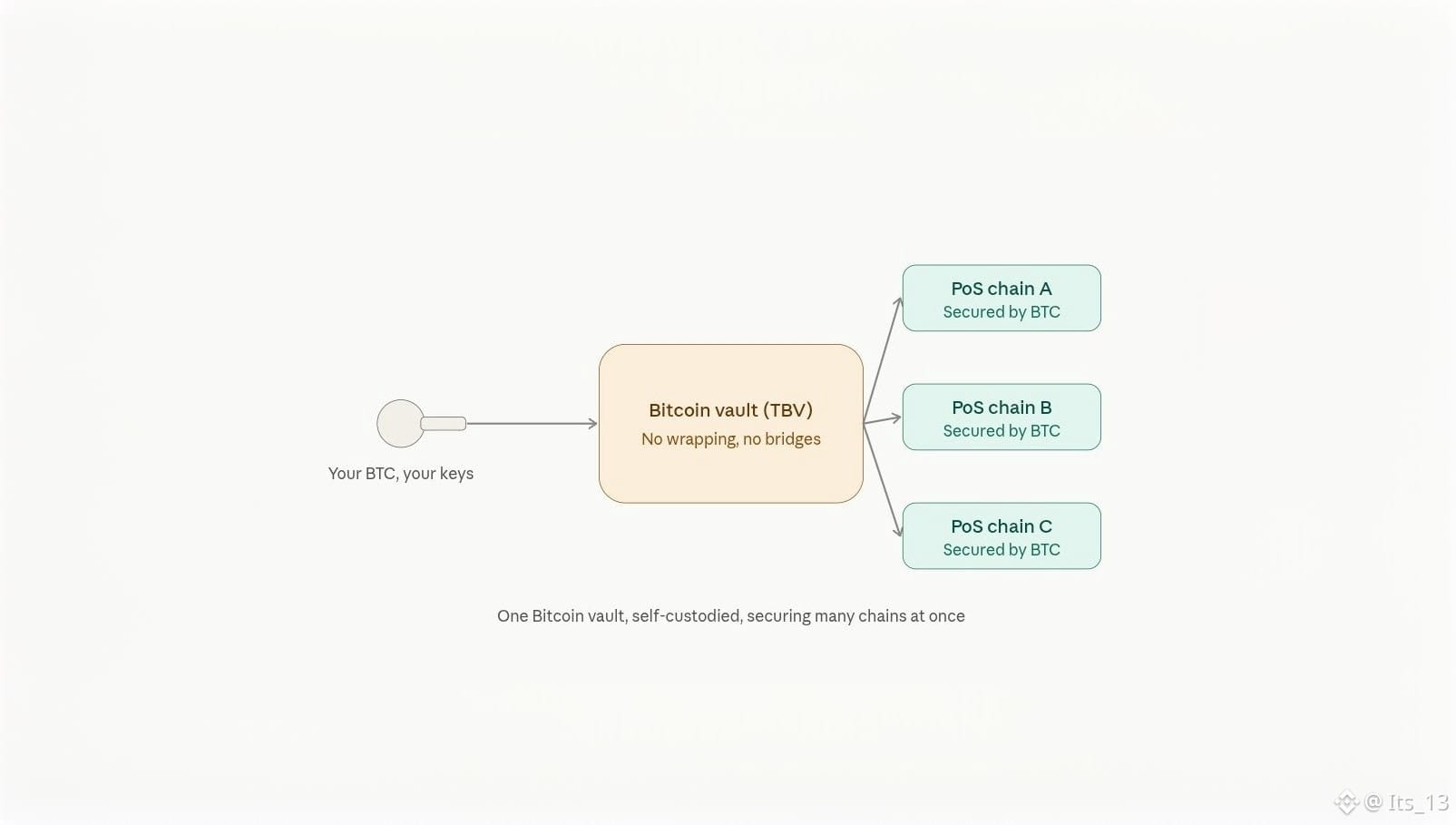
Bitcoin has always been secure. Babylon's Trustless Bitcoin Vaults (TBV) finally make that security useful.
Instead of wrapping $BTC or trusting a bridge, TBV lets you self-custody your Bitcoin while it directly secures #Proof-of-Stake chains — your keys never leave your hands, and there's no custodian in the middle. One Bitcoin vault, multiple chains protected, zero trust assumptions added.
This is what real #BTCFi looks like: #Bitcoin's security extended outward instead of copied elsewhere. $BABY is the coordination layer that makes it work.
#baby @babylonlabs_io
{future}(BABYUSDT)
{spot}(BTCUSDT)
{spot}(ENAUSDT)
Bitcoin has always been secure. Babylon's Trustless Bitcoin Vaults (TBV) finally make that security useful.
Instead of wrapping $BTC or trusting a bridge, TBV lets you self-custody your Bitcoin while it directly secures #Proof-of-Stake chains — your keys never leave your hands, and there's no custodian in the middle. One Bitcoin vault, multiple chains protected, zero trust assumptions added.
This is what real #BTCFi looks like: #Bitcoin's security extended outward instead of copied elsewhere. $BABY is the coordination layer that makes it work.
#baby @BabylonLabs_io
97


·
--
Verified
#Babylon is an innovative Bitcoin staking protocol that enables $BTC holders to contribute to network security without selling their Bitcoin or giving up control of their assets. This approach expands Bitcoin's utility beyond being a store of value and introduces a new way to strengthen decentralized ecosystems while maintaining the security and integrity of the Bitcoin network.
The vision of Babylon goes far beyond simple Bitcoin staking. It aims to create an ecosystem where multiple blockchain networks can benefit from #Bitcoin's unmatched security. By introducing advanced staking infrastructure, Babylon seeks to improve trust, enhance network validation, and support the next generation of Web3 applications, making blockchain technology more secure and efficient.
If Babylon successfully delivers on its roadmap, it could redefine how Bitcoin is used across the blockchain industry. With its long-term vision, innovative technology, and strong focus on decentralization and security, Babylon has the potential to become one of the most influential infrastructure projects in the crypto space, attracting the attention of developers, investors, and the broader crypto community.$BABY #BABY @babylonlabs_io #baby $BLESS Click The prediction option to vote correct..
#Babylon is an innovative Bitcoin staking protocol that enables $BTC holders to contribute to network security without selling their Bitcoin or giving up control of their assets. This approach expands Bitcoin's utility beyond being a store of value and introduces a new way to strengthen decentralized ecosystems while maintaining the security and integrity of the Bitcoin network.
The vision of Babylon goes far beyond simple Bitcoin staking. It aims to create an ecosystem where multiple blockchain networks can benefit from #Bitcoin's unmatched security. By introducing advanced staking infrastructure, Babylon seeks to improve trust, enhance network validation, and support the next generation of Web3 applications, making blockchain technology more secure and efficient.
If Babylon successfully delivers on its roadmap, it could redefine how Bitcoin is used across the blockchain industry. With its long-term vision, innovative technology, and strong focus on decentralization and security, Babylon has the potential to become one of the most influential infrastructure projects in the crypto space, attracting the attention of developers, investors, and the broader crypto community.$BABY #BABY @BabylonLabs_io #baby $BLESS Click The prediction option to vote correct..
Bitcoin.Staked.Secured?
75%
Built on Bitcoin?
25%
Secure the Future?
0%
Stake with Babylon?
0%
4 votes • Voting closed
17
1
18
808

·
--
#bitcoin is showing normal price movement as the crypto market remains active. The price may go up or down because of investor buying and selling. Many people are watching Bitcoin closely and waiting for new market signals. Short-term changes are common, so it is important to stay calm and avoid making quick decisions. Long-term investors continue to focus on #Bitcoin's future potential. Always check trusted market updates before investing or trading. Manage your risk carefully and never invest more than you can afford to lose. Stay informed, be patient, and make smart financial decisions.$BTC
{spot}(BTCUSDT)
$BNB
{future}(BNBUSDT)
#bitcoin is showing normal price movement as the crypto market remains active. The price may go up or down because of investor buying and selling. Many people are watching Bitcoin closely and waiting for new market signals. Short-term changes are common, so it is important to stay calm and avoid making quick decisions. Long-term investors continue to focus on #Bitcoin's future potential. Always check trusted market updates before investing or trading. Manage your risk carefully and never invest more than you can afford to lose. Stay informed, be patient, and make smart financial decisions.$BTC
$BNB
$BNB
111

·
--
Bearish
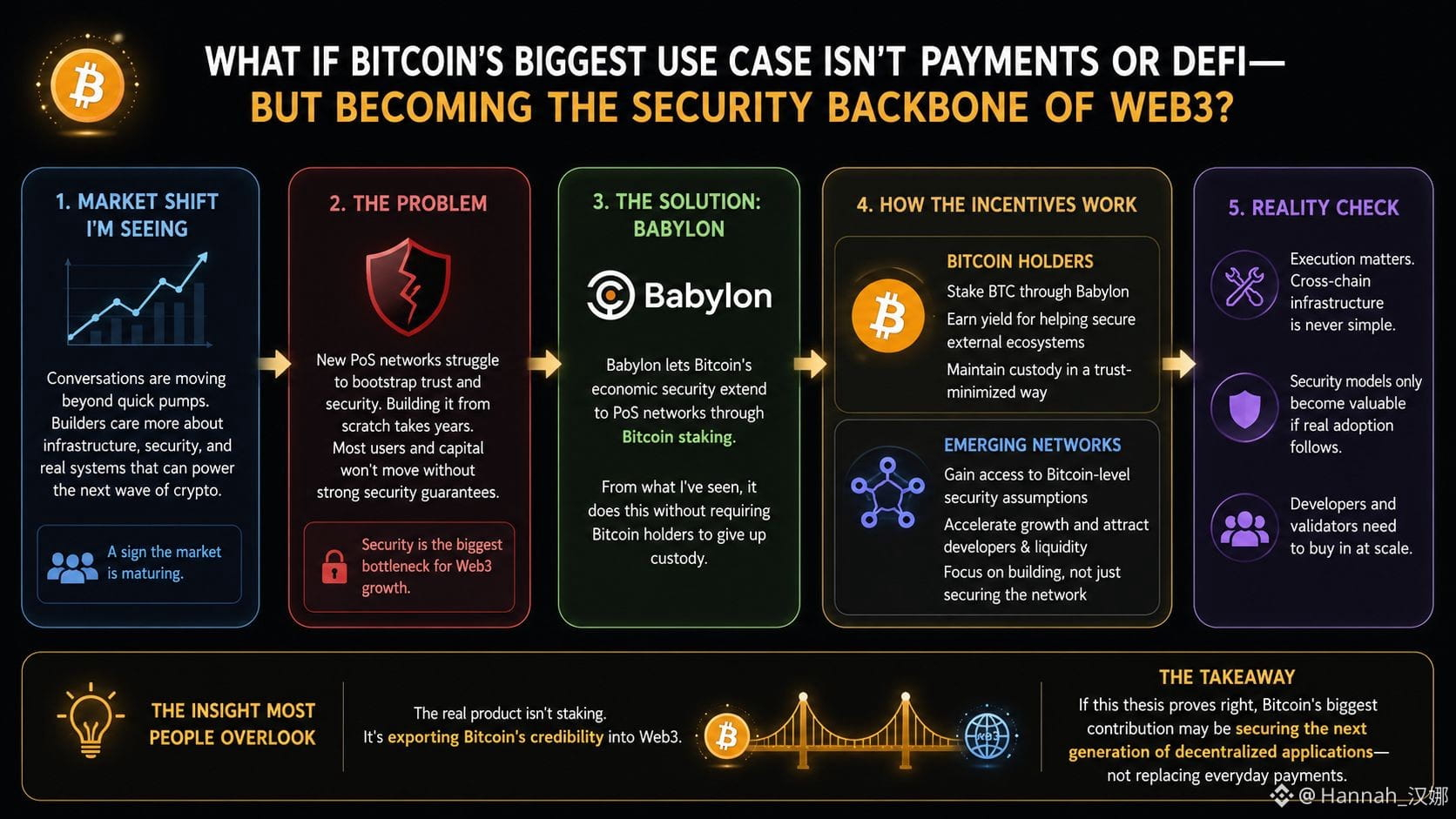
A few days ago I found myself scrolling through market dashboards, expecting the usual rotation into whatever narrative was trending that week. Instead, I kept noticing something different. The conversations that caught my attention weren't about quick pumps—they were about infrastructure, security, and the systems quietly making the next wave of crypto possible. I think that's a sign the market is maturing. When builders start caring more about strong foundations than flashy headlines, it's usually worth paying attention.
That made me think about something most people still overlook. What if #Bitcoin's biggest use case isn't payments or DeFi, but becoming the security backbone of Web3?
I'll be honest, I think that's where @babylonlabs_io becomes interesting. Instead of treating Bitcoin as something that just sits in cold storage or moves between wallets, @babylonlabs_io lets its economic security extend to Proof-of-Stake networks through Bitcoin staking. From what I've seen, it gives newer chains access to stronger security assumptions without asking Bitcoin holders to give up custody in the traditional sense.
The incentive model is simple. Bitcoin holders can help secure external ecosystems while earning yield, and emerging networks gain a security foundation that would otherwise take years to build.
That said, execution still matters. Cross-chain infrastructure is never simple, and security models only become valuable if developers and validators actually adopt them at scale.
One thing I think people overlook is that the real product isn't staking. It's exporting Bitcoin's credibility into Web3. If that thesis proves right, Bitcoin's biggest contribution may be securing the next generation of decentralized applications rather than replacing everyday payments.
#baby #memecoin
@babylonlabs_io
$DEXE
$BEAT
$BABY
{spot}(BABYUSDT)
A few days ago I found myself scrolling through market dashboards, expecting the usual rotation into whatever narrative was trending that week. Instead, I kept noticing something different. The conversations that caught my attention weren't about quick pumps—they were about infrastructure, security, and the systems quietly making the next wave of crypto possible. I think that's a sign the market is maturing. When builders start caring more about strong foundations than flashy headlines, it's usually worth paying attention.
That made me think about something most people still overlook. What if #Bitcoin's biggest use case isn't payments or DeFi, but becoming the security backbone of Web3?
I'll be honest, I think that's where @BabylonLabs_io becomes interesting. Instead of treating Bitcoin as something that just sits in cold storage or moves between wallets, @BabylonLabs_io lets its economic security extend to Proof-of-Stake networks through Bitcoin staking. From what I've seen, it gives newer chains access to stronger security assumptions without asking Bitcoin holders to give up custody in the traditional sense.
The incentive model is simple. Bitcoin holders can help secure external ecosystems while earning yield, and emerging networks gain a security foundation that would otherwise take years to build.
That said, execution still matters. Cross-chain infrastructure is never simple, and security models only become valuable if developers and validators actually adopt them at scale.
One thing I think people overlook is that the real product isn't staking. It's exporting Bitcoin's credibility into Web3. If that thesis proves right, Bitcoin's biggest contribution may be securing the next generation of decentralized applications rather than replacing everyday payments.
#baby #memecoin
@BabylonLabs_io
$DEXE
$BEAT
$BABY
15
9
227

·
--
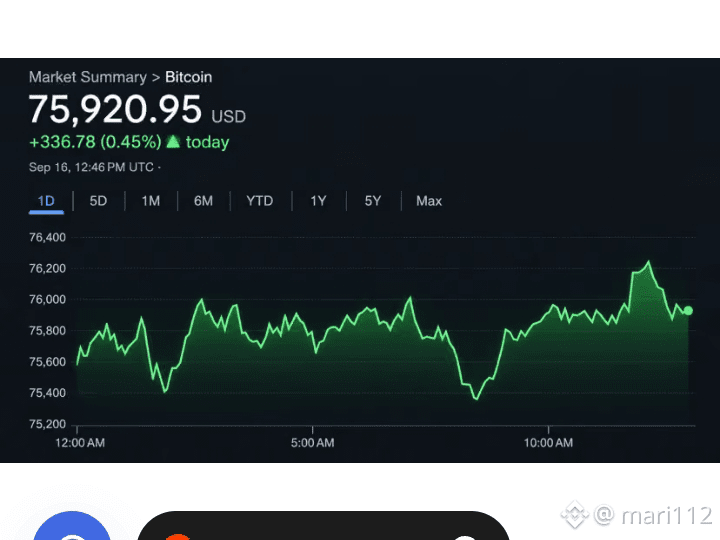
#Bitcoin's price is fighting to hold the $75,000 line after a nasty flush to $74,913. Buyers stepped in, but the comeback has unfinished business. Short-term momentum remains weak, $77,000 is the next major test, and a break below $74,913 puts
$BTC #BitcoinNewAllTimeHigh
{spot}(BTCUSDT)
#Bitcoin's price is fighting to hold the $75,000 line after a nasty flush to $74,913. Buyers stepped in, but the comeback has unfinished business. Short-term momentum remains weak, $77,000 is the next major test, and a break below $74,913 puts
$BTC #BitcoinNewAllTimeHigh
$BTC #BitcoinNewAllTimeHigh
72

·
--
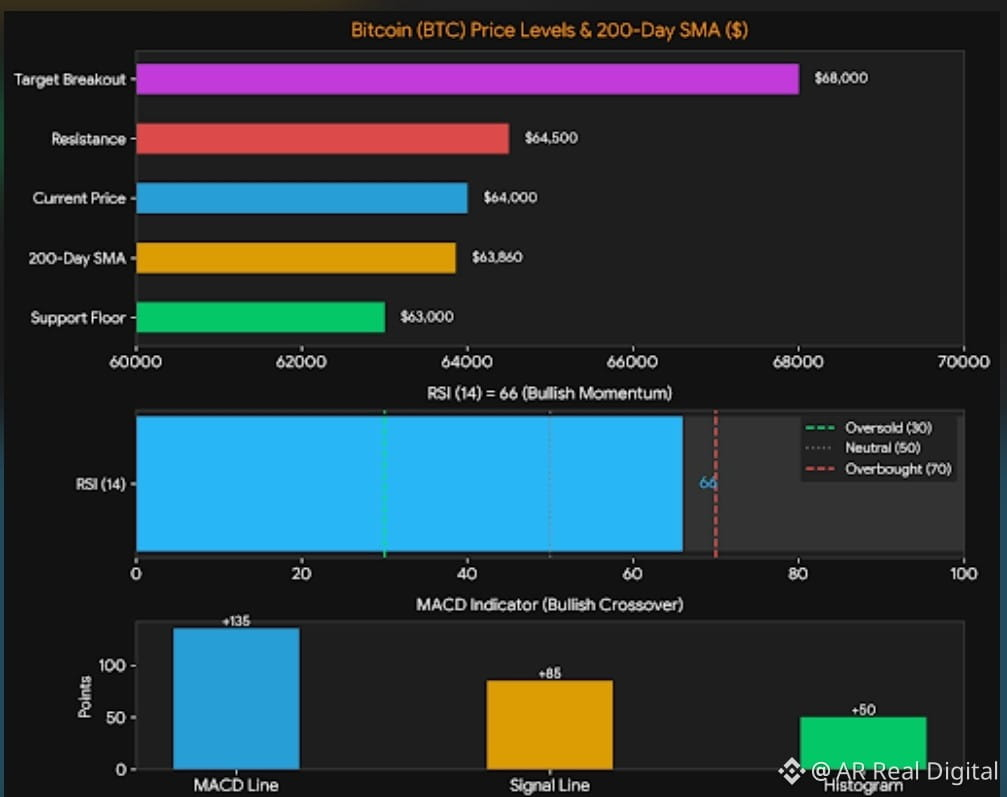
#Bitcoin's short-term technical profile reflects strong bullish momentum as price trades around $64,000–$64,500, directly testing its macro 200-day Simple Moving Average (SMA) pivot
#Bitcoin's short-term technical profile reflects strong bullish momentum as price trades around $64,000–$64,500, directly testing its macro 200-day Simple Moving Average (SMA) pivot
1
85

#bitcoin
BITCOIN: BREAKOUT OR PULLBACK? 🐂🐻
Crypto traders, the market is testing our patience! 📉
#bitcoin is facing pressure, and volatility reminds us of one important lesson:
🔥 A smart trader follows a plan, not emotions.
Here are 3 things every crypto learner should remember:
✅ Don't blindly follow the crowd.
✅ Learn to manage risk before chasing profits.
✅ Always do your own research (DYOR).
💬 Let's discuss!
Do you think #bitcoin's next big move will surprise the market, or will volatility continue?
👇 Share your thoughts in the comments!

89

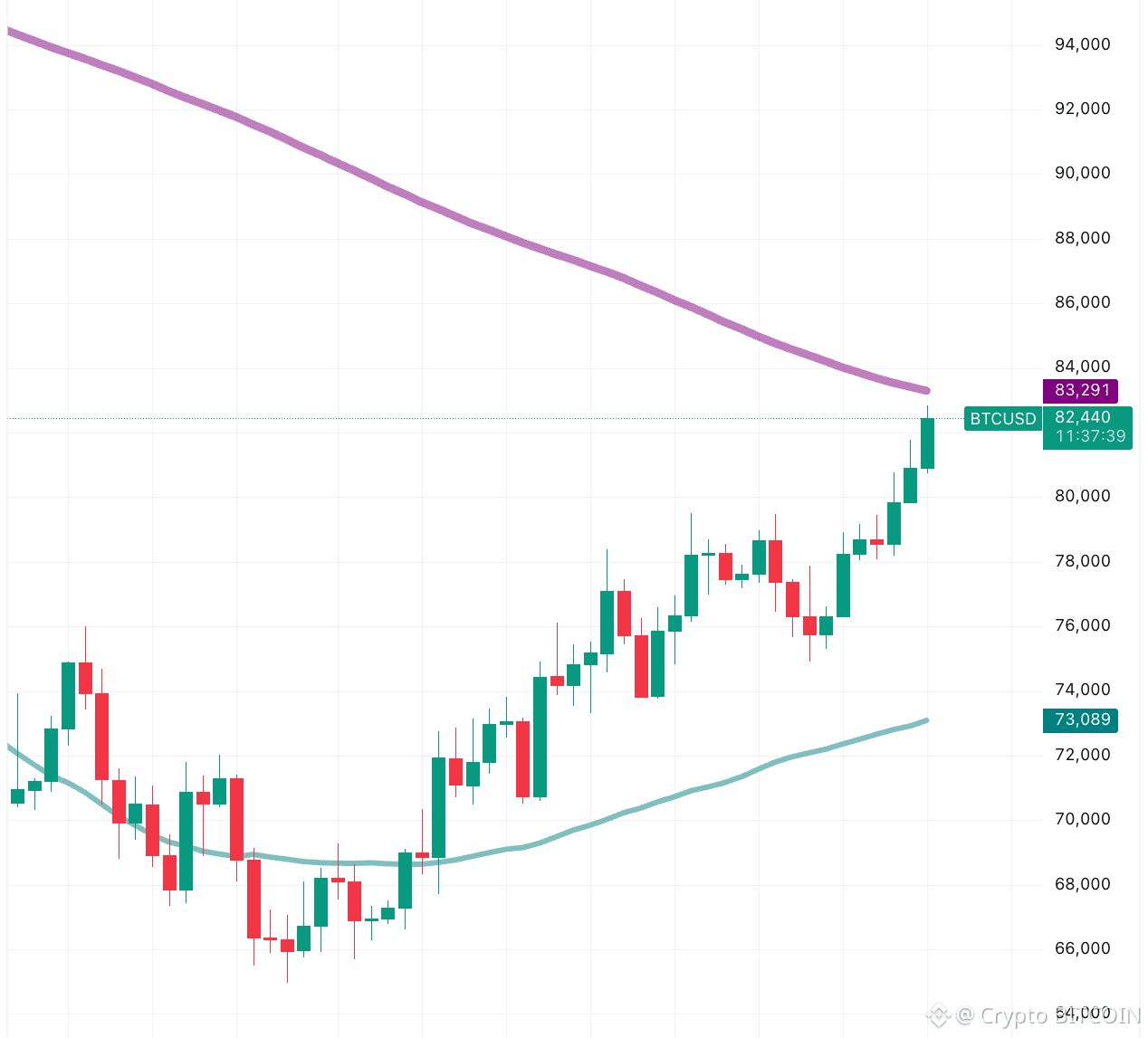
🚨 #BITCOIN'S NEXT TARGET IS 200 SMA AT $83,290
With ongoing momentum, $BTC is pushing toward the 200-day SMA around $83,292.
A clean reclaim and hold above this level could flip the market structure bullish, with momentum traders likely targeting higher-liquidity zones.
Failure or rejection here would keep BTC range-bound and raise the risk of a move back to lower support levels.
1
31
Log in to explore more content
Join global crypto users on Binance Square
⚡️ Get latest and useful information about crypto.
💬 Trusted by the world’s largest crypto exchange.
👍 Discover real insights from verified creators.
Email / Phone number
Trending Topics
1
#USPPIMissMayEaseBTCPressure
11,472 views
367 Discussing
2
#BitcoinCoreDisclosesTorTrafficVulnerability
2,652 views
132 Discussing
3
#WhatWillDriveCryptoandStocks’NextRebound?
106,649 views
1,332 Discussing
4
#BitcoinBreaksBelow200WeekMovingAverage
24,030 views
328 Discussing
5
#SpaceXTeslaMergerTalksWouldCombine30220BTC
8,454 views
174 Discussing
6
#Anthropic’s6xIPODemandSignalsPotentialRecordRaise
35,113 views
612 Discussing
7
#USCryptoETFsLose$1.48BInFiveDays
1,568 views
37 Discussing
8
#KoreaDigitalAssetBasicActFinalDraftExpectedEarlyJanuary
3,215 views
18 Discussing
9
#RippleRLUSDMarketCapSurpassesPayPalPYUSD
4,402 views
102 Discussing
10
#JaneStreetNearlyOctuplesFidelityBitcoinETFHoldings
12,796 views
208 Discussing