

#babylon
babylon
703,719 views
2,601 Discussing
Hot
Latest

·
--
Bullish
🚀 Is $BABY Ready for a Major Liquidity Expansion?
With market momentum shifting, Babylon ($BABY) is holding strong around key support zones. As volume builds across major pairs, the ecosystem's expanding TVL could act as a major catalyst.
If liquidity continues to flow in, $BABY holds realistic 3x - 5x upside potential from current levels during a sustained bull run! 📈
👉 What is your target for Baby this cycle?
Click Baby or $USDT below to check live charts & trade on Binance! 👇
#Crypto #BinanceSquare #Babylon
Disclaimer: DYOR. Not financial advice.
🚀 Is $BABY Ready for a Major Liquidity Expansion?
With market momentum shifting, Babylon ($BABY ) is holding strong around key support zones. As volume builds across major pairs, the ecosystem's expanding TVL could act as a major catalyst.
If liquidity continues to flow in, $BABY holds realistic 3x - 5x upside potential from current levels during a sustained bull run! 📈
👉 What is your target for Baby this cycle?
Click Baby or $USDT below to check live charts & trade on Binance! 👇
#Crypto #BinanceSquare #Babylon
Disclaimer: DYOR. Not financial advice.
With market momentum shifting, Babylon ($BABY ) is holding strong around key support zones. As volume builds across major pairs, the ecosystem's expanding TVL could act as a major catalyst.
If liquidity continues to flow in, $BABY holds realistic 3x - 5x upside potential from current levels during a sustained bull run! 📈
👉 What is your target for Baby this cycle?
Click Baby or $USDT below to check live charts & trade on Binance! 👇
#Crypto #BinanceSquare #Babylon
Disclaimer: DYOR. Not financial advice.
1
121

·
--
Bullish
$BABY 🔥 Babylon ($BABY) is taking over the spotlight! Are you ready? 🚀The buzz around the Binance BABY Trading Tournament is absolute fire right now! As a key utility token enabling native, self-custodial Bitcoin staking directly on the network, Babylon ($BABY) is proving it has serious utility beyond the average market noise.With trading volume surging and extra rewards up for grabs during the sprint period, the momentum is building rapidly. The charts are heating up, making it the perfect time to keep a very close eye on the next major movement!💡 Quick tip: Whether you are going long or setting up a short, never forget to place your Stop Loss (SL) and manage your leverage properly. Volatility brings massive opportunities, but risk management is what keeps you in the game! 📊🛡️Are you bullish or bearish on $BABY today? Let's discuss in the comments! 👇#BABY #Babylon #TradingSignals #RiskManagement #Binance #Write2Earn
$BABY 🔥 Babylon ($BABY ) is taking over the spotlight! Are you ready? 🚀The buzz around the Binance BABY Trading Tournament is absolute fire right now! As a key utility token enabling native, self-custodial Bitcoin staking directly on the network, Babylon ($BABY ) is proving it has serious utility beyond the average market noise.With trading volume surging and extra rewards up for grabs during the sprint period, the momentum is building rapidly. The charts are heating up, making it the perfect time to keep a very close eye on the next major movement!💡 Quick tip: Whether you are going long or setting up a short, never forget to place your Stop Loss (SL) and manage your leverage properly. Volatility brings massive opportunities, but risk management is what keeps you in the game! 📊🛡️Are you bullish or bearish on $BABY today? Let's discuss in the comments! 👇#BABY #Babylon #TradingSignals #RiskManagement #Binance #Write2Earn
1
196

·
--
🚨 400 BNB Token Vouchers up for grabs
Binance has announced a Babylon (BABY) Trading Tournament running from September 22 to September 29, 2026.
The campaign includes a total reward pool of up to 400 BNB in token vouchers, subject to the official eligibility and campaign conditions.
Would you join a trading tournament, or do you prefer long-term investing?
👇 Tell me your approach.
#Binance #BABY #Babylon #BNB #Crypto #BinanceNews #Altcoins #Web3 #DYOR
🚨 400 BNB Token Vouchers up for grabs
Binance has announced a Babylon (BABY) Trading Tournament running from September 22 to September 29, 2026.
The campaign includes a total reward pool of up to 400 BNB in token vouchers, subject to the official eligibility and campaign conditions.
Would you join a trading tournament, or do you prefer long-term investing?
👇 Tell me your approach.
#Binance #BABY #Babylon #BNB #Crypto #BinanceNews #Altcoins #Web3 #DYOR
Binance has announced a Babylon (BABY) Trading Tournament running from September 22 to September 29, 2026.
The campaign includes a total reward pool of up to 400 BNB in token vouchers, subject to the official eligibility and campaign conditions.
Would you join a trading tournament, or do you prefer long-term investing?
👇 Tell me your approach.
#Binance #BABY #Babylon #BNB #Crypto #BinanceNews #Altcoins #Web3 #DYOR
132

·
--
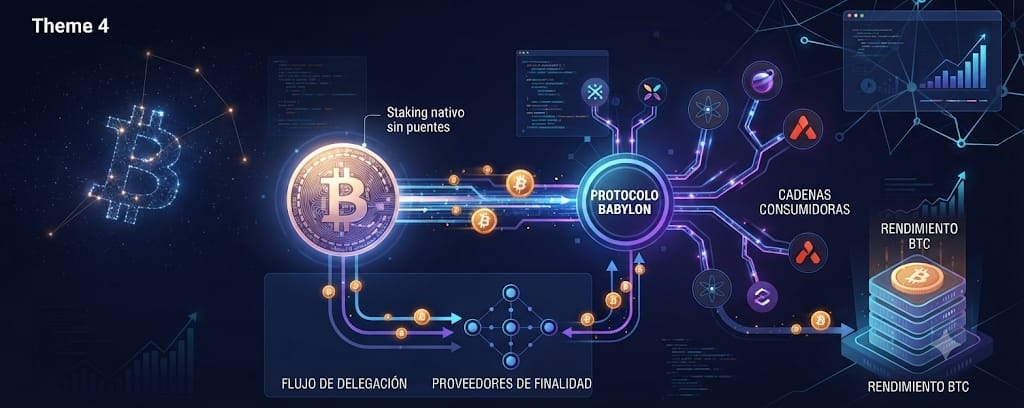
Article
Active Participation: How BTC Holders Generate YieldFor Bitcoin holders seeking to optimize the performance of their holdings without compromising custody or resorting to high-risk schemes, native staking through Babylon introduces a direct participation model. This process allows putting the idle capital of the main network to work to secure external Proof-of-Stake (PoS) blockchains, generating rewards without abandoning Bitcoin's security standards.
1. The Role of Finality Providers
Active Participation: How BTC Holders Generate Yield
For Bitcoin holders seeking to optimize the performance of their holdings without compromising custody or resorting to high-risk schemes, native staking through Babylon introduces a direct participation model. This process allows putting the idle capital of the main network to work to secure external Proof-of-Stake (PoS) blockchains, generating rewards without abandoning Bitcoin's security standards.
1. The Role of Finality Providers
1. The Role of Finality Providers
5
369
·
--
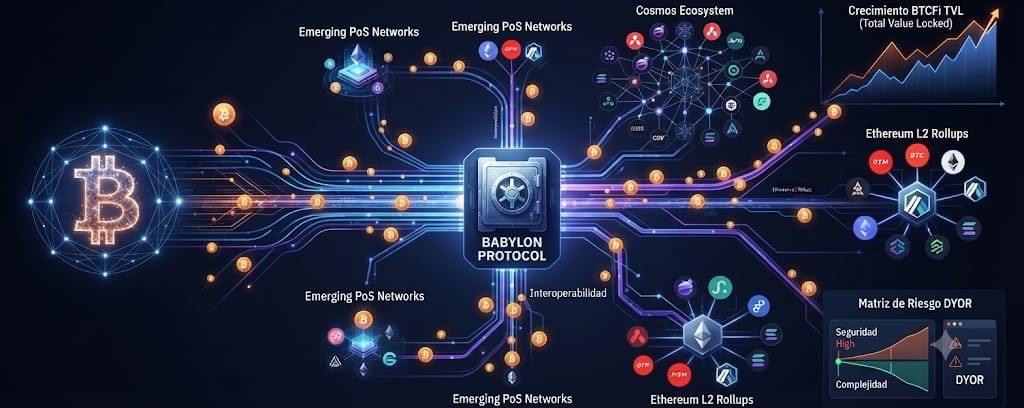
Article
Conclusions and the Future of the BTCFi EconomyThe emergence of native staking protocols like Babylon marks a historic turning point in the evolution of Bitcoin and the decentralized ecosystem as a whole. For years, the world’s largest crypto asset has operated under a paradigm of "idle capital," where the maximum security of its main network came hand in hand with low financial composability beyond its own chain. Today, crypto infrastructure shows that it’s possible to scale the utility of assets without compromising their native sovereignty.
Conclusions and the Future of the BTCFi Economy
The emergence of native staking protocols like Babylon marks a historic turning point in the evolution of Bitcoin and the decentralized ecosystem as a whole. For years, the world’s largest crypto asset has operated under a paradigm of "idle capital," where the maximum security of its main network came hand in hand with low financial composability beyond its own chain. Today, crypto infrastructure shows that it’s possible to scale the utility of assets without compromising their native sovereignty.
2
172
·
--
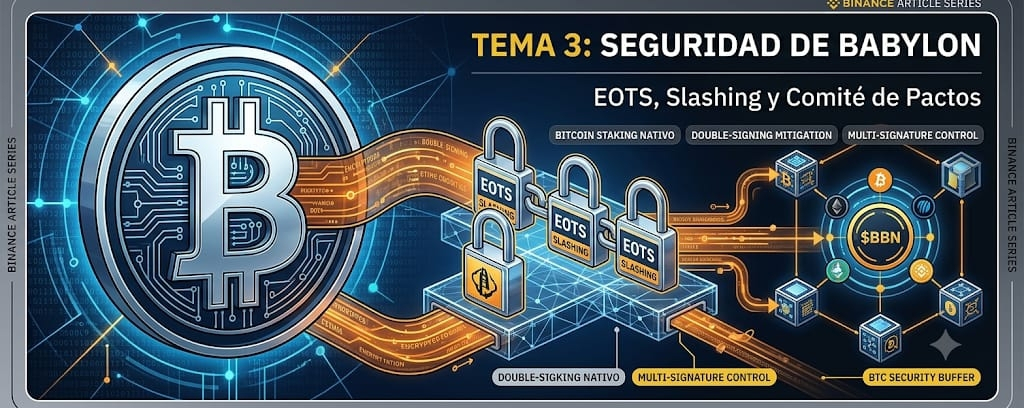
Article
Security Mechanism, EOTS and Decentralized SlashingThe Achilles' heel of many shared or external staking systems lies in the trust placed in centralized custodians or vulnerable cross-chain bridges. Babylon resolves this technical dilemma by introducing EOTS (Extractable One-Time Signatures) or Extractable Single-Use Signatures.
How does EOTS work? It allows a validator to sign blocks on the Proof-of-Stake consumption chain using a private key linked to its staking transaction on Bitcoin. If the validator acts honestly, everything proceeds normally. However, if a validator attempts to commit double-signing or malicious behavior at the same moment within networks that integrate BTC security, EOTS’s mathematical structure exposes its private key to the main network.
Security Mechanism, EOTS and Decentralized Slashing
The Achilles' heel of many shared or external staking systems lies in the trust placed in centralized custodians or vulnerable cross-chain bridges. Babylon resolves this technical dilemma by introducing EOTS (Extractable One-Time Signatures) or Extractable Single-Use Signatures.
How does EOTS work? It allows a validator to sign blocks on the Proof-of-Stake consumption chain using a private key linked to its staking transaction on Bitcoin. If the validator acts honestly, everything proceeds normally. However, if a validator attempts to commit double-signing or malicious behavior at the same moment within networks that integrate BTC security, EOTS’s mathematical structure exposes its private key to the main network.
How does EOTS work? It allows a validator to sign blocks on the Proof-of-Stake consumption chain using a private key linked to its staking transaction on Bitcoin. If the validator acts honestly, everything proceeds normally. However, if a validator attempts to commit double-signing or malicious behavior at the same moment within networks that integrate BTC security, EOTS’s mathematical structure exposes its private key to the main network.
elLeoncito:
btc
2
2
77

·
--
In the short term, the pressure on $BABY mainly comes from liquidity events rather than a simple weakening of the order book. Upbit has paused deposits and withdrawals related to the Babylon network upgrade; after trading channels narrow, some funds can’t be transferred freely, so market sentiment naturally becomes more cautious.
Upgrades like this often trigger temporary sell pressure: coin holders worry about uncertainty, and short-term capital may also reduce positions first. In addition, with its market value of only about $33,300 and missing 24-hour trading volume data, even a small number of orders can amplify volatility, making the price more sensitive to news.
Going forward, focus on three points: how long deposits and withdrawals take to resume, whether the network upgrade is completed smoothly, and whether funds can flow back after recovery. Before the channels reopen, it’s not advisable to judge the trend based only on minor up-and-down movements; you also need to be alert to abnormal volatility caused by insufficient liquidity.
#BABY #Upbit #Babylon
In the short term, the pressure on $BABY mainly comes from liquidity events rather than a simple weakening of the order book. Upbit has paused deposits and withdrawals related to the Babylon network upgrade; after trading channels narrow, some funds can’t be transferred freely, so market sentiment naturally becomes more cautious.
Upgrades like this often trigger temporary sell pressure: coin holders worry about uncertainty, and short-term capital may also reduce positions first. In addition, with its market value of only about $33,300 and missing 24-hour trading volume data, even a small number of orders can amplify volatility, making the price more sensitive to news.
Going forward, focus on three points: how long deposits and withdrawals take to resume, whether the network upgrade is completed smoothly, and whether funds can flow back after recovery. Before the channels reopen, it’s not advisable to judge the trend based only on minor up-and-down movements; you also need to be alert to abnormal volatility caused by insufficient liquidity.
#BABY #Upbit #Babylon
Upgrades like this often trigger temporary sell pressure: coin holders worry about uncertainty, and short-term capital may also reduce positions first. In addition, with its market value of only about $33,300 and missing 24-hour trading volume data, even a small number of orders can amplify volatility, making the price more sensitive to news.
Going forward, focus on three points: how long deposits and withdrawals take to resume, whether the network upgrade is completed smoothly, and whether funds can flow back after recovery. Before the channels reopen, it’s not advisable to judge the trend based only on minor up-and-down movements; you also need to be alert to abnormal volatility caused by insufficient liquidity.
#BABY #Upbit #Babylon
7

·
--
$BABY Recently under pressure, the core reason is not simply that the market surface is weakening. Instead, it’s that the Korean exchange Upbit has suspended deposits and withdrawals for this asset. Behind this is the Babylon network upgrade, which has led to temporarily limited on-chain liquidity, boosting short-term capital’s risk-avoidance sentiment.
For small-cap tokens like this, shutting down deposit/withdrawal channels directly affects cross-market arbitrage and immediate liquidity, making it easier for price to exhibit amplified volatility. The current market cap is about $33.3k, the order book is relatively thin, and sentiment still needs to be treated cautiously.
Going forward, focus on two key signals: first, the timing of when the network upgrade is completed and when Upbit restores deposits and withdrawals; second, whether trading volume can return after restoration. If liquidity is repaired, near-term downward pressure may ease. If the upgrade is delayed, the choppy range may persist.
#BABY #Babylon #Upbit
$BABY Recently under pressure, the core reason is not simply that the market surface is weakening. Instead, it’s that the Korean exchange Upbit has suspended deposits and withdrawals for this asset. Behind this is the Babylon network upgrade, which has led to temporarily limited on-chain liquidity, boosting short-term capital’s risk-avoidance sentiment.
For small-cap tokens like this, shutting down deposit/withdrawal channels directly affects cross-market arbitrage and immediate liquidity, making it easier for price to exhibit amplified volatility. The current market cap is about $33.3k, the order book is relatively thin, and sentiment still needs to be treated cautiously.
Going forward, focus on two key signals: first, the timing of when the network upgrade is completed and when Upbit restores deposits and withdrawals; second, whether trading volume can return after restoration. If liquidity is repaired, near-term downward pressure may ease. If the upgrade is delayed, the choppy range may persist.
#BABY #Babylon #Upbit
For small-cap tokens like this, shutting down deposit/withdrawal channels directly affects cross-market arbitrage and immediate liquidity, making it easier for price to exhibit amplified volatility. The current market cap is about $33.3k, the order book is relatively thin, and sentiment still needs to be treated cautiously.
Going forward, focus on two key signals: first, the timing of when the network upgrade is completed and when Upbit restores deposits and withdrawals; second, whether trading volume can return after restoration. If liquidity is repaired, near-term downward pressure may ease. If the upgrade is delayed, the choppy range may persist.
#BABY #Babylon #Upbit
9
$BABY In recent pressure, the core variables come from Upbit suspending deposits and withdrawals: during the Babylon network upgrade, cross-site liquidity is temporarily restricted, and short-term capital cannot be moved as freely as usual. Market sentiment naturally turns more cautious.
These events are typically more of a short-term shock and do not directly change the project’s on-chain progress; however, for small-cap assets, when liquidity thins, volatility is amplified noticeably—chasing pumps and selling in panic can easily lead to losses. It is recommended to closely watch the deposit/withdrawal restoration timeline, the announcement confirming completion of the network upgrade, and whether trading volume can rebound, before judging whether sentiment has recovered. In terms of execution, it’s advisable to control position sizing and wait for confirmation of concrete outcomes.
#BABY #Babylon #Upbit
$BABY In recent pressure, the core variables come from Upbit suspending deposits and withdrawals: during the Babylon network upgrade, cross-site liquidity is temporarily restricted, and short-term capital cannot be moved as freely as usual. Market sentiment naturally turns more cautious.
These events are typically more of a short-term shock and do not directly change the project’s on-chain progress; however, for small-cap assets, when liquidity thins, volatility is amplified noticeably—chasing pumps and selling in panic can easily lead to losses. It is recommended to closely watch the deposit/withdrawal restoration timeline, the announcement confirming completion of the network upgrade, and whether trading volume can rebound, before judging whether sentiment has recovered. In terms of execution, it’s advisable to control position sizing and wait for confirmation of concrete outcomes.
#BABY #Babylon #Upbit
These events are typically more of a short-term shock and do not directly change the project’s on-chain progress; however, for small-cap assets, when liquidity thins, volatility is amplified noticeably—chasing pumps and selling in panic can easily lead to losses. It is recommended to closely watch the deposit/withdrawal restoration timeline, the announcement confirming completion of the network upgrade, and whether trading volume can rebound, before judging whether sentiment has recovered. In terms of execution, it’s advisable to control position sizing and wait for confirmation of concrete outcomes.
#BABY #Babylon #Upbit
43

·
--
Bullish
$BABY Go buy 🚀🚀🚀
Price: 0.0111$ _0.0110$
Targets:
0.0115$ → 0.0120$ → 0.0128$
Stop loss: 0.0105$
.
Do your own research or trade here: — $BABY
{future}(BABYUSDT)
Analysis:
Babylon — a BTC Staking protocol, upgraded on September 14, strong bullish trend!
I’m also watching:
$WLD at 0.398$ — LONG, targets 0.42$ → 0.45$ →
{future}(WLDUSDT)
$LDO at 0.3733$ — LONG, targets 0.39$ → 0.42$ → 0.45$!
{future}(LDOUSDT)
Looking forward to BTC reaching 80,000$ — if that happens, BABY will fly to 0.018$!
Be careful with risk and don’t risk more than 1–2% of your portfolio. Respect trade limits and take profits with knowledge.
#BTC #Babylon
$BABY Go buy 🚀🚀🚀
Price: 0.0111$ _0.0110$
Targets:
0.0115$ → 0.0120$ → 0.0128$
Stop loss: 0.0105$
.
Do your own research or trade here: — $BABY
Analysis:
Babylon — a BTC Staking protocol, upgraded on September 14, strong bullish trend!
I’m also watching:
$WLD at 0.398$ — LONG, targets 0.42$ → 0.45$ →
$LDO at 0.3733$ — LONG, targets 0.39$ → 0.42$ → 0.45$!
Looking forward to BTC reaching 80,000$ — if that happens, BABY will fly to 0.018$!
Be careful with risk and don’t risk more than 1–2% of your portfolio. Respect trade limits and take profits with knowledge.
#BTC #Babylon
Price: 0.0111$ _0.0110$
Targets:
0.0115$ → 0.0120$ → 0.0128$
Stop loss: 0.0105$
.
Do your own research or trade here: — $BABY
Analysis:
Babylon — a BTC Staking protocol, upgraded on September 14, strong bullish trend!
I’m also watching:
$WLD at 0.398$ — LONG, targets 0.42$ → 0.45$ →
$LDO at 0.3733$ — LONG, targets 0.39$ → 0.42$ → 0.45$!
Looking forward to BTC reaching 80,000$ — if that happens, BABY will fly to 0.018$!
Be careful with risk and don’t risk more than 1–2% of your portfolio. Respect trade limits and take profits with knowledge.
#BTC #Babylon
1
2
73

·
--
Verified
Babylon Coin (BABY): Bitcoin Staking and the Future of DeFi#Babylon Coin (BABY) is the native token of the Babylon ecosystem, a blockchain project focused on bringing Bitcoin’s security and capital into the broader decentralized finance (DeFi) world. One of Babylon’s main ideas is Bitcoin staking, which allows Bitcoin holders to contribute economic security to proof-of-stake networks while maintaining the underlying Bitcoin-based security model.
The BABY token is designed to support activity across the Babylon ecosystem and can be used for network participation and governance-related functions. The project has gained interest because Bitcoin is the largest and one of the most established crypto assets, while staking has become an important part of many blockchain ecosystems.
For investors, BABY is still a relatively speculative cryptocurrency. Its future performance may depend on ecosystem adoption, network activity, token supply, market liquidity, and continued development. Crypto markets are highly volatile, so price increases should never be viewed as guaranteed.
Overall, Babylon$ Coin is an interesting project to watch because it attempts to connect Bitcoin with the growing staking and DeFi sectors. Anyone considering BABY should research the project carefully and understand the risks before investing.
Babylon Coin (BABY): Bitcoin Staking and the Future of DeFi
#Babylon Coin (BABY) is the native token of the Babylon ecosystem, a blockchain project focused on bringing Bitcoin’s security and capital into the broader decentralized finance (DeFi) world. One of Babylon’s main ideas is Bitcoin staking, which allows Bitcoin holders to contribute economic security to proof-of-stake networks while maintaining the underlying Bitcoin-based security model.
The BABY token is designed to support activity across the Babylon ecosystem and can be used for network participation and governance-related functions. The project has gained interest because Bitcoin is the largest and one of the most established crypto assets, while staking has become an important part of many blockchain ecosystems.
For investors, BABY is still a relatively speculative cryptocurrency. Its future performance may depend on ecosystem adoption, network activity, token supply, market liquidity, and continued development. Crypto markets are highly volatile, so price increases should never be viewed as guaranteed.
Overall, Babylon$ Coin is an interesting project to watch because it attempts to connect Bitcoin with the growing staking and DeFi sectors. Anyone considering BABY should research the project carefully and understand the risks before investing.
The BABY token is designed to support activity across the Babylon ecosystem and can be used for network participation and governance-related functions. The project has gained interest because Bitcoin is the largest and one of the most established crypto assets, while staking has become an important part of many blockchain ecosystems.
For investors, BABY is still a relatively speculative cryptocurrency. Its future performance may depend on ecosystem adoption, network activity, token supply, market liquidity, and continued development. Crypto markets are highly volatile, so price increases should never be viewed as guaranteed.
Overall, Babylon$ Coin is an interesting project to watch because it attempts to connect Bitcoin with the growing staking and DeFi sectors. Anyone considering BABY should research the project carefully and understand the risks before investing.
2
239

·
--
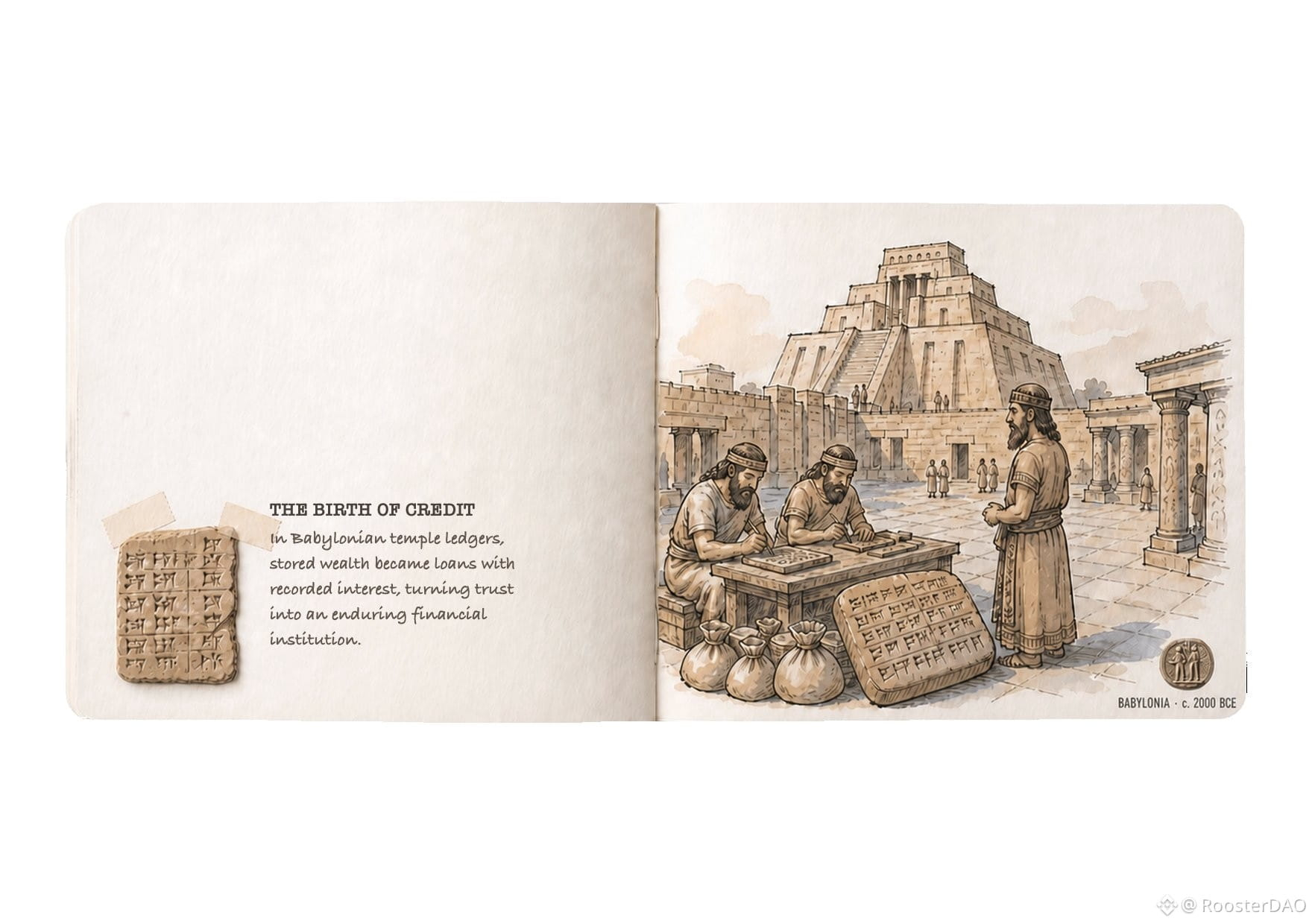
Before banks had marble halls, temples kept silver, grain, and promises.
Babylon’s clay ledgers turned stored wealth into recorded loans—and trust into an institution. The first chapter of finance was written in mud.
#FinancialHistory #Credit #Babylon #ROOFUND
Before banks had marble halls, temples kept silver, grain, and promises.
Babylon’s clay ledgers turned stored wealth into recorded loans—and trust into an institution. The first chapter of finance was written in mud.
#FinancialHistory #Credit #Babylon #ROOFUND
Babylon’s clay ledgers turned stored wealth into recorded loans—and trust into an institution. The first chapter of finance was written in mud.
#FinancialHistory #Credit #Babylon #ROOFUND
3
553

·
--
Verified
Zero-knowledge proofs are becoming more relevant for Bitcoin, but there is a practical question that often gets overlooked:
How cheaply can Bitcoin verify those proofs?
That is where Babylon’s BABE becomes interesting.
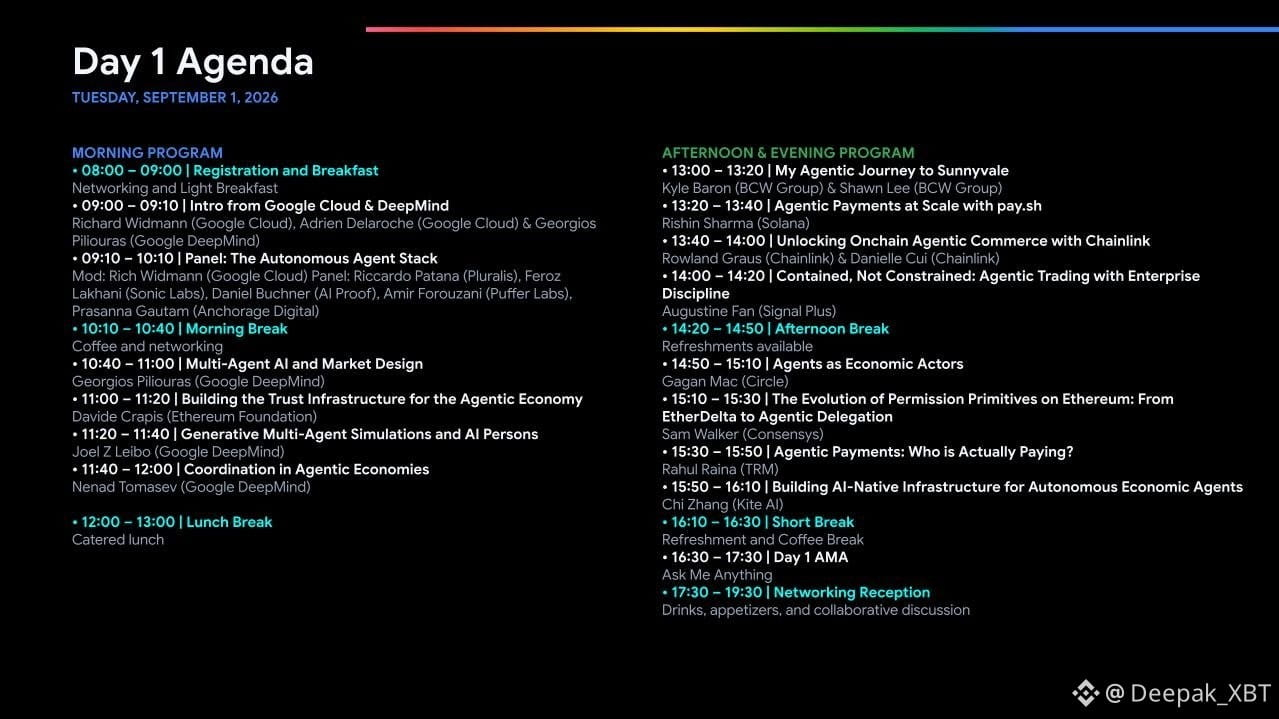
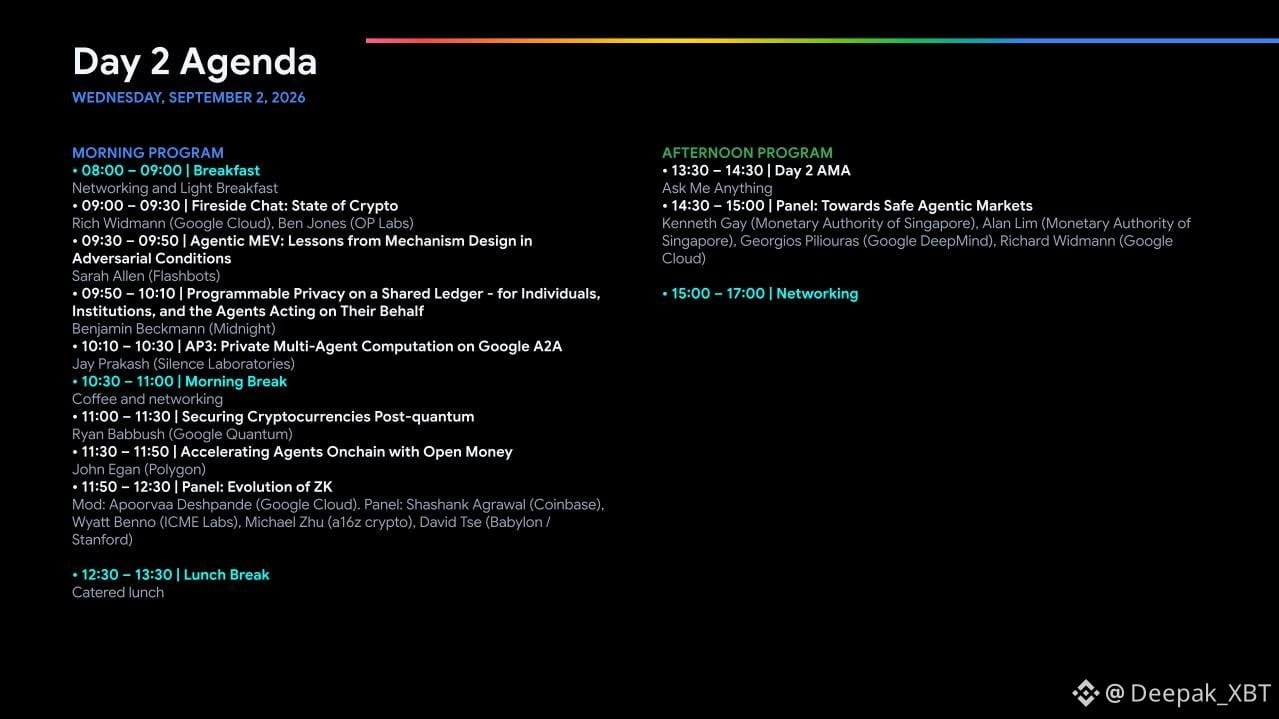
Today at the Google Web3 x AI Summit 2026, Babylon co-founder David Tse is joining a panel with Michael Zhu from a16z, Wyatt Benno from ICME Labs, and Shashank Agrawal from Coinbase to discuss the evolution of ZK proofs.
David is expected to explain how BABE can make ZK proof verification on Bitcoin 1,000x cheaper. The underlying research describes BABE as a protocol for verifying Groth16 proofs on Bitcoin while significantly reducing the associated costs.
What interests me here is not simply the 1,000x number.
If verification becomes cheap enough, ZK proofs could become much more practical for Bitcoin-based applications where Bitcoin itself needs to verify activity or state from another system.
That could matter for things like trustless Bitcoin vaults, where withdrawals can be tied to verification of a specific smart-contract state on Bitcoin.
For me, BABE is interesting because it addresses the less visible bottleneck: making cryptographic verification economically practical on Bitcoin.
Curious to hear David’s explanation today.
@babylonlabs_io $BABY
{future}(BABYUSDT)
#Babylon #bitcoin.” #zkProofs #Web3
Zero-knowledge proofs are becoming more relevant for Bitcoin, but there is a practical question that often gets overlooked:
How cheaply can Bitcoin verify those proofs?
That is where Babylon’s BABE becomes interesting.
Today at the Google Web3 x AI Summit 2026, Babylon co-founder David Tse is joining a panel with Michael Zhu from a16z, Wyatt Benno from ICME Labs, and Shashank Agrawal from Coinbase to discuss the evolution of ZK proofs.
David is expected to explain how BABE can make ZK proof verification on Bitcoin 1,000x cheaper. The underlying research describes BABE as a protocol for verifying Groth16 proofs on Bitcoin while significantly reducing the associated costs.
What interests me here is not simply the 1,000x number.
If verification becomes cheap enough, ZK proofs could become much more practical for Bitcoin-based applications where Bitcoin itself needs to verify activity or state from another system.
That could matter for things like trustless Bitcoin vaults, where withdrawals can be tied to verification of a specific smart-contract state on Bitcoin.
For me, BABE is interesting because it addresses the less visible bottleneck: making cryptographic verification economically practical on Bitcoin.
Curious to hear David’s explanation today.
@BabylonLabs_io $BABY
#Babylon #bitcoin.” #zkProofs #Web3
How cheaply can Bitcoin verify those proofs?
That is where Babylon’s BABE becomes interesting.
Today at the Google Web3 x AI Summit 2026, Babylon co-founder David Tse is joining a panel with Michael Zhu from a16z, Wyatt Benno from ICME Labs, and Shashank Agrawal from Coinbase to discuss the evolution of ZK proofs.
David is expected to explain how BABE can make ZK proof verification on Bitcoin 1,000x cheaper. The underlying research describes BABE as a protocol for verifying Groth16 proofs on Bitcoin while significantly reducing the associated costs.
What interests me here is not simply the 1,000x number.
If verification becomes cheap enough, ZK proofs could become much more practical for Bitcoin-based applications where Bitcoin itself needs to verify activity or state from another system.
That could matter for things like trustless Bitcoin vaults, where withdrawals can be tied to verification of a specific smart-contract state on Bitcoin.
For me, BABE is interesting because it addresses the less visible bottleneck: making cryptographic verification economically practical on Bitcoin.
Curious to hear David’s explanation today.
@BabylonLabs_io $BABY
#Babylon #bitcoin.” #zkProofs #Web3

195

·
--
Verified
A protocol has spent months building the plumbing to let idle Bitcoin work as collateral without it ever leaving the Bitcoin network. Whether that plumbing gets real volume soon may come down to a single vote on one of DeFi's biggest lending markets.
Babylon's Trustless Bitcoin Vaults are pending a governance proposal on Aave V4 that would let native BTC deposited through Babylon function as non-custodial DeFi collateral — no wrapped tokens, no custodians. It's still awaiting approval. Outside of that, BABY has mostly been tracking the broader Bitcoin and macro rally rather than moving on its own news.
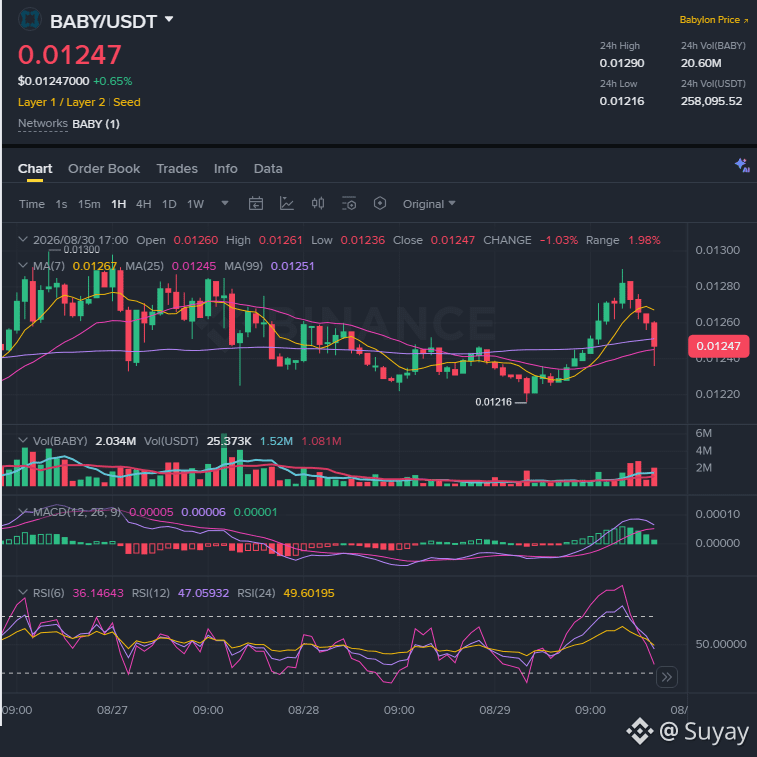
On the 1H chart, BABY spent days ranging between 0.0122 and 0.0130, climbed toward the top of that range, then reversed sharply in the last few hours, dropping through the MA7 (0.01267) down to its current 0.01247 — right on top of the MA25 (0.01245). RSI(6) has fallen to a short-term-oversold 36.14, while RSI(24) stays neutral at 49.60, and the MACD histogram is only barely positive after a stretch of negative readings.
Governance votes on major protocols move in weeks, not hours, so the Aave integration isn't a this-week catalyst even if it passes. On the 1H timeframe, RSI this oversold usually just marks the tail end of a quick pullback — what actually matters here is whether price holds the MA25 it's currently sitting on, or breaks below it into the lower part of the week's range.
Not financial advice — for informational purposes only.
$BABY #Babylon #bitcoin #Binance
{spot}(BABYUSDT)
A protocol has spent months building the plumbing to let idle Bitcoin work as collateral without it ever leaving the Bitcoin network. Whether that plumbing gets real volume soon may come down to a single vote on one of DeFi's biggest lending markets.
Babylon's Trustless Bitcoin Vaults are pending a governance proposal on Aave V4 that would let native BTC deposited through Babylon function as non-custodial DeFi collateral — no wrapped tokens, no custodians. It's still awaiting approval. Outside of that, BABY has mostly been tracking the broader Bitcoin and macro rally rather than moving on its own news.
On the 1H chart, BABY spent days ranging between 0.0122 and 0.0130, climbed toward the top of that range, then reversed sharply in the last few hours, dropping through the MA7 (0.01267) down to its current 0.01247 — right on top of the MA25 (0.01245). RSI(6) has fallen to a short-term-oversold 36.14, while RSI(24) stays neutral at 49.60, and the MACD histogram is only barely positive after a stretch of negative readings.
Governance votes on major protocols move in weeks, not hours, so the Aave integration isn't a this-week catalyst even if it passes. On the 1H timeframe, RSI this oversold usually just marks the tail end of a quick pullback — what actually matters here is whether price holds the MA25 it's currently sitting on, or breaks below it into the lower part of the week's range.
Not financial advice — for informational purposes only.
$BABY #Babylon #bitcoin #Binance
Babylon's Trustless Bitcoin Vaults are pending a governance proposal on Aave V4 that would let native BTC deposited through Babylon function as non-custodial DeFi collateral — no wrapped tokens, no custodians. It's still awaiting approval. Outside of that, BABY has mostly been tracking the broader Bitcoin and macro rally rather than moving on its own news.
On the 1H chart, BABY spent days ranging between 0.0122 and 0.0130, climbed toward the top of that range, then reversed sharply in the last few hours, dropping through the MA7 (0.01267) down to its current 0.01247 — right on top of the MA25 (0.01245). RSI(6) has fallen to a short-term-oversold 36.14, while RSI(24) stays neutral at 49.60, and the MACD histogram is only barely positive after a stretch of negative readings.
Governance votes on major protocols move in weeks, not hours, so the Aave integration isn't a this-week catalyst even if it passes. On the 1H timeframe, RSI this oversold usually just marks the tail end of a quick pullback — what actually matters here is whether price holds the MA25 it's currently sitting on, or breaks below it into the lower part of the week's range.
Not financial advice — for informational purposes only.
$BABY #Babylon #bitcoin #Binance
2
257
·
--
BABY APDAT$BABY 🚀 Babylon ($BABY): Bringing Bitcoin Security to Web3
Babylon’s mission is not only to use Bitcoin as a value store, but also to use it for Web3 security. In Babylon Genesis, BABY plays an important role—used as a gas token for network fees, a voting token for governance, and a staking asset for network security.
Babylon’s unique dual-staking model gives BTC and BABY both an opportunity to contribute to the security of the ecosystem. Users can stake BABY to secure the network and earn rewards, while BTC staking strengthens Babylon’s Bitcoin-powered security model. BABY is also important in governance, because BABY holders can shape Babylon’s future through voting on protocol upgrades and network parameters. As Trustless Bitcoin Vaults and other products expand within the Babylon ecosystem, BABY’s role may become even more important.
BABY APDAT
$BABY 🚀 Babylon ($BABY ): Bringing Bitcoin Security to Web3
Babylon’s mission is not only to use Bitcoin as a value store, but also to use it for Web3 security. In Babylon Genesis, BABY plays an important role—used as a gas token for network fees, a voting token for governance, and a staking asset for network security.
Babylon’s unique dual-staking model gives BTC and BABY both an opportunity to contribute to the security of the ecosystem. Users can stake BABY to secure the network and earn rewards, while BTC staking strengthens Babylon’s Bitcoin-powered security model. BABY is also important in governance, because BABY holders can shape Babylon’s future through voting on protocol upgrades and network parameters. As Trustless Bitcoin Vaults and other products expand within the Babylon ecosystem, BABY’s role may become even more important.
Babylon’s mission is not only to use Bitcoin as a value store, but also to use it for Web3 security. In Babylon Genesis, BABY plays an important role—used as a gas token for network fees, a voting token for governance, and a staking asset for network security.
Babylon’s unique dual-staking model gives BTC and BABY both an opportunity to contribute to the security of the ecosystem. Users can stake BABY to secure the network and earn rewards, while BTC staking strengthens Babylon’s Bitcoin-powered security model. BABY is also important in governance, because BABY holders can shape Babylon’s future through voting on protocol upgrades and network parameters. As Trustless Bitcoin Vaults and other products expand within the Babylon ecosystem, BABY’s role may become even more important.
75

·
--
#baby $BABY
Here's an original Binance Square-style post that meets your requirements:
Writing
One thing I keep noticing in crypto is that attention often moves faster than real progress. A project can trend for days, but the difficult work usually happens when nobody is watching.
That’s one reason I’ve been following @Babylon with interest. Instead of focusing on short-term excitement, it seems more focused on building infrastructure around Bitcoin’s role in the broader ecosystem. Whether that approach succeeds or not, it raises an important question about what the market values most: utility or momentum.
From a trader’s perspective, I try to separate headlines from long-term direction. Strong narratives can create opportunities, but lasting value usually comes from consistent execution over time.
I’m not assuming BabylonLab will outperform everything else. I’m simply watching whether its development continues to match the story people are telling.
#Babylon
@babylonlabs_io
#baby $BABY
Here's an original Binance Square-style post that meets your requirements:
Writing
One thing I keep noticing in crypto is that attention often moves faster than real progress. A project can trend for days, but the difficult work usually happens when nobody is watching.
That’s one reason I’ve been following @Babylon with interest. Instead of focusing on short-term excitement, it seems more focused on building infrastructure around Bitcoin’s role in the broader ecosystem. Whether that approach succeeds or not, it raises an important question about what the market values most: utility or momentum.
From a trader’s perspective, I try to separate headlines from long-term direction. Strong narratives can create opportunities, but lasting value usually comes from consistent execution over time.
I’m not assuming BabylonLab will outperform everything else. I’m simply watching whether its development continues to match the story people are telling.
#Babylon
@BabylonLabs_io
Here's an original Binance Square-style post that meets your requirements:
Writing
One thing I keep noticing in crypto is that attention often moves faster than real progress. A project can trend for days, but the difficult work usually happens when nobody is watching.
That’s one reason I’ve been following @Babylon with interest. Instead of focusing on short-term excitement, it seems more focused on building infrastructure around Bitcoin’s role in the broader ecosystem. Whether that approach succeeds or not, it raises an important question about what the market values most: utility or momentum.
From a trader’s perspective, I try to separate headlines from long-term direction. Strong narratives can create opportunities, but lasting value usually comes from consistent execution over time.
I’m not assuming BabylonLab will outperform everything else. I’m simply watching whether its development continues to match the story people are telling.
#Babylon
@BabylonLabs_io
1
2
73

·
--
Absolutely—in a much simpler way:
BABY is a crypto project called Babylon. Its core idea is to connect Bitcoin with the staking world, so BTC can be used to help secure other networks and earn rewards, instead of the asset just “sitting there.”
The price is volatile
BABY is listed on Binance, and its price today is hovering around $0.011, after a huge drop from its all-time high near $0.1728 in April 2025. This means the coin is high-risk and can move quickly up or down.
Not for the impatient investor
New coins—or ones still in the process of building their ecosystem—are more suitable for people who understand the risks, not for anyone looking for high safety or guaranteed profits. Even Binance warned at listing that new tokens tend to have high volatility.
If you’re looking for a project with a real technical idea, BABY isn’t just a random meme coin—it’s tied to the Babylon protocol.
And if you’re looking for a safe investment, it’s not one of the “quiet” coins right now due to the high volatility.
The best way to deal with it is: a small amount + risk management + don’t enter just because of hype.#Babylon
Absolutely—in a much simpler way:
BABY is a crypto project called Babylon. Its core idea is to connect Bitcoin with the staking world, so BTC can be used to help secure other networks and earn rewards, instead of the asset just “sitting there.”
The price is volatile
BABY is listed on Binance, and its price today is hovering around $0.011, after a huge drop from its all-time high near $0.1728 in April 2025. This means the coin is high-risk and can move quickly up or down.
Not for the impatient investor
New coins—or ones still in the process of building their ecosystem—are more suitable for people who understand the risks, not for anyone looking for high safety or guaranteed profits. Even Binance warned at listing that new tokens tend to have high volatility.
If you’re looking for a project with a real technical idea, BABY isn’t just a random meme coin—it’s tied to the Babylon protocol.
And if you’re looking for a safe investment, it’s not one of the “quiet” coins right now due to the high volatility.
The best way to deal with it is: a small amount + risk management + don’t enter just because of hype.#Babylon
BABY is a crypto project called Babylon. Its core idea is to connect Bitcoin with the staking world, so BTC can be used to help secure other networks and earn rewards, instead of the asset just “sitting there.”
The price is volatile
BABY is listed on Binance, and its price today is hovering around $0.011, after a huge drop from its all-time high near $0.1728 in April 2025. This means the coin is high-risk and can move quickly up or down.
Not for the impatient investor
New coins—or ones still in the process of building their ecosystem—are more suitable for people who understand the risks, not for anyone looking for high safety or guaranteed profits. Even Binance warned at listing that new tokens tend to have high volatility.
If you’re looking for a project with a real technical idea, BABY isn’t just a random meme coin—it’s tied to the Babylon protocol.
And if you’re looking for a safe investment, it’s not one of the “quiet” coins right now due to the high volatility.
The best way to deal with it is: a small amount + risk management + don’t enter just because of hype.#Babylon
60

#baby $BABY Babylon (BABY) is gaining attention as Bitcoin staking continues to attract the crypto community. If adoption keeps growing, BABY could become one of the projects to watch in the coming months. Always manage risk and do your own research.
#Babylon #BABY #Bitcoin #Crypto #BinanceSquare #BTC #Altcoins #CryptoNe
{spot}(BABYUSDT)
#baby $BABY Babylon (BABY) is gaining attention as Bitcoin staking continues to attract the crypto community. If adoption keeps growing, BABY could become one of the projects to watch in the coming months. Always manage risk and do your own research.
#Babylon #BABY #Bitcoin #Crypto #BinanceSquare #BTC #Altcoins #CryptoNe
#Babylon #BABY #Bitcoin #Crypto #BinanceSquare #BTC #Altcoins #CryptoNe
34

·
--
Bullish
Hi My Friends , How are you All , Today we will Discuss About $BABY Crypto Project with Bright 😎 Future 👇🏼
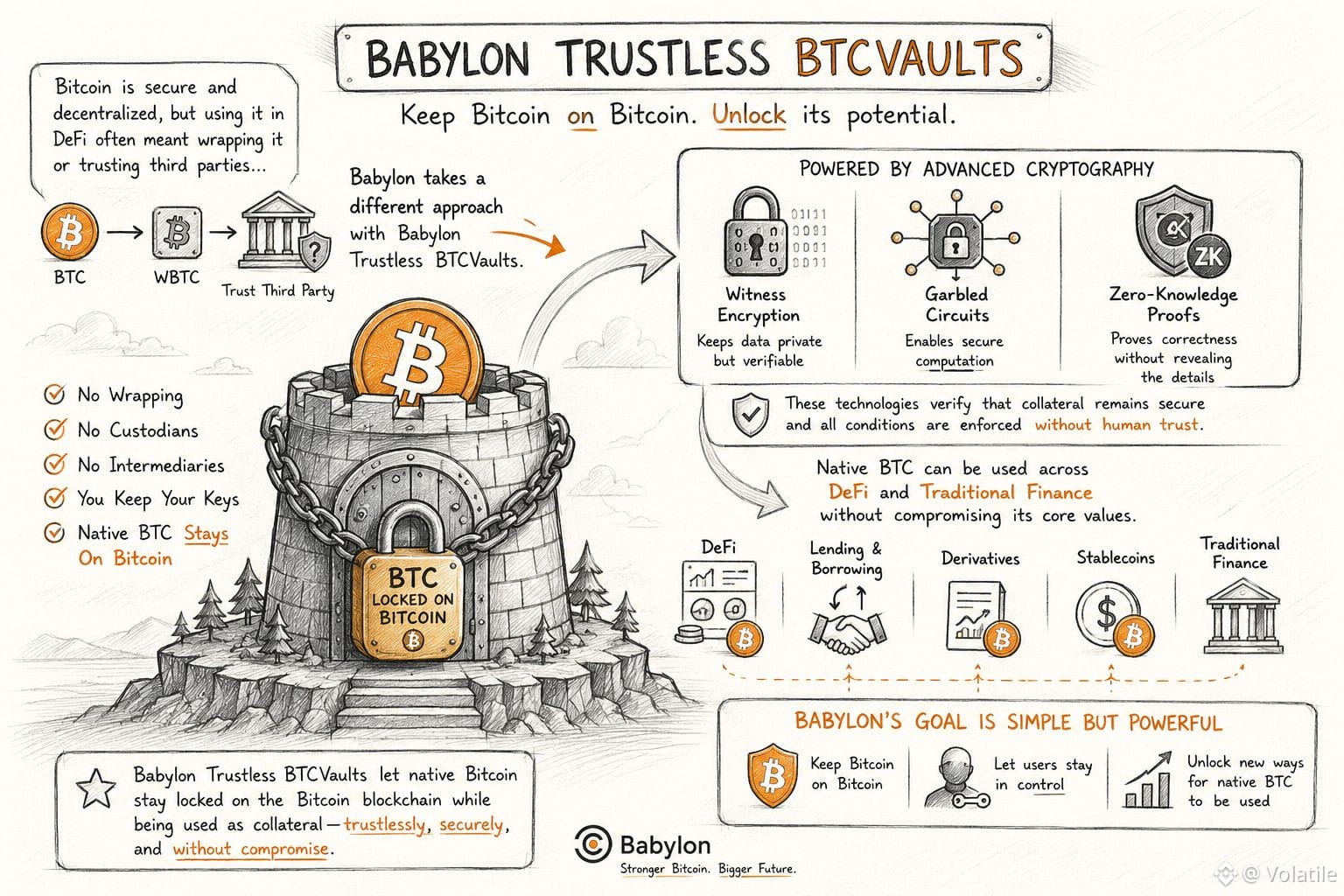
Bitcoin has always been known for its security and decentralization, but using it in DeFi often meant wrapping it or trusting third parties. Babylon is taking a different approach with Babylon Trustless BTCVaults. Instead of moving Bitcoin off its native network BTCVaults ✓ allow native BTC to stay locked on the Bitcoin blockchain while still being used as collateral. There is no wrapping, no custodians, and no intermediaries involved. Users keep control of their own keys and the Bitcoin never changes into another asset. Advanced cryptographic technologies, including witness encryption, garbled circuits and zero knowledge proofs, help verify that the collateral remains secure and that all conditions are enforced without relying on human trust. This means Bitcoin can be used across decentralized and even traditional financial systems while preserving the trustless principles that made it valuable in the first place. Babylons goal is simple but powerful , keep Bitcoin on Bitcoin, let users stay in control and unlock new ways for native $BTC to be used without compromising its core values.
Have a Nice Day , Take Care 😀
#baby @babylonlabs_io #Babylon #Babylonchain #BabylonLabs_io
{future}(BTCUSDT)
{future}(BABYUSDT)
Hi My Friends , How are you All , Today we will Discuss About $BABY Crypto Project with Bright 😎 Future 👇🏼
Bitcoin has always been known for its security and decentralization, but using it in DeFi often meant wrapping it or trusting third parties. Babylon is taking a different approach with Babylon Trustless BTCVaults. Instead of moving Bitcoin off its native network BTCVaults ✓ allow native BTC to stay locked on the Bitcoin blockchain while still being used as collateral. There is no wrapping, no custodians, and no intermediaries involved. Users keep control of their own keys and the Bitcoin never changes into another asset. Advanced cryptographic technologies, including witness encryption, garbled circuits and zero knowledge proofs, help verify that the collateral remains secure and that all conditions are enforced without relying on human trust. This means Bitcoin can be used across decentralized and even traditional financial systems while preserving the trustless principles that made it valuable in the first place. Babylons goal is simple but powerful , keep Bitcoin on Bitcoin, let users stay in control and unlock new ways for native $BTC to be used without compromising its core values.
Have a Nice Day , Take Care 😀
#baby @BabylonLabs_io #Babylon #Babylonchain #BabylonLabs_io
Bitcoin has always been known for its security and decentralization, but using it in DeFi often meant wrapping it or trusting third parties. Babylon is taking a different approach with Babylon Trustless BTCVaults. Instead of moving Bitcoin off its native network BTCVaults ✓ allow native BTC to stay locked on the Bitcoin blockchain while still being used as collateral. There is no wrapping, no custodians, and no intermediaries involved. Users keep control of their own keys and the Bitcoin never changes into another asset. Advanced cryptographic technologies, including witness encryption, garbled circuits and zero knowledge proofs, help verify that the collateral remains secure and that all conditions are enforced without relying on human trust. This means Bitcoin can be used across decentralized and even traditional financial systems while preserving the trustless principles that made it valuable in the first place. Babylons goal is simple but powerful , keep Bitcoin on Bitcoin, let users stay in control and unlock new ways for native $BTC to be used without compromising its core values.
Have a Nice Day , Take Care 😀
#baby @BabylonLabs_io #Babylon #Babylonchain #BabylonLabs_io
10
5
95

·
--
#baby $BABY The next evolution of Bitcoin: from a store of value to trust infrastructure
Over the past decade or so, Bitcoin has long been regarded as the most reliable digital gold, but it also has a long-standing problem: a huge amount of security value is locked up, yet it’s difficult to directly participate in the broader blockchain ecosystem.
And Babylon is trying to change that.
With Babylon Trustless Bitcoin Vaults (TBV), Bitcoin holders can make Bitcoin serve as a security assurance layer for decentralized networks without giving up Bitcoin’s native security.
This means Bitcoin is no longer just an asset “waiting to appreciate,” but could become the security infrastructure for the entire Web3 world.
Babylon’s value isn’t only about unlocking BTC liquidity; more importantly, it explores a new model:
Let the largest-cap, highest-security Bitcoin in the world provide trust for other decentralized networks.
In the future, blockchain competition won’t be only about transaction speed and ecosystem scale—it will be about security and the cost of trust.
If Bitcoin can become the security foundation for more networks, BTC’s role may further evolve from “digital gold” to a “decentralized security layer.”
Looking forward to continued innovation from @BabylonLabs_io in the BTCFi direction.
$BABY
#Babylon
#比特币
#baby $BABY The next evolution of Bitcoin: from a store of value to trust infrastructure
Over the past decade or so, Bitcoin has long been regarded as the most reliable digital gold, but it also has a long-standing problem: a huge amount of security value is locked up, yet it’s difficult to directly participate in the broader blockchain ecosystem.
And Babylon is trying to change that.
With Babylon Trustless Bitcoin Vaults (TBV), Bitcoin holders can make Bitcoin serve as a security assurance layer for decentralized networks without giving up Bitcoin’s native security.
This means Bitcoin is no longer just an asset “waiting to appreciate,” but could become the security infrastructure for the entire Web3 world.
Babylon’s value isn’t only about unlocking BTC liquidity; more importantly, it explores a new model:
Let the largest-cap, highest-security Bitcoin in the world provide trust for other decentralized networks.
In the future, blockchain competition won’t be only about transaction speed and ecosystem scale—it will be about security and the cost of trust.
If Bitcoin can become the security foundation for more networks, BTC’s role may further evolve from “digital gold” to a “decentralized security layer.”
Looking forward to continued innovation from @BabylonLabs_io in the BTCFi direction.
$BABY
#Babylon
#比特币
Over the past decade or so, Bitcoin has long been regarded as the most reliable digital gold, but it also has a long-standing problem: a huge amount of security value is locked up, yet it’s difficult to directly participate in the broader blockchain ecosystem.
And Babylon is trying to change that.
With Babylon Trustless Bitcoin Vaults (TBV), Bitcoin holders can make Bitcoin serve as a security assurance layer for decentralized networks without giving up Bitcoin’s native security.
This means Bitcoin is no longer just an asset “waiting to appreciate,” but could become the security infrastructure for the entire Web3 world.
Babylon’s value isn’t only about unlocking BTC liquidity; more importantly, it explores a new model:
Let the largest-cap, highest-security Bitcoin in the world provide trust for other decentralized networks.
In the future, blockchain competition won’t be only about transaction speed and ecosystem scale—it will be about security and the cost of trust.
If Bitcoin can become the security foundation for more networks, BTC’s role may further evolve from “digital gold” to a “decentralized security layer.”
Looking forward to continued innovation from @BabylonLabs_io in the BTCFi direction.
$BABY
#Babylon
#比特币
41
Log in to explore more content
Join global crypto users on Binance Square
⚡️ Get latest and useful information about crypto.
💬 Trusted by the world’s largest crypto exchange.
👍 Discover real insights from verified creators.
Email / Phone number
Trending Topics
1
#BinanceWillListHyperliquid(HYPE)
11,606 views
400 Discussing
2
#BitcoinFallsBelow$83,000
171 views
20 Discussing
3
#BitcoinFallsToAround$84,600ThisWeek
0 views
0 Discussing
4
#US30YearYieldHighestSince2004
71 views
14 Discussing
5
#ETHBreaksAbove$2,700
460 views
20 Discussing
6
#USWeighsPromotingDollarStablecoinsAbroad
20,927 views
813 Discussing
7
#US10YTreasuryYieldHits19YearHigh
17,644 views
613 Discussing
8
#SpotBitcoinETFsInflow$2.31BInFourDays
2,317 views
55 Discussing
9
#BitcoinRejectedAt$87,300Twice
0 views
0 Discussing
10
#BCHJumps28%OnCMEFuturesListing
61,651 views
1,311 Discussing