
#baby
baby
10.2M views
82,710 Discussing
Hot
Latest

🚀 BABY TOKEN — Is the Next Move About to Begin? 🍼🔥The market is always searching for the next token that can catch fire.
Right now, $BABY deserves attention. 👀
Why?
🔥 Strong community narrative
📈 Potential for growing market attention
⚡ Meme energy + crypto momentum
💎 A simple brand that’s easy to remember
In a bullish market, attention can move fast.
And when volume + community + momentum come together, a small token can suddenly become a market talking point. 🚀
I’m keeping $BABY on my watchlist.
Maybe it’s just another token…
Or maybe BABY is preparing for its next big move. 🍼🔥
Watch. DYOR. Stay alert.
#BABY #BABYtoken #crypto #BİNANCESQUARE #Altcoins #Memecoin #bullish
🚀 BABY TOKEN — Is the Next Move About to Begin? 🍼🔥
The market is always searching for the next token that can catch fire.
Right now, $BABY deserves attention. 👀
Why?
🔥 Strong community narrative
📈 Potential for growing market attention
⚡ Meme energy + crypto momentum
💎 A simple brand that’s easy to remember
In a bullish market, attention can move fast.
And when volume + community + momentum come together, a small token can suddenly become a market talking point. 🚀
I’m keeping $BABY on my watchlist.
Maybe it’s just another token…
Or maybe BABY is preparing for its next big move. 🍼🔥
Watch. DYOR. Stay alert.
#BABY #BABYtoken #crypto #BİNANCESQUARE #Altcoins #Memecoin #bullish
Right now, $BABY deserves attention. 👀
Why?
🔥 Strong community narrative
📈 Potential for growing market attention
⚡ Meme energy + crypto momentum
💎 A simple brand that’s easy to remember
In a bullish market, attention can move fast.
And when volume + community + momentum come together, a small token can suddenly become a market talking point. 🚀
I’m keeping $BABY on my watchlist.
Maybe it’s just another token…
Or maybe BABY is preparing for its next big move. 🍼🔥
Watch. DYOR. Stay alert.
#BABY #BABYtoken #crypto #BİNANCESQUARE #Altcoins #Memecoin #bullish
140

·
--
Bullish
🚨 JOE & BABY | Crypto Market Watch
$JOE and $BABY are catching attention as traders monitor fresh momentum across the market. 📈🔥
{spot}(JOEUSDT)
Both tokens are showing increased community interest, but volatility remains high. Key levels, trading volume and market structure will be important to watch before making any decision.
{spot}(BABYUSDT)
Not financial advice. Trade with proper risk management.
#JOE #BABY
🚨 JOE & BABY | Crypto Market Watch
$JOE and $BABY are catching attention as traders monitor fresh momentum across the market. 📈🔥
Both tokens are showing increased community interest, but volatility remains high. Key levels, trading volume and market structure will be important to watch before making any decision.
Not financial advice. Trade with proper risk management.
#JOE #BABY
$JOE and $BABY are catching attention as traders monitor fresh momentum across the market. 📈🔥
Both tokens are showing increased community interest, but volatility remains high. Key levels, trading volume and market structure will be important to watch before making any decision.
Not financial advice. Trade with proper risk management.
#JOE #BABY

69
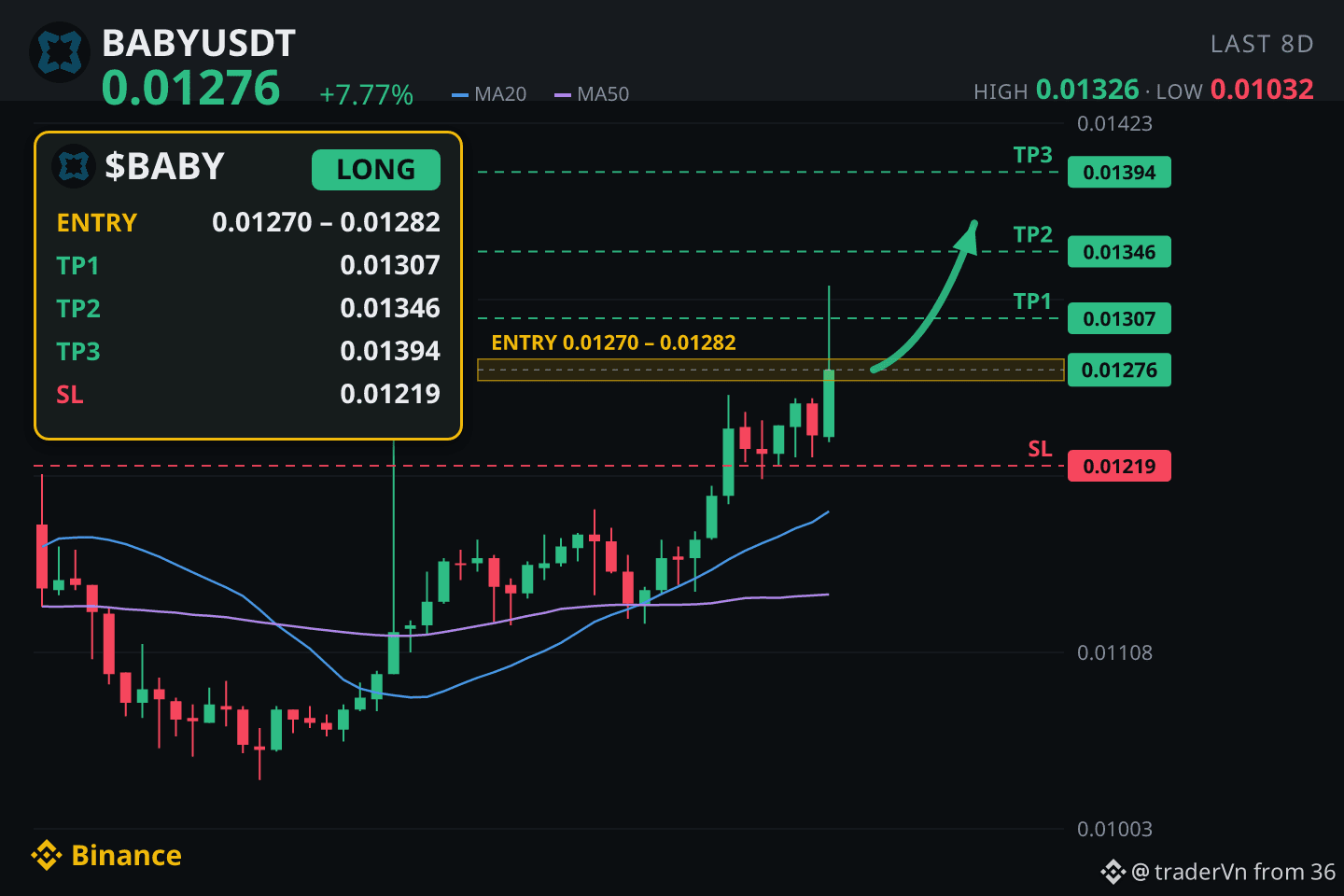
📢 BABY TRADING TOURNAMENT OFFERS BNB VOUCHERS
$BABY $MUBARAK $KERNEL
BABY is at 0.01276 USDT · +4.85% over 24h · Vol 2M
🏷️ Event type: Trading Competition · published by Binance on 22/09/2026
The upcoming BABY trading tournament aims to stimulate activity on the BABY pair, which has shown modest gains amid broader market optimism. With recent price appreciation and elevated volumes, the competition could further boost short‑term trading turnover, though the underlying fundamentals remain unchanged.
📈 Live market data — TRENDING UP
• BABY 0.01276 · 4.85% · Vol 2M
• MUBARAK · 52.6% · Vol 38M
• KERNEL · 37.3% · Vol 8M
Trading competitions reward VOLUME, so volume during the contest is inflated by design. Do not read these days as genuine interest.
#BABY #Binance
Source: https://www.binance.com/vi/support/announcement/b8ed81af5344412a8d18386f1515516d
For reference only, not financial advice (DYOR).
📢 BABY TRADING TOURNAMENT OFFERS BNB VOUCHERS
$BABY $MUBARAK $KERNEL
BABY is at 0.01276 USDT · +4.85% over 24h · Vol 2M
🏷️ Event type: Trading Competition · published by Binance on 22/09/2026
The upcoming BABY trading tournament aims to stimulate activity on the BABY pair, which has shown modest gains amid broader market optimism. With recent price appreciation and elevated volumes, the competition could further boost short‑term trading turnover, though the underlying fundamentals remain unchanged.
📈 Live market data — TRENDING UP
• BABY 0.01276 · 4.85% · Vol 2M
• MUBARAK · 52.6% · Vol 38M
• KERNEL · 37.3% · Vol 8M
Trading competitions reward VOLUME, so volume during the contest is inflated by design. Do not read these days as genuine interest.
#BABY #Binance
Source: https://www.binance.com/vi/support/announcement/b8ed81af5344412a8d18386f1515516d
For reference only, not financial advice (DYOR).
$BABY $MUBARAK $KERNEL
BABY is at 0.01276 USDT · +4.85% over 24h · Vol 2M
🏷️ Event type: Trading Competition · published by Binance on 22/09/2026
The upcoming BABY trading tournament aims to stimulate activity on the BABY pair, which has shown modest gains amid broader market optimism. With recent price appreciation and elevated volumes, the competition could further boost short‑term trading turnover, though the underlying fundamentals remain unchanged.
📈 Live market data — TRENDING UP
• BABY 0.01276 · 4.85% · Vol 2M
• MUBARAK · 52.6% · Vol 38M
• KERNEL · 37.3% · Vol 8M
Trading competitions reward VOLUME, so volume during the contest is inflated by design. Do not read these days as genuine interest.
#BABY #Binance
Source: https://www.binance.com/vi/support/announcement/b8ed81af5344412a8d18386f1515516d
For reference only, not financial advice (DYOR).
193

·
--
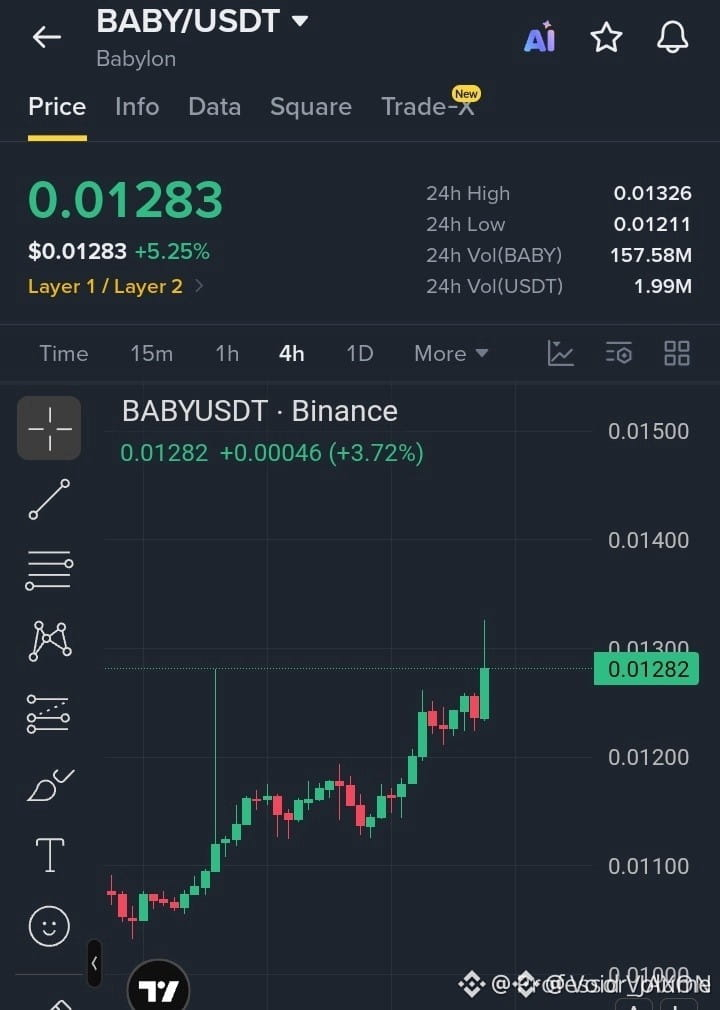
🚨 $BABY STRUCTURE FLIPS BULLISH AS INSTITUTIONAL DEMAND FUELS EXPANSION TOWARD 0.013 RESISTANCE! 💥
Entry: 0.01260 - 0.01285 ⚡
Target: 0.01325 - 0.01420 🚀
Stop Loss: 0.01215 ⚠️
📌 Smart money is leaving clear footprints on the 4H chart, printing a sequence of higher highs and higher lows while absorbing supply at the current demand block. 📊 As momentum builds directly below key overhead resistance, holding this consolidation corridor signals strong order flow expansion into upper liquidity pools.
💡 A sustained defend above entry sets up an elegant continuation trade toward higher structural targets as inefficiencies get reclaimed. 💬 Are you front-running this 4H market structure shift or waiting for a clean breakout confirmation above resistance? 👇
⚠️ Not financial advice. Always manage your risk. 🛡️
🏷️ #BABY #LongSetup #Crypto #MarketStructure #Breakout
⚡ 🦈
🚨 $BABY STRUCTURE FLIPS BULLISH AS INSTITUTIONAL DEMAND FUELS EXPANSION TOWARD 0.013 RESISTANCE! 💥
Entry: 0.01260 - 0.01285 ⚡
Target: 0.01325 - 0.01420 🚀
Stop Loss: 0.01215 ⚠️
📌 Smart money is leaving clear footprints on the 4H chart, printing a sequence of higher highs and higher lows while absorbing supply at the current demand block. 📊 As momentum builds directly below key overhead resistance, holding this consolidation corridor signals strong order flow expansion into upper liquidity pools.
💡 A sustained defend above entry sets up an elegant continuation trade toward higher structural targets as inefficiencies get reclaimed. 💬 Are you front-running this 4H market structure shift or waiting for a clean breakout confirmation above resistance? 👇
⚠️ Not financial advice. Always manage your risk. 🛡️
🏷️ #BABY #LongSetup #Crypto #MarketStructure #Breakout
⚡ 🦈
Entry: 0.01260 - 0.01285 ⚡
Target: 0.01325 - 0.01420 🚀
Stop Loss: 0.01215 ⚠️
📌 Smart money is leaving clear footprints on the 4H chart, printing a sequence of higher highs and higher lows while absorbing supply at the current demand block. 📊 As momentum builds directly below key overhead resistance, holding this consolidation corridor signals strong order flow expansion into upper liquidity pools.
💡 A sustained defend above entry sets up an elegant continuation trade toward higher structural targets as inefficiencies get reclaimed. 💬 Are you front-running this 4H market structure shift or waiting for a clean breakout confirmation above resistance? 👇
⚠️ Not financial advice. Always manage your risk. 🛡️
🏷️ #BABY #LongSetup #Crypto #MarketStructure #Breakout
⚡ 🦈
64

·
--
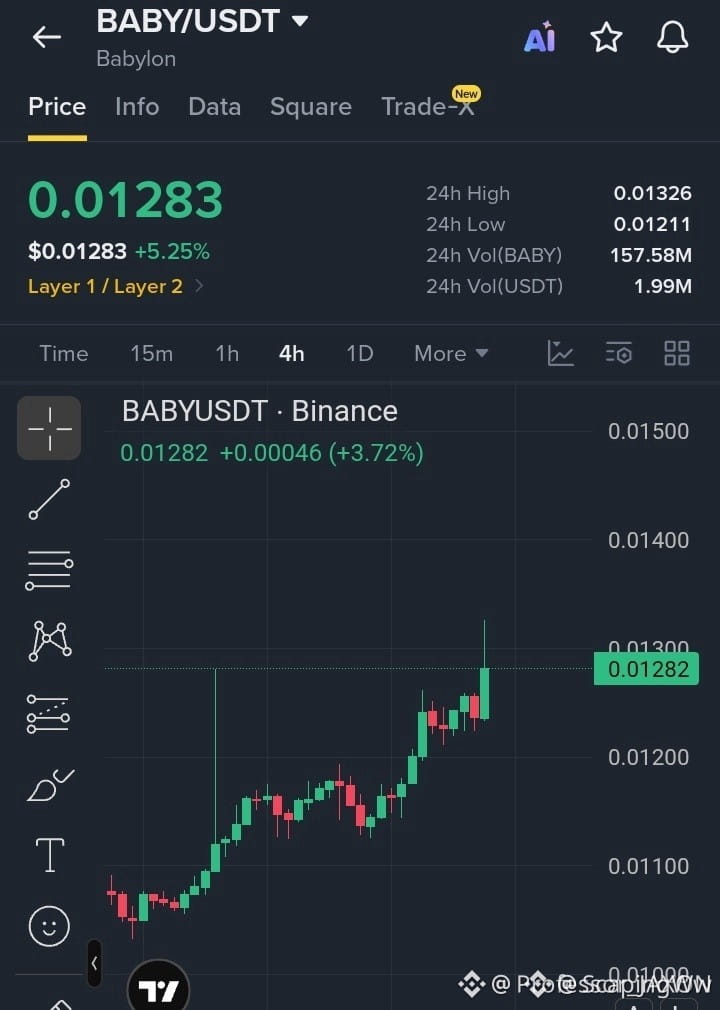
🐂 $BABY STRUCTURE STRENGTHENS AS BULLS TARGET THE EXPLOSIVE 0.013 BREAKOUT ZONE! ⚡
Entry: $0.01260 - $0.01285 ⚡
Target: $0.01325 / $0.01370 / $0.01420 🚀
Stop Loss: $0.01215 ⚠️
📌 Sellers are losing control as $BABY builds a clean 4H stair-step structure of higher highs and higher lows. 📊 Dip buyers are actively defending the lower demand band, building momentum right beneath key resistance.
💡 Maintaining strength above this reload zone clears the runway for an expansion phase into upper target liquidity. 💬 Are you riding this trend continuation or waiting for a breakout confirmation? 👇
⚠️ Not financial advice. Always manage your risk. 🛡️
🏷️ #BABY #LongSetup #Altcoins #Breakout #Crypto
🔥 💎
🐂 $BABY STRUCTURE STRENGTHENS AS BULLS TARGET THE EXPLOSIVE 0.013 BREAKOUT ZONE! ⚡
Entry: $0.01260 - $0.01285 ⚡
Target: $0.01325 / $0.01370 / $0.01420 🚀
Stop Loss: $0.01215 ⚠️
📌 Sellers are losing control as $BABY builds a clean 4H stair-step structure of higher highs and higher lows. 📊 Dip buyers are actively defending the lower demand band, building momentum right beneath key resistance.
💡 Maintaining strength above this reload zone clears the runway for an expansion phase into upper target liquidity. 💬 Are you riding this trend continuation or waiting for a breakout confirmation? 👇
⚠️ Not financial advice. Always manage your risk. 🛡️
🏷️ #BABY #LongSetup #Altcoins #Breakout #Crypto
🔥 💎
Entry: $0.01260 - $0.01285 ⚡
Target: $0.01325 / $0.01370 / $0.01420 🚀
Stop Loss: $0.01215 ⚠️
📌 Sellers are losing control as $BABY builds a clean 4H stair-step structure of higher highs and higher lows. 📊 Dip buyers are actively defending the lower demand band, building momentum right beneath key resistance.
💡 Maintaining strength above this reload zone clears the runway for an expansion phase into upper target liquidity. 💬 Are you riding this trend continuation or waiting for a breakout confirmation? 👇
⚠️ Not financial advice. Always manage your risk. 🛡️
🏷️ #BABY #LongSetup #Altcoins #Breakout #Crypto
🔥 💎
76
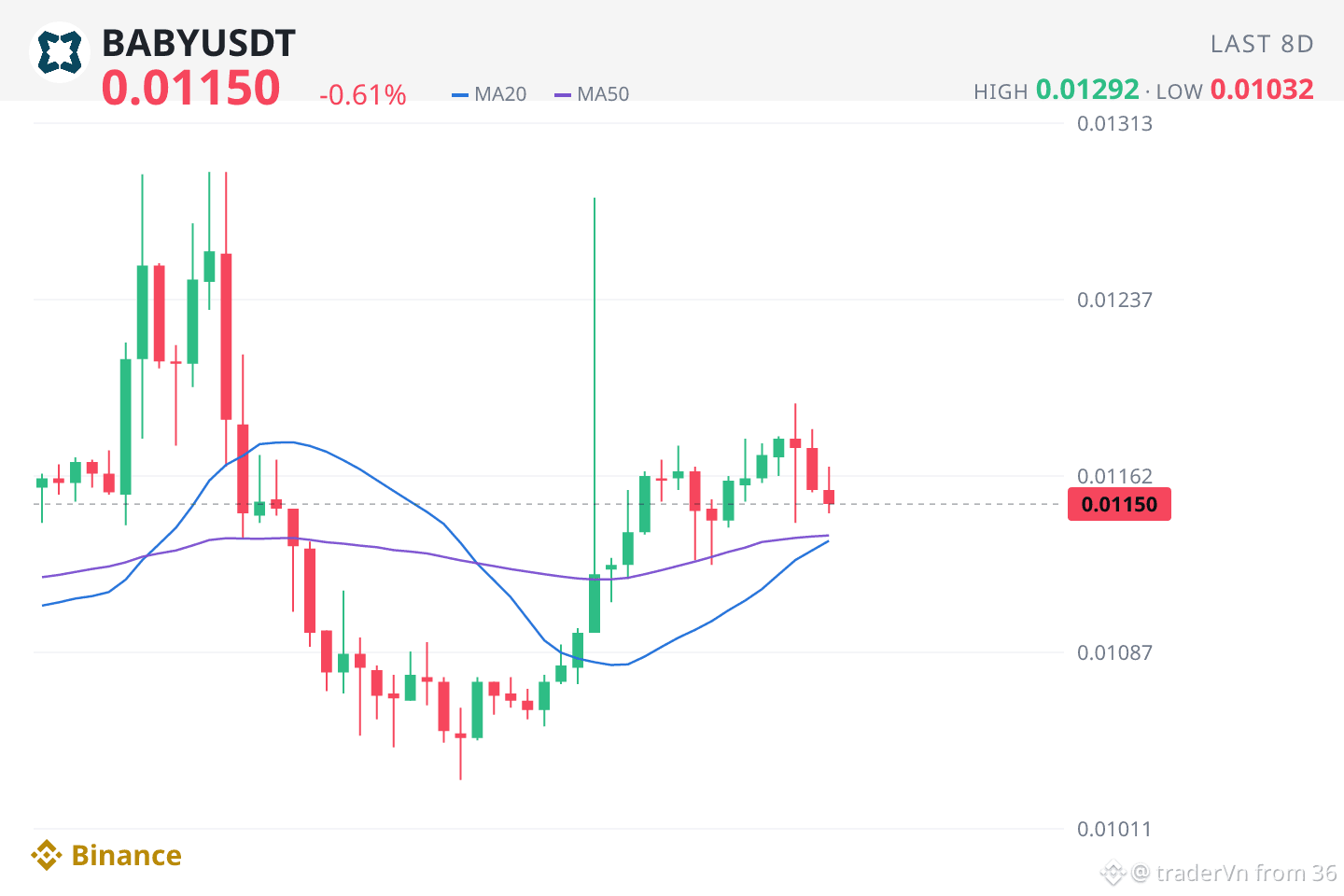
$BABY PLAN CLOSED A LOSS — TP3 MISSED BY 1.2% AND THAT STILL COUNTS AS A MISS
• Called 21 Aug at 0.01214 · spot 0.0115 (−5.27%)
Count so far: 1307 reached, 66 expired unhit — 95.19%. Missed ones are never deleted.
• The full ladder published on 21 Aug, graded 30 days later:
• TP1 0.012427 — reached · published hit rate 74.8%
• TP2 0.012813 — reached · published hit rate 50%
• TP3 0.013259 — expired unhit · best price got was 0.0131, short by 1.2% · published hit rate 30%
• Invalidation SL 0.010688 — reached, 11.96% under the call. That is the level the original post named as the point where it is wrong, and price went through it.
• Invalidation SL 0.011265 — reached, 7.21% under the call. That is the level the original post named as the point where it is wrong, and price went through it.
• Invalidation SL 0.011596 — reached, 4.48% under the call. That is the level the original post named as the point where it is wrong, and price went through it.
There is nothing to celebrate in this one. It is here because misses belong on the timeline too, in the same place the wins go.
• Levels come from historical quantiles, not forecasts. Not financial advice.
#BABY #CryptoTrading
$BABY PLAN CLOSED A LOSS — TP3 MISSED BY 1.2% AND THAT STILL COUNTS AS A MISS
• Called 21 Aug at 0.01214 · spot 0.0115 (−5.27%)
Count so far: 1307 reached, 66 expired unhit — 95.19%. Missed ones are never deleted.
• The full ladder published on 21 Aug, graded 30 days later:
• TP1 0.012427 — reached · published hit rate 74.8%
• TP2 0.012813 — reached · published hit rate 50%
• TP3 0.013259 — expired unhit · best price got was 0.0131, short by 1.2% · published hit rate 30%
• Invalidation SL 0.010688 — reached, 11.96% under the call. That is the level the original post named as the point where it is wrong, and price went through it.
• Invalidation SL 0.011265 — reached, 7.21% under the call. That is the level the original post named as the point where it is wrong, and price went through it.
• Invalidation SL 0.011596 — reached, 4.48% under the call. That is the level the original post named as the point where it is wrong, and price went through it.
There is nothing to celebrate in this one. It is here because misses belong on the timeline too, in the same place the wins go.
• Levels come from historical quantiles, not forecasts. Not financial advice.
#BABY #CryptoTrading
• Called 21 Aug at 0.01214 · spot 0.0115 (−5.27%)
Count so far: 1307 reached, 66 expired unhit — 95.19%. Missed ones are never deleted.
• The full ladder published on 21 Aug, graded 30 days later:
• TP1 0.012427 — reached · published hit rate 74.8%
• TP2 0.012813 — reached · published hit rate 50%
• TP3 0.013259 — expired unhit · best price got was 0.0131, short by 1.2% · published hit rate 30%
• Invalidation SL 0.010688 — reached, 11.96% under the call. That is the level the original post named as the point where it is wrong, and price went through it.
• Invalidation SL 0.011265 — reached, 7.21% under the call. That is the level the original post named as the point where it is wrong, and price went through it.
• Invalidation SL 0.011596 — reached, 4.48% under the call. That is the level the original post named as the point where it is wrong, and price went through it.
There is nothing to celebrate in this one. It is here because misses belong on the timeline too, in the same place the wins go.
• Levels come from historical quantiles, not forecasts. Not financial advice.
#BABY #CryptoTrading
2
95

·
--
$S In the last 3.1 hours, holdings increased by 13.6%. Some people are accumulating
$BABY Net buy in half an hour: 2.04 million, volume expansion reaching 7.5x
💰 S 0.04419 BULLISH bias
🟢 Holds above 0.04550
Targets 0.04650 / 0.04720 / 0.04810
Stop-loss 0.04250
🔴 Breaks below 0.04320
Next support 0.04220 / 0.04150
🎯 The main force is currently pushing up; the half-hour volume is 1.4x. Stronger volume confirmation is still lacking. Observe whether it can hold above 0.04550 to confirm that the main force continues going long.
━━━━━━━━━
💰 BABY 0.01273 BULLISH bias
🟢 Holds above 0.01320
Targets 0.01360 / 0.01410 / 0.01450
Stop-loss 0.01220
🔴 Breaks below 0.01250
Next support 0.01210 / 0.01180
🎯 The main force is pushing up with increased volume; the half-hour volume is 7.5x. Still, there is no higher-price confirmation yet. Observe whether it can hold above 0.01320 to confirm the main force continues going long.
—
🕒 Data taken from 09-22 17:05 (UTC+8) Binance futures market; you can verify it yourself
Objective data is presented only, not investment advice—be mindful of risk.
#S #BABY
$S In the last 3.1 hours, holdings increased by 13.6%. Some people are accumulating
$BABY Net buy in half an hour: 2.04 million, volume expansion reaching 7.5x
💰 S 0.04419 BULLISH bias
🟢 Holds above 0.04550
Targets 0.04650 / 0.04720 / 0.04810
Stop-loss 0.04250
🔴 Breaks below 0.04320
Next support 0.04220 / 0.04150
🎯 The main force is currently pushing up; the half-hour volume is 1.4x. Stronger volume confirmation is still lacking. Observe whether it can hold above 0.04550 to confirm that the main force continues going long.
━━━━━━━━━
💰 BABY 0.01273 BULLISH bias
🟢 Holds above 0.01320
Targets 0.01360 / 0.01410 / 0.01450
Stop-loss 0.01220
🔴 Breaks below 0.01250
Next support 0.01210 / 0.01180
🎯 The main force is pushing up with increased volume; the half-hour volume is 7.5x. Still, there is no higher-price confirmation yet. Observe whether it can hold above 0.01320 to confirm the main force continues going long.
—
🕒 Data taken from 09-22 17:05 (UTC+8) Binance futures market; you can verify it yourself
Objective data is presented only, not investment advice—be mindful of risk.
#S #BABY
$BABY Net buy in half an hour: 2.04 million, volume expansion reaching 7.5x
💰 S 0.04419 BULLISH bias
🟢 Holds above 0.04550
Targets 0.04650 / 0.04720 / 0.04810
Stop-loss 0.04250
🔴 Breaks below 0.04320
Next support 0.04220 / 0.04150
🎯 The main force is currently pushing up; the half-hour volume is 1.4x. Stronger volume confirmation is still lacking. Observe whether it can hold above 0.04550 to confirm that the main force continues going long.
━━━━━━━━━
💰 BABY 0.01273 BULLISH bias
🟢 Holds above 0.01320
Targets 0.01360 / 0.01410 / 0.01450
Stop-loss 0.01220
🔴 Breaks below 0.01250
Next support 0.01210 / 0.01180
🎯 The main force is pushing up with increased volume; the half-hour volume is 7.5x. Still, there is no higher-price confirmation yet. Observe whether it can hold above 0.01320 to confirm the main force continues going long.
—
🕒 Data taken from 09-22 17:05 (UTC+8) Binance futures market; you can verify it yourself
Objective data is presented only, not investment advice—be mindful of risk.
#S #BABY
133

·
--
Bearish
30D trade $BABY 23.6 USDT
The $5.0056K BABY long liquidation shows forced selling near $0.0113.
I’d watch the next downside pocket if sellers remain active.
$BABY
{future}(BABYUSDT)
$AKE
{future}(AKEUSDT)
🔴 LIQUIDITY ZONE HIT 🔴
Long liquidation spotted 🧨
$5.0056K cleared at $0.0113
Downside liquidity swept — watch reaction 👀
🎯 TP Targets:
TP1: ~$0.01119
TP2: ~$0.01102
TP3: ~$0.01085
#baby
The $5.0056K BABY long liquidation shows forced selling near $0.0113.
I’d watch the next downside pocket if sellers remain active.
$BABY
$AKE
🔴 LIQUIDITY ZONE HIT 🔴
Long liquidation spotted 🧨
$5.0056K cleared at $0.0113
Downside liquidity swept — watch reaction 👀
🎯 TP Targets:
TP1: ~$0.01119
TP2: ~$0.01102
TP3: ~$0.01085
#baby
I’d watch the next downside pocket if sellers remain active.
$BABY
$AKE
🔴 LIQUIDITY ZONE HIT 🔴
Long liquidation spotted 🧨
$5.0056K cleared at $0.0113
Downside liquidity swept — watch reaction 👀
🎯 TP Targets:
TP1: ~$0.01119
TP2: ~$0.01102
TP3: ~$0.01085
#baby
365

·
--
📉 $BABY Bearish Rejection at Key Resistance
Setup: 🔴 SHORT $BABY (FUTURES)
🎯 Entry: 0.01143
🛑 Stop-Loss: 0.01152 (-0.79%)
✅ Take-Profit: 0.01120 (+2.01%)
⚖️ Risk/Reward: 1:2.6
🔍 Technical Reasoning:
Price pulled back directly into the 61.8%–65% Fibonacci resistance pocket on the 1-hour chart, where sellers actively absorbed incoming bids, favoring a resumption of the downtrend.
💡 Key Confluences:
• Spot+Futures ✓
• 📊 ATR 1.3% — healthy volatility
• 🚀 Volume ×2.9 above average
🚫 Invalidation Rule: If a 1-hour candle closes above $0.01152 (+0.79%), this bearish thesis is invalidated. Cut position immediately.
💡 Trade Management: Secure 50% profit at Take-Profit target ($0.01120 +2.01%) and move Stop-Loss to Breakeven to eliminate downside risk.
📊 Market Metrics:
• Funding: 0.0050% (Neutral) • Next: 3h 38m
• Open Interest (OI): $3.67M
• 24h Volume: $16.86M
• 24h Range: 0.01106 — 0.01281 (-6.1%)
📈 Strategy Track Record: WR 40% over 118 trades
#BABY #CryptoTrading #Altcoins #BinanceSquare
⚠️ Not financial advice. Always manage your risk.
📉 $BABY Bearish Rejection at Key Resistance
Setup: 🔴 SHORT $BABY (FUTURES)
🎯 Entry: 0.01143
🛑 Stop-Loss: 0.01152 (-0.79%)
✅ Take-Profit: 0.01120 (+2.01%)
⚖️ Risk/Reward: 1:2.6
🔍 Technical Reasoning:
Price pulled back directly into the 61.8%–65% Fibonacci resistance pocket on the 1-hour chart, where sellers actively absorbed incoming bids, favoring a resumption of the downtrend.
💡 Key Confluences:
• Spot+Futures ✓
• 📊 ATR 1.3% — healthy volatility
• 🚀 Volume ×2.9 above average
🚫 Invalidation Rule: If a 1-hour candle closes above $0.01152 (+0.79%), this bearish thesis is invalidated. Cut position immediately.
💡 Trade Management: Secure 50% profit at Take-Profit target ($0.01120 +2.01%) and move Stop-Loss to Breakeven to eliminate downside risk.
📊 Market Metrics:
• Funding: 0.0050% (Neutral) • Next: 3h 38m
• Open Interest (OI): $3.67M
• 24h Volume: $16.86M
• 24h Range: 0.01106 — 0.01281 (-6.1%)
📈 Strategy Track Record: WR 40% over 118 trades
#BABY #CryptoTrading #Altcoins #BinanceSquare
⚠️ Not financial advice. Always manage your risk.
Setup: 🔴 SHORT $BABY (FUTURES)
🎯 Entry: 0.01143
🛑 Stop-Loss: 0.01152 (-0.79%)
✅ Take-Profit: 0.01120 (+2.01%)
⚖️ Risk/Reward: 1:2.6
🔍 Technical Reasoning:
Price pulled back directly into the 61.8%–65% Fibonacci resistance pocket on the 1-hour chart, where sellers actively absorbed incoming bids, favoring a resumption of the downtrend.
💡 Key Confluences:
• Spot+Futures ✓
• 📊 ATR 1.3% — healthy volatility
• 🚀 Volume ×2.9 above average
🚫 Invalidation Rule: If a 1-hour candle closes above $0.01152 (+0.79%), this bearish thesis is invalidated. Cut position immediately.
💡 Trade Management: Secure 50% profit at Take-Profit target ($0.01120 +2.01%) and move Stop-Loss to Breakeven to eliminate downside risk.
📊 Market Metrics:
• Funding: 0.0050% (Neutral) • Next: 3h 38m
• Open Interest (OI): $3.67M
• 24h Volume: $16.86M
• 24h Range: 0.01106 — 0.01281 (-6.1%)
📈 Strategy Track Record: WR 40% over 118 trades
#BABY #CryptoTrading #Altcoins #BinanceSquare
⚠️ Not financial advice. Always manage your risk.
1
210

·
--
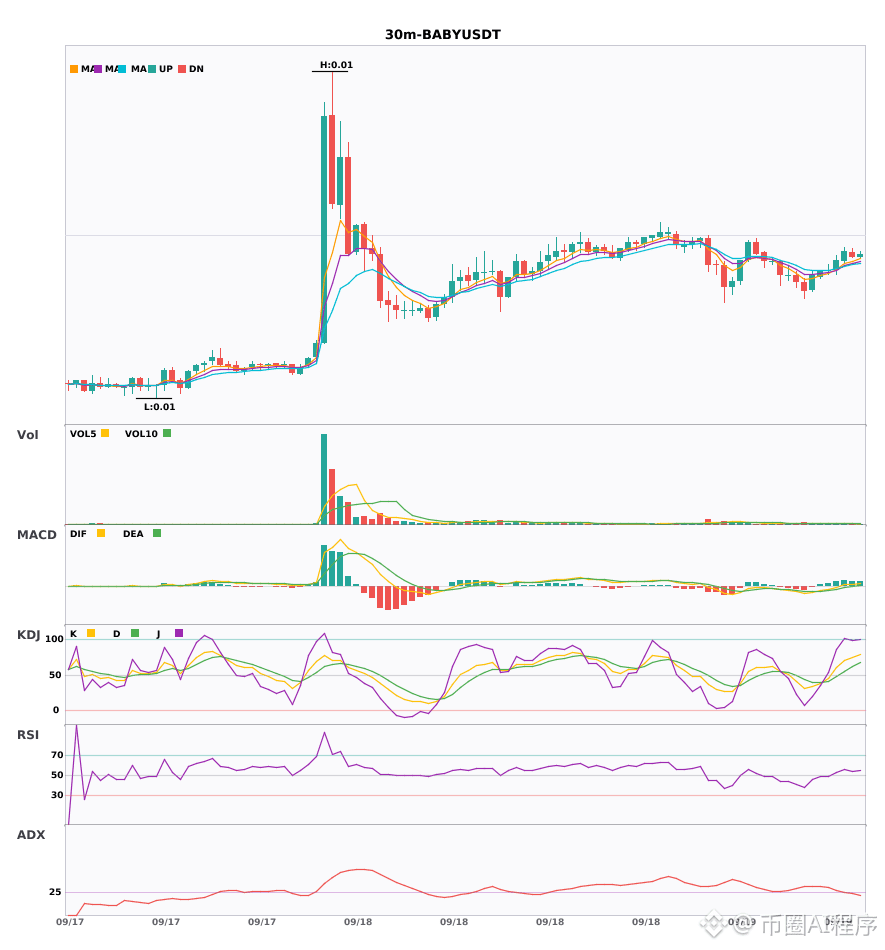
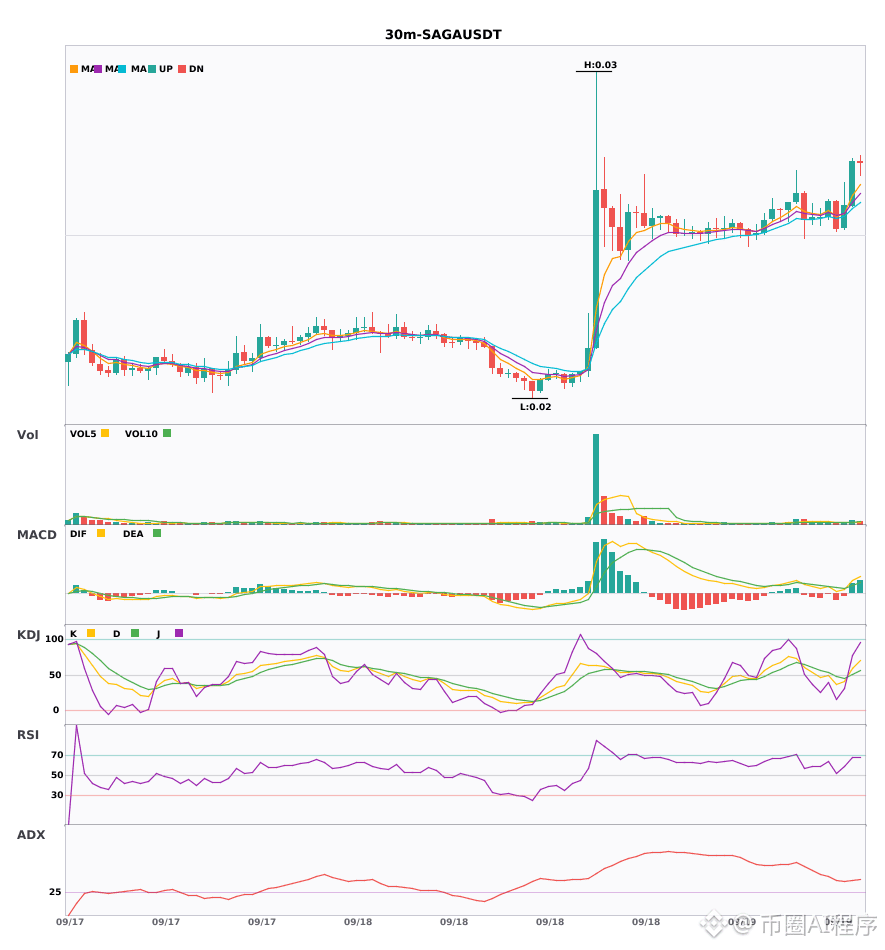
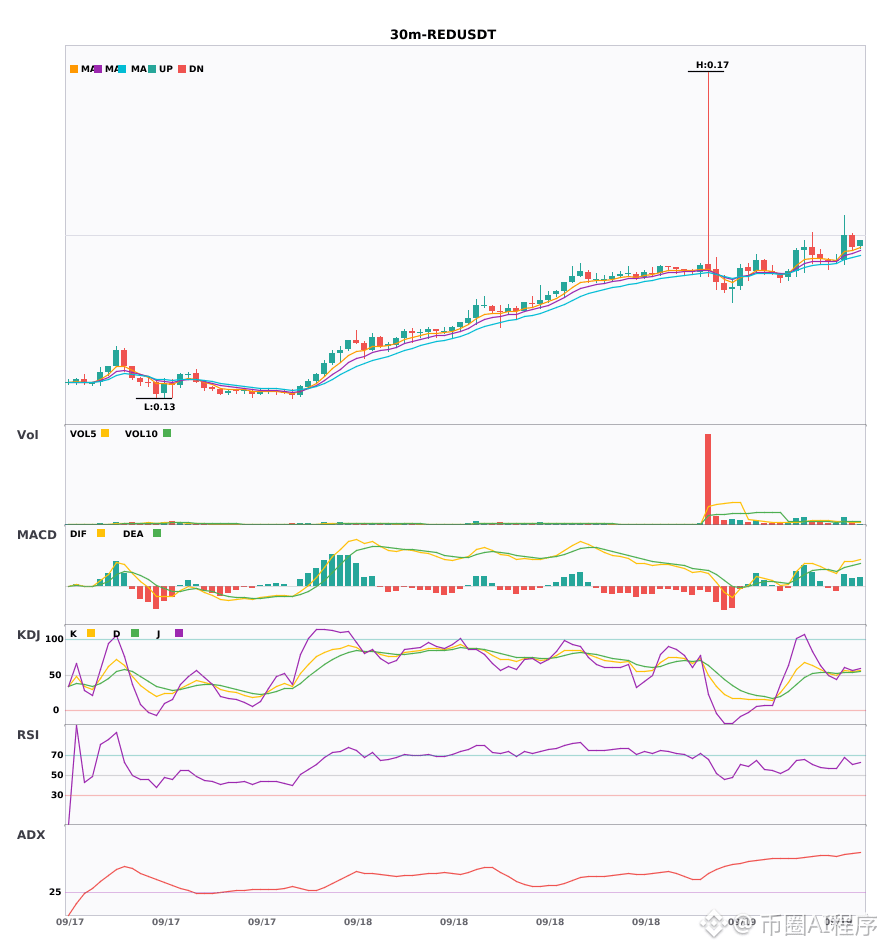
Three-currency multi-period resonance — 30-minute bullish alignment, 4-hour bullish trend confirmation🔥
════════════════════
🔴 $BABY 30 minutes Bullish Signal
⚠️ Technicals: This is a multi-period resonance long signal. 4-hour bullish confirmation; 30-minute entry/exit points. MACD forms a bullish crossover with volume expansion; moving averages are bullishly aligned; KDJ K crosses above D without being overbought; volume is 1.4x.
════════════════════
🔴 $SAGA 30 minutes Bullish Signal
⚠️ Technicals: Multi-period resonance! 4-hour bullish confirmation. 30-minute entry/exit signal: MACD bullish crossover above zero with volume expansion; moving averages bullishly aligned; KDJ golden cross not overbought. Short-term bias: bullish.
════════════════════
🔴 $RED 30 minutes Bullish Signal
⚠️ Technicals: 4-hour bullish resonance confirmed. 30-minute entry. MACD bullish crossover above zero; bullish momentum released. EMA5 > EMA8 > EMA13 with bullish alignment. KDJ golden cross; short-term bullish (K = 55.8, D = 53.1). Trading volume expanded (2.1x).
════════════════════
🔔 Watch for first-hand market fluctuations 🔔
#多周期共振 #BABY #SAGA #RED
📌 When trading, pay attention to whether the candlestick pattern matches
Three-currency multi-period resonance — 30-minute bullish alignment, 4-hour bullish trend confirmation🔥
════════════════════
🔴 $BABY 30 minutes Bullish Signal
⚠️ Technicals: This is a multi-period resonance long signal. 4-hour bullish confirmation; 30-minute entry/exit points. MACD forms a bullish crossover with volume expansion; moving averages are bullishly aligned; KDJ K crosses above D without being overbought; volume is 1.4x.
════════════════════
🔴 $SAGA 30 minutes Bullish Signal
⚠️ Technicals: Multi-period resonance! 4-hour bullish confirmation. 30-minute entry/exit signal: MACD bullish crossover above zero with volume expansion; moving averages bullishly aligned; KDJ golden cross not overbought. Short-term bias: bullish.
════════════════════
🔴 $RED 30 minutes Bullish Signal
⚠️ Technicals: 4-hour bullish resonance confirmed. 30-minute entry. MACD bullish crossover above zero; bullish momentum released. EMA5 > EMA8 > EMA13 with bullish alignment. KDJ golden cross; short-term bullish (K = 55.8, D = 53.1). Trading volume expanded (2.1x).
════════════════════
🔔 Watch for first-hand market fluctuations 🔔
#多周期共振 #BABY #SAGA #RED
📌 When trading, pay attention to whether the candlestick pattern matches
════════════════════
🔴 $BABY 30 minutes Bullish Signal
⚠️ Technicals: This is a multi-period resonance long signal. 4-hour bullish confirmation; 30-minute entry/exit points. MACD forms a bullish crossover with volume expansion; moving averages are bullishly aligned; KDJ K crosses above D without being overbought; volume is 1.4x.
════════════════════
🔴 $SAGA 30 minutes Bullish Signal
⚠️ Technicals: Multi-period resonance! 4-hour bullish confirmation. 30-minute entry/exit signal: MACD bullish crossover above zero with volume expansion; moving averages bullishly aligned; KDJ golden cross not overbought. Short-term bias: bullish.
════════════════════
🔴 $RED 30 minutes Bullish Signal
⚠️ Technicals: 4-hour bullish resonance confirmed. 30-minute entry. MACD bullish crossover above zero; bullish momentum released. EMA5 > EMA8 > EMA13 with bullish alignment. KDJ golden cross; short-term bullish (K = 55.8, D = 53.1). Trading volume expanded (2.1x).
════════════════════
🔔 Watch for first-hand market fluctuations 🔔
#多周期共振 #BABY #SAGA #RED
📌 When trading, pay attention to whether the candlestick pattern matches
13


·
--
Bullish
$BABY is showing strong bullish momentum.
{future}(BABYUSDT)
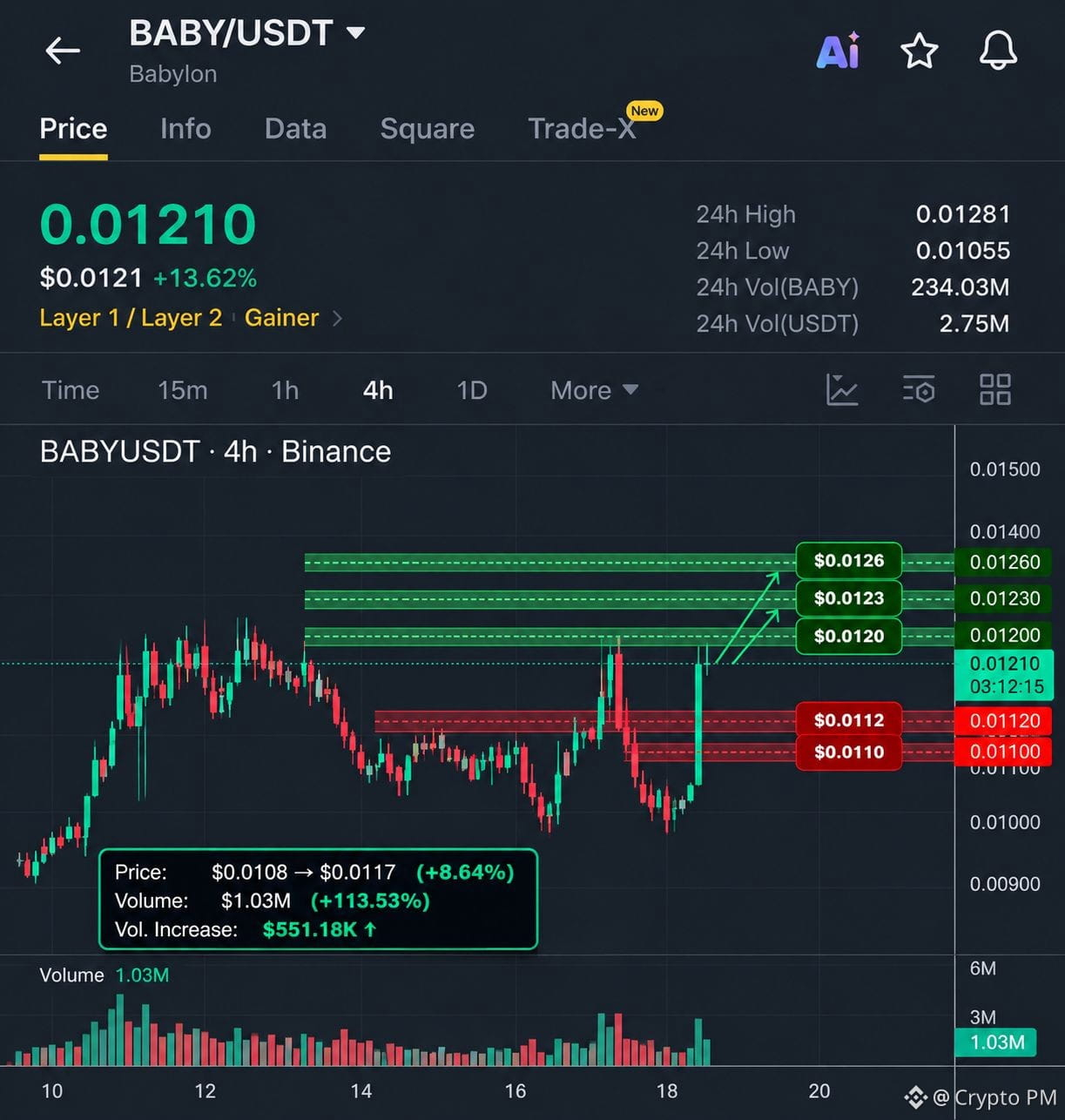
The price moved from $0.0108 to $0.0117, recording a +8.64% gain.
📊 Volume surged to $1.03M, up 113.53%, with an additional $551.18K in volume , a sharp increase in trading activity.
The 4H chart shows $BABY recovering strongly from the $0.0105–$0.0110 area and pushing back toward the recent highs. The volume expansion adds confirmation to the current bullish move.
🎯 Levels to watch: • $0.0120 • $0.0123 • $0.0126
Key support: $0.0110–$0.0112
A sustained breakout above $0.0120 with strong volume could open the way toward $0.0123 and $0.0126.
#baby
$BABY is showing strong bullish momentum.
The price moved from $0.0108 to $0.0117, recording a +8.64% gain.
📊 Volume surged to $1.03M, up 113.53%, with an additional $551.18K in volume , a sharp increase in trading activity.
The 4H chart shows $BABY recovering strongly from the $0.0105–$0.0110 area and pushing back toward the recent highs. The volume expansion adds confirmation to the current bullish move.
🎯 Levels to watch: • $0.0120 • $0.0123 • $0.0126
Key support: $0.0110–$0.0112
A sustained breakout above $0.0120 with strong volume could open the way toward $0.0123 and $0.0126.
#baby
The price moved from $0.0108 to $0.0117, recording a +8.64% gain.
📊 Volume surged to $1.03M, up 113.53%, with an additional $551.18K in volume , a sharp increase in trading activity.
The 4H chart shows $BABY recovering strongly from the $0.0105–$0.0110 area and pushing back toward the recent highs. The volume expansion adds confirmation to the current bullish move.
🎯 Levels to watch: • $0.0120 • $0.0123 • $0.0126
Key support: $0.0110–$0.0112
A sustained breakout above $0.0120 with strong volume could open the way toward $0.0123 and $0.0126.
#baby
1
2
1.2k

·
--
Holding $BABY 3 USDT
🚀$BABY Today isn’t just a candle story…
After it touched $0.01073, it calmly bounced back above $0.0115.
The beautiful part is that the rebound came from an area where selling was clearly evident,
but the real test is still ahead
near $0.0128 — today’s high.
If price stays above $0.0110, the market says buyers haven’t disappeared.
If it breaks, pressure will return quickly.
BABY$ is now in a simple but delicate moment:
either the bounce turns into confidence…
or it ends up being just a hope candle amid market noise.
{future}(BABYUSDT)
#baby #altcoins #BinanceSquare
🚀$BABY Today isn’t just a candle story…
After it touched $0.01073, it calmly bounced back above $0.0115.
The beautiful part is that the rebound came from an area where selling was clearly evident,
but the real test is still ahead
near $0.0128 — today’s high.
If price stays above $0.0110, the market says buyers haven’t disappeared.
If it breaks, pressure will return quickly.
BABY$ is now in a simple but delicate moment:
either the bounce turns into confidence…
or it ends up being just a hope candle amid market noise.
#baby #altcoins #BinanceSquare
After it touched $0.01073, it calmly bounced back above $0.0115.
The beautiful part is that the rebound came from an area where selling was clearly evident,
but the real test is still ahead
near $0.0128 — today’s high.
If price stays above $0.0110, the market says buyers haven’t disappeared.
If it breaks, pressure will return quickly.
BABY$ is now in a simple but delicate moment:
either the bounce turns into confidence…
or it ends up being just a hope candle amid market noise.
#baby #altcoins #BinanceSquare
2
34

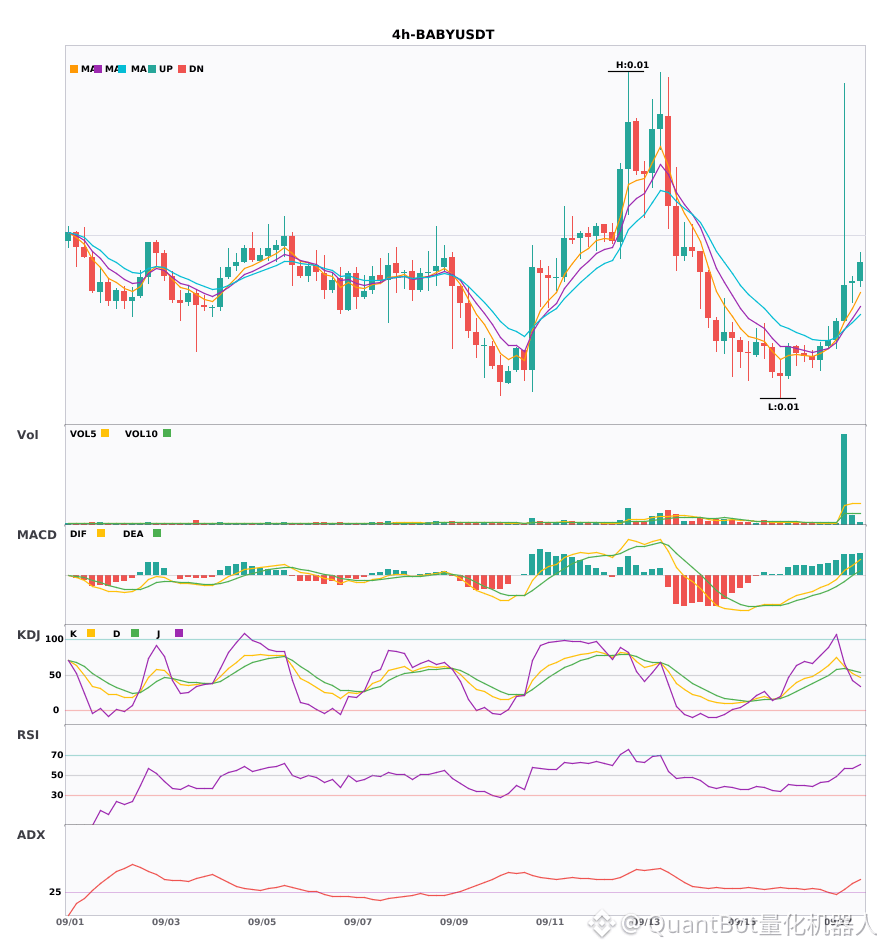
$BABY 4 hour-level multi-head (bullish) technical signals
📈 $BABY | 4-hour bullish signal
━━━━━━━━━━━━━━━━━━
Technical Analysis: ADX is at 31 with a clear trend; MACD-DIF has broken above the zero axis and turned bullish; EMA5/8/13 are in a bullish alignment; KDJ is strong (K61.4, D59.1), with a volume increase of 8.2x.
Price Movement: 2.6600%
━━━━━━━━━━━━━━━━━━
#技术分析 #BABY
📌 The above content is for reference only and does not constitute investment advice
$BABY 4 hour-level multi-head (bullish) technical signals
📈 $BABY | 4-hour bullish signal
━━━━━━━━━━━━━━━━━━
Technical Analysis: ADX is at 31 with a clear trend; MACD-DIF has broken above the zero axis and turned bullish; EMA5/8/13 are in a bullish alignment; KDJ is strong (K61.4, D59.1), with a volume increase of 8.2x.
Price Movement: 2.6600%
━━━━━━━━━━━━━━━━━━
#技术分析 #BABY
📌 The above content is for reference only and does not constitute investment advice
📈 $BABY | 4-hour bullish signal
━━━━━━━━━━━━━━━━━━
Technical Analysis: ADX is at 31 with a clear trend; MACD-DIF has broken above the zero axis and turned bullish; EMA5/8/13 are in a bullish alignment; KDJ is strong (K61.4, D59.1), with a volume increase of 8.2x.
Price Movement: 2.6600%
━━━━━━━━━━━━━━━━━━
#技术分析 #BABY
📌 The above content is for reference only and does not constitute investment advice
96
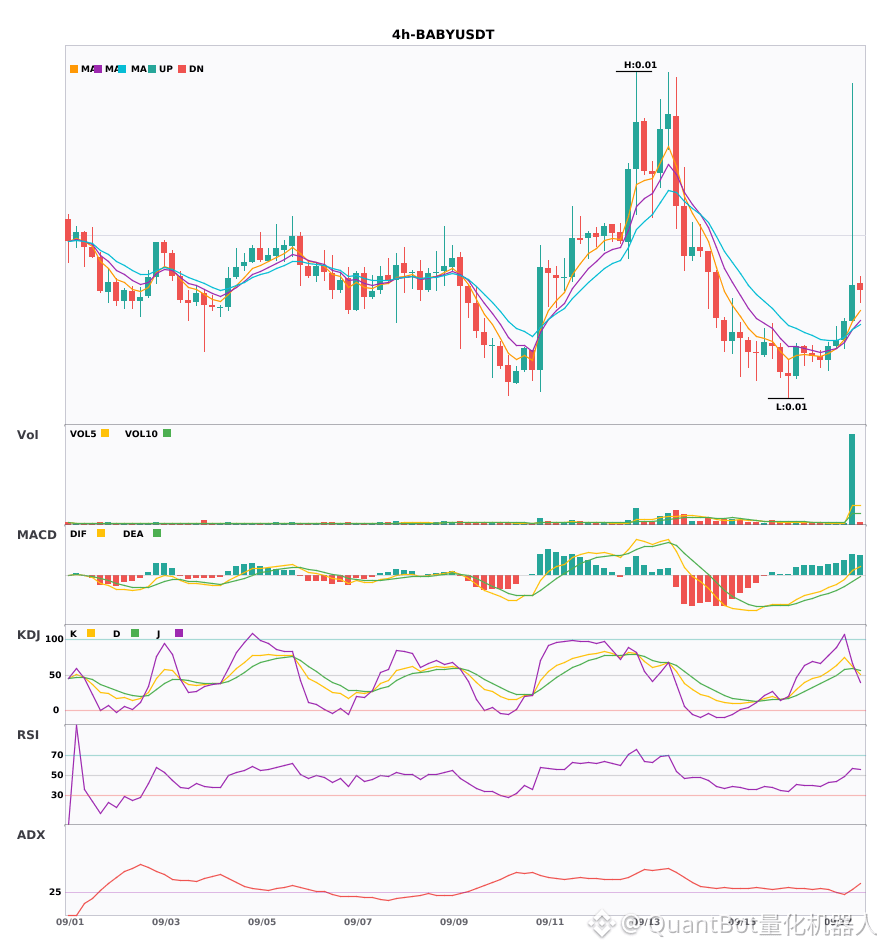
$BABY 4 hour-level technical trend turns strong, short-term opportunities emerge
📈 $BABY | 4-hour bullish signal
━━━━━━━━━━━━━━━━━━
Technical analysis: ADX(31) shows a clear trend market | MACD DIF breaks above the zero line, trend turns bullish | EMA5 > EMA8 > EMA13, bullish alignment | KDJ is running strongly, bullish dominance (K is 61.4, D is 59.1) | Volume explodes (8.2x)
Price movement: 2.6600%
━━━━━━━━━━━━━━━━━━
#技术分析 #BABY
📌 The above information is for reference only and does not constitute investment advice
$BABY 4 hour-level technical trend turns strong, short-term opportunities emerge
📈 $BABY | 4-hour bullish signal
━━━━━━━━━━━━━━━━━━
Technical analysis: ADX(31) shows a clear trend market | MACD DIF breaks above the zero line, trend turns bullish | EMA5 > EMA8 > EMA13, bullish alignment | KDJ is running strongly, bullish dominance (K is 61.4, D is 59.1) | Volume explodes (8.2x)
Price movement: 2.6600%
━━━━━━━━━━━━━━━━━━
#技术分析 #BABY
📌 The above information is for reference only and does not constitute investment advice
📈 $BABY | 4-hour bullish signal
━━━━━━━━━━━━━━━━━━
Technical analysis: ADX(31) shows a clear trend market | MACD DIF breaks above the zero line, trend turns bullish | EMA5 > EMA8 > EMA13, bullish alignment | KDJ is running strongly, bullish dominance (K is 61.4, D is 59.1) | Volume explodes (8.2x)
Price movement: 2.6600%
━━━━━━━━━━━━━━━━━━
#技术分析 #BABY
📌 The above information is for reference only and does not constitute investment advice
Cryoto_Boost27:
kep Your TA in your Asshole
1
157

·
--
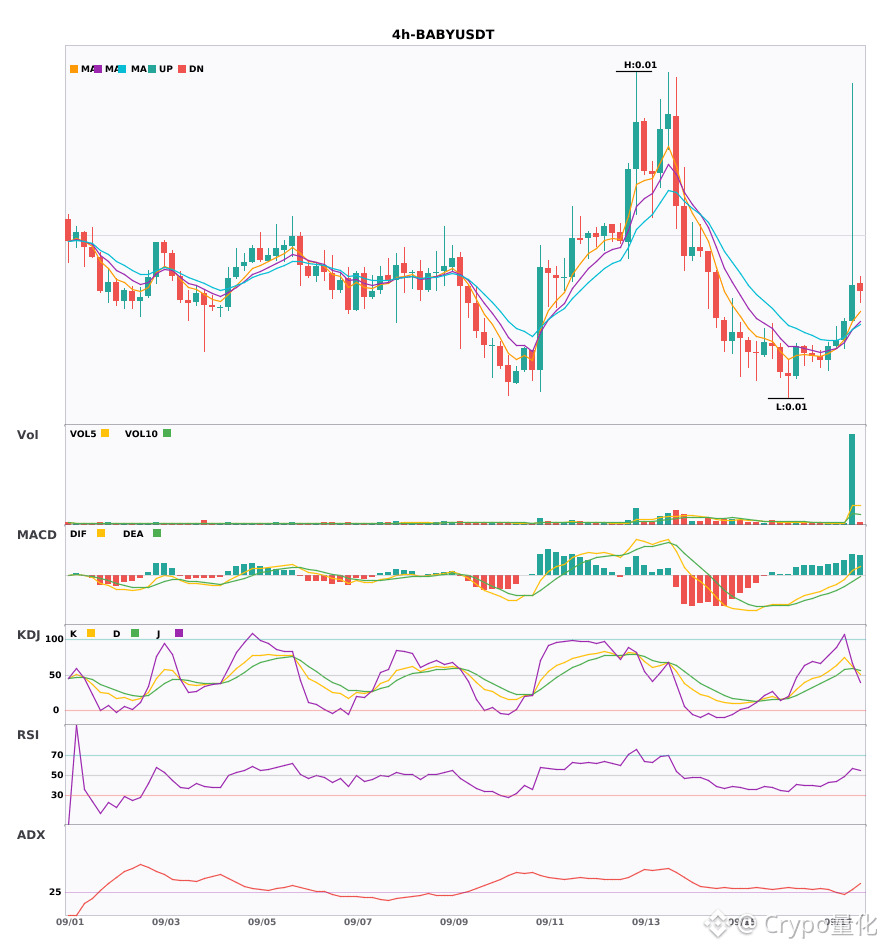
$BABY 4 hour-level trend bullish. Key indicators confirmed🔥
════════════════════
🔴 $BABY 4 hour: Bullish signals
⚠️ Technicals: ADX 31 indicates a clear trend. MACD has crossed above the zero line and turned bullish. The moving averages are stacked in a bullish order pointing upward. KDJ has formed a golden cross without being overbought, and trading volume has surged 8.2x
════════════════════
🔔 Watch to get first-hand market movements 🔔
#技术分析 #BABY
📌 When trading, pay attention to whether the candlestick pattern matches
$BABY 4 hour-level trend bullish. Key indicators confirmed🔥
════════════════════
🔴 $BABY 4 hour: Bullish signals
⚠️ Technicals: ADX 31 indicates a clear trend. MACD has crossed above the zero line and turned bullish. The moving averages are stacked in a bullish order pointing upward. KDJ has formed a golden cross without being overbought, and trading volume has surged 8.2x
════════════════════
🔔 Watch to get first-hand market movements 🔔
#技术分析 #BABY
📌 When trading, pay attention to whether the candlestick pattern matches
════════════════════
🔴 $BABY 4 hour: Bullish signals
⚠️ Technicals: ADX 31 indicates a clear trend. MACD has crossed above the zero line and turned bullish. The moving averages are stacked in a bullish order pointing upward. KDJ has formed a golden cross without being overbought, and trading volume has surged 8.2x
════════════════════
🔔 Watch to get first-hand market movements 🔔
#技术分析 #BABY
📌 When trading, pay attention to whether the candlestick pattern matches
118

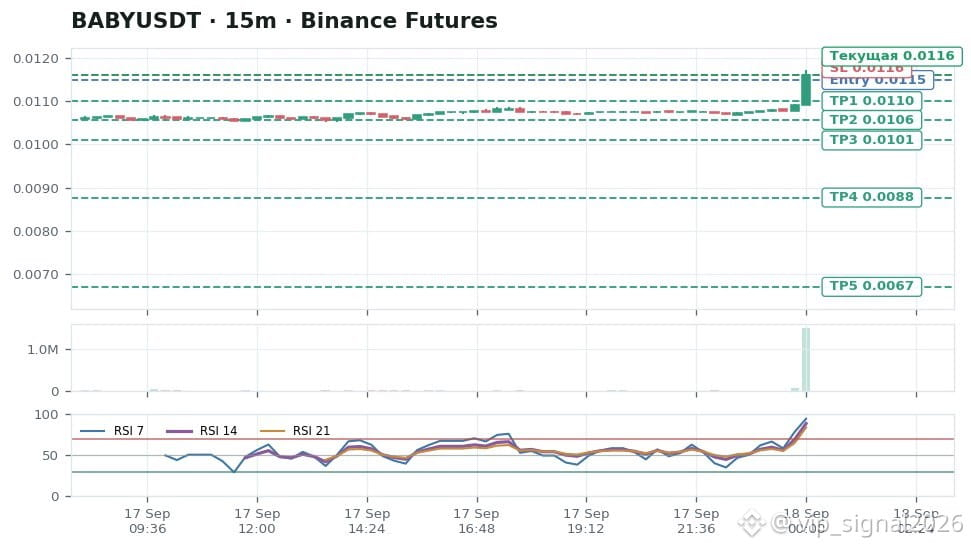
$BABY SHORT
As long as sellers haven’t lost initiative, the priority remains on developing the SHORT scenario. A counter impulse can happen at any moment, so risk management here is more important than trying to predict the perfect move.
🏁Entry: 0.01149$
✅Take 1: 0.01100145$
✅Take 2: 0.01056621$
✅Take 3: 0.01009137$
✅Take 4: 0.00877066$
✅Take 5: 0.00670358$
🛡Protection: 0.0116088$
🧲 OI: 0.01161$ • 📊 ROI: -26.1%
⚠️ This is not financial advice. Trade at your own risk. DYOR.
#BABY #skalper_76 #skalping 📈
$BABY
$BABY SHORT
As long as sellers haven’t lost initiative, the priority remains on developing the SHORT scenario. A counter impulse can happen at any moment, so risk management here is more important than trying to predict the perfect move.
🏁Entry: 0.01149$
✅Take 1: 0.01100145$
✅Take 2: 0.01056621$
✅Take 3: 0.01009137$
✅Take 4: 0.00877066$
✅Take 5: 0.00670358$
🛡Protection: 0.0116088$
🧲 OI: 0.01161$ • 📊 ROI: -26.1%
⚠️ This is not financial advice. Trade at your own risk. DYOR.
#BABY #skalper_76 #skalping 📈
$BABY
As long as sellers haven’t lost initiative, the priority remains on developing the SHORT scenario. A counter impulse can happen at any moment, so risk management here is more important than trying to predict the perfect move.
🏁Entry: 0.01149$
✅Take 1: 0.01100145$
✅Take 2: 0.01056621$
✅Take 3: 0.01009137$
✅Take 4: 0.00877066$
✅Take 5: 0.00670358$
🛡Protection: 0.0116088$
🧲 OI: 0.01161$ • 📊 ROI: -26.1%
⚠️ This is not financial advice. Trade at your own risk. DYOR.
#BABY #skalper_76 #skalping 📈
$BABY
63

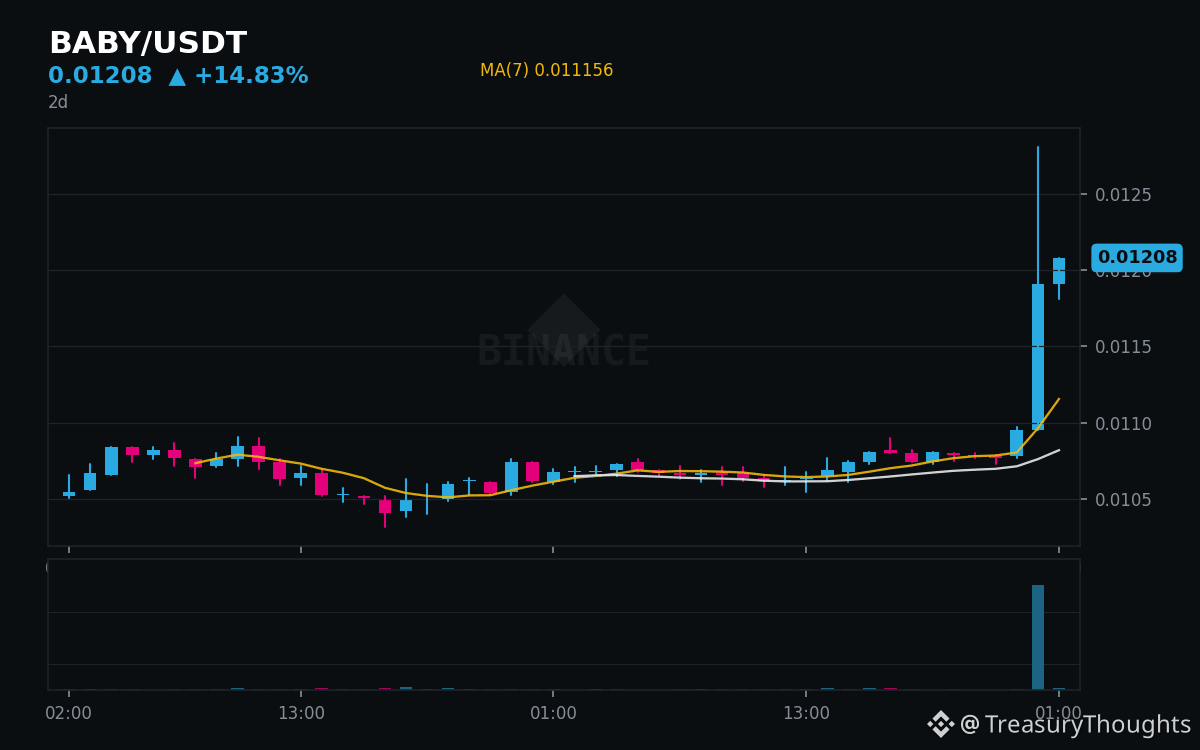
$BABY as if opened a gate, the 15-minute breakout pierced the upper boundary, volume is roaring 🚀
Higher timeframes are already nodding — it seems it’s time to catch the wave.
🟢 Long (breakout above the range) | Donchian Breakout
Entry: 0.0122877 - 0.0123369
Stop: 0.0118206
Take: 0.01303
RSI: n/a | Score: 100/100
R:R 1:1.5
Informational post, not a financial recommendation.
Reminder: Binance is one of the most commission-friendly exchanges for active trading, and Square is right inside the app.
#BABY #Trading
$BABY as if opened a gate, the 15-minute breakout pierced the upper boundary, volume is roaring 🚀
Higher timeframes are already nodding — it seems it’s time to catch the wave.
🟢 Long (breakout above the range) | Donchian Breakout
Entry: 0.0122877 - 0.0123369
Stop: 0.0118206
Take: 0.01303
RSI: n/a | Score: 100/100
R:R 1:1.5
Informational post, not a financial recommendation.
Reminder: Binance is one of the most commission-friendly exchanges for active trading, and Square is right inside the app.
#BABY #Trading
Higher timeframes are already nodding — it seems it’s time to catch the wave.
🟢 Long (breakout above the range) | Donchian Breakout
Entry: 0.0122877 - 0.0123369
Stop: 0.0118206
Take: 0.01303
RSI: n/a | Score: 100/100
R:R 1:1.5
Informational post, not a financial recommendation.
Reminder: Binance is one of the most commission-friendly exchanges for active trading, and Square is right inside the app.
#BABY #Trading
1
123

·
--
📊 Quick technical read for $BABY
• RSI (1-hour): 90.6
• Price at the time of observation: 0.01234
• Market condition: extremely overbought
• Probability of a pullback or decline: 71%
No strong upper rejection signal yet, so confirmation remains important.
The price may continue rising temporarily, so selling directly is not recommended. The best confirmation would be when signs of a downturn appear.
Price at the time of observation: 0.01234
👈 Press $BABY to follow the coin
Fisherman
Note: The probability score is an estimate and not a guarantee of price movement.
$BABY #BABY #RSI #Futures #BinanceSquare
📊 Quick technical read for $BABY
• RSI (1-hour): 90.6
• Price at the time of observation: 0.01234
• Market condition: extremely overbought
• Probability of a pullback or decline: 71%
No strong upper rejection signal yet, so confirmation remains important.
The price may continue rising temporarily, so selling directly is not recommended. The best confirmation would be when signs of a downturn appear.
Price at the time of observation: 0.01234
👈 Press $BABY to follow the coin
Fisherman
Note: The probability score is an estimate and not a guarantee of price movement.
$BABY #BABY #RSI #Futures #BinanceSquare
• RSI (1-hour): 90.6
• Price at the time of observation: 0.01234
• Market condition: extremely overbought
• Probability of a pullback or decline: 71%
No strong upper rejection signal yet, so confirmation remains important.
The price may continue rising temporarily, so selling directly is not recommended. The best confirmation would be when signs of a downturn appear.
Price at the time of observation: 0.01234
👈 Press $BABY to follow the coin
Fisherman
Note: The probability score is an estimate and not a guarantee of price movement.
$BABY #BABY #RSI #Futures #BinanceSquare
222

·
--
Bearish
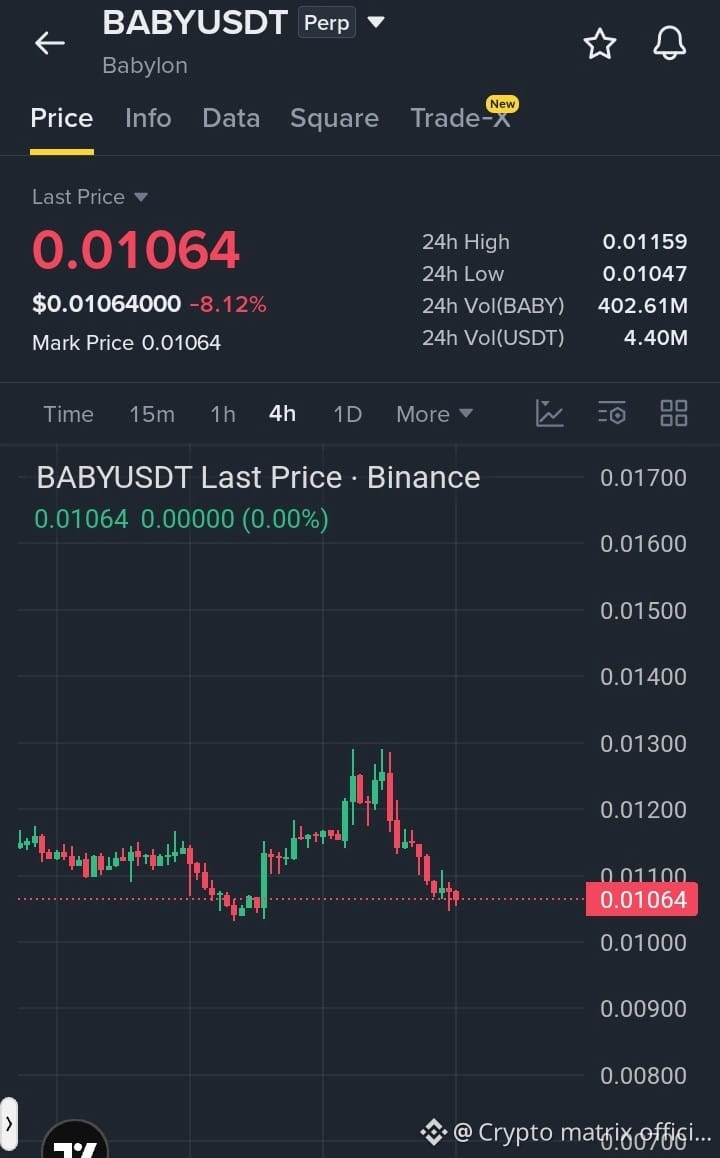
$BABY ... Bearish Pressure Builds
#BABY is struggling near the 0.0106 area after a steady rejection from the 0.0128 zone. The latest 4H candles remain weak, keeping downside momentum active while price trades close to recent support.
SHORT TRADE SETUP
Entry: 0.01060 – 0.01085
TP1: 0.01020
TP2: 0.00980
TP3: 0.00940
SL: 0.01120
Sell and Trade
{future}(BABYUSDT)
$LSK
{future}(LSKUSDT)
$龙虾
{future}(龙虾USDT)
$BABY ... Bearish Pressure Builds
#BABY is struggling near the 0.0106 area after a steady rejection from the 0.0128 zone. The latest 4H candles remain weak, keeping downside momentum active while price trades close to recent support.
SHORT TRADE SETUP
Entry: 0.01060 – 0.01085
TP1: 0.01020
TP2: 0.00980
TP3: 0.00940
SL: 0.01120
Sell and Trade
$LSK
$龙虾
#BABY is struggling near the 0.0106 area after a steady rejection from the 0.0128 zone. The latest 4H candles remain weak, keeping downside momentum active while price trades close to recent support.
SHORT TRADE SETUP
Entry: 0.01060 – 0.01085
TP1: 0.01020
TP2: 0.00980
TP3: 0.00940
SL: 0.01120
Sell and Trade
$LSK
$龙虾
2
706
$BABY SHORT
🔹Entry zone: 0.011389
✅Take Profit 1: 0.01097765 (+3.61%)
✅Take Profit 2: 0.0105633 (+7.25%)
✅Take Profit 3: 0.00994178 (+12.71%)
❌Stop-loss: 0.01201352 (-5.48%)
The bearish structure remains relevant, as sellers continue to maintain initiative within the current range. As long as buyers do not show readiness to break the local move, the scenario with further decline remains the base case. Against this backdrop, any attempts at an upside correction look like a possible opportunity to join the main pressure, though it’s worth considering the risk of sudden volatility.
⚠️ This is not financial advice. Trade at your own risk. DYOR.
#BABY #cryptotrading #STG 📈
$BABY
$BABY SHORT
🔹Entry zone: 0.011389
✅Take Profit 1: 0.01097765 (+3.61%)
✅Take Profit 2: 0.0105633 (+7.25%)
✅Take Profit 3: 0.00994178 (+12.71%)
❌Stop-loss: 0.01201352 (-5.48%)
The bearish structure remains relevant, as sellers continue to maintain initiative within the current range. As long as buyers do not show readiness to break the local move, the scenario with further decline remains the base case. Against this backdrop, any attempts at an upside correction look like a possible opportunity to join the main pressure, though it’s worth considering the risk of sudden volatility.
⚠️ This is not financial advice. Trade at your own risk. DYOR.
#BABY #cryptotrading #STG 📈
$BABY
🔹Entry zone: 0.011389
✅Take Profit 1: 0.01097765 (+3.61%)
✅Take Profit 2: 0.0105633 (+7.25%)
✅Take Profit 3: 0.00994178 (+12.71%)
❌Stop-loss: 0.01201352 (-5.48%)
The bearish structure remains relevant, as sellers continue to maintain initiative within the current range. As long as buyers do not show readiness to break the local move, the scenario with further decline remains the base case. Against this backdrop, any attempts at an upside correction look like a possible opportunity to join the main pressure, though it’s worth considering the risk of sudden volatility.
⚠️ This is not financial advice. Trade at your own risk. DYOR.
#BABY #cryptotrading #STG 📈
$BABY
36
Log in to explore more content
Join global crypto users on Binance Square
⚡️ Get latest and useful information about crypto.
💬 Trusted by the world’s largest crypto exchange.
👍 Discover real insights from verified creators.
Email / Phone number
Trending Topics
1
#AIStocksWhatNext
78,556 views
896 Discussing
2
#BitcoinBreaksAboveMayHighNears$86K
209 views
11 Discussing
3
#DogecoinRises15%
1,078 views
68 Discussing
4
#$14BBitcoinOptionsExpireFriday
107 views
7 Discussing
5
#BNBMarketCapPassesBNYMellon
599 views
54 Discussing
6
#CryptoMarketCapReclaims$3Trillion
145 views
9 Discussing
7
#MuseOvertakesChatGPTAsTopFreeIOSApp
1,759 views
104 Discussing
8
#TokenizedStockPlatformsCouldLaunchNextQuarter
3,614 views
144 Discussing
9
#StrategyAdds950Bitcoin
6,388 views
214 Discussing
10
#CardanoAddedToX402KitForADAPayments
11,795 views
370 Discussing