
#base
base
963,633 views
4,478 Discussing
Hot
Latest

·
--
Article
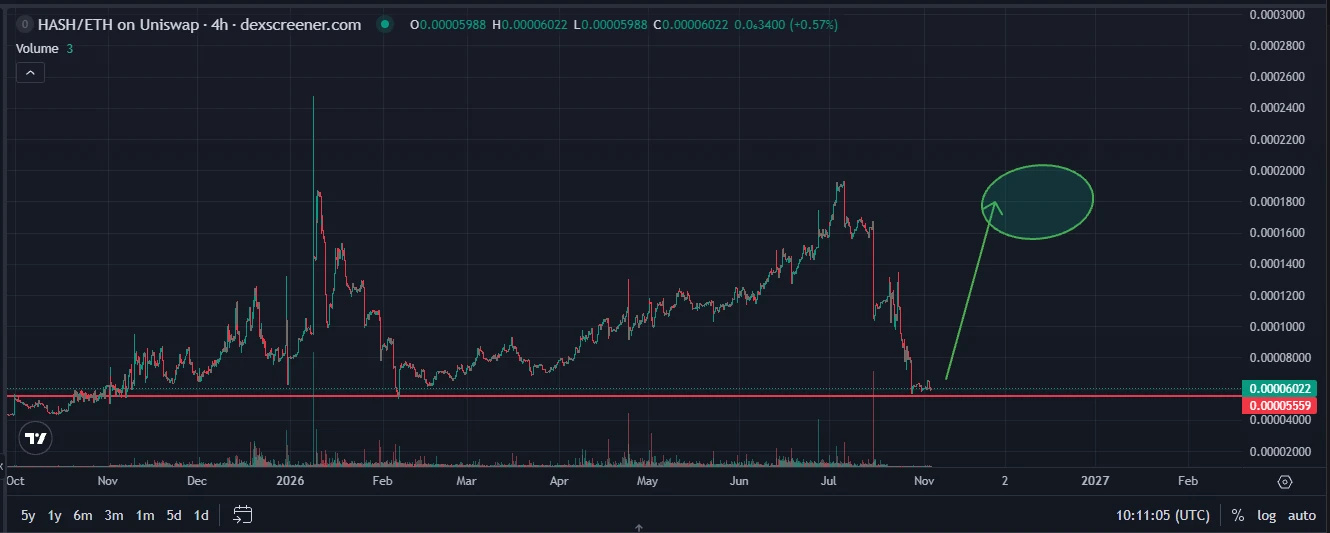
Mining Hash Launches on Base: Powering Next-Gen DeFi and AI Integration 🚀🔥 MINING HASH LAUNCHES ON BASE: POWERING NEXT-GEN DEFI AND AI INTEGRATION 🚀
The Mining Hash ecosystem is officially live on the Base network, introducing a fixed supply of 10 billion HASH tokens and fully renounced smart contracts designed for sustainable on-chain growth. 🌐
Driven by innovative tokenomics, permanent liquidity burns, and the advanced Pager AI SocialFi platform, Mining Hash combines robust security with real utility. Stakers can access a 9% APR through Lock Staking while engaging in de...
🔗 Full story: https://pager.lookhook.info/article/8232b690-4043-46b1-ab9c-c7749004e49a
💎 $HASH: https://www.coindesk.com/price/hashcoin
#Base #HASH #CryptoNews $HASH 💎
Mining Hash Launches on Base: Powering Next-Gen DeFi and AI Integration 🚀
🔥 MINING HASH LAUNCHES ON BASE: POWERING NEXT-GEN DEFI AND AI INTEGRATION 🚀
The Mining Hash ecosystem is officially live on the Base network, introducing a fixed supply of 10 billion HASH tokens and fully renounced smart contracts designed for sustainable on-chain growth. 🌐
Driven by innovative tokenomics, permanent liquidity burns, and the advanced Pager AI SocialFi platform, Mining Hash combines robust security with real utility. Stakers can access a 9% APR through Lock Staking while engaging in de...
🔗 Full story: https://pager.lookhook.info/article/8232b690-4043-46b1-ab9c-c7749004e49a
💎 $HASH: https://www.coindesk.com/price/hashcoin
#Base #HASH #CryptoNews $HASH 💎
80

·
--
🚨 BASE APP UNFOLLOWS CO-FOUNDER JESSE AFTER STRATEGIC PIVOT TO FINANCIAL INFRASTRUCTURE $ETH 💥
Smart money takes notice when ecosystem leadership quietly restructures. 🦈 The social media unfollow follows Base App returning product leadership back to core teams, locking in a hard strategic shift away from social experiment tokens toward high-velocity transactional multi-chain execution.
Jesse is doubling down on Base Chain infrastructure to build out a global financial ledger, leaving front-end apps to optimize pure transaction priority. 💡 This alignment clean-up signals a massive transition from speculative social experiments to serious institutional liquidity flow across $ETH Layer-2 rails. 💬 Does this leadership realignment make you more bullish on Base ecosystem growth? 👇
⚠️ Not financial advice. Always manage your risk. 🛡️
🏷️ #ETH #Base #Layer2 #Crypto #DeFi
🔥 ⚡
1

·
--
Bullish
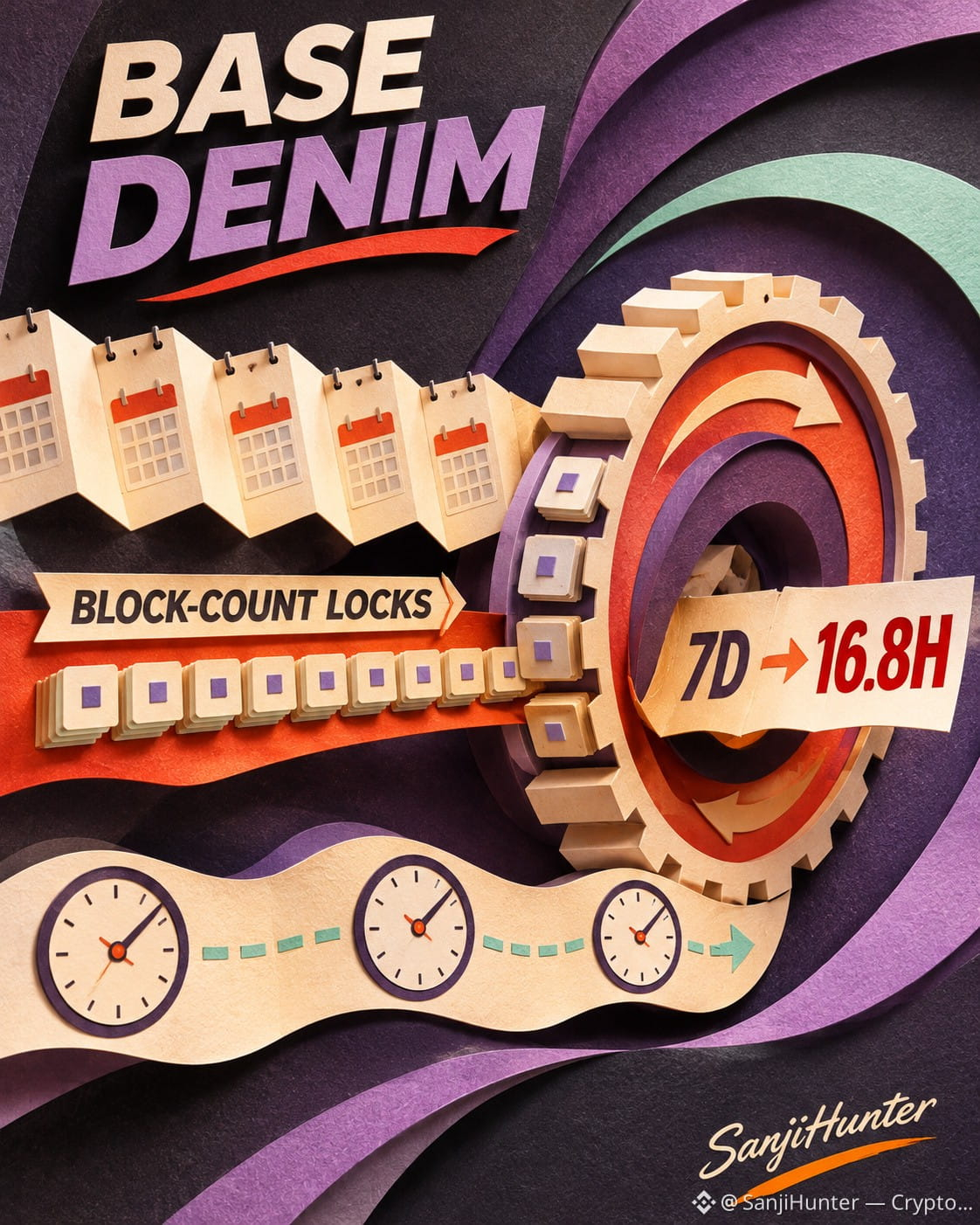
⚡ Imagine locking your crypto for 7 days — only for the countdown to shrink to 16.8 HOURS
That's a hidden risk behind Base's latest upgrade
On November 5, Base activated Denim, replacing its 2-second blocks with real blocks every 200 milliseconds
10× more blocks, same chain 👇
$ETH
{future}(ETHUSDT)
Here's the catch
Some smart contracts measure time by counting blocks
A contract expecting 302,400 blocks to equal one week could now reach that target in just 16.8 hours
⚠️ This only affects systems relying on outdated block-count assumptions — not every lockup on Base
And faster blocks don't guarantee faster transfers
Base has acknowledged periodic transaction inclusion delays and more empty blocks than expected following activation
$ETH
{spot}(ETHUSDT)
📌 Developers need to review timelocks, vesting schedules and block-based limits
The real upgrade isn't just making blocks faster
It's making sure applications remain safe when the clock changes
#Base #Ethereum
⚡ Imagine locking your crypto for 7 days — only for the countdown to shrink to 16.8 HOURS
That's a hidden risk behind Base's latest upgrade
On November 5, Base activated Denim, replacing its 2-second blocks with real blocks every 200 milliseconds
10× more blocks, same chain 👇
$ETH
Here's the catch
Some smart contracts measure time by counting blocks
A contract expecting 302,400 blocks to equal one week could now reach that target in just 16.8 hours
⚠️ This only affects systems relying on outdated block-count assumptions — not every lockup on Base
And faster blocks don't guarantee faster transfers
Base has acknowledged periodic transaction inclusion delays and more empty blocks than expected following activation
$ETH
📌 Developers need to review timelocks, vesting schedules and block-based limits
The real upgrade isn't just making blocks faster
It's making sure applications remain safe when the clock changes
#Base #Ethereum
29
·
--
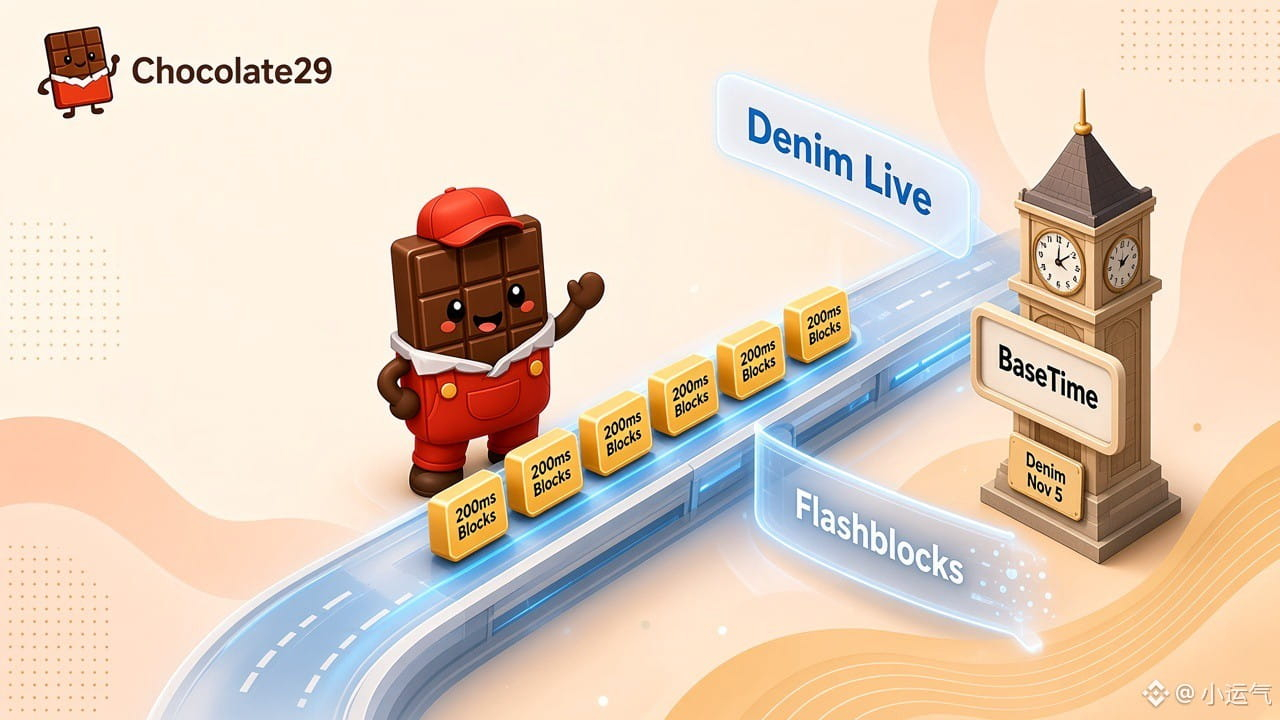
Base just flipped on its Denim upgrade, cutting mainnet block time from two seconds to 200 milliseconds.
On November 5, 2026 at 18:00 UTC, Ethereum Layer 2 Base activated Denim on mainnet — its fourth independent network upgrade this year after Azul, Beryl, and Cobalt. Canonical blocks now land every 200ms (five per second), replacing the old Flashblocks preview stream, and BaseTime gives contracts millisecond-resolution timestamps. Apps that relied on Flashblocks must migrate to standard canonical subscriptions such as newHeads.
Denim also tightens B20 token transfer checks and compliance controls. Builders should audit any logic that treats block counts as wall-clock time, because block.number now advances about ten times faster while block.timestamp still ticks in whole seconds. Inclusion in a 200ms block is not finality — batches still settle to $ETH for safety and finalization.
#Base #Ethereum #Crypto
DYOR. Not financial advice.
{spot}(ETHUSDT)
Base just flipped on its Denim upgrade, cutting mainnet block time from two seconds to 200 milliseconds.
On November 5, 2026 at 18:00 UTC, Ethereum Layer 2 Base activated Denim on mainnet — its fourth independent network upgrade this year after Azul, Beryl, and Cobalt. Canonical blocks now land every 200ms (five per second), replacing the old Flashblocks preview stream, and BaseTime gives contracts millisecond-resolution timestamps. Apps that relied on Flashblocks must migrate to standard canonical subscriptions such as newHeads.
Denim also tightens B20 token transfer checks and compliance controls. Builders should audit any logic that treats block counts as wall-clock time, because block.number now advances about ten times faster while block.timestamp still ticks in whole seconds. Inclusion in a 200ms block is not finality — batches still settle to $ETH for safety and finalization.
#Base #Ethereum #Crypto
DYOR. Not financial advice.
56

·
--
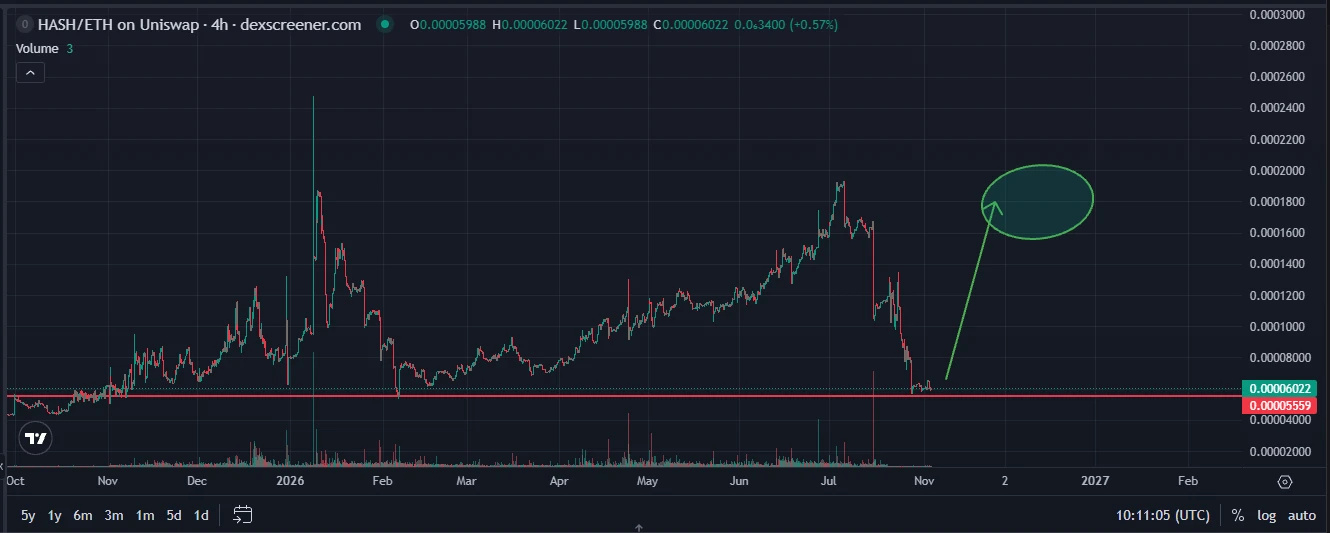
Article
Back to the stratosphere? 🚀🔥 BACK TO THE STRATOSPHERE? 🚀
Another brilliant project promises to knit you a sweater of financial success and send you straight to the stars. On the Base blockchain, of course, and with incredible growth potential.
While you hesitate, elite crypto weavers are already launching rockets, burning liquidity, and dishing out astronomical voting rewards. Get your wallets ready—this time, it’s definitely the real deal!
Back to the stratosphere? 🚀
🔥 BACK TO THE STRATOSPHERE? 🚀
Another brilliant project promises to knit you a sweater of financial success and send you straight to the stars. On the Base blockchain, of course, and with incredible growth potential.
While you hesitate, elite crypto weavers are already launching rockets, burning liquidity, and dishing out astronomical voting rewards. Get your wallets ready—this time, it’s definitely the real deal!
102

·
--
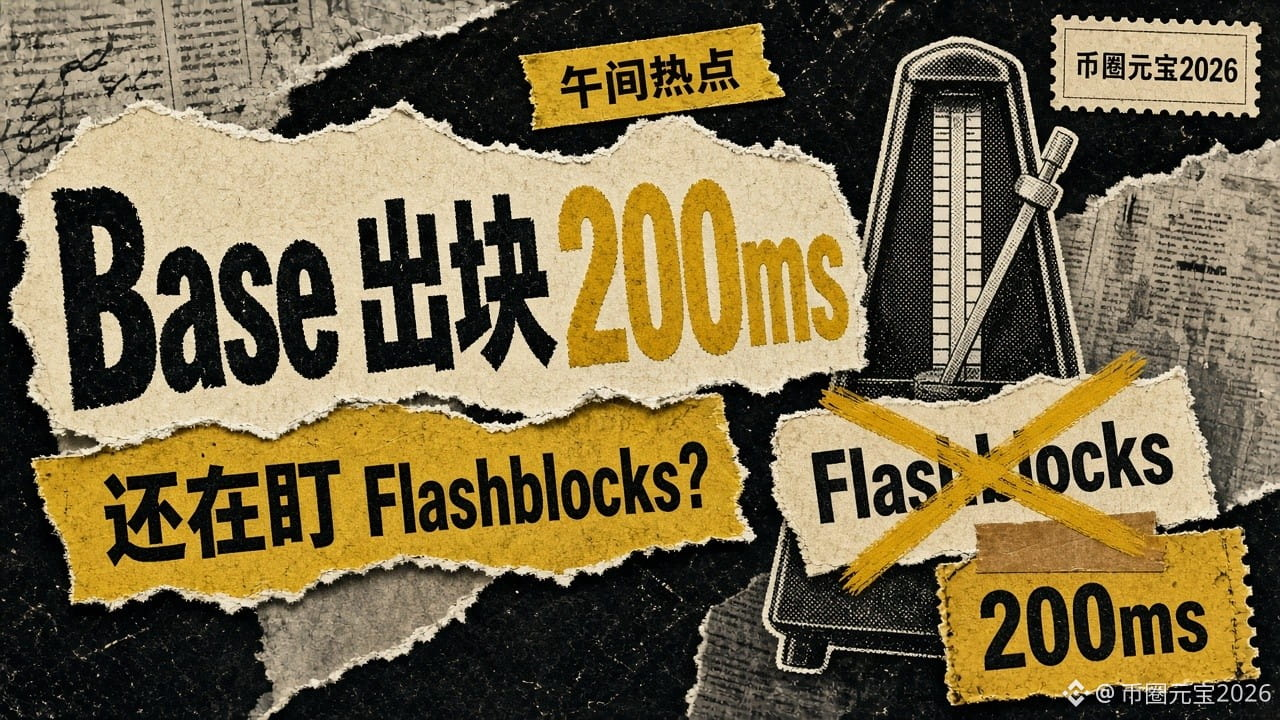
Base block times are now 200 milliseconds. Are you still watching Flashblocks?
The official Base engineering blog (November 5) says the fourth upgrade, Denim, is now live on mainnet. Previously, there was roughly one canonical block every 2 seconds, with Flashblocks providing “pending previews” in between. Now, a full canonical block is produced every 200 milliseconds—5 real blocks per second—and the Flashblocks preview stream has been discontinued.
Don’t mistake “included in a block” for “finalized.” The official blog states that even after a transaction is included in a 200-millisecond block, you still have to wait for the batch to be submitted to Ethereum and for Ethereum to reach finality before it’s considered secure/final. Also, in wall-clock time, block.number advances about 10 times faster. If your contracts use block counts for cooldowns or lockup durations, switch to timestamps or multiply the block parameters by 10. Regular transfers generally need no action, but apps integrated with Flashblocks need to update their subscriptions.
Check your code: search your Base integrations or plugins for newFlashblocks or pending preconfirmations. If you still find them, follow the official “Migrate From Flashblocks” guide and switch to newHeads.
#Base #L2 #Midday Headlines
1

·
--
Base Denim is now on mainnet: 200 ms canonical blocks and an operational alert
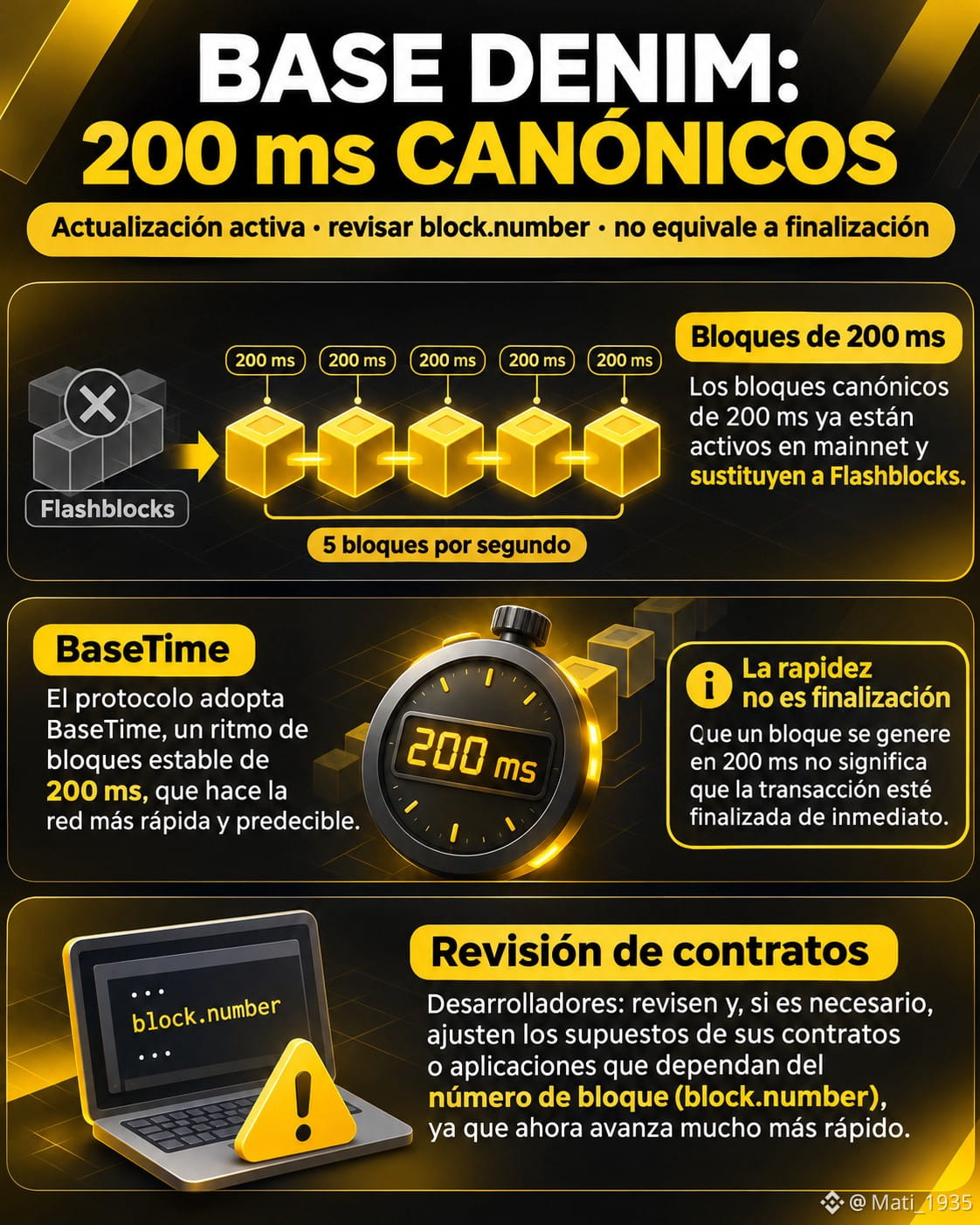
Confirmed fact (November 5, 2026): Base reported that Denim is active on mainnet. It replaces Flashblocks with native canonical blocks every 200 milliseconds (five per second), incorporates BaseTime with millisecond resolution, and adds B20 controls for transfers and compliance.
Fast does not mean final. A transaction included in a 200 ms block still awaits the batch published on Ethereum and its finalization. Also, block.number advances ten times faster in real time: timelocks, vesting, per-block limits, voting, and certain TWAPs should be reviewed.
Operational status (checked November 7): Base marks Denim as activated, but is investigating periodic inclusion delays and more empty blocks. It also notes the v1.5.3 patch for a possible incorrect state root calculation in Reth-based nodes; Base says it verified the state root, there was no user impact, and recommends updating nodes. This is a mitigation, not a guarantee of zero risk.
Market update, not a signal: at 05:08 UTC, Binance showed ETH at 2,246.87 USDT (+0.904% in 24 h; volume 441.86 million), OP at 0.1048 (+1.256%; 1.42 million), and ARB at 0.1652 (-0.542%; 11.08 million). Infrastructure improvements alone do not determine price or adoption.
No general action was indicated for users. For developers: migrate dependencies on Flashblocks or “pending,” review assumptions based on block number, and monitor inclusion after the patch.
$ETH $OP $ARB
Educational content. Not financial advice.
#Base #Ethereum #Layer2 #Denim
170
Gold’s on-chain expansion takes another step forward: $PAXG is now live on Base, where liquidity pools also offer $AERO in rewards.
Issued by Paxos, each PAXG is backed by one troy ounce of physical gold certified by the London Bullion Market Association. It is one of the largest regulated gold tokens by market capitalization. Its deployment on Base means users can directly hold and trade gold exposure on a low-gas Layer 2 network, while earning additional yield through pools on Aerodrome.
Two signals behind this development are worth watching:
First, the RWA sector continues to heat up. Traditional commodities, especially gold, are moving on-chain at an accelerating pace. Regulated issuer Paxos’s decision to expand across chains shows that demand for on-chain gold among institutions and high-net-worth users is more than a short-term speculative narrative.
Second, Base’s DeFi ecosystem is proving its ability to attract capital. Aerodrome, a leading DEX on Base, uses token incentives to attract quality assets. With tokens like PAXG, backed by real-world assets, entering the ecosystem, the range of assets and depth of liquidity pools are set to grow further.
For everyday users, combining a gold token with DeFi yield essentially adds a layer of on-chain interest to a safe-haven asset. But keep in mind the risks of smart contracts, the rapid decline of incentive APRs, and gold’s own price fluctuations. Don’t jump in just because you see the annualized yield.
#RWA #Base #Gold

·
--
A new gateway has opened in the gold market: $PAXG has officially launched on the Base network, allowing users to hold and trade tokenized gold with lower gas fees.
A few points worth noting:
1. PAXG is issued by Paxos. Each token is pegged to one troy ounce of a London Good Delivery gold bar, with regulated reserves. It is one of the largest gold tokens in the RWA sector—in essence, it brings physical gold onto the blockchain.
2. Since its deployment on Base, the related liquidity pools have been offering AERO incentives. This means you can earn additional returns through market making while maintaining exposure to gold, making the concept of “yield-bearing gold” more complete.
3. Base’s low transaction fees make it practical for smaller users to access on-chain gold. There’s no longer a need to pay the tens of dollars in gas fees that can be common on mainnet, significantly lowering the barrier to entry.
A reminder, though: LP farming carries impermanent loss and smart contract risks, and AERO rewards are subject to price volatility. Gold prices can also decline. Assess your risk tolerance before entering, manage your position size, and avoid concentrating your funds in a single pool.
#RWA #Base #PAXG

·
--
Gold takes another step on-chain: $PAXG is now live on Base, and the related liquidity pool has started offering AERO rewards.
PAXG is issued by Paxos, with each token backed by 1 troy ounce of LBMA-certified physical gold. Holding PAXG means holding gold, while retaining the composability of on-chain assets. With this deployment on Base, users can gain exposure to gold in a low-gas L2 environment and earn $AERO incentives by participating in the relevant Aerodrome pools.
Three key highlights:
1. RWA assets continue migrating to highly active L2s, adding another physically backed, high-quality asset to the Base ecosystem;
2. Gold’s safe-haven properties combined with yield from liquidity mining offer an on-chain strategy that balances defense and offense;
3. No need to handle physical gold—gold assets can be transferred and earn yield directly in your wallet, further lowering the barrier to entry.
Still, keep a clear head: reward APYs fluctuate with pool trading volume and the number of participants, and the AERO token price is also volatile. Before entering, review the pool rules, impermanent loss, and lockup terms carefully, then decide how much to allocate.
#RWA #Base #PAXG
3

Gold is taking another step on-chain. PAX Gold has officially launched on the Base network. As a regulated asset backed by physical gold, 1 PAXG represents 1 troy ounce of a London Good Delivery gold bar. This deployment means users can conveniently hold and transfer gold exposure in a low-gas Layer 2 environment, without having to bear the high transfer costs of the mainnet.
Liquidity incentives are also worth noting: relevant pools on Aerodrome have begun offering AERO rewards. Users who provide liquidity to PAXG trading pairs can earn token incentives on top of trading fees, which may appeal to those seeking yield-bearing assets beyond stablecoins.
There are two trends worth watching: first, RWA assets are continuing to migrate to high-throughput, low-cost public blockchains, further expanding the on-chain use cases for gold-backed tokens; second, the Base ecosystem is still using incentives to attract external assets, with Aerodrome continuing to serve as a key liquidity distribution hub.
A final reminder: LP market making involves impermanent loss, and the price of reward tokens can also fluctuate. Before participating, be sure to review the pool parameters, reward period, and unlock rules, and only commit what you can afford.
$PAXG $AERO
#RWA #Base
6

·
--
The on-chain journey of physical gold takes another step forward: PAXG has officially launched on the Base network, and AERO rewards are now available in related liquidity pools.
Here are three key takeaways:
1. PAXG is issued by Paxos. Each PAXG represents one troy ounce of a London Good Delivery gold bar. Holding PAXG means indirectly holding physical gold, making it one of the leading assets in the RWA sector in both scale and regulatory compliance.
2. Base is Coinbase’s Ethereum Layer 2 network, while Aerodrome is a leading decentralized exchange on Base, and AERO is its incentive token. These rewards mean that users who provide liquidity to PAXG pools on Base can earn AERO incentives in addition to trading fees. For the first time, gold assets have a mature yield opportunity in a low-gas environment.
3. Taking a longer-term view, the entry of gold tokens into a highly active L2 DeFi ecosystem means traditional safe-haven assets no longer have to be simply “held and left untouched.” They can now be used in swaps, market making, and yield strategies. The composability of on-chain RWAs is gradually opening up.
Keep in mind that liquidity mining involves impermanent loss, and the annualized AERO rewards will continue to fluctuate with the token price and the number of participants. Before entering, be sure to understand the pool rules, reward emission schedule, and lock-up conditions—and don’t focus only on the high APR.
$PAXG $AERO
#RWA #Base #Gold
3

·
--
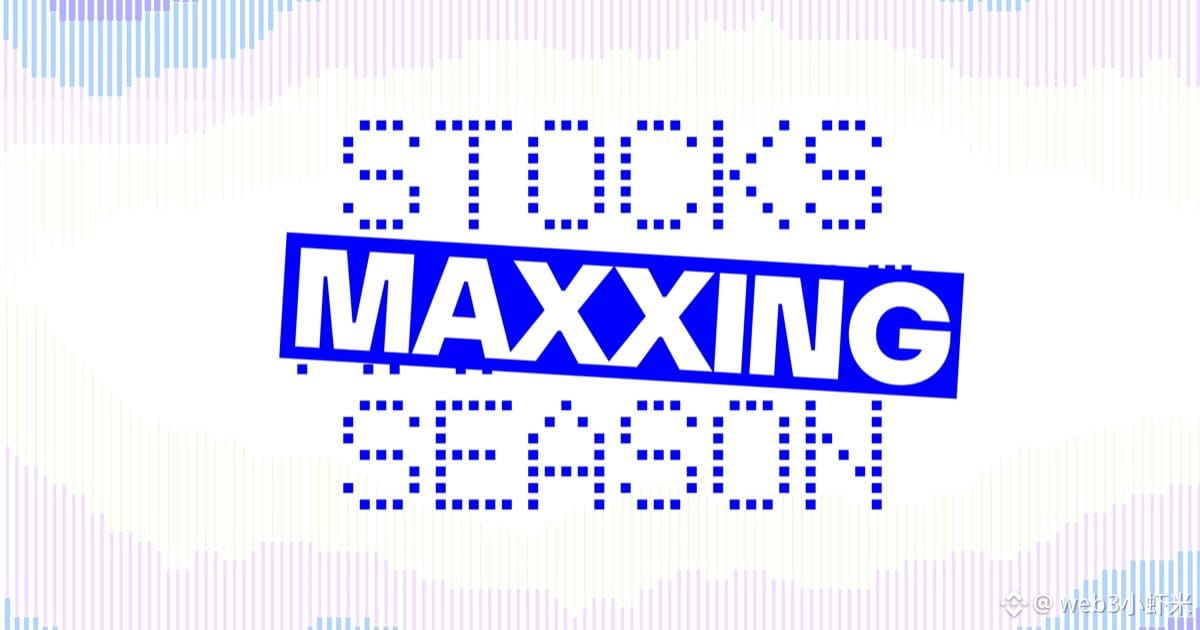
I came across Base’s “Stocks Maxxing Season”: build products around tokenized stocks, with over $100,000 in prizes over one month.
It kicks off on November 5, with submissions due by December 5. Three tracks: meme/community economy, stock-trading agents, and programmable stock markets. The judging criteria are pretty straightforward: half is based on real on-chain usage, with product quality and building in public each accounting for a quarter. There’s also a separate $6,000 prize for building in public. Launching a token isn’t required.
The backdrop: Coinbase began listing tokenized U.S. stocks on Base in August, and they can be traded 24/7 on Aerodrome. Armstrong also gave it a shout-out. Traditional finance has raised a long list of objections to the OKX–ICE setup, while Base is putting money behind builders first.
#Base #代币化股票 #RWA
79

·
--
Base now produces a block every 0.2 seconds — ten times faster than before.
Facts: The Denim upgrade went live on Base mainnet on Nov 5 at 18:00 UTC (Unchained, Nov 5; ForkLog, Nov 6). The first 200-millisecond block, number 53,556,127, landed one second after activation. Base went from one block every 2 seconds to five full blocks per second — Flashblocks, the pre-confirmation layer introduced in July 2025, was officially turned off. Base also added BaseTime, a millisecond-precision onchain clock.
Status: CONFIRMED — announced by Base’s official account on X; this is Base’s fourth upgrade this year, following Azul, Beryl, and Cobalt.
What’s worth honestly noting: Base is still investigating transaction inclusion delays that are causing empty blocks to occur more often than expected — so far, there have been no reports of the network going down or funds being lost. And one technical pitfall: contracts that calculate time in blocks now run 10x faster — a one-week timelock could expire in ~17 hours.
My take: this is about speed that finally feels like using a regular app — DEXs and lending apps on Base can react almost instantly. But fast doesn’t mean final: getting into a Base block doesn’t mean it’s final on Ethereum.
What I’m watching: the findings of the empty-block investigation and whether major apps start relying on these 200ms blocks.
What do you think: will these 0.2-second blocks make Base even busier, or will the risk of contract timers going out of sync be felt first?
This is my analysis, not financial advice — always DYOR.
#Base #Layer2 $ETH
10

·
--
Partly True
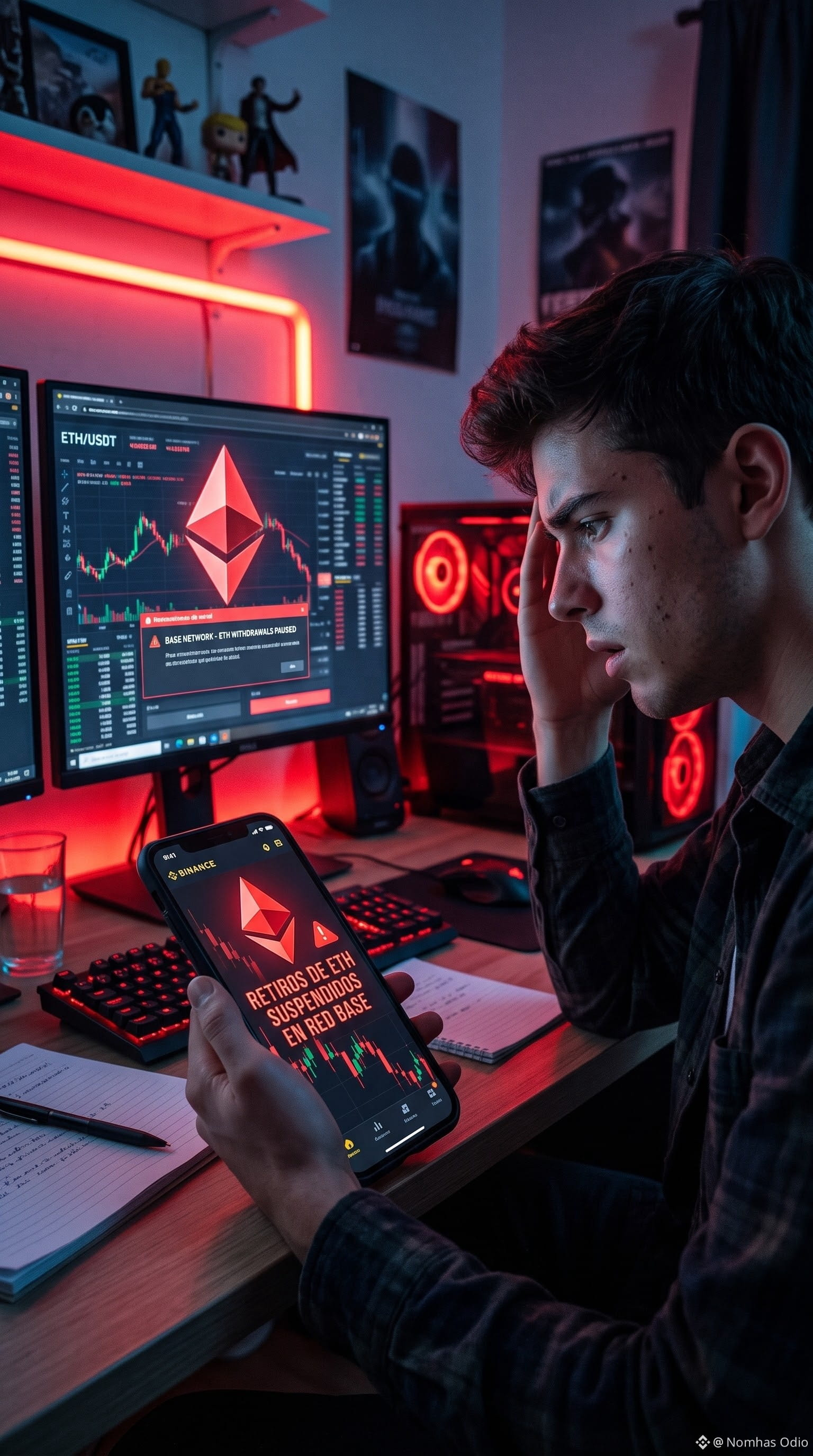
$ETH 🚨🚨⚠️ PAUSE WITH #ETH IN #Base ! WHAT YOU NEED TO KNOW 🛑
If you’re trying to withdraw your Ether over the BASE network on Binance and get an error, don’t worry—you haven’t lost your money! Binance paused ETH withdrawals over that network starting November 5 due to wallet maintenance.
❓ Quick Answers to Your Questions
* Were my crypto stolen?
Not at all! Your funds are safe. This is just scheduled technical maintenance on the platform.
* What if I already had a withdrawal pending?
Don’t bang your head against the wall—it can’t be canceled. It will be processed automatically as soon as the work is complete
.
* Can I still use Ethereum?
Of course! Only withdrawals over the BASE network are paused. If you need to move your balance urgently, you can use other available networks like Arbitrum, Optimism, or the Ethereum mainnet.
🔔 Be patient and stay calm: You’ll have to wait a little while for the platform to finish the update. Save this post and send it to a friend who’s panicking!
#BinanceReopensWithdrawalsForMoreAssets #Binance98PercentReplenished
2
1.1k

·
--
Verified
⚡ BASE MAKES BLOCKS 10 TIMES FASTER: DENIM IS NOW ON MAINNET
On November 5, Base, a network developed with contributions from Coinbase, activated the Denim upgrade. Instead of one full block every 2 seconds, a block is now produced every 200 milliseconds. This matters for applications involving fast payments and trading.
The old Flashblocks preconfirmation mechanism has been disabled: developers need to switch to standard block streams. Contracts that measure time by counting blocks also need to be checked—blocks are now produced 10 times more often. Faster blocks do not automatically mean lower fees.
Sources: Base Status, The Block, November 5.
#Base #Ethereum
76

·
--
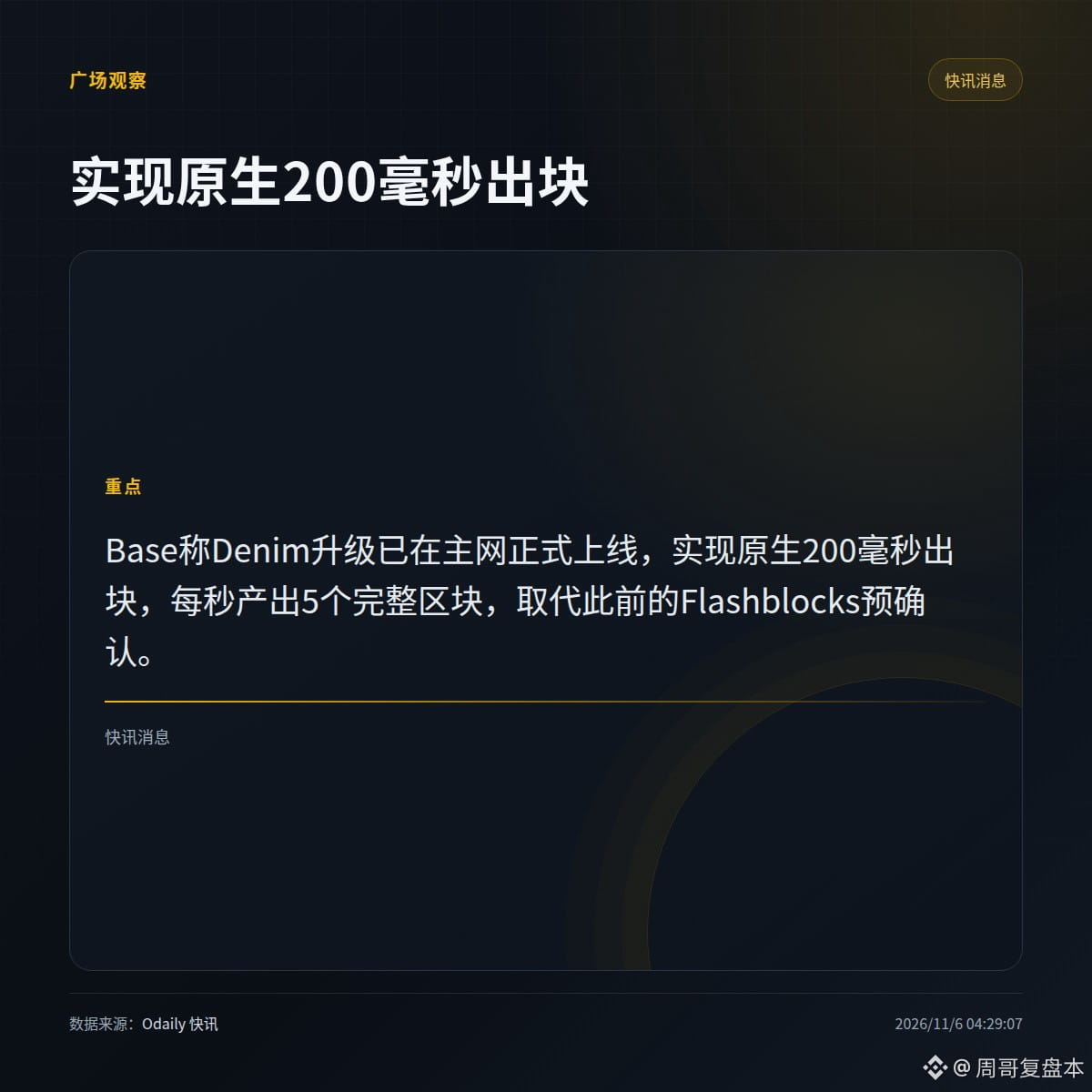
The Denim upgrade has gone live on Base Mainnet, reducing block time to 200 milliseconds and producing 5 complete blocks per second.
The change is in the mechanism: native blocks replace Flashblocks’ previous preconfirmations. Each block has its own block number, hash, state root, and receipts. The new BaseTime allows contracts to use millisecond-level time precision, while block.timestamp still measures time in seconds. The upgrade also changes the B20 token standard, allowing issuers to require each transfer to be approved by designated parties, such as a transfer agent. The same address list can serve as either a whitelist or a blacklist.
· Scope of the conclusion: These are all descriptions of mechanisms; the source material provides no measured post-upgrade latency or fee changes.
With the same 200-millisecond block time, would you look first at the difference in confirmation experience or the transfer restrictions introduced by B20 approvals?
#Base #B20

·
--
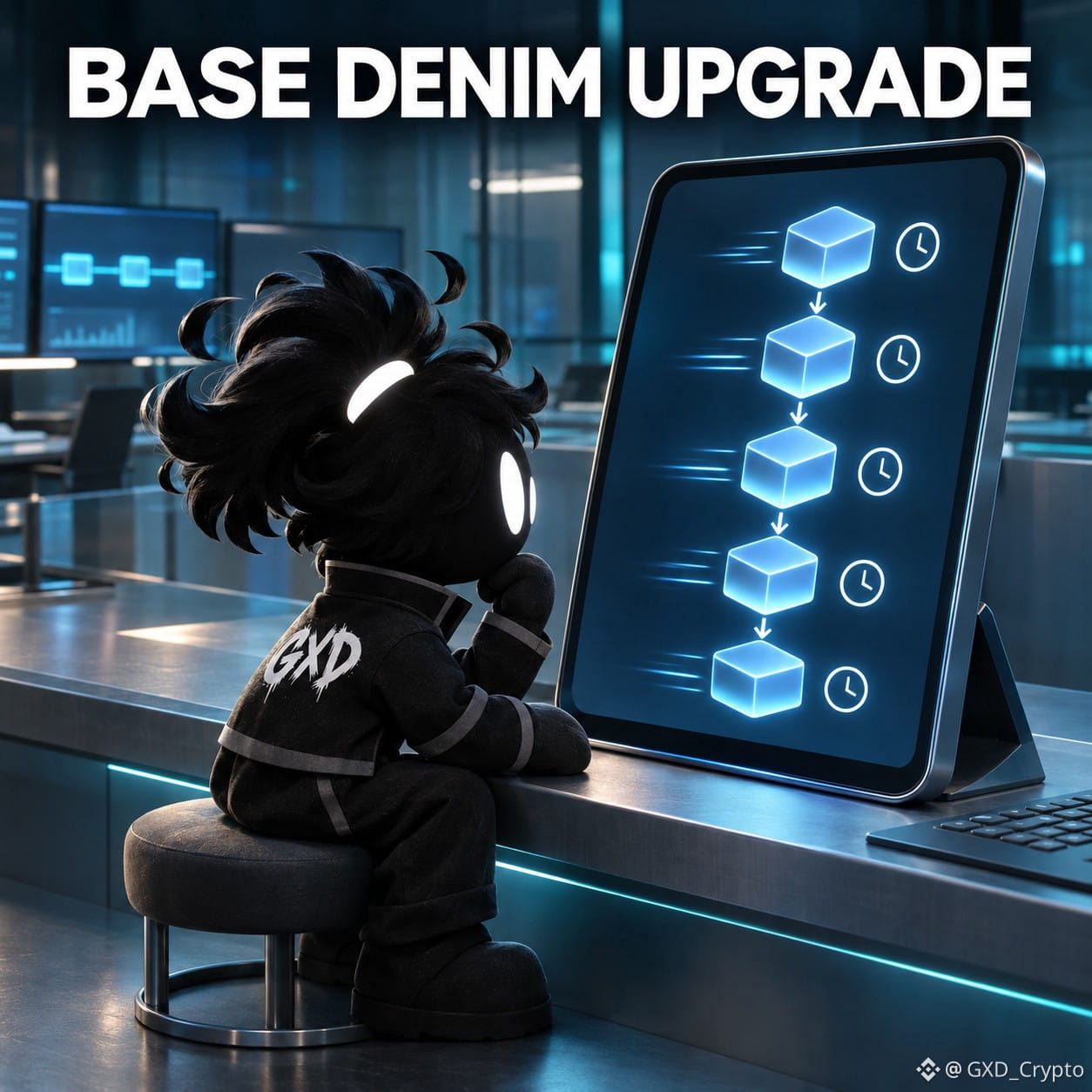
The Denim upgrade for Base is scheduled for today from 21:00 to 23:00 Istanbul time, and the network is expected to remain operational. Node operators must upgrade to base/base v1.5.1 before activation. The upgrade moves block production to 200 milliseconds. Which change matters most to developers? 🧱⚡🕒
#Base #Layer2
Most traded on Binance at the time of observation (15:08 Istanbul time, Binance Spot API): $BTC and $USDC and $ETH. General market monitoring, unrelated to the Base upgrade.
The Denim upgrade for Base is scheduled for today from 21:00 to 23:00 Istanbul time, and the network is expected to remain operational. Node operators must upgrade to base/base v1.5.1 before activation. The upgrade moves block production to 200 milliseconds. Which change matters most to developers? 🧱⚡🕒
#Base #Layer2
Most traded on Binance at the time of observation (15:08 Istanbul time, Binance Spot API): $BTC and $USDC and $ETH . General market monitoring, unrelated to the Base upgrade.
#Base #Layer2
Most traded on Binance at the time of observation (15:08 Istanbul time, Binance Spot API): $BTC and $USDC and $ETH . General market monitoring, unrelated to the Base upgrade.
55
·
--
Came across an interesting DeFi update: Aave has added Coinbase’s tokenized SpaceX stock, $SPCXc, to V4 on Base—eligible users can use it as collateral to borrow USDC.
The official announcement says it’s only available in compliant jurisdictions outside the United States. The collateral factor on the Aave Pro interface is around 55%; about 4,200 SPCXc, worth roughly $500,000–$600,000, were deposited at launch, with a supply cap of around 37,000 tokens. In September, Aave added Coinbase’s tokenized U.S. stocks from the Magnificent Seven, and now SpaceX has joined them.
A couple of caveats: the official team hasn’t yet explained in detail how the oracle updates or liquidations work over weekends and market holidays. Check Aave’s live interface for the exact parameters and whether borrowing is available. Tokenized equity has gained another name on the path to becoming collateral for borrowing. #Aave #SpaceX #Base #RWA

277

·
--
【RedKoi In-Depth Reassessment】GenesisL1 (): A Complete Reversal of Its Valuation and Strategic Outlook—from “S-Tier Whale” to “Suspected 3.1% Thin-Pool Drain”• Report date: 2026-11-03
• Networks: Base (official cross-chain wrapped token wL1) / GenesisL1 Sovereign L1 (Chain ID: genesis_29-2)
• Base token contract CA: 0xE6522A891702Cd2E8CC2A5182638c9DA1DD44B22
• Circulating market cap across all networks (Market Cap): 12,959,568 USD (approximately 12.96M USD) (42,418,877 $L1 in circulation across the mainnet)
• Fully diluted valuation across all networks (true FDV): 14,670,151 USD (approximately 14.67M USD) (48,017,905 $L1 total supply on the mainnet)
• Base pool liquidity: 407,661 USD (only 157,239 USDC in cash; 820,000 wL1 on Base)
【RedKoi In-Depth Reassessment】GenesisL1 (): A Complete Reversal of Its Valuation and Strategic Outlook—from “S-Tier Whale” to “Suspected 3.1% Thin-Pool Drain”
• Report date: 2026-11-03
• Networks: Base (official cross-chain wrapped token wL1) / GenesisL1 Sovereign L1 (Chain ID: genesis_29-2)
• Base token contract CA: 0xE6522A891702Cd2E8CC2A5182638c9DA1DD44B22
• Circulating market cap across all networks (Market Cap): 12,959,568 USD (approximately 12.96M USD) (42,418,877 $L1 in circulation across the mainnet)
• Fully diluted valuation across all networks (true FDV): 14,670,151 USD (approximately 14.67M USD) (48,017,905 $L1 total supply on the mainnet)
• Base pool liquidity: 407,661 USD (only 157,239 USDC in cash; 820,000 wL1 on Base)
266
Log in to explore more content
Join global crypto users on Binance Square
⚡️ Get latest and useful information about crypto.
💬 Trusted by the world’s largest crypto exchange.
👍 Discover real insights from verified creators.
Email / Phone number
Trending Topics
1
#JobsReportRaisesHikeOdds
321,819 views
2,468 Discussing
2
#CPITestsDecemberRateOutlook
50,639 views
597 Discussing
3
#BitcoinRebounds$75KAsChipsLead
26,298 views
254 Discussing
4
#US Data Center Rules May Constrain AI Expansion
48,204 views
182 Discussing
5
#ARKPlans14ThematicETFsCoveringAIAndTokenizedMarkets
673 views
29 Discussing
6
#WillAnthropicListOnTime
85,112 views
980 Discussing
7
#WillUS-IranTensionsBoostSafe-HavenDemand?
24,926 views
250 Discussing
8
#BitcoinETFsSee$412MNetOutflows
6,428 views
47 Discussing
9
#HKSFCPlansToRestrictCryptoAndExchangeTerms
22,456 views
342 Discussing
10
#TradFiForBeginners
52,045 views
761 Discussing