

#agentfi
agentfi
19,952 views
79 Discussing
Hot
Latest


·
--
Every day we post, comment, and interact online, essentially feeding AI for free. In the end, tech giants take user data to train models, raking in billions in valuation, while the real data producers see none of the profits. The emergence of DeAI (Decentralized AI) is fundamentally about reconstructing this profit distribution mechanism.
Recently, I researched #OpenLedger , and I believe it's different from ordinary AI plus token projects; it’s more like building the 'economic infrastructure' within the AI world. The project is built on the OP Stack and aims to address the rights and monetization issues of data, models, and AI Agents.
It introduces a fascinating concept: Payable AI. Simply put, if you contribute high-value data to the network, such as financial, medical, or industry knowledge, and it gets used to train the model, then every time someone calls on that model in the future, the blockchain will automatically track contributions and distribute profits. Data has finally turned into a 'sustainable income-generating asset.'
Additionally, its OpenLoRA framework is worth a look. In the past, the cost of training and deploying AI was too high for average developers to participate, but OpenLedger aims to lower the barriers, allowing more AI Agents to be directly deployed on-chain. This is where #AgentFi shows its greatest imagination—users might even be able to rent or invest in a trading-capable AI Agent directly in the future.
Of course, DeAI is still in a very early stage, and market sentiment can easily be swayed by narratives. What we really need to watch moving forward is the actual data call volume on the mainnet, developer activity, and whether there is sustained data consumption. If the token price just goes up without real demand to support it, we need to be cautious of a valuation bubble.
Blockchain addresses profit distribution, AI boosts production efficiency, and when combined, they might truly redefine the value attribution of the next generation of the internet.
#openledger $OPEN @Openledger
Every day we post, comment, and interact online, essentially feeding AI for free. In the end, tech giants take user data to train models, raking in billions in valuation, while the real data producers see none of the profits. The emergence of DeAI (Decentralized AI) is fundamentally about reconstructing this profit distribution mechanism.
Recently, I researched #OpenLedger , and I believe it's different from ordinary AI plus token projects; it’s more like building the 'economic infrastructure' within the AI world. The project is built on the OP Stack and aims to address the rights and monetization issues of data, models, and AI Agents.
It introduces a fascinating concept: Payable AI. Simply put, if you contribute high-value data to the network, such as financial, medical, or industry knowledge, and it gets used to train the model, then every time someone calls on that model in the future, the blockchain will automatically track contributions and distribute profits. Data has finally turned into a 'sustainable income-generating asset.'
Additionally, its OpenLoRA framework is worth a look. In the past, the cost of training and deploying AI was too high for average developers to participate, but OpenLedger aims to lower the barriers, allowing more AI Agents to be directly deployed on-chain. This is where #AgentFi shows its greatest imagination—users might even be able to rent or invest in a trading-capable AI Agent directly in the future.
Of course, DeAI is still in a very early stage, and market sentiment can easily be swayed by narratives. What we really need to watch moving forward is the actual data call volume on the mainnet, developer activity, and whether there is sustained data consumption. If the token price just goes up without real demand to support it, we need to be cautious of a valuation bubble.
Blockchain addresses profit distribution, AI boosts production efficiency, and when combined, they might truly redefine the value attribution of the next generation of the internet.
#openledger $OPEN @OpenLedger
Recently, I researched #OpenLedger , and I believe it's different from ordinary AI plus token projects; it’s more like building the 'economic infrastructure' within the AI world. The project is built on the OP Stack and aims to address the rights and monetization issues of data, models, and AI Agents.
It introduces a fascinating concept: Payable AI. Simply put, if you contribute high-value data to the network, such as financial, medical, or industry knowledge, and it gets used to train the model, then every time someone calls on that model in the future, the blockchain will automatically track contributions and distribute profits. Data has finally turned into a 'sustainable income-generating asset.'
Additionally, its OpenLoRA framework is worth a look. In the past, the cost of training and deploying AI was too high for average developers to participate, but OpenLedger aims to lower the barriers, allowing more AI Agents to be directly deployed on-chain. This is where #AgentFi shows its greatest imagination—users might even be able to rent or invest in a trading-capable AI Agent directly in the future.
Of course, DeAI is still in a very early stage, and market sentiment can easily be swayed by narratives. What we really need to watch moving forward is the actual data call volume on the mainnet, developer activity, and whether there is sustained data consumption. If the token price just goes up without real demand to support it, we need to be cautious of a valuation bubble.
Blockchain addresses profit distribution, AI boosts production efficiency, and when combined, they might truly redefine the value attribution of the next generation of the internet.
#openledger $OPEN @OpenLedger
2
3
211

·
--
AI agents can now use USDC online payments to complete tasks. Browser Use has partnered with Coinbase to support the x402 protocol, allowing agents to purchase credits directly through a crypto wallet—no account needed, no API key needed.
This is a foundational infrastructure breakthrough for the agent economy. Agents are no longer just “helping you think,” but “helping you get things done by paying for them.”
$USDC
#AI #x402 #AgentFi
Transaction assessment: The AgentFi narrative is still in its early stage—watch it, but don’t act yet.
AI agents can now use USDC online payments to complete tasks. Browser Use has partnered with Coinbase to support the x402 protocol, allowing agents to purchase credits directly through a crypto wallet—no account needed, no API key needed.
This is a foundational infrastructure breakthrough for the agent economy. Agents are no longer just “helping you think,” but “helping you get things done by paying for them.”
$USDC
#AI #x402 #AgentFi
Transaction assessment: The AgentFi narrative is still in its early stage—watch it, but don’t act yet.
This is a foundational infrastructure breakthrough for the agent economy. Agents are no longer just “helping you think,” but “helping you get things done by paying for them.”
$USDC
#AI #x402 #AgentFi
Transaction assessment: The AgentFi narrative is still in its early stage—watch it, but don’t act yet.
124

·
--
Talus's recent 81% weekly surge isn't just a fluke bounce; it's the result of multiple bullish catalysts.
Let’s break down the logic: The launch of the Agent aggregation feature has opened up real-world use cases, while the Kaito airdrop has activated community engagement, and the initiation of the accelerator program has directly attracted fresh capital into the game.
Current price is $0.0083, with a 24h trading volume of $7.06 million and a market cap of $18.27 million. In the context of the overall heating up of the AI Agent sector, the future performance of this small-cap coin is definitely worth keeping an eye on.
#AI #AgentFi
Talus's recent 81% weekly surge isn't just a fluke bounce; it's the result of multiple bullish catalysts.
Let’s break down the logic: The launch of the Agent aggregation feature has opened up real-world use cases, while the Kaito airdrop has activated community engagement, and the initiation of the accelerator program has directly attracted fresh capital into the game.
Current price is $0.0083, with a 24h trading volume of $7.06 million and a market cap of $18.27 million. In the context of the overall heating up of the AI Agent sector, the future performance of this small-cap coin is definitely worth keeping an eye on.
#AI #AgentFi
Let’s break down the logic: The launch of the Agent aggregation feature has opened up real-world use cases, while the Kaito airdrop has activated community engagement, and the initiation of the accelerator program has directly attracted fresh capital into the game.
Current price is $0.0083, with a 24h trading volume of $7.06 million and a market cap of $18.27 million. In the context of the overall heating up of the AI Agent sector, the future performance of this small-cap coin is definitely worth keeping an eye on.
#AI #AgentFi
12

·
--

Article
🤖 Retail is still watching candlesticks, but AI Agents have already launched a “machine collusion” on-chain: decoding a new Web4 capital paradigm
On-chain capital flows are showing an extremely strange pattern of structural divergence. Retail trading frequency and community sentiment indicators remain at rock bottom, yet the number of on-chain micro–high-frequency trades—represented by high-performance Layer 2 and Solana—has continued to set new historical highs. The gas consumption curve is displaying a cold, geometric-style blowout. Retail hasn’t returned to the market; instead, thousands upon thousands of autonomous AI Agents deployed beneath smart-contract layers are taking over the on-chain settlement network. Funds are no longer migrating along the old path of “KOL calls → retail follow-through.” Rather, algorithm-driven autonomous intelligent agents reorganize capital across-chain liquidity pools, decentralized compute lending, and prediction markets at millisecond speed. We are standing at a turning point in a massive migration of capital pricing power from humans to autonomous algorithms.
On-chain capital flows are showing an extremely strange pattern of structural divergence. Retail trading frequency and community sentiment indicators remain at rock bottom, yet the number of on-chain micro–high-frequency trades—represented by high-performance Layer 2 and Solana—has continued to set new historical highs. The gas consumption curve is displaying a cold, geometric-style blowout. Retail hasn’t returned to the market; instead, thousands upon thousands of autonomous AI Agents deployed beneath smart-contract layers are taking over the on-chain settlement network. Funds are no longer migrating along the old path of “KOL calls → retail follow-through.” Rather, algorithm-driven autonomous intelligent agents reorganize capital across-chain liquidity pools, decentralized compute lending, and prediction markets at millisecond speed. We are standing at a turning point in a massive migration of capital pricing power from humans to autonomous algorithms.
🤖 Retail is still watching candlesticks, but AI Agents have already launched a “machine collusion” on-chain: decoding a new Web4 capital paradigm
On-chain capital flows are showing an extremely strange pattern of structural divergence. Retail trading frequency and community sentiment indicators remain at rock bottom, yet the number of on-chain micro–high-frequency trades—represented by high-performance Layer 2 and Solana—has continued to set new historical highs. The gas consumption curve is displaying a cold, geometric-style blowout. Retail hasn’t returned to the market; instead, thousands upon thousands of autonomous AI Agents deployed beneath smart-contract layers are taking over the on-chain settlement network. Funds are no longer migrating along the old path of “KOL calls → retail follow-through.” Rather, algorithm-driven autonomous intelligent agents reorganize capital across-chain liquidity pools, decentralized compute lending, and prediction markets at millisecond speed. We are standing at a turning point in a massive migration of capital pricing power from humans to autonomous algorithms.
142

·
--
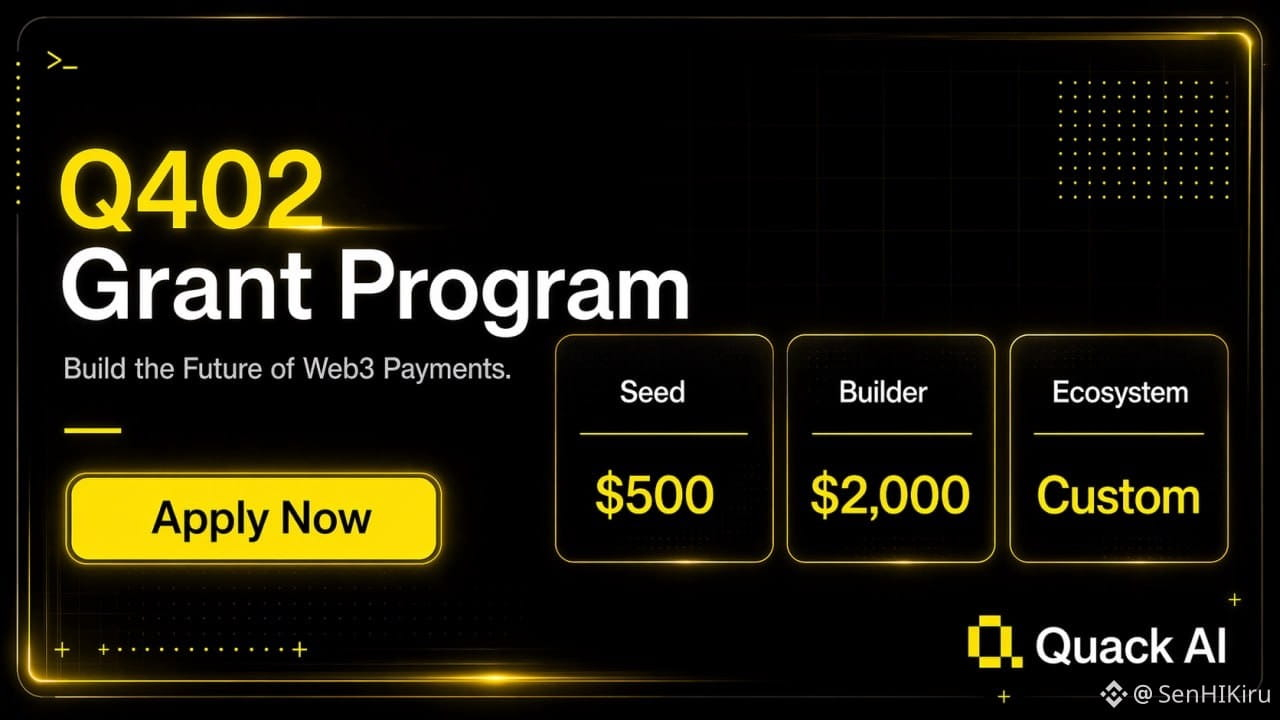
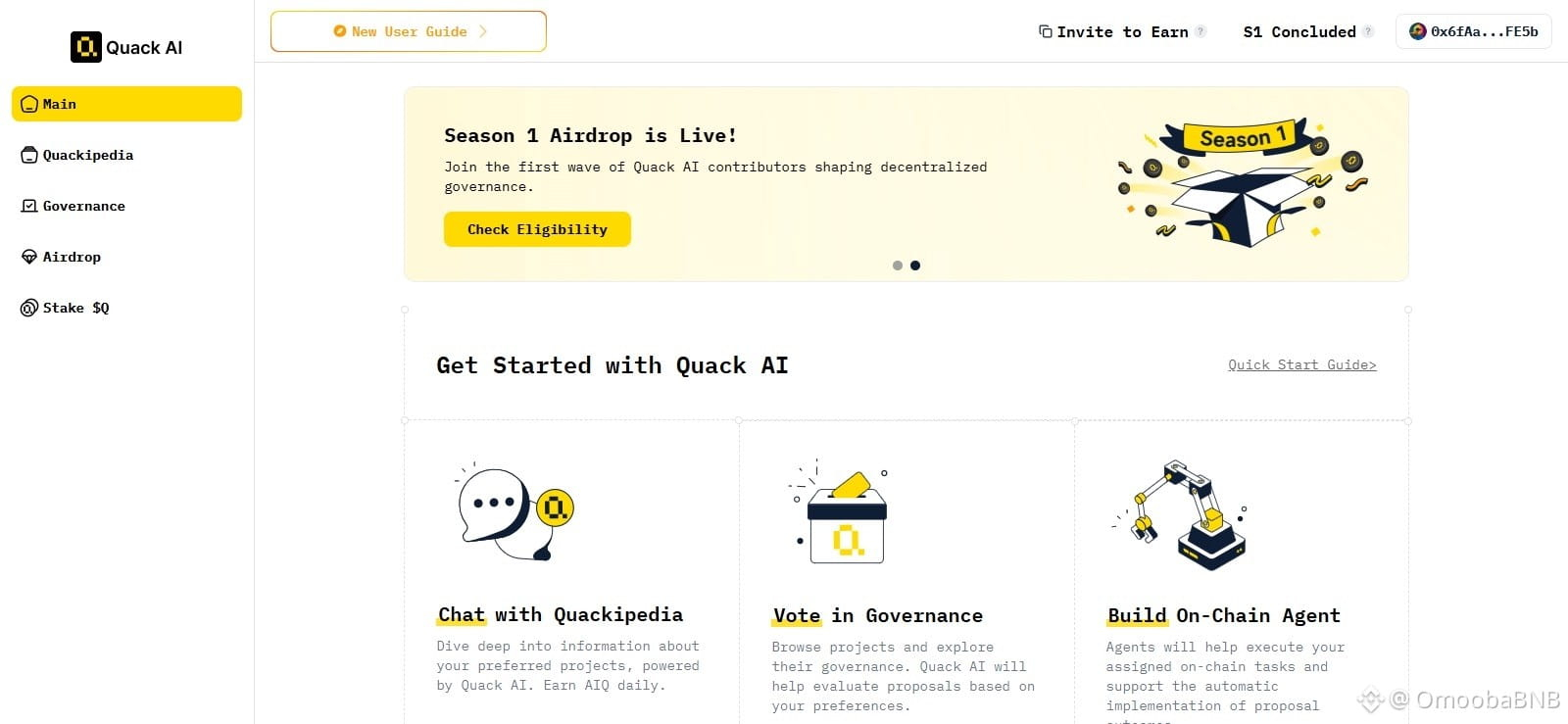
$Q Damar Gine-Gine to Web3: Q402 Grant Program from Quack AI is Live.
If you’re one of the builders in the Web3 space, this is an opportunity you won’t want to miss. Quack AI @QTalkLive has launched the Q402 Grant Program to support builders who believe that the future of Web3 is gasless UX, meaning a seamless experience without gas hassles.
The program offers different tiers:
🌱 Seed — $500 relay credit, up to 10,000 transactions
🔨 Builder — $2,000 relay credit, up to 50,000 transactions
🌐 Ecosystem — Tailored program, no limits
But it’s not just about credits.
Participants will receive full support from Quack AI, including:
• co-marketing collaboration
• direct access to the core team
• long-term partnership
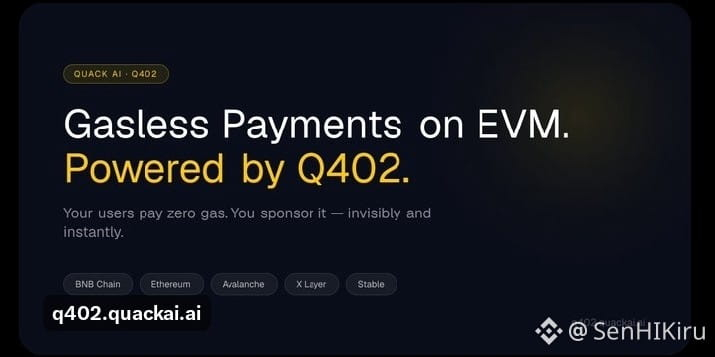
With Q402, you can integrate your app just once, allowing users to transact across five chains without even noticing gas issues.
This is how we bring ease and efficiency to Web3, and this is what Quack AI @QTalkLive is pushing forward.
👉 Apply now: q402.quackai.ai/grant
Join those who are building a simpler, faster, and user-friendly future for Web3.
#QuackAI #Q402 #Web3 #AgentFi $Q
$Q Damar Gine-Gine to Web3: Q402 Grant Program from Quack AI is Live.
If you’re one of the builders in the Web3 space, this is an opportunity you won’t want to miss. Quack AI @QTalk has launched the Q402 Grant Program to support builders who believe that the future of Web3 is gasless UX, meaning a seamless experience without gas hassles.
The program offers different tiers:
🌱 Seed — $500 relay credit, up to 10,000 transactions
🔨 Builder — $2,000 relay credit, up to 50,000 transactions
🌐 Ecosystem — Tailored program, no limits
But it’s not just about credits.
Participants will receive full support from Quack AI, including:
• co-marketing collaboration
• direct access to the core team
• long-term partnership
With Q402, you can integrate your app just once, allowing users to transact across five chains without even noticing gas issues.
This is how we bring ease and efficiency to Web3, and this is what Quack AI @QTalk is pushing forward.
👉 Apply now: q402.quackai.ai/grant
Join those who are building a simpler, faster, and user-friendly future for Web3.
#QuackAI #Q402 #Web3 #AgentFi $Q
If you’re one of the builders in the Web3 space, this is an opportunity you won’t want to miss. Quack AI @QTalk has launched the Q402 Grant Program to support builders who believe that the future of Web3 is gasless UX, meaning a seamless experience without gas hassles.
The program offers different tiers:
🌱 Seed — $500 relay credit, up to 10,000 transactions
🔨 Builder — $2,000 relay credit, up to 50,000 transactions
🌐 Ecosystem — Tailored program, no limits
But it’s not just about credits.
Participants will receive full support from Quack AI, including:
• co-marketing collaboration
• direct access to the core team
• long-term partnership
With Q402, you can integrate your app just once, allowing users to transact across five chains without even noticing gas issues.
This is how we bring ease and efficiency to Web3, and this is what Quack AI @QTalk is pushing forward.
👉 Apply now: q402.quackai.ai/grant
Join those who are building a simpler, faster, and user-friendly future for Web3.
#QuackAI #Q402 #Web3 #AgentFi $Q
72

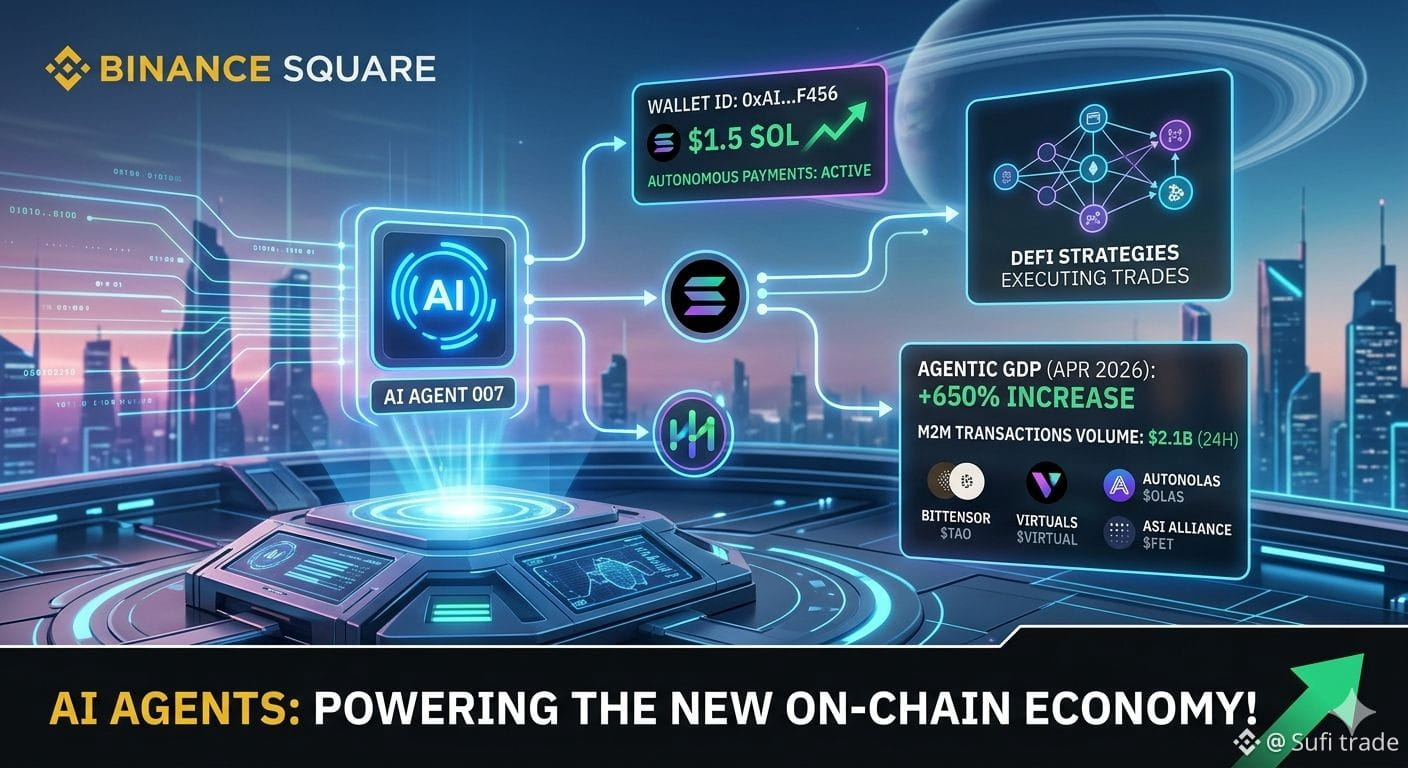
🤖 The Rise of AI Agents: From Hype to On-Chain Economy!
The era of "Human-only" trading is fading. In April 2026, AI Agents have officially become the dominant force in the crypto ecosystem, moving beyond simple automation to full financial autonomy.
🌐 What’s Happening?
AI Agents are no longer just tools; they are Autonomous Economic Actors. They now own wallets, manage DAOs, and execute high-frequency DeFi strategies without human intervention.
🔥 Latest Highlights:
Solana’s Dominance: Over 60% of agentic payments are happening on Solana due to its sub-second finality.
The "Virtuals" Explosion: The Virtuals Protocol ($VIRTUAL) has revolutionized how AI influencers are co-owned, allowing users to earn a share of the revenue generated by AI agents.
Machine-to-Machine (M2M) Economy: We are seeing the first trillion-dollar projection for AI-driven on-chain commerce by 2030. Agents are now "hiring" other agents for compute and data, paying in crypto.
📊 Top AI Agent Tokens to Watch:
$TAO (Bittensor): The foundation for decentralized AI training.
$VIRTUAL: Leading the AI Agent-to-Consumer (A2C) movement.
$OLAS (Autonolas): The powerhouse for off-chain agent logic.
$FET (ASI): Building the global super-intelligence network.
💡 Final Thought
If you aren't looking at Agentic Finance (AgentFi), you are missing the next big shift. The question is no longer "When will AI arrive?" but "Is your wallet ready to interact with an AI?"
💬 Are you holding any AI tokens? Which agent-led project is your favorite? Let’s discuss below! 👇
#AIAgents #SolanaAI #AgentFi
$TAO
{spot}(TAOUSDT)
$VIRTUAL
{spot}(VIRTUALUSDT)
🤖 The Rise of AI Agents: From Hype to On-Chain Economy!
The era of "Human-only" trading is fading. In April 2026, AI Agents have officially become the dominant force in the crypto ecosystem, moving beyond simple automation to full financial autonomy.
🌐 What’s Happening?
AI Agents are no longer just tools; they are Autonomous Economic Actors. They now own wallets, manage DAOs, and execute high-frequency DeFi strategies without human intervention.
🔥 Latest Highlights:
Solana’s Dominance: Over 60% of agentic payments are happening on Solana due to its sub-second finality.
The "Virtuals" Explosion: The Virtuals Protocol ($VIRTUAL ) has revolutionized how AI influencers are co-owned, allowing users to earn a share of the revenue generated by AI agents.
Machine-to-Machine (M2M) Economy: We are seeing the first trillion-dollar projection for AI-driven on-chain commerce by 2030. Agents are now "hiring" other agents for compute and data, paying in crypto.
📊 Top AI Agent Tokens to Watch:
$TAO (Bittensor): The foundation for decentralized AI training.
$VIRTUAL : Leading the AI Agent-to-Consumer (A2C) movement.
$OLAS (Autonolas): The powerhouse for off-chain agent logic.
$FET (ASI): Building the global super-intelligence network.
💡 Final Thought
If you aren't looking at Agentic Finance (AgentFi), you are missing the next big shift. The question is no longer "When will AI arrive?" but "Is your wallet ready to interact with an AI?"
💬 Are you holding any AI tokens? Which agent-led project is your favorite? Let’s discuss below! 👇
#AIAgents #SolanaAI #AgentFi
$TAO
$VIRTUAL
The era of "Human-only" trading is fading. In April 2026, AI Agents have officially become the dominant force in the crypto ecosystem, moving beyond simple automation to full financial autonomy.
🌐 What’s Happening?
AI Agents are no longer just tools; they are Autonomous Economic Actors. They now own wallets, manage DAOs, and execute high-frequency DeFi strategies without human intervention.
🔥 Latest Highlights:
Solana’s Dominance: Over 60% of agentic payments are happening on Solana due to its sub-second finality.
The "Virtuals" Explosion: The Virtuals Protocol ($VIRTUAL ) has revolutionized how AI influencers are co-owned, allowing users to earn a share of the revenue generated by AI agents.
Machine-to-Machine (M2M) Economy: We are seeing the first trillion-dollar projection for AI-driven on-chain commerce by 2030. Agents are now "hiring" other agents for compute and data, paying in crypto.
📊 Top AI Agent Tokens to Watch:
$TAO (Bittensor): The foundation for decentralized AI training.
$VIRTUAL : Leading the AI Agent-to-Consumer (A2C) movement.
$OLAS (Autonolas): The powerhouse for off-chain agent logic.
$FET (ASI): Building the global super-intelligence network.
💡 Final Thought
If you aren't looking at Agentic Finance (AgentFi), you are missing the next big shift. The question is no longer "When will AI arrive?" but "Is your wallet ready to interact with an AI?"
💬 Are you holding any AI tokens? Which agent-led project is your favorite? Let’s discuss below! 👇
#AIAgents #SolanaAI #AgentFi
$TAO
$VIRTUAL
3
555

·
--
$MIA is currently trading around $0.0156. It has fluctuated between +0.4% and +0.7% in the last 24 hours. Current Status: Market Cap: Around $14-15 Million (some sources show a little more or less) FDV: $15.61 Million Holders: 4,000+ Liquidity: Around $285K The chart has been in a bit of a downtrend for the past few days, but is now trying to rebound a bit from the bottom.
The biggest thing is — it is listed on Binance Alpha, and it seems to be an AI AgentFi project (Modular Intelligent Agent). The volume is still very low, so a big price movement could easily lead to a pump-dump.
What could happen in the future? Short term (1-4 weeks): If the market supports and there is any good news (such as a new listing or agent update), then there is a chance of going up to $0.018 - $0.022. But if the volume does not increase, it may drop back to $0.014. Long term (2026-2027): Many prediction sites say it can gradually go up to $0.02-$0.06, if the project really develops and the AgentFi / AI narrative works.
My personal take: Still a very small cap token. High risk — high reward. It may be interesting for those who can hold long term and follow the project. But if you want to trade short term, be very careful, with a stop loss.
#MIAtoken #AgentFi #Crypto
$MIA is currently trading around $0.0156. It has fluctuated between +0.4% and +0.7% in the last 24 hours. Current Status: Market Cap: Around $14-15 Million (some sources show a little more or less) FDV: $15.61 Million Holders: 4,000+ Liquidity: Around $285K The chart has been in a bit of a downtrend for the past few days, but is now trying to rebound a bit from the bottom.
The biggest thing is — it is listed on Binance Alpha, and it seems to be an AI AgentFi project (Modular Intelligent Agent). The volume is still very low, so a big price movement could easily lead to a pump-dump.
What could happen in the future? Short term (1-4 weeks): If the market supports and there is any good news (such as a new listing or agent update), then there is a chance of going up to $0.018 - $0.022. But if the volume does not increase, it may drop back to $0.014. Long term (2026-2027): Many prediction sites say it can gradually go up to $0.02-$0.06, if the project really develops and the AgentFi / AI narrative works.
My personal take: Still a very small cap token. High risk — high reward. It may be interesting for those who can hold long term and follow the project. But if you want to trade short term, be very careful, with a stop loss.
#MIAtoken #AgentFi #Crypto
The biggest thing is — it is listed on Binance Alpha, and it seems to be an AI AgentFi project (Modular Intelligent Agent). The volume is still very low, so a big price movement could easily lead to a pump-dump.
What could happen in the future? Short term (1-4 weeks): If the market supports and there is any good news (such as a new listing or agent update), then there is a chance of going up to $0.018 - $0.022. But if the volume does not increase, it may drop back to $0.014. Long term (2026-2027): Many prediction sites say it can gradually go up to $0.02-$0.06, if the project really develops and the AgentFi / AI narrative works.
My personal take: Still a very small cap token. High risk — high reward. It may be interesting for those who can hold long term and follow the project. But if you want to trade short term, be very careful, with a stop loss.
#MIAtoken #AgentFi #Crypto

4
430
·
--
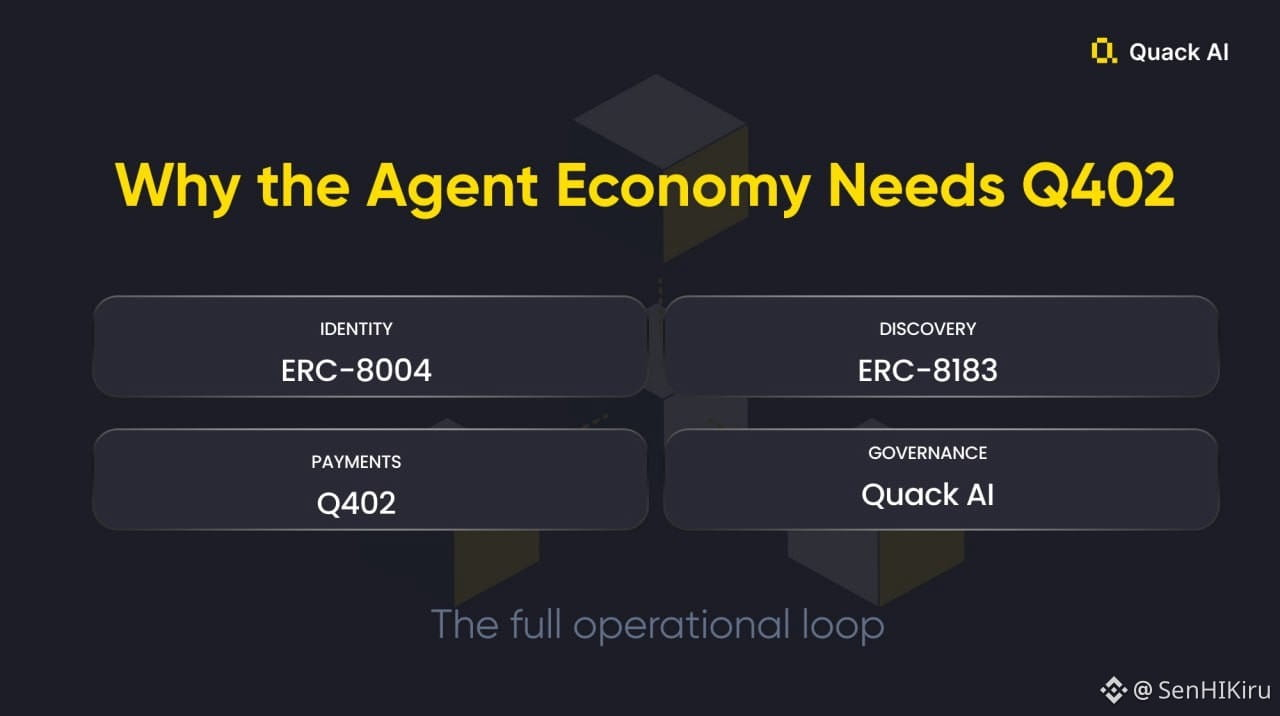
$Q Daga Magana Zuwa Aiki: How Quack AI Empowers AI in Web3.
While everyone is buzzing about the power of AI and its cognitive abilities, what really matters today is:
Can it actually execute these decisions in real-time?
This is where Quack AI @QTalkLive sets itself apart.
Through the Q402 technology, every decision made by the AI is directly executed on-chain — smoothly, systematically, and without hassle.
What’s most exciting is how the system streamlines everything:
• Set your rules as you please
• Sign off just once
• Then let the system run itself
No noise, no complexity — it’s a clean operation designed with precision.
This signifies that the future of Web3 isn’t just about intelligence,
but about how this intelligence is transformed into actionable and trustworthy outcomes.
And this is precisely what Quack AI @QTalkLive is building —
a framework that merges thought and execution into one seamless process.
If you’re watching where AI and Web3 are heading, know this:
It’s not just talk — it’s action.
#QuackAI #Q402 #AgentFi #Web3 $Q
$Q Daga Magana Zuwa Aiki: How Quack AI Empowers AI in Web3.
While everyone is buzzing about the power of AI and its cognitive abilities, what really matters today is:
Can it actually execute these decisions in real-time?
This is where Quack AI @QTalk sets itself apart.
Through the Q402 technology, every decision made by the AI is directly executed on-chain — smoothly, systematically, and without hassle.
What’s most exciting is how the system streamlines everything:
• Set your rules as you please
• Sign off just once
• Then let the system run itself
No noise, no complexity — it’s a clean operation designed with precision.
This signifies that the future of Web3 isn’t just about intelligence,
but about how this intelligence is transformed into actionable and trustworthy outcomes.
And this is precisely what Quack AI @QTalk is building —
a framework that merges thought and execution into one seamless process.
If you’re watching where AI and Web3 are heading, know this:
It’s not just talk — it’s action.
#QuackAI #Q402 #AgentFi #Web3 $Q
While everyone is buzzing about the power of AI and its cognitive abilities, what really matters today is:
Can it actually execute these decisions in real-time?
This is where Quack AI @QTalk sets itself apart.
Through the Q402 technology, every decision made by the AI is directly executed on-chain — smoothly, systematically, and without hassle.
What’s most exciting is how the system streamlines everything:
• Set your rules as you please
• Sign off just once
• Then let the system run itself
No noise, no complexity — it’s a clean operation designed with precision.
This signifies that the future of Web3 isn’t just about intelligence,
but about how this intelligence is transformed into actionable and trustworthy outcomes.
And this is precisely what Quack AI @QTalk is building —
a framework that merges thought and execution into one seamless process.
If you’re watching where AI and Web3 are heading, know this:
It’s not just talk — it’s action.
#QuackAI #Q402 #AgentFi #Web3 $Q
43

·
--
Bearish
🔴 $SWARMS
{future}(SWARMSUSDT)
Long Liquidation Alert
💰 Liquidated Amount:
$2.434K
📍 Liquidation Price:
0.00582 (BINANCE)
━━━━━━━━━━━━━━
📊 Trade Outlook
🎯 Target:
0.00568
📥 Entry Zone:
0.00578
📈 Take Profit:
0.00562
🛑 Stop Loss:
0.00595
━━━━━━━━━━━━━━
⚡ ELITE TRADE INSIGHT ⚡
Selling momentum remained dominant as leveraged longs were forced out, exposing another pocket of downside liquidity beneath current support. Waiting for confirmation before initiating fresh positions may improve execution, while disciplined risk management remains essential in volatile markets.
#SWARMS
#AI
#AgentFi
🔴 $SWARMS
Long Liquidation Alert
💰 Liquidated Amount:
$2.434K
📍 Liquidation Price:
0.00582 (BINANCE)
━━━━━━━━━━━━━━
📊 Trade Outlook
🎯 Target:
0.00568
📥 Entry Zone:
0.00578
📈 Take Profit:
0.00562
🛑 Stop Loss:
0.00595
━━━━━━━━━━━━━━
⚡ ELITE TRADE INSIGHT ⚡
Selling momentum remained dominant as leveraged longs were forced out, exposing another pocket of downside liquidity beneath current support. Waiting for confirmation before initiating fresh positions may improve execution, while disciplined risk management remains essential in volatile markets.
#SWARMS
#AI
#AgentFi
Long Liquidation Alert
💰 Liquidated Amount:
$2.434K
📍 Liquidation Price:
0.00582 (BINANCE)
━━━━━━━━━━━━━━
📊 Trade Outlook
🎯 Target:
0.00568
📥 Entry Zone:
0.00578
📈 Take Profit:
0.00562
🛑 Stop Loss:
0.00595
━━━━━━━━━━━━━━
⚡ ELITE TRADE INSIGHT ⚡
Selling momentum remained dominant as leveraged longs were forced out, exposing another pocket of downside liquidity beneath current support. Waiting for confirmation before initiating fresh positions may improve execution, while disciplined risk management remains essential in volatile markets.
#SWARMS
#AI
#AgentFi
11

·
--
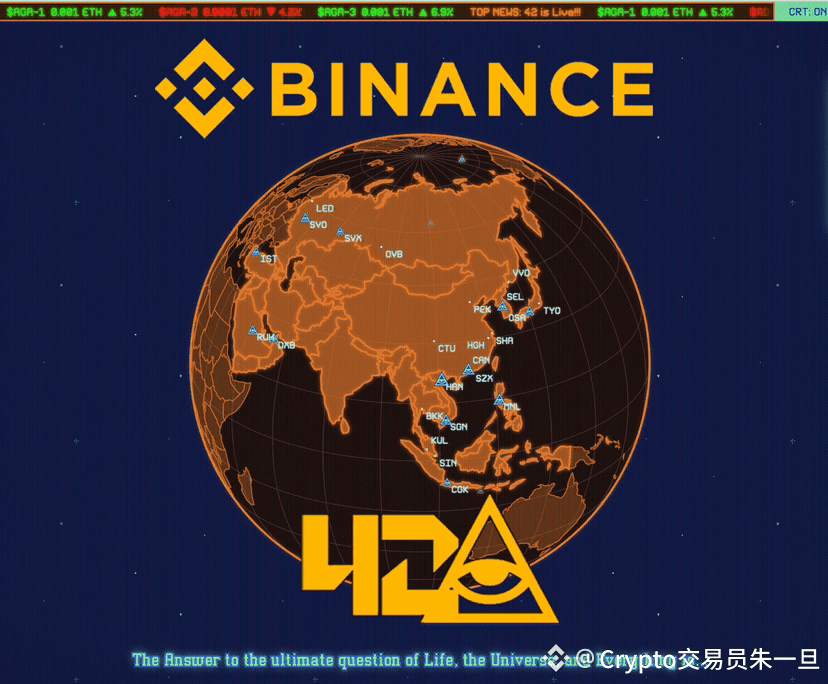
42——Let AI agents become real market participants
Recently, the new coin 42 (Semantic Layer) launched on Binance Alpha is quite interesting.
What it aims to do is bold—make AI agents not just tools, but truly 'come alive' on-chain: able to issue tokens, trade, and participate in the market.
The project team claims this will usher in the era of Agentconomy, a new economic layer composed of AI自治体.
The core product of 42 is the DApp '42', where agents can autonomously issue assets, buy, sell, and bid.
The underlying logic is its self-developed 'semantic layer'—Application-Controlled Execution (ACE) model,
Simply put, it allows applications to control execution order and settlement rules themselves, internalizing MEV and returning ordering rights to the applications themselves.
$42 is the first project related to the x402 narrative to go live on Binance Alpha.
This project has the following three characteristics:
1. Attracted investment from mainstream funds in the United States and Europe (including Figment Capital, Robot Ventures, Fenbushi, Hack VC, Anagram, Bankless Ventures);
2. Positioned in the x402 / AgentFi track, with a new narrative and complete logic;
3. Has launched real-time AgentFi products on its basic platform, achieving genuine interaction and behavior verification for on-chain agents.
The seed round financing is about 3 million USD, institutional costs are not high, but the logic is clear, and the execution pace is fast.
Overall, 42 is one of the few projects in the AI-Fi + Onchain Infra direction this year that is 'able to land and tell a story'.
Tonight at 18:00 on Binance Alpha, contracts will go live at 18:30 (up to 50x).
In the short term, the funding enthusiasm is certainly not low, but the key still lies in the implementation—
Whether agents can really 'do things' on-chain will determine whether this Agentconomy is a revolution or an experiment.
If it really takes off, perhaps the line of the AI agent economy,
Can finally move from narrative to reality.
#42 #SemanticLayer #BinanceAlpha #AI #Agentconomy #AgentFi
42——Let AI agents become real market participants
Recently, the new coin 42 (Semantic Layer) launched on Binance Alpha is quite interesting.
What it aims to do is bold—make AI agents not just tools, but truly 'come alive' on-chain: able to issue tokens, trade, and participate in the market.
The project team claims this will usher in the era of Agentconomy, a new economic layer composed of AI自治体.
The core product of 42 is the DApp '42', where agents can autonomously issue assets, buy, sell, and bid.
The underlying logic is its self-developed 'semantic layer'—Application-Controlled Execution (ACE) model,
Simply put, it allows applications to control execution order and settlement rules themselves, internalizing MEV and returning ordering rights to the applications themselves.
$42 is the first project related to the x402 narrative to go live on Binance Alpha.
This project has the following three characteristics:
1. Attracted investment from mainstream funds in the United States and Europe (including Figment Capital, Robot Ventures, Fenbushi, Hack VC, Anagram, Bankless Ventures);
2. Positioned in the x402 / AgentFi track, with a new narrative and complete logic;
3. Has launched real-time AgentFi products on its basic platform, achieving genuine interaction and behavior verification for on-chain agents.
The seed round financing is about 3 million USD, institutional costs are not high, but the logic is clear, and the execution pace is fast.
Overall, 42 is one of the few projects in the AI-Fi + Onchain Infra direction this year that is 'able to land and tell a story'.
Tonight at 18:00 on Binance Alpha, contracts will go live at 18:30 (up to 50x).
In the short term, the funding enthusiasm is certainly not low, but the key still lies in the implementation—
Whether agents can really 'do things' on-chain will determine whether this Agentconomy is a revolution or an experiment.
If it really takes off, perhaps the line of the AI agent economy,
Can finally move from narrative to reality.
#42 #SemanticLayer #BinanceAlpha #AI #Agentconomy #AgentFi
Recently, the new coin 42 (Semantic Layer) launched on Binance Alpha is quite interesting.
What it aims to do is bold—make AI agents not just tools, but truly 'come alive' on-chain: able to issue tokens, trade, and participate in the market.
The project team claims this will usher in the era of Agentconomy, a new economic layer composed of AI自治体.
The core product of 42 is the DApp '42', where agents can autonomously issue assets, buy, sell, and bid.
The underlying logic is its self-developed 'semantic layer'—Application-Controlled Execution (ACE) model,
Simply put, it allows applications to control execution order and settlement rules themselves, internalizing MEV and returning ordering rights to the applications themselves.
$42 is the first project related to the x402 narrative to go live on Binance Alpha.
This project has the following three characteristics:
1. Attracted investment from mainstream funds in the United States and Europe (including Figment Capital, Robot Ventures, Fenbushi, Hack VC, Anagram, Bankless Ventures);
2. Positioned in the x402 / AgentFi track, with a new narrative and complete logic;
3. Has launched real-time AgentFi products on its basic platform, achieving genuine interaction and behavior verification for on-chain agents.
The seed round financing is about 3 million USD, institutional costs are not high, but the logic is clear, and the execution pace is fast.
Overall, 42 is one of the few projects in the AI-Fi + Onchain Infra direction this year that is 'able to land and tell a story'.
Tonight at 18:00 on Binance Alpha, contracts will go live at 18:30 (up to 50x).
In the short term, the funding enthusiasm is certainly not low, but the key still lies in the implementation—
Whether agents can really 'do things' on-chain will determine whether this Agentconomy is a revolution or an experiment.
If it really takes off, perhaps the line of the AI agent economy,
Can finally move from narrative to reality.
#42 #SemanticLayer #BinanceAlpha #AI #Agentconomy #AgentFi
27
10
42
13.2k

·
--
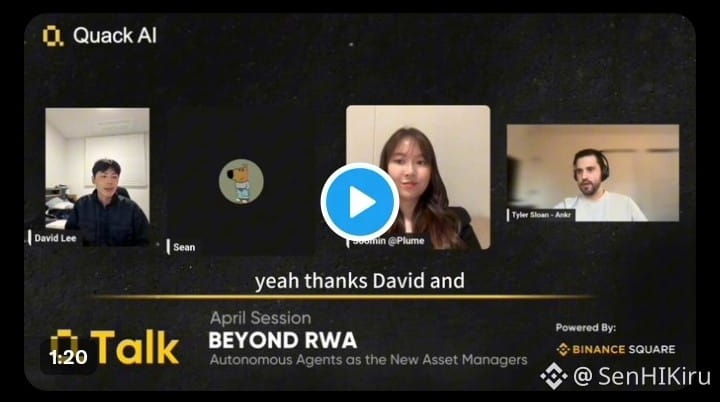
$Q Hasken QTalk in April: How AI Agents Will Enhance Capital Efficiency in Web3.
At the @QTalkLive Quack AI meeting in April, Tyler from @Ankr highlighted an important point:
while RWA (Real World Assets) is rapidly increasing on-chain, much of this capital still remains underutilized.
This is where AI agents come in with a new style.
Instead of waiting for the market to move, agents can:
• increase liquidity
• perform arbitrage between markets
• ensure continuous price discovery without stopping
They do not get tired. They do not wait. They work 24/7.
This shift is directly related to what Quack AI @QTalkLive is building — creating an efficient framework that enables AI agents to perform these tasks securely and in compliance through Q402.
Ultimately, it's not just about having capital on-chain —
how efficiently it is managed will differentiate the winners.
And in this regard, the combination of AI and execution infrastructure will be the key to success.
#QuackAI #Q402 #AgentFi #RWA #Web3 $Q
$Q Hasken QTalk in April: How AI Agents Will Enhance Capital Efficiency in Web3.
At the @QTalk Quack AI meeting in April, Tyler from @Ankr highlighted an important point:
while RWA (Real World Assets) is rapidly increasing on-chain, much of this capital still remains underutilized.
This is where AI agents come in with a new style.
Instead of waiting for the market to move, agents can:
• increase liquidity
• perform arbitrage between markets
• ensure continuous price discovery without stopping
They do not get tired. They do not wait. They work 24/7.
This shift is directly related to what Quack AI @QTalk is building — creating an efficient framework that enables AI agents to perform these tasks securely and in compliance through Q402.
Ultimately, it's not just about having capital on-chain —
how efficiently it is managed will differentiate the winners.
And in this regard, the combination of AI and execution infrastructure will be the key to success.
#QuackAI #Q402 #AgentFi #RWA #Web3 $Q
At the @QTalk Quack AI meeting in April, Tyler from @Ankr highlighted an important point:
while RWA (Real World Assets) is rapidly increasing on-chain, much of this capital still remains underutilized.
This is where AI agents come in with a new style.
Instead of waiting for the market to move, agents can:
• increase liquidity
• perform arbitrage between markets
• ensure continuous price discovery without stopping
They do not get tired. They do not wait. They work 24/7.
This shift is directly related to what Quack AI @QTalk is building — creating an efficient framework that enables AI agents to perform these tasks securely and in compliance through Q402.
Ultimately, it's not just about having capital on-chain —
how efficiently it is managed will differentiate the winners.
And in this regard, the combination of AI and execution infrastructure will be the key to success.
#QuackAI #Q402 #AgentFi #RWA #Web3 $Q
35
·
--
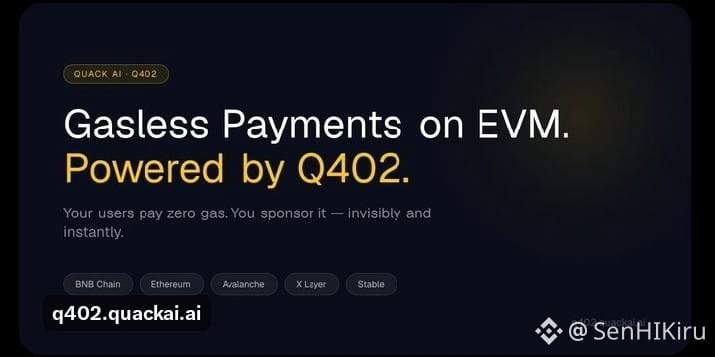
$Q Easy Transactions in Web3: How Quack AI is Breaking Down Major Barriers.
One of the long-standing issues holding back Web3 from becoming mainstream is the complexity of transactions, especially the gas fees and the multiple steps required to complete a trade.
But now, with the technology that Quack AI @QTalkLive is building through Q402, this barrier is slowly being dismantled.
The system simplifies transactions so that everything becomes:
• easy to understand
• fast
• and hassle-free
Instead of users worrying about how to complete a transaction, the system takes care of the behind-the-scenes elements, leaving them with an experience reminiscent of Web2, but with the complete security and transparency of blockchain.
This shift is no small feat. It means that Web3 is edging closer to becoming a daily utility for millions of people.
And at the heart of this evolution, Quack AI @QTalkLive plays a crucial role in building a framework that combines simplicity and power in one place.
Ultimately, the future of Web3 is:
a seamless experience, but powerful behind the scenes.
#QuackAI #Q402 #Web3 #AgentFi
$Q Easy Transactions in Web3: How Quack AI is Breaking Down Major Barriers.
One of the long-standing issues holding back Web3 from becoming mainstream is the complexity of transactions, especially the gas fees and the multiple steps required to complete a trade.
But now, with the technology that Quack AI @QTalk is building through Q402, this barrier is slowly being dismantled.
The system simplifies transactions so that everything becomes:
• easy to understand
• fast
• and hassle-free
Instead of users worrying about how to complete a transaction, the system takes care of the behind-the-scenes elements, leaving them with an experience reminiscent of Web2, but with the complete security and transparency of blockchain.
This shift is no small feat. It means that Web3 is edging closer to becoming a daily utility for millions of people.
And at the heart of this evolution, Quack AI @QTalk plays a crucial role in building a framework that combines simplicity and power in one place.
Ultimately, the future of Web3 is:
a seamless experience, but powerful behind the scenes.
#QuackAI #Q402 #Web3 #AgentFi
One of the long-standing issues holding back Web3 from becoming mainstream is the complexity of transactions, especially the gas fees and the multiple steps required to complete a trade.
But now, with the technology that Quack AI @QTalk is building through Q402, this barrier is slowly being dismantled.
The system simplifies transactions so that everything becomes:
• easy to understand
• fast
• and hassle-free
Instead of users worrying about how to complete a transaction, the system takes care of the behind-the-scenes elements, leaving them with an experience reminiscent of Web2, but with the complete security and transparency of blockchain.
This shift is no small feat. It means that Web3 is edging closer to becoming a daily utility for millions of people.
And at the heart of this evolution, Quack AI @QTalk plays a crucial role in building a framework that combines simplicity and power in one place.
Ultimately, the future of Web3 is:
a seamless experience, but powerful behind the scenes.
#QuackAI #Q402 #Web3 #AgentFi
78
·
--
$Q Q402 V1.5 on Quack AI Unveils a New Path for Web3 Payments.
Quack AI @QTalkLive has elevated its tech and expertise with the launch of Q402 V1.5 (Institutional Grade) — a significant upgrade that streamlines the payment process in Web3.
Now users can settle transactions using USDC or USDT across five EVM chains, while Q402 covers gas fees in the background. This eliminates gas hassle altogether, making transactions as easy as they are in Web2.
The system operates smoothly yet robustly:
• Single signature (off-chain signature)
• One transaction via API
• Full on-chain transaction completion swiftly and reliably (auditable settlement)
This framework is designed to support various sectors such as:
• Onboarding new users in DeFi
• NFT minting
• Web3 gaming
• B2B transfers
• App-integrated wallets
• And payments for AI agents
This indicates that Quack AI @QTalkLive is not just talking about the future of Web3 — it’s building the pathways to onboard millions of users (100M+) seamlessly and securely.
Ultimately, the future of Web3 requires a payment system that is simple, fast, and secure.
And Q402 V1.5 is the route that will get us there.
#QuackAI #Q402 #AgentFi #Web3 $Q
$Q Q402 V1.5 on Quack AI Unveils a New Path for Web3 Payments.
Quack AI @QTalk has elevated its tech and expertise with the launch of Q402 V1.5 (Institutional Grade) — a significant upgrade that streamlines the payment process in Web3.
Now users can settle transactions using USDC or USDT across five EVM chains, while Q402 covers gas fees in the background. This eliminates gas hassle altogether, making transactions as easy as they are in Web2.
The system operates smoothly yet robustly:
• Single signature (off-chain signature)
• One transaction via API
• Full on-chain transaction completion swiftly and reliably (auditable settlement)
This framework is designed to support various sectors such as:
• Onboarding new users in DeFi
• NFT minting
• Web3 gaming
• B2B transfers
• App-integrated wallets
• And payments for AI agents
This indicates that Quack AI @QTalk is not just talking about the future of Web3 — it’s building the pathways to onboard millions of users (100M+) seamlessly and securely.
Ultimately, the future of Web3 requires a payment system that is simple, fast, and secure.
And Q402 V1.5 is the route that will get us there.
#QuackAI #Q402 #AgentFi #Web3 $Q
Quack AI @QTalk has elevated its tech and expertise with the launch of Q402 V1.5 (Institutional Grade) — a significant upgrade that streamlines the payment process in Web3.
Now users can settle transactions using USDC or USDT across five EVM chains, while Q402 covers gas fees in the background. This eliminates gas hassle altogether, making transactions as easy as they are in Web2.
The system operates smoothly yet robustly:
• Single signature (off-chain signature)
• One transaction via API
• Full on-chain transaction completion swiftly and reliably (auditable settlement)
This framework is designed to support various sectors such as:
• Onboarding new users in DeFi
• NFT minting
• Web3 gaming
• B2B transfers
• App-integrated wallets
• And payments for AI agents
This indicates that Quack AI @QTalk is not just talking about the future of Web3 — it’s building the pathways to onboard millions of users (100M+) seamlessly and securely.
Ultimately, the future of Web3 requires a payment system that is simple, fast, and secure.
And Q402 V1.5 is the route that will get us there.
#QuackAI #Q402 #AgentFi #Web3 $Q
1
1
30

·
--
Article
In-depth Analysis of AgentFi: When NFTs Grow Independent Wallets, DeFi Will Fully Open Automated DrivingHello everyone, in the traditional DeFi (Decentralized Finance) world, the user experience is actually very 'primitive': you need to keep an eye on the screen every day, manually authorize, deposit money, borrow, and withdraw profits; even when using bots, you often have to give control of the funds to a centralized server, which poses significant security risks.
Today, a paradigm shift called AgentFi (Agent Finance) is quietly occurring. Asset management is evolving from 'semi-automation' to 'true AI intelligence.'
The core driving force behind this revolution is an underlying standard called ERC-6551 (Token Bound Accounts).
In-depth Analysis of AgentFi: When NFTs Grow Independent Wallets, DeFi Will Fully Open Automated Driving
Hello everyone, in the traditional DeFi (Decentralized Finance) world, the user experience is actually very 'primitive': you need to keep an eye on the screen every day, manually authorize, deposit money, borrow, and withdraw profits; even when using bots, you often have to give control of the funds to a centralized server, which poses significant security risks.
Today, a paradigm shift called AgentFi (Agent Finance) is quietly occurring. Asset management is evolving from 'semi-automation' to 'true AI intelligence.'
The core driving force behind this revolution is an underlying standard called ERC-6551 (Token Bound Accounts).
Today, a paradigm shift called AgentFi (Agent Finance) is quietly occurring. Asset management is evolving from 'semi-automation' to 'true AI intelligence.'
The core driving force behind this revolution is an underlying standard called ERC-6551 (Token Bound Accounts).
276

·
--
Cambrian's cashing in! Polychain + Franklin Templeton co-invest $11.9 million in AI oracle
Cambrian just announced the completion of a $11.9 million seed round, led by Polychain and Franklin Templeton, with a16z CSX also placing bets in the early rounds. In simple terms—top-tier crypto VCs teaming up with traditional finance giants are all in on the logic that 'AI agents need on-chain data.'
Cambrian is building a blockchain data oracle + financial intelligence API, supporting EVM and Solana, offering 65+ endpoints, covering everything from real-time pricing to liquidation risks. Founder Sam Green previously worked on Odos (with a trading volume over $80 billion), so he’s got some serious cred.
Currently, the product is still in alpha, and no tokens have been issued yet. But this cross-sector mix of investors is definitely worth keeping an eye on—when institutions like Franklin Templeton, managing $1.7 trillion, are positioning themselves in on-chain data infrastructure, the next wave of competition in the oracle space might not just be a one-horse race with Chainlink.
#Cambrian #Polychain #FranklinTempleton #a16z #AgentFi
Cambrian's cashing in! Polychain + Franklin Templeton co-invest $11.9 million in AI oracle
Cambrian just announced the completion of a $11.9 million seed round, led by Polychain and Franklin Templeton, with a16z CSX also placing bets in the early rounds. In simple terms—top-tier crypto VCs teaming up with traditional finance giants are all in on the logic that 'AI agents need on-chain data.'
Cambrian is building a blockchain data oracle + financial intelligence API, supporting EVM and Solana, offering 65+ endpoints, covering everything from real-time pricing to liquidation risks. Founder Sam Green previously worked on Odos (with a trading volume over $80 billion), so he’s got some serious cred.
Currently, the product is still in alpha, and no tokens have been issued yet. But this cross-sector mix of investors is definitely worth keeping an eye on—when institutions like Franklin Templeton, managing $1.7 trillion, are positioning themselves in on-chain data infrastructure, the next wave of competition in the oracle space might not just be a one-horse race with Chainlink.
#Cambrian #Polychain #FranklinTempleton #a16z #AgentFi
Cambrian just announced the completion of a $11.9 million seed round, led by Polychain and Franklin Templeton, with a16z CSX also placing bets in the early rounds. In simple terms—top-tier crypto VCs teaming up with traditional finance giants are all in on the logic that 'AI agents need on-chain data.'
Cambrian is building a blockchain data oracle + financial intelligence API, supporting EVM and Solana, offering 65+ endpoints, covering everything from real-time pricing to liquidation risks. Founder Sam Green previously worked on Odos (with a trading volume over $80 billion), so he’s got some serious cred.
Currently, the product is still in alpha, and no tokens have been issued yet. But this cross-sector mix of investors is definitely worth keeping an eye on—when institutions like Franklin Templeton, managing $1.7 trillion, are positioning themselves in on-chain data infrastructure, the next wave of competition in the oracle space might not just be a one-horse race with Chainlink.
#Cambrian #Polychain #FranklinTempleton #a16z #AgentFi
72
·
--
$Q AI Empowerment Framework: How Quack AI Gives Humans Full Control Over-Chain.
Whenever it comes to giving artificial intelligence (AI) the freedom to conduct financial transactions online, the main concern is: "What if the machine operates independently and leaves me at a loss?"
This concern has come to an end, as a robust system has been introduced that operates step by step to ensure security. Here’s how a well-structured system clearly operates:
1. Identification (Identify):- First, the true origin of the AI agent wishing to carry out the task must be recognized.
2. Discover Opportunities (Discover):- From there, it will scan the market to identify tasks or opportunities that suit it.
3. Verify Policy (Verify Policy):- This is the major security step! The agent will check to ensure that the task does not violate any of the stringent rules you have set for it.
4. Settle Gaslessly (Settle Gaslessly):- It will prepare to pay the fees smoothly without requesting any 'gas fee'.
5. Execution (Execute):- Finally, it will execute the task swiftly and successfully.
What is the essence of this system's message?
The message is clear: Even if the transaction is running on its own, You (the human) continue to retain full control! You are the one giving commands, you are the one limiting what to spend, and the AI only acts as a subordinate.
This favorable scenario of achieving tranquility, security, and ease of operation is the foundation of the monumental architecture that the Q402 technology has tangibly established, under the shadow of the massive system of @QTalkLive Quack AI.
We have created a technology that obeys you one hundred percent. 🚀
#QuackAI $Q #Q402 #AgentFi
$Q AI Empowerment Framework: How Quack AI Gives Humans Full Control Over-Chain.
Whenever it comes to giving artificial intelligence (AI) the freedom to conduct financial transactions online, the main concern is: "What if the machine operates independently and leaves me at a loss?"
This concern has come to an end, as a robust system has been introduced that operates step by step to ensure security. Here’s how a well-structured system clearly operates:
1. Identification (Identify):- First, the true origin of the AI agent wishing to carry out the task must be recognized.
2. Discover Opportunities (Discover):- From there, it will scan the market to identify tasks or opportunities that suit it.
3. Verify Policy (Verify Policy):- This is the major security step! The agent will check to ensure that the task does not violate any of the stringent rules you have set for it.
4. Settle Gaslessly (Settle Gaslessly):- It will prepare to pay the fees smoothly without requesting any 'gas fee'.
5. Execution (Execute):- Finally, it will execute the task swiftly and successfully.
What is the essence of this system's message?
The message is clear: Even if the transaction is running on its own, You (the human) continue to retain full control! You are the one giving commands, you are the one limiting what to spend, and the AI only acts as a subordinate.
This favorable scenario of achieving tranquility, security, and ease of operation is the foundation of the monumental architecture that the Q402 technology has tangibly established, under the shadow of the massive system of @QTalk Quack AI.
We have created a technology that obeys you one hundred percent. 🚀
#QuackAI $Q #Q402 #AgentFi
Whenever it comes to giving artificial intelligence (AI) the freedom to conduct financial transactions online, the main concern is: "What if the machine operates independently and leaves me at a loss?"
This concern has come to an end, as a robust system has been introduced that operates step by step to ensure security. Here’s how a well-structured system clearly operates:
1. Identification (Identify):- First, the true origin of the AI agent wishing to carry out the task must be recognized.
2. Discover Opportunities (Discover):- From there, it will scan the market to identify tasks or opportunities that suit it.
3. Verify Policy (Verify Policy):- This is the major security step! The agent will check to ensure that the task does not violate any of the stringent rules you have set for it.
4. Settle Gaslessly (Settle Gaslessly):- It will prepare to pay the fees smoothly without requesting any 'gas fee'.
5. Execution (Execute):- Finally, it will execute the task swiftly and successfully.
What is the essence of this system's message?
The message is clear: Even if the transaction is running on its own, You (the human) continue to retain full control! You are the one giving commands, you are the one limiting what to spend, and the AI only acts as a subordinate.
This favorable scenario of achieving tranquility, security, and ease of operation is the foundation of the monumental architecture that the Q402 technology has tangibly established, under the shadow of the massive system of @QTalk Quack AI.
We have created a technology that obeys you one hundred percent. 🚀
#QuackAI $Q #Q402 #AgentFi

26
Log in to explore more content
Join global crypto users on Binance Square
⚡️ Get latest and useful information about crypto.
💬 Trusted by the world’s largest crypto exchange.
👍 Discover real insights from verified creators.
Email / Phone number
Trending Topics
1
#CircleMints500MUSDCOnSolana
138,989 views
2,577 Discussing
2
#PolymarketBankFailureBetsDrawFDICConcern
124,500 views
2,112 Discussing
3
#BlackRockBuildsTokenizedPortfoliosForOndo
120,396 views
1,515 Discussing
4
#BitwiseFilesToListNEARETFOnNYSEArca
84,279 views
1,195 Discussing
5
#SECCommissionerPeirceToLeaveOct2
91,523 views
977 Discussing
6
#SECSaysBuybacksUpgradesDontMakeTokenSecurity
69,060 views
689 Discussing
7
#StrategyProposesDailyDividendsForPreferreds
18,743 views
259 Discussing
8
#CircleTetherFreezeBitgetHackerWallet
16,761 views
158 Discussing
9
#CoinMarketCapCompletesCoinglassAcquisition
19,305 views
216 Discussing
10
#QNTRises39%
134,585 views
1,765 Discussing