
Zeklor
88 Posts
Zeklor
Report
Block User
Portfolio Management | Invest in crypto with us and enjoy the thrill of passive revenue. | message us via (plus)2348065767628 to get Started.
Open Trade
High-Frequency Trader
6.8 Years
28 Following
29 Followers
30 Liked
Posts
Portfolio
All
Quotes
Videos
·
--
When Politics Moves the Market, Prepare Before the Headlines Do.
Legislative developments and shifts in political power are some of the strongest catalysts for sentiment in digital assets. When a regulatory framework gains momentum, confidence tends to build, and capital flows back into the market. On the other hand, when that same framework faces delays or opposition, uncertainty takes over very quickly. Because of this, the market often reacts sharply, sometimes within hours of a vote, a statement, or a stalled bill.
In moments like these, both institutional and retail investors tend to de-risk. Large players reduce exposure to protect their positions, and smaller traders follow once prices begin to fall. As a result, a single political headline can trigger a chain reaction across the entire market, moving even assets that have no direct link to the legislation. This is why price action during such periods often feels disconnected from fundamentals.
Instead of treating these moves as random, it is far more useful to see them as part of a wider macro-driven cycle. Political outcomes shape expectations, expectations shape positioning, and positioning drives volatility. That is why understanding how power shifts and policy decisions influence sentiment is essential for anyone who wants to navigate the market with a clear head rather than react emotionally.
If you would rather follow a disciplined, risk-managed approach through these uncertain periods than trade the headlines alone, you are welcome to copy my trades on Binance: [https://www.binance.com/en/copy-trading/lead-details/5293024773212277505?timeRange=365D](https://www.binance.com/en/copy-trading/lead-details/5293024773212277505?timeRange=365D)
$BTC $ETH $BNB
#CryptoRegulation #MarketSentiment #MacroTrading #Binance #Copytrading
When Politics Moves the Market, Prepare Before the Headlines Do.
Legislative developments and shifts in political power are some of the strongest catalysts for sentiment in digital assets. When a regulatory framework gains momentum, confidence tends to build, and capital flows back into the market. On the other hand, when that same framework faces delays or opposition, uncertainty takes over very quickly. Because of this, the market often reacts sharply, sometimes within hours of a vote, a statement, or a stalled bill.
In moments like these, both institutional and retail investors tend to de-risk. Large players reduce exposure to protect their positions, and smaller traders follow once prices begin to fall. As a result, a single political headline can trigger a chain reaction across the entire market, moving even assets that have no direct link to the legislation. This is why price action during such periods often feels disconnected from fundamentals.
Instead of treating these moves as random, it is far more useful to see them as part of a wider macro-driven cycle. Political outcomes shape expectations, expectations shape positioning, and positioning drives volatility. That is why understanding how power shifts and policy decisions influence sentiment is essential for anyone who wants to navigate the market with a clear head rather than react emotionally.
If you would rather follow a disciplined, risk-managed approach through these uncertain periods than trade the headlines alone, you are welcome to copy my trades on Binance: https://www.binance.com/en/copy-trading/lead-details/5293024773212277505?timeRange=365D
$BTC $ETH $BNB
#CryptoRegulation #MarketSentiment #MacroTrading #Binance #Copytrading
My Spot Portfolio
0 / 300
Minimum 10USDT
Public
7D PNL
(USDT)
2.88
7D ROI
+0.51%
AUM
$567.23
Win Rate
75.00%
·
--
Stop Switching Strategies Every Time You Lose
Every trader has been there. A strategy hits a rough patch, the account dips, and suddenly a new indicator, a new guru, or a new “secret method” looks far more attractive. Chasing a new trading method after every minor drawdown is a silent portfolio killer. Because of this, many traders never give any approach enough time to prove itself, and they keep restarting the learning curve from zero.
The truth is that losses always come in clusters, even for a strategy with a solid edge. Instead of treating a losing streak as proof that the system is broken, treat it as part of the statistics. Statistical expectation only plays out over a large sample of trades, and abandoning your system at the first sign of friction means you never reach that sample. As a result, you pay for the drawdown without ever collecting the payoff.
On the other hand, traders who stay with one well-tested approach give their edge room to breathe across dozens of market cycles. There is no holy grail waiting at the next tutorial, and hunting for one only costs you time and capital. True edge requires enduring the rough patches without losing faith in the process, and consistency is simply what that endurance looks like over time.
That is why I trade with discipline and let the process do the work. If you prefer to follow a structured approach rather than chase the next shiny method, you are welcome to join my copy trading account here:
[https://www.binance.com/en/copy-trading/lead-details/5293024773212277505?timeRange=365D](https://www.binance.com/en/copy-trading/lead-details/5293024773212277505?timeRange=365D)
$BTC $ETH $BNB
#Consistency #TradingDiscipline #RiskManagement #Copytrading #BinanceSquare
Trading involves risk, and past performance does not guarantee future results.
Stop Switching Strategies Every Time You Lose
Every trader has been there. A strategy hits a rough patch, the account dips, and suddenly a new indicator, a new guru, or a new “secret method” looks far more attractive. Chasing a new trading method after every minor drawdown is a silent portfolio killer. Because of this, many traders never give any approach enough time to prove itself, and they keep restarting the learning curve from zero.
The truth is that losses always come in clusters, even for a strategy with a solid edge. Instead of treating a losing streak as proof that the system is broken, treat it as part of the statistics. Statistical expectation only plays out over a large sample of trades, and abandoning your system at the first sign of friction means you never reach that sample. As a result, you pay for the drawdown without ever collecting the payoff.
On the other hand, traders who stay with one well-tested approach give their edge room to breathe across dozens of market cycles. There is no holy grail waiting at the next tutorial, and hunting for one only costs you time and capital. True edge requires enduring the rough patches without losing faith in the process, and consistency is simply what that endurance looks like over time.
That is why I trade with discipline and let the process do the work. If you prefer to follow a structured approach rather than chase the next shiny method, you are welcome to join my copy trading account here:
https://www.binance.com/en/copy-trading/lead-details/5293024773212277505?timeRange=365D
$BTC $ETH $BNB
#Consistency #TradingDiscipline #RiskManagement #Copytrading #BinanceSquare
Trading involves risk, and past performance does not guarantee future results.
My Spot Portfolio
0 / 300
Minimum 10USDT
Public
7D PNL
(USDT)
2.88
7D ROI
+0.51%
AUM
$567.23
Win Rate
75.00%
114
·
--
The Invisible Ledger Every Veteran Trader Carries
Somewhere in every veteran trader’s mind sits a ledger that no exchange can export, no screenshot can capture, and no bull run can erase. Its pages are stained with premature entries, blown accounts, and the ghost of a stop-loss that was moved “just this once.” Nobody hands you this ledger on day one. You earn it, one dramatic red candle at a time.
Because of this, those nights spent staring at bleeding positions are not proof of failure. They are the crucible that forges an intuitive sense of risk and timing, and no tutorial can replace that experience. Over time, the scars strip away arrogance and leave a quiet, battle-tested wisdom in its place. Instead of chasing every candle, you start asking better questions: where is my invalidation, how much am I willing to lose, and does this setup deserve my capital at all? As a result, you stop reacting to the market and begin responding to it.
On the other hand, experience only becomes wisdom when you reflect on it. A loss that you never review simply repeats itself, while a loss that you study becomes a rule you carry into every future trade. That is why journaling, honest post-trade reviews, and strict risk limits matter so much. They turn painful moments into a ledger you can actually read.
So if you are in the red today, remember that you are paying tuition for the steady hand of tomorrow. What is the one lesson from your worst trade that you will never forget? Share it in the comments.
If you would like to follow an experienced trader who treats risk with respect, you are welcome to join my copy trading account here: [https://www.binance.com/en/copy-trading/lead-details/5293024773212277505?timeRange=365D](https://www.binance.com/en/copy-trading/lead-details/5293024773212277505?timeRange=365D)
Cashtags: $BTC $ETH $BNB
Hashtags: #tradingpsychology #RiskManagement #cryptotrading #BinanceSquare #Copytrading
The Invisible Ledger Every Veteran Trader Carries
Somewhere in every veteran trader’s mind sits a ledger that no exchange can export, no screenshot can capture, and no bull run can erase. Its pages are stained with premature entries, blown accounts, and the ghost of a stop-loss that was moved “just this once.” Nobody hands you this ledger on day one. You earn it, one dramatic red candle at a time.
Because of this, those nights spent staring at bleeding positions are not proof of failure. They are the crucible that forges an intuitive sense of risk and timing, and no tutorial can replace that experience. Over time, the scars strip away arrogance and leave a quiet, battle-tested wisdom in its place. Instead of chasing every candle, you start asking better questions: where is my invalidation, how much am I willing to lose, and does this setup deserve my capital at all? As a result, you stop reacting to the market and begin responding to it.
On the other hand, experience only becomes wisdom when you reflect on it. A loss that you never review simply repeats itself, while a loss that you study becomes a rule you carry into every future trade. That is why journaling, honest post-trade reviews, and strict risk limits matter so much. They turn painful moments into a ledger you can actually read.
So if you are in the red today, remember that you are paying tuition for the steady hand of tomorrow. What is the one lesson from your worst trade that you will never forget? Share it in the comments.
If you would like to follow an experienced trader who treats risk with respect, you are welcome to join my copy trading account here: https://www.binance.com/en/copy-trading/lead-details/5293024773212277505?timeRange=365D
Cashtags: $BTC $ETH $BNB
Hashtags: #tradingpsychology #RiskManagement #cryptotrading #BinanceSquare #Copytrading
My Spot Portfolio
0 / 300
Minimum 10USDT
Public
7D PNL
(USDT)
2.88
7D ROI
+0.51%
AUM
$567.23
Win Rate
75.00%
66
·
--
Will Meme Coin Bags Really Make You a Billionaire by 2030?
Imagine holding 10,000 million $PEPE, 20,000 million $BONK, and 30,000 million $SHIB. Those numbers look enormous, and that is exactly why this question keeps going viral: will you be a billionaire in 2030? It is a fun thought experiment, but the answer depends on one detail most people skip, which is the price per token, not the number of tokens.
Because of this, the math matters. Ten billion $PEPE would need a price near $0.10 to reach a billion dollars, twenty billion $BONK would need roughly $0.05, and thirty billion $SHIB would need around $0.033. Each of those prices would imply a market cap in the trillions or even tens of trillions, because these tokens have supplies in the tens to hundreds of trillions. In other words, a big token count can feel like wealth, yet the total supply decides whether a target price is realistic.
Instead of asking how many zeros you hold, ask what the market would have to look like for your target to work. Meme coins can move fast, but they can also fall just as quickly, so position sizing and risk management matter far more than a dream number. As a result, the traders who last are usually the ones who plan their exits, protect their capital, and treat hype as a signal to be careful rather than a reason to go all in. This is not financial advice, and nobody can promise a 2030 outcome.
On the other hand, the question is still a great way to learn how market cap, supply, and valuation connect. So tell me in the comments: would you hold any of these until 2030, and which one would you pick?
If you would rather follow a structured, risk-managed approach to the market, you are welcome to join my copy trading account here: [https://www.binance.com/en/copy-trading/lead-details/5293024773212277505?timeRange=365D](https://www.binance.com/en/copy-trading/lead-details/5293024773212277505?timeRange=365D)
Cashtags: $PEPE $BONK $SHIB
Hashtags: #memecoins #cryptoeducation #RiskManagement #BinanceSquare #Copytrading
Will Meme Coin Bags Really Make You a Billionaire by 2030?
Imagine holding 10,000 million $PEPE, 20,000 million $BONK, and 30,000 million $SHIB. Those numbers look enormous, and that is exactly why this question keeps going viral: will you be a billionaire in 2030? It is a fun thought experiment, but the answer depends on one detail most people skip, which is the price per token, not the number of tokens.
Because of this, the math matters. Ten billion $PEPE would need a price near $0.10 to reach a billion dollars, twenty billion $BONK would need roughly $0.05, and thirty billion $SHIB would need around $0.033. Each of those prices would imply a market cap in the trillions or even tens of trillions, because these tokens have supplies in the tens to hundreds of trillions. In other words, a big token count can feel like wealth, yet the total supply decides whether a target price is realistic.
Instead of asking how many zeros you hold, ask what the market would have to look like for your target to work. Meme coins can move fast, but they can also fall just as quickly, so position sizing and risk management matter far more than a dream number. As a result, the traders who last are usually the ones who plan their exits, protect their capital, and treat hype as a signal to be careful rather than a reason to go all in. This is not financial advice, and nobody can promise a 2030 outcome.
On the other hand, the question is still a great way to learn how market cap, supply, and valuation connect. So tell me in the comments: would you hold any of these until 2030, and which one would you pick?
If you would rather follow a structured, risk-managed approach to the market, you are welcome to join my copy trading account here: https://www.binance.com/en/copy-trading/lead-details/5293024773212277505?timeRange=365D
Cashtags: $PEPE $BONK $SHIB
Hashtags: #memecoins #cryptoeducation #RiskManagement #BinanceSquare #Copytrading
My Spot Portfolio
0 / 300
Minimum 10USDT
Public
7D PNL
(USDT)
2.88
7D ROI
+0.51%
AUM
$567.23
Win Rate
75.00%
1
247
·
--
The Flower Does Not Dream of the Bee
It sounds like poetry, but it describes one of the most useful ideas in trading. A flower does not chase attention or beg for visitors. It grows, it opens, and it does its work in the right season. In the markets, many people do the opposite. They chase every pump, jump between strategies, and measure themselves against the loudest voice on their feed. Because of this, they spend their energy on being noticed rather than on becoming good.
Instead, focus on what you can actually control: your risk management, your patience, your entries and exits, and your review of every trade. These habits are unglamorous, and they rarely trend on social media. However, they are the roots that everything else grows from. As a result, a trader who stays disciplined through quiet markets is usually the one who is prepared when real opportunity arrives.
On the other hand, a trader who keeps chasing the bee often burns out before the bloom. Results, trust, and consistency are not things you can force. They are the outcome of showing up and doing the process well, again and again. That is why the strongest accounts are usually built slowly, one sound decision at a time.
So work on your craft and let your track record speak. What is one habit you are building right now that nobody sees? Share it in the comments.
If you would like to follow a disciplined, process-first approach, you are welcome to join my copy trading account here: [https://www.binance.com/en/copy-trading/lead-details/5293024773212277505?timeRange=365D](https://www.binance.com/en/copy-trading/lead-details/5293024773212277505?timeRange=365D)
Cashtags: $BTC $ETH $BNB
Hashtags: #tradingmindset #RiskManagement #Copytrading #BinanceSquare #CryptoDiscipline
The Flower Does Not Dream of the Bee
It sounds like poetry, but it describes one of the most useful ideas in trading. A flower does not chase attention or beg for visitors. It grows, it opens, and it does its work in the right season. In the markets, many people do the opposite. They chase every pump, jump between strategies, and measure themselves against the loudest voice on their feed. Because of this, they spend their energy on being noticed rather than on becoming good.
Instead, focus on what you can actually control: your risk management, your patience, your entries and exits, and your review of every trade. These habits are unglamorous, and they rarely trend on social media. However, they are the roots that everything else grows from. As a result, a trader who stays disciplined through quiet markets is usually the one who is prepared when real opportunity arrives.
On the other hand, a trader who keeps chasing the bee often burns out before the bloom. Results, trust, and consistency are not things you can force. They are the outcome of showing up and doing the process well, again and again. That is why the strongest accounts are usually built slowly, one sound decision at a time.
So work on your craft and let your track record speak. What is one habit you are building right now that nobody sees? Share it in the comments.
If you would like to follow a disciplined, process-first approach, you are welcome to join my copy trading account here: https://www.binance.com/en/copy-trading/lead-details/5293024773212277505?timeRange=365D
Cashtags: $BTC $ETH $BNB
Hashtags: #tradingmindset #RiskManagement #Copytrading #BinanceSquare #CryptoDiscipline
My Spot Portfolio
0 / 300
Minimum 10USDT
Public
7D PNL
(USDT)
2.88
7D ROI
+0.51%
AUM
$567.23
Win Rate
75.00%
59
·
--
Your First $100 Is Tuition, Not a Wealth Engine
Your first $100 in the market is not for getting rich. It is for buying your market discipline.
Most beginners ask, “How much profit can $80 make?” Because of this, they chase big moves, overleverage, and treat a small account like a lottery ticket. The better question is, “What can $80 teach me?” Small capital is the cheapest tuition you will ever pay, and it buys lessons that no course can fully give you: how risk really behaves, how a stop loss differs from a limit order, and how market structure shapes every entry and exit.
Instead of obsessing over returns, use that money to practise. Learn position sizing, test different order types, and watch how liquidity and volatility affect your fills. As a result, every small win and every small loss becomes data, and none of it carries the anxiety that comes with risking money you cannot afford to lose. That calm is what allows you to think clearly and build habits that last.
On the other hand, skipping this stage is expensive. Traders who start with no discipline often learn the same lessons later with far larger sums. That is why education and skill equity are the real first investment: the skill you build now compounds long after the first $100 has done its job.
So here is my question for you. What was the most valuable lesson your first small trades taught you? Share it in the comments.
If you would rather learn alongside an experienced trader, you are welcome to join my copy trading account here: [https://www.binance.com/en/copy-trading/lead-details/5293024773212277505?timeRange=365D](https://www.binance.com/en/copy-trading/lead-details/5293024773212277505?timeRange=365D)
Cashtags: $BTC $ETH $BNB
Hashtags: #cryptoeducation #RiskManagement #TradingDiscipline #BinanceSquare #BeginnerTrading
Your First $100 Is Tuition, Not a Wealth Engine
Your first $100 in the market is not for getting rich. It is for buying your market discipline.
Most beginners ask, “How much profit can $80 make?” Because of this, they chase big moves, overleverage, and treat a small account like a lottery ticket. The better question is, “What can $80 teach me?” Small capital is the cheapest tuition you will ever pay, and it buys lessons that no course can fully give you: how risk really behaves, how a stop loss differs from a limit order, and how market structure shapes every entry and exit.
Instead of obsessing over returns, use that money to practise. Learn position sizing, test different order types, and watch how liquidity and volatility affect your fills. As a result, every small win and every small loss becomes data, and none of it carries the anxiety that comes with risking money you cannot afford to lose. That calm is what allows you to think clearly and build habits that last.
On the other hand, skipping this stage is expensive. Traders who start with no discipline often learn the same lessons later with far larger sums. That is why education and skill equity are the real first investment: the skill you build now compounds long after the first $100 has done its job.
So here is my question for you. What was the most valuable lesson your first small trades taught you? Share it in the comments.
If you would rather learn alongside an experienced trader, you are welcome to join my copy trading account here: https://www.binance.com/en/copy-trading/lead-details/5293024773212277505?timeRange=365D
Cashtags: $BTC $ETH $BNB
Hashtags: #cryptoeducation #RiskManagement #TradingDiscipline #BinanceSquare #BeginnerTrading
My Spot Portfolio
0 / 300
Minimum 10USDT
Public
7D PNL
(USDT)
2.88
7D ROI
+0.51%
AUM
$567.23
Win Rate
75.00%
98
·
--
Leaders Are Made, Not Born: How Discipline Builds a TraderNobody enters the market as a finished leader. Every confident voice you see on your timeline today once held a small balance, made costly mistakes, and wondered whether they belonged here at all. Because leadership is often portrayed as a natural gift, many beginners assume they are simply not built for it. In reality, the people who guide others through volatile markets were shaped by repetition, failure, and a stubborn refusal to quit.
Consider how this plays out in crypto. Every cycle produces a fresh wave of newcomers, and the crash that follows each peak works like a classroom with very expensive tuition. A trader who panic-sells at the bottom learns something about fear, while one who overleverages and gets liquidated learns something about greed. As a result, the ones who survive stop reacting to the market and start building a process, with defined risk, patience, and records of their decisions. That shift, from impulse to discipline, is where leadership quietly begins, long before anyone calls you a leader.
On the other hand, being made into a leader is not only about technical skill. It also requires character, which is built in the moments nobody applauds. Staying calm when $BTC drops sharply, admitting a loss without blaming the market, and sticking to your plan when your friends are bragging about lucky gains all take strength that grows with practice. In addition, real leaders take responsibility for their own results and share what they have learned honestly, instead of hiding their losses and showcasing only their wins. That kind of transparency is what earns trust over time.
That is why the question is never whether you were born for this, but whether you are willing to be shaped by it. Start small, learn from every trade, protect your capital, and keep showing up, because consistency compounds in character just as it does in capital. Of course, no one can promise profits, and every trader should only risk what they can afford to lose. If you would like to learn from a process built on discipline and follow it in real time, you can copy my trades directly on Binance here: [https://www.binance.com/en/copy-trading/lead-details/5293024773212277505?timeRange=365D](https://www.binance.com/en/copy-trading/lead-details/5293024773212277505?timeRange=365D)
Hashtags: #Leadership #tradingmindset #CryptoDiscipline #BİNANCESQUARE #Copytrading
Cashtags: $ETH $BNB
Leaders Are Made, Not Born: How Discipline Builds a Trader
Nobody enters the market as a finished leader. Every confident voice you see on your timeline today once held a small balance, made costly mistakes, and wondered whether they belonged here at all. Because leadership is often portrayed as a natural gift, many beginners assume they are simply not built for it. In reality, the people who guide others through volatile markets were shaped by repetition, failure, and a stubborn refusal to quit.
Consider how this plays out in crypto. Every cycle produces a fresh wave of newcomers, and the crash that follows each peak works like a classroom with very expensive tuition. A trader who panic-sells at the bottom learns something about fear, while one who overleverages and gets liquidated learns something about greed. As a result, the ones who survive stop reacting to the market and start building a process, with defined risk, patience, and records of their decisions. That shift, from impulse to discipline, is where leadership quietly begins, long before anyone calls you a leader.
On the other hand, being made into a leader is not only about technical skill. It also requires character, which is built in the moments nobody applauds. Staying calm when $BTC drops sharply, admitting a loss without blaming the market, and sticking to your plan when your friends are bragging about lucky gains all take strength that grows with practice. In addition, real leaders take responsibility for their own results and share what they have learned honestly, instead of hiding their losses and showcasing only their wins. That kind of transparency is what earns trust over time.
That is why the question is never whether you were born for this, but whether you are willing to be shaped by it. Start small, learn from every trade, protect your capital, and keep showing up, because consistency compounds in character just as it does in capital. Of course, no one can promise profits, and every trader should only risk what they can afford to lose. If you would like to learn from a process built on discipline and follow it in real time, you can copy my trades directly on Binance here: https://www.binance.com/en/copy-trading/lead-details/5293024773212277505?timeRange=365D
Hashtags: #Leadership #tradingmindset #CryptoDiscipline #BİNANCESQUARE #Copytrading
Cashtags: $ETH $BNB
108
·
--
Will $XRP Print a $100 Candle in Our Lifetime? Let Us Look at the MathFew questions spark more debate in crypto than whether $XRP will ever reach $100. Supporters point to its payment utility, its institutional ambitions, and its loyal community, while skeptics call the target pure fantasy. Because emotion tends to drive this conversation, the most useful thing we can do is replace the hype with arithmetic. After all, price alone means very little until it is multiplied by supply.
That is where the challenge becomes clear. With a circulating supply of roughly 60 billion tokens, a price of $100 would imply a market capitalization of around $6 trillion. To put that in perspective, even $BTC, the largest and most established crypto asset, has only reached a market cap in the low trillions at its peak. As a result, a sustained $100 price for $ XRP would require it to surpass Bitcoin by a wide margin and compete with the largest assets in the world. Not impossible in a very long timeline, but it demands an enormous amount of new capital, and that capital would have to come from somewhere.
On the other hand, it is worth separating a sustained price from a single candle. A sharp wick caused by thin liquidity or a liquidation cascade can print an extreme price for a moment, but that tells us very little about real value, and traders who chase such moments usually get hurt. In addition, the real drivers of long-term growth are things we can actually watch: regulatory clarity, adoption by banks and payment providers, institutional investment products, and genuine on-chain usage. Instead of asking whether $100 will happen, a more practical question is whether $ XRP can keep growing in real utility and demand, because price follows those foundations, not the other way around.
So will we see it in our lifetime? Nobody can honestly promise either answer, and anyone who does is selling a story. What we can do is stay realistic, manage our risk, and focus on the moves the market is actually offering today rather than waiting on a distant target. If you would like to see how I approach the market with discipline, you can copy my trades directly on Binance here: [https://www.binance.com/en/copy-trading/lead-details/5293024773212277505?timeRange=365D](https://www.binance.com/en/copy-trading/lead-details/5293024773212277505?timeRange=365D)
This is not financial advice. Always do your own research and only trade with what you can afford to lose.
Hashtags: #Ripple #CryptoAnalysis #priceprediction #Copytrading
Cashtags: $BTC $ETH
Will $XRP Print a $100 Candle in Our Lifetime? Let Us Look at the Math
Few questions spark more debate in crypto than whether $XRP will ever reach $100. Supporters point to its payment utility, its institutional ambitions, and its loyal community, while skeptics call the target pure fantasy. Because emotion tends to drive this conversation, the most useful thing we can do is replace the hype with arithmetic. After all, price alone means very little until it is multiplied by supply.
That is where the challenge becomes clear. With a circulating supply of roughly 60 billion tokens, a price of $100 would imply a market capitalization of around $6 trillion. To put that in perspective, even $BTC , the largest and most established crypto asset, has only reached a market cap in the low trillions at its peak. As a result, a sustained $100 price for $ XRP would require it to surpass Bitcoin by a wide margin and compete with the largest assets in the world. Not impossible in a very long timeline, but it demands an enormous amount of new capital, and that capital would have to come from somewhere.
On the other hand, it is worth separating a sustained price from a single candle. A sharp wick caused by thin liquidity or a liquidation cascade can print an extreme price for a moment, but that tells us very little about real value, and traders who chase such moments usually get hurt. In addition, the real drivers of long-term growth are things we can actually watch: regulatory clarity, adoption by banks and payment providers, institutional investment products, and genuine on-chain usage. Instead of asking whether $100 will happen, a more practical question is whether $ XRP can keep growing in real utility and demand, because price follows those foundations, not the other way around.
So will we see it in our lifetime? Nobody can honestly promise either answer, and anyone who does is selling a story. What we can do is stay realistic, manage our risk, and focus on the moves the market is actually offering today rather than waiting on a distant target. If you would like to see how I approach the market with discipline, you can copy my trades directly on Binance here: https://www.binance.com/en/copy-trading/lead-details/5293024773212277505?timeRange=365D
This is not financial advice. Always do your own research and only trade with what you can afford to lose.
Hashtags: #Ripple #CryptoAnalysis #priceprediction #Copytrading
Cashtags: $BTC $ETH
125
·
--
3 Non-Negotiable Rules for Surviving the Market When Your Starting Balance Is SmallA small balance is not a weakness, but it does leave very little room for error. Because a large account can absorb a few bad trades and still recover, it can afford to be careless. A small account cannot, which means survival has to come before profit. That is why the traders who last are rarely the ones chasing the biggest wins, but the ones who follow a few simple rules and refuse to break them, even on days when the market tempts them to.
The first rule is to cap your risk on every single trade. A common guideline is to risk no more than 1% to 2% of your total balance on any one position, and to decide your stop-loss before you enter, not after the price moves against you. This may feel painfully slow when your balance is small, but it is exactly what keeps you in the game. For example, on a $100 account, risking 2% means you stand to lose only $2 on a trade, so even a string of losses will not wipe you out. As a result, you give your strategy enough time to actually play out.
The second rule is to respect fees, because they hit small accounts much harder than large ones. Opening and closing many tiny positions can quietly eat a large share of your capital, especially when the trade size is so small that the fee ratio becomes heavy compared to your potential gain. Instead of overtrading, focus on fewer and better setups. In addition, use limit orders where possible to benefit from lower maker fees, and check whether paying fees with $BNB gives you a discount on Binance.
The third rule is to stay with spot trading while your balance is small, since high-leverage futures can liquidate a small account in a single sharp move. On the other hand, spot trading gives you room to be wrong without losing everything, and that room is priceless when you are just starting out. Leverage can always be introduced later, once your account and your discipline have both grown.
Taken together, these rules may look basic, but they are the foundation of every account that grows steadily over time. Patience, small risks, and low costs will carry a small balance further than any single lucky trade ever could. Of course, no strategy removes risk entirely, and every trader should only commit what they can afford to lose.
If you would like to see how I apply this kind of discipline in live markets, you can copy my trades directly on Binance here: [https://www.binance.com/en/copy-trading/lead-details/5293024773212277505?timeRange=365D](https://www.binance.com/en/copy-trading/lead-details/5293024773212277505?timeRange=365D)
Hashtags: #RiskManagement #cryptotrading #SpotTrading #tradingtips #Copytrading
Cashtags: $BTC $ETH
3 Non-Negotiable Rules for Surviving the Market When Your Starting Balance Is Small
A small balance is not a weakness, but it does leave very little room for error. Because a large account can absorb a few bad trades and still recover, it can afford to be careless. A small account cannot, which means survival has to come before profit. That is why the traders who last are rarely the ones chasing the biggest wins, but the ones who follow a few simple rules and refuse to break them, even on days when the market tempts them to.
The first rule is to cap your risk on every single trade. A common guideline is to risk no more than 1% to 2% of your total balance on any one position, and to decide your stop-loss before you enter, not after the price moves against you. This may feel painfully slow when your balance is small, but it is exactly what keeps you in the game. For example, on a $100 account, risking 2% means you stand to lose only $2 on a trade, so even a string of losses will not wipe you out. As a result, you give your strategy enough time to actually play out.
The second rule is to respect fees, because they hit small accounts much harder than large ones. Opening and closing many tiny positions can quietly eat a large share of your capital, especially when the trade size is so small that the fee ratio becomes heavy compared to your potential gain. Instead of overtrading, focus on fewer and better setups. In addition, use limit orders where possible to benefit from lower maker fees, and check whether paying fees with $BNB gives you a discount on Binance.
The third rule is to stay with spot trading while your balance is small, since high-leverage futures can liquidate a small account in a single sharp move. On the other hand, spot trading gives you room to be wrong without losing everything, and that room is priceless when you are just starting out. Leverage can always be introduced later, once your account and your discipline have both grown.
Taken together, these rules may look basic, but they are the foundation of every account that grows steadily over time. Patience, small risks, and low costs will carry a small balance further than any single lucky trade ever could. Of course, no strategy removes risk entirely, and every trader should only commit what they can afford to lose.
If you would like to see how I apply this kind of discipline in live markets, you can copy my trades directly on Binance here: https://www.binance.com/en/copy-trading/lead-details/5293024773212277505?timeRange=365D
Hashtags: #RiskManagement #cryptotrading #SpotTrading #tradingtips #Copytrading
Cashtags: $BTC $ETH
75
·
--
The Civil War of Distributed Networks: When Scaling Limits Split a CommunityEvery decentralized network eventually reaches a moment when its own success becomes its biggest problem. When more users arrive, blocks fill up, fees climb, and confirmations slow down. At that point, a technical limitation stops being a technical limitation and becomes a question of identity: what is this network actually for? Because no central authority exists to answer that question, the community has to settle it itself, and that is where the friction begins.
Bitcoin gave us the clearest example. Between 2015 and 2017, $BTC faced a bitter dispute over its block size limit. One camp argued that larger blocks would keep fees low and preserve Bitcoin as everyday digital cash. On the other hand, the opposing camp feared that bigger blocks would raise the cost of running a node and slowly push ordinary participants out, which would weaken decentralization. As a result, the debate moved from forums into mining pools, exchanges, and businesses, each picking a side. In August 2017, the disagreement finally broke the network apart when $BCH forked away with larger blocks, while Bitcoin continued with SegWit and a focus on being a settlement layer. The story did not stop there, because Bitcoin Cash later split again in 2018, which proved that a fork rarely ends a quarrel and often just creates new ones.
Ethereum faced its own tests, though they looked different. The 2016 DAO hack forced the community to choose between preserving “code is law” and reversing the damage, and the split produced Ethereum and Ethereum Classic. Years later, during the surge in activity of 2020 and 2021, $ETH gas fees climbed so high that small users were priced out of their own network. Instead of forking, the community leaned into a rollup-centered roadmap, while competing Layer 1 chains rose to challenge it, arguing that scaling should happen on the base layer. Because of this, the ideological divide simply moved from one chain to an entire ecosystem of rivals.
What these episodes teach us is that scaling is never only about throughput. Every solution carries a trade-off between speed, cost, security, and decentralization, and people naturally weigh those priorities differently. That is why the most resilient networks are not the ones that avoid conflict, but the ones that survive it and keep building afterward. As a trader, I treat these fault lines as signals, since governance disputes and fee spikes often move markets long before the headlines catch up. If you would like to follow how I navigate these cycles with discipline, you can copy my trades directly on Binance here: [https://www.binance.com/en/copy-trading/lead-details/5293024773212277505?timeRange=365D](https://www.binance.com/en/copy-trading/lead-details/5293024773212277505?timeRange=365D)
#CryptoHistory #bitcoin #Ethereum #blockchain #Copytrading
The Civil War of Distributed Networks: When Scaling Limits Split a Community
Every decentralized network eventually reaches a moment when its own success becomes its biggest problem. When more users arrive, blocks fill up, fees climb, and confirmations slow down. At that point, a technical limitation stops being a technical limitation and becomes a question of identity: what is this network actually for? Because no central authority exists to answer that question, the community has to settle it itself, and that is where the friction begins.
Bitcoin gave us the clearest example. Between 2015 and 2017, $BTC faced a bitter dispute over its block size limit. One camp argued that larger blocks would keep fees low and preserve Bitcoin as everyday digital cash. On the other hand, the opposing camp feared that bigger blocks would raise the cost of running a node and slowly push ordinary participants out, which would weaken decentralization. As a result, the debate moved from forums into mining pools, exchanges, and businesses, each picking a side. In August 2017, the disagreement finally broke the network apart when $BCH forked away with larger blocks, while Bitcoin continued with SegWit and a focus on being a settlement layer. The story did not stop there, because Bitcoin Cash later split again in 2018, which proved that a fork rarely ends a quarrel and often just creates new ones.
Ethereum faced its own tests, though they looked different. The 2016 DAO hack forced the community to choose between preserving “code is law” and reversing the damage, and the split produced Ethereum and Ethereum Classic. Years later, during the surge in activity of 2020 and 2021, $ETH gas fees climbed so high that small users were priced out of their own network. Instead of forking, the community leaned into a rollup-centered roadmap, while competing Layer 1 chains rose to challenge it, arguing that scaling should happen on the base layer. Because of this, the ideological divide simply moved from one chain to an entire ecosystem of rivals.
What these episodes teach us is that scaling is never only about throughput. Every solution carries a trade-off between speed, cost, security, and decentralization, and people naturally weigh those priorities differently. That is why the most resilient networks are not the ones that avoid conflict, but the ones that survive it and keep building afterward. As a trader, I treat these fault lines as signals, since governance disputes and fee spikes often move markets long before the headlines catch up. If you would like to follow how I navigate these cycles with discipline, you can copy my trades directly on Binance here: https://www.binance.com/en/copy-trading/lead-details/5293024773212277505?timeRange=365D
#CryptoHistory #bitcoin #Ethereum #blockchain #Copytrading
118
·
--
The Story You Tell Yourself Shapes Every Trade You Take
The stories we tell ourselves shape our thoughts, our emotional responses and our behaviours. Whether we notice it or not, there is a quiet narrative running in our minds all day long, and it decides how we interpret everything that happens to us. If the story says "I am not good enough," we tend to hesitate, doubt ourselves and play small.
Because of this, the same event can lead two people to completely different outcomes. One person sees a setback as proof of failure, while another sees it as a lesson and a stepping stone. The facts are identical, but the story attached to them changes the emotions that follow, and those emotions then drive the actions that determine the result.
Nowhere is this more visible than in trading. A trader who tells himself that the market is out to get him will panic at every dip, revenge trade after a loss and abandon a sound plan at the worst possible moment. In contrast, a trader who tells himself that losses are a normal cost of doing business will stay calm, manage his risk and keep following his strategy. As a result, the market may be the same for both, yet their results are rarely alike.
That is why it pays to examine the narrative you carry and, where necessary, rewrite it. Instead of letting fear or past mistakes write the script, choose a story built on discipline, patience and growth. And if you would like a calm, systematic strategy working for you while you build that mindset, you are welcome to join my copy trading account on Binance:
[https://www.binance.com/en/copy-trading/lead-details/5293024773212277505?timeRange=365D](https://www.binance.com/en/copy-trading/lead-details/5293024773212277505?timeRange=365D)
$BTC $ETH $BNB
#CopyTrading #BinanceSquare #CryptoTrading #tradingpsychology #MindsetMatters
Crypto trading involves risk. Past performance does not guarantee future results.
The Story You Tell Yourself Shapes Every Trade You Take
The stories we tell ourselves shape our thoughts, our emotional responses and our behaviours. Whether we notice it or not, there is a quiet narrative running in our minds all day long, and it decides how we interpret everything that happens to us. If the story says "I am not good enough," we tend to hesitate, doubt ourselves and play small.
Because of this, the same event can lead two people to completely different outcomes. One person sees a setback as proof of failure, while another sees it as a lesson and a stepping stone. The facts are identical, but the story attached to them changes the emotions that follow, and those emotions then drive the actions that determine the result.
Nowhere is this more visible than in trading. A trader who tells himself that the market is out to get him will panic at every dip, revenge trade after a loss and abandon a sound plan at the worst possible moment. In contrast, a trader who tells himself that losses are a normal cost of doing business will stay calm, manage his risk and keep following his strategy. As a result, the market may be the same for both, yet their results are rarely alike.
That is why it pays to examine the narrative you carry and, where necessary, rewrite it. Instead of letting fear or past mistakes write the script, choose a story built on discipline, patience and growth. And if you would like a calm, systematic strategy working for you while you build that mindset, you are welcome to join my copy trading account on Binance:
https://www.binance.com/en/copy-trading/lead-details/5293024773212277505?timeRange=365D
$BTC $ETH $BNB
#CopyTrading #BinanceSquare #CryptoTrading #tradingpsychology #MindsetMatters
Crypto trading involves risk. Past performance does not guarantee future results.
9
·
--
Stress-Free Is a Myth, So Learn to Coexist With It.
We often long for easier lives. We dream and make plans for that wonderful day when things finally settle down, and we tell ourselves that once the pressure eases, we will start living and building the way we always wanted. Unfortunately, a completely stress-free day will probably never arrive.
Because of this, the smarter approach is not to give up on the parts of your life that challenge you. Instead, you can learn to coexist with your difficulties. Once you stop waiting for perfect conditions, you free up the energy you were spending on wishing, and you can put it into growing despite the pressure.
The same truth applies to trading. Markets will always be volatile, and red candles will always show up when you least expect them. As a result, traders who wait for a calm, risk-free moment to act usually end up watching opportunities pass by. On the other hand, the traders who last are those who accept uncertainty as part of the game. They rely on discipline, sound risk management and patience, and they let a clear system carry them through the swings.
That is why consistency matters far more than comfort. Rather than trying to eliminate the stress, build a process strong enough to handle it. And if you would like a proven strategy working through every market condition alongside you, you are welcome to join my copy trading account on Binance:
[https://www.binance.com/en/copy-trading/lead-details/5293024773212277505?timeRange=365D](https://www.binance.com/en/copy-trading/lead-details/5293024773212277505?timeRange=365D)
#Copytrading #BinanceSquare #CryptoTrading #RiskManagement #tradingmindset
Crypto trading involves risk. Past performance does not guarantee future results.
Stress-Free Is a Myth, So Learn to Coexist With It.
We often long for easier lives. We dream and make plans for that wonderful day when things finally settle down, and we tell ourselves that once the pressure eases, we will start living and building the way we always wanted. Unfortunately, a completely stress-free day will probably never arrive.
Because of this, the smarter approach is not to give up on the parts of your life that challenge you. Instead, you can learn to coexist with your difficulties. Once you stop waiting for perfect conditions, you free up the energy you were spending on wishing, and you can put it into growing despite the pressure.
The same truth applies to trading. Markets will always be volatile, and red candles will always show up when you least expect them. As a result, traders who wait for a calm, risk-free moment to act usually end up watching opportunities pass by. On the other hand, the traders who last are those who accept uncertainty as part of the game. They rely on discipline, sound risk management and patience, and they let a clear system carry them through the swings.
That is why consistency matters far more than comfort. Rather than trying to eliminate the stress, build a process strong enough to handle it. And if you would like a proven strategy working through every market condition alongside you, you are welcome to join my copy trading account on Binance:
https://www.binance.com/en/copy-trading/lead-details/5293024773212277505?timeRange=365D
#Copytrading #BinanceSquare #CryptoTrading #RiskManagement #tradingmindset
Crypto trading involves risk. Past performance does not guarantee future results.
My Spot Portfolio
0 / 300
Minimum 10USDT
Public
7D PNL
(USDT)
2.88
7D ROI
+0.51%
AUM
$567.23
Win Rate
75.00%
2
·
--
Forget Inspiration, Build the Habit That Never Quits on You.
Forget inspiration, because habit is far more dependable. Inspiration shows up when it feels like it, and it tends to disappear on the very days you need it most. A habit, on the other hand, keeps sustaining you whether you are inspired or not.
Think about how this plays out in everyday life. On the days you feel motivated, almost anything seems possible, but those days are rare and unpredictable. As a result, anyone who relies on motivation alone ends up working in short bursts, followed by long stretches of doing nothing. Habit removes that problem, since it turns the right action into something you do automatically, without waiting for the right mood.
The same principle applies to trading. Many traders chase excitement, jumping into positions when the market feels thrilling and abandoning their plan when it turns dull or uncomfortable. However, the traders who grow steadily are those who repeat the same disciplined routine every day. They review their charts, size their positions carefully, respect their stop losses and keep their emotions out of the process. Over time, these small and repeated actions compound into real, lasting results.
That is why consistency will always beat intensity. Instead of waiting for a perfect burst of inspiration, build a routine strong enough to carry you through good days and bad ones alike. And if you would like a disciplined, systematic strategy working for you every single day, you are welcome to join my copy trading account on Binance:
[https://www.binance.com/en/copy-trading/lead-details/5293024773212277505?timeRange=365D](https://www.binance.com/en/copy-trading/lead-details/5293024773212277505?timeRange=365D)
$BTC $ETH $BNB
#Copytrading #BinanceSquare #cryptotrading #TradingDiscipline #ConsistencyIsKey
Crypto trading involves risk. Past performance does not guarantee future results.
Forget Inspiration, Build the Habit That Never Quits on You.
Forget inspiration, because habit is far more dependable. Inspiration shows up when it feels like it, and it tends to disappear on the very days you need it most. A habit, on the other hand, keeps sustaining you whether you are inspired or not.
Think about how this plays out in everyday life. On the days you feel motivated, almost anything seems possible, but those days are rare and unpredictable. As a result, anyone who relies on motivation alone ends up working in short bursts, followed by long stretches of doing nothing. Habit removes that problem, since it turns the right action into something you do automatically, without waiting for the right mood.
The same principle applies to trading. Many traders chase excitement, jumping into positions when the market feels thrilling and abandoning their plan when it turns dull or uncomfortable. However, the traders who grow steadily are those who repeat the same disciplined routine every day. They review their charts, size their positions carefully, respect their stop losses and keep their emotions out of the process. Over time, these small and repeated actions compound into real, lasting results.
That is why consistency will always beat intensity. Instead of waiting for a perfect burst of inspiration, build a routine strong enough to carry you through good days and bad ones alike. And if you would like a disciplined, systematic strategy working for you every single day, you are welcome to join my copy trading account on Binance:
https://www.binance.com/en/copy-trading/lead-details/5293024773212277505?timeRange=365D
$BTC $ETH $BNB
#Copytrading #BinanceSquare #cryptotrading #TradingDiscipline #ConsistencyIsKey
Crypto trading involves risk. Past performance does not guarantee future results.
28
·
--
The Hurdle Never Changed, You Did.
Picture a hurdle that looks impossibly high. A regular person tries to jump it, fails, and walks away thinking it is too much.
Then they train for months. They show up on the bad days, build strength and repeat the work. One day they jump the same hurdle, and it feels easy.
The hurdle did not shrink. The person jumping it grew.
Crypto works the same way. The market will always have volatility, fear and sudden moves. Those are the hurdles. What changes is your discipline, your risk management and your patience.
Every loss you study and every plan you stick to makes you stronger. Do not wait for the market to get easier. Get better.
If you want to grow alongside a trader who respects the process, join my copy trading account:
[https://www.binance.com/en/copy-trading/lead-details/5293024773212277505?timeRange=365D](https://www.binance.com/en/copy-trading/lead-details/5293024773212277505?timeRange=365D)
$BTC $ETH $BNB
#Copytrading #tradingmindset #CryptoDiscipline #BİNANCE #RiskManagement
The Hurdle Never Changed, You Did.
Picture a hurdle that looks impossibly high. A regular person tries to jump it, fails, and walks away thinking it is too much.
Then they train for months. They show up on the bad days, build strength and repeat the work. One day they jump the same hurdle, and it feels easy.
The hurdle did not shrink. The person jumping it grew.
Crypto works the same way. The market will always have volatility, fear and sudden moves. Those are the hurdles. What changes is your discipline, your risk management and your patience.
Every loss you study and every plan you stick to makes you stronger. Do not wait for the market to get easier. Get better.
If you want to grow alongside a trader who respects the process, join my copy trading account:
https://www.binance.com/en/copy-trading/lead-details/5293024773212277505?timeRange=365D
$BTC $ETH $BNB
#Copytrading #tradingmindset #CryptoDiscipline #BİNANCE #RiskManagement
56
·
--
Protect Your Wealth the Smart Way 🔐Most people spend years building wealth and never stop to ask a simple question: whose name is actually on it? When everything you own sits under your personal identity, your house, your investments, your business stakes, your crypto, you are one lawsuit, one dispute, or one bad day away from putting all of it at risk. Owning something and controlling something are not the same thing, and the wealthy figured that out a long time ago.
This is where legal structures come in. A holding company can own your business interests, your property, or your investment portfolio, while you simply direct it as the shareholder or director. Because the company is the legal owner, a claim against you personally has a much harder time reaching what the company holds. An LLC works in a similar way, creating a protective wall between your personal life and the asset it holds, which is why so many people place a rental property or a trading operation inside one.
A trust takes the idea a step further. When you place assets into a trust, they are legally held by the trust rather than by you, yet you can still decide how they are managed and who eventually benefits. That means your family can inherit smoothly, without long probate delays or public disputes, and without your personal name being tied to every asset. Combine a trust with a holding company, and you can build layers of protection while still keeping the steering wheel firmly in your hands.
None of this is about hiding anything. It is about being deliberate, staying fully compliant, and making sure your hard-earned assets are protected by design rather than by luck. The rules differ from one jurisdiction to another, so speak with a qualified lawyer or tax professional before setting anything up.
The same mindset applies to how you grow your money. Structure what you own, and be just as intentional about how you put it to work. If you would like to see how I manage my trades with discipline and risk control, you are welcome to follow along and copy my strategy here: [https://www.binance.com/en/copy-trading/lead-details/5291298792060684032](https://www.binance.com/en/copy-trading/lead-details/5291298792060684032)
Not financial or legal advice. Crypto trading and copy trading involve risk, so only commit what you can afford to lose.
$BTC $BNB $USDT
#WealthProtection #AssetProtection #HoldingCompany #Copytrading #BinanceSquare
Protect Your Wealth the Smart Way 🔐
Most people spend years building wealth and never stop to ask a simple question: whose name is actually on it? When everything you own sits under your personal identity, your house, your investments, your business stakes, your crypto, you are one lawsuit, one dispute, or one bad day away from putting all of it at risk. Owning something and controlling something are not the same thing, and the wealthy figured that out a long time ago.
This is where legal structures come in. A holding company can own your business interests, your property, or your investment portfolio, while you simply direct it as the shareholder or director. Because the company is the legal owner, a claim against you personally has a much harder time reaching what the company holds. An LLC works in a similar way, creating a protective wall between your personal life and the asset it holds, which is why so many people place a rental property or a trading operation inside one.
A trust takes the idea a step further. When you place assets into a trust, they are legally held by the trust rather than by you, yet you can still decide how they are managed and who eventually benefits. That means your family can inherit smoothly, without long probate delays or public disputes, and without your personal name being tied to every asset. Combine a trust with a holding company, and you can build layers of protection while still keeping the steering wheel firmly in your hands.
None of this is about hiding anything. It is about being deliberate, staying fully compliant, and making sure your hard-earned assets are protected by design rather than by luck. The rules differ from one jurisdiction to another, so speak with a qualified lawyer or tax professional before setting anything up.
The same mindset applies to how you grow your money. Structure what you own, and be just as intentional about how you put it to work. If you would like to see how I manage my trades with discipline and risk control, you are welcome to follow along and copy my strategy here: https://www.binance.com/en/copy-trading/lead-details/5291298792060684032
Not financial or legal advice. Crypto trading and copy trading involve risk, so only commit what you can afford to lose.
$BTC $BNB $USDT
#WealthProtection #AssetProtection #HoldingCompany #Copytrading #BinanceSquare
93
·
--
Growth Gets You Started. Defense Keeps You Rich. 🛡️📈
Most people enter the market with one question: "How much can I make?"
Wealth builders ask a second question: "How much can I afford to lose?"
That shift changes everything.
Phase 1: The growth mindset
You chase returns. You celebrate green candles. You measure success by how fast your portfolio climbs.
Phase 2: The defensive mindset
You protect what you have built. You size positions. You set stop-losses. You hold some capital in stable assets.
Why the shift matters:
• A 50% loss needs a 100% gain just to break even
• One reckless trade can erase months of discipline
• Survival is the first requirement of compounding
What the shift looks like in practice:
✅ Risk only a small percentage of capital per trade
✅ Keep a stable reserve for opportunities and emergencies
✅ Diversify across assets instead of going all in
✅ Take profits on the way up, not only on paper
Growth is the engine. Risk protection is the brakes. A car with no brakes does not go far.
The goal is not to avoid risk. The goal is to take risk on your own terms.
Want a disciplined, risk-aware approach working for you? Follow my master trader account and copy my trades here:
👉 [https://www.binance.com/en/copy-trading/lead-details/5291298792060684032](https://www.binance.com/en/copy-trading/lead-details/5291298792060684032)
Not financial advice. Crypto trading carries risk. Only invest what you can afford to lose.
#Binance #RiskManagement #wealthbuilding #Copytrading #Cryptomindset
Growth Gets You Started. Defense Keeps You Rich. 🛡️📈
Most people enter the market with one question: "How much can I make?"
Wealth builders ask a second question: "How much can I afford to lose?"
That shift changes everything.
Phase 1: The growth mindset
You chase returns. You celebrate green candles. You measure success by how fast your portfolio climbs.
Phase 2: The defensive mindset
You protect what you have built. You size positions. You set stop-losses. You hold some capital in stable assets.
Why the shift matters:
• A 50% loss needs a 100% gain just to break even
• One reckless trade can erase months of discipline
• Survival is the first requirement of compounding
What the shift looks like in practice:
✅ Risk only a small percentage of capital per trade
✅ Keep a stable reserve for opportunities and emergencies
✅ Diversify across assets instead of going all in
✅ Take profits on the way up, not only on paper
Growth is the engine. Risk protection is the brakes. A car with no brakes does not go far.
The goal is not to avoid risk. The goal is to take risk on your own terms.
Want a disciplined, risk-aware approach working for you? Follow my master trader account and copy my trades here:
👉 https://www.binance.com/en/copy-trading/lead-details/5291298792060684032
Not financial advice. Crypto trading carries risk. Only invest what you can afford to lose.
#Binance #RiskManagement #wealthbuilding #Copytrading #Cryptomindset
52
·
--
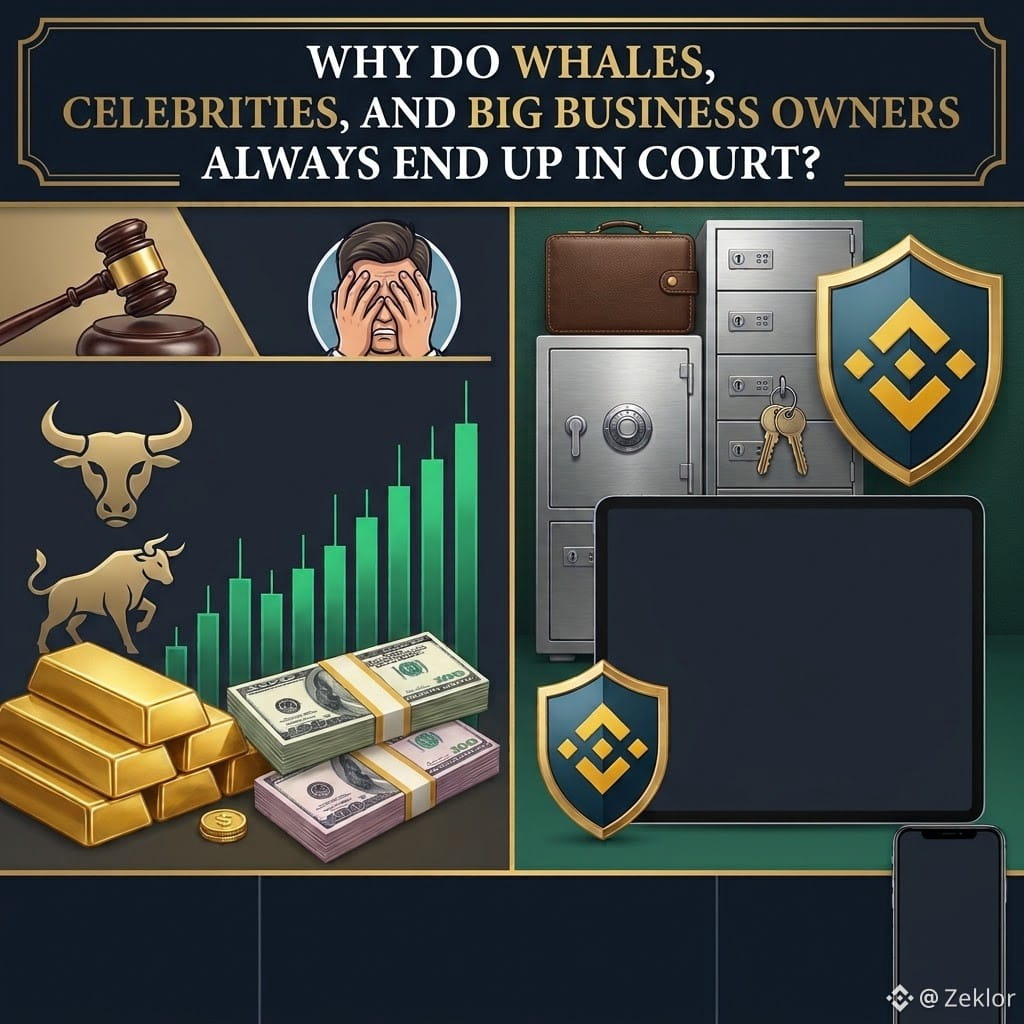
Why do whales, celebrities, and big business owners always end up in court? 🐋⚖️
It is not bad luck. It is math.
Before a lawyer takes a case, one question comes first: "Can the other side pay?" A person with nothing is not worth the legal fees. A person with property, a business, and a growing portfolio is. The bigger your bag, the bigger your target, even when the claim is weak. Settling quietly is often cheaper than fighting.
Crypto holders are not exempt. As your portfolio grows, so does your exposure:
• More visibility means more people watching your wallet
• Business disputes can reach your personal assets
• Partners, clients, and counterparties may see you as a deep pocket
• One bad decision with a large position can cost far more than a small one
Growing wealth is step one. Protecting it is step two. So;
🔐 Separate business and personal funds
🔐 Never keep everything in one place or one position
🔐 Put every agreement in writing, even with friends
🔐 Use strict risk management on every trade
🔐 Get qualified legal and financial advice early
The same discipline applies to trading. The goal is not only to grow your capital. It is to keep it.
That is the approach I follow as a Lead Trader on Binance. If you want to put your capital to work with a structured, risk-aware strategy instead of guessing the market alone, you can follow my trades through Copy Trading:
👉 Join my [Binance Copy Trading Account.](https://www.binance.com/en/copy-trading/lead-details/5291298792060684032)
* Review my trading history and stats before you decide
* Set your own copy amount and risk limits
* Stop copying at any time
Build wealth. Then guard it. Follow for more insights on growing and protecting your money. 💼
$BTC $ETH $BNB #Binance #Copytrading #CryptoTrading #RiskManagement #wealthbuilding
⚠️ Crypto trading and copy trading carry a high level of risk. Past performance does not guarantee future results, and you may lose part or all of your capital. This is general information, not financial or legal advice.
Why do whales, celebrities, and big business owners always end up in court? 🐋⚖️
It is not bad luck. It is math.
Before a lawyer takes a case, one question comes first: "Can the other side pay?" A person with nothing is not worth the legal fees. A person with property, a business, and a growing portfolio is. The bigger your bag, the bigger your target, even when the claim is weak. Settling quietly is often cheaper than fighting.
Crypto holders are not exempt. As your portfolio grows, so does your exposure:
• More visibility means more people watching your wallet
• Business disputes can reach your personal assets
• Partners, clients, and counterparties may see you as a deep pocket
• One bad decision with a large position can cost far more than a small one
Growing wealth is step one. Protecting it is step two. So;
🔐 Separate business and personal funds
🔐 Never keep everything in one place or one position
🔐 Put every agreement in writing, even with friends
🔐 Use strict risk management on every trade
🔐 Get qualified legal and financial advice early
The same discipline applies to trading. The goal is not only to grow your capital. It is to keep it.
That is the approach I follow as a Lead Trader on Binance. If you want to put your capital to work with a structured, risk-aware strategy instead of guessing the market alone, you can follow my trades through Copy Trading:
👉 Join my Binance Copy Trading Account.
* Review my trading history and stats before you decide
* Set your own copy amount and risk limits
* Stop copying at any time
Build wealth. Then guard it. Follow for more insights on growing and protecting your money. 💼
$BTC $ETH $BNB #Binance #Copytrading #CryptoTrading #RiskManagement #wealthbuilding
⚠️ Crypto trading and copy trading carry a high level of risk. Past performance does not guarantee future results, and you may lose part or all of your capital. This is general information, not financial or legal advice.
103
·
--

Article
Two Headlines Every Investor Should Read CarefullyTwo stories crossed the crypto world between 14 and 18 October. Together they carry a lesson for investors everywhere.
First, Turkish police and intelligence officers detained Hex founder Richard Heart in Istanbul, acting on an Interpol Red Notice, according to Turkish media (Decrypt, 2026). Finland requested the notice over alleged aggravated tax fraud. Heart has not been convicted, and no extradition request has been confirmed (Yahoo News, 2026).
Second, Crypto.com's prediction market exchange and Novig sued Missouri officials in federal court on 16 October. They want to stop the state from applying its sports betting laws to their event contracts (The Block, 2026). Four other platforms, including Kalshi and Polymarket, had not yet followed with lawsuits when The Block reported on the story (The Block, 2026). The underlying question is whether federal regulators or the states have authority over prediction markets (TokenPost, 2026).
Here is the key point: these are separate legal matters. One is a tax case tied to a single founder. The other is a jurisdiction dispute over sports contracts. Neither is evidence of a crackdown on all cryptocurrencies.
So why should you care, wherever you invest? Legal developments in one country can still ripple outward. They can affect access to international trading platforms, institutional participation in crypto markets, stablecoin services and cross-border transfers, and compliance demands on businesses handling digital assets.
Even so, a foreign headline does not rewrite your own country's rules. Take Nigeria as an example. Its Investments and Securities Act 2025 classifies digital assets as securities under the national SEC and brings exchanges and other service providers under its supervision (BusinessDay, 2025; Mariblock, 2025). Whatever happens in Istanbul or Missouri, Nigerian investors answer to that framework unless their own authorities announce a change. Your market will have its own version of this.
Before you commit capital, run this checklist:
Confirm the platform's regulatory status in your jurisdiction.
Understand how your assets are held in custody.
Read the withdrawal conditions carefully.
Check which local requirements apply to you.
Headlines move markets. Due diligence protects your money.
References
BusinessDay. (2025). What to know as ISA 2025 enhances regulatory powers of SEC. https://businessday.ng/news/article/what-to-know-as-isa-2025-enhances-regulatory-powers-of-sec/
Decrypt. (2026, October 14). Hex founder Richard Heart detained in Istanbul on Interpol Red Notice: Report. https://decrypt.co/380948/hex-founder-richard-heart-detained-in-istanbul-on-interpol-red-notice-report
Mariblock. (2025). Nigeria's president signs bill recognizing digital assets into law. https://www.mariblock.com/nigerias-president-signs-bill-recognizing-digital-assets-into-law
The Block. (2026, October 18). Crypto.com, Novig sue Missouri over sports event contracts; Kalshi, Polymarket, Robinhood hold off. https://www.theblock.co/news/regulation/2026-10-18-crypto-com-novig-sue-missouri-over-sports-event-contracts-kalshi-polymarket-robinhood-hold-off-418866
TokenPost. (2026, October 13). Prediction-market jurisdiction dispute could reach Supreme Court. https://www.tokenpost.com/news/regulation/31226
Yahoo News. (2026, October 14). HEX founder Richard Heart detained in Turkey. https://www.yahoo.com/news/world/articles/hex-founder-richard-heart-detained-163232818.html
Two Headlines Every Investor Should Read Carefully
Two stories crossed the crypto world between 14 and 18 October. Together they carry a lesson for investors everywhere.
First, Turkish police and intelligence officers detained Hex founder Richard Heart in Istanbul, acting on an Interpol Red Notice, according to Turkish media (Decrypt, 2026). Finland requested the notice over alleged aggravated tax fraud. Heart has not been convicted, and no extradition request has been confirmed (Yahoo News, 2026).
Second, Crypto.com's prediction market exchange and Novig sued Missouri officials in federal court on 16 October. They want to stop the state from applying its sports betting laws to their event contracts (The Block, 2026). Four other platforms, including Kalshi and Polymarket, had not yet followed with lawsuits when The Block reported on the story (The Block, 2026). The underlying question is whether federal regulators or the states have authority over prediction markets (TokenPost, 2026).
Here is the key point: these are separate legal matters. One is a tax case tied to a single founder. The other is a jurisdiction dispute over sports contracts. Neither is evidence of a crackdown on all cryptocurrencies.
So why should you care, wherever you invest? Legal developments in one country can still ripple outward. They can affect access to international trading platforms, institutional participation in crypto markets, stablecoin services and cross-border transfers, and compliance demands on businesses handling digital assets.
Even so, a foreign headline does not rewrite your own country's rules. Take Nigeria as an example. Its Investments and Securities Act 2025 classifies digital assets as securities under the national SEC and brings exchanges and other service providers under its supervision (BusinessDay, 2025; Mariblock, 2025). Whatever happens in Istanbul or Missouri, Nigerian investors answer to that framework unless their own authorities announce a change. Your market will have its own version of this.
Before you commit capital, run this checklist:
Confirm the platform's regulatory status in your jurisdiction.
Understand how your assets are held in custody.
Read the withdrawal conditions carefully.
Check which local requirements apply to you.
Headlines move markets. Due diligence protects your money.
References
BusinessDay. (2025). What to know as ISA 2025 enhances regulatory powers of SEC. https://businessday.ng/news/article/what-to-know-as-isa-2025-enhances-regulatory-powers-of-sec/
Decrypt. (2026, October 14). Hex founder Richard Heart detained in Istanbul on Interpol Red Notice: Report. https://decrypt.co/380948/hex-founder-richard-heart-detained-in-istanbul-on-interpol-red-notice-report
Mariblock. (2025). Nigeria's president signs bill recognizing digital assets into law. https://www.mariblock.com/nigerias-president-signs-bill-recognizing-digital-assets-into-law
The Block. (2026, October 18). Crypto.com, Novig sue Missouri over sports event contracts; Kalshi, Polymarket, Robinhood hold off. https://www.theblock.co/news/regulation/2026-10-18-crypto-com-novig-sue-missouri-over-sports-event-contracts-kalshi-polymarket-robinhood-hold-off-418866
TokenPost. (2026, October 13). Prediction-market jurisdiction dispute could reach Supreme Court. https://www.tokenpost.com/news/regulation/31226
Yahoo News. (2026, October 14). HEX founder Richard Heart detained in Turkey. https://www.yahoo.com/news/world/articles/hex-founder-richard-heart-detained-163232818.html
2
·
--
Article
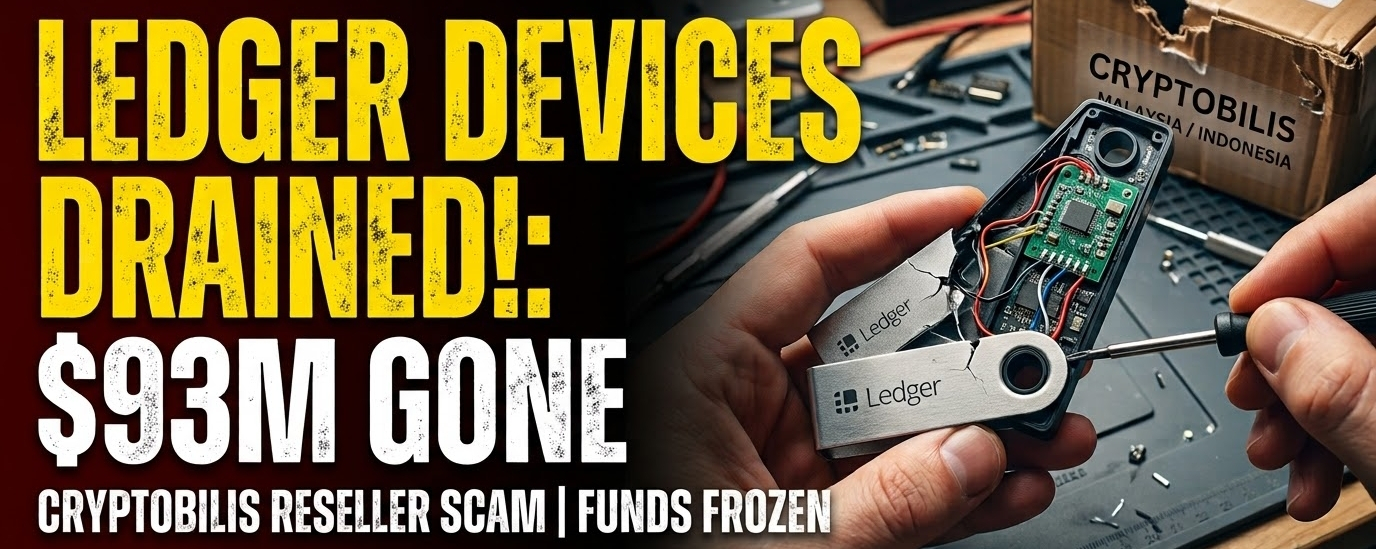
Let's talk about the Ledger situation, because this one hits close to home. 👇Between October 9 and 10, about $93M was drained from hundreds of wallets across six blockchains. The common thread is that these were all Ledger devices bought through CryptoBilis, an official reseller in Indonesia, Malaysia and the Philippines. Estimates vary depending on who's counting, from around $86M up to $94.5M, and Ledger hasn't confirmed any of the totals yet.
What do we actually know about the cause? Ledger confirmed that at least one affected device had an unauthorized hardware implant inside. That points to a supply chain problem, meaning the devices were likely tampered with somewhere before they reached the buyer. Ledger also says it has no sign that its own security infrastructure, systems or services were compromised. So this doesn't look like a flaw in every Ledger out there, and the confirmed reports so far are limited to people who bought from this reseller in Southeast Asia.
What we still don't know matters too. Ledger hasn't said how many devices were tampered with, which models were affected, or whether victims will be reimbursed.
On the recovery side, there's a little good news. Tether moved quickly and froze 37 addresses, with about $10M in USDT locked. PeckShield also traced around $3.89M of stolen USDT and TRX to Binance deposit addresses, which gives investigators a real lead. Even so, that's roughly 10% of what was taken. CZ has publicly urged the wider industry to help secure the stolen funds, so it's worth watching whether exchanges and authorities act on those flagged addresses.
Here's what Ledger is telling people who bought from CryptoBilis in the last 90 days:
✅ If you haven't set the device up, don't. Leave it alone.
✅ If you've already set it up, move your assets to a new Ledger signer with a completely new seed phrase.
CryptoBilis has reportedly closed its shops in all three countries, and Ledger has asked it to pause all sales and shipments while the investigation continues.
My takeaway is that "not your keys, not your coins" is only half the story. Your keys are only yours if the device generating them is clean. A few habits can save you a lot of pain:
🔹 Buy hardware wallets directly from the manufacturer, not from third-party sellers or marketplaces
🔹 Never use a device that arrives already set up
🔹 Never use a recovery phrase that's pre-written or pre-printed. You generate your own, always
🔹 Check the packaging and tamper seals, and if anything looks off, stop and don't use it
Even "official" resellers add a link to the chain you can't fully verify, and this case shows how costly that can be.
I'll keep following this story as Ledger releases more details. If you know anyone who bought a hardware wallet recently, especially in Southeast Asia, please share this with them. 🙏
Stay safe out there. 🔐
#Ledger #CryptoSecurity #HardwareWallets #SelfCustody #CryptoNews
$BTC $ETH $USDT
Let's talk about the Ledger situation, because this one hits close to home. 👇
Between October 9 and 10, about $93M was drained from hundreds of wallets across six blockchains. The common thread is that these were all Ledger devices bought through CryptoBilis, an official reseller in Indonesia, Malaysia and the Philippines. Estimates vary depending on who's counting, from around $86M up to $94.5M, and Ledger hasn't confirmed any of the totals yet.
What do we actually know about the cause? Ledger confirmed that at least one affected device had an unauthorized hardware implant inside. That points to a supply chain problem, meaning the devices were likely tampered with somewhere before they reached the buyer. Ledger also says it has no sign that its own security infrastructure, systems or services were compromised. So this doesn't look like a flaw in every Ledger out there, and the confirmed reports so far are limited to people who bought from this reseller in Southeast Asia.
What we still don't know matters too. Ledger hasn't said how many devices were tampered with, which models were affected, or whether victims will be reimbursed.
On the recovery side, there's a little good news. Tether moved quickly and froze 37 addresses, with about $10M in USDT locked. PeckShield also traced around $3.89M of stolen USDT and TRX to Binance deposit addresses, which gives investigators a real lead. Even so, that's roughly 10% of what was taken. CZ has publicly urged the wider industry to help secure the stolen funds, so it's worth watching whether exchanges and authorities act on those flagged addresses.
Here's what Ledger is telling people who bought from CryptoBilis in the last 90 days:
✅ If you haven't set the device up, don't. Leave it alone.
✅ If you've already set it up, move your assets to a new Ledger signer with a completely new seed phrase.
CryptoBilis has reportedly closed its shops in all three countries, and Ledger has asked it to pause all sales and shipments while the investigation continues.
My takeaway is that "not your keys, not your coins" is only half the story. Your keys are only yours if the device generating them is clean. A few habits can save you a lot of pain:
🔹 Buy hardware wallets directly from the manufacturer, not from third-party sellers or marketplaces
🔹 Never use a device that arrives already set up
🔹 Never use a recovery phrase that's pre-written or pre-printed. You generate your own, always
🔹 Check the packaging and tamper seals, and if anything looks off, stop and don't use it
Even "official" resellers add a link to the chain you can't fully verify, and this case shows how costly that can be.
I'll keep following this story as Ledger releases more details. If you know anyone who bought a hardware wallet recently, especially in Southeast Asia, please share this with them. 🙏
Stay safe out there. 🔐
#Ledger #CryptoSecurity #HardwareWallets #SelfCustody #CryptoNews
$BTC $ETH $USDT
108
·
--
Filecoin's biggest supply change since mainnet lands this week 👀
On October 15, 2026, the six-year vesting schedules for Protocol Labs and the Filecoin Foundation come to an end. When Filecoin launched in October 2020, 300 million FIL was allocated to Protocol Labs and 100 million FIL to the Filecoin Foundation, both unlocking gradually over six years. This is the last genesis unlock still running from that original plan.
The numbers are significant. Gross annual issuance is expected to fall from about 89 million FIL to roughly 21–22 million, a cut of around 75%. That removes somewhere between 66.7 and 68 million FIL in yearly vesting releases. Emissions won't go to zero, though, because block rewards to storage providers continue, with 25% of earned rewards accessible immediately and the rest vesting over 180 days.
The market has noticed. FIL has climbed from the $0.70 area in August to around $1.20, a five-month high, with analysts watching $1.30–$1.40 as the next resistance and $1.00 as key support. Exchange inflows have also ticked up, which can signal some profit-taking along the way.
The caveat is that less new supply doesn't guarantee a price rally. Tokens that are already unlocked can still be sold, and net supply also depends on network burns and the collateral providers lock up. Demand has to show up to make the supply story matter.
Anticipated events are often priced in early, so manage your risk and do your own research. This is not financial advice.
#Filecoin #crypto #Tokenomics #altcoins #DePIN
$FIL $BTC $ETH

90
Log in to explore more content
Join global crypto users on Binance Square
⚡️ Get latest and useful information about crypto.
💬 Trusted by the world’s largest crypto exchange.
👍 Discover real insights from verified creators.
Email / Phone number
Trending Topics
USMidterms-WhatAreMarketsExpecting?
53,263 views
564 Discussing
Democratic Congressional Sweep Shakes Trump Trades in AI Stocks and Crypto
Binance News
·8 Likes
·3.2k views
USOctoberNFP-AreRateCutsStillPossible
226,900 views
1,801 Discussing
AMDBeatsExpectations-AINarrativeContinues
11,138 views
208 Discussing