

Ward Nasser
151 Posts
Ward Nasser
Report
Block User
Binance Angel | Years Market Experience
📊 Market Analysis & Insights
🎓 Educational Content
💡 No Financial Advice - But Knowledge
🚀 Let's Learn Together
Open Trade
Frequent Trader
3.6 Years
25 Following
312 Followers
606 Liked
Posts
Portfolio
All
Videos
Live
PINNED
·
--
🚀 Welcome to the journey of analysis and knowledge
✨ I am Ward Nasser
📊 Binance Angel for two years
🎓 Years of experience in crypto markets
💡 Here to learn together—not to give investment advice
In this space, you will find:
✅ In-depth market analyses
✅ Explaining cryptocurrency concepts
✅ Insights from my personal experience
✅ Lessons learned from many years in the market
❌ You won’t find: direct investment advice
(Everything here is analysis and education to help you make your own decisions)
🔔 Enable notifications to follow along
📈 Let’s learn and grow together!
🚀 Welcome to the journey of analysis and knowledge
✨ I am Ward Nasser
📊 Binance Angel for two years
🎓 Years of experience in crypto markets
💡 Here to learn together—not to give investment advice
In this space, you will find:
✅ In-depth market analyses
✅ Explaining cryptocurrency concepts
✅ Insights from my personal experience
✅ Lessons learned from many years in the market
❌ You won’t find: direct investment advice
(Everything here is analysis and education to help you make your own decisions)
🔔 Enable notifications to follow along
📈 Let’s learn and grow together!
✨ I am Ward Nasser
📊 Binance Angel for two years
🎓 Years of experience in crypto markets
💡 Here to learn together—not to give investment advice
In this space, you will find:
✅ In-depth market analyses
✅ Explaining cryptocurrency concepts
✅ Insights from my personal experience
✅ Lessons learned from many years in the market
❌ You won’t find: direct investment advice
(Everything here is analysis and education to help you make your own decisions)
🔔 Enable notifications to follow along
📈 Let’s learn and grow together!
1
7
193
·
--
Article
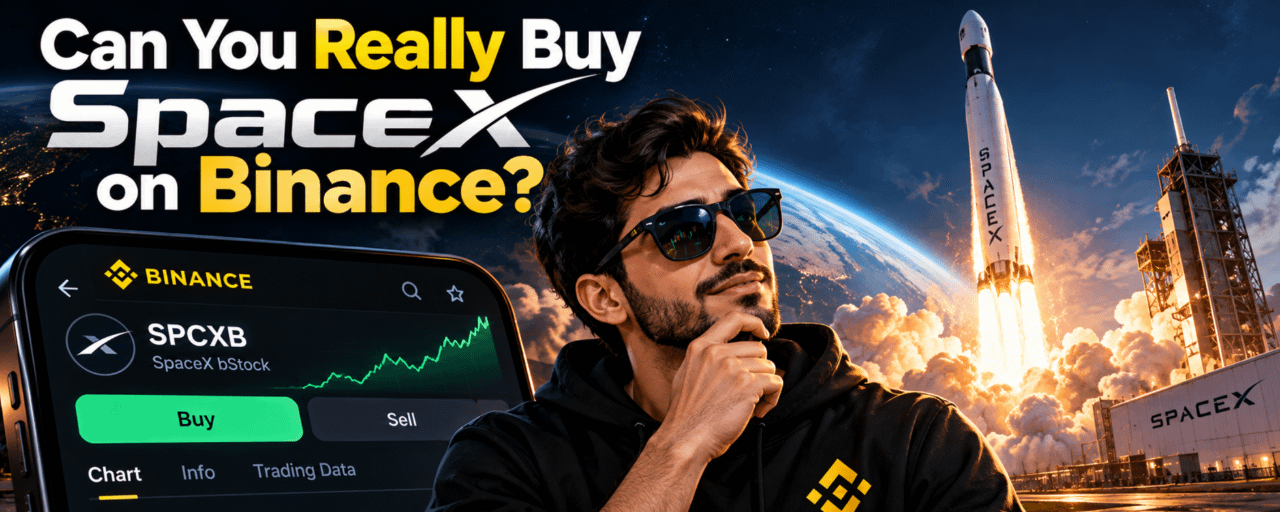
Can You Really Buy SpaceX on Binance?I bought SpaceX on Binance.
Or at least, that's what it felt like when I searched for SPCXB, placed the order and saw it sitting in my Spot wallet.
But SPCXB isn't the same thing as owning SpaceX shares directly, so I wanted to understand exactly what I had bought.
Here's the simple version.
SPCXB is a bStock: a tokenized security backed 1:1 by real SpaceX shares held by a regulated custodian.
So there are real SpaceX shares behind the product, but buying SPCXB doesn't make me a direct SpaceX shareholder.
According to Binance, bStocks represent an interest in the underlying securities held by the issuer, BTech Holdings Limited. They don't give holders direct ownership of the underlying shares, or shareholder, voting or dividend rights.
That distinction is important.
So why did I buy it?
Honestly, because I wanted to try bStocks for myself.
I've been following tokenization and RWA for a while, but reading about tokenized assets is one thing. Opening the same Binance account I use for crypto, searching SPCXB/USDT and actually buying exposure to SpaceX is another.
That's what made the product interesting to me.
There's another difference I like: bStocks trade 24/7.
But that comes with a catch. bStocks can experience significant price volatility, particularly outside traditional market hours, and their market price can differ from the value of the underlying asset.
And for UAE users, there's one more detail worth knowing.
Binance FZE clients can access eligible bStocks on the secondary market, but minting and redemption are not currently available to Binance FZE clients.
So, did I buy SpaceX?
In everyday language, that's how I described it.
Technically, what I bought was SPCXB: a tokenized security backed 1:1 by SpaceX shares, not direct ownership of SpaceX stock.
And that's actually what I find interesting about it.
I already use Binance for crypto. Now I'm using the same Spot interface to get exposure to a private company like SpaceX through a tokenized security.
For me, that's a much better example of RWA than another explanation of what “tokenization” might look like someday.
I just tried it.
Disclosure: I volunteer as a Binance Angel and personally purchased SPCXB. This is my own experience, not a recommendation to buy it.
For educational purposes only. bStocks involve market, liquidity, issuer, custody, regulatory and other risks and are available only to eligible users in permitted jurisdictions. Not financial advice.
#Binance #bStocks #SpaceX #RWA #Tokenization
Can You Really Buy SpaceX on Binance?
I bought SpaceX on Binance.
Or at least, that's what it felt like when I searched for SPCXB, placed the order and saw it sitting in my Spot wallet.
But SPCXB isn't the same thing as owning SpaceX shares directly, so I wanted to understand exactly what I had bought.
Here's the simple version.
SPCXB is a bStock: a tokenized security backed 1:1 by real SpaceX shares held by a regulated custodian.
So there are real SpaceX shares behind the product, but buying SPCXB doesn't make me a direct SpaceX shareholder.
According to Binance, bStocks represent an interest in the underlying securities held by the issuer, BTech Holdings Limited. They don't give holders direct ownership of the underlying shares, or shareholder, voting or dividend rights.
That distinction is important.
So why did I buy it?
Honestly, because I wanted to try bStocks for myself.
I've been following tokenization and RWA for a while, but reading about tokenized assets is one thing. Opening the same Binance account I use for crypto, searching SPCXB/USDT and actually buying exposure to SpaceX is another.
That's what made the product interesting to me.
There's another difference I like: bStocks trade 24/7.
But that comes with a catch. bStocks can experience significant price volatility, particularly outside traditional market hours, and their market price can differ from the value of the underlying asset.
And for UAE users, there's one more detail worth knowing.
Binance FZE clients can access eligible bStocks on the secondary market, but minting and redemption are not currently available to Binance FZE clients.
So, did I buy SpaceX?
In everyday language, that's how I described it.
Technically, what I bought was SPCXB: a tokenized security backed 1:1 by SpaceX shares, not direct ownership of SpaceX stock.
And that's actually what I find interesting about it.
I already use Binance for crypto. Now I'm using the same Spot interface to get exposure to a private company like SpaceX through a tokenized security.
For me, that's a much better example of RWA than another explanation of what “tokenization” might look like someday.
I just tried it.
Disclosure: I volunteer as a Binance Angel and personally purchased SPCXB. This is my own experience, not a recommendation to buy it.
For educational purposes only. bStocks involve market, liquidity, issuer, custody, regulatory and other risks and are available only to eligible users in permitted jurisdictions. Not financial advice.
#Binance #bStocks #SpaceX #RWA #Tokenization
Or at least, that's what it felt like when I searched for SPCXB, placed the order and saw it sitting in my Spot wallet.
But SPCXB isn't the same thing as owning SpaceX shares directly, so I wanted to understand exactly what I had bought.
Here's the simple version.
SPCXB is a bStock: a tokenized security backed 1:1 by real SpaceX shares held by a regulated custodian.
So there are real SpaceX shares behind the product, but buying SPCXB doesn't make me a direct SpaceX shareholder.
According to Binance, bStocks represent an interest in the underlying securities held by the issuer, BTech Holdings Limited. They don't give holders direct ownership of the underlying shares, or shareholder, voting or dividend rights.
That distinction is important.
So why did I buy it?
Honestly, because I wanted to try bStocks for myself.
I've been following tokenization and RWA for a while, but reading about tokenized assets is one thing. Opening the same Binance account I use for crypto, searching SPCXB/USDT and actually buying exposure to SpaceX is another.
That's what made the product interesting to me.
There's another difference I like: bStocks trade 24/7.
But that comes with a catch. bStocks can experience significant price volatility, particularly outside traditional market hours, and their market price can differ from the value of the underlying asset.
And for UAE users, there's one more detail worth knowing.
Binance FZE clients can access eligible bStocks on the secondary market, but minting and redemption are not currently available to Binance FZE clients.
So, did I buy SpaceX?
In everyday language, that's how I described it.
Technically, what I bought was SPCXB: a tokenized security backed 1:1 by SpaceX shares, not direct ownership of SpaceX stock.
And that's actually what I find interesting about it.
I already use Binance for crypto. Now I'm using the same Spot interface to get exposure to a private company like SpaceX through a tokenized security.
For me, that's a much better example of RWA than another explanation of what “tokenization” might look like someday.
I just tried it.
Disclosure: I volunteer as a Binance Angel and personally purchased SPCXB. This is my own experience, not a recommendation to buy it.
For educational purposes only. bStocks involve market, liquidity, issuer, custody, regulatory and other risks and are available only to eligible users in permitted jurisdictions. Not financial advice.
#Binance #bStocks #SpaceX #RWA #Tokenization
3
360
·
--
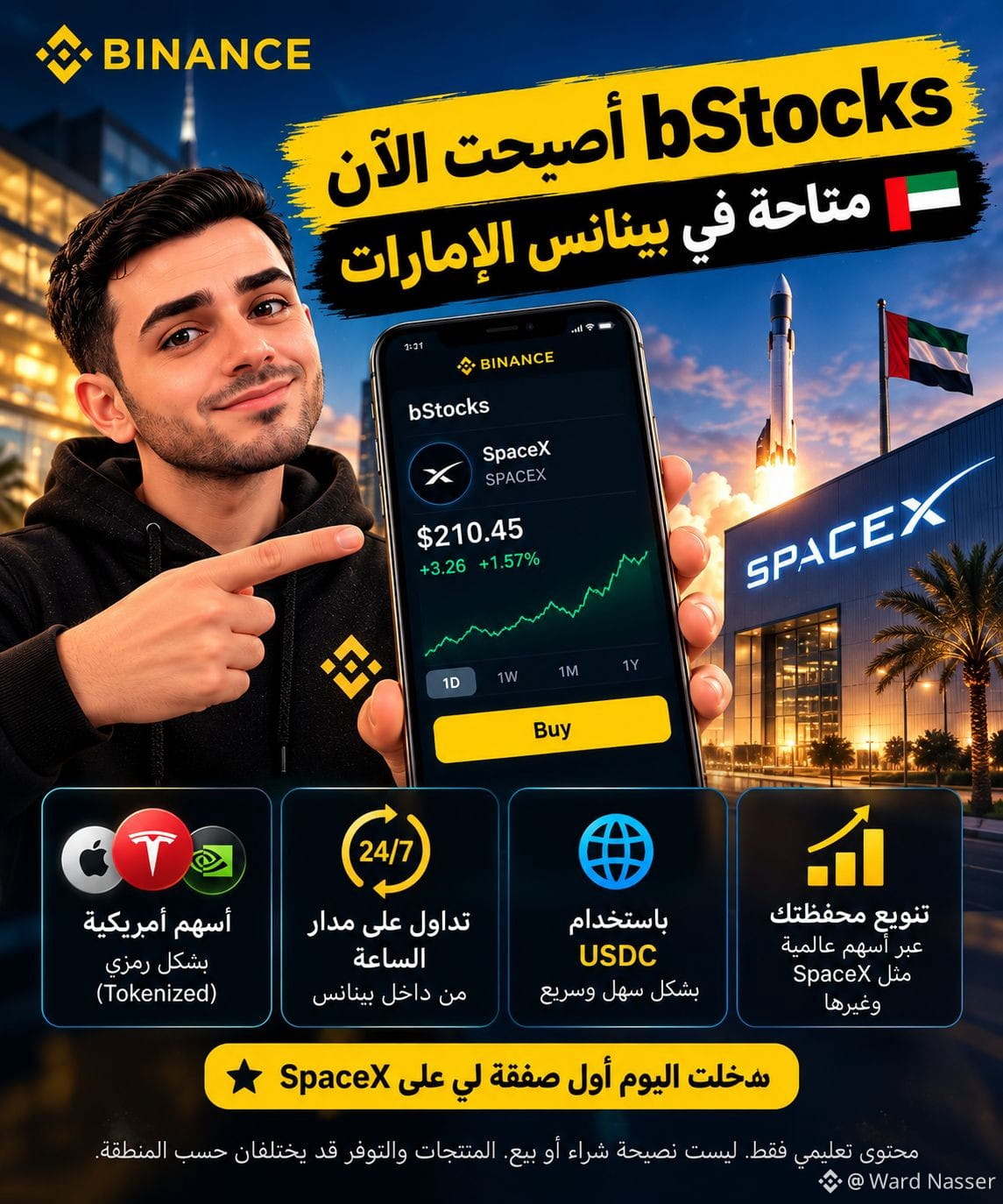
🚀 Today I entered my first trade on SpaceX via bStocks after it became available to me on Binance UAE. 🇦🇪
But what exactly are bStocks?
Simply put, they’re tokenized securities. Each bStock is backed 1:1 by a real U.S. share that’s held by a regulated custodian. They give you economic exposure to the stock, but they don’t mean you directly own shares in the company.
And what’s special for me? 👀
You can trade bStocks on the Spot market on Binance 24/7, even on weekends. And when the U.S. market is closed, the bStock price may move differently from the last price of the underlying stock, because it’s determined by supply and demand on Binance.
I chose SpaceX as my first experience with the product, and I’ll share with you more about my experience and how I’m using bStocks.
🧠 My participation in this trade is not a recommendation to buy or sell SpaceX or any asset. I’m only sharing the product explanation and my experience with it—your investment decision is up to you.
⚠️ Educational content only. bStocks involve risks, and availability depends on eligibility and region.
#Binance #bStocks #SpaceX #TradFi
🚀 Today I entered my first trade on SpaceX via bStocks after it became available to me on Binance UAE. 🇦🇪
But what exactly are bStocks?
Simply put, they’re tokenized securities. Each bStock is backed 1:1 by a real U.S. share that’s held by a regulated custodian. They give you economic exposure to the stock, but they don’t mean you directly own shares in the company.
And what’s special for me? 👀
You can trade bStocks on the Spot market on Binance 24/7, even on weekends. And when the U.S. market is closed, the bStock price may move differently from the last price of the underlying stock, because it’s determined by supply and demand on Binance.
I chose SpaceX as my first experience with the product, and I’ll share with you more about my experience and how I’m using bStocks.
🧠 My participation in this trade is not a recommendation to buy or sell SpaceX or any asset. I’m only sharing the product explanation and my experience with it—your investment decision is up to you.
⚠️ Educational content only. bStocks involve risks, and availability depends on eligibility and region.
#Binance #bStocks #SpaceX #TradFi
But what exactly are bStocks?
Simply put, they’re tokenized securities. Each bStock is backed 1:1 by a real U.S. share that’s held by a regulated custodian. They give you economic exposure to the stock, but they don’t mean you directly own shares in the company.
And what’s special for me? 👀
You can trade bStocks on the Spot market on Binance 24/7, even on weekends. And when the U.S. market is closed, the bStock price may move differently from the last price of the underlying stock, because it’s determined by supply and demand on Binance.
I chose SpaceX as my first experience with the product, and I’ll share with you more about my experience and how I’m using bStocks.
🧠 My participation in this trade is not a recommendation to buy or sell SpaceX or any asset. I’m only sharing the product explanation and my experience with it—your investment decision is up to you.
⚠️ Educational content only. bStocks involve risks, and availability depends on eligibility and region.
#Binance #bStocks #SpaceX #TradFi
2
1
5
350
·
--
Verified
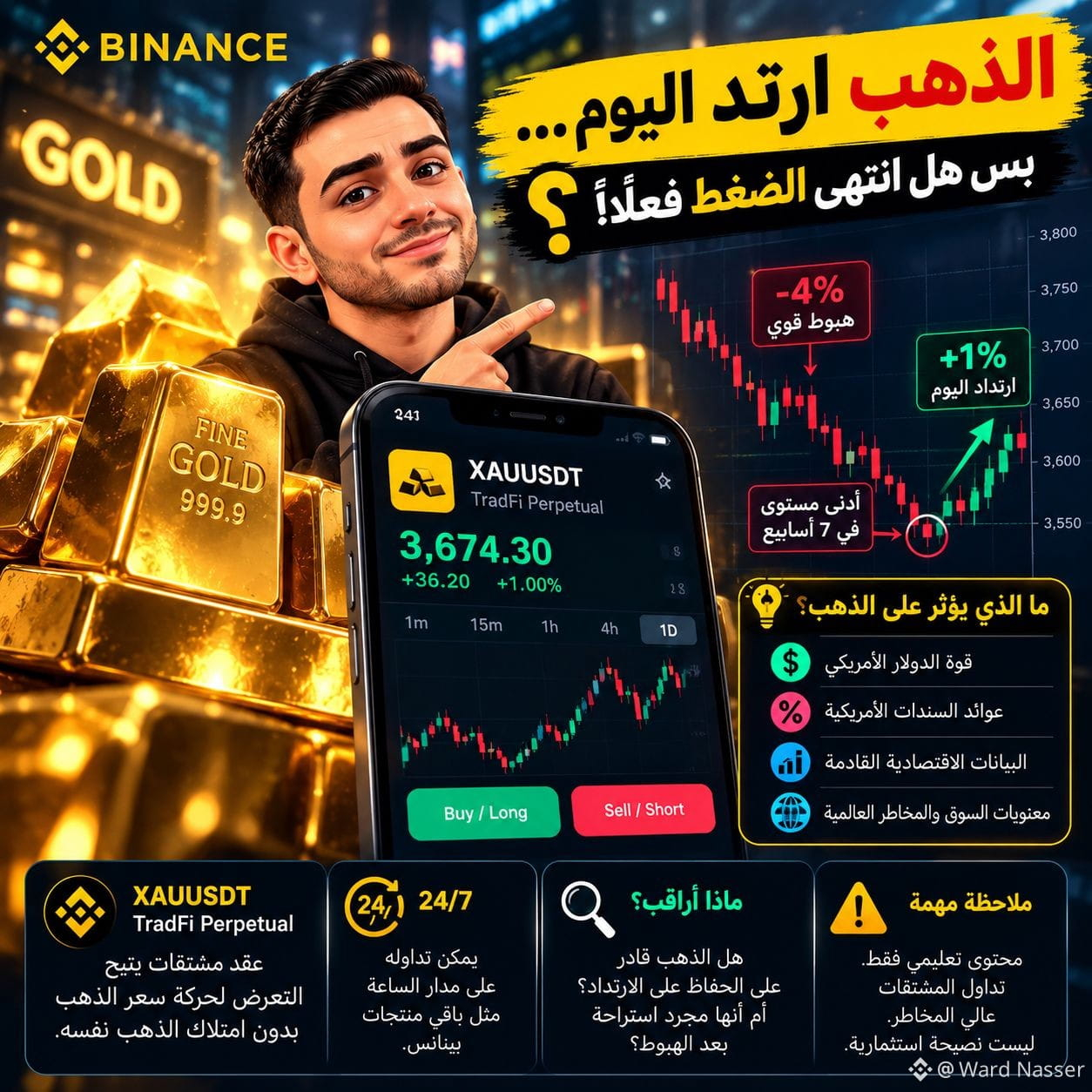
🥇 Gold rebounded today… but has the pressure really eased? 👀
After a sharp drop of nearly 4% and gold reaching its lowest level in 7 weeks, it bounced back today and rose by about 1%.
And on Binance, we’re tracking gold’s movement through the XAUUSDT TradFi Perpetual contract. It’s a derivatives product that provides exposure to gold price movement without actually owning the gold itself.
🧠 What I’m watching isn’t just the rebound:
Can gold sustain the bounce?
Or is this just a pause after the sell-off?
The strength of the dollar + bond yields + upcoming U.S. economic data… all of these could affect the next move.
🧠 I’ll share the product explanation and how I think about the trade—not the trade you *have* to take.
⚠️ Educational content only. High-risk derivatives trading.
#Binance #Gold #TradFi
🥇 Gold rebounded today… but has the pressure really eased? 👀
After a sharp drop of nearly 4% and gold reaching its lowest level in 7 weeks, it bounced back today and rose by about 1%.
And on Binance, we’re tracking gold’s movement through the XAUUSDT TradFi Perpetual contract. It’s a derivatives product that provides exposure to gold price movement without actually owning the gold itself.
🧠 What I’m watching isn’t just the rebound:
Can gold sustain the bounce?
Or is this just a pause after the sell-off?
The strength of the dollar + bond yields + upcoming U.S. economic data… all of these could affect the next move.
🧠 I’ll share the product explanation and how I think about the trade—not the trade you *have* to take.
⚠️ Educational content only. High-risk derivatives trading.
#Binance #Gold #TradFi
After a sharp drop of nearly 4% and gold reaching its lowest level in 7 weeks, it bounced back today and rose by about 1%.
And on Binance, we’re tracking gold’s movement through the XAUUSDT TradFi Perpetual contract. It’s a derivatives product that provides exposure to gold price movement without actually owning the gold itself.
🧠 What I’m watching isn’t just the rebound:
Can gold sustain the bounce?
Or is this just a pause after the sell-off?
The strength of the dollar + bond yields + upcoming U.S. economic data… all of these could affect the next move.
🧠 I’ll share the product explanation and how I think about the trade—not the trade you *have* to take.
⚠️ Educational content only. High-risk derivatives trading.
#Binance #Gold #TradFi
1
178
·
--
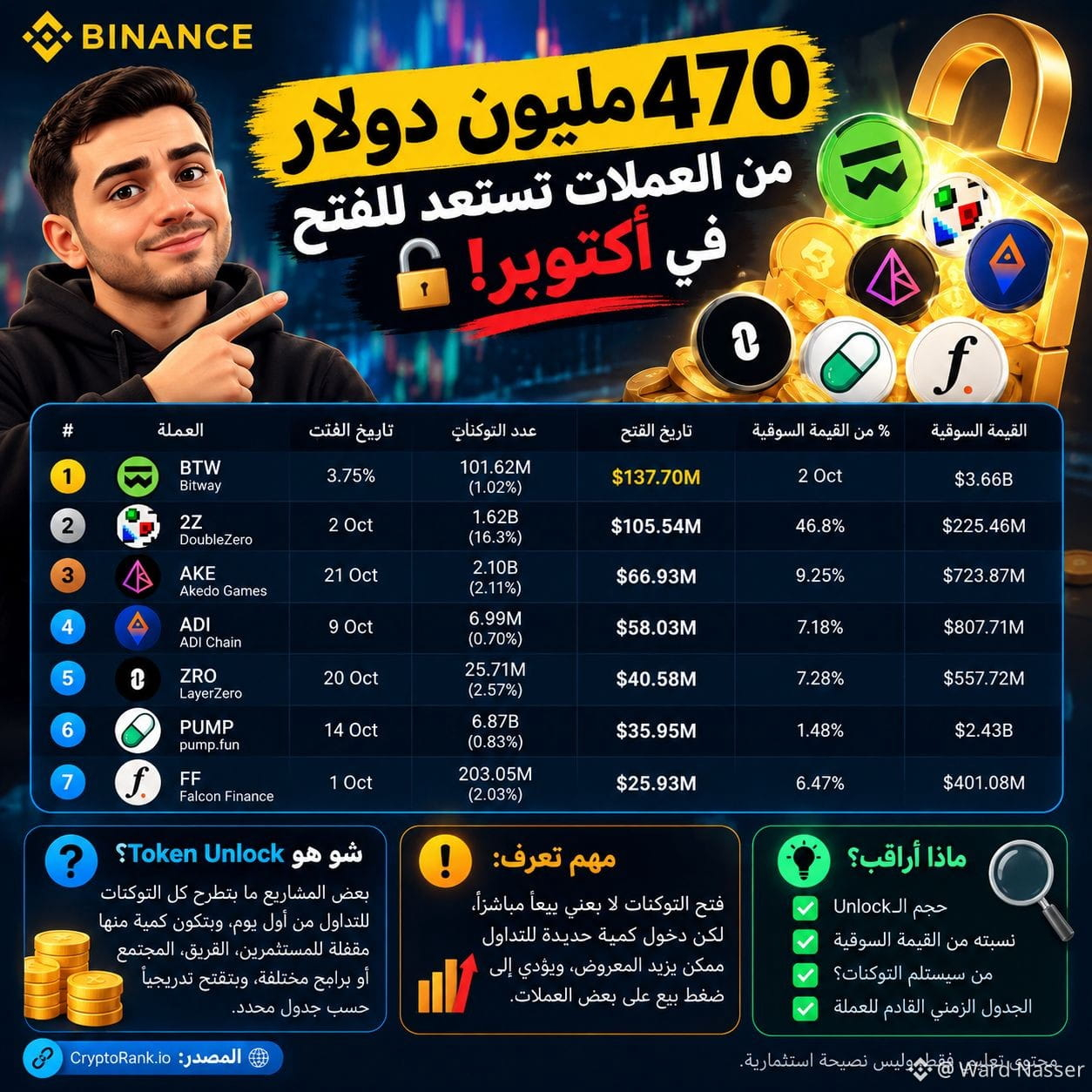
> 🚨 470 million dollars worth of tokens are set to unlock during October… but what does Token Unlock actually mean? 🔓
In simple terms: some projects don’t put all their tokens up for trading on day one. A portion is locked for investors, the team, the community, or for different programs, and it’s released gradually according to a specific schedule.
During October, the biggest 7 unlock events shown in the image are worth about $470.66 million, with BTW topping the list at $137.7M.
⚠️ Important: unlocking tokens ≠ selling them immediately.
However, adding new tokens to the market can increase supply, so savvy traders monitor: the unlock amount + its percentage of the project’s market value + who will receive the tokens.
So don’t just ask: how many million dollars will unlock?
Ask: how big is this amount compared to the size of the project? 👀
📊 Source: CryptoRank
#Crypto #TokenUnlock #Altcoins
> 🚨 470 million dollars worth of tokens are set to unlock during October… but what does Token Unlock actually mean? 🔓
In simple terms: some projects don’t put all their tokens up for trading on day one. A portion is locked for investors, the team, the community, or for different programs, and it’s released gradually according to a specific schedule.
During October, the biggest 7 unlock events shown in the image are worth about $470.66 million, with BTW topping the list at $137.7M.
⚠️ Important: unlocking tokens ≠ selling them immediately.
However, adding new tokens to the market can increase supply, so savvy traders monitor: the unlock amount + its percentage of the project’s market value + who will receive the tokens.
So don’t just ask: how many million dollars will unlock?
Ask: how big is this amount compared to the size of the project? 👀
📊 Source: CryptoRank
#Crypto #TokenUnlock #Altcoins
In simple terms: some projects don’t put all their tokens up for trading on day one. A portion is locked for investors, the team, the community, or for different programs, and it’s released gradually according to a specific schedule.
During October, the biggest 7 unlock events shown in the image are worth about $470.66 million, with BTW topping the list at $137.7M.
⚠️ Important: unlocking tokens ≠ selling them immediately.
However, adding new tokens to the market can increase supply, so savvy traders monitor: the unlock amount + its percentage of the project’s market value + who will receive the tokens.
So don’t just ask: how many million dollars will unlock?
Ask: how big is this amount compared to the size of the project? 👀
📊 Source: CryptoRank
#Crypto #TokenUnlock #Altcoins
2
390
·
--
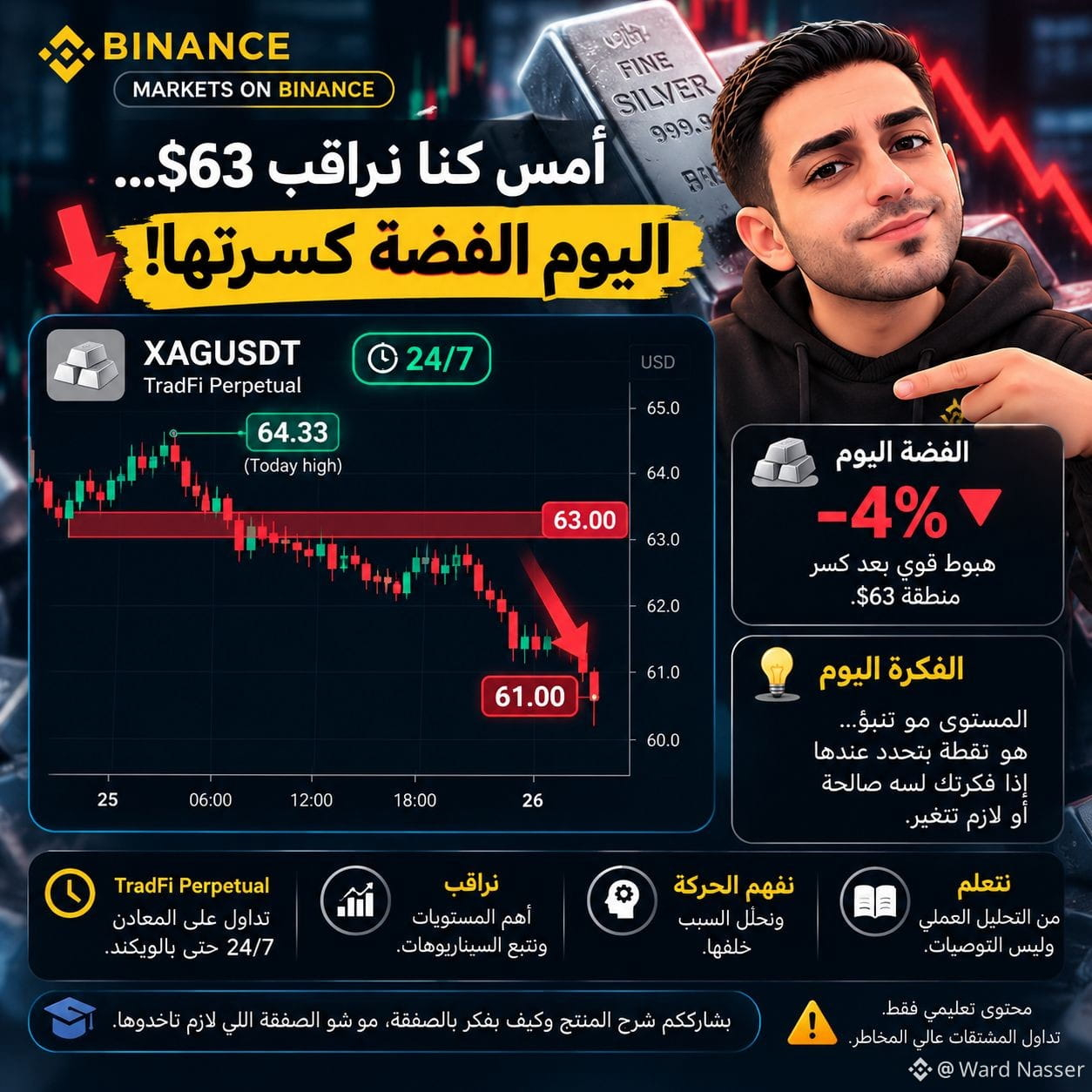
🥈 Yesterday we were watching $63… today silver broke it. 👀
Yes, watch XAGUSDT TradFi Perpetual on Binance after silver dropped by more than 4%.
What’s the product?
It’s a futures derivative contract that gives you exposure to silver price movement without actually owning the silver itself. And the advantage of TradFi Perpetuals is that they trade 24/7 even on weekends.
🎯 Yesterday the scenario was clear: breaking $63 changes the picture.
And today, that’s exactly what happened.
And here’s the takeaway: the level isn’t a prediction… it’s a point that tells you whether your idea is still valid or needs to change.
🧠 I’m sharing with you an explanation of the product and how I think about the trade—not what trade you *must* take.
⚠️ Educational content only. High-risk derivatives trading.
#Binance $XAG
{future}(XAGUSDT)
#TradFi #trading
🥈 Yesterday we were watching $63… today silver broke it. 👀
Yes, watch XAGUSDT TradFi Perpetual on Binance after silver dropped by more than 4%.
What’s the product?
It’s a futures derivative contract that gives you exposure to silver price movement without actually owning the silver itself. And the advantage of TradFi Perpetuals is that they trade 24/7 even on weekends.
🎯 Yesterday the scenario was clear: breaking $63 changes the picture.
And today, that’s exactly what happened.
And here’s the takeaway: the level isn’t a prediction… it’s a point that tells you whether your idea is still valid or needs to change.
🧠 I’m sharing with you an explanation of the product and how I think about the trade—not what trade you *must* take.
⚠️ Educational content only. High-risk derivatives trading.
#Binance $XAG
#TradFi #trading
Yes, watch XAGUSDT TradFi Perpetual on Binance after silver dropped by more than 4%.
What’s the product?
It’s a futures derivative contract that gives you exposure to silver price movement without actually owning the silver itself. And the advantage of TradFi Perpetuals is that they trade 24/7 even on weekends.
🎯 Yesterday the scenario was clear: breaking $63 changes the picture.
And today, that’s exactly what happened.
And here’s the takeaway: the level isn’t a prediction… it’s a point that tells you whether your idea is still valid or needs to change.
🧠 I’m sharing with you an explanation of the product and how I think about the trade—not what trade you *must* take.
⚠️ Educational content only. High-risk derivatives trading.
#Binance $XAG
#TradFi #trading
4
1.4k
·
--
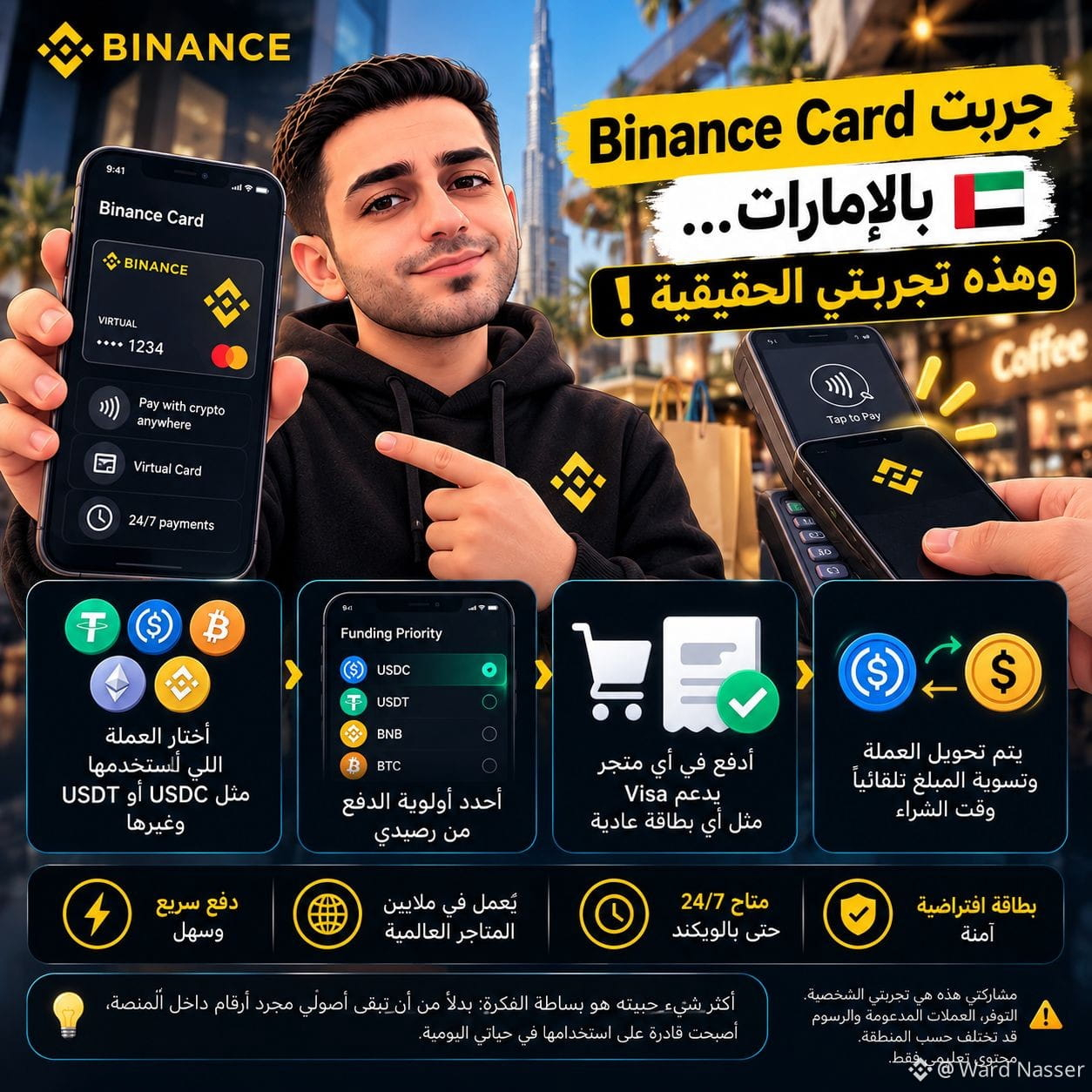
💳 Paid with crypto in the UAE… and the store really shouldn’t have accepted crypto in the first place.
I tried the virtual Binance Card for my everyday purchases, and the thing I liked the most is how simple the idea is:
I choose the coin I want to use and the payment priority — like USDC or USDT — and the card automatically settles at the time of purchase.
For the store? Card payment works like usual.
For me? The assets in my account became usable in daily life without having to do separate transfer steps every time.
This is one of my real experiences with Binance products, and I’ll share more with you. 👀
⚠️ Availability, supported currencies, and fees vary by region.
#Binance #BinanceCard #Crypto
💳 Paid with crypto in the UAE… and the store really shouldn’t have accepted crypto in the first place.
I tried the virtual Binance Card for my everyday purchases, and the thing I liked the most is how simple the idea is:
I choose the coin I want to use and the payment priority — like USDC or USDT — and the card automatically settles at the time of purchase.
For the store? Card payment works like usual.
For me? The assets in my account became usable in daily life without having to do separate transfer steps every time.
This is one of my real experiences with Binance products, and I’ll share more with you. 👀
⚠️ Availability, supported currencies, and fees vary by region.
#Binance #BinanceCard #Crypto
I tried the virtual Binance Card for my everyday purchases, and the thing I liked the most is how simple the idea is:
I choose the coin I want to use and the payment priority — like USDC or USDT — and the card automatically settles at the time of purchase.
For the store? Card payment works like usual.
For me? The assets in my account became usable in daily life without having to do separate transfer steps every time.
This is one of my real experiences with Binance products, and I’ll share more with you. 👀
⚠️ Availability, supported currencies, and fees vary by region.
#Binance #BinanceCard #Crypto
3
195
·
--
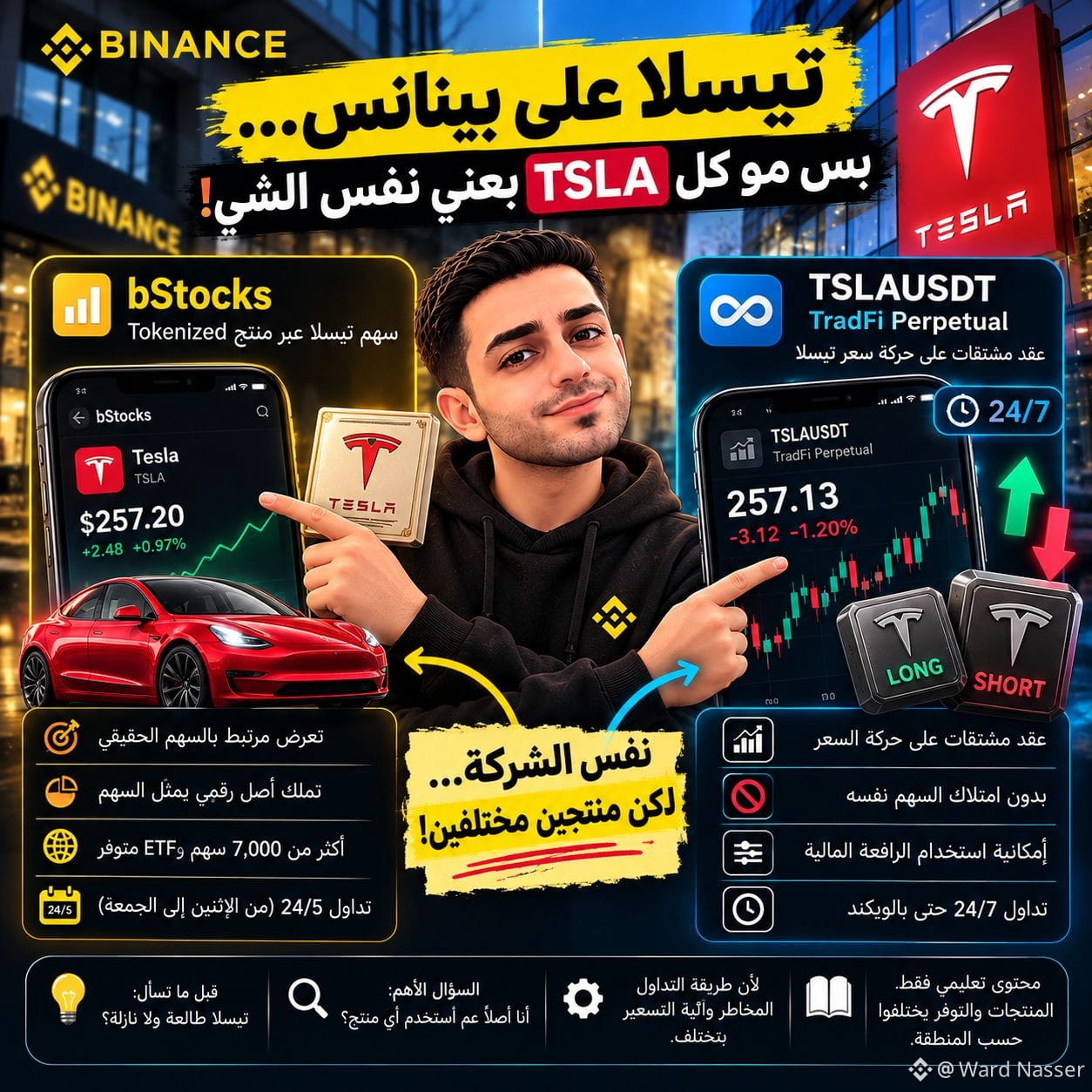
> 📈 Tesla on Binance… but not all Tesla means the same thing. 👀
On Binance, you may be exposed to Tesla price movement through more than one product, but they work differently.
🟡 bStocks: exposure tied to the stock via a Tokenized product.
🔵 TSLAUSDT TradFi Perpetual: a derivatives contract on price movement, without actually owning the stock itself.
So before you ask: is Tesla going up or down?
More important question: which product am I actually using? 🤔
Because the trading method, risks, and pricing mechanism differ.
🧠 I’m sharing an explanation of the products and how I think about using them—not what trade you have to take.
⚠️ Educational content only. Products and availability vary by region.
#Binance #bStocks #TradFi #Tesla
> 📈 Tesla on Binance… but not all Tesla means the same thing. 👀
On Binance, you may be exposed to Tesla price movement through more than one product, but they work differently.
🟡 bStocks: exposure tied to the stock via a Tokenized product.
🔵 TSLAUSDT TradFi Perpetual: a derivatives contract on price movement, without actually owning the stock itself.
So before you ask: is Tesla going up or down?
More important question: which product am I actually using? 🤔
Because the trading method, risks, and pricing mechanism differ.
🧠 I’m sharing an explanation of the products and how I think about using them—not what trade you have to take.
⚠️ Educational content only. Products and availability vary by region.
#Binance #bStocks #TradFi #Tesla
On Binance, you may be exposed to Tesla price movement through more than one product, but they work differently.
🟡 bStocks: exposure tied to the stock via a Tokenized product.
🔵 TSLAUSDT TradFi Perpetual: a derivatives contract on price movement, without actually owning the stock itself.
So before you ask: is Tesla going up or down?
More important question: which product am I actually using? 🤔
Because the trading method, risks, and pricing mechanism differ.
🧠 I’m sharing an explanation of the products and how I think about using them—not what trade you have to take.
⚠️ Educational content only. Products and availability vary by region.
#Binance #bStocks #TradFi #Tesla
3
110
·
--
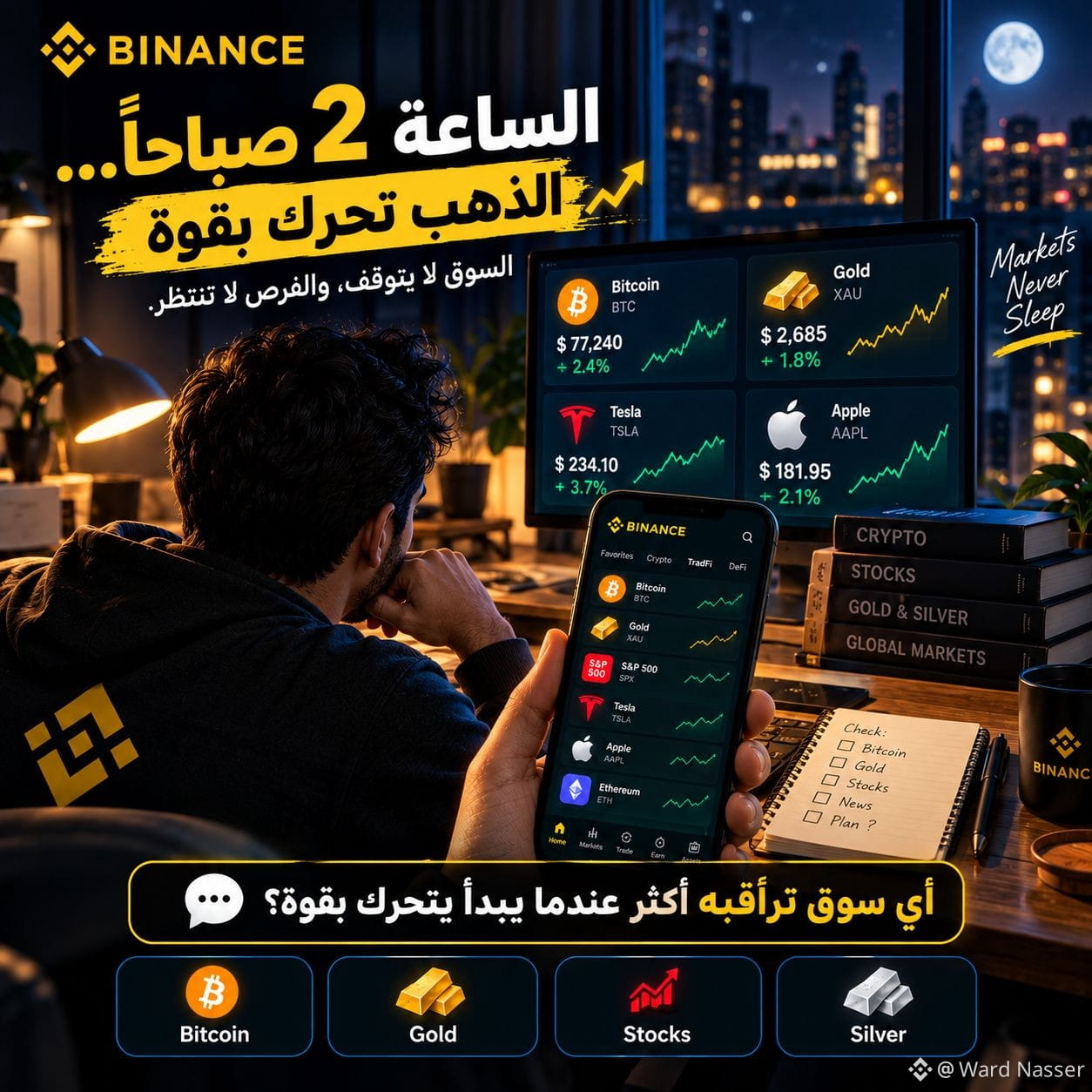
⏰ 2:00 AM… Gold is moving strongly.
In the past, for many people, the answer used to be:
“Let’s check the market tomorrow.” 😴
But the trading world has changed.
On Binance, it’s no longer just about crypto; TradFi products let you gain exposure to price movements in markets like gold, silver, and stocks from the same environment you use for crypto. 📱
And that raises an interesting question 👇
Which market do you watch most when it starts moving strongly?
₿ Bitcoin
🥇 Gold
📈 Stocks
🥈 Silver
⚠️ Educational content, not financial advice. TradFi products are derivatives that provide exposure to price movements and do not mean you own the underlying asset. Availability depends on your country of residence and eligibility, and derivatives involve risks.
#Binance #TradFi #Bitcoin #Crypto #goldtrading
⏰ 2:00 AM… Gold is moving strongly.
In the past, for many people, the answer used to be:
“Let’s check the market tomorrow.” 😴
But the trading world has changed.
On Binance, it’s no longer just about crypto; TradFi products let you gain exposure to price movements in markets like gold, silver, and stocks from the same environment you use for crypto. 📱
And that raises an interesting question 👇
Which market do you watch most when it starts moving strongly?
₿ Bitcoin
🥇 Gold
📈 Stocks
🥈 Silver
⚠️ Educational content, not financial advice. TradFi products are derivatives that provide exposure to price movements and do not mean you own the underlying asset. Availability depends on your country of residence and eligibility, and derivatives involve risks.
#Binance #TradFi #Bitcoin #Crypto #goldtrading
In the past, for many people, the answer used to be:
“Let’s check the market tomorrow.” 😴
But the trading world has changed.
On Binance, it’s no longer just about crypto; TradFi products let you gain exposure to price movements in markets like gold, silver, and stocks from the same environment you use for crypto. 📱
And that raises an interesting question 👇
Which market do you watch most when it starts moving strongly?
₿ Bitcoin
🥇 Gold
📈 Stocks
🥈 Silver
⚠️ Educational content, not financial advice. TradFi products are derivatives that provide exposure to price movements and do not mean you own the underlying asset. Availability depends on your country of residence and eligibility, and derivatives involve risks.
#Binance #TradFi #Bitcoin #Crypto #goldtrading
4
224
·
--
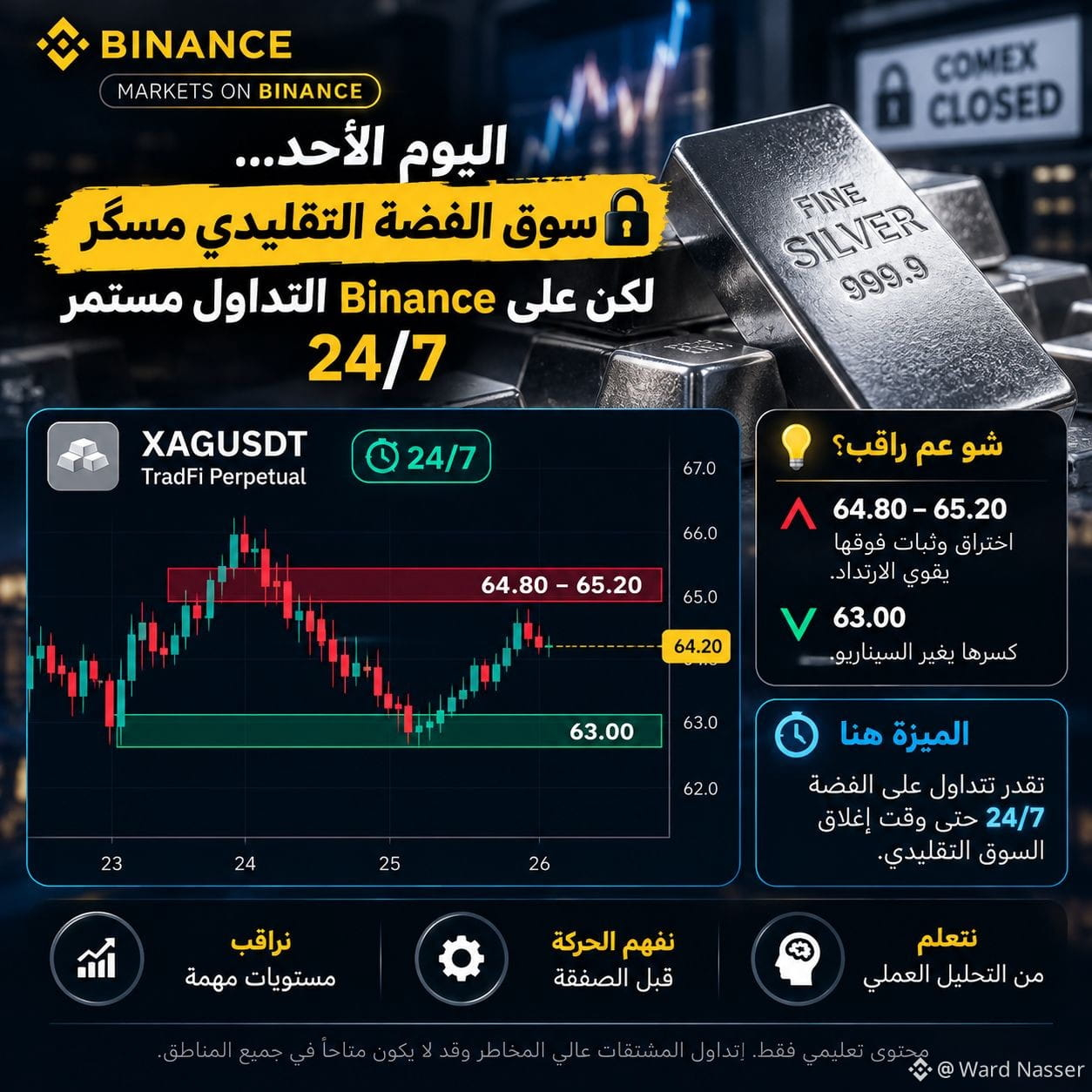
🥈 Today Sunday… the traditional silver market is closed, but on Binance trading is still ongoing. 👀
Now watch XAGUSDT TradFi Perpetual after silver bounces back from the $63 zone.
🎯 Two areas on my radar:
🔼 $64.80–65.20 — a breakout and hold that strengthens the bounce.
🔽 $63 — breaking it changes the scenario.
And here’s the advantage of TradFi Perps: you can trade the movement of traditional assets 24/7, even on the weekend.
🧠 I’m sharing a product explanation and how I think about the trade—not the trade you have to take.
⚠️ Educational content only. High-risk derivatives trading.
#Binance #Silver #TradFi
🥈 Today Sunday… the traditional silver market is closed, but on Binance trading is still ongoing. 👀
Now watch XAGUSDT TradFi Perpetual after silver bounces back from the $63 zone.
🎯 Two areas on my radar:
🔼 $64.80–65.20 — a breakout and hold that strengthens the bounce.
🔽 $63 — breaking it changes the scenario.
And here’s the advantage of TradFi Perps: you can trade the movement of traditional assets 24/7, even on the weekend.
🧠 I’m sharing a product explanation and how I think about the trade—not the trade you have to take.
⚠️ Educational content only. High-risk derivatives trading.
#Binance #Silver #TradFi
Now watch XAGUSDT TradFi Perpetual after silver bounces back from the $63 zone.
🎯 Two areas on my radar:
🔼 $64.80–65.20 — a breakout and hold that strengthens the bounce.
🔽 $63 — breaking it changes the scenario.
And here’s the advantage of TradFi Perps: you can trade the movement of traditional assets 24/7, even on the weekend.
🧠 I’m sharing a product explanation and how I think about the trade—not the trade you have to take.
⚠️ Educational content only. High-risk derivatives trading.
#Binance #Silver #TradFi
3
231
·
--
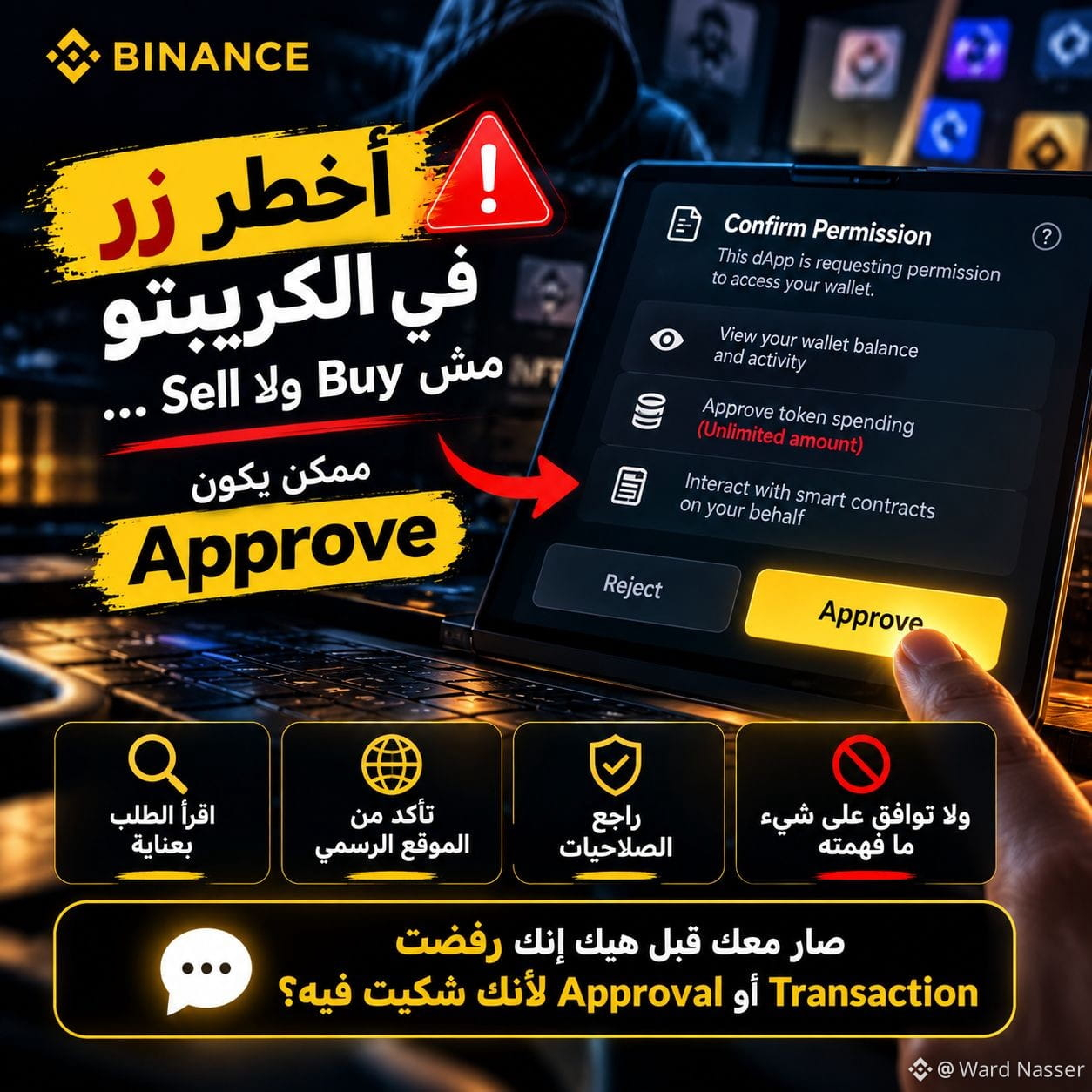
🚨 The most dangerous button in crypto isn’t Buy or Sell…
It might be Approve.
You go to a website, connect your wallet, and hit approve quickly… without exactly knowing what permission you just granted. 👀
Before any signature or Approval:
🔍 Read the request
🌐 Check the website
🔐 Review the permissions
❌ Don’t approve anything you don’t understand
In crypto, protecting your wallet starts before you press the button.
Has this happened to you before—rejecting a Transaction or Approval because you were suspicious? 👇
#Crypto #Blockchain #Web3 #Binance
🚨 The most dangerous button in crypto isn’t Buy or Sell…
It might be Approve.
You go to a website, connect your wallet, and hit approve quickly… without exactly knowing what permission you just granted. 👀
Before any signature or Approval:
🔍 Read the request
🌐 Check the website
🔐 Review the permissions
❌ Don’t approve anything you don’t understand
In crypto, protecting your wallet starts before you press the button.
Has this happened to you before—rejecting a Transaction or Approval because you were suspicious? 👇
#Crypto #Blockchain #Web3 #Binance
It might be Approve.
You go to a website, connect your wallet, and hit approve quickly… without exactly knowing what permission you just granted. 👀
Before any signature or Approval:
🔍 Read the request
🌐 Check the website
🔐 Review the permissions
❌ Don’t approve anything you don’t understand
In crypto, protecting your wallet starts before you press the button.
Has this happened to you before—rejecting a Transaction or Approval because you were suspicious? 👇
#Crypto #Blockchain #Web3 #Binance
3
89
·
--
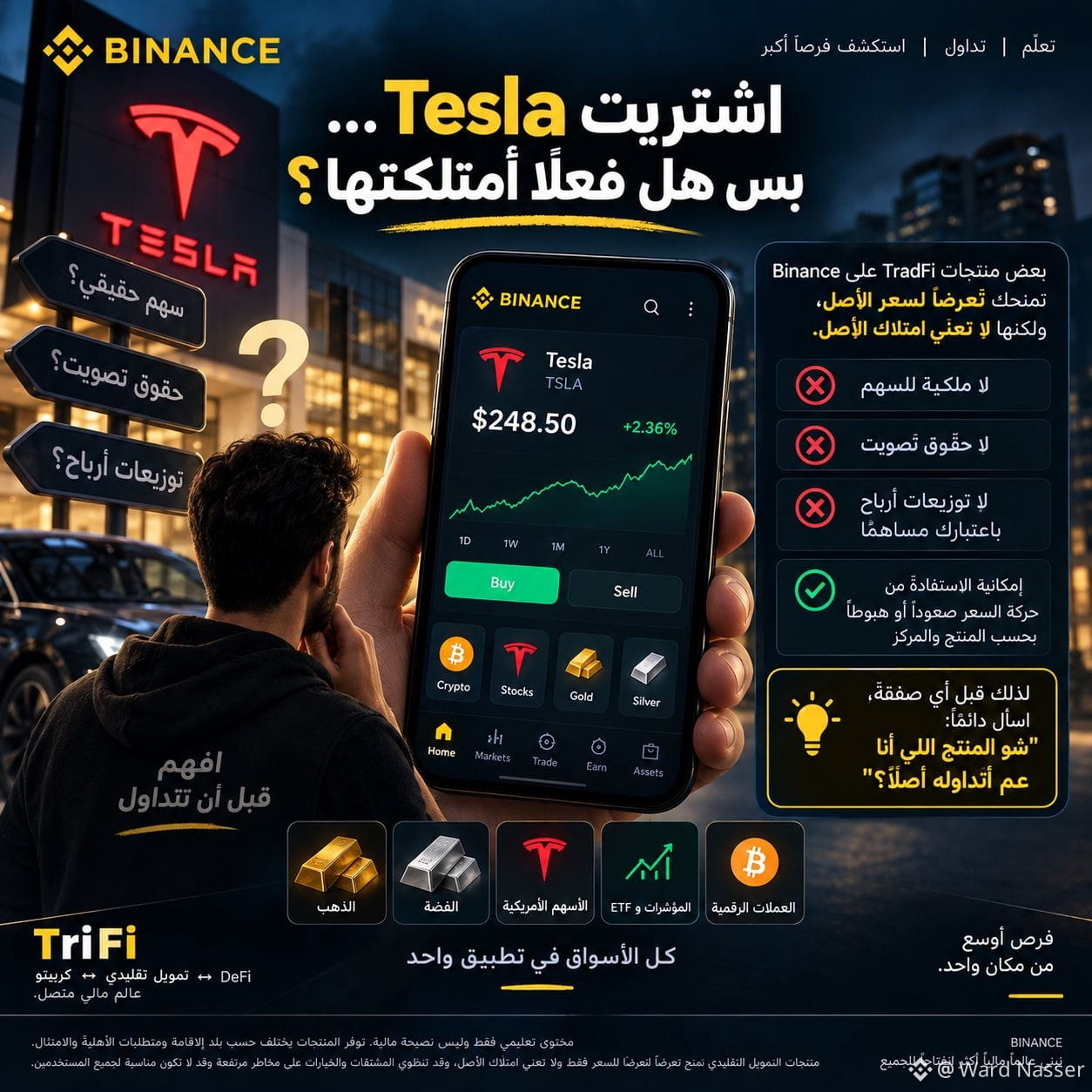
🚨 I bought a Tesla on a trading platform… this doesn’t necessarily mean you’ve become a Tesla shareholder.
Here’s the breakdown a lot of people might miss 👇
Some TradFi products on Binance give you exposure to the underlying asset.
So you can benefit from the price movement up or down depending on the product and position…
But that’s different from owning the real stock.
❌ No stock ownership
❌ No voting rights
❌ No dividends as a shareholder
The same idea is very important when talking about gold, silver, and others.
📌 So before any trade, don’t only ask:
“What’s the price of the asset?”
Ask first:
“What product am I actually trading?”
Understanding the instrument matters more than predicting the chart’s direction. 🎯
⚠️ Educational content only, not financial advice. TradFi products and derivatives may carry high risks, and their availability depends on your country of residence, eligibility, and compliance requirements.
#Binance #TradFi #Crypto #goldtrading #blockchain
🚨 I bought a Tesla on a trading platform… this doesn’t necessarily mean you’ve become a Tesla shareholder.
Here’s the breakdown a lot of people might miss 👇
Some TradFi products on Binance give you exposure to the underlying asset.
So you can benefit from the price movement up or down depending on the product and position…
But that’s different from owning the real stock.
❌ No stock ownership
❌ No voting rights
❌ No dividends as a shareholder
The same idea is very important when talking about gold, silver, and others.
📌 So before any trade, don’t only ask:
“What’s the price of the asset?”
Ask first:
“What product am I actually trading?”
Understanding the instrument matters more than predicting the chart’s direction. 🎯
⚠️ Educational content only, not financial advice. TradFi products and derivatives may carry high risks, and their availability depends on your country of residence, eligibility, and compliance requirements.
#Binance #TradFi #Crypto #goldtrading #blockchain
Here’s the breakdown a lot of people might miss 👇
Some TradFi products on Binance give you exposure to the underlying asset.
So you can benefit from the price movement up or down depending on the product and position…
But that’s different from owning the real stock.
❌ No stock ownership
❌ No voting rights
❌ No dividends as a shareholder
The same idea is very important when talking about gold, silver, and others.
📌 So before any trade, don’t only ask:
“What’s the price of the asset?”
Ask first:
“What product am I actually trading?”
Understanding the instrument matters more than predicting the chart’s direction. 🎯
⚠️ Educational content only, not financial advice. TradFi products and derivatives may carry high risks, and their availability depends on your country of residence, eligibility, and compliance requirements.
#Binance #TradFi #Crypto #goldtrading #blockchain
4
1.1k
·
--
Article
A Crypto Platform Looks Great… Until You Try to LeaveAfter a few years in crypto, I've stopped caring much about the trading screen. Nearly every big platform looks polished, deposits are easy, and they all say they take security seriously.
The real differences show up later, when you ask harder questions: who regulates the company holding my assets, what actually backs my balance, what happens if something breaks, and how painful is it to get my money out?
I learned that last one the hard way.
On one platform, I tried to withdraw my Bitcoin and couldn't. The option just wasn't available to me. The only way out was to sell the BTC inside the platform for USDT and withdraw that instead.
I got my money out, but at a price I didn't choose, at a moment I didn't choose. Nothing in the marketing had mentioned that possibility.
Since then, I check the exit before I look at anything else.
Here's the checklist I use.
1. "We're regulated." Where, exactly?
The word alone doesn't tell me much.
I want to find the legal entity serving me, the regulator behind it, and what it's actually authorized to do.
For UAE users, Binance FZE is licensed in Dubai by the Virtual Assets Regulatory Authority (VARA) as a Virtual Asset Service Provider under license VL/24/04/001, covering Exchange Services, Broker-Dealer Services, Lending and Borrowing Services, and VA Management and Investment Services.
I'd rather find that before depositing than after a problem.
2. What backs my balance?
Less exciting than new listings, but far more important.
Binance says assets covered by its Proof of Reserves are backed 1:1, with additional reserves on top.
That's a good start, but I wouldn't stop there.
3. Can I check it myself?
This is the part I find more useful.
Binance lets you verify that your own balance was included in a given Proof of Reserves snapshot, using Merkle Trees and zero-knowledge proofs without exposing individual account details.
There is a limitation: Proof of Reserves is a snapshot in time. It doesn't tell you everything about every other financial or operational risk a company carries.
Still, I prefer something I can verify over a page simply telling me my funds are safe.
4. And if something goes wrong?
Reserves answer one question. An emergency fund answers another.
Binance maintains the Secure Asset Fund for Users (SAFU) for emergency situations. Its current stated value is approximately $1 billion.
It isn't unlimited insurance, but when I'm looking at a platform, I want to know whether an emergency fund exists and whether I can easily find information about it.
5. Security beyond the password
Even the best infrastructure can't save you if you type your password and verification code into a phishing site.
Binance offers Passkeys, two-factor authentication (2FA), Anti-Phishing Codes and withdrawal address allowlisting.
They're useful protections.
But there's an obvious catch: they only help if you actually switch them on.
6. Ignore the "0%" banner, read the fee page
I want to see trading fees, spreads, deposit costs, withdrawal charges, and whether the advertised rate depends on volume or membership tier.
A fee isn't a red flag.
A fee that's hard to find before you sign up is.
7. Check the exit before the entrance
This is my simplest rule.
Before depositing, look at how withdrawals actually work: which methods are available, what the limits are, what they cost, how long they can take, what happens if one is delayed, and who you can contact.
It's also why I now look at which assets can actually be withdrawn, not just which ones can be traded.
Binance UAE provides support options for crypto and fiat withdrawal issues, account security and payment problems.
I hope you never need them.
But I want to know where they are.
So, is Binance safe?
I don't think "safe" is a yes-or-no label for any centralized platform.
What I can do is check things.
Binance FZE holds a VARA license in the UAE. Binance publishes Proof of Reserves that users can verify against their own accounts. It maintains the approximately $1 billion SAFU emergency fund and offers multiple account-level security protections.
None of that removes risk.
It just gives me more to verify before deciding how much risk I'm comfortable with.
And after several years in crypto, I've come to prefer things I can verify over things I'm asked to trust.
Quick FAQ
Is Binance regulated in the UAE?
Yes. Binance FZE is licensed by Dubai's Virtual Assets Regulatory Authority (VARA) as a Virtual Asset Service Provider under license VL/24/04/001 for specified virtual-asset activities.
How do I know if a platform is safe?
No single test does it. Check its regulatory status, reserves, security controls, withdrawal policies and emergency protections separately.
How does Binance protect customer assets?
Binance combines 1:1 asset backing and Proof of Reserves with the SAFU emergency fund and account-level protections such as 2FA, Passkeys, Anti-Phishing Codes and withdrawal address allowlisting.
What is Binance Proof of Reserves?
It's a system designed to show that reserves cover user balances for the assets included in its Proof of Reserves. Users can also verify that their own balances were included in a particular snapshot.
Disclosure: I volunteer as a Binance Angel.
Information checked in September 2026. Products, regulations and features may change. For educational purposes only, not financial advice.
#Binance #CryptoSecurity #UAE #ProofOfReserves #safu
A Crypto Platform Looks Great… Until You Try to Leave
After a few years in crypto, I've stopped caring much about the trading screen. Nearly every big platform looks polished, deposits are easy, and they all say they take security seriously.
The real differences show up later, when you ask harder questions: who regulates the company holding my assets, what actually backs my balance, what happens if something breaks, and how painful is it to get my money out?
I learned that last one the hard way.
On one platform, I tried to withdraw my Bitcoin and couldn't. The option just wasn't available to me. The only way out was to sell the BTC inside the platform for USDT and withdraw that instead.
I got my money out, but at a price I didn't choose, at a moment I didn't choose. Nothing in the marketing had mentioned that possibility.
Since then, I check the exit before I look at anything else.
Here's the checklist I use.
1. "We're regulated." Where, exactly?
The word alone doesn't tell me much.
I want to find the legal entity serving me, the regulator behind it, and what it's actually authorized to do.
For UAE users, Binance FZE is licensed in Dubai by the Virtual Assets Regulatory Authority (VARA) as a Virtual Asset Service Provider under license VL/24/04/001, covering Exchange Services, Broker-Dealer Services, Lending and Borrowing Services, and VA Management and Investment Services.
I'd rather find that before depositing than after a problem.
2. What backs my balance?
Less exciting than new listings, but far more important.
Binance says assets covered by its Proof of Reserves are backed 1:1, with additional reserves on top.
That's a good start, but I wouldn't stop there.
3. Can I check it myself?
This is the part I find more useful.
Binance lets you verify that your own balance was included in a given Proof of Reserves snapshot, using Merkle Trees and zero-knowledge proofs without exposing individual account details.
There is a limitation: Proof of Reserves is a snapshot in time. It doesn't tell you everything about every other financial or operational risk a company carries.
Still, I prefer something I can verify over a page simply telling me my funds are safe.
4. And if something goes wrong?
Reserves answer one question. An emergency fund answers another.
Binance maintains the Secure Asset Fund for Users (SAFU) for emergency situations. Its current stated value is approximately $1 billion.
It isn't unlimited insurance, but when I'm looking at a platform, I want to know whether an emergency fund exists and whether I can easily find information about it.
5. Security beyond the password
Even the best infrastructure can't save you if you type your password and verification code into a phishing site.
Binance offers Passkeys, two-factor authentication (2FA), Anti-Phishing Codes and withdrawal address allowlisting.
They're useful protections.
But there's an obvious catch: they only help if you actually switch them on.
6. Ignore the "0%" banner, read the fee page
I want to see trading fees, spreads, deposit costs, withdrawal charges, and whether the advertised rate depends on volume or membership tier.
A fee isn't a red flag.
A fee that's hard to find before you sign up is.
7. Check the exit before the entrance
This is my simplest rule.
Before depositing, look at how withdrawals actually work: which methods are available, what the limits are, what they cost, how long they can take, what happens if one is delayed, and who you can contact.
It's also why I now look at which assets can actually be withdrawn, not just which ones can be traded.
Binance UAE provides support options for crypto and fiat withdrawal issues, account security and payment problems.
I hope you never need them.
But I want to know where they are.
So, is Binance safe?
I don't think "safe" is a yes-or-no label for any centralized platform.
What I can do is check things.
Binance FZE holds a VARA license in the UAE. Binance publishes Proof of Reserves that users can verify against their own accounts. It maintains the approximately $1 billion SAFU emergency fund and offers multiple account-level security protections.
None of that removes risk.
It just gives me more to verify before deciding how much risk I'm comfortable with.
And after several years in crypto, I've come to prefer things I can verify over things I'm asked to trust.
Quick FAQ
Is Binance regulated in the UAE?
Yes. Binance FZE is licensed by Dubai's Virtual Assets Regulatory Authority (VARA) as a Virtual Asset Service Provider under license VL/24/04/001 for specified virtual-asset activities.
How do I know if a platform is safe?
No single test does it. Check its regulatory status, reserves, security controls, withdrawal policies and emergency protections separately.
How does Binance protect customer assets?
Binance combines 1:1 asset backing and Proof of Reserves with the SAFU emergency fund and account-level protections such as 2FA, Passkeys, Anti-Phishing Codes and withdrawal address allowlisting.
What is Binance Proof of Reserves?
It's a system designed to show that reserves cover user balances for the assets included in its Proof of Reserves. Users can also verify that their own balances were included in a particular snapshot.
Disclosure: I volunteer as a Binance Angel.
Information checked in September 2026. Products, regulations and features may change. For educational purposes only, not financial advice.
#Binance #CryptoSecurity #UAE #ProofOfReserves #safu
The real differences show up later, when you ask harder questions: who regulates the company holding my assets, what actually backs my balance, what happens if something breaks, and how painful is it to get my money out?
I learned that last one the hard way.
On one platform, I tried to withdraw my Bitcoin and couldn't. The option just wasn't available to me. The only way out was to sell the BTC inside the platform for USDT and withdraw that instead.
I got my money out, but at a price I didn't choose, at a moment I didn't choose. Nothing in the marketing had mentioned that possibility.
Since then, I check the exit before I look at anything else.
Here's the checklist I use.
1. "We're regulated." Where, exactly?
The word alone doesn't tell me much.
I want to find the legal entity serving me, the regulator behind it, and what it's actually authorized to do.
For UAE users, Binance FZE is licensed in Dubai by the Virtual Assets Regulatory Authority (VARA) as a Virtual Asset Service Provider under license VL/24/04/001, covering Exchange Services, Broker-Dealer Services, Lending and Borrowing Services, and VA Management and Investment Services.
I'd rather find that before depositing than after a problem.
2. What backs my balance?
Less exciting than new listings, but far more important.
Binance says assets covered by its Proof of Reserves are backed 1:1, with additional reserves on top.
That's a good start, but I wouldn't stop there.
3. Can I check it myself?
This is the part I find more useful.
Binance lets you verify that your own balance was included in a given Proof of Reserves snapshot, using Merkle Trees and zero-knowledge proofs without exposing individual account details.
There is a limitation: Proof of Reserves is a snapshot in time. It doesn't tell you everything about every other financial or operational risk a company carries.
Still, I prefer something I can verify over a page simply telling me my funds are safe.
4. And if something goes wrong?
Reserves answer one question. An emergency fund answers another.
Binance maintains the Secure Asset Fund for Users (SAFU) for emergency situations. Its current stated value is approximately $1 billion.
It isn't unlimited insurance, but when I'm looking at a platform, I want to know whether an emergency fund exists and whether I can easily find information about it.
5. Security beyond the password
Even the best infrastructure can't save you if you type your password and verification code into a phishing site.
Binance offers Passkeys, two-factor authentication (2FA), Anti-Phishing Codes and withdrawal address allowlisting.
They're useful protections.
But there's an obvious catch: they only help if you actually switch them on.
6. Ignore the "0%" banner, read the fee page
I want to see trading fees, spreads, deposit costs, withdrawal charges, and whether the advertised rate depends on volume or membership tier.
A fee isn't a red flag.
A fee that's hard to find before you sign up is.
7. Check the exit before the entrance
This is my simplest rule.
Before depositing, look at how withdrawals actually work: which methods are available, what the limits are, what they cost, how long they can take, what happens if one is delayed, and who you can contact.
It's also why I now look at which assets can actually be withdrawn, not just which ones can be traded.
Binance UAE provides support options for crypto and fiat withdrawal issues, account security and payment problems.
I hope you never need them.
But I want to know where they are.
So, is Binance safe?
I don't think "safe" is a yes-or-no label for any centralized platform.
What I can do is check things.
Binance FZE holds a VARA license in the UAE. Binance publishes Proof of Reserves that users can verify against their own accounts. It maintains the approximately $1 billion SAFU emergency fund and offers multiple account-level security protections.
None of that removes risk.
It just gives me more to verify before deciding how much risk I'm comfortable with.
And after several years in crypto, I've come to prefer things I can verify over things I'm asked to trust.
Quick FAQ
Is Binance regulated in the UAE?
Yes. Binance FZE is licensed by Dubai's Virtual Assets Regulatory Authority (VARA) as a Virtual Asset Service Provider under license VL/24/04/001 for specified virtual-asset activities.
How do I know if a platform is safe?
No single test does it. Check its regulatory status, reserves, security controls, withdrawal policies and emergency protections separately.
How does Binance protect customer assets?
Binance combines 1:1 asset backing and Proof of Reserves with the SAFU emergency fund and account-level protections such as 2FA, Passkeys, Anti-Phishing Codes and withdrawal address allowlisting.
What is Binance Proof of Reserves?
It's a system designed to show that reserves cover user balances for the assets included in its Proof of Reserves. Users can also verify that their own balances were included in a particular snapshot.
Disclosure: I volunteer as a Binance Angel.
Information checked in September 2026. Products, regulations and features may change. For educational purposes only, not financial advice.
#Binance #CryptoSecurity #UAE #ProofOfReserves #safu
6
2.4k
·
--
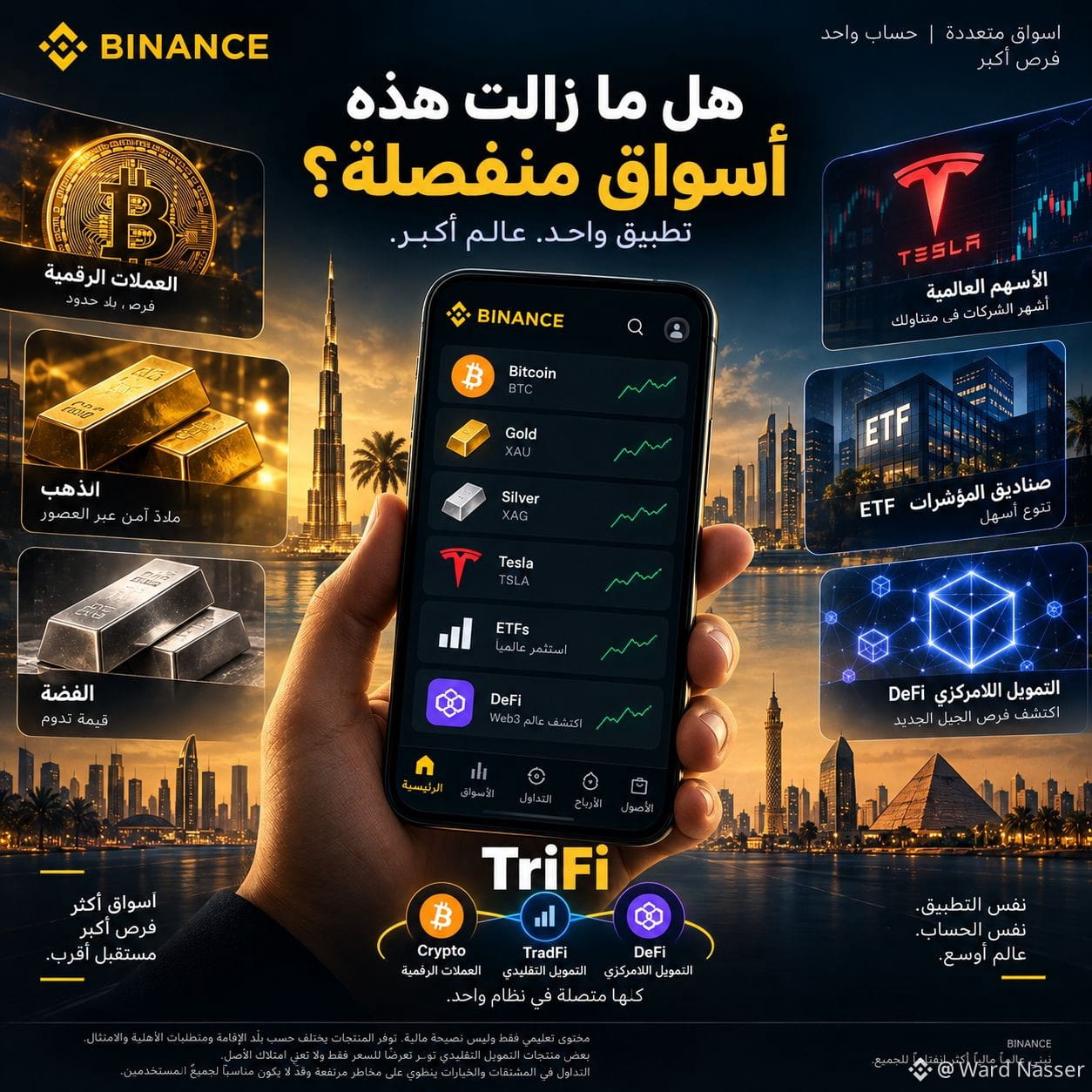
Imagine you opened the app and saw in front of you:
₿ Bitcoin
🥇 Gold
🥈 Silver
📈 Tesla
🏦 ETFs
🔗 DeFi
The interesting question here isn’t: what should I buy?
The question is: is it still logical to think of them as separate markets?
For a long time, each world had its own door:
Crypto on a platform.
Stocks through a broker.
Gold somewhere else.
And DeFi in a completely different wallet.
Today, Binance is trying to bring Crypto + TradFi + DeFi together into one Ecosystem.
And that’s where the idea of TriFi comes in:
Crypto ↔️ TradFi ↔️ DeFi 🔗
In my opinion, what’s exciting isn’t the addition of a new trading asset…
It’s the gradual disappearance of boundaries between the markets themselves.
In 5 years, will we still say:
“I’m a crypto trader” and “I’m a stock trader”?
Or will we simply say: I’m a trader? 👀
⚠️ Educational content only. Product availability varies by country and eligibility. Some TradFi products provide price exposure only and do not imply ownership of the underlying asset, and derivatives and options may involve high risks.
#Binance $BTC #TradFi #Blockchain
Imagine you opened the app and saw in front of you:
₿ Bitcoin
🥇 Gold
🥈 Silver
📈 Tesla
🏦 ETFs
🔗 DeFi
The interesting question here isn’t: what should I buy?
The question is: is it still logical to think of them as separate markets?
For a long time, each world had its own door:
Crypto on a platform.
Stocks through a broker.
Gold somewhere else.
And DeFi in a completely different wallet.
Today, Binance is trying to bring Crypto + TradFi + DeFi together into one Ecosystem.
And that’s where the idea of TriFi comes in:
Crypto ↔️ TradFi ↔️ DeFi 🔗
In my opinion, what’s exciting isn’t the addition of a new trading asset…
It’s the gradual disappearance of boundaries between the markets themselves.
In 5 years, will we still say:
“I’m a crypto trader” and “I’m a stock trader”?
Or will we simply say: I’m a trader? 👀
⚠️ Educational content only. Product availability varies by country and eligibility. Some TradFi products provide price exposure only and do not imply ownership of the underlying asset, and derivatives and options may involve high risks.
#Binance $BTC #TradFi #Blockchain
₿ Bitcoin
🥇 Gold
🥈 Silver
📈 Tesla
🏦 ETFs
🔗 DeFi
The interesting question here isn’t: what should I buy?
The question is: is it still logical to think of them as separate markets?
For a long time, each world had its own door:
Crypto on a platform.
Stocks through a broker.
Gold somewhere else.
And DeFi in a completely different wallet.
Today, Binance is trying to bring Crypto + TradFi + DeFi together into one Ecosystem.
And that’s where the idea of TriFi comes in:
Crypto ↔️ TradFi ↔️ DeFi 🔗
In my opinion, what’s exciting isn’t the addition of a new trading asset…
It’s the gradual disappearance of boundaries between the markets themselves.
In 5 years, will we still say:
“I’m a crypto trader” and “I’m a stock trader”?
Or will we simply say: I’m a trader? 👀
⚠️ Educational content only. Product availability varies by country and eligibility. Some TradFi products provide price exposure only and do not imply ownership of the underlying asset, and derivatives and options may involve high risks.
#Binance $BTC #TradFi #Blockchain
3
483
·
--
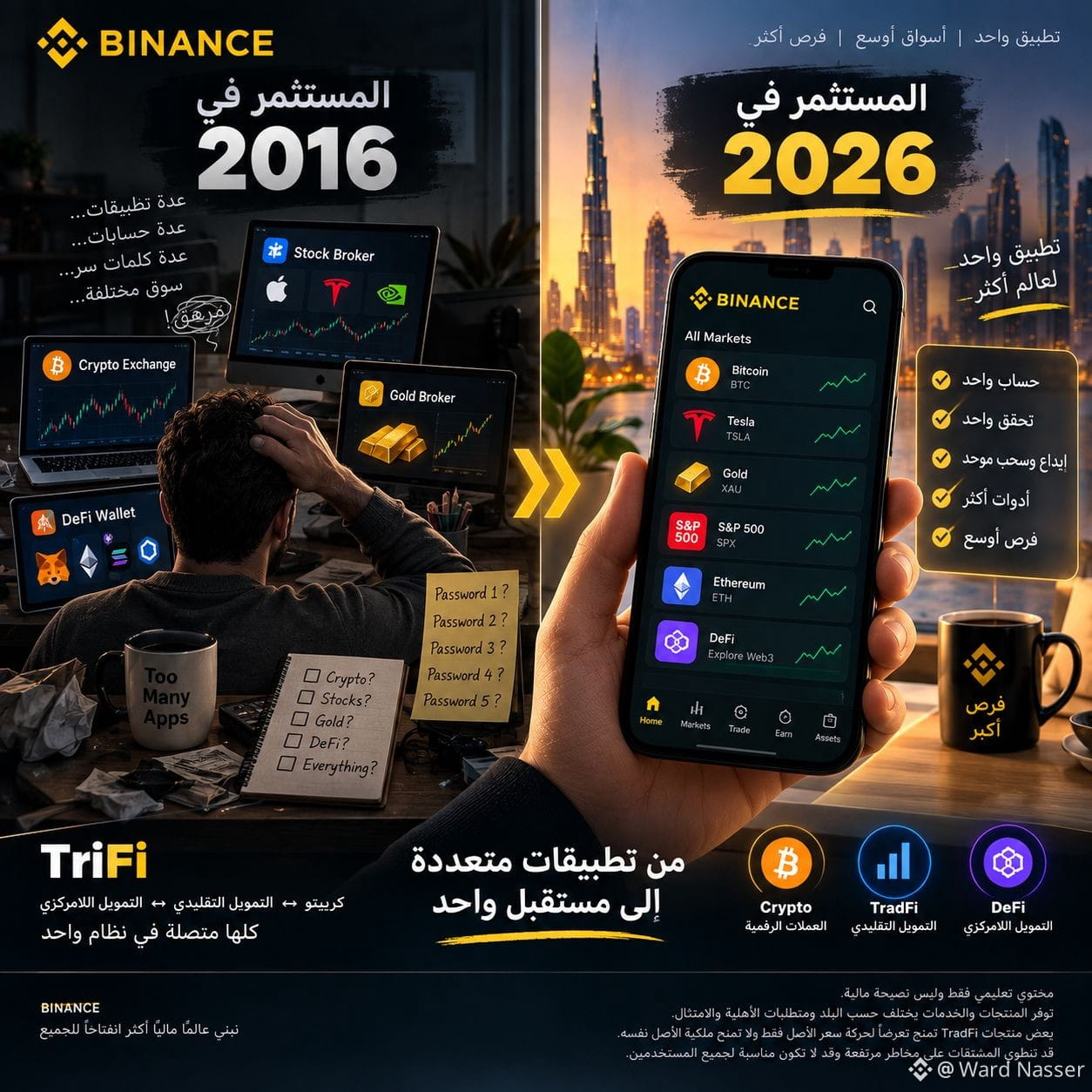
Investor in 2016:
📱 Stocks app
💻 Crypto platform
🥇 Gold broker
👛 Wallet for DeFi
🔐 And 5 backup seed phrases—forgetting 3 of them 😂
Investor in 2026:
Opens one app.
And that’s exactly where we understand why Binance talks about the TriFi concept.
Crypto ₿
↕️
TradFi 📈
↕️
DeFi 🔗
The idea is no longer just adding more products to Binance…
The idea is that the account itself gradually turns into a gateway to different financial markets instead of having to move between separate worlds.
And for me, this is one of the biggest shifts in the user experience:
From Crypto Exchange
To Financial Super App.
Your turn 👇
If you had to use only one platform, what’s the most important thing you’d need it to include?
⚠️ Educational content only and not financial advice. Products and services vary by country and eligibility, and some TradFi products provide only price exposure and do not grant ownership of the underlying asset.
#Binance #SuperFinancialApp #TradFi #blockchain
Investor in 2016:
📱 Stocks app
💻 Crypto platform
🥇 Gold broker
👛 Wallet for DeFi
🔐 And 5 backup seed phrases—forgetting 3 of them 😂
Investor in 2026:
Opens one app.
And that’s exactly where we understand why Binance talks about the TriFi concept.
Crypto ₿
↕️
TradFi 📈
↕️
DeFi 🔗
The idea is no longer just adding more products to Binance…
The idea is that the account itself gradually turns into a gateway to different financial markets instead of having to move between separate worlds.
And for me, this is one of the biggest shifts in the user experience:
From Crypto Exchange
To Financial Super App.
Your turn 👇
If you had to use only one platform, what’s the most important thing you’d need it to include?
⚠️ Educational content only and not financial advice. Products and services vary by country and eligibility, and some TradFi products provide only price exposure and do not grant ownership of the underlying asset.
#Binance #SuperFinancialApp #TradFi #blockchain
📱 Stocks app
💻 Crypto platform
🥇 Gold broker
👛 Wallet for DeFi
🔐 And 5 backup seed phrases—forgetting 3 of them 😂
Investor in 2026:
Opens one app.
And that’s exactly where we understand why Binance talks about the TriFi concept.
Crypto ₿
↕️
TradFi 📈
↕️
DeFi 🔗
The idea is no longer just adding more products to Binance…
The idea is that the account itself gradually turns into a gateway to different financial markets instead of having to move between separate worlds.
And for me, this is one of the biggest shifts in the user experience:
From Crypto Exchange
To Financial Super App.
Your turn 👇
If you had to use only one platform, what’s the most important thing you’d need it to include?
⚠️ Educational content only and not financial advice. Products and services vary by country and eligibility, and some TradFi products provide only price exposure and do not grant ownership of the underlying asset.
#Binance #SuperFinancialApp #TradFi #blockchain
6
848
·
--
🪙 «Its price is just one cent… imagine if it reached a dollar!»
This line tricked many beginners into one of the most famous crypto traps: believing that a low-priced coin is actually cheap.
The truth? The unit price alone doesn’t tell you the project’s value.
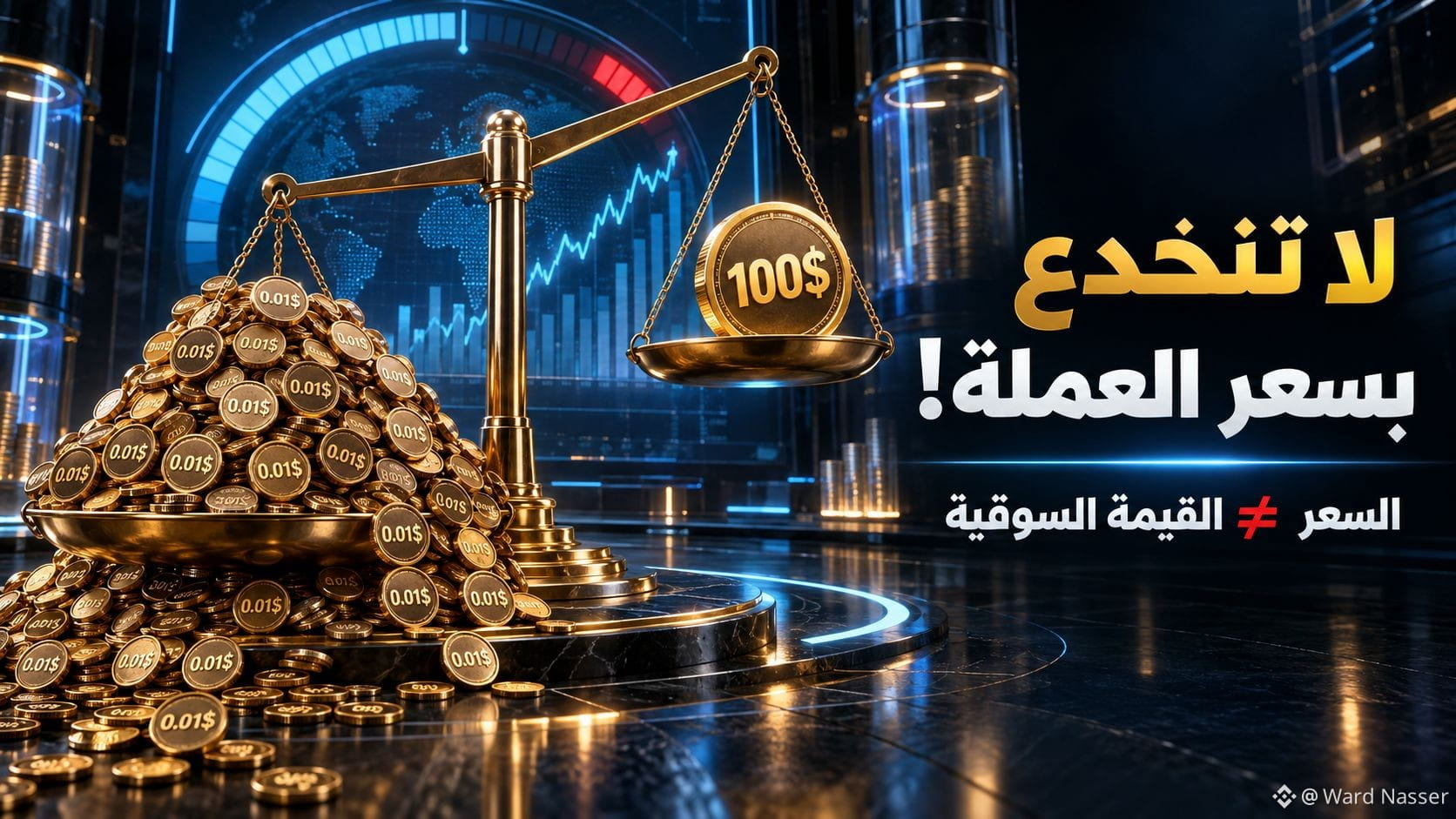
Market cap = coin price × number of coins in circulation
A simple example:
🔹 Coin A costs 0.01$ and has 100 billion of them
Its market cap = 1 billion dollars
🔸 Coin B costs 100$ and has only a million
Its market cap = 100 million dollars
Even though Coin B’s price is higher by 10,000 times, Project A is bigger than it by ten times! 🤯
Before buying any coin, don’t ask only: «How much is it?»
Ask also:
🔍 How many coins are in circulation?
🔓 Are large amounts going to be unlocked later?
📊 What is the current market cap?
💰 What will the market cap be when the full supply is released?
🎯 Does the project need new billions to reach your target?
The golden rule: lots of zeros after the decimal point doesn’t mean the coin is cheap… it might only mean the supply is huge.
Have you ever bought a coin because its price was below one dollar? 👀
Educational content, not financial advice.
#CryptoEducation #MarketCap #Tokenomics #dyor
🪙 «Its price is just one cent… imagine if it reached a dollar!»
This line tricked many beginners into one of the most famous crypto traps: believing that a low-priced coin is actually cheap.
The truth? The unit price alone doesn’t tell you the project’s value.
Market cap = coin price × number of coins in circulation
A simple example:
🔹 Coin A costs 0.01$ and has 100 billion of them
Its market cap = 1 billion dollars
🔸 Coin B costs 100$ and has only a million
Its market cap = 100 million dollars
Even though Coin B’s price is higher by 10,000 times, Project A is bigger than it by ten times! 🤯
Before buying any coin, don’t ask only: «How much is it?»
Ask also:
🔍 How many coins are in circulation?
🔓 Are large amounts going to be unlocked later?
📊 What is the current market cap?
💰 What will the market cap be when the full supply is released?
🎯 Does the project need new billions to reach your target?
The golden rule: lots of zeros after the decimal point doesn’t mean the coin is cheap… it might only mean the supply is huge.
Have you ever bought a coin because its price was below one dollar? 👀
Educational content, not financial advice.
#CryptoEducation #MarketCap #Tokenomics #dyor
This line tricked many beginners into one of the most famous crypto traps: believing that a low-priced coin is actually cheap.
The truth? The unit price alone doesn’t tell you the project’s value.
Market cap = coin price × number of coins in circulation
A simple example:
🔹 Coin A costs 0.01$ and has 100 billion of them
Its market cap = 1 billion dollars
🔸 Coin B costs 100$ and has only a million
Its market cap = 100 million dollars
Even though Coin B’s price is higher by 10,000 times, Project A is bigger than it by ten times! 🤯
Before buying any coin, don’t ask only: «How much is it?»
Ask also:
🔍 How many coins are in circulation?
🔓 Are large amounts going to be unlocked later?
📊 What is the current market cap?
💰 What will the market cap be when the full supply is released?
🎯 Does the project need new billions to reach your target?
The golden rule: lots of zeros after the decimal point doesn’t mean the coin is cheap… it might only mean the supply is huge.
Have you ever bought a coin because its price was below one dollar? 👀
Educational content, not financial advice.
#CryptoEducation #MarketCap #Tokenomics #dyor
4
923
·
--
#BTCBreaks80K
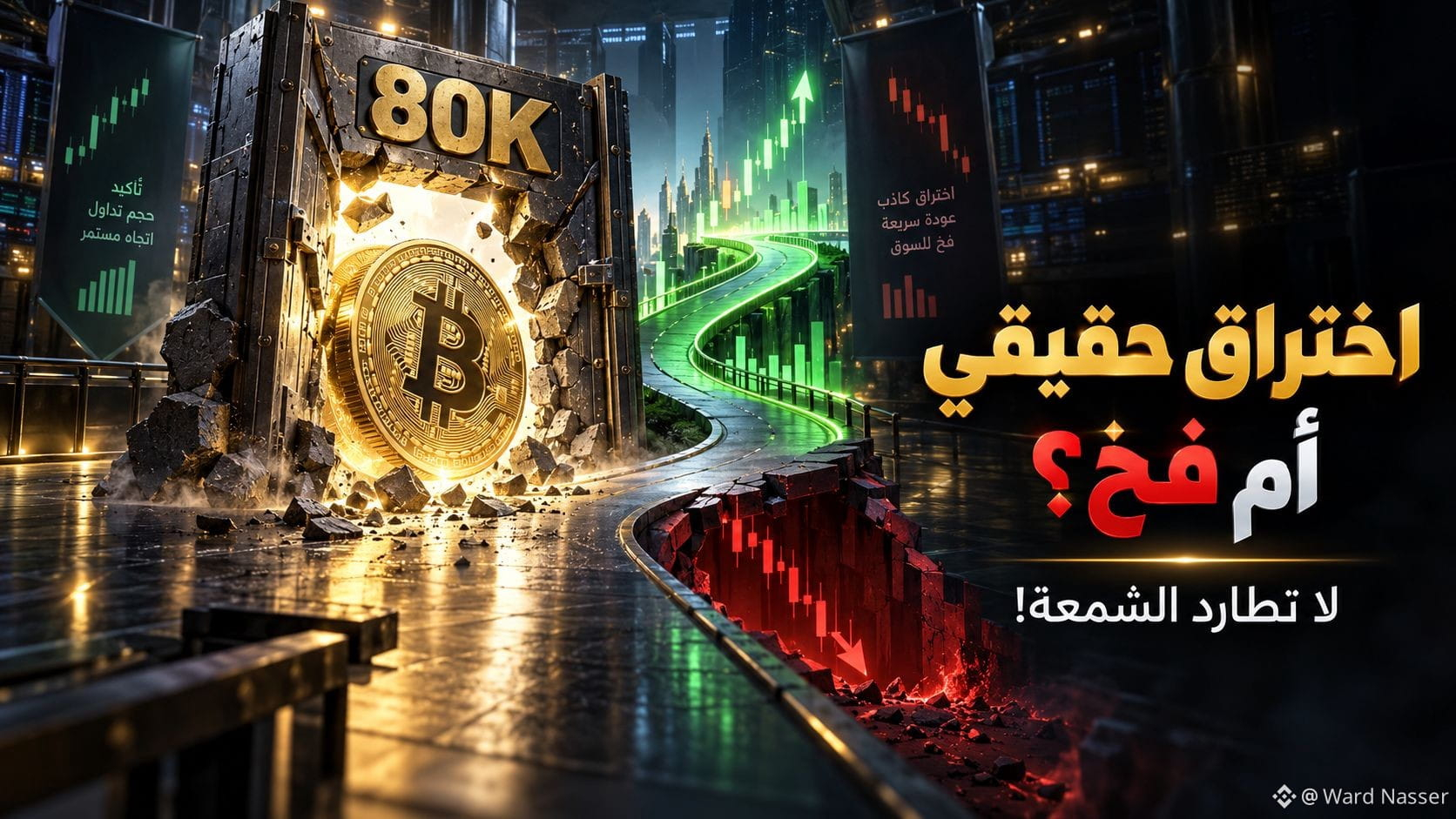
🚪 When Bitcoin breaks the door… don’t enter until you’re sure it wasn’t a trap!
BTC has surpassed $80K, but does every breakout mean a new uptrend is starting? Absolutely not.
Imagine the resistance level as a closed door:
⚡ Price touches the level then briefly breaks through = knocking on the door
🕯️ A clear candle close above it = opening the door
📊 An increase in trading volume = buyers stepping in strongly
🔄 Returning to retest the level and holding above it = the door turns into support ground
But if price breaks the level and quickly falls back below it, this is called a «false breakout»—and late buyers may turn into exit liquidity for others.
Before you consider any breakout real, watch:
1️⃣ The candle close, not just a wick/tail
2️⃣ The trading volume accompanying the move
3️⃣ A retest of the level
4️⃣ Overall market movement and liquidity
Bottom line: the professional trader doesn’t chase the green candle… they wait for the market to prove its story.
Your take: will the 80K level turn into new support, or will we see another bull trap? 👀
Educational content, not financial advice.
#BTC #CryptoEducation
#BTCBreaks80K
🚪 When Bitcoin breaks the door… don’t enter until you’re sure it wasn’t a trap!
BTC has surpassed $80K, but does every breakout mean a new uptrend is starting? Absolutely not.
Imagine the resistance level as a closed door:
⚡ Price touches the level then briefly breaks through = knocking on the door
🕯️ A clear candle close above it = opening the door
📊 An increase in trading volume = buyers stepping in strongly
🔄 Returning to retest the level and holding above it = the door turns into support ground
But if price breaks the level and quickly falls back below it, this is called a «false breakout»—and late buyers may turn into exit liquidity for others.
Before you consider any breakout real, watch:
1️⃣ The candle close, not just a wick/tail
2️⃣ The trading volume accompanying the move
3️⃣ A retest of the level
4️⃣ Overall market movement and liquidity
Bottom line: the professional trader doesn’t chase the green candle… they wait for the market to prove its story.
Your take: will the 80K level turn into new support, or will we see another bull trap? 👀
Educational content, not financial advice.
#BTC #CryptoEducation
🚪 When Bitcoin breaks the door… don’t enter until you’re sure it wasn’t a trap!
BTC has surpassed $80K, but does every breakout mean a new uptrend is starting? Absolutely not.
Imagine the resistance level as a closed door:
⚡ Price touches the level then briefly breaks through = knocking on the door
🕯️ A clear candle close above it = opening the door
📊 An increase in trading volume = buyers stepping in strongly
🔄 Returning to retest the level and holding above it = the door turns into support ground
But if price breaks the level and quickly falls back below it, this is called a «false breakout»—and late buyers may turn into exit liquidity for others.
Before you consider any breakout real, watch:
1️⃣ The candle close, not just a wick/tail
2️⃣ The trading volume accompanying the move
3️⃣ A retest of the level
4️⃣ Overall market movement and liquidity
Bottom line: the professional trader doesn’t chase the green candle… they wait for the market to prove its story.
Your take: will the 80K level turn into new support, or will we see another bull trap? 👀
Educational content, not financial advice.
#BTC #CryptoEducation
1
1
4
699
·
--
#BTCBreaks80K
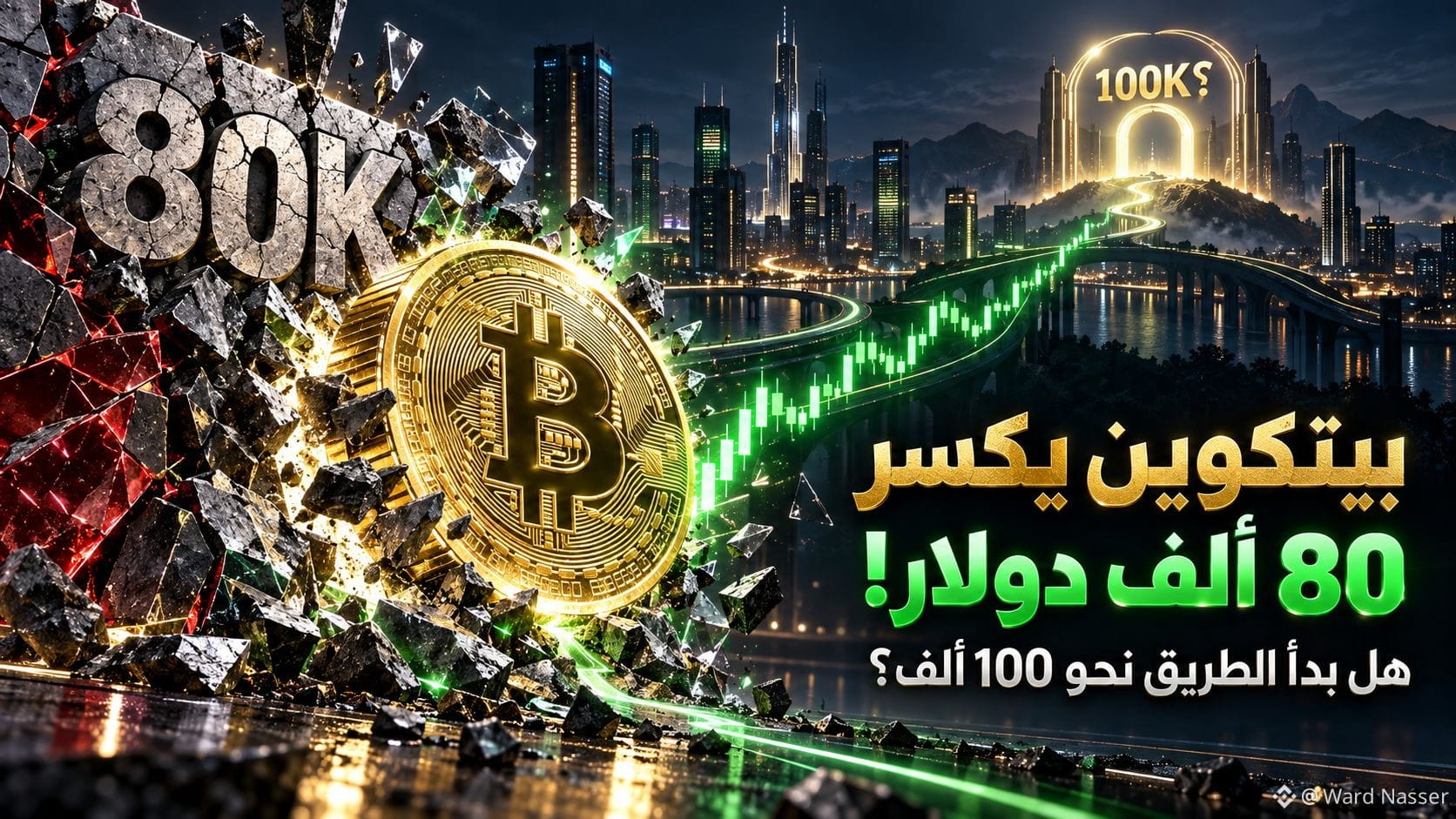
🚨 Bitcoin breaks through the $80K barrier… and doesn’t stop! ₿🔥
$BTC jumped to over $81K, recording a gain of more than 4% in 24 hours, after a period of fear and pressure in the market.
But the breakout alone isn’t enough… the real test is: can Bitcoin hold above 80K and turn it into a support zone? 👀
🟢 Holding above 80K supports the continuation of momentum
🎯 A breakout above 81.7K draws attention toward 82K and beyond
🔴 A return below 80K may mean the breakout was temporary
In your opinion: has the journey back toward $100K begun… or is the road still long? 👇
Not financial advice.
#BTCBreaks80K #BTC
#BTCBreaks80K
🚨 Bitcoin breaks through the $80K barrier… and doesn’t stop! ₿🔥
$BTC jumped to over $81K, recording a gain of more than 4% in 24 hours, after a period of fear and pressure in the market.
But the breakout alone isn’t enough… the real test is: can Bitcoin hold above 80K and turn it into a support zone? 👀
🟢 Holding above 80K supports the continuation of momentum
🎯 A breakout above 81.7K draws attention toward 82K and beyond
🔴 A return below 80K may mean the breakout was temporary
In your opinion: has the journey back toward $100K begun… or is the road still long? 👇
Not financial advice.
#BTCBreaks80K #BTC
🚨 Bitcoin breaks through the $80K barrier… and doesn’t stop! ₿🔥
$BTC jumped to over $81K, recording a gain of more than 4% in 24 hours, after a period of fear and pressure in the market.
But the breakout alone isn’t enough… the real test is: can Bitcoin hold above 80K and turn it into a support zone? 👀
🟢 Holding above 80K supports the continuation of momentum
🎯 A breakout above 81.7K draws attention toward 82K and beyond
🔴 A return below 80K may mean the breakout was temporary
In your opinion: has the journey back toward $100K begun… or is the road still long? 👇
Not financial advice.
#BTCBreaks80K #BTC
4
515
·
--
#BitcoinSurpasses$77000
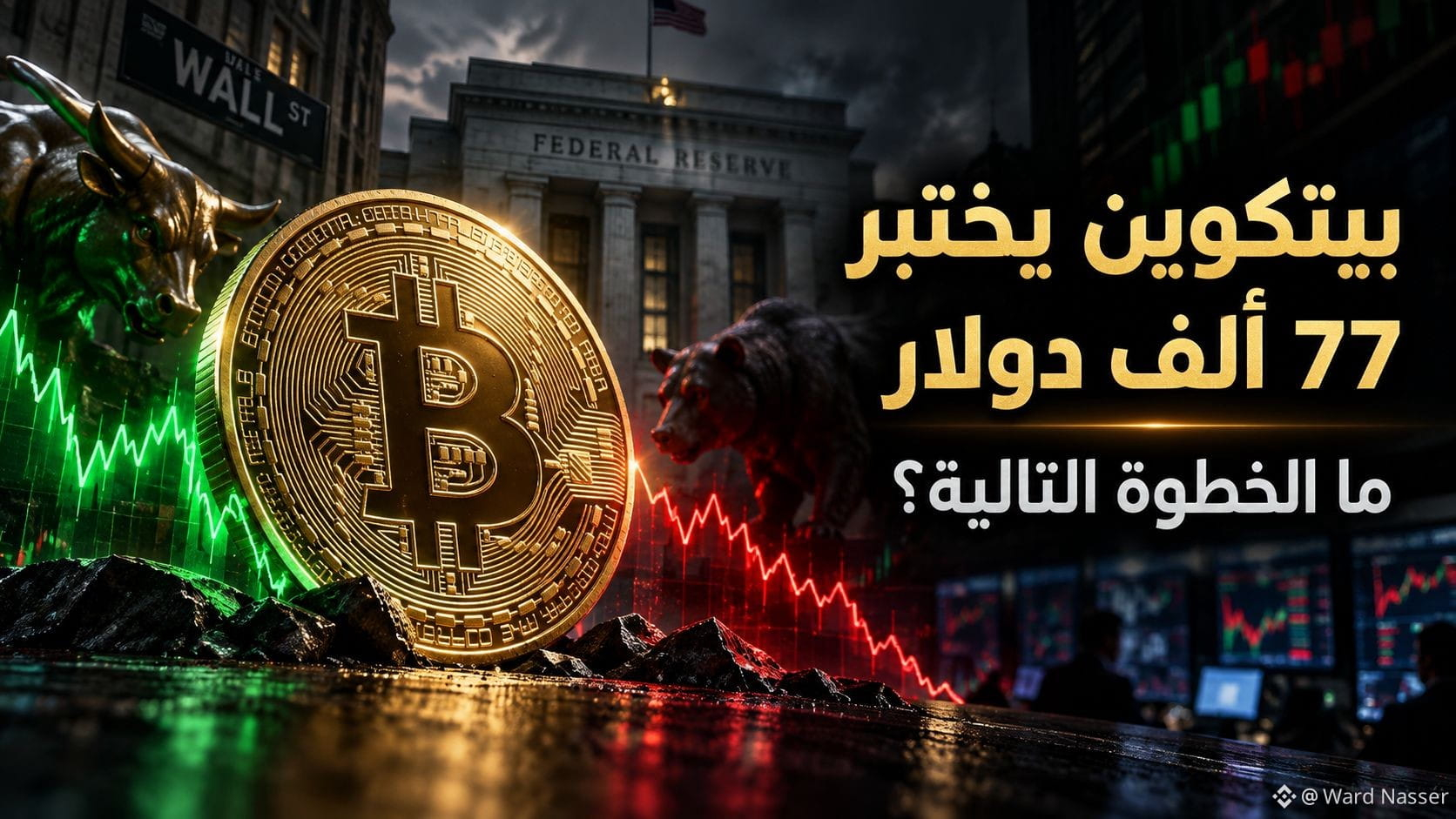
🚨 Bitcoin touches $77,000… Has the recovery begun? ₿🔥
After the Fed raised interest rates and $BTC fell back to around $75,000, the price rebounded strongly and tested the $77,000 level again. 👀
The battle is now at the $77K–$78K zone:
🚀 Holding above 78K could open the way to 80K
⚖️ Movement between 77K and 78K means the wait continues
🔴 Losing 75K could bring back selling pressure
The rebound is clear… but trend confirmation hasn’t happened yet.
What do you think: a breakout toward 80K, or just a temporary jump after the Fed decision? 👇
Not financial advice.
#BTC #Crypto #Fed
#BitcoinSurpasses$77000
🚨 Bitcoin touches $77,000… Has the recovery begun? ₿🔥
After the Fed raised interest rates and $BTC fell back to around $75,000, the price rebounded strongly and tested the $77,000 level again. 👀
The battle is now at the $77K–$78K zone:
🚀 Holding above 78K could open the way to 80K
⚖️ Movement between 77K and 78K means the wait continues
🔴 Losing 75K could bring back selling pressure
The rebound is clear… but trend confirmation hasn’t happened yet.
What do you think: a breakout toward 80K, or just a temporary jump after the Fed decision? 👇
Not financial advice.
#BTC #Crypto #Fed
🚨 Bitcoin touches $77,000… Has the recovery begun? ₿🔥
After the Fed raised interest rates and $BTC fell back to around $75,000, the price rebounded strongly and tested the $77,000 level again. 👀
The battle is now at the $77K–$78K zone:
🚀 Holding above 78K could open the way to 80K
⚖️ Movement between 77K and 78K means the wait continues
🔴 Losing 75K could bring back selling pressure
The rebound is clear… but trend confirmation hasn’t happened yet.
What do you think: a breakout toward 80K, or just a temporary jump after the Fed decision? 👇
Not financial advice.
#BTC #Crypto #Fed
1
6
1.9k
·
--
#ParadigmDisclosesZECHolding
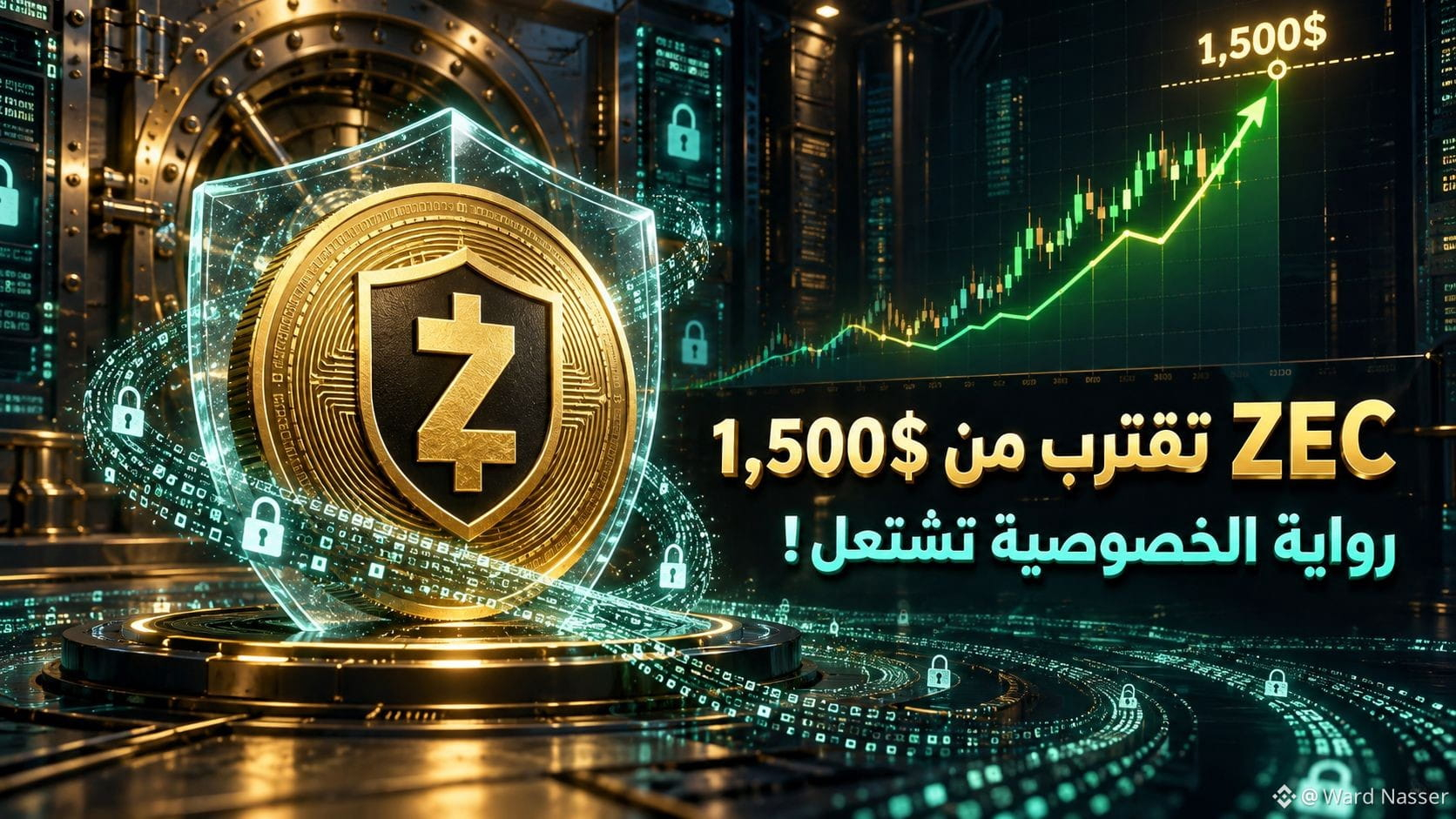
🚨 Zcash is approaching $1,500… and Paradigm is getting involved! 🔥
$ZEC continued its aggressive climb, surpassing $1,400 and touching $1,491, up nearly 16% in 24 hours. 📈
The momentum coincided with statements from Matt Huang, co-founder of Paradigm, who revealed that the company is invested in ZEC and ZODL, and described Zcash as “a privacy-focused complement to Bitcoin.”
₿ Bitcoin: scarcity and transparency on the blockchain
🛡️ Zcash: optional shielded transactions
💰 Paradigm: a disclosed investment in the ecosystem
🔥 ZEC: strong momentum toward the $1,500 barrier
But after this rapid rise, the key question becomes:
Has privacy become the strongest narrative in the market… or has ZEC entered dangerous chasing territory? 👀
Not financial advice.
#Zcash #PrivacyCoins #crypto
#ParadigmDisclosesZECHolding
🚨 Zcash is approaching $1,500… and Paradigm is getting involved! 🔥
$ZEC continued its aggressive climb, surpassing $1,400 and touching $1,491, up nearly 16% in 24 hours. 📈
The momentum coincided with statements from Matt Huang, co-founder of Paradigm, who revealed that the company is invested in ZEC and ZODL, and described Zcash as “a privacy-focused complement to Bitcoin.”
₿ Bitcoin: scarcity and transparency on the blockchain
🛡️ Zcash: optional shielded transactions
💰 Paradigm: a disclosed investment in the ecosystem
🔥 ZEC: strong momentum toward the $1,500 barrier
But after this rapid rise, the key question becomes:
Has privacy become the strongest narrative in the market… or has ZEC entered dangerous chasing territory? 👀
Not financial advice.
#Zcash #PrivacyCoins #crypto
🚨 Zcash is approaching $1,500… and Paradigm is getting involved! 🔥
$ZEC continued its aggressive climb, surpassing $1,400 and touching $1,491, up nearly 16% in 24 hours. 📈
The momentum coincided with statements from Matt Huang, co-founder of Paradigm, who revealed that the company is invested in ZEC and ZODL, and described Zcash as “a privacy-focused complement to Bitcoin.”
₿ Bitcoin: scarcity and transparency on the blockchain
🛡️ Zcash: optional shielded transactions
💰 Paradigm: a disclosed investment in the ecosystem
🔥 ZEC: strong momentum toward the $1,500 barrier
But after this rapid rise, the key question becomes:
Has privacy become the strongest narrative in the market… or has ZEC entered dangerous chasing territory? 👀
Not financial advice.
#Zcash #PrivacyCoins #crypto
3
146
Log in to explore more content
Join global crypto users on Binance Square
⚡️ Get latest and useful information about crypto.
💬 Trusted by the world’s largest crypto exchange.
👍 Discover real insights from verified creators.
Email / Phone number
Trending Topics
BitcoinClears$85200
15,195 views
235 Discussing
We got the move, and $BTC is standing exactly where we were before the data. That’s what actual patience for a trade looks like.
The data came in mixed but with some important numbers. ADP Non-Farm Employment Change came at 90K vs 73K forecast, while Core PCE came in at 0.2% vs 0.3% expected. Final GDP was also stronger at 2.2% vs 1.5% forecast, while Personal Spending came in at 0.9% vs 0.8% expected. At the same time, Personal Income missed at 0.2% vs 0.5% forecast.
BTC initially surged to $85,600 and is now back where it needs to be. I’m still looking toward the lower ranges at $82,759 and the $80,000 liquidity, because the overhead liquidity is done and dusted.
We had a live session during the data, and during that session we saw the market at $83,800, then $85,600, and then back toward $83,000 and we still didn’t enter a trade.
That’s what patience is.
We can’t force an entry when the market has no clear direction. The same range is still in focus, and we’ll wait for the market to give us the setup.
Let me know, guys, how was the session? And should we have more regular sessions with our respected members so we can have proper discussions regarding the market?
#BitcoinClears$85200 #AltcoinSeasonIndexHoldsAbove60For5Days #USADPAdds90000JobsInSeptember #BitcoinSlipsBelow$84000 #SECToClarifyOnChainFundraisingRules
Crypto_LUX
·26 Likes
·22k views
AltcoinSeasonIndexHoldsAbove60For5Days
73,110 views
1,263 Discussing
USADPAdds90000JobsInSeptember
33,167 views
701 Discussing