

tianxiweii
194 Posts
tianxiweii
Report
Block User
随手笔记 老韭菜一枚!
Open Trade
Frequent Trader
5.3 Years
26 Following
113 Followers
61 Liked
Posts
Portfolio
·
--
Binance’s second incident update is here: withdrawals to resume in phases within 34 hours, 80% of the stolen funds replenished
The official Security Incident Update #2 just came out in the early hours. This time, it finally gives us timestamps we can check against—not just “as soon as possible”:
First, the three new points—
1️⃣ Withdrawals: The technical team aims to begin restoring withdrawals in phases within about 34 hours. Based on the announcement, that points to the afternoon of November 1 (the official announcement gave no exact time and explicitly said it depends on “completion of security checks,” so this is a target, not a promise). Phased restoration means they won’t reopen everything at once. We’ll have to wait for official notices to see which batches and which coins become available first.
2️⃣ The shortfall has been quantified: More than $6.34 billion in company funds is ready, including $5 billion in the original currencies that were stolen (USDT, USDC, $BTC, $ETH, $BNB , etc.). About 80% has already been replenished, and the remaining 20% or so is being bought on the market and over the counter. Previously, they only said they would “cover the full amount”; this is the first time they’ve laid out how much has been replenished so far.
3️⃣ Proof of reserves: The first snapshot will be taken within 12 hours, with results to be published before Monday, November 2—this is the only thing users can independently verify before next Monday, and it carries more weight than a verbal promise.
The three things that haven’t changed also need to be made clear, so they aren’t mistaken for new good news: Withdrawals are still suspended; about $3 billion remains frozen on-chain, with no increase announced; and the statement is still “no evidence found” of private key leaks—not “ruled out.”
My take: This update is more concrete than the previous ones because it gives us two verifiable checkpoints—whether the first batch of withdrawals opens on the afternoon of November 1, and whether the proof of reserves published on November 2 checks out. Trust can start to recover only if both happen as promised; if either is delayed, all the figures above will need to be discounted and reassessed. Also note that the announcement didn’t mention whether Alpha will resume, so assume it remains suspended. Don’t read anything into it.
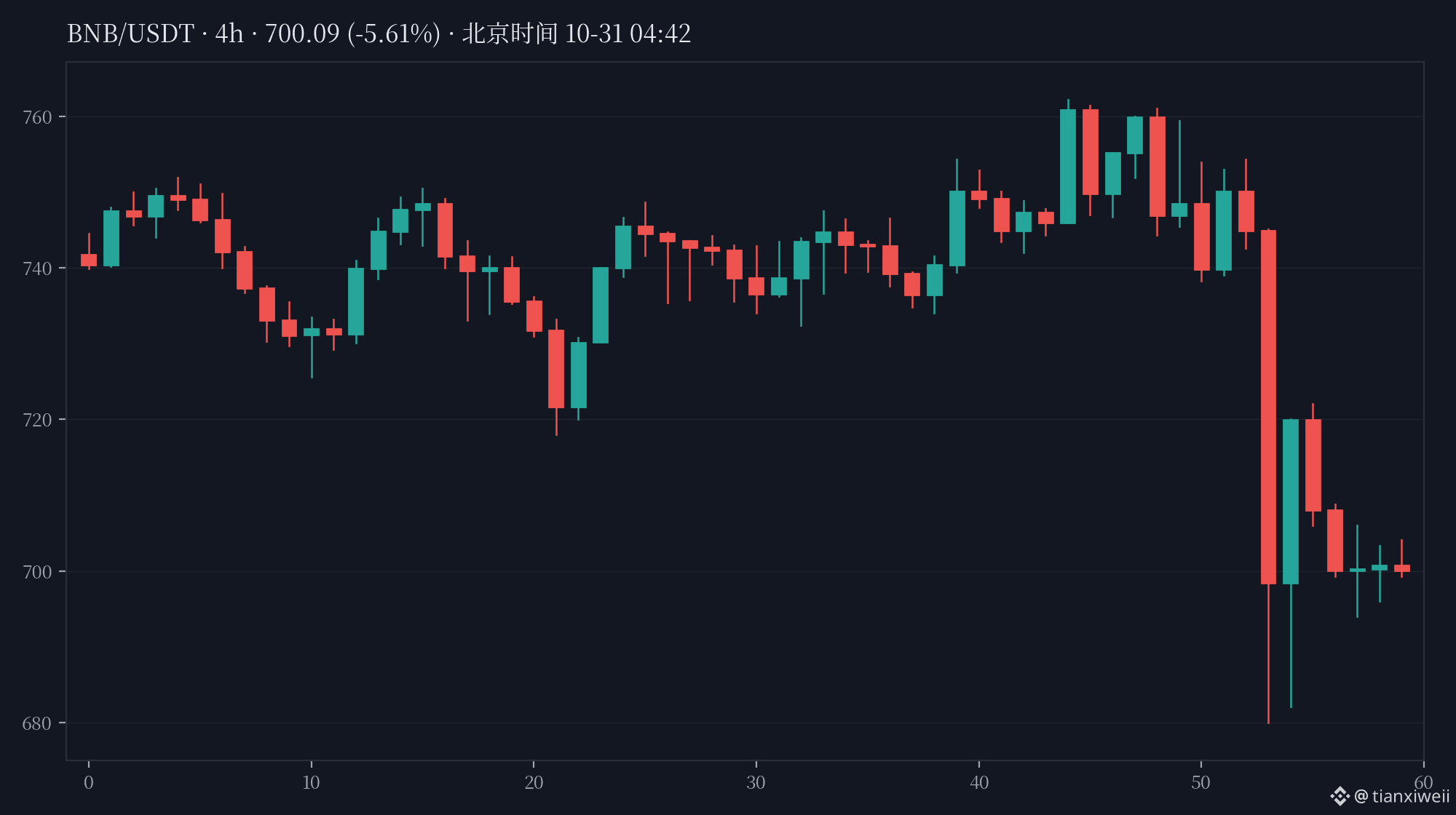
Market prices before publication (Beijing time, October 31, 04:41; cross-checked with two sources): $BNB at about $700.09 (24h -1.09%), $BTC at about $77,030 (24h -3.53%), $ETH at about $2,241.10 (24h -2.55%).
Risk warning: Neither the withdrawal resumption schedule nor the proof-of-reserves results have been confirmed yet. Prices may continue to swing with the news, so don’t chase a rally or try to catch a falling knife just because of one update.
Do you think the first batch of withdrawals will really open within 34 hours, or will there be another delay?
#Binance #安全事件 #BNB #BTC
Binance’s second incident update is here: withdrawals to resume in phases within 34 hours, 80% of the stolen funds replenished
The official Security Incident Update #2 just came out in the early hours. This time, it finally gives us timestamps we can check against—not just “as soon as possible”:
First, the three new points—
1️⃣ Withdrawals: The technical team aims to begin restoring withdrawals in phases within about 34 hours. Based on the announcement, that points to the afternoon of November 1 (the official announcement gave no exact time and explicitly said it depends on “completion of security checks,” so this is a target, not a promise). Phased restoration means they won’t reopen everything at once. We’ll have to wait for official notices to see which batches and which coins become available first.
2️⃣ The shortfall has been quantified: More than $6.34 billion in company funds is ready, including $5 billion in the original currencies that were stolen (USDT, USDC, $BTC , $ETH , $BNB , etc.). About 80% has already been replenished, and the remaining 20% or so is being bought on the market and over the counter. Previously, they only said they would “cover the full amount”; this is the first time they’ve laid out how much has been replenished so far.
3️⃣ Proof of reserves: The first snapshot will be taken within 12 hours, with results to be published before Monday, November 2—this is the only thing users can independently verify before next Monday, and it carries more weight than a verbal promise.
The three things that haven’t changed also need to be made clear, so they aren’t mistaken for new good news: Withdrawals are still suspended; about $3 billion remains frozen on-chain, with no increase announced; and the statement is still “no evidence found” of private key leaks—not “ruled out.”
My take: This update is more concrete than the previous ones because it gives us two verifiable checkpoints—whether the first batch of withdrawals opens on the afternoon of November 1, and whether the proof of reserves published on November 2 checks out. Trust can start to recover only if both happen as promised; if either is delayed, all the figures above will need to be discounted and reassessed. Also note that the announcement didn’t mention whether Alpha will resume, so assume it remains suspended. Don’t read anything into it.
Market prices before publication (Beijing time, October 31, 04:41; cross-checked with two sources): $BNB at about $700.09 (24h -1.09%), $BTC at about $77,030 (24h -3.53%), $ETH at about $2,241.10 (24h -2.55%).
Risk warning: Neither the withdrawal resumption schedule nor the proof-of-reserves results have been confirmed yet. Prices may continue to swing with the news, so don’t chase a rally or try to catch a falling knife just because of one update.
Do you think the first batch of withdrawals will really open within 34 hours, or will there be another delay?
#Binance #安全事件 #BNB #BTC
490
·
--
Verified
Aave has thawed: V3/V4 deposits and borrowing, frozen last night, resume at around 21:57 tonight
In the wake of the Binance hack, tonight finally brought some news of a step back toward normal—not that Binance withdrawals are back, so don’t get that mixed up.
At around 21:57 Beijing time tonight, Cointelegraph’s live updates page reported that Aave had lifted its precautionary freeze, restoring new deposits and borrowing in its V3 and V4 markets. Aave said its contracts were unaffected by the incident and positions remained overcollateralized. Founder Stani Kulechov also confirmed that borrowing had reopened. A roundup citing The Defiant likewise reported that Aave had reopened its markets. Withdrawals and repayments remained available throughout the freeze; only new deposits and borrowing were paused. That hasn’t changed at any point.
A quick recap of how we got here: the attacker’s wallet had deposited about $60 million in USDT on Aave and borrowed 19,762 WETH (worth about $44.6 million at the time). Aave then froze 175 reserves in V3 and 117 in V4 to prevent the stolen assets from continuing to circulate as collateral. So tonight’s thaw doesn’t mean “all risk is gone.” It means Aave has judged that the movement and containment of the stolen funds have reached a point where restrictions can be lifted in stages. The reopening itself is a signal, but the restrictions and any subsequent risk-control changes are still worth watching.
What hasn’t changed: as of publication, there was still no sign that Binance withdrawals or Alpha trading had actually resumed. The 45-hour recovery target has not been revised; the official freeze still covers about $3 billion; and neither an updated proof of reserves nor a full technical postmortem has been published. Aave reopening does not mean Binance’s gates are open. Don’t combine these two developments into one piece of good news.
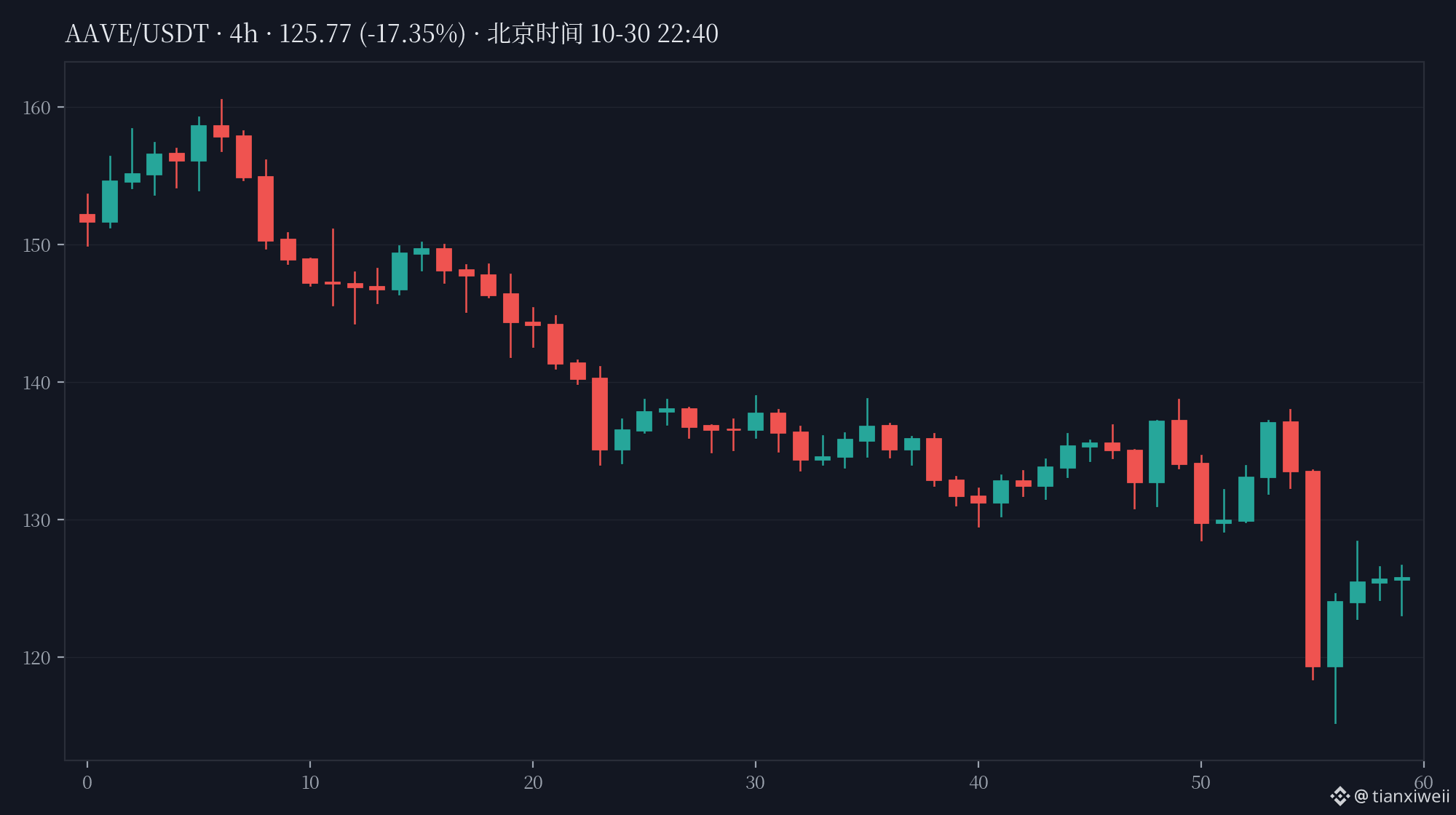
Market snapshot (cross-checked against two sources shortly before publication): $AAVE at about $125.69 (24h: -7.38%), $BTC at about $77,028 (-5.36%), and $ETH at about $2,229.56 (-5.11%). $AAVE didn’t rebound along with the thaw, suggesting the market sees this more as “the bleeding has stopped” than as “good news finally paying off.”
My take: the fact that DeFi is recovering first suggests the contagion boundary from this incident is narrowing—the protocol layer wasn’t breached; people were frozen out, not the code. But the real test is still on Binance’s side: at the 45-hour mark on November 1, whether withdrawals can reopen in stages, and in what order, will be key to whether sentiment becomes tense again.
Risk warning: The above reflects official statements and media reports and does not constitute investment advice. The scope and restrictions for reopening Aave markets are subject to official protocol announcements. Binance’s withdrawal resumption time remains a target, not a confirmed time; deposits and withdrawals should be guided by official announcements and the actual status of your account.
Do you think Aave’s thawing first means the most dangerous part of this chain reaction is already behind us? Share your take in the comments.
#Aave #DeFi #Binance #SecurityIncident
527
·
--
Options expired right at 78,000, then slipped back to 77,500: tonight, the U.S. session takes over
The big 4 p.m. expiry settled even closer to the max-pain level than expected. About $11 billion in $BTC options on Deribit expired at 4 p.m. Beijing time, with max pain at $78,000. The 4 p.m. hourly candle closed at 78,031—practically right on the line. At noon I said price was “stuck in the middle, waiting for expiry.” The answer: expiry gave us no direction.
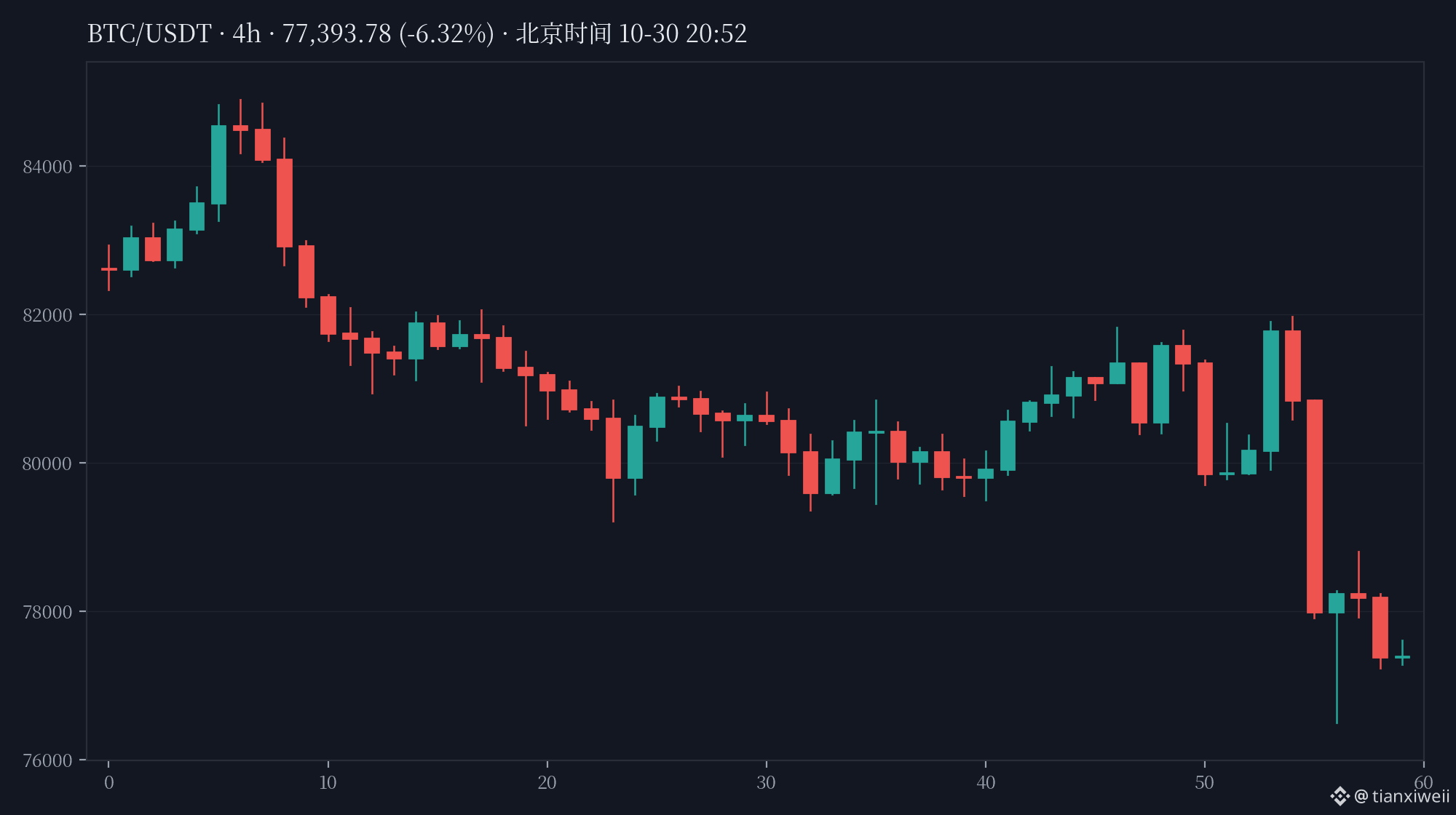
After expiry, the price edged down on its own: the 5 p.m. candle closed at 77,700, the 6 p.m. candle at 77,831, the 7 p.m. candle at 77,382, and price was around 77,478 intraday at 8 p.m. At the time of writing, spot was around 77,425, down 3.34% over 24 hours. Today's high was 81,971 and low was 76,500. $ETH was around 2,233, down 3.90%; $BNB was around 700, down 5.61%. The range held, but the center of gravity slid from 78,300 to 77,500.
Looking back at the day, I’ll own two calls. Both the morning “breakdown” and the midday read that “the dip didn’t extend, and the rebound didn’t repair the damage” held up: price tested 76,500 twice without breaking it, while the rebound at 78,300 didn’t turn into a recovery above 80,000. I got the SNDK call wrong: this morning I wrote that it had briefly gained 2% to 3% after the close on the 29th, but it couldn’t hold those gains. Today, premarket, it was around $1,201 to $1,208—down about 9% from its $1,330.05 closing price—and Morningstar also cut its fair value estimate from $1,000 to $870. That same evening, Intel was down more than 25% premarket, Amazon was down around 6.7%, and Nasdaq futures were down around 2.5%. Tonight’s variable is the U.S. session: will tech stocks push sentiment lower again when the market opens?
One line on altcoins. TRX is today’s clearest cautionary example: it was up 8.9% over 24 hours during its early-morning breakout, but now it’s up only around 0.1%. The 7 p.m. candle closed at 0.3388, back below 0.34, so I’m treating the early-morning breakout as false. The breakouts in PEPE, LSK, and BEAMX all technically held, but none had a clear catalyst today, so I’m sticking to my rules and not chasing. HYPE fell back below 92.45, but remains well above 85.50—that’s a strong pullback.
No new developments from Binance: withdrawals still haven’t actually resumed, Alpha remains paused, and the freeze is still around $3 billion. I already covered the compensation reserve and buyback this evening; proof of reserves and a full review still haven’t been released. No need to keep watching Binance tonight—the U.S. session is enough to focus on.
My view: overnight, the first thing to watch is whether 76,500 holds. If the 1-hour candle closes below 76,500, I’ll look toward the 75,000–77,000 area, based on my analyst read. If the 1-hour candle closes back above 80,000, today’s “breakdown” post is invalidated, and I’ll own that. As for positioning, I’m not buying the dip, and I won’t go short before 76,500 breaks. Funding rates are around 0.01% for $BTC and 0.002% for $ETH—neither is crowded. These are just my personal views and do not guarantee returns; all prices are snapshots from before publication. After the U.S. market opens tonight, which side are you on: does 76,500 break first, or does price reclaim 80,000 first?
$BTC $ETH $BNB
#BTC #期权到期 #Binance
Options expired right at 78,000, then slipped back to 77,500: tonight, the U.S. session takes over
The big 4 p.m. expiry settled even closer to the max-pain level than expected. About $11 billion in $BTC options on Deribit expired at 4 p.m. Beijing time, with max pain at $78,000. The 4 p.m. hourly candle closed at 78,031—practically right on the line. At noon I said price was “stuck in the middle, waiting for expiry.” The answer: expiry gave us no direction.
After expiry, the price edged down on its own: the 5 p.m. candle closed at 77,700, the 6 p.m. candle at 77,831, the 7 p.m. candle at 77,382, and price was around 77,478 intraday at 8 p.m. At the time of writing, spot was around 77,425, down 3.34% over 24 hours. Today's high was 81,971 and low was 76,500. $ETH was around 2,233, down 3.90%; $BNB was around 700, down 5.61%. The range held, but the center of gravity slid from 78,300 to 77,500.
Looking back at the day, I’ll own two calls. Both the morning “breakdown” and the midday read that “the dip didn’t extend, and the rebound didn’t repair the damage” held up: price tested 76,500 twice without breaking it, while the rebound at 78,300 didn’t turn into a recovery above 80,000. I got the SNDK call wrong: this morning I wrote that it had briefly gained 2% to 3% after the close on the 29th, but it couldn’t hold those gains. Today, premarket, it was around $1,201 to $1,208—down about 9% from its $1,330.05 closing price—and Morningstar also cut its fair value estimate from $1,000 to $870. That same evening, Intel was down more than 25% premarket, Amazon was down around 6.7%, and Nasdaq futures were down around 2.5%. Tonight’s variable is the U.S. session: will tech stocks push sentiment lower again when the market opens?
One line on altcoins. TRX is today’s clearest cautionary example: it was up 8.9% over 24 hours during its early-morning breakout, but now it’s up only around 0.1%. The 7 p.m. candle closed at 0.3388, back below 0.34, so I’m treating the early-morning breakout as false. The breakouts in PEPE, LSK, and BEAMX all technically held, but none had a clear catalyst today, so I’m sticking to my rules and not chasing. HYPE fell back below 92.45, but remains well above 85.50—that’s a strong pullback.
No new developments from Binance: withdrawals still haven’t actually resumed, Alpha remains paused, and the freeze is still around $3 billion. I already covered the compensation reserve and buyback this evening; proof of reserves and a full review still haven’t been released. No need to keep watching Binance tonight—the U.S. session is enough to focus on.
My view: overnight, the first thing to watch is whether 76,500 holds. If the 1-hour candle closes below 76,500, I’ll look toward the 75,000–77,000 area, based on my analyst read. If the 1-hour candle closes back above 80,000, today’s “breakdown” post is invalidated, and I’ll own that. As for positioning, I’m not buying the dip, and I won’t go short before 76,500 breaks. Funding rates are around 0.01% for $BTC and 0.002% for $ETH —neither is crowded. These are just my personal views and do not guarantee returns; all prices are snapshots from before publication. After the U.S. market opens tonight, which side are you on: does 76,500 break first, or does price reclaim 80,000 first?
$BTC $ETH $BNB
#BTC #期权到期 #Binance
193
·
--
Binance follow-up: $6.34 billion reserved, buyback of stolen tokens begins, withdrawals still unavailable
This is real progress tonight, not just a clarification of the wording—Binance has, for the first time, put a concrete figure behind its promise of “full reimbursement.”
At around 18:55 Beijing time tonight, Binance officially updated its statement: it has reserved more than $6.34 billion in company funds specifically to cover losses from this security incident. About $5 billion of that is already in the form of the stolen tokens themselves. The remaining shortfall is being bought back through market and over-the-counter channels until the full amount is acquired. The approximately $3 billion that has been frozen is not included in the $6.34 billion; it is a separate amount that is still being tracked down and verified.
Let’s get the figures straight to avoid getting confused: $6.34 billion is the amount Binance is setting aside from its own funds to cover losses. It is not a newly announced total for the stolen funds (that total remains approximately $6.3 billion), nor is it money that has already been recovered. The $3 billion frozen does not mean the funds have been received, either—and you can’t add $6.34 billion and $3 billion together and call it $9.3 billion. This update also offers nothing new on several fronts: it doesn’t list which tokens are still being bought, provide purchase prices or a completion deadline, and the updated proof of reserves remains something to “verify later”—a future item, not a snapshot that can be checked today.
What hasn’t changed is just as important: withdrawals and Alpha trading were still paused at the time of publication, and there has been no new revision to the 45-hour restoration target (around November 1 at 13:47). CryptoTimes also reports that Binance told it the company is coordinating with the U.S. FBI and Secret Service to recover the funds. However, Binance’s statement about the reserved funds did not name either agency, so treat this as a single-source report, not an official characterization.
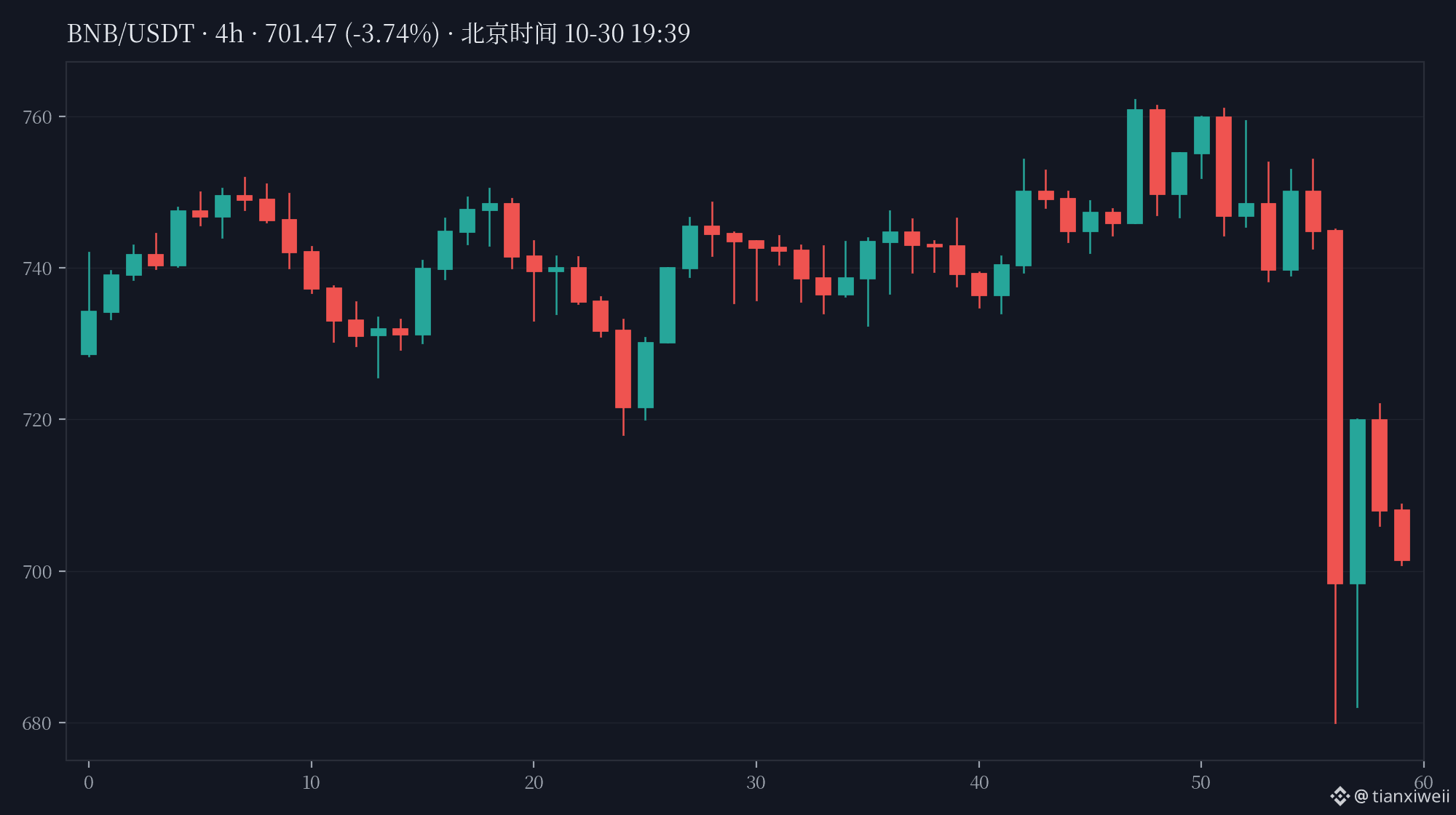
Market snapshot (checked against two sources before publication): $BTC at around $77,568 (-3.19% over 24h), $ETH at around $2,244 (-3.44%), and $BNB at around $701 (-5.0%). Prices haven’t rebounded on the good news, suggesting the market is waiting not for promises, but for the moment withdrawals actually reopen.
My take: setting funds aside and buying back the tokens is much more substantial than repeating “user funds are safe”—it means Binance is using its own funds to plug the hole first, rather than waiting for the frozen funds to trickle back. But the real test still lies in two things: first, whether the buybacks will cause volatility in the market; and second, whether withdrawals will actually reopen in stages when the 45-hour target arrives. Those are the two steps between making a promise and delivering on it.
Risk disclaimer: The above is based on official statements and media reports and does not constitute investment advice. The withdrawal reopening time is still a target, not a confirmed time. Base your decisions about holdings and deposits or withdrawals on official announcements and the actual status of your account.
Do you think the market will first breathe a sigh of relief and rebound on the day withdrawals resume, or will there be a wave of withdrawals first? Share your thoughts in the comments.
#Binance #安全事件 #热钱包 #WithdrawalsPaused
12
·
--
Binance Investigation Update: More Than One Breach Point Beyond the Laptop; Withdrawal Countdown Tightened to 45 Hours | Official Update, Oct 30, 16:47
Just saw the latest official update. There’s a lot more substance this time than the previous “not a one-click operation” remark, so it’s worth calling out separately.
First, the facts: the core points in Binance’s official X update around 16:47 Beijing time were these: first, the investigation found “additional points of breach,” so it was no longer being described as a single point of compromise involving the DevOps engineer’s laptop; second, withdrawals are still expected to resume as planned, but the official estimate has tightened from He Yi’s 12:17 statement that they would “begin restoring within 48 hours” to “within 45 hours”—counting from this update, that puts it at around 13:47 on Nov 1.
It’s also important to clarify what hasn’t changed, so nobody gets the wrong idea: the amount frozen is still about $3 billion, and the estimated total impact is still about $6.3 billion; neither figure was revised upward in this update. The attacker still hasn’t been named by Binance (the attribution to TraderTraitor remains a third-party assessment, not an official conclusion). The full technical postmortem and updated proof of reserves are still to be released “after the investigation is complete”—no sign of them yet. As of publication, there’s still no word that withdrawals or Alpha trading have actually resumed.
My take: going from “one computer” to “multiple points of breach” means Binance has effectively upgraded its description from an isolated failure to a compound attack. This matters a lot when judging the recovery timeline: the wider the breach, the more extensive the security remediation needs to be. Whether the 45-hour countdown holds is more worth watching than the amount frozen. On the other hand, the fact that Binance was willing to shorten the estimate from 48 hours to 45 hours at least suggests that internal remediation is progressing, rather than standing still.
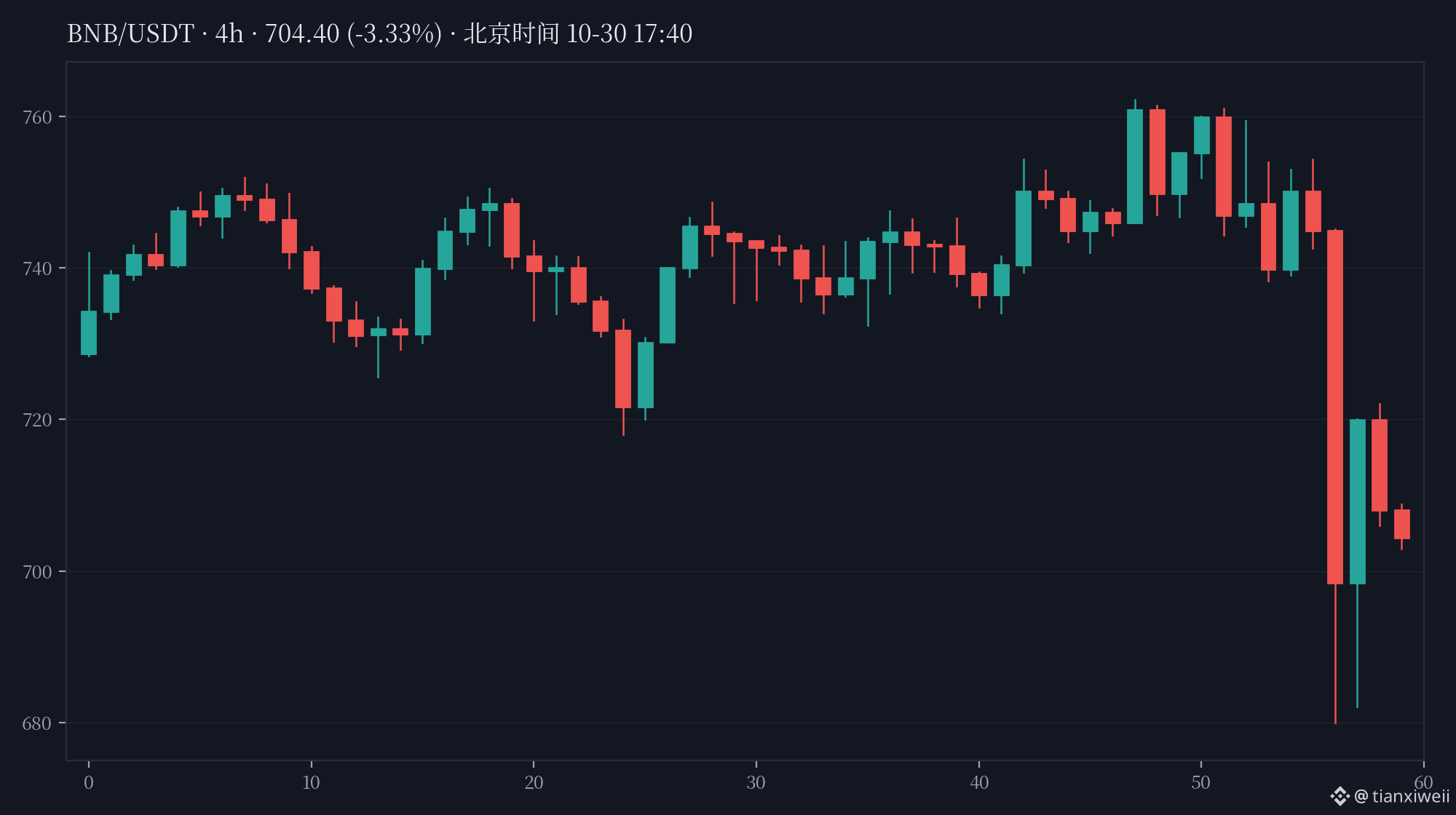
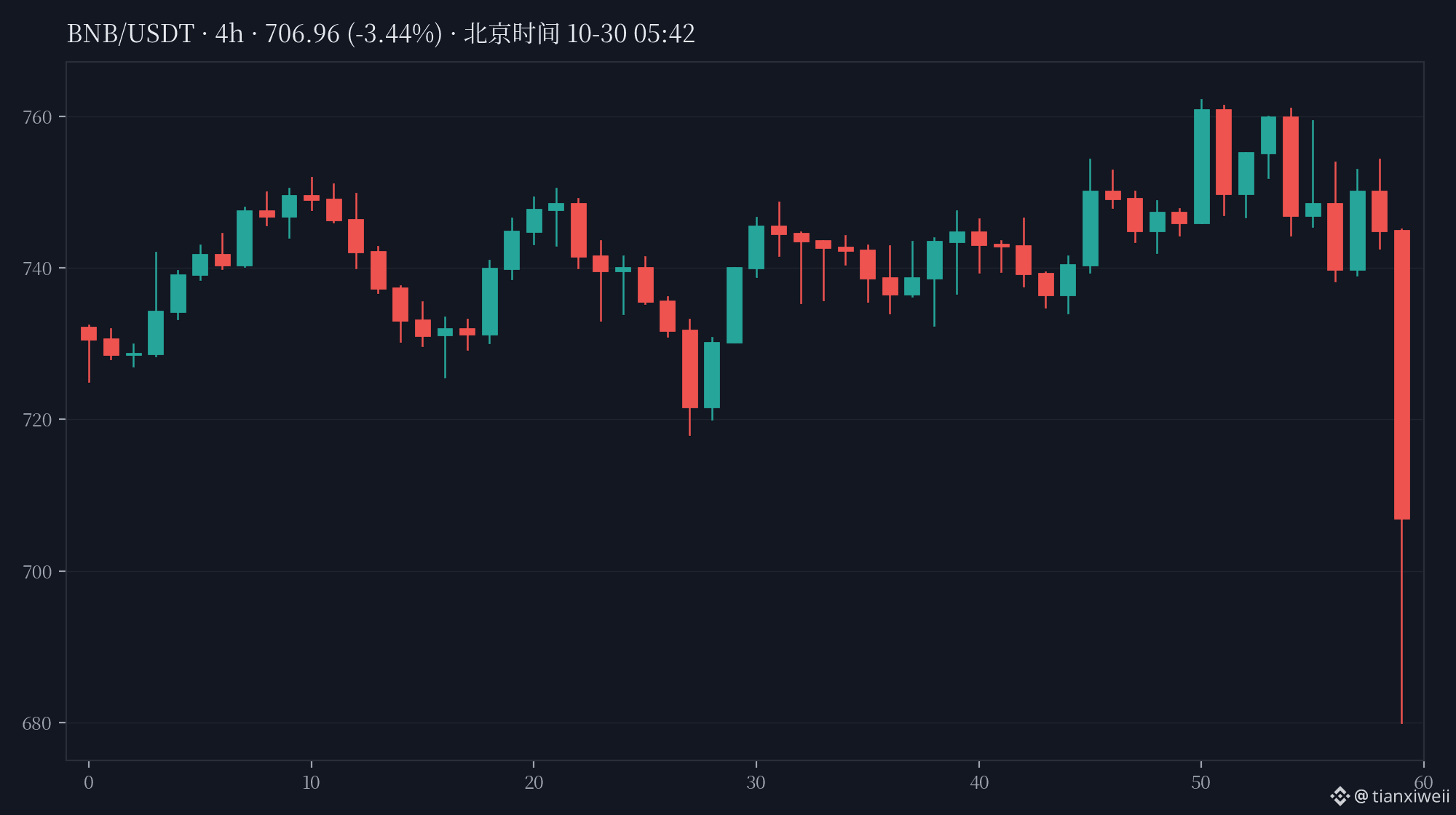
Market snapshot (cross-checked against two sources before publication): $BTC at about $77,736 (24h -3.00%), $ETH at about $2,231 (24h -3.81%), $BNB at about $704 (24h -5.90%, with the intraday low still around $680). Prices are still grinding below $80,000, and sentiment remains weighed down by this security incident.
Risk warning: 45 hours is the official target, not a confirmed time when withdrawals will reopen. Until you can actually withdraw funds from your account, don’t assume service has been restored. Also, treat any links asking you to “register for compensation” or “pay a deposit before withdrawing coins” as scams. Binance has not announced any user claim process.
What do you think: withdraw immediately as soon as withdrawals resume, or do you trust SAFU’s backstop enough to leave your funds where they are?
$BTC $ETH $BNB
#Binance #安全事件 #热钱包 #WithdrawalsPaused
343
·
--
Hardware wallets can be tampered with too: Trezor warns CryptoBilis buyers to generate a new recovery phrase as soon as possible (October 30, afternoon Beijing time)
A new security alert emerged from the crypto world this afternoon. It’s not about an exchange, but the hardware wallet itself: Trezor’s security team received a responsible disclosure alleging that a Safe 5 sold through Southeast Asian reseller CryptoBilis may have been implanted with a hardware trojan. If you bought a device through this channel, this is worth taking seriously—but first, let’s be clear about the caveats to avoid spreading misinformation.
Here are the facts. The device in question was a Safe 5 purchased from CryptoBilis via Tokopedia in August 2026. The disclosure was submitted to Trezor’s security team on October 28. According to the description, an extra circuit board had been added between the device’s mainboard and screen. It had a cellular module and antenna, and was said to be capable of reading the screen’s contents (including the recovery phrase) while the device was powered on, then transmitting them over a mobile network. Trezor’s advice is clear: anyone who has bought any model of device from CryptoBilis since March 2026 should move their assets as soon as possible to a wallet with a completely new recovery phrase. Do not restore your old recovery phrase on another device—if the phrase has been exposed, changing devices without changing the phrase is pointless. Eligible users can contact Trezor to request a replacement device. Trezor removed CryptoBilis from its official authorized reseller list on October 9. The reseller had previously also been implicated in selling tampered Ledger devices.
But there are three important caveats, and all of them must be stated. First, Trezor has not yet received the device in question for laboratory testing. The assessment that the claim is “credible” is a precautionary judgment based on the user’s description and video communication, not a confirmed test result. Second, Trezor says it has not received any reports of related financial losses from CryptoBilis buyers, and no signs of tampering were found on four other CryptoBilis devices submitted for inspection. Third, this does not apply to all Trezor users. It is limited to purchases made through CryptoBilis since March 2026; buyers from the official website and other official channels are not covered by this warning.
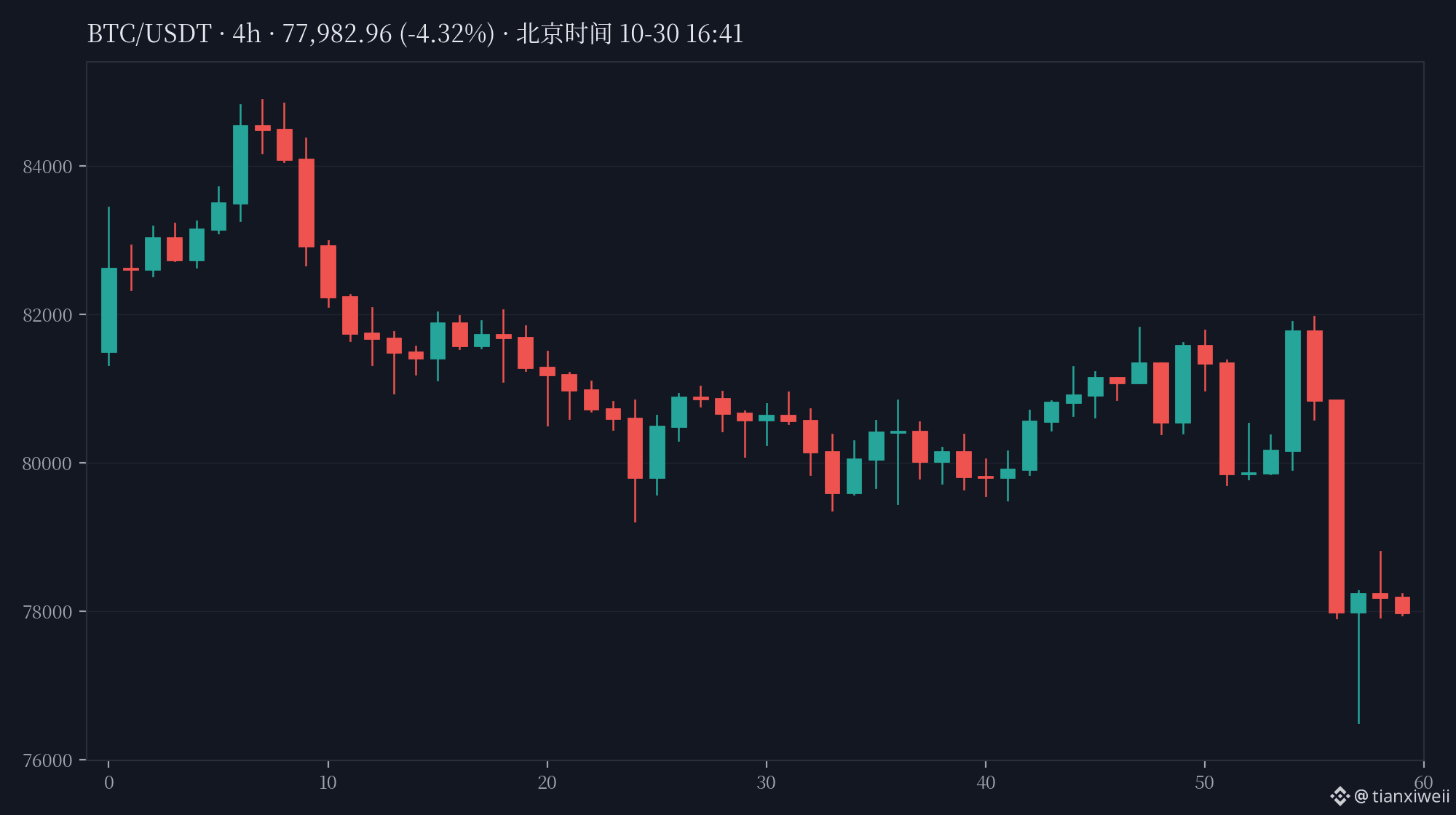
Market snapshot (cross-checked against two independent sources before posting, 16:40; Binance spot / OKX perpetual price deviation ≤0.06%): $BTC is around $78,020 (24h -2.51%). This security alert is not market-driven; the accompanying image is for background only.
My take: hardware wallet security isn’t just about “keeping your recovery phrase offline.” Where you buy the device is also part of the supply chain. Once a reseller is no longer officially authorized, there’s no guarantee about what a device went through before it reached you. The lesson here: taking the shortcut of buying through a third-party channel may mean cutting corners on the one thing you really shouldn’t.
Risk warning: The alleged implant mechanism has not been verified in a laboratory, and no financial losses have been reported. The above is a summary of Trezor’s official alert and reports from multiple media outlets, and is not investment advice. If you did buy through the channel in question, follow Trezor’s official announcement. Beware of any “support” links that use this as an opportunity to ask for your recovery phrase.
Did you buy your hardware wallet from the official website or a reseller? Do you check the authorized reseller list before buying?
#Trezor #硬件钱包 #SecurityAlert
56
·
--
Binance’s $6.3 billion hack: The attacker may be coming into focus, with TRM attributing it to North Korea’s TraderTraitor with high confidence (roundup as of 13:51 Beijing time, October 30)
After following the Binance security incident for a full day, this afternoon finally brought the most crucial missing piece of the puzzle: who the attacker might be. Note that this is not Binance’s official conclusion—Binance has yet to name any attacker, and its preliminary conclusion remains “suspected compromise of a DevOps engineer’s laptop, with no evidence of private key leakage.” Today, three independent investigators converged on the same assessment.
First, here’s what each of the three said. Their levels of certainty differ, so don’t conflate them. TRM Labs made the strongest claim in its official blog: based on on-chain and off-chain intelligence, it attributed the attack with “high confidence” to North Korea’s elite hacking group TraderTraitor, and provided its own on-chain figures—starting at around 20:05 UTC on October 29, the attackers transferred approximately $6.36 billion from Binance wallets across 10 chains within about 20 minutes, roughly four times the $1.5 billion Bybit incident in February this year. Chainalysis co-CEO Jonathan Levin said it was “likely”: he estimated the amount stolen at approximately $6.4 billion, slightly above Binance’s official estimate of around $6.3 billion, citing links to previous cases. On-chain investigator ZachXBT provided the most specific evidence trail: Binance’s stolen funds and the approximately $388 million stolen from Bitget previously were mixed at the same address, 0x151…eb7, after being routed through THORChain, “pointing to the same attacker.” The Bitget incident had previously been linked to TraderTraitor, which is associated with North Korea, and overlaps with cases such as Kelp DAO.
Why post about this separately instead of waiting for an official update? Because it changes how difficult it may be to recover the funds. TRM estimates that the attackers still hold approximately $2.4 billion in assets that issuers cannot freeze—including more than 420,000 $ETH and 18,270 $BTC. The $BTC has been split across 19 wallets, mostly in peeling chains of 1,000 coins per hop; no issuer can freeze them the way it can freeze stablecoins. The figure of approximately $3 billion frozen by officials remains the same as previously reported; there has been no upward revision this round. Withdrawals have still not resumed, Alpha remains paused, and a full technical post-mortem has not been released. None of that has changed, so don’t assume that recovery efforts have advanced just because an attribution has emerged.
There’s also a difference in the assessments that deserves separate attention: TRM’s view of the attack path does not fully align with Binance’s preliminary conclusion. TRM believes that wallets on multiple chains produced valid signatures during the same window, and that the most likely explanation is that the attackers gained the ability to sign across chains through Binance’s hot-wallet signing system. Binance’s preliminary account, meanwhile, is that a single laptop was compromised to gain access to a service container. Neither account has been confirmed by a full technical post-mortem, so they can only be presented side by side; we cannot draw an official conclusion on Binance’s behalf.
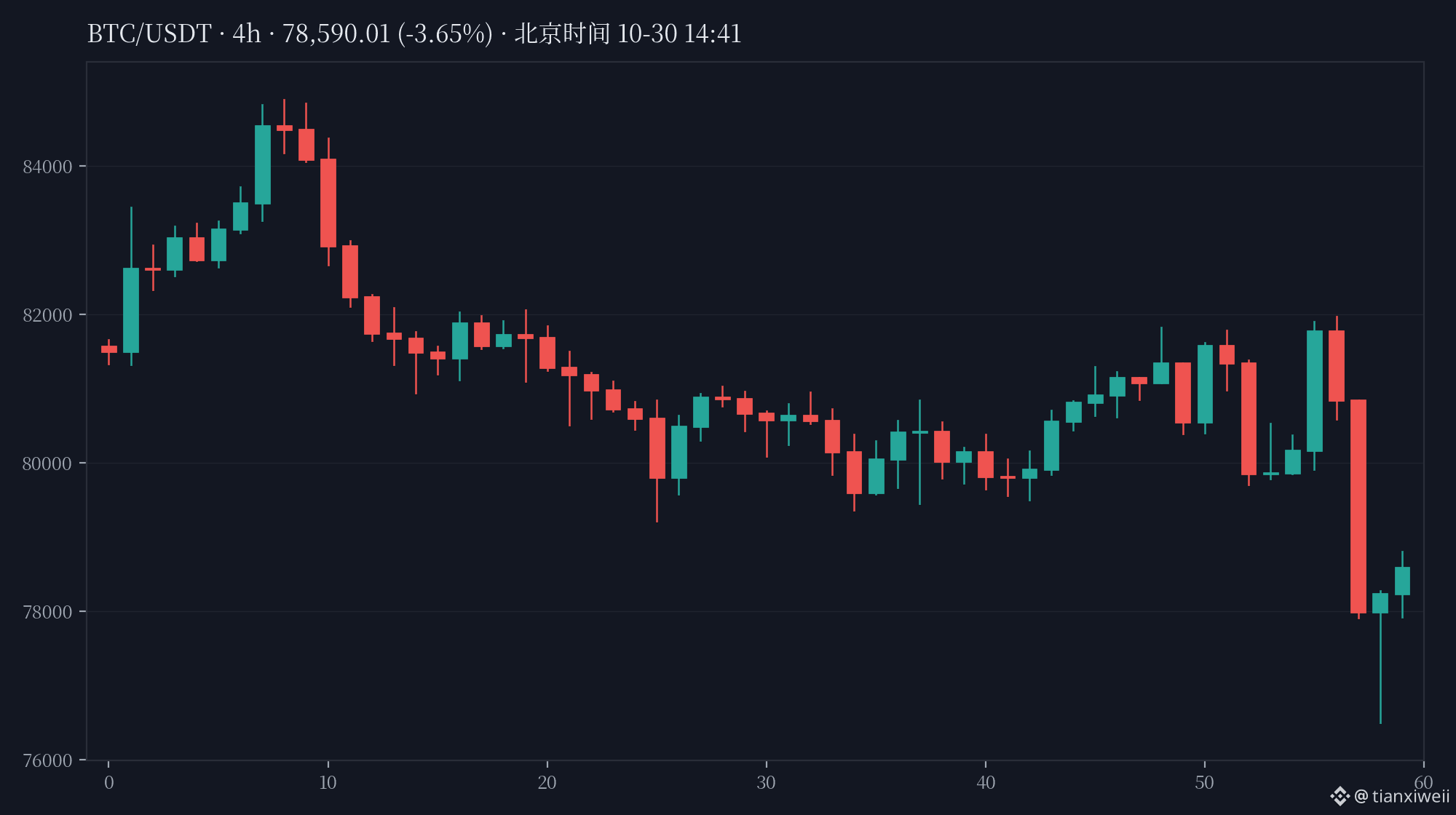
Market snapshot (cross-checked against two sources before publication, 14:40; Binance spot/OKX perpetual deviation ≤0.12%): $BTC is approximately $78,638 (-1.79% over 24h), $ETH is approximately $2,251 (-2.80%), and $BNB is approximately $716.05 (-4.85%, 24h low of $680). Compared with the snapshot in the 12:38 post ($BTC 78,310、$ETH 2,246、$BNB 717.68), $BTC and $ETH have edged up, while $BNB is largely unchanged—the attribution news has not immediately shifted the market’s direction.
My take: Once the attribution points to a state-level organization, this is no longer as simple as “an exchange was hacked, so the exchange compensates users.” Freezing, recovery, and sanctions compliance are all likely to take longer. But for ordinary users, the two things that really matter are still: What time will the first batch of withdrawals be enabled, and what will the full post-mortem say? Until then, use official channels only, and don’t click any links claiming to offer “compensation registration” or “withdrawal restoration.”
Risk warning: The above is a summary of reports from public investigative firms and media outlets. The attribution remains a third-party assessment, is not Binance’s official conclusion, and has not been confirmed by any government. This is not investment advice; the assessment may still be revised in future official updates.
Do you think Binance will formally name the attacker in its full post-mortem, or will it continue to describe the matter as an “ongoing preliminary investigation”?
#Binance #安全事件 #黑客归因 #HotWallet
Binance’s $6.3 billion hack: The attacker may be coming into focus, with TRM attributing it to North Korea’s TraderTraitor with high confidence (roundup as of 13:51 Beijing time, October 30)
After following the Binance security incident for a full day, this afternoon finally brought the most crucial missing piece of the puzzle: who the attacker might be. Note that this is not Binance’s official conclusion—Binance has yet to name any attacker, and its preliminary conclusion remains “suspected compromise of a DevOps engineer’s laptop, with no evidence of private key leakage.” Today, three independent investigators converged on the same assessment.
First, here’s what each of the three said. Their levels of certainty differ, so don’t conflate them. TRM Labs made the strongest claim in its official blog: based on on-chain and off-chain intelligence, it attributed the attack with “high confidence” to North Korea’s elite hacking group TraderTraitor, and provided its own on-chain figures—starting at around 20:05 UTC on October 29, the attackers transferred approximately $6.36 billion from Binance wallets across 10 chains within about 20 minutes, roughly four times the $1.5 billion Bybit incident in February this year. Chainalysis co-CEO Jonathan Levin said it was “likely”: he estimated the amount stolen at approximately $6.4 billion, slightly above Binance’s official estimate of around $6.3 billion, citing links to previous cases. On-chain investigator ZachXBT provided the most specific evidence trail: Binance’s stolen funds and the approximately $388 million stolen from Bitget previously were mixed at the same address, 0x151…eb7, after being routed through THORChain, “pointing to the same attacker.” The Bitget incident had previously been linked to TraderTraitor, which is associated with North Korea, and overlaps with cases such as Kelp DAO.
Why post about this separately instead of waiting for an official update? Because it changes how difficult it may be to recover the funds. TRM estimates that the attackers still hold approximately $2.4 billion in assets that issuers cannot freeze—including more than 420,000 $ETH and 18,270 $BTC . The $BTC has been split across 19 wallets, mostly in peeling chains of 1,000 coins per hop; no issuer can freeze them the way it can freeze stablecoins. The figure of approximately $3 billion frozen by officials remains the same as previously reported; there has been no upward revision this round. Withdrawals have still not resumed, Alpha remains paused, and a full technical post-mortem has not been released. None of that has changed, so don’t assume that recovery efforts have advanced just because an attribution has emerged.
There’s also a difference in the assessments that deserves separate attention: TRM’s view of the attack path does not fully align with Binance’s preliminary conclusion. TRM believes that wallets on multiple chains produced valid signatures during the same window, and that the most likely explanation is that the attackers gained the ability to sign across chains through Binance’s hot-wallet signing system. Binance’s preliminary account, meanwhile, is that a single laptop was compromised to gain access to a service container. Neither account has been confirmed by a full technical post-mortem, so they can only be presented side by side; we cannot draw an official conclusion on Binance’s behalf.
Market snapshot (cross-checked against two sources before publication, 14:40; Binance spot/OKX perpetual deviation ≤0.12%): $BTC is approximately $78,638 (-1.79% over 24h), $ETH is approximately $2,251 (-2.80%), and $BNB is approximately $716.05 (-4.85%, 24h low of $680). Compared with the snapshot in the 12:38 post ($BTC 78,310、$ETH 2,246、$BNB 717.68), $BTC and $ETH have edged up, while $BNB is largely unchanged—the attribution news has not immediately shifted the market’s direction.
My take: Once the attribution points to a state-level organization, this is no longer as simple as “an exchange was hacked, so the exchange compensates users.” Freezing, recovery, and sanctions compliance are all likely to take longer. But for ordinary users, the two things that really matter are still: What time will the first batch of withdrawals be enabled, and what will the full post-mortem say? Until then, use official channels only, and don’t click any links claiming to offer “compensation registration” or “withdrawal restoration.”
Risk warning: The above is a summary of reports from public investigative firms and media outlets. The attribution remains a third-party assessment, is not Binance’s official conclusion, and has not been confirmed by any government. This is not investment advice; the assessment may still be revised in future official updates.
Do you think Binance will formally name the attacker in its full post-mortem, or will it continue to describe the matter as an “ongoing preliminary investigation”?
#Binance #安全事件 #黑客归因 #HotWallet
1
3.4k
·
--
At 10 a.m., price hit a new low of 76,500, then bounced back to 78,300: the breakdown didn’t worsen, but 80,000 hasn’t been reclaimed
This morning I wrote that support had been “lost.” In my midday review: that view hasn’t been overturned, but things haven’t worsened into a breakdown either.
The morning session dipped first, then bounced. $BTC 9 hit a low of 76,650, then at 10 a.m. made a new intraday low of 76,500—below the 76,760 I mentioned this morning. But the drop didn’t continue: the 11 a.m. candle closed at 78,235, and by noon the price was back around 78,300. At the time of writing, spot was about 78,317, down 2.48% over 24 hours, with a high of 81,971 and a low of 76,500. $ETH was around 2,245, down 3.42% over 24 hours.
So this is “the dip didn’t continue, and the rebound hasn’t repaired the damage”: bears haven’t turned 76,500 into a breakdown point, and bulls haven’t pushed the price back above 80,000. Neither side has confirmation from the close.
At 4 p.m. today, around $11 billion in BTC options on Deribit expire. The max pain level is near 78,000, and the current price of 78,300 is right around it. Max pain isn’t a price target; it’s just the settlement center of gravity. But trading near it ahead of expiry suggests the market is waiting for settlement before choosing a direction.
How this morning’s developments played out: On Binance, the timeline He Yi gave at 12:17 for withdrawals to start resuming within 48 hours was followed up in a separate post at 12:38. To sum it up here: that means “starting to resume,” not “already resumed”; withdrawals and Alpha are still paused for now. Among altcoins, $TRX held above 0.34, but its gains have narrowed from 8.93% this morning to about 4.5%; it’s currently around 0.346. HYPE is still above 85.50, at about 92.6, and remains one of the few showing strength. I mentioned both this morning, so no separate post.
My view: this isn’t a level worth chasing. Before 76,500 breaks, bears have no new evidence of a breakdown; before 80,000 is reclaimed, bulls have no evidence of a recovery either. The analyst’s view is cited only for reference: a close below 76,500 would put 75,000–77,000 in focus, while reclaiming 80,000 would weaken the case for this morning’s “support lost” call. I’m not buying the dip or chasing shorts; let’s see what happens after the 4 p.m. settlement.
This is a personal share, not investment advice. Set your own position size and stop-loss; don’t act just because of one post.
With a few hours left before expiry, which side are you on? A: Price stays around 78,000 through expiry, then picks a direction after settlement; B: Breaks below 76,500 first, completes the downside move, then we can talk about a rebound.
#BTC #期权到期 #Binance
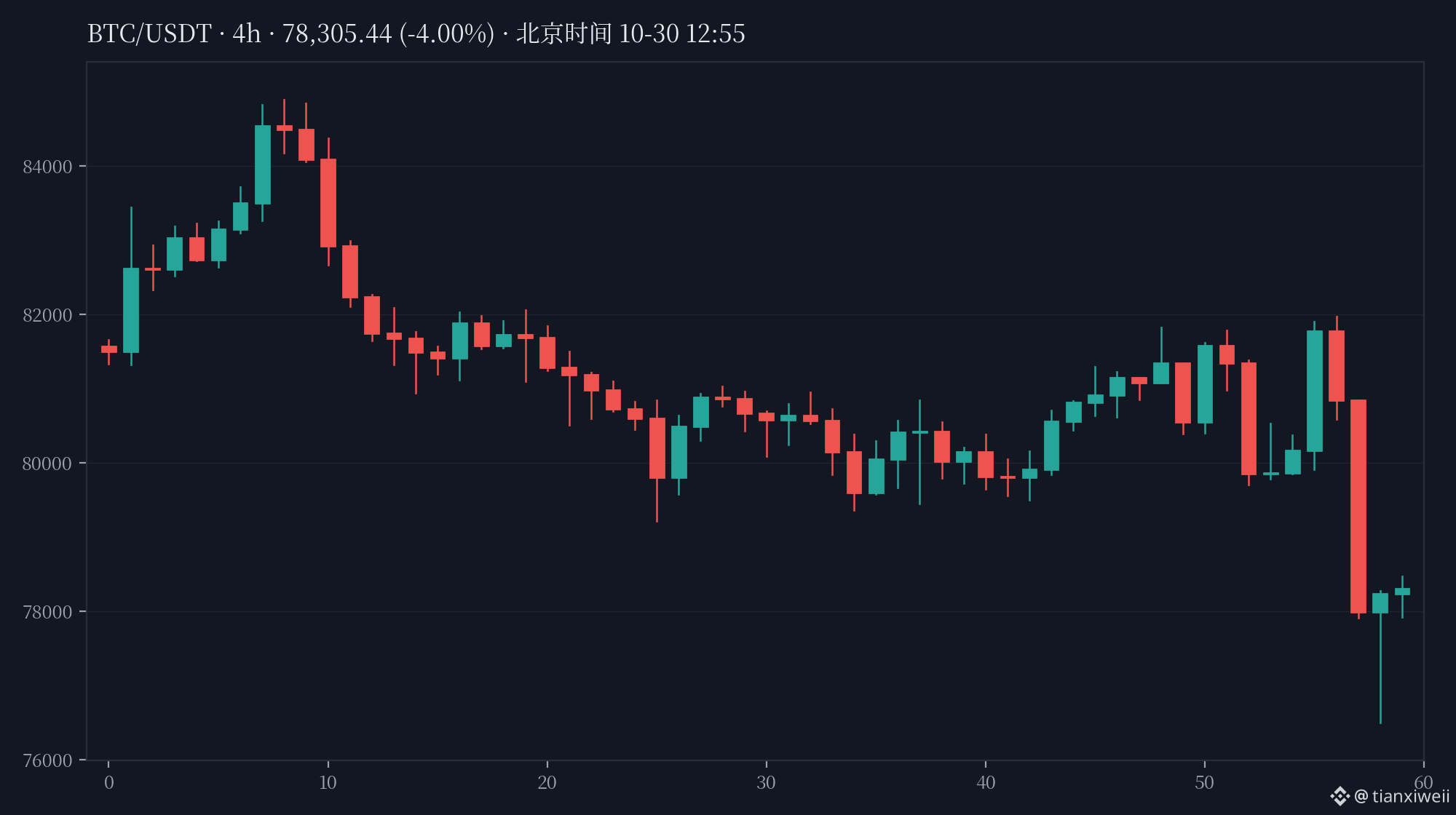
278
·
--
Binance Withdrawals Finally Have a Timeline: He Yi Says Resumption Will Begin Within 48 Hours (Updated October 30, 12:17 Beijing Time)
After waiting for most of the day, the suspension of withdrawals is finally no longer just a matter of “waiting for an announcement.” At 12:17 Beijing time today, Binance co-CEO He Yi posted a service update on X. The key message was just two sentences: the team is upgrading withdrawal services and related address controls, and expects to begin restoring withdrawal services within the next 48 hours.
Let’s be precise: this does not mean withdrawals have “already resumed,” nor that they will be “fully restored within 48 hours.” He Yi gave a window for when the restoration will “begin”—counting from 12:17, work should start by around 12:17 on November 1 at the latest. She did not say exactly when it will begin, which networks or coins will be restored first, or how long full restoration will take. We also have yet to see confirmation from the main @binance account or details of a phased restoration by network and coin. Don’t read “begin” as “everything is back on.”
There’s another line in this update worth calling out separately: He Yi said deposits are unaffected and operating as usual. Note the change in messaging—the official statement overnight said both deposits and withdrawals were temporarily suspended, which differs from He Yi’s latest statement. Until there’s further official confirmation, treat this as “He Yi’s latest account,” not as definitive proof that deposit channels are fully unaffected, and don’t use it to infer that withdrawals have resumed.
Here’s what hasn’t changed, in case the headline gives the wrong impression: as of publication, withdrawals have not resumed; Alpha trading remains suspended, with no new update on its restoration in this round; a full technical postmortem has not been released, and the preliminary cause remains as described in the previous post (a DevOps engineer’s laptop was allegedly compromised; there is no evidence of private key leakage); the official frozen amount remains approximately $3 billion, with no new upward revision in this update; and the updated proof of reserves is still set to be published “after remediation is complete”—it has not been released yet. The background figures are unchanged: the estimated total impact is approximately $6.3 billion, with compensation coming from the SAFU Fund and company funds.
Market snapshot (cross-checked against two sources before publication, 12:39; Binance spot/OKX perpetual price deviation ≤0.19%): $BTC at approximately $78,310 (24h -2.16%), $ETH at approximately $2,246 (-3.01%), and $BNB at approximately $717.68 (-4.58%, 24h low of $680). Compared with the previous post’s 11:38 snapshot ($BTC 78,046, $ETH 2,231, $BNB 717.69), $BTC and $ETH have edged up, while $BNB is basically flat—the market has not moved decisively in response to this timeline.
My take: having a timeline is better than having none. At least it suggests Binance has moved internally from “investigating” to “making changes and preparing to restore service.” But the phrase “begin restoration” leaves a lot of room for interpretation. The real test is exactly when the first withdrawals are enabled, which ones are included, and whether they go through smoothly. Until then, if you have funds on Binance, stick to official channels and don’t click any unofficial “withdrawals restored” links.
Risk warning: The above is a summary of public reporting and official statements, and does not constitute investment advice. The 48-hour period is an expected window, not a guaranteed completion deadline. The situation is still developing, and subsequent official updates may revise the messaging.
Which do you think will be restored first: major coins, or all networks at once?
#Binance #安全事件 #提现暂停 #HotWallet
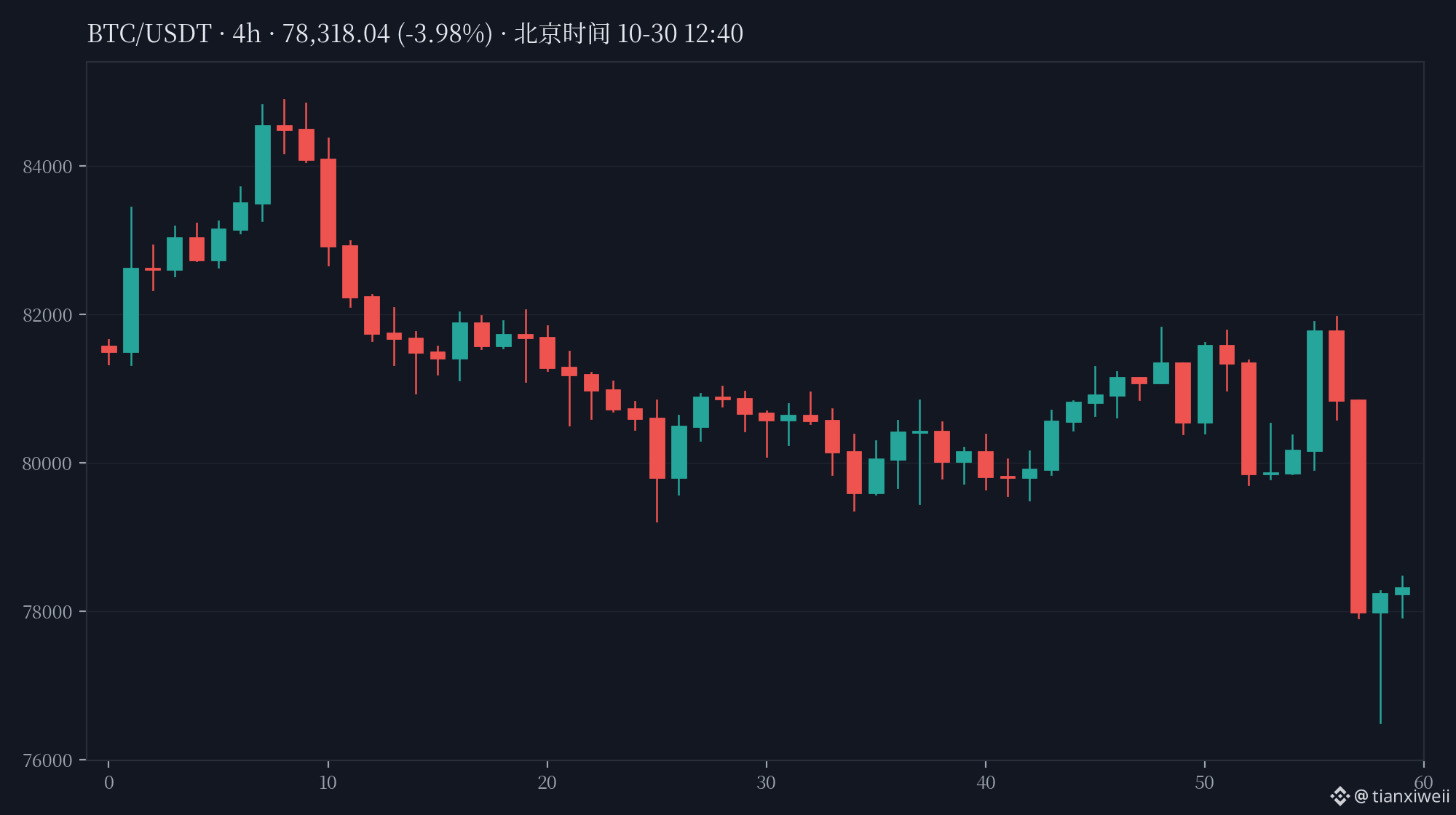
354
·
--
Binance reveals a possible cause for the first time: suspected DevOps laptop breach; company estimates impact at about $6.3 billion
The top priority in my next-round list in the previous post (09:38)—item ④—has now materialized. This morning Beijing time, Binance published preliminary findings on X: the incident “may have involved the compromise of a DevOps engineer’s laptop.” The attacker used it to access a service container and submit unauthorized withdrawal transactions. Binance also explicitly stated: “We have found no evidence that any wallet private keys were compromised.”
First, let’s be clear about what this means: these are still preliminary findings, not a final technical postmortem. Binance’s exact wording was “may have involved.” They broadly align with Blockaid’s preliminary assessment mentioned in the previous post—that the signing infrastructure was “misused”—in that neither points to stolen private keys. But these are still preliminary assessments from different sources. Don’t treat either as conclusive until Binance publishes its full postmortem.
Binance also provided its own impact figures for the first time: it estimates the total impact at about $6.3 billion, with roughly $3 billion frozen on-chain. The $6.3 billion figure is Binance’s own estimate. Previously, Binance had only provided the amount frozen, not a total loss or impact figure. Third-party Chainalysis estimated about $5.912 billion in the previous post. The figures are similar in scale but use different methodologies, so don’t conflate them. The $3 billion frozen is on the same scale as the roughly $3 billion cited at 08:52 in the previous post. There has been no new increase this round. Frozen does not mean recovered, much less reimbursed.
The reimbursement details are also more specific this time: Binance says it will cover all losses using the SAFU Fund and company funds, and that user funds are safe. It also pledged to publish an updated proof of reserves after remediation is complete. Actions already taken include revoking authorizations for affected addresses. What hasn’t changed: deposits and withdrawals remain suspended, and Alpha trading is still paused. He Yi said withdrawals would resume once security scans are complete, but no specific timeline has been given.
Market snapshot (checked against two independent sources before posting; Binance spot/OKX perpetual price difference ≤0.24%): $BTC at approximately $78,046 (24h -2.23%), $ETH at approximately $2,231 (-3.31%), and $BNB at approximately $717.69 (-3.81%). Compared with the snapshot in the 09:38 post ($BTC 77,134, $ETH 2,209, $BNB 699.79), all three are higher in absolute price, and $BNB is further from the low near 680. But this is just a rebound amid the incident, not a sign that it’s over.
My take: the suspected cause points to an internal endpoint and service container, rather than leaked wallet private keys. If confirmed by the final postmortem, the risk profile would narrow from “the wallet system was compromised” to “an internal access point was compromised.” But until the full postmortem is published and withdrawals resume, this remains an ongoing incident. If you have funds on Binance, don’t trust any “recovery links” from unofficial sources. Use only Binance’s official channels.
Risk disclaimer: The above summarizes public reporting and official statements and does not constitute investment advice. Preliminary findings may be revised in a later postmortem, and the incident is still developing.
Which are you more eager to see first: withdrawals resuming or the full technical postmortem?
#Binance #安全事件 #热钱包 #WithdrawalsSuspended
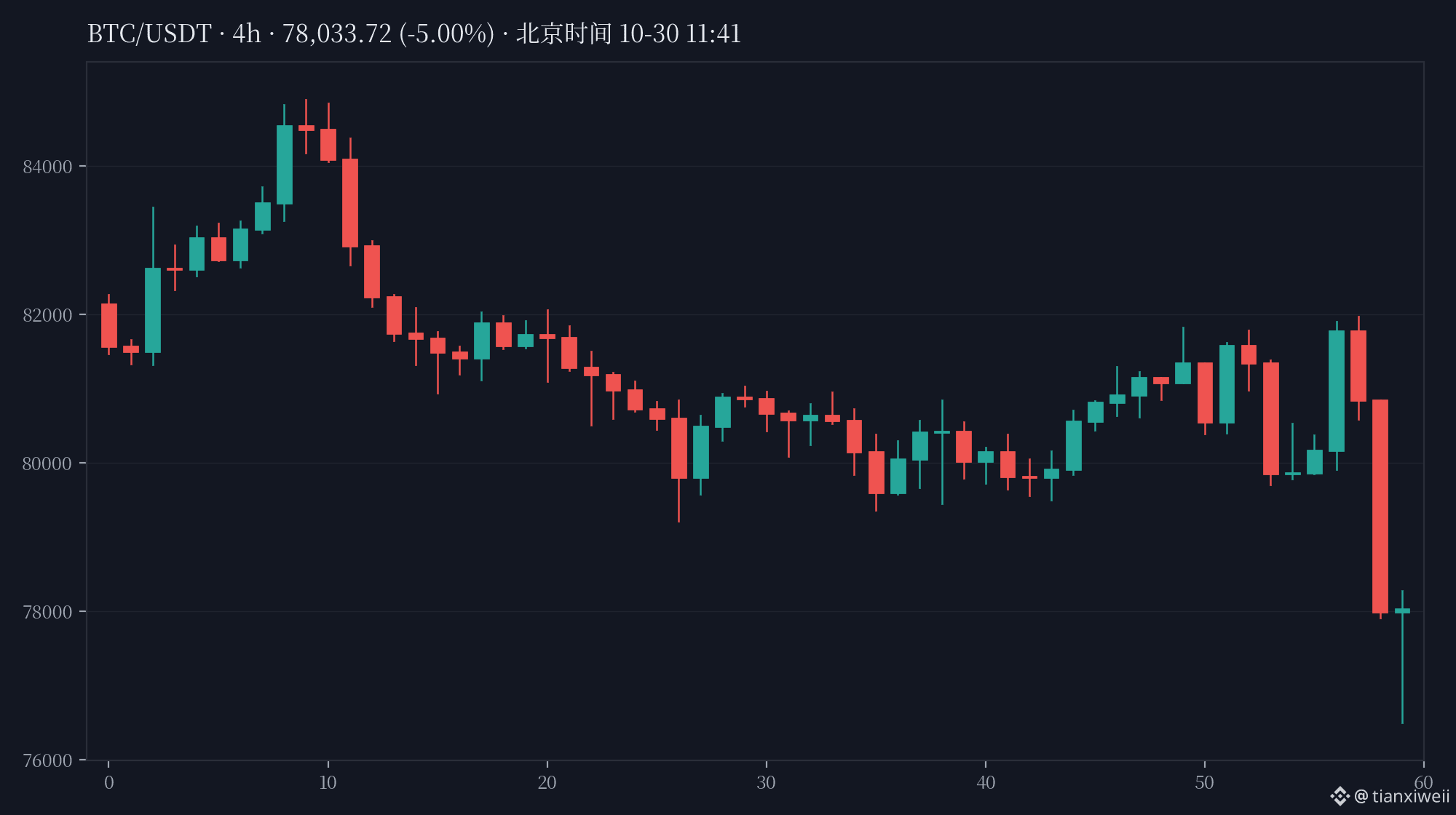
824
·
--
Binance follow-up: Officially frozen amount rises to $3 billion; updated 08:52—but withdrawals are still unavailable
The top item for the next round, No. ⑥, that I listed in my previous post (08:38) has come to pass: at 08:52 Beijing time today, Binance posted an update on X confirming that the total amount frozen is approximately $3 billion. My previous post put the figure at $2.54 billion as of 07:35; in about 90 minutes, it increased by around $460 million. Binance’s exact wording was that it “may continue to rise.”
One newly identified amount in this round involves the Arbitrum Security Council: it transferred 74.56 million ARB tokens and 8,425 ETH from the hacker’s wallet—worth about $30.5 million—to an intermediate frozen wallet. The funds can only be moved again through subsequent action by the Council or a DAO vote. To be clear about the timing: this was disclosed at 08:24, 14 minutes before the window began, and wasn’t included in my previous post. I’m adding it here, not presenting it as new information from this window.
Two other third-party figures also weren’t covered in my previous post. Here’s what they represent:
First, Chainalysis estimates that approximately $5.912 billion was stolen in this incident, about four times the amount in last year’s Bybit incident. This is a third-party estimate, not an official Binance figure; Binance has yet to disclose its own total losses.
Second, Blockaid’s preliminary assessment suggests that the signing infrastructure may have been “misused,” rather than private keys being stolen. This is also only a preliminary assessment, not an official conclusion; Binance has yet to determine the cause.
So here’s where things stand: $3 billion frozen ≠ $3 billion recovered, and it certainly doesn’t mean the losses are $5.9 billion. Don’t conflate these three figures.
Three things remain unchanged as of publication: deposits and withdrawals are still completely halted, and Alpha trading remains suspended; no resumption timeline has been given. Binance has yet to disclose the total losses, the cause, or compensation details. “Covering all losses” remains a promise, not a published plan.
Market snapshot (cross-checked against two sources before posting; Binance spot/OKX perpetual price deviation ≤0.21%): $BTC at approximately $77,134 (24h -4.30%), $ETH at approximately $2,209 (-5.29%), and $BNB at approximately $699.79 (-6.99%). Compared with the 08:38 post’s snapshot, BTC and ETH are slightly lower. BNB has recovered somewhat from lows around $680, but remains one of the worst-performing major coins.
My take: the faster the frozen amount grows, the more it shows that the interception net involving the issuer and on-chain governance is working. But there are only two signals that would truly bring relief: withdrawals resuming, and Binance publishing its loss and compensation figures. Until either happens, this is still an event-driven market, not a signal to buy the dip. If you have funds on Binance, don’t trust any unofficial “withdrawal resumption link”—only use official Binance channels.
Risk warning: The above is a summary of public reports and official statements, and does not constitute investment advice. Frozen assets do not mean funds have been returned to users, and the incident is still developing.
Which do you think will be the next key signal: withdrawals resuming first, or Binance announcing its total losses first?
#Binance #安全事件 #热钱包 #WithdrawalsSuspended
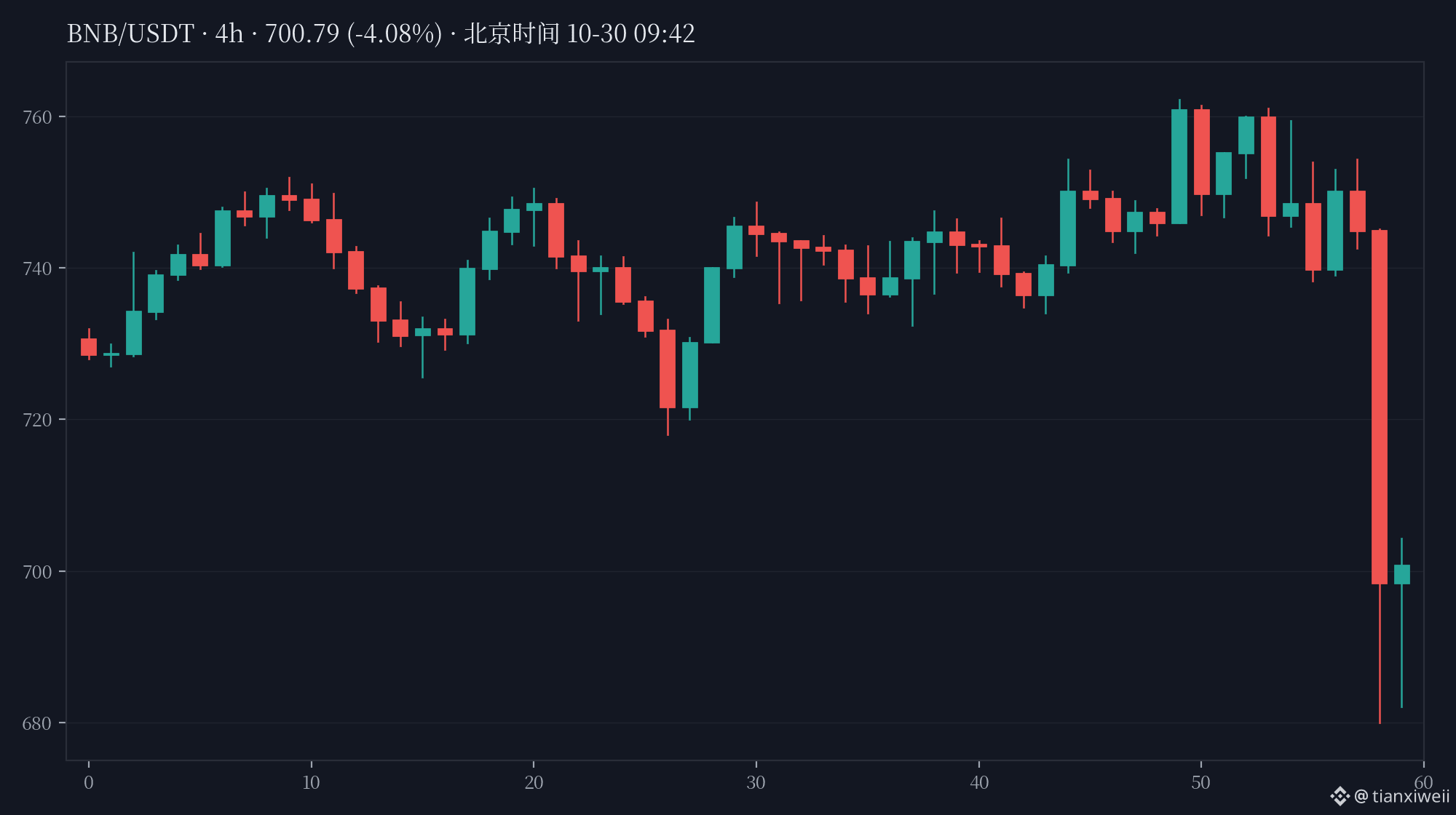
457
·
--
October 30 Morning Update: BTC Fell Below $80,000 Overnight, Touched $76,760 Intraday—Today, Watch Events, Not Technicals
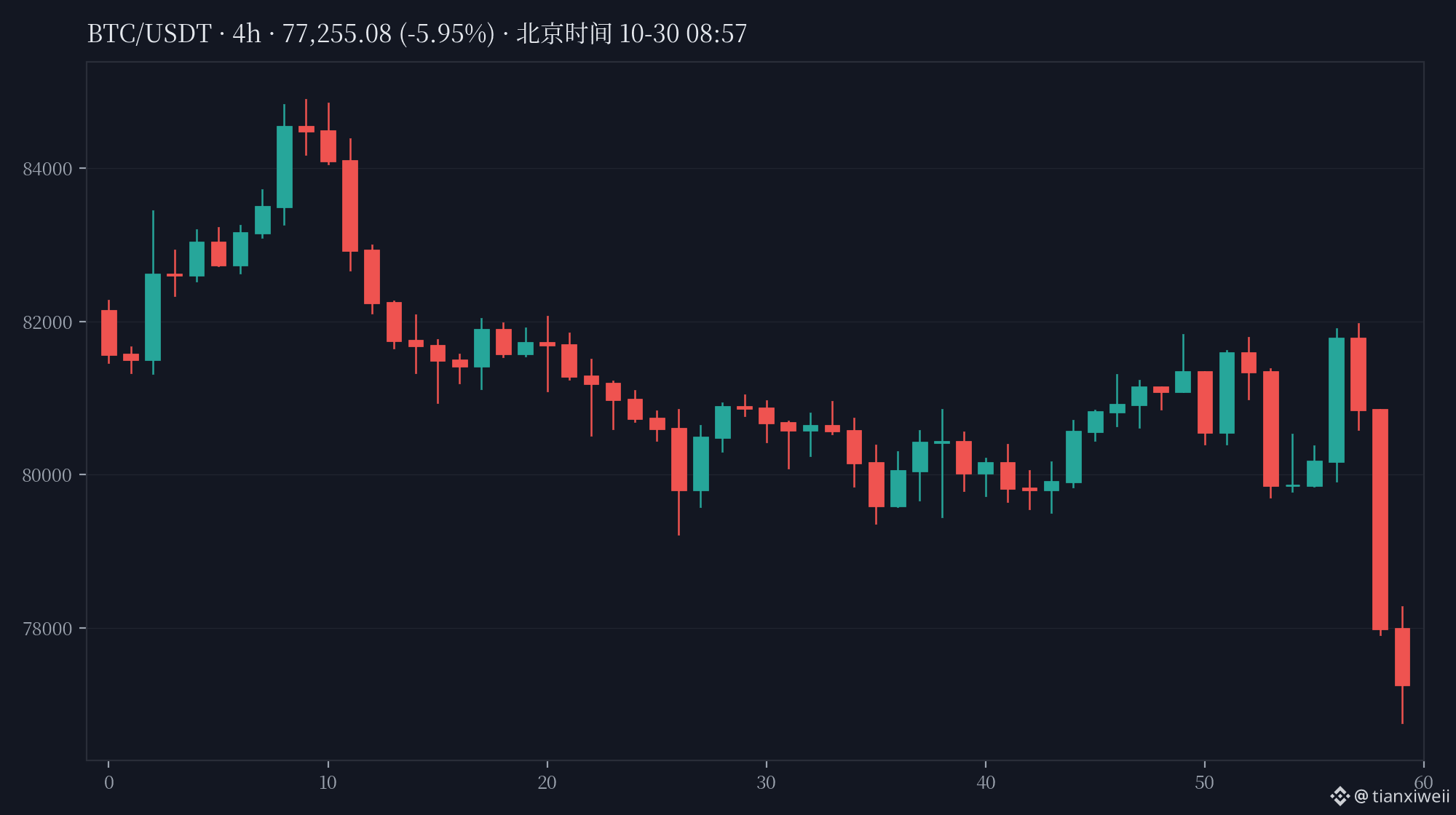
At 11 p.m. last night, I was still writing “it held.” Then one candle at 4 a.m. blew that script apart. $BTC slid all the way down from above 81,777, and the 4:00 a.m. one-hour candle closed at 78,852. This morning’s 8:00 a.m. candle dipped as low as 76,760 intraday. Last night’s “it held” is officially off the table. I’ll own that mistake instead of trying to spin it.
First, the numbers, checked this morning Beijing time: $BTC around 77,200, down 4.8% over 24 hours, high 81,971 / low 76,760; $ETH around 2,220, down 5.7%; $BNB around 694, down 8.2% over 24 hours—the hardest-hit among the major coins, with the event still at the center of it; SOL around 94.7, down 7.0% over 24 hours. OKX perpetual funding rates are hovering around zero (BTC around +0.01%, ETH around -0.005%), suggesting this move wasn’t driven by a funding-rate squeeze; spot selling led the way. According to Coinglass, around $628 million was liquidated across the market in that one-hour stretch overnight, with more than 90% of the liquidations being longs.
My read is that three things collided to drive the sell-off, rather than it being a single technical breakdown. First, the Binance incident: withdrawals and Alpha were both suspended. After 8 a.m. today, the official wording was upgraded to “taking responsibility for all losses,” but the total losses, cause, and restoration timeline are still unknown. Second, U.S. stocks: Alphabet plunged 12.64% on the 29th, dragging the Nasdaq down 1.38% and the S&P 500 down 0.30%, while the Russell small-cap index actually rose 1.01%. That suggests this isn’t broad-based panic—it’s the bill for AI spending coming due. Third, at 16:00 this afternoon, around $11 billion in BTC options on Deribit expire. Max pain is near 78,000, and volatility is likely to be amplified around expiry.
For altcoins today, I’m only watching two—no chasing. TRX is bucking the trend, around 0.358 this morning, up 8.9% over 24 hours. After volume surged at 05:00, two candles closed above 0.34 (I already posted about TRX today, so I’ll just mention it briefly here). PARTI is up 52% over 24 hours, but I haven’t found a fresh catalyst for today, so I’m sticking to the rules: no chasing and no separate hype post. HYPE is around 91.3, up 13.7% over 24 hours, and holding above 85.50—one of the few resilient names amid the broader market’s plunge.
There’s a positive development on the U.S. stock side: SNDK beat earnings expectations, with revenue of $11.03 billion and EPS of $49.51. It also announced an 8-for-1 stock split and next-quarter guidance of $12.2–12.6 billion. The stock was still down 5.3% before the close, then rose 2–3% after hours. Before the market opens today, I’ll be watching to see whether it can bring the AI storage trade back to life—this is the U.S. stock litmus test I’ve been waiting for over the past few days.
Let me be clear about my view and what would invalidate it: today, I’m treating this as an “event-driven market,” not a “technical market” for trying to call a bottom or top. If a one-hour candle closes back above 80,000, the “breakdown” thesis loses some weight. If it continues closing below 76,760, analysts are looking toward the 75,000–77,000 range (including views from Santiment and Coinbase Institutional; this is not my prediction). Until the event becomes clearer, shorting or buying the dip is just a bet on the timing of the news.
Risk disclaimer: This is only my personal account of the market and my opinions. It is not investment advice. You are responsible for your own gains and losses, and news around the event could reverse at any time.
One last question: Which way are you leaning today—A) a Binance recovery announcement triggers a rebound back to 80,000, or B) a dip toward 75,000 before options expire at 16:00?
#BTC #Binance #期权到期 #SNDK
1
431
·
--
TRX surged nearly 10% in one hour at 05:00 a.m., holding 0.34 against the market plunge
The market was a tale of two extremes early this morning: $BTC 07:00 closed at 77,992, and at 08:00 the price briefly dipped to 76,760. $ETH 24-hour losses exceeded 6%, with most altcoins falling 10% to 20%. Against that backdrop, $TRX 24-hour gains actually reached 7.7%, with the current price at 0.3547—making it one of the few major coins still rising on the leaderboard.
First, let’s look at how this move got started. For several hours beforehand, TRX had been trading sideways around 0.331, with hourly trading volume mostly below 1 million USDT. Then volume suddenly surged during the 05:00 hour: the price peaked at 0.3650 and closed at 0.3606, with hourly volume of 29.46 million USDT—dozens of times higher than before. During the 06:00 hour, a huge 37.99 million changed hands; the price briefly plunged to 0.337, but still held at the 0.3473 close. It closed at 0.3524 again at 07:00. Two consecutive hourly closes confirmed support above 0.34, and at 08:00 the price touched 0.361 again. This wasn’t a one-candle spike, but a high-volume breakout followed by confirmation.
Why did it rise? One development that lines up with the timing is the news from October 29: Blockchain.com launched TRX options (TRON DAO issued a press release on October 21, followed by reports from several media outlets on October 29). On the same day, Tron Inc bought another 150,300 TRX, bringing its holdings to more than 721 million. To be clear: the news came out on the 29th, but the available evidence doesn’t establish that it directly triggered the early-morning rally. Don’t mistake correlation for proof.
There’s a derivatives setup worth watching: OKX perpetuals are around 0.3529, about 0.5% below spot, with open interest around $24.73 million. The funding rate for the current period is around -0.85%, while the previous few periods were basically near zero. In other words, spot is rising, while shorts in perpetuals appear relatively crowded and the contracts are still trading at a discount. In this setup, chasing shorts risks a short-covering bounce, while chasing longs means risking a broad-market pullback dragging the coin down. Neither side looks comfortable.
My take: the relative strength is real, and a breakout confirmed by two closes is more convincing than a single surge. But the price is already about 7% above the 0.331 starting point. The 0.365–0.367 area overhead is where it failed to break through twice, at 05:00 and 06:00, so if you’re chasing, leave yourself room to exit.
Let’s be clear about invalidation: if the 1-hour candle closes back below 0.34, treat this breakout as a false breakout. Only consider the next leg if it closes above 0.367. Risk warning: the broader market is still weakening, and this coin could be dragged back down at any time; the funding rate is already extremely negative, which could amplify volatility. This article is only a market observation and does not constitute investment advice.
What do you think? A: This is the beginning of TRX catching up; B: Just a brief countertrend spike in a weak market.
#TRX #TRON #加密货币 #MarketWatch
868
·
--
Binance update: Official figures show verified freezes of $2.54B for the first time; Alpha trading also suspended (Updated October 30, 08:40)
In the previous post, we covered the withdrawal suspension and the cold-wallet wind-down. Over the past hour, the official account has gone a step further—and the impact has expanded from withdrawals to trading features.
First, the hard figure the official account has provided for the first time: Binance clarified on its official X account that the current verified total frozen amount is $2.54 billion, and that it “may continue to rise.” Two points to note: first, this replaces the previously circulated figure of about $1.8 billion; second, frozen funds are not the same as recovered funds, nor do they equal total losses. So far, the official account has still not disclosed the total amount stolen or lost, the cause, or a compensation plan. Frozen assets are simply assets whose movement has been restricted.
The impact is also expanding: Binance said on its official X account that, as part of ongoing security measures, Binance Alpha trading has been temporarily suspended. This includes using funds in spot wallets to buy coins on the CEX, Alpha instant trading, and CEX purchases of prediction-market products. The only timeframe given for resumption is “after the security issue is resolved”; no specific time was provided. There has also been no notice that withdrawals have resumed—they will return only “once the issue is fully resolved.”
There’s another angle worth highlighting separately: after reviewing Binance’s own reserve data, CoinDesk found that the affected Binance 14 was listed among the reserve wallets on October 1, holding $1.26 billion in USDT, about 89,500 ETH, and 37 other assets. Binance’s ETH reserve ratio was exactly 100% on October 1. Based on an estimated outflow of about 204,500 ETH, ETH backing may have fallen to around 94%. This is CoinDesk’s estimate, not an official balance sheet, but it raises a key question: will the next reserve snapshot on November 1 make up for this shortfall?
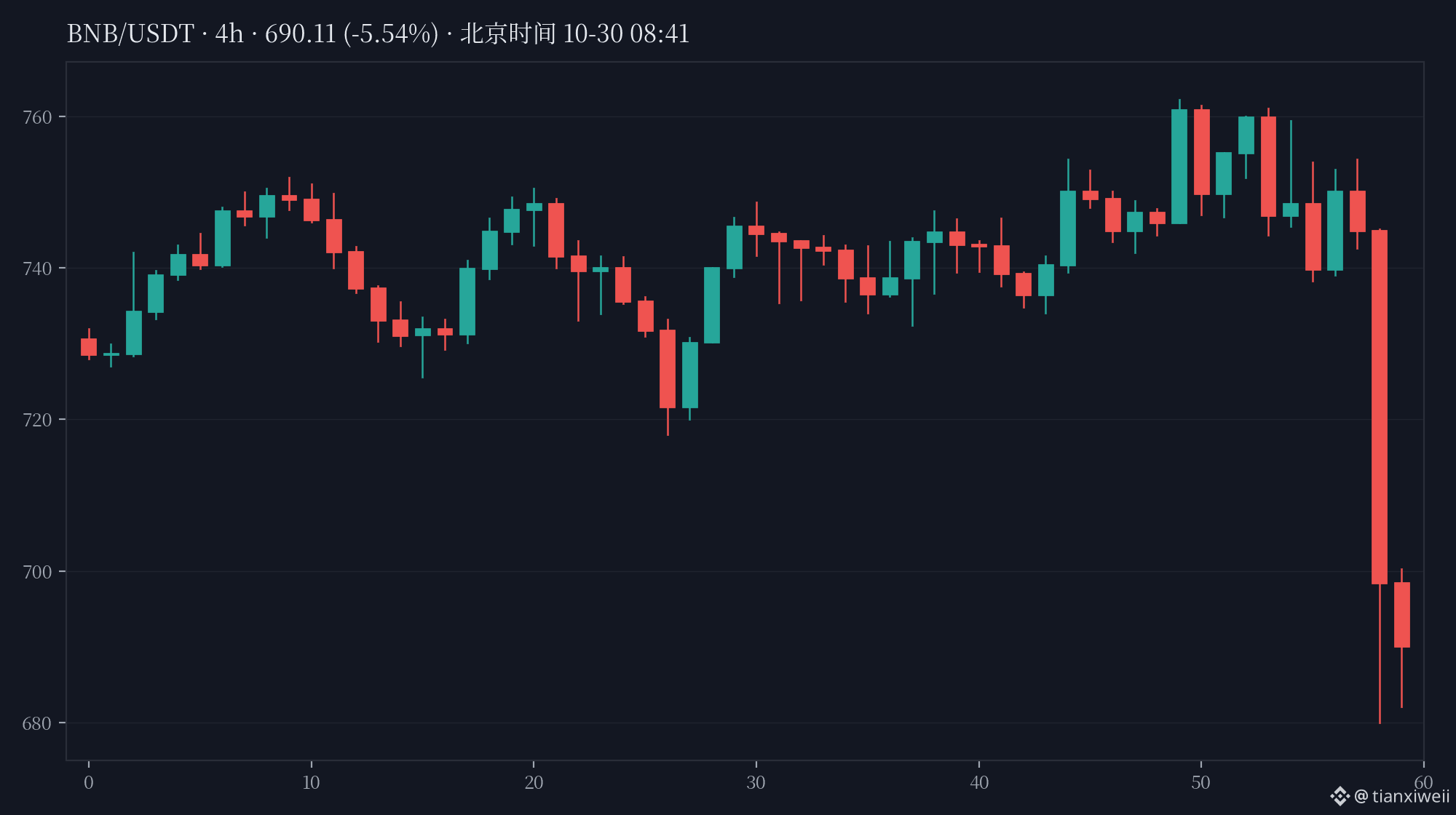
Current prices (measured on Binance spot locally at around 08:45): $BTC at about $77,397 (24h -4.67%, intraday low $76,760); $ETH at about $2,218 (-5.90%); $BNB at about $692.47 (-8.67%, with the intraday low still around $680). Prices have fallen further since the previous post’s 07:45 snapshot, and $BTC has dropped below $78,000.
My take: the frozen-funds figure has been revised from $1.8 billion to $2.54 billion, suggesting that tracking is ongoing. Don’t treat any interim figure as the final loss. The Alpha suspension also shows this is not an isolated measure affecting withdrawals alone; the official response is following a “contain the situation first, resume operations later” sequence. Only three things can truly reassure the market: withdrawals resuming, the restrictions being lifted, and an official account of losses and compensation. None of the three has happened yet.
Risk warning: Trust only official notices about the resumption of services. Don’t trust links, private messages, or withdrawal instructions from anyone claiming to be Binance customer support. Frozen does not mean returned, and until a compensation plan is announced, all loss figures are only on-chain estimates.
Which would you most like to see happen first: withdrawals resuming, or an official account of losses and compensation?
#Binance #安全事件 #热钱包 #WithdrawalsSuspended
1.1k
·
--
Binance follow-up: Withdrawals suspended, remaining Binance 14 tokens being transferred to cold wallet (updated October 30, 07:40)
The previous post only said “funds are safe, investigation ongoing.” In the past hour, there’s been a more concrete development—one that directly affects whether users can withdraw.
First, the most important point: A Binance spokesperson confirmed to TechCrunch that withdrawals across multiple networks have been temporarily suspended as a precaution. Around 06:33, Binance also posted on its official X account that it was conducting security checks, that withdrawals would remain suspended until the issue was fully resolved, and reiterated that user funds were safe. Be careful not to conflate the statements: Around 05:51, Binance posted separately that some users’ withdrawals were blocked by a technical issue. That was a different statement, not a change to the same post.
On-chain activity is also winding down. Starting around 06:58, Binance 14 began transferring its remaining tokens, block by block, to an address labeled as a Binance cold wallet. As of around 07:04, when checked, the delegation had not yet been revoked, but the ETH balance was down to about 0.94 ETH and token holdings were worth over $919,000—the wallet was basically empty, but the delegation was still in place and hadn’t yet been removed, so the door wasn’t officially closed.
The issuer has also started reclaiming funds: Around 07:03, about 8.406 million SNX was transferred from the attacker’s address to Synthetix protocolDAO. The sender was an issuer governance address, making this an action by the issuer. According to the same postmortem, USD1 had frozen $27 million in related assets around 06:15, and CZ replied with thanks.
But there are still no answers to the three most important questions: Officials have not classified the incident as a theft, disclosed the total losses, or announced a compensation plan. CZ’s comment that it “looks like an attack” and that he “expects full coverage” remains his personal statement as a shareholder, not an official compensation commitment.
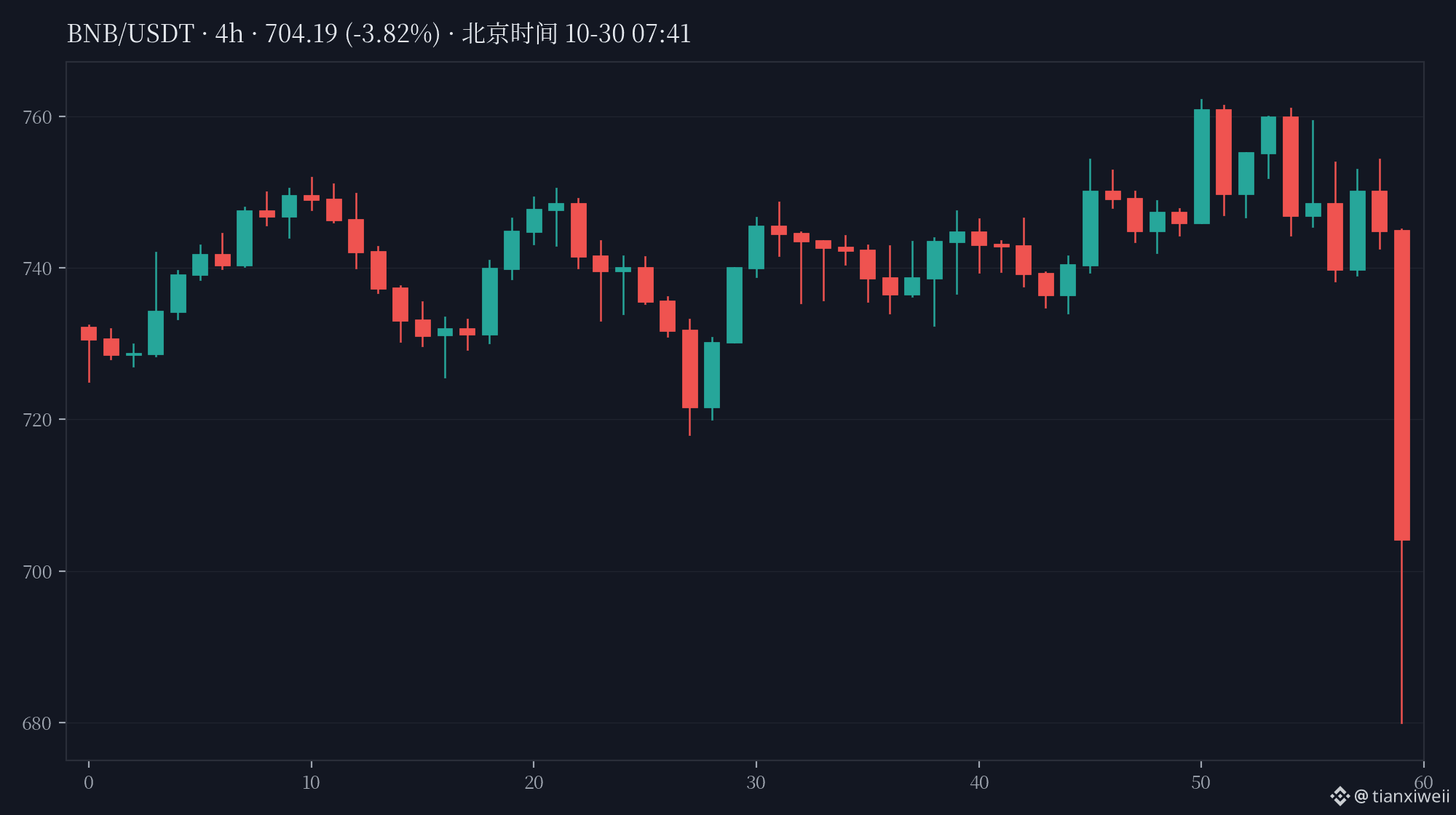
Current prices (checked on Binance spot locally around 07:45): $BTC about $78,582 (24h -3.36%), $ETH about $2,264 (-4.02%), $BNB about $704.35 (-7.13%, rebounding somewhat after an intraday low around 680).
My take: The withdrawal suspension is the most concrete signal in this round of updates. Previously, it was still a dispute over messaging; now it’s genuinely affecting users’ ability to transact. The cold-wallet transfer shows Binance is containing the damage, but until the delegation is removed and compensation is announced, don’t mistake frozen funds for recovered funds.
Risk reminder: Only trust official channels for notices that withdrawals have resumed. Don’t trust links, direct messages, or withdrawal instructions from anyone claiming to be Binance customer support. A freeze does not mean funds have been returned, and until a compensation plan is announced, all loss figures are just on-chain estimates.
Can you still withdraw normally, or have you already run into the suspension?
#Binance #安全事件 #热钱包 #WithdrawalsSuspended
2
1
4.1k
·
--
The Binance situation moved another step forward within an hour, but let’s be clear: this is an “escalation in the official response,” not “case closed.”
When I published my previous post, Binance’s official position was still “under investigation, with no confirmed impact on user funds.” At around 5:30 a.m. Beijing time today, the official statement was updated. The new wording is: “User funds are completely safe” (confirmed by both Unchained and Odaily). That carries a very different weight from “under investigation”—it’s effectively the first time the company has publicly vouched for the safety of user funds.
But three things in the same update haven’t changed, and are worth keeping an eye on:
First, Binance still hasn’t classified this as a “theft,” disclosed the total losses, or announced a compensation plan. CZ personally said it “looks like an attack” and that he expects it to be fully covered. That’s a statement from him as a shareholder, not an official compensation commitment—don’t conflate the two.
Second, on-chain activity didn’t stop immediately after the statement was issued. Unchained’s updated report says that at around 5:44 a.m. Beijing time, another sweep hit Binance 14, with about $200 million in USDT and around 370 ETH flowing to addresses that had already been frozen. At around 6:34 a.m., Binance 14 was still in a delegated state, though no further sweeps had been reported by then. In other words, the company still hasn’t given a definitive answer on whether the vulnerability has been completely contained.
Third, the reported scale has been revised upward again. Based on its own calculations of Ethereum on-chain transfers, Unchained says the receiving addresses took in about $3.52 billion between 4:24 and 5:04 a.m. Beijing time: around 197,000 ETH, $1.68 billion in USDT, $823 million in USDC, plus about $564 million worth of 62 other tokens. That’s more than the roughly $2.5 billion in a single transfer mentioned in my previous post. But note that this figure covers Ethereum only; estimates across multiple chains vary by source and haven’t been verified, so don’t treat it as the total amount stolen.
There are new figures on the freezes too: Tether’s CEO said more than $1.567 billion in USDT has been frozen, Circle froze $823 million in USDC, and Odaily’s tally puts the total frozen at at least $2.316 billion. Frozen just means the funds can’t be moved; it doesn’t mean they’ve been returned to Binance, much less paid out to users.
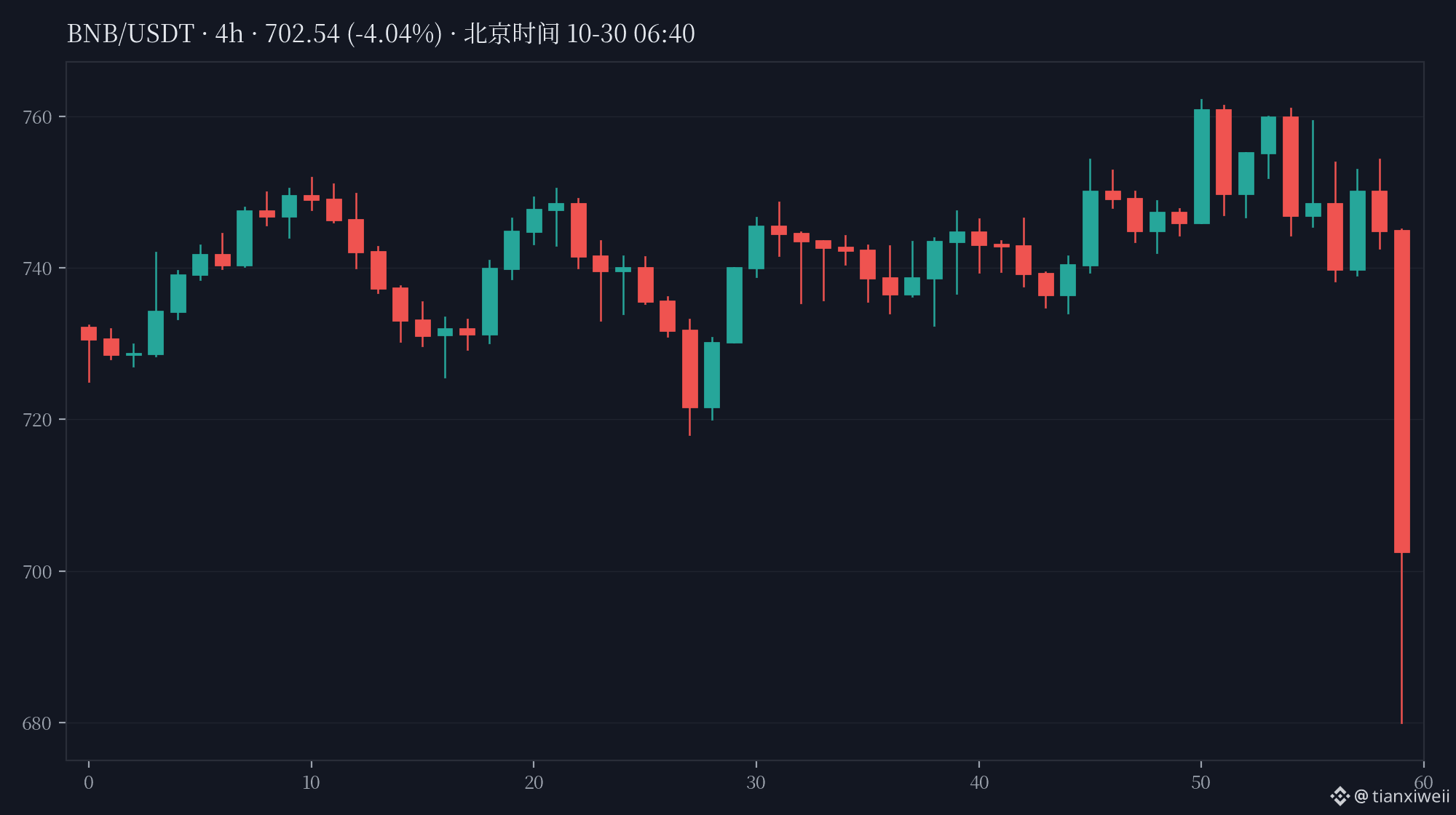
Here’s where the market stands (checked just before publication): $BTC is around $79,112, down 2.75% over 24 hours; $ETH is around $2,278, down 3.54%; $BNB is around $704, down 7.11%, after hitting an intraday low of $680. BNB is still the hardest hit, which suggests the market is worried not just about “how much money was lost,” but also about “whether the exchange itself is in trouble.”
My view in a nutshell: the official “completely safe” statement may calm nerves, but three things are still needed to truly close the case—the delegated status must be resolved, the total losses must be established, and a compensation plan must be announced. Until then, this is only an “escalation in the official response,” not “the end of the story.”
Risk warning: Fake customer support agents and fake refund forms are bound to be everywhere right now. Binance itself has warned people not to trust unofficial links. Anyone asking you for your password, seed phrase, or a fee to “claim compensation” is a scammer.
What do you think: do you believe the official claim that “user funds are completely safe,” or will you wait until the losses and compensation plan are announced?
#Binance #安全事件 #热钱包 #爆仓
2.3k
·
--
Binance hot wallet suspected of being hacked; $BNB briefly fell more than 9% | Early morning, October 30, Beijing time
Let’s be clear about what we know: this is not a confirmed “Binance hack”—it’s a suspected incident, and an official investigation is underway. The market priced in the worst-case scenario before anything was confirmed; that’s the essence of this overnight move.
Timeline (Beijing time):
04:24: On-chain observer Spreek sounded the alarm first: a hot wallet labeled Binance 14 transferred about 167,500 ETH, approximately $1.615 billion in USDT, and assets in more than 60 other tokens—around $2.5 billion in total—to an address created earlier that day. Binance 16 then sent about 28,000 ETH to the same address. Funds in the wallet that initiated these transactions reportedly came via Tornado Cash. This detail is key to why some view the incident as a “suspected hack” rather than an “internal wallet reallocation,” but it is still based on on-chain observers’ analysis, not an official finding.
Around 04:47, panic spread to the markets: $BTC hit a low of $78,177 on Coinbase’s 1-minute chart, while $ETH fell to $2,230. According to CoinGlass, approximately $628 million in positions were liquidated over the past hour, including about $607 million in long positions—almost all of them leveraged long bets.
After 05:12, official statements followed: Binance’s official account said it was aware of reports of a potential security issue and was actively investigating, while explicitly stating that “the impact on user funds has not yet been confirmed.” CZ posted that “user funds are safe” and that it “looks like an attack on Binance.” He also said Tether had frozen approximately $971 million and Circle approximately $823 million, for a combined total of about $1.794 billion. He clarified that he no longer manages Binance and, as a shareholder, expected user funds to be fully covered—note that this is his personal expectation, not an official compensation commitment from Binance. By the 05:29 breaking-news update, the reported total amount frozen had risen to approximately $2.1 billion, still awaiting official confirmation transaction by transaction. Don’t treat that as a final accounting.
Binance spot prices at the time of writing (around 05:40): $BTC was around $79,601 (24h -1.94%), $ETH around $2,289 (-2.93%), and $BNB around $711 (-5.92%, with an intraday low of $680). $BNB fell the hardest, suggesting the market is pricing in not only broad-market panic but also a discount related to the exchange itself.
My take in one sentence: the first to get wiped out in this move were leveraged traders who acted before the facts were clear—not the wallets themselves. The freezes appear to have helped, showing that stablecoin issuers’ controls did block some funds. The final loss will depend on three factors: frozen funds, recoveries, and Binance’s backstop. None of the figures being reported now should be treated as the final bill. Until the investigation is complete, the fewer portfolio moves, the better.
Risk warning: The official investigation is ongoing, and neither the total losses nor the scope of impact has been officially announced. Beware of phishing links and fake customer support taking advantage of the situation. Rely on Binance’s official channels for updates, and don’t adjust positions, move funds, or buy the dip based on screenshots or breaking-news figures.
What do you think? Is this a case of “better to get out first and stay safe,” or did people dump before anything was confirmed and get played by rumors?
#Binance #安全事件 #爆仓 #HotWallet
1.6k
·
--
Polymarket Trading Resumes; Attack Trail Points to DebugBear | Updated October 30, 04:09 Beijing Time
This is a follow-up to the article from early this morning, not a repost: there are three new developments.
First, trading has definitely resumed. Polymarket’s status page marked the incident as resolved at 15:05 Eastern Time (03:05 Beijing Time), and the official account also said the international site was “fully back online.” The article from early this morning only said trading was “expected to resume”; that can now be updated to say it has resumed—but this is just a return to trading, not the end of the story.
Second, the attack trail has a name for the first time. Research firm Hudson Rock says the malicious script came from DebugBear’s servers: it looked for sessions logged into Polymarket, checked users’ positions, then attempted to sell or transfer them. The code also contained a backup receiving address. DebugBear itself has also announced an “ongoing security incident” and told customers using its RUM product to remove the embedded code. A note on attribution: Polymarket has still not named a vendor or disclosed the total amount stolen or the number of people affected. DebugBear is the name cited by the research firm and sources speaking to Reuters/CNBC, not a company named by Polymarket.
Third, the loss estimates are still a range, not a definitive figure. Arkham puts the amount at about $2.65 million; Hudson Rock found about $2.19 million at the backup address and says that figure is unverified; Bubblemaps puts it at about $2.7 million, affecting more than 700 users. It’s normal for the three figures not to match—they’re all based on on-chain tracking, not an official accounting. Don’t treat any one of them as the final number.
My view is still this: it’s a relief that trading has resumed, but until it’s clear whether “full compensation” will be delivered and how many websites still have DebugBear’s embedded code, this isn’t over. The second issue in particular goes beyond Polymarket: any website still embedding DebugBear RUM code should follow its own announcement and remove the code first.
Risk warning: Refer to the platform’s official statements for updates on compensation and the scope of impact. Until the total losses are officially announced, don’t use on-chain estimates as a basis for adding to positions or moving funds.
What do you think? Does the explanation that a “third party is to blame” make sense, or is there a problem with how the platform vets its external vendors?
#Polymarket #预测市场 #安全事件 #Third-Party Risk
53
·
--
Polymarket’s international site attacked via third-party vendor; about $2.65 million stolen | Around 03:00 Beijing time on October 30
It wasn’t the market that ran into trouble in the middle of the night—it was the platform itself. Early this morning, Polymarket’s international site briefly switched to cancel-only mode: all new orders were halted, and relayer activity was also paused. The platform later said it had identified and fixed the cause: a third-party vendor had been compromised. The matter was also referred to law enforcement, and the platform promised to fully compensate affected users.
The figures need some context: the roughly $2.65 million refers to POL in wallets Arkham traced on-chain to suspected attackers (transferred after USDC.e was converted to POL via Relay). It is not an official total for the amount stolen, as CoinDesk also noted that the official total could not yet be confirmed at the time. So don’t treat $2.65 million as the final bill—it’s simply the on-chain figure that can currently be verified.
The second point worth noting is that this isn’t the first time. CoinDesk reported that in June this year, Polymarket also suffered a breach at a third-party vendor, with about $3 million taken. In both cases, the platform’s own contracts weren’t exploited; the weak link was an external vendor. For users, the lesson is straightforward: when you keep money in a prediction market, the risks don’t come only from the direction you bet on, but also from third parties you can’t even see.
My view in a nutshell: this incident is only behind us once the compensation promise is fulfilled and the issue doesn’t recur after service is restored. Otherwise, “third party” will become a catch-all explanation every time something goes wrong.
Risk reminder: The situation is still developing. Refer to the platform’s status page for the total losses, the scope of affected users, and the restoration timeline. Don’t adjust your positions or move funds based on a single report.
Do you have positions on Polymarket’s international site? Are you pulling out for now to wait and see, or waiting to see whether compensation comes through?
#Polymarket #预测市场 #安全事件 #Third-party risk
300
·
--
PCE and GDP at 20:30: GDP comes in at 3.4%, above expectations, but $BTC is still hovering around 80000
Tonight at 20:30, U.S. September PCE and third-quarter GDP were released. Cross-checking three sources: annualized GDP was 3.4%, above the 3.2% in the Reuters survey; PCE was 3.6% year over year and core PCE was 3.1%, both exactly in line with expectations; spending rose 0.5%, slightly below expectations.
But $BTC’s reaction was muted. Before the data, it closed at 80170 at 19:00; after the release, it dipped to a low of 80014 at 20:00, and my check before posting put it around 80034. 80000 still held. At 14:00 and 15:00, it closed below 80000, briefly triggering my midday call that the setup was “completely invalidated.” But from 16:00 onward, it closed above that level for four consecutive candles—I admit I called it too soon. Treat it as an intraday dip below the level; a trend breakdown hasn’t been confirmed.
I was wrong about two things today: first, my morning confirmation that “seven consecutive overnight candles closed above 80845” was invalidated by a single 9:00 candle closing at 80019. Second, I called the setup invalidated too soon at midday. So $BTC went nowhere today: 81163 in the morning, 80170 at midday, and now 80034. It spent the whole day grinding within a range of 79710 to 81823.
Only two altcoins made a move today, and both were just mentioned tonight: $HYPE 18:00 broke above 85.50 on strong volume, then closed at 87.98 at 19:00; the 20:00 candle touched 89.54. $HUMA 19:00 closed above 0.0288 on strong volume, then touched 0.03004 at 20:00, with the round-number level now within reach. Both coins were already mentioned today, so just a brief mention tonight. As for the rest: INIT is still above 0.1987; PEPE and BANK remain below their confirmation levels; AVA is still grinding within its range.
The data release is behind us, but this isn’t a “good news is priced in” moment: the odds of a December rate hike are still above 80%. I’m not chasing a direction tonight: if 80000 holds, it’s range-bound; if it breaks, then we can talk about the next level. To the upside, it first needs to reclaim 80845 before we can bring back the idea that “this morning was just a dip below the level.” Invalidation levels: if the 21:00 or 22:00 candle closes back below 80000, tonight’s “it held” call is invalidated; a move back above 80845 would confirm a stronger range-bound bias.
Risk warning: These are personal views and not investment advice. Amazon and SanDisk earnings are also due after the U.S. market closes overnight, so don’t go all in right after the data drops.
Before tonight’s close, do you think $BTC will reclaim 80845 first, or lose 80000 first?
#比特币 #PCE #GDP #U.S.StockEarnings
PCE and GDP at 20:30: GDP comes in at 3.4%, above expectations, but $BTC is still hovering around 80000
Tonight at 20:30, U.S. September PCE and third-quarter GDP were released. Cross-checking three sources: annualized GDP was 3.4%, above the 3.2% in the Reuters survey; PCE was 3.6% year over year and core PCE was 3.1%, both exactly in line with expectations; spending rose 0.5%, slightly below expectations.
But $BTC ’s reaction was muted. Before the data, it closed at 80170 at 19:00; after the release, it dipped to a low of 80014 at 20:00, and my check before posting put it around 80034. 80000 still held. At 14:00 and 15:00, it closed below 80000, briefly triggering my midday call that the setup was “completely invalidated.” But from 16:00 onward, it closed above that level for four consecutive candles—I admit I called it too soon. Treat it as an intraday dip below the level; a trend breakdown hasn’t been confirmed.
I was wrong about two things today: first, my morning confirmation that “seven consecutive overnight candles closed above 80845” was invalidated by a single 9:00 candle closing at 80019. Second, I called the setup invalidated too soon at midday. So $BTC went nowhere today: 81163 in the morning, 80170 at midday, and now 80034. It spent the whole day grinding within a range of 79710 to 81823.
Only two altcoins made a move today, and both were just mentioned tonight: $HYPE 18:00 broke above 85.50 on strong volume, then closed at 87.98 at 19:00; the 20:00 candle touched 89.54. $HUMA 19:00 closed above 0.0288 on strong volume, then touched 0.03004 at 20:00, with the round-number level now within reach. Both coins were already mentioned today, so just a brief mention tonight. As for the rest: INIT is still above 0.1987; PEPE and BANK remain below their confirmation levels; AVA is still grinding within its range.
The data release is behind us, but this isn’t a “good news is priced in” moment: the odds of a December rate hike are still above 80%. I’m not chasing a direction tonight: if 80000 holds, it’s range-bound; if it breaks, then we can talk about the next level. To the upside, it first needs to reclaim 80845 before we can bring back the idea that “this morning was just a dip below the level.” Invalidation levels: if the 21:00 or 22:00 candle closes back below 80000, tonight’s “it held” call is invalidated; a move back above 80845 would confirm a stronger range-bound bias.
Risk warning: These are personal views and not investment advice. Amazon and SanDisk earnings are also due after the U.S. market closes overnight, so don’t go all in right after the data drops.
Before tonight’s close, do you think $BTC will reclaim 80845 first, or lose 80000 first?
#比特币 #PCE #GDP #U.S.StockEarnings
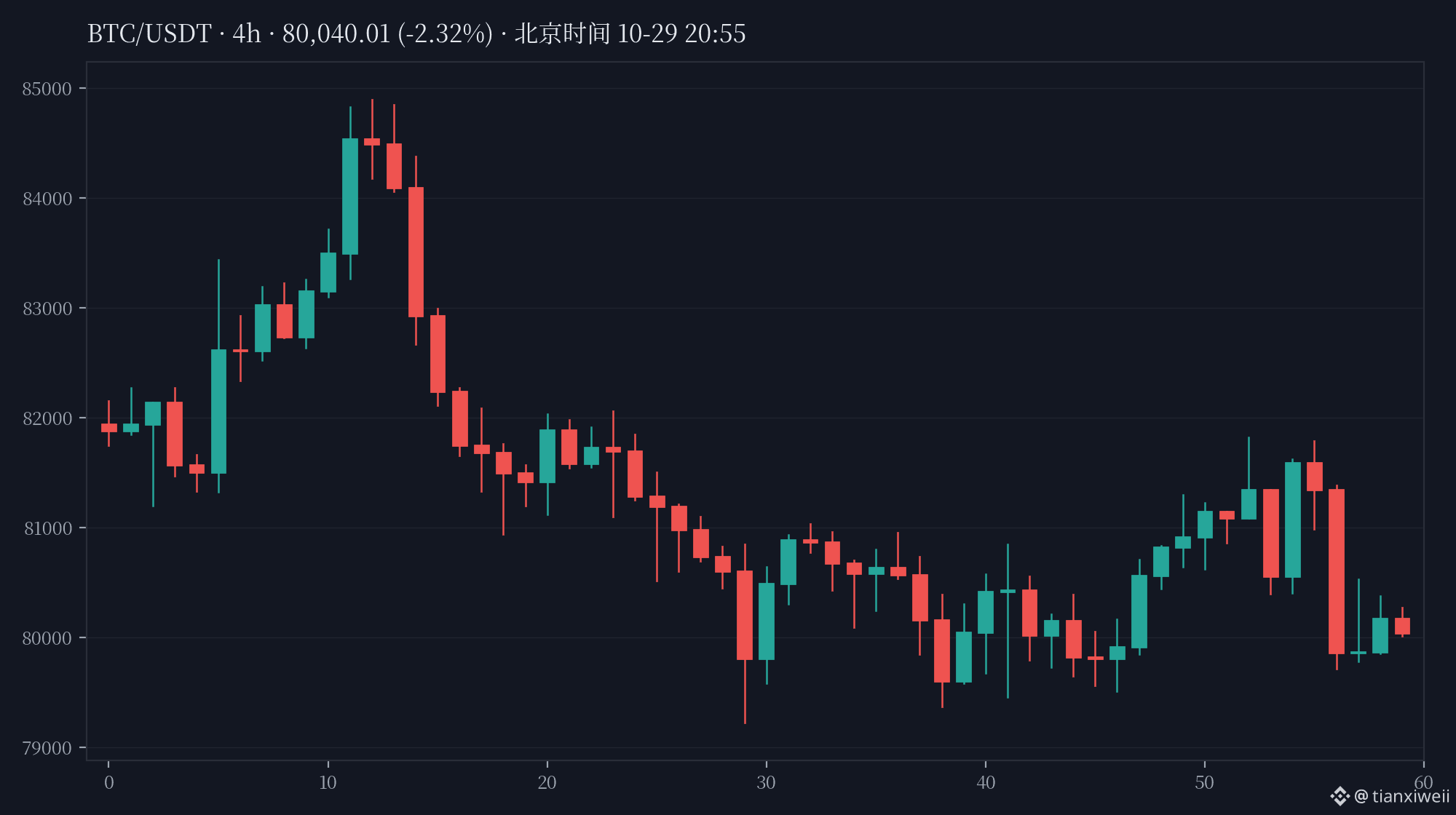
367
Log in to explore more content
Join global crypto users on Binance Square
⚡️ Get latest and useful information about crypto.
💬 Trusted by the world’s largest crypto exchange.
👍 Discover real insights from verified creators.
Email / Phone number
Trending Topics
UniswapA16zSeekDeFiExemptionFromIllinoisCryptoTax
27,480 views
776 Discussing
#CryptoTax 🚨 CRYPTO MARKET & REGULATORY UPDATE #HKDollarStablecoinHKDAPToLaunchOnSolana
#uniswapa16zseekdefiexemptionfromillinoiscryptotax UNISWAP, a16z & DeFi Education Fund Challenge Illinois Crypto Tax Rules
October 30, 2026 | Market Volatility & Industry Developments
📊 1. MARKET SNAPSHOT
Crypto markets are showing mixed signals, with selected assets posting sharp gains while several major cryptocurrencies remain under pressure.
📈 Top reported gainers
SOPH: +60.81% — $0.00238
BEAMX: +37.94% — $0.004701
SKDDB: +16.81% — $9.38
📉 Notable reported losers
INTWUSDT: −61.09% — $6.72
AKEUSDT: −31.47% — $0.013989
SNXXUSDT: −30.71% — $6.43
🔎 Major crypto assets under pressure
DOGE: −5.06%
PEPE: −4.91%
SUI: −4.83%
NEAR: −3.28%
XRP: −3.13%
Uniswap Labs, Andreessen Horowitz (a16z), and the DeFi Education Fund (DEF) are pushing for exemptions from Illinois’
#Uniswap #a16z #DeFi #CryptoRegulation #Illinois # #Web3 #BinanceSquare
#HKDollarStablecoinHKDAPToLaunchOnSolana #HKDAP #Stablecoin #CryptoNews #Blockchain #DeFi #DigitalPayments
⚖️ 3. UNISWAP, a16z & ILLINOIS CRYPTO TAX RULES
Uniswap Labs, Andreessen Horowitz (a16z), and the DeFi Education Fund are associated with efforts to seek exemptions proposed Illinois crypto tax requirements.
The debate highlights a key question: How should tax-reporting obligations apply to decentralized that may not operate like traditional financial intermediaries?
The outcome could influence DeFi compliance, developer obligations, and the future regulatory environment.
#BinanceSquare #CryptoNews #HKDAP #Stablecoin #Uniswap #a16z #DeFi #CryptoTax
CHASEPA SULUXù
·2 Likes
·266 views
HKDollarStablecoinHKDAPToLaunchOnSolana
20,728 views
495 Discussing
$1.5BInLeveragedCryptoBetsLiquidated
44,943 views
253 Discussing