

Shinishid Nakamoto
202 Posts

Shinishid Nakamoto
Report
Block User
Binance content creator|| Professional Trader|| Bitcoin Hodl||
Frequent Trader
4.3 Years
6 Following
138 Followers
276 Liked
Posts
All
Quotes
Videos
·
--
Bullish
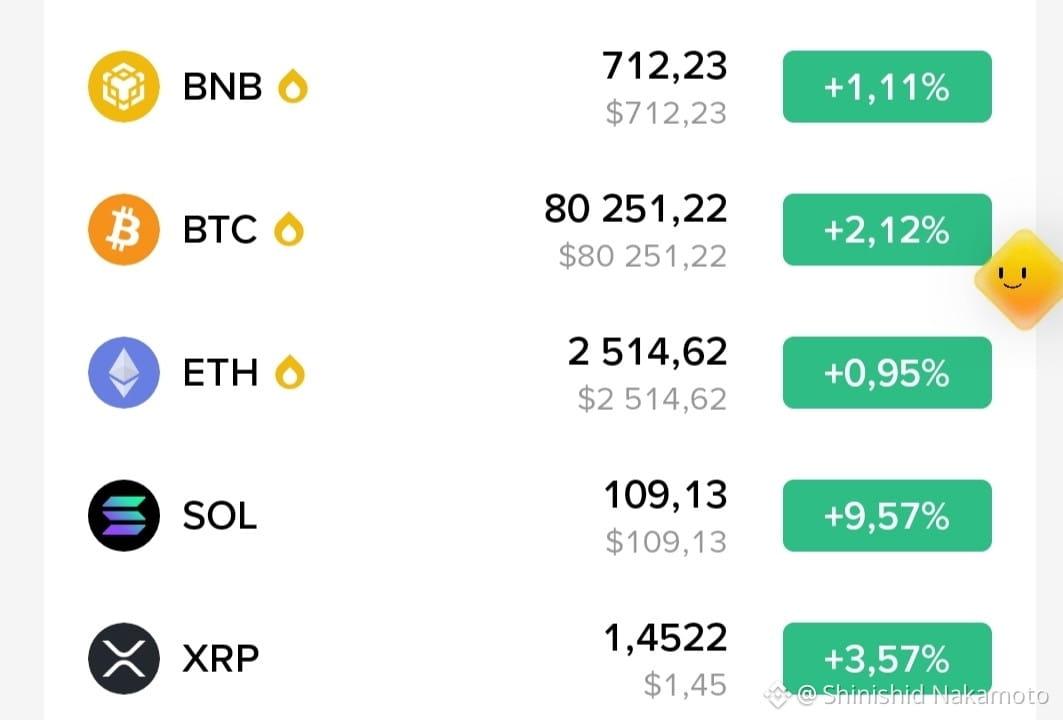
IS ALTSEASON ARRIVING? THE DATA STILL SAYS "CALM" ⚠️
Everyone starts talking about altseason when Bitcoin rises.
But the current data calls for caution.
The Altcoin Season Index is at approximately 40, according to recently reported data. That means the market is still not showing a broad, confirmed altseason.
On the other hand, the trading volume of altcoins on Binance has increased significantly and reached a share that hasn’t been seen in about two years.
This could be a sign that money is starting to look for opportunities beyond Bitcoin.
But there’s a huge difference between:
"altcoins are going up"
and
"we’re officially in an altseason".
We still can’t claim the second one.
Maybe that’s exactly why this moment is so interesting to keep an eye on.
#Altseason #BinanceSquare
IS ALTSEASON ARRIVING? THE DATA STILL SAYS "CALM" ⚠️
Everyone starts talking about altseason when Bitcoin rises.
But the current data calls for caution.
The Altcoin Season Index is at approximately 40, according to recently reported data. That means the market is still not showing a broad, confirmed altseason.
On the other hand, the trading volume of altcoins on Binance has increased significantly and reached a share that hasn’t been seen in about two years.
This could be a sign that money is starting to look for opportunities beyond Bitcoin.
But there’s a huge difference between:
"altcoins are going up"
and
"we’re officially in an altseason".
We still can’t claim the second one.
Maybe that’s exactly why this moment is so interesting to keep an eye on.
#Altseason #BinanceSquare
Everyone starts talking about altseason when Bitcoin rises.
But the current data calls for caution.
The Altcoin Season Index is at approximately 40, according to recently reported data. That means the market is still not showing a broad, confirmed altseason.
On the other hand, the trading volume of altcoins on Binance has increased significantly and reached a share that hasn’t been seen in about two years.
This could be a sign that money is starting to look for opportunities beyond Bitcoin.
But there’s a huge difference between:
"altcoins are going up"
and
"we’re officially in an altseason".
We still can’t claim the second one.
Maybe that’s exactly why this moment is so interesting to keep an eye on.
#Altseason #BinanceSquare
445
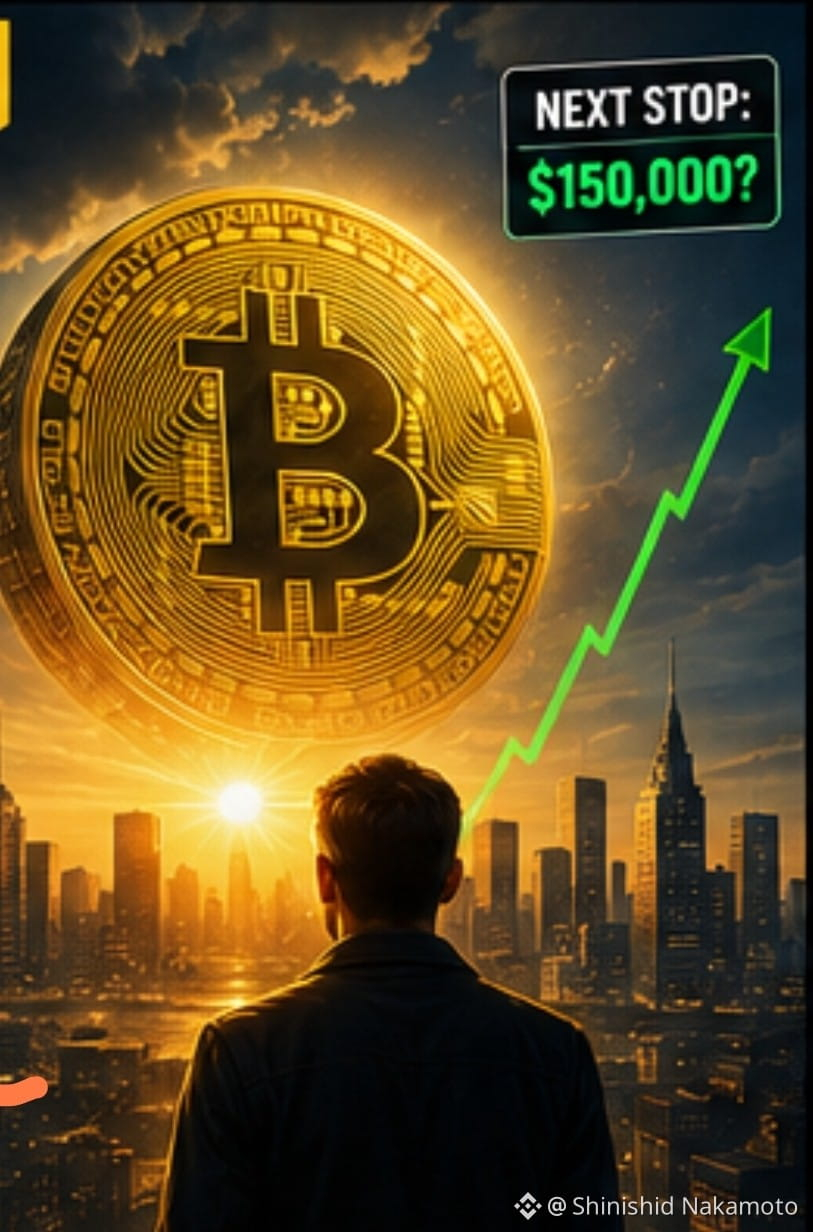
BITCOIN IS BACK TO $80K — BUT WHAT’S BEHIND IT?
Bitcoin has returned to testing the $80,000 region, after a strong rebound over the past few weeks.
The most interesting thing isn’t just the price.
Bitcoin spot ETFs have recorded eight straight sessions of inflows, totaling about $2.8 billion over that period.
This shows that institutional demand is back.
But be careful: the BTC is still approximately 37% below its all-time high of $126,198, recorded in October 2025.
So the real question isn’t: "Will Bitcoin go up?"
It’s: "Can buyers turn this recovery into a new uptrend?"
$80K may be only the beginning… or a difficult resistance to break.
#BTC #BinanceSquare
BITCOIN IS BACK TO $80K — BUT WHAT’S BEHIND IT?
Bitcoin has returned to testing the $80,000 region, after a strong rebound over the past few weeks.
The most interesting thing isn’t just the price.
Bitcoin spot ETFs have recorded eight straight sessions of inflows, totaling about $2.8 billion over that period.
This shows that institutional demand is back.
But be careful: the BTC is still approximately 37% below its all-time high of $126,198, recorded in October 2025.
So the real question isn’t: "Will Bitcoin go up?"
It’s: "Can buyers turn this recovery into a new uptrend?"
$80K may be only the beginning… or a difficult resistance to break.
#BTC #BinanceSquare
Bitcoin has returned to testing the $80,000 region, after a strong rebound over the past few weeks.
The most interesting thing isn’t just the price.
Bitcoin spot ETFs have recorded eight straight sessions of inflows, totaling about $2.8 billion over that period.
This shows that institutional demand is back.
But be careful: the BTC is still approximately 37% below its all-time high of $126,198, recorded in October 2025.
So the real question isn’t: "Will Bitcoin go up?"
It’s: "Can buyers turn this recovery into a new uptrend?"
$80K may be only the beginning… or a difficult resistance to break.
#BTC #BinanceSquare
239
Verified
#baby $BABY
Bitcoin Without Bridges? Babylon's TBV Could Change DeFi Forever 🚀
Bitcoin is entering a new chapter in decentralized finance. Babylon's Trustless Bitcoin Vaults (TBV) introduces a way to use BTC as DeFi collateral without wrapping, bridging, or giving up custody.
Your Bitcoin remains secured on the Bitcoin network while cryptographic proofs enable its use across supported DeFi applications. This approach has the potential to unlock new opportunities for Bitcoin holders while staying true to the principles of self-custody and decentralization. Although the protocol is currently in testnet, it's an exciting innovation that could reshape how Bitcoin interacts with DeFi. Definitely a project worth watching! 🚀
#Bitcoin #Babylon #BinanceSquare
@babylonlabs_io
#baby $BABY
Bitcoin Without Bridges? Babylon's TBV Could Change DeFi Forever 🚀
Bitcoin is entering a new chapter in decentralized finance. Babylon's Trustless Bitcoin Vaults (TBV) introduces a way to use BTC as DeFi collateral without wrapping, bridging, or giving up custody.
Your Bitcoin remains secured on the Bitcoin network while cryptographic proofs enable its use across supported DeFi applications. This approach has the potential to unlock new opportunities for Bitcoin holders while staying true to the principles of self-custody and decentralization. Although the protocol is currently in testnet, it's an exciting innovation that could reshape how Bitcoin interacts with DeFi. Definitely a project worth watching! 🚀
#Bitcoin #Babylon #BinanceSquare
@BabylonLabs_io
Bitcoin Without Bridges? Babylon's TBV Could Change DeFi Forever 🚀
Bitcoin is entering a new chapter in decentralized finance. Babylon's Trustless Bitcoin Vaults (TBV) introduces a way to use BTC as DeFi collateral without wrapping, bridging, or giving up custody.
Your Bitcoin remains secured on the Bitcoin network while cryptographic proofs enable its use across supported DeFi applications. This approach has the potential to unlock new opportunities for Bitcoin holders while staying true to the principles of self-custody and decentralization. Although the protocol is currently in testnet, it's an exciting innovation that could reshape how Bitcoin interacts with DeFi. Definitely a project worth watching! 🚀
#Bitcoin #Babylon #BinanceSquare
@BabylonLabs_io
2
1
78
CLARITY Act: The Crypto Bill That Could Unlock the Next Bull Run 🚀
The cryptocurrency market is currently worth around US$2.3 trillion. That may sound huge, but compared to the traditional U.S. financial system, it's still just a small fraction.
To reach its full potential, digital assets need a regulated bridge to the world's largest financial infrastructure. That's where the CLARITY Act comes in.
This proposed U.S. legislation aims to establish clear rules for the crypto industry. A transparent regulatory framework in the world's largest economy could unlock an unprecedented wave of institutional capital—potentially becoming one of the strongest catalysts for the next crypto bull market.
In simple terms, the CLARITY Act answers four key questions:
1️⃣ Who's in charge?
Which regulator oversees each type of crypto asset.
2️⃣ What can be traded?
Which tokens are approved for the market and how they should be issued.
3️⃣ How can yield be generated?
Under what conditions companies can legally offer crypto-based returns.
4️⃣ How should companies operate?
What compliance, anti-fraud, and investor protection standards crypto businesses must follow.
If passed, the CLARITY Act could reduce regulatory uncertainty, attract more institutional investors, and accelerate mainstream adoption of digital assets.
Could this be the spark that ignites the next bull run? 📈🔥
#CLARITYAct #BTC #BinanceSquare
CLARITY Act: The Crypto Bill That Could Unlock the Next Bull Run 🚀
The cryptocurrency market is currently worth around US$2.3 trillion. That may sound huge, but compared to the traditional U.S. financial system, it's still just a small fraction.
To reach its full potential, digital assets need a regulated bridge to the world's largest financial infrastructure. That's where the CLARITY Act comes in.
This proposed U.S. legislation aims to establish clear rules for the crypto industry. A transparent regulatory framework in the world's largest economy could unlock an unprecedented wave of institutional capital—potentially becoming one of the strongest catalysts for the next crypto bull market.
In simple terms, the CLARITY Act answers four key questions:
1️⃣ Who's in charge?
Which regulator oversees each type of crypto asset.
2️⃣ What can be traded?
Which tokens are approved for the market and how they should be issued.
3️⃣ How can yield be generated?
Under what conditions companies can legally offer crypto-based returns.
4️⃣ How should companies operate?
What compliance, anti-fraud, and investor protection standards crypto businesses must follow.
If passed, the CLARITY Act could reduce regulatory uncertainty, attract more institutional investors, and accelerate mainstream adoption of digital assets.
Could this be the spark that ignites the next bull run? 📈🔥
#CLARITYAct #BTC #BinanceSquare
The cryptocurrency market is currently worth around US$2.3 trillion. That may sound huge, but compared to the traditional U.S. financial system, it's still just a small fraction.
To reach its full potential, digital assets need a regulated bridge to the world's largest financial infrastructure. That's where the CLARITY Act comes in.
This proposed U.S. legislation aims to establish clear rules for the crypto industry. A transparent regulatory framework in the world's largest economy could unlock an unprecedented wave of institutional capital—potentially becoming one of the strongest catalysts for the next crypto bull market.
In simple terms, the CLARITY Act answers four key questions:
1️⃣ Who's in charge?
Which regulator oversees each type of crypto asset.
2️⃣ What can be traded?
Which tokens are approved for the market and how they should be issued.
3️⃣ How can yield be generated?
Under what conditions companies can legally offer crypto-based returns.
4️⃣ How should companies operate?
What compliance, anti-fraud, and investor protection standards crypto businesses must follow.
If passed, the CLARITY Act could reduce regulatory uncertainty, attract more institutional investors, and accelerate mainstream adoption of digital assets.
Could this be the spark that ignites the next bull run? 📈🔥
#CLARITYAct #BTC #BinanceSquare

103
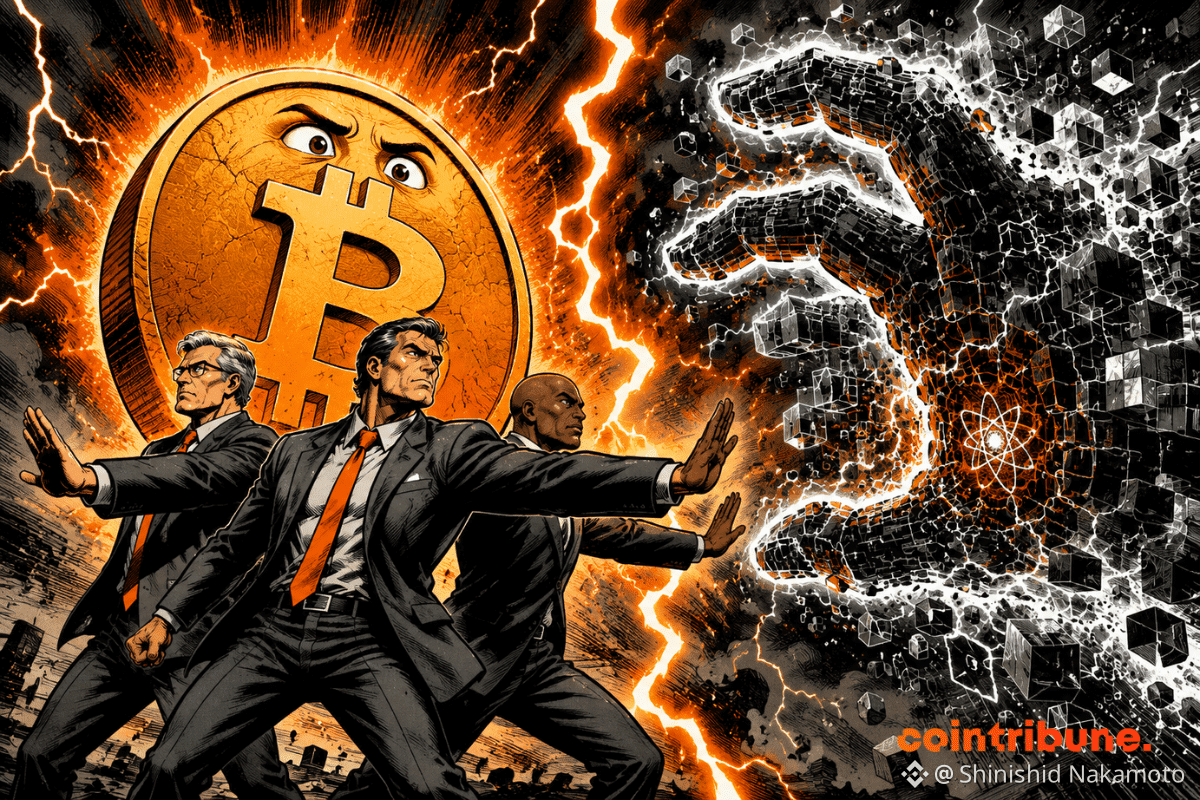
🚨 BlackRock, Coinbase & Strategy just made a historic move for Bitcoin.
For the first time, major financial institutions and crypto industry leaders are joining forces—not to compete, but to protect Bitcoin.
💰 A $15 million Bitcoin Security Consortium, launched on July 23, 2026, aims to prepare the Bitcoin network for the future threat of quantum computing.
This sends a powerful signal:
⚡ Institutions are no longer thinking in years—they're thinking in decades.
The conversation has shifted from "Will Bitcoin survive?" to "How do we make Bitcoin secure for the next century?"
Quantum computers may still be years away from becoming a practical threat, but the biggest players aren't waiting for the danger to arrive.
Smart money prepares early.
👇 What do you think? Is the quantum threat underestimated, or is this simply responsible long-term planning?
#BTC #BlackRock #Coinbase #QuantumComputing #BinanceSquare
🚨 BlackRock, Coinbase & Strategy just made a historic move for Bitcoin.
For the first time, major financial institutions and crypto industry leaders are joining forces—not to compete, but to protect Bitcoin.
💰 A $15 million Bitcoin Security Consortium, launched on July 23, 2026, aims to prepare the Bitcoin network for the future threat of quantum computing.
This sends a powerful signal:
⚡ Institutions are no longer thinking in years—they're thinking in decades.
The conversation has shifted from "Will Bitcoin survive?" to "How do we make Bitcoin secure for the next century?"
Quantum computers may still be years away from becoming a practical threat, but the biggest players aren't waiting for the danger to arrive.
Smart money prepares early.
👇 What do you think? Is the quantum threat underestimated, or is this simply responsible long-term planning?
#BTC #BlackRock #Coinbase #QuantumComputing #BinanceSquare
For the first time, major financial institutions and crypto industry leaders are joining forces—not to compete, but to protect Bitcoin.
💰 A $15 million Bitcoin Security Consortium, launched on July 23, 2026, aims to prepare the Bitcoin network for the future threat of quantum computing.
This sends a powerful signal:
⚡ Institutions are no longer thinking in years—they're thinking in decades.
The conversation has shifted from "Will Bitcoin survive?" to "How do we make Bitcoin secure for the next century?"
Quantum computers may still be years away from becoming a practical threat, but the biggest players aren't waiting for the danger to arrive.
Smart money prepares early.
👇 What do you think? Is the quantum threat underestimated, or is this simply responsible long-term planning?
#BTC #BlackRock #Coinbase #QuantumComputing #BinanceSquare
BTC+1.24%
COINUS+1.26%
90
🐋 Whales Are Buying XRP While Retail Investors Give Up
Smart money is accumulating. Retail is walking away.
A remarkable shift is unfolding in the XRP ecosystem.
While many small investors are selling their holdings out of fear and frustration, large wallets—commonly known as whales—are quietly accumulating XRP at an accelerating pace. This growing divergence suggests a significant transfer of tokens from weaker hands to stronger, more patient investors.
On-chain data indicates that smaller holders are capitulating under market volatility, while high-net-worth investors continue to increase their positions with confidence. Historically, this type of behavior has often preceded major market moves, as institutional and whale accumulation tends to occur before broader investor sentiment improves.
Meanwhile, XRP has already shown signs of strength, climbing more than 8% over the past five weeks and reclaiming the $1.16 level. Although price action alone never guarantees future performance, the combination of rising prices and aggressive whale accumulation is attracting increasing attention across the crypto market.
The key question is:
Are whales seeing an opportunity that retail investors are missing?
As always, on-chain activity doesn't predict the future with certainty, but it often provides valuable insight into where experienced market participants are positioning themselves.
Watch what the whales do—not just what the crowd says.
What do you think?
Is XRP preparing for its next major rally, or is this just another temporary bounce? Share your thoughts below!
#Xrp🔥🔥
#BinanceSquare
🐋 Whales Are Buying XRP While Retail Investors Give Up
Smart money is accumulating. Retail is walking away.
A remarkable shift is unfolding in the XRP ecosystem.
While many small investors are selling their holdings out of fear and frustration, large wallets—commonly known as whales—are quietly accumulating XRP at an accelerating pace. This growing divergence suggests a significant transfer of tokens from weaker hands to stronger, more patient investors.
On-chain data indicates that smaller holders are capitulating under market volatility, while high-net-worth investors continue to increase their positions with confidence. Historically, this type of behavior has often preceded major market moves, as institutional and whale accumulation tends to occur before broader investor sentiment improves.
Meanwhile, XRP has already shown signs of strength, climbing more than 8% over the past five weeks and reclaiming the $1.16 level. Although price action alone never guarantees future performance, the combination of rising prices and aggressive whale accumulation is attracting increasing attention across the crypto market.
The key question is:
Are whales seeing an opportunity that retail investors are missing?
As always, on-chain activity doesn't predict the future with certainty, but it often provides valuable insight into where experienced market participants are positioning themselves.
Watch what the whales do—not just what the crowd says.
What do you think?
Is XRP preparing for its next major rally, or is this just another temporary bounce? Share your thoughts below!
#Xrp🔥🔥
#BinanceSquare
Smart money is accumulating. Retail is walking away.
A remarkable shift is unfolding in the XRP ecosystem.
While many small investors are selling their holdings out of fear and frustration, large wallets—commonly known as whales—are quietly accumulating XRP at an accelerating pace. This growing divergence suggests a significant transfer of tokens from weaker hands to stronger, more patient investors.
On-chain data indicates that smaller holders are capitulating under market volatility, while high-net-worth investors continue to increase their positions with confidence. Historically, this type of behavior has often preceded major market moves, as institutional and whale accumulation tends to occur before broader investor sentiment improves.
Meanwhile, XRP has already shown signs of strength, climbing more than 8% over the past five weeks and reclaiming the $1.16 level. Although price action alone never guarantees future performance, the combination of rising prices and aggressive whale accumulation is attracting increasing attention across the crypto market.
The key question is:
Are whales seeing an opportunity that retail investors are missing?
As always, on-chain activity doesn't predict the future with certainty, but it often provides valuable insight into where experienced market participants are positioning themselves.
Watch what the whales do—not just what the crowd says.
What do you think?
Is XRP preparing for its next major rally, or is this just another temporary bounce? Share your thoughts below!
#Xrp🔥🔥
#BinanceSquare
1
156
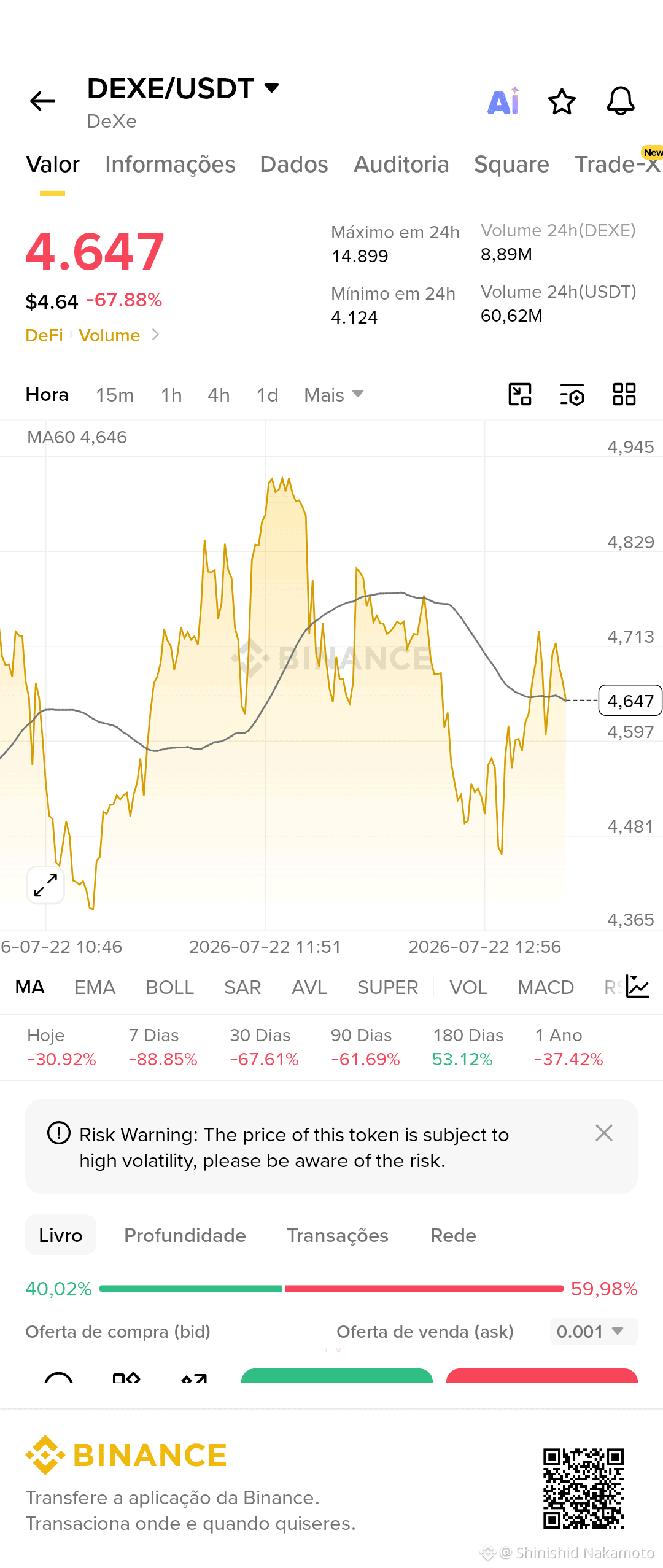
$DEXE What is happening with this coin is incredible.
If you didn’t use a stop loss, you must be dying to see this sudden and brutal drop. Worse than a casino!
From $48 to below $5 in minutes, hours, etc.
What high volatility means in a single crypto.
$DEXE What is happening with this coin is incredible.
If you didn’t use a stop loss, you must be dying to see this sudden and brutal drop. Worse than a casino!
From $48 to below $5 in minutes, hours, etc.
What high volatility means in a single crypto.
If you didn’t use a stop loss, you must be dying to see this sudden and brutal drop. Worse than a casino!
From $48 to below $5 in minutes, hours, etc.
What high volatility means in a single crypto.
2
1
752
Article
How to Evaluate a Cryptocurrency Before InvestingIn bull cycles, a crypto market can uphold numerous assets, yet they are not the ones that are resilient in the long term. It is advisable to perform a careful assessment of the cryptocurrencies before committing financial resources to them that extends beyond their price. These are some of the main factors to be considered.
1. Define Your Goals
Cryptocurrencies have become a diverse market, so it’s important to start by defining your specific goals. Do you seek long-term, steady growth, or are you ready to actively trade for short-term gains? Blue-chip coins may be better suited for long-term growth, while scalable altcoins can offer quicker returns, although they carry higher risk.
2. Understand the Project’s Use Case
Once you select a cryptocurrency that fits your goals, you should check its use case and see what specific problems it solves.
Some crypto coins may power one-stop, industry-agnostic chains, while others focus on specific sectors. Always check whether the use case is still relevant and offers long-term value. For example, metaverse projects are currently in standby mode, while AI and payment coins are thriving.
3. Analyze Project Fundamentals: Review the Whitepaper and Roadmap
Most crypto assets have a whitepaper outlining their mission and key concepts. Ideally, this comes with a well-designed webpage and a clear roadmap. Take your time to read these.
Sometimes, whitepapers introduce revolutionary innovations. Think about zkSNARKs, decentralized AI networks, oracles, or restaking. If you catch these trends early, you could get in before most investors even not
4. Look Into Liquidity, Market Capitalization, and Trading Volume
Market capitalization, trading volume, and liquidity are also key metrics of a crypto asset, which are important factors. High market capitalization is an indication that the investors have confidence in a certain undertaking. High volume of trade and growth in its market size indicate that the project is being captured very fast.
Typically, the coins with large capitalization can be assumed to be more responsible, whereas small-cap and early-stage projects have low liquidity and considerable volatility.
5. Consider Tokenomics
Tokenomics refers to the economic principles defining aspects like a token’s total supply, pace of token unlocks (vesting schedule), distribution model, allocation, deflationary mechanisms, and other financial dynamics.
You should look for healthy tokenomics models that prioritize organic growth and community building rather than benefiting the team and private investors in a disproportionate way.
6. Scrutinize the Team and Backers
Speaking of the team, you should do a background check and analyze the history of team members. Have they held key executive roles at reputable companies in the past? Many blockchain developers and managers come from established fintechs or other well-known entities.
For example, the team behind Facebook’s abandoned Libra project split into two main groups and went on to build Aptos and Sui, two Layer 1 chains that have experienced rapid growth.
When it comes to meme coins and small-cap crypto projects, anonymous teams have become the norm. Still, there are specialized security firms that can audit team profiles without revealing their identity.
7. Analyze Community Size and Strength
You’d be interested in crypto coins backed by large and engaged communities. This is a strong indicator of a project’s strength and momentum, especially in the case of meme coins. In fact, for them, community engagement can be the primary driving force.
Check the cryptocurrency’s social media presence, including activity on X, Telegram, Discord, or Reddit. Projects with passionate and loyal communities can be more resilient during market downturns.
8. Study the Price History and Track Record
If you want to invest in established crypto projects (a.k.a. dino coins), look at their past price charts and how they handled tough periods, such as the 2022–2023 crypto winter. Newer projects may not have much history, but you can still study how their sector performed or compare them with coins that have similar token structures.
How to Evaluate a Cryptocurrency Before Investing
In bull cycles, a crypto market can uphold numerous assets, yet they are not the ones that are resilient in the long term. It is advisable to perform a careful assessment of the cryptocurrencies before committing financial resources to them that extends beyond their price. These are some of the main factors to be considered.
1. Define Your Goals
Cryptocurrencies have become a diverse market, so it’s important to start by defining your specific goals. Do you seek long-term, steady growth, or are you ready to actively trade for short-term gains? Blue-chip coins may be better suited for long-term growth, while scalable altcoins can offer quicker returns, although they carry higher risk.
2. Understand the Project’s Use Case
Once you select a cryptocurrency that fits your goals, you should check its use case and see what specific problems it solves.
Some crypto coins may power one-stop, industry-agnostic chains, while others focus on specific sectors. Always check whether the use case is still relevant and offers long-term value. For example, metaverse projects are currently in standby mode, while AI and payment coins are thriving.
3. Analyze Project Fundamentals: Review the Whitepaper and Roadmap
Most crypto assets have a whitepaper outlining their mission and key concepts. Ideally, this comes with a well-designed webpage and a clear roadmap. Take your time to read these.
Sometimes, whitepapers introduce revolutionary innovations. Think about zkSNARKs, decentralized AI networks, oracles, or restaking. If you catch these trends early, you could get in before most investors even not
4. Look Into Liquidity, Market Capitalization, and Trading Volume
Market capitalization, trading volume, and liquidity are also key metrics of a crypto asset, which are important factors. High market capitalization is an indication that the investors have confidence in a certain undertaking. High volume of trade and growth in its market size indicate that the project is being captured very fast.
Typically, the coins with large capitalization can be assumed to be more responsible, whereas small-cap and early-stage projects have low liquidity and considerable volatility.
5. Consider Tokenomics
Tokenomics refers to the economic principles defining aspects like a token’s total supply, pace of token unlocks (vesting schedule), distribution model, allocation, deflationary mechanisms, and other financial dynamics.
You should look for healthy tokenomics models that prioritize organic growth and community building rather than benefiting the team and private investors in a disproportionate way.
6. Scrutinize the Team and Backers
Speaking of the team, you should do a background check and analyze the history of team members. Have they held key executive roles at reputable companies in the past? Many blockchain developers and managers come from established fintechs or other well-known entities.
For example, the team behind Facebook’s abandoned Libra project split into two main groups and went on to build Aptos and Sui, two Layer 1 chains that have experienced rapid growth.
When it comes to meme coins and small-cap crypto projects, anonymous teams have become the norm. Still, there are specialized security firms that can audit team profiles without revealing their identity.
7. Analyze Community Size and Strength
You’d be interested in crypto coins backed by large and engaged communities. This is a strong indicator of a project’s strength and momentum, especially in the case of meme coins. In fact, for them, community engagement can be the primary driving force.
Check the cryptocurrency’s social media presence, including activity on X, Telegram, Discord, or Reddit. Projects with passionate and loyal communities can be more resilient during market downturns.
8. Study the Price History and Track Record
If you want to invest in established crypto projects (a.k.a. dino coins), look at their past price charts and how they handled tough periods, such as the 2022–2023 crypto winter. Newer projects may not have much history, but you can still study how their sector performed or compare them with coins that have similar token structures.
1. Define Your Goals
Cryptocurrencies have become a diverse market, so it’s important to start by defining your specific goals. Do you seek long-term, steady growth, or are you ready to actively trade for short-term gains? Blue-chip coins may be better suited for long-term growth, while scalable altcoins can offer quicker returns, although they carry higher risk.
2. Understand the Project’s Use Case
Once you select a cryptocurrency that fits your goals, you should check its use case and see what specific problems it solves.
Some crypto coins may power one-stop, industry-agnostic chains, while others focus on specific sectors. Always check whether the use case is still relevant and offers long-term value. For example, metaverse projects are currently in standby mode, while AI and payment coins are thriving.
3. Analyze Project Fundamentals: Review the Whitepaper and Roadmap
Most crypto assets have a whitepaper outlining their mission and key concepts. Ideally, this comes with a well-designed webpage and a clear roadmap. Take your time to read these.
Sometimes, whitepapers introduce revolutionary innovations. Think about zkSNARKs, decentralized AI networks, oracles, or restaking. If you catch these trends early, you could get in before most investors even not
4. Look Into Liquidity, Market Capitalization, and Trading Volume
Market capitalization, trading volume, and liquidity are also key metrics of a crypto asset, which are important factors. High market capitalization is an indication that the investors have confidence in a certain undertaking. High volume of trade and growth in its market size indicate that the project is being captured very fast.
Typically, the coins with large capitalization can be assumed to be more responsible, whereas small-cap and early-stage projects have low liquidity and considerable volatility.
5. Consider Tokenomics
Tokenomics refers to the economic principles defining aspects like a token’s total supply, pace of token unlocks (vesting schedule), distribution model, allocation, deflationary mechanisms, and other financial dynamics.
You should look for healthy tokenomics models that prioritize organic growth and community building rather than benefiting the team and private investors in a disproportionate way.
6. Scrutinize the Team and Backers
Speaking of the team, you should do a background check and analyze the history of team members. Have they held key executive roles at reputable companies in the past? Many blockchain developers and managers come from established fintechs or other well-known entities.
For example, the team behind Facebook’s abandoned Libra project split into two main groups and went on to build Aptos and Sui, two Layer 1 chains that have experienced rapid growth.
When it comes to meme coins and small-cap crypto projects, anonymous teams have become the norm. Still, there are specialized security firms that can audit team profiles without revealing their identity.
7. Analyze Community Size and Strength
You’d be interested in crypto coins backed by large and engaged communities. This is a strong indicator of a project’s strength and momentum, especially in the case of meme coins. In fact, for them, community engagement can be the primary driving force.
Check the cryptocurrency’s social media presence, including activity on X, Telegram, Discord, or Reddit. Projects with passionate and loyal communities can be more resilient during market downturns.
8. Study the Price History and Track Record
If you want to invest in established crypto projects (a.k.a. dino coins), look at their past price charts and how they handled tough periods, such as the 2022–2023 crypto winter. Newer projects may not have much history, but you can still study how their sector performed or compare them with coins that have similar token structures.
32
My Take on the Best Crypto to Buy Right Now
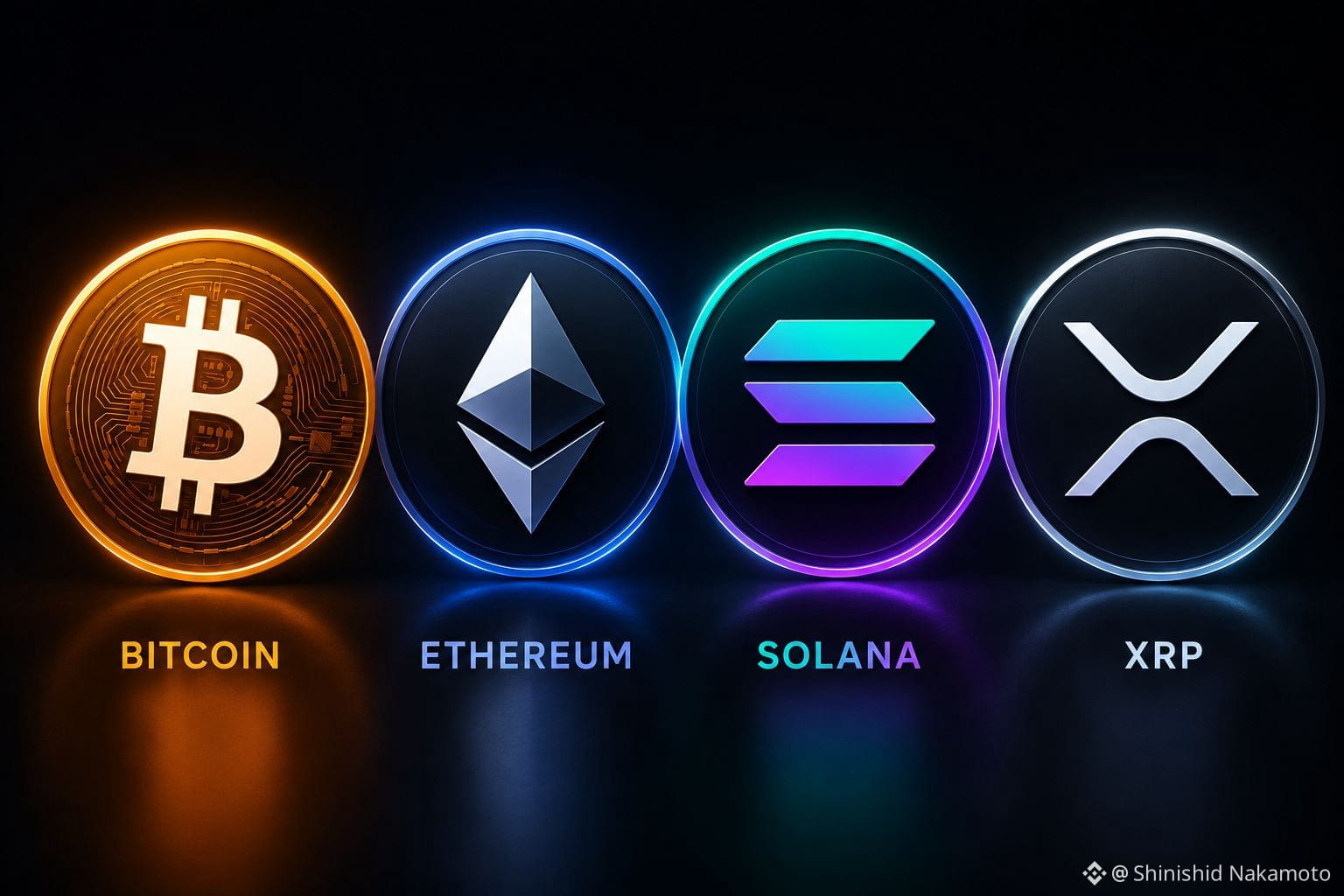
The best cryptos to buy right now include XRP, Bitcoin, Solana, and Ethereum. XRP stands out in terms of real-world adoption, while Bitcoin remains the most reliable long-term store of value.
To determine if a crypto is worth buying, you need a data-driven approach, analyzing its key metrics, long-term potential, real-world utility, tokenomics, regulatory compliance, and unique selling point.
However, even when arguments are backed by fundamentals, choosing the “best” cryptocurrencies ultimately depends on your financial goals and risk tolerance. Aggressive growth-oriented investors will likely be interested in tokens with strong upside potential, while conservative investors may stick with blue chips.
Match your goals and your risk appetite to the right asset, and never invest more than you can afford to lose.
$BTC
$ETH
$SOL
My Take on the Best Crypto to Buy Right Now
The best cryptos to buy right now include XRP, Bitcoin, Solana, and Ethereum. XRP stands out in terms of real-world adoption, while Bitcoin remains the most reliable long-term store of value.
To determine if a crypto is worth buying, you need a data-driven approach, analyzing its key metrics, long-term potential, real-world utility, tokenomics, regulatory compliance, and unique selling point.
However, even when arguments are backed by fundamentals, choosing the “best” cryptocurrencies ultimately depends on your financial goals and risk tolerance. Aggressive growth-oriented investors will likely be interested in tokens with strong upside potential, while conservative investors may stick with blue chips.
Match your goals and your risk appetite to the right asset, and never invest more than you can afford to lose.
$BTC
$ETH
$SOL
The best cryptos to buy right now include XRP, Bitcoin, Solana, and Ethereum. XRP stands out in terms of real-world adoption, while Bitcoin remains the most reliable long-term store of value.
To determine if a crypto is worth buying, you need a data-driven approach, analyzing its key metrics, long-term potential, real-world utility, tokenomics, regulatory compliance, and unique selling point.
However, even when arguments are backed by fundamentals, choosing the “best” cryptocurrencies ultimately depends on your financial goals and risk tolerance. Aggressive growth-oriented investors will likely be interested in tokens with strong upside potential, while conservative investors may stick with blue chips.
Match your goals and your risk appetite to the right asset, and never invest more than you can afford to lose.
$BTC
$ETH
$SOL
93
Article
Methodology: How We Rated the Best Cryptos to BuyTo curate this list of the best cryptos to buy, our crypto analysts collectively dedicated over 300 hours to research. They evaluated factors like historical performance, long-term potential for growth, current price, utility, and security. Here’s how we researched and weighted each criterion. For more information, please read our full research methodology.
Market Performance (25%)
We reviewed the coin’s price action over the past week and up to 12 months, examining both short-term fluctuations and longer-term trends. We also considered its overall market value to understand its position and weight in the wider crypto market.
Utility and Use Cases (20%)
We looked at how cryptocurrency is used in real life, paying attention to any features or applications that make it stand out. We also reviewed the technology behind it and recent updates that strengthen its practical use.
Community and Adoption (15%)
To analyze the adoption by the community, we have examined the relevance and liveliness of the project on X, Reddit, Telegram, and other forums. We also examined the practical applications, both among merchants and applications themselves, as well as by regular people, since broader usage tends to be more indicative of a healthier ecosystem.
Development Team (15%)
We researched the development team’s track record and reputation; while we don’t dismiss newcomers, past experience and successful projects help build credibility. We also checked how open the team is with updates, progress reports, and challenges, because the more the community knows, the more confident people feel about buying and holding the coin.
Security (15%)
We evaluated the security design of the blockchain, including its consensus mechanism and resistance to common attack vectors. On top of that, we reviewed any past security incidents or bugs and assessed how quickly and effectively the team responded and fixed them.
Regulatory Compliance (5%)
We checked whether the cryptocurrency operates in line with relevant regulations in its main regions, since compliance is key for long-term survival and institutional interest.
Roadmap and Future Plans (5%)
We reviewed the project’s roadmap to see if it sets out clear, realistic updates and milestones that can guide future growth.
These scores together gave us a full view of each cryptocurrency’s strengths and potential, allowing us to assign a rating to every coin recommended on this page.
#security
#Roadmap
#RegulatoryRumble
Methodology: How We Rated the Best Cryptos to Buy
To curate this list of the best cryptos to buy, our crypto analysts collectively dedicated over 300 hours to research. They evaluated factors like historical performance, long-term potential for growth, current price, utility, and security. Here’s how we researched and weighted each criterion. For more information, please read our full research methodology.
Market Performance (25%)
We reviewed the coin’s price action over the past week and up to 12 months, examining both short-term fluctuations and longer-term trends. We also considered its overall market value to understand its position and weight in the wider crypto market.
Utility and Use Cases (20%)
We looked at how cryptocurrency is used in real life, paying attention to any features or applications that make it stand out. We also reviewed the technology behind it and recent updates that strengthen its practical use.
Community and Adoption (15%)
To analyze the adoption by the community, we have examined the relevance and liveliness of the project on X, Reddit, Telegram, and other forums. We also examined the practical applications, both among merchants and applications themselves, as well as by regular people, since broader usage tends to be more indicative of a healthier ecosystem.
Development Team (15%)
We researched the development team’s track record and reputation; while we don’t dismiss newcomers, past experience and successful projects help build credibility. We also checked how open the team is with updates, progress reports, and challenges, because the more the community knows, the more confident people feel about buying and holding the coin.
Security (15%)
We evaluated the security design of the blockchain, including its consensus mechanism and resistance to common attack vectors. On top of that, we reviewed any past security incidents or bugs and assessed how quickly and effectively the team responded and fixed them.
Regulatory Compliance (5%)
We checked whether the cryptocurrency operates in line with relevant regulations in its main regions, since compliance is key for long-term survival and institutional interest.
Roadmap and Future Plans (5%)
We reviewed the project’s roadmap to see if it sets out clear, realistic updates and milestones that can guide future growth.
These scores together gave us a full view of each cryptocurrency’s strengths and potential, allowing us to assign a rating to every coin recommended on this page.
#security
#Roadmap
#RegulatoryRumble
Market Performance (25%)
We reviewed the coin’s price action over the past week and up to 12 months, examining both short-term fluctuations and longer-term trends. We also considered its overall market value to understand its position and weight in the wider crypto market.
Utility and Use Cases (20%)
We looked at how cryptocurrency is used in real life, paying attention to any features or applications that make it stand out. We also reviewed the technology behind it and recent updates that strengthen its practical use.
Community and Adoption (15%)
To analyze the adoption by the community, we have examined the relevance and liveliness of the project on X, Reddit, Telegram, and other forums. We also examined the practical applications, both among merchants and applications themselves, as well as by regular people, since broader usage tends to be more indicative of a healthier ecosystem.
Development Team (15%)
We researched the development team’s track record and reputation; while we don’t dismiss newcomers, past experience and successful projects help build credibility. We also checked how open the team is with updates, progress reports, and challenges, because the more the community knows, the more confident people feel about buying and holding the coin.
Security (15%)
We evaluated the security design of the blockchain, including its consensus mechanism and resistance to common attack vectors. On top of that, we reviewed any past security incidents or bugs and assessed how quickly and effectively the team responded and fixed them.
Regulatory Compliance (5%)
We checked whether the cryptocurrency operates in line with relevant regulations in its main regions, since compliance is key for long-term survival and institutional interest.
Roadmap and Future Plans (5%)
We reviewed the project’s roadmap to see if it sets out clear, realistic updates and milestones that can guide future growth.
These scores together gave us a full view of each cryptocurrency’s strengths and potential, allowing us to assign a rating to every coin recommended on this page.
#security
#Roadmap
#RegulatoryRumble
72
Risk Management Tips for Investing in Crypto Projects
Many investors find the crypto space appealing for its high-growth opportunities, but the risks are also high. Here are a few basic principles and steps to protect your capital.
🔍 Do Your Own Research
Before investing in any crypto project, take the time to research it thoroughly. Check out our guide on evaluating a cryptocurrency, and review each aspect, from the whitepaper and team to tokenomics and community engagement.
Don’t just rely on social media hype or your friend’s advice.
📚 Diversify Your Cryptocurrency Portfolio
One of the best ways to mitigate risk is to diversify your crypto exposure by allocating across different cryptocurrency types, including blue-chip and small-cap coins.
Example of portfolio allocation to diversify across blue-chips, altcoins, and new cryptos.
🧑💼 Consult With a Professional
If you have capital but aren’t sure how to get started in crypto or what the legal and tax implications might be, it’s wise to consult with a financial advisor or crypto-savvy professional.
Again, don’t believe anyone promoting themselves as a crypto expert; look for a reputable individual or firm that can guide you.
💸 Invest Only What You Can Afford to Lose
It may sound like a cliché, but never invest more than you can afford to lose. Crypto markets are highly speculative, and you should never sell your car or house, or dip into your savings, chasing the “next big thing.”
#BTC
#ETH
Risk Management Tips for Investing in Crypto Projects
Many investors find the crypto space appealing for its high-growth opportunities, but the risks are also high. Here are a few basic principles and steps to protect your capital.
🔍 Do Your Own Research
Before investing in any crypto project, take the time to research it thoroughly. Check out our guide on evaluating a cryptocurrency, and review each aspect, from the whitepaper and team to tokenomics and community engagement.
Don’t just rely on social media hype or your friend’s advice.
📚 Diversify Your Cryptocurrency Portfolio
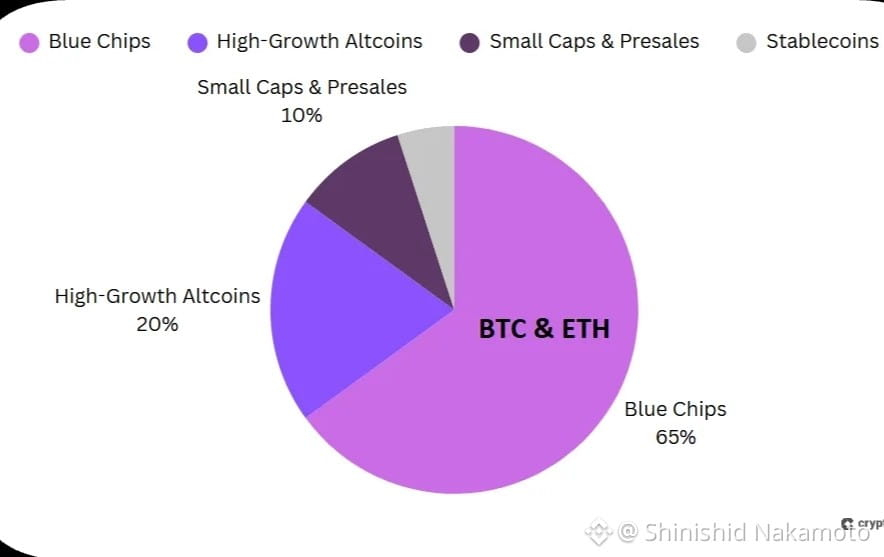
One of the best ways to mitigate risk is to diversify your crypto exposure by allocating across different cryptocurrency types, including blue-chip and small-cap coins.
Example of portfolio allocation to diversify across blue-chips, altcoins, and new cryptos.
🧑💼 Consult With a Professional
If you have capital but aren’t sure how to get started in crypto or what the legal and tax implications might be, it’s wise to consult with a financial advisor or crypto-savvy professional.
Again, don’t believe anyone promoting themselves as a crypto expert; look for a reputable individual or firm that can guide you.
💸 Invest Only What You Can Afford to Lose
It may sound like a cliché, but never invest more than you can afford to lose. Crypto markets are highly speculative, and you should never sell your car or house, or dip into your savings, chasing the “next big thing.”
#BTC
#ETH
Many investors find the crypto space appealing for its high-growth opportunities, but the risks are also high. Here are a few basic principles and steps to protect your capital.
🔍 Do Your Own Research
Before investing in any crypto project, take the time to research it thoroughly. Check out our guide on evaluating a cryptocurrency, and review each aspect, from the whitepaper and team to tokenomics and community engagement.
Don’t just rely on social media hype or your friend’s advice.
📚 Diversify Your Cryptocurrency Portfolio
One of the best ways to mitigate risk is to diversify your crypto exposure by allocating across different cryptocurrency types, including blue-chip and small-cap coins.
Example of portfolio allocation to diversify across blue-chips, altcoins, and new cryptos.
🧑💼 Consult With a Professional
If you have capital but aren’t sure how to get started in crypto or what the legal and tax implications might be, it’s wise to consult with a financial advisor or crypto-savvy professional.
Again, don’t believe anyone promoting themselves as a crypto expert; look for a reputable individual or firm that can guide you.
💸 Invest Only What You Can Afford to Lose
It may sound like a cliché, but never invest more than you can afford to lose. Crypto markets are highly speculative, and you should never sell your car or house, or dip into your savings, chasing the “next big thing.”
#BTC
#ETH
63
What Are the Risks of Investing in Cryptocurrency?Cryptocurrencies represent a new asset class that is still finding its place alongside traditional markets. In the meantime, they carry a significantly higher risk, which is to be expected of emerging trends.
Take the dot-com bubble in the 2000s, for example. While many low-quality online projects failed, it didn’t mean the internet itself had no value. Similarly, as the crypto market matures, here are the main risks you should know about.
📈 High Volatility
Crypto assets are notorious for their volatility. This is a significant risk even for blue-chip coins. Still, Bitcoin and Ethereum are creating the trends rather than following them. Therefore, they’re more stable and resilient.
Small-cap coins show much higher volatility and carry significant risk for traders using leverage.
🧑⚖️ Lack of Regulation
One of the big problems of crypto is that its regulatory environment is very fragmented and inconsistent across jurisdictions. For example, in China, the world’s second most populous country, crypto is completely banned, while in the European Union, it has a dedicated and relatively friendly regulatory framework.
In the US, still the biggest crypto market by volume and usage, the rulebook is patchy and varies across regulators and states. Things are slowly getting clearer, though, with FIT21 passing the House in 2024 and the GENIUS Act now outlining how stablecoins and watchdog roles should be handled.
🔒 Security Risks
You will often hear that blockchain offers unmatched security. While this is true for Bitcoin and perhaps a few other established Layer 1 chains, the broader Web3 ecosystem built around these chains is plagued by security risks, such as vulnerable smart contracts and coding flaws.
In late 2025, two major incidents reflect the security weakness in decentralized finance (DeFi). Balancer Protocol lost over $116 million in a cross-chain exploit targeting its V2 pools, marking one of the largest crypto security breaches this year.
A few hours later, Stream Finance discovered that an external fund manager had lost $93 million of its fund assets, causing its stablecoin Stream USD (xUSD) to lose its peg and crash.
To reduce the risk of similar events, it’s safer to use crypto projects that have been audited by well-known security firms such as Certik or Halborn.
🧑💻 Scams and Hacks
Due to the lack of crypto literacy, criminals and hackers are taking advantage of the situation and carrying out social engineering activities and using hacking attacks targeting both centralized and decentralized systems.
Chainalysis noted in October 2025 that illicit organizations had close to 15 billion dollars worth of funds, and stolen funds constituted the biggest portion. It is a new record peak, in part, explained by an increase in the price of crypto assets in 2025.
Rug pulls, Ponzi schemes, pig butchering, and other social engineering devices are all scams that are constantly being developed by criminals, and with AI getting more popular, diversity increases.
🌎 Market Manipulation
While analyzing key metrics, you should know that data can be distorted due to market manipulation, as many small projects use bots to inflate market cap and volume figures to create the false impression of success. This is a serious problem in crypto, affecting DeFi, NFTs, and the broader Web3 sector.
For example, CryptoSlam found that 42.52% of NFT trading on Ethereum links to wash trading, a manipulative practice where the same group buys and sells NFTs to inflate volume data.
What Are the Risks of Investing in Cryptocurrency?
Cryptocurrencies represent a new asset class that is still finding its place alongside traditional markets. In the meantime, they carry a significantly higher risk, which is to be expected of emerging trends.
Take the dot-com bubble in the 2000s, for example. While many low-quality online projects failed, it didn’t mean the internet itself had no value. Similarly, as the crypto market matures, here are the main risks you should know about.
📈 High Volatility
Crypto assets are notorious for their volatility. This is a significant risk even for blue-chip coins. Still, Bitcoin and Ethereum are creating the trends rather than following them. Therefore, they’re more stable and resilient.
Small-cap coins show much higher volatility and carry significant risk for traders using leverage.
🧑⚖️ Lack of Regulation
One of the big problems of crypto is that its regulatory environment is very fragmented and inconsistent across jurisdictions. For example, in China, the world’s second most populous country, crypto is completely banned, while in the European Union, it has a dedicated and relatively friendly regulatory framework.
In the US, still the biggest crypto market by volume and usage, the rulebook is patchy and varies across regulators and states. Things are slowly getting clearer, though, with FIT21 passing the House in 2024 and the GENIUS Act now outlining how stablecoins and watchdog roles should be handled.
🔒 Security Risks
You will often hear that blockchain offers unmatched security. While this is true for Bitcoin and perhaps a few other established Layer 1 chains, the broader Web3 ecosystem built around these chains is plagued by security risks, such as vulnerable smart contracts and coding flaws.
In late 2025, two major incidents reflect the security weakness in decentralized finance (DeFi). Balancer Protocol lost over $116 million in a cross-chain exploit targeting its V2 pools, marking one of the largest crypto security breaches this year.
A few hours later, Stream Finance discovered that an external fund manager had lost $93 million of its fund assets, causing its stablecoin Stream USD (xUSD) to lose its peg and crash.
To reduce the risk of similar events, it’s safer to use crypto projects that have been audited by well-known security firms such as Certik or Halborn.
🧑💻 Scams and Hacks
Due to the lack of crypto literacy, criminals and hackers are taking advantage of the situation and carrying out social engineering activities and using hacking attacks targeting both centralized and decentralized systems.
Chainalysis noted in October 2025 that illicit organizations had close to 15 billion dollars worth of funds, and stolen funds constituted the biggest portion. It is a new record peak, in part, explained by an increase in the price of crypto assets in 2025.
Rug pulls, Ponzi schemes, pig butchering, and other social engineering devices are all scams that are constantly being developed by criminals, and with AI getting more popular, diversity increases.
🌎 Market Manipulation
While analyzing key metrics, you should know that data can be distorted due to market manipulation, as many small projects use bots to inflate market cap and volume figures to create the false impression of success. This is a serious problem in crypto, affecting DeFi, NFTs, and the broader Web3 sector.
For example, CryptoSlam found that 42.52% of NFT trading on Ethereum links to wash trading, a manipulative practice where the same group buys and sells NFTs to inflate volume data.
Take the dot-com bubble in the 2000s, for example. While many low-quality online projects failed, it didn’t mean the internet itself had no value. Similarly, as the crypto market matures, here are the main risks you should know about.
📈 High Volatility
Crypto assets are notorious for their volatility. This is a significant risk even for blue-chip coins. Still, Bitcoin and Ethereum are creating the trends rather than following them. Therefore, they’re more stable and resilient.
Small-cap coins show much higher volatility and carry significant risk for traders using leverage.
🧑⚖️ Lack of Regulation
One of the big problems of crypto is that its regulatory environment is very fragmented and inconsistent across jurisdictions. For example, in China, the world’s second most populous country, crypto is completely banned, while in the European Union, it has a dedicated and relatively friendly regulatory framework.
In the US, still the biggest crypto market by volume and usage, the rulebook is patchy and varies across regulators and states. Things are slowly getting clearer, though, with FIT21 passing the House in 2024 and the GENIUS Act now outlining how stablecoins and watchdog roles should be handled.
🔒 Security Risks
You will often hear that blockchain offers unmatched security. While this is true for Bitcoin and perhaps a few other established Layer 1 chains, the broader Web3 ecosystem built around these chains is plagued by security risks, such as vulnerable smart contracts and coding flaws.
In late 2025, two major incidents reflect the security weakness in decentralized finance (DeFi). Balancer Protocol lost over $116 million in a cross-chain exploit targeting its V2 pools, marking one of the largest crypto security breaches this year.
A few hours later, Stream Finance discovered that an external fund manager had lost $93 million of its fund assets, causing its stablecoin Stream USD (xUSD) to lose its peg and crash.
To reduce the risk of similar events, it’s safer to use crypto projects that have been audited by well-known security firms such as Certik or Halborn.
🧑💻 Scams and Hacks
Due to the lack of crypto literacy, criminals and hackers are taking advantage of the situation and carrying out social engineering activities and using hacking attacks targeting both centralized and decentralized systems.
Chainalysis noted in October 2025 that illicit organizations had close to 15 billion dollars worth of funds, and stolen funds constituted the biggest portion. It is a new record peak, in part, explained by an increase in the price of crypto assets in 2025.
Rug pulls, Ponzi schemes, pig butchering, and other social engineering devices are all scams that are constantly being developed by criminals, and with AI getting more popular, diversity increases.
🌎 Market Manipulation
While analyzing key metrics, you should know that data can be distorted due to market manipulation, as many small projects use bots to inflate market cap and volume figures to create the false impression of success. This is a serious problem in crypto, affecting DeFi, NFTs, and the broader Web3 sector.
For example, CryptoSlam found that 42.52% of NFT trading on Ethereum links to wash trading, a manipulative practice where the same group buys and sells NFTs to inflate volume data.
75
What Is a Decentralized Wallet?
A decentralized wallet is a cryptocurrency wallet that gives you full control over your assets. Decentralized wallet providers don’t have access to your private keys, and don’t rely on centralized servers, third-party companies, or exchanges to manage your crypto. You alone have access to the private keys, giving you full, autonomous control over your funds.
That’s in contrast to centralized wallets, which are often provided by cryptocurrency exchanges or brokers that don’t give you the private keys. With centralized wallets, you must trust the provider to keep your assets safe.
Importantly, when setting up a decentralized wallet, you’ll usually receive the private keys in a simplified form. This is often a 12 or 24-word seed phrase that you need to enter in the correct order to reconstruct the private key and regain access to the wallet. Nevertheless, the wallet provider never has access to your seed phrase or private keys, as the seed is generated on your device. So, you’re solely responsible for safeguarding your funds.
#Wallet
#BinanceSquareTalks
#decentralization
What Is a Decentralized Wallet?
A decentralized wallet is a cryptocurrency wallet that gives you full control over your assets. Decentralized wallet providers don’t have access to your private keys, and don’t rely on centralized servers, third-party companies, or exchanges to manage your crypto. You alone have access to the private keys, giving you full, autonomous control over your funds.
That’s in contrast to centralized wallets, which are often provided by cryptocurrency exchanges or brokers that don’t give you the private keys. With centralized wallets, you must trust the provider to keep your assets safe.
Importantly, when setting up a decentralized wallet, you’ll usually receive the private keys in a simplified form. This is often a 12 or 24-word seed phrase that you need to enter in the correct order to reconstruct the private key and regain access to the wallet. Nevertheless, the wallet provider never has access to your seed phrase or private keys, as the seed is generated on your device. So, you’re solely responsible for safeguarding your funds.
#Wallet
#BinanceSquareTalks
#decentralization
A decentralized wallet is a cryptocurrency wallet that gives you full control over your assets. Decentralized wallet providers don’t have access to your private keys, and don’t rely on centralized servers, third-party companies, or exchanges to manage your crypto. You alone have access to the private keys, giving you full, autonomous control over your funds.
That’s in contrast to centralized wallets, which are often provided by cryptocurrency exchanges or brokers that don’t give you the private keys. With centralized wallets, you must trust the provider to keep your assets safe.
Importantly, when setting up a decentralized wallet, you’ll usually receive the private keys in a simplified form. This is often a 12 or 24-word seed phrase that you need to enter in the correct order to reconstruct the private key and regain access to the wallet. Nevertheless, the wallet provider never has access to your seed phrase or private keys, as the seed is generated on your device. So, you’re solely responsible for safeguarding your funds.
#Wallet
#BinanceSquareTalks
#decentralization
163
Elon Musk Grok AI Predicts XRP Will Do This by Next 30 Days, and Nobody Is Ready
Thirty days is a short window to ask for anything, which makes Grok AI predicts that XRP is almost restrained by comparison to the usual end-of-year moonshots. From $1.08, it wants $1.25 to $1.35 by mid August.
The setup leans on five things happening together rather than one big catalyst. Spot ETF inflows keep showing up. Ripple’s full MiCA license opens the door to regulated European expansion.
XRPL network activity is surging in the background. Whales are accumulating instead of distributing. Exchange balances are dropping as coins move into cold storage.
Grok also points to something almost calendar-based. July has historically been a strong month for XRP, and that seasonal pattern is landing right on top of a market that just deleveraged hard.
The $1.00 to $1.05 zone has held firm through that deleveraging, which Grok reads as buyers defending a line rather than just drifting sideways. Clear resistance at $1.18 to $1.22, and Grok sees a confident push toward $1.25 to $1.40, with $1.30 to $1.35 as the realistic high if momentum and any regulatory tailwind cooperate.
The bear case stays narrow here, too. Broader market weakness or delays to the CLARITY Act could cap gains and force consolidation, with a retest of $0.95 to $1.00 support if the round number breaks.
What do you think ?
#xrp #CLARITYAct
Elon Musk Grok AI Predicts XRP Will Do This by Next 30 Days, and Nobody Is Ready
Thirty days is a short window to ask for anything, which makes Grok AI predicts that XRP is almost restrained by comparison to the usual end-of-year moonshots. From $1.08, it wants $1.25 to $1.35 by mid August.
The setup leans on five things happening together rather than one big catalyst. Spot ETF inflows keep showing up. Ripple’s full MiCA license opens the door to regulated European expansion.
XRPL network activity is surging in the background. Whales are accumulating instead of distributing. Exchange balances are dropping as coins move into cold storage.
Grok also points to something almost calendar-based. July has historically been a strong month for XRP, and that seasonal pattern is landing right on top of a market that just deleveraged hard.
The $1.00 to $1.05 zone has held firm through that deleveraging, which Grok reads as buyers defending a line rather than just drifting sideways. Clear resistance at $1.18 to $1.22, and Grok sees a confident push toward $1.25 to $1.40, with $1.30 to $1.35 as the realistic high if momentum and any regulatory tailwind cooperate.
The bear case stays narrow here, too. Broader market weakness or delays to the CLARITY Act could cap gains and force consolidation, with a retest of $0.95 to $1.00 support if the round number breaks.
What do you think ?
#xrp #CLARITYAct
Thirty days is a short window to ask for anything, which makes Grok AI predicts that XRP is almost restrained by comparison to the usual end-of-year moonshots. From $1.08, it wants $1.25 to $1.35 by mid August.
The setup leans on five things happening together rather than one big catalyst. Spot ETF inflows keep showing up. Ripple’s full MiCA license opens the door to regulated European expansion.
XRPL network activity is surging in the background. Whales are accumulating instead of distributing. Exchange balances are dropping as coins move into cold storage.
Grok also points to something almost calendar-based. July has historically been a strong month for XRP, and that seasonal pattern is landing right on top of a market that just deleveraged hard.
The $1.00 to $1.05 zone has held firm through that deleveraging, which Grok reads as buyers defending a line rather than just drifting sideways. Clear resistance at $1.18 to $1.22, and Grok sees a confident push toward $1.25 to $1.40, with $1.30 to $1.35 as the realistic high if momentum and any regulatory tailwind cooperate.
The bear case stays narrow here, too. Broader market weakness or delays to the CLARITY Act could cap gains and force consolidation, with a retest of $0.95 to $1.00 support if the round number breaks.
What do you think ?
#xrp #CLARITYAct

95
Anthropic accuses Alibaba of mass "distillation" of Claude
Anthropic sent a letter to the US Senate (Banking, Housing, and Urban Affairs Committee) asking for stronger protections against so-called "model distillation" by Chinese rivals.
📊 The claim:
Operators linked to Alibaba/Qwen allegedly used ~25,000 fraudulent accounts to generate 28.8 million interactions with Claude between April 22 and June 5, targeting agentic reasoning, software engineering, and long-horizon planning capabilities.
🎯 The core argument:
For Anthropic, this isn't just an IP issue — it's a national security one. The claim: Chinese labs capture the return on US AI investment without bearing the cost of training frontier models, effectively turning American R&D and compute into a subsidy for competitors.
📝 What Anthropic is asking Congress for:
• More intelligence-sharing between frontier AI developers and the US government
• Clearer antitrust rules so AI companies can share info on distillation attacks
• Stronger export controls on advanced AI chips
• Closing loopholes that let Chinese firms access overseas data centers
• Penalties for large-scale model extraction
🔁 Not the first time:
Back in February, Anthropic made a similar claim against DeepSeek, Moonshot AI, and MiniMax (16 million interactions via ~24,000 fraudulent accounts).
⚖️ The controversy:
Critics note AI companies often use similar techniques on each other — Elon Musk even testified in court that xAI "partially" used OpenAI models while training Grok. Anthropic's distinction: conventional distillation is a legitimate practice, but unauthorized extraction via fraudulent access that breaches terms of service is not.
#AI #Anthropic #Alibaba #Geopolitics
Anthropic accuses Alibaba of mass "distillation" of Claude
Anthropic sent a letter to the US Senate (Banking, Housing, and Urban Affairs Committee) asking for stronger protections against so-called "model distillation" by Chinese rivals.
📊 The claim:
Operators linked to Alibaba/Qwen allegedly used ~25,000 fraudulent accounts to generate 28.8 million interactions with Claude between April 22 and June 5, targeting agentic reasoning, software engineering, and long-horizon planning capabilities.
🎯 The core argument:
For Anthropic, this isn't just an IP issue — it's a national security one. The claim: Chinese labs capture the return on US AI investment without bearing the cost of training frontier models, effectively turning American R&D and compute into a subsidy for competitors.
📝 What Anthropic is asking Congress for:
• More intelligence-sharing between frontier AI developers and the US government
• Clearer antitrust rules so AI companies can share info on distillation attacks
• Stronger export controls on advanced AI chips
• Closing loopholes that let Chinese firms access overseas data centers
• Penalties for large-scale model extraction
🔁 Not the first time:
Back in February, Anthropic made a similar claim against DeepSeek, Moonshot AI, and MiniMax (16 million interactions via ~24,000 fraudulent accounts).
⚖️ The controversy:
Critics note AI companies often use similar techniques on each other — Elon Musk even testified in court that xAI "partially" used OpenAI models while training Grok. Anthropic's distinction: conventional distillation is a legitimate practice, but unauthorized extraction via fraudulent access that breaches terms of service is not.
#AI #Anthropic #Alibaba #Geopolitics
Anthropic sent a letter to the US Senate (Banking, Housing, and Urban Affairs Committee) asking for stronger protections against so-called "model distillation" by Chinese rivals.
📊 The claim:
Operators linked to Alibaba/Qwen allegedly used ~25,000 fraudulent accounts to generate 28.8 million interactions with Claude between April 22 and June 5, targeting agentic reasoning, software engineering, and long-horizon planning capabilities.
🎯 The core argument:
For Anthropic, this isn't just an IP issue — it's a national security one. The claim: Chinese labs capture the return on US AI investment without bearing the cost of training frontier models, effectively turning American R&D and compute into a subsidy for competitors.
📝 What Anthropic is asking Congress for:
• More intelligence-sharing between frontier AI developers and the US government
• Clearer antitrust rules so AI companies can share info on distillation attacks
• Stronger export controls on advanced AI chips
• Closing loopholes that let Chinese firms access overseas data centers
• Penalties for large-scale model extraction
🔁 Not the first time:
Back in February, Anthropic made a similar claim against DeepSeek, Moonshot AI, and MiniMax (16 million interactions via ~24,000 fraudulent accounts).
⚖️ The controversy:
Critics note AI companies often use similar techniques on each other — Elon Musk even testified in court that xAI "partially" used OpenAI models while training Grok. Anthropic's distinction: conventional distillation is a legitimate practice, but unauthorized extraction via fraudulent access that breaches terms of service is not.
#AI #Anthropic #Alibaba #Geopolitics

80
Tokenized stocks: why Wall Street is eyeing the blockchain
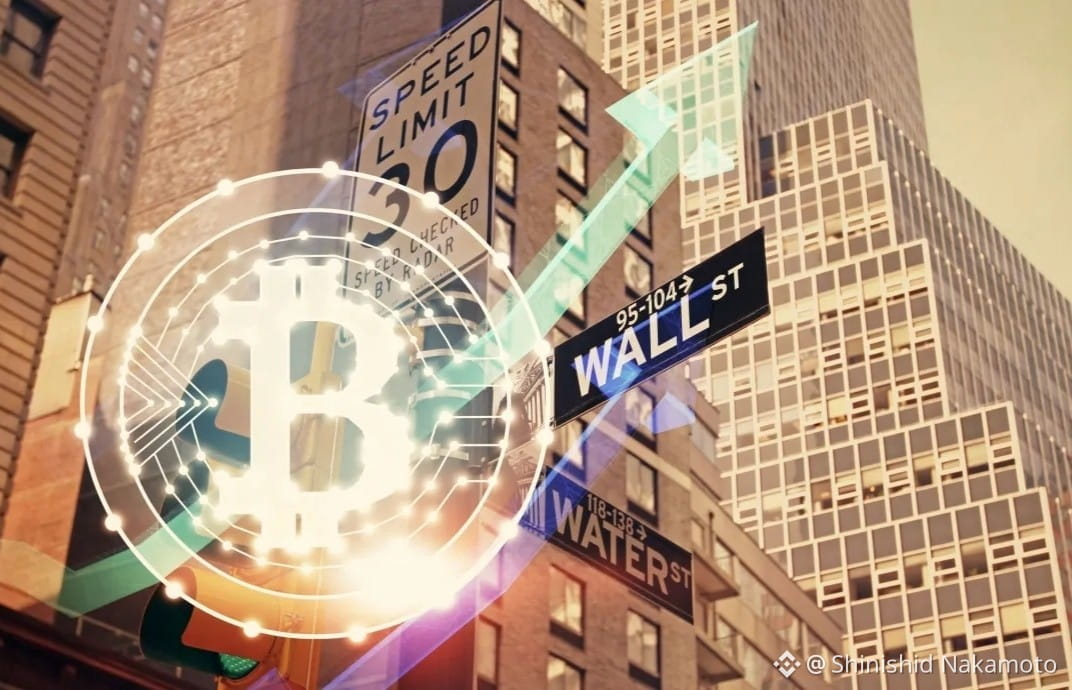
"Tokenized stocks" are digital versions of traditional stocks and ETFs (think Tesla, Nvidia) registered on-chain. Good analogy: it's like what Pix did to the Brazilian real — the asset itself doesn't change, but how it circulates does.
📊 The numbers:
• Tokenized stocks market: ~$1.94B in distributed assets
• Monthly trading volume: ~$8.9B (4x+ the distributed value)
• Global stock market: $126T+
Still tiny in the big picture, but the volume shows real usage, not just issuance.
✅ Advantages:
• Near 24/7 trading
• Faster settlement
• Fractional access
• Plugs into stablecoins and DeFi
⚠️ What's holding it back:
Not tech — regulation. Custody rules, investor rights, and platform oversight are still open questions.
⚡ Key detail: buying a tokenized stock doesn't always make you a direct shareholder. Often it's economic exposure through the issuing platform's structure — read the fine print.
Ethereum and Solana currently host most of this infrastructure. If regulation catches up, this bridge between TradFi and crypto could grow fast in the coming years.
#Tokenization #RWA #Blockchain
Tokenized stocks: why Wall Street is eyeing the blockchain
"Tokenized stocks" are digital versions of traditional stocks and ETFs (think Tesla, Nvidia) registered on-chain. Good analogy: it's like what Pix did to the Brazilian real — the asset itself doesn't change, but how it circulates does.
📊 The numbers:
• Tokenized stocks market: ~$1.94B in distributed assets
• Monthly trading volume: ~$8.9B (4x+ the distributed value)
• Global stock market: $126T+
Still tiny in the big picture, but the volume shows real usage, not just issuance.
✅ Advantages:
• Near 24/7 trading
• Faster settlement
• Fractional access
• Plugs into stablecoins and DeFi
⚠️ What's holding it back:
Not tech — regulation. Custody rules, investor rights, and platform oversight are still open questions.
⚡ Key detail: buying a tokenized stock doesn't always make you a direct shareholder. Often it's economic exposure through the issuing platform's structure — read the fine print.
Ethereum and Solana currently host most of this infrastructure. If regulation catches up, this bridge between TradFi and crypto could grow fast in the coming years.
#Tokenization #RWA #Blockchain
"Tokenized stocks" are digital versions of traditional stocks and ETFs (think Tesla, Nvidia) registered on-chain. Good analogy: it's like what Pix did to the Brazilian real — the asset itself doesn't change, but how it circulates does.
📊 The numbers:
• Tokenized stocks market: ~$1.94B in distributed assets
• Monthly trading volume: ~$8.9B (4x+ the distributed value)
• Global stock market: $126T+
Still tiny in the big picture, but the volume shows real usage, not just issuance.
✅ Advantages:
• Near 24/7 trading
• Faster settlement
• Fractional access
• Plugs into stablecoins and DeFi
⚠️ What's holding it back:
Not tech — regulation. Custody rules, investor rights, and platform oversight are still open questions.
⚡ Key detail: buying a tokenized stock doesn't always make you a direct shareholder. Often it's economic exposure through the issuing platform's structure — read the fine print.
Ethereum and Solana currently host most of this infrastructure. If regulation catches up, this bridge between TradFi and crypto could grow fast in the coming years.
#Tokenization #RWA #Blockchain
92
Bitcoin May Have a Recovery Plan for Wallets After a Quantum Attack
Security firm Project Eleven has unveiled a cryptographic technique designed to let Bitcoin users prove wallet ownership even after quantum computers become capable of deriving private keys and forging valid signatures.
CEO Alex Pruden explained the real problem isn't protecting wallets from quantum attacks — it's proving who legitimately owns a wallet once "Q Day" arrives, the point when quantum computers can break the elliptic-curve cryptography securing Bitcoin. After that day, both a quantum attacker and the real owner could produce identical valid signatures, making a signature alone useless as proof of ownership.
The fix relies on a wallet's key derivation path: users can prove they control the master key used to generate a wallet's private key, without ever revealing it. Since a quantum computer can't reconstruct that master key, this lets a legitimate owner be distinguished from an attacker even after the private key itself has been compromised.
The method, built with Jim Posen (lead maintainer of the Binius zero-knowledge proof system), is based on "signature lifting," a technique first proposed by researchers Alon Sattath and Robert Wyborski.
This comes amid accelerating efforts to prepare Bitcoin for a post-quantum future: BIP-360 advanced through formal review in February, BTQ Technologies launched a testnet implementation in March, and Coinbase's quantum advisory council warned in June that roughly 7 million BTC could eventually be at risk if owners fail to migrate to quantum-safe addresses in time.
As Pruden put it: some wallets simply won't migrate in time — this gives them a fallback, proving ownership through derivation rather than signature, even after that window closes.
#QDAY
#BTC
Bitcoin May Have a Recovery Plan for Wallets After a Quantum Attack
Security firm Project Eleven has unveiled a cryptographic technique designed to let Bitcoin users prove wallet ownership even after quantum computers become capable of deriving private keys and forging valid signatures.
CEO Alex Pruden explained the real problem isn't protecting wallets from quantum attacks — it's proving who legitimately owns a wallet once "Q Day" arrives, the point when quantum computers can break the elliptic-curve cryptography securing Bitcoin. After that day, both a quantum attacker and the real owner could produce identical valid signatures, making a signature alone useless as proof of ownership.
The fix relies on a wallet's key derivation path: users can prove they control the master key used to generate a wallet's private key, without ever revealing it. Since a quantum computer can't reconstruct that master key, this lets a legitimate owner be distinguished from an attacker even after the private key itself has been compromised.
The method, built with Jim Posen (lead maintainer of the Binius zero-knowledge proof system), is based on "signature lifting," a technique first proposed by researchers Alon Sattath and Robert Wyborski.
This comes amid accelerating efforts to prepare Bitcoin for a post-quantum future: BIP-360 advanced through formal review in February, BTQ Technologies launched a testnet implementation in March, and Coinbase's quantum advisory council warned in June that roughly 7 million BTC could eventually be at risk if owners fail to migrate to quantum-safe addresses in time.
As Pruden put it: some wallets simply won't migrate in time — this gives them a fallback, proving ownership through derivation rather than signature, even after that window closes.
#QDAY
#BTC
Security firm Project Eleven has unveiled a cryptographic technique designed to let Bitcoin users prove wallet ownership even after quantum computers become capable of deriving private keys and forging valid signatures.
CEO Alex Pruden explained the real problem isn't protecting wallets from quantum attacks — it's proving who legitimately owns a wallet once "Q Day" arrives, the point when quantum computers can break the elliptic-curve cryptography securing Bitcoin. After that day, both a quantum attacker and the real owner could produce identical valid signatures, making a signature alone useless as proof of ownership.
The fix relies on a wallet's key derivation path: users can prove they control the master key used to generate a wallet's private key, without ever revealing it. Since a quantum computer can't reconstruct that master key, this lets a legitimate owner be distinguished from an attacker even after the private key itself has been compromised.
The method, built with Jim Posen (lead maintainer of the Binius zero-knowledge proof system), is based on "signature lifting," a technique first proposed by researchers Alon Sattath and Robert Wyborski.
This comes amid accelerating efforts to prepare Bitcoin for a post-quantum future: BIP-360 advanced through formal review in February, BTQ Technologies launched a testnet implementation in March, and Coinbase's quantum advisory council warned in June that roughly 7 million BTC could eventually be at risk if owners fail to migrate to quantum-safe addresses in time.
As Pruden put it: some wallets simply won't migrate in time — this gives them a fallback, proving ownership through derivation rather than signature, even after that window closes.
#QDAY
#BTC
101
BIP-110: The Proposal Splitting the Bitcoin Community
BIP-110 ("Reduced Data Temporary Softfork") is a proposed soft fork that would temporarily restrict block space used for non-financial data — the inscriptions, tokens, and arbitrary payloads behind Ordinals, BRC-20, and Runes. Proposed in October 2025, it reached "Complete" status on GitHub on June 25, 2026 — meaning the draft is finished, not that the network adopted it.
Why It's Controversial
Supporters say arbitrary data storage burdens node operators and distracts from Bitcoin's core purpose as sound, permissionless money. Critics disagree:
Low threshold: Activation needs just 55% miner signaling, far below the traditional 95% — raising real chain-split risk.
Hard rejection: Non-compliant blocks get rejected outright instead of simply accepted, deepening fragmentation risk.
A dangerous precedent: Michael Saylor's 100-point essay (July 18, 2026) argues it weaponizes consensus rules against a currently valid, fee-paying transaction type.
Neutrality at stake: Adam Back warns it could damage Bitcoin's credibility and create preferential treatment of certain transactions.
The debate got symbolic when a developer embedded a 66KB image in one transaction, proving that blocking OP_RETURN alone wouldn't stop large data from reaching the chain.
Where Things Stand
Support remains minimal: as of July 19, 2026, only 0.86% of blocks signaled in favor — 9 of 1,043, far short of the 55% needed. Ocean Pool mined the first signaling block on March 1, 2026, and is still the only real signaling effort.
Mandatory signaling begins around early August 2026. Barring a reversal, BIP-110 looks set to fail — leaving, at most, a small minority chain. Either way, it's exposed Bitcoin's deeper split over what the base layer is really for.
#BinanceSquare
#BTC
BIP-110: The Proposal Splitting the Bitcoin Community
BIP-110 ("Reduced Data Temporary Softfork") is a proposed soft fork that would temporarily restrict block space used for non-financial data — the inscriptions, tokens, and arbitrary payloads behind Ordinals, BRC-20, and Runes. Proposed in October 2025, it reached "Complete" status on GitHub on June 25, 2026 — meaning the draft is finished, not that the network adopted it.
Why It's Controversial
Supporters say arbitrary data storage burdens node operators and distracts from Bitcoin's core purpose as sound, permissionless money. Critics disagree:
Low threshold: Activation needs just 55% miner signaling, far below the traditional 95% — raising real chain-split risk.
Hard rejection: Non-compliant blocks get rejected outright instead of simply accepted, deepening fragmentation risk.
A dangerous precedent: Michael Saylor's 100-point essay (July 18, 2026) argues it weaponizes consensus rules against a currently valid, fee-paying transaction type.
Neutrality at stake: Adam Back warns it could damage Bitcoin's credibility and create preferential treatment of certain transactions.
The debate got symbolic when a developer embedded a 66KB image in one transaction, proving that blocking OP_RETURN alone wouldn't stop large data from reaching the chain.
Where Things Stand
Support remains minimal: as of July 19, 2026, only 0.86% of blocks signaled in favor — 9 of 1,043, far short of the 55% needed. Ocean Pool mined the first signaling block on March 1, 2026, and is still the only real signaling effort.
Mandatory signaling begins around early August 2026. Barring a reversal, BIP-110 looks set to fail — leaving, at most, a small minority chain. Either way, it's exposed Bitcoin's deeper split over what the base layer is really for.
#BinanceSquare
#BTC
BIP-110 ("Reduced Data Temporary Softfork") is a proposed soft fork that would temporarily restrict block space used for non-financial data — the inscriptions, tokens, and arbitrary payloads behind Ordinals, BRC-20, and Runes. Proposed in October 2025, it reached "Complete" status on GitHub on June 25, 2026 — meaning the draft is finished, not that the network adopted it.
Why It's Controversial
Supporters say arbitrary data storage burdens node operators and distracts from Bitcoin's core purpose as sound, permissionless money. Critics disagree:
Low threshold: Activation needs just 55% miner signaling, far below the traditional 95% — raising real chain-split risk.
Hard rejection: Non-compliant blocks get rejected outright instead of simply accepted, deepening fragmentation risk.
A dangerous precedent: Michael Saylor's 100-point essay (July 18, 2026) argues it weaponizes consensus rules against a currently valid, fee-paying transaction type.
Neutrality at stake: Adam Back warns it could damage Bitcoin's credibility and create preferential treatment of certain transactions.
The debate got symbolic when a developer embedded a 66KB image in one transaction, proving that blocking OP_RETURN alone wouldn't stop large data from reaching the chain.
Where Things Stand
Support remains minimal: as of July 19, 2026, only 0.86% of blocks signaled in favor — 9 of 1,043, far short of the 55% needed. Ocean Pool mined the first signaling block on March 1, 2026, and is still the only real signaling effort.
Mandatory signaling begins around early August 2026. Barring a reversal, BIP-110 looks set to fail — leaving, at most, a small minority chain. Either way, it's exposed Bitcoin's deeper split over what the base layer is really for.
#BinanceSquare
#BTC

102
You've Checked Your Portfolio 40 Times Today. It's Not the Losses Draining You — It's the Checking
Be honest: how many times did you open your portfolio app today? Not because anything changed — because you needed to know if anything changed. That compulsive checking loop is one of the most common, least talked-about parts of holding crypto, and it has nothing to do with how good or bad your actual positions are.
Here's the mechanism: unpredictable rewards are the most addictive kind. A red screen sometimes, a green screen other times, on a schedule you can't predict — that's the exact same feedback loop that makes slot machines compelling. Your portfolio app isn't trying to stress you out, but the variable, unpredictable nature of price movement taps into that same psychological wiring every time you unlock your phone.
The cost isn't just emotional. Constant checking during volatile stretches is strongly linked to impulsive decisions — panic selling on a dip you would have ridden out, or FOMO buying a pump you would have otherwise ignored. The checking itself, not the market, is often what pushes people into their worst trades.
A few things that actually help: turning off price alerts during known volatile periods, setting specific times to check instead of checking reactively, and remembering that a number changing on a screen ten times a day doesn't require ten decisions from you.
How many times do you realistically check your portfolio on a normal day? No judgment — just curious how common this actually is.
If checking your portfolio is affecting your wellbeing, it may help to talk to someone about healthy boundaries with trading.
#CryptoPsychology #TradingMindset #MentalHealth #BinanceSquare
You've Checked Your Portfolio 40 Times Today. It's Not the Losses Draining You — It's the Checking
Be honest: how many times did you open your portfolio app today? Not because anything changed — because you needed to know if anything changed. That compulsive checking loop is one of the most common, least talked-about parts of holding crypto, and it has nothing to do with how good or bad your actual positions are.
Here's the mechanism: unpredictable rewards are the most addictive kind. A red screen sometimes, a green screen other times, on a schedule you can't predict — that's the exact same feedback loop that makes slot machines compelling. Your portfolio app isn't trying to stress you out, but the variable, unpredictable nature of price movement taps into that same psychological wiring every time you unlock your phone.
The cost isn't just emotional. Constant checking during volatile stretches is strongly linked to impulsive decisions — panic selling on a dip you would have ridden out, or FOMO buying a pump you would have otherwise ignored. The checking itself, not the market, is often what pushes people into their worst trades.
A few things that actually help: turning off price alerts during known volatile periods, setting specific times to check instead of checking reactively, and remembering that a number changing on a screen ten times a day doesn't require ten decisions from you.
How many times do you realistically check your portfolio on a normal day? No judgment — just curious how common this actually is.
If checking your portfolio is affecting your wellbeing, it may help to talk to someone about healthy boundaries with trading.
#CryptoPsychology #TradingMindset #MentalHealth #BinanceSquare
Be honest: how many times did you open your portfolio app today? Not because anything changed — because you needed to know if anything changed. That compulsive checking loop is one of the most common, least talked-about parts of holding crypto, and it has nothing to do with how good or bad your actual positions are.
Here's the mechanism: unpredictable rewards are the most addictive kind. A red screen sometimes, a green screen other times, on a schedule you can't predict — that's the exact same feedback loop that makes slot machines compelling. Your portfolio app isn't trying to stress you out, but the variable, unpredictable nature of price movement taps into that same psychological wiring every time you unlock your phone.
The cost isn't just emotional. Constant checking during volatile stretches is strongly linked to impulsive decisions — panic selling on a dip you would have ridden out, or FOMO buying a pump you would have otherwise ignored. The checking itself, not the market, is often what pushes people into their worst trades.
A few things that actually help: turning off price alerts during known volatile periods, setting specific times to check instead of checking reactively, and remembering that a number changing on a screen ten times a day doesn't require ten decisions from you.
How many times do you realistically check your portfolio on a normal day? No judgment — just curious how common this actually is.
If checking your portfolio is affecting your wellbeing, it may help to talk to someone about healthy boundaries with trading.
#CryptoPsychology #TradingMindset #MentalHealth #BinanceSquare
45
The Coin You Didn't Buy Just Pumped 40%. That Gut-Drop Feeling Has a Name
You saw it on your watchlist weeks ago. You thought about it. You didn't buy. Now it's up 40% and you're refreshing the chart wondering if it's too late to still get in. That specific feeling — somewhere between regret and urgency — is FOMO, and it is one of the most reliable ways traders talk themselves into bad entries.
Here's what's actually happening in your brain during that moment: watching an asset you almost bought go up activates the same regret circuitry as an actual loss, even though you never lost a cent. Your brain can't fully tell the difference between "I lost money" and "I didn't make money I could have made." Both feel like loss.
That feeling pushes people to buy after the move already happened — chasing the top of a pump instead of getting in before it, which is usually the worst possible entry point. The asset that just ran 40% needs a very different risk analysis than it did a week ago, and FOMO makes it very hard to see that clearly in the moment.
The move that actually works: write down why you didn't buy it in the first place. If that reason is still valid, the pump doesn't change it. If the reason no longer applies, that's useful information — but it should come from re-evaluating the asset, not from watching a green candle.
What's the last coin that gave you serious FOMO — and did you end up chasing it or letting it go?
#FOMO #CryptoPsychology #TradingMindset #BinanceSquare
The Coin You Didn't Buy Just Pumped 40%. That Gut-Drop Feeling Has a Name
You saw it on your watchlist weeks ago. You thought about it. You didn't buy. Now it's up 40% and you're refreshing the chart wondering if it's too late to still get in. That specific feeling — somewhere between regret and urgency — is FOMO, and it is one of the most reliable ways traders talk themselves into bad entries.
Here's what's actually happening in your brain during that moment: watching an asset you almost bought go up activates the same regret circuitry as an actual loss, even though you never lost a cent. Your brain can't fully tell the difference between "I lost money" and "I didn't make money I could have made." Both feel like loss.
That feeling pushes people to buy after the move already happened — chasing the top of a pump instead of getting in before it, which is usually the worst possible entry point. The asset that just ran 40% needs a very different risk analysis than it did a week ago, and FOMO makes it very hard to see that clearly in the moment.
The move that actually works: write down why you didn't buy it in the first place. If that reason is still valid, the pump doesn't change it. If the reason no longer applies, that's useful information — but it should come from re-evaluating the asset, not from watching a green candle.
What's the last coin that gave you serious FOMO — and did you end up chasing it or letting it go?
#FOMO #CryptoPsychology #TradingMindset #BinanceSquare
You saw it on your watchlist weeks ago. You thought about it. You didn't buy. Now it's up 40% and you're refreshing the chart wondering if it's too late to still get in. That specific feeling — somewhere between regret and urgency — is FOMO, and it is one of the most reliable ways traders talk themselves into bad entries.
Here's what's actually happening in your brain during that moment: watching an asset you almost bought go up activates the same regret circuitry as an actual loss, even though you never lost a cent. Your brain can't fully tell the difference between "I lost money" and "I didn't make money I could have made." Both feel like loss.
That feeling pushes people to buy after the move already happened — chasing the top of a pump instead of getting in before it, which is usually the worst possible entry point. The asset that just ran 40% needs a very different risk analysis than it did a week ago, and FOMO makes it very hard to see that clearly in the moment.
The move that actually works: write down why you didn't buy it in the first place. If that reason is still valid, the pump doesn't change it. If the reason no longer applies, that's useful information — but it should come from re-evaluating the asset, not from watching a green candle.
What's the last coin that gave you serious FOMO — and did you end up chasing it or letting it go?
#FOMO #CryptoPsychology #TradingMindset #BinanceSquare
62
Log in to explore more content
Join global crypto users on Binance Square
⚡️ Get latest and useful information about crypto.
💬 Trusted by the world’s largest crypto exchange.
👍 Discover real insights from verified creators.
Email / Phone number