

偷偷炒币的巴菲特
610 Posts
偷偷炒币的巴菲特
Report
Block User
买那些有业绩支撑的公司太慢了,真正的价值投资,就是寻找具有‘极致情绪价值’的迷因代币,所以我来到了币圈😄
Open Trade

BTC Holder
Frequent Trader
5.3 Years
46 Following
418 Followers
1.4K+ Liked
Posts
Portfolio
All
Quotes
Videos
·
--
After the PCE was released, $BTC surged to about $85,400. But don’t overlook a line in the footnote about the claim that “inflation fell sharply from 3.7% to 3.4%.”
This time, the BEA adjusted the calculation method for some items and revised the data back to 2021. Overall PCE for July changed from 3.7% to 3.4%, and core PCE from 3.3% to 3.0%; in August, the year-over-year figures were still 3.4% and 3.0%, respectively. The real upside surprise is that the month-over-month rate for overall PCE came in at 0.3%, below the 0.4% expectation; core was 0.2%.
Consumer spending in the same period jumped 0.9%—demand hasn’t flatlined. The probability of a rate hike for October fell from about 45% to 35%. The 10-year U.S. Treasury yield remains above 5.2%, and BTC is back to around $84,500.
What the market gets is the rationale for “pausing rate hikes,” not the permission to “cut rates immediately.”
#BTC #PCE #美联储何时降息?
After the PCE was released, $BTC surged to about $85,400. But don’t overlook a line in the footnote about the claim that “inflation fell sharply from 3.7% to 3.4%.”
This time, the BEA adjusted the calculation method for some items and revised the data back to 2021. Overall PCE for July changed from 3.7% to 3.4%, and core PCE from 3.3% to 3.0%; in August, the year-over-year figures were still 3.4% and 3.0%, respectively. The real upside surprise is that the month-over-month rate for overall PCE came in at 0.3%, below the 0.4% expectation; core was 0.2%.
Consumer spending in the same period jumped 0.9%—demand hasn’t flatlined. The probability of a rate hike for October fell from about 45% to 35%. The 10-year U.S. Treasury yield remains above 5.2%, and BTC is back to around $84,500.
What the market gets is the rationale for “pausing rate hikes,” not the permission to “cut rates immediately.”
#BTC #PCE #美联储何时降息?
This time, the BEA adjusted the calculation method for some items and revised the data back to 2021. Overall PCE for July changed from 3.7% to 3.4%, and core PCE from 3.3% to 3.0%; in August, the year-over-year figures were still 3.4% and 3.0%, respectively. The real upside surprise is that the month-over-month rate for overall PCE came in at 0.3%, below the 0.4% expectation; core was 0.2%.
Consumer spending in the same period jumped 0.9%—demand hasn’t flatlined. The probability of a rate hike for October fell from about 45% to 35%. The 10-year U.S. Treasury yield remains above 5.2%, and BTC is back to around $84,500.
What the market gets is the rationale for “pausing rate hikes,” not the permission to “cut rates immediately.”
#BTC #PCE #美联储何时降息?

1
302
·
--
The Fed’s rate hike is delayed, but the money hasn’t gotten looser!
Don’t take the idea that the “October rate-hike probability has fallen from nearly 70% to 44%” as liquidity returning. BTC is still hovering around $83,000, and the market has only exhaled in relief.
Williams said there’s “no need to rush,” but he still expects another possible hike later this year; inflation remains at 3.7%. On the same day, Barr hit even harder: over the past 20 months, only two months of core PCE data have met the 2% target.
Bond markets didn’t celebrate either: the 10-year U.S. Treasury yield touched 5.293%, and the 30-year reached 5.6206%, both hitting the highest levels since 2007 and 2002, respectively.
So this isn’t a pivot to dovish policy—it’s just pushing the next rate hike further out. For BTC, what you get is time, not cheaper money.
Tonight at 20:30, August PCE will be released. The real shift toward easing depends on whether long-end yields are willing to come down—not whether a probability bar turns green by a notch.
#BTC #美联储何时降息? #U.S. bonds
The Fed’s rate hike is delayed, but the money hasn’t gotten looser!
Don’t take the idea that the “October rate-hike probability has fallen from nearly 70% to 44%” as liquidity returning. BTC is still hovering around $83,000, and the market has only exhaled in relief.
Williams said there’s “no need to rush,” but he still expects another possible hike later this year; inflation remains at 3.7%. On the same day, Barr hit even harder: over the past 20 months, only two months of core PCE data have met the 2% target.
Bond markets didn’t celebrate either: the 10-year U.S. Treasury yield touched 5.293%, and the 30-year reached 5.6206%, both hitting the highest levels since 2007 and 2002, respectively.
So this isn’t a pivot to dovish policy—it’s just pushing the next rate hike further out. For BTC, what you get is time, not cheaper money.
Tonight at 20:30, August PCE will be released. The real shift toward easing depends on whether long-end yields are willing to come down—not whether a probability bar turns green by a notch.
#BTC #美联储何时降息? #U.S. bonds
Don’t take the idea that the “October rate-hike probability has fallen from nearly 70% to 44%” as liquidity returning. BTC is still hovering around $83,000, and the market has only exhaled in relief.
Williams said there’s “no need to rush,” but he still expects another possible hike later this year; inflation remains at 3.7%. On the same day, Barr hit even harder: over the past 20 months, only two months of core PCE data have met the 2% target.
Bond markets didn’t celebrate either: the 10-year U.S. Treasury yield touched 5.293%, and the 30-year reached 5.6206%, both hitting the highest levels since 2007 and 2002, respectively.
So this isn’t a pivot to dovish policy—it’s just pushing the next rate hike further out. For BTC, what you get is time, not cheaper money.
Tonight at 20:30, August PCE will be released. The real shift toward easing depends on whether long-end yields are willing to come down—not whether a probability bar turns green by a notch.
#BTC #美联储何时降息? #U.S. bonds

2
196
·
--
“U.S.-China tax cuts of $60 billion”—this title overstates both ideas.
What both sides agreed on is $30 billion worth of non-sensitive goods each, recommended for tariff reductions based on 2024 import values, with a view to obtaining more favorable tariff treatment. $60 billion refers to the total value of the goods, not to $60 billion less in taxes. The White House’s original wording still reads as a “recommendation list” and “will consider”; it did not publish how much the tariff cuts would be or when they would take effect.
The list covers items such as toys, small home appliances, corn, meat, and medical devices. The U.S. has not addressed concerns about genetically non-modified soybeans, and China has not resolved the issues regarding rare earths and key technologies either. The ceasefire was extended to January 10; what the market gets is the risk at the tail end being temporarily eased, not a sudden shift to a different phase of the trade war.
For BTC and U.S. stocks, this is more like one less fuse, not suddenly a bucket of liquidity.
#中美贸易 #BTC
“U.S.-China tax cuts of $60 billion”—this title overstates both ideas.
What both sides agreed on is $30 billion worth of non-sensitive goods each, recommended for tariff reductions based on 2024 import values, with a view to obtaining more favorable tariff treatment. $60 billion refers to the total value of the goods, not to $60 billion less in taxes. The White House’s original wording still reads as a “recommendation list” and “will consider”; it did not publish how much the tariff cuts would be or when they would take effect.
The list covers items such as toys, small home appliances, corn, meat, and medical devices. The U.S. has not addressed concerns about genetically non-modified soybeans, and China has not resolved the issues regarding rare earths and key technologies either. The ceasefire was extended to January 10; what the market gets is the risk at the tail end being temporarily eased, not a sudden shift to a different phase of the trade war.
For BTC and U.S. stocks, this is more like one less fuse, not suddenly a bucket of liquidity.
#中美贸易 #BTC
What both sides agreed on is $30 billion worth of non-sensitive goods each, recommended for tariff reductions based on 2024 import values, with a view to obtaining more favorable tariff treatment. $60 billion refers to the total value of the goods, not to $60 billion less in taxes. The White House’s original wording still reads as a “recommendation list” and “will consider”; it did not publish how much the tariff cuts would be or when they would take effect.
The list covers items such as toys, small home appliances, corn, meat, and medical devices. The U.S. has not addressed concerns about genetically non-modified soybeans, and China has not resolved the issues regarding rare earths and key technologies either. The ceasefire was extended to January 10; what the market gets is the risk at the tail end being temporarily eased, not a sudden shift to a different phase of the trade war.
For BTC and U.S. stocks, this is more like one less fuse, not suddenly a bucket of liquidity.
#中美贸易 #BTC

1
164
·
--
#Chainlink上线CCIP2支持企业验证
$LINK Today up +10%, with 24-hour trading volume of $1.15 billion, up 239% from the previous day. The market is buying CCIP 2.0, but don’t rush to read the “2.0” as a safety doubling.
In the updated version, the default is still verified jointly by 16 independent node operators. Institutions can also add their own-built or third-party CCVs; once they’re set as a required condition, both sides sign off before cross-chain transactions are released. KYC, anti-money-laundering, and settlement speed can also be written into the process—this really does look like a banking-grade system.
However, the official documentation also states that the automated off-chain checks of the original Risk Management Network have been stopped, while on-chain emergency circuit breakers remain. Without an additional CCV onboarding counterparty, participants typically only use the default committee. Core security hasn’t disappeared, but extra checks have become optional.
So this rally is really betting that institutions will seriously add these optional checks and generate real usage. The next valuable performance report won’t be a longer list of partners, but who enabled CCV and how many cross-chain transactions were actually processed.
#LINK #Chainlink #CCIP
{future}(LINKUSDT)
#Chainlink上线CCIP2支持企业验证
$LINK Today up +10%, with 24-hour trading volume of $1.15 billion, up 239% from the previous day. The market is buying CCIP 2.0, but don’t rush to read the “2.0” as a safety doubling.
In the updated version, the default is still verified jointly by 16 independent node operators. Institutions can also add their own-built or third-party CCVs; once they’re set as a required condition, both sides sign off before cross-chain transactions are released. KYC, anti-money-laundering, and settlement speed can also be written into the process—this really does look like a banking-grade system.
However, the official documentation also states that the automated off-chain checks of the original Risk Management Network have been stopped, while on-chain emergency circuit breakers remain. Without an additional CCV onboarding counterparty, participants typically only use the default committee. Core security hasn’t disappeared, but extra checks have become optional.
So this rally is really betting that institutions will seriously add these optional checks and generate real usage. The next valuable performance report won’t be a longer list of partners, but who enabled CCV and how many cross-chain transactions were actually processed.
#LINK #Chainlink #CCIP
$LINK Today up +10%, with 24-hour trading volume of $1.15 billion, up 239% from the previous day. The market is buying CCIP 2.0, but don’t rush to read the “2.0” as a safety doubling.
In the updated version, the default is still verified jointly by 16 independent node operators. Institutions can also add their own-built or third-party CCVs; once they’re set as a required condition, both sides sign off before cross-chain transactions are released. KYC, anti-money-laundering, and settlement speed can also be written into the process—this really does look like a banking-grade system.
However, the official documentation also states that the automated off-chain checks of the original Risk Management Network have been stopped, while on-chain emergency circuit breakers remain. Without an additional CCV onboarding counterparty, participants typically only use the default committee. Core security hasn’t disappeared, but extra checks have become optional.
So this rally is really betting that institutions will seriously add these optional checks and generate real usage. The next valuable performance report won’t be a longer list of partners, but who enabled CCV and how many cross-chain transactions were actually processed.
#LINK #Chainlink #CCIP

2
266
·
--
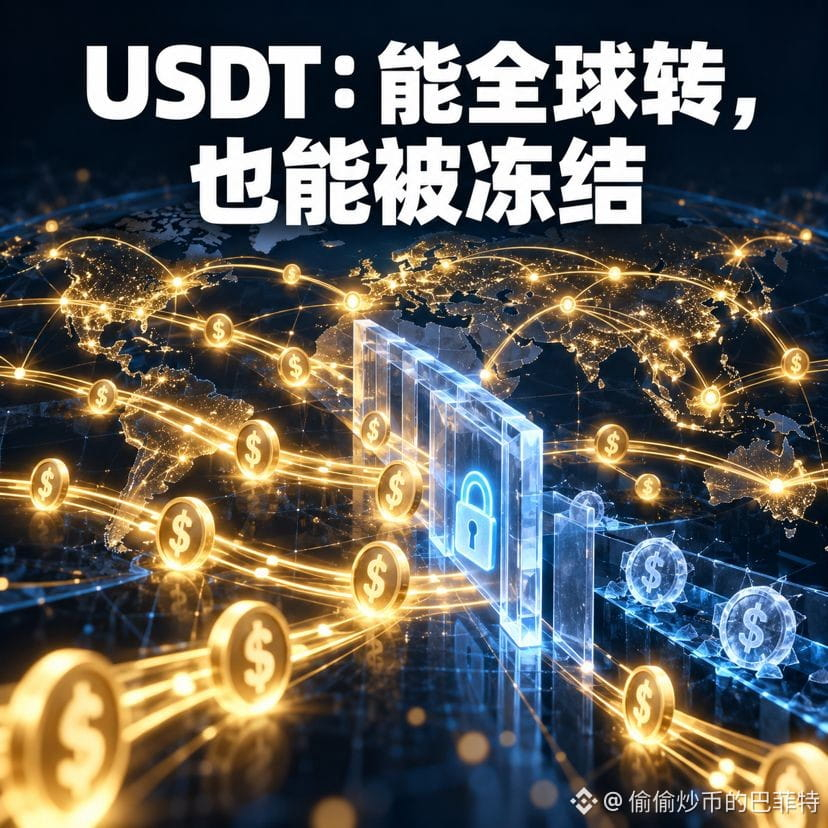
846 sanctioned or allegedly frozen Iranian-linked wallets, where 84% are used almost exclusively with USDT. Even more striking are another set of figures: Tether says it has assisted in freezing nearly $550 million worth of Iran-linked USDT this year.
The two things are not contradictory. USDT can become a cross-border “shadow dollar” because it rides on global liquidity; yet it can also be quickly shut down because transaction trails are public and the issuer holds the freeze authority. It is not exactly electronic cash—more like a dollar card that can be used worldwide, but can also be stopped in the back office.
At this stage, this is only a Democratic investigation report from the Senate, calling for the Treasury and the Department of Justice to conduct investigations; it is not a regulatory conviction, nor has any punishment been announced.
The real issue that would rewrite market rules is this: does the issuer only need to freeze after receiving a law-enforcement notice, or must it proactively identify and pre-freeze publicly exposed risk addresses? If the standard shifts to the latter, USDT would have to re-calculate not only compliance costs, but also on-chain usability.
#USDT #Tether #crypto regulation
846 sanctioned or allegedly frozen Iranian-linked wallets, where 84% are used almost exclusively with USDT. Even more striking are another set of figures: Tether says it has assisted in freezing nearly $550 million worth of Iran-linked USDT this year.
The two things are not contradictory. USDT can become a cross-border “shadow dollar” because it rides on global liquidity; yet it can also be quickly shut down because transaction trails are public and the issuer holds the freeze authority. It is not exactly electronic cash—more like a dollar card that can be used worldwide, but can also be stopped in the back office.
At this stage, this is only a Democratic investigation report from the Senate, calling for the Treasury and the Department of Justice to conduct investigations; it is not a regulatory conviction, nor has any punishment been announced.
The real issue that would rewrite market rules is this: does the issuer only need to freeze after receiving a law-enforcement notice, or must it proactively identify and pre-freeze publicly exposed risk addresses? If the standard shifts to the latter, USDT would have to re-calculate not only compliance costs, but also on-chain usability.
#USDT #Tether #crypto regulation
The two things are not contradictory. USDT can become a cross-border “shadow dollar” because it rides on global liquidity; yet it can also be quickly shut down because transaction trails are public and the issuer holds the freeze authority. It is not exactly electronic cash—more like a dollar card that can be used worldwide, but can also be stopped in the back office.
At this stage, this is only a Democratic investigation report from the Senate, calling for the Treasury and the Department of Justice to conduct investigations; it is not a regulatory conviction, nor has any punishment been announced.
The real issue that would rewrite market rules is this: does the issuer only need to freeze after receiving a law-enforcement notice, or must it proactively identify and pre-freeze publicly exposed risk addresses? If the standard shifts to the latter, USDT would have to re-calculate not only compliance costs, but also on-chain usability.
#USDT #Tether #crypto regulation
1
115
·
--
$SOL ETF just turned in a one-week record of $188.1 million as of September 28, yet the SOL price is still hovering around $120. The money is really coming in—don’t rush to translate that into “spot must rise immediately.”
From September 21 to 25, all seven U.S. SOL ETFs saw net inflows, and the $87 million single-day inflow on Friday also set a record. Even more worth watching is where the money went: among the roughly $1.6 billion cumulative net inflows, Bitwise’s BSOL took about $1.22 billion, or 76%.
The obvious difference with BSOL is that it targets a 100% staked SOL position, keeping staking rewards inside the fund. It can’t prove this is the only reason investors chose it, but it at least suggests investors may also be buying a “yield-bearing wrapper,” not just SOL itself.
ETF demand has been confirmed; the next step is whether the other six products can continue to absorb the inflows. The figures are huge, and the concentration isn’t small either.
#sol #SolanaETF #BTC
$SOL ETF just turned in a one-week record of $188.1 million as of September 28, yet the SOL price is still hovering around $120. The money is really coming in—don’t rush to translate that into “spot must rise immediately.”
From September 21 to 25, all seven U.S. SOL ETFs saw net inflows, and the $87 million single-day inflow on Friday also set a record. Even more worth watching is where the money went: among the roughly $1.6 billion cumulative net inflows, Bitwise’s BSOL took about $1.22 billion, or 76%.
The obvious difference with BSOL is that it targets a 100% staked SOL position, keeping staking rewards inside the fund. It can’t prove this is the only reason investors chose it, but it at least suggests investors may also be buying a “yield-bearing wrapper,” not just SOL itself.
ETF demand has been confirmed; the next step is whether the other six products can continue to absorb the inflows. The figures are huge, and the concentration isn’t small either.
#sol #SolanaETF #BTC
From September 21 to 25, all seven U.S. SOL ETFs saw net inflows, and the $87 million single-day inflow on Friday also set a record. Even more worth watching is where the money went: among the roughly $1.6 billion cumulative net inflows, Bitwise’s BSOL took about $1.22 billion, or 76%.
The obvious difference with BSOL is that it targets a 100% staked SOL position, keeping staking rewards inside the fund. It can’t prove this is the only reason investors chose it, but it at least suggests investors may also be buying a “yield-bearing wrapper,” not just SOL itself.
ETF demand has been confirmed; the next step is whether the other six products can continue to absorb the inflows. The figures are huge, and the concentration isn’t small either.
#sol #SolanaETF #BTC

103
·
--
The U.S. state of California just wrote political “$MEME coins” into a ban, but “$TRUMP ” still hovers around $2, with about $220 million in trading volume over 24 hours. Many headlines exaggerate the law.
On September 27, Newsom signed AB 2409. It bans California state and local officials, along with certain public officials, from issuing meme coins. For federal officials such as Trump, the state law mainly blocks channels: starting January 1, 2027, service providers may not offer to California residents any new coins issued or co-issued by the provider.
The key phrase is “new issuance starting in 2027.” Under the scope of the provisions, TRUMP launched in 2025 is not subject to retroactive application, and it will not automatically be taken down. Coins like DOGE and PEPE—meme coins associated with non-political figures—are also not the target.
This is not an event forcing the compulsory sell-off of TRUMP. The real change is that going forward, “an official’s name + coin financing” will have to face state-level geographic restrictions, and exchanges will bear the compliance cost first.
California didn’t kill old coins, but it added a gate for the next political meme coin.
#TRUMP #MEME #cryptoregulation
The U.S. state of California just wrote political “$MEME coins” into a ban, but “$TRUMP ” still hovers around $2, with about $220 million in trading volume over 24 hours. Many headlines exaggerate the law.
On September 27, Newsom signed AB 2409. It bans California state and local officials, along with certain public officials, from issuing meme coins. For federal officials such as Trump, the state law mainly blocks channels: starting January 1, 2027, service providers may not offer to California residents any new coins issued or co-issued by the provider.
The key phrase is “new issuance starting in 2027.” Under the scope of the provisions, TRUMP launched in 2025 is not subject to retroactive application, and it will not automatically be taken down. Coins like DOGE and PEPE—meme coins associated with non-political figures—are also not the target.
This is not an event forcing the compulsory sell-off of TRUMP. The real change is that going forward, “an official’s name + coin financing” will have to face state-level geographic restrictions, and exchanges will bear the compliance cost first.
California didn’t kill old coins, but it added a gate for the next political meme coin.
#TRUMP #MEME #cryptoregulation
On September 27, Newsom signed AB 2409. It bans California state and local officials, along with certain public officials, from issuing meme coins. For federal officials such as Trump, the state law mainly blocks channels: starting January 1, 2027, service providers may not offer to California residents any new coins issued or co-issued by the provider.
The key phrase is “new issuance starting in 2027.” Under the scope of the provisions, TRUMP launched in 2025 is not subject to retroactive application, and it will not automatically be taken down. Coins like DOGE and PEPE—meme coins associated with non-political figures—are also not the target.
This is not an event forcing the compulsory sell-off of TRUMP. The real change is that going forward, “an official’s name + coin financing” will have to face state-level geographic restrictions, and exchanges will bear the compliance cost first.
California didn’t kill old coins, but it added a gate for the next political meme coin.
#TRUMP #MEME #cryptoregulation

1
508
·
--
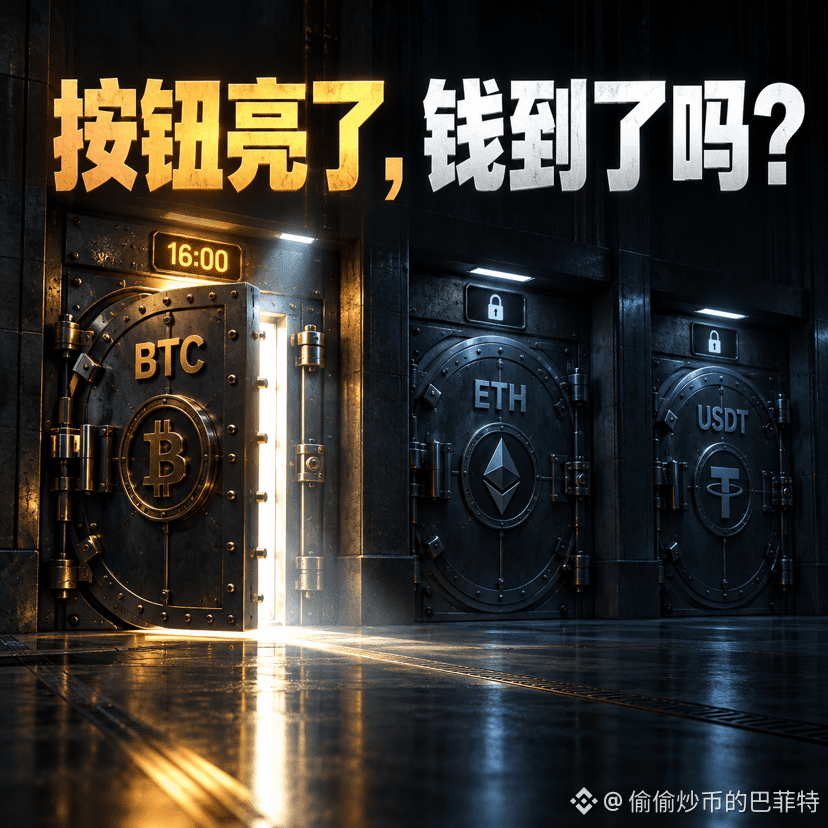
BG Today 16:00 UTC+8 will resume withdrawing from the mainnet at $BTC . Don’t rush to translate “the button is back on” as “the crisis is over.”
This time it’s not fully open: $ETH will be queued until tomorrow, USDT until September 30, and other tokens, fiat, and C2C must wait until October 2. The official statement also, due to compensating for Zcash and TRON transactions, corrected the affected amount from $351.6 million to about $387.5 million, and emphasized that this is not additional outgoing transfers after stop-loss.
“User balances are unaffected, and the protection fund provides a backstop” is still Bitget’s current official commitment. Updated reserve data has not yet been published. At 16:00, what ordinary users should truly watch is whether deposits can continue to arrive reliably, whether limits and queues are running normally, and whether the timeline will be delayed again.
Restoring a BTC channel is the start of repairs, not a closure of the $387.5 million incident.
#Bitget #BTC
BG Today 16:00 UTC+8 will resume withdrawing from the mainnet at $BTC . Don’t rush to translate “the button is back on” as “the crisis is over.”
This time it’s not fully open: $ETH will be queued until tomorrow, USDT until September 30, and other tokens, fiat, and C2C must wait until October 2. The official statement also, due to compensating for Zcash and TRON transactions, corrected the affected amount from $351.6 million to about $387.5 million, and emphasized that this is not additional outgoing transfers after stop-loss.
“User balances are unaffected, and the protection fund provides a backstop” is still Bitget’s current official commitment. Updated reserve data has not yet been published. At 16:00, what ordinary users should truly watch is whether deposits can continue to arrive reliably, whether limits and queues are running normally, and whether the timeline will be delayed again.
Restoring a BTC channel is the start of repairs, not a closure of the $387.5 million incident.
#Bitget #BTC
This time it’s not fully open: $ETH will be queued until tomorrow, USDT until September 30, and other tokens, fiat, and C2C must wait until October 2. The official statement also, due to compensating for Zcash and TRON transactions, corrected the affected amount from $351.6 million to about $387.5 million, and emphasized that this is not additional outgoing transfers after stop-loss.
“User balances are unaffected, and the protection fund provides a backstop” is still Bitget’s current official commitment. Updated reserve data has not yet been published. At 16:00, what ordinary users should truly watch is whether deposits can continue to arrive reliably, whether limits and queues are running normally, and whether the timeline will be delayed again.
Restoring a BTC channel is the start of repairs, not a closure of the $387.5 million incident.
#Bitget #BTC
2
581
·
--
Verified
$ZEC 24 hours volume close to $1.2 billion. What the market sees is “Grayscale is back with another ETF.” What I see is: Wall Street has started to monetize ZEC volatility.
On September 25, Grayscale filed for the ZCSH High Income ETF. First, let’s be clear: this is just a filing and has not yet been approved; the fund does not directly hold ZEC. Under normal circumstances, it plans to allocate at least 80% of its net assets’ exposure to Zcash ETP options—earning option premiums via a synthetic covered-call strategy—and distributing income every two weeks.
In simple terms, it’s selling part of the upside potential in exchange for near-term cash flow. If ZEC trades sideways or rises slowly, these products are more comfortable; if it keeps surging, the sold call options will cap the upside.
So this filing is expanding ZEC’s options product lineup, not adding spot holdings. This piece of “good news” today can be framed as financialization, but it can’t be directly counted as spot buying demand.
#zec #zcash #crypto ETF
$ZEC 24 hours volume close to $1.2 billion. What the market sees is “Grayscale is back with another ETF.” What I see is: Wall Street has started to monetize ZEC volatility.
On September 25, Grayscale filed for the ZCSH High Income ETF. First, let’s be clear: this is just a filing and has not yet been approved; the fund does not directly hold ZEC. Under normal circumstances, it plans to allocate at least 80% of its net assets’ exposure to Zcash ETP options—earning option premiums via a synthetic covered-call strategy—and distributing income every two weeks.
In simple terms, it’s selling part of the upside potential in exchange for near-term cash flow. If ZEC trades sideways or rises slowly, these products are more comfortable; if it keeps surging, the sold call options will cap the upside.
So this filing is expanding ZEC’s options product lineup, not adding spot holdings. This piece of “good news” today can be framed as financialization, but it can’t be directly counted as spot buying demand.
#zec #zcash #crypto ETF
On September 25, Grayscale filed for the ZCSH High Income ETF. First, let’s be clear: this is just a filing and has not yet been approved; the fund does not directly hold ZEC. Under normal circumstances, it plans to allocate at least 80% of its net assets’ exposure to Zcash ETP options—earning option premiums via a synthetic covered-call strategy—and distributing income every two weeks.
In simple terms, it’s selling part of the upside potential in exchange for near-term cash flow. If ZEC trades sideways or rises slowly, these products are more comfortable; if it keeps surging, the sold call options will cap the upside.
So this filing is expanding ZEC’s options product lineup, not adding spot holdings. This piece of “good news” today can be framed as financialization, but it can’t be directly counted as spot buying demand.
#zec #zcash #crypto ETF

2
760
·
--
Verified
$QNT 24 hours up +80%, trading volume hits $404 million. The easiest way to mislead people isn’t the percentage increase—it’s “$2 trillion.”
On September 24, The Clearing House selected Quant to provide an interoperability and trading coordination layer for the U.S. tokenized deposit network. TCH’s existing payment network processes over $2 trillion per day—this partnership is certainly solid.
But this $2 trillion is the volume processed by TCH’s entire existing network, not the on-chain transaction figures already generated by the new project. The new network is not expected to open until the first half of 2027; actual usage and fees have not been disclosed yet. More importantly: Quant’s official website states that the platform fee can be paid in either USD or QNT. A bank using Quant doesn’t mean the bank has to go into the market to buy QNT for every transaction.
The news shows Quant has entered the banking circle; it hasn’t proved that every piece of bank transaction volume will automatically become QNT buy-side demand. After a 72% jump in one day, what the market should be waiting for isn’t another partnership headline—it’s exactly how token fees will be collected.
#QNT #RWA #代币化存款
{future}(QNTUSDT)
$QNT 24 hours up +80%, trading volume hits $404 million. The easiest way to mislead people isn’t the percentage increase—it’s “$2 trillion.”
On September 24, The Clearing House selected Quant to provide an interoperability and trading coordination layer for the U.S. tokenized deposit network. TCH’s existing payment network processes over $2 trillion per day—this partnership is certainly solid.
But this $2 trillion is the volume processed by TCH’s entire existing network, not the on-chain transaction figures already generated by the new project. The new network is not expected to open until the first half of 2027; actual usage and fees have not been disclosed yet. More importantly: Quant’s official website states that the platform fee can be paid in either USD or QNT. A bank using Quant doesn’t mean the bank has to go into the market to buy QNT for every transaction.
The news shows Quant has entered the banking circle; it hasn’t proved that every piece of bank transaction volume will automatically become QNT buy-side demand. After a 72% jump in one day, what the market should be waiting for isn’t another partnership headline—it’s exactly how token fees will be collected.
#QNT #RWA #代币化存款
On September 24, The Clearing House selected Quant to provide an interoperability and trading coordination layer for the U.S. tokenized deposit network. TCH’s existing payment network processes over $2 trillion per day—this partnership is certainly solid.
But this $2 trillion is the volume processed by TCH’s entire existing network, not the on-chain transaction figures already generated by the new project. The new network is not expected to open until the first half of 2027; actual usage and fees have not been disclosed yet. More importantly: Quant’s official website states that the platform fee can be paid in either USD or QNT. A bank using Quant doesn’t mean the bank has to go into the market to buy QNT for every transaction.
The news shows Quant has entered the banking circle; it hasn’t proved that every piece of bank transaction volume will automatically become QNT buy-side demand. After a 72% jump in one day, what the market should be waiting for isn’t another partnership headline—it’s exactly how token fees will be collected.
#QNT #RWA #代币化存款

2
856
·
--
The Fed has drawn a gate for stablecoins. The ticket—turns out to be short-term U.S. Treasuries.
Two proposals announced on September 24 require that stablecoin issuers regulated by the Fed must back the tokens in full with eligible highly liquid assets such as short-term U.S. Treasuries, and also meet capital, risk-control, and custody requirements. Even banks that want to issue tokens have to submit a business plan and financial materials first.
Don’t pop champagne for USDT or USDC just yet. These are only proposed rules; there’s still a 60-day comment period, and it’s also not a blanket license being granted to existing stablecoins.
What’s really worth watching is where the money will go. Under these rules, the larger the stablecoin issuance size, the longer the eligible reserve requirements behind it will be.
The crypto world originally wanted to bypass banks. Now banks are preparing to issue tokens: stablecoins send dollars on-chain, and in the process, they also deliver a batch of buyers for U.S. Treasuries. This outcome is, indeed, a bit of dark humor.
#稳定币 #U.S. Treasuries
The Fed has drawn a gate for stablecoins. The ticket—turns out to be short-term U.S. Treasuries.
Two proposals announced on September 24 require that stablecoin issuers regulated by the Fed must back the tokens in full with eligible highly liquid assets such as short-term U.S. Treasuries, and also meet capital, risk-control, and custody requirements. Even banks that want to issue tokens have to submit a business plan and financial materials first.
Don’t pop champagne for USDT or USDC just yet. These are only proposed rules; there’s still a 60-day comment period, and it’s also not a blanket license being granted to existing stablecoins.
What’s really worth watching is where the money will go. Under these rules, the larger the stablecoin issuance size, the longer the eligible reserve requirements behind it will be.
The crypto world originally wanted to bypass banks. Now banks are preparing to issue tokens: stablecoins send dollars on-chain, and in the process, they also deliver a batch of buyers for U.S. Treasuries. This outcome is, indeed, a bit of dark humor.
#稳定币 #U.S. Treasuries
Two proposals announced on September 24 require that stablecoin issuers regulated by the Fed must back the tokens in full with eligible highly liquid assets such as short-term U.S. Treasuries, and also meet capital, risk-control, and custody requirements. Even banks that want to issue tokens have to submit a business plan and financial materials first.
Don’t pop champagne for USDT or USDC just yet. These are only proposed rules; there’s still a 60-day comment period, and it’s also not a blanket license being granted to existing stablecoins.
What’s really worth watching is where the money will go. Under these rules, the larger the stablecoin issuance size, the longer the eligible reserve requirements behind it will be.
The crypto world originally wanted to bypass banks. Now banks are preparing to issue tokens: stablecoins send dollars on-chain, and in the process, they also deliver a batch of buyers for U.S. Treasuries. This outcome is, indeed, a bit of dark humor.
#稳定币 #U.S. Treasuries

USDC+0.02%
SHYETF-0.03%
2
82
·
--
#中美会晤有真进展
On September 26, China’s Ministry of Foreign Affairs announced an eight-point consensus: the “$30 billion” reciprocal tariff-reduction arrangement and the establishment of AI dialogue have both been included.
But on September 25, U.S. Trade Representative Greer clearly said that high-end American-made chips requiring licenses are not part of this round of talks. The goods he mentioned include U.S. agricultural products, medical devices, and China’s non-sensitive consumer goods.
Between discussing AI risks and allowing more chip sales, there is still export licensing.
The “$30 billion” figure is also easy to misread. Previously, China’s Ministry of Commerce explained that the framework involves goods worth $30 billion each by both sides or more, not a direct exemption of $30 billion in taxes.
I care more about what specific lists of items could help which companies save costs and win orders. For $BTC , I view it as a positive development for easing trade risks. For chip stocks, based on this consensus alone, we still can’t plug any newly increased China revenue directly into valuations.
#英伟达 #BTC
#中美会晤有真进展
On September 26, China’s Ministry of Foreign Affairs announced an eight-point consensus: the “$30 billion” reciprocal tariff-reduction arrangement and the establishment of AI dialogue have both been included.
But on September 25, U.S. Trade Representative Greer clearly said that high-end American-made chips requiring licenses are not part of this round of talks. The goods he mentioned include U.S. agricultural products, medical devices, and China’s non-sensitive consumer goods.
Between discussing AI risks and allowing more chip sales, there is still export licensing.
The “$30 billion” figure is also easy to misread. Previously, China’s Ministry of Commerce explained that the framework involves goods worth $30 billion each by both sides or more, not a direct exemption of $30 billion in taxes.
I care more about what specific lists of items could help which companies save costs and win orders. For $BTC , I view it as a positive development for easing trade risks. For chip stocks, based on this consensus alone, we still can’t plug any newly increased China revenue directly into valuations.
#英伟达 #BTC
On September 26, China’s Ministry of Foreign Affairs announced an eight-point consensus: the “$30 billion” reciprocal tariff-reduction arrangement and the establishment of AI dialogue have both been included.
But on September 25, U.S. Trade Representative Greer clearly said that high-end American-made chips requiring licenses are not part of this round of talks. The goods he mentioned include U.S. agricultural products, medical devices, and China’s non-sensitive consumer goods.
Between discussing AI risks and allowing more chip sales, there is still export licensing.
The “$30 billion” figure is also easy to misread. Previously, China’s Ministry of Commerce explained that the framework involves goods worth $30 billion each by both sides or more, not a direct exemption of $30 billion in taxes.
I care more about what specific lists of items could help which companies save costs and win orders. For $BTC , I view it as a positive development for easing trade risks. For chip stocks, based on this consensus alone, we still can’t plug any newly increased China revenue directly into valuations.
#英伟达 #BTC

2
468
·
--
#SEC称回购与升级不必然使代币成证券
#ASTER
‼️“SEC gives green light to buyback coins”
On September 25, SEC’s corporate finance division staff published a new FAQ: the network is running normally. The project team announced that it would repurchase “non-security type tokens,” which generally do not count as promises to generate returns through key operational efforts; however, if the network hasn’t been built yet and they use the buyback as a yield story, it may still fall under investment contract analysis $HYPE
More importantly, this is only the staff’s viewpoint, not an official SEC rule, and it has no legal effect.
So the real beneficiaries are the protocols that already have users, have transaction fees, and can run even if the founders aren’t constantly shouting. As for projects that only announce buybacks, while their revenue still relies on ongoing financing— even if the regulator’s wording warms up, it still won’t magically grow cash flow for them.
The buyback coin $HYPE is worth watching. Hyperliquid allocates 99% of protocol trading fees to a support fund to purchase HYPE. The more active the trading, the more buyback capital is available. This mechanism is already live in practice.
$ASTER also sets aside 99% of platform fees for buybacks, and will destroy an equal amount from its reserves as well.
The advertised 198% looks impressive, but that is based on the calculation method combining buybacks plus the associated token burn. Buyback tokens will be distributed to stakers, and in the future they may still re-enter circulation.
In short, buybacks are not a protective charm. Where the money comes from still matters more than how many coins get burned. #HYPE
#SEC称回购与升级不必然使代币成证券
#ASTER
‼️“SEC gives green light to buyback coins”
On September 25, SEC’s corporate finance division staff published a new FAQ: the network is running normally. The project team announced that it would repurchase “non-security type tokens,” which generally do not count as promises to generate returns through key operational efforts; however, if the network hasn’t been built yet and they use the buyback as a yield story, it may still fall under investment contract analysis $HYPE
More importantly, this is only the staff’s viewpoint, not an official SEC rule, and it has no legal effect.
So the real beneficiaries are the protocols that already have users, have transaction fees, and can run even if the founders aren’t constantly shouting. As for projects that only announce buybacks, while their revenue still relies on ongoing financing— even if the regulator’s wording warms up, it still won’t magically grow cash flow for them.
The buyback coin $HYPE is worth watching. Hyperliquid allocates 99% of protocol trading fees to a support fund to purchase HYPE. The more active the trading, the more buyback capital is available. This mechanism is already live in practice.
$ASTER also sets aside 99% of platform fees for buybacks, and will destroy an equal amount from its reserves as well.
The advertised 198% looks impressive, but that is based on the calculation method combining buybacks plus the associated token burn. Buyback tokens will be distributed to stakers, and in the future they may still re-enter circulation.
In short, buybacks are not a protective charm. Where the money comes from still matters more than how many coins get burned. #HYPE
#ASTER
‼️“SEC gives green light to buyback coins”
On September 25, SEC’s corporate finance division staff published a new FAQ: the network is running normally. The project team announced that it would repurchase “non-security type tokens,” which generally do not count as promises to generate returns through key operational efforts; however, if the network hasn’t been built yet and they use the buyback as a yield story, it may still fall under investment contract analysis $HYPE
More importantly, this is only the staff’s viewpoint, not an official SEC rule, and it has no legal effect.
So the real beneficiaries are the protocols that already have users, have transaction fees, and can run even if the founders aren’t constantly shouting. As for projects that only announce buybacks, while their revenue still relies on ongoing financing— even if the regulator’s wording warms up, it still won’t magically grow cash flow for them.
The buyback coin $HYPE is worth watching. Hyperliquid allocates 99% of protocol trading fees to a support fund to purchase HYPE. The more active the trading, the more buyback capital is available. This mechanism is already live in practice.
$ASTER also sets aside 99% of platform fees for buybacks, and will destroy an equal amount from its reserves as well.
The advertised 198% looks impressive, but that is based on the calculation method combining buybacks plus the associated token burn. Buyback tokens will be distributed to stakers, and in the future they may still re-enter circulation.
In short, buybacks are not a protective charm. Where the money comes from still matters more than how many coins get burned. #HYPE

3
1
563
·
--
BG’s door is about to open, but not all the way at once.
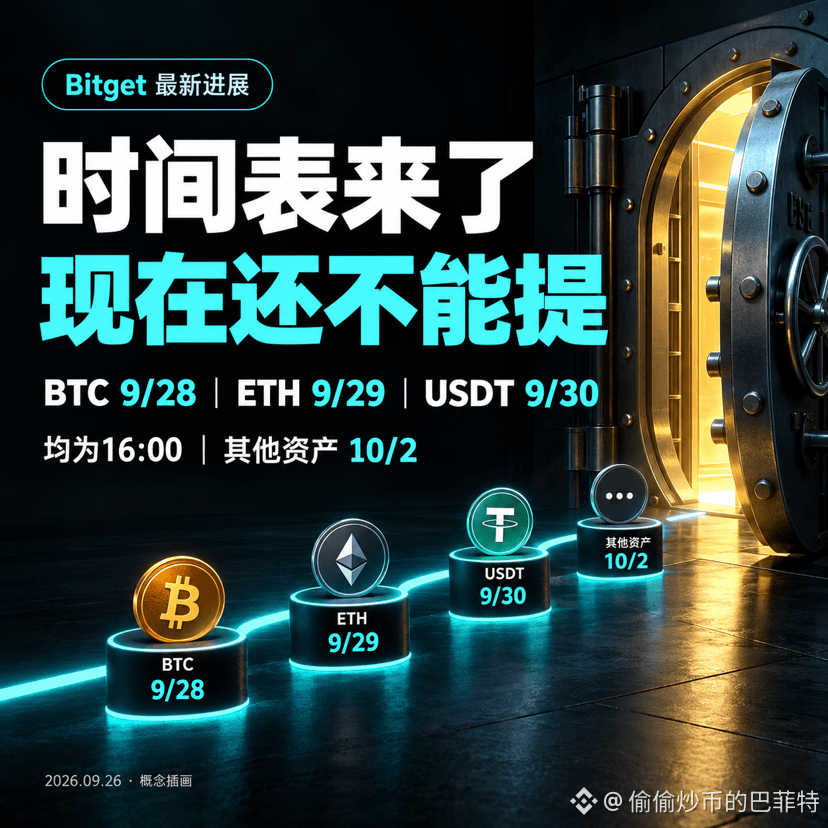
On September 26, Bitget released a schedule to resume withdrawals in batches.
September 28 at 16:00: BTC
September 29 at 16:00: ETH
September 30 at 16:00: USDT
October 2 at 16:00: other tokens, fiat, and P2P.
That means you still can’t withdraw today. For most people, USDT—which is used more often—still has to wait another 4 days. Other assets may not be available until next Friday.
The official says the vulnerability has been fixed, the protection fund will cover losses, and trading and deposits remain open. But this schedule answers only half the question: it has dates, but that doesn’t mean withdrawals have truly resumed.
If you have assets on BG, what to watch next is whether the first batch of BTC withdrawals can arrive on time and smoothly on September 28. If the first batch runs smoothly, later dates become more credible. If the first batch is delayed, the whole table gets discounted.
The first step for an exchange to restore trust isn’t writing another line like “funds are safe”—it’s letting users actually take their money out. So where will the funds leaving BG go next, and which coins will benefit? $BNB
#security event
BG’s door is about to open, but not all the way at once.
On September 26, Bitget released a schedule to resume withdrawals in batches.
September 28 at 16:00: BTC
September 29 at 16:00: ETH
September 30 at 16:00: USDT
October 2 at 16:00: other tokens, fiat, and P2P.
That means you still can’t withdraw today. For most people, USDT—which is used more often—still has to wait another 4 days. Other assets may not be available until next Friday.
The official says the vulnerability has been fixed, the protection fund will cover losses, and trading and deposits remain open. But this schedule answers only half the question: it has dates, but that doesn’t mean withdrawals have truly resumed.
If you have assets on BG, what to watch next is whether the first batch of BTC withdrawals can arrive on time and smoothly on September 28. If the first batch runs smoothly, later dates become more credible. If the first batch is delayed, the whole table gets discounted.
The first step for an exchange to restore trust isn’t writing another line like “funds are safe”—it’s letting users actually take their money out. So where will the funds leaving BG go next, and which coins will benefit? $BNB
#security event
On September 26, Bitget released a schedule to resume withdrawals in batches.
September 28 at 16:00: BTC
September 29 at 16:00: ETH
September 30 at 16:00: USDT
October 2 at 16:00: other tokens, fiat, and P2P.
That means you still can’t withdraw today. For most people, USDT—which is used more often—still has to wait another 4 days. Other assets may not be available until next Friday.
The official says the vulnerability has been fixed, the protection fund will cover losses, and trading and deposits remain open. But this schedule answers only half the question: it has dates, but that doesn’t mean withdrawals have truly resumed.
If you have assets on BG, what to watch next is whether the first batch of BTC withdrawals can arrive on time and smoothly on September 28. If the first batch runs smoothly, later dates become more credible. If the first batch is delayed, the whole table gets discounted.
The first step for an exchange to restore trust isn’t writing another line like “funds are safe”—it’s letting users actually take their money out. So where will the funds leaving BG go next, and which coins will benefit? $BNB
#security event
2
3
793
·
--
Verified
#比特币现货ETF净流入1.91亿美元
$2.25 billion in, yet why is $BTC still at $84,000?
From September 21 to 24, US BTC spot ETFs saw consecutive net inflows of $999 million, $714.7 million, $346.9 million, and $190.7 million, totaling about $2.251 billion
Yes, money is indeed coming in—but BTC has fallen from $85.23k intraday back to around $83.8k
Buy orders are large, and sell orders haven’t moved away. The earlier rally is being cashed out; meanwhile, the 10-year US Treasury yield touched 5.196%, and the market briefly priced in a 71% probability of a rate hike next month. High oil prices continue to weigh on risk assets
As long as the intraday low of $83.4k holds, this looks more like turnover at a high level. If you already have a position, keep holding it; if you don’t, I’m still willing to scale in the closer it gets to $80k.
If the 4-hour chart reclaims $85.23k, then we can say the bid has regained control; if it breaks and closes below $83.4k and the rebound can’t get back up, then stop and wait for $80k.
Even with $2.2 billion, it wasn’t pushed straight up—this suggests there are still people rushing to get off here. #BTC
#比特币现货ETF净流入1.91亿美元
$2.25 billion in, yet why is $BTC still at $84,000?
From September 21 to 24, US BTC spot ETFs saw consecutive net inflows of $999 million, $714.7 million, $346.9 million, and $190.7 million, totaling about $2.251 billion
Yes, money is indeed coming in—but BTC has fallen from $85.23k intraday back to around $83.8k
Buy orders are large, and sell orders haven’t moved away. The earlier rally is being cashed out; meanwhile, the 10-year US Treasury yield touched 5.196%, and the market briefly priced in a 71% probability of a rate hike next month. High oil prices continue to weigh on risk assets
As long as the intraday low of $83.4k holds, this looks more like turnover at a high level. If you already have a position, keep holding it; if you don’t, I’m still willing to scale in the closer it gets to $80k.
If the 4-hour chart reclaims $85.23k, then we can say the bid has regained control; if it breaks and closes below $83.4k and the rebound can’t get back up, then stop and wait for $80k.
Even with $2.2 billion, it wasn’t pushed straight up—this suggests there are still people rushing to get off here. #BTC
$2.25 billion in, yet why is $BTC still at $84,000?
From September 21 to 24, US BTC spot ETFs saw consecutive net inflows of $999 million, $714.7 million, $346.9 million, and $190.7 million, totaling about $2.251 billion
Yes, money is indeed coming in—but BTC has fallen from $85.23k intraday back to around $83.8k
Buy orders are large, and sell orders haven’t moved away. The earlier rally is being cashed out; meanwhile, the 10-year US Treasury yield touched 5.196%, and the market briefly priced in a 71% probability of a rate hike next month. High oil prices continue to weigh on risk assets
As long as the intraday low of $83.4k holds, this looks more like turnover at a high level. If you already have a position, keep holding it; if you don’t, I’m still willing to scale in the closer it gets to $80k.
If the 4-hour chart reclaims $85.23k, then we can say the bid has regained control; if it breaks and closes below $83.4k and the rebound can’t get back up, then stop and wait for $80k.
Even with $2.2 billion, it wasn’t pushed straight up—this suggests there are still people rushing to get off here. #BTC
2
71
·
--
#币圈热点
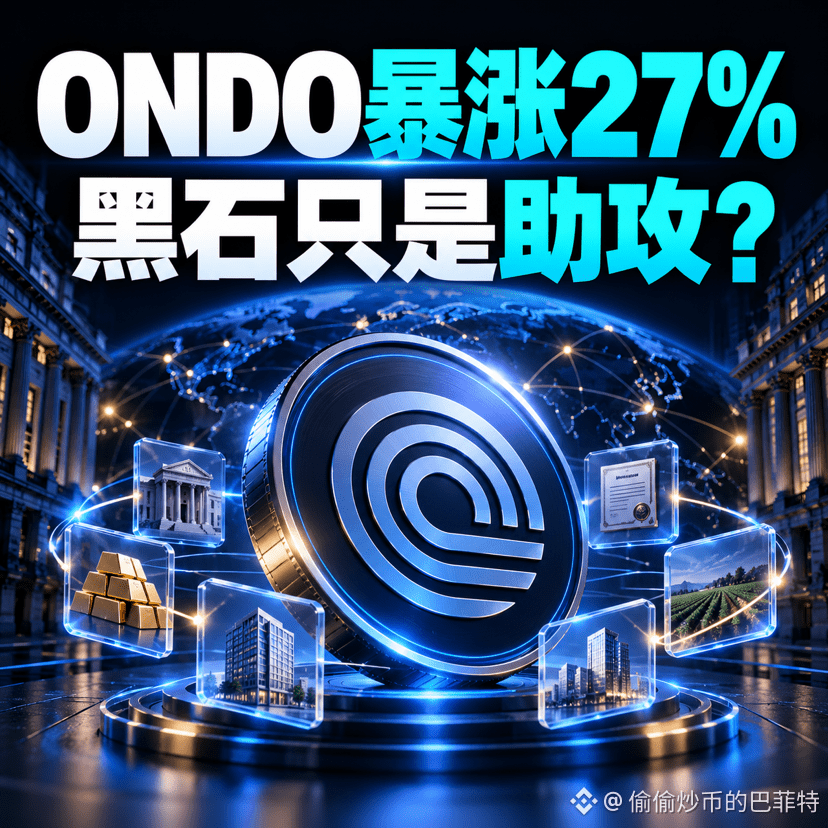
$ONDO Surges 27%. This time there really is something—but don’t get the story twisted.
ONDO around $0.53; up 27% in 24 hours. Trading volume about $1.17 billion, up 361% from the previous day. This isn’t a dead-coin pump with nobody trading.
Catalyst: Ondo launched on-chain smart investment portfolios. Buy one token to get exposure to a basket of assets with automatic rebalancing. The first three portfolio sets use model strategies developed by BlackRock for Ondo, and they’re already live on Ethereum and BNB Chain.
But don’t spin it as “BlackRock bought ONDO.” BlackRock doesn’t manage these tokens, and it hasn’t endorsed ONDO’s price.
This product line takes RWA from “putting one stock on-chain” to “putting an entire investment portfolio on-chain.” This upgrade is worth the move.
I remain bullish in the medium term, but I won’t chase the short-term move of a 27% gain. If you have a low-entry position, keep a core and lock in some; if you don’t have a position, wait for $0.54 to hold and then consider a small entry, or wait for a pullback after sentiment cools.
If the price falls back near $0.42, it likely means this round of announcement premium has mostly been unwound.
#ONDO #RWA
{future}(ONDOUSDT)
#币圈热点
$ONDO Surges 27%. This time there really is something—but don’t get the story twisted.
ONDO around $0.53; up 27% in 24 hours. Trading volume about $1.17 billion, up 361% from the previous day. This isn’t a dead-coin pump with nobody trading.
Catalyst: Ondo launched on-chain smart investment portfolios. Buy one token to get exposure to a basket of assets with automatic rebalancing. The first three portfolio sets use model strategies developed by BlackRock for Ondo, and they’re already live on Ethereum and BNB Chain.
But don’t spin it as “BlackRock bought ONDO.” BlackRock doesn’t manage these tokens, and it hasn’t endorsed ONDO’s price.
This product line takes RWA from “putting one stock on-chain” to “putting an entire investment portfolio on-chain.” This upgrade is worth the move.
I remain bullish in the medium term, but I won’t chase the short-term move of a 27% gain. If you have a low-entry position, keep a core and lock in some; if you don’t have a position, wait for $0.54 to hold and then consider a small entry, or wait for a pullback after sentiment cools.
If the price falls back near $0.42, it likely means this round of announcement premium has mostly been unwound.
#ONDO #RWA
$ONDO Surges 27%. This time there really is something—but don’t get the story twisted.
ONDO around $0.53; up 27% in 24 hours. Trading volume about $1.17 billion, up 361% from the previous day. This isn’t a dead-coin pump with nobody trading.
Catalyst: Ondo launched on-chain smart investment portfolios. Buy one token to get exposure to a basket of assets with automatic rebalancing. The first three portfolio sets use model strategies developed by BlackRock for Ondo, and they’re already live on Ethereum and BNB Chain.
But don’t spin it as “BlackRock bought ONDO.” BlackRock doesn’t manage these tokens, and it hasn’t endorsed ONDO’s price.
This product line takes RWA from “putting one stock on-chain” to “putting an entire investment portfolio on-chain.” This upgrade is worth the move.
I remain bullish in the medium term, but I won’t chase the short-term move of a 27% gain. If you have a low-entry position, keep a core and lock in some; if you don’t have a position, wait for $0.54 to hold and then consider a small entry, or wait for a pullback after sentiment cools.
If the price falls back near $0.42, it likely means this round of announcement premium has mostly been unwound.
#ONDO #RWA
1
454
·
--
#比特币24小时跌3.3%失守83000美元
China-US talks succeeded—why didn’t $BTC rush in?
On September 24, the meeting between the leaders of China and the US confirmed a new trade arrangement was reached, extending the trade truce until January 10, 2027. However, the specific details of tariffs, procurement, and export restriction plans have not yet been released.
After the news broke, BTC was around $84.6k, up only 0.4% over 24 hours—still below this week’s high of about $86k.
The market’s view is that an extension of the tariff war was already expected. The “new arrangement” still lacks the details needed to give funds a reason to keep bidding higher.
At present, if BTC doesn’t chase above $84.6k, the closer it gets to $80k, the more suitable it is to buy spot in batches. Keep existing positions for now and wait for the protocol details.
If BTC increases volume and reclaims $86k, it would suggest the market has started repricing the new agreement. If it can’t even hold $82.9k, I will patiently wait around the $80k area.
The good news is already here. Now it’s time for the price to prove what it’s worth. #中美会晤 #BTC
#比特币24小时跌3.3%失守83000美元
China-US talks succeeded—why didn’t $BTC rush in?
On September 24, the meeting between the leaders of China and the US confirmed a new trade arrangement was reached, extending the trade truce until January 10, 2027. However, the specific details of tariffs, procurement, and export restriction plans have not yet been released.
After the news broke, BTC was around $84.6k, up only 0.4% over 24 hours—still below this week’s high of about $86k.
The market’s view is that an extension of the tariff war was already expected. The “new arrangement” still lacks the details needed to give funds a reason to keep bidding higher.
At present, if BTC doesn’t chase above $84.6k, the closer it gets to $80k, the more suitable it is to buy spot in batches. Keep existing positions for now and wait for the protocol details.
If BTC increases volume and reclaims $86k, it would suggest the market has started repricing the new agreement. If it can’t even hold $82.9k, I will patiently wait around the $80k area.
The good news is already here. Now it’s time for the price to prove what it’s worth. #中美会晤 #BTC
China-US talks succeeded—why didn’t $BTC rush in?
On September 24, the meeting between the leaders of China and the US confirmed a new trade arrangement was reached, extending the trade truce until January 10, 2027. However, the specific details of tariffs, procurement, and export restriction plans have not yet been released.
After the news broke, BTC was around $84.6k, up only 0.4% over 24 hours—still below this week’s high of about $86k.
The market’s view is that an extension of the tariff war was already expected. The “new arrangement” still lacks the details needed to give funds a reason to keep bidding higher.
At present, if BTC doesn’t chase above $84.6k, the closer it gets to $80k, the more suitable it is to buy spot in batches. Keep existing positions for now and wait for the protocol details.
If BTC increases volume and reclaims $86k, it would suggest the market has started repricing the new agreement. If it can’t even hold $82.9k, I will patiently wait around the $80k area.
The good news is already here. Now it’s time for the price to prove what it’s worth. #中美会晤 #BTC

2
319
·
--
$LTC suddenly steals the spotlight—the kind of market that’s easiest to chase the wrong way.
Usually you complain that it’s not moving. Then when it suddenly lifts, you’re afraid it won’t let you on board.
On September 24, LTC’s trading volume over the past 24 hours was about $1.2 billion, doubling from the previous day. On Binance, the LTC/USDT trading volume exceeded $100 million. This round definitely has trading momentum.
But why is it up? Don’t rush to make up the story. At the moment, there’s no verified new announcement sufficient to explain this surge. We can confirm that trading is active; we can’t confirm that institutions already knew the news in advance.
So I think it’s worth watching—no need to rush.
I’m willing to buy what’s showing strength and continuing—not just buy something that’s exciting for a moment.
#莱特币 #LTC
$LTC suddenly steals the spotlight—the kind of market that’s easiest to chase the wrong way.
Usually you complain that it’s not moving. Then when it suddenly lifts, you’re afraid it won’t let you on board.
On September 24, LTC’s trading volume over the past 24 hours was about $1.2 billion, doubling from the previous day. On Binance, the LTC/USDT trading volume exceeded $100 million. This round definitely has trading momentum.
But why is it up? Don’t rush to make up the story. At the moment, there’s no verified new announcement sufficient to explain this surge. We can confirm that trading is active; we can’t confirm that institutions already knew the news in advance.
So I think it’s worth watching—no need to rush.
I’m willing to buy what’s showing strength and continuing—not just buy something that’s exciting for a moment.
#莱特币 #LTC
Usually you complain that it’s not moving. Then when it suddenly lifts, you’re afraid it won’t let you on board.
On September 24, LTC’s trading volume over the past 24 hours was about $1.2 billion, doubling from the previous day. On Binance, the LTC/USDT trading volume exceeded $100 million. This round definitely has trading momentum.
But why is it up? Don’t rush to make up the story. At the moment, there’s no verified new announcement sufficient to explain this surge. We can confirm that trading is active; we can’t confirm that institutions already knew the news in advance.
So I think it’s worth watching—no need to rush.
I’m willing to buy what’s showing strength and continuing—not just buy something that’s exciting for a moment.
#莱特币 #LTC

2
859
·
--
Verified
#币安将上市Hyperliquid(HYPE)
Binance lists $HYPE . Previously, people said Hyperliquid is抢/stealing Binance’s business, and Binance would never list it.
Now the announcement is here: September 24 at 19:00, HYPE spot trading goes live, with three trading pairs open: USDT, USDC, and TRY.
Understanding business competition as “you take my business, so I won’t play with you,” is a bit of worry on behalf of the boss.
Platforms can compete, and they can also profit from trading demand for the same assets. This listing, at least, makes the judgment “a competitor, so it will never be listed” hard to hold.
How to look at what comes next for HYPE? I’m moderately bullish in the medium term, but I’m not planning to place buy orders for the first big bullish candle right at launch.
There are reasons to be bullish: Binance has added more purchase entry points. Hyperliquid itself also has fee-driven buying pressure—official documentation clearly states that the aid foundation automatically converts the transaction fees allocated to it into HYPE. But trades on Binance won’t directly become the funds used for that buyback.
With channels expanded, plus the existing buyback mechanism, it’s worth期待/looking forward to. However, the listing also makes it easier for long-time holders to sell old positions. Whether the new buying can absorb that selling is the real plot ahead.
With spot at low levels, I’m inclined to keep a core “bag.” If it spikes quickly at launch, I’ll take profit in batches. If you don’t have a position, wait for the first wave of impulse to pass, then see whether there’s support on the pullback—only then consider taking smaller batches.
What Binance is expanding is the trading entry, not insuring the buy price for everyone.
Follow me—I’ll keep tracking this and update you in a timely manner!
#hype #Hyperliquid #币安现货
{future}(HYPEUSDT)
#币安将上市Hyperliquid(HYPE)
Binance lists $HYPE . Previously, people said Hyperliquid is抢/stealing Binance’s business, and Binance would never list it.
Now the announcement is here: September 24 at 19:00, HYPE spot trading goes live, with three trading pairs open: USDT, USDC, and TRY.
Understanding business competition as “you take my business, so I won’t play with you,” is a bit of worry on behalf of the boss.
Platforms can compete, and they can also profit from trading demand for the same assets. This listing, at least, makes the judgment “a competitor, so it will never be listed” hard to hold.
How to look at what comes next for HYPE? I’m moderately bullish in the medium term, but I’m not planning to place buy orders for the first big bullish candle right at launch.
There are reasons to be bullish: Binance has added more purchase entry points. Hyperliquid itself also has fee-driven buying pressure—official documentation clearly states that the aid foundation automatically converts the transaction fees allocated to it into HYPE. But trades on Binance won’t directly become the funds used for that buyback.
With channels expanded, plus the existing buyback mechanism, it’s worth期待/looking forward to. However, the listing also makes it easier for long-time holders to sell old positions. Whether the new buying can absorb that selling is the real plot ahead.
With spot at low levels, I’m inclined to keep a core “bag.” If it spikes quickly at launch, I’ll take profit in batches. If you don’t have a position, wait for the first wave of impulse to pass, then see whether there’s support on the pullback—only then consider taking smaller batches.
What Binance is expanding is the trading entry, not insuring the buy price for everyone.
Follow me—I’ll keep tracking this and update you in a timely manner!
#hype #Hyperliquid #币安现货
Binance lists $HYPE . Previously, people said Hyperliquid is抢/stealing Binance’s business, and Binance would never list it.
Now the announcement is here: September 24 at 19:00, HYPE spot trading goes live, with three trading pairs open: USDT, USDC, and TRY.
Understanding business competition as “you take my business, so I won’t play with you,” is a bit of worry on behalf of the boss.
Platforms can compete, and they can also profit from trading demand for the same assets. This listing, at least, makes the judgment “a competitor, so it will never be listed” hard to hold.
How to look at what comes next for HYPE? I’m moderately bullish in the medium term, but I’m not planning to place buy orders for the first big bullish candle right at launch.
There are reasons to be bullish: Binance has added more purchase entry points. Hyperliquid itself also has fee-driven buying pressure—official documentation clearly states that the aid foundation automatically converts the transaction fees allocated to it into HYPE. But trades on Binance won’t directly become the funds used for that buyback.
With channels expanded, plus the existing buyback mechanism, it’s worth期待/looking forward to. However, the listing also makes it easier for long-time holders to sell old positions. Whether the new buying can absorb that selling is the real plot ahead.
With spot at low levels, I’m inclined to keep a core “bag.” If it spikes quickly at launch, I’ll take profit in batches. If you don’t have a position, wait for the first wave of impulse to pass, then see whether there’s support on the pullback—only then consider taking smaller batches.
What Binance is expanding is the trading entry, not insuring the buy price for everyone.
Follow me—I’ll keep tracking this and update you in a timely manner!
#hype #Hyperliquid #币安现货

2
410
Log in to explore more content
Join global crypto users on Binance Square
⚡️ Get latest and useful information about crypto.
💬 Trusted by the world’s largest crypto exchange.
👍 Discover real insights from verified creators.
Email / Phone number
Trending Topics
BitcoinClears$85200
15,479 views
237 Discussing
We got the move, and $BTC is standing exactly where we were before the data. That’s what actual patience for a trade looks like.
The data came in mixed but with some important numbers. ADP Non-Farm Employment Change came at 90K vs 73K forecast, while Core PCE came in at 0.2% vs 0.3% expected. Final GDP was also stronger at 2.2% vs 1.5% forecast, while Personal Spending came in at 0.9% vs 0.8% expected. At the same time, Personal Income missed at 0.2% vs 0.5% forecast.
BTC initially surged to $85,600 and is now back where it needs to be. I’m still looking toward the lower ranges at $82,759 and the $80,000 liquidity, because the overhead liquidity is done and dusted.
We had a live session during the data, and during that session we saw the market at $83,800, then $85,600, and then back toward $83,000 and we still didn’t enter a trade.
That’s what patience is.
We can’t force an entry when the market has no clear direction. The same range is still in focus, and we’ll wait for the market to give us the setup.
Let me know, guys, how was the session? And should we have more regular sessions with our respected members so we can have proper discussions regarding the market?
#BitcoinClears$85200 #AltcoinSeasonIndexHoldsAbove60For5Days #USADPAdds90000JobsInSeptember #BitcoinSlipsBelow$84000 #SECToClarifyOnChainFundraisingRules
Crypto_LUX
·26 Likes
·22.4k views
AltcoinSeasonIndexHoldsAbove60For5Days
74,940 views
1,282 Discussing
USADPAdds90000JobsInSeptember
33,839 views
708 Discussing