

#staking
staking
2.2M views
8,249 Discussing
Hot
Latest

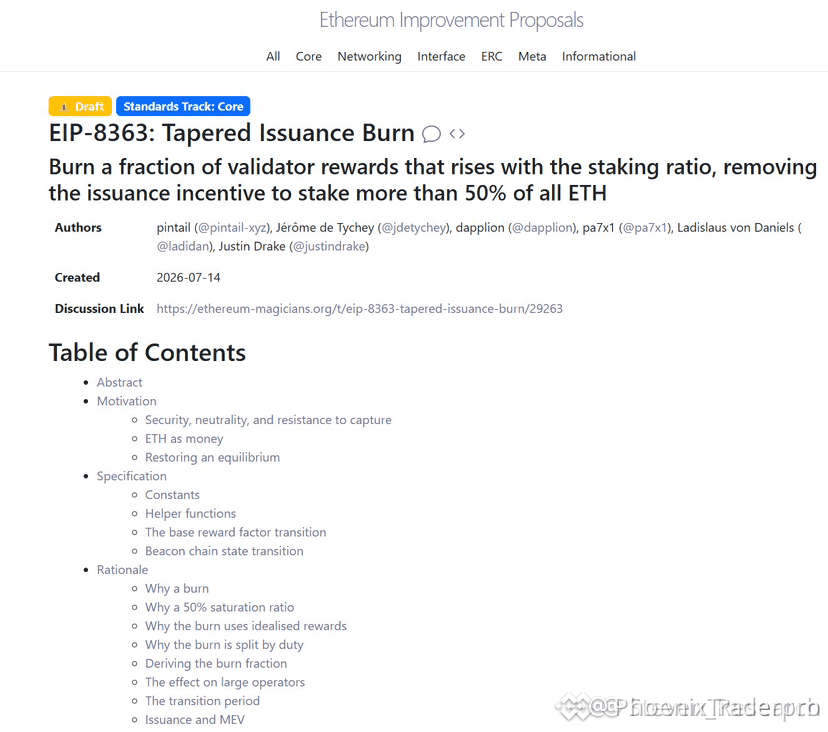
⚡ $ETH DEVELOPERS SHELVE CONTROVERSIAL STAKING REWARD BURN PROPOSAL AHEAD OF HEGOTA UPGRADE! 📊
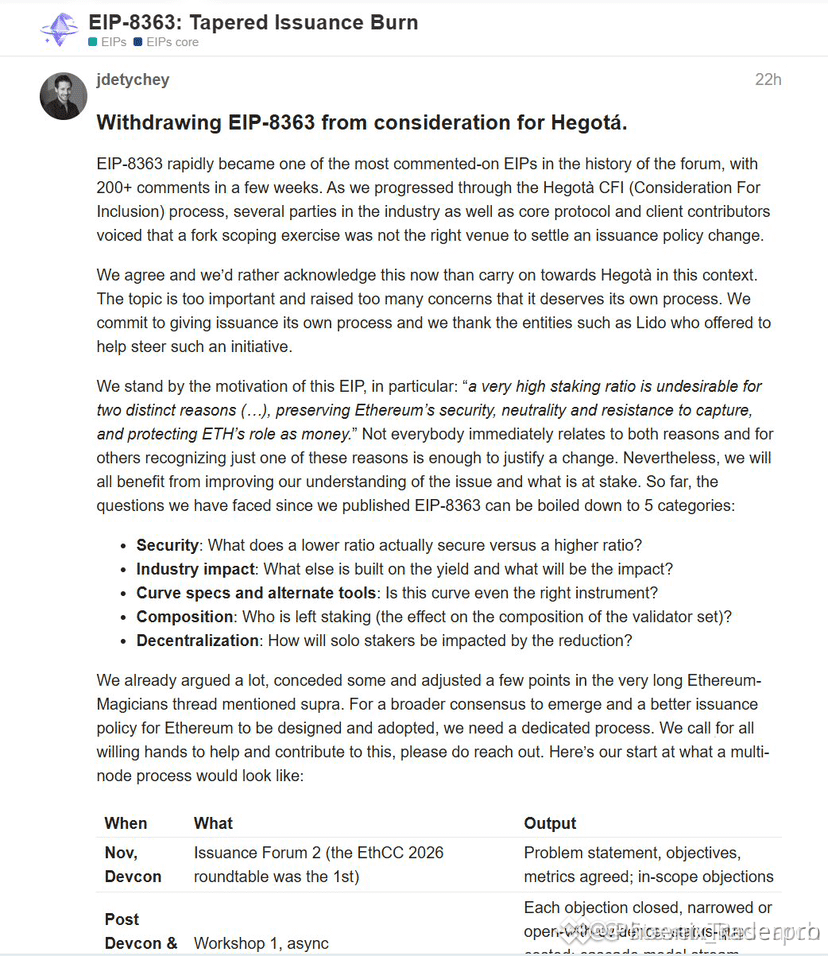
Developers just pulled EIP-8363 from the Hegota upgrade checklist, sparing validator yields from an immediate supply-burn penalty. 💡 Rather than jamming core issuance shifts into a routine fork, the core team is opening a dedicated arena for the staking dilution debate.
This decision protects liquid staking protocols from a sudden margin squeeze while keeping the yield structural debate alive behind the scenes. 🌊 Smart money views this procedural shift as a stabilizing factor for order flow while long-term tokenomics calibrate. 💬 Does this delay give buyers the green light to stack yield, or is monetary uncertainty hanging over price action? 👇
⚠️ Not financial advice. Always manage your risk. 🛡️
🏷️ #ETH #Ethereum #Staking #Crypto
🔥 💎
⚡ $ETH DEVELOPERS SHELVE CONTROVERSIAL STAKING REWARD BURN PROPOSAL AHEAD OF HEGOTA UPGRADE! 📊
Developers just pulled EIP-8363 from the Hegota upgrade checklist, sparing validator yields from an immediate supply-burn penalty. 💡 Rather than jamming core issuance shifts into a routine fork, the core team is opening a dedicated arena for the staking dilution debate.
This decision protects liquid staking protocols from a sudden margin squeeze while keeping the yield structural debate alive behind the scenes. 🌊 Smart money views this procedural shift as a stabilizing factor for order flow while long-term tokenomics calibrate. 💬 Does this delay give buyers the green light to stack yield, or is monetary uncertainty hanging over price action? 👇
⚠️ Not financial advice. Always manage your risk. 🛡️
🏷️ #ETH #Ethereum #Staking #Crypto
🔥 💎
Developers just pulled EIP-8363 from the Hegota upgrade checklist, sparing validator yields from an immediate supply-burn penalty. 💡 Rather than jamming core issuance shifts into a routine fork, the core team is opening a dedicated arena for the staking dilution debate.
This decision protects liquid staking protocols from a sudden margin squeeze while keeping the yield structural debate alive behind the scenes. 🌊 Smart money views this procedural shift as a stabilizing factor for order flow while long-term tokenomics calibrate. 💬 Does this delay give buyers the green light to stack yield, or is monetary uncertainty hanging over price action? 👇
⚠️ Not financial advice. Always manage your risk. 🛡️
🏷️ #ETH #Ethereum #Staking #Crypto
🔥 💎
14

·
--
🚨 EIP-8363 authors pulled the ETH staking reward burn from the Hegotá upgrade after Lido’s request on Aug 6. The move removes a deflationary mechanism that could have reduced ETH supply growth. Market may see less upward pressure on ETH from reduced issuance burns. Watch for shifts in staking yield expectations and validator behavior.
How will this affect ETH’s long-term supply dynamics?
#Staking
$ETH #TradingSignal #CryptoAnalysis
🚨 EIP-8363 authors pulled the ETH staking reward burn from the Hegotá upgrade after Lido’s request on Aug 6. The move removes a deflationary mechanism that could have reduced ETH supply growth. Market may see less upward pressure on ETH from reduced issuance burns. Watch for shifts in staking yield expectations and validator behavior.
How will this affect ETH’s long-term supply dynamics?
#Staking
$ETH #TradingSignal #CryptoAnalysis
How will this affect ETH’s long-term supply dynamics?
#Staking
$ETH #TradingSignal #CryptoAnalysis

4

·
--
"No action is required from stETH holders" is true, and it still costs something
MetaMask disclosed a security incident in part of its infrastructure on September 30 and is pulling affected validators, Lido's included
it doesn't hold withdrawal keys for client stake and sees no immediate threat to wallets
the bill is time
exit and re-entry could take up to about 45 days
no staking rewards on those validators while they wait, downtime penalties possible
the last affected ones finish exiting by the end of Oct. 7
still undisclosed: how it happened, how many validators, how much $ETH , whether any data was accessed
zero ETH in my bags right now. Lido ($LDO ) gets up to 45 days of explaining
stETH holders: is missing rewards on those validators enough to make you rotate?
#MetaMask #Lido #staking #Ethereum
"No action is required from stETH holders" is true, and it still costs something
MetaMask disclosed a security incident in part of its infrastructure on September 30 and is pulling affected validators, Lido's included
it doesn't hold withdrawal keys for client stake and sees no immediate threat to wallets
the bill is time
exit and re-entry could take up to about 45 days
no staking rewards on those validators while they wait, downtime penalties possible
the last affected ones finish exiting by the end of Oct. 7
still undisclosed: how it happened, how many validators, how much $ETH , whether any data was accessed
zero ETH in my bags right now. Lido ($LDO ) gets up to 45 days of explaining
stETH holders: is missing rewards on those validators enough to make you rotate?
#MetaMask #Lido #staking #Ethereum
MetaMask disclosed a security incident in part of its infrastructure on September 30 and is pulling affected validators, Lido's included
it doesn't hold withdrawal keys for client stake and sees no immediate threat to wallets
the bill is time
exit and re-entry could take up to about 45 days
no staking rewards on those validators while they wait, downtime penalties possible
the last affected ones finish exiting by the end of Oct. 7
still undisclosed: how it happened, how many validators, how much $ETH , whether any data was accessed
zero ETH in my bags right now. Lido ($LDO ) gets up to 45 days of explaining
stETH holders: is missing rewards on those validators enough to make you rotate?
#MetaMask #Lido #staking #Ethereum

145

·
--
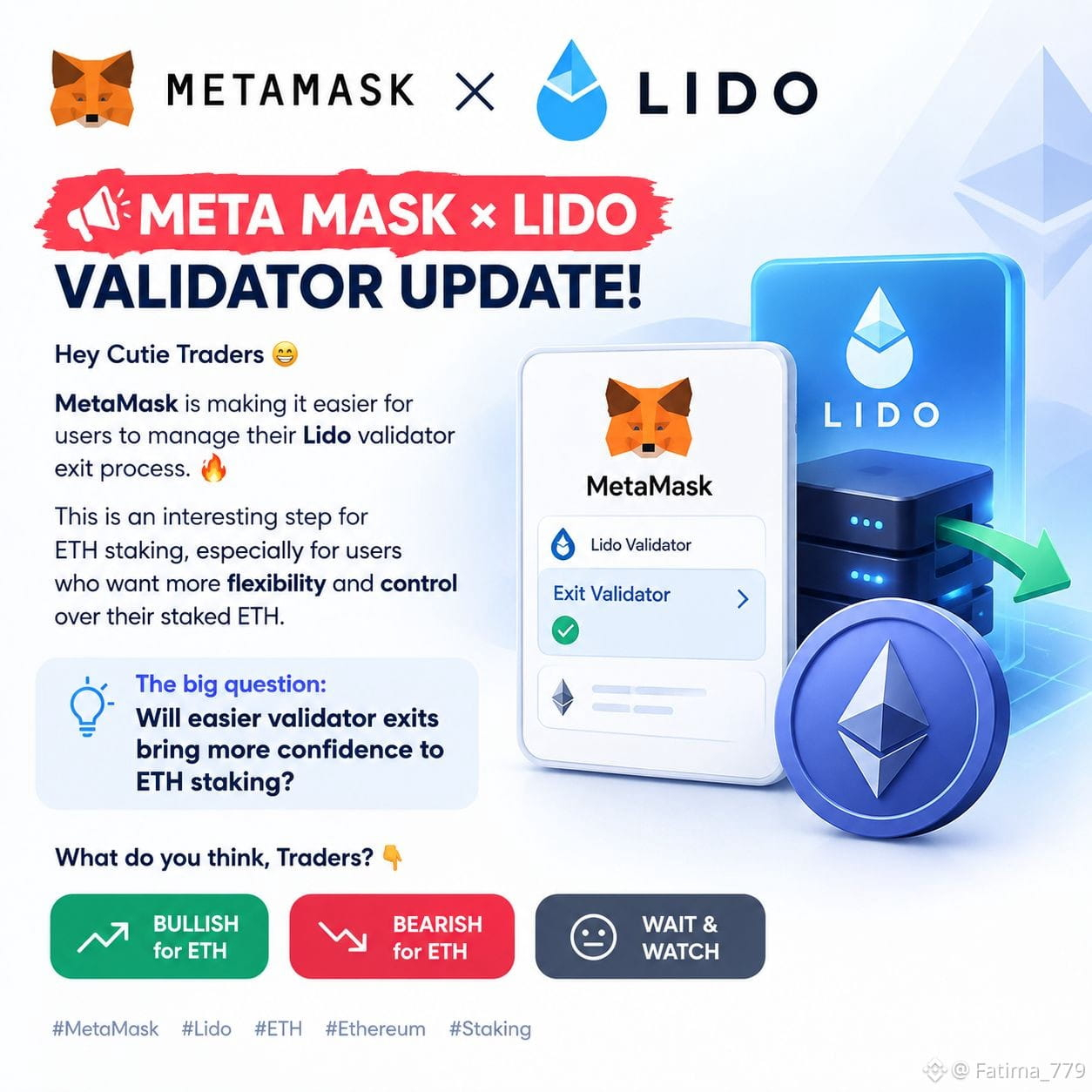
META MASK × LIDO VALIDATOR UPDATE! 👀
Hey Cutie Traders 😁
MetaMask is making it easier for users to manage their Lido validator exit process.
This is an interesting step for ETH staking, especially for users who want more flexibility and control over their staked ETH.
The big question:
Will easier validator exits bring more confidence to ETH staking?
What do you think, Traders? 👇
📈 BULLISH for ETH
📉 BEARISH for ETH
🤔 WAIT & WATCH
#MetaMask #Lido #MetaMaskExitsLidoValidatorsAfterSecurityIncident #Ethereum #Staking $MOVR
{future}(MOVRUSDT)
$NEAR
{future}(NEARUSDT)
$ETH
{future}(ETHUSDT)
META MASK × LIDO VALIDATOR UPDATE! 👀
Hey Cutie Traders 😁
MetaMask is making it easier for users to manage their Lido validator exit process.
This is an interesting step for ETH staking, especially for users who want more flexibility and control over their staked ETH.
The big question:
Will easier validator exits bring more confidence to ETH staking?
What do you think, Traders? 👇
📈 BULLISH for ETH
📉 BEARISH for ETH
🤔 WAIT & WATCH
#MetaMask #Lido #MetaMaskExitsLidoValidatorsAfterSecurityIncident #Ethereum #Staking $MOVR
$NEAR
$ETH
Hey Cutie Traders 😁
MetaMask is making it easier for users to manage their Lido validator exit process.
This is an interesting step for ETH staking, especially for users who want more flexibility and control over their staked ETH.
The big question:
Will easier validator exits bring more confidence to ETH staking?
What do you think, Traders? 👇
📈 BULLISH for ETH
📉 BEARISH for ETH
🤔 WAIT & WATCH
#MetaMask #Lido #MetaMaskExitsLidoValidatorsAfterSecurityIncident #Ethereum #Staking $MOVR
$NEAR
$ETH
1
312
🚨 METAMASK SHIFTS STAKING INFRASTRUCTURE AFTER SECURITY INCIDENT ON $ETH VALIDATORS! ⚠️
MetaMask just flagged an infrastructure breach, immediately pulling out from compromised validators on $ETH to shield user funds. No active wallet balances are under threat right now, but staking infrastructure flows are actively re-routing liquidity behind the scenes. 🏦
When major ecosystem players rotate out of validators, it creates subtle shifts in yield mechanics and network exit queues. Smart money is watching validator movements closely to see where this capital redeploys next. 🔍
💬 Do you keep your $ETH liquid during infrastructure hiccups or hold through the turbulence? 👇
⚠️ Not financial advice. Always manage your risk. 🛡️
🏷️ #ETH #Ethereum #Staking #Crypto
🛡️ 👁️
🚨 METAMASK SHIFTS STAKING INFRASTRUCTURE AFTER SECURITY INCIDENT ON $ETH VALIDATORS! ⚠️
MetaMask just flagged an infrastructure breach, immediately pulling out from compromised validators on $ETH to shield user funds. No active wallet balances are under threat right now, but staking infrastructure flows are actively re-routing liquidity behind the scenes. 🏦
When major ecosystem players rotate out of validators, it creates subtle shifts in yield mechanics and network exit queues. Smart money is watching validator movements closely to see where this capital redeploys next. 🔍
💬 Do you keep your $ETH liquid during infrastructure hiccups or hold through the turbulence? 👇
⚠️ Not financial advice. Always manage your risk. 🛡️
🏷️ #ETH #Ethereum #Staking #Crypto
🛡️ 👁️
MetaMask just flagged an infrastructure breach, immediately pulling out from compromised validators on $ETH to shield user funds. No active wallet balances are under threat right now, but staking infrastructure flows are actively re-routing liquidity behind the scenes. 🏦
When major ecosystem players rotate out of validators, it creates subtle shifts in yield mechanics and network exit queues. Smart money is watching validator movements closely to see where this capital redeploys next. 🔍
💬 Do you keep your $ETH liquid during infrastructure hiccups or hold through the turbulence? 👇
⚠️ Not financial advice. Always manage your risk. 🛡️
🏷️ #ETH #Ethereum #Staking #Crypto
🛡️ 👁️

19

·
--
Staking lets you earn rewards by locking up your crypto to help secure a blockchain network. Think of it like putting money in a high-yield savings account — but instead of a bank, you're supporting a decentralized network. Validators process transactions and create new blocks, and you delegate your tokens to them for a share of the rewards.
Popular options include Ethereum (ETH) on the Beacon Chain or via liquid staking protocols like Lido (3–5% APY), Solana (SOL) through validators or Marinade Finance (6–8% APY), and Quant (QNT) on supported platforms like Binance Earn or centralized exchanges (4–7% APY). These are conservative annual estimates — actual returns fluctuate with network activity and token price.
Risk warning: Slashing penalties can reduce your principal if validators misbehave or go offline, and locked tokens can't be sold during market drops.
Always research validator performance, unbonding periods, and platform security before committing funds. Diversify across chains and methods to manage exposure.
Are you staking any crypto right now? Drop your favourite coin below!
#CryptoTips #BeginnerCrypto #Staking #PassiveIncome
Staking lets you earn rewards by locking up your crypto to help secure a blockchain network. Think of it like putting money in a high-yield savings account — but instead of a bank, you're supporting a decentralized network. Validators process transactions and create new blocks, and you delegate your tokens to them for a share of the rewards.
Popular options include Ethereum (ETH) on the Beacon Chain or via liquid staking protocols like Lido (3–5% APY), Solana (SOL) through validators or Marinade Finance (6–8% APY), and Quant (QNT) on supported platforms like Binance Earn or centralized exchanges (4–7% APY). These are conservative annual estimates — actual returns fluctuate with network activity and token price.
Risk warning: Slashing penalties can reduce your principal if validators misbehave or go offline, and locked tokens can't be sold during market drops.
Always research validator performance, unbonding periods, and platform security before committing funds. Diversify across chains and methods to manage exposure.
Are you staking any crypto right now? Drop your favourite coin below!
#CryptoTips #BeginnerCrypto #Staking #PassiveIncome
Popular options include Ethereum (ETH) on the Beacon Chain or via liquid staking protocols like Lido (3–5% APY), Solana (SOL) through validators or Marinade Finance (6–8% APY), and Quant (QNT) on supported platforms like Binance Earn or centralized exchanges (4–7% APY). These are conservative annual estimates — actual returns fluctuate with network activity and token price.
Risk warning: Slashing penalties can reduce your principal if validators misbehave or go offline, and locked tokens can't be sold during market drops.
Always research validator performance, unbonding periods, and platform security before committing funds. Diversify across chains and methods to manage exposure.
Are you staking any crypto right now? Drop your favourite coin below!
#CryptoTips #BeginnerCrypto #Staking #PassiveIncome
385
·
--
- No markdown (so plain text, no formatting like **, *, etc.)
- 200-250 words.
- Explain staking in plain English.
- List 3 popular coins/platforms to stake on.
- Mention realistic APY ranges (conservative estimates).
- Include one risk warning.
- End with: "Are you staking any crypto right now? Drop your favourite coin below!"
- Final line: "#CryptoMarket #BinanceSquare #Staking #PassiveIncome"
- No extra commentary, no thinking, just the final post text.
- Must be 200-250 words inclusive. Let's target around 225 words.
We need to reference current trending coins if relevant: Quant. So mention Quant as maybe a trending coin.
We need to mention 3 popular coins/platforms to stake on. Could be Ethereum (ETH) via Lido, Binance Coin (BNB) on Binance Earn, Solana (SOL) via Marinade, or Polkadot, Cardano, etc. Also could mention Quant (QNT) staking? Quant maybe not staking but can be staked via some platforms? Might mention Quant as trending.
We need to mention realistic APY ranges conservative. Eg: ETH ~4-5%, BNB ~3-4%, SOL ~5-6%, ADA ~3-4%. Provide ranges.
Include one risk warning: e.g., slashing, smart contract risk, lock-up periods, market volatility.
End with the required line.
Final line with hashtags.
Word count: Need to count words.
We must not include markdown. So plain text.
We must not include any extra text like "Post:" etc.
Let's draft.
We'll aim for around 225 words.
Count words manually.
Draft:
"Staking lets you lock up a cryptocurrency to help secure a blockchain and earn rewards, similar to earning interest on a savings account. When you delegate your tokens to a validator or a staking pool, the network uses them to validate transactions and, in return, pays you a share of the newly minted coins or transaction fees. Popular options today include Ethereum staked through Lido (around 4‑5% APY), Binance Coin on Binance Earn (roughly 3‑4% AP
- No markdown (so plain text, no formatting like **, *, etc.)
- 200-250 words.
- Explain staking in plain English.
- List 3 popular coins/platforms to stake on.
- Mention realistic APY ranges (conservative estimates).
- Include one risk warning.
- End with: "Are you staking any crypto right now? Drop your favourite coin below!"
- Final line: "#CryptoMarket #BinanceSquare #Staking #PassiveIncome"
- No extra commentary, no thinking, just the final post text.
- Must be 200-250 words inclusive. Let's target around 225 words.
We need to reference current trending coins if relevant: Quant. So mention Quant as maybe a trending coin.
We need to mention 3 popular coins/platforms to stake on. Could be Ethereum (ETH) via Lido, Binance Coin (BNB) on Binance Earn, Solana (SOL) via Marinade, or Polkadot, Cardano, etc. Also could mention Quant (QNT) staking? Quant maybe not staking but can be staked via some platforms? Might mention Quant as trending.
We need to mention realistic APY ranges conservative. Eg: ETH ~4-5%, BNB ~3-4%, SOL ~5-6%, ADA ~3-4%. Provide ranges.
Include one risk warning: e.g., slashing, smart contract risk, lock-up periods, market volatility.
End with the required line.
Final line with hashtags.
Word count: Need to count words.
We must not include markdown. So plain text.
We must not include any extra text like "Post:" etc.
Let's draft.
We'll aim for around 225 words.
Count words manually.
Draft:
"Staking lets you lock up a cryptocurrency to help secure a blockchain and earn rewards, similar to earning interest on a savings account. When you delegate your tokens to a validator or a staking pool, the network uses them to validate transactions and, in return, pays you a share of the newly minted coins or transaction fees. Popular options today include Ethereum staked through Lido (around 4‑5% APY), Binance Coin on Binance Earn (roughly 3‑4% AP
- 200-250 words.
- Explain staking in plain English.
- List 3 popular coins/platforms to stake on.
- Mention realistic APY ranges (conservative estimates).
- Include one risk warning.
- End with: "Are you staking any crypto right now? Drop your favourite coin below!"
- Final line: "#CryptoMarket #BinanceSquare #Staking #PassiveIncome"
- No extra commentary, no thinking, just the final post text.
- Must be 200-250 words inclusive. Let's target around 225 words.
We need to reference current trending coins if relevant: Quant. So mention Quant as maybe a trending coin.
We need to mention 3 popular coins/platforms to stake on. Could be Ethereum (ETH) via Lido, Binance Coin (BNB) on Binance Earn, Solana (SOL) via Marinade, or Polkadot, Cardano, etc. Also could mention Quant (QNT) staking? Quant maybe not staking but can be staked via some platforms? Might mention Quant as trending.
We need to mention realistic APY ranges conservative. Eg: ETH ~4-5%, BNB ~3-4%, SOL ~5-6%, ADA ~3-4%. Provide ranges.
Include one risk warning: e.g., slashing, smart contract risk, lock-up periods, market volatility.
End with the required line.
Final line with hashtags.
Word count: Need to count words.
We must not include markdown. So plain text.
We must not include any extra text like "Post:" etc.
Let's draft.
We'll aim for around 225 words.
Count words manually.
Draft:
"Staking lets you lock up a cryptocurrency to help secure a blockchain and earn rewards, similar to earning interest on a savings account. When you delegate your tokens to a validator or a staking pool, the network uses them to validate transactions and, in return, pays you a share of the newly minted coins or transaction fees. Popular options today include Ethereum staked through Lido (around 4‑5% APY), Binance Coin on Binance Earn (roughly 3‑4% AP
18

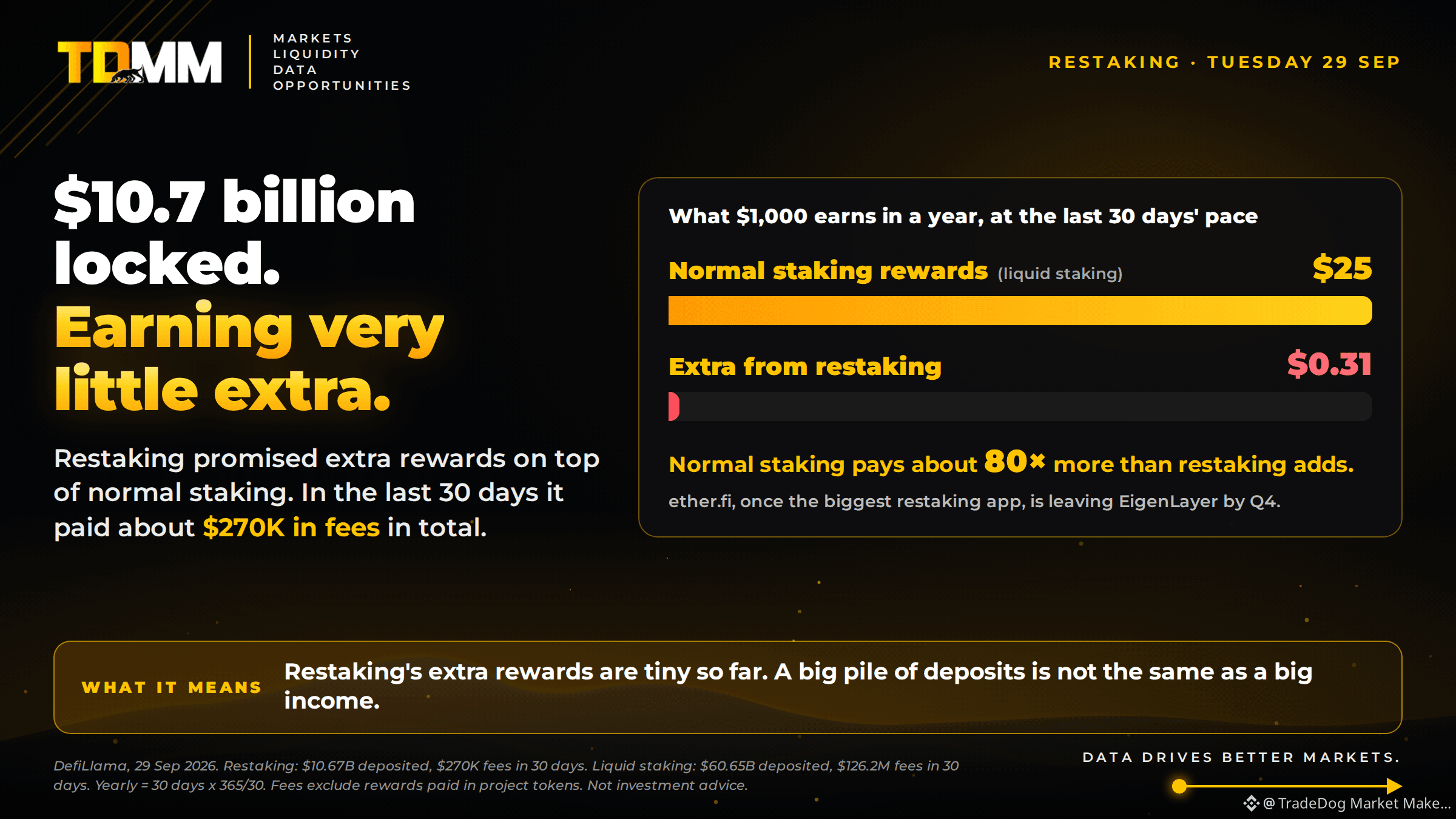
💸 $10.7B locked in restaking. Earning very little extra.
What $1,000 earns in a year (at the last 30 days' pace):
🟡 Normal staking rewards: ~$25
🔴 Extra from restaking: ~$0.31
➡️ Normal staking pays ~80× more than restaking adds
📊 The whole restaking sector paid ~$270K in fees in 30 days. $ETH restaking on EigenLayer alone holds ~$7.0B and earned ~$169K.
📰 Ether.fi, once the biggest restaking app, is fully exiting EigenLayer by Q4.
💡 Money parked is not money earned. Check what deposits actually produce.
What would make restaking pay again? 👇
#Restaking #ETH #DeFi #Staking
Data: DefiLlama, 29 Sep. Fees exclude rewards paid in project tokens. Not financial advice. DYOR.
💸 $10.7B locked in restaking. Earning very little extra.
What $1,000 earns in a year (at the last 30 days' pace):
🟡 Normal staking rewards: ~$25
🔴 Extra from restaking: ~$0.31
➡️ Normal staking pays ~80× more than restaking adds
📊 The whole restaking sector paid ~$270K in fees in 30 days. $ETH restaking on EigenLayer alone holds ~$7.0B and earned ~$169K.
📰 Ether.fi, once the biggest restaking app, is fully exiting EigenLayer by Q4.
💡 Money parked is not money earned. Check what deposits actually produce.
What would make restaking pay again? 👇
#Restaking #ETH #DeFi #Staking
Data: DefiLlama, 29 Sep. Fees exclude rewards paid in project tokens. Not financial advice. DYOR.
What $1,000 earns in a year (at the last 30 days' pace):
🟡 Normal staking rewards: ~$25
🔴 Extra from restaking: ~$0.31
➡️ Normal staking pays ~80× more than restaking adds
📊 The whole restaking sector paid ~$270K in fees in 30 days. $ETH restaking on EigenLayer alone holds ~$7.0B and earned ~$169K.
📰 Ether.fi, once the biggest restaking app, is fully exiting EigenLayer by Q4.
💡 Money parked is not money earned. Check what deposits actually produce.
What would make restaking pay again? 👇
#Restaking #ETH #DeFi #Staking
Data: DefiLlama, 29 Sep. Fees exclude rewards paid in project tokens. Not financial advice. DYOR.
3
231

·
--
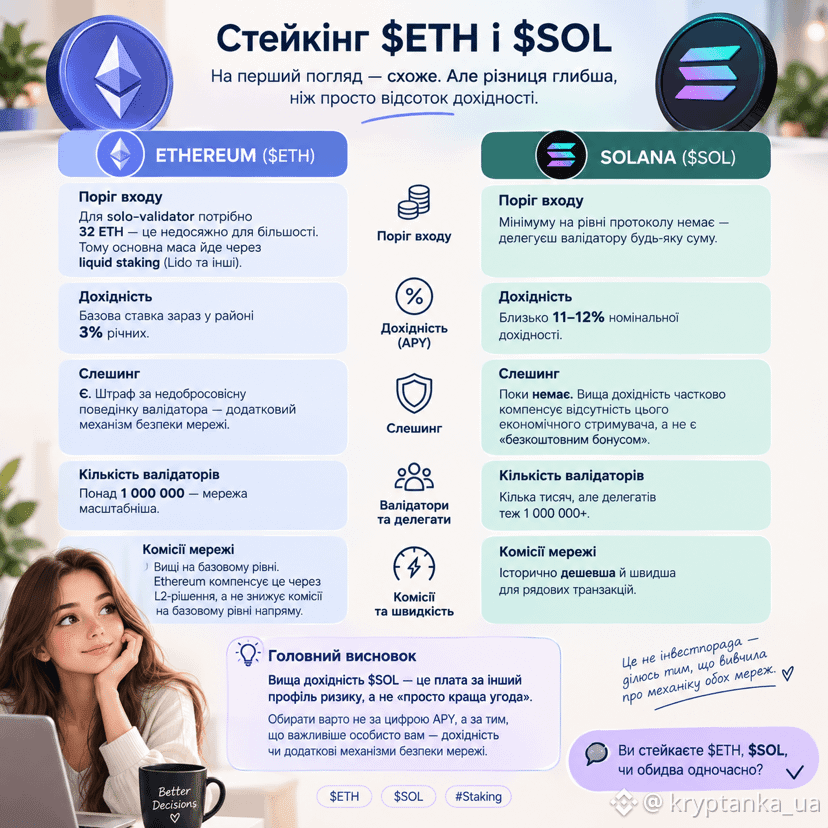
I thought that staking $ETH i SOL differs only by the yield percentage😅. I went to compare the mechanics—and the difference turned out to be much deeper.
The entry threshold is the first difference. To stake ETH on your own, you need 32 ETH—which is out of reach for most people—so the bulk goes through liquid staking. On SOL, there is no protocol-level minimum: you delegate any amount to a validator.
Yield is also not in Ethereum’s favor: the base ETH rate is around 3%, while SOL offers about 11–12%. But there’s a catch:
— ETH has slashing—a penalty for a validator’s dishonest behavior, an additional security mechanism;
— SOL currently doesn’t have slashing, so the higher yield partly compensates for the absence of this deterrent, not “a free bonus”;
— by number of validators, Ethereum is more scalable—over a million versus a few thousand on Solana.
As for fees: historically, Solana is cheaper and faster for everyday transactions, and Ethereum compensates for that via L2 rather than lowering fees directly.
My takeaway: choose not based on APY numbers, but on what matters more—yield or the network’s security mechanisms.
This is not investment advice—I’m just sharing what I learned about the mechanics of both networks.
Are you staking $ETH, $SOL, or both at the same time?👇
$ETH $SOL #Staking
I thought that staking $ETH i SOL differs only by the yield percentage😅. I went to compare the mechanics—and the difference turned out to be much deeper.
The entry threshold is the first difference. To stake ETH on your own, you need 32 ETH—which is out of reach for most people—so the bulk goes through liquid staking. On SOL, there is no protocol-level minimum: you delegate any amount to a validator.
Yield is also not in Ethereum’s favor: the base ETH rate is around 3%, while SOL offers about 11–12%. But there’s a catch:
— ETH has slashing—a penalty for a validator’s dishonest behavior, an additional security mechanism;
— SOL currently doesn’t have slashing, so the higher yield partly compensates for the absence of this deterrent, not “a free bonus”;
— by number of validators, Ethereum is more scalable—over a million versus a few thousand on Solana.
As for fees: historically, Solana is cheaper and faster for everyday transactions, and Ethereum compensates for that via L2 rather than lowering fees directly.
My takeaway: choose not based on APY numbers, but on what matters more—yield or the network’s security mechanisms.
This is not investment advice—I’m just sharing what I learned about the mechanics of both networks.
Are you staking $ETH , $SOL , or both at the same time?👇
$ETH $SOL #Staking
The entry threshold is the first difference. To stake ETH on your own, you need 32 ETH—which is out of reach for most people—so the bulk goes through liquid staking. On SOL, there is no protocol-level minimum: you delegate any amount to a validator.
Yield is also not in Ethereum’s favor: the base ETH rate is around 3%, while SOL offers about 11–12%. But there’s a catch:
— ETH has slashing—a penalty for a validator’s dishonest behavior, an additional security mechanism;
— SOL currently doesn’t have slashing, so the higher yield partly compensates for the absence of this deterrent, not “a free bonus”;
— by number of validators, Ethereum is more scalable—over a million versus a few thousand on Solana.
As for fees: historically, Solana is cheaper and faster for everyday transactions, and Ethereum compensates for that via L2 rather than lowering fees directly.
My takeaway: choose not based on APY numbers, but on what matters more—yield or the network’s security mechanisms.
This is not investment advice—I’m just sharing what I learned about the mechanics of both networks.
Are you staking $ETH , $SOL , or both at the same time?👇
$ETH $SOL #Staking
1
3.2k

ANTI-ANXIETY LOCK: WHY I CHOSE STAKING 🔒🧠
In the crypto market, one of the biggest enemies of an investor is not the chart’s volatility, but their own anxiety to control every second of the screen. Spending the whole day opening the app, watching the price rise and fall, creates enormous emotional strain and paves the way for impulsive decisions. 📉⚡
That’s why I adopted Staking not just as a passive income tool, but as my true Anti-Anxiety Lock. 🛡️✨
How this choice transforms your routine in the market:
1. End of the Impulse Trade Temptation: When you put the asset to work (whether in flexible or locked staking), you remove the focus from “buying and selling in a rush” and shift it toward building wealth.
2. Peace of Mind Amid Volatility: Did the market suddenly drop or jump? Anyone whose capital is positioned and structured with a long-term focus can simply watch the dust settle—without desperation to stop unreal losses.
3. The Money Works on Its Own: While the mind rests, the system runs automatically, making the capital grow little by little.
True financial freedom doesn’t come from hitting the peak of every rally, but from having the mental calm to sleep at peace knowing the strategy is working in favor of your future. ⏳🚀
And you? How do you deal with anxiety on hectic market days? Leave your vote in the poll below and tell us in the comments! 👇💬
#Staking #SquareBinance #PazPisicologica
ANTI-ANXIETY LOCK: WHY I CHOSE STAKING 🔒🧠
In the crypto market, one of the biggest enemies of an investor is not the chart’s volatility, but their own anxiety to control every second of the screen. Spending the whole day opening the app, watching the price rise and fall, creates enormous emotional strain and paves the way for impulsive decisions. 📉⚡
That’s why I adopted Staking not just as a passive income tool, but as my true Anti-Anxiety Lock. 🛡️✨
How this choice transforms your routine in the market:
1. End of the Impulse Trade Temptation: When you put the asset to work (whether in flexible or locked staking), you remove the focus from “buying and selling in a rush” and shift it toward building wealth.
2. Peace of Mind Amid Volatility: Did the market suddenly drop or jump? Anyone whose capital is positioned and structured with a long-term focus can simply watch the dust settle—without desperation to stop unreal losses.
3. The Money Works on Its Own: While the mind rests, the system runs automatically, making the capital grow little by little.
True financial freedom doesn’t come from hitting the peak of every rally, but from having the mental calm to sleep at peace knowing the strategy is working in favor of your future. ⏳🚀
And you? How do you deal with anxiety on hectic market days? Leave your vote in the poll below and tell us in the comments! 👇💬
#Staking #SquareBinance #PazPisicologica
In the crypto market, one of the biggest enemies of an investor is not the chart’s volatility, but their own anxiety to control every second of the screen. Spending the whole day opening the app, watching the price rise and fall, creates enormous emotional strain and paves the way for impulsive decisions. 📉⚡
That’s why I adopted Staking not just as a passive income tool, but as my true Anti-Anxiety Lock. 🛡️✨
How this choice transforms your routine in the market:
1. End of the Impulse Trade Temptation: When you put the asset to work (whether in flexible or locked staking), you remove the focus from “buying and selling in a rush” and shift it toward building wealth.
2. Peace of Mind Amid Volatility: Did the market suddenly drop or jump? Anyone whose capital is positioned and structured with a long-term focus can simply watch the dust settle—without desperation to stop unreal losses.
3. The Money Works on Its Own: While the mind rests, the system runs automatically, making the capital grow little by little.
True financial freedom doesn’t come from hitting the peak of every rally, but from having the mental calm to sleep at peace knowing the strategy is working in favor of your future. ⏳🚀
And you? How do you deal with anxiety on hectic market days? Leave your vote in the poll below and tell us in the comments! 👇💬
#Staking #SquareBinance #PazPisicologica
🟢 Staking Bloqueado
🔵 Staking Flex
🔴 Spot
1 day(s) left
60

·
--
🚨 ETH: RECORD WITHDRAWAL QUEUE FROM STAKING — WHAT’S HAPPENING? 💎
📊 Key data:
- Withdrawal queue: 850,000 ETH → maximum until 2026
- Waiting time: 14.77 days → also the highest of the year
- Current price: $2,724.10 (+0.79%)
💡 What does it mean?
According to Jiang Zhuoer (founder of Leibit), many long-term holders consider the current price high and want to lock in gains by withdrawing their ETH from staking in order to sell. More withdrawals = more potential selling pressure ⚠️
👁️ What to expect?
- If those sales materialize → possible short-term correction
- If the market absorbs the pressure → it could consolidate and keep rising
- The queue reflects uncertainty, not necessarily an immediate drop
What do you think? Is it a sell signal or just profit-taking? 👇
🟢 ETH keeps rising
🔴 A correction is coming
— HadesCripto ₿🔥
#Ethereum #ETH🔥🔥🔥🔥🔥🔥 #staking #MercadoCripto #HadesCripto
🚨 ETH: RECORD WITHDRAWAL QUEUE FROM STAKING — WHAT’S HAPPENING? 💎
📊 Key data:
- Withdrawal queue: 850,000 ETH → maximum until 2026
- Waiting time: 14.77 days → also the highest of the year
- Current price: $2,724.10 (+0.79%)
💡 What does it mean?
According to Jiang Zhuoer (founder of Leibit), many long-term holders consider the current price high and want to lock in gains by withdrawing their ETH from staking in order to sell. More withdrawals = more potential selling pressure ⚠️
👁️ What to expect?
- If those sales materialize → possible short-term correction
- If the market absorbs the pressure → it could consolidate and keep rising
- The queue reflects uncertainty, not necessarily an immediate drop
What do you think? Is it a sell signal or just profit-taking? 👇
🟢 ETH keeps rising
🔴 A correction is coming
— HadesCripto ₿🔥
#Ethereum #ETH🔥🔥🔥🔥🔥🔥 #staking #MercadoCripto #HadesCripto
📊 Key data:
- Withdrawal queue: 850,000 ETH → maximum until 2026
- Waiting time: 14.77 days → also the highest of the year
- Current price: $2,724.10 (+0.79%)
💡 What does it mean?
According to Jiang Zhuoer (founder of Leibit), many long-term holders consider the current price high and want to lock in gains by withdrawing their ETH from staking in order to sell. More withdrawals = more potential selling pressure ⚠️
👁️ What to expect?
- If those sales materialize → possible short-term correction
- If the market absorbs the pressure → it could consolidate and keep rising
- The queue reflects uncertainty, not necessarily an immediate drop
What do you think? Is it a sell signal or just profit-taking? 👇
🟢 ETH keeps rising
🔴 A correction is coming
— HadesCripto ₿🔥
#Ethereum #ETH🔥🔥🔥🔥🔥🔥 #staking #MercadoCripto #HadesCripto


Binance News
·
--
ETH Exit Queue Rises to 850,000 as Wait Time Hits 14.77 Days, Jiang Zhuoer Says
Foresight News reported that Jiang Zhuoer, founder of Leibit Mining Pool, said the amount of ETH queued to exit POS staking has surged to 850,000, while the waiting time has risen to 14.77 days, both the highest levels in 2026. According to Foresight News, Jiang said this suggests a group of long-term holders believes the current price is relatively high and wants to sell to lock in profits.
38

·
--
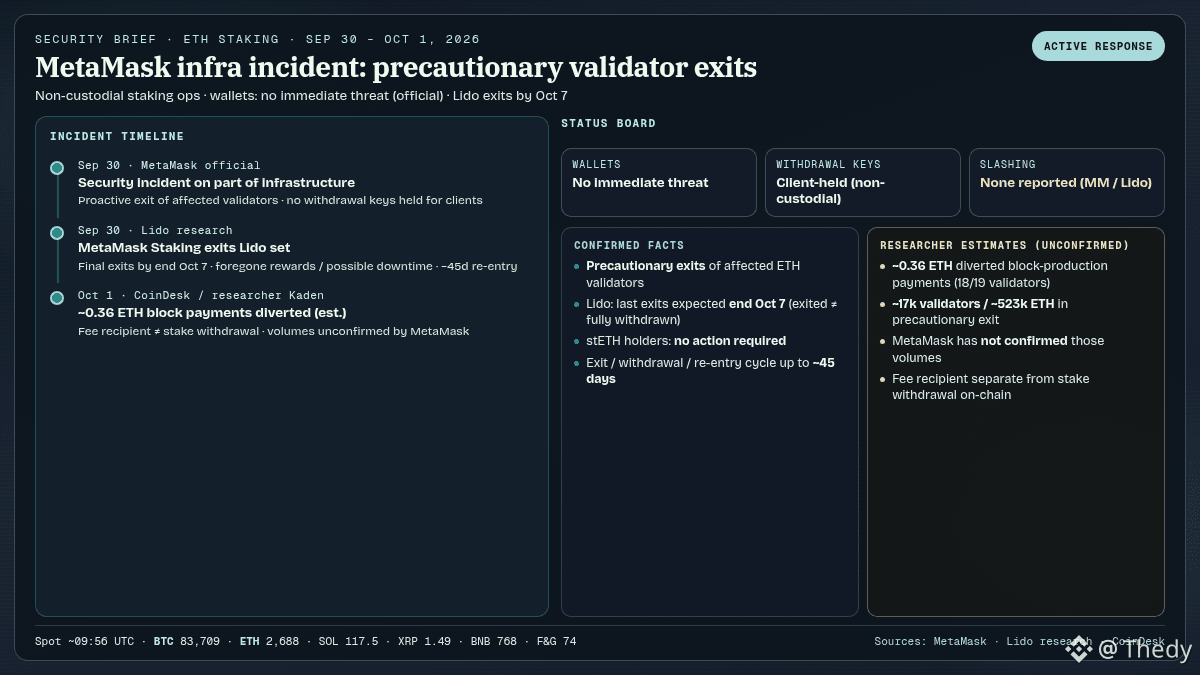
MetaMask proactively moves its Ethereum validators out. Official message: no immediate threat to wallets.
On 09/30, MetaMask confirmed a security incident affecting part of its infrastructure. Action taken: exit of the affected validators from non-custodial staking. Key point: MetaMask does not manage clients’ withdrawal keys.
At Lido’s side (forum research, 09/30): MetaMask Staking (formerly Consensys Staking) removes its validators from the set. Last exits are expected by the end of October 7 (exited, not necessarily fully withdrawn). Missed rewards + potential downtime penalties if going offline too early. Exit / withdrawal / re-entry cycle of up to ~45 days (entry queue). “No action is required from stETH holders.”
CoinDesk (01/10) cites researcher Kaden: ~0.36 ETH of block-production payments diverted (18/19 MetaMask validators having earned). Researcher estimate, NOT confirmed by MetaMask: ~17k validators / ~523k ETH in preventive exit. Fee recipient ≠ staking withdrawal destination (separate on-chain). No slashing reported by MetaMask/Lido at the time of the article.
Spot (~09:57 UTC, Kraken/CoinGecko): $BTC ~83 709 · $ETH ~2 688 · SOL ~117.55 · XRP ~1.488 · BNB ~768. Fear & Greed 74 (Greed).
Scenarios to watch:
1) Rapid remediation, contained exits, stETH unchanged for holders
2) Longer investigation, more visible foregone rewards on the operator set
3) Market confusion if you read “wallets hacked” while MetaMask explicitly says no immediate threat
Do you follow the staking signal (exits / queues) or the wallet message on $ETH ?
#Ethereum #Staking #MetaMask
MetaMask proactively moves its Ethereum validators out. Official message: no immediate threat to wallets.
On 09/30, MetaMask confirmed a security incident affecting part of its infrastructure. Action taken: exit of the affected validators from non-custodial staking. Key point: MetaMask does not manage clients’ withdrawal keys.
At Lido’s side (forum research, 09/30): MetaMask Staking (formerly Consensys Staking) removes its validators from the set. Last exits are expected by the end of October 7 (exited, not necessarily fully withdrawn). Missed rewards + potential downtime penalties if going offline too early. Exit / withdrawal / re-entry cycle of up to ~45 days (entry queue). “No action is required from stETH holders.”
CoinDesk (01/10) cites researcher Kaden: ~0.36 ETH of block-production payments diverted (18/19 MetaMask validators having earned). Researcher estimate, NOT confirmed by MetaMask: ~17k validators / ~523k ETH in preventive exit. Fee recipient ≠ staking withdrawal destination (separate on-chain). No slashing reported by MetaMask/Lido at the time of the article.
Spot (~09:57 UTC, Kraken/CoinGecko): $BTC ~83 709 · $ETH ~2 688 · SOL ~117.55 · XRP ~1.488 · BNB ~768. Fear & Greed 74 (Greed).
Scenarios to watch:
1) Rapid remediation, contained exits, stETH unchanged for holders
2) Longer investigation, more visible foregone rewards on the operator set
3) Market confusion if you read “wallets hacked” while MetaMask explicitly says no immediate threat
Do you follow the staking signal (exits / queues) or the wallet message on $ETH ?
#Ethereum #Staking #MetaMask
On 09/30, MetaMask confirmed a security incident affecting part of its infrastructure. Action taken: exit of the affected validators from non-custodial staking. Key point: MetaMask does not manage clients’ withdrawal keys.
At Lido’s side (forum research, 09/30): MetaMask Staking (formerly Consensys Staking) removes its validators from the set. Last exits are expected by the end of October 7 (exited, not necessarily fully withdrawn). Missed rewards + potential downtime penalties if going offline too early. Exit / withdrawal / re-entry cycle of up to ~45 days (entry queue). “No action is required from stETH holders.”
CoinDesk (01/10) cites researcher Kaden: ~0.36 ETH of block-production payments diverted (18/19 MetaMask validators having earned). Researcher estimate, NOT confirmed by MetaMask: ~17k validators / ~523k ETH in preventive exit. Fee recipient ≠ staking withdrawal destination (separate on-chain). No slashing reported by MetaMask/Lido at the time of the article.
Spot (~09:57 UTC, Kraken/CoinGecko): $BTC ~83 709 · $ETH ~2 688 · SOL ~117.55 · XRP ~1.488 · BNB ~768. Fear & Greed 74 (Greed).
Scenarios to watch:
1) Rapid remediation, contained exits, stETH unchanged for holders
2) Longer investigation, more visible foregone rewards on the operator set
3) Market confusion if you read “wallets hacked” while MetaMask explicitly says no immediate threat
Do you follow the staking signal (exits / queues) or the wallet message on $ETH ?
#Ethereum #Staking #MetaMask
1
169

·
--
🌟 Why Stake $CZR.US ?
Staking $CZR isn’t just about earning yield — it’s about tying rewards directly to ecosystem growth.
Potential benefits:
Competitive passive rewardsReduced circulating supply, which may support healthier token economicsBonus incentivesPriority access to upcoming launchpads and ecosystem opportunities
If adoption keeps expanding, staking could become one of the main ways holders participate in the growth of the CZR ecosystem.
Hold it, stake it, and let the ecosystem do the work. 👀
{stock_us}(CZR.US)
#staking #PassiveIncome #crypto #Launchpad #AnthropicIPOProspectusCouldValueItOver$2T
🌟 Why Stake $CZR.US ?
Staking $CZR isn’t just about earning yield — it’s about tying rewards directly to ecosystem growth.
Potential benefits:
Competitive passive rewardsReduced circulating supply, which may support healthier token economicsBonus incentivesPriority access to upcoming launchpads and ecosystem opportunities
If adoption keeps expanding, staking could become one of the main ways holders participate in the growth of the CZR ecosystem.
Hold it, stake it, and let the ecosystem do the work. 👀
#staking #PassiveIncome #crypto #Launchpad #AnthropicIPOProspectusCouldValueItOver$2T
Staking $CZR isn’t just about earning yield — it’s about tying rewards directly to ecosystem growth.
Potential benefits:
Competitive passive rewardsReduced circulating supply, which may support healthier token economicsBonus incentivesPriority access to upcoming launchpads and ecosystem opportunities
If adoption keeps expanding, staking could become one of the main ways holders participate in the growth of the CZR ecosystem.
Hold it, stake it, and let the ecosystem do the work. 👀
#staking #PassiveIncome #crypto #Launchpad #AnthropicIPOProspectusCouldValueItOver$2T
CZRUS+0.01%
11
·
--
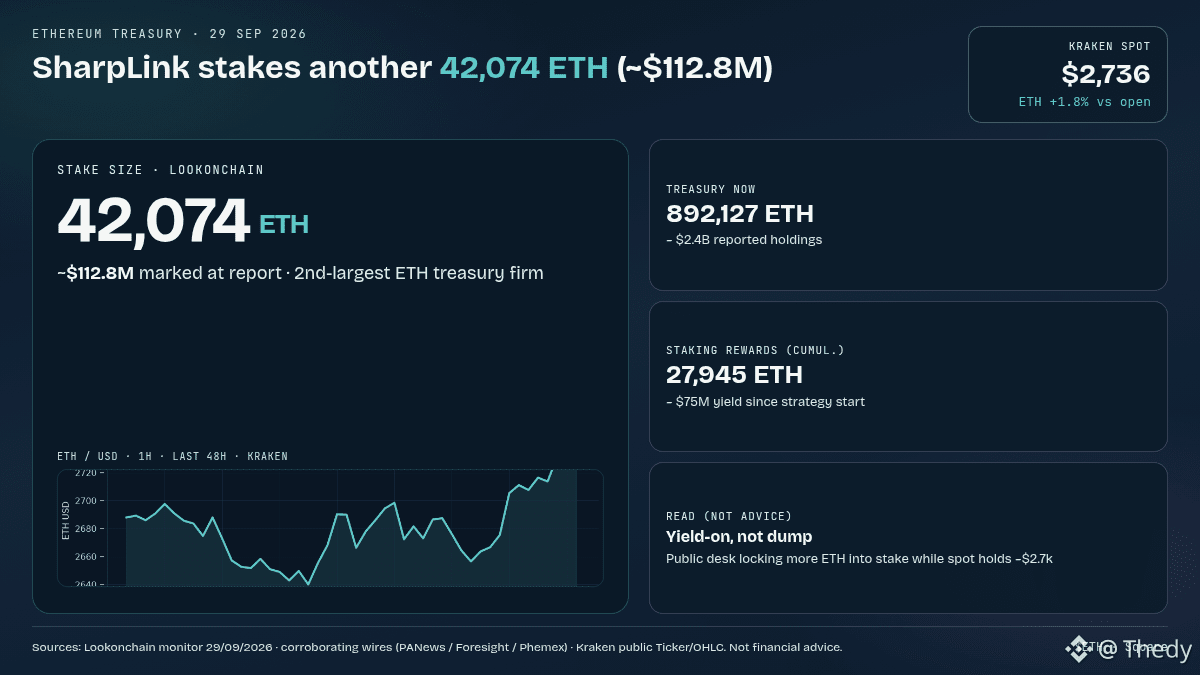
SharpLink locks in another 42,074 $ETH. About $112.8M moving into staking, not being sold.
Facts (Lookonchain, 29/09; via PANews / Foresight / Phemex):
• +42,074 ETH staked today, valued at ~ $112.8M at the time of the report.
• SharpLink treasury: 892,127 ETH (~$2.4B). Second-largest publicly tracked ETH treasury per the monitor.
• Cumulative staking rewards: 27,945 ETH (~$75M) since the strategy launched.
• Kraken spot (~13:00 UTC, 29/09): ETH ≈ $2,736 (+1.8% vs open), $BTC ≈ $84,284, $SOL ≈ $120.9. Fear & Greed 73 (Greed).
Read-through (interpretation, not advice):
A listed desk keeps activating ETH’s native yield rather than reducing. This isn’t an ETF flow, nor a fresh spot buy: it’s yield-on a position already held. Worth cross-checking with the still slightly green ETH ETF landscape (SoSoValue / media 28/09), but the SharpLink signal remains a treasury move, not proof of external demand.
Scenarios:
• A: new staking batches + ETH holding above ~ $2,650–$2,700 → the “productive treasury” narrative stays supported.
• B: unwind or visible selling after staking, or a drop below ~ $2,600 without new inflows → the move reads as cosmetic, not a re-rating.
Do you track ETH treasuries like SharpLink, or only ETF flows?
$ETH $BTC $SOL
#Ethereum #Crypto #Staking
SharpLink locks in another 42,074 $ETH . About $112.8M moving into staking, not being sold.
Facts (Lookonchain, 29/09; via PANews / Foresight / Phemex):
• +42,074 ETH staked today, valued at ~ $112.8M at the time of the report.
• SharpLink treasury: 892,127 ETH (~$2.4B). Second-largest publicly tracked ETH treasury per the monitor.
• Cumulative staking rewards: 27,945 ETH (~$75M) since the strategy launched.
• Kraken spot (~13:00 UTC, 29/09): ETH ≈ $2,736 (+1.8% vs open), $BTC ≈ $84,284, $SOL ≈ $120.9. Fear & Greed 73 (Greed).
Read-through (interpretation, not advice):
A listed desk keeps activating ETH’s native yield rather than reducing. This isn’t an ETF flow, nor a fresh spot buy: it’s yield-on a position already held. Worth cross-checking with the still slightly green ETH ETF landscape (SoSoValue / media 28/09), but the SharpLink signal remains a treasury move, not proof of external demand.
Scenarios:
• A: new staking batches + ETH holding above ~ $2,650–$2,700 → the “productive treasury” narrative stays supported.
• B: unwind or visible selling after staking, or a drop below ~ $2,600 without new inflows → the move reads as cosmetic, not a re-rating.
Do you track ETH treasuries like SharpLink, or only ETF flows?
$ETH $BTC $SOL
#Ethereum #Crypto #Staking
Facts (Lookonchain, 29/09; via PANews / Foresight / Phemex):
• +42,074 ETH staked today, valued at ~ $112.8M at the time of the report.
• SharpLink treasury: 892,127 ETH (~$2.4B). Second-largest publicly tracked ETH treasury per the monitor.
• Cumulative staking rewards: 27,945 ETH (~$75M) since the strategy launched.
• Kraken spot (~13:00 UTC, 29/09): ETH ≈ $2,736 (+1.8% vs open), $BTC ≈ $84,284, $SOL ≈ $120.9. Fear & Greed 73 (Greed).
Read-through (interpretation, not advice):
A listed desk keeps activating ETH’s native yield rather than reducing. This isn’t an ETF flow, nor a fresh spot buy: it’s yield-on a position already held. Worth cross-checking with the still slightly green ETH ETF landscape (SoSoValue / media 28/09), but the SharpLink signal remains a treasury move, not proof of external demand.
Scenarios:
• A: new staking batches + ETH holding above ~ $2,650–$2,700 → the “productive treasury” narrative stays supported.
• B: unwind or visible selling after staking, or a drop below ~ $2,600 without new inflows → the move reads as cosmetic, not a re-rating.
Do you track ETH treasuries like SharpLink, or only ETF flows?
$ETH $BTC $SOL
#Ethereum #Crypto #Staking
1
429

🔥 Dividends aren't exclusive to stocks; crypto can hand you comparable yields right now.
📈 STRC’s April VWAP of $99.76 locked a steady 11.5% dividend and delivered its first monthly gain in nine — a rare #Dividends #Equities signal that investors are craving reliable cash flow.
💡 While traditional payouts rise, the crypto cycle is humming: #Staking on Solana now yields ~6% APY, BNB offers ~5% on Binance Earn, and #DeFi protocols on BSC are pulling in $71K+ in the Hermès narrative, all while BTC sits at $84,612 with a bullish MACD crossover and $8.01 B open interest, indicating institutional confidence.
🚀 Practical move: allocate a modest slice of your portfolio to high‑yield on‑chain assets—e.g., stake SOL (RSI 60.5, bullish) or lock BNB (MACD bullish, $51 M volume) and monitor funding rates (+0.0029% for BTC, +0.0037% for ETH) to gauge long‑short pressure before rebalancing.
❓ How are you balancing traditional dividend stocks like STRC with crypto yield strategies—leaning heavier on cash flow, or shifting toward on‑chain income?
🔥 Dividends aren't exclusive to stocks; crypto can hand you comparable yields right now.
📈 STRC’s April VWAP of $99.76 locked a steady 11.5% dividend and delivered its first monthly gain in nine — a rare #Dividends #Equities signal that investors are craving reliable cash flow.
💡 While traditional payouts rise, the crypto cycle is humming: #Staking on Solana now yields ~6% APY, BNB offers ~5% on Binance Earn, and #DeFi protocols on BSC are pulling in $71K+ in the Hermès narrative, all while BTC sits at $84,612 with a bullish MACD crossover and $8.01 B open interest, indicating institutional confidence.
🚀 Practical move: allocate a modest slice of your portfolio to high‑yield on‑chain assets—e.g., stake SOL (RSI 60.5, bullish) or lock BNB (MACD bullish, $51 M volume) and monitor funding rates (+0.0029% for BTC, +0.0037% for ETH) to gauge long‑short pressure before rebalancing.
❓ How are you balancing traditional dividend stocks like STRC with crypto yield strategies—leaning heavier on cash flow, or shifting toward on‑chain income?
📈 STRC’s April VWAP of $99.76 locked a steady 11.5% dividend and delivered its first monthly gain in nine — a rare #Dividends #Equities signal that investors are craving reliable cash flow.
💡 While traditional payouts rise, the crypto cycle is humming: #Staking on Solana now yields ~6% APY, BNB offers ~5% on Binance Earn, and #DeFi protocols on BSC are pulling in $71K+ in the Hermès narrative, all while BTC sits at $84,612 with a bullish MACD crossover and $8.01 B open interest, indicating institutional confidence.
🚀 Practical move: allocate a modest slice of your portfolio to high‑yield on‑chain assets—e.g., stake SOL (RSI 60.5, bullish) or lock BNB (MACD bullish, $51 M volume) and monitor funding rates (+0.0029% for BTC, +0.0037% for ETH) to gauge long‑short pressure before rebalancing.
❓ How are you balancing traditional dividend stocks like STRC with crypto yield strategies—leaning heavier on cash flow, or shifting toward on‑chain income?
15

The SEC is taking a closer look at liquid staking tokens, highlighting a crucial detail many traders overlook: exit liquidity. While assets like cbETH and stETH offer great yield opportunities, your ability to convert them back to native ETH depends heavily on platform-specific withdrawal queues and terms. Regulatory scrutiny on these mechanics could shift how the market perceives staking risk. Always factor in potential unstaking delays before locking up your capital in DeFi protocols. $ETH #Ethereum #Staking #CryptoRegulation
The SEC is taking a closer look at liquid staking tokens, highlighting a crucial detail many traders overlook: exit liquidity. While assets like cbETH and stETH offer great yield opportunities, your ability to convert them back to native ETH depends heavily on platform-specific withdrawal queues and terms. Regulatory scrutiny on these mechanics could shift how the market perceives staking risk. Always factor in potential unstaking delays before locking up your capital in DeFi protocols. $ETH #Ethereum #Staking #CryptoRegulation
1
38

💰 Passive Income from Lazy Funds with Binance Earn!
Want to earn without trading or holding coins? You can use the Binance Earn feature of Binance.
🔹 Simple Earn (Flexible): You can withdraw funds at any time.
🔹 Locked Staking: Get higher APY/returns by locking for a fixed period.
Get regular returns by stacking instead of lazily leaving crypto in the wallet! 💸$USDC $BNB $ETH
#BinanceEarn #PassiveIncome #staking #CryptoEarnings
💰 Passive Income from Lazy Funds with Binance Earn!
Want to earn without trading or holding coins? You can use the Binance Earn feature of Binance.
🔹 Simple Earn (Flexible): You can withdraw funds at any time.
🔹 Locked Staking: Get higher APY/returns by locking for a fixed period.
Get regular returns by stacking instead of lazily leaving crypto in the wallet! 💸$USDC $BNB $ETH
#BinanceEarn #PassiveIncome #staking #CryptoEarnings
Want to earn without trading or holding coins? You can use the Binance Earn feature of Binance.
🔹 Simple Earn (Flexible): You can withdraw funds at any time.
🔹 Locked Staking: Get higher APY/returns by locking for a fixed period.
Get regular returns by stacking instead of lazily leaving crypto in the wallet! 💸$USDC $BNB $ETH
#BinanceEarn #PassiveIncome #staking #CryptoEarnings
59

·
--
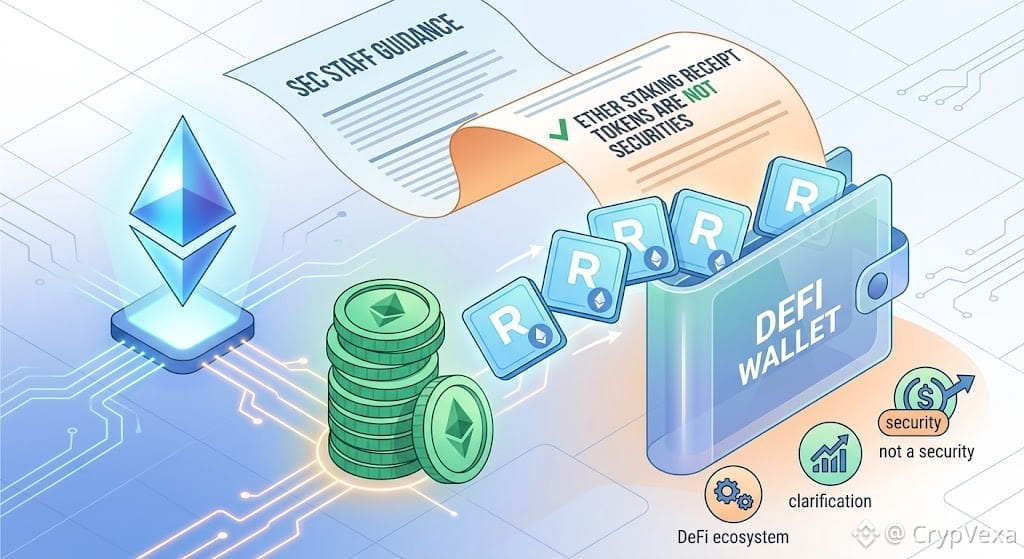
⚡ SEC Staff Clarifies Ethereum Staking Receipt Tokens
🇺🇸 SEC staff guidance says a staking receipt token representing a non-security crypto asset such as ETH is not itself a security, when it functions purely as a receipt under the described conditions.
🪙 The receipt simply represents ownership of the underlying staked asset. It does not create a separate right to rewards or additional financial benefits.
⚠️ Important: This is staff guidance, not a new SEC rule. The SEC says the FAQs are nonbinding and do not have legal force.
🌐 The clarification could provide more regulatory certainty for Ethereum staking and liquid-staking infrastructure.
👀 Could clearer staking rules accelerate institutional participation in Ethereum?
#Ethereum #ETH #Staking #CryptoRegulation
⚡ SEC Staff Clarifies Ethereum Staking Receipt Tokens
🇺🇸 SEC staff guidance says a staking receipt token representing a non-security crypto asset such as ETH is not itself a security, when it functions purely as a receipt under the described conditions.
🪙 The receipt simply represents ownership of the underlying staked asset. It does not create a separate right to rewards or additional financial benefits.
⚠️ Important: This is staff guidance, not a new SEC rule. The SEC says the FAQs are nonbinding and do not have legal force.
🌐 The clarification could provide more regulatory certainty for Ethereum staking and liquid-staking infrastructure.
👀 Could clearer staking rules accelerate institutional participation in Ethereum?
#Ethereum #ETH #Staking #CryptoRegulation
🇺🇸 SEC staff guidance says a staking receipt token representing a non-security crypto asset such as ETH is not itself a security, when it functions purely as a receipt under the described conditions.
🪙 The receipt simply represents ownership of the underlying staked asset. It does not create a separate right to rewards or additional financial benefits.
⚠️ Important: This is staff guidance, not a new SEC rule. The SEC says the FAQs are nonbinding and do not have legal force.
🌐 The clarification could provide more regulatory certainty for Ethereum staking and liquid-staking infrastructure.
👀 Could clearer staking rules accelerate institutional participation in Ethereum?
#Ethereum #ETH #Staking #CryptoRegulation
1
94

·
--
Every proof-of-stake network has a quiet problem that never shows up in price charts: staking concentration.
Ask who actually validates $ETH and the answer gets uncomfortable fast. A large share of staked supply routes through a handful of liquid staking protocols and institutional staking services — not thousands of independent home validators. $SOL advertises one of the largest validator sets in crypto, yet stake weight clusters heavily among a small group of professional operators running data-center infrastructure. $BNB is even more explicit about it: a deliberately small validator committee that trades decentralization for speed and cost.
None of this makes these chains broken. But it changes what you're actually underwriting when you hold them.
The honest metric isn't validator count — it's how many independent entities would need to coordinate to censor or halt the chain. On paper, most majors look impressively decentralized. In practice, that number is far smaller than the marketing suggests.
Concentration creates correlated failure modes: a single staking provider under regulatory pressure, a slashing bug propagating through a shared client, unstaking queues flooding the moment confidence dips. None are hypotheticals — each has already happened somewhere in crypto.
The signal to watch isn't a headline, it's flows: where unstaking requests concentrate during stress, and whether governance actually disperses stake when one operator dominates.
Decentralization is a process, not a launch announcement.
$ETH $SOL $BNB
#Staking #Layer1 #DeFi #Crypto #PoS
Every proof-of-stake network has a quiet problem that never shows up in price charts: staking concentration.
Ask who actually validates $ETH and the answer gets uncomfortable fast. A large share of staked supply routes through a handful of liquid staking protocols and institutional staking services — not thousands of independent home validators. $SOL advertises one of the largest validator sets in crypto, yet stake weight clusters heavily among a small group of professional operators running data-center infrastructure. $BNB is even more explicit about it: a deliberately small validator committee that trades decentralization for speed and cost.
None of this makes these chains broken. But it changes what you're actually underwriting when you hold them.
The honest metric isn't validator count — it's how many independent entities would need to coordinate to censor or halt the chain. On paper, most majors look impressively decentralized. In practice, that number is far smaller than the marketing suggests.
Concentration creates correlated failure modes: a single staking provider under regulatory pressure, a slashing bug propagating through a shared client, unstaking queues flooding the moment confidence dips. None are hypotheticals — each has already happened somewhere in crypto.
The signal to watch isn't a headline, it's flows: where unstaking requests concentrate during stress, and whether governance actually disperses stake when one operator dominates.
Decentralization is a process, not a launch announcement.
$ETH $SOL $BNB
#Staking #Layer1 #DeFi #Crypto #PoS
Ask who actually validates $ETH and the answer gets uncomfortable fast. A large share of staked supply routes through a handful of liquid staking protocols and institutional staking services — not thousands of independent home validators. $SOL advertises one of the largest validator sets in crypto, yet stake weight clusters heavily among a small group of professional operators running data-center infrastructure. $BNB is even more explicit about it: a deliberately small validator committee that trades decentralization for speed and cost.
None of this makes these chains broken. But it changes what you're actually underwriting when you hold them.
The honest metric isn't validator count — it's how many independent entities would need to coordinate to censor or halt the chain. On paper, most majors look impressively decentralized. In practice, that number is far smaller than the marketing suggests.
Concentration creates correlated failure modes: a single staking provider under regulatory pressure, a slashing bug propagating through a shared client, unstaking queues flooding the moment confidence dips. None are hypotheticals — each has already happened somewhere in crypto.
The signal to watch isn't a headline, it's flows: where unstaking requests concentrate during stress, and whether governance actually disperses stake when one operator dominates.
Decentralization is a process, not a launch announcement.
$ETH $SOL $BNB
#Staking #Layer1 #DeFi #Crypto #PoS
163

·
--
SEC's latest move is crazy! The risks of staking ETH have been amplified, especially the exit mechanism. Coinbase and Lido's withdrawal rules determine when you can get your ETH back. Staking rewards are tempting, but you need to understand the exit route too! #staking #DeFi $ETH $stETH
SEC's latest move is wild! Staked ETH exit risks are now in the spotlight. Coinbase's terms and Lido's withdrawal queue dictate when you actually get your ETH back. Staking yields are tempting, but make sure you understand the exit path! #staking #DeFi $ETH $stETH
SEC's latest move is crazy! The risks of staking ETH have been amplified, especially the exit mechanism. Coinbase and Lido's withdrawal rules determine when you can get your ETH back. Staking rewards are tempting, but you need to understand the exit route too! #staking #DeFi $ETH $stETH
SEC's latest move is wild! Staked ETH exit risks are now in the spotlight. Coinbase's terms and Lido's withdrawal queue dictate when you actually get your ETH back. Staking yields are tempting, but make sure you understand the exit path! #staking #DeFi $ETH $stETH
SEC's latest move is wild! Staked ETH exit risks are now in the spotlight. Coinbase's terms and Lido's withdrawal queue dictate when you actually get your ETH back. Staking yields are tempting, but make sure you understand the exit path! #staking #DeFi $ETH $stETH
296
Log in to explore more content
Join global crypto users on Binance Square
⚡️ Get latest and useful information about crypto.
💬 Trusted by the world’s largest crypto exchange.
👍 Discover real insights from verified creators.
Email / Phone number
Trending Topics
1
#NFPWatch
10.6M views
18,490 Discussing
2
#BitcoinFundingRateTriplesTo10%
57,263 views
654 Discussing
3
#BitcoinSurpasses$86KUp2.99%
16,594 views
70 Discussing
4
#ZcashFalls21%FromSeptemberPeak
39,957 views
531 Discussing
5
#USSeptemberPayrollsAdd29KUnemploymentRises4.2%
31,597 views
312 Discussing
6
#XRPPostsFirstThreeGreenMonthsInQ3
29,679 views
502 Discussing
7
#BNBChainTokenizedStocksTop$1BAt30%Share
7,974 views
28 Discussing
8
#BitcoinRisesToward$85K
75,899 views
135 Discussing
9
#AmazonPlansToSell$8BNvidiaChips
6,723 views
83 Discussing
10
#NEARFallsToAround$4.70Down14%
43,921 views
108 Discussing