

#web3security
web3security
608,984 views
1,283 Discussing
Hot
Latest


·
--
🎯 A Smart Contract Can Work Correctly While the User Interface Is Compromised
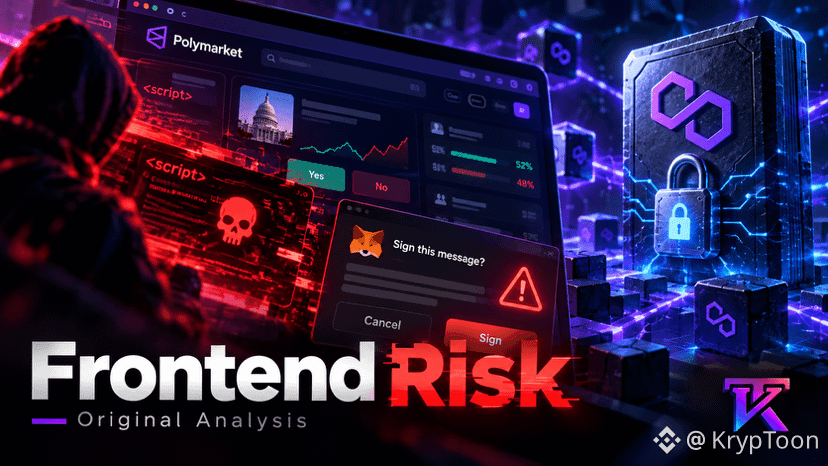
Polymarket confirmed that a third-party compromise allowed malicious code to reach some users and led to stolen funds.
An external estimate reported by TechCrunch placed losses near $3 million across more than 11 victims. Polymarket said affected users would be refunded, although final incident accounting may differ from preliminary estimates.
The broader lesson is architectural.
Blockchain settlement can operate as designed while a website, external script, authentication process or other frontend component is compromised. A user may still be deceived into approving a malicious transaction.
Security analysis should therefore consider the full blast radius:
• Which vendor or component failed?
• What permissions became available?
• Could users understand what they were signing?
• How quickly was the threat contained?
Transaction simulation, clearer approval screens and stronger isolation of third-party code could reduce similar risks.
Disclaimer: Security and infrastructure analysis only, not financial advice. Preliminary loss estimates and recovery figures can change.
$USDC
Polymarket • Prediction Markets • Frontend Security
#USDC #PredictionMarkets #Web3Security
🎯 A Smart Contract Can Work Correctly While the User Interface Is Compromised
Polymarket confirmed that a third-party compromise allowed malicious code to reach some users and led to stolen funds.
An external estimate reported by TechCrunch placed losses near $3 million across more than 11 victims. Polymarket said affected users would be refunded, although final incident accounting may differ from preliminary estimates.
The broader lesson is architectural.
Blockchain settlement can operate as designed while a website, external script, authentication process or other frontend component is compromised. A user may still be deceived into approving a malicious transaction.
Security analysis should therefore consider the full blast radius:
• Which vendor or component failed?
• What permissions became available?
• Could users understand what they were signing?
• How quickly was the threat contained?
Transaction simulation, clearer approval screens and stronger isolation of third-party code could reduce similar risks.
Disclaimer: Security and infrastructure analysis only, not financial advice. Preliminary loss estimates and recovery figures can change.
$USDC
Polymarket • Prediction Markets • Frontend Security
#USDC #PredictionMarkets #Web3Security
Polymarket confirmed that a third-party compromise allowed malicious code to reach some users and led to stolen funds.
An external estimate reported by TechCrunch placed losses near $3 million across more than 11 victims. Polymarket said affected users would be refunded, although final incident accounting may differ from preliminary estimates.
The broader lesson is architectural.
Blockchain settlement can operate as designed while a website, external script, authentication process or other frontend component is compromised. A user may still be deceived into approving a malicious transaction.
Security analysis should therefore consider the full blast radius:
• Which vendor or component failed?
• What permissions became available?
• Could users understand what they were signing?
• How quickly was the threat contained?
Transaction simulation, clearer approval screens and stronger isolation of third-party code could reduce similar risks.
Disclaimer: Security and infrastructure analysis only, not financial advice. Preliminary loss estimates and recovery figures can change.
$USDC
Polymarket • Prediction Markets • Frontend Security
#USDC #PredictionMarkets #Web3Security
62

2. ⚡ Analyze : Why AI agent security (AI Agents) is becoming essential in Web3
Title : AI Agents & Smart Contracts : The new frontier of Web3 security 🤖🔒
Content :
Integrating autonomous AI-based agents into the crypto ecosystem opens up immense opportunities (automated trading, DeFi treasury management, cross-chain task execution). However, it also introduces new challenges.
📌 Key control challenges :
Private key management (KEYLESS / Delegated Keys) : Grant execution permissions without exposing the master keys.
Transaction limits : Set up safeguards in smart contracts to prevent erroneous executions during volatility spikes.
Distributed identity verification : Ensure that each AI agent complies with established security standards.
Intelligent automation must always be paired with strict governance and rigorous risk management protocols.
#AIAgents #Web3Security #CryptoTech #BinanceSquare #TechInnovation @Square-Creator-df2667927
2. ⚡ Analyze : Why AI agent security (AI Agents) is becoming essential in Web3
Title : AI Agents & Smart Contracts : The new frontier of Web3 security 🤖🔒
Content :
Integrating autonomous AI-based agents into the crypto ecosystem opens up immense opportunities (automated trading, DeFi treasury management, cross-chain task execution). However, it also introduces new challenges.
📌 Key control challenges :
Private key management (KEYLESS / Delegated Keys) : Grant execution permissions without exposing the master keys.
Transaction limits : Set up safeguards in smart contracts to prevent erroneous executions during volatility spikes.
Distributed identity verification : Ensure that each AI agent complies with established security standards.
Intelligent automation must always be paired with strict governance and rigorous risk management protocols.
#AIAgents #Web3Security #CryptoTech #BinanceSquare #TechInnovation @Mubarak
Title : AI Agents & Smart Contracts : The new frontier of Web3 security 🤖🔒
Content :
Integrating autonomous AI-based agents into the crypto ecosystem opens up immense opportunities (automated trading, DeFi treasury management, cross-chain task execution). However, it also introduces new challenges.
📌 Key control challenges :
Private key management (KEYLESS / Delegated Keys) : Grant execution permissions without exposing the master keys.
Transaction limits : Set up safeguards in smart contracts to prevent erroneous executions during volatility spikes.
Distributed identity verification : Ensure that each AI agent complies with established security standards.
Intelligent automation must always be paired with strict governance and rigorous risk management protocols.
#AIAgents #Web3Security #CryptoTech #BinanceSquare #TechInnovation @Mubarak
65

🚨 CRITICAL CONTRACT VULNERABILITY THREATENS HISTORICAL $ETH NFT APPROVALS ACROSS MAGIC EDEN! ⚠️
🔍 A known exploit in Limit Break's Payment Processor is putting legacy EVM marketplace approvals at risk across Ethereum, Polygon, and Base. Any wallet that interacted with Magic Eden listings between February and October 2024 could have open permissions susceptible to malicious drains.
💡 Security hygiene is non-negotiable if you want to protect your portfolio capital long term. Yuga Labs has launched an asset claim portal for affected victims, but revoking all active "approved for all" contract permissions remains the mandatory first step. 🛡️
💬 Have you audited your active smart contract allowances today, or are you leaving your wallet exposed to legacy protocol exploits? 👇
⚠️ Not financial advice. Always manage your risk. 🛡️
🏷️ #ETH #Web3Security #NFTs #CryptoSecurity
🛡️ 👁️
🚨 CRITICAL CONTRACT VULNERABILITY THREATENS HISTORICAL $ETH NFT APPROVALS ACROSS MAGIC EDEN! ⚠️
🔍 A known exploit in Limit Break's Payment Processor is putting legacy EVM marketplace approvals at risk across Ethereum, Polygon, and Base. Any wallet that interacted with Magic Eden listings between February and October 2024 could have open permissions susceptible to malicious drains.
💡 Security hygiene is non-negotiable if you want to protect your portfolio capital long term. Yuga Labs has launched an asset claim portal for affected victims, but revoking all active "approved for all" contract permissions remains the mandatory first step. 🛡️
💬 Have you audited your active smart contract allowances today, or are you leaving your wallet exposed to legacy protocol exploits? 👇
⚠️ Not financial advice. Always manage your risk. 🛡️
🏷️ #ETH #Web3Security #NFTs #CryptoSecurity
🛡️ 👁️
🔍 A known exploit in Limit Break's Payment Processor is putting legacy EVM marketplace approvals at risk across Ethereum, Polygon, and Base. Any wallet that interacted with Magic Eden listings between February and October 2024 could have open permissions susceptible to malicious drains.
💡 Security hygiene is non-negotiable if you want to protect your portfolio capital long term. Yuga Labs has launched an asset claim portal for affected victims, but revoking all active "approved for all" contract permissions remains the mandatory first step. 🛡️
💬 Have you audited your active smart contract allowances today, or are you leaving your wallet exposed to legacy protocol exploits? 👇
⚠️ Not financial advice. Always manage your risk. 🛡️
🏷️ #ETH #Web3Security #NFTs #CryptoSecurity
🛡️ 👁️
11

How to Spot a Crypto Scam Before You Lose Money
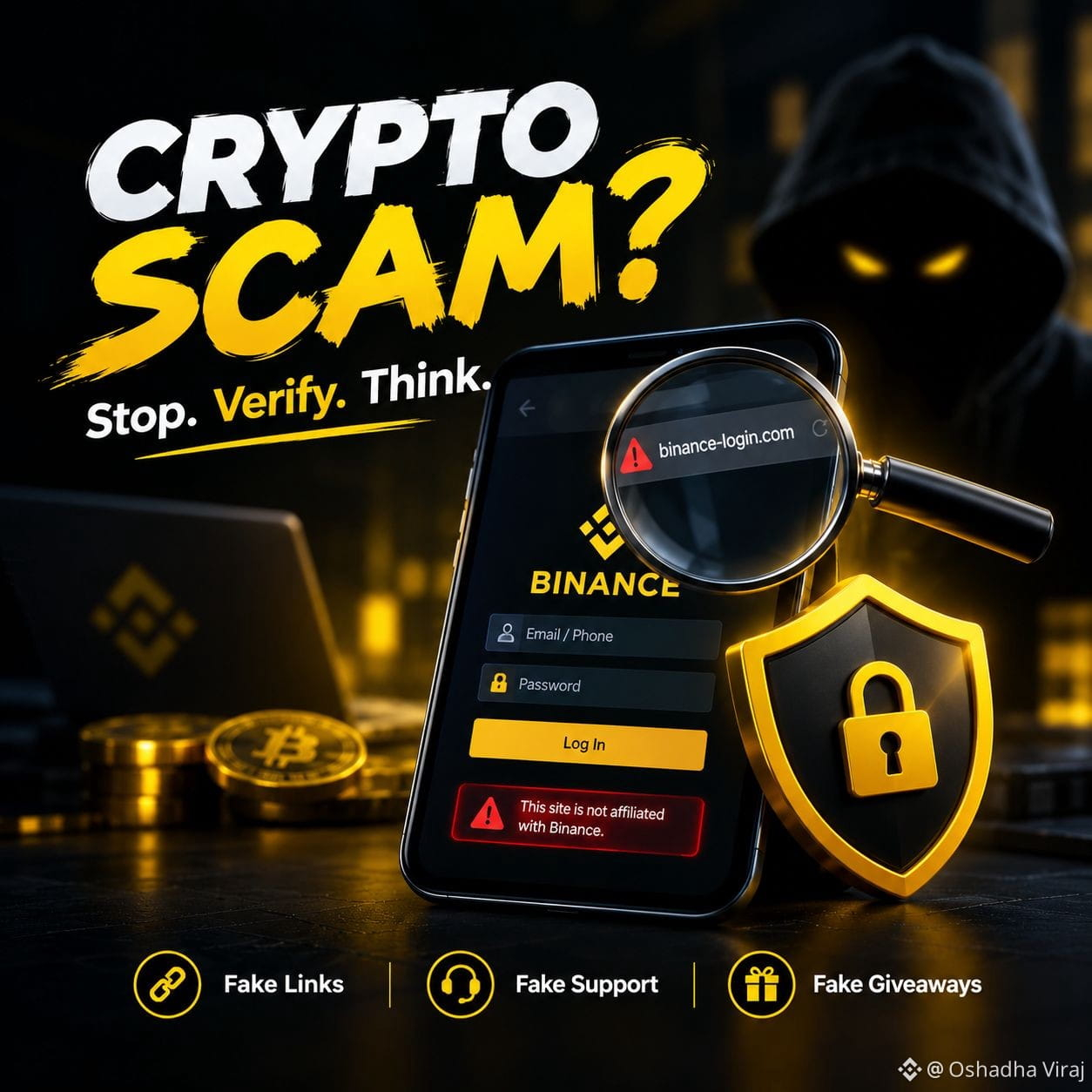
Crypto scams are becoming more sophisticated. Learning to recognize common warning signs can help you avoid losing your funds.
Common Crypto Scam Warning Signs
1. Fake Websites & Phishing Links
Scammers may create websites that look like legitimate exchanges or wallets. Always check the URL before entering your login details.
2. Fake Support Accounts
Be cautious of unexpected messages from people claiming to be Binance or wallet support. Never share your password, 2FA code, seed phrase, or private keys.
3. Guaranteed Returns
Promises of guaranteed profits, “risk-free” investments, or unusually high returns are major warning signs.
4. Fake Giveaways & Airdrops
Be careful with offers asking you to send crypto first to receive a larger amount in return.
5. Urgent Pressure
Scammers often create urgency by saying you must act immediately. Stop and verify before taking action.
6. Suspicious Investment Opportunities
Be cautious of unknown projects, platforms, or individuals asking you to deposit funds without providing verifiable information.
7. Unknown Links & Attachments
Avoid clicking suspicious links or opening unexpected files sent through DMs, emails, or social media.
Before You Trust an Offer
Stop. Verify. Think.
Check the official website, verify the account or project through trusted sources, and never send funds simply because someone promises a reward or profit.
In crypto, protecting your funds starts with recognizing the warning signs.
What is the biggest crypto scam red flag you have seen?
$BTC $ETH $BNB
#BinanceSquare #CryptoSecurity #ScamAwareness #CryptoEducation #Web3Security
How to Spot a Crypto Scam Before You Lose Money
Crypto scams are becoming more sophisticated. Learning to recognize common warning signs can help you avoid losing your funds.
Common Crypto Scam Warning Signs
1. Fake Websites & Phishing Links
Scammers may create websites that look like legitimate exchanges or wallets. Always check the URL before entering your login details.
2. Fake Support Accounts
Be cautious of unexpected messages from people claiming to be Binance or wallet support. Never share your password, 2FA code, seed phrase, or private keys.
3. Guaranteed Returns
Promises of guaranteed profits, “risk-free” investments, or unusually high returns are major warning signs.
4. Fake Giveaways & Airdrops
Be careful with offers asking you to send crypto first to receive a larger amount in return.
5. Urgent Pressure
Scammers often create urgency by saying you must act immediately. Stop and verify before taking action.
6. Suspicious Investment Opportunities
Be cautious of unknown projects, platforms, or individuals asking you to deposit funds without providing verifiable information.
7. Unknown Links & Attachments
Avoid clicking suspicious links or opening unexpected files sent through DMs, emails, or social media.
Before You Trust an Offer
Stop. Verify. Think.
Check the official website, verify the account or project through trusted sources, and never send funds simply because someone promises a reward or profit.
In crypto, protecting your funds starts with recognizing the warning signs.
What is the biggest crypto scam red flag you have seen?
$BTC $ETH $BNB
#BinanceSquare #CryptoSecurity #ScamAwareness #CryptoEducation #Web3Security
Crypto scams are becoming more sophisticated. Learning to recognize common warning signs can help you avoid losing your funds.
Common Crypto Scam Warning Signs
1. Fake Websites & Phishing Links
Scammers may create websites that look like legitimate exchanges or wallets. Always check the URL before entering your login details.
2. Fake Support Accounts
Be cautious of unexpected messages from people claiming to be Binance or wallet support. Never share your password, 2FA code, seed phrase, or private keys.
3. Guaranteed Returns
Promises of guaranteed profits, “risk-free” investments, or unusually high returns are major warning signs.
4. Fake Giveaways & Airdrops
Be careful with offers asking you to send crypto first to receive a larger amount in return.
5. Urgent Pressure
Scammers often create urgency by saying you must act immediately. Stop and verify before taking action.
6. Suspicious Investment Opportunities
Be cautious of unknown projects, platforms, or individuals asking you to deposit funds without providing verifiable information.
7. Unknown Links & Attachments
Avoid clicking suspicious links or opening unexpected files sent through DMs, emails, or social media.
Before You Trust an Offer
Stop. Verify. Think.
Check the official website, verify the account or project through trusted sources, and never send funds simply because someone promises a reward or profit.
In crypto, protecting your funds starts with recognizing the warning signs.
What is the biggest crypto scam red flag you have seen?
$BTC $ETH $BNB
#BinanceSquare #CryptoSecurity #ScamAwareness #CryptoEducation #Web3Security
1
66

·
--
An AI agent can stay within a wallet’s spending cap and still make the wrong call.
Imagine an ETH → USDC swap. A $100 cap limits the amount, but it does not prove the user approved this exact transaction. That approval may specify the chain, target contract, calldata hash, value, nonce, and expiry. If the calldata changes after approval, staying under $100 does not make the new call authorized.
I would test this at two points:
Before signing: does the final call match the user’s signed authorization?After execution: does the observed transaction match it, and can an independent reviewer check the receipt?
We have a reproducible synthetic Base swap test that rejects changed calldata. It broadcasts no transaction and moves no funds.
Insight supplies separate pre-trade oracle and risk evidence. PriorSeal records exact-call authorization and observed execution evidence. They can be used independently or together.
For the next public test case, which failure would you most want to see reproduced: stale risk data, overly broad permissions, execution that differs from authorization, or missing post-execution evidence?
#AIAgents #Web3Security
An AI agent can stay within a wallet’s spending cap and still make the wrong call.
Imagine an ETH → USDC swap. A $100 cap limits the amount, but it does not prove the user approved this exact transaction. That approval may specify the chain, target contract, calldata hash, value, nonce, and expiry. If the calldata changes after approval, staying under $100 does not make the new call authorized.
I would test this at two points:
Before signing: does the final call match the user’s signed authorization?After execution: does the observed transaction match it, and can an independent reviewer check the receipt?
We have a reproducible synthetic Base swap test that rejects changed calldata. It broadcasts no transaction and moves no funds.
Insight supplies separate pre-trade oracle and risk evidence. PriorSeal records exact-call authorization and observed execution evidence. They can be used independently or together.
For the next public test case, which failure would you most want to see reproduced: stale risk data, overly broad permissions, execution that differs from authorization, or missing post-execution evidence?
#AIAgents #Web3Security
Imagine an ETH → USDC swap. A $100 cap limits the amount, but it does not prove the user approved this exact transaction. That approval may specify the chain, target contract, calldata hash, value, nonce, and expiry. If the calldata changes after approval, staying under $100 does not make the new call authorized.
I would test this at two points:
Before signing: does the final call match the user’s signed authorization?After execution: does the observed transaction match it, and can an independent reviewer check the receipt?
We have a reproducible synthetic Base swap test that rejects changed calldata. It broadcasts no transaction and moves no funds.
Insight supplies separate pre-trade oracle and risk evidence. PriorSeal records exact-call authorization and observed execution evidence. They can be used independently or together.
For the next public test case, which failure would you most want to see reproduced: stale risk data, overly broad permissions, execution that differs from authorization, or missing post-execution evidence?
#AIAgents #Web3Security
84

·
--
A $5.7M NFT “disappeared” — wait, a white-hat raced ahead of the hackers and salvaged it. The real theft, however, was recorded under another account.
It all starts with a contract permission that had been left unattended for two years. Payment Processor V2. Magic Eden disabled it back in October last year, and this year’s first quarter even shut down the entire EVM market. The official statement was crystal clear: “No live order listings were affected.”
The issue is that even if the system is shut down completely, the “Agree” button you clicked two years ago still keeps the permissions alive. Someone dug up this old key — the white-hats worked through the night to rescue 23,155 NFTs worth $5.7M and stop the hackers. But 660 WETH weren’t rescued in time. Combined with other losses, Revoke.cash estimates that at least $2.8M was actually stolen, including 580 WETH.
The first version that spread was “Magic Eden was hacked,” scaring people into sharing screenshots everywhere. But as it kept circulating, the direction shifted — technical accounts like 0xQuit explained clearly how the V2/V3 vulnerability mechanisms work, and Revoke.cash directly posted links showing how to revoke authorizations. With 74,093 views and 147 shares, it wasn’t pushing panic — it was pushing a responsible task: go check what old permissions you still have in your wallet that haven’t been touched in three years.
The truly valuable lesson is this: shutting down a product doesn’t mean risk is zero. Old authorizations are still live time bombs. V3 is still running — this time, official intervention by hand prevented a bigger disaster.
On this $ME move, I’m leaning toward volatility rather than bearishness — the problem is an old backdoor left in the contract from two years ago, unrelated to today’s platform business. There’s no reason to use that to justify a sell-off. What you should actually watch isn’t the ME price, but the V3 system that’s still running: this time, manual intervention caught it — if it isn’t caught next time, that’s the real signal to panic.
$ME #NFT #Web3Security #MagicEden
A $5.7M NFT “disappeared” — wait, a white-hat raced ahead of the hackers and salvaged it. The real theft, however, was recorded under another account.
It all starts with a contract permission that had been left unattended for two years. Payment Processor V2. Magic Eden disabled it back in October last year, and this year’s first quarter even shut down the entire EVM market. The official statement was crystal clear: “No live order listings were affected.”
The issue is that even if the system is shut down completely, the “Agree” button you clicked two years ago still keeps the permissions alive. Someone dug up this old key — the white-hats worked through the night to rescue 23,155 NFTs worth $5.7M and stop the hackers. But 660 WETH weren’t rescued in time. Combined with other losses, Revoke.cash estimates that at least $2.8M was actually stolen, including 580 WETH.
The first version that spread was “Magic Eden was hacked,” scaring people into sharing screenshots everywhere. But as it kept circulating, the direction shifted — technical accounts like 0xQuit explained clearly how the V2/V3 vulnerability mechanisms work, and Revoke.cash directly posted links showing how to revoke authorizations. With 74,093 views and 147 shares, it wasn’t pushing panic — it was pushing a responsible task: go check what old permissions you still have in your wallet that haven’t been touched in three years.
The truly valuable lesson is this: shutting down a product doesn’t mean risk is zero. Old authorizations are still live time bombs. V3 is still running — this time, official intervention by hand prevented a bigger disaster.
On this $ME move, I’m leaning toward volatility rather than bearishness — the problem is an old backdoor left in the contract from two years ago, unrelated to today’s platform business. There’s no reason to use that to justify a sell-off. What you should actually watch isn’t the ME price, but the V3 system that’s still running: this time, manual intervention caught it — if it isn’t caught next time, that’s the real signal to panic.
$ME #NFT #Web3Security #MagicEden
It all starts with a contract permission that had been left unattended for two years. Payment Processor V2. Magic Eden disabled it back in October last year, and this year’s first quarter even shut down the entire EVM market. The official statement was crystal clear: “No live order listings were affected.”
The issue is that even if the system is shut down completely, the “Agree” button you clicked two years ago still keeps the permissions alive. Someone dug up this old key — the white-hats worked through the night to rescue 23,155 NFTs worth $5.7M and stop the hackers. But 660 WETH weren’t rescued in time. Combined with other losses, Revoke.cash estimates that at least $2.8M was actually stolen, including 580 WETH.
The first version that spread was “Magic Eden was hacked,” scaring people into sharing screenshots everywhere. But as it kept circulating, the direction shifted — technical accounts like 0xQuit explained clearly how the V2/V3 vulnerability mechanisms work, and Revoke.cash directly posted links showing how to revoke authorizations. With 74,093 views and 147 shares, it wasn’t pushing panic — it was pushing a responsible task: go check what old permissions you still have in your wallet that haven’t been touched in three years.
The truly valuable lesson is this: shutting down a product doesn’t mean risk is zero. Old authorizations are still live time bombs. V3 is still running — this time, official intervention by hand prevented a bigger disaster.
On this $ME move, I’m leaning toward volatility rather than bearishness — the problem is an old backdoor left in the contract from two years ago, unrelated to today’s platform business. There’s no reason to use that to justify a sell-off. What you should actually watch isn’t the ME price, but the V3 system that’s still running: this time, manual intervention caught it — if it isn’t caught next time, that’s the real signal to panic.
$ME #NFT #Web3Security #MagicEden
128

North Korea is accused of using fake job interviews to steal $10.7 million in crypto
A cyberattack campaign linked to North Korea has been exposed after successfully “stealing” about $10.71 million from more than 7,000 cryptocurrency wallets. This general alert has just been issued simultaneously by seven security and intelligence agencies from Japan, the United States, Australia, and Germany.
Campaign name: Called WaterPlum by Japan, while cybersecurity circles are familiar with the name Contagious Interview.
Scale: From December 2025 to July 2026, the group infected roughly 30,000 devices in over 100 countries.
Targets: Programmers, engineers, and personnel working in the crypto, blockchain, and Web3 sectors.
Trick: Posing as an AI, NFT, or crypto company to recruit. The group invites candidates to technical interviews, then lures them into downloading files to complete a test assignment or “fix” a video call. In reality, these files contain malware such as BeaverTail, InvisibleFerret, and StoatWaffle.
Top-tier tech: Uses AI for face-swapping (deepfakes) during interviews and employs “ghost” computer setups (laptop farms) to conceal the true location. Japan has just dismantled such a laptop farm for the first time on its own territory.
Behind the organization: The FBI and Japanese police assess that WaterPlum and these remote IT labor networks all belong to the same North Korean defense agency.
This article is for news updates only. If you unexpectedly receive an offer for a million-dollar salary job interview from an unknown blockchain company and are asked to download an .exe file to “test the camera,” congratulations—you’re preparing to fund that country’s space program!
#CryptoScam #CyberSecurity #ContagiousInterview #WaterPlum #Web3Security
North Korea is accused of using fake job interviews to steal $10.7 million in crypto
A cyberattack campaign linked to North Korea has been exposed after successfully “stealing” about $10.71 million from more than 7,000 cryptocurrency wallets. This general alert has just been issued simultaneously by seven security and intelligence agencies from Japan, the United States, Australia, and Germany.
Campaign name: Called WaterPlum by Japan, while cybersecurity circles are familiar with the name Contagious Interview.
Scale: From December 2025 to July 2026, the group infected roughly 30,000 devices in over 100 countries.
Targets: Programmers, engineers, and personnel working in the crypto, blockchain, and Web3 sectors.
Trick: Posing as an AI, NFT, or crypto company to recruit. The group invites candidates to technical interviews, then lures them into downloading files to complete a test assignment or “fix” a video call. In reality, these files contain malware such as BeaverTail, InvisibleFerret, and StoatWaffle.
Top-tier tech: Uses AI for face-swapping (deepfakes) during interviews and employs “ghost” computer setups (laptop farms) to conceal the true location. Japan has just dismantled such a laptop farm for the first time on its own territory.
Behind the organization: The FBI and Japanese police assess that WaterPlum and these remote IT labor networks all belong to the same North Korean defense agency.
This article is for news updates only. If you unexpectedly receive an offer for a million-dollar salary job interview from an unknown blockchain company and are asked to download an .exe file to “test the camera,” congratulations—you’re preparing to fund that country’s space program!
#CryptoScam #CyberSecurity #ContagiousInterview #WaterPlum #Web3Security
A cyberattack campaign linked to North Korea has been exposed after successfully “stealing” about $10.71 million from more than 7,000 cryptocurrency wallets. This general alert has just been issued simultaneously by seven security and intelligence agencies from Japan, the United States, Australia, and Germany.
Campaign name: Called WaterPlum by Japan, while cybersecurity circles are familiar with the name Contagious Interview.
Scale: From December 2025 to July 2026, the group infected roughly 30,000 devices in over 100 countries.
Targets: Programmers, engineers, and personnel working in the crypto, blockchain, and Web3 sectors.
Trick: Posing as an AI, NFT, or crypto company to recruit. The group invites candidates to technical interviews, then lures them into downloading files to complete a test assignment or “fix” a video call. In reality, these files contain malware such as BeaverTail, InvisibleFerret, and StoatWaffle.
Top-tier tech: Uses AI for face-swapping (deepfakes) during interviews and employs “ghost” computer setups (laptop farms) to conceal the true location. Japan has just dismantled such a laptop farm for the first time on its own territory.
Behind the organization: The FBI and Japanese police assess that WaterPlum and these remote IT labor networks all belong to the same North Korean defense agency.
This article is for news updates only. If you unexpectedly receive an offer for a million-dollar salary job interview from an unknown blockchain company and are asked to download an .exe file to “test the camera,” congratulations—you’re preparing to fund that country’s space program!
#CryptoScam #CyberSecurity #ContagiousInterview #WaterPlum #Web3Security
46
·
--
Do spending limits and allowlists make an AI agent wallet fully controllable?
Binance recently described the boundaries built into Agentic Wallet: capability toggles, separate spending quotas, token allowlists, recipient restrictions, transaction simulation, and activity notifications.
This shows how the conversation is moving from:
“Can an AI agent trade?”
to:
“Within exactly which boundaries may it trade?”
I think we need to ask one more question:
After execution, can the user or an independent reviewer verify that the agent stayed within those boundaries?
Consider one $ETH → $USDC swap. I would want three independently checkable evidence layers:
1. Before the decision
Was the market data fresh? Did independent oracle sources agree? What risk verdict was available at that moment?
2. At authorization
Who approved which chain, contract, value, calldata hash, nonce, and validity window?
3. After execution
Did the onchain transaction match the authorized exact call? If it failed, was reorganized, or remained uncertain, was the original evidence preserved?
This is why I designed two separate products:
• Insight verifies the data and risk signals behind a decision.
• PriorSeal binds user or organizational authorization to the observed EVM execution and produces an offline-verifiable receipt.
They can be used independently or together. Neither product holds assets, signs transactions for the wallet, or replaces wallet-level limits and allowlists.
If you are building an agent wallet or onchain agent, which failure would you solve first?
A. Bad data
B. Overbroad permissions
C. Execution deviating from authorization
D. No reliable post-execution record
I’ll turn the most selected scenario into the next public test case.
#AIAgents #Web3Security
Do spending limits and allowlists make an AI agent wallet fully controllable?
Binance recently described the boundaries built into Agentic Wallet: capability toggles, separate spending quotas, token allowlists, recipient restrictions, transaction simulation, and activity notifications.
This shows how the conversation is moving from:
“Can an AI agent trade?”
to:
“Within exactly which boundaries may it trade?”
I think we need to ask one more question:
After execution, can the user or an independent reviewer verify that the agent stayed within those boundaries?
Consider one $ETH → $USDC swap. I would want three independently checkable evidence layers:
1. Before the decision
Was the market data fresh? Did independent oracle sources agree? What risk verdict was available at that moment?
2. At authorization
Who approved which chain, contract, value, calldata hash, nonce, and validity window?
3. After execution
Did the onchain transaction match the authorized exact call? If it failed, was reorganized, or remained uncertain, was the original evidence preserved?
This is why I designed two separate products:
• Insight verifies the data and risk signals behind a decision.
• PriorSeal binds user or organizational authorization to the observed EVM execution and produces an offline-verifiable receipt.
They can be used independently or together. Neither product holds assets, signs transactions for the wallet, or replaces wallet-level limits and allowlists.
If you are building an agent wallet or onchain agent, which failure would you solve first?
A. Bad data
B. Overbroad permissions
C. Execution deviating from authorization
D. No reliable post-execution record
I’ll turn the most selected scenario into the next public test case.
#AIAgents #Web3Security
Binance recently described the boundaries built into Agentic Wallet: capability toggles, separate spending quotas, token allowlists, recipient restrictions, transaction simulation, and activity notifications.
This shows how the conversation is moving from:
“Can an AI agent trade?”
to:
“Within exactly which boundaries may it trade?”
I think we need to ask one more question:
After execution, can the user or an independent reviewer verify that the agent stayed within those boundaries?
Consider one $ETH → $USDC swap. I would want three independently checkable evidence layers:
1. Before the decision
Was the market data fresh? Did independent oracle sources agree? What risk verdict was available at that moment?
2. At authorization
Who approved which chain, contract, value, calldata hash, nonce, and validity window?
3. After execution
Did the onchain transaction match the authorized exact call? If it failed, was reorganized, or remained uncertain, was the original evidence preserved?
This is why I designed two separate products:
• Insight verifies the data and risk signals behind a decision.
• PriorSeal binds user or organizational authorization to the observed EVM execution and produces an offline-verifiable receipt.
They can be used independently or together. Neither product holds assets, signs transactions for the wallet, or replaces wallet-level limits and allowlists.
If you are building an agent wallet or onchain agent, which failure would you solve first?
A. Bad data
B. Overbroad permissions
C. Execution deviating from authorization
D. No reliable post-execution record
I’ll turn the most selected scenario into the next public test case.
#AIAgents #Web3Security
82
·
--
🤖 How to keep AI agents under control in Web3?
The integration of autonomous agents into crypto offers immense opportunities, but it also demands impeccable security. Without clear rules, the risk of drift or execution errors increases.
💡 The pillars of controlled AI:
Algorithmic safeguards: Set strict limits to prevent unauthorized transactions.
Transparency and auditability: Track every agent decision in real time on the blockchain.
Decentralized governance:
Let the community validate the key intervention parameters.
The alliance between artificial intelligence and blockchain can only succeed with rigorous human and technical oversight.
💬 Do you trust autonomous AI agents to manage your crypto operations?
? Share your thoughts in the comments! 👇
#BinanceSquare #CryptoAI #AIAgents #Web3Security
🤖 How to keep AI agents under control in Web3?
The integration of autonomous agents into crypto offers immense opportunities, but it also demands impeccable security. Without clear rules, the risk of drift or execution errors increases.
💡 The pillars of controlled AI:
Algorithmic safeguards: Set strict limits to prevent unauthorized transactions.
Transparency and auditability: Track every agent decision in real time on the blockchain.
Decentralized governance:
Let the community validate the key intervention parameters.
The alliance between artificial intelligence and blockchain can only succeed with rigorous human and technical oversight.
💬 Do you trust autonomous AI agents to manage your crypto operations?
? Share your thoughts in the comments! 👇
#BinanceSquare #CryptoAI #AIAgents #Web3Security
The integration of autonomous agents into crypto offers immense opportunities, but it also demands impeccable security. Without clear rules, the risk of drift or execution errors increases.
💡 The pillars of controlled AI:
Algorithmic safeguards: Set strict limits to prevent unauthorized transactions.
Transparency and auditability: Track every agent decision in real time on the blockchain.
Decentralized governance:
Let the community validate the key intervention parameters.
The alliance between artificial intelligence and blockchain can only succeed with rigorous human and technical oversight.
💬 Do you trust autonomous AI agents to manage your crypto operations?
? Share your thoughts in the comments! 👇
#BinanceSquare #CryptoAI #AIAgents #Web3Security
1
166

If you still leave your browser extensions logged in on an unlocked laptop, stop now.
Nothing stings worse than watching your hard-earned portfolio get wiped out while stepping away for 5 minutes, especially when the protocol did not even get hacked.
We have seen massive smart contract breaches drain hundreds of millions from DeFi protocols, but this recent incident was entirely local. The attacker did not find a zero-day in a smart contract or breach an exchange infrastructure; they simply exploited an active session on an unlocked machine. If you keep your funds sitting in a hot wallet or leave web sessions open, an attacker with physical or remote terminal access can sign transactions silently without triggering any alarms.
Compare that to a hardware setup where physical button confirmation is mandatory. Even if a rogue script takes over your desktop session, a cold device blocks silent drains on your $ETH or $BNB instantly because it requires physical verification on the device itself. Relying on simple browser memory to protect your $BTC bags is like locking your front door but leaving the keys in the latch.
How many layers of physical confirmation do you actually use before letting a transaction leave your wallet?
#CryptoSecurity #Web3Security #SelfCustody
If you still leave your browser extensions logged in on an unlocked laptop, stop now.
Nothing stings worse than watching your hard-earned portfolio get wiped out while stepping away for 5 minutes, especially when the protocol did not even get hacked.
We have seen massive smart contract breaches drain hundreds of millions from DeFi protocols, but this recent incident was entirely local. The attacker did not find a zero-day in a smart contract or breach an exchange infrastructure; they simply exploited an active session on an unlocked machine. If you keep your funds sitting in a hot wallet or leave web sessions open, an attacker with physical or remote terminal access can sign transactions silently without triggering any alarms.
Compare that to a hardware setup where physical button confirmation is mandatory. Even if a rogue script takes over your desktop session, a cold device blocks silent drains on your $ETH or $BNB instantly because it requires physical verification on the device itself. Relying on simple browser memory to protect your $BTC bags is like locking your front door but leaving the keys in the latch.
How many layers of physical confirmation do you actually use before letting a transaction leave your wallet?
#CryptoSecurity #Web3Security #SelfCustody
Nothing stings worse than watching your hard-earned portfolio get wiped out while stepping away for 5 minutes, especially when the protocol did not even get hacked.
We have seen massive smart contract breaches drain hundreds of millions from DeFi protocols, but this recent incident was entirely local. The attacker did not find a zero-day in a smart contract or breach an exchange infrastructure; they simply exploited an active session on an unlocked machine. If you keep your funds sitting in a hot wallet or leave web sessions open, an attacker with physical or remote terminal access can sign transactions silently without triggering any alarms.
Compare that to a hardware setup where physical button confirmation is mandatory. Even if a rogue script takes over your desktop session, a cold device blocks silent drains on your $ETH or $BNB instantly because it requires physical verification on the device itself. Relying on simple browser memory to protect your $BTC bags is like locking your front door but leaving the keys in the latch.
How many layers of physical confirmation do you actually use before letting a transaction leave your wallet?
#CryptoSecurity #Web3Security #SelfCustody
35
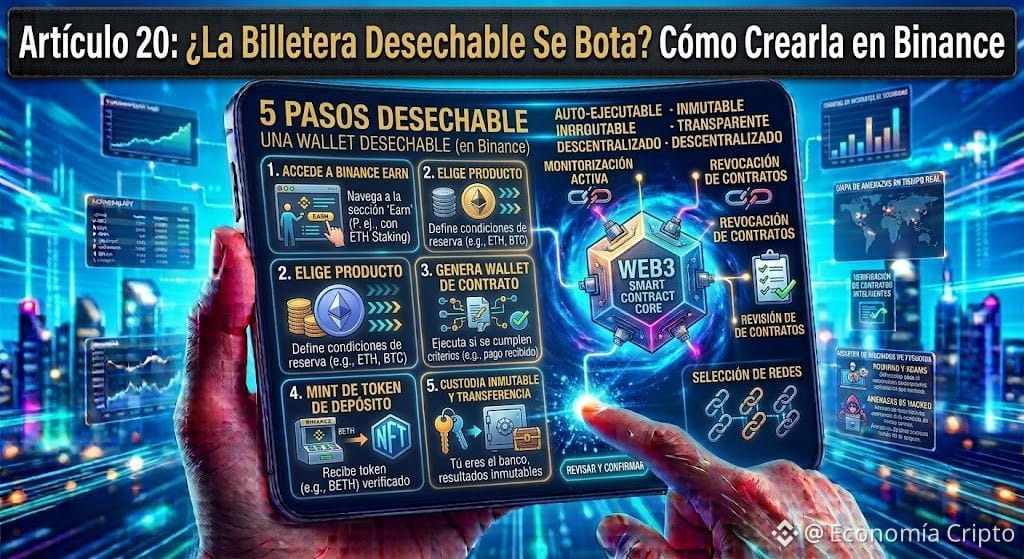
Article 20: Should You “Throw Away” a Burner Wallet? How to Create One on Binance
After the previous article, many users asked us: “Do I have to create and delete a new wallet every time I trade?” The short answer is NO.
You don’t need to destroy the wallet or lose your keys. The term “burner” wallet is just an operating strategy: it means you use it as a “step-through shield,” keeping in it only the minimum balance you’re going to spend at that moment.
How does it work in practice?
Your wallet app or browser extension can manage multiple addresses under the same app. You can have an address called “Savings” (which you never connect to web pages) and another called “Tests/Burner.”
You don’t have to delete the test wallet after using it; you simply leave it empty (or with a few cents in $BNB for gas) until the next time you want to interact with a dApp, buy an NFT, or test a new protocol.
How to Create Your Burner Wallet Using Binance
With Binance’s Web3 Wallet, it’s super easy and you don’t need to install any third-party apps:
Open the Binance App: Go to the “Web3” tab at the top of your screen.
Create a Secondary Wallet: Go to your wallet settings (profile icon or wallet management) and select “Add wallet” or create a new address within your same account.
Assign it a Name: Name it “Test Wallet” or “Burner.”
Give it only what’s necessary: When you’re going to interact with an external site, transfer from your Binance Spot wallet only the exact amount in $BNB or USDT you need for the transaction.
The Ultimate Advantage
By working with this setup, if by mistake you authorize a malicious site using your test wallet, your main balance on Binance and your savings stored in other addresses stay 100% intact. It’s the smartest way to explore Web3 with zero stress.
#SeguridadCripto #BinanceWeb3 #Web3Security #AprendeCripto $BNB
{spot}(BTCUSDT)
{spot}(BNBUSDT)
Article 20: Should You “Throw Away” a Burner Wallet? How to Create One on Binance
After the previous article, many users asked us: “Do I have to create and delete a new wallet every time I trade?” The short answer is NO.
You don’t need to destroy the wallet or lose your keys. The term “burner” wallet is just an operating strategy: it means you use it as a “step-through shield,” keeping in it only the minimum balance you’re going to spend at that moment.
How does it work in practice?
Your wallet app or browser extension can manage multiple addresses under the same app. You can have an address called “Savings” (which you never connect to web pages) and another called “Tests/Burner.”
You don’t have to delete the test wallet after using it; you simply leave it empty (or with a few cents in $BNB for gas) until the next time you want to interact with a dApp, buy an NFT, or test a new protocol.
How to Create Your Burner Wallet Using Binance
With Binance’s Web3 Wallet, it’s super easy and you don’t need to install any third-party apps:
Open the Binance App: Go to the “Web3” tab at the top of your screen.
Create a Secondary Wallet: Go to your wallet settings (profile icon or wallet management) and select “Add wallet” or create a new address within your same account.
Assign it a Name: Name it “Test Wallet” or “Burner.”
Give it only what’s necessary: When you’re going to interact with an external site, transfer from your Binance Spot wallet only the exact amount in $BNB or USDT you need for the transaction.
The Ultimate Advantage
By working with this setup, if by mistake you authorize a malicious site using your test wallet, your main balance on Binance and your savings stored in other addresses stay 100% intact. It’s the smartest way to explore Web3 with zero stress.
#SeguridadCripto #BinanceWeb3 #Web3Security #AprendeCripto $BNB
After the previous article, many users asked us: “Do I have to create and delete a new wallet every time I trade?” The short answer is NO.
You don’t need to destroy the wallet or lose your keys. The term “burner” wallet is just an operating strategy: it means you use it as a “step-through shield,” keeping in it only the minimum balance you’re going to spend at that moment.
How does it work in practice?
Your wallet app or browser extension can manage multiple addresses under the same app. You can have an address called “Savings” (which you never connect to web pages) and another called “Tests/Burner.”
You don’t have to delete the test wallet after using it; you simply leave it empty (or with a few cents in $BNB for gas) until the next time you want to interact with a dApp, buy an NFT, or test a new protocol.
How to Create Your Burner Wallet Using Binance
With Binance’s Web3 Wallet, it’s super easy and you don’t need to install any third-party apps:
Open the Binance App: Go to the “Web3” tab at the top of your screen.
Create a Secondary Wallet: Go to your wallet settings (profile icon or wallet management) and select “Add wallet” or create a new address within your same account.
Assign it a Name: Name it “Test Wallet” or “Burner.”
Give it only what’s necessary: When you’re going to interact with an external site, transfer from your Binance Spot wallet only the exact amount in $BNB or USDT you need for the transaction.
The Ultimate Advantage
By working with this setup, if by mistake you authorize a malicious site using your test wallet, your main balance on Binance and your savings stored in other addresses stay 100% intact. It’s the smartest way to explore Web3 with zero stress.
#SeguridadCripto #BinanceWeb3 #Web3Security #AprendeCripto $BNB
1
65

Traditional finance giants are doubling down on web3 infrastructure. S&P Global acquiring OpenZeppelin proves that smart contract security is no longer just a crypto-native concern—it is a trillion-dollar institutional priority. As audits and risk management merge with Wall Street standards, expect compliance to drive the next wave of adoption. This is a massive validation for onchain tooling and sets a bullish precedent for enterprise-grade blockchain security moving forward. #CryptoNews #Web3Security #InstitutionalCrypto
Traditional finance giants are doubling down on web3 infrastructure. S&P Global acquiring OpenZeppelin proves that smart contract security is no longer just a crypto-native concern—it is a trillion-dollar institutional priority. As audits and risk management merge with Wall Street standards, expect compliance to drive the next wave of adoption. This is a massive validation for onchain tooling and sets a bullish precedent for enterprise-grade blockchain security moving forward. #CryptoNews #Web3Security #InstitutionalCrypto
1
Traditional finance is diving deeper into the blockchain infrastructure layer. S&P Global's acquisition of OpenZeppelin signals a major shift toward institutional-grade security in tokenized assets. As banks and asset managers migrate real-world financial products onchain, mitigating smart contract vulnerabilities has become a top priority. This move bridges legacy risk management with decentralized tech, paving the way for safer institutional adoption ahead. #CryptoNews #DeFi #Web3Security
Traditional finance is diving deeper into the blockchain infrastructure layer. S&P Global's acquisition of OpenZeppelin signals a major shift toward institutional-grade security in tokenized assets. As banks and asset managers migrate real-world financial products onchain, mitigating smart contract vulnerabilities has become a top priority. This move bridges legacy risk management with decentralized tech, paving the way for safer institutional adoption ahead. #CryptoNews #DeFi #Web3Security
53
Everyone thinks web3 wallet safety is just about securing seed phrases, but actually most everyday losses stem from simple copy-paste errors and malicious inbox spam.
We have all felt that mini heart attack sending $ETH to a random 42-character 0x address, praying a single typo does not wipe out our portfolio. Add constant phishing DMs into the mix, and navigating on-chain transactions feels like walking through a minefield.
First, human-readable handles act like saving a contact name in your phone rather than memorizing raw digits. Instead of verifying long hexadecimal strings every time you transfer assets or interact with protocols like $ENS, a simple name tag completely eliminates the guesswork.
Second, an on-chain toll system treats spam like paid postage. Requiring senders to pay a small fee to deliver unsolicited messages makes mass phishing campaigns too expensive to run, keeping your inbox clean and your wallet secure.
How much would readable names and inbox tolls improve your daily trading routine?
#Web3Security #CryptoEducation #Blockchain
Everyone thinks web3 wallet safety is just about securing seed phrases, but actually most everyday losses stem from simple copy-paste errors and malicious inbox spam.
We have all felt that mini heart attack sending $ETH to a random 42-character 0x address, praying a single typo does not wipe out our portfolio. Add constant phishing DMs into the mix, and navigating on-chain transactions feels like walking through a minefield.
First, human-readable handles act like saving a contact name in your phone rather than memorizing raw digits. Instead of verifying long hexadecimal strings every time you transfer assets or interact with protocols like $ENS , a simple name tag completely eliminates the guesswork.
Second, an on-chain toll system treats spam like paid postage. Requiring senders to pay a small fee to deliver unsolicited messages makes mass phishing campaigns too expensive to run, keeping your inbox clean and your wallet secure.
How much would readable names and inbox tolls improve your daily trading routine?
#Web3Security #CryptoEducation #Blockchain
We have all felt that mini heart attack sending $ETH to a random 42-character 0x address, praying a single typo does not wipe out our portfolio. Add constant phishing DMs into the mix, and navigating on-chain transactions feels like walking through a minefield.
First, human-readable handles act like saving a contact name in your phone rather than memorizing raw digits. Instead of verifying long hexadecimal strings every time you transfer assets or interact with protocols like $ENS , a simple name tag completely eliminates the guesswork.
Second, an on-chain toll system treats spam like paid postage. Requiring senders to pay a small fee to deliver unsolicited messages makes mass phishing campaigns too expensive to run, keeping your inbox clean and your wallet secure.
How much would readable names and inbox tolls improve your daily trading routine?
#Web3Security #CryptoEducation #Blockchain
71
Trading Tools: Managing Token Approvals
Title: Revoke outdated token approvals on your Web3 portfolio 🛡️🧹
Content:
When you interact with decentralized applications (DApps), you grant token access authorizations from your wallet.
📌 Why is this critical?
If a DApp you previously used later suffers a security breach, the unlimited approvals granted earlier may be exploited.
💡 Best practice:
Make it a habit to regularly check and revoke unused approvals using Revoke verification tools.
#Web3Security #SmartContracts #TokenApprovals #CryptoSafety #BinanceSquare
Trading Tools: Managing Token Approvals
Title: Revoke outdated token approvals on your Web3 portfolio 🛡️🧹
Content:
When you interact with decentralized applications (DApps), you grant token access authorizations from your wallet.
📌 Why is this critical?
If a DApp you previously used later suffers a security breach, the unlimited approvals granted earlier may be exploited.
💡 Best practice:
Make it a habit to regularly check and revoke unused approvals using Revoke verification tools.
#Web3Security #SmartContracts #TokenApprovals #CryptoSafety #BinanceSquare
Title: Revoke outdated token approvals on your Web3 portfolio 🛡️🧹
Content:
When you interact with decentralized applications (DApps), you grant token access authorizations from your wallet.
📌 Why is this critical?
If a DApp you previously used later suffers a security breach, the unlimited approvals granted earlier may be exploited.
💡 Best practice:
Make it a habit to regularly check and revoke unused approvals using Revoke verification tools.
#Web3Security #SmartContracts #TokenApprovals #CryptoSafety #BinanceSquare
12

·
--
⚡ Enterprise Data Under Siege: Law Firm Cyberattacks Nearly Double, Pushing Web3 Security to Forefront
📌 Key Highlights:
• **Escalating Threat:** Prominent legal firm Greenberg Traurig confirms sensitive client documents were exfiltrated and subsequently leaked to the dark web, spotlighting critical vulnerabilities in traditional enterprise data security.
• **Alarming Surge:** Cybersecurity leader BakerHostetler reports a near-doubling of cyber incidents targeting law firms in the past year, underscoring the escalating sophistication and volume of data breach attempts.
• **Web3 Imperative:** This surge in high-profile data theft amplifies the urgent need for immutable, decentralized data storage and robust privacy solutions, potentially accelerating institutional demand for Web3 security frameworks.
📊 Market Takeaway:
The escalating frequency and severity of traditional data breaches could fast-track enterprise adoption of blockchain-native security and privacy protocols. This trend may drive increased interest in projects offering decentralized storage and enhanced data protection features as a more resilient alternative.
#Cybersecurity #DataPrivacy #Web3Security
⚡ Enterprise Data Under Siege: Law Firm Cyberattacks Nearly Double, Pushing Web3 Security to Forefront
📌 Key Highlights:
• **Escalating Threat:** Prominent legal firm Greenberg Traurig confirms sensitive client documents were exfiltrated and subsequently leaked to the dark web, spotlighting critical vulnerabilities in traditional enterprise data security.
• **Alarming Surge:** Cybersecurity leader BakerHostetler reports a near-doubling of cyber incidents targeting law firms in the past year, underscoring the escalating sophistication and volume of data breach attempts.
• **Web3 Imperative:** This surge in high-profile data theft amplifies the urgent need for immutable, decentralized data storage and robust privacy solutions, potentially accelerating institutional demand for Web3 security frameworks.
📊 Market Takeaway:
The escalating frequency and severity of traditional data breaches could fast-track enterprise adoption of blockchain-native security and privacy protocols. This trend may drive increased interest in projects offering decentralized storage and enhanced data protection features as a more resilient alternative.
#Cybersecurity #DataPrivacy #Web3Security
📌 Key Highlights:
• **Escalating Threat:** Prominent legal firm Greenberg Traurig confirms sensitive client documents were exfiltrated and subsequently leaked to the dark web, spotlighting critical vulnerabilities in traditional enterprise data security.
• **Alarming Surge:** Cybersecurity leader BakerHostetler reports a near-doubling of cyber incidents targeting law firms in the past year, underscoring the escalating sophistication and volume of data breach attempts.
• **Web3 Imperative:** This surge in high-profile data theft amplifies the urgent need for immutable, decentralized data storage and robust privacy solutions, potentially accelerating institutional demand for Web3 security frameworks.
📊 Market Takeaway:
The escalating frequency and severity of traditional data breaches could fast-track enterprise adoption of blockchain-native security and privacy protocols. This trend may drive increased interest in projects offering decentralized storage and enhanced data protection features as a more resilient alternative.
#Cybersecurity #DataPrivacy #Web3Security

89

·
--
🚨 HACKENPROOF COMPLETES PENETRATION AUDIT FOR TOP-TIER EXCHANGE SECURING $BTC FLOWS! 🛡️
Institutional capital demands robust risk control architectures before deploying significant liquidity across order books. HackenProof white hats completed a comprehensive penetration audit for a top-tier exchange across core trading engines, smart contracts, and API endpoints. 🔍
With risk mitigation optimized across asset security and risk control modules, operational integrity remains locked in ahead of market volatility. 📊 Proactive infrastructure hardening ensures institutional liquidity pools remain fully protected against external execution threats. 🛡️
💬 Do you prioritize third-party security audits when choosing order flow venues? 👇
⚠️ Not financial advice. Always manage your risk. 🛡️
🏷️ #BTC #Web3Security #Crypto #SecurityAudit
🛡️ 💎
🚨 HACKENPROOF COMPLETES PENETRATION AUDIT FOR TOP-TIER EXCHANGE SECURING $BTC FLOWS! 🛡️
Institutional capital demands robust risk control architectures before deploying significant liquidity across order books. HackenProof white hats completed a comprehensive penetration audit for a top-tier exchange across core trading engines, smart contracts, and API endpoints. 🔍
With risk mitigation optimized across asset security and risk control modules, operational integrity remains locked in ahead of market volatility. 📊 Proactive infrastructure hardening ensures institutional liquidity pools remain fully protected against external execution threats. 🛡️
💬 Do you prioritize third-party security audits when choosing order flow venues? 👇
⚠️ Not financial advice. Always manage your risk. 🛡️
🏷️ #BTC #Web3Security #Crypto #SecurityAudit
🛡️ 💎
Institutional capital demands robust risk control architectures before deploying significant liquidity across order books. HackenProof white hats completed a comprehensive penetration audit for a top-tier exchange across core trading engines, smart contracts, and API endpoints. 🔍
With risk mitigation optimized across asset security and risk control modules, operational integrity remains locked in ahead of market volatility. 📊 Proactive infrastructure hardening ensures institutional liquidity pools remain fully protected against external execution threats. 🛡️
💬 Do you prioritize third-party security audits when choosing order flow venues? 👇
⚠️ Not financial advice. Always manage your risk. 🛡️
🏷️ #BTC #Web3Security #Crypto #SecurityAudit
🛡️ 💎
11
If you are still disabling essential session cookies to protect your privacy while trading, stop now. Missing a high-volatility breakout on $BTC because an aggressive browser extension logged you out mid-order is an expensive way to learn a basic security lesson.
Essential system cookies only trigger when you perform direct actions like submitting order forms, updating privacy preferences, or logging into your account. They store 0 personally identifiable details and simply keep your terminal running smoothly. When you force your browser to block them, key platform features break immediately.
Some traders insist on blocking every script under the belief that absolute isolation is always safer. However, crippling your interface while managing active $ETH and $BNB positions creates unnecessary execution risk with zero added privacy benefit.
Where do you think traders should draw the line between interface reliability and strict privacy?
#CryptoTrading #Web3Security #RiskManagement
If you are still disabling essential session cookies to protect your privacy while trading, stop now. Missing a high-volatility breakout on $BTC because an aggressive browser extension logged you out mid-order is an expensive way to learn a basic security lesson.
Essential system cookies only trigger when you perform direct actions like submitting order forms, updating privacy preferences, or logging into your account. They store 0 personally identifiable details and simply keep your terminal running smoothly. When you force your browser to block them, key platform features break immediately.
Some traders insist on blocking every script under the belief that absolute isolation is always safer. However, crippling your interface while managing active $ETH and $BNB positions creates unnecessary execution risk with zero added privacy benefit.
Where do you think traders should draw the line between interface reliability and strict privacy?
#CryptoTrading #Web3Security #RiskManagement
Essential system cookies only trigger when you perform direct actions like submitting order forms, updating privacy preferences, or logging into your account. They store 0 personally identifiable details and simply keep your terminal running smoothly. When you force your browser to block them, key platform features break immediately.
Some traders insist on blocking every script under the belief that absolute isolation is always safer. However, crippling your interface while managing active $ETH and $BNB positions creates unnecessary execution risk with zero added privacy benefit.
Where do you think traders should draw the line between interface reliability and strict privacy?
#CryptoTrading #Web3Security #RiskManagement

10

·
--
A contract can preserve the same external interface while changing evidence beneath it.
TokenToolHub compared Soneium’s verified ETHLockbox v1.2.0 and v1.3.1 implementations.
The callable surface showed zero added, removed or changed functions, and both contracts had 36 ABI entries. However, normalized runtime bytecode differed and compiler artifacts identified three storage-position changes requiring review:
• systemConfig
• authorizedPortals
• authorizedLockboxes
The comparison returned 72/100 change materiality with three material findings and one unresolved coverage area.
These findings do not prove exploitability or complete storage incompatibility. They identify where compiler-matched upgrade-safety validation and manual review should focus.
Full comparison:
https://tokentoolhub.com/smart-contract-diff/?a_net=eth&a=0x784d2f03593a42a6e4676a012762f18775ecbbe6&b_net=eth&b=0xb3a24db07038b51962026329b62e7a965d56a6ad
#Ethereum #blockchain #SmartContracts #Web3Security #CryptoResearch
A contract can preserve the same external interface while changing evidence beneath it.
TokenToolHub compared Soneium’s verified ETHLockbox v1.2.0 and v1.3.1 implementations.
The callable surface showed zero added, removed or changed functions, and both contracts had 36 ABI entries. However, normalized runtime bytecode differed and compiler artifacts identified three storage-position changes requiring review:
• systemConfig
• authorizedPortals
• authorizedLockboxes
The comparison returned 72/100 change materiality with three material findings and one unresolved coverage area.
These findings do not prove exploitability or complete storage incompatibility. They identify where compiler-matched upgrade-safety validation and manual review should focus.
Full comparison:
https://tokentoolhub.com/smart-contract-diff/?a_net=eth&a=0x784d2f03593a42a6e4676a012762f18775ecbbe6&b_net=eth&b=0xb3a24db07038b51962026329b62e7a965d56a6ad
#Ethereum #blockchain #SmartContracts #Web3Security #CryptoResearch
TokenToolHub compared Soneium’s verified ETHLockbox v1.2.0 and v1.3.1 implementations.
The callable surface showed zero added, removed or changed functions, and both contracts had 36 ABI entries. However, normalized runtime bytecode differed and compiler artifacts identified three storage-position changes requiring review:
• systemConfig
• authorizedPortals
• authorizedLockboxes
The comparison returned 72/100 change materiality with three material findings and one unresolved coverage area.
These findings do not prove exploitability or complete storage incompatibility. They identify where compiler-matched upgrade-safety validation and manual review should focus.
Full comparison:
https://tokentoolhub.com/smart-contract-diff/?a_net=eth&a=0x784d2f03593a42a6e4676a012762f18775ecbbe6&b_net=eth&b=0xb3a24db07038b51962026329b62e7a965d56a6ad
#Ethereum #blockchain #SmartContracts #Web3Security #CryptoResearch
30
·
--
A wallet connection and a token approval are not the same thing.
Connecting generally allows a dApp to see the public wallet address and request actions.
An approval can give a spender permission to move eligible tokens later.
That distinction matters because the original transaction can be finished while the permission remains active.
Before approving:
• identify the token
• identify the spender
• check the allowance amount
• understand whether it is unlimited
• verify the application requesting it
• review old permissions regularly
A secure private key does not cancel a dangerous permission that the wallet legitimately authorized.
TokenToolHub treats approval exposure as its own evidence layer, separate from ordinary wallet balance and transaction history.
#WalletSecurity #CryptoSecurity #Web3Security #DeFiSecurity2026 #OnChain
A wallet connection and a token approval are not the same thing.
Connecting generally allows a dApp to see the public wallet address and request actions.
An approval can give a spender permission to move eligible tokens later.
That distinction matters because the original transaction can be finished while the permission remains active.
Before approving:
• identify the token
• identify the spender
• check the allowance amount
• understand whether it is unlimited
• verify the application requesting it
• review old permissions regularly
A secure private key does not cancel a dangerous permission that the wallet legitimately authorized.
TokenToolHub treats approval exposure as its own evidence layer, separate from ordinary wallet balance and transaction history.
#WalletSecurity #CryptoSecurity #Web3Security #DeFiSecurity2026 #OnChain
Connecting generally allows a dApp to see the public wallet address and request actions.
An approval can give a spender permission to move eligible tokens later.
That distinction matters because the original transaction can be finished while the permission remains active.
Before approving:
• identify the token
• identify the spender
• check the allowance amount
• understand whether it is unlimited
• verify the application requesting it
• review old permissions regularly
A secure private key does not cancel a dangerous permission that the wallet legitimately authorized.
TokenToolHub treats approval exposure as its own evidence layer, separate from ordinary wallet balance and transaction history.
#WalletSecurity #CryptoSecurity #Web3Security #DeFiSecurity2026 #OnChain
54
Log in to explore more content
Join global crypto users on Binance Square
⚡️ Get latest and useful information about crypto.
💬 Trusted by the world’s largest crypto exchange.
👍 Discover real insights from verified creators.
Email / Phone number
Trending Topics
1
#NFPWatch
10.6M views
18,340 Discussing
2
#BitcoinFundingRateTriplesTo10%
38,853 views
549 Discussing
3
#BitcoinSurpasses$86KUp2.99%
11,770 views
63 Discussing
4
#ZcashFalls21%FromSeptemberPeak
30,939 views
463 Discussing
5
#USSeptemberPayrollsAdd29KUnemploymentRises4.2%
23,048 views
255 Discussing
6
#XRPPostsFirstThreeGreenMonthsInQ3
25,086 views
452 Discussing
7
#BNBChainTokenizedStocksTop$1BAt30%Share
3,951 views
27 Discussing
8
#BitcoinRisesToward$85K
68,211 views
132 Discussing
9
#AmazonPlansToSell$8BNvidiaChips
6,509 views
83 Discussing
10
#NEARFallsToAround$4.70Down14%
42,964 views
108 Discussing