
#nft
nft
296.2M views
2.5M Discussing
Hot
Latest
·
--
🚨 $ZEC ECOSYSTEM NFT COLLAPSES 66% AS LIQUIDITY FAILS AT RECENT AUCTION LEVELS 📉
The zkSNARKs floor price has plummeted from its 1.5 ZEC clearing reserve down to 0.5 ZEC, marking an immediate structural breakdown in secondary liquidity. 📉 When valuation bids vanish post-auction, order flow reveals severe liquidity asymmetry as weak demand fails to defend initial clearing expectations.
With prominent builders highlighting team track records in the ecosystem, capital preservation takes priority over speculative reclaims. 🔍 Institutional risk models treat severe post-mint floor expansions to the downside as clear warnings of distribution rather than organic accumulation. 💬 Are you treating this structural floor breakdown as a cautionary risk lesson or watching for a deeper liquidity wash? 👇
⚠️ Not financial advice. Always manage your risk. 🛡️
🏷️ #ZEC #NFT #MarketStructure #Crypto
🐻 🩸
🚨 $ZEC ECOSYSTEM NFT COLLAPSES 66% AS LIQUIDITY FAILS AT RECENT AUCTION LEVELS 📉
The zkSNARKs floor price has plummeted from its 1.5 ZEC clearing reserve down to 0.5 ZEC, marking an immediate structural breakdown in secondary liquidity. 📉 When valuation bids vanish post-auction, order flow reveals severe liquidity asymmetry as weak demand fails to defend initial clearing expectations.
With prominent builders highlighting team track records in the ecosystem, capital preservation takes priority over speculative reclaims. 🔍 Institutional risk models treat severe post-mint floor expansions to the downside as clear warnings of distribution rather than organic accumulation. 💬 Are you treating this structural floor breakdown as a cautionary risk lesson or watching for a deeper liquidity wash? 👇
⚠️ Not financial advice. Always manage your risk. 🛡️
🏷️ #ZEC #NFT #MarketStructure #Crypto
🐻 🩸
The zkSNARKs floor price has plummeted from its 1.5 ZEC clearing reserve down to 0.5 ZEC, marking an immediate structural breakdown in secondary liquidity. 📉 When valuation bids vanish post-auction, order flow reveals severe liquidity asymmetry as weak demand fails to defend initial clearing expectations.
With prominent builders highlighting team track records in the ecosystem, capital preservation takes priority over speculative reclaims. 🔍 Institutional risk models treat severe post-mint floor expansions to the downside as clear warnings of distribution rather than organic accumulation. 💬 Are you treating this structural floor breakdown as a cautionary risk lesson or watching for a deeper liquidity wash? 👇
⚠️ Not financial advice. Always manage your risk. 🛡️
🏷️ #ZEC #NFT #MarketStructure #Crypto
🐻 🩸
114

·
--
The user wants a Binance Square post about NFT royalties. Requirements:
- No markdown (so plain text, no **, #, etc. except hashtags at end)
- 150-200 words
- Conversational, energetic tone
- One real-world example/project
- End with poll-style question
- Final line: #CryptoAnalysis #TechnicalAnalysis #NFT #Web3
I need to write 150-200 words. Let's aim for ~175 words.
No markdown means no bold, italics, etc. Just plain text.
Write in first person, energetic, conversational.
Include a real-world example: e.g., OpenSea, Magic Eden, or a project like Bored Ape Yacht Club, or mention EIP-2981.
End with poll question like "Do you think royalties are essential for creators? Vote YES or NO below!"
Then final line with hashtags.
Let's draft.
Word count: count roughly.
"Ever wonder how creators keep earning after their NFT sells? Let's break down royalties! When you mint an NFT, you can bake in a royalty percentage — say 5% — so every time it's resold on a marketplace like OpenSea or Magic Eden, you get a cut automatically. It's coded right into the smart contract via standards like EIP-2981. Take Bored Ape Yacht Club: Yuga Labs set a 2.5% royalty, and with billions in secondary volume, that's millions flowing back to fund the ecosystem. But here's the twist — some marketplaces made royalties optional in 2023, sparking a huge debate. Creators argue it kills sustainable income; traders love zero fees. Projects like Azuki and DeGods even experimented with dynamic royalties. The fight for enforceable on-chain royalties is shaping Web
The user wants a Binance Square post about NFT royalties. Requirements:
- No markdown (so plain text, no **, #, etc. except hashtags at end)
- 150-200 words
- Conversational, energetic tone
- One real-world example/project
- End with poll-style question
- Final line: #CryptoAnalysis #TechnicalAnalysis #NFT #Web3
I need to write 150-200 words. Let's aim for ~175 words.
No markdown means no bold, italics, etc. Just plain text.
Write in first person, energetic, conversational.
Include a real-world example: e.g., OpenSea, Magic Eden, or a project like Bored Ape Yacht Club, or mention EIP-2981.
End with poll question like "Do you think royalties are essential for creators? Vote YES or NO below!"
Then final line with hashtags.
Let's draft.
Word count: count roughly.
"Ever wonder how creators keep earning after their NFT sells? Let's break down royalties! When you mint an NFT, you can bake in a royalty percentage — say 5% — so every time it's resold on a marketplace like OpenSea or Magic Eden, you get a cut automatically. It's coded right into the smart contract via standards like EIP-2981. Take Bored Ape Yacht Club: Yuga Labs set a 2.5% royalty, and with billions in secondary volume, that's millions flowing back to fund the ecosystem. But here's the twist — some marketplaces made royalties optional in 2023, sparking a huge debate. Creators argue it kills sustainable income; traders love zero fees. Projects like Azuki and DeGods even experimented with dynamic royalties. The fight for enforceable on-chain royalties is shaping Web
- No markdown (so plain text, no **, #, etc. except hashtags at end)
- 150-200 words
- Conversational, energetic tone
- One real-world example/project
- End with poll-style question
- Final line: #CryptoAnalysis #TechnicalAnalysis #NFT #Web3
I need to write 150-200 words. Let's aim for ~175 words.
No markdown means no bold, italics, etc. Just plain text.
Write in first person, energetic, conversational.
Include a real-world example: e.g., OpenSea, Magic Eden, or a project like Bored Ape Yacht Club, or mention EIP-2981.
End with poll question like "Do you think royalties are essential for creators? Vote YES or NO below!"
Then final line with hashtags.
Let's draft.
Word count: count roughly.
"Ever wonder how creators keep earning after their NFT sells? Let's break down royalties! When you mint an NFT, you can bake in a royalty percentage — say 5% — so every time it's resold on a marketplace like OpenSea or Magic Eden, you get a cut automatically. It's coded right into the smart contract via standards like EIP-2981. Take Bored Ape Yacht Club: Yuga Labs set a 2.5% royalty, and with billions in secondary volume, that's millions flowing back to fund the ecosystem. But here's the twist — some marketplaces made royalties optional in 2023, sparking a huge debate. Creators argue it kills sustainable income; traders love zero fees. Projects like Azuki and DeGods even experimented with dynamic royalties. The fight for enforceable on-chain royalties is shaping Web
31
🚨 ON-CHAIN DETECTIVES RAISE MAJOR RED FLAGS OVER $ZEC ECOSYSTEM NFT LAUNCH! ⚠️
The zkSNARKs NFT drop just closed its 8,000-piece auction at a 1.5 $ZEC clearing price, but key on-chain sleuths are sounding alarm bells. 🔍 ZachXBT publicly questioned the project for lacking genuine utility after pulling in eight figures, raising serious doubts about fund allocations and royalty structures.
Adding fuel to the fire, notable builders allege the team behind the launch has a history of questionable operations across other ecosystems. ⚠️ When smart money and auditors dissect capital flow this aggressively, secondary liquidity often dries up fast.
💬 Are you staying clear of high-hype ecosystem mints, or do you still trade the initial momentum despite the risks? 👇
⚠️ Not financial advice. Always manage your risk. 🛡️
🏷️ #ZEC #OnChain #Crypto #NFT
🚨 🛡️
🚨 ON-CHAIN DETECTIVES RAISE MAJOR RED FLAGS OVER $ZEC ECOSYSTEM NFT LAUNCH! ⚠️
The zkSNARKs NFT drop just closed its 8,000-piece auction at a 1.5 $ZEC clearing price, but key on-chain sleuths are sounding alarm bells. 🔍 ZachXBT publicly questioned the project for lacking genuine utility after pulling in eight figures, raising serious doubts about fund allocations and royalty structures.
Adding fuel to the fire, notable builders allege the team behind the launch has a history of questionable operations across other ecosystems. ⚠️ When smart money and auditors dissect capital flow this aggressively, secondary liquidity often dries up fast.
💬 Are you staying clear of high-hype ecosystem mints, or do you still trade the initial momentum despite the risks? 👇
⚠️ Not financial advice. Always manage your risk. 🛡️
🏷️ #ZEC #OnChain #Crypto #NFT
🚨 🛡️
The zkSNARKs NFT drop just closed its 8,000-piece auction at a 1.5 $ZEC clearing price, but key on-chain sleuths are sounding alarm bells. 🔍 ZachXBT publicly questioned the project for lacking genuine utility after pulling in eight figures, raising serious doubts about fund allocations and royalty structures.
Adding fuel to the fire, notable builders allege the team behind the launch has a history of questionable operations across other ecosystems. ⚠️ When smart money and auditors dissect capital flow this aggressively, secondary liquidity often dries up fast.
💬 Are you staying clear of high-hype ecosystem mints, or do you still trade the initial momentum despite the risks? 👇
⚠️ Not financial advice. Always manage your risk. 🛡️
🏷️ #ZEC #OnChain #Crypto #NFT
🚨 🛡️
132
·
--
📰 $8 is once again being turned into something new by Jack Butcher.
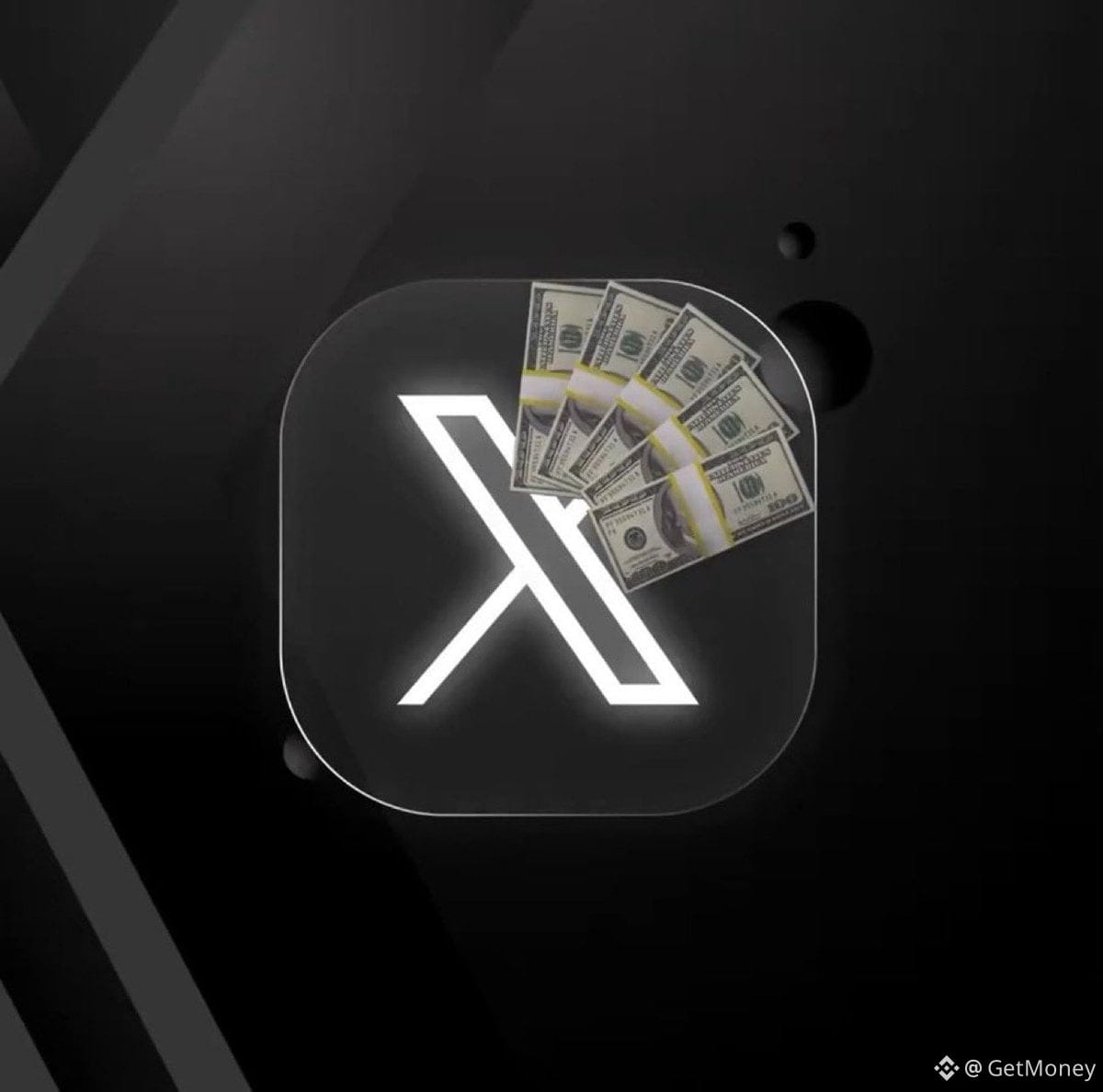
On September 21, he launched an on-chain experiment on X: users send $8 via X Money, leave their own ETH address in the memo, and the transaction ID becomes a random seed for generating the artwork. There’s no Mint page—no need to connect a wallet or prepare ETH in advance.
🔥 The most interesting part this time is that eligibility happens at the fiat payment layer, while the NFT is delivered on-chain only afterward. For everyday users, the process shifts from “learn to use MetaMask, pay Gas” to “transfer a payment inside the X app.”
Honestly, this also sidesteps the witch problem that NFT projects have always found hard to deal with. X Money currently requires U.S. Premium and Premium+ users to link a bank account, provide an SSN, and complete phone verification—corresponding to a verified account. Compared with mass wallet creation, the cost of repeated registrations is indeed much higher.
💡 This route can be summarized as: discover it on X, use X Money to pay and verify, and finally deliver the assets to an Ethereum address. In 2023, Butcher used $8 for Checks Editions; 16,031 people participated, and related secondary-market trading volume totaled more than $250 million. This time, he’s more like testing a new issuance method.
However, X Money is currently only available to certain users in the U.S., and payment data and identity information are also held within X’s centralized systems. The scope of participation, the final minting quantity, and the specific delivery details—as of 8:00 p.m. on September 22—are still ongoing. Do you think this approach of “complete payment on a social platform first, then deliver on-chain” will become a new entry point for NFTs and on-chain projects?
#NFT #XMoney #以太坊 #on-chain experiment
📰 $8 is once again being turned into something new by Jack Butcher.
On September 21, he launched an on-chain experiment on X: users send $8 via X Money, leave their own ETH address in the memo, and the transaction ID becomes a random seed for generating the artwork. There’s no Mint page—no need to connect a wallet or prepare ETH in advance.
🔥 The most interesting part this time is that eligibility happens at the fiat payment layer, while the NFT is delivered on-chain only afterward. For everyday users, the process shifts from “learn to use MetaMask, pay Gas” to “transfer a payment inside the X app.”
Honestly, this also sidesteps the witch problem that NFT projects have always found hard to deal with. X Money currently requires U.S. Premium and Premium+ users to link a bank account, provide an SSN, and complete phone verification—corresponding to a verified account. Compared with mass wallet creation, the cost of repeated registrations is indeed much higher.
💡 This route can be summarized as: discover it on X, use X Money to pay and verify, and finally deliver the assets to an Ethereum address. In 2023, Butcher used $8 for Checks Editions; 16,031 people participated, and related secondary-market trading volume totaled more than $250 million. This time, he’s more like testing a new issuance method.
However, X Money is currently only available to certain users in the U.S., and payment data and identity information are also held within X’s centralized systems. The scope of participation, the final minting quantity, and the specific delivery details—as of 8:00 p.m. on September 22—are still ongoing. Do you think this approach of “complete payment on a social platform first, then deliver on-chain” will become a new entry point for NFTs and on-chain projects?
#NFT #XMoney #以太坊 #on-chain experiment
On September 21, he launched an on-chain experiment on X: users send $8 via X Money, leave their own ETH address in the memo, and the transaction ID becomes a random seed for generating the artwork. There’s no Mint page—no need to connect a wallet or prepare ETH in advance.
🔥 The most interesting part this time is that eligibility happens at the fiat payment layer, while the NFT is delivered on-chain only afterward. For everyday users, the process shifts from “learn to use MetaMask, pay Gas” to “transfer a payment inside the X app.”
Honestly, this also sidesteps the witch problem that NFT projects have always found hard to deal with. X Money currently requires U.S. Premium and Premium+ users to link a bank account, provide an SSN, and complete phone verification—corresponding to a verified account. Compared with mass wallet creation, the cost of repeated registrations is indeed much higher.
💡 This route can be summarized as: discover it on X, use X Money to pay and verify, and finally deliver the assets to an Ethereum address. In 2023, Butcher used $8 for Checks Editions; 16,031 people participated, and related secondary-market trading volume totaled more than $250 million. This time, he’s more like testing a new issuance method.
However, X Money is currently only available to certain users in the U.S., and payment data and identity information are also held within X’s centralized systems. The scope of participation, the final minting quantity, and the specific delivery details—as of 8:00 p.m. on September 22—are still ongoing. Do you think this approach of “complete payment on a social platform first, then deliver on-chain” will become a new entry point for NFTs and on-chain projects?
#NFT #XMoney #以太坊 #on-chain experiment
105

·
--
🎯 The NFT old-blue-chip is back!
📰 PENGU rose 8.6% in 24h and 28.8% for the week. Daily trading volume was $418 million, yet the market cap is only $57 million. The turnover rate is nearly 80%.
💬 After a year of being bearish, the chubby penguin finally turns around. Trading is even more active than its market cap, indicating that the chips are being intensely rotated and that real money is watching. The NFT narrative hasn’t died—it’s just kept breathing with a new token shell.
🏷️ #PENGU #NFT #胖企鹅 #blue-chip token
🎯 The NFT old-blue-chip is back!
📰 PENGU rose 8.6% in 24h and 28.8% for the week. Daily trading volume was $418 million, yet the market cap is only $57 million. The turnover rate is nearly 80%.
💬 After a year of being bearish, the chubby penguin finally turns around. Trading is even more active than its market cap, indicating that the chips are being intensely rotated and that real money is watching. The NFT narrative hasn’t died—it’s just kept breathing with a new token shell.
🏷️ #PENGU #NFT #胖企鹅 #blue-chip token
📰 PENGU rose 8.6% in 24h and 28.8% for the week. Daily trading volume was $418 million, yet the market cap is only $57 million. The turnover rate is nearly 80%.
💬 After a year of being bearish, the chubby penguin finally turns around. Trading is even more active than its market cap, indicating that the chips are being intensely rotated and that real money is watching. The NFT narrative hasn’t died—it’s just kept breathing with a new token shell.
🏷️ #PENGU #NFT #胖企鹅 #blue-chip token
112

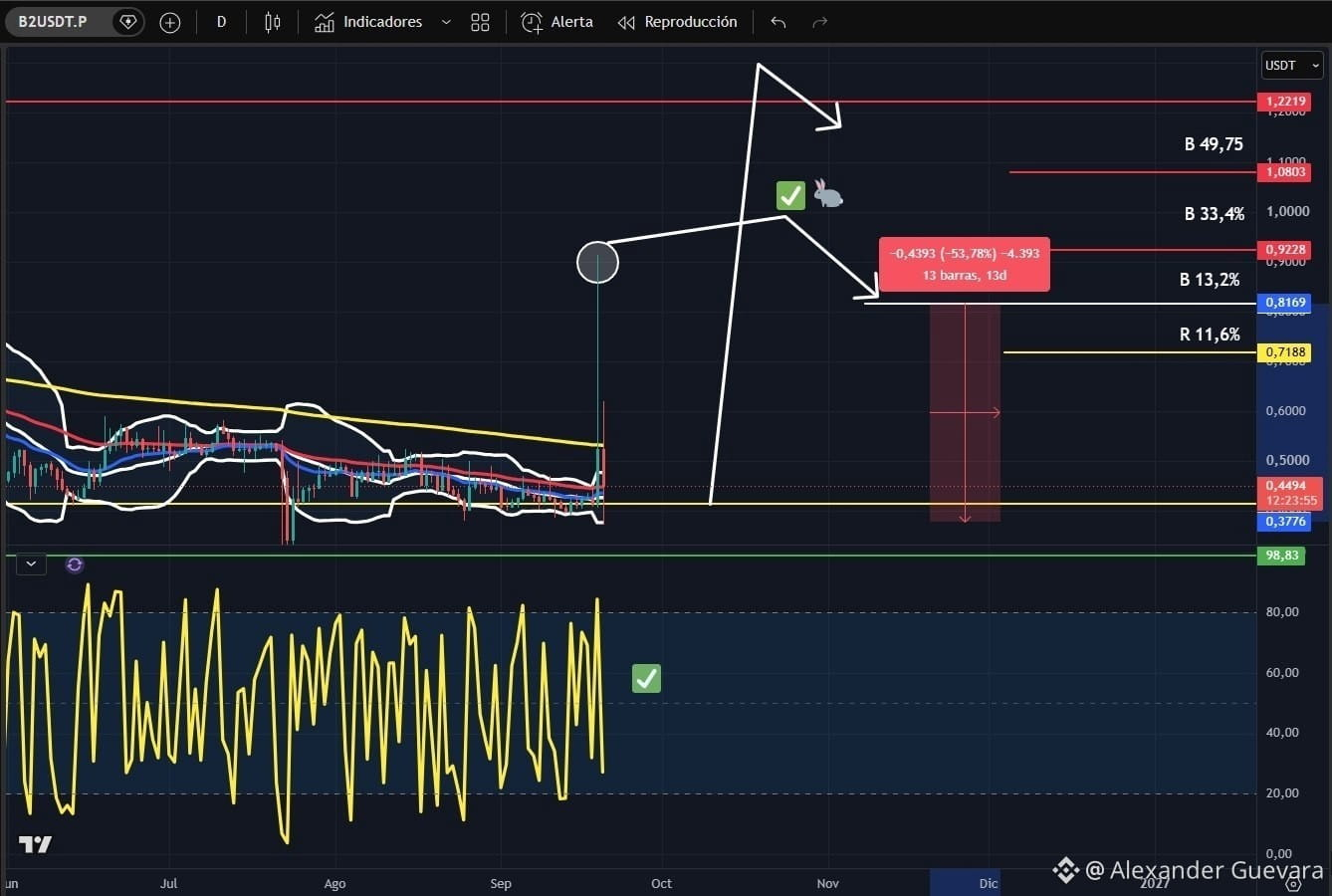
🛜🔴 #B2 en 📉 of a day. Leveraged benefit by 10X 👉 537% 🩸🐻🔥. 📈🐮📉🐻
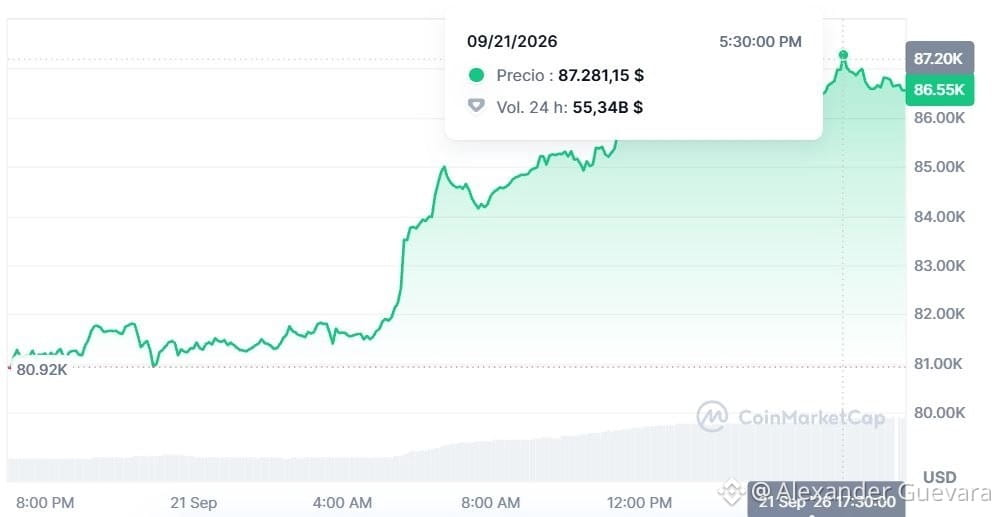
💥#bitcoin in 87,000 USDT...🔥 💫 🫶
The case of the digital collectible from the 0N1 Force collection that YouTuber Logan Paul bought in August 2021 for 188 ethers, equivalent to about US$635,000, has become one of the most talked-about examples of the crypto and digital collectibles market collapse. While recent estimates put its current value around US$155, the crash represents a loss of more than 99% of its original value.
This phenomenon was not exclusive to Logan Paul; many other celebrities and collectors experienced something similar after the NFT bubble burst in 2021 and 2022. Logan Paul himself publicly admitted some time ago that his million-dollar purchase was essentially nothing and that it had become an immortalized mistake on the blockchain.
#BTC #nft #ETH $B2 $ETH $BTC
🛜🔴 #B2 en 📉 of a day. Leveraged benefit by 10X 👉 537% 🩸🐻🔥. 📈🐮📉🐻
💥#bitcoin in 87,000 USDT...🔥 💫 🫶
The case of the digital collectible from the 0N1 Force collection that YouTuber Logan Paul bought in August 2021 for 188 ethers, equivalent to about US$635,000, has become one of the most talked-about examples of the crypto and digital collectibles market collapse. While recent estimates put its current value around US$155, the crash represents a loss of more than 99% of its original value.
This phenomenon was not exclusive to Logan Paul; many other celebrities and collectors experienced something similar after the NFT bubble burst in 2021 and 2022. Logan Paul himself publicly admitted some time ago that his million-dollar purchase was essentially nothing and that it had become an immortalized mistake on the blockchain.
#BTC #nft #ETH $B2 $ETH $BTC
💥#bitcoin in 87,000 USDT...🔥 💫 🫶
The case of the digital collectible from the 0N1 Force collection that YouTuber Logan Paul bought in August 2021 for 188 ethers, equivalent to about US$635,000, has become one of the most talked-about examples of the crypto and digital collectibles market collapse. While recent estimates put its current value around US$155, the crash represents a loss of more than 99% of its original value.
This phenomenon was not exclusive to Logan Paul; many other celebrities and collectors experienced something similar after the NFT bubble burst in 2021 and 2022. Logan Paul himself publicly admitted some time ago that his million-dollar purchase was essentially nothing and that it had become an immortalized mistake on the blockchain.
#BTC #nft #ETH $B2 $ETH $BTC
75
·
--
Partly True
The bored ape bought for 117 ETH, the owner personally delivered it to the destruction address.
Not a scam—intentionally burned.
The comments section erupted on the spot: Is this an identity declaration, or just pure performance?
Let’s look at the numbers:
The entire BAYC series has 9998 apes; burning one only reduces the supply by 0.01%.
Bought for 117 ETH back then, and now the floor price is only 6.49 ETH—down 94%.
A small account with 680 followers posted it: 88k views, 73 quote tweets, 291 replies, plus 15 large accounts reposted.
In 30 days, the floor price dropped 13.9%; in a year, it fell 57.4%.
On OpenSea today there were 13 sales totaling about 86 ETH; over the past 30 days, 224 sales totaling about 1730 ETH—sure, it’s lively, but the buy pressure hasn’t really increased.
117 ETH is a historical anchor, not today’s valuation.
Treating the original purchase price as what it “should” be worth, and turning sunk costs into a market consensus.
I lean toward short-term choppy trading and weakness. One burn can’t change the 9998-ape supply; whatever should fall will still fall. But if this controversy keeps fermenting and brings in more accounts to burn monkeys and trade identity scarcity narratives, then it’s possible the floor price could truly be pushed up in the short term.
$APE #BAYC #NFT #Ethereum
The bored ape bought for 117 ETH, the owner personally delivered it to the destruction address.
Not a scam—intentionally burned.
The comments section erupted on the spot: Is this an identity declaration, or just pure performance?
Let’s look at the numbers:
The entire BAYC series has 9998 apes; burning one only reduces the supply by 0.01%.
Bought for 117 ETH back then, and now the floor price is only 6.49 ETH—down 94%.
A small account with 680 followers posted it: 88k views, 73 quote tweets, 291 replies, plus 15 large accounts reposted.
In 30 days, the floor price dropped 13.9%; in a year, it fell 57.4%.
On OpenSea today there were 13 sales totaling about 86 ETH; over the past 30 days, 224 sales totaling about 1730 ETH—sure, it’s lively, but the buy pressure hasn’t really increased.
117 ETH is a historical anchor, not today’s valuation.
Treating the original purchase price as what it “should” be worth, and turning sunk costs into a market consensus.
I lean toward short-term choppy trading and weakness. One burn can’t change the 9998-ape supply; whatever should fall will still fall. But if this controversy keeps fermenting and brings in more accounts to burn monkeys and trade identity scarcity narratives, then it’s possible the floor price could truly be pushed up in the short term.
$APE #BAYC #NFT #Ethereum
Not a scam—intentionally burned.
The comments section erupted on the spot: Is this an identity declaration, or just pure performance?
Let’s look at the numbers:
The entire BAYC series has 9998 apes; burning one only reduces the supply by 0.01%.
Bought for 117 ETH back then, and now the floor price is only 6.49 ETH—down 94%.
A small account with 680 followers posted it: 88k views, 73 quote tweets, 291 replies, plus 15 large accounts reposted.
In 30 days, the floor price dropped 13.9%; in a year, it fell 57.4%.
On OpenSea today there were 13 sales totaling about 86 ETH; over the past 30 days, 224 sales totaling about 1730 ETH—sure, it’s lively, but the buy pressure hasn’t really increased.
117 ETH is a historical anchor, not today’s valuation.
Treating the original purchase price as what it “should” be worth, and turning sunk costs into a market consensus.
I lean toward short-term choppy trading and weakness. One burn can’t change the 9998-ape supply; whatever should fall will still fall. But if this controversy keeps fermenting and brings in more accounts to burn monkeys and trade identity scarcity narratives, then it’s possible the floor price could truly be pushed up in the short term.
$APE #BAYC #NFT #Ethereum
233

·
--
Chinese Version:
The National Press and Publication Administration has released the "15th Five-Year Plan" for 2021–2025. By 2030, the publishing industry will achieve high-quality, rapid development! This isn’t just about reading and writing—it’s the deep integration of culture and technology. Think about it: digital publishing, NFT asset tokenization, and Web3 cultural content are all the future hotspots! As the publishing industry undergoes a full-scale digital transformation, the blockchain value of cultural IPs will enter a breakout period. #Web3 #NFT $APE $MANA
English:
China's publishing industry unveils 15-year plan, aiming for high-quality growth by 2030! This is about more than books - it's cultural content meeting Web3 tech. Digital publishing, NFT tokenization of IP, and metaverse integration are all becoming mainstream. As publishing embraces blockchain, cultural assets tokenization will explode in value. #Web3 #NFT $APE $MANA
Chinese Version:
The National Press and Publication Administration has released the "15th Five-Year Plan" for 2021–2025. By 2030, the publishing industry will achieve high-quality, rapid development! This isn’t just about reading and writing—it’s the deep integration of culture and technology. Think about it: digital publishing, NFT asset tokenization, and Web3 cultural content are all the future hotspots! As the publishing industry undergoes a full-scale digital transformation, the blockchain value of cultural IPs will enter a breakout period. #Web3 #NFT $APE $MANA
English:
China's publishing industry unveils 15-year plan, aiming for high-quality growth by 2030! This is about more than books - it's cultural content meeting Web3 tech. Digital publishing, NFT tokenization of IP, and metaverse integration are all becoming mainstream. As publishing embraces blockchain, cultural assets tokenization will explode in value. #Web3 #NFT $APE $MANA
The National Press and Publication Administration has released the "15th Five-Year Plan" for 2021–2025. By 2030, the publishing industry will achieve high-quality, rapid development! This isn’t just about reading and writing—it’s the deep integration of culture and technology. Think about it: digital publishing, NFT asset tokenization, and Web3 cultural content are all the future hotspots! As the publishing industry undergoes a full-scale digital transformation, the blockchain value of cultural IPs will enter a breakout period. #Web3 #NFT $APE $MANA
English:
China's publishing industry unveils 15-year plan, aiming for high-quality growth by 2030! This is about more than books - it's cultural content meeting Web3 tech. Digital publishing, NFT tokenization of IP, and metaverse integration are all becoming mainstream. As publishing embraces blockchain, cultural assets tokenization will explode in value. #Web3 #NFT $APE $MANA
95
·
--
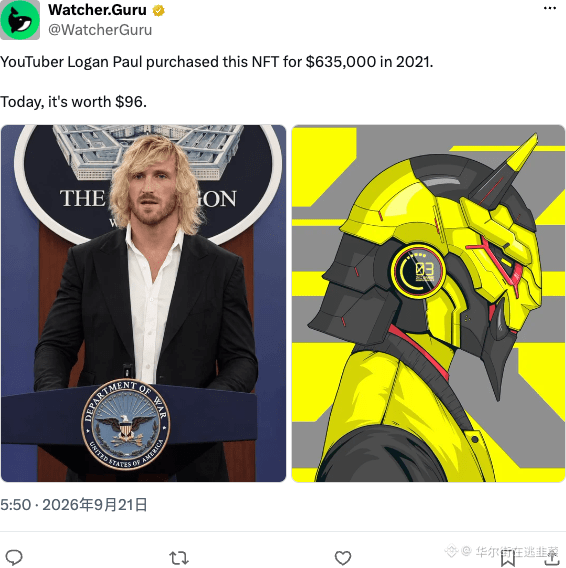
That NFT Logan Paul bought back then for $635,000 is now valued at just $96. Terrible loss of 99.98%—not even enough to cover the fees to fill the gap 🤡
The NFT bubble has burst, sure, but the real lesson is this: celebrity calls + scarcity narrative—who gets left holding the bag is always the one who believes the story.
Watch the drama, sure—but don’t be the last one holding the stick.
$BTC #NFT
That NFT Logan Paul bought back then for $635,000 is now valued at just $96. Terrible loss of 99.98%—not even enough to cover the fees to fill the gap 🤡
The NFT bubble has burst, sure, but the real lesson is this: celebrity calls + scarcity narrative—who gets left holding the bag is always the one who believes the story.
Watch the drama, sure—but don’t be the last one holding the stick.
$BTC #NFT
The NFT bubble has burst, sure, but the real lesson is this: celebrity calls + scarcity narrative—who gets left holding the bag is always the one who believes the story.
Watch the drama, sure—but don’t be the last one holding the stick.
$BTC #NFT
124
·
--
25,305 ZEC sell-out frenzy at the entrance—then a single tweet turned the whole launch into a “self-dealing at the scene” fiasco.
So who’s right?
First, look at the numbers.
8,000 NFTs: sold out at 1.5 ZEC per copy—after deducting refunds, net inflow was about 12,000 ZEC.
On-chain trading volume in the 3 hours before launch: 1,305 ZEC—real money moved.
But ZachXBT’s “team gets a 10% share + 5% royalties + zero utility” accusation has still not released a single on-chain piece of evidence.
Real demand and real accusations are both on the table—no one has been disproven.
What really deserves scrutiny isn’t whether this sale made money; it’s what happens after the sale.
Retention rate, how the treasury is spent, and whether secondary liquidity can hold up—those are what determine whether Zcash is truly being built.
Network congestion warnings and thin liquidity are more urgent problems right now than this real-world argument over words.
I won’t be chasing this NFT now—the strongest wave of demand has already passed. The real signal is the actual usage of ZEC itself, not the social buzz around this sale.
$ZEC #NFT #Crypto
25,305 ZEC sell-out frenzy at the entrance—then a single tweet turned the whole launch into a “self-dealing at the scene” fiasco.
So who’s right?
First, look at the numbers.
8,000 NFTs: sold out at 1.5 ZEC per copy—after deducting refunds, net inflow was about 12,000 ZEC.
On-chain trading volume in the 3 hours before launch: 1,305 ZEC—real money moved.
But ZachXBT’s “team gets a 10% share + 5% royalties + zero utility” accusation has still not released a single on-chain piece of evidence.
Real demand and real accusations are both on the table—no one has been disproven.
What really deserves scrutiny isn’t whether this sale made money; it’s what happens after the sale.
Retention rate, how the treasury is spent, and whether secondary liquidity can hold up—those are what determine whether Zcash is truly being built.
Network congestion warnings and thin liquidity are more urgent problems right now than this real-world argument over words.
I won’t be chasing this NFT now—the strongest wave of demand has already passed. The real signal is the actual usage of ZEC itself, not the social buzz around this sale.
$ZEC #NFT #Crypto
So who’s right?
First, look at the numbers.
8,000 NFTs: sold out at 1.5 ZEC per copy—after deducting refunds, net inflow was about 12,000 ZEC.
On-chain trading volume in the 3 hours before launch: 1,305 ZEC—real money moved.
But ZachXBT’s “team gets a 10% share + 5% royalties + zero utility” accusation has still not released a single on-chain piece of evidence.
Real demand and real accusations are both on the table—no one has been disproven.
What really deserves scrutiny isn’t whether this sale made money; it’s what happens after the sale.
Retention rate, how the treasury is spent, and whether secondary liquidity can hold up—those are what determine whether Zcash is truly being built.
Network congestion warnings and thin liquidity are more urgent problems right now than this real-world argument over words.
I won’t be chasing this NFT now—the strongest wave of demand has already passed. The real signal is the actual usage of ZEC itself, not the social buzz around this sale.
$ZEC #NFT #Crypto
151
·
--
Most NFT collections on even the largest marketplaces leave about 90% of holders underwater a few months after mint.
That is the part that actually matters. You ape a floor on TON because Getgems is the biggest marketplace and it feels like the safe choice, then liquidity dries up and you are stuck.
Getgems really is the main spot for exploring, trading, and collecting NFTs on TON. Being number one brings attention, but it does not magically create buyers. A lot of the volume you see is thin, sometimes wash-y, and plenty of collections never find real secondary demand after the mint hype fades.
Contract risk is still underpriced here. TON is younger than people act like it is, so sketchy contracts and copycat collections show up more often than they should. People have already gotten caught holding bags they cannot move.
When $TON starts moving and $NOT or $DOGS catch a bid, NFT FOMO usually shows up right after. That is historically when the worst entries happen, because everyone assumes the biggest marketplace will always have an exit.
How are you sizing NFT bets on TON when the exit liquidity is this unreliable?
#TON #NFT #Onchain
Most NFT collections on even the largest marketplaces leave about 90% of holders underwater a few months after mint.
That is the part that actually matters. You ape a floor on TON because Getgems is the biggest marketplace and it feels like the safe choice, then liquidity dries up and you are stuck.
Getgems really is the main spot for exploring, trading, and collecting NFTs on TON. Being number one brings attention, but it does not magically create buyers. A lot of the volume you see is thin, sometimes wash-y, and plenty of collections never find real secondary demand after the mint hype fades.
Contract risk is still underpriced here. TON is younger than people act like it is, so sketchy contracts and copycat collections show up more often than they should. People have already gotten caught holding bags they cannot move.
When $TON starts moving and $NOT or $DOGS catch a bid, NFT FOMO usually shows up right after. That is historically when the worst entries happen, because everyone assumes the biggest marketplace will always have an exit.
How are you sizing NFT bets on TON when the exit liquidity is this unreliable?
#TON #NFT #Onchain
That is the part that actually matters. You ape a floor on TON because Getgems is the biggest marketplace and it feels like the safe choice, then liquidity dries up and you are stuck.
Getgems really is the main spot for exploring, trading, and collecting NFTs on TON. Being number one brings attention, but it does not magically create buyers. A lot of the volume you see is thin, sometimes wash-y, and plenty of collections never find real secondary demand after the mint hype fades.
Contract risk is still underpriced here. TON is younger than people act like it is, so sketchy contracts and copycat collections show up more often than they should. People have already gotten caught holding bags they cannot move.
When $TON starts moving and $NOT or $DOGS catch a bid, NFT FOMO usually shows up right after. That is historically when the worst entries happen, because everyone assumes the biggest marketplace will always have an exit.
How are you sizing NFT bets on TON when the exit liquidity is this unreliable?
#TON #NFT #Onchain
337

If you're still ignoring TON NFTs because the last cycle burned you, stop now. This mistake cost traders millions in gas fees and missed entries while a cheaper ecosystem quietly took shape.
Traders keep getting wrecked by FOMO buys on expensive collections that dump overnight and rugs on untested marketplaces. Most never know when to exit because they cannot even find liquid spots without getting crushed on fees.
Getgems is the largest NFT marketplace on TON for exploring, trading, and collecting. Skeptics say NFTs are finished after volumes collapsed on $ETH, and they have a point about the old model. That view misses how $TON changed the equation with Telegram's 900 million users and fees that stay under a cent, something $SOL never delivered at this scale.
Activity on Getgems keeps rising because it actually works for collectors instead of just degens. The debate is whether this is a real shift or another dead cat bounce, but the accessibility edge is hard to ignore.
Where do you think TON NFTs go from here?
#TON #NFT #Crypto
If you're still ignoring TON NFTs because the last cycle burned you, stop now. This mistake cost traders millions in gas fees and missed entries while a cheaper ecosystem quietly took shape.
Traders keep getting wrecked by FOMO buys on expensive collections that dump overnight and rugs on untested marketplaces. Most never know when to exit because they cannot even find liquid spots without getting crushed on fees.
Getgems is the largest NFT marketplace on TON for exploring, trading, and collecting. Skeptics say NFTs are finished after volumes collapsed on $ETH , and they have a point about the old model. That view misses how $TON changed the equation with Telegram's 900 million users and fees that stay under a cent, something $SOL never delivered at this scale.
Activity on Getgems keeps rising because it actually works for collectors instead of just degens. The debate is whether this is a real shift or another dead cat bounce, but the accessibility edge is hard to ignore.
Where do you think TON NFTs go from here?
#TON #NFT #Crypto
Traders keep getting wrecked by FOMO buys on expensive collections that dump overnight and rugs on untested marketplaces. Most never know when to exit because they cannot even find liquid spots without getting crushed on fees.
Getgems is the largest NFT marketplace on TON for exploring, trading, and collecting. Skeptics say NFTs are finished after volumes collapsed on $ETH , and they have a point about the old model. That view misses how $TON changed the equation with Telegram's 900 million users and fees that stay under a cent, something $SOL never delivered at this scale.
Activity on Getgems keeps rising because it actually works for collectors instead of just degens. The debate is whether this is a real shift or another dead cat bounce, but the accessibility edge is hard to ignore.
Where do you think TON NFTs go from here?
#TON #NFT #Crypto
35

·
--
Here's what happened when Getgems quietly became the default door for almost every NFT on TON.
Traders keep treating marketplace size as a safety net. Then they find out they cannot exit without wrecking the floor, usually after a FOMO buy into a collection that never had real bids.
Getgems is the largest NFT marketplace on TON for exploring, trading, and collecting. That gets repeated like it is protection. The part most people missed is concentration. When one venue owns discovery and settlement, a quiet stretch in $TON can wipe the bids under a collection overnight. Listings remain. Sellable depth does not.
This already played out on $ETH when NFT flow sat in a single marketplace and then left. A busy storefront hid how thin the book was. Same setup here. If you are rotating $USDT into TON NFTs because Getgems looks active, you are underwriting a single point of failure. Dominance is convenient on the way in and a bottleneck on the way out.
Where do you think this goes from here if TON NFT volume stays parked in one venue?
#TON #NFT #Crypto
Here's what happened when Getgems quietly became the default door for almost every NFT on TON.
Traders keep treating marketplace size as a safety net. Then they find out they cannot exit without wrecking the floor, usually after a FOMO buy into a collection that never had real bids.
Getgems is the largest NFT marketplace on TON for exploring, trading, and collecting. That gets repeated like it is protection. The part most people missed is concentration. When one venue owns discovery and settlement, a quiet stretch in $TON can wipe the bids under a collection overnight. Listings remain. Sellable depth does not.
This already played out on $ETH when NFT flow sat in a single marketplace and then left. A busy storefront hid how thin the book was. Same setup here. If you are rotating $USDT into TON NFTs because Getgems looks active, you are underwriting a single point of failure. Dominance is convenient on the way in and a bottleneck on the way out.
Where do you think this goes from here if TON NFT volume stays parked in one venue?
#TON #NFT #Crypto
Traders keep treating marketplace size as a safety net. Then they find out they cannot exit without wrecking the floor, usually after a FOMO buy into a collection that never had real bids.
Getgems is the largest NFT marketplace on TON for exploring, trading, and collecting. That gets repeated like it is protection. The part most people missed is concentration. When one venue owns discovery and settlement, a quiet stretch in $TON can wipe the bids under a collection overnight. Listings remain. Sellable depth does not.
This already played out on $ETH when NFT flow sat in a single marketplace and then left. A busy storefront hid how thin the book was. Same setup here. If you are rotating $USDT into TON NFTs because Getgems looks active, you are underwriting a single point of failure. Dominance is convenient on the way in and a bottleneck on the way out.
Where do you think this goes from here if TON NFT volume stays parked in one venue?
#TON #NFT #Crypto
42
·
--
Verified
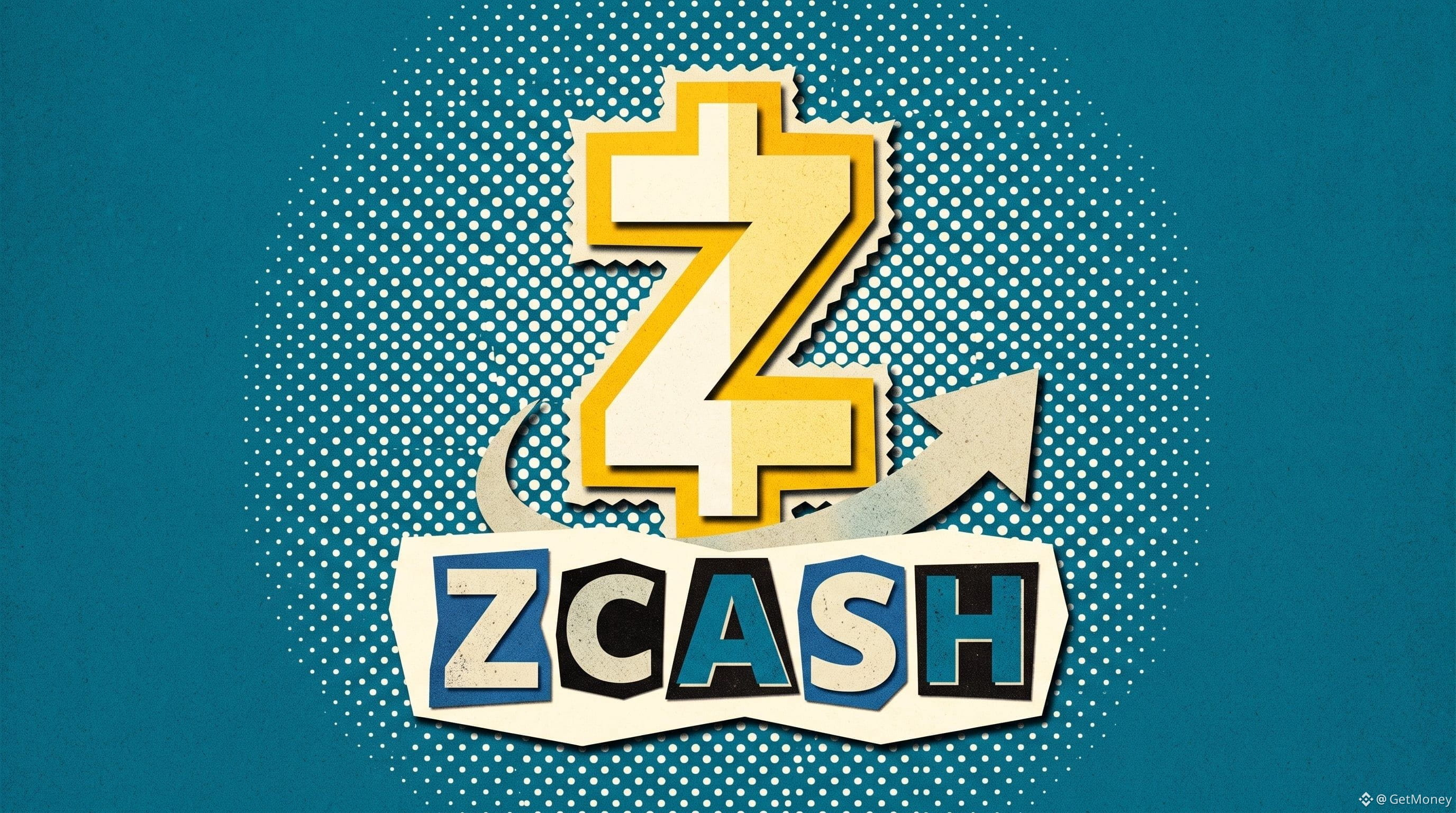
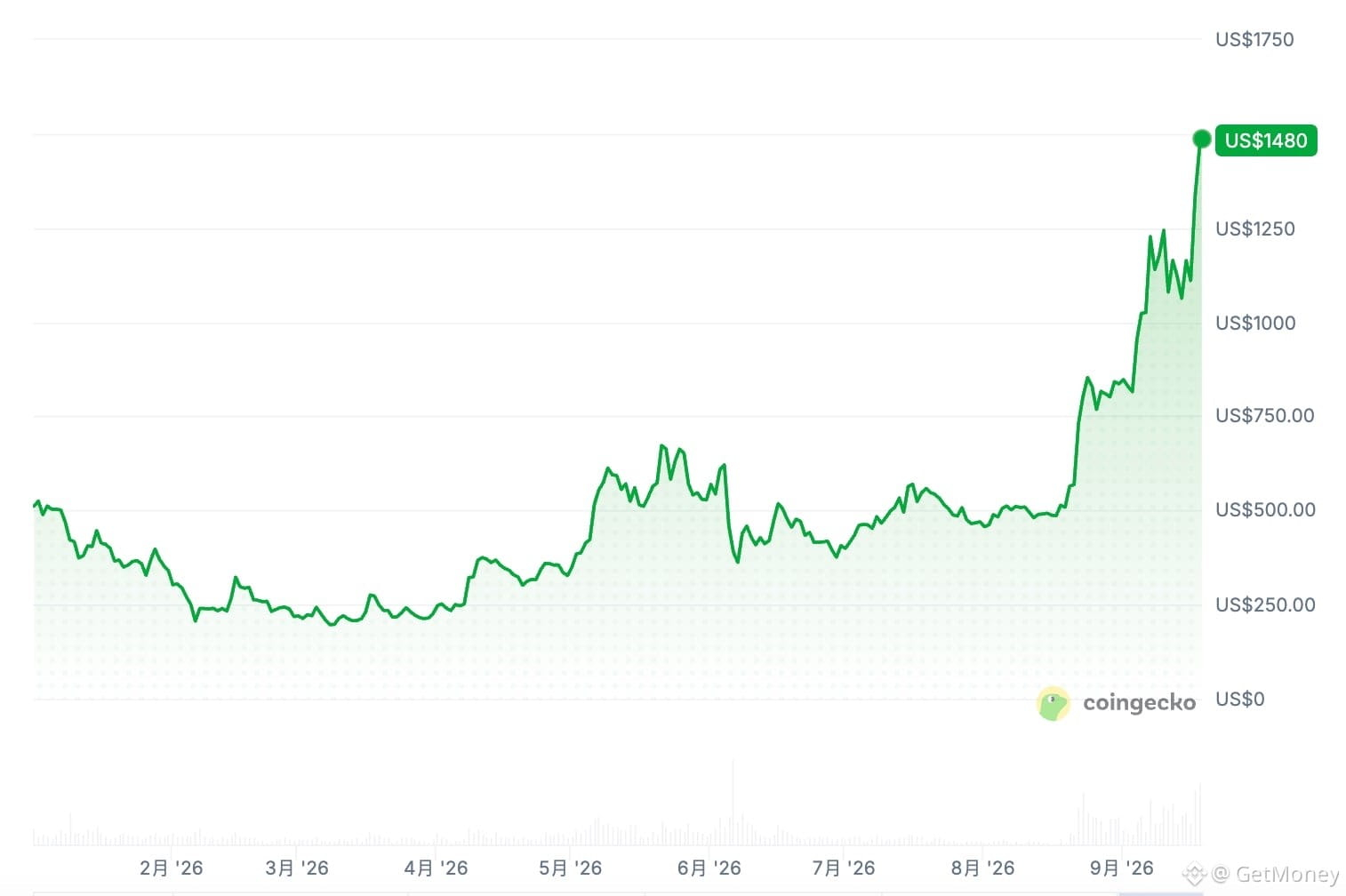
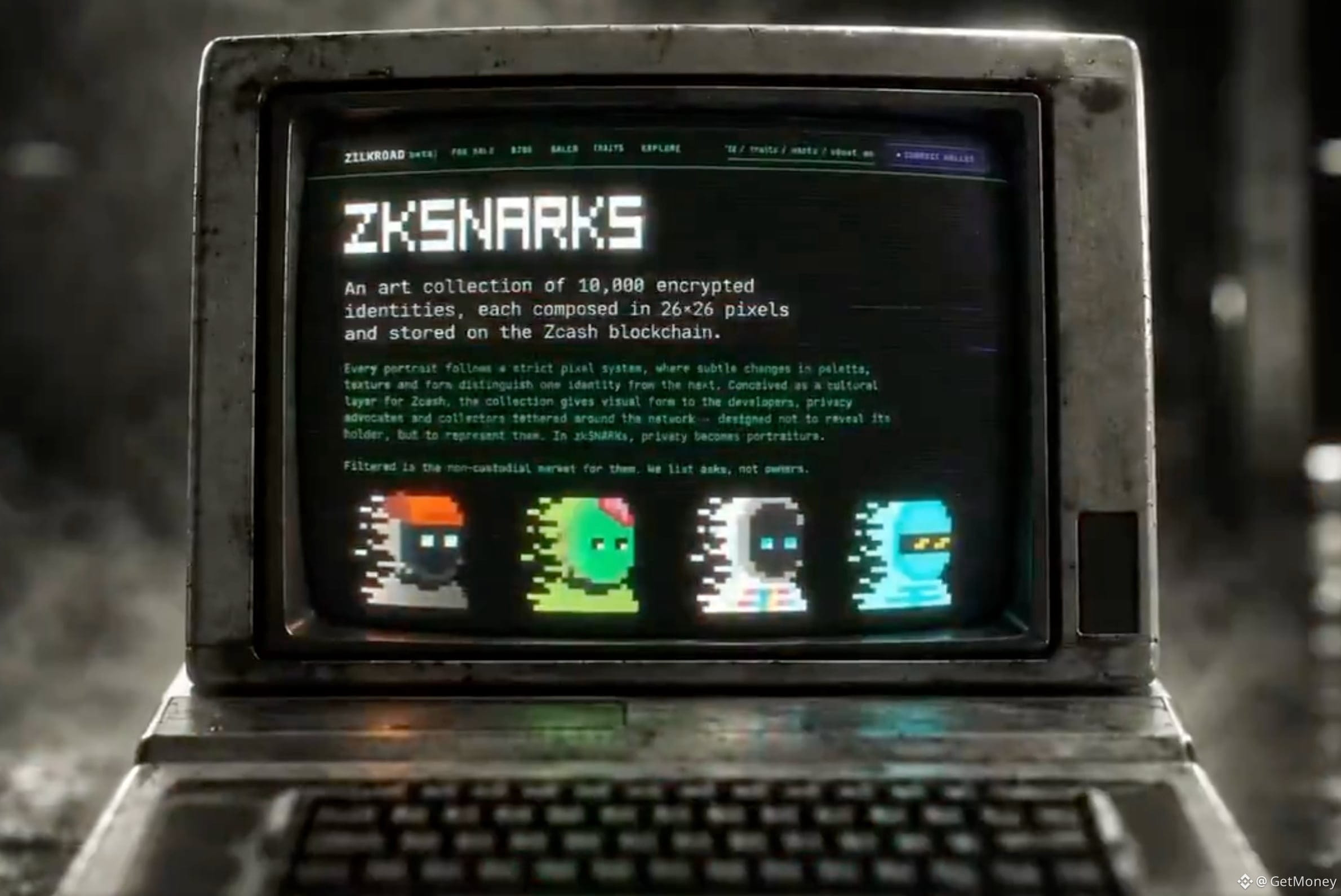
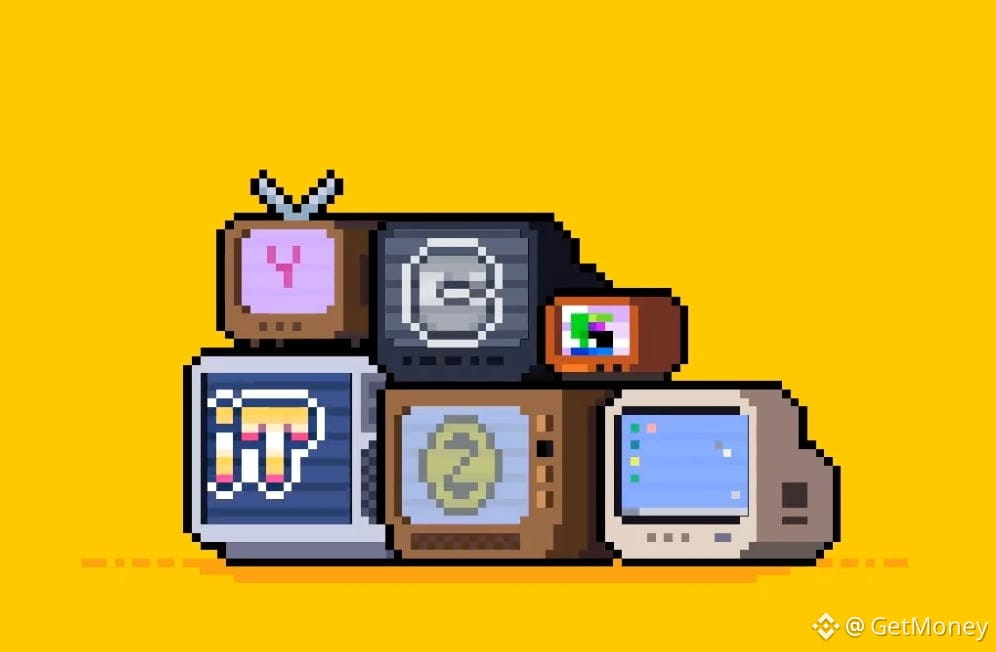
📰 ZEC This wave of hype has spread from coin prices to NFTs. A batch of new projects has emerged in the Zcash ecosystem—the gameplay isn’t just about profile-picture collecting; the focus is on private identities, masking ownership, and on-chain transactions.
🔥 The most eye-catching is zkSNARKs. There are 10,000 in total. The auction attracted 16,971 bids in total, with a settlement price of 1.5 ZEC. Cumulative sales are approximately 25,305 ZEC, equivalent to about $36.94 million. But it also comes with controversy: Leonidas, an Ordinals developer, publicly accused the team of having issues—so you can’t just look at the hype.
💡 ZecBit and ZADDR are more like experiments in a new model of “public assets, hidden holders.” ZecBit’s first series has 3,333 items and has already completed minting; ZADDR launched 2,800 pixel avatar-style NFTs. The related introduction tweet has received over 1.5 million views, but the official mint time and price have not been announced yet.
In fact, ZADDR’s design isn’t limited to NFTs. Users can replace a long Zcash address with a short name. It also supports cross-chain exchange: BTC, ETH, USDC, and other assets can be converted into ZEC, and private keys plus transaction signing are handled on the user’s device side. BITFOOTS takes a route focused on human-made creation, and it also includes a dual-chain玩法 (Zcash + Bitcoin Ordinals).
🤔 So, is this wave a real start of privacy applications taking off—or is it just short-term chasing of attention after ZEC price increases? If you can only choose one, would you look at zkSNARKs, ZecBit, or ZADDR?
#ZEC #Zcash #NFT #privacy-coin
📰 ZEC This wave of hype has spread from coin prices to NFTs. A batch of new projects has emerged in the Zcash ecosystem—the gameplay isn’t just about profile-picture collecting; the focus is on private identities, masking ownership, and on-chain transactions.
🔥 The most eye-catching is zkSNARKs. There are 10,000 in total. The auction attracted 16,971 bids in total, with a settlement price of 1.5 ZEC. Cumulative sales are approximately 25,305 ZEC, equivalent to about $36.94 million. But it also comes with controversy: Leonidas, an Ordinals developer, publicly accused the team of having issues—so you can’t just look at the hype.
💡 ZecBit and ZADDR are more like experiments in a new model of “public assets, hidden holders.” ZecBit’s first series has 3,333 items and has already completed minting; ZADDR launched 2,800 pixel avatar-style NFTs. The related introduction tweet has received over 1.5 million views, but the official mint time and price have not been announced yet.
In fact, ZADDR’s design isn’t limited to NFTs. Users can replace a long Zcash address with a short name. It also supports cross-chain exchange: BTC, ETH, USDC, and other assets can be converted into ZEC, and private keys plus transaction signing are handled on the user’s device side. BITFOOTS takes a route focused on human-made creation, and it also includes a dual-chain玩法 (Zcash + Bitcoin Ordinals).
🤔 So, is this wave a real start of privacy applications taking off—or is it just short-term chasing of attention after ZEC price increases? If you can only choose one, would you look at zkSNARKs, ZecBit, or ZADDR?
#ZEC #Zcash #NFT #privacy-coin
🔥 The most eye-catching is zkSNARKs. There are 10,000 in total. The auction attracted 16,971 bids in total, with a settlement price of 1.5 ZEC. Cumulative sales are approximately 25,305 ZEC, equivalent to about $36.94 million. But it also comes with controversy: Leonidas, an Ordinals developer, publicly accused the team of having issues—so you can’t just look at the hype.
💡 ZecBit and ZADDR are more like experiments in a new model of “public assets, hidden holders.” ZecBit’s first series has 3,333 items and has already completed minting; ZADDR launched 2,800 pixel avatar-style NFTs. The related introduction tweet has received over 1.5 million views, but the official mint time and price have not been announced yet.
In fact, ZADDR’s design isn’t limited to NFTs. Users can replace a long Zcash address with a short name. It also supports cross-chain exchange: BTC, ETH, USDC, and other assets can be converted into ZEC, and private keys plus transaction signing are handled on the user’s device side. BITFOOTS takes a route focused on human-made creation, and it also includes a dual-chain玩法 (Zcash + Bitcoin Ordinals).
🤔 So, is this wave a real start of privacy applications taking off—or is it just short-term chasing of attention after ZEC price increases? If you can only choose one, would you look at zkSNARKs, ZecBit, or ZADDR?
#ZEC #Zcash #NFT #privacy-coin
628
·
--
Constraints: No markdown, so plain text. Must be 150-200 words. Let's aim for ~170 words.
We need to include a real-world example or project, e.g., "Mad Lads" on Solana, or "Pudgy Penguins" expanding, or "Azuki" etc. Provide one example.
End with a poll-style question: "Do you own any NFTs? Drop a YES or NO below!" or similar.
Final line: #Solana #SOL #NFT #Web3
No markdown, no bold, no italics.
Word count: Let's count approximate words.
We'll write about 170 words.
Let's draft:
"Hey crew, the NFT buzz is back and it feels louder than a mint drop on launch day! After a quiet 2023‑24, creators are flooding back with utility‑first collections, gaming integrations, and real‑world perks. Take Mad Lads on Solana — they turned a cheeky PFPs into a full‑stack ecosystem with staking, merch drops, and a DAO that actually votes on roadmap moves. Brands like Nike and Starbucks are testing token‑gated experiences, while music artists drop limited‑edition tracks as NFTs that unlock backstage access. The tech has matured: lower gas, better metadata standards, and cross‑chain bridges mean collectors can move assets without friction. Community‑driven governance is the new hype, and the data shows trading volume climbing 40% quarter over quarter. So, are we witness
Constraints: No markdown, so plain text. Must be 150-200 words. Let's aim for ~170 words.
We need to include a real-world example or project, e.g., "Mad Lads" on Solana, or "Pudgy Penguins" expanding, or "Azuki" etc. Provide one example.
End with a poll-style question: "Do you own any NFTs? Drop a YES or NO below!" or similar.
Final line: #Solana #SOL #NFT #Web3
No markdown, no bold, no italics.
Word count: Let's count approximate words.
We'll write about 170 words.
Let's draft:
"Hey crew, the NFT buzz is back and it feels louder than a mint drop on launch day! After a quiet 2023‑24, creators are flooding back with utility‑first collections, gaming integrations, and real‑world perks. Take Mad Lads on Solana — they turned a cheeky PFPs into a full‑stack ecosystem with staking, merch drops, and a DAO that actually votes on roadmap moves. Brands like Nike and Starbucks are testing token‑gated experiences, while music artists drop limited‑edition tracks as NFTs that unlock backstage access. The tech has matured: lower gas, better metadata standards, and cross‑chain bridges mean collectors can move assets without friction. Community‑driven governance is the new hype, and the data shows trading volume climbing 40% quarter over quarter. So, are we witness
We need to include a real-world example or project, e.g., "Mad Lads" on Solana, or "Pudgy Penguins" expanding, or "Azuki" etc. Provide one example.
End with a poll-style question: "Do you own any NFTs? Drop a YES or NO below!" or similar.
Final line: #Solana #SOL #NFT #Web3
No markdown, no bold, no italics.
Word count: Let's count approximate words.
We'll write about 170 words.
Let's draft:
"Hey crew, the NFT buzz is back and it feels louder than a mint drop on launch day! After a quiet 2023‑24, creators are flooding back with utility‑first collections, gaming integrations, and real‑world perks. Take Mad Lads on Solana — they turned a cheeky PFPs into a full‑stack ecosystem with staking, merch drops, and a DAO that actually votes on roadmap moves. Brands like Nike and Starbucks are testing token‑gated experiences, while music artists drop limited‑edition tracks as NFTs that unlock backstage access. The tech has matured: lower gas, better metadata standards, and cross‑chain bridges mean collectors can move assets without friction. Community‑driven governance is the new hype, and the data shows trading volume climbing 40% quarter over quarter. So, are we witness
39
·
--
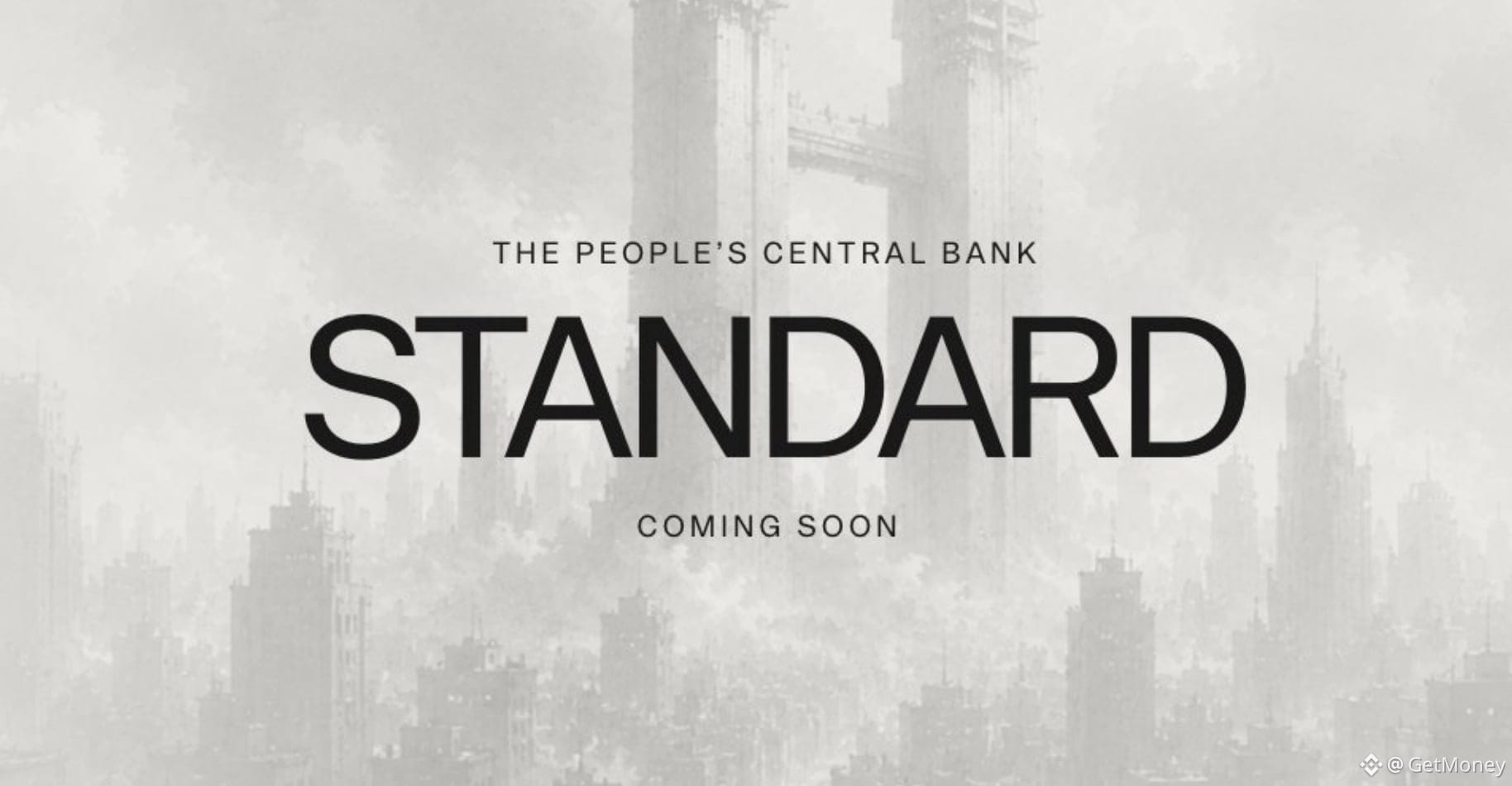
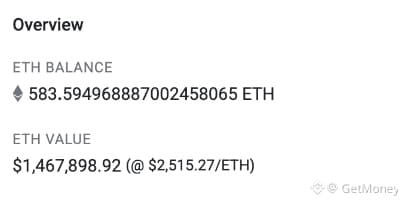
📰 The Standard Reserve has fully minted all 1,000 Genesis Charters, raising 583.594968887 ETH in total, and the STANDARD market cap has also surpassed $50 million. Honestly, what’s most eye-catching isn’t the name “on-chain bank,” but the fact that it ties token claiming to a permanent exit.
🔥 Whitelist users minted 601 charters, each costing 0.15 ETH; the remaining 399 were sold via a Dutch auction, with most deals closing between 1.23 and 1.25 ETH. The public auction’s average price is about 8.24x the whitelist price—what people are really competing for is the right to participate in the initial issuance.
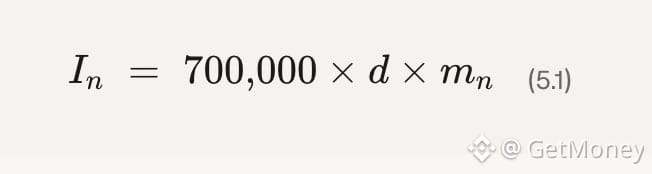
💡 STANDARD issues 700,000 tokens per day as its base issuance, but they’re first recorded in the protocol’s balance and won’t go directly into users’ wallets. To obtain transferable tokens, you need to close the branch, pay the dynamic exit fee, and permanently give up this branch’s future share of issuance.
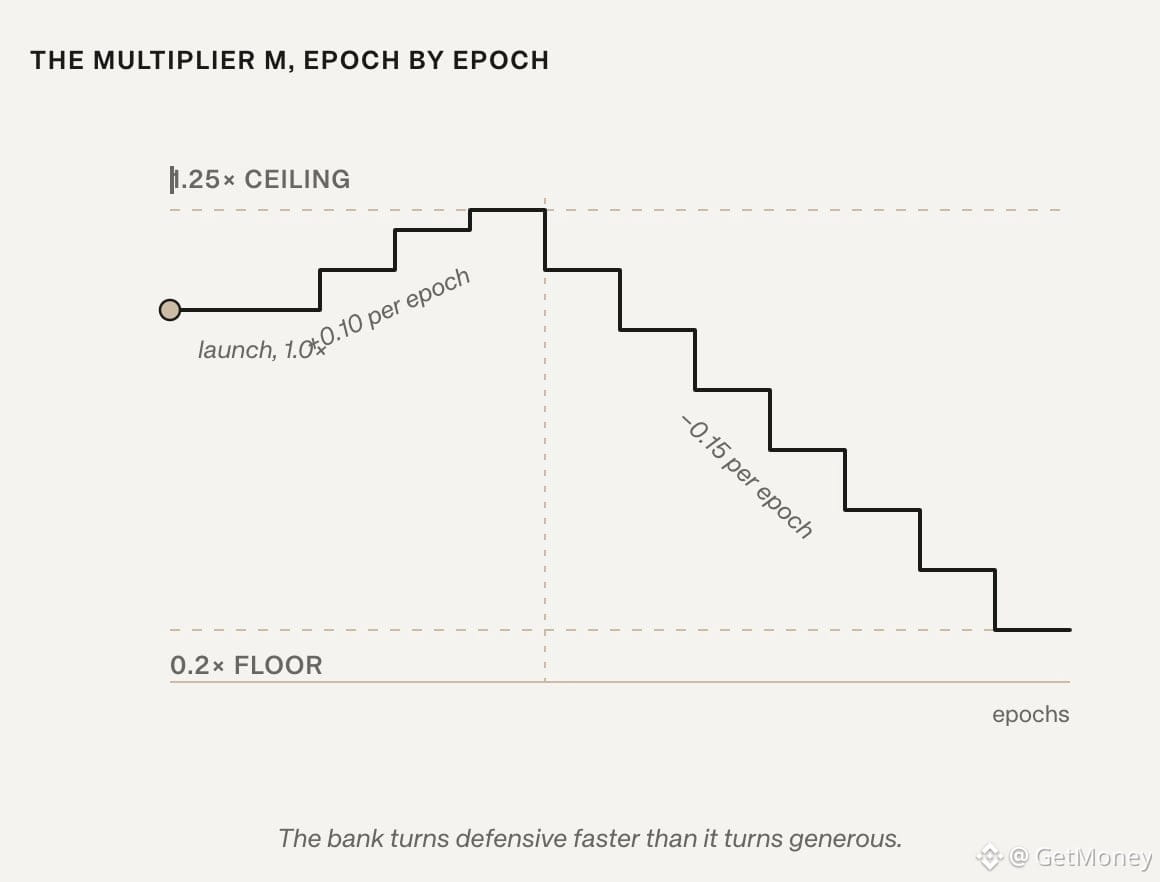
👀 Dilution has already begun. After the addition of 100 branches on day one, the total number of branches across the network increased from 1,000 to 1,100. When the policy multiplier remains at 1, the theoretical daily output per genesis license drops from 700 tokens to 636.36 tokens—a reduction of about 9.1%. Additional branches will continue to be auctioned afterward.
🤔 The figures on the page don’t equal the profits already secured—you also have to face changes in the policy multiplier, exit costs, liquidity, and contract security, among other risks. Will you close the branch now to cash out the current balance, or keep it to retain the future issuance rights?
#TheStandardReserve #STANDARD #NFT #on-chain protocol
📰 The Standard Reserve has fully minted all 1,000 Genesis Charters, raising 583.594968887 ETH in total, and the STANDARD market cap has also surpassed $50 million. Honestly, what’s most eye-catching isn’t the name “on-chain bank,” but the fact that it ties token claiming to a permanent exit.
🔥 Whitelist users minted 601 charters, each costing 0.15 ETH; the remaining 399 were sold via a Dutch auction, with most deals closing between 1.23 and 1.25 ETH. The public auction’s average price is about 8.24x the whitelist price—what people are really competing for is the right to participate in the initial issuance.
💡 STANDARD issues 700,000 tokens per day as its base issuance, but they’re first recorded in the protocol’s balance and won’t go directly into users’ wallets. To obtain transferable tokens, you need to close the branch, pay the dynamic exit fee, and permanently give up this branch’s future share of issuance.
👀 Dilution has already begun. After the addition of 100 branches on day one, the total number of branches across the network increased from 1,000 to 1,100. When the policy multiplier remains at 1, the theoretical daily output per genesis license drops from 700 tokens to 636.36 tokens—a reduction of about 9.1%. Additional branches will continue to be auctioned afterward.
🤔 The figures on the page don’t equal the profits already secured—you also have to face changes in the policy multiplier, exit costs, liquidity, and contract security, among other risks. Will you close the branch now to cash out the current balance, or keep it to retain the future issuance rights?
#TheStandardReserve #STANDARD #NFT #on-chain protocol
🔥 Whitelist users minted 601 charters, each costing 0.15 ETH; the remaining 399 were sold via a Dutch auction, with most deals closing between 1.23 and 1.25 ETH. The public auction’s average price is about 8.24x the whitelist price—what people are really competing for is the right to participate in the initial issuance.
💡 STANDARD issues 700,000 tokens per day as its base issuance, but they’re first recorded in the protocol’s balance and won’t go directly into users’ wallets. To obtain transferable tokens, you need to close the branch, pay the dynamic exit fee, and permanently give up this branch’s future share of issuance.
👀 Dilution has already begun. After the addition of 100 branches on day one, the total number of branches across the network increased from 1,000 to 1,100. When the policy multiplier remains at 1, the theoretical daily output per genesis license drops from 700 tokens to 636.36 tokens—a reduction of about 9.1%. Additional branches will continue to be auctioned afterward.
🤔 The figures on the page don’t equal the profits already secured—you also have to face changes in the policy multiplier, exit costs, liquidity, and contract security, among other risks. Will you close the branch now to cash out the current balance, or keep it to retain the future issuance rights?
#TheStandardReserve #STANDARD #NFT #on-chain protocol
108
·
--
$BLUR
{future}(BLURUSDT)
BLUR is a token connected to the Blur NFT marketplace ecosystem. The platform has focused on professional NFT traders and marketplace activity.
NFT markets remain highly cyclical, but Blur continues to represent an important part of the digital-collectibles sector. It is an interesting project to monitor as NFT activity changes.
#BLUR #NFT #Web3 #BinanceSquare
$BLUR
BLUR is a token connected to the Blur NFT marketplace ecosystem. The platform has focused on professional NFT traders and marketplace activity.
NFT markets remain highly cyclical, but Blur continues to represent an important part of the digital-collectibles sector. It is an interesting project to monitor as NFT activity changes.
#BLUR #NFT #Web3 #BinanceSquare
BLUR is a token connected to the Blur NFT marketplace ecosystem. The platform has focused on professional NFT traders and marketplace activity.
NFT markets remain highly cyclical, but Blur continues to represent an important part of the digital-collectibles sector. It is an interesting project to monitor as NFT activity changes.
#BLUR #NFT #Web3 #BinanceSquare
1
67
·
--
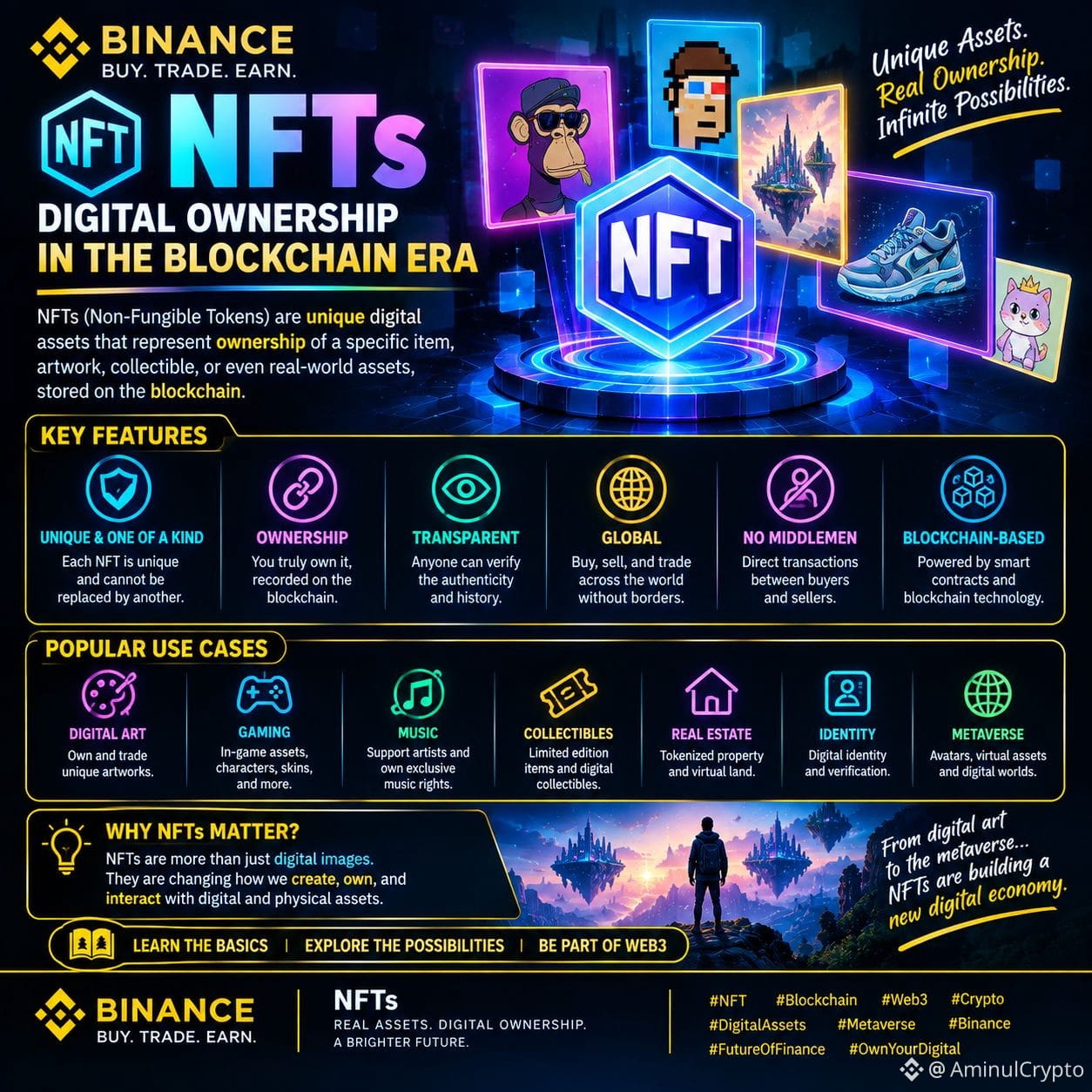
🎨 NFTs: THE FUTURE OF DIGITAL OWNERSHIP
NFTs (Non-Fungible Tokens) are unique digital assets recorded on a blockchain. Unlike regular cryptocurrencies, each NFT can represent something unique — from digital art and collectibles to gaming items and other digital assets.
🔹 Unique & One-of-a-kind
🔹 Blockchain-based ownership
🔹 Transparent & verifiable
🔹 Global accessibility
🔹 Digital scarcity
NFTs are being explored across many areas:
🎨 Digital Art
🎮 Gaming
🎵 Music
🏆 Collectibles
🌐 Metaverse
🏠 Digital & Tokenized Assets
NFTs are more than just digital pictures. They introduce new possibilities for how people can create, own, verify, and interact with digital assets.
📚 Learn the basics.
🔍 Do your own research.
💡 Understand the risks before participating.
What do you think has the biggest potential for NFTs — Art, Gaming, Music, or the Metaverse? 👇
#NFT #NFTs #blockchain #crypto
🎨 NFTs: THE FUTURE OF DIGITAL OWNERSHIP
NFTs (Non-Fungible Tokens) are unique digital assets recorded on a blockchain. Unlike regular cryptocurrencies, each NFT can represent something unique — from digital art and collectibles to gaming items and other digital assets.
🔹 Unique & One-of-a-kind
🔹 Blockchain-based ownership
🔹 Transparent & verifiable
🔹 Global accessibility
🔹 Digital scarcity
NFTs are being explored across many areas:
🎨 Digital Art
🎮 Gaming
🎵 Music
🏆 Collectibles
🌐 Metaverse
🏠 Digital & Tokenized Assets
NFTs are more than just digital pictures. They introduce new possibilities for how people can create, own, verify, and interact with digital assets.
📚 Learn the basics.
🔍 Do your own research.
💡 Understand the risks before participating.
What do you think has the biggest potential for NFTs — Art, Gaming, Music, or the Metaverse? 👇
#NFT #NFTs #blockchain #crypto
NFTs (Non-Fungible Tokens) are unique digital assets recorded on a blockchain. Unlike regular cryptocurrencies, each NFT can represent something unique — from digital art and collectibles to gaming items and other digital assets.
🔹 Unique & One-of-a-kind
🔹 Blockchain-based ownership
🔹 Transparent & verifiable
🔹 Global accessibility
🔹 Digital scarcity
NFTs are being explored across many areas:
🎨 Digital Art
🎮 Gaming
🎵 Music
🏆 Collectibles
🌐 Metaverse
🏠 Digital & Tokenized Assets
NFTs are more than just digital pictures. They introduce new possibilities for how people can create, own, verify, and interact with digital assets.
📚 Learn the basics.
🔍 Do your own research.
💡 Understand the risks before participating.
What do you think has the biggest potential for NFTs — Art, Gaming, Music, or the Metaverse? 👇
#NFT #NFTs #blockchain #crypto
1
82
NFT longtime players may want to pay attention: Meebits has teamed up with Clutch Markets to launch a new project, Nightshades, scheduled to go live on September 14.
This collaboration’s highlights are not only a new PFP set, but also whether Meebits’ pixel IP can form a meaningful connection with Clutch Markets’ trading and liquidity infrastructure. For the NFT market, beyond IP hype, the sale mechanism and how well it carries over after launch are equally crucial.
At present, the total supply, minting price, and access rules should still be based on official announcements. Don’t click unfamiliar links from outside platforms. Before and after launch, it’s recommended to focus on three key points: whether the mint mechanism is fair, the team’s reserved allocation ratio, and whether secondary-market liquidity performance can be sustained. Stay mindful of the hype—don’t let risk control go offline.
#NFT #Meebits #Nightshades
NFT longtime players may want to pay attention: Meebits has teamed up with Clutch Markets to launch a new project, Nightshades, scheduled to go live on September 14.
This collaboration’s highlights are not only a new PFP set, but also whether Meebits’ pixel IP can form a meaningful connection with Clutch Markets’ trading and liquidity infrastructure. For the NFT market, beyond IP hype, the sale mechanism and how well it carries over after launch are equally crucial.
At present, the total supply, minting price, and access rules should still be based on official announcements. Don’t click unfamiliar links from outside platforms. Before and after launch, it’s recommended to focus on three key points: whether the mint mechanism is fair, the team’s reserved allocation ratio, and whether secondary-market liquidity performance can be sustained. Stay mindful of the hype—don’t let risk control go offline.
#NFT #Meebits #Nightshades
This collaboration’s highlights are not only a new PFP set, but also whether Meebits’ pixel IP can form a meaningful connection with Clutch Markets’ trading and liquidity infrastructure. For the NFT market, beyond IP hype, the sale mechanism and how well it carries over after launch are equally crucial.
At present, the total supply, minting price, and access rules should still be based on official announcements. Don’t click unfamiliar links from outside platforms. Before and after launch, it’s recommended to focus on three key points: whether the mint mechanism is fair, the team’s reserved allocation ratio, and whether secondary-market liquidity performance can be sustained. Stay mindful of the hype—don’t let risk control go offline.
#NFT #Meebits #Nightshades
6

·
--
Meebits and Clutch Markets have teamed up to launch a new NFT project, Nightshades, scheduled to go live on September 14. As an extension of the Meebits ecosystem, this collaboration not only brings heightened IP visibility, but also introduces a more market-focused perspective on trading and liquidity. NFT players should pay close attention to the official minting rules, total supply, snapshot eligibility, and how the secondary market is expected to handle it. Do not click links from unknown sources. In the first day after launch, metrics such as turnover, the distribution of rarity, and community feedback will better reflect the project’s true quality than merely hyping the concept.
#Meebits #Nightshades #NFT
Meebits and Clutch Markets have teamed up to launch a new NFT project, Nightshades, scheduled to go live on September 14. As an extension of the Meebits ecosystem, this collaboration not only brings heightened IP visibility, but also introduces a more market-focused perspective on trading and liquidity. NFT players should pay close attention to the official minting rules, total supply, snapshot eligibility, and how the secondary market is expected to handle it. Do not click links from unknown sources. In the first day after launch, metrics such as turnover, the distribution of rarity, and community feedback will better reflect the project’s true quality than merely hyping the concept.
#Meebits #Nightshades #NFT
#Meebits #Nightshades #NFT
8
Log in to explore more content
Join global crypto users on Binance Square
⚡️ Get latest and useful information about crypto.
💬 Trusted by the world’s largest crypto exchange.
👍 Discover real insights from verified creators.
Email / Phone number
Trending Topics
1
#AIStocksWhatNext
685,829 views
5,112 Discussing
2
#21SharesLaunchesEuropesFirstZcashETP
16,198 views
554 Discussing
3
#CardanoJoinsX402PaymentStandard
11,569 views
421 Discussing
4
#BitcoinTops$87KAtEightMonthHigh
8,478 views
93 Discussing
5
#ZECBreaksAbove$1600AtRecordHigh
4,787 views
75 Discussing
6
#BitwiseNEARStakingETPAssetsTop$100M
31,772 views
86 Discussing
7
#BitcoinBreaksAboveMayHighNears$86K
28,979 views
265 Discussing
8
#DogecoinRises15%
109,736 views
1,829 Discussing
9
#$14BBitcoinOptionsExpireFriday
8,152 views
110 Discussing
10
#BNBMarketCapPassesBNYMellon
70,218 views
1,503 Discussing