

#tether
tether
4.8M views
7,416 Discussing
Hot
Latest

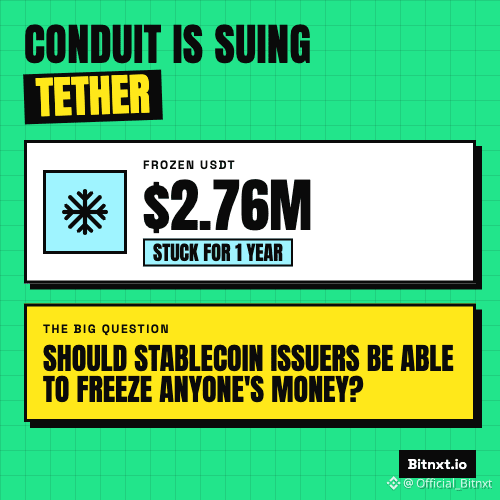
Conduit is suing Tether over $2.76M in USDT that has been frozen for a year.
Should stablecoin issuers be able to freeze anyone's money?
#Tether #USDT #Stablecoins
Conduit is suing Tether over $2.76M in USDT that has been frozen for a year.
Should stablecoin issuers be able to freeze anyone's money?
#Tether #USDT #Stablecoins
Should stablecoin issuers be able to freeze anyone's money?
#Tether #USDT #Stablecoins
1
1

Tether is deepening its ties with nation-states by partnering with Kazakhstan’s central bank to pilot a digital tenge and explore tokenized real-world assets. This move highlights how stablecoin issuers are evolving into core infrastructure providers for sovereign digital currencies. As governments race to adopt blockchain tech, collaboration between private giants and central banks will likely become the blueprint for future financial systems globally. $USDT #Tether #Stablecoins #CryptoRegulation
Tether is deepening its ties with nation-states by partnering with Kazakhstan’s central bank to pilot a digital tenge and explore tokenized real-world assets. This move highlights how stablecoin issuers are evolving into core infrastructure providers for sovereign digital currencies. As governments race to adopt blockchain tech, collaboration between private giants and central banks will likely become the blueprint for future financial systems globally. $USDT #Tether #Stablecoins #CryptoRegulation

·
--
Bullish
🏛️🇰🇿🤝 SOVEREIGN WEB3 EXPANSION: National Bank of Kazakhstan Partners with Tether to Explore Digital Finance Infrastructure! 🚀🌐⚡
A highly significant geopolitical and financial development is unfolding in Central Asia! The National Bank of Kazakhstan (NBK), alongside the Alatau City Administration, has officially signed a Memorandum of Understanding (MoU) with #Web3 infrastructure giant Tether! 💸🔥🔍
This strategic partnership is engineered to accelerate sovereign-level asset tokenization and stablecoin research under a controlled, institutional framework:
⚡🇰🇿 Tenge Stablecoin Framework:
The parties will jointly analyze global issuance models to design a comprehensive pilot proposal for a digital stablecoin pegged to Kazakhstan’s national currency, the Tenge.
💎🏢 Hadron Asset Tokenization:
The collaboration places a heavy focus on evaluating Tether’s Hadron platform to build a secure framework for tokenizing Real-World Assets (RWA) within Alatau City’s special economic zone.
🛡️📊 Institutional Safeguards:
Executive leadership emphasized that while exploring digital money and DeFi rails, maintaining absolute financial stability, transaction transparency, and investor protection remains the paramount priority.
Sovereign nations are no longer just regulating digital assets—they are actively integrating blockchain rails into state-level financial systems! 📊👑🌐
#crypto News #SovereignWeb3 #Tether #RWA #Tokenization #CentralAsia #TradFi
$BTC
{spot}(BTCUSDT)
$ETH
{spot}(ETHUSDT)
$SOL
{spot}(SOLUSDT)
🏛️🇰🇿🤝 SOVEREIGN WEB3 EXPANSION: National Bank of Kazakhstan Partners with Tether to Explore Digital Finance Infrastructure! 🚀🌐⚡
A highly significant geopolitical and financial development is unfolding in Central Asia! The National Bank of Kazakhstan (NBK), alongside the Alatau City Administration, has officially signed a Memorandum of Understanding (MoU) with #Web3 infrastructure giant Tether! 💸🔥🔍
This strategic partnership is engineered to accelerate sovereign-level asset tokenization and stablecoin research under a controlled, institutional framework:
⚡🇰🇿 Tenge Stablecoin Framework:
The parties will jointly analyze global issuance models to design a comprehensive pilot proposal for a digital stablecoin pegged to Kazakhstan’s national currency, the Tenge.
💎🏢 Hadron Asset Tokenization:
The collaboration places a heavy focus on evaluating Tether’s Hadron platform to build a secure framework for tokenizing Real-World Assets (RWA) within Alatau City’s special economic zone.
🛡️📊 Institutional Safeguards:
Executive leadership emphasized that while exploring digital money and DeFi rails, maintaining absolute financial stability, transaction transparency, and investor protection remains the paramount priority.
Sovereign nations are no longer just regulating digital assets—they are actively integrating blockchain rails into state-level financial systems! 📊👑🌐
#crypto News #SovereignWeb3 #Tether #RWA #Tokenization #CentralAsia #TradFi
$BTC
$ETH
$SOL
A highly significant geopolitical and financial development is unfolding in Central Asia! The National Bank of Kazakhstan (NBK), alongside the Alatau City Administration, has officially signed a Memorandum of Understanding (MoU) with #Web3 infrastructure giant Tether! 💸🔥🔍
This strategic partnership is engineered to accelerate sovereign-level asset tokenization and stablecoin research under a controlled, institutional framework:
⚡🇰🇿 Tenge Stablecoin Framework:
The parties will jointly analyze global issuance models to design a comprehensive pilot proposal for a digital stablecoin pegged to Kazakhstan’s national currency, the Tenge.
💎🏢 Hadron Asset Tokenization:
The collaboration places a heavy focus on evaluating Tether’s Hadron platform to build a secure framework for tokenizing Real-World Assets (RWA) within Alatau City’s special economic zone.
🛡️📊 Institutional Safeguards:
Executive leadership emphasized that while exploring digital money and DeFi rails, maintaining absolute financial stability, transaction transparency, and investor protection remains the paramount priority.
Sovereign nations are no longer just regulating digital assets—they are actively integrating blockchain rails into state-level financial systems! 📊👑🌐
#crypto News #SovereignWeb3 #Tether #RWA #Tokenization #CentralAsia #TradFi
$BTC
$ETH
$SOL

152

·
--
Conduit sues Tether over a frozen 2.76 million USDT walletA payments company is taking Tether to court over a frozen wallet, and the case could test how far a stablecoin issuer's freezing power goes.
📌 The news
Per The Block, cross-border payments firm Conduit sued Tether in the Southern District of New York on October 6. It says Tether has kept $2.76 million of $USDT frozen for more than a year, and that it owes Tether nothing.
🔍 The background
• Tether's freeze is linked to a Brazilian Federal Police investigation involving Onix Intermediações, a former Conduit customer.
• Conduit says Brazilian authorities never flagged its treasury wallet, and a Brazilian court confirmed Conduit was not under investigation.
• Per Conduit, Onix stopped using its platform in April 2025, before the wallet was even created, and the wallet never held Onix funds.
📊 The numbers
• $2.76 million frozen, in a wallet Conduit compares to an operating bank account serving 100+ countries.
• Conduit seeks release of the funds plus another $2.76 million in damages and profits it says Tether earned on the reserves behind them.
⚖️ Bull vs bear case
• Issuer side: freezes are a key tool against fraud and sanctions, and regulators expect issuers to use them.
• User side: if a freeze can last a year without a clear charge, businesses may question how safe stablecoin balances really are.
👀 What to watch next
Tether's response in court, and whether a judge sets any standard for how long and on what basis a stablecoin can stay frozen. The case also lands as Cardano rolls out its own issuer freeze tools, per CoinDesk, so the question reaches well beyond one company.
━━━━━━━━━━━━
💡 My take: Freezing power is now built into every major stablecoin, so the real question is process. In my view, clear rules on appeals and timelines would help issuers and users alike.
💬 Should stablecoin freezes come with a fixed time limit?
#Stablecoins #Tether
Conduit sues Tether over a frozen 2.76 million USDT wallet
A payments company is taking Tether to court over a frozen wallet, and the case could test how far a stablecoin issuer's freezing power goes.
📌 The news
Per The Block, cross-border payments firm Conduit sued Tether in the Southern District of New York on October 6. It says Tether has kept $2.76 million of $USDT frozen for more than a year, and that it owes Tether nothing.
🔍 The background
• Tether's freeze is linked to a Brazilian Federal Police investigation involving Onix Intermediações, a former Conduit customer.
• Conduit says Brazilian authorities never flagged its treasury wallet, and a Brazilian court confirmed Conduit was not under investigation.
• Per Conduit, Onix stopped using its platform in April 2025, before the wallet was even created, and the wallet never held Onix funds.
📊 The numbers
• $2.76 million frozen, in a wallet Conduit compares to an operating bank account serving 100+ countries.
• Conduit seeks release of the funds plus another $2.76 million in damages and profits it says Tether earned on the reserves behind them.
⚖️ Bull vs bear case
• Issuer side: freezes are a key tool against fraud and sanctions, and regulators expect issuers to use them.
• User side: if a freeze can last a year without a clear charge, businesses may question how safe stablecoin balances really are.
👀 What to watch next
Tether's response in court, and whether a judge sets any standard for how long and on what basis a stablecoin can stay frozen. The case also lands as Cardano rolls out its own issuer freeze tools, per CoinDesk, so the question reaches well beyond one company.
━━━━━━━━━━━━
💡 My take: Freezing power is now built into every major stablecoin, so the real question is process. In my view, clear rules on appeals and timelines would help issuers and users alike.
💬 Should stablecoin freezes come with a fixed time limit?
#Stablecoins #Tether
📌 The news
Per The Block, cross-border payments firm Conduit sued Tether in the Southern District of New York on October 6. It says Tether has kept $2.76 million of $USDT frozen for more than a year, and that it owes Tether nothing.
🔍 The background
• Tether's freeze is linked to a Brazilian Federal Police investigation involving Onix Intermediações, a former Conduit customer.
• Conduit says Brazilian authorities never flagged its treasury wallet, and a Brazilian court confirmed Conduit was not under investigation.
• Per Conduit, Onix stopped using its platform in April 2025, before the wallet was even created, and the wallet never held Onix funds.
📊 The numbers
• $2.76 million frozen, in a wallet Conduit compares to an operating bank account serving 100+ countries.
• Conduit seeks release of the funds plus another $2.76 million in damages and profits it says Tether earned on the reserves behind them.
⚖️ Bull vs bear case
• Issuer side: freezes are a key tool against fraud and sanctions, and regulators expect issuers to use them.
• User side: if a freeze can last a year without a clear charge, businesses may question how safe stablecoin balances really are.
👀 What to watch next
Tether's response in court, and whether a judge sets any standard for how long and on what basis a stablecoin can stay frozen. The case also lands as Cardano rolls out its own issuer freeze tools, per CoinDesk, so the question reaches well beyond one company.
━━━━━━━━━━━━
💡 My take: Freezing power is now built into every major stablecoin, so the real question is process. In my view, clear rules on appeals and timelines would help issuers and users alike.
💬 Should stablecoin freezes come with a fixed time limit?
#Stablecoins #Tether

💥 TETHER SUED OVER $2.76M USDT FREEZE
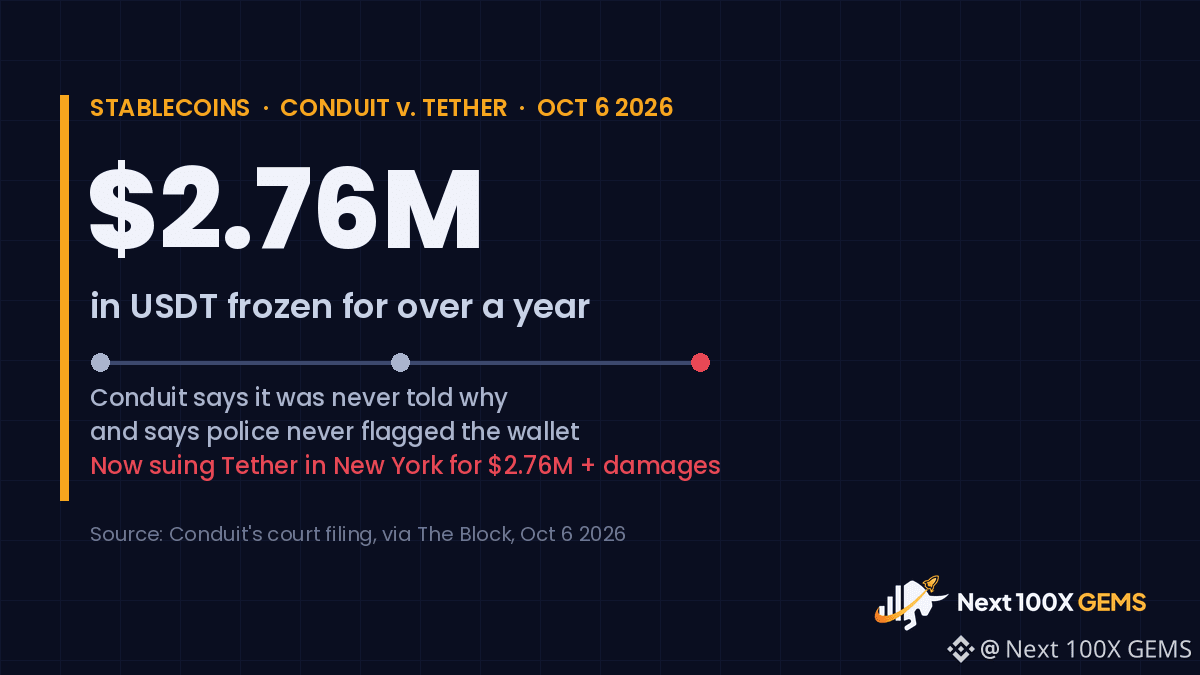
Cross-border payments firm Conduit has sued Tether, alleging the stablecoin issuer froze $2.76 million in USDT from its treasury wallet on September 24, 2025 and has refused to release the funds for more than a year.
Conduit says the freeze was linked to a Brazilian investigation involving a third party, Onix, but argues its wallet was created after Onix’s last transaction and never held Onix funds. The company also claims Brazilian police never flagged the wallet and that Tether’s T3 Financial Crime Unit made the decision independently.
The lawsuit seeks the return of the funds and damages.
#Tether #USDT #Stablecoins #CryptoRegulation
#ThuyBNB
$BTC $USDT $BNB
💥 TETHER SUED OVER $2.76M USDT FREEZE
Cross-border payments firm Conduit has sued Tether, alleging the stablecoin issuer froze $2.76 million in USDT from its treasury wallet on September 24, 2025 and has refused to release the funds for more than a year.
Conduit says the freeze was linked to a Brazilian investigation involving a third party, Onix, but argues its wallet was created after Onix’s last transaction and never held Onix funds. The company also claims Brazilian police never flagged the wallet and that Tether’s T3 Financial Crime Unit made the decision independently.
The lawsuit seeks the return of the funds and damages.
#Tether #USDT #Stablecoins #CryptoRegulation
#ThuyBNB
$BTC $USDT $BNB
Cross-border payments firm Conduit has sued Tether, alleging the stablecoin issuer froze $2.76 million in USDT from its treasury wallet on September 24, 2025 and has refused to release the funds for more than a year.
Conduit says the freeze was linked to a Brazilian investigation involving a third party, Onix, but argues its wallet was created after Onix’s last transaction and never held Onix funds. The company also claims Brazilian police never flagged the wallet and that Tether’s T3 Financial Crime Unit made the decision independently.
The lawsuit seeks the return of the funds and damages.
#Tether #USDT #Stablecoins #CryptoRegulation
#ThuyBNB
$BTC $USDT $BNB
60

Tether is being SUED for freezing a company's money for over a year — with zero explanation. ⚖️
Cross-border payments firm Conduit says Tether froze $2.76M of its USDT back in September 2025 and never said why. That wallet was the company's operating account.
Conduit says Brazilian police confirmed they never flagged the wallet — and it wants the $2.76M back, plus another $2.76M in damages.
Do you trust a stablecoin that can freeze your funds at any moment? 🤔
$USDT #USDT #Tether #CryptoNews
Tether is being SUED for freezing a company's money for over a year — with zero explanation. ⚖️
Cross-border payments firm Conduit says Tether froze $2.76M of its USDT back in September 2025 and never said why. That wallet was the company's operating account.
Conduit says Brazilian police confirmed they never flagged the wallet — and it wants the $2.76M back, plus another $2.76M in damages.
Do you trust a stablecoin that can freeze your funds at any moment? 🤔
$USDT #USDT #Tether #CryptoNews
Cross-border payments firm Conduit says Tether froze $2.76M of its USDT back in September 2025 and never said why. That wallet was the company's operating account.
Conduit says Brazilian police confirmed they never flagged the wallet — and it wants the $2.76M back, plus another $2.76M in damages.
Do you trust a stablecoin that can freeze your funds at any moment? 🤔
$USDT #USDT #Tether #CryptoNews
1
The recent lawsuit by Conduit against Tether over $2.8M in frozen funds highlights the ongoing clash between centralized stablecoin issuers and compliance mandates. While freezing assets tied to Brazilian investigations protects against illicit activity, the lack of transparency frustrates users. This case sets a crucial precedent for how stablecoin operators balance law enforcement requests with user due process in the evolving regulatory landscape. $USDT #CryptoLawsuit #Stablecoins #Tether
The recent lawsuit by Conduit against Tether over $2.8M in frozen funds highlights the ongoing clash between centralized stablecoin issuers and compliance mandates. While freezing assets tied to Brazilian investigations protects against illicit activity, the lack of transparency frustrates users. This case sets a crucial precedent for how stablecoin operators balance law enforcement requests with user due process in the evolving regulatory landscape. $USDT #CryptoLawsuit #Stablecoins #Tether
1


tether froze $2.76M of a payments company's USDT more than a year ago. now that company is suing.
it's Conduit. it moves money across 100+ countries using USDT and USDC, and says the frozen wallet was basically its operating bank account.
its side of the story: the freeze traces back to a Brazilian police case about a former customer, one that stopped using Conduit in April 2025. that's about a month before this wallet even existed. Conduit says police never flagged the wallet, a Brazilian court said Conduit wasn't under investigation, and Tether never explained the freeze.
it's asking a New York court for the $2.76M back, plus another $2.76M in damages, including the interest Tether earned on the reserves while the coins sat locked.
these are Conduit's claims. we haven't seen Tether's response yet.
my take: freezes help catch hackers, and i'm glad they exist. but a stablecoin balance is only yours for as long as the issuer agrees it is.
does that change how much you keep in stablecoins, or which ones you hold?
$USDT
#Tether #Stablecoins #CryptoNews
NFA. DYOR.
tether froze $2.76M of a payments company's USDT more than a year ago. now that company is suing.
it's Conduit. it moves money across 100+ countries using USDT and USDC, and says the frozen wallet was basically its operating bank account.
its side of the story: the freeze traces back to a Brazilian police case about a former customer, one that stopped using Conduit in April 2025. that's about a month before this wallet even existed. Conduit says police never flagged the wallet, a Brazilian court said Conduit wasn't under investigation, and Tether never explained the freeze.
it's asking a New York court for the $2.76M back, plus another $2.76M in damages, including the interest Tether earned on the reserves while the coins sat locked.
these are Conduit's claims. we haven't seen Tether's response yet.
my take: freezes help catch hackers, and i'm glad they exist. but a stablecoin balance is only yours for as long as the issuer agrees it is.
does that change how much you keep in stablecoins, or which ones you hold?
$USDT
#Tether #Stablecoins #CryptoNews
NFA. DYOR.
it's Conduit. it moves money across 100+ countries using USDT and USDC, and says the frozen wallet was basically its operating bank account.
its side of the story: the freeze traces back to a Brazilian police case about a former customer, one that stopped using Conduit in April 2025. that's about a month before this wallet even existed. Conduit says police never flagged the wallet, a Brazilian court said Conduit wasn't under investigation, and Tether never explained the freeze.
it's asking a New York court for the $2.76M back, plus another $2.76M in damages, including the interest Tether earned on the reserves while the coins sat locked.
these are Conduit's claims. we haven't seen Tether's response yet.
my take: freezes help catch hackers, and i'm glad they exist. but a stablecoin balance is only yours for as long as the issuer agrees it is.
does that change how much you keep in stablecoins, or which ones you hold?
$USDT
#Tether #Stablecoins #CryptoNews
NFA. DYOR.
202

Article
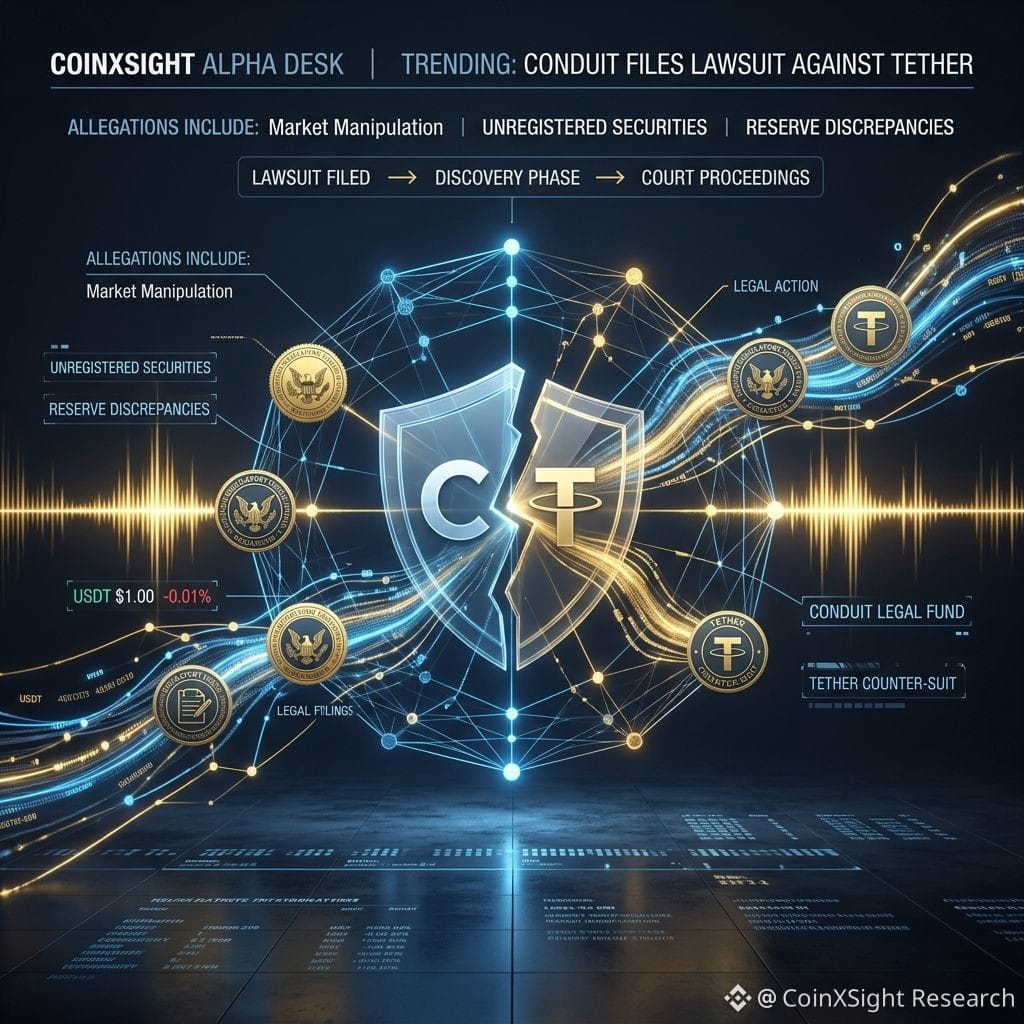
⚖️ Legal Clash Hits Tether as Conduit Challenges Unilateral $USDT FreezesLegal frictions around centralized stablecoin rails take center stage as Conduit initiates legal action against Tether over an asset freeze, placing $USDT blacklisting protocols directly under institutional scrutiny.
This dispute highlights persistent structural friction between centralized token issuers and platform operators relying on stablecoin settlement.
🔹 THE LITIGATION CATALYST
Conduit's lawsuit challenges Tether's discretionary address freeze involving disputed customer balances. For institutional actors, the ability of stablecoin issuers to unilaterally blacklist smart contract addresses has long served as a compliance tool, primarily utilized in coordination with law enforcement requests. However, when private entities clash over the justification and operational process behind such actions, the boundary between prudent compliance and unilateral counterparty risk becomes blurred.
🔹 CUSTODY RISKS AND SETTLEMENT FRICTION
This legal challenge uncovers essential operational considerations for market participants:
• Jurisdictional reach and enforcement: The case questions the due process standard required before an issuer restricts access to fiat-backed claims.
• Counterparty custody exposure: Decentralized protocols and fintech infrastructure providers face sudden liquidity lockups if automated or discretionary blacklists trigger without prior notice.
• Regulatory scrutiny on reserve token governance: Regulators monitoring payment stablecoins are likely to evaluate this case as evidence for why formalized redemption rights and dispute settlement frameworks must be standardized by law.
🔹 STRATEGIC DESK OUTLOOK
Market desks are monitoring this filing not for immediate systemic stress, but as a precedent-setting legal test for issuer authority. Secondary liquidity remains untroubled by isolated legal disputes. Instead, the strategic impact lies in enterprise risk management: institutional treasuries will demand clearer service-level agreements and transparent compliance triggers from fiat-backed token operators moving forward.
Risk Warning: Cryptocurrency trading carries substantial risk. This quantitative brief is for informational purposes only.
Data & Telemetry: CoinXSight Intelligence Hub | Follow on Binance Square for daily alpha.
#BinanceSquare #Tether #Stablecoins
⚖️ Legal Clash Hits Tether as Conduit Challenges Unilateral $USDT Freezes
Legal frictions around centralized stablecoin rails take center stage as Conduit initiates legal action against Tether over an asset freeze, placing $USDT blacklisting protocols directly under institutional scrutiny.

This dispute highlights persistent structural friction between centralized token issuers and platform operators relying on stablecoin settlement.
🔹 THE LITIGATION CATALYST
Conduit's lawsuit challenges Tether's discretionary address freeze involving disputed customer balances. For institutional actors, the ability of stablecoin issuers to unilaterally blacklist smart contract addresses has long served as a compliance tool, primarily utilized in coordination with law enforcement requests. However, when private entities clash over the justification and operational process behind such actions, the boundary between prudent compliance and unilateral counterparty risk becomes blurred.
🔹 CUSTODY RISKS AND SETTLEMENT FRICTION
This legal challenge uncovers essential operational considerations for market participants:
• Jurisdictional reach and enforcement: The case questions the due process standard required before an issuer restricts access to fiat-backed claims.
• Counterparty custody exposure: Decentralized protocols and fintech infrastructure providers face sudden liquidity lockups if automated or discretionary blacklists trigger without prior notice.
• Regulatory scrutiny on reserve token governance: Regulators monitoring payment stablecoins are likely to evaluate this case as evidence for why formalized redemption rights and dispute settlement frameworks must be standardized by law.
🔹 STRATEGIC DESK OUTLOOK
Market desks are monitoring this filing not for immediate systemic stress, but as a precedent-setting legal test for issuer authority. Secondary liquidity remains untroubled by isolated legal disputes. Instead, the strategic impact lies in enterprise risk management: institutional treasuries will demand clearer service-level agreements and transparent compliance triggers from fiat-backed token operators moving forward.
Risk Warning: Cryptocurrency trading carries substantial risk. This quantitative brief is for informational purposes only.
Data & Telemetry: CoinXSight Intelligence Hub | Follow on Binance Square for daily alpha.
#BinanceSquare #Tether #Stablecoins

This dispute highlights persistent structural friction between centralized token issuers and platform operators relying on stablecoin settlement.
🔹 THE LITIGATION CATALYST
Conduit's lawsuit challenges Tether's discretionary address freeze involving disputed customer balances. For institutional actors, the ability of stablecoin issuers to unilaterally blacklist smart contract addresses has long served as a compliance tool, primarily utilized in coordination with law enforcement requests. However, when private entities clash over the justification and operational process behind such actions, the boundary between prudent compliance and unilateral counterparty risk becomes blurred.
🔹 CUSTODY RISKS AND SETTLEMENT FRICTION
This legal challenge uncovers essential operational considerations for market participants:
• Jurisdictional reach and enforcement: The case questions the due process standard required before an issuer restricts access to fiat-backed claims.
• Counterparty custody exposure: Decentralized protocols and fintech infrastructure providers face sudden liquidity lockups if automated or discretionary blacklists trigger without prior notice.
• Regulatory scrutiny on reserve token governance: Regulators monitoring payment stablecoins are likely to evaluate this case as evidence for why formalized redemption rights and dispute settlement frameworks must be standardized by law.
🔹 STRATEGIC DESK OUTLOOK
Market desks are monitoring this filing not for immediate systemic stress, but as a precedent-setting legal test for issuer authority. Secondary liquidity remains untroubled by isolated legal disputes. Instead, the strategic impact lies in enterprise risk management: institutional treasuries will demand clearer service-level agreements and transparent compliance triggers from fiat-backed token operators moving forward.
Risk Warning: Cryptocurrency trading carries substantial risk. This quantitative brief is for informational purposes only.
Data & Telemetry: CoinXSight Intelligence Hub | Follow on Binance Square for daily alpha.
#BinanceSquare #Tether #Stablecoins
50

·
--
Here is what happened when Paolo Ardoino dropped his cryptic "It's coming home" statement across market feeds.
Most traders treat stablecoins like guaranteed cash equivalents until regulatory pressure or structural reserve shifts suddenly freeze liquidity. When core market rails change course without warning, retail portfolios are usually the last to hedge the downside.
The phrase actually echoes a deeper structural transition for Tether, moving away from offshore reliance toward tighter jurisdictional alignments and aggressive $BTC accumulation. Holding over 80,000 bitcoins alongside more than 100 billion in circulating $USDT supply makes every single balance sheet maneuver a systemic variable. If reserve allocations pivot faster than the broader ecosystem can adapt, counterparty risk quietly spikes across lending desks and spot markets alike.
Tether generating billions in quarterly net profit while consolidating reserve custody creates an unprecedented concentration of power over on-chain settlement. While institutional capital views this shift as maturity, any sudden regulatory friction against these centralized reserves could trigger sharp liquidity dislocations overnight.
Where do you think this leaves the broader market if stablecoin dominance faces a sudden regulatory bottleneck?
#CryptoMarket #Stablecoins #Tether
Here is what happened when Paolo Ardoino dropped his cryptic "It's coming home" statement across market feeds.
Most traders treat stablecoins like guaranteed cash equivalents until regulatory pressure or structural reserve shifts suddenly freeze liquidity. When core market rails change course without warning, retail portfolios are usually the last to hedge the downside.
The phrase actually echoes a deeper structural transition for Tether, moving away from offshore reliance toward tighter jurisdictional alignments and aggressive $BTC accumulation. Holding over 80,000 bitcoins alongside more than 100 billion in circulating $USDT supply makes every single balance sheet maneuver a systemic variable. If reserve allocations pivot faster than the broader ecosystem can adapt, counterparty risk quietly spikes across lending desks and spot markets alike.
Tether generating billions in quarterly net profit while consolidating reserve custody creates an unprecedented concentration of power over on-chain settlement. While institutional capital views this shift as maturity, any sudden regulatory friction against these centralized reserves could trigger sharp liquidity dislocations overnight.
Where do you think this leaves the broader market if stablecoin dominance faces a sudden regulatory bottleneck?
#CryptoMarket #Stablecoins #Tether
Most traders treat stablecoins like guaranteed cash equivalents until regulatory pressure or structural reserve shifts suddenly freeze liquidity. When core market rails change course without warning, retail portfolios are usually the last to hedge the downside.
The phrase actually echoes a deeper structural transition for Tether, moving away from offshore reliance toward tighter jurisdictional alignments and aggressive $BTC accumulation. Holding over 80,000 bitcoins alongside more than 100 billion in circulating $USDT supply makes every single balance sheet maneuver a systemic variable. If reserve allocations pivot faster than the broader ecosystem can adapt, counterparty risk quietly spikes across lending desks and spot markets alike.
Tether generating billions in quarterly net profit while consolidating reserve custody creates an unprecedented concentration of power over on-chain settlement. While institutional capital views this shift as maturity, any sudden regulatory friction against these centralized reserves could trigger sharp liquidity dislocations overnight.
Where do you think this leaves the broader market if stablecoin dominance faces a sudden regulatory bottleneck?
#CryptoMarket #Stablecoins #Tether
15

·
--
Article
💵 USDT (Tether): The Stablecoin Powering Crypto Markets💵 USDT (Tether): The Stablecoin Powering Crypto Markets
USDT (Tether) is one of the most widely used stablecoins in the crypto market. Unlike volatile assets such as BTC and ETH, USDT is designed to maintain a value close to $1 USD.
🔹 Why Do Traders Use USDT?
USDT is commonly used for:
• Buying and selling cryptocurrencies
• Moving funds between exchanges
• Protecting capital during market volatility
• Trading pairs such as BTC/USDT and ETH/USDT
📊 Why USDT Is Important
USDT provides liquidity across the crypto market. When traders move from volatile coins into USDT, they can temporarily reduce their exposure to price swings without immediately converting their funds into traditional fiat currency.
⚠️ What Should Traders Watch?
Although USDT aims to stay near $1, traders should still pay attention to:
Stablecoin liquidity
Market confidence
Exchange liquidity
USDT's reserve and transparency updates
🚀 Bottom Line
USDT isn't designed to make huge price gains. Its main role is stability, liquidity, and flexibility.
For crypto traders, understanding USDT is essential because it is involved in a huge number of trading pairs and transactions.
Do you keep your trading funds in USDT during market volatility? 👇
#USDT #Tether #Crypto #stablecoin #BinanceSquare #Bitcoin #TetherUpdate #CryptoTrading
$TETH.ETF
{etf_us}(TETH.ETF)
💵 USDT (Tether): The Stablecoin Powering Crypto Markets
💵 USDT (Tether): The Stablecoin Powering Crypto Markets
USDT (Tether) is one of the most widely used stablecoins in the crypto market. Unlike volatile assets such as BTC and ETH, USDT is designed to maintain a value close to $1 USD.
🔹 Why Do Traders Use USDT?
USDT is commonly used for:
• Buying and selling cryptocurrencies
• Moving funds between exchanges
• Protecting capital during market volatility
• Trading pairs such as BTC/USDT and ETH/USDT
📊 Why USDT Is Important
USDT provides liquidity across the crypto market. When traders move from volatile coins into USDT, they can temporarily reduce their exposure to price swings without immediately converting their funds into traditional fiat currency.
⚠️ What Should Traders Watch?
Although USDT aims to stay near $1, traders should still pay attention to:
Stablecoin liquidity
Market confidence
Exchange liquidity
USDT's reserve and transparency updates
🚀 Bottom Line
USDT isn't designed to make huge price gains. Its main role is stability, liquidity, and flexibility.
For crypto traders, understanding USDT is essential because it is involved in a huge number of trading pairs and transactions.
Do you keep your trading funds in USDT during market volatility? 👇
#USDT #Tether #Crypto #stablecoin #BinanceSquare #Bitcoin #TetherUpdate #CryptoTrading
$TETH.ETF
USDT (Tether) is one of the most widely used stablecoins in the crypto market. Unlike volatile assets such as BTC and ETH, USDT is designed to maintain a value close to $1 USD.
🔹 Why Do Traders Use USDT?
USDT is commonly used for:
• Buying and selling cryptocurrencies
• Moving funds between exchanges
• Protecting capital during market volatility
• Trading pairs such as BTC/USDT and ETH/USDT
📊 Why USDT Is Important
USDT provides liquidity across the crypto market. When traders move from volatile coins into USDT, they can temporarily reduce their exposure to price swings without immediately converting their funds into traditional fiat currency.
⚠️ What Should Traders Watch?
Although USDT aims to stay near $1, traders should still pay attention to:
Stablecoin liquidity
Market confidence
Exchange liquidity
USDT's reserve and transparency updates
🚀 Bottom Line
USDT isn't designed to make huge price gains. Its main role is stability, liquidity, and flexibility.
For crypto traders, understanding USDT is essential because it is involved in a huge number of trading pairs and transactions.
Do you keep your trading funds in USDT during market volatility? 👇
#USDT #Tether #Crypto #stablecoin #BinanceSquare #Bitcoin #TetherUpdate #CryptoTrading
$TETH.ETF
22

If you are still looking at $BTC strictly as a store of value and ignoring asset layer infrastructure, stop now. Most traders miss fundamental shifts like this because they get blinded by short-term price chop while capital networks quietly rebuild their pipelines.
Back in 2014, Tether originally launched $USDT on Bitcoin through Omni Layer. High network fees and slow blocks eventually forced capital onto $ETH, and later onto Tron as the fast lane for daily volume, which ultimately led Tether to end Omni support in 2023. Bitcoin essentially lost its native stablecoin dominance for years.
Now the cycle has come full circle. With Utexo rolling out licensed issuance of $USDT directly on the RGB protocol on Bitcoin, we are seeing the original stablecoin architecture return home with actual scalability. Unlike the clunky Omni era, modern client-side validation gives Bitcoin a real shot at taking liquidity back from the smart contract chains that stole its lunch.
Do you think RGB-based stablecoin settlement can actually reclaim serious market share from Tron and Ethereum, or is this just technical nostalgia?
#Bitcoin #Tether #CryptoInfrastructure
If you are still looking at $BTC strictly as a store of value and ignoring asset layer infrastructure, stop now. Most traders miss fundamental shifts like this because they get blinded by short-term price chop while capital networks quietly rebuild their pipelines.
Back in 2014, Tether originally launched $USDT on Bitcoin through Omni Layer. High network fees and slow blocks eventually forced capital onto $ETH , and later onto Tron as the fast lane for daily volume, which ultimately led Tether to end Omni support in 2023. Bitcoin essentially lost its native stablecoin dominance for years.
Now the cycle has come full circle. With Utexo rolling out licensed issuance of $USDT directly on the RGB protocol on Bitcoin, we are seeing the original stablecoin architecture return home with actual scalability. Unlike the clunky Omni era, modern client-side validation gives Bitcoin a real shot at taking liquidity back from the smart contract chains that stole its lunch.
Do you think RGB-based stablecoin settlement can actually reclaim serious market share from Tron and Ethereum, or is this just technical nostalgia?
#Bitcoin #Tether #CryptoInfrastructure
Back in 2014, Tether originally launched $USDT on Bitcoin through Omni Layer. High network fees and slow blocks eventually forced capital onto $ETH , and later onto Tron as the fast lane for daily volume, which ultimately led Tether to end Omni support in 2023. Bitcoin essentially lost its native stablecoin dominance for years.
Now the cycle has come full circle. With Utexo rolling out licensed issuance of $USDT directly on the RGB protocol on Bitcoin, we are seeing the original stablecoin architecture return home with actual scalability. Unlike the clunky Omni era, modern client-side validation gives Bitcoin a real shot at taking liquidity back from the smart contract chains that stole its lunch.
Do you think RGB-based stablecoin settlement can actually reclaim serious market share from Tron and Ethereum, or is this just technical nostalgia?
#Bitcoin #Tether #CryptoInfrastructure

23
·
--
$USDT was born on Bitcoin. Then it spent ten years trying to escape.
Every trader who's paid a ridiculous fee just to move stablecoins already knows why it left. Slow blocks and expensive transactions don't work when you're trying to catch a move or get out of a position.
In 2014 Tether launched $USDT on $BTC through the Omni Layer. Bitcoin was the only real option. Then 2017 happened. Fees exploded. Confirmations took forever. Between 2017 and 2019 the flow went to $ETH, and later Tron became the cheap highway everyone actually used. By 2023 Tether stopped supporting Omni entirely. USDT on Bitcoin was finished.
I've watched this movie in every cycle. Liquidity leaves when the chain can't keep up, then it looks for a way back when the tech finally arrives. Paolo Ardoino is calling it coming home. In October 2026 Utexo starts issuing $USDT on $BTC under a Tether licence, built on RGB. The protocol that couldn't handle the load in 2017 is getting another shot because the bottlenecks that killed Omni may finally be solved.
Where do you think this goes from here?
#Bitcoin #USDT #Tether
$USDT was born on Bitcoin. Then it spent ten years trying to escape.
Every trader who's paid a ridiculous fee just to move stablecoins already knows why it left. Slow blocks and expensive transactions don't work when you're trying to catch a move or get out of a position.
In 2014 Tether launched $USDT on $BTC through the Omni Layer. Bitcoin was the only real option. Then 2017 happened. Fees exploded. Confirmations took forever. Between 2017 and 2019 the flow went to $ETH , and later Tron became the cheap highway everyone actually used. By 2023 Tether stopped supporting Omni entirely. USDT on Bitcoin was finished.
I've watched this movie in every cycle. Liquidity leaves when the chain can't keep up, then it looks for a way back when the tech finally arrives. Paolo Ardoino is calling it coming home. In October 2026 Utexo starts issuing $USDT on $BTC under a Tether licence, built on RGB. The protocol that couldn't handle the load in 2017 is getting another shot because the bottlenecks that killed Omni may finally be solved.
Where do you think this goes from here?
#Bitcoin #USDT #Tether
Every trader who's paid a ridiculous fee just to move stablecoins already knows why it left. Slow blocks and expensive transactions don't work when you're trying to catch a move or get out of a position.
In 2014 Tether launched $USDT on $BTC through the Omni Layer. Bitcoin was the only real option. Then 2017 happened. Fees exploded. Confirmations took forever. Between 2017 and 2019 the flow went to $ETH , and later Tron became the cheap highway everyone actually used. By 2023 Tether stopped supporting Omni entirely. USDT on Bitcoin was finished.
I've watched this movie in every cycle. Liquidity leaves when the chain can't keep up, then it looks for a way back when the tech finally arrives. Paolo Ardoino is calling it coming home. In October 2026 Utexo starts issuing $USDT on $BTC under a Tether licence, built on RGB. The protocol that couldn't handle the load in 2017 is getting another shot because the bottlenecks that killed Omni may finally be solved.
Where do you think this goes from here?
#Bitcoin #USDT #Tether
15
·
--
Picture this: the world's largest stablecoin just completed a full 12-year circle back to where it all began.
Most traders remember the pain of watching simple stablecoin transfers get choked by network congestion and ridiculous gas fees, forcing everyone to hop from chain to chain just to move capital efficiently.
Back in 2014, $USDT actually launched on the $BTC network via Omni Layer before slow block times and high fees forced an exodus toward Ethereum and later Tron for cheap settlement. By 2023, Tether pulled the plug on Omni completely, seemingly ending its chapter on Bitcoin. While Ethereum offered smart contracts and Tron delivered speed, Bitcoin always remained the ultimate settlement layer everyone wished they could use without friction.
Now, under a fresh Tether license, Utexo is issuing $USDT directly on Bitcoin once again using RGB protocol infrastructure. Instead of relying on alternative smart contract chains, liquidity can finally anchor to Bitcoin without clogging base-layer throughput.
Where do you think this leaves Tron and other high-speed settlement chains once Bitcoin-native stablecoin rails mature?
#Bitcoin #Tether #CryptoHistory
Picture this: the world's largest stablecoin just completed a full 12-year circle back to where it all began.
Most traders remember the pain of watching simple stablecoin transfers get choked by network congestion and ridiculous gas fees, forcing everyone to hop from chain to chain just to move capital efficiently.
Back in 2014, $USDT actually launched on the $BTC network via Omni Layer before slow block times and high fees forced an exodus toward Ethereum and later Tron for cheap settlement. By 2023, Tether pulled the plug on Omni completely, seemingly ending its chapter on Bitcoin. While Ethereum offered smart contracts and Tron delivered speed, Bitcoin always remained the ultimate settlement layer everyone wished they could use without friction.
Now, under a fresh Tether license, Utexo is issuing $USDT directly on Bitcoin once again using RGB protocol infrastructure. Instead of relying on alternative smart contract chains, liquidity can finally anchor to Bitcoin without clogging base-layer throughput.
Where do you think this leaves Tron and other high-speed settlement chains once Bitcoin-native stablecoin rails mature?
#Bitcoin #Tether #CryptoHistory
Most traders remember the pain of watching simple stablecoin transfers get choked by network congestion and ridiculous gas fees, forcing everyone to hop from chain to chain just to move capital efficiently.
Back in 2014, $USDT actually launched on the $BTC network via Omni Layer before slow block times and high fees forced an exodus toward Ethereum and later Tron for cheap settlement. By 2023, Tether pulled the plug on Omni completely, seemingly ending its chapter on Bitcoin. While Ethereum offered smart contracts and Tron delivered speed, Bitcoin always remained the ultimate settlement layer everyone wished they could use without friction.
Now, under a fresh Tether license, Utexo is issuing $USDT directly on Bitcoin once again using RGB protocol infrastructure. Instead of relying on alternative smart contract chains, liquidity can finally anchor to Bitcoin without clogging base-layer throughput.
Where do you think this leaves Tron and other high-speed settlement chains once Bitcoin-native stablecoin rails mature?
#Bitcoin #Tether #CryptoHistory

20
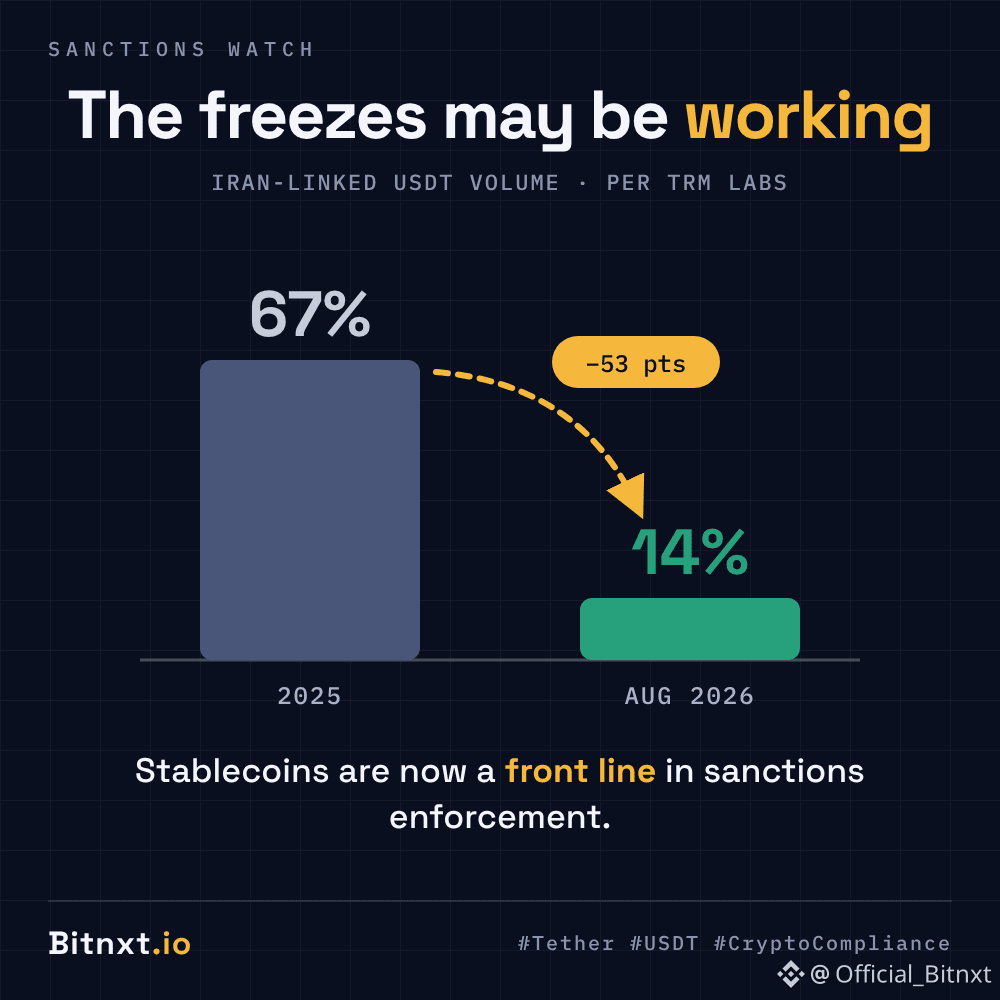
The freezes may be working 📉
TRM Labs says Iran-linked USDT volume fell to 14% in August 2026, down from 67% in 2025.
Stablecoins are now a front line in sanctions enforcement.
#Tether #USDT #CryptoCompliance
The freezes may be working 📉
TRM Labs says Iran-linked USDT volume fell to 14% in August 2026, down from 67% in 2025.
Stablecoins are now a front line in sanctions enforcement.
#Tether #USDT #CryptoCompliance
TRM Labs says Iran-linked USDT volume fell to 14% in August 2026, down from 67% in 2025.
Stablecoins are now a front line in sanctions enforcement.
#Tether #USDT #CryptoCompliance
1
10
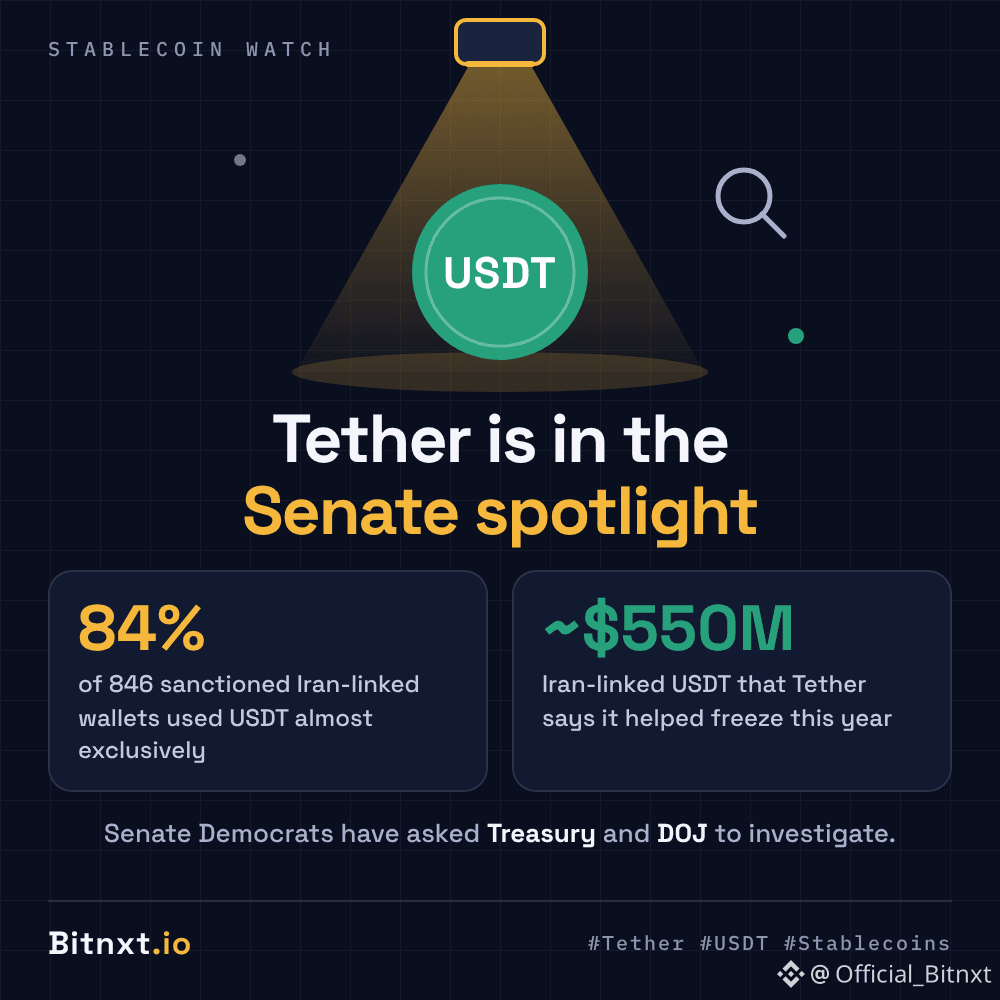
Tether is in the Senate spotlight 🔍
Senate Democrats found 84% of 846 sanctioned Iran-linked wallets used USDT almost exclusively, and they asked Treasury and DOJ to investigate.
Tether says it helped freeze ~$550M in Iran-linked USDT this year.
#Tether #USDT #Stablecoins
Tether is in the Senate spotlight 🔍
Senate Democrats found 84% of 846 sanctioned Iran-linked wallets used USDT almost exclusively, and they asked Treasury and DOJ to investigate.
Tether says it helped freeze ~$550M in Iran-linked USDT this year.
#Tether #USDT #Stablecoins
Senate Democrats found 84% of 846 sanctioned Iran-linked wallets used USDT almost exclusively, and they asked Treasury and DOJ to investigate.
Tether says it helped freeze ~$550M in Iran-linked USDT this year.
#Tether #USDT #Stablecoins
1
7

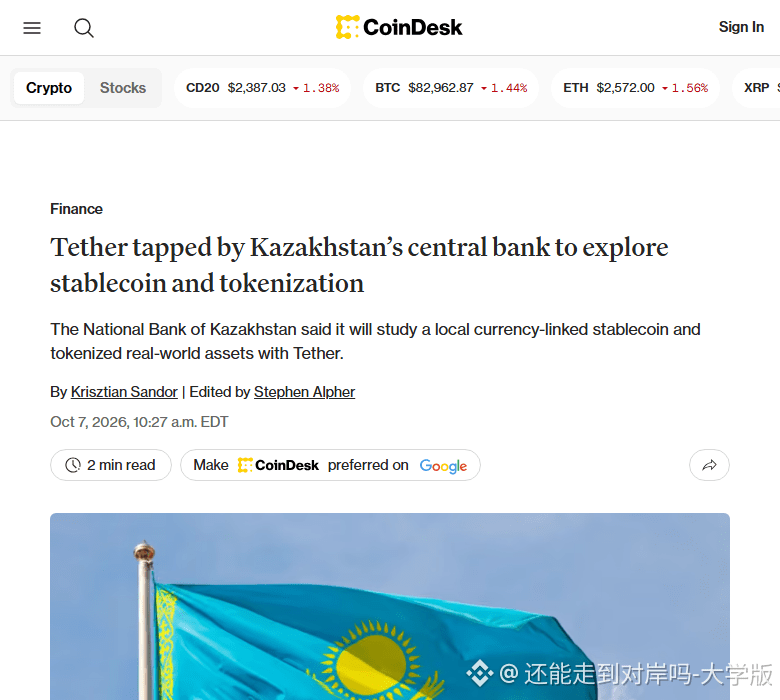
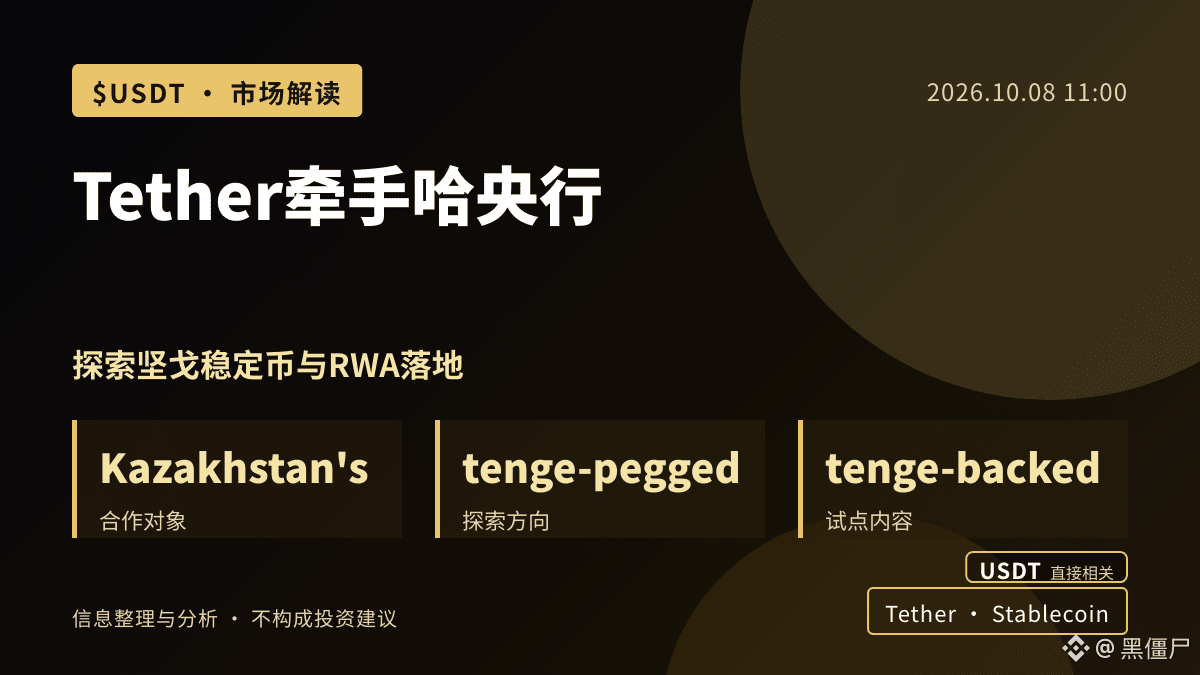
Tether and Kazakhstan’s Central Bank discuss a tenge stablecoin and asset tokenization
- Tether and Kazakhstan’s Central Bank are considering a partnership.
- The agreement would explore a pilot for a tenge-backed stablecoin.
- It would also develop a framework for tokenizing real-world assets (RWAs).
- The move is part of Kazakhstan’s efforts to expand its digital asset industry.
#Tether #Kazakhstan #Stablecoin #Tokenization #CryptoNews BinanceSquare
$btc $eth
vlikevn Titanbot
Source: CoinTelegraph
Tether and Kazakhstan’s Central Bank discuss a tenge stablecoin and asset tokenization
- Tether and Kazakhstan’s Central Bank are considering a partnership.
- The agreement would explore a pilot for a tenge-backed stablecoin.
- It would also develop a framework for tokenizing real-world assets (RWAs).
- The move is part of Kazakhstan’s efforts to expand its digital asset industry.
#Tether #Kazakhstan #Stablecoin #Tokenization #CryptoNews BinanceSquare
$btc $eth
vlikevn Titanbot
Source: CoinTelegraph
- Tether and Kazakhstan’s Central Bank are considering a partnership.
- The agreement would explore a pilot for a tenge-backed stablecoin.
- It would also develop a framework for tokenizing real-world assets (RWAs).
- The move is part of Kazakhstan’s efforts to expand its digital asset industry.
#Tether #Kazakhstan #Stablecoin #Tokenization #CryptoNews BinanceSquare
$btc $eth
vlikevn Titanbot
Source: CoinTelegraph

·
--
Kazakhstan’s central bank partners with Tether to launch a local-currency stablecoin and explore RWA tokenization, with a pilot to be rolled out at the Astana hub. Another milestone in national-level adoption—the push to bring stablecoins and tokenized assets into regulatory compliance is accelerating.
#稳定币 #RWA #Tether #Kazakhstan
Kazakhstan’s central bank partners with Tether to launch a local-currency stablecoin and explore RWA tokenization, with a pilot to be rolled out at the Astana hub. Another milestone in national-level adoption—the push to bring stablecoins and tokenized assets into regulatory compliance is accelerating.
#稳定币 #RWA #Tether #Kazakhstan
#稳定币 #RWA #Tether #Kazakhstan
71

While most of the world’s central banks still take a cautious, guarded stance toward cryptocurrencies, Tether, the world’s largest stablecoin issuer, has already taken a seat inside the central bank of a sovereign nation.
【A Sovereign-Level Handshake: Tether Teams Up with Kazakhstan to Explore a Tenge Stablecoin and Asset Tokenization】
According to reports by Decrypt and Cointelegraph, as well as official announcements, Tether has formally signed a memorandum of understanding (MOU) with the National Bank of Kazakhstan and the Alatau City Authority. The three parties will jointly study an issuance framework and regulatory pilot for a stablecoin pegged to Kazakhstan’s fiat currency, the tenge. They also plan to introduce Tether’s Hadron platform to advance real-world asset (RWA) tokenization pilots in the Alatau smart-city special zone, which has a total investment of $7.2 billion. The agreement also covers training central bank staff in reserve management and token issuance. National Bank of Kazakhstan Deputy Governor Binur Zhalenov emphasized that the bank will advance the pilot research while prioritizing financial stability, transaction transparency, and investor protection.
【Integrating Sovereign Frameworks: Bitcoin’s Evolution in Valuation—from Mining Hub to Sovereign Reserve】
The deeper significance of this partnership for the crypto market is that the line between sovereign regulators and crypto-native giants is being materially erased. Kazakhstan is no newcomer to crypto. It has long ranked among the world’s top ten countries for Bitcoin hashrate, and according to BitcoinTreasuries, the Kazakh government currently holds approximately 3,544 BTC (worth about $294 million), making it the world’s seventh-largest government Bitcoin reserve holder. Its national strategic crypto reserve has also reached $700 million, with approximately $200 million in investments already made.
For Bitcoin, when a sovereign nation’s central bank begins systematically studying stablecoin reserve management and on-chain tokenization technology, the strategic value of Bitcoin as an underlying sovereign reserve asset and a borderless settlement anchor is gaining institutional recognition. Although Bitcoin is under pressure and trading unevenly between $82,000 and $84,000 in the short term amid high macroeconomic interest rates and turmoil in the Middle East, sovereign-level asset allocation and progress toward regulatory compliance are building a more resilient medium- to long-term liquidity foundation for the broader market.
【Key Things to Watch: The Validation Window from an MOU to Substantive Tokenization Approval】
Signing any letter of intent is only the first step. The key developments to track and verify going forward are:
1. Implementation and approval: The agreement signed by the two parties is, in essence, an MOU rather than a legally binding procurement contract. Over the next 3 to 6 months, the key thing to watch is whether the National Bank of Kazakhstan’s regulatory sandbox formally approves its first Hadron-issued RWA product backed by government bonds or municipal real estate. This will be a hard indicator of whether the partnership represents “substantive infrastructure implementation” or “diplomatic PR.”
2. Market structure and support: If sovereign reserves and RWA pilots bring in a meaningful increase in capital, Bitcoin could build momentum to challenge the $87,000 resistance level. Conversely, if tightening global liquidity causes it to lose the heavily traded support zone at $81,000, watch for a downward retest of the $78,000–$80,000 support area.
These are personal views and an information summary, not investment advice. DYOR.
$BTC #Tether #RWA
While most of the world’s central banks still take a cautious, guarded stance toward cryptocurrencies, Tether, the world’s largest stablecoin issuer, has already taken a seat inside the central bank of a sovereign nation.
【A Sovereign-Level Handshake: Tether Teams Up with Kazakhstan to Explore a Tenge Stablecoin and Asset Tokenization】
According to reports by Decrypt and Cointelegraph, as well as official announcements, Tether has formally signed a memorandum of understanding (MOU) with the National Bank of Kazakhstan and the Alatau City Authority. The three parties will jointly study an issuance framework and regulatory pilot for a stablecoin pegged to Kazakhstan’s fiat currency, the tenge. They also plan to introduce Tether’s Hadron platform to advance real-world asset (RWA) tokenization pilots in the Alatau smart-city special zone, which has a total investment of $7.2 billion. The agreement also covers training central bank staff in reserve management and token issuance. National Bank of Kazakhstan Deputy Governor Binur Zhalenov emphasized that the bank will advance the pilot research while prioritizing financial stability, transaction transparency, and investor protection.
【Integrating Sovereign Frameworks: Bitcoin’s Evolution in Valuation—from Mining Hub to Sovereign Reserve】
The deeper significance of this partnership for the crypto market is that the line between sovereign regulators and crypto-native giants is being materially erased. Kazakhstan is no newcomer to crypto. It has long ranked among the world’s top ten countries for Bitcoin hashrate, and according to BitcoinTreasuries, the Kazakh government currently holds approximately 3,544 BTC (worth about $294 million), making it the world’s seventh-largest government Bitcoin reserve holder. Its national strategic crypto reserve has also reached $700 million, with approximately $200 million in investments already made.
For Bitcoin, when a sovereign nation’s central bank begins systematically studying stablecoin reserve management and on-chain tokenization technology, the strategic value of Bitcoin as an underlying sovereign reserve asset and a borderless settlement anchor is gaining institutional recognition. Although Bitcoin is under pressure and trading unevenly between $82,000 and $84,000 in the short term amid high macroeconomic interest rates and turmoil in the Middle East, sovereign-level asset allocation and progress toward regulatory compliance are building a more resilient medium- to long-term liquidity foundation for the broader market.
【Key Things to Watch: The Validation Window from an MOU to Substantive Tokenization Approval】
Signing any letter of intent is only the first step. The key developments to track and verify going forward are:
1. Implementation and approval: The agreement signed by the two parties is, in essence, an MOU rather than a legally binding procurement contract. Over the next 3 to 6 months, the key thing to watch is whether the National Bank of Kazakhstan’s regulatory sandbox formally approves its first Hadron-issued RWA product backed by government bonds or municipal real estate. This will be a hard indicator of whether the partnership represents “substantive infrastructure implementation” or “diplomatic PR.”
2. Market structure and support: If sovereign reserves and RWA pilots bring in a meaningful increase in capital, Bitcoin could build momentum to challenge the $87,000 resistance level. Conversely, if tightening global liquidity causes it to lose the heavily traded support zone at $81,000, watch for a downward retest of the $78,000–$80,000 support area.
These are personal views and an information summary, not investment advice. DYOR.
$BTC #Tether #RWA
【A Sovereign-Level Handshake: Tether Teams Up with Kazakhstan to Explore a Tenge Stablecoin and Asset Tokenization】
According to reports by Decrypt and Cointelegraph, as well as official announcements, Tether has formally signed a memorandum of understanding (MOU) with the National Bank of Kazakhstan and the Alatau City Authority. The three parties will jointly study an issuance framework and regulatory pilot for a stablecoin pegged to Kazakhstan’s fiat currency, the tenge. They also plan to introduce Tether’s Hadron platform to advance real-world asset (RWA) tokenization pilots in the Alatau smart-city special zone, which has a total investment of $7.2 billion. The agreement also covers training central bank staff in reserve management and token issuance. National Bank of Kazakhstan Deputy Governor Binur Zhalenov emphasized that the bank will advance the pilot research while prioritizing financial stability, transaction transparency, and investor protection.
【Integrating Sovereign Frameworks: Bitcoin’s Evolution in Valuation—from Mining Hub to Sovereign Reserve】
The deeper significance of this partnership for the crypto market is that the line between sovereign regulators and crypto-native giants is being materially erased. Kazakhstan is no newcomer to crypto. It has long ranked among the world’s top ten countries for Bitcoin hashrate, and according to BitcoinTreasuries, the Kazakh government currently holds approximately 3,544 BTC (worth about $294 million), making it the world’s seventh-largest government Bitcoin reserve holder. Its national strategic crypto reserve has also reached $700 million, with approximately $200 million in investments already made.
For Bitcoin, when a sovereign nation’s central bank begins systematically studying stablecoin reserve management and on-chain tokenization technology, the strategic value of Bitcoin as an underlying sovereign reserve asset and a borderless settlement anchor is gaining institutional recognition. Although Bitcoin is under pressure and trading unevenly between $82,000 and $84,000 in the short term amid high macroeconomic interest rates and turmoil in the Middle East, sovereign-level asset allocation and progress toward regulatory compliance are building a more resilient medium- to long-term liquidity foundation for the broader market.
【Key Things to Watch: The Validation Window from an MOU to Substantive Tokenization Approval】
Signing any letter of intent is only the first step. The key developments to track and verify going forward are:
1. Implementation and approval: The agreement signed by the two parties is, in essence, an MOU rather than a legally binding procurement contract. Over the next 3 to 6 months, the key thing to watch is whether the National Bank of Kazakhstan’s regulatory sandbox formally approves its first Hadron-issued RWA product backed by government bonds or municipal real estate. This will be a hard indicator of whether the partnership represents “substantive infrastructure implementation” or “diplomatic PR.”
2. Market structure and support: If sovereign reserves and RWA pilots bring in a meaningful increase in capital, Bitcoin could build momentum to challenge the $87,000 resistance level. Conversely, if tightening global liquidity causes it to lose the heavily traded support zone at $81,000, watch for a downward retest of the $78,000–$80,000 support area.
These are personal views and an information summary, not investment advice. DYOR.
$BTC #Tether #RWA

147

·
--
Tether Partners with Kazakhstan’s Central Bank to Explore a Tenge-Pegged Stablecoin and RWA Tokenization
According to reports by Decrypt, Cointelegraph, and CoinDesk, Tether has signed an agreement with the National Bank of Kazakhstan to jointly explore issuing a stablecoin pegged to the tenge and to study a framework for tokenizing real-world assets (RWAs).
This partnership is noteworthy because it is not simply a commercial promotion. Rather, a sovereign central bank has proactively invited a stablecoin issuer to take part in foundational research on digitizing its national currency and bringing assets on-chain. For Tether, this marks an expansion beyond U.S. dollar stablecoins into local-currency stablecoins in emerging markets and RWA infrastructure—a concrete milestone in the institutionalization of stablecoins.
In terms of market impact, $USDT, Tether’s core asset, stands to benefit directly from the brand endorsement and anticipated business expansion associated with this partnership. As an important Central Asian economy, Kazakhstan could, if its central bank’s exploration of stablecoins and RWAs makes progress, offer a regulatory and technical model for the region and potentially other emerging markets. This could indirectly strengthen the market’s assessment of Tether’s long-term ecosystem value.
However, it is important to remain clear-eyed: both parties are still at the “exploration” and “research” stage, and have not announced a specific timeline, issuance volume, or details of regulatory approval. There are multiple hurdles between a research agreement and practical implementation, including regulatory approval, technical validation, and liquidity development. There is a risk that implementation could fall short of expectations or proceed slowly. The issuance of local-currency stablecoins is also constrained by macroeconomic factors such as exchange-rate volatility and capital controls.
Going forward, the market should watch for the National Bank of Kazakhstan to announce a specific pilot timeline and regulatory framework, as well as for progress in Tether’s RWA tokenization technology. For investors following $USDT, the more important consideration at the trading level is to wait for confirmation of official pilot details, rather than trading emotionally based solely on the partnership news.
$USDT #Tether #Stablecoin #RWA
The above is a compilation of information and personal analysis, and does not constitute investment advice.
Tether Partners with Kazakhstan’s Central Bank to Explore a Tenge-Pegged Stablecoin and RWA Tokenization
According to reports by Decrypt, Cointelegraph, and CoinDesk, Tether has signed an agreement with the National Bank of Kazakhstan to jointly explore issuing a stablecoin pegged to the tenge and to study a framework for tokenizing real-world assets (RWAs).
This partnership is noteworthy because it is not simply a commercial promotion. Rather, a sovereign central bank has proactively invited a stablecoin issuer to take part in foundational research on digitizing its national currency and bringing assets on-chain. For Tether, this marks an expansion beyond U.S. dollar stablecoins into local-currency stablecoins in emerging markets and RWA infrastructure—a concrete milestone in the institutionalization of stablecoins.
In terms of market impact, $USDT, Tether’s core asset, stands to benefit directly from the brand endorsement and anticipated business expansion associated with this partnership. As an important Central Asian economy, Kazakhstan could, if its central bank’s exploration of stablecoins and RWAs makes progress, offer a regulatory and technical model for the region and potentially other emerging markets. This could indirectly strengthen the market’s assessment of Tether’s long-term ecosystem value.
However, it is important to remain clear-eyed: both parties are still at the “exploration” and “research” stage, and have not announced a specific timeline, issuance volume, or details of regulatory approval. There are multiple hurdles between a research agreement and practical implementation, including regulatory approval, technical validation, and liquidity development. There is a risk that implementation could fall short of expectations or proceed slowly. The issuance of local-currency stablecoins is also constrained by macroeconomic factors such as exchange-rate volatility and capital controls.
Going forward, the market should watch for the National Bank of Kazakhstan to announce a specific pilot timeline and regulatory framework, as well as for progress in Tether’s RWA tokenization technology. For investors following $USDT, the more important consideration at the trading level is to wait for confirmation of official pilot details, rather than trading emotionally based solely on the partnership news.
$USDT #Tether #Stablecoin #RWA
The above is a compilation of information and personal analysis, and does not constitute investment advice.
According to reports by Decrypt, Cointelegraph, and CoinDesk, Tether has signed an agreement with the National Bank of Kazakhstan to jointly explore issuing a stablecoin pegged to the tenge and to study a framework for tokenizing real-world assets (RWAs).
This partnership is noteworthy because it is not simply a commercial promotion. Rather, a sovereign central bank has proactively invited a stablecoin issuer to take part in foundational research on digitizing its national currency and bringing assets on-chain. For Tether, this marks an expansion beyond U.S. dollar stablecoins into local-currency stablecoins in emerging markets and RWA infrastructure—a concrete milestone in the institutionalization of stablecoins.
In terms of market impact, $USDT, Tether’s core asset, stands to benefit directly from the brand endorsement and anticipated business expansion associated with this partnership. As an important Central Asian economy, Kazakhstan could, if its central bank’s exploration of stablecoins and RWAs makes progress, offer a regulatory and technical model for the region and potentially other emerging markets. This could indirectly strengthen the market’s assessment of Tether’s long-term ecosystem value.
However, it is important to remain clear-eyed: both parties are still at the “exploration” and “research” stage, and have not announced a specific timeline, issuance volume, or details of regulatory approval. There are multiple hurdles between a research agreement and practical implementation, including regulatory approval, technical validation, and liquidity development. There is a risk that implementation could fall short of expectations or proceed slowly. The issuance of local-currency stablecoins is also constrained by macroeconomic factors such as exchange-rate volatility and capital controls.
Going forward, the market should watch for the National Bank of Kazakhstan to announce a specific pilot timeline and regulatory framework, as well as for progress in Tether’s RWA tokenization technology. For investors following $USDT, the more important consideration at the trading level is to wait for confirmation of official pilot details, rather than trading emotionally based solely on the partnership news.
$USDT #Tether #Stablecoin #RWA
The above is a compilation of information and personal analysis, and does not constitute investment advice.
60
Log in to explore more content
Join global crypto users on Binance Square
⚡️ Get latest and useful information about crypto.
💬 Trusted by the world’s largest crypto exchange.
👍 Discover real insights from verified creators.
Email / Phone number
Trending Topics
1
#FedMinutesFocusOnOctoberPause
396,445 views
2,478 Discussing
2
#VitalikWarnsAICouldWeakenCryptographySecurity
3,315 views
182 Discussing
3
#XRPSpotETFsHold$1.7BWeeklyInflowsSlow
564 views
26 Discussing
4
#FrenchHillUrgesCLARITYActPassageInLameDuck
5,743 views
211 Discussing
5
#EthereumSpotETFRecords$161MNetOutflows
233 views
16 Discussing
6
#IMFGrantsWaiverForElSalvadorBitcoinBreach
12,398 views
327 Discussing
7
#BinanceLaunchesBinanceIntelligence
1.3M views
7,257 Discussing
8
#EvernorthDelaysNasdaqDebutToOct12
64,194 views
601 Discussing
9
#RobinhoodAdds$25MInBitcoinToBalanceSheet
19,291 views
109 Discussing
10
#SP500AndNasdaqHitRecordHighs
61,924 views
767 Discussing