

#btc
btc
9.3G views
60.2M Discussing
Hot
Latest


🟡 Bitcoin price wobbles ahead of Fed’s rate decision
Bitcoin (BTC) dipped as low as $59,500 on Binance ahead of tomorrow’s Federal Open Market Committee (FOMC) meeting. Market participants are bracing for a hawkish stance from the Federal Reserve (Fed), with expectations set for unchanged interest rates.
The CME FedWatch Tool indicates a mere 4.4% of economists predict a rate cut—the first in over a decade—while a dominant 95.6% anticipate rates to hold steady between 525-550 basis points.
According to The Kobeissi Letter, current market data indicates a 36% probability that there will be no interest rate cuts this year. Four months ago, the likelihood of maintaining current rates was only about 3%.
Expectations have also shifted to just one reduction this year. Previously, the market anticipated six rate cuts. Additionally, the probability of experiencing two or more rate cuts has diminished to 31%.
🔺 Stagflation risk
Amidst this financial climate, the US grapples with stagflation risks as inflation persists and economic growth slows.
The first quarter of 2024 saw GDP growth decelerate to 1.6%, falling short of the 2.2% forecast and down from the previous quarter’s 3.4%. Concurrently, the US Core PCE inflation index climbed from 2.0% to 3.7%.
Fed Chair Jerome Powell stated that recent data does not make the Fed more confident, suggesting a longer timeline to regain economic stability. He expressed belief in the adequacy of current policies to navigate the risks at hand, hinting at sustained high-interest rates without increases.
Bitcoin’s trajectory mirrored these economic uncertainties, dropping below $62,000 earlier in the week due to renewed stagflation worries.
A brief rally above $64,000 occurred with the launch of spot Bitcoin and Ethereum ETFs in Hong Kong yesterday, but the momentum was short-lived as investor caution set in ahead of the Fed’s key decision.
$BTC #BTC #Bitcoin
🟡 Bitcoin price wobbles ahead of Fed’s rate decision
Bitcoin (BTC) dipped as low as $59,500 on Binance ahead of tomorrow’s Federal Open Market Committee (FOMC) meeting. Market participants are bracing for a hawkish stance from the Federal Reserve (Fed), with expectations set for unchanged interest rates.
The CME FedWatch Tool indicates a mere 4.4% of economists predict a rate cut—the first in over a decade—while a dominant 95.6% anticipate rates to hold steady between 525-550 basis points.
According to The Kobeissi Letter, current market data indicates a 36% probability that there will be no interest rate cuts this year. Four months ago, the likelihood of maintaining current rates was only about 3%.
Expectations have also shifted to just one reduction this year. Previously, the market anticipated six rate cuts. Additionally, the probability of experiencing two or more rate cuts has diminished to 31%.
🔺 Stagflation risk
Amidst this financial climate, the US grapples with stagflation risks as inflation persists and economic growth slows.
The first quarter of 2024 saw GDP growth decelerate to 1.6%, falling short of the 2.2% forecast and down from the previous quarter’s 3.4%. Concurrently, the US Core PCE inflation index climbed from 2.0% to 3.7%.
Fed Chair Jerome Powell stated that recent data does not make the Fed more confident, suggesting a longer timeline to regain economic stability. He expressed belief in the adequacy of current policies to navigate the risks at hand, hinting at sustained high-interest rates without increases.
Bitcoin’s trajectory mirrored these economic uncertainties, dropping below $62,000 earlier in the week due to renewed stagflation worries.
A brief rally above $64,000 occurred with the launch of spot Bitcoin and Ethereum ETFs in Hong Kong yesterday, but the momentum was short-lived as investor caution set in ahead of the Fed’s key decision.
$BTC #BTC #Bitcoin
Bitcoin (BTC) dipped as low as $59,500 on Binance ahead of tomorrow’s Federal Open Market Committee (FOMC) meeting. Market participants are bracing for a hawkish stance from the Federal Reserve (Fed), with expectations set for unchanged interest rates.
The CME FedWatch Tool indicates a mere 4.4% of economists predict a rate cut—the first in over a decade—while a dominant 95.6% anticipate rates to hold steady between 525-550 basis points.
According to The Kobeissi Letter, current market data indicates a 36% probability that there will be no interest rate cuts this year. Four months ago, the likelihood of maintaining current rates was only about 3%.
Expectations have also shifted to just one reduction this year. Previously, the market anticipated six rate cuts. Additionally, the probability of experiencing two or more rate cuts has diminished to 31%.
🔺 Stagflation risk
Amidst this financial climate, the US grapples with stagflation risks as inflation persists and economic growth slows.
The first quarter of 2024 saw GDP growth decelerate to 1.6%, falling short of the 2.2% forecast and down from the previous quarter’s 3.4%. Concurrently, the US Core PCE inflation index climbed from 2.0% to 3.7%.
Fed Chair Jerome Powell stated that recent data does not make the Fed more confident, suggesting a longer timeline to regain economic stability. He expressed belief in the adequacy of current policies to navigate the risks at hand, hinting at sustained high-interest rates without increases.
Bitcoin’s trajectory mirrored these economic uncertainties, dropping below $62,000 earlier in the week due to renewed stagflation worries.
A brief rally above $64,000 occurred with the launch of spot Bitcoin and Ethereum ETFs in Hong Kong yesterday, but the momentum was short-lived as investor caution set in ahead of the Fed’s key decision.
$BTC #BTC #Bitcoin

ABO3ZAM:
السوق حالياً في مرحلة إعادة تقييم لتمركز الزخم وسط ترقب لقرارات الفيدرالي. الحذر واجب عند مناطق الرفض السعري، لذا أنصح بضرورة إدارة المخاطر بدقة وتأمين الأرباح وعدم الانجراف وراء التقلبات اللحظية حتى يتضح اتجاه السيولة وتأكيد الارتداد السعري فوق المستويات الحرجة.
102
54
382
286.2k

·
--
Bullish
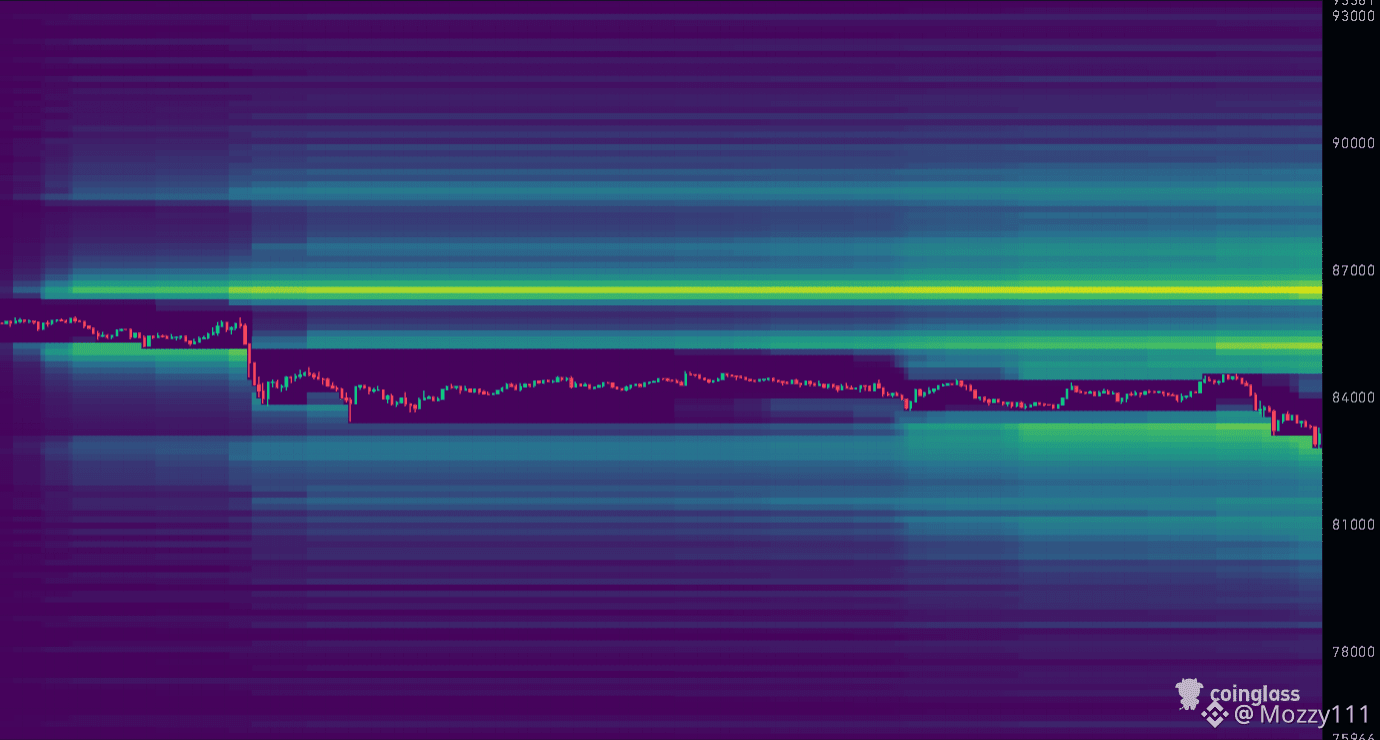
$BTC — Liquidation Map Read
Looking at the current liquidation heatmap for BTC: there's a massive liquidation cluster sitting right around $87,000 — by far the brightest zone on the chart, and price hasn't tagged it in days. That kind of concentration tends to act like a magnet.
Right now price is pulling back and sweeping liquidity in the $81,000-82,000 zone, while the $84,500-87,000 range above shows relatively thin liquidity — meaning if price breaks back up through it, the move could be fast with little resistance until it reaches that $87k cluster.
Read: liquidity grab lower, then a push back up to test the $87k zone is the more likely path from here.
Bias stays bullish — watching for continuation toward $87,000.
#BTC #Bitcoin #Liquidations
$BTC — Liquidation Map Read
Looking at the current liquidation heatmap for BTC: there's a massive liquidation cluster sitting right around $87,000 — by far the brightest zone on the chart, and price hasn't tagged it in days. That kind of concentration tends to act like a magnet.
Right now price is pulling back and sweeping liquidity in the $81,000-82,000 zone, while the $84,500-87,000 range above shows relatively thin liquidity — meaning if price breaks back up through it, the move could be fast with little resistance until it reaches that $87k cluster.
Read: liquidity grab lower, then a push back up to test the $87k zone is the more likely path from here.
Bias stays bullish — watching for continuation toward $87,000.
#BTC #Bitcoin #Liquidations
Looking at the current liquidation heatmap for BTC: there's a massive liquidation cluster sitting right around $87,000 — by far the brightest zone on the chart, and price hasn't tagged it in days. That kind of concentration tends to act like a magnet.
Right now price is pulling back and sweeping liquidity in the $81,000-82,000 zone, while the $84,500-87,000 range above shows relatively thin liquidity — meaning if price breaks back up through it, the move could be fast with little resistance until it reaches that $87k cluster.
Read: liquidity grab lower, then a push back up to test the $87k zone is the more likely path from here.
Bias stays bullish — watching for continuation toward $87,000.
#BTC #Bitcoin #Liquidations
2
637

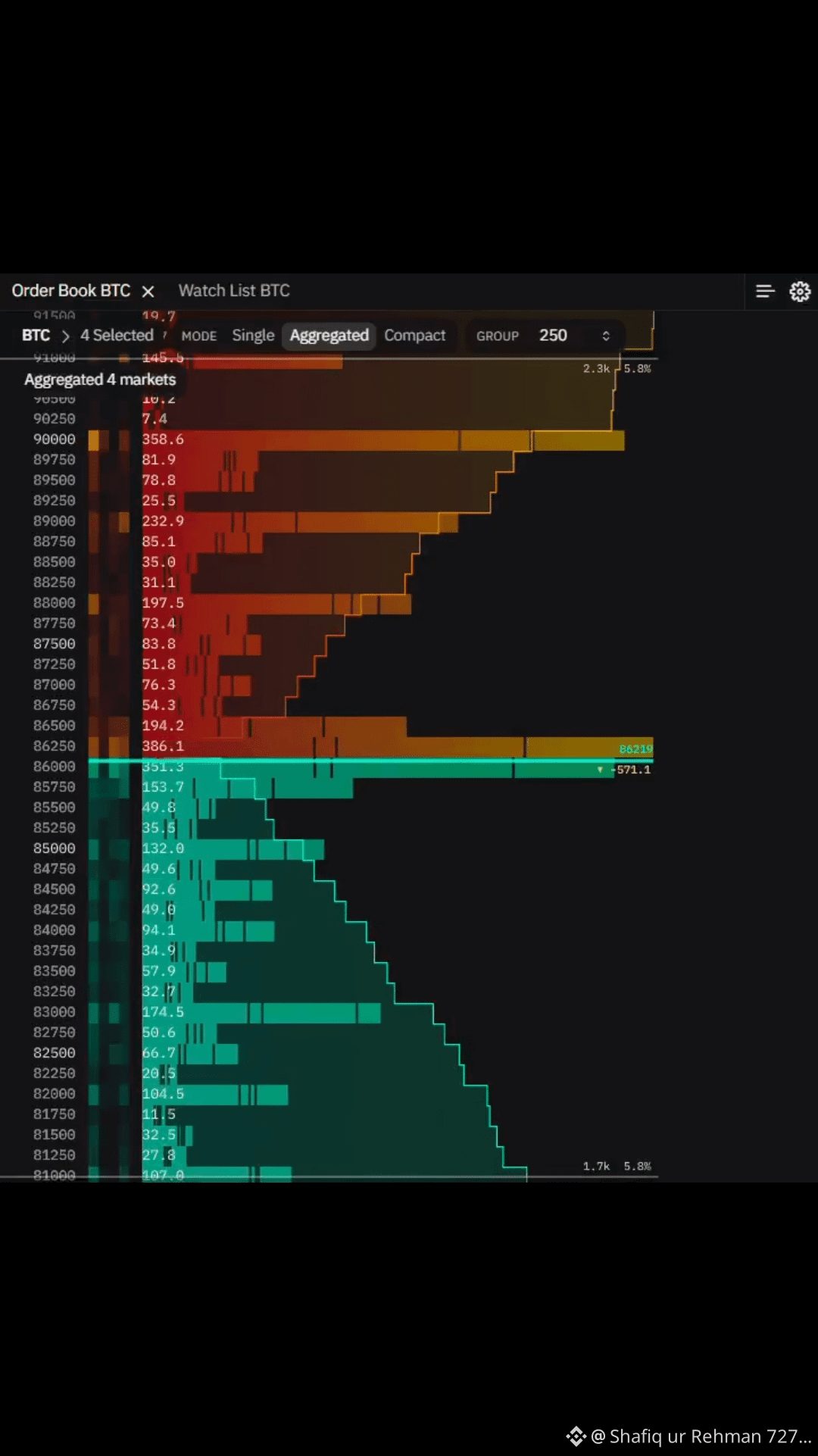
#BTC is currently in an order vacuum zone between $81K and $90K.
Upward, there are no large sell orders before $90K;
Downward, there are no large buy orders before $81K.
This structure indicates that once a direction is chosen, volatility will be intense.
No rush to take sides—wait for the price to move first, then follow.
#BTC is currently in an order vacuum zone between $81K and $90K.
Upward, there are no large sell orders before $90K;
Downward, there are no large buy orders before $81K.
This structure indicates that once a direction is chosen, volatility will be intense.
No rush to take sides—wait for the price to move first, then follow.
Upward, there are no large sell orders before $90K;
Downward, there are no large buy orders before $81K.
This structure indicates that once a direction is chosen, volatility will be intense.
No rush to take sides—wait for the price to move first, then follow.
925

·
--
Bearish
$BTC
{spot}(BTCUSDT)
#BTC☀ LOST $85,000 — NOW THIS ZONE MATTERS
$BTC pushed above $85,000, but after getting rejected, price has now moved back below $83,500.
So for me, $85,000 is no longer the level to focus on.
The zone I'm watching now is:
🟢 $81,600 - $81,800
This is the strong demand + liquidation zone I marked on my 8H chart. If BTC reaches this area, I'll be watching how price reacts there especially whether buyers step back in and defend the zone.
Above that, $86,000 remains the major resistance from the previous rejection.
$81,600-$81,800 is the area I'm paying attention to now. 👀
#crypto
#BTC
$BTC
#BTC☀ LOST $85,000 — NOW THIS ZONE MATTERS
$BTC pushed above $85,000, but after getting rejected, price has now moved back below $83,500.
So for me, $85,000 is no longer the level to focus on.
The zone I'm watching now is:
🟢 $81,600 - $81,800
This is the strong demand + liquidation zone I marked on my 8H chart. If BTC reaches this area, I'll be watching how price reacts there especially whether buyers step back in and defend the zone.
Above that, $86,000 remains the major resistance from the previous rejection.
$81,600-$81,800 is the area I'm paying attention to now. 👀
#crypto
#BTC
#BTC☀ LOST $85,000 — NOW THIS ZONE MATTERS
$BTC pushed above $85,000, but after getting rejected, price has now moved back below $83,500.
So for me, $85,000 is no longer the level to focus on.
The zone I'm watching now is:
🟢 $81,600 - $81,800
This is the strong demand + liquidation zone I marked on my 8H chart. If BTC reaches this area, I'll be watching how price reacts there especially whether buyers step back in and defend the zone.
Above that, $86,000 remains the major resistance from the previous rejection.
$81,600-$81,800 is the area I'm paying attention to now. 👀
#crypto
#BTC
1
404

·
--
Bearish
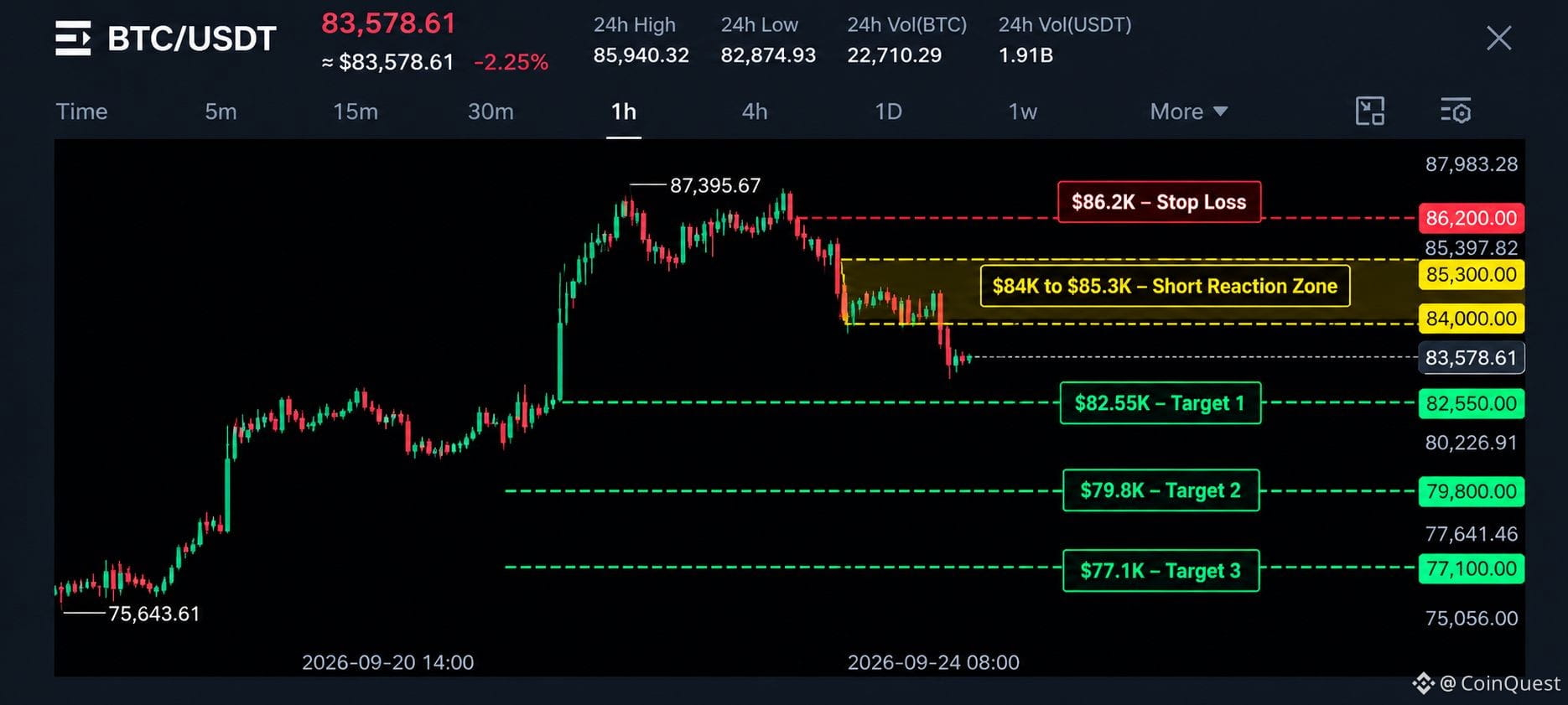
$BTC is losing the momentum after that $87.4K high 👀
Price pushed back up a few times but couldn't reclaim the old highs, and now the 1H structure is making lower highs
I'm not shorting at $83.5K tho 😭
The area I'd rather watch is around $84K to $85.3K. If BTC comes back there, gets rejected and prints another lower high, then I'd be interested in the short
Entry: $84K to $85.3K after rejection
Stop Loss: $86.2K
TP1: $82.55K
TP2: $79.8K
TP3: $77.1K
If BTC starts accepting above $85.3K and especially takes back $87.4K, I'm not forcing this short
Let's see if sellers actually show up first 👀
Plan before you enter 📊
#BTC
$BTC is losing the momentum after that $87.4K high 👀
Price pushed back up a few times but couldn't reclaim the old highs, and now the 1H structure is making lower highs
I'm not shorting at $83.5K tho 😭
The area I'd rather watch is around $84K to $85.3K. If BTC comes back there, gets rejected and prints another lower high, then I'd be interested in the short
Entry: $84K to $85.3K after rejection
Stop Loss: $86.2K
TP1: $82.55K
TP2: $79.8K
TP3: $77.1K
If BTC starts accepting above $85.3K and especially takes back $87.4K, I'm not forcing this short
Let's see if sellers actually show up first 👀
Plan before you enter 📊
#BTC
Price pushed back up a few times but couldn't reclaim the old highs, and now the 1H structure is making lower highs
I'm not shorting at $83.5K tho 😭
The area I'd rather watch is around $84K to $85.3K. If BTC comes back there, gets rejected and prints another lower high, then I'd be interested in the short
Entry: $84K to $85.3K after rejection
Stop Loss: $86.2K
TP1: $82.55K
TP2: $79.8K
TP3: $77.1K
If BTC starts accepting above $85.3K and especially takes back $87.4K, I'm not forcing this short
Let's see if sellers actually show up first 👀
Plan before you enter 📊
#BTC
1
1.1k

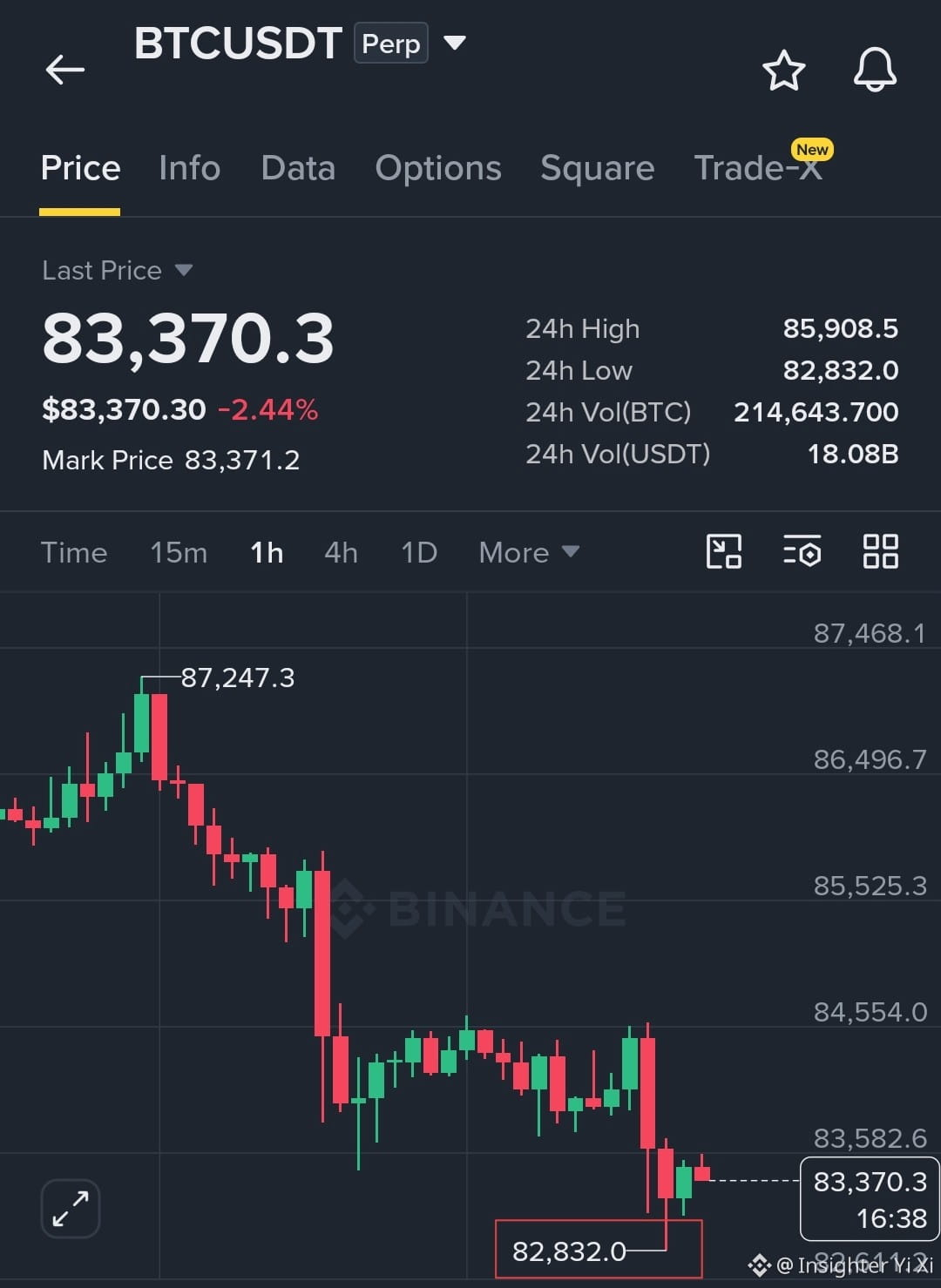
$BTC PULLBACK KEY LEVELS TO WATCH
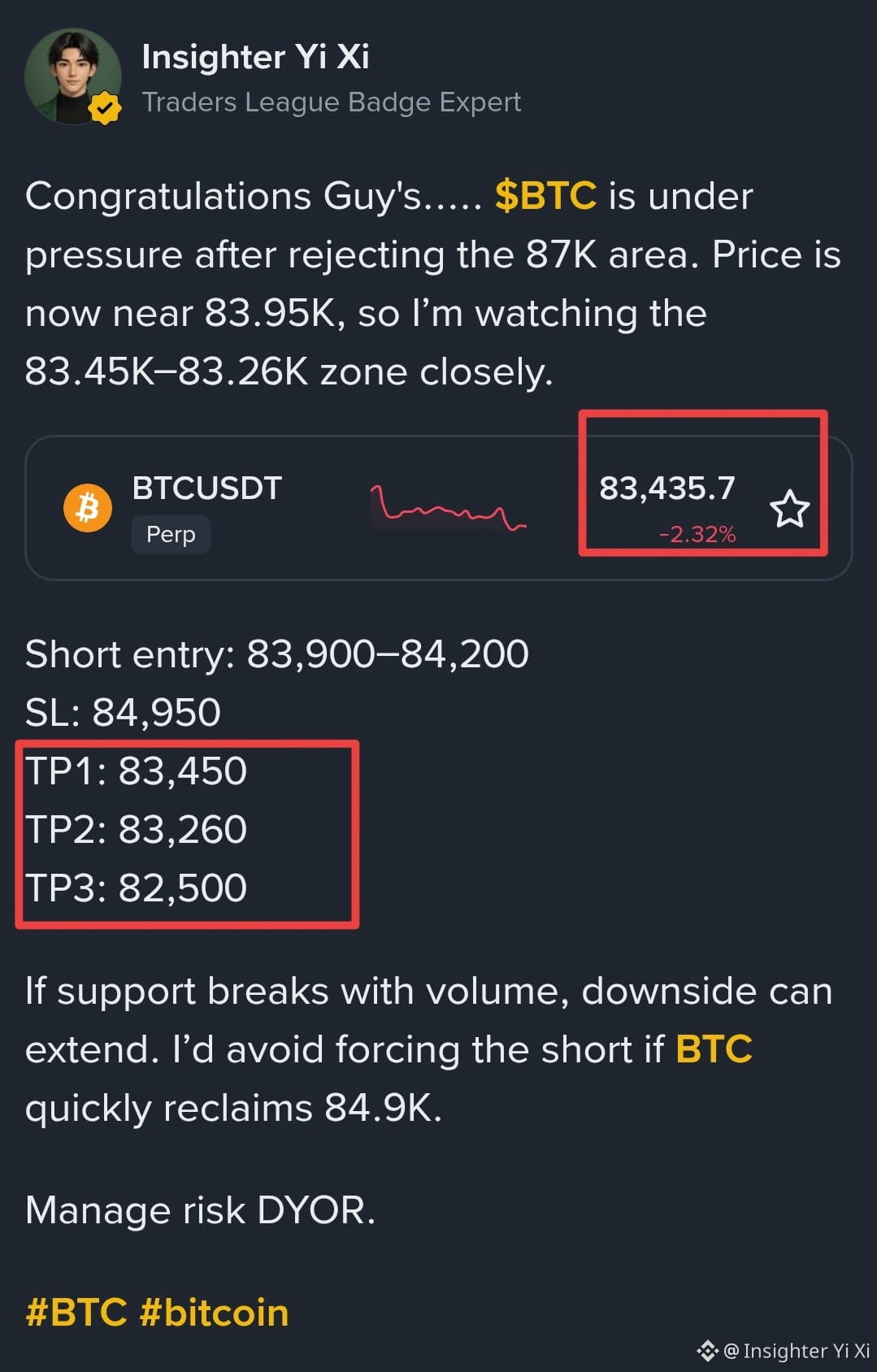
#BTC is sitting near 83.3K after a sharp rejection from the 85.9K area. My view is to avoid chasing here; the 82.8K–82.6K zone is the key support area on this structure.
{future}(BTCUSDT)
Long idea: 82,900–83,300
SL: 82,450
TP1: 84,000
TP2: 84,550
TP3: 85,500
I’d only consider the long if support shows a clear 15m reaction. If 82.6K breaks and holds below, this setup is invalid.
Risk first. No FOMO.
#BinanceWillListHyperliquid(HYPE) #USWeighsPromotingDollarStablecoinsAbroad #BCHJumps28%OnCMEFuturesListing
$BTC PULLBACK KEY LEVELS TO WATCH
#BTC is sitting near 83.3K after a sharp rejection from the 85.9K area. My view is to avoid chasing here; the 82.8K–82.6K zone is the key support area on this structure.
Long idea: 82,900–83,300
SL: 82,450
TP1: 84,000
TP2: 84,550
TP3: 85,500
I’d only consider the long if support shows a clear 15m reaction. If 82.6K breaks and holds below, this setup is invalid.
Risk first. No FOMO.
#BinanceWillListHyperliquid(HYPE) #USWeighsPromotingDollarStablecoinsAbroad #BCHJumps28%OnCMEFuturesListing
#BTC is sitting near 83.3K after a sharp rejection from the 85.9K area. My view is to avoid chasing here; the 82.8K–82.6K zone is the key support area on this structure.
Long idea: 82,900–83,300
SL: 82,450
TP1: 84,000
TP2: 84,550
TP3: 85,500
I’d only consider the long if support shows a clear 15m reaction. If 82.6K breaks and holds below, this setup is invalid.
Risk first. No FOMO.
#BinanceWillListHyperliquid(HYPE) #USWeighsPromotingDollarStablecoinsAbroad #BCHJumps28%OnCMEFuturesListing
1
306

·
--
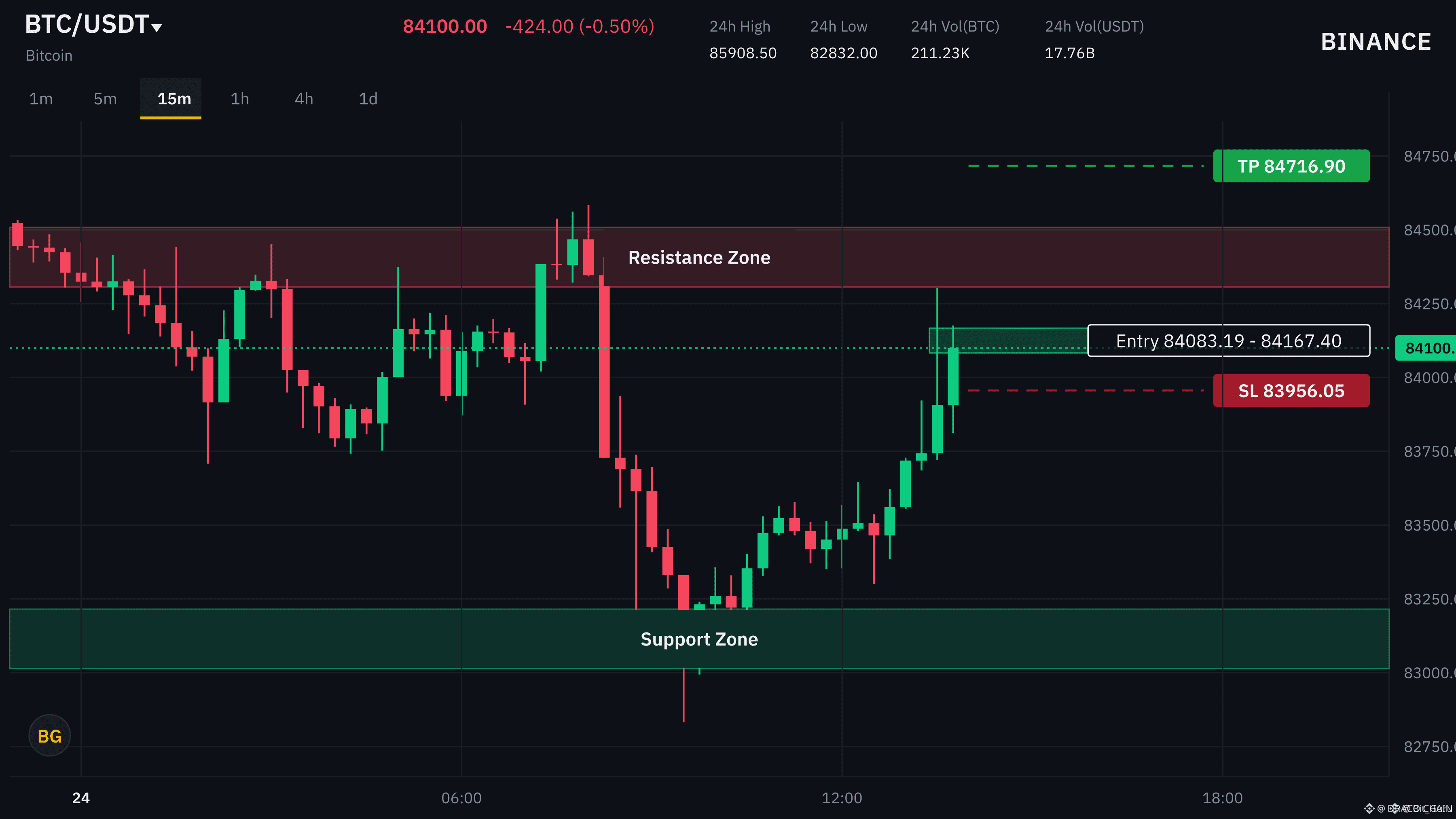
🚨 $BTC FLIPS DEMAND INTO POSITIONING ZONE AS SMART MONEY RECLAIMS STRUCTURE! 🟢
Entry: 84083.2 - 84167.4 ⚡
Target: 84716.9 🎯
Stop Loss: 83956.0 ⚠️
📌 Price has precisely mitigated our designated institutional demand zone near 84209.5, confirming clean buyer absorption. 📊 Smart money is building structural support within the 84083.2 to 84167.4 entry range as lower-timeframe order flow aligns with higher-timeframe bullish bias.
💡 With downside risk strictly defined above 83956.0, the path of least resistance points directly toward our structural liquidity target at 84716.9. 💬 Are you stepping into this demand block or waiting for explicit confirmation on the lower timeframes? 👇
⚠️ Not financial advice. Always manage your risk. 🛡️
🏷️ #BTC #SmartMoney #LongSetup #Crypto #MarketStructure
🦈 🎯
🚨 $BTC FLIPS DEMAND INTO POSITIONING ZONE AS SMART MONEY RECLAIMS STRUCTURE! 🟢
Entry: 84083.2 - 84167.4 ⚡
Target: 84716.9 🎯
Stop Loss: 83956.0 ⚠️
📌 Price has precisely mitigated our designated institutional demand zone near 84209.5, confirming clean buyer absorption. 📊 Smart money is building structural support within the 84083.2 to 84167.4 entry range as lower-timeframe order flow aligns with higher-timeframe bullish bias.
💡 With downside risk strictly defined above 83956.0, the path of least resistance points directly toward our structural liquidity target at 84716.9. 💬 Are you stepping into this demand block or waiting for explicit confirmation on the lower timeframes? 👇
⚠️ Not financial advice. Always manage your risk. 🛡️
🏷️ #BTC #SmartMoney #LongSetup #Crypto #MarketStructure
🦈 🎯
Entry: 84083.2 - 84167.4 ⚡
Target: 84716.9 🎯
Stop Loss: 83956.0 ⚠️
📌 Price has precisely mitigated our designated institutional demand zone near 84209.5, confirming clean buyer absorption. 📊 Smart money is building structural support within the 84083.2 to 84167.4 entry range as lower-timeframe order flow aligns with higher-timeframe bullish bias.
💡 With downside risk strictly defined above 83956.0, the path of least resistance points directly toward our structural liquidity target at 84716.9. 💬 Are you stepping into this demand block or waiting for explicit confirmation on the lower timeframes? 👇
⚠️ Not financial advice. Always manage your risk. 🛡️
🏷️ #BTC #SmartMoney #LongSetup #Crypto #MarketStructure
🦈 🎯
13

·
--
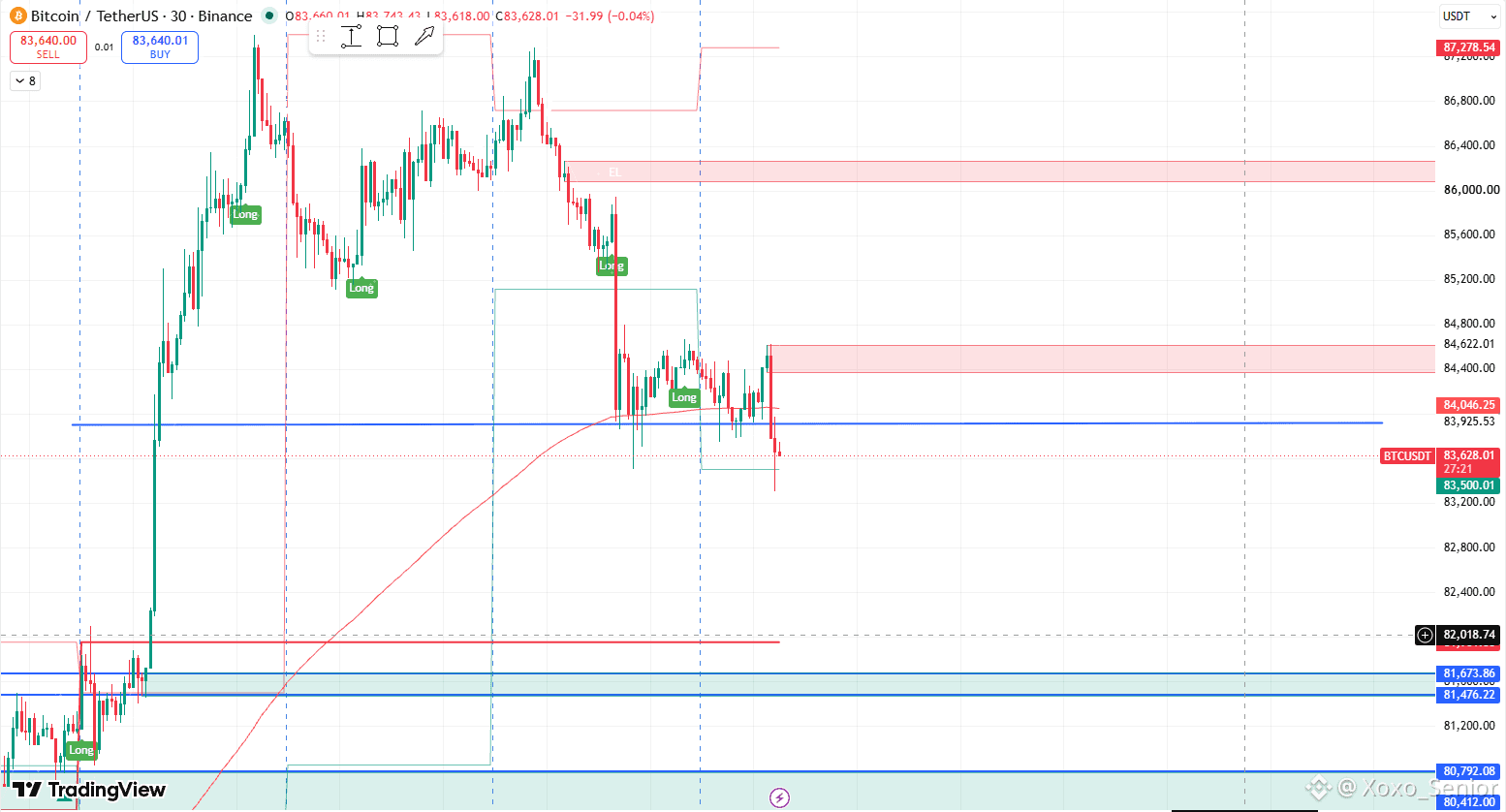
Yesterday I told you BTC will dip. See the chart now 🤣🤣🤣🤣
Tell me how many of you thought BTC will go up from 87k and enter in long position from there.
#BTC #TradingSignals #BinanceSquareTalks #AIStocksWhatNext
{spot}(BTCUSDT)
Yesterday I told you BTC will dip. See the chart now 🤣🤣🤣🤣
Tell me how many of you thought BTC will go up from 87k and enter in long position from there.
#BTC #TradingSignals #BinanceSquareTalks #AIStocksWhatNext
Tell me how many of you thought BTC will go up from 87k and enter in long position from there.
#BTC #TradingSignals #BinanceSquareTalks #AIStocksWhatNext
1
5
472

·
--
🚨 Bitcoin has been called “dead” more times than we can count.$BTC
2011: “Scam” around $2 → ~$1,156 in 2013
2015: “Bubble” around $152 → ~$20,089 in 2017
2018: “Dead” around $3K → ~$68,790 in 2021
2022: “Scam” around $15K → new highs above $126K in 2025
Now in 2026, Bitcoin has recovered from the ~$57K area and is back around $83K.
The question isn’t whether people will call Bitcoin “dead” again…
It’s whether history repeats by 2029. 👀
#Bitcoin #BTC #Crypto #DYOR
🚨 Bitcoin has been called “dead” more times than we can count.$BTC
2011: “Scam” around $2 → ~$1,156 in 2013
2015: “Bubble” around $152 → ~$20,089 in 2017
2018: “Dead” around $3K → ~$68,790 in 2021
2022: “Scam” around $15K → new highs above $126K in 2025
Now in 2026, Bitcoin has recovered from the ~$57K area and is back around $83K.
The question isn’t whether people will call Bitcoin “dead” again…
It’s whether history repeats by 2029. 👀
#Bitcoin #BTC #Crypto #DYOR
2011: “Scam” around $2 → ~$1,156 in 2013
2015: “Bubble” around $152 → ~$20,089 in 2017
2018: “Dead” around $3K → ~$68,790 in 2021
2022: “Scam” around $15K → new highs above $126K in 2025
Now in 2026, Bitcoin has recovered from the ~$57K area and is back around $83K.
The question isn’t whether people will call Bitcoin “dead” again…
It’s whether history repeats by 2029. 👀
#Bitcoin #BTC #Crypto #DYOR
1
55

·
--
Article
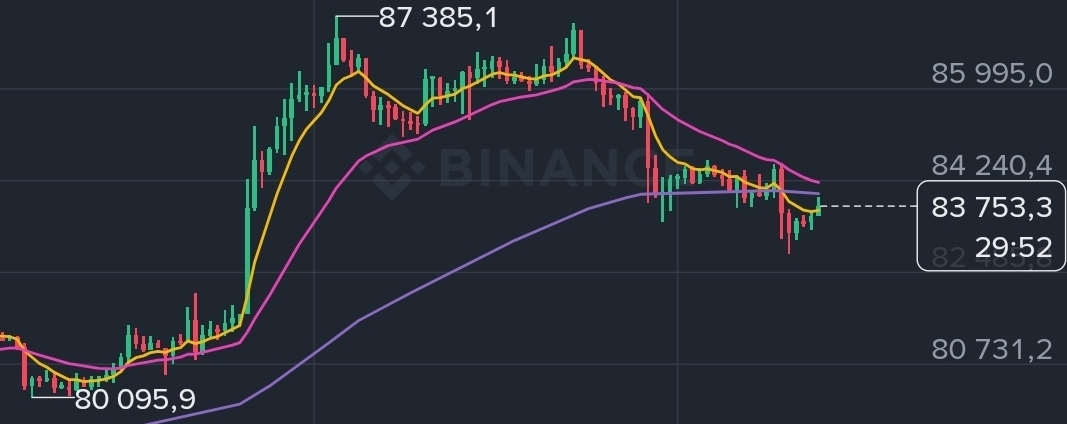
Market Flash-Crash: Dissecting Macro Shocks and Institutional Liquidity SweepsThe digital asset market has experienced a synchronized cascade over the past few hours, with Bitcoin ($BTC ) aggressively probing liquidity below the crucial $84,000 structural support threshold. High-beta altcoins naturally absorbed the brunt of this volatility, accelerating into deep retracements. While retail participants panic-sell, professional risk management mandates a forensic audit of the macro variables and order-flow dynamics driving this correction.
1. The Macro Catalyst: Treasury Yields and DXY Pressure
The primary algorithmic trigger originated outside the crypto ecosystem. Fresh US economic activity data printed significantly hotter than consensus estimates, signaling robust macroeconomic resilience. Paradoxically, strong economic growth complicates the global easing cycle. Quantitative trading systems reacted immediately by driving US Treasury yields sharply higher and strengthening the US Dollar Index (DXY). Institutional capital flows temporarily reallocated toward high-yield risk-free assets, forcing risk assets—including equities and crypto—into a localized decompression phase.
2. The Conductor Cascade: Bitcoin to Ethereum Structural Shift
To understand the altcoin drawdown, one must analyze the market hierarchy. Bitcoin acts as the primary market guide, but Ethereum ($ETH ) serves as the macro conductor for the entire altcoin ecosystem. During this flush-out, the ETH/BTC ratio experienced intense structural weakness. As Ethereum cracked key local support levels, it triggered an immediate domino effect down the capital rotation chain. High-beta assets like Solana ($SOL ) function as the ultimate gauge of retail leverage; hence, when both BTC and ETH pull back, SOL experiences accelerated liquidations due to its higher beta and velocity.
3. Options Expiry and the "Max Pain" Optimization
From an internal structural perspective, the market was highly overextended due to extreme speculative leverage accumulated during the run past $87,000. With approximately $14 Billion in quarterly Bitcoin and Ethereum options expiring this Friday, market makers faced substantial downside hedging requirements. To optimize capital efficiency and secure historical options premiums, institutional desk algorithms executed a calculated liquidity raid toward the options "Max Pain" zone, successfully forcing the capitulation of overleveraged retail long passengers.
4. Velo Data Insights: Spot Absorption Inside Order Blocks
Data architecture platforms like Velo Data paint a completely different picture than the panic seen on social media. While derivative metrics indicate a violent contraction in Aggregate Open Interest (OI) alongside a free-falling Perpetual CVD, Spot CVD has maintained a resilient, non-inflationary horizontal structure. Institutional market makers have not abandoned their long-term accumulation ranges; instead, they have passively deployed significant limit-order walls inside the macro order blocks. The sell-side pressure is actively being absorbed.
Strategic Verdict
This drawdown is a mandatory technical correction designed to purge toxic leverage and establish a healthy structural foundation for the next leg up. The higher-timeframe (4H) bullish architecture remains completely intact. True professional edge lies not in prediction, but in capital preservation via strict risk parameters until the liquidation engine exhausts itself.
#BTC #MarketAnalysis #Ethereum #smartmoney
{future}(BTCUSDT)
{future}(ETHUSDT)
{future}(SOLUSDT)
Market Flash-Crash: Dissecting Macro Shocks and Institutional Liquidity Sweeps
The digital asset market has experienced a synchronized cascade over the past few hours, with Bitcoin ($BTC ) aggressively probing liquidity below the crucial $84,000 structural support threshold. High-beta altcoins naturally absorbed the brunt of this volatility, accelerating into deep retracements. While retail participants panic-sell, professional risk management mandates a forensic audit of the macro variables and order-flow dynamics driving this correction.
1. The Macro Catalyst: Treasury Yields and DXY Pressure
The primary algorithmic trigger originated outside the crypto ecosystem. Fresh US economic activity data printed significantly hotter than consensus estimates, signaling robust macroeconomic resilience. Paradoxically, strong economic growth complicates the global easing cycle. Quantitative trading systems reacted immediately by driving US Treasury yields sharply higher and strengthening the US Dollar Index (DXY). Institutional capital flows temporarily reallocated toward high-yield risk-free assets, forcing risk assets—including equities and crypto—into a localized decompression phase.
2. The Conductor Cascade: Bitcoin to Ethereum Structural Shift
To understand the altcoin drawdown, one must analyze the market hierarchy. Bitcoin acts as the primary market guide, but Ethereum ($ETH ) serves as the macro conductor for the entire altcoin ecosystem. During this flush-out, the ETH/BTC ratio experienced intense structural weakness. As Ethereum cracked key local support levels, it triggered an immediate domino effect down the capital rotation chain. High-beta assets like Solana ($SOL ) function as the ultimate gauge of retail leverage; hence, when both BTC and ETH pull back, SOL experiences accelerated liquidations due to its higher beta and velocity.
3. Options Expiry and the "Max Pain" Optimization
From an internal structural perspective, the market was highly overextended due to extreme speculative leverage accumulated during the run past $87,000. With approximately $14 Billion in quarterly Bitcoin and Ethereum options expiring this Friday, market makers faced substantial downside hedging requirements. To optimize capital efficiency and secure historical options premiums, institutional desk algorithms executed a calculated liquidity raid toward the options "Max Pain" zone, successfully forcing the capitulation of overleveraged retail long passengers.
4. Velo Data Insights: Spot Absorption Inside Order Blocks
Data architecture platforms like Velo Data paint a completely different picture than the panic seen on social media. While derivative metrics indicate a violent contraction in Aggregate Open Interest (OI) alongside a free-falling Perpetual CVD, Spot CVD has maintained a resilient, non-inflationary horizontal structure. Institutional market makers have not abandoned their long-term accumulation ranges; instead, they have passively deployed significant limit-order walls inside the macro order blocks. The sell-side pressure is actively being absorbed.
Strategic Verdict
This drawdown is a mandatory technical correction designed to purge toxic leverage and establish a healthy structural foundation for the next leg up. The higher-timeframe (4H) bullish architecture remains completely intact. True professional edge lies not in prediction, but in capital preservation via strict risk parameters until the liquidation engine exhausts itself.
#BTC #MarketAnalysis #Ethereum #smartmoney
1. The Macro Catalyst: Treasury Yields and DXY Pressure
The primary algorithmic trigger originated outside the crypto ecosystem. Fresh US economic activity data printed significantly hotter than consensus estimates, signaling robust macroeconomic resilience. Paradoxically, strong economic growth complicates the global easing cycle. Quantitative trading systems reacted immediately by driving US Treasury yields sharply higher and strengthening the US Dollar Index (DXY). Institutional capital flows temporarily reallocated toward high-yield risk-free assets, forcing risk assets—including equities and crypto—into a localized decompression phase.
2. The Conductor Cascade: Bitcoin to Ethereum Structural Shift
To understand the altcoin drawdown, one must analyze the market hierarchy. Bitcoin acts as the primary market guide, but Ethereum ($ETH ) serves as the macro conductor for the entire altcoin ecosystem. During this flush-out, the ETH/BTC ratio experienced intense structural weakness. As Ethereum cracked key local support levels, it triggered an immediate domino effect down the capital rotation chain. High-beta assets like Solana ($SOL ) function as the ultimate gauge of retail leverage; hence, when both BTC and ETH pull back, SOL experiences accelerated liquidations due to its higher beta and velocity.
3. Options Expiry and the "Max Pain" Optimization
From an internal structural perspective, the market was highly overextended due to extreme speculative leverage accumulated during the run past $87,000. With approximately $14 Billion in quarterly Bitcoin and Ethereum options expiring this Friday, market makers faced substantial downside hedging requirements. To optimize capital efficiency and secure historical options premiums, institutional desk algorithms executed a calculated liquidity raid toward the options "Max Pain" zone, successfully forcing the capitulation of overleveraged retail long passengers.
4. Velo Data Insights: Spot Absorption Inside Order Blocks
Data architecture platforms like Velo Data paint a completely different picture than the panic seen on social media. While derivative metrics indicate a violent contraction in Aggregate Open Interest (OI) alongside a free-falling Perpetual CVD, Spot CVD has maintained a resilient, non-inflationary horizontal structure. Institutional market makers have not abandoned their long-term accumulation ranges; instead, they have passively deployed significant limit-order walls inside the macro order blocks. The sell-side pressure is actively being absorbed.
Strategic Verdict
This drawdown is a mandatory technical correction designed to purge toxic leverage and establish a healthy structural foundation for the next leg up. The higher-timeframe (4H) bullish architecture remains completely intact. True professional edge lies not in prediction, but in capital preservation via strict risk parameters until the liquidation engine exhausts itself.
#BTC #MarketAnalysis #Ethereum #smartmoney
1
62

·
--
BTC is retesting the $82,614 support level that everyone is watching.
After touching $87.3K on Monday, Bitcoin slipped 2.8% to $83,400 today. No panic - this is a healthy retest before the next leg up.
According to analysts, if daily close holds above $82,614, the target remains $98K - $99.5K. But if we close below it, we could see $75,339 which is also near Strategy's average buying cost.
U.S. Spot Bitcoin ETFs bought 12,000 BTC in one day and then another 8,000 BTC, with nearly $999M inflows on Sept 21 - the biggest in 11 months. BlackRock IBIT alone bought $350M.
So institutional buying is still very strong. This dip could be a gift before Q4 rally.
Are you buying this dip or waiting for $75K?
#BTC #BitcoinBTC is retesting the $82,614 support level that everyone is watching.
After touching $87.3K on Monday, Bitcoin slipped 2.8% to $83,400 today. No panic - this is a healthy retest before the next leg up.
According to analysts, if daily close holds above $82,614, the target remains $98K - $99.5K. But if we close below it, we could see $75,339 which is also near Strategy's average buying cost.
U.S. Spot Bitcoin ETFs bought 12,000 BTC in one day and then another 8,000 BTC, with nearly $999M inflows on Sept 21 - the biggest in 11 months. BlackRock IBIT alone bought $350M.
So institutional buying is still very strong. This dip could be a gift before Q4 rally.
Are you buying this dip or waiting for $75K?
#BTC #Bitcoin
BTC is retesting the $82,614 support level that everyone is watching.
After touching $87.3K on Monday, Bitcoin slipped 2.8% to $83,400 today. No panic - this is a healthy retest before the next leg up.
According to analysts, if daily close holds above $82,614, the target remains $98K - $99.5K. But if we close below it, we could see $75,339 which is also near Strategy's average buying cost.
U.S. Spot Bitcoin ETFs bought 12,000 BTC in one day and then another 8,000 BTC, with nearly $999M inflows on Sept 21 - the biggest in 11 months. BlackRock IBIT alone bought $350M.
So institutional buying is still very strong. This dip could be a gift before Q4 rally.
Are you buying this dip or waiting for $75K?
#BTC #BitcoinBTC is retesting the $82,614 support level that everyone is watching.
After touching $87.3K on Monday, Bitcoin slipped 2.8% to $83,400 today. No panic - this is a healthy retest before the next leg up.
According to analysts, if daily close holds above $82,614, the target remains $98K - $99.5K. But if we close below it, we could see $75,339 which is also near Strategy's average buying cost.
U.S. Spot Bitcoin ETFs bought 12,000 BTC in one day and then another 8,000 BTC, with nearly $999M inflows on Sept 21 - the biggest in 11 months. BlackRock IBIT alone bought $350M.
So institutional buying is still very strong. This dip could be a gift before Q4 rally.
Are you buying this dip or waiting for $75K?
#BTC #Bitcoin
After touching $87.3K on Monday, Bitcoin slipped 2.8% to $83,400 today. No panic - this is a healthy retest before the next leg up.
According to analysts, if daily close holds above $82,614, the target remains $98K - $99.5K. But if we close below it, we could see $75,339 which is also near Strategy's average buying cost.
U.S. Spot Bitcoin ETFs bought 12,000 BTC in one day and then another 8,000 BTC, with nearly $999M inflows on Sept 21 - the biggest in 11 months. BlackRock IBIT alone bought $350M.
So institutional buying is still very strong. This dip could be a gift before Q4 rally.
Are you buying this dip or waiting for $75K?
#BTC #BitcoinBTC is retesting the $82,614 support level that everyone is watching.
After touching $87.3K on Monday, Bitcoin slipped 2.8% to $83,400 today. No panic - this is a healthy retest before the next leg up.
According to analysts, if daily close holds above $82,614, the target remains $98K - $99.5K. But if we close below it, we could see $75,339 which is also near Strategy's average buying cost.
U.S. Spot Bitcoin ETFs bought 12,000 BTC in one day and then another 8,000 BTC, with nearly $999M inflows on Sept 21 - the biggest in 11 months. BlackRock IBIT alone bought $350M.
So institutional buying is still very strong. This dip could be a gift before Q4 rally.
Are you buying this dip or waiting for $75K?
#BTC #Bitcoin

9

GF: "Why are you crying? It's just a 2% dip" 😊
Me who bought at the TOP with leverage: 💀
Only crypto traders will understand this pain 😭
$BTC
Who else bought the top? Comment 👇
#BTC #cryptomeme #bitcoin #HODL #trading
GF: "Why are you crying? It's just a 2% dip" 😊
Me who bought at the TOP with leverage: 💀
Only crypto traders will understand this pain 😭
$BTC
Who else bought the top? Comment 👇
#BTC #cryptomeme #bitcoin #HODL #trading
Me who bought at the TOP with leverage: 💀
Only crypto traders will understand this pain 😭
$BTC
Who else bought the top? Comment 👇
#BTC #cryptomeme #bitcoin #HODL #trading

1
114

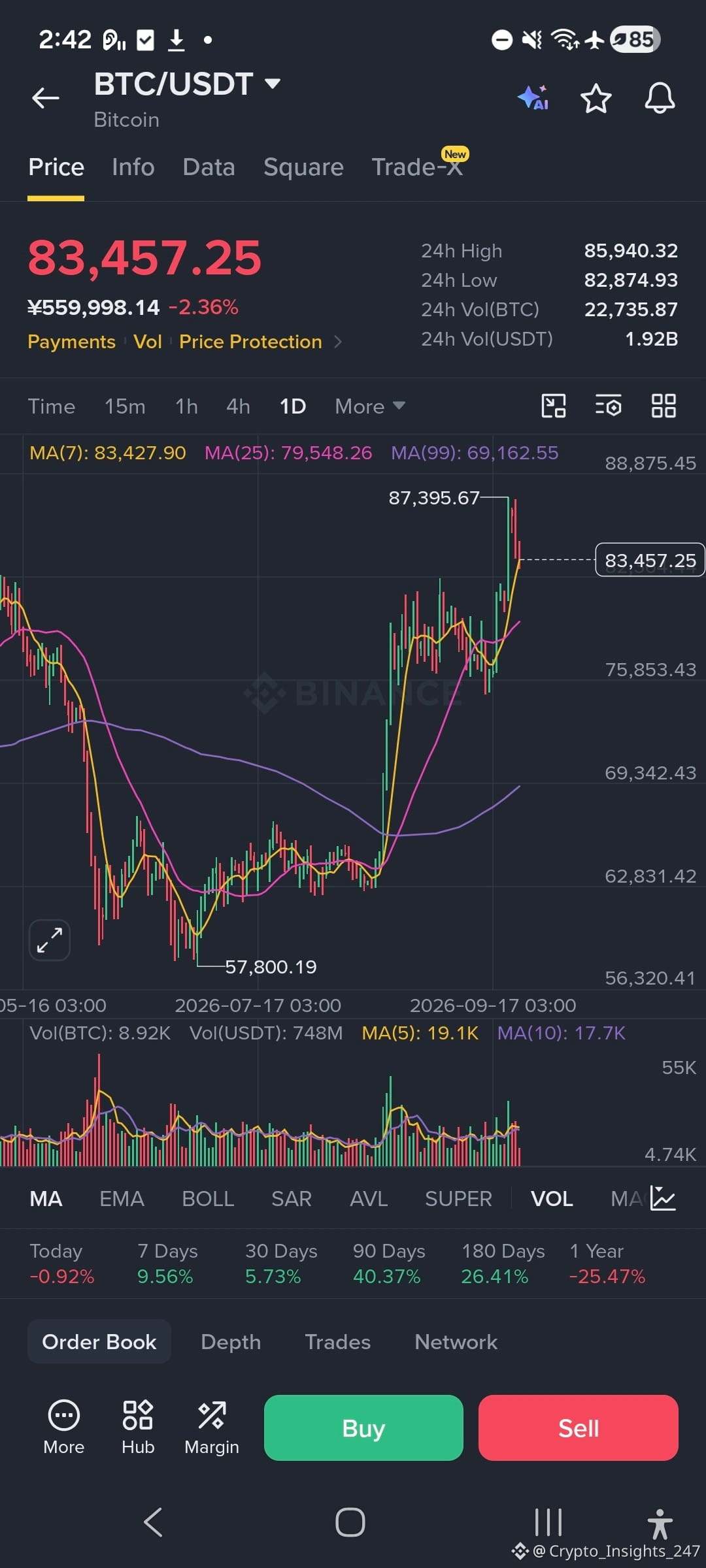
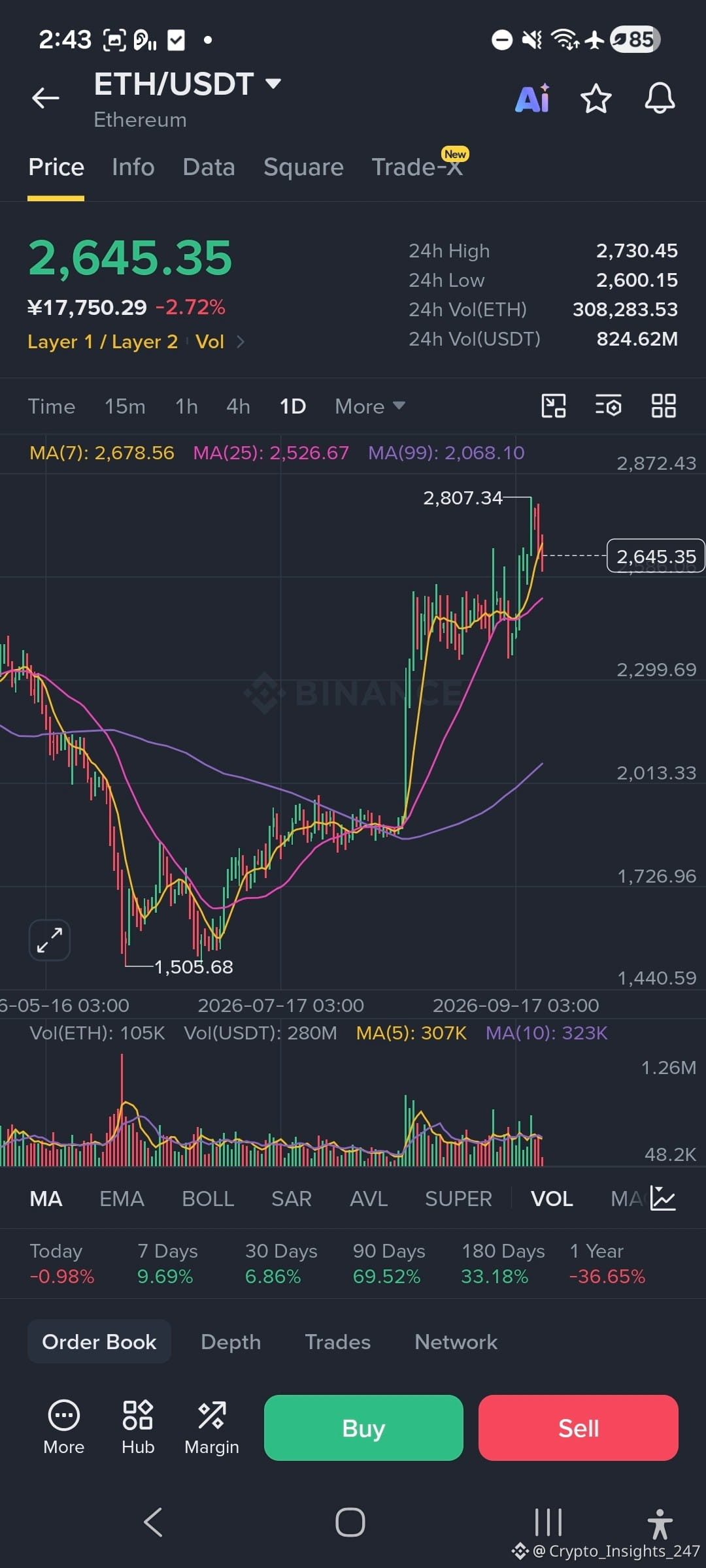
Tap the live $BTC and $ETH widgets below to analyze open positions.
🌐 Macro Parameters
$BTC is trading near $83,512 after sliding below $84,000 as the 10-year Treasury yield hit a 19-year high. $ETH sits around $2,636, underperforming BTC with a sharper pullback on the day.
📊 Market Structure
High liquidations hit leveraged $BTC longs during the drop, adding pressure to an already risk-off tape. $ETH saw $89.4M in long positions wiped out after rejecting near $2,786 earlier in the week.
💧 Allocation Framework
Traders are watching whether $BTC holds the $82,900 zone as yields continue climbing. $ETH remains the weaker of the two majors this week, worth tracking for signs of stabilization before adding exposure.
━━━━━━━━━━━━━━
💬 Risk-on or risk-off?
#BTC #ETH #Crypto #BinanceSquare
Tap the live $BTC and $ETH widgets below to analyze open positions.
🌐 Macro Parameters
$BTC is trading near $83,512 after sliding below $84,000 as the 10-year Treasury yield hit a 19-year high. $ETH sits around $2,636, underperforming BTC with a sharper pullback on the day.
📊 Market Structure
High liquidations hit leveraged $BTC longs during the drop, adding pressure to an already risk-off tape. $ETH saw $89.4M in long positions wiped out after rejecting near $2,786 earlier in the week.
💧 Allocation Framework
Traders are watching whether $BTC holds the $82,900 zone as yields continue climbing. $ETH remains the weaker of the two majors this week, worth tracking for signs of stabilization before adding exposure.
━━━━━━━━━━━━━━
💬 Risk-on or risk-off?
#BTC #ETH #Crypto #BinanceSquare
🌐 Macro Parameters
$BTC is trading near $83,512 after sliding below $84,000 as the 10-year Treasury yield hit a 19-year high. $ETH sits around $2,636, underperforming BTC with a sharper pullback on the day.
📊 Market Structure
High liquidations hit leveraged $BTC longs during the drop, adding pressure to an already risk-off tape. $ETH saw $89.4M in long positions wiped out after rejecting near $2,786 earlier in the week.
💧 Allocation Framework
Traders are watching whether $BTC holds the $82,900 zone as yields continue climbing. $ETH remains the weaker of the two majors this week, worth tracking for signs of stabilization before adding exposure.
━━━━━━━━━━━━━━
💬 Risk-on or risk-off?
#BTC #ETH #Crypto #BinanceSquare
2
75

·
--
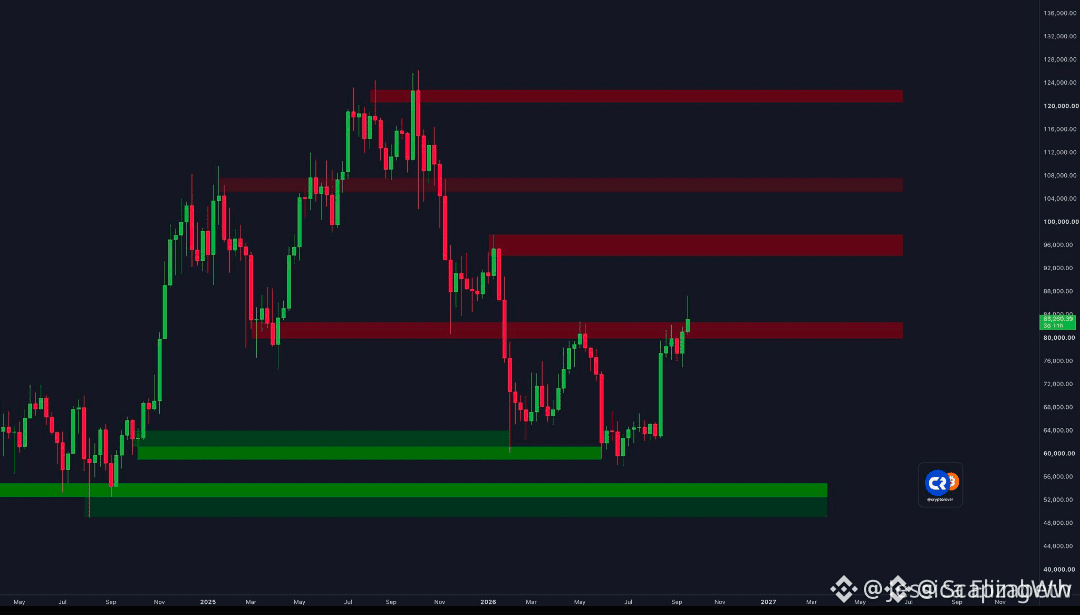
🚨 $BTC IS EYEING $100K BUT THIS $83,000 LEVEL DECIDES EVERYTHING! ⚡
The march toward $100,000 for $BTC isn't just about market hype, it's about structural validation on the macro timeframes. 📊 Sellers are fighting hard, but a decisive weekly candle close above $83,000 completely alters the landscape.
📌 Reclaiming $83,000 flips major overhead resistance into solid ground, opening a clean runway toward six figures. ⚡ If buyers step up and lock in this close, order flow momentum will likely trigger aggressive follow-through.
💡 Smart money is closely watching this level for confirmation before committing serious capital. 💬 Will $BTC secure the weekly close above $83,000 or do we see a sweep below first? 👇
⚠️ Not financial advice. Always manage your risk. 🛡️
🏷️ #BTC #Bitcoin #Crypto #MarketUpdate
⚡ 🐂
🚨 $BTC IS EYEING $100K BUT THIS $83,000 LEVEL DECIDES EVERYTHING! ⚡
The march toward $100,000 for $BTC isn't just about market hype, it's about structural validation on the macro timeframes. 📊 Sellers are fighting hard, but a decisive weekly candle close above $83,000 completely alters the landscape.
📌 Reclaiming $83,000 flips major overhead resistance into solid ground, opening a clean runway toward six figures. ⚡ If buyers step up and lock in this close, order flow momentum will likely trigger aggressive follow-through.
💡 Smart money is closely watching this level for confirmation before committing serious capital. 💬 Will $BTC secure the weekly close above $83,000 or do we see a sweep below first? 👇
⚠️ Not financial advice. Always manage your risk. 🛡️
🏷️ #BTC #Bitcoin #Crypto #MarketUpdate
⚡ 🐂
The march toward $100,000 for $BTC isn't just about market hype, it's about structural validation on the macro timeframes. 📊 Sellers are fighting hard, but a decisive weekly candle close above $83,000 completely alters the landscape.
📌 Reclaiming $83,000 flips major overhead resistance into solid ground, opening a clean runway toward six figures. ⚡ If buyers step up and lock in this close, order flow momentum will likely trigger aggressive follow-through.
💡 Smart money is closely watching this level for confirmation before committing serious capital. 💬 Will $BTC secure the weekly close above $83,000 or do we see a sweep below first? 👇
⚠️ Not financial advice. Always manage your risk. 🛡️
🏷️ #BTC #Bitcoin #Crypto #MarketUpdate
⚡ 🐂
20

·
--
$DOGE
{future}(DOGEUSDT)
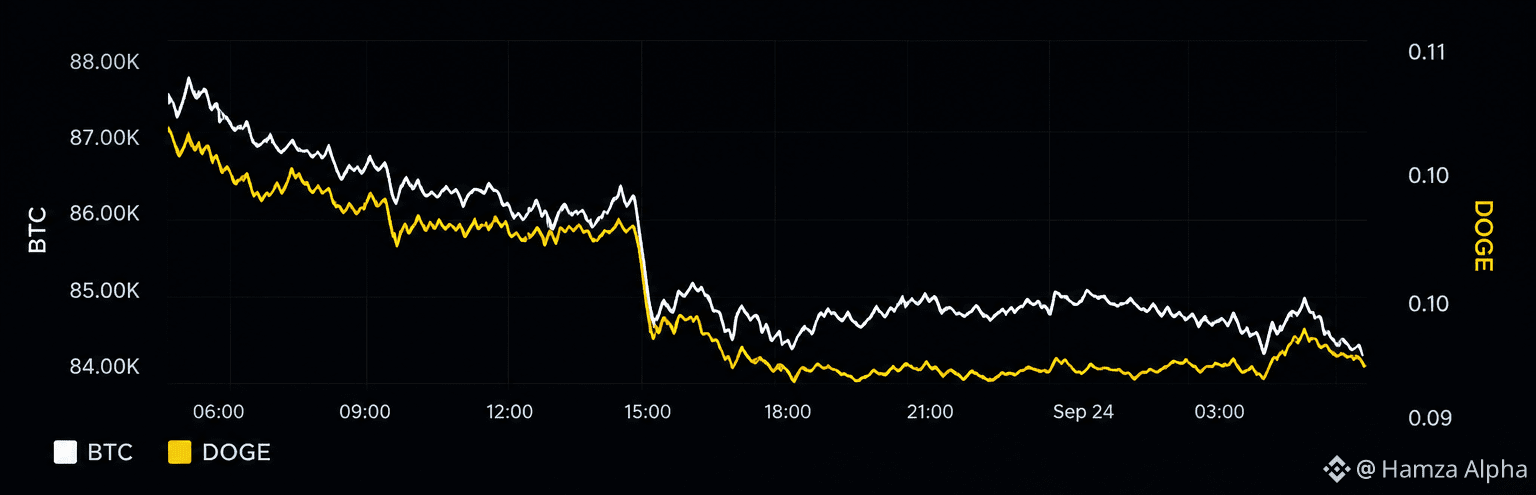
Bitcoin drops 2%+ below $84,000, while Dogecoin plunges 8% as U.S. Treasury yields hit their highest level since 2007.
📉 Rising borrowing costs are putting pressure on risk assets and non-yielding cryptocurrencies.
BTC under pressure. DOGE leads the losses. 🔥
#Bitcoin #BTC #Dogecoin #DOGE #Crypto
$DOGE
Bitcoin drops 2%+ below $84,000, while Dogecoin plunges 8% as U.S. Treasury yields hit their highest level since 2007.
📉 Rising borrowing costs are putting pressure on risk assets and non-yielding cryptocurrencies.
BTC under pressure. DOGE leads the losses. 🔥
#Bitcoin #BTC #Dogecoin #DOGE #Crypto
Bitcoin drops 2%+ below $84,000, while Dogecoin plunges 8% as U.S. Treasury yields hit their highest level since 2007.
📉 Rising borrowing costs are putting pressure on risk assets and non-yielding cryptocurrencies.
BTC under pressure. DOGE leads the losses. 🔥
#Bitcoin #BTC #Dogecoin #DOGE #Crypto
114

·
--
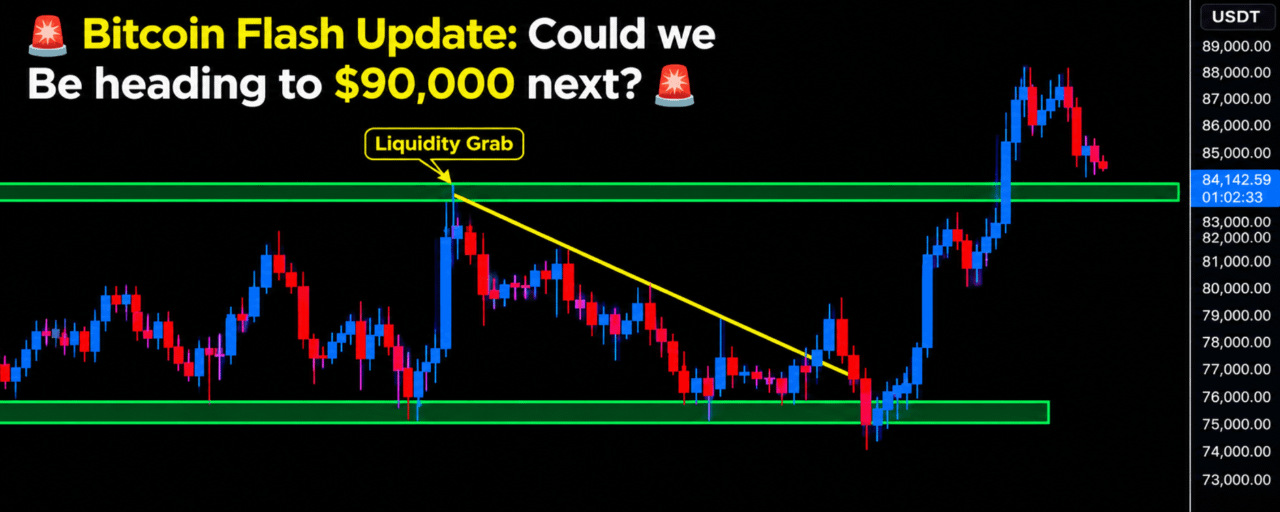
Article
Bitcoin Flash Update: Could we be heading to $90,000 next?🚨 Bitcoin Flash Update: Could we be heading to $90,000 next? 🚨
After that incredible rally, Bitcoin has taken a moment to catch its breath and is now sitting right at a crucial support level! 📈📉
Here’s what to keep an eye on:
We might see a slight dip below support to grab some liquidity.
Then, expect a quick rebound as buyers jump back in.
The target? A thrilling $90,000! 🚀
So, are you diving in to buy the dip, or are you holding back for now?
👉 Share your predictions in the comments below! 💬👇
#Bitcoin
{future}(BTCUSDT)
#Crypto #BTC #CryptoTrading #BullRun
Bitcoin Flash Update: Could we be heading to $90,000 next?
🚨 Bitcoin Flash Update: Could we be heading to $90,000 next? 🚨
After that incredible rally, Bitcoin has taken a moment to catch its breath and is now sitting right at a crucial support level! 📈📉
Here’s what to keep an eye on:
We might see a slight dip below support to grab some liquidity.
Then, expect a quick rebound as buyers jump back in.
The target? A thrilling $90,000! 🚀
So, are you diving in to buy the dip, or are you holding back for now?
👉 Share your predictions in the comments below! 💬👇
#Bitcoin
#Crypto #BTC #CryptoTrading #BullRun
After that incredible rally, Bitcoin has taken a moment to catch its breath and is now sitting right at a crucial support level! 📈📉
Here’s what to keep an eye on:
We might see a slight dip below support to grab some liquidity.
Then, expect a quick rebound as buyers jump back in.
The target? A thrilling $90,000! 🚀
So, are you diving in to buy the dip, or are you holding back for now?
👉 Share your predictions in the comments below! 💬👇
#Bitcoin
#Crypto #BTC #CryptoTrading #BullRun
83

🚨 $BTC SWEEPS BELOW $83,000 AS INSTITUTIONAL LIQUIDITY TESTS KEY SUPPORT 📉
$BTC just breached the $83,000 structural pivot, printing a 1.7% daily dip down to $82,963.07 across top-tier exchange data. 📉 This pullback looks like a classic liquidity hunt targeting stops resting beneath recent range lows. 🔍
Smart money often engineers these shallow drawdowns to rebalance fair value gaps and absorb sell-side liquidity before establishing firm directional conviction. 📊 Keep a close eye on how price reacts around this order block to confirm whether institutions are accumulating supply or preparing for a deeper discount. 💡
💬 Do you see this dip below $83,000 as a high-probability liquidity sweep or the start of a broader structural breakdown? 👇
⚠️ Not financial advice. Always manage your risk. 🛡️
🏷️ #BTC #Bitcoin #MarketUpdate #Crypto #TechnicalAnalysis
🎯 🦈
🚨 $BTC SWEEPS BELOW $83,000 AS INSTITUTIONAL LIQUIDITY TESTS KEY SUPPORT 📉
$BTC just breached the $83,000 structural pivot, printing a 1.7% daily dip down to $82,963.07 across top-tier exchange data. 📉 This pullback looks like a classic liquidity hunt targeting stops resting beneath recent range lows. 🔍
Smart money often engineers these shallow drawdowns to rebalance fair value gaps and absorb sell-side liquidity before establishing firm directional conviction. 📊 Keep a close eye on how price reacts around this order block to confirm whether institutions are accumulating supply or preparing for a deeper discount. 💡
💬 Do you see this dip below $83,000 as a high-probability liquidity sweep or the start of a broader structural breakdown? 👇
⚠️ Not financial advice. Always manage your risk. 🛡️
🏷️ #BTC #Bitcoin #MarketUpdate #Crypto #TechnicalAnalysis
🎯 🦈
$BTC just breached the $83,000 structural pivot, printing a 1.7% daily dip down to $82,963.07 across top-tier exchange data. 📉 This pullback looks like a classic liquidity hunt targeting stops resting beneath recent range lows. 🔍
Smart money often engineers these shallow drawdowns to rebalance fair value gaps and absorb sell-side liquidity before establishing firm directional conviction. 📊 Keep a close eye on how price reacts around this order block to confirm whether institutions are accumulating supply or preparing for a deeper discount. 💡
💬 Do you see this dip below $83,000 as a high-probability liquidity sweep or the start of a broader structural breakdown? 👇
⚠️ Not financial advice. Always manage your risk. 🛡️
🏷️ #BTC #Bitcoin #MarketUpdate #Crypto #TechnicalAnalysis
🎯 🦈
12

🚨 Bitcoin Watch 🚨
I’m putting serious confidence behind Bitcoin’s next move. I’d bet $850,000 that BTC can push beyond the $90,000 level and create a strong profit opportunity.
The market is watching closely, and I’m staying patient. Let’s see how this plays out. 👀📈
#Bitcoin #Crypto #Binance #BTC
$BITCOIN
{alpha}(10x72e4f9f808c49a2a61de9c5896298920dc4eeea9)
$BTC
{future}(BTCUSDT)
🚨 Bitcoin Watch 🚨
I’m putting serious confidence behind Bitcoin’s next move. I’d bet $850,000 that BTC can push beyond the $90,000 level and create a strong profit opportunity.
The market is watching closely, and I’m staying patient. Let’s see how this plays out. 👀📈
#Bitcoin #Crypto #Binance #BTC
$BITCOIN
$BTC
I’m putting serious confidence behind Bitcoin’s next move. I’d bet $850,000 that BTC can push beyond the $90,000 level and create a strong profit opportunity.
The market is watching closely, and I’m staying patient. Let’s see how this plays out. 👀📈
#Bitcoin #Crypto #Binance #BTC
$BITCOIN
$BTC

78
🚨 GEOPOLITICAL RISK ESCALATES AS MACRO TURBULENCE THREATENS $BTC MARKET STRUCTURE 💣
Institutional order flow is signaling heightened sensitivity as geopolitical tension expands into strategic maritime corridors. 📊 When macro friction accelerates, liquidity pools across risk assets tighten rapidly, forcing smart money to recalibrate exposure. 🔍
Watch closely how institutional desks absorb this headline volatility near key structural demand zones. 💡 Geopolitical catalysts frequently trigger sharp liquidity sweeps that flush over-leveraged positions before true direction takes hold. 🌊
💬 Are you de-risking your positions ahead of macro turbulence, or waiting for key structural confirmation? 👇
⚠️ Not financial advice. Always manage your risk. 🛡️
🏷️ #BTC #Macro #Crypto #MarketStructure #Liquidity
🎯 🛡️
🚨 GEOPOLITICAL RISK ESCALATES AS MACRO TURBULENCE THREATENS $BTC MARKET STRUCTURE 💣
Institutional order flow is signaling heightened sensitivity as geopolitical tension expands into strategic maritime corridors. 📊 When macro friction accelerates, liquidity pools across risk assets tighten rapidly, forcing smart money to recalibrate exposure. 🔍
Watch closely how institutional desks absorb this headline volatility near key structural demand zones. 💡 Geopolitical catalysts frequently trigger sharp liquidity sweeps that flush over-leveraged positions before true direction takes hold. 🌊
💬 Are you de-risking your positions ahead of macro turbulence, or waiting for key structural confirmation? 👇
⚠️ Not financial advice. Always manage your risk. 🛡️
🏷️ #BTC #Macro #Crypto #MarketStructure #Liquidity
🎯 🛡️
Institutional order flow is signaling heightened sensitivity as geopolitical tension expands into strategic maritime corridors. 📊 When macro friction accelerates, liquidity pools across risk assets tighten rapidly, forcing smart money to recalibrate exposure. 🔍
Watch closely how institutional desks absorb this headline volatility near key structural demand zones. 💡 Geopolitical catalysts frequently trigger sharp liquidity sweeps that flush over-leveraged positions before true direction takes hold. 🌊
💬 Are you de-risking your positions ahead of macro turbulence, or waiting for key structural confirmation? 👇
⚠️ Not financial advice. Always manage your risk. 🛡️
🏷️ #BTC #Macro #Crypto #MarketStructure #Liquidity
🎯 🛡️
27

$IBIT.ETF $BTC Bitcoin’s sharp rebound has met resistance: BTC is back below $84K as higher U.S. Treasury yields pressure risk assets. With roughly $400M in recent long liquidations, leverage is being flushed from the market. A recovery above $86K could restore momentum; continued weakness may favor consolidation first.
{spot}(BTCUSDT)
{etf_us}(IBIT.ETF)
#CoinVahini #Bitcoin #BTC #MomentInTime
$IBIT.ETF $BTC Bitcoin’s sharp rebound has met resistance: BTC is back below $84K as higher U.S. Treasury yields pressure risk assets. With roughly $400M in recent long liquidations, leverage is being flushed from the market. A recovery above $86K could restore momentum; continued weakness may favor consolidation first.
#CoinVahini #Bitcoin #BTC #MomentInTime
#CoinVahini #Bitcoin #BTC #MomentInTime
BTC+0.04%
IBITETF-0.23%
30
·
--
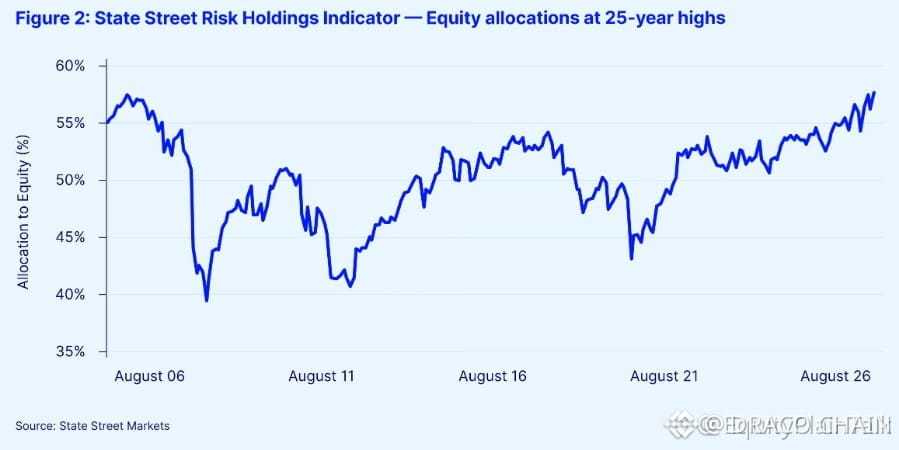
🚨 $BTC FEELS THE EQUITY OVERHEAT – LIQUIDITY SWEEP AHEAD! 🦈
📊 Institutional cash is now 57.4% locked in equities, a level not seen since the early 2000 dot‑com era. Smart money has saturated the stock arena, meaning upside capital is scarce and any negative shock can cascade into a rapid cash pull‑back. 📈 For crypto, that translates to a looming liquidity vacuum where $BTC could become the next safe‑haven rally point or the first target of a forced reallocation. 🦈 Watch the order‑block on the 4H chart – a tight range near the recent swing high is primed for a liquidity grab.
💡 When equity flows reverse, they rarely trickle; they surge. The question is whether $BTC will absorb that influx as a demand block or get squeezed by a swift short‑cover rally. 🤔 What’s your read on the next institutional pivot? 👇
⚠️ Not financial advice. Always manage your risk. 🛡️
🏷️ #BTC #SmartMoney #LiquiditySweep #Crypto #MarketStructure
🔥 🦈
🚨 $BTC FEELS THE EQUITY OVERHEAT – LIQUIDITY SWEEP AHEAD! 🦈
📊 Institutional cash is now 57.4% locked in equities, a level not seen since the early 2000 dot‑com era. Smart money has saturated the stock arena, meaning upside capital is scarce and any negative shock can cascade into a rapid cash pull‑back. 📈 For crypto, that translates to a looming liquidity vacuum where $BTC could become the next safe‑haven rally point or the first target of a forced reallocation. 🦈 Watch the order‑block on the 4H chart – a tight range near the recent swing high is primed for a liquidity grab.
💡 When equity flows reverse, they rarely trickle; they surge. The question is whether $BTC will absorb that influx as a demand block or get squeezed by a swift short‑cover rally. 🤔 What’s your read on the next institutional pivot? 👇
⚠️ Not financial advice. Always manage your risk. 🛡️
🏷️ #BTC #SmartMoney #LiquiditySweep #Crypto #MarketStructure
🔥 🦈
📊 Institutional cash is now 57.4% locked in equities, a level not seen since the early 2000 dot‑com era. Smart money has saturated the stock arena, meaning upside capital is scarce and any negative shock can cascade into a rapid cash pull‑back. 📈 For crypto, that translates to a looming liquidity vacuum where $BTC could become the next safe‑haven rally point or the first target of a forced reallocation. 🦈 Watch the order‑block on the 4H chart – a tight range near the recent swing high is primed for a liquidity grab.
💡 When equity flows reverse, they rarely trickle; they surge. The question is whether $BTC will absorb that influx as a demand block or get squeezed by a swift short‑cover rally. 🤔 What’s your read on the next institutional pivot? 👇
⚠️ Not financial advice. Always manage your risk. 🛡️
🏷️ #BTC #SmartMoney #LiquiditySweep #Crypto #MarketStructure
🔥 🦈
30
Log in to explore more content
Join global crypto users on Binance Square
⚡️ Get latest and useful information about crypto.
💬 Trusted by the world’s largest crypto exchange.
👍 Discover real insights from verified creators.
Email / Phone number
Trending Topics
1
#BinanceWillListHyperliquid(HYPE)
38,148 views
1,023 Discussing
2
#FedOctoberRateHikeOddsRiseTo69.7%
2,963 views
216 Discussing
3
#BitcoinFallsBelow$83,000
1,664 views
20 Discussing
4
#BitcoinFallsToAround$84,600ThisWeek
0 views
0 Discussing
5
#US30YearYieldHighestSince2004
8,200 views
245 Discussing
6
#ETHBreaksAbove$2,700
878 views
20 Discussing
7
#USWeighsPromotingDollarStablecoinsAbroad
35,184 views
1,079 Discussing
8
#US10YTreasuryYieldHits19YearHigh
33,818 views
837 Discussing
9
#SpotBitcoinETFsInflow$2.31BInFourDays
4,552 views
60 Discussing
10
#BitcoinRejectedAt$87,300Twice
0 views
0 Discussing