
#mbridge
mbridge
91,464 views
37 Discussing
Hot
Latest

Saudi Arabia Leaves mBridge CBDC
- Saudi Arabia has exited mBridge, a cross-border CBDC platform
- mBridge is a national digital currency project supported by China
- This departure reflects an international trend in crypto and blockchain
- The community is closely monitoring this change #BinanceSquare #CryptoNews #mBridge #CBDC
$btc $eth
#vlikevn Titanbot
Source: CoinTelegraph
Saudi Arabia Leaves mBridge CBDC
- Saudi Arabia has exited mBridge, a cross-border CBDC platform
- mBridge is a national digital currency project supported by China
- This departure reflects an international trend in crypto and blockchain
- The community is closely monitoring this change #BinanceSquare #CryptoNews #mBridge #CBDC
$btc $eth
#vlikevn Titanbot
Source: CoinTelegraph
- Saudi Arabia has exited mBridge, a cross-border CBDC platform
- mBridge is a national digital currency project supported by China
- This departure reflects an international trend in crypto and blockchain
- The community is closely monitoring this change #BinanceSquare #CryptoNews #mBridge #CBDC
$btc $eth
#vlikevn Titanbot
Source: CoinTelegraph
214

·
--
🚨 Not every piece of news about cryptocurrencies means an immediate move in the crypto market… and Saudi Arabia’s exit from mBridge is a clear example.
Saudi Arabia’s central bank has concluded its participation in the mBridge project after completing the proof-of-concept phase on May 13, 2025, confirming that the step was in line with the original plan for involvement.
The project tests the use of central bank digital currencies and distributed ledger technology to speed up payments and cross-border settlements.
As for the crypto market, the direct impact on liquidity or coin prices appears limited; we are talking about institutional infrastructure for CBDCs, not fresh flows into crypto assets.
But the news opens a bigger discussion: does the slowdown in a country the size of Saudi Arabia participating in a project like this indicate caution toward new digital payment systems, or is it simply the end of a specific experiment without any change in the direction toward digitization? 🌐
📊 The smart trader doesn’t chase the price based on the headline alone; they watch whether the news will actually translate into changes in trading volumes or in the narrative surrounding digital payments projects.
What do you think: is Saudi Arabia’s exit from mBridge an important signal for the future of central bank digital currencies, or will the market treat it as just a limited-impact technical event?
#mBridge #CBDC #Crypto
$BTC
{spot}(BTCUSDT)
🚨 Not every piece of news about cryptocurrencies means an immediate move in the crypto market… and Saudi Arabia’s exit from mBridge is a clear example.
Saudi Arabia’s central bank has concluded its participation in the mBridge project after completing the proof-of-concept phase on May 13, 2025, confirming that the step was in line with the original plan for involvement.
The project tests the use of central bank digital currencies and distributed ledger technology to speed up payments and cross-border settlements.
As for the crypto market, the direct impact on liquidity or coin prices appears limited; we are talking about institutional infrastructure for CBDCs, not fresh flows into crypto assets.
But the news opens a bigger discussion: does the slowdown in a country the size of Saudi Arabia participating in a project like this indicate caution toward new digital payment systems, or is it simply the end of a specific experiment without any change in the direction toward digitization? 🌐
📊 The smart trader doesn’t chase the price based on the headline alone; they watch whether the news will actually translate into changes in trading volumes or in the narrative surrounding digital payments projects.
What do you think: is Saudi Arabia’s exit from mBridge an important signal for the future of central bank digital currencies, or will the market treat it as just a limited-impact technical event?
#mBridge #CBDC #Crypto
$BTC
Saudi Arabia’s central bank has concluded its participation in the mBridge project after completing the proof-of-concept phase on May 13, 2025, confirming that the step was in line with the original plan for involvement.
The project tests the use of central bank digital currencies and distributed ledger technology to speed up payments and cross-border settlements.
As for the crypto market, the direct impact on liquidity or coin prices appears limited; we are talking about institutional infrastructure for CBDCs, not fresh flows into crypto assets.
But the news opens a bigger discussion: does the slowdown in a country the size of Saudi Arabia participating in a project like this indicate caution toward new digital payment systems, or is it simply the end of a specific experiment without any change in the direction toward digitization? 🌐
📊 The smart trader doesn’t chase the price based on the headline alone; they watch whether the news will actually translate into changes in trading volumes or in the narrative surrounding digital payments projects.
What do you think: is Saudi Arabia’s exit from mBridge an important signal for the future of central bank digital currencies, or will the market treat it as just a limited-impact technical event?
#mBridge #CBDC #Crypto
$BTC

131

·
--
mBridgeWhat is mBridge — and Why This Isn't Just a Research Project?
mBridge is a multi-CBDC (multi-Central Bank Digital Currency) platform that allows central banks to swap digital currencies directly, in real-time, and without intermediaries — a total bypass of the SWIFT system and correspondent banks that have long dominated cross-border payments.
What makes this more than just a proof-of-concept: by early 2026, the platform will be in production, having processed over $55 billion in transactions, and the number of observing central banks is steadily increasing from Southeast Asia, the Middle East, to Africa.
mBridge
What is mBridge — and Why This Isn't Just a Research Project?
mBridge is a multi-CBDC (multi-Central Bank Digital Currency) platform that allows central banks to swap digital currencies directly, in real-time, and without intermediaries — a total bypass of the SWIFT system and correspondent banks that have long dominated cross-border payments.
What makes this more than just a proof-of-concept: by early 2026, the platform will be in production, having processed over $55 billion in transactions, and the number of observing central banks is steadily increasing from Southeast Asia, the Middle East, to Africa.
mBridge is a multi-CBDC (multi-Central Bank Digital Currency) platform that allows central banks to swap digital currencies directly, in real-time, and without intermediaries — a total bypass of the SWIFT system and correspondent banks that have long dominated cross-border payments.
What makes this more than just a proof-of-concept: by early 2026, the platform will be in production, having processed over $55 billion in transactions, and the number of observing central banks is steadily increasing from Southeast Asia, the Middle East, to Africa.
1
102

·
--
How the mBridge Project is changing the rules of the global financial gameThe mBridge Project (or Multiple CBDC Bridge) is a multilateral distributed ledger technology (DLT/blockchain) platform designed to speed up and reduce the cost of cross-border payments and foreign exchange operations in real time using Wholesale Central Bank Digital Currencies (CBDCs).
Basically, it aims to create an alternative “financial highway” so that countries can trade and settle payments directly with each other in seconds, without going through the complex network of traditional correspondent banks or relying entirely on Western systems such as SWIFT
How the mBridge Project is changing the rules of the global financial game
The mBridge Project (or Multiple CBDC Bridge) is a multilateral distributed ledger technology (DLT/blockchain) platform designed to speed up and reduce the cost of cross-border payments and foreign exchange operations in real time using Wholesale Central Bank Digital Currencies (CBDCs).
Basically, it aims to create an alternative “financial highway” so that countries can trade and settle payments directly with each other in seconds, without going through the complex network of traditional correspondent banks or relying entirely on Western systems such as SWIFT
Basically, it aims to create an alternative “financial highway” so that countries can trade and settle payments directly with each other in seconds, without going through the complex network of traditional correspondent banks or relying entirely on Western systems such as SWIFT
100

🚨 LAST MINUTE NEWS: China is about to change the global financial game.
🇨🇳 mBridge — the blockchain-based CBDC settlement network — is gearing up for its commercial launch.
📊 Scary numbers:
* 470 billion yuan already processed
* Backed by 4 central banks (China, UAE, Thailand, Hong Kong)
* Direct rival to SWIFT — the system that moves TRILLIONS daily
What does this mean for crypto?
✅ Governments are no longer afraid of blockchain — they’re using it
✅ The dollar as the global reserve currency is entering the danger zone
✅ BTC and XRP could benefit as neutral assets in a multipolar world
⚠️ Centralized CBDCs are the dark side — total control over your money
The financial war of the 21st century is not fought with missiles.
It’s fought with blockchains. 🌐
Do you think mBridge really poses a threat to SWIFT, or is it just geopolitical noise? 👇
#mBridge #CBDC #china #Swift $BTC $XRP $USDT
🚨 LAST MINUTE NEWS: China is about to change the global financial game.
🇨🇳 mBridge — the blockchain-based CBDC settlement network — is gearing up for its commercial launch.
📊 Scary numbers:
* 470 billion yuan already processed
* Backed by 4 central banks (China, UAE, Thailand, Hong Kong)
* Direct rival to SWIFT — the system that moves TRILLIONS daily
What does this mean for crypto?
✅ Governments are no longer afraid of blockchain — they’re using it
✅ The dollar as the global reserve currency is entering the danger zone
✅ BTC and XRP could benefit as neutral assets in a multipolar world
⚠️ Centralized CBDCs are the dark side — total control over your money
The financial war of the 21st century is not fought with missiles.
It’s fought with blockchains. 🌐
Do you think mBridge really poses a threat to SWIFT, or is it just geopolitical noise? 👇
#mBridge #CBDC #china #Swift $BTC $XRP $USDT
🇨🇳 mBridge — the blockchain-based CBDC settlement network — is gearing up for its commercial launch.
📊 Scary numbers:
* 470 billion yuan already processed
* Backed by 4 central banks (China, UAE, Thailand, Hong Kong)
* Direct rival to SWIFT — the system that moves TRILLIONS daily
What does this mean for crypto?
✅ Governments are no longer afraid of blockchain — they’re using it
✅ The dollar as the global reserve currency is entering the danger zone
✅ BTC and XRP could benefit as neutral assets in a multipolar world
⚠️ Centralized CBDCs are the dark side — total control over your money
The financial war of the 21st century is not fought with missiles.
It’s fought with blockchains. 🌐
Do you think mBridge really poses a threat to SWIFT, or is it just geopolitical noise? 👇
#mBridge #CBDC #china #Swift $BTC $XRP $USDT

2
194


·
--
1. Background
The hot topic in today's market is the accelerated commercialization of the cross-border digital currency platform mBridge, led by China. According to public information, participants include the People's Bank of China, the Hong Kong Monetary Authority, and institutions from Thailand, the UAE, and Saudi Arabia, with plans to establish an operational entity in Hong Kong. Its biggest selling point is clear: based on a blockchain architecture, it allows digital currencies within multiple central bank systems to settle directly, compressing the issues of multi-layered intermediary banks, long-chain clearing, and high fees in traditional cross-border payments into a more efficient framework. If fees can indeed be reduced to half of what traditional systems charge, this would be particularly attractive to small and medium enterprises. 🌍
2. Core Analysis
From a product logic perspective, mBridge isn't simply about 'faster payments'; it's attempting to reconstruct the cross-border settlement process. Traditional international payments heavily rely on networks of intermediary banks and messaging systems, which, while mature and robust, have clear pain points: slow arrival times, high costs, and limited transparency. mBridge, on the other hand, improves fund circulation efficiency through on-chain direct settlement, significantly reducing foreign exchange conversion times.
What's even more noteworthy is its implications for currency structure. The article mentions that the platform could reduce reliance on the dollar as an intermediary currency, meaning that in the future, some regional trade settlements may shift from 'exchanging for dollars before clearing' to 'direct settlement in local currencies.' This isn't a short-term replacement of traditional systems but rather the formation of a parallel network, particularly realistic in energy trade, regional supply chains, and emerging market settlements.
Moreover, the BIS has handed over project leadership to its members, indicating that mBridge is moving from an experimental platform to a stage closer to commercial application and geopolitical reality. The market should view it as progress in 'institutional financial infrastructure' rather than an ordinary crypto project.
3. Potential Impact
For the financial industry, if mBridge successfully lands, it will first create structural shocks to cross-border payment service providers, clearing paths, and foreign exchange settlement models. Cost reductions and efficiency improvements could encourage more trading enterprises to explore new channels, especially small and medium enterprises that are sensitive to fees.
For the crypto and blockchain industry, this further strengthens a trend: the largest scenarios where blockchain first gains traction in finance are often not speculative assets but payment, settlement, and clearing infrastructures. It will also increase market attention on tracks such as RWA, stablecoins, and CBDC interoperability. 📈
However, commercialization does not equal widespread adoption. The true determinants of success will still be regulatory coordination, the number of participating institutions, liquidity depth, and the ability to cover more real trade demands. Overall, mBridge's latest developments send a clear signal: the global payment system is shifting from a single dominant framework to a new phase of coexistence among multiple networks.
#mBridge #CBDC #crypto
1. Background
The hot topic in today's market is the accelerated commercialization of the cross-border digital currency platform mBridge, led by China. According to public information, participants include the People's Bank of China, the Hong Kong Monetary Authority, and institutions from Thailand, the UAE, and Saudi Arabia, with plans to establish an operational entity in Hong Kong. Its biggest selling point is clear: based on a blockchain architecture, it allows digital currencies within multiple central bank systems to settle directly, compressing the issues of multi-layered intermediary banks, long-chain clearing, and high fees in traditional cross-border payments into a more efficient framework. If fees can indeed be reduced to half of what traditional systems charge, this would be particularly attractive to small and medium enterprises. 🌍
2. Core Analysis
From a product logic perspective, mBridge isn't simply about 'faster payments'; it's attempting to reconstruct the cross-border settlement process. Traditional international payments heavily rely on networks of intermediary banks and messaging systems, which, while mature and robust, have clear pain points: slow arrival times, high costs, and limited transparency. mBridge, on the other hand, improves fund circulation efficiency through on-chain direct settlement, significantly reducing foreign exchange conversion times.
What's even more noteworthy is its implications for currency structure. The article mentions that the platform could reduce reliance on the dollar as an intermediary currency, meaning that in the future, some regional trade settlements may shift from 'exchanging for dollars before clearing' to 'direct settlement in local currencies.' This isn't a short-term replacement of traditional systems but rather the formation of a parallel network, particularly realistic in energy trade, regional supply chains, and emerging market settlements.
Moreover, the BIS has handed over project leadership to its members, indicating that mBridge is moving from an experimental platform to a stage closer to commercial application and geopolitical reality. The market should view it as progress in 'institutional financial infrastructure' rather than an ordinary crypto project.
3. Potential Impact
For the financial industry, if mBridge successfully lands, it will first create structural shocks to cross-border payment service providers, clearing paths, and foreign exchange settlement models. Cost reductions and efficiency improvements could encourage more trading enterprises to explore new channels, especially small and medium enterprises that are sensitive to fees.
For the crypto and blockchain industry, this further strengthens a trend: the largest scenarios where blockchain first gains traction in finance are often not speculative assets but payment, settlement, and clearing infrastructures. It will also increase market attention on tracks such as RWA, stablecoins, and CBDC interoperability. 📈
However, commercialization does not equal widespread adoption. The true determinants of success will still be regulatory coordination, the number of participating institutions, liquidity depth, and the ability to cover more real trade demands. Overall, mBridge's latest developments send a clear signal: the global payment system is shifting from a single dominant framework to a new phase of coexistence among multiple networks.
#mBridge #CBDC #crypto
The hot topic in today's market is the accelerated commercialization of the cross-border digital currency platform mBridge, led by China. According to public information, participants include the People's Bank of China, the Hong Kong Monetary Authority, and institutions from Thailand, the UAE, and Saudi Arabia, with plans to establish an operational entity in Hong Kong. Its biggest selling point is clear: based on a blockchain architecture, it allows digital currencies within multiple central bank systems to settle directly, compressing the issues of multi-layered intermediary banks, long-chain clearing, and high fees in traditional cross-border payments into a more efficient framework. If fees can indeed be reduced to half of what traditional systems charge, this would be particularly attractive to small and medium enterprises. 🌍
2. Core Analysis
From a product logic perspective, mBridge isn't simply about 'faster payments'; it's attempting to reconstruct the cross-border settlement process. Traditional international payments heavily rely on networks of intermediary banks and messaging systems, which, while mature and robust, have clear pain points: slow arrival times, high costs, and limited transparency. mBridge, on the other hand, improves fund circulation efficiency through on-chain direct settlement, significantly reducing foreign exchange conversion times.
What's even more noteworthy is its implications for currency structure. The article mentions that the platform could reduce reliance on the dollar as an intermediary currency, meaning that in the future, some regional trade settlements may shift from 'exchanging for dollars before clearing' to 'direct settlement in local currencies.' This isn't a short-term replacement of traditional systems but rather the formation of a parallel network, particularly realistic in energy trade, regional supply chains, and emerging market settlements.
Moreover, the BIS has handed over project leadership to its members, indicating that mBridge is moving from an experimental platform to a stage closer to commercial application and geopolitical reality. The market should view it as progress in 'institutional financial infrastructure' rather than an ordinary crypto project.
3. Potential Impact
For the financial industry, if mBridge successfully lands, it will first create structural shocks to cross-border payment service providers, clearing paths, and foreign exchange settlement models. Cost reductions and efficiency improvements could encourage more trading enterprises to explore new channels, especially small and medium enterprises that are sensitive to fees.
For the crypto and blockchain industry, this further strengthens a trend: the largest scenarios where blockchain first gains traction in finance are often not speculative assets but payment, settlement, and clearing infrastructures. It will also increase market attention on tracks such as RWA, stablecoins, and CBDC interoperability. 📈
However, commercialization does not equal widespread adoption. The true determinants of success will still be regulatory coordination, the number of participating institutions, liquidity depth, and the ability to cover more real trade demands. Overall, mBridge's latest developments send a clear signal: the global payment system is shifting from a single dominant framework to a new phase of coexistence among multiple networks.
#mBridge #CBDC #crypto
213
Saudi Arabia withdraws from China-backed CBDC mBridge project
- Financial Times: Saudi Arabia has left mBridge, a cross-border CBDC platform.
- The project has drawn oversight from U.S. policymakers.
- RSS has not stated the reason or timing for Saudi Arabia's withdrawal.
#BinanceSquare #CryptoNews #CBDC #mBridge
$btc $eth
#vlikevn Titanbot
Source: CoinTelegraph
Saudi Arabia withdraws from China-backed CBDC mBridge project
- Financial Times: Saudi Arabia has left mBridge, a cross-border CBDC platform.
- The project has drawn oversight from U.S. policymakers.
- RSS has not stated the reason or timing for Saudi Arabia's withdrawal.
#BinanceSquare #CryptoNews #CBDC #mBridge
$btc $eth
#vlikevn Titanbot
Source: CoinTelegraph
- Financial Times: Saudi Arabia has left mBridge, a cross-border CBDC platform.
- The project has drawn oversight from U.S. policymakers.
- RSS has not stated the reason or timing for Saudi Arabia's withdrawal.
#BinanceSquare #CryptoNews #CBDC #mBridge
$btc $eth
#vlikevn Titanbot
Source: CoinTelegraph
120

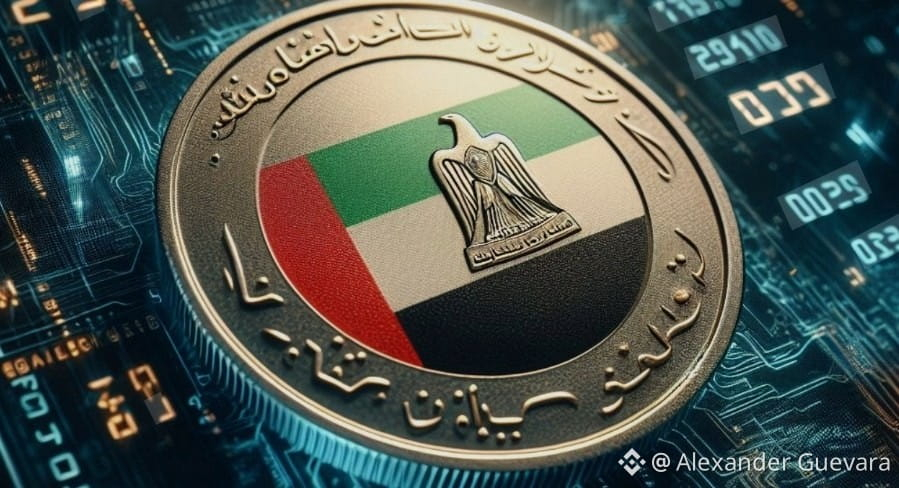
According to the Financial Times, Saudi Arabia has withdrawn from the digital currency and blockchain payments mBridge system led by China that reduces dependence on the dollar. The Saudi Central Bank confirmed that its withdrawal took place after completing the planned proof-of-concept phase, which ended in May 2025, noting that its participation was limited to that initial research program.
Because the project facilitates transactions outside dollar intermediaries, the platform has drawn intense scrutiny and attention from the United States. However, sources close to the case consulted by the Financial Times said that no hasty conclusions should be drawn about direct U.S. pressure in this decision, although some sources indicated that the Saudi central bank could maintain a level of involvement or monitoring more discreetly.
The economist and anti-crypto advocate Peter Schiff said that the U.S. SEC announcement on tokenized assets should be bearish for Bitcoin because tokenized values could offer the same convenience with a more reliable underlying value. Schiff bases his view on the traditional perspective that real value must be backed by cash flows and productive assets—something he tirelessly advocates against cryptocurrencies.
Tokenized stocks allow investors to trade traditional equity securities using digital technology and the immediacy of blockchain settlement. For Schiff, this removes BTC’s main commercial value proposition. For the crypto ecosystem, integrating traditional assets into decentralized rails is often interpreted as a bridge to attract more institutional capital and global liquidity into the underlying technology, rather than as a direct replacement for the decentralized digital scarcity represented by BTC.
#SEC #BTC #arabiasaudita #blockchain #mBridge $BTC
According to the Financial Times, Saudi Arabia has withdrawn from the digital currency and blockchain payments mBridge system led by China that reduces dependence on the dollar. The Saudi Central Bank confirmed that its withdrawal took place after completing the planned proof-of-concept phase, which ended in May 2025, noting that its participation was limited to that initial research program.
Because the project facilitates transactions outside dollar intermediaries, the platform has drawn intense scrutiny and attention from the United States. However, sources close to the case consulted by the Financial Times said that no hasty conclusions should be drawn about direct U.S. pressure in this decision, although some sources indicated that the Saudi central bank could maintain a level of involvement or monitoring more discreetly.
The economist and anti-crypto advocate Peter Schiff said that the U.S. SEC announcement on tokenized assets should be bearish for Bitcoin because tokenized values could offer the same convenience with a more reliable underlying value. Schiff bases his view on the traditional perspective that real value must be backed by cash flows and productive assets—something he tirelessly advocates against cryptocurrencies.
Tokenized stocks allow investors to trade traditional equity securities using digital technology and the immediacy of blockchain settlement. For Schiff, this removes BTC’s main commercial value proposition. For the crypto ecosystem, integrating traditional assets into decentralized rails is often interpreted as a bridge to attract more institutional capital and global liquidity into the underlying technology, rather than as a direct replacement for the decentralized digital scarcity represented by BTC.
#SEC #BTC #arabiasaudita #blockchain #mBridge $BTC
Because the project facilitates transactions outside dollar intermediaries, the platform has drawn intense scrutiny and attention from the United States. However, sources close to the case consulted by the Financial Times said that no hasty conclusions should be drawn about direct U.S. pressure in this decision, although some sources indicated that the Saudi central bank could maintain a level of involvement or monitoring more discreetly.
The economist and anti-crypto advocate Peter Schiff said that the U.S. SEC announcement on tokenized assets should be bearish for Bitcoin because tokenized values could offer the same convenience with a more reliable underlying value. Schiff bases his view on the traditional perspective that real value must be backed by cash flows and productive assets—something he tirelessly advocates against cryptocurrencies.
Tokenized stocks allow investors to trade traditional equity securities using digital technology and the immediacy of blockchain settlement. For Schiff, this removes BTC’s main commercial value proposition. For the crypto ecosystem, integrating traditional assets into decentralized rails is often interpreted as a bridge to attract more institutional capital and global liquidity into the underlying technology, rather than as a direct replacement for the decentralized digital scarcity represented by BTC.
#SEC #BTC #arabiasaudita #blockchain #mBridge $BTC

48

·
--
Bullish
Velo Labs and the PayFi Connection with BlackRock’s BUIDL Fund
Under its strategic roadmap, Velo activated its Orbit Plus gateway in 15 countries, integrating crypto debit cards with #Apple Pay and #Google Pay.
What’s truly massive for the ecosystem is its native stablecoin, #USDV , which is directly backed by the tokenized BUIDL fund of #BlackRock through Securitize.
Its technical architecture directly emulates the BIS design #mBridge for institutional cross-border settlement.
$VELO
Velo Labs and the PayFi Connection with BlackRock’s BUIDL Fund
Under its strategic roadmap, Velo activated its Orbit Plus gateway in 15 countries, integrating crypto debit cards with #Apple Pay and #Google Pay.
What’s truly massive for the ecosystem is its native stablecoin, #USDV , which is directly backed by the tokenized BUIDL fund of #BlackRock through Securitize.
Its technical architecture directly emulates the BIS design #mBridge for institutional cross-border settlement.
$VELO
Under its strategic roadmap, Velo activated its Orbit Plus gateway in 15 countries, integrating crypto debit cards with #Apple Pay and #Google Pay.
What’s truly massive for the ecosystem is its native stablecoin, #USDV , which is directly backed by the tokenized BUIDL fund of #BlackRock through Securitize.
Its technical architecture directly emulates the BIS design #mBridge for institutional cross-border settlement.
$VELO
1
141
·
--
Bullish
Here’s the rundown with mechanical facts on how major players are positioned under this new reality:
SEC: Cooperation and Deregulation.
Their stance is to integrate digital assets into the traditional capital markets. So, the #ClarityAct is not a fight against the SEC today, but rather a formalization for banks to custody assets without fear.
CFTC: Expansion of Jurisdiction.
With tomorrow's law, the CFTC takes full control of "Digital Commodities" ($XRP , $XLM , $BTC ). Under the current management, they’re working alongside the SEC to eliminate gray areas.
The Treasury: Tokenization of Debt.
The Treasury is no longer just observing; they're issuing tokenized T-Bills. They need the Clarity Act so that stablecoin liquidity flows directly to finance the U.S. deficit through networks like XRPL and Stellar.
FED: Control of Infrastructure.
The Fed has already integrated the FedNow system with protocols #ISO20022 .
The White House: Technological Dominance.
The current administration sees ISO cryptos as a national security tool to compete against the #mBridge from China. The order is clear: the U.S. must be the Crypto capital of the world.
BIS (Basel) and IMF: Global Standardization.
The BIS, through #ProyectAgora , is waiting for tomorrow's "hammer drop" in the Senate to announce the massive implementation phase. The IMF, for its part, is already preparing frameworks for developing countries to use these assets for their reserves, stabilizing their currencies against an ISO basket.
Here’s the rundown with mechanical facts on how major players are positioned under this new reality:
SEC: Cooperation and Deregulation.
Their stance is to integrate digital assets into the traditional capital markets. So, the #ClarityAct is not a fight against the SEC today, but rather a formalization for banks to custody assets without fear.
CFTC: Expansion of Jurisdiction.
With tomorrow's law, the CFTC takes full control of "Digital Commodities" ($XRP , $XLM , $BTC ). Under the current management, they’re working alongside the SEC to eliminate gray areas.
The Treasury: Tokenization of Debt.
The Treasury is no longer just observing; they're issuing tokenized T-Bills. They need the Clarity Act so that stablecoin liquidity flows directly to finance the U.S. deficit through networks like XRPL and Stellar.
FED: Control of Infrastructure.
The Fed has already integrated the FedNow system with protocols #ISO20022 .
The White House: Technological Dominance.
The current administration sees ISO cryptos as a national security tool to compete against the #mBridge from China. The order is clear: the U.S. must be the Crypto capital of the world.
BIS (Basel) and IMF: Global Standardization.
The BIS, through #ProyectAgora , is waiting for tomorrow's "hammer drop" in the Senate to announce the massive implementation phase. The IMF, for its part, is already preparing frameworks for developing countries to use these assets for their reserves, stabilizing their currencies against an ISO basket.
SEC: Cooperation and Deregulation.
Their stance is to integrate digital assets into the traditional capital markets. So, the #ClarityAct is not a fight against the SEC today, but rather a formalization for banks to custody assets without fear.
CFTC: Expansion of Jurisdiction.
With tomorrow's law, the CFTC takes full control of "Digital Commodities" ($XRP , $XLM , $BTC ). Under the current management, they’re working alongside the SEC to eliminate gray areas.
The Treasury: Tokenization of Debt.
The Treasury is no longer just observing; they're issuing tokenized T-Bills. They need the Clarity Act so that stablecoin liquidity flows directly to finance the U.S. deficit through networks like XRPL and Stellar.
FED: Control of Infrastructure.
The Fed has already integrated the FedNow system with protocols #ISO20022 .
The White House: Technological Dominance.
The current administration sees ISO cryptos as a national security tool to compete against the #mBridge from China. The order is clear: the U.S. must be the Crypto capital of the world.
BIS (Basel) and IMF: Global Standardization.
The BIS, through #ProyectAgora , is waiting for tomorrow's "hammer drop" in the Senate to announce the massive implementation phase. The IMF, for its part, is already preparing frameworks for developing countries to use these assets for their reserves, stabilizing their currencies against an ISO basket.

3
153
·
--
Bullish
The BIS along with 7 central banks (including the New York Fed, the Bank of England, and the Bank of Japan).
#ProjectAgora aims to grab the "correspondent banking" system (which is slow and opaque) and elevate it to a Unified Ledger.
Their goal is to have commercial money (the kind held in banks) and wholesale money (central banks) live on the same network. They want the speed of blockchain while keeping the control of traditional banks.
The current tension between Agorá and public ledgers ($XRP /$XLM /$QNT )
Being a closed system ("permissioned"), Agorá faces a fragmented liquidity problem. If only selected banks are inside, the system doesn't have enough "fuel" to move all the value in the world.
The Advantage of XRP/XLM: These are open and neutral rails. They have global liquidity pools that operate 24/7.
#Clarityact : Central banks in Agorá are itching to use XRP liquidity, but they can't touch it unless it's legal in the U.S. The Clarity Act is the legal green light for the closed system (Agorá) to "plug into" the open rails (XRP Ledger / Stellar / Overledger).
The West needs Agorá to be more efficient than the Chinese system. The only way to outpace #mBridge in speed is by using the infrastructure that already works: your assets #ISO20022 .
mBridge is already up and running. Agorá is desperate to catch up. Thursday's Clarity Act is the "Go" for Wall Street capital waiting in Agorá to jump into the ISO infrastructure.
The BIS along with 7 central banks (including the New York Fed, the Bank of England, and the Bank of Japan).
#ProjectAgora aims to grab the "correspondent banking" system (which is slow and opaque) and elevate it to a Unified Ledger.
Their goal is to have commercial money (the kind held in banks) and wholesale money (central banks) live on the same network. They want the speed of blockchain while keeping the control of traditional banks.
The current tension between Agorá and public ledgers ($XRP /$XLM /$QNT )
Being a closed system ("permissioned"), Agorá faces a fragmented liquidity problem. If only selected banks are inside, the system doesn't have enough "fuel" to move all the value in the world.
The Advantage of XRP/XLM: These are open and neutral rails. They have global liquidity pools that operate 24/7.
#Clarityact : Central banks in Agorá are itching to use XRP liquidity, but they can't touch it unless it's legal in the U.S. The Clarity Act is the legal green light for the closed system (Agorá) to "plug into" the open rails (XRP Ledger / Stellar / Overledger).
The West needs Agorá to be more efficient than the Chinese system. The only way to outpace #mBridge in speed is by using the infrastructure that already works: your assets #ISO20022 .
mBridge is already up and running. Agorá is desperate to catch up. Thursday's Clarity Act is the "Go" for Wall Street capital waiting in Agorá to jump into the ISO infrastructure.
#ProjectAgora aims to grab the "correspondent banking" system (which is slow and opaque) and elevate it to a Unified Ledger.
Their goal is to have commercial money (the kind held in banks) and wholesale money (central banks) live on the same network. They want the speed of blockchain while keeping the control of traditional banks.
The current tension between Agorá and public ledgers ($XRP /$XLM /$QNT )
Being a closed system ("permissioned"), Agorá faces a fragmented liquidity problem. If only selected banks are inside, the system doesn't have enough "fuel" to move all the value in the world.
The Advantage of XRP/XLM: These are open and neutral rails. They have global liquidity pools that operate 24/7.
#Clarityact : Central banks in Agorá are itching to use XRP liquidity, but they can't touch it unless it's legal in the U.S. The Clarity Act is the legal green light for the closed system (Agorá) to "plug into" the open rails (XRP Ledger / Stellar / Overledger).
The West needs Agorá to be more efficient than the Chinese system. The only way to outpace #mBridge in speed is by using the infrastructure that already works: your assets #ISO20022 .
mBridge is already up and running. Agorá is desperate to catch up. Thursday's Clarity Act is the "Go" for Wall Street capital waiting in Agorá to jump into the ISO infrastructure.

2
484
·
--
Bullish
The Regulatory Front and the Federal Reserve
#Clarityact : Yesterday, a key agreement was reached in the Senate. The law now allows crypto companies to offer rewards for network usage (staking/trading), although it restricts passive interest in sta
#stablecoins . This clears the path for banks to custody utility assets.
White House and Senate: The markup vote in the Senate is expected by the end of May. If it passes, legal clarity will be complete before the close of 2026.
Fed and Digital Repos: The Fed is finalizing connections for tokenized assets (like $XRP ) to serve as collateral in Repo markets, injecting immediate liquidity into the banking system.
Geopolitics: The Great Payments Partition
Project #Agorá (West): Led by the BIS and the Fed, it has moved to the operational prototype phase. Its goal is "Atomic Settlement": ensuring that payment and asset delivery (like a stock or bond) occur in seconds. It's the West's system to attract global capital.
#mBridge (BRICS+): Already surpassed $55 billion in transactions. It allows a bank in Dubai to send money to Shanghai in 15 seconds without touching a US correspondent bank.
Hormuz War: The blockade on March 4, 2026, has shot Brent up to $120. This energy crisis is forcing countries to use mBridge and Agora to settle oil and gas payments instantly, avoiding the slowness and sanctions of the traditional SWIFT system.
The Regulatory Front and the Federal Reserve
#Clarityact : Yesterday, a key agreement was reached in the Senate. The law now allows crypto companies to offer rewards for network usage (staking/trading), although it restricts passive interest in sta
#stablecoins . This clears the path for banks to custody utility assets.
White House and Senate: The markup vote in the Senate is expected by the end of May. If it passes, legal clarity will be complete before the close of 2026.
Fed and Digital Repos: The Fed is finalizing connections for tokenized assets (like $XRP ) to serve as collateral in Repo markets, injecting immediate liquidity into the banking system.
Geopolitics: The Great Payments Partition
Project #Agorá (West): Led by the BIS and the Fed, it has moved to the operational prototype phase. Its goal is "Atomic Settlement": ensuring that payment and asset delivery (like a stock or bond) occur in seconds. It's the West's system to attract global capital.
#mBridge (BRICS+): Already surpassed $55 billion in transactions. It allows a bank in Dubai to send money to Shanghai in 15 seconds without touching a US correspondent bank.
Hormuz War: The blockade on March 4, 2026, has shot Brent up to $120. This energy crisis is forcing countries to use mBridge and Agora to settle oil and gas payments instantly, avoiding the slowness and sanctions of the traditional SWIFT system.
#Clarityact : Yesterday, a key agreement was reached in the Senate. The law now allows crypto companies to offer rewards for network usage (staking/trading), although it restricts passive interest in sta
#stablecoins . This clears the path for banks to custody utility assets.
White House and Senate: The markup vote in the Senate is expected by the end of May. If it passes, legal clarity will be complete before the close of 2026.
Fed and Digital Repos: The Fed is finalizing connections for tokenized assets (like $XRP ) to serve as collateral in Repo markets, injecting immediate liquidity into the banking system.
Geopolitics: The Great Payments Partition
Project #Agorá (West): Led by the BIS and the Fed, it has moved to the operational prototype phase. Its goal is "Atomic Settlement": ensuring that payment and asset delivery (like a stock or bond) occur in seconds. It's the West's system to attract global capital.
#mBridge (BRICS+): Already surpassed $55 billion in transactions. It allows a bank in Dubai to send money to Shanghai in 15 seconds without touching a US correspondent bank.
Hormuz War: The blockade on March 4, 2026, has shot Brent up to $120. This energy crisis is forcing countries to use mBridge and Agora to settle oil and gas payments instantly, avoiding the slowness and sanctions of the traditional SWIFT system.

3
1.3k
The Real Battle
#ProyectoAgora
Western Payment Internet
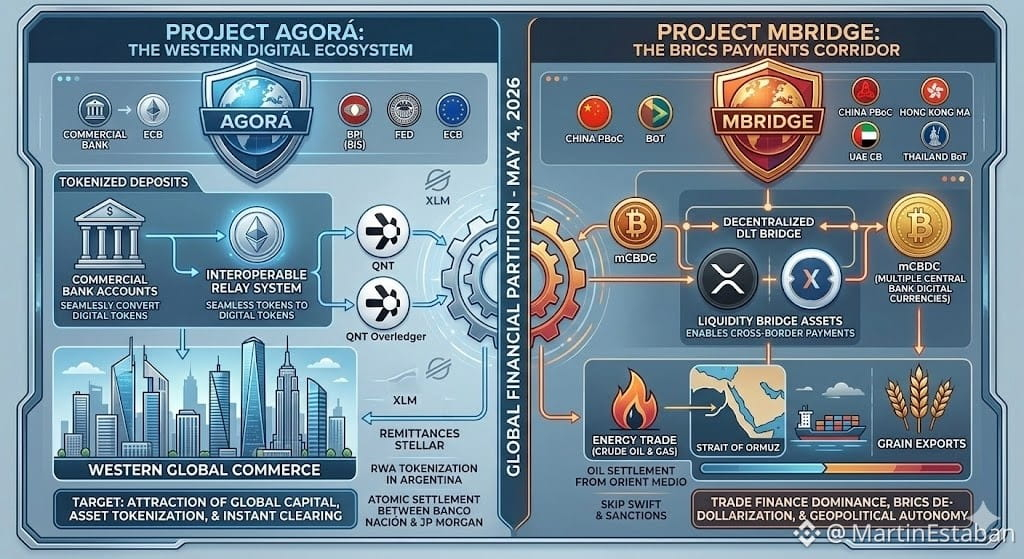
The Agora Project, led by the BIS and seven central banks including the FED and the Bank of England, has progressed from the conceptual phase to operational interconnection. Tokenized deposits are being integrated; unlike a pure CBDC, Agora allows commercial bank deposits to be converted into programmable tokens.
Agora utilizes smart contracts to ensure payment and asset delivery occur simultaneously—Atomic Settlement.
Tokens like #QNT Quant are essential here because they function as the Overledger, enabling the BNA system to communicate with JP Morgan's without friction.
Objective: Maintain dominance of the dollar and euro-based financial system but with the speed of the 21st century.
#mBridge
The BRICS Bridge that sidesteps SWIFT
While Agora represents the modernization of the West,
mBridge is the cross-border payment platform led by China, Thailand, the UAE, and Hong Kong, with Brazil joining in.
In light of tensions in the Strait of Hormuz, mBridge is currently being used to settle oil and gas transactions in real-time, bypassing the SWIFT system.
Bridge assets like #XRP and #XDC are required so that no country’s currency is needed to settle balances between central banks.
XDC is gaining traction in mBridge due to its focus on trade financing, allowing a ship departing from the East to settle financially before reaching its destination.
Real de-dollarization: mBridge is already processing billions of dollars outside the reach of US sanctions.
The digital solution offered by both Agora and mBridge today is the only way to guarantee immediate and irrevocable payments.
The world is discovering that the Ledger is more reliable than diplomacy.
In summary, the global financial system is fracturing into two technological blocks; it doesn’t matter which side wins the geopolitical tug-of-war because both sides need the money to keep flowing.
It’s the end of SWIFT and the beginning of the on-demand liquidity era.
The Real Battle
#ProyectoAgora
Western Payment Internet
The Agora Project, led by the BIS and seven central banks including the FED and the Bank of England, has progressed from the conceptual phase to operational interconnection. Tokenized deposits are being integrated; unlike a pure CBDC, Agora allows commercial bank deposits to be converted into programmable tokens.
Agora utilizes smart contracts to ensure payment and asset delivery occur simultaneously—Atomic Settlement.
Tokens like #QNT Quant are essential here because they function as the Overledger, enabling the BNA system to communicate with JP Morgan's without friction.
Objective: Maintain dominance of the dollar and euro-based financial system but with the speed of the 21st century.
#mBridge
The BRICS Bridge that sidesteps SWIFT
While Agora represents the modernization of the West,
mBridge is the cross-border payment platform led by China, Thailand, the UAE, and Hong Kong, with Brazil joining in.
In light of tensions in the Strait of Hormuz, mBridge is currently being used to settle oil and gas transactions in real-time, bypassing the SWIFT system.
Bridge assets like #XRP and #XDC are required so that no country’s currency is needed to settle balances between central banks.
XDC is gaining traction in mBridge due to its focus on trade financing, allowing a ship departing from the East to settle financially before reaching its destination.
Real de-dollarization: mBridge is already processing billions of dollars outside the reach of US sanctions.
The digital solution offered by both Agora and mBridge today is the only way to guarantee immediate and irrevocable payments.
The world is discovering that the Ledger is more reliable than diplomacy.
In summary, the global financial system is fracturing into two technological blocks; it doesn’t matter which side wins the geopolitical tug-of-war because both sides need the money to keep flowing.
It’s the end of SWIFT and the beginning of the on-demand liquidity era.
#ProyectoAgora
Western Payment Internet
The Agora Project, led by the BIS and seven central banks including the FED and the Bank of England, has progressed from the conceptual phase to operational interconnection. Tokenized deposits are being integrated; unlike a pure CBDC, Agora allows commercial bank deposits to be converted into programmable tokens.
Agora utilizes smart contracts to ensure payment and asset delivery occur simultaneously—Atomic Settlement.
Tokens like #QNT Quant are essential here because they function as the Overledger, enabling the BNA system to communicate with JP Morgan's without friction.
Objective: Maintain dominance of the dollar and euro-based financial system but with the speed of the 21st century.
#mBridge
The BRICS Bridge that sidesteps SWIFT
While Agora represents the modernization of the West,
mBridge is the cross-border payment platform led by China, Thailand, the UAE, and Hong Kong, with Brazil joining in.
In light of tensions in the Strait of Hormuz, mBridge is currently being used to settle oil and gas transactions in real-time, bypassing the SWIFT system.
Bridge assets like #XRP and #XDC are required so that no country’s currency is needed to settle balances between central banks.
XDC is gaining traction in mBridge due to its focus on trade financing, allowing a ship departing from the East to settle financially before reaching its destination.
Real de-dollarization: mBridge is already processing billions of dollars outside the reach of US sanctions.
The digital solution offered by both Agora and mBridge today is the only way to guarantee immediate and irrevocable payments.
The world is discovering that the Ledger is more reliable than diplomacy.
In summary, the global financial system is fracturing into two technological blocks; it doesn’t matter which side wins the geopolitical tug-of-war because both sides need the money to keep flowing.
It’s the end of SWIFT and the beginning of the on-demand liquidity era.
12
406
Log in to explore more content
Join global crypto users on Binance Square
⚡️ Get latest and useful information about crypto.
💬 Trusted by the world’s largest crypto exchange.
👍 Discover real insights from verified creators.
Email / Phone number
Trending Topics
1
#AIStocksWhatNext
444,277 views
3,321 Discussing
2
#BitcoinTops$87KAtEightMonthHigh
107 views
8 Discussing
3
#BitwiseNEARStakingETPAssetsTop$100M
4,996 views
38 Discussing
4
#BitcoinBreaksAboveMayHighNears$86K
20,544 views
221 Discussing
5
#DogecoinRises15%
63,813 views
1,138 Discussing
6
#$14BBitcoinOptionsExpireFriday
5,695 views
102 Discussing
7
#BNBMarketCapPassesBNYMellon
39,653 views
835 Discussing
8
#CryptoMarketCapReclaims$3Trillion
8,020 views
87 Discussing
9
#MuseOvertakesChatGPTAsTopFreeIOSApp
22,801 views
613 Discussing
10
#TokenizedStockPlatformsCouldLaunchNextQuarter
35,063 views
665 Discussing