
#ellonmask
ellonmask
1.1M views
338 Discussing
Hot
Latest

Elon Musk's warning about a 2027Elon Musk's warning about a 2027 AI "cash crunch" addresses a growing financial vulnerability in the artificial intelligence sector: the mismatch between massive upfront capital expenditure and delayed revenue realization.
During an exchange on X with AI researcher François Chollet, Musk highlighted that even minor operational delays will force companies to secure hundreds of billions of dollars in extra working capital to stay afloat.
The key mechanics driving Musk's warning include:
Massive Upfront Pre-funding: Companies must pay for expensive hardware (e.g., Nvidia chips), specialized data center builds, land leases, and power contracts months or years before any compute can be used or monetized.Infrastructure Bottlenecks: Getting gigawatts of compute turned on, cooled, and running reliably takes longer than anticipated due to power grid supply limits and transformer shortages.The Working Capital Gap: Delays of even 3 to 6 months between equipment delivery and operational monetization mean companies must absorb massive cash burn with no incoming revenue to offset it.
Financial & Market Context
Unprecedented Debt Exposure: Global AI capital expenditures are topping $1 trillion, backed by roughly $600 billion in AI-related debt issuance.Risk to "Neoclouds": Musk previously predicted widespread distress or consolidation among the 200+ specialized AI compute rental providers ("neoclouds"). Unlike hyperscalers (Microsoft, Google, Amazon) that have profitable core businesses to subsidize infrastructure buildouts, pure-play compute hosters relying heavily on leverage face immediate solvency risks if credit markets tighten.Impacted Big-Ticket Debt Deals: Musk noted that even well-capitalized companies face this timing gap. For example, SpaceX arranged roughly $44 billion in GPU financing for its own AI ambitions, where chip payments are due on delivery—months before those clusters begin generating internal value or revenue.
Key Industry Implications
#ellonmask #Follow4more #Binance
Elon Musk's warning about a 2027
Elon Musk's warning about a 2027 AI "cash crunch" addresses a growing financial vulnerability in the artificial intelligence sector: the mismatch between massive upfront capital expenditure and delayed revenue realization.
During an exchange on X with AI researcher François Chollet, Musk highlighted that even minor operational delays will force companies to secure hundreds of billions of dollars in extra working capital to stay afloat.
The key mechanics driving Musk's warning include:
Massive Upfront Pre-funding: Companies must pay for expensive hardware (e.g., Nvidia chips), specialized data center builds, land leases, and power contracts months or years before any compute can be used or monetized.Infrastructure Bottlenecks: Getting gigawatts of compute turned on, cooled, and running reliably takes longer than anticipated due to power grid supply limits and transformer shortages.The Working Capital Gap: Delays of even 3 to 6 months between equipment delivery and operational monetization mean companies must absorb massive cash burn with no incoming revenue to offset it.
Financial & Market Context
Unprecedented Debt Exposure: Global AI capital expenditures are topping $1 trillion, backed by roughly $600 billion in AI-related debt issuance.Risk to "Neoclouds": Musk previously predicted widespread distress or consolidation among the 200+ specialized AI compute rental providers ("neoclouds"). Unlike hyperscalers (Microsoft, Google, Amazon) that have profitable core businesses to subsidize infrastructure buildouts, pure-play compute hosters relying heavily on leverage face immediate solvency risks if credit markets tighten.Impacted Big-Ticket Debt Deals: Musk noted that even well-capitalized companies face this timing gap. For example, SpaceX arranged roughly $44 billion in GPU financing for its own AI ambitions, where chip payments are due on delivery—months before those clusters begin generating internal value or revenue.
Key Industry Implications
#ellonmask #Follow4more #Binance
156
#muskwarnsofaicashcrunch#muskwarnsofaicashcrunch
Elon Musk's warning about an AI "cash crunch" refers to recent statements he made regarding an impending liquidity crisis in the AI industry heading into 2027.
Here is a breakdown of what he warned about and why it is happening:
1. The Core Problem: The Cash-Flow Mismatch
AI companies must pay upfront for massive capital expenditure—primarily GPUs, specialized hardware, power contracts, and data center facilities—long before those resources become operational and generate revenue.
Huge Upfront Costs: Companies buy expensive hardware (e.g., Nvidia chips) and fund multi-billion-dollar infrastructure upfront.Operational Delays: Bringing data centers online, securing massive electrical grid capacity, setting up liquid cooling systems, and tuning cluster hardware reliably takes months or years.Working Capital Squeeze: Even a cumulative delay of a few months between paying for compute hardware and using it productively results in a gap of hundreds of billions of dollars in working capital needs across the tech sector.
Musk summed it up: "Getting this amount of compute turned on, cooled, and working reliably is incredibly hard. The cash shortage is also going to be nuts next year... Where will that come from?"
2. Industry Context & Magnifying Factors
Skyrocketing Capex & Debt: Global AI capital spending is approaching $1 trillion, funded heavily by debt (over $600 billion).Tightening Credit Markets: Debt and credit markets are tightening for pure-play AI computational infrastructure providers ("neoclouds") or AI startups that do not have existing non-AI revenue streams to back their debt.Physical Constraints: Power grid limits, transformer shortages, community resistance, and cooling complexities mean many data centers sit partially idle after hardware is purchased, consuming capital without generating revenue.
Key Takeaway
While demand for AI compute remains strong, Musk’s warning highlights a structural working-capital gap: companies are spending cash far faster than the physical buildout and revenue generation can keep up, potentially forcing smaller or debt-heavy AI firms into severe liquidity squeezes or consolidation.
#ellonmask #Follow4more #Binance
#muskwarnsofaicashcrunch
#muskwarnsofaicashcrunch
Elon Musk's warning about an AI "cash crunch" refers to recent statements he made regarding an impending liquidity crisis in the AI industry heading into 2027.
Here is a breakdown of what he warned about and why it is happening:
1. The Core Problem: The Cash-Flow Mismatch
AI companies must pay upfront for massive capital expenditure—primarily GPUs, specialized hardware, power contracts, and data center facilities—long before those resources become operational and generate revenue.
Huge Upfront Costs: Companies buy expensive hardware (e.g., Nvidia chips) and fund multi-billion-dollar infrastructure upfront.Operational Delays: Bringing data centers online, securing massive electrical grid capacity, setting up liquid cooling systems, and tuning cluster hardware reliably takes months or years.Working Capital Squeeze: Even a cumulative delay of a few months between paying for compute hardware and using it productively results in a gap of hundreds of billions of dollars in working capital needs across the tech sector.
Musk summed it up: "Getting this amount of compute turned on, cooled, and working reliably is incredibly hard. The cash shortage is also going to be nuts next year... Where will that come from?"
2. Industry Context & Magnifying Factors
Skyrocketing Capex & Debt: Global AI capital spending is approaching $1 trillion, funded heavily by debt (over $600 billion).Tightening Credit Markets: Debt and credit markets are tightening for pure-play AI computational infrastructure providers ("neoclouds") or AI startups that do not have existing non-AI revenue streams to back their debt.Physical Constraints: Power grid limits, transformer shortages, community resistance, and cooling complexities mean many data centers sit partially idle after hardware is purchased, consuming capital without generating revenue.
Key Takeaway
While demand for AI compute remains strong, Musk’s warning highlights a structural working-capital gap: companies are spending cash far faster than the physical buildout and revenue generation can keep up, potentially forcing smaller or debt-heavy AI firms into severe liquidity squeezes or consolidation.
#ellonmask #Follow4more #Binance
123
Compare the dual-class voting structures and founder control rights of SpaceX and Anthropic.Both SpaceX and Anthropic use multi-class voting share structures to isolate public investors from corporate control. However, their governance mechanics reflect fundamentally different management philosophies: SpaceX relies on absolute single-person voting dominance, while Anthropic pairs founder voting control with external safety oversight through a public benefit trust structure.
Key Governance & Voting Metrics Comparison
Core Structural & Governance Differences
1. SpaceX: Autocratic Single-Leader Control
The 10:1 Vote Dynamic: SpaceX uses a classic Silicon Valley dual-class structure. Class A common stock carries 1 vote per share, while Class B shares carry 10 votes per share.MEXCMusk's Voting Dominance: By holding over 93% of the outstanding Class B shares, Elon Musk exerts ~79% to 82% of total shareholder voting power while holding ~40% to 42% of actual economic equity.Operational Implication: Hostile takeovers, board proxy fights, or activist shareholder resolutions are mathematically impossible without Musk's explicit consent.
2. Anthropic: Collective Founder & Public Benefit Trust Model
The Class F Golden Share: Rather than relying purely on accumulating high-vote equity, Anthropic issued a dedicated Class F share to a Founder LLC representing its seven co-founders (led by CEO Dario Amodei and President Daniela Amodei). This single share automatically guarantees 50.1% of the total voting power on all standard shareholder matters.KuCoinPublic Benefit Corporation (PBC) Obligation: As a registered Delaware PBC, Anthropic's board has a legal fiduciary duty to balance shareholder financial returns alongside its mission to develop safe, beneficial AI.Long-Term Benefit Trust: Independent from equity holders, Anthropic’s governance structure incorporates an external Long-Term Benefit Trust, which holds independent rights to elect select board members tasked specifically with monitoring safety protocols and ethical alignment.
Primary Takeaway for Public Shareholders
Buying Class A shares in either company provides economic exposure to core revenue growth—Starlink and launch infrastructure for SpaceX, or Claude enterprise revenue for Anthropic—without conferring operational control.
SpaceX investors bet directly on Elon Musk's strategic decision-making and execution authority.Anthropic investors enter a multi-tiered governance model where founder voting supremacy is bound by a legal Public Benefit mandate and external safety oversight.
#SpaceX #ellonmask #Binance
Compare the dual-class voting structures and founder control rights of SpaceX and Anthropic.
Both SpaceX and Anthropic use multi-class voting share structures to isolate public investors from corporate control. However, their governance mechanics reflect fundamentally different management philosophies: SpaceX relies on absolute single-person voting dominance, while Anthropic pairs founder voting control with external safety oversight through a public benefit trust structure.
Key Governance & Voting Metrics Comparison
Core Structural & Governance Differences
1. SpaceX: Autocratic Single-Leader Control
The 10:1 Vote Dynamic: SpaceX uses a classic Silicon Valley dual-class structure. Class A common stock carries 1 vote per share, while Class B shares carry 10 votes per share.MEXCMusk's Voting Dominance: By holding over 93% of the outstanding Class B shares, Elon Musk exerts ~79% to 82% of total shareholder voting power while holding ~40% to 42% of actual economic equity.Operational Implication: Hostile takeovers, board proxy fights, or activist shareholder resolutions are mathematically impossible without Musk's explicit consent.
2. Anthropic: Collective Founder & Public Benefit Trust Model
The Class F Golden Share: Rather than relying purely on accumulating high-vote equity, Anthropic issued a dedicated Class F share to a Founder LLC representing its seven co-founders (led by CEO Dario Amodei and President Daniela Amodei). This single share automatically guarantees 50.1% of the total voting power on all standard shareholder matters.KuCoinPublic Benefit Corporation (PBC) Obligation: As a registered Delaware PBC, Anthropic's board has a legal fiduciary duty to balance shareholder financial returns alongside its mission to develop safe, beneficial AI.Long-Term Benefit Trust: Independent from equity holders, Anthropic’s governance structure incorporates an external Long-Term Benefit Trust, which holds independent rights to elect select board members tasked specifically with monitoring safety protocols and ethical alignment.
Primary Takeaway for Public Shareholders
Buying Class A shares in either company provides economic exposure to core revenue growth—Starlink and launch infrastructure for SpaceX, or Claude enterprise revenue for Anthropic—without conferring operational control.
SpaceX investors bet directly on Elon Musk's strategic decision-making and execution authority.Anthropic investors enter a multi-tiered governance model where founder voting supremacy is bound by a legal Public Benefit mandate and external safety oversight.
#SpaceX #ellonmask #Binance
267

·
--
Bullish
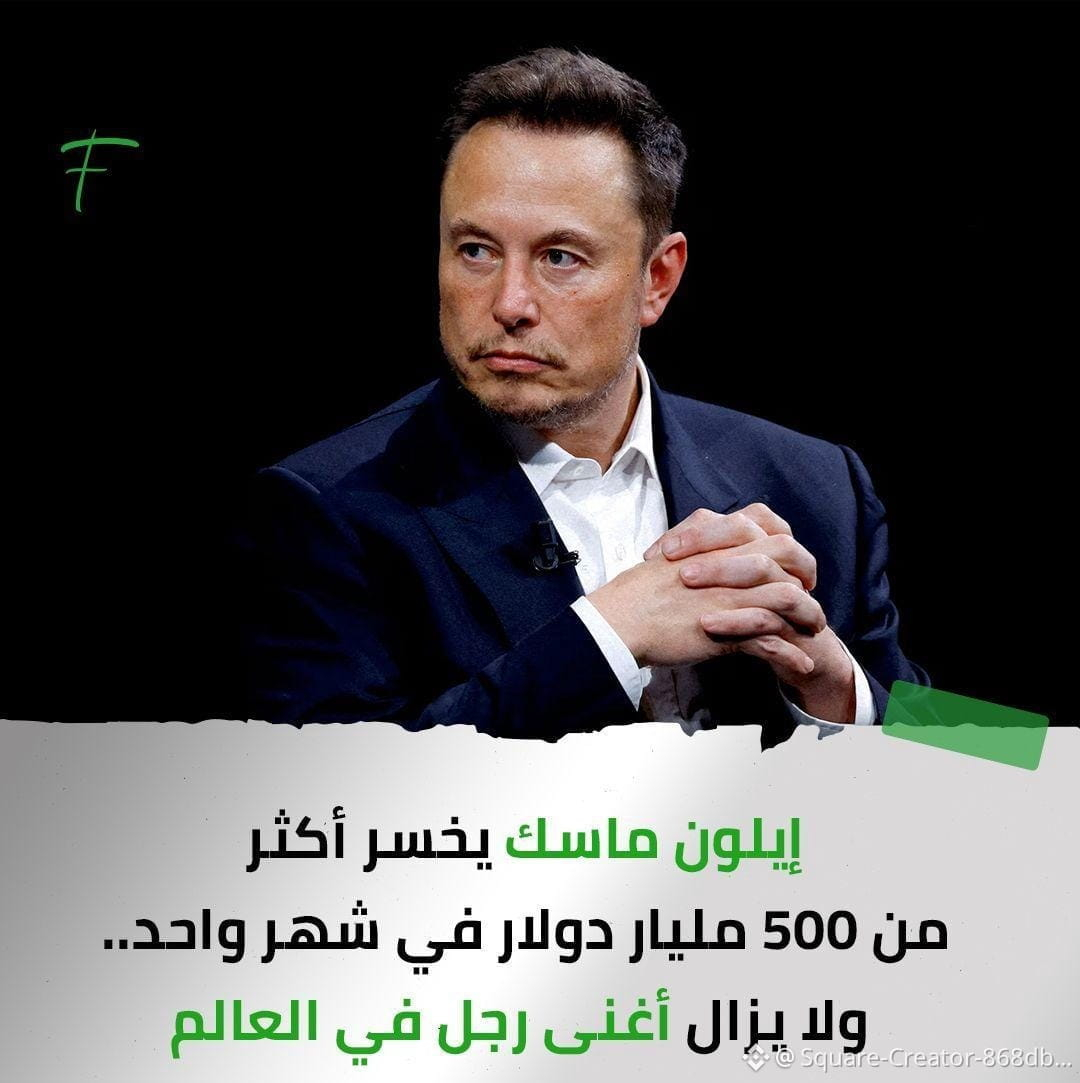
$SPCXB Elon Musk, the world’s richest man, suffers losses exceeding $500 billion from his wealth in just one month—along with a sharp drop in the shares of his two companies, SpaceX and Tesla.
After the historic IPO of SpaceX, its stock rose from $150 at listing to a record high of $225 in June 2026, pushing Musk’s wealth to an unprecedented level of $1.4 trillion—making him the first person in the world whose fortune surpassed the one-trillion-dollar mark.
But in just one month, his wealth fell to around $876 billion, with losses of about $524 billion, causing him to lose the title of “trillionaire.”
This decline came after SpaceX shares dropped to below $140, and the company’s market value fell from $2.2 trillion to $1.8 trillion, alongside ongoing pressure on Tesla’s stock.
Despite these massive losses, Musk still tops the list of the world’s richest people, well ahead of Google’s founders, Larry Page, whose wealth is estimated at about $290.1 billion, and Sergey Brin, whose fortune is around $267.6 billion.$BTC $NVDA
#ellonmask #BTC #SpaceX #TrendingTopic
#cryptouniverseofficial
{future}(NVDAUSDT)
{future}(BTCUSDT)
{spot}(SPCXBUSDT)
$SPCXB Elon Musk, the world’s richest man, suffers losses exceeding $500 billion from his wealth in just one month—along with a sharp drop in the shares of his two companies, SpaceX and Tesla.
After the historic IPO of SpaceX, its stock rose from $150 at listing to a record high of $225 in June 2026, pushing Musk’s wealth to an unprecedented level of $1.4 trillion—making him the first person in the world whose fortune surpassed the one-trillion-dollar mark.
But in just one month, his wealth fell to around $876 billion, with losses of about $524 billion, causing him to lose the title of “trillionaire.”
This decline came after SpaceX shares dropped to below $140, and the company’s market value fell from $2.2 trillion to $1.8 trillion, alongside ongoing pressure on Tesla’s stock.
Despite these massive losses, Musk still tops the list of the world’s richest people, well ahead of Google’s founders, Larry Page, whose wealth is estimated at about $290.1 billion, and Sergey Brin, whose fortune is around $267.6 billion.$BTC $NVDA
#ellonmask #BTC #SpaceX #TrendingTopic
#cryptouniverseofficial
4
1
3.5k

·
--
Bullish
51
·
--
Bullish
Verified
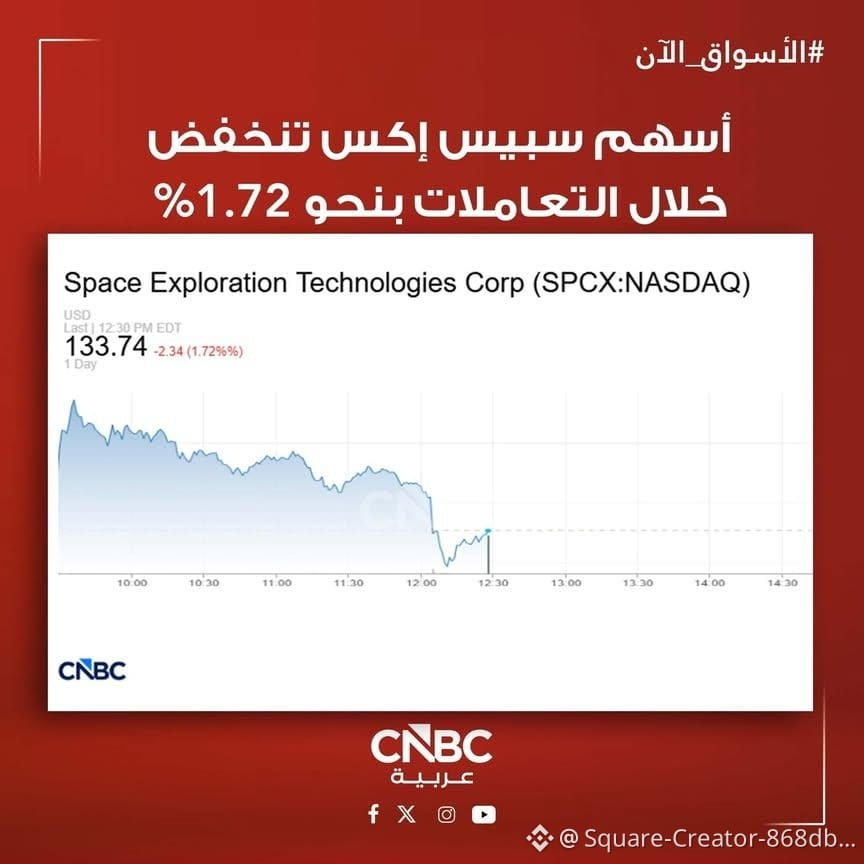
$SPCXB 📉 SpaceX shares fall for the fourth straight session during Wednesday trading on Wall Street, dropping below the initial public offering price of $135 for the first time in its history
⏱️ This decline comes about a week after the company’s shares joined the Nasdaq 100 index
🚀 The company’s shares have seen sharp volatility since their historic IPO last month, which raised a record $86 billion and made its founder, Elon Musk, the world’s first trillionaire
💲 The stock fell by about 1.7% during Wednesday trading to a official level of $133.74
$BTC $TSLAB #SpaceX #ellonmask #TSLA
#BTC #WallStreetNews
{spot}(TSLABUSDT)
{future}(BTCUSDT)
{spot}(SPCXBUSDT)
$SPCXB 📉 SpaceX shares fall for the fourth straight session during Wednesday trading on Wall Street, dropping below the initial public offering price of $135 for the first time in its history
⏱️ This decline comes about a week after the company’s shares joined the Nasdaq 100 index
🚀 The company’s shares have seen sharp volatility since their historic IPO last month, which raised a record $86 billion and made its founder, Elon Musk, the world’s first trillionaire
💲 The stock fell by about 1.7% during Wednesday trading to a official level of $133.74
$BTC $TSLAB #SpaceX #ellonmask #TSLA
#BTC #WallStreetNews
1.2k

·
--
Bullish
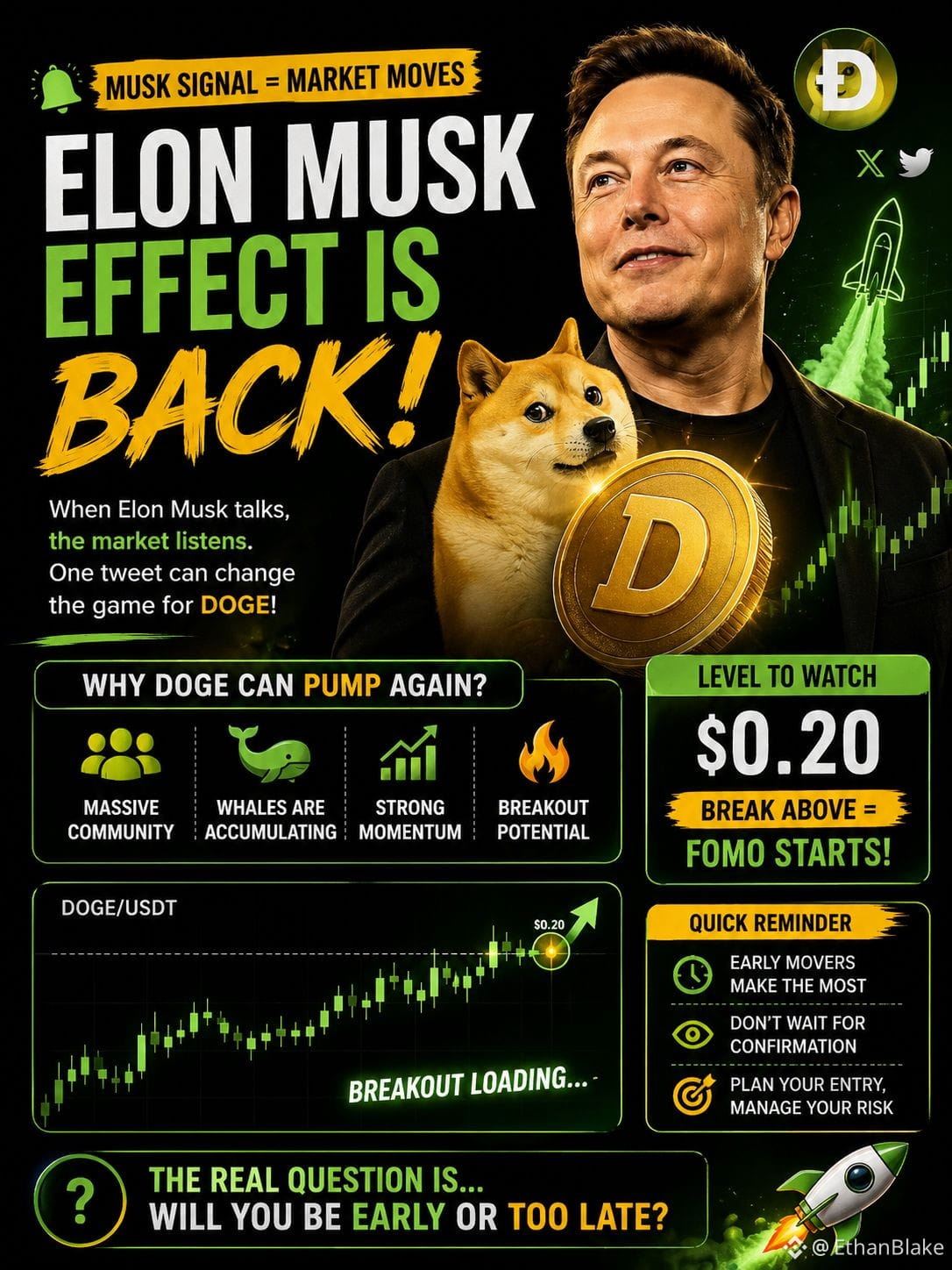
🚨 ALERT: Market reacting to Musk again… 🚀🐶
Whenever Elon Musk shows interest in $DOGE , volatility spikes fast — and we’ve seen this pattern play out many times before. One signal from him can shift momentum across the entire meme coin sector 📊🔥
{future}(DOGEUSDT)
But here’s where it gets interesting… is this just temporary hype, or is big money already building positions quietly? 👀
While most traders wait for confirmation, early movers are already stepping in…
If DOGE gains traction again, keep eyes on key levels:
🚀 Strong breakout = momentum chase begins
🚀 Meme coins could enter a fresh mini rally
In this market, timing matters more than anything.
👉 The real question: will you position early… or follow the crowd later?
#Crypto
#DOGE #MemeCoins #ellonmask
🚨 ALERT: Market reacting to Musk again… 🚀🐶
Whenever Elon Musk shows interest in $DOGE , volatility spikes fast — and we’ve seen this pattern play out many times before. One signal from him can shift momentum across the entire meme coin sector 📊🔥
But here’s where it gets interesting… is this just temporary hype, or is big money already building positions quietly? 👀
While most traders wait for confirmation, early movers are already stepping in…
If DOGE gains traction again, keep eyes on key levels:
🚀 Strong breakout = momentum chase begins
🚀 Meme coins could enter a fresh mini rally
In this market, timing matters more than anything.
👉 The real question: will you position early… or follow the crowd later?
#Crypto
#DOGE #MemeCoins #ellonmask
34

·
--
Bullish
🔴Future trading 📶
coin : $CHIP /usdt
$cType
Long (Buy) Expecting a short-term relief bounce.
Entry (Limit)
0.04450 Right near the Daily Bollinger Lower Band floor.
Stop-Loss 0.04180 Mandatory. Protects you from a total breakdown to 0.028.
Take-Profit 1 0.05200 Move your Stop-Loss to entry price once this is hit.
Take-Profit 2 0.05700 Main
#ellonmask #ellonmask_comeback_for_new_era

526
·
--
#DontMiss_Ellon_Mask
this is how it is ❤️
if you need daily trading plan's just hit the follow button and leave us a comment 👍
#ellonmask comeback for new trading era😌
#DontMiss_Ellon_Mask
this is how it is ❤️
if you need daily trading plan's just hit the follow button and leave us a comment 👍
#ellonmask comeback for new trading era😌
this is how it is ❤️
if you need daily trading plan's just hit the follow button and leave us a comment 👍
#ellonmask comeback for new trading era😌

1
3
477
·
--
Bullish
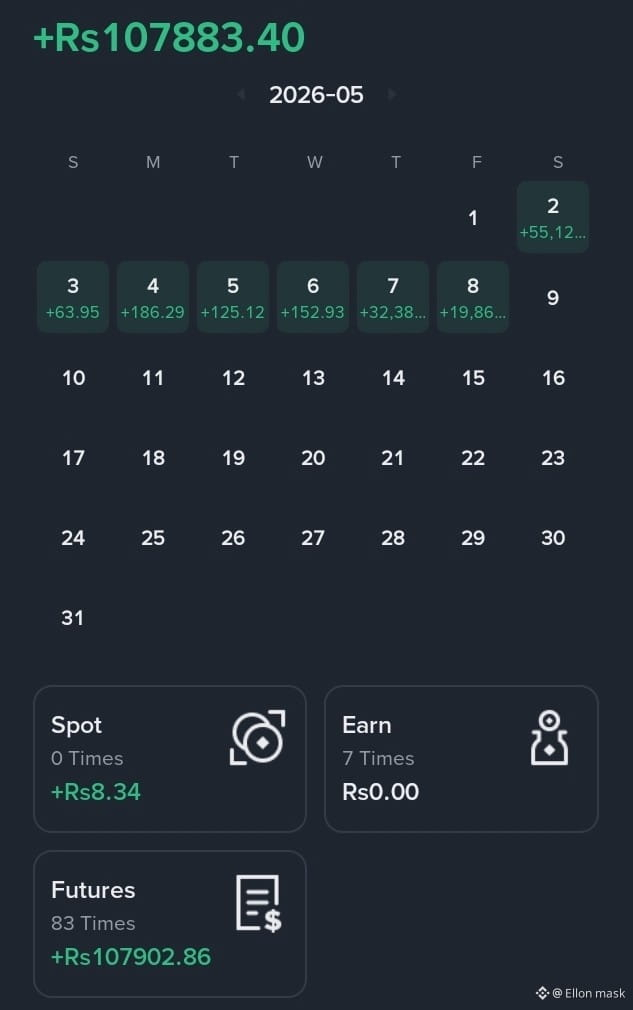
success is not what always follow after you.. you have to set your own setup and play with your rules. you will be success when you follow rules.. ♥️
#ellonmask #ellonmask_comeback_for_new_era
success is not what always follow after you.. you have to set your own setup and play with your rules. you will be success when you follow rules.. ♥️
#ellonmask #ellonmask_comeback_for_new_era
#ellonmask #ellonmask_comeback_for_new_era
2
1
384
Log in to explore more content
Join global crypto users on Binance Square
⚡️ Get latest and useful information about crypto.
💬 Trusted by the world’s largest crypto exchange.
👍 Discover real insights from verified creators.
Email / Phone number
Trending Topics
1
#CanMarketsReboundAfterThanksgiving?
332,156 views
2,713 Discussing
2
#EvolveAtBinanceBlockchainWeek
1M views
12,495 Discussing
3
#BitcoinTops$60000
11,159 views
39 Discussing
4
#XRPLedgerVaultGets29Votes
7,791 views
80 Discussing
5
#Nasdaq100FiveDayAvgIntradayVolatilityHits3.8%
28,235 views
354 Discussing
6
#CorePCEBeatLiftsFedHikeOdds
386,555 views
2,054 Discussing
7
#CouldSpaceX’sOrbitalDataCentersBoostAIChipDemand?
145,136 views
1,522 Discussing
8
#ASEANPlus3ToFormCrossBorderPaymentsCryptoWorkingGroup
7,444 views
18 Discussing
9
#ZcashDevelopersUrgeZECMoveToIronwood
70,584 views
373 Discussing
10
#SwitzerlandApproves57JurisdictionsForCryptoDataExchange
605 views
1 Discussing