
#southkorea
southkorea
875,867 views
2,207 Discussing
Hot
Latest

Article
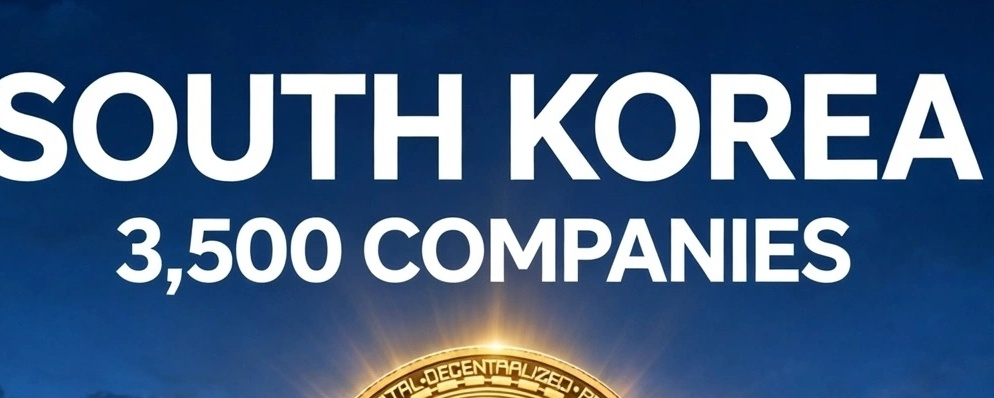
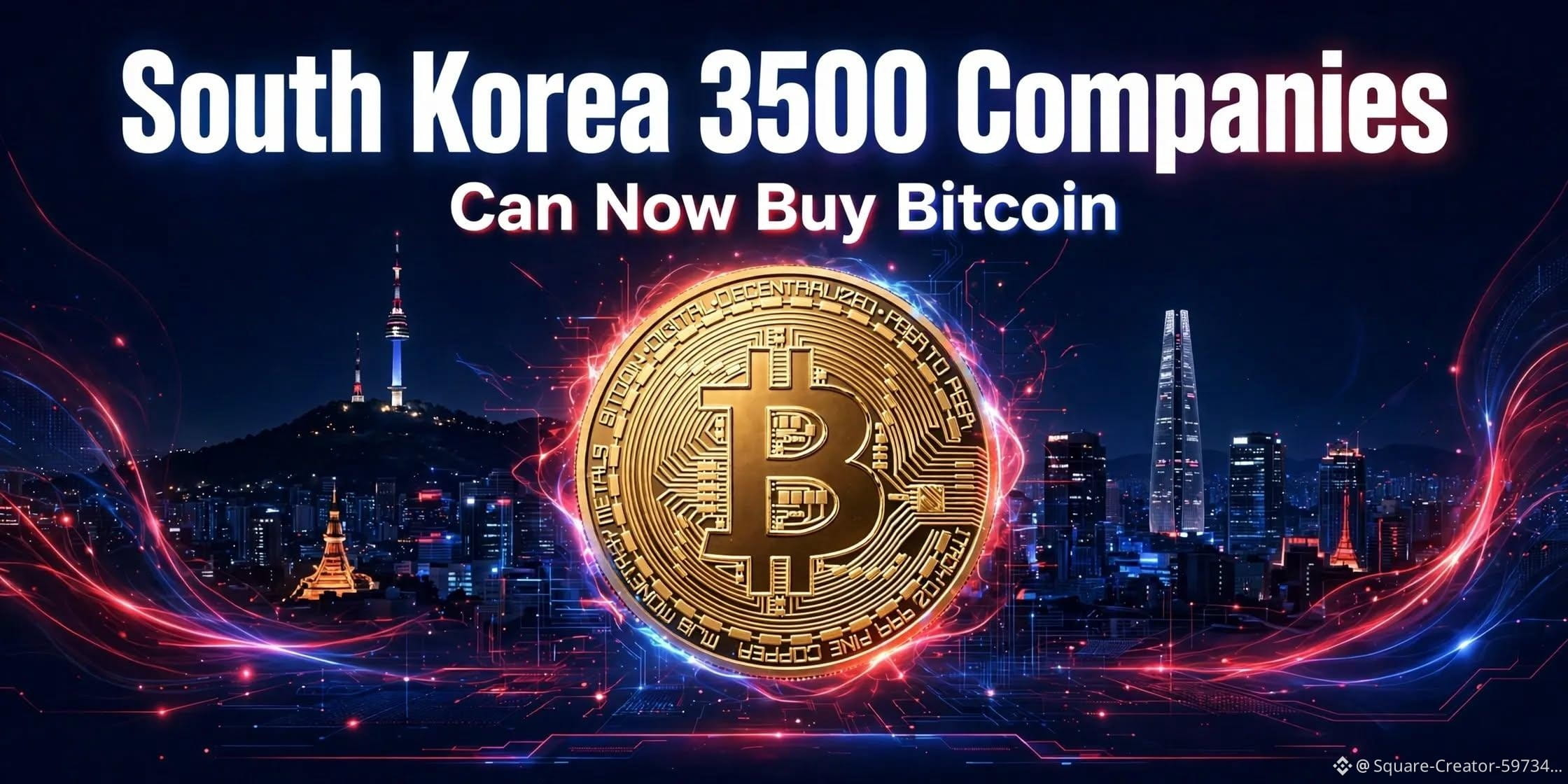
South Korea Is About to Let 3,500 Companies Buy Bitcoin — After Nine Years of "No"South Korea Is About to Let 3,500 Companies Buy Bitcoin — After Nine Years of "No"
For nine years, South Korean companies were locked out of crypto. Next week, that door finally starts to open.
South Korea's Financial Services Commission (FSC) plans to publish guidelines that would let around 3,500 listed companies and registered professional-investor firms buy Bitcoin and other cryptocurrencies for investment, local news agency News1 reported on 18 November. The guidelines will arrive alongside the government's draft Digital Asset Basic Act, the country's planned rulebook for the crypto industry.
This is not a rumour from a random blog. It is the second phase of a roadmap the regulator itself laid out in February 2025 — and it is arriving about 21 months late.
What Exactly Is Changing
Until now, South Korea's crypto market has been driven almost entirely by retail traders. Companies could not buy crypto for investment at all — a de facto ban in place since 2017.
Under the plan, roughly 3,500 listed companies and firms registered as professional investors would become eligible to invest in Bitcoin and other crypto assets once the guidelines take effect. The FSC also plans to convene its Virtual Asset Committee to coincide with the release.
The Digital Asset Basic Act is the legal backbone of the move. It would split crypto service providers into separate business types and set entry and conduct rules for OTC trading desks, brokers and other operators — the infrastructure needed so that large corporate orders do not distort prices on retail exchanges like Upbit.
Why It Took So Long
The FSC's February 2025 roadmap came in two stages. Phase 1 let nonprofits and exchanges sell off crypto holdings. Phase 2 — corporate buying — was scheduled for the second half of 2025. It never arrived.
The delay was not about changing minds. It was about plumbing: real-name corporate bank accounts, custody, OTC execution and market safeguards all had to be built first. The guidelines landing next week would complete a process that started nearly two years ago.
What It Does NOT Mean Yet
Here is the part most headlines skip: publishing the guidelines does not open trading on its own.
The FSC still has to say when listed companies can place their first orders. Firms will need real-name corporate bank accounts before they can trade, and no date for that has been announced. The FSC itself has not publicly confirmed a date for the guidelines either — the timeline comes from the News1 report.
The draft law also has to pass. The government's draft is expected to reach the National Assembly next week, and the Political Affairs Committee aims to finish its review by January — timed with the implementation of the US GENIUS Act on stablecoins. Representative Min Byung-duk has said he intends to wrap the bill up by 9 January.
The Fine Print
An earlier draft reported in January 2026 would have capped a company's annual crypto investment at 5% of its equity capital and limited purchases to the top 20 coins by market value. The FSC responded the next day that key terms — including investment limits and eligible assets — had not been finalised. Treat the 5% figure as a draft proposal, not a final rule.
Why It Matters
South Korea is one of the world's most active crypto markets, but it has been a retail-only story until now. If even a fraction of 3,500 companies allocate to Bitcoin, it becomes one of Asia's most closely watched demand stories heading into 2027 — at a moment when Bitcoin is trading near $61,500, down roughly 50% from its October 2025 peak, and institutional flows elsewhere have been going the other way, with US spot Bitcoin ETFs posting hundreds of millions in outflows this week.
The structure matters as much as the size. By routing large orders through regulated OTC desks instead of retail exchanges, Korea is trying to bring corporate money in without repeating the volatility its retail market is famous for.
What to Watch Next
1. The guidelines themselves, expected next week — and what caps and coin lists they actually contain.
2. The first-trade date — the FSC still has to name it.
3. The National Assembly's January review of the Digital Asset Basic Act.
Nine years of "no" is ending. The question now is how fast "yes" turns into real buying.
Do you think Korean corporate demand can change Bitcoin's direction in 2027 — or will the rules stay too tight to matter? Share your view below. 👇
$BTC
#southkoreaPlansToLet3500ListedFirmsBuyBitcoin #BinanceSquare #SouthKorea #bitcoin #BinanceSquare
South Korea Is About to Let 3,500 Companies Buy Bitcoin — After Nine Years of "No"
South Korea Is About to Let 3,500 Companies Buy Bitcoin — After Nine Years of "No"
For nine years, South Korean companies were locked out of crypto. Next week, that door finally starts to open.
South Korea's Financial Services Commission (FSC) plans to publish guidelines that would let around 3,500 listed companies and registered professional-investor firms buy Bitcoin and other cryptocurrencies for investment, local news agency News1 reported on 18 November. The guidelines will arrive alongside the government's draft Digital Asset Basic Act, the country's planned rulebook for the crypto industry.
This is not a rumour from a random blog. It is the second phase of a roadmap the regulator itself laid out in February 2025 — and it is arriving about 21 months late.
What Exactly Is Changing
Until now, South Korea's crypto market has been driven almost entirely by retail traders. Companies could not buy crypto for investment at all — a de facto ban in place since 2017.
Under the plan, roughly 3,500 listed companies and firms registered as professional investors would become eligible to invest in Bitcoin and other crypto assets once the guidelines take effect. The FSC also plans to convene its Virtual Asset Committee to coincide with the release.
The Digital Asset Basic Act is the legal backbone of the move. It would split crypto service providers into separate business types and set entry and conduct rules for OTC trading desks, brokers and other operators — the infrastructure needed so that large corporate orders do not distort prices on retail exchanges like Upbit.
Why It Took So Long
The FSC's February 2025 roadmap came in two stages. Phase 1 let nonprofits and exchanges sell off crypto holdings. Phase 2 — corporate buying — was scheduled for the second half of 2025. It never arrived.
The delay was not about changing minds. It was about plumbing: real-name corporate bank accounts, custody, OTC execution and market safeguards all had to be built first. The guidelines landing next week would complete a process that started nearly two years ago.
What It Does NOT Mean Yet
Here is the part most headlines skip: publishing the guidelines does not open trading on its own.
The FSC still has to say when listed companies can place their first orders. Firms will need real-name corporate bank accounts before they can trade, and no date for that has been announced. The FSC itself has not publicly confirmed a date for the guidelines either — the timeline comes from the News1 report.
The draft law also has to pass. The government's draft is expected to reach the National Assembly next week, and the Political Affairs Committee aims to finish its review by January — timed with the implementation of the US GENIUS Act on stablecoins. Representative Min Byung-duk has said he intends to wrap the bill up by 9 January.
The Fine Print
An earlier draft reported in January 2026 would have capped a company's annual crypto investment at 5% of its equity capital and limited purchases to the top 20 coins by market value. The FSC responded the next day that key terms — including investment limits and eligible assets — had not been finalised. Treat the 5% figure as a draft proposal, not a final rule.
Why It Matters
South Korea is one of the world's most active crypto markets, but it has been a retail-only story until now. If even a fraction of 3,500 companies allocate to Bitcoin, it becomes one of Asia's most closely watched demand stories heading into 2027 — at a moment when Bitcoin is trading near $61,500, down roughly 50% from its October 2025 peak, and institutional flows elsewhere have been going the other way, with US spot Bitcoin ETFs posting hundreds of millions in outflows this week.
The structure matters as much as the size. By routing large orders through regulated OTC desks instead of retail exchanges, Korea is trying to bring corporate money in without repeating the volatility its retail market is famous for.
What to Watch Next
1. The guidelines themselves, expected next week — and what caps and coin lists they actually contain.
2. The first-trade date — the FSC still has to name it.
3. The National Assembly's January review of the Digital Asset Basic Act.
Nine years of "no" is ending. The question now is how fast "yes" turns into real buying.
Do you think Korean corporate demand can change Bitcoin's direction in 2027 — or will the rules stay too tight to matter? Share your view below. 👇
$BTC
#southkoreaPlansToLet3500ListedFirmsBuyBitcoin #BinanceSquare #SouthKorea #bitcoin #BinanceSquare

🚨 $BTC KOREAN REGULATORY SHIFT: 3,500 CORPORATE GIANTS PREPARE FOR DEPLOYMENT 📊
The Financial Services Commission blueprint targeting 3,500 registered corporate entities signals a structural evolution for $BTC demand. 💡 However, regulatory roadmaps do not equate to instant liquidity injections without robust custody and regulated OTC infrastructure.
Smart capital monitors the plumbing before executing size, waiting for the Digital Asset Basic Act to codify execution channels. 🔍 The true catalyst is not initial eligibility, but the precise moment execution frameworks allow institutional capital deployment.
💬 Are you positioning ahead of the infrastructural rollout or waiting for confirmed institutional order flow? 👇
⚠️ Not financial advice. Always manage your risk. 🛡️
🏷️ #BTC #InstitutionalAdoption #SouthKorea #MarketStructure
🦈 ⚖️
6

·
--
Bearish
🇰🇷 SOUTH KOREA MAY OPEN THE CRYPTO MARKET TO 3,500 COMPANIES
For years, Korean corporations have faced restrictions on investing in digital assets
$BTC
{future}(BTCUSDT)
That could soon change
The Financial Services Commission plans to release new guidelines next week covering around 3,500 listed companies and registered professional-investor corporations
But don't mistake a regulatory roadmap for an immediate buying wave
⚙️ The bigger challenge is market infrastructure
Large corporate orders need proper custody, compliance and execution channels, including regulated OTC services
The proposed Digital Asset Basic Act is expected to address part of that framework
📊 If implemented, this could bring a new class of institutional demand into Korea's crypto market
However, the FSC has not confirmed when eligible companies can place their first orders, and the final investment limits remain unknown
The key signal isn't how many companies become eligible
It's when they can actually deploy capital
{spot}(BTCUSDT)
#bitcoin #SouthKorea #InstitutionalAdoption
🇰🇷 SOUTH KOREA MAY OPEN THE CRYPTO MARKET TO 3,500 COMPANIES
For years, Korean corporations have faced restrictions on investing in digital assets
$BTC
That could soon change
The Financial Services Commission plans to release new guidelines next week covering around 3,500 listed companies and registered professional-investor corporations
But don't mistake a regulatory roadmap for an immediate buying wave
⚙️ The bigger challenge is market infrastructure
Large corporate orders need proper custody, compliance and execution channels, including regulated OTC services
The proposed Digital Asset Basic Act is expected to address part of that framework
📊 If implemented, this could bring a new class of institutional demand into Korea's crypto market
However, the FSC has not confirmed when eligible companies can place their first orders, and the final investment limits remain unknown
The key signal isn't how many companies become eligible
It's when they can actually deploy capital
#bitcoin #SouthKorea #InstitutionalAdoption
55

·
--
Bullish
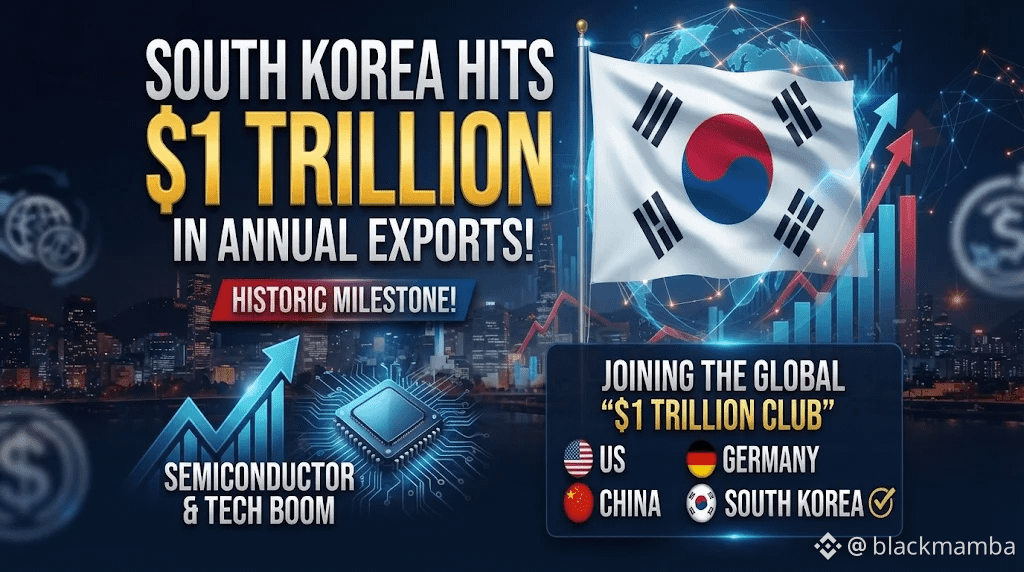
🚨 HISTORIC MILESTONE: SOUTH KOREA HITS $1 TRILLION IN ANNUAL EXPORTS! 🇰🇷
South Korea has officially surpassed $1 TRILLION in annual exports for the first time in its history, joining an exclusive group of just four countries to achieve this milestone.
🌍 The $1 Trillion Export Club:
🇺🇸 United States
🇩🇪 Germany
🇨🇳 China
🇰🇷 South Korea
What's driving this historic achievement?
🔥 The global AI boom and surging semiconductor demand have played a major role in South Korea's export growth. $ANTHROPIC
Key highlights:
📊 Semiconductor exports reached approximately $396.8 billion during January–October 2026.
🤖 Growing AI infrastructure investment is boosting demand for advanced chips and computing components.
🏭 South Korea continues to strengthen its position in global manufacturing, technology and international trade.
WHY IT MATTERS
This milestone highlights the growing importance of the
semiconductor industry and AI infrastructure in the global economy.
However, heavy dependence on semiconductor exports also creates risks if AI investment or chip demand slows.
📈 BIG PICTURE: South Korea's achievement is another sign of how deeply AI is reshaping global trade and the technology supply chain.
What do you think — will South Korea maintain this export momentum in 2027?
#SouthKorea #GlobalTrade #Semiconductors #Aİ #Economy
{future}(ANTUSDT)
{future}(BTCUSDT)
{future}(NVDAUSDT)
🚨 HISTORIC MILESTONE: SOUTH KOREA HITS $1 TRILLION IN ANNUAL EXPORTS! 🇰🇷
South Korea has officially surpassed $1 TRILLION in annual exports for the first time in its history, joining an exclusive group of just four countries to achieve this milestone.
🌍 The $1 Trillion Export Club:
🇺🇸 United States
🇩🇪 Germany
🇨🇳 China
🇰🇷 South Korea
What's driving this historic achievement?
🔥 The global AI boom and surging semiconductor demand have played a major role in South Korea's export growth. $ANTHROPIC
Key highlights:
📊 Semiconductor exports reached approximately $396.8 billion during January–October 2026.
🤖 Growing AI infrastructure investment is boosting demand for advanced chips and computing components.
🏭 South Korea continues to strengthen its position in global manufacturing, technology and international trade.
WHY IT MATTERS
This milestone highlights the growing importance of the
semiconductor industry and AI infrastructure in the global economy.
However, heavy dependence on semiconductor exports also creates risks if AI investment or chip demand slows.
📈 BIG PICTURE: South Korea's achievement is another sign of how deeply AI is reshaping global trade and the technology supply chain.
What do you think — will South Korea maintain this export momentum in 2027?
#SouthKorea #GlobalTrade #Semiconductors #Aİ #Economy
973


Article
MASSIVE ASIA CATALYST: SOUTH KOREA PLANS TO OPEN BITCOIN INVESTMENT TO 3,500 CORPORATIONS!While global macroeconomic uncertainty and hawkish Fed signals continue to pressure crypto prices, a potentially major institutional adoption story is emerging from Asia.
South Korea's Financial Services Commission (FSC) is reportedly preparing new corporate crypto investment guidelines that could allow approximately 3,500 publicly listed companies and registered professional-investor corporations to invest in Bitcoin ($BTC) and other digital assets.
If implemented, this could mark a significant shift in South Korea's crypto market.
KEY DEVELOPMENTS
1. A Major Shift in Corporate Crypto Policy
For years, South Korean corporations faced significant restrictions on direct cryptocurrency investments. The proposed guidelines could open the door for eligible companies to enter the digital asset market, expanding institutional participation beyond retail investors.
2. Digital Asset Basic Act on the Horizon
The proposed corporate investment guidelines are expected to accompany progress on South Korea's Digital Asset Basic Act.
The legislation aims to establish a broader regulatory framework for digital assets and crypto-related market infrastructure. Reports indicate that the draft is expected to reach the National Assembly next week, with January 2027 set as a target for passage.
3. Will Companies Face Investment Limits?
Earlier reports discussed possible restrictions, including:
Annual crypto investments capped at 5% of equity capital.Investment eligibility limited to the top 20 cryptocurrencies by market capitalization.
However, these conditions have not been confirmed as final rules. The FSC is expected to clarify the actual investment limits and eligible assets in its official guidelines.
WHY DOES THIS MATTER FOR BITCOIN?
South Korea is already a major cryptocurrency trading market.
Allowing thousands of eligible corporations to invest in digital assets could create a new source of institutional demand.
Potential implications include:
Greater institutional participation in crypto.Increased interest in Bitcoin and other major digital assets.Stronger connections between traditional finance and crypto markets.Potential long-term support for digital asset adoption.
However, the proposed policy does not mean that all 3,500 companies will immediately start buying Bitcoin. Actual investment activity will depend on the final rules and implementation.
THE BIG QUESTION
Could South Korea's corporate crypto opening become the next major catalyst for Bitcoin?
Or will macroeconomic pressure and uncertainty continue to dominate market sentiment?
What do you think? Share your views below!
$BTC $ETH $SOL
#bitcoin #BTC #SouthKorea #CryptoAdoption #InstitutionalInvestment #CryptoNews #DigitalAssets #BinanceSquare
MASSIVE ASIA CATALYST: SOUTH KOREA PLANS TO OPEN BITCOIN INVESTMENT TO 3,500 CORPORATIONS!
While global macroeconomic uncertainty and hawkish Fed signals continue to pressure crypto prices, a potentially major institutional adoption story is emerging from Asia.
South Korea's Financial Services Commission (FSC) is reportedly preparing new corporate crypto investment guidelines that could allow approximately 3,500 publicly listed companies and registered professional-investor corporations to invest in Bitcoin ($BTC ) and other digital assets.
If implemented, this could mark a significant shift in South Korea's crypto market.
KEY DEVELOPMENTS
1. A Major Shift in Corporate Crypto Policy
For years, South Korean corporations faced significant restrictions on direct cryptocurrency investments. The proposed guidelines could open the door for eligible companies to enter the digital asset market, expanding institutional participation beyond retail investors.
2. Digital Asset Basic Act on the Horizon
The proposed corporate investment guidelines are expected to accompany progress on South Korea's Digital Asset Basic Act.
The legislation aims to establish a broader regulatory framework for digital assets and crypto-related market infrastructure. Reports indicate that the draft is expected to reach the National Assembly next week, with January 2027 set as a target for passage.
3. Will Companies Face Investment Limits?
Earlier reports discussed possible restrictions, including:
Annual crypto investments capped at 5% of equity capital.Investment eligibility limited to the top 20 cryptocurrencies by market capitalization.
However, these conditions have not been confirmed as final rules. The FSC is expected to clarify the actual investment limits and eligible assets in its official guidelines.
WHY DOES THIS MATTER FOR BITCOIN?
South Korea is already a major cryptocurrency trading market.
Allowing thousands of eligible corporations to invest in digital assets could create a new source of institutional demand.
Potential implications include:
Greater institutional participation in crypto.Increased interest in Bitcoin and other major digital assets.Stronger connections between traditional finance and crypto markets.Potential long-term support for digital asset adoption.
However, the proposed policy does not mean that all 3,500 companies will immediately start buying Bitcoin. Actual investment activity will depend on the final rules and implementation.
THE BIG QUESTION
Could South Korea's corporate crypto opening become the next major catalyst for Bitcoin?
Or will macroeconomic pressure and uncertainty continue to dominate market sentiment?
What do you think? Share your views below!
$BTC $ETH $SOL
#bitcoin #BTC #SouthKorea #CryptoAdoption #InstitutionalInvestment #CryptoNews #DigitalAssets #BinanceSquare
78

South Korea is preparing to unlock corporate Bitcoin demand—and smart traders are watching the timeline, not just the headline. 🚨
South Korea’s Financial Services Commission (FSC) plans to publish corporate crypto investment guidelines next week alongside its Digital Asset Basic Act draft.
Here is the real breakdown:
📌 The Scale: Around 3,500 listed companies and professional-investor firms could gain approval to buy Bitcoin and crypto for investment.
📌 The Bottleneck: Arriving 21 months after the Feb 2025 roadmap, corporate access was delayed because Korea lacked Over-The-Counter (OTC) desk rules to absorb large block trades.
📌 The Reality Check: Next week’s guidelines do not trigger instant buying. Lawmakers target January 2027 to pass the bill, and the FSC must still finalize investment caps and launch dates.
Korea built a massive crypto market on retail alone. Corporate treasuries are the next catalyst.
Are you positioning ahead of Asian institutional inflows, or waiting for the bill to pass? 👇
$BTC $ETH $PIEVERSE
{future}(PIEVERSEUSDT)
{future}(BTCUSDT)
{future}(ETHUSDT)
#southkoreaplanstolet3500listedfirmsbuybitcoin #BTC #SouthKorea #InstitutionalAdoption
South Korea is preparing to unlock corporate Bitcoin demand—and smart traders are watching the timeline, not just the headline. 🚨
South Korea’s Financial Services Commission (FSC) plans to publish corporate crypto investment guidelines next week alongside its Digital Asset Basic Act draft.
Here is the real breakdown:
📌 The Scale: Around 3,500 listed companies and professional-investor firms could gain approval to buy Bitcoin and crypto for investment.
📌 The Bottleneck: Arriving 21 months after the Feb 2025 roadmap, corporate access was delayed because Korea lacked Over-The-Counter (OTC) desk rules to absorb large block trades.
📌 The Reality Check: Next week’s guidelines do not trigger instant buying. Lawmakers target January 2027 to pass the bill, and the FSC must still finalize investment caps and launch dates.
Korea built a massive crypto market on retail alone. Corporate treasuries are the next catalyst.
Are you positioning ahead of Asian institutional inflows, or waiting for the bill to pass? 👇
$BTC $ETH $PIEVERSE
#southkoreaplanstolet3500listedfirmsbuybitcoin #BTC #SouthKorea #InstitutionalAdoption
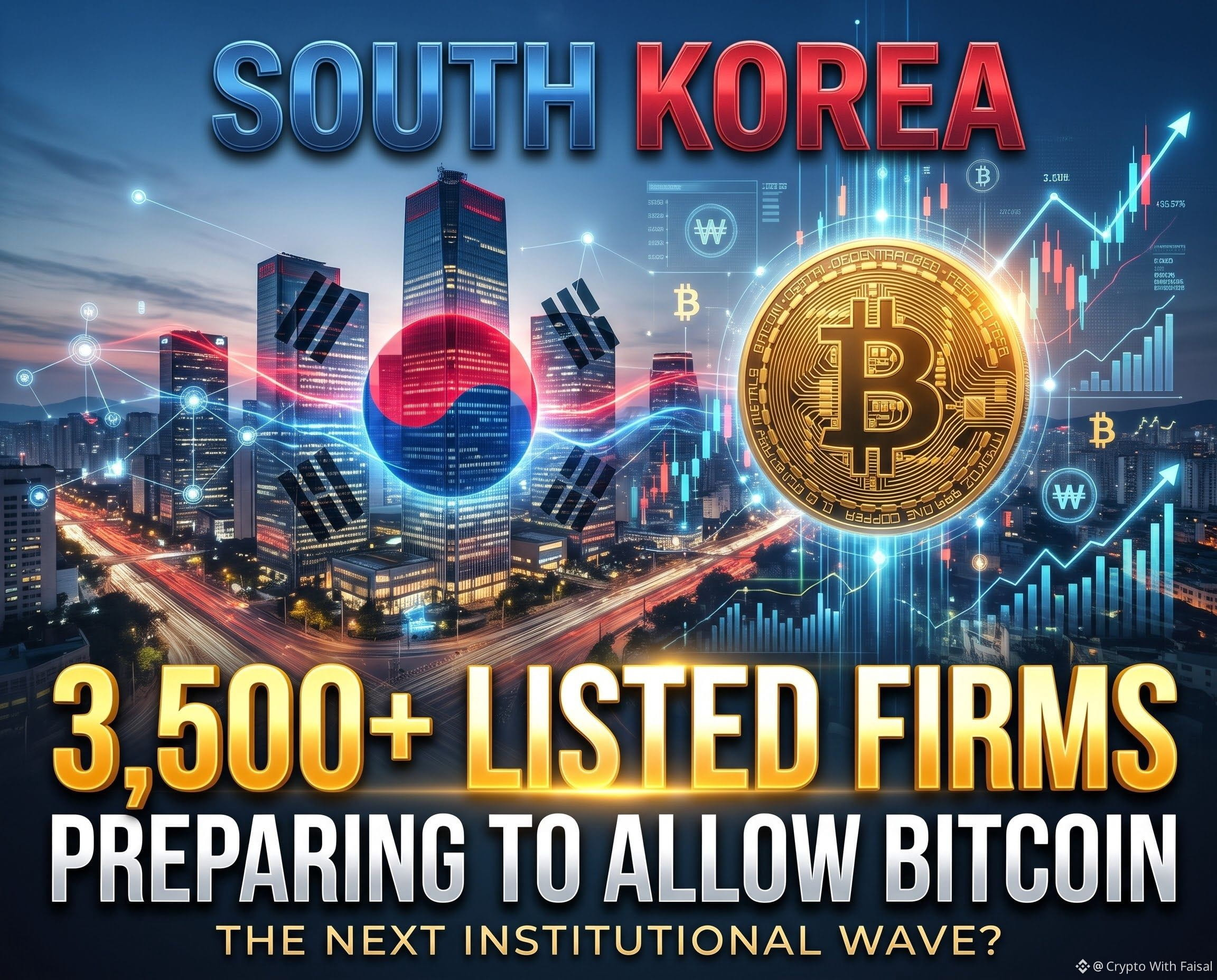
2
2.2k

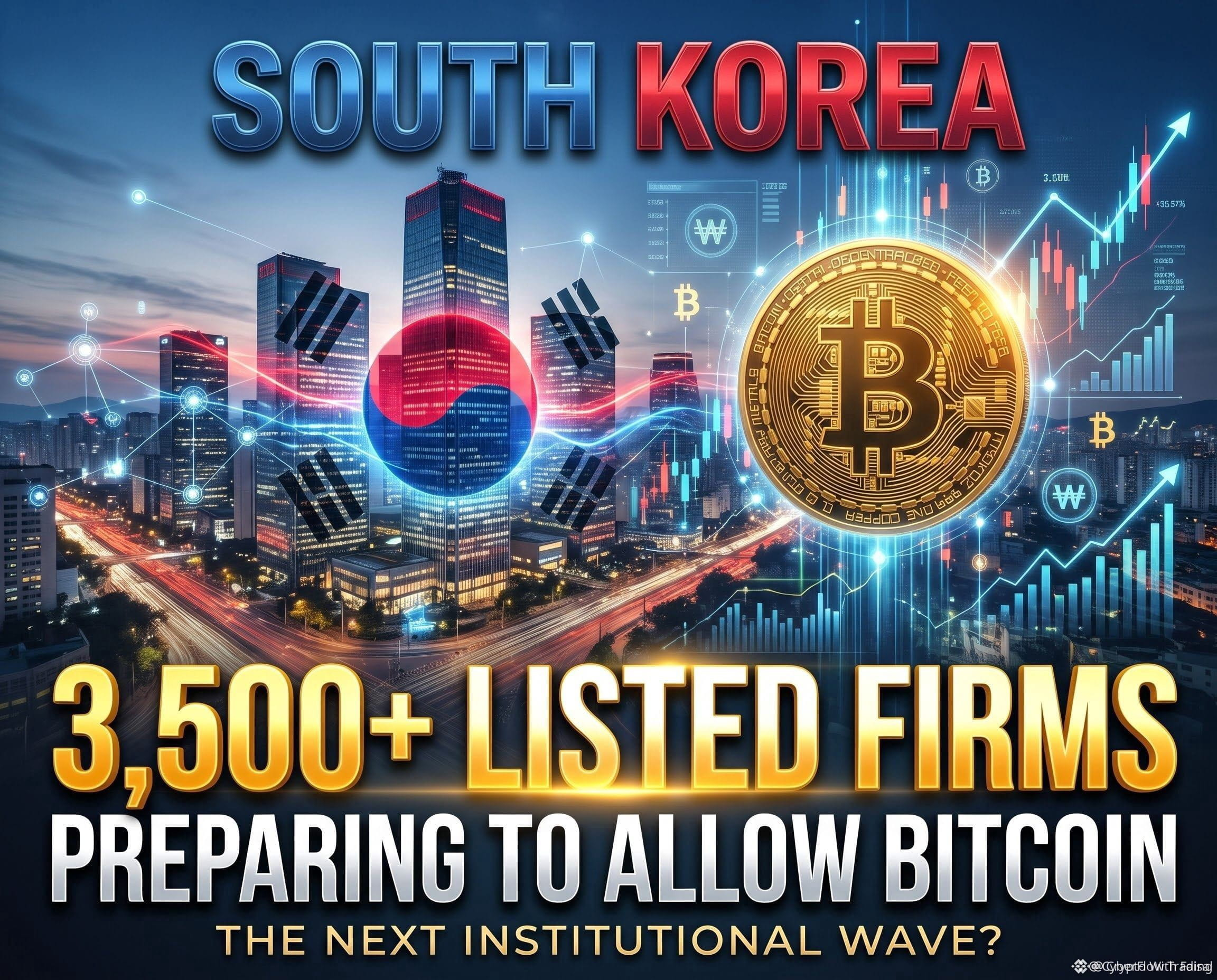
SOUTH KOREA CORPORATE TREASURERS ARE QUIETLY PREPARING TO FLOOD $BTC AND $ETH WITH LIQUIDITY! 🦈 ⚡
Smart money never chases headlines; it positions months ahead of the liquidity floodgates. With over 3,000 listed firms gearing up under new regulatory frameworks, the transition from retail-driven momentum to heavy institutional accumulation is taking shape across $BTC , $ETH , and $PIEVERSE . 📊
While retail traders sleep on the timeline, OTC desk rules are quietly being laid down to absorb massive block trades without slippage. This is structural positioning at its finest. 💡
Are you loading your bags ahead of the Asian corporate wave, or waiting for the breakout to happen on your screen? 👇
⚠️ Not financial advice. Always manage your risk. 🛡️
🏷️ #BTC #InstitutionalAdoption #Crypto #SouthKorea
🔥 💎
12

·
--
#SouthKoreaPlansToLet3500ListedFirmsBuyBitcoin
🇰🇷 South Korea Could Open Bitcoin Investment to 3,500 Companies!
A major development for the crypto market is coming from South Korea.
The country's Financial Services Commission (FSC) reportedly plans to introduce new guidelines that could allow around 3,500 listed companies and professional-investor firms to invest in Bitcoin and other digital assets.
Why does this matter?
Institutional participation could bring:
- More potential capital into the crypto market.
- Greater institutional interest in Bitcoin.
- Improved market liquidity over time.
- Stronger adoption of digital assets in traditional finance.
However, there is an important detail: the guidelines have not officially opened corporate trading yet. The regulator still needs to confirm when companies can begin placing their first orders.
If implemented, this could be another important step toward mainstream crypto adoption.
My question: Could corporate investment become one of Bitcoin's next major growth drivers? Or is this already priced into the market?
Share your thoughts below. 👇
#SouthKorea #CryptoAdoption #InstitutionalInvestors
$MSFTB
{spot}(MSFTBUSDT)
$AAPLB
{spot}(AAPLBUSDT)
$AMDB
{spot}(AMDBUSDT)
#SouthKoreaPlansToLet3500ListedFirmsBuyBitcoin
🇰🇷 South Korea Could Open Bitcoin Investment to 3,500 Companies!
A major development for the crypto market is coming from South Korea.
The country's Financial Services Commission (FSC) reportedly plans to introduce new guidelines that could allow around 3,500 listed companies and professional-investor firms to invest in Bitcoin and other digital assets.
Why does this matter?
Institutional participation could bring:
- More potential capital into the crypto market.
- Greater institutional interest in Bitcoin.
- Improved market liquidity over time.
- Stronger adoption of digital assets in traditional finance.
However, there is an important detail: the guidelines have not officially opened corporate trading yet. The regulator still needs to confirm when companies can begin placing their first orders.
If implemented, this could be another important step toward mainstream crypto adoption.
My question: Could corporate investment become one of Bitcoin's next major growth drivers? Or is this already priced into the market?
Share your thoughts below. 👇
#SouthKorea #CryptoAdoption #InstitutionalInvestors
$MSFTB
$AAPLB
$AMDB

1
92

·
--
🇰🇷 LARGE COMPANIES MAY START BUYING BITCOIN!
In South Korea, they are discussing the possibility of allowing approximately 3,500 publicly traded companies to invest in cryptocurrencies.
Why could this be important for the market? 👀
🏢 Companies could gain a new tool for managing capital.
₿ Bitcoin could become more accessible to corporate investors.
🌍 Other countries may take a closer look at this approach.
But for now, this is just a plan—not confirmation that all these companies have already been approved to buy BTC.
🔥 Imagine if thousands of large companies gradually started adding Bitcoin to their reserves. How much could that change the market?
#bitcoin #SouthKorea #CryptoAdoption $BTC
{future}(BTCUSDT)
🇰🇷 LARGE COMPANIES MAY START BUYING BITCOIN!
In South Korea, they are discussing the possibility of allowing approximately 3,500 publicly traded companies to invest in cryptocurrencies.
Why could this be important for the market? 👀
🏢 Companies could gain a new tool for managing capital.
₿ Bitcoin could become more accessible to corporate investors.
🌍 Other countries may take a closer look at this approach.
But for now, this is just a plan—not confirmation that all these companies have already been approved to buy BTC.
🔥 Imagine if thousands of large companies gradually started adding Bitcoin to their reserves. How much could that change the market?
#bitcoin #SouthKorea #CryptoAdoption $BTC
51

·
--
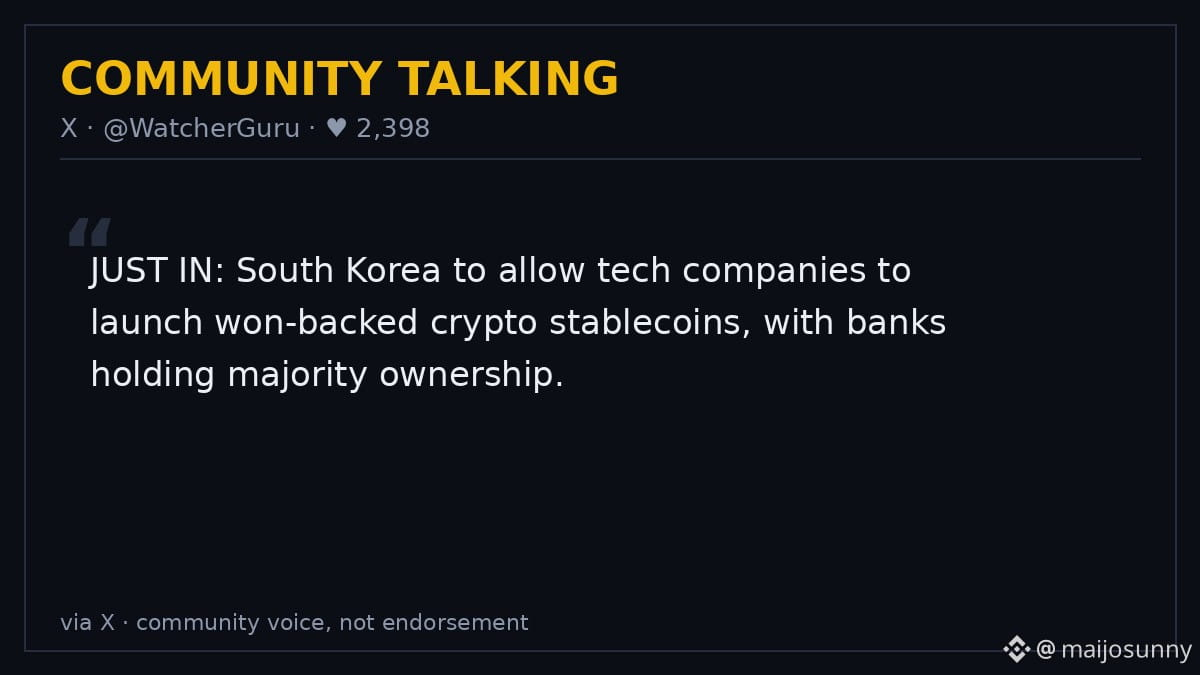
🚨 SOUTH KOREA OPENS THE DOOR TO WON STABLECOINS 🇰🇷
South Korea's FSC just clarified the model for won-backed stablecoins: banks hold a collective majority, but a tech company can still be the largest single shareholder.
Why it matters: Korea is one of Asia's biggest crypto markets, and a won stablecoin would plug straight into its exchanges and payment apps. The US GENIUS Act set the template in July, and Seoul is now writing its own version.
⚠️ But this is not a launch yet. The framework still needs the Digital Asset Basic Act, and the FSC says ownership rules are not finalized. A green light for the model ≠ a coin on the market.
What to watch: the bill's provisions due this month, and whether Naver Financial's planned Dunamu (Upbit) merger shapes who issues first.
Would a won stablecoin pull Korean capital on-chain, or stay a domestic payments play? 👇
Not financial advice. DYOR.
#crypto #stablecoins #SouthKorea
55

·
--
Article
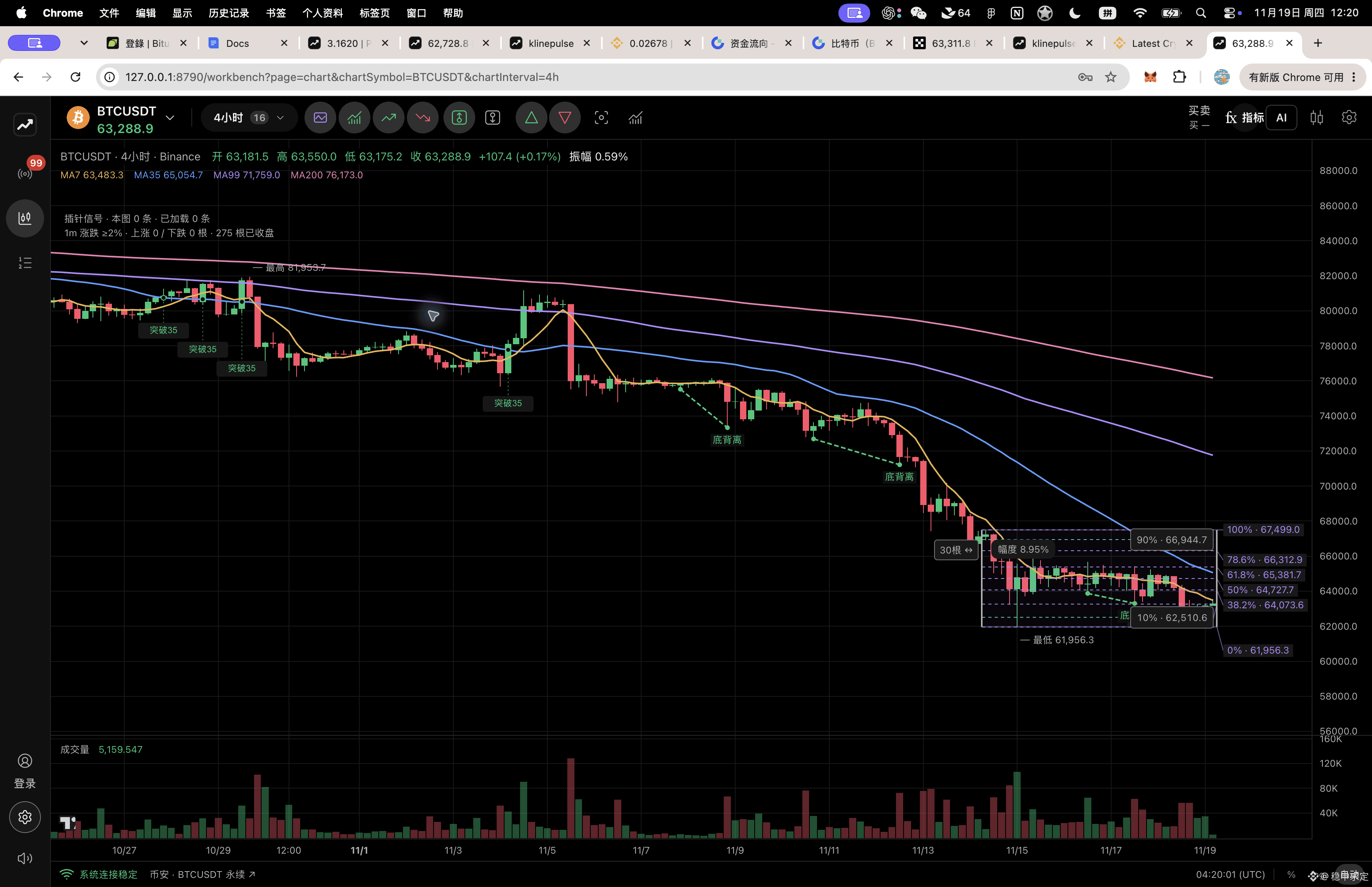
South Korea reportedly plans to let about 3,500 companies participate in crypto investing: BTC is waiting for the first order, not the access headlineSouth Korea reportedly plans to let about 3,500 companies participate in crypto investing: BTC is waiting for the first order, not the access headline
At Beijing time on November 19, the `#SouthKoreaPlansToLet3500ListedFirmsBuyBitcoin` topic ranked third on Binance Square’s trending page, with 13 people visible discussing it; opening the topic page showed about 7,181 views and 141 discussions. This topic is worth watching, but the headline “3,500 companies can buy crypto” cannot be directly equated with “3,500 companies will immediately buy BTC.” What really needs to be tracked is whether South Korea’s Financial Services Commission issues formal guidance, when the first transaction is allowed, and whether corporate funds truly enter the market.
South Korea reportedly plans to let about 3,500 companies participate in crypto investing: BTC is waiting for the first order, not the access headline
South Korea reportedly plans to let about 3,500 companies participate in crypto investing: BTC is waiting for the first order, not the access headline
At Beijing time on November 19, the `#SouthKoreaPlansToLet3500ListedFirmsBuyBitcoin` topic ranked third on Binance Square’s trending page, with 13 people visible discussing it; opening the topic page showed about 7,181 views and 141 discussions. This topic is worth watching, but the headline “3,500 companies can buy crypto” cannot be directly equated with “3,500 companies will immediately buy BTC.” What really needs to be tracked is whether South Korea’s Financial Services Commission issues formal guidance, when the first transaction is allowed, and whether corporate funds truly enter the market.
At Beijing time on November 19, the `#SouthKoreaPlansToLet3500ListedFirmsBuyBitcoin` topic ranked third on Binance Square’s trending page, with 13 people visible discussing it; opening the topic page showed about 7,181 views and 141 discussions. This topic is worth watching, but the headline “3,500 companies can buy crypto” cannot be directly equated with “3,500 companies will immediately buy BTC.” What really needs to be tracked is whether South Korea’s Financial Services Commission issues formal guidance, when the first transaction is allowed, and whether corporate funds truly enter the market.
87

·
--
#SouthKoreaPlansToLet3500ListedFirmsBuyBitcoin
👉 Big news, and the whole market is sleeping on it 👉 South Korea wants to let 3,500 publicly listed companies buy Bitcoin and cryptocurrencies for investment 👉 They’ve been banned from doing so since 2017, but now that’s about to change 👉 The government will publish the guidelines next week alongside the new digital asset law 👉 Will this bring new money into the market? 👉 I see it as a strong long-term signal, because when big companies get involved, they bring liquidity and confidence with them 👉 But in the short term, we still don’t know whether they’ll start buying now or wait until 2026 👉 What do you think? Will this news from Korea send $BTC up, or is the market still bearish? #BTC #SouthKorea #SouthKorea #Bitcoin
👇👇👇👇
🎁🎁🎁🎁
Ay Sd:
1
39
1
3
110
·
--
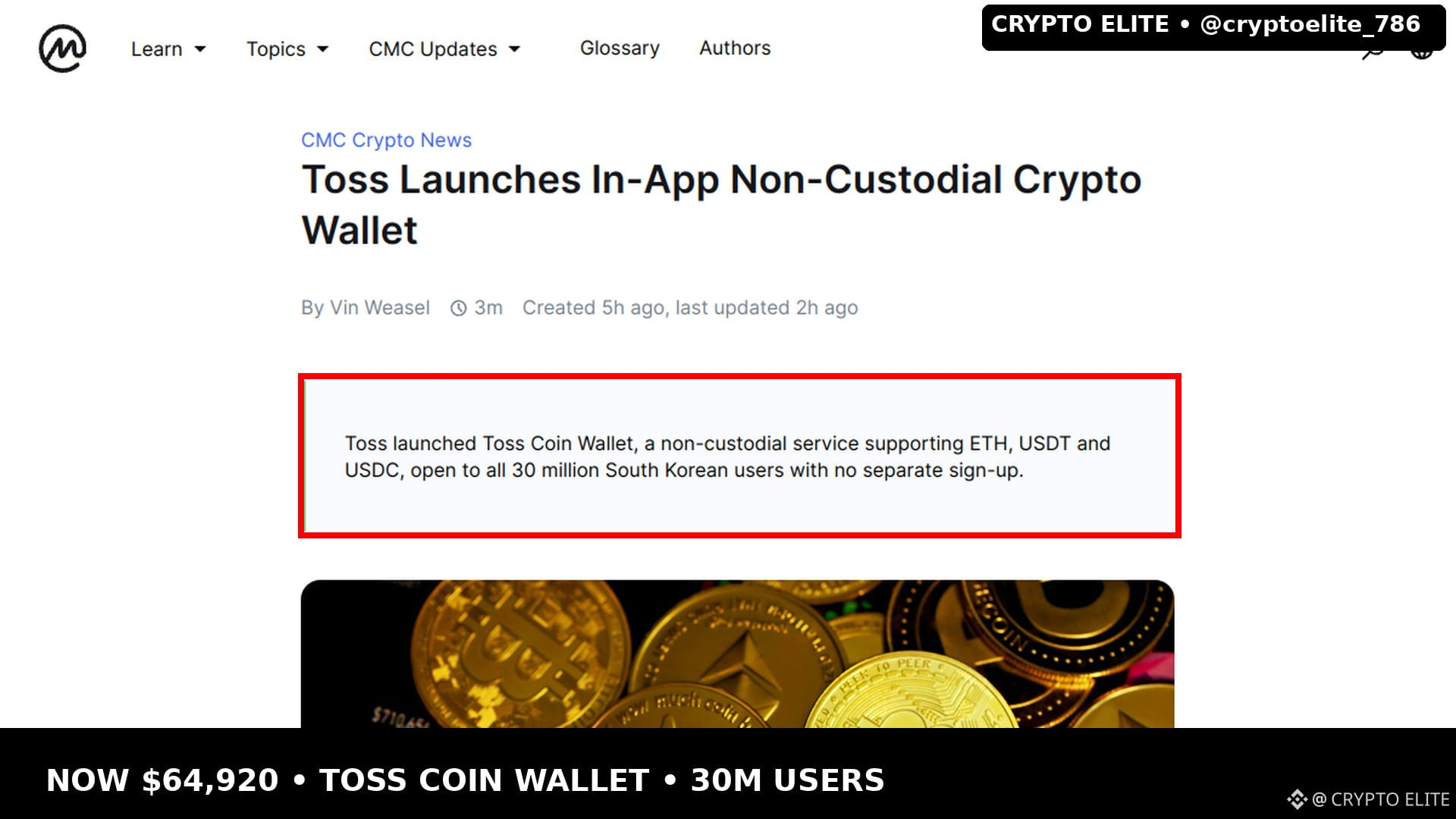
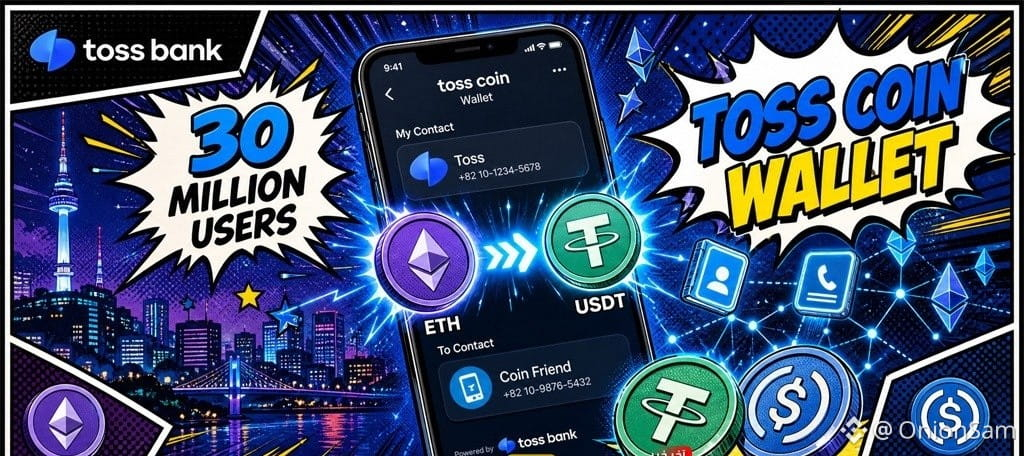
🇰🇷 TOSS BRINGS CRYPTO TO 30 MILLION PEOPLE! 📱💰
South Korea's major fintech app Toss is launching its first crypto wallet — built right into the app.
• Toss Coin Wallet — non-custodial, so Toss never holds your coins
• ETH, USDT and USDC on Ethereum at launch, more assets coming
• Any of Toss's roughly 30 million users can open it — no extra app, no sign-up check
• Send to saved contacts, no long wallet addresses to copy
• No Toss transfer fee — only Ethereum gas
• Next: a VASP licence application is being prepared, plus stablecoin payments on Toss terminals
That puts self-custody in front of one of South Korea's largest finance platforms — Toss has more than 30 million users, about 60% of the country's population.
THE PROOF — check this news yourself here:
https://coinmarketcap.com/academy/article/toss-launches-non-custodial-crypto-wallet
Follow @cryptoelite_786 for the fastest crypto news & updates! 🔔
$ETH $USDT #Toss #CryptoWallet #SouthKorea
39
·
--
🚨 BREAKING: South Korean fintech giant Toss launches a built-in non-custodial crypto wallet for its 30 million users! 🇰🇷📲
Key Highlights:
🔹 Direct Transfers:
Send & receive crypto easily using phone contacts instead of complex wallet addresses.
🔹 Supported Assets:
Currently supports $ETH, $USDT, and $USDC on the Ethereum network.
🔹 Zero Platform Fees:
Toss charges no extra fees (standard network gas fees apply).
🔹 Full Control:
100% non-custodial architecture where users hold their own private keys.
This move marks a massive step toward mainstream stablecoin adoption and everyday crypto payments in South Korea. 🔥
#CryptoNews #Ethereum #Stablecoins #SouthKorea #Web3Adoption
$ETH
{spot}(ETHUSDT)
$USDC
{spot}(USDCUSDT)
🚨 BREAKING: South Korean fintech giant Toss launches a built-in non-custodial crypto wallet for its 30 million users! 🇰🇷📲
Key Highlights:
🔹 Direct Transfers:
Send & receive crypto easily using phone contacts instead of complex wallet addresses.
🔹 Supported Assets:
Currently supports $ETH , $USDT, and $USDC on the Ethereum network.
🔹 Zero Platform Fees:
Toss charges no extra fees (standard network gas fees apply).
🔹 Full Control:
100% non-custodial architecture where users hold their own private keys.
This move marks a massive step toward mainstream stablecoin adoption and everyday crypto payments in South Korea. 🔥
#CryptoNews #Ethereum #Stablecoins #SouthKorea #Web3Adoption
$ETH
$USDC

ETH 4U 🍀
From OnionSam
3
208
SOUTH KOREA MOVES TO RESTRICT HIGH-INTEREST LOANS FOR SOLDIERS!
South Korea is taking action after high-interest borrowing by active-duty soldiers reportedly surged to $17 MILLION.
⚠️ Regulators have raised concerns about soldiers borrowing money to participate in:
₿ Cryptocurrency trading
🎰 Online gambling
💸 High-risk financial activities
The proposed restrictions aim to protect military personnel from excessive debt and financial risks.
Should governments restrict high-interest loans for military personnel?
#SouthKorea #crypto #Bitcoin #Regulation
85

·
--
#KoreaDigitalAssetBasicActFinalDraftExpectedEarlyJanuary🇰🇷 SOUTH KOREA'S DIGITAL ASSET BASIC ACT: A NEW ERA FOR CRYPTO?
South Korea is moving closer to finalizing its Digital Asset Basic Act in early January 2027.
🔍 Key Areas:
1️⃣ Stablecoin issuance and regulation.
2️⃣ Stronger crypto exchange oversight.
3️⃣ Better investor protection.
4️⃣ Clearer rules for digital asset businesses.
5️⃣ Crypto taxation planned for 2029.
📊 My Analysis:
Clear regulations could attract institutional investors and improve trust in the crypto industry. However, excessive restrictions could slow innovation.
The biggest challenge is balancing investor protection with technological growth.
💬 Let's Discuss:
Should stablecoin issuance be limited to banks, or should fintech companies also participate?
Could South Korea become a major regulated crypto market in Asia?
Share your thoughts! 👇
#SouthKorea #CryptoRegulation #Stablecoins #Bitcoin #BinanceSquare

11


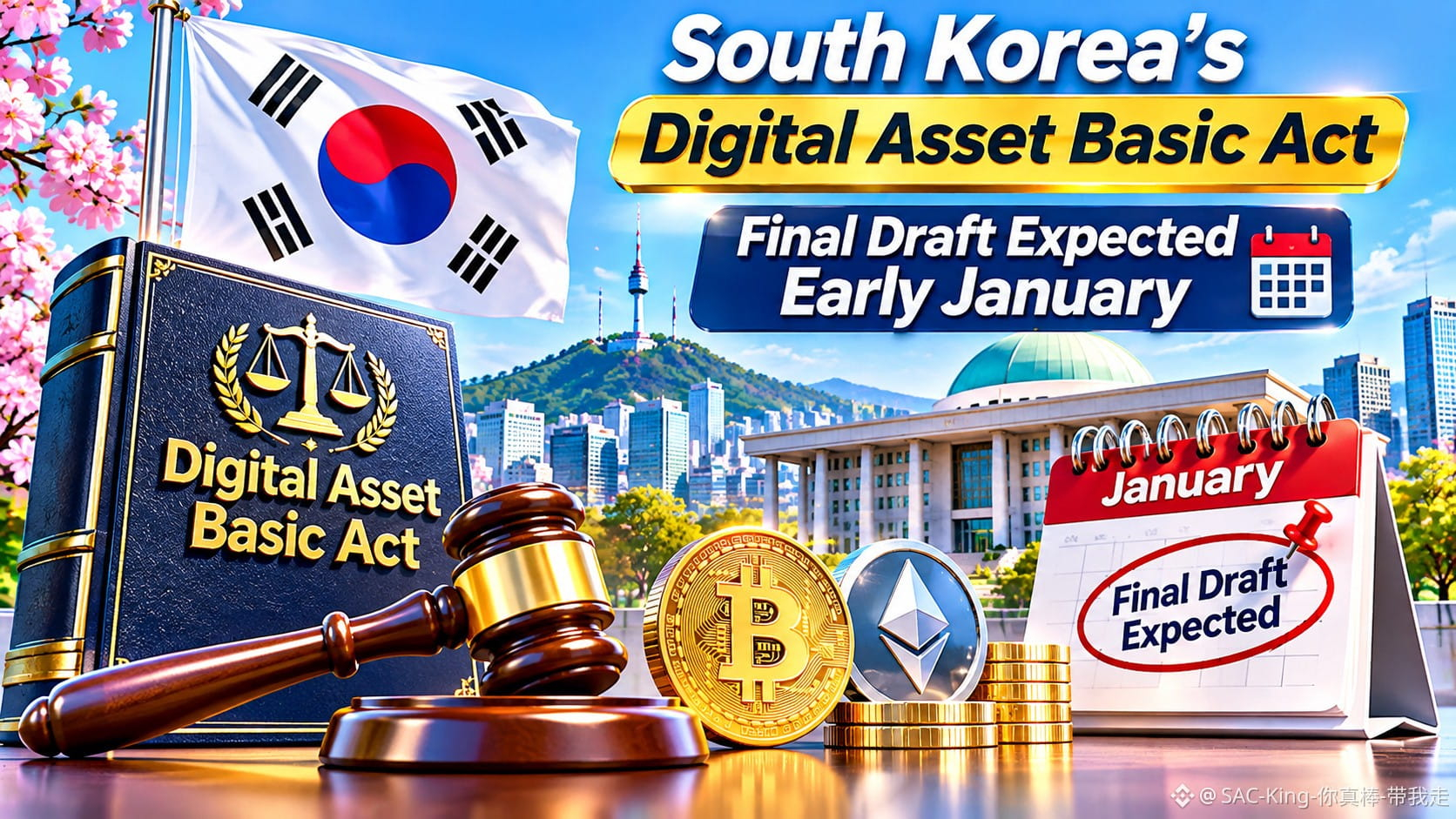
#KoreaDigitalAssetBasicActFinalDraftExpectedEarlyJanuary
🇰🇷 🚀 South Korea's Digital Asset Basic Act: Final Draft Expected in January? 🚀
Imagine waking up to a new regulatory environment where crypto exchanges, stablecoin issuers, and digital asset businesses finally know the rules of the game. For South Korea's crypto industry, that possibility is getting closer.
South Korea's long-awaited Digital Asset Basic Act is approaching a critical stage. The Financial Services Commission (FSC) has reportedly entered final consultations on a comprehensive framework covering the country's digital asset industry.
The proposed legislation is expected to address several major areas:
🔹 Licensing requirements for crypto exchanges and service providers.
🔹 Rules governing stablecoin issuance and distribution.
🔹 Exchange ownership limits and corporate governance.
🔹 Stronger investor protection and market oversight.
One particularly important debate concerns Korean won-backed stablecoins. Regulators are still working through whether issuance should primarily favor bank-led consortiums or allow broader participation from fintech companies.
My Take: This legislation could reshape South Korea's position in the global crypto economy. Clear rules may encourage institutional participation, improve investor confidence, and create opportunities for regulated digital asset businesses.
However, regulation is not automatically bullish. Strict licensing and ownership requirements could increase compliance costs and make market entry harder for smaller companies.
The immediate milestone is the government's expected November bill unveiling, while parliamentary approval remains a separate step. The January timing should not be treated as a confirmed final deadline.
South Korea's next crypto breakthrough may come not from a new token, but from clearer rules.
Will stronger regulation make South Korea a global crypto leader?
Disclaimer: Educational content only. Not financial advice.
#CryptoRegulation #SouthKorea #GrowWithSAC $CBRSB $SOPH $OSMO
232

·
--
Bearish
#KoreaActExpectedJanuary
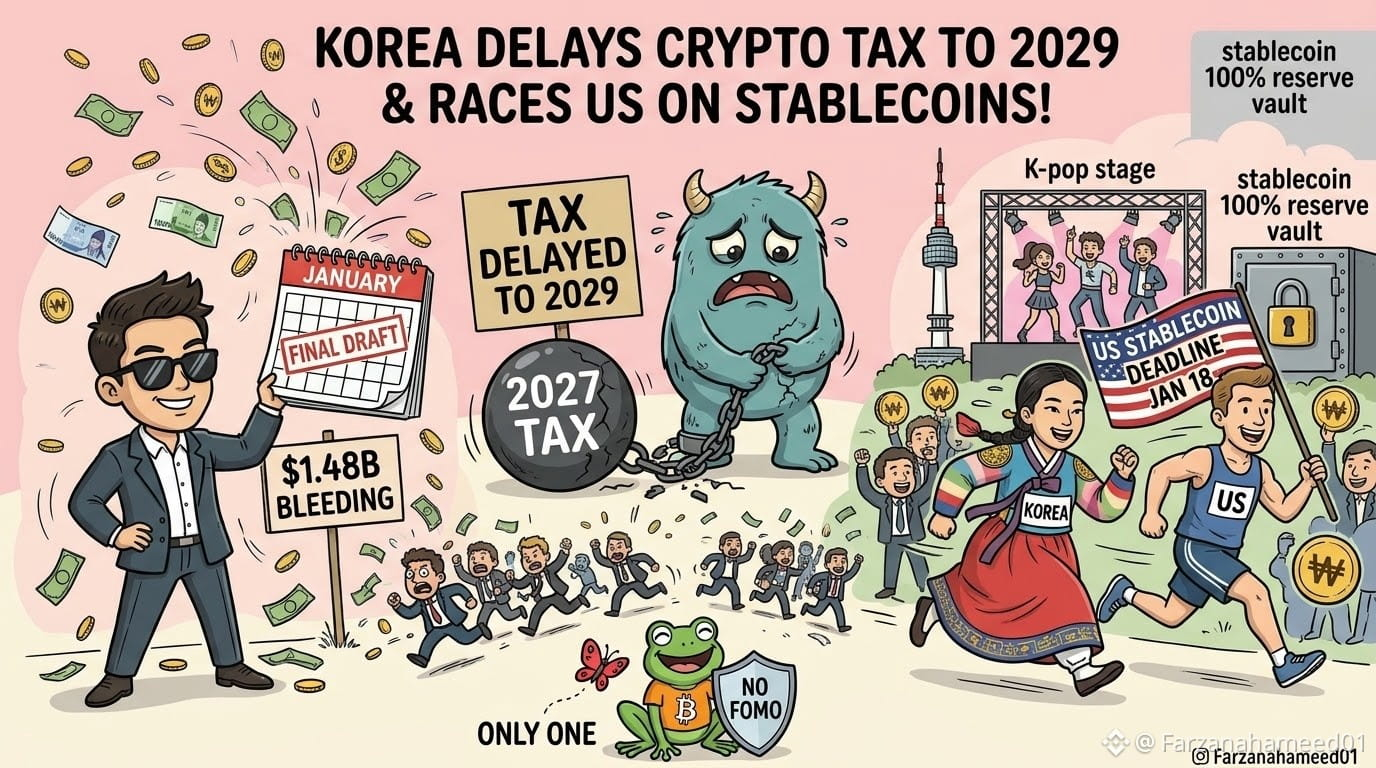
🇰🇷 𝐊𝐎𝐑𝐄𝐀 𝐃𝐄𝐋𝐀𝐘𝐒 𝐂𝐑𝐘𝐏𝐓𝐎 𝐓𝐀𝐗 𝐓𝐎 𝟐𝟎𝟐𝟗 & 𝐑𝐀𝐂𝐄𝐒 𝐔𝐒 𝐎𝐍 𝐒𝐓𝐀𝐁𝐋𝐄𝐂𝐎𝐈𝐍𝐒!
🇰🇷 Good news for Korea's "bought-the-top" crowd: The Oppas are set to finalize a Digital Asset Act early this coming January!
They've also proposed postponing taxes until 2029 and allowing losses to offset gains. While South Korea races to meet the U.S. stablecoin law deadline (January 18), crypto folks around the world are still waiting to see when legal clarity will finally arrive everywhere!
📊 Quick Analysis:
Establishing a presidential committee and tightening stablecoin reserve requirements to 100% could reassure institutional investors and encourage them to put money into the market, reducing the risk of a market collapse!
🎯 What Should Traders Do?
1. Keep an eye on highly liquid Korean coins!
2. Avoid FOMO over short-term news!
3. Always manage your capital carefully!
🛡️ This is not financial advice!
Tell me honestly, will Korea's new law bring clarity, or will we still wait?👇
👉 $SKHYB
👉 $SAMSUNG
👉 $AGT
✨ 𝐅𝐀𝐑𝐙𝐀𝐍𝐀 𝐇𝐀𝐌𝐄𝐄𝐃 𝐎𝐅𝐅𝐈𝐂𝐈𝐀𝐋 • 🦋 ✨
#SouthKorea #CryptoRegulation #Stablecoin #CryptoNews
{spot}(SKHYBUSDT)
{future}(SAMSUNGUSDT)
{future}(AGTUSDT)
#KoreaActExpectedJanuary
🇰🇷 𝐊𝐎𝐑𝐄𝐀 𝐃𝐄𝐋𝐀𝐘𝐒 𝐂𝐑𝐘𝐏𝐓𝐎 𝐓𝐀𝐗 𝐓𝐎 𝟐𝟎𝟐𝟗 & 𝐑𝐀𝐂𝐄𝐒 𝐔𝐒 𝐎𝐍 𝐒𝐓𝐀𝐁𝐋𝐄𝐂𝐎𝐈𝐍𝐒!
🇰🇷 Good news for Korea's "bought-the-top" crowd: The Oppas are set to finalize a Digital Asset Act early this coming January!
They've also proposed postponing taxes until 2029 and allowing losses to offset gains. While South Korea races to meet the U.S. stablecoin law deadline (January 18), crypto folks around the world are still waiting to see when legal clarity will finally arrive everywhere!
📊 Quick Analysis:
Establishing a presidential committee and tightening stablecoin reserve requirements to 100% could reassure institutional investors and encourage them to put money into the market, reducing the risk of a market collapse!
🎯 What Should Traders Do?
1. Keep an eye on highly liquid Korean coins!
2. Avoid FOMO over short-term news!
3. Always manage your capital carefully!
🛡️ This is not financial advice!
Tell me honestly, will Korea's new law bring clarity, or will we still wait?👇
👉 $SKHYB
👉 $SAMSUNG
👉 $AGT
✨ 𝐅𝐀𝐑𝐙𝐀𝐍𝐀 𝐇𝐀𝐌𝐄𝐄𝐃 𝐎𝐅𝐅𝐈𝐂𝐈𝐀𝐋 • 🦋 ✨
#SouthKorea #CryptoRegulation #Stablecoin #CryptoNews
4
4
1.1k

#KoreaDigitalAssetBasicActFinalDraftExpectedEarlyJanuary
🚨 SOUTH KOREA IS GETTING CLOSER TO A MAJOR CRYPTO REGULATORY MILESTONE!
South Korea is expected to complete the final draft of its Digital Asset Basic Act by early January 2027, potentially bringing the country's crypto industry one step closer to a comprehensive regulatory framework.
Here's what makes this important:
The proposed legislation aims to establish clearer rules for the digital asset industry.
Crypto exchanges and service providers could face stronger regulatory requirements.
Investor protection and market transparency are expected to be key priorities.
The framework could help define how digital assets are issued, traded and supervised.
Why Does This Matter?
South Korea is one of Asia's most active cryptocurrency markets. Clearer regulations could attract institutional participation, improve investor confidence and create a more structured environment for crypto businesses.
However, stricter rules could also increase compliance costs for exchanges and other industry players.
👀 The big question: Will South Korea's new crypto law unlock institutional growth, or create another regulatory hurdle for the industry?
#SouthKorea #CryptoRegulation #DigitalAssets
1
37
·
--
#KoreaDigitalAssetBasicActFinalDraftExpectedEarlyJanuary
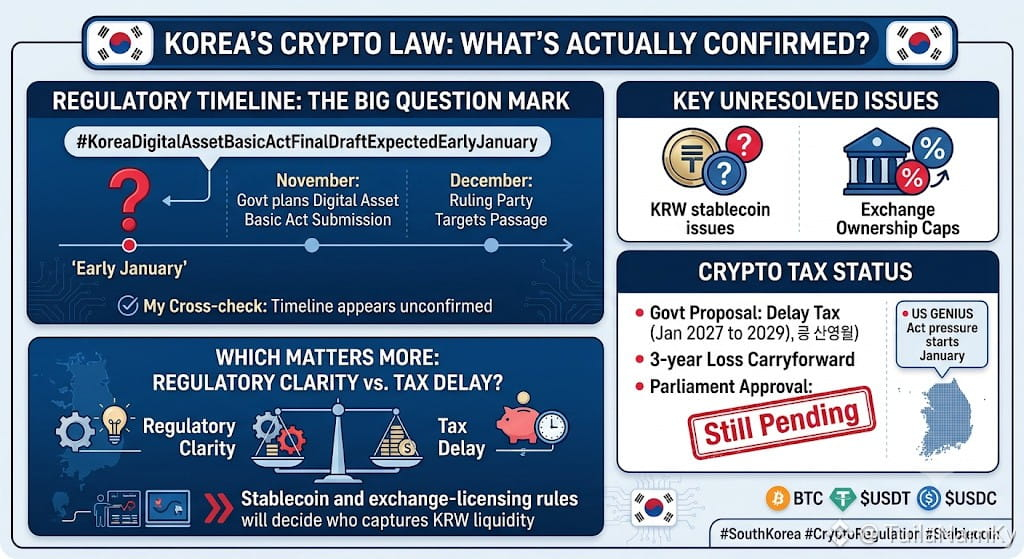
Korea's crypto law: what's actually confirmed? 🇰🇷
The hashtag says "final draft in early January," but my cross-check shows a different timeline.
• Government plans to submit the Digital Asset Basic Act in November; the ruling party targets passage by December
• Still open: exchange ownership caps and who may issue won stablecoins
• Government backs delaying the crypto gains tax from Jan 2027 to 2029, with a 3-year loss carryforward. Parliament must still approve
• US GENIUS Act takes effect in January, adding pressure
My take: the bill is not law, and "early January" looks unconfirmed. A tax delay is short-term relief, but stablecoin and exchange-licensing rules will decide who captures KRW liquidity.
Watch: committee review and the tax amendment before Jan 1.
Does regulatory clarity matter more than the tax delay? 👇
$BTC
{future}(BTCUSDT)
$USDT $USDC
{future}(USDCUSDT)
#SouthKorea #CryptoRegulation #Stablecoin
#KoreaDigitalAssetBasicActFinalDraftExpectedEarlyJanuary
Korea's crypto law: what's actually confirmed? 🇰🇷
The hashtag says "final draft in early January," but my cross-check shows a different timeline.
• Government plans to submit the Digital Asset Basic Act in November; the ruling party targets passage by December
• Still open: exchange ownership caps and who may issue won stablecoins
• Government backs delaying the crypto gains tax from Jan 2027 to 2029, with a 3-year loss carryforward. Parliament must still approve
• US GENIUS Act takes effect in January, adding pressure
My take: the bill is not law, and "early January" looks unconfirmed. A tax delay is short-term relief, but stablecoin and exchange-licensing rules will decide who captures KRW liquidity.
Watch: committee review and the tax amendment before Jan 1.
Does regulatory clarity matter more than the tax delay? 👇
$BTC
$USDT $USDC
#SouthKorea #CryptoRegulation #Stablecoin
1
81
Log in to explore more content
Join global crypto users on Binance Square
⚡️ Get latest and useful information about crypto.
💬 Trusted by the world’s largest crypto exchange.
👍 Discover real insights from verified creators.
Email / Phone number
Trending Topics
1
#CanBTCReboundAfterFallingBelow60K?
0 views
105 Discussing
2
#GlobalStocksFaceLongestLosingStreakSince2023
0 views
268 Discussing
3
#AnthropicPlungesTowardIPOPriceonDay2
0 views
40 Discussing
4
#GaoTengBitcoinETFListsOnHKEX
0 views
261 Discussing
5
#TradFiForBeginners
946,825 views
5,525 Discussing
6
#NvidiaBoardReportedlySplitOverHuang’sReturn
258,674 views
2,405 Discussing
7
#TetherBurns8BillionUSDTInPast20Days
0 views
99 Discussing
8
#BitcoinWalletSignatureFlawExploitableWithinSeconds
0 views
44 Discussing
9
#CanGTA6'sLaunchLiftTTWOShares?
207,868 views
1,709 Discussing
10
#HongKongProposesSFCLicensingForFourVirtualAssetServices
404 views
32 Discussing