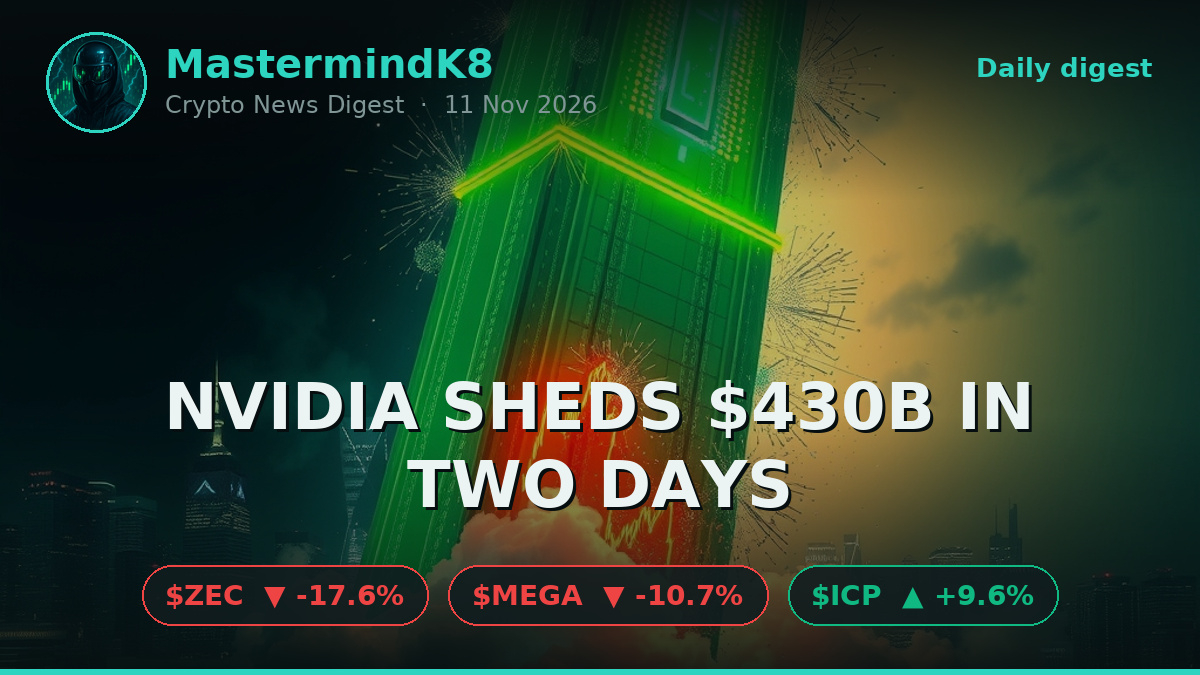
The growing political scrutiny surrounding the world’s leading AI chipmaker has introduced a new layer of uncertainty into the technology industry. The situation involving its CEO, Washington, and concerns surrounding international intelligence connections has raised questions about corporate governance, national security, and the future of centralized AI infrastructure.
Although President Donald Trump has publicly expressed support for the company’s CEO, the controversy has attracted considerable attention from investors. The uncertainty surrounding investigations, political relationships, and international chip restrictions has created another challenge for an industry already facing geopolitical tensions.
Why Does This Matter for the Market?
The biggest concern is not just the possibility of a corporate leadership controversy. It is the broader dependence of the AI industry on a relatively small number of powerful hardware providers. Any political restrictions, supply chain disruptions, or governance concerns involving major technology companies could influence investor confidence and market valuations.
The situation also highlights the vulnerability of centralized AI infrastructure. When a dominant company faces regulatory or political uncertainty, developers and investors may begin exploring alternative computing networks that offer more flexibility and distributed access to resources.
Top Cryptos to Watch
1. RENDER – Decentralized GPU Computing
RENDER is connected to the growing decentralized computing narrative. Its network connects GPU providers with users requiring computing resources for rendering and other demanding workloads. As demand for AI computing continues to expand, decentralized GPU marketplaces could attract greater attention from developers seeking alternatives to traditional infrastructure.
2. AKT – Decentralized Cloud Infrastructure
AKT represents the decentralized cloud-computing narrative. Its ecosystem provides a marketplace for computing resources, potentially offering developers alternative infrastructure for deploying applications and accessing computing capacity. Increasing interest in infrastructure diversification could make this sector more relevant.
3. TAO – Decentralized Artificial Intelligence
TAO is associated with an incentive-driven decentralized machine-learning ecosystem. Its approach focuses on rewarding contributions to artificial intelligence networks. As concerns about centralized control over AI development grow, open and decentralized machine-learning ecosystems could become an increasingly interesting narrative.
4. IO – Distributed GPU Networks
IO focuses on aggregating distributed GPU resources into a computing network. Its concept is particularly relevant to the growing demand for accessible computing power. If developers increasingly explore alternatives to traditional GPU infrastructure, distributed computing networks could receive additional market attention.
The Three Narratives Worth Watching
The first major narrative is DePIN, where decentralized physical infrastructure networks aim to connect distributed computing resources and make them accessible through blockchain-based systems.
The second is decentralized AI, where open machine-learning ecosystems encourage participation, innovation, and competition beyond traditional centralized technology companies.
The third is infrastructure diversification. The growing dependence on centralized hardware providers raises questions about resilience, accessibility, and the potential value of alternative computing networks.
What Could Happen Next?
Investors should pay attention to the direction of political investigations, international semiconductor restrictions, AI infrastructure demand, and actual adoption of decentralized computing networks. Increasing trading activity alone is not enough; sustainable network usage, developer participation, and real demand will be more meaningful indicators.
Final Thoughts
The controversy surrounding Washington and the AI hardware industry highlights an important question: What happens when a major part of the global AI ecosystem depends on a handful of centralized companies?
Decentralized computing and artificial intelligence networks could benefit from growing interest in alternative infrastructure. However, this does not mean they can immediately replace established hardware providers.
RENDER, AKT, TAO, and IO represent four different approaches to this emerging opportunity. Their long-term relevance will depend on real adoption, technological development, and the ability to solve practical infrastructure challenges.
Perhaps the next major opportunity in artificial intelligence will not come only from building more powerful hardware, but also from changing how computing power is distributed, accessed, and monetized.
$RENDER $IO $TAO #PoliticsVsCompany #CryptoMoves #CryptoNews #Trending