

#brasil
brasil
1.9M views
1,403 Discussing
Hot
Latest

·
--

Article
🚀 Prohibition of Bets in Brazil: Will This Real Money Actually Migrate to the Crypto Market? 💭With the recent statements by the federal government and measures aimed at restricting fixed-odds betting (the popular bets), a recurring question has emerged among investors and digital asset enthusiasts: could limiting these bets redirect this financial flow to the cryptocurrency market? 💸
Although at first glance it may seem tempting to imagine liquidity moving into the Web3 ecosystem, a deeper analysis of consumer behavior and the political landscape suggests a very different path. 🤔
🚀 Prohibition of Bets in Brazil: Will This Real Money Actually Migrate to the Crypto Market? 💭
With the recent statements by the federal government and measures aimed at restricting fixed-odds betting (the popular bets), a recurring question has emerged among investors and digital asset enthusiasts: could limiting these bets redirect this financial flow to the cryptocurrency market? 💸
Although at first glance it may seem tempting to imagine liquidity moving into the Web3 ecosystem, a deeper analysis of consumer behavior and the political landscape suggests a very different path. 🤔
Although at first glance it may seem tempting to imagine liquidity moving into the Web3 ecosystem, a deeper analysis of consumer behavior and the political landscape suggests a very different path. 🤔
3
874
·
--
Article
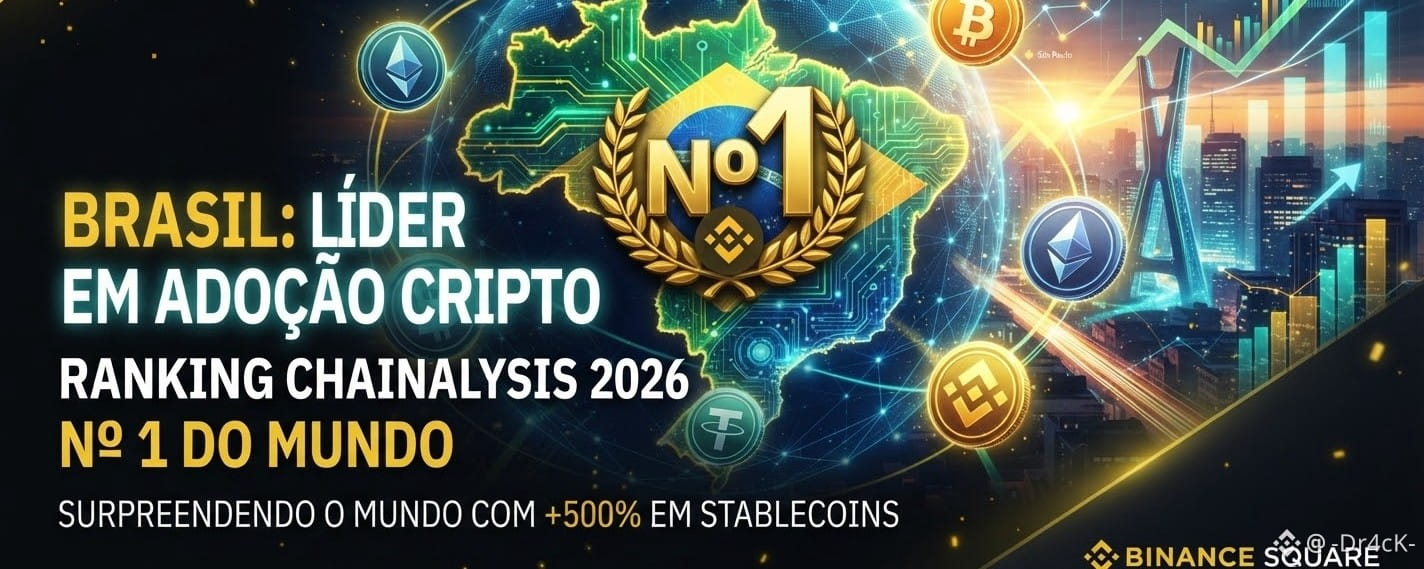
🇧🇷 BRAZIL IS THE #1 COUNTRY IN THE WORLD FOR CRYPTO ADOPTION! 🚀The new global Chainalysis report (2026) has just been released, and Brazil has reached the top of the global ranking for crypto adoption, surpassing powerhouses like the United States! 🌍🔥
What’s driving this historic turnaround in the country? We’ve picked out the main points:
Stablecoin boom: The use of dollar-linked assets grew absurdly in the country (with impressive spikes of nearly 500%), showing that Brazilians are using crypto for everyday life and to protect against inflation.
🇧🇷 BRAZIL IS THE #1 COUNTRY IN THE WORLD FOR CRYPTO ADOPTION! 🚀
The new global Chainalysis report (2026) has just been released, and Brazil has reached the top of the global ranking for crypto adoption, surpassing powerhouses like the United States! 🌍🔥
What’s driving this historic turnaround in the country? We’ve picked out the main points:
Stablecoin boom: The use of dollar-linked assets grew absurdly in the country (with impressive spikes of nearly 500%), showing that Brazilians are using crypto for everyday life and to protect against inflation.
What’s driving this historic turnaround in the country? We’ve picked out the main points:
Stablecoin boom: The use of dollar-linked assets grew absurdly in the country (with impressive spikes of nearly 500%), showing that Brazilians are using crypto for everyday life and to protect against inflation.
Yelena Riechman Brol:
temos que derrubar os impostos sobre crypto. deixar nosso povo prosperar em paz.
3
8
4.7k

·
--
Bullish
⚠️😱👩🏫...👨🎓 𝐁𝐑𝐀𝐒𝐈𝐋 𝐇𝐀𝐒 𝐀 𝐆𝐑𝐀𝐓𝐔𝐈𝐓𝐎𝐔𝐒 𝐂𝐎𝐔𝐑𝐒𝐄 𝐓𝐎 𝐇𝐄𝐋𝐏 𝐏𝐔𝐓 𝐊𝐍𝐎𝐖𝐋𝐄𝐃𝐆𝐄 𝐎𝐍 𝐂𝐑𝐘𝐏𝐓𝐎 𝐀𝐒𝐒𝐄𝐓 𝐓𝐑𝐀𝐂𝐈𝐍𝐆𝐒 ˗ˋˏ📚ˎˊ˗
The Brazilian government has just made blockchain investigation accessible to anyone.
Through the Senad, the Ministry of Justice and Public Security has launched the course:
“Virtual Assets in Criminal Investigations”
The training is 👇
✅ 100% free
✅ 30 hours
✅ Online
✅ Open to the public
✅ With an Enap certificate
And it’s not just an introduction to Bitcoin▸ $BTC .
The Ensina Quatro Program Covers Four Main Areas:
🔹 Fundamentals of cryptoassets and blockchain
🔹 Brazilian and international legislation
🔹 Identifying the use of virtual assets in investigations
🔹 Search, seizure, custody/administration, and disposal procedures for cryptoassets.
👉 That Is▹ The Brazilian government is turning on-chain analysis into accessible knowledge—even outside law enforcement.
The initiative comes at a time when Bitcoin, stablecoins, and other cryptocurrencies are increasingly showing up in financial investigations and asset recovery proceedings. The MJSP itself states that the training aims to expand knowledge about the use of virtual assets in criminal investigations.
The student can start immediately after enrollment and has 30 days to complete the content.
{spot}(BTCUSDT)
💬Are we entering an era in which knowing how to trace a blockchain transaction will be as important as understanding a bank account?
#Bitcoin❗ #BlockchainNews #brasil
⚠️😱👩🏫...👨🎓 𝐁𝐑𝐀𝐒𝐈𝐋 𝐇𝐀𝐒 𝐀 𝐆𝐑𝐀𝐓𝐔𝐈𝐓𝐎𝐔𝐒 𝐂𝐎𝐔𝐑𝐒𝐄 𝐓𝐎 𝐇𝐄𝐋𝐏 𝐏𝐔𝐓 𝐊𝐍𝐎𝐖𝐋𝐄𝐃𝐆𝐄 𝐎𝐍 𝐂𝐑𝐘𝐏𝐓𝐎 𝐀𝐒𝐒𝐄𝐓 𝐓𝐑𝐀𝐂𝐈𝐍𝐆𝐒 ˗ˋˏ📚ˎˊ˗
The Brazilian government has just made blockchain investigation accessible to anyone.
Through the Senad, the Ministry of Justice and Public Security has launched the course:
“Virtual Assets in Criminal Investigations”
The training is 👇
✅ 100% free
✅ 30 hours
✅ Online
✅ Open to the public
✅ With an Enap certificate
And it’s not just an introduction to Bitcoin▸ $BTC .
The Ensina Quatro Program Covers Four Main Areas:
🔹 Fundamentals of cryptoassets and blockchain
🔹 Brazilian and international legislation
🔹 Identifying the use of virtual assets in investigations
🔹 Search, seizure, custody/administration, and disposal procedures for cryptoassets.
👉 That Is▹ The Brazilian government is turning on-chain analysis into accessible knowledge—even outside law enforcement.
The initiative comes at a time when Bitcoin, stablecoins, and other cryptocurrencies are increasingly showing up in financial investigations and asset recovery proceedings. The MJSP itself states that the training aims to expand knowledge about the use of virtual assets in criminal investigations.
The student can start immediately after enrollment and has 30 days to complete the content.
💬Are we entering an era in which knowing how to trace a blockchain transaction will be as important as understanding a bank account?
#Bitcoin❗ #BlockchainNews #brasil
The Brazilian government has just made blockchain investigation accessible to anyone.
Through the Senad, the Ministry of Justice and Public Security has launched the course:
“Virtual Assets in Criminal Investigations”
The training is 👇
✅ 100% free
✅ 30 hours
✅ Online
✅ Open to the public
✅ With an Enap certificate
And it’s not just an introduction to Bitcoin▸ $BTC .
The Ensina Quatro Program Covers Four Main Areas:
🔹 Fundamentals of cryptoassets and blockchain
🔹 Brazilian and international legislation
🔹 Identifying the use of virtual assets in investigations
🔹 Search, seizure, custody/administration, and disposal procedures for cryptoassets.
👉 That Is▹ The Brazilian government is turning on-chain analysis into accessible knowledge—even outside law enforcement.
The initiative comes at a time when Bitcoin, stablecoins, and other cryptocurrencies are increasingly showing up in financial investigations and asset recovery proceedings. The MJSP itself states that the training aims to expand knowledge about the use of virtual assets in criminal investigations.
The student can start immediately after enrollment and has 30 days to complete the content.
💬Are we entering an era in which knowing how to trace a blockchain transaction will be as important as understanding a bank account?
#Bitcoin❗ #BlockchainNews #brasil

Bull Runner Brazil:
onde encontro esse curso ?? qual a instituiçãom
4
3
323

🇧🇷 Brazil toughens surveillance on self-custody wallets. The Central Bank will require reporting transfers of cryptocurrencies to or from these addresses of USD 10,000 or more.
#banco #Central #brasil #wallets #Autocustodia $BTC
🇧🇷 Brazil toughens surveillance on self-custody wallets. The Central Bank will require reporting transfers of cryptocurrencies to or from these addresses of USD 10,000 or more.
#banco #Central #brasil #wallets #Autocustodia $BTC
#banco #Central #brasil #wallets #Autocustodia $BTC
66

·
--
I believe that Brazil is acting as a fulcrum at this moment, and after the elections, the crypto market will boom, because many investors both within and outside Brazil are keeping an eye on B3.
Take the opportunity to accumulate crypto.
#criptomoeda
#bolsadevalores
#brasil
I believe that Brazil is acting as a fulcrum at this moment, and after the elections, the crypto market will boom, because many investors both within and outside Brazil are keeping an eye on B3.
Take the opportunity to accumulate crypto.
#criptomoeda
#bolsadevalores
#brasil
Take the opportunity to accumulate crypto.
#criptomoeda
#bolsadevalores
#brasil
270

·
--
Ministry of Justice launches Bitcoin tracing course for BraziliansTraining from the Ministry of Justice teaches search, seizure, and disposal of cryptoassets for free, and anyone can enroll.
The Ministry of Justice and Public Security (MJSP) launched this Thursday (24) a free course on tracing cryptocurrencies in criminal investigations.
Titled Virtual Assets in Criminal Investigations and available on the Escola Virtual platform of Enap, the course includes 30 hours divided into four modules.
The MJSP signs off on the content, and Enap issues the certificate. However, although the course targets security agents, investigators, members of the Judiciary, and the Public Prosecutor’s Office, the official page makes it clear that anyone can enroll.
Ministry of Justice launches Bitcoin tracing course for Brazilians
Training from the Ministry of Justice teaches search, seizure, and disposal of cryptoassets for free, and anyone can enroll.
The Ministry of Justice and Public Security (MJSP) launched this Thursday (24) a free course on tracing cryptocurrencies in criminal investigations.
Titled Virtual Assets in Criminal Investigations and available on the Escola Virtual platform of Enap, the course includes 30 hours divided into four modules.
The MJSP signs off on the content, and Enap issues the certificate. However, although the course targets security agents, investigators, members of the Judiciary, and the Public Prosecutor’s Office, the official page makes it clear that anyone can enroll.
The Ministry of Justice and Public Security (MJSP) launched this Thursday (24) a free course on tracing cryptocurrencies in criminal investigations.
Titled Virtual Assets in Criminal Investigations and available on the Escola Virtual platform of Enap, the course includes 30 hours divided into four modules.
The MJSP signs off on the content, and Enap issues the certificate. However, although the course targets security agents, investigators, members of the Judiciary, and the Public Prosecutor’s Office, the official page makes it clear that anyone can enroll.
112
·
--
Bullish
⚡🚀STABLECOINS GROWTH IS HARD TO IGNORE IN BRAZIL—NO SILVER BULLET, RISK DOES NOT SUBSIDE, AND THE MOMENTUM CONTINUES
The growth of stablecoins in Brazil is getting harder to ignore.
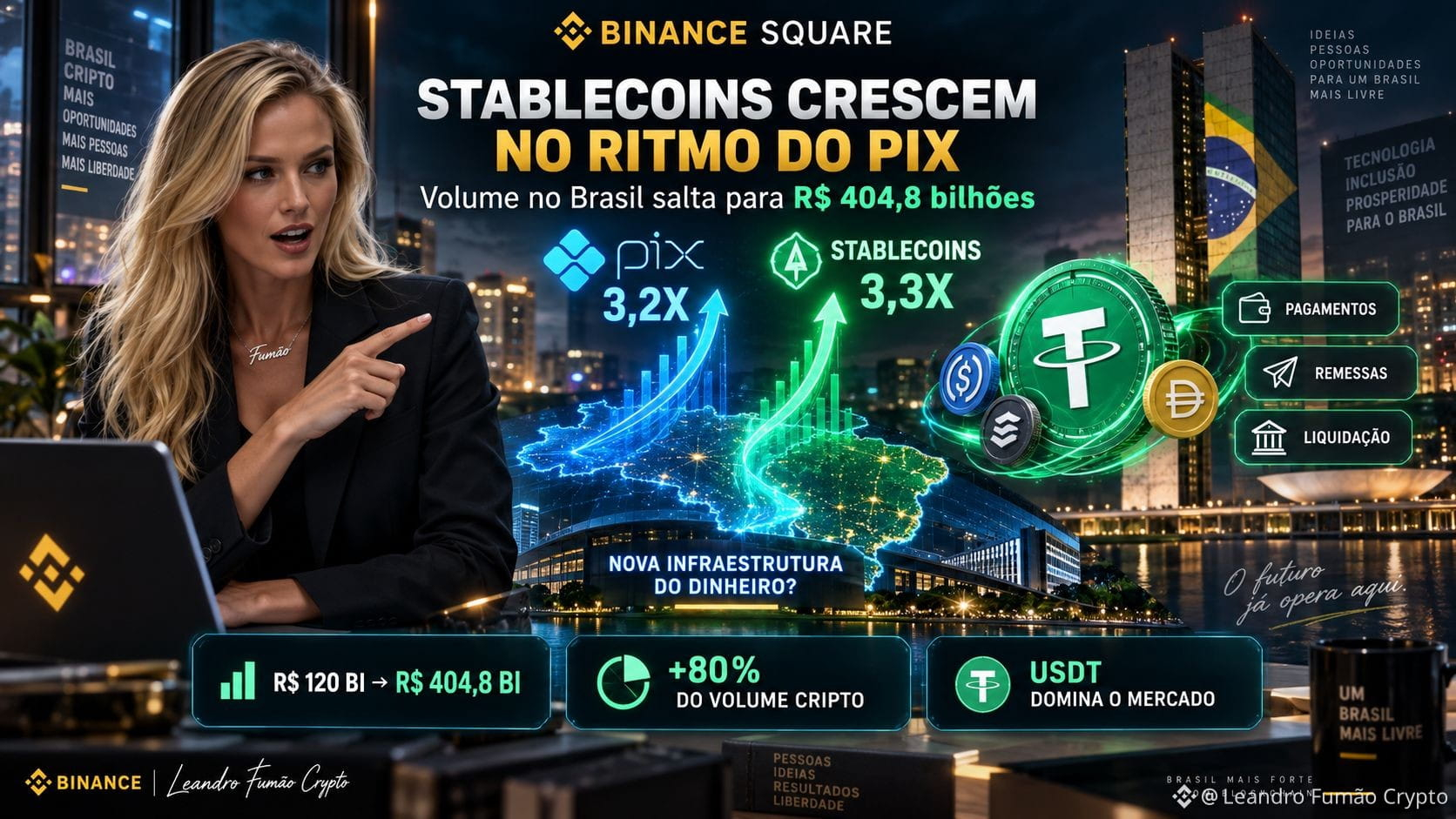
From 2022 to 2025, the volume moved with stablecoins increased from R$ 120 billion to R$ 404.8 billion—about a 3.3x rise.
In the same period, Pix went from R$ 10.9 trillion to R$ 35.3 trillion—an approximately 3.2x increase.
🔥 The most striking data is the composition of the crypto market.
In 2019, stablecoins accounted for only 3% of the volume reported in Brazil.
Today, they already exceed 80%.
And according to Fabrício Tota from Mercado Bitcoin, about 90% of that volume is concentrated in USDT—and also in $USDC .
That helps explain an important shift:
stablecoins are no longer just a trading tool.
Now they are advancing in:
▸Payments
▸International remittances
▸Financial settlement
▸Tokenization of assets
During DAC 2026, industry executives argued that the next stage depends increasingly on integration with banks, PSPs, licenses, and compliance—not just the blockchain.
👀 And there’s an even bigger thesis
John Delaney, from Crown, estimates that if about 8% of the reais in circulation migrate to stablecoins over the next ten years, the market could reach approximately R$ 1 trillion in real stablecoins. This is a projection, not a value that already exists.
{spot}(USDCUSDT)
🔥Stablecoins will be only one more crypto category… or will they become a new layer of Brazil’s payments system?
#USDT🔥🔥🔥 #brasil #usd #Criptomonedas
⚡🚀STABLECOINS GROWTH IS HARD TO IGNORE IN BRAZIL—NO SILVER BULLET, RISK DOES NOT SUBSIDE, AND THE MOMENTUM CONTINUES
The growth of stablecoins in Brazil is getting harder to ignore.
From 2022 to 2025, the volume moved with stablecoins increased from R$ 120 billion to R$ 404.8 billion—about a 3.3x rise.
In the same period, Pix went from R$ 10.9 trillion to R$ 35.3 trillion—an approximately 3.2x increase.
🔥 The most striking data is the composition of the crypto market.
In 2019, stablecoins accounted for only 3% of the volume reported in Brazil.
Today, they already exceed 80%.
And according to Fabrício Tota from Mercado Bitcoin, about 90% of that volume is concentrated in USDT—and also in $USDC .
That helps explain an important shift:
stablecoins are no longer just a trading tool.
Now they are advancing in:
▸Payments
▸International remittances
▸Financial settlement
▸Tokenization of assets
During DAC 2026, industry executives argued that the next stage depends increasingly on integration with banks, PSPs, licenses, and compliance—not just the blockchain.
👀 And there’s an even bigger thesis
John Delaney, from Crown, estimates that if about 8% of the reais in circulation migrate to stablecoins over the next ten years, the market could reach approximately R$ 1 trillion in real stablecoins. This is a projection, not a value that already exists.
🔥Stablecoins will be only one more crypto category… or will they become a new layer of Brazil’s payments system?
#USDT🔥🔥🔥 #brasil #usd #Criptomonedas
The growth of stablecoins in Brazil is getting harder to ignore.
From 2022 to 2025, the volume moved with stablecoins increased from R$ 120 billion to R$ 404.8 billion—about a 3.3x rise.
In the same period, Pix went from R$ 10.9 trillion to R$ 35.3 trillion—an approximately 3.2x increase.
🔥 The most striking data is the composition of the crypto market.
In 2019, stablecoins accounted for only 3% of the volume reported in Brazil.
Today, they already exceed 80%.
And according to Fabrício Tota from Mercado Bitcoin, about 90% of that volume is concentrated in USDT—and also in $USDC .
That helps explain an important shift:
stablecoins are no longer just a trading tool.
Now they are advancing in:
▸Payments
▸International remittances
▸Financial settlement
▸Tokenization of assets
During DAC 2026, industry executives argued that the next stage depends increasingly on integration with banks, PSPs, licenses, and compliance—not just the blockchain.
👀 And there’s an even bigger thesis
John Delaney, from Crown, estimates that if about 8% of the reais in circulation migrate to stablecoins over the next ten years, the market could reach approximately R$ 1 trillion in real stablecoins. This is a projection, not a value that already exists.
🔥Stablecoins will be only one more crypto category… or will they become a new layer of Brazil’s payments system?
#USDT🔥🔥🔥 #brasil #usd #Criptomonedas
Barbudo Milionário:
Stablecoins são o futudo
2
2
341
·
--
Onda Finance is the first crypto company in the formal process with the Central BankOnda Finance appeared this Monday (21) in Communiqué No. 45,986 from the Central Bank. The document identifies the company as a Virtual Assets Service Provider Company (SPSAV) “in the process of authorization.” The fintech operates with international payments, settlement in stablecoins, and crypto custody.
This is not a granted license. The communiqué opens a 15-day period for public objections to the appointed directors. Even so, it is the first public sign of an SPSAV advancing in the process, 39 days before the sector’s final deadline.
Onda Finance is the first crypto company in the formal process with the Central Bank
Onda Finance appeared this Monday (21) in Communiqué No. 45,986 from the Central Bank. The document identifies the company as a Virtual Assets Service Provider Company (SPSAV) “in the process of authorization.” The fintech operates with international payments, settlement in stablecoins, and crypto custody.
This is not a granted license. The communiqué opens a 15-day period for public objections to the appointed directors. Even so, it is the first public sign of an SPSAV advancing in the process, 39 days before the sector’s final deadline.
This is not a granted license. The communiqué opens a 15-day period for public objections to the appointed directors. Even so, it is the first public sign of an SPSAV advancing in the process, 39 days before the sector’s final deadline.
2
275

Article
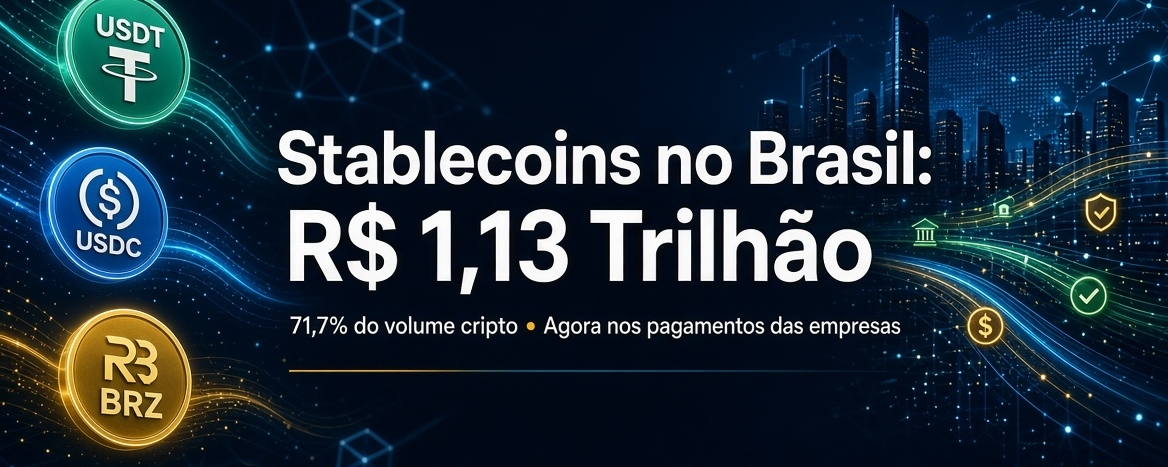
Stablecoins moved R$ 1.13 trillion in Brazil and are now reaching company paymentsBetween August 2019 and December 2025, Brazilians reported R$ 1.13 trillion in transactions involving stablecoins, accounting for 71.7% of all crypto volume reported to the Federal Revenue Service (R$ 1.58 trillion). In more recent years, their monthly share has remained above 80%. Now, these coins are starting to move out of investors’ universe and into companies’ cash registers. (BPMoney) (BPMoney)
What this number shows
These are buy and sell transactions that were reported, not payments. Most of the volume comes from people who use stablecoins to hedge against exchange-rate and dollar risk. USDT, which is tied to the dollar, makes up 88.7% of stablecoin deals in the country, followed by USDC (7.1%) and BRZ (3.4%). (BPMoney)
Stablecoins moved R$ 1.13 trillion in Brazil and are now reaching company payments
Between August 2019 and December 2025, Brazilians reported R$ 1.13 trillion in transactions involving stablecoins, accounting for 71.7% of all crypto volume reported to the Federal Revenue Service (R$ 1.58 trillion). In more recent years, their monthly share has remained above 80%. Now, these coins are starting to move out of investors’ universe and into companies’ cash registers. (BPMoney) (BPMoney)
What this number shows
These are buy and sell transactions that were reported, not payments. Most of the volume comes from people who use stablecoins to hedge against exchange-rate and dollar risk. USDT, which is tied to the dollar, makes up 88.7% of stablecoin deals in the country, followed by USDC (7.1%) and BRZ (3.4%). (BPMoney)
What this number shows
These are buy and sell transactions that were reported, not payments. Most of the volume comes from people who use stablecoins to hedge against exchange-rate and dollar risk. USDT, which is tied to the dollar, makes up 88.7% of stablecoin deals in the country, followed by USDC (7.1%) and BRZ (3.4%). (BPMoney)
1
658
·
--
Bullish
Verified
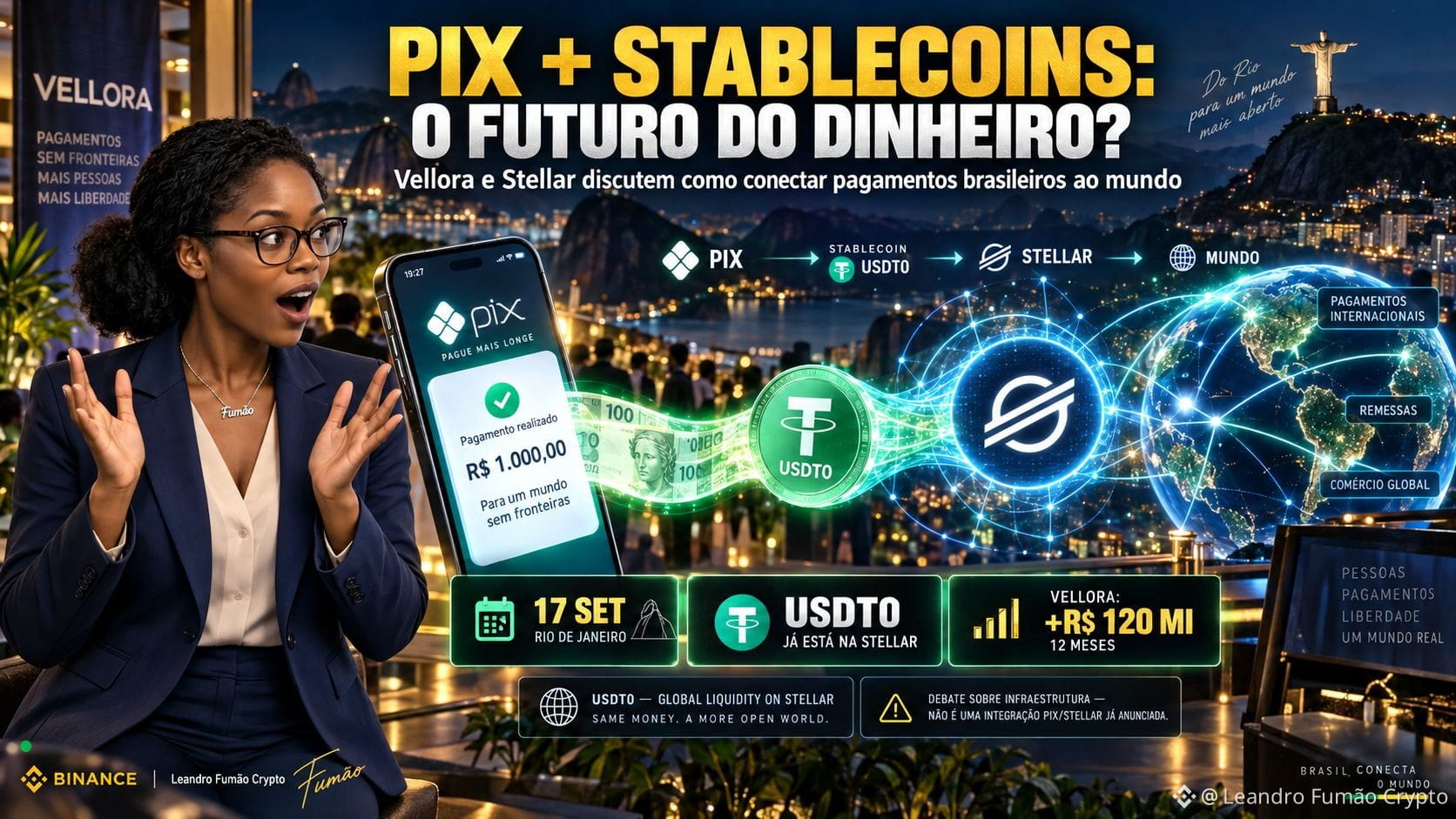
👀📰⋙ PIX + STABLECOINS » BRAZIL IS FACING THE NEXT EVOLUTION OF MONEY❓
This Thursday, September 17, Rio de Janeiro will host the event “Stablecoins & Payments ➢ The Future of Virtual Assets,” bringing together Vellora, the Stellar community, and companies in the sector to discuss how stablecoins can transform payments, remittances, and international trade.
🔥 And the timing couldn’t be more interesting.
USDT0 has just arrived on Stellar▸ $XLM ▸, connecting the network to USDT’s global liquidity through a unified offering across different blockchains. Stellar states that this infrastructure enables transfers with fees below a cent and settlement in just a few seconds.
The event will have three main fronts:
USDT0 + STELLAR
STABLECOINS AND THEIR APPLICATIONS
FROM PIX TO THE WORLD
The last point draws particular attention.
The debate will focus on how an infrastructure already extremely present in Brazilian everyday life, like Pix, can coexist with blockchain networks used for international payments, remittances, and settlement of digital assets. This doesn’t mean there is an official Pix–Stellar integration announced—rather, that is precisely one of the possibilities and challenges that will be discussed.
👀 Vellora states that its platform has moved more than R$ 120 million over the last 12 months and has more than 30,000 active users, giving the event a direct connection to users who already move between reais and digital assets.
Meanwhile, the arrival of USDT0 brings to Stellar▸ $XLM ▸ infrastructure linked to over US$ 180 billion in USDT liquidity and available across dozens of networks.
🔥 The question that remains is bigger than a blockchain:
in the next leap of payments, will Pix go global—or will stablecoins bring the world closer to Pix?
{spot}(ZECUSDT)
⚠️ Remember: This is an informational analysis. Always do your own research before investing.
#USDT #XLM #brasil
👀📰⋙ PIX + STABLECOINS » BRAZIL IS FACING THE NEXT EVOLUTION OF MONEY❓
This Thursday, September 17, Rio de Janeiro will host the event “Stablecoins & Payments ➢ The Future of Virtual Assets,” bringing together Vellora, the Stellar community, and companies in the sector to discuss how stablecoins can transform payments, remittances, and international trade.
🔥 And the timing couldn’t be more interesting.
USDT0 has just arrived on Stellar▸ $XLM ▸, connecting the network to USDT’s global liquidity through a unified offering across different blockchains. Stellar states that this infrastructure enables transfers with fees below a cent and settlement in just a few seconds.
The event will have three main fronts:
USDT0 + STELLAR
STABLECOINS AND THEIR APPLICATIONS
FROM PIX TO THE WORLD
The last point draws particular attention.
The debate will focus on how an infrastructure already extremely present in Brazilian everyday life, like Pix, can coexist with blockchain networks used for international payments, remittances, and settlement of digital assets. This doesn’t mean there is an official Pix–Stellar integration announced—rather, that is precisely one of the possibilities and challenges that will be discussed.
👀 Vellora states that its platform has moved more than R$ 120 million over the last 12 months and has more than 30,000 active users, giving the event a direct connection to users who already move between reais and digital assets.
Meanwhile, the arrival of USDT0 brings to Stellar▸ $XLM ▸ infrastructure linked to over US$ 180 billion in USDT liquidity and available across dozens of networks.
🔥 The question that remains is bigger than a blockchain:
in the next leap of payments, will Pix go global—or will stablecoins bring the world closer to Pix?
⚠️ Remember: This is an informational analysis. Always do your own research before investing.
#USDT #XLM #brasil
This Thursday, September 17, Rio de Janeiro will host the event “Stablecoins & Payments ➢ The Future of Virtual Assets,” bringing together Vellora, the Stellar community, and companies in the sector to discuss how stablecoins can transform payments, remittances, and international trade.
🔥 And the timing couldn’t be more interesting.
USDT0 has just arrived on Stellar▸ $XLM ▸, connecting the network to USDT’s global liquidity through a unified offering across different blockchains. Stellar states that this infrastructure enables transfers with fees below a cent and settlement in just a few seconds.
The event will have three main fronts:
USDT0 + STELLAR
STABLECOINS AND THEIR APPLICATIONS
FROM PIX TO THE WORLD
The last point draws particular attention.
The debate will focus on how an infrastructure already extremely present in Brazilian everyday life, like Pix, can coexist with blockchain networks used for international payments, remittances, and settlement of digital assets. This doesn’t mean there is an official Pix–Stellar integration announced—rather, that is precisely one of the possibilities and challenges that will be discussed.
👀 Vellora states that its platform has moved more than R$ 120 million over the last 12 months and has more than 30,000 active users, giving the event a direct connection to users who already move between reais and digital assets.
Meanwhile, the arrival of USDT0 brings to Stellar▸ $XLM ▸ infrastructure linked to over US$ 180 billion in USDT liquidity and available across dozens of networks.
🔥 The question that remains is bigger than a blockchain:
in the next leap of payments, will Pix go global—or will stablecoins bring the world closer to Pix?
⚠️ Remember: This is an informational analysis. Always do your own research before investing.
#USDT #XLM #brasil
2
812
·
--
Crypto.com will close BRL account in BrazilCrypto.com announced that it will permanently close the BRL (Brazilian real) account offered to users in Brazil. According to the communication sent to customers, the change will take effect on October 25, 2026, and will affect deposits, withdrawals, orders, and other operations linked to the balance in Brazilian currency.
The measure represents an important change in the platform’s operations in Brazil. However, Crypto.com has not announced the complete shutdown of its operations in the country. Cryptocurrency trading and other services will continue to be available, although users will have an contractual relationship with a company registered in Dubai.
Crypto.com will close BRL account in Brazil
Crypto.com announced that it will permanently close the BRL (Brazilian real) account offered to users in Brazil. According to the communication sent to customers, the change will take effect on October 25, 2026, and will affect deposits, withdrawals, orders, and other operations linked to the balance in Brazilian currency.
The measure represents an important change in the platform’s operations in Brazil. However, Crypto.com has not announced the complete shutdown of its operations in the country. Cryptocurrency trading and other services will continue to be available, although users will have an contractual relationship with a company registered in Dubai.
The measure represents an important change in the platform’s operations in Brazil. However, Crypto.com has not announced the complete shutdown of its operations in the country. Cryptocurrency trading and other services will continue to be available, although users will have an contractual relationship with a company registered in Dubai.
127
·
--
Bullish
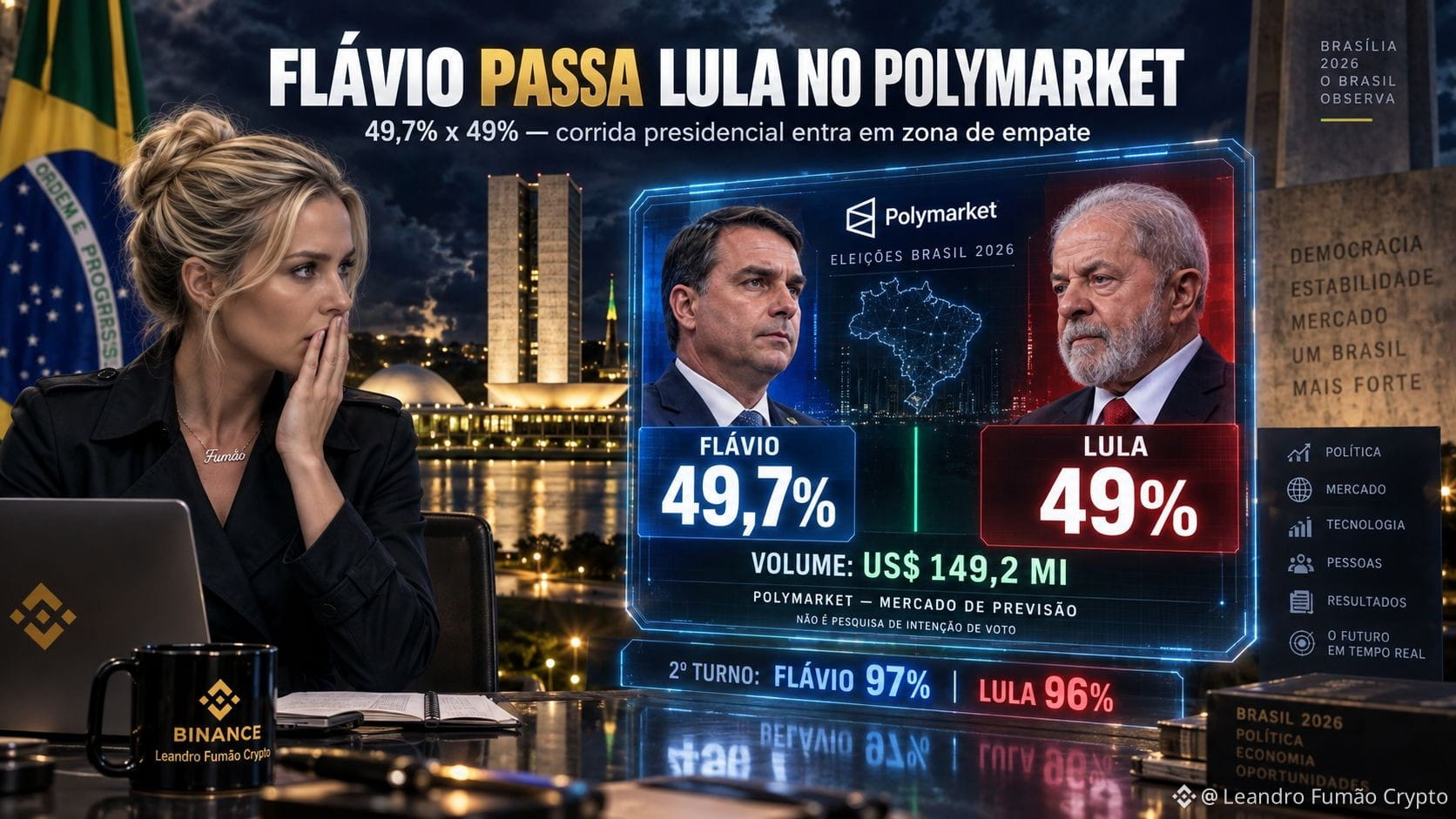
˗ˋˏ📰ˎˊ˗ 𝐅𝐋𝐀́𝐕𝐈𝐎 𝐁𝐎𝐋𝐒𝐎𝐍𝐀𝐑𝐎 𝐏𝐀𝐒𝐒𝐀 𝐋𝐔𝐋𝐀 𝐍𝐎 𝐏𝐎𝐋𝐘𝐌𝐀𝐑𝐊𝐄𝐓❗
In Brazil, the 2026 presidential race has picked up a new sign of tension.
On Polymarket, consulted on September 13, Flávio Bolsonaro appears with 49.7% implied probability of victory, versus 49% for Lula. The difference is just 0.7 percentage points.
🔥 The dashboard also shows a strong shift in perception: Lula is down by -11%, while Flávio is up by +48%.
But pay attention: this doesn’t mean Lula lost 11 points of voting intention. Those figures represent changes within the prediction market, and the story itself notes that the window used by Polymarket isn’t clear.
The main market has already moved approximately:
US$ 149.2 MILLION
🧐And the second-round scenario shows practically the same two names:
➜ Flávio▸ 97% chance to advance
➜ Lula▸96%
👀 But electoral polls tell a slightly different story.
In Datafolha released on September 11, Lula has 39% in the first round, versus 35% for Flávio. In the second round, the score is 46% x 44%, a technical tie. Meanwhile, AtlasIntel/Bloomberg showed 46.4% for Flávio and 46.2% for Lula in a direct simulation.
That is:
POLYMARKET: Flávio slightly ahead.
POLLING: extremely tight race.
🔥 The most important point is not to confuse the two things.
Polymarket measures probability traded by market participants.
Election polling measures voting intention from interviewed voters.
Decisive weeks are still ahead — and this race is becoming more and more unpredictable.
..........................................⟡$DOT ⟡.............................................
👇 Do you think the prediction market is anticipating a turning point, or just reacting to the moment?
{spot}(ZECUSDT)
#Eleicoes2026 #Polymarket #brasil
˗ˋˏ📰ˎˊ˗ 𝐅𝐋𝐀́𝐕𝐈𝐎 𝐁𝐎𝐋𝐒𝐎𝐍𝐀𝐑𝐎 𝐏𝐀𝐒𝐒𝐀 𝐋𝐔𝐋𝐀 𝐍𝐎 𝐏𝐎𝐋𝐘𝐌𝐀𝐑𝐊𝐄𝐓❗
In Brazil, the 2026 presidential race has picked up a new sign of tension.
On Polymarket, consulted on September 13, Flávio Bolsonaro appears with 49.7% implied probability of victory, versus 49% for Lula. The difference is just 0.7 percentage points.
🔥 The dashboard also shows a strong shift in perception: Lula is down by -11%, while Flávio is up by +48%.
But pay attention: this doesn’t mean Lula lost 11 points of voting intention. Those figures represent changes within the prediction market, and the story itself notes that the window used by Polymarket isn’t clear.
The main market has already moved approximately:
US$ 149.2 MILLION
🧐And the second-round scenario shows practically the same two names:
➜ Flávio▸ 97% chance to advance
➜ Lula▸96%
👀 But electoral polls tell a slightly different story.
In Datafolha released on September 11, Lula has 39% in the first round, versus 35% for Flávio. In the second round, the score is 46% x 44%, a technical tie. Meanwhile, AtlasIntel/Bloomberg showed 46.4% for Flávio and 46.2% for Lula in a direct simulation.
That is:
POLYMARKET: Flávio slightly ahead.
POLLING: extremely tight race.
🔥 The most important point is not to confuse the two things.
Polymarket measures probability traded by market participants.
Election polling measures voting intention from interviewed voters.
Decisive weeks are still ahead — and this race is becoming more and more unpredictable.
..........................................⟡$DOT ⟡.............................................
👇 Do you think the prediction market is anticipating a turning point, or just reacting to the moment?
#Eleicoes2026 #Polymarket #brasil
In Brazil, the 2026 presidential race has picked up a new sign of tension.
On Polymarket, consulted on September 13, Flávio Bolsonaro appears with 49.7% implied probability of victory, versus 49% for Lula. The difference is just 0.7 percentage points.
🔥 The dashboard also shows a strong shift in perception: Lula is down by -11%, while Flávio is up by +48%.
But pay attention: this doesn’t mean Lula lost 11 points of voting intention. Those figures represent changes within the prediction market, and the story itself notes that the window used by Polymarket isn’t clear.
The main market has already moved approximately:
US$ 149.2 MILLION
🧐And the second-round scenario shows practically the same two names:
➜ Flávio▸ 97% chance to advance
➜ Lula▸96%
👀 But electoral polls tell a slightly different story.
In Datafolha released on September 11, Lula has 39% in the first round, versus 35% for Flávio. In the second round, the score is 46% x 44%, a technical tie. Meanwhile, AtlasIntel/Bloomberg showed 46.4% for Flávio and 46.2% for Lula in a direct simulation.
That is:
POLYMARKET: Flávio slightly ahead.
POLLING: extremely tight race.
🔥 The most important point is not to confuse the two things.
Polymarket measures probability traded by market participants.
Election polling measures voting intention from interviewed voters.
Decisive weeks are still ahead — and this race is becoming more and more unpredictable.
..........................................⟡$DOT ⟡.............................................
👇 Do you think the prediction market is anticipating a turning point, or just reacting to the moment?
#Eleicoes2026 #Polymarket #brasil
5
890

·
--
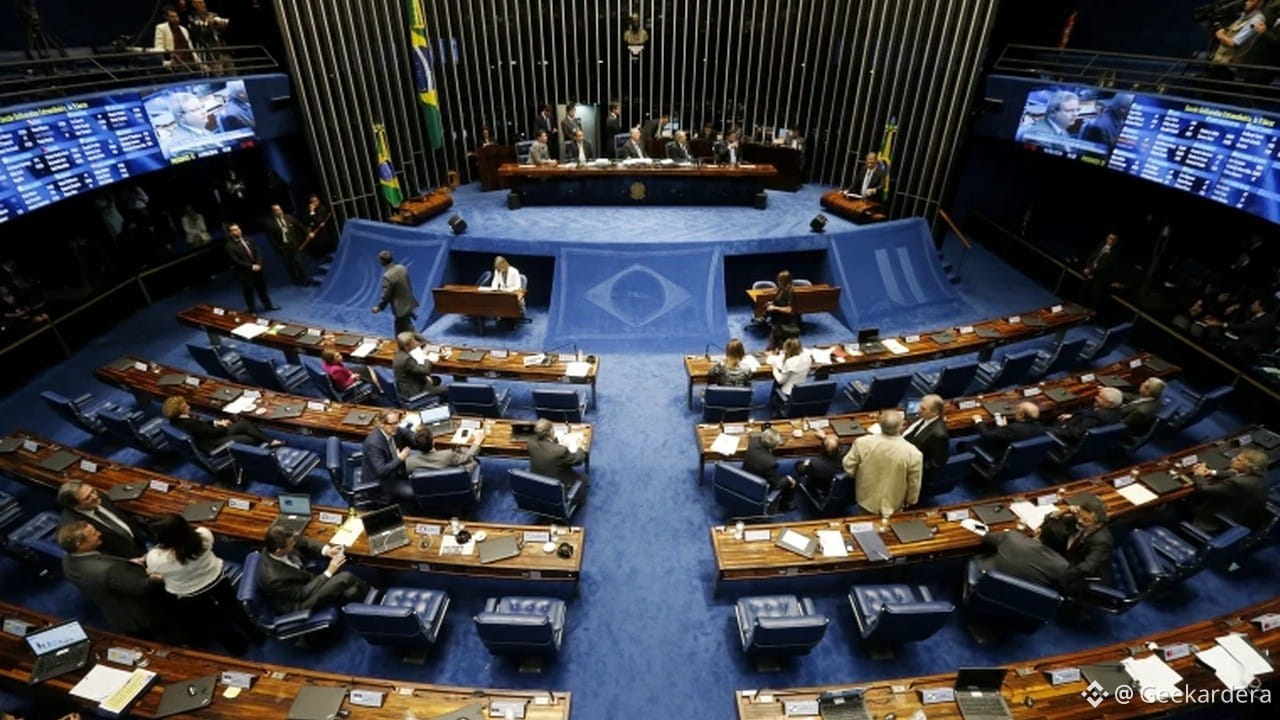
🏛️ Instituto Veritá research points to leadership in the race for the Federal Senate in Rondônia
The surveys indicate the movement of the main regional leaders in the dispute for seats in the National Congress, with emphasis on the names of Bruno Bolsonaro and Fernando Máximo appearing at the forefront of local voters’ preference up to the present moment.
In political backrooms, attention is turning to the electoral race in the states, showing the beginning of party negotiations aimed at assembling political stages (palanques) and strategic alliances. Legislative analysts in Brasília note that the early formation of these state-level preferences tends to directly influence the level of governability and the alignment of forces in the future federal legislature.
For investors and currency trading desks, the stability of regional political projections is a thermometer closely monitored. Institutional balance and predictability in the formation of future members of the Legislative Branch reduce the sovereign risk premium, indirectly affecting the quote of the Dollar ($USDT) and encouraging the search for reserve assets like the $BTC during times of transition.
How might the configuration of future blocs in the National Congress affect regulatory predictability and long-term investments in Brazil? Leave your analysis in the comments.
USDT BTC
#Brasilia #Economia #Brazil
🏛️ Instituto Veritá research points to leadership in the race for the Federal Senate in Rondônia
The surveys indicate the movement of the main regional leaders in the dispute for seats in the National Congress, with emphasis on the names of Bruno Bolsonaro and Fernando Máximo appearing at the forefront of local voters’ preference up to the present moment.
In political backrooms, attention is turning to the electoral race in the states, showing the beginning of party negotiations aimed at assembling political stages (palanques) and strategic alliances. Legislative analysts in Brasília note that the early formation of these state-level preferences tends to directly influence the level of governability and the alignment of forces in the future federal legislature.
For investors and currency trading desks, the stability of regional political projections is a thermometer closely monitored. Institutional balance and predictability in the formation of future members of the Legislative Branch reduce the sovereign risk premium, indirectly affecting the quote of the Dollar ($USDT) and encouraging the search for reserve assets like the $BTC during times of transition.
How might the configuration of future blocs in the National Congress affect regulatory predictability and long-term investments in Brazil? Leave your analysis in the comments.
USDT BTC
#Brasilia #Economia #Brazil
The surveys indicate the movement of the main regional leaders in the dispute for seats in the National Congress, with emphasis on the names of Bruno Bolsonaro and Fernando Máximo appearing at the forefront of local voters’ preference up to the present moment.
In political backrooms, attention is turning to the electoral race in the states, showing the beginning of party negotiations aimed at assembling political stages (palanques) and strategic alliances. Legislative analysts in Brasília note that the early formation of these state-level preferences tends to directly influence the level of governability and the alignment of forces in the future federal legislature.
For investors and currency trading desks, the stability of regional political projections is a thermometer closely monitored. Institutional balance and predictability in the formation of future members of the Legislative Branch reduce the sovereign risk premium, indirectly affecting the quote of the Dollar ($USDT) and encouraging the search for reserve assets like the $BTC during times of transition.
How might the configuration of future blocs in the National Congress affect regulatory predictability and long-term investments in Brazil? Leave your analysis in the comments.
USDT BTC
#Brasilia #Economia #Brazil
93
·
--
🏛️ STF and Congress assess repercussions of new institutional guidelines in Brasília
The publication of press notes by the Supreme Court requires technical advisories to carefully review both procedural deadlines and the legal certainty of the normative acts under discussion within the Judiciary.
Behind the scenes in Parliament, lawmakers from different political currents seek to calibrate the tone of the discussions to avoid unnecessary institutional friction that could stall the agenda for economic votes. Harmony between the branches remains a vital barometer for the progress of priority fiscal items, requiring swift coordination by government leaders to shield the legislative agenda from off-track noise.
For financial markets and currency exchange desks, stability in the relationship between the Legislature and the Judiciary serves as a fundamental foundation for shaping prices of domestic assets. Institutional investors closely monitor the predictability of decisions in Brasília, weighing how legal certainty and fiscal austerity directly affect exchange-rate volatility and the attractiveness of reserves of value.
How might these institutional agenda items in Brasília influence risk perception and the attraction of investments to the country in the coming months? Leave your analysis in the comments.
$USDT $BTC #Brasilia #Economia #Brasil
🏛️ STF and Congress assess repercussions of new institutional guidelines in Brasília
The publication of press notes by the Supreme Court requires technical advisories to carefully review both procedural deadlines and the legal certainty of the normative acts under discussion within the Judiciary.
Behind the scenes in Parliament, lawmakers from different political currents seek to calibrate the tone of the discussions to avoid unnecessary institutional friction that could stall the agenda for economic votes. Harmony between the branches remains a vital barometer for the progress of priority fiscal items, requiring swift coordination by government leaders to shield the legislative agenda from off-track noise.
For financial markets and currency exchange desks, stability in the relationship between the Legislature and the Judiciary serves as a fundamental foundation for shaping prices of domestic assets. Institutional investors closely monitor the predictability of decisions in Brasília, weighing how legal certainty and fiscal austerity directly affect exchange-rate volatility and the attractiveness of reserves of value.
How might these institutional agenda items in Brasília influence risk perception and the attraction of investments to the country in the coming months? Leave your analysis in the comments.
$USDT $BTC #Brasilia #Economia #Brasil
The publication of press notes by the Supreme Court requires technical advisories to carefully review both procedural deadlines and the legal certainty of the normative acts under discussion within the Judiciary.
Behind the scenes in Parliament, lawmakers from different political currents seek to calibrate the tone of the discussions to avoid unnecessary institutional friction that could stall the agenda for economic votes. Harmony between the branches remains a vital barometer for the progress of priority fiscal items, requiring swift coordination by government leaders to shield the legislative agenda from off-track noise.
For financial markets and currency exchange desks, stability in the relationship between the Legislature and the Judiciary serves as a fundamental foundation for shaping prices of domestic assets. Institutional investors closely monitor the predictability of decisions in Brasília, weighing how legal certainty and fiscal austerity directly affect exchange-rate volatility and the attractiveness of reserves of value.
How might these institutional agenda items in Brasília influence risk perception and the attraction of investments to the country in the coming months? Leave your analysis in the comments.
$USDT $BTC #Brasilia #Economia #Brasil
75
·
--
Bullish
Verified
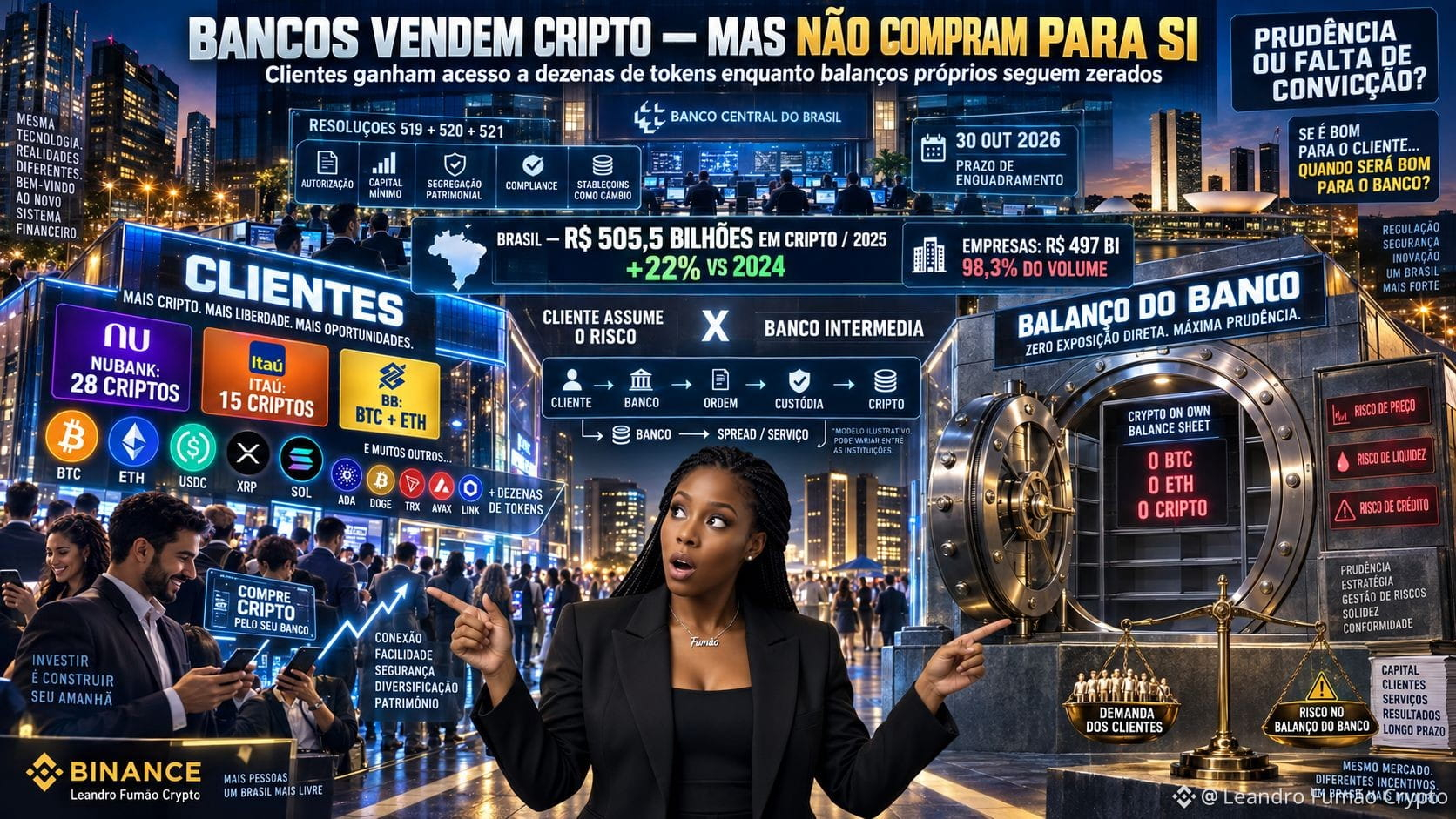
˗ˋˏ😱ˊ˗ BRAZILIAN BANKS SELL CRYPTO ⋙ BUT DON’T PUT 1 ₿ITCOIN ON THEIR OWN BALANCE SHEET ˗ˋˏ❌$ˎ₿ˊ˗
Brazil’s big banks have already turned Bitcoin, Ethereum, and stablecoins into products for millions of customers. But there’s a huge contrast behind the scenes:
They offer crypto without taking on the price risk using their own capital.
According to a survey cited by BitNotícias, the balance sheets submitted to the Central Bank in March 2026 showed zero crypto assets in the own cash of the major institutions analyzed.
The model is mainly intermediation: the bank executes the order, holds the asset in custody, and charges for the service, while exposure to price remains with the customer.
🔥 The Size of the Offering Is Already Impressive
Nubank: 28 crypto assets for more than 7 million service users.
Itaú: 15 assets, including BTC, ETH, and $USDC .
Banco do Brasil: released BTC and ETH and has already processed about R$ 11 million in customer orders since January.
So we have a curious situation:
CLIENT BUYS $BTC ✅
BANK PROFITS FROM THE SERVICE ✅
BANK BUYS BTC FOR ITS OWN TREASURY? ❌
🤔Why❓
Because proprietary trading in crypto would put price, liquidity, and credit risks directly on the balance sheet—which, according to the article, bank risk committees keep avoiding.
👀 At the same time, Brazilian demand has surged.
People and companies moved R$ 505.5 billion in crypto in 2025, a 22% increase over 2024.
Companies accounted for no less than 98.3% of the volume—about R$ 497 billion.
And regulation is accelerating the entry of institutions.
Central Bank Resolutions 519, 520, and 521 created new authorization, capital, asset segregation, and treatment requirements for dollarized stablecoins as foreign-exchange operations. About 120 companies need to comply by October 30, 2026.
🔥 The question is inevitable:
if banks think crypto is good enough for their customers, when will they consider it good enough for their own balance sheets?
#bitcoin.” #brasil
˗ˋˏ😱ˊ˗ BRAZILIAN BANKS SELL CRYPTO ⋙ BUT DON’T PUT 1 ₿ITCOIN ON THEIR OWN BALANCE SHEET ˗ˋˏ❌$ˎ₿ˊ˗
Brazil’s big banks have already turned Bitcoin, Ethereum, and stablecoins into products for millions of customers. But there’s a huge contrast behind the scenes:
They offer crypto without taking on the price risk using their own capital.
According to a survey cited by BitNotícias, the balance sheets submitted to the Central Bank in March 2026 showed zero crypto assets in the own cash of the major institutions analyzed.
The model is mainly intermediation: the bank executes the order, holds the asset in custody, and charges for the service, while exposure to price remains with the customer.
🔥 The Size of the Offering Is Already Impressive
Nubank: 28 crypto assets for more than 7 million service users.
Itaú: 15 assets, including BTC, ETH, and $USDC .
Banco do Brasil: released BTC and ETH and has already processed about R$ 11 million in customer orders since January.
So we have a curious situation:
CLIENT BUYS $BTC ✅
BANK PROFITS FROM THE SERVICE ✅
BANK BUYS BTC FOR ITS OWN TREASURY? ❌
🤔Why❓
Because proprietary trading in crypto would put price, liquidity, and credit risks directly on the balance sheet—which, according to the article, bank risk committees keep avoiding.
👀 At the same time, Brazilian demand has surged.
People and companies moved R$ 505.5 billion in crypto in 2025, a 22% increase over 2024.
Companies accounted for no less than 98.3% of the volume—about R$ 497 billion.
And regulation is accelerating the entry of institutions.
Central Bank Resolutions 519, 520, and 521 created new authorization, capital, asset segregation, and treatment requirements for dollarized stablecoins as foreign-exchange operations. About 120 companies need to comply by October 30, 2026.
🔥 The question is inevitable:
if banks think crypto is good enough for their customers, when will they consider it good enough for their own balance sheets?
#bitcoin.” #brasil
Brazil’s big banks have already turned Bitcoin, Ethereum, and stablecoins into products for millions of customers. But there’s a huge contrast behind the scenes:
They offer crypto without taking on the price risk using their own capital.
According to a survey cited by BitNotícias, the balance sheets submitted to the Central Bank in March 2026 showed zero crypto assets in the own cash of the major institutions analyzed.
The model is mainly intermediation: the bank executes the order, holds the asset in custody, and charges for the service, while exposure to price remains with the customer.
🔥 The Size of the Offering Is Already Impressive
Nubank: 28 crypto assets for more than 7 million service users.
Itaú: 15 assets, including BTC, ETH, and $USDC .
Banco do Brasil: released BTC and ETH and has already processed about R$ 11 million in customer orders since January.
So we have a curious situation:
CLIENT BUYS $BTC ✅
BANK PROFITS FROM THE SERVICE ✅
BANK BUYS BTC FOR ITS OWN TREASURY? ❌
🤔Why❓
Because proprietary trading in crypto would put price, liquidity, and credit risks directly on the balance sheet—which, according to the article, bank risk committees keep avoiding.
👀 At the same time, Brazilian demand has surged.
People and companies moved R$ 505.5 billion in crypto in 2025, a 22% increase over 2024.
Companies accounted for no less than 98.3% of the volume—about R$ 497 billion.
And regulation is accelerating the entry of institutions.
Central Bank Resolutions 519, 520, and 521 created new authorization, capital, asset segregation, and treatment requirements for dollarized stablecoins as foreign-exchange operations. About 120 companies need to comply by October 30, 2026.
🔥 The question is inevitable:
if banks think crypto is good enough for their customers, when will they consider it good enough for their own balance sheets?
#bitcoin.” #brasil
4
1k
·
--
Bullish
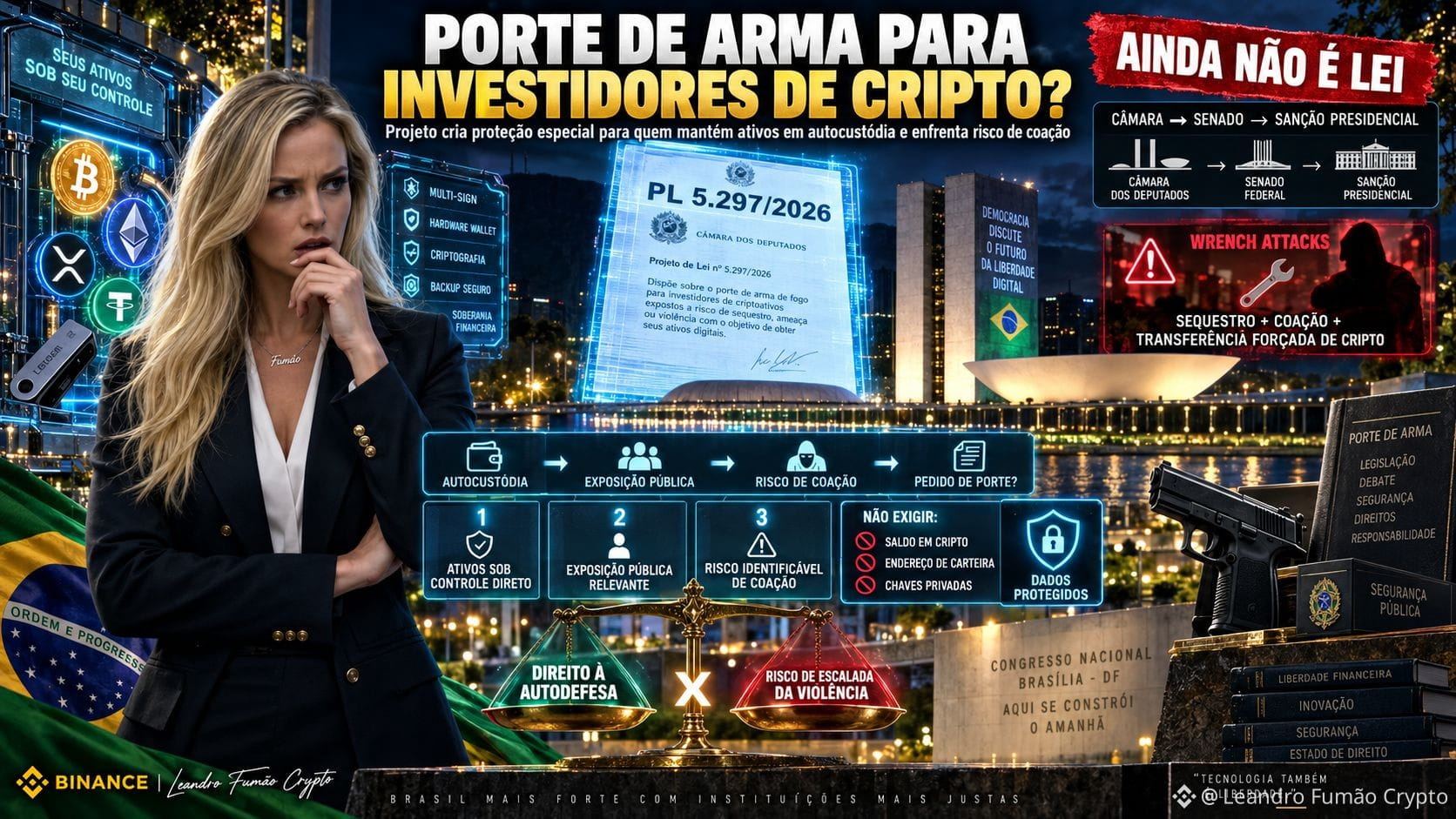
˗ˋˏ😱ˎˊ˗ 𝐏𝐎𝐑𝐓𝐄 𝐃𝐄 𝐀𝐑𝐌𝐀 FOR CRYPTO INVESTORS❓
PROJECT REACHES THE HOUSE OF REPRESENTATIVES❗
A bill presented in the Chamber of Deputies aims to create a new category of weapon carrying in Brazil: people with crypto assets in self-custody who are publicly exposed and could be targeted for kidnapping, threats, or violence in order to transfer their assets.
The PL 5.297/2026, submitted by federal representative Capitão Alden (PL-BA), intends to amend Brazil’s Disarmament Statute to include so-called “holders of virtual assets under risk of physical coercion.”
⚠️ But it would not be automatic weapon carrying for anyone who has Bitcoin.
The applicant would have to simultaneously meet three conditions:
🔐 Keep #cripto in self-custody
📢 Have significant public exposure in the sector
🎯 Be identifiable as a target of physical coercion
In practice, the proposal mainly targets business owners, executives, founders, influencers, and other people publicly associated with the crypto market.
🔥 Another point stands out: the investor would not need to disclose how much they own.
The project prohibits conditioning the request on the disclosure of amounts, wallet addresses, or cryptographic keys. The data used in the process would also have enhanced protection.
The justification cites so-called “wrench attacks”: crimes in which kidnappers or attackers use violence to force a victim to reveal passwords or directly transfer crypto assets from a wallet.
👀 However, there is a huge question
Would arming investors actually reduce that risk, or could it make kidnapping situations even more dangerous?
The project itself does not present studies on the effect of weapon carrying in these scenarios.
And pay attention: this is STILL not law.
The PL must pass through the House, the Senate, and possible presidential approval, and it may change during the legislative process.
$CATI
👇 Do you support or oppose a specific weapon-carrying rule for crypto investors under proven risk? #brasil
˗ˋˏ😱ˎˊ˗ 𝐏𝐎𝐑𝐓𝐄 𝐃𝐄 𝐀𝐑𝐌𝐀 FOR CRYPTO INVESTORS❓
PROJECT REACHES THE HOUSE OF REPRESENTATIVES❗
A bill presented in the Chamber of Deputies aims to create a new category of weapon carrying in Brazil: people with crypto assets in self-custody who are publicly exposed and could be targeted for kidnapping, threats, or violence in order to transfer their assets.
The PL 5.297/2026, submitted by federal representative Capitão Alden (PL-BA), intends to amend Brazil’s Disarmament Statute to include so-called “holders of virtual assets under risk of physical coercion.”
⚠️ But it would not be automatic weapon carrying for anyone who has Bitcoin.
The applicant would have to simultaneously meet three conditions:
🔐 Keep #cripto in self-custody
📢 Have significant public exposure in the sector
🎯 Be identifiable as a target of physical coercion
In practice, the proposal mainly targets business owners, executives, founders, influencers, and other people publicly associated with the crypto market.
🔥 Another point stands out: the investor would not need to disclose how much they own.
The project prohibits conditioning the request on the disclosure of amounts, wallet addresses, or cryptographic keys. The data used in the process would also have enhanced protection.
The justification cites so-called “wrench attacks”: crimes in which kidnappers or attackers use violence to force a victim to reveal passwords or directly transfer crypto assets from a wallet.
👀 However, there is a huge question
Would arming investors actually reduce that risk, or could it make kidnapping situations even more dangerous?
The project itself does not present studies on the effect of weapon carrying in these scenarios.
And pay attention: this is STILL not law.
The PL must pass through the House, the Senate, and possible presidential approval, and it may change during the legislative process.
$CATI
👇 Do you support or oppose a specific weapon-carrying rule for crypto investors under proven risk? #brasil
PROJECT REACHES THE HOUSE OF REPRESENTATIVES❗
A bill presented in the Chamber of Deputies aims to create a new category of weapon carrying in Brazil: people with crypto assets in self-custody who are publicly exposed and could be targeted for kidnapping, threats, or violence in order to transfer their assets.
The PL 5.297/2026, submitted by federal representative Capitão Alden (PL-BA), intends to amend Brazil’s Disarmament Statute to include so-called “holders of virtual assets under risk of physical coercion.”
⚠️ But it would not be automatic weapon carrying for anyone who has Bitcoin.
The applicant would have to simultaneously meet three conditions:
🔐 Keep #cripto in self-custody
📢 Have significant public exposure in the sector
🎯 Be identifiable as a target of physical coercion
In practice, the proposal mainly targets business owners, executives, founders, influencers, and other people publicly associated with the crypto market.
🔥 Another point stands out: the investor would not need to disclose how much they own.
The project prohibits conditioning the request on the disclosure of amounts, wallet addresses, or cryptographic keys. The data used in the process would also have enhanced protection.
The justification cites so-called “wrench attacks”: crimes in which kidnappers or attackers use violence to force a victim to reveal passwords or directly transfer crypto assets from a wallet.
👀 However, there is a huge question
Would arming investors actually reduce that risk, or could it make kidnapping situations even more dangerous?
The project itself does not present studies on the effect of weapon carrying in these scenarios.
And pay attention: this is STILL not law.
The PL must pass through the House, the Senate, and possible presidential approval, and it may change during the legislative process.
$CATI
👇 Do you support or oppose a specific weapon-carrying rule for crypto investors under proven risk? #brasil
2
295
·
--
Bullish
Verified
👁️BANCO DO BRASIL👁️ ⥱ CAIXA AND REGISTRIES WILL TEST REAL ESTATE ON BLOCKCHAIN❗️❕❗️
The Brazilian real estate market may be on the verge of entering a new phase.
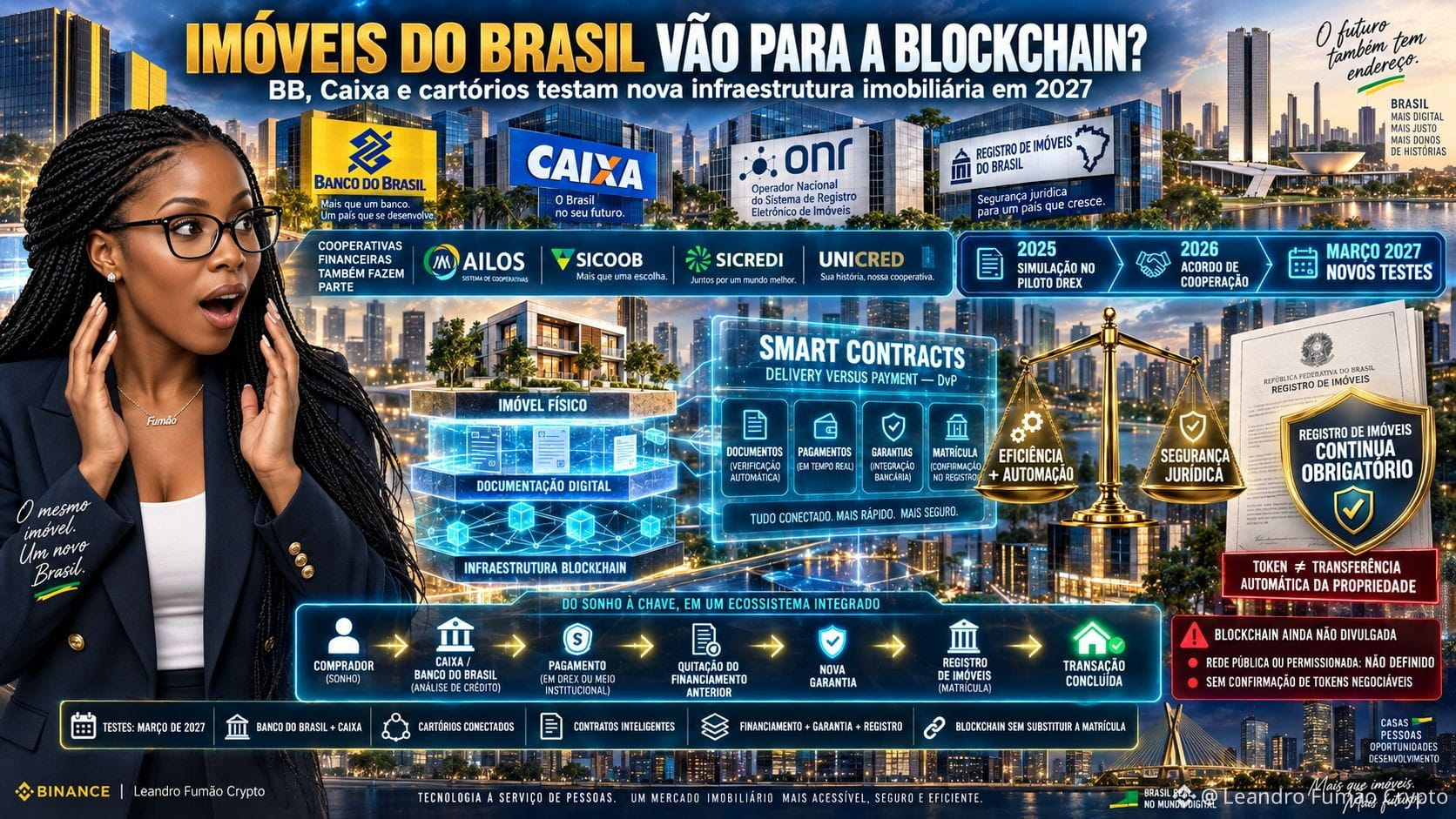
Banco do Brasil, Caixa, Ailos, Sicoob, Sicredi, and Unicred have joined ONR and the Real Estate Registry of Brazil to develop a blockchain-based infrastructure for buying, selling, financing, and operations guaranteed by properties. The first tests are scheduled for March 2027.
🔥 The idea is to connect directly:
BANKS
→ REGISTRIES
→ REAL ESTATE RECORDS
→ PAYMENTS
→ COLLATERALS
In a shared and traceable infrastructure.
Today, a financed purchase can require several checks between the buyer’s bank, the seller’s bank, the registry, and other parties. The project aims to reduce manual reconciliations, data discrepancies, and repetitive steps.
And it doesn’t start from scratch.
During the second phase of the Drex Pilot, the group already simulated an operation in which a Caixa customer bought a property still financed by Banco do #brasil .
Smart contracts coordinated the settlement of the old loan, the release of funds, the new credit, and the transfer of the collateral.
👀 The text explains that blockchain will not replace the official real estate registry: the ONR (National Registry Operator) recognizes the technology only as an integration and automation layer, keeping the transfer of ownership dependent on the Real Estate Registry, in accordance with Brazilian law. #Brazuca
The proposal seeks to integrate blockchain, banks, and registries into a single infrastructure, not create a parallel system. There are still uncertainties: it’s not yet known which blockchain will be used—public or permissioned—or whether tradable real estate tokens will exist, since the project is still in the phase of institutional testing.
If successful, it could unify financing, collateral, payment, and real estate registration in a coordinated way, raising the question of whether Brazilian real estate financing will become an on-chain process.✴︎ $ICP
👁️BANCO DO BRASIL👁️ ⥱ CAIXA AND REGISTRIES WILL TEST REAL ESTATE ON BLOCKCHAIN❗️❕❗️
The Brazilian real estate market may be on the verge of entering a new phase.
Banco do Brasil, Caixa, Ailos, Sicoob, Sicredi, and Unicred have joined ONR and the Real Estate Registry of Brazil to develop a blockchain-based infrastructure for buying, selling, financing, and operations guaranteed by properties. The first tests are scheduled for March 2027.
🔥 The idea is to connect directly:
BANKS
→ REGISTRIES
→ REAL ESTATE RECORDS
→ PAYMENTS
→ COLLATERALS
In a shared and traceable infrastructure.
Today, a financed purchase can require several checks between the buyer’s bank, the seller’s bank, the registry, and other parties. The project aims to reduce manual reconciliations, data discrepancies, and repetitive steps.
And it doesn’t start from scratch.
During the second phase of the Drex Pilot, the group already simulated an operation in which a Caixa customer bought a property still financed by Banco do #brasil .
Smart contracts coordinated the settlement of the old loan, the release of funds, the new credit, and the transfer of the collateral.
👀 The text explains that blockchain will not replace the official real estate registry: the ONR (National Registry Operator) recognizes the technology only as an integration and automation layer, keeping the transfer of ownership dependent on the Real Estate Registry, in accordance with Brazilian law. #Brazuca
The proposal seeks to integrate blockchain, banks, and registries into a single infrastructure, not create a parallel system. There are still uncertainties: it’s not yet known which blockchain will be used—public or permissioned—or whether tradable real estate tokens will exist, since the project is still in the phase of institutional testing.
If successful, it could unify financing, collateral, payment, and real estate registration in a coordinated way, raising the question of whether Brazilian real estate financing will become an on-chain process.✴︎ $ICP
The Brazilian real estate market may be on the verge of entering a new phase.
Banco do Brasil, Caixa, Ailos, Sicoob, Sicredi, and Unicred have joined ONR and the Real Estate Registry of Brazil to develop a blockchain-based infrastructure for buying, selling, financing, and operations guaranteed by properties. The first tests are scheduled for March 2027.
🔥 The idea is to connect directly:
BANKS
→ REGISTRIES
→ REAL ESTATE RECORDS
→ PAYMENTS
→ COLLATERALS
In a shared and traceable infrastructure.
Today, a financed purchase can require several checks between the buyer’s bank, the seller’s bank, the registry, and other parties. The project aims to reduce manual reconciliations, data discrepancies, and repetitive steps.
And it doesn’t start from scratch.
During the second phase of the Drex Pilot, the group already simulated an operation in which a Caixa customer bought a property still financed by Banco do #brasil .
Smart contracts coordinated the settlement of the old loan, the release of funds, the new credit, and the transfer of the collateral.
👀 The text explains that blockchain will not replace the official real estate registry: the ONR (National Registry Operator) recognizes the technology only as an integration and automation layer, keeping the transfer of ownership dependent on the Real Estate Registry, in accordance with Brazilian law. #Brazuca
The proposal seeks to integrate blockchain, banks, and registries into a single infrastructure, not create a parallel system. There are still uncertainties: it’s not yet known which blockchain will be used—public or permissioned—or whether tradable real estate tokens will exist, since the project is still in the phase of institutional testing.
If successful, it could unify financing, collateral, payment, and real estate registration in a coordinated way, raising the question of whether Brazilian real estate financing will become an on-chain process.✴︎ $ICP
6
1k
·
--
🏛️ Debate in Mato Grosso do Sul moves the electoral scene for the Senate and focuses market attention on regional fiscal guidelines.
Senate candidates from Mato Grosso do Sul debated economic and legislative proposals at a g1 portal event. The meeting was attended by Beto do Movimento, Soraya, Valter da Comagran and Vander Loubet, while Capitão Contar and Reinaldo Azambuja declined the invitations. The discussion addressed crucial topics for regional development, infrastructure and responsibility with public spending, setting the tone that the state’s federal delegation will adopt in the National Congress.
Behind the scenes in Brasília, the formation of future Senate compositions is closely watched by political analysts and economic agents. The Senate caucus plays a decisive role in the approval of structural reforms, fiscal policy and the choice of monetary and judicial authorities. The absence of two strong names signals different campaign strategies, reflecting a polarized dispute scenario, but one that requires institutional predictability to ensure the legal certainty of long-term investments.
For the financial market, exchange rates and digital asset liquidity, political stability and fiscal balance are non-negotiable pillars. Investors are monitoring how legislative debates influence the perception of Brazil risk, indirectly impacting the volatility of traditional assets and the search for stores of value such as $BTC and $USDT. Clear economic guidelines from future senators help mitigate macroeconomic uncertainties.
How important are in-depth debates on fiscal responsibility for attracting investments in the Brazilian economy? Leave your analysis in the comments.
$USDT $BTC #Eleicoes #Brasil
🏛️ Debate in Mato Grosso do Sul moves the electoral scene for the Senate and focuses market attention on regional fiscal guidelines.
Senate candidates from Mato Grosso do Sul debated economic and legislative proposals at a g1 portal event. The meeting was attended by Beto do Movimento, Soraya, Valter da Comagran and Vander Loubet, while Capitão Contar and Reinaldo Azambuja declined the invitations. The discussion addressed crucial topics for regional development, infrastructure and responsibility with public spending, setting the tone that the state’s federal delegation will adopt in the National Congress.
Behind the scenes in Brasília, the formation of future Senate compositions is closely watched by political analysts and economic agents. The Senate caucus plays a decisive role in the approval of structural reforms, fiscal policy and the choice of monetary and judicial authorities. The absence of two strong names signals different campaign strategies, reflecting a polarized dispute scenario, but one that requires institutional predictability to ensure the legal certainty of long-term investments.
For the financial market, exchange rates and digital asset liquidity, political stability and fiscal balance are non-negotiable pillars. Investors are monitoring how legislative debates influence the perception of Brazil risk, indirectly impacting the volatility of traditional assets and the search for stores of value such as $BTC and $USDT. Clear economic guidelines from future senators help mitigate macroeconomic uncertainties.
How important are in-depth debates on fiscal responsibility for attracting investments in the Brazilian economy? Leave your analysis in the comments.
$USDT $BTC #Eleicoes #Brasil
Senate candidates from Mato Grosso do Sul debated economic and legislative proposals at a g1 portal event. The meeting was attended by Beto do Movimento, Soraya, Valter da Comagran and Vander Loubet, while Capitão Contar and Reinaldo Azambuja declined the invitations. The discussion addressed crucial topics for regional development, infrastructure and responsibility with public spending, setting the tone that the state’s federal delegation will adopt in the National Congress.
Behind the scenes in Brasília, the formation of future Senate compositions is closely watched by political analysts and economic agents. The Senate caucus plays a decisive role in the approval of structural reforms, fiscal policy and the choice of monetary and judicial authorities. The absence of two strong names signals different campaign strategies, reflecting a polarized dispute scenario, but one that requires institutional predictability to ensure the legal certainty of long-term investments.
For the financial market, exchange rates and digital asset liquidity, political stability and fiscal balance are non-negotiable pillars. Investors are monitoring how legislative debates influence the perception of Brazil risk, indirectly impacting the volatility of traditional assets and the search for stores of value such as $BTC and $USDT. Clear economic guidelines from future senators help mitigate macroeconomic uncertainties.
How important are in-depth debates on fiscal responsibility for attracting investments in the Brazilian economy? Leave your analysis in the comments.
$USDT $BTC #Eleicoes #Brasil
80
·
--
🏛️ Debate in Mato Grosso do Sul moves the electoral scenario for the Senate and focuses market attention on regional fiscal guidelines.
Senate candidates from Mato Grosso do Sul debated economic and legislative proposals in an event hosted by the g1 portal. The meeting was attended by Beto do Movimento, Soraya, Valter da Comagran and Vander Loubet, while Capitão Contar and Reinaldo Azambuja declined the invitations. The discussion addressed crucial topics for regional development, infrastructure and responsibility with public spending, projecting the tone that the South Mato Grosso caucus will adopt in the National Congress.
Behind the scenes in Brasília, the formation of future Senate compositions is closely followed by political analysts and economic agents. The Senate bloc plays a decisive role in approving structural reforms, fiscal policy and the choice of monetary and judicial authorities. The absence of two strong names signals different campaign strategies, reflecting a polarized dispute scenario, but one that requires institutional predictability to guarantee the legal security of long-term investments.
For the financial market, the exchange rate and liquidity of digital assets, political stability and fiscal balance are non-negotiable pillars. Investors monitor how legislative debates influence the perception of Brazil risk, indirectly impacting the volatility of traditional assets and the search for stores of value such as $BTC and $USDT. Clarity in the economic guidelines of future senators helps mitigate macroeconomic uncertainties.
What is the importance of in-depth debates on fiscal responsibility for attracting investment in the Brazilian economy? Leave your analysis in the comments.
$USDT $BTC #Eleicoes #Brasil
🏛️ Debate in Mato Grosso do Sul moves the electoral scenario for the Senate and focuses market attention on regional fiscal guidelines.
Senate candidates from Mato Grosso do Sul debated economic and legislative proposals in an event hosted by the g1 portal. The meeting was attended by Beto do Movimento, Soraya, Valter da Comagran and Vander Loubet, while Capitão Contar and Reinaldo Azambuja declined the invitations. The discussion addressed crucial topics for regional development, infrastructure and responsibility with public spending, projecting the tone that the South Mato Grosso caucus will adopt in the National Congress.
Behind the scenes in Brasília, the formation of future Senate compositions is closely followed by political analysts and economic agents. The Senate bloc plays a decisive role in approving structural reforms, fiscal policy and the choice of monetary and judicial authorities. The absence of two strong names signals different campaign strategies, reflecting a polarized dispute scenario, but one that requires institutional predictability to guarantee the legal security of long-term investments.
For the financial market, the exchange rate and liquidity of digital assets, political stability and fiscal balance are non-negotiable pillars. Investors monitor how legislative debates influence the perception of Brazil risk, indirectly impacting the volatility of traditional assets and the search for stores of value such as $BTC and $USDT. Clarity in the economic guidelines of future senators helps mitigate macroeconomic uncertainties.
What is the importance of in-depth debates on fiscal responsibility for attracting investment in the Brazilian economy? Leave your analysis in the comments.
$USDT $BTC #Eleicoes #Brasil
Senate candidates from Mato Grosso do Sul debated economic and legislative proposals in an event hosted by the g1 portal. The meeting was attended by Beto do Movimento, Soraya, Valter da Comagran and Vander Loubet, while Capitão Contar and Reinaldo Azambuja declined the invitations. The discussion addressed crucial topics for regional development, infrastructure and responsibility with public spending, projecting the tone that the South Mato Grosso caucus will adopt in the National Congress.
Behind the scenes in Brasília, the formation of future Senate compositions is closely followed by political analysts and economic agents. The Senate bloc plays a decisive role in approving structural reforms, fiscal policy and the choice of monetary and judicial authorities. The absence of two strong names signals different campaign strategies, reflecting a polarized dispute scenario, but one that requires institutional predictability to guarantee the legal security of long-term investments.
For the financial market, the exchange rate and liquidity of digital assets, political stability and fiscal balance are non-negotiable pillars. Investors monitor how legislative debates influence the perception of Brazil risk, indirectly impacting the volatility of traditional assets and the search for stores of value such as $BTC and $USDT. Clarity in the economic guidelines of future senators helps mitigate macroeconomic uncertainties.
What is the importance of in-depth debates on fiscal responsibility for attracting investment in the Brazilian economy? Leave your analysis in the comments.
$USDT $BTC #Eleicoes #Brasil
66
·
--
Bullish
Verified
⚠️⚡BANCO DO BRASIL BUYS 𝗥𝗪𝗔 TOKEN AND TAKES A HISTORIC STEP IN TOKENIZATION ಄🔥಄
Banco do Brasil has just made a concrete move in the Real World Assets (RWAs) market.
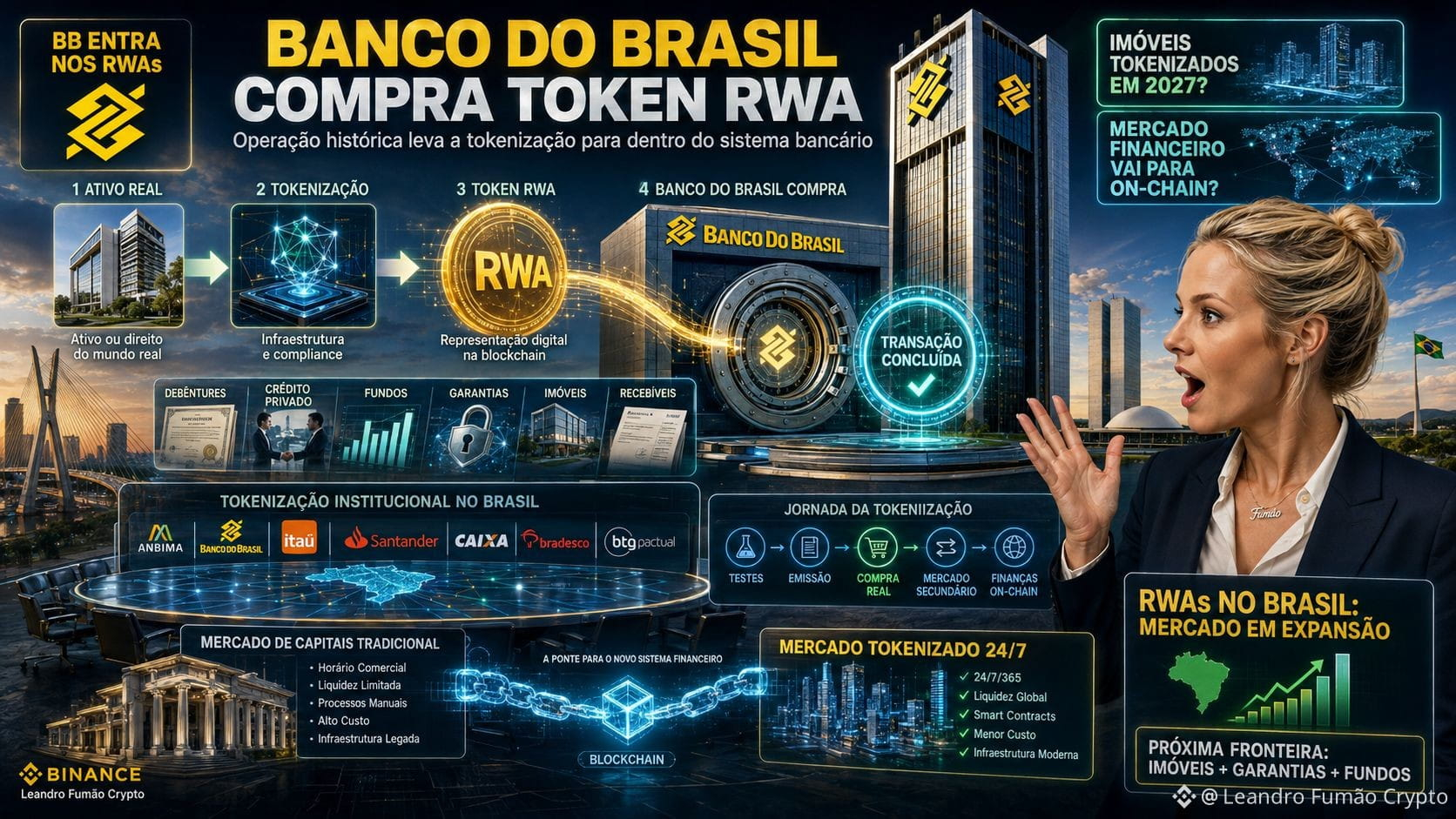
After participating in tokenization tests and projects, the bank made a purchase of a tokenized asset—an action that helps take the technology out of the demo phase and place it within a real financial operation.
🔥 This Changes the Debate a Lot.
Until recently, major Brazilian banks talked about blockchain mainly in experimental settings. Now, institutions such as Banco do Brasil, Itaú, Santander, Caixa, Bradesco, and BTG are already involved in initiatives that test issuance, trading, and settlement of tokenized assets. BB itself is part of Anbima’s tokenization pilot project.
In practice, an RWA turns rights over traditional assets into digital records that can be traded on blockchain infrastructure.
This can involve:
▸Debentures
▸Private credit
▸Funds
▸Receivables
▸Guarantees
▸Real estate
👀 And Banco do Brasil is already looking beyond that.
Recently, bank executives said they are developing a real-estate tokenization solution planned for 2027, while Itaú and BTG also see digital guarantees and settlement via stablecoins as important areas for the next stage of this market.
The #Brazil market for RWAs is already strongly expanding. In January 2026, tokenized issuances in the country had surpassed R$ 2.87 billion, up from only about R$ 122 million roughly a year earlier.
🔥 The big change right now is this:
TRADITIONAL BANK → BUY TOKENIZED ASSET → BLOCKCHAIN ENTERS THE REAL MARKET
If giant banks start not only issuing, but also buying, holding in custody, and trading RWAs, tokenization may stop being a crypto niche and become part of the normal infrastructure of the financial system.
{spot}(ONDOUSDT)
The question now is:
are we seeing the start of Brazil’s on-chain capital markets?
» $LINK »
#RWA #brasil
⚠️⚡BANCO DO BRASIL BUYS 𝗥𝗪𝗔 TOKEN AND TAKES A HISTORIC STEP IN TOKENIZATION ಄🔥಄
Banco do Brasil has just made a concrete move in the Real World Assets (RWAs) market.
After participating in tokenization tests and projects, the bank made a purchase of a tokenized asset—an action that helps take the technology out of the demo phase and place it within a real financial operation.
🔥 This Changes the Debate a Lot.
Until recently, major Brazilian banks talked about blockchain mainly in experimental settings. Now, institutions such as Banco do Brasil, Itaú, Santander, Caixa, Bradesco, and BTG are already involved in initiatives that test issuance, trading, and settlement of tokenized assets. BB itself is part of Anbima’s tokenization pilot project.
In practice, an RWA turns rights over traditional assets into digital records that can be traded on blockchain infrastructure.
This can involve:
▸Debentures
▸Private credit
▸Funds
▸Receivables
▸Guarantees
▸Real estate
👀 And Banco do Brasil is already looking beyond that.
Recently, bank executives said they are developing a real-estate tokenization solution planned for 2027, while Itaú and BTG also see digital guarantees and settlement via stablecoins as important areas for the next stage of this market.
The #Brazil market for RWAs is already strongly expanding. In January 2026, tokenized issuances in the country had surpassed R$ 2.87 billion, up from only about R$ 122 million roughly a year earlier.
🔥 The big change right now is this:
TRADITIONAL BANK → BUY TOKENIZED ASSET → BLOCKCHAIN ENTERS THE REAL MARKET
If giant banks start not only issuing, but also buying, holding in custody, and trading RWAs, tokenization may stop being a crypto niche and become part of the normal infrastructure of the financial system.
The question now is:
are we seeing the start of Brazil’s on-chain capital markets?
» $LINK »
#RWA #brasil
Banco do Brasil has just made a concrete move in the Real World Assets (RWAs) market.
After participating in tokenization tests and projects, the bank made a purchase of a tokenized asset—an action that helps take the technology out of the demo phase and place it within a real financial operation.
🔥 This Changes the Debate a Lot.
Until recently, major Brazilian banks talked about blockchain mainly in experimental settings. Now, institutions such as Banco do Brasil, Itaú, Santander, Caixa, Bradesco, and BTG are already involved in initiatives that test issuance, trading, and settlement of tokenized assets. BB itself is part of Anbima’s tokenization pilot project.
In practice, an RWA turns rights over traditional assets into digital records that can be traded on blockchain infrastructure.
This can involve:
▸Debentures
▸Private credit
▸Funds
▸Receivables
▸Guarantees
▸Real estate
👀 And Banco do Brasil is already looking beyond that.
Recently, bank executives said they are developing a real-estate tokenization solution planned for 2027, while Itaú and BTG also see digital guarantees and settlement via stablecoins as important areas for the next stage of this market.
The #Brazil market for RWAs is already strongly expanding. In January 2026, tokenized issuances in the country had surpassed R$ 2.87 billion, up from only about R$ 122 million roughly a year earlier.
🔥 The big change right now is this:
TRADITIONAL BANK → BUY TOKENIZED ASSET → BLOCKCHAIN ENTERS THE REAL MARKET
If giant banks start not only issuing, but also buying, holding in custody, and trading RWAs, tokenization may stop being a crypto niche and become part of the normal infrastructure of the financial system.
The question now is:
are we seeing the start of Brazil’s on-chain capital markets?
» $LINK »
#RWA #brasil
1
4
1.5k
Log in to explore more content
Join global crypto users on Binance Square
⚡️ Get latest and useful information about crypto.
💬 Trusted by the world’s largest crypto exchange.
👍 Discover real insights from verified creators.
Email / Phone number
Trending Topics
1
#BitwiseFilesFinalNEARSpotETFProspectus
38,381 views
1,008 Discussing
2
#BitgetHackerMoves$83MStolenXRP
21,686 views
142 Discussing
3
#SOLSpotETFWeeklyInflow$188M
12,207 views
107 Discussing
4
#DogecoinETFsPostBiggestWeekSinceLaunch
30,389 views
777 Discussing
5
#StrategyStriveAdd2305BitcoinThisWeek
99,316 views
1,902 Discussing
6
#TrumpRejectsIranHormuzReopening
92,130 views
1,470 Discussing
7
#CircleTetherFreezeBitgetHackerWallet
88,997 views
1,394 Discussing
8
#SECSaysTokenBuybacksNotAutoSecurities
55,890 views
816 Discussing
9
#ChinaUSAgreeOn$30BTariffCut
4,464 views
43 Discussing
10
#CoinMarketCapCompletesCoinglassAcquisition
63,491 views
925 Discussing