
#regulasi
regulasi
1,056 views
14 Discussing
Hot
Latest

·
--
Arkansas has become the seventh state to sue Kalshi — and this lawsuit goes straight to the heart of the prediction market business model.
The facts: Arkansas Attorney General Tim Griffin sued KalshiEX LLC and Kalshi Inc. on Nov. 4, 2026, alleging that the platform operated unlicensed sports gambling in the state, was open to users aged 18 and older, and violated the Arkansas Deceptive Trade Practices Act. The 57-page lawsuit seeks restitution, civil penalties, back taxes, and a court order. The case is listed in the Circuit Court of Independence County under case number 32CV-26-717. Kalshi has argued that its contracts are financial derivatives regulated by the CFTC, not gambling. There has been no court ruling on Arkansas’s allegations.
My take: this is no longer a lawsuit from just one state — it’s a pattern. Utah has filed 14 criminal charges against Kalshi and its founders, and now seven states have taken action. The real fight is over jurisdiction: states see an online bookmaker, while the CFTC sees a federal futures exchange. Until the Supreme Court or Congress answers that question, every new lawsuit adds legal risk for the entire prediction market sector — including crypto contracts traded on similar platforms. BTC itself was steady around $80,300 as the news circulated, so the market hasn’t priced this in as a shock — but the regulatory headwinds are clear.
What I’m watching next: Kalshi’s response to this lawsuit, the CFTC’s Nov. 6 response deadline in a separate case involving stock perps, and whether other states file similar lawsuits.
What do you think: are event contracts on Kalshi financial products or gambling — and who should regulate them?
This is my analysis, not financial advice — always DYOR.
#Kalshi #PredictionMarket #Regulasi
13

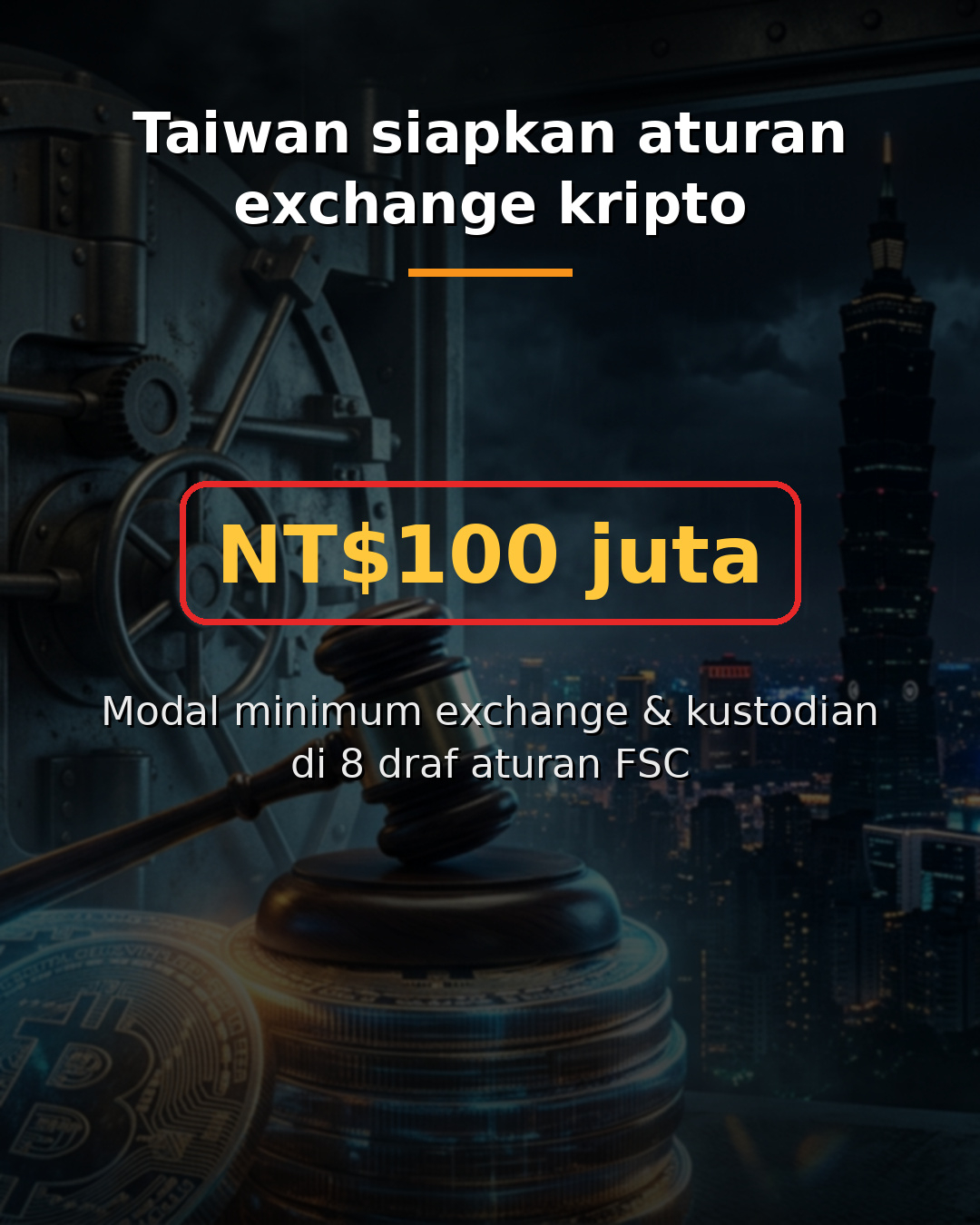
Taiwan prepares rules for crypto exchanges—how strict are the requirements?
Minimum capital for exchanges & custodians: NT$100 million | 8 draft FSC rules (Nov. 3, 2026)
Taiwan’s Financial Supervisory Commission (FSC) has released 8 draft regulations for crypto service providers. Key points:
1. Tiered paid-in capital requirements — Exchanges and custodians must have at least NT$100 million. Crypto lending platforms must have NT$200 million. Crypto asset exchange, transfer, or underwriting businesses must each have NT$50 million. If a company offers multiple services, the requirements are added together.
2. Security deposits — Exchanges and custodians must deposit NT$30 million, while lenders must deposit NT$50 million. The amounts are added together if a company offers more than one service.
3. Banks can participate — Banks that already provide crypto custody can apply for licenses to offer exchange, transfer, custody, and underwriting services, but exchange and transfer services will be limited to corporate clients.
The Virtual Asset Service Act was promulgated on July 22 but has not yet taken effect. The public has 40 days to submit comments. The technical rules and the Act are planned to take effect on the same day.
#Regulasi #Taiwan #Kripto #Exchange #BinanceSquare
69
·
--
Of the 150–200 companies expected to take part, only around 40 registered — Brazil has just cut its crypto industry down to a handful of players.
The facts: The Central Bank of Brazil’s October 30 deadline for virtual asset service providers (VASPs) wishing to continue operating has passed. Around 40 institutions applied for authorization — including Binance, Itaú, and the B3 stock exchange. Those that didn’t apply must orderly exit the Brazilian market within 30 days, and starting November 6, banks and payment institutions will be prohibited from serving unauthorized VASPs. The new rules also require daily custody reports for each client and monthly proof of reserves. (Source: PANews, CryptoNews, TradingView/Bloomingbit — Nov 2, 2026.)
My take: this is regulatory consolidation, not just a crackdown. The pattern is the same as MiCA in Europe: compliance costs become a barrier to entry, and big markets eventually end up in the hands of players able to meet them. The date that really matters is November 6 — when banks cut off fiat access, unauthorized VASPs will effectively no longer be able to serve Brazilian customers.
What I’m watching next: whether enforcement on November 6 goes smoothly or includes a transition period, and whether stablecoins and real-world asset tokenization become the next phase of regulation.
What do you think — does this kind of consolidation make the market safer, or does it just stifle competition?
This is my analysis, not financial advice — always DYOR.
#Regulasi #Brasil #Crypto $BNB
8
·
--
Crypto never sleeps — and US derivatives regulators are now discussing whether futures markets should stay up all night too.
The facts: On Oct. 28, the CFTC announced it will hold an industry roundtable on Dec. 15 at its Washington headquarters (livestreamed) to discuss the feasibility of 24/7 derivatives trading. This follows last summer’s Request for Comment. Topics include overnight trading, tokenization, infrastructure, staffing, and operational readiness. Chair Selig stressed that the approach would not be one-size-fits-all across asset classes. The agenda, speakers, and registration details will be announced later; the public may suggest speakers.
My take: this isn’t just about opening hours, but the machinery behind them — overnight margin, surveillance, and systems that must never go down. Crypto markets have been 24/7 for a long time, while US futures still have trading sessions; if regulators find a workable formula, the line between the two will grow thinner. Important to note: this is only a discussion, not approval to launch.
What I’m watching: the agenda and participant list when they’re released, and whether the discussion touches on the US-regulated crypto perpetuals that launched this week. BTC is around $79,972 this morning — the market itself is testing $80,000 from below.
What do you think: are markets that never close progress, or a new risk we’re not yet ready to manage?
This is my analysis, not financial advice — always DYOR.
#Regulasi #Derivatif $BTC
66
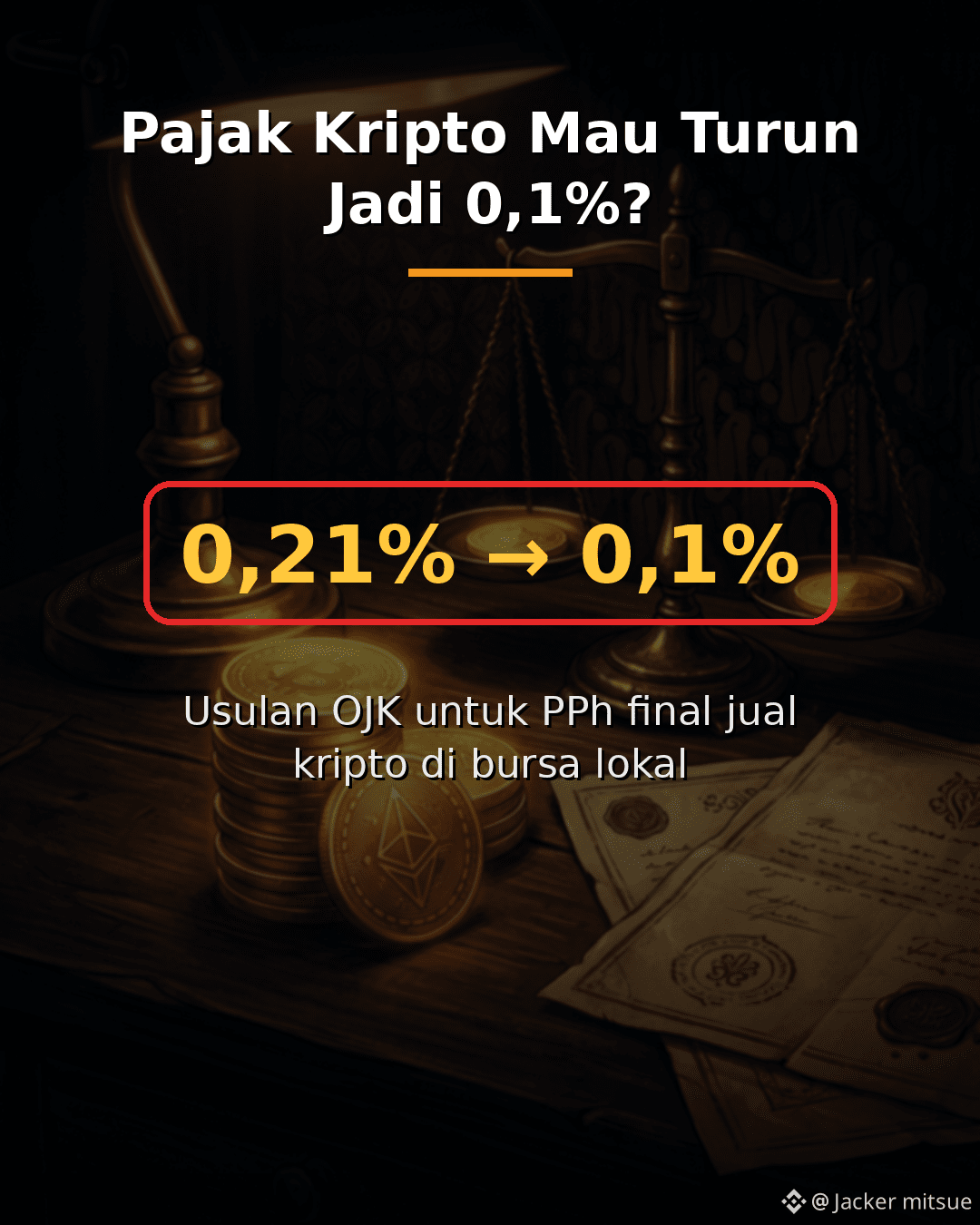
Will crypto tax in Indonesia drop to 0.1%?
Currently 0.21% (local exchanges) | 1% (foreign platforms) | Proposed: 0.1%
1. Current regulations — Since August 1, 2025, under PMK 50/2025, crypto sales are subject to a final Article 22 income tax of 0.21% of the transaction value when made through a domestic exchange, and 1% when made through a foreign platform. Buying crypto? It is no longer subject to VAT because crypto is treated as a security.
2. OJK proposal — Adi Budiarso of OJK said the industry is pushing for the final income tax rate to be reduced from 0.21% to 0.1%, matching the tax on stock sales on the stock exchange (at a seminar on Oct. 16, 2026, as reported by DDTCNews). It is still a proposal; no new PMK has been issued.
3. What this means for you — Tax is calculated on the sale value, not the profit. For example: sell Rp10 million worth of crypto on a local exchange, and the income tax is Rp21,000; if the proposal is approved, it would be Rp10,000. Keep an eye out for official announcements from the Ministry of Finance/DJP.
#PajakKripto #OJK #KriptoIndonesia #Regulasi #BinanceSquare
71
Log in to explore more content
Join global crypto users on Binance Square
⚡️ Get latest and useful information about crypto.
💬 Trusted by the world’s largest crypto exchange.
👍 Discover real insights from verified creators.
Email / Phone number
Trending Topics
1
#JobsReportRaisesHikeOdds
239,151 views
1,941 Discussing
2
#CPITestsDecemberRateOutlook
16,281 views
260 Discussing
3
#BitcoinRebounds$75KAsChipsLead
20,150 views
218 Discussing
4
#US Data Center Rules May Constrain AI Expansion
37,352 views
151 Discussing
5
#ARKPlans14ThematicETFsCoveringAIAndTokenizedMarkets
169 views
8 Discussing
6
#WillAnthropicListOnTime
56,611 views
746 Discussing
7
#WillUS-IranTensionsBoostSafe-HavenDemand?
8,949 views
106 Discussing
8
#BitcoinETFsSee$412MNetOutflows
2,447 views
43 Discussing
9
#HKSFCPlansToRestrictCryptoAndExchangeTerms
11,090 views
218 Discussing
10
#TradFiForBeginners
37,415 views
577 Discussing