
#validators
validators
42,625 views
52 Discussing
Hot
Latest

·
--
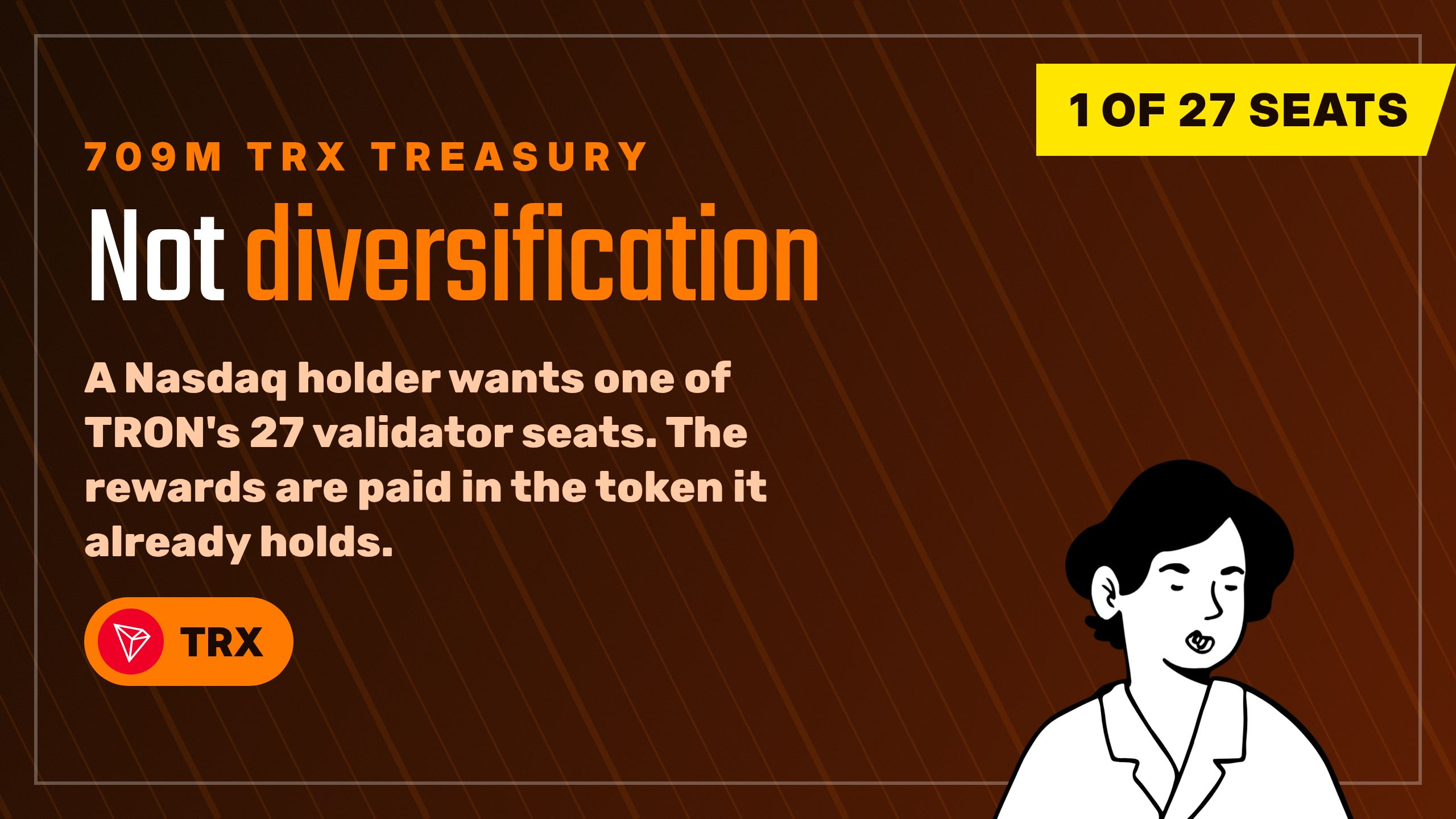
Tron Inc. holds 709M TRX and wants to become a validator. Earning TRX on a TRX treasury isn't diversification — it's leverage.
The bull case: this is a treasury company trying to escape the treasury-company trap. Tron Inc. (Nasdaq: TRON), the largest publicly traded holder of $TRX, announced on August 13 that it will pursue election as one of TRON's 27 Super Representatives and expand into infrastructure generating recurring on-chain revenue. SR economics are real: in 2025 the network paid roughly 122M TRX in block production rewards, plus about 1.5B TRX in voting rewards across the SRs and their partners. It has accumulated over 709M TRX since June 2025, with a cumulative gain near $15.8M as of June 30. Turning a passive pile into an operating business is exactly what holding vehicles stopped being paid a premium to avoid.
The bear case: read the reward numbers carefully. That 1.5B TRX is spread across all 27 SRs and their partners, so one new entrant's share is a fraction of the headline, not the headline. Election is a vote, dependent on the same concentrated voting power that already governs TRON — this is a request, not a plan. And the structural problem: revenue paid in TRX on a treasury made of TRX is not diversification, it is a second bet on the same asset. If TRX falls, holdings and earnings fall together, and the business built to de-risk the treasury turns out to be correlated to it.
Our read: right instinct, unresolved concentration. Falsifiable — watch whether the SR bid succeeds and whether any revenue is taken in something other than TRX. Non-TRX revenue would make this a business model. TRX-only revenue makes it a bigger position.
Not financial advice. DYOR.
#TRON #TRX #Validators #Crypto
Tron Inc. holds 709M TRX and wants to become a validator. Earning TRX on a TRX treasury isn't diversification — it's leverage.
The bull case: this is a treasury company trying to escape the treasury-company trap. Tron Inc. (Nasdaq: TRON), the largest publicly traded holder of $TRX , announced on August 13 that it will pursue election as one of TRON's 27 Super Representatives and expand into infrastructure generating recurring on-chain revenue. SR economics are real: in 2025 the network paid roughly 122M TRX in block production rewards, plus about 1.5B TRX in voting rewards across the SRs and their partners. It has accumulated over 709M TRX since June 2025, with a cumulative gain near $15.8M as of June 30. Turning a passive pile into an operating business is exactly what holding vehicles stopped being paid a premium to avoid.
The bear case: read the reward numbers carefully. That 1.5B TRX is spread across all 27 SRs and their partners, so one new entrant's share is a fraction of the headline, not the headline. Election is a vote, dependent on the same concentrated voting power that already governs TRON — this is a request, not a plan. And the structural problem: revenue paid in TRX on a treasury made of TRX is not diversification, it is a second bet on the same asset. If TRX falls, holdings and earnings fall together, and the business built to de-risk the treasury turns out to be correlated to it.
Our read: right instinct, unresolved concentration. Falsifiable — watch whether the SR bid succeeds and whether any revenue is taken in something other than TRX. Non-TRX revenue would make this a business model. TRX-only revenue makes it a bigger position.
Not financial advice. DYOR.
#TRON #TRX #Validators #Crypto
The bull case: this is a treasury company trying to escape the treasury-company trap. Tron Inc. (Nasdaq: TRON), the largest publicly traded holder of $TRX , announced on August 13 that it will pursue election as one of TRON's 27 Super Representatives and expand into infrastructure generating recurring on-chain revenue. SR economics are real: in 2025 the network paid roughly 122M TRX in block production rewards, plus about 1.5B TRX in voting rewards across the SRs and their partners. It has accumulated over 709M TRX since June 2025, with a cumulative gain near $15.8M as of June 30. Turning a passive pile into an operating business is exactly what holding vehicles stopped being paid a premium to avoid.
The bear case: read the reward numbers carefully. That 1.5B TRX is spread across all 27 SRs and their partners, so one new entrant's share is a fraction of the headline, not the headline. Election is a vote, dependent on the same concentrated voting power that already governs TRON — this is a request, not a plan. And the structural problem: revenue paid in TRX on a treasury made of TRX is not diversification, it is a second bet on the same asset. If TRX falls, holdings and earnings fall together, and the business built to de-risk the treasury turns out to be correlated to it.
Our read: right instinct, unresolved concentration. Falsifiable — watch whether the SR bid succeeds and whether any revenue is taken in something other than TRX. Non-TRX revenue would make this a business model. TRX-only revenue makes it a bigger position.
Not financial advice. DYOR.
#TRON #TRX #Validators #Crypto
7

TRON'S VALIDATOR NODE PERFORMANCE: POWERING THE NETWORK ⚡
TRON's Super Representative nodes are the backbone of our network. These 27 validators process transactions, produce blocks, and secure the network.
Each SR operates high-availability infrastructure with redundancy across multiple data centers.
SR performance metrics are publicly available, creating transparency and accountability.
TRON's validator ecosystem is a model of decentralized performance.
@TRON DAO
#TRONEcoStar #Validators #Infrastructure
TRON'S VALIDATOR NODE PERFORMANCE: POWERING THE NETWORK ⚡
TRON's Super Representative nodes are the backbone of our network. These 27 validators process transactions, produce blocks, and secure the network.
Each SR operates high-availability infrastructure with redundancy across multiple data centers.
SR performance metrics are publicly available, creating transparency and accountability.
TRON's validator ecosystem is a model of decentralized performance.
@TRON DAO
#TRONEcoStar #Validators #Infrastructure
TRON's Super Representative nodes are the backbone of our network. These 27 validators process transactions, produce blocks, and secure the network.
Each SR operates high-availability infrastructure with redundancy across multiple data centers.
SR performance metrics are publicly available, creating transparency and accountability.
TRON's validator ecosystem is a model of decentralized performance.
@TRON DAO
#TRONEcoStar #Validators #Infrastructure

·
--
One of the most underrated aspects of BTTC is validator coordination.
Most users only notice the front-end experience.
But backend consensus and validation systems determine whether cross-chain infrastructure can actually scale securely.
That’s the real foundation.
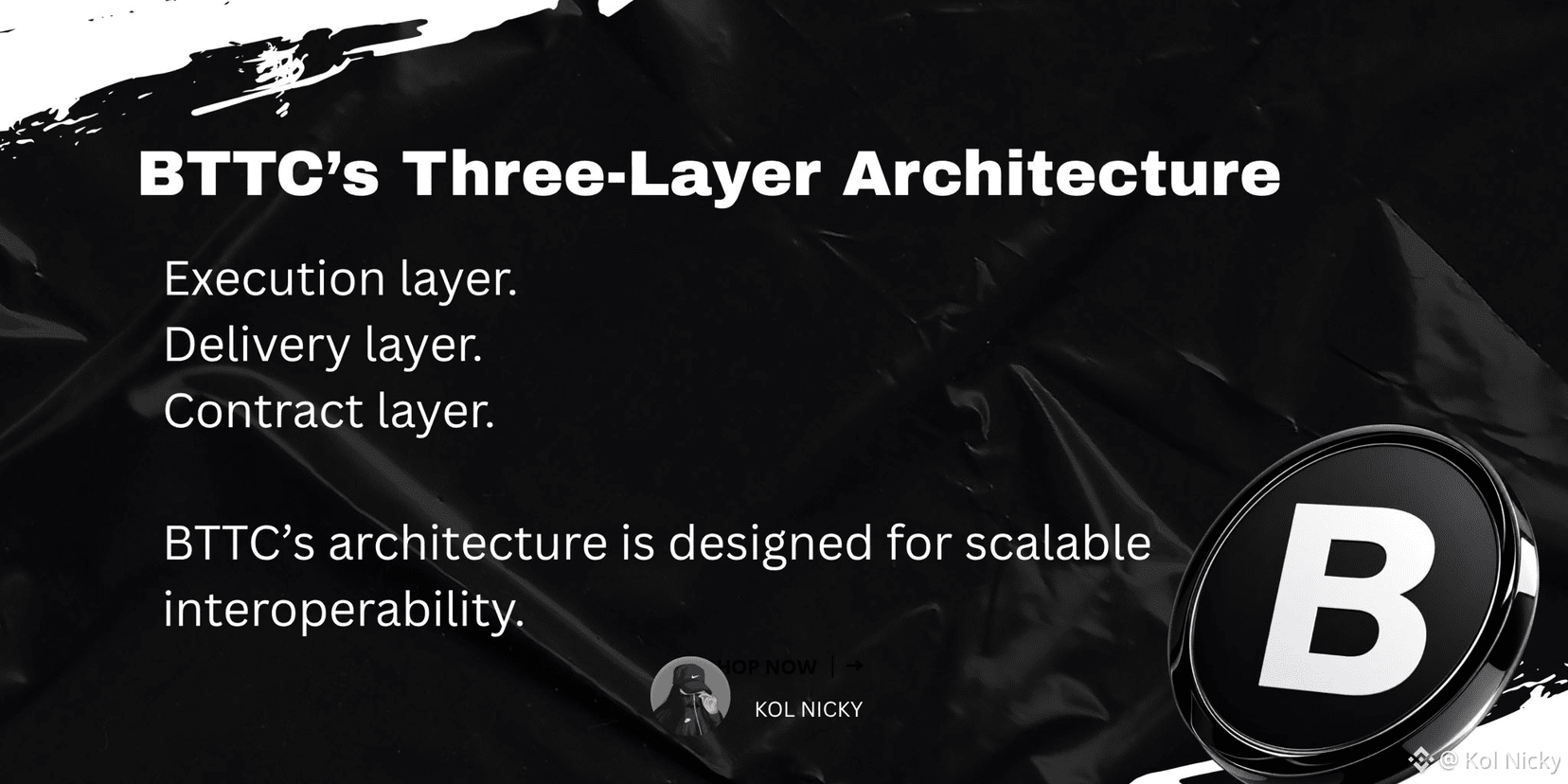
BTTC’s validator-based architecture helps coordinate execution and verification across ecosystems.
Infrastructure reliability matters more than marketing narratives.
Especially as stablecoin flows and DeFi settlement volumes increase.
The hidden layer here is trust minimization.
Efficient coordination without centralized dependency becomes increasingly important as crypto infrastructure matures.
Execution layers matter.
The next growth phase in Web3 likely depends less on speculation…
…and more on systems capable of handling sustained on-chain economic activity efficiently.
@BitTorrent_Official @JustinSun #Validators #TRONEcoStar
One of the most underrated aspects of BTTC is validator coordination.
Most users only notice the front-end experience.
But backend consensus and validation systems determine whether cross-chain infrastructure can actually scale securely.
That’s the real foundation.
BTTC’s validator-based architecture helps coordinate execution and verification across ecosystems.
Infrastructure reliability matters more than marketing narratives.
Especially as stablecoin flows and DeFi settlement volumes increase.
The hidden layer here is trust minimization.
Efficient coordination without centralized dependency becomes increasingly important as crypto infrastructure matures.
Execution layers matter.
The next growth phase in Web3 likely depends less on speculation…
…and more on systems capable of handling sustained on-chain economic activity efficiently.
@BitTorrent_Official @Justin Sun孙宇晨 #Validators #TRONEcoStar
Most users only notice the front-end experience.
But backend consensus and validation systems determine whether cross-chain infrastructure can actually scale securely.
That’s the real foundation.
BTTC’s validator-based architecture helps coordinate execution and verification across ecosystems.
Infrastructure reliability matters more than marketing narratives.
Especially as stablecoin flows and DeFi settlement volumes increase.
The hidden layer here is trust minimization.
Efficient coordination without centralized dependency becomes increasingly important as crypto infrastructure matures.
Execution layers matter.
The next growth phase in Web3 likely depends less on speculation…
…and more on systems capable of handling sustained on-chain economic activity efficiently.
@BitTorrent_Official @Justin Sun孙宇晨 #Validators #TRONEcoStar
111
·
--
Most people think blockchain security comes from technology.
In reality, it comes from incentives.
Technology defines the rules.
Incentives determine whether participants follow them.
BTTC’s validator system is built around that principle.
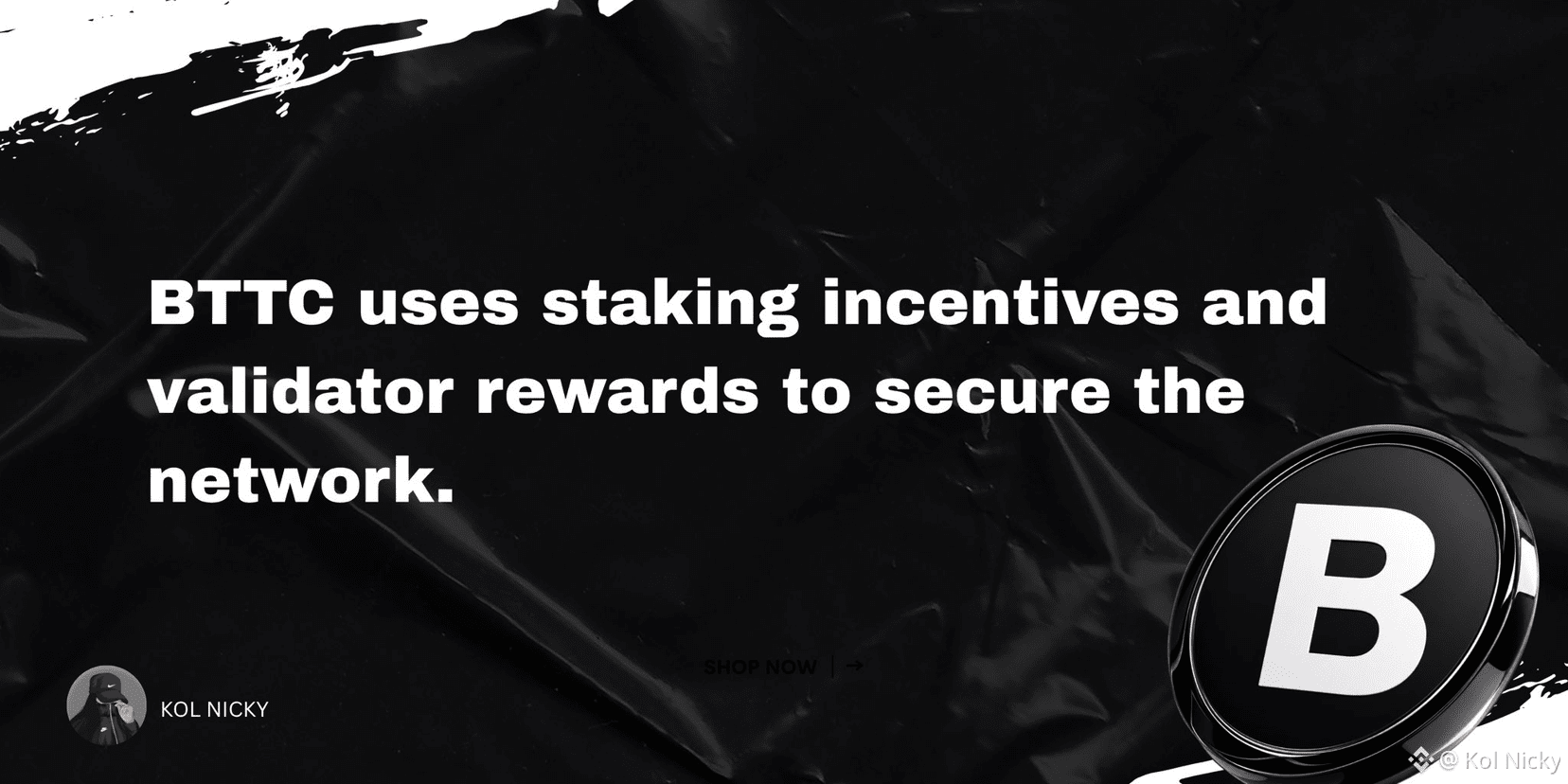
Validators stake assets, secure the network, verify transactions, and participate in maintaining cross-chain operations.
In return, they receive rewards.
Simple structure.
Powerful implications.
The hidden layer is economic alignment.
A validator with meaningful economic exposure has a strong incentive to protect the system they’re helping secure.
This transforms security from a technical problem into an economic one.
Strong infrastructure isn’t created by trust.
It’s created by incentive alignment.
The most resilient networks are often those where participant self-interest and network health move in the same direction.
BTTC’s validator design reflects a broader truth:
decentralized systems scale when incentives scale.
⤞ Website: bt.io
⤞ Twitter: x.com/BitTorrent
⤞ Telegram: t.me/BTTBitTorrent
⤞ GitHub: github.com/bttcprotocol
@BitTorrent_Official @JustinSun #BTTC #Validators #Web3 #TRONEcoStar
Most people think blockchain security comes from technology.
In reality, it comes from incentives.
Technology defines the rules.
Incentives determine whether participants follow them.
BTTC’s validator system is built around that principle.
Validators stake assets, secure the network, verify transactions, and participate in maintaining cross-chain operations.
In return, they receive rewards.
Simple structure.
Powerful implications.
The hidden layer is economic alignment.
A validator with meaningful economic exposure has a strong incentive to protect the system they’re helping secure.
This transforms security from a technical problem into an economic one.
Strong infrastructure isn’t created by trust.
It’s created by incentive alignment.
The most resilient networks are often those where participant self-interest and network health move in the same direction.
BTTC’s validator design reflects a broader truth:
decentralized systems scale when incentives scale.
⤞ Website: bt.io
⤞ Twitter: x.com/BitTorrent
⤞ Telegram: t.me/BTTBitTorrent
⤞ GitHub: github.com/bttcprotocol
@BitTorrent_Official @Justin Sun孙宇晨 #BTTC #Validators #Web3 #TRONEcoStar
In reality, it comes from incentives.
Technology defines the rules.
Incentives determine whether participants follow them.
BTTC’s validator system is built around that principle.
Validators stake assets, secure the network, verify transactions, and participate in maintaining cross-chain operations.
In return, they receive rewards.
Simple structure.
Powerful implications.
The hidden layer is economic alignment.
A validator with meaningful economic exposure has a strong incentive to protect the system they’re helping secure.
This transforms security from a technical problem into an economic one.
Strong infrastructure isn’t created by trust.
It’s created by incentive alignment.
The most resilient networks are often those where participant self-interest and network health move in the same direction.
BTTC’s validator design reflects a broader truth:
decentralized systems scale when incentives scale.
⤞ Website: bt.io
⤞ Twitter: x.com/BitTorrent
⤞ Telegram: t.me/BTTBitTorrent
⤞ GitHub: github.com/bttcprotocol
@BitTorrent_Official @Justin Sun孙宇晨 #BTTC #Validators #Web3 #TRONEcoStar
190

·
--
Verified
Guys.....$SOL almost broke.
Teraswitch routing error knocked ~29% of staked SOL offline Wednesday.
That's dangerously close to the 33.34% line where finality just STOPS.
90 validators down for 33 min. ~333 SOL in rewards gone.
Started in Miami, spread to Europe and Asia... North America stayed clean.
Fixed in 10 min. Blocks kept producing. Network held.
But the real story...
One single provider was holding OVER 27% of stake.
That's already above safety limits BEFORE the glitch even hit.
That's not decentralization... that's a single point of failure wearing a decentralization costume.
Solana didn't get saved by design this time. It got saved by luck.
Next time the number might not stop at 29%.
what do u think.... is validator concentration the real risk nobody's pricing in?
$SOL
{spot}(SOLUSDT)
{future}(SOLUSDT)
#solana #Validators
#solanastakingnearshaltonroutingerror
Guys.....$SOL almost broke.
Teraswitch routing error knocked ~29% of staked SOL offline Wednesday.
That's dangerously close to the 33.34% line where finality just STOPS.
90 validators down for 33 min. ~333 SOL in rewards gone.
Started in Miami, spread to Europe and Asia... North America stayed clean.
Fixed in 10 min. Blocks kept producing. Network held.
But the real story...
One single provider was holding OVER 27% of stake.
That's already above safety limits BEFORE the glitch even hit.
That's not decentralization... that's a single point of failure wearing a decentralization costume.
Solana didn't get saved by design this time. It got saved by luck.
Next time the number might not stop at 29%.
what do u think.... is validator concentration the real risk nobody's pricing in?
$SOL
#solana #Validators
#solanastakingnearshaltonroutingerror
Teraswitch routing error knocked ~29% of staked SOL offline Wednesday.
That's dangerously close to the 33.34% line where finality just STOPS.
90 validators down for 33 min. ~333 SOL in rewards gone.
Started in Miami, spread to Europe and Asia... North America stayed clean.
Fixed in 10 min. Blocks kept producing. Network held.
But the real story...
One single provider was holding OVER 27% of stake.
That's already above safety limits BEFORE the glitch even hit.
That's not decentralization... that's a single point of failure wearing a decentralization costume.
Solana didn't get saved by design this time. It got saved by luck.
Next time the number might not stop at 29%.
what do u think.... is validator concentration the real risk nobody's pricing in?
$SOL
#solana #Validators
#solanastakingnearshaltonroutingerror
5
2
2k

·
--
Partly True
Article
Community,
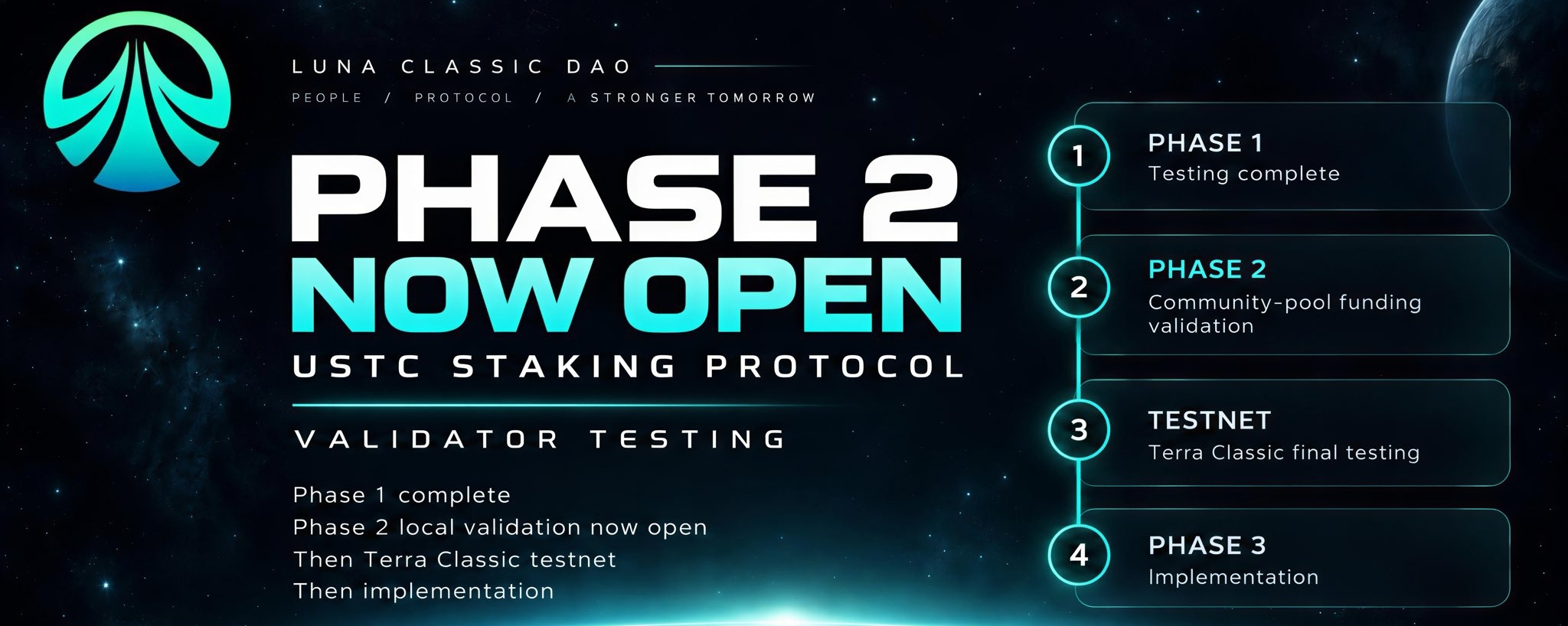
Phase 2 of the USTC Staking protocol is now open for validator testing.LunaClassic
Phase 1 testing is complete. Phase 2 validation starts now. After Phase 2 is finished, the module will be deployed on Terra Classic’s testnet for final testing. Phase 3 implementation comes only after that testnet work is complete. That sequence is the process, not a stall.
Phase 2 validates the community-pool funding model for native USTC staking. Users stake USTC directly from their own accounts with native MsgStake. Principal does not pass through a contract. What changes is reward funding.
A governance proposal executes MsgFundRewards. Only after that proposal is authorized does the application move an approved existing uusd amount from the distribution community pool into ustcstaking_reward_pool. Only after that transfer succeeds does the staking module update its reward index.
This operation must not mint USTC.
It must not debit user principal.
It must not change LUNC staking or validator consensus state.
USTC staking does not grant governance rights.
We are now inviting independent validators to run this campaign on a disposable seven-validator local network. The campaign exercises the full lifecycle required for Phase 2 accounting: governance execution, exact pool and supply reconciliation, expected failure cases, claims, pause and resume, unbonding and withdrawal, and recovery after validator and network restarts.
Passing this campaign is functional test evidence. It is not approval to activate on a public network. After Phase 2, the next gate is Terra Classic testnet. The old-state-to-new-binary upgrade rehearsal remains a separate release gate.
Validators who want to participate should contact us for the candidate SHA, the runbook, and coordination. Your involvement is essential. We will not skip Phase 2 on a native module that cannot grant governance rights or affect LUNC consensus.
This is a deliberate, community-aligned step forward. We remain committed to transparency, proper process, and delivering what the community has already signaled support for.
The Future is #Onchain
#LUNC USTC #TerraClassic #Staking #Validators
$LUNC
$USTC
{future}(USTCUSDT)
Community, Phase 2 of the USTC Staking protocol is now open for validator testing.
LunaClassic
Phase 1 testing is complete. Phase 2 validation starts now. After Phase 2 is finished, the module will be deployed on Terra Classic’s testnet for final testing. Phase 3 implementation comes only after that testnet work is complete. That sequence is the process, not a stall.
Phase 2 validates the community-pool funding model for native USTC staking. Users stake USTC directly from their own accounts with native MsgStake. Principal does not pass through a contract. What changes is reward funding.
A governance proposal executes MsgFundRewards. Only after that proposal is authorized does the application move an approved existing uusd amount from the distribution community pool into ustcstaking_reward_pool. Only after that transfer succeeds does the staking module update its reward index.
This operation must not mint USTC.
It must not debit user principal.
It must not change LUNC staking or validator consensus state.
USTC staking does not grant governance rights.
We are now inviting independent validators to run this campaign on a disposable seven-validator local network. The campaign exercises the full lifecycle required for Phase 2 accounting: governance execution, exact pool and supply reconciliation, expected failure cases, claims, pause and resume, unbonding and withdrawal, and recovery after validator and network restarts.
Passing this campaign is functional test evidence. It is not approval to activate on a public network. After Phase 2, the next gate is Terra Classic testnet. The old-state-to-new-binary upgrade rehearsal remains a separate release gate.
Validators who want to participate should contact us for the candidate SHA, the runbook, and coordination. Your involvement is essential. We will not skip Phase 2 on a native module that cannot grant governance rights or affect LUNC consensus.
This is a deliberate, community-aligned step forward. We remain committed to transparency, proper process, and delivering what the community has already signaled support for.
The Future is #Onchain
#LUNC USTC #TerraClassic #Staking #Validators
$LUNC
$USTC
Phase 1 testing is complete. Phase 2 validation starts now. After Phase 2 is finished, the module will be deployed on Terra Classic’s testnet for final testing. Phase 3 implementation comes only after that testnet work is complete. That sequence is the process, not a stall.
Phase 2 validates the community-pool funding model for native USTC staking. Users stake USTC directly from their own accounts with native MsgStake. Principal does not pass through a contract. What changes is reward funding.
A governance proposal executes MsgFundRewards. Only after that proposal is authorized does the application move an approved existing uusd amount from the distribution community pool into ustcstaking_reward_pool. Only after that transfer succeeds does the staking module update its reward index.
This operation must not mint USTC.
It must not debit user principal.
It must not change LUNC staking or validator consensus state.
USTC staking does not grant governance rights.
We are now inviting independent validators to run this campaign on a disposable seven-validator local network. The campaign exercises the full lifecycle required for Phase 2 accounting: governance execution, exact pool and supply reconciliation, expected failure cases, claims, pause and resume, unbonding and withdrawal, and recovery after validator and network restarts.
Passing this campaign is functional test evidence. It is not approval to activate on a public network. After Phase 2, the next gate is Terra Classic testnet. The old-state-to-new-binary upgrade rehearsal remains a separate release gate.
Validators who want to participate should contact us for the candidate SHA, the runbook, and coordination. Your involvement is essential. We will not skip Phase 2 on a native module that cannot grant governance rights or affect LUNC consensus.
This is a deliberate, community-aligned step forward. We remain committed to transparency, proper process, and delivering what the community has already signaled support for.
The Future is #Onchain
#LUNC USTC #TerraClassic #Staking #Validators
$LUNC
$USTC
3
752

·
--
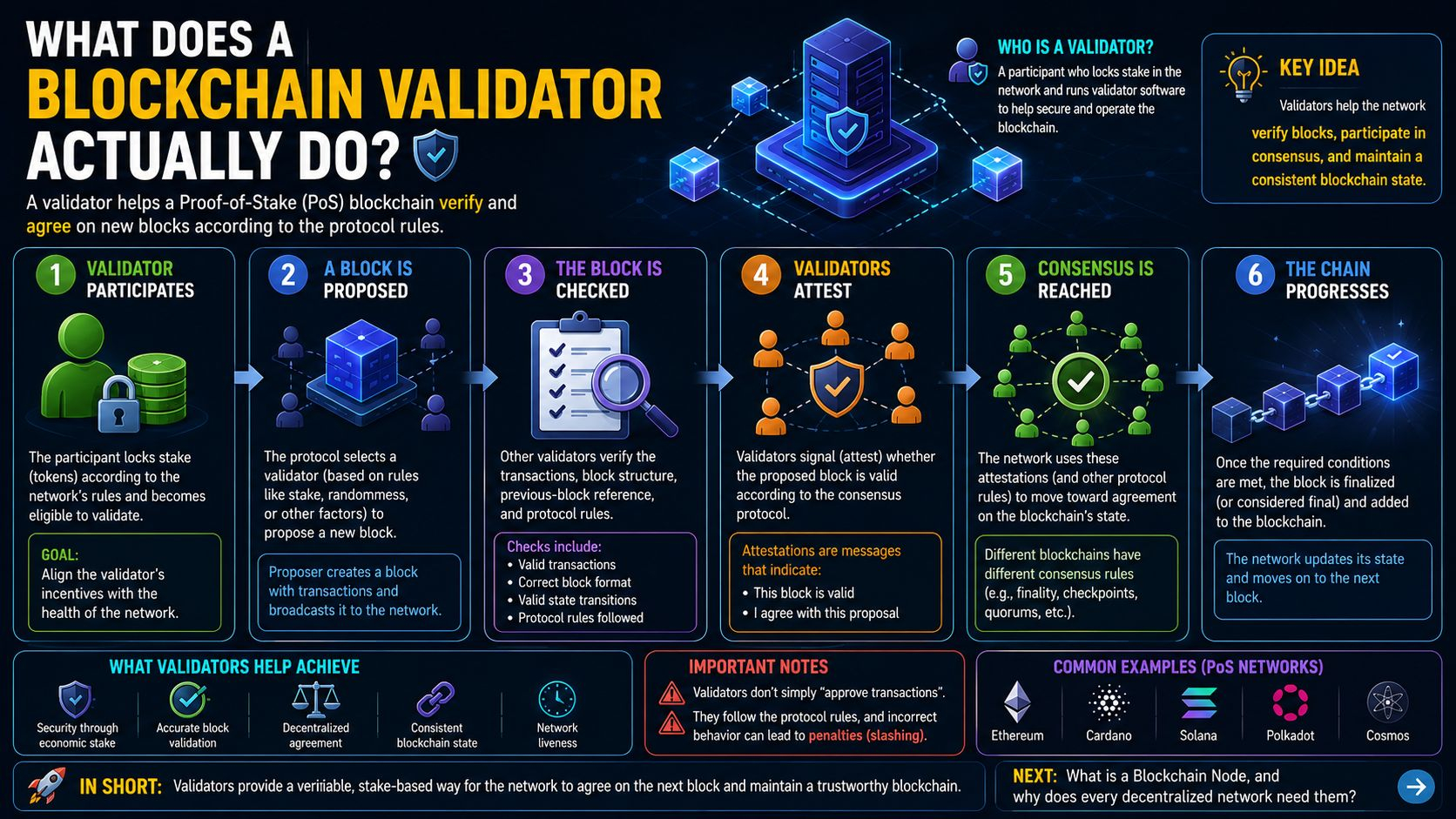
What Does a Blockchain Validator Actually Do? 🔐🔗
A validator helps a Proof-of-Stake blockchain verify and agree on new blocks.
⚙️ How it works
1️⃣ Validator participates
A participant locks stake according to the network’s rules and becomes eligible to validate.
2️⃣ A block is proposed
The protocol selects a validator to propose a new block.
3️⃣ The block is checked
Other validators verify the transactions, block structure, previous-block reference, and protocol rules.
4️⃣ Validators attest
Validators signal whether the proposed block is valid according to the consensus protocol.
5️⃣ Consensus is reached
The network uses these protocol-defined attestations to move toward agreement on the blockchain’s state.
6️⃣ The chain progresses
Once the required conditions are met, the block becomes part of the accepted chain.
🧠 Key Idea
A validator doesn't simply “approve transactions.”
It helps the network verify blocks, participate in consensus, and maintain a consistent blockchain state.
Next: What is a Blockchain Node, and why does every decentralized network need them? 🌐
#Blockchain #ProofOfStake #Validators #BlockchainTechnology #ConsensusHK2026
$BTC $BNB $BTTC
What Does a Blockchain Validator Actually Do? 🔐🔗
A validator helps a Proof-of-Stake blockchain verify and agree on new blocks.
⚙️ How it works
1️⃣ Validator participates
A participant locks stake according to the network’s rules and becomes eligible to validate.
2️⃣ A block is proposed
The protocol selects a validator to propose a new block.
3️⃣ The block is checked
Other validators verify the transactions, block structure, previous-block reference, and protocol rules.
4️⃣ Validators attest
Validators signal whether the proposed block is valid according to the consensus protocol.
5️⃣ Consensus is reached
The network uses these protocol-defined attestations to move toward agreement on the blockchain’s state.
6️⃣ The chain progresses
Once the required conditions are met, the block becomes part of the accepted chain.
🧠 Key Idea
A validator doesn't simply “approve transactions.”
It helps the network verify blocks, participate in consensus, and maintain a consistent blockchain state.
Next: What is a Blockchain Node, and why does every decentralized network need them? 🌐
#Blockchain #ProofOfStake #Validators #BlockchainTechnology #ConsensusHK2026
$BTC $BNB $BTTC
A validator helps a Proof-of-Stake blockchain verify and agree on new blocks.
⚙️ How it works
1️⃣ Validator participates
A participant locks stake according to the network’s rules and becomes eligible to validate.
2️⃣ A block is proposed
The protocol selects a validator to propose a new block.
3️⃣ The block is checked
Other validators verify the transactions, block structure, previous-block reference, and protocol rules.
4️⃣ Validators attest
Validators signal whether the proposed block is valid according to the consensus protocol.
5️⃣ Consensus is reached
The network uses these protocol-defined attestations to move toward agreement on the blockchain’s state.
6️⃣ The chain progresses
Once the required conditions are met, the block becomes part of the accepted chain.
🧠 Key Idea
A validator doesn't simply “approve transactions.”
It helps the network verify blocks, participate in consensus, and maintain a consistent blockchain state.
Next: What is a Blockchain Node, and why does every decentralized network need them? 🌐
#Blockchain #ProofOfStake #Validators #BlockchainTechnology #ConsensusHK2026
$BTC $BNB $BTTC
18
3
247

·
--
Validator Economics Are Shaping the Next Layer 1 Winner
Most Layer 1 comparisons focus on TPS or TVL. But the real signal is validator economics — and it tells a different story.
Decentralization is not just ideological. It is structural insurance. A network with thousands of validators spread across independent operators has a fundamentally different risk profile than one where a handful of staking pools control consensus. This gap matters more as institutional capital scales its on-chain exposure.
$ETH has leaned hard into this bet. Post-merge, over 1 million validators are active, making coordinated censorship economically and logistically prohibitive. The tradeoff is complexity — but complexity that distributes risk is worth paying for.
$SOL prioritizes performance, accepting a higher hardware barrier that concentrates validators in well-resourced data centers. The network is fast and unified, but its validator set is smaller and more geographically clustered. That is a feature until it becomes a fault.
$ADA has long championed stake pool decentralization, with thousands of community-operated pools. The participation model is broad, but translating that into developer and DeFi momentum remains the ongoing challenge.
The deeper point: decentralization is not a binary state. It is a spectrum, and each chain has made deliberate bets on where to land. As crypto matures, the chains that can prove credible neutrality at scale will absorb the most institutional trust.
Understanding validator economics is how you read those bets clearly.
#Crypto #Layer1 #Ethereum #Validators #BlockchainInfrastructure
Validator Economics Are Shaping the Next Layer 1 Winner
Most Layer 1 comparisons focus on TPS or TVL. But the real signal is validator economics — and it tells a different story.
Decentralization is not just ideological. It is structural insurance. A network with thousands of validators spread across independent operators has a fundamentally different risk profile than one where a handful of staking pools control consensus. This gap matters more as institutional capital scales its on-chain exposure.
$ETH has leaned hard into this bet. Post-merge, over 1 million validators are active, making coordinated censorship economically and logistically prohibitive. The tradeoff is complexity — but complexity that distributes risk is worth paying for.
$SOL prioritizes performance, accepting a higher hardware barrier that concentrates validators in well-resourced data centers. The network is fast and unified, but its validator set is smaller and more geographically clustered. That is a feature until it becomes a fault.
$ADA has long championed stake pool decentralization, with thousands of community-operated pools. The participation model is broad, but translating that into developer and DeFi momentum remains the ongoing challenge.
The deeper point: decentralization is not a binary state. It is a spectrum, and each chain has made deliberate bets on where to land. As crypto matures, the chains that can prove credible neutrality at scale will absorb the most institutional trust.
Understanding validator economics is how you read those bets clearly.
#Crypto #Layer1 #Ethereum #Validators #BlockchainInfrastructure
Most Layer 1 comparisons focus on TPS or TVL. But the real signal is validator economics — and it tells a different story.
Decentralization is not just ideological. It is structural insurance. A network with thousands of validators spread across independent operators has a fundamentally different risk profile than one where a handful of staking pools control consensus. This gap matters more as institutional capital scales its on-chain exposure.
$ETH has leaned hard into this bet. Post-merge, over 1 million validators are active, making coordinated censorship economically and logistically prohibitive. The tradeoff is complexity — but complexity that distributes risk is worth paying for.
$SOL prioritizes performance, accepting a higher hardware barrier that concentrates validators in well-resourced data centers. The network is fast and unified, but its validator set is smaller and more geographically clustered. That is a feature until it becomes a fault.
$ADA has long championed stake pool decentralization, with thousands of community-operated pools. The participation model is broad, but translating that into developer and DeFi momentum remains the ongoing challenge.
The deeper point: decentralization is not a binary state. It is a spectrum, and each chain has made deliberate bets on where to land. As crypto matures, the chains that can prove credible neutrality at scale will absorb the most institutional trust.
Understanding validator economics is how you read those bets clearly.
#Crypto #Layer1 #Ethereum #Validators #BlockchainInfrastructure
117
·
--
Ethereum validators are completely losing their minds today. A massive, controversial new protocol proposal just dropped on the Ethereum research forum by Kleros founder Clément Lesaege, and it’s dividing the entire community.
The proposal wants to introduce a protocol-level mechanism that would redirect up to 10% of all staking yields away from validators and into a public ecosystem funding pool. If a 51% majority of validators vote yes, this contribution becomes mandatory network-wide.
At current staking levels, this would forcefully strip away nearly 70,000 ETH ($120 Million+) annually from regular stakers. Developers claim it’s necessary to fund public goods and infrastructure, but regular nodes are calling it an unhinged "crypto tax."
👇 Ethereum holders, where do you stand? Is this a brilliant move for ecosystem growth, or is it a centralized robbery of validator profits? Let’s fight it out below!
#Ethereum #ETH #CryptoNews #EthereumStaking #Validators #DeFi $ETH $BTC
Ethereum validators are completely losing their minds today. A massive, controversial new protocol proposal just dropped on the Ethereum research forum by Kleros founder Clément Lesaege, and it’s dividing the entire community.
The proposal wants to introduce a protocol-level mechanism that would redirect up to 10% of all staking yields away from validators and into a public ecosystem funding pool. If a 51% majority of validators vote yes, this contribution becomes mandatory network-wide.
At current staking levels, this would forcefully strip away nearly 70,000 ETH ($120 Million+) annually from regular stakers. Developers claim it’s necessary to fund public goods and infrastructure, but regular nodes are calling it an unhinged "crypto tax."
👇 Ethereum holders, where do you stand? Is this a brilliant move for ecosystem growth, or is it a centralized robbery of validator profits? Let’s fight it out below!
#Ethereum #ETH #CryptoNews #EthereumStaking #Validators #DeFi $ETH $BTC
The proposal wants to introduce a protocol-level mechanism that would redirect up to 10% of all staking yields away from validators and into a public ecosystem funding pool. If a 51% majority of validators vote yes, this contribution becomes mandatory network-wide.
At current staking levels, this would forcefully strip away nearly 70,000 ETH ($120 Million+) annually from regular stakers. Developers claim it’s necessary to fund public goods and infrastructure, but regular nodes are calling it an unhinged "crypto tax."
👇 Ethereum holders, where do you stand? Is this a brilliant move for ecosystem growth, or is it a centralized robbery of validator profits? Let’s fight it out below!
#Ethereum #ETH #CryptoNews #EthereumStaking #Validators #DeFi $ETH $BTC
1
30
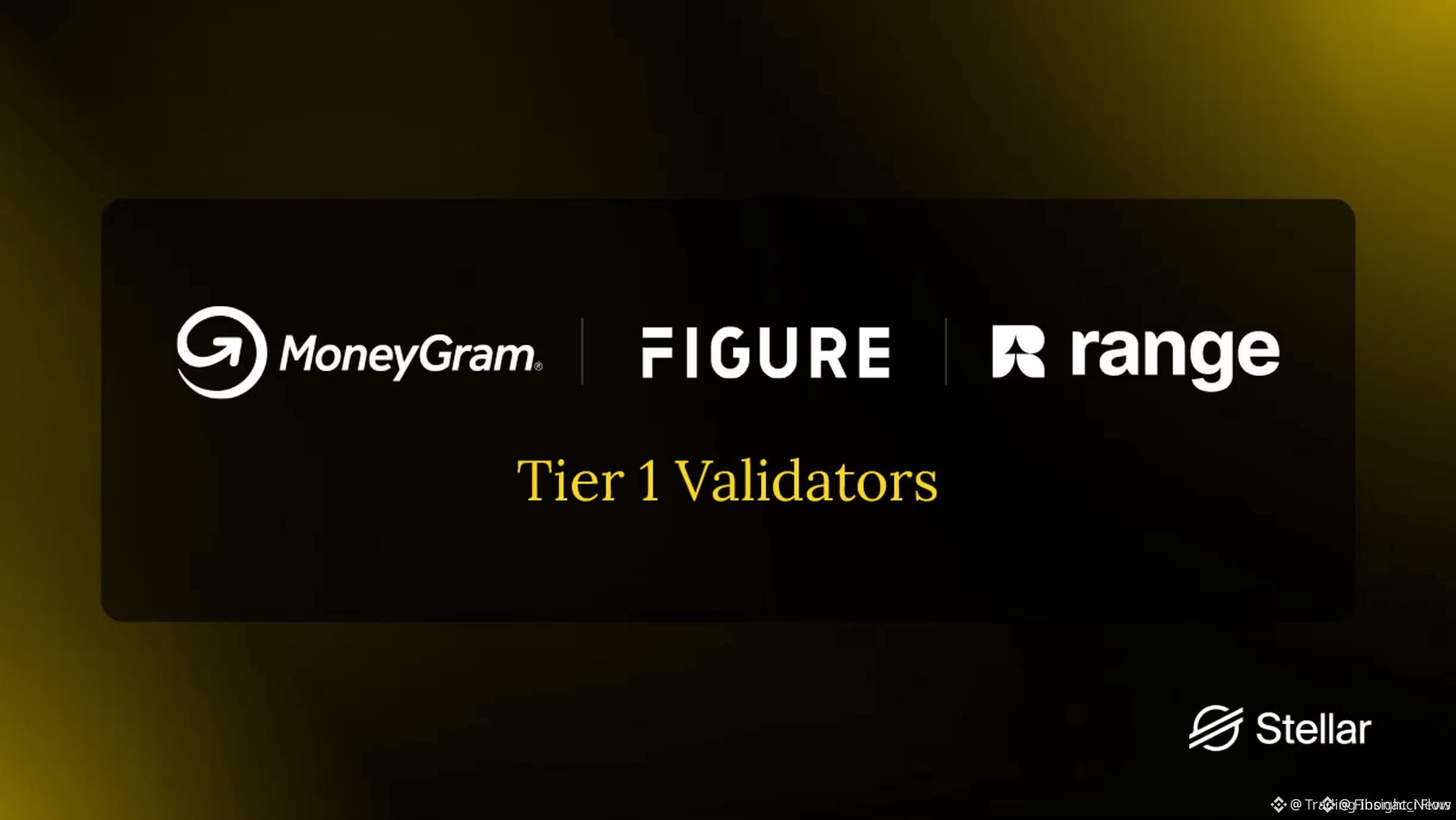
WESTERN UNION JOINS $XLM AS TIER 1 VALIDATOR – MAJOR ADOPTION SIGNAL ⚡
Three established names just stepped into Stellar's validator set — Western Union, Figure Markets, and Range. Having a global money transfer giant run a node means the network's security now directly aligns with traditional finance interests. This isn't just a press release; it's infrastructure.
The validator layer just got a credibility upgrade that most L1s can't claim. When institutions put their own hardware and uptime on the line, the signal is loud. How are you positioning for the next wave of real-world blockchain adoption?
Not financial advice. Always manage your risk.
#XLM #Stellar #Validators #Adoption #Crypto
⚡
WESTERN UNION JOINS $XLM AS TIER 1 VALIDATOR – MAJOR ADOPTION SIGNAL ⚡
Three established names just stepped into Stellar's validator set — Western Union, Figure Markets, and Range. Having a global money transfer giant run a node means the network's security now directly aligns with traditional finance interests. This isn't just a press release; it's infrastructure.
The validator layer just got a credibility upgrade that most L1s can't claim. When institutions put their own hardware and uptime on the line, the signal is loud. How are you positioning for the next wave of real-world blockchain adoption?
Not financial advice. Always manage your risk.
#XLM #Stellar #Validators #Adoption #Crypto
⚡
Three established names just stepped into Stellar's validator set — Western Union, Figure Markets, and Range. Having a global money transfer giant run a node means the network's security now directly aligns with traditional finance interests. This isn't just a press release; it's infrastructure.
The validator layer just got a credibility upgrade that most L1s can't claim. When institutions put their own hardware and uptime on the line, the signal is loud. How are you positioning for the next wave of real-world blockchain adoption?
Not financial advice. Always manage your risk.
#XLM #Stellar #Validators #Adoption #Crypto
⚡
23

·
--
CARDANO RISES TO SECOND LARGEST NETWORK BY VALIDATOR COUNT $ADA 🚀
Cardano now hosts ~2,900 validators, making it the second‑largest blockchain after Ethereum, which maintains ~895,200 validators. The rise puts $ADA ahead of comparable platforms, underscoring expanding decentralization and potential institutional appeal.
A higher validator count signals broader participation and stronger security, attributes that can attract institutional stakers seeking resilient infrastructure. While $ADA’s market depth remains solid, the validator expansion may support future scaling initiatives and staking yields. Traders should monitor on‑chain activity and liquidity on top-tier exchange for any price implications.
Not financial advice. Manage your risk.
#Crypto #Cardano #Blockchain #Validators #DeFi
⚡
{future}(ADAUSDT)
CARDANO RISES TO SECOND LARGEST NETWORK BY VALIDATOR COUNT $ADA 🚀
Cardano now hosts ~2,900 validators, making it the second‑largest blockchain after Ethereum, which maintains ~895,200 validators. The rise puts $ADA ahead of comparable platforms, underscoring expanding decentralization and potential institutional appeal.
A higher validator count signals broader participation and stronger security, attributes that can attract institutional stakers seeking resilient infrastructure. While $ADA ’s market depth remains solid, the validator expansion may support future scaling initiatives and staking yields. Traders should monitor on‑chain activity and liquidity on top-tier exchange for any price implications.
Not financial advice. Manage your risk.
#Crypto #Cardano #Blockchain #Validators #DeFi
⚡
Cardano now hosts ~2,900 validators, making it the second‑largest blockchain after Ethereum, which maintains ~895,200 validators. The rise puts $ADA ahead of comparable platforms, underscoring expanding decentralization and potential institutional appeal.
A higher validator count signals broader participation and stronger security, attributes that can attract institutional stakers seeking resilient infrastructure. While $ADA ’s market depth remains solid, the validator expansion may support future scaling initiatives and staking yields. Traders should monitor on‑chain activity and liquidity on top-tier exchange for any price implications.
Not financial advice. Manage your risk.
#Crypto #Cardano #Blockchain #Validators #DeFi
⚡
35

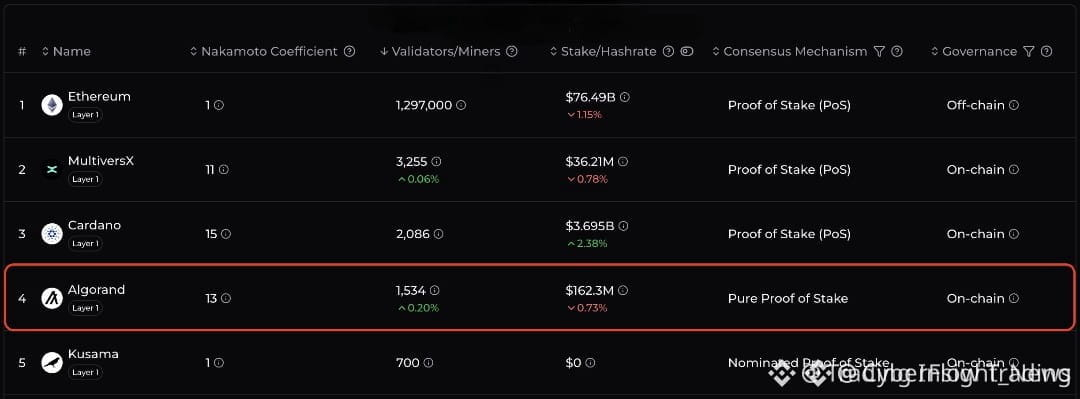
🦈 $ALGO HITS 1,534 VALIDATORS, ENTERS TOP-5 DECENTRALIZED NETWORKS 📈
While the crowd chases the next 15-minute candle, the real signals are being set in the infrastructure. 📊 A 1,534-validator ATH isn't just a sticker — it's the network loading its shields against centralization attacks. 🛡️ Algorand just flexed into the top-5 most decentralized chains, a weight class not many can punch in.
This is how you spot the sleeper builds in crypto. 🔍 High throughput normally forces trade-offs, but $ALGO is proving it can scale while keeping the validator base broad and engaged. That's the kind of foundation serious capital waits for before putting real size on the board.
Conviction follows infra strength like this. 💬 Does a validator count shift your long-term thesis on $ALGO , or are you purely watching the order flow?
⚠️ Not financial advice. Always manage your risk. 🛡️
🏷️ #ALGO #Decentralization #Validators #Blockchain #CryptoNews
🦈 💎
🦈 $ALGO HITS 1,534 VALIDATORS, ENTERS TOP-5 DECENTRALIZED NETWORKS 📈
While the crowd chases the next 15-minute candle, the real signals are being set in the infrastructure. 📊 A 1,534-validator ATH isn't just a sticker — it's the network loading its shields against centralization attacks. 🛡️ Algorand just flexed into the top-5 most decentralized chains, a weight class not many can punch in.
This is how you spot the sleeper builds in crypto. 🔍 High throughput normally forces trade-offs, but $ALGO is proving it can scale while keeping the validator base broad and engaged. That's the kind of foundation serious capital waits for before putting real size on the board.
Conviction follows infra strength like this. 💬 Does a validator count shift your long-term thesis on $ALGO , or are you purely watching the order flow?
⚠️ Not financial advice. Always manage your risk. 🛡️
🏷️ #ALGO #Decentralization #Validators #Blockchain #CryptoNews
🦈 💎
While the crowd chases the next 15-minute candle, the real signals are being set in the infrastructure. 📊 A 1,534-validator ATH isn't just a sticker — it's the network loading its shields against centralization attacks. 🛡️ Algorand just flexed into the top-5 most decentralized chains, a weight class not many can punch in.
This is how you spot the sleeper builds in crypto. 🔍 High throughput normally forces trade-offs, but $ALGO is proving it can scale while keeping the validator base broad and engaged. That's the kind of foundation serious capital waits for before putting real size on the board.
Conviction follows infra strength like this. 💬 Does a validator count shift your long-term thesis on $ALGO , or are you purely watching the order flow?
⚠️ Not financial advice. Always manage your risk. 🛡️
🏷️ #ALGO #Decentralization #Validators #Blockchain #CryptoNews
🦈 💎
1
66

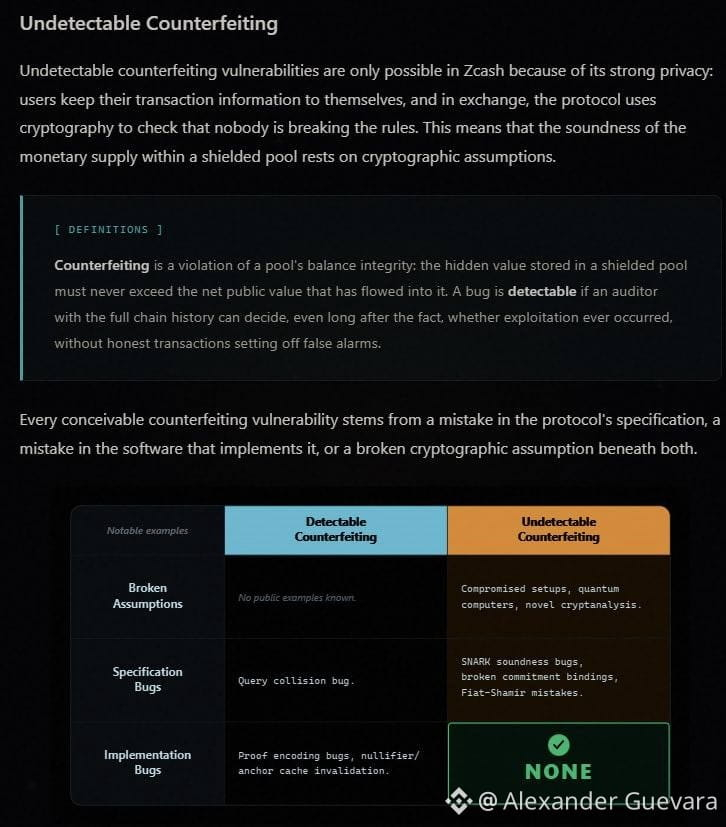
🟢🟢🔥 LAST HOUR: Zcash is close to a mathematical test against hidden forgery errors in its new protected pool Ironwood.
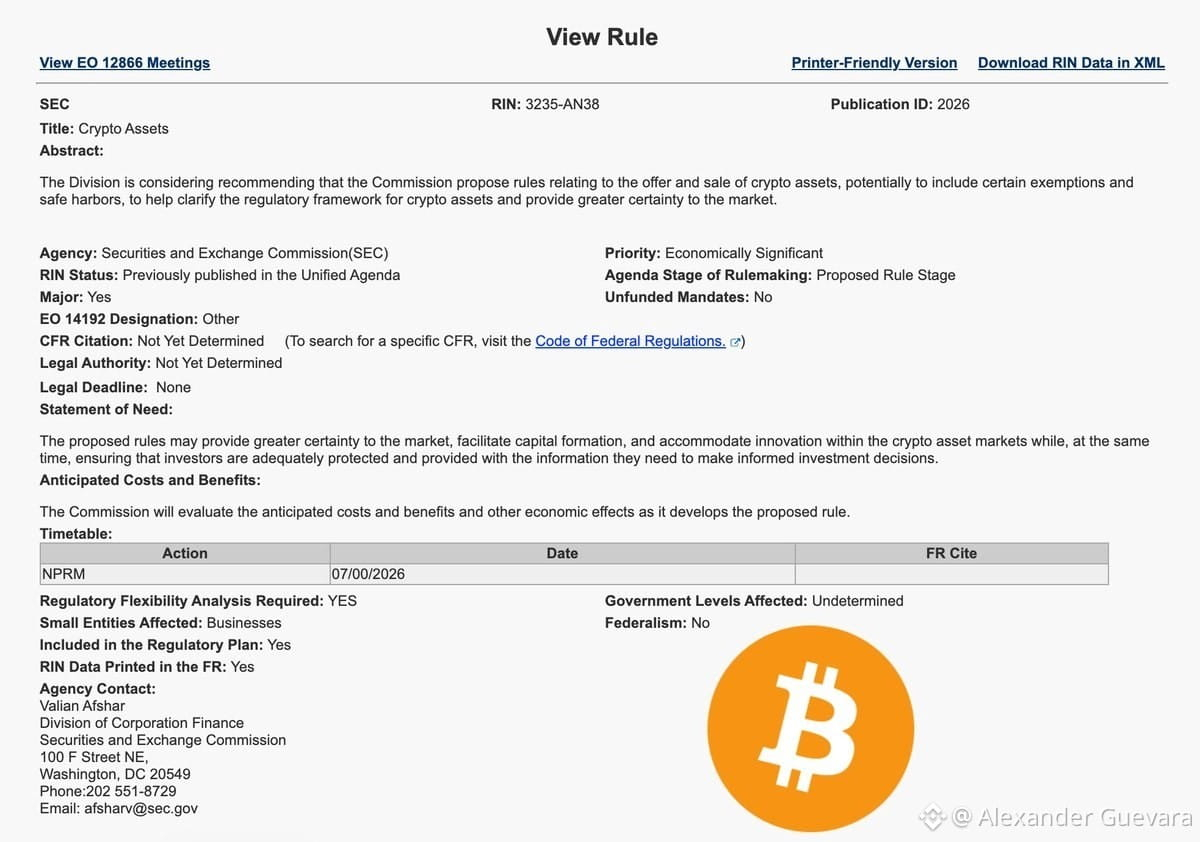
▶️LAST HOUR: 🇺🇸 The SEC has published its regulatory agenda for 2026 with a meeting on crypto regulation scheduled for this month 👀
"To help clarify the regulatory framework for crypto assets and provide greater certainty to the market" 🚀
#SEC #zcash #BTC #Inversiones #Validators $BTC $ZEC
🟢🟢🔥 LAST HOUR: Zcash is close to a mathematical test against hidden forgery errors in its new protected pool Ironwood.
▶️LAST HOUR: 🇺🇸 The SEC has published its regulatory agenda for 2026 with a meeting on crypto regulation scheduled for this month 👀
"To help clarify the regulatory framework for crypto assets and provide greater certainty to the market" 🚀
#SEC #zcash #BTC #Inversiones #Validators $BTC $ZEC
▶️LAST HOUR: 🇺🇸 The SEC has published its regulatory agenda for 2026 with a meeting on crypto regulation scheduled for this month 👀
"To help clarify the regulatory framework for crypto assets and provide greater certainty to the market" 🚀
#SEC #zcash #BTC #Inversiones #Validators $BTC $ZEC
4
143

📚 Understanding Proof of Stake: How Validators Replace Miners in Blockchain Networks
On July 20, 2026, proof of stake has become the dominant consensus mechanism for newer blockchains. Instead of miners solving puzzles, validators lock up tokens as collateral — their stake — to propose and confirm blocks. If a validator acts dishonestly, their stake gets slashed, creating a strong economic disincentive against malicious behavior.
Ethereum migrated to proof of stake in 2022, reducing its energy consumption by over 99%. Other major chains like Solana and Cardano also use PoS, each with unique variations on the core concept.
📌 Key Takeaway:
Proof of stake aligns economic incentives with network security — validators earn rewards for honest participation and lose funds for cheating.
#ProofOfStake #Validators #CryptoEducation #Blockchain
#BinanceAlphaAlert
📚 Understanding Proof of Stake: How Validators Replace Miners in Blockchain Networks
On July 20, 2026, proof of stake has become the dominant consensus mechanism for newer blockchains. Instead of miners solving puzzles, validators lock up tokens as collateral — their stake — to propose and confirm blocks. If a validator acts dishonestly, their stake gets slashed, creating a strong economic disincentive against malicious behavior.
Ethereum migrated to proof of stake in 2022, reducing its energy consumption by over 99%. Other major chains like Solana and Cardano also use PoS, each with unique variations on the core concept.
📌 Key Takeaway:
Proof of stake aligns economic incentives with network security — validators earn rewards for honest participation and lose funds for cheating.
#ProofOfStake #Validators #CryptoEducation #Blockchain
#BinanceAlphaAlert
On July 20, 2026, proof of stake has become the dominant consensus mechanism for newer blockchains. Instead of miners solving puzzles, validators lock up tokens as collateral — their stake — to propose and confirm blocks. If a validator acts dishonestly, their stake gets slashed, creating a strong economic disincentive against malicious behavior.
Ethereum migrated to proof of stake in 2022, reducing its energy consumption by over 99%. Other major chains like Solana and Cardano also use PoS, each with unique variations on the core concept.
📌 Key Takeaway:
Proof of stake aligns economic incentives with network security — validators earn rewards for honest participation and lose funds for cheating.
#ProofOfStake #Validators #CryptoEducation #Blockchain
#BinanceAlphaAlert
60
Log in to explore more content
Join global crypto users on Binance Square
⚡️ Get latest and useful information about crypto.
💬 Trusted by the world’s largest crypto exchange.
👍 Discover real insights from verified creators.
Email / Phone number
Trending Topics
1
#AIStocksWhatNext
129,053 views
1,602 Discussing
2
#BitcoinBreaksAboveMayHighNears$86K
3,178 views
56 Discussing
3
#DogecoinRises15%
7,907 views
362 Discussing
4
#$14BBitcoinOptionsExpireFriday
350 views
33 Discussing
5
#BNBMarketCapPassesBNYMellon
4,053 views
265 Discussing
6
#CryptoMarketCapReclaims$3Trillion
798 views
31 Discussing
7
#MuseOvertakesChatGPTAsTopFreeIOSApp
4,338 views
263 Discussing
8
#TokenizedStockPlatformsCouldLaunchNextQuarter
6,728 views
296 Discussing
9
#StrategyAdds950Bitcoin
10,987 views
381 Discussing
10
#CardanoAddedToX402KitForADAPayments
15,607 views
501 Discussing