Binance Square
#usjulyretailsalesfall0.6%

usjulyretailsalesfall0.6%

108,861 views
591 Discussing
Bullish_Storm
·
--
Verified
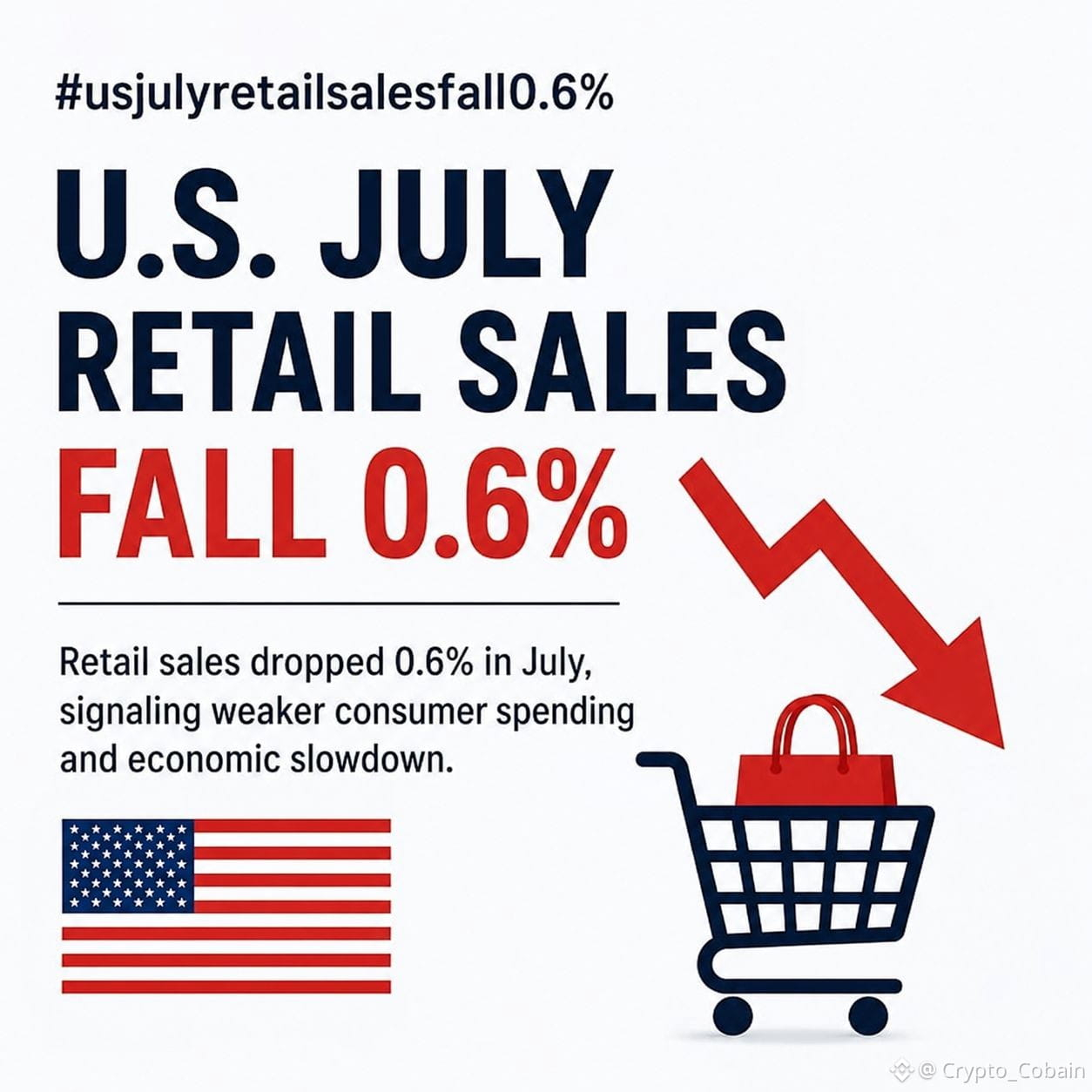
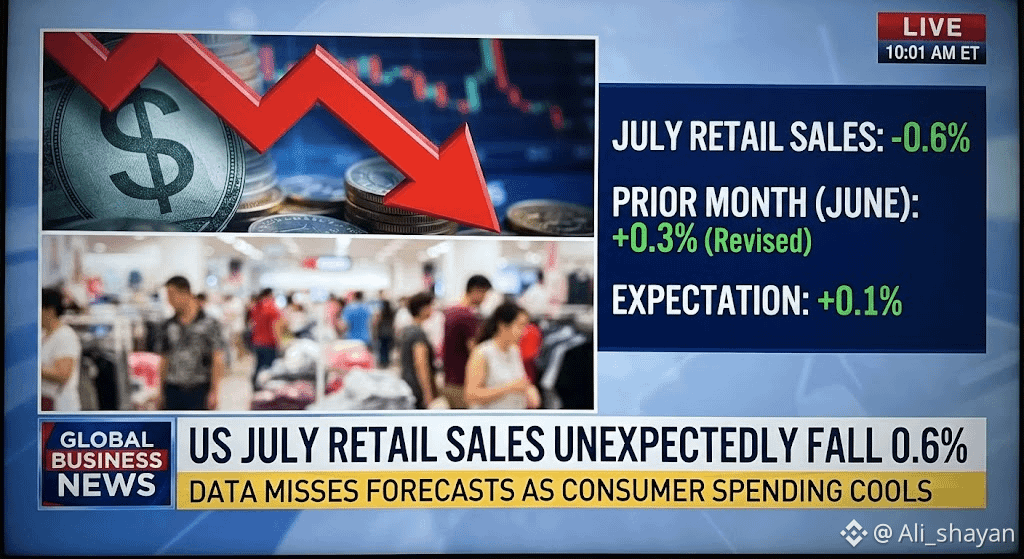
#usjulyretailsalesfall0.6% 🚨 U.S. RETAIL SALES JUST DROPPED 0.6% — MARKETS ARE PAYING ATTENTION July retail sales fell 0.6%, a sharper slowdown in consumer spending that immediately puts the spotlight on the strength of the U.S. economy. For me, this is bigger than just one monthly number. Consumer spending is one of the major engines of the U.S. economy. When retail activity contracts, markets start asking a much more important question: Is the American consumer finally losing momentum? A weaker retail-sales print can increase expectations that economic growth is cooling, especially if upcoming data also shows weakness in employment, inflation, or household demand. And that creates a complicated setup for markets. 📉 Stocks: Growth-sensitive assets can come under pressure if investors interpret the data as an economic slowdown. 💵 Dollar: A weaker economy can strengthen expectations for easier monetary policy, potentially weighing on the dollar. 📊 Treasuries: Cooling economic activity can increase demand for bonds as traders reassess the path of interest rates. ₿ Crypto: This is where I’m watching closely. If weaker economic data pushes markets toward expectations of future rate cuts, liquidity-sensitive assets like Bitcoin and other cryptocurrencies could eventually benefit. But if the data triggers genuine recession fears, risk assets could initially face volatility. The key now is what comes next. One weak retail-sales report does not automatically mean the U.S. economy is collapsing. I want to see whether this becomes a trend or simply a temporary pullback. For traders, the message is simple: Don’t trade the headline alone. Watch the reaction in yields, the dollar, equities and Bitcoin. Sometimes the most important move comes after the first reaction. #usjulyretailsalesfall0.6% $BANK $CYS
#usjulyretailsalesfall0.6%

🚨 U.S. RETAIL SALES JUST DROPPED 0.6% — MARKETS ARE PAYING ATTENTION

July retail sales fell 0.6%, a sharper slowdown in consumer spending that immediately puts the spotlight on the strength of the U.S. economy.

For me, this is bigger than just one monthly number.

Consumer spending is one of the major engines of the U.S. economy. When retail activity contracts, markets start asking a much more important question:

Is the American consumer finally losing momentum?

A weaker retail-sales print can increase expectations that economic growth is cooling, especially if upcoming data also shows weakness in employment, inflation, or household demand.

And that creates a complicated setup for markets.

📉 Stocks: Growth-sensitive assets can come under pressure if investors interpret the data as an economic slowdown.

💵 Dollar: A weaker economy can strengthen expectations for easier monetary policy, potentially weighing on the dollar.

📊 Treasuries: Cooling economic activity can increase demand for bonds as traders reassess the path of interest rates.

₿ Crypto: This is where I’m watching closely. If weaker economic data pushes markets toward expectations of future rate cuts, liquidity-sensitive assets like Bitcoin and other cryptocurrencies could eventually benefit. But if the data triggers genuine recession fears, risk assets could initially face volatility.

The key now is what comes next.

One weak retail-sales report does not automatically mean the U.S. economy is collapsing. I want to see whether this becomes a trend or simply a temporary pullback.

For traders, the message is simple:

Don’t trade the headline alone. Watch the reaction in yields, the dollar, equities and Bitcoin.

Sometimes the most important move comes after the first reaction.

#usjulyretailsalesfall0.6%

$BANK $CYS
#USJulyRetailSalesFall0.6% US July Retail Sales Fall 0.6% 📉 U.S. retail sales dropped 0.6% month-over-month in July 2026, sharply missing expectations for a 0.1% increase. It was the first monthly decline in nine months and the largest drop in 14 months. The weakness was led by online sales (-2.2%), auto sales (-1.8%), and gas-station sales (-0.9%). The data adds to signs of softer consumer spending and could strengthen expectations that the Federal Reserve will remain cautious on rates. #USJulyRetailSalesFall0.6% #RetailSales #USEconomy #FederalReserve #Fed #Inflation #InterestRates #Stocks #Crypto #Bitcoin #USJulyRetailSalesFall0.6%
#USJulyRetailSalesFall0.6%

US July Retail Sales Fall 0.6% 📉

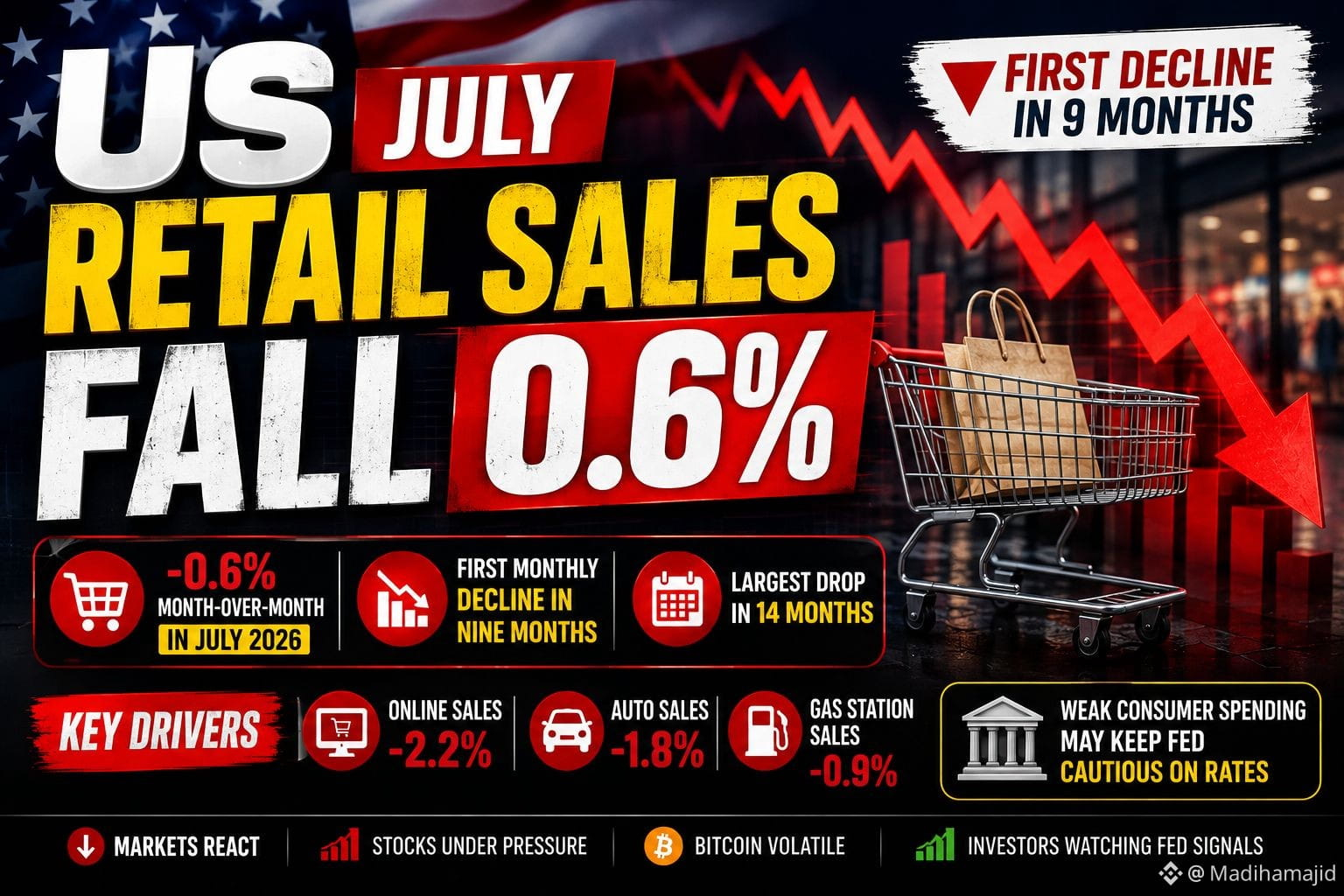
U.S. retail sales dropped 0.6% month-over-month in July 2026, sharply missing expectations for a 0.1% increase. It was the first monthly decline in nine months and the largest drop in 14 months.

The weakness was led by online sales (-2.2%), auto sales (-1.8%), and gas-station sales (-0.9%). The data adds to signs of softer consumer spending and could strengthen expectations that the Federal Reserve will remain cautious on rates.

#USJulyRetailSalesFall0.6% #RetailSales #USEconomy #FederalReserve #Fed #Inflation #InterestRates #Stocks #Crypto #Bitcoin

#USJulyRetailSalesFall0.6%
🏦 Why Retail Sales Matter for Crypto A 0.6% monthly decline in U.S. retail sales gives investors another reason to watch the health of the American consumer. If weaker spending becomes a broader pattern, expectations for monetary policy could shift — potentially affecting liquidity-sensitive assets. That's why $BTC, $ETH and $BNB traders are watching U.S. economic data beyond the crypto headlines. #usjulyretailsalesfall0.6%
🏦 Why Retail Sales Matter for Crypto
A 0.6% monthly decline in U.S. retail sales gives investors another reason to watch the health of the American consumer.
If weaker spending becomes a broader pattern, expectations for monetary policy could shift — potentially affecting liquidity-sensitive assets.
That's why $BTC, $ETH and $BNB traders are watching U.S. economic data beyond the crypto headlines.

#usjulyretailsalesfall0.6%
·
--
Bullish
#USJulyRetailSalesFall0.6% US RETAIL SALES UPDATE 🇺🇸 US July retail sales fell 0.6%, signaling a noticeable slowdown in consumer spending. 📉 This is an important macro signal for markets because weaker consumer demand could increase pressure on the Federal Reserve to consider a more supportive policy stance if economic weakness continues. For BTC, crypto and risk assets, the reaction will depend on what this means for inflation and future Fed decisions. A weaker consumer can be bearish for growth, but potentially bullish if traders start pricing in easier monetary policy. 👀#USJulyRetailSalesFall0.6% $BTC {future}(BTCUSDT) $BZ {future}(BZUSDT) $XAUT {spot}(XAUTUSDT)
#USJulyRetailSalesFall0.6% US RETAIL SALES UPDATE 🇺🇸
US July retail sales fell 0.6%, signaling a noticeable slowdown in consumer spending. 📉
This is an important macro signal for markets because weaker consumer demand could increase pressure on the Federal Reserve to consider a more supportive policy stance if economic weakness continues.
For BTC, crypto and risk assets, the reaction will depend on what this means for inflation and future Fed decisions. A weaker consumer can be bearish for growth, but potentially bullish if traders start pricing in easier monetary policy. 👀#USJulyRetailSalesFall0.6% $BTC
$BZ
$XAUT
#USJulyRetailSalesFall0.6% That hashtag means U.S. retail sales fell 0.6% in July 2026 from June 2026, according to the U.S. Census Bureau’s advance report released on August 14, 2026. The report put July retail and food services sales at $763.6 billion, after an unrevised 0.2% increase in June 2026. (census.gov) In plain English: retail sales = how much consumers spent at stores, online, restaurants, and similar businesses; fall 0.6% = spending was lower than the prior month; July = this refers specifically to July 2026 data, not a generic July. (census.gov) A key nuance is that the Census release also said sales were still up 5.0% from July 2025, so the headline points to a month-over-month pullback, not a collapse in year-over-year spending. The monthly figure is also reported before adjusting for inflation, so it reflects dollars spent rather than pure volume. (census.gov) Why markets cared: the drop was weaker than economists expected, with Reuters-cited coverage saying consensus had been for a small gain; it was described as the first monthly decline in nine months; and analysts linked it partly to fading support from earlier large tax refunds and timing effects such as Prime Day shifting into June. (money.usnews.com) So in simple terms, #USJulyRetailSalesFall0.6% means American consumers spent less in July 2026 than in June 2026, which suggested some cooling in consumer demand at the start of Q3. (census.gov)$BTC {spot}(BTCUSDT) $XAU {future}(XAUUSDT) $BZ {future}(BZUSDT)
#USJulyRetailSalesFall0.6% That hashtag means U.S. retail sales fell 0.6% in July 2026 from June 2026, according to the U.S. Census Bureau’s advance report released on August 14, 2026. The report put July retail and food services sales at $763.6 billion, after an unrevised 0.2% increase in June 2026. (census.gov)

In plain English:
retail sales = how much consumers spent at stores, online, restaurants, and similar businesses;
fall 0.6% = spending was lower than the prior month;
July = this refers specifically to July 2026 data, not a generic July. (census.gov)

A key nuance is that the Census release also said sales were still up 5.0% from July 2025, so the headline points to a month-over-month pullback, not a collapse in year-over-year spending. The monthly figure is also reported before adjusting for inflation, so it reflects dollars spent rather than pure volume. (census.gov)

Why markets cared:
the drop was weaker than economists expected, with Reuters-cited coverage saying consensus had been for a small gain;
it was described as the first monthly decline in nine months;
and analysts linked it partly to fading support from earlier large tax refunds and timing effects such as Prime Day shifting into June. (money.usnews.com)

So in simple terms, #USJulyRetailSalesFall0.6% means American consumers spent less in July 2026 than in June 2026, which suggested some cooling in consumer demand at the start of Q3. (census.gov)$BTC
$XAU
$BZ
Verified
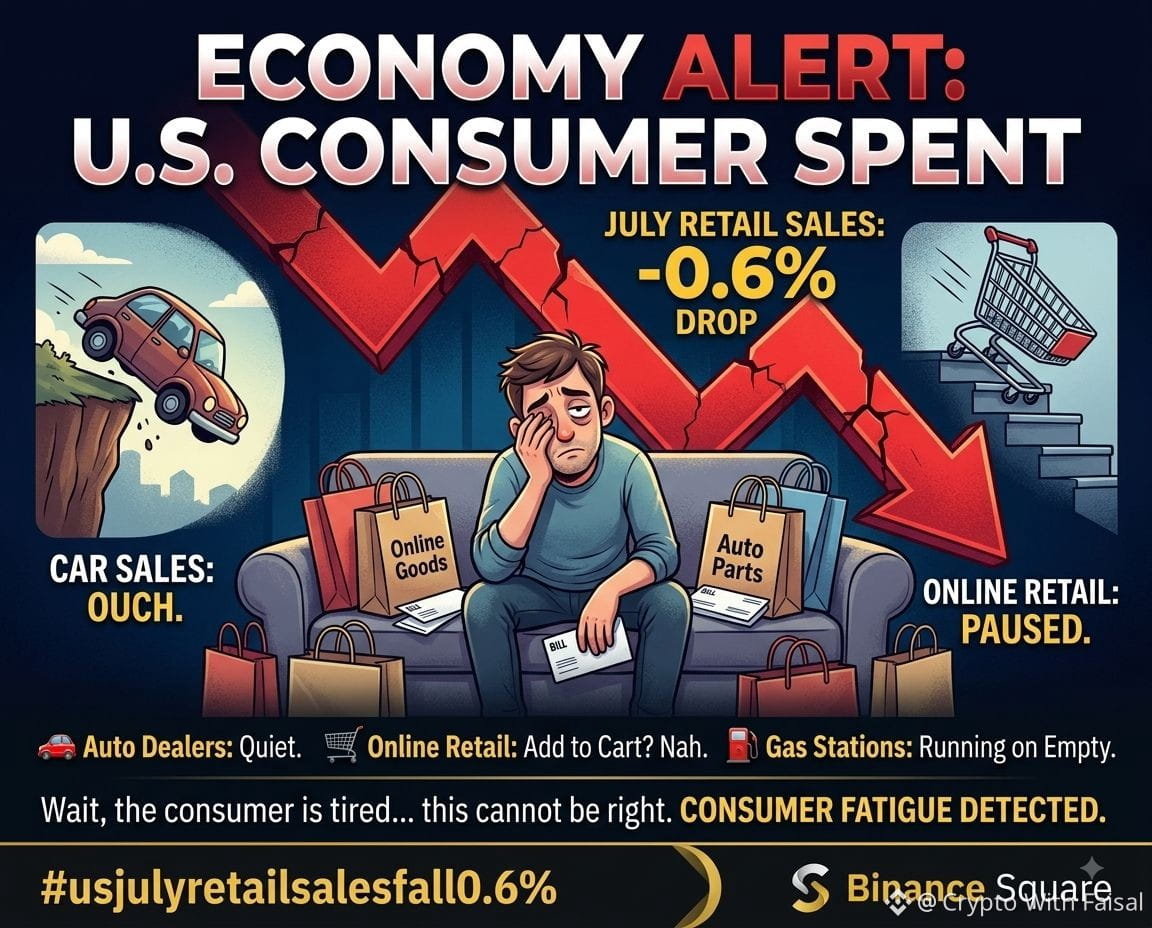
#usjulyretailsalesfall0.6% US retail sales fell unexpectedly by 0.6% in July, showing that shoppers are starting to pull back. Total sales dropped to $763.6 billion as big categories like online shopping, car dealerships, and gas stations saw a clear slowdown. Even though spending is still up 5% compared to this time last year, this sharp monthly decline hints that consumer fatigue might finally be setting in. CLICK BELOW TO TRADE : $BTC $SOL $AKE {future}(AKEUSDT) {future}(SOLUSDT) {future}(BTCUSDT)
#usjulyretailsalesfall0.6% US retail sales fell unexpectedly by 0.6% in July, showing that shoppers are starting to pull back. Total sales dropped to $763.6 billion as big categories like online shopping, car dealerships, and gas stations saw a clear slowdown. Even though spending is still up 5% compared to this time last year, this sharp monthly decline hints that consumer fatigue might finally be setting in.

CLICK BELOW TO TRADE : $BTC $SOL $AKE
·
--
Bearish
Verified
#usjulyretailsalesfall0.6% 🚨 US RETAIL SALES SLIP 0.6% 📉 U.S. retail sales fell unexpectedly 0.6% in July to $763.6B, with weakness in online shopping, autos, and gas stations. Spending is still 5% higher year-over-year, but the monthly drop signals growing consumer fatigue. 🎯 TRADING VIEW: SELL 📉 Near-term risk sentiment could weaken if consumer spending continues to slow. ❓ Is the U.S. consumer finally losing momentum? "CLICK ON THE BELOW YELLOW COIN TAG TO GO TO DESIRED TRADING PAGE TO GET BENEFIT TRADE"$BTC $SOL $AKE {future}(AKEUSDT) {spot}(SOLUSDT) {spot}(BTCUSDT) #RetailSales #USConsumerSentimentThirdMonthDecline
#usjulyretailsalesfall0.6%
🚨 US RETAIL SALES SLIP 0.6% 📉
U.S. retail sales fell unexpectedly 0.6% in July to $763.6B, with weakness in online shopping, autos, and gas stations.
Spending is still 5% higher year-over-year, but the monthly drop signals growing consumer fatigue.

🎯 TRADING VIEW: SELL 📉
Near-term risk sentiment could weaken if consumer spending continues to slow.

❓ Is the U.S. consumer finally losing momentum? "CLICK ON THE BELOW YELLOW COIN TAG TO GO TO DESIRED TRADING PAGE TO GET BENEFIT TRADE"$BTC $SOL $AKE
#RetailSales #USConsumerSentimentThirdMonthDecline
#USJulyRetailSalesFall0.6% Unexpected drop in US retail sales! US retail sales during July fell by 0.6%, defying expectations and recording the biggest decline in a while. 💡 This slowdown reflects increasing consumer caution and inflation pressures, reshaping expectations about the Fed’s upcoming policies. What impact do you think this will have on financial markets and cryptocurrencies? Share your thoughts! ​#USJulyRetailSalesFall0.6% #Economy #Fed #Crypto #BinanceSquare #تداول $NVDAB $NVDA.US $AAPL.US
#USJulyRetailSalesFall0.6% Unexpected drop in US retail sales!
US retail sales during July fell by 0.6%, defying expectations and recording the biggest decline in a while.
💡 This slowdown reflects increasing consumer caution and inflation pressures, reshaping expectations about the Fed’s upcoming policies. What impact do you think this will have on financial markets and cryptocurrencies? Share your thoughts!
​#USJulyRetailSalesFall0.6% #Economy #Fed #Crypto #BinanceSquare #تداول $NVDAB $NVDA.US $AAPL.US
NVDAB-0.57%
AAPLUS+0.36%
NVDAUS+0.64%
Article
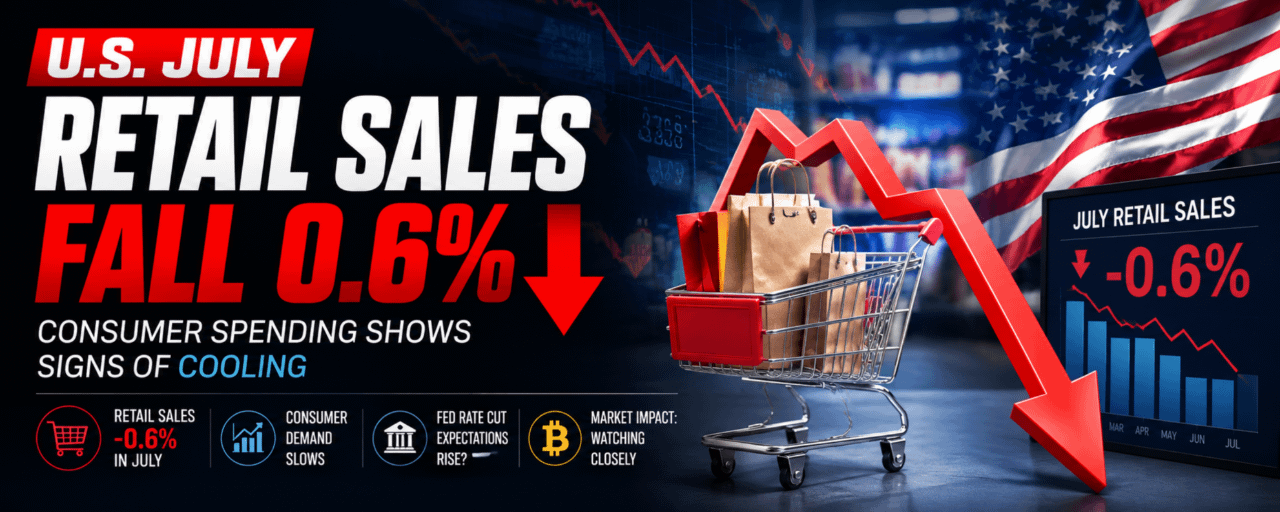
U.S. July Retail Sales Fall 0.6%: Consumer Spending Shows Signs of Cooling#usjulyretailsalesfall0.6% U.S. retail sales fell 0.6% in July, signaling a noticeable slowdown in consumer spending and raising fresh questions about the strength of the world’s largest economy. The decline comes as markets closely watch U.S. economic data for clues about inflation, household demand, and the Federal Reserve’s next policy moves. $BTC 📉 A Sharp Monthly Decline The 0.6% monthly drop in retail sales suggests consumers became more cautious in July. Retail spending is an important indicator of economic momentum because consumer activity accounts for a large share of U.S. economic growth. A sustained slowdown could indicate that higher borrowing costs and elevated living expenses are beginning to weigh more heavily on households. 💵 Why Markets Care Weak retail sales can have a significant impact across financial markets. If consumer demand continues to cool, investors may increase expectations for a more accommodative Federal Reserve. Lower interest-rate expectations can potentially support risk assets, including Bitcoin and other cryptocurrencies, although the initial market reaction can vary. At the same time, weaker consumer spending could raise concerns about slower economic growth. This creates a delicate balance for investors: 📉 Weak spending → weaker growth concerns 📉 Cooling demand → potentially lower inflation pressure 🏦 Lower inflation → greater room for Fed easing ₿ Easier financial conditions → potentially supportive for crypto 🔍 What Comes Next? One month of weaker retail sales does not necessarily confirm a major economic slowdown. Traders will be watching upcoming employment, inflation, consumer confidence, and GDP-related data to determine whether July's decline represents a temporary pullback or the beginning of a broader trend. For crypto traders, the key takeaway is that U.S. macroeconomic data remains extremely important. A combination of cooling inflation and weakening consumer demand could change expectations for Federal Reserve policy and influence liquidity across global markets. 🚨 Bottom Line The 0.6% decline in U.S. July retail sales is a warning sign that American consumers may be losing some momentum. Markets will now focus on whether spending rebounds or continues to weaken in the months ahead. For Bitcoin and crypto investors, the Fed reaction may ultimately matter more than the retail-sales number itself. 📊₿ What do you think — is this a temporary slowdown or the beginning of a bigger U.S. consumer weakness? #bitcoin #economy #Inflation #trading

U.S. July Retail Sales Fall 0.6%: Consumer Spending Shows Signs of Cooling

#usjulyretailsalesfall0.6%
U.S. retail sales fell 0.6% in July, signaling a noticeable slowdown in consumer spending and raising fresh questions about the strength of the world’s largest economy.
The decline comes as markets closely watch U.S. economic data for clues about inflation, household demand, and the Federal Reserve’s next policy moves.
$BTC
📉 A Sharp Monthly Decline
The 0.6% monthly drop in retail sales suggests consumers became more cautious in July. Retail spending is an important indicator of economic momentum because consumer activity accounts for a large share of U.S. economic growth.
A sustained slowdown could indicate that higher borrowing costs and elevated living expenses are beginning to weigh more heavily on households.
💵 Why Markets Care
Weak retail sales can have a significant impact across financial markets.
If consumer demand continues to cool, investors may increase expectations for a more accommodative Federal Reserve. Lower interest-rate expectations can potentially support risk assets, including Bitcoin and other cryptocurrencies, although the initial market reaction can vary.
At the same time, weaker consumer spending could raise concerns about slower economic growth. This creates a delicate balance for investors:
📉 Weak spending → weaker growth concerns
📉 Cooling demand → potentially lower inflation pressure
🏦 Lower inflation → greater room for Fed easing
₿ Easier financial conditions → potentially supportive for crypto
🔍 What Comes Next?
One month of weaker retail sales does not necessarily confirm a major economic slowdown. Traders will be watching upcoming employment, inflation, consumer confidence, and GDP-related data to determine whether July's decline represents a temporary pullback or the beginning of a broader trend.
For crypto traders, the key takeaway is that U.S. macroeconomic data remains extremely important. A combination of cooling inflation and weakening consumer demand could change expectations for Federal Reserve policy and influence liquidity across global markets.
🚨 Bottom Line
The 0.6% decline in U.S. July retail sales is a warning sign that American consumers may be losing some momentum. Markets will now focus on whether spending rebounds or continues to weaken in the months ahead.
For Bitcoin and crypto investors, the Fed reaction may ultimately matter more than the retail-sales number itself. 📊₿
What do you think — is this a temporary slowdown or the beginning of a bigger U.S. consumer weakness?
#bitcoin #economy #Inflation #trading
Verified
🚨 The US consumer just blinked. July retail sales fell -0.6% MoM ($763.6B) — the biggest drop since May 2025, vs +0.1% expected. First decline in 9 months. The GDP-linked control group also fell -0.4%. But read past the headline: → Amazon moved Prime Day from July to June (payback effect) → Gas prices fell, dragging nominal sales → Auto sales -1.8% after +1.9% in June → Sales are still +5.0% YoY — slowdown, not collapse The real warning is elsewhere: Michigan sentiment collapsed to 51.0 , with 1-yr inflation expectations UP to 4.3%. Consumers feel poorer AND expect higher prices. That's the stagflation vibe, not a soft landing. Market reaction tells the story: → Fed September hike odds: 50% → ~31% → Dollar at 3-month low → But 10Y yield still ROSE to 4.69%, 30Y auction cleared at 5.216% — highest since 2001 Bonds refuse to celebrate weak data. Oil (Hormuz) + deficits + term premium still win. Weaker dollar, higher long yields — that's the messy tape. For crypto: dovish Fed = good, but BTC ignored it (ETF outflows again, ~$56M Fri). Liquidity relief isn't showing up yet. One month ≠ trend. But if retail earnings next week confirm it, "Fed relief" flips to "growth concern." #usjulyretailsalesfall0.6% #CboeSeeks3xBitcoinAndEtherETFs #NvidiaDiscloses$21BSpaceXAnd$30BIntelStakes #SECCancelsCryptoInvestmentContractRulesMeeting #USAugust1YInflationExpectations4.3% $BZ $XAU $BTC
🚨 The US consumer just blinked.

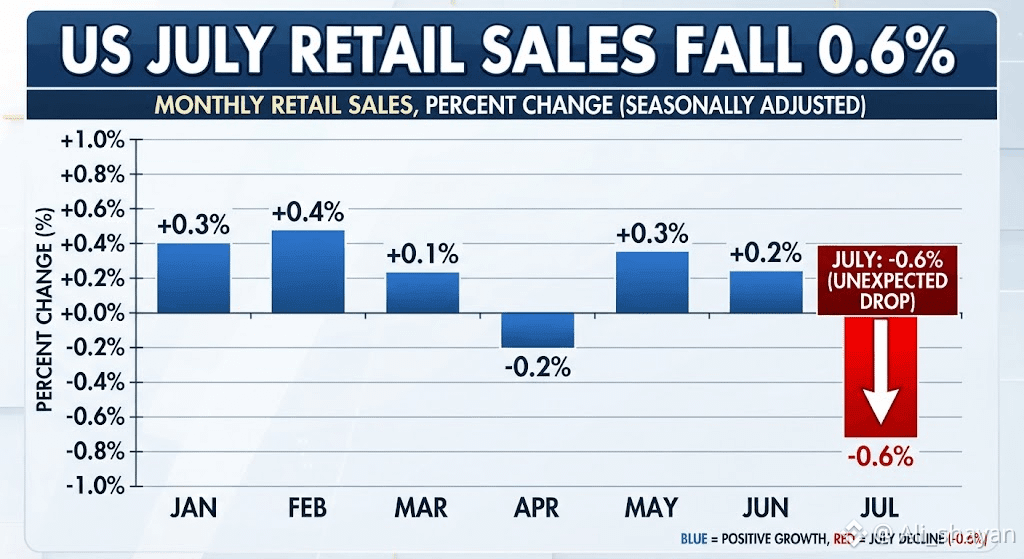
July retail sales fell -0.6% MoM ($763.6B) — the biggest drop since May 2025, vs +0.1% expected. First decline in 9 months. The GDP-linked control group also fell -0.4%.

But read past the headline: → Amazon moved Prime Day from July to June (payback effect) → Gas prices fell, dragging nominal sales → Auto sales -1.8% after +1.9% in June → Sales are still +5.0% YoY — slowdown, not collapse

The real warning is elsewhere: Michigan sentiment collapsed to 51.0 , with 1-yr inflation expectations UP to 4.3%. Consumers feel poorer AND expect higher prices. That's the stagflation vibe, not a soft landing.

Market reaction tells the story: → Fed September hike odds: 50% → ~31% → Dollar at 3-month low → But 10Y yield still ROSE to 4.69%, 30Y auction cleared at 5.216% — highest since 2001

Bonds refuse to celebrate weak data. Oil (Hormuz) + deficits + term premium still win. Weaker dollar, higher long yields — that's the messy tape.

For crypto: dovish Fed = good, but BTC ignored it (ETF outflows again, ~$56M Fri). Liquidity relief isn't showing up yet.

One month ≠ trend. But if retail earnings next week confirm it, "Fed relief" flips to "growth concern."

#usjulyretailsalesfall0.6% #CboeSeeks3xBitcoinAndEtherETFs #NvidiaDiscloses$21BSpaceXAnd$30BIntelStakes #SECCancelsCryptoInvestmentContractRulesMeeting #USAugust1YInflationExpectations4.3% $BZ $XAU $BTC
Verified
🔥🛒 Consumers Hit the Brakes July retail sales fell 0.6% to $763.6 billion, reversing June's modest gain. Online sales and auto-related purchases were among the weaker areas, while restaurant sales increased. The report paints a mixed picture: spending cooled sharply month-to-month, but total sales were still 5% higher year-over-year. For investors, the next few consumer and economic reports will be important for judging whether this is a temporary pullback or a broader slowdown. $BTC $BNB #usjulyretailsalesfall0.6%
🔥🛒 Consumers Hit the Brakes
July retail sales fell 0.6% to $763.6 billion, reversing June's modest gain. Online sales and auto-related purchases were among the weaker areas, while restaurant sales increased.
The report paints a mixed picture: spending cooled sharply month-to-month, but total sales were still 5% higher year-over-year.
For investors, the next few consumer and economic reports will be important for judging whether this is a temporary pullback or a broader slowdown.
$BTC $BNB

#usjulyretailsalesfall0.6%
Ethereum Up or Down on August 15?

Ethereum Up or Down on August 15?

99%Up1%Down
Volume $34,487.33
#usjulyretailsalesfall0.6% US retail sales dropped unexpectedly by 0.6% in July, missing market expectations. This sharp decline follows a modest gain in June and marks the biggest monthly drop in a long time. Lower spending was led by major drops at auto dealerships, gas stations, and online stores. Experts say this cooling trend shows that everyday shoppers are starting to pull back on spending as high costs and economic pressures weigh heavily on household budgets. CLICK BELOW TO TRADE : $BTC $BNB $XAU {future}(XAUUSDT) {future}(BNBUSDT) {future}(BTCUSDT)
#usjulyretailsalesfall0.6% US retail sales dropped unexpectedly by 0.6% in July, missing market expectations. This sharp decline follows a modest gain in June and marks the biggest monthly drop in a long time. Lower spending was led by major drops at auto dealerships, gas stations, and online stores. Experts say this cooling trend shows that everyday shoppers are starting to pull back on spending as high costs and economic pressures weigh heavily on household budgets.

CLICK BELOW TO TRADE : $BTC $BNB $XAU
#usjulyretailsalesfall0.6% 🇺🇸 #USJulyRetailSalesFall0.6% U.S. retail sales fell 0.6% in July 2026, a much weaker result than economists expected. It was the largest monthly decline since May 2025 and the first decline in nine months. Key points: 📉 July: -0.6% month-over-month 💰 Total retail & food-service sales: $763.6 billion 📊 Year-over-year: still +5.0% 🛒 Core retail sales also declined, indicating softer underlying goods demand. ( ⛽ Lower gasoline prices reduced spending at gas stations. 🛍️ The timing of Amazon Prime Day shifting to June also affected July online-sales comparisons. 📊 Market impact Potentially bullish for bonds/gold: Weaker consumer spending can increase expectations that the Federal Reserve will avoid further tightening, while the dollar weakened after the report. Potentially bearish for stocks: If the decline develops into a sustained consumer slowdown, corporate revenue and earnings could eventually come under pressure. For XAUUSD: 🟢 The softer retail-sales number is generally supportive for gold, particularly if markets interpret it as increasing the probability of easier Fed policy. Gold rallied following the data. ( Bottom line: ⚠️ Short-term economic signal = bearish for U.S. consumer momentum, but not necessarily a recession signal yet, because sales remain 5% above July 2025 levels.
#usjulyretailsalesfall0.6% 🇺🇸 #USJulyRetailSalesFall0.6%
U.S. retail sales fell 0.6% in July 2026, a much weaker result than economists expected. It was the largest monthly decline since May 2025 and the first decline in nine months.
Key points:
📉 July: -0.6% month-over-month
💰 Total retail & food-service sales: $763.6 billion
📊 Year-over-year: still +5.0%
🛒 Core retail sales also declined, indicating softer underlying goods demand. (
⛽ Lower gasoline prices reduced spending at gas stations.
🛍️ The timing of Amazon Prime Day shifting to June also affected July online-sales comparisons.
📊 Market impact
Potentially bullish for bonds/gold: Weaker consumer spending can increase expectations that the Federal Reserve will avoid further tightening, while the dollar weakened after the report.
Potentially bearish for stocks: If the decline develops into a sustained consumer slowdown, corporate revenue and earnings could eventually come under pressure.
For XAUUSD: 🟢 The softer retail-sales number is generally supportive for gold, particularly if markets interpret it as increasing the probability of easier Fed policy. Gold rallied following the data. (
Bottom line: ⚠️ Short-term economic signal = bearish for U.S. consumer momentum, but not necessarily a recession signal yet, because sales remain 5% above July 2025 levels.
⚠️ The 0.6% Number Markets Noticed U.S. retail sales unexpectedly declined 0.6% in July. The key debate now isn't simply whether consumers are slowing — it's whether this was a temporary pullback or the beginning of weaker momentum. That distinction matters across markets, including $BTC, $ETH and $BNB, where liquidity expectations can influence investor positioning #usjulyretailsalesfall0.6%
⚠️ The 0.6% Number Markets Noticed
U.S. retail sales unexpectedly declined 0.6% in July.
The key debate now isn't simply whether consumers are slowing — it's whether this was a temporary pullback or the beginning of weaker momentum.
That distinction matters across markets, including $BTC, $ETH and $BNB, where liquidity expectations can influence investor positioning

#usjulyretailsalesfall0.6%
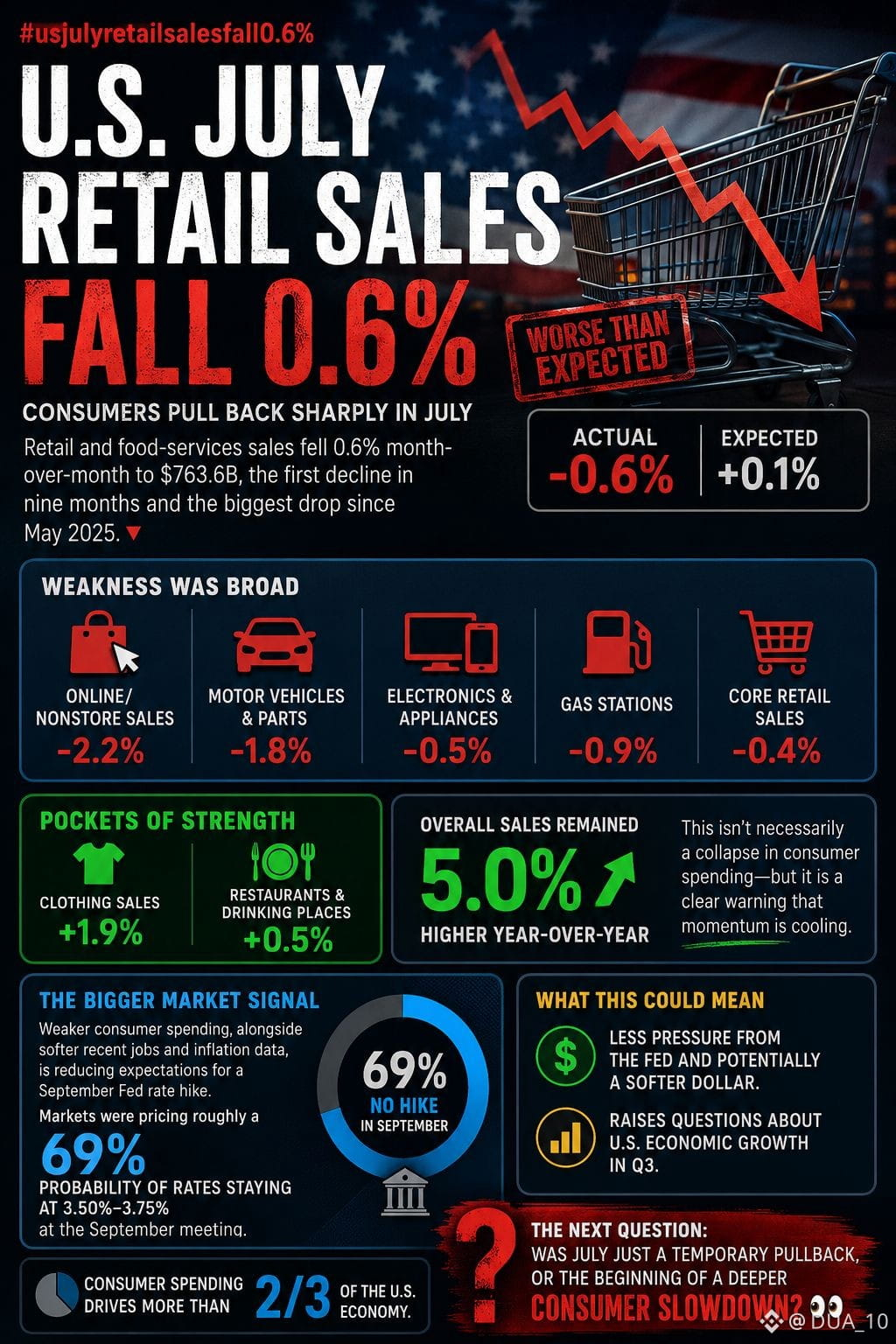
#usjulyretailsalesfall0.6% U.S. consumers pulled back sharply in July. 🇺🇸 Retail and food-services sales fell 0.6% month-over-month to $763.6B, the first decline in nine months and the biggest drop since May 2025. Economists were expecting a 0.1% increase, making the miss significant. The weakness was broad: • Online/nonstore sales: -2.2% • Motor vehicles & parts: -1.8% • Electronics & appliances: -0.5% • Gas stations: -0.9% • Core retail sales: -0.4% There were still pockets of strength. Clothing sales rose 1.9%, while restaurants and drinking places gained 0.5%. Overall sales remained 5.0% higher year-over-year, so this isn't necessarily a collapse in consumer spending—but it is a clear warning that momentum is cooling. The bigger market signal: weaker consumer spending, alongside softer recent jobs and inflation data, is reducing expectations for a September Fed rate hike. Markets were pricing roughly a 69% probability of rates staying at 3.50%–3.75% at the September meeting. For markets, this could mean less pressure from the Fed and potentially a softer dollar, but it also raises questions about U.S. economic growth in Q3. Consumer spending drives more than two-thirds of the U.S. economy. The next question: was July just a temporary pullback, or the beginning of a deeper consumer slowdown? 👀 #USJulyRetailSalesFall0.6% $WAL {future}(WALUSDT) $LAB $CYS
#usjulyretailsalesfall0.6%

U.S. consumers pulled back sharply in July. 🇺🇸

Retail and food-services sales fell 0.6% month-over-month to $763.6B, the first decline in nine months and the biggest drop since May 2025. Economists were expecting a 0.1% increase, making the miss significant.

The weakness was broad:
• Online/nonstore sales: -2.2%
• Motor vehicles & parts: -1.8%
• Electronics & appliances: -0.5%
• Gas stations: -0.9%
• Core retail sales: -0.4%

There were still pockets of strength. Clothing sales rose 1.9%, while restaurants and drinking places gained 0.5%. Overall sales remained 5.0% higher year-over-year, so this isn't necessarily a collapse in consumer spending—but it is a clear warning that momentum is cooling.

The bigger market signal: weaker consumer spending, alongside softer recent jobs and inflation data, is reducing expectations for a September Fed rate hike. Markets were pricing roughly a 69% probability of rates staying at 3.50%–3.75% at the September meeting.

For markets, this could mean less pressure from the Fed and potentially a softer dollar, but it also raises questions about U.S. economic growth in Q3.

Consumer spending drives more than two-thirds of the U.S. economy.

The next question: was July just a temporary pullback, or the beginning of a deeper consumer slowdown? 👀
#USJulyRetailSalesFall0.6%
$WAL
$LAB $CYS
📉 US Retail Sales Just Slipped U.S. retail and food-service sales fell 0.6% in July, the first monthly decline in nine months. The drop adds another signal that consumer momentum may be cooling, while annual sales were still up about 5%. For markets, softer spending can influence expectations around rates and liquidity — factors closely watched by $BTC, $ETH and $BNB investors. #usjulyretailsalesfall0.6%
📉 US Retail Sales Just Slipped
U.S. retail and food-service sales fell 0.6% in July, the first monthly decline in nine months.
The drop adds another signal that consumer momentum may be cooling, while annual sales were still up about 5%.
For markets, softer spending can influence expectations around rates and liquidity — factors closely watched by $BTC, $ETH and $BNB investors.

#usjulyretailsalesfall0.6%
#usjulyretailsalesfall0.6% US retail sales unexpectedly dropped $0.6\%$ in July, hitting $763.6 billion. This decrease follows a small gain in June and came in worse than market expectations. The pullback was largely driven by lower spending at motor vehicle dealers, gas stations, and online shopping platforms. Even with this monthly dip, total sales are still up 5% compared to the same time last year. Experts say shoppers are starting to show signs of fatigue. CLICK BELOW TO TRADE : $BTC $ETH $BZ {future}(BZUSDT) {future}(ETHUSDT) {future}(BTCUSDT)
#usjulyretailsalesfall0.6% US retail sales unexpectedly dropped $0.6\%$ in July, hitting $763.6 billion. This decrease follows a small gain in June and came in worse than market expectations. The pullback was largely driven by lower spending at motor vehicle dealers, gas stations, and online shopping platforms. Even with this monthly dip, total sales are still up 5% compared to the same time last year. Experts say shoppers are starting to show signs of fatigue.

CLICK BELOW TO TRADE : $BTC $ETH $BZ
Verified
#usjulyretailsalesfall0.6% 🚨 ​Are U.S. Consumers Finally Tapping Out? 📉 ​In a massive surprise to the markets, July retail spending just took a sharp 0.6% dive, dragging total sales down to $763.6 billion. The heavyweights of the economy—e-commerce, auto dealerships, and gas stations—are all flashing clear warning signs of a mounting slowdown. ​While year-over-year spending is technically still clinging to a 5% gain, this abrupt monthly contraction is a glaring indicator: consumer wallet fatigue is officially here. The everyday shopper is hitting the brakes, and the broader markets need to pay close attention. 🛑💸 #crypto #BinanceSquare $MOVR {future}(MOVRUSDT) $BTC {future}(BTCUSDT) $ETH {future}(ETHUSDT)
#usjulyretailsalesfall0.6% 🚨
​Are U.S. Consumers Finally Tapping Out? 📉

​In a massive surprise to the markets, July retail spending just took a sharp 0.6% dive, dragging total sales down to $763.6 billion. The heavyweights of the economy—e-commerce, auto dealerships, and gas stations—are all flashing clear warning signs of a mounting slowdown.

​While year-over-year spending is technically still clinging to a 5% gain, this abrupt monthly contraction is a glaring indicator: consumer wallet fatigue is officially here. The everyday shopper is hitting the brakes, and the broader markets need to pay close attention. 🛑💸
#crypto #BinanceSquare
$MOVR
$BTC
$ETH
Verified
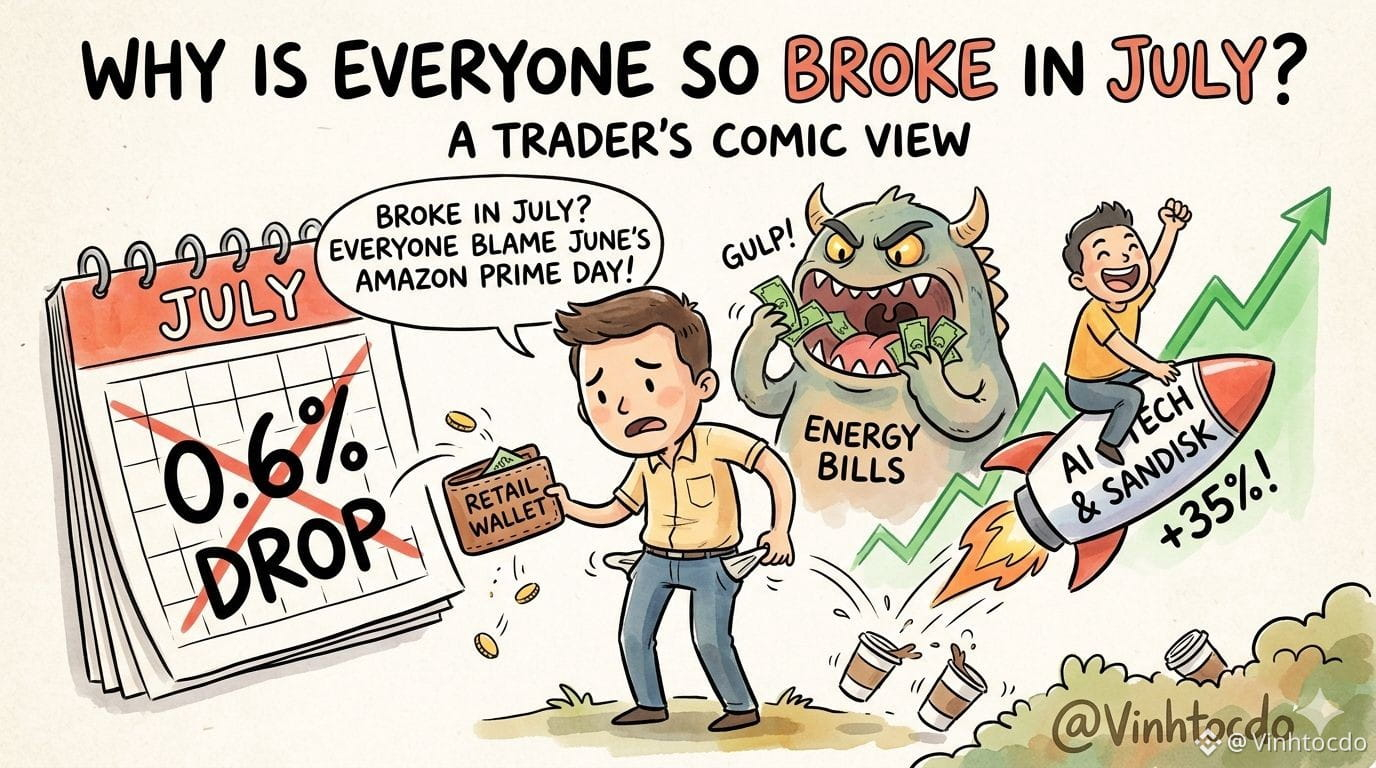
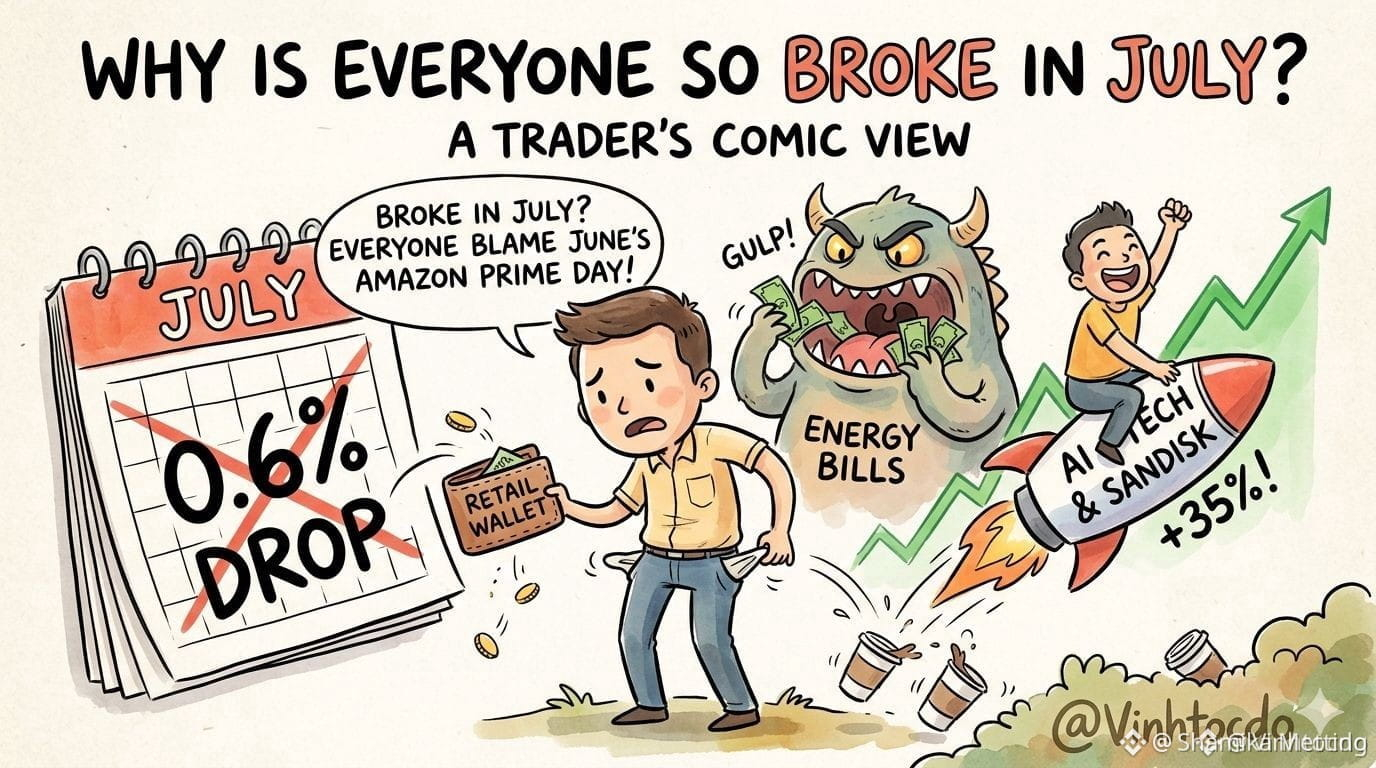
#usjulyretailsalesfall0.6% Retail sales in the United States fell by 0.6% in July! 📉 Did everyone go broke after Amazon pushed Prime Day to June, leaving wallets empty for July? 💸 On top of that, high energy bills are eating up the rest of our money in the bag. 🔋 The traditional retail sector is declining, but the technology sector and AI-related inferences are still pushing higher—just look at SanDisk up 35% in 5 days! 🚀 So what should traders do? Stop buying overpriced coffee, look for dips in strong tech/crypto, and ride the AI wave! 🌊 Join Binance. This is not financial advice. Please follow up #USStocksCloseLower #SanDiskUp35 #RetailSalesMiss $BTC {future}(BTCUSDT)
#usjulyretailsalesfall0.6%
Retail sales in the United States fell by 0.6% in July! 📉 Did everyone go broke after Amazon pushed Prime Day to June, leaving wallets empty for July? 💸 On top of that, high energy bills are eating up the rest of our money in the bag. 🔋 The traditional retail sector is declining, but the technology sector and AI-related inferences are still pushing higher—just look at SanDisk up 35% in 5 days! 🚀
So what should traders do? Stop buying overpriced coffee, look for dips in strong tech/crypto, and ride the AI wave! 🌊
Join Binance.
This is not financial advice.

Please follow up

#USStocksCloseLower #SanDiskUp35 #RetailSalesMiss
$BTC
Log in to explore more content
Join global crypto users on Binance Square
⚡️ Get latest and useful information about crypto.
💬 Trusted by the world’s largest crypto exchange.
👍 Discover real insights from verified creators.
Email / Phone number