
#usdatacenterrulesmayconstrainaiexpansion
usdatacenterrulesmayconstrainaiexpansion
484 views
8 Discussing
Hot
Latest

·
--
🚨 BREAKING: US DATA CENTER RULES COULD SLOW DOWN THE AI BOOM! 🤖🇺🇸
The AI revolution is growing rapidly, but new US data center regulations could create unexpected challenges for the industry.
⚡ What's at stake?
🔹 Rising electricity demand
🔹 Tougher data center regulations
🔹 Higher infrastructure costs
🔹 Potential construction delays
🔹 Slower AI industry expansion
Big tech companies are investing billions in AI infrastructure. But if regulations and energy costs become major obstacles, the next phase of AI growth could face serious pressure.
{spot}(PEPEUSDT)
{spot}(LTCUSDT)
🔥 THE BIG QUESTION: Will the US regulations slow down the AI revolution, or will technology companies find a way around these challenges?
#USNews #ArtificialIntelligenceGaming #USDataCenterRulesMayConstrainAIExpansion #Follow4more #USDataImpac
$PEPE $LTC
🚨 BREAKING: US DATA CENTER RULES COULD SLOW DOWN THE AI BOOM! 🤖🇺🇸
The AI revolution is growing rapidly, but new US data center regulations could create unexpected challenges for the industry.
⚡ What's at stake?
🔹 Rising electricity demand
🔹 Tougher data center regulations
🔹 Higher infrastructure costs
🔹 Potential construction delays
🔹 Slower AI industry expansion
Big tech companies are investing billions in AI infrastructure. But if regulations and energy costs become major obstacles, the next phase of AI growth could face serious pressure.
🔥 THE BIG QUESTION: Will the US regulations slow down the AI revolution, or will technology companies find a way around these challenges?
#USNews #ArtificialIntelligenceGaming #USDataCenterRulesMayConstrainAIExpansion #Follow4more #USDataImpac
$PEPE $LTC

1
175

{future}(BTCUSDT)
{future}(SOLUSDT)
{spot}(MSFTBUSDT)
#USDataCenterRulesMayConstrainAIExpansion
Meaning: *New data center rules in the US could halt / slow AI expansion.*
This is the biggest tech-politics topic of the week, after the 2026 Midterms.
What’s happening?
The huge data centers being built for AI in the US are now facing restrictions because they consume too much *electricity and water* and drive up people’s *electricity bills*.
*1. Federal Level - Moratorium Bill:*
Sen. Bernie Sanders + Rep. AOC’s *AI Data Center Moratorium Act* aims to halt construction of new AI data centers (over 20 MW) until laws are put in place to protect the environment, electricity bills, and workers. It isn’t law yet, but support for it has grown after the Democrats’ Midterm win.
*2. State Level - This is where the real restrictions are taking effect:*
- *New York:* A *full 1-year moratorium* on data centers larger than 50 MW - the first state to do this
- *Texas:* The governor-elect said they would halt new permits. Texas has *∼25% of planned US capacity* - so this is the biggest blow.
- *Pennsylvania:* Governor Shapiro issued an order - companies must provide their own electricity, local community approval is mandatory, and Fast Track is over
- *16 States* are now considering restrictions
*3. Local Level:*
On Nov 3, people voted in favor of limiting data centers in *41 out of 40* local ballot measures.
How will this affect AI?
- *Goldman Sachs:* *45%* of the capacity that was planned is now in states where restrictions may be imposed
- *UBS:* *30%* of the capacity expected in 2028 could be delayed
- *Morgan Stanley:* The US will now be divided into “allowed” and “restricted” zones
Interesting twist:
These rules could *hurt smaller companies* and *benefit larger companies*. That’s because $AMZNB , Microsoft, and Google already have data centers. If newcomers aren’t allowed to build them, the established companies will become even more powerful.
And some capital is now moving *outside the US* - Nordic countries and *Johor, Malaysia* are becoming alternatives.
70

·
--
The new data center rules recently proposed by the United States aim to curb the rapid growth of AI, attracting widespread attention across the industry. These rules primarily concern energy efficiency and water use, posing challenges to the demand for AI computing power. I believe that while environmental goals are commendable, excessive restrictions could hinder innovation in AI technology. AI development now depends on large-scale computing resources, and mandated emissions cuts could delay technological breakthroughs. For example, companies such as OpenAI are actively developing energy-efficient models, and the industry is also exploring green computing solutions. The government should balance development with environmental protection rather than impose blanket restrictions. #USDataCenterRulesMayConstrainAIExpansion
$BTC #US Data Center Rules May Constrain AI Expansion
$BTC #US Data Center Rules May Constrain AI Expansion
101

·
--
US data centers are hitting a wall — and one small coin just ripped 46% on the idea that crypto might help fill the gap. The story is simple: AI expansion is running into power and permitting limits, and traders are suddenly bidding up decentralized infrastructure names again. $ONE is near $0.00235, up about 46% in 24 hours on roughly $120M in volume, and about 77% higher over the past week. $BTC, meanwhile, is flat near $75,693, so this is not the market lifting everything at once. If it holds above $0.002, the DePIN chatter probably keeps building; lose that level and this looks like a one-day spike that fades fast. Is decentralized infrastructure the next real AI trade, or just a hot headline?
#USDataCenterRulesMayConstrainAIExpansion #DePIN #BinanceSquare
US data centers are hitting a wall — and one small coin just ripped 46% on the idea that crypto might help fill the gap. The story is simple: AI expansion is running into power and permitting limits, and traders are suddenly bidding up decentralized infrastructure names again. $ONE is near $0.00235, up about 46% in 24 hours on roughly $120M in volume, and about 77% higher over the past week. $BTC , meanwhile, is flat near $75,693, so this is not the market lifting everything at once. If it holds above $0.002, the DePIN chatter probably keeps building; lose that level and this looks like a one-day spike that fades fast. Is decentralized infrastructure the next real AI trade, or just a hot headline?
#USDataCenterRulesMayConstrainAIExpansion #DePIN #BinanceSquare
#USDataCenterRulesMayConstrainAIExpansion #DePIN #BinanceSquare
16


·
--
Bullish
🚨 JUST IN: BLACKROCK SPOT ETHEREUM ETF CLIENTS HAVE SOLD A MASSIVE $90.76 MILLION WORTH OF $ETH !
That's a huge move, and the crypto market is definitely worth watching right now. 👀
A move of this size can raise serious questions about investor confidence and short-term market sentiment.
Is this a sign that big investors are taking profits, reducing their exposure, or simply moving money around?
One thing is clear: when institutions make moves worth millions, the market pays attention.
But don't rush to conclusions. ETF outflows don't automatically mean Ethereum is in trouble. What matters now is whether more money continues to leave or buyers step in and absorb the selling pressure.
🔥 All eyes are on Ethereum. The next move could be very interesting!
What do you think? Is this a warning sign for ETH, or just a temporary move?
#USDataCenterRulesMayConstrainAIExpansion #JobsReportRaisesHikeOdds


ETH-0.15%
BLKUS-0.07%
1
439
·
--
📰 New U.S. regulations suddenly hit? ETH rallies against the trend—there's more than meets the eye
Russia recently formalized its cryptocurrency trading rules, which are set to take effect on November 17. This is good news for retail investors, who will be able to buy and sell BTC, ETH, and USDT through official channels. The Moscow Exchange also plans to launch cryptocurrency trading in December. In short, Russia is loosening restrictions on the crypto market and preparing to let ordinary people get involved. This could have a ripple effect across the European crypto market.
Why does this news matter?
Russia's move is driven by several factors. On the one hand, crypto regulation is becoming more accommodating worldwide, with the U.S. and Europe exploring how to legalize cryptocurrencies without losing control of them. Russia may have seen other places taking action and decided it can't afford to be left behind. On the other hand, Bitcoin and Ethereum have become widely recognized digital assets around the world. Russia's decision to allow trading signals official recognition of their value, which could boost market confidence. This is especially important for ETH, as it is one of the cryptocurrencies most commonly held by institutions.
The impact on the market could be immediate and multifaceted. In the short term, Russia's decision may lift sentiment in the crypto market, especially for ETH, which enjoys the broadest global acceptance. In the long term, if Russia succeeds in building a compliant crypto market, it could attract more international capital. Similar events in the past, such as El Salvador making Bitcoin legal tender, initially helped boost market sentiment. Russia's situation is more complicated, however, because of the uncertainty surrounding the Russia-Ukraine conflict.
Trading outlook
ETH could see a short-term sentiment-driven rebound in response to the news from Russia, but watch whether this can translate into momentum for a mid-term rally. If it holds above $2,200 over the next 24 hours, that could be seen as a positive signal. If it falls below that level, it would suggest that short-term sentiment is not providing enough upward momentum.
$BTC $ETH #BTC #ETH
This article is not sponsored by any project, and the author does not hold any of the assets mentioned.
⚠️ This is not investment advice. Predictions are for reference only.
#USDataCenterRulesMayConstrainAIExpansion
$BNB



362

Article
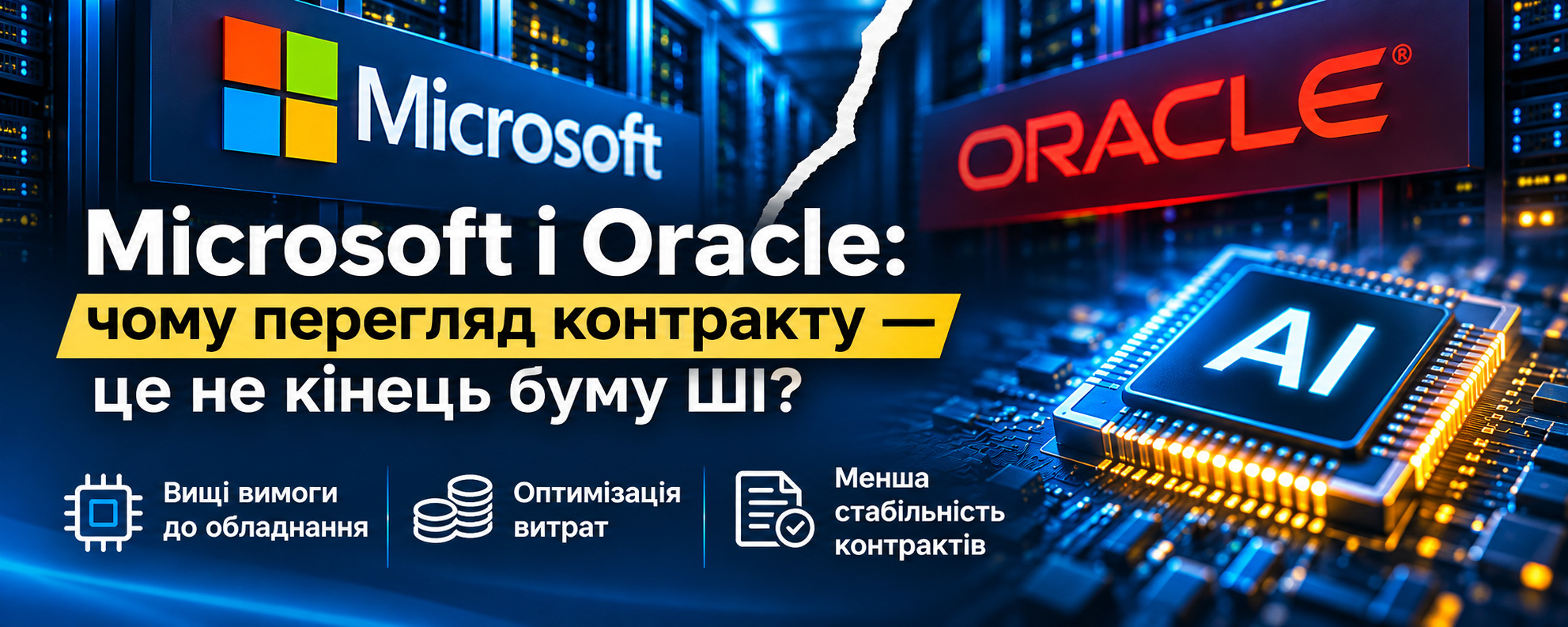
Microsoft and Oracle: Why is the contract review not the end of the AI boom?Microsoft ($MSFTB ) is gradually phasing out some of its rented computing capacity from Oracle. But the real reason is not a retreat from AI development, but a change in infrastructure requirements.
According to media reports, Oracle's server capacity used older generations of chips that no longer met Microsoft's new needs.
Microsoft and Oracle: Why is the contract review not the end of the AI boom?
Microsoft ($MSFTB ) is gradually phasing out some of its rented computing capacity from Oracle. But the real reason is not a retreat from AI development, but a change in infrastructure requirements.
According to media reports, Oracle's server capacity used older generations of chips that no longer met Microsoft's new needs.
According to media reports, Oracle's server capacity used older generations of chips that no longer met Microsoft's new needs.
1
96
Log in to explore more content
Join global crypto users on Binance Square
⚡️ Get latest and useful information about crypto.
💬 Trusted by the world’s largest crypto exchange.
👍 Discover real insights from verified creators.
Email / Phone number
Trending Topics
1
#JobsReportRaisesHikeOdds
489,271 views
3,208 Discussing
2
#CPITestsDecemberRateOutlook
135,072 views
1,039 Discussing
3
#BitcoinRebounds$75KAsChipsLead
43,970 views
334 Discussing
4
#US Data Center Rules May Constrain AI Expansion
68,481 views
225 Discussing
5
#ARKPlans14ThematicETFsCoveringAIAndTokenizedMarkets
3,793 views
61 Discussing
6
#WillAnthropicListOnTime
144,014 views
1,296 Discussing
7
#WillUS-IranTensionsBoostSafe-HavenDemand?
61,690 views
454 Discussing
8
#BitcoinETFsSee$412MNetOutflows
13,828 views
70 Discussing
9
#HKSFCPlansToRestrictCryptoAndExchangeTerms
54,665 views
501 Discussing
10
#TradFiForBeginners
86,491 views
961 Discussing