
#termmax
termmax
2.1M views
58,852 Discussing
Hot
Latest

·
--
🦈 WHO TRULY DICTATES DEFI YIELDS? INSIDE THE BOUNDARY MECHANICS OF $TERMMAX 💡
Fixed-rate protocols aren't just battling for pure liquidity anymore — they are fighting over precision pricing. 🔍 $TERMMAX shifts the game by relying on curators to set specific APR ranges, which the AMM then maps into dynamic pricing curves for borrowers and lenders. 🌊
📌 But here is the quiet leverage point: set those parameters too wide and execution becomes inefficient; set them too tight and sudden volatility breaks the range. Predictable yield isn't just about total capital trapped — it comes down to who controls the boundaries where that capital lives. 💡
🤔 Do you prefer algorithmic rate curves or curated yield boundaries when locking in your fixed rates? 👇
⚠️ Not financial advice. Always manage your risk. 🛡️
🏷️ #TERMMAX #DeFi #FixedRates #Yield #Crypto
💡 🦈
🦈 WHO TRULY DICTATES DEFI YIELDS? INSIDE THE BOUNDARY MECHANICS OF $TERMMAX 💡
Fixed-rate protocols aren't just battling for pure liquidity anymore — they are fighting over precision pricing. 🔍 $TERMMAX shifts the game by relying on curators to set specific APR ranges, which the AMM then maps into dynamic pricing curves for borrowers and lenders. 🌊
📌 But here is the quiet leverage point: set those parameters too wide and execution becomes inefficient; set them too tight and sudden volatility breaks the range. Predictable yield isn't just about total capital trapped — it comes down to who controls the boundaries where that capital lives. 💡
🤔 Do you prefer algorithmic rate curves or curated yield boundaries when locking in your fixed rates? 👇
⚠️ Not financial advice. Always manage your risk. 🛡️
🏷️ #TERMMAX #DeFi #FixedRates #Yield #Crypto
💡 🦈
Fixed-rate protocols aren't just battling for pure liquidity anymore — they are fighting over precision pricing. 🔍 $TERMMAX shifts the game by relying on curators to set specific APR ranges, which the AMM then maps into dynamic pricing curves for borrowers and lenders. 🌊
📌 But here is the quiet leverage point: set those parameters too wide and execution becomes inefficient; set them too tight and sudden volatility breaks the range. Predictable yield isn't just about total capital trapped — it comes down to who controls the boundaries where that capital lives. 💡
🤔 Do you prefer algorithmic rate curves or curated yield boundaries when locking in your fixed rates? 👇
⚠️ Not financial advice. Always manage your risk. 🛡️
🏷️ #TERMMAX #DeFi #FixedRates #Yield #Crypto
💡 🦈
3

·
--
🚨 URGENT REWARD CLAIM WINDOW OPEN FOR $TERMMAX CREATORPAD WINNERS! 💥
If you snagged allocations in the $TERMMAX CreatorPad campaign, the clock is ticking to secure your yield. 🔒 Head straight into the booster portal and verify your completed tasks immediately before the snapshot locks you out of your tokens.
We successfully swept both the global Booster Pool and landed a comfortable top #7 spot on the CreatorPad leaderboard. 📊 Smart participants know that leaving unclaimed allocations on the table is just handing free value back to the pool.
💬 Did you lock in your CreatorPad allocation in time, or did you let the verification window slip past? 👇
⚠️ Not financial advice. Always manage your risk. 🛡️
🏷️ #TERMMAX #CreatorPad #Airdrop #Crypto #Web3
🔥 💎
🚨 URGENT REWARD CLAIM WINDOW OPEN FOR $TERMMAX CREATORPAD WINNERS! 💥
If you snagged allocations in the $TERMMAX CreatorPad campaign, the clock is ticking to secure your yield. 🔒 Head straight into the booster portal and verify your completed tasks immediately before the snapshot locks you out of your tokens.
We successfully swept both the global Booster Pool and landed a comfortable top #7 spot on the CreatorPad leaderboard. 📊 Smart participants know that leaving unclaimed allocations on the table is just handing free value back to the pool.
💬 Did you lock in your CreatorPad allocation in time, or did you let the verification window slip past? 👇
⚠️ Not financial advice. Always manage your risk. 🛡️
🏷️ #TERMMAX #CreatorPad #Airdrop #Crypto #Web3
🔥 💎
If you snagged allocations in the $TERMMAX CreatorPad campaign, the clock is ticking to secure your yield. 🔒 Head straight into the booster portal and verify your completed tasks immediately before the snapshot locks you out of your tokens.
We successfully swept both the global Booster Pool and landed a comfortable top #7 spot on the CreatorPad leaderboard. 📊 Smart participants know that leaving unclaimed allocations on the table is just handing free value back to the pool.
💬 Did you lock in your CreatorPad allocation in time, or did you let the verification window slip past? 👇
⚠️ Not financial advice. Always manage your risk. 🛡️
🏷️ #TERMMAX #CreatorPad #Airdrop #Crypto #Web3
🔥 💎
1

·
--
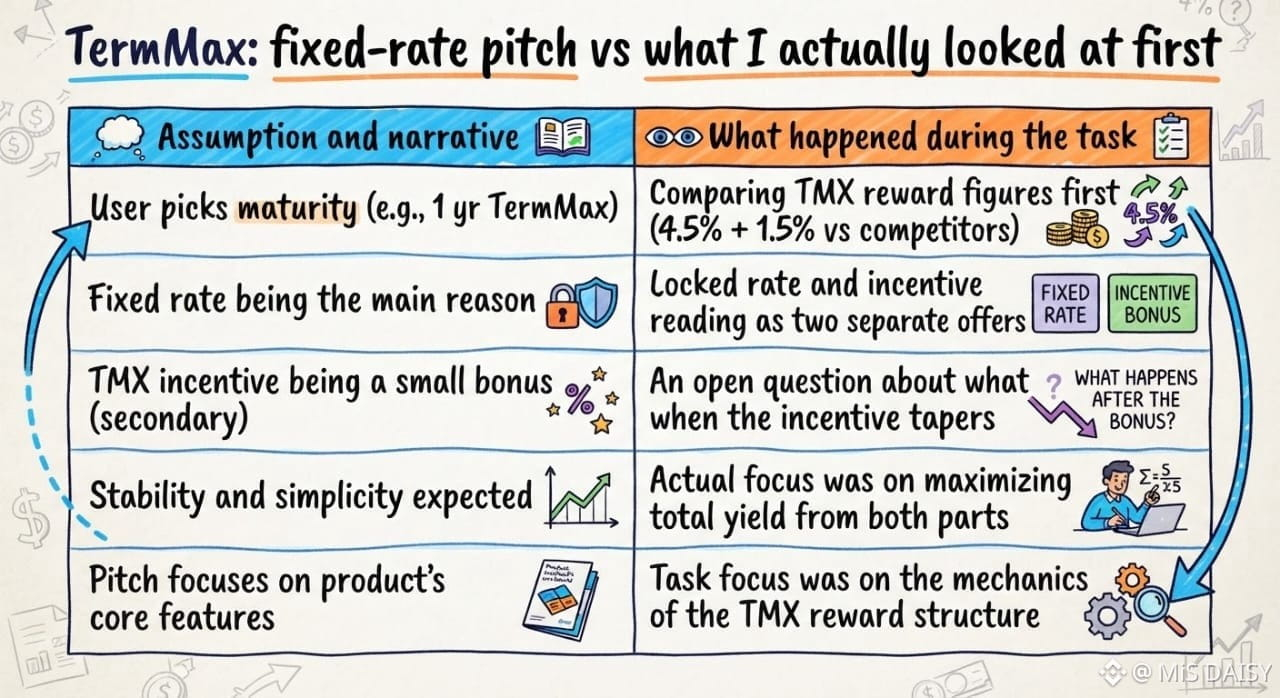
What made me pause in TermMax was how quickly my attention slid past the fixed rate and toward the number sitting beside it. The product is built on a quiet idea: pick a maturity, lock a rate, know exactly what you owe or earn. That is different from floating-rate pools where yields drift by the hour. But while moving through the task with @termmax _ts, the rate I could actually lock and the incentive layered on top of it read like two separate offers, and the second one was louder. If $TMX rewards are what make a given maturity look worth choosing, the fixed rate becomes a floor under the decision rather than the reason for it. I caught myself comparing reward figures before I compared terms, which is the opposite of the habit a fixed-rate product seems designed to build. I keep wondering what a user does once the incentive tapers and only the plain locked rate remains. Maybe demand for certainty is real but slow, and the rewards are just what keeps people in the room long enough to notice it. Or maybe they are what the room is made of. #TermMax
What made me pause in TermMax was how quickly my attention slid past the fixed rate and toward the number sitting beside it. The product is built on a quiet idea: pick a maturity, lock a rate, know exactly what you owe or earn. That is different from floating-rate pools where yields drift by the hour. But while moving through the task with @TermMax _ts, the rate I could actually lock and the incentive layered on top of it read like two separate offers, and the second one was louder. If $TMX rewards are what make a given maturity look worth choosing, the fixed rate becomes a floor under the decision rather than the reason for it. I caught myself comparing reward figures before I compared terms, which is the opposite of the habit a fixed-rate product seems designed to build. I keep wondering what a user does once the incentive tapers and only the plain locked rate remains. Maybe demand for certainty is real but slow, and the rewards are just what keeps people in the room long enough to notice it. Or maybe they are what the room is made of. #TermMax
1
852


·
--
🔍 TMX: Undervalued Opportunity or a High-Risk Recovery Play?
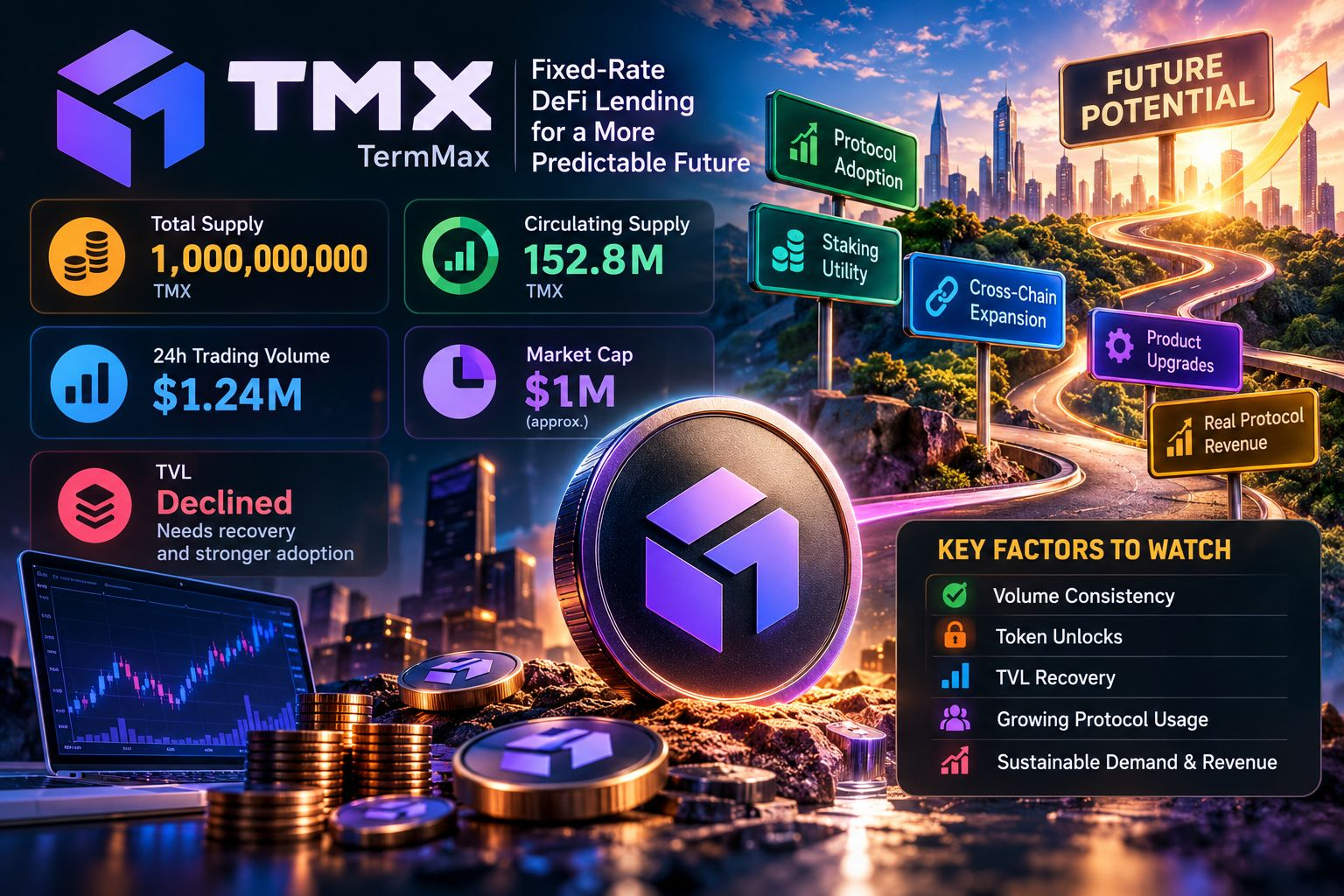
TMX has a fixed maximum supply of 1 billion tokens, with around 152.8 million currently circulating. Its reported 24-hour trading volume is approximately $1.24M, while its market cap is near $1M. However, TermMax’s TVL has dropped sharply, making protocol adoption a key metric to watch.
The long-term outlook depends on whether fixed-rate DeFi lending, staking utility, cross-chain expansion and upcoming product upgrades can attract sustainable demand. A low valuation alone does not guarantee recovery. I’ll be watching volume consistency, token unlocks, TVL recovery and real protocol revenue before drawing stronger conclusions.
Can TMX rebuild momentum through actual usage?
$ZEC
{future}(ZECUSDT)
$DASH
{future}(DASHUSDT)
$TMX
{alpha}(560x3c2f61f2e27c865981d2e7aaf6b2cdf823030039)
#TermMax
🔍 TMX: Undervalued Opportunity or a High-Risk Recovery Play?
TMX has a fixed maximum supply of 1 billion tokens, with around 152.8 million currently circulating. Its reported 24-hour trading volume is approximately $1.24M, while its market cap is near $1M. However, TermMax’s TVL has dropped sharply, making protocol adoption a key metric to watch.
The long-term outlook depends on whether fixed-rate DeFi lending, staking utility, cross-chain expansion and upcoming product upgrades can attract sustainable demand. A low valuation alone does not guarantee recovery. I’ll be watching volume consistency, token unlocks, TVL recovery and real protocol revenue before drawing stronger conclusions.
Can TMX rebuild momentum through actual usage?
$ZEC
$DASH
$TMX
#TermMax
TMX has a fixed maximum supply of 1 billion tokens, with around 152.8 million currently circulating. Its reported 24-hour trading volume is approximately $1.24M, while its market cap is near $1M. However, TermMax’s TVL has dropped sharply, making protocol adoption a key metric to watch.
The long-term outlook depends on whether fixed-rate DeFi lending, staking utility, cross-chain expansion and upcoming product upgrades can attract sustainable demand. A low valuation alone does not guarantee recovery. I’ll be watching volume consistency, token unlocks, TVL recovery and real protocol revenue before drawing stronger conclusions.
Can TMX rebuild momentum through actual usage?
$ZEC
$DASH
$TMX
#TermMax
5
2k

·
--
Let me put the conclusion first: I’m putting $TMX on my watchlist for now. The token concentration is making me seriously uneasy. 🤔
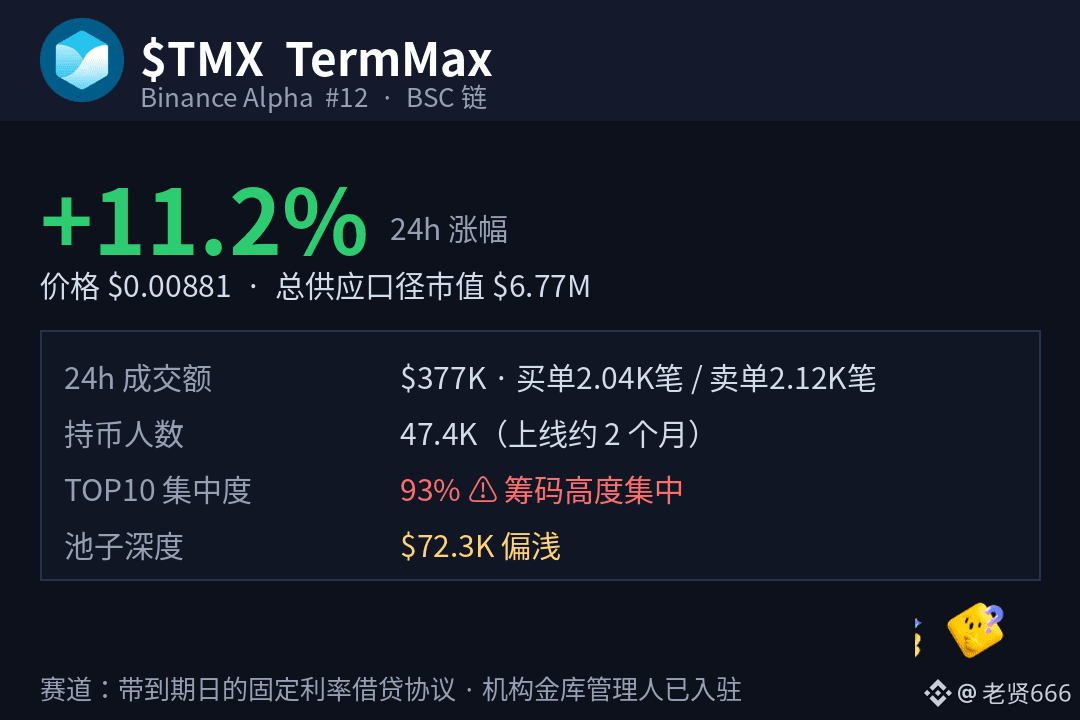
Today I went through all 280 coins on the Alpha leaderboard. TMX (TermMax) ranked 12th, up 11.2% over 24 hours, at $0.00881. What’s interesting is that it launched only two months ago, yet it already has 47,000 holders—that’s fast growth, even by Alpha standards.
On-chain, it saw $377,000 in trading volume over the past 24 hours, with 2.04K buy orders and 2.12K sell orders. Buyers and sellers are pretty evenly matched, and the activity is genuine—not just a few addresses trading back and forth. 👀
But there’s another side to the story: the top 10 wallets hold 93% of the tokens, and the liquidity pool has only a little over $70,000 in it. That’s shallow. It’s a classic case of lots of people, not much supply, and a few holders controlling most of the tokens—a small boat that gets tossed around when the waves pick up.
What does it do? It’s a fixed-rate lending protocol with set maturity dates. When you deposit, the rate and term are locked in, so neither borrowers nor lenders have to guess where floating rates will go. Its website, ts.finance, is live, and it’s already operating across several chains, including Ethereum, Arbitrum, and BNB Chain. Institutions like MEV Capital and Keyrock are also managing vaults on the platform, so there’s some substance behind it.
Verdict: Watch. Here’s what would change my mind—if token concentration stays this high and trading volume dries up, I’ll take it off the list. If ownership becomes more distributed and the liquidity pool deepens, I’ll upgrade it to active tracking.
This isn’t investment advice. Coins in the Alpha sector can drop without making a sound. Follow me, and I’ll see you in tomorrow’s ledger. 📒
#BinanceAlpha #TermMax #DeFi
Let me put the conclusion first: I’m putting $TMX on my watchlist for now. The token concentration is making me seriously uneasy. 🤔
Today I went through all 280 coins on the Alpha leaderboard. TMX (TermMax) ranked 12th, up 11.2% over 24 hours, at $0.00881. What’s interesting is that it launched only two months ago, yet it already has 47,000 holders—that’s fast growth, even by Alpha standards.
On-chain, it saw $377,000 in trading volume over the past 24 hours, with 2.04K buy orders and 2.12K sell orders. Buyers and sellers are pretty evenly matched, and the activity is genuine—not just a few addresses trading back and forth. 👀
But there’s another side to the story: the top 10 wallets hold 93% of the tokens, and the liquidity pool has only a little over $70,000 in it. That’s shallow. It’s a classic case of lots of people, not much supply, and a few holders controlling most of the tokens—a small boat that gets tossed around when the waves pick up.
What does it do? It’s a fixed-rate lending protocol with set maturity dates. When you deposit, the rate and term are locked in, so neither borrowers nor lenders have to guess where floating rates will go. Its website, ts.finance, is live, and it’s already operating across several chains, including Ethereum, Arbitrum, and BNB Chain. Institutions like MEV Capital and Keyrock are also managing vaults on the platform, so there’s some substance behind it.
Verdict: Watch. Here’s what would change my mind—if token concentration stays this high and trading volume dries up, I’ll take it off the list. If ownership becomes more distributed and the liquidity pool deepens, I’ll upgrade it to active tracking.
This isn’t investment advice. Coins in the Alpha sector can drop without making a sound. Follow me, and I’ll see you in tomorrow’s ledger. 📒
#BinanceAlpha #TermMax #DeFi
Today I went through all 280 coins on the Alpha leaderboard. TMX (TermMax) ranked 12th, up 11.2% over 24 hours, at $0.00881. What’s interesting is that it launched only two months ago, yet it already has 47,000 holders—that’s fast growth, even by Alpha standards.
On-chain, it saw $377,000 in trading volume over the past 24 hours, with 2.04K buy orders and 2.12K sell orders. Buyers and sellers are pretty evenly matched, and the activity is genuine—not just a few addresses trading back and forth. 👀
But there’s another side to the story: the top 10 wallets hold 93% of the tokens, and the liquidity pool has only a little over $70,000 in it. That’s shallow. It’s a classic case of lots of people, not much supply, and a few holders controlling most of the tokens—a small boat that gets tossed around when the waves pick up.
What does it do? It’s a fixed-rate lending protocol with set maturity dates. When you deposit, the rate and term are locked in, so neither borrowers nor lenders have to guess where floating rates will go. Its website, ts.finance, is live, and it’s already operating across several chains, including Ethereum, Arbitrum, and BNB Chain. Institutions like MEV Capital and Keyrock are also managing vaults on the platform, so there’s some substance behind it.
Verdict: Watch. Here’s what would change my mind—if token concentration stays this high and trading volume dries up, I’ll take it off the list. If ownership becomes more distributed and the liquidity pool deepens, I’ll upgrade it to active tracking.
This isn’t investment advice. Coins in the Alpha sector can drop without making a sound. Follow me, and I’ll see you in tomorrow’s ledger. 📒
#BinanceAlpha #TermMax #DeFi
590

🚨 $TERMMAX PROVES FIXED-RATE DEFI IS SHIFTING FROM ORDERBOOKS TO AMM LIQUIDITY POOLS! 🏦
Orderbook architecture offers exact rate matching, but liquidity fragmentation across fixed maturities cripples execution speed. 🏦 $TERMMAX transitioning toward custom-curve AMMs trades marginal pricing precision for continuous pool depth, allowing smart money to enter and exit positions instantly without waiting for counterparty matching.
This structural evolution mirrors early spot market expansion, proving that automated pooled liquidity is essential for fixed-income scaling. 💡 Shared liquidity architecture solves the friction of illiquid maturities, unlocking true institutional throughput for non-standard assets.
💬 Do you prioritize absolute rate precision or instant execution liquidity when locking fixed yields? 👇
⚠️ Not financial advice. Always manage your risk. 🛡️
🏷️ #TERMMAX #FixedRate #DeFi #Yield #Crypto
🎯 🦈
🚨 $TERMMAX PROVES FIXED-RATE DEFI IS SHIFTING FROM ORDERBOOKS TO AMM LIQUIDITY POOLS! 🏦
Orderbook architecture offers exact rate matching, but liquidity fragmentation across fixed maturities cripples execution speed. 🏦 $TERMMAX transitioning toward custom-curve AMMs trades marginal pricing precision for continuous pool depth, allowing smart money to enter and exit positions instantly without waiting for counterparty matching.
This structural evolution mirrors early spot market expansion, proving that automated pooled liquidity is essential for fixed-income scaling. 💡 Shared liquidity architecture solves the friction of illiquid maturities, unlocking true institutional throughput for non-standard assets.
💬 Do you prioritize absolute rate precision or instant execution liquidity when locking fixed yields? 👇
⚠️ Not financial advice. Always manage your risk. 🛡️
🏷️ #TERMMAX #FixedRate #DeFi #Yield #Crypto
🎯 🦈
Orderbook architecture offers exact rate matching, but liquidity fragmentation across fixed maturities cripples execution speed. 🏦 $TERMMAX transitioning toward custom-curve AMMs trades marginal pricing precision for continuous pool depth, allowing smart money to enter and exit positions instantly without waiting for counterparty matching.
This structural evolution mirrors early spot market expansion, proving that automated pooled liquidity is essential for fixed-income scaling. 💡 Shared liquidity architecture solves the friction of illiquid maturities, unlocking true institutional throughput for non-standard assets.
💬 Do you prioritize absolute rate precision or instant execution liquidity when locking fixed yields? 👇
⚠️ Not financial advice. Always manage your risk. 🛡️
🏷️ #TERMMAX #FixedRate #DeFi #Yield #Crypto
🎯 🦈
38

·
--
IS $TERMMAX SOLVING REAL DEFI DEMAND OR JUST MARKET COORDINATION? 🚨 📊
Smart money capital allocation in $TERMMAX reveals a fundamental institutional dilemma between predictable debt yield and pure execution flexibility. 🌊 While locking term rates solves structure coordination, high-volatility regimes historically favor immediate liquidity over fixed maturity schedules.
Institutional desks requiring cash flow precision and cost-locked arbitrage will treat fixed rates as a necessity. 💡 However, retail liquidity still votes with its feet, prioritizing rapid position rotation when market structure shifts unexpectedly.
Determining long-term protocol momentum comes down to real institutional adoption versus superficial rate tables. 💬 In high-volatility conditions, do you prioritize locking in structural certainty or preserving emergency exit flexibility? 👇
⚠️ Not financial advice. Always manage your risk. 🛡️
🏷️ #TERMMAX #DeFi #Yield #MarketStructure #Crypto
🔥 💎
IS $TERMMAX SOLVING REAL DEFI DEMAND OR JUST MARKET COORDINATION? 🚨 📊
Smart money capital allocation in $TERMMAX reveals a fundamental institutional dilemma between predictable debt yield and pure execution flexibility. 🌊 While locking term rates solves structure coordination, high-volatility regimes historically favor immediate liquidity over fixed maturity schedules.
Institutional desks requiring cash flow precision and cost-locked arbitrage will treat fixed rates as a necessity. 💡 However, retail liquidity still votes with its feet, prioritizing rapid position rotation when market structure shifts unexpectedly.
Determining long-term protocol momentum comes down to real institutional adoption versus superficial rate tables. 💬 In high-volatility conditions, do you prioritize locking in structural certainty or preserving emergency exit flexibility? 👇
⚠️ Not financial advice. Always manage your risk. 🛡️
🏷️ #TERMMAX #DeFi #Yield #MarketStructure #Crypto
🔥 💎
Smart money capital allocation in $TERMMAX reveals a fundamental institutional dilemma between predictable debt yield and pure execution flexibility. 🌊 While locking term rates solves structure coordination, high-volatility regimes historically favor immediate liquidity over fixed maturity schedules.
Institutional desks requiring cash flow precision and cost-locked arbitrage will treat fixed rates as a necessity. 💡 However, retail liquidity still votes with its feet, prioritizing rapid position rotation when market structure shifts unexpectedly.
Determining long-term protocol momentum comes down to real institutional adoption versus superficial rate tables. 💬 In high-volatility conditions, do you prioritize locking in structural certainty or preserving emergency exit flexibility? 👇
⚠️ Not financial advice. Always manage your risk. 🛡️
🏷️ #TERMMAX #DeFi #Yield #MarketStructure #Crypto
🔥 💎
39
·
--
🚨 $TERMMAX REVOLUTIONIZES RWA LIQUIDITY WITH INSTITUTIONAL PHYSICAL DELIVERY MECHANICS! 🦈
Bringing real-world assets on-chain means little if secondary market liquidity collapses under stress. 🦈 Institutional capital requires structural safety, which is why $TERMMAX is shifting the paradigm by replacing market liquidations with physical asset delivery directly to lenders.
📌 This eliminates order book slippage and preserves capital efficiency during high volatility, unlike traditional forced liquidations seen in $BTC or $ETH pools. Fixed-rate lending backed by direct settlement provides the structural clarity smart money demands before scaling size. 📊
💬 Will physical settlement mechanisms become the mandatory baseline for institutional RWA protocols? 👇
⚠️ Not financial advice. Always manage your risk. 🛡️
🏷️ #TERMMAX #RWA #DeFi #SmartMoney #Crypto
🎯 🦈
🚨 $TERMMAX REVOLUTIONIZES RWA LIQUIDITY WITH INSTITUTIONAL PHYSICAL DELIVERY MECHANICS! 🦈
Bringing real-world assets on-chain means little if secondary market liquidity collapses under stress. 🦈 Institutional capital requires structural safety, which is why $TERMMAX is shifting the paradigm by replacing market liquidations with physical asset delivery directly to lenders.
📌 This eliminates order book slippage and preserves capital efficiency during high volatility, unlike traditional forced liquidations seen in $BTC or $ETH pools. Fixed-rate lending backed by direct settlement provides the structural clarity smart money demands before scaling size. 📊
💬 Will physical settlement mechanisms become the mandatory baseline for institutional RWA protocols? 👇
⚠️ Not financial advice. Always manage your risk. 🛡️
🏷️ #TERMMAX #RWA #DeFi #SmartMoney #Crypto
🎯 🦈
Bringing real-world assets on-chain means little if secondary market liquidity collapses under stress. 🦈 Institutional capital requires structural safety, which is why $TERMMAX is shifting the paradigm by replacing market liquidations with physical asset delivery directly to lenders.
📌 This eliminates order book slippage and preserves capital efficiency during high volatility, unlike traditional forced liquidations seen in $BTC or $ETH pools. Fixed-rate lending backed by direct settlement provides the structural clarity smart money demands before scaling size. 📊
💬 Will physical settlement mechanisms become the mandatory baseline for institutional RWA protocols? 👇
⚠️ Not financial advice. Always manage your risk. 🛡️
🏷️ #TERMMAX #RWA #DeFi #SmartMoney #Crypto
🎯 🦈
75
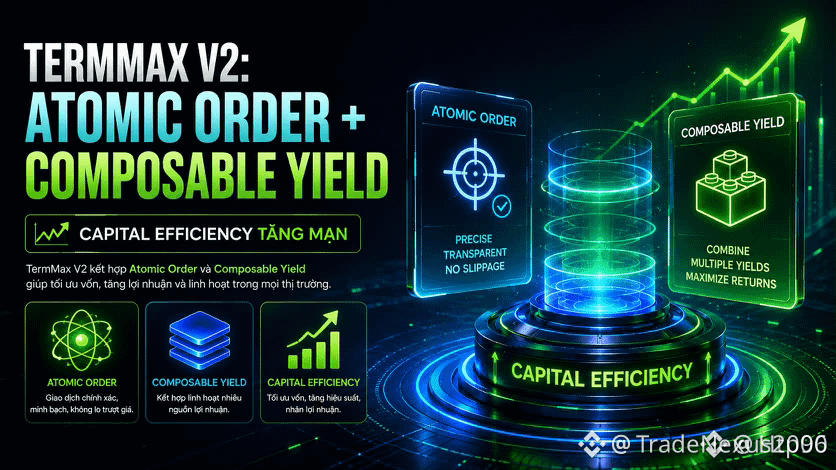
🚨 $TERMMAX V2 UNLOCKS INSTITUTIONAL CAPITAL EFFICIENCY WITH COMPOSABLE BASE YIELD ARCHITECTURE! 💥
Smart money institutional vaults often suffer from idle liquidity friction while awaiting fixed-rate matching. 🏦 TermMax V2 resolves this structural inefficiency by dynamically routing unmatched capital into base yield engines like Aave and Morpho ERC-4626 standard vaults. 🔍
By deploying virtual liquidity across multiple order books simultaneously without risk of double-allocation, large whale borrowers can now source deep liquidity frictionlessly. 📊 This structural upgrade drastically maximizes capital efficiency and optimizes risk-adjusted returns for vault curators. 💬 Will composable base yields become the mandatory blueprint for fixed-rate DeFi protocols going forward? 👇
⚠️ Not financial advice. Always manage your risk. 🛡️
🏷️ #TERMMAX #DeFi #YieldOptimization #Crypto #FixedRate
🔥 💎
🚨 $TERMMAX V2 UNLOCKS INSTITUTIONAL CAPITAL EFFICIENCY WITH COMPOSABLE BASE YIELD ARCHITECTURE! 💥
Smart money institutional vaults often suffer from idle liquidity friction while awaiting fixed-rate matching. 🏦 TermMax V2 resolves this structural inefficiency by dynamically routing unmatched capital into base yield engines like Aave and Morpho ERC-4626 standard vaults. 🔍
By deploying virtual liquidity across multiple order books simultaneously without risk of double-allocation, large whale borrowers can now source deep liquidity frictionlessly. 📊 This structural upgrade drastically maximizes capital efficiency and optimizes risk-adjusted returns for vault curators. 💬 Will composable base yields become the mandatory blueprint for fixed-rate DeFi protocols going forward? 👇
⚠️ Not financial advice. Always manage your risk. 🛡️
🏷️ #TERMMAX #DeFi #YieldOptimization #Crypto #FixedRate
🔥 💎
Smart money institutional vaults often suffer from idle liquidity friction while awaiting fixed-rate matching. 🏦 TermMax V2 resolves this structural inefficiency by dynamically routing unmatched capital into base yield engines like Aave and Morpho ERC-4626 standard vaults. 🔍
By deploying virtual liquidity across multiple order books simultaneously without risk of double-allocation, large whale borrowers can now source deep liquidity frictionlessly. 📊 This structural upgrade drastically maximizes capital efficiency and optimizes risk-adjusted returns for vault curators. 💬 Will composable base yields become the mandatory blueprint for fixed-rate DeFi protocols going forward? 👇
⚠️ Not financial advice. Always manage your risk. 🛡️
🏷️ #TERMMAX #DeFi #YieldOptimization #Crypto #FixedRate
🔥 💎
41

·
--
Partly True
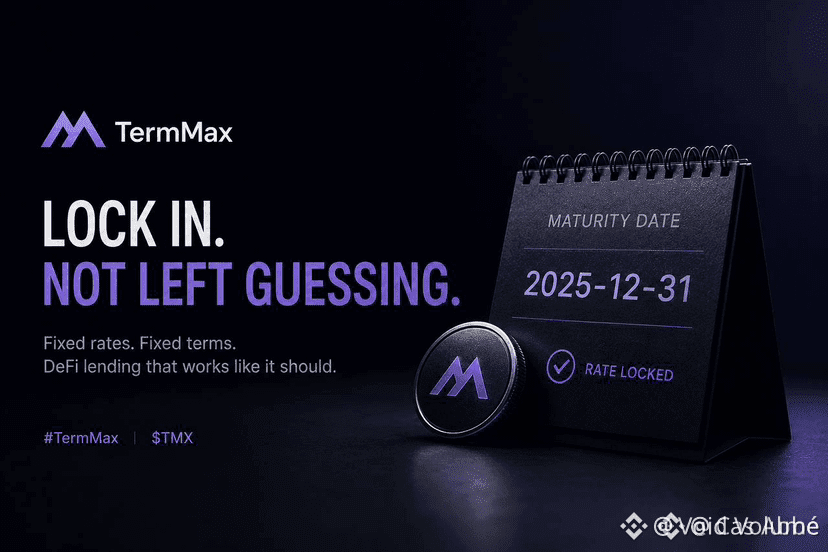
🏦 CUMBERLAND DRW BACKS $TERMMAX TO SOLVE DEFI DURATION RISK WITH ON-CHAIN BONDS 🔍
DeFi lending has long suffered from inefficient yield volatility, forcing liquidity providers into unpredictable rate exposure. 🏦 The institutional footprint behind TermMax, spearheaded by Cumberland DRW, signals a structural shift toward fixed-income maturity dates and true duration risk management on-chain. 📊
While early-stage metrics show modest TVL and single-chain deployment, introducing predictable, bond-like maturity structures addresses the core bottleneck of institutional capital entry. 🔍 Smart money understands that mature financial systems require deterministic yield curves, not random APY swings. 💡
🤔 Will fixed-term maturity models finally unlock institutional treasury allocation in DeFi? 👇
⚠️ Not financial advice. Always manage your risk. 🛡️
🏷️ #TERMMAX #DeFi #FixedIncome #SmartMoney
🏦 🔍
🏦 CUMBERLAND DRW BACKS $TERMMAX TO SOLVE DEFI DURATION RISK WITH ON-CHAIN BONDS 🔍
DeFi lending has long suffered from inefficient yield volatility, forcing liquidity providers into unpredictable rate exposure. 🏦 The institutional footprint behind TermMax, spearheaded by Cumberland DRW, signals a structural shift toward fixed-income maturity dates and true duration risk management on-chain. 📊
While early-stage metrics show modest TVL and single-chain deployment, introducing predictable, bond-like maturity structures addresses the core bottleneck of institutional capital entry. 🔍 Smart money understands that mature financial systems require deterministic yield curves, not random APY swings. 💡
🤔 Will fixed-term maturity models finally unlock institutional treasury allocation in DeFi? 👇
⚠️ Not financial advice. Always manage your risk. 🛡️
🏷️ #TERMMAX #DeFi #FixedIncome #SmartMoney
🏦 🔍
DeFi lending has long suffered from inefficient yield volatility, forcing liquidity providers into unpredictable rate exposure. 🏦 The institutional footprint behind TermMax, spearheaded by Cumberland DRW, signals a structural shift toward fixed-income maturity dates and true duration risk management on-chain. 📊
While early-stage metrics show modest TVL and single-chain deployment, introducing predictable, bond-like maturity structures addresses the core bottleneck of institutional capital entry. 🔍 Smart money understands that mature financial systems require deterministic yield curves, not random APY swings. 💡
🤔 Will fixed-term maturity models finally unlock institutional treasury allocation in DeFi? 👇
⚠️ Not financial advice. Always manage your risk. 🛡️
🏷️ #TERMMAX #DeFi #FixedIncome #SmartMoney
🏦 🔍
1
627
🔍 INSIDER ARCHITECTURE: IS $TERMMAX REDEFINING DEFI LIQUIDITY OR DELEGATING YIELD CONTROL? 🦈
💡 Institutional fixed-rate DeFi is shifting from pure algorithmic AMMs to curated liquidity boundaries. TermMax’s range order design moves pricing authority to curators who set structural yield boundaries for market participants. 🔍
🔒 While this optimizes capital efficiency, execution hinges entirely on precise parameter management. Set these APR boundaries too wide and pricing precision dilutes; set them too narrow and sudden volatility pushes liquidity out of range. 📊
🤔 As institutional capital moves into structured yield products, will curator-driven ranges become the standard for fixed-rate execution? 👇
⚠️ Not financial advice. Always manage your risk. 🛡️
🏷️ #TERMMAX #DeFi #YieldCurve #SmartMoney #Crypto
🎯 🦈
🔍 INSIDER ARCHITECTURE: IS $TERMMAX REDEFINING DEFI LIQUIDITY OR DELEGATING YIELD CONTROL? 🦈
💡 Institutional fixed-rate DeFi is shifting from pure algorithmic AMMs to curated liquidity boundaries. TermMax’s range order design moves pricing authority to curators who set structural yield boundaries for market participants. 🔍
🔒 While this optimizes capital efficiency, execution hinges entirely on precise parameter management. Set these APR boundaries too wide and pricing precision dilutes; set them too narrow and sudden volatility pushes liquidity out of range. 📊
🤔 As institutional capital moves into structured yield products, will curator-driven ranges become the standard for fixed-rate execution? 👇
⚠️ Not financial advice. Always manage your risk. 🛡️
🏷️ #TERMMAX #DeFi #YieldCurve #SmartMoney #Crypto
🎯 🦈
💡 Institutional fixed-rate DeFi is shifting from pure algorithmic AMMs to curated liquidity boundaries. TermMax’s range order design moves pricing authority to curators who set structural yield boundaries for market participants. 🔍
🔒 While this optimizes capital efficiency, execution hinges entirely on precise parameter management. Set these APR boundaries too wide and pricing precision dilutes; set them too narrow and sudden volatility pushes liquidity out of range. 📊
🤔 As institutional capital moves into structured yield products, will curator-driven ranges become the standard for fixed-rate execution? 👇
⚠️ Not financial advice. Always manage your risk. 🛡️
🏷️ #TERMMAX #DeFi #YieldCurve #SmartMoney #Crypto
🎯 🦈

46

·
--
🏦 HOW $TERMMAX FIXES DEFI YIELD INEFFICIENCIES WITH INSTITUTIONAL FIXED-RATE ARCHITECTURE 🦈
Institutional capital naturally avoids variable-rate volatility and chaotic yield swings. By integrating zero-coupon bond mechanics, $TERMMAX establishes locked borrowing costs and deterministic capital deployment directly on-chain. 📊
This fixed-term framework eliminates sudden rate spikes, allowing smart money to build structured credit strategies with precise risk parameters. 💡 Zero guessing games, just predictable maturity schedules and pure structural stability. 📌 🤔 Is fixed-rate architecture the missing key to unlocking institutional volume on-chain? 👇
⚠️ Not financial advice. Always manage your risk. 🛡️
🏷️ #TERMMAX #DeFi #Yield #Institutional #Crypto
🎯 🦈
🏦 HOW $TERMMAX FIXES DEFI YIELD INEFFICIENCIES WITH INSTITUTIONAL FIXED-RATE ARCHITECTURE 🦈
Institutional capital naturally avoids variable-rate volatility and chaotic yield swings. By integrating zero-coupon bond mechanics, $TERMMAX establishes locked borrowing costs and deterministic capital deployment directly on-chain. 📊
This fixed-term framework eliminates sudden rate spikes, allowing smart money to build structured credit strategies with precise risk parameters. 💡 Zero guessing games, just predictable maturity schedules and pure structural stability. 📌 🤔 Is fixed-rate architecture the missing key to unlocking institutional volume on-chain? 👇
⚠️ Not financial advice. Always manage your risk. 🛡️
🏷️ #TERMMAX #DeFi #Yield #Institutional #Crypto
🎯 🦈
Institutional capital naturally avoids variable-rate volatility and chaotic yield swings. By integrating zero-coupon bond mechanics, $TERMMAX establishes locked borrowing costs and deterministic capital deployment directly on-chain. 📊
This fixed-term framework eliminates sudden rate spikes, allowing smart money to build structured credit strategies with precise risk parameters. 💡 Zero guessing games, just predictable maturity schedules and pure structural stability. 📌 🤔 Is fixed-rate architecture the missing key to unlocking institutional volume on-chain? 👇
⚠️ Not financial advice. Always manage your risk. 🛡️
🏷️ #TERMMAX #DeFi #Yield #Institutional #Crypto
🎯 🦈
68
·
--
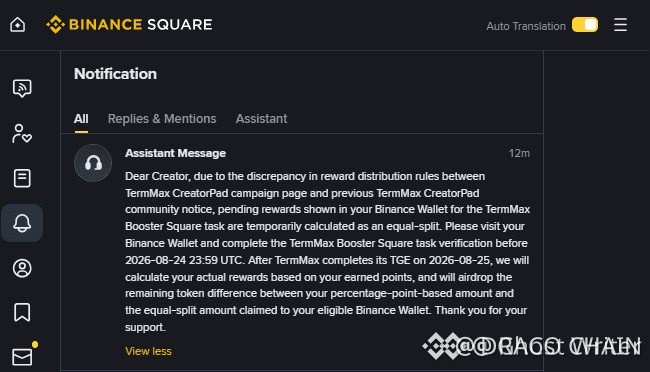
🚨 URGENT $TERMMAX AIRDROP UPDATE: VERIFY BOOSTER TASKS BEFORE TGE SNAPSHOT! ⚡
📌 Institutional participation update for the $TERMMAX campaign. A calculation discrepancy has temporarily displayed rewards as an even split across participants. To ensure your actual accumulated points are properly audited for the final allocation, an immediate execution step is required ahead of the August 25 TGE. 🔍
⏱️ You must access your Web3 wallet and complete the task verification before 23:59 UTC on August 24. Post-TGE, the underlying system will process exact point distributions and deliver any remaining airdrop balance directly to eligible wallets. 📊 Have you locked in your task verification yet, or are you leaving your allocation on the table? 👇
⚠️ Not financial advice. Always manage your risk. 🛡️
🏷️ #TERMMAX #Airdrop #TGE #Crypto #Web3
🔥 💎
🚨 URGENT $TERMMAX AIRDROP UPDATE: VERIFY BOOSTER TASKS BEFORE TGE SNAPSHOT! ⚡
📌 Institutional participation update for the $TERMMAX campaign. A calculation discrepancy has temporarily displayed rewards as an even split across participants. To ensure your actual accumulated points are properly audited for the final allocation, an immediate execution step is required ahead of the August 25 TGE. 🔍
⏱️ You must access your Web3 wallet and complete the task verification before 23:59 UTC on August 24. Post-TGE, the underlying system will process exact point distributions and deliver any remaining airdrop balance directly to eligible wallets. 📊 Have you locked in your task verification yet, or are you leaving your allocation on the table? 👇
⚠️ Not financial advice. Always manage your risk. 🛡️
🏷️ #TERMMAX #Airdrop #TGE #Crypto #Web3
🔥 💎
📌 Institutional participation update for the $TERMMAX campaign. A calculation discrepancy has temporarily displayed rewards as an even split across participants. To ensure your actual accumulated points are properly audited for the final allocation, an immediate execution step is required ahead of the August 25 TGE. 🔍
⏱️ You must access your Web3 wallet and complete the task verification before 23:59 UTC on August 24. Post-TGE, the underlying system will process exact point distributions and deliver any remaining airdrop balance directly to eligible wallets. 📊 Have you locked in your task verification yet, or are you leaving your allocation on the table? 👇
⚠️ Not financial advice. Always manage your risk. 🛡️
🏷️ #TERMMAX #Airdrop #TGE #Crypto #Web3
🔥 💎
13

·
--
#termmax @termmax
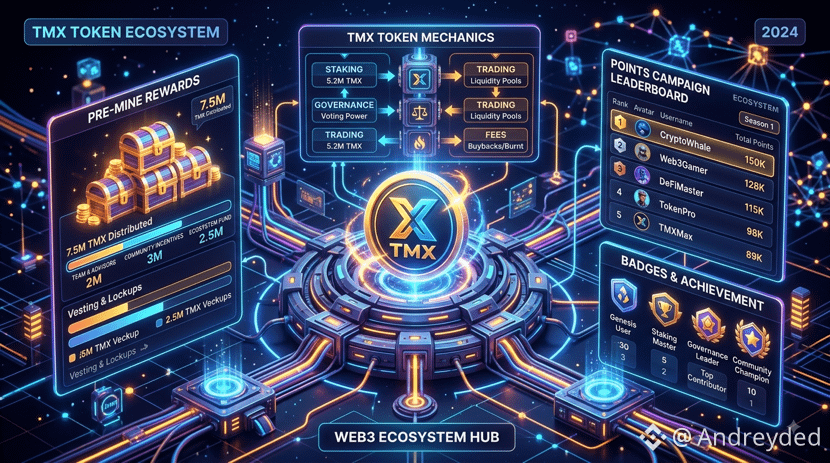
Overview of opportunities for early users: support from Binance Labs (YZi Labs), campaigns in Binance Wallet, and a points/badges system.
When a protocol launches a standout product — that’s great. But when it pairs this with strong incentives for the community — it draws maximum attention.
TermMax is a Season 3 graduate of YZi Labs’ (Binance Labs) EASY program and is now actively growing its engagement campaign:
• Binance Wallet Campaigns: interactive check-ins and tasks with rewards.
• Badge System & Leaderboard: earning points for participation, liquidity, and trading.
• TMX Token Pre-mine: an opportunity to become part of the ecosystem even before the token’s full launch.
Combining support from Binance’s incubator and well-thought-out game mechanics makes working with the protocol not only useful for optimizing yield, but also promising from the perspective of future airdrops/points.
Have you already completed TermMax check-ins in Binance Web3 Wallet? How many points did you manage to collect? 🚀 #TSFinance #BinanceWeb3Wallet #Airdrop #CryptoIncentives
#termmax @TermMax
Overview of opportunities for early users: support from Binance Labs (YZi Labs), campaigns in Binance Wallet, and a points/badges system.
When a protocol launches a standout product — that’s great. But when it pairs this with strong incentives for the community — it draws maximum attention.
TermMax is a Season 3 graduate of YZi Labs’ (Binance Labs) EASY program and is now actively growing its engagement campaign:
• Binance Wallet Campaigns: interactive check-ins and tasks with rewards.
• Badge System & Leaderboard: earning points for participation, liquidity, and trading.
• TMX Token Pre-mine: an opportunity to become part of the ecosystem even before the token’s full launch.
Combining support from Binance’s incubator and well-thought-out game mechanics makes working with the protocol not only useful for optimizing yield, but also promising from the perspective of future airdrops/points.
Have you already completed TermMax check-ins in Binance Web3 Wallet? How many points did you manage to collect? 🚀 #TSFinance #BinanceWeb3Wallet #Airdrop #CryptoIncentives
Overview of opportunities for early users: support from Binance Labs (YZi Labs), campaigns in Binance Wallet, and a points/badges system.
When a protocol launches a standout product — that’s great. But when it pairs this with strong incentives for the community — it draws maximum attention.
TermMax is a Season 3 graduate of YZi Labs’ (Binance Labs) EASY program and is now actively growing its engagement campaign:
• Binance Wallet Campaigns: interactive check-ins and tasks with rewards.
• Badge System & Leaderboard: earning points for participation, liquidity, and trading.
• TMX Token Pre-mine: an opportunity to become part of the ecosystem even before the token’s full launch.
Combining support from Binance’s incubator and well-thought-out game mechanics makes working with the protocol not only useful for optimizing yield, but also promising from the perspective of future airdrops/points.
Have you already completed TermMax check-ins in Binance Web3 Wallet? How many points did you manage to collect? 🚀 #TSFinance #BinanceWeb3Wallet #Airdrop #CryptoIncentives
111

·
--
3 Days Countdown! TermMax TGE is Near, and TMX Airdrop Eligibility Check Is Now Open
Only 3 days remain until the TMX TGE (Token Generation Event) on August 25. The total TMX supply is 1 billion tokens, mainly used for governance, staking rewards, and market-related utility.
TermMax protocol data is currently performing exceptionally well: TVL exceeds $90 million, registered wallets surpass 1.5 million, daily active users are around 90,000, and the peak reached over 170,000. It has been deployed across 10 EVM chains including Ethereum, $BNB Chain, Arbitrum, Base, and Berachain, and has been integrated with leading protocols such as Morpho, Aave, Venus, and Pendle.
Airdrop eligibility checking is officially open. Rewards accumulated earlier through XP, AP, and MP can be claimed 1:1 after the TGE. Some community members report that eligible claimants need to choose a lock-up period themselves. The official intent is to reduce sell pressure around the TGE. We recommend checking eligibility as early as possible and planning your claiming/locking strategy.
Binance Wallet Booster activity will end tonight (Aug 24, 23:59 UTC). The prize pool is 2 million TMX tokens—complete the tasks to participate in the prize share. If you haven’t joined yet, seize the last chance.
In 3 days, the TGE results will be revealed. This project aims to turn fixed-rate into DeFi infrastructure—whether it can deliver a satisfying performance in the secondary market remains to be seen. #TermMax @termmax
3 Days Countdown! TermMax TGE is Near, and TMX Airdrop Eligibility Check Is Now Open
Only 3 days remain until the TMX TGE (Token Generation Event) on August 25. The total TMX supply is 1 billion tokens, mainly used for governance, staking rewards, and market-related utility.
TermMax protocol data is currently performing exceptionally well: TVL exceeds $90 million, registered wallets surpass 1.5 million, daily active users are around 90,000, and the peak reached over 170,000. It has been deployed across 10 EVM chains including Ethereum, $BNB Chain, Arbitrum, Base, and Berachain, and has been integrated with leading protocols such as Morpho, Aave, Venus, and Pendle.
Airdrop eligibility checking is officially open. Rewards accumulated earlier through XP, AP, and MP can be claimed 1:1 after the TGE. Some community members report that eligible claimants need to choose a lock-up period themselves. The official intent is to reduce sell pressure around the TGE. We recommend checking eligibility as early as possible and planning your claiming/locking strategy.
Binance Wallet Booster activity will end tonight (Aug 24, 23:59 UTC). The prize pool is 2 million TMX tokens—complete the tasks to participate in the prize share. If you haven’t joined yet, seize the last chance.
In 3 days, the TGE results will be revealed. This project aims to turn fixed-rate into DeFi infrastructure—whether it can deliver a satisfying performance in the secondary market remains to be seen. #TermMax @TermMax
Only 3 days remain until the TMX TGE (Token Generation Event) on August 25. The total TMX supply is 1 billion tokens, mainly used for governance, staking rewards, and market-related utility.
TermMax protocol data is currently performing exceptionally well: TVL exceeds $90 million, registered wallets surpass 1.5 million, daily active users are around 90,000, and the peak reached over 170,000. It has been deployed across 10 EVM chains including Ethereum, $BNB Chain, Arbitrum, Base, and Berachain, and has been integrated with leading protocols such as Morpho, Aave, Venus, and Pendle.
Airdrop eligibility checking is officially open. Rewards accumulated earlier through XP, AP, and MP can be claimed 1:1 after the TGE. Some community members report that eligible claimants need to choose a lock-up period themselves. The official intent is to reduce sell pressure around the TGE. We recommend checking eligibility as early as possible and planning your claiming/locking strategy.
Binance Wallet Booster activity will end tonight (Aug 24, 23:59 UTC). The prize pool is 2 million TMX tokens—complete the tasks to participate in the prize share. If you haven’t joined yet, seize the last chance.
In 3 days, the TGE results will be revealed. This project aims to turn fixed-rate into DeFi infrastructure—whether it can deliver a satisfying performance in the secondary market remains to be seen. #TermMax @TermMax
186

·
--
Bullish
The campaign is officially closed 👀
Now the farming phase is over, and the allocation checker is live.
After all those points, tasks, and seasons, it’s finally time to see what everyone actually earned.
For me, this is where things get interesting:
Farm → Check allocation → Claim → Decide what comes next.
The campaign may be over, but the real journey is just beginning. 🐬
@termmax allocate the community who support early days.
#TermMax
The campaign is officially closed 👀
Now the farming phase is over, and the allocation checker is live.
After all those points, tasks, and seasons, it’s finally time to see what everyone actually earned.
For me, this is where things get interesting:
Farm → Check allocation → Claim → Decide what comes next.
The campaign may be over, but the real journey is just beginning. 🐬
@TermMax allocate the community who support early days.
#TermMax
Now the farming phase is over, and the allocation checker is live.
After all those points, tasks, and seasons, it’s finally time to see what everyone actually earned.
For me, this is where things get interesting:
Farm → Check allocation → Claim → Decide what comes next.
The campaign may be over, but the real journey is just beginning. 🐬
@TermMax allocate the community who support early days.
#TermMax

1
72


·
--
$ETH #termmax @termmax The Dark Side of the Liquidation Engine: Can TermMax Handle Pin-Price Feeds?
When it comes to liquidation, my first impression of TermMax wasn’t “just another lending protocol.” It’s that it compresses the liquidation path to an unusually short route. Once Aave and Compound trigger liquidations, external liquidators need to race, bid, and absorb gas volatility. That redundancy is amplified in extreme market conditions. Based on testnet liquidation records, the time gap from TermMax triggering liquidation to completion can be kept within roughly two blocks—this is indeed more streamlined than older, established protocols. However, on mainnet, oracle push delays and mempool congestion haven’t been truly exposed yet.
But the issues are also clear. The design of the TERM token’s liquidation incentives is relatively conservative. The discount liquidators receive isn’t as attractive as Aave’s fixed proportion. In a bear market, liquidator motivation may be insufficient, especially for long-tail assets. And if there’s a single-point delay in oracle quotes, the risk of short-term bad debt still remains. This is probably the part of the “automated liquidation” narrative I’m least comfortable with.
To compare with Morpho: Morpho hands liquidation efficiency to the market, with more flexible pool matching. But even then, in extreme market conditions, liquidation congestion can occur. TermMax feels more like it has consolidated liquidation authority at the protocol layer—trading away some decentralization and elastic flexibility for greater determinism. This trade-off isn’t obvious in stable markets; once ETH’s daily volatility exceeds 15%, the difference will be pulled out and tested. Euler v2’s liquidation parameters are more fine-grained, but TermMax is more aggressive in dynamically adjusting the collateralization ratio. In effect, it shifts risk from liquidators to the protocol itself. In deep pinning scenarios, that also means potential bad debt becomes larger.
The current price of the TERM token already includes some “liquidation efficiency premium.” If, after mainnet goes live, the liquidation data doesn’t meet expectations, this premium will likely unwind. I’m inclined to observe the actual liquidation volume during the first major volatility wave rather than buy into the “lossless liquidation” storyline. It’s still too early to talk about token-capture value—the stability of the liquidation module is what matters.
Overall, TermMax’s liquidation design is thoughtful, but it still needs a pressure test to prove itself. It’s not that it’s bad—it’s just not at the point where I can comfortably hand over my position to it.
$ETH #termmax @TermMax The Dark Side of the Liquidation Engine: Can TermMax Handle Pin-Price Feeds?
When it comes to liquidation, my first impression of TermMax wasn’t “just another lending protocol.” It’s that it compresses the liquidation path to an unusually short route. Once Aave and Compound trigger liquidations, external liquidators need to race, bid, and absorb gas volatility. That redundancy is amplified in extreme market conditions. Based on testnet liquidation records, the time gap from TermMax triggering liquidation to completion can be kept within roughly two blocks—this is indeed more streamlined than older, established protocols. However, on mainnet, oracle push delays and mempool congestion haven’t been truly exposed yet.
But the issues are also clear. The design of the TERM token’s liquidation incentives is relatively conservative. The discount liquidators receive isn’t as attractive as Aave’s fixed proportion. In a bear market, liquidator motivation may be insufficient, especially for long-tail assets. And if there’s a single-point delay in oracle quotes, the risk of short-term bad debt still remains. This is probably the part of the “automated liquidation” narrative I’m least comfortable with.
To compare with Morpho: Morpho hands liquidation efficiency to the market, with more flexible pool matching. But even then, in extreme market conditions, liquidation congestion can occur. TermMax feels more like it has consolidated liquidation authority at the protocol layer—trading away some decentralization and elastic flexibility for greater determinism. This trade-off isn’t obvious in stable markets; once ETH’s daily volatility exceeds 15%, the difference will be pulled out and tested. Euler v2’s liquidation parameters are more fine-grained, but TermMax is more aggressive in dynamically adjusting the collateralization ratio. In effect, it shifts risk from liquidators to the protocol itself. In deep pinning scenarios, that also means potential bad debt becomes larger.
The current price of the TERM token already includes some “liquidation efficiency premium.” If, after mainnet goes live, the liquidation data doesn’t meet expectations, this premium will likely unwind. I’m inclined to observe the actual liquidation volume during the first major volatility wave rather than buy into the “lossless liquidation” storyline. It’s still too early to talk about token-capture value—the stability of the liquidation module is what matters.
Overall, TermMax’s liquidation design is thoughtful, but it still needs a pressure test to prove itself. It’s not that it’s bad—it’s just not at the point where I can comfortably hand over my position to it.
When it comes to liquidation, my first impression of TermMax wasn’t “just another lending protocol.” It’s that it compresses the liquidation path to an unusually short route. Once Aave and Compound trigger liquidations, external liquidators need to race, bid, and absorb gas volatility. That redundancy is amplified in extreme market conditions. Based on testnet liquidation records, the time gap from TermMax triggering liquidation to completion can be kept within roughly two blocks—this is indeed more streamlined than older, established protocols. However, on mainnet, oracle push delays and mempool congestion haven’t been truly exposed yet.
But the issues are also clear. The design of the TERM token’s liquidation incentives is relatively conservative. The discount liquidators receive isn’t as attractive as Aave’s fixed proportion. In a bear market, liquidator motivation may be insufficient, especially for long-tail assets. And if there’s a single-point delay in oracle quotes, the risk of short-term bad debt still remains. This is probably the part of the “automated liquidation” narrative I’m least comfortable with.
To compare with Morpho: Morpho hands liquidation efficiency to the market, with more flexible pool matching. But even then, in extreme market conditions, liquidation congestion can occur. TermMax feels more like it has consolidated liquidation authority at the protocol layer—trading away some decentralization and elastic flexibility for greater determinism. This trade-off isn’t obvious in stable markets; once ETH’s daily volatility exceeds 15%, the difference will be pulled out and tested. Euler v2’s liquidation parameters are more fine-grained, but TermMax is more aggressive in dynamically adjusting the collateralization ratio. In effect, it shifts risk from liquidators to the protocol itself. In deep pinning scenarios, that also means potential bad debt becomes larger.
The current price of the TERM token already includes some “liquidation efficiency premium.” If, after mainnet goes live, the liquidation data doesn’t meet expectations, this premium will likely unwind. I’m inclined to observe the actual liquidation volume during the first major volatility wave rather than buy into the “lossless liquidation” storyline. It’s still too early to talk about token-capture value—the stability of the liquidation module is what matters.
Overall, TermMax’s liquidation design is thoughtful, but it still needs a pressure test to prove itself. It’s not that it’s bad—it’s just not at the point where I can comfortably hand over my position to it.
265

·
--
Today I want to use three time points—before trading, during trading, and after trading—to understand @termmax .
Before trading, the most important thing is to see the conditions clearly. Borrowers need to know the cost of funds; traders who take directional bets need to know how much they are willing to pay in cost for this judgment.
During trading, what really tests whether risk is getting out of control. One aspect of the Call/Put way of thinking that I agree with is that being bullish or bearish doesn’t necessarily require relying on traditional high-leverage positions. Rather than focusing only on the upside potential, I care more whether we can clearly think through the risk boundaries from the very beginning.
After trading, you need to answer another question: what else can this capital be used for next? If you don’t have a clear directional view for the moment, can the assets still enter a scenario where they can generate returns—rather than just staying in the wallet and waiting for the next market opportunity.
Seen this way, I feel TermMax’s value isn’t concentrated in a single feature. Instead, it leaves users choices at different stages.
Market opportunities won’t show up every day, but capital always needs to be managed. Being able to borrow, to trade, and to allocate—while making costs and risks easier to understand—is, in my view, what makes #TermMax worth observing for the long term.
Today I want to use three time points—before trading, during trading, and after trading—to understand @TermMax .
Before trading, the most important thing is to see the conditions clearly. Borrowers need to know the cost of funds; traders who take directional bets need to know how much they are willing to pay in cost for this judgment.
During trading, what really tests whether risk is getting out of control. One aspect of the Call/Put way of thinking that I agree with is that being bullish or bearish doesn’t necessarily require relying on traditional high-leverage positions. Rather than focusing only on the upside potential, I care more whether we can clearly think through the risk boundaries from the very beginning.
After trading, you need to answer another question: what else can this capital be used for next? If you don’t have a clear directional view for the moment, can the assets still enter a scenario where they can generate returns—rather than just staying in the wallet and waiting for the next market opportunity.
Seen this way, I feel TermMax’s value isn’t concentrated in a single feature. Instead, it leaves users choices at different stages.
Market opportunities won’t show up every day, but capital always needs to be managed. Being able to borrow, to trade, and to allocate—while making costs and risks easier to understand—is, in my view, what makes #TermMax worth observing for the long term.
Before trading, the most important thing is to see the conditions clearly. Borrowers need to know the cost of funds; traders who take directional bets need to know how much they are willing to pay in cost for this judgment.
During trading, what really tests whether risk is getting out of control. One aspect of the Call/Put way of thinking that I agree with is that being bullish or bearish doesn’t necessarily require relying on traditional high-leverage positions. Rather than focusing only on the upside potential, I care more whether we can clearly think through the risk boundaries from the very beginning.
After trading, you need to answer another question: what else can this capital be used for next? If you don’t have a clear directional view for the moment, can the assets still enter a scenario where they can generate returns—rather than just staying in the wallet and waiting for the next market opportunity.
Seen this way, I feel TermMax’s value isn’t concentrated in a single feature. Instead, it leaves users choices at different stages.
Market opportunities won’t show up every day, but capital always needs to be managed. Being able to borrow, to trade, and to allocate—while making costs and risks easier to understand—is, in my view, what makes #TermMax worth observing for the long term.
82

·
--
#termmax When I reread the documentation of @termmax , I got stuck on a set of nouns: FT and XT. At first, I treated them as two names for the same thing—then I understood that it’s splitting a single position into two halves: one for returns and one for costs.$SPCXB
In TermMax, a fixed-term market expresses the relationship between funds by splitting it. FT represents the portion that you can recover as a fixed amount at maturity—the creditors hold that part, and the logic is close to a maturity settlement voucher. Meanwhile, the XT side corresponds to the other end of the leverage and cost structure.
Put it into plain language: in the same fixed-rate transaction, it’s divided into “a return that you’re certain to receive” and “a cost you bear in exchange for magnified returns.” Different parties with different needs take what they need—people aren’t all shoved into one vague position.$SNDKB
I used to think the split is just for accounting convenience. But then I realized this separation allows risk and returns to be priced separately and traded separately. If you want certainty, you hold FT. If you want to expand your exposure, you stand on the other side. The two sides’ demands get matched in the same market.
But the boundaries still have to be clearly stated. FT’s “fixed” refers to the maturity basis—it doesn’t mean you can sell it back at the original price anytime in the middle. The market price will move with interest rates and remaining term. The XT side naturally carries amplified risk; it’s not something you can just hold and lie back and profit. The split only clarifies roles—it doesn’t eliminate any side’s risk.
Seeing this made my understanding of #TermMax even clearer: it didn’t invent a risk-free tool. Instead, it takes two requests within the same transaction—“certainty” and “flexibility”—and turns them into two separate objects that can each circulate on their own.
Fixed-rate structure can lock in the shape of the returns, but it can’t lock in the market price when you exit mid-way.
@termmax #TermMax
#termmax When I reread the documentation of @TermMax , I got stuck on a set of nouns: FT and XT. At first, I treated them as two names for the same thing—then I understood that it’s splitting a single position into two halves: one for returns and one for costs.$SPCXB
In TermMax, a fixed-term market expresses the relationship between funds by splitting it. FT represents the portion that you can recover as a fixed amount at maturity—the creditors hold that part, and the logic is close to a maturity settlement voucher. Meanwhile, the XT side corresponds to the other end of the leverage and cost structure.
Put it into plain language: in the same fixed-rate transaction, it’s divided into “a return that you’re certain to receive” and “a cost you bear in exchange for magnified returns.” Different parties with different needs take what they need—people aren’t all shoved into one vague position.$SNDKB
I used to think the split is just for accounting convenience. But then I realized this separation allows risk and returns to be priced separately and traded separately. If you want certainty, you hold FT. If you want to expand your exposure, you stand on the other side. The two sides’ demands get matched in the same market.
But the boundaries still have to be clearly stated. FT’s “fixed” refers to the maturity basis—it doesn’t mean you can sell it back at the original price anytime in the middle. The market price will move with interest rates and remaining term. The XT side naturally carries amplified risk; it’s not something you can just hold and lie back and profit. The split only clarifies roles—it doesn’t eliminate any side’s risk.
Seeing this made my understanding of #TermMax even clearer: it didn’t invent a risk-free tool. Instead, it takes two requests within the same transaction—“certainty” and “flexibility”—and turns them into two separate objects that can each circulate on their own.
Fixed-rate structure can lock in the shape of the returns, but it can’t lock in the market price when you exit mid-way.
@TermMax #TermMax
In TermMax, a fixed-term market expresses the relationship between funds by splitting it. FT represents the portion that you can recover as a fixed amount at maturity—the creditors hold that part, and the logic is close to a maturity settlement voucher. Meanwhile, the XT side corresponds to the other end of the leverage and cost structure.
Put it into plain language: in the same fixed-rate transaction, it’s divided into “a return that you’re certain to receive” and “a cost you bear in exchange for magnified returns.” Different parties with different needs take what they need—people aren’t all shoved into one vague position.$SNDKB
I used to think the split is just for accounting convenience. But then I realized this separation allows risk and returns to be priced separately and traded separately. If you want certainty, you hold FT. If you want to expand your exposure, you stand on the other side. The two sides’ demands get matched in the same market.
But the boundaries still have to be clearly stated. FT’s “fixed” refers to the maturity basis—it doesn’t mean you can sell it back at the original price anytime in the middle. The market price will move with interest rates and remaining term. The XT side naturally carries amplified risk; it’s not something you can just hold and lie back and profit. The split only clarifies roles—it doesn’t eliminate any side’s risk.
Seeing this made my understanding of #TermMax even clearer: it didn’t invent a risk-free tool. Instead, it takes two requests within the same transaction—“certainty” and “flexibility”—and turns them into two separate objects that can each circulate on their own.
Fixed-rate structure can lock in the shape of the returns, but it can’t lock in the market price when you exit mid-way.
@TermMax #TermMax
FT和XT到底差在哪?
100%
想要确定性该持有哪个?
0%
2 votes • Voting closed
1
1
91
Log in to explore more content
Join global crypto users on Binance Square
⚡️ Get latest and useful information about crypto.
💬 Trusted by the world’s largest crypto exchange.
👍 Discover real insights from verified creators.
Email / Phone number
Trending Topics
1
#JobsReportRaisesHikeOdds
312,054 views
2,391 Discussing
2
#CPITestsDecemberRateOutlook
45,676 views
558 Discussing
3
#BitcoinRebounds$75KAsChipsLead
25,275 views
248 Discussing
4
#US Data Center Rules May Constrain AI Expansion
46,773 views
173 Discussing
5
#ARKPlans14ThematicETFsCoveringAIAndTokenizedMarkets
451 views
24 Discussing
6
#WillAnthropicListOnTime
82,024 views
963 Discussing
7
#WillUS-IranTensionsBoostSafe-HavenDemand?
23,363 views
232 Discussing
8
#BitcoinETFsSee$412MNetOutflows
6,037 views
46 Discussing
9
#HKSFCPlansToRestrictCryptoAndExchangeTerms
20,807 views
331 Discussing
10
#TradFiForBeginners
50,209 views
736 Discussing