

#redseacrisis
redseacrisis
764 views
12 Discussing
Hot
Latest

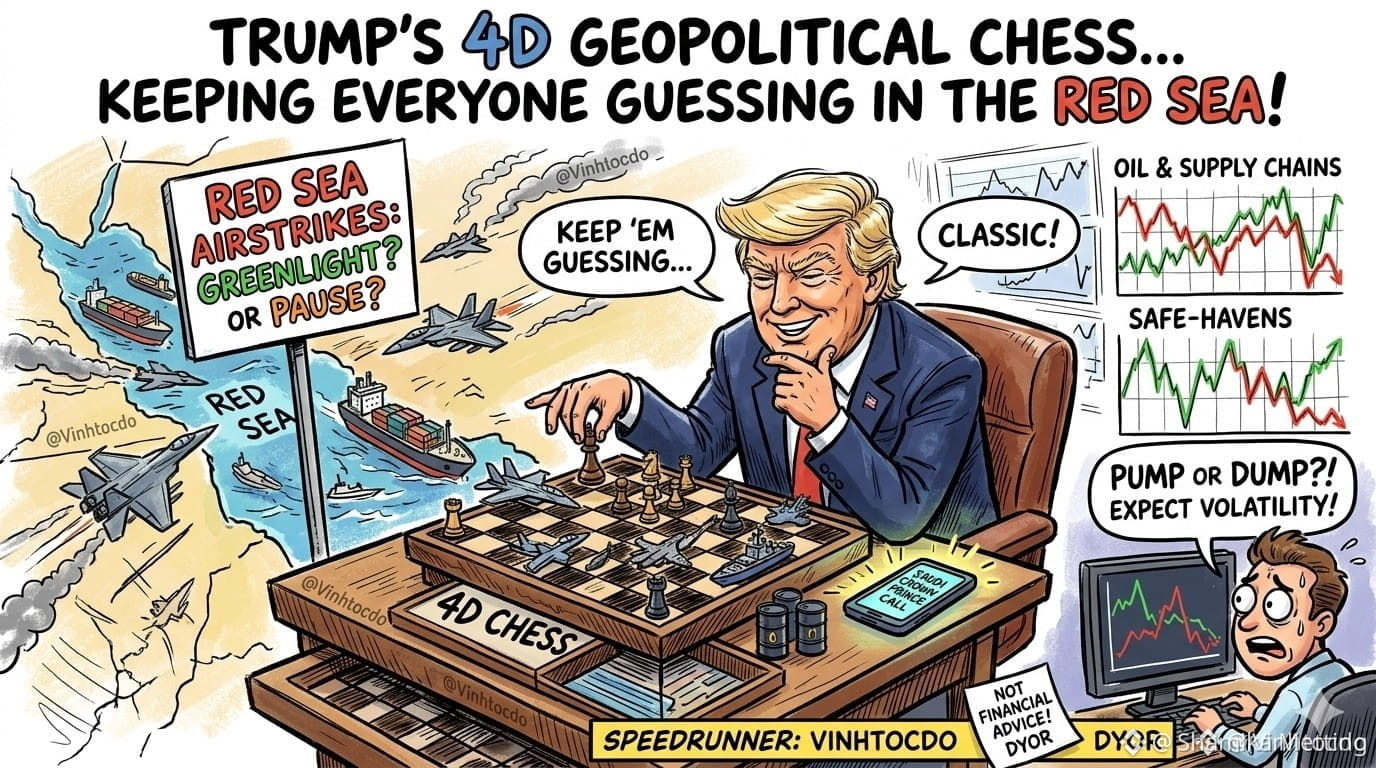
Trump is playing 4D chess with geopolitics here! ♟️ The talk going around is that Trump hesitated for two weeks before approving it, then stopped airstrikes on the rebel Houthi forces in the Red Sea— even after a call with Saudi Arabia’s Crown Prince. Is he hesitating to help his allies? Or is he just keeping everyone in a guessing game? Classic Trump move!
And with the Red Sea heating up, supply chains could get complicated.
What should traders do?
1️⃣ Closely watch oil and global supply-chain assets.
2️⃣ Expect massive volatility; geopolitical drama loves to create pressure moves or market liquidity injections out of nowhere.
3️⃣ Safe-haven assets may receive some extra attention this week.
⚠️ Not financial advice! Do your own research, my friend!
Follow-up, please
$CL
$BZ
$NATGAS
#Geopolitics #RedSeaCrisis #MarketVolatility #DonaldTrump
Trump is playing 4D chess with geopolitics here! ♟️ The talk going around is that Trump hesitated for two weeks before approving it, then stopped airstrikes on the rebel Houthi forces in the Red Sea— even after a call with Saudi Arabia’s Crown Prince. Is he hesitating to help his allies? Or is he just keeping everyone in a guessing game? Classic Trump move!
And with the Red Sea heating up, supply chains could get complicated.
What should traders do?
1️⃣ Closely watch oil and global supply-chain assets.
2️⃣ Expect massive volatility; geopolitical drama loves to create pressure moves or market liquidity injections out of nowhere.
3️⃣ Safe-haven assets may receive some extra attention this week.
⚠️ Not financial advice! Do your own research, my friend!
Follow-up, please
$CL
$BZ
$NATGAS
#Geopolitics #RedSeaCrisis #MarketVolatility #DonaldTrump
And with the Red Sea heating up, supply chains could get complicated.
What should traders do?
1️⃣ Closely watch oil and global supply-chain assets.
2️⃣ Expect massive volatility; geopolitical drama loves to create pressure moves or market liquidity injections out of nowhere.
3️⃣ Safe-haven assets may receive some extra attention this week.
⚠️ Not financial advice! Do your own research, my friend!
Follow-up, please
$CL
$BZ
$NATGAS
#Geopolitics #RedSeaCrisis #MarketVolatility #DonaldTrump
1
117

·
--
The United Nations Security Council has just convened an emergency meeting on Tuesday afternoon (New York time) at France’s request to address escalating tensions in the Bab el-Mandeb strait after Houthi forces took control of multiple strategic positions along the Red Sea. At the same time, Europe’s broader macro picture received another setback as Germany’s ZEW economic sentiment index for September fell to 34.7—well below expectations of 40.0—despite a slight uptick from 34.2 in the prior month.
The Bab el-Mandeb strait is a critical choke point accounting for up to 12% of global trade flow. The risk of prolonged disruption, combined with the stagnation of Europe’s number-one digital economy, is fueling concerns about supply-chain disruptions and a return of cost-push inflation pressures.
In financial markets, geopolitical risk immediately supports crude oil prices and prompts capital to flow into safe-haven assets such as the USD and gold. By contrast, bond yields and the stock market are facing strong divergence as investors worry that central banks may find it difficult to ease monetary policy quickly if logistics-driven inflation flares up.
For the crypto market, risk-off sentiment could cause capital to flow into $BTC and put short-term adjustment pressure on altcoins. However, if geopolitical tensions drive fiat inflation higher, Bitcoin would still maintain a solid long-term hedging role.
#Geopolitics #GlobalEconomy #RedSeaCrisis
The United Nations Security Council has just convened an emergency meeting on Tuesday afternoon (New York time) at France’s request to address escalating tensions in the Bab el-Mandeb strait after Houthi forces took control of multiple strategic positions along the Red Sea. At the same time, Europe’s broader macro picture received another setback as Germany’s ZEW economic sentiment index for September fell to 34.7—well below expectations of 40.0—despite a slight uptick from 34.2 in the prior month.
The Bab el-Mandeb strait is a critical choke point accounting for up to 12% of global trade flow. The risk of prolonged disruption, combined with the stagnation of Europe’s number-one digital economy, is fueling concerns about supply-chain disruptions and a return of cost-push inflation pressures.
In financial markets, geopolitical risk immediately supports crude oil prices and prompts capital to flow into safe-haven assets such as the USD and gold. By contrast, bond yields and the stock market are facing strong divergence as investors worry that central banks may find it difficult to ease monetary policy quickly if logistics-driven inflation flares up.
For the crypto market, risk-off sentiment could cause capital to flow into $BTC and put short-term adjustment pressure on altcoins. However, if geopolitical tensions drive fiat inflation higher, Bitcoin would still maintain a solid long-term hedging role.
#Geopolitics #GlobalEconomy #RedSeaCrisis
The Bab el-Mandeb strait is a critical choke point accounting for up to 12% of global trade flow. The risk of prolonged disruption, combined with the stagnation of Europe’s number-one digital economy, is fueling concerns about supply-chain disruptions and a return of cost-push inflation pressures.
In financial markets, geopolitical risk immediately supports crude oil prices and prompts capital to flow into safe-haven assets such as the USD and gold. By contrast, bond yields and the stock market are facing strong divergence as investors worry that central banks may find it difficult to ease monetary policy quickly if logistics-driven inflation flares up.
For the crypto market, risk-off sentiment could cause capital to flow into $BTC and put short-term adjustment pressure on altcoins. However, if geopolitical tensions drive fiat inflation higher, Bitcoin would still maintain a solid long-term hedging role.
#Geopolitics #GlobalEconomy #RedSeaCrisis
101

US Vice President JD Vance said in an interview ahead of a campaign event in Kansas City that the US government is currently holding “direct talks” with Yemen’s Houthi forces. Vance expressed serious concern about the Houthis’ control of the strategic island in the Strait of Mandeb, Mayyun Island, and said the US is maintaining close communication with regional stakeholders with key interests, including the UAE and Saudi Arabia.
This statement signals a subtle adjustment in the US’ geopolitical strategy in the Middle East, aiming to curb the further deterioration of the Red Sea shipping crisis through diplomatic engagement. However, as the Mandeb Strait is a vital chokepoint for global energy and key logistics, the Houthis’ control of strategic islands has become a long-term and irreversible substantive threat to the security of shipping lanes. Reliance on fragile diplomatic engagement alone is unlikely to resolve the complex proxy-game dynamics in the short term, and the tail risk of supply-chain disruption has not been eliminated.
For traditional macro markets, the unpredictability of the Middle East geopolitical situation will continue to support a premium on crude oil supply and global inflation expectations. If confrontations along key shipping routes cannot be meaningfully cooled down, higher logistics costs may delay the timing of rate cuts by the central banks of Europe and the US, keeping the US dollar and US Treasury yields at elevated levels. This, in turn, will exert ongoing pressure on valuation recoveries for commodities and broader risk assets.
For the cryptocurrency market, continued geopolitical tension implies that macro liquidity will be unlikely to loosen quickly. Risk-avoidance sentiment may drive liquidity further back toward traditional defensive assets such as the US dollar. Until external uncertainty has been fully worked through, risk assets led by $BTC may continue to experience choppy consolidation, and investors should remain highly alert to liquidity squeezes triggered by sudden geopolitical events.
#Geopolitics #RedSeaCrisis #MacroEconomy
US Vice President JD Vance said in an interview ahead of a campaign event in Kansas City that the US government is currently holding “direct talks” with Yemen’s Houthi forces. Vance expressed serious concern about the Houthis’ control of the strategic island in the Strait of Mandeb, Mayyun Island, and said the US is maintaining close communication with regional stakeholders with key interests, including the UAE and Saudi Arabia.
This statement signals a subtle adjustment in the US’ geopolitical strategy in the Middle East, aiming to curb the further deterioration of the Red Sea shipping crisis through diplomatic engagement. However, as the Mandeb Strait is a vital chokepoint for global energy and key logistics, the Houthis’ control of strategic islands has become a long-term and irreversible substantive threat to the security of shipping lanes. Reliance on fragile diplomatic engagement alone is unlikely to resolve the complex proxy-game dynamics in the short term, and the tail risk of supply-chain disruption has not been eliminated.
For traditional macro markets, the unpredictability of the Middle East geopolitical situation will continue to support a premium on crude oil supply and global inflation expectations. If confrontations along key shipping routes cannot be meaningfully cooled down, higher logistics costs may delay the timing of rate cuts by the central banks of Europe and the US, keeping the US dollar and US Treasury yields at elevated levels. This, in turn, will exert ongoing pressure on valuation recoveries for commodities and broader risk assets.
For the cryptocurrency market, continued geopolitical tension implies that macro liquidity will be unlikely to loosen quickly. Risk-avoidance sentiment may drive liquidity further back toward traditional defensive assets such as the US dollar. Until external uncertainty has been fully worked through, risk assets led by $BTC may continue to experience choppy consolidation, and investors should remain highly alert to liquidity squeezes triggered by sudden geopolitical events.
#Geopolitics #RedSeaCrisis #MacroEconomy
This statement signals a subtle adjustment in the US’ geopolitical strategy in the Middle East, aiming to curb the further deterioration of the Red Sea shipping crisis through diplomatic engagement. However, as the Mandeb Strait is a vital chokepoint for global energy and key logistics, the Houthis’ control of strategic islands has become a long-term and irreversible substantive threat to the security of shipping lanes. Reliance on fragile diplomatic engagement alone is unlikely to resolve the complex proxy-game dynamics in the short term, and the tail risk of supply-chain disruption has not been eliminated.
For traditional macro markets, the unpredictability of the Middle East geopolitical situation will continue to support a premium on crude oil supply and global inflation expectations. If confrontations along key shipping routes cannot be meaningfully cooled down, higher logistics costs may delay the timing of rate cuts by the central banks of Europe and the US, keeping the US dollar and US Treasury yields at elevated levels. This, in turn, will exert ongoing pressure on valuation recoveries for commodities and broader risk assets.
For the cryptocurrency market, continued geopolitical tension implies that macro liquidity will be unlikely to loosen quickly. Risk-avoidance sentiment may drive liquidity further back toward traditional defensive assets such as the US dollar. Until external uncertainty has been fully worked through, risk assets led by $BTC may continue to experience choppy consolidation, and investors should remain highly alert to liquidity squeezes triggered by sudden geopolitical events.
#Geopolitics #RedSeaCrisis #MacroEconomy
3

·
--
The Houthis suddenly open the gates! All ships except Saudi ones can now safely pass through the Red Sea. The shipping crisis is cooling; oil prices may ease, and market safe-haven sentiment is weakening. $BTC and other safe-haven assets may face pressure, but the shipping sector could see a rebound. The Red Sea is no longer in the way, and the global supply chain can finally breathe again! #红海危机 #ShippingSafety
Houthis suddenly open the gates! All ships except Saudi ones can now safely pass through Red Sea. Shipping crisis cooling, oil prices may ease, market safe-haven sentiment weakening. $BTC and other safe-haven assets may face pressure, but shipping sector could see a bounce. Red Sea no longer blocking the way, global supply chain gets a breather! #RedSeaCrisis #ShippingSafety
The Houthis suddenly open the gates! All ships except Saudi ones can now safely pass through the Red Sea. The shipping crisis is cooling; oil prices may ease, and market safe-haven sentiment is weakening. $BTC and other safe-haven assets may face pressure, but the shipping sector could see a rebound. The Red Sea is no longer in the way, and the global supply chain can finally breathe again! #红海危机 #ShippingSafety
Houthis suddenly open the gates! All ships except Saudi ones can now safely pass through Red Sea. Shipping crisis cooling, oil prices may ease, market safe-haven sentiment weakening. $BTC and other safe-haven assets may face pressure, but shipping sector could see a bounce. Red Sea no longer blocking the way, global supply chain gets a breather! #RedSeaCrisis #ShippingSafety
Houthis suddenly open the gates! All ships except Saudi ones can now safely pass through Red Sea. Shipping crisis cooling, oil prices may ease, market safe-haven sentiment weakening. $BTC and other safe-haven assets may face pressure, but shipping sector could see a bounce. Red Sea no longer blocking the way, global supply chain gets a breather! #RedSeaCrisis #ShippingSafety
144

Recently, Yemen’s Houthi forces launched surprise attacks on Saudi Arabia’s assembling forces in the Jauf Desert and its reinforcements, causing personnel casualties and equipment damage. At the same time, Iran’s official media announced that large-scale military drills are about to be held. U.S. Vice President Vance also publicly expressed concern about the security situation in the Red Sea shipping lanes under the Houthis’ control of the Paramo Island, emphasizing that the U.S. is closely monitoring developments and maintaining communication with relevant parties.
From a macro game-theory perspective, geopolitical friction in the Middle East has flared up again, but overall it still remains within a controllable range of maneuver. The security premium for Red Sea routes and Middle East energy corridors may stimulate volatility in commodities in the short term. However, the U.S. has clearly stated that it will keep communication channels open, indicating that all sides still prefer to set red lines through deterrence and negotiations rather than slide into a wholly uncontrolled malignant confrontation.
In terms of technical market dynamics, crude oil and gold have received a boost from safe-haven sentiment in the short run, but the U.S. dollar index has not shown any aggressive liquidity pullback, and U.S. Treasury yields remain solid at key technical support levels. The capital markets are gradually absorbing the sentiment noise brought by geopolitical pulses. The marginal de-sensitization effect of traditional assets to localized geopolitical friction is becoming apparent, and it has not disrupted the overall pattern of macro liquidity recovery.
For the crypto market, after digesting short-term safe-haven impulses, $BTC has demonstrated very strong buy-side follow-through and resilient base-building. The structure of on-chain token holdings remains healthy. Paradoxically, near-term geopolitical volatility provides an opportunity for a shakeout and consolidation that can help risk appetite rebound. As long as energy inflation expectations do not suffer a structural breakdown, crypto assets are expected to sustain their structural upward trend with support from liquidity replenishment.
#Geopolitics #CrudeOil #RedSeaCrisis
Recently, Yemen’s Houthi forces launched surprise attacks on Saudi Arabia’s assembling forces in the Jauf Desert and its reinforcements, causing personnel casualties and equipment damage. At the same time, Iran’s official media announced that large-scale military drills are about to be held. U.S. Vice President Vance also publicly expressed concern about the security situation in the Red Sea shipping lanes under the Houthis’ control of the Paramo Island, emphasizing that the U.S. is closely monitoring developments and maintaining communication with relevant parties.
From a macro game-theory perspective, geopolitical friction in the Middle East has flared up again, but overall it still remains within a controllable range of maneuver. The security premium for Red Sea routes and Middle East energy corridors may stimulate volatility in commodities in the short term. However, the U.S. has clearly stated that it will keep communication channels open, indicating that all sides still prefer to set red lines through deterrence and negotiations rather than slide into a wholly uncontrolled malignant confrontation.
In terms of technical market dynamics, crude oil and gold have received a boost from safe-haven sentiment in the short run, but the U.S. dollar index has not shown any aggressive liquidity pullback, and U.S. Treasury yields remain solid at key technical support levels. The capital markets are gradually absorbing the sentiment noise brought by geopolitical pulses. The marginal de-sensitization effect of traditional assets to localized geopolitical friction is becoming apparent, and it has not disrupted the overall pattern of macro liquidity recovery.
For the crypto market, after digesting short-term safe-haven impulses, $BTC has demonstrated very strong buy-side follow-through and resilient base-building. The structure of on-chain token holdings remains healthy. Paradoxically, near-term geopolitical volatility provides an opportunity for a shakeout and consolidation that can help risk appetite rebound. As long as energy inflation expectations do not suffer a structural breakdown, crypto assets are expected to sustain their structural upward trend with support from liquidity replenishment.
#Geopolitics #CrudeOil #RedSeaCrisis
From a macro game-theory perspective, geopolitical friction in the Middle East has flared up again, but overall it still remains within a controllable range of maneuver. The security premium for Red Sea routes and Middle East energy corridors may stimulate volatility in commodities in the short term. However, the U.S. has clearly stated that it will keep communication channels open, indicating that all sides still prefer to set red lines through deterrence and negotiations rather than slide into a wholly uncontrolled malignant confrontation.
In terms of technical market dynamics, crude oil and gold have received a boost from safe-haven sentiment in the short run, but the U.S. dollar index has not shown any aggressive liquidity pullback, and U.S. Treasury yields remain solid at key technical support levels. The capital markets are gradually absorbing the sentiment noise brought by geopolitical pulses. The marginal de-sensitization effect of traditional assets to localized geopolitical friction is becoming apparent, and it has not disrupted the overall pattern of macro liquidity recovery.
For the crypto market, after digesting short-term safe-haven impulses, $BTC has demonstrated very strong buy-side follow-through and resilient base-building. The structure of on-chain token holdings remains healthy. Paradoxically, near-term geopolitical volatility provides an opportunity for a shakeout and consolidation that can help risk appetite rebound. As long as energy inflation expectations do not suffer a structural breakdown, crypto assets are expected to sustain their structural upward trend with support from liquidity replenishment.
#Geopolitics #CrudeOil #RedSeaCrisis
64

·
--
Bullish
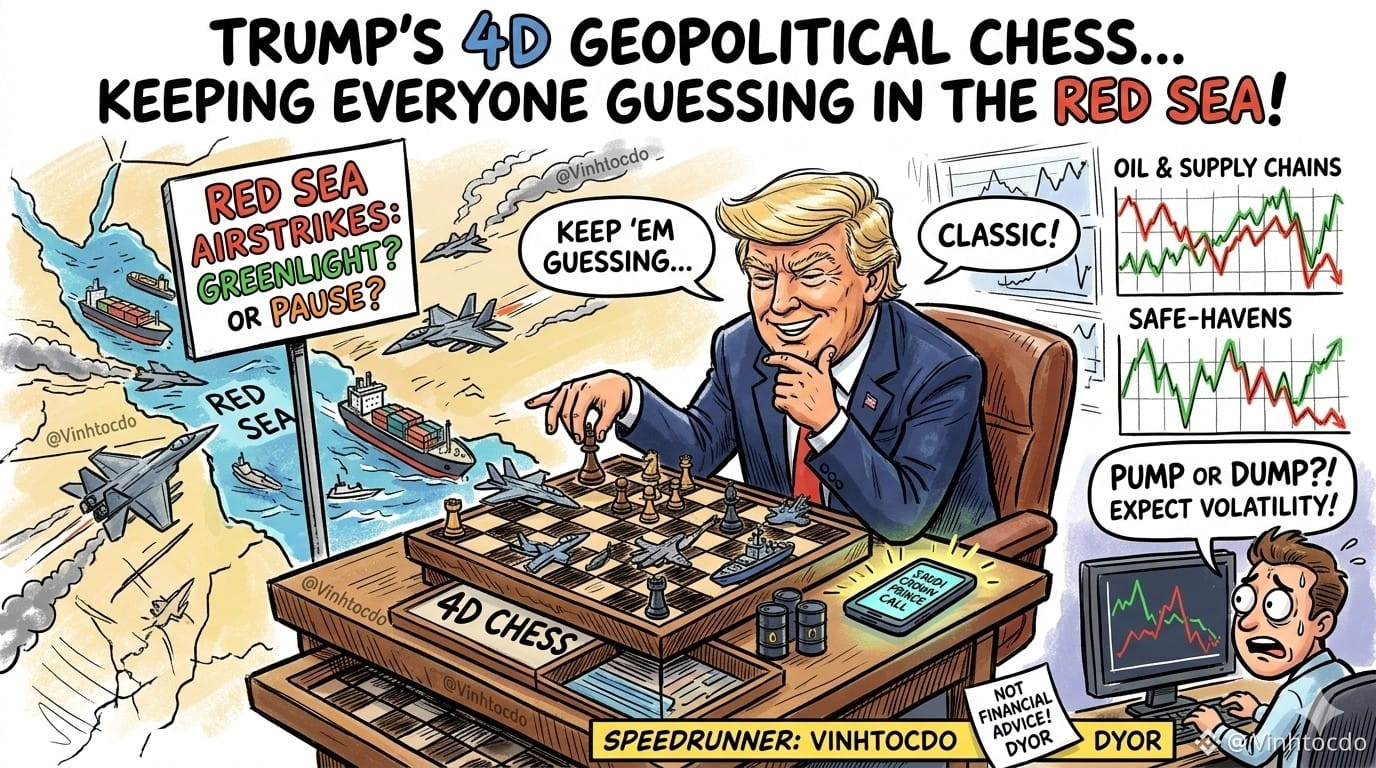
Trump out here playing 4D chess with geopolitics! ♟️ Word on the street is Trump hesitated for 2 weeks before greenlighting then pausing airstrikes on Houthi rebels in the Red Sea, even after a call with the Saudi Crown Prince. Is he hesitating to help allies? Or just keeping everyone guessing? Classic Trump move!
With the Red Sea heating up, supply chains might get messy.
What should traders do?
1️⃣ Keep a close eye on oil and global supply chain assets.
2️⃣ Expect massive volatility; geopolitical drama loves dumping or pumping markets out of nowhere.
3️⃣ Safe-haven assets might get some extra love this week.
⚠️ NOT FINANCIAL ADVICE! DYOR, fam!
Support your favorite speedrunner! Register here: [https://www.binance.com/register?ref=VINHTOCDO](https://www.binance.com/register?ref=VINHTOCDO) (Code: VINHTOCDO)
👇 Click & trade the tokens below to support me!
$CL
{future}(CLUSDT)
$BZ
{future}(BZUSDT)
$NATGAS
{future}(NATGASUSDT)
#Geopolitics #VINHTOCDO #RedSeaCrisis #MarketVolatility #DonaldTrump
Trump out here playing 4D chess with geopolitics! ♟️ Word on the street is Trump hesitated for 2 weeks before greenlighting then pausing airstrikes on Houthi rebels in the Red Sea, even after a call with the Saudi Crown Prince. Is he hesitating to help allies? Or just keeping everyone guessing? Classic Trump move!
With the Red Sea heating up, supply chains might get messy.
What should traders do?
1️⃣ Keep a close eye on oil and global supply chain assets.
2️⃣ Expect massive volatility; geopolitical drama loves dumping or pumping markets out of nowhere.
3️⃣ Safe-haven assets might get some extra love this week.
⚠️ NOT FINANCIAL ADVICE! DYOR, fam!
Support your favorite speedrunner! Register here: https://www.binance.com/register?ref=VINHTOCDO (Code: VINHTOCDO)
👇 Click & trade the tokens below to support me!
$CL
$BZ
$NATGAS
#Geopolitics #VINHTOCDO #RedSeaCrisis #MarketVolatility #DonaldTrump
With the Red Sea heating up, supply chains might get messy.
What should traders do?
1️⃣ Keep a close eye on oil and global supply chain assets.
2️⃣ Expect massive volatility; geopolitical drama loves dumping or pumping markets out of nowhere.
3️⃣ Safe-haven assets might get some extra love this week.
⚠️ NOT FINANCIAL ADVICE! DYOR, fam!
Support your favorite speedrunner! Register here: https://www.binance.com/register?ref=VINHTOCDO (Code: VINHTOCDO)
👇 Click & trade the tokens below to support me!
$CL
$BZ
$NATGAS
#Geopolitics #VINHTOCDO #RedSeaCrisis #MarketVolatility #DonaldTrump
2
284


Article
🔥 Bab el-Mandeb Crisis: Could a Pakistan–Saudi Partnership Reshape the Regional Balance?The ongoing disruption of maritime traffic through the strategically vital Bab el-Mandeb Strait, coupled with continued Houthi attacks on commercial and military vessels linked to Saudi Arabia, has intensified tensions across the Middle East. Reports of discussions between Pakistan and Saudi Arabia regarding enhanced security cooperation have fueled speculation about potential regional responses to these threats.$BR
📌 Regional Analysis & Potential Implications
🔹 A New Phase of International Involvement
Any significant military escalation against the Houthis could have far-reaching consequences for regional security. Analysts suggest that expanded operations in the Red Sea could increase pressure on Iran, which has long been accused by Western governments and Gulf states of supporting the Houthi movement—an allegation Tehran denies.
🔹 Pakistan’s Position
Pakistan has consistently emphasized its commitment to the security and territorial integrity of Saudi Arabia while also maintaining diplomatic relations with Iran. Islamabad has traditionally advocated dialogue and de-escalation in regional disputes, seeking to avoid direct involvement in broader conflicts.
🔹 Impact on Regional Stability
A deeper security partnership between Pakistan and Saudi Arabia could influence the strategic balance in the region. However, whether such cooperation would enhance maritime security and stability or contribute to further escalation remains a subject of debate among policymakers and analysts.
⚠️ Important Note: As of now, there has been no official announcement of a joint Pakistan–Saudi military operation against the Houthis. Claims regarding future military action remain speculative and should be treated with caution.
References:
• Statements and updates from the Saudi-led coalition and regional governments regarding Red Sea security.
• Reports from the United Nations, U.S. Central Command (CENTCOM), and international media on Houthi attacks in the Red Sea and Bab el-Mandeb region.
• Official foreign policy statements issued by the Government of Pakistan concerning regional security and Saudi Arabia.
👉 Do you think closer Pakistan–Saudi security cooperation would help stabilize the region, or could it risk widening the conflict? Share your thoughts below.
#BabElMandeb #RedSeaCrisis #Pakistan #SaudiArabia #MiddleEast
$BNB
🔥 Bab el-Mandeb Crisis: Could a Pakistan–Saudi Partnership Reshape the Regional Balance?
The ongoing disruption of maritime traffic through the strategically vital Bab el-Mandeb Strait, coupled with continued Houthi attacks on commercial and military vessels linked to Saudi Arabia, has intensified tensions across the Middle East. Reports of discussions between Pakistan and Saudi Arabia regarding enhanced security cooperation have fueled speculation about potential regional responses to these threats.$BR
📌 Regional Analysis & Potential Implications
🔹 A New Phase of International Involvement
Any significant military escalation against the Houthis could have far-reaching consequences for regional security. Analysts suggest that expanded operations in the Red Sea could increase pressure on Iran, which has long been accused by Western governments and Gulf states of supporting the Houthi movement—an allegation Tehran denies.
🔹 Pakistan’s Position
Pakistan has consistently emphasized its commitment to the security and territorial integrity of Saudi Arabia while also maintaining diplomatic relations with Iran. Islamabad has traditionally advocated dialogue and de-escalation in regional disputes, seeking to avoid direct involvement in broader conflicts.
🔹 Impact on Regional Stability
A deeper security partnership between Pakistan and Saudi Arabia could influence the strategic balance in the region. However, whether such cooperation would enhance maritime security and stability or contribute to further escalation remains a subject of debate among policymakers and analysts.
⚠️ Important Note: As of now, there has been no official announcement of a joint Pakistan–Saudi military operation against the Houthis. Claims regarding future military action remain speculative and should be treated with caution.
References:
• Statements and updates from the Saudi-led coalition and regional governments regarding Red Sea security.
• Reports from the United Nations, U.S. Central Command (CENTCOM), and international media on Houthi attacks in the Red Sea and Bab el-Mandeb region.
• Official foreign policy statements issued by the Government of Pakistan concerning regional security and Saudi Arabia.
👉 Do you think closer Pakistan–Saudi security cooperation would help stabilize the region, or could it risk widening the conflict? Share your thoughts below.
#BabElMandeb #RedSeaCrisis #Pakistan #SaudiArabia #MiddleEast
$BNB
📌 Regional Analysis & Potential Implications
🔹 A New Phase of International Involvement
Any significant military escalation against the Houthis could have far-reaching consequences for regional security. Analysts suggest that expanded operations in the Red Sea could increase pressure on Iran, which has long been accused by Western governments and Gulf states of supporting the Houthi movement—an allegation Tehran denies.
🔹 Pakistan’s Position
Pakistan has consistently emphasized its commitment to the security and territorial integrity of Saudi Arabia while also maintaining diplomatic relations with Iran. Islamabad has traditionally advocated dialogue and de-escalation in regional disputes, seeking to avoid direct involvement in broader conflicts.
🔹 Impact on Regional Stability
A deeper security partnership between Pakistan and Saudi Arabia could influence the strategic balance in the region. However, whether such cooperation would enhance maritime security and stability or contribute to further escalation remains a subject of debate among policymakers and analysts.
⚠️ Important Note: As of now, there has been no official announcement of a joint Pakistan–Saudi military operation against the Houthis. Claims regarding future military action remain speculative and should be treated with caution.
References:
• Statements and updates from the Saudi-led coalition and regional governments regarding Red Sea security.
• Reports from the United Nations, U.S. Central Command (CENTCOM), and international media on Houthi attacks in the Red Sea and Bab el-Mandeb region.
• Official foreign policy statements issued by the Government of Pakistan concerning regional security and Saudi Arabia.
👉 Do you think closer Pakistan–Saudi security cooperation would help stabilize the region, or could it risk widening the conflict? Share your thoughts below.
#BabElMandeb #RedSeaCrisis #Pakistan #SaudiArabia #MiddleEast
$BNB
18
Log in to explore more content
Join global crypto users on Binance Square
⚡️ Get latest and useful information about crypto.
💬 Trusted by the world’s largest crypto exchange.
👍 Discover real insights from verified creators.
Email / Phone number
Trending Topics
1
#UKFCAOpensCryptoFirmAuthorization
0 views
6 Discussing
2
#JapanMOFStudyGroupOnTokenizedGovtBonds
400 views
64 Discussing
3
#QNTRises287%
15,774 views
350 Discussing
4
#TrumpRejectsAIRulesForVoluntaryAudits
15,618 views
431 Discussing
5
#BitgetHotWalletBreachTiedToThirdPartySecurityFlaw
7,564 views
303 Discussing
6
#OpenAIUnveilsAlwaysOnAgentDots
7,621 views
327 Discussing
7
#ChainlinkLaunchesBankSWIFTLedgerFramework
8,188 views
257 Discussing
8
#EarningsSeason
513,211 views
3,730 Discussing
9
#ZcashApproves$1.5MBugBounty
90 views
3 Discussing
10
#SECChairWantsStockMarketsOnChain
12,627 views
246 Discussing