

#psychology
psychology
286,284 views
1,030 Discussing
Hot
Latest

Must read and share your thought 💸💲
Look at your trading history.
Most likely, you will find a pattern where you closed profitable positions quickly, barely waiting for the green number to appear, while holding losing positions for weeks in the hope of a reversal.
❤️ Almost everyone does this, and this phenomenon has a scientific name.
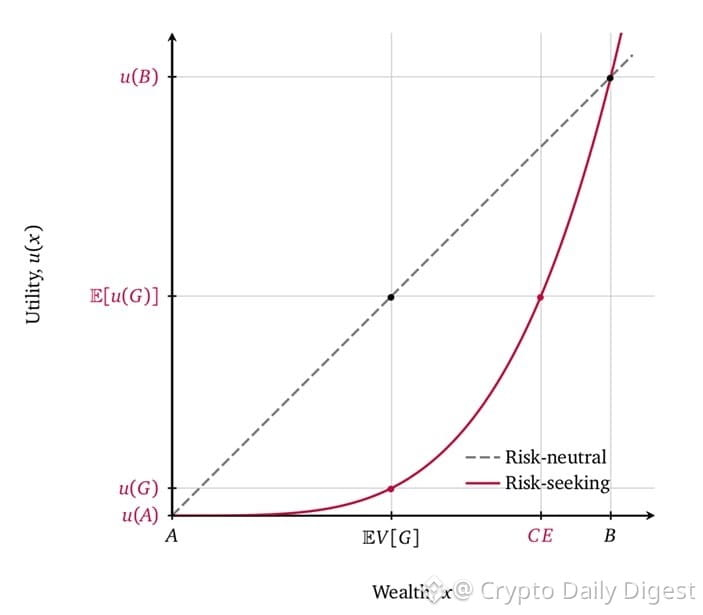
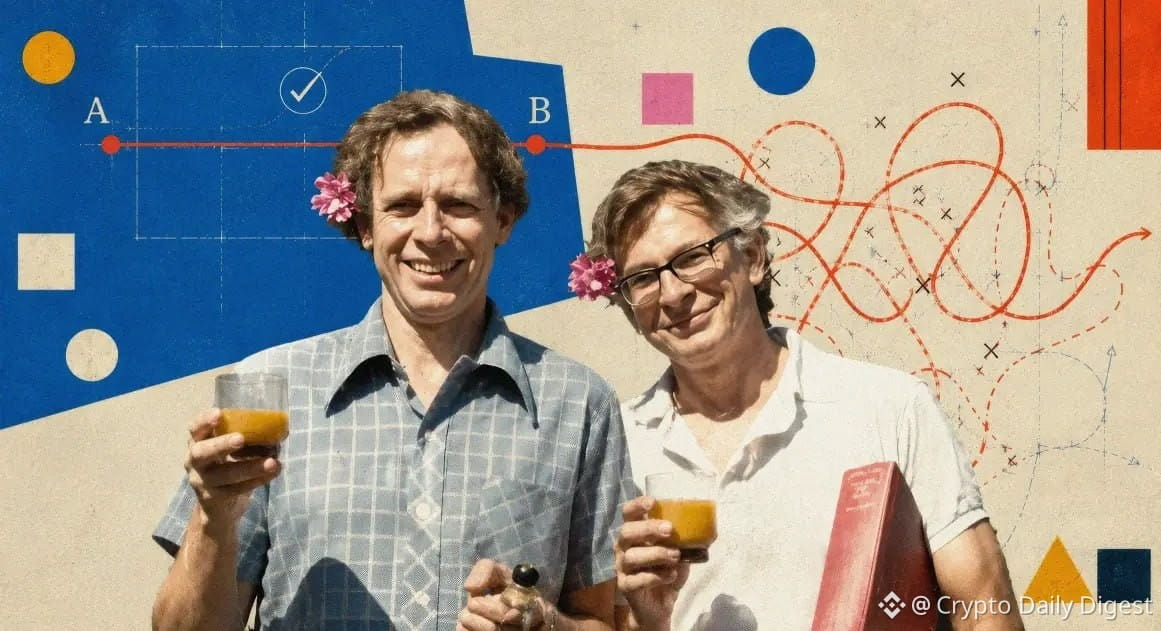
In 1985, economists Hersh Shefrin and Meir Statman described the disposition effect: the tendency to sell appreciated assets too early and hold depreciated ones too long. The roots go deeper, into the prospect theory of Daniel Kahneman and Amos Tversky from 1979.
Their main finding is that a loss is felt approximately twice as strongly as a gain of the same size. A loss of $1,000 hurts more than a gain of $1,000 pleases.
❤️ It is important for us to internalize two behaviors so that we do not suffer as much from money losses in the future and to lock in profits when necessary.
1. When a position is in profit, the brain wants to lock in the pleasant feeling and protect it from the risk of disappearing. We become cautious and exit early.
2. When a position is at a loss, closing it means admitting a mistake and making the loss real. As long as the trade is open, the loss seems temporary. We start taking risks just to get back to zero.
In 1998, Terrance Odean studied trades from 10,000 brokerage accounts and found that sold profitable stocks outperformed held losing stocks by approximately 3.4% in the following year.
❤️ Investors systematically got rid of the best and kept the worst.
Set stops and targets as I do — before entry or immediately during entry, while there are no emotions. The decision to exit is made according to pre-written rules. And a useful question for each open position: would I buy this asset today at the current price?
If the answer is no, there is no point in holding it any longer.
#psychology #RiskManagementMastery #psychological #losses #GrowYourWealth
Must read and share your thought 💸💲
Look at your trading history.
Most likely, you will find a pattern where you closed profitable positions quickly, barely waiting for the green number to appear, while holding losing positions for weeks in the hope of a reversal.
❤️ Almost everyone does this, and this phenomenon has a scientific name.
In 1985, economists Hersh Shefrin and Meir Statman described the disposition effect: the tendency to sell appreciated assets too early and hold depreciated ones too long. The roots go deeper, into the prospect theory of Daniel Kahneman and Amos Tversky from 1979.
Their main finding is that a loss is felt approximately twice as strongly as a gain of the same size. A loss of $1,000 hurts more than a gain of $1,000 pleases.
❤️ It is important for us to internalize two behaviors so that we do not suffer as much from money losses in the future and to lock in profits when necessary.
1. When a position is in profit, the brain wants to lock in the pleasant feeling and protect it from the risk of disappearing. We become cautious and exit early.
2. When a position is at a loss, closing it means admitting a mistake and making the loss real. As long as the trade is open, the loss seems temporary. We start taking risks just to get back to zero.
In 1998, Terrance Odean studied trades from 10,000 brokerage accounts and found that sold profitable stocks outperformed held losing stocks by approximately 3.4% in the following year.
❤️ Investors systematically got rid of the best and kept the worst.
Set stops and targets as I do — before entry or immediately during entry, while there are no emotions. The decision to exit is made according to pre-written rules. And a useful question for each open position: would I buy this asset today at the current price?
If the answer is no, there is no point in holding it any longer.
#psychology #RiskManagementMastery #psychological #losses #GrowYourWealth
Look at your trading history.
Most likely, you will find a pattern where you closed profitable positions quickly, barely waiting for the green number to appear, while holding losing positions for weeks in the hope of a reversal.
❤️ Almost everyone does this, and this phenomenon has a scientific name.
In 1985, economists Hersh Shefrin and Meir Statman described the disposition effect: the tendency to sell appreciated assets too early and hold depreciated ones too long. The roots go deeper, into the prospect theory of Daniel Kahneman and Amos Tversky from 1979.
Their main finding is that a loss is felt approximately twice as strongly as a gain of the same size. A loss of $1,000 hurts more than a gain of $1,000 pleases.
❤️ It is important for us to internalize two behaviors so that we do not suffer as much from money losses in the future and to lock in profits when necessary.
1. When a position is in profit, the brain wants to lock in the pleasant feeling and protect it from the risk of disappearing. We become cautious and exit early.
2. When a position is at a loss, closing it means admitting a mistake and making the loss real. As long as the trade is open, the loss seems temporary. We start taking risks just to get back to zero.
In 1998, Terrance Odean studied trades from 10,000 brokerage accounts and found that sold profitable stocks outperformed held losing stocks by approximately 3.4% in the following year.
❤️ Investors systematically got rid of the best and kept the worst.
Set stops and targets as I do — before entry or immediately during entry, while there are no emotions. The decision to exit is made according to pre-written rules. And a useful question for each open position: would I buy this asset today at the current price?
If the answer is no, there is no point in holding it any longer.
#psychology #RiskManagementMastery #psychological #losses #GrowYourWealth
3
1.4k
·
--
Why I write about the mind behind the trade?
Most trading content teaches you what to look at: patterns, indicators, levels. Almost none of it teaches you what happens inside you while you're looking.
That gap is where most losses actually live. A trader can have a correct read on the market and still lose money, not because the analysis was wrong, but because fear, urgency or frustration changed the decision at the exact moment it mattered. Post 1 on this page told that story directly: right analysis, wrong execution, and the only variable that failed was the person.
This isn't a niche problem. It's closer to the default. The mind under pressure doesn't run on the same rules it runs on when you're calmly reviewing a chart after the fact. Fear narrows attention. Urgency shortens the time you give yourself to think. A losing streak doesn't just cost money, it changes the decisions that come after it, often without the trader noticing the shift.
I write about this because understanding a bias doesn't require willpower, it requires recognition. Once you can name what's happening — "this is FOMO," "this is revenge," "this is fear talking, not information" — you've already created a small gap between the feeling and the action. That gap is where discipline actually happens. Not in some abstract idea of "being strong," but in one specific pause, repeated enough times that it becomes a habit.
Here's what this page will keep coming back to, in different forms:
The gap between knowing and doing. Most traders already know their stop-loss rule. Few can execute it every time. That gap is psychological, not informational.
The crowd inside you. Every chart move is a record of a crowd's emotional decision, and you're not watching that crowd from outside it. You're part of it, often without realizing.
Process over outcome. A good decision can still lose. A bad decision can still win. Judging yourself by the result instead of the decision quietly trains you to repeat your worst habits whenever they happen to pay off.
#trading #Cryptomindset #psychology
Why I write about the mind behind the trade?
Most trading content teaches you what to look at: patterns, indicators, levels. Almost none of it teaches you what happens inside you while you're looking.
That gap is where most losses actually live. A trader can have a correct read on the market and still lose money, not because the analysis was wrong, but because fear, urgency or frustration changed the decision at the exact moment it mattered. Post 1 on this page told that story directly: right analysis, wrong execution, and the only variable that failed was the person.
This isn't a niche problem. It's closer to the default. The mind under pressure doesn't run on the same rules it runs on when you're calmly reviewing a chart after the fact. Fear narrows attention. Urgency shortens the time you give yourself to think. A losing streak doesn't just cost money, it changes the decisions that come after it, often without the trader noticing the shift.
I write about this because understanding a bias doesn't require willpower, it requires recognition. Once you can name what's happening — "this is FOMO," "this is revenge," "this is fear talking, not information" — you've already created a small gap between the feeling and the action. That gap is where discipline actually happens. Not in some abstract idea of "being strong," but in one specific pause, repeated enough times that it becomes a habit.
Here's what this page will keep coming back to, in different forms:
The gap between knowing and doing. Most traders already know their stop-loss rule. Few can execute it every time. That gap is psychological, not informational.
The crowd inside you. Every chart move is a record of a crowd's emotional decision, and you're not watching that crowd from outside it. You're part of it, often without realizing.
Process over outcome. A good decision can still lose. A bad decision can still win. Judging yourself by the result instead of the decision quietly trains you to repeat your worst habits whenever they happen to pay off.
#trading #Cryptomindset #psychology
Most trading content teaches you what to look at: patterns, indicators, levels. Almost none of it teaches you what happens inside you while you're looking.
That gap is where most losses actually live. A trader can have a correct read on the market and still lose money, not because the analysis was wrong, but because fear, urgency or frustration changed the decision at the exact moment it mattered. Post 1 on this page told that story directly: right analysis, wrong execution, and the only variable that failed was the person.
This isn't a niche problem. It's closer to the default. The mind under pressure doesn't run on the same rules it runs on when you're calmly reviewing a chart after the fact. Fear narrows attention. Urgency shortens the time you give yourself to think. A losing streak doesn't just cost money, it changes the decisions that come after it, often without the trader noticing the shift.
I write about this because understanding a bias doesn't require willpower, it requires recognition. Once you can name what's happening — "this is FOMO," "this is revenge," "this is fear talking, not information" — you've already created a small gap between the feeling and the action. That gap is where discipline actually happens. Not in some abstract idea of "being strong," but in one specific pause, repeated enough times that it becomes a habit.
Here's what this page will keep coming back to, in different forms:
The gap between knowing and doing. Most traders already know their stop-loss rule. Few can execute it every time. That gap is psychological, not informational.
The crowd inside you. Every chart move is a record of a crowd's emotional decision, and you're not watching that crowd from outside it. You're part of it, often without realizing.
Process over outcome. A good decision can still lose. A bad decision can still win. Judging yourself by the result instead of the decision quietly trains you to repeat your worst habits whenever they happen to pay off.
#trading #Cryptomindset #psychology
1
126
·
--
The market doesn't know you exist.
It's not punishing you for the last trade. It's not rewarding you for being right. It doesn't remember your losing streak, and it isn't waiting for you to "get even."
The market is indifferent. Your trading doesn't have to be personal for the outcomes to be real.
Educational only. #trading #Cryptomindset #psychology
$BTC
The market doesn't know you exist.
It's not punishing you for the last trade. It's not rewarding you for being right. It doesn't remember your losing streak, and it isn't waiting for you to "get even."
The market is indifferent. Your trading doesn't have to be personal for the outcomes to be real.
Educational only. #trading #Cryptomindset #psychology
$BTC
It's not punishing you for the last trade. It's not rewarding you for being right. It doesn't remember your losing streak, and it isn't waiting for you to "get even."
The market is indifferent. Your trading doesn't have to be personal for the outcomes to be real.
Educational only. #trading #Cryptomindset #psychology
$BTC
1
101

·
--

Article
YOU LEARNED IT. BUT WHERE’S THE MONEY? Training on how not to quit what you started when the result doesn’t come right away You are shown an ad for training: “Launch your online product.” “Earn with the help of AI agents.” “Start a blog and get paid.” “Master a new trading strategy.” Nearby are the earnings amounts of other people. And it all forms a clear chain: I’ll take the training → start doing it → get money. You learn. You try. You work. But there’s no quick result. Then the thought comes: “Maybe it doesn’t work.” Next: “I need to find a new tool.” You change your strategy, niche, or buy yet another course. For a while, the anxiety decreases: it feels like you’ve found the right path. But then again comes the moment when you’re working, and the result still isn’t there. What is the core of the training? Training can give you a tool. But between receiving the tool and earning money, there’s a period of practice. You make mistakes, test demand, get feedback, and adjust your actions. At the same time, you don’t know in advance when (or whether) results will appear. This period is hard to endure—especially when you’ve already been shown someone else’s income and you’re expecting the same from yourself. But it’s also not necessary to continue indefinitely doing what doesn’t work. The purpose of the training is to learn how to distinguish between two situations:
YOU LEARNED IT. BUT WHERE’S THE MONEY? Training on how not to quit what you started when the result doesn’t come right away
You are shown an ad for training: “Launch your online product.” “Earn with the help of AI agents.” “Start a blog and get paid.” “Master a new trading strategy.” Nearby are the earnings amounts of other people. And it all forms a clear chain: I’ll take the training → start doing it → get money. You learn. You try. You work. But there’s no quick result. Then the thought comes: “Maybe it doesn’t work.” Next: “I need to find a new tool.” You change your strategy, niche, or buy yet another course. For a while, the anxiety decreases: it feels like you’ve found the right path. But then again comes the moment when you’re working, and the result still isn’t there. What is the core of the training? Training can give you a tool. But between receiving the tool and earning money, there’s a period of practice. You make mistakes, test demand, get feedback, and adjust your actions. At the same time, you don’t know in advance when (or whether) results will appear. This period is hard to endure—especially when you’ve already been shown someone else’s income and you’re expecting the same from yourself. But it’s also not necessary to continue indefinitely doing what doesn’t work. The purpose of the training is to learn how to distinguish between two situations:
TradingOnlain:
не против того чем вы занимаетесь и давно за вами наблюдаю, вы мне нравитесь. и если бы я мог бы следовать за кем-то то возможно выбрал бы вас но мой путь идти своей дорогой. о которой я написал
7
3
768
·
--
Article
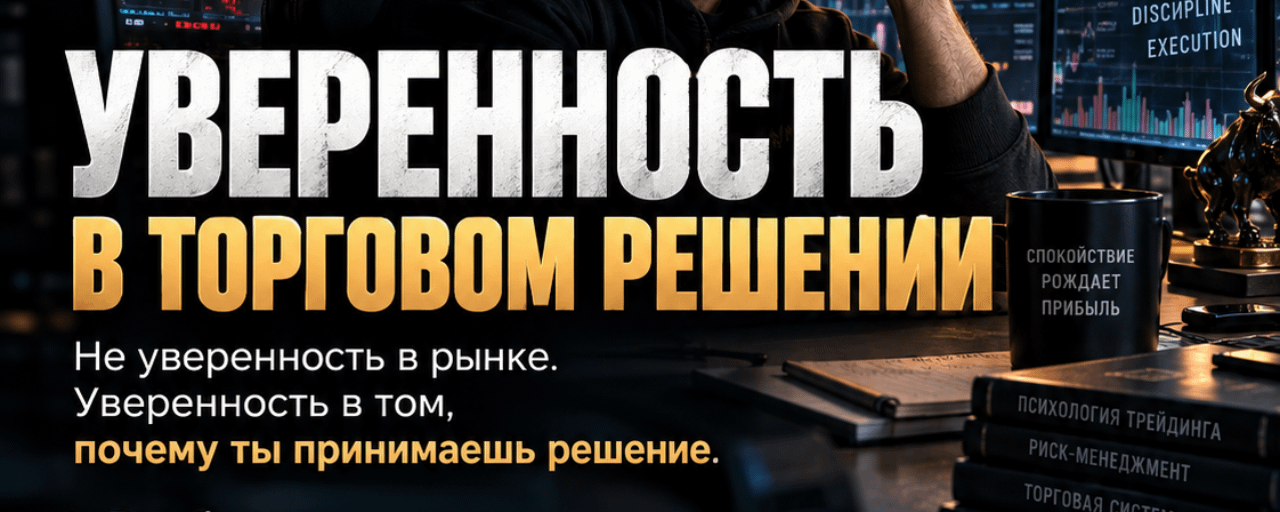
Training: «Confidence in a Trading Decision»You’re confident in the level. Or do you just really want to be sure?
They tell you:
«Find support — buy».
«Find resistance — sell».
«Set a levels indicator — and you’ll see everything».
Sounds simple.
Just open the weekly chart of crypto.
Price can break through your «strongest level», bounce back, sweep the stops, make a false breakout, and then after a few hours go exactly where you originally expected.
Training: «Confidence in a Trading Decision»
You’re confident in the level. Or do you just really want to be sure?
They tell you:
«Find support — buy».
«Find resistance — sell».
«Set a levels indicator — and you’ll see everything».
Sounds simple.
Just open the weekly chart of crypto.
Price can break through your «strongest level», bounce back, sweep the stops, make a false breakout, and then after a few hours go exactly where you originally expected.
They tell you:
«Find support — buy».
«Find resistance — sell».
«Set a levels indicator — and you’ll see everything».
Sounds simple.
Just open the weekly chart of crypto.
Price can break through your «strongest level», bounce back, sweep the stops, make a false breakout, and then after a few hours go exactly where you originally expected.
3
697

·
--
2.5.1
“If you understand the market, you can control the outcome.”
You can research an asset for hours.
- Read the reports
- Study the charts
- Understand the technology
- Know the risks
- And still be wrong
Because understanding why something might happen isn't the same as controlling whether it happens
This is one of the easiest traps in investing:
“If I know enough, I can predict it.”
But markets aren't machines with guaranteed outputs.
There are too many variables, too many participants, and too much uncertainty.
- Knowledge can improve a decision
- It cannot remove uncertainty
Sometimes the smartest thing you can know is:
- “I don't know”
~ Think before you act
#thinkBeforeYouAct #psychology
2.5.1
“If you understand the market, you can control the outcome.”
You can research an asset for hours.
- Read the reports
- Study the charts
- Understand the technology
- Know the risks
- And still be wrong
Because understanding why something might happen isn't the same as controlling whether it happens
This is one of the easiest traps in investing:
“If I know enough, I can predict it.”
But markets aren't machines with guaranteed outputs.
There are too many variables, too many participants, and too much uncertainty.
- Knowledge can improve a decision
- It cannot remove uncertainty
Sometimes the smartest thing you can know is:
- “I don't know”
~ Think before you act
#thinkBeforeYouAct #psychology
“If you understand the market, you can control the outcome.”
You can research an asset for hours.
- Read the reports
- Study the charts
- Understand the technology
- Know the risks
- And still be wrong
Because understanding why something might happen isn't the same as controlling whether it happens
This is one of the easiest traps in investing:
“If I know enough, I can predict it.”
But markets aren't machines with guaranteed outputs.
There are too many variables, too many participants, and too much uncertainty.
- Knowledge can improve a decision
- It cannot remove uncertainty
Sometimes the smartest thing you can know is:
- “I don't know”
~ Think before you act
#thinkBeforeYouAct #psychology
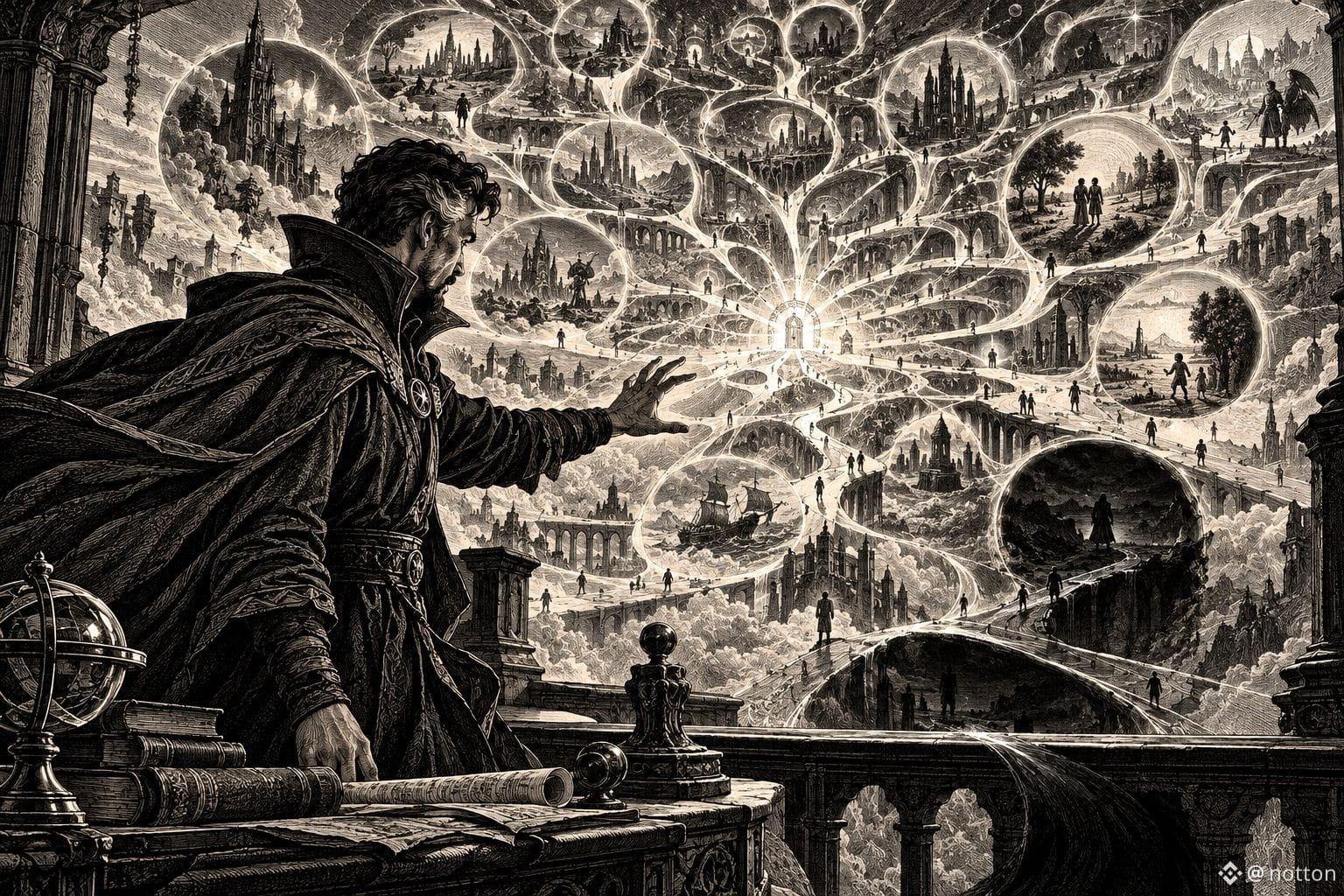
عبدالله باعيسئ :
Uncertainty
933
1
58
933

·
--
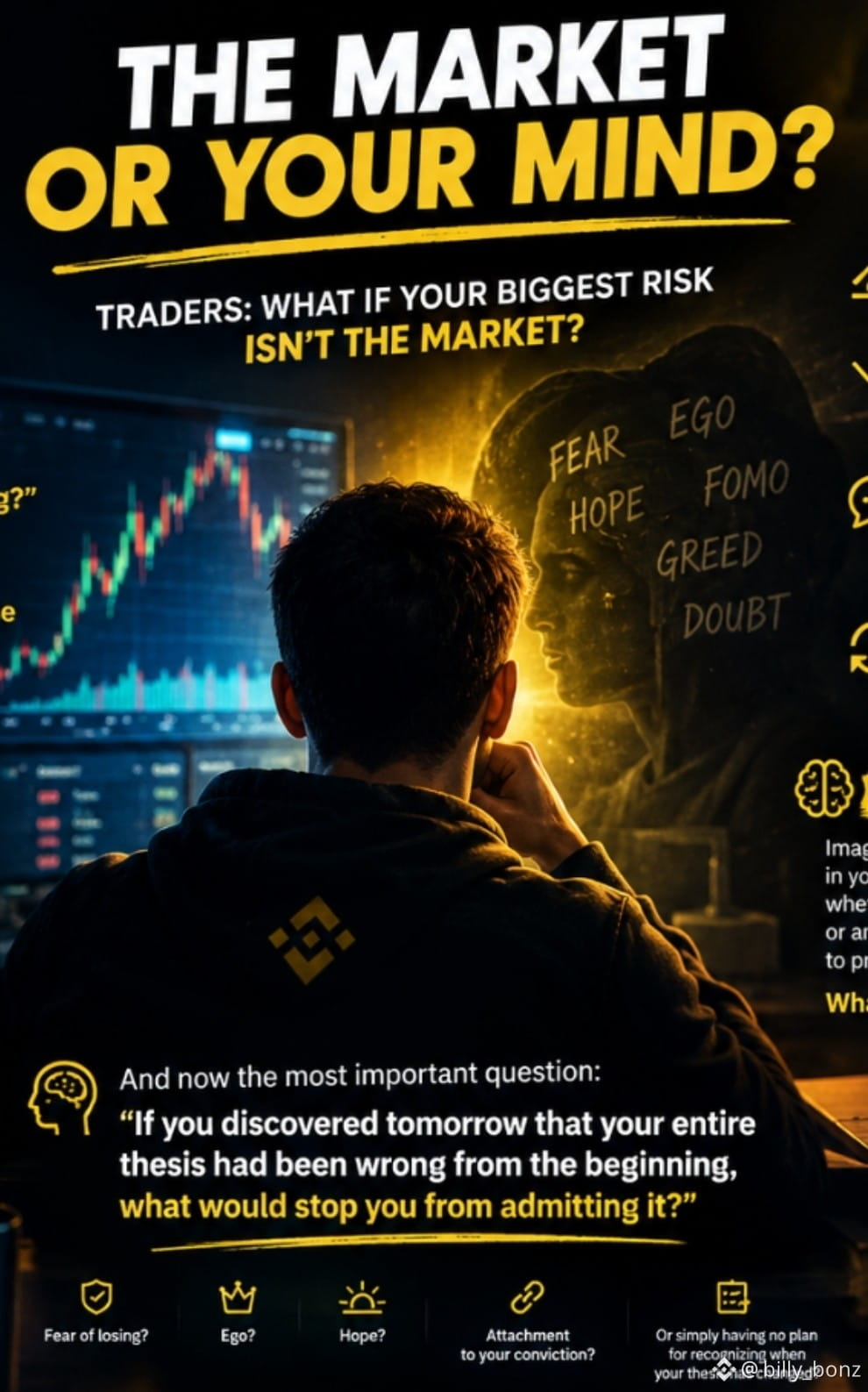
🧠 TRADERS: WHAT IF YOUR BIGGEST RISK ISN’T THE MARKET?
You look at charts to figure out where the market is going.
But sometimes, the real question isn’t:
“Where is the market going?”
It’s:
“Why do I need the market to go in the direction I chose so badly?”
Look at your current portfolio.
Every position tells a story.
But is that story based on your current analysis…
or are you simply defending a decision you already made?
🔹 When a position goes up → do you feel convinced you were right?
🔹 When it goes down → do you search for reasons not to change your mind?
🔹 When someone challenges your thesis → do you analyze their argument, or immediately look for reasons to reject it?
🔹 When the market changes → do you adapt your thesis, or does your ego refuse to change?
🎯 A psychological test
Imagine nobody knew what was in your portfolio.
Nobody would know whether you bought BTC, ETH, or an altcoin.
You have nothing to prove to anyone.
What would you actually keep?
And now the most important question:
If you discovered tomorrow that your entire thesis had been wrong from the beginning, what would stop you from admitting it?
Fear of losing?
Ego?
Hope?
Attachment to your conviction?
Or simply having no plan for recognizing when your thesis has changed?
👇 Answer honestly:
What crypto conviction are you defending today… that you have never seriously tried to disprove?
That might be where your biggest blind spot is.
#trading #CryptoTrading #TraderMindseta #psychology #BinanceSquare
Hit 👍 and fallow 🙏
🧠 TRADERS: WHAT IF YOUR BIGGEST RISK ISN’T THE MARKET?
You look at charts to figure out where the market is going.
But sometimes, the real question isn’t:
“Where is the market going?”
It’s:
“Why do I need the market to go in the direction I chose so badly?”
Look at your current portfolio.
Every position tells a story.
But is that story based on your current analysis…
or are you simply defending a decision you already made?
🔹 When a position goes up → do you feel convinced you were right?
🔹 When it goes down → do you search for reasons not to change your mind?
🔹 When someone challenges your thesis → do you analyze their argument, or immediately look for reasons to reject it?
🔹 When the market changes → do you adapt your thesis, or does your ego refuse to change?
🎯 A psychological test
Imagine nobody knew what was in your portfolio.
Nobody would know whether you bought BTC, ETH, or an altcoin.
You have nothing to prove to anyone.
What would you actually keep?
And now the most important question:
If you discovered tomorrow that your entire thesis had been wrong from the beginning, what would stop you from admitting it?
Fear of losing?
Ego?
Hope?
Attachment to your conviction?
Or simply having no plan for recognizing when your thesis has changed?
👇 Answer honestly:
What crypto conviction are you defending today… that you have never seriously tried to disprove?
That might be where your biggest blind spot is.
#trading #CryptoTrading #TraderMindseta #psychology #BinanceSquare
Hit 👍 and fallow 🙏
You look at charts to figure out where the market is going.
But sometimes, the real question isn’t:
“Where is the market going?”
It’s:
“Why do I need the market to go in the direction I chose so badly?”
Look at your current portfolio.
Every position tells a story.
But is that story based on your current analysis…
or are you simply defending a decision you already made?
🔹 When a position goes up → do you feel convinced you were right?
🔹 When it goes down → do you search for reasons not to change your mind?
🔹 When someone challenges your thesis → do you analyze their argument, or immediately look for reasons to reject it?
🔹 When the market changes → do you adapt your thesis, or does your ego refuse to change?
🎯 A psychological test
Imagine nobody knew what was in your portfolio.
Nobody would know whether you bought BTC, ETH, or an altcoin.
You have nothing to prove to anyone.
What would you actually keep?
And now the most important question:
If you discovered tomorrow that your entire thesis had been wrong from the beginning, what would stop you from admitting it?
Fear of losing?
Ego?
Hope?
Attachment to your conviction?
Or simply having no plan for recognizing when your thesis has changed?
👇 Answer honestly:
What crypto conviction are you defending today… that you have never seriously tried to disprove?
That might be where your biggest blind spot is.
#trading #CryptoTrading #TraderMindseta #psychology #BinanceSquare
Hit 👍 and fallow 🙏
60
·
--
Article
The crowd isn't out there. It's in you too.There's a comforting idea a lot of traders hold: that the market is "them" and the trader is a separate, rational observer studying it from the outside. Charts, this idea says, show you what other people are feeling, so you can act more clearly than they do.
It's a nice story. It's also wrong, and knowing why matters more than any indicator.
Every candle on a chart is the record of a decision someone made under pressure. A sharp green candle means a crowd of people felt the same pull at the same moment: don't miss this. A sharp red candle means a crowd felt the same fear: get out now. The chart isn't separate from the crowd's psychology. It's made entirely of it.
And here's the part that's harder to accept: you're not watching that crowd from outside it. You're standing inside it, feeling the same pulls, on the same timeline, often without noticing. The trader who says "I'd never buy a top" has usually just not yet felt the exact pressure that makes people buy tops. It doesn't feel like greed from the inside. It feels like clarity. That's what makes it dangerous.
This is why "just don't be emotional" is useless advice. You can't opt out of having a nervous system. What you can do is build a small gap between the feeling and the action, so the feeling has to travel through a checkpoint before it becomes a trade.
Three checkpoints worth building:
Notice the pull before you act on it. Before entering on a sharp move, name what's happening: "this is urgency" or "this is fear." Naming an emotional state measurably reduces its grip on decision-making. It's not a trick. It's how the brain works.
Ask what triggered your attention. Did you see the setup first, or did you see the crowd's reaction first and go looking for a setup to justify it? Those are different processes, and only one of them is analysis.
Separate the decision from the moment. Decide your risk, your entry, and your exit when you're calm, not while you're inside the pull. A rule made under pressure isn't a rule. It's the pressure, wearing a rule's clothing.
None of this makes you immune to the crowd. Nothing does. But it turns you from someone who's swept by it into someone who notices the current before stepping in.
👇 Think of a moment you acted on a "gut feeling" in the market. Looking back, was it clarity, or was it the crowd's pull, dressed up as your own instinct?
Educational only. #trading #Cryptomindset #psychology
The crowd isn't out there. It's in you too.
There's a comforting idea a lot of traders hold: that the market is "them" and the trader is a separate, rational observer studying it from the outside. Charts, this idea says, show you what other people are feeling, so you can act more clearly than they do.
It's a nice story. It's also wrong, and knowing why matters more than any indicator.
Every candle on a chart is the record of a decision someone made under pressure. A sharp green candle means a crowd of people felt the same pull at the same moment: don't miss this. A sharp red candle means a crowd felt the same fear: get out now. The chart isn't separate from the crowd's psychology. It's made entirely of it.
And here's the part that's harder to accept: you're not watching that crowd from outside it. You're standing inside it, feeling the same pulls, on the same timeline, often without noticing. The trader who says "I'd never buy a top" has usually just not yet felt the exact pressure that makes people buy tops. It doesn't feel like greed from the inside. It feels like clarity. That's what makes it dangerous.
This is why "just don't be emotional" is useless advice. You can't opt out of having a nervous system. What you can do is build a small gap between the feeling and the action, so the feeling has to travel through a checkpoint before it becomes a trade.
Three checkpoints worth building:
Notice the pull before you act on it. Before entering on a sharp move, name what's happening: "this is urgency" or "this is fear." Naming an emotional state measurably reduces its grip on decision-making. It's not a trick. It's how the brain works.
Ask what triggered your attention. Did you see the setup first, or did you see the crowd's reaction first and go looking for a setup to justify it? Those are different processes, and only one of them is analysis.
Separate the decision from the moment. Decide your risk, your entry, and your exit when you're calm, not while you're inside the pull. A rule made under pressure isn't a rule. It's the pressure, wearing a rule's clothing.
None of this makes you immune to the crowd. Nothing does. But it turns you from someone who's swept by it into someone who notices the current before stepping in.
👇 Think of a moment you acted on a "gut feeling" in the market. Looking back, was it clarity, or was it the crowd's pull, dressed up as your own instinct?
Educational only. #trading #Cryptomindset #psychology
It's a nice story. It's also wrong, and knowing why matters more than any indicator.
Every candle on a chart is the record of a decision someone made under pressure. A sharp green candle means a crowd of people felt the same pull at the same moment: don't miss this. A sharp red candle means a crowd felt the same fear: get out now. The chart isn't separate from the crowd's psychology. It's made entirely of it.
And here's the part that's harder to accept: you're not watching that crowd from outside it. You're standing inside it, feeling the same pulls, on the same timeline, often without noticing. The trader who says "I'd never buy a top" has usually just not yet felt the exact pressure that makes people buy tops. It doesn't feel like greed from the inside. It feels like clarity. That's what makes it dangerous.
This is why "just don't be emotional" is useless advice. You can't opt out of having a nervous system. What you can do is build a small gap between the feeling and the action, so the feeling has to travel through a checkpoint before it becomes a trade.
Three checkpoints worth building:
Notice the pull before you act on it. Before entering on a sharp move, name what's happening: "this is urgency" or "this is fear." Naming an emotional state measurably reduces its grip on decision-making. It's not a trick. It's how the brain works.
Ask what triggered your attention. Did you see the setup first, or did you see the crowd's reaction first and go looking for a setup to justify it? Those are different processes, and only one of them is analysis.
Separate the decision from the moment. Decide your risk, your entry, and your exit when you're calm, not while you're inside the pull. A rule made under pressure isn't a rule. It's the pressure, wearing a rule's clothing.
None of this makes you immune to the crowd. Nothing does. But it turns you from someone who's swept by it into someone who notices the current before stepping in.
👇 Think of a moment you acted on a "gut feeling" in the market. Looking back, was it clarity, or was it the crowd's pull, dressed up as your own instinct?
Educational only. #trading #Cryptomindset #psychology
1
110
·
--
Every big move on a chart is really a crowd of people making the same emotional decision at the same time.
A sharp green candle isn't just "price going up." It's thousands of people feeling the same pull: don't miss this. A sharp red candle isn't just "price going down." It's thousands of people feeling the same fear: get out now.
The chart shows you the result. It doesn't show you which decision you're about to copy.
That's the real skill behind reading a chart: not predicting the next candle, but noticing which feeling is moving through the crowd right now, and asking whether you're about to feel it too.
👇 Next time you see a sharp move, pause for one second before reacting. What's the crowd feeling, and is it becoming your feeling too?
Educational only. #trading #Cryptomindset #psychology
Every big move on a chart is really a crowd of people making the same emotional decision at the same time.
A sharp green candle isn't just "price going up." It's thousands of people feeling the same pull: don't miss this. A sharp red candle isn't just "price going down." It's thousands of people feeling the same fear: get out now.
The chart shows you the result. It doesn't show you which decision you're about to copy.
That's the real skill behind reading a chart: not predicting the next candle, but noticing which feeling is moving through the crowd right now, and asking whether you're about to feel it too.
👇 Next time you see a sharp move, pause for one second before reacting. What's the crowd feeling, and is it becoming your feeling too?
Educational only. #trading #Cryptomindset #psychology
A sharp green candle isn't just "price going up." It's thousands of people feeling the same pull: don't miss this. A sharp red candle isn't just "price going down." It's thousands of people feeling the same fear: get out now.
The chart shows you the result. It doesn't show you which decision you're about to copy.
That's the real skill behind reading a chart: not predicting the next candle, but noticing which feeling is moving through the crowd right now, and asking whether you're about to feel it too.
👇 Next time you see a sharp move, pause for one second before reacting. What's the crowd feeling, and is it becoming your feeling too?
Educational only. #trading #Cryptomindset #psychology
2
1.7k
·
--
2.3.3
Why does something exciting eventually become normal?
- The first time you get a new phone, it feels special
- A few months later, it's just your phone
- You get used to the new thing
- Then you want the next thing
Psychologists call part of this hedonic adaptation.
And money has the same problem:
- You reach a goal
- You celebrate
Then your brain quietly moves the finish line
- $1,000 becomes $10,000
- $10,000 becomes $100,000.
And “enough” keeps moving...
Sometimes the problem isn't that we don't have enough
It's that we stop noticing what we already have
So today, we're stopping for a moment
5,000 of you are here
And instead of immediately asking:
- “What's next?”
We're going to ask:
- “What do we already have?”
Thank you for being part of this
Now -
back to
~ Thinking before we act
Q: What can make “enough” keep moving?
#ThinkBeforeYouAct #ThinkBeforeYouAct #Psychology #Gratitude
2.3.3
Why does something exciting eventually become normal?
- The first time you get a new phone, it feels special
- A few months later, it's just your phone
- You get used to the new thing
- Then you want the next thing
Psychologists call part of this hedonic adaptation.
And money has the same problem:
- You reach a goal
- You celebrate
Then your brain quietly moves the finish line
- $1,000 becomes $10,000
- $10,000 becomes $100,000.
And “enough” keeps moving...
Sometimes the problem isn't that we don't have enough
It's that we stop noticing what we already have
So today, we're stopping for a moment
5,000 of you are here
And instead of immediately asking:
- “What's next?”
We're going to ask:
- “What do we already have?”
Thank you for being part of this
Now -
back to
~ Thinking before we act
Q: What can make “enough” keep moving?
#ThinkBeforeYouAct #ThinkBeforeYouAct #Psychology #Gratitude
Why does something exciting eventually become normal?
- The first time you get a new phone, it feels special
- A few months later, it's just your phone
- You get used to the new thing
- Then you want the next thing
Psychologists call part of this hedonic adaptation.
And money has the same problem:
- You reach a goal
- You celebrate
Then your brain quietly moves the finish line
- $1,000 becomes $10,000
- $10,000 becomes $100,000.
And “enough” keeps moving...
Sometimes the problem isn't that we don't have enough
It's that we stop noticing what we already have
So today, we're stopping for a moment
5,000 of you are here
And instead of immediately asking:
- “What's next?”
We're going to ask:
- “What do we already have?”
Thank you for being part of this
Now -
back to
~ Thinking before we act
Q: What can make “enough” keep moving?
#ThinkBeforeYouAct #ThinkBeforeYouAct #Psychology #Gratitude
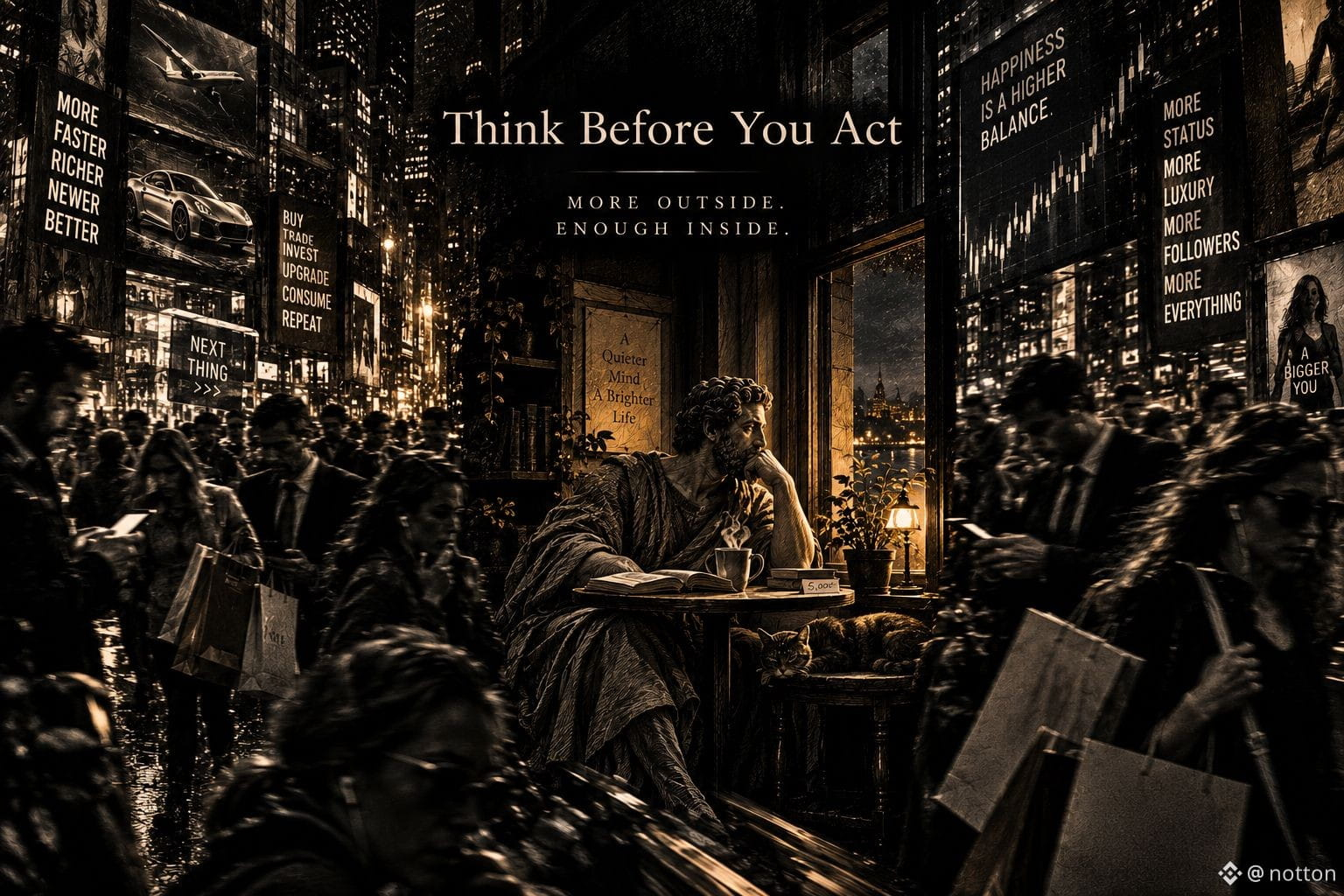
Alexander Bason Iw2e:
Adaptation
1.2k
1
61
1.2k
·
--
Article
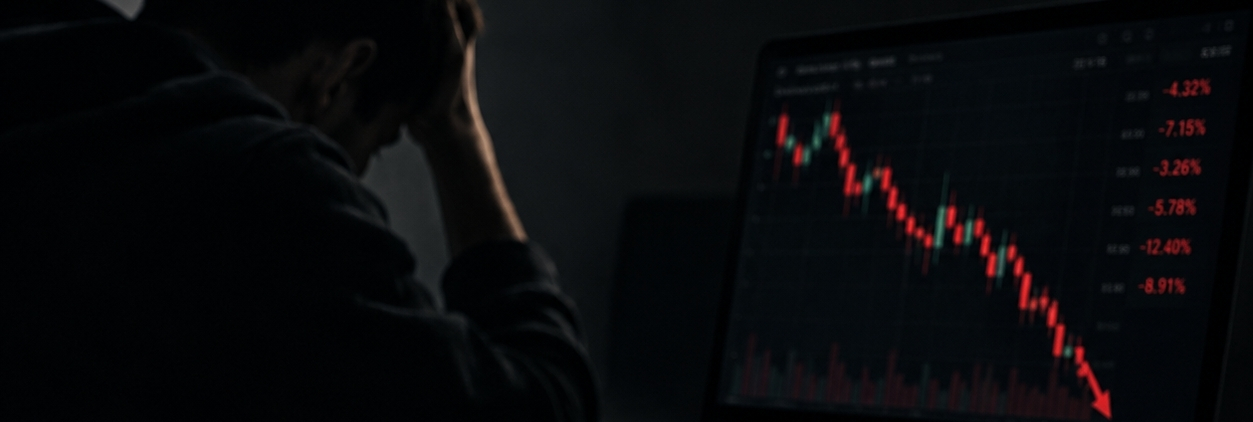
Why your brain treats a losing trade like a physical threatWhen a trade turns red, your brain doesn't process it as "numbers moving." It processes it as danger.
The amygdala, the part of your brain that reacts to threats, fires the same way whether you're facing a predator or watching a red candle. Cortisol rises. Your thinking narrows. This is why in the middle of a loss, people say "I wasn't thinking straight," and they mean it literally, not as an excuse.
That's also why a stop-loss feels harder to execute than it looks on paper. You're not failing at discipline. You're fighting a nervous system that's telling you to fight or freeze, in a situation where the only smart move is neither.
Three things that actually help, because they work with the nervous system instead of against it:
1. Decide before you feel it. Set your stop-loss when you're calm, before you enter. A decision made in a threat state is rarely a good one.
2. Name what's happening. Silently saying "this is fear, not information" pulls the analytical brain back online. It's a small step, but it's measurable.
3. Build the exit into the routine, not the moment. Traders who treat "hit stop → close → step away" as one automatic sequence rely less on willpower under pressure, because there's less left to decide in real time.
Understanding the mechanism doesn't remove the feeling. But it stops you from mistaking a normal stress response for a personal flaw, which is where a lot of self-blame in trading comes from.
👇 Next time you're in a losing trade, notice what happens in your body before you look at the numbers.
#trading #Cryptomindset #psychology
Why your brain treats a losing trade like a physical threat
When a trade turns red, your brain doesn't process it as "numbers moving." It processes it as danger.
The amygdala, the part of your brain that reacts to threats, fires the same way whether you're facing a predator or watching a red candle. Cortisol rises. Your thinking narrows. This is why in the middle of a loss, people say "I wasn't thinking straight," and they mean it literally, not as an excuse.
That's also why a stop-loss feels harder to execute than it looks on paper. You're not failing at discipline. You're fighting a nervous system that's telling you to fight or freeze, in a situation where the only smart move is neither.
Three things that actually help, because they work with the nervous system instead of against it:
1. Decide before you feel it. Set your stop-loss when you're calm, before you enter. A decision made in a threat state is rarely a good one.
2. Name what's happening. Silently saying "this is fear, not information" pulls the analytical brain back online. It's a small step, but it's measurable.
3. Build the exit into the routine, not the moment. Traders who treat "hit stop → close → step away" as one automatic sequence rely less on willpower under pressure, because there's less left to decide in real time.
Understanding the mechanism doesn't remove the feeling. But it stops you from mistaking a normal stress response for a personal flaw, which is where a lot of self-blame in trading comes from.
👇 Next time you're in a losing trade, notice what happens in your body before you look at the numbers.
#trading #Cryptomindset #psychology
The amygdala, the part of your brain that reacts to threats, fires the same way whether you're facing a predator or watching a red candle. Cortisol rises. Your thinking narrows. This is why in the middle of a loss, people say "I wasn't thinking straight," and they mean it literally, not as an excuse.
That's also why a stop-loss feels harder to execute than it looks on paper. You're not failing at discipline. You're fighting a nervous system that's telling you to fight or freeze, in a situation where the only smart move is neither.
Three things that actually help, because they work with the nervous system instead of against it:
1. Decide before you feel it. Set your stop-loss when you're calm, before you enter. A decision made in a threat state is rarely a good one.
2. Name what's happening. Silently saying "this is fear, not information" pulls the analytical brain back online. It's a small step, but it's measurable.
3. Build the exit into the routine, not the moment. Traders who treat "hit stop → close → step away" as one automatic sequence rely less on willpower under pressure, because there's less left to decide in real time.
Understanding the mechanism doesn't remove the feeling. But it stops you from mistaking a normal stress response for a personal flaw, which is where a lot of self-blame in trading comes from.
👇 Next time you're in a losing trade, notice what happens in your body before you look at the numbers.
#trading #Cryptomindset #psychology
2
1.4k
·
--
Article
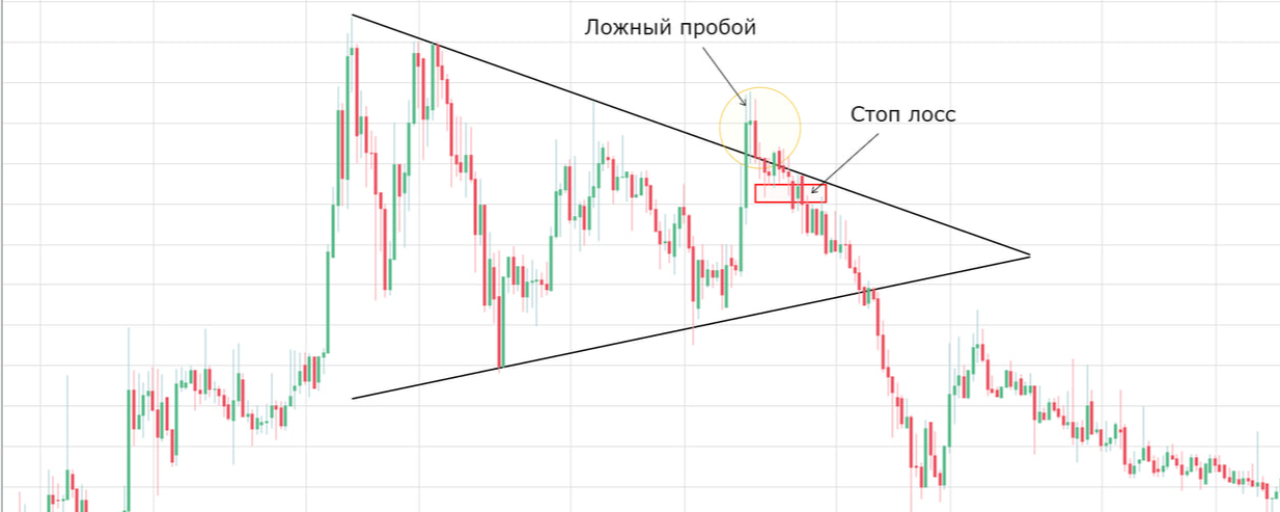
Case: the symmetrical triangle trap and the “wishful thinking” syndromeClient request
“I thought the trend would continue. It seemed to me that since the price had risen before, the triangle had to break only upward.”
History
A beautiful symmetrical triangle formed on the chart.
Before that, the market was in an uptrend.
The brain immediately chose a direction:
Case: the symmetrical triangle trap and the “wishful thinking” syndrome
Client request
“I thought the trend would continue. It seemed to me that since the price had risen before, the triangle had to break only upward.”
History
A beautiful symmetrical triangle formed on the chart.
Before that, the market was in an uptrend.
The brain immediately chose a direction:
“I thought the trend would continue. It seemed to me that since the price had risen before, the triangle had to break only upward.”
History
A beautiful symmetrical triangle formed on the chart.
Before that, the market was in an uptrend.
The brain immediately chose a direction:
1
6.1k

3am. My $ADA long was screaming red, down 40% on 20x leverage. My fingers hovered over the ‘close’ button, heart hammering, wanting to bleed out the pain just to make the ticker stop moving. Two years ago, I would’ve smashed it and flipped short out of spite. Instead, I stared at the wall for twenty minutes, hands under my thighs, letting the panic settle. I stopped acting on the adrenaline. I stopped trying to reclaim that $5,400 I lost years ago. I let the trade hit my stop. When was the last time you let a trade breathe?
#trading #crypto #psychology #riskmanagement #ADA
3am. My $ADA long was screaming red, down 40% on 20x leverage. My fingers hovered over the ‘close’ button, heart hammering, wanting to bleed out the pain just to make the ticker stop moving. Two years ago, I would’ve smashed it and flipped short out of spite. Instead, I stared at the wall for twenty minutes, hands under my thighs, letting the panic settle. I stopped acting on the adrenaline. I stopped trying to reclaim that $5,400 I lost years ago. I let the trade hit my stop. When was the last time you let a trade breathe?
#trading #crypto #psychology #riskmanagement #ADA
#trading #crypto #psychology #riskmanagement #ADA
108
·
--
🧠 What is your biggest enemy: FOMO, fear, or revenge?
Every trader fights a different one.
FOMO buys the top because it feels like the last chance.
Fear exits a good trade too early, or never enters at all.
Revenge tries to win back a loss immediately, with a bigger position.
They all feel like instinct in the moment. They're actually patterns, and patterns can be caught.
👇 Which one costs you the most?
#trading #Cryptomindset #psychology
🧠 What is your biggest enemy: FOMO, fear, or revenge?
Every trader fights a different one.
FOMO buys the top because it feels like the last chance.
Fear exits a good trade too early, or never enters at all.
Revenge tries to win back a loss immediately, with a bigger position.
They all feel like instinct in the moment. They're actually patterns, and patterns can be caught.
👇 Which one costs you the most?
#trading #Cryptomindset #psychology
Every trader fights a different one.
FOMO buys the top because it feels like the last chance.
Fear exits a good trade too early, or never enters at all.
Revenge tries to win back a loss immediately, with a bigger position.
They all feel like instinct in the moment. They're actually patterns, and patterns can be caught.
👇 Which one costs you the most?
#trading #Cryptomindset #psychology
1
354
·
--
2.2.1
Why do we remember embarrassing moments for years?
You can forget what you ate three days ago
But remember something embarrassing you did 10 years ago with painful clarity
Your brain seems to give certain negative experiences disproportionate attention
Then connect it to money:
- You make one terrible investment.
- You lose $500
- You make ten good decisions afterward
- But your brain keeps returning to the one mistake.
So you become afraid to make the next decision
Sometimes one bad experience doesn't just cost you money
It changes how you see the next opportunity
This could lead into negativity bias, loss aversion, and how past experiences influence future financial decisions
~ Think before you act
#BinanceSquare #ThinkBeforeYouAct #Psychology #BehavioralFinance
2.2.1
Why do we remember embarrassing moments for years?
You can forget what you ate three days ago
But remember something embarrassing you did 10 years ago with painful clarity
Your brain seems to give certain negative experiences disproportionate attention
Then connect it to money:
- You make one terrible investment.
- You lose $500
- You make ten good decisions afterward
- But your brain keeps returning to the one mistake.
So you become afraid to make the next decision
Sometimes one bad experience doesn't just cost you money
It changes how you see the next opportunity
This could lead into negativity bias, loss aversion, and how past experiences influence future financial decisions
~ Think before you act
#BinanceSquare #ThinkBeforeYouAct #Psychology #BehavioralFinance
Why do we remember embarrassing moments for years?
You can forget what you ate three days ago
But remember something embarrassing you did 10 years ago with painful clarity
Your brain seems to give certain negative experiences disproportionate attention
Then connect it to money:
- You make one terrible investment.
- You lose $500
- You make ten good decisions afterward
- But your brain keeps returning to the one mistake.
So you become afraid to make the next decision
Sometimes one bad experience doesn't just cost you money
It changes how you see the next opportunity
This could lead into negativity bias, loss aversion, and how past experiences influence future financial decisions
~ Think before you act
#BinanceSquare #ThinkBeforeYouAct #Psychology #BehavioralFinance
971
1
48
971
3am. Red portfolio. Liquidated. One tab open. I learned everything that night. Looking at your $SOL longs bleeding out, you feel like the market is mocking you. I felt that exact cold sweat when I torched my $5,400. You think you need a miracle or a bigger bet to fix it, but you don’t. You need to sleep. The charts aren't going anywhere and neither is your future. Losing money is loud, but the growth happens in the silence after you close the terminal. You are going to be just fine.
#crypto #trading #psychology #sol #mindset
3am. Red portfolio. Liquidated. One tab open. I learned everything that night. Looking at your $SOL longs bleeding out, you feel like the market is mocking you. I felt that exact cold sweat when I torched my $5,400. You think you need a miracle or a bigger bet to fix it, but you don’t. You need to sleep. The charts aren't going anywhere and neither is your future. Losing money is loud, but the growth happens in the silence after you close the terminal. You are going to be just fine.
#crypto #trading #psychology #sol #mindset
#crypto #trading #psychology #sol #mindset
26
3am. Red portfolio. Liquidated. I watched $5,400 of my own blood vanish into $DOGE leverage, and the silence in my room was deafening. I thought losing that money was the tragedy. It wasn’t. The tragedy was the version of myself I had become to chase it: frantic, hollow, and addicted to the dopamine of the gamble. The real gain wasn't the profit I eventually made; it was the quiet mind I recovered. You can’t trade effectively if you don’t like the person you are when the screens are off. Just breathe.
#crypto #trading #psychology
3am. Red portfolio. Liquidated. I watched $5,400 of my own blood vanish into $DOGE leverage, and the silence in my room was deafening. I thought losing that money was the tragedy. It wasn’t. The tragedy was the version of myself I had become to chase it: frantic, hollow, and addicted to the dopamine of the gamble. The real gain wasn't the profit I eventually made; it was the quiet mind I recovered. You can’t trade effectively if you don’t like the person you are when the screens are off. Just breathe.
#crypto #trading #psychology
#crypto #trading #psychology
43
3am. Red portfolio. Liquidated. One tab open. I learned everything that night.
I was staring at an $ADA long I’d opened at 100x. When it dipped, my ego lied: "It’s just a wick, average down." I doubled, then tripled. I wasn't trading; I was fighting the chart. My $5,400 tuition was paid in the blood of those doubling-downs. Now, my rule is simple: if the trade goes against me, I don't add. I subtract. I walk away. Real traders don't pray for a bounce; they accept a hit.
What’s the one lie you tell yourself when you're deep in the red?
#crypto #trading #psychology #riskmanagement #ADA
3am. Red portfolio. Liquidated. One tab open. I learned everything that night.
I was staring at an $ADA long I’d opened at 100x. When it dipped, my ego lied: "It’s just a wick, average down." I doubled, then tripled. I wasn't trading; I was fighting the chart. My $5,400 tuition was paid in the blood of those doubling-downs. Now, my rule is simple: if the trade goes against me, I don't add. I subtract. I walk away. Real traders don't pray for a bounce; they accept a hit.
What’s the one lie you tell yourself when you're deep in the red?
#crypto #trading #psychology #riskmanagement #ADA
I was staring at an $ADA long I’d opened at 100x. When it dipped, my ego lied: "It’s just a wick, average down." I doubled, then tripled. I wasn't trading; I was fighting the chart. My $5,400 tuition was paid in the blood of those doubling-downs. Now, my rule is simple: if the trade goes against me, I don't add. I subtract. I walk away. Real traders don't pray for a bounce; they accept a hit.
What’s the one lie you tell yourself when you're deep in the red?
#crypto #trading #psychology #riskmanagement #ADA
1
47
·
--
The trade that was right, and the trader who wasn't 🧠
Picture a trader with a clean setup. Entry, stop and target are all planned before he clicks buy.
Price dips 2%, well inside his plan. His heart rate jumps. He tells himself, "I'll just get out and re-enter later." He closes at a small loss.
Twenty minutes later, price turns and hits his original target.
His analysis was right. His plan was right. The only thing that failed was the person carrying it out.
This is what no chart shows you: a setup can be perfect and the trade can still fail, because the trader changed the plan halfway through.
Most trading losses aren't analysis problems. They're execution problems, and execution is psychology.
That's what this page is about: the mind behind the trade.
Have you ever been right about the market and still lost money? Tell me what happened below.
#TradingCommunity #Cryptomindset
#psychology
The trade that was right, and the trader who wasn't 🧠
Picture a trader with a clean setup. Entry, stop and target are all planned before he clicks buy.
Price dips 2%, well inside his plan. His heart rate jumps. He tells himself, "I'll just get out and re-enter later." He closes at a small loss.
Twenty minutes later, price turns and hits his original target.
His analysis was right. His plan was right. The only thing that failed was the person carrying it out.
This is what no chart shows you: a setup can be perfect and the trade can still fail, because the trader changed the plan halfway through.
Most trading losses aren't analysis problems. They're execution problems, and execution is psychology.
That's what this page is about: the mind behind the trade.
Have you ever been right about the market and still lost money? Tell me what happened below.
#TradingCommunity #Cryptomindset
#psychology
Picture a trader with a clean setup. Entry, stop and target are all planned before he clicks buy.
Price dips 2%, well inside his plan. His heart rate jumps. He tells himself, "I'll just get out and re-enter later." He closes at a small loss.
Twenty minutes later, price turns and hits his original target.
His analysis was right. His plan was right. The only thing that failed was the person carrying it out.
This is what no chart shows you: a setup can be perfect and the trade can still fail, because the trader changed the plan halfway through.
Most trading losses aren't analysis problems. They're execution problems, and execution is psychology.
That's what this page is about: the mind behind the trade.
Have you ever been right about the market and still lost money? Tell me what happened below.
#TradingCommunity #Cryptomindset
#psychology
2
163

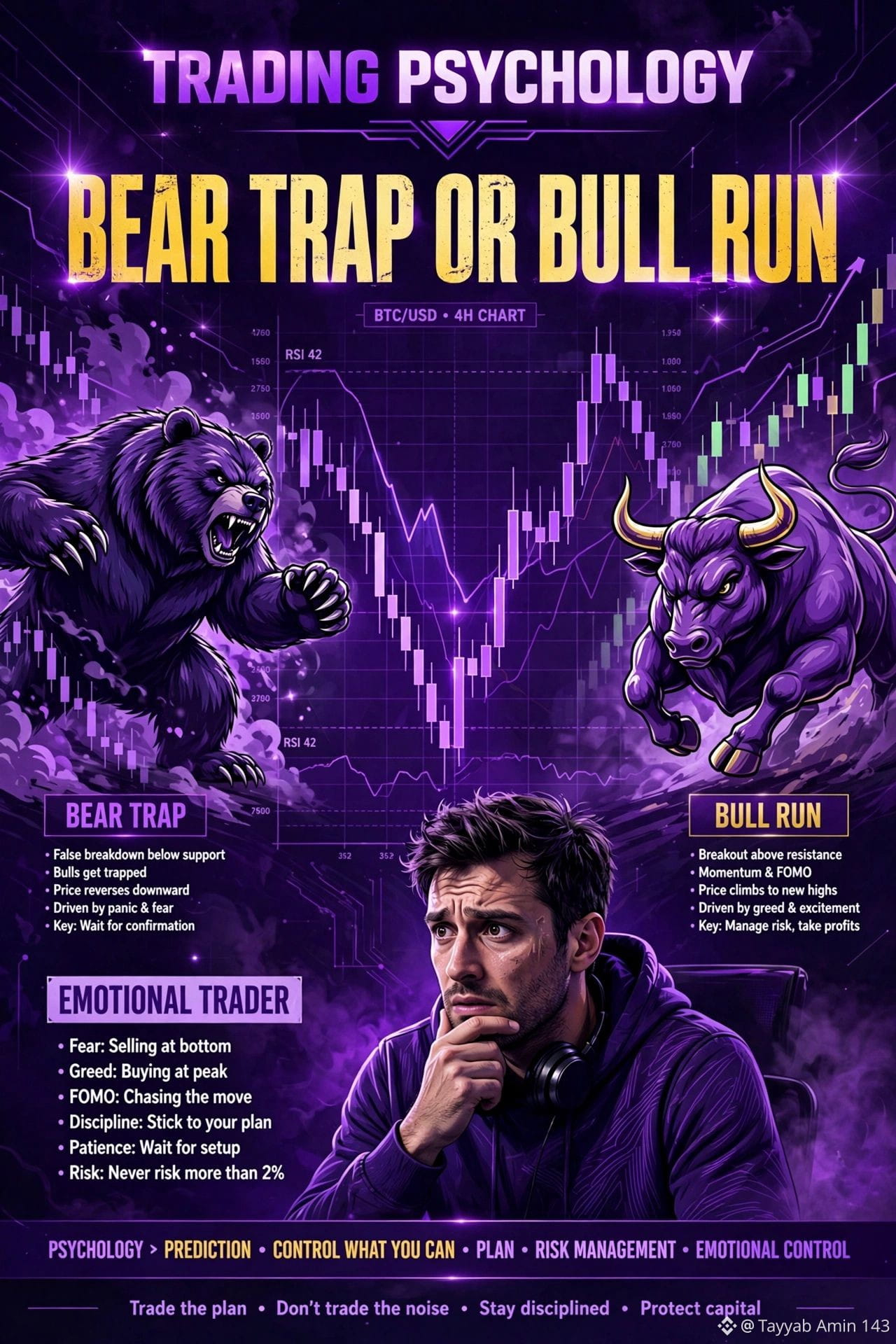
TRADING PSYCHOLOGY 📉📈
90% traders lose because of emotions!
Fear at bottom, Greed at top 😅
Remember:
Discipline > Prediction
Plan > Emotion 💎
{spot}(BTCUSDT)
Are you an emotional trader or disciplined? 👇
#trading #CryptoTrading #psychology #BTC #Binance
TRADING PSYCHOLOGY 📉📈
90% traders lose because of emotions!
Fear at bottom, Greed at top 😅
Remember:
Discipline > Prediction
Plan > Emotion 💎
Are you an emotional trader or disciplined? 👇
#trading #CryptoTrading #psychology #BTC #Binance
90% traders lose because of emotions!
Fear at bottom, Greed at top 😅
Remember:
Discipline > Prediction
Plan > Emotion 💎
Are you an emotional trader or disciplined? 👇
#trading #CryptoTrading #psychology #BTC #Binance
2
123
Log in to explore more content
Join global crypto users on Binance Square
⚡️ Get latest and useful information about crypto.
💬 Trusted by the world’s largest crypto exchange.
👍 Discover real insights from verified creators.
Email / Phone number
Trending Topics
1
#BitcoinClears$85200
3,043 views
115 Discussing
2
#AltcoinSeasonIndexHoldsAbove60For5Days
20,399 views
734 Discussing
3
#USADPAdds90000JobsInSeptember
7,430 views
406 Discussing
4
#USCorePCEEasesTo3%InAugust
6,367 views
339 Discussing
5
#KospiPostsWorstQuarterSince2020
5,559 views
361 Discussing
6
#SECToClarifyOnChainFundraisingRules
14,111 views
536 Discussing
7
#UKFCAOpensCryptoFirmAuthorization
16,840 views
474 Discussing
8
#JapanMOFStudyGroupOnTokenizedGovtBonds
14,502 views
382 Discussing
9
#QNTRises287%
64,825 views
806 Discussing
10
#TrumpRejectsAIRulesForVoluntaryAudits
39,986 views
717 Discussing