

#intelhasitsworstdaysince1974
intelhasitsworstdaysince1974
Hot
Latest

·
--
Verified
#intelhasitsworstdaysince1974
Tech giant Intel just suffered its worst stock crash since 1974. The company's shares dropped nearly 30% in a single day, wiping out over $130 billion in total value. This huge fall happened after Intel released a weak financial forecast for the upcoming fourth quarter. Slower computer sales, factory production delays, and unexpected costs hit the chipmaker hard. Investors are now worried about Intel’s future growth, causing panic across the technology market.
$BTC $ETH $BNB
{future}(BNBUSDT)
{future}(ETHUSDT)
{future}(BTCUSDT)
#intelhasitsworstdaysince1974
Tech giant Intel just suffered its worst stock crash since 1974. The company's shares dropped nearly 30% in a single day, wiping out over $130 billion in total value. This huge fall happened after Intel released a weak financial forecast for the upcoming fourth quarter. Slower computer sales, factory production delays, and unexpected costs hit the chipmaker hard. Investors are now worried about Intel’s future growth, causing panic across the technology market.
$BTC $ETH $BNB

3
3k

Verified
INTEL CRASHES 28.6%! WORST STOCK MARKET DAY SINCE 1974 — $140 BILLION WIPED OUT!AI BOOM OR CHIP INDUSTRY WARNING? INTEL'S HISTORIC SELLOFF IS SENDING SHOCKWAVES THROUGH GLOBAL MARKETS! 📉⚡
One of the biggest names in semiconductor history has just experienced a devastating market collapse.
On October 30, Intel (INTC) shares plunged approximately 28.6% in a single trading session, marking the company's worst daily performance since 1974.
Around $140 BILLION in market value disappeared in just one day!
But here's what makes this crash particularly interesting: Intel actually delivered strong third-quarter results.
📊 1. STRONG EARNINGS, BUT A SHOCKING FORECAST
Intel's Q3 2026 results revealed:
💰 Total revenue: $16.5 billion, up 21% year-over-year.🤖 Data Center & AI revenue: $7.3 billion, up 78%.📈 Non-GAAP EPS: $0.52.⚠️ Q4 revenue guidance: $15–16 billion.
Wall Street was expecting approximately $17 billion in fourth-quarter revenue.
The difference between strong historical performance and disappointing future guidance triggered an aggressive investor reaction.
🔥 2. WHY DID INVESTORS PANIC?
Three major challenges are putting pressure on Intel:
A. AI Infrastructure Costs
The AI revolution is creating enormous demand for processors, memory and advanced semiconductor infrastructure. However, expanding production requires massive capital investment.
B. PC Market Weakness
Rising memory prices and supply shortages are increasing pressure on consumer electronics and PC demand. Intel expects these challenges to continue into 2027.
C. Israel Manufacturing Disruption
An accident at Intel's Kiryat Gat manufacturing facility in Israel resulted in employee casualties and injuries, temporarily halting production.
The disruption adds further uncertainty to manufacturing costs, supply availability and future earnings.
🧮 3. THE BIGGER AI INDUSTRY WARNING
Intel's crash raises an important question:
Can companies actually convert massive AI infrastructure spending into sustainable profits?
Strong AI demand does not automatically guarantee strong earnings.
Investors are increasingly examining:
Capital expenditure and cash flow.Semiconductor production capacity.Memory and component shortages.Profit margins and manufacturing efficiency.Future demand from AI data centers.
This is why Intel's disappointing forecast matters beyond just one company.
📉 4. WHAT SHOULD INVESTORS WATCH NEXT?
The next few quarters could determine whether Intel's turnaround remains on track.
Key indicators include:
Recovery in PC and consumer-chip demand.Improved semiconductor supply availability.Progress in restarting and restoring Israeli manufacturing operations.Stronger free cash flow and profitability.Continued growth in AI data-center revenue.
A sharp stock decline does not automatically make a company undervalued. Investors still need to evaluate earnings quality, debt, cash flow and future growth expectations.
💬 MY QUESTION TO THE COMMUNITY
Is Intel's historic crash an overreaction to disappointing guidance, or does it reveal deeper structural problems in the traditional semiconductor industry?
Can Intel recover while the AI revolution continues, or are competitors gaining a stronger advantage?
👇 Share your thoughts!
$AIN
$LSK
#intelhasitsworstdaysince1974
{spot}(LSKUSDT)
{alpha}(560x9558a9254890b2a8b057a789f413631b9084f4a3)
INTEL CRASHES 28.6%! WORST STOCK MARKET DAY SINCE 1974 — $140 BILLION WIPED OUT!
AI BOOM OR CHIP INDUSTRY WARNING? INTEL'S HISTORIC SELLOFF IS SENDING SHOCKWAVES THROUGH GLOBAL MARKETS! 📉⚡
One of the biggest names in semiconductor history has just experienced a devastating market collapse.
On October 30, Intel (INTC) shares plunged approximately 28.6% in a single trading session, marking the company's worst daily performance since 1974.
Around $140 BILLION in market value disappeared in just one day!
But here's what makes this crash particularly interesting: Intel actually delivered strong third-quarter results.
📊 1. STRONG EARNINGS, BUT A SHOCKING FORECAST
Intel's Q3 2026 results revealed:
💰 Total revenue: $16.5 billion, up 21% year-over-year.🤖 Data Center & AI revenue: $7.3 billion, up 78%.📈 Non-GAAP EPS: $0.52.⚠️ Q4 revenue guidance: $15–16 billion.
Wall Street was expecting approximately $17 billion in fourth-quarter revenue.
The difference between strong historical performance and disappointing future guidance triggered an aggressive investor reaction.
🔥 2. WHY DID INVESTORS PANIC?
Three major challenges are putting pressure on Intel:
A. AI Infrastructure Costs
The AI revolution is creating enormous demand for processors, memory and advanced semiconductor infrastructure. However, expanding production requires massive capital investment.
B. PC Market Weakness
Rising memory prices and supply shortages are increasing pressure on consumer electronics and PC demand. Intel expects these challenges to continue into 2027.
C. Israel Manufacturing Disruption
An accident at Intel's Kiryat Gat manufacturing facility in Israel resulted in employee casualties and injuries, temporarily halting production.
The disruption adds further uncertainty to manufacturing costs, supply availability and future earnings.
🧮 3. THE BIGGER AI INDUSTRY WARNING
Intel's crash raises an important question:
Can companies actually convert massive AI infrastructure spending into sustainable profits?
Strong AI demand does not automatically guarantee strong earnings.
Investors are increasingly examining:
Capital expenditure and cash flow.Semiconductor production capacity.Memory and component shortages.Profit margins and manufacturing efficiency.Future demand from AI data centers.
This is why Intel's disappointing forecast matters beyond just one company.
📉 4. WHAT SHOULD INVESTORS WATCH NEXT?
The next few quarters could determine whether Intel's turnaround remains on track.
Key indicators include:
Recovery in PC and consumer-chip demand.Improved semiconductor supply availability.Progress in restarting and restoring Israeli manufacturing operations.Stronger free cash flow and profitability.Continued growth in AI data-center revenue.
A sharp stock decline does not automatically make a company undervalued. Investors still need to evaluate earnings quality, debt, cash flow and future growth expectations.
💬 MY QUESTION TO THE COMMUNITY
Is Intel's historic crash an overreaction to disappointing guidance, or does it reveal deeper structural problems in the traditional semiconductor industry?
Can Intel recover while the AI revolution continues, or are competitors gaining a stronger advantage?
👇 Share your thoughts!
$AIN
$LSK
#intelhasitsworstdaysince1974
1.3k

·
--
#intelhasitsworstdaysince1974 Intel stock just suffered its single worst day in over 50 years. Shares plunged around 29% in a single trading session, wiping out over $130 billion in market value.
Investors sold off heavily after the company issued a unexpectedly weak sales outlook for the next quarter. Intel is facing major headwinds from a slowing personal computer market, high supply costs, and factory disruptions. It is the biggest one-day drop for Intel since 1974.
$BTC $ETH $XRP
{future}(XRPUSDT)
{future}(ETHUSDT)
{future}(BTCUSDT)
#intelhasitsworstdaysince1974 Intel stock just suffered its single worst day in over 50 years. Shares plunged around 29% in a single trading session, wiping out over $130 billion in market value.
Investors sold off heavily after the company issued a unexpectedly weak sales outlook for the next quarter. Intel is facing major headwinds from a slowing personal computer market, high supply costs, and factory disruptions. It is the biggest one-day drop for Intel since 1974.
$BTC $ETH $XRP
Investors sold off heavily after the company issued a unexpectedly weak sales outlook for the next quarter. Intel is facing major headwinds from a slowing personal computer market, high supply costs, and factory disruptions. It is the biggest one-day drop for Intel since 1974.
$BTC $ETH $XRP
1
405


·
--
Verified
Intel just had its worst day since 1974.
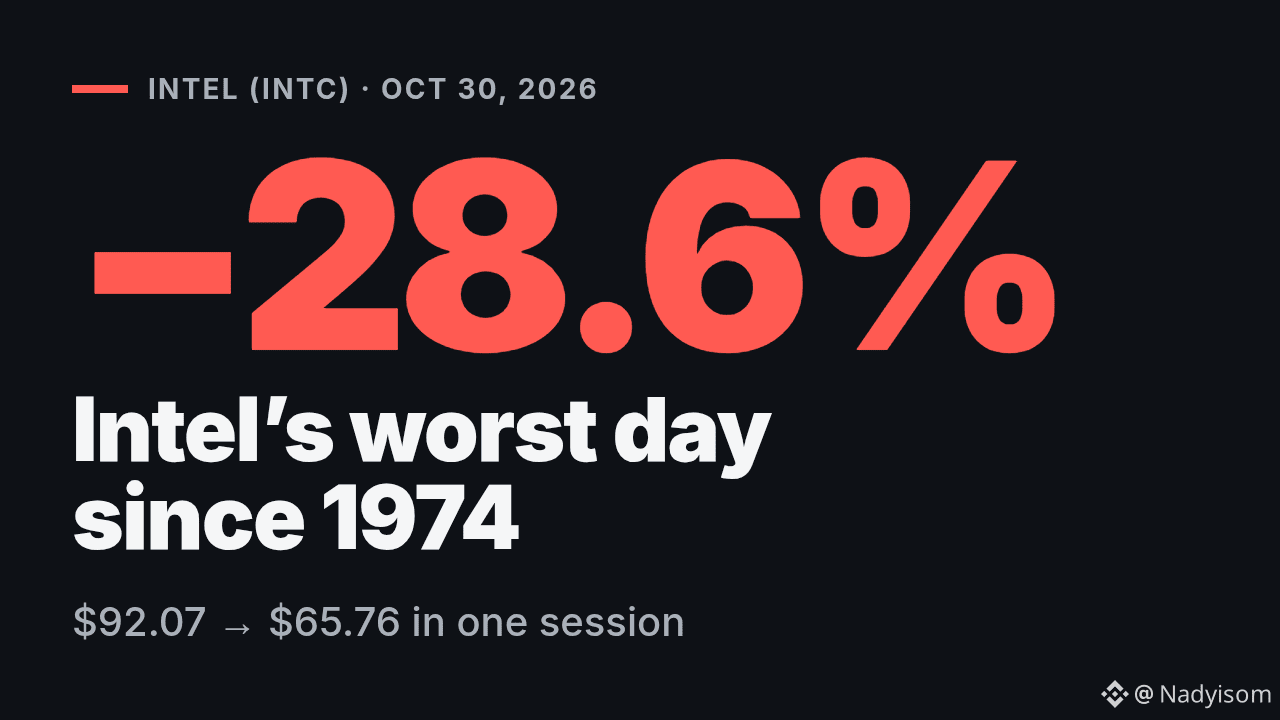
The stock dropped about 29% on Friday. It closed at $65.76, down from $92.07 a day earlier. That's nearly $140 billion in market value gone in one session.
The trigger was the Q4 forecast. Intel guided to $15 to $16 billion in revenue. Analysts were expecting $17.05 billion. It pointed to weak PC demand, data center supply problems, and a factory accident in Israel.
The strange part is the quarter it just reported was strong. Data center and AI revenue grew 78% to $7.3 billion, its fastest growth in 15 years. The market didn't care. It looked at next quarter and sold.
And it didn't stay with Intel. Chip stocks lost around $1 trillion on the day, and the Nasdaq had its worst session since June. The US government owns about 10% of Intel too, and that stake dropped around $12 billion.
I'm not calling Intel dead. The stock is still up about 80% this year. But it's also down more than half from the June high.
What I'm watching next is whether Intel can fix the supply problem. If it can't, this won't be a one-day story.
#IntelHasItsWorstDaySince1974
اليسر لتعليم الكريبتو:
اسعدني مرورك
#اليسر_لتعليم_الكريبتو
8
8
1.4k

·
--
Bullish
#intelhasitsworstdaysince1974
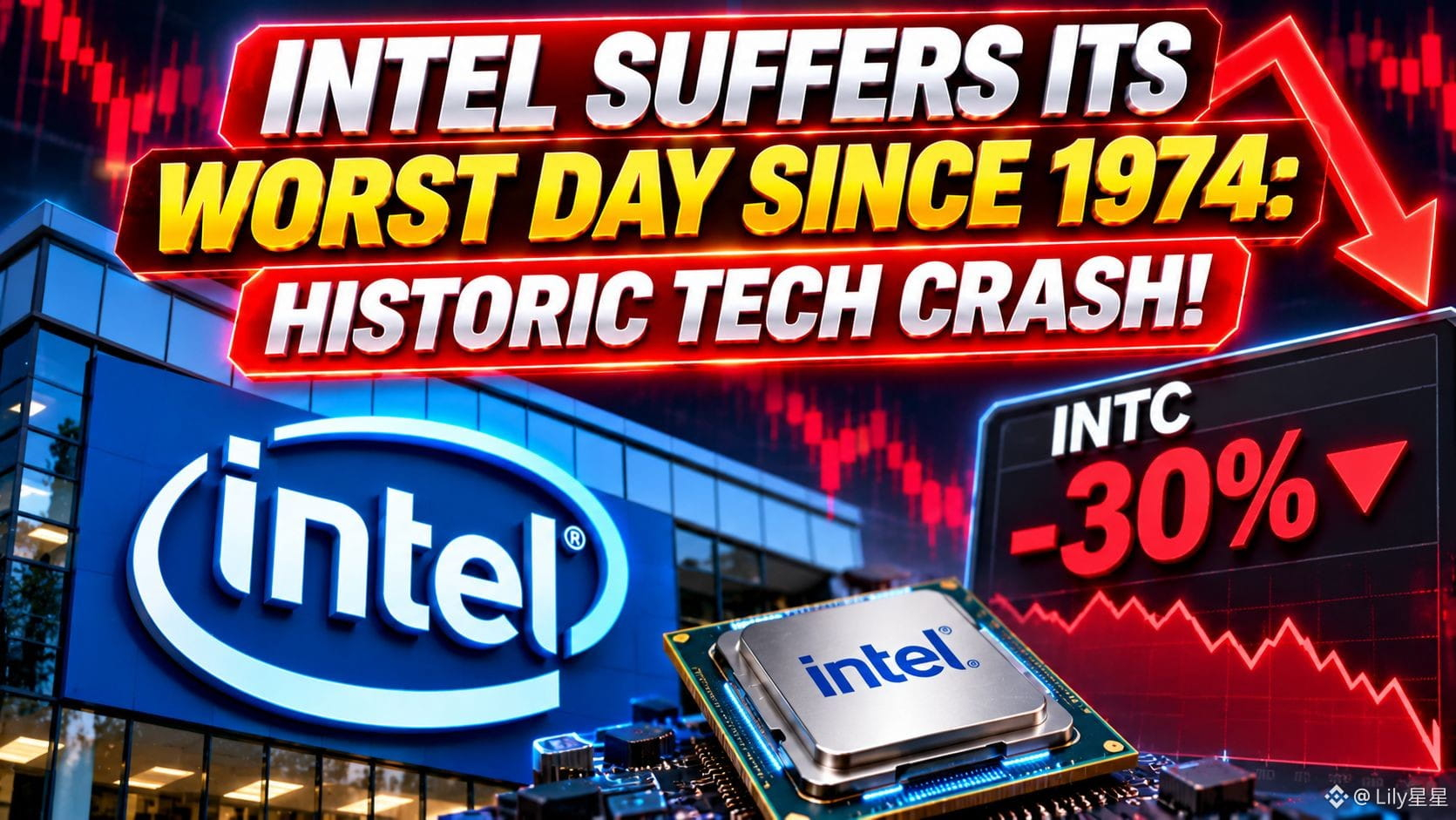
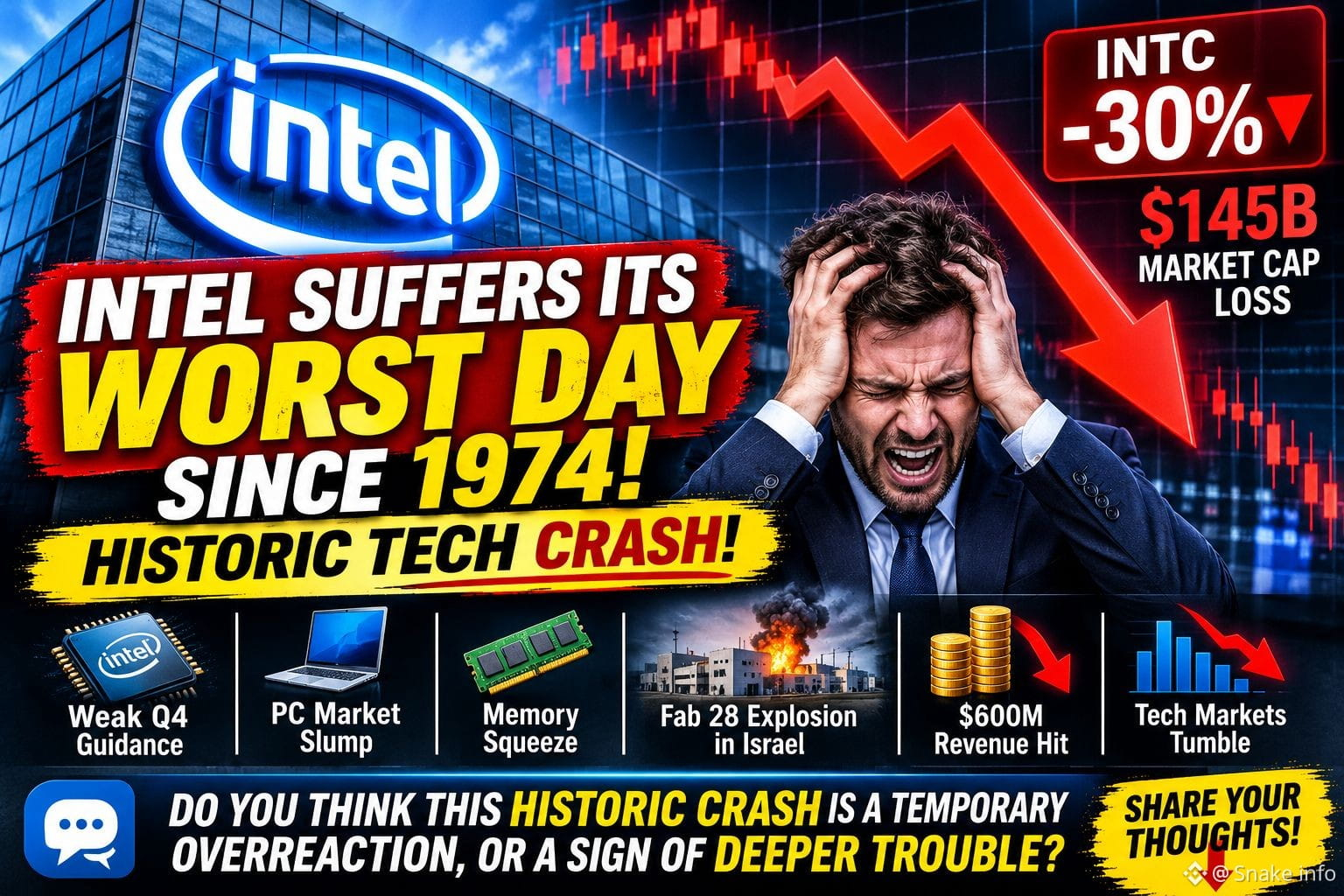
📉 INTEL SUFFERS ITS WORST DAY SINCE 1974: HISTORIC TECH CRASH! ⚡️🏛️
The Brutal Drop: Intel (INTC) shares plummeted nearly 30% in a single session, marking the chipmaking giant's worst single-day drop in over half a century (reminiscent of its historic 1974 lows) and wiping out roughly $145 billion in market value.
The Catalyst: Despite reporting a strong third quarter (with revenue rising 21% and data center revenue jumping 78%), investors panicked over a terrible Q4 guidance miss, with expected revenue of $15B–$16B falling well short of Wall Street estimates.
The PC Slump & Memory Squeeze: Intel cited ongoing pressure on the personal computer market—driven by AI data centers hoarding memory chips—pushing expected PC shipment declines further into next year.
Supply Chain Blow: Adding to the pressure, an unfortunate explosion at Intel’s Fab 28 plant in Israel resulted in a tragic loss of life and an extended shutdown, costing an estimated $600 million in revenue over two quarters.
Broader Market Shock: The massive sell-off dragged down major tech indices, causing widespread anxiety regarding ballooning AI infrastructure costs and tightening cash flows.
💬 YOUR TURN: Do you think this historic crash is a temporary overreaction to weak guidance, or a sign of deeper structural trouble for traditional chipmakers in the AI era?
👇 Drop your thoughts below!
"CLICK ON THE BELOW YELLOW COIN TAG TO GO TO DESIRED TRADING PAGE TO GET BENEFIT TRADE" $BTC
{future}(BTCUSDT)
$ETH
{future}(ETHUSDT)
$ZEC
{future}(ZECUSDT)
#CZSaysCompensationIsinPlaceUsersAreProtected #HeYiSaysWithdrawalsExpectedtoResumeWithin42Hours #USDCCirculationFallsAbout800MInSevenDays #Intel
#intelhasitsworstdaysince1974
📉 INTEL SUFFERS ITS WORST DAY SINCE 1974: HISTORIC TECH CRASH! ⚡️🏛️
The Brutal Drop: Intel (INTC) shares plummeted nearly 30% in a single session, marking the chipmaking giant's worst single-day drop in over half a century (reminiscent of its historic 1974 lows) and wiping out roughly $145 billion in market value.
The Catalyst: Despite reporting a strong third quarter (with revenue rising 21% and data center revenue jumping 78%), investors panicked over a terrible Q4 guidance miss, with expected revenue of $15B–$16B falling well short of Wall Street estimates.
The PC Slump & Memory Squeeze: Intel cited ongoing pressure on the personal computer market—driven by AI data centers hoarding memory chips—pushing expected PC shipment declines further into next year.
Supply Chain Blow: Adding to the pressure, an unfortunate explosion at Intel’s Fab 28 plant in Israel resulted in a tragic loss of life and an extended shutdown, costing an estimated $600 million in revenue over two quarters.
Broader Market Shock: The massive sell-off dragged down major tech indices, causing widespread anxiety regarding ballooning AI infrastructure costs and tightening cash flows.
💬 YOUR TURN: Do you think this historic crash is a temporary overreaction to weak guidance, or a sign of deeper structural trouble for traditional chipmakers in the AI era?
👇 Drop your thoughts below!
"CLICK ON THE BELOW YELLOW COIN TAG TO GO TO DESIRED TRADING PAGE TO GET BENEFIT TRADE" $BTC
$ETH
$ZEC
#CZSaysCompensationIsinPlaceUsersAreProtected #HeYiSaysWithdrawalsExpectedtoResumeWithin42Hours #USDCCirculationFallsAbout800MInSevenDays #Intel
3
3.7k
·
--
#intelhasitsworstdaysince1974 Intel just suffered its worst day on the stock market since 1974. The company’s stock price crashed by nearly 30% in a single day, wiping out around $140 billion in market value.
This massive drop happened after Intel warned investors about weak future sales and slow PC demand. Rising costs and production shortages also hurt investor confidence. The bad news dragged down the entire tech sector, making it a very tough day for Wall Street.
$BTC $XRP $MAXJ.ETF
{etf_us}(MAXJ.ETF)
{future}(XRPUSDT)
{future}(BTCUSDT)
#intelhasitsworstdaysince1974 Intel just suffered its worst day on the stock market since 1974. The company’s stock price crashed by nearly 30% in a single day, wiping out around $140 billion in market value.
This massive drop happened after Intel warned investors about weak future sales and slow PC demand. Rising costs and production shortages also hurt investor confidence. The bad news dragged down the entire tech sector, making it a very tough day for Wall Street.
$BTC $XRP $MAXJ.ETF
This massive drop happened after Intel warned investors about weak future sales and slow PC demand. Rising costs and production shortages also hurt investor confidence. The bad news dragged down the entire tech sector, making it a very tough day for Wall Street.
$BTC $XRP $MAXJ.ETF
307
·
--
#intelhasitsworstdaysince1974
Intel shares suffered a massive crash, plunging nearly 29% in a single day to mark the company's worst trading session since 1974. The historic fall erased over $130 billion in market value after the chipmaker issued a weak sales outlook for the holiday quarter. A slowing PC market, rising chip costs, and production disruptions at a key factory hit investor confidence hard, dragging down the broader tech market alongside it.
$BTC $ETH $BNB
{future}(BNBUSDT)
{future}(ETHUSDT)
{future}(BTCUSDT)
#intelhasitsworstdaysince1974
Intel shares suffered a massive crash, plunging nearly 29% in a single day to mark the company's worst trading session since 1974. The historic fall erased over $130 billion in market value after the chipmaker issued a weak sales outlook for the holiday quarter. A slowing PC market, rising chip costs, and production disruptions at a key factory hit investor confidence hard, dragging down the broader tech market alongside it.
$BTC $ETH $BNB

468

#intelhasitsworstdaysince1974
🚨 📉 Intel Suffers Its Worst Trading Day Since 1974: What Went Wrong? 📉 🚨
Imagine a company riding an AI-driven rally, with investors finally believing its comeback story. Then one earnings forecast arrives, and confidence disappears in a single trading session.
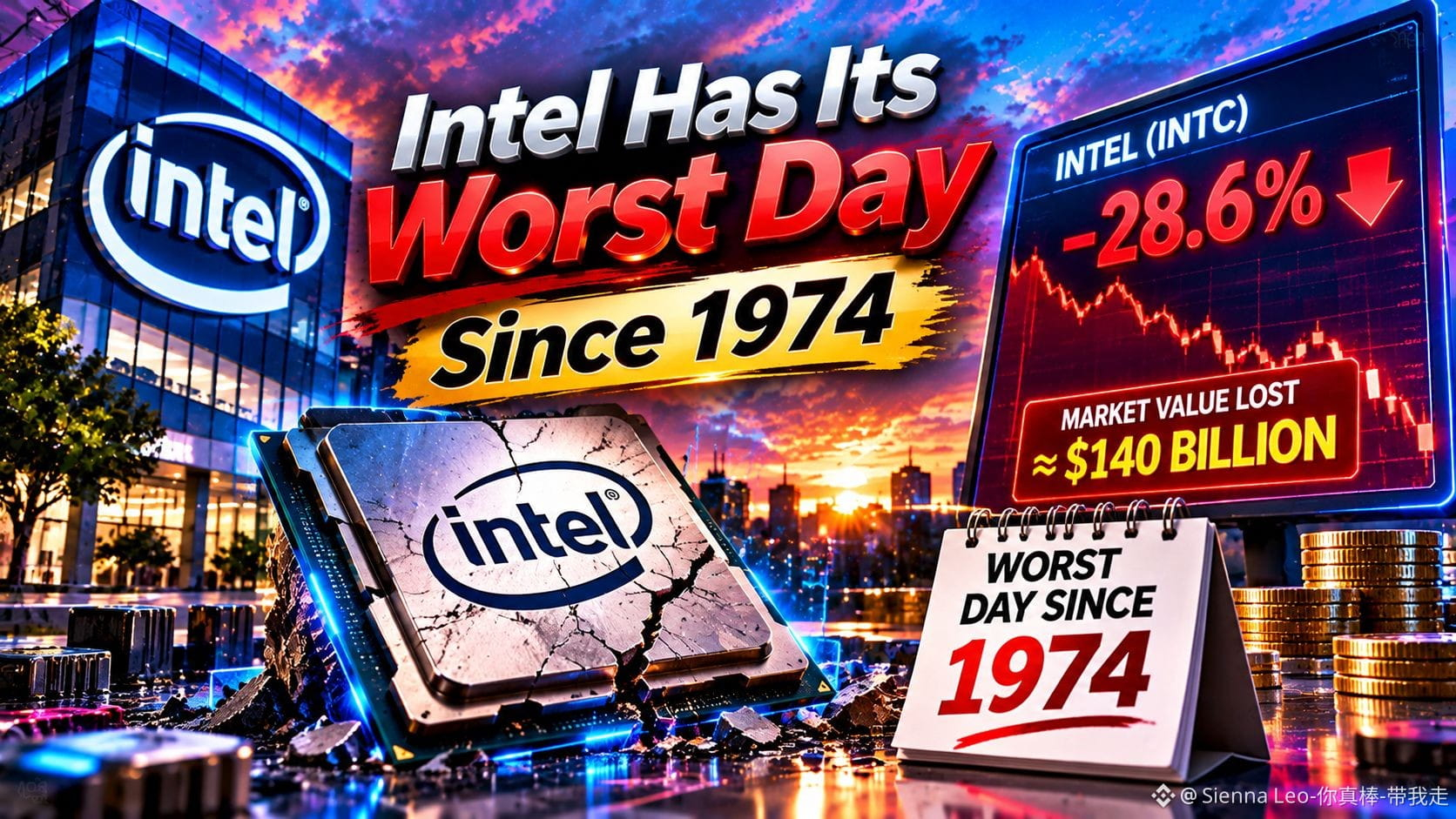
That was Intel on October 30. Its shares plunged 28.6%, marking the steepest one-day decline since 1974 and wiping out roughly $140 billion in market value.
The trigger was not simply disappointing earnings. Intel’s fourth-quarter outlook fell far short of Wall Street expectations, and management warned that the company does not expect positive cash flow this year.
The deeper problem is a difficult combination: weak PC demand, rising memory costs, supply constraints, and the enormous expense of expanding AI-related infrastructure. Intel’s data-center business has shown strong growth, but that has not yet translated into confidence about near-term cash generation.
My take: The market is questioning the quality and timing of Intel’s turnaround, not just one quarter’s numbers. In an AI boom, spending heavily is not enough. Investors want proof that investment can become sustainable revenue and cash flow.
A historic selloff does not automatically mean the business is beyond repair. But rebuilding trust may take more than another optimistic forecast.
Is Intel facing a temporary execution setback, or does this expose a deeper weakness in its comeback strategy?
Disclaimer: For educational purposes only. Not financial advice.
#Intel #StockMarket #GrowWithSAC $PARTI $BEAMX $LSK
#IntelHasItsWorstDaySince1974
2
463
·
--
#intelhasitsworstdaysince1974
Intel had its worst market fall since 1974 after its shares plunged nearly 30% in a single day. The company wiped out over $140 billion in market value after giving weak sales predictions for the next quarter. Slowing computer demand, high production costs, and factory delays severely hurt its revenue outlook. This huge drop also caused a broad sell-off across global technology stocks.
$BTC $SOL $ETH
{future}(ETHUSDT)
{future}(SOLUSDT)
{future}(BTCUSDT)
#intelhasitsworstdaysince1974
Intel had its worst market fall since 1974 after its shares plunged nearly 30% in a single day. The company wiped out over $140 billion in market value after giving weak sales predictions for the next quarter. Slowing computer demand, high production costs, and factory delays severely hurt its revenue outlook. This huge drop also caused a broad sell-off across global technology stocks.
$BTC $SOL $ETH

163

·
--
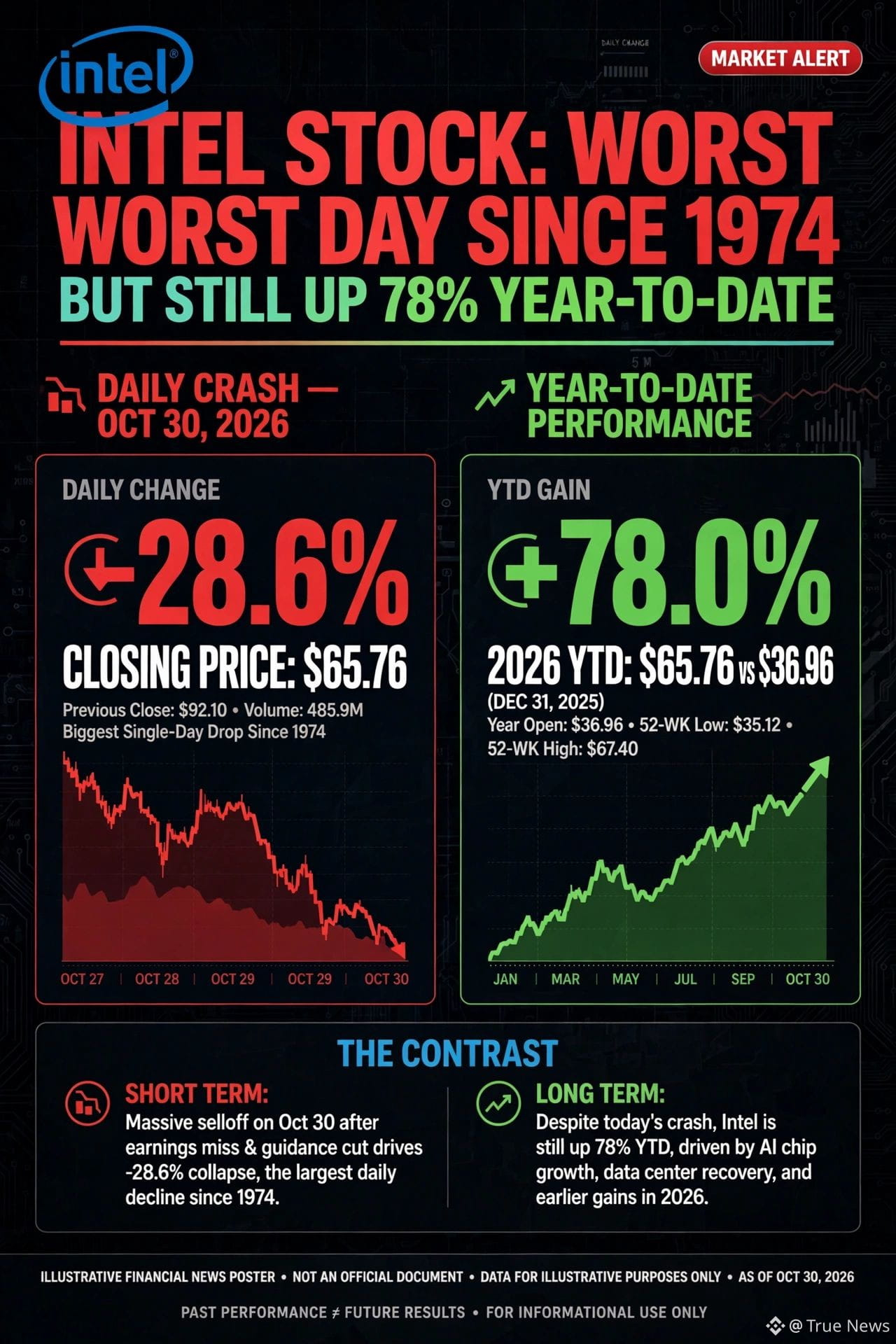
INTEL HAS ITS WORST DAY SINCE 1974 — DOWN 28.6% BUT STILL UP 78% YTD
Historic crash yesterday.
What Happened:
Intel plunged 28.58% to $65.76 on Friday Oct 30, 2026 — its worst single-day drop since 1974 and second-worst ever. Intraday low hit $64.11, down 30%.
Previous worst? July 5, 1974 — nearly 30% slide. Friday beat the 26% drop from Aug 2024.
Why it crashed:
Weak Q4 guidance. Management cited PC market weakness due to higher memory chip costs hurting consumer demand. Wall Street expected more.
Damage: ∼$120B market cap wiped in one day. US government's stake lost $12B in value (still profitable overall). Volume exploded to 487M shares.
The Twist:
Despite losing a third of its value, Intel is still up 78% in 2026 — from $36.96 at year open to $65.76 now. Driven by AI chip growth and data center recovery earlier this year.
Short-term panic, long-term still a winner?
My Take: This is classic overreaction to guidance. 1974-level drop doesn't erase a 78% year. If you believed in Intel's turnaround before, this is either a buying opportunity or a warning.
Would you buy this dip or stay away?
#Intel #INTC #StockMarket #Semiconductors#intelhasitsworstdaysince1974
1
116

·
--
Bearish
#intelhasitsworstdaysince1974 🚨 INTEL STOCK IN FREEFALL: A HISTORIC TECH MARKET SHOCK! 📉⚡
💥 A Brutal Sell-Off: Intel (NASDAQ: INTC) is facing intense investor scrutiny amid reports of a dramatic stock decline and mounting concerns about its future growth.
📉 Weak Guidance Raises Alarm: Despite reported strength in quarterly revenue and data center demand, disappointing forward guidance has fueled concerns about Intel’s near-term outlook.
🤖 The AI Challenge: As competitors race to capitalize on the AI boom, Intel faces pressure to strengthen its position in advanced chips, data center processors, and AI infrastructure.
💻 PC Market Under Pressure: Sluggish PC demand and memory supply constraints could add further challenges to the company’s recovery.
🏭 Manufacturing & Costs: Intel’s manufacturing expansion and capital-intensive strategy continue to raise questions about profitability, execution, and long-term cash flow.
⚠️ The Bigger Picture: The market is increasingly demanding results from semiconductor companies investing billions in AI. Strong technology alone may not be enough without sustainable earnings growth.
💬 YOUR TURN: Is this a temporary market overreaction, or does Intel face deeper structural challenges in the AI era?
👇 Share your thoughts in the comments!
#Intel #StockMarket #AI #Semiconductors
CLICK TO BELOW TRADE👇
$BTC $ETH $ZEC
{future}(ZECUSDT)
{future}(ETHUSDT)
{future}(BTCUSDT)
#intelhasitsworstdaysince1974 🚨 INTEL STOCK IN FREEFALL: A HISTORIC TECH MARKET SHOCK! 📉⚡
💥 A Brutal Sell-Off: Intel (NASDAQ: INTC) is facing intense investor scrutiny amid reports of a dramatic stock decline and mounting concerns about its future growth.
📉 Weak Guidance Raises Alarm: Despite reported strength in quarterly revenue and data center demand, disappointing forward guidance has fueled concerns about Intel’s near-term outlook.
🤖 The AI Challenge: As competitors race to capitalize on the AI boom, Intel faces pressure to strengthen its position in advanced chips, data center processors, and AI infrastructure.
💻 PC Market Under Pressure: Sluggish PC demand and memory supply constraints could add further challenges to the company’s recovery.
🏭 Manufacturing & Costs: Intel’s manufacturing expansion and capital-intensive strategy continue to raise questions about profitability, execution, and long-term cash flow.
⚠️ The Bigger Picture: The market is increasingly demanding results from semiconductor companies investing billions in AI. Strong technology alone may not be enough without sustainable earnings growth.
💬 YOUR TURN: Is this a temporary market overreaction, or does Intel face deeper structural challenges in the AI era?
👇 Share your thoughts in the comments!
#Intel #StockMarket #AI #Semiconductors
CLICK TO BELOW TRADE👇
$BTC $ETH $ZEC
1
95

Verified
#intelhasitsworstdaysince1974
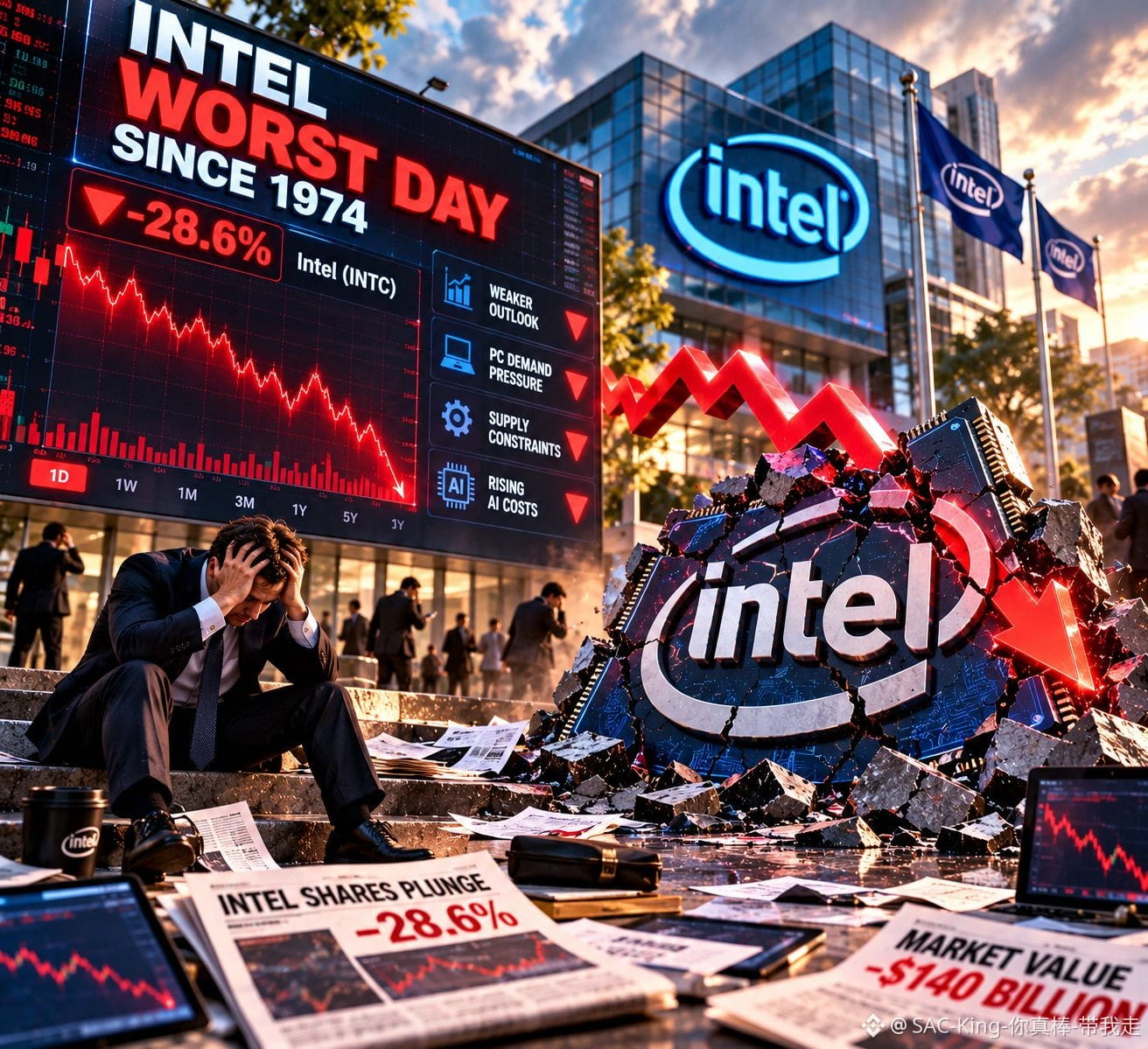
🚨 📉 INTEL SUFFERS ITS WORST DAY SINCE 1974: WHAT JUST SHATTERED INVESTOR CONFIDENCE? 📉 🚨
Sometimes, one forecast can erase years of confidence. And Wall Street just delivered Intel a brutal reminder.
Intel shares plunged approximately 28.6% on October 30, marking the stock’s worst single-day decline since July 1974. Nearly $140 billion in market value disappeared.
The surprising part? Intel had actually beaten third-quarter expectations. Revenue reached $16.5 billion, while its Data Center and AI business posted strong growth.
So what triggered the collapse?
Intel’s fourth-quarter outlook. The company projected revenue of $15B-$16B, below Wall Street’s roughly $17.1B expectation. Adjusted earnings guidance also disappointed: 25 cents per share versus analysts’ 43 cents.
Weak PC demand, supply constraints and the rising cost of the AI infrastructure race are putting pressure on its recovery. Strong data-center growth has not been enough to offset those concerns.
My Take: Markets do not simply reward yesterday’s results. They price tomorrow’s expectations. Intel’s crash shows that even a growing AI business cannot protect a company when investors lose confidence in its broader earnings outlook.
The real question is whether this is a temporary setback or a deeper test of Intel’s turnaround.
Can Intel rebuild investor confidence, or has the competition moved too far ahead?
Disclaimer: This post is for educational purposes only, not financial advice.
#Intel #Semiconductors #GrowWithSAC $RAD $LSK $CVC
#IntelHasItsWorstDaySince1974
majspace:
That was a brutal drop, especially after decent results. It really shows how much the outlook matters to investors right now.
1
830

#IntelHasItsWorstDaySince1974
🚨 INTEL SUFFERS ITS WORST STOCK MARKET CRASH SINCE 1974! 📉
Intel (NASDAQ: INTC) shares plunged approximately 28.6% on October 30, marking the company's worst single-day decline since 1974.
The massive sell-off followed disappointing fourth-quarter guidance, weakening PC demand, rising memory costs, and concerns about heavy AI infrastructure spending.
Despite reporting better-than-expected quarterly earnings, Intel's future outlook disappointed investors. The company also warned that it does not expect positive cash flow this year.
📊 Why Does This Matter?
The sell-off spread beyond Intel, putting pressure on major semiconductor companies and adding to concerns about expensive AI investments.
🌐 Potential Crypto Market Impact
Although Intel's decline is not a direct crypto catalyst, it could influence broader market sentiment.
If investors continue reducing exposure to technology and other risk-sensitive assets, Bitcoin and altcoins could experience additional selling pressure.
However, a single company's stock crash does not determine crypto's direction.
💡 Trader's Takeaway:
The market is becoming more selective about AI-related investments. Investors are increasingly focused on profitability, cash flow, and realistic growth expectations rather than future promises.
Bottom Line: Intel's historic decline is another reminder that even major technology companies are not immune to market corrections. Watch broader risk sentiment before drawing conclusions about crypto's next move.
#Intel #Bitcoin #BTC #CryptoMarket
$AKE $BLESS $INIT
{future}(AKEUSDT)
{future}(BLESSUSDT)
{future}(INITUSDT)
#IntelHasItsWorstDaySince1974
🚨 INTEL SUFFERS ITS WORST STOCK MARKET CRASH SINCE 1974! 📉
Intel (NASDAQ: INTC) shares plunged approximately 28.6% on October 30, marking the company's worst single-day decline since 1974.
The massive sell-off followed disappointing fourth-quarter guidance, weakening PC demand, rising memory costs, and concerns about heavy AI infrastructure spending.
Despite reporting better-than-expected quarterly earnings, Intel's future outlook disappointed investors. The company also warned that it does not expect positive cash flow this year.
📊 Why Does This Matter?
The sell-off spread beyond Intel, putting pressure on major semiconductor companies and adding to concerns about expensive AI investments.
🌐 Potential Crypto Market Impact
Although Intel's decline is not a direct crypto catalyst, it could influence broader market sentiment.
If investors continue reducing exposure to technology and other risk-sensitive assets, Bitcoin and altcoins could experience additional selling pressure.
However, a single company's stock crash does not determine crypto's direction.
💡 Trader's Takeaway:
The market is becoming more selective about AI-related investments. Investors are increasingly focused on profitability, cash flow, and realistic growth expectations rather than future promises.
Bottom Line: Intel's historic decline is another reminder that even major technology companies are not immune to market corrections. Watch broader risk sentiment before drawing conclusions about crypto's next move.
#Intel #Bitcoin #BTC #CryptoMarket
$AKE $BLESS $INIT
86
Verified
{future}(INTCUSDT)
#IntelHasItsWorstDaySince1974
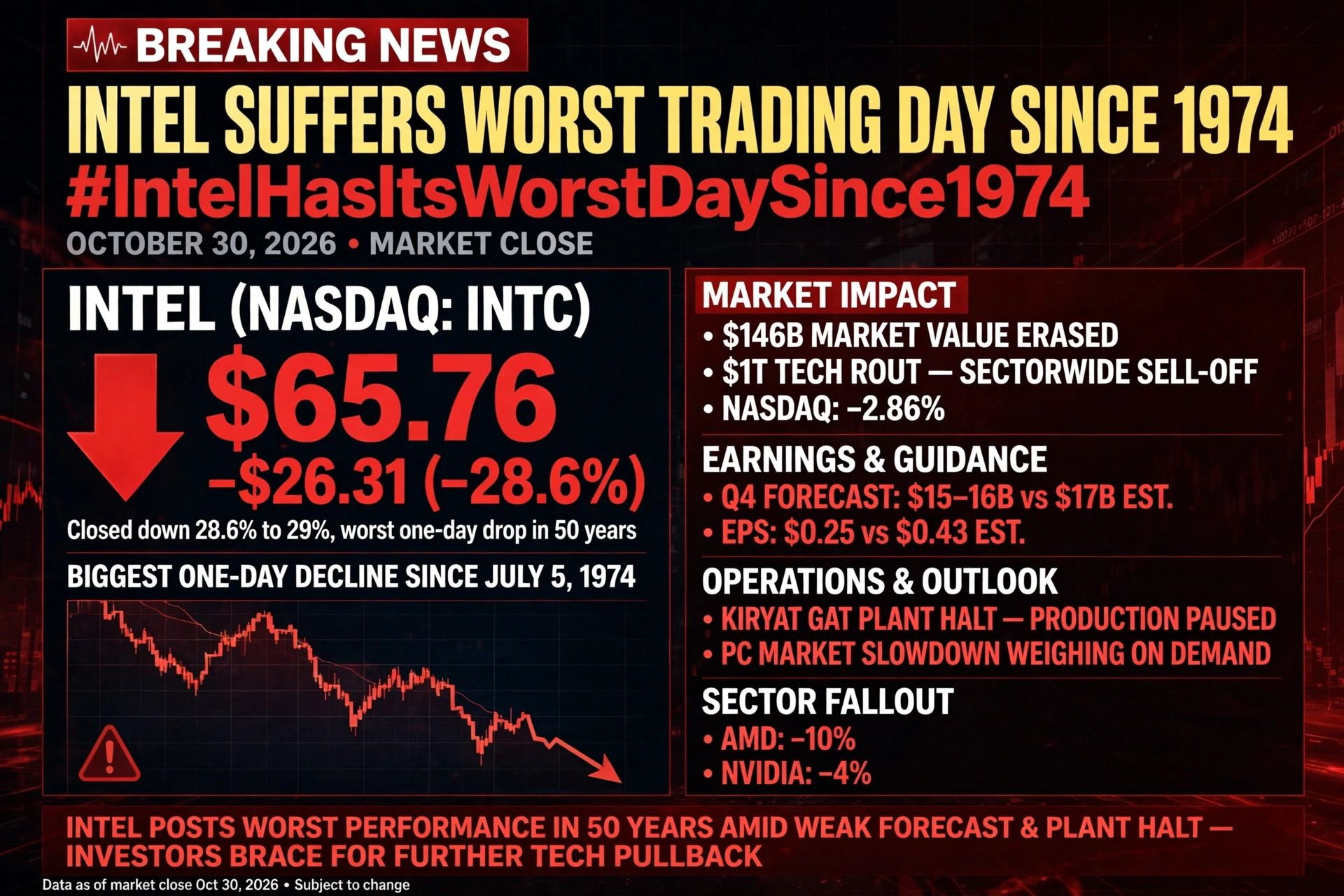
🚨 Intel worst day in 50 years — Oct 30, 2026
📉 $INTC : $65.76 (-28.6%) | -$26.31 in 1 day
Biggest drop since July 5, 1974
💸 $146B wiped out | $1T tech rout | NASDAQ -2.86%
Q4 miss: $15-16B vs $17B est, EPS $0.25 vs $0.43
Kiryat Gat plant halt + PC slowdown till H1 2027
AMD -10%, NVDA -4%
What do you think? 👇
#Intel #INTC #stockmarketnews #Semiconductors
2
611

·
--
#IntelHasItsWorstDaySince1974
Intel Crashes 28.6% : Its Worst Trading Day Since 1974!
Intel (NASDAQ: INTC) suffered a historic sell-off on Friday, October 30, with shares plunging 28.6% to $65.76, marking the company's worst single-day decline in more than 50 years. The sudden collapse wiped out approximately $140 billion in market value.
But what triggered the massive drop?
Interestingly, Intel actually reported stronger-than-expected Q3 results, with revenue climbing 21% year-over-year to $16.5 billion.
The real disappointment came from its Q4 guidance:
- Expected revenue: $15–16 billion.
- Expected adjusted EPS: $0.25.
- Wall Street expectations were approximately $17 billion in revenue and $0.43 adjusted EPS.
Weak PC demand, supply constraints and concerns about future growth added to investor anxiety.
This sell-off shows that beating current earnings estimates is not enough when future guidance disappoints. Markets are pricing in expectations, not just past performance.
Do you think Intel can recover, or has investor confidence taken another major hit?
#INTC #stockmarket #TechStocks #Intel
2
113

·
--
Verified
Intel is facing its worst day since 1974 as investors react to growing concerns over its business outlook and the future of the semiconductor industry with the stock under intense selling pressure and market confidence taking a serious hit
#intelhasitsworstdaysince1974 $INTCB
{spot}(INTCBUSDT)
Intel is facing its worst day since 1974 as investors react to growing concerns over its business outlook and the future of the semiconductor industry with the stock under intense selling pressure and market confidence taking a serious hit
#intelhasitsworstdaysince1974 $INTCB
#intelhasitsworstdaysince1974 $INTCB
1
618

Verified
#intelhasitsworstdaysince1974
The semiconductor giant suffered a historic blow. Intel recorded its worst stock market drop since 1974, plunging 30 percent in a single day and wiping out more than 130 billion dollars in market value.
The reason came in the form of weak forecasts for the fourth quarter. Slowing computer sales, factory delays, and out-of-control costs undermined investor confidence.
Panic gripped the technology sector. The question now is whether this drop is a buying opportunity or the start of a much bigger problem for the company.
$INTC
$ESPORTS
$AIN
{future}(INTCUSDT)
{future}(ESPORTSUSDT)
{future}(AINUSDT)
#intelhasitsworstdaysince1974
The semiconductor giant suffered a historic blow. Intel recorded its worst stock market drop since 1974, plunging 30 percent in a single day and wiping out more than 130 billion dollars in market value.
The reason came in the form of weak forecasts for the fourth quarter. Slowing computer sales, factory delays, and out-of-control costs undermined investor confidence.
Panic gripped the technology sector. The question now is whether this drop is a buying opportunity or the start of a much bigger problem for the company.
$INTC
$ESPORTS
$AIN

1
4
3.6k

·
--
Bearish
Verified
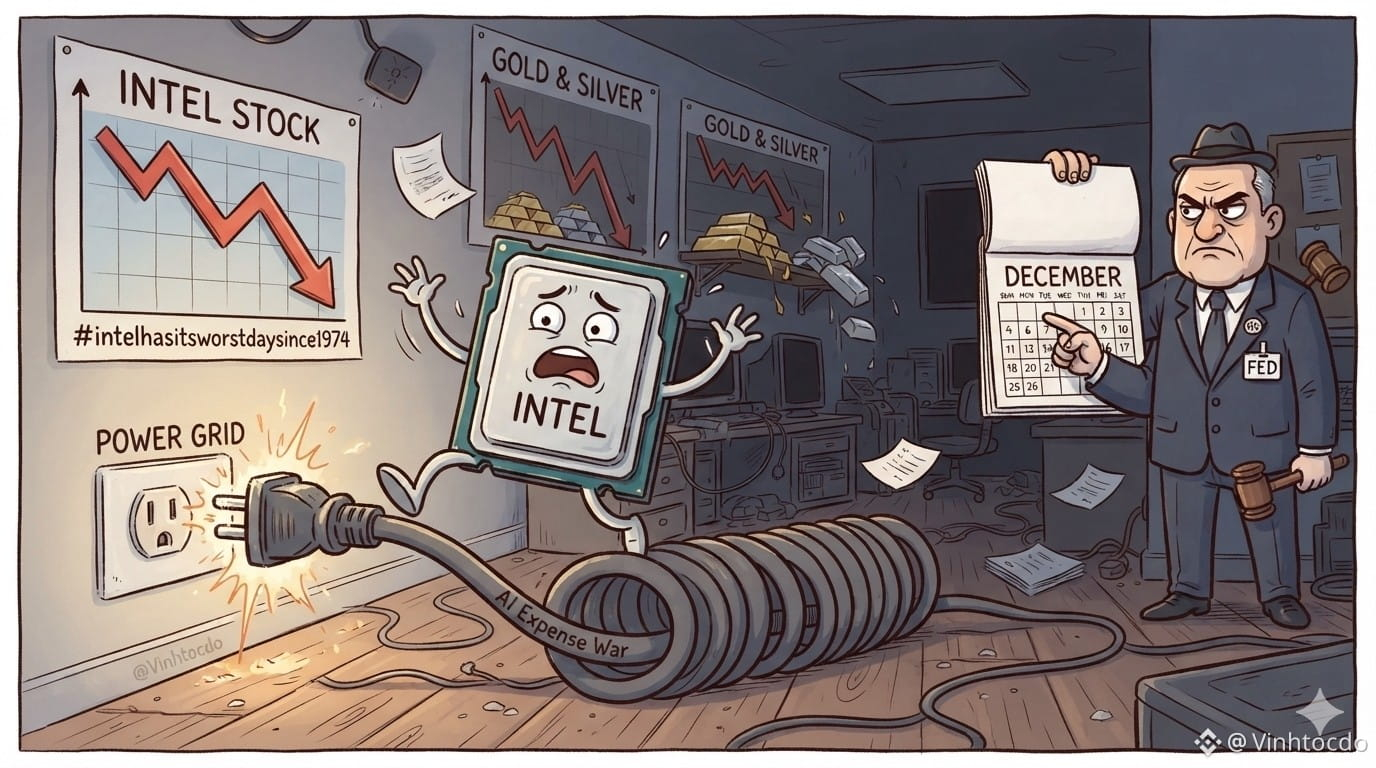
Intel’s epic crash that hit rock bottom! 🤦♂️
The event #intelhasitsworstdaysince1974 just shook TradFi as Intel shares plunged 28.58% in a single day—their worst drop since 1974! Just as people started questioning whether the massive spending on AI could actually generate real money, Intel accidentally pulled the plug.
With gold and silver plummeting and the Fed threatening to raise interest rates in December, what should traders do? Simple: sit tight, buckle up, stop FOMOing, and move capital to safer, greener pastures. This is not financial advice!
Sign up for Binance now to buy the dip: [https://www.binance.com/register?ref=VINHTOCDO](https://www.binance.com/register?ref=VINHTOCDO) (Code: VINHTOCDO)
👇 Click below to trade and support me:
$BTC
{spot}(BTCUSDT)
$INTCB
{spot}(INTCBUSDT)
$BNB
{spot}(BNBUSDT)
#marketcrash #FedRate #VINHTOCDO #Intel
Intel’s epic crash that hit rock bottom! 🤦♂️
The event #intelhasitsworstdaysince1974 just shook TradFi as Intel shares plunged 28.58% in a single day—their worst drop since 1974! Just as people started questioning whether the massive spending on AI could actually generate real money, Intel accidentally pulled the plug.
With gold and silver plummeting and the Fed threatening to raise interest rates in December, what should traders do? Simple: sit tight, buckle up, stop FOMOing, and move capital to safer, greener pastures. This is not financial advice!
Sign up for Binance now to buy the dip: https://www.binance.com/register?ref=VINHTOCDO (Code: VINHTOCDO)
👇 Click below to trade and support me:
$BTC
$INTCB
$BNB
#marketcrash #FedRate #VINHTOCDO #Intel
1
1.7k

·
--
Verified
#intelhasitsworstdaysince1974
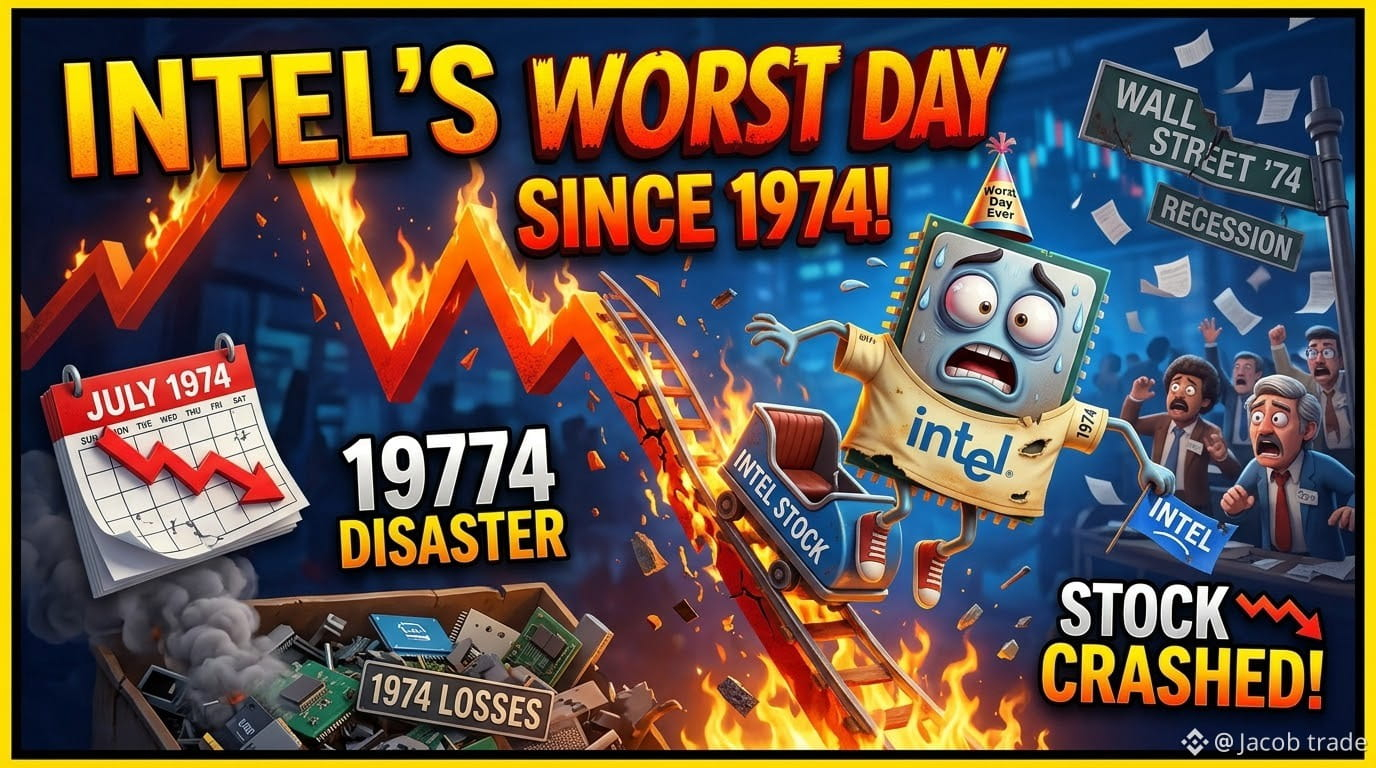
The technology giant Intel has just suffered its worst stock market drop since 1974. The company’s shares plunged nearly 30% in a single day, wiping more than $130 billion off its total value. This sharp decline came after Intel published disappointing financial forecasts for the upcoming fourth quarter. Slowing computer sales, production delays at its factories, and unexpected costs have hit the chipmaker hard. Investors are now worried about Intel’s future growth, triggering panic across the tech market.
$INTC
{future}(INTCUSDT)
$ESPORTS
{future}(ESPORTSUSDT)
$AIN
{future}(AINUSDT)
#intelhasitsworstdaysince1974
The technology giant Intel has just suffered its worst stock market drop since 1974. The company’s shares plunged nearly 30% in a single day, wiping more than $130 billion off its total value. This sharp decline came after Intel published disappointing financial forecasts for the upcoming fourth quarter. Slowing computer sales, production delays at its factories, and unexpected costs have hit the chipmaker hard. Investors are now worried about Intel’s future growth, triggering panic across the tech market.
$INTC
$ESPORTS
$AIN
2
1.4k

Verified
#intelhasitsworstdaysince1974
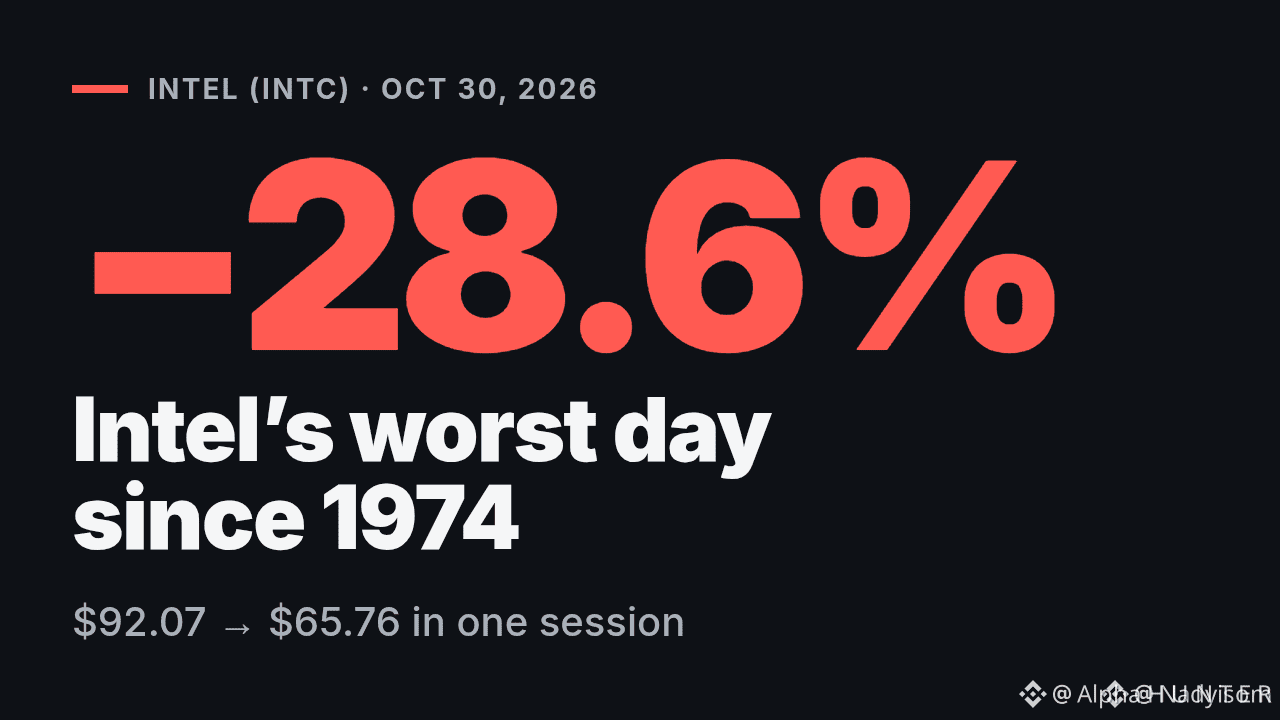
📉 INTEL HAS ITS WORST DAY SINCE 1974: A HISTORIC TECH CRASH! ⚡️🏛️
The sharp drop: Intel (INTC) shares plunged nearly 30% in a single trading session, marking the semiconductor giant’s worst one-day decline in more than half a century (recalling its historic lows in 1974) and wiping out around $145 billion in market value.
The trigger: Despite reporting strong third-quarter results (with revenue up 21% and data center revenue up 78%), investors panicked over catastrophic fourth-quarter guidance, far below expectations. Expected revenue of between $15 billion and $16 billion is well below Wall Street estimates.
The PC market slowdown and memory shortage: Intel cited ongoing pressures in the personal computer market—caused by AI data centers snapping up memory chips—and pushed expected declines in PC shipments back to next year.
A major blow to the supply chain: To make matters worse, a tragic explosion at Intel’s Fab 28 plant in Israel caused fatalities and led to a prolonged shutdown. The lost revenue over two quarters is estimated at $600 million.
Market-wide shockwaves: Massive sell-offs sent major tech indexes tumbling and sparked deep concern about soaring AI infrastructure costs and tightening cash flows.
💬 HAVE YOUR SAY: Do you think this historic crash is an excessive, short-lived reaction to disappointing guidance, or a sign of deeper structural problems for traditional chipmakers?
$AIN
{future}(AINUSDT)
$LSK
{future}(LSKUSDT)
#intelhasitsworstdaysince1974
📉 INTEL HAS ITS WORST DAY SINCE 1974: A HISTORIC TECH CRASH! ⚡️🏛️
The sharp drop: Intel (INTC) shares plunged nearly 30% in a single trading session, marking the semiconductor giant’s worst one-day decline in more than half a century (recalling its historic lows in 1974) and wiping out around $145 billion in market value.
The trigger: Despite reporting strong third-quarter results (with revenue up 21% and data center revenue up 78%), investors panicked over catastrophic fourth-quarter guidance, far below expectations. Expected revenue of between $15 billion and $16 billion is well below Wall Street estimates.
The PC market slowdown and memory shortage: Intel cited ongoing pressures in the personal computer market—caused by AI data centers snapping up memory chips—and pushed expected declines in PC shipments back to next year.
A major blow to the supply chain: To make matters worse, a tragic explosion at Intel’s Fab 28 plant in Israel caused fatalities and led to a prolonged shutdown. The lost revenue over two quarters is estimated at $600 million.
Market-wide shockwaves: Massive sell-offs sent major tech indexes tumbling and sparked deep concern about soaring AI infrastructure costs and tightening cash flows.
💬 HAVE YOUR SAY: Do you think this historic crash is an excessive, short-lived reaction to disappointing guidance, or a sign of deeper structural problems for traditional chipmakers?
$AIN
$LSK
2.8k
Log in to explore more content
Join global crypto users on Binance Square
⚡️ Get latest and useful information about crypto.
💬 Trusted by the world’s largest crypto exchange.
👍 Discover real insights from verified creators.
Email / Phone number
Trending Topics
1
#BinanceHadAlreadyCovered$6BofHackLoss
164 views
3 Discussing
2
#FBIConfirmsNorthKoreaIsResponsibleForBinanceCryptoHack
603 views
19 Discussing
3
#BinanceSAFUFundTransferCompleted7499BTC
52,342 views
994 Discussing
4
#BinanceRecovery90% of stolen assets
165,106 views
192 Discussing
5
#YiHe:ProofOfReserves:10TokensAt100%Backing
154,292 views
879 Discussing
6
#BackedNotBroken:RichardTengSaysUsersBearNoLoss
51,902 views
557 Discussing
7
#B14gReportsUnauthorizedTransferOfAbout97MCORE
982 views
48 Discussing
8
#USSpotETHETFsPost23StraightDaysOfNetOutflows
1,086 views
53 Discussing
9
#CZSaysCompensationIsinPlaceUsersAreProtected
140,401 views
1,460 Discussing
10
#IntelHasItsWorstDaySince1974
55,413 views
752 Discussing