
#imfwarnstokenizationshiftsrisktocode
imfwarnstokenizationshiftsrisktocode
58,124 views
597 Discussing
Hot
Latest

·
--
Article
IMF Sounds Alarm on Tokenization's Hidden RiskLast week, the International Monetary Fund released a quiet warning about tokenization that should make every DeFi investor pause. Most of us buy into assets thinking the biggest risk is market volatility, only to get wiped out by a smart contract exploit we never saw coming. We trust the math, but we forget that humans wrote it.
The IMF's core argument is that wrapping real-world assets into smart contracts doesn't actually eliminate risk; it just moves it from human intermediaries to the code itself. Think of it like the early days of automated trading or the structural vulnerabilities we saw during the 2008 financial crisis, where complexity masked toxic assets. Today, if a project tokenizes real estate or treasury bills on a network like $ARB, a single logic error in the contract could freeze millions of dollars instantly.
We have seen this play out before with early cross-chain bridges and lending protocols. While investors flock to decentralized infrastructure for yield, we often overlook that code is only as secure as its last audit. Even robust ecosystems powering decentralized AI compute like $RENDER or foundational assets like $BTC rely on the assumption that the underlying smart contracts and consensus mechanisms are flawless. When the code fails, the legal recourse is practically non-existent, leaving retail investors holding the bag.
Do you think code-based risk is actually safer than traditional human counterparty risk in the long run?
#IMFWarnsTokenizationShiftsRiskToCode #CryptoHacksHit207InH1WithLosses
IMF Sounds Alarm on Tokenization's Hidden Risk
Last week, the International Monetary Fund released a quiet warning about tokenization that should make every DeFi investor pause. Most of us buy into assets thinking the biggest risk is market volatility, only to get wiped out by a smart contract exploit we never saw coming. We trust the math, but we forget that humans wrote it.
The IMF's core argument is that wrapping real-world assets into smart contracts doesn't actually eliminate risk; it just moves it from human intermediaries to the code itself. Think of it like the early days of automated trading or the structural vulnerabilities we saw during the 2008 financial crisis, where complexity masked toxic assets. Today, if a project tokenizes real estate or treasury bills on a network like $ARB , a single logic error in the contract could freeze millions of dollars instantly.
We have seen this play out before with early cross-chain bridges and lending protocols. While investors flock to decentralized infrastructure for yield, we often overlook that code is only as secure as its last audit. Even robust ecosystems powering decentralized AI compute like $RENDER or foundational assets like $BTC rely on the assumption that the underlying smart contracts and consensus mechanisms are flawless. When the code fails, the legal recourse is practically non-existent, leaving retail investors holding the bag.
Do you think code-based risk is actually safer than traditional human counterparty risk in the long run?
#IMFWarnsTokenizationShiftsRiskToCode #CryptoHacksHit207InH1WithLosses
The IMF's core argument is that wrapping real-world assets into smart contracts doesn't actually eliminate risk; it just moves it from human intermediaries to the code itself. Think of it like the early days of automated trading or the structural vulnerabilities we saw during the 2008 financial crisis, where complexity masked toxic assets. Today, if a project tokenizes real estate or treasury bills on a network like $ARB , a single logic error in the contract could freeze millions of dollars instantly.
We have seen this play out before with early cross-chain bridges and lending protocols. While investors flock to decentralized infrastructure for yield, we often overlook that code is only as secure as its last audit. Even robust ecosystems powering decentralized AI compute like $RENDER or foundational assets like $BTC rely on the assumption that the underlying smart contracts and consensus mechanisms are flawless. When the code fails, the legal recourse is practically non-existent, leaving retail investors holding the bag.
Do you think code-based risk is actually safer than traditional human counterparty risk in the long run?
#IMFWarnsTokenizationShiftsRiskToCode #CryptoHacksHit207InH1WithLosses
99

#IMFWarnsTokenizationShiftsRiskToCode #IMFWarnsTokenizationShiftsRiskToCode
The International Monetary Fund (IMF) warned that while tokenization can improve efficiency and reduce intermediaries, it also shifts financial risks from traditional institutions to smart contracts and software code. The IMF emphasized the need for robust governance, cybersecurity, and regulatory oversight to address vulnerabilities such as coding errors, exploits, and operational failures in tokenized financial systems.
#IMFWarnsTokenizationShiftsRiskToCode #IMFWarnsTokenizationShiftsRiskToCode
The International Monetary Fund (IMF) warned that while tokenization can improve efficiency and reduce intermediaries, it also shifts financial risks from traditional institutions to smart contracts and software code. The IMF emphasized the need for robust governance, cybersecurity, and regulatory oversight to address vulnerabilities such as coding errors, exploits, and operational failures in tokenized financial systems.
The International Monetary Fund (IMF) warned that while tokenization can improve efficiency and reduce intermediaries, it also shifts financial risks from traditional institutions to smart contracts and software code. The IMF emphasized the need for robust governance, cybersecurity, and regulatory oversight to address vulnerabilities such as coding errors, exploits, and operational failures in tokenized financial systems.
19

·
--
#imfwarnstokenizationshiftsrisktocode — Speed Kills the Old Safety Net
IMF dropped a warning on July 2: Tokenization collapses execution, clearing, and settlement into simultaneity — removing the time buffers that let the old system catch errors. Faster settlement means risk migrates from bank balance sheets to code and platforms that have no capital buffers, no lender-of-last-resort, and no resolution framework.
4 red flags from the IMF: Code governance (who audits/pauses smart contracts?), legal certainty (which jurisdiction owns a cross-chain token?), liquidity backstops (no Fed window on weekends), and interoperability (fragmented standards = broken markets).
"Risks that once were borne by individual institutions become increasingly concentrated in the platforms and code that govern these transactions."
The IMF isn't anti-tokenization — it acknowledges the benefits (cheaper payments, instant settlement, programmable assets). The warning is that the old regulatory playbook is obsolete. Banks are already building tokenized deposit networks through The Clearing House, while Ondo and Securitize push RWAs on-chain. The code is writing rules faster than regulators can read them.
{future}(ONDOUSDT)
Old system: slow but safe. New system: instant but fragile. Pick your poison. 🔔
$ONDO $BTC #SamsungToRaiseDRAMPricesAbout20%InQ3 #SKHynixLaunches$28BNasdaqADRListing #SpotGoldTops$4200 #OPECRaisesAugustOutputBy188000Bpd
#imfwarnstokenizationshiftsrisktocode — Speed Kills the Old Safety Net
IMF dropped a warning on July 2: Tokenization collapses execution, clearing, and settlement into simultaneity — removing the time buffers that let the old system catch errors. Faster settlement means risk migrates from bank balance sheets to code and platforms that have no capital buffers, no lender-of-last-resort, and no resolution framework.
4 red flags from the IMF: Code governance (who audits/pauses smart contracts?), legal certainty (which jurisdiction owns a cross-chain token?), liquidity backstops (no Fed window on weekends), and interoperability (fragmented standards = broken markets).
"Risks that once were borne by individual institutions become increasingly concentrated in the platforms and code that govern these transactions."
The IMF isn't anti-tokenization — it acknowledges the benefits (cheaper payments, instant settlement, programmable assets). The warning is that the old regulatory playbook is obsolete. Banks are already building tokenized deposit networks through The Clearing House, while Ondo and Securitize push RWAs on-chain. The code is writing rules faster than regulators can read them.
Old system: slow but safe. New system: instant but fragile. Pick your poison. 🔔
$ONDO $BTC #SamsungToRaiseDRAMPricesAbout20%InQ3 #SKHynixLaunches$28BNasdaqADRListing #SpotGoldTops$4200 #OPECRaisesAugustOutputBy188000Bpd
IMF dropped a warning on July 2: Tokenization collapses execution, clearing, and settlement into simultaneity — removing the time buffers that let the old system catch errors. Faster settlement means risk migrates from bank balance sheets to code and platforms that have no capital buffers, no lender-of-last-resort, and no resolution framework.
4 red flags from the IMF: Code governance (who audits/pauses smart contracts?), legal certainty (which jurisdiction owns a cross-chain token?), liquidity backstops (no Fed window on weekends), and interoperability (fragmented standards = broken markets).
"Risks that once were borne by individual institutions become increasingly concentrated in the platforms and code that govern these transactions."
The IMF isn't anti-tokenization — it acknowledges the benefits (cheaper payments, instant settlement, programmable assets). The warning is that the old regulatory playbook is obsolete. Banks are already building tokenized deposit networks through The Clearing House, while Ondo and Securitize push RWAs on-chain. The code is writing rules faster than regulators can read them.
Old system: slow but safe. New system: instant but fragile. Pick your poison. 🔔
$ONDO $BTC #SamsungToRaiseDRAMPricesAbout20%InQ3 #SKHynixLaunches$28BNasdaqADRListing #SpotGoldTops$4200 #OPECRaisesAugustOutputBy188000Bpd
3
5
2k

·
--
Partly True
#imfwarnstokenizationshiftsrisktocode
Macro Friction: IMF Warns Tokenization Shifts Risk to Code 👇
The Reality:
Infrastructure Overhaul:
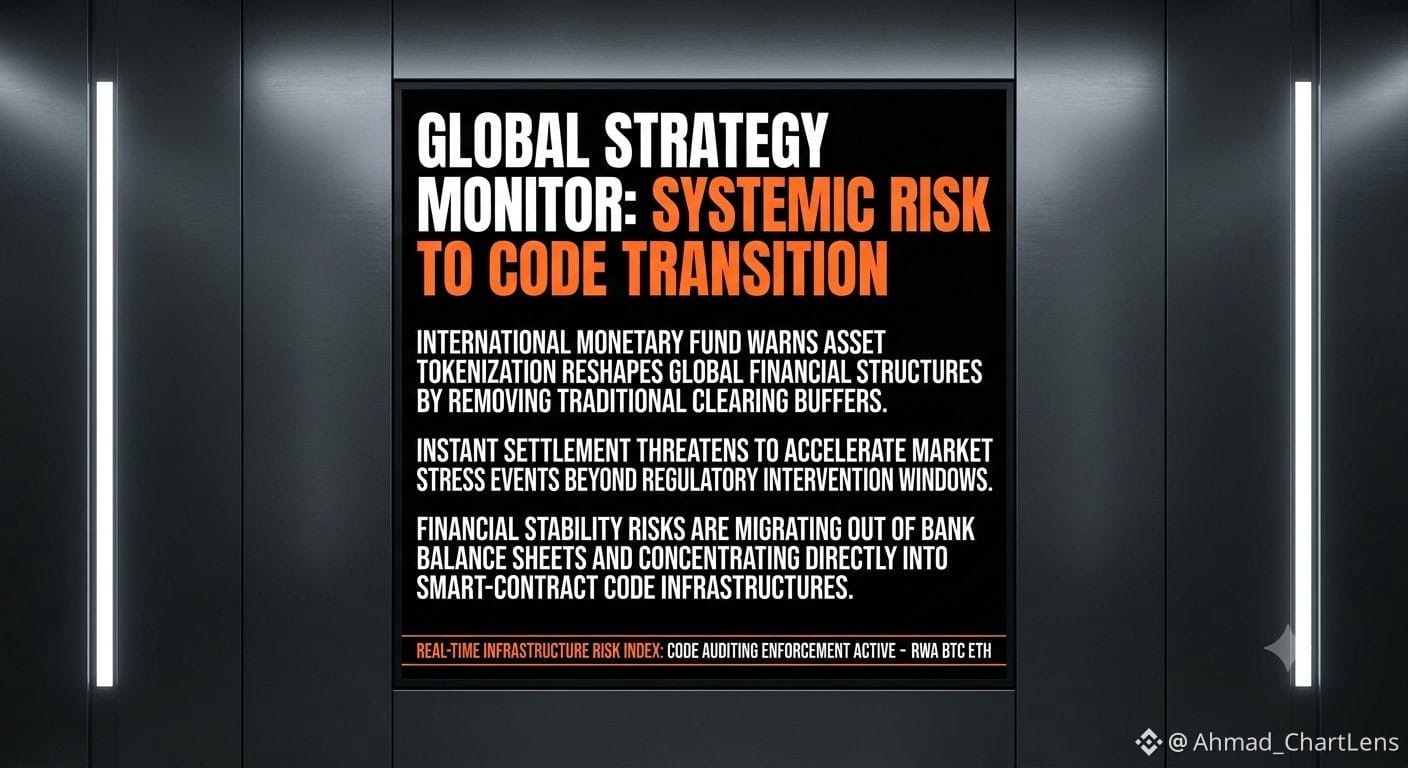
The IMF warns that asset tokenization reconfigures global finance, transforming it into a system where financial risk shifts directly onto underlying smart-contract platforms.
No Safety Brakes:
Instant blockchain settlement eliminates traditional clearing cycles and liquidity buffers, allowing systemic glitches or automated runs to propagate faster than regulators can intervene.
Code Oversight:
Financial risks are concentrating in the code itself rather than bank balance sheets, making certain core smart contracts "too important to fail."
Technical Blueprint & Trading Execution:
$BTC
{spot}(BTCUSDT)
Defending structural support parameters at $61,000. A daily breakout and close above $62,200 flips the short-term structure bullish toward the macro $64,000–$65,000 supply pockets.
$ETH
{spot}(ETHUSDT)
$RWA
{alpha}(560x9c8b5ca345247396bdfac0395638ca9045c6586e)
Driven by rapidly expanding institutional RWA layers, ETH is compressing under key resistance at $2,375. Clearing this trigger level opens a clean expansion corridor to $2,500+.
Active Spot Execution Strategy:
Infrastructure Focus:
Smart money is prioritizing protocol security and auditing standards ahead of regulatory code scrutiny.
Spot traders are bypassing high-leverage products to safely accumulate tier-1 chains backing major RWA ecosystems.
Let data guide, enforce defense, and let charts validate!
#RWA #bitcoin #Ethereum #CryptoRegulation
#imfwarnstokenizationshiftsrisktocode
Macro Friction: IMF Warns Tokenization Shifts Risk to Code 👇
The Reality:
Infrastructure Overhaul:
The IMF warns that asset tokenization reconfigures global finance, transforming it into a system where financial risk shifts directly onto underlying smart-contract platforms.
No Safety Brakes:
Instant blockchain settlement eliminates traditional clearing cycles and liquidity buffers, allowing systemic glitches or automated runs to propagate faster than regulators can intervene.
Code Oversight:
Financial risks are concentrating in the code itself rather than bank balance sheets, making certain core smart contracts "too important to fail."
Technical Blueprint & Trading Execution:
$BTC
Defending structural support parameters at $61,000. A daily breakout and close above $62,200 flips the short-term structure bullish toward the macro $64,000–$65,000 supply pockets.
$ETH
$RWA
Driven by rapidly expanding institutional RWA layers, ETH is compressing under key resistance at $2,375. Clearing this trigger level opens a clean expansion corridor to $2,500+.
Active Spot Execution Strategy:
Infrastructure Focus:
Smart money is prioritizing protocol security and auditing standards ahead of regulatory code scrutiny.
Spot traders are bypassing high-leverage products to safely accumulate tier-1 chains backing major RWA ecosystems.
Let data guide, enforce defense, and let charts validate!
#RWA #bitcoin #Ethereum #CryptoRegulation
Macro Friction: IMF Warns Tokenization Shifts Risk to Code 👇
The Reality:
Infrastructure Overhaul:
The IMF warns that asset tokenization reconfigures global finance, transforming it into a system where financial risk shifts directly onto underlying smart-contract platforms.
No Safety Brakes:
Instant blockchain settlement eliminates traditional clearing cycles and liquidity buffers, allowing systemic glitches or automated runs to propagate faster than regulators can intervene.
Code Oversight:
Financial risks are concentrating in the code itself rather than bank balance sheets, making certain core smart contracts "too important to fail."
Technical Blueprint & Trading Execution:
$BTC
Defending structural support parameters at $61,000. A daily breakout and close above $62,200 flips the short-term structure bullish toward the macro $64,000–$65,000 supply pockets.
$ETH
$RWA
Driven by rapidly expanding institutional RWA layers, ETH is compressing under key resistance at $2,375. Clearing this trigger level opens a clean expansion corridor to $2,500+.
Active Spot Execution Strategy:
Infrastructure Focus:
Smart money is prioritizing protocol security and auditing standards ahead of regulatory code scrutiny.
Spot traders are bypassing high-leverage products to safely accumulate tier-1 chains backing major RWA ecosystems.
Let data guide, enforce defense, and let charts validate!
#RWA #bitcoin #Ethereum #CryptoRegulation
6
3.5k

The International Monetary Fund (IMF) has cautioned that the rapid growth of tokenized financial assets could fundamentally change where financial risks exist. Instead of relying mainly on traditional intermediaries, future financial systems may increasingly depend on smart contracts and software infrastructure.
While tokenization can improve efficiency, transparency, and settlement speed, it also introduces new challenges. Vulnerabilities in code, cybersecurity threats, governance weaknesses, and operational failures could have wider consequences as more real-world assets move on-chain.
The IMF emphasizes that innovation should be supported with strong regulatory oversight, robust security standards, and resilient infrastructure. As tokenized finance expands, trust will depend not only on institutions—but also on the reliability of the code that powers the ecosystem.
#IMFWarnsTokenizationShiftsRiskToCode #SamsungToRaiseDRAMPricesAbout20%InQ3 #SKHynixLaunches$28BNasdaqADRListing #BinanceSquare #Write2Earn $BTC $XAU $XAG
The International Monetary Fund (IMF) has cautioned that the rapid growth of tokenized financial assets could fundamentally change where financial risks exist. Instead of relying mainly on traditional intermediaries, future financial systems may increasingly depend on smart contracts and software infrastructure.
While tokenization can improve efficiency, transparency, and settlement speed, it also introduces new challenges. Vulnerabilities in code, cybersecurity threats, governance weaknesses, and operational failures could have wider consequences as more real-world assets move on-chain.
The IMF emphasizes that innovation should be supported with strong regulatory oversight, robust security standards, and resilient infrastructure. As tokenized finance expands, trust will depend not only on institutions—but also on the reliability of the code that powers the ecosystem.
#IMFWarnsTokenizationShiftsRiskToCode #SamsungToRaiseDRAMPricesAbout20%InQ3 #SKHynixLaunches$28BNasdaqADRListing #BinanceSquare #Write2Earn $BTC $XAU $XAG
While tokenization can improve efficiency, transparency, and settlement speed, it also introduces new challenges. Vulnerabilities in code, cybersecurity threats, governance weaknesses, and operational failures could have wider consequences as more real-world assets move on-chain.
The IMF emphasizes that innovation should be supported with strong regulatory oversight, robust security standards, and resilient infrastructure. As tokenized finance expands, trust will depend not only on institutions—but also on the reliability of the code that powers the ecosystem.
#IMFWarnsTokenizationShiftsRiskToCode #SamsungToRaiseDRAMPricesAbout20%InQ3 #SKHynixLaunches$28BNasdaqADRListing #BinanceSquare #Write2Earn $BTC $XAU $XAG
128

·
--
#IMFWarnsTokenizationShiftsRiskToCode
Tokenization isn't removing risk—it's rewriting where risk lives.
As real-world assets move on-chain, trust no longer depends solely on institutions. It increasingly depends on the quality of the code.
A smart contract bug, compromised oracle, or weak governance framework can have consequences just as serious as failures in traditional finance.
That's why the next phase of blockchain adoption won't be defined by how many assets are tokenized—but by how securely they're tokenized.
The IMF's warning is a reminder that technology doesn't eliminate risk. It transforms it.
The winners in this new era won't just build faster or cheaper systems—they'll build systems that are secure, transparent, and resilient enough to earn long-term trust.
As tokenization accelerates, do you think code will become the world's most important financial infrastructure? 👇
#BinanceSquareFamily #IMFUpdate #TokenizationRisks #CryptoNewss
$BTC $BNB $ETH
#IMFWarnsTokenizationShiftsRiskToCode
Tokenization isn't removing risk—it's rewriting where risk lives.
As real-world assets move on-chain, trust no longer depends solely on institutions. It increasingly depends on the quality of the code.
A smart contract bug, compromised oracle, or weak governance framework can have consequences just as serious as failures in traditional finance.
That's why the next phase of blockchain adoption won't be defined by how many assets are tokenized—but by how securely they're tokenized.
The IMF's warning is a reminder that technology doesn't eliminate risk. It transforms it.
The winners in this new era won't just build faster or cheaper systems—they'll build systems that are secure, transparent, and resilient enough to earn long-term trust.
As tokenization accelerates, do you think code will become the world's most important financial infrastructure? 👇
#BinanceSquareFamily #IMFUpdate #TokenizationRisks #CryptoNewss
$BTC $BNB $ETH
Tokenization isn't removing risk—it's rewriting where risk lives.
As real-world assets move on-chain, trust no longer depends solely on institutions. It increasingly depends on the quality of the code.
A smart contract bug, compromised oracle, or weak governance framework can have consequences just as serious as failures in traditional finance.
That's why the next phase of blockchain adoption won't be defined by how many assets are tokenized—but by how securely they're tokenized.
The IMF's warning is a reminder that technology doesn't eliminate risk. It transforms it.
The winners in this new era won't just build faster or cheaper systems—they'll build systems that are secure, transparent, and resilient enough to earn long-term trust.
As tokenization accelerates, do you think code will become the world's most important financial infrastructure? 👇
#BinanceSquareFamily #IMFUpdate #TokenizationRisks #CryptoNewss
$BTC $BNB $ETH
12
148

·
--
Bearish
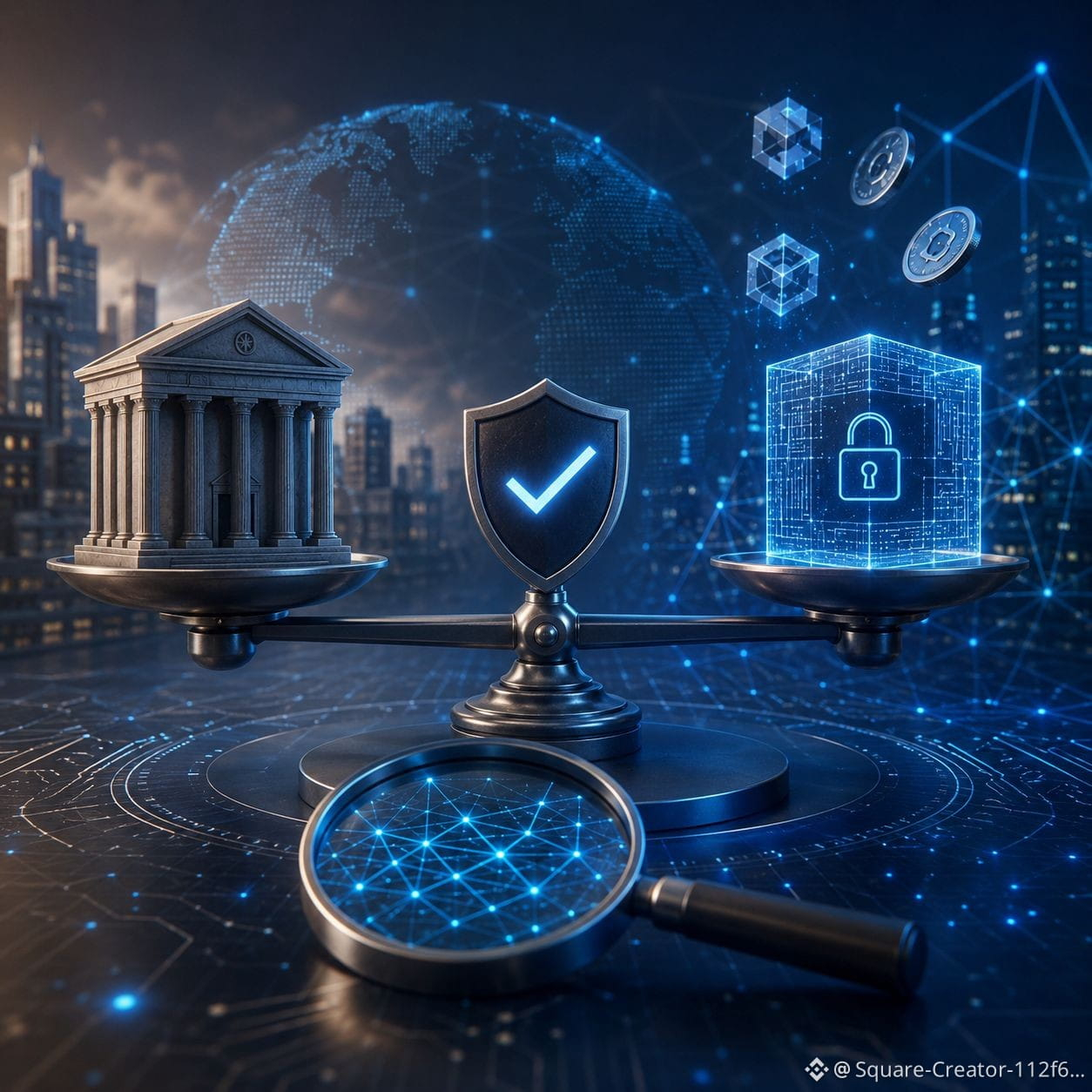
IMF warns: When financial risks move from institutions to code
Asset Tokenization opens a new door in the digital finance world, but it shifts part of the risk to a different layer: code and smart systems.
In the traditional financial system, trust was based on banks, regulators, and human procedures. In Web3, however, smart contracts and technical infrastructure are responsible for executing decisions that may reach values in the billions of dollars.
But the most important question is no longer: "Can the code execute the transaction?"
Rather: "Can the system ensure that this transaction must happen before it is executed?"
With the expansion of artificial intelligence and digital assets, pre-transaction verification layers and risk management will become an essential element for building a safer, more trusted decentralized economy.
The future may not belong only to the fastest executor, but to whoever can make the correct decision before execution.
{future}(LINKUSDT)
{future}(ONDOUSDT)
{future}(AVAXUSDT)
#IMFWarnsTokenizationShiftsRiskToCode
IMF warns: When financial risks move from institutions to code
Asset Tokenization opens a new door in the digital finance world, but it shifts part of the risk to a different layer: code and smart systems.
In the traditional financial system, trust was based on banks, regulators, and human procedures. In Web3, however, smart contracts and technical infrastructure are responsible for executing decisions that may reach values in the billions of dollars.
But the most important question is no longer: "Can the code execute the transaction?"
Rather: "Can the system ensure that this transaction must happen before it is executed?"
With the expansion of artificial intelligence and digital assets, pre-transaction verification layers and risk management will become an essential element for building a safer, more trusted decentralized economy.
The future may not belong only to the fastest executor, but to whoever can make the correct decision before execution.
#IMFWarnsTokenizationShiftsRiskToCode
Asset Tokenization opens a new door in the digital finance world, but it shifts part of the risk to a different layer: code and smart systems.
In the traditional financial system, trust was based on banks, regulators, and human procedures. In Web3, however, smart contracts and technical infrastructure are responsible for executing decisions that may reach values in the billions of dollars.
But the most important question is no longer: "Can the code execute the transaction?"
Rather: "Can the system ensure that this transaction must happen before it is executed?"
With the expansion of artificial intelligence and digital assets, pre-transaction verification layers and risk management will become an essential element for building a safer, more trusted decentralized economy.
The future may not belong only to the fastest executor, but to whoever can make the correct decision before execution.
#IMFWarnsTokenizationShiftsRiskToCode
263

·
--
Bullish
#imfwarnstokenizationshiftsrisktocode
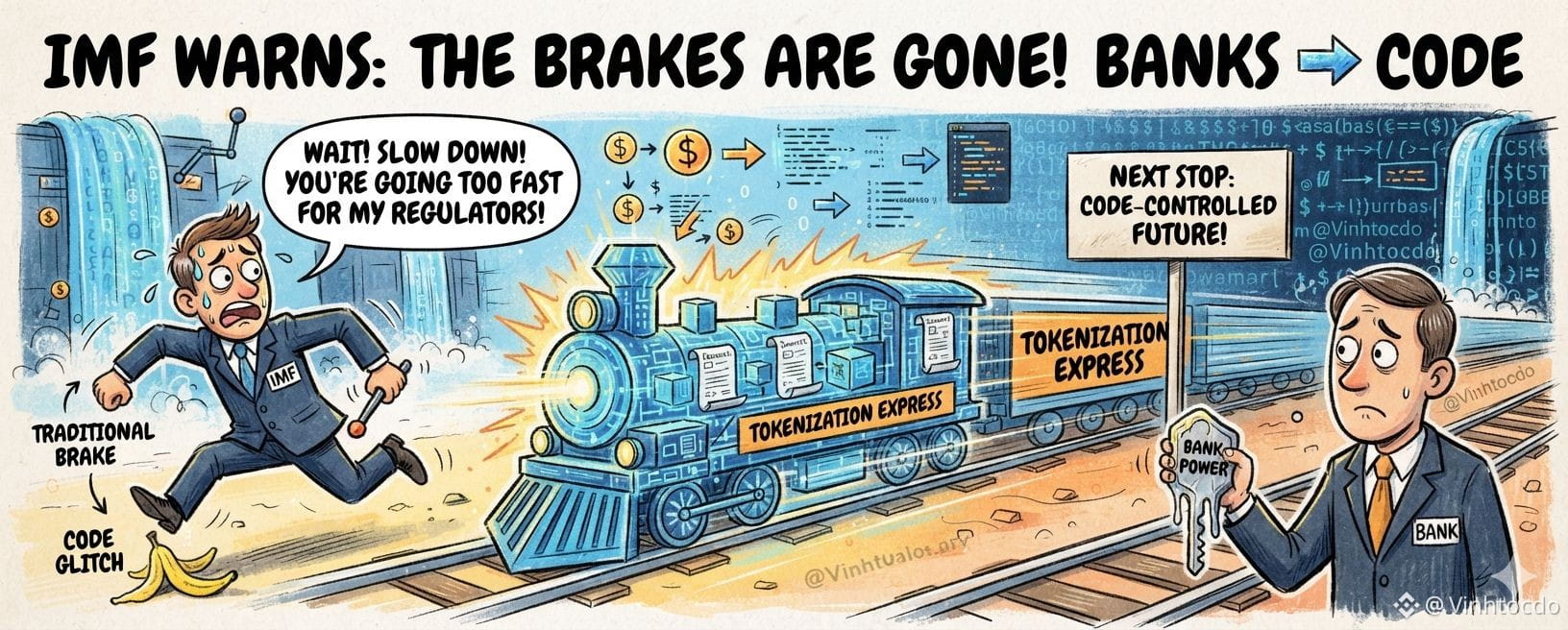
🚨 IMF WARNING: RISK OF TRANSFERRING FROM BANKS TO CODE!
The IMF bosses are panicking because tokenization is running too fast, and they’ve lost the “safety brake.” Is the IMF worried about hackers, or are they afraid of losing control? If you input commands too quickly, one line of code wrong and the whole system goes up in smoke—before the central bank even wakes up, the wallet is already empty!
What should traders do now? Turn on the “seatbelt mode,” double-check the smart contract, and execute trades carefully—code can’t cry for you!
⚠️ This is not financial advice. Enter the referral code VINHTOCDO to join the race together!
#IMF #Tokenization #Bankless #VINHTOCDO
$SPCXB
{spot}(SPCXBUSDT)
$NVDAB
{spot}(NVDABUSDT)
$TSLAB
{spot}(TSLABUSDT)
#imfwarnstokenizationshiftsrisktocode
🚨 IMF WARNING: RISK OF TRANSFERRING FROM BANKS TO CODE!
The IMF bosses are panicking because tokenization is running too fast, and they’ve lost the “safety brake.” Is the IMF worried about hackers, or are they afraid of losing control? If you input commands too quickly, one line of code wrong and the whole system goes up in smoke—before the central bank even wakes up, the wallet is already empty!
What should traders do now? Turn on the “seatbelt mode,” double-check the smart contract, and execute trades carefully—code can’t cry for you!
⚠️ This is not financial advice. Enter the referral code VINHTOCDO to join the race together!
#IMF #Tokenization #Bankless #VINHTOCDO
$SPCXB
$NVDAB
$TSLAB
🚨 IMF WARNING: RISK OF TRANSFERRING FROM BANKS TO CODE!
The IMF bosses are panicking because tokenization is running too fast, and they’ve lost the “safety brake.” Is the IMF worried about hackers, or are they afraid of losing control? If you input commands too quickly, one line of code wrong and the whole system goes up in smoke—before the central bank even wakes up, the wallet is already empty!
What should traders do now? Turn on the “seatbelt mode,” double-check the smart contract, and execute trades carefully—code can’t cry for you!
⚠️ This is not financial advice. Enter the referral code VINHTOCDO to join the race together!
#IMF #Tokenization #Bankless #VINHTOCDO
$SPCXB
$NVDAB
$TSLAB
3
87
·
--
#IMFWarnsTokenizationShiftsRiskToCode
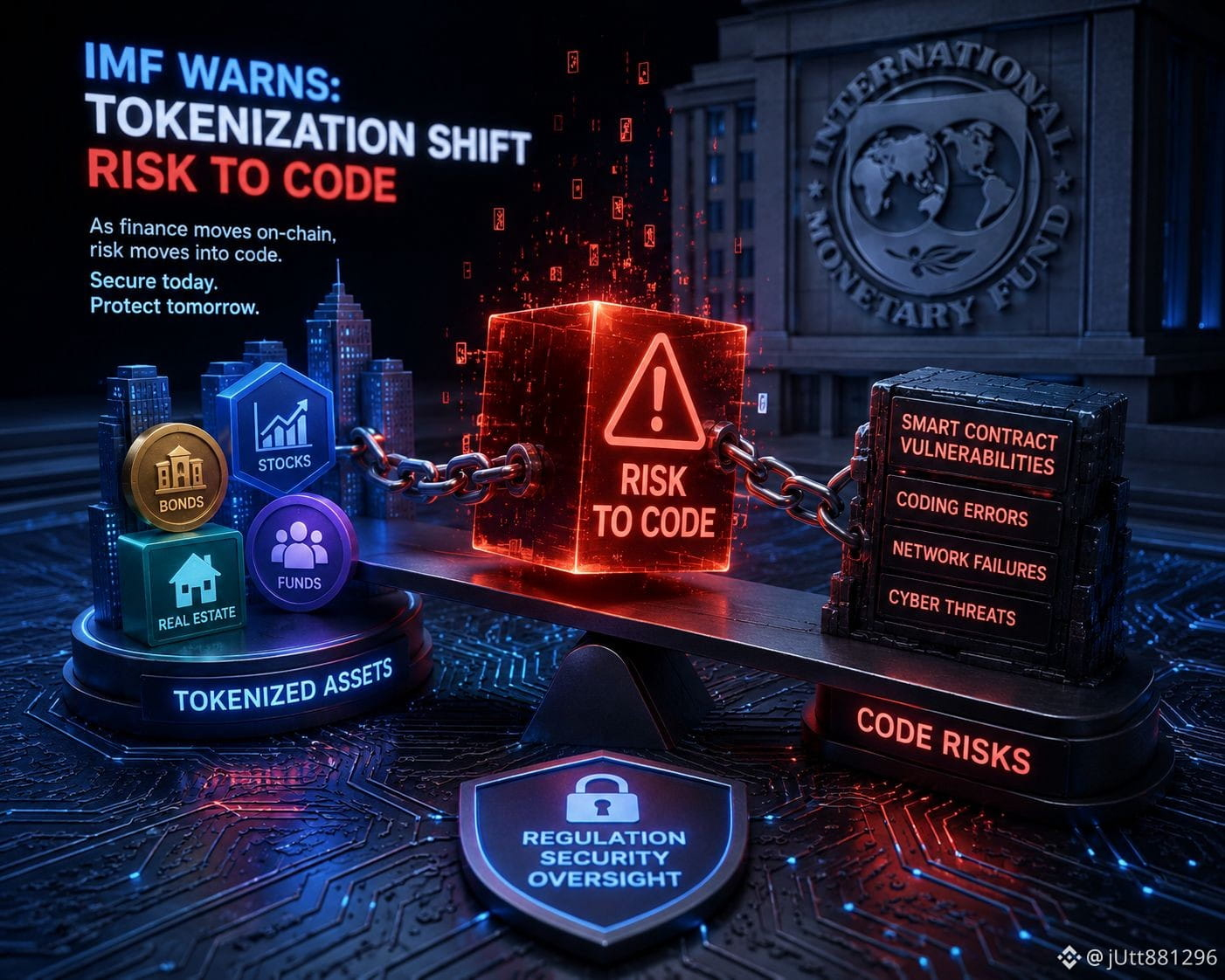
The International Monetary Fund (IMF) has cautioned that the rapid adoption of tokenized financial assets could fundamentally reshape how financial risks emerge and spread. While tokenization has the potential to improve market efficiency, increase liquidity, and enable faster settlement, the IMF warns that it also transfers many traditional financial risks into software code and smart contracts.
In a tokenized financial system, assets such as bonds, stocks, real estate, and funds are represented as digital tokens on blockchain networks. This innovation can reduce operational costs and improve transparency. However, it also creates new challenges, where a single coding error, smart contract vulnerability, or network failure could disrupt financial markets at scale.
The IMF stresses that financial institutions and regulators must strengthen cybersecurity, smart contract auditing, governance standards, and risk management frameworks before tokenized markets become mainstream. Without proper oversight, technical flaws could undermine confidence and amplify systemic risks.
Despite these concerns, the IMF recognizes that tokenization offers significant long-term benefits if implemented responsibly. The organization encourages policymakers, technology developers, and financial institutions to work together to build secure, transparent, and resilient digital financial infrastructure.
As tokenization continues to gain momentum, balancing innovation with strong safeguards will be essential to ensuring that the future of finance remains both efficient and secure.
#IMFWarnsTokenizationShiftsRiskToCode
#IMFWarnsTokenizationShiftsRiskToCode
The International Monetary Fund (IMF) has cautioned that the rapid adoption of tokenized financial assets could fundamentally reshape how financial risks emerge and spread. While tokenization has the potential to improve market efficiency, increase liquidity, and enable faster settlement, the IMF warns that it also transfers many traditional financial risks into software code and smart contracts.
In a tokenized financial system, assets such as bonds, stocks, real estate, and funds are represented as digital tokens on blockchain networks. This innovation can reduce operational costs and improve transparency. However, it also creates new challenges, where a single coding error, smart contract vulnerability, or network failure could disrupt financial markets at scale.
The IMF stresses that financial institutions and regulators must strengthen cybersecurity, smart contract auditing, governance standards, and risk management frameworks before tokenized markets become mainstream. Without proper oversight, technical flaws could undermine confidence and amplify systemic risks.
Despite these concerns, the IMF recognizes that tokenization offers significant long-term benefits if implemented responsibly. The organization encourages policymakers, technology developers, and financial institutions to work together to build secure, transparent, and resilient digital financial infrastructure.
As tokenization continues to gain momentum, balancing innovation with strong safeguards will be essential to ensuring that the future of finance remains both efficient and secure.
#IMFWarnsTokenizationShiftsRiskToCode
The International Monetary Fund (IMF) has cautioned that the rapid adoption of tokenized financial assets could fundamentally reshape how financial risks emerge and spread. While tokenization has the potential to improve market efficiency, increase liquidity, and enable faster settlement, the IMF warns that it also transfers many traditional financial risks into software code and smart contracts.
In a tokenized financial system, assets such as bonds, stocks, real estate, and funds are represented as digital tokens on blockchain networks. This innovation can reduce operational costs and improve transparency. However, it also creates new challenges, where a single coding error, smart contract vulnerability, or network failure could disrupt financial markets at scale.
The IMF stresses that financial institutions and regulators must strengthen cybersecurity, smart contract auditing, governance standards, and risk management frameworks before tokenized markets become mainstream. Without proper oversight, technical flaws could undermine confidence and amplify systemic risks.
Despite these concerns, the IMF recognizes that tokenization offers significant long-term benefits if implemented responsibly. The organization encourages policymakers, technology developers, and financial institutions to work together to build secure, transparent, and resilient digital financial infrastructure.
As tokenization continues to gain momentum, balancing innovation with strong safeguards will be essential to ensuring that the future of finance remains both efficient and secure.
#IMFWarnsTokenizationShiftsRiskToCode
1
115

·
--
Bullish
#IMFWarnsTokenizationShiftsRiskToCode
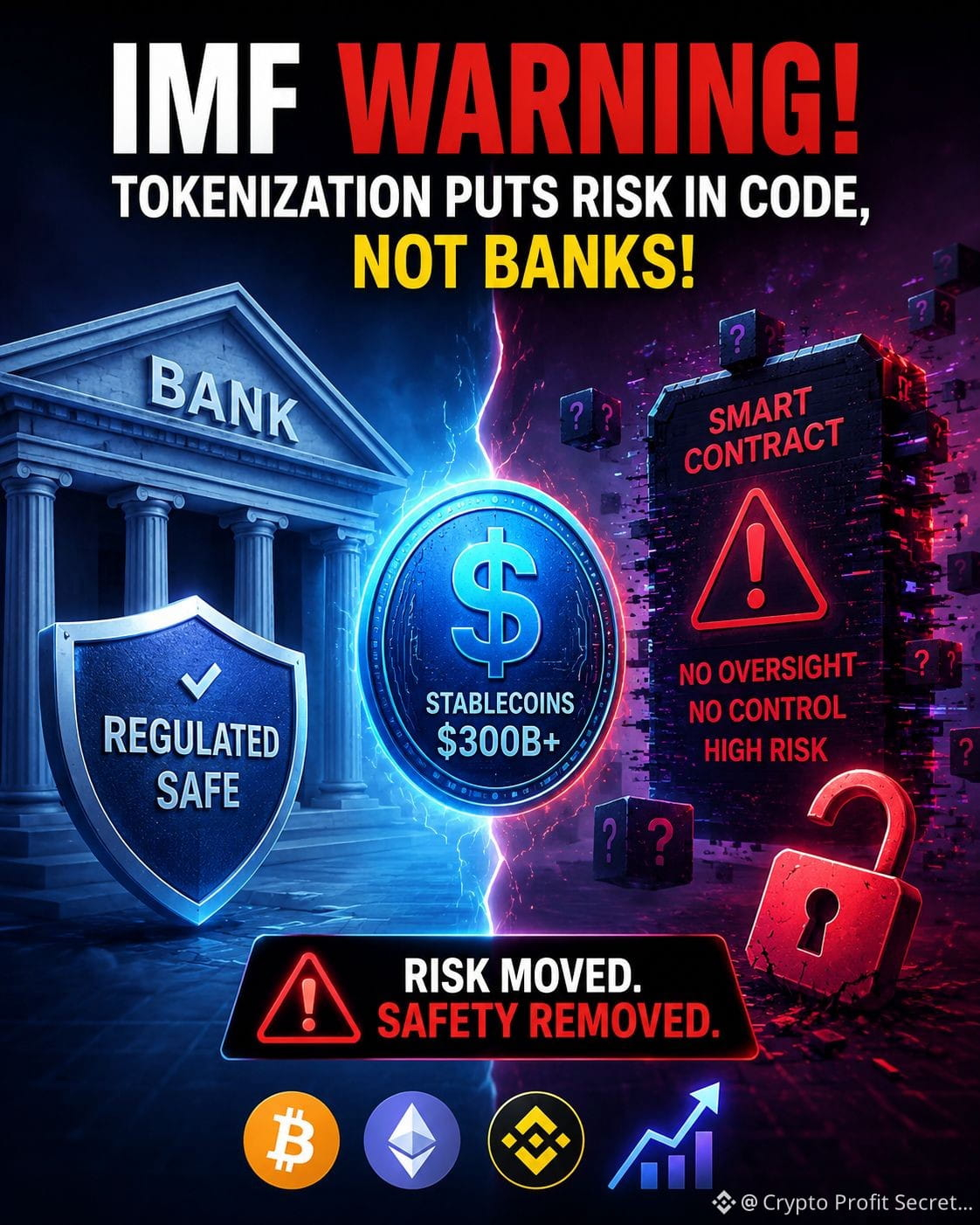
🚨 IMF Warning: Tokenization Puts Risk in CODE, Not Banks!
IMF just dropped a bombshell – tokenization shifts risk from regulated banks to smart contracts nobody controls!
The $300B Truth:**
Stablecoins now hold **$300B+ – tokenized assets exploding! But speed cuts costs AND removes safety brakes .
The Scary Part:
· No regulator oversight for smart contracts
· Who owns what? Courts haven't decided yet
· Glitch = crisis before anyone can react
The Irony:
Smart contracts could become "too big to fail" – just like banks in 2008!
💬 IMF scared or just FUD? Drop your take! 👇
#RWA #DeFi #Crypto #BTC $BTC
{spot}(BTCUSDT)
#IMFWarnsTokenizationShiftsRiskToCode
🚨 IMF Warning: Tokenization Puts Risk in CODE, Not Banks!
IMF just dropped a bombshell – tokenization shifts risk from regulated banks to smart contracts nobody controls!
The $300B Truth:**
Stablecoins now hold **$300B+ – tokenized assets exploding! But speed cuts costs AND removes safety brakes .
The Scary Part:
· No regulator oversight for smart contracts
· Who owns what? Courts haven't decided yet
· Glitch = crisis before anyone can react
The Irony:
Smart contracts could become "too big to fail" – just like banks in 2008!
💬 IMF scared or just FUD? Drop your take! 👇
#RWA #DeFi #Crypto #BTC $BTC
🚨 IMF Warning: Tokenization Puts Risk in CODE, Not Banks!
IMF just dropped a bombshell – tokenization shifts risk from regulated banks to smart contracts nobody controls!
The $300B Truth:**
Stablecoins now hold **$300B+ – tokenized assets exploding! But speed cuts costs AND removes safety brakes .
The Scary Part:
· No regulator oversight for smart contracts
· Who owns what? Courts haven't decided yet
· Glitch = crisis before anyone can react
The Irony:
Smart contracts could become "too big to fail" – just like banks in 2008!
💬 IMF scared or just FUD? Drop your take! 👇
#RWA #DeFi #Crypto #BTC $BTC
1
99

·
--
The IMF just issued a massive structural warning about the future of DeFi and RWA. 🚨
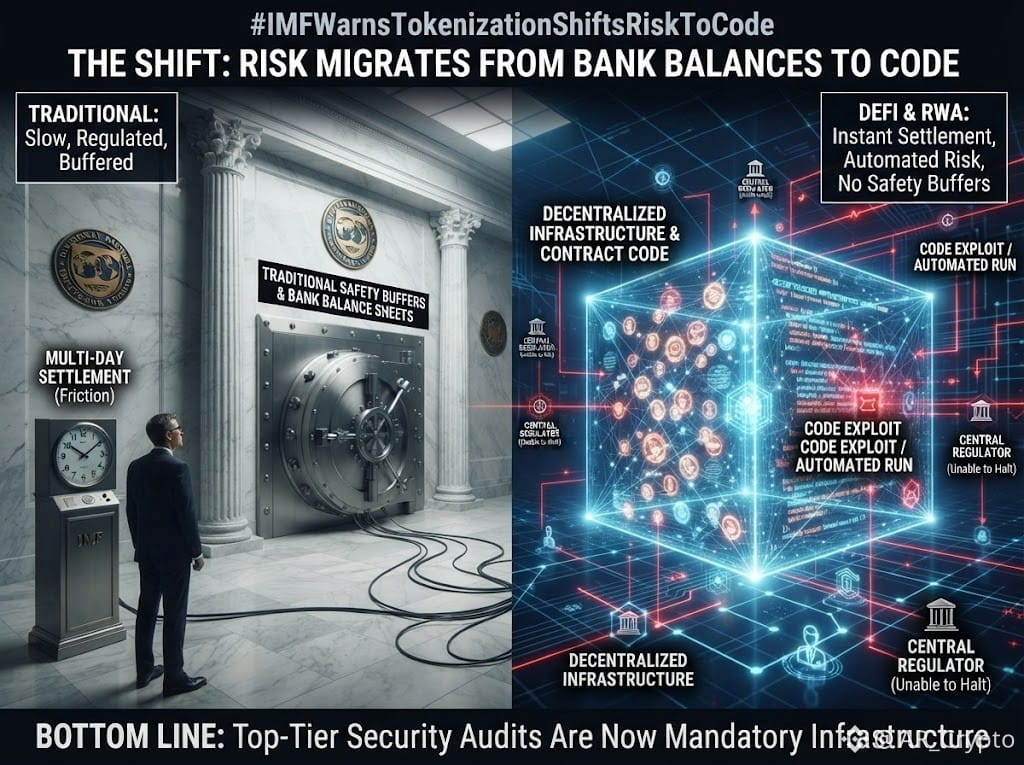
The International Monetary Fund (IMF) acknowledges that asset tokenization is doing incredible things, like compressing multi-day traditional settlement times down to near-instant transactions.
However, they are sounding a major alarm: financial risk is migrating away from bank balance sheets and directly into smart-contract code and decentralized infrastructures.
"Frictions disappear—but so do traditional safety buffers."
The Core Risk: Instant settlement means liquidity demands happen in real time. If a code glitch, exploit, or automated run occurs, it can propagate faster than any central regulator can step in to pause it.
The Bottom Line: In a tokenized world, the code is the infrastructure. This makes top-tier security audits and bulletproof code architecture more critical than ever before.#IMFWarnsTokenizationShiftsRiskToCode
The IMF just issued a massive structural warning about the future of DeFi and RWA. 🚨
The International Monetary Fund (IMF) acknowledges that asset tokenization is doing incredible things, like compressing multi-day traditional settlement times down to near-instant transactions.
However, they are sounding a major alarm: financial risk is migrating away from bank balance sheets and directly into smart-contract code and decentralized infrastructures.
"Frictions disappear—but so do traditional safety buffers."
The Core Risk: Instant settlement means liquidity demands happen in real time. If a code glitch, exploit, or automated run occurs, it can propagate faster than any central regulator can step in to pause it.
The Bottom Line: In a tokenized world, the code is the infrastructure. This makes top-tier security audits and bulletproof code architecture more critical than ever before.#IMFWarnsTokenizationShiftsRiskToCode
The International Monetary Fund (IMF) acknowledges that asset tokenization is doing incredible things, like compressing multi-day traditional settlement times down to near-instant transactions.
However, they are sounding a major alarm: financial risk is migrating away from bank balance sheets and directly into smart-contract code and decentralized infrastructures.
"Frictions disappear—but so do traditional safety buffers."
The Core Risk: Instant settlement means liquidity demands happen in real time. If a code glitch, exploit, or automated run occurs, it can propagate faster than any central regulator can step in to pause it.
The Bottom Line: In a tokenized world, the code is the infrastructure. This makes top-tier security audits and bulletproof code architecture more critical than ever before.#IMFWarnsTokenizationShiftsRiskToCode
21
·
--
Bullish
#IMFWarnsTokenizationShiftsRiskToCode $BTC
{spot}(BTCUSDT)
Here’s a Binance Square post designed to maximize engagement while staying balanced and informative:
🚨 Is Tokenization Creating a New Financial Risk?
The IMF has warned that while tokenization could transform global finance, it may also shift traditional financial risks into software and smart contracts.
Imagine this:
🏦 Banks → Blockchain
📜 Paper contracts → Smart contracts
👨💻 Human error → Code vulnerabilities
Tokenization promises faster settlements, 24/7 markets, and fractional ownership of real-world assets. But if the underlying code contains bugs or security flaws, billions of dollars could be exposed in seconds.
💡 The next financial crisis may not start in a bank—it could start in a line of code.
As tokenized stocks, bonds, and real-world assets continue gaining momentum, investors should pay attention not only to market trends but also to blockchain security, audits, and protocol governance.
📊 What’s your view?
Will tokenization make global finance safer, or does it simply replace old risks with new ones?
Share your thoughts below! 👇
#IMFWarnsTokenizationShiftsRiskToCode #Tokenization #RWA #Crypto #Blockchain #SmartContracts #Web3 #DeFi #BinanceSquare #JALILORD
#IMFWarnsTokenizationShiftsRiskToCode $BTC
Here’s a Binance Square post designed to maximize engagement while staying balanced and informative:
🚨 Is Tokenization Creating a New Financial Risk?
The IMF has warned that while tokenization could transform global finance, it may also shift traditional financial risks into software and smart contracts.
Imagine this:
🏦 Banks → Blockchain
📜 Paper contracts → Smart contracts
👨💻 Human error → Code vulnerabilities
Tokenization promises faster settlements, 24/7 markets, and fractional ownership of real-world assets. But if the underlying code contains bugs or security flaws, billions of dollars could be exposed in seconds.
💡 The next financial crisis may not start in a bank—it could start in a line of code.
As tokenized stocks, bonds, and real-world assets continue gaining momentum, investors should pay attention not only to market trends but also to blockchain security, audits, and protocol governance.
📊 What’s your view?
Will tokenization make global finance safer, or does it simply replace old risks with new ones?
Share your thoughts below! 👇
#IMFWarnsTokenizationShiftsRiskToCode #Tokenization #RWA #Crypto #Blockchain #SmartContracts #Web3 #DeFi #BinanceSquare #JALILORD
Here’s a Binance Square post designed to maximize engagement while staying balanced and informative:
🚨 Is Tokenization Creating a New Financial Risk?
The IMF has warned that while tokenization could transform global finance, it may also shift traditional financial risks into software and smart contracts.
Imagine this:
🏦 Banks → Blockchain
📜 Paper contracts → Smart contracts
👨💻 Human error → Code vulnerabilities
Tokenization promises faster settlements, 24/7 markets, and fractional ownership of real-world assets. But if the underlying code contains bugs or security flaws, billions of dollars could be exposed in seconds.
💡 The next financial crisis may not start in a bank—it could start in a line of code.
As tokenized stocks, bonds, and real-world assets continue gaining momentum, investors should pay attention not only to market trends but also to blockchain security, audits, and protocol governance.
📊 What’s your view?
Will tokenization make global finance safer, or does it simply replace old risks with new ones?
Share your thoughts below! 👇
#IMFWarnsTokenizationShiftsRiskToCode #Tokenization #RWA #Crypto #Blockchain #SmartContracts #Web3 #DeFi #BinanceSquare #JALILORD
100
·
--
#IMFWarnsTokenizationShiftsRiskToCode IMF warns: Tokenization shifts risk to new areas of finance.
280 discussing - hottest topic right now.
RWA tokenization is growing fast, but so are the risks.
Are we ready for tokenized everything?
#IMF #Tokenization #RWA #Crypto
#IMFWarnsTokenizationShiftsRiskToCode IMF warns: Tokenization shifts risk to new areas of finance.
280 discussing - hottest topic right now.
RWA tokenization is growing fast, but so are the risks.
Are we ready for tokenized everything?
#IMF #Tokenization #RWA #Crypto
280 discussing - hottest topic right now.
RWA tokenization is growing fast, but so are the risks.
Are we ready for tokenized everything?
#IMF #Tokenization #RWA #Crypto
14

·
--
IMF Cautions on Tokenization Shifting Risk Toward Code and Platforms
The International Monetary Fund warned that tokenization of financial assets may relocate systemic risk from traditional banks to smart contracts, shared ledgers, and technology platforms. Faster settlement and automation, while reducing certain frictions, could accelerate shock transmission and concentrate vulnerabilities in code governance and infrastructure providers.
In its assessment, the IMF noted that tokenized markets enable near-instant trades, collateral management, and compliance but remove buffers that once slowed crisis propagation. Effective oversight would need to extend beyond institutions to the underlying programmable systems themselves.
This perspective arrives as tokenized real-world assets gain traction across securities, funds, and other instruments. The trend underscores ongoing debates about balancing innovation with resilience in digital finance. Regulators and market participants are evaluating implications for stability, interoperability, and legal frameworks as adoption progresses. The IMF stressed the importance of policy adaptation to address these evolving risk profiles.#IMFWarnsTokenizationShiftsRiskToCode
IMF Cautions on Tokenization Shifting Risk Toward Code and Platforms
The International Monetary Fund warned that tokenization of financial assets may relocate systemic risk from traditional banks to smart contracts, shared ledgers, and technology platforms. Faster settlement and automation, while reducing certain frictions, could accelerate shock transmission and concentrate vulnerabilities in code governance and infrastructure providers.
In its assessment, the IMF noted that tokenized markets enable near-instant trades, collateral management, and compliance but remove buffers that once slowed crisis propagation. Effective oversight would need to extend beyond institutions to the underlying programmable systems themselves.
This perspective arrives as tokenized real-world assets gain traction across securities, funds, and other instruments. The trend underscores ongoing debates about balancing innovation with resilience in digital finance. Regulators and market participants are evaluating implications for stability, interoperability, and legal frameworks as adoption progresses. The IMF stressed the importance of policy adaptation to address these evolving risk profiles.#IMFWarnsTokenizationShiftsRiskToCode
The International Monetary Fund warned that tokenization of financial assets may relocate systemic risk from traditional banks to smart contracts, shared ledgers, and technology platforms. Faster settlement and automation, while reducing certain frictions, could accelerate shock transmission and concentrate vulnerabilities in code governance and infrastructure providers.
In its assessment, the IMF noted that tokenized markets enable near-instant trades, collateral management, and compliance but remove buffers that once slowed crisis propagation. Effective oversight would need to extend beyond institutions to the underlying programmable systems themselves.
This perspective arrives as tokenized real-world assets gain traction across securities, funds, and other instruments. The trend underscores ongoing debates about balancing innovation with resilience in digital finance. Regulators and market participants are evaluating implications for stability, interoperability, and legal frameworks as adoption progresses. The IMF stressed the importance of policy adaptation to address these evolving risk profiles.#IMFWarnsTokenizationShiftsRiskToCode
73

·
--
#imfwarnstokenizationshiftsrisktocode
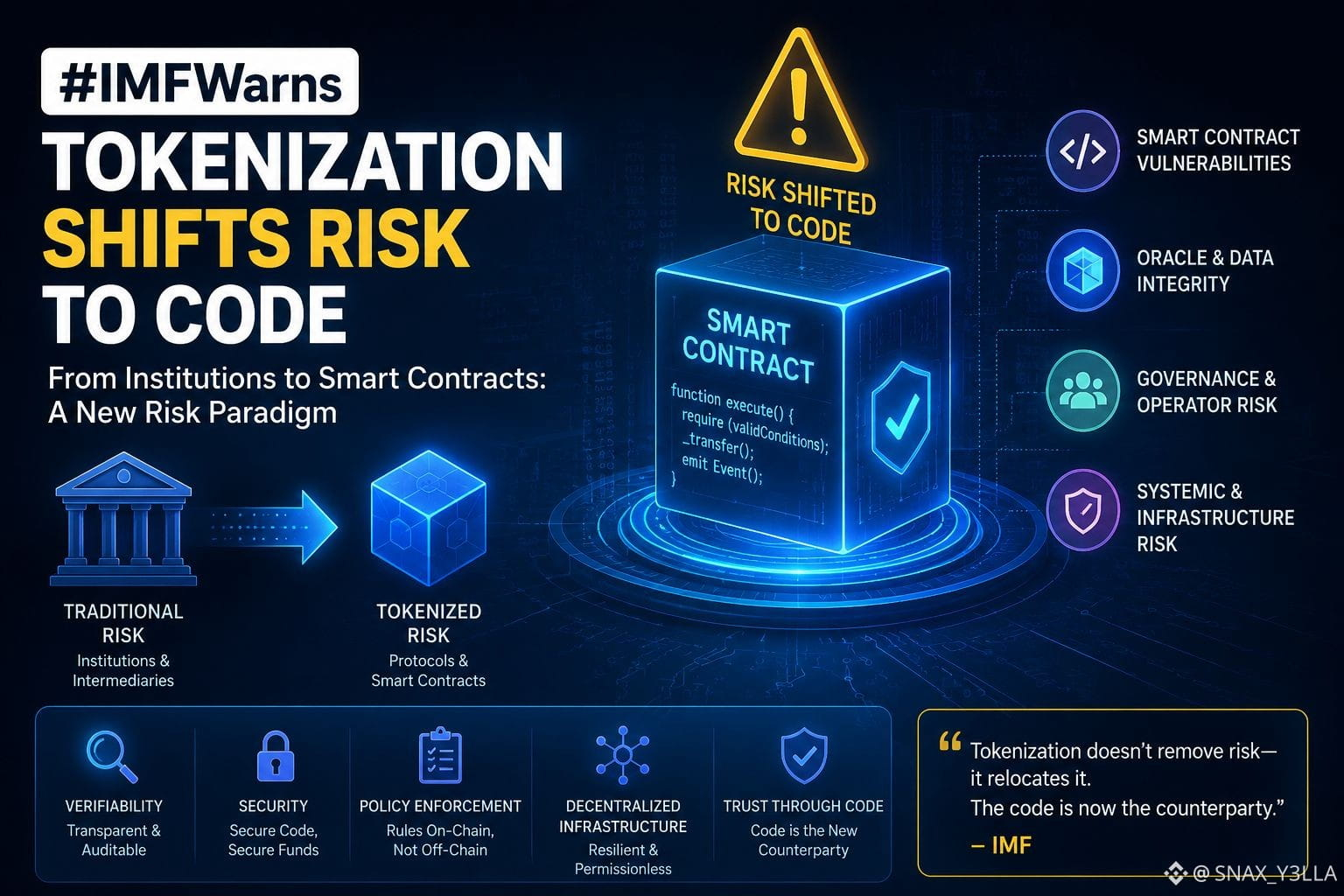
One of the takeaways for me in the article was one of the concerns raised by the IMF in their assessment of tokenization. The aspect that stood out for me was not the change in settlement speed, but rather the shift in the nature of financial system risk itself. The operations of traditional finance take a toll on financial institutions, but, in tokenized finance, some of this risk is encapsulated in smart contracts. This, in turn, impacts the design considerations for developers of such protocols because the code now has to be able to fulfil its financial obligations correctly. The contracts should enforce the appropriate terms and conditions, and the code quality, governance mechanism, oracles, and policy logic all become integral parts of the financial system risk model.
The discussion around tokenization now goes beyond decentralized finance and touches on the critical question of whether software can safely undertake the obligations that used to be the responsibility of financial institutions. Thus, I think the most effective protocols will not only tokenize assets more efficiently than traditional financial instruments but also make critical financial decisions more transparently and reliably. Do you agree that tokenization will shift the financial risk from institutions to code, or do you think that it will just redistribute it?
#RWA #Tokenization #blockchain #Crypto
$RWA $TOKEN $NVDAB
#imfwarnstokenizationshiftsrisktocode
One of the takeaways for me in the article was one of the concerns raised by the IMF in their assessment of tokenization. The aspect that stood out for me was not the change in settlement speed, but rather the shift in the nature of financial system risk itself. The operations of traditional finance take a toll on financial institutions, but, in tokenized finance, some of this risk is encapsulated in smart contracts. This, in turn, impacts the design considerations for developers of such protocols because the code now has to be able to fulfil its financial obligations correctly. The contracts should enforce the appropriate terms and conditions, and the code quality, governance mechanism, oracles, and policy logic all become integral parts of the financial system risk model.
The discussion around tokenization now goes beyond decentralized finance and touches on the critical question of whether software can safely undertake the obligations that used to be the responsibility of financial institutions. Thus, I think the most effective protocols will not only tokenize assets more efficiently than traditional financial instruments but also make critical financial decisions more transparently and reliably. Do you agree that tokenization will shift the financial risk from institutions to code, or do you think that it will just redistribute it?
#RWA #Tokenization #blockchain #Crypto
$RWA $TOKEN $NVDAB
One of the takeaways for me in the article was one of the concerns raised by the IMF in their assessment of tokenization. The aspect that stood out for me was not the change in settlement speed, but rather the shift in the nature of financial system risk itself. The operations of traditional finance take a toll on financial institutions, but, in tokenized finance, some of this risk is encapsulated in smart contracts. This, in turn, impacts the design considerations for developers of such protocols because the code now has to be able to fulfil its financial obligations correctly. The contracts should enforce the appropriate terms and conditions, and the code quality, governance mechanism, oracles, and policy logic all become integral parts of the financial system risk model.
The discussion around tokenization now goes beyond decentralized finance and touches on the critical question of whether software can safely undertake the obligations that used to be the responsibility of financial institutions. Thus, I think the most effective protocols will not only tokenize assets more efficiently than traditional financial instruments but also make critical financial decisions more transparently and reliably. Do you agree that tokenization will shift the financial risk from institutions to code, or do you think that it will just redistribute it?
#RWA #Tokenization #blockchain #Crypto
$RWA $TOKEN $NVDAB
6
12
1.8k

·
--
#imfwarnstokenizationshiftsrisktocode 🚨 The International Monetary Fund Issues Major Warning on Tokenized Assets –Before You Invest in Tokenized Assets, Read This First! ⚠️
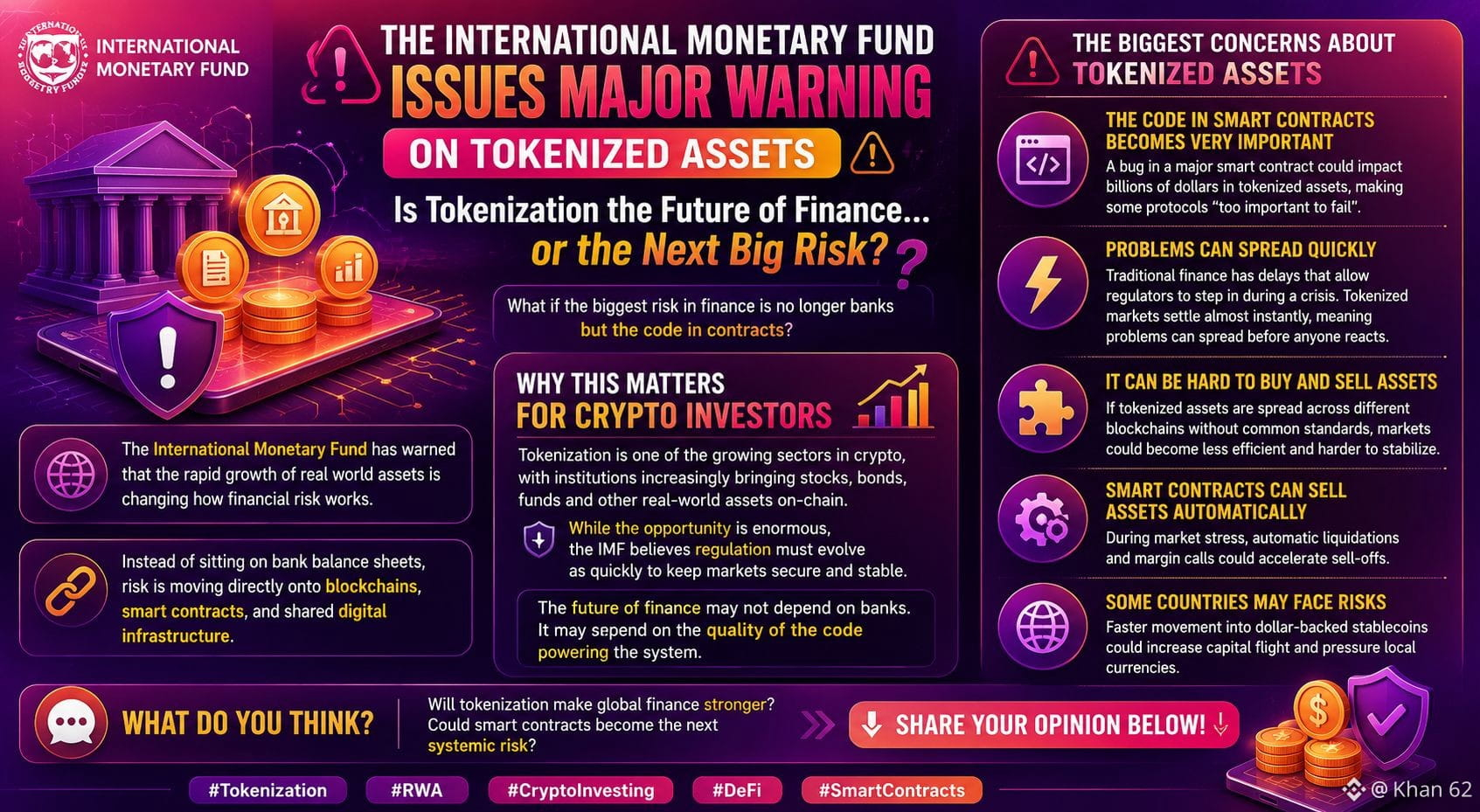
What if the biggest risk in finance is no longer banks but the code in contracts?
The IMF has warned that the rapid growth of real world assets is changing how financial risk works. Of sitting on bank balance sheets risk is moving directly onto blockchains and smart contracts and shared digital infrastructure
⚠️ Here are the biggest concerns about assets
🔹 The code in smart contracts becomes very important: a bug in a major smart contract could impact billions of dollars in tokenized assets making some tokenized assets and protocols too important to fail.
🔹 Problems can spread quickly: traditional finance has delays that allow regulators to step in during a crisis but tokenized markets settle almost instantly meaning problems can spread before anyone reacts to the tokenized assets.
🔹 It can be hard to buy and sell assets: if tokenized assets are spread across different blockchains without common standards markets could become less efficient and harder to stabilize which can affect the tokenized assets.
🔹 Smart contracts can sell assets automatically: during market stress, automatic liquidations and margin calls could accelerate sell-offs of tokenized assets.
🔹 Some countries may face risks: faster movement into dollar-backed stablecoins could increase capital flight and pressure local currencies, which can affect the tokenized assets in these countries.
📈 Why This Matters for Crypto Investors
Tokenization is one of the growing sectors in crypto with institutions increasingly bringing stocks, bonds, funds and other real-world assets on-chain. While the opportunity is enormous the IMF believes regulation must evolve as quickly to keep tokenized assets and markets secure and stable.
💬 Could smart contracts become the next risk, for these assets? .
#Tokenization #RWA #defi #Khan62
$CHZ $AVA $IOTA
{future}(IOTAUSDT)
{future}(AVAUSDT)
{future}(CHZUSDT)
#imfwarnstokenizationshiftsrisktocode 🚨 The International Monetary Fund Issues Major Warning on Tokenized Assets –Before You Invest in Tokenized Assets, Read This First! ⚠️
What if the biggest risk in finance is no longer banks but the code in contracts?
The IMF has warned that the rapid growth of real world assets is changing how financial risk works. Of sitting on bank balance sheets risk is moving directly onto blockchains and smart contracts and shared digital infrastructure
⚠️ Here are the biggest concerns about assets
🔹 The code in smart contracts becomes very important: a bug in a major smart contract could impact billions of dollars in tokenized assets making some tokenized assets and protocols too important to fail.
🔹 Problems can spread quickly: traditional finance has delays that allow regulators to step in during a crisis but tokenized markets settle almost instantly meaning problems can spread before anyone reacts to the tokenized assets.
🔹 It can be hard to buy and sell assets: if tokenized assets are spread across different blockchains without common standards markets could become less efficient and harder to stabilize which can affect the tokenized assets.
🔹 Smart contracts can sell assets automatically: during market stress, automatic liquidations and margin calls could accelerate sell-offs of tokenized assets.
🔹 Some countries may face risks: faster movement into dollar-backed stablecoins could increase capital flight and pressure local currencies, which can affect the tokenized assets in these countries.
📈 Why This Matters for Crypto Investors
Tokenization is one of the growing sectors in crypto with institutions increasingly bringing stocks, bonds, funds and other real-world assets on-chain. While the opportunity is enormous the IMF believes regulation must evolve as quickly to keep tokenized assets and markets secure and stable.
💬 Could smart contracts become the next risk, for these assets? .
#Tokenization #RWA #defi #Khan62
$CHZ $AVA $IOTA
What if the biggest risk in finance is no longer banks but the code in contracts?
The IMF has warned that the rapid growth of real world assets is changing how financial risk works. Of sitting on bank balance sheets risk is moving directly onto blockchains and smart contracts and shared digital infrastructure
⚠️ Here are the biggest concerns about assets
🔹 The code in smart contracts becomes very important: a bug in a major smart contract could impact billions of dollars in tokenized assets making some tokenized assets and protocols too important to fail.
🔹 Problems can spread quickly: traditional finance has delays that allow regulators to step in during a crisis but tokenized markets settle almost instantly meaning problems can spread before anyone reacts to the tokenized assets.
🔹 It can be hard to buy and sell assets: if tokenized assets are spread across different blockchains without common standards markets could become less efficient and harder to stabilize which can affect the tokenized assets.
🔹 Smart contracts can sell assets automatically: during market stress, automatic liquidations and margin calls could accelerate sell-offs of tokenized assets.
🔹 Some countries may face risks: faster movement into dollar-backed stablecoins could increase capital flight and pressure local currencies, which can affect the tokenized assets in these countries.
📈 Why This Matters for Crypto Investors
Tokenization is one of the growing sectors in crypto with institutions increasingly bringing stocks, bonds, funds and other real-world assets on-chain. While the opportunity is enormous the IMF believes regulation must evolve as quickly to keep tokenized assets and markets secure and stable.
💬 Could smart contracts become the next risk, for these assets? .
#Tokenization #RWA #defi #Khan62
$CHZ $AVA $IOTA
3
5
2.9k
·
--
#newt $NEWT just like IMF said ,warns that tokenization will shift power from banks to code,same is to $NEWT its policy ,aw has been developed to execute before trade starts . Money was developed first but laws,policy was not developed to curb scams.The real remedy to curb scam is newton before trade it has already exuted.
With a friendly fee , friendly excution. it' has enough arsenal to marshal guidance for trade.#IMFWarnsTokenizationShiftsRiskToCode
#newt $NEWT just like IMF said ,warns that tokenization will shift power from banks to code,same is to $NEWT its policy ,aw has been developed to execute before trade starts . Money was developed first but laws,policy was not developed to curb scams.The real remedy to curb scam is newton before trade it has already exuted.
With a friendly fee , friendly excution. it' has enough arsenal to marshal guidance for trade.#IMFWarnsTokenizationShiftsRiskToCode
With a friendly fee , friendly excution. it' has enough arsenal to marshal guidance for trade.#IMFWarnsTokenizationShiftsRiskToCode
55

·
--
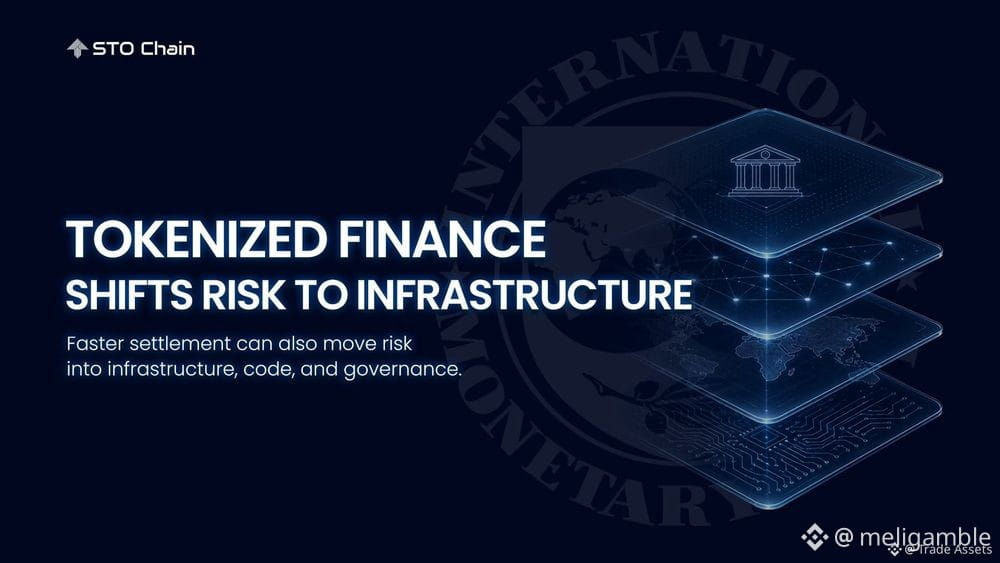
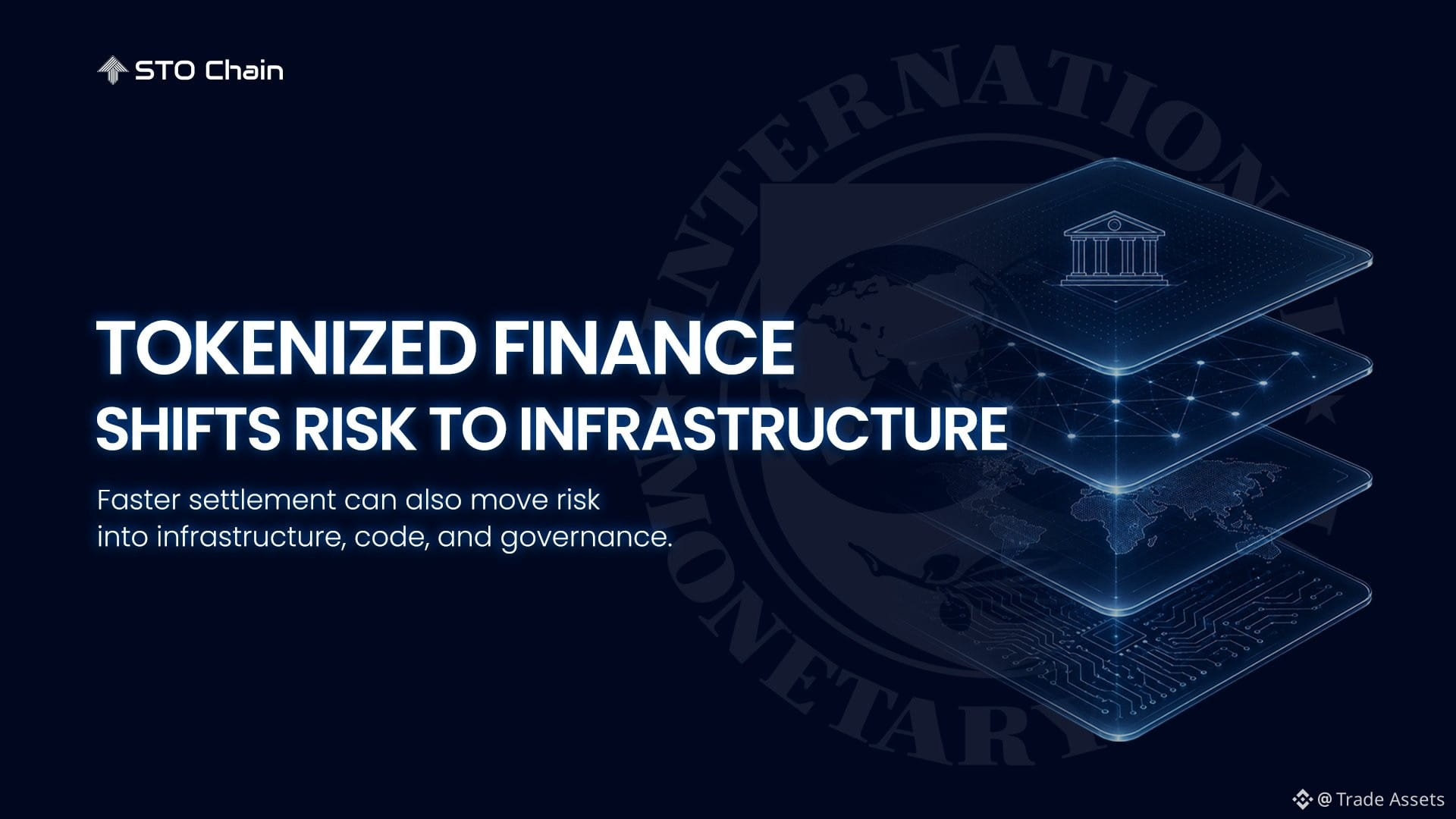
#IMFWarnsTokenizationShiftsRiskToCode The IMF says tokenization could change the architecture of the financial system.
The important point is not only faster settlement or lower friction. When assets, payments, and settlement move onto shared ledgers, financial risk can also move from institutional balance sheets toward platforms, code, and market infrastructure.
That creates a different kind of financial system. Traditional markets are slow, but the delay also provides buffers through clearing, reconciliation, reporting cycles, and liquidity management. Tokenized markets can compress these steps into moments.
This can reduce counterparty risk and operational friction, but it also makes infrastructure more critical. Settlement assets, platform governance, interoperability, legal finality, and real-time oversight become central to market stability.
Tokenization does not just put financial assets onchain. It changes where the financial system carries risk.
#STOChain #Tokenization #RWA #Stablecoin
#IMFWarnsTokenizationShiftsRiskToCode The IMF says tokenization could change the architecture of the financial system.
The important point is not only faster settlement or lower friction. When assets, payments, and settlement move onto shared ledgers, financial risk can also move from institutional balance sheets toward platforms, code, and market infrastructure.
That creates a different kind of financial system. Traditional markets are slow, but the delay also provides buffers through clearing, reconciliation, reporting cycles, and liquidity management. Tokenized markets can compress these steps into moments.
This can reduce counterparty risk and operational friction, but it also makes infrastructure more critical. Settlement assets, platform governance, interoperability, legal finality, and real-time oversight become central to market stability.
Tokenization does not just put financial assets onchain. It changes where the financial system carries risk.
#STOChain #Tokenization #RWA #Stablecoin
The important point is not only faster settlement or lower friction. When assets, payments, and settlement move onto shared ledgers, financial risk can also move from institutional balance sheets toward platforms, code, and market infrastructure.
That creates a different kind of financial system. Traditional markets are slow, but the delay also provides buffers through clearing, reconciliation, reporting cycles, and liquidity management. Tokenized markets can compress these steps into moments.
This can reduce counterparty risk and operational friction, but it also makes infrastructure more critical. Settlement assets, platform governance, interoperability, legal finality, and real-time oversight become central to market stability.
Tokenization does not just put financial assets onchain. It changes where the financial system carries risk.
#STOChain #Tokenization #RWA #Stablecoin
235

#IMFWarnsTokenizationShiftsRiskToCode That headline means:
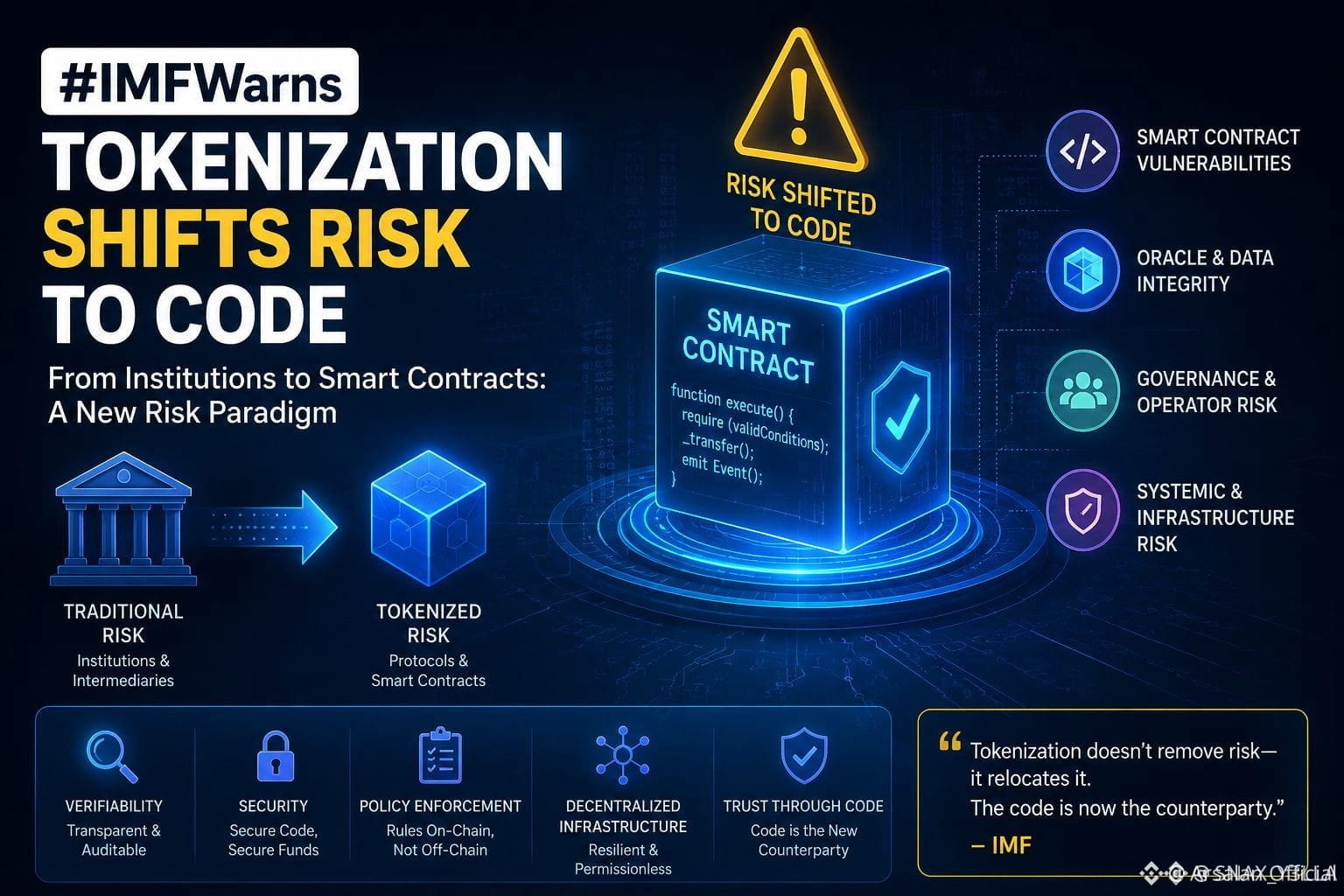
The IMF is warning that as more financial assets move “on-chain” through tokenization, risk may move away from regulated intermediaries and into smart-contract systems and infrastructure code.
In plain English:
Traditional finance risk often sits with banks, brokers, custodians, and clearing systems
In tokenized finance, some of that risk shifts to:
smart contracts
blockchain infrastructure
oracles
bridges
governance mechanisms
wallet/custody design
So instead of asking only, “Is the bank solvent?”, regulators may also need to ask:
Is the code secure?
Can the protocol be upgraded or paused?
Who controls the admin keys?
What happens if the oracle fails?
What legal claim does the token holder actually have?
Why the IMF would care
Because code-based systems can create new types of systemic risk:
smart contract bugs
exploits/hacks
liquidity runs
depegging of tokenized assets
opaque governance
cross-chain contagion
weak legal enforceability of ownership rights
Important nuance
This does not necessarily mean tokenization is bad.
Tokenization can improve:
settlement speed
transparency
programmability
market access
operational efficiency
The warning is really:
don’t assume tokenization removes risk — it may just relocate it.
Simple example
If a tokenized treasury product is issued on-chain:
the underlying bond may be safe,
but users still face risks from:
the issuer structure
custodian arrangements
redemption mechanics
smart contract vulnerabilities
chain outages or bridge failures
If you want, I can also break this down in one of these ways:
for beginners
for investors
for regulators/policy
for Binance users and tokenized RWAs$HOT
{spot}(HOTUSDT)
$TLM
{spot}(TLMUSDT)
$RWA
{alpha}(560x9c8b5ca345247396bdfac0395638ca9045c6586e)
@Binance_News @Binance_Announcement @Binance_Square_Official
#IMFWarnsTokenizationShiftsRiskToCode That headline means:
The IMF is warning that as more financial assets move “on-chain” through tokenization, risk may move away from regulated intermediaries and into smart-contract systems and infrastructure code.
In plain English:
Traditional finance risk often sits with banks, brokers, custodians, and clearing systems
In tokenized finance, some of that risk shifts to:
smart contracts
blockchain infrastructure
oracles
bridges
governance mechanisms
wallet/custody design
So instead of asking only, “Is the bank solvent?”, regulators may also need to ask:
Is the code secure?
Can the protocol be upgraded or paused?
Who controls the admin keys?
What happens if the oracle fails?
What legal claim does the token holder actually have?
Why the IMF would care
Because code-based systems can create new types of systemic risk:
smart contract bugs
exploits/hacks
liquidity runs
depegging of tokenized assets
opaque governance
cross-chain contagion
weak legal enforceability of ownership rights
Important nuance
This does not necessarily mean tokenization is bad.
Tokenization can improve:
settlement speed
transparency
programmability
market access
operational efficiency
The warning is really:
don’t assume tokenization removes risk — it may just relocate it.
Simple example
If a tokenized treasury product is issued on-chain:
the underlying bond may be safe,
but users still face risks from:
the issuer structure
custodian arrangements
redemption mechanics
smart contract vulnerabilities
chain outages or bridge failures
If you want, I can also break this down in one of these ways:
for beginners
for investors
for regulators/policy
for Binance users and tokenized RWAs$HOT
$TLM
$RWA
@Binance News @Binance Announcement @Binance Square Official
The IMF is warning that as more financial assets move “on-chain” through tokenization, risk may move away from regulated intermediaries and into smart-contract systems and infrastructure code.
In plain English:
Traditional finance risk often sits with banks, brokers, custodians, and clearing systems
In tokenized finance, some of that risk shifts to:
smart contracts
blockchain infrastructure
oracles
bridges
governance mechanisms
wallet/custody design
So instead of asking only, “Is the bank solvent?”, regulators may also need to ask:
Is the code secure?
Can the protocol be upgraded or paused?
Who controls the admin keys?
What happens if the oracle fails?
What legal claim does the token holder actually have?
Why the IMF would care
Because code-based systems can create new types of systemic risk:
smart contract bugs
exploits/hacks
liquidity runs
depegging of tokenized assets
opaque governance
cross-chain contagion
weak legal enforceability of ownership rights
Important nuance
This does not necessarily mean tokenization is bad.
Tokenization can improve:
settlement speed
transparency
programmability
market access
operational efficiency
The warning is really:
don’t assume tokenization removes risk — it may just relocate it.
Simple example
If a tokenized treasury product is issued on-chain:
the underlying bond may be safe,
but users still face risks from:
the issuer structure
custodian arrangements
redemption mechanics
smart contract vulnerabilities
chain outages or bridge failures
If you want, I can also break this down in one of these ways:
for beginners
for investors
for regulators/policy
for Binance users and tokenized RWAs$HOT
$TLM
$RWA
@Binance News @Binance Announcement @Binance Square Official
1
185
·
--
#IMFWarnsTokenizationShiftsRiskToCode
IMF shifts the tokenization debate from crypto use case to financial architecture
The IMF is framing tokenization as a redesign of financial market plumbing, not a marginal crypto experiment. Its latest research says faster settlement and programmable assets will only scale if…
#IMFWarnsTokenizationShiftsRiskToCode
IMF shifts the tokenization debate from crypto use case to financial architecture
The IMF is framing tokenization as a redesign of financial market plumbing, not a marginal crypto experiment. Its latest research says faster settlement and programmable assets will only scale if…
IMF shifts the tokenization debate from crypto use case to financial architecture
The IMF is framing tokenization as a redesign of financial market plumbing, not a marginal crypto experiment. Its latest research says faster settlement and programmable assets will only scale if…
1
37
Log in to explore more content
Join global crypto users on Binance Square
⚡️ Get latest and useful information about crypto.
💬 Trusted by the world’s largest crypto exchange.
👍 Discover real insights from verified creators.
Email / Phone number
Trending Topics
1
#BitcoinHits$85K
395 views
46 Discussing
2
#ECBStartsBlockchainEuroSettlement
32 views
36 Discussing
3
#SouthAfricaProposesCryptoExchangeControls
5,254 views
287 Discussing
4
#SolanaCutsTargetSlotTimeTo250ms
7,182 views
271 Discussing
5
#EthereumSurpasses$2700
10,026 views
175 Discussing
6
#CanaryFilesSecondAmendmentForStakedSEIETF
29,232 views
656 Discussing
7
#SaylorHintsStrategyBitcoinBuy
2.4M views
13,518 Discussing
8
#BOJRaisesRatesTo31YearHigh
336,821 views
3,903 Discussing
9
#BuffettStepsDownAsBerkshireChairman
161,735 views
2,164 Discussing
10
#XRPExchangeReservesHitSevenYearLow
185,271 views
1,948 Discussing