

#fedoctoberratehikeoddsfallto17
fedoctoberratehikeoddsfallto17
935 views
69 Discussing
Hot
Latest

everyone thinks collapsing fed hike odds are a free pass to go long but actually that's the exact setup that keeps handing traders their bags.
you see 17% for october, you fomo $BTC thinking the cut hopium is the catalyst, and then you sit through a dump because the market already ran that trade. buying the headline and selling the chart never stops hurting.
ngl this is a case study on repeat. hike odds crater, everyone rotates out of $USDT like risk-on is back, fear and greed prints 68, and one sticky inflation number unwinds the whole thing. $BTC keeps getting rejected at the same levels while the timeline celebrates the fed like it's over. $ETH isn't even confirming the move.
the 17% is a snapshot not a promise. it reprices overnight and the sec pausing etf reviews should tell you liquidity isn't flooding in. ser the tape is saying something different from the headline.
where do you think this goes if the next cpi doesn't play along?
#FedOctoberRateHikeOddsFallTo17 #BitcoinRejectedAt #SECHaltsCryptoETFReviewsAmidFundingLapse
everyone thinks collapsing fed hike odds are a free pass to go long but actually that's the exact setup that keeps handing traders their bags.
you see 17% for october, you fomo $BTC thinking the cut hopium is the catalyst, and then you sit through a dump because the market already ran that trade. buying the headline and selling the chart never stops hurting.
ngl this is a case study on repeat. hike odds crater, everyone rotates out of $USDT like risk-on is back, fear and greed prints 68, and one sticky inflation number unwinds the whole thing. $BTC keeps getting rejected at the same levels while the timeline celebrates the fed like it's over. $ETH isn't even confirming the move.
the 17% is a snapshot not a promise. it reprices overnight and the sec pausing etf reviews should tell you liquidity isn't flooding in. ser the tape is saying something different from the headline.
where do you think this goes if the next cpi doesn't play along?
#FedOctoberRateHikeOddsFallTo17 #BitcoinRejectedAt #SECHaltsCryptoETFReviewsAmidFundingLapse
you see 17% for october, you fomo $BTC thinking the cut hopium is the catalyst, and then you sit through a dump because the market already ran that trade. buying the headline and selling the chart never stops hurting.
ngl this is a case study on repeat. hike odds crater, everyone rotates out of $USDT like risk-on is back, fear and greed prints 68, and one sticky inflation number unwinds the whole thing. $BTC keeps getting rejected at the same levels while the timeline celebrates the fed like it's over. $ETH isn't even confirming the move.
the 17% is a snapshot not a promise. it reprices overnight and the sec pausing etf reviews should tell you liquidity isn't flooding in. ser the tape is saying something different from the headline.
where do you think this goes if the next cpi doesn't play along?
#FedOctoberRateHikeOddsFallTo17 #BitcoinRejectedAt #SECHaltsCryptoETFReviewsAmidFundingLapse

16

·
--
🚨Macro Update: The latest US jobs data just completely shifted the market narrative.
Unemployment ticked up to 4.2% and payrolls severely missed expectations, coming in at just 29K vs the 90K predicted.
With October rate hike odds now plunging to just 17%, the pressure is off risk assets.
Keep a close eye on the charts over the next 48 hours. When macro tightening fears cool down, capital tends to rotate back into altcoins.
#FedOctoberRateHikeOddsFallTo17
$BTC
🚨Macro Update: The latest US jobs data just completely shifted the market narrative.
Unemployment ticked up to 4.2% and payrolls severely missed expectations, coming in at just 29K vs the 90K predicted.
With October rate hike odds now plunging to just 17%, the pressure is off risk assets.
Keep a close eye on the charts over the next 48 hours. When macro tightening fears cool down, capital tends to rotate back into altcoins.
#FedOctoberRateHikeOddsFallTo17
$BTC
Unemployment ticked up to 4.2% and payrolls severely missed expectations, coming in at just 29K vs the 90K predicted.
With October rate hike odds now plunging to just 17%, the pressure is off risk assets.
Keep a close eye on the charts over the next 48 hours. When macro tightening fears cool down, capital tends to rotate back into altcoins.
#FedOctoberRateHikeOddsFallTo17
$BTC
81

·
--
Picture this: you wake up to the news that traders suddenly slashed the probability of an October rate hike down to 17 percent, and the entire risk asset market breathes a collective sigh of relief.
Most traders get caught in the trap of over-leveraging right before macro headlines drop, only to get liquidated by choppy volatility while waiting for liquidity to flow back into crypto.
We saw a nearly identical setup back in late 2023 when the Federal Reserve first hinted at a policy pivot. Back then, smart capital quietly accumulated assets like $BTC and $ETH while retail sat on the sidelines waiting for official press conferences. The moment the macro pressure eased, liquidity rotated fast from defensive stables like $USDT into high-beta plays, catching conservative traders completely off guard.
When rate hike odds collapse like this, borrowing costs stabilize and capital begins hunting for yield again. If historical cycles have taught us anything, it is that markets price in liquidity shifts weeks before central banks actually make their move.
Where do you think liquidity rotates first if rate hike fears completely evaporate this month?
#FedOctoberRateHikeOddsFallTo17 #BitcoinRejectedAt
Picture this: you wake up to the news that traders suddenly slashed the probability of an October rate hike down to 17 percent, and the entire risk asset market breathes a collective sigh of relief.
Most traders get caught in the trap of over-leveraging right before macro headlines drop, only to get liquidated by choppy volatility while waiting for liquidity to flow back into crypto.
We saw a nearly identical setup back in late 2023 when the Federal Reserve first hinted at a policy pivot. Back then, smart capital quietly accumulated assets like $BTC and $ETH while retail sat on the sidelines waiting for official press conferences. The moment the macro pressure eased, liquidity rotated fast from defensive stables like $USDT into high-beta plays, catching conservative traders completely off guard.
When rate hike odds collapse like this, borrowing costs stabilize and capital begins hunting for yield again. If historical cycles have taught us anything, it is that markets price in liquidity shifts weeks before central banks actually make their move.
Where do you think liquidity rotates first if rate hike fears completely evaporate this month?
#FedOctoberRateHikeOddsFallTo17 #BitcoinRejectedAt
Most traders get caught in the trap of over-leveraging right before macro headlines drop, only to get liquidated by choppy volatility while waiting for liquidity to flow back into crypto.
We saw a nearly identical setup back in late 2023 when the Federal Reserve first hinted at a policy pivot. Back then, smart capital quietly accumulated assets like $BTC and $ETH while retail sat on the sidelines waiting for official press conferences. The moment the macro pressure eased, liquidity rotated fast from defensive stables like $USDT into high-beta plays, catching conservative traders completely off guard.
When rate hike odds collapse like this, borrowing costs stabilize and capital begins hunting for yield again. If historical cycles have taught us anything, it is that markets price in liquidity shifts weeks before central banks actually make their move.
Where do you think liquidity rotates first if rate hike fears completely evaporate this month?
#FedOctoberRateHikeOddsFallTo17 #BitcoinRejectedAt

13
The odds of a Fed rate hike in October just crashed to 17%, yet that's often the exact setup where crypto traders get rekt the hardest.
You've been there. Piling into positions on the back of dovish headlines only to watch everything unwind when the actual data hits, leaving you staring at red while $USDT dominance climbs.
When those hike odds fall this sharply, it means the market is pricing in a high chance the Fed holds rates steady, which should theoretically send more capital into risk-on plays like $BTC. People start rotating out of $USDT into alts expecting the liquidity wave. The problem is this move is frequently already baked in by the time the number prints, and any hotter-than-expected inflation reading can flip the script in hours. Names like $QNT have been wrecked in similar setups where the good news wasn't quite good enough to hold the pumps.
Greed is sitting at 67 right now, which usually means the crowd is too comfortable. If Powell sounds even slightly hawkish next week, we could see a sharp unwind that catches a lot of late longs.
Where do you think this goes from here if the data doesn't cooperate?
#FedOctoberRateHikeOddsFallTo17 #BitcoinParesGainsAfterRallyTo #BitcoinRejectedAt
The odds of a Fed rate hike in October just crashed to 17%, yet that's often the exact setup where crypto traders get rekt the hardest.
You've been there. Piling into positions on the back of dovish headlines only to watch everything unwind when the actual data hits, leaving you staring at red while $USDT dominance climbs.
When those hike odds fall this sharply, it means the market is pricing in a high chance the Fed holds rates steady, which should theoretically send more capital into risk-on plays like $BTC . People start rotating out of $USDT into alts expecting the liquidity wave. The problem is this move is frequently already baked in by the time the number prints, and any hotter-than-expected inflation reading can flip the script in hours. Names like $QNT have been wrecked in similar setups where the good news wasn't quite good enough to hold the pumps.
Greed is sitting at 67 right now, which usually means the crowd is too comfortable. If Powell sounds even slightly hawkish next week, we could see a sharp unwind that catches a lot of late longs.
Where do you think this goes from here if the data doesn't cooperate?
#FedOctoberRateHikeOddsFallTo17 #BitcoinParesGainsAfterRallyTo #BitcoinRejectedAt
You've been there. Piling into positions on the back of dovish headlines only to watch everything unwind when the actual data hits, leaving you staring at red while $USDT dominance climbs.
When those hike odds fall this sharply, it means the market is pricing in a high chance the Fed holds rates steady, which should theoretically send more capital into risk-on plays like $BTC . People start rotating out of $USDT into alts expecting the liquidity wave. The problem is this move is frequently already baked in by the time the number prints, and any hotter-than-expected inflation reading can flip the script in hours. Names like $QNT have been wrecked in similar setups where the good news wasn't quite good enough to hold the pumps.
Greed is sitting at 67 right now, which usually means the crowd is too comfortable. If Powell sounds even slightly hawkish next week, we could see a sharp unwind that catches a lot of late longs.
Where do you think this goes from here if the data doesn't cooperate?
#FedOctoberRateHikeOddsFallTo17 #BitcoinParesGainsAfterRallyTo #BitcoinRejectedAt

71
·
--
Everyone thinks rate hike odds collapsing to 17 percent gives an instant green light to go all in on leverage, but actually, markets love setting traps right when macro conditions look most obvious.
Too many traders rush to front-run monetary policy shifts only to get completely wiped out by short-term liquidity squeezes and sudden fakeouts before the actual trend establishes itself.
Think of macro shifts like turning a massive cargo ship. Even when the captain eases off the throttle, the ship still carries immense forward momentum for miles. When rate pressure eases, liquidity does not magically flood all risk assets overnight, yet people blindly rotate their $USDT into volatile plays without watching real volume support.
Right now, projects like $WLD or infrastructure plays like $QNT might catch speculative bursts, but chasing every green candle while the broader sentiment sits in greed territory is how accounts bleed out slowly. Instead of trying to guess the exact pivot candle, smart capital usually waits for retests and keeps dry powder ready for true structural shifts.
Where do you think liquidity flows first if macro headwinds continue to soften?
#FedOctoberRateHikeOddsFallTo17 #BitcoinParesGainsAfterRallyTo
Everyone thinks rate hike odds collapsing to 17 percent gives an instant green light to go all in on leverage, but actually, markets love setting traps right when macro conditions look most obvious.
Too many traders rush to front-run monetary policy shifts only to get completely wiped out by short-term liquidity squeezes and sudden fakeouts before the actual trend establishes itself.
Think of macro shifts like turning a massive cargo ship. Even when the captain eases off the throttle, the ship still carries immense forward momentum for miles. When rate pressure eases, liquidity does not magically flood all risk assets overnight, yet people blindly rotate their $USDT into volatile plays without watching real volume support.
Right now, projects like $WLD or infrastructure plays like $QNT might catch speculative bursts, but chasing every green candle while the broader sentiment sits in greed territory is how accounts bleed out slowly. Instead of trying to guess the exact pivot candle, smart capital usually waits for retests and keeps dry powder ready for true structural shifts.
Where do you think liquidity flows first if macro headwinds continue to soften?
#FedOctoberRateHikeOddsFallTo17 #BitcoinParesGainsAfterRallyTo
Too many traders rush to front-run monetary policy shifts only to get completely wiped out by short-term liquidity squeezes and sudden fakeouts before the actual trend establishes itself.
Think of macro shifts like turning a massive cargo ship. Even when the captain eases off the throttle, the ship still carries immense forward momentum for miles. When rate pressure eases, liquidity does not magically flood all risk assets overnight, yet people blindly rotate their $USDT into volatile plays without watching real volume support.
Right now, projects like $WLD or infrastructure plays like $QNT might catch speculative bursts, but chasing every green candle while the broader sentiment sits in greed territory is how accounts bleed out slowly. Instead of trying to guess the exact pivot candle, smart capital usually waits for retests and keeps dry powder ready for true structural shifts.
Where do you think liquidity flows first if macro headwinds continue to soften?
#FedOctoberRateHikeOddsFallTo17 #BitcoinParesGainsAfterRallyTo

104

#FedOctoberRateHikeOddsFallTo17
📉 The chances of a Fed rate hike in October fall to 17%
🇺🇸 Today’s U.S. employment data reduced expectations for a Fed rate hike.
The U.S. unemployment rate rose to 4.2%, its highest level since June 2026.
The American economy created only 29,000 jobs, while the market expected about 90,000.
Last month, the economy added 162,000 jobs, meaning the labor market is weakening.
This week’s PCE inflation data was also below expectations.
With inflation slowing and a weakening job market, the chances of a Fed rate hike are decreasing.
This could be positive for the cryptocurrency market. 📈
$IOTA $BAT $AKE
#FedOctoberRateHikeOddsFallTo17
📉 The chances of a Fed rate hike in October fall to 17%
🇺🇸 Today’s U.S. employment data reduced expectations for a Fed rate hike.
The U.S. unemployment rate rose to 4.2%, its highest level since June 2026.
The American economy created only 29,000 jobs, while the market expected about 90,000.
Last month, the economy added 162,000 jobs, meaning the labor market is weakening.
This week’s PCE inflation data was also below expectations.
With inflation slowing and a weakening job market, the chances of a Fed rate hike are decreasing.
This could be positive for the cryptocurrency market. 📈
$IOTA $BAT $AKE
📉 The chances of a Fed rate hike in October fall to 17%
🇺🇸 Today’s U.S. employment data reduced expectations for a Fed rate hike.
The U.S. unemployment rate rose to 4.2%, its highest level since June 2026.
The American economy created only 29,000 jobs, while the market expected about 90,000.
Last month, the economy added 162,000 jobs, meaning the labor market is weakening.
This week’s PCE inflation data was also below expectations.
With inflation slowing and a weakening job market, the chances of a Fed rate hike are decreasing.
This could be positive for the cryptocurrency market. 📈
$IOTA $BAT $AKE
1
160

·
--
According to the latest reports, the probability of the Federal Reserve raising rates in October has fallen to 17%, down significantly from earlier levels. Market analysis suggests this is mainly due to slower inflation data and weaker economic activity. In September, the year-over-year CPI rate fell from 8.2% to 3.1%, below market expectations. At the same time, the Fed’s Beige Book showed that business activity has slowed in most regions. Experts predict that, to cope with the economic slowdown, the Federal Reserve may keep interest rates unchanged. #FedOctoberRateHikeOddsFallTo17%
According to the latest reports, the probability of the Federal Reserve raising rates in October has fallen to 17%, down significantly from earlier levels. Market analysis suggests this is mainly due to slower inflation data and weaker economic activity. In September, the year-over-year CPI rate fell from 8.2% to 3.1%, below market expectations. At the same time, the Fed’s Beige Book showed that business activity has slowed in most regions. Experts predict that, to cope with the economic slowdown, the Federal Reserve may keep interest rates unchanged. #FedOctoberRateHikeOddsFallTo17%
6
If you're still buying every AI token the second Nvidia hits a record high, stop now.
This exact play has already cost traders millions in FOMO entries that reversed while they waited for the obvious follow-through. Greed at 68 makes the trap feel like conviction.
Nvidia just printed a fresh record high, up 2 percent, and crypto is already arguing both sides. One camp sees unstoppable AI demand spilling into $FIL and similar plays. The other insists stocks and alts have ignored each other too many times to count, especially after $BTC got rejected.
I land on the bullish side for the trend, but not the chase. Fed hike odds dropping to 17 percent in October is a tailwind for everything risk-on. Real compute and data demand from these models has to find a home on-chain at some point.
$USDT inflows ticking up right after the print is the caution flag. The narrative is intact. The entries are not free.
Where do you think this Nvidia move actually leads for crypto from here?
#NvidiaHitsRecordHighUp2 #FedOctoberRateHikeOddsFallTo17 #BitcoinRejectedAt
If you're still buying every AI token the second Nvidia hits a record high, stop now.
This exact play has already cost traders millions in FOMO entries that reversed while they waited for the obvious follow-through. Greed at 68 makes the trap feel like conviction.
Nvidia just printed a fresh record high, up 2 percent, and crypto is already arguing both sides. One camp sees unstoppable AI demand spilling into $FIL and similar plays. The other insists stocks and alts have ignored each other too many times to count, especially after $BTC got rejected.
I land on the bullish side for the trend, but not the chase. Fed hike odds dropping to 17 percent in October is a tailwind for everything risk-on. Real compute and data demand from these models has to find a home on-chain at some point.
$USDT inflows ticking up right after the print is the caution flag. The narrative is intact. The entries are not free.
Where do you think this Nvidia move actually leads for crypto from here?
#NvidiaHitsRecordHighUp2 #FedOctoberRateHikeOddsFallTo17 #BitcoinRejectedAt
This exact play has already cost traders millions in FOMO entries that reversed while they waited for the obvious follow-through. Greed at 68 makes the trap feel like conviction.
Nvidia just printed a fresh record high, up 2 percent, and crypto is already arguing both sides. One camp sees unstoppable AI demand spilling into $FIL and similar plays. The other insists stocks and alts have ignored each other too many times to count, especially after $BTC got rejected.
I land on the bullish side for the trend, but not the chase. Fed hike odds dropping to 17 percent in October is a tailwind for everything risk-on. Real compute and data demand from these models has to find a home on-chain at some point.
$USDT inflows ticking up right after the print is the caution flag. The narrative is intact. The entries are not free.
Where do you think this Nvidia move actually leads for crypto from here?
#NvidiaHitsRecordHighUp2 #FedOctoberRateHikeOddsFallTo17 #BitcoinRejectedAt

147
Here's what happened when Bitcoin tagged resistance last week and got stuffed on the first real test.
The pain is familiar. Traders who chased the strength are now stuck holding a loser they never sized for, wondering if they should cut or add into a wall that already won.
Most people missed the setup. $BTC ran into a known ceiling while sentiment sat in greed, and the tape treated it like confirmation instead of a liquidity grab. Volume never confirmed. Sellers were already there.
Even as hike odds for October faded, the follow-through never showed. Price just pared the rally. That's when capital rotates into $USDT and the weaker bids disappear.
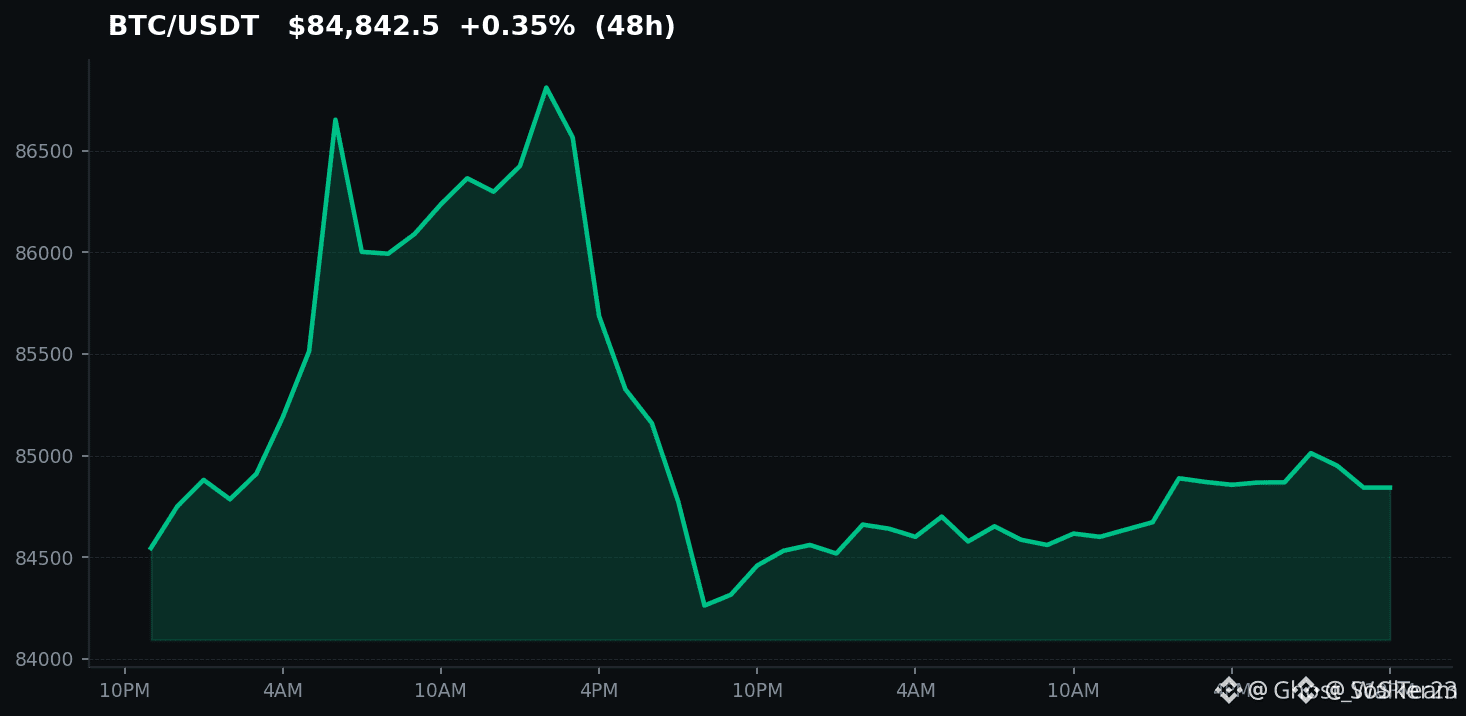
A rejection at a key level is not a rest. It is the market taking the late money and leaving. The risk is not missing the next green candle. The risk is still being long when that ceiling holds again.
Where do you think this goes from here if that level keeps rejecting?
#BitcoinRejectedAt #BitcoinParesGainsAfterRallyTo #FedOctoberRateHikeOddsFallTo17
Here's what happened when Bitcoin tagged resistance last week and got stuffed on the first real test.
The pain is familiar. Traders who chased the strength are now stuck holding a loser they never sized for, wondering if they should cut or add into a wall that already won.
Most people missed the setup. $BTC ran into a known ceiling while sentiment sat in greed, and the tape treated it like confirmation instead of a liquidity grab. Volume never confirmed. Sellers were already there.
Even as hike odds for October faded, the follow-through never showed. Price just pared the rally. That's when capital rotates into $USDT and the weaker bids disappear.
A rejection at a key level is not a rest. It is the market taking the late money and leaving. The risk is not missing the next green candle. The risk is still being long when that ceiling holds again.
Where do you think this goes from here if that level keeps rejecting?
#BitcoinRejectedAt #BitcoinParesGainsAfterRallyTo #FedOctoberRateHikeOddsFallTo17
The pain is familiar. Traders who chased the strength are now stuck holding a loser they never sized for, wondering if they should cut or add into a wall that already won.
Most people missed the setup. $BTC ran into a known ceiling while sentiment sat in greed, and the tape treated it like confirmation instead of a liquidity grab. Volume never confirmed. Sellers were already there.
Even as hike odds for October faded, the follow-through never showed. Price just pared the rally. That's when capital rotates into $USDT and the weaker bids disappear.
A rejection at a key level is not a rest. It is the market taking the late money and leaving. The risk is not missing the next green candle. The risk is still being long when that ceiling holds again.
Where do you think this goes from here if that level keeps rejecting?
#BitcoinRejectedAt #BitcoinParesGainsAfterRallyTo #FedOctoberRateHikeOddsFallTo17

10

·
--
⏸️ Ethereum (ETH) 2,734 — trending up, low volatility, no clear direction on the 1 hour chart.
Levels: entry 2,690 · stop 2,441 · target 3,186 · support 2,573.
Funding +0.0096% per 8h (+10.5% annualised), 45th percentile of the past 167 days · top traders long/short 1.62 (82nd percentile) · 24h +1.74% on $0.3bn spot volume · News tone bullish (+28).
What would change it: an hourly close above 2,906 or below 2,690 (entry).
Spot is 1.61% from 2,690 (entry) — the level that ends this range. Live price below.
Not financial advice. Research desk output; do your own research.
$ETH $BTC #EthereumValidatorExitQueueJumps392% #FedOctoberRateHikeOddsFallTo17%
⏸️ Ethereum (ETH) 2,734 — trending up, low volatility, no clear direction on the 1 hour chart.
Levels: entry 2,690 · stop 2,441 · target 3,186 · support 2,573.
Funding +0.0096% per 8h (+10.5% annualised), 45th percentile of the past 167 days · top traders long/short 1.62 (82nd percentile) · 24h +1.74% on $0.3bn spot volume · News tone bullish (+28).
What would change it: an hourly close above 2,906 or below 2,690 (entry).
Spot is 1.61% from 2,690 (entry) — the level that ends this range. Live price below.
Not financial advice. Research desk output; do your own research.
$ETH $BTC #EthereumValidatorExitQueueJumps392% #FedOctoberRateHikeOddsFallTo17%
Levels: entry 2,690 · stop 2,441 · target 3,186 · support 2,573.
Funding +0.0096% per 8h (+10.5% annualised), 45th percentile of the past 167 days · top traders long/short 1.62 (82nd percentile) · 24h +1.74% on $0.3bn spot volume · News tone bullish (+28).
What would change it: an hourly close above 2,906 or below 2,690 (entry).
Spot is 1.61% from 2,690 (entry) — the level that ends this range. Live price below.
Not financial advice. Research desk output; do your own research.
$ETH $BTC #EthereumValidatorExitQueueJumps392% #FedOctoberRateHikeOddsFallTo17%
14
·
--
Every time Wall Street prints an all-time high on traditional tech giants, retail crypto capital chases the wrong side of the rotation.
Most traders end up panic-buying AI narratives at local tops, only to watch their portfolio bleed out into stablecoins like $USDT while waiting for a breakout that never arrives. It is the painful cycle of buying the headline rather than understanding the underlying infrastructure.
I watched this exact psychological trap play out during previous market rallies. When hardware leaders surge, capital does not flow immediately into speculative tokens; it trickles through decentralized compute and storage layers first. Protocols handling decentralized data networks like $FIL or compute layers like $ETC often see delayed, yet more sustainable re-pricing once the initial euphoria settles.
The lesson from past cycles is that chasing green candles on day one rarely pays off. Real edge comes from recognizing liquidity transitions from traditional equities into decentralized physical infrastructure. Greed pushes traders toward instant gratification, but understanding capital flow is what actually protects your principal.
Are you positioning into decentralized compute infrastructure ahead of the rotation, or waiting for the market to establish clear momentum first?
#NvidiaHitsRecordHighUp2 #FedOctoberRateHikeOddsFallTo17
Every time Wall Street prints an all-time high on traditional tech giants, retail crypto capital chases the wrong side of the rotation.
Most traders end up panic-buying AI narratives at local tops, only to watch their portfolio bleed out into stablecoins like $USDT while waiting for a breakout that never arrives. It is the painful cycle of buying the headline rather than understanding the underlying infrastructure.
I watched this exact psychological trap play out during previous market rallies. When hardware leaders surge, capital does not flow immediately into speculative tokens; it trickles through decentralized compute and storage layers first. Protocols handling decentralized data networks like $FIL or compute layers like $ETC often see delayed, yet more sustainable re-pricing once the initial euphoria settles.
The lesson from past cycles is that chasing green candles on day one rarely pays off. Real edge comes from recognizing liquidity transitions from traditional equities into decentralized physical infrastructure. Greed pushes traders toward instant gratification, but understanding capital flow is what actually protects your principal.
Are you positioning into decentralized compute infrastructure ahead of the rotation, or waiting for the market to establish clear momentum first?
#NvidiaHitsRecordHighUp2 #FedOctoberRateHikeOddsFallTo17
Most traders end up panic-buying AI narratives at local tops, only to watch their portfolio bleed out into stablecoins like $USDT while waiting for a breakout that never arrives. It is the painful cycle of buying the headline rather than understanding the underlying infrastructure.
I watched this exact psychological trap play out during previous market rallies. When hardware leaders surge, capital does not flow immediately into speculative tokens; it trickles through decentralized compute and storage layers first. Protocols handling decentralized data networks like $FIL or compute layers like $ETC often see delayed, yet more sustainable re-pricing once the initial euphoria settles.
The lesson from past cycles is that chasing green candles on day one rarely pays off. Real edge comes from recognizing liquidity transitions from traditional equities into decentralized physical infrastructure. Greed pushes traders toward instant gratification, but understanding capital flow is what actually protects your principal.
Are you positioning into decentralized compute infrastructure ahead of the rotation, or waiting for the market to establish clear momentum first?
#NvidiaHitsRecordHighUp2 #FedOctoberRateHikeOddsFallTo17

23
·
--
If you are still market-buying every major resistance breakout with high leverage, stop now.
Watching your position get liquidated minutes after entering at the local top is a painful lesson most of us have paid for repeatedly. The market sentiment shifts toward greed, everyone assumes continuation is guaranteed, and late buyers end up providing exit liquidity for patient sellers.
We are seeing the exact same dynamic play out again as $BTC gets rejected right at heavy overhead resistance. It feels eerily similar to the consolidation cycles we traded earlier this year, where every aggressive push was sold off into $USDT before finding a genuine base. While the crowd gets frustrated by the rejection, capital quietly shifts sideways into alternatives like $ETC while waiting for volatility to reset.
Rejections at major psychological levels are entirely normal market behavior, yet treating them like immediate breakouts before structural confirmation is how portfolios bleed out. A clean retest often provides a far safer risk-to-reward ratio than chasing green candles into clear supply zones.
Are you accumulating on this pullback or waiting for a confirmed reclaim before stepping back in?
#BitcoinRejectedAt #FedOctoberRateHikeOddsFallTo17
If you are still market-buying every major resistance breakout with high leverage, stop now.
Watching your position get liquidated minutes after entering at the local top is a painful lesson most of us have paid for repeatedly. The market sentiment shifts toward greed, everyone assumes continuation is guaranteed, and late buyers end up providing exit liquidity for patient sellers.
We are seeing the exact same dynamic play out again as $BTC gets rejected right at heavy overhead resistance. It feels eerily similar to the consolidation cycles we traded earlier this year, where every aggressive push was sold off into $USDT before finding a genuine base. While the crowd gets frustrated by the rejection, capital quietly shifts sideways into alternatives like $ETC while waiting for volatility to reset.
Rejections at major psychological levels are entirely normal market behavior, yet treating them like immediate breakouts before structural confirmation is how portfolios bleed out. A clean retest often provides a far safer risk-to-reward ratio than chasing green candles into clear supply zones.
Are you accumulating on this pullback or waiting for a confirmed reclaim before stepping back in?
#BitcoinRejectedAt #FedOctoberRateHikeOddsFallTo17
Watching your position get liquidated minutes after entering at the local top is a painful lesson most of us have paid for repeatedly. The market sentiment shifts toward greed, everyone assumes continuation is guaranteed, and late buyers end up providing exit liquidity for patient sellers.
We are seeing the exact same dynamic play out again as $BTC gets rejected right at heavy overhead resistance. It feels eerily similar to the consolidation cycles we traded earlier this year, where every aggressive push was sold off into $USDT before finding a genuine base. While the crowd gets frustrated by the rejection, capital quietly shifts sideways into alternatives like $ETC while waiting for volatility to reset.
Rejections at major psychological levels are entirely normal market behavior, yet treating them like immediate breakouts before structural confirmation is how portfolios bleed out. A clean retest often provides a far safer risk-to-reward ratio than chasing green candles into clear supply zones.
Are you accumulating on this pullback or waiting for a confirmed reclaim before stepping back in?
#BitcoinRejectedAt #FedOctoberRateHikeOddsFallTo17
2
·
--
Dogecoin USD: NEUTRAL# Dogecoin (DOGE): NEUTRAL — the desk's read as of 2026-10-04
**Call:** NEUTRAL, conviction 2 of 100, evidence grade C. Price 0.09451 USD.
## What the charts say
The trend regime is ranging with low volatility (67.2% annualised) and RSI 14 at 67.8. 9 of 14 trend signals on the 1 hour chart agree with the call.
## Levels to watch
- **entry**: 0.092826
- **target**: 0.11125
## The setup
Trendline bounce — LONG, active. Entry 0.092826, stop 0.08609, target 0.11125; 2.74R with quality 65.
Why: ['sitting on a rising support line at 0.090894 (3 touches)', 'stop one ATR under the line', 'target the resistance line', 'a modelled liquidation shelf sits at 0.0984246 between entry and target']
## Positioning and flow
Funding at +0.0100% per eight hours, +10.9% a year, open interest about $0.29bn. 24-hour move +1.57% on $0.03bn of spot volume. Top traders' long/short ratio 3.85, the 61st percentile of the past three weeks, taker buy/sell 1.16. Open interest is long buildup — contracts +1.79% against price +1.14% over 24 hours, counted in contracts rather than dollars, which means new money behind the move — the strongest continuation reading. The perpetual trades -46% annualised against spot, inside the ±179% a round trip costs at retail fees, so it is real but not payable.
## The news
Tone reads mixed (+5) over 16 opinionated headlines; themes: flows & positioning, earnings & guidance, central banks & rates. Headline risk elevated.
## Risk
Position size so that the stop costs at most 1% of the account. No averaging down, no grid, no martingale. Perpetual leverage above the stop distance invites liquidation before the stop.
*Not financial advice. Research desk output; do your own research.*
$DOGE $BTC $ETH #FedOctoberRateHikeOddsFallTo17% #GreekPoliceBustCryptoScamRingArrest17
Dogecoin USD: NEUTRAL
# Dogecoin (DOGE): NEUTRAL — the desk's read as of 2026-10-04
**Call:** NEUTRAL, conviction 2 of 100, evidence grade C. Price 0.09451 USD.
## What the charts say
The trend regime is ranging with low volatility (67.2% annualised) and RSI 14 at 67.8. 9 of 14 trend signals on the 1 hour chart agree with the call.
## Levels to watch
- **entry**: 0.092826
- **target**: 0.11125
## The setup
Trendline bounce — LONG, active. Entry 0.092826, stop 0.08609, target 0.11125; 2.74R with quality 65.
Why: ['sitting on a rising support line at 0.090894 (3 touches)', 'stop one ATR under the line', 'target the resistance line', 'a modelled liquidation shelf sits at 0.0984246 between entry and target']
## Positioning and flow
Funding at +0.0100% per eight hours, +10.9% a year, open interest about $0.29bn. 24-hour move +1.57% on $0.03bn of spot volume. Top traders' long/short ratio 3.85, the 61st percentile of the past three weeks, taker buy/sell 1.16. Open interest is long buildup — contracts +1.79% against price +1.14% over 24 hours, counted in contracts rather than dollars, which means new money behind the move — the strongest continuation reading. The perpetual trades -46% annualised against spot, inside the ±179% a round trip costs at retail fees, so it is real but not payable.
## The news
Tone reads mixed (+5) over 16 opinionated headlines; themes: flows & positioning, earnings & guidance, central banks & rates. Headline risk elevated.
## Risk
Position size so that the stop costs at most 1% of the account. No averaging down, no grid, no martingale. Perpetual leverage above the stop distance invites liquidation before the stop.
*Not financial advice. Research desk output; do your own research.*
$DOGE $BTC $ETH #FedOctoberRateHikeOddsFallTo17% #GreekPoliceBustCryptoScamRingArrest17
**Call:** NEUTRAL, conviction 2 of 100, evidence grade C. Price 0.09451 USD.
## What the charts say
The trend regime is ranging with low volatility (67.2% annualised) and RSI 14 at 67.8. 9 of 14 trend signals on the 1 hour chart agree with the call.
## Levels to watch
- **entry**: 0.092826
- **target**: 0.11125
## The setup
Trendline bounce — LONG, active. Entry 0.092826, stop 0.08609, target 0.11125; 2.74R with quality 65.
Why: ['sitting on a rising support line at 0.090894 (3 touches)', 'stop one ATR under the line', 'target the resistance line', 'a modelled liquidation shelf sits at 0.0984246 between entry and target']
## Positioning and flow
Funding at +0.0100% per eight hours, +10.9% a year, open interest about $0.29bn. 24-hour move +1.57% on $0.03bn of spot volume. Top traders' long/short ratio 3.85, the 61st percentile of the past three weeks, taker buy/sell 1.16. Open interest is long buildup — contracts +1.79% against price +1.14% over 24 hours, counted in contracts rather than dollars, which means new money behind the move — the strongest continuation reading. The perpetual trades -46% annualised against spot, inside the ±179% a round trip costs at retail fees, so it is real but not payable.
## The news
Tone reads mixed (+5) over 16 opinionated headlines; themes: flows & positioning, earnings & guidance, central banks & rates. Headline risk elevated.
## Risk
Position size so that the stop costs at most 1% of the account. No averaging down, no grid, no martingale. Perpetual leverage above the stop distance invites liquidation before the stop.
*Not financial advice. Research desk output; do your own research.*
$DOGE $BTC $ETH #FedOctoberRateHikeOddsFallTo17% #GreekPoliceBustCryptoScamRingArrest17
35
Everyone thinks a surging validator queue means an instant crash, but actually it is more about capital rotation than outright panic.
Watching the staking exit queue climb makes most retail holders nervous about losing money to sudden market dumps. The real pain comes from panic selling your spot $ETH at the bottom while large operators simply reshuffle their yield strategies.
Think of validator queues like airport security lines before a busy travel weekend. When stakers withdraw their rewards or rebalance into liquidity pools and $USDT reserves, they must wait in line to leave the network safely. A spike in the exit queue does not automatically mean all those coins hit order books immediately; many institutions are just migrating funds to capture different lending rates or rebalancing their exposure alongside assets like $ETC.
Understanding this dynamic helps you distinguish between true network abandonment and routine balance sheet management. The market often overreacts to queue numbers because the raw data looks intimidating on paper, yet actual sell pressure distributes across days or weeks rather than hitting all at once.
Where do you think validator queue dynamics will push liquidity next?
#EthereumValidatorExitQueueJumps392 #FedOctoberRateHikeOddsFallTo17
Everyone thinks a surging validator queue means an instant crash, but actually it is more about capital rotation than outright panic.
Watching the staking exit queue climb makes most retail holders nervous about losing money to sudden market dumps. The real pain comes from panic selling your spot $ETH at the bottom while large operators simply reshuffle their yield strategies.
Think of validator queues like airport security lines before a busy travel weekend. When stakers withdraw their rewards or rebalance into liquidity pools and $USDT reserves, they must wait in line to leave the network safely. A spike in the exit queue does not automatically mean all those coins hit order books immediately; many institutions are just migrating funds to capture different lending rates or rebalancing their exposure alongside assets like $ETC .
Understanding this dynamic helps you distinguish between true network abandonment and routine balance sheet management. The market often overreacts to queue numbers because the raw data looks intimidating on paper, yet actual sell pressure distributes across days or weeks rather than hitting all at once.
Where do you think validator queue dynamics will push liquidity next?
#EthereumValidatorExitQueueJumps392 #FedOctoberRateHikeOddsFallTo17
Watching the staking exit queue climb makes most retail holders nervous about losing money to sudden market dumps. The real pain comes from panic selling your spot $ETH at the bottom while large operators simply reshuffle their yield strategies.
Think of validator queues like airport security lines before a busy travel weekend. When stakers withdraw their rewards or rebalance into liquidity pools and $USDT reserves, they must wait in line to leave the network safely. A spike in the exit queue does not automatically mean all those coins hit order books immediately; many institutions are just migrating funds to capture different lending rates or rebalancing their exposure alongside assets like $ETC .
Understanding this dynamic helps you distinguish between true network abandonment and routine balance sheet management. The market often overreacts to queue numbers because the raw data looks intimidating on paper, yet actual sell pressure distributes across days or weeks rather than hitting all at once.
Where do you think validator queue dynamics will push liquidity next?
#EthereumValidatorExitQueueJumps392 #FedOctoberRateHikeOddsFallTo17

18
·
--
IMF just approved El Salvador's deal and crypto is treating it like a $BTC victory when the fine print looks more like a leash.
Traders keep getting wrecked FOMO-buying nation-state headlines that later get walked back. You pile in on the announcement, the conditions drop, and now you're the exit liquidity.
The IMF has spent years telling El Salvador that holding volatile Bitcoin on the sovereign balance sheet is reckless. This approval reportedly came after they agreed to make Bitcoin optional for businesses and to stop using public funds to stack more. That's not doubling down. That's a government choosing access to dollars over maximalist policy. We've seen the pattern before: a country announces crypto experiments, price pumps, then debt and lenders force a quieter pivot. El Salvador still holds its coins, but the state bid just got weaker. In a market already sitting at greed, this is the kind of news that pulls in the last buyers who never read past the headline. If they need to prove fiscal discipline to the IMF later, don't be shocked if some of that $BTC finds its way onto the market while $USDT volume stays elevated as people wait on the sidelines.
Where do you think this actually goes from here?
#IMFApprovesElSalvador #BitcoinRejectedAt #FedOctoberRateHikeOddsFallTo17
IMF just approved El Salvador's deal and crypto is treating it like a $BTC victory when the fine print looks more like a leash.
Traders keep getting wrecked FOMO-buying nation-state headlines that later get walked back. You pile in on the announcement, the conditions drop, and now you're the exit liquidity.
The IMF has spent years telling El Salvador that holding volatile Bitcoin on the sovereign balance sheet is reckless. This approval reportedly came after they agreed to make Bitcoin optional for businesses and to stop using public funds to stack more. That's not doubling down. That's a government choosing access to dollars over maximalist policy. We've seen the pattern before: a country announces crypto experiments, price pumps, then debt and lenders force a quieter pivot. El Salvador still holds its coins, but the state bid just got weaker. In a market already sitting at greed, this is the kind of news that pulls in the last buyers who never read past the headline. If they need to prove fiscal discipline to the IMF later, don't be shocked if some of that $BTC finds its way onto the market while $USDT volume stays elevated as people wait on the sidelines.
Where do you think this actually goes from here?
#IMFApprovesElSalvador #BitcoinRejectedAt #FedOctoberRateHikeOddsFallTo17
Traders keep getting wrecked FOMO-buying nation-state headlines that later get walked back. You pile in on the announcement, the conditions drop, and now you're the exit liquidity.
The IMF has spent years telling El Salvador that holding volatile Bitcoin on the sovereign balance sheet is reckless. This approval reportedly came after they agreed to make Bitcoin optional for businesses and to stop using public funds to stack more. That's not doubling down. That's a government choosing access to dollars over maximalist policy. We've seen the pattern before: a country announces crypto experiments, price pumps, then debt and lenders force a quieter pivot. El Salvador still holds its coins, but the state bid just got weaker. In a market already sitting at greed, this is the kind of news that pulls in the last buyers who never read past the headline. If they need to prove fiscal discipline to the IMF later, don't be shocked if some of that $BTC finds its way onto the market while $USDT volume stays elevated as people wait on the sidelines.
Where do you think this actually goes from here?
#IMFApprovesElSalvador #BitcoinRejectedAt #FedOctoberRateHikeOddsFallTo17

27
·
--
⏸️ TRON (TRX) 0.3362 — ranging, low volatility, no clear direction on the 1 hour chart.
Levels: entry 0.33546 · stop 0.32809 · target 0.35212.
Funding -0.0396% per 8h (-43.3% annualised), 10th percentile of the past 167 days · top traders long/short 0.68 (23rd percentile) · 24h -0.18% on $0.0bn spot volume · News tone mixed (+17).
What would change it: an hourly close above 0.35212 (target) or below 0.32809 (stop).
Spot is 2.41% from 0.32809 (stop) — the level that ends this range. Live price below.
Not financial advice. Research desk output; do your own research.
$TRX $BTC $ETH #FedOctoberRateHikeOddsFallTo17% #GreekPoliceBustCryptoScamRingArrest17
⏸️ TRON (TRX) 0.3362 — ranging, low volatility, no clear direction on the 1 hour chart.
Levels: entry 0.33546 · stop 0.32809 · target 0.35212.
Funding -0.0396% per 8h (-43.3% annualised), 10th percentile of the past 167 days · top traders long/short 0.68 (23rd percentile) · 24h -0.18% on $0.0bn spot volume · News tone mixed (+17).
What would change it: an hourly close above 0.35212 (target) or below 0.32809 (stop).
Spot is 2.41% from 0.32809 (stop) — the level that ends this range. Live price below.
Not financial advice. Research desk output; do your own research.
$TRX $BTC $ETH #FedOctoberRateHikeOddsFallTo17% #GreekPoliceBustCryptoScamRingArrest17
Levels: entry 0.33546 · stop 0.32809 · target 0.35212.
Funding -0.0396% per 8h (-43.3% annualised), 10th percentile of the past 167 days · top traders long/short 0.68 (23rd percentile) · 24h -0.18% on $0.0bn spot volume · News tone mixed (+17).
What would change it: an hourly close above 0.35212 (target) or below 0.32809 (stop).
Spot is 2.41% from 0.32809 (stop) — the level that ends this range. Live price below.
Not financial advice. Research desk output; do your own research.
$TRX $BTC $ETH #FedOctoberRateHikeOddsFallTo17% #GreekPoliceBustCryptoScamRingArrest17
31
·
--
Everyone thinks a Bitcoin rally is a signal to go all in, but actually the paring of gains that follows is where most people get caught offside.
You've been there. FOMO buying $BTC after a strong run only to see it pull back and wonder why you didn't wait or take some off the table.
This pattern repeats more than we'd like.
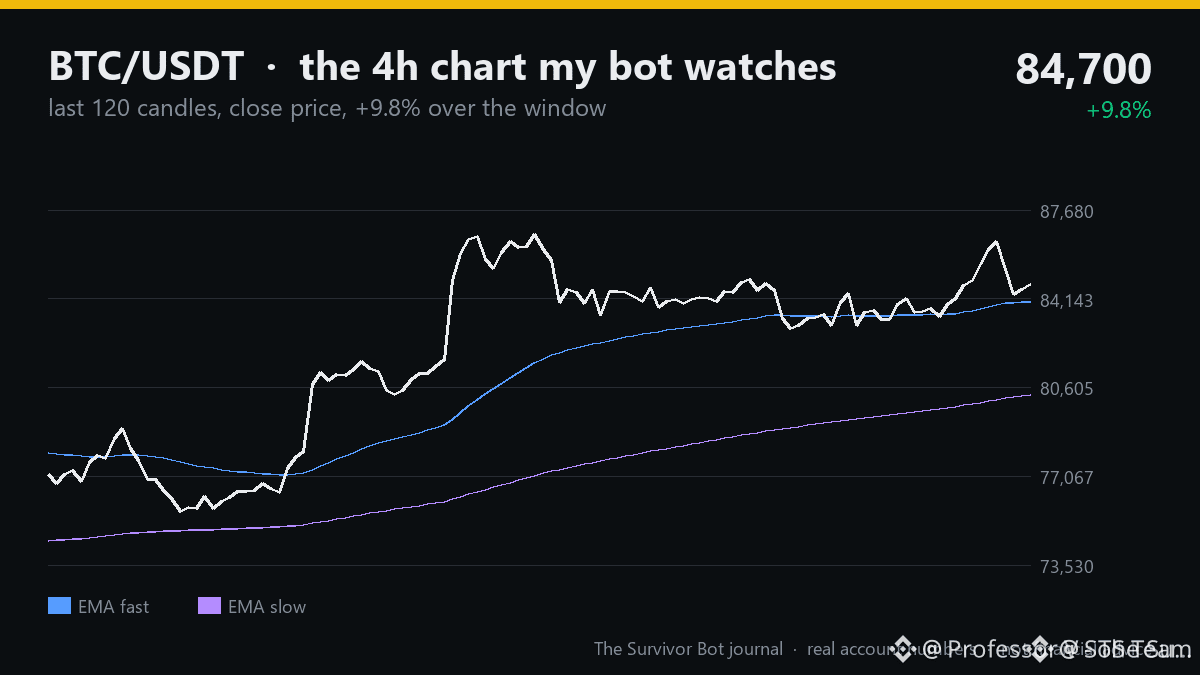
Bitcoin rallies hard then gives back a chunk, similar to a rubber band stretched too far before it snaps back a bit. Right now with greed at 67, the crowd is feeling invincible which is usually a cue for caution.
People convert their $USDT and chase, then freeze when it retraces. The mistake is not having an exit plan or worse adding on the way down thinking it's a dip to buy. Tokens following the leader like $PEPE can make those moves feel even sharper.
Where do you think Bitcoin goes from this pullback?
#BitcoinParesGainsAfterRallyTo #BitcoinRejectedAt #FedOctoberRateHikeOddsFallTo17
Everyone thinks a Bitcoin rally is a signal to go all in, but actually the paring of gains that follows is where most people get caught offside.
You've been there. FOMO buying $BTC after a strong run only to see it pull back and wonder why you didn't wait or take some off the table.
This pattern repeats more than we'd like.
Bitcoin rallies hard then gives back a chunk, similar to a rubber band stretched too far before it snaps back a bit. Right now with greed at 67, the crowd is feeling invincible which is usually a cue for caution.
People convert their $USDT and chase, then freeze when it retraces. The mistake is not having an exit plan or worse adding on the way down thinking it's a dip to buy. Tokens following the leader like $PEPE can make those moves feel even sharper.
Where do you think Bitcoin goes from this pullback?
#BitcoinParesGainsAfterRallyTo #BitcoinRejectedAt #FedOctoberRateHikeOddsFallTo17
You've been there. FOMO buying $BTC after a strong run only to see it pull back and wonder why you didn't wait or take some off the table.
This pattern repeats more than we'd like.
Bitcoin rallies hard then gives back a chunk, similar to a rubber band stretched too far before it snaps back a bit. Right now with greed at 67, the crowd is feeling invincible which is usually a cue for caution.
People convert their $USDT and chase, then freeze when it retraces. The mistake is not having an exit plan or worse adding on the way down thinking it's a dip to buy. Tokens following the leader like $PEPE can make those moves feel even sharper.
Where do you think Bitcoin goes from this pullback?
#BitcoinParesGainsAfterRallyTo #BitcoinRejectedAt #FedOctoberRateHikeOddsFallTo17
15
·
--
Have you noticed how quickly the market labels every SEC move as an attack instead of asking what it actually unlocks?
Most traders have already eaten losses from exchange failures and opaque custody, yet they still sell first and think later whenever Washington speaks. That reflex is exactly why they miss the setup.
These proposed custody rules aren't about crushing the space. They're about giving institutions a legal way to hold crypto without waking up to a lawsuit. That's the missing piece.
While Fear and Greed sits at 67 and timelines fill with $USDT, $ZRO and $GLMR chatter, the bigger picture is that clearer custody standards bring real capital, not just retail FOMO.
Get your own setup right now. Audit your holdings, reduce exchange exposure on anything you plan to keep long term, and pay attention to how liquid assets behave once the details land. The ones who wait for perfect confirmation usually buy higher.
Where do you think this goes from here?
#SECProposesCryptoCustodyRules #FedOctoberRateHikeOddsFallTo17 #BitcoinRejectedAt
Have you noticed how quickly the market labels every SEC move as an attack instead of asking what it actually unlocks?
Most traders have already eaten losses from exchange failures and opaque custody, yet they still sell first and think later whenever Washington speaks. That reflex is exactly why they miss the setup.
These proposed custody rules aren't about crushing the space. They're about giving institutions a legal way to hold crypto without waking up to a lawsuit. That's the missing piece.
While Fear and Greed sits at 67 and timelines fill with $USDT, $ZRO and $GLMR chatter, the bigger picture is that clearer custody standards bring real capital, not just retail FOMO.
Get your own setup right now. Audit your holdings, reduce exchange exposure on anything you plan to keep long term, and pay attention to how liquid assets behave once the details land. The ones who wait for perfect confirmation usually buy higher.
Where do you think this goes from here?
#SECProposesCryptoCustodyRules #FedOctoberRateHikeOddsFallTo17 #BitcoinRejectedAt
Most traders have already eaten losses from exchange failures and opaque custody, yet they still sell first and think later whenever Washington speaks. That reflex is exactly why they miss the setup.
These proposed custody rules aren't about crushing the space. They're about giving institutions a legal way to hold crypto without waking up to a lawsuit. That's the missing piece.
While Fear and Greed sits at 67 and timelines fill with $USDT, $ZRO and $GLMR chatter, the bigger picture is that clearer custody standards bring real capital, not just retail FOMO.
Get your own setup right now. Audit your holdings, reduce exchange exposure on anything you plan to keep long term, and pay attention to how liquid assets behave once the details land. The ones who wait for perfect confirmation usually buy higher.
Where do you think this goes from here?
#SECProposesCryptoCustodyRules #FedOctoberRateHikeOddsFallTo17 #BitcoinRejectedAt

62
Here is what happened when regulators tried to draw a hard line around who gets to hold digital assets.
Most investors still remember the gut-wrenching feeling of waking up to frozen withdrawals and realizing their funds were never truly segregated in the first place. Trying to navigate institutional-grade security while balancing daily liquidity with assets like $USDT remains one of the hardest operational hurdles in the space.
When the SEC pushed for stricter custody requirements, it immediately brought back memories of how prime brokerages reshaped traditional equities decades ago. On paper, mandating registered custodians protects client capital from reckless commingling, but in practice, it creates a massive compliance moat that smaller infrastructure players simply cannot afford. We saw a similar dynamic unfold across decentralized messaging protocols like $AR and cross-chain settlement networks like $ZRO, where compliance pressure either forces complete decentralization or total institutional surrender.
If institutional custody becomes standard practice, the market likely splits into two distinct tiers: ultra-regulated walled gardens and censorship-resistant on-chain liquidity.
Do you think stricter custody rules will finally bring true institutional volume, or will it just push genuine activity further offshore?
#SECProposesCryptoCustodyRules #FedOctoberRateHikeOddsFallTo17
Here is what happened when regulators tried to draw a hard line around who gets to hold digital assets.
Most investors still remember the gut-wrenching feeling of waking up to frozen withdrawals and realizing their funds were never truly segregated in the first place. Trying to navigate institutional-grade security while balancing daily liquidity with assets like $USDT remains one of the hardest operational hurdles in the space.
When the SEC pushed for stricter custody requirements, it immediately brought back memories of how prime brokerages reshaped traditional equities decades ago. On paper, mandating registered custodians protects client capital from reckless commingling, but in practice, it creates a massive compliance moat that smaller infrastructure players simply cannot afford. We saw a similar dynamic unfold across decentralized messaging protocols like $AR and cross-chain settlement networks like $ZRO , where compliance pressure either forces complete decentralization or total institutional surrender.
If institutional custody becomes standard practice, the market likely splits into two distinct tiers: ultra-regulated walled gardens and censorship-resistant on-chain liquidity.
Do you think stricter custody rules will finally bring true institutional volume, or will it just push genuine activity further offshore?
#SECProposesCryptoCustodyRules #FedOctoberRateHikeOddsFallTo17
Most investors still remember the gut-wrenching feeling of waking up to frozen withdrawals and realizing their funds were never truly segregated in the first place. Trying to navigate institutional-grade security while balancing daily liquidity with assets like $USDT remains one of the hardest operational hurdles in the space.
When the SEC pushed for stricter custody requirements, it immediately brought back memories of how prime brokerages reshaped traditional equities decades ago. On paper, mandating registered custodians protects client capital from reckless commingling, but in practice, it creates a massive compliance moat that smaller infrastructure players simply cannot afford. We saw a similar dynamic unfold across decentralized messaging protocols like $AR and cross-chain settlement networks like $ZRO , where compliance pressure either forces complete decentralization or total institutional surrender.
If institutional custody becomes standard practice, the market likely splits into two distinct tiers: ultra-regulated walled gardens and censorship-resistant on-chain liquidity.
Do you think stricter custody rules will finally bring true institutional volume, or will it just push genuine activity further offshore?
#SECProposesCryptoCustodyRules #FedOctoberRateHikeOddsFallTo17

173
Everyone thinks Nvidia hitting a record high means AI crypto is about to print, but actually it is often the moment late buyers get wrecked.
You watch the stock rip 2 percent to a new high and suddenly every AI token looks cheap. Then you buy $WLD or $PHA near the top, only to watch it retrace while you wonder why the obvious move did not play out.
Nvidia making chips for data centers is not the same as a token launching an AI narrative. It is like a stadium filling up for a championship game and thinking every street vendor outside will get rich.
Some vendors will, most will not. With greed already at 67, the crowd is already leaning too far forward. Tokens like $QNT that actually have enterprise use cases still get painted with the same hype brush.
That rarely ends well for the people who just discovered them today. The pattern repeats because people treat the headline as a buy signal instead of a reminder to manage risk.
Where do you think the AI narrative goes from here after this Nvidia print?
#NvidiaHitsRecordHighUp2 #BitcoinRejectedAt #FedOctoberRateHikeOddsFallTo17
Everyone thinks Nvidia hitting a record high means AI crypto is about to print, but actually it is often the moment late buyers get wrecked.
You watch the stock rip 2 percent to a new high and suddenly every AI token looks cheap. Then you buy $WLD or $PHA near the top, only to watch it retrace while you wonder why the obvious move did not play out.
Nvidia making chips for data centers is not the same as a token launching an AI narrative. It is like a stadium filling up for a championship game and thinking every street vendor outside will get rich.
Some vendors will, most will not. With greed already at 67, the crowd is already leaning too far forward. Tokens like $QNT that actually have enterprise use cases still get painted with the same hype brush.
That rarely ends well for the people who just discovered them today. The pattern repeats because people treat the headline as a buy signal instead of a reminder to manage risk.
Where do you think the AI narrative goes from here after this Nvidia print?
#NvidiaHitsRecordHighUp2 #BitcoinRejectedAt #FedOctoberRateHikeOddsFallTo17
You watch the stock rip 2 percent to a new high and suddenly every AI token looks cheap. Then you buy $WLD or $PHA near the top, only to watch it retrace while you wonder why the obvious move did not play out.
Nvidia making chips for data centers is not the same as a token launching an AI narrative. It is like a stadium filling up for a championship game and thinking every street vendor outside will get rich.
Some vendors will, most will not. With greed already at 67, the crowd is already leaning too far forward. Tokens like $QNT that actually have enterprise use cases still get painted with the same hype brush.
That rarely ends well for the people who just discovered them today. The pattern repeats because people treat the headline as a buy signal instead of a reminder to manage risk.
Where do you think the AI narrative goes from here after this Nvidia print?
#NvidiaHitsRecordHighUp2 #BitcoinRejectedAt #FedOctoberRateHikeOddsFallTo17

1
123
Log in to explore more content
Join global crypto users on Binance Square
⚡️ Get latest and useful information about crypto.
💬 Trusted by the world’s largest crypto exchange.
👍 Discover real insights from verified creators.
Email / Phone number
Trending Topics
1
#BNBSurpasses$790
19,900 views
149 Discussing
2
#ZamaRises15.99%ToIntradayHigh$0.09
18,072 views
106 Discussing
3
#BitcoinSpotETFsDraw$6.34BInflowsInQ3
6,170 views
91 Discussing
4
#EthereumValidatorExitQueueJumps392%
98,730 views
942 Discussing
5
#IMFApprovesElSalvador$138MWithBitcoinWaiver
13,953 views
63 Discussing
6
#SECHaltsCryptoETFReviewsAmidFundingLapse
262,970 views
1,805 Discussing
7
#ZcashETFPostsFirstWeeklyOutflow$93.6M
95,990 views
254 Discussing
8
#GreekPoliceBustCryptoScamRingArrest17
382,062 views
2,444 Discussing
9
#BitcoinRejectedAt$87K
225,349 views
321 Discussing
10
#FedOctoberRateHikeOddsFallTo17%
390,252 views
2,566 Discussing