

#ethbreaksabove
ethbreaksabove
360 views
16 Discussing
Hot
Latest

Here's what happened when Ethereum finally cleared the ceiling that had rejected it three times this year.
A lot of traders either bought the last two fakeouts and got wrecked, or they sat in $USDT waiting for a perfect signal and missed the actual break. That kind of timing pain is what this market loves to dish out.
This time the close above resistance actually held. Volume stayed in, and $ETH did not immediately dump the way it did in previous attempts. Compare that to $BTC, which keeps getting turned away at its own highs. We saw this exact rotation in 2021. Bitcoin ran first, then Ethereum caught the capital looking for the next leg. ETF inflows have already put a floor under the whole market, so the money has somewhere to go when it rotates.
Fear and greed sitting at 72 means people are already leaning long. Breakouts in that environment can run, but they also chew up anyone who chases the first green candles instead of waiting for the retest. Past ETH moves taught the same lesson. Size in after confirmation, not during the spike.
Where do you think this goes from here relative to Bitcoin?
#ETHBreaksAbove #SpotBitcoinETFsInflow #BitcoinRejectedAt
Here's what happened when Ethereum finally cleared the ceiling that had rejected it three times this year.
A lot of traders either bought the last two fakeouts and got wrecked, or they sat in $USDT waiting for a perfect signal and missed the actual break. That kind of timing pain is what this market loves to dish out.
This time the close above resistance actually held. Volume stayed in, and $ETH did not immediately dump the way it did in previous attempts. Compare that to $BTC , which keeps getting turned away at its own highs. We saw this exact rotation in 2021. Bitcoin ran first, then Ethereum caught the capital looking for the next leg. ETF inflows have already put a floor under the whole market, so the money has somewhere to go when it rotates.
Fear and greed sitting at 72 means people are already leaning long. Breakouts in that environment can run, but they also chew up anyone who chases the first green candles instead of waiting for the retest. Past ETH moves taught the same lesson. Size in after confirmation, not during the spike.
Where do you think this goes from here relative to Bitcoin?
#ETHBreaksAbove #SpotBitcoinETFsInflow #BitcoinRejectedAt
A lot of traders either bought the last two fakeouts and got wrecked, or they sat in $USDT waiting for a perfect signal and missed the actual break. That kind of timing pain is what this market loves to dish out.
This time the close above resistance actually held. Volume stayed in, and $ETH did not immediately dump the way it did in previous attempts. Compare that to $BTC , which keeps getting turned away at its own highs. We saw this exact rotation in 2021. Bitcoin ran first, then Ethereum caught the capital looking for the next leg. ETF inflows have already put a floor under the whole market, so the money has somewhere to go when it rotates.
Fear and greed sitting at 72 means people are already leaning long. Breakouts in that environment can run, but they also chew up anyone who chases the first green candles instead of waiting for the retest. Past ETH moves taught the same lesson. Size in after confirmation, not during the spike.
Where do you think this goes from here relative to Bitcoin?
#ETHBreaksAbove #SpotBitcoinETFsInflow #BitcoinRejectedAt
8

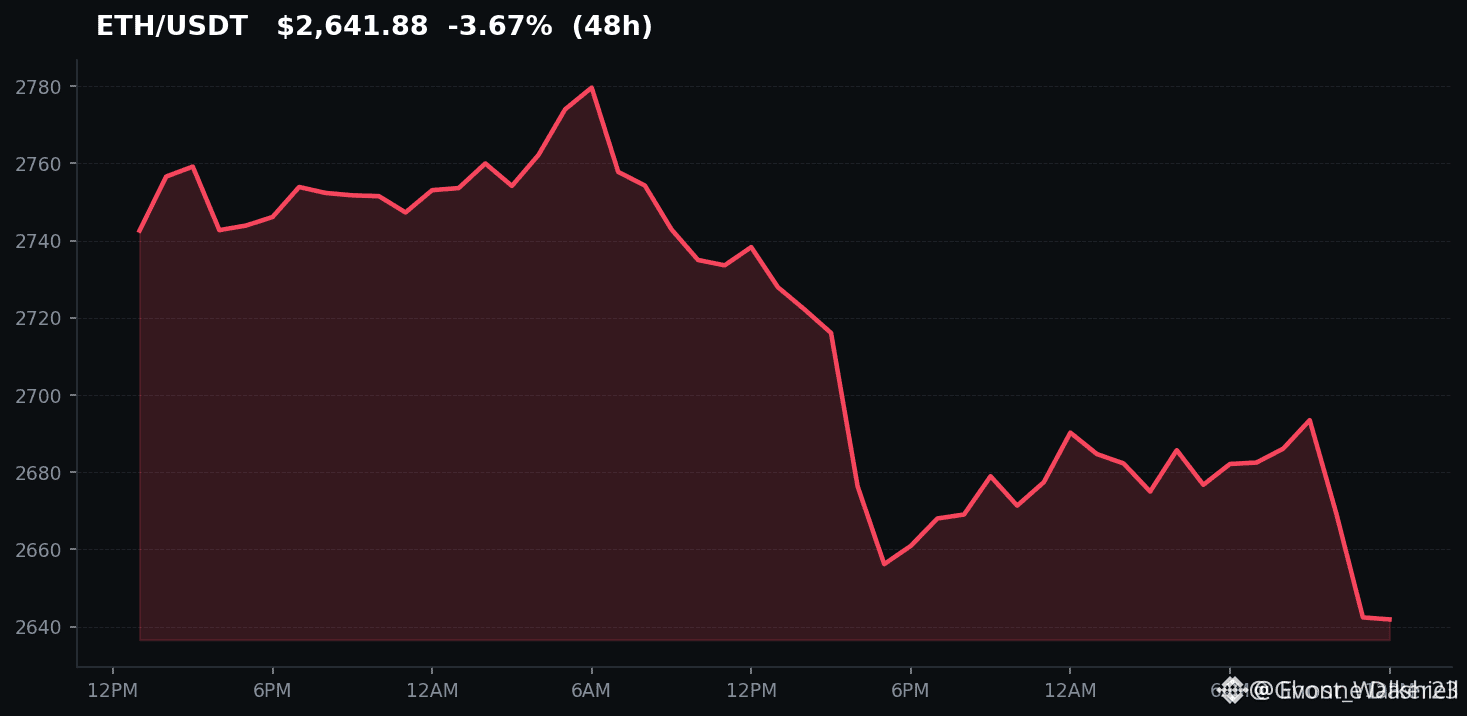
Ethereum has successfully broken above the $2,700 mark, signaling a potential shift in momentum for the second-largest cryptocurrency. This upward movement could be driven by a combination of factors including positive developments in the Ethereum ecosystem, anticipation of upcoming upgrades, and broader market sentiment.
Traders and investors are closely watching to see if this breakout can be sustained. A confirmed hold above $2,700 could pave the way for further gains, potentially targeting previous resistance levels. Conversely, failure to maintain this level might lead to a pullback, with $2,500 acting as a key support zone. The market is currently in a state of heightened interest, with many looking for signs of continued strength.
Disclaimer: This content is for informational purposes only and does not constitute investment advice.
#ETHBreaksAbove$2,700 $ETH
Ethereum has successfully broken above the $2,700 mark, signaling a potential shift in momentum for the second-largest cryptocurrency. This upward movement could be driven by a combination of factors including positive developments in the Ethereum ecosystem, anticipation of upcoming upgrades, and broader market sentiment.
Traders and investors are closely watching to see if this breakout can be sustained. A confirmed hold above $2,700 could pave the way for further gains, potentially targeting previous resistance levels. Conversely, failure to maintain this level might lead to a pullback, with $2,500 acting as a key support zone. The market is currently in a state of heightened interest, with many looking for signs of continued strength.
Disclaimer: This content is for informational purposes only and does not constitute investment advice.
#ETHBreaksAbove$2,700 $ETH
Traders and investors are closely watching to see if this breakout can be sustained. A confirmed hold above $2,700 could pave the way for further gains, potentially targeting previous resistance levels. Conversely, failure to maintain this level might lead to a pullback, with $2,500 acting as a key support zone. The market is currently in a state of heightened interest, with many looking for signs of continued strength.
Disclaimer: This content is for informational purposes only and does not constitute investment advice.
#ETHBreaksAbove$2,700 $ETH
4
20

·
--
Have you noticed nobody is questioning whether this $ETH break above is just another fakeout dressed as a breakout?
The worst part is buying after the confirmation candle and then sitting through the dump back into range. That is how people keep losing money on moves they thought they finally timed right.
Look at Ethereum as a case study. The last few times it punched through a major level, greed was already high and the follow through never came. $USDT flooded in, volume spiked, and then the same sellers who waited at resistance took it back.
Fear and Greed is at 72 right now. $BTC already got rejected at the highs. This does not look like a clean trend start. It looks like the crowd getting excited at the exact moment they usually become exit liquidity.
The traders who actually caught $ETH runs bought the quiet periods, not the breakout headlines.
Where do you think this goes from here if greed stays elevated?
#ETHBreaksAbove #BitcoinRejectedAt #SpotBitcoinETFsInflow
Have you noticed nobody is questioning whether this $ETH break above is just another fakeout dressed as a breakout?
The worst part is buying after the confirmation candle and then sitting through the dump back into range. That is how people keep losing money on moves they thought they finally timed right.
Look at Ethereum as a case study. The last few times it punched through a major level, greed was already high and the follow through never came. $USDT flooded in, volume spiked, and then the same sellers who waited at resistance took it back.
Fear and Greed is at 72 right now. $BTC already got rejected at the highs. This does not look like a clean trend start. It looks like the crowd getting excited at the exact moment they usually become exit liquidity.
The traders who actually caught $ETH runs bought the quiet periods, not the breakout headlines.
Where do you think this goes from here if greed stays elevated?
#ETHBreaksAbove #BitcoinRejectedAt #SpotBitcoinETFsInflow
The worst part is buying after the confirmation candle and then sitting through the dump back into range. That is how people keep losing money on moves they thought they finally timed right.
Look at Ethereum as a case study. The last few times it punched through a major level, greed was already high and the follow through never came. $USDT flooded in, volume spiked, and then the same sellers who waited at resistance took it back.
Fear and Greed is at 72 right now. $BTC already got rejected at the highs. This does not look like a clean trend start. It looks like the crowd getting excited at the exact moment they usually become exit liquidity.
The traders who actually caught $ETH runs bought the quiet periods, not the breakout headlines.
Where do you think this goes from here if greed stays elevated?
#ETHBreaksAbove #BitcoinRejectedAt #SpotBitcoinETFsInflow

16

Ethereum's surge past $2,700 is a signal that bulls are back in town! 🐂💪 With the market cooling on coins like NEAR and ZEC, could $ETH be paving the way for a new alt season? What’s your take on this rally? #ETHBreaksAbove$2,700
🔔 Follow us for daily crypto insights — más viene en camino!
Ethereum's surge past $2,700 is a signal that bulls are back in town! 🐂💪 With the market cooling on coins like NEAR and ZEC, could $ETH be paving the way for a new alt season? What’s your take on this rally? #ETHBreaksAbove$2,700
🔔 Follow us for daily crypto insights — más viene en camino!
🔔 Follow us for daily crypto insights — más viene en camino!
5

·
--
ETH climbs above 2700 and hits the hot list | Price back around 2692 again | I don’t treat a touch as a breakout
My stance is to verify in advance—I don’t chase. The accurate trending topic on Binance Square is #ETHBreaksAbove$2,700, and the page’s six-hour hot search also lists ETH as a fast riser. This indicates rising attention, not necessarily sustained capital inflows. In a Binance News official market update, it states that at 16:43 UTC on September 24, ETH was at 2702.61 USDT, up 1.43% over 24 hours. But when I rechecked KuCoin spot while writing, it was around $2692.32; over the past 24 hours, the high was 2705.79 and the low 2628.58. The quotes differ slightly between the two platforms, but they both point to one thing: 2700 was broken through, and right now it hasn’t firmly held above it. The hot-list headline marks a historical moment and shouldn’t be mechanically turned into a bullish signal for the present.
Why is this integer level worth watching? Near breakouts, you often get a cluster of take-profit orders, chase orders, and stop-loss orders. A brief wick above the level can trigger all three types of trades at the same time—prices look lively, but the direction may not have been chosen yet. ETH is also jointly influenced by interest-rate expectations, positioning in risk assets, and on-chain activity. A price-touch alert can’t prove ETF net subscriptions, and it can’t prove that the Ethereum Foundation has released a new official upgrade. In this round, I also checked the Foundation announcements, the SEC, and the Federal Reserve pages; I couldn’t find a first-hand document that directly attributes this push to a newly issued formal policy or a mainnet event. If macro or regulatory news appears later, it should be re-verified based on its publication time, not fitted into today’s causal chain through speculation.
The market’s current outcome is: it rebounded from the 24-hour low of 2628.58 back above 2690, but it left a high near 2705.79 that needs to be confirmed again. If the bulls truly have continuous backing, at minimum they should close continuously above 2700, and when it pulls back it shouldn’t immediately fall back below the integer level. If price repeatedly spikes through 2700 and then quickly falls back below 2680, I’ll treat it as a fake-breakout risk—not as a reason to keep emphasizing the hype. If it breaks below 2628.58 again, the short-term judgment of “the repair continues” is invalid. Conversely, after holding 2700, you still need to watch the actual sell pressure in the 2720–2740 range; don’t pre-assume it will move straight higher.
If this were my own trading: I wouldn’t participate. I would only do conditional spot long setups with zero position size. I’d enter with at most 0.3% of total funds only if two complete 15-minute candlesticks close above 2706; after that, if it comes back to 2695–2706 and holds, I enter. Then I’d cut the position in half at 2725, and fully close the remaining position at 2745–2750. After entering, if the 15-minute candles close below 2685, I’d reduce by half first; if it touches 2670, I’d stop out and close the trade. If I haven’t entered and price first breaks below 2628.58, the plan is canceled. If there’s back-and-forth scanning around 2700, I’ll continue to stay in cash—no using leverage as a substitute for evidence, and I won’t write an untriggered plan as an executed trade.
Source: Binance News official ETH price-touch update, KuCoin ETH/USDT spot; also cross-checked public pages from the Ethereum Foundation, the Federal Reserve, and the SEC. #ETHBreaksAbove$2,700 #ETH
The above is for personal market observation only and does not constitute investment advice.
ETH climbs above 2700 and hits the hot list | Price back around 2692 again | I don’t treat a touch as a breakout
My stance is to verify in advance—I don’t chase. The accurate trending topic on Binance Square is #ETHBreaksAbove$2,700, and the page’s six-hour hot search also lists ETH as a fast riser. This indicates rising attention, not necessarily sustained capital inflows. In a Binance News official market update, it states that at 16:43 UTC on September 24, ETH was at 2702.61 USDT, up 1.43% over 24 hours. But when I rechecked KuCoin spot while writing, it was around $2692.32; over the past 24 hours, the high was 2705.79 and the low 2628.58. The quotes differ slightly between the two platforms, but they both point to one thing: 2700 was broken through, and right now it hasn’t firmly held above it. The hot-list headline marks a historical moment and shouldn’t be mechanically turned into a bullish signal for the present.
Why is this integer level worth watching? Near breakouts, you often get a cluster of take-profit orders, chase orders, and stop-loss orders. A brief wick above the level can trigger all three types of trades at the same time—prices look lively, but the direction may not have been chosen yet. ETH is also jointly influenced by interest-rate expectations, positioning in risk assets, and on-chain activity. A price-touch alert can’t prove ETF net subscriptions, and it can’t prove that the Ethereum Foundation has released a new official upgrade. In this round, I also checked the Foundation announcements, the SEC, and the Federal Reserve pages; I couldn’t find a first-hand document that directly attributes this push to a newly issued formal policy or a mainnet event. If macro or regulatory news appears later, it should be re-verified based on its publication time, not fitted into today’s causal chain through speculation.
The market’s current outcome is: it rebounded from the 24-hour low of 2628.58 back above 2690, but it left a high near 2705.79 that needs to be confirmed again. If the bulls truly have continuous backing, at minimum they should close continuously above 2700, and when it pulls back it shouldn’t immediately fall back below the integer level. If price repeatedly spikes through 2700 and then quickly falls back below 2680, I’ll treat it as a fake-breakout risk—not as a reason to keep emphasizing the hype. If it breaks below 2628.58 again, the short-term judgment of “the repair continues” is invalid. Conversely, after holding 2700, you still need to watch the actual sell pressure in the 2720–2740 range; don’t pre-assume it will move straight higher.
If this were my own trading: I wouldn’t participate. I would only do conditional spot long setups with zero position size. I’d enter with at most 0.3% of total funds only if two complete 15-minute candlesticks close above 2706; after that, if it comes back to 2695–2706 and holds, I enter. Then I’d cut the position in half at 2725, and fully close the remaining position at 2745–2750. After entering, if the 15-minute candles close below 2685, I’d reduce by half first; if it touches 2670, I’d stop out and close the trade. If I haven’t entered and price first breaks below 2628.58, the plan is canceled. If there’s back-and-forth scanning around 2700, I’ll continue to stay in cash—no using leverage as a substitute for evidence, and I won’t write an untriggered plan as an executed trade.
Source: Binance News official ETH price-touch update, KuCoin ETH/USDT spot; also cross-checked public pages from the Ethereum Foundation, the Federal Reserve, and the SEC. #ETHBreaksAbove$2,700 #ETH
The above is for personal market observation only and does not constitute investment advice.
My stance is to verify in advance—I don’t chase. The accurate trending topic on Binance Square is #ETHBreaksAbove$2,700, and the page’s six-hour hot search also lists ETH as a fast riser. This indicates rising attention, not necessarily sustained capital inflows. In a Binance News official market update, it states that at 16:43 UTC on September 24, ETH was at 2702.61 USDT, up 1.43% over 24 hours. But when I rechecked KuCoin spot while writing, it was around $2692.32; over the past 24 hours, the high was 2705.79 and the low 2628.58. The quotes differ slightly between the two platforms, but they both point to one thing: 2700 was broken through, and right now it hasn’t firmly held above it. The hot-list headline marks a historical moment and shouldn’t be mechanically turned into a bullish signal for the present.
Why is this integer level worth watching? Near breakouts, you often get a cluster of take-profit orders, chase orders, and stop-loss orders. A brief wick above the level can trigger all three types of trades at the same time—prices look lively, but the direction may not have been chosen yet. ETH is also jointly influenced by interest-rate expectations, positioning in risk assets, and on-chain activity. A price-touch alert can’t prove ETF net subscriptions, and it can’t prove that the Ethereum Foundation has released a new official upgrade. In this round, I also checked the Foundation announcements, the SEC, and the Federal Reserve pages; I couldn’t find a first-hand document that directly attributes this push to a newly issued formal policy or a mainnet event. If macro or regulatory news appears later, it should be re-verified based on its publication time, not fitted into today’s causal chain through speculation.
The market’s current outcome is: it rebounded from the 24-hour low of 2628.58 back above 2690, but it left a high near 2705.79 that needs to be confirmed again. If the bulls truly have continuous backing, at minimum they should close continuously above 2700, and when it pulls back it shouldn’t immediately fall back below the integer level. If price repeatedly spikes through 2700 and then quickly falls back below 2680, I’ll treat it as a fake-breakout risk—not as a reason to keep emphasizing the hype. If it breaks below 2628.58 again, the short-term judgment of “the repair continues” is invalid. Conversely, after holding 2700, you still need to watch the actual sell pressure in the 2720–2740 range; don’t pre-assume it will move straight higher.
If this were my own trading: I wouldn’t participate. I would only do conditional spot long setups with zero position size. I’d enter with at most 0.3% of total funds only if two complete 15-minute candlesticks close above 2706; after that, if it comes back to 2695–2706 and holds, I enter. Then I’d cut the position in half at 2725, and fully close the remaining position at 2745–2750. After entering, if the 15-minute candles close below 2685, I’d reduce by half first; if it touches 2670, I’d stop out and close the trade. If I haven’t entered and price first breaks below 2628.58, the plan is canceled. If there’s back-and-forth scanning around 2700, I’ll continue to stay in cash—no using leverage as a substitute for evidence, and I won’t write an untriggered plan as an executed trade.
Source: Binance News official ETH price-touch update, KuCoin ETH/USDT spot; also cross-checked public pages from the Ethereum Foundation, the Federal Reserve, and the SEC. #ETHBreaksAbove$2,700 #ETH
The above is for personal market observation only and does not constitute investment advice.

116
·
--
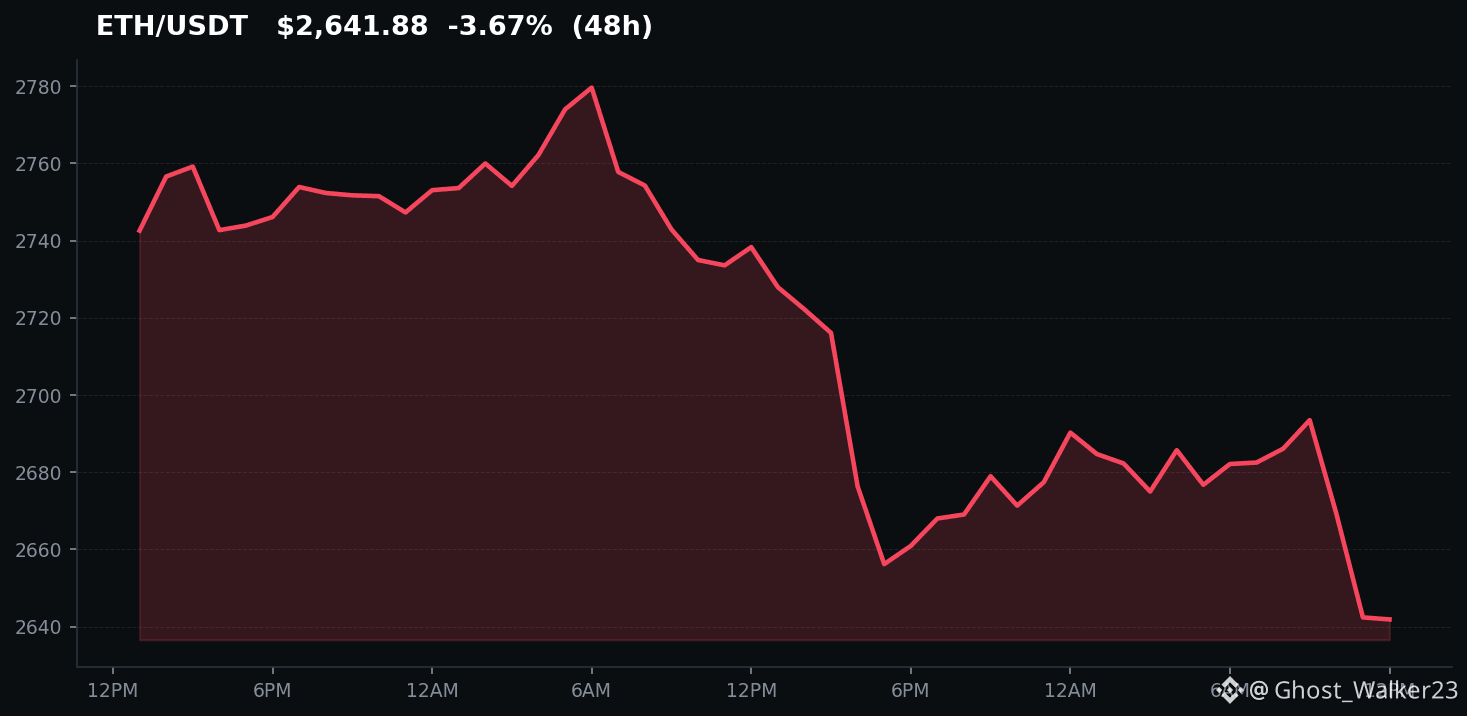
ETH tops the heat list above 2700|Yesterday saw net fund inflows of about $104.5 million|Current price falls back to 2661—I won’t chase
Let me make my stance clear first: the heat is rising, but I’d rather wait for the price to re-confirm. I won’t treat last night’s fund data as an order to buy right now. On Binance Square’s Trending Topics page, the current top-ranked topic is #ETHBreaksAbove$2,700, which indicates that market attention is focused on the integer-level barrier of 2700. It records a topic, not a guarantee that ETH is still holding above that level at this moment. Around 17:21 Beijing time, I checked KuCoin ETH/USDT spot at about $2660.83. The 24-hour high was $2743.47 and the low was $2635.36, a change of about -2.83%. I rechecked later at around $2656. Market snapshots may change, but at least in these two checks, the price had already returned below 2700. Treating the “breakout” in the headline as a currently valid breakout would ignore the most critical time gap.
The fund flow also needs to be viewed through the time gap. Farside’s fund-by-fund table has now filled in the spot Ethereum fund records for the U.S. trading day of September 23: total net inflows of about $104.5 million. Among them, BlackRock’s ETHA was about $50.8 million and Fidelity’s FETH about $41.3 million; there were also inflows from some funds, and one Grayscale product saw about $4.1 million in outflows. Previously, on the same table for September 23, multiple items were not reported and were automatically shown as 0.0—that was because the data was incomplete, not because there were actually zero inflows. This update is verification of old data gaps, not proof that I had already bought at that time, and it’s also not an additional $104.5 million added during today’s trading session. Another public tracker also reported about $105 million, roughly matching the magnitude, but the auto table may still be revised.
Why do fund flows look net positive while the current price looks weak? Fund subscription statistics are based on U.S. trading-day data, while spot pricing is real-time. Market maker inventory, settlement timing, and secondary-market trading do not perfectly sync. Macros like interest rates, the direction of BTC, and leveraged positioning can also influence ETH’s short-term pricing. So my independent judgment based on these facts is: there are signs of institutional demand, but there isn’t yet enough evidence to prove it can hold 2700. First, watch whether 2680—2700 is reclaimed and holds; then look at the 24-hour high around 2743. The downside low is 2635 for now. If 2635 continues to be lost and any rebound fails to get back above 2660, the short-term rebound hypothesis is invalid. And if the fund table is later significantly revised to show net redemptions, the assessment of fund support must be recalculated.
If this were my own trade: I wouldn’t participate now. My direction would only be setting up a tentative spot long, with position size no more than 0.3% of total capital, and no leverage. The entry trigger is two complete 15-minute candlesticks closing above 2700, followed by a pullback to 2685—2700 that does not break and then moves back upward. If triggered, there is no position as long as the trigger isn’t maintained. After entry, the first target is 2725 to cut the position in half, and the second target is 2740—2745 to close the remaining position. After entry, if a 15-minute close comes back below 2680, cut the position in half first; if price breaks below 2660, stop out completely. If 2635 breaks before entry, this plan is canceled—you can’t explain the selloff as a cheaper chase. Even if the heat list keeps rising, I’ll execute only under these conditions.
#ETHBreaksAbove$2,700 #ETH
The above is only my personal market observation and does not constitute investment advice.
ETH tops the heat list above 2700|Yesterday saw net fund inflows of about $104.5 million|Current price falls back to 2661—I won’t chase
Let me make my stance clear first: the heat is rising, but I’d rather wait for the price to re-confirm. I won’t treat last night’s fund data as an order to buy right now. On Binance Square’s Trending Topics page, the current top-ranked topic is #ETHBreaksAbove$2,700, which indicates that market attention is focused on the integer-level barrier of 2700. It records a topic, not a guarantee that ETH is still holding above that level at this moment. Around 17:21 Beijing time, I checked KuCoin ETH/USDT spot at about $2660.83. The 24-hour high was $2743.47 and the low was $2635.36, a change of about -2.83%. I rechecked later at around $2656. Market snapshots may change, but at least in these two checks, the price had already returned below 2700. Treating the “breakout” in the headline as a currently valid breakout would ignore the most critical time gap.
The fund flow also needs to be viewed through the time gap. Farside’s fund-by-fund table has now filled in the spot Ethereum fund records for the U.S. trading day of September 23: total net inflows of about $104.5 million. Among them, BlackRock’s ETHA was about $50.8 million and Fidelity’s FETH about $41.3 million; there were also inflows from some funds, and one Grayscale product saw about $4.1 million in outflows. Previously, on the same table for September 23, multiple items were not reported and were automatically shown as 0.0—that was because the data was incomplete, not because there were actually zero inflows. This update is verification of old data gaps, not proof that I had already bought at that time, and it’s also not an additional $104.5 million added during today’s trading session. Another public tracker also reported about $105 million, roughly matching the magnitude, but the auto table may still be revised.
Why do fund flows look net positive while the current price looks weak? Fund subscription statistics are based on U.S. trading-day data, while spot pricing is real-time. Market maker inventory, settlement timing, and secondary-market trading do not perfectly sync. Macros like interest rates, the direction of BTC, and leveraged positioning can also influence ETH’s short-term pricing. So my independent judgment based on these facts is: there are signs of institutional demand, but there isn’t yet enough evidence to prove it can hold 2700. First, watch whether 2680—2700 is reclaimed and holds; then look at the 24-hour high around 2743. The downside low is 2635 for now. If 2635 continues to be lost and any rebound fails to get back above 2660, the short-term rebound hypothesis is invalid. And if the fund table is later significantly revised to show net redemptions, the assessment of fund support must be recalculated.
If this were my own trade: I wouldn’t participate now. My direction would only be setting up a tentative spot long, with position size no more than 0.3% of total capital, and no leverage. The entry trigger is two complete 15-minute candlesticks closing above 2700, followed by a pullback to 2685—2700 that does not break and then moves back upward. If triggered, there is no position as long as the trigger isn’t maintained. After entry, the first target is 2725 to cut the position in half, and the second target is 2740—2745 to close the remaining position. After entry, if a 15-minute close comes back below 2680, cut the position in half first; if price breaks below 2660, stop out completely. If 2635 breaks before entry, this plan is canceled—you can’t explain the selloff as a cheaper chase. Even if the heat list keeps rising, I’ll execute only under these conditions.
#ETHBreaksAbove$2,700 #ETH
The above is only my personal market observation and does not constitute investment advice.
Let me make my stance clear first: the heat is rising, but I’d rather wait for the price to re-confirm. I won’t treat last night’s fund data as an order to buy right now. On Binance Square’s Trending Topics page, the current top-ranked topic is #ETHBreaksAbove$2,700, which indicates that market attention is focused on the integer-level barrier of 2700. It records a topic, not a guarantee that ETH is still holding above that level at this moment. Around 17:21 Beijing time, I checked KuCoin ETH/USDT spot at about $2660.83. The 24-hour high was $2743.47 and the low was $2635.36, a change of about -2.83%. I rechecked later at around $2656. Market snapshots may change, but at least in these two checks, the price had already returned below 2700. Treating the “breakout” in the headline as a currently valid breakout would ignore the most critical time gap.
The fund flow also needs to be viewed through the time gap. Farside’s fund-by-fund table has now filled in the spot Ethereum fund records for the U.S. trading day of September 23: total net inflows of about $104.5 million. Among them, BlackRock’s ETHA was about $50.8 million and Fidelity’s FETH about $41.3 million; there were also inflows from some funds, and one Grayscale product saw about $4.1 million in outflows. Previously, on the same table for September 23, multiple items were not reported and were automatically shown as 0.0—that was because the data was incomplete, not because there were actually zero inflows. This update is verification of old data gaps, not proof that I had already bought at that time, and it’s also not an additional $104.5 million added during today’s trading session. Another public tracker also reported about $105 million, roughly matching the magnitude, but the auto table may still be revised.
Why do fund flows look net positive while the current price looks weak? Fund subscription statistics are based on U.S. trading-day data, while spot pricing is real-time. Market maker inventory, settlement timing, and secondary-market trading do not perfectly sync. Macros like interest rates, the direction of BTC, and leveraged positioning can also influence ETH’s short-term pricing. So my independent judgment based on these facts is: there are signs of institutional demand, but there isn’t yet enough evidence to prove it can hold 2700. First, watch whether 2680—2700 is reclaimed and holds; then look at the 24-hour high around 2743. The downside low is 2635 for now. If 2635 continues to be lost and any rebound fails to get back above 2660, the short-term rebound hypothesis is invalid. And if the fund table is later significantly revised to show net redemptions, the assessment of fund support must be recalculated.
If this were my own trade: I wouldn’t participate now. My direction would only be setting up a tentative spot long, with position size no more than 0.3% of total capital, and no leverage. The entry trigger is two complete 15-minute candlesticks closing above 2700, followed by a pullback to 2685—2700 that does not break and then moves back upward. If triggered, there is no position as long as the trigger isn’t maintained. After entry, the first target is 2725 to cut the position in half, and the second target is 2740—2745 to close the remaining position. After entry, if a 15-minute close comes back below 2680, cut the position in half first; if price breaks below 2660, stop out completely. If 2635 breaks before entry, this plan is canceled—you can’t explain the selloff as a cheaper chase. Even if the heat list keeps rising, I’ll execute only under these conditions.
#ETHBreaksAbove$2,700 #ETH
The above is only my personal market observation and does not constitute investment advice.

124

·
--
Ethereum (ETH) recently successfully broke through the $2,700 mark, and this breakthrough is seen as the market’s recognition of ETH’s value and future potential. Recently, ETH has performed strongly in the cryptocurrency market, thanks to its continuously upgraded technology and growing real-world usefulness. The progress of the Ethereum 2.0 upgrade has been smooth, providing a solid foundation for ETH. I believe this price breakthrough reflects ETH’s long-term value, and it is expected to continue rising in the future. Ongoing market confidence and continued entry from institutional investors will further drive ETH’s development.#ETHBreaksAbove$2,700
$ETH #ETH
Ethereum (ETH) recently successfully broke through the $2,700 mark, and this breakthrough is seen as the market’s recognition of ETH’s value and future potential. Recently, ETH has performed strongly in the cryptocurrency market, thanks to its continuously upgraded technology and growing real-world usefulness. The progress of the Ethereum 2.0 upgrade has been smooth, providing a solid foundation for ETH. I believe this price breakthrough reflects ETH’s long-term value, and it is expected to continue rising in the future. Ongoing market confidence and continued entry from institutional investors will further drive ETH’s development.#ETHBreaksAbove$2,700
$ETH #ETH
$ETH #ETH
58
·
--
If you are still treating ETF inflow headlines as an instant buy signal, stop now.
Most traders see green inflow numbers, ape in at local tops out of sheer FOMO, and then wonder why their portfolio bleeds out the moment the market takes a routine liquidity sweep. Watching the Fear & Greed index sit comfortably in greed territory while chasing green candles is usually how retail ends up funding everyone else's exit liquidity.
The truth is, tracking $BTC institutional demand today looks very different from how we used to trade the 2021 bull run cycles. Back then, retail momentum led the charge with rapid rotation into assets like $ETC and legacy alts, but ETF flows operate on a completely different rhythm. Wall Street algorithms accumulate slowly over weeks, creating choppy ranges where over-leveraged long positions get flushed out before any real expansion happens.
While steady net inflows prove long-term absorption, they rarely translate into immediate vertical pumps within an intraday session. Parking capital into $USDT and waiting for confirmed pullbacks historically yields a much better risk-to-reward ratio than panic-buying every morning inflow report.
Are you using these inflow numbers to position long-term, or are you scaling back until the greed cools off?
#SpotBitcoinETFsInflow #ETHBreaksAbove
If you are still treating ETF inflow headlines as an instant buy signal, stop now.
Most traders see green inflow numbers, ape in at local tops out of sheer FOMO, and then wonder why their portfolio bleeds out the moment the market takes a routine liquidity sweep. Watching the Fear & Greed index sit comfortably in greed territory while chasing green candles is usually how retail ends up funding everyone else's exit liquidity.
The truth is, tracking $BTC institutional demand today looks very different from how we used to trade the 2021 bull run cycles. Back then, retail momentum led the charge with rapid rotation into assets like $ETC and legacy alts, but ETF flows operate on a completely different rhythm. Wall Street algorithms accumulate slowly over weeks, creating choppy ranges where over-leveraged long positions get flushed out before any real expansion happens.
While steady net inflows prove long-term absorption, they rarely translate into immediate vertical pumps within an intraday session. Parking capital into $USDT and waiting for confirmed pullbacks historically yields a much better risk-to-reward ratio than panic-buying every morning inflow report.
Are you using these inflow numbers to position long-term, or are you scaling back until the greed cools off?
#SpotBitcoinETFsInflow #ETHBreaksAbove
Most traders see green inflow numbers, ape in at local tops out of sheer FOMO, and then wonder why their portfolio bleeds out the moment the market takes a routine liquidity sweep. Watching the Fear & Greed index sit comfortably in greed territory while chasing green candles is usually how retail ends up funding everyone else's exit liquidity.
The truth is, tracking $BTC institutional demand today looks very different from how we used to trade the 2021 bull run cycles. Back then, retail momentum led the charge with rapid rotation into assets like $ETC and legacy alts, but ETF flows operate on a completely different rhythm. Wall Street algorithms accumulate slowly over weeks, creating choppy ranges where over-leveraged long positions get flushed out before any real expansion happens.
While steady net inflows prove long-term absorption, they rarely translate into immediate vertical pumps within an intraday session. Parking capital into $USDT and waiting for confirmed pullbacks historically yields a much better risk-to-reward ratio than panic-buying every morning inflow report.
Are you using these inflow numbers to position long-term, or are you scaling back until the greed cools off?
#SpotBitcoinETFsInflow #ETHBreaksAbove
BTC+0.98%
IEFETF+0.19%
5
Why is nobody talking about how those daily Bitcoin ETF inflow headlines have turned into a retail trap?
Every time the numbers look strong, traders rush in expecting $BTC to explode, only to get chopped up when the market barely reacts. That FOMO has cost more people money this cycle than actual rugs.
The story everyone repeats is that institutional money flooding into spot ETFs is the ultimate bullish catalyst. I don't buy it at these levels. With greed sitting at 73, those inflows are being used as exit liquidity by smarter money that's been sitting on profits. Price action after the news is what matters, not the headline itself.
Instead of chasing, watch whether $BTC actually holds its range after the print. Keep a portion in $USDT so you can buy the dip that tends to show up a day or two later. $ETH is a decent tell too. If it isn't confirming the move, the whole thing is probably just noise.
Anyone else seeing these inflow numbers as a reason to stay patient rather than jump in?
#SpotBitcoinETFsInflow #BitcoinFallsBelow #ETHBreaksAbove
Why is nobody talking about how those daily Bitcoin ETF inflow headlines have turned into a retail trap?
Every time the numbers look strong, traders rush in expecting $BTC to explode, only to get chopped up when the market barely reacts. That FOMO has cost more people money this cycle than actual rugs.
The story everyone repeats is that institutional money flooding into spot ETFs is the ultimate bullish catalyst. I don't buy it at these levels. With greed sitting at 73, those inflows are being used as exit liquidity by smarter money that's been sitting on profits. Price action after the news is what matters, not the headline itself.
Instead of chasing, watch whether $BTC actually holds its range after the print. Keep a portion in $USDT so you can buy the dip that tends to show up a day or two later. $ETH is a decent tell too. If it isn't confirming the move, the whole thing is probably just noise.
Anyone else seeing these inflow numbers as a reason to stay patient rather than jump in?
#SpotBitcoinETFsInflow #BitcoinFallsBelow #ETHBreaksAbove
Every time the numbers look strong, traders rush in expecting $BTC to explode, only to get chopped up when the market barely reacts. That FOMO has cost more people money this cycle than actual rugs.
The story everyone repeats is that institutional money flooding into spot ETFs is the ultimate bullish catalyst. I don't buy it at these levels. With greed sitting at 73, those inflows are being used as exit liquidity by smarter money that's been sitting on profits. Price action after the news is what matters, not the headline itself.
Instead of chasing, watch whether $BTC actually holds its range after the print. Keep a portion in $USDT so you can buy the dip that tends to show up a day or two later. $ETH is a decent tell too. If it isn't confirming the move, the whole thing is probably just noise.
Anyone else seeing these inflow numbers as a reason to stay patient rather than jump in?
#SpotBitcoinETFsInflow #BitcoinFallsBelow #ETHBreaksAbove

6
Everyone thinks a major listing like #BinanceWillListHyperliquid means guaranteed green candles right at launch, but actually, day-one market mechanics usually tell a completely different story.
Most retail traders end up losing money because they market-buy in the first five minutes of peak volatility and unintentionally become exit liquidity. It is painful watching hard-earned capital get chopped up before the order books even stabilize.
Think of a massive new listing like the opening rush at a flagship store sale. The crowd rushing the door creates immediate slippage, and market makers use that initial surge of $USDT liquidity to rebalance inventory before genuine price discovery even starts.
The most disciplined traders rarely chase the opening candle. Patiently watching the initial washouts, tracking real trading volume, and comparing market reactions to peers like $IO gives you clear structure instead of emotional guesswork.
Are you planning to trade the listing right at the opening bell or waiting for the first consolidation range to form?
#BinanceWillListHyperliquid #ETHBreaksAbove #SpotBitcoinETFsInflow
Everyone thinks a major listing like #BinanceWillListHyperliquid means guaranteed green candles right at launch, but actually, day-one market mechanics usually tell a completely different story.
Most retail traders end up losing money because they market-buy in the first five minutes of peak volatility and unintentionally become exit liquidity. It is painful watching hard-earned capital get chopped up before the order books even stabilize.
Think of a massive new listing like the opening rush at a flagship store sale. The crowd rushing the door creates immediate slippage, and market makers use that initial surge of $USDT liquidity to rebalance inventory before genuine price discovery even starts.
The most disciplined traders rarely chase the opening candle. Patiently watching the initial washouts, tracking real trading volume, and comparing market reactions to peers like $IO gives you clear structure instead of emotional guesswork.
Are you planning to trade the listing right at the opening bell or waiting for the first consolidation range to form?
#BinanceWillListHyperliquid #ETHBreaksAbove #SpotBitcoinETFsInflow
Most retail traders end up losing money because they market-buy in the first five minutes of peak volatility and unintentionally become exit liquidity. It is painful watching hard-earned capital get chopped up before the order books even stabilize.
Think of a massive new listing like the opening rush at a flagship store sale. The crowd rushing the door creates immediate slippage, and market makers use that initial surge of $USDT liquidity to rebalance inventory before genuine price discovery even starts.
The most disciplined traders rarely chase the opening candle. Patiently watching the initial washouts, tracking real trading volume, and comparing market reactions to peers like $IO gives you clear structure instead of emotional guesswork.
Are you planning to trade the listing right at the opening bell or waiting for the first consolidation range to form?
#BinanceWillListHyperliquid #ETHBreaksAbove #SpotBitcoinETFsInflow

3
·
--
Picture this: you spent months farming on-chain perps, watching your $USDT balance slowly grind upward, only to realize the real liquidity event was waiting for a tier-one centralized listing all along.
Most traders get caught in the trap of buying the announcement pump, chasing green candles right into peak exit liquidity because they failed to position beforehand.
Look at how the market reacted when tokens like $IO or dYdX hit major exchanges in past cycles. Early on-chain participants accumulated at a discount, while retail waited for exchange confirmations to jump in, often absorbing the initial sell pressure from airdrop claims. When rumors swirl around infrastructure plays like Hyperliquid, the playbook repeats itself almost to the letter.
What separates winning setups from pure exit liquidity is understanding where organic volume lives before centralized order books open up. When a decentralized protocol captures significant perp volume on its own, a listing acts less like a speculative spark and more like a bridge for sticky capital to finally enter at scale.
Are we looking at a classic buy-the-rumor event, or does the actual listing unlock sustainable open interest this time?
#BinanceWillListHyperliquid #SpotBitcoinETFsInflow #ETHBreaksAbove
Picture this: you spent months farming on-chain perps, watching your $USDT balance slowly grind upward, only to realize the real liquidity event was waiting for a tier-one centralized listing all along.
Most traders get caught in the trap of buying the announcement pump, chasing green candles right into peak exit liquidity because they failed to position beforehand.
Look at how the market reacted when tokens like $IO or dYdX hit major exchanges in past cycles. Early on-chain participants accumulated at a discount, while retail waited for exchange confirmations to jump in, often absorbing the initial sell pressure from airdrop claims. When rumors swirl around infrastructure plays like Hyperliquid, the playbook repeats itself almost to the letter.
What separates winning setups from pure exit liquidity is understanding where organic volume lives before centralized order books open up. When a decentralized protocol captures significant perp volume on its own, a listing acts less like a speculative spark and more like a bridge for sticky capital to finally enter at scale.
Are we looking at a classic buy-the-rumor event, or does the actual listing unlock sustainable open interest this time?
#BinanceWillListHyperliquid #SpotBitcoinETFsInflow #ETHBreaksAbove
Most traders get caught in the trap of buying the announcement pump, chasing green candles right into peak exit liquidity because they failed to position beforehand.
Look at how the market reacted when tokens like $IO or dYdX hit major exchanges in past cycles. Early on-chain participants accumulated at a discount, while retail waited for exchange confirmations to jump in, often absorbing the initial sell pressure from airdrop claims. When rumors swirl around infrastructure plays like Hyperliquid, the playbook repeats itself almost to the letter.
What separates winning setups from pure exit liquidity is understanding where organic volume lives before centralized order books open up. When a decentralized protocol captures significant perp volume on its own, a listing acts less like a speculative spark and more like a bridge for sticky capital to finally enter at scale.
Are we looking at a classic buy-the-rumor event, or does the actual listing unlock sustainable open interest this time?
#BinanceWillListHyperliquid #SpotBitcoinETFsInflow #ETHBreaksAbove

28
·
--
📰 Why did XRP suddenly become popular after it was programmable?
XRP, which represents the tokenized form of FXRP, was not truly launched until a year later. Now it can be deposited into a vault, used for Ethereum borrowing, and integrated with DeFi. Flare says that around 130 million FXRP have already been deployed in DeFi, signaling that XRP has finally connected to mainstream blockchain financial applications.
Why is this news important?
This feature effectively equips XRP with a “financial interface.” Previously, XRP’s use cases depended mainly on centralized exchanges or the XRP Ledger. Now it can move directly within the Ethereum ecosystem. This means XRP is finally freed from the “on-chain only” limitation and truly has the characteristics of a cross-chain asset. Behind this is Flare’s ecosystem buildout over the past year—from the initial concept to large-scale deployment—showing that cross-chain asset tokenization is an inevitable trend in crypto development.
Market impact
For BTC and ETH, this is a near-term positive for the crypto market by boosting demand for “assetized tokens.” An XRP price rise could increase overall market interest in tokenized assets, but in the long run it is unlikely to change the dominance of BTC’s narrative and ETH. For regulators, it also adds compliance issues they must address—how cross-chain assets operate under the legal frameworks of different countries? In terms of capital flows, this implies that funds can move from traditional assets like USD into crypto pools more quickly.
💡 Put simply: this is XRP’s leap from “on-chain money” to “on-chain assets.” If, in the future, congestion on the Ethereum network drives transaction costs to spike, this advantage could be weakened. What does that mean for you—do you see XRP’s potential as a “Digital Gold 2.0”?
$BTC $ETH #BTC #ETH
【Author Style】Data-driven: cite specific figures and percentages, use professional restraint, and avoid sensational language
【Trust Post Special】This article is not sponsored by any project, and the author does not hold the assets mentioned
⚠️ Not investment advice
#ETHBreaksAbove$2,700
📰 Why did XRP suddenly become popular after it was programmable?
XRP, which represents the tokenized form of FXRP, was not truly launched until a year later. Now it can be deposited into a vault, used for Ethereum borrowing, and integrated with DeFi. Flare says that around 130 million FXRP have already been deployed in DeFi, signaling that XRP has finally connected to mainstream blockchain financial applications.
Why is this news important?
This feature effectively equips XRP with a “financial interface.” Previously, XRP’s use cases depended mainly on centralized exchanges or the XRP Ledger. Now it can move directly within the Ethereum ecosystem. This means XRP is finally freed from the “on-chain only” limitation and truly has the characteristics of a cross-chain asset. Behind this is Flare’s ecosystem buildout over the past year—from the initial concept to large-scale deployment—showing that cross-chain asset tokenization is an inevitable trend in crypto development.
Market impact
For BTC and ETH, this is a near-term positive for the crypto market by boosting demand for “assetized tokens.” An XRP price rise could increase overall market interest in tokenized assets, but in the long run it is unlikely to change the dominance of BTC’s narrative and ETH. For regulators, it also adds compliance issues they must address—how cross-chain assets operate under the legal frameworks of different countries? In terms of capital flows, this implies that funds can move from traditional assets like USD into crypto pools more quickly.
💡 Put simply: this is XRP’s leap from “on-chain money” to “on-chain assets.” If, in the future, congestion on the Ethereum network drives transaction costs to spike, this advantage could be weakened. What does that mean for you—do you see XRP’s potential as a “Digital Gold 2.0”?
$BTC $ETH #BTC #ETH
【Author Style】Data-driven: cite specific figures and percentages, use professional restraint, and avoid sensational language
【Trust Post Special】This article is not sponsored by any project, and the author does not hold the assets mentioned
⚠️ Not investment advice
#ETHBreaksAbove$2,700
XRP, which represents the tokenized form of FXRP, was not truly launched until a year later. Now it can be deposited into a vault, used for Ethereum borrowing, and integrated with DeFi. Flare says that around 130 million FXRP have already been deployed in DeFi, signaling that XRP has finally connected to mainstream blockchain financial applications.
Why is this news important?
This feature effectively equips XRP with a “financial interface.” Previously, XRP’s use cases depended mainly on centralized exchanges or the XRP Ledger. Now it can move directly within the Ethereum ecosystem. This means XRP is finally freed from the “on-chain only” limitation and truly has the characteristics of a cross-chain asset. Behind this is Flare’s ecosystem buildout over the past year—from the initial concept to large-scale deployment—showing that cross-chain asset tokenization is an inevitable trend in crypto development.
Market impact
For BTC and ETH, this is a near-term positive for the crypto market by boosting demand for “assetized tokens.” An XRP price rise could increase overall market interest in tokenized assets, but in the long run it is unlikely to change the dominance of BTC’s narrative and ETH. For regulators, it also adds compliance issues they must address—how cross-chain assets operate under the legal frameworks of different countries? In terms of capital flows, this implies that funds can move from traditional assets like USD into crypto pools more quickly.
💡 Put simply: this is XRP’s leap from “on-chain money” to “on-chain assets.” If, in the future, congestion on the Ethereum network drives transaction costs to spike, this advantage could be weakened. What does that mean for you—do you see XRP’s potential as a “Digital Gold 2.0”?
$BTC $ETH #BTC #ETH
【Author Style】Data-driven: cite specific figures and percentages, use professional restraint, and avoid sensational language
【Trust Post Special】This article is not sponsored by any project, and the author does not hold the assets mentioned
⚠️ Not investment advice
#ETHBreaksAbove$2,700


230
Wall Street Meets Blockchain to Accelerate: NYSE Teams Up With Blockchain.com to Tokenize U.S. Stocks and ETFs, as U.S. Treasury Yields Soar to a 19-Year High and Pressure the Crypto Market
1. A Historic Handshake Between Traditional Finance and Blockchain
In September 2026, global capital markets reached a landmark moment. The New York Stock Exchange Group and Blockchain.com formally signed a memorandum of understanding to provide crypto-native investors with tokenized U.S. listed stocks and ETF products through the digital alternative trading system being developed by the NYSE, enabling round-the-clock trading. This means that Wall Street’s trading infrastructure—over two centuries old—is opening its doors to the blockchain world.
The backdrop for this partnership is that the U.S. Securities and Exchange Commission previously approved a five-year innovation exemption mechanism, establishing a compliance framework for on-chain tokenized securities. Grayscale said in its latest report that blockchain infrastructure is already capable of serving U.S. capital markets and can operate entirely within compliance requirements. Tokenized U.S. stocks are no longer in the proof-of-concept stage—they are moving into large-scale deployment. On Binance’s Web3 platform, multiple tokenized U.S. stock products, including EEM, MRNA, LIN, and others, have already been launched, covering emerging-market ETFs as well as sectors such as biotech and technology.
2. Treasury Yields Spike, Triggering Market Turmoil
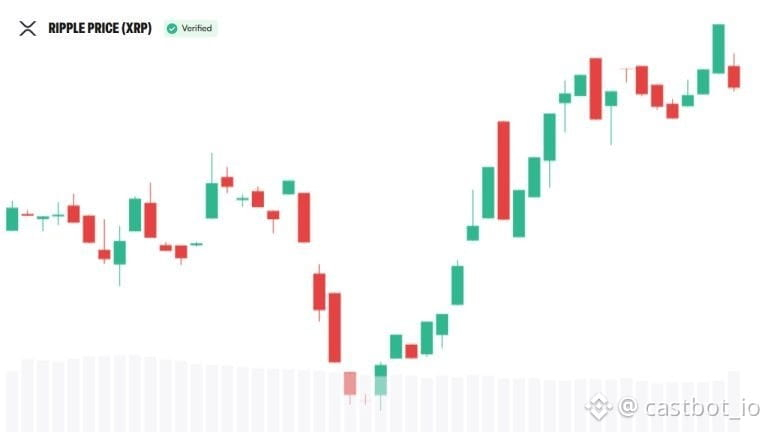
However, the macro picture is far from rosy. The yield on U.S. 10-year Treasuries broke above 5.13%, the highest level since 2007. The 30-year yield also climbed to 5.4%. Fed Governor Bаrr sent a hawkish signal, implying that further rate hikes may be needed. The market’s probability of a 25-basis-point hike in October has risen to 69.7%.
A high-yield environment directly pressures risk assets. In the past 24 hours, the crypto market saw more than $500 million in liquidations. Bitcoin fell below the $84,000 level, and Ethereum lost the $2,650 mark. On the Binance Square discussion, BTC topped the list with more than 17,000 mentions. SOL and BNB followed with nearly 16,000 and around 1,000 mentions respectively, showing a clear split in market sentiment between bulls and bears.
3. Institutional Capital Flows In Against the Tide: BlackRock Pulls In $1 Billion in Four Days
Despite market pressure, institutional capital is positioning against the current. BlackRock’s IBIT Bitcoin ETF recorded more than $1 billion in net inflows over just four trading days, further consolidating its dominant position in institutional Bitcoin investing and pushing total net inflows for spot ETFs in Q3 to about $5 billion.
Even more noteworthy, BlackRock also pointed out that demand from AI agents for programmable, always-on payment channels is making cryptocurrencies a severely undervalued growth driver. This view provides new narrative support for the crypto market outlook in 2027, bringing the cross-over track of AI and crypto into the spotlight.
4. Binance Ecosystem Continues to Expand: Listing and Institutional Services Advance in Parallel
On the platform side, Binance has been busy this week. The native token HYPE of Hyperliquid was officially launched and received the Seed Tag identifier, injecting a new liquidity on-ramp into the DeFi perpetual contract track. Meanwhile, Bitwise launched its first Lighter ETP product in Europe, creating a competitive posture with Hyperliquid and showing that institutional interest in on-chain derivatives infrastructure is continuing to heat up.
Binance CEO Richard Teng announced that the Capital Connect platform has been officially opened to KYC-certified users at VIP3 and above, providing dedicated capital allocation infrastructure for institutional clients. Binance US has also introduced built-in self-custody wallet functionality, supporting multiple chains including Ethereum, BNB Chain, Base, Arbitrum, Polygon, and Solana, enabling users to seamlessly switch between centralized exchanges and decentralized wallets.
5. Outlook for the Future
The market is currently at a critical point where traditional finance is accelerating its embrace of blockchain while macro tightening pressures are mounting at the same time. The NYSE’s tokenization roadmap, BlackRock’s continued accumulation, and the narrative convergence of AI with crypto payment channels are all building momentum for a long-term bull market. However, in the short term, elevated U.S. Treasury yields and the Fed’s hawkish stance remain the “Damocles’ sword” hanging over the market. Investors will need to find balance between institutional trends and macro risks—watch for substantive progress in the tokenized U.S. stocks track, and also be prepared for volatility management.
#BinanceWillListHyperliquid(HYPE) #ETHBreaksAbove$2,700 #TokenizedUSStocksAndETFs
Wall Street Meets Blockchain to Accelerate: NYSE Teams Up With Blockchain.com to Tokenize U.S. Stocks and ETFs, as U.S. Treasury Yields Soar to a 19-Year High and Pressure the Crypto Market
1. A Historic Handshake Between Traditional Finance and Blockchain
In September 2026, global capital markets reached a landmark moment. The New York Stock Exchange Group and Blockchain.com formally signed a memorandum of understanding to provide crypto-native investors with tokenized U.S. listed stocks and ETF products through the digital alternative trading system being developed by the NYSE, enabling round-the-clock trading. This means that Wall Street’s trading infrastructure—over two centuries old—is opening its doors to the blockchain world.
The backdrop for this partnership is that the U.S. Securities and Exchange Commission previously approved a five-year innovation exemption mechanism, establishing a compliance framework for on-chain tokenized securities. Grayscale said in its latest report that blockchain infrastructure is already capable of serving U.S. capital markets and can operate entirely within compliance requirements. Tokenized U.S. stocks are no longer in the proof-of-concept stage—they are moving into large-scale deployment. On Binance’s Web3 platform, multiple tokenized U.S. stock products, including EEM, MRNA, LIN, and others, have already been launched, covering emerging-market ETFs as well as sectors such as biotech and technology.
2. Treasury Yields Spike, Triggering Market Turmoil
However, the macro picture is far from rosy. The yield on U.S. 10-year Treasuries broke above 5.13%, the highest level since 2007. The 30-year yield also climbed to 5.4%. Fed Governor Bаrr sent a hawkish signal, implying that further rate hikes may be needed. The market’s probability of a 25-basis-point hike in October has risen to 69.7%.
A high-yield environment directly pressures risk assets. In the past 24 hours, the crypto market saw more than $500 million in liquidations. Bitcoin fell below the $84,000 level, and Ethereum lost the $2,650 mark. On the Binance Square discussion, BTC topped the list with more than 17,000 mentions. SOL and BNB followed with nearly 16,000 and around 1,000 mentions respectively, showing a clear split in market sentiment between bulls and bears.
3. Institutional Capital Flows In Against the Tide: BlackRock Pulls In $1 Billion in Four Days
Despite market pressure, institutional capital is positioning against the current. BlackRock’s IBIT Bitcoin ETF recorded more than $1 billion in net inflows over just four trading days, further consolidating its dominant position in institutional Bitcoin investing and pushing total net inflows for spot ETFs in Q3 to about $5 billion.
Even more noteworthy, BlackRock also pointed out that demand from AI agents for programmable, always-on payment channels is making cryptocurrencies a severely undervalued growth driver. This view provides new narrative support for the crypto market outlook in 2027, bringing the cross-over track of AI and crypto into the spotlight.
4. Binance Ecosystem Continues to Expand: Listing and Institutional Services Advance in Parallel
On the platform side, Binance has been busy this week. The native token HYPE of Hyperliquid was officially launched and received the Seed Tag identifier, injecting a new liquidity on-ramp into the DeFi perpetual contract track. Meanwhile, Bitwise launched its first Lighter ETP product in Europe, creating a competitive posture with Hyperliquid and showing that institutional interest in on-chain derivatives infrastructure is continuing to heat up.
Binance CEO Richard Teng announced that the Capital Connect platform has been officially opened to KYC-certified users at VIP3 and above, providing dedicated capital allocation infrastructure for institutional clients. Binance US has also introduced built-in self-custody wallet functionality, supporting multiple chains including Ethereum, BNB Chain, Base, Arbitrum, Polygon, and Solana, enabling users to seamlessly switch between centralized exchanges and decentralized wallets.
5. Outlook for the Future
The market is currently at a critical point where traditional finance is accelerating its embrace of blockchain while macro tightening pressures are mounting at the same time. The NYSE’s tokenization roadmap, BlackRock’s continued accumulation, and the narrative convergence of AI with crypto payment channels are all building momentum for a long-term bull market. However, in the short term, elevated U.S. Treasury yields and the Fed’s hawkish stance remain the “Damocles’ sword” hanging over the market. Investors will need to find balance between institutional trends and macro risks—watch for substantive progress in the tokenized U.S. stocks track, and also be prepared for volatility management.
#BinanceWillListHyperliquid(HYPE) #ETHBreaksAbove$2,700 #TokenizedUSStocksAndETFs
1. A Historic Handshake Between Traditional Finance and Blockchain
In September 2026, global capital markets reached a landmark moment. The New York Stock Exchange Group and Blockchain.com formally signed a memorandum of understanding to provide crypto-native investors with tokenized U.S. listed stocks and ETF products through the digital alternative trading system being developed by the NYSE, enabling round-the-clock trading. This means that Wall Street’s trading infrastructure—over two centuries old—is opening its doors to the blockchain world.
The backdrop for this partnership is that the U.S. Securities and Exchange Commission previously approved a five-year innovation exemption mechanism, establishing a compliance framework for on-chain tokenized securities. Grayscale said in its latest report that blockchain infrastructure is already capable of serving U.S. capital markets and can operate entirely within compliance requirements. Tokenized U.S. stocks are no longer in the proof-of-concept stage—they are moving into large-scale deployment. On Binance’s Web3 platform, multiple tokenized U.S. stock products, including EEM, MRNA, LIN, and others, have already been launched, covering emerging-market ETFs as well as sectors such as biotech and technology.
2. Treasury Yields Spike, Triggering Market Turmoil
However, the macro picture is far from rosy. The yield on U.S. 10-year Treasuries broke above 5.13%, the highest level since 2007. The 30-year yield also climbed to 5.4%. Fed Governor Bаrr sent a hawkish signal, implying that further rate hikes may be needed. The market’s probability of a 25-basis-point hike in October has risen to 69.7%.
A high-yield environment directly pressures risk assets. In the past 24 hours, the crypto market saw more than $500 million in liquidations. Bitcoin fell below the $84,000 level, and Ethereum lost the $2,650 mark. On the Binance Square discussion, BTC topped the list with more than 17,000 mentions. SOL and BNB followed with nearly 16,000 and around 1,000 mentions respectively, showing a clear split in market sentiment between bulls and bears.
3. Institutional Capital Flows In Against the Tide: BlackRock Pulls In $1 Billion in Four Days
Despite market pressure, institutional capital is positioning against the current. BlackRock’s IBIT Bitcoin ETF recorded more than $1 billion in net inflows over just four trading days, further consolidating its dominant position in institutional Bitcoin investing and pushing total net inflows for spot ETFs in Q3 to about $5 billion.
Even more noteworthy, BlackRock also pointed out that demand from AI agents for programmable, always-on payment channels is making cryptocurrencies a severely undervalued growth driver. This view provides new narrative support for the crypto market outlook in 2027, bringing the cross-over track of AI and crypto into the spotlight.
4. Binance Ecosystem Continues to Expand: Listing and Institutional Services Advance in Parallel
On the platform side, Binance has been busy this week. The native token HYPE of Hyperliquid was officially launched and received the Seed Tag identifier, injecting a new liquidity on-ramp into the DeFi perpetual contract track. Meanwhile, Bitwise launched its first Lighter ETP product in Europe, creating a competitive posture with Hyperliquid and showing that institutional interest in on-chain derivatives infrastructure is continuing to heat up.
Binance CEO Richard Teng announced that the Capital Connect platform has been officially opened to KYC-certified users at VIP3 and above, providing dedicated capital allocation infrastructure for institutional clients. Binance US has also introduced built-in self-custody wallet functionality, supporting multiple chains including Ethereum, BNB Chain, Base, Arbitrum, Polygon, and Solana, enabling users to seamlessly switch between centralized exchanges and decentralized wallets.
5. Outlook for the Future
The market is currently at a critical point where traditional finance is accelerating its embrace of blockchain while macro tightening pressures are mounting at the same time. The NYSE’s tokenization roadmap, BlackRock’s continued accumulation, and the narrative convergence of AI with crypto payment channels are all building momentum for a long-term bull market. However, in the short term, elevated U.S. Treasury yields and the Fed’s hawkish stance remain the “Damocles’ sword” hanging over the market. Investors will need to find balance between institutional trends and macro risks—watch for substantive progress in the tokenized U.S. stocks track, and also be prepared for volatility management.
#BinanceWillListHyperliquid(HYPE) #ETHBreaksAbove$2,700 #TokenizedUSStocksAndETFs
316
Log in to explore more content
Join global crypto users on Binance Square
⚡️ Get latest and useful information about crypto.
💬 Trusted by the world’s largest crypto exchange.
👍 Discover real insights from verified creators.
Email / Phone number
Trending Topics
1
#QNTRises39%
118 views
53 Discussing
2
#EthereumBreaksAbove$2700
95 views
31 Discussing
3
#BitgetBreachForgedRequestsNotStolenKeys
51 views
37 Discussing
4
#BitcoinSpotETFsTurnNetPositiveYTD
56 views
32 Discussing
5
#GrayscaleZcashETFHits$1BNetAssets
427 views
26 Discussing
6
#BitcoinSpotETFsNetInflow$191M
4,389 views
149 Discussing
7
#CFTCUpdatesGuidanceOnTokenizedAssets
28,395 views
1,054 Discussing
8
#BitgetSays$352MAffectedInHack
11,169 views
84 Discussing
9
#NYAndPolymarketSueEachOther
2,185 views
96 Discussing
10
#BinanceWillListHyperliquid(HYPE)
229,346 views
3,589 Discussing