

#depin
depin
3.8M views
13,270 Discussing
Hot
Latest

$FLUX
{spot}(FLUXUSDT)
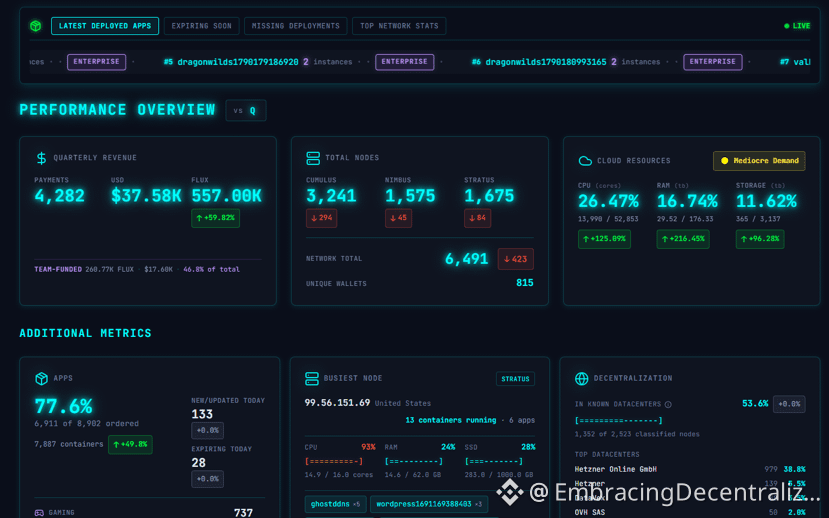
still have no idea whats the potential of the decentralized infrasture could be? Have some time to look at the quarter report of the operating performance for Flux, u might be shocked for the massive demenading here.
Flux is the biggest decentralized cloud resources soo far and AI agent platform and game servers.
#Web3 #DePIN #CLOUD #AI #BTC☀
$FLUX
still have no idea whats the potential of the decentralized infrasture could be? Have some time to look at the quarter report of the operating performance for Flux, u might be shocked for the massive demenading here.
Flux is the biggest decentralized cloud resources soo far and AI agent platform and game servers.
#Web3 #DePIN #CLOUD #AI #BTC☀
still have no idea whats the potential of the decentralized infrasture could be? Have some time to look at the quarter report of the operating performance for Flux, u might be shocked for the massive demenading here.
Flux is the biggest decentralized cloud resources soo far and AI agent platform and game servers.
#Web3 #DePIN #CLOUD #AI #BTC☀
1
120

🚨 $IO JUST CAUGHT THE MARKET’S ATTENTION 👀
While the broader crypto market is facing pressure, IO is moving differently.
{spot}(IOUSDT)
📈 Latest data showed IO around $0.158, up ~4.67% in 24H.
🔥 The interesting part?
io.net reportedly generated $31K+ in 24H protocol revenue, putting it among the leading DePIN projects.
Now traders are watching one thing:
Can $IO hold the momentum — or will profit-taking hit? 👀
Watch price + volume + DePIN activity before making any move.
#IO #IONET #DePIN #AI #Crypto #altcoins ns #BİNANCESQUARE #CryptoNewsCommunity s #Trading #Web3
🚨 $IO JUST CAUGHT THE MARKET’S ATTENTION 👀
While the broader crypto market is facing pressure, IO is moving differently.
📈 Latest data showed IO around $0.158, up ~4.67% in 24H.
🔥 The interesting part?
io.net reportedly generated $31K+ in 24H protocol revenue, putting it among the leading DePIN projects.
Now traders are watching one thing:
Can $IO hold the momentum — or will profit-taking hit? 👀
Watch price + volume + DePIN activity before making any move.
#IO #IONET #DePIN #AI #Crypto #altcoins ns #BİNANCESQUARE #CryptoNewsCommunity s #Trading #Web3
While the broader crypto market is facing pressure, IO is moving differently.
📈 Latest data showed IO around $0.158, up ~4.67% in 24H.
🔥 The interesting part?
io.net reportedly generated $31K+ in 24H protocol revenue, putting it among the leading DePIN projects.
Now traders are watching one thing:
Can $IO hold the momentum — or will profit-taking hit? 👀
Watch price + volume + DePIN activity before making any move.
#IO #IONET #DePIN #AI #Crypto #altcoins ns #BİNANCESQUARE #CryptoNewsCommunity s #Trading #Web3
151

Article
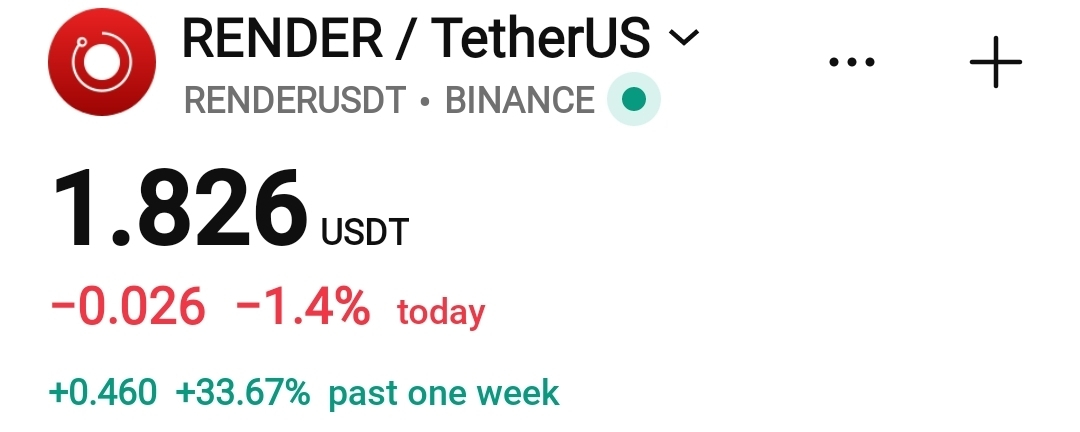
Render"The DePIN sector is on track to become a trillion-dollar industry in the coming times. Whenever the AI and Infrastructure narratives turn bullish, RENDER is always one of the first assets to perform. For traders and long-term investors, RENDER could prove to be the safest way to play the convergence of crypto and AI technology. What is your opinion? Will RENDER remain the Top DePIN AI project in this bull cycle, or will a new protocol leave it behind? Share your thoughts in the comments below."
Disclaimer: This article is for informational purposes only and should not be considered financial advice. Always do your own research (DYOR) before investing.
Cashtags: $RENDER $SOL $TAO
Hashtags: #DePIN #AI #CryptoAnalysis #BinanceSquareFamily
Render
"The DePIN sector is on track to become a trillion-dollar industry in the coming times. Whenever the AI and Infrastructure narratives turn bullish, RENDER is always one of the first assets to perform. For traders and long-term investors, RENDER could prove to be the safest way to play the convergence of crypto and AI technology. What is your opinion? Will RENDER remain the Top DePIN AI project in this bull cycle, or will a new protocol leave it behind? Share your thoughts in the comments below."
Disclaimer: This article is for informational purposes only and should not be considered financial advice. Always do your own research (DYOR) before investing.
Cashtags: $RENDER $SOL $TAO
Hashtags: #DePIN #AI #CryptoAnalysis #BinanceSquareFamily
Disclaimer: This article is for informational purposes only and should not be considered financial advice. Always do your own research (DYOR) before investing.
Cashtags: $RENDER $SOL $TAO
Hashtags: #DePIN #AI #CryptoAnalysis #BinanceSquareFamily
119

·
--
🧠 Render ($RENDER) Decentralized GPU & AI Compute Spotlight! ⚡
As the demand for decentralized AI processing, 3D graphics rendering, and high-performance GPU infrastructure continues to surge, Render ($RENDER) remains a leading DePIN network bridging idle computing power with creators and developers.
Key highlights keeping $RENDER in focus:
* Decentralized GPU Compute Network: Render connects node operators who possess idle high-end graphics processing units with artists, studios, and AI developers requiring massive computational power.
* Burn-and-Mint Equilibrium (BME): The protocol utilizes a robust token economics model where customer payments for computing jobs convert to tokens that are burned, creating sustainable utility directly tied to real-world network usage.
* Expanding AI & Multichain Integration: With major network optimizations including deep Solana ecosystem migration for lightning-fast, low-cost settlements Render continues to scale its capacity for intensive machine learning and visual graphics workloads.
Are you tracking Render's decentralized GPU network expansion or utilizing AI-focused DePIN tokens in your portfolio? Share your thoughts below! 👇
Disclaimer: Cryptocurrency markets carry high volatility and risk. Always do your own research before trading or investing.
#RENDER #RenderNetwork #DePIN
🧠 Render ($RENDER ) Decentralized GPU & AI Compute Spotlight! ⚡
As the demand for decentralized AI processing, 3D graphics rendering, and high-performance GPU infrastructure continues to surge, Render ($RENDER ) remains a leading DePIN network bridging idle computing power with creators and developers.
Key highlights keeping $RENDER in focus:
* Decentralized GPU Compute Network: Render connects node operators who possess idle high-end graphics processing units with artists, studios, and AI developers requiring massive computational power.
* Burn-and-Mint Equilibrium (BME): The protocol utilizes a robust token economics model where customer payments for computing jobs convert to tokens that are burned, creating sustainable utility directly tied to real-world network usage.
* Expanding AI & Multichain Integration: With major network optimizations including deep Solana ecosystem migration for lightning-fast, low-cost settlements Render continues to scale its capacity for intensive machine learning and visual graphics workloads.
Are you tracking Render's decentralized GPU network expansion or utilizing AI-focused DePIN tokens in your portfolio? Share your thoughts below! 👇
Disclaimer: Cryptocurrency markets carry high volatility and risk. Always do your own research before trading or investing.
#RENDER #RenderNetwork #DePIN
As the demand for decentralized AI processing, 3D graphics rendering, and high-performance GPU infrastructure continues to surge, Render ($RENDER ) remains a leading DePIN network bridging idle computing power with creators and developers.
Key highlights keeping $RENDER in focus:
* Decentralized GPU Compute Network: Render connects node operators who possess idle high-end graphics processing units with artists, studios, and AI developers requiring massive computational power.
* Burn-and-Mint Equilibrium (BME): The protocol utilizes a robust token economics model where customer payments for computing jobs convert to tokens that are burned, creating sustainable utility directly tied to real-world network usage.
* Expanding AI & Multichain Integration: With major network optimizations including deep Solana ecosystem migration for lightning-fast, low-cost settlements Render continues to scale its capacity for intensive machine learning and visual graphics workloads.
Are you tracking Render's decentralized GPU network expansion or utilizing AI-focused DePIN tokens in your portfolio? Share your thoughts below! 👇
Disclaimer: Cryptocurrency markets carry high volatility and risk. Always do your own research before trading or investing.
#RENDER #RenderNetwork #DePIN
2
109

🚨 DePIN META: REAL-WORLD HARDWARE ON-CHAIN! 📡🌐
Decentralized Physical Infrastructure Networks (DePIN) bridge physical hardware with Web3 tokenomics. Smart Money is quietly accumulating infrastructure anchors HNT andAKT! 📈
📊 DePIN MARKET SHARE (TEXT CHART):
50% 📡📡📡📡📡🟩 | Wireless & 5G ($HNT)
35% 💻💻💻💻🟦 | Decentralized Compute ($AKT)
15% ⚡⚡🟪 | Sensor Networks
🔹 $HNT: The global decentralized wireless network delivering IoT & cellular coverage.
🔹 $AKT: The open-source cloud compute marketplace powering AI & dApps.
💡 WHALE LESSON: Real-world hardware yields organic network revenue. Own the foundational rails before mass adoption! 🎒
📊 COMMUNITY POLL: Which DePIN leader do you back?
💬 Vote above & drop your pick below! 👇
#DePIN #Helium #Akash #HNT #AKT #BinanceSquare #SmartMoney
🚨 DePIN META: REAL-WORLD HARDWARE ON-CHAIN! 📡🌐
Decentralized Physical Infrastructure Networks (DePIN) bridge physical hardware with Web3 tokenomics. Smart Money is quietly accumulating infrastructure anchors HNT andAKT! 📈
📊 DePIN MARKET SHARE (TEXT CHART):
50% 📡📡📡📡📡🟩 | Wireless & 5G ($HNT)
35% 💻💻💻💻🟦 | Decentralized Compute ($AKT)
15% ⚡⚡🟪 | Sensor Networks
🔹 $HNT: The global decentralized wireless network delivering IoT & cellular coverage.
🔹 $AKT: The open-source cloud compute marketplace powering AI & dApps.
💡 WHALE LESSON: Real-world hardware yields organic network revenue. Own the foundational rails before mass adoption! 🎒
📊 COMMUNITY POLL: Which DePIN leader do you back?
💬 Vote above & drop your pick below! 👇
#DePIN #Helium #Akash #HNT #AKT #BinanceSquare #SmartMoney
Decentralized Physical Infrastructure Networks (DePIN) bridge physical hardware with Web3 tokenomics. Smart Money is quietly accumulating infrastructure anchors HNT andAKT! 📈
📊 DePIN MARKET SHARE (TEXT CHART):
50% 📡📡📡📡📡🟩 | Wireless & 5G ($HNT)
35% 💻💻💻💻🟦 | Decentralized Compute ($AKT)
15% ⚡⚡🟪 | Sensor Networks
🔹 $HNT: The global decentralized wireless network delivering IoT & cellular coverage.
🔹 $AKT: The open-source cloud compute marketplace powering AI & dApps.
💡 WHALE LESSON: Real-world hardware yields organic network revenue. Own the foundational rails before mass adoption! 🎒
📊 COMMUNITY POLL: Which DePIN leader do you back?
💬 Vote above & drop your pick below! 👇
#DePIN #Helium #Akash #HNT #AKT #BinanceSquare #SmartMoney
1️⃣ Helium ($HNT) 📡
0%
2️⃣ Akash Network ($AKT) 💻
75%
3️⃣ Both ($HNT +$AKT) 🚀
0%
4️⃣ Waiting for DIP 📉
25%
4 votes • Voting closed
1
68

$IO — io.net remains part of the decentralized-compute narrative. AI infrastructure demand gives IO a clear sector catalyst to monitor.
{spot}(IOUSDT)
$AKT — Akash Network remains a decentralized-cloud computing name. Demand for distributed compute keeps AKT connected to the AI/DePIN narrative.
{future}(AKTUSDT)
$HNT — Helium continues building decentralized wireless infrastructure. Real-world network growth makes HNT a notable DePIN chart.
#IO #AKT #HNT #DePIN #AI
$IO — io.net remains part of the decentralized-compute narrative. AI infrastructure demand gives IO a clear sector catalyst to monitor.
$AKT — Akash Network remains a decentralized-cloud computing name. Demand for distributed compute keeps AKT connected to the AI/DePIN narrative.
$HNT — Helium continues building decentralized wireless infrastructure. Real-world network growth makes HNT a notable DePIN chart.
#IO #AKT #HNT #DePIN #AI
$AKT — Akash Network remains a decentralized-cloud computing name. Demand for distributed compute keeps AKT connected to the AI/DePIN narrative.
$HNT — Helium continues building decentralized wireless infrastructure. Real-world network growth makes HNT a notable DePIN chart.
#IO #AKT #HNT #DePIN #AI

260


·
--
Verified
Article
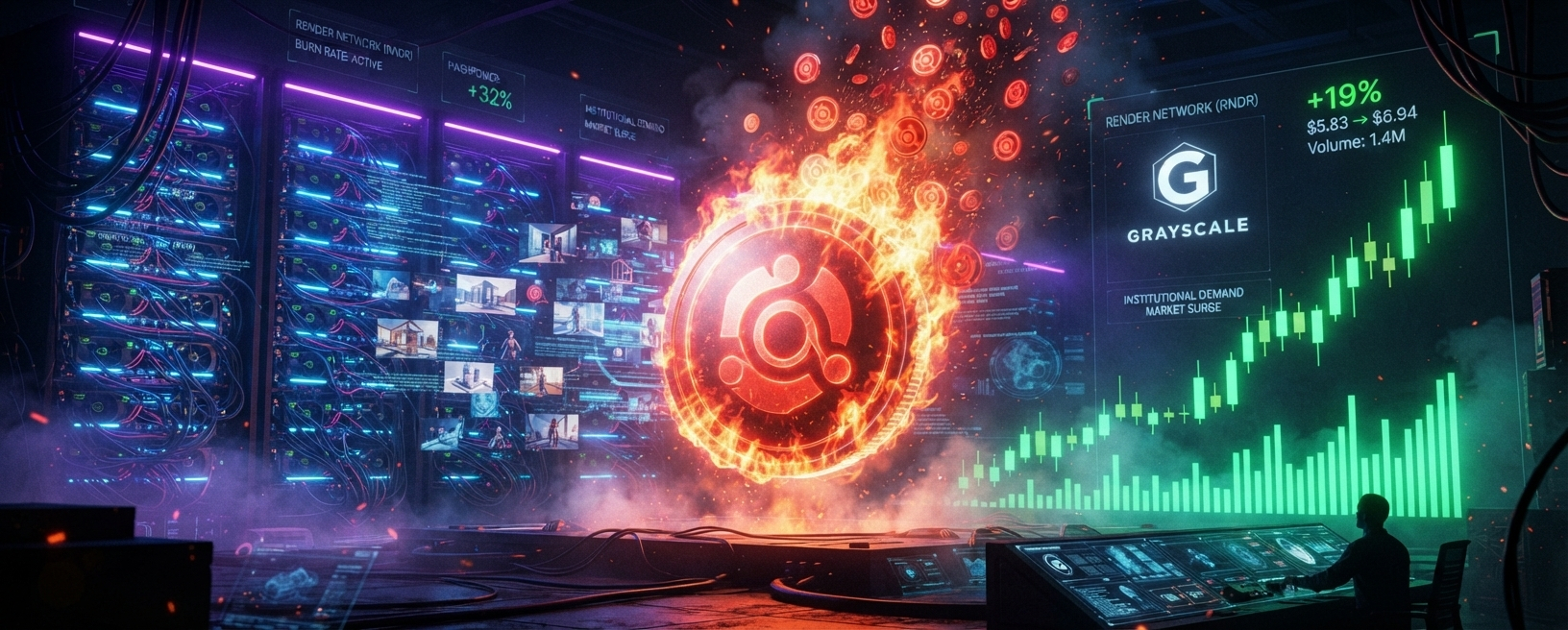
Render’s 19% Bid Puts Usage and Burns Back in the Same FrameAI tokens move for many reasons. Some move on narrative alone. Render’s latest advance came with a cleaner package. The token jumped about 19%, trading near $1.83, as broader AI-linked names stayed firm and Fear & Greed sat around 71. Volume was strong, near $162 million over 24 hours. Network activity reached roughly 77 million rendered frames. About 1.16 million RENDER were burned. Grayscale’s decentralized AI allocation still carries a notable position, around 21% of that fund.
That combination matters more than the percentage gain. Traders are not only asking whether AI beta is working. They are asking whether compute demand and token sinks can keep pace with the supply side of a DePIN network.
Why Render Is Back on the Desk
Risk appetite is clearly present. Greed-range sentiment and strong flows into AI-linked names create room for mid-cap infrastructure to re-rate quickly. Render sits in a more useful corner of that complex than pure story tokens. Its network converts GPU work into measurable output. Frames rendered and tokens burned give the market two numbers it can argue about. One speaks to usage. The other speaks to supply.
What stands out is the institutional overlay. A concentrated Grayscale position does not guarantee price support on any given day. It does show that at least one regulated product channel has treated RENDER as a core decentralized AI exposure rather than a peripheral bet. In a tape already favoring AI infrastructure, that kind of allocation can reinforce attention when on-chain activity is also rising.
Technical Tape and Sector Correlation
The breakout came with rising volume, which is the first filter worth applying. Advances on thin liquidity are easy to dismiss. A roughly 19% move with nine-figure volume forces a more serious read. Momentum is clearly extended. RSI risk is real after a move of this speed. That does not automatically invalidate the breakout. It does mean the next phase often depends on whether price can hold higher levels through a pause rather than needing constant new highs.
Sector correlation remains a central variable. Render still trades as part of the broader AI and DePIN basket. When that basket is in favor, idiosyncratic strength gets amplified. When the basket rotates out, even solid network prints can struggle to hold attention. Pro traders should treat RENDER’s relative strength against both Bitcoin and the wider AI token set as part of the setup, not as an afterthought. If the sector bid fades and Render loses the breakout zone on rising sell volume, the move starts to look like another high-beta spike. If the sector cools and Render holds up better than peers, the usage-and-burn story gains credibility.
On-Chain: Throughput, Burns, and Supply Reality
The burn of about 1.16 million RENDER is the cleanest tokenomic signal in the latest package. Burns only matter if they are recurring and linked to actual network demand rather than one-off events. In Render’s case, the more persuasive argument is the loop: work gets done on the network, activity is visible in frames rendered, and token sinks reduce circulating supply as that work is paid for. That is a different structure from AI tokens that rely mainly on emissions narratives or roadmap optionality.
Seventy-seven million rendered frames help anchor the discussion in throughput. No single print proves durable demand. Sustained utilization does. The market has become more skeptical of DePIN names that can show node counts without showing work. Render’s advantage, when it works, is that the product output is legible. GPU time goes in. Rendered frames come out. The token sits in the middle of that process.
Supply dynamics still deserve caution. Burns improve the marginal picture. They do not erase broader circulating supply or the possibility of distribution into strength. Exchange balances, holder concentration, and whether large wallets lean into or out of rallies remain part of any serious assessment.
Fundamentals, Risks, and Positioning
The fundamental case is that decentralized GPU networks can capture a slice of AI and rendering demand that would otherwise remain entirely inside centralized cloud providers. Cost, availability, and workload flexibility all create openings. Render’s positioning in rendering and related compute markets gives it a clearer commercial surface than many abstract compute tokens. Institutional packaging through vehicles such as Grayscale’s decentralized AI exposure adds another distribution channel for that thesis.
Risks are familiar but still binding. AI narrative premiums can compress quickly when sentiment rolls over. Utilization can soften. Competition from other DePIN compute networks and from traditional cloud pricing remains intense. There is also execution risk inside the token itself: if burns slow while price runs ahead of usage, the market will treat the latest rally as leverage on the sector rather than a re-rating of the network.
For pro traders, the practical approach is to respect the volume-backed breakout while defining invalidation below the post-move support band, especially if funding becomes crowded. For longer-term investors, the better scorecard is still utilization trend, burn persistence, and whether institutional ownership remains sticky through drawdowns rather than only through up weeks.
Closing View
Render’s latest strength is better grounded than a pure narrative spike. A 19% advance, strong volume, millions of rendered frames, a visible token burn, and a meaningful institutional fund weight form a coherent package. Fear & Greed at 71 helps explain why the market was ready to pay for that package now.
The data suggests Render is being treated as one of the cleaner ways to express decentralized GPU demand inside the current AI bid. That status is provisional. It holds if usage and burns continue to show up when the easy momentum fades. It weakens if price keeps rising while the work metrics stall. From here, the useful question is not whether AI compute demand exists. It is whether Render’s burn-plus-usage loop can keep converting that demand into a token structure the market is willing to hold after the first pause.
#render
#RenderNetwork
#DePIN
#aicrypto
Render’s 19% Bid Puts Usage and Burns Back in the Same Frame
AI tokens move for many reasons. Some move on narrative alone. Render’s latest advance came with a cleaner package. The token jumped about 19%, trading near $1.83, as broader AI-linked names stayed firm and Fear & Greed sat around 71. Volume was strong, near $162 million over 24 hours. Network activity reached roughly 77 million rendered frames. About 1.16 million RENDER were burned. Grayscale’s decentralized AI allocation still carries a notable position, around 21% of that fund.
That combination matters more than the percentage gain. Traders are not only asking whether AI beta is working. They are asking whether compute demand and token sinks can keep pace with the supply side of a DePIN network.
Why Render Is Back on the Desk
Risk appetite is clearly present. Greed-range sentiment and strong flows into AI-linked names create room for mid-cap infrastructure to re-rate quickly. Render sits in a more useful corner of that complex than pure story tokens. Its network converts GPU work into measurable output. Frames rendered and tokens burned give the market two numbers it can argue about. One speaks to usage. The other speaks to supply.
What stands out is the institutional overlay. A concentrated Grayscale position does not guarantee price support on any given day. It does show that at least one regulated product channel has treated RENDER as a core decentralized AI exposure rather than a peripheral bet. In a tape already favoring AI infrastructure, that kind of allocation can reinforce attention when on-chain activity is also rising.
Technical Tape and Sector Correlation
The breakout came with rising volume, which is the first filter worth applying. Advances on thin liquidity are easy to dismiss. A roughly 19% move with nine-figure volume forces a more serious read. Momentum is clearly extended. RSI risk is real after a move of this speed. That does not automatically invalidate the breakout. It does mean the next phase often depends on whether price can hold higher levels through a pause rather than needing constant new highs.
Sector correlation remains a central variable. Render still trades as part of the broader AI and DePIN basket. When that basket is in favor, idiosyncratic strength gets amplified. When the basket rotates out, even solid network prints can struggle to hold attention. Pro traders should treat RENDER’s relative strength against both Bitcoin and the wider AI token set as part of the setup, not as an afterthought. If the sector bid fades and Render loses the breakout zone on rising sell volume, the move starts to look like another high-beta spike. If the sector cools and Render holds up better than peers, the usage-and-burn story gains credibility.
On-Chain: Throughput, Burns, and Supply Reality
The burn of about 1.16 million RENDER is the cleanest tokenomic signal in the latest package. Burns only matter if they are recurring and linked to actual network demand rather than one-off events. In Render’s case, the more persuasive argument is the loop: work gets done on the network, activity is visible in frames rendered, and token sinks reduce circulating supply as that work is paid for. That is a different structure from AI tokens that rely mainly on emissions narratives or roadmap optionality.
Seventy-seven million rendered frames help anchor the discussion in throughput. No single print proves durable demand. Sustained utilization does. The market has become more skeptical of DePIN names that can show node counts without showing work. Render’s advantage, when it works, is that the product output is legible. GPU time goes in. Rendered frames come out. The token sits in the middle of that process.
Supply dynamics still deserve caution. Burns improve the marginal picture. They do not erase broader circulating supply or the possibility of distribution into strength. Exchange balances, holder concentration, and whether large wallets lean into or out of rallies remain part of any serious assessment.
Fundamentals, Risks, and Positioning
The fundamental case is that decentralized GPU networks can capture a slice of AI and rendering demand that would otherwise remain entirely inside centralized cloud providers. Cost, availability, and workload flexibility all create openings. Render’s positioning in rendering and related compute markets gives it a clearer commercial surface than many abstract compute tokens. Institutional packaging through vehicles such as Grayscale’s decentralized AI exposure adds another distribution channel for that thesis.
Risks are familiar but still binding. AI narrative premiums can compress quickly when sentiment rolls over. Utilization can soften. Competition from other DePIN compute networks and from traditional cloud pricing remains intense. There is also execution risk inside the token itself: if burns slow while price runs ahead of usage, the market will treat the latest rally as leverage on the sector rather than a re-rating of the network.
For pro traders, the practical approach is to respect the volume-backed breakout while defining invalidation below the post-move support band, especially if funding becomes crowded. For longer-term investors, the better scorecard is still utilization trend, burn persistence, and whether institutional ownership remains sticky through drawdowns rather than only through up weeks.
Closing View
Render’s latest strength is better grounded than a pure narrative spike. A 19% advance, strong volume, millions of rendered frames, a visible token burn, and a meaningful institutional fund weight form a coherent package. Fear & Greed at 71 helps explain why the market was ready to pay for that package now.
The data suggests Render is being treated as one of the cleaner ways to express decentralized GPU demand inside the current AI bid. That status is provisional. It holds if usage and burns continue to show up when the easy momentum fades. It weakens if price keeps rising while the work metrics stall. From here, the useful question is not whether AI compute demand exists. It is whether Render’s burn-plus-usage loop can keep converting that demand into a token structure the market is willing to hold after the first pause.
#render
#RenderNetwork
#DePIN
#aicrypto
That combination matters more than the percentage gain. Traders are not only asking whether AI beta is working. They are asking whether compute demand and token sinks can keep pace with the supply side of a DePIN network.
Why Render Is Back on the Desk
Risk appetite is clearly present. Greed-range sentiment and strong flows into AI-linked names create room for mid-cap infrastructure to re-rate quickly. Render sits in a more useful corner of that complex than pure story tokens. Its network converts GPU work into measurable output. Frames rendered and tokens burned give the market two numbers it can argue about. One speaks to usage. The other speaks to supply.
What stands out is the institutional overlay. A concentrated Grayscale position does not guarantee price support on any given day. It does show that at least one regulated product channel has treated RENDER as a core decentralized AI exposure rather than a peripheral bet. In a tape already favoring AI infrastructure, that kind of allocation can reinforce attention when on-chain activity is also rising.
Technical Tape and Sector Correlation
The breakout came with rising volume, which is the first filter worth applying. Advances on thin liquidity are easy to dismiss. A roughly 19% move with nine-figure volume forces a more serious read. Momentum is clearly extended. RSI risk is real after a move of this speed. That does not automatically invalidate the breakout. It does mean the next phase often depends on whether price can hold higher levels through a pause rather than needing constant new highs.
Sector correlation remains a central variable. Render still trades as part of the broader AI and DePIN basket. When that basket is in favor, idiosyncratic strength gets amplified. When the basket rotates out, even solid network prints can struggle to hold attention. Pro traders should treat RENDER’s relative strength against both Bitcoin and the wider AI token set as part of the setup, not as an afterthought. If the sector bid fades and Render loses the breakout zone on rising sell volume, the move starts to look like another high-beta spike. If the sector cools and Render holds up better than peers, the usage-and-burn story gains credibility.
On-Chain: Throughput, Burns, and Supply Reality
The burn of about 1.16 million RENDER is the cleanest tokenomic signal in the latest package. Burns only matter if they are recurring and linked to actual network demand rather than one-off events. In Render’s case, the more persuasive argument is the loop: work gets done on the network, activity is visible in frames rendered, and token sinks reduce circulating supply as that work is paid for. That is a different structure from AI tokens that rely mainly on emissions narratives or roadmap optionality.
Seventy-seven million rendered frames help anchor the discussion in throughput. No single print proves durable demand. Sustained utilization does. The market has become more skeptical of DePIN names that can show node counts without showing work. Render’s advantage, when it works, is that the product output is legible. GPU time goes in. Rendered frames come out. The token sits in the middle of that process.
Supply dynamics still deserve caution. Burns improve the marginal picture. They do not erase broader circulating supply or the possibility of distribution into strength. Exchange balances, holder concentration, and whether large wallets lean into or out of rallies remain part of any serious assessment.
Fundamentals, Risks, and Positioning
The fundamental case is that decentralized GPU networks can capture a slice of AI and rendering demand that would otherwise remain entirely inside centralized cloud providers. Cost, availability, and workload flexibility all create openings. Render’s positioning in rendering and related compute markets gives it a clearer commercial surface than many abstract compute tokens. Institutional packaging through vehicles such as Grayscale’s decentralized AI exposure adds another distribution channel for that thesis.
Risks are familiar but still binding. AI narrative premiums can compress quickly when sentiment rolls over. Utilization can soften. Competition from other DePIN compute networks and from traditional cloud pricing remains intense. There is also execution risk inside the token itself: if burns slow while price runs ahead of usage, the market will treat the latest rally as leverage on the sector rather than a re-rating of the network.
For pro traders, the practical approach is to respect the volume-backed breakout while defining invalidation below the post-move support band, especially if funding becomes crowded. For longer-term investors, the better scorecard is still utilization trend, burn persistence, and whether institutional ownership remains sticky through drawdowns rather than only through up weeks.
Closing View
Render’s latest strength is better grounded than a pure narrative spike. A 19% advance, strong volume, millions of rendered frames, a visible token burn, and a meaningful institutional fund weight form a coherent package. Fear & Greed at 71 helps explain why the market was ready to pay for that package now.
The data suggests Render is being treated as one of the cleaner ways to express decentralized GPU demand inside the current AI bid. That status is provisional. It holds if usage and burns continue to show up when the easy momentum fades. It weakens if price keeps rising while the work metrics stall. From here, the useful question is not whether AI compute demand exists. It is whether Render’s burn-plus-usage loop can keep converting that demand into a token structure the market is willing to hold after the first pause.
#render
#RenderNetwork
#DePIN
#aicrypto
1
608

·
--
Partly True

Article
BlackRock has just confirmed Theta’s business model ($THETA / $TFUEL) 🤯Many investors are wondering whether the DePIN ecosystem really has a future. Well, BlackRock has just published an official document called "The Native Economy of Machines," and it seems like they wrote it while looking at the code of Theta Network.
What does BlackRock say?
1. The future belongs to AI Agents: Autonomous programs that will work for us.
2. They need money for machines (M2M): These agents won’t use traditional banks; they’ll use blockchains to make micro-payments of sub-cent fractions between each other in fractions of a second.
BlackRock has just confirmed Theta’s business model ($THETA / $TFUEL) 🤯
Many investors are wondering whether the DePIN ecosystem really has a future. Well, BlackRock has just published an official document called "The Native Economy of Machines," and it seems like they wrote it while looking at the code of Theta Network.
What does BlackRock say?
1. The future belongs to AI Agents: Autonomous programs that will work for us.
2. They need money for machines (M2M): These agents won’t use traditional banks; they’ll use blockchains to make micro-payments of sub-cent fractions between each other in fractions of a second.
What does BlackRock say?
1. The future belongs to AI Agents: Autonomous programs that will work for us.
2. They need money for machines (M2M): These agents won’t use traditional banks; they’ll use blockchains to make micro-payments of sub-cent fractions between each other in fractions of a second.
Feed-Creator-16abed683:
vamos tetha !!!! 💪 carajos!!!!
1
2
657

·
--
Article
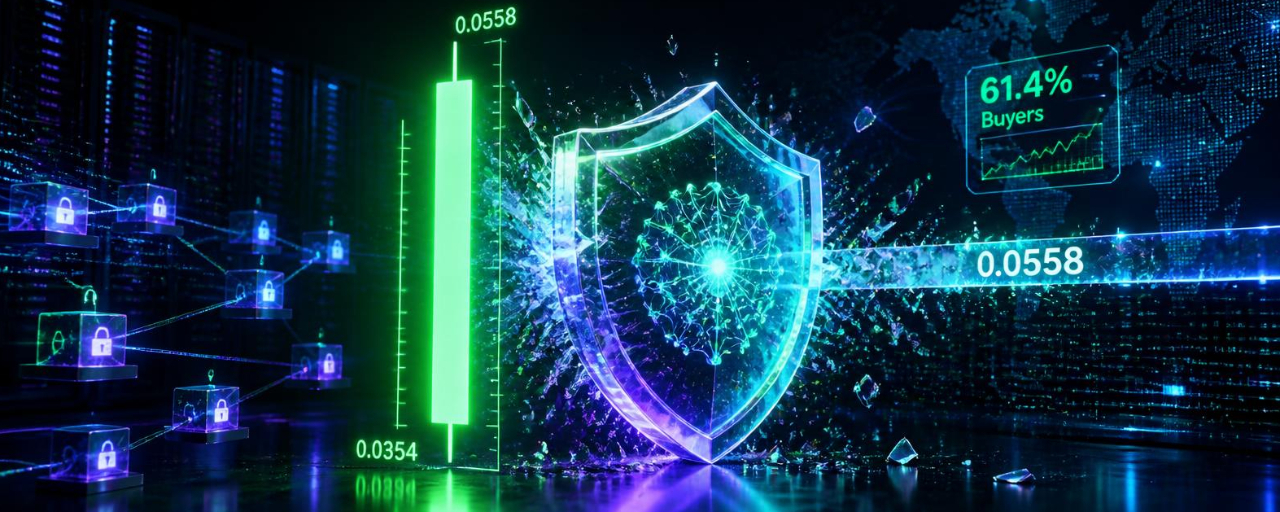
Phala Network Explodes 53%—Is This the Next DePIN Sensation?In a market where most altcoins are struggling to keep pace, one privacy-focused DePIN project is making serious noise. $PHA , the native token of Phala Network, just rallied 53.54% in 24 hours, surging from a low of $0.0354 to a high of $0.0558. Currently trading around $0.0551, this decentralized compute network is suddenly on everyone's radar. 👀
But is this a genuine breakout, or just another flash in the pan? Let's break it down. 👇
What's Fueling the Fire? 🔥
Massive Buyer Dominance: The 24-hour trading activity shows 61.4% buyers vs. 38.6% sellers. That's overwhelming demand—traders are aggressively accumulating, not taking profits. 🐂Oversold Rebound: Before this rally, PHA had been beaten down badly, trading over 96% below its all-time high of $1.41. When an asset gets that oversold, even modest buying pressure can trigger a violent short-term bounce.DePIN + Privacy Narrative: Phala sits at the intersection of two of crypto's hottest narratives—Decentralized Physical Infrastructure Networks (DePIN) and privacy-preserving computation. As AI and data privacy concerns grow, projects like Phala are gaining attention.Technical Breakout: The 4-hour chart shows a clean breakout above key resistance, with the price now consolidating near the highs.
The Charts: What the Technicals Say 📊
Looking at the data, a few key levels stand out:
Support Zone: The $0.0354 low is the immediate support to watch. If this holds, we could see a push toward $0.070.Resistance Level: The $0.0558 high is the next major hurdle. A break above this could open the door to $0.070 or even $0.085.Momentum: The RSI is likely entering overbought territory after such a sharp rally, suggesting a pullback or consolidation could be imminent. A retest of the $0.045-$0.050 zone would be perfectly healthy.
The Fundamentals: What Is Phala Network? 🔍
Phala Network is a decentralized compute network that focuses on privacy-preserving cloud computing. It allows developers to run smart contracts and AI workloads in a secure, trustless environment. Key features include:
Confidential Computing: Uses Trusted Execution Environments (TEEs) to keep data private during computation.DePIN Infrastructure: Provides decentralized cloud compute resources, competing with centralized providers.AI Integration: Positioned to support AI workloads, one of the fastest-growing sectors in tech.
With a circulating supply of 840.5 million tokens, Phala has a modest market cap that leaves room for significant upside if adoption grows.
Potential Catalysts to Watch 🔥
DePIN Narrative: As decentralized infrastructure gains traction, projects like Phala could benefit.AI Compute Demand: Growing demand for private, decentralized AI compute could drive adoption.New Partnerships: Any announcements regarding integrations with major AI or DeFi projects could provide positive price catalysts.
Final Takeaway 💎
A 53% rally with strong buyer dominance is always exciting. Phala Network offers a unique value proposition at the intersection of DePIN, privacy, and AI—three of the most compelling narratives in crypto. The key levels to watch are $0.0354 (support) and $0.0558 (resistance). If PHA can break through resistance with volume, the next stop could be $0.070.
Are you bullish on DePIN and privacy? And is $PHA part of your portfolio? Drop your strategy below! 👇
#DePIN
Phala Network Explodes 53%—Is This the Next DePIN Sensation?
In a market where most altcoins are struggling to keep pace, one privacy-focused DePIN project is making serious noise. $PHA , the native token of Phala Network, just rallied 53.54% in 24 hours, surging from a low of $0.0354 to a high of $0.0558. Currently trading around $0.0551, this decentralized compute network is suddenly on everyone's radar. 👀
But is this a genuine breakout, or just another flash in the pan? Let's break it down. 👇
What's Fueling the Fire? 🔥
Massive Buyer Dominance: The 24-hour trading activity shows 61.4% buyers vs. 38.6% sellers. That's overwhelming demand—traders are aggressively accumulating, not taking profits. 🐂Oversold Rebound: Before this rally, PHA had been beaten down badly, trading over 96% below its all-time high of $1.41. When an asset gets that oversold, even modest buying pressure can trigger a violent short-term bounce.DePIN + Privacy Narrative: Phala sits at the intersection of two of crypto's hottest narratives—Decentralized Physical Infrastructure Networks (DePIN) and privacy-preserving computation. As AI and data privacy concerns grow, projects like Phala are gaining attention.Technical Breakout: The 4-hour chart shows a clean breakout above key resistance, with the price now consolidating near the highs.
The Charts: What the Technicals Say 📊
Looking at the data, a few key levels stand out:
Support Zone: The $0.0354 low is the immediate support to watch. If this holds, we could see a push toward $0.070.Resistance Level: The $0.0558 high is the next major hurdle. A break above this could open the door to $0.070 or even $0.085.Momentum: The RSI is likely entering overbought territory after such a sharp rally, suggesting a pullback or consolidation could be imminent. A retest of the $0.045-$0.050 zone would be perfectly healthy.
The Fundamentals: What Is Phala Network? 🔍
Phala Network is a decentralized compute network that focuses on privacy-preserving cloud computing. It allows developers to run smart contracts and AI workloads in a secure, trustless environment. Key features include:
Confidential Computing: Uses Trusted Execution Environments (TEEs) to keep data private during computation.DePIN Infrastructure: Provides decentralized cloud compute resources, competing with centralized providers.AI Integration: Positioned to support AI workloads, one of the fastest-growing sectors in tech.
With a circulating supply of 840.5 million tokens, Phala has a modest market cap that leaves room for significant upside if adoption grows.
Potential Catalysts to Watch 🔥
DePIN Narrative: As decentralized infrastructure gains traction, projects like Phala could benefit.AI Compute Demand: Growing demand for private, decentralized AI compute could drive adoption.New Partnerships: Any announcements regarding integrations with major AI or DeFi projects could provide positive price catalysts.
Final Takeaway 💎
A 53% rally with strong buyer dominance is always exciting. Phala Network offers a unique value proposition at the intersection of DePIN, privacy, and AI—three of the most compelling narratives in crypto. The key levels to watch are $0.0354 (support) and $0.0558 (resistance). If PHA can break through resistance with volume, the next stop could be $0.070.
Are you bullish on DePIN and privacy? And is $PHA part of your portfolio? Drop your strategy below! 👇
#DePIN
But is this a genuine breakout, or just another flash in the pan? Let's break it down. 👇
What's Fueling the Fire? 🔥
Massive Buyer Dominance: The 24-hour trading activity shows 61.4% buyers vs. 38.6% sellers. That's overwhelming demand—traders are aggressively accumulating, not taking profits. 🐂Oversold Rebound: Before this rally, PHA had been beaten down badly, trading over 96% below its all-time high of $1.41. When an asset gets that oversold, even modest buying pressure can trigger a violent short-term bounce.DePIN + Privacy Narrative: Phala sits at the intersection of two of crypto's hottest narratives—Decentralized Physical Infrastructure Networks (DePIN) and privacy-preserving computation. As AI and data privacy concerns grow, projects like Phala are gaining attention.Technical Breakout: The 4-hour chart shows a clean breakout above key resistance, with the price now consolidating near the highs.
The Charts: What the Technicals Say 📊
Looking at the data, a few key levels stand out:
Support Zone: The $0.0354 low is the immediate support to watch. If this holds, we could see a push toward $0.070.Resistance Level: The $0.0558 high is the next major hurdle. A break above this could open the door to $0.070 or even $0.085.Momentum: The RSI is likely entering overbought territory after such a sharp rally, suggesting a pullback or consolidation could be imminent. A retest of the $0.045-$0.050 zone would be perfectly healthy.
The Fundamentals: What Is Phala Network? 🔍
Phala Network is a decentralized compute network that focuses on privacy-preserving cloud computing. It allows developers to run smart contracts and AI workloads in a secure, trustless environment. Key features include:
Confidential Computing: Uses Trusted Execution Environments (TEEs) to keep data private during computation.DePIN Infrastructure: Provides decentralized cloud compute resources, competing with centralized providers.AI Integration: Positioned to support AI workloads, one of the fastest-growing sectors in tech.
With a circulating supply of 840.5 million tokens, Phala has a modest market cap that leaves room for significant upside if adoption grows.
Potential Catalysts to Watch 🔥
DePIN Narrative: As decentralized infrastructure gains traction, projects like Phala could benefit.AI Compute Demand: Growing demand for private, decentralized AI compute could drive adoption.New Partnerships: Any announcements regarding integrations with major AI or DeFi projects could provide positive price catalysts.
Final Takeaway 💎
A 53% rally with strong buyer dominance is always exciting. Phala Network offers a unique value proposition at the intersection of DePIN, privacy, and AI—three of the most compelling narratives in crypto. The key levels to watch are $0.0354 (support) and $0.0558 (resistance). If PHA can break through resistance with volume, the next stop could be $0.070.
Are you bullish on DePIN and privacy? And is $PHA part of your portfolio? Drop your strategy below! 👇
#DePIN
104

·
--
Bullish
Most people know Bitcoin. But have you heard of DIMO? 🚗🧠 DIMO is building a decentralized network where vehicles can generate and share their own data.
Think about it:
Your car produces information about mileage, location, performance, battery health and more. Instead of that data being controlled entirely by traditional companies, DIMO is trying to create an open marketplace around vehicle data.
Its token is $DIS $DIA
{spot}(DIAUSDT)
.
That doesn’t mean it will automatically succeed. Small-cap crypto can be extremely volatile, and adoption, token economics and liquidity matter. But this is exactly the type of crypto project many people overlook because it isn't constantly trending. Research the technology before looking at the price. 🔎
#crypto #DePIN #dimo #Web3 #blockchain
Most people know Bitcoin. But have you heard of DIMO? 🚗🧠 DIMO is building a decentralized network where vehicles can generate and share their own data.
Think about it:
Your car produces information about mileage, location, performance, battery health and more. Instead of that data being controlled entirely by traditional companies, DIMO is trying to create an open marketplace around vehicle data.
Its token is $DIS $DIA
.
That doesn’t mean it will automatically succeed. Small-cap crypto can be extremely volatile, and adoption, token economics and liquidity matter. But this is exactly the type of crypto project many people overlook because it isn't constantly trending. Research the technology before looking at the price. 🔎
#crypto #DePIN #dimo #Web3 #blockchain
Think about it:
Your car produces information about mileage, location, performance, battery health and more. Instead of that data being controlled entirely by traditional companies, DIMO is trying to create an open marketplace around vehicle data.
Its token is $DIS $DIA
.
That doesn’t mean it will automatically succeed. Small-cap crypto can be extremely volatile, and adoption, token economics and liquidity matter. But this is exactly the type of crypto project many people overlook because it isn't constantly trending. Research the technology before looking at the price. 🔎
#crypto #DePIN #dimo #Web3 #blockchain
1
128

If you're still fading every AI DePIN token because last cycle's winners dumped 80%, stop now.
Getting left behind on the compute narrative while $RNDR and $FET printed multiples is brutal. Then you chase and buy the local top.
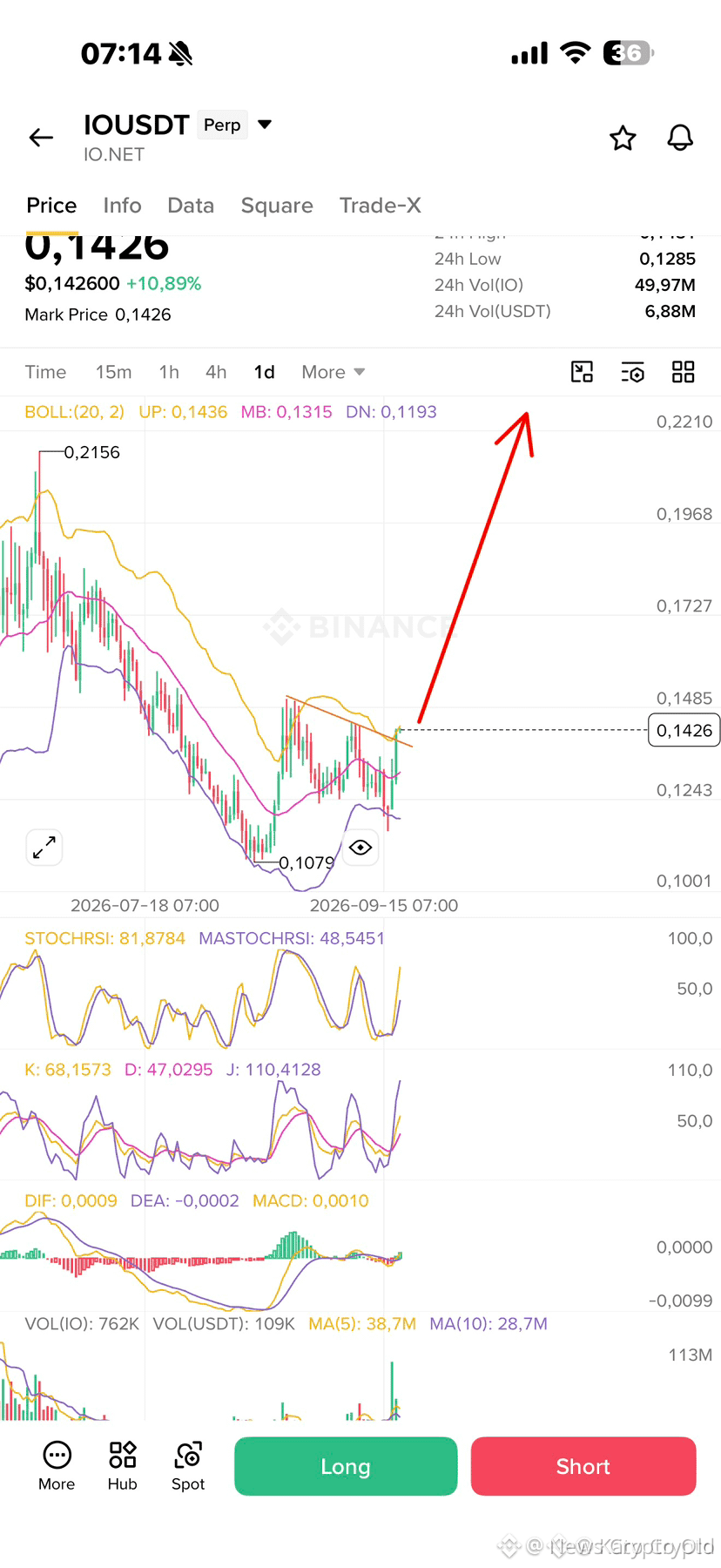
$IO is printing a setup that looks a lot like those early $RNDR charts before the real move. AI demand for decentralized GPU power keeps growing and this one already shows +1.97% on the day.
Sitting in a 49.9K USDT long here. The trend is clear and the chart actually looks clean for once, unlike half the AI coins that just pumped on tweets.
Reminds me of how $FET snuck up on people last time. Maybe history rhymes.
Anyone else seeing the same comparison between $IO and the last wave of AI runners?
#AI #DePIN #Crypto
If you're still fading every AI DePIN token because last cycle's winners dumped 80%, stop now.
Getting left behind on the compute narrative while $RNDR and $FET printed multiples is brutal. Then you chase and buy the local top.
$IO is printing a setup that looks a lot like those early $RNDR charts before the real move. AI demand for decentralized GPU power keeps growing and this one already shows +1.97% on the day.
Sitting in a 49.9K USDT long here. The trend is clear and the chart actually looks clean for once, unlike half the AI coins that just pumped on tweets.
Reminds me of how $FET snuck up on people last time. Maybe history rhymes.
Anyone else seeing the same comparison between $IO and the last wave of AI runners?
#AI #DePIN #Crypto
Getting left behind on the compute narrative while $RNDR and $FET printed multiples is brutal. Then you chase and buy the local top.
$IO is printing a setup that looks a lot like those early $RNDR charts before the real move. AI demand for decentralized GPU power keeps growing and this one already shows +1.97% on the day.
Sitting in a 49.9K USDT long here. The trend is clear and the chart actually looks clean for once, unlike half the AI coins that just pumped on tweets.
Reminds me of how $FET snuck up on people last time. Maybe history rhymes.
Anyone else seeing the same comparison between $IO and the last wave of AI runners?
#AI #DePIN #Crypto
550

·
--
The crypto revolution today is going beyond simply being stored-value coins, moving into a new generation of **modern digital currencies** that offer real technical solutions. The scene is witnessing a strong rise in AI-powered coins such as the NEAR protocol $NEAR and decentralized computing platforms, alongside coins of decentralized infrastructure networks (DePIN) that integrate technology with the real world. Seizing opportunities in these emerging projects requires deep research and strict risk management.
#Binance #Near #DePIN #Crypto2026back #Write2Earn
The crypto revolution today is going beyond simply being stored-value coins, moving into a new generation of **modern digital currencies** that offer real technical solutions. The scene is witnessing a strong rise in AI-powered coins such as the NEAR protocol $NEAR and decentralized computing platforms, alongside coins of decentralized infrastructure networks (DePIN) that integrate technology with the real world. Seizing opportunities in these emerging projects requires deep research and strict risk management.
#Binance #Near #DePIN #Crypto2026back #Write2Earn
#Binance #Near #DePIN #Crypto2026back #Write2Earn
250


·
--
@fluence : Who Gets the GPU Capacity?
How GPU capacity is actually bought and sold. There can be plenty of GPUs in the world and still be a shortage for a specific buyer, location, workload, or time period. That makes pricing and access more complicated than simply putting a number next to a GPU.
This is where auctions become useful. A forward auction lets buyers compete for available capacity, while a reverse auction lets providers compete to fulfil demand.
Both create a more dynamic way of discovering what compute is actually worth at a given moment. And for someone buying serious GPU capacity, the cheapest option isn't automatically the right one.
You also need to ask: Is the capacity actually available when you need it? Can the networking fabric handle the workload? What SLA comes with the infrastructure? If something breaks, how quickly can it be restored? These details can make a major difference when AI workloads are running at scale.
Fluence is building toward a global marketplace where data centers can connect directly with qualified demand for reserved GPU clusters.
The interesting part is that this isn't only about adding more GPUs. It's about making the GPUs that already exist easier to discover, compare, price, and utilize.
#Fluence #DePIN #AI
@Fluence : Who Gets the GPU Capacity?
How GPU capacity is actually bought and sold. There can be plenty of GPUs in the world and still be a shortage for a specific buyer, location, workload, or time period. That makes pricing and access more complicated than simply putting a number next to a GPU.
This is where auctions become useful. A forward auction lets buyers compete for available capacity, while a reverse auction lets providers compete to fulfil demand.
Both create a more dynamic way of discovering what compute is actually worth at a given moment. And for someone buying serious GPU capacity, the cheapest option isn't automatically the right one.
You also need to ask: Is the capacity actually available when you need it? Can the networking fabric handle the workload? What SLA comes with the infrastructure? If something breaks, how quickly can it be restored? These details can make a major difference when AI workloads are running at scale.
Fluence is building toward a global marketplace where data centers can connect directly with qualified demand for reserved GPU clusters.
The interesting part is that this isn't only about adding more GPUs. It's about making the GPUs that already exist easier to discover, compare, price, and utilize.
#Fluence #DePIN #AI
How GPU capacity is actually bought and sold. There can be plenty of GPUs in the world and still be a shortage for a specific buyer, location, workload, or time period. That makes pricing and access more complicated than simply putting a number next to a GPU.
This is where auctions become useful. A forward auction lets buyers compete for available capacity, while a reverse auction lets providers compete to fulfil demand.
Both create a more dynamic way of discovering what compute is actually worth at a given moment. And for someone buying serious GPU capacity, the cheapest option isn't automatically the right one.
You also need to ask: Is the capacity actually available when you need it? Can the networking fabric handle the workload? What SLA comes with the infrastructure? If something breaks, how quickly can it be restored? These details can make a major difference when AI workloads are running at scale.
Fluence is building toward a global marketplace where data centers can connect directly with qualified demand for reserved GPU clusters.
The interesting part is that this isn't only about adding more GPUs. It's about making the GPUs that already exist easier to discover, compare, price, and utilize.
#Fluence #DePIN #AI

1
98
·
--
Verified

Article
Aethir’s 20 MW Push Turns the Compute Narrative PhysicalMost AI-token rallies still begin with a story. Aethir’s latest catalyst begins with sites and power. The ACCELERATE program is targeting up to 20 MW of high-density GPU capacity, with projected contract value in the hundreds of millions. That lands in a market already willing to fund infrastructure narratives. Fear & Greed has been holding in Greed territory, roughly 62 to 73, and altcoin momentum has been lifting mid-caps. Render and Akash have kept DePIN compute in the conversation through revenue and utilization metrics. Traders are looking for something sturdier than another abstract “AI demand” headline. Physical capacity is that something.
What stands out is the shift in emphasis. The market has spent a long stretch pricing decentralized compute as an option on future AI workloads. Programs that secure power, space, and enterprise-facing capacity force a more concrete question: can these networks move from token narrative to contract-backed infrastructure?
Why Capacity Matters More Than Another Price Spike
Institutional AI spending has not slowed in the broader technology complex. Training and inference still run into the same constraints: access to high-end GPUs, density, power, and reliable delivery. Centralized cloud providers remain the default. DePIN networks are trying to insert themselves as alternative or complementary supply, especially where workloads can be distributed or where cost and availability create openings.
Aethir’s ACCELERATE framing is useful because it is denominated in megawatts, not just roadmap language. Capacity targets can be overstated, and projected contract values can slip. Still, the market tends to reward projects that move the discussion from emissions and points to power, hardware, and customer pipeline. That is the core of the current bid across parts of GPU DePIN. Capital is less interested in pure thematic exposure and more interested in evidence that decentralized supply can be packaged into something enterprises will pay for.
Sector Context and Market Structure
Mid-cap infrastructure names often move hardest when two conditions overlap: broad risk appetite and a fresh catalyst that feels measurable. Both are present. Positive momentum across altcoins creates room for secondary leaders. A capacity announcement gives desks a number to debate.
Funding rates and open interest on related mid-cap perps become the tactical overlay. Modestly positive funding with rising interest can support continuation after digestion. Rapidly elevated funding after a vertical move raises the odds of a sharp squeeze in the opposite direction. Liquidity near recent highs also matters. If price probes those zones and finds acceptance, momentum traders stay engaged. If the highs are swept and rejected while open interest stays elevated, the move can unwind quickly.
For pro traders, the practical read is to separate the infrastructure thesis from the short-term positioning regime. The first can remain intact while the second turns. That distinction is where a lot of P&L is made or lost in these names.
On-Chain and Network Signals
Across GPU DePIN networks, the more useful metrics are still the unglamorous ones: node growth, utilization, active addresses, and whether supply dynamics favor participants who are actually providing work. Rising active addresses without utilization can mean marketing reach rather than demand. Utilization without durable pricing can mean activity that does not translate into sustainable revenue.
Supply behavior in compute tokens also deserves attention. Networks that dilute aggressively into a narrative peak often cap upside even when the product story is real. Networks that tie rewards more tightly to delivered compute have a cleaner long-term shape, though they can underperform in pure speculative phases. The data suggests investors are starting to make that distinction more carefully than they did in earlier AI-beta waves.
Aethir’s capacity plan should eventually show up in the same scorecard. Announced megawatts are an input. Deployed capacity, contracted usage, and realized revenue are the outputs that decide whether the re-rating holds.
Fundamentals, Risks, and Positioning
The fundamental case is straightforward. If decentralized GPU networks can assemble reliable capacity and sell it into enterprise or large-scale AI workflows, the sector graduates from speculative compute tokens toward infrastructure with backlog. Render and Akash have already helped the market understand that revenue traction is possible. Aethir’s ACCELERATE target is an attempt to scale that logic through physical buildout and high-density sites.
Risks are equally clear. Data-center timelines slip. Power is not abstract. Hardware procurement, deployment, and utilization can lag optimistic presentations. Competitive pressure from centralized providers remains intense on price and reliability. There is also market risk: if broader risk appetite fades, DePIN mid-caps will not be shielded by their megawatt targets.
For longer-term investors, the opportunity is in identifying which networks are building real supply and customer relationships rather than only harvesting narrative beta. For pro traders, the opportunity is in trading the gap between announcement momentum and operational delivery, with clear invalidation if price loses key post-catalyst structure while funding stays elevated.
Closing View
Aethir’s 20 MW ambition is not just another AI headline. It is a claim about physical capacity in a market that has been hungry for measurable infrastructure catalysts. The broader setup helps: greed-range sentiment, mid-cap participation, and existing DePIN revenue examples from peers. That does not make the projection destiny. It does explain why desks are treating capacity expansion as a more serious signal than pure token momentum.
What I'm watching from here is conversion. Sites and megawatt targets need to become deployed capacity, utilization, and contracts that survive outside a bullish tape. If that conversion happens, the decentralized GPU story becomes harder to dismiss as speculative packaging. If it does not, the market will likely treat ACCELERATE as another well-timed catalyst in a sector that still runs ahead of its balance sheet. The next phase belongs to the operators who can turn power into paid compute—and to the investors disciplined enough to wait for that evidence.
#Aethir
#ATH
#accelerate
#DePIN
$Acc
Aethir’s 20 MW Push Turns the Compute Narrative Physical
Most AI-token rallies still begin with a story. Aethir’s latest catalyst begins with sites and power. The ACCELERATE program is targeting up to 20 MW of high-density GPU capacity, with projected contract value in the hundreds of millions. That lands in a market already willing to fund infrastructure narratives. Fear & Greed has been holding in Greed territory, roughly 62 to 73, and altcoin momentum has been lifting mid-caps. Render and Akash have kept DePIN compute in the conversation through revenue and utilization metrics. Traders are looking for something sturdier than another abstract “AI demand” headline. Physical capacity is that something.
What stands out is the shift in emphasis. The market has spent a long stretch pricing decentralized compute as an option on future AI workloads. Programs that secure power, space, and enterprise-facing capacity force a more concrete question: can these networks move from token narrative to contract-backed infrastructure?
Why Capacity Matters More Than Another Price Spike
Institutional AI spending has not slowed in the broader technology complex. Training and inference still run into the same constraints: access to high-end GPUs, density, power, and reliable delivery. Centralized cloud providers remain the default. DePIN networks are trying to insert themselves as alternative or complementary supply, especially where workloads can be distributed or where cost and availability create openings.
Aethir’s ACCELERATE framing is useful because it is denominated in megawatts, not just roadmap language. Capacity targets can be overstated, and projected contract values can slip. Still, the market tends to reward projects that move the discussion from emissions and points to power, hardware, and customer pipeline. That is the core of the current bid across parts of GPU DePIN. Capital is less interested in pure thematic exposure and more interested in evidence that decentralized supply can be packaged into something enterprises will pay for.
Sector Context and Market Structure
Mid-cap infrastructure names often move hardest when two conditions overlap: broad risk appetite and a fresh catalyst that feels measurable. Both are present. Positive momentum across altcoins creates room for secondary leaders. A capacity announcement gives desks a number to debate.
Funding rates and open interest on related mid-cap perps become the tactical overlay. Modestly positive funding with rising interest can support continuation after digestion. Rapidly elevated funding after a vertical move raises the odds of a sharp squeeze in the opposite direction. Liquidity near recent highs also matters. If price probes those zones and finds acceptance, momentum traders stay engaged. If the highs are swept and rejected while open interest stays elevated, the move can unwind quickly.
For pro traders, the practical read is to separate the infrastructure thesis from the short-term positioning regime. The first can remain intact while the second turns. That distinction is where a lot of P&L is made or lost in these names.
On-Chain and Network Signals
Across GPU DePIN networks, the more useful metrics are still the unglamorous ones: node growth, utilization, active addresses, and whether supply dynamics favor participants who are actually providing work. Rising active addresses without utilization can mean marketing reach rather than demand. Utilization without durable pricing can mean activity that does not translate into sustainable revenue.
Supply behavior in compute tokens also deserves attention. Networks that dilute aggressively into a narrative peak often cap upside even when the product story is real. Networks that tie rewards more tightly to delivered compute have a cleaner long-term shape, though they can underperform in pure speculative phases. The data suggests investors are starting to make that distinction more carefully than they did in earlier AI-beta waves.
Aethir’s capacity plan should eventually show up in the same scorecard. Announced megawatts are an input. Deployed capacity, contracted usage, and realized revenue are the outputs that decide whether the re-rating holds.
Fundamentals, Risks, and Positioning
The fundamental case is straightforward. If decentralized GPU networks can assemble reliable capacity and sell it into enterprise or large-scale AI workflows, the sector graduates from speculative compute tokens toward infrastructure with backlog. Render and Akash have already helped the market understand that revenue traction is possible. Aethir’s ACCELERATE target is an attempt to scale that logic through physical buildout and high-density sites.
Risks are equally clear. Data-center timelines slip. Power is not abstract. Hardware procurement, deployment, and utilization can lag optimistic presentations. Competitive pressure from centralized providers remains intense on price and reliability. There is also market risk: if broader risk appetite fades, DePIN mid-caps will not be shielded by their megawatt targets.
For longer-term investors, the opportunity is in identifying which networks are building real supply and customer relationships rather than only harvesting narrative beta. For pro traders, the opportunity is in trading the gap between announcement momentum and operational delivery, with clear invalidation if price loses key post-catalyst structure while funding stays elevated.
Closing View
Aethir’s 20 MW ambition is not just another AI headline. It is a claim about physical capacity in a market that has been hungry for measurable infrastructure catalysts. The broader setup helps: greed-range sentiment, mid-cap participation, and existing DePIN revenue examples from peers. That does not make the projection destiny. It does explain why desks are treating capacity expansion as a more serious signal than pure token momentum.
What I'm watching from here is conversion. Sites and megawatt targets need to become deployed capacity, utilization, and contracts that survive outside a bullish tape. If that conversion happens, the decentralized GPU story becomes harder to dismiss as speculative packaging. If it does not, the market will likely treat ACCELERATE as another well-timed catalyst in a sector that still runs ahead of its balance sheet. The next phase belongs to the operators who can turn power into paid compute—and to the investors disciplined enough to wait for that evidence.
#Aethir
#ATH
#accelerate
#DePIN
$Acc
What stands out is the shift in emphasis. The market has spent a long stretch pricing decentralized compute as an option on future AI workloads. Programs that secure power, space, and enterprise-facing capacity force a more concrete question: can these networks move from token narrative to contract-backed infrastructure?
Why Capacity Matters More Than Another Price Spike
Institutional AI spending has not slowed in the broader technology complex. Training and inference still run into the same constraints: access to high-end GPUs, density, power, and reliable delivery. Centralized cloud providers remain the default. DePIN networks are trying to insert themselves as alternative or complementary supply, especially where workloads can be distributed or where cost and availability create openings.
Aethir’s ACCELERATE framing is useful because it is denominated in megawatts, not just roadmap language. Capacity targets can be overstated, and projected contract values can slip. Still, the market tends to reward projects that move the discussion from emissions and points to power, hardware, and customer pipeline. That is the core of the current bid across parts of GPU DePIN. Capital is less interested in pure thematic exposure and more interested in evidence that decentralized supply can be packaged into something enterprises will pay for.
Sector Context and Market Structure
Mid-cap infrastructure names often move hardest when two conditions overlap: broad risk appetite and a fresh catalyst that feels measurable. Both are present. Positive momentum across altcoins creates room for secondary leaders. A capacity announcement gives desks a number to debate.
Funding rates and open interest on related mid-cap perps become the tactical overlay. Modestly positive funding with rising interest can support continuation after digestion. Rapidly elevated funding after a vertical move raises the odds of a sharp squeeze in the opposite direction. Liquidity near recent highs also matters. If price probes those zones and finds acceptance, momentum traders stay engaged. If the highs are swept and rejected while open interest stays elevated, the move can unwind quickly.
For pro traders, the practical read is to separate the infrastructure thesis from the short-term positioning regime. The first can remain intact while the second turns. That distinction is where a lot of P&L is made or lost in these names.
On-Chain and Network Signals
Across GPU DePIN networks, the more useful metrics are still the unglamorous ones: node growth, utilization, active addresses, and whether supply dynamics favor participants who are actually providing work. Rising active addresses without utilization can mean marketing reach rather than demand. Utilization without durable pricing can mean activity that does not translate into sustainable revenue.
Supply behavior in compute tokens also deserves attention. Networks that dilute aggressively into a narrative peak often cap upside even when the product story is real. Networks that tie rewards more tightly to delivered compute have a cleaner long-term shape, though they can underperform in pure speculative phases. The data suggests investors are starting to make that distinction more carefully than they did in earlier AI-beta waves.
Aethir’s capacity plan should eventually show up in the same scorecard. Announced megawatts are an input. Deployed capacity, contracted usage, and realized revenue are the outputs that decide whether the re-rating holds.
Fundamentals, Risks, and Positioning
The fundamental case is straightforward. If decentralized GPU networks can assemble reliable capacity and sell it into enterprise or large-scale AI workflows, the sector graduates from speculative compute tokens toward infrastructure with backlog. Render and Akash have already helped the market understand that revenue traction is possible. Aethir’s ACCELERATE target is an attempt to scale that logic through physical buildout and high-density sites.
Risks are equally clear. Data-center timelines slip. Power is not abstract. Hardware procurement, deployment, and utilization can lag optimistic presentations. Competitive pressure from centralized providers remains intense on price and reliability. There is also market risk: if broader risk appetite fades, DePIN mid-caps will not be shielded by their megawatt targets.
For longer-term investors, the opportunity is in identifying which networks are building real supply and customer relationships rather than only harvesting narrative beta. For pro traders, the opportunity is in trading the gap between announcement momentum and operational delivery, with clear invalidation if price loses key post-catalyst structure while funding stays elevated.
Closing View
Aethir’s 20 MW ambition is not just another AI headline. It is a claim about physical capacity in a market that has been hungry for measurable infrastructure catalysts. The broader setup helps: greed-range sentiment, mid-cap participation, and existing DePIN revenue examples from peers. That does not make the projection destiny. It does explain why desks are treating capacity expansion as a more serious signal than pure token momentum.
What I'm watching from here is conversion. Sites and megawatt targets need to become deployed capacity, utilization, and contracts that survive outside a bullish tape. If that conversion happens, the decentralized GPU story becomes harder to dismiss as speculative packaging. If it does not, the market will likely treat ACCELERATE as another well-timed catalyst in a sector that still runs ahead of its balance sheet. The next phase belongs to the operators who can turn power into paid compute—and to the investors disciplined enough to wait for that evidence.
#Aethir
#ATH
#accelerate
#DePIN
$Acc
2
675

·
--
Article
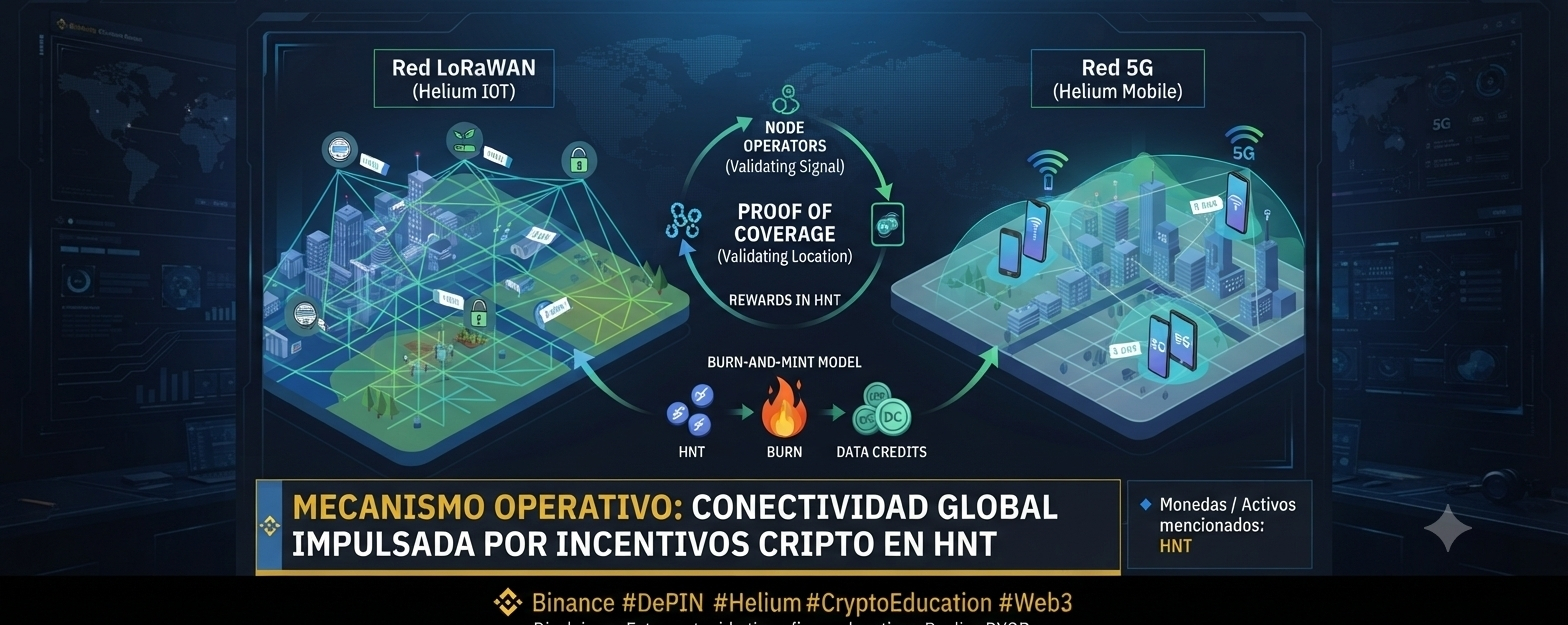
Operating Mechanism: Global Connectivity Powered by Crypto Incentives in HNTThe core of Helium’s success and scalability does not lie in the corporate purchase of traditional infrastructure, but rather in the smart application of HNT tokenomics as a physical deployment engine. Instead of requiring millions of dollars in centralized cellular tower infrastructure, the Helium network uses HNT incentives to motivate individuals and companies to build connectivity from the ground up.
1. Dual Wireless Networks (LoRaWAN and 5G)
Helium's infrastructure primarily operates on two complementary layers supported by its ecosystem:
Operating Mechanism: Global Connectivity Powered by Crypto Incentives in HNT
The core of Helium’s success and scalability does not lie in the corporate purchase of traditional infrastructure, but rather in the smart application of HNT tokenomics as a physical deployment engine. Instead of requiring millions of dollars in centralized cellular tower infrastructure, the Helium network uses HNT incentives to motivate individuals and companies to build connectivity from the ground up.
1. Dual Wireless Networks (LoRaWAN and 5G)
Helium's infrastructure primarily operates on two complementary layers supported by its ecosystem:
1. Dual Wireless Networks (LoRaWAN and 5G)
Helium's infrastructure primarily operates on two complementary layers supported by its ecosystem:
3
531
·
--
Article
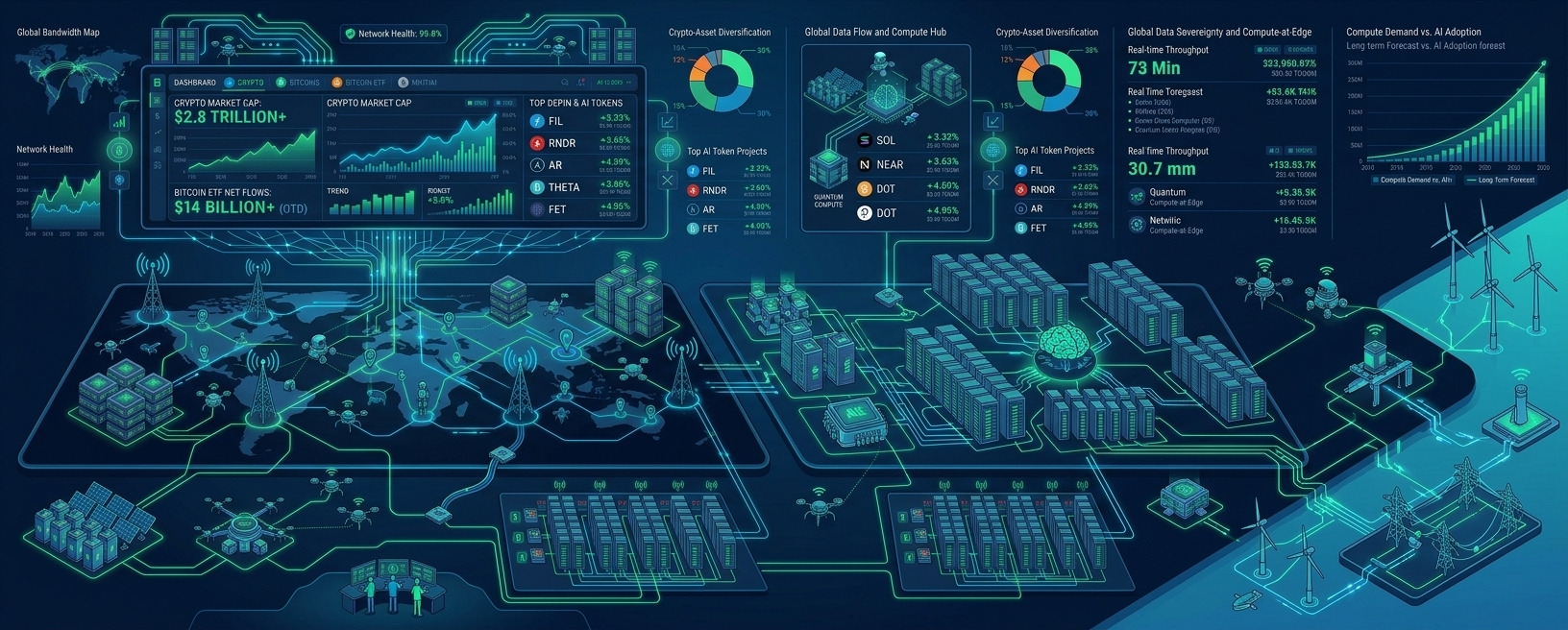
DePIN and AI Infrastructure Quietly Take the BidWhile ETF flows and Bitcoin’s headline levels dominate the conversation, another part of the market has been doing the work. DePIN names have advanced roughly 5.5% at the sector level, with Geodnet jumping about 44.9%. AI-linked tokens continue to show elevated volume. Bittensor’s TAO is holding in a more neutral-to-greed sentiment band rather than an extreme reading. Broader crypto market cap has pushed above $2.8 trillion, and Layer-1 plus infrastructure names are participating.
What stands out is not just that these sectors are up. It is where the capital is going. Risk appetite is present—Fear & Greed has been running roughly 57 to 71—but the bid is landing more cleanly in real-utility infrastructure than in pure meme rotation. That creates a two-tier tape worth paying attention to.
Why the Rotation Matters Now
Bitcoin dominance near the high-50s, around 58%, still frames the market. Large-cap and ETF-related flows remain the main story for many desks. Underneath that, mid-cap DePIN and AI infrastructure are absorbing a meaningful share of speculative and thematic capital.
This is familiar in structure and different in content. In previous cycles, the second tier was often pure narrative beta. Here, the better-performing names are tied to physical networks, decentralized compute, sensor data, and AI-agent demand. Geodnet’s outsized move is a reminder that single-name catalysts inside DePIN can still reprice a token sharply when the sector is already in favor. TAO’s more measured sentiment reading suggests the AI complex is active without being fully one-sided.
For pro traders, the practical point is relative value. When BTC and the largest ETFs hold attention, liquidity in mid-cap infrastructure can move further on less size. That cuts both ways: upside can be faster, and drawdowns can be just as sharp.
Sector Structure and Technical Read
Relative strength in mid-cap DePIN versus Bitcoin has been visible in the recent stretch. That does not mean the group is immune to a BTC-led risk-off day. It does mean that, inside the current risk-on window, capital has been willing to pay for exposure lower down the curve.
Funding rates across related perpetual markets have stayed modestly positive. That is important. Aggressive positive funding after vertical moves often signals a crowded long. Modestly positive funding alongside sector gains is a healthier mix. It suggests leverage is participating without the market already being stretched to the same degree seen in the most crowded AI beta trades earlier in the year.
Volume in AI-linked tokens remains elevated relative to longer historical baselines. Elevated volume during strength is constructive. Elevated volume during the first serious pullback will be the test. If the group corrects on light activity and buyers reappear near prior breakout zones, the rotation thesis stays intact. If volume expands hard on the downside, the move starts to look like another short-cycle thematic spike.
On-Chain and Fundamental Context
DePIN market-cap indices had already shown strong monthly performance earlier in 2026. The latest advance sits on top of that context rather than appearing from nowhere. The fundamental hook remains consistent: AI systems need compute, data, and physical infrastructure. Centralized providers still dominate, but cost, availability, and control concerns leave room for decentralized alternatives. Networks that coordinate GPS, wireless, GPU, or other real-world resources are trying to turn that gap into a market.
Restaking TVL has cooled from peak levels, yet it remains a related security and yield layer for parts of the infrastructure stack. The cooling matters. It shows that not every adjacent narrative is still in pure expansion mode. Capital is becoming more selective. Projects that can point to usage, node growth, or service demand are better placed than those offering only thematic exposure.
What I'm seeing is a market that still likes the AI and DePIN story, but is starting to differentiate inside it. That differentiation is usually where the next phase of returns—and the next phase of underperformance—gets decided.
Risks, Opportunities, and Positioning
The main risk is correlation. If Bitcoin loses momentum and broader risk sentiment fades, mid-cap DePIN and AI names will not be protected by their utility narrative. They may even underperform on the way down because they are the higher-beta sleeve of the market. Single-name risk is also elevated. A 45% jump in a name like Geodnet can attract momentum buyers late and punish them quickly if the catalyst is fully priced.
The opportunity sits in the relative-value structure itself. While large-cap ETF flows dominate headlines, selective strength in infrastructure mid-caps can offer cleaner expression of the decentralized compute and physical-network thesis. For pro traders, that means watching sector relative strength against BTC, funding conditions, and whether leadership persists or rotates rapidly between names. For longer-term investors, it means separating networks with measurable real-world activity from those still priced mainly on narrative adjacency to AI.
A disciplined approach is to treat the sector bid as real but conditional. The condition is continued risk appetite and continued evidence that these networks are doing work, not just trading as AI proxies.
Closing View
DePIN and AI infrastructure are leading a meaningful slice of the market while Bitcoin and ETF flows still take most of the attention. Geodnet’s sharp advance shows how far single names can run inside that backdrop. TAO’s less extreme sentiment reading shows that not every AI-linked asset is being chased the same way. Market cap above $2.8 trillion and modestly positive funding complete the picture of a risk-on environment that is still selective rather than indiscriminate.
The data suggests a two-tier market: large-cap and ETF liquidity on one side, mid-cap infrastructure beta on the other. That structure can persist as long as risk appetite holds and the utility narrative keeps finding confirmation in usage metrics. It can also unwind quickly if BTC dominance rises hard or if the sector’s leaders fail to hold relative strength after the first serious down day. From here, the useful work is less about celebrating the sector label and more about tracking which names still look like infrastructure—and which ones only looked like it on the way up.
$TAO
#DePIN
#crypto
#bitcoin
#bittensor
#TAO
DePIN and AI Infrastructure Quietly Take the Bid
While ETF flows and Bitcoin’s headline levels dominate the conversation, another part of the market has been doing the work. DePIN names have advanced roughly 5.5% at the sector level, with Geodnet jumping about 44.9%. AI-linked tokens continue to show elevated volume. Bittensor’s TAO is holding in a more neutral-to-greed sentiment band rather than an extreme reading. Broader crypto market cap has pushed above $2.8 trillion, and Layer-1 plus infrastructure names are participating.
What stands out is not just that these sectors are up. It is where the capital is going. Risk appetite is present—Fear & Greed has been running roughly 57 to 71—but the bid is landing more cleanly in real-utility infrastructure than in pure meme rotation. That creates a two-tier tape worth paying attention to.
Why the Rotation Matters Now
Bitcoin dominance near the high-50s, around 58%, still frames the market. Large-cap and ETF-related flows remain the main story for many desks. Underneath that, mid-cap DePIN and AI infrastructure are absorbing a meaningful share of speculative and thematic capital.
This is familiar in structure and different in content. In previous cycles, the second tier was often pure narrative beta. Here, the better-performing names are tied to physical networks, decentralized compute, sensor data, and AI-agent demand. Geodnet’s outsized move is a reminder that single-name catalysts inside DePIN can still reprice a token sharply when the sector is already in favor. TAO’s more measured sentiment reading suggests the AI complex is active without being fully one-sided.
For pro traders, the practical point is relative value. When BTC and the largest ETFs hold attention, liquidity in mid-cap infrastructure can move further on less size. That cuts both ways: upside can be faster, and drawdowns can be just as sharp.
Sector Structure and Technical Read
Relative strength in mid-cap DePIN versus Bitcoin has been visible in the recent stretch. That does not mean the group is immune to a BTC-led risk-off day. It does mean that, inside the current risk-on window, capital has been willing to pay for exposure lower down the curve.
Funding rates across related perpetual markets have stayed modestly positive. That is important. Aggressive positive funding after vertical moves often signals a crowded long. Modestly positive funding alongside sector gains is a healthier mix. It suggests leverage is participating without the market already being stretched to the same degree seen in the most crowded AI beta trades earlier in the year.
Volume in AI-linked tokens remains elevated relative to longer historical baselines. Elevated volume during strength is constructive. Elevated volume during the first serious pullback will be the test. If the group corrects on light activity and buyers reappear near prior breakout zones, the rotation thesis stays intact. If volume expands hard on the downside, the move starts to look like another short-cycle thematic spike.
On-Chain and Fundamental Context
DePIN market-cap indices had already shown strong monthly performance earlier in 2026. The latest advance sits on top of that context rather than appearing from nowhere. The fundamental hook remains consistent: AI systems need compute, data, and physical infrastructure. Centralized providers still dominate, but cost, availability, and control concerns leave room for decentralized alternatives. Networks that coordinate GPS, wireless, GPU, or other real-world resources are trying to turn that gap into a market.
Restaking TVL has cooled from peak levels, yet it remains a related security and yield layer for parts of the infrastructure stack. The cooling matters. It shows that not every adjacent narrative is still in pure expansion mode. Capital is becoming more selective. Projects that can point to usage, node growth, or service demand are better placed than those offering only thematic exposure.
What I'm seeing is a market that still likes the AI and DePIN story, but is starting to differentiate inside it. That differentiation is usually where the next phase of returns—and the next phase of underperformance—gets decided.
Risks, Opportunities, and Positioning
The main risk is correlation. If Bitcoin loses momentum and broader risk sentiment fades, mid-cap DePIN and AI names will not be protected by their utility narrative. They may even underperform on the way down because they are the higher-beta sleeve of the market. Single-name risk is also elevated. A 45% jump in a name like Geodnet can attract momentum buyers late and punish them quickly if the catalyst is fully priced.
The opportunity sits in the relative-value structure itself. While large-cap ETF flows dominate headlines, selective strength in infrastructure mid-caps can offer cleaner expression of the decentralized compute and physical-network thesis. For pro traders, that means watching sector relative strength against BTC, funding conditions, and whether leadership persists or rotates rapidly between names. For longer-term investors, it means separating networks with measurable real-world activity from those still priced mainly on narrative adjacency to AI.
A disciplined approach is to treat the sector bid as real but conditional. The condition is continued risk appetite and continued evidence that these networks are doing work, not just trading as AI proxies.
Closing View
DePIN and AI infrastructure are leading a meaningful slice of the market while Bitcoin and ETF flows still take most of the attention. Geodnet’s sharp advance shows how far single names can run inside that backdrop. TAO’s less extreme sentiment reading shows that not every AI-linked asset is being chased the same way. Market cap above $2.8 trillion and modestly positive funding complete the picture of a risk-on environment that is still selective rather than indiscriminate.
The data suggests a two-tier market: large-cap and ETF liquidity on one side, mid-cap infrastructure beta on the other. That structure can persist as long as risk appetite holds and the utility narrative keeps finding confirmation in usage metrics. It can also unwind quickly if BTC dominance rises hard or if the sector’s leaders fail to hold relative strength after the first serious down day. From here, the useful work is less about celebrating the sector label and more about tracking which names still look like infrastructure—and which ones only looked like it on the way up.
$TAO
#DePIN
#crypto
#bitcoin
#bittensor
#TAO
What stands out is not just that these sectors are up. It is where the capital is going. Risk appetite is present—Fear & Greed has been running roughly 57 to 71—but the bid is landing more cleanly in real-utility infrastructure than in pure meme rotation. That creates a two-tier tape worth paying attention to.
Why the Rotation Matters Now
Bitcoin dominance near the high-50s, around 58%, still frames the market. Large-cap and ETF-related flows remain the main story for many desks. Underneath that, mid-cap DePIN and AI infrastructure are absorbing a meaningful share of speculative and thematic capital.
This is familiar in structure and different in content. In previous cycles, the second tier was often pure narrative beta. Here, the better-performing names are tied to physical networks, decentralized compute, sensor data, and AI-agent demand. Geodnet’s outsized move is a reminder that single-name catalysts inside DePIN can still reprice a token sharply when the sector is already in favor. TAO’s more measured sentiment reading suggests the AI complex is active without being fully one-sided.
For pro traders, the practical point is relative value. When BTC and the largest ETFs hold attention, liquidity in mid-cap infrastructure can move further on less size. That cuts both ways: upside can be faster, and drawdowns can be just as sharp.
Sector Structure and Technical Read
Relative strength in mid-cap DePIN versus Bitcoin has been visible in the recent stretch. That does not mean the group is immune to a BTC-led risk-off day. It does mean that, inside the current risk-on window, capital has been willing to pay for exposure lower down the curve.
Funding rates across related perpetual markets have stayed modestly positive. That is important. Aggressive positive funding after vertical moves often signals a crowded long. Modestly positive funding alongside sector gains is a healthier mix. It suggests leverage is participating without the market already being stretched to the same degree seen in the most crowded AI beta trades earlier in the year.
Volume in AI-linked tokens remains elevated relative to longer historical baselines. Elevated volume during strength is constructive. Elevated volume during the first serious pullback will be the test. If the group corrects on light activity and buyers reappear near prior breakout zones, the rotation thesis stays intact. If volume expands hard on the downside, the move starts to look like another short-cycle thematic spike.
On-Chain and Fundamental Context
DePIN market-cap indices had already shown strong monthly performance earlier in 2026. The latest advance sits on top of that context rather than appearing from nowhere. The fundamental hook remains consistent: AI systems need compute, data, and physical infrastructure. Centralized providers still dominate, but cost, availability, and control concerns leave room for decentralized alternatives. Networks that coordinate GPS, wireless, GPU, or other real-world resources are trying to turn that gap into a market.
Restaking TVL has cooled from peak levels, yet it remains a related security and yield layer for parts of the infrastructure stack. The cooling matters. It shows that not every adjacent narrative is still in pure expansion mode. Capital is becoming more selective. Projects that can point to usage, node growth, or service demand are better placed than those offering only thematic exposure.
What I'm seeing is a market that still likes the AI and DePIN story, but is starting to differentiate inside it. That differentiation is usually where the next phase of returns—and the next phase of underperformance—gets decided.
Risks, Opportunities, and Positioning
The main risk is correlation. If Bitcoin loses momentum and broader risk sentiment fades, mid-cap DePIN and AI names will not be protected by their utility narrative. They may even underperform on the way down because they are the higher-beta sleeve of the market. Single-name risk is also elevated. A 45% jump in a name like Geodnet can attract momentum buyers late and punish them quickly if the catalyst is fully priced.
The opportunity sits in the relative-value structure itself. While large-cap ETF flows dominate headlines, selective strength in infrastructure mid-caps can offer cleaner expression of the decentralized compute and physical-network thesis. For pro traders, that means watching sector relative strength against BTC, funding conditions, and whether leadership persists or rotates rapidly between names. For longer-term investors, it means separating networks with measurable real-world activity from those still priced mainly on narrative adjacency to AI.
A disciplined approach is to treat the sector bid as real but conditional. The condition is continued risk appetite and continued evidence that these networks are doing work, not just trading as AI proxies.
Closing View
DePIN and AI infrastructure are leading a meaningful slice of the market while Bitcoin and ETF flows still take most of the attention. Geodnet’s sharp advance shows how far single names can run inside that backdrop. TAO’s less extreme sentiment reading shows that not every AI-linked asset is being chased the same way. Market cap above $2.8 trillion and modestly positive funding complete the picture of a risk-on environment that is still selective rather than indiscriminate.
The data suggests a two-tier market: large-cap and ETF liquidity on one side, mid-cap infrastructure beta on the other. That structure can persist as long as risk appetite holds and the utility narrative keeps finding confirmation in usage metrics. It can also unwind quickly if BTC dominance rises hard or if the sector’s leaders fail to hold relative strength after the first serious down day. From here, the useful work is less about celebrating the sector label and more about tracking which names still look like infrastructure—and which ones only looked like it on the way up.
$TAO
#DePIN
#crypto
#bitcoin
#bittensor
#TAO
2
1.2k

·
--
📠 "𝗢𝗻𝗲 𝘀𝗶𝗴𝗻𝗮𝗹 𝗺𝗲𝗮𝗻𝘀 𝗻𝗼𝘁𝗵𝗶𝗻𝗴 𝗮𝗹𝗼𝗻𝗲, 𝗧𝗵𝗼𝘂𝘀𝗮𝗻𝗱𝘀 𝗼𝗳 𝘁𝗵𝗲𝗺 𝘁𝗼𝗴𝗲𝘁𝗵𝗲𝗿 𝗰𝗵𝗮𝗻𝗴𝗲 𝗲𝘃𝗲𝗿𝘆𝘁𝗵𝗶𝗻𝗴" 📠
Let's dive into the Derad's network insights below.👇
📶 𝗧𝗵𝗲 𝗦𝗶𝗴𝗻𝗮𝗹
Every aircraft in the sky is constantly broadcasting its position, speed and altitude. That signal travels until an antenna picks it up and what happens next is where Derad completely changes the story of how aviation data gets handled.
📡 𝗧𝗵𝗲 𝗔𝗻𝘁𝗲𝗻𝗻𝗮
A single antenna receiving that signal is just a starting point. Derad puts that antenna in the hands of an independent operator who gets rewarded for capturing verified data and contributing it to a network that nobody owns and everyone can access.
🌐 𝗧𝗵𝗲 𝗡𝗼𝗱𝗲
Once captured the signal does not go into a corporate database locked behind a paywall. It enters the Derad network as a verified tamper resistant record that adds to a growing transparent picture of everything moving through the sky right now.
🖥️ 𝗡𝗼𝘄 𝗜𝗺𝗮𝗴𝗶𝗻𝗲 𝗧𝗵𝗼𝘂𝘀𝗮𝗻𝗱𝘀
One node is useful. Ten nodes are better. Thousands of nodes operating independently across different countries and altitudes create something no centralized system has ever managed, which is a truly complete and uninterrupted view of global airspace.
✈️ 𝗧𝗵𝗮𝘁 𝗜𝘀 𝗗𝗲𝗿𝗮𝗱
Small signals. Independent contributors. One decentralized network turning countless individual data points into the most transparent and accessible picture of the sky that aviation has ever had access to.
#AI #DePIN #Web3
📠 "𝗢𝗻𝗲 𝘀𝗶𝗴𝗻𝗮𝗹 𝗺𝗲𝗮𝗻𝘀 𝗻𝗼𝘁𝗵𝗶𝗻𝗴 𝗮𝗹𝗼𝗻𝗲, 𝗧𝗵𝗼𝘂𝘀𝗮𝗻𝗱𝘀 𝗼𝗳 𝘁𝗵𝗲𝗺 𝘁𝗼𝗴𝗲𝘁𝗵𝗲𝗿 𝗰𝗵𝗮𝗻𝗴𝗲 𝗲𝘃𝗲𝗿𝘆𝘁𝗵𝗶𝗻𝗴" 📠
Let's dive into the Derad's network insights below.👇
📶 𝗧𝗵𝗲 𝗦𝗶𝗴𝗻𝗮𝗹
Every aircraft in the sky is constantly broadcasting its position, speed and altitude. That signal travels until an antenna picks it up and what happens next is where Derad completely changes the story of how aviation data gets handled.
📡 𝗧𝗵𝗲 𝗔𝗻𝘁𝗲𝗻𝗻𝗮
A single antenna receiving that signal is just a starting point. Derad puts that antenna in the hands of an independent operator who gets rewarded for capturing verified data and contributing it to a network that nobody owns and everyone can access.
🌐 𝗧𝗵𝗲 𝗡𝗼𝗱𝗲
Once captured the signal does not go into a corporate database locked behind a paywall. It enters the Derad network as a verified tamper resistant record that adds to a growing transparent picture of everything moving through the sky right now.
🖥️ 𝗡𝗼𝘄 𝗜𝗺𝗮𝗴𝗶𝗻𝗲 𝗧𝗵𝗼𝘂𝘀𝗮𝗻𝗱𝘀
One node is useful. Ten nodes are better. Thousands of nodes operating independently across different countries and altitudes create something no centralized system has ever managed, which is a truly complete and uninterrupted view of global airspace.
✈️ 𝗧𝗵𝗮𝘁 𝗜𝘀 𝗗𝗲𝗿𝗮𝗱
Small signals. Independent contributors. One decentralized network turning countless individual data points into the most transparent and accessible picture of the sky that aviation has ever had access to.
#AI #DePIN #Web3
Let's dive into the Derad's network insights below.👇
📶 𝗧𝗵𝗲 𝗦𝗶𝗴𝗻𝗮𝗹
Every aircraft in the sky is constantly broadcasting its position, speed and altitude. That signal travels until an antenna picks it up and what happens next is where Derad completely changes the story of how aviation data gets handled.
📡 𝗧𝗵𝗲 𝗔𝗻𝘁𝗲𝗻𝗻𝗮
A single antenna receiving that signal is just a starting point. Derad puts that antenna in the hands of an independent operator who gets rewarded for capturing verified data and contributing it to a network that nobody owns and everyone can access.
🌐 𝗧𝗵𝗲 𝗡𝗼𝗱𝗲
Once captured the signal does not go into a corporate database locked behind a paywall. It enters the Derad network as a verified tamper resistant record that adds to a growing transparent picture of everything moving through the sky right now.
🖥️ 𝗡𝗼𝘄 𝗜𝗺𝗮𝗴𝗶𝗻𝗲 𝗧𝗵𝗼𝘂𝘀𝗮𝗻𝗱𝘀
One node is useful. Ten nodes are better. Thousands of nodes operating independently across different countries and altitudes create something no centralized system has ever managed, which is a truly complete and uninterrupted view of global airspace.
✈️ 𝗧𝗵𝗮𝘁 𝗜𝘀 𝗗𝗲𝗿𝗮𝗱
Small signals. Independent contributors. One decentralized network turning countless individual data points into the most transparent and accessible picture of the sky that aviation has ever had access to.
#AI #DePIN #Web3
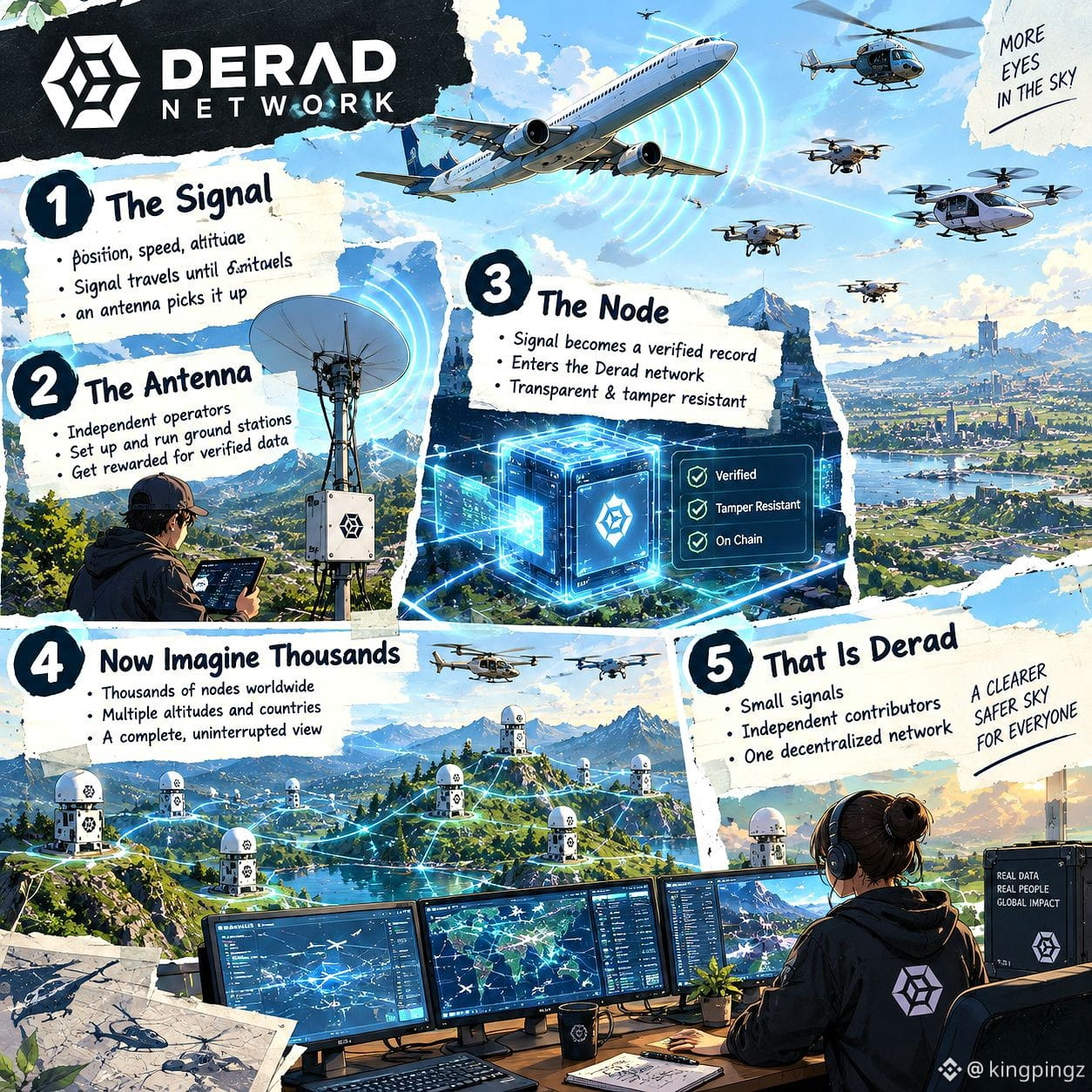
1
48
·
--
✈️ "𝗜𝗻 𝗮𝘃𝗶𝗮𝘁𝗶𝗼𝗻 𝘄𝗵𝗮𝘁 𝘆𝗼𝘂 𝗰𝗮𝗻𝗻𝗼𝘁 𝘀𝗲𝗲 𝗰𝗮𝗻 𝗵𝘂𝗿𝘁 𝘆𝗼𝘂, 𝗗𝗲𝗿𝗮𝗱 𝗶𝘀 𝗺𝗮𝗸𝗶𝗻𝗴 𝘀𝘂𝗿𝗲 𝘁𝗵𝗲 𝘀𝗸𝘆 𝗵𝗮𝘀 𝗻𝗼 𝗵𝗶𝗱𝗱𝗲𝗻 𝗰𝗼𝗿𝗻𝗲𝗿𝘀" ✈️
Let's dive into the Derad's network insights below.👇
🛑 𝗕𝗹𝗶𝗻𝗱 𝗦𝗽𝗼𝘁𝘀 𝗞𝗶𝗹𝗹
Every gap in aviation coverage is a moment where something can go wrong without anyone knowing. Missing signals mean missing context, and missing context in a shared airspace full of aircraft is not just inconvenient, it is genuinely dangerous.
📡 𝗪𝗵𝘆 𝗗𝗮𝘁𝗮 𝗚𝗮𝗽𝘀 𝗘𝘅𝗶𝘀𝘁
Centralized ADS-B networks rely on fixed infrastructure with no real incentive to expand into low coverage zones. Remote areas, coastlines and low altitude corridors remain blind spots simply because no single operator finds it profitable enough to fix them.
🛰️ 𝗖𝗮𝗽𝘁𝘂𝗿𝗶𝗻𝗴 𝗘𝘃𝗲𝗿𝘆 𝗦𝗶𝗴𝗻𝗮𝗹
Derad deploys decentralized ground stations operated by independent contributors across the world. Every signal captured by every node fills a gap that the legacy system left open, building a picture of airspace that is more complete than anything that existed before.
🖥️ 𝗩𝗲𝗿𝗶𝗳𝗶𝗮𝗯𝗹𝗲 𝗥𝗲𝗰𝗼𝗿𝗱𝘀
Capturing a signal is only half the job. Derad preserves every flight record as a tamper resistant verifiable entry that investigators, regulators and operators can access and trust long after the aircraft has landed and the flight is over.
🌐 𝗡𝗼 𝗠𝗼𝗿𝗲 𝗚𝗮𝗽𝘀
A decentralized network has no single point of failure and no financial reason to leave a region uncovered. Every new Derad node is a blind spot eliminated and a piece of airspace that the world can finally see, track and trust.
#AI #DePIN #Web3
✈️ "𝗜𝗻 𝗮𝘃𝗶𝗮𝘁𝗶𝗼𝗻 𝘄𝗵𝗮𝘁 𝘆𝗼𝘂 𝗰𝗮𝗻𝗻𝗼𝘁 𝘀𝗲𝗲 𝗰𝗮𝗻 𝗵𝘂𝗿𝘁 𝘆𝗼𝘂, 𝗗𝗲𝗿𝗮𝗱 𝗶𝘀 𝗺𝗮𝗸𝗶𝗻𝗴 𝘀𝘂𝗿𝗲 𝘁𝗵𝗲 𝘀𝗸𝘆 𝗵𝗮𝘀 𝗻𝗼 𝗵𝗶𝗱𝗱𝗲𝗻 𝗰𝗼𝗿𝗻𝗲𝗿𝘀" ✈️
Let's dive into the Derad's network insights below.👇
🛑 𝗕𝗹𝗶𝗻𝗱 𝗦𝗽𝗼𝘁𝘀 𝗞𝗶𝗹𝗹
Every gap in aviation coverage is a moment where something can go wrong without anyone knowing. Missing signals mean missing context, and missing context in a shared airspace full of aircraft is not just inconvenient, it is genuinely dangerous.
📡 𝗪𝗵𝘆 𝗗𝗮𝘁𝗮 𝗚𝗮𝗽𝘀 𝗘𝘅𝗶𝘀𝘁
Centralized ADS-B networks rely on fixed infrastructure with no real incentive to expand into low coverage zones. Remote areas, coastlines and low altitude corridors remain blind spots simply because no single operator finds it profitable enough to fix them.
🛰️ 𝗖𝗮𝗽𝘁𝘂𝗿𝗶𝗻𝗴 𝗘𝘃𝗲𝗿𝘆 𝗦𝗶𝗴𝗻𝗮𝗹
Derad deploys decentralized ground stations operated by independent contributors across the world. Every signal captured by every node fills a gap that the legacy system left open, building a picture of airspace that is more complete than anything that existed before.
🖥️ 𝗩𝗲𝗿𝗶𝗳𝗶𝗮𝗯𝗹𝗲 𝗥𝗲𝗰𝗼𝗿𝗱𝘀
Capturing a signal is only half the job. Derad preserves every flight record as a tamper resistant verifiable entry that investigators, regulators and operators can access and trust long after the aircraft has landed and the flight is over.
🌐 𝗡𝗼 𝗠𝗼𝗿𝗲 𝗚𝗮𝗽𝘀
A decentralized network has no single point of failure and no financial reason to leave a region uncovered. Every new Derad node is a blind spot eliminated and a piece of airspace that the world can finally see, track and trust.
#AI #DePIN #Web3
Let's dive into the Derad's network insights below.👇
🛑 𝗕𝗹𝗶𝗻𝗱 𝗦𝗽𝗼𝘁𝘀 𝗞𝗶𝗹𝗹
Every gap in aviation coverage is a moment where something can go wrong without anyone knowing. Missing signals mean missing context, and missing context in a shared airspace full of aircraft is not just inconvenient, it is genuinely dangerous.
📡 𝗪𝗵𝘆 𝗗𝗮𝘁𝗮 𝗚𝗮𝗽𝘀 𝗘𝘅𝗶𝘀𝘁
Centralized ADS-B networks rely on fixed infrastructure with no real incentive to expand into low coverage zones. Remote areas, coastlines and low altitude corridors remain blind spots simply because no single operator finds it profitable enough to fix them.
🛰️ 𝗖𝗮𝗽𝘁𝘂𝗿𝗶𝗻𝗴 𝗘𝘃𝗲𝗿𝘆 𝗦𝗶𝗴𝗻𝗮𝗹
Derad deploys decentralized ground stations operated by independent contributors across the world. Every signal captured by every node fills a gap that the legacy system left open, building a picture of airspace that is more complete than anything that existed before.
🖥️ 𝗩𝗲𝗿𝗶𝗳𝗶𝗮𝗯𝗹𝗲 𝗥𝗲𝗰𝗼𝗿𝗱𝘀
Capturing a signal is only half the job. Derad preserves every flight record as a tamper resistant verifiable entry that investigators, regulators and operators can access and trust long after the aircraft has landed and the flight is over.
🌐 𝗡𝗼 𝗠𝗼𝗿𝗲 𝗚𝗮𝗽𝘀
A decentralized network has no single point of failure and no financial reason to leave a region uncovered. Every new Derad node is a blind spot eliminated and a piece of airspace that the world can finally see, track and trust.
#AI #DePIN #Web3
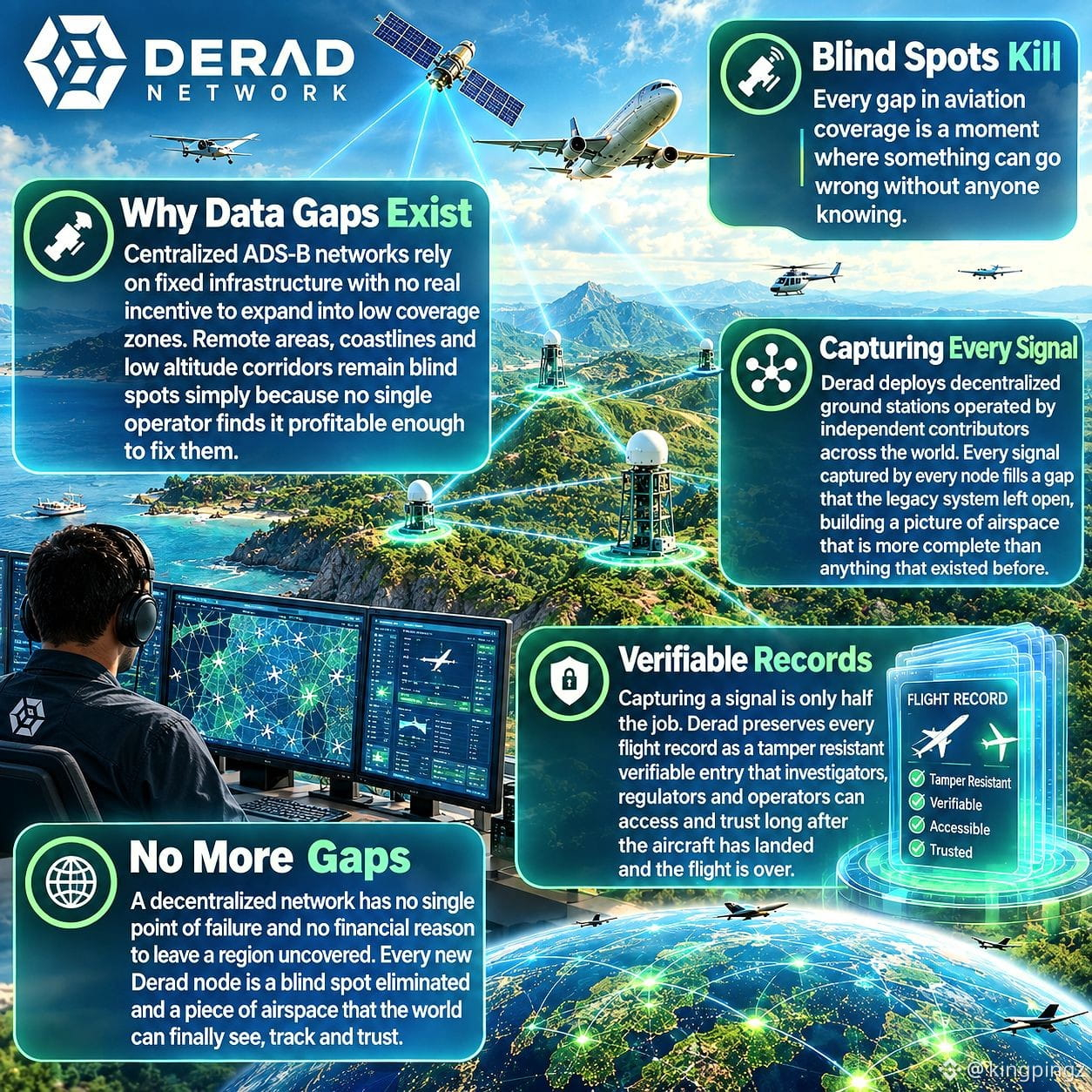
1
59
·
--
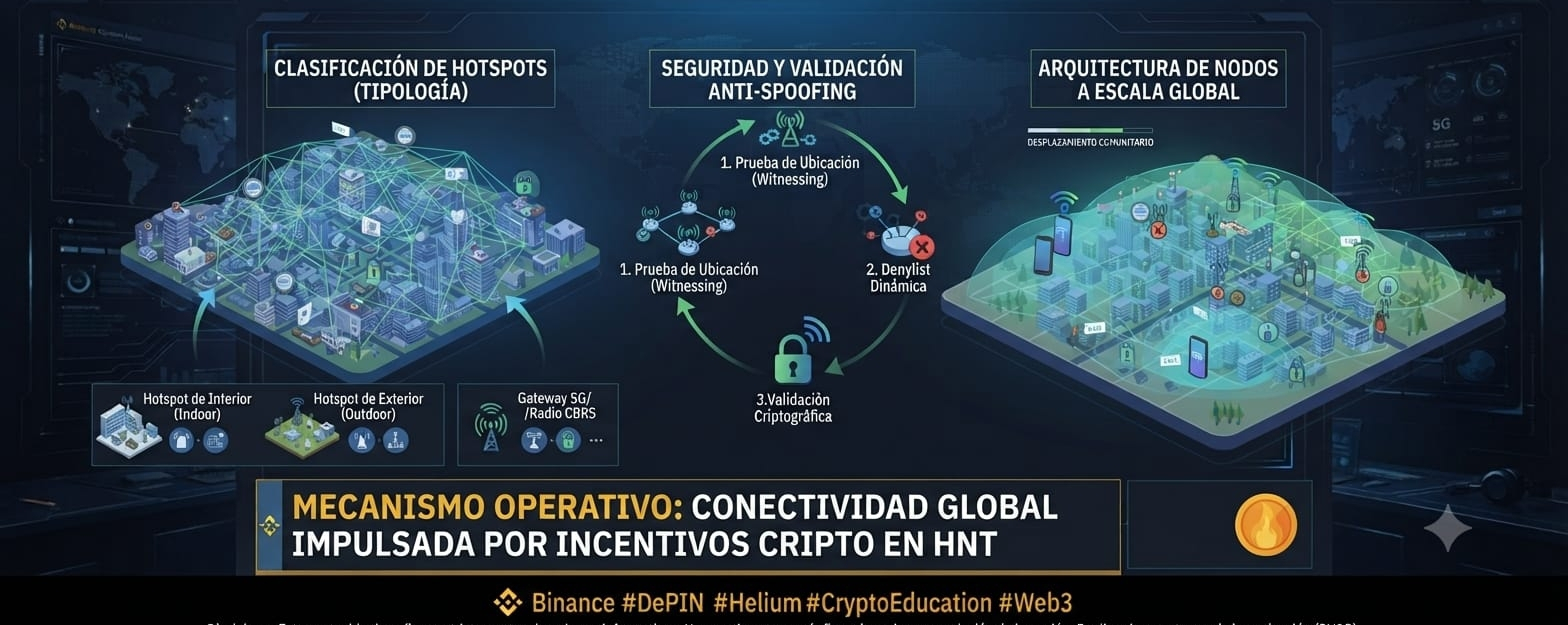
Article
Hotspots and Physical Decentralization: Global-Scale Node ArchitectureThe true differentiating factor of Helium compared to traditional telecommunications networks lies in its deployment model driven by decentralized hardware and operated by the community. Hotspots (access points) are the physical devices responsible for mining HNT while also extending wireless network coverage.
Classification and Typology of Hotspots
To support dual networks, the ecosystem consists of different types of devices deployed strategically by users and operators:
Hotspots and Physical Decentralization: Global-Scale Node Architecture
The true differentiating factor of Helium compared to traditional telecommunications networks lies in its deployment model driven by decentralized hardware and operated by the community. Hotspots (access points) are the physical devices responsible for mining HNT while also extending wireless network coverage.
Classification and Typology of Hotspots
To support dual networks, the ecosystem consists of different types of devices deployed strategically by users and operators:
Classification and Typology of Hotspots
To support dual networks, the ecosystem consists of different types of devices deployed strategically by users and operators:
4
450
Log in to explore more content
Join global crypto users on Binance Square
⚡️ Get latest and useful information about crypto.
💬 Trusted by the world’s largest crypto exchange.
👍 Discover real insights from verified creators.
Email / Phone number
Trending Topics
1
#BinanceWillListHyperliquid(HYPE)
45,180 views
1,216 Discussing
2
#FedOctoberRateHikeOddsRiseTo69.7%
4,449 views
321 Discussing
3
#BitcoinFallsBelow$83,000
1,832 views
20 Discussing
4
#BitcoinFallsToAround$84,600ThisWeek
0 views
0 Discussing
5
#US30YearYieldHighestSince2004
9,992 views
327 Discussing
6
#ETHBreaksAbove$2,700
951 views
20 Discussing
7
#USWeighsPromotingDollarStablecoinsAbroad
37,825 views
1,177 Discussing
8
#US10YTreasuryYieldHits19YearHigh
36,821 views
912 Discussing
9
#SpotBitcoinETFsInflow$2.31BInFourDays
4,876 views
60 Discussing
10
#BitcoinRejectedAt$87,300Twice
0 views
0 Discussing