

Elise_Crypto
1.2k Posts

Elise_Crypto
Report
Block User
Tu guía en el mundo cripto. 💡 Aprende las claves del mercado y crece con nosotros. ¡Bienvenidos! 📈

BNB Holder
Occasional Trader
1.2 Years
2.0K+ Following
1.1K+ Followers
1.4K+ Liked
Posts
All
Quotes
Videos
Live
PINNED
·
--
Article
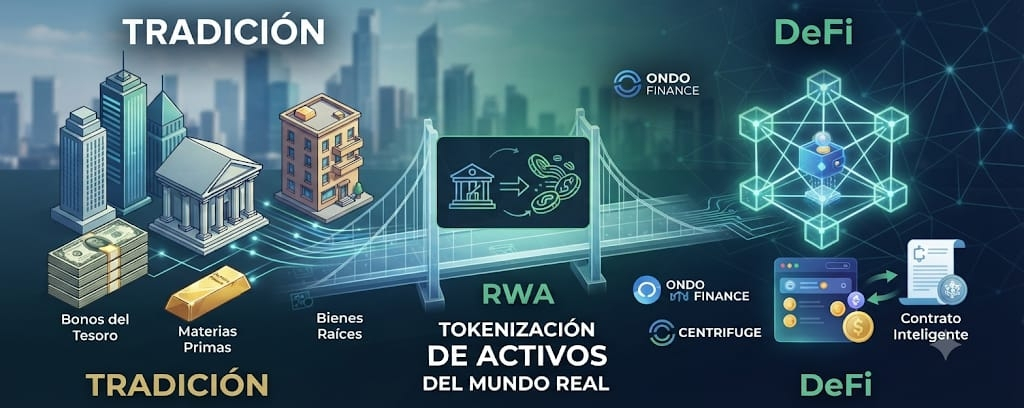
Tokenization of Real World Assets (RWAs): The Bridge Between Tradition and DeFiIn recent years, the Decentralized Finance (DeFi) ecosystem has evolved beyond pure speculation, seeking to connect directly with the traditional economy. This is where RWAs (Real World Assets) come to the forefront—one of the strongest and most important trends in today’s blockchain infrastructure.
What exactly are RWAs?
RWAs are the digital representation (tokenization) of physical or financial assets from the real world within a blockchain. This means that traditional items such as Treasury bonds, real estate, accounts receivable, or commodities are converted into digital tokens. Thanks to this, any user can access financial instruments that were previously reserved exclusively for traditional banking or institutional investors, all through smart contracts.
Tokenization of Real World Assets (RWAs): The Bridge Between Tradition and DeFi
In recent years, the Decentralized Finance (DeFi) ecosystem has evolved beyond pure speculation, seeking to connect directly with the traditional economy. This is where RWAs (Real World Assets) come to the forefront—one of the strongest and most important trends in today’s blockchain infrastructure.
What exactly are RWAs?
RWAs are the digital representation (tokenization) of physical or financial assets from the real world within a blockchain. This means that traditional items such as Treasury bonds, real estate, accounts receivable, or commodities are converted into digital tokens. Thanks to this, any user can access financial instruments that were previously reserved exclusively for traditional banking or institutional investors, all through smart contracts.
What exactly are RWAs?
RWAs are the digital representation (tokenization) of physical or financial assets from the real world within a blockchain. This means that traditional items such as Treasury bonds, real estate, accounts receivable, or commodities are converted into digital tokens. Thanks to this, any user can access financial instruments that were previously reserved exclusively for traditional banking or institutional investors, all through smart contracts.
1
1
9
265
PINNED
·
--
Article
What is SUI and why is it on the radar?
Hello Ykvic! Thanks for your input about $ONDO . Regarding your question about $SUI , it’s one of the cryptocurrencies that is generating the most interest in the Layer 1 (Layer-1) sector right now.
Here’s a technical and fundamental breakdown to understand its potential:
🔍 What is SUI?
Sui is a Layer 1 blockchain and a high-performance smart contract platform, designed from the ground up to enable rapid global adoption through parallel transaction execution.
What is SUI and why is it on the radar?
Hello Ykvic! Thanks for your input about $ONDO . Regarding your question about $SUI , it’s one of the cryptocurrencies that is generating the most interest in the Layer 1 (Layer-1) sector right now.
Here’s a technical and fundamental breakdown to understand its potential:
🔍 What is SUI?
Sui is a Layer 1 blockchain and a high-performance smart contract platform, designed from the ground up to enable rapid global adoption through parallel transaction execution.
Hello Ykvic! Thanks for your input about $ONDO . Regarding your question about $SUI , it’s one of the cryptocurrencies that is generating the most interest in the Layer 1 (Layer-1) sector right now.
Here’s a technical and fundamental breakdown to understand its potential:
🔍 What is SUI?
Sui is a Layer 1 blockchain and a high-performance smart contract platform, designed from the ground up to enable rapid global adoption through parallel transaction execution.
1
9
1.2k
·
--
Position secured and ready for the campaign! 🚀💼
I just completed my strategic conversion to add balance in RLUSD and secure my spot in the XRP rewards fund that Binance has active.
Operation details: Conversion of BNB to RLUSD to enable participation.
Strategy: Quality over quantity, leveraging flexible products and automatic subscription to keep performance and weekly payments active.
Tokenization and institutional stablecoins with regulated backing are key pillars for portfolio stability in this cycle.
Are you already participating in the RLUSD campaign? I’m reading your comments! 👇
#RLUSD #BİNANCE #CryptoEducation #Web3 #xrp #GestiónDeRiesgo $RLUSD
$XRP $BNB
Position secured and ready for the campaign! 🚀💼
I just completed my strategic conversion to add balance in RLUSD and secure my spot in the XRP rewards fund that Binance has active.
Operation details: Conversion of BNB to RLUSD to enable participation.
Strategy: Quality over quantity, leveraging flexible products and automatic subscription to keep performance and weekly payments active.
Tokenization and institutional stablecoins with regulated backing are key pillars for portfolio stability in this cycle.
Are you already participating in the RLUSD campaign? I’m reading your comments! 👇
#RLUSD #BİNANCE #CryptoEducation #Web3 #xrp #GestiónDeRiesgo $RLUSD
$XRP $BNB
I just completed my strategic conversion to add balance in RLUSD and secure my spot in the XRP rewards fund that Binance has active.
Operation details: Conversion of BNB to RLUSD to enable participation.
Strategy: Quality over quantity, leveraging flexible products and automatic subscription to keep performance and weekly payments active.
Tokenization and institutional stablecoins with regulated backing are key pillars for portfolio stability in this cycle.
Are you already participating in the RLUSD campaign? I’m reading your comments! 👇
#RLUSD #BİNANCE #CryptoEducation #Web3 #xrp #GestiónDeRiesgo $RLUSD
$XRP $BNB
4
130
·
--
Article
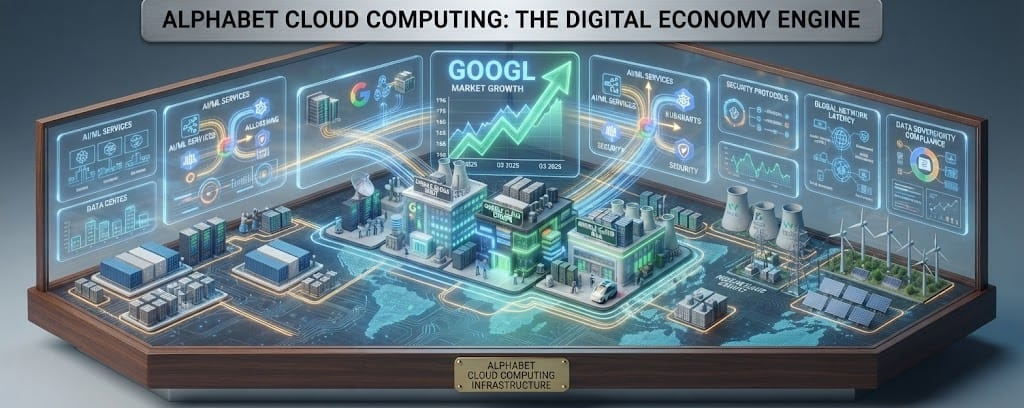
GOOGL in BStocks: Exposure to the data, cloud, and artificial intelligence giantThe expansion of tokenized markets and digital investment tools continues to transform the way we interact with global technology giants. Through BStocks, users can add indirect exposure to top-tier digital infrastructure companies such as Alphabet (GOOGLx).
What does GOOGL represent in this ecosystem?
Network domain and cloud services: Lets you closely monitor the financial performance of an undisputed leader in search engines, digital advertising, and cloud computing services.
GOOGL in BStocks: Exposure to the data, cloud, and artificial intelligence giant
The expansion of tokenized markets and digital investment tools continues to transform the way we interact with global technology giants. Through BStocks, users can add indirect exposure to top-tier digital infrastructure companies such as Alphabet (GOOGLx).
What does GOOGL represent in this ecosystem?
Network domain and cloud services: Lets you closely monitor the financial performance of an undisputed leader in search engines, digital advertising, and cloud computing services.
What does GOOGL represent in this ecosystem?
Network domain and cloud services: Lets you closely monitor the financial performance of an undisputed leader in search engines, digital advertising, and cloud computing services.
3
255
·
--
Article
📉
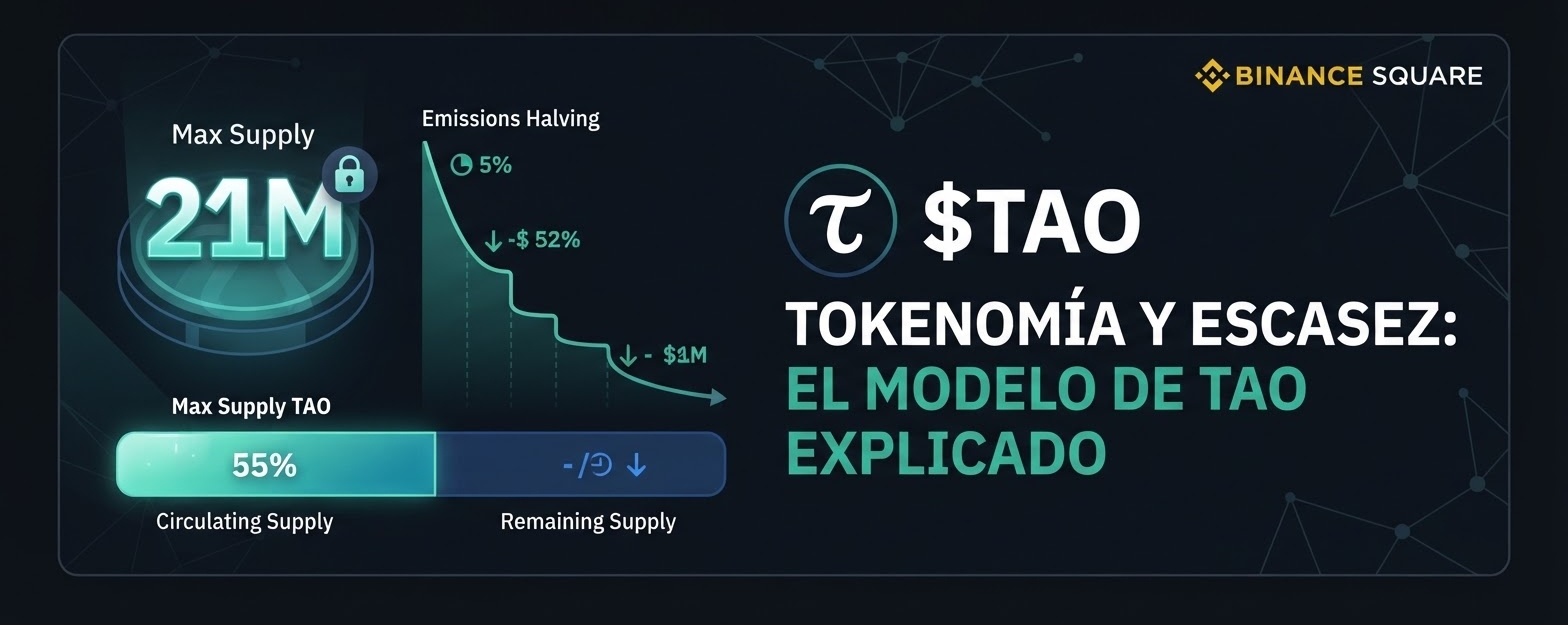
Scarcity and Halving: Why TAO’s Tokenomics Imitates Bitcoin’s Model?When we analyze long-term infrastructure projects, tokenomics is our fundamental roadmap. In the case of Bittensor (TAO), its monetary design replicates Bitcoin’s absolute scarcity to incentivize structural value:
🪙 Strict max supply: Unchangeable limit of 21,000,000 tokens in total. There will never be another TAO.
🔄 Current circulation:
About 11.5 million TAO are already in circulation (approximately 55% of the total issued).
⏳ Scheduled issuance: Periodic reduction in the entry of new tokens into the market (halving), rewarding a long-term vision.
📉 Scarcity and Halving: Why TAO’s Tokenomics Imitates Bitcoin’s Model?
When we analyze long-term infrastructure projects, tokenomics is our fundamental roadmap. In the case of Bittensor (TAO), its monetary design replicates Bitcoin’s absolute scarcity to incentivize structural value:
🪙 Strict max supply: Unchangeable limit of 21,000,000 tokens in total. There will never be another TAO.
🔄 Current circulation:
About 11.5 million TAO are already in circulation (approximately 55% of the total issued).
⏳ Scheduled issuance: Periodic reduction in the entry of new tokens into the market (halving), rewarding a long-term vision.
🪙 Strict max supply: Unchangeable limit of 21,000,000 tokens in total. There will never be another TAO.
🔄 Current circulation:
About 11.5 million TAO are already in circulation (approximately 55% of the total issued).
⏳ Scheduled issuance: Periodic reduction in the entry of new tokens into the market (halving), rewarding a long-term vision.
2
306
·
--
Article
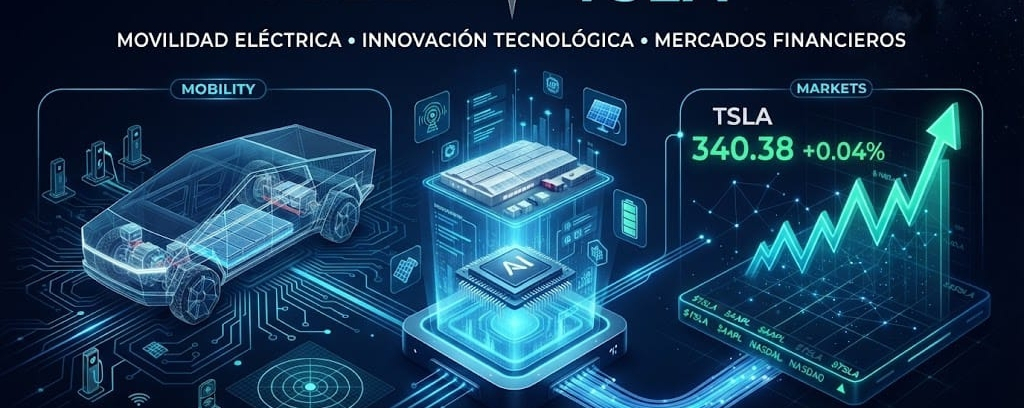
TSLA on BStocks: Exposure to innovation and traditional markets from the crypto ecosystemIntegrating traditional market assets into digital platforms creates new opportunities to diversify portfolios without leaving blockchain infrastructure. Among the options available on BStocks, Tesla (TSLAs) stands out as representing one of the most dynamic sectors of the global economy: electric mobility, artificial intelligence, and sustainable energy.
What does TSLA represent in this ecosystem?
Exposure to technological innovation: It allows you to keep track of the pulse of a leading company in the transformation of global transportation and the development of autonomous systems.
TSLA on BStocks: Exposure to innovation and traditional markets from the crypto ecosystem
Integrating traditional market assets into digital platforms creates new opportunities to diversify portfolios without leaving blockchain infrastructure. Among the options available on BStocks, Tesla (TSLAs) stands out as representing one of the most dynamic sectors of the global economy: electric mobility, artificial intelligence, and sustainable energy.
What does TSLA represent in this ecosystem?
Exposure to technological innovation: It allows you to keep track of the pulse of a leading company in the transformation of global transportation and the development of autonomous systems.
What does TSLA represent in this ecosystem?
Exposure to technological innovation: It allows you to keep track of the pulse of a leading company in the transformation of global transportation and the development of autonomous systems.
1
3
147
·
--
Article
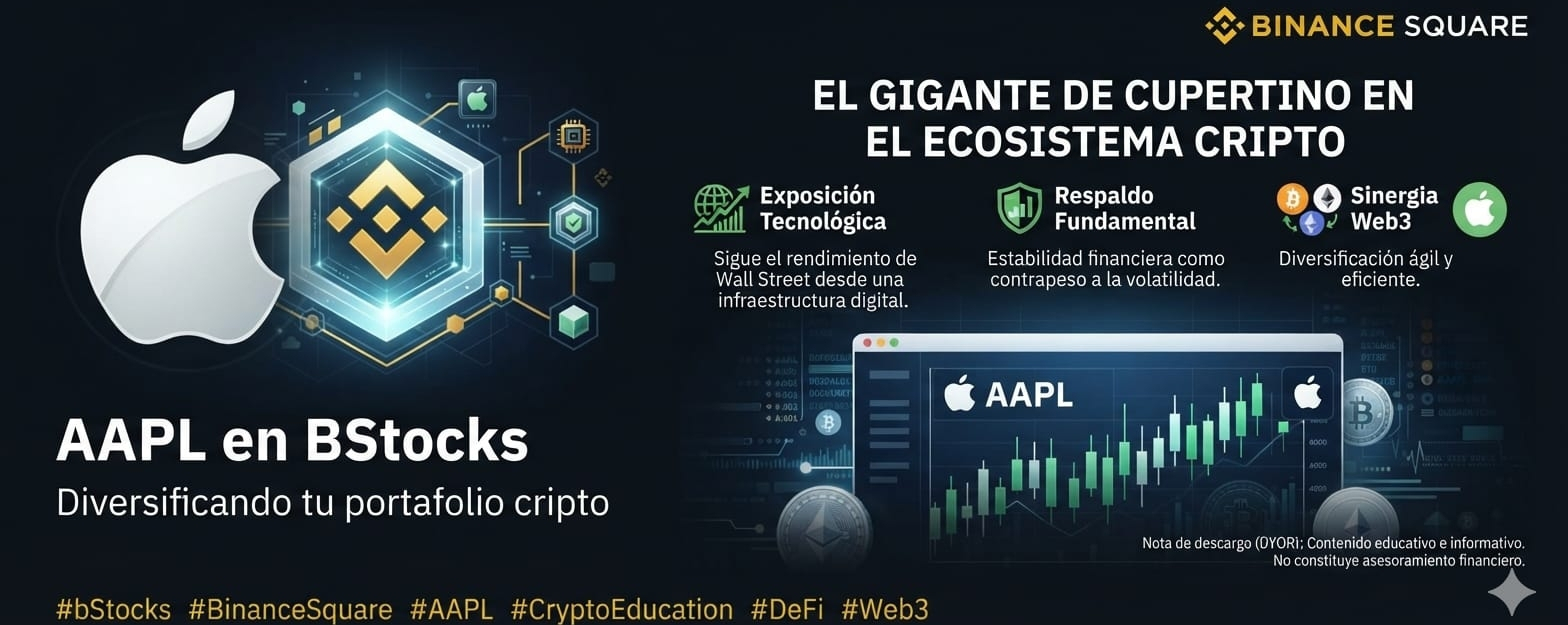
AAPL on BStocks: Diversifying your crypto portfolio with the Cupertino giantThe convergence between traditional markets and blockchain technology continues to evolve at a tremendous pace. For content creators and enthusiasts looking to maintain a balanced strategy of accumulation and diversification without leaving the ecosystem, innovative tools like BStocks make it possible to interact with high-market-capitalization assets such as Apple (AAPLx).
What does AAPL represent in this ecosystem?
Global technology exhibition: Allows you to closely track the stock performance of one of the most solid and liquid companies on Wall Street through a digital infrastructure.
AAPL on BStocks: Diversifying your crypto portfolio with the Cupertino giant
The convergence between traditional markets and blockchain technology continues to evolve at a tremendous pace. For content creators and enthusiasts looking to maintain a balanced strategy of accumulation and diversification without leaving the ecosystem, innovative tools like BStocks make it possible to interact with high-market-capitalization assets such as Apple (AAPLx).
What does AAPL represent in this ecosystem?
Global technology exhibition: Allows you to closely track the stock performance of one of the most solid and liquid companies on Wall Street through a digital infrastructure.
What does AAPL represent in this ecosystem?
Global technology exhibition: Allows you to closely track the stock performance of one of the most solid and liquid companies on Wall Street through a digital infrastructure.
2
317
·
--
Article
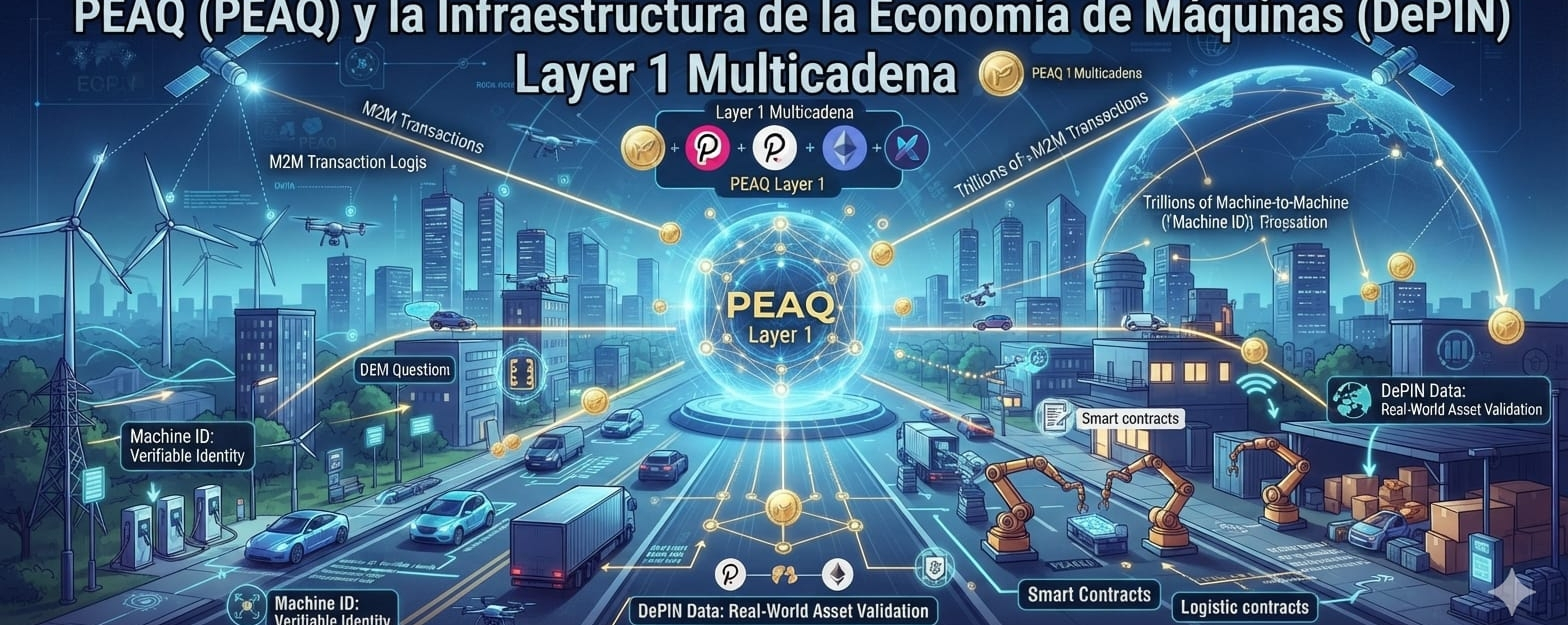
Peaq (PEAQ) and the Infrastructure of the Machine Economy (DePIN): The bridge to the physical worldDePIN networks are transforming real-world services through cryptographic incentives, and Peaq leads this revolution as the definitive Layer-1 for the Machine Economy.
What is Peaq and why does it make a difference?
Designed specifically for the Internet of Things (IoT) and autonomous devices, Peaq offers native modular tools that optimize development:
peaqIDs: Verifiable cryptographic identities for vehicles, drones, and sensors.
Peaq (PEAQ) and the Infrastructure of the Machine Economy (DePIN): The bridge to the physical world
DePIN networks are transforming real-world services through cryptographic incentives, and Peaq leads this revolution as the definitive Layer-1 for the Machine Economy.
What is Peaq and why does it make a difference?
Designed specifically for the Internet of Things (IoT) and autonomous devices, Peaq offers native modular tools that optimize development:
peaqIDs: Verifiable cryptographic identities for vehicles, drones, and sensors.
What is Peaq and why does it make a difference?
Designed specifically for the Internet of Things (IoT) and autonomous devices, Peaq offers native modular tools that optimize development:
peaqIDs: Verifiable cryptographic identities for vehicles, drones, and sensors.
3
165
·
--
Article
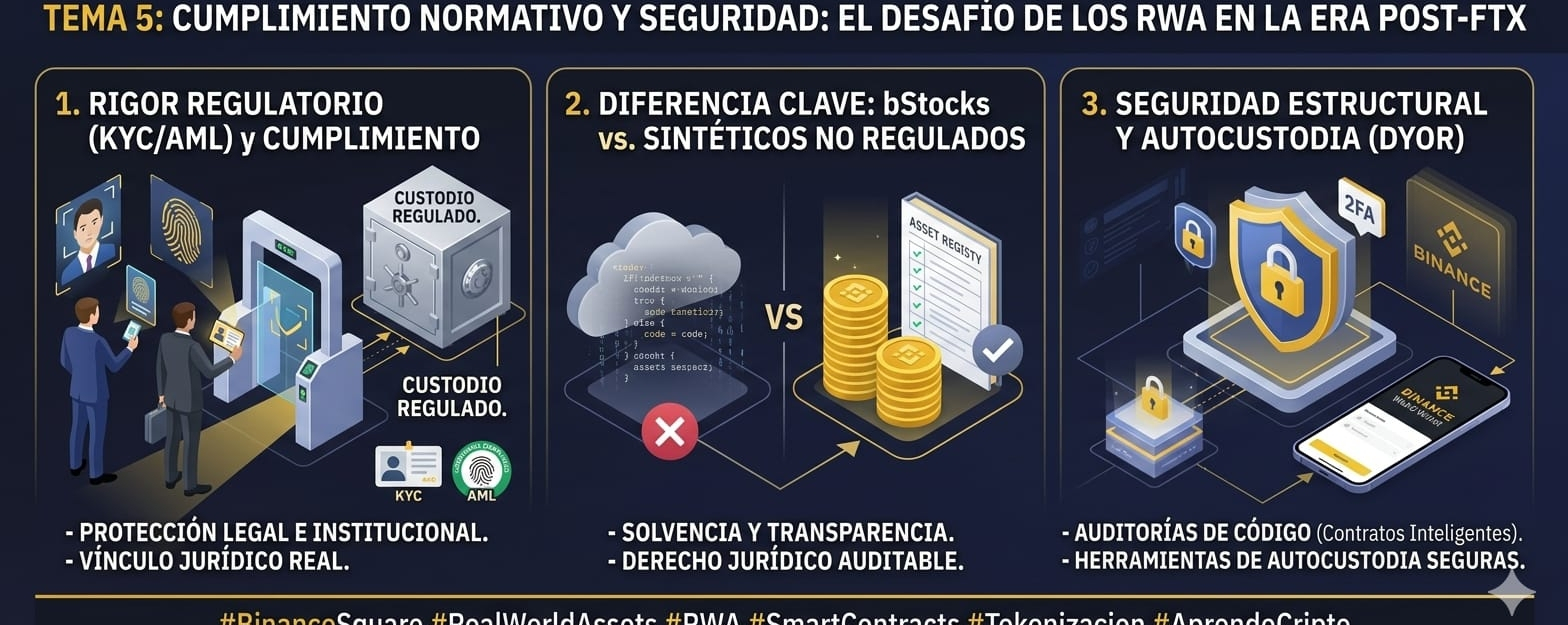
Regulatory Compliance and Security: The Challenge of RWA in the Post-FTX EraThe expansion of Real World Assets (RWA) and tokenized shares (bStocks) represents a monumental evolution for the ecosystem, but it also demands a rigorous standard of transparency, especially in light of the lessons learned in earlier cycles of the crypto market, where institutional opacity took its toll.
1. Regulatory Rigor (KYC/AML) and Compliance
Legal and Institutional Protection: For a bStock to be fully legitimate and maintain a secure bridge with the TradFi world, issuing platforms must strictly comply with international regulations for Know Your Customer (KYC) and Anti-Money Laundering (AML) prevention.
Regulatory Compliance and Security: The Challenge of RWA in the Post-FTX Era
The expansion of Real World Assets (RWA) and tokenized shares (bStocks) represents a monumental evolution for the ecosystem, but it also demands a rigorous standard of transparency, especially in light of the lessons learned in earlier cycles of the crypto market, where institutional opacity took its toll.
1. Regulatory Rigor (KYC/AML) and Compliance
Legal and Institutional Protection: For a bStock to be fully legitimate and maintain a secure bridge with the TradFi world, issuing platforms must strictly comply with international regulations for Know Your Customer (KYC) and Anti-Money Laundering (AML) prevention.
1. Regulatory Rigor (KYC/AML) and Compliance
Legal and Institutional Protection: For a bStock to be fully legitimate and maintain a secure bridge with the TradFi world, issuing platforms must strictly comply with international regulations for Know Your Customer (KYC) and Anti-Money Laundering (AML) prevention.
5
180
·
--
Article
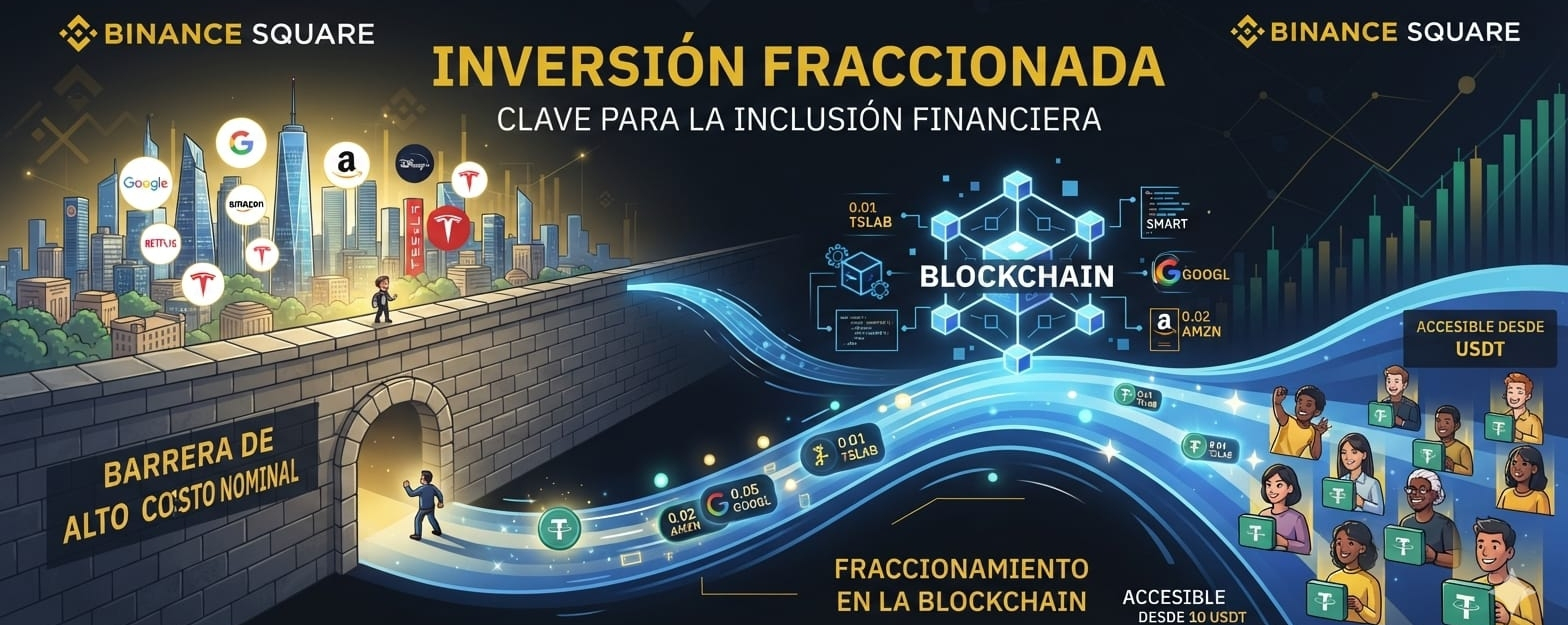
What Is Fractional Investing and Why It Is Vital for Financial Inclusion?One of the biggest historical obstacles for the retail investor has been the high nominal cost of shares of technology and elite corporate companies (such as Google, Amazon, or Tesla), whose individual stock shares can cost hundreds or even thousands of dollars. bStocks completely transforms this paradigm through fractional investing.
1. Democratizing Access to Global Equity
Blockchain Fractionalization: Thanks to the programmability of smart contracts, an action token can be divided into multiple decimals. This means you can acquire an exact fraction of the asset (for example, 0.01 of TSLAB) using small, accessible amounts (like 10 USDT).
What Is Fractional Investing and Why It Is Vital for Financial Inclusion?
One of the biggest historical obstacles for the retail investor has been the high nominal cost of shares of technology and elite corporate companies (such as Google, Amazon, or Tesla), whose individual stock shares can cost hundreds or even thousands of dollars. bStocks completely transforms this paradigm through fractional investing.
1. Democratizing Access to Global Equity
Blockchain Fractionalization: Thanks to the programmability of smart contracts, an action token can be divided into multiple decimals. This means you can acquire an exact fraction of the asset (for example, 0.01 of TSLAB) using small, accessible amounts (like 10 USDT).
1. Democratizing Access to Global Equity
Blockchain Fractionalization: Thanks to the programmability of smart contracts, an action token can be divided into multiple decimals. This means you can acquire an exact fraction of the asset (for example, 0.01 of TSLAB) using small, accessible amounts (like 10 USDT).
1
3
524
·
--
Article
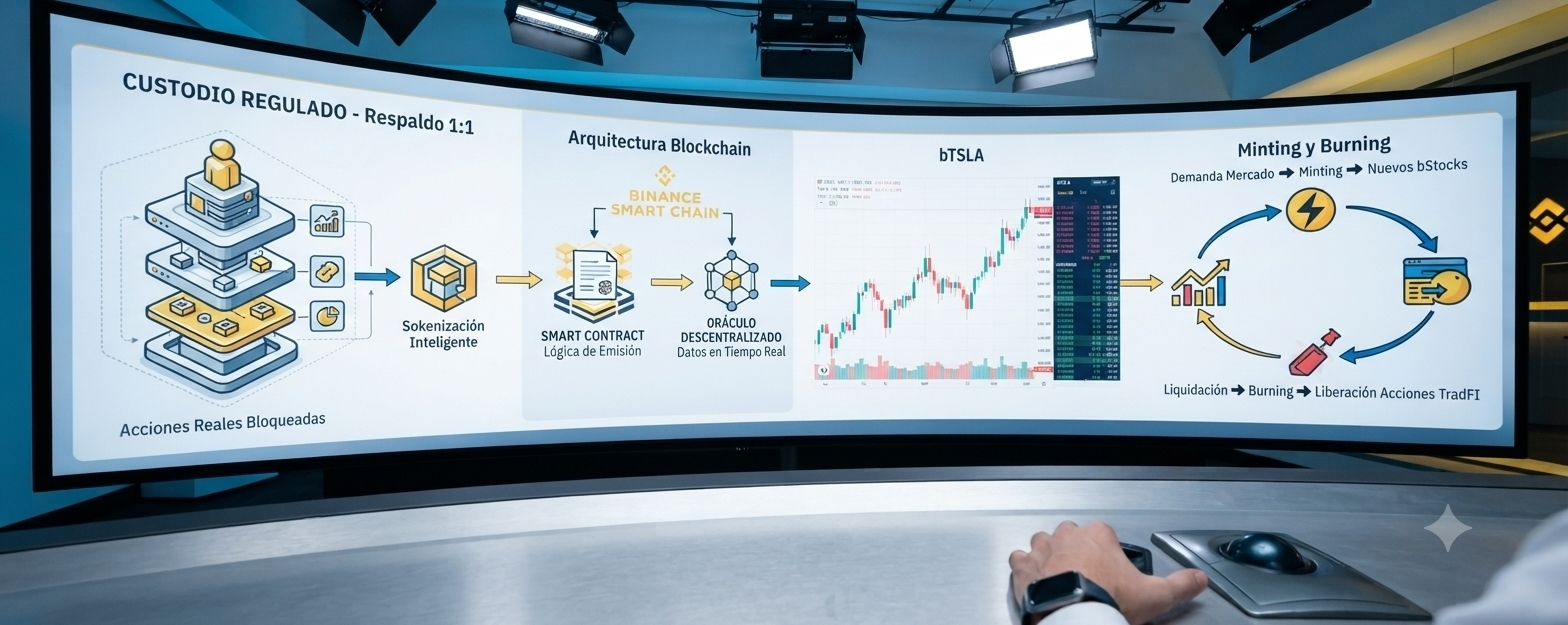
Technical Guide: How the Smart Contracts Behind bStocks WorkThe convergence between traditional finance (TradFi) and blockchain technology has given rise to one of the most powerful narratives in the ecosystem: Real World Assets (RWA). Among them, tokenized shares (bStocks) represent a key evolution by bringing global equity directly onto the blockchain.
However, many users trade these digital assets without fully understanding the complex cryptographic and financial machinery behind them. How is it possible that a token on a blockchain network replicates the exact value of a corporate stock on Wall Street?
Technical Guide: How the Smart Contracts Behind bStocks Work
The convergence between traditional finance (TradFi) and blockchain technology has given rise to one of the most powerful narratives in the ecosystem: Real World Assets (RWA). Among them, tokenized shares (bStocks) represent a key evolution by bringing global equity directly onto the blockchain.
However, many users trade these digital assets without fully understanding the complex cryptographic and financial machinery behind them. How is it possible that a token on a blockchain network replicates the exact value of a corporate stock on Wall Street?
However, many users trade these digital assets without fully understanding the complex cryptographic and financial machinery behind them. How is it possible that a token on a blockchain network replicates the exact value of a corporate stock on Wall Street?
3
140
·
--
✨ Celebrating the Mid-Autumn Festival with the Binance family. Just like the full moon tonight, may our investments and projects shine and remain steadfast. 💛 Wishing my fellow Binancians great success in this contest! #BinanceMidAutumn #BinanceSquareTG 🥮 $BNB
{spot}(BNBUSDT)
✨ Celebrating the Mid-Autumn Festival with the Binance family. Just like the full moon tonight, may our investments and projects shine and remain steadfast. 💛 Wishing my fellow Binancians great success in this contest! #BinanceMidAutumn #BinanceSquareTG 🥮 $BNB

1
153
·
--
Article
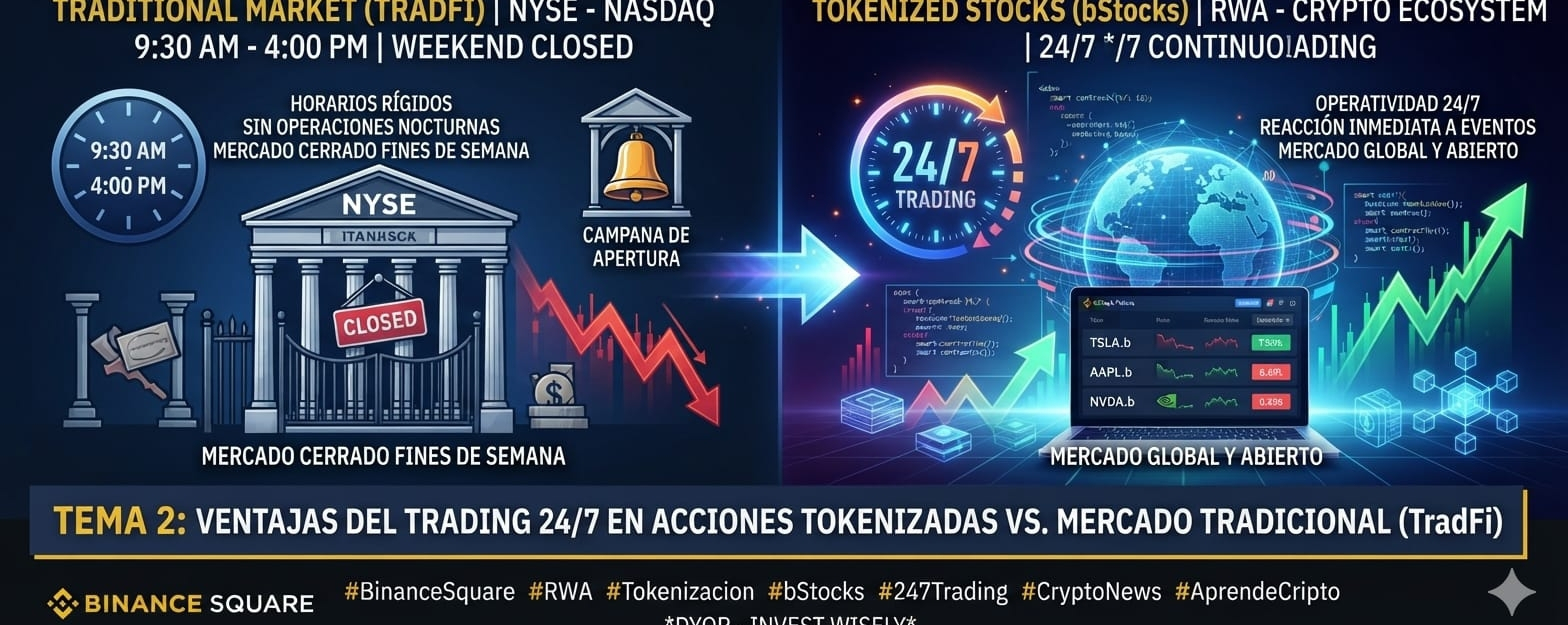
Advantages of 24/7 Trading in Tokenized Shares vs. the Traditional Market (TradFi)Traditional equities have operated under rigid trading hours for decades: open in the morning, close in the afternoon, and a complete shutdown during weekends. However, in the crypto ecosystem and Real World Assets (RWA), the economy does not stop. Tokenized shares (bStocks) introduce a fundamental competitive advantage: continuous operation.
1. Breaking Through Time Barriers
Markets that never sleep: While the New York Stock Exchange (NYSE) or NASDAQ have limited trading hours, bStocks allow you to interact, trade, and reallocate capital at any time.
Advantages of 24/7 Trading in Tokenized Shares vs. the Traditional Market (TradFi)
Traditional equities have operated under rigid trading hours for decades: open in the morning, close in the afternoon, and a complete shutdown during weekends. However, in the crypto ecosystem and Real World Assets (RWA), the economy does not stop. Tokenized shares (bStocks) introduce a fundamental competitive advantage: continuous operation.
1. Breaking Through Time Barriers
Markets that never sleep: While the New York Stock Exchange (NYSE) or NASDAQ have limited trading hours, bStocks allow you to interact, trade, and reallocate capital at any time.
1. Breaking Through Time Barriers
Markets that never sleep: While the New York Stock Exchange (NYSE) or NASDAQ have limited trading hours, bStocks allow you to interact, trade, and reallocate capital at any time.
5
1.6k
·
--
Article
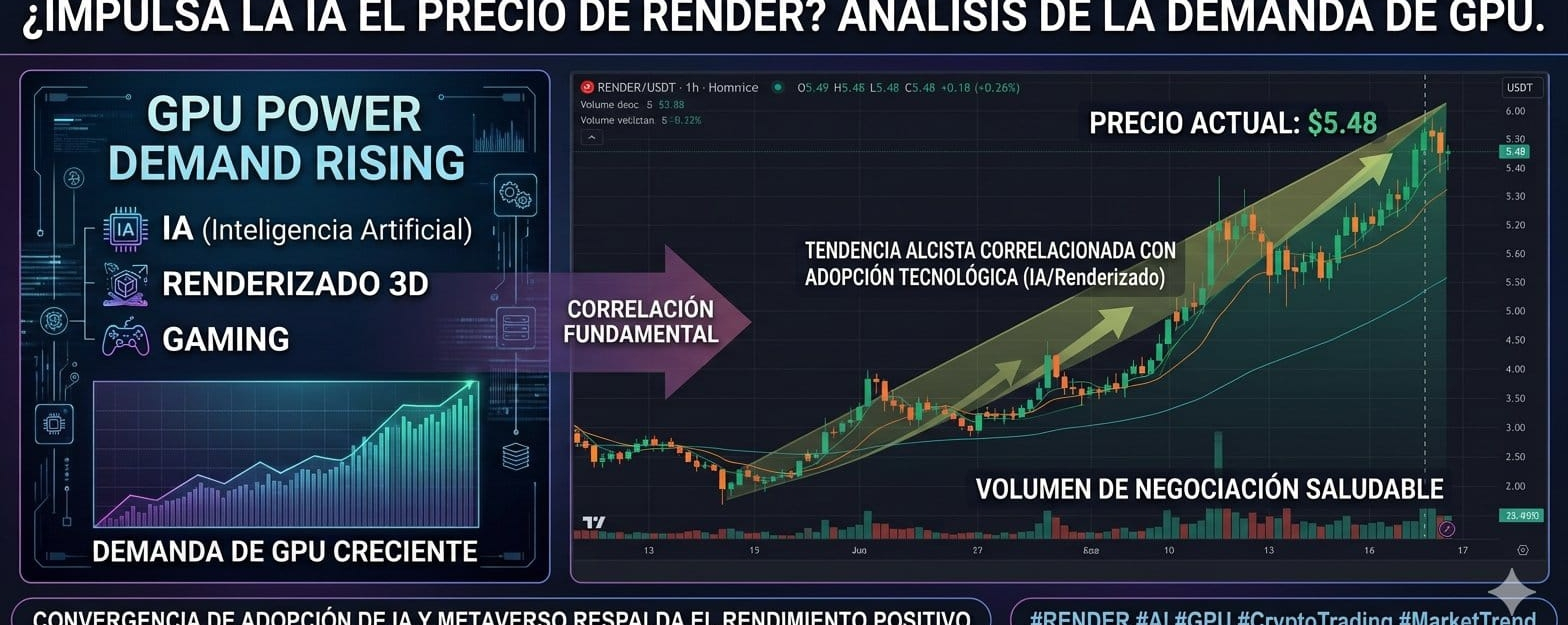
Does AI boost the price of RENDER? GPU demand analysis.The left section of the screen highlights the usefulness of RENDER: "GPU Power Demand Rising" for AI, 3D Rendering, and Gaming. This demand is the fundamental catalyst behind the market’s behavior.
Visual Analysis: If we look at the candlestick chart (RENDER/USDT), we can see a sustained bullish trend, reflecting the market’s confidence in the network. With a current price of $5.48 and healthy trading volume, RENDER proves to be a high-beta asset correlated with the growth of the technology sector.
Does AI boost the price of RENDER? GPU demand analysis.
The left section of the screen highlights the usefulness of RENDER: "GPU Power Demand Rising" for AI, 3D Rendering, and Gaming. This demand is the fundamental catalyst behind the market’s behavior.
Visual Analysis: If we look at the candlestick chart (RENDER/USDT), we can see a sustained bullish trend, reflecting the market’s confidence in the network. With a current price of $5.48 and healthy trading volume, RENDER proves to be a high-beta asset correlated with the growth of the technology sector.
Visual Analysis: If we look at the candlestick chart (RENDER/USDT), we can see a sustained bullish trend, reflecting the market’s confidence in the network. With a current price of $5.48 and healthy trading volume, RENDER proves to be a high-beta asset correlated with the growth of the technology sector.
3
467
·
--
Article
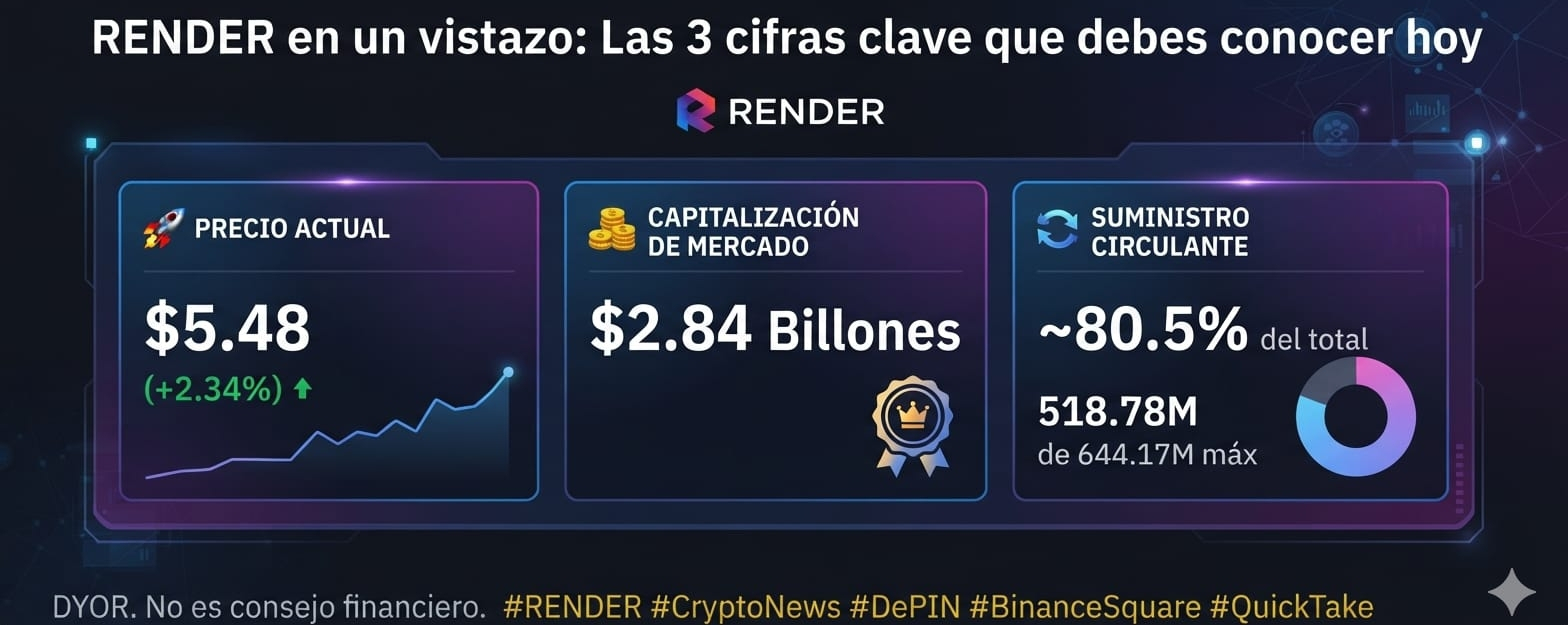
RENDER at a glance: The 3 key figures you need to know today.New to RENDER? Here are the essential metrics extracted from the real-time dashboard:
🚀 Current Price: $5.48 (+2.34%) - Maintaining strong momentum in the market.
💰 Market Cap: $2.84 Trillion - Positioning itself as a leader in the DePIN sector.
🔄 Circulating Supply: ~80.5% of the total already issued. (518.78M out of 644.17M max).
These data points show a mature project with a solid foundation and a capitalization that reflects its importance in Web3 infrastructure.
RENDER at a glance: The 3 key figures you need to know today.
New to RENDER? Here are the essential metrics extracted from the real-time dashboard:
🚀 Current Price: $5.48 (+2.34%) - Maintaining strong momentum in the market.
💰 Market Cap: $2.84 Trillion - Positioning itself as a leader in the DePIN sector.
🔄 Circulating Supply: ~80.5% of the total already issued. (518.78M out of 644.17M max).
These data points show a mature project with a solid foundation and a capitalization that reflects its importance in Web3 infrastructure.
🚀 Current Price: $5.48 (+2.34%) - Maintaining strong momentum in the market.
💰 Market Cap: $2.84 Trillion - Positioning itself as a leader in the DePIN sector.
🔄 Circulating Supply: ~80.5% of the total already issued. (518.78M out of 644.17M max).
These data points show a mature project with a solid foundation and a capitalization that reflects its importance in Web3 infrastructure.
3
6
480
·
--
Participating in the #BStocks Drawing Challenge of @Binancelatam ! 🚀✏️
Here I share my drawing process inspired by BStocks, exploring market opportunities and diversifying tokenized assets on the platform. Completely handmade and no AI! 🎨📈
🔗 Channel: Discord / spanish-latam $USDC
Participating in the #BStocks Drawing Challenge of @Binance LATAM Official ! 🚀✏️
Here I share my drawing process inspired by BStocks, exploring market opportunities and diversifying tokenized assets on the platform. Completely handmade and no AI! 🎨📈
🔗 Channel: Discord / spanish-latam $USDC
Here I share my drawing process inspired by BStocks, exploring market opportunities and diversifying tokenized assets on the platform. Completely handmade and no AI! 🎨📈
🔗 Channel: Discord / spanish-latam $USDC
1
5
126
·
--
Article
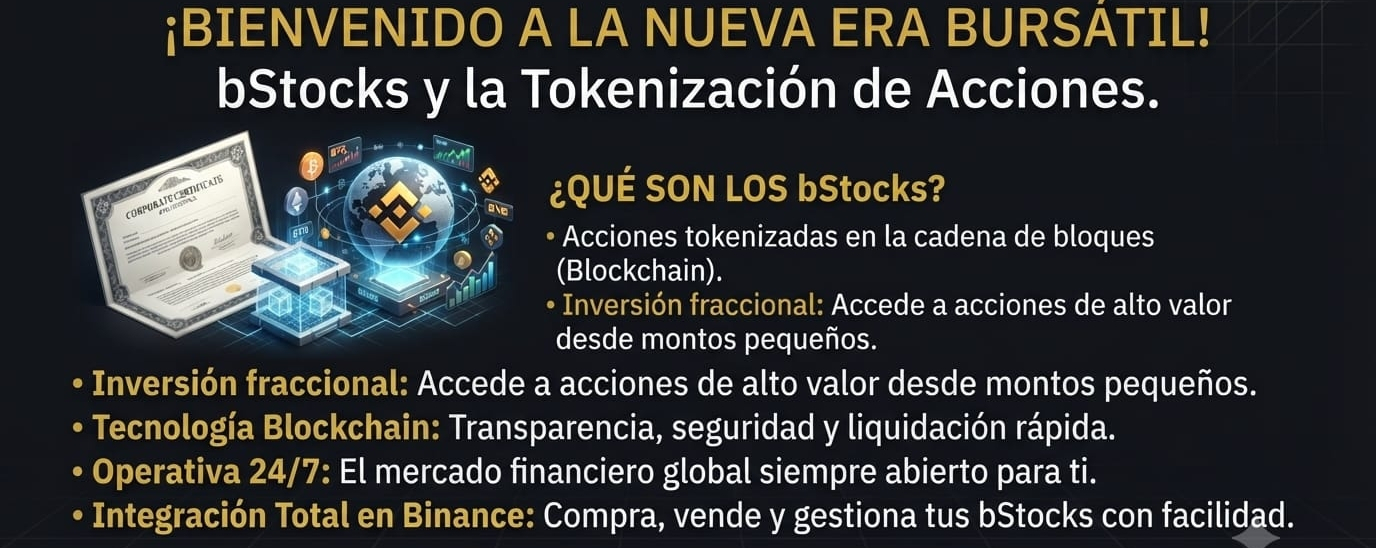
The bridge between TradFi and Web3: What are BStocks and how they drive tokenization on BinanceThe convergence between traditional finance (TradFi) and the crypto ecosystem is opening new doors for investors. In this setting, BStocks position themselves as an innovative solution within the ecosystem to interact with traditional stock market assets directly from Web3.
What are BStocks and how do they work?
BStocks are tokenized securities of shares that allow access to global financial markets digitally. Their operation combines the advantages of blockchain technology with traditional exchange assets, enabling a smooth experience without leaving the platform.
The bridge between TradFi and Web3: What are BStocks and how they drive tokenization on Binance
The convergence between traditional finance (TradFi) and the crypto ecosystem is opening new doors for investors. In this setting, BStocks position themselves as an innovative solution within the ecosystem to interact with traditional stock market assets directly from Web3.
What are BStocks and how do they work?
BStocks are tokenized securities of shares that allow access to global financial markets digitally. Their operation combines the advantages of blockchain technology with traditional exchange assets, enabling a smooth experience without leaving the platform.
What are BStocks and how do they work?
BStocks are tokenized securities of shares that allow access to global financial markets digitally. Their operation combines the advantages of blockchain technology with traditional exchange assets, enabling a smooth experience without leaving the platform.
1
5
290
·
--
Verified
Article
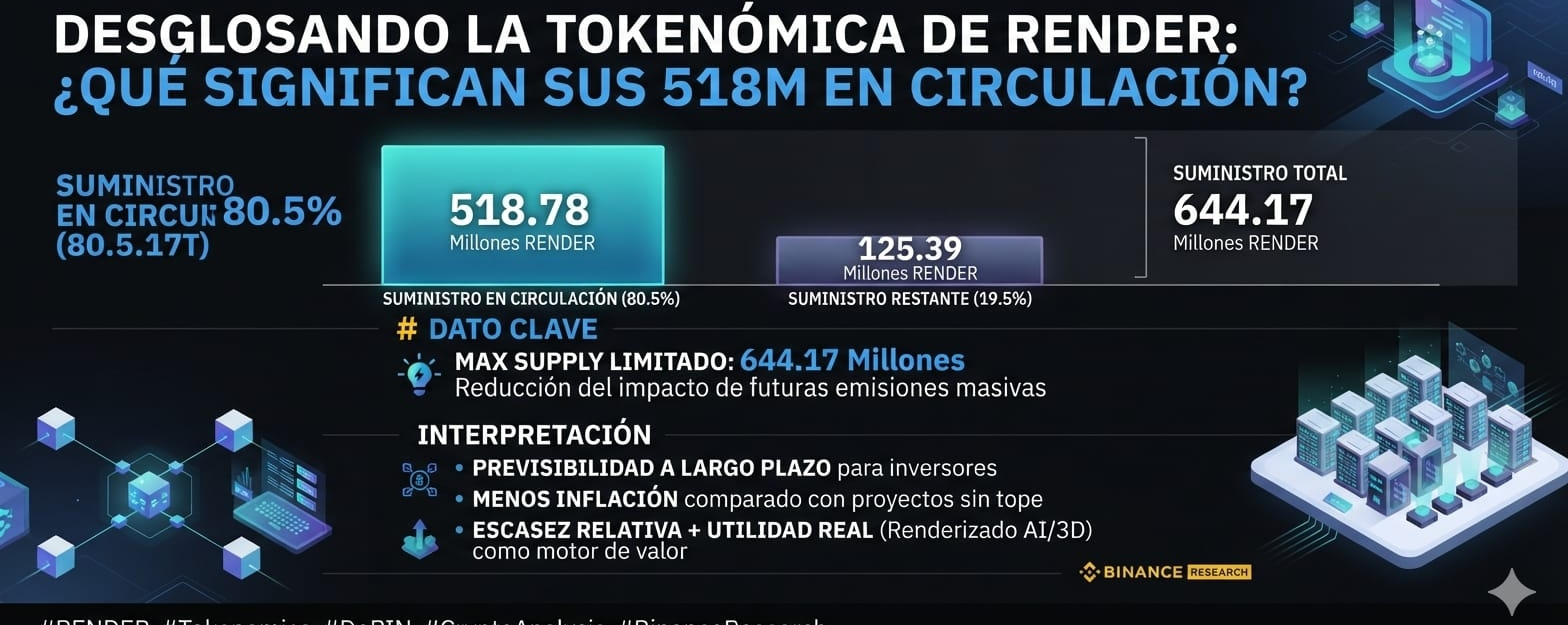
Breaking Down RENDER Tokenomics: What Do Its 518M in Circulation Mean?When analyzing a DePIN sector project like RENDER, the token distribution is critical. The image clearly shows that there are currently ~518.78 million RENDER tokens in circulation, representing approximately 80.5% of the total supply.
Key Data: With a maximum supply limited to 644.17 million, this indicates that a large majority of the token is already in the market, which reduces the impact of future massive emissions.
Interpretation: This structure provides greater long-term predictability for investors, especially when compared with inflationary projects that don’t have a clearly defined maximum cap. The relative scarcity combined with real utility (AI/3D rendering) is the value driver here.
Breaking Down RENDER Tokenomics: What Do Its 518M in Circulation Mean?
When analyzing a DePIN sector project like RENDER, the token distribution is critical. The image clearly shows that there are currently ~518.78 million RENDER tokens in circulation, representing approximately 80.5% of the total supply.
Key Data: With a maximum supply limited to 644.17 million, this indicates that a large majority of the token is already in the market, which reduces the impact of future massive emissions.
Interpretation: This structure provides greater long-term predictability for investors, especially when compared with inflationary projects that don’t have a clearly defined maximum cap. The relative scarcity combined with real utility (AI/3D rendering) is the value driver here.
Key Data: With a maximum supply limited to 644.17 million, this indicates that a large majority of the token is already in the market, which reduces the impact of future massive emissions.
Interpretation: This structure provides greater long-term predictability for investors, especially when compared with inflationary projects that don’t have a clearly defined maximum cap. The relative scarcity combined with real utility (AI/3D rendering) is the value driver here.
4
3
655
·
--
Article
RENDER Analysis: GPU Infrastructure, Key Metrics, and Outlook in the DePIN EcosystemThe sector of decentralized physical infrastructure networks (DePIN) and artificial intelligence continues to play a fundamental role in today’s crypto ecosystem. Among the leading projects, RENDER stands out for connecting idle GPU computing power with creators and developers who need scalability for 3D rendering and AI workloads.
Before evaluating an accumulation strategy or market analysis, it is key to review its fundamental supply metrics:
RENDER Analysis: GPU Infrastructure, Key Metrics, and Outlook in the DePIN Ecosystem
The sector of decentralized physical infrastructure networks (DePIN) and artificial intelligence continues to play a fundamental role in today’s crypto ecosystem. Among the leading projects, RENDER stands out for connecting idle GPU computing power with creators and developers who need scalability for 3D rendering and AI workloads.
Before evaluating an accumulation strategy or market analysis, it is key to review its fundamental supply metrics:
Before evaluating an accumulation strategy or market analysis, it is key to review its fundamental supply metrics:
5
880
·
--
Article
📊
Definitive Post for Binance SquareHere’s the article adapted to the exact Binance Square format, using native and specific hashtags from the biggest projects currently using this language (Sui and Aptos), which will give you much more organic reach in your news feed.
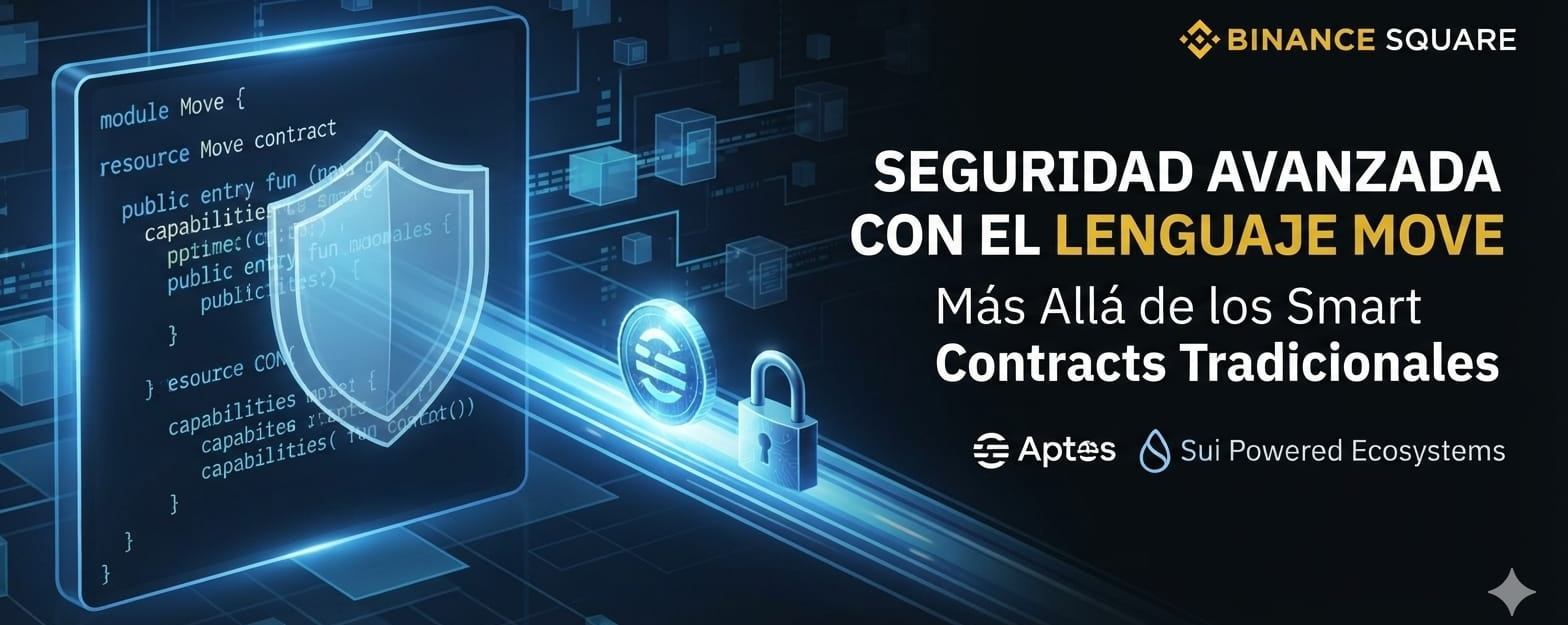
🛡️ Advanced Security with the Move Language: Beyond Traditional Smart Contracts
In the ecosystem of parallel blockchains, scalability cannot compromise security. While traditional virtual machines (like the EVM) handle assets as simple numbers within global accounts, the Move language redefines the Web3 programming paradigm with a native, security-first approach at compile time.
📊 Definitive Post for Binance Square
Here’s the article adapted to the exact Binance Square format, using native and specific hashtags from the biggest projects currently using this language (Sui and Aptos), which will give you much more organic reach in your news feed.
🛡️ Advanced Security with the Move Language: Beyond Traditional Smart Contracts
In the ecosystem of parallel blockchains, scalability cannot compromise security. While traditional virtual machines (like the EVM) handle assets as simple numbers within global accounts, the Move language redefines the Web3 programming paradigm with a native, security-first approach at compile time.
🛡️ Advanced Security with the Move Language: Beyond Traditional Smart Contracts
In the ecosystem of parallel blockchains, scalability cannot compromise security. While traditional virtual machines (like the EVM) handle assets as simple numbers within global accounts, the Move language redefines the Web3 programming paradigm with a native, security-first approach at compile time.
4
416
Log in to explore more content
Join global crypto users on Binance Square
⚡️ Get latest and useful information about crypto.
💬 Trusted by the world’s largest crypto exchange.
👍 Discover real insights from verified creators.
Email / Phone number