
#cryptogovernance
cryptogovernance
182,548 views
498 Discussing
Hot
Latest

Cardano is shifting toward a truly decentralized model where the founder doesn't automatically dictate the roadmap. The recent rejection of the Pogun treasury withdrawal proves that ADA holders are taking strict control of funds. While Charles Hoskinson suggests future ventures won't default exclusively to Cardano, this growing community autonomy could actually strengthen governance and weed out wasteful spending in the long run. $ADA #Cardano #ADA #CryptoGovernance
Cardano is shifting toward a truly decentralized model where the founder doesn't automatically dictate the roadmap. The recent rejection of the Pogun treasury withdrawal proves that ADA holders are taking strict control of funds. While Charles Hoskinson suggests future ventures won't default exclusively to Cardano, this growing community autonomy could actually strengthen governance and weed out wasteful spending in the long run. $ADA #Cardano #ADA #CryptoGovernance
46

Verified
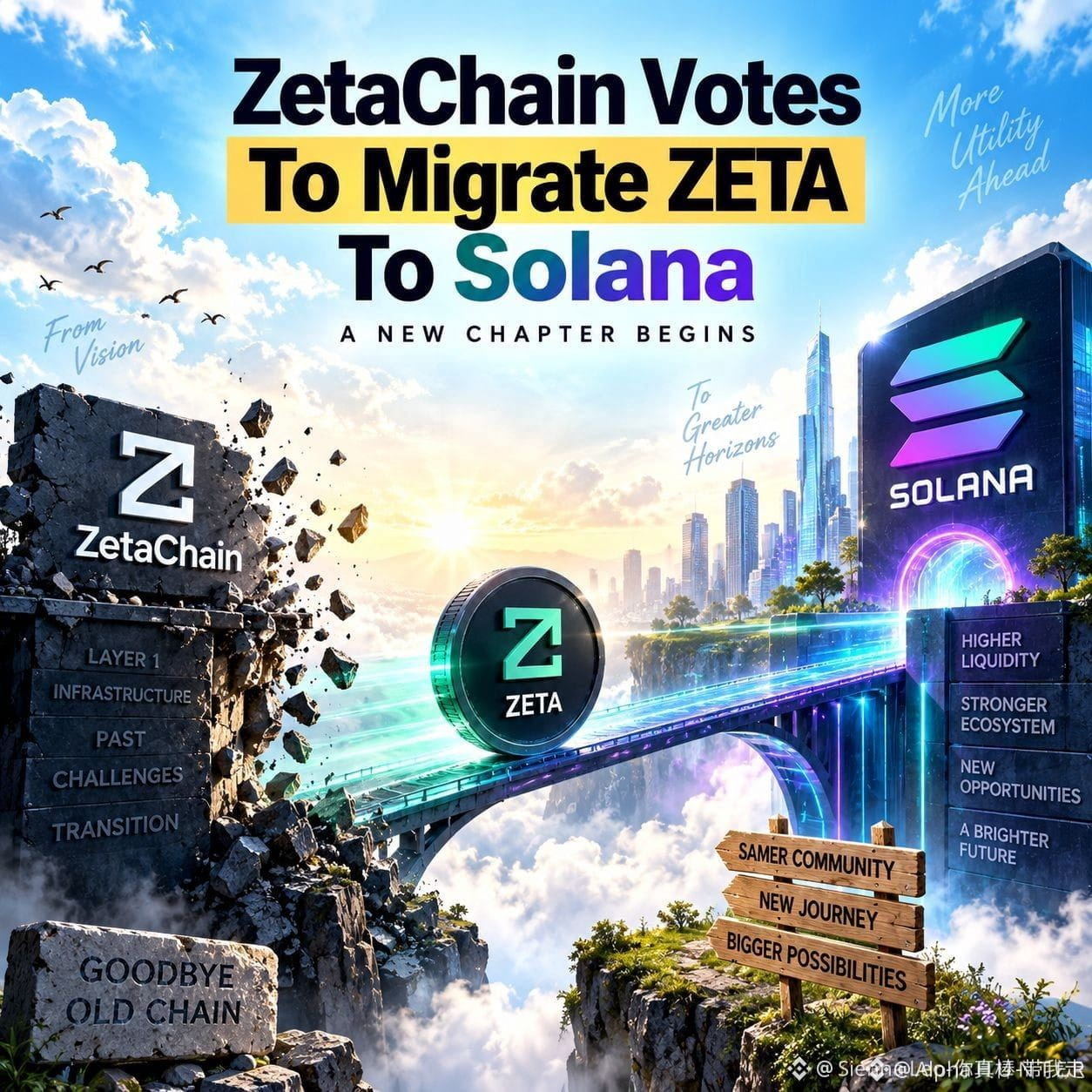
#ZetaChainVotesToMigrateZETAToSolana
🗳️ ZetaChain token holders approve a historic vote to migrate ZETA to Solana and end L1
In a rare and significant governance decision, ZetaChain token holders overwhelmingly voted to transfer the project’s native token to the Solana ecosystem. This marks a major strategic turning point for the network.
📰 Main news
• Overwhelming support for the governance proposal Proposal 68 was adopted with 99.4% approval and a strong voter participation rate of 58% [[1]].
• **1:1 Migration:** The plan authorizes the migration of the ZETA token to Solana as a native SPL token on a 1:1 ratio, ensuring the total supply remains unchanged [[3]].
• **Decommissioning L1:** The proposal includes retiring the existing ZetaChain Layer 1 blockchain, although a final confirmation vote is still required before any official closure [[2]].
📊 Market impact
• Integration shift to the ecosystem Moving to Solana could expose ZETA to a high-throughput environment as well as Solana’s large DeFi ecosystem, which may improve liquidity, interoperability, and developer activity.
• Strategic turning point Ending an independent L1 is a very unusual move in the crypto industry. It signals a pragmatic shift: moving from maintaining a standalone chain infrastructure to prioritizing user adoption, scalability, and capital efficiency within an ecosystem that is already established.
• **Clarity for holders:** The 1:1 migration structure provides immediate clarity to current holders, even if the market will closely track the bridge’s technical execution and the outcome of the final governance vote.
#ZetaChain #Solana #CryptoGovernance
Always do your own research (DYOR)
$ZETA
{future}(ZETAUSDT)
$PHA $BNB
{future}(PHAUSDT)
#ZetaChainVotesToMigrateZETAToSolana
🗳️ ZetaChain token holders approve a historic vote to migrate ZETA to Solana and end L1
In a rare and significant governance decision, ZetaChain token holders overwhelmingly voted to transfer the project’s native token to the Solana ecosystem. This marks a major strategic turning point for the network.
📰 Main news
• Overwhelming support for the governance proposal Proposal 68 was adopted with 99.4% approval and a strong voter participation rate of 58% [[1]].
• **1:1 Migration:** The plan authorizes the migration of the ZETA token to Solana as a native SPL token on a 1:1 ratio, ensuring the total supply remains unchanged [[3]].
• **Decommissioning L1:** The proposal includes retiring the existing ZetaChain Layer 1 blockchain, although a final confirmation vote is still required before any official closure [[2]].
📊 Market impact
• Integration shift to the ecosystem Moving to Solana could expose ZETA to a high-throughput environment as well as Solana’s large DeFi ecosystem, which may improve liquidity, interoperability, and developer activity.
• Strategic turning point Ending an independent L1 is a very unusual move in the crypto industry. It signals a pragmatic shift: moving from maintaining a standalone chain infrastructure to prioritizing user adoption, scalability, and capital efficiency within an ecosystem that is already established.
• **Clarity for holders:** The 1:1 migration structure provides immediate clarity to current holders, even if the market will closely track the bridge’s technical execution and the outcome of the final governance vote.
#ZetaChain #Solana #CryptoGovernance
Always do your own research (DYOR)
$ZETA
$PHA $BNB
🗳️ ZetaChain token holders approve a historic vote to migrate ZETA to Solana and end L1
In a rare and significant governance decision, ZetaChain token holders overwhelmingly voted to transfer the project’s native token to the Solana ecosystem. This marks a major strategic turning point for the network.
📰 Main news
• Overwhelming support for the governance proposal Proposal 68 was adopted with 99.4% approval and a strong voter participation rate of 58% [[1]].
• **1:1 Migration:** The plan authorizes the migration of the ZETA token to Solana as a native SPL token on a 1:1 ratio, ensuring the total supply remains unchanged [[3]].
• **Decommissioning L1:** The proposal includes retiring the existing ZetaChain Layer 1 blockchain, although a final confirmation vote is still required before any official closure [[2]].
📊 Market impact
• Integration shift to the ecosystem Moving to Solana could expose ZETA to a high-throughput environment as well as Solana’s large DeFi ecosystem, which may improve liquidity, interoperability, and developer activity.
• Strategic turning point Ending an independent L1 is a very unusual move in the crypto industry. It signals a pragmatic shift: moving from maintaining a standalone chain infrastructure to prioritizing user adoption, scalability, and capital efficiency within an ecosystem that is already established.
• **Clarity for holders:** The 1:1 migration structure provides immediate clarity to current holders, even if the market will closely track the bridge’s technical execution and the outcome of the final governance vote.
#ZetaChain #Solana #CryptoGovernance
Always do your own research (DYOR)
$ZETA
$PHA $BNB
56

·
--
The most underrated competitive advantage in crypto isn't speed, fees, or TVL.
It's governance.
Traditional corporate boards meet quarterly. Decisions take months. Stakeholders have no real-time input. Transparency is mandated by regulation but fought against in practice.
On-chain governance moves at the speed of consensus. Proposals are public. Votes are transparent. Outcomes are binding. Upgrades ship in weeks not years.
The skepticism is understandable — early DAO experiments were messy. Treasury decisions made by token holders who might exit tomorrow. Vote buying. Low participation. Governance attacks.
But the iterations have been relentless.
$ETH governance through EIPs has shipped more protocol upgrades in 5 years than most financial standards bodies have in 30. $SOL SIMD proposals move from idea to implementation in months. $DOT OpenGov replaced council governance with direct stakeholder voting.
The pattern matters: each iteration fixed the last failure. Quadratic voting. Delegation. Conviction voting. Time-locked stakes. Committees for execution with token holders for direction.
Meanwhile TradFi boards still can't tell you what their company does with customer data.
The deeper insight: governance transparency is becoming a selection criterion for institutions allocating billions. They don't just want returns — they want to understand how decisions get made. On-chain governance provides an audit trail that no quarterly report can match.
Every decision. Every vote. Every outcome. Permanently verifiable.
The projects that survive the next decade won't just have better tech. They'll have better governance — because governance determines whether the tech can adapt.
#CryptoGovernance #DAO #Web3 #Decentralization #Blockchain
The most underrated competitive advantage in crypto isn't speed, fees, or TVL.
It's governance.
Traditional corporate boards meet quarterly. Decisions take months. Stakeholders have no real-time input. Transparency is mandated by regulation but fought against in practice.
On-chain governance moves at the speed of consensus. Proposals are public. Votes are transparent. Outcomes are binding. Upgrades ship in weeks not years.
The skepticism is understandable — early DAO experiments were messy. Treasury decisions made by token holders who might exit tomorrow. Vote buying. Low participation. Governance attacks.
But the iterations have been relentless.
$ETH governance through EIPs has shipped more protocol upgrades in 5 years than most financial standards bodies have in 30. $SOL SIMD proposals move from idea to implementation in months. $DOT OpenGov replaced council governance with direct stakeholder voting.
The pattern matters: each iteration fixed the last failure. Quadratic voting. Delegation. Conviction voting. Time-locked stakes. Committees for execution with token holders for direction.
Meanwhile TradFi boards still can't tell you what their company does with customer data.
The deeper insight: governance transparency is becoming a selection criterion for institutions allocating billions. They don't just want returns — they want to understand how decisions get made. On-chain governance provides an audit trail that no quarterly report can match.
Every decision. Every vote. Every outcome. Permanently verifiable.
The projects that survive the next decade won't just have better tech. They'll have better governance — because governance determines whether the tech can adapt.
#CryptoGovernance #DAO #Web3 #Decentralization #Blockchain
It's governance.
Traditional corporate boards meet quarterly. Decisions take months. Stakeholders have no real-time input. Transparency is mandated by regulation but fought against in practice.
On-chain governance moves at the speed of consensus. Proposals are public. Votes are transparent. Outcomes are binding. Upgrades ship in weeks not years.
The skepticism is understandable — early DAO experiments were messy. Treasury decisions made by token holders who might exit tomorrow. Vote buying. Low participation. Governance attacks.
But the iterations have been relentless.
$ETH governance through EIPs has shipped more protocol upgrades in 5 years than most financial standards bodies have in 30. $SOL SIMD proposals move from idea to implementation in months. $DOT OpenGov replaced council governance with direct stakeholder voting.
The pattern matters: each iteration fixed the last failure. Quadratic voting. Delegation. Conviction voting. Time-locked stakes. Committees for execution with token holders for direction.
Meanwhile TradFi boards still can't tell you what their company does with customer data.
The deeper insight: governance transparency is becoming a selection criterion for institutions allocating billions. They don't just want returns — they want to understand how decisions get made. On-chain governance provides an audit trail that no quarterly report can match.
Every decision. Every vote. Every outcome. Permanently verifiable.
The projects that survive the next decade won't just have better tech. They'll have better governance — because governance determines whether the tech can adapt.
#CryptoGovernance #DAO #Web3 #Decentralization #Blockchain
533
The debate over Zcash's future is heating up as its development fund valuation surges past $95 million following recent market rallies. With prominent figures like Dragonfly's Haseeb Qureshi calling to sunset the funding model after 2028, ZEC faces a pivotal governance crossroads. Eliminating guaranteed developer subsidies could force the ecosystem toward a purely decentralized, market-driven model, reshaping how privacy coins sustain long-term innovation and security. $ZEC #Zcash #PrivacyCoins #CryptoGovernance
The debate over Zcash's future is heating up as its development fund valuation surges past $95 million following recent market rallies. With prominent figures like Dragonfly's Haseeb Qureshi calling to sunset the funding model after 2028, ZEC faces a pivotal governance crossroads. Eliminating guaranteed developer subsidies could force the ecosystem toward a purely decentralized, market-driven model, reshaping how privacy coins sustain long-term innovation and security. $ZEC #Zcash #PrivacyCoins #CryptoGovernance
101
🚨 $ZEC SHIELDED HOLDERS HOLD THE KEYS AS Q3 GRANT VOTING GOES LIVE! 🔒
🔒 Governance momentum is heating up for $ZEC as shielded holders step up to vote on 37 critical grant proposals. With a massive 420,000 ZEC quorum required before the September 30 deadline, network participants are locking in their influence.
💡 If you are keeping your ZEC in shielded pools, updating your wallet to Zodl 3.14.0+, Vizor, or Zkool is required to cast your vote. Treasury allocation cycles like this often signal raw community conviction and long-term positioning. 📊
🤔 Are you casting your votes to shape the future of shielded liquidity, or sitting this governance cycle out? 👇
⚠️ Not financial advice. Always manage your risk. 🛡️
🏷️ #ZEC #Zcash #CryptoGovernance #ShieldedZEC
💎 ⚡
🚨 $ZEC SHIELDED HOLDERS HOLD THE KEYS AS Q3 GRANT VOTING GOES LIVE! 🔒
🔒 Governance momentum is heating up for $ZEC as shielded holders step up to vote on 37 critical grant proposals. With a massive 420,000 ZEC quorum required before the September 30 deadline, network participants are locking in their influence.
💡 If you are keeping your ZEC in shielded pools, updating your wallet to Zodl 3.14.0+, Vizor, or Zkool is required to cast your vote. Treasury allocation cycles like this often signal raw community conviction and long-term positioning. 📊
🤔 Are you casting your votes to shape the future of shielded liquidity, or sitting this governance cycle out? 👇
⚠️ Not financial advice. Always manage your risk. 🛡️
🏷️ #ZEC #Zcash #CryptoGovernance #ShieldedZEC
💎 ⚡
🔒 Governance momentum is heating up for $ZEC as shielded holders step up to vote on 37 critical grant proposals. With a massive 420,000 ZEC quorum required before the September 30 deadline, network participants are locking in their influence.
💡 If you are keeping your ZEC in shielded pools, updating your wallet to Zodl 3.14.0+, Vizor, or Zkool is required to cast your vote. Treasury allocation cycles like this often signal raw community conviction and long-term positioning. 📊
🤔 Are you casting your votes to shape the future of shielded liquidity, or sitting this governance cycle out? 👇
⚠️ Not financial advice. Always manage your risk. 🛡️
🏷️ #ZEC #Zcash #CryptoGovernance #ShieldedZEC
💎 ⚡
1
176

·
--
DAOs are shifting the power back to the community! 🚀 No CEOs, just pure decentralized governance and smart decisions.
Keep an eye on the market pulse as we build the Web3 future with assets like $BTC, $ETH, and$BNB.
[insert coin chart widget here]
Are you bullish on DAO governance? Let me know! 👇
#BinanceSquareFamily #DAOWeb3 #CryptoGovernance #Web3 #BİNANCE
A DAO (Decentralized Autonomous Organization) means real crypto power—where there is no centralized boss, and the community’s votes matter! 🗳️
Following strong ecosystems like $BTC, $ETH, and $BNB, DAOs are now building the future of Web3.
[Insert the coin chart widget here]
Are you connected with any DAO project? Let me know in the comments
Suggestion: When posting in the Binance app, click the chart icon and add the specific coin’s chart widget!)
DAOs are shifting the power back to the community! 🚀 No CEOs, just pure decentralized governance and smart decisions.
Keep an eye on the market pulse as we build the Web3 future with assets like $BTC, $ETH, and$BNB.
[insert coin chart widget here]
Are you bullish on DAO governance? Let me know! 👇
#BinanceSquareFamily #DAOWeb3 #CryptoGovernance #Web3 #BİNANCE
A DAO (Decentralized Autonomous Organization) means real crypto power—where there is no centralized boss, and the community’s votes matter! 🗳️
Following strong ecosystems like $BTC, $ETH, and $BNB, DAOs are now building the future of Web3.
[Insert the coin chart widget here]
Are you connected with any DAO project? Let me know in the comments
Suggestion: When posting in the Binance app, click the chart icon and add the specific coin’s chart widget!)
Keep an eye on the market pulse as we build the Web3 future with assets like $BTC, $ETH, and$BNB.
[insert coin chart widget here]
Are you bullish on DAO governance? Let me know! 👇
#BinanceSquareFamily #DAOWeb3 #CryptoGovernance #Web3 #BİNANCE
A DAO (Decentralized Autonomous Organization) means real crypto power—where there is no centralized boss, and the community’s votes matter! 🗳️
Following strong ecosystems like $BTC, $ETH, and $BNB, DAOs are now building the future of Web3.
[Insert the coin chart widget here]
Are you connected with any DAO project? Let me know in the comments
Suggestion: When posting in the Binance app, click the chart icon and add the specific coin’s chart widget!)
27


🚨 Metaplanet CEO Addresses Governance Concerns Amid Shareholder Pushback!
Simon Gerovich, CEO of Japan's prominent corporate Bitcoin holding firm Metaplanet, has officially broken his silence following rising inquiries from shareholders regarding internal corporate structuring and affiliate trading operations.
🔹 Acknowledged Structure Gaps: Gerovich conceded that Metaplanet had not adequately explained its broader operational structure to public shareholders.
🔹 Disclaimed Trading Involvement: The CEO firmly denied any direct involvement in the trading and investment decisions of MMXX Ventures.
🔹 Corporate Treasury Under Scrutiny: As one of the most aggressive institutional accumulators of $BTC in Asia, corporate governance and clarity remain vital for investor confidence.
Market watchers continue to monitor whether governance updates will influence the firm's ongoing corporate treasury strategy.
$BTC #Metaplanet #BitcoinTreasury #CryptoGovernance #Write2Earn
🚨 Metaplanet CEO Addresses Governance Concerns Amid Shareholder Pushback!
Simon Gerovich, CEO of Japan's prominent corporate Bitcoin holding firm Metaplanet, has officially broken his silence following rising inquiries from shareholders regarding internal corporate structuring and affiliate trading operations.
🔹 Acknowledged Structure Gaps: Gerovich conceded that Metaplanet had not adequately explained its broader operational structure to public shareholders.
🔹 Disclaimed Trading Involvement: The CEO firmly denied any direct involvement in the trading and investment decisions of MMXX Ventures.
🔹 Corporate Treasury Under Scrutiny: As one of the most aggressive institutional accumulators of $BTC in Asia, corporate governance and clarity remain vital for investor confidence.
Market watchers continue to monitor whether governance updates will influence the firm's ongoing corporate treasury strategy.
$BTC #Metaplanet #BitcoinTreasury #CryptoGovernance #Write2Earn
Simon Gerovich, CEO of Japan's prominent corporate Bitcoin holding firm Metaplanet, has officially broken his silence following rising inquiries from shareholders regarding internal corporate structuring and affiliate trading operations.
🔹 Acknowledged Structure Gaps: Gerovich conceded that Metaplanet had not adequately explained its broader operational structure to public shareholders.
🔹 Disclaimed Trading Involvement: The CEO firmly denied any direct involvement in the trading and investment decisions of MMXX Ventures.
🔹 Corporate Treasury Under Scrutiny: As one of the most aggressive institutional accumulators of $BTC in Asia, corporate governance and clarity remain vital for investor confidence.
Market watchers continue to monitor whether governance updates will influence the firm's ongoing corporate treasury strategy.
$BTC #Metaplanet #BitcoinTreasury #CryptoGovernance #Write2Earn
85

·
--

Article
Batch Upgrade Stuck Below 80%—XRP’s Future on Hold, Meme Lords RejoiceThe XRP Ledger’s BatchV1_1 amendment is currently at 68.57% validator support, falling short of the 80% threshold required for activation. Validators must maintain this level for 14 consecutive days before the upgrade can go live, so the batch upgrade remains on pause for now. This delay means the ledger’s anticipated performance improvements and new features will not roll out until the voting hurdle is cleared, leaving the community in a holding pattern.
#XRP #CryptoGovernance #DeFi
The punchline? Even the most efficient ledger can get stuck in a “vote‑and‑wait” loop, proving that consensus is the real bottleneck, not code. If you’re a validator, it’s time to flex those voting muscles; if you’re a holder, keep an eye on the 80% bar—once it hits, the ledger could sprint faster than a meme‑inspired meme.
What’s your take? Should the XRP community push harder for the upgrade, or is the delay a sign to explore other chains? Drop your thoughts below and let’s keep the conversation rolling!
Batch Upgrade Stuck Below 80%—XRP’s Future on Hold, Meme Lords Rejoice
The XRP Ledger’s BatchV1_1 amendment is currently at 68.57% validator support, falling short of the 80% threshold required for activation. Validators must maintain this level for 14 consecutive days before the upgrade can go live, so the batch upgrade remains on pause for now. This delay means the ledger’s anticipated performance improvements and new features will not roll out until the voting hurdle is cleared, leaving the community in a holding pattern.
#XRP #CryptoGovernance #DeFi
The punchline? Even the most efficient ledger can get stuck in a “vote‑and‑wait” loop, proving that consensus is the real bottleneck, not code. If you’re a validator, it’s time to flex those voting muscles; if you’re a holder, keep an eye on the 80% bar—once it hits, the ledger could sprint faster than a meme‑inspired meme.
What’s your take? Should the XRP community push harder for the upgrade, or is the delay a sign to explore other chains? Drop your thoughts below and let’s keep the conversation rolling!
#XRP #CryptoGovernance #DeFi
The punchline? Even the most efficient ledger can get stuck in a “vote‑and‑wait” loop, proving that consensus is the real bottleneck, not code. If you’re a validator, it’s time to flex those voting muscles; if you’re a holder, keep an eye on the 80% bar—once it hits, the ledger could sprint faster than a meme‑inspired meme.
What’s your take? Should the XRP community push harder for the upgrade, or is the delay a sign to explore other chains? Drop your thoughts below and let’s keep the conversation rolling!
34

$ADA Is About to Vote on Something That Could Change How the Whole Chain Works.
Not gonna lie, I almost scrolled past this one. Governance votes usually sound boring until you actually read what's on the table.
Cardano is heading into a vote that could reshape its entire validator layer — basically how the network decides who gets to confirm transactions and how power is distributed across the chain.
This isn't a price pump story. This is infrastructure-level stuff that decides whether $ADA stays decentralized the way it was designed to be, or shifts toward something more concentrated.
Most people only pay attention to charts. The ones who actually read governance proposals are usually the ones who see the next move coming first.
I'm not voting either way here — just flagging that this is happening while everyone's distracted by $BTC and XRP headlines.
Are you following Cardano's governance side, or just watching the price? 👇
#Cardano #ADA #Blockchain #CryptoGovernance
{future}(ADAUSDT)
$ADA Is About to Vote on Something That Could Change How the Whole Chain Works.
Not gonna lie, I almost scrolled past this one. Governance votes usually sound boring until you actually read what's on the table.
Cardano is heading into a vote that could reshape its entire validator layer — basically how the network decides who gets to confirm transactions and how power is distributed across the chain.
This isn't a price pump story. This is infrastructure-level stuff that decides whether $ADA stays decentralized the way it was designed to be, or shifts toward something more concentrated.
Most people only pay attention to charts. The ones who actually read governance proposals are usually the ones who see the next move coming first.
I'm not voting either way here — just flagging that this is happening while everyone's distracted by $BTC and XRP headlines.
Are you following Cardano's governance side, or just watching the price? 👇
#Cardano #ADA #Blockchain #CryptoGovernance
Not gonna lie, I almost scrolled past this one. Governance votes usually sound boring until you actually read what's on the table.
Cardano is heading into a vote that could reshape its entire validator layer — basically how the network decides who gets to confirm transactions and how power is distributed across the chain.
This isn't a price pump story. This is infrastructure-level stuff that decides whether $ADA stays decentralized the way it was designed to be, or shifts toward something more concentrated.
Most people only pay attention to charts. The ones who actually read governance proposals are usually the ones who see the next move coming first.
I'm not voting either way here — just flagging that this is happening while everyone's distracted by $BTC and XRP headlines.
Are you following Cardano's governance side, or just watching the price? 👇
#Cardano #ADA #Blockchain #CryptoGovernance
73

Solana validators narrowly approved SGP-0002 in the network’s first binding on-chain governance vote, doubling the annual disinflation rate from 15% to 30%. The change is expected to cut projected SOL issuance by about 18.9 million tokens over the next six years and bring the network to its 1.5% terminal inflation floor years earlier. A separate fee-burn proposal failed to reach the required threshold.
{spot}(SOLUSDT)
$SOL #NewNews #CoinVahini #Solana #SOL #CryptoGovernance
Solana validators narrowly approved SGP-0002 in the network’s first binding on-chain governance vote, doubling the annual disinflation rate from 15% to 30%. The change is expected to cut projected SOL issuance by about 18.9 million tokens over the next six years and bring the network to its 1.5% terminal inflation floor years earlier. A separate fee-burn proposal failed to reach the required threshold.
$SOL #NewNews #CoinVahini #Solana #SOL #CryptoGovernance
$SOL #NewNews #CoinVahini #Solana #SOL #CryptoGovernance
69

·
--
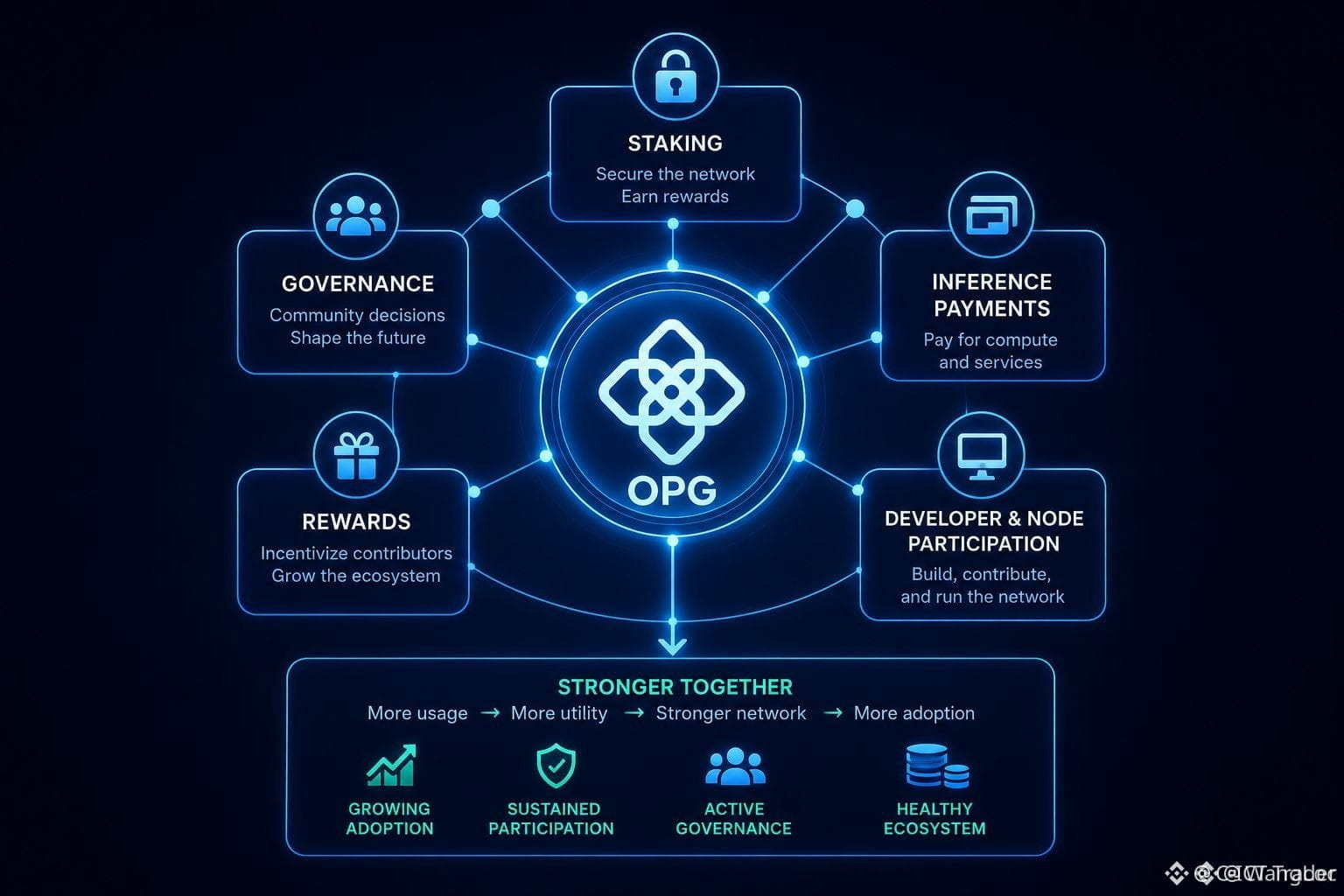
$OPG IS SEEING GOVERNANCE ENGAGEMENT AND STAKING ACTIVITY INCREASE 🔥
Entry: 0.50
Target: 0.70
Stop Loss: 0.40
The real test for $OPG is whether its governance engagement, staking activity, and developer adoption continue to grow independently of market hype, as this would indicate a strong and healthy network. What happens if these metrics start to drop, will the $OPG price follow suit?
Not financial advice. Manage your risk.
#OPG #LongSetup #CryptoGovernance
💸
$OPG IS SEEING GOVERNANCE ENGAGEMENT AND STAKING ACTIVITY INCREASE 🔥
Entry: 0.50
Target: 0.70
Stop Loss: 0.40
The real test for $OPG is whether its governance engagement, staking activity, and developer adoption continue to grow independently of market hype, as this would indicate a strong and healthy network. What happens if these metrics start to drop, will the $OPG price follow suit?
Not financial advice. Manage your risk.
#OPG #LongSetup #CryptoGovernance
💸
Entry: 0.50
Target: 0.70
Stop Loss: 0.40
The real test for $OPG is whether its governance engagement, staking activity, and developer adoption continue to grow independently of market hype, as this would indicate a strong and healthy network. What happens if these metrics start to drop, will the $OPG price follow suit?
Not financial advice. Manage your risk.
#OPG #LongSetup #CryptoGovernance
💸
1
25

·
--
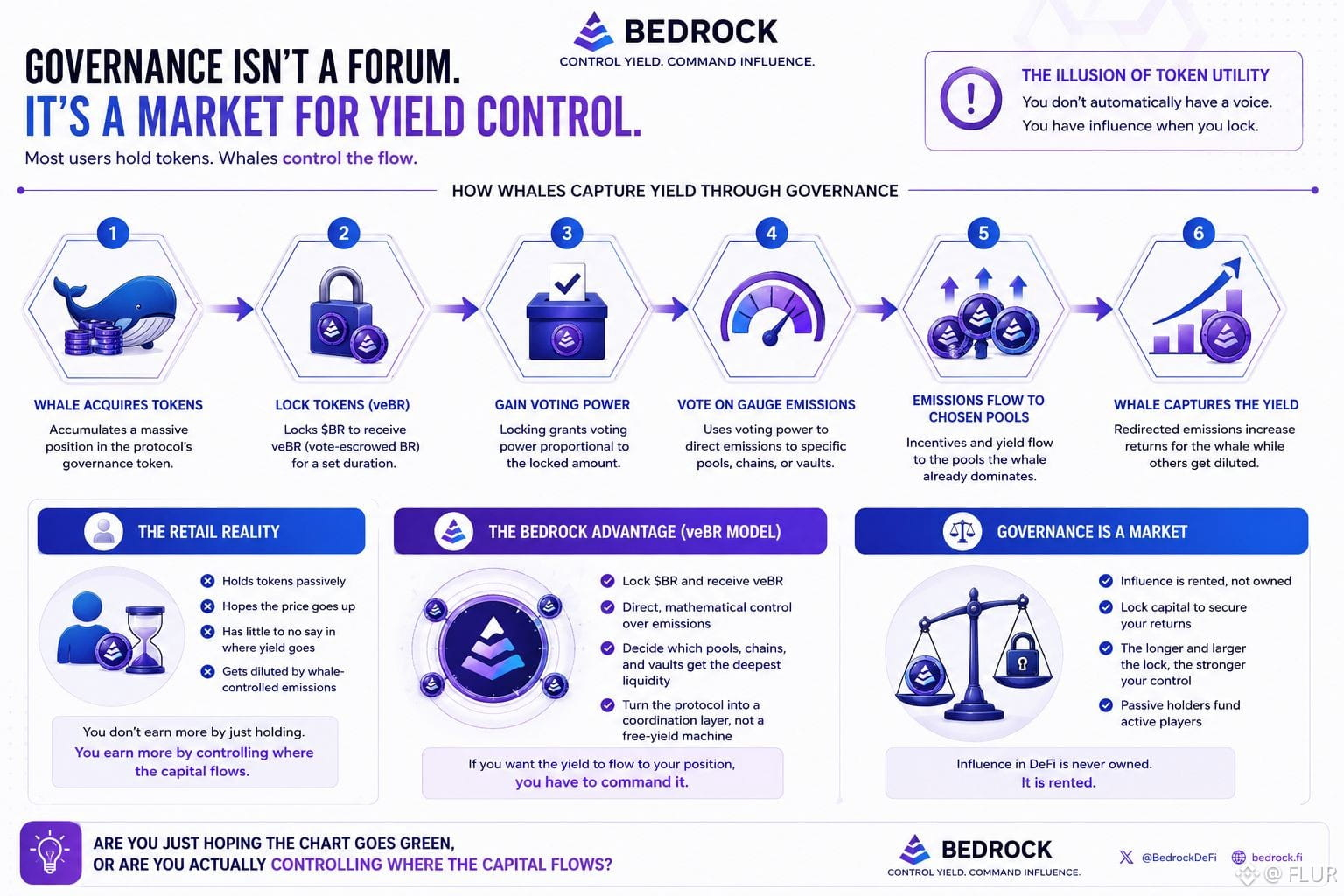
I was watching a whale wallet lock up a massive position in a DeFi governance contract yesterday.
Most retail users see a multi-year lock and assume it’s a sign of "long-term conviction".
We are conditioned to think governance is a democratic town hall.
We assume holding a token gives us a voice.
But when you trace the actual on-chain routing, that whale wasn’t voting on community proposals.
They were voting on gauge emissions.
They locked their tokens to forcibly redirect the protocol’s yield straight into the specific liquidity pools they already dominate.
While everyday users hold the token passively waiting for the price to go up, the whale uses the token to actively siphon the protocol’s cash flow.
That completely shatters the illusion of standard token utility.
Governance isn’t a community forum.
It’s an invisible market for yield control.
This behavioral tension is exactly why the veBR model inside Bedrock caught my attention.
Bedrock doesn't treat $BR as just a speculative reward.
When users lock $BR to receive veBR (vote-escrowed BR), they aren't getting a meaningless voting badge.
They are acquiring direct, mathematical control over the protocol’s multi-chain emissions.
They get to dictate which liquid restaking pools, which chains, and which vaults receive the deepest liquidity incentives.
The protocol stops being a machine that hands out free yield, and becomes a coordination layer where participants must lock capital to secure their own returns.
If you want the yield to flow to your specific position, you have to command it.
Influence in DeFi is never owned.
It is rented.
Look at your own portfolio.
Are you holding tokens just hoping the chart goes green, or are you actually controlling where the capital flows?
@Bedrock #Bedrock $BR
{future}(BRUSDT)
#DeFi #CryptoGovernance
I was watching a whale wallet lock up a massive position in a DeFi governance contract yesterday.
Most retail users see a multi-year lock and assume it’s a sign of "long-term conviction".
We are conditioned to think governance is a democratic town hall.
We assume holding a token gives us a voice.
But when you trace the actual on-chain routing, that whale wasn’t voting on community proposals.
They were voting on gauge emissions.
They locked their tokens to forcibly redirect the protocol’s yield straight into the specific liquidity pools they already dominate.
While everyday users hold the token passively waiting for the price to go up, the whale uses the token to actively siphon the protocol’s cash flow.
That completely shatters the illusion of standard token utility.
Governance isn’t a community forum.
It’s an invisible market for yield control.
This behavioral tension is exactly why the veBR model inside Bedrock caught my attention.
Bedrock doesn't treat $BR as just a speculative reward.
When users lock $BR to receive veBR (vote-escrowed BR), they aren't getting a meaningless voting badge.
They are acquiring direct, mathematical control over the protocol’s multi-chain emissions.
They get to dictate which liquid restaking pools, which chains, and which vaults receive the deepest liquidity incentives.
The protocol stops being a machine that hands out free yield, and becomes a coordination layer where participants must lock capital to secure their own returns.
If you want the yield to flow to your specific position, you have to command it.
Influence in DeFi is never owned.
It is rented.
Look at your own portfolio.
Are you holding tokens just hoping the chart goes green, or are you actually controlling where the capital flows?
@Bedrock #Bedrock $BR
#DeFi #CryptoGovernance
Most retail users see a multi-year lock and assume it’s a sign of "long-term conviction".
We are conditioned to think governance is a democratic town hall.
We assume holding a token gives us a voice.
But when you trace the actual on-chain routing, that whale wasn’t voting on community proposals.
They were voting on gauge emissions.
They locked their tokens to forcibly redirect the protocol’s yield straight into the specific liquidity pools they already dominate.
While everyday users hold the token passively waiting for the price to go up, the whale uses the token to actively siphon the protocol’s cash flow.
That completely shatters the illusion of standard token utility.
Governance isn’t a community forum.
It’s an invisible market for yield control.
This behavioral tension is exactly why the veBR model inside Bedrock caught my attention.
Bedrock doesn't treat $BR as just a speculative reward.
When users lock $BR to receive veBR (vote-escrowed BR), they aren't getting a meaningless voting badge.
They are acquiring direct, mathematical control over the protocol’s multi-chain emissions.
They get to dictate which liquid restaking pools, which chains, and which vaults receive the deepest liquidity incentives.
The protocol stops being a machine that hands out free yield, and becomes a coordination layer where participants must lock capital to secure their own returns.
If you want the yield to flow to your specific position, you have to command it.
Influence in DeFi is never owned.
It is rented.
Look at your own portfolio.
Are you holding tokens just hoping the chart goes green, or are you actually controlling where the capital flows?
@Bedrock #Bedrock $BR
#DeFi #CryptoGovernance
2
3
96
·
--
CZ just proposed freezing Satoshi's 1.1 million $BTC before quantum computers can steal it.
On the surface, it sounds protective. But think about what that actually requires: a coordinated network decision to confiscate coins from an address based on a threat that hasn't materialized yet.
This isn't a technical debate. It's a governance one.
Bitcoin's most powerful property isn't scarcity — it's that no one can change the rules unilaterally. The moment you establish a precedent for freezing "at-risk" coins, you've created a new category: coins that can be frozen if the community decides they're a problem.
$ETH has already grappled with this. The 2016 DAO hard fork split the chain and created a permanent philosophical wound. Most of crypto learned from that.
$ADA has formal governance models precisely because ad-hoc decisions are dangerous. The answer to quantum risk isn't a freeze — it's a migration path, built in advance, that every holder opts into.
The quantum threat is real. CZ isn't wrong to raise it. But the solution that preserves Bitcoin's value is post-quantum cryptography upgrades, not social consensus seizures.
How you solve hard problems reveals what you actually believe the protocol is for.
#Bitcoin #CryptoGovernance #QuantumComputing #Web3 #BTC
CZ just proposed freezing Satoshi's 1.1 million $BTC before quantum computers can steal it.
On the surface, it sounds protective. But think about what that actually requires: a coordinated network decision to confiscate coins from an address based on a threat that hasn't materialized yet.
This isn't a technical debate. It's a governance one.
Bitcoin's most powerful property isn't scarcity — it's that no one can change the rules unilaterally. The moment you establish a precedent for freezing "at-risk" coins, you've created a new category: coins that can be frozen if the community decides they're a problem.
$ETH has already grappled with this. The 2016 DAO hard fork split the chain and created a permanent philosophical wound. Most of crypto learned from that.
$ADA has formal governance models precisely because ad-hoc decisions are dangerous. The answer to quantum risk isn't a freeze — it's a migration path, built in advance, that every holder opts into.
The quantum threat is real. CZ isn't wrong to raise it. But the solution that preserves Bitcoin's value is post-quantum cryptography upgrades, not social consensus seizures.
How you solve hard problems reveals what you actually believe the protocol is for.
#Bitcoin #CryptoGovernance #QuantumComputing #Web3 #BTC
On the surface, it sounds protective. But think about what that actually requires: a coordinated network decision to confiscate coins from an address based on a threat that hasn't materialized yet.
This isn't a technical debate. It's a governance one.
Bitcoin's most powerful property isn't scarcity — it's that no one can change the rules unilaterally. The moment you establish a precedent for freezing "at-risk" coins, you've created a new category: coins that can be frozen if the community decides they're a problem.
$ETH has already grappled with this. The 2016 DAO hard fork split the chain and created a permanent philosophical wound. Most of crypto learned from that.
$ADA has formal governance models precisely because ad-hoc decisions are dangerous. The answer to quantum risk isn't a freeze — it's a migration path, built in advance, that every holder opts into.
The quantum threat is real. CZ isn't wrong to raise it. But the solution that preserves Bitcoin's value is post-quantum cryptography upgrades, not social consensus seizures.
How you solve hard problems reveals what you actually believe the protocol is for.
#Bitcoin #CryptoGovernance #QuantumComputing #Web3 #BTC
65

$WLFI GOVERNANCE DISPUTE GOES PUBLIC AS COURT REJECTS PRIVATE ARBITRATION 🦈 🚨
A federal court just blocked efforts to move Justin Sun's $45M dispute into private arbitration, opening $WLFI governance mechanics to public scrutiny. Institutional capital remains locked behind controversial central control mechanisms after an 80% post-listing drawdown. 🔍
Arbitrary token freezes and unresolved unlock structures create severe structural friction, directly impacting market liquidity and order flow confidence. Smart money demands absolute clarity on tokenomics before re-establishing major positions. 🔒
💬 Will public court transparency resolve tokenomic overhangs or trigger further liquidity sweeps? 👇
⚠️ Not financial advice. Always manage your risk. 🛡️
🏷️ #WLFI #CryptoGovernance #MarketStructure #Altcoins
🎯 🦈
$WLFI GOVERNANCE DISPUTE GOES PUBLIC AS COURT REJECTS PRIVATE ARBITRATION 🦈 🚨
A federal court just blocked efforts to move Justin Sun's $45M dispute into private arbitration, opening $WLFI governance mechanics to public scrutiny. Institutional capital remains locked behind controversial central control mechanisms after an 80% post-listing drawdown. 🔍
Arbitrary token freezes and unresolved unlock structures create severe structural friction, directly impacting market liquidity and order flow confidence. Smart money demands absolute clarity on tokenomics before re-establishing major positions. 🔒
💬 Will public court transparency resolve tokenomic overhangs or trigger further liquidity sweeps? 👇
⚠️ Not financial advice. Always manage your risk. 🛡️
🏷️ #WLFI #CryptoGovernance #MarketStructure #Altcoins
🎯 🦈
A federal court just blocked efforts to move Justin Sun's $45M dispute into private arbitration, opening $WLFI governance mechanics to public scrutiny. Institutional capital remains locked behind controversial central control mechanisms after an 80% post-listing drawdown. 🔍
Arbitrary token freezes and unresolved unlock structures create severe structural friction, directly impacting market liquidity and order flow confidence. Smart money demands absolute clarity on tokenomics before re-establishing major positions. 🔒
💬 Will public court transparency resolve tokenomic overhangs or trigger further liquidity sweeps? 👇
⚠️ Not financial advice. Always manage your risk. 🛡️
🏷️ #WLFI #CryptoGovernance #MarketStructure #Altcoins
🎯 🦈
90

·
--
Article
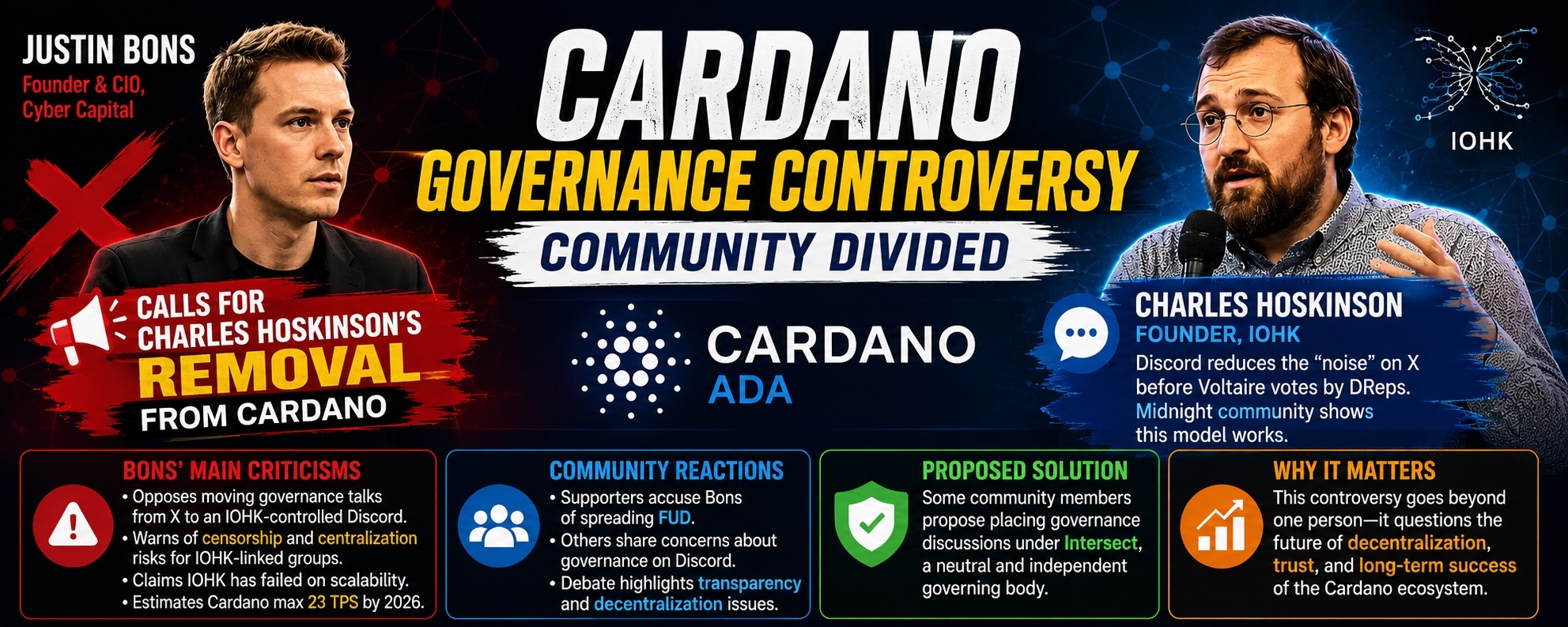
🚨 Justin Bons Calls for Charles Hoskinson's Removal from Cardano, Governance Controversy Erupts🚨 Justin Bons Calls for Charles Hoskinson's Removal from Cardano, Governance Controversy Erupts
Cyber Capital founder, Justin Bons, has publicly called on the Cardano community to oust Charles Hoskinson from his leadership role, arguing that moving governance discussions to IOHK-controlled Discord servers could lead to censorship and weaken the network's decentralization.
🔸 Critique of the Discord governance model
🚨 Justin Bons Calls for Charles Hoskinson's Removal from Cardano, Governance Controversy Erupts
🚨 Justin Bons Calls for Charles Hoskinson's Removal from Cardano, Governance Controversy Erupts
Cyber Capital founder, Justin Bons, has publicly called on the Cardano community to oust Charles Hoskinson from his leadership role, arguing that moving governance discussions to IOHK-controlled Discord servers could lead to censorship and weaken the network's decentralization.
🔸 Critique of the Discord governance model
Cyber Capital founder, Justin Bons, has publicly called on the Cardano community to oust Charles Hoskinson from his leadership role, arguing that moving governance discussions to IOHK-controlled Discord servers could lead to censorship and weaken the network's decentralization.
🔸 Critique of the Discord governance model
1
181

·
--
The Ethereum Foundation is facing its biggest leadership crisis yet. Co-executive director Hsiao-Wei Wang just stepped down, adding to a wave of at least eight senior departures in five months.
Former researcher Dankrad Feist says the exodus reflects deeper management failures, not strategy disagreements. "The people who are leaving are believers in Ethereum's vision — the problem isn't with the strategy, it's with management," he wrote.
Some community members argue this is actually healthy decentralization — shifting power from the Foundation toward developers and DAOs. Others worry it weakens Ethereum's ability to compete in an increasingly crowded smart-contract landscape.
The Foundation recently launched its CROPS framework (cypherpunk values, resilience, open-source, permissionlessness, security), but critics say it doesn't address the real organizational issues.
Can $ETH maintain its edge while its governing body loses key talent? Or does this prove that decentralized protocols don't need a strong central foundation?
#Ethereum #EFLeadership #CryptoGovernance #ETH
The Ethereum Foundation is facing its biggest leadership crisis yet. Co-executive director Hsiao-Wei Wang just stepped down, adding to a wave of at least eight senior departures in five months.
Former researcher Dankrad Feist says the exodus reflects deeper management failures, not strategy disagreements. "The people who are leaving are believers in Ethereum's vision — the problem isn't with the strategy, it's with management," he wrote.
Some community members argue this is actually healthy decentralization — shifting power from the Foundation toward developers and DAOs. Others worry it weakens Ethereum's ability to compete in an increasingly crowded smart-contract landscape.
The Foundation recently launched its CROPS framework (cypherpunk values, resilience, open-source, permissionlessness, security), but critics say it doesn't address the real organizational issues.
Can $ETH maintain its edge while its governing body loses key talent? Or does this prove that decentralized protocols don't need a strong central foundation?
#Ethereum #EFLeadership #CryptoGovernance #ETH
Former researcher Dankrad Feist says the exodus reflects deeper management failures, not strategy disagreements. "The people who are leaving are believers in Ethereum's vision — the problem isn't with the strategy, it's with management," he wrote.
Some community members argue this is actually healthy decentralization — shifting power from the Foundation toward developers and DAOs. Others worry it weakens Ethereum's ability to compete in an increasingly crowded smart-contract landscape.
The Foundation recently launched its CROPS framework (cypherpunk values, resilience, open-source, permissionlessness, security), but critics say it doesn't address the real organizational issues.
Can $ETH maintain its edge while its governing body loses key talent? Or does this prove that decentralized protocols don't need a strong central foundation?
#Ethereum #EFLeadership #CryptoGovernance #ETH
1
7

·
--
Bullish
Partly True
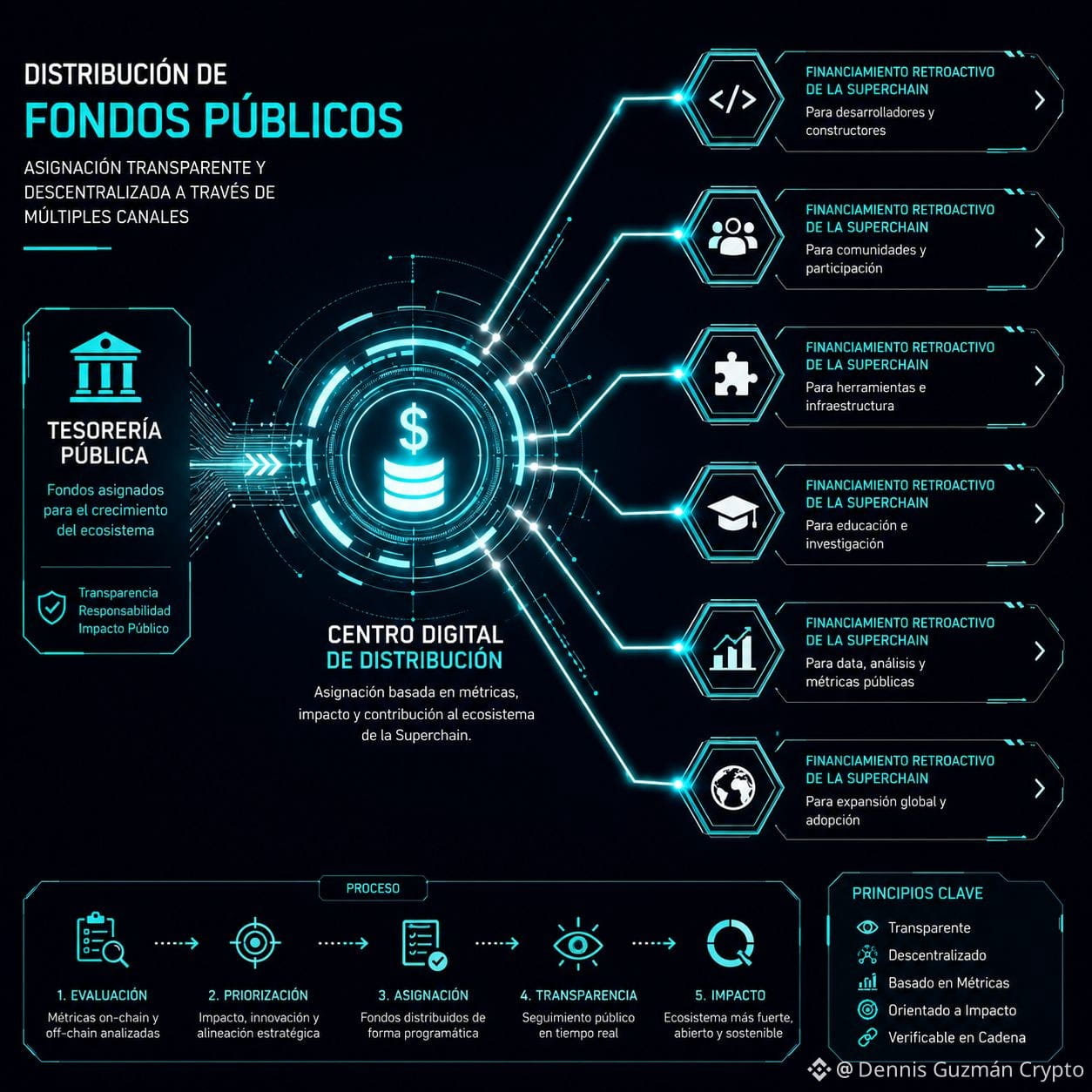
An additional mass allocation of $120 million in grants is distributed automatically via smart contracts! $OP
{future}(OPUSDT)
On-chain governance statistics reveal how the decentralized ecosystem is directly funding network-free open-source software developers.
This continuous capital flow ensures technical expansion and hardens the scalability infrastructure, positively impacting the development of the Superchain and protocols such as Optimism ($OP ).
#OP #Superchain #CryptoGovernance
An additional mass allocation of $120 million in grants is distributed automatically via smart contracts! $OP
On-chain governance statistics reveal how the decentralized ecosystem is directly funding network-free open-source software developers.
This continuous capital flow ensures technical expansion and hardens the scalability infrastructure, positively impacting the development of the Superchain and protocols such as Optimism ($OP ).
#OP #Superchain #CryptoGovernance
On-chain governance statistics reveal how the decentralized ecosystem is directly funding network-free open-source software developers.
This continuous capital flow ensures technical expansion and hardens the scalability infrastructure, positively impacting the development of the Superchain and protocols such as Optimism ($OP ).
#OP #Superchain #CryptoGovernance
1
2
134

·
--
Article
How DAO Governance Is Weaponized Against RetailHave you noticed how easily DAO governance can be weaponized against retail investors?
Most traders lose money not because of market dips, but because they blindly trust DAO governance without actually paying attention to what is voted on. This apathy leaves the door wide open for bad actors to drain treasuries and dump on your holdings.
Look at what just happened with $BONK. An attacker bought 4 million dollars worth of tokens, submitted a proposal to transfer 4.4 trillion tokens to their own wallet, and simply waited. Because the community was asleep for seven days, the attacker voted yes with their own bag, passed the proposal, and walked away with 20 million dollars.
To stop losing money to these governance exploits, you need to change how you evaluate your holdings. First, always track active proposals on platforms like Snapshot for any token you hold, especially high-liquidity ones like $SOL ecosystem assets. Second, calculate the minimum quorum required to pass proposals. If a single whale can buy enough voting power to pass a malicious vote, the project is not truly decentralized.
How do we fix this voting apathy before more treasuries get drained?
#DeFi #CryptoGovernance #MemeCoins
How DAO Governance Is Weaponized Against Retail
Have you noticed how easily DAO governance can be weaponized against retail investors?
Most traders lose money not because of market dips, but because they blindly trust DAO governance without actually paying attention to what is voted on. This apathy leaves the door wide open for bad actors to drain treasuries and dump on your holdings.
Look at what just happened with $BONK . An attacker bought 4 million dollars worth of tokens, submitted a proposal to transfer 4.4 trillion tokens to their own wallet, and simply waited. Because the community was asleep for seven days, the attacker voted yes with their own bag, passed the proposal, and walked away with 20 million dollars.
To stop losing money to these governance exploits, you need to change how you evaluate your holdings. First, always track active proposals on platforms like Snapshot for any token you hold, especially high-liquidity ones like $SOL ecosystem assets. Second, calculate the minimum quorum required to pass proposals. If a single whale can buy enough voting power to pass a malicious vote, the project is not truly decentralized.
How do we fix this voting apathy before more treasuries get drained?
#DeFi #CryptoGovernance #MemeCoins
Most traders lose money not because of market dips, but because they blindly trust DAO governance without actually paying attention to what is voted on. This apathy leaves the door wide open for bad actors to drain treasuries and dump on your holdings.
Look at what just happened with $BONK . An attacker bought 4 million dollars worth of tokens, submitted a proposal to transfer 4.4 trillion tokens to their own wallet, and simply waited. Because the community was asleep for seven days, the attacker voted yes with their own bag, passed the proposal, and walked away with 20 million dollars.
To stop losing money to these governance exploits, you need to change how you evaluate your holdings. First, always track active proposals on platforms like Snapshot for any token you hold, especially high-liquidity ones like $SOL ecosystem assets. Second, calculate the minimum quorum required to pass proposals. If a single whale can buy enough voting power to pass a malicious vote, the project is not truly decentralized.
How do we fix this voting apathy before more treasuries get drained?
#DeFi #CryptoGovernance #MemeCoins
81

·
--
Is the future of Web3 governance finally getting a much-needed upgrade? Let’s talk about DeXe, a project that is quietly reshaping how Decentralized Autonomous Organizations (DAOs) operate. While many associate DAOs with voter apathy and chaotic decision-making, DeXe is building the infrastructure to fix these exact pain points.
At its core, the DeXe Protocol is a comprehensive builder for sustainable DAOs. Its flagship product, the DeXe DAO Studio, allows anyone to launch and manage a highly customizable DAO without writing complex code. What makes DeXe stand out is its focus on meritocracy and active governance. Instead of the traditional one token, one vote model which often favors wealthy whales, DeXe introduces flexible delegation, sub-DAOs, and rewards for expertise. This ensures that decisions are made by those who actually understand the proposals, rather than just those with the biggest wallets.
From an analytical perspective, the utility of the DEXE token is deeply integrated into this ecosystem. DEXE is not just a speculative asset; it is the fundamental tool for securing governance, aligning incentives across different DAOs, and participating in treasury management. As more projects seek to transition to true decentralization, the demand for robust DAO creation tools like DeXe is poised to grow.
Moreover, DeXe is solving the retention problem. By rewarding constructive participation and offering tools that prevent governance attacks, it helps DAOs maintain long-term stability. In a market increasingly focused on real-world utility and sustainable tokenomics, DeXe’s focus on governance infrastructure is a narrative worth watching.
Whether you are a developer looking to launch a project or an investor seeking long-term utility, DeXe offers a fascinating glimpse into the next generation of collaborative Web3 organizations. Keep an eye on its growing ecosystem as decentralized governance becomes the gold standard.
#DeXe #DAO #CryptoGovernance
Is the future of Web3 governance finally getting a much-needed upgrade? Let’s talk about DeXe, a project that is quietly reshaping how Decentralized Autonomous Organizations (DAOs) operate. While many associate DAOs with voter apathy and chaotic decision-making, DeXe is building the infrastructure to fix these exact pain points.
At its core, the DeXe Protocol is a comprehensive builder for sustainable DAOs. Its flagship product, the DeXe DAO Studio, allows anyone to launch and manage a highly customizable DAO without writing complex code. What makes DeXe stand out is its focus on meritocracy and active governance. Instead of the traditional one token, one vote model which often favors wealthy whales, DeXe introduces flexible delegation, sub-DAOs, and rewards for expertise. This ensures that decisions are made by those who actually understand the proposals, rather than just those with the biggest wallets.
From an analytical perspective, the utility of the DEXE token is deeply integrated into this ecosystem. DEXE is not just a speculative asset; it is the fundamental tool for securing governance, aligning incentives across different DAOs, and participating in treasury management. As more projects seek to transition to true decentralization, the demand for robust DAO creation tools like DeXe is poised to grow.
Moreover, DeXe is solving the retention problem. By rewarding constructive participation and offering tools that prevent governance attacks, it helps DAOs maintain long-term stability. In a market increasingly focused on real-world utility and sustainable tokenomics, DeXe’s focus on governance infrastructure is a narrative worth watching.
Whether you are a developer looking to launch a project or an investor seeking long-term utility, DeXe offers a fascinating glimpse into the next generation of collaborative Web3 organizations. Keep an eye on its growing ecosystem as decentralized governance becomes the gold standard.
#DeXe #DAO #CryptoGovernance
At its core, the DeXe Protocol is a comprehensive builder for sustainable DAOs. Its flagship product, the DeXe DAO Studio, allows anyone to launch and manage a highly customizable DAO without writing complex code. What makes DeXe stand out is its focus on meritocracy and active governance. Instead of the traditional one token, one vote model which often favors wealthy whales, DeXe introduces flexible delegation, sub-DAOs, and rewards for expertise. This ensures that decisions are made by those who actually understand the proposals, rather than just those with the biggest wallets.
From an analytical perspective, the utility of the DEXE token is deeply integrated into this ecosystem. DEXE is not just a speculative asset; it is the fundamental tool for securing governance, aligning incentives across different DAOs, and participating in treasury management. As more projects seek to transition to true decentralization, the demand for robust DAO creation tools like DeXe is poised to grow.
Moreover, DeXe is solving the retention problem. By rewarding constructive participation and offering tools that prevent governance attacks, it helps DAOs maintain long-term stability. In a market increasingly focused on real-world utility and sustainable tokenomics, DeXe’s focus on governance infrastructure is a narrative worth watching.
Whether you are a developer looking to launch a project or an investor seeking long-term utility, DeXe offers a fascinating glimpse into the next generation of collaborative Web3 organizations. Keep an eye on its growing ecosystem as decentralized governance becomes the gold standard.
#DeXe #DAO #CryptoGovernance
141

·
--
Bullish
$ADA Governance Era: Can Decentralization Revive the Price? 🏛️
Cardano has officially entered its advanced governance era, handing full control of the ecosystem over to the community. While critics point out the slow price action compared to hype-driven chains, Cardano's uptime and security record remain flawless.
The focus is now shifting toward building scalable DeFi and enterprise applications on an unshakeable foundation.
Will the patient ADA holders be rewarded in the long run? Give me your honest outlook! 📊
#Cardano #ADA #CryptoGovernance #LongTermHolding
{spot}(ADAUSDT)
$ADA Governance Era: Can Decentralization Revive the Price? 🏛️
Cardano has officially entered its advanced governance era, handing full control of the ecosystem over to the community. While critics point out the slow price action compared to hype-driven chains, Cardano's uptime and security record remain flawless.
The focus is now shifting toward building scalable DeFi and enterprise applications on an unshakeable foundation.
Will the patient ADA holders be rewarded in the long run? Give me your honest outlook! 📊
#Cardano #ADA #CryptoGovernance #LongTermHolding
Cardano has officially entered its advanced governance era, handing full control of the ecosystem over to the community. While critics point out the slow price action compared to hype-driven chains, Cardano's uptime and security record remain flawless.
The focus is now shifting toward building scalable DeFi and enterprise applications on an unshakeable foundation.
Will the patient ADA holders be rewarded in the long run? Give me your honest outlook! 📊
#Cardano #ADA #CryptoGovernance #LongTermHolding
185
Log in to explore more content
Join global crypto users on Binance Square
⚡️ Get latest and useful information about crypto.
💬 Trusted by the world’s largest crypto exchange.
👍 Discover real insights from verified creators.
Email / Phone number
Trending Topics
1
#AIStocksWhatNext
373,395 views
3,002 Discussing
2
#BitcoinBreaksAboveMayHighNears$86K
15,300 views
192 Discussing
3
#DogecoinRises15%
48,876 views
997 Discussing
4
#$14BBitcoinOptionsExpireFriday
3,968 views
89 Discussing
5
#BNBMarketCapPassesBNYMellon
30,745 views
713 Discussing
6
#CryptoMarketCapReclaims$3Trillion
5,254 views
82 Discussing
7
#MuseOvertakesChatGPTAsTopFreeIOSApp
18,096 views
536 Discussing
8
#TokenizedStockPlatformsCouldLaunchNextQuarter
28,590 views
589 Discussing
9
#StrategyAdds950Bitcoin
35,755 views
686 Discussing
10
#CardanoAddedToX402KitForADAPayments
30,257 views
659 Discussing