
#btcfi
btcfi
853,034 views
3,990 Discussing
Hot
Latest

#LorenzoProtocol ❔
The digital realm continuously seeks ways to bridge traditional Bitcoin capital with high-yield DeFi strategies, and Lorenzo Protocol presents a compelling solution through its native asset, BANK. Acting as the primary architectural gateway for Bitcoin liquid staking and structured yield products, BANK transforms dormant BTC liquidity into productive financial instruments across modern cross-chain ecosystems.
At its core, the economic structure relies on a utility-focused tokenomics model where staking BANK yields veBANK, granting holders governance voting rights and boosted reward allocations. Deployed natively on EVM networks like BNB Smart Chain, it delivers seamless cross-chain interoperability and modular upgradeability, allowing the system to adapt smoothly without disruption. Relying on Proof-of-Stake mechanics rather than physical mining or halving cycles, security and emissions are sustained through validator networks and dynamic staking rewards.
Long-term analysts view Lorenzo Protocol as a pivotal player in the emerging BTCfi landscape, backed by a growing community dedicated to cross-chain yield optimization.
{spot}(BANKUSDT)
$BANK $USDC $USDT #DeFi #BTCfi #CoinVahini
#LorenzoProtocol ❔
The digital realm continuously seeks ways to bridge traditional Bitcoin capital with high-yield DeFi strategies, and Lorenzo Protocol presents a compelling solution through its native asset, BANK. Acting as the primary architectural gateway for Bitcoin liquid staking and structured yield products, BANK transforms dormant BTC liquidity into productive financial instruments across modern cross-chain ecosystems.
At its core, the economic structure relies on a utility-focused tokenomics model where staking BANK yields veBANK, granting holders governance voting rights and boosted reward allocations. Deployed natively on EVM networks like BNB Smart Chain, it delivers seamless cross-chain interoperability and modular upgradeability, allowing the system to adapt smoothly without disruption. Relying on Proof-of-Stake mechanics rather than physical mining or halving cycles, security and emissions are sustained through validator networks and dynamic staking rewards.
Long-term analysts view Lorenzo Protocol as a pivotal player in the emerging BTCfi landscape, backed by a growing community dedicated to cross-chain yield optimization.
$BANK $USDC $USDT #DeFi #BTCfi #CoinVahini
The digital realm continuously seeks ways to bridge traditional Bitcoin capital with high-yield DeFi strategies, and Lorenzo Protocol presents a compelling solution through its native asset, BANK. Acting as the primary architectural gateway for Bitcoin liquid staking and structured yield products, BANK transforms dormant BTC liquidity into productive financial instruments across modern cross-chain ecosystems.
At its core, the economic structure relies on a utility-focused tokenomics model where staking BANK yields veBANK, granting holders governance voting rights and boosted reward allocations. Deployed natively on EVM networks like BNB Smart Chain, it delivers seamless cross-chain interoperability and modular upgradeability, allowing the system to adapt smoothly without disruption. Relying on Proof-of-Stake mechanics rather than physical mining or halving cycles, security and emissions are sustained through validator networks and dynamic staking rewards.
Long-term analysts view Lorenzo Protocol as a pivotal player in the emerging BTCfi landscape, backed by a growing community dedicated to cross-chain yield optimization.
$BANK $USDC $USDT #DeFi #BTCfi #CoinVahini
1
376
Article
Everything About $BANK Token In the evolving financial realm where traditional banking models encounter decentralized liquid staking, Lorenzo Protocol stands out with its native asset, BANK. Functioning as the primary architecture for Bitcoin yield products and structured financial instruments, it acts as a foundational gateway designed to unlock capital efficiency across cross-chain asset management.
At the core of its economic blueprint lies a utility-driven tokenomics framework centered around governance and yield enhancement. By staking BANK to lock in veBANK, holders secure active voting rights over protocol parameter adjustments, yield allocations, and vault strategies. This structure aligns long-term capital retention with economic incentives, encouraging participants to preserve system balance while benefiting from secondary protocol rewards.
The real-world utility of the token operates across liquid staking derivatives and yield-bearing products, facilitating seamless liquidity movement for Bitcoin ecosystem participants. Operating natively on performant EVM networks like BNB Smart Chain, Lorenzo Protocol delivers friction-free cross-chain asset portability. Its upgradeability is anchored in modular smart contract frameworks, enabling continuous adaptation to emerging DeFi primitives without disturbing core operational mechanics.
As a Proof-of-Stake derivative and asset management layer, the protocol replaces heavy physical hardware mining and fixed code-enforced halving events with continuous yield strategies and dynamic staking rewards. Infrastructure security relies on decentralized validator networks and automated smart contracts, replacing mechanical block-subsidy reductions with controlled emission schedules and community-driven treasury distributions.
Long-term market analysts view Lorenzo Protocol with structured interest, evaluating its capacity to capture institutional-grade Bitcoin yield volume against a competitive landscape of yield-farming protocols. Supported by an expanding community of DeFi strategists and yield enthusiasts, BANK represents not merely a speculative governance unit, but an evolving financial instrument redefining how digital wealth compounds across modern blockchain ecosystems.
{spot}(BANKUSDT)
$BANK #LorenzoProtocol #DeFi #BTCfi #CoinVahini
Everything About $BANK Token
In the evolving financial realm where traditional banking models encounter decentralized liquid staking, Lorenzo Protocol stands out with its native asset, BANK. Functioning as the primary architecture for Bitcoin yield products and structured financial instruments, it acts as a foundational gateway designed to unlock capital efficiency across cross-chain asset management.
At the core of its economic blueprint lies a utility-driven tokenomics framework centered around governance and yield enhancement. By staking BANK to lock in veBANK, holders secure active voting rights over protocol parameter adjustments, yield allocations, and vault strategies. This structure aligns long-term capital retention with economic incentives, encouraging participants to preserve system balance while benefiting from secondary protocol rewards.
The real-world utility of the token operates across liquid staking derivatives and yield-bearing products, facilitating seamless liquidity movement for Bitcoin ecosystem participants. Operating natively on performant EVM networks like BNB Smart Chain, Lorenzo Protocol delivers friction-free cross-chain asset portability. Its upgradeability is anchored in modular smart contract frameworks, enabling continuous adaptation to emerging DeFi primitives without disturbing core operational mechanics.
As a Proof-of-Stake derivative and asset management layer, the protocol replaces heavy physical hardware mining and fixed code-enforced halving events with continuous yield strategies and dynamic staking rewards. Infrastructure security relies on decentralized validator networks and automated smart contracts, replacing mechanical block-subsidy reductions with controlled emission schedules and community-driven treasury distributions.
Long-term market analysts view Lorenzo Protocol with structured interest, evaluating its capacity to capture institutional-grade Bitcoin yield volume against a competitive landscape of yield-farming protocols. Supported by an expanding community of DeFi strategists and yield enthusiasts, BANK represents not merely a speculative governance unit, but an evolving financial instrument redefining how digital wealth compounds across modern blockchain ecosystems.
$BANK #LorenzoProtocol #DeFi #BTCfi #CoinVahini
At the core of its economic blueprint lies a utility-driven tokenomics framework centered around governance and yield enhancement. By staking BANK to lock in veBANK, holders secure active voting rights over protocol parameter adjustments, yield allocations, and vault strategies. This structure aligns long-term capital retention with economic incentives, encouraging participants to preserve system balance while benefiting from secondary protocol rewards.
The real-world utility of the token operates across liquid staking derivatives and yield-bearing products, facilitating seamless liquidity movement for Bitcoin ecosystem participants. Operating natively on performant EVM networks like BNB Smart Chain, Lorenzo Protocol delivers friction-free cross-chain asset portability. Its upgradeability is anchored in modular smart contract frameworks, enabling continuous adaptation to emerging DeFi primitives without disturbing core operational mechanics.
As a Proof-of-Stake derivative and asset management layer, the protocol replaces heavy physical hardware mining and fixed code-enforced halving events with continuous yield strategies and dynamic staking rewards. Infrastructure security relies on decentralized validator networks and automated smart contracts, replacing mechanical block-subsidy reductions with controlled emission schedules and community-driven treasury distributions.
Long-term market analysts view Lorenzo Protocol with structured interest, evaluating its capacity to capture institutional-grade Bitcoin yield volume against a competitive landscape of yield-farming protocols. Supported by an expanding community of DeFi strategists and yield enthusiasts, BANK represents not merely a speculative governance unit, but an evolving financial instrument redefining how digital wealth compounds across modern blockchain ecosystems.
$BANK #LorenzoProtocol #DeFi #BTCfi #CoinVahini
278

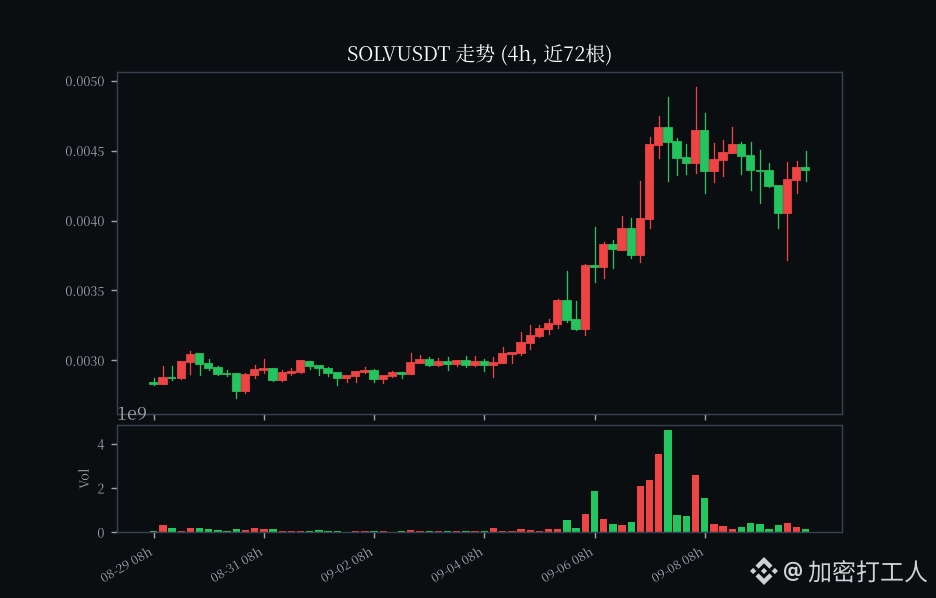
I came across $SOLV on the information feed—a BTCFi project with relatively low discussion momentum. Its current price is around 0.00453 USDT, market cap about 24.8 million USDT, and 24-hour trading volume roughly 17.84 million USDT. The volume-to-market cap ratio is close to 72%. This suggests short-term capital isn’t cold, but community narratives and open discussion haven’t caught up yet. Solv Protocol focuses on Bitcoin staking and restaking. Whether it can move out of the downturn will depend on on-chain growth of BTC assets, partnership resources, and real locked-in volume—not just daily turnover. Small-cap tokens can be highly volatile, and when interest is low, liquidity may change suddenly. Put the data into your watchlist first—don’t chase a rally just because volume is spiking.#BTCFi #SolvProtocol
I came across $SOLV on the information feed—a BTCFi project with relatively low discussion momentum. Its current price is around 0.00453 USDT, market cap about 24.8 million USDT, and 24-hour trading volume roughly 17.84 million USDT. The volume-to-market cap ratio is close to 72%. This suggests short-term capital isn’t cold, but community narratives and open discussion haven’t caught up yet. Solv Protocol focuses on Bitcoin staking and restaking. Whether it can move out of the downturn will depend on on-chain growth of BTC assets, partnership resources, and real locked-in volume—not just daily turnover. Small-cap tokens can be highly volatile, and when interest is low, liquidity may change suddenly. Put the data into your watchlist first—don’t chase a rally just because volume is spiking.#BTCFi #SolvProtocol
2

·
--
The project is quiet, but that doesn’t mean there’s no signal. The latest quote for $SOLV is about 0.00453 USDT, with a 24-hour trading volume of about 17.84 million USDT, a market cap of about 24.8 million USDT, and turnover activity that isn’t low among projects of similar size.
Solv Protocol focuses on Bitcoin staking and BTCFi liquidity infrastructure. The future highlights still lie in whether real BTC assets get integrated, whether partnership scenarios expand, and whether on-chain data can continue to improve. Current discussion is relatively lukewarm—so it may actually be a good fit to first add to your watchlist: monitor whether trading volume continues, whether the staking amount grows, and whether the price can gradually stop falling under high turnover.
When there’s no hype, watch the data more and chase the news less.
#SolvProtocol #BTCFi
The project is quiet, but that doesn’t mean there’s no signal. The latest quote for $SOLV is about 0.00453 USDT, with a 24-hour trading volume of about 17.84 million USDT, a market cap of about 24.8 million USDT, and turnover activity that isn’t low among projects of similar size.
Solv Protocol focuses on Bitcoin staking and BTCFi liquidity infrastructure. The future highlights still lie in whether real BTC assets get integrated, whether partnership scenarios expand, and whether on-chain data can continue to improve. Current discussion is relatively lukewarm—so it may actually be a good fit to first add to your watchlist: monitor whether trading volume continues, whether the staking amount grows, and whether the price can gradually stop falling under high turnover.
When there’s no hype, watch the data more and chase the news less.
#SolvProtocol #BTCFi
Solv Protocol focuses on Bitcoin staking and BTCFi liquidity infrastructure. The future highlights still lie in whether real BTC assets get integrated, whether partnership scenarios expand, and whether on-chain data can continue to improve. Current discussion is relatively lukewarm—so it may actually be a good fit to first add to your watchlist: monitor whether trading volume continues, whether the staking amount grows, and whether the price can gradually stop falling under high turnover.
When there’s no hype, watch the data more and chase the news less.
#SolvProtocol #BTCFi
83

·
--
Article
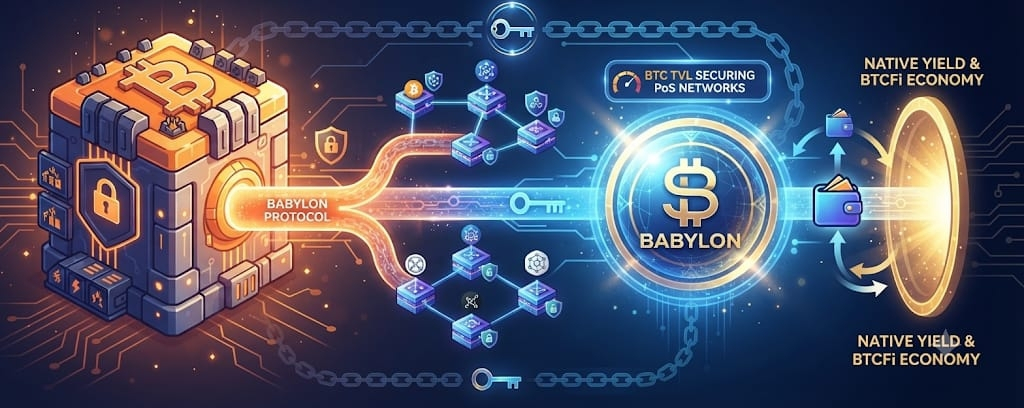
Custody-Free Bitcoin Staking: How Babylon ($BBN) Connects Security to PoS Networks 🔒Hello DeFi & RWA community! 🚀
Today we’ll dive into one of the most important advances in Web3 infrastructure: how to bring Bitcoin’s economic security to Proof-of-Stake chains without putting your funds at risk. Let’s break it down step by step.
🧩 1. The Security Problem in PoS Networks and Bitcoin’s Role
Unlike Bitcoin, where security is backed by billions of dollars in physical mining power (PoW), Proof-of-Stake (PoS) chains depend on users locking their native token (staking) to prevent 51% attacks.
Custody-Free Bitcoin Staking: How Babylon ($BBN) Connects Security to PoS Networks 🔒
Hello DeFi & RWA community! 🚀
Today we’ll dive into one of the most important advances in Web3 infrastructure: how to bring Bitcoin’s economic security to Proof-of-Stake chains without putting your funds at risk. Let’s break it down step by step.
🧩 1. The Security Problem in PoS Networks and Bitcoin’s Role
Unlike Bitcoin, where security is backed by billions of dollars in physical mining power (PoW), Proof-of-Stake (PoS) chains depend on users locking their native token (staking) to prevent 51% attacks.
Today we’ll dive into one of the most important advances in Web3 infrastructure: how to bring Bitcoin’s economic security to Proof-of-Stake chains without putting your funds at risk. Let’s break it down step by step.
🧩 1. The Security Problem in PoS Networks and Bitcoin’s Role
Unlike Bitcoin, where security is backed by billions of dollars in physical mining power (PoW), Proof-of-Stake (PoS) chains depend on users locking their native token (staking) to prevent 51% attacks.
5
167

·
--
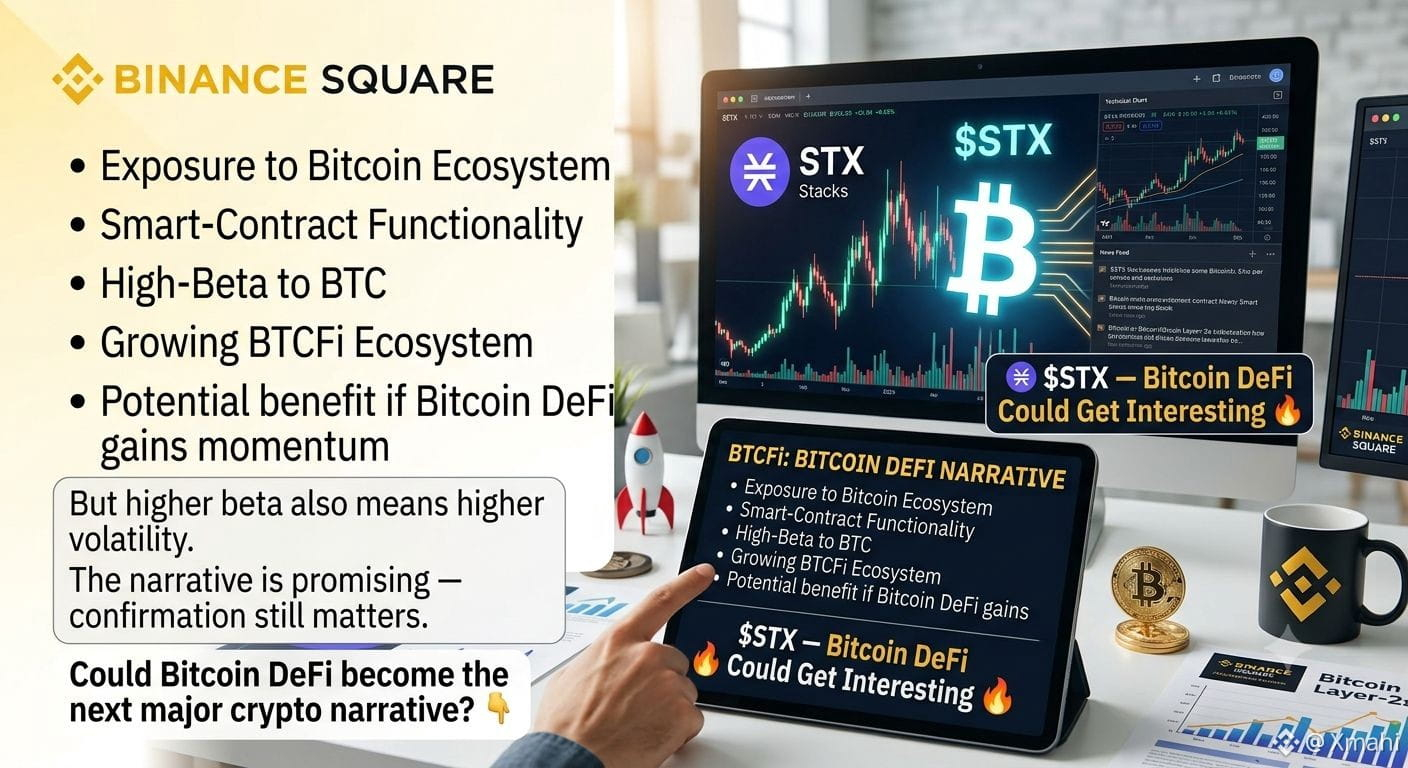
$STX — Bitcoin DeFi Could Get Interesting 🔥
$STX is one of the projects worth watching as attention rotates toward Bitcoin-based DeFi.
Recent market activity has highlighted STX as a higher-beta way to express the BTCFi narrative.
💡 Why it’s interesting: • Bitcoin ecosystem exposure
• Smart-contract functionality
• Growing BTCFi narrative
• Potential benefit if Bitcoin DeFi gains momentum
But higher beta also means higher volatility.
The narrative is promising — confirmation still matters.
Could Bitcoin DeFi become the next major crypto narrative? 👇
#STX #Stacks #BTCFi #Bitcoin
{spot}(STXUSDT)
{spot}(BTCUSDT)
$STX — Bitcoin DeFi Could Get Interesting 🔥
$STX is one of the projects worth watching as attention rotates toward Bitcoin-based DeFi.
Recent market activity has highlighted STX as a higher-beta way to express the BTCFi narrative.
💡 Why it’s interesting: • Bitcoin ecosystem exposure
• Smart-contract functionality
• Growing BTCFi narrative
• Potential benefit if Bitcoin DeFi gains momentum
But higher beta also means higher volatility.
The narrative is promising — confirmation still matters.
Could Bitcoin DeFi become the next major crypto narrative? 👇
#STX #Stacks #BTCFi #Bitcoin
$STX is one of the projects worth watching as attention rotates toward Bitcoin-based DeFi.
Recent market activity has highlighted STX as a higher-beta way to express the BTCFi narrative.
💡 Why it’s interesting: • Bitcoin ecosystem exposure
• Smart-contract functionality
• Growing BTCFi narrative
• Potential benefit if Bitcoin DeFi gains momentum
But higher beta also means higher volatility.
The narrative is promising — confirmation still matters.
Could Bitcoin DeFi become the next major crypto narrative? 👇
#STX #Stacks #BTCFi #Bitcoin
162


·
--
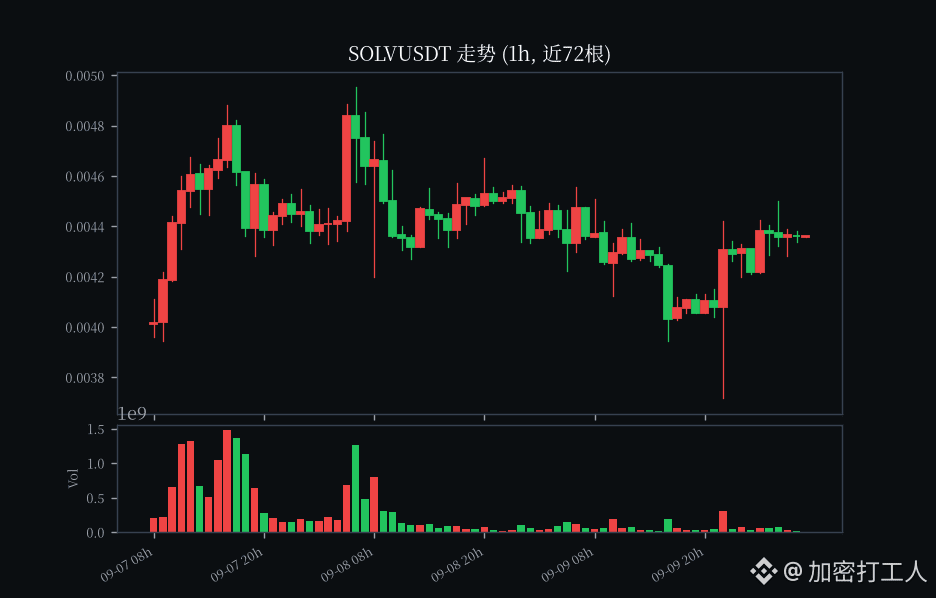
$SOLV 现价0.00436
SOLV is one of the BTCFi leaders on Binance Alpha, focusing on SolvBTC yield-bearing Bitcoin products. It turns idle BTC into a yield-generating, cross-chain liquid asset. In terms of narrative, it leverages the Babylon staking track plus Bitcoin finance.
Live market: Down 2.68% over the past 24h. Current price is 0.00436. Intraday range: 0.00381–0.0045. 24h trading volume is about 1.92 million USDT. Overall, it’s weak and consolidating.
Opportunities: Once the BTCFi sector rotates higher as BTC strengthens, small-cap Alphas like SOLV often show greater upside elasticity. Users holding Binance Alpha points can also stack an additional layer of expected “points farming” momentum.
Risk warning: Small market cap, thinner liquidity, and large daily volatility. Alpha token unlocks and sentiment shifts happen quickly—don’t get carried away with position sizing; implement strict stop-losses.
$SOLV $BTC #币安Alpha #BTCFi #山寨币
$SOLV 现价0.00436
SOLV is one of the BTCFi leaders on Binance Alpha, focusing on SolvBTC yield-bearing Bitcoin products. It turns idle BTC into a yield-generating, cross-chain liquid asset. In terms of narrative, it leverages the Babylon staking track plus Bitcoin finance.
Live market: Down 2.68% over the past 24h. Current price is 0.00436. Intraday range: 0.00381–0.0045. 24h trading volume is about 1.92 million USDT. Overall, it’s weak and consolidating.
Opportunities: Once the BTCFi sector rotates higher as BTC strengthens, small-cap Alphas like SOLV often show greater upside elasticity. Users holding Binance Alpha points can also stack an additional layer of expected “points farming” momentum.
Risk warning: Small market cap, thinner liquidity, and large daily volatility. Alpha token unlocks and sentiment shifts happen quickly—don’t get carried away with position sizing; implement strict stop-losses.
$SOLV $BTC #币安Alpha #BTCFi #山寨币
SOLV is one of the BTCFi leaders on Binance Alpha, focusing on SolvBTC yield-bearing Bitcoin products. It turns idle BTC into a yield-generating, cross-chain liquid asset. In terms of narrative, it leverages the Babylon staking track plus Bitcoin finance.
Live market: Down 2.68% over the past 24h. Current price is 0.00436. Intraday range: 0.00381–0.0045. 24h trading volume is about 1.92 million USDT. Overall, it’s weak and consolidating.
Opportunities: Once the BTCFi sector rotates higher as BTC strengthens, small-cap Alphas like SOLV often show greater upside elasticity. Users holding Binance Alpha points can also stack an additional layer of expected “points farming” momentum.
Risk warning: Small market cap, thinner liquidity, and large daily volatility. Alpha token unlocks and sentiment shifts happen quickly—don’t get carried away with position sizing; implement strict stop-losses.
$SOLV $BTC #币安Alpha #BTCFi #山寨币
1
365

One thing I find interesting about $CKB is that its story goes beyond being another Layer-1.
Nervos Network is building around a different idea: making blockchain state programmable while maintaining a strong connection with Bitcoin.
A few pieces stand out:
🔹 Cell Model — CKB’s unique approach to storing and managing on-chain state
🔹 PoW security — using a Bitcoin-inspired consensus model
🔹 CKB-VM — flexible smart-contract execution
🔹 RGB++ — connecting Bitcoin assets with CKB’s programmable environment
🔹 BTCFi — opening another potential use case for Bitcoin liquidity
For me, the bigger question isn't simply whether $CKB can move higher.
It’s whether CKB can turn its Bitcoin infrastructure and developer ecosystem into meaningful real-world usage.
That’s the thesis I’d be watching.
DYOR. Not financial advice.
#CKB #nervos #bitcoin #BTCFi #Web3
One thing I find interesting about $CKB is that its story goes beyond being another Layer-1.
Nervos Network is building around a different idea: making blockchain state programmable while maintaining a strong connection with Bitcoin.
A few pieces stand out:
🔹 Cell Model — CKB’s unique approach to storing and managing on-chain state
🔹 PoW security — using a Bitcoin-inspired consensus model
🔹 CKB-VM — flexible smart-contract execution
🔹 RGB++ — connecting Bitcoin assets with CKB’s programmable environment
🔹 BTCFi — opening another potential use case for Bitcoin liquidity
For me, the bigger question isn't simply whether $CKB can move higher.
It’s whether CKB can turn its Bitcoin infrastructure and developer ecosystem into meaningful real-world usage.
That’s the thesis I’d be watching.
DYOR. Not financial advice.
#CKB #nervos #bitcoin #BTCFi #Web3
Nervos Network is building around a different idea: making blockchain state programmable while maintaining a strong connection with Bitcoin.
A few pieces stand out:
🔹 Cell Model — CKB’s unique approach to storing and managing on-chain state
🔹 PoW security — using a Bitcoin-inspired consensus model
🔹 CKB-VM — flexible smart-contract execution
🔹 RGB++ — connecting Bitcoin assets with CKB’s programmable environment
🔹 BTCFi — opening another potential use case for Bitcoin liquidity
For me, the bigger question isn't simply whether $CKB can move higher.
It’s whether CKB can turn its Bitcoin infrastructure and developer ecosystem into meaningful real-world usage.
That’s the thesis I’d be watching.
DYOR. Not financial advice.
#CKB #nervos #bitcoin #BTCFi #Web3
189

·
--
Bullish
⚡ $SOLV breaking out on strong volume – Is BTCFI heating up?
Solv Protocol ($SOLV ) has caught heavy trader attention, rallying sharply and breaking out above major Bollinger Band resistance on high volume. As a key player in the Bitcoin-finance (But fine) space turning BTC into yield-bearing collateral, institutional interest is shifting fast.
Trading Setup: Price is testing crucial supply clusters. Watch for a clean continuation or a minor pullback to re-enter demand zones.
Risk Management: Always map out your stop-loss near major moving averages.
What’s your target for $SOLV this week?
{spot}(SOLVUSDT)
#SaudiHaltsSouthernEnergySitesAfterAttacks #BTCFi #altcoins #TradingSignals
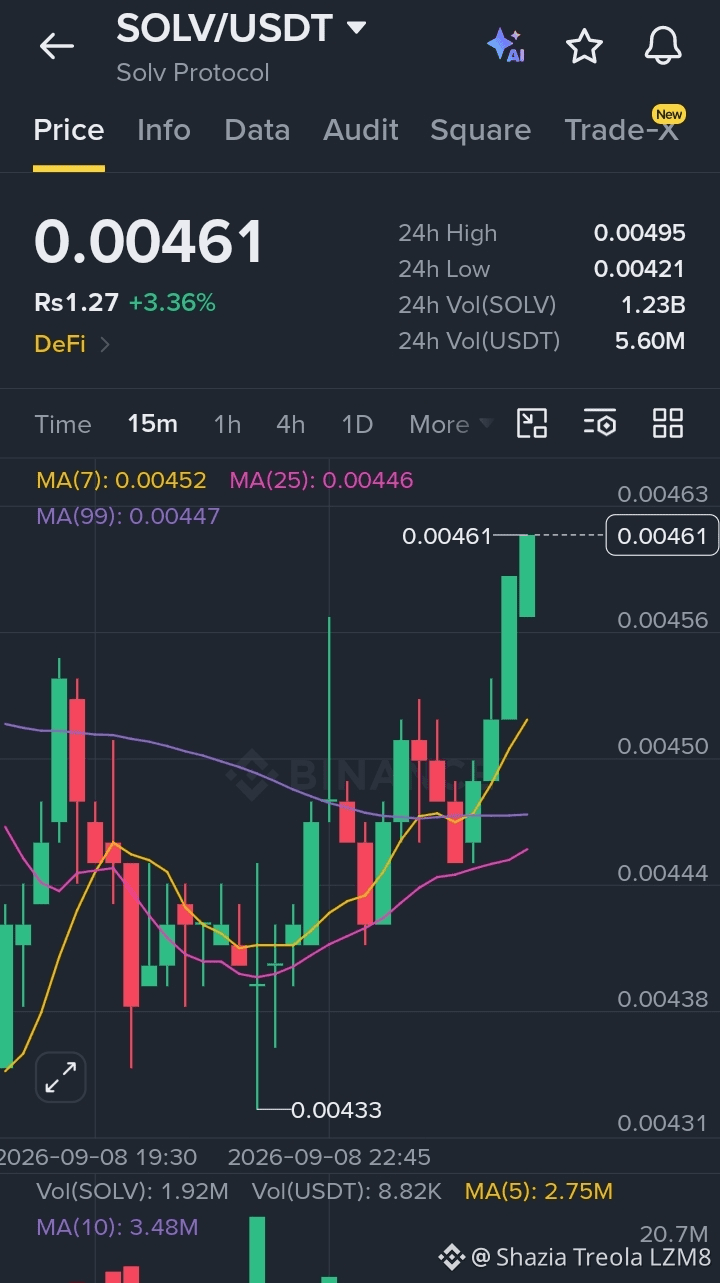
⚡ $SOLV breaking out on strong volume – Is BTCFI heating up?
Solv Protocol ($SOLV ) has caught heavy trader attention, rallying sharply and breaking out above major Bollinger Band resistance on high volume. As a key player in the Bitcoin-finance (But fine) space turning BTC into yield-bearing collateral, institutional interest is shifting fast.
Trading Setup: Price is testing crucial supply clusters. Watch for a clean continuation or a minor pullback to re-enter demand zones.
Risk Management: Always map out your stop-loss near major moving averages.
What’s your target for $SOLV this week?
#SaudiHaltsSouthernEnergySitesAfterAttacks #BTCFi #altcoins #TradingSignals
Solv Protocol ($SOLV ) has caught heavy trader attention, rallying sharply and breaking out above major Bollinger Band resistance on high volume. As a key player in the Bitcoin-finance (But fine) space turning BTC into yield-bearing collateral, institutional interest is shifting fast.
Trading Setup: Price is testing crucial supply clusters. Watch for a clean continuation or a minor pullback to re-enter demand zones.
Risk Management: Always map out your stop-loss near major moving averages.
What’s your target for $SOLV this week?
#SaudiHaltsSouthernEnergySitesAfterAttacks #BTCFi #altcoins #TradingSignals
135

·
--
Bullish
Everyone's eyes go to the biggest % on the board. We don't chase that. We ask: why is the market pricing this wrong?
Look at $SOLV +3% on the 7h board, sitting at $0.00376. Nothing loud about that number — until you check what's underneath it.
📊 THE DISPARITY
Market cap: ~$4-5M Protocol TVL: ~$600M+ Price: down ~94-98% from ATH
A protocol holding hundreds of millions in locked value, priced at a market cap smaller than most seed rounds. That gap doesn't mean "buy" — it means the market has stopped watching a protocol that's still functioning at scale.
🔍 WHY IT'S OVERLOOKED
Backed by Binance Labs, positioned as a BTCfi / Bitcoin-restaking layer — a narrative still early in attention cycles Token price collapse has pushed sentiment to near-zero, while underlying capital flows haven't matched that collapse Retail rotation hasn't reached BTCfi infrastructure plays yet — most eyes are still on memecoins and L1 beta
⚠️ WHAT THIS ISN'T
This is not a "10X incoming" call. A heavy TVL-to-mcap gap can signal undervaluation — or it can reflect structural risk already priced in (unlock schedules, revenue decline, protocol trust). The Q1-Q3 2026 data shows real revenue but a clear downward trend quarter over quarter. That's the part a hype post would skip. We don't.
🎯 THE QUESTION, NOT THE ANSWER
Is SOLV a broken token in a shrinking protocol — or an infrastructure layer the market hasn't repriced yet? We're not calling it. We're flagging the gap.
Compare that to GRT and JUP on the same board — both are established, both are already priced with mainstream attention baked in. The asymmetry isn't there anymore. That's the difference between a gainer and a genuinely overlooked setup.
👉 Verify our docs/contract before you form a view. Don't take our framing as the finish line — take it as the starting question.
NFA. DYOR.
$GRT $JUP
#ZeroHunter #BTCfi #AltcoinResearch #CryptoResearch #ZeroResearch
Comment your take — is the TVL gap signal or trap? Follow for tomorrow's zero hunt. 🐾
Everyone's eyes go to the biggest % on the board. We don't chase that. We ask: why is the market pricing this wrong?
Look at $SOLV +3% on the 7h board, sitting at $0.00376. Nothing loud about that number — until you check what's underneath it.
📊 THE DISPARITY
Market cap: ~$4-5M Protocol TVL: ~$600M+ Price: down ~94-98% from ATH
A protocol holding hundreds of millions in locked value, priced at a market cap smaller than most seed rounds. That gap doesn't mean "buy" — it means the market has stopped watching a protocol that's still functioning at scale.
🔍 WHY IT'S OVERLOOKED
Backed by Binance Labs, positioned as a BTCfi / Bitcoin-restaking layer — a narrative still early in attention cycles Token price collapse has pushed sentiment to near-zero, while underlying capital flows haven't matched that collapse Retail rotation hasn't reached BTCfi infrastructure plays yet — most eyes are still on memecoins and L1 beta
⚠️ WHAT THIS ISN'T
This is not a "10X incoming" call. A heavy TVL-to-mcap gap can signal undervaluation — or it can reflect structural risk already priced in (unlock schedules, revenue decline, protocol trust). The Q1-Q3 2026 data shows real revenue but a clear downward trend quarter over quarter. That's the part a hype post would skip. We don't.
🎯 THE QUESTION, NOT THE ANSWER
Is SOLV a broken token in a shrinking protocol — or an infrastructure layer the market hasn't repriced yet? We're not calling it. We're flagging the gap.
Compare that to GRT and JUP on the same board — both are established, both are already priced with mainstream attention baked in. The asymmetry isn't there anymore. That's the difference between a gainer and a genuinely overlooked setup.
👉 Verify our docs/contract before you form a view. Don't take our framing as the finish line — take it as the starting question.
NFA. DYOR.
$GRT $JUP
#ZeroHunter #BTCfi #AltcoinResearch #CryptoResearch #ZeroResearch
Comment your take — is the TVL gap signal or trap? Follow for tomorrow's zero hunt. 🐾
Look at $SOLV +3% on the 7h board, sitting at $0.00376. Nothing loud about that number — until you check what's underneath it.
📊 THE DISPARITY
Market cap: ~$4-5M Protocol TVL: ~$600M+ Price: down ~94-98% from ATH
A protocol holding hundreds of millions in locked value, priced at a market cap smaller than most seed rounds. That gap doesn't mean "buy" — it means the market has stopped watching a protocol that's still functioning at scale.
🔍 WHY IT'S OVERLOOKED
Backed by Binance Labs, positioned as a BTCfi / Bitcoin-restaking layer — a narrative still early in attention cycles Token price collapse has pushed sentiment to near-zero, while underlying capital flows haven't matched that collapse Retail rotation hasn't reached BTCfi infrastructure plays yet — most eyes are still on memecoins and L1 beta
⚠️ WHAT THIS ISN'T
This is not a "10X incoming" call. A heavy TVL-to-mcap gap can signal undervaluation — or it can reflect structural risk already priced in (unlock schedules, revenue decline, protocol trust). The Q1-Q3 2026 data shows real revenue but a clear downward trend quarter over quarter. That's the part a hype post would skip. We don't.
🎯 THE QUESTION, NOT THE ANSWER
Is SOLV a broken token in a shrinking protocol — or an infrastructure layer the market hasn't repriced yet? We're not calling it. We're flagging the gap.
Compare that to GRT and JUP on the same board — both are established, both are already priced with mainstream attention baked in. The asymmetry isn't there anymore. That's the difference between a gainer and a genuinely overlooked setup.
👉 Verify our docs/contract before you form a view. Don't take our framing as the finish line — take it as the starting question.
NFA. DYOR.
$GRT $JUP
#ZeroHunter #BTCfi #AltcoinResearch #CryptoResearch #ZeroResearch
Comment your take — is the TVL gap signal or trap? Follow for tomorrow's zero hunt. 🐾
2
135

·
--
Hemi reports $0.0160, 24 hours +12.02%, 7 days +78.91%.
It packs a full Bitcoin node into the EVM—contracts can directly read UTXOs without relying on external oracles.
Wow, BTCFi has talked about this for a year, and there really aren’t that many projects that solve data reads at the underlying layer.
In the 24-hour range of 0.0136 to 0.0217, it’s Binance HODLer Airdrop Round 43, which had distributed 100 million tokens at the time.
#HEMI $HEMI #BTCFi #Layer2
Contract trading pair: HEMIUSDT: https://www.binance.com/en/futures/HEMIUSDT
Hemi reports $0.0160, 24 hours +12.02%, 7 days +78.91%.
It packs a full Bitcoin node into the EVM—contracts can directly read UTXOs without relying on external oracles.
Wow, BTCFi has talked about this for a year, and there really aren’t that many projects that solve data reads at the underlying layer.
In the 24-hour range of 0.0136 to 0.0217, it’s Binance HODLer Airdrop Round 43, which had distributed 100 million tokens at the time.
#HEMI $HEMI #BTCFi #Layer2
Contract trading pair: HEMIUSDT: https://www.binance.com/en/futures/HEMIUSDT
It packs a full Bitcoin node into the EVM—contracts can directly read UTXOs without relying on external oracles.
Wow, BTCFi has talked about this for a year, and there really aren’t that many projects that solve data reads at the underlying layer.
In the 24-hour range of 0.0136 to 0.0217, it’s Binance HODLer Airdrop Round 43, which had distributed 100 million tokens at the time.
#HEMI $HEMI #BTCFi #Layer2
Contract trading pair: HEMIUSDT: https://www.binance.com/en/futures/HEMIUSDT
198

·
--
Bullish
🔥 $HEMI NEWS — SEPTEMBER 1, 2026
🚀 HEMI is showing strong momentum!
$HEMI is up around 14.8% over the past 7 days, with 24H trading volume above $40M.
🧠 Why watch HEMI?
Hemi connects Bitcoin security + Ethereum programmability, targeting the growing Bitcoin DeFi/BTCFi narrative.
⚠️ Trader Alert: HEMI has also seen significant token unlock activity, so supply pressure and volatility remain important risks.
🔥 HEMI = BTCFi narrative + rising volume = COIN TO WATCH
#BTCFi #Bitcoin #CryptoNews #Altcoins #CryptoTrading
🔥 $HEMI NEWS — SEPTEMBER 1, 2026
🚀 HEMI is showing strong momentum!
$HEMI is up around 14.8% over the past 7 days, with 24H trading volume above $40M.
🧠 Why watch HEMI?
Hemi connects Bitcoin security + Ethereum programmability, targeting the growing Bitcoin DeFi/BTCFi narrative.
⚠️ Trader Alert: HEMI has also seen significant token unlock activity, so supply pressure and volatility remain important risks.
🔥 HEMI = BTCFi narrative + rising volume = COIN TO WATCH
#BTCFi #Bitcoin #CryptoNews #Altcoins #CryptoTrading
🚀 HEMI is showing strong momentum!
$HEMI is up around 14.8% over the past 7 days, with 24H trading volume above $40M.
🧠 Why watch HEMI?
Hemi connects Bitcoin security + Ethereum programmability, targeting the growing Bitcoin DeFi/BTCFi narrative.
⚠️ Trader Alert: HEMI has also seen significant token unlock activity, so supply pressure and volatility remain important risks.
🔥 HEMI = BTCFi narrative + rising volume = COIN TO WATCH
#BTCFi #Bitcoin #CryptoNews #Altcoins #CryptoTrading
1
144

·
--
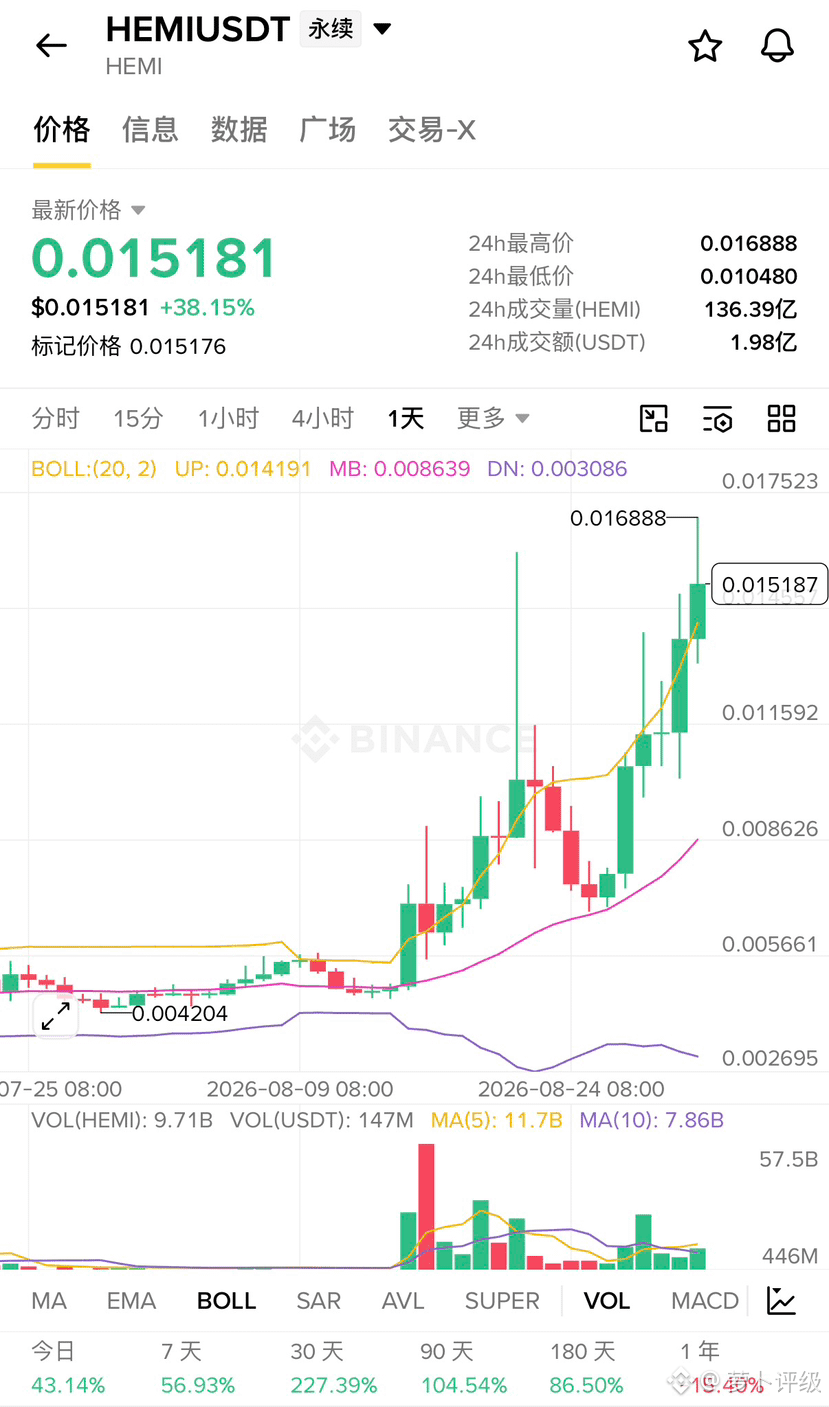
$HEMI 24h +38.15% surged into the gainers list, but most people didn’t notice one detail: some users have calculated that the contract OI is already more than 3 times the market cap—how long can this bulldozer keep pushing?
Hemi is a BTCFi network focused on “Bitcoin + Ethereum interoperability.” Its core hVM lets contracts directly read Bitcoin state without wrapped assets and traditional bridges. Recently, the official team has been busy: on one side, they’re testing a ZK proof marketplace and turning proof generation into an open market; on the other, they’ve been steadily publishing BTCFi talking points, emphasizing that institutional Bitcoin sitting in a vault is a waste of productive capacity. Meanwhile, in the community, some are already calling it a “scam coin,” and bullish vs. bearish sentiment is sharply divided—bulls think the pullback is an opportunity, while bears are watching the 0.016 resistance level. But what may matter most is the unlock schedule: the current month’s unlock is about 1.2%, but starting September 29 it will be close to triple that, which could create selling pressure.
Whether the hype can last until the unlock before September 29 is worth keeping an eye on.
#BTCFi #DeFi #HEMI
{future}(HEMIUSDT)
$HEMI 24h +38.15% surged into the gainers list, but most people didn’t notice one detail: some users have calculated that the contract OI is already more than 3 times the market cap—how long can this bulldozer keep pushing?
Hemi is a BTCFi network focused on “Bitcoin + Ethereum interoperability.” Its core hVM lets contracts directly read Bitcoin state without wrapped assets and traditional bridges. Recently, the official team has been busy: on one side, they’re testing a ZK proof marketplace and turning proof generation into an open market; on the other, they’ve been steadily publishing BTCFi talking points, emphasizing that institutional Bitcoin sitting in a vault is a waste of productive capacity. Meanwhile, in the community, some are already calling it a “scam coin,” and bullish vs. bearish sentiment is sharply divided—bulls think the pullback is an opportunity, while bears are watching the 0.016 resistance level. But what may matter most is the unlock schedule: the current month’s unlock is about 1.2%, but starting September 29 it will be close to triple that, which could create selling pressure.
Whether the hype can last until the unlock before September 29 is worth keeping an eye on.
#BTCFi #DeFi #HEMI
Hemi is a BTCFi network focused on “Bitcoin + Ethereum interoperability.” Its core hVM lets contracts directly read Bitcoin state without wrapped assets and traditional bridges. Recently, the official team has been busy: on one side, they’re testing a ZK proof marketplace and turning proof generation into an open market; on the other, they’ve been steadily publishing BTCFi talking points, emphasizing that institutional Bitcoin sitting in a vault is a waste of productive capacity. Meanwhile, in the community, some are already calling it a “scam coin,” and bullish vs. bearish sentiment is sharply divided—bulls think the pullback is an opportunity, while bears are watching the 0.016 resistance level. But what may matter most is the unlock schedule: the current month’s unlock is about 1.2%, but starting September 29 it will be close to triple that, which could create selling pressure.
Whether the hype can last until the unlock before September 29 is worth keeping an eye on.
#BTCFi #DeFi #HEMI
75

·
--
$SOLV/USDT LONG 🔵
$SOLV is a low-cap BTCFi play 📊 focused on Bitcoin staking and yield through SolvBTC, with around $12M market cap, ~$25M FDV and ~$4.7M daily volume ⚡
$SOLV recently bounced from its August 14 all-time low near $0.00215 and is now reclaiming the $0.0026 area, while BTCFi remains a strong narrative as Bitcoin yield infrastructure continues to expand 🧭
Buyzone: 0.00255–0.00265
Stoploss: 0.00230
Target 1: 0.00285
Target 2: 0.00310
Target 3: 0.00345
Small size, fixed invalidation, no averaging down 🛡️
Not financial advice and not a recommendation to buy or sell. Crypto is highly risky, DYOR and you are solely responsible. No coin promotion.
#SOLV #BTCFi #ALTCOİNS #Write2Earn
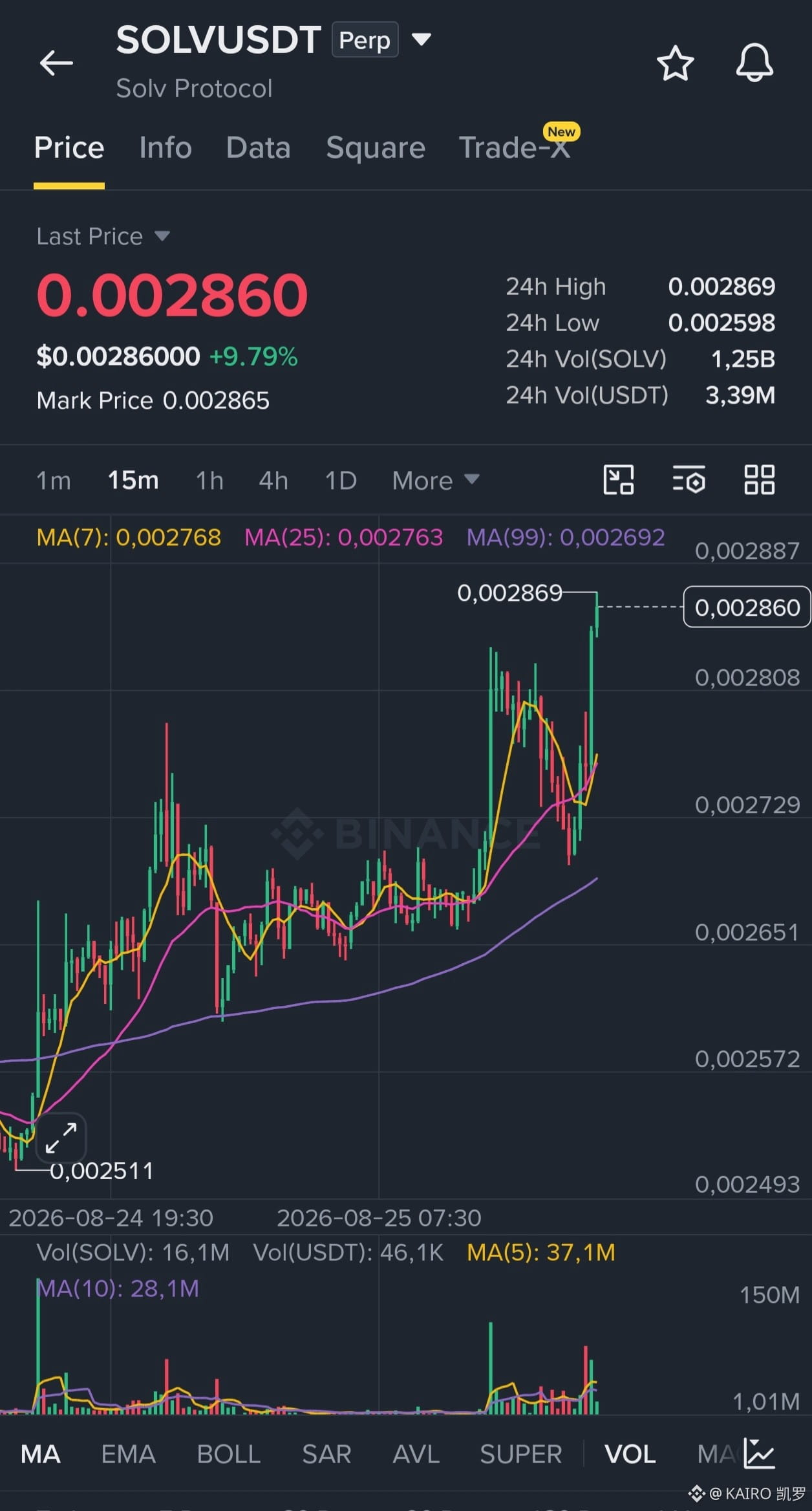
$SOLV/USDT LONG 🔵
$SOLV is a low-cap BTCFi play 📊 focused on Bitcoin staking and yield through SolvBTC, with around $12M market cap, ~$25M FDV and ~$4.7M daily volume ⚡
$SOLV recently bounced from its August 14 all-time low near $0.00215 and is now reclaiming the $0.0026 area, while BTCFi remains a strong narrative as Bitcoin yield infrastructure continues to expand 🧭
Buyzone: 0.00255–0.00265
Stoploss: 0.00230
Target 1: 0.00285
Target 2: 0.00310
Target 3: 0.00345
Small size, fixed invalidation, no averaging down 🛡️
Not financial advice and not a recommendation to buy or sell. Crypto is highly risky, DYOR and you are solely responsible. No coin promotion.
#SOLV #BTCFi #ALTCOİNS #Write2Earn
$SOLV is a low-cap BTCFi play 📊 focused on Bitcoin staking and yield through SolvBTC, with around $12M market cap, ~$25M FDV and ~$4.7M daily volume ⚡
$SOLV recently bounced from its August 14 all-time low near $0.00215 and is now reclaiming the $0.0026 area, while BTCFi remains a strong narrative as Bitcoin yield infrastructure continues to expand 🧭
Buyzone: 0.00255–0.00265
Stoploss: 0.00230
Target 1: 0.00285
Target 2: 0.00310
Target 3: 0.00345
Small size, fixed invalidation, no averaging down 🛡️
Not financial advice and not a recommendation to buy or sell. Crypto is highly risky, DYOR and you are solely responsible. No coin promotion.
#SOLV #BTCFi #ALTCOİNS #Write2Earn
2
120
$SOLV The latest market data is now updated. The current quote is $0.00265, with a 24-hour trading volume of $5.53 million and a market cap of approximately $12.32 million.
Solv Protocol, a well-known protocol in the BTCFi ecosystem, has long focused on providing users with convenient liquid staking and BTC-native financial products. At present, there is no concentrated discussion in the market about this project in the near term. You can continue to monitor the project’s ecosystem progress and price fluctuations going forward.
#BTCFi #Binance
$SOLV The latest market data is now updated. The current quote is $0.00265, with a 24-hour trading volume of $5.53 million and a market cap of approximately $12.32 million.
Solv Protocol, a well-known protocol in the BTCFi ecosystem, has long focused on providing users with convenient liquid staking and BTC-native financial products. At present, there is no concentrated discussion in the market about this project in the near term. You can continue to monitor the project’s ecosystem progress and price fluctuations going forward.
#BTCFi #Binance
Solv Protocol, a well-known protocol in the BTCFi ecosystem, has long focused on providing users with convenient liquid staking and BTC-native financial products. At present, there is no concentrated discussion in the market about this project in the near term. You can continue to monitor the project’s ecosystem progress and price fluctuations going forward.
#BTCFi #Binance
62

·
--
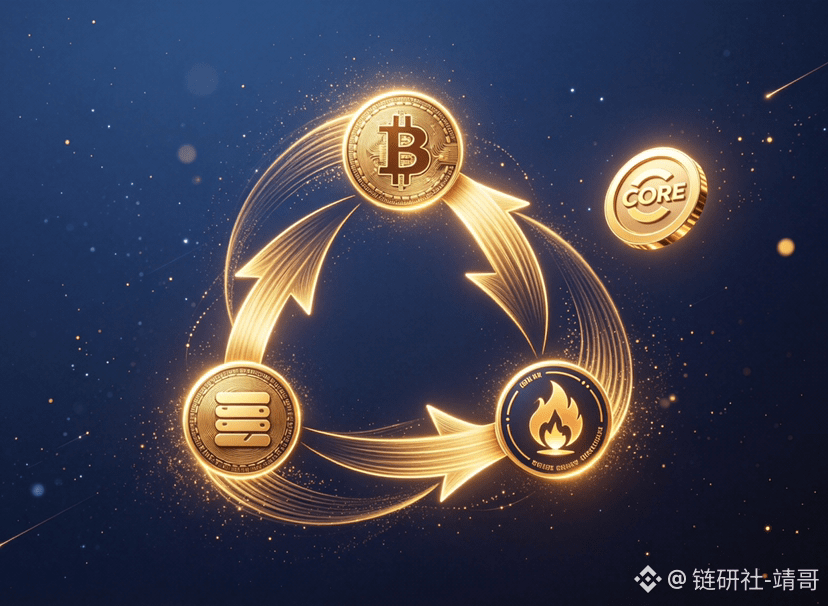
CORE’s bull market isn’t driven by shouting orders—it’s driven by a flywheel🔥
BTCFi has become the core narrative for the next bull cycle, and CORE is under high expectations. But did this logic really change this time?—
Previously, data was boosted through inflationary subsidies. In 2026, CORE directly switches to the “revenue era”: all ecosystem fees are collected into the treasury, and the money is used to continuously buy back and burn via the secondary market.
Translate it into plain human language: BTC comes in to be staked → the ecosystem earns fees → buybacks smash sell pressure with chips → fewer and fewer coins. This is the value flywheel.
SatPay—Bitcoin banking, LST liquid staking, and AMP asset management. These three products are the cash-flow engines. Europe-listed institution BTCS has already taken positions, and its accumulation plan is on the way.
How high can it go? Three scenarios:
😴 Conservative: slow to launch, only catching a bit of the sector’s gains
😐 Neutral: SatPay runs smoothly, the flywheel starts spinning, and it tracks the second tier of the track
🚀 Optimistic: BTC capital pours in + buybacks keep going + institutions add positions, and the ceiling gets lifted
But don’t pretend the risks aren’t there: competitors like STX have an early advantage, products may be delayed, the market and regulation can change at any time, and large unlocks can dump and crash prices. The lesson from falling off historical highs is still fresh.
So don’t just chase a target price and go all-in—watch three data points: SatPay public test, real on-chain transaction fees, and the institutions’ position-building progress.
When the narrative becomes cash flow and the flywheel truly starts turning, the bull market isn’t just painting a pie.
#BTCFi #core #比特币 #加密货币 #BTC触及80000美元 $BTC $COR.US $LST.ETF
{etf_us}(LST.ETF)
{stock_us}(COR.US)
{spot}(BTCUSDT)
CORE’s bull market isn’t driven by shouting orders—it’s driven by a flywheel🔥
BTCFi has become the core narrative for the next bull cycle, and CORE is under high expectations. But did this logic really change this time?—
Previously, data was boosted through inflationary subsidies. In 2026, CORE directly switches to the “revenue era”: all ecosystem fees are collected into the treasury, and the money is used to continuously buy back and burn via the secondary market.
Translate it into plain human language: BTC comes in to be staked → the ecosystem earns fees → buybacks smash sell pressure with chips → fewer and fewer coins. This is the value flywheel.
SatPay—Bitcoin banking, LST liquid staking, and AMP asset management. These three products are the cash-flow engines. Europe-listed institution BTCS has already taken positions, and its accumulation plan is on the way.
How high can it go? Three scenarios:
😴 Conservative: slow to launch, only catching a bit of the sector’s gains
😐 Neutral: SatPay runs smoothly, the flywheel starts spinning, and it tracks the second tier of the track
🚀 Optimistic: BTC capital pours in + buybacks keep going + institutions add positions, and the ceiling gets lifted
But don’t pretend the risks aren’t there: competitors like STX have an early advantage, products may be delayed, the market and regulation can change at any time, and large unlocks can dump and crash prices. The lesson from falling off historical highs is still fresh.
So don’t just chase a target price and go all-in—watch three data points: SatPay public test, real on-chain transaction fees, and the institutions’ position-building progress.
When the narrative becomes cash flow and the flywheel truly starts turning, the bull market isn’t just painting a pie.
#BTCFi #core #比特币 #加密货币 #BTC触及80000美元 $BTC $COR.US $LST.ETF
BTCFi has become the core narrative for the next bull cycle, and CORE is under high expectations. But did this logic really change this time?—
Previously, data was boosted through inflationary subsidies. In 2026, CORE directly switches to the “revenue era”: all ecosystem fees are collected into the treasury, and the money is used to continuously buy back and burn via the secondary market.
Translate it into plain human language: BTC comes in to be staked → the ecosystem earns fees → buybacks smash sell pressure with chips → fewer and fewer coins. This is the value flywheel.
SatPay—Bitcoin banking, LST liquid staking, and AMP asset management. These three products are the cash-flow engines. Europe-listed institution BTCS has already taken positions, and its accumulation plan is on the way.
How high can it go? Three scenarios:
😴 Conservative: slow to launch, only catching a bit of the sector’s gains
😐 Neutral: SatPay runs smoothly, the flywheel starts spinning, and it tracks the second tier of the track
🚀 Optimistic: BTC capital pours in + buybacks keep going + institutions add positions, and the ceiling gets lifted
But don’t pretend the risks aren’t there: competitors like STX have an early advantage, products may be delayed, the market and regulation can change at any time, and large unlocks can dump and crash prices. The lesson from falling off historical highs is still fresh.
So don’t just chase a target price and go all-in—watch three data points: SatPay public test, real on-chain transaction fees, and the institutions’ position-building progress.
When the narrative becomes cash flow and the flywheel truly starts turning, the bull market isn’t just painting a pie.
#BTCFi #core #比特币 #加密货币 #BTC触及80000美元 $BTC $COR.US $LST.ETF
BTC+5.61%
CORUS+1.73%
362

·
--
Verified
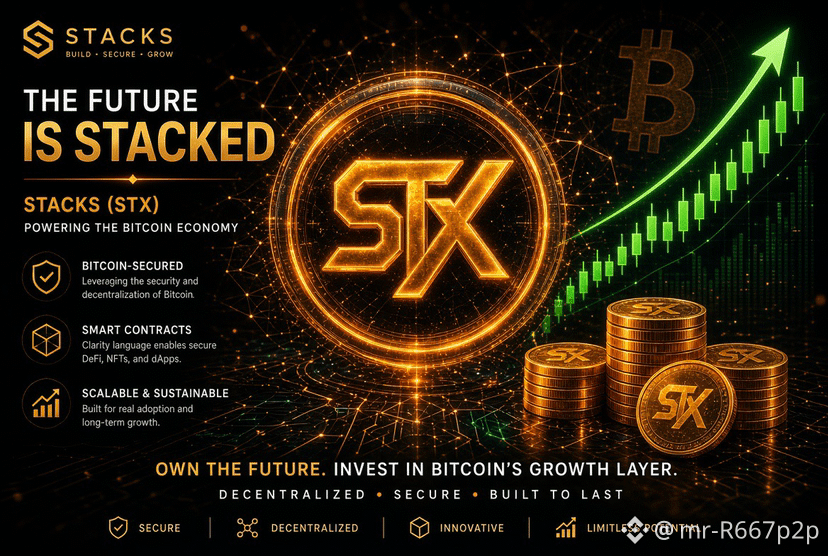
While the market sleeps, $STX is waking up.
Stacks isn’t just “another L2”.
It’s the only project that actually makes Bitcoin productive:
• Smart contracts on top of BTC
• Staking Bitcoin without losing control
• Real BTC yield (not wrappers)
In recent days: strong growth + a surge in volume.
Institutions are already testing Bitcoin Staking.
The question isn’t “will there be growth”.
The question is — “will you manage to get in before everyone wakes up”.
Who’s in $STX ? Write in the comments 👇
{future}(STXUSDT)
#STX/USDT #stx #BTCFi
While the market sleeps, $STX is waking up.
Stacks isn’t just “another L2”.
It’s the only project that actually makes Bitcoin productive:
• Smart contracts on top of BTC
• Staking Bitcoin without losing control
• Real BTC yield (not wrappers)
In recent days: strong growth + a surge in volume.
Institutions are already testing Bitcoin Staking.
The question isn’t “will there be growth”.
The question is — “will you manage to get in before everyone wakes up”.
Who’s in $STX ? Write in the comments 👇
#STX/USDT #stx #BTCFi
Stacks isn’t just “another L2”.
It’s the only project that actually makes Bitcoin productive:
• Smart contracts on top of BTC
• Staking Bitcoin without losing control
• Real BTC yield (not wrappers)
In recent days: strong growth + a surge in volume.
Institutions are already testing Bitcoin Staking.
The question isn’t “will there be growth”.
The question is — “will you manage to get in before everyone wakes up”.
Who’s in $STX ? Write in the comments 👇
#STX/USDT #stx #BTCFi
1
1
251

Verified
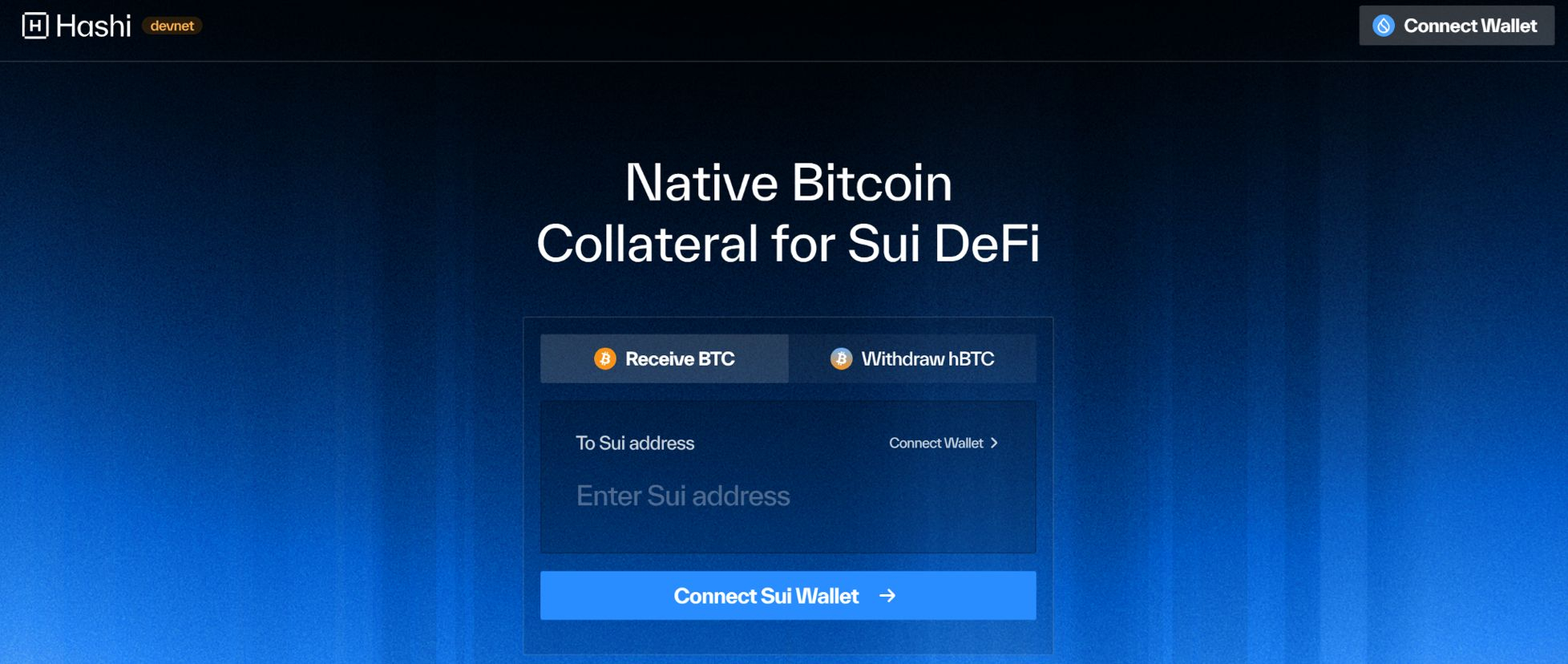
🔥 SUI IS BRINGING NATIVE BITCOIN TO DEFI.
The Hashi protocol allows native BTC to remain on the Bitcoin network, while also becoming a programmable collateral asset on Sui—moving very close to the mainnet.
According to Sui, the Hashi testnet program has already surpassed 2 million deposits.
That’s a pretty wild number. 👀
Bitcoin stays on Bitcoin.
But now it can work on Sui.
I find Hashi noteworthy because it’s trying to turn the enormous amount of BTC sitting idle into collateral that can be used in lending, credit, and DeFi, instead of relying entirely on traditional wrapped BTC.
With the upcoming mainnet, is BTCFi on Sui about to go big?
Fellow friends, how much BTC do you think Hashi could pull into DeFi once the official mainnet goes live?
$SUI #HASHI #bitcoin #BTCFi #defi
🔥 SUI IS BRINGING NATIVE BITCOIN TO DEFI.
The Hashi protocol allows native BTC to remain on the Bitcoin network, while also becoming a programmable collateral asset on Sui—moving very close to the mainnet.
According to Sui, the Hashi testnet program has already surpassed 2 million deposits.
That’s a pretty wild number. 👀
Bitcoin stays on Bitcoin.
But now it can work on Sui.
I find Hashi noteworthy because it’s trying to turn the enormous amount of BTC sitting idle into collateral that can be used in lending, credit, and DeFi, instead of relying entirely on traditional wrapped BTC.
With the upcoming mainnet, is BTCFi on Sui about to go big?
Fellow friends, how much BTC do you think Hashi could pull into DeFi once the official mainnet goes live?
$SUI #HASHI #bitcoin #BTCFi #defi
The Hashi protocol allows native BTC to remain on the Bitcoin network, while also becoming a programmable collateral asset on Sui—moving very close to the mainnet.
According to Sui, the Hashi testnet program has already surpassed 2 million deposits.
That’s a pretty wild number. 👀
Bitcoin stays on Bitcoin.
But now it can work on Sui.
I find Hashi noteworthy because it’s trying to turn the enormous amount of BTC sitting idle into collateral that can be used in lending, credit, and DeFi, instead of relying entirely on traditional wrapped BTC.
With the upcoming mainnet, is BTCFi on Sui about to go big?
Fellow friends, how much BTC do you think Hashi could pull into DeFi once the official mainnet goes live?
$SUI #HASHI #bitcoin #BTCFi #defi
697

·
--
#bedrock $BR
📢 More than just re-staking: Bedrock 2.0 is reshaping liquidity standards in BTCFi
Real DeFi users focus on one thing: capital efficiency.
With the official launch of Bedrock 2.0, we see @Bedrock completely changing the old logic that "staking equals freezing." With the liquidity derivatives models for uniBTC and brBTC, your Bitcoin balance is no longer a dormant asset; it's now a "high-yield factor" moving across multiple DeFi chains.
Notably, the new AI analyst BRclaw makes it easier for regular folks to participate in institutional strategies. Of course, the essence of all this is tied to the $BR token.
In the 2.0 architecture, $BR serves as the "franchise key": staking **veBR** not only grants governance rights but is also the only way to access **higher yields** and **priority access to the treasury**. As liquidity flow increases, expectations are rising for a depreciation of $BR.
This is the secret to the appeal of re-staking 2.0 - where liquidity and high yields are no longer contradictory.
#Bedrock
#BTCFi
#LSDFi
#bedrock $BR
📢 More than just re-staking: Bedrock 2.0 is reshaping liquidity standards in BTCFi
Real DeFi users focus on one thing: capital efficiency.
With the official launch of Bedrock 2.0, we see @Bedrock completely changing the old logic that "staking equals freezing." With the liquidity derivatives models for uniBTC and brBTC, your Bitcoin balance is no longer a dormant asset; it's now a "high-yield factor" moving across multiple DeFi chains.
Notably, the new AI analyst BRclaw makes it easier for regular folks to participate in institutional strategies. Of course, the essence of all this is tied to the $BR token.
In the 2.0 architecture, $BR serves as the "franchise key": staking **veBR** not only grants governance rights but is also the only way to access **higher yields** and **priority access to the treasury**. As liquidity flow increases, expectations are rising for a depreciation of $BR .
This is the secret to the appeal of re-staking 2.0 - where liquidity and high yields are no longer contradictory.
#Bedrock
#BTCFi
#LSDFi
📢 More than just re-staking: Bedrock 2.0 is reshaping liquidity standards in BTCFi
Real DeFi users focus on one thing: capital efficiency.
With the official launch of Bedrock 2.0, we see @Bedrock completely changing the old logic that "staking equals freezing." With the liquidity derivatives models for uniBTC and brBTC, your Bitcoin balance is no longer a dormant asset; it's now a "high-yield factor" moving across multiple DeFi chains.
Notably, the new AI analyst BRclaw makes it easier for regular folks to participate in institutional strategies. Of course, the essence of all this is tied to the $BR token.
In the 2.0 architecture, $BR serves as the "franchise key": staking **veBR** not only grants governance rights but is also the only way to access **higher yields** and **priority access to the treasury**. As liquidity flow increases, expectations are rising for a depreciation of $BR .
This is the secret to the appeal of re-staking 2.0 - where liquidity and high yields are no longer contradictory.
#Bedrock
#BTCFi
#LSDFi
70

BR: Bedrock = The most asymmetric BTCFi bet of 2026
Everyone's focused on ETH L2s. No one sees that BTC just woke up. Bedrock is ahead.
The killer number: 95% of the $1.3T in BTC is sleeping. 0% yield.
Bedrock + Babylon = You stake your BTC, you earn yield + AVS points. The gold that pays.
Why BR$ is going to pump:
- Narrative: BTCFi is the new narrative. Bedrock = the number 1 infrastructure on it.
- TVL: Explosive growth since BTC integration. Money follows innovation.
- Tokenomics: $BR captures the real fees of the protocol. Not empty hype. More TVL = more buy pressure.
Comparison with LRT ETH: EigenLayer = $15B+ FDV. Bedrock on BTC = 10x larger market, FDV still small. You do the math.
Catalysts Q2-Q3 2026:
Tier 1 CEX listing
Complete BTC mainnet
AVS partnerships dropping
Risk: If BTCFi flops, $BR corrects. But if it takes off... You know the drill.
Conclusion: I'm not trading $BR. I'm accumulating the highway before the cars arrive.
Not financial advice. DYOR. But check http://Bedrock.io
#BTCFi #restaking #bedrock $BR
BR: Bedrock = The most asymmetric BTCFi bet of 2026
Everyone's focused on ETH L2s. No one sees that BTC just woke up. Bedrock is ahead.
The killer number: 95% of the $1.3T in BTC is sleeping. 0% yield.
Bedrock + Babylon = You stake your BTC, you earn yield + AVS points. The gold that pays.
Why BR$ is going to pump:
- Narrative: BTCFi is the new narrative. Bedrock = the number 1 infrastructure on it.
- TVL: Explosive growth since BTC integration. Money follows innovation.
- Tokenomics: $BR captures the real fees of the protocol. Not empty hype. More TVL = more buy pressure.
Comparison with LRT ETH: EigenLayer = $15B+ FDV. Bedrock on BTC = 10x larger market, FDV still small. You do the math.
Catalysts Q2-Q3 2026:
Tier 1 CEX listing
Complete BTC mainnet
AVS partnerships dropping
Risk: If BTCFi flops, $BR corrects. But if it takes off... You know the drill.
Conclusion: I'm not trading $BR . I'm accumulating the highway before the cars arrive.
Not financial advice. DYOR. But check http://Bedrock.io
#BTCFi #restaking #bedrock $BR
Everyone's focused on ETH L2s. No one sees that BTC just woke up. Bedrock is ahead.
The killer number: 95% of the $1.3T in BTC is sleeping. 0% yield.
Bedrock + Babylon = You stake your BTC, you earn yield + AVS points. The gold that pays.
Why BR$ is going to pump:
- Narrative: BTCFi is the new narrative. Bedrock = the number 1 infrastructure on it.
- TVL: Explosive growth since BTC integration. Money follows innovation.
- Tokenomics: $BR captures the real fees of the protocol. Not empty hype. More TVL = more buy pressure.
Comparison with LRT ETH: EigenLayer = $15B+ FDV. Bedrock on BTC = 10x larger market, FDV still small. You do the math.
Catalysts Q2-Q3 2026:
Tier 1 CEX listing
Complete BTC mainnet
AVS partnerships dropping
Risk: If BTCFi flops, $BR corrects. But if it takes off... You know the drill.
Conclusion: I'm not trading $BR . I'm accumulating the highway before the cars arrive.
Not financial advice. DYOR. But check http://Bedrock.io
#BTCFi #restaking #bedrock $BR
2
110
Log in to explore more content
Join global crypto users on Binance Square
⚡️ Get latest and useful information about crypto.
💬 Trusted by the world’s largest crypto exchange.
👍 Discover real insights from verified creators.
Email / Phone number
Trending Topics
1
#NEARRisesNearly80%InAWeek
1,145 views
167 Discussing
2
#MultiversXPlansHardForkRecovery
2,017 views
213 Discussing
3
#CircleLaunchesInstitutionalBTCBackedBorrowing
4,432 views
354 Discussing
4
#BitcoinHits$85K
7,399 views
207 Discussing
5
#ZetaChainVotesToMigrateZETAToSolana
3,988 views
234 Discussing
6
#ECBStartsBlockchainEuroSettlement
13,798 views
505 Discussing
7
#SouthAfricaProposesCryptoExchangeControls
24,898 views
702 Discussing
8
#SolanaCutsTargetSlotTimeTo250ms
28,003 views
617 Discussing
9
#EthereumSurpasses$2700
20,602 views
218 Discussing
10
#CanaryFilesSecondAmendmentForStakedSEIETF
45,129 views
960 Discussing