
Easytradingpw
235 Posts

Easytradingpw
Report
Block User
I build XTester Studio and CopyTrader. Sharing strategy research, product development and lessons from building tools for crypto traders.

BNB Holder
Occasional Trader
8.7 Years
2 Following
37 Followers
37 Liked
Posts
All
Videos
PINNED
I build software for crypto traders: XTester Studio for strategy research and backtesting, and CopyTrader for traders who want to offer trade copying to their own audience.
Here I'll share what I'm working on, the experiments behind it and the product decisions along the way. That includes how to test a strategy idea, what a backtest can tell you, and the practical work of building a copy-trading service.
If you research strategies or run a trading community, I'd like to hear what takes the most time in your workflow.
My projects: https://easytrading.pw
#Backtesting #CopyTrading
4
3
465
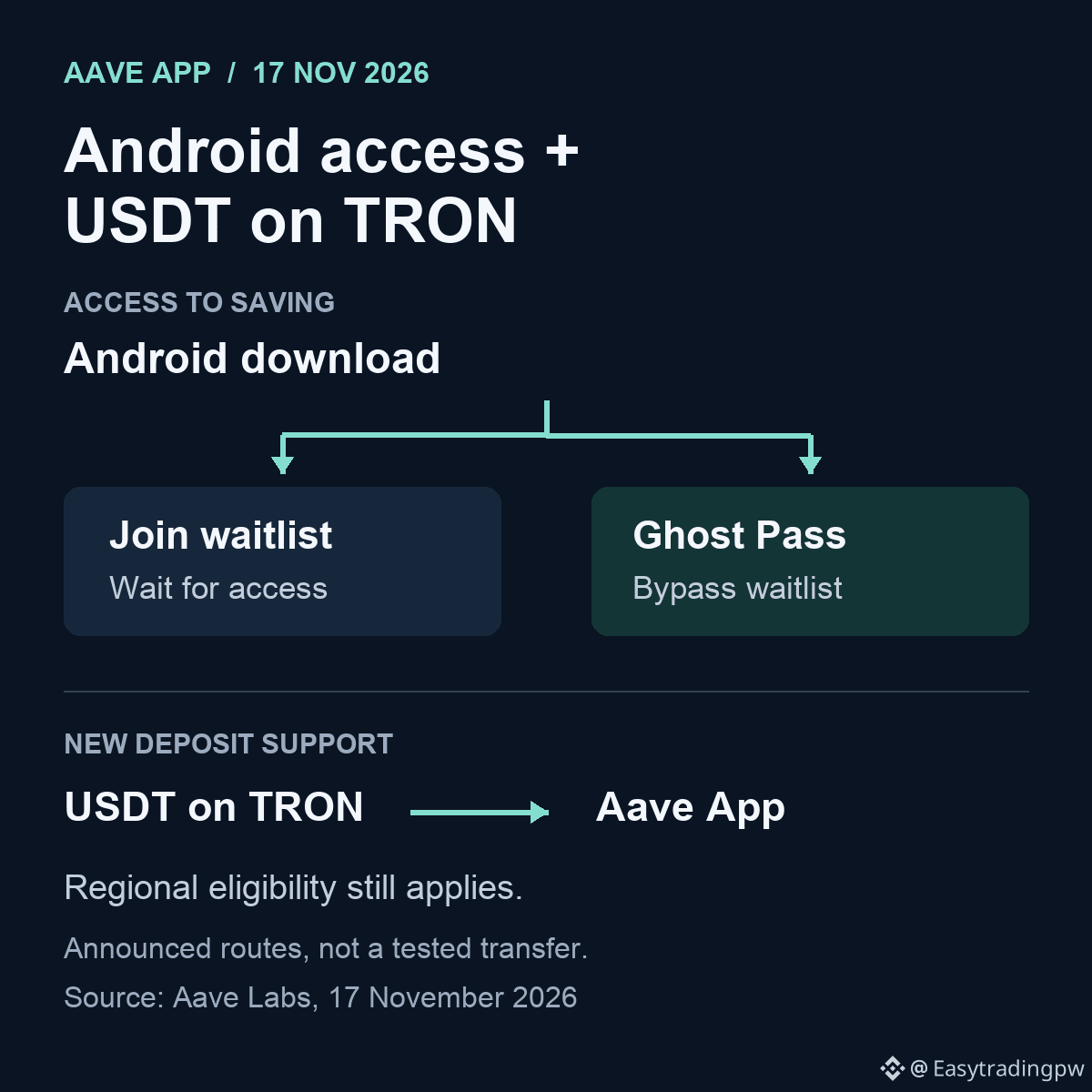
Aave App now accepts USDT deposits on TRON and has opened early access on Android, Aave Labs announced on November 17.
Android users can download the app from Google Play and join the waitlist. A Ghost Pass code shared by an early user lets them skip the waitlist and start saving.
The app has no lock-up period, and users can request a withdrawal at any time. Availability varies by region. Aave is not a bank, funds are not government-insured, and savings rates are variable and not guaranteed.
Source: Aave Labs, November 17, 2026.
https://aave.com/blog/aave-app-android
#Aave #USDT
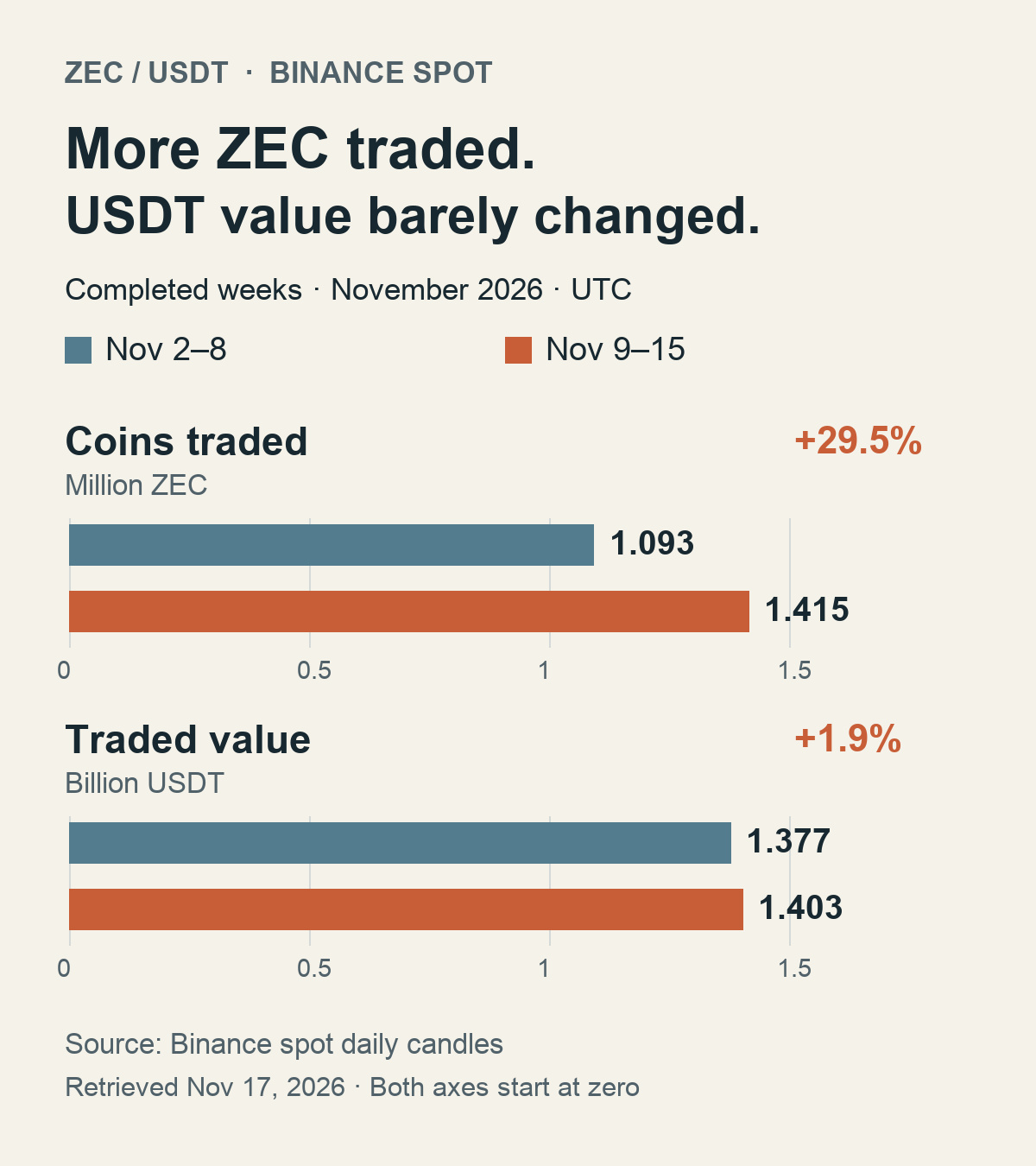
Zcash's weekly trading volume rose 29.5% in coins, but just 1.9% in USDT on Binance spot.
Across November 9–15, the ZEC/USDT pair traded 1.415 million ZEC, up from 1.093 million the previous week. Its traded value barely moved: 1.403 billion USDT versus 1.377 billion.
Lower prices account for the gap. Dividing each week's USDT turnover by its ZEC volume gives a volume-weighted average execution price of about 991 USDT, down from 1,260. More coins changed hands at a substantially lower average price.
So a chart showing nearly flat USDT turnover would miss the increase in the quantity of ZEC traded. These are two measures of the same completed trades, not conflicting accounts of activity or evidence of net buying.
Chart: Binance ZEC/USDT spot, November 2–8 versus November 9–15, 2026 UTC. Both are complete Monday–Sunday weeks. Source: Binance daily candles, retrieved November 17. One pair on one venue, not total Zcash trading.
#Zcash #ZEC
169
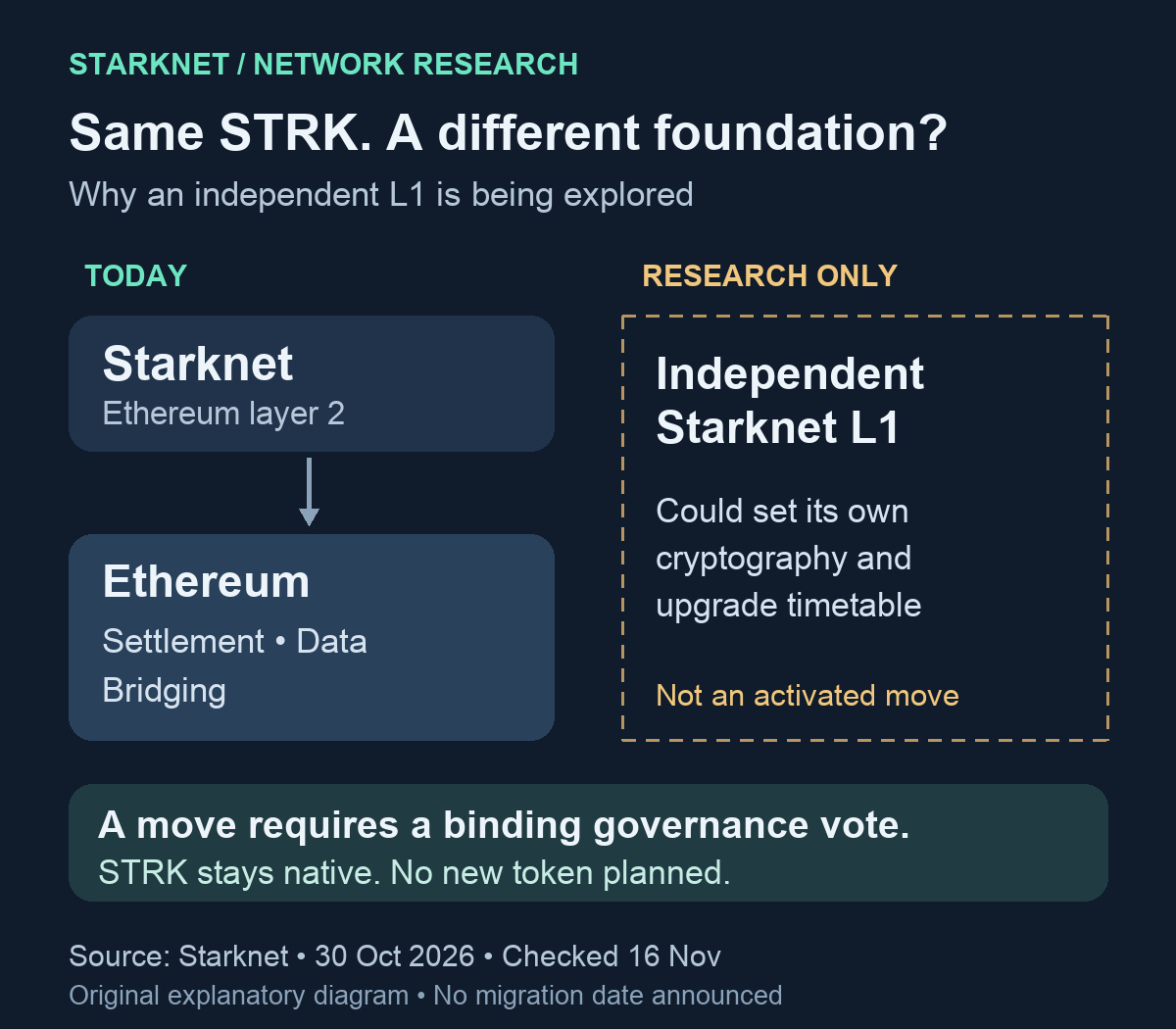
Starknet can change how its accounts approve transactions, but it still depends on Ethereum to complete a transition to quantum-resistant security. That dependency is why it is researching an independent blockchain.
In its October 30 explanation, Starknet describes two parts of the problem. Its programmable accounts can change their signing rules without moving the address, balances or history. The network underneath those accounts still settles transactions on Ethereum, publishes data there and bridges through it. Starknet says all three depend on cryptography that would also need to change.
Running that infrastructure itself would let Starknet choose its own cryptography and upgrade timetable. For someone holding assets on the network, an account upgrade alone therefore would not establish that the whole system had become quantum-resistant.
This remains a research direction. Starknet says STRK would stay the native token, no new token is planned and existing Ethereum bridges stay open. Any move to an independent layer-1 network would require a binding governance vote.
Source: Starknet, October 30, 2026; checked November 16.
https://www.starknet.io/blog/account-abstraction-post-quantum-starknet/
#Starknet #STRK
247
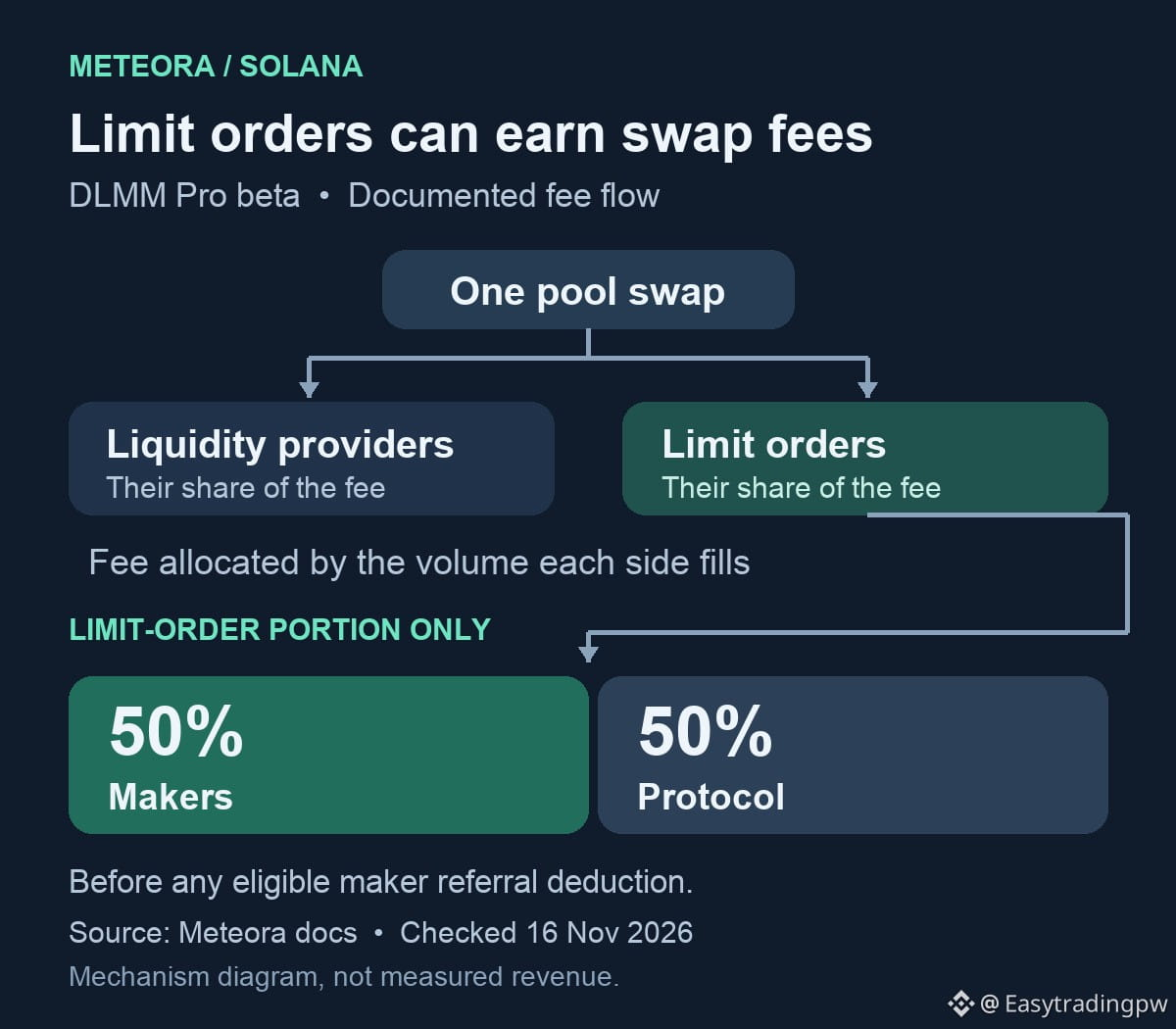
Solana traders can earn a share of swap fees from limit orders in Meteora’s DLMM Pro beta, rather than having to supply liquidity across a price range.
Meteora’s documentation lists DLMM Pro on mainnet and devnet. Buy and sell orders sit inside the same pool as liquidity-provider positions. A swap can trade against both, filling resting orders when it reaches their price.
The fee split follows the trading: fees are first divided between liquidity providers and limit orders according to the volume each fills. Half of the limit-order portion goes to makers and half to the protocol. That is not half of every fee earned by the pool. An eligible referral can also take 20% of an order’s maker-fee share.
For traders placing bids or offers, this adds fee income to the execution proceeds. Collection is a separate step: filled proceeds stay in the pool until the owner cancels the order at its price levels. This collects the proceeds without reversing completed trades. A pool’s launch rules can delay when withdrawals, including that collection, become available.
DLMM Pro is a separate program from the original DLMM, not an automatic upgrade of its pools. Meteora labels it beta and warns of breaking changes.
Sources: Meteora documentation, checked November 16, 2026.
https://docs.meteora.ag/core-products/dlmm-pro/what-is-dlmm-pro
https://docs.meteora.ag/core-products/dlmm-pro/limit-orders
#Solana #DeFi
163
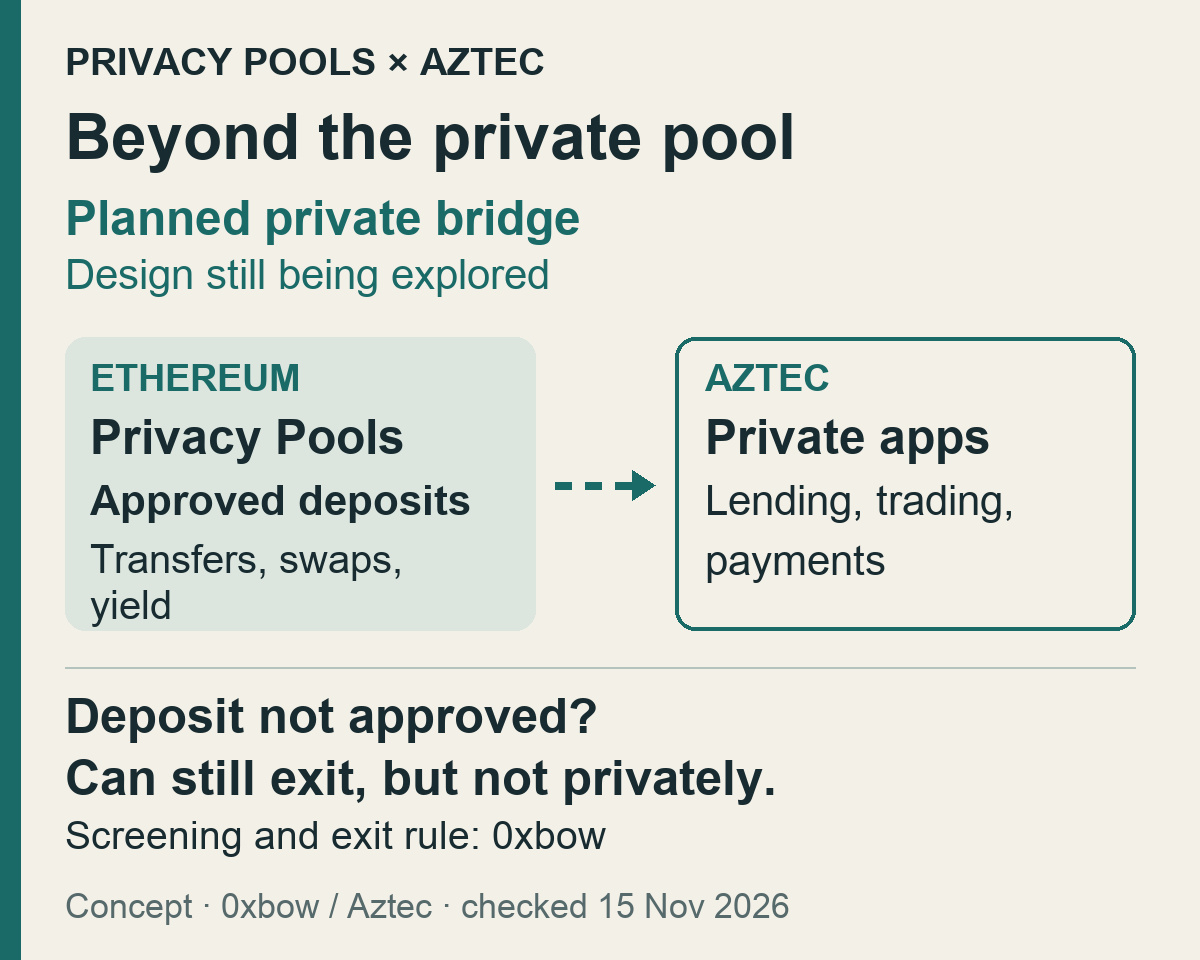
Assets held privately in Privacy Pools could become usable in Aztec lending, trading and payment apps without first returning to public transactions.
0xbow and Aztec plan to connect the pool to apps on Aztec, an Ethereum layer-2 network. Today, Privacy Pools supports private transfers, swaps and yield on Ethereum, but 0xbow says using those assets outside the pool means returning to transparent transactions.
0xbow screens which deposits qualify for the pool's approved set. Its announcement says a deposit that fails that check can still be withdrawn, but not privately; the screening provider does not hold the user's funds or keys.
Both teams say they are still exploring the implementation's design and scope.
Sources: 0xbow and Aztec announcements, checked November 15, 2026.
https://0xbow.io/blog/privacy-pools-is-coming-to-aztec
https://aztec.network/blog/privacy-pools-to-deploy-on-aztec
#Ethereum #Aztec
115
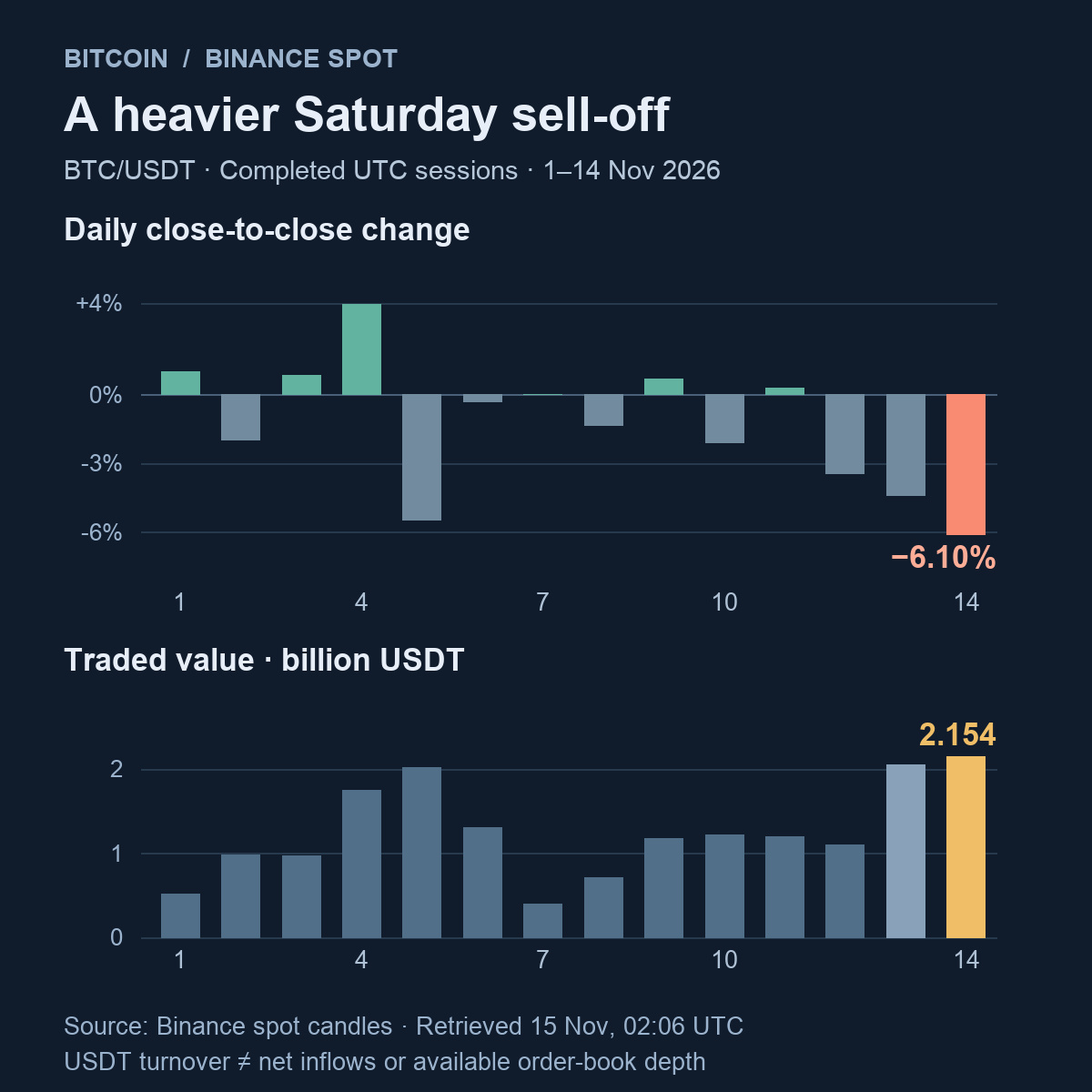
Bitcoin’s Saturday sell-off was the largest daily decline of November’s first 14 sessions on Binance’s BTC/USDT spot pair. It also had the highest traded value of those sessions.
BTC closed November 14 at 64,150 USDT, down 6.10% from Friday’s close. Turnover reached 2.154 billion USDT—5.1% above Friday and 5.44 times the previous Saturday’s total.
The sell-off intensified into the weekend: Saturday’s loss was larger than Friday’s 4.40%, and more USDT changed hands. That measures completed trading, not the orders available to absorb the next sale.
Chart: Binance BTC/USDT spot, November 1–14, 2026 UTC. Daily returns are close-to-close; traded value is quote-asset volume in USDT. November 15’s unfinished session is excluded. Source: Binance spot candles, retrieved November 15 at 02:06 UTC.
#Bitcoin #BTC
137
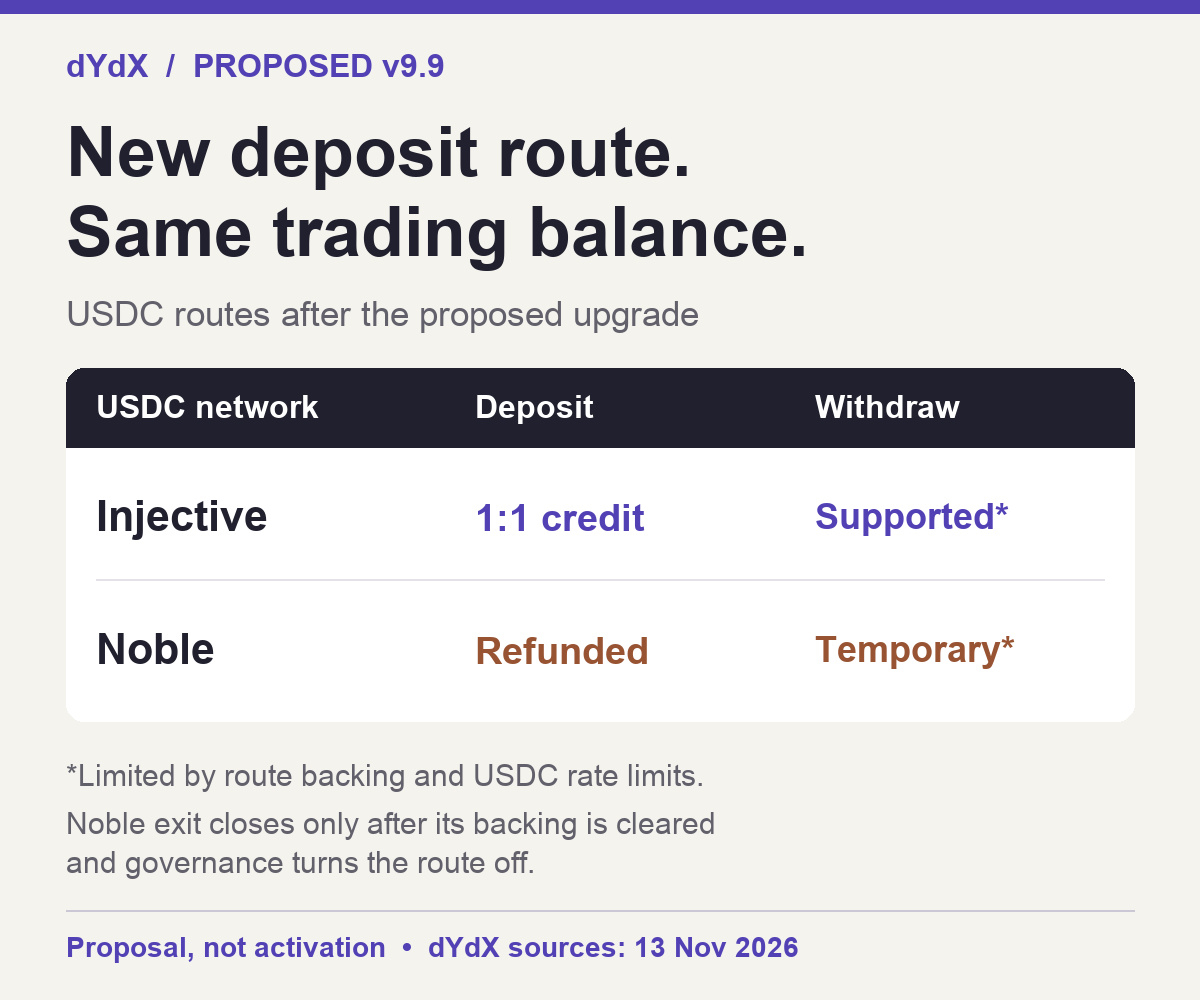
dYdX traders would keep their USDC balances and open positions under the proposed v9.9 upgrade, while new deposits would move to Injective.
The Operations subDAO’s November 13 proposal sets out how dYdX would replace its Noble USDC backing as Circle retires support for USDC on Noble. The release notes say balances, positions, orders and MegaVault shares would remain unchanged.
Once the upgrade takes effect, USDC sent through Noble would be rejected and refunded on Noble, including transfers using its auto-forwarding addresses. Injective deposits would be credited one-for-one to the existing dYdX USDC balance.
Withdrawals would initially have two routes: Noble and Injective. Each would be limited by the backing available on that route and the existing USDC rate limit. Governance could close the Noble route only after its remaining backing is cleared.
That means a saved Noble deposit route could stop working even while the trading account and its positions carry on unchanged.
This is still a proposal. The subDAO targets a November 16 vote outcome and a November 17 upgrade; the published schedule is not confirmation of approval or activation.
Sources: dYdX Operations subDAO proposal and v9.9.0 release notes, November 13, 2026.
https://dydx.forum/t/drc-proposal-for-dydx-protocol-upgrade-to-v9-9/5352
https://github.com/dydxprotocol/v4-chain/releases/tag/protocol/v9.9.0
#dYdX #USDC
370
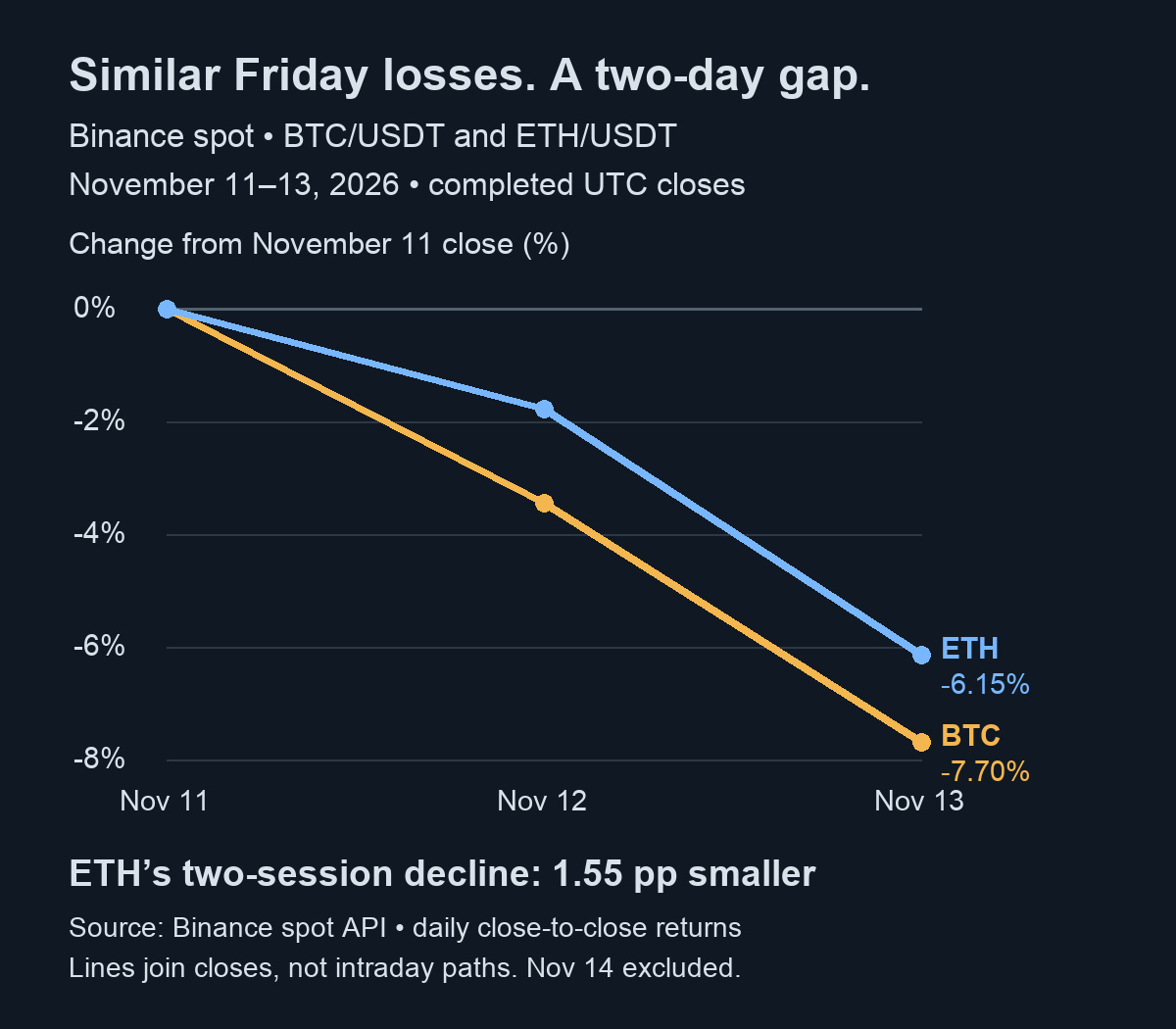
Bitcoin and Ether both lost about 4.4% on Friday, but their two-day losses were further apart.
On Binance spot, BTC fell 4.40% and ETH 4.45% from Thursday’s close to Friday’s. Across Thursday and Friday combined, BTC lost 7.70% versus 6.15% for ETH—a 1.55-percentage-point smaller decline for Ether.
The difference came on Thursday, when Bitcoin fell more sharply. Friday’s near-equal declines left that gap largely intact.
Chart: Binance BTC/USDT and ETH/USDT, November 11–13, 2026 UTC daily closes. November 14’s unfinished session is excluded. Source: Binance spot candles, retrieved November 14 at 02:13 UTC.
#Bitcoin #Ethereum
148
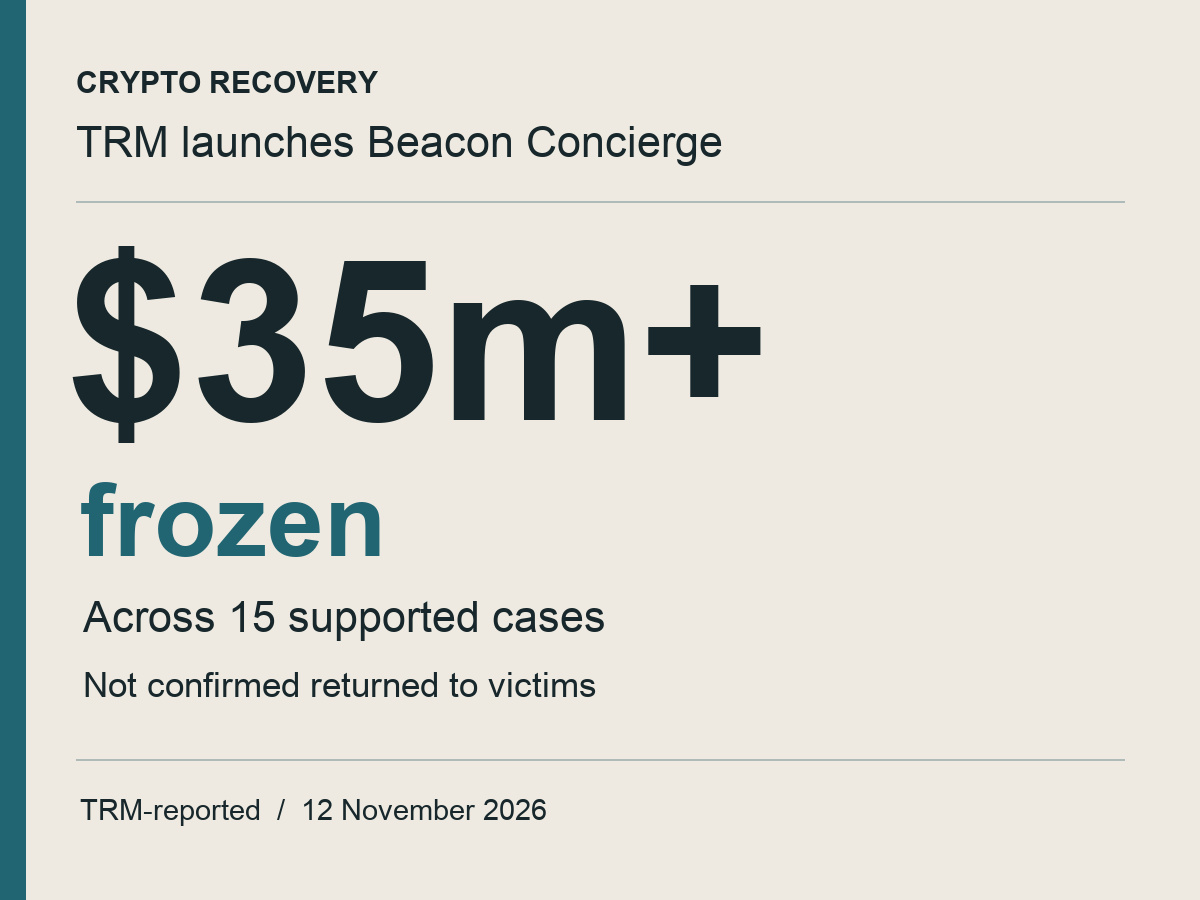
TRM Labs says its new crypto-recovery service has already helped freeze more than $35 million across 15 cases.
Beacon Concierge, announced November 12, gives verified law enforcement agencies access to TRM investigators and its network of exchanges and stablecoin issuers without requiring a TRM software license. The team traces funds, prepares evidence and routes requests to the issuers that can act.
The change addresses a bottleneck after stolen crypto has been located: an agency still needs to reach the right counterparty with a usable request. TRM says one submission covers participating issuers and supported chains, with its investigators staying involved through the issuer’s decision.
The reported $35 million is frozen funds, not money confirmed returned to victims. The service has supported 14 agencies in 10 countries; it is available to verified law enforcement, rather than a direct recovery service for individual holders.
Source: TRM Labs, November 12, 2026.
https://www.trmlabs.com/resources/blog/trm-labs-launches-beacon-concierge-to-help-law-enforcement-worldwide-interdict-and-seize-illicit-crypto-funds-on-any-chain-in-any-asset
#Crypto #CryptoSecurity
141
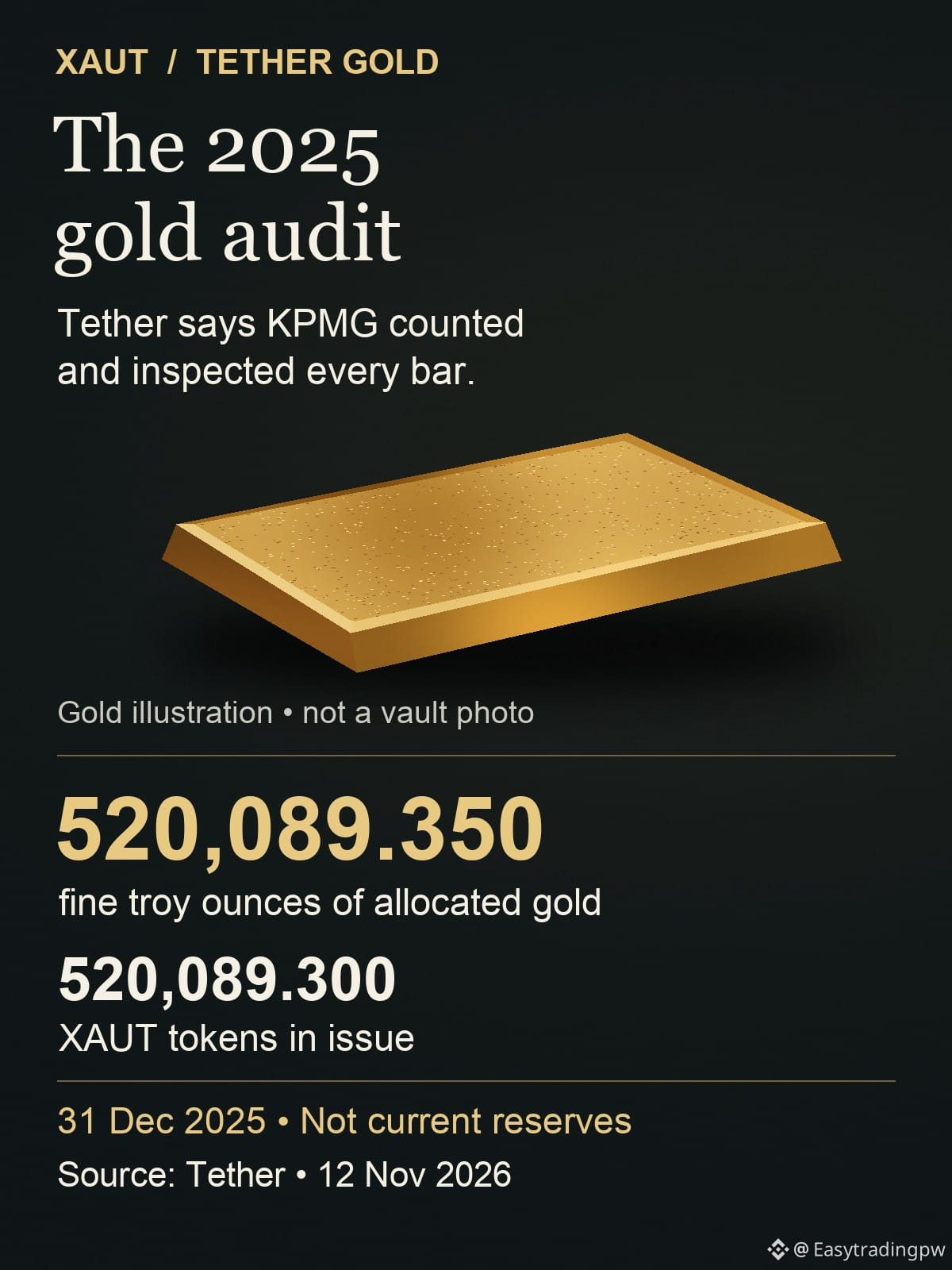
Tether says KPMG physically inspected every gold bar backing XAUT as part of the issuer’s 2025 audit.
The November 12 announcement puts a useful number beside that claim: 520,089.350 fine troy ounces of allocated gold against 520,089.300 tokens at December 31, 2025. Tether says KPMG issued an unqualified opinion on TG Commodities’ annual financial statements under US accounting standards.
For holders, the distinction is how the backing was checked. According to Tether, the audit included counting the bars and checking their identifying details, rather than relying only on confirmations from the custodian. The gold is held in Switzerland; each token represents an ownership interest in specified bars.
The date matters when comparing this with a current reserve report. These are audited year-end 2025 figures, announced in November 2026, not a count of today’s gold or tokens. The announcement provides evidence about the custody behind the token; it does not fix the market price of gold.
Source: Tether, November 12, 2026.
https://tether.io/news/tether-gold-xaut-becomes-tethers-second-stablecoin-to-complete-a-big-four-audit/
#XAUT #TokenizedGold
153
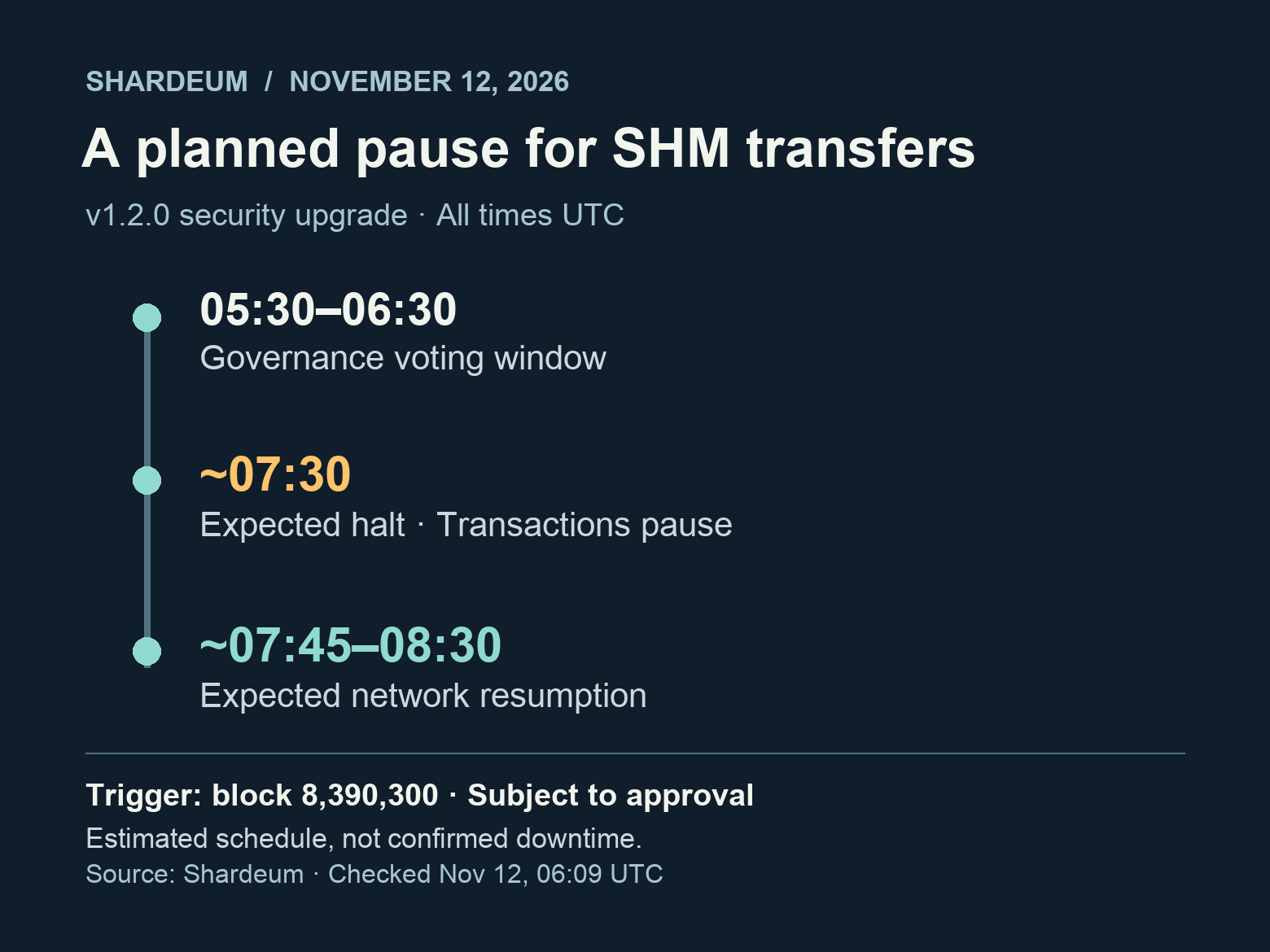
SHM transfers are expected to pause during Shardeum's November 12 security upgrade. The network plans to stop processing transactions while validators restart with the new software.
Shardeum's schedule puts the halt around 07:30 UTC and resumption around 07:45–08:30 UTC. Those times are estimates: the upgrade triggers at block 8,390,300 and depends on governance approval and block progression. The cached announcement served at 06:37 UTC, after the scheduled voting close, still listed the outcome as unconfirmed.
Version 1.2.0 incorporates four upstream Cosmos EVM security fixes. Regular holders do not need to upgrade anything themselves, according to Shardeum.
Exchanges may also pause SHM deposits and withdrawals. They will reopen those services on their own schedules after the network restarts, so transfers through an exchange may remain unavailable for longer.
Source: Shardeum's November 11 announcement, checked November 12, 2026.
https://shardeum.org/blog/v1-2-0-mainnet-upgrade/
#Shardeum #SHM
72
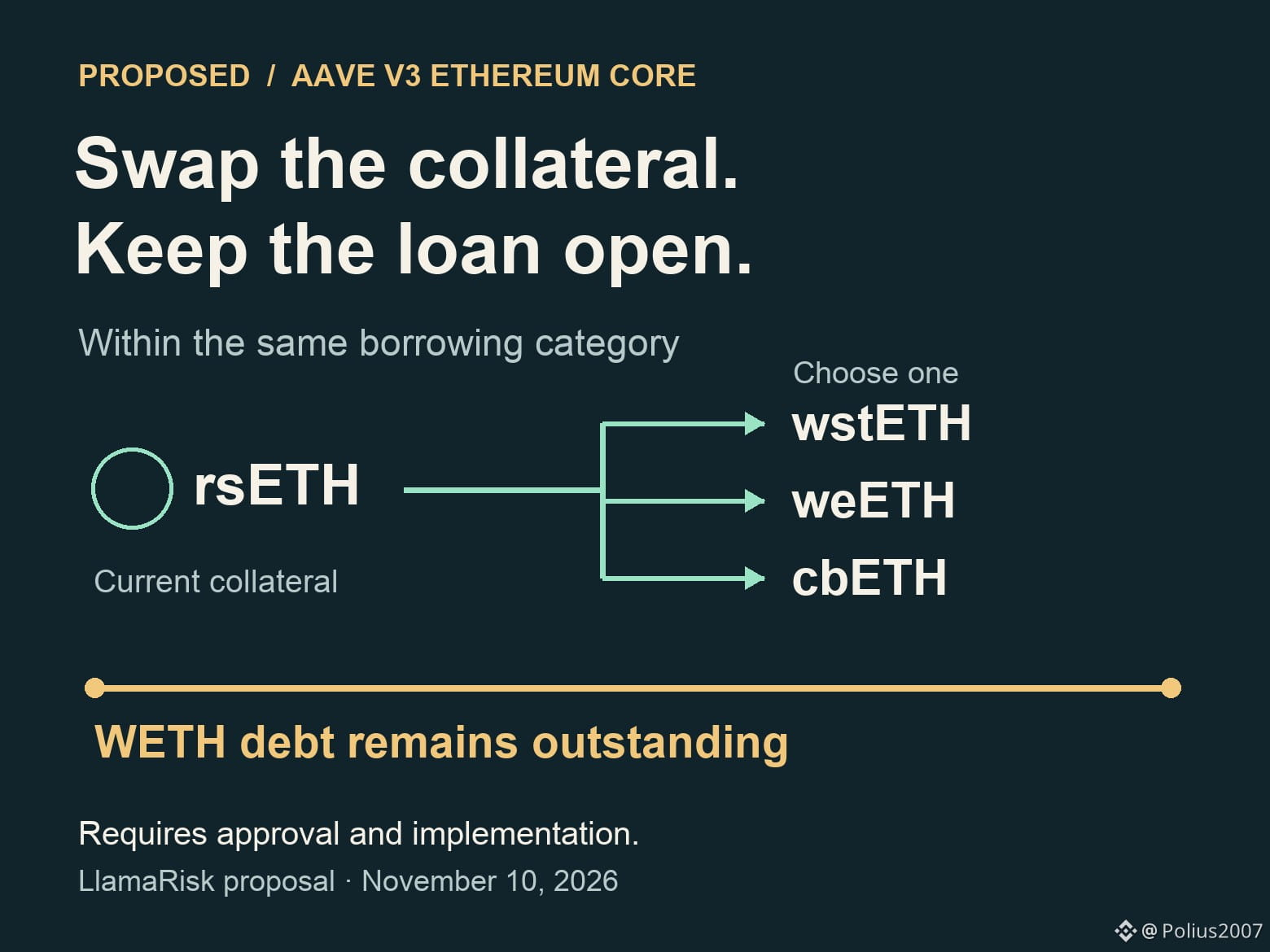
Aave borrowers using rsETH as collateral could get a way to switch to another ETH staking token without first repaying their whole loan.
LlamaRisk’s November 10 proposal would add wstETH, weETH and cbETH to the high-efficiency borrowing category used by rsETH on Aave V3 Ethereum Core. Borrowers could then swap collateral within that category while keeping their WETH (wrapped ETH) debt open.
The proposed swap route is part of a broader plan to wind down selected collateral on Core, including rsETH, osETH, LBTC, tBTC and rETH. LlamaRisk’s November 9 snapshot puts the debt backed by all assets in scope at about $1.03 billion.
The first stage would stop new deposits and new borrowing against affected collateral, while leaving existing loans open. rsETH and tBTC are already frozen, according to the proposal. Further measures, including lower liquidation thresholds or higher borrowing costs depending on the asset, would be considered if exposure fails to decline.
StakeWise and Rocket Pool representatives have asked for osETH and rETH to be assessed separately, so the asset scope remains under discussion. Approval would still need to be followed by an implementation vote before the proposed changes take effect.
Source: LlamaRisk’s November 10, 2026 Aave governance proposal and replies through November 12.
#Aave #DeFi
147
Verified
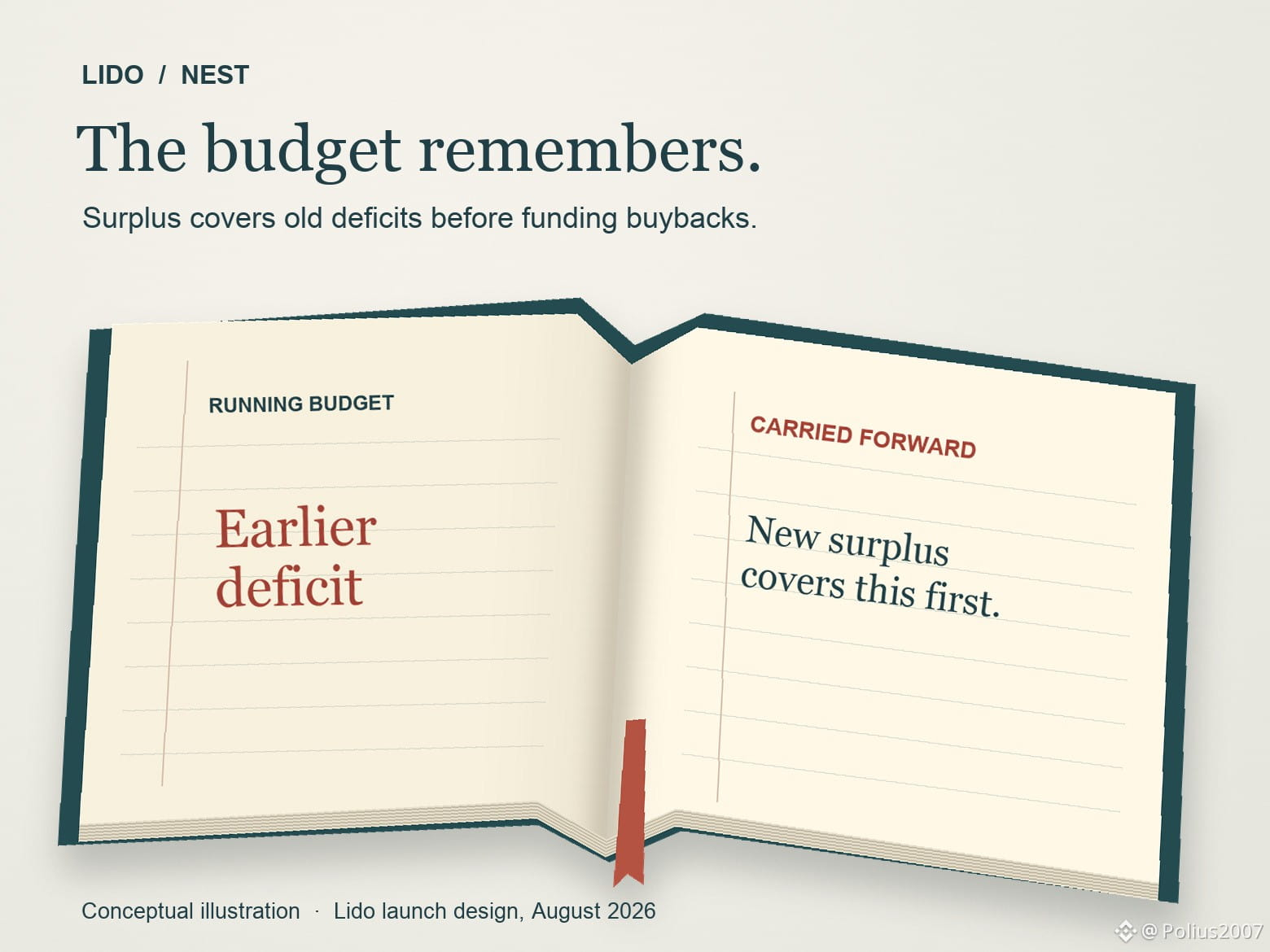
Lido's automated LDO buybacks remember earlier revenue shortfalls.
Under the NEST launch rules described in Lido's August 14, 2026 overview, 50% of the difference between the DAO's staking revenue and its operating baseline feeds a running budget. If that budget falls below zero, new surplus has to cover the accumulated deficit before it can fund more purchases. A good revenue day can still leave buybacks waiting.
Even with a positive budget, purchases need funding in the contract and remain subject to spending caps. In the launch mode, bought LDO goes to the DAO treasury rather than being burned.
https://blog.lido.fi/ldo-automated-buybacks-overview/
https://github.com/lidofinance/lido-improvement-proposals/blob/develop/LIPS/lip-36.md
#Lido #LDO
576
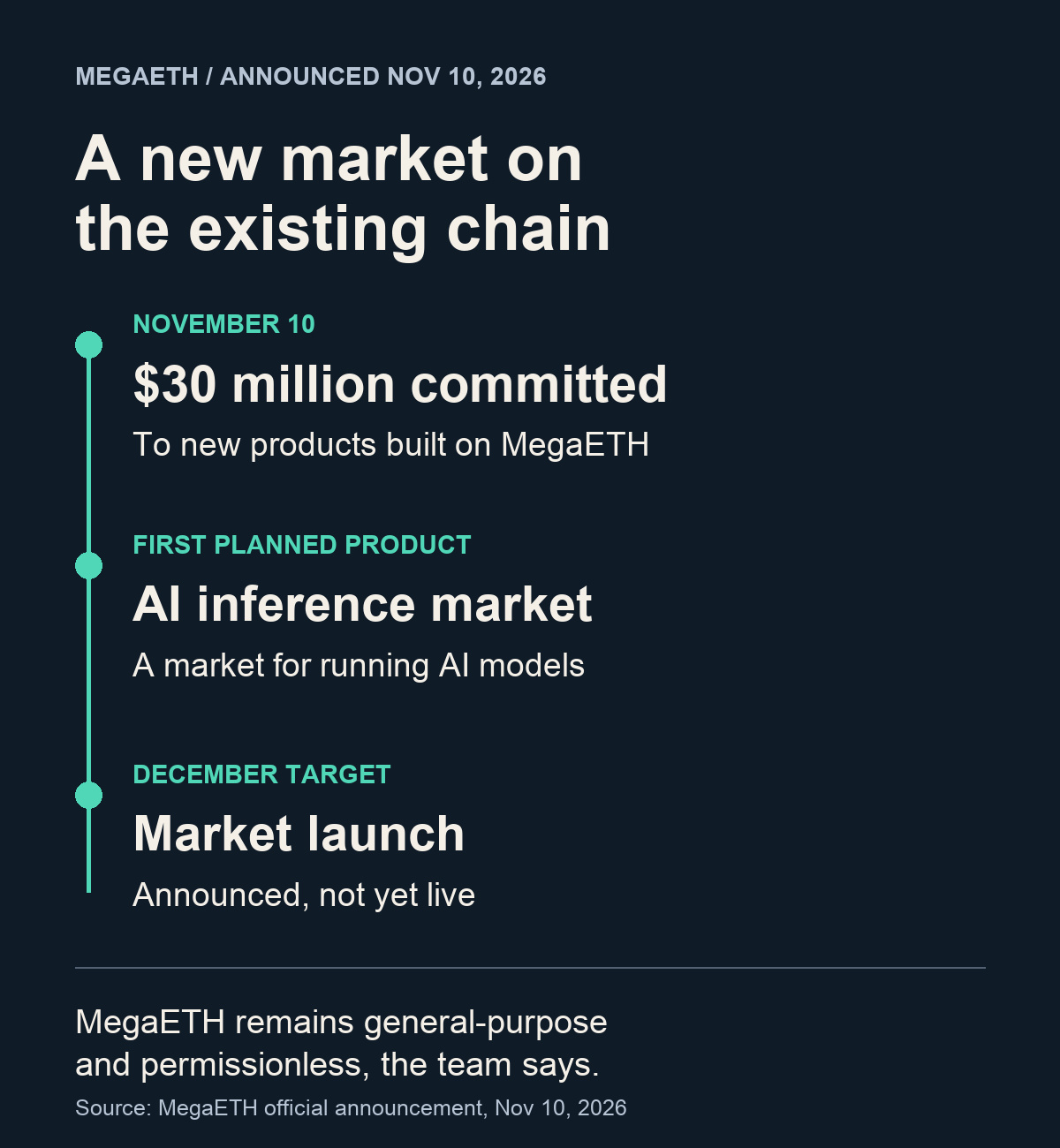
MEGA, formerly the MegaETH Foundation, has committed $30 million to new products on MegaETH, starting with AI inference: running trained models to answer requests.
Its first planned product is an inference market on the blockchain, targeted for December. The team announced the expansion on November 10, 2026, with MegaETH becoming one of MEGA’s projects.
The team says MegaETH will remain general-purpose and permissionless. Existing ecosystem builders will continue to receive technical, business and network support as MEGA develops the new market.
Source: MegaETH’s November 10, 2026 announcement and MEGA’s website.
https://x.com/megaeth/status/2120185003716092188
https://mega.holdings
#MegaETH #Crypto
51
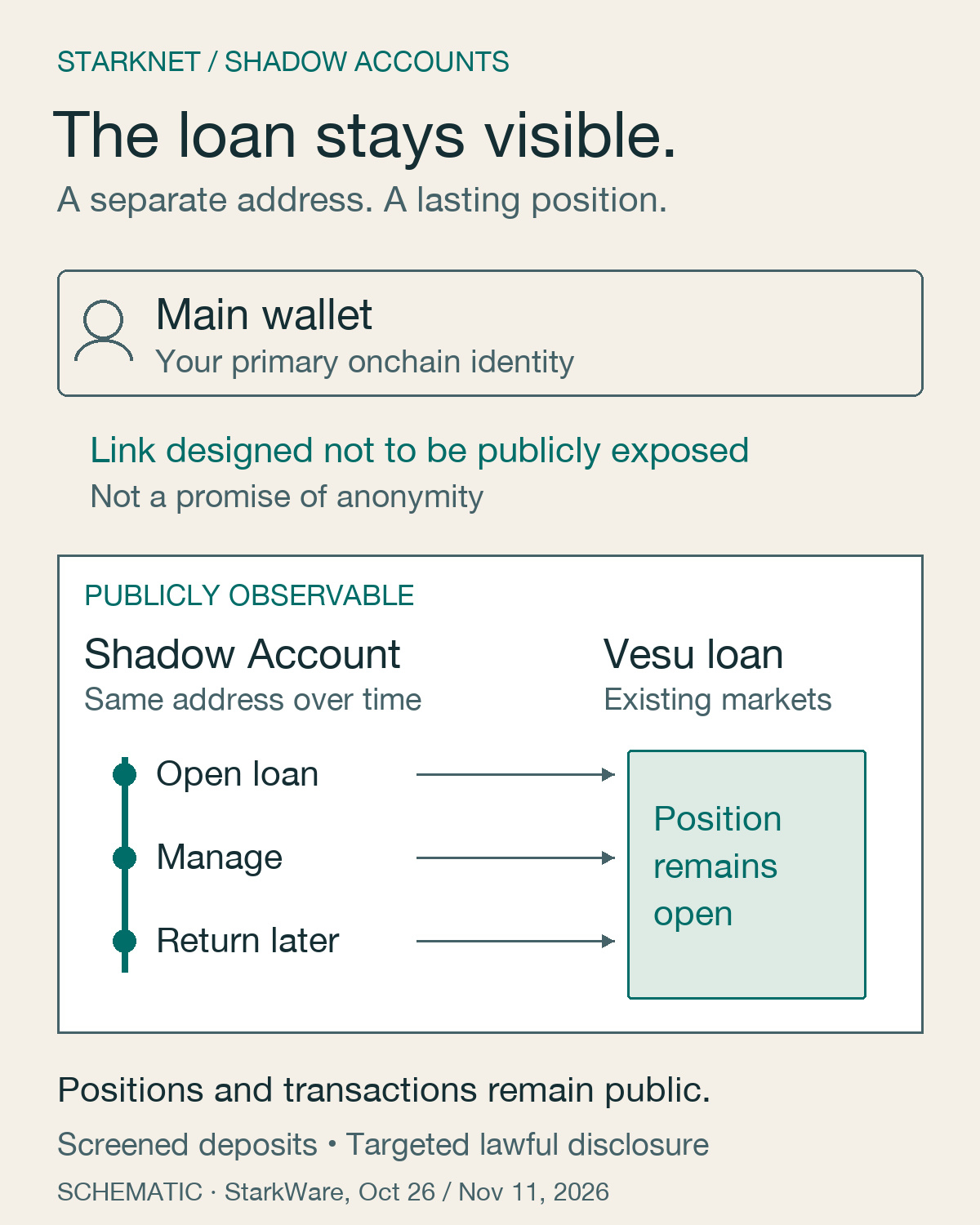
A loan stays onchain long after you close the app. Anyone looking at its account can still see the position and its transactions.
Starknet’s Shadow Accounts let you keep managing that loan through a separate, persistent address, designed not to expose its link to your main wallet. You can use a different account for each app or position, rather than collect everything under one public address.
That makes StarkWare’s November 11 report of a Vesu integration interesting: the separate account uses Vesu’s existing lending markets. The loan can stay where the liquidity already is, with an account you can return to while it remains open.
The choice is how to separate your accounts, not whether the loan is visible. StarkWare also describes screened deposits and targeted disclosure for lawful requests, so this shouldn’t be read as a promise of anonymity.
Sources: StarkWare, November 11 and October 26, 2026.
https://starkware.co/blog/programmable-privacy/
https://starkware.co/blog/shadow-accounts/
#Starknet #DeFi
6
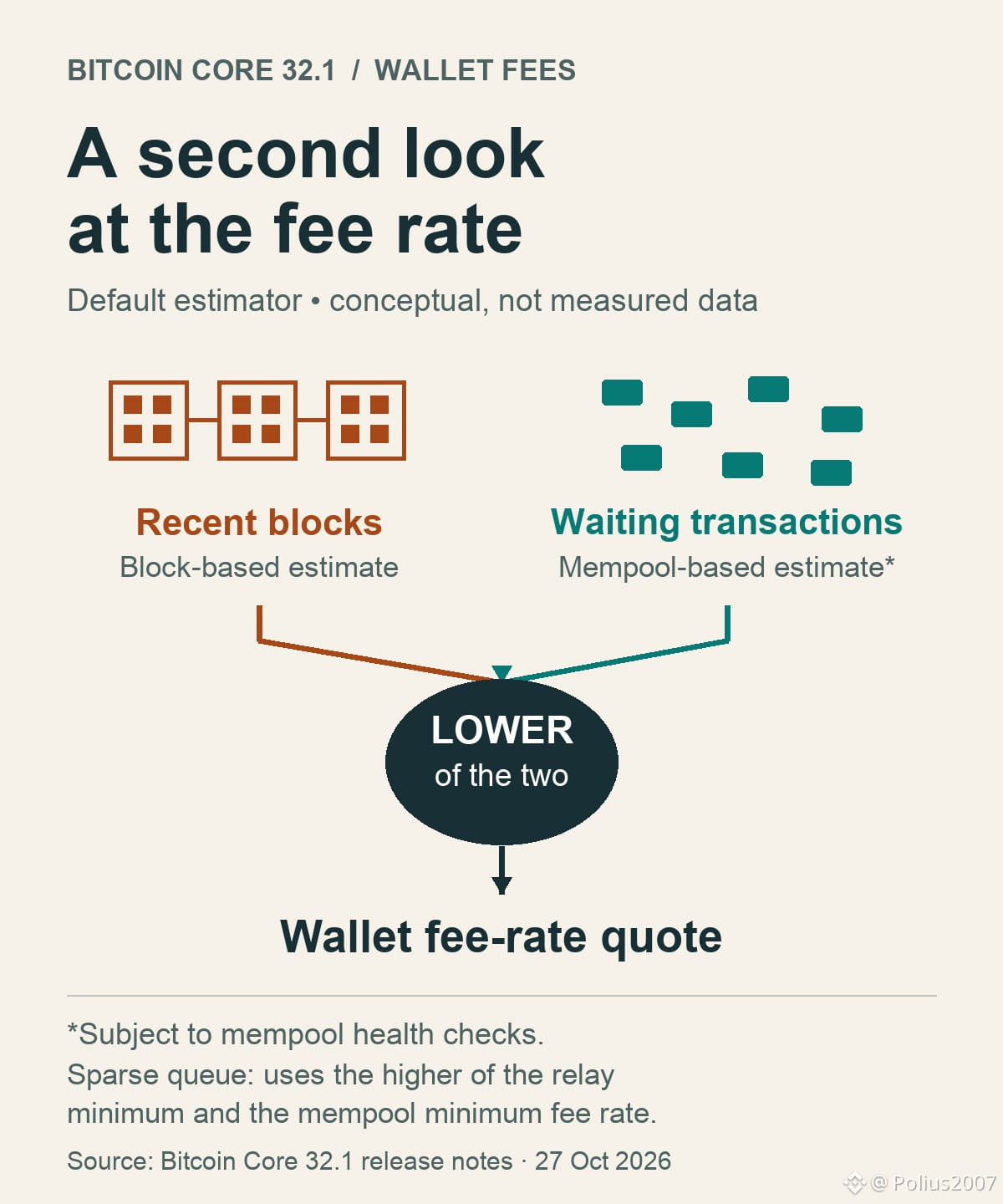
A clearing Bitcoin transaction queue can matter to the fee rate quoted by Bitcoin Core’s wallet, even while recent blocks still reflect busier conditions.
Core 32.1 adds an estimator that looks at the node’s mempool—the transactions waiting for confirmation. By default, the wallet uses the lower result from this and the existing block-based estimator, so its quote needn’t rely on recent blocks alone.
The change is in Core’s October 27 release notes. It gives the wallet another way to account for easing demand, not a promise that a cheaper transaction will confirm on time.
https://bitcoincore.org/en/releases/32.1/
#Bitcoin
57
Bittensor's proposed Gamma credits would burn tokens when customers top up, before a service bills them.
Each subnet, a specialized network within Bittensor, has its own token called alpha. Customers could use TAO to buy and burn that alpha, or burn alpha they already have staked, in exchange for dollar-valued service credits for that subnet. The alpha would already be gone even if the credits sat unspent.
The service then deducts credits from the balance to bill the customer. The guide describes billing ahead of the work; the chain does not verify delivery. Each deduction destroys credits and pays no TAO or alpha to the service's designated spender. The customer is using up a prepaid balance, not triggering another alpha burn with each bill.
Sources: Bittensor's Gamma guide and Release 487 page, checked November 11, 2026.
https://www.bittensor.com/docs/guides/gamma
https://www.bittensor.com/releases/v487-upgrade
#Bittensor #TAO
1
109
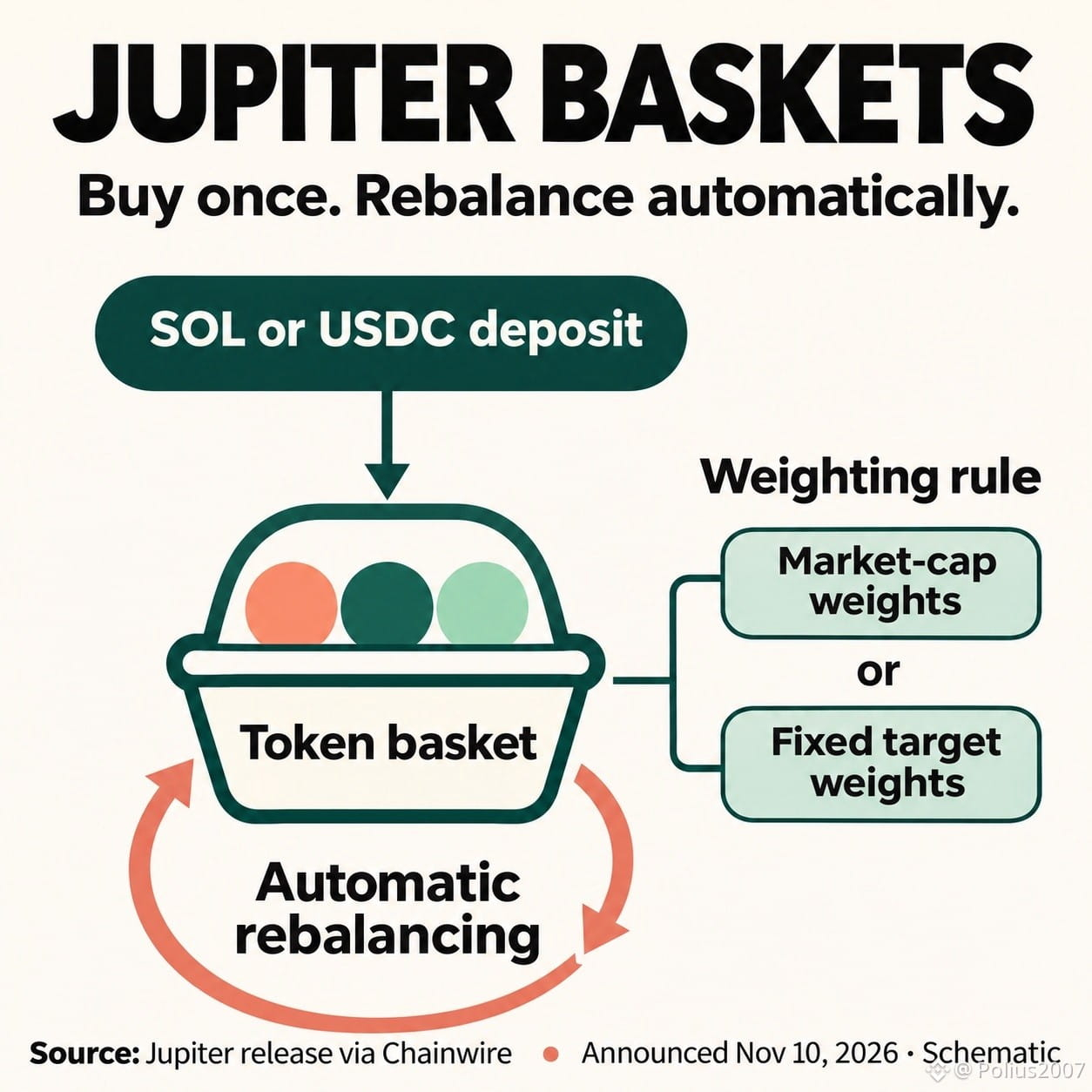
Buying a group of tokens takes one SOL or USDC deposit in Jupiter's new Baskets offering. Keeping their proportions in place is an ongoing job.
Jupiter's November 10 announcement says a single SOL or USDC deposit buys the basket. It offers market-cap weights or fixed target weights, with automatic rebalancing. With fixed weights, price moves can change each token's share of the portfolio, so maintaining the allocation requires further trades. Deposits, rebalances and exits all use Jupiter's swap routing.
That puts the initial purchase and subsequent allocation maintenance together. The announcement leaves the rebalancing schedule and costs unspecified. Jupiter says the products in this release are rolling out over the days ahead of November 15.
Source: Jupiter's November 10, 2026 release via Chainwire.
#Jupiter #Solana #DeFi
147
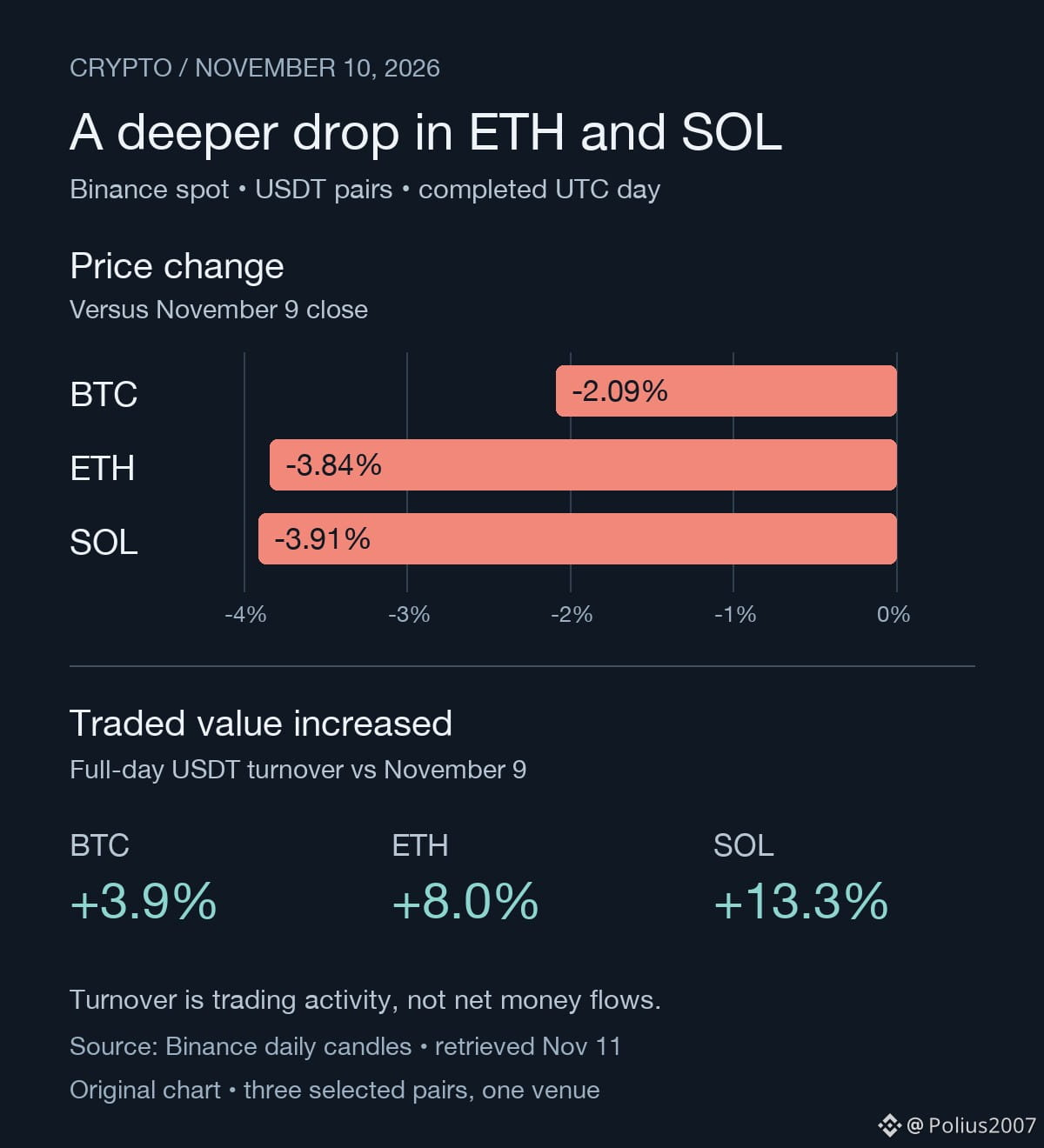
Ether and Solana fell almost twice as far as Bitcoin on Tuesday, while spot trading picked up across all three.
On Binance’s USDT spot pairs, November 10 closed with BTC down 2.09%, ETH down 3.84% and SOL down 3.91% from Monday’s close. SOL had the largest increase in traded value, up 13.3% from Monday, compared with 8.0% for ETH and 3.9% for BTC.
That puts Solana at the weak end of this three-coin comparison on price, and at the strong end on trading activity. Higher turnover tells us more changed hands; it doesn’t tell us that money flowed into the coin.
The chart compares completed November 9 and 10 UTC sessions using Binance spot daily candles. Turnover is each pair’s daily USDT traded value. November 11 trading is excluded.
#Bitcoin #Ethereum #Solana
112
Log in to explore more content
Join global crypto users on Binance Square
⚡️ Get latest and useful information about crypto.
💬 Trusted by the world’s largest crypto exchange.
👍 Discover real insights from verified creators.
Email / Phone number
Trending Topics
NvidiaBeatsEstimatesWith$130BQ4Outlook
13,219 views
171 Discussing
Nvidia Beats With $115.8 Billion in Revenue, Guides to $130 Billion and Adds $150 Billion Buyback
Binance News
·49 Likes
·41.6k views
AnthropicIPOPriceCouldExceed$80
18,837 views
150 Discussing
CanNvidia’sDataCenterGrowthContinue?
56,015 views
751 Discussing