
JERRY_JEE 368
5.9k Posts

JERRY_JEE 368
Report
Block User
X.... FOLLOW PLEASE...JAXON_CRYPTO
Open Trade
Occasional Trader
2 Years
158 Following
26.7K+ Followers
19.0K+ Liked
Posts
Portfolio
All
Quotes
Live
·
--
Bullish
🚨 $SOL AT THE EDGE! WILL BUYERS DEFEND $78? 🔥
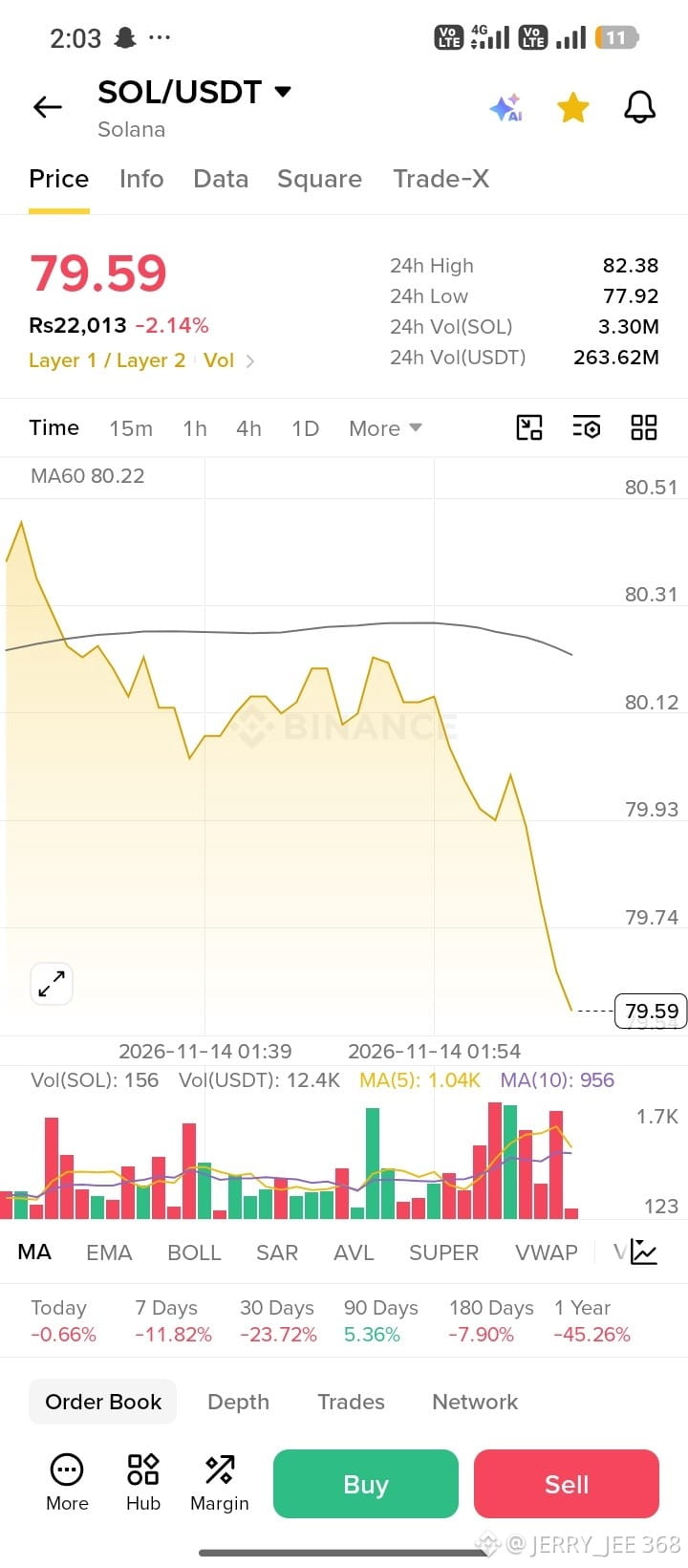
Solana is facing serious selling pressure near $79.59, trading below MA60 ($80.22).
📉 Support: $79.50 / $77.92 🔴 Resistance: $80.12 / $80.51
⚡ Bullish Setup: Reclaim $80.22 → targets $80.50 / $81.00.
🐻 Bearish Setup: Break below $79.50 → $78.50 / $77.92 could come into focus.
📊 Daily RSI is deeply oversold, but a reversal needs confirmation!
🎯 My Watchlist: $78–$80.50
Will SOL bounce back or break lower? 👀
What's your prediction? Comment below! 👇
#SOL
62
·
--
Bullish
🚨 ETHEREUM AT A MAKE-OR-BREAK ZONE! ⚡
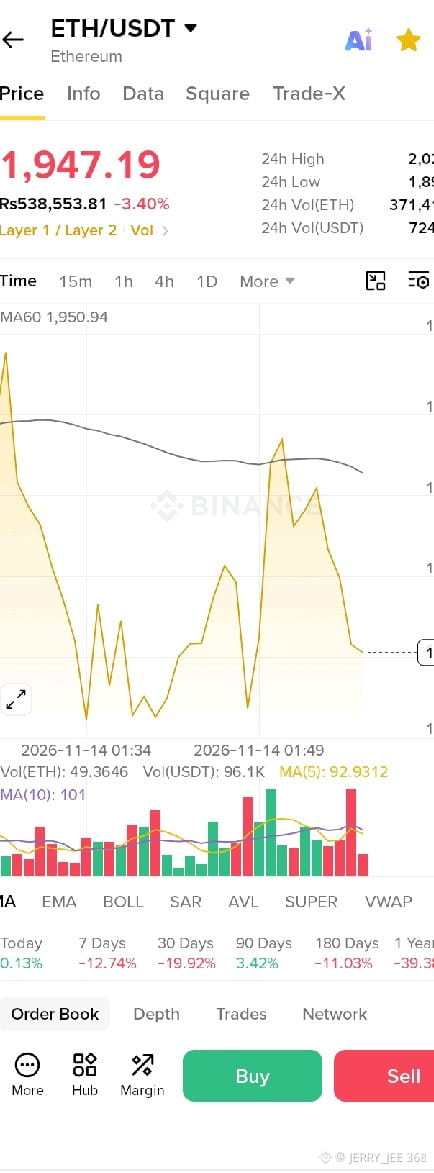
$ETH is under pressure at $1,947, trading below its MA60. Bears currently have the advantage, but oversold conditions could trigger a relief bounce!
📉 Support: $1,945 / $1,895 🚀 Resistance: $1,954 / $1,980 / $2,022
🔥 Bullish Setup: Reclaim $1,954 → potential targets $1,970–$2,020.
⚠️ Bearish Setup: Lose $1,895 → downside risk toward $1,850.
RSI suggests oversold conditions, but confirmation is everything!
Are we witnessing an $ETH recovery or another bearish leg? 👀
Drop your prediction below! 👇
#ETH #Ethereum #BinanceSquare #CryptoTrading #TechnicalAnalysis
140
🚨 MORE WOMEN SPEAK OUT!
Fresh allegations against Russell Brand have emerged, bringing renewed attention to the controversy. New interviews with The Times and a Netflix documentary are adding another shocking chapter to the story.
The story is far from over… 👀🔥
🚨 MORE WOMEN SPEAK OUT!
Fresh allegations against Russell Brand have emerged, bringing renewed attention to the controversy. New interviews with The Times and a Netflix documentary are adding another shocking chapter to the story.
The story is far from over… 👀🔥
Fresh allegations against Russell Brand have emerged, bringing renewed attention to the controversy. New interviews with The Times and a Netflix documentary are adding another shocking chapter to the story.
The story is far from over… 👀🔥

131
🚨 $SOL — OVERSOLD ALERT! Is a Powerful Rebound Loading? 👀🔥
Solana is showing signs of a short-term recovery after heavy selling pressure!
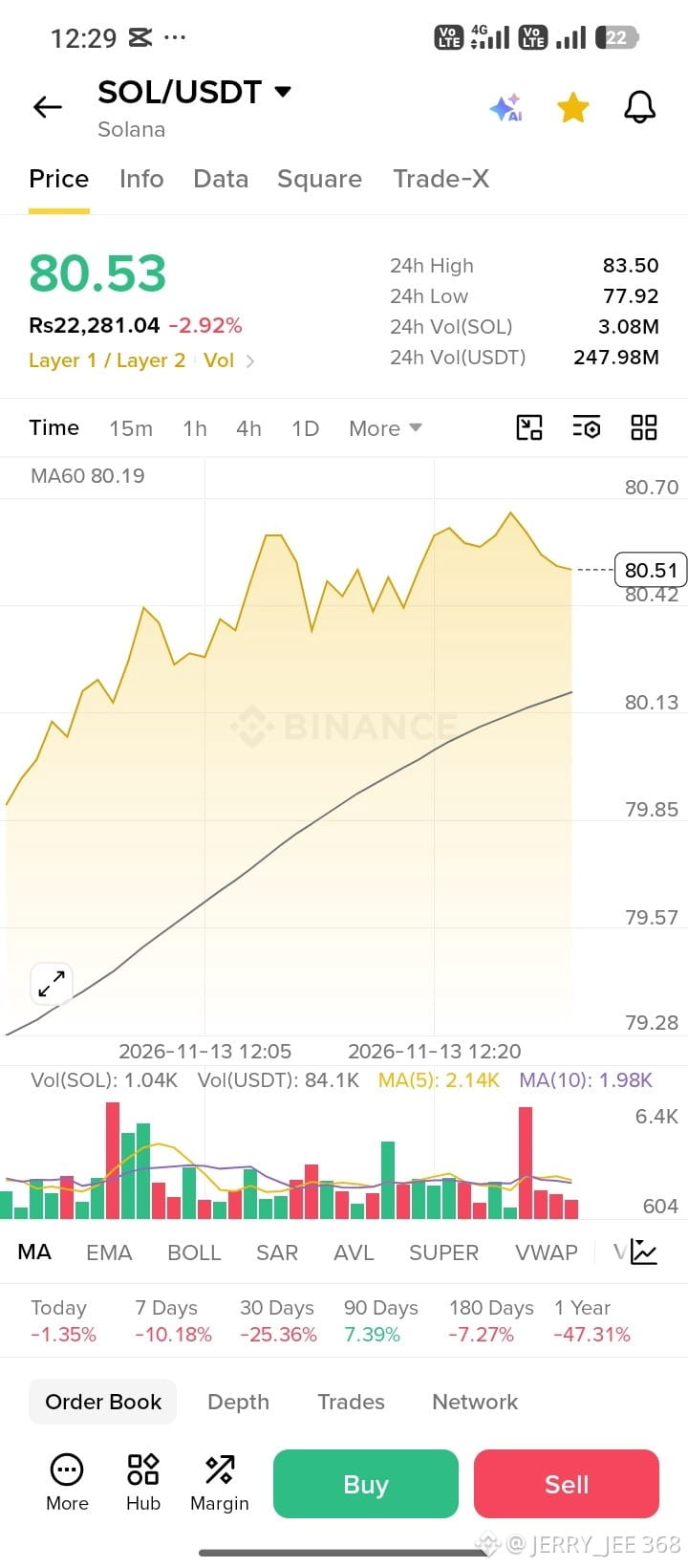
💰 Current Price: $80.53
📉 24H Change: -2.92%
🔺 24H High: $83.50
🔻 24H Low: $77.92
📊 Technical Breakdown:
Trend: Short-term recovery, broader trend remains bearish.
RSI: Around 20–22 on higher timeframes — deeply oversold.
Key Support: $80.19 / $79.85
Major Support: $77.92
Resistance: $80.70 / $81.30
🎯 Trading Scenarios:
🟢 Bullish: A confirmed breakout above $80.70 could open the way toward $81.30 → $82.00 → $83.50.
🔴 Bearish: Losing $79.85 could bring another test of $77.92.
⚡ Entry Idea: Watch for confirmation above $80.70.
🛑 Invalidation: Below $79.80.
Oversold doesn't always mean reversal. Volume and candle confirmation are key!
🔥 Traders, what do you expect next — $82 or another drop toward $78?
Drop your prediction below! 👇
#SOL #Solana #CryptoAnalysis #BinanceSquare #TradingSignals
172
🚨 $BTW — THE BATTLE ISN'T OVER! 🔥
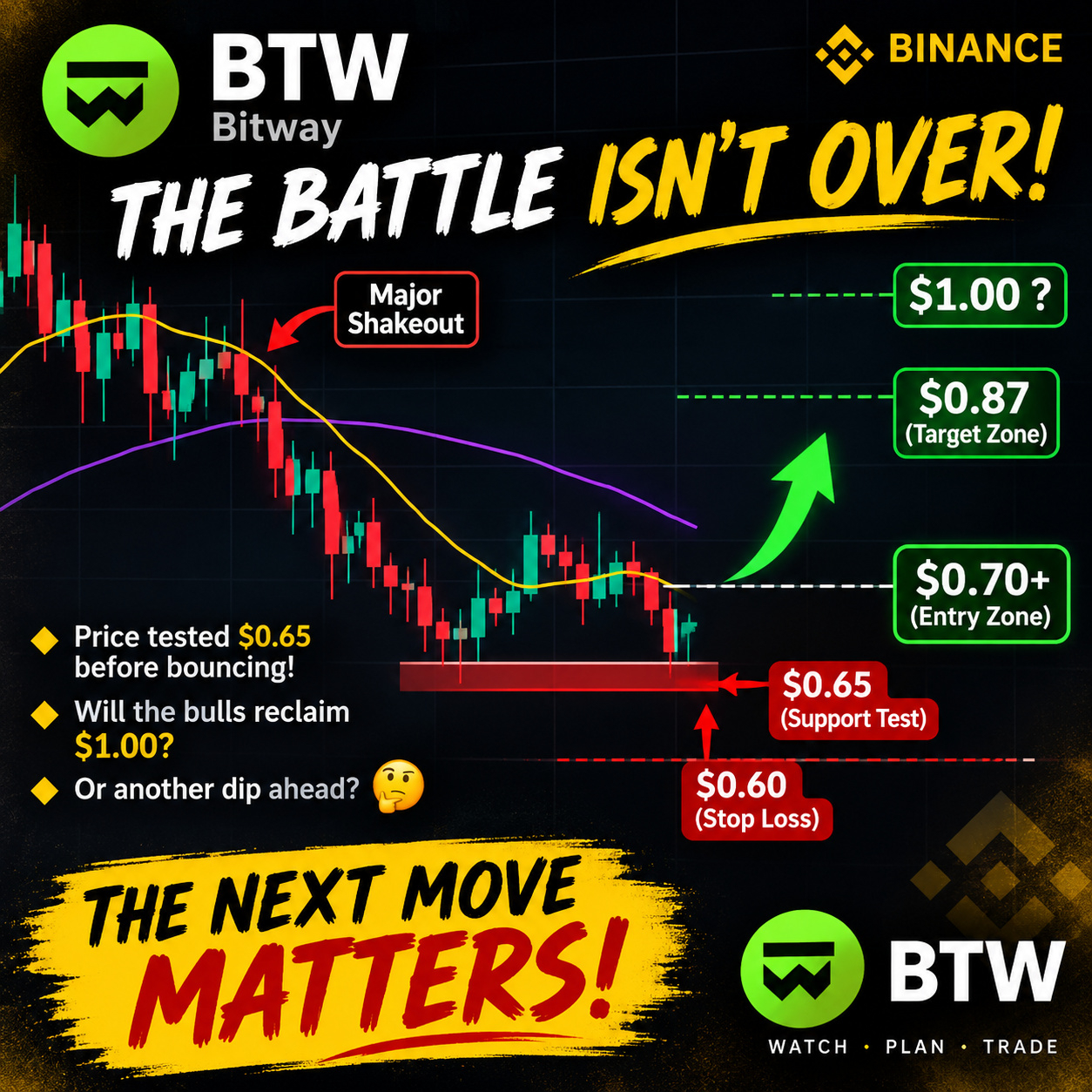
Bitway just faced a major shakeout, with price testing the $0.65 zone before bouncing back toward $0.87.
Will the bulls reclaim $1.00, or is another dip coming? 👀
The next move matters!
🚨 $BTW — THE BATTLE ISN'T OVER! 🔥
Bitway just faced a major shakeout, with price testing the $0.65 zone before bouncing back toward $0.87.
Will the bulls reclaim $1.00, or is another dip coming? 👀
The next move matters!
Bitway just faced a major shakeout, with price testing the $0.65 zone before bouncing back toward $0.87.
Will the bulls reclaim $1.00, or is another dip coming? 👀
The next move matters!
468
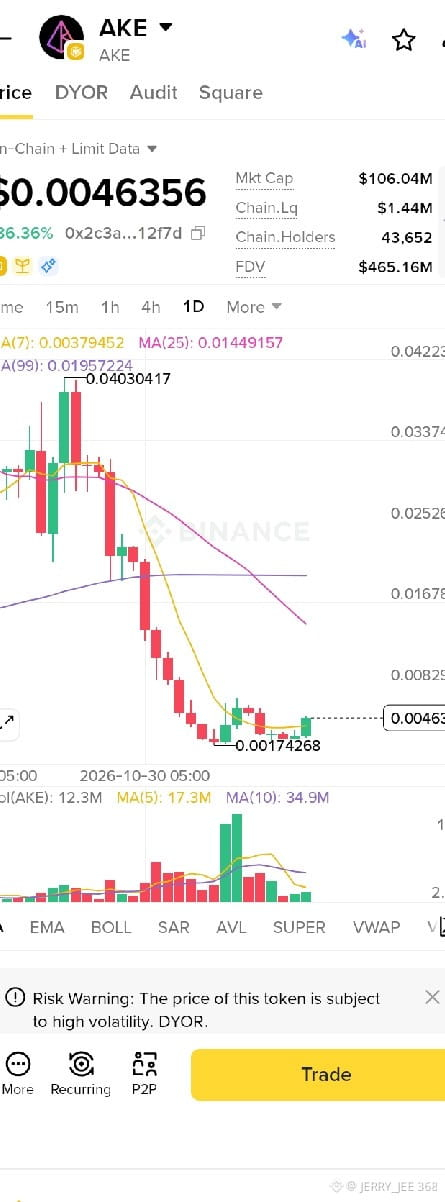
🚀 $WLD IS SHOWING SIGNS OF LIFE! 🔥
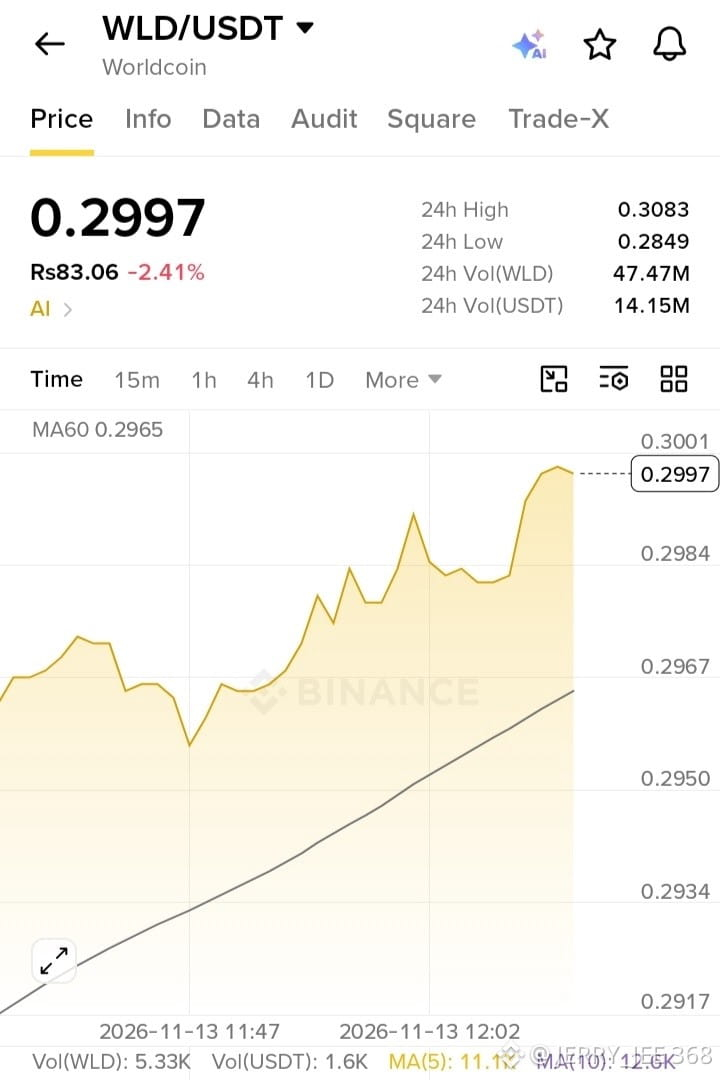
Worldcoin is pushing toward $0.3000, with bullish momentum building! 📈
Will WLD break the resistance and fly higher? 👀
Eyes on $WLD ! The next move could be explosive! ⚡
#WLD #Worldcoin #Binance #Crypto
🚀 $WLD IS SHOWING SIGNS OF LIFE! 🔥
Worldcoin is pushing toward $0.3000, with bullish momentum building! 📈
Will WLD break the resistance and fly higher? 👀
Eyes on $WLD ! The next move could be explosive! ⚡
#WLD #Worldcoin #Binance #Crypto
Worldcoin is pushing toward $0.3000, with bullish momentum building! 📈
Will WLD break the resistance and fly higher? 👀
Eyes on $WLD ! The next move could be explosive! ⚡
#WLD #Worldcoin #Binance #Crypto
1
2
1.1k
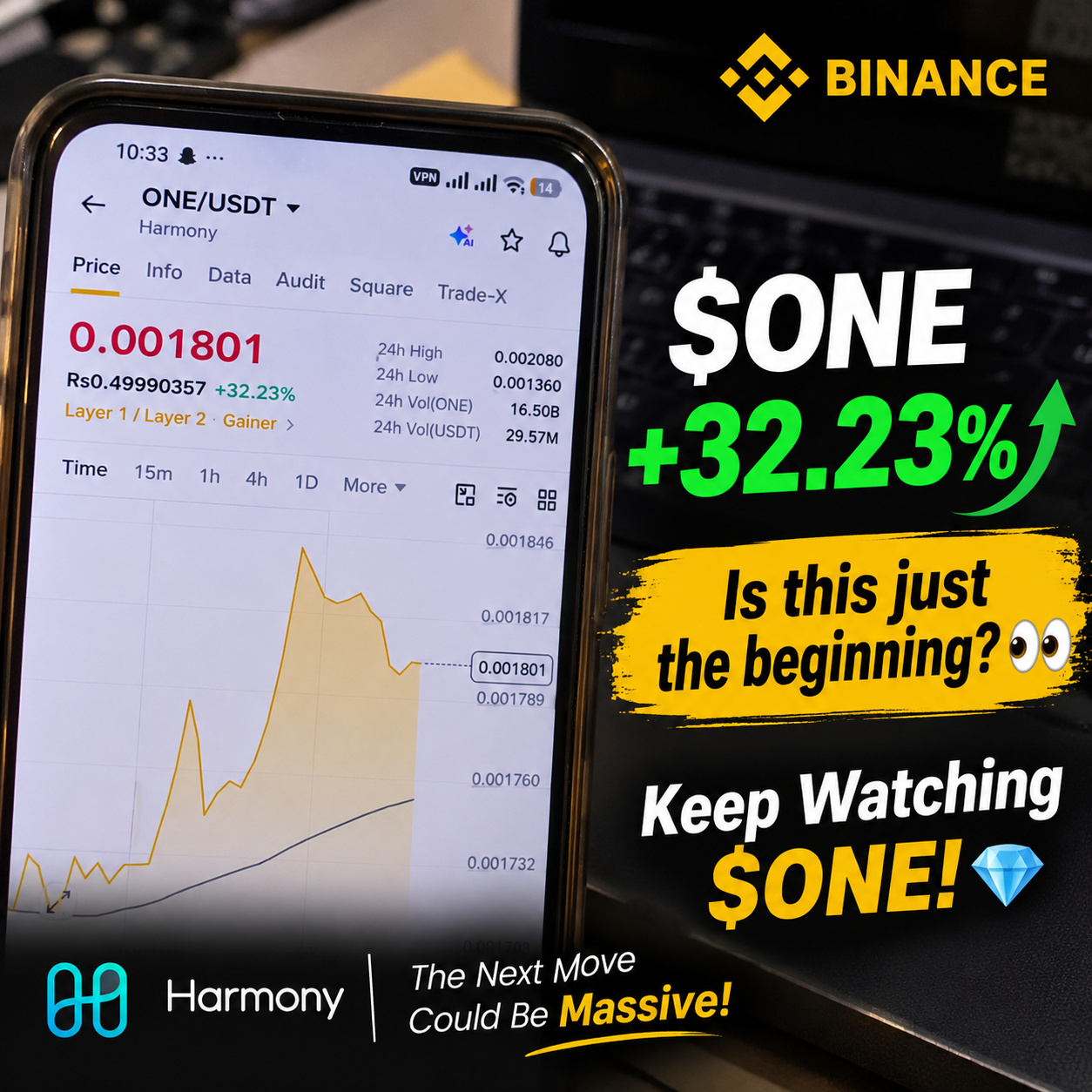
🚀 $ONE IS WAKING UP! 🔥
+32.23% and the momentum is building! 📈
Is this just the beginning of a BIG move? 👀
Keep watching $ONE ! 💎
#HotCPIDecemberHikePriced #AnthropicRejectsIPODelayValuationinQuestion #AnthropicRejectsIPODelayValuationinQuestion #TradFiForBeginners #NvidiaInvestigatesAfterHuang’sAffairApology
+32.23% and the momentum is building! 📈
Is this just the beginning of a BIG move? 👀
Keep watching $ONE ! 💎
#HotCPIDecemberHikePriced #AnthropicRejectsIPODelayValuationinQuestion #AnthropicRejectsIPODelayValuationinQuestion #TradFiForBeginners #NvidiaInvestigatesAfterHuang’sAffairApology
308

🕊️ A LEGEND NEVER TRULY DIES
Today, we remember Stacy Keach, a remarkable American actor whose talent, passion, and unforgettable performances made a lasting mark on the entertainment world.
Best remembered for his iconic role as Mike Hammer, he entertained millions and became a respected name in television and theatre.
His journey may have come to an end, but his legacy will live on through his work.
Rest in Peace, Stacy Keach. 🕊️
Your legacy will never be forgotten.
#StacyKeach #Legend #RestInPeace #Hollywood #MikeHammer

112
🚨 $ZEC — MARKET UPDATE
Zcash ($ZEC ) is showing major volatility after its explosive rally. 🔥
📊 Current picture: ZEC recently pushed toward the $1,300 area, but the market has seen a sharp pullback/profit-taking move. Recent Binance-linked data shows the $1,200–$1,300 zone is now critical.
Investing.com Suomi +1
🎯 Key levels to watch:
🟢 Support: $1,100–$1,200
🔥 Resistance: $1,300
🚀 Breakout above $1,300: could open the door toward higher levels
⚠️ Below $1,100: correction risk increases
💎 Why ZEC is trending: Institutional interest has increased significantly, with Grayscale’s Zcash ETF reportedly crossing $500M+ in assets.

1
95
🚀 I’M BACK ON BINANCE! 🚀
The break is over… I’m officially back in the market! 📈🔥
After some time away, I’m back on Binance and ready to reconnect with my community.
From now on, I’ll be sharing my market journey, trading insights, and experiences with you all. 💯
🤝 Want to join me on this journey?
Follow me and stay connected!
New comeback. New energy. Same passion. 🔥
⚠️ Trading involves risk. Always do your own research and trade responsibly.
WELCOME BACK TO THE MARKET! 😎🚀

1
31
🚨 STOP... STOP... STOP... 🚨
Just 5 minutes of your attention could change everything. 👀
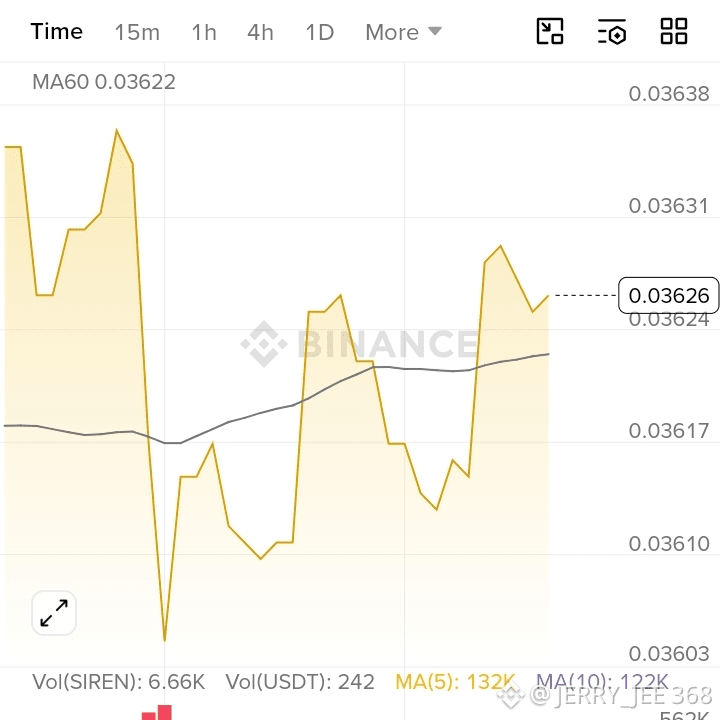
🔥 $SIREN is making waves! Momentum is building fast, buyers are stepping in, and the chart is flashing bullish signals. 📈
🎯 Target: $3.34 ⚡ Strong breakout potential 📊 Bullish market structure 👀 A major move could be closer than most expect
Will $SIREN answer the call and surge toward $3.34, or leave late traders behind? 🚀
1
277
💀 $10,000 → Just $136.
That’s the harsh reality of buying $DOT at its all-time high 5 years ago and holding until today.
📉 Over 98% wiped out. ⚠️ A brutal lesson: conviction alone isn't enough—timing matters.
Once hailed as an Ethereum killer, Polkadot struggled with adoption, fading hype, and relentless market pressure.
🚨 In crypto, even great technology can be a terrible investment at the wrong price.
155
OpenLedger $OPEN is turning AI into an economy.
Instead of letting big platforms control data and models, OpenLedger unlocks liquidity for AI assets like datasets, agents, and models on-chain.
That means creators can monetize contributions directly while developers gain access to decentralized AI infrastructure.
AI isn’t just about building models anymore. It’s about owning the value they generate.
As AI and blockchain continue merging, projects focused on data ownership and liquidity could become key infrastructure layers.
Would decentralized AI outperform closed ecosystems in the long run?
#OpenLedger #openledger @Openledger
OpenLedger $OPEN is turning AI into an economy.
Instead of letting big platforms control data and models, OpenLedger unlocks liquidity for AI assets like datasets, agents, and models on-chain.
That means creators can monetize contributions directly while developers gain access to decentralized AI infrastructure.
AI isn’t just about building models anymore. It’s about owning the value they generate.
As AI and blockchain continue merging, projects focused on data ownership and liquidity could become key infrastructure layers.
Would decentralized AI outperform closed ecosystems in the long run?
#OpenLedger #openledger @OpenLedger

1
138
You Think You’re Progressing in Pixels… But Are You Really Getting Paid?
At first, I believed every action in Pixels was pushing me closer to real rewards. Farming, trading, crafting—it all felt like progress. But when I slowed down and actually observed my results, a different reality started to appear. The effort was there, but the payouts weren’t.
The truth is simple but uncomfortable: most gameplay in Pixels never reaches the point of payment.
The system is built to encourage constant activity, but not every action is designed to generate value. You can stay active for hours, yet only specific moves—timed correctly or aligned with demand—actually convert into rewards. The rest? It keeps the ecosystem alive, but doesn’t pay you.
This creates a subtle illusion. You feel like you’re moving forward, but much of that progress stays inside the system without turning into profit. It’s not about how much you play—it’s about how well you understand what the system rewards.
$PIXEL #pixel

1
2
294

Article
Most of Your Gameplay in Pixels Never Reaches the Point of Payment$PIXEL @pixels #pixel
In the current cycle of Web3 gaming, one pattern is becoming increasingly clear: activity does not always translate into income. Titles like Pixels have successfully attracted large user bases by blending farming mechanics with tokenized economies, but beneath the surface, the reward distribution is far more selective than it appears. Many players spend hours engaging with the system, yet only a fraction of that effort actually converts into tangible value.
At its core, Pixels operates on a play-and-earn model where user actions—farming, trading, crafting—feed into an on-chain economy. However, not all actions are equally valuable. The system is designed around scarcity, token emissions, and behavioral data. This means that while every player contributes activity, only specific types of participation align with reward-generating pathways. For example, early adopters, highly optimized farmers, and players who understand market cycles often extract more value than casual participants.
The key issue lies in the difference between activity and value creation. Most gameplay generates data, not revenue. Actions like repetitive farming or low-margin trades may keep players engaged, but they do not necessarily contribute to economic outputs that the system rewards. In many cases, rewards are tied to limited events, competitive leaderboards, or resource bottlenecks, which naturally filter out the majority of participants.
From a broader perspective, this mirrors how token economies function across Web3. Inflation control, reward sustainability, and anti-exploit mechanisms all require limiting payouts. If every action were rewarded equally, the in-game economy would quickly become unsustainable. As a result, developers design systems where engagement is high, but monetization is constrained.
For players, this has important implications. Understanding the mechanics behind reward distribution is more critical than simply increasing playtime. Strategic positioning—such as identifying high-yield activities, timing market interactions, or leveraging scarcity—can significantly impact outcomes. Passive grinding, on the other hand, often leads to diminishing returns.
At the same time, this model is not inherently negative. High engagement without guaranteed payment allows games like Pixels to maintain balance and longevity. It creates a layered ecosystem where skilled, informed, and adaptive players can benefit, while others participate for entertainment rather than income. However, the risk arises when expectations are misaligned—when players assume that time invested will directly equal financial return.
Ultimately, Pixels reflects a broader truth about Web3 gaming: not all participation is monetizable. The system rewards precision, timing, and understanding—not just effort. Players who recognize this early can shift from a purely activity-driven approach to a strategy-driven one, improving their chances of reaching the “point of payment.”
Conclusion:
Most of your gameplay in Pixels contributes to the ecosystem, but only a portion converts into rewards. The difference lies in how well you understand the system’s incentives. In Web3 environments, effort alone is not enough—alignment with value-generating mechanics is what truly matters.
Most of Your Gameplay in Pixels Never Reaches the Point of Payment
$PIXEL @Pixels #pixel
In the current cycle of Web3 gaming, one pattern is becoming increasingly clear: activity does not always translate into income. Titles like Pixels have successfully attracted large user bases by blending farming mechanics with tokenized economies, but beneath the surface, the reward distribution is far more selective than it appears. Many players spend hours engaging with the system, yet only a fraction of that effort actually converts into tangible value.
At its core, Pixels operates on a play-and-earn model where user actions—farming, trading, crafting—feed into an on-chain economy. However, not all actions are equally valuable. The system is designed around scarcity, token emissions, and behavioral data. This means that while every player contributes activity, only specific types of participation align with reward-generating pathways. For example, early adopters, highly optimized farmers, and players who understand market cycles often extract more value than casual participants.
The key issue lies in the difference between activity and value creation. Most gameplay generates data, not revenue. Actions like repetitive farming or low-margin trades may keep players engaged, but they do not necessarily contribute to economic outputs that the system rewards. In many cases, rewards are tied to limited events, competitive leaderboards, or resource bottlenecks, which naturally filter out the majority of participants.
From a broader perspective, this mirrors how token economies function across Web3. Inflation control, reward sustainability, and anti-exploit mechanisms all require limiting payouts. If every action were rewarded equally, the in-game economy would quickly become unsustainable. As a result, developers design systems where engagement is high, but monetization is constrained.
For players, this has important implications. Understanding the mechanics behind reward distribution is more critical than simply increasing playtime. Strategic positioning—such as identifying high-yield activities, timing market interactions, or leveraging scarcity—can significantly impact outcomes. Passive grinding, on the other hand, often leads to diminishing returns.
At the same time, this model is not inherently negative. High engagement without guaranteed payment allows games like Pixels to maintain balance and longevity. It creates a layered ecosystem where skilled, informed, and adaptive players can benefit, while others participate for entertainment rather than income. However, the risk arises when expectations are misaligned—when players assume that time invested will directly equal financial return.
Ultimately, Pixels reflects a broader truth about Web3 gaming: not all participation is monetizable. The system rewards precision, timing, and understanding—not just effort. Players who recognize this early can shift from a purely activity-driven approach to a strategy-driven one, improving their chances of reaching the “point of payment.”
Conclusion:
Most of your gameplay in Pixels contributes to the ecosystem, but only a portion converts into rewards. The difference lies in how well you understand the system’s incentives. In Web3 environments, effort alone is not enough—alignment with value-generating mechanics is what truly matters.
1
2
353
$PIXEL feels like it’s quietly waking up while most people are still looking somewhere else. What stands out isn’t just the price movement, but the activity happening behind it. Pixels has real players, real interaction, and a community that keeps showing up — that makes the momentum feel more natural than hype.
The social side also matters. When players stay active, trade, progress, and interact, $PIXEL becomes more than just another token on a chart. It becomes part of the ecosystem’s daily flow.
Of course, GameFi can move fast both ways, so sustainability is still the key thing to watch. But right now, $PIXEL looks like quiet accumulation, not random noise.
#pixel
1
3
306

Article
The Quiet Momentum Behind $PIXEL That Most Traders Are Still MissingThere’s a phase in the market where real movement begins quietly, before narratives catch up and before most traders notice. $PIXEL seems to be entering that zone. It’s not about sudden spikes or hype cycles right now, but a steady build beneath the surface. While attention is still focused on larger assets, this kind of slow activity often signals early positioning rather than late chasing.
What makes PIXEL stand out is not just that it belongs to the Web3 gaming sector, but how it reflects a shift in how these ecosystems are built. Earlier GameFi models depended heavily on rewards, which created short bursts of interest but failed to hold users long term. Pixels appears to be leaning more toward participation-driven engagement. The token is integrated into everyday actions within the ecosystem, meaning its value is connected to how people interact, not just how they speculate. That difference might seem small, but it changes how sustainable the system can become over time.
Looking beyond price, the underlying signals are where things get more interesting. There has been a gradual increase in activity—more wallets interacting, more consistent usage patterns, and a sense that engagement isn’t just temporary. These aren’t explosive metrics, but they rarely are at early stages. Markets tend to respond to this kind of steady buildup once it becomes visible to a wider audience. Combined with the fact that GameFi narratives tend to return in cycles, it creates a setup where attention, once it rotates back, could move faster than expected.
Another important layer is the social dynamic inside Pixels. Users are not operating in isolation. Progress is visible, interactions are ongoing, and there’s a subtle pressure to stay active because others are doing the same. This kind of design builds retention in a more natural way compared to pure reward systems. People stay not just for earnings, but because they feel part of an ongoing environment. If that loop continues to function well, it supports the relevance of the token tied to it.
From a trading perspective, $PIXEL also sits in a range where movement can happen efficiently. It doesn’t require the same level of capital as large caps to shift direction, which makes it more responsive during accumulation phases. That doesn’t guarantee upside, but it does explain why these types of assets can reprice quickly once demand strengthens.
At the same time, risks shouldn’t be ignored. GameFi remains a volatile sector, and long-term retention is still being tested across the industry. Token balance, user interest, and broader market conditions will all play a role in how this develops. Even strong engagement can fade if not supported properly.
In the end, $PIXEL’s current behavior looks less like random momentum and more like a system gradually gaining traction through usage. Whether that turns into a larger trend depends on how well it maintains that engagement as attention increases.
$PIXEL #pixel @pixels
The Quiet Momentum Behind $PIXEL That Most Traders Are Still Missing
There’s a phase in the market where real movement begins quietly, before narratives catch up and before most traders notice. $PIXEL seems to be entering that zone. It’s not about sudden spikes or hype cycles right now, but a steady build beneath the surface. While attention is still focused on larger assets, this kind of slow activity often signals early positioning rather than late chasing.
What makes PIXEL stand out is not just that it belongs to the Web3 gaming sector, but how it reflects a shift in how these ecosystems are built. Earlier GameFi models depended heavily on rewards, which created short bursts of interest but failed to hold users long term. Pixels appears to be leaning more toward participation-driven engagement. The token is integrated into everyday actions within the ecosystem, meaning its value is connected to how people interact, not just how they speculate. That difference might seem small, but it changes how sustainable the system can become over time.
Looking beyond price, the underlying signals are where things get more interesting. There has been a gradual increase in activity—more wallets interacting, more consistent usage patterns, and a sense that engagement isn’t just temporary. These aren’t explosive metrics, but they rarely are at early stages. Markets tend to respond to this kind of steady buildup once it becomes visible to a wider audience. Combined with the fact that GameFi narratives tend to return in cycles, it creates a setup where attention, once it rotates back, could move faster than expected.
Another important layer is the social dynamic inside Pixels. Users are not operating in isolation. Progress is visible, interactions are ongoing, and there’s a subtle pressure to stay active because others are doing the same. This kind of design builds retention in a more natural way compared to pure reward systems. People stay not just for earnings, but because they feel part of an ongoing environment. If that loop continues to function well, it supports the relevance of the token tied to it.
From a trading perspective, $PIXEL also sits in a range where movement can happen efficiently. It doesn’t require the same level of capital as large caps to shift direction, which makes it more responsive during accumulation phases. That doesn’t guarantee upside, but it does explain why these types of assets can reprice quickly once demand strengthens.
At the same time, risks shouldn’t be ignored. GameFi remains a volatile sector, and long-term retention is still being tested across the industry. Token balance, user interest, and broader market conditions will all play a role in how this develops. Even strong engagement can fade if not supported properly.
In the end, $PIXEL ’s current behavior looks less like random momentum and more like a system gradually gaining traction through usage. Whether that turns into a larger trend depends on how well it maintains that engagement as attention increases.
$PIXEL #pixel @pixels
3
5
264
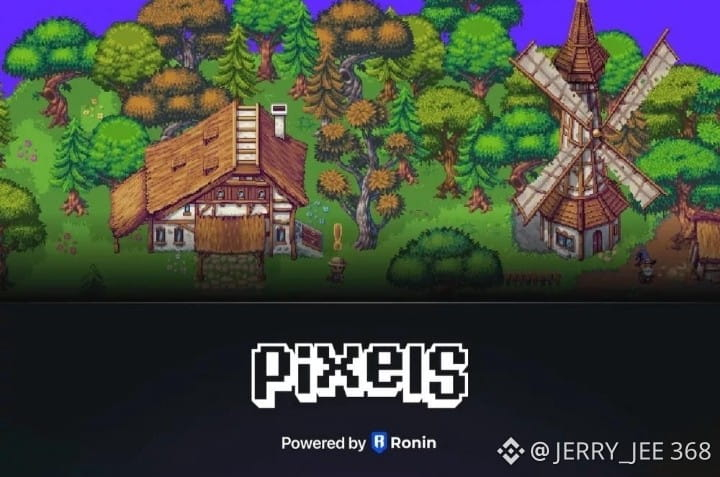
$PIXEL feels different when you stop seeing it as “just farming.”
Inside Pixels, every small action creates a signal. Players collect, craft, trade, adjust, and compete — but the deeper layer is coordination. The game is slowly teaching users how a digital economy behaves when rewards, scarcity, and timing all connect.
The strongest players may not be the fastest grinders, but the best readers of the system.
That’s why #pixel is interesting: it turns simple gameplay into real economic behavior.
#Pixel
4
9
477
Log in to explore more content
Join global crypto users on Binance Square
⚡️ Get latest and useful information about crypto.
💬 Trusted by the world’s largest crypto exchange.
👍 Discover real insights from verified creators.
Email / Phone number
Trending Topics
CryptoSelloffTriggersMultipleWhaleLiquidations
54,720 views
753 Discussing
Crypto Liquidations Top $2B in 24 Hours as 329,000 Traders Are Wiped Out
Binance News
·28 Likes
·25.8k views
USSpotXRPETFsSeeLargestWeeklyOutflowIn8Months
81,200 views
956 Discussing
WillFOMCMinutesReinforceRateHikeExpectations?
13,037 views
304 Discussing