

AikidoXPN
176 Posts

AikidoXPN
Report
Block User
Crypto-enthusiastic | Blockchain-powered | Finance-futurist | Community-builder

Content Master Angel
Open Trade
Occasional Trader
6.6 Years
196 Following
201 Followers
174 Liked
1 Badges
Posts
Portfolio
All
Quotes
Videos
Live
·
--
🪄 Let's dream together
Okay, builders, satoshis, and protocol nerds. I need your brains for this one.
Here's the scenario: you wake up tomorrow and one wish has been granted. **A brand-new feature, product, or primitive now exists natively across the Binance ecosystem.** Something that isn't live today. Something this space has been quietly missing. Poof. Wish granted. It's real now.
What did you conjure?
I'm not talking "faster gas fees" energy. I'm talking the idea that makes someone stop mid-scroll and go *"wait... why doesn't that exist yet?"* The kind of concept that ends up debated in group chats at 2am because nobody can stop thinking about it.
So let's actually go there! Drop your wildest, sharpest, most technically-grounded idea below:
- 🔮 **What is it?** (name it like it's already shipping)
- ⚡ **Why does this ecosystem need it?** (what gap does it close)
- 🙌 **Who wins?** (traders, devs, validators, everyday users. Be specific)
🪄 Let's dream together
Okay, builders, satoshis, and protocol nerds. I need your brains for this one.
Here's the scenario: you wake up tomorrow and one wish has been granted. **A brand-new feature, product, or primitive now exists natively across the Binance ecosystem.** Something that isn't live today. Something this space has been quietly missing. Poof. Wish granted. It's real now.
What did you conjure?
I'm not talking "faster gas fees" energy. I'm talking the idea that makes someone stop mid-scroll and go *"wait... why doesn't that exist yet?"* The kind of concept that ends up debated in group chats at 2am because nobody can stop thinking about it.
So let's actually go there! Drop your wildest, sharpest, most technically-grounded idea below:
- 🔮 **What is it?** (name it like it's already shipping)
- ⚡ **Why does this ecosystem need it?** (what gap does it close)
- 🙌 **Who wins?** (traders, devs, validators, everyday users. Be specific)
Okay, builders, satoshis, and protocol nerds. I need your brains for this one.
Here's the scenario: you wake up tomorrow and one wish has been granted. **A brand-new feature, product, or primitive now exists natively across the Binance ecosystem.** Something that isn't live today. Something this space has been quietly missing. Poof. Wish granted. It's real now.
What did you conjure?
I'm not talking "faster gas fees" energy. I'm talking the idea that makes someone stop mid-scroll and go *"wait... why doesn't that exist yet?"* The kind of concept that ends up debated in group chats at 2am because nobody can stop thinking about it.
So let's actually go there! Drop your wildest, sharpest, most technically-grounded idea below:
- 🔮 **What is it?** (name it like it's already shipping)
- ⚡ **Why does this ecosystem need it?** (what gap does it close)
- 🙌 **Who wins?** (traders, devs, validators, everyday users. Be specific)
3
63
·
--
#binancesummercamp2026
Thrilled to have completed all 10 days of the [Binance SummerCamp 2026](https://www.binance.com/en/ti/cryptolingo) and graduated with strong results!
🎓 Build a sound strategy, trade with data not emotion, manage risk, and optimize your portfolio. stay #SAFU
#binancesummercamp2026
Thrilled to have completed all 10 days of the Binance SummerCamp 2026 and graduated with strong results!
🎓 Build a sound strategy, trade with data not emotion, manage risk, and optimize your portfolio. stay #SAFU
Thrilled to have completed all 10 days of the Binance SummerCamp 2026 and graduated with strong results!
🎓 Build a sound strategy, trade with data not emotion, manage risk, and optimize your portfolio. stay #SAFU

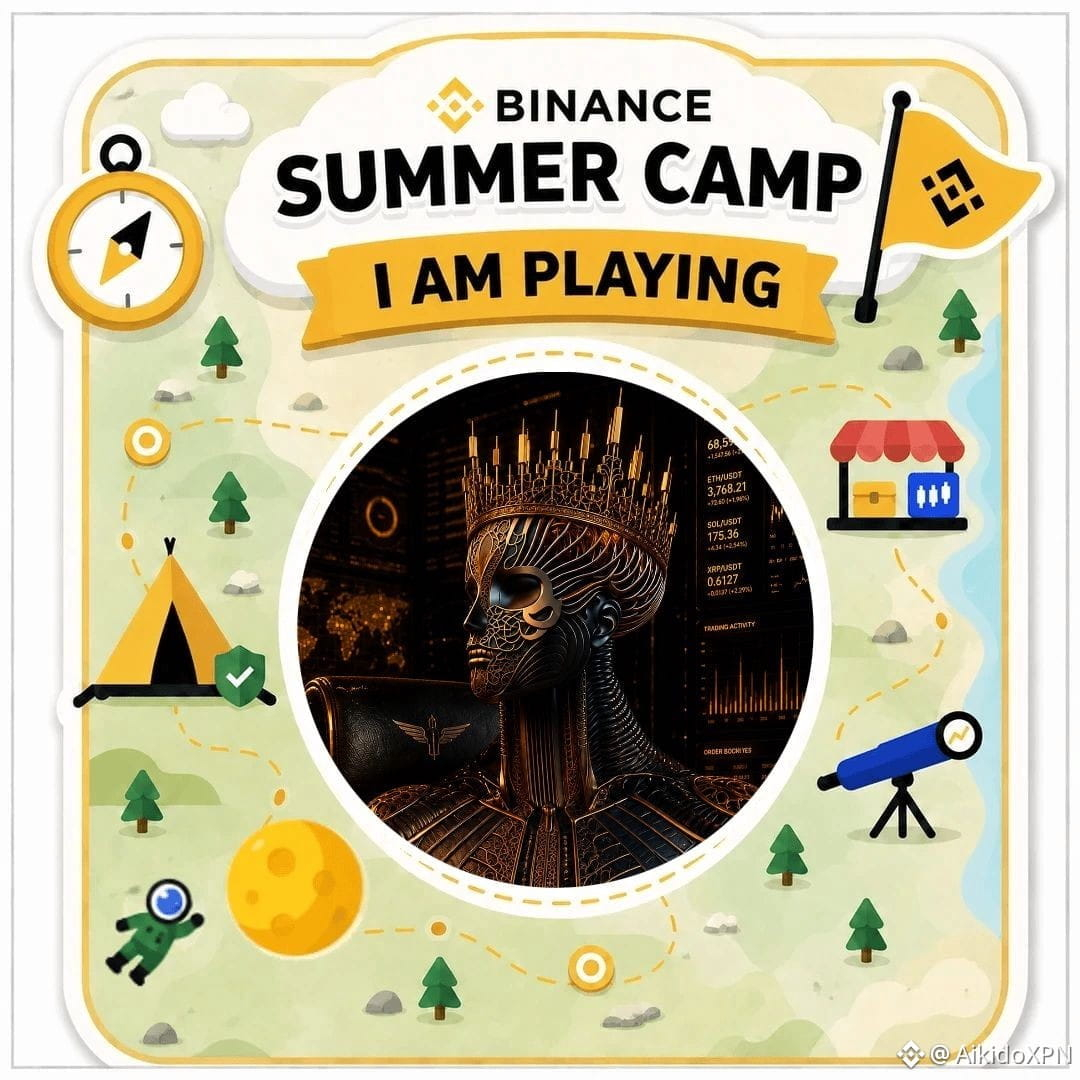
4
5
·
--
#binancesummercamp
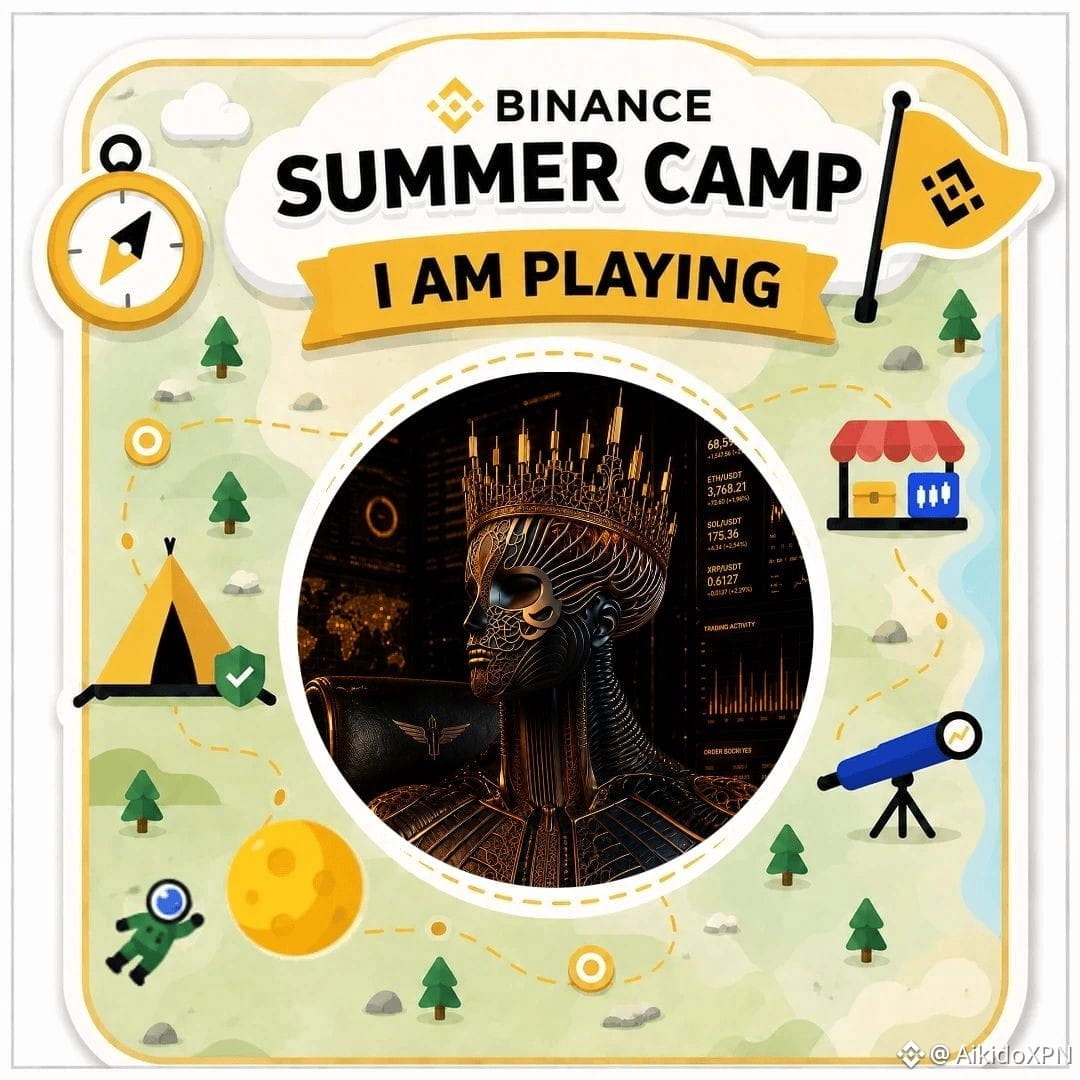
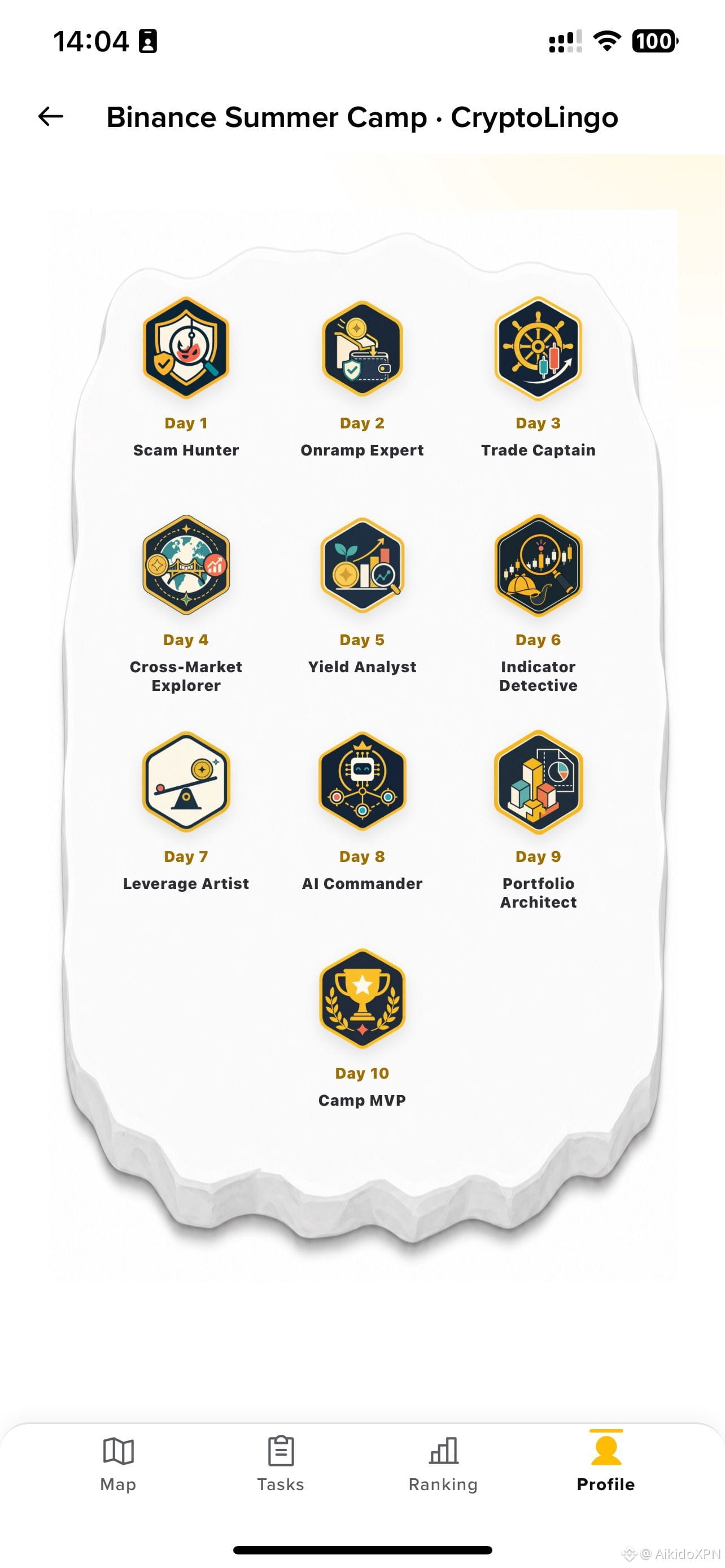
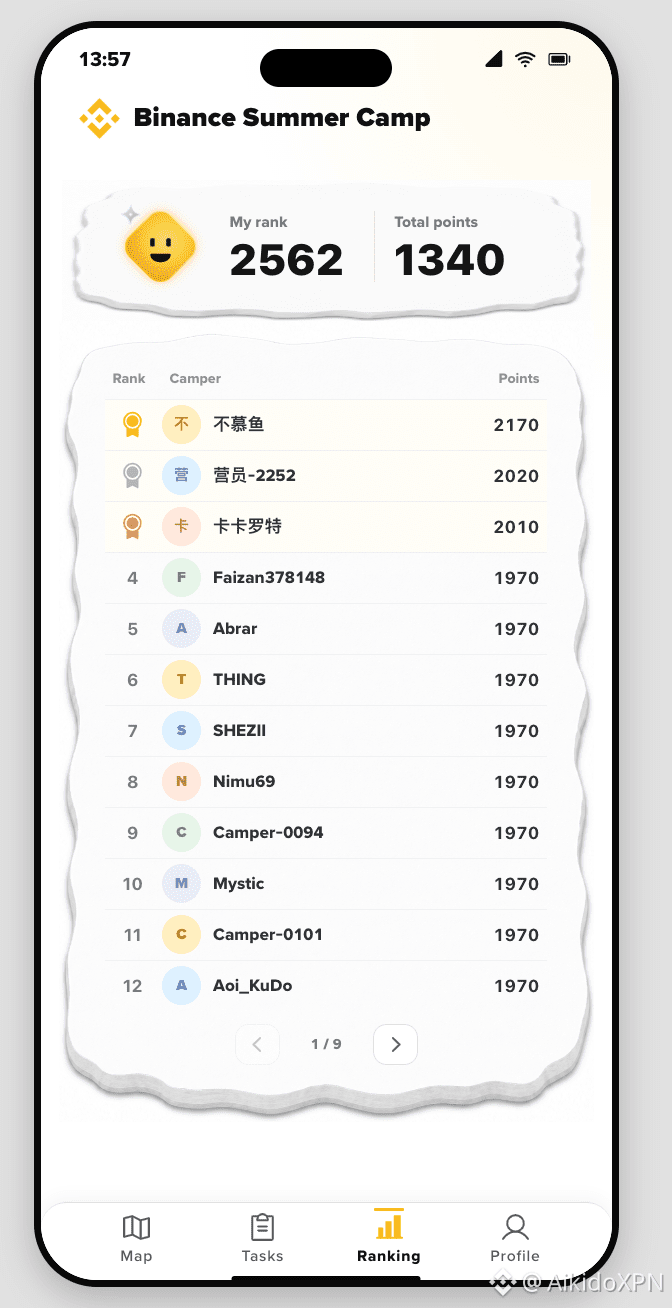
⛺ Binance Summer Camp | Day 10 Camp MVP! 🏆
#binancesummercamp
⛺ Binance Summer Camp | Day 10 Camp MVP! 🏆
If you haven't jumped in yet, you definitely want to take this camp.
Important Lessons: 🧠
• Secure: Protect your capital first before chasing returns. 🛡️
• Understand: Learn how leverage and tools actually work before taking risks. 📊
• Watch: Keep an eye on market conditions and monitor your positions closely. 👁️
• Trade: Execute with low leverage, small sizes, and strict stop losses. 🤝
Highlight of the camp so far: Hearing someone say "the debut deserves scale" was easily the funniest—and wrongest—thing spoken here! Scale comes with experience, not on day one. 😅
Check out my campaign card attached below! 📸
Join the Fun: 👇
Campaign Page: [https://www.binance.com/en/activity/marketing-campaign](https://www.binance.com/en/ti/cryptolingo)
What’s the wildest takeaway you’ve heard in camp so far? Let’s trade smart and win together! 🤝
#CryptoLingo #BinanceEvent #binancecampaign
#binancesummercamp
⛺ Binance Summer Camp | Day 10 Camp MVP! 🏆
#binancesummercamp
⛺ Binance Summer Camp | Day 10 Camp MVP! 🏆
If you haven't jumped in yet, you definitely want to take this camp.
Important Lessons: 🧠
• Secure: Protect your capital first before chasing returns. 🛡️
• Understand: Learn how leverage and tools actually work before taking risks. 📊
• Watch: Keep an eye on market conditions and monitor your positions closely. 👁️
• Trade: Execute with low leverage, small sizes, and strict stop losses. 🤝
Highlight of the camp so far: Hearing someone say "the debut deserves scale" was easily the funniest—and wrongest—thing spoken here! Scale comes with experience, not on day one. 😅
Check out my campaign card attached below! 📸
Join the Fun: 👇
Campaign Page: https://www.binance.com/en/activity/marketing-campaign
What’s the wildest takeaway you’ve heard in camp so far? Let’s trade smart and win together! 🤝
#CryptoLingo #BinanceEvent #binancecampaign
⛺ Binance Summer Camp | Day 10 Camp MVP! 🏆
#binancesummercamp
⛺ Binance Summer Camp | Day 10 Camp MVP! 🏆
If you haven't jumped in yet, you definitely want to take this camp.
Important Lessons: 🧠
• Secure: Protect your capital first before chasing returns. 🛡️
• Understand: Learn how leverage and tools actually work before taking risks. 📊
• Watch: Keep an eye on market conditions and monitor your positions closely. 👁️
• Trade: Execute with low leverage, small sizes, and strict stop losses. 🤝
Highlight of the camp so far: Hearing someone say "the debut deserves scale" was easily the funniest—and wrongest—thing spoken here! Scale comes with experience, not on day one. 😅
Check out my campaign card attached below! 📸
Join the Fun: 👇
Campaign Page: https://www.binance.com/en/activity/marketing-campaign
What’s the wildest takeaway you’ve heard in camp so far? Let’s trade smart and win together! 🤝
#CryptoLingo #BinanceEvent #binancecampaign
2
53
·
--
#binancesummercamp
⛺ Binance Summer Camp | Day 9 Complete! 🚀
Today's portfolio strategy risk management completed.
Protecting is the best way to stay safe while aiming for the reward pool! 💰
Key Takeaways:
🎯 • Ballast + Dry Powder: Keep core spot positions to stay grounded, and save stablecoins to buy the dips.
📉 • Stick to Your Plan: Don't panic or trade off raw emotion when the market drops.
Check out my campaign card attached below! 📸
Join the Fun: 👇 • Campaign Page:
[CLICK HERE](https://www.binance.com/en/ti/cryptolingo)
Have you finished your Day 9 task yet? Let’s trade smart and win together! 🤝
#CryptoLingo #BinanceEvent #binancecampaign
#binancesummercamp
⛺ Binance Summer Camp | Day 9 Complete! 🚀
Today's portfolio strategy risk management completed.
Protecting is the best way to stay safe while aiming for the reward pool! 💰
Key Takeaways:
🎯 • Ballast + Dry Powder: Keep core spot positions to stay grounded, and save stablecoins to buy the dips.
📉 • Stick to Your Plan: Don't panic or trade off raw emotion when the market drops.
Check out my campaign card attached below! 📸
Join the Fun: 👇 • Campaign Page:
CLICK HERE
Have you finished your Day 9 task yet? Let’s trade smart and win together! 🤝
#CryptoLingo #BinanceEvent #binancecampaign
⛺ Binance Summer Camp | Day 9 Complete! 🚀
Today's portfolio strategy risk management completed.
Protecting is the best way to stay safe while aiming for the reward pool! 💰
Key Takeaways:
🎯 • Ballast + Dry Powder: Keep core spot positions to stay grounded, and save stablecoins to buy the dips.
📉 • Stick to Your Plan: Don't panic or trade off raw emotion when the market drops.
Check out my campaign card attached below! 📸
Join the Fun: 👇 • Campaign Page:
CLICK HERE
Have you finished your Day 9 task yet? Let’s trade smart and win together! 🤝
#CryptoLingo #BinanceEvent #binancecampaign
3
87
·
--
#binancesummercamp
⛺ Binance Summer Camp | Day 8 Complete! 🚀
Today's session on AI command centers completed. Optimizing trading bots requires strategy, not just luck! 💰
Key Takeaways:
• AI is an aid: Always set risk limits and watch the bot closely.
• Test small: Fund small amounts first to learn the system.
Check out my campaign card attached below! 📸
Join the Fun: [CLICK HERE](https://www.binance.com/en/ti/cryptolingo)
Have you finished your Day 8 task yet? Let’s trade smart and win together!
#CryptoLingo #BinanceEvent #binancecampaign
#binancesummercamp
⛺ Binance Summer Camp | Day 8 Complete! 🚀
Today's session on AI command centers completed. Optimizing trading bots requires strategy, not just luck! 💰
Key Takeaways:
• AI is an aid: Always set risk limits and watch the bot closely.
• Test small: Fund small amounts first to learn the system.
Check out my campaign card attached below! 📸
Join the Fun: CLICK HERE
Have you finished your Day 8 task yet? Let’s trade smart and win together!
#CryptoLingo #BinanceEvent #binancecampaign
⛺ Binance Summer Camp | Day 8 Complete! 🚀
Today's session on AI command centers completed. Optimizing trading bots requires strategy, not just luck! 💰
Key Takeaways:
• AI is an aid: Always set risk limits and watch the bot closely.
• Test small: Fund small amounts first to learn the system.
Check out my campaign card attached below! 📸
Join the Fun: CLICK HERE
Have you finished your Day 8 task yet? Let’s trade smart and win together!
#CryptoLingo #BinanceEvent #binancecampaign
2
86
·
--
#copytrading
#copytrading


Binance Angels
·
--
🌊 Crushing the waves while Binance Copy Trading handles the moves. 📈
Ride the market. Copy the strategy. Stay in control. 💛
More Info about copy trading learn more here
cc @Builder 7 $BNB
Ride the market. Copy the strategy. Stay in control. 💛
More Info about copy trading learn more here
cc @Builder 7 $BNB
2
4
·
--
#binancesummercamp
🏕️ Binance Summer Camp | Day 1 Complete! 🚀
Just wrapped up the first day of the activities! Today’s focus was all about account defense and crypto lingo basics. 🔐✨
Learning how to properly secure your funds and navigate the market is the ultimate way to stay #SAFU while earning a share of the 10,000 USDC reward pool! 🛡️💰
🎯 Key Takeaways Today:
* Always double-check your transfer networks to protect your assets.
* Security first, gains second! 📈
📸 Check out my custom campaign card attached below!
👇 Join the Fun:
* ➡️ Campaign Page: [Binance Summer Camp](https://www.binance.com/en/ti/cryptolingo)
* ❤️ Submit Your Challenge Post: Binance Survey Hub
Have you completed your Day 1 task yet? Let’s learn and earn together!
#CryptoLingo #BinanceEvent #binancecampaign
👇 Join the Fun: [CLICK HERE](https://www.binance.com/en/survey/5888c17f86cf44e5ab5fd3b7e7c5bdf7)
#binancesummercamp
🏕️ Binance Summer Camp | Day 1 Complete! 🚀
Just wrapped up the first day of the activities! Today’s focus was all about account defense and crypto lingo basics. 🔐✨
Learning how to properly secure your funds and navigate the market is the ultimate way to stay #SAFU while earning a share of the 10,000 USDC reward pool! 🛡️💰
🎯 Key Takeaways Today:
* Always double-check your transfer networks to protect your assets.
* Security first, gains second! 📈
📸 Check out my custom campaign card attached below!
👇 Join the Fun:
* ➡️ Campaign Page: Binance Summer Camp
* ❤️ Submit Your Challenge Post: Binance Survey Hub
Have you completed your Day 1 task yet? Let’s learn and earn together!
#CryptoLingo #BinanceEvent #binancecampaign
👇 Join the Fun: CLICK HERE
🏕️ Binance Summer Camp | Day 1 Complete! 🚀
Just wrapped up the first day of the activities! Today’s focus was all about account defense and crypto lingo basics. 🔐✨
Learning how to properly secure your funds and navigate the market is the ultimate way to stay #SAFU while earning a share of the 10,000 USDC reward pool! 🛡️💰
🎯 Key Takeaways Today:
* Always double-check your transfer networks to protect your assets.
* Security first, gains second! 📈
📸 Check out my custom campaign card attached below!
👇 Join the Fun:
* ➡️ Campaign Page: Binance Summer Camp
* ❤️ Submit Your Challenge Post: Binance Survey Hub
Have you completed your Day 1 task yet? Let’s learn and earn together!
#CryptoLingo #BinanceEvent #binancecampaign
👇 Join the Fun: CLICK HERE
2
3
66
·
--
🏕️ Binance Summer Camp | Day 1 Complete! 🚀
Just wrapped up the first day of the #BinanceSummerCamp activities! Today’s focus was all about account defense and crypto lingo basics. 🔐✨
Learning how to properly secure your funds and navigate the market is the ultimate way to stay #SAFU while earning a share of the 10,000 USDC reward pool! 🛡️💰
🎯 Key Takeaways Today:
* Always double-check your transfer networks to protect your assets.
* Security first, gains second! 📈
📸 Check out my custom campaign card attached below!
👇 Join the Fun:
* ➡️ Campaign Page: [Binance Summer Camp](https://www.binance.com/en/ti/cryptolingo)
* ❤️ Submit Your Challenge Post: Binance Survey Hub
Have you completed your Day 1 task yet? Let’s learn and earn together!
#Binance #BinanceSummerCamp #CryptoLingo #BinanceEvent #CryptoSecurity #SAFU
👇 Join the Fun: [CLICK HERE](https://www.binance.com/en/survey/5888c17f86cf44e5ab5fd3b7e7c5bdf7)
🏕️ Binance Summer Camp | Day 1 Complete! 🚀
Just wrapped up the first day of the #BinanceSummerCamp activities! Today’s focus was all about account defense and crypto lingo basics. 🔐✨
Learning how to properly secure your funds and navigate the market is the ultimate way to stay #SAFU while earning a share of the 10,000 USDC reward pool! 🛡️💰
🎯 Key Takeaways Today:
* Always double-check your transfer networks to protect your assets.
* Security first, gains second! 📈
📸 Check out my custom campaign card attached below!
👇 Join the Fun:
* ➡️ Campaign Page: Binance Summer Camp
* ❤️ Submit Your Challenge Post: Binance Survey Hub
Have you completed your Day 1 task yet? Let’s learn and earn together!
#Binance #BinanceSummerCamp #CryptoLingo #BinanceEvent #CryptoSecurity #SAFU
👇 Join the Fun: CLICK HERE
Just wrapped up the first day of the #BinanceSummerCamp activities! Today’s focus was all about account defense and crypto lingo basics. 🔐✨
Learning how to properly secure your funds and navigate the market is the ultimate way to stay #SAFU while earning a share of the 10,000 USDC reward pool! 🛡️💰
🎯 Key Takeaways Today:
* Always double-check your transfer networks to protect your assets.
* Security first, gains second! 📈
📸 Check out my custom campaign card attached below!
👇 Join the Fun:
* ➡️ Campaign Page: Binance Summer Camp
* ❤️ Submit Your Challenge Post: Binance Survey Hub
Have you completed your Day 1 task yet? Let’s learn and earn together!
#Binance #BinanceSummerCamp #CryptoLingo #BinanceEvent #CryptoSecurity #SAFU
👇 Join the Fun: CLICK HERE
3
61
·
--
AI in Action: How Binance Agent OS Processed 90,000+ Requests in a Single DayAI in Action: How Binance Agent OS Processed 90,000+ Requests in a Single Day
AI has spent years promising to change how we interact with technology. The more interesting question now is whether people are actually using it to do useful work.
Early usage data from Binance Agent OS suggests that shift is already happening.
In its first weeks live, Agent OS processed more than 90,000 agent requests in a single day. Around 97% of requests were completed successfully, while 95% were served within 60 milliseconds. Nearly half of active users were generating 20 or more requests per day.
More importantly, the most-used capabilities were practical: live market data, positions, account information and price movements.
That tells us something about where AI agents may be heading — away from simply answering questions and toward interacting with real-time financial infrastructure.
From Answers to Actions
A traditional chatbot largely operates through conversation.
You ask a question, it generates an answer.
An AI agent can go further. It can retrieve information from connected systems, process that information and, where the appropriate permissions exist, carry out defined actions.
That difference becomes particularly important in financial markets.
A model may know what Bitcoin is or understand how futures work. But knowing the current BTC price, checking an account position or retrieving live market information requires access to current data.
Agent OS is designed around this connection between AI applications and Binance infrastructure, including market data and other supported functions.
The result is a different workflow:
User intent → Agent → Relevant data/tools → Useful result or permitted action
The intelligence is only one part of the equation. Access, reliability and permissions become equally important.
90,000 Requests Does Not Mean 90,000 Trades
The 90,000+ figure deserves some context.
An agent request is not necessarily a trade.
One request could involve checking a price. Another could retrieve an account position. An agent may also make multiple underlying calls while completing a single user instruction.
That means the figure is better understood as a measure of agent infrastructure activity, rather than trading volume.
This distinction matters because it shows where early adoption is actually occurring: users are experimenting with AI to access and process financial information.
That may ultimately prove more significant than the headline number itself.
Why Latency Matters
The reported 95% response rate within 60 milliseconds is another interesting part of the data.
Speed matters differently depending on the task.
A few seconds may not matter when asking an AI to explain a concept. But financial markets operate continuously, and information can change rapidly.
For an agent working with market data, responsiveness becomes part of the user experience.
The combination of successful execution and low latency therefore points to an important requirement for agentic finance: AI needs infrastructure that can keep up with the environment in which it operates.
Control Becomes More Important as AI Becomes More Capable
There is another question that matters even more than speed:
How much should an agent actually be allowed to do?
An AI can potentially operate at several levels.
At the first level, it can simply provide information and analysis.
At the next, it can prepare an action for the user to review.
At a higher level of autonomy, it may execute permitted actions according to predefined instructions.
Each step increases the importance of permissions, account separation and user oversight.
This is why the development of agentic finance cannot be judged by intelligence alone. A powerful agent without appropriate boundaries creates a very different risk profile from an agent operating within clearly defined permissions.
The Bigger AI Economy
The significance of Agent OS extends beyond crypto trading.
If AI agents increasingly become interfaces for financial services, they may eventually monitor portfolios, retrieve market information, automate predefined workflows, interact with blockchain applications and facilitate programmable payments.
That creates the foundations for a broader agent economy, where software does not simply assist humans but interacts with financial systems and potentially other software on their behalf.
But adoption will depend on more than technical capability.
Security, transparency, reliability, permissions and accountability will determine whether users are comfortable allowing agents to perform increasingly meaningful tasks.
The Real Test Starts Now
90,000+ requests in a single day is an interesting early signal.
But the bigger question is what happens next.
Will users continue using agents after the initial novelty fades? Will developers build applications that solve genuine problems? Can agent infrastructure remain reliable as usage grows? And how much autonomy will users ultimately be comfortable giving their agents?
Those questions will matter more than any single usage statistic.
The next phase of AI may therefore not be defined simply by how intelligent models become.
It may be defined by how effectively they can access information, use tools, operate within boundaries and turn user intent into useful action.
AI is moving from answering to acting.
And the real test of that transition is only beginning.
$BNB
{spot}(BNBUSDT)
#AgentOS #BinanceSquareTG #AI #writetoearn
AI in Action: How Binance Agent OS Processed 90,000+ Requests in a Single Day
AI in Action: How Binance Agent OS Processed 90,000+ Requests in a Single Day
AI has spent years promising to change how we interact with technology. The more interesting question now is whether people are actually using it to do useful work.
Early usage data from Binance Agent OS suggests that shift is already happening.
In its first weeks live, Agent OS processed more than 90,000 agent requests in a single day. Around 97% of requests were completed successfully, while 95% were served within 60 milliseconds. Nearly half of active users were generating 20 or more requests per day.
More importantly, the most-used capabilities were practical: live market data, positions, account information and price movements.
That tells us something about where AI agents may be heading — away from simply answering questions and toward interacting with real-time financial infrastructure.
From Answers to Actions
A traditional chatbot largely operates through conversation.
You ask a question, it generates an answer.
An AI agent can go further. It can retrieve information from connected systems, process that information and, where the appropriate permissions exist, carry out defined actions.
That difference becomes particularly important in financial markets.
A model may know what Bitcoin is or understand how futures work. But knowing the current BTC price, checking an account position or retrieving live market information requires access to current data.
Agent OS is designed around this connection between AI applications and Binance infrastructure, including market data and other supported functions.
The result is a different workflow:
User intent → Agent → Relevant data/tools → Useful result or permitted action
The intelligence is only one part of the equation. Access, reliability and permissions become equally important.
90,000 Requests Does Not Mean 90,000 Trades
The 90,000+ figure deserves some context.
An agent request is not necessarily a trade.
One request could involve checking a price. Another could retrieve an account position. An agent may also make multiple underlying calls while completing a single user instruction.
That means the figure is better understood as a measure of agent infrastructure activity, rather than trading volume.
This distinction matters because it shows where early adoption is actually occurring: users are experimenting with AI to access and process financial information.
That may ultimately prove more significant than the headline number itself.
Why Latency Matters
The reported 95% response rate within 60 milliseconds is another interesting part of the data.
Speed matters differently depending on the task.
A few seconds may not matter when asking an AI to explain a concept. But financial markets operate continuously, and information can change rapidly.
For an agent working with market data, responsiveness becomes part of the user experience.
The combination of successful execution and low latency therefore points to an important requirement for agentic finance: AI needs infrastructure that can keep up with the environment in which it operates.
Control Becomes More Important as AI Becomes More Capable
There is another question that matters even more than speed:
How much should an agent actually be allowed to do?
An AI can potentially operate at several levels.
At the first level, it can simply provide information and analysis.
At the next, it can prepare an action for the user to review.
At a higher level of autonomy, it may execute permitted actions according to predefined instructions.
Each step increases the importance of permissions, account separation and user oversight.
This is why the development of agentic finance cannot be judged by intelligence alone. A powerful agent without appropriate boundaries creates a very different risk profile from an agent operating within clearly defined permissions.
The Bigger AI Economy
The significance of Agent OS extends beyond crypto trading.
If AI agents increasingly become interfaces for financial services, they may eventually monitor portfolios, retrieve market information, automate predefined workflows, interact with blockchain applications and facilitate programmable payments.
That creates the foundations for a broader agent economy, where software does not simply assist humans but interacts with financial systems and potentially other software on their behalf.
But adoption will depend on more than technical capability.
Security, transparency, reliability, permissions and accountability will determine whether users are comfortable allowing agents to perform increasingly meaningful tasks.
The Real Test Starts Now
90,000+ requests in a single day is an interesting early signal.
But the bigger question is what happens next.
Will users continue using agents after the initial novelty fades? Will developers build applications that solve genuine problems? Can agent infrastructure remain reliable as usage grows? And how much autonomy will users ultimately be comfortable giving their agents?
Those questions will matter more than any single usage statistic.
The next phase of AI may therefore not be defined simply by how intelligent models become.
It may be defined by how effectively they can access information, use tools, operate within boundaries and turn user intent into useful action.
AI is moving from answering to acting.
And the real test of that transition is only beginning.
$BNB
#AgentOS #BinanceSquareTG #AI #writetoearn
AI has spent years promising to change how we interact with technology. The more interesting question now is whether people are actually using it to do useful work.
Early usage data from Binance Agent OS suggests that shift is already happening.
In its first weeks live, Agent OS processed more than 90,000 agent requests in a single day. Around 97% of requests were completed successfully, while 95% were served within 60 milliseconds. Nearly half of active users were generating 20 or more requests per day.
More importantly, the most-used capabilities were practical: live market data, positions, account information and price movements.
That tells us something about where AI agents may be heading — away from simply answering questions and toward interacting with real-time financial infrastructure.
From Answers to Actions
A traditional chatbot largely operates through conversation.
You ask a question, it generates an answer.
An AI agent can go further. It can retrieve information from connected systems, process that information and, where the appropriate permissions exist, carry out defined actions.
That difference becomes particularly important in financial markets.
A model may know what Bitcoin is or understand how futures work. But knowing the current BTC price, checking an account position or retrieving live market information requires access to current data.
Agent OS is designed around this connection between AI applications and Binance infrastructure, including market data and other supported functions.
The result is a different workflow:
User intent → Agent → Relevant data/tools → Useful result or permitted action
The intelligence is only one part of the equation. Access, reliability and permissions become equally important.
90,000 Requests Does Not Mean 90,000 Trades
The 90,000+ figure deserves some context.
An agent request is not necessarily a trade.
One request could involve checking a price. Another could retrieve an account position. An agent may also make multiple underlying calls while completing a single user instruction.
That means the figure is better understood as a measure of agent infrastructure activity, rather than trading volume.
This distinction matters because it shows where early adoption is actually occurring: users are experimenting with AI to access and process financial information.
That may ultimately prove more significant than the headline number itself.
Why Latency Matters
The reported 95% response rate within 60 milliseconds is another interesting part of the data.
Speed matters differently depending on the task.
A few seconds may not matter when asking an AI to explain a concept. But financial markets operate continuously, and information can change rapidly.
For an agent working with market data, responsiveness becomes part of the user experience.
The combination of successful execution and low latency therefore points to an important requirement for agentic finance: AI needs infrastructure that can keep up with the environment in which it operates.
Control Becomes More Important as AI Becomes More Capable
There is another question that matters even more than speed:
How much should an agent actually be allowed to do?
An AI can potentially operate at several levels.
At the first level, it can simply provide information and analysis.
At the next, it can prepare an action for the user to review.
At a higher level of autonomy, it may execute permitted actions according to predefined instructions.
Each step increases the importance of permissions, account separation and user oversight.
This is why the development of agentic finance cannot be judged by intelligence alone. A powerful agent without appropriate boundaries creates a very different risk profile from an agent operating within clearly defined permissions.
The Bigger AI Economy
The significance of Agent OS extends beyond crypto trading.
If AI agents increasingly become interfaces for financial services, they may eventually monitor portfolios, retrieve market information, automate predefined workflows, interact with blockchain applications and facilitate programmable payments.
That creates the foundations for a broader agent economy, where software does not simply assist humans but interacts with financial systems and potentially other software on their behalf.
But adoption will depend on more than technical capability.
Security, transparency, reliability, permissions and accountability will determine whether users are comfortable allowing agents to perform increasingly meaningful tasks.
The Real Test Starts Now
90,000+ requests in a single day is an interesting early signal.
But the bigger question is what happens next.
Will users continue using agents after the initial novelty fades? Will developers build applications that solve genuine problems? Can agent infrastructure remain reliable as usage grows? And how much autonomy will users ultimately be comfortable giving their agents?
Those questions will matter more than any single usage statistic.
The next phase of AI may therefore not be defined simply by how intelligent models become.
It may be defined by how effectively they can access information, use tools, operate within boundaries and turn user intent into useful action.
AI is moving from answering to acting.
And the real test of that transition is only beginning.
$BNB
#AgentOS #BinanceSquareTG #AI #writetoearn
3
86
·
--
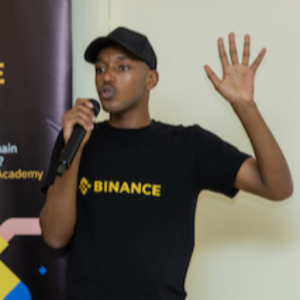
It's really not as hard as you think it is
It's really not as hard as you think it is
nyemangel
·
--
In This Video you will learn How to connect Agent OS And also some of the key things your agent can do.👍
#BinanceAgentOS
@Binance Angels CONNECT BUILD CONTROL
One key thing i have learnt while using Agent OS is that you don't need any coding skills to set up and also you are in control.
#BinanceAgentOS
@Binance Angels CONNECT BUILD CONTROL
One key thing i have learnt while using Agent OS is that you don't need any coding skills to set up and also you are in control.
1
34
·
--
🚀
🚀

Binance Blog
·
--
3 Ways People Are Already Using Binance Agent OS
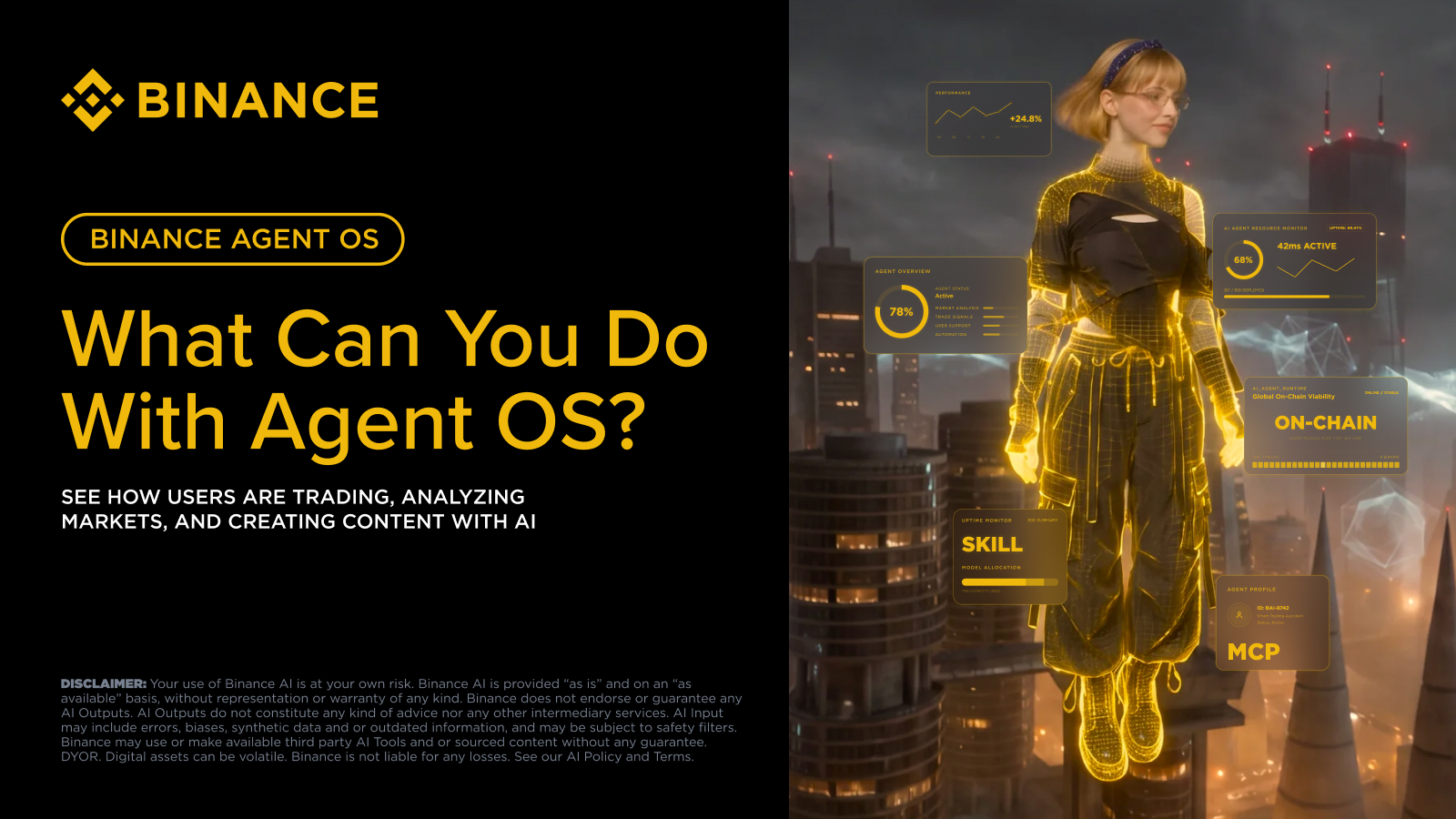
Main TakeawaysBinance Agent OS is a platform and toolkit that brings Binance capabilities into the AI tools and agents people already use every day.It gives AI agents access to Binance market data, trading, wallets, and payments through the Binance MCP server and other Agent OS tools.Three Binance users share how they’re already putting Agent OS to work.It’s already hard for a lot of us to imagine life without AI agents. In just a few years, they’ve gone from simple chatbots to tools we use every day. They can search for information, work across platforms, and take action on our behalf.Traders are already using AI agents to research markets and support their decisions. Binance Agent OS takes this further, giving them access to live Binance market data and account information, and the ability to take trading actions through AI. Users stay in control by setting permissions and limits on what AI can access and do.We spoke with Binance users already integrating Agent OS into their workflows – from trading and market analysis to crypto research and content creation – to see what that looks like in practice.1. Trading Through Your AI AgentA user who goes by the name Crypto Eagle connected Binance Agent OS to Codex to trade on Binance through the AI tool. They used the setup to buy BNB on Spot using USDT, simply by asking Codex to make the trade.Codex prepared the order and showed the details for review. Once Crypto Eagle approved it, the trade went through, and the AI agent returned the amount purchased, price, fee, and updated balance.Crypto Eagle also uses the setup for other account and trading tasks, including converting USDT to BNB, selling BNB back to USDT, and moving funds between Spot and USDⓈ-M Futures.“For me, the future is controlled automation: let AI prepare and act, but keep permission with the user.”2. Building a Trading Strategy With Live Binance DataGhostWriter, as he’s known, connected Agent OS to Claude, giving it access to live Binance market data. He then asked Claude to use that data to build a BTCUSDT trading strategy based on current market conditions.Claude pulled order-book data and recent price movements through Agent OS and came back with two possible approaches: wait for a pullback around specific levels, or consider a continuation trade if the price provided further confirmation.“This is the first time I’ve seen an AI strategy built from Binance liquidity, not from a model guessing the market.”GhostWriter could then use the analysis to inform his own trading decision.3. Turning Binance Market Data Into ContentAnother user, called CryptoVerse, runs a crypto news page and uses AI agents inside Discord to research the market and prepare content. Before Agent OS, getting Binance data into that workflow meant checking Binance and other dashboards, collecting the relevant information, and passing it back to the AI manually.Now, Binance market data can be pulled directly into the same workflow. For a market update, CryptoVerse asked their AI to retrieve key data on BTC, ETH, and BNB, including prices, recent market movements, and order-book data. The AI then compared the three markets and turned the information into a short briefing.“With Agent OS, I stayed inside the same Discord session. I asked the question, Binance supplied the market information, and my AI organized it into something useful.”CryptoVerse also uses Agent OS for more in-depth content research, combining Binance market data with wider context to prepare reusable datasets and potential angles for future content.What Will You Use Agent OS For?These are just three examples of what you can do with Agent OS. You could also use it to monitor your portfolio, track market movements, compare assets, check your balances, or prepare trades for your approval.When markets move quickly, having current data matters. Agent OS gives your AI direct access to Binance market data, from prices and order books to recent trading activity. Instead of switching to Binance to check that information yourself, you can bring it directly into the AI workflow you’re already using. With the permissions you set, your AI can also take supported actions on Binance.Agent OS works with Claude Code, Cursor, Codex, ChatGPT, and VS Code, so you can bring Binance into the AI environment that works for you.Ready to put it to work? Get started today by visiting the Agent OS page.Further ReadingIntroducing Binance Agent OS: Built for AI Agent IntegrationBinance Agent OS Playbook: Choosing the Right Tools for Your AI AgentHow Binance is Connecting AI Agents to the Financial Super App ExperienceDisclaimer: Your use of Binance AI, including any Binance AI Service, is at your own risk. It is provided to you on an “as is” and “as available” basis, without representation or warranty of any kind. You are solely responsible for all of your Prompts. Prompts may be used for training purposes. AI Inputs may include various unvetted third party sourced content. Any sourced content is provided “as is” without any guarantee. Binance may restrict or alter sourced content based on various compliance safety filters, however this is not absolute. Binance does not endorse or guarantee any AI Outputs. AI Outputs may include or reflect content, positions, views and opinions of third parties unknown to Binance, which may also include errors, biases, synthetic data and or outdated information. Any AI Output should not be solely relied on for decision making. AI Outputs do not constitute any kind of advice by Binance nor any other intermediary services. Binance AI may use or make available third party AI Tools without any guarantee and subject to third party terms. Where AI Tools are configured by yourself or a third-party, you indemnify Binance against all liability. Binance does not guarantee any AI Tools. Binance AI may respond to your requests, but without any guarantee that your request will be fulfilled satisfactorily or at all. Digital asset prices can be volatile. You are solely responsible for your investment decisions and Binance is not liable for any losses. Digital asset prices can be volatile. DYOR. Use of Binance AI may be subject to additional Binance Product Terms, where applicable. For more information, see our Terms of Use, Risk Warning and AI Policy and Terms.
1
5
·
--
The Complete Loop: How Stock Options Complete Binance’s Crypto-and-TradFi StackFor years, crypto investors have had to move between platforms to access different parts of the financial markets.
Crypto on one exchange. Stocks through a brokerage. Options somewhere else. Tokenized assets through another platform.
Binance is increasingly trying to collapse those walls.
With the addition of Stock Options, Binance is bringing another major piece of traditional finance into the same ecosystem where users can already access crypto, stocks, tokenized securities, commodities, Spot and Futures.
The result is more than simply another trading product. It creates a broader toolkit for managing exposure across different markets and risk profiles.
From Directional Trading to Defined-Risk Strategies
Spot trading gives investors direct exposure to an asset.
Perpetual futures can provide leveraged long or short exposure.
bStocks bring tokenized securities into the Binance ecosystem, with eligible users able to trade selected tokenized U.S. securities on a 24/7 basis. Binance states that bStocks are backed 1:1 by the underlying securities held with a regulated custodian, although they represent an interest in the underlying securities rather than direct ownership of the underlying shares.
Stock Options add another dimension.
Binance launched options on more than 1,000 selected U.S.-listed stocks and ETFs, allowing eligible users to buy calls and puts. These contracts are physically settled in real shares rather than being cash-settled.
For a crypto-native investor, this matters because options can provide a way to express a market view without simply buying or selling the underlying asset.
Check $NVDAB
{spot}(NVDABUSDT)
The Options Overlay
Consider an investor who has a long-term position they do not necessarily want to sell.
A sudden market decline could still create significant portfolio losses.
Instead of completely unwinding the position, an options strategy can potentially be used as an additional layer of risk management.
For example, a put option can provide downside exposure that may help offset losses in the underlying asset if the market falls.
On the other side, a call option can provide upside exposure without requiring the investor to purchase the full amount of the underlying shares.
The important distinction is that options introduce a different risk structure.
With the long calls and puts currently supported by Binance, the maximum loss on the option trade is generally limited to the premium paid, although the option can expire worthless. Binance specifically notes that users can lose the entire premium and that options carry significant market, liquidity and volatility risks.
That creates what many traders value most about options: defined risk on the premium paid.
One Ecosystem, Multiple Market Exposures
Binance’s broader TradFi expansion is making the distinction between “crypto exchange” and “financial marketplace” increasingly blurred.
The platform now brings together several different forms of exposure.
Spot can provide direct crypto exposure.
Futures can provide leveraged directional exposure.
Stocks provide access to traditional equities.
bStocks extend tokenized securities into the crypto ecosystem.
Stock Options introduce defined-risk exposure to selected U.S. stocks and ETFs.
Commodity options have also expanded the derivatives offering beyond digital assets, including contracts linked to gold and silver. Binance says the platform now allows users to access crypto, stocks and commodities across Spot, Convert, Futures and Options through one account.
The significance is not that every investor needs to use every product.
It is that investors can increasingly choose the instrument that matches the exposure and risk profile they actually want.
Why This Matters for Crypto-Native Investors
Crypto investors are already familiar with volatility.
They understand that holding an asset, using leverage and managing downside exposure are fundamentally different decisions.
Options add another tool to that decision-making process.
Imagine an investor who is strongly bullish on a company but does not want unlimited downside from simply buying shares.
A long call can provide upside exposure with the premium paid representing the maximum loss on that option position.
Alternatively, an investor holding an asset may consider a put as a potential downside hedge.
These are not risk-free strategies. Options have expiration dates, strike prices, premiums, liquidity considerations and volatility effects that can materially affect their value.
But that complexity is precisely why having another risk-management instrument matters.
Completing the Loop
This is where the bigger Binance story becomes interesting.
The platform is moving toward an environment where an investor can move between different forms of exposure without necessarily leaving the same ecosystem.
Crypto can provide the digital-asset foundation.
bStocks can connect tokenized securities with the blockchain environment.
Traditional stocks can provide exposure to listed companies.
Futures can offer leverage and short exposure.
Options can introduce defined-risk structures around selected securities.
Together, these products create a broader financial toolkit.
The goal isn't necessarily to trade everything.
It is to have more ways to express an investment view.
What Investors Should Keep in Mind
More products do not automatically mean lower risk.
In fact, having more instruments can make risk management even more important.
Binance's current Stock Options offering initially supports buying long calls and puts, with writing and short exposure planned for the future. Users must also complete the required suitability process before accessing options.
Stock options also operate during U.S. market hours, and Binance states that users are responsible for monitoring their positions and understanding exercise procedures, expiration and potential auto-liquidation.
Availability can also vary by jurisdiction and eligibility.
The key takeaway is therefore not “options are better.”
It is that investors now have another instrument available for expressing views and structuring risk.
The Bigger Picture
Binance's evolution is increasingly about bringing different financial markets into one ecosystem.
The addition of Stock Options represents another step in that direction.
From crypto Spot and Futures to stocks, bStocks, commodities and now stock options, the toolkit is becoming broader and more interconnected.
For crypto-native investors, that creates an interesting possibility: instead of thinking about markets as isolated products, they can begin thinking in terms of exposure, correlation, hedging and risk structure.
That is ultimately what makes options important.
They don't replace Spot.
They don't replace Futures.
They don't replace stocks or tokenized securities.
They complete the toolkit by adding another way to manage and express risk.
And as Binance continues expanding across both crypto and traditional finance, the boundary between the two markets may become increasingly difficult to define.
Not financial advice. Options and other derivatives involve significant risk. Always understand the product, assess whether it is appropriate for your circumstances, and do your own research before trading.
#tradefi #writetoearn
The Complete Loop: How Stock Options Complete Binance’s Crypto-and-TradFi Stack
For years, crypto investors have had to move between platforms to access different parts of the financial markets.
Crypto on one exchange. Stocks through a brokerage. Options somewhere else. Tokenized assets through another platform.
Binance is increasingly trying to collapse those walls.
With the addition of Stock Options, Binance is bringing another major piece of traditional finance into the same ecosystem where users can already access crypto, stocks, tokenized securities, commodities, Spot and Futures.
The result is more than simply another trading product. It creates a broader toolkit for managing exposure across different markets and risk profiles.
From Directional Trading to Defined-Risk Strategies
Spot trading gives investors direct exposure to an asset.
Perpetual futures can provide leveraged long or short exposure.
bStocks bring tokenized securities into the Binance ecosystem, with eligible users able to trade selected tokenized U.S. securities on a 24/7 basis. Binance states that bStocks are backed 1:1 by the underlying securities held with a regulated custodian, although they represent an interest in the underlying securities rather than direct ownership of the underlying shares.
Stock Options add another dimension.
Binance launched options on more than 1,000 selected U.S.-listed stocks and ETFs, allowing eligible users to buy calls and puts. These contracts are physically settled in real shares rather than being cash-settled.
For a crypto-native investor, this matters because options can provide a way to express a market view without simply buying or selling the underlying asset.
Check $NVDAB
The Options Overlay
Consider an investor who has a long-term position they do not necessarily want to sell.
A sudden market decline could still create significant portfolio losses.
Instead of completely unwinding the position, an options strategy can potentially be used as an additional layer of risk management.
For example, a put option can provide downside exposure that may help offset losses in the underlying asset if the market falls.
On the other side, a call option can provide upside exposure without requiring the investor to purchase the full amount of the underlying shares.
The important distinction is that options introduce a different risk structure.
With the long calls and puts currently supported by Binance, the maximum loss on the option trade is generally limited to the premium paid, although the option can expire worthless. Binance specifically notes that users can lose the entire premium and that options carry significant market, liquidity and volatility risks.
That creates what many traders value most about options: defined risk on the premium paid.
One Ecosystem, Multiple Market Exposures
Binance’s broader TradFi expansion is making the distinction between “crypto exchange” and “financial marketplace” increasingly blurred.
The platform now brings together several different forms of exposure.
Spot can provide direct crypto exposure.
Futures can provide leveraged directional exposure.
Stocks provide access to traditional equities.
bStocks extend tokenized securities into the crypto ecosystem.
Stock Options introduce defined-risk exposure to selected U.S. stocks and ETFs.
Commodity options have also expanded the derivatives offering beyond digital assets, including contracts linked to gold and silver. Binance says the platform now allows users to access crypto, stocks and commodities across Spot, Convert, Futures and Options through one account.
The significance is not that every investor needs to use every product.
It is that investors can increasingly choose the instrument that matches the exposure and risk profile they actually want.
Why This Matters for Crypto-Native Investors
Crypto investors are already familiar with volatility.
They understand that holding an asset, using leverage and managing downside exposure are fundamentally different decisions.
Options add another tool to that decision-making process.
Imagine an investor who is strongly bullish on a company but does not want unlimited downside from simply buying shares.
A long call can provide upside exposure with the premium paid representing the maximum loss on that option position.
Alternatively, an investor holding an asset may consider a put as a potential downside hedge.
These are not risk-free strategies. Options have expiration dates, strike prices, premiums, liquidity considerations and volatility effects that can materially affect their value.
But that complexity is precisely why having another risk-management instrument matters.
Completing the Loop
This is where the bigger Binance story becomes interesting.
The platform is moving toward an environment where an investor can move between different forms of exposure without necessarily leaving the same ecosystem.
Crypto can provide the digital-asset foundation.
bStocks can connect tokenized securities with the blockchain environment.
Traditional stocks can provide exposure to listed companies.
Futures can offer leverage and short exposure.
Options can introduce defined-risk structures around selected securities.
Together, these products create a broader financial toolkit.
The goal isn't necessarily to trade everything.
It is to have more ways to express an investment view.
What Investors Should Keep in Mind
More products do not automatically mean lower risk.
In fact, having more instruments can make risk management even more important.
Binance's current Stock Options offering initially supports buying long calls and puts, with writing and short exposure planned for the future. Users must also complete the required suitability process before accessing options.
Stock options also operate during U.S. market hours, and Binance states that users are responsible for monitoring their positions and understanding exercise procedures, expiration and potential auto-liquidation.
Availability can also vary by jurisdiction and eligibility.
The key takeaway is therefore not “options are better.”
It is that investors now have another instrument available for expressing views and structuring risk.
The Bigger Picture
Binance's evolution is increasingly about bringing different financial markets into one ecosystem.
The addition of Stock Options represents another step in that direction.
From crypto Spot and Futures to stocks, bStocks, commodities and now stock options, the toolkit is becoming broader and more interconnected.
For crypto-native investors, that creates an interesting possibility: instead of thinking about markets as isolated products, they can begin thinking in terms of exposure, correlation, hedging and risk structure.
That is ultimately what makes options important.
They don't replace Spot.
They don't replace Futures.
They don't replace stocks or tokenized securities.
They complete the toolkit by adding another way to manage and express risk.
And as Binance continues expanding across both crypto and traditional finance, the boundary between the two markets may become increasingly difficult to define.
Not financial advice. Options and other derivatives involve significant risk. Always understand the product, assess whether it is appropriate for your circumstances, and do your own research before trading.
#tradefi #writetoearn
Crypto on one exchange. Stocks through a brokerage. Options somewhere else. Tokenized assets through another platform.
Binance is increasingly trying to collapse those walls.
With the addition of Stock Options, Binance is bringing another major piece of traditional finance into the same ecosystem where users can already access crypto, stocks, tokenized securities, commodities, Spot and Futures.
The result is more than simply another trading product. It creates a broader toolkit for managing exposure across different markets and risk profiles.
From Directional Trading to Defined-Risk Strategies
Spot trading gives investors direct exposure to an asset.
Perpetual futures can provide leveraged long or short exposure.
bStocks bring tokenized securities into the Binance ecosystem, with eligible users able to trade selected tokenized U.S. securities on a 24/7 basis. Binance states that bStocks are backed 1:1 by the underlying securities held with a regulated custodian, although they represent an interest in the underlying securities rather than direct ownership of the underlying shares.
Stock Options add another dimension.
Binance launched options on more than 1,000 selected U.S.-listed stocks and ETFs, allowing eligible users to buy calls and puts. These contracts are physically settled in real shares rather than being cash-settled.
For a crypto-native investor, this matters because options can provide a way to express a market view without simply buying or selling the underlying asset.
Check $NVDAB
The Options Overlay
Consider an investor who has a long-term position they do not necessarily want to sell.
A sudden market decline could still create significant portfolio losses.
Instead of completely unwinding the position, an options strategy can potentially be used as an additional layer of risk management.
For example, a put option can provide downside exposure that may help offset losses in the underlying asset if the market falls.
On the other side, a call option can provide upside exposure without requiring the investor to purchase the full amount of the underlying shares.
The important distinction is that options introduce a different risk structure.
With the long calls and puts currently supported by Binance, the maximum loss on the option trade is generally limited to the premium paid, although the option can expire worthless. Binance specifically notes that users can lose the entire premium and that options carry significant market, liquidity and volatility risks.
That creates what many traders value most about options: defined risk on the premium paid.
One Ecosystem, Multiple Market Exposures
Binance’s broader TradFi expansion is making the distinction between “crypto exchange” and “financial marketplace” increasingly blurred.
The platform now brings together several different forms of exposure.
Spot can provide direct crypto exposure.
Futures can provide leveraged directional exposure.
Stocks provide access to traditional equities.
bStocks extend tokenized securities into the crypto ecosystem.
Stock Options introduce defined-risk exposure to selected U.S. stocks and ETFs.
Commodity options have also expanded the derivatives offering beyond digital assets, including contracts linked to gold and silver. Binance says the platform now allows users to access crypto, stocks and commodities across Spot, Convert, Futures and Options through one account.
The significance is not that every investor needs to use every product.
It is that investors can increasingly choose the instrument that matches the exposure and risk profile they actually want.
Why This Matters for Crypto-Native Investors
Crypto investors are already familiar with volatility.
They understand that holding an asset, using leverage and managing downside exposure are fundamentally different decisions.
Options add another tool to that decision-making process.
Imagine an investor who is strongly bullish on a company but does not want unlimited downside from simply buying shares.
A long call can provide upside exposure with the premium paid representing the maximum loss on that option position.
Alternatively, an investor holding an asset may consider a put as a potential downside hedge.
These are not risk-free strategies. Options have expiration dates, strike prices, premiums, liquidity considerations and volatility effects that can materially affect their value.
But that complexity is precisely why having another risk-management instrument matters.
Completing the Loop
This is where the bigger Binance story becomes interesting.
The platform is moving toward an environment where an investor can move between different forms of exposure without necessarily leaving the same ecosystem.
Crypto can provide the digital-asset foundation.
bStocks can connect tokenized securities with the blockchain environment.
Traditional stocks can provide exposure to listed companies.
Futures can offer leverage and short exposure.
Options can introduce defined-risk structures around selected securities.
Together, these products create a broader financial toolkit.
The goal isn't necessarily to trade everything.
It is to have more ways to express an investment view.
What Investors Should Keep in Mind
More products do not automatically mean lower risk.
In fact, having more instruments can make risk management even more important.
Binance's current Stock Options offering initially supports buying long calls and puts, with writing and short exposure planned for the future. Users must also complete the required suitability process before accessing options.
Stock options also operate during U.S. market hours, and Binance states that users are responsible for monitoring their positions and understanding exercise procedures, expiration and potential auto-liquidation.
Availability can also vary by jurisdiction and eligibility.
The key takeaway is therefore not “options are better.”
It is that investors now have another instrument available for expressing views and structuring risk.
The Bigger Picture
Binance's evolution is increasingly about bringing different financial markets into one ecosystem.
The addition of Stock Options represents another step in that direction.
From crypto Spot and Futures to stocks, bStocks, commodities and now stock options, the toolkit is becoming broader and more interconnected.
For crypto-native investors, that creates an interesting possibility: instead of thinking about markets as isolated products, they can begin thinking in terms of exposure, correlation, hedging and risk structure.
That is ultimately what makes options important.
They don't replace Spot.
They don't replace Futures.
They don't replace stocks or tokenized securities.
They complete the toolkit by adding another way to manage and express risk.
And as Binance continues expanding across both crypto and traditional finance, the boundary between the two markets may become increasingly difficult to define.
Not financial advice. Options and other derivatives involve significant risk. Always understand the product, assess whether it is appropriate for your circumstances, and do your own research before trading.
#tradefi #writetoearn
2
70
·
--
The Quiet Differentiator: How Binance Security Has Been Working in the Background All Year🛡️ The loudest crypto stories in 2026 have been shutdowns, hacks, and headlines. The quietest ones might matter more.
While AscendEX, BitMEX, and BitMart wound down operations this summer, and North Korean actors stole roughly $577M in the first four months of the year alone according to TRM Labs, something less dramatic — and arguably more important — was happening in the background: a security apparatus doing its job well enough that most users never noticed it working.
What actually happened this year
Start with the numbers that are verifiable. Binance closed 2025 having recovered $97.4 million in stolen user funds through joint operations with INTERPOL and AFRIPOL, while blocking over $6.6 billion in attempted fraud across the platform, according to the exchange's own year-end disclosure. That built on a clear upward trend: $55 million recovered in 2023, $73 million by mid-2024 — each year outpacing the last, not because theft attempts are rising uncontrollably, but because detection has gotten measurably sharper.
Then came August 2026, a genuinely busy month. On August 18, Binance's security team flagged a malicious governance proposal targeting an undisclosed DAO's treasury — roughly $1.2 million in tokens — with less than 48 hours before it could execute. The exchange alerted the project directly, coordinated with other exchanges to pause deposits of the affected token, and the community voted the proposal down before a single dollar moved. Binance's Chief Security Officer, Jimmy Su, put it plainly: "This case demonstrates what security by design looks like, extending beyond our own walls." No funds were named, no tokens disclosed — but the mechanism worked exactly as intended.
Two days later, on August 20, Binance launched Agent OS — its developer framework connecting AI agents (via ChatGPT, Claude Code, Cursor) directly to trading, wallet, and payment infrastructure. Rather than rushing a flashy feature and patching security after the fact, Binance built the guardrails in from day one: agents operate inside dedicated subaccounts, cannot withdraw to external wallets, and cannot move funds out of the main account without manual authorization. That's a meaningful design choice at a moment when five competing exchanges launched comparable systems within 30 days — each making very different custody trade-offs.
Why this matters right now
Zoom out, and Binance also sits inside the Beacon Network — a real-time, cross-exchange alert system alongside Coinbase, Kraken, OKX, and Crypto.com that auto-traces DPRK-linked addresses across all member platforms the moment they're flagged. Given that North Korean hackers accounted for 76% of all crypto hack value in early 2026, per TRM Labs, that kind of shared infrastructure isn't decorative — it's the difference between catching a laundering attempt in hours versus months.
The honest caveats
None of this makes Binance immune. Its own security history includes a 2019 hot-wallet breach and the 2022 BNB Bridge exploit, and Agent OS critics have rightly pointed out that subaccount isolation protects against fund drainage but not against prompt-injection or manipulated trading signals — a genuinely open question as agentic finance scales. Security-by-design is a strong posture, not a guarantee.
The bigger picture
What's emerging is a pattern, not a headline: recovery efforts scaling year over year, threats intercepted before execution rather than cleaned up after, and new products built with restrictions baked in rather than bolted on. That's a meaningfully different posture than "safety as PR."
Explore Binance's Proof of Reserves: [Here](https://www.binance.com/en/proof-of-reserves)
Explore BNB: [https://www.binance.com/en/buy-BNB](https://www.binance.com/en/buy-BNB)
$BNB is directly tied to Binance's platform economics and security spend. $BTC and $ETH remain the assets most exposed to the exchange-security landscape broadly, given their dominant share of custodied funds industry-wide.
{spot}(BNBUSDT)
Curious what you think: should exchanges publish more real-time detail on threats they stop — or does disclosure just hand attackers a blueprint? Drop your take below. 👇
Not financial advice. Informational and educational purposes only, based on verified public disclosures as of August 2026. Security figures and product features may change. Crypto involves risk, including loss of capital. Always DYOR.
#CryptoSafety #ProofOfReserves #AgenticAI #CryptoCompliance #Web3Infrastructure
The Quiet Differentiator: How Binance Security Has Been Working in the Background All Year
🛡️ The loudest crypto stories in 2026 have been shutdowns, hacks, and headlines. The quietest ones might matter more.
While AscendEX, BitMEX, and BitMart wound down operations this summer, and North Korean actors stole roughly $577M in the first four months of the year alone according to TRM Labs, something less dramatic — and arguably more important — was happening in the background: a security apparatus doing its job well enough that most users never noticed it working.
What actually happened this year
Start with the numbers that are verifiable. Binance closed 2025 having recovered $97.4 million in stolen user funds through joint operations with INTERPOL and AFRIPOL, while blocking over $6.6 billion in attempted fraud across the platform, according to the exchange's own year-end disclosure. That built on a clear upward trend: $55 million recovered in 2023, $73 million by mid-2024 — each year outpacing the last, not because theft attempts are rising uncontrollably, but because detection has gotten measurably sharper.
Then came August 2026, a genuinely busy month. On August 18, Binance's security team flagged a malicious governance proposal targeting an undisclosed DAO's treasury — roughly $1.2 million in tokens — with less than 48 hours before it could execute. The exchange alerted the project directly, coordinated with other exchanges to pause deposits of the affected token, and the community voted the proposal down before a single dollar moved. Binance's Chief Security Officer, Jimmy Su, put it plainly: "This case demonstrates what security by design looks like, extending beyond our own walls." No funds were named, no tokens disclosed — but the mechanism worked exactly as intended.
Two days later, on August 20, Binance launched Agent OS — its developer framework connecting AI agents (via ChatGPT, Claude Code, Cursor) directly to trading, wallet, and payment infrastructure. Rather than rushing a flashy feature and patching security after the fact, Binance built the guardrails in from day one: agents operate inside dedicated subaccounts, cannot withdraw to external wallets, and cannot move funds out of the main account without manual authorization. That's a meaningful design choice at a moment when five competing exchanges launched comparable systems within 30 days — each making very different custody trade-offs.
Why this matters right now
Zoom out, and Binance also sits inside the Beacon Network — a real-time, cross-exchange alert system alongside Coinbase, Kraken, OKX, and Crypto.com that auto-traces DPRK-linked addresses across all member platforms the moment they're flagged. Given that North Korean hackers accounted for 76% of all crypto hack value in early 2026, per TRM Labs, that kind of shared infrastructure isn't decorative — it's the difference between catching a laundering attempt in hours versus months.
The honest caveats
None of this makes Binance immune. Its own security history includes a 2019 hot-wallet breach and the 2022 BNB Bridge exploit, and Agent OS critics have rightly pointed out that subaccount isolation protects against fund drainage but not against prompt-injection or manipulated trading signals — a genuinely open question as agentic finance scales. Security-by-design is a strong posture, not a guarantee.
The bigger picture
What's emerging is a pattern, not a headline: recovery efforts scaling year over year, threats intercepted before execution rather than cleaned up after, and new products built with restrictions baked in rather than bolted on. That's a meaningfully different posture than "safety as PR."
Explore Binance's Proof of Reserves: Here
Explore BNB: https://www.binance.com/en/buy-BNB
$BNB is directly tied to Binance's platform economics and security spend. $BTC and $ETH remain the assets most exposed to the exchange-security landscape broadly, given their dominant share of custodied funds industry-wide.
Curious what you think: should exchanges publish more real-time detail on threats they stop — or does disclosure just hand attackers a blueprint? Drop your take below. 👇
Not financial advice. Informational and educational purposes only, based on verified public disclosures as of August 2026. Security figures and product features may change. Crypto involves risk, including loss of capital. Always DYOR.
#CryptoSafety #ProofOfReserves #AgenticAI #CryptoCompliance #Web3Infrastructure
While AscendEX, BitMEX, and BitMart wound down operations this summer, and North Korean actors stole roughly $577M in the first four months of the year alone according to TRM Labs, something less dramatic — and arguably more important — was happening in the background: a security apparatus doing its job well enough that most users never noticed it working.
What actually happened this year
Start with the numbers that are verifiable. Binance closed 2025 having recovered $97.4 million in stolen user funds through joint operations with INTERPOL and AFRIPOL, while blocking over $6.6 billion in attempted fraud across the platform, according to the exchange's own year-end disclosure. That built on a clear upward trend: $55 million recovered in 2023, $73 million by mid-2024 — each year outpacing the last, not because theft attempts are rising uncontrollably, but because detection has gotten measurably sharper.
Then came August 2026, a genuinely busy month. On August 18, Binance's security team flagged a malicious governance proposal targeting an undisclosed DAO's treasury — roughly $1.2 million in tokens — with less than 48 hours before it could execute. The exchange alerted the project directly, coordinated with other exchanges to pause deposits of the affected token, and the community voted the proposal down before a single dollar moved. Binance's Chief Security Officer, Jimmy Su, put it plainly: "This case demonstrates what security by design looks like, extending beyond our own walls." No funds were named, no tokens disclosed — but the mechanism worked exactly as intended.
Two days later, on August 20, Binance launched Agent OS — its developer framework connecting AI agents (via ChatGPT, Claude Code, Cursor) directly to trading, wallet, and payment infrastructure. Rather than rushing a flashy feature and patching security after the fact, Binance built the guardrails in from day one: agents operate inside dedicated subaccounts, cannot withdraw to external wallets, and cannot move funds out of the main account without manual authorization. That's a meaningful design choice at a moment when five competing exchanges launched comparable systems within 30 days — each making very different custody trade-offs.
Why this matters right now
Zoom out, and Binance also sits inside the Beacon Network — a real-time, cross-exchange alert system alongside Coinbase, Kraken, OKX, and Crypto.com that auto-traces DPRK-linked addresses across all member platforms the moment they're flagged. Given that North Korean hackers accounted for 76% of all crypto hack value in early 2026, per TRM Labs, that kind of shared infrastructure isn't decorative — it's the difference between catching a laundering attempt in hours versus months.
The honest caveats
None of this makes Binance immune. Its own security history includes a 2019 hot-wallet breach and the 2022 BNB Bridge exploit, and Agent OS critics have rightly pointed out that subaccount isolation protects against fund drainage but not against prompt-injection or manipulated trading signals — a genuinely open question as agentic finance scales. Security-by-design is a strong posture, not a guarantee.
The bigger picture
What's emerging is a pattern, not a headline: recovery efforts scaling year over year, threats intercepted before execution rather than cleaned up after, and new products built with restrictions baked in rather than bolted on. That's a meaningfully different posture than "safety as PR."
Explore Binance's Proof of Reserves: Here
Explore BNB: https://www.binance.com/en/buy-BNB
$BNB is directly tied to Binance's platform economics and security spend. $BTC and $ETH remain the assets most exposed to the exchange-security landscape broadly, given their dominant share of custodied funds industry-wide.
Curious what you think: should exchanges publish more real-time detail on threats they stop — or does disclosure just hand attackers a blueprint? Drop your take below. 👇
Not financial advice. Informational and educational purposes only, based on verified public disclosures as of August 2026. Security figures and product features may change. Crypto involves risk, including loss of capital. Always DYOR.
#CryptoSafety #ProofOfReserves #AgenticAI #CryptoCompliance #Web3Infrastructure
2
9
·
--
Article
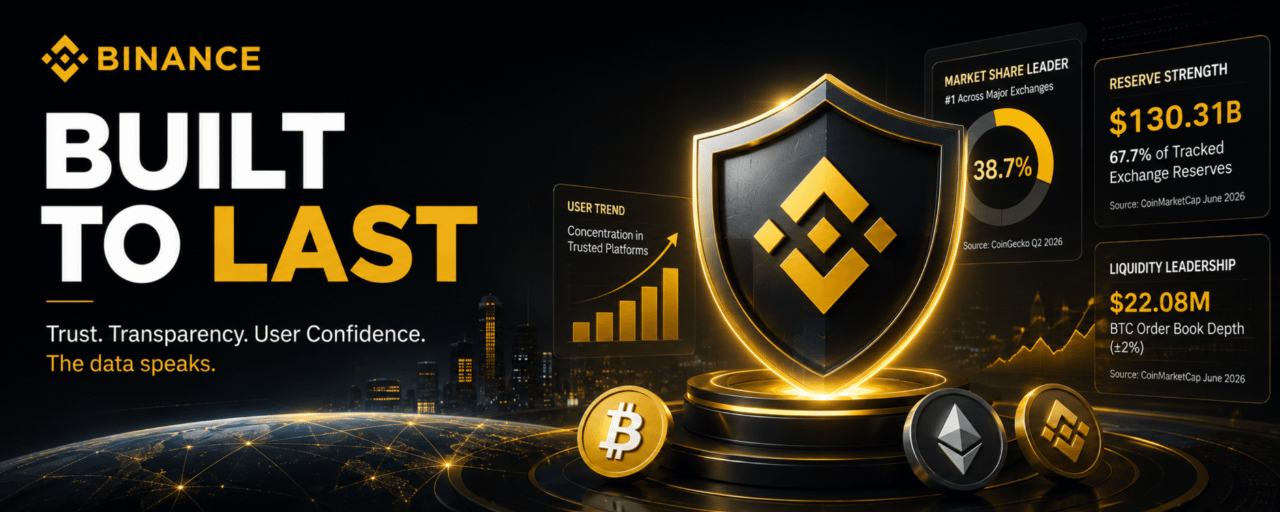
Built to Last: What Third-Party Data Says About Trust, Transparency, and User Trends in CryptoThree exchanges went dark within a single month. The market barely flinched.
That reaction — or lack of one — is the real story. When AscendEX, BitMEX, and BitMart each announced closures within weeks of each other in July 2026, the reflexive question was "who's next?" But look at what the data actually shows, and a different narrative emerges: not panic, but a quiet, measurable migration of capital toward exchanges that can prove where user funds sit.
What actually happened
AscendEX ceased operations on July 1, 2026 — the exact day the EU's MiCA framework took full effect — after failing to secure authorization under the new rules. BitMEX, the exchange that pioneered the 100x perpetual swap 11 years ago, confirmed on July 23 it would wind down by September 23, with HDR Global Trading stating explicitly that reserves still exceeded customer liabilities. BitMart followed on July 26, citing "operating conditions" rather than insolvency. Reuters reported BitMEX's market share had collapsed to below 0.01% before the announcement, daily volume down to roughly $400,000 — a staggering fall from an exchange that once processed over $3 trillion cumulatively.
Here's the twist casual observers miss: analytics firm Alphractal counted just nine total exchange shutdowns across all of 2026 through late July — the lowest annual figure in at least eight years. This wasn't 2022-style contagion. It was survivorship economics: mid-tier platforms built on referral bonuses and aggressive marketing, rather than liquidity depth or verifiable solvency, quietly running out of runway as deposit growth slowed industry-wide.
What the numbers show
CoinGecko's Trust Score framework — weighing liquidity, proof-of-reserves disclosure, regulatory standing, and cybersecurity record — currently ranks Coinbase, Binance, and Kraken as the three highest-trust exchanges globally, out of 165 tracked venues holding a combined $279 billion in reserves. CoinDesk's Exchange Benchmark separately scored Binance at 90.1 in its most recent assessment, the top mark among AA-rated venues, ahead of Coinbase (89.8), Bitstamp (88.4), and Kraken (84.5).
Volume tells a parallel story. Binance held 39.2% of top-10 centralized exchange spot volume across 2025 and maintained roughly 37% through Q1 2026, according to CoinGecko — nearly four times its nearest competitor. Binance Research's own August 2026 data shows the broader crypto market recovering 8.0% in July to $2.29 trillion, with capital rotating measurably toward transparent, continuously auditable infrastructure: Binance's tokenized-equity product, bStocks, crossed $500 million in market cap within seven weeks of its June 11 launch, capturing roughly a quarter of the entire tokenized-stock market and 68% of the category's total growth.
Why this matters now
Trust and volume rankings don't always align — and that gap is the actual signal. Users who survived FTX, Celsius, and now the 2026 shutdown wave aren't just chasing low fees anymore. They're pricing in counterparty risk directly, rewarding exchanges that publish continuous, verifiable reserve data over those that simply advertise it.
The honest limits
Binance's Merkle-tree proof-of-reserves system is a genuine structural advantage — it predates most competitors' equivalent disclosures and gave users confidence exactly when smaller venues were freezing withdrawals. But transparency data is a snapshot, not a guarantee; it shows solvency at a moment in time, not continuously. And Binance's own regulatory history, including past enforcement settlements, remains a legitimate part of any honest risk assessment — trust scores are directional evidence, not immunity.
The bigger picture
What's unfolding isn't one exchange "winning." It's a market finally pricing transparency as infrastructure rather than marketing — precisely as regulators like the EU, through MiCA, push in the same direction. That convergence, not any single shutdown, is the story underneath the headlines.
Explore Binance's Proof of Reserves: https://www.binance.com/en/proof-of-reserves Explore $BNB: https://www.binance.com/en/buy-BNB
$BTC and $ETH dominate custodid exchange reserves industry-wide, making them the most exposed assets to trust dynamics. $BNB carries direct relevance as Binance's native token, tied closely to the platform's own transparency record.
{spot}(BTCUSDT)
{spot}(ETHUSDT)
Not financial advice. Informational and educational purposes only, based on third-party data available as of August 2026. Rankings and reserve figures shift over time and by methodology. Crypto involves significant risk, including loss of capital. Always DYOR before acting.
#ProofOfReserves #MarketTrust #CryptoRegulation #ProofOfReserves #writetoearn
Built to Last: What Third-Party Data Says About Trust, Transparency, and User Trends in Crypto
Three exchanges went dark within a single month. The market barely flinched.
That reaction — or lack of one — is the real story. When AscendEX, BitMEX, and BitMart each announced closures within weeks of each other in July 2026, the reflexive question was "who's next?" But look at what the data actually shows, and a different narrative emerges: not panic, but a quiet, measurable migration of capital toward exchanges that can prove where user funds sit.
What actually happened
AscendEX ceased operations on July 1, 2026 — the exact day the EU's MiCA framework took full effect — after failing to secure authorization under the new rules. BitMEX, the exchange that pioneered the 100x perpetual swap 11 years ago, confirmed on July 23 it would wind down by September 23, with HDR Global Trading stating explicitly that reserves still exceeded customer liabilities. BitMart followed on July 26, citing "operating conditions" rather than insolvency. Reuters reported BitMEX's market share had collapsed to below 0.01% before the announcement, daily volume down to roughly $400,000 — a staggering fall from an exchange that once processed over $3 trillion cumulatively.
Here's the twist casual observers miss: analytics firm Alphractal counted just nine total exchange shutdowns across all of 2026 through late July — the lowest annual figure in at least eight years. This wasn't 2022-style contagion. It was survivorship economics: mid-tier platforms built on referral bonuses and aggressive marketing, rather than liquidity depth or verifiable solvency, quietly running out of runway as deposit growth slowed industry-wide.
What the numbers show
CoinGecko's Trust Score framework — weighing liquidity, proof-of-reserves disclosure, regulatory standing, and cybersecurity record — currently ranks Coinbase, Binance, and Kraken as the three highest-trust exchanges globally, out of 165 tracked venues holding a combined $279 billion in reserves. CoinDesk's Exchange Benchmark separately scored Binance at 90.1 in its most recent assessment, the top mark among AA-rated venues, ahead of Coinbase (89.8), Bitstamp (88.4), and Kraken (84.5).
Volume tells a parallel story. Binance held 39.2% of top-10 centralized exchange spot volume across 2025 and maintained roughly 37% through Q1 2026, according to CoinGecko — nearly four times its nearest competitor. Binance Research's own August 2026 data shows the broader crypto market recovering 8.0% in July to $2.29 trillion, with capital rotating measurably toward transparent, continuously auditable infrastructure: Binance's tokenized-equity product, bStocks, crossed $500 million in market cap within seven weeks of its June 11 launch, capturing roughly a quarter of the entire tokenized-stock market and 68% of the category's total growth.
Why this matters now
Trust and volume rankings don't always align — and that gap is the actual signal. Users who survived FTX, Celsius, and now the 2026 shutdown wave aren't just chasing low fees anymore. They're pricing in counterparty risk directly, rewarding exchanges that publish continuous, verifiable reserve data over those that simply advertise it.
The honest limits
Binance's Merkle-tree proof-of-reserves system is a genuine structural advantage — it predates most competitors' equivalent disclosures and gave users confidence exactly when smaller venues were freezing withdrawals. But transparency data is a snapshot, not a guarantee; it shows solvency at a moment in time, not continuously. And Binance's own regulatory history, including past enforcement settlements, remains a legitimate part of any honest risk assessment — trust scores are directional evidence, not immunity.
The bigger picture
What's unfolding isn't one exchange "winning." It's a market finally pricing transparency as infrastructure rather than marketing — precisely as regulators like the EU, through MiCA, push in the same direction. That convergence, not any single shutdown, is the story underneath the headlines.
Explore Binance's Proof of Reserves: https://www.binance.com/en/proof-of-reserves Explore $BNB: https://www.binance.com/en/buy-BNB
$BTC and $ETH dominate custodid exchange reserves industry-wide, making them the most exposed assets to trust dynamics. $BNB carries direct relevance as Binance's native token, tied closely to the platform's own transparency record.
Not financial advice. Informational and educational purposes only, based on third-party data available as of August 2026. Rankings and reserve figures shift over time and by methodology. Crypto involves significant risk, including loss of capital. Always DYOR before acting.
#ProofOfReserves #MarketTrust #CryptoRegulation #ProofOfReserves #writetoearn
That reaction — or lack of one — is the real story. When AscendEX, BitMEX, and BitMart each announced closures within weeks of each other in July 2026, the reflexive question was "who's next?" But look at what the data actually shows, and a different narrative emerges: not panic, but a quiet, measurable migration of capital toward exchanges that can prove where user funds sit.
What actually happened
AscendEX ceased operations on July 1, 2026 — the exact day the EU's MiCA framework took full effect — after failing to secure authorization under the new rules. BitMEX, the exchange that pioneered the 100x perpetual swap 11 years ago, confirmed on July 23 it would wind down by September 23, with HDR Global Trading stating explicitly that reserves still exceeded customer liabilities. BitMart followed on July 26, citing "operating conditions" rather than insolvency. Reuters reported BitMEX's market share had collapsed to below 0.01% before the announcement, daily volume down to roughly $400,000 — a staggering fall from an exchange that once processed over $3 trillion cumulatively.
Here's the twist casual observers miss: analytics firm Alphractal counted just nine total exchange shutdowns across all of 2026 through late July — the lowest annual figure in at least eight years. This wasn't 2022-style contagion. It was survivorship economics: mid-tier platforms built on referral bonuses and aggressive marketing, rather than liquidity depth or verifiable solvency, quietly running out of runway as deposit growth slowed industry-wide.
What the numbers show
CoinGecko's Trust Score framework — weighing liquidity, proof-of-reserves disclosure, regulatory standing, and cybersecurity record — currently ranks Coinbase, Binance, and Kraken as the three highest-trust exchanges globally, out of 165 tracked venues holding a combined $279 billion in reserves. CoinDesk's Exchange Benchmark separately scored Binance at 90.1 in its most recent assessment, the top mark among AA-rated venues, ahead of Coinbase (89.8), Bitstamp (88.4), and Kraken (84.5).
Volume tells a parallel story. Binance held 39.2% of top-10 centralized exchange spot volume across 2025 and maintained roughly 37% through Q1 2026, according to CoinGecko — nearly four times its nearest competitor. Binance Research's own August 2026 data shows the broader crypto market recovering 8.0% in July to $2.29 trillion, with capital rotating measurably toward transparent, continuously auditable infrastructure: Binance's tokenized-equity product, bStocks, crossed $500 million in market cap within seven weeks of its June 11 launch, capturing roughly a quarter of the entire tokenized-stock market and 68% of the category's total growth.
Why this matters now
Trust and volume rankings don't always align — and that gap is the actual signal. Users who survived FTX, Celsius, and now the 2026 shutdown wave aren't just chasing low fees anymore. They're pricing in counterparty risk directly, rewarding exchanges that publish continuous, verifiable reserve data over those that simply advertise it.
The honest limits
Binance's Merkle-tree proof-of-reserves system is a genuine structural advantage — it predates most competitors' equivalent disclosures and gave users confidence exactly when smaller venues were freezing withdrawals. But transparency data is a snapshot, not a guarantee; it shows solvency at a moment in time, not continuously. And Binance's own regulatory history, including past enforcement settlements, remains a legitimate part of any honest risk assessment — trust scores are directional evidence, not immunity.
The bigger picture
What's unfolding isn't one exchange "winning." It's a market finally pricing transparency as infrastructure rather than marketing — precisely as regulators like the EU, through MiCA, push in the same direction. That convergence, not any single shutdown, is the story underneath the headlines.
Explore Binance's Proof of Reserves: https://www.binance.com/en/proof-of-reserves Explore $BNB: https://www.binance.com/en/buy-BNB
$BTC and $ETH dominate custodid exchange reserves industry-wide, making them the most exposed assets to trust dynamics. $BNB carries direct relevance as Binance's native token, tied closely to the platform's own transparency record.
Not financial advice. Informational and educational purposes only, based on third-party data available as of August 2026. Rankings and reserve figures shift over time and by methodology. Crypto involves significant risk, including loss of capital. Always DYOR before acting.
#ProofOfReserves #MarketTrust #CryptoRegulation #ProofOfReserves #writetoearn
1
3
64
·
--
Built to Last: What Third-Party Data Says About Trust, Transparency and User Trends in CryptoWhen an exchange disappears, users don't just lose a platform. They lose confidence in the idea that their capital was ever safe there.
That is why the question “Who's next?” keeps resurfacing whenever crypto markets cool and regulatory pressure rises.
But speculation is easy.
The numbers are harder to argue with.
Independent research from CoinMarketCap, CCData and CoinGecko points to an increasingly concentrated exchange market — and Binance continues to sit at the center of it.
The important question isn't simply who has the biggest name.
It's where trading activity, liquidity and disclosed reserves are actually concentrating.
The Market Is Getting Smaller — But More Concentrated
Crypto exchange activity has cooled significantly.
CCData's July 2026 Exchange Review reported that combined spot and derivatives volume across centralized exchanges fell 23.9% to $3.76 trillion, the lowest monthly level since November 2023. Spot volume dropped 31.2%, while derivatives declined 21.9%.
Yet Binance moved in the opposite direction on market share.
According to CCData, Binance's July spot market share increased to 26.9%, its highest level since January. Its derivatives share rose to 45.8%, marking the fifth consecutive monthly gain and the highest level since June 2024.
That distinction matters.
A market can shrink while the strongest venues become more concentrated.
Less activity does not necessarily mean less concentration.
CoinMarketCap Shows the Same Pattern
CoinMarketCap Research provides another independent lens.
Its June 2026 Exchange Monthly Report recorded $4.74 trillion in combined spot and derivatives volume across 11 tracked exchanges.
Binance accounted for 39.50% of that activity, up from 38.57% in May. The next-largest venue held 16.62%.
That means Binance wasn't simply leading a growing market.
It was increasing its share while the market was becoming more difficult.
And the reserve data is even more striking.
Follow the Reserves
CoinMarketCap's June Proof-of-Reserves analysis tracked $192.6 billion across eight exchanges.
Binance accounted for approximately $130.3 billion, or 67.7%, of that tracked reserve value.
The second-largest exchange accounted for about 14.4%.
Together, the top two represented more than 82% of tracked Proof-of-Reserves assets.
This does not prove that reserves alone determine where users trade.
But it does reveal something measurable:
capital and liquidity remain heavily concentrated among a small number of major venues.
And scale matters when markets become stressed.
Transparency Has Become a Market Feature
Proof of Reserves has evolved from a niche concept into an increasingly important part of exchange transparency.
Binance's own educational material explains that Proof of Reserves uses cryptographic methods such as Merkle trees to allow users to verify that their balances are included in reported holdings. Binance also notes an important limitation: PoR is a point-in-time snapshot and does not by itself verify every off-chain liability.
That distinction is critical.
Transparency is valuable. But transparency must also be understood correctly.
A reserve snapshot isn't a complete balance sheet.
Still, the direction of travel is clear: users increasingly have more tools to examine how exchanges report their assets.
And that changes the trust equation.
Trust Is Becoming Measurable
CoinGecko's 2026 Spot Centralized Exchanges Report found that the value of underlying assets across the top 12 CEXs increased from $152.1 billion to $225.4 billion between 2024 and February 2026.
CoinGecko also reported that Binance's reserves doubled over that period, from $46.7 billion to $93.4 billion.
Again, reserve growth is not the same thing as proving an exchange is “safe.”
But it is a measurable signal of scale and capital concentration.
And when reserve data, trading activity and liquidity are considered together, a broader picture begins to emerge.
The Liquidity Test
In June, CoinMarketCap found that Binance had the deepest tracked BTC order book, with approximately $22.08 million of median ±2% market depth.
That depth remained relatively stable even as liquidity contracted across the wider market.
For traders, that matters.
Trust isn't only about what an exchange says.
It's also about whether the market remains liquid when conditions become difficult.
Reserves show one side of the equation.
Liquidity shows another.
User activity shows a third.
Together, they provide a far more useful picture than headlines about which platform is supposedly “next.”
And Then There's $BNB
There is another signal investors naturally watch when analyzing Binance: $BNB .
CoinMarketCap's June reserve data showed BNB as the third-largest asset across the tracked exchange reserve universe, at roughly $24.8 billion, although much of that concentration was associated with Binance itself.
That makes $BNB an important part of the Binance ecosystem — but also a reminder that platform-token exposure introduces its own risks.
A professional assessment therefore needs both sides:
Strength creates scale.
Scale creates concentration.
Concentration creates its own risk.
Built to Last Is a Data Question
The crypto market does not need another prediction about who's next.
It needs better questions.
Where is liquidity?
Where are assets concentrated?
Which exchanges disclose reserves?
Where is market share holding up?
Where are users continuing to trade when volumes fall?
The independent data currently points toward a clear conclusion:
Binance remains one of the dominant centers of crypto liquidity, trading activity and disclosed exchange reserves.
That doesn't make Binance immune to risk.
It makes the data worth watching.
Because in the next phase of crypto, trust may be less about promises and more about what the numbers continue to show.
Explore Binance: [Official Binance platform](https://www.binance.com/en)
Explore $BNB: [Buy BNB on Binance](https://www.binance.com/en/how-to-buy/bnb)
Not financial advice. This article is for informational and educational purposes only. Crypto assets and exchange-related products involve significant risk, including potential loss of capital. Proof-of-Reserves data has limitations and should not be treated as a complete assessment of an exchange's financial condition. Always conduct your own research (DYOR), review the relevant disclosures and assess your risk tolerance before making financial decisions.
#Binance #CryptoMarket #ProofOfReserves #writetoearn
Built to Last: What Third-Party Data Says About Trust, Transparency and User Trends in Crypto
When an exchange disappears, users don't just lose a platform. They lose confidence in the idea that their capital was ever safe there.
That is why the question “Who's next?” keeps resurfacing whenever crypto markets cool and regulatory pressure rises.
But speculation is easy.
The numbers are harder to argue with.
Independent research from CoinMarketCap, CCData and CoinGecko points to an increasingly concentrated exchange market — and Binance continues to sit at the center of it.
The important question isn't simply who has the biggest name.
It's where trading activity, liquidity and disclosed reserves are actually concentrating.
The Market Is Getting Smaller — But More Concentrated
Crypto exchange activity has cooled significantly.
CCData's July 2026 Exchange Review reported that combined spot and derivatives volume across centralized exchanges fell 23.9% to $3.76 trillion, the lowest monthly level since November 2023. Spot volume dropped 31.2%, while derivatives declined 21.9%.
Yet Binance moved in the opposite direction on market share.
According to CCData, Binance's July spot market share increased to 26.9%, its highest level since January. Its derivatives share rose to 45.8%, marking the fifth consecutive monthly gain and the highest level since June 2024.
That distinction matters.
A market can shrink while the strongest venues become more concentrated.
Less activity does not necessarily mean less concentration.
CoinMarketCap Shows the Same Pattern
CoinMarketCap Research provides another independent lens.
Its June 2026 Exchange Monthly Report recorded $4.74 trillion in combined spot and derivatives volume across 11 tracked exchanges.
Binance accounted for 39.50% of that activity, up from 38.57% in May. The next-largest venue held 16.62%.
That means Binance wasn't simply leading a growing market.
It was increasing its share while the market was becoming more difficult.
And the reserve data is even more striking.
Follow the Reserves
CoinMarketCap's June Proof-of-Reserves analysis tracked $192.6 billion across eight exchanges.
Binance accounted for approximately $130.3 billion, or 67.7%, of that tracked reserve value.
The second-largest exchange accounted for about 14.4%.
Together, the top two represented more than 82% of tracked Proof-of-Reserves assets.
This does not prove that reserves alone determine where users trade.
But it does reveal something measurable:
capital and liquidity remain heavily concentrated among a small number of major venues.
And scale matters when markets become stressed.
Transparency Has Become a Market Feature
Proof of Reserves has evolved from a niche concept into an increasingly important part of exchange transparency.
Binance's own educational material explains that Proof of Reserves uses cryptographic methods such as Merkle trees to allow users to verify that their balances are included in reported holdings. Binance also notes an important limitation: PoR is a point-in-time snapshot and does not by itself verify every off-chain liability.
That distinction is critical.
Transparency is valuable. But transparency must also be understood correctly.
A reserve snapshot isn't a complete balance sheet.
Still, the direction of travel is clear: users increasingly have more tools to examine how exchanges report their assets.
And that changes the trust equation.
Trust Is Becoming Measurable
CoinGecko's 2026 Spot Centralized Exchanges Report found that the value of underlying assets across the top 12 CEXs increased from $152.1 billion to $225.4 billion between 2024 and February 2026.
CoinGecko also reported that Binance's reserves doubled over that period, from $46.7 billion to $93.4 billion.
Again, reserve growth is not the same thing as proving an exchange is “safe.”
But it is a measurable signal of scale and capital concentration.
And when reserve data, trading activity and liquidity are considered together, a broader picture begins to emerge.
The Liquidity Test
In June, CoinMarketCap found that Binance had the deepest tracked BTC order book, with approximately $22.08 million of median ±2% market depth.
That depth remained relatively stable even as liquidity contracted across the wider market.
For traders, that matters.
Trust isn't only about what an exchange says.
It's also about whether the market remains liquid when conditions become difficult.
Reserves show one side of the equation.
Liquidity shows another.
User activity shows a third.
Together, they provide a far more useful picture than headlines about which platform is supposedly “next.”
And Then There's $BNB
There is another signal investors naturally watch when analyzing Binance: $BNB .
CoinMarketCap's June reserve data showed BNB as the third-largest asset across the tracked exchange reserve universe, at roughly $24.8 billion, although much of that concentration was associated with Binance itself.
That makes $BNB an important part of the Binance ecosystem — but also a reminder that platform-token exposure introduces its own risks.
A professional assessment therefore needs both sides:
Strength creates scale.
Scale creates concentration.
Concentration creates its own risk.
Built to Last Is a Data Question
The crypto market does not need another prediction about who's next.
It needs better questions.
Where is liquidity?
Where are assets concentrated?
Which exchanges disclose reserves?
Where is market share holding up?
Where are users continuing to trade when volumes fall?
The independent data currently points toward a clear conclusion:
Binance remains one of the dominant centers of crypto liquidity, trading activity and disclosed exchange reserves.
That doesn't make Binance immune to risk.
It makes the data worth watching.
Because in the next phase of crypto, trust may be less about promises and more about what the numbers continue to show.
Explore Binance: Official Binance platform
Explore $BNB : Buy BNB on Binance
Not financial advice. This article is for informational and educational purposes only. Crypto assets and exchange-related products involve significant risk, including potential loss of capital. Proof-of-Reserves data has limitations and should not be treated as a complete assessment of an exchange's financial condition. Always conduct your own research (DYOR), review the relevant disclosures and assess your risk tolerance before making financial decisions.
#Binance #CryptoMarket #ProofOfReserves #writetoearn
That is why the question “Who's next?” keeps resurfacing whenever crypto markets cool and regulatory pressure rises.
But speculation is easy.
The numbers are harder to argue with.
Independent research from CoinMarketCap, CCData and CoinGecko points to an increasingly concentrated exchange market — and Binance continues to sit at the center of it.
The important question isn't simply who has the biggest name.
It's where trading activity, liquidity and disclosed reserves are actually concentrating.
The Market Is Getting Smaller — But More Concentrated
Crypto exchange activity has cooled significantly.
CCData's July 2026 Exchange Review reported that combined spot and derivatives volume across centralized exchanges fell 23.9% to $3.76 trillion, the lowest monthly level since November 2023. Spot volume dropped 31.2%, while derivatives declined 21.9%.
Yet Binance moved in the opposite direction on market share.
According to CCData, Binance's July spot market share increased to 26.9%, its highest level since January. Its derivatives share rose to 45.8%, marking the fifth consecutive monthly gain and the highest level since June 2024.
That distinction matters.
A market can shrink while the strongest venues become more concentrated.
Less activity does not necessarily mean less concentration.
CoinMarketCap Shows the Same Pattern
CoinMarketCap Research provides another independent lens.
Its June 2026 Exchange Monthly Report recorded $4.74 trillion in combined spot and derivatives volume across 11 tracked exchanges.
Binance accounted for 39.50% of that activity, up from 38.57% in May. The next-largest venue held 16.62%.
That means Binance wasn't simply leading a growing market.
It was increasing its share while the market was becoming more difficult.
And the reserve data is even more striking.
Follow the Reserves
CoinMarketCap's June Proof-of-Reserves analysis tracked $192.6 billion across eight exchanges.
Binance accounted for approximately $130.3 billion, or 67.7%, of that tracked reserve value.
The second-largest exchange accounted for about 14.4%.
Together, the top two represented more than 82% of tracked Proof-of-Reserves assets.
This does not prove that reserves alone determine where users trade.
But it does reveal something measurable:
capital and liquidity remain heavily concentrated among a small number of major venues.
And scale matters when markets become stressed.
Transparency Has Become a Market Feature
Proof of Reserves has evolved from a niche concept into an increasingly important part of exchange transparency.
Binance's own educational material explains that Proof of Reserves uses cryptographic methods such as Merkle trees to allow users to verify that their balances are included in reported holdings. Binance also notes an important limitation: PoR is a point-in-time snapshot and does not by itself verify every off-chain liability.
That distinction is critical.
Transparency is valuable. But transparency must also be understood correctly.
A reserve snapshot isn't a complete balance sheet.
Still, the direction of travel is clear: users increasingly have more tools to examine how exchanges report their assets.
And that changes the trust equation.
Trust Is Becoming Measurable
CoinGecko's 2026 Spot Centralized Exchanges Report found that the value of underlying assets across the top 12 CEXs increased from $152.1 billion to $225.4 billion between 2024 and February 2026.
CoinGecko also reported that Binance's reserves doubled over that period, from $46.7 billion to $93.4 billion.
Again, reserve growth is not the same thing as proving an exchange is “safe.”
But it is a measurable signal of scale and capital concentration.
And when reserve data, trading activity and liquidity are considered together, a broader picture begins to emerge.
The Liquidity Test
In June, CoinMarketCap found that Binance had the deepest tracked BTC order book, with approximately $22.08 million of median ±2% market depth.
That depth remained relatively stable even as liquidity contracted across the wider market.
For traders, that matters.
Trust isn't only about what an exchange says.
It's also about whether the market remains liquid when conditions become difficult.
Reserves show one side of the equation.
Liquidity shows another.
User activity shows a third.
Together, they provide a far more useful picture than headlines about which platform is supposedly “next.”
And Then There's $BNB
There is another signal investors naturally watch when analyzing Binance: $BNB .
CoinMarketCap's June reserve data showed BNB as the third-largest asset across the tracked exchange reserve universe, at roughly $24.8 billion, although much of that concentration was associated with Binance itself.
That makes $BNB an important part of the Binance ecosystem — but also a reminder that platform-token exposure introduces its own risks.
A professional assessment therefore needs both sides:
Strength creates scale.
Scale creates concentration.
Concentration creates its own risk.
Built to Last Is a Data Question
The crypto market does not need another prediction about who's next.
It needs better questions.
Where is liquidity?
Where are assets concentrated?
Which exchanges disclose reserves?
Where is market share holding up?
Where are users continuing to trade when volumes fall?
The independent data currently points toward a clear conclusion:
Binance remains one of the dominant centers of crypto liquidity, trading activity and disclosed exchange reserves.
That doesn't make Binance immune to risk.
It makes the data worth watching.
Because in the next phase of crypto, trust may be less about promises and more about what the numbers continue to show.
Explore Binance: Official Binance platform
Explore $BNB : Buy BNB on Binance
Not financial advice. This article is for informational and educational purposes only. Crypto assets and exchange-related products involve significant risk, including potential loss of capital. Proof-of-Reserves data has limitations and should not be treated as a complete assessment of an exchange's financial condition. Always conduct your own research (DYOR), review the relevant disclosures and assess your risk tolerance before making financial decisions.
#Binance #CryptoMarket #ProofOfReserves #writetoearn
1
16
·
--
Article
The Closing Verdict: How Nvidia's Earnings Moved Across the AI Supply Chain While Wall Street SleptMacro & Digital Assets Desk | August 31, 2026
Summary: Nvidia's August 26 report was the final exam of this AI earnings season — and it landed after the U.S. close, right as Asia's trading day was getting underway. While Wall Street slept, Binance's round-the-clock markets, including its tokenized U.S. equity products, turned that dead window into a live price-discovery event. Here's how the Nvidia signal propagated across four layers of the AI supply chain — from directly correlated chips to the broader index — while traditional exchanges sat dark.
The Final Exam
Nvidia has become the single most important print of any earnings season, and this quarter reinforced why. Revenue for the second quarter of fiscal 2027 came in at $96.2 billion, up 106% year over year, with Data Center revenue alone reaching $89.0 billion. CEO Jensen Huang told investors that "compute is revenue" now, framing the current cycle as a demand problem rather than a hype cycle — guidance for the third quarter called for roughly $108 billion in revenue, and management pointed to around 70% data-center revenue growth heading into fiscal 2028. The market's reaction was immediate: shares moved sharply higher in the aftermath, a signal that the AI infrastructure buildout still has room to run.
But the report itself is only half the story. It dropped at 1:20 p.m. Pacific — after the Nasdaq had closed for the day, and hours before Tokyo, Hong Kong, and Singapore opened for business. For a stock whose results ripple through chipmakers, memory suppliers, foundries, and hyperscalers alike, that timing usually means a full trading day of silence before the broader market can react. Usually.
Why the Silence Doesn't Hold on Binance
Binance doesn't close. Its spot and derivatives markets, along with its growing suite of tokenized U.S. equity products — bStocks, which mirror underlying shares like Nvidia (NVDAB) and Micron (MUB) on a 1:1 basis and trade 24/7 including weekends — kept pricing continuously through the exact window when American exchanges were shut. That's the structural edge: a print engineered to land in the gap between sessions still gets a real-time market verdict, just not on a traditional venue.
Binance Research has framed this dynamic well: U.S. equity ownership has globalized far faster than U.S. trading hours have expanded, leaving liquidity concentrated in a shrinking slice of the calendar even as demand for exposure runs continuously. Nvidia's after-hours report is close to a textbook case of that mismatch — and Binance's tokenized markets are one of the few places built to close the gap.
Tracing the Signal Across Four Layers
Layer 1 — Directly correlated chips (AMD, AVGO). The names most tightly bound to Nvidia's own product cycle. AMD is the closest pure-play competitor in AI accelerators; Broadcom supplies custom silicon and networking gear central to hyperscaler AI clusters. Strength in Nvidia's data-center guidance typically reads as a read-through for both.
Layer 2 — Core supply chain (TSM, MU). Nvidia doesn't manufacture its own chips or memory. TSMC fabricates the silicon; Micron and its peers supply the high-bandwidth memory that feeds it. Nvidia's own disclosures show a supply chain running near capacity, with a small number of large customers driving the bulk of demand — which puts outsized weight on how upstream suppliers like these are positioned heading into the next production cycle.
Layer 3 — Downstream demand (PLTR, META). The application and hyperscaler layer that buys the compute Nvidia sells. Meta is one of the hyperscalers whose data-center spending shows up directly in Nvidia's revenue base; Palantir represents the software layer monetizing the infrastructure once it's deployed. Guidance strength at the chip layer is, by definition, a demand signal for this layer too.
Layer 4 — The broader market (QQQ, SPY). With mega-cap tech now representing an outsized share of major indices, a single Nvidia print of this magnitude doesn't stay contained to one sector — it moves the tape.
On Binance, several of these names are directly accessible through tokenized equity products, with the broader catalog of U.S. stocks and ETFs expanding progressively alongside zero-commission access to thousands of listed names — meaning the transmission across all four layers can, in principle, be watched and traded on a single 24/7 venue while traditional markets are closed.
A Transmission Map No One Else Can Produce
That's the real edge here. Traditional research desks can model how an Nvidia beat should propagate through the supply chain. Binance's markets show how it actually does — in real time, across chips, memory, hyperscalers, and the index, all before the opening bell rings on the exchanges that everyone else is watching. The data center isn't the only place where the AI trade never sleeps.
Explore tokenized U.S. equities on Binance: https://www.binance.com/en/bstocks-landing
#bStock #NVDA #Aİ #Semiconductors #TokenizedStocks
This article is for informational purposes only and does not constitute financial, investment, or trading advice. Digital assets and tokenized securities are volatile and carry risk; do your own research before making any investment decision.
The Closing Verdict: How Nvidia's Earnings Moved Across the AI Supply Chain While Wall Street Slept
Macro & Digital Assets Desk | August 31, 2026
Summary: Nvidia's August 26 report was the final exam of this AI earnings season — and it landed after the U.S. close, right as Asia's trading day was getting underway. While Wall Street slept, Binance's round-the-clock markets, including its tokenized U.S. equity products, turned that dead window into a live price-discovery event. Here's how the Nvidia signal propagated across four layers of the AI supply chain — from directly correlated chips to the broader index — while traditional exchanges sat dark.
The Final Exam
Nvidia has become the single most important print of any earnings season, and this quarter reinforced why. Revenue for the second quarter of fiscal 2027 came in at $96.2 billion, up 106% year over year, with Data Center revenue alone reaching $89.0 billion. CEO Jensen Huang told investors that "compute is revenue" now, framing the current cycle as a demand problem rather than a hype cycle — guidance for the third quarter called for roughly $108 billion in revenue, and management pointed to around 70% data-center revenue growth heading into fiscal 2028. The market's reaction was immediate: shares moved sharply higher in the aftermath, a signal that the AI infrastructure buildout still has room to run.
But the report itself is only half the story. It dropped at 1:20 p.m. Pacific — after the Nasdaq had closed for the day, and hours before Tokyo, Hong Kong, and Singapore opened for business. For a stock whose results ripple through chipmakers, memory suppliers, foundries, and hyperscalers alike, that timing usually means a full trading day of silence before the broader market can react. Usually.
Why the Silence Doesn't Hold on Binance
Binance doesn't close. Its spot and derivatives markets, along with its growing suite of tokenized U.S. equity products — bStocks, which mirror underlying shares like Nvidia (NVDAB) and Micron (MUB) on a 1:1 basis and trade 24/7 including weekends — kept pricing continuously through the exact window when American exchanges were shut. That's the structural edge: a print engineered to land in the gap between sessions still gets a real-time market verdict, just not on a traditional venue.
Binance Research has framed this dynamic well: U.S. equity ownership has globalized far faster than U.S. trading hours have expanded, leaving liquidity concentrated in a shrinking slice of the calendar even as demand for exposure runs continuously. Nvidia's after-hours report is close to a textbook case of that mismatch — and Binance's tokenized markets are one of the few places built to close the gap.
Tracing the Signal Across Four Layers
Layer 1 — Directly correlated chips (AMD, AVGO). The names most tightly bound to Nvidia's own product cycle. AMD is the closest pure-play competitor in AI accelerators; Broadcom supplies custom silicon and networking gear central to hyperscaler AI clusters. Strength in Nvidia's data-center guidance typically reads as a read-through for both.
Layer 2 — Core supply chain (TSM, MU). Nvidia doesn't manufacture its own chips or memory. TSMC fabricates the silicon; Micron and its peers supply the high-bandwidth memory that feeds it. Nvidia's own disclosures show a supply chain running near capacity, with a small number of large customers driving the bulk of demand — which puts outsized weight on how upstream suppliers like these are positioned heading into the next production cycle.
Layer 3 — Downstream demand (PLTR, META). The application and hyperscaler layer that buys the compute Nvidia sells. Meta is one of the hyperscalers whose data-center spending shows up directly in Nvidia's revenue base; Palantir represents the software layer monetizing the infrastructure once it's deployed. Guidance strength at the chip layer is, by definition, a demand signal for this layer too.
Layer 4 — The broader market (QQQ, SPY). With mega-cap tech now representing an outsized share of major indices, a single Nvidia print of this magnitude doesn't stay contained to one sector — it moves the tape.
On Binance, several of these names are directly accessible through tokenized equity products, with the broader catalog of U.S. stocks and ETFs expanding progressively alongside zero-commission access to thousands of listed names — meaning the transmission across all four layers can, in principle, be watched and traded on a single 24/7 venue while traditional markets are closed.
A Transmission Map No One Else Can Produce
That's the real edge here. Traditional research desks can model how an Nvidia beat should propagate through the supply chain. Binance's markets show how it actually does — in real time, across chips, memory, hyperscalers, and the index, all before the opening bell rings on the exchanges that everyone else is watching. The data center isn't the only place where the AI trade never sleeps.
Explore tokenized U.S. equities on Binance: https://www.binance.com/en/bstocks-landing
#bStock #NVDA #Aİ #Semiconductors #TokenizedStocks
This article is for informational purposes only and does not constitute financial, investment, or trading advice. Digital assets and tokenized securities are volatile and carry risk; do your own research before making any investment decision.
Summary: Nvidia's August 26 report was the final exam of this AI earnings season — and it landed after the U.S. close, right as Asia's trading day was getting underway. While Wall Street slept, Binance's round-the-clock markets, including its tokenized U.S. equity products, turned that dead window into a live price-discovery event. Here's how the Nvidia signal propagated across four layers of the AI supply chain — from directly correlated chips to the broader index — while traditional exchanges sat dark.
The Final Exam
Nvidia has become the single most important print of any earnings season, and this quarter reinforced why. Revenue for the second quarter of fiscal 2027 came in at $96.2 billion, up 106% year over year, with Data Center revenue alone reaching $89.0 billion. CEO Jensen Huang told investors that "compute is revenue" now, framing the current cycle as a demand problem rather than a hype cycle — guidance for the third quarter called for roughly $108 billion in revenue, and management pointed to around 70% data-center revenue growth heading into fiscal 2028. The market's reaction was immediate: shares moved sharply higher in the aftermath, a signal that the AI infrastructure buildout still has room to run.
But the report itself is only half the story. It dropped at 1:20 p.m. Pacific — after the Nasdaq had closed for the day, and hours before Tokyo, Hong Kong, and Singapore opened for business. For a stock whose results ripple through chipmakers, memory suppliers, foundries, and hyperscalers alike, that timing usually means a full trading day of silence before the broader market can react. Usually.
Why the Silence Doesn't Hold on Binance
Binance doesn't close. Its spot and derivatives markets, along with its growing suite of tokenized U.S. equity products — bStocks, which mirror underlying shares like Nvidia (NVDAB) and Micron (MUB) on a 1:1 basis and trade 24/7 including weekends — kept pricing continuously through the exact window when American exchanges were shut. That's the structural edge: a print engineered to land in the gap between sessions still gets a real-time market verdict, just not on a traditional venue.
Binance Research has framed this dynamic well: U.S. equity ownership has globalized far faster than U.S. trading hours have expanded, leaving liquidity concentrated in a shrinking slice of the calendar even as demand for exposure runs continuously. Nvidia's after-hours report is close to a textbook case of that mismatch — and Binance's tokenized markets are one of the few places built to close the gap.
Tracing the Signal Across Four Layers
Layer 1 — Directly correlated chips (AMD, AVGO). The names most tightly bound to Nvidia's own product cycle. AMD is the closest pure-play competitor in AI accelerators; Broadcom supplies custom silicon and networking gear central to hyperscaler AI clusters. Strength in Nvidia's data-center guidance typically reads as a read-through for both.
Layer 2 — Core supply chain (TSM, MU). Nvidia doesn't manufacture its own chips or memory. TSMC fabricates the silicon; Micron and its peers supply the high-bandwidth memory that feeds it. Nvidia's own disclosures show a supply chain running near capacity, with a small number of large customers driving the bulk of demand — which puts outsized weight on how upstream suppliers like these are positioned heading into the next production cycle.
Layer 3 — Downstream demand (PLTR, META). The application and hyperscaler layer that buys the compute Nvidia sells. Meta is one of the hyperscalers whose data-center spending shows up directly in Nvidia's revenue base; Palantir represents the software layer monetizing the infrastructure once it's deployed. Guidance strength at the chip layer is, by definition, a demand signal for this layer too.
Layer 4 — The broader market (QQQ, SPY). With mega-cap tech now representing an outsized share of major indices, a single Nvidia print of this magnitude doesn't stay contained to one sector — it moves the tape.
On Binance, several of these names are directly accessible through tokenized equity products, with the broader catalog of U.S. stocks and ETFs expanding progressively alongside zero-commission access to thousands of listed names — meaning the transmission across all four layers can, in principle, be watched and traded on a single 24/7 venue while traditional markets are closed.
A Transmission Map No One Else Can Produce
That's the real edge here. Traditional research desks can model how an Nvidia beat should propagate through the supply chain. Binance's markets show how it actually does — in real time, across chips, memory, hyperscalers, and the index, all before the opening bell rings on the exchanges that everyone else is watching. The data center isn't the only place where the AI trade never sleeps.
Explore tokenized U.S. equities on Binance: https://www.binance.com/en/bstocks-landing
#bStock #NVDA #Aİ #Semiconductors #TokenizedStocks
This article is for informational purposes only and does not constitute financial, investment, or trading advice. Digital assets and tokenized securities are volatile and carry risk; do your own research before making any investment decision.
2
47
·
--
Article
From Chips to Carts: Binance Prices the Retail Read Before the Market OpensMacro & Digital Assets Desk | August 31, 2026
Summary: The narrative that has dominated 2026 — semiconductors, hyperscaler capex, and the AI trade — is ceding the floor to a quieter but arguably more consequential storyline: the American consumer. With the August jobs report landing Friday, September 4, and the retail giants' Q2 results now fully digested by the Street, inflation and rate-path expectations are being rewritten around the checkout line, not the data center. Crypto markets, led by Binance's always-on order books, are already pricing that rotation — a full trading day ahead of Wall Street's open bell. Same market. Different aisle.
The Rotation: AI Cedes the Mic to the Cart
For much of the year, equity narratives have tracked chip shipments and cloud capex guidance. But the macro baton is passing. Home Depot, Target, and Walmart each reported their fiscal Q2 results in the back half of August, and the results — alongside a softer July retail sales print — have shifted the market's attention toward the health of the U.S. household. Retail sales growth showed signs of moderating even as the annual pace stayed positive, a reminder that this is a consumer that is still spending, but more selectively. Analysts covering the sector have flagged that a Walmart beat isn't unambiguously good news: trade-down behavior toward value retailers can just as easily signal consumer stress as consumer strength.
With that earnings cycle now behind the tape, the market's attention turns to the data that will confirm or challenge the story: the August labor report due September 4, followed by CPI on September 11, ahead of the Federal Reserve's September 15–16 meeting. In other words, the "chips vs. carts" rotation isn't a one-week event — it's the macro throughline into the next FOMC decision.
Why Binance Gets There First
Traditional retail names trade on a five-day, six-and-a-half-hour clock. Crypto markets don't. That structural difference matters more than it usually gets credit for.
When a retail print, a jobs number, or a Fed comment lands after the NYSE has closed for the weekend, equity investors wait. Binance's spot and derivatives markets, running continuously across every time zone, begin absorbing that information within minutes — repricing risk appetite, dollar liquidity expectations, and rate-cut odds well before the opening bell rings on Wall Street. BTC and BNB order flow over a weekend or a holiday-shortened session has, time and again, offered an early tell on how risk assets are set to open once traditional markets catch up.
That's the core of the thesis: Binance isn't just a venue for trading digital assets — it's functioning as a real-time barometer for the same macro inputs (rate expectations, consumer resilience, dollar liquidity) that move Home Depot, Target, and Walmart shares. The venue changes. The underlying read on the U.S. consumer doesn't.
The Coins That Carry the Read
BNB (BNB Chain) — As Binance's native asset, BNB is the most direct proxy for exchange activity itself. It has been in recovery mode through much of 2026, trading in the high-$600s as of late August, with quarterly token burns continuing to tighten supply against a backdrop of rising exchange volumes. Elevated volume around macro catalysts — like the upcoming jobs report and CPI — tends to show up first in BNB's order book depth.$BTC (Bitcoin) — Still the primary liquidity gauge for how digital-asset markets are pricing shifts in rate expectations and dollar strength; the asset most sensitive to a "soft" vs. "sticky" inflation read.Stablecoin flows (USDT/USDC pairs) — On-exchange stablecoin turnover is one of the cleanest real-time proxies for risk-on/risk-off positioning ahead of a scheduled macro print, often shifting hours before equity futures do.
{spot}(BTCUSDT)
Same Market, Different Aisle
The signal being priced isn't really about crypto at all — it's about whether the U.S. consumer is trading down, tightening up, or holding firm into the fall. Retail earnings gave the market its first read. The September jobs and inflation prints will give it the next one. And in the hours between each release and the next equity open, Binance's 24/7 markets are where that read gets a live price tag first.
For traders who want a continuous pulse on how the market is digesting the shift from AI capex to consumer resilience, Binance's real-time BNB and BTC pairs remain one of the more direct — and fastest — windows into that rotation.
Buy or track BNB on Binance: https://www.binance.com/en/price/bnb
#RetailEarnings #Inflation #FederalReserve #Macro #ConsumerSpending
This article is for informational purposes only and does not constitute financial, investment, or trading advice. Digital assets are volatile; do your own research before making any investment decision.
From Chips to Carts: Binance Prices the Retail Read Before the Market Opens
Macro & Digital Assets Desk | August 31, 2026
Summary: The narrative that has dominated 2026 — semiconductors, hyperscaler capex, and the AI trade — is ceding the floor to a quieter but arguably more consequential storyline: the American consumer. With the August jobs report landing Friday, September 4, and the retail giants' Q2 results now fully digested by the Street, inflation and rate-path expectations are being rewritten around the checkout line, not the data center. Crypto markets, led by Binance's always-on order books, are already pricing that rotation — a full trading day ahead of Wall Street's open bell. Same market. Different aisle.
The Rotation: AI Cedes the Mic to the Cart
For much of the year, equity narratives have tracked chip shipments and cloud capex guidance. But the macro baton is passing. Home Depot, Target, and Walmart each reported their fiscal Q2 results in the back half of August, and the results — alongside a softer July retail sales print — have shifted the market's attention toward the health of the U.S. household. Retail sales growth showed signs of moderating even as the annual pace stayed positive, a reminder that this is a consumer that is still spending, but more selectively. Analysts covering the sector have flagged that a Walmart beat isn't unambiguously good news: trade-down behavior toward value retailers can just as easily signal consumer stress as consumer strength.
With that earnings cycle now behind the tape, the market's attention turns to the data that will confirm or challenge the story: the August labor report due September 4, followed by CPI on September 11, ahead of the Federal Reserve's September 15–16 meeting. In other words, the "chips vs. carts" rotation isn't a one-week event — it's the macro throughline into the next FOMC decision.
Why Binance Gets There First
Traditional retail names trade on a five-day, six-and-a-half-hour clock. Crypto markets don't. That structural difference matters more than it usually gets credit for.
When a retail print, a jobs number, or a Fed comment lands after the NYSE has closed for the weekend, equity investors wait. Binance's spot and derivatives markets, running continuously across every time zone, begin absorbing that information within minutes — repricing risk appetite, dollar liquidity expectations, and rate-cut odds well before the opening bell rings on Wall Street. BTC and BNB order flow over a weekend or a holiday-shortened session has, time and again, offered an early tell on how risk assets are set to open once traditional markets catch up.
That's the core of the thesis: Binance isn't just a venue for trading digital assets — it's functioning as a real-time barometer for the same macro inputs (rate expectations, consumer resilience, dollar liquidity) that move Home Depot, Target, and Walmart shares. The venue changes. The underlying read on the U.S. consumer doesn't.
The Coins That Carry the Read
BNB (BNB Chain) — As Binance's native asset, BNB is the most direct proxy for exchange activity itself. It has been in recovery mode through much of 2026, trading in the high-$600s as of late August, with quarterly token burns continuing to tighten supply against a backdrop of rising exchange volumes. Elevated volume around macro catalysts — like the upcoming jobs report and CPI — tends to show up first in BNB's order book depth.$BTC (Bitcoin) — Still the primary liquidity gauge for how digital-asset markets are pricing shifts in rate expectations and dollar strength; the asset most sensitive to a "soft" vs. "sticky" inflation read.Stablecoin flows (USDT/USDC pairs) — On-exchange stablecoin turnover is one of the cleanest real-time proxies for risk-on/risk-off positioning ahead of a scheduled macro print, often shifting hours before equity futures do.
Same Market, Different Aisle
The signal being priced isn't really about crypto at all — it's about whether the U.S. consumer is trading down, tightening up, or holding firm into the fall. Retail earnings gave the market its first read. The September jobs and inflation prints will give it the next one. And in the hours between each release and the next equity open, Binance's 24/7 markets are where that read gets a live price tag first.
For traders who want a continuous pulse on how the market is digesting the shift from AI capex to consumer resilience, Binance's real-time BNB and BTC pairs remain one of the more direct — and fastest — windows into that rotation.
Buy or track BNB on Binance: https://www.binance.com/en/price/bnb
#RetailEarnings #Inflation #FederalReserve #Macro #ConsumerSpending
This article is for informational purposes only and does not constitute financial, investment, or trading advice. Digital assets are volatile; do your own research before making any investment decision.
Summary: The narrative that has dominated 2026 — semiconductors, hyperscaler capex, and the AI trade — is ceding the floor to a quieter but arguably more consequential storyline: the American consumer. With the August jobs report landing Friday, September 4, and the retail giants' Q2 results now fully digested by the Street, inflation and rate-path expectations are being rewritten around the checkout line, not the data center. Crypto markets, led by Binance's always-on order books, are already pricing that rotation — a full trading day ahead of Wall Street's open bell. Same market. Different aisle.
The Rotation: AI Cedes the Mic to the Cart
For much of the year, equity narratives have tracked chip shipments and cloud capex guidance. But the macro baton is passing. Home Depot, Target, and Walmart each reported their fiscal Q2 results in the back half of August, and the results — alongside a softer July retail sales print — have shifted the market's attention toward the health of the U.S. household. Retail sales growth showed signs of moderating even as the annual pace stayed positive, a reminder that this is a consumer that is still spending, but more selectively. Analysts covering the sector have flagged that a Walmart beat isn't unambiguously good news: trade-down behavior toward value retailers can just as easily signal consumer stress as consumer strength.
With that earnings cycle now behind the tape, the market's attention turns to the data that will confirm or challenge the story: the August labor report due September 4, followed by CPI on September 11, ahead of the Federal Reserve's September 15–16 meeting. In other words, the "chips vs. carts" rotation isn't a one-week event — it's the macro throughline into the next FOMC decision.
Why Binance Gets There First
Traditional retail names trade on a five-day, six-and-a-half-hour clock. Crypto markets don't. That structural difference matters more than it usually gets credit for.
When a retail print, a jobs number, or a Fed comment lands after the NYSE has closed for the weekend, equity investors wait. Binance's spot and derivatives markets, running continuously across every time zone, begin absorbing that information within minutes — repricing risk appetite, dollar liquidity expectations, and rate-cut odds well before the opening bell rings on Wall Street. BTC and BNB order flow over a weekend or a holiday-shortened session has, time and again, offered an early tell on how risk assets are set to open once traditional markets catch up.
That's the core of the thesis: Binance isn't just a venue for trading digital assets — it's functioning as a real-time barometer for the same macro inputs (rate expectations, consumer resilience, dollar liquidity) that move Home Depot, Target, and Walmart shares. The venue changes. The underlying read on the U.S. consumer doesn't.
The Coins That Carry the Read
BNB (BNB Chain) — As Binance's native asset, BNB is the most direct proxy for exchange activity itself. It has been in recovery mode through much of 2026, trading in the high-$600s as of late August, with quarterly token burns continuing to tighten supply against a backdrop of rising exchange volumes. Elevated volume around macro catalysts — like the upcoming jobs report and CPI — tends to show up first in BNB's order book depth.$BTC (Bitcoin) — Still the primary liquidity gauge for how digital-asset markets are pricing shifts in rate expectations and dollar strength; the asset most sensitive to a "soft" vs. "sticky" inflation read.Stablecoin flows (USDT/USDC pairs) — On-exchange stablecoin turnover is one of the cleanest real-time proxies for risk-on/risk-off positioning ahead of a scheduled macro print, often shifting hours before equity futures do.
Same Market, Different Aisle
The signal being priced isn't really about crypto at all — it's about whether the U.S. consumer is trading down, tightening up, or holding firm into the fall. Retail earnings gave the market its first read. The September jobs and inflation prints will give it the next one. And in the hours between each release and the next equity open, Binance's 24/7 markets are where that read gets a live price tag first.
For traders who want a continuous pulse on how the market is digesting the shift from AI capex to consumer resilience, Binance's real-time BNB and BTC pairs remain one of the more direct — and fastest — windows into that rotation.
Buy or track BNB on Binance: https://www.binance.com/en/price/bnb
#RetailEarnings #Inflation #FederalReserve #Macro #ConsumerSpending
This article is for informational purposes only and does not constitute financial, investment, or trading advice. Digital assets are volatile; do your own research before making any investment decision.
2
72
·
--
Article
From Chips to Carts: Binance Prices the Retail Read Before the Market OpensThe next market signal may not come from a chipmaker. It may come from the checkout line.
For much of 2026, artificial intelligence and semiconductor spending have dominated the market conversation.
But eventually, the market has to answer a more basic question:
Is the consumer still spending?
That is why Walmart, Home Depot and Target matter.
Their earnings are not simply corporate scorecards. Together, they provide a real-time read on household demand, pricing pressure and the strength of the U.S. consumer — three variables that can feed directly into the inflation and interest-rate outlook.
And there is an important difference in how that information reaches traders.
Traditional equities wait for the opening bell. Crypto markets don't.
The Retail Signal Is Bigger Than Retail
The U.S. Census Bureau reported that July retail and food-service sales fell 0.6% month over month, although sales were still up 5.0% from July 2025.
Meanwhile, the Bureau of Economic Analysis reported that July personal consumption expenditures increased 0.2%, while real PCE was essentially flat. The PCE price index was up 3.7% year over year, with core PCE at 3.3%.
That combination creates a market puzzle:
Consumers are still spending — but the pace and composition of that spending matter.
If retailers show resilient demand while maintaining pricing power, inflation may prove stickier.
If demand weakens and retailers start sacrificing margins to attract customers, the inflation picture could look very different.
And that feeds directly into the Federal Reserve's rate equation.
The next FOMC meeting is scheduled for September 15–16, putting consumer and inflation data firmly in the market's line of sight.
Then Look at Binance Before the Bell
Here's where the market structure gets interesting.
Traditional U.S. stock exchanges operate on defined trading sessions.
Binance's TradFi perpetual contracts, by contrast, provide 24/7 exposure to selected traditional assets. Binance describes these products as perpetual contracts that track traditional financial assets while trading continuously.
That creates a different information window.
When a major retailer reports earnings before the NYSE opens, the reaction doesn't necessarily have to wait until the opening print.
The market can start repricing immediately.
Binance Research highlighted this dynamic with Home Depot.
Home Depot reported before the NYSE opened — and HDUSDT was already moving.
According to the Binance Research example, HDUSDT jumped more than 2% in a minute after the earnings release, traded as high as $351.64, and then moved sharply again before the traditional market opened.
The NYSE's first print was subsequently $331.35.
Same company. Same earnings. Different clock.
That is the significance of 24/7 TradFi pricing.
Walmart, Home Depot, Target: Three Windows Into the Consumer
The recent earnings reports offered three different perspectives.
Walmart (WMT) reported second-quarter FY2027 revenue growth of 5.1%, providing another data point on the resilience of large-scale consumer spending.
Home Depot (HD) reported second-quarter fiscal 2026 net earnings of $4.8 billion, compared with $4.6 billion a year earlier.
Target (TGT) reported a 5.3% increase in net sales, 3.8% comparable-sales growth and 3.6% traffic growth. Its results also included a significant tariff-refund benefit.
The point isn't that one retailer can predict the entire economy.
It can't.
The point is that retail earnings become pieces of a larger macro puzzle.
Walmart can provide clues about broad consumer demand.
Home Depot can offer insight into housing-related and discretionary spending.
Target can reveal how consumers are responding to prices, traffic and merchandise mix.
Put those signals beside retail-sales data, inflation and Treasury yields, and the market gets a much richer picture.
Same Market. Different Aisle.
This is where Binance's 24/7 market structure becomes particularly interesting.
A trader watching the traditional market might see yesterday's closing price and wait for the next opening print.
A trader watching Binance's TradFi market can observe how the perpetual market is responding while the traditional exchange is still closed.
That doesn't mean the overnight price is guaranteed to predict the official opening price.
It doesn't.
Binance itself warns that TradFi perpetuals carry significant risks, including price gaps around traditional market openings, funding costs and leverage-related liquidation risk.
But the information is still valuable.
It gives traders another piece of the puzzle:
What is the market willing to price before the market officially opens?
Why This Matters for Crypto
The connection doesn't stop with stocks.
If consumer demand influences inflation, inflation influences interest-rate expectations, and rates influence liquidity and risk appetite, then the retail read can eventually travel far beyond retail stocks.
That includes crypto.
$BTC and other digital assets often respond to the broader macro environment — particularly liquidity, yields and risk sentiment.
{spot}(BTCUSDT)
So the Walmart checkout line, the Home Depot renovation project and the Target shopping basket can eventually become part of the same conversation as BTC.
The market may be watching the consumer.
Crypto traders should be watching too.
The Bigger Picture
The real evolution isn't simply that Binance lets traders access traditional-market exposure around the clock.
It's that information itself is becoming increasingly continuous.
A company reports.
The market reacts.
Prices discover information.
And increasingly, that price discovery doesn't have to wait for the next morning's opening bell.
From chips to carts, the market is still reading the economy.
The difference is that Binance gives traders another clock to watch.
Same market.
Different aisle.
Different hour.
Explore Binance's TradFi markets and 24/7 traditional-asset exposure through Binance Futures.
Want to explore BNB? [Buy BNB on Binance](https://www.binance.com/en/buy-sell-crypto/bnb)
Not financial advice. TradFi perpetual contracts and crypto assets involve significant risk, including leverage, liquidation and price volatility. Always do your own research (DYOR) and understand the product before trading.
#TradFi #CryptoMarkets #writetoearn
From Chips to Carts: Binance Prices the Retail Read Before the Market Opens
The next market signal may not come from a chipmaker. It may come from the checkout line.
For much of 2026, artificial intelligence and semiconductor spending have dominated the market conversation.
But eventually, the market has to answer a more basic question:
Is the consumer still spending?
That is why Walmart, Home Depot and Target matter.
Their earnings are not simply corporate scorecards. Together, they provide a real-time read on household demand, pricing pressure and the strength of the U.S. consumer — three variables that can feed directly into the inflation and interest-rate outlook.
And there is an important difference in how that information reaches traders.
Traditional equities wait for the opening bell. Crypto markets don't.
The Retail Signal Is Bigger Than Retail
The U.S. Census Bureau reported that July retail and food-service sales fell 0.6% month over month, although sales were still up 5.0% from July 2025.
Meanwhile, the Bureau of Economic Analysis reported that July personal consumption expenditures increased 0.2%, while real PCE was essentially flat. The PCE price index was up 3.7% year over year, with core PCE at 3.3%.
That combination creates a market puzzle:
Consumers are still spending — but the pace and composition of that spending matter.
If retailers show resilient demand while maintaining pricing power, inflation may prove stickier.
If demand weakens and retailers start sacrificing margins to attract customers, the inflation picture could look very different.
And that feeds directly into the Federal Reserve's rate equation.
The next FOMC meeting is scheduled for September 15–16, putting consumer and inflation data firmly in the market's line of sight.
Then Look at Binance Before the Bell
Here's where the market structure gets interesting.
Traditional U.S. stock exchanges operate on defined trading sessions.
Binance's TradFi perpetual contracts, by contrast, provide 24/7 exposure to selected traditional assets. Binance describes these products as perpetual contracts that track traditional financial assets while trading continuously.
That creates a different information window.
When a major retailer reports earnings before the NYSE opens, the reaction doesn't necessarily have to wait until the opening print.
The market can start repricing immediately.
Binance Research highlighted this dynamic with Home Depot.
Home Depot reported before the NYSE opened — and HDUSDT was already moving.
According to the Binance Research example, HDUSDT jumped more than 2% in a minute after the earnings release, traded as high as $351.64, and then moved sharply again before the traditional market opened.
The NYSE's first print was subsequently $331.35.
Same company. Same earnings. Different clock.
That is the significance of 24/7 TradFi pricing.
Walmart, Home Depot, Target: Three Windows Into the Consumer
The recent earnings reports offered three different perspectives.
Walmart (WMT) reported second-quarter FY2027 revenue growth of 5.1%, providing another data point on the resilience of large-scale consumer spending.
Home Depot (HD) reported second-quarter fiscal 2026 net earnings of $4.8 billion, compared with $4.6 billion a year earlier.
Target (TGT) reported a 5.3% increase in net sales, 3.8% comparable-sales growth and 3.6% traffic growth. Its results also included a significant tariff-refund benefit.
The point isn't that one retailer can predict the entire economy.
It can't.
The point is that retail earnings become pieces of a larger macro puzzle.
Walmart can provide clues about broad consumer demand.
Home Depot can offer insight into housing-related and discretionary spending.
Target can reveal how consumers are responding to prices, traffic and merchandise mix.
Put those signals beside retail-sales data, inflation and Treasury yields, and the market gets a much richer picture.
Same Market. Different Aisle.
This is where Binance's 24/7 market structure becomes particularly interesting.
A trader watching the traditional market might see yesterday's closing price and wait for the next opening print.
A trader watching Binance's TradFi market can observe how the perpetual market is responding while the traditional exchange is still closed.
That doesn't mean the overnight price is guaranteed to predict the official opening price.
It doesn't.
Binance itself warns that TradFi perpetuals carry significant risks, including price gaps around traditional market openings, funding costs and leverage-related liquidation risk.
But the information is still valuable.
It gives traders another piece of the puzzle:
What is the market willing to price before the market officially opens?
Why This Matters for Crypto
The connection doesn't stop with stocks.
If consumer demand influences inflation, inflation influences interest-rate expectations, and rates influence liquidity and risk appetite, then the retail read can eventually travel far beyond retail stocks.
That includes crypto.
$BTC and other digital assets often respond to the broader macro environment — particularly liquidity, yields and risk sentiment.
So the Walmart checkout line, the Home Depot renovation project and the Target shopping basket can eventually become part of the same conversation as BTC.
The market may be watching the consumer.
Crypto traders should be watching too.
The Bigger Picture
The real evolution isn't simply that Binance lets traders access traditional-market exposure around the clock.
It's that information itself is becoming increasingly continuous.
A company reports.
The market reacts.
Prices discover information.
And increasingly, that price discovery doesn't have to wait for the next morning's opening bell.
From chips to carts, the market is still reading the economy.
The difference is that Binance gives traders another clock to watch.
Same market.
Different aisle.
Different hour.
Explore Binance's TradFi markets and 24/7 traditional-asset exposure through Binance Futures.
Want to explore BNB? Buy BNB on Binance
Not financial advice. TradFi perpetual contracts and crypto assets involve significant risk, including leverage, liquidation and price volatility. Always do your own research (DYOR) and understand the product before trading.
#TradFi #CryptoMarkets #writetoearn
For much of 2026, artificial intelligence and semiconductor spending have dominated the market conversation.
But eventually, the market has to answer a more basic question:
Is the consumer still spending?
That is why Walmart, Home Depot and Target matter.
Their earnings are not simply corporate scorecards. Together, they provide a real-time read on household demand, pricing pressure and the strength of the U.S. consumer — three variables that can feed directly into the inflation and interest-rate outlook.
And there is an important difference in how that information reaches traders.
Traditional equities wait for the opening bell. Crypto markets don't.
The Retail Signal Is Bigger Than Retail
The U.S. Census Bureau reported that July retail and food-service sales fell 0.6% month over month, although sales were still up 5.0% from July 2025.
Meanwhile, the Bureau of Economic Analysis reported that July personal consumption expenditures increased 0.2%, while real PCE was essentially flat. The PCE price index was up 3.7% year over year, with core PCE at 3.3%.
That combination creates a market puzzle:
Consumers are still spending — but the pace and composition of that spending matter.
If retailers show resilient demand while maintaining pricing power, inflation may prove stickier.
If demand weakens and retailers start sacrificing margins to attract customers, the inflation picture could look very different.
And that feeds directly into the Federal Reserve's rate equation.
The next FOMC meeting is scheduled for September 15–16, putting consumer and inflation data firmly in the market's line of sight.
Then Look at Binance Before the Bell
Here's where the market structure gets interesting.
Traditional U.S. stock exchanges operate on defined trading sessions.
Binance's TradFi perpetual contracts, by contrast, provide 24/7 exposure to selected traditional assets. Binance describes these products as perpetual contracts that track traditional financial assets while trading continuously.
That creates a different information window.
When a major retailer reports earnings before the NYSE opens, the reaction doesn't necessarily have to wait until the opening print.
The market can start repricing immediately.
Binance Research highlighted this dynamic with Home Depot.
Home Depot reported before the NYSE opened — and HDUSDT was already moving.
According to the Binance Research example, HDUSDT jumped more than 2% in a minute after the earnings release, traded as high as $351.64, and then moved sharply again before the traditional market opened.
The NYSE's first print was subsequently $331.35.
Same company. Same earnings. Different clock.
That is the significance of 24/7 TradFi pricing.
Walmart, Home Depot, Target: Three Windows Into the Consumer
The recent earnings reports offered three different perspectives.
Walmart (WMT) reported second-quarter FY2027 revenue growth of 5.1%, providing another data point on the resilience of large-scale consumer spending.
Home Depot (HD) reported second-quarter fiscal 2026 net earnings of $4.8 billion, compared with $4.6 billion a year earlier.
Target (TGT) reported a 5.3% increase in net sales, 3.8% comparable-sales growth and 3.6% traffic growth. Its results also included a significant tariff-refund benefit.
The point isn't that one retailer can predict the entire economy.
It can't.
The point is that retail earnings become pieces of a larger macro puzzle.
Walmart can provide clues about broad consumer demand.
Home Depot can offer insight into housing-related and discretionary spending.
Target can reveal how consumers are responding to prices, traffic and merchandise mix.
Put those signals beside retail-sales data, inflation and Treasury yields, and the market gets a much richer picture.
Same Market. Different Aisle.
This is where Binance's 24/7 market structure becomes particularly interesting.
A trader watching the traditional market might see yesterday's closing price and wait for the next opening print.
A trader watching Binance's TradFi market can observe how the perpetual market is responding while the traditional exchange is still closed.
That doesn't mean the overnight price is guaranteed to predict the official opening price.
It doesn't.
Binance itself warns that TradFi perpetuals carry significant risks, including price gaps around traditional market openings, funding costs and leverage-related liquidation risk.
But the information is still valuable.
It gives traders another piece of the puzzle:
What is the market willing to price before the market officially opens?
Why This Matters for Crypto
The connection doesn't stop with stocks.
If consumer demand influences inflation, inflation influences interest-rate expectations, and rates influence liquidity and risk appetite, then the retail read can eventually travel far beyond retail stocks.
That includes crypto.
$BTC and other digital assets often respond to the broader macro environment — particularly liquidity, yields and risk sentiment.
So the Walmart checkout line, the Home Depot renovation project and the Target shopping basket can eventually become part of the same conversation as BTC.
The market may be watching the consumer.
Crypto traders should be watching too.
The Bigger Picture
The real evolution isn't simply that Binance lets traders access traditional-market exposure around the clock.
It's that information itself is becoming increasingly continuous.
A company reports.
The market reacts.
Prices discover information.
And increasingly, that price discovery doesn't have to wait for the next morning's opening bell.
From chips to carts, the market is still reading the economy.
The difference is that Binance gives traders another clock to watch.
Same market.
Different aisle.
Different hour.
Explore Binance's TradFi markets and 24/7 traditional-asset exposure through Binance Futures.
Want to explore BNB? Buy BNB on Binance
Not financial advice. TradFi perpetual contracts and crypto assets involve significant risk, including leverage, liquidation and price volatility. Always do your own research (DYOR) and understand the product before trading.
#TradFi #CryptoMarkets #writetoearn
1
90
·
--
Our Agents, Your Finance: Why Binance Is Building the Financial Layer for the AI Agent EraWhat happens when AI stops giving you answers and starts taking action?
That question is becoming much more important in crypto.
For years, AI has been remarkably good at explaining markets, summarizing information and answering questions. But the next stage is different.
An AI agent doesn't just tell you what is happening.
It can act.
And once software can act inside financial markets, it needs something more than intelligence.
It needs access, permissions, limits and accountability.
That is where Binance Agent OS enters the picture.
AI Is Crossing the Action Line
Imagine telling an AI agent:
“Monitor BTC. If my predefined conditions are met, take the permitted action.”
Traditionally, the AI could analyze the market and tell you what it thinks.
You would then open an exchange, check the market, place the order and manage the result yourself.
Agentic AI changes that workflow.
With the right infrastructure and permissions, the agent can connect to financial tools and perform actions on your behalf.
Binance Agent OS is designed around exactly this transition — connecting AI applications to Binance's financial infrastructure through tools such as the Model Context Protocol (MCP), Binance APIs and other agent capabilities.
But Here's the Real Problem: Control
Giving an AI access to financial markets sounds powerful.
It also sounds dangerous.
If an agent can trade, what stops it from doing something you never intended?
This is where the phrase “Your Rules” becomes more than marketing.
Binance Agent OS is built around permissioned and isolated access. Agents can operate through dedicated sub-accounts with configurable permissions, while withdrawals from the agent sub-account are blocked by default. Users can also determine how much autonomy an agent receives, including whether individual orders require approval.
In other words:
The agent gets capabilities.
You set the boundaries.
That distinction could become one of the defining principles of agentic finance.
Why MCP Matters
The technology connecting these systems is just as important.
Model Context Protocol (MCP) provides a standardized way for AI applications to connect with external tools, data and services.
And MCP is no longer a niche experiment.
The protocol has become a major part of the emerging agent ecosystem, with support across platforms including ChatGPT, Claude, Cursor, Gemini and Microsoft Copilot. The MCP project reported more than 97 million monthly SDK downloads and 10,000 active servers by late 2025.
AWS has also described MCP as a standard component of agentic architectures and continues to support its development.
This matters because agents need a common language for interacting with the world.
MCP can provide the connection.
Binance provides the financial infrastructure.
From Chatbot to Financial Agent
This is the bigger shift.
A chatbot might say:
“BTC is approaching your target.”
An agent could potentially:
Monitor → Analyze → Check permissions → Request approval or act → Report the result
That is fundamentally different.
Binance says Agent OS can connect tools such as ChatGPT, Claude Code, Codex and Cursor to Binance through an MCP endpoint, allowing agents to access market information and, where authorized, execute financial actions.
The important word is authorized.
The future isn't necessarily about giving AI unlimited control.
It is about giving AI useful capabilities inside clearly defined boundaries.
“Our Agents. Your Rules.”
That may ultimately be the most important idea behind Binance Agent OS.
The agent can be intelligent.
The infrastructure can be powerful.
But the user defines the perimeter.
You decide what the agent can access, how it can operate and how much capital it can control.
And if something goes wrong, the ability to revoke access becomes just as important as the ability to grant it. Binance's Agent OS design includes tools for managing permissions and disconnecting agents, including an emergency-stop capability.
The Financial Layer for the Agent Era
The AI agent era is moving from experimentation toward real-world action.
Agents will need to interact with databases, applications, payments, marketplaces and eventually financial markets.
That creates a new infrastructure question:
{spot}(BTCUSDT)
If AI is going to act in finance, who gives it the rails to do so responsibly?
Binance is positioning Agent OS as an answer to that question.
Not simply another AI chatbot.
Not simply another trading bot.
But a financial capability layer designed for agents — where AI can connect to market infrastructure while users remain responsible for defining the rules.
And that could be the real story.
The future of AI in finance may not be AI replacing the trader.
It may be:
AI acts.
Binance provides the rails.
You set the rules.
Explore Binance Agent OS: [Binance Agent OS](https://www.binance.com/es/agent-os?utm_source=chatgpt.com)
Want to explore BNB? [Buy BNB on Binance](https://www.binance.com/en/buy-sell-crypto/bnb?utm_source=chatgpt.com)
Not financial advice. Crypto assets, e.g, $BTC are highly volatile and AI systems can make mistakes. Always do your own research (DYOR) and understand the risks before trading or investing.
#BinanceAgentOS #writeroearn
Our Agents, Your Finance: Why Binance Is Building the Financial Layer for the AI Agent Era
What happens when AI stops giving you answers and starts taking action?
That question is becoming much more important in crypto.
For years, AI has been remarkably good at explaining markets, summarizing information and answering questions. But the next stage is different.
An AI agent doesn't just tell you what is happening.
It can act.
And once software can act inside financial markets, it needs something more than intelligence.
It needs access, permissions, limits and accountability.
That is where Binance Agent OS enters the picture.
AI Is Crossing the Action Line
Imagine telling an AI agent:
“Monitor BTC. If my predefined conditions are met, take the permitted action.”
Traditionally, the AI could analyze the market and tell you what it thinks.
You would then open an exchange, check the market, place the order and manage the result yourself.
Agentic AI changes that workflow.
With the right infrastructure and permissions, the agent can connect to financial tools and perform actions on your behalf.
Binance Agent OS is designed around exactly this transition — connecting AI applications to Binance's financial infrastructure through tools such as the Model Context Protocol (MCP), Binance APIs and other agent capabilities.
But Here's the Real Problem: Control
Giving an AI access to financial markets sounds powerful.
It also sounds dangerous.
If an agent can trade, what stops it from doing something you never intended?
This is where the phrase “Your Rules” becomes more than marketing.
Binance Agent OS is built around permissioned and isolated access. Agents can operate through dedicated sub-accounts with configurable permissions, while withdrawals from the agent sub-account are blocked by default. Users can also determine how much autonomy an agent receives, including whether individual orders require approval.
In other words:
The agent gets capabilities.
You set the boundaries.
That distinction could become one of the defining principles of agentic finance.
Why MCP Matters
The technology connecting these systems is just as important.
Model Context Protocol (MCP) provides a standardized way for AI applications to connect with external tools, data and services.
And MCP is no longer a niche experiment.
The protocol has become a major part of the emerging agent ecosystem, with support across platforms including ChatGPT, Claude, Cursor, Gemini and Microsoft Copilot. The MCP project reported more than 97 million monthly SDK downloads and 10,000 active servers by late 2025.
AWS has also described MCP as a standard component of agentic architectures and continues to support its development.
This matters because agents need a common language for interacting with the world.
MCP can provide the connection.
Binance provides the financial infrastructure.
From Chatbot to Financial Agent
This is the bigger shift.
A chatbot might say:
“BTC is approaching your target.”
An agent could potentially:
Monitor → Analyze → Check permissions → Request approval or act → Report the result
That is fundamentally different.
Binance says Agent OS can connect tools such as ChatGPT, Claude Code, Codex and Cursor to Binance through an MCP endpoint, allowing agents to access market information and, where authorized, execute financial actions.
The important word is authorized.
The future isn't necessarily about giving AI unlimited control.
It is about giving AI useful capabilities inside clearly defined boundaries.
“Our Agents. Your Rules.”
That may ultimately be the most important idea behind Binance Agent OS.
The agent can be intelligent.
The infrastructure can be powerful.
But the user defines the perimeter.
You decide what the agent can access, how it can operate and how much capital it can control.
And if something goes wrong, the ability to revoke access becomes just as important as the ability to grant it. Binance's Agent OS design includes tools for managing permissions and disconnecting agents, including an emergency-stop capability.
The Financial Layer for the Agent Era
The AI agent era is moving from experimentation toward real-world action.
Agents will need to interact with databases, applications, payments, marketplaces and eventually financial markets.
That creates a new infrastructure question:
If AI is going to act in finance, who gives it the rails to do so responsibly?
Binance is positioning Agent OS as an answer to that question.
Not simply another AI chatbot.
Not simply another trading bot.
But a financial capability layer designed for agents — where AI can connect to market infrastructure while users remain responsible for defining the rules.
And that could be the real story.
The future of AI in finance may not be AI replacing the trader.
It may be:
AI acts.
Binance provides the rails.
You set the rules.
Explore Binance Agent OS: Binance Agent OS
Want to explore BNB? Buy BNB on Binance
Not financial advice. Crypto assets, e.g, $BTC are highly volatile and AI systems can make mistakes. Always do your own research (DYOR) and understand the risks before trading or investing.
#BinanceAgentOS #writeroearn
That question is becoming much more important in crypto.
For years, AI has been remarkably good at explaining markets, summarizing information and answering questions. But the next stage is different.
An AI agent doesn't just tell you what is happening.
It can act.
And once software can act inside financial markets, it needs something more than intelligence.
It needs access, permissions, limits and accountability.
That is where Binance Agent OS enters the picture.
AI Is Crossing the Action Line
Imagine telling an AI agent:
“Monitor BTC. If my predefined conditions are met, take the permitted action.”
Traditionally, the AI could analyze the market and tell you what it thinks.
You would then open an exchange, check the market, place the order and manage the result yourself.
Agentic AI changes that workflow.
With the right infrastructure and permissions, the agent can connect to financial tools and perform actions on your behalf.
Binance Agent OS is designed around exactly this transition — connecting AI applications to Binance's financial infrastructure through tools such as the Model Context Protocol (MCP), Binance APIs and other agent capabilities.
But Here's the Real Problem: Control
Giving an AI access to financial markets sounds powerful.
It also sounds dangerous.
If an agent can trade, what stops it from doing something you never intended?
This is where the phrase “Your Rules” becomes more than marketing.
Binance Agent OS is built around permissioned and isolated access. Agents can operate through dedicated sub-accounts with configurable permissions, while withdrawals from the agent sub-account are blocked by default. Users can also determine how much autonomy an agent receives, including whether individual orders require approval.
In other words:
The agent gets capabilities.
You set the boundaries.
That distinction could become one of the defining principles of agentic finance.
Why MCP Matters
The technology connecting these systems is just as important.
Model Context Protocol (MCP) provides a standardized way for AI applications to connect with external tools, data and services.
And MCP is no longer a niche experiment.
The protocol has become a major part of the emerging agent ecosystem, with support across platforms including ChatGPT, Claude, Cursor, Gemini and Microsoft Copilot. The MCP project reported more than 97 million monthly SDK downloads and 10,000 active servers by late 2025.
AWS has also described MCP as a standard component of agentic architectures and continues to support its development.
This matters because agents need a common language for interacting with the world.
MCP can provide the connection.
Binance provides the financial infrastructure.
From Chatbot to Financial Agent
This is the bigger shift.
A chatbot might say:
“BTC is approaching your target.”
An agent could potentially:
Monitor → Analyze → Check permissions → Request approval or act → Report the result
That is fundamentally different.
Binance says Agent OS can connect tools such as ChatGPT, Claude Code, Codex and Cursor to Binance through an MCP endpoint, allowing agents to access market information and, where authorized, execute financial actions.
The important word is authorized.
The future isn't necessarily about giving AI unlimited control.
It is about giving AI useful capabilities inside clearly defined boundaries.
“Our Agents. Your Rules.”
That may ultimately be the most important idea behind Binance Agent OS.
The agent can be intelligent.
The infrastructure can be powerful.
But the user defines the perimeter.
You decide what the agent can access, how it can operate and how much capital it can control.
And if something goes wrong, the ability to revoke access becomes just as important as the ability to grant it. Binance's Agent OS design includes tools for managing permissions and disconnecting agents, including an emergency-stop capability.
The Financial Layer for the Agent Era
The AI agent era is moving from experimentation toward real-world action.
Agents will need to interact with databases, applications, payments, marketplaces and eventually financial markets.
That creates a new infrastructure question:
If AI is going to act in finance, who gives it the rails to do so responsibly?
Binance is positioning Agent OS as an answer to that question.
Not simply another AI chatbot.
Not simply another trading bot.
But a financial capability layer designed for agents — where AI can connect to market infrastructure while users remain responsible for defining the rules.
And that could be the real story.
The future of AI in finance may not be AI replacing the trader.
It may be:
AI acts.
Binance provides the rails.
You set the rules.
Explore Binance Agent OS: Binance Agent OS
Want to explore BNB? Buy BNB on Binance
Not financial advice. Crypto assets, e.g, $BTC are highly volatile and AI systems can make mistakes. Always do your own research (DYOR) and understand the risks before trading or investing.
#BinanceAgentOS #writeroearn
2
93
Log in to explore more content
Join global crypto users on Binance Square
⚡️ Get latest and useful information about crypto.
💬 Trusted by the world’s largest crypto exchange.
👍 Discover real insights from verified creators.
Email / Phone number
Trending Topics
EtherGains70.9%InQ3
94,796 views
908 Discussing
One of the best third quarters in history 💰
September closed out last night, and with it, the quarter. For the quarter, BTC is up 42%—the second-best Q3 on record. ETH had a record-breaking Q3 overall, up 70%.
Looking at the chart, things are still looking good: we’re holding support, but we’re testing it more and more often. Plus, ETF momentum is weakening — inflows are gradually declining, and yesterday saw outflows for the first time in a long while.
Yes, historically, October has been a good month for crypto — it’s not called “Uptober” for nothing. But it’s also one of the most volatile months. Last year, for example, we managed to hit a new all-time high (ATH) and experience a flash crash.
🚀 High Accuracy Trades.
$BTC
$ETH
$SOL
#EtherGains70.9%InQ3 #DollarIndexHitsHighestSinceMay2025 #CFTCSubmitsTwoEventContractRulesToWhiteHouse #MicronBeatsEarningsLiftsGuidance
Knowledge is Power
·0 Likes
·180 views
TreasuryLetsStatesFileStablecoinCertificationsEarly
4,967 views
57 Discussing
US10YearYieldNears5.3%
119,294 views
977 Discussing