

DJ CRYPTO
4.7k Posts

DJ CRYPTO
Report
Block User
Crypto Trader since 2019, Experienced in Spot & Futures, Focused on Consistency and Growth. X : dj_alpha_707
Open Trade
High-Frequency Trader
5.1 Years
838 Following
20.1K+ Followers
16.2K+ Liked
Posts
Portfolio
All
Quotes
Videos
Live
·
--
Bullish
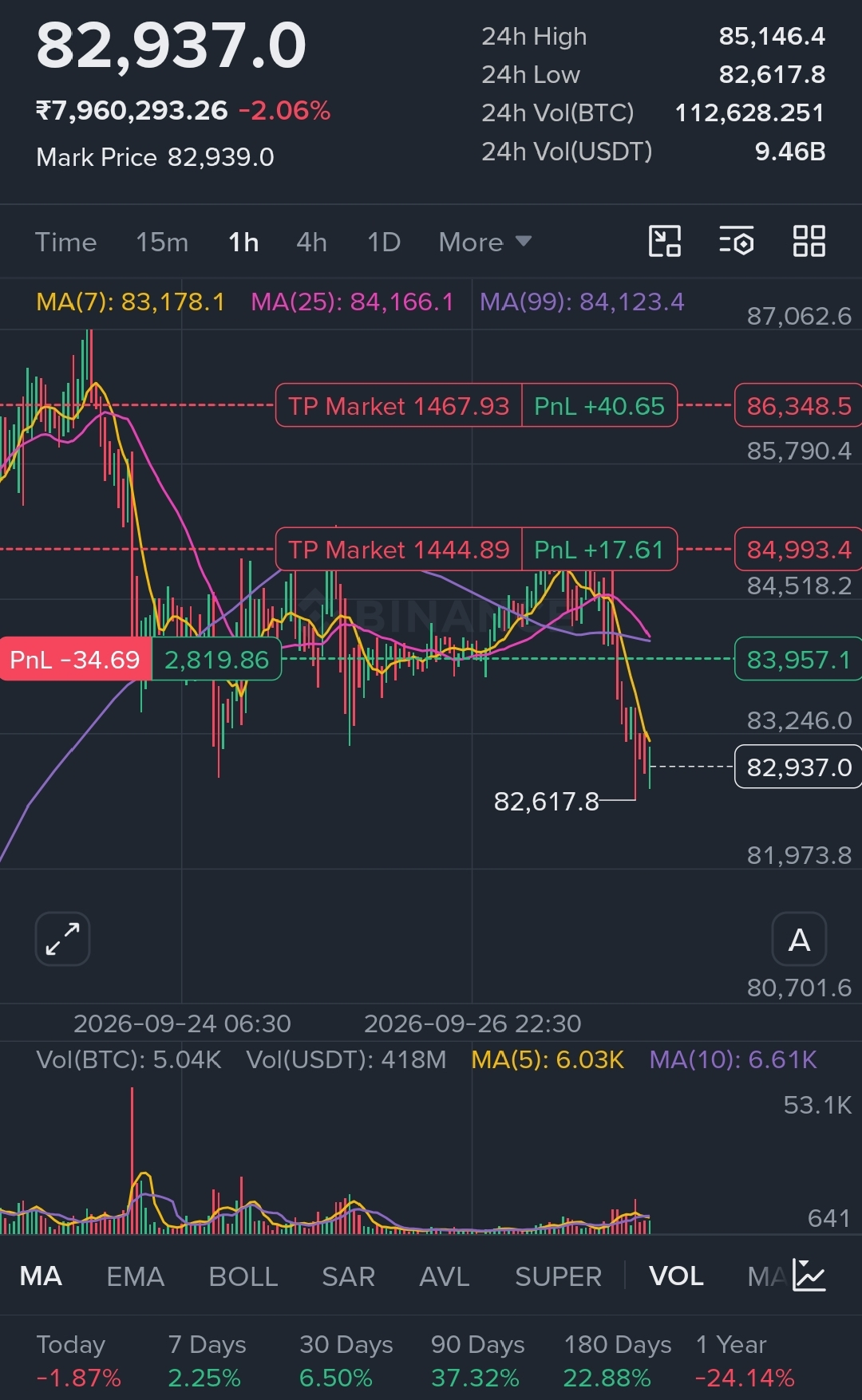
🚨 BTC/USDT — STILL BULLISH, BUT WATCH THESE KEY LEVELS
I’m still bullish on Bitcoin from the bigger-picture perspective, but the current 1H chart shows some short-term weakness.
BTC is trading around $82.9K, with the recent low near $82.62K acting as an important support area.
📊 Key Levels to Watch:
🟢 Support: $82.6K
🟡 MA(7): $83.18K
🔑 MA(25): $84.17K
🔑 MA(99): $84.12K
🚀 Bullish Confirmation: Reclaim and hold $84.1K–$84.2K
BTC is currently below the short-, medium- and longer-period moving averages shown on the chart, so the short-term momentum needs to improve.
If BTC holds $82.6K and reclaims $84.1K–$84.2K, the bullish structure could strengthen again.
However, a decisive breakdown below $82.6K would weaken the current bullish thesis and could bring further downside pressure.
For me, the key question is simple: Can BTC defend $82.6K and reclaim $84.2K?
Not financial advice. Always manage your risk and avoid excessive leverage.
$BTC #FedProposesPaymentStablecoinRules
🚨 BTC/USDT — STILL BULLISH, BUT WATCH THESE KEY LEVELS
I’m still bullish on Bitcoin from the bigger-picture perspective, but the current 1H chart shows some short-term weakness.
BTC is trading around $82.9K, with the recent low near $82.62K acting as an important support area.
📊 Key Levels to Watch:
🟢 Support: $82.6K
🟡 MA(7): $83.18K
🔑 MA(25): $84.17K
🔑 MA(99): $84.12K
🚀 Bullish Confirmation: Reclaim and hold $84.1K–$84.2K
BTC is currently below the short-, medium- and longer-period moving averages shown on the chart, so the short-term momentum needs to improve.
If BTC holds $82.6K and reclaims $84.1K–$84.2K, the bullish structure could strengthen again.
However, a decisive breakdown below $82.6K would weaken the current bullish thesis and could bring further downside pressure.
For me, the key question is simple: Can BTC defend $82.6K and reclaim $84.2K?
Not financial advice. Always manage your risk and avoid excessive leverage.
$BTC #FedProposesPaymentStablecoinRules
I’m still bullish on Bitcoin from the bigger-picture perspective, but the current 1H chart shows some short-term weakness.
BTC is trading around $82.9K, with the recent low near $82.62K acting as an important support area.
📊 Key Levels to Watch:
🟢 Support: $82.6K
🟡 MA(7): $83.18K
🔑 MA(25): $84.17K
🔑 MA(99): $84.12K
🚀 Bullish Confirmation: Reclaim and hold $84.1K–$84.2K
BTC is currently below the short-, medium- and longer-period moving averages shown on the chart, so the short-term momentum needs to improve.
If BTC holds $82.6K and reclaims $84.1K–$84.2K, the bullish structure could strengthen again.
However, a decisive breakdown below $82.6K would weaken the current bullish thesis and could bring further downside pressure.
For me, the key question is simple: Can BTC defend $82.6K and reclaim $84.2K?
Not financial advice. Always manage your risk and avoid excessive leverage.
$BTC #FedProposesPaymentStablecoinRules
103
·
--
Bearish
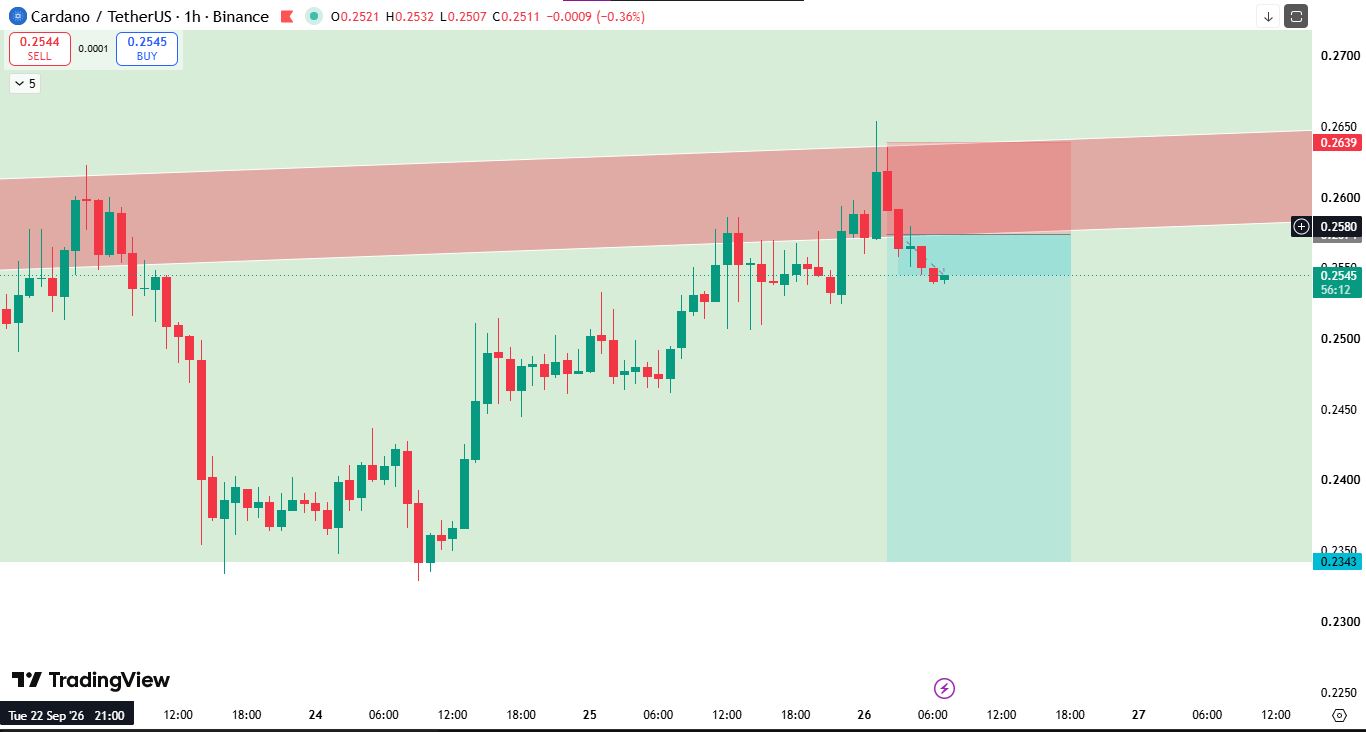
ADA/USDT 1H — SHORT SIGNAL
Cardano (ADA) is trading around $0.2545 and showing rejection from the $0.2580–$0.2600 resistance zone.
🔴 SHORT ENTRY: $0.2545–$0.2580
🎯 TP1: $0.2500
🎯 TP2: $0.2450
🎯 TP3: $0.2433
🛑 SL: $0.2640
📌 Resistance: $0.2580–$0.2640
📌 Major Support: $0.2433
If ADA breaks above $0.2640 and holds, this short setup becomes invalid.
⚠️ Wait for confirmation before entering. Use proper risk management and avoid excessive leverage. This is a technical setup, not a guaranteed-profit signal.
$ADA
{future}(ADAUSDT)
#Cardano
ADA/USDT 1H — SHORT SIGNAL
Cardano (ADA) is trading around $0.2545 and showing rejection from the $0.2580–$0.2600 resistance zone.
🔴 SHORT ENTRY: $0.2545–$0.2580
🎯 TP1: $0.2500
🎯 TP2: $0.2450
🎯 TP3: $0.2433
🛑 SL: $0.2640
📌 Resistance: $0.2580–$0.2640
📌 Major Support: $0.2433
If ADA breaks above $0.2640 and holds, this short setup becomes invalid.
⚠️ Wait for confirmation before entering. Use proper risk management and avoid excessive leverage. This is a technical setup, not a guaranteed-profit signal.
$ADA
#Cardano
Cardano (ADA) is trading around $0.2545 and showing rejection from the $0.2580–$0.2600 resistance zone.
🔴 SHORT ENTRY: $0.2545–$0.2580
🎯 TP1: $0.2500
🎯 TP2: $0.2450
🎯 TP3: $0.2433
🛑 SL: $0.2640
📌 Resistance: $0.2580–$0.2640
📌 Major Support: $0.2433
If ADA breaks above $0.2640 and holds, this short setup becomes invalid.
⚠️ Wait for confirmation before entering. Use proper risk management and avoid excessive leverage. This is a technical setup, not a guaranteed-profit signal.
$ADA
#Cardano
1
349
·
--
fast
fast
DJ CRYPTO
·
--
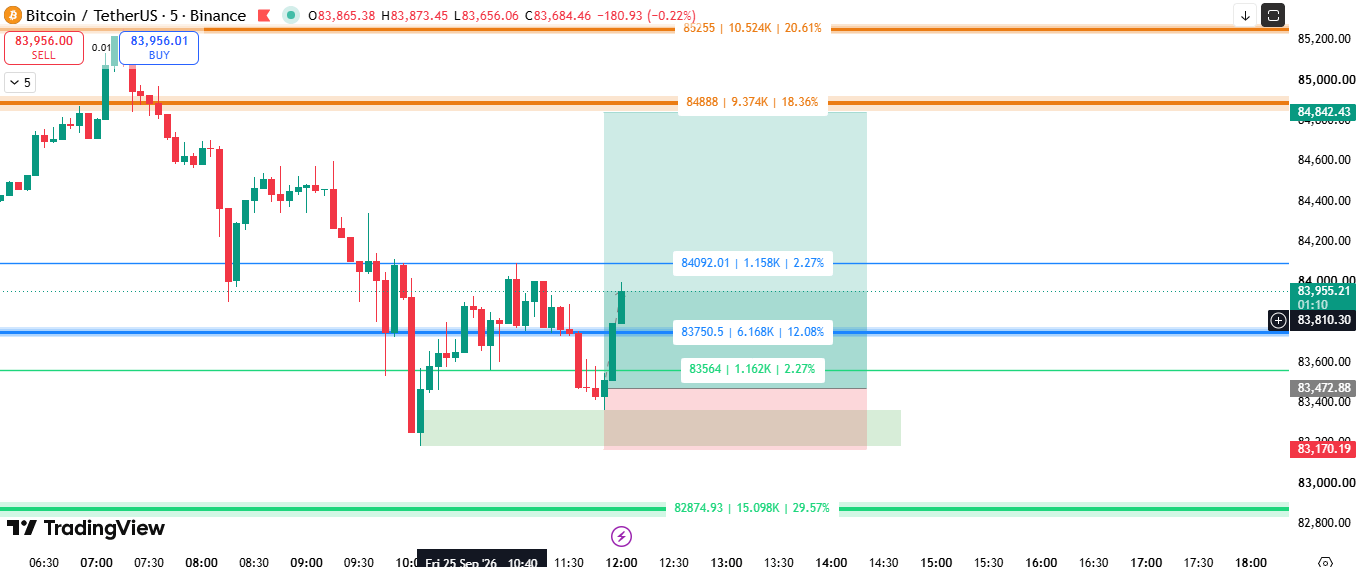
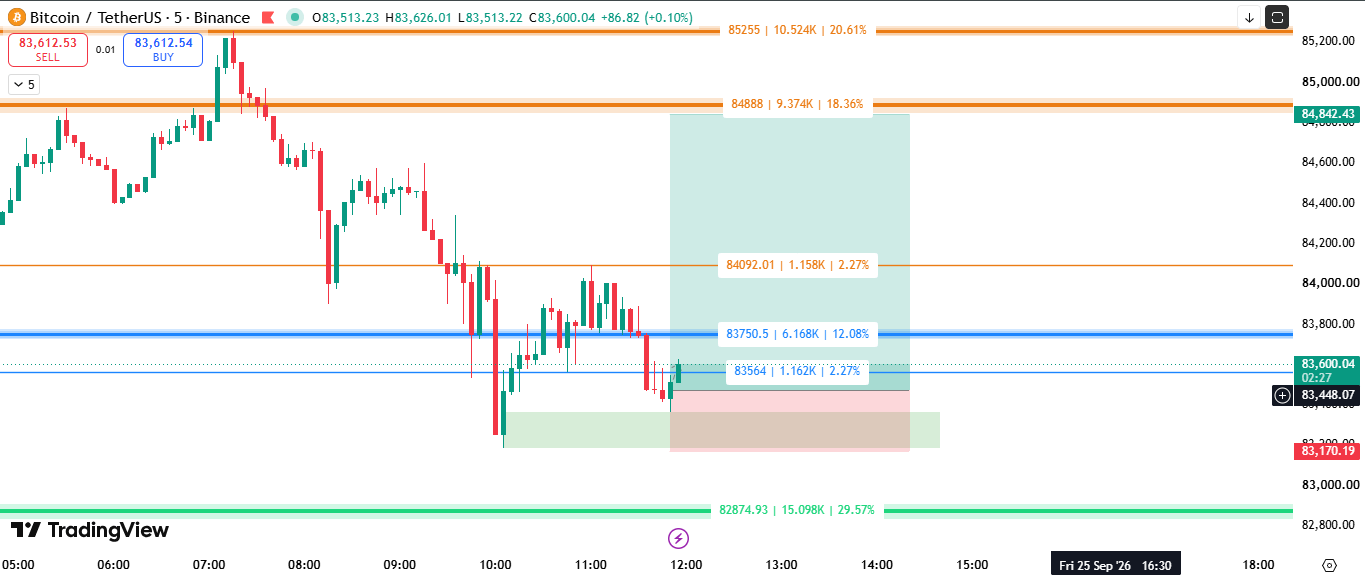
BullishBTC/USDT 5M — LONG SIGNAL 📈
BTC is holding around $83,600 after bouncing from the support zone.
🟢 Entry: $83,550–$83,650
🎯 TP1: $84,092
🎯 TP2: $84,888
🎯 TP3: $85,255
🛑 SL: $83,170
📌 Key Support: $83,500–$83,600
📌 Breakout Level: $84,092
If BTC holds the $83,500 area and breaks above $84,092, the higher targets could come into focus. A break below $83,170 invalidates the setup.
$BTC
#BitcoinSpotETFsTurnNetPositiveYTD
BTC is holding around $83,600 after bouncing from the support zone.
🟢 Entry: $83,550–$83,650
🎯 TP1: $84,092
🎯 TP2: $84,888
🎯 TP3: $85,255
🛑 SL: $83,170
📌 Key Support: $83,500–$83,600
📌 Breakout Level: $84,092
If BTC holds the $83,500 area and breaks above $84,092, the higher targets could come into focus. A break below $83,170 invalidates the setup.
$BTC
#BitcoinSpotETFsTurnNetPositiveYTD
133
·
--
Bullish
BTC/USDT 5M — LONG SIGNAL 📈
BTC is holding around $83,600 after bouncing from the support zone.
🟢 Entry: $83,550–$83,650
🎯 TP1: $84,092
🎯 TP2: $84,888
🎯 TP3: $85,255
🛑 SL: $83,170
📌 Key Support: $83,500–$83,600
📌 Breakout Level: $84,092
If BTC holds the $83,500 area and breaks above $84,092, the higher targets could come into focus. A break below $83,170 invalidates the setup.
$BTC
{future}(BTCUSDT)
#BitcoinSpotETFsTurnNetPositiveYTD
BTC/USDT 5M — LONG SIGNAL 📈
BTC is holding around $83,600 after bouncing from the support zone.
🟢 Entry: $83,550–$83,650
🎯 TP1: $84,092
🎯 TP2: $84,888
🎯 TP3: $85,255
🛑 SL: $83,170
📌 Key Support: $83,500–$83,600
📌 Breakout Level: $84,092
If BTC holds the $83,500 area and breaks above $84,092, the higher targets could come into focus. A break below $83,170 invalidates the setup.
$BTC
#BitcoinSpotETFsTurnNetPositiveYTD
BTC is holding around $83,600 after bouncing from the support zone.
🟢 Entry: $83,550–$83,650
🎯 TP1: $84,092
🎯 TP2: $84,888
🎯 TP3: $85,255
🛑 SL: $83,170
📌 Key Support: $83,500–$83,600
📌 Breakout Level: $84,092
If BTC holds the $83,500 area and breaks above $84,092, the higher targets could come into focus. A break below $83,170 invalidates the setup.
$BTC
#BitcoinSpotETFsTurnNetPositiveYTD
1
218
·
--
Bullish
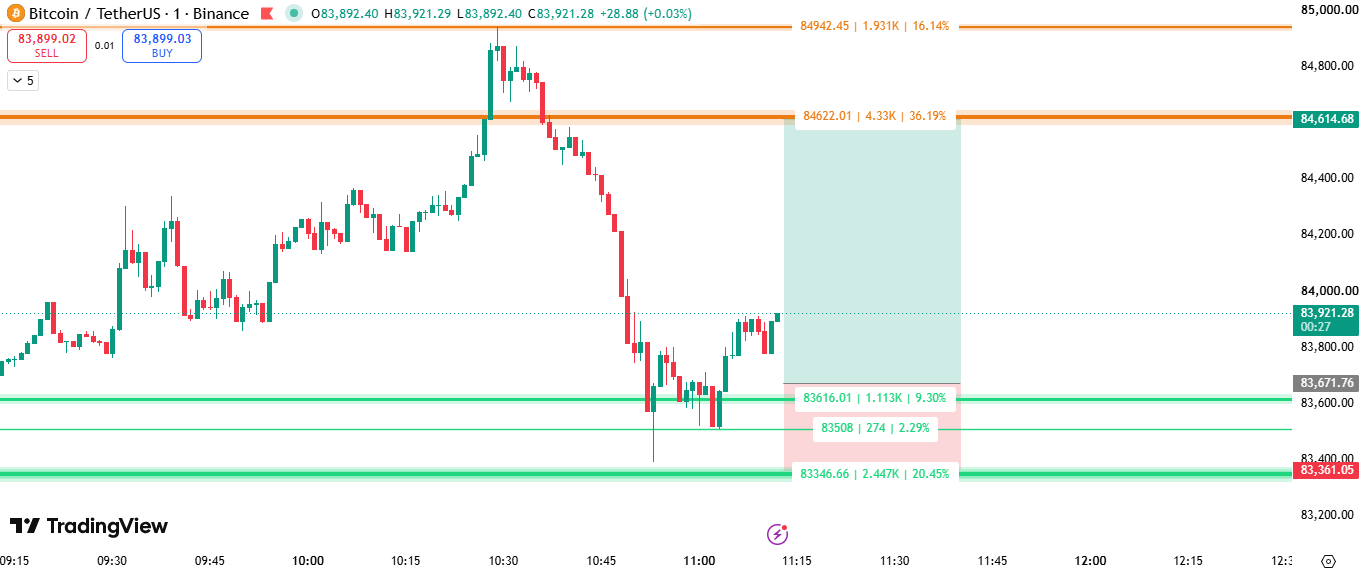
BTC/USDT 1M — LONG SETUP
BTC is trading around $83,920 after bouncing from the $83,500–$83,650 support zone.
🟢 LONG ENTRY: $83,850–$83,950
🎯 TP1: $84,200
🎯 TP2: $84,620
🎯 TP3: $84,940
🛑 SL: $83,450
📌 Key Support: $83,500–$83,650
📌 Resistance: $84,620–$84,950
If BTC holds above $83,500 and continues building momentum, the upside targets remain in focus. A breakdown below $83,450 invalidates the setup.
$BTC #BinanceWillListHyperliquid(HYPE)
{future}(BTCUSDT)
BTC/USDT 1M — LONG SETUP
BTC is trading around $83,920 after bouncing from the $83,500–$83,650 support zone.
🟢 LONG ENTRY: $83,850–$83,950
🎯 TP1: $84,200
🎯 TP2: $84,620
🎯 TP3: $84,940
🛑 SL: $83,450
📌 Key Support: $83,500–$83,650
📌 Resistance: $84,620–$84,950
If BTC holds above $83,500 and continues building momentum, the upside targets remain in focus. A breakdown below $83,450 invalidates the setup.
$BTC #BinanceWillListHyperliquid(HYPE)
BTC is trading around $83,920 after bouncing from the $83,500–$83,650 support zone.
🟢 LONG ENTRY: $83,850–$83,950
🎯 TP1: $84,200
🎯 TP2: $84,620
🎯 TP3: $84,940
🛑 SL: $83,450
📌 Key Support: $83,500–$83,650
📌 Resistance: $84,620–$84,950
If BTC holds above $83,500 and continues building momentum, the upside targets remain in focus. A breakdown below $83,450 invalidates the setup.
$BTC #BinanceWillListHyperliquid(HYPE)
2
424
·
--
Bearish
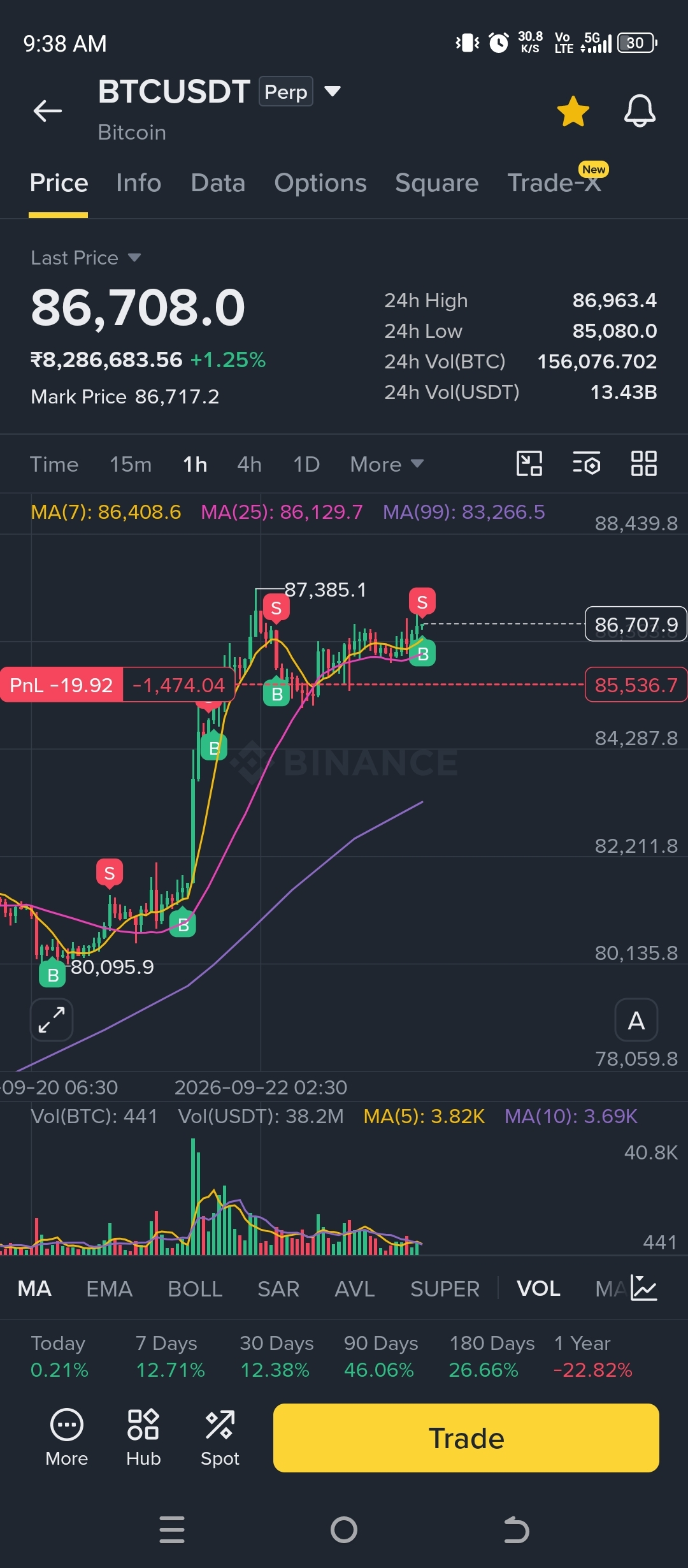
Short $BTC 1.5K USDT
1
204
·
--
Bearish
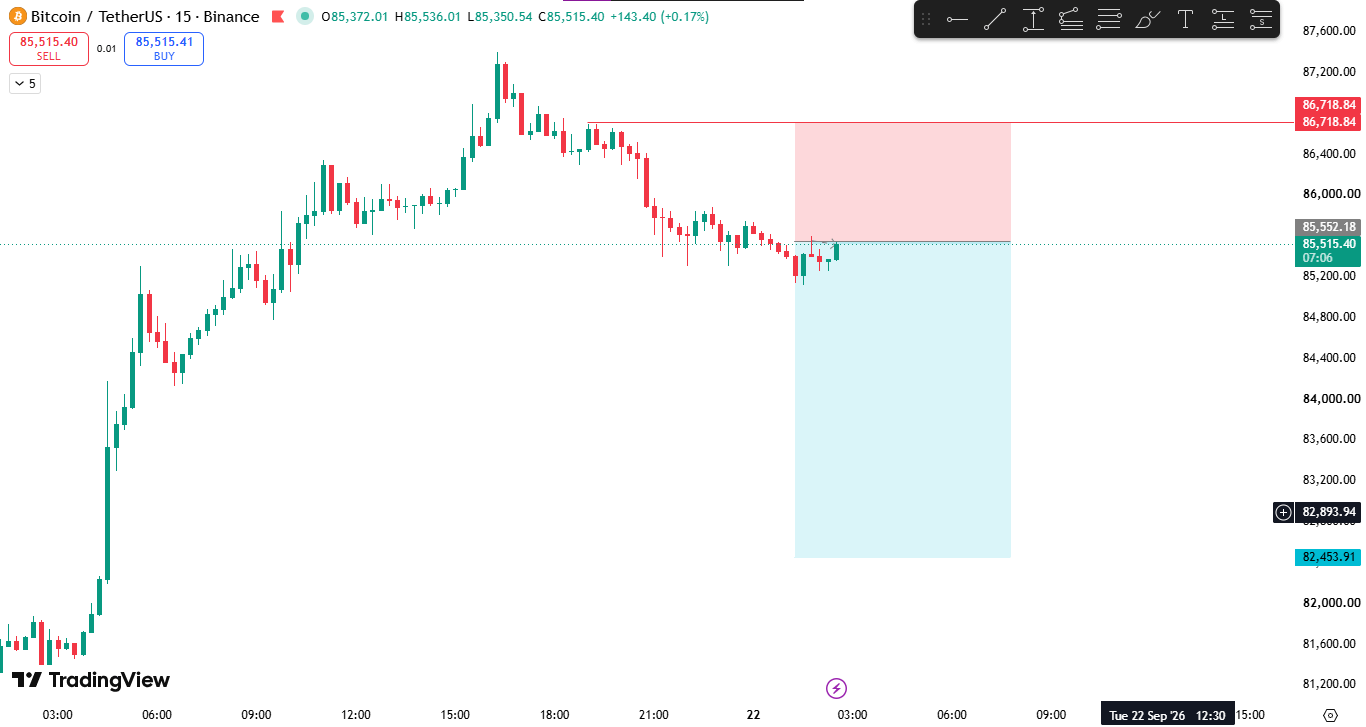
BTC/USDT 15M — SHORT SETUP
BTC is currently around $85,515 and consolidating below the $85,550–$85,600 resistance after a clear pullback.
🔴 SHORT ENTRY: $85,500–$85,600
🎯 TP1: $85,000
🎯 TP2: $84,500
🎯 TP3: $82,900–$82,450
🛑 SL: $86,720
If BTC breaks and holds above $86,720, this short setup becomes invalid.
⚠️ Wait for confirmation and manage risk carefully. This is a technical setup, not guaranteed financial advice.
#BitcoinSpotETFs$999MNetInflow
$BTC
BTC/USDT 15M — SHORT SETUP
BTC is currently around $85,515 and consolidating below the $85,550–$85,600 resistance after a clear pullback.
🔴 SHORT ENTRY: $85,500–$85,600
🎯 TP1: $85,000
🎯 TP2: $84,500
🎯 TP3: $82,900–$82,450
🛑 SL: $86,720
If BTC breaks and holds above $86,720, this short setup becomes invalid.
⚠️ Wait for confirmation and manage risk carefully. This is a technical setup, not guaranteed financial advice.
#BitcoinSpotETFs$999MNetInflow
$BTC
BTC is currently around $85,515 and consolidating below the $85,550–$85,600 resistance after a clear pullback.
🔴 SHORT ENTRY: $85,500–$85,600
🎯 TP1: $85,000
🎯 TP2: $84,500
🎯 TP3: $82,900–$82,450
🛑 SL: $86,720
If BTC breaks and holds above $86,720, this short setup becomes invalid.
⚠️ Wait for confirmation and manage risk carefully. This is a technical setup, not guaranteed financial advice.
#BitcoinSpotETFs$999MNetInflow
$BTC
107
·
--
Bearish
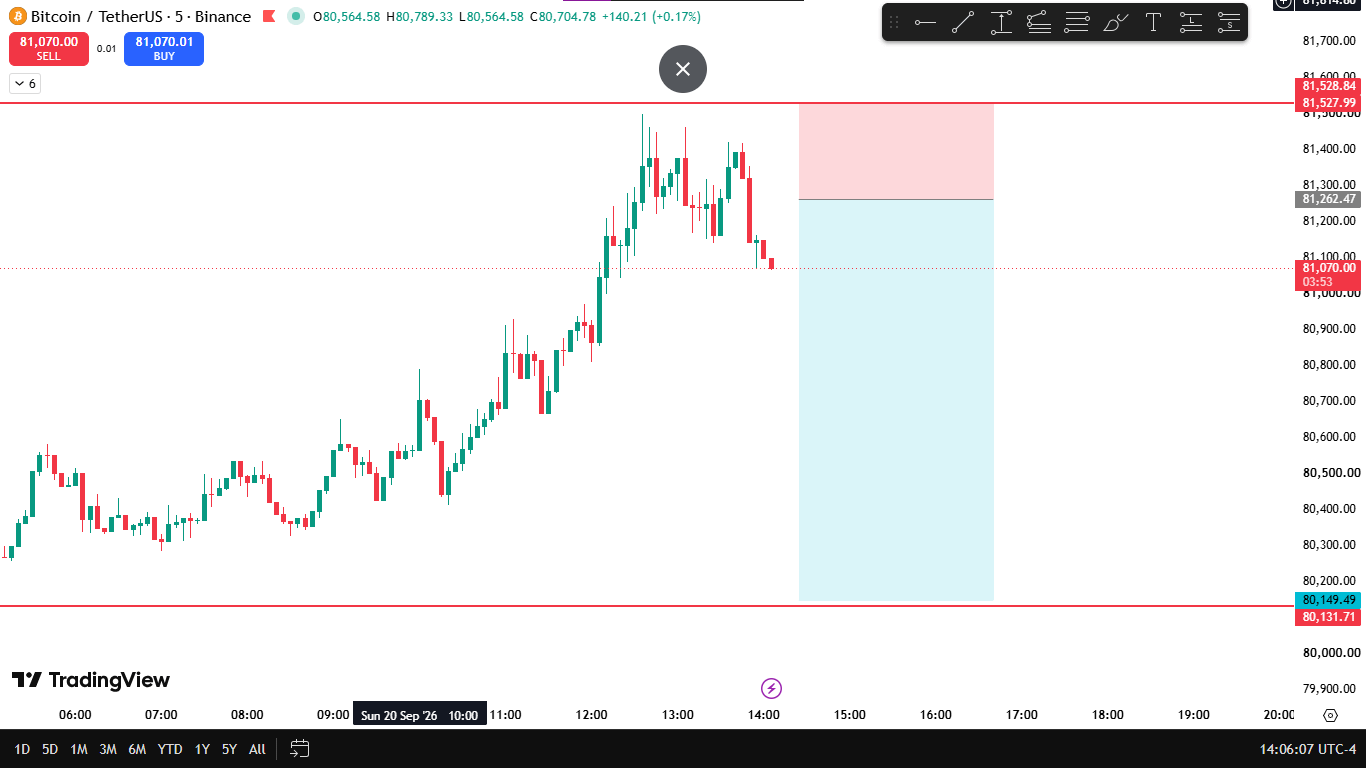
BTC/USDT 5M — SHORT SETUP
BTC is currently around $81,070 after facing rejection from the $81,300–$81,500 area.
🔴 Short Entry: $81,050–$81,200
🎯 TP1: $80,800
🎯 TP2: $80,500
🎯 TP3: $80,150
🛑 SL: $81,530
If BTC breaks and holds above $81,530, the short setup becomes invalid and a bullish continuation could follow.
⚠️ Wait for confirmation before entry. Manage risk and avoid excessive leverage.
$BTC
#SaylorHintsStrategyBitcoinBuy
{future}(BTCUSDT)
BTC/USDT 5M — SHORT SETUP
BTC is currently around $81,070 after facing rejection from the $81,300–$81,500 area.
🔴 Short Entry: $81,050–$81,200
🎯 TP1: $80,800
🎯 TP2: $80,500
🎯 TP3: $80,150
🛑 SL: $81,530
If BTC breaks and holds above $81,530, the short setup becomes invalid and a bullish continuation could follow.
⚠️ Wait for confirmation before entry. Manage risk and avoid excessive leverage.
$BTC
#SaylorHintsStrategyBitcoinBuy
BTC is currently around $81,070 after facing rejection from the $81,300–$81,500 area.
🔴 Short Entry: $81,050–$81,200
🎯 TP1: $80,800
🎯 TP2: $80,500
🎯 TP3: $80,150
🛑 SL: $81,530
If BTC breaks and holds above $81,530, the short setup becomes invalid and a bullish continuation could follow.
⚠️ Wait for confirmation before entry. Manage risk and avoid excessive leverage.
$BTC
#SaylorHintsStrategyBitcoinBuy
203
·
--
Bullish
BTC/USDT — 4 SIGNAL SETUPS | MULTI-TIMEFRAME ANALYSIS 📊
1️⃣ 15M — LONG SETUP 🟢
Entry: 77,150–77,220
TP: 77,450 → 77,550 → 77,650–77,700
SL: Below 77,000
2️⃣ 1H — WAIT FOR CONFIRMATION ⏳
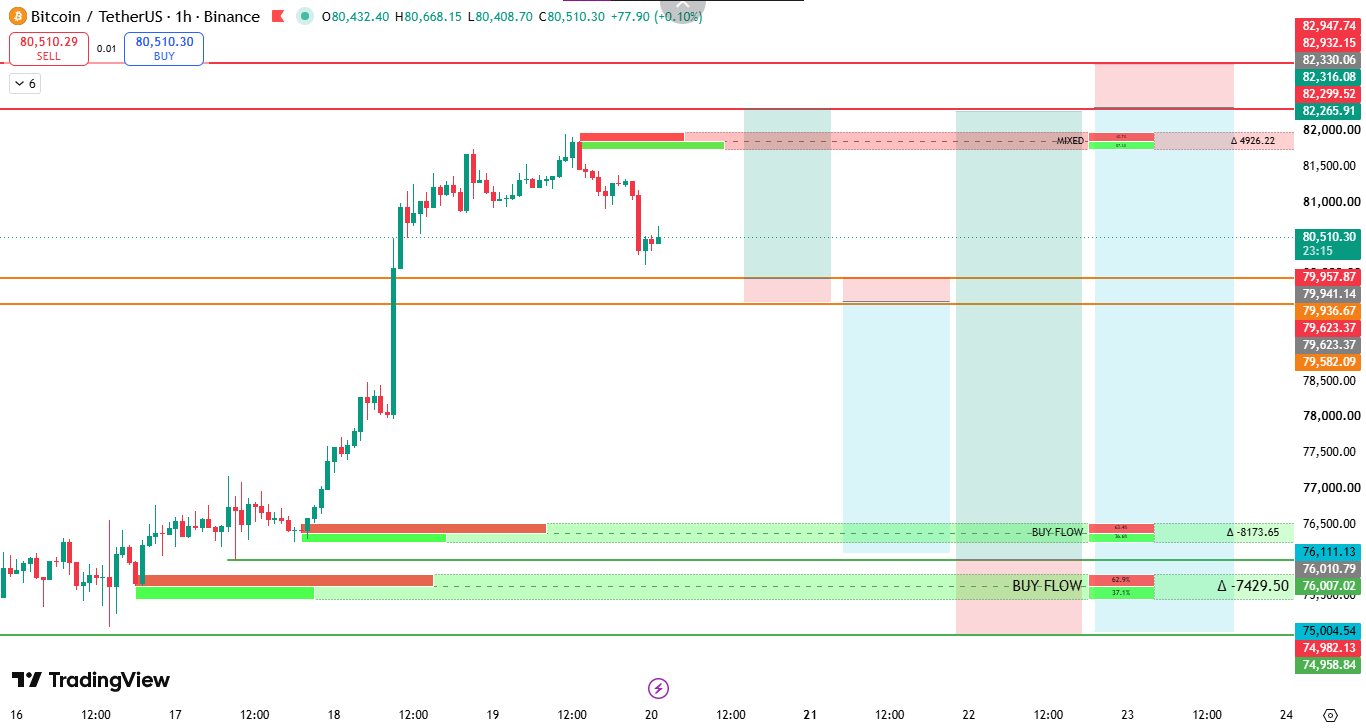
BTC was approaching the 81,500–81,800 resistance/sell-flow zone. A confirmed breakout above the zone could open higher targets, while rejection could lead to a pullback.
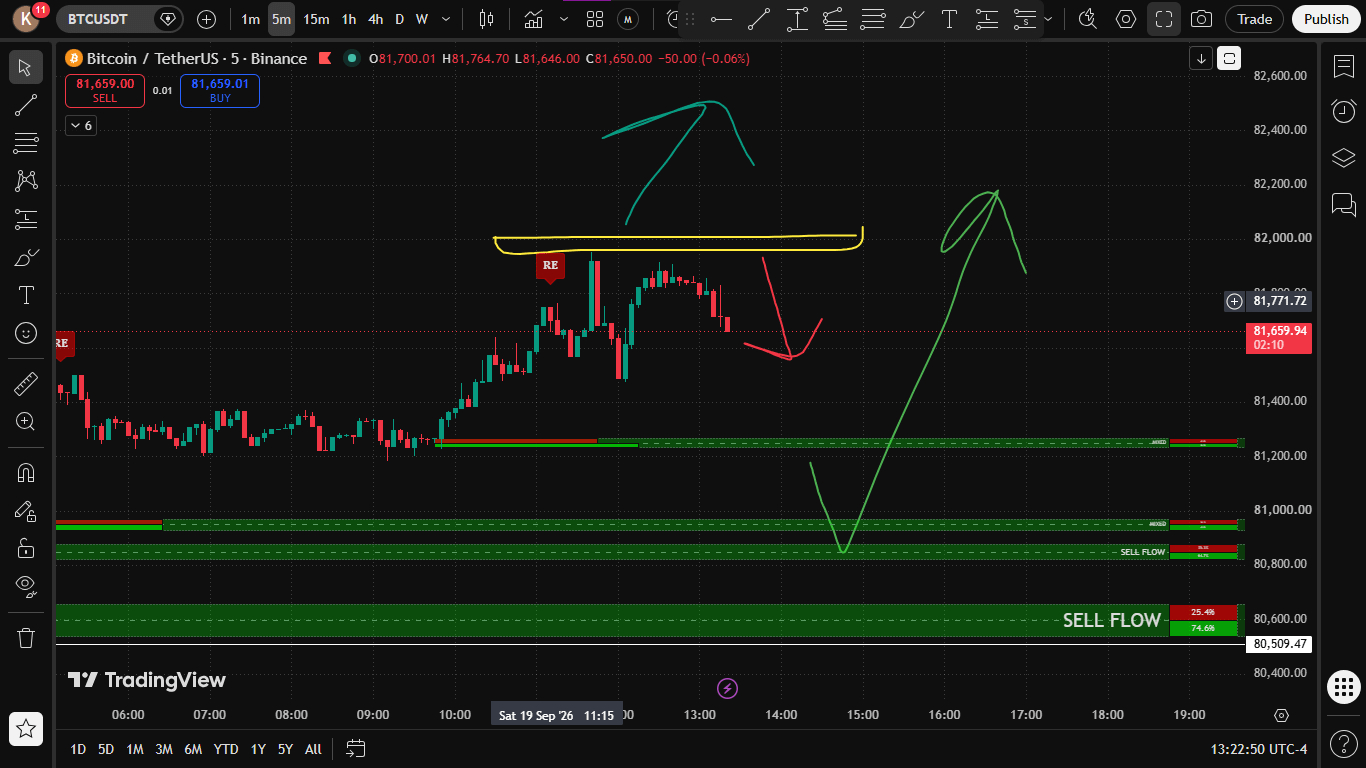
3️⃣ 5M — SHORT/PULLBACK 🔴
Resistance: 81,950–82,050
Potential TP: 81,300 → 81,000 → 80,800
Breakout above 82,050 invalidates the short setup.
4️⃣ 15M — SHORT SETUP 🔴
Entry: 81,400–81,600
TP: 81,000 → 80,500 → 80,000
SL: 82,050
📌 Current 1H structure: BTC is around 80,600, with important support near 79,950–79,600 and major buy-flow zones around 76,500–76,000. Resistance remains around 81,900–82,300.
⚠️ These are technical setups, not guaranteed signals or financial advice. Wait for confirmation, use a stop-loss, and manage leverage carefully.
$BTC
{future}(BTCUSDT)
BTC/USDT — 4 SIGNAL SETUPS | MULTI-TIMEFRAME ANALYSIS 📊
1️⃣ 15M — LONG SETUP 🟢
Entry: 77,150–77,220
TP: 77,450 → 77,550 → 77,650–77,700
SL: Below 77,000
2️⃣ 1H — WAIT FOR CONFIRMATION ⏳
BTC was approaching the 81,500–81,800 resistance/sell-flow zone. A confirmed breakout above the zone could open higher targets, while rejection could lead to a pullback.
3️⃣ 5M — SHORT/PULLBACK 🔴
Resistance: 81,950–82,050
Potential TP: 81,300 → 81,000 → 80,800
Breakout above 82,050 invalidates the short setup.
4️⃣ 15M — SHORT SETUP 🔴
Entry: 81,400–81,600
TP: 81,000 → 80,500 → 80,000
SL: 82,050
📌 Current 1H structure: BTC is around 80,600, with important support near 79,950–79,600 and major buy-flow zones around 76,500–76,000. Resistance remains around 81,900–82,300.
⚠️ These are technical setups, not guaranteed signals or financial advice. Wait for confirmation, use a stop-loss, and manage leverage carefully.
$BTC
1️⃣ 15M — LONG SETUP 🟢
Entry: 77,150–77,220
TP: 77,450 → 77,550 → 77,650–77,700
SL: Below 77,000
2️⃣ 1H — WAIT FOR CONFIRMATION ⏳
BTC was approaching the 81,500–81,800 resistance/sell-flow zone. A confirmed breakout above the zone could open higher targets, while rejection could lead to a pullback.
3️⃣ 5M — SHORT/PULLBACK 🔴
Resistance: 81,950–82,050
Potential TP: 81,300 → 81,000 → 80,800
Breakout above 82,050 invalidates the short setup.
4️⃣ 15M — SHORT SETUP 🔴
Entry: 81,400–81,600
TP: 81,000 → 80,500 → 80,000
SL: 82,050
📌 Current 1H structure: BTC is around 80,600, with important support near 79,950–79,600 and major buy-flow zones around 76,500–76,000. Resistance remains around 81,900–82,300.
⚠️ These are technical setups, not guaranteed signals or financial advice. Wait for confirmation, use a stop-loss, and manage leverage carefully.
$BTC
1
1
166
·
--
Bearish
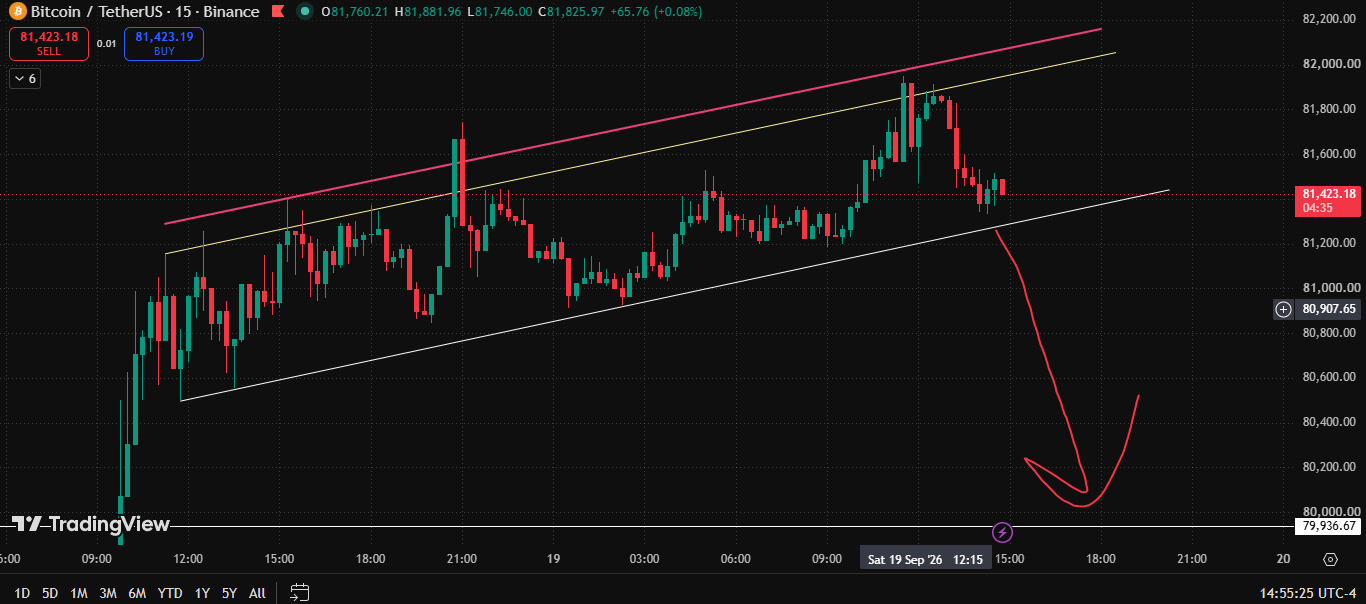
🚨 BTC/USDT 15M — SHORT SETUP
BTC is facing resistance near $81,800–$82,000 and has started showing rejection.
🔴 Entry: $81,400–$81,600
🎯 TP1: $81,000
🎯 TP2: $80,500
🎯 TP3: $80,000
🛑 SL: $82,050
⚠️ Wait for confirmation below the trendline before entering. Manage risk carefully.
$BTC
{future}(BTCUSDT)
#BTCUSDT #Bitcoin #BinanceSquare
🚨 BTC/USDT 15M — SHORT SETUP
BTC is facing resistance near $81,800–$82,000 and has started showing rejection.
🔴 Entry: $81,400–$81,600
🎯 TP1: $81,000
🎯 TP2: $80,500
🎯 TP3: $80,000
🛑 SL: $82,050
⚠️ Wait for confirmation below the trendline before entering. Manage risk carefully.
$BTC
#BTCUSDT #Bitcoin #BinanceSquare
BTC is facing resistance near $81,800–$82,000 and has started showing rejection.
🔴 Entry: $81,400–$81,600
🎯 TP1: $81,000
🎯 TP2: $80,500
🎯 TP3: $80,000
🛑 SL: $82,050
⚠️ Wait for confirmation below the trendline before entering. Manage risk carefully.
$BTC
#BTCUSDT #Bitcoin #BinanceSquare
850
·
--
BTC/USDT — 5M SIGNAL UPDATE
Bitcoin is currently trading around $81,650 on the 5-minute chart. Price is facing strong resistance near the $81,950–$82,050 zone, while the current structure suggests a possible short-term pullback before the next major move.
🔴 SHORT / Pullback Scenario:
If BTC continues to face rejection below $81,950–$82,050, price could retrace toward:
🎯 TP1: $81,300
🎯 TP2: $81,000
🎯 TP3: $80,800
🟢 Bullish Confirmation:
If BTC breaks above $82,050 and holds the level with strong buying volume, the next upside areas could be:
🎯 $82,200
🎯 $82,400–$82,500
📌 Key Support: $81,200
📌 Major Support: $80,800–$80,500
📌 Resistance: $81,950–$82,050
⚠️ Wait for confirmation before entering. A rejection or breakout should be confirmed with candle closure and volume. Avoid over-leveraging and always use a defined stop-loss.
This is a technical analysis setup, not financial advice or a guaranteed-profit signal.
#BOJRaisesRatesTo31YearHigh #BTCBreaks80K
BTC/USDT — 5M SIGNAL UPDATE
Bitcoin is currently trading around $81,650 on the 5-minute chart. Price is facing strong resistance near the $81,950–$82,050 zone, while the current structure suggests a possible short-term pullback before the next major move.
🔴 SHORT / Pullback Scenario:
If BTC continues to face rejection below $81,950–$82,050, price could retrace toward:
🎯 TP1: $81,300
🎯 TP2: $81,000
🎯 TP3: $80,800
🟢 Bullish Confirmation:
If BTC breaks above $82,050 and holds the level with strong buying volume, the next upside areas could be:
🎯 $82,200
🎯 $82,400–$82,500
📌 Key Support: $81,200
📌 Major Support: $80,800–$80,500
📌 Resistance: $81,950–$82,050
⚠️ Wait for confirmation before entering. A rejection or breakout should be confirmed with candle closure and volume. Avoid over-leveraging and always use a defined stop-loss.
This is a technical analysis setup, not financial advice or a guaranteed-profit signal.
#BOJRaisesRatesTo31YearHigh #BTCBreaks80K
Bitcoin is currently trading around $81,650 on the 5-minute chart. Price is facing strong resistance near the $81,950–$82,050 zone, while the current structure suggests a possible short-term pullback before the next major move.
🔴 SHORT / Pullback Scenario:
If BTC continues to face rejection below $81,950–$82,050, price could retrace toward:
🎯 TP1: $81,300
🎯 TP2: $81,000
🎯 TP3: $80,800
🟢 Bullish Confirmation:
If BTC breaks above $82,050 and holds the level with strong buying volume, the next upside areas could be:
🎯 $82,200
🎯 $82,400–$82,500
📌 Key Support: $81,200
📌 Major Support: $80,800–$80,500
📌 Resistance: $81,950–$82,050
⚠️ Wait for confirmation before entering. A rejection or breakout should be confirmed with candle closure and volume. Avoid over-leveraging and always use a defined stop-loss.
This is a technical analysis setup, not financial advice or a guaranteed-profit signal.
#BOJRaisesRatesTo31YearHigh #BTCBreaks80K
136
·
--
Bullish
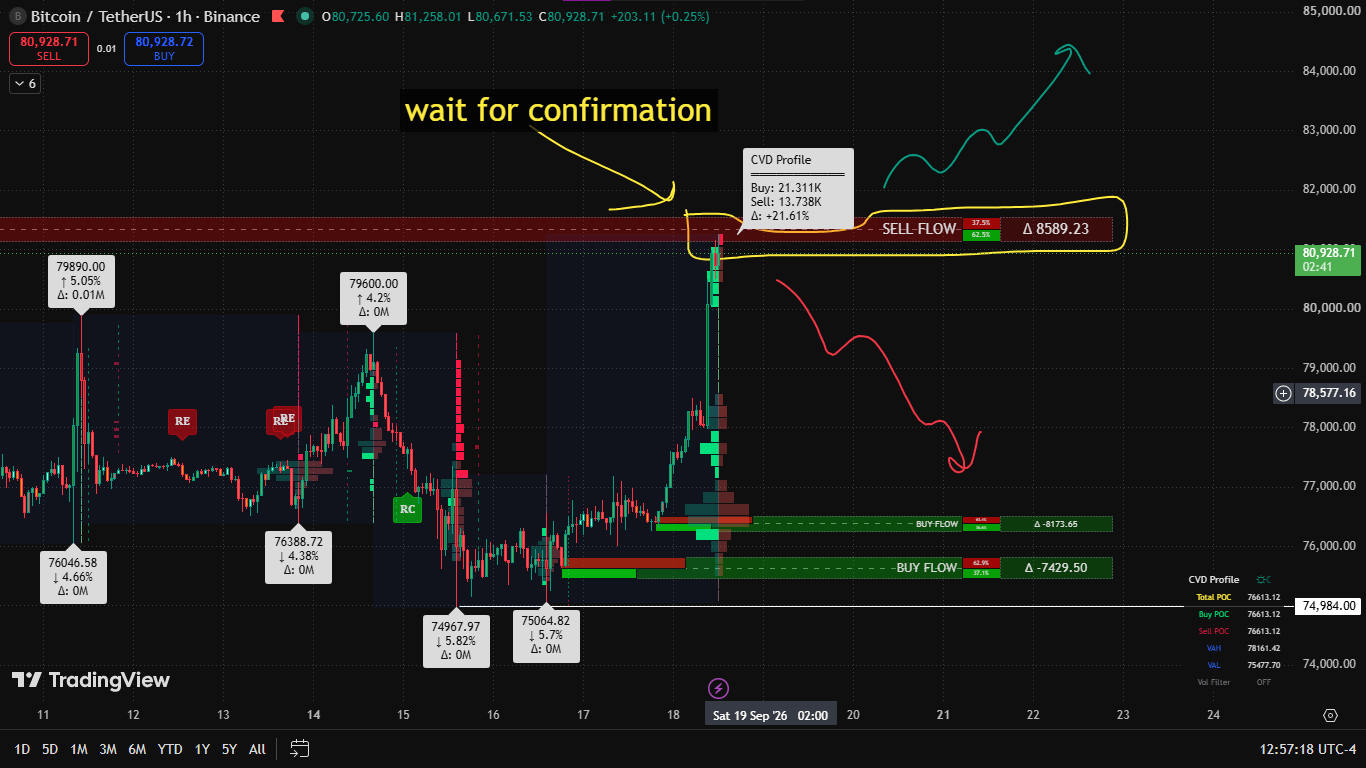
BTC/USDT 1H — WAIT FOR CONFIRMATION 📊
Bitcoin is currently trading around $80,930 on the 1-hour chart. Price has made a strong upward move and is now approaching a major resistance / sell-flow zone around $81,500–$81,800.
The CVD profile is showing strong buying activity, but sellers are also active around the current resistance area. Therefore, waiting for confirmation is important before taking a position.
🟢 Bullish Scenario:
If BTC breaks and holds above $81,800 with strong volume, the next potential levels could be:
🎯 TP1: $82,500
🎯 TP2: $83,000
🎯 TP3: $84,000+
🔴 Bearish Scenario:
If BTC gets rejected strongly from the $81,500–$81,800 zone, a pullback toward $79,500–$78,500 could be possible.
⚠️ Do not chase the move. Wait for a confirmed breakout or rejection. Use proper risk management and avoid excessive leverage.
This is a technical analysis setup, not financial advice or a guaranteed-profit signal.
$BTC #BTCBreaks80K
{future}(BTCUSDT)
BTC/USDT 1H — WAIT FOR CONFIRMATION 📊
Bitcoin is currently trading around $80,930 on the 1-hour chart. Price has made a strong upward move and is now approaching a major resistance / sell-flow zone around $81,500–$81,800.
The CVD profile is showing strong buying activity, but sellers are also active around the current resistance area. Therefore, waiting for confirmation is important before taking a position.
🟢 Bullish Scenario:
If BTC breaks and holds above $81,800 with strong volume, the next potential levels could be:
🎯 TP1: $82,500
🎯 TP2: $83,000
🎯 TP3: $84,000+
🔴 Bearish Scenario:
If BTC gets rejected strongly from the $81,500–$81,800 zone, a pullback toward $79,500–$78,500 could be possible.
⚠️ Do not chase the move. Wait for a confirmed breakout or rejection. Use proper risk management and avoid excessive leverage.
This is a technical analysis setup, not financial advice or a guaranteed-profit signal.
$BTC #BTCBreaks80K
Bitcoin is currently trading around $80,930 on the 1-hour chart. Price has made a strong upward move and is now approaching a major resistance / sell-flow zone around $81,500–$81,800.
The CVD profile is showing strong buying activity, but sellers are also active around the current resistance area. Therefore, waiting for confirmation is important before taking a position.
🟢 Bullish Scenario:
If BTC breaks and holds above $81,800 with strong volume, the next potential levels could be:
🎯 TP1: $82,500
🎯 TP2: $83,000
🎯 TP3: $84,000+
🔴 Bearish Scenario:
If BTC gets rejected strongly from the $81,500–$81,800 zone, a pullback toward $79,500–$78,500 could be possible.
⚠️ Do not chase the move. Wait for a confirmed breakout or rejection. Use proper risk management and avoid excessive leverage.
This is a technical analysis setup, not financial advice or a guaranteed-profit signal.
$BTC #BTCBreaks80K
119
·
--
Bullish
🚨 Bitcoin 93% Crash Warning? Here’s What MicroStrategy Actually Said
A major Bitcoin risk warning is getting attention after Strategy (formerly MicroStrategy) highlighted Bitcoin’s historical volatility in its latest investor guide.
According to the guide, Bitcoin has experienced a maximum historical draw
{future}(BTCUSDT)
down of around 93.1%. 😳
But here’s the important part: Strategy is NOT predicting that Bitcoin will crash 93% from current levels.
The figure refers to Bitcoin’s historical worst-case drawdown and is being presented as a reminder that even the world’s largest cryptocurrency can experience extreme volatility.
Strategy itself remains heavily exposed to Bitcoin, holding hundreds of thousands of BTC.
For investors, the message is simple: Bitcoin can deliver massive returns, but the downside risk can also be extreme.
⚠️ Don’t confuse a historical risk figure with a future price prediction.
Would you still hold BTC if another 90%+ drawdown happened?
#BitcoinNews # #BinanceSquare #Saylor
🚨 Bitcoin 93% Crash Warning? Here’s What MicroStrategy Actually Said
A major Bitcoin risk warning is getting attention after Strategy (formerly MicroStrategy) highlighted Bitcoin’s historical volatility in its latest investor guide.
According to the guide, Bitcoin has experienced a maximum historical draw
down of around 93.1%. 😳
But here’s the important part: Strategy is NOT predicting that Bitcoin will crash 93% from current levels.
The figure refers to Bitcoin’s historical worst-case drawdown and is being presented as a reminder that even the world’s largest cryptocurrency can experience extreme volatility.
Strategy itself remains heavily exposed to Bitcoin, holding hundreds of thousands of BTC.
For investors, the message is simple: Bitcoin can deliver massive returns, but the downside risk can also be extreme.
⚠️ Don’t confuse a historical risk figure with a future price prediction.
Would you still hold BTC if another 90%+ drawdown happened?
#BitcoinNews # #BinanceSquare #Saylor
A major Bitcoin risk warning is getting attention after Strategy (formerly MicroStrategy) highlighted Bitcoin’s historical volatility in its latest investor guide.
According to the guide, Bitcoin has experienced a maximum historical draw
down of around 93.1%. 😳
But here’s the important part: Strategy is NOT predicting that Bitcoin will crash 93% from current levels.
The figure refers to Bitcoin’s historical worst-case drawdown and is being presented as a reminder that even the world’s largest cryptocurrency can experience extreme volatility.
Strategy itself remains heavily exposed to Bitcoin, holding hundreds of thousands of BTC.
For investors, the message is simple: Bitcoin can deliver massive returns, but the downside risk can also be extreme.
⚠️ Don’t confuse a historical risk figure with a future price prediction.
Would you still hold BTC if another 90%+ drawdown happened?
#BitcoinNews # #BinanceSquare #Saylor
154
·
--
Bullish
#secreceivesgrayscalelitecointrustetffiling
#CryptoLiquidations$674MIn24H
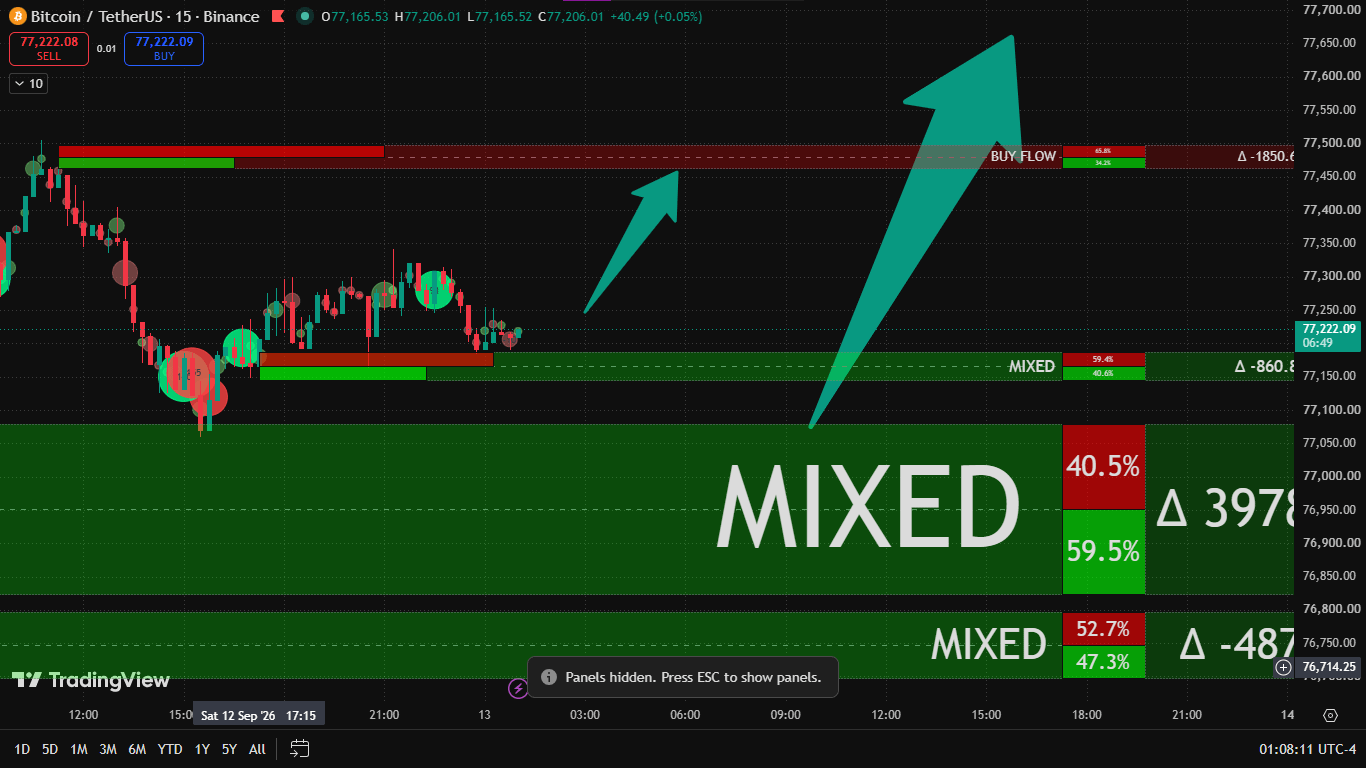
Bitcoin (BTC) is currently trading around 77,200 USDT on the 15-minute chart. The market structure looks MIXED, but price is holding above the 77,150–77,050 support zone, which could provide a potential base for a short-term bullish move.
🟢 LONG SETUP
Entry Zone: 77,150 – 77,220
🎯 Take Profit 1: 77,450
🎯 Take Profit 2: 77,550
🎯 Take Profit 3: 77,650 – 77,700
🛑 Stop Loss: Below 77,000
If BTC breaks and closes below 77,050 with strong selling pressure, the bullish setup could become invalid. In that case, BTC may move toward 76,850–76,700.
⚠️ This is a technical chart-based signal, not a guaranteed-profit call. Wait for confirmation before entering, use proper risk management, and avoid excessive leverage.
Trade smart. Protect your capital.
{future}(BTCUSDT)
#secreceivesgrayscalelitecointrustetffiling
#CryptoLiquidations$674MIn24H
Bitcoin (BTC) is currently trading around 77,200 USDT on the 15-minute chart. The market structure looks MIXED, but price is holding above the 77,150–77,050 support zone, which could provide a potential base for a short-term bullish move.
🟢 LONG SETUP
Entry Zone: 77,150 – 77,220
🎯 Take Profit 1: 77,450
🎯 Take Profit 2: 77,550
🎯 Take Profit 3: 77,650 – 77,700
🛑 Stop Loss: Below 77,000
If BTC breaks and closes below 77,050 with strong selling pressure, the bullish setup could become invalid. In that case, BTC may move toward 76,850–76,700.
⚠️ This is a technical chart-based signal, not a guaranteed-profit call. Wait for confirmation before entering, use proper risk management, and avoid excessive leverage.
Trade smart. Protect your capital.
#CryptoLiquidations$674MIn24H
Bitcoin (BTC) is currently trading around 77,200 USDT on the 15-minute chart. The market structure looks MIXED, but price is holding above the 77,150–77,050 support zone, which could provide a potential base for a short-term bullish move.
🟢 LONG SETUP
Entry Zone: 77,150 – 77,220
🎯 Take Profit 1: 77,450
🎯 Take Profit 2: 77,550
🎯 Take Profit 3: 77,650 – 77,700
🛑 Stop Loss: Below 77,000
If BTC breaks and closes below 77,050 with strong selling pressure, the bullish setup could become invalid. In that case, BTC may move toward 76,850–76,700.
⚠️ This is a technical chart-based signal, not a guaranteed-profit call. Wait for confirmation before entering, use proper risk management, and avoid excessive leverage.
Trade smart. Protect your capital.
102
·
--
Bullish
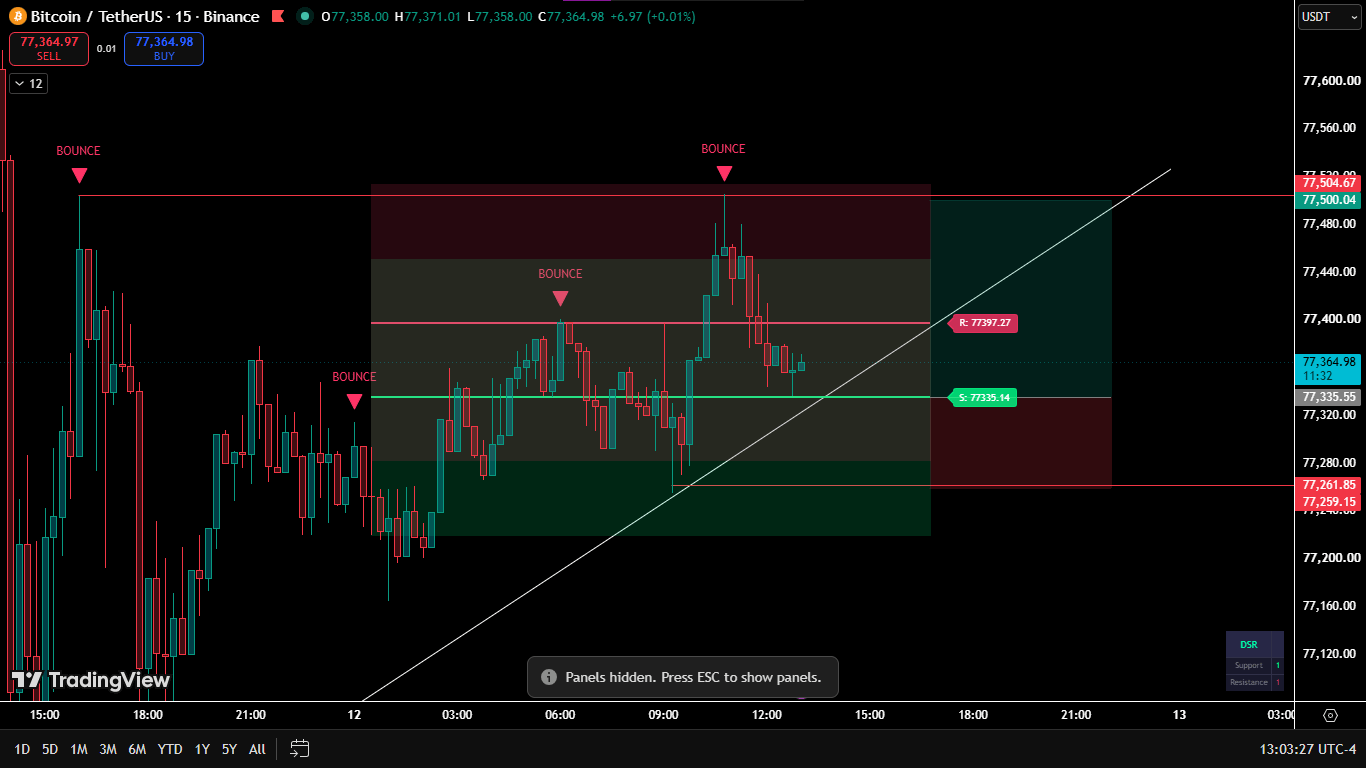
🔥 BTC/USDT 15M — SHORT SETUP
📍 Entry: 77,397 – 77,400
🎯 TP1: 77,335
🎯 TP2: 77,262
🛑 Stop Loss: 77,505
BTC showed rejection from the resistance zone and a short-term downside setup is forming.
If a breakdown is seen below 77,335, the bearish move could get stronger.
⚠️ Avoid FOMO entries without trade confirmation. Use proper risk management.
#BTC #Crypto #TradingSignal $BTC
{future}(BTCUSDT)
🔥 BTC/USDT 15M — SHORT SETUP
📍 Entry: 77,397 – 77,400
🎯 TP1: 77,335
🎯 TP2: 77,262
🛑 Stop Loss: 77,505
BTC showed rejection from the resistance zone and a short-term downside setup is forming.
If a breakdown is seen below 77,335, the bearish move could get stronger.
⚠️ Avoid FOMO entries without trade confirmation. Use proper risk management.
#BTC #Crypto #TradingSignal $BTC
📍 Entry: 77,397 – 77,400
🎯 TP1: 77,335
🎯 TP2: 77,262
🛑 Stop Loss: 77,505
BTC showed rejection from the resistance zone and a short-term downside setup is forming.
If a breakdown is seen below 77,335, the bearish move could get stronger.
⚠️ Avoid FOMO entries without trade confirmation. Use proper risk management.
#BTC #Crypto #TradingSignal $BTC
1
1
154
·
--
Bullish
{spot}(VTHOUSDT)
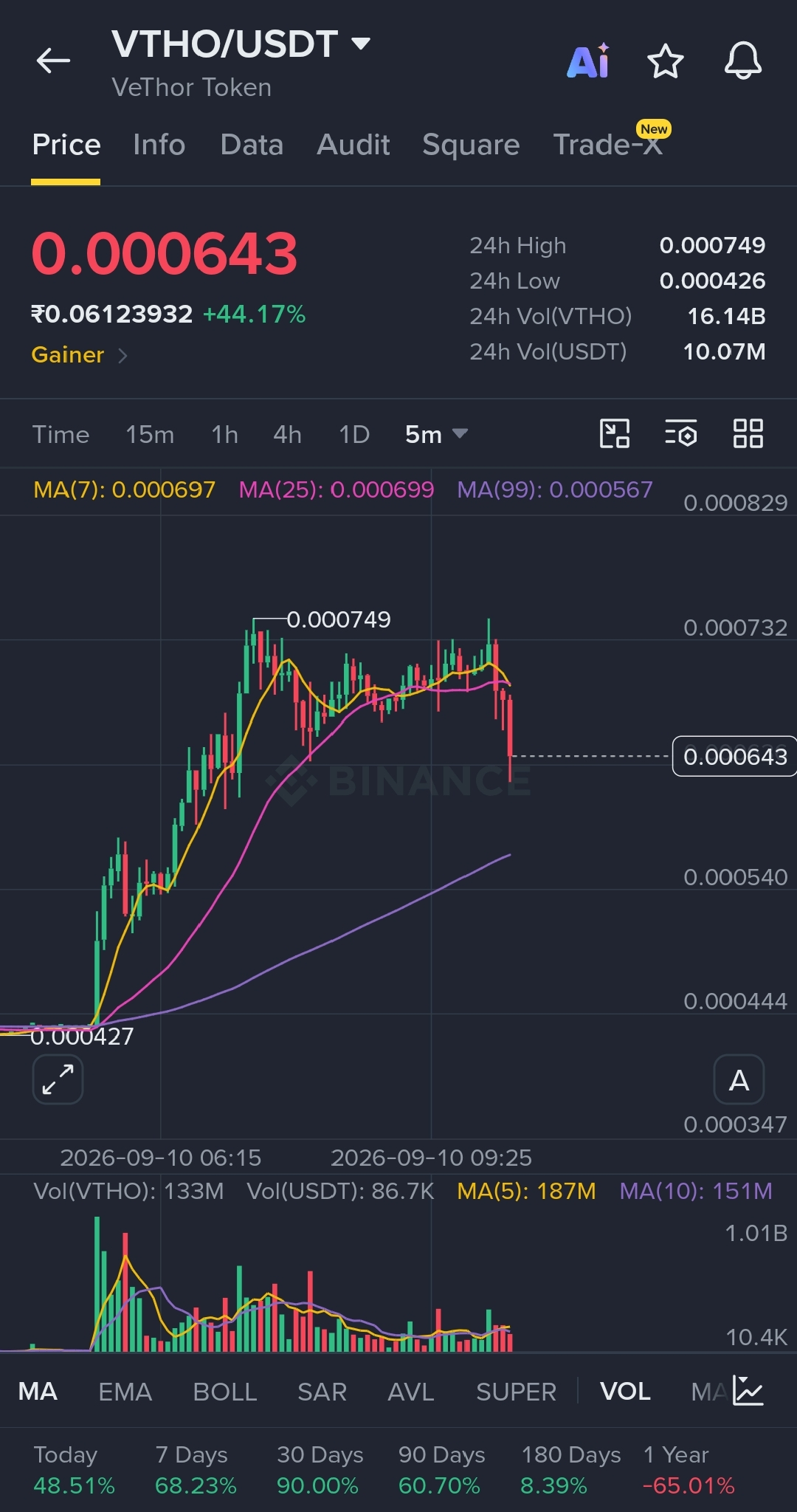
🔥 VTHO is showing strong momentum! 📈
Up 44%+ today, with a high of 0.000749 USDT. Let’s see if VTHO can break the resistance and continue the rally. 🚀
#VTHO #VeThor #crypto #BinanceSquare #altcoins
🔥 VTHO is showing strong momentum! 📈
Up 44%+ today, with a high of 0.000749 USDT. Let’s see if VTHO can break the resistance and continue the rally. 🚀
#VTHO #VeThor #crypto #BinanceSquare #altcoins
Up 44%+ today, with a high of 0.000749 USDT. Let’s see if VTHO can break the resistance and continue the rally. 🚀
#VTHO #VeThor #crypto #BinanceSquare #altcoins
1
350
·
--
Bullish
Did you guys remember me ?☺️
#BinanceSquare
Did you guys remember me ?☺️
#BinanceSquare
#BinanceSquare
1
1
152
Log in to explore more content
Join global crypto users on Binance Square
⚡️ Get latest and useful information about crypto.
💬 Trusted by the world’s largest crypto exchange.
👍 Discover real insights from verified creators.
Email / Phone number
Trending Topics
BitcoinClears$85200
1,450 views
85 Discussing
We got the move, and $BTC is standing exactly where we were before the data. That’s what actual patience for a trade looks like.
The data came in mixed but with some important numbers. ADP Non-Farm Employment Change came at 90K vs 73K forecast, while Core PCE came in at 0.2% vs 0.3% expected. Final GDP was also stronger at 2.2% vs 1.5% forecast, while Personal Spending came in at 0.9% vs 0.8% expected. At the same time, Personal Income missed at 0.2% vs 0.5% forecast.
BTC initially surged to $85,600 and is now back where it needs to be. I’m still looking toward the lower ranges at $82,759 and the $80,000 liquidity, because the overhead liquidity is done and dusted.
We had a live session during the data, and during that session we saw the market at $83,800, then $85,600, and then back toward $83,000 and we still didn’t enter a trade.
That’s what patience is.
We can’t force an entry when the market has no clear direction. The same range is still in focus, and we’ll wait for the market to give us the setup.
Let me know, guys, how was the session? And should we have more regular sessions with our respected members so we can have proper discussions regarding the market?
#BitcoinClears$85200 #AltcoinSeasonIndexHoldsAbove60For5Days #USADPAdds90000JobsInSeptember #BitcoinSlipsBelow$84000 #SECToClarifyOnChainFundraisingRules
Crypto_LUX
·18 Likes
·4.5k views
AltcoinSeasonIndexHoldsAbove60For5Days
11,779 views
540 Discussing
USADPAdds90000JobsInSeptember
3,489 views
260 Discussing