
CryptoNews_1102
1.3k Posts

CryptoNews_1102
Report
Block User
Open Trade

SEI Holder
Occasional Trader
8.5 Years
5 Following
95 Followers
301 Liked
Posts
Portfolio
All
Quotes
Videos
🤖 China wants a lifetime "ID card" on every robot it makes
China's industry ministry (MIIT) has published draft rules requiring every complete robot made in the country, from industrial arms to service and special-purpose robots, to get a unique, permanent and tamper-proof ID code before leaving the factory. Makers would register products, including key components and software, on a national platform and file every code they use within 20 working days. Public comments are open until December 5, and the draft sets no start date yet.
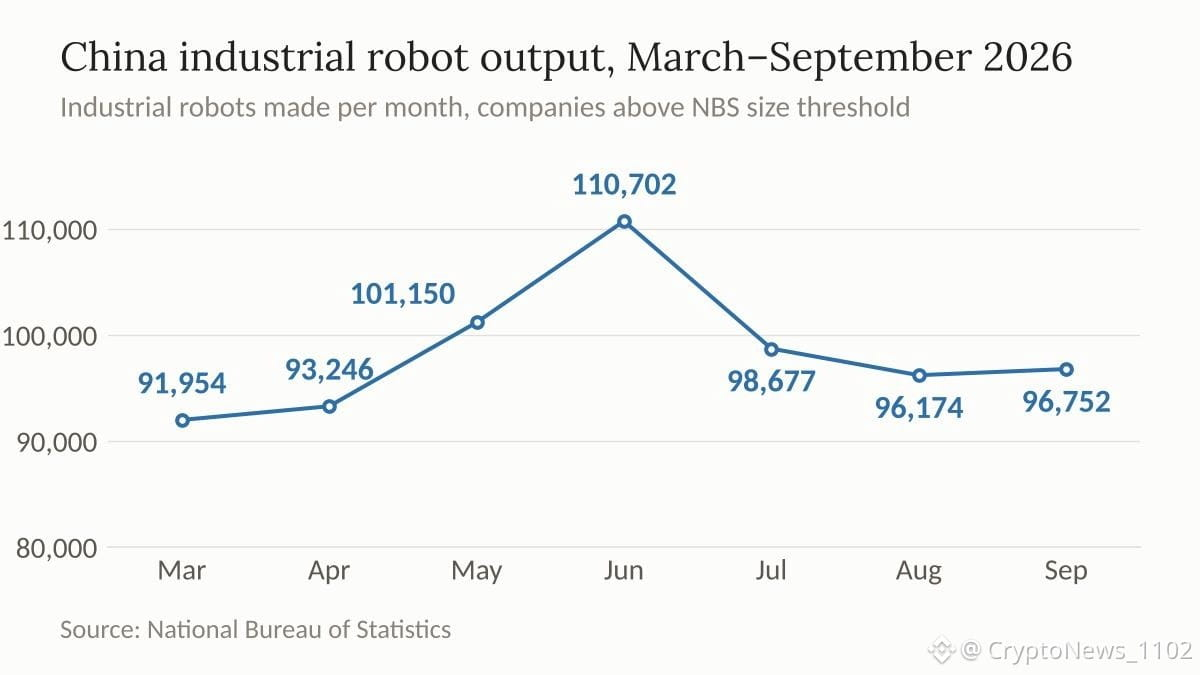
⭐ It extends a scheme that already coded 28,000+ humanoids to an industry making close to 100,000 industrial robots a month, giving Beijing a detailed view of who builds what.
#AI #Robotics
2
📊 CoreWeave beats forecasts with $3.66B quarter as bond markets fret over its debt
AI cloud provider CoreWeave posted Q3 revenue of $3.66 billion, up 168% year on year and above the $3.55 billion Wall Street expected. Its revenue backlog grew to about $132.5 billion from $104 billion in June, and it raised its 2026 revenue forecast to $13-13.3 billion. But it still lost $709 million as interest expense hit $846 million, after its bonds had slid to yields above 16%. Shares rose about 6% after hours.
⭐ CoreWeave is a bellwether for the debt-fuelled AI build-out: demand looks strong, but financing it is getting expensive.
#AI
87
💸 Alibaba Cloud slashes AI subscription costs by over 40% as China's token price war heats up
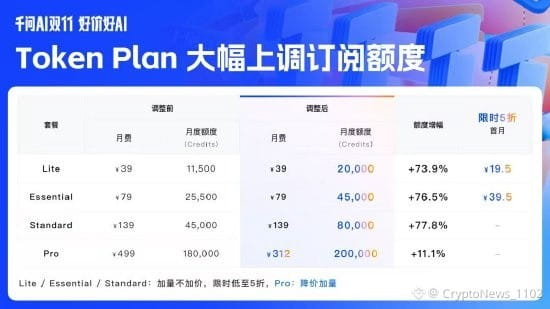
Alibaba Cloud raised the monthly credits in its personal Token Plan for AI models by about 74-78% while keeping Lite, Essential and Standard prices unchanged. The top Pro tier got more credits and a price cut from 499 to 312 yuan a month, so the cost per credit falls by over 40% across all four tiers. The plan works with coding tools like Claude Code, Cursor and Qwen Code, and also adds night-time discounts on Qwen and DeepSeek models.
⭐ Chinese cloud giants are competing hard on price for developers using AI coding agents, which keeps pressure on Western rivals' pricing.
#AI
31
🇲🇾 SoftBank and Grab commit $1.85B to build giant AI data centers in Malaysia
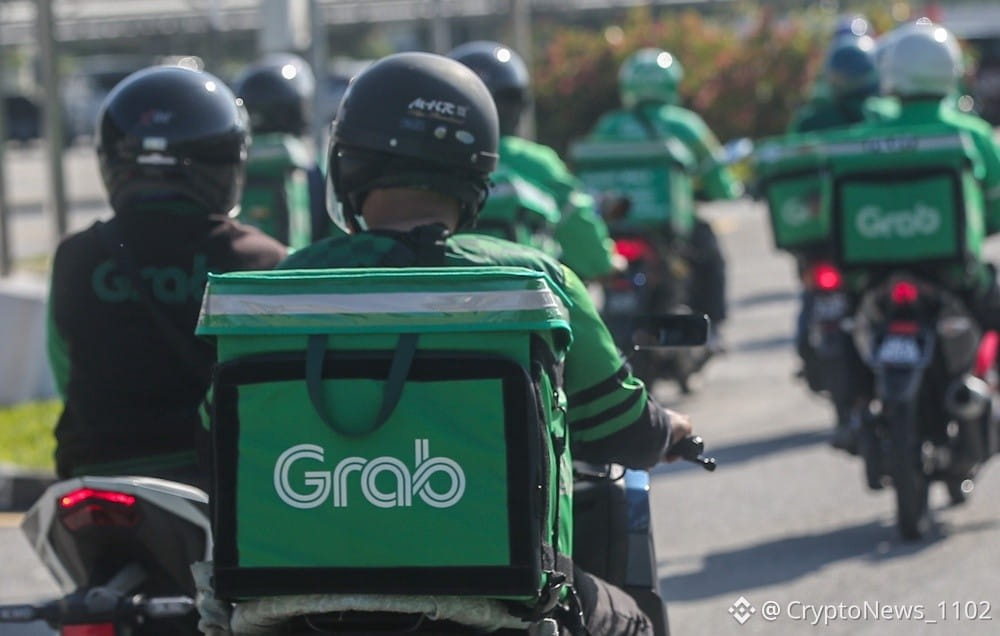
SoftBank Group, Grab and Sarawak's state energy firm PETROS signed joint development agreements for $1.85 billion in initial seed capital for AI infrastructure in Malaysia. SoftBank puts in $1 billion, Grab $750 million and PETROS $100 million, split between a SoftBank-led Sarawak project and a Grab-led one in Peninsular Malaysia. The long-term goal is 5 gigawatts or more of AI compute, with hyperscaler customers and more investors to be brought in.
⭐ It is a big bet that Southeast Asia becomes a major AI compute hub, and it lands the same week SoftBank posted a $7 billion quarterly loss tied to US data center projects.
#AI
GRABUS+0.00%
3
📉 BitGo Q3 revenue falls 51%, but net income rises on reserve gains
BitGo reported third-quarter revenue of $2.85 billion, down 50.9% year over year and 34.1% quarter over quarter. The company attributed the decline mainly to weaker digital asset sales and a higher share of lower-margin stablecoin transactions. Revenue after direct costs was $37.3 million, down 32.1% year over year.
Meanwhile, net income rose to $44.1 million, up from $22.7 million in the same period last year, mainly due to $71.5 million in unrealized gains on digital asset reserves. As of September 30, the company held 2,399 BTC of its own, worth $200.4 million. It recorded an operating loss of $19.2 million and an adjusted EBITDA loss of $4.3 million for the quarter. The company also completed its acquisition of NYDIG’s institutional trading business and repurchased $24.7 million worth of common stock under a $50 million authorization.
⭐ Lower trading activity weighed on revenue tied to transaction volume, while book profits depended more heavily on price fluctuations in the company’s own Bitcoin reserves.
#BitGo #财报 #Bitcoin

📉 BitGo's Q3 revenue fell 51%, but net income rose on reserve gains
BitGo reported third-quarter revenue of $2.85 billion, down 50.9% year over year and 34.1% quarter over quarter. The company attributed the decline mainly to weaker digital asset sales and a higher share of lower-margin stablecoin transactions. Revenue after direct costs was $37.3 million, down 32.1% year over year.
Meanwhile, net income rose to $44.1 million from $22.7 million in the same period last year, primarily due to $71.5 million in unrealized gains on digital asset reserves. As of September 30, the company held 2,399 BTC of its own, worth $200.4 million. It posted an operating loss of $19.2 million and an adjusted EBITDA loss of $4.3 million for the quarter. The company also completed its acquisition of NYDIG's institutional trading business and repurchased $24.7 million of common stock under a $50 million authorization.
⭐ Sluggish trading weighed on revenue measured by transaction volume, while reported profits depended much more on price fluctuations in the company's own Bitcoin reserves.
#BitGo #财报 #Bitcoin

💰 Trump Media reports third-quarter net income of $409.7 million, driven mainly by gains on crypto assets
Truth Social parent company Trump Media and Technology Group reported third-quarter net income of $409.7 million, compared with a net loss of $54.8 million in the same period last year. The company said most of the profit came from non-cash realized and unrealized gains on digital assets, staked digital assets, and related securities. At the end of September, the company held approximately 15,649 BTC, of which around 11,385 were allocated to its “Bitcoin yield management program.”
Quarterly revenue was $3 million, up 205% year over year, mainly due to $1.8 million in growth from Truth API subscriptions. The company said its all-stock merger with fusion company TAE Technologies, valued at over $6 billion, is still expected to close in the fourth quarter of this year. The related S-4 registration statement became effective on November 5, and a shareholder vote is scheduled for December 14.
⭐ The company’s book profits are highly dependent on valuation fluctuations in assets such as Bitcoin, while its core media revenue remains very small.
#TrumpMedia #比特币 #Earnings

🏗️ Securitize Agrees to Acquire River One, Entering the Approximately $6 Trillion Asset-Backed Financing Market
Tokenization company Securitize announced Monday that it has agreed to acquire River One, a New York-based institutional financing firm, to enter the asset-backed financing market. The market was estimated at $6.1 trillion in 2024, and a KKR report projects it will exceed $9 trillion by 2029. The terms of the deal were not disclosed, and it is expected to close in the fourth quarter. River One was incubated by crypto investment firm Framework Ventures and is backed by Maple Finance.
Securitize also reported third-quarter revenue of $18.6 million, up 13% year over year, and a net loss of $66.3 million, of which approximately $60 million was primarily due to non-cash expenses related to its public listing and business combination. The platform's average tokenized assets reached $5 billion, up 39% year over year. The company also announced a $50 million share repurchase program through December 2027. At the end of September, it had approximately $300 million in cash and no debt.
⭐ Publicly listed tokenization infrastructure companies are starting to use acquisitions to build out their credit and financing capabilities, rather than focusing solely on securities issuance and transfers.
#Securitize #代币化 #RWA

29
🔄 Ripple Prime head Marc Asch to step down, succeeded by Noel Kimmel
Marc Asch, head of Ripple Prime (formerly Hidden Road), will step down. A Ripple spokesperson said in an email that the company is grateful for Asch's work as the founder of Hidden Road. He will leave at the end of the year to pursue new opportunities, and current Ripple Prime Senior Vice President Noel Kimmel will take over leadership of the business.
Ripple announced its $1.25 billion acquisition of Hidden Road in April 2025, completing the deal in October of that year and renaming it Ripple Prime. The business provides institutional clients with prime brokerage, clearing, and financing services across digital assets and traditional markets, including foreign exchange, derivatives, and fixed income. Some products use Ripple's dollar stablecoin RLUSD as collateral. Asch founded Hidden Road in 2018, having previously worked at Steve Cohen's SAC Capital and Point72.
⭐ One of Ripple's largest acquisitions to date enters a transition phase, as the integration of its institutional brokerage business moves into a new management cycle.
#Ripple #RipplePrime #HiddenRoad

27
⚖️ Former employee sues Ethereum Foundation and Vitalik Buterin, alleging wrongful termination
Kayleen Fulton, formerly head of the Ethereum Foundation’s Protocol Support Team and known in the community as “Nixo,” filed a lawsuit on November 4 in the U.S. District Court for the District of Colorado. The defendants include the Ethereum Foundation, co-founder Vitalik Buterin, and four others. She alleges that she was fired on April 6 by then co-executive director Bastian Aue, 13 days after disclosing her cancer diagnosis. She also says that she and colleague Trent Van Epps organized a letter signed by 53 people that supported the Foundation’s new mission goals while opposing making affirmation of the mission a condition of continued employment.
Fulton alleges disability discrimination, retaliation, and interference with her right to medical leave, and seeks compensation for lost wages and damages. The complaint cites a May 14 letter from a lawyer for the Foundation’s Singapore affiliate, Ethereum Asia Pacific Limited, denying any unlawful conduct or retaliation and asserting that her separation agreement is binding. These allegations have not been adjudicated by a court.
⭐ The lawsuit brings internal governance and personnel disputes at one of Ethereum’s most influential organizations into public legal proceedings.
#以太坊 #EthereumFoundation #Lawsuit

187
⚡ Samsung and SK hynix use Nvidia AI to make chip simulations up to 1,600x faster
At Nvidia AI Day Seoul, Samsung said an AI workflow built on Nvidia's PhysicsNeMo cut a chip-level thermal and mechanical simulation from about 18 hours on a 32-core CPU to 41 seconds, roughly 1,600 times faster. SK hynix said its full-chip heat and deformation analysis now runs more than 30 times faster than on CPUs, and an AI model predicts etch-process shapes dozens of times faster than conventional simulation.
⭐ Faster virtual testing means fewer trial production runs, a real edge as memory makers race to build custom HBM for each AI chip customer.
#AI

173
📱 Telegram-born crypto wallet Walt launches standalone app, no Telegram account required
Crypto platform Walt, formerly known as Wallet in Telegram, is launching a standalone app. For the first time, users can sign up with Google or Apple without having a Telegram account. Walt says it has tens of millions of registered users, but has not disclosed monthly active users, trading volume, or customer assets under management.
The standalone app will offer crypto trading, tokenized U.S. stocks and ETFs, and perpetual contracts—features already available through Walt in Telegram. Egor Danilov, chief product officer at product developer The Open Platform, said Telegram’s own wallet handles basic transfers, while Walt serves users seeking a broader range of trading and investment tools. New trading tools and asset classes will launch first in the standalone app. Existing users can use both versions with the same account, and some investment products may not be available in certain regions.
⭐ As Telegram replaces Walt with its own wallet in the settings, Walt is trying to bring tens of millions of registered users to its standalone app. Whether they will become active traders remains to be seen.
#Walt #Telegram #crypto wallet

🟠 Strategy buys another 1,036 BTC, bringing its holdings to 850,364 BTC
According to a filing submitted to the U.S. Securities and Exchange Commission on Monday, Bitcoin treasury company Strategy purchased another 1,036 BTC between November 2 and November 8 at an average price of $79,012 per BTC, spending approximately $81.9 million. The company now holds 850,364 BTC, more than 4% of Bitcoin’s maximum supply. Its total purchase cost is approximately $64.2 billion, at an average price of about $75,456 per BTC (including fees).
The latest purchase was funded through at-the-market (ATM) offerings of its Class A common stock (MSTR). Last week, Strategy sold 2,051,348 shares of MSTR, raising approximately $283.8 million. The ATM program still has about $18.34 billion in capacity available. As of November 8, the company had $4.77 billion in dollar reserves and a cash balance of $146.2 million.
⭐ Strategy remains the largest of nearly 200 publicly traded companies that have adopted the Bitcoin treasury model, and continues to increase its holdings through equity financing.
#Strategy #比特币 #MSTR
🏠 Meta quietly built a household humanoid robot with China's Fourier
Meta and Shanghai-based Fourier built a humanoid prototype codenamed Max in about three months, The Information reports. The roughly 1.5-meter, 48kg robot runs on Nvidia's Jetson Thor, has a screen face and five-fingered hands for small objects, and work on Max 2 with better hands, a projector and stair sensors began in September. Meta says the project is internal research and it has no plans to sell the robots.
⭐ Meta sees humanoids as a physical body for its Muse AI agent, and leaning on a Chinese partner shows how central China's supply chain has become to robotics.
Sources: Engadget https://www.engadget.com/2303434/meta-reportedly-built-a-humanoid-robot-prototype-that-can-do-household-chores/ | Interesting Engineering https://interestingengineering.com/ai-robotics/meta-develops-humanoid-robot
#AI #Robotics

115
🗽 NYSE selects Avalanche for clearing and settlement on its planned 24/7 tokenized securities platform
Ava Labs said Monday that the New York Stock Exchange has selected the Avalanche blockchain to handle ledger functions related to clearing and settlement for its planned around-the-clock tokenized securities platform. The platform is designed to support 24/7 trading, clearing, and settlement of tokenized securities. It is subject to regulatory approval, aims to launch in the fourth quarter, and will use the NYSE’s existing technology for matching orders.
The selection followed about a year of testing. Dennis Lee, head of digital issuance at the NYSE, said the trading venue will support stocks issued on multiple blockchains, while its settlement ledger needs to offer speed, reliability, predictable costs, and participant control. The NYSE recently also partnered with Broadridge, Computershare, Equiniti, and Superstate; Securitize and tZERO had previously been named as partners.
⭐ A traditional exchange is placing the settlement layer for tokenized securities on public blockchain infrastructure. Avalanche has secured a high-profile institutional use case, but launch still depends on regulatory approval.
#NYSE #Avalanche #Tokenization

110
🏦 PNC Bank partners with Coinbase, allowing business clients to receive USDC payments
PNC Bank announced Monday that it is expanding its partnership with Coinbase through a pilot program that lets eligible business and institutional clients receive USDC payments. The bank will automatically convert incoming USDC to U.S. dollars at a 1:1 rate and deposit the funds into the client’s designated PNC account. The pilot uses Coinbase’s Payments API to process stablecoin transactions and integrates with PNC’s banking and treasury management services.
The partnership began in July 2025. In December of that year, PNC began offering spot Bitcoin trading to eligible private banking clients. Coinbase is also working with banks such as Citi and payment company Moov to bring stablecoin acceptance capabilities to more community banks and credit unions.
⭐ Large U.S. banks are making stablecoin acceptance an additional channel for business payments, with funds converted to U.S. dollars before being credited.
#PNC #USDC #Stablecoins

1
📈 Charles Schwab launches SOL, AVAX, and LINK trading on Schwab Crypto
Charles Schwab announced Monday that Solana (SOL/USD), Avalanche (AVAX/USD), and Chainlink (LINK/USD) are now available to buy and sell on the Schwab Crypto platform. Along with the existing Bitcoin and Ethereum, eligible retail clients can now trade five digital assets through the platform.
Schwab Crypto began rolling out to clients in May 2026 and opened to all eligible retail clients in October. Schwab said it will carefully expand its established crypto offerings in response to client demand and plans to add more cryptocurrencies and digital assets over time. Each trade is charged a fee of 75 basis points of the transaction amount. Joe Vietri, head of digital assets, said the focus remains on providing the experience, value, education, and support clients expect.
⭐ Traditional brokerages continue to integrate major crypto assets into trading platforms that share an account with stocks, further expanding retail investors’ access to SOL, AVAX, and LINK.
#嘉信理财 #Schwab #SOL

1
🔐 XRP Ledger plans quantum-resistant accounts, with no extra fees for users
A quantum research report from the XRP Ledger Foundation proposes a design that lets account holders add a quantum-resistant signing key and disable their existing key to protect against attacks by future quantum computers. The proposal is part of the Foundation’s 2027 protocol roadmap, updated on November 4. The new key uses the ML-DSA-44 algorithm, approved by the U.S. National Institute of Standards and Technology (NIST) in 2024.
The key and signature together are about 3,732 bytes—far larger than the 105 bytes used for a typical payment today. However, the proposal keeps the base fee unchanged, with network operators absorbing the additional storage costs. Development is ongoing, including a fix for an issue where different implementations could generate different keys from the same seed. Ripple aims to complete a full quantum migration by 2028, while the Foundation plans to conduct migration research in the first half of 2027.
⭐ Any account that has sent a transaction and thereby exposed its public key faces a potential quantum threat. This proposal aims to enable migration without increasing user fees.
#XRP #XRPL #Quantum computing

🤝 Robinhood allows its tokenized stocks to trade on the OKX–ICE platform, while most companies opt out
Robinhood confirmed to CoinDesk that it does not oppose trading tokenized versions of its stock on OKXICE, a platform backed by a joint venture between crypto exchange OKX and Intercontinental Exchange (ICE), the parent company of the New York Stock Exchange. It is the third company known to have taken this position, after Securitize and BitGo. A spokesperson said: “We believe tokenization is the future of financial markets, and would rather help build it than stand by.”
Of the 62 companies initially proposed for the joint venture’s platform, about 90% (56 companies) have objected, including Apple, Meta, Alphabet, Nvidia, Goldman Sachs, and JPMorgan Chase. The platform plans to operate under a five-year “innovation exemption” from the U.S. Securities and Exchange Commission, trading tokenized stocks through automated market makers and notifying issuers, who can object to a listing within 30 days.
⭐ The first tokenized-stock trading venue to rely on the SEC’s innovation exemption may now be left with mostly crypto-affiliated companies, underscoring that traditional public companies are still taking a wait-and-see approach.
#代币化 #Robinhood #OKX
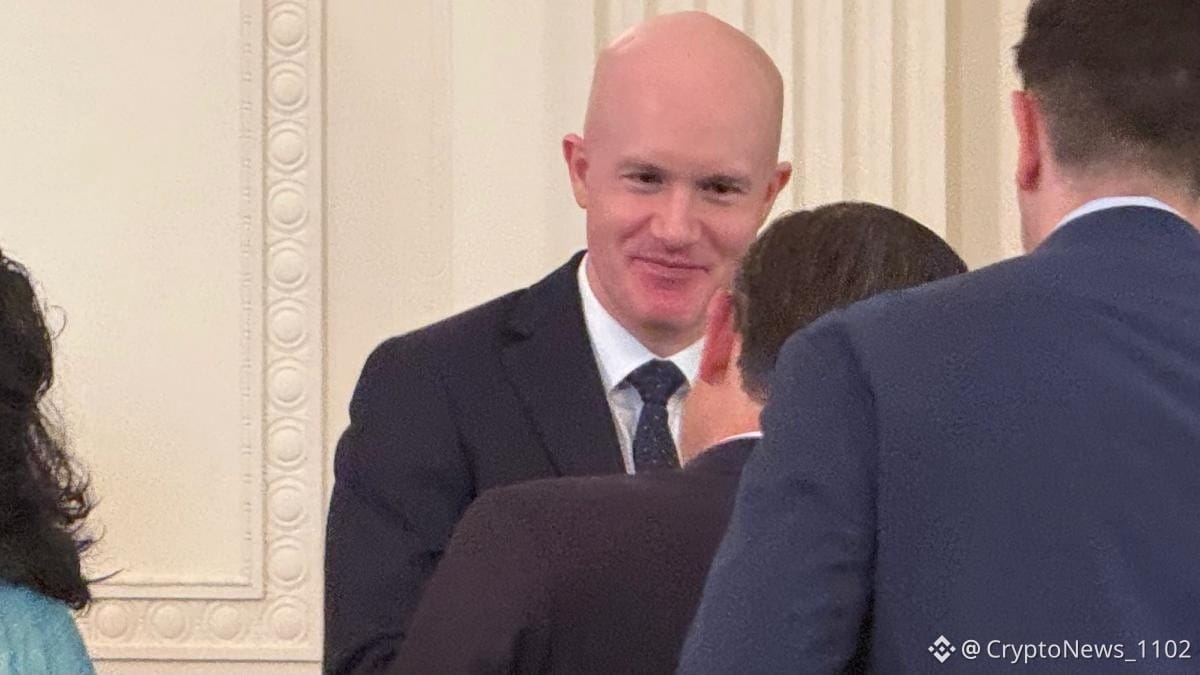
🏦 Coinbase receives full national trust charter from the U.S. Office of the Comptroller of the Currency
Coinbase, the largest cryptocurrency exchange in the United States, said the Office of the Comptroller of the Currency (OCC) has upgraded its previously conditional approval for Coinbase National Trust to a full national trust charter. The company received preliminary approval in April to offer federally regulated custody and payment services, but not to accept deposits and issue loans like a full-service bank. After several months of strengthening its compliance systems, hiring staff, and undergoing regulatory review, the OCC has granted final approval.
Coinbase Vice Chair Ryan VanGrack said the company has long called for clear rules and robust regulation, and that this approval brings more of its business under that framework. Last month, the OCC also granted Ripple a full trust charter. The Independent Community Bankers of America (ICBA) has sued the OCC, arguing that granting trust charters to crypto companies exceeds its authority.
⭐ Driven by the GENIUS stablecoin bill, crypto-native companies are moving more quickly into the U.S. federal banking system, while legal challenges from the traditional banking sector are also intensifying.
#Coinbase #OCC #regulation
Log in to explore more content
Join global crypto users on Binance Square
⚡️ Get latest and useful information about crypto.
💬 Trusted by the world’s largest crypto exchange.
👍 Discover real insights from verified creators.
Email / Phone number
Trending Topics
HotCPIDecemberHikePriced
111,612 views
1,317 Discussing
CPI Market Watch | US CPI Rises 0.4% in October, Hotter Than 0.3% Forecast
Binance News
·28 Likes
·41.7k views
AnthropicRejectsIPODelayValuationinQuestion
233,854 views
1,974 Discussing
CanNvidiaEarningsEaseMarketConcerns?
40,986 views
606 Discussing