
著名的鸡学者
47 Posts

著名的鸡学者
Report
Block User
19年ETH挖矿入场 | 分享加密实用教程 | 多领域自媒体创作者 | YouTube博主
1 Following
50 Followers
12 Liked
Posts
All
Quotes
·
--
Bullish
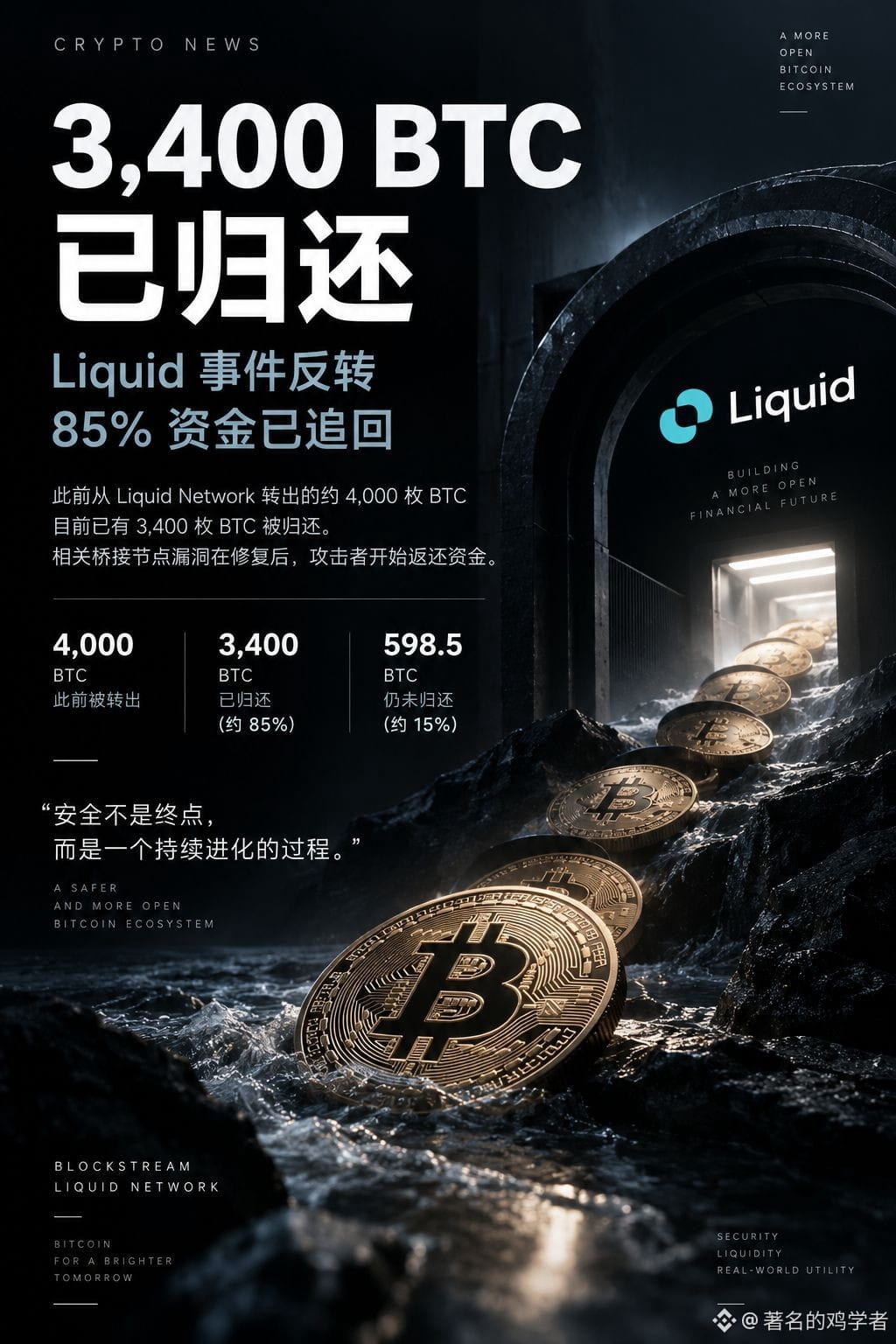
“Liquid Incident Reversal: 3,400 BTC Returned”
September 8, 2026 — Previously, about 4,000 BTC that had been withdrawn from the Liquid Network have now been returned, with 3,400 BTC returned so far, recouping roughly 85% of the funds.
This batch of funds was returned after Blockstream stated that the vulnerability in the relevant bridging node had been fixed.
However, the matter is not completely over.
The attacker still holds around 598.5 BTC, worth about $47 million. And as of now, there is no publicly available information confirming that this portion of the funds belongs to the “white-hat bounty” formally agreed upon by both sides.
So the biggest controversy now comes down to this:
Returning 85% and keeping 15%—does that count as a white-hat bounty, or is it essentially the attacker awarding themselves a bounty?
#BTC #Bitcoin #Liquid #Crypto $BTC
{future}(BTCUSDT)
“Liquid Incident Reversal: 3,400 BTC Returned”
September 8, 2026 — Previously, about 4,000 BTC that had been withdrawn from the Liquid Network have now been returned, with 3,400 BTC returned so far, recouping roughly 85% of the funds.
This batch of funds was returned after Blockstream stated that the vulnerability in the relevant bridging node had been fixed.
However, the matter is not completely over.
The attacker still holds around 598.5 BTC, worth about $47 million. And as of now, there is no publicly available information confirming that this portion of the funds belongs to the “white-hat bounty” formally agreed upon by both sides.
So the biggest controversy now comes down to this:
Returning 85% and keeping 15%—does that count as a white-hat bounty, or is it essentially the attacker awarding themselves a bounty?
#BTC #Bitcoin #Liquid #Crypto $BTC
September 8, 2026 — Previously, about 4,000 BTC that had been withdrawn from the Liquid Network have now been returned, with 3,400 BTC returned so far, recouping roughly 85% of the funds.
This batch of funds was returned after Blockstream stated that the vulnerability in the relevant bridging node had been fixed.
However, the matter is not completely over.
The attacker still holds around 598.5 BTC, worth about $47 million. And as of now, there is no publicly available information confirming that this portion of the funds belongs to the “white-hat bounty” formally agreed upon by both sides.
So the biggest controversy now comes down to this:
Returning 85% and keeping 15%—does that count as a white-hat bounty, or is it essentially the attacker awarding themselves a bounty?
#BTC #Bitcoin #Liquid #Crypto $BTC
109
·
--
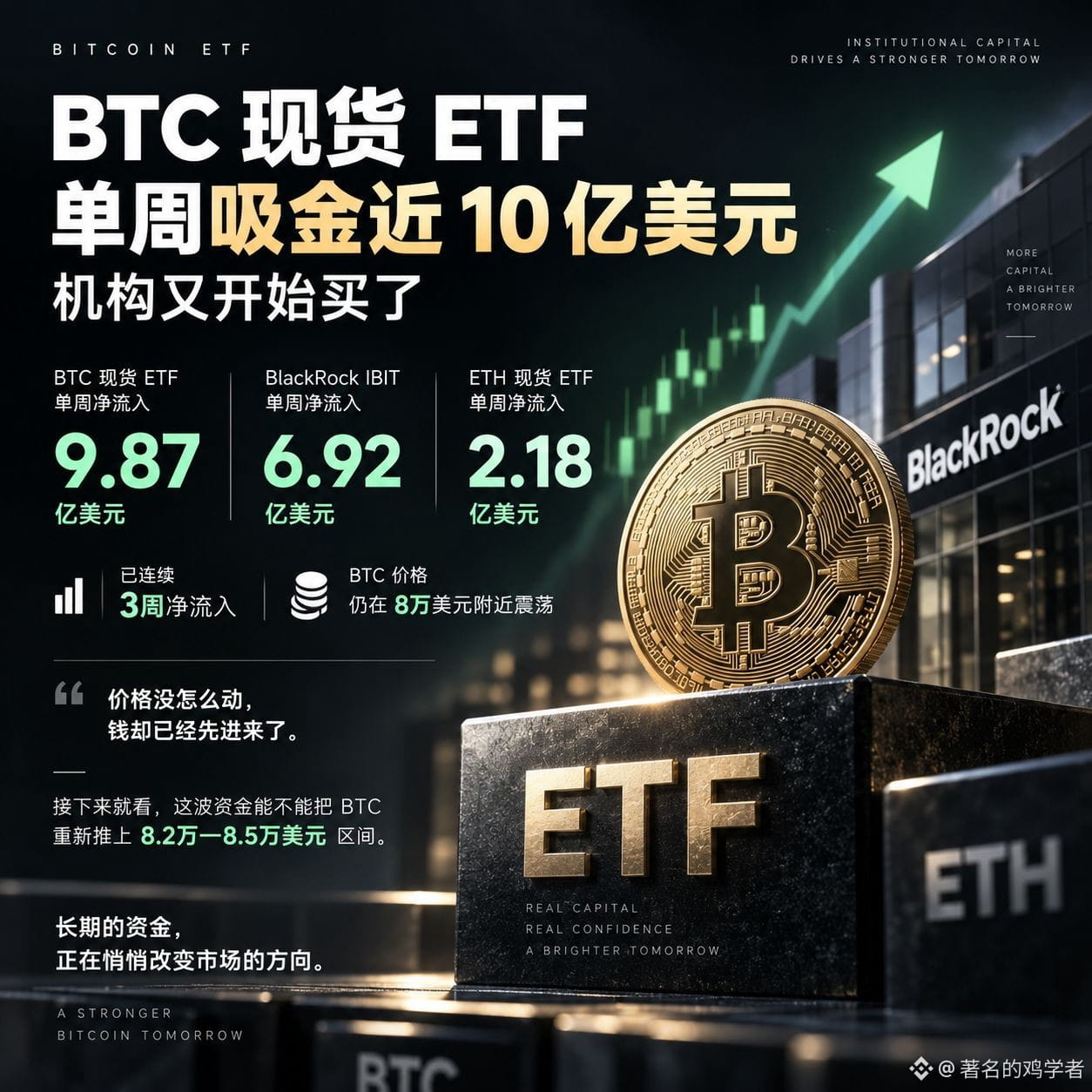
“BTC ETF pulls in nearly $1 billion in one week—institutions are buying again”
September 7, 2026 news: U.S. spot Bitcoin ETFs saw net inflows of about $987 million last week, marking a third consecutive week of net inflows.
Of that, BlackRock’s IBIT recorded net inflows of about $692 million, accounting for the bulk. At the same time, spot ETH ETFs also logged net inflows of about $218 million last week.
More notably, Bitcoin’s price is still trading around the $80,000 level, yet institutional capital keeps flowing back in.
This points to an interesting phenomenon:
Price hasn’t moved much, but the money has already come in.
Next, it remains to be seen whether this round of funds can push BTC back into the $82,000–$85,000 range.
#BTC #bitcoin #ETF #blackRock #Crypto $BTC
{future}(BTCUSDT)
“BTC ETF pulls in nearly $1 billion in one week—institutions are buying again”
September 7, 2026 news: U.S. spot Bitcoin ETFs saw net inflows of about $987 million last week, marking a third consecutive week of net inflows.
Of that, BlackRock’s IBIT recorded net inflows of about $692 million, accounting for the bulk. At the same time, spot ETH ETFs also logged net inflows of about $218 million last week.
More notably, Bitcoin’s price is still trading around the $80,000 level, yet institutional capital keeps flowing back in.
This points to an interesting phenomenon:
Price hasn’t moved much, but the money has already come in.
Next, it remains to be seen whether this round of funds can push BTC back into the $82,000–$85,000 range.
#BTC #bitcoin #ETF #blackRock #Crypto $BTC
September 7, 2026 news: U.S. spot Bitcoin ETFs saw net inflows of about $987 million last week, marking a third consecutive week of net inflows.
Of that, BlackRock’s IBIT recorded net inflows of about $692 million, accounting for the bulk. At the same time, spot ETH ETFs also logged net inflows of about $218 million last week.
More notably, Bitcoin’s price is still trading around the $80,000 level, yet institutional capital keeps flowing back in.
This points to an interesting phenomenon:
Price hasn’t moved much, but the money has already come in.
Next, it remains to be seen whether this round of funds can push BTC back into the $82,000–$85,000 range.
#BTC #bitcoin #ETF #blackRock #Crypto $BTC
75
·
--
Bearish
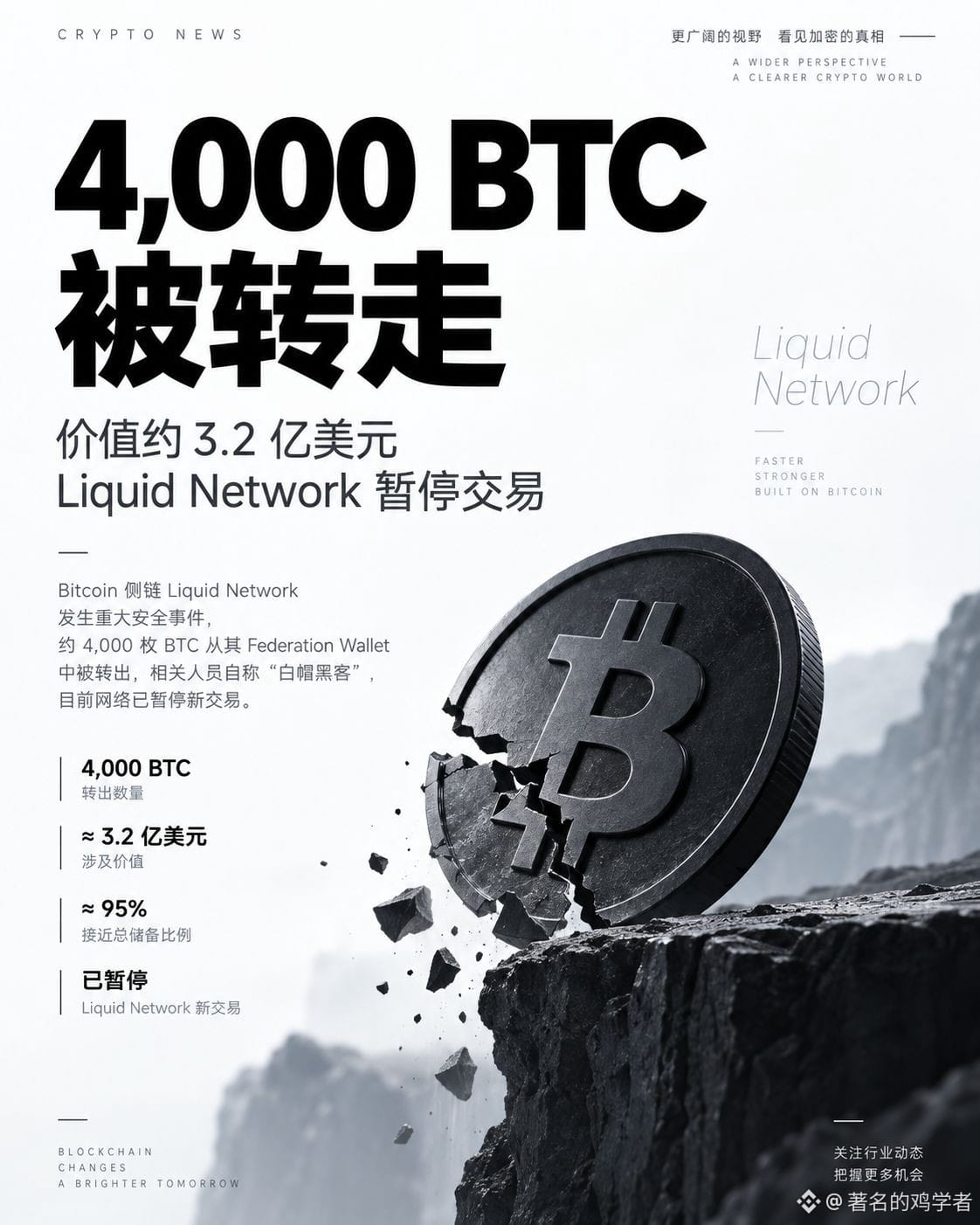
【Breaking! About 4,000 BTC Transferred, Worth About US$320 Million】
On September 7, 2026, a major security incident occurred on Bitcoin sidechain Liquid Network. About 4,000 BTC were transferred out from related wallets, worth approximately US$320 million.
Even more outrageous, the person who transferred the funds also claimed to be a "white-hat hacker." After the incident, Liquid Network has suspended new transactions, and some platforms have also suspended LBTC deposits and withdrawals.
It should be noted: this was not a hack of the Bitcoin mainnet, but a security issue on the Liquid sidechain.
The biggest question now is:
Will these 4,000 BTC be returned?
#BTC #Bitcoin #Liquid #Crypto $BTC
{spot}(BTCUSDT)
【Breaking! About 4,000 BTC Transferred, Worth About US$320 Million】
On September 7, 2026, a major security incident occurred on Bitcoin sidechain Liquid Network. About 4,000 BTC were transferred out from related wallets, worth approximately US$320 million.
Even more outrageous, the person who transferred the funds also claimed to be a "white-hat hacker." After the incident, Liquid Network has suspended new transactions, and some platforms have also suspended LBTC deposits and withdrawals.
It should be noted: this was not a hack of the Bitcoin mainnet, but a security issue on the Liquid sidechain.
The biggest question now is:
Will these 4,000 BTC be returned?
#BTC #Bitcoin #Liquid #Crypto $BTC
On September 7, 2026, a major security incident occurred on Bitcoin sidechain Liquid Network. About 4,000 BTC were transferred out from related wallets, worth approximately US$320 million.
Even more outrageous, the person who transferred the funds also claimed to be a "white-hat hacker." After the incident, Liquid Network has suspended new transactions, and some platforms have also suspended LBTC deposits and withdrawals.
It should be noted: this was not a hack of the Bitcoin mainnet, but a security issue on the Liquid sidechain.
The biggest question now is:
Will these 4,000 BTC be returned?
#BTC #Bitcoin #Liquid #Crypto $BTC
616
·
--
Bullish
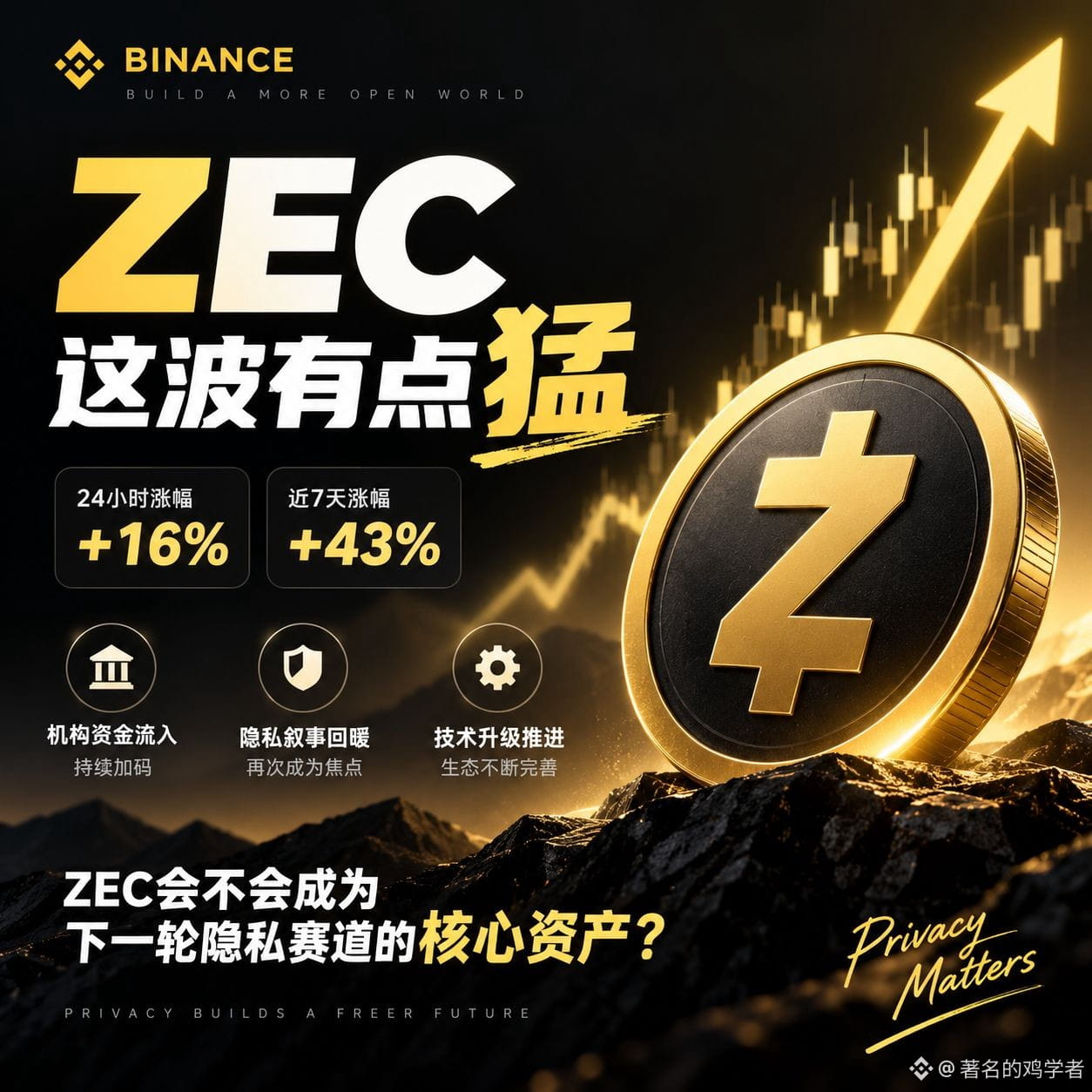
ZEC’s move this time is pretty strong.
According to Binance data, $ZEC is up more than 16% in the past 24 hours, and has risen over 43% in the past 7 days.
Behind this rally, it’s not just short-term speculation—institutions are flowing in, the privacy narrative is heating up again, and Zcash’s technical upgrades are all adding momentum.
As AI and on-chain tracking get stronger, “privacy” may actually become a renewed necessity in the future.
The question is:
Could ZEC become the core asset of the next privacy-sector rally?
$ZEC #Zcash #Privacy #Crypto
ZEC’s move this time is pretty strong.
According to Binance data, $ZEC is up more than 16% in the past 24 hours, and has risen over 43% in the past 7 days.
Behind this rally, it’s not just short-term speculation—institutions are flowing in, the privacy narrative is heating up again, and Zcash’s technical upgrades are all adding momentum.
As AI and on-chain tracking get stronger, “privacy” may actually become a renewed necessity in the future.
The question is:
Could ZEC become the core asset of the next privacy-sector rally?
$ZEC #Zcash #Privacy #Crypto
According to Binance data, $ZEC is up more than 16% in the past 24 hours, and has risen over 43% in the past 7 days.
Behind this rally, it’s not just short-term speculation—institutions are flowing in, the privacy narrative is heating up again, and Zcash’s technical upgrades are all adding momentum.
As AI and on-chain tracking get stronger, “privacy” may actually become a renewed necessity in the future.
The question is:
Could ZEC become the core asset of the next privacy-sector rally?
$ZEC #Zcash #Privacy #Crypto
265
·
--
Bullish
Verified
US initial jobless claims rose to 206,000, but the market didn’t panic.
The reason is simple: compared with the prior week’s revised figure of 204,000, it’s only up by 2,000 people, and the overall level is still low. Now, employment in the US looks like this: companies aren’t rushing to lay people off, but they’re also not very willing to hire new workers.
For US equities and the crypto market, the key isn’t the additional 2,000 people by itself—it’s whether it will continue to raise expectations for “employment cooling” and a more loosened monetary policy. If the data stays on the cool side, risk assets may benefit; but if the next Non-Farm Payrolls report comes in hot, the market could quickly reverse.
So don’t just see one number and rush to chase gains—the real test is the Non-Farm Payrolls.
Do you think the market will price in rate cuts next, or keep worrying about high interest rates?
#美国初请失业金人数升至20.6万 $BTC
US initial jobless claims rose to 206,000, but the market didn’t panic.
The reason is simple: compared with the prior week’s revised figure of 204,000, it’s only up by 2,000 people, and the overall level is still low. Now, employment in the US looks like this: companies aren’t rushing to lay people off, but they’re also not very willing to hire new workers.
For US equities and the crypto market, the key isn’t the additional 2,000 people by itself—it’s whether it will continue to raise expectations for “employment cooling” and a more loosened monetary policy. If the data stays on the cool side, risk assets may benefit; but if the next Non-Farm Payrolls report comes in hot, the market could quickly reverse.
So don’t just see one number and rush to chase gains—the real test is the Non-Farm Payrolls.
Do you think the market will price in rate cuts next, or keep worrying about high interest rates?
#美国初请失业金人数升至20.6万 $BTC
The reason is simple: compared with the prior week’s revised figure of 204,000, it’s only up by 2,000 people, and the overall level is still low. Now, employment in the US looks like this: companies aren’t rushing to lay people off, but they’re also not very willing to hire new workers.
For US equities and the crypto market, the key isn’t the additional 2,000 people by itself—it’s whether it will continue to raise expectations for “employment cooling” and a more loosened monetary policy. If the data stays on the cool side, risk assets may benefit; but if the next Non-Farm Payrolls report comes in hot, the market could quickly reverse.
So don’t just see one number and rush to chase gains—the real test is the Non-Farm Payrolls.
Do you think the market will price in rate cuts next, or keep worrying about high interest rates?
#美国初请失业金人数升至20.6万 $BTC
1
1.5k
·
--
Bullish
[NVIDIA has just officially announced a $12.9 billion acquisition of Hugging Face]
Many people may not have heard of Hugging Face.
Simply put, it’s a bit like the GitHub of the AI world.
A large number of developers go there to find models, datasets, and tools—then use them to train, test, and build products.
So the most interesting part of this acquisition isn’t “NVIDIA buying another company.”
It’s that its reach has already extended from chips into the AI developer ecosystem.
Previously, what NVIDIA mainly made money from was:
If you want to train AI, you need to buy my GPU.
In the future, it may gradually become:
No matter what you do—finding models, developing, running training, or deploying—you won’t be able to get around NVIDIA.
That’s a bit like:
In the past, it was just selling shovels.
Now even the gold-rush town is starting to move into its own backyard.
$NVDA.US
{stock_us}(NVDA.US)
#英伟达 #AI #美股
[NVIDIA has just officially announced a $12.9 billion acquisition of Hugging Face]
Many people may not have heard of Hugging Face.
Simply put, it’s a bit like the GitHub of the AI world.
A large number of developers go there to find models, datasets, and tools—then use them to train, test, and build products.
So the most interesting part of this acquisition isn’t “NVIDIA buying another company.”
It’s that its reach has already extended from chips into the AI developer ecosystem.
Previously, what NVIDIA mainly made money from was:
If you want to train AI, you need to buy my GPU.
In the future, it may gradually become:
No matter what you do—finding models, developing, running training, or deploying—you won’t be able to get around NVIDIA.
That’s a bit like:
In the past, it was just selling shovels.
Now even the gold-rush town is starting to move into its own backyard.
$NVDA.US
#英伟达 #AI #美股
Many people may not have heard of Hugging Face.
Simply put, it’s a bit like the GitHub of the AI world.
A large number of developers go there to find models, datasets, and tools—then use them to train, test, and build products.
So the most interesting part of this acquisition isn’t “NVIDIA buying another company.”
It’s that its reach has already extended from chips into the AI developer ecosystem.
Previously, what NVIDIA mainly made money from was:
If you want to train AI, you need to buy my GPU.
In the future, it may gradually become:
No matter what you do—finding models, developing, running training, or deploying—you won’t be able to get around NVIDIA.
That’s a bit like:
In the past, it was just selling shovels.
Now even the gold-rush town is starting to move into its own backyard.
$NVDA.US
#英伟达 #AI #美股

NVDAUS-0.04%
152
·
--
Bullish
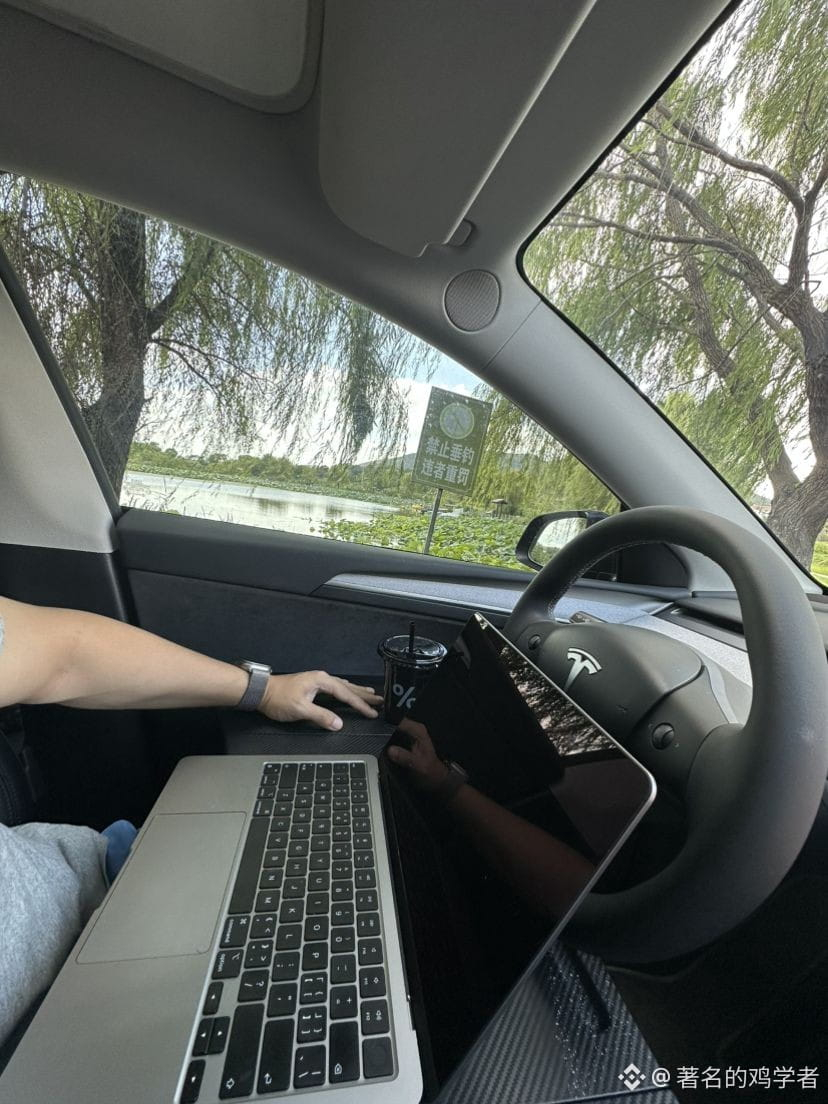
How is this work environment$NVDAB
Free roadside parking
Free public restrooms
Free to sleep in the car
Meals are not free
#英伟达129亿美元收购HuggingFace
How is this work environment$NVDAB
Free roadside parking
Free public restrooms
Free to sleep in the car
Meals are not free
#英伟达129亿美元收购HuggingFace
Free roadside parking
Free public restrooms
Free to sleep in the car
Meals are not free
#英伟达129亿美元收购HuggingFace

11
·
--
Fatty Liver Diet
Two meals a day
Keep total daily calories at 1200 kcal
$NVDAB
Fatty Liver Diet
Two meals a day
Keep total daily calories at 1200 kcal
$NVDAB
Two meals a day
Keep total daily calories at 1200 kcal
$NVDAB

22
·
--

Article
I just saw that the Dell couple donated $6.25 billion, and only then did I realize this company is quietly making a fortune in the AI eraToday, while scrolling Douyin, I saw a news story about Dell founder Michael Dell and his wife, Susan Dell.
Two people put up $6.25 billion to help 25 million American children set up investment accounts.
What does $6.25 billion mean?
Based on the current exchange rate, it’s roughly over 40 billion yuan—around 40-odd billion.
My first reaction wasn’t really, “Having money is great.”
Instead, I suddenly thought of a question:
Does Dell still make money like this?
Because in my impression, Dell is still that old-school tech company that sells computers.
When I was a kid, there was Dell in the school computer lab, and there was Dell in the office.
I just saw that the Dell couple donated $6.25 billion, and only then did I realize this company is quietly making a fortune in the AI era
Today, while scrolling Douyin, I saw a news story about Dell founder Michael Dell and his wife, Susan Dell.
Two people put up $6.25 billion to help 25 million American children set up investment accounts.
What does $6.25 billion mean?
Based on the current exchange rate, it’s roughly over 40 billion yuan—around 40-odd billion.
My first reaction wasn’t really, “Having money is great.”
Instead, I suddenly thought of a question:
Does Dell still make money like this?
Because in my impression, Dell is still that old-school tech company that sells computers.
When I was a kid, there was Dell in the school computer lab, and there was Dell in the office.
Two people put up $6.25 billion to help 25 million American children set up investment accounts.
What does $6.25 billion mean?
Based on the current exchange rate, it’s roughly over 40 billion yuan—around 40-odd billion.
My first reaction wasn’t really, “Having money is great.”
Instead, I suddenly thought of a question:
Does Dell still make money like this?
Because in my impression, Dell is still that old-school tech company that sells computers.
When I was a kid, there was Dell in the school computer lab, and there was Dell in the office.
42
·
--
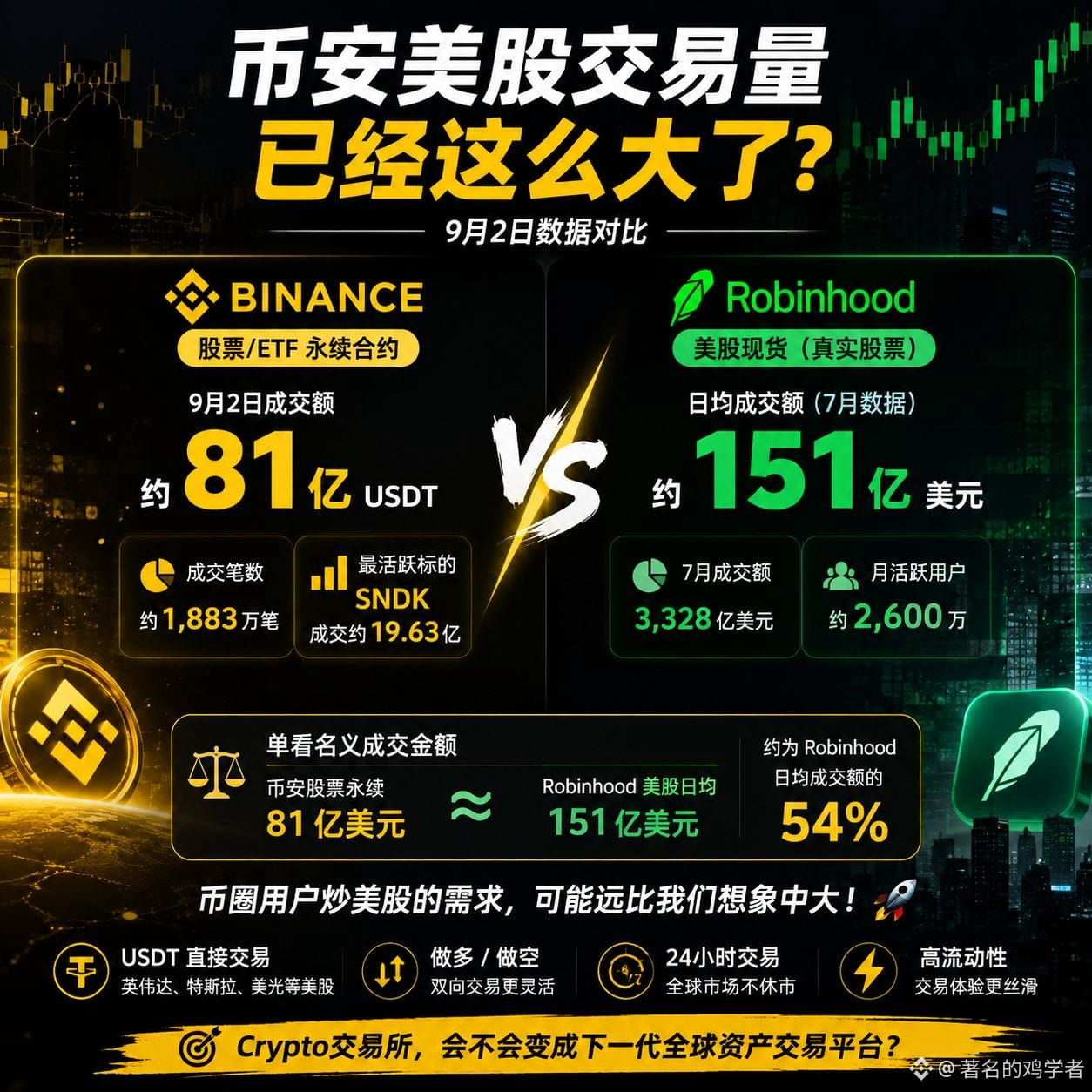
【$8.1 billion vs $15.1 billion】
Binance’s U.S. stock business may be much larger than many people think.
I just used Binance’s official API to tally it up:
On September 2
Binance’s stock and ETF perpetual futures contracts had trading volume of about $8.1 billion.
Then look at Robinhood.
Its latest reported average daily trading volume for U.S. stocks is about $15.1 billion.
So in other words:
Binance’s stock perpetual futures trading volume for a single day is already about 54% of Robinhood’s average daily U.S. stock trading volume.
Of course, you can’t directly equate the two.
Robinhood trades real stocks,
while Binance here mainly deals in stock perpetual futures contracts.
But this figure at least shows one thing:
Demand from crypto users to trade U.S. stocks may be far bigger than we imagine.
Especially with a model like Binance’s:
USDT directly trades Nvidia, Micron, Tesla,
you can go long or short, and you can also monitor the market 24/7.
$NVDAB $AAPLB $GOOGL.US
In the past, people thought Binance was “just doing U.S. stocks along the side.”
Now it may be quietly taking a big chunk of the trading market.
In the future, what’s truly worth watching may not be whether Binance can become a broker.
It may be this instead:
Will crypto exchanges become the next generation global asset trading platform?
#Binance #Robinhood #美股 #股票 #Crypto
【$8.1 billion vs $15.1 billion】
Binance’s U.S. stock business may be much larger than many people think.
I just used Binance’s official API to tally it up:
On September 2
Binance’s stock and ETF perpetual futures contracts had trading volume of about $8.1 billion.
Then look at Robinhood.
Its latest reported average daily trading volume for U.S. stocks is about $15.1 billion.
So in other words:
Binance’s stock perpetual futures trading volume for a single day is already about 54% of Robinhood’s average daily U.S. stock trading volume.
Of course, you can’t directly equate the two.
Robinhood trades real stocks,
while Binance here mainly deals in stock perpetual futures contracts.
But this figure at least shows one thing:
Demand from crypto users to trade U.S. stocks may be far bigger than we imagine.
Especially with a model like Binance’s:
USDT directly trades Nvidia, Micron, Tesla,
you can go long or short, and you can also monitor the market 24/7.
$NVDAB $AAPLB $GOOGL.US
In the past, people thought Binance was “just doing U.S. stocks along the side.”
Now it may be quietly taking a big chunk of the trading market.
In the future, what’s truly worth watching may not be whether Binance can become a broker.
It may be this instead:
Will crypto exchanges become the next generation global asset trading platform?
#Binance #Robinhood #美股 #股票 #Crypto
Binance’s U.S. stock business may be much larger than many people think.
I just used Binance’s official API to tally it up:
On September 2
Binance’s stock and ETF perpetual futures contracts had trading volume of about $8.1 billion.
Then look at Robinhood.
Its latest reported average daily trading volume for U.S. stocks is about $15.1 billion.
So in other words:
Binance’s stock perpetual futures trading volume for a single day is already about 54% of Robinhood’s average daily U.S. stock trading volume.
Of course, you can’t directly equate the two.
Robinhood trades real stocks,
while Binance here mainly deals in stock perpetual futures contracts.
But this figure at least shows one thing:
Demand from crypto users to trade U.S. stocks may be far bigger than we imagine.
Especially with a model like Binance’s:
USDT directly trades Nvidia, Micron, Tesla,
you can go long or short, and you can also monitor the market 24/7.
$NVDAB $AAPLB $GOOGL.US
In the past, people thought Binance was “just doing U.S. stocks along the side.”
Now it may be quietly taking a big chunk of the trading market.
In the future, what’s truly worth watching may not be whether Binance can become a broker.
It may be this instead:
Will crypto exchanges become the next generation global asset trading platform?
#Binance #Robinhood #美股 #股票 #Crypto
108
·
--
Waist and belly noodles
Have a bowl of noodles
$NVDAB
Waist and belly noodles
Have a bowl of noodles
$NVDAB
Have a bowl of noodles
$NVDAB


2
140
·
--
Robinhood is starting to look less and less like a “trading app.”
Recently, Morgan Stanley turned bullish on Robinhood and raised its target price to $150.
Why?
Because it’s doing so many things now:
stocks, options, crypto, prediction markets, credit cards, banking, retirement accounts, AI trading…
It even started doing things like “on-chain stocks.”
More importantly, Robinhood is no longer just living off the crypto crowd.
Even if crypto revenue isn’t particularly strong, the company’s other businesses are still growing.
So when the market looks at $HOOD now, it’s not just about whether Bitcoin will rise or fall.
What Robinhood truly seems to want to do is:
put stocks + crypto + AI trading + on-chain assets
all into a single app.
If it manages to pull this off,
its future might be more than just a brokerage—
it could become a “financial gateway” for many young people.
I think this stock, $HOOD , is worth keeping an eye on.
#HOOD #Robinhood #加密货币 #AI
Robinhood is starting to look less and less like a “trading app.”
Recently, Morgan Stanley turned bullish on Robinhood and raised its target price to $150.
Why?
Because it’s doing so many things now:
stocks, options, crypto, prediction markets, credit cards, banking, retirement accounts, AI trading…
It even started doing things like “on-chain stocks.”
More importantly, Robinhood is no longer just living off the crypto crowd.
Even if crypto revenue isn’t particularly strong, the company’s other businesses are still growing.
So when the market looks at $HOOD now, it’s not just about whether Bitcoin will rise or fall.
What Robinhood truly seems to want to do is:
put stocks + crypto + AI trading + on-chain assets
all into a single app.
If it manages to pull this off,
its future might be more than just a brokerage—
it could become a “financial gateway” for many young people.
I think this stock, $HOOD , is worth keeping an eye on.
#HOOD #Robinhood #加密货币 #AI
Recently, Morgan Stanley turned bullish on Robinhood and raised its target price to $150.
Why?
Because it’s doing so many things now:
stocks, options, crypto, prediction markets, credit cards, banking, retirement accounts, AI trading…
It even started doing things like “on-chain stocks.”
More importantly, Robinhood is no longer just living off the crypto crowd.
Even if crypto revenue isn’t particularly strong, the company’s other businesses are still growing.
So when the market looks at $HOOD now, it’s not just about whether Bitcoin will rise or fall.
What Robinhood truly seems to want to do is:
put stocks + crypto + AI trading + on-chain assets
all into a single app.
If it manages to pull this off,
its future might be more than just a brokerage—
it could become a “financial gateway” for many young people.
I think this stock, $HOOD , is worth keeping an eye on.
#HOOD #Robinhood #加密货币 #AI

130
·
--
Bullish
After Nvidia $NVDA.US , the next AI “move” could be Broadcom.
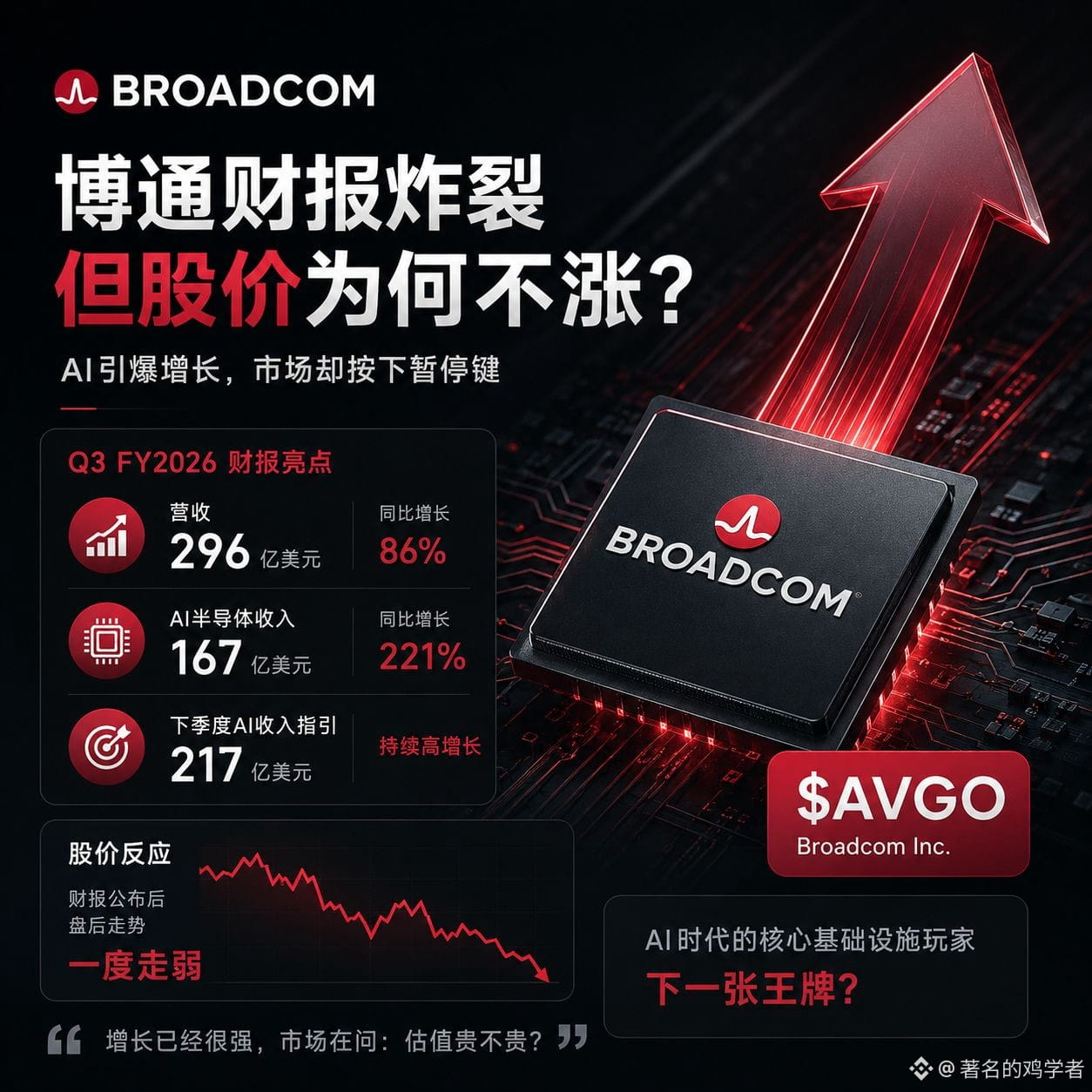
Broadcom has just released a rather outrageous set of results:
Q3 revenue was $29.6 billion, up 86% year over year.
Even more impressive is its AI semiconductor revenue—
$16.7 billion, up 221% year over year.
In the next quarter, Broadcom expects AI revenue to continue surging to $21.7 billion.
But here’s what’s interesting:
With performance this explosive, the stock price hasn’t exploded along with it.
The real problem with AI stocks may no longer be:
“Is the growth fast enough?”
Instead, it may be:
“With this rapid growth, how much has the market already priced in?”
Tonight, I’ll hang a $AVGO and see what the market has to say.
#avgo #broadcom #Aİ #美股 $AVGO
{spot}(AVGOBUSDT)
After Nvidia $NVDA.US , the next AI “move” could be Broadcom.
Broadcom has just released a rather outrageous set of results:
Q3 revenue was $29.6 billion, up 86% year over year.
Even more impressive is its AI semiconductor revenue—
$16.7 billion, up 221% year over year.
In the next quarter, Broadcom expects AI revenue to continue surging to $21.7 billion.
But here’s what’s interesting:
With performance this explosive, the stock price hasn’t exploded along with it.
The real problem with AI stocks may no longer be:
“Is the growth fast enough?”
Instead, it may be:
“With this rapid growth, how much has the market already priced in?”
Tonight, I’ll hang a $AVGO and see what the market has to say.
#avgo #broadcom #Aİ #美股 $AVGO
Broadcom has just released a rather outrageous set of results:
Q3 revenue was $29.6 billion, up 86% year over year.
Even more impressive is its AI semiconductor revenue—
$16.7 billion, up 221% year over year.
In the next quarter, Broadcom expects AI revenue to continue surging to $21.7 billion.
But here’s what’s interesting:
With performance this explosive, the stock price hasn’t exploded along with it.
The real problem with AI stocks may no longer be:
“Is the growth fast enough?”
Instead, it may be:
“With this rapid growth, how much has the market already priced in?”
Tonight, I’ll hang a $AVGO and see what the market has to say.
#avgo #broadcom #Aİ #美股 $AVGO
AVGO+0.30%
NVDAUS-0.04%
427
·
--
Bearish
【Sep 3|Crypto Morning Brief】
BTC is currently near $77,000, ETH around $2,379, BNB around $687, and SOL has once again fallen to around $100. $BTC $ETH $SOL
Over the past 24 hours, the overall market sentiment has been weak; the drawdowns in high-volatility assets such as SOL, ETH, and XRP have been more pronounced than BTC. The main pressure is not coming from within the crypto market itself, but from risk-off sentiment driven by oil prices, U.S. Treasury yields, and a warming geopolitical situation. citeturn379914news6turn379914news7
What’s interesting is that BTC’s performance this round remains relatively resilient. In August, BTC gained cumulatively by about 24%. After entering September, the market began to worry about the traditional “Rektember” effect, but for now, what truly determines the direction is still expectations for Federal Reserve policy.
In terms of regulation, there are also two signals worth watching:
The latest remarks from the G20 finance ministers and central bank governors hope to establish a clearer regulatory roadmap for digital assets; at the same time, 21 financial institutions, including Goldman Sachs, Bank of America, Citigroup, and Deutsche Bank, plan to jointly launch a USD stablecoin—traditional finance continues to move on-chain.
Next, the market will focus on two areas:
Whether BTC can reclaim the $80,000 level.
And whether U.S. employment data will further reinforce expectations of Fed rate hikes.
#美联储加息概率升至68%
【Sep 3|Crypto Morning Brief】
BTC is currently near $77,000, ETH around $2,379, BNB around $687, and SOL has once again fallen to around $100. $BTC $ETH $SOL
Over the past 24 hours, the overall market sentiment has been weak; the drawdowns in high-volatility assets such as SOL, ETH, and XRP have been more pronounced than BTC. The main pressure is not coming from within the crypto market itself, but from risk-off sentiment driven by oil prices, U.S. Treasury yields, and a warming geopolitical situation. citeturn379914news6turn379914news7
What’s interesting is that BTC’s performance this round remains relatively resilient. In August, BTC gained cumulatively by about 24%. After entering September, the market began to worry about the traditional “Rektember” effect, but for now, what truly determines the direction is still expectations for Federal Reserve policy.
In terms of regulation, there are also two signals worth watching:
The latest remarks from the G20 finance ministers and central bank governors hope to establish a clearer regulatory roadmap for digital assets; at the same time, 21 financial institutions, including Goldman Sachs, Bank of America, Citigroup, and Deutsche Bank, plan to jointly launch a USD stablecoin—traditional finance continues to move on-chain.
Next, the market will focus on two areas:
Whether BTC can reclaim the $80,000 level.
And whether U.S. employment data will further reinforce expectations of Fed rate hikes.
#美联储加息概率升至68%
BTC is currently near $77,000, ETH around $2,379, BNB around $687, and SOL has once again fallen to around $100. $BTC $ETH $SOL
Over the past 24 hours, the overall market sentiment has been weak; the drawdowns in high-volatility assets such as SOL, ETH, and XRP have been more pronounced than BTC. The main pressure is not coming from within the crypto market itself, but from risk-off sentiment driven by oil prices, U.S. Treasury yields, and a warming geopolitical situation. citeturn379914news6turn379914news7
What’s interesting is that BTC’s performance this round remains relatively resilient. In August, BTC gained cumulatively by about 24%. After entering September, the market began to worry about the traditional “Rektember” effect, but for now, what truly determines the direction is still expectations for Federal Reserve policy.
In terms of regulation, there are also two signals worth watching:
The latest remarks from the G20 finance ministers and central bank governors hope to establish a clearer regulatory roadmap for digital assets; at the same time, 21 financial institutions, including Goldman Sachs, Bank of America, Citigroup, and Deutsche Bank, plan to jointly launch a USD stablecoin—traditional finance continues to move on-chain.
Next, the market will focus on two areas:
Whether BTC can reclaim the $80,000 level.
And whether U.S. employment data will further reinforce expectations of Fed rate hikes.
#美联储加息概率升至68%

240
·
--
Bullish
NVIDIA $NVDA.US
{stock_us}(NVDA.US)
After rising for so long, where will the next round of AI money go?
I’ve recently started watching Micron $MU.
AI isn’t just about GPUs—when models get bigger, demand for HBM, DRAM, and storage also increases.
In short:
NVIDIA sells compute power, while Micron sells “memory.”
Tonight, let’s check $MU
{spot}(MUBUSDT)
#MU #美股代币 coins #Aİ
NVIDIA $NVDA.US
After rising for so long, where will the next round of AI money go?
I’ve recently started watching Micron $MU .
AI isn’t just about GPUs—when models get bigger, demand for HBM, DRAM, and storage also increases.
In short:
NVIDIA sells compute power, while Micron sells “memory.”
Tonight, let’s check $MU
#MU #美股代币 coins #Aİ
After rising for so long, where will the next round of AI money go?
I’ve recently started watching Micron $MU .
AI isn’t just about GPUs—when models get bigger, demand for HBM, DRAM, and storage also increases.
In short:
NVIDIA sells compute power, while Micron sells “memory.”
Tonight, let’s check $MU
#MU #美股代币 coins #Aİ

MU+5.36%
NVDAUS-0.04%
101
·
--

Article
If a Cybercab drives into Shanghai, how much can one unmanned taxi earn in a day?$TSLA
We directly use Shanghai ride-hailing drivers as the benchmark.
A typical full-time driver works about 10—12 hours per day, and their daily income is commonly around 500—650 yuan.
But a Cybercab doesn’t need to eat, sleep, or go home. After subtracting charging, cleaning, maintenance, and periods of low demand in the early morning, if it maintains 18—20 hours of operation each day, its efficiency could reach 1.4—1.9 times that of a regular driver.
That is to say:
For a Cybercab, the daily sales volume could reach 900—1200 yuan.
After further deducting electricity costs, insurance, maintenance, tires, cleaning, depreciation, and remote operating costs, the daily operating profit is roughly calculated as:
If a Cybercab drives into Shanghai, how much can one unmanned taxi earn in a day?
$TSLA
We directly use Shanghai ride-hailing drivers as the benchmark.
A typical full-time driver works about 10—12 hours per day, and their daily income is commonly around 500—650 yuan.
But a Cybercab doesn’t need to eat, sleep, or go home. After subtracting charging, cleaning, maintenance, and periods of low demand in the early morning, if it maintains 18—20 hours of operation each day, its efficiency could reach 1.4—1.9 times that of a regular driver.
That is to say:
For a Cybercab, the daily sales volume could reach 900—1200 yuan.
After further deducting electricity costs, insurance, maintenance, tires, cleaning, depreciation, and remote operating costs, the daily operating profit is roughly calculated as:
We directly use Shanghai ride-hailing drivers as the benchmark.
A typical full-time driver works about 10—12 hours per day, and their daily income is commonly around 500—650 yuan.
But a Cybercab doesn’t need to eat, sleep, or go home. After subtracting charging, cleaning, maintenance, and periods of low demand in the early morning, if it maintains 18—20 hours of operation each day, its efficiency could reach 1.4—1.9 times that of a regular driver.
That is to say:
For a Cybercab, the daily sales volume could reach 900—1200 yuan.
After further deducting electricity costs, insurance, maintenance, tires, cleaning, depreciation, and remote operating costs, the daily operating profit is roughly calculated as:
33
·
--
So this is the legendary “just go take a look”?
Spending money is impossible to see
Not spending money might still let you see
So this is the legendary “just go take a look”?
Spending money is impossible to see
Not spending money might still let you see
Spending money is impossible to see
Not spending money might still let you see


217
·
--
Bullish
《Apple Replaces CEO, the Market First Bought It With a 2.6% Jump》
It’s the first time Apple has changed leadership in 15 years, yet the stock price rose straight by 2.6%.
On his first day as new CEO, John Ternus, $AAPL
{future}(AAPLUSDT)
—shares climbed against the trend, while the US stock market index was actually falling that day.
Why?
1️⃣ Smooth handover
Tim Cook didn’t leave—he became Executive Chairman, and the new CEO is also an Apple insider veteran.
2️⃣ Apple may put “product innovation” back in the spotlight
Ternus himself comes from a hardware engineering background and has long been responsible for Apple’s core products such as iPhone, Mac, and iPad.
3️⃣ The real big test is coming soon
The September product launch event is right around the corner, and iPhone, AI, and even foldable screens will all become the market’s first scorecard for evaluating the new CEO.
So I think the most worth watching part of this Apple leadership change isn’t how much the stock rises in a single day,
but that the market has started betting again: can Apple still make the next product that people are looking forward to?
Now even Apple’s stock has begun entering crypto trading platforms in a tokenized form, and the boundary between traditional stocks and Crypto is getting increasingly blurry.
$AAPLB
{spot}(AAPLBUSDT)
#Apple #Aİ #美股 #RWA
For market observation only; not investment advice.
《Apple Replaces CEO, the Market First Bought It With a 2.6% Jump》
It’s the first time Apple has changed leadership in 15 years, yet the stock price rose straight by 2.6%.
On his first day as new CEO, John Ternus, $AAPL
—shares climbed against the trend, while the US stock market index was actually falling that day.
Why?
1️⃣ Smooth handover
Tim Cook didn’t leave—he became Executive Chairman, and the new CEO is also an Apple insider veteran.
2️⃣ Apple may put “product innovation” back in the spotlight
Ternus himself comes from a hardware engineering background and has long been responsible for Apple’s core products such as iPhone, Mac, and iPad.
3️⃣ The real big test is coming soon
The September product launch event is right around the corner, and iPhone, AI, and even foldable screens will all become the market’s first scorecard for evaluating the new CEO.
So I think the most worth watching part of this Apple leadership change isn’t how much the stock rises in a single day,
but that the market has started betting again: can Apple still make the next product that people are looking forward to?
Now even Apple’s stock has begun entering crypto trading platforms in a tokenized form, and the boundary between traditional stocks and Crypto is getting increasingly blurry.
$AAPLB
#Apple #Aİ #美股 #RWA
For market observation only; not investment advice.
It’s the first time Apple has changed leadership in 15 years, yet the stock price rose straight by 2.6%.
On his first day as new CEO, John Ternus, $AAPL
—shares climbed against the trend, while the US stock market index was actually falling that day.
Why?
1️⃣ Smooth handover
Tim Cook didn’t leave—he became Executive Chairman, and the new CEO is also an Apple insider veteran.
2️⃣ Apple may put “product innovation” back in the spotlight
Ternus himself comes from a hardware engineering background and has long been responsible for Apple’s core products such as iPhone, Mac, and iPad.
3️⃣ The real big test is coming soon
The September product launch event is right around the corner, and iPhone, AI, and even foldable screens will all become the market’s first scorecard for evaluating the new CEO.
So I think the most worth watching part of this Apple leadership change isn’t how much the stock rises in a single day,
but that the market has started betting again: can Apple still make the next product that people are looking forward to?
Now even Apple’s stock has begun entering crypto trading platforms in a tokenized form, and the boundary between traditional stocks and Crypto is getting increasingly blurry.
$AAPLB
#Apple #Aİ #美股 #RWA
For market observation only; not investment advice.

34
·
--
《September: Don’t just watch the K-line—save these 6 dates first》
I’ve briefly outlined the more important policies and macro milestones this month:
September 4|US Non-Farm Payrolls
Employment data will affect the market’s assessment of the Federal Reserve’s subsequent policy.
September 11|US CPI
This is a crucial inflation report ahead of the FOMC. BTC and ETH could both see amplified volatility as a result.
September 15|Key procedural milestone for the US crypto market structure bill
The key takeaway is: how the US will define the regulatory boundary between the SEC and the CFTC for crypto assets.
September 15–16|Federal Reserve FOMC
This is, in my view, the most important macro event in September. Besides the rate decision, it’s also worth paying attention to the dot plot and Powell’s statements on future policy.
Throughout September|Ongoing discussion of new SEC rules for crypto assets
This includes directions such as token issuance exemptions and safe-harbor provisions, which may ultimately affect US altcoin issuance and trading rules.
September 30|US PCE + EU MiCA related review milestones
One impacts expectations for the Federal Reserve, and the other impacts crypto regulation in Europe.
So remember one line of focus:
September 15–16 may be the two most worth-watching days for the crypto market this month.
It may not necessarily determine whether prices rise or fall, but it very likely determines the core logic that drives market trading over the following period.
#BTC #ETH #Crypto #美联储 #加密监管
$BTC $ETH $SOL
For market observation only and does not constitute investment advice.
《September: Don’t just watch the K-line—save these 6 dates first》
I’ve briefly outlined the more important policies and macro milestones this month:
September 4|US Non-Farm Payrolls
Employment data will affect the market’s assessment of the Federal Reserve’s subsequent policy.
September 11|US CPI
This is a crucial inflation report ahead of the FOMC. BTC and ETH could both see amplified volatility as a result.
September 15|Key procedural milestone for the US crypto market structure bill
The key takeaway is: how the US will define the regulatory boundary between the SEC and the CFTC for crypto assets.
September 15–16|Federal Reserve FOMC
This is, in my view, the most important macro event in September. Besides the rate decision, it’s also worth paying attention to the dot plot and Powell’s statements on future policy.
Throughout September|Ongoing discussion of new SEC rules for crypto assets
This includes directions such as token issuance exemptions and safe-harbor provisions, which may ultimately affect US altcoin issuance and trading rules.
September 30|US PCE + EU MiCA related review milestones
One impacts expectations for the Federal Reserve, and the other impacts crypto regulation in Europe.
So remember one line of focus:
September 15–16 may be the two most worth-watching days for the crypto market this month.
It may not necessarily determine whether prices rise or fall, but it very likely determines the core logic that drives market trading over the following period.
#BTC #ETH #Crypto #美联储 #加密监管
$BTC $ETH $SOL
For market observation only and does not constitute investment advice.
I’ve briefly outlined the more important policies and macro milestones this month:
September 4|US Non-Farm Payrolls
Employment data will affect the market’s assessment of the Federal Reserve’s subsequent policy.
September 11|US CPI
This is a crucial inflation report ahead of the FOMC. BTC and ETH could both see amplified volatility as a result.
September 15|Key procedural milestone for the US crypto market structure bill
The key takeaway is: how the US will define the regulatory boundary between the SEC and the CFTC for crypto assets.
September 15–16|Federal Reserve FOMC
This is, in my view, the most important macro event in September. Besides the rate decision, it’s also worth paying attention to the dot plot and Powell’s statements on future policy.
Throughout September|Ongoing discussion of new SEC rules for crypto assets
This includes directions such as token issuance exemptions and safe-harbor provisions, which may ultimately affect US altcoin issuance and trading rules.
September 30|US PCE + EU MiCA related review milestones
One impacts expectations for the Federal Reserve, and the other impacts crypto regulation in Europe.
So remember one line of focus:
September 15–16 may be the two most worth-watching days for the crypto market this month.
It may not necessarily determine whether prices rise or fall, but it very likely determines the core logic that drives market trading over the following period.
#BTC #ETH #Crypto #美联储 #加密监管
$BTC $ETH $SOL
For market observation only and does not constitute investment advice.
313
·
--
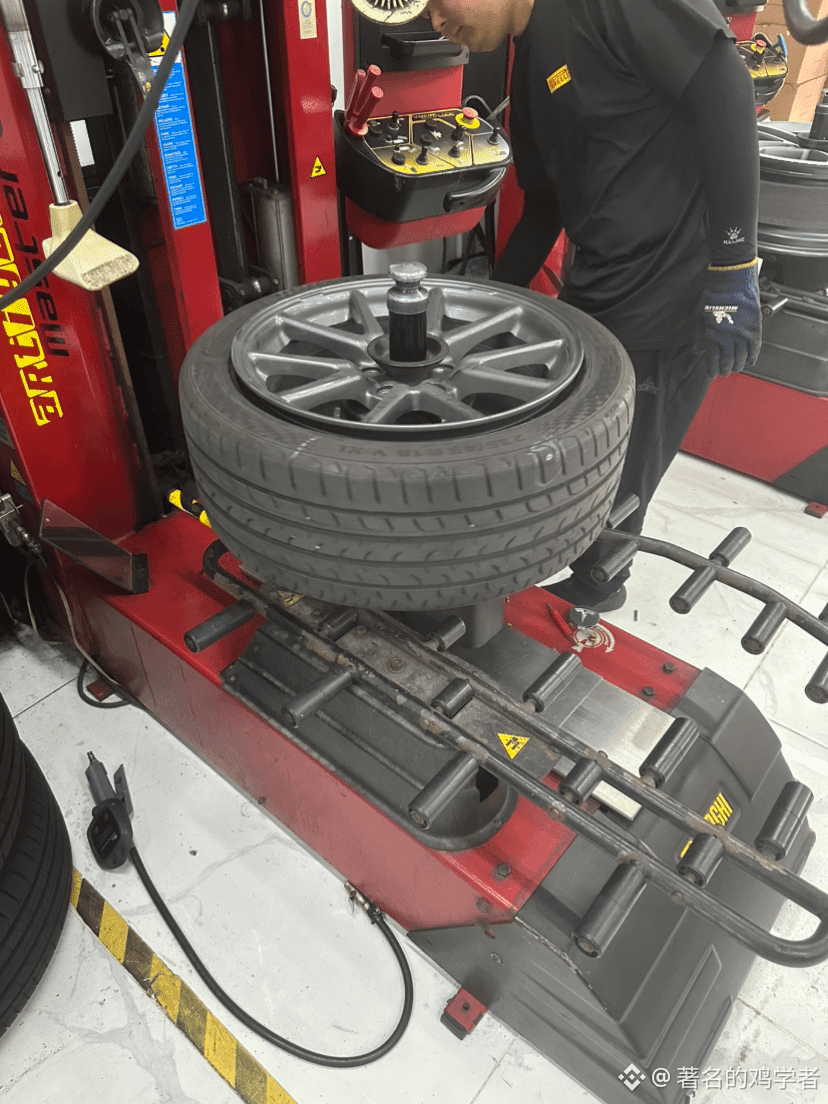
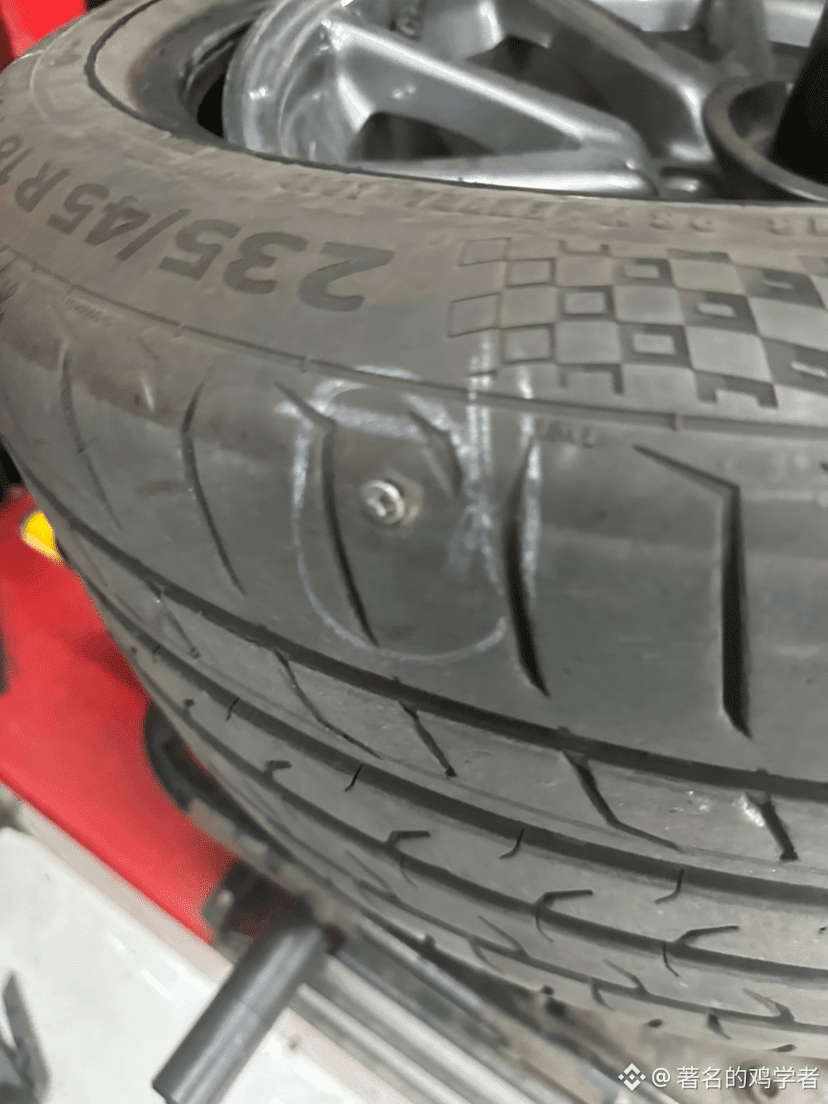
Eat some noodles, get a flat tire
35U is gone
$AAPLB
{spot}(AAPLBUSDT)
Eat some noodles, get a flat tire
35U is gone
$AAPLB
35U is gone
$AAPLB
77
Log in to explore more content
Join global crypto users on Binance Square
⚡️ Get latest and useful information about crypto.
💬 Trusted by the world’s largest crypto exchange.
👍 Discover real insights from verified creators.
Email / Phone number
Trending Topics
AIStocksWhatNext
502,933 views
3,723 Discussing
Share & Win Traffic Reward in our Trending Hashtag Campaign
✨Topic: What Other Investment Opportunities Remain as AI Stocks Keep Rising?
👉How to Join:
Publish a short post or article with hashtag #AIStocksWhatNext
Share whether you’re bullish or bearish, and post your AI stock holdings or trade — using the trade widget may improve your eligibility.
You can also strengthen your post by sharing data or charts, and avoiding AI-generated images.
✍️Create content based on the below angles:
- Nvidia says chip sales will double next year, and top AI companies keep hitting record revenue, the compute spend behind it is just as staggering. Is AI demand really taking off? And how long can it last? AI stocks are up across the board. Is this a real breakout, or just a short-term bounce?
- Industry leaders are calling to slow down AI development, while Trump plans to build an “AI Force”, claiming AI could account for 25% of U.S. GDP in the future. Whose side are you on? Will state-level backing be a long-term win for AI stocks?
- Are you buying AI stocks? Share your AI-related trade/holdings with our trade sharing widget.
⏰Campaign Period:
- 2026-09-22 7:00 - 2026-09-24 4:00 UTC
🎁Reward:
- Qualified posts that comply with the above guidelines and contain more than 100 words will be reviewed and may receive a random traffic boost of 500 to 3,000 views. You will receive a notification from your feed secretary if your post is selected.
- Get a chance to have your article featured on Binance Square Official
Need ideas for your post? Visit the topic page #AIStocksWhatNext or the Square Guide on How to Post for Better Reach.
Binance Square Official
·426 Likes
·1.1M views
BitcoinTops$87KAtEightMonthHigh
679 views
28 Discussing
ZECBreaksAbove$1600AtRecordHigh
317 views
11 Discussing