
Good evening everyone, I am Azu. One phrase I am most averse to when talking about AI Agents is "Agents will change everything." What truly changes the business is not whether the Agent can chat, but whether it can perform a "verifiable action" on-chain: obtaining the right data at the right time, placing orders, stopping losses, and reallocating based on the correct rules, and when necessary, also incorporating risk control and compliance. This brings the issue back to a very fundamental base—Agents do not lack execution power; they lack stable, trustworthy, and settled data inputs. The route of APRO happens to clearly set the goal: to enhance the way AI allows smart contracts and AI agents to access structured and unstructured real-world information, while also incorporating conflict resolution and multi-source verification into the network itself through a layered system of "Verdict Layer + Submitter Layer + On-chain Settlement."
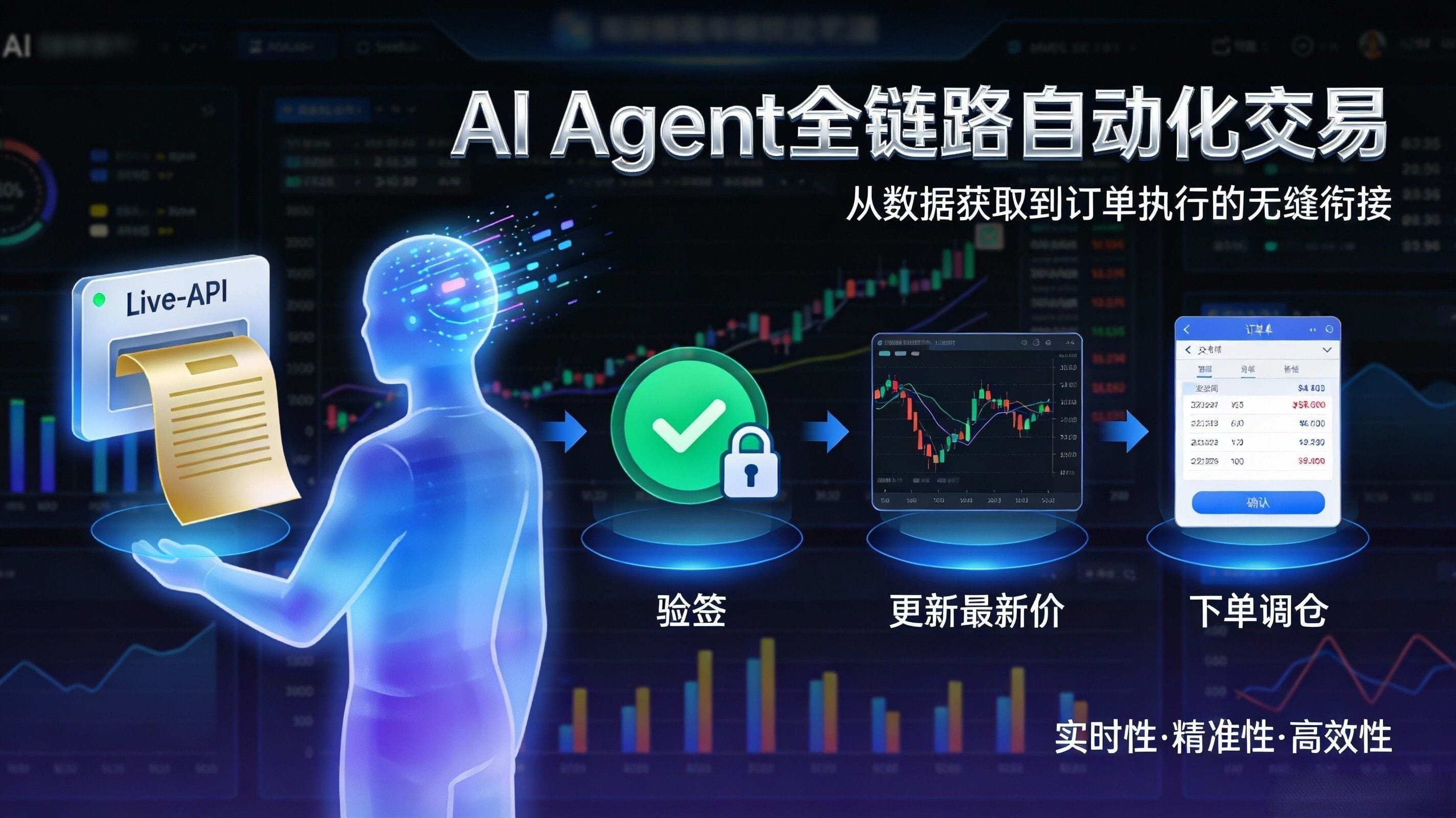
First, let's clarify the chain from 'reading data to placing orders using data.' For a trading Agent to really do its job, it must meet at least three requirements: get the latest prices and market status, determine if this information has been contaminated or is abnormal, and execute a trade based on the conclusion. The design of APRO's Data Pull is essentially to serve such scenarios where 'the latest price is needed only at critical moments': price data is only pulled from the decentralized network when needed, reducing the cost of continuous on-chain interactions while allowing contracts to obtain updates on demand. More importantly, the documentation directly provides trading-level usage: you can obtain a report from the Live-API that includes price, timestamp, and signature, completing validation and updating the price, as well as subsequent business logic in the same transaction. In Agent language, this means: it doesn't have to 'wait for the chain to slowly update before trading,' but can 'pull the report → verify the signature → use the latest price → place order/rebalance' all in one go, reducing the latency window.
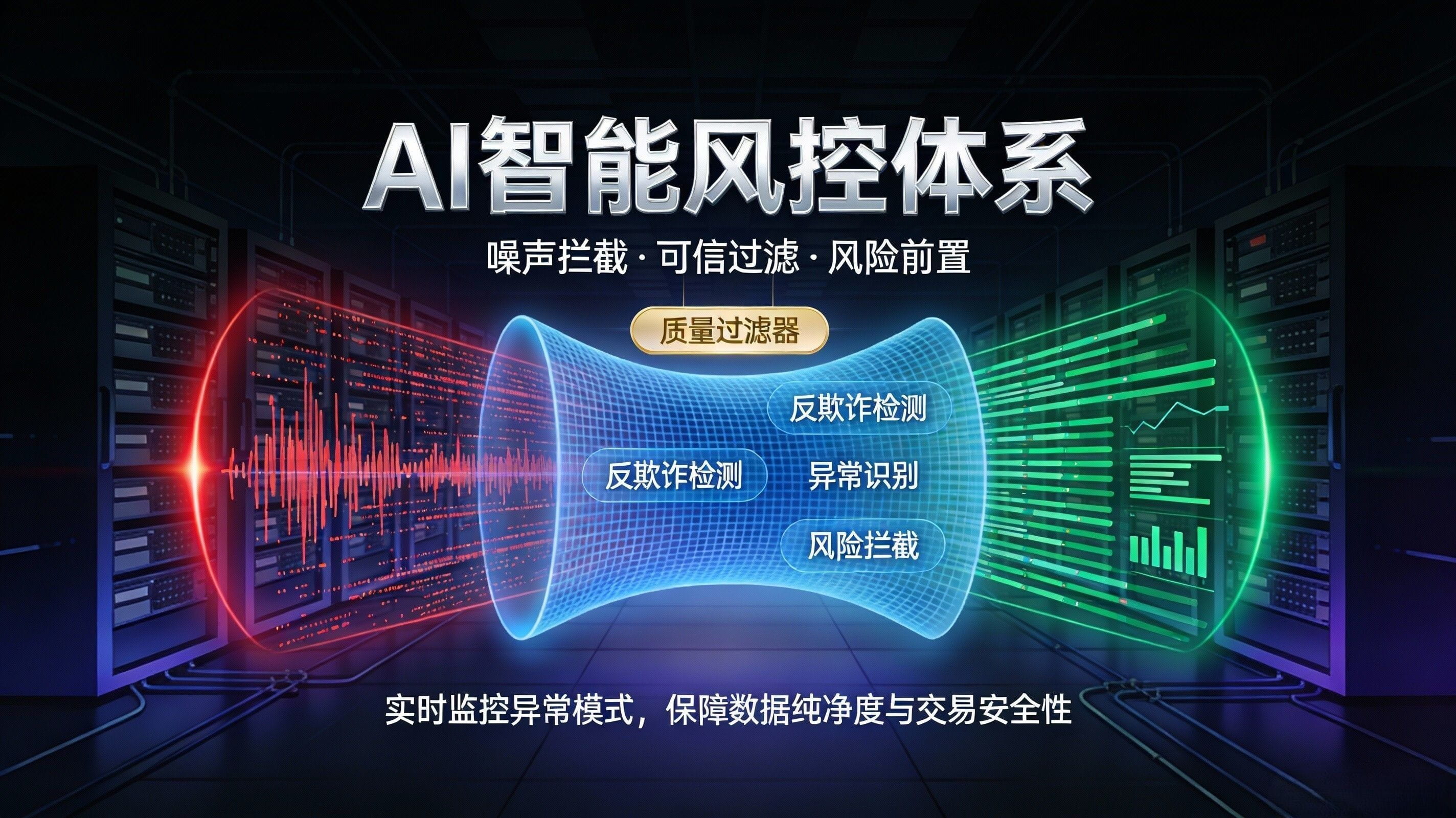
But trading is just the first layer; the second layer is more realistic: risk control. Many people imagine that Agents will become 'automatic money-making machines,' but I prefer to see it as 'automatic error-making machines'—as long as the data input is rhythmically driven, injected with garbage signals, or shows abnormal spikes in extreme market conditions, the Agent's blind trust can be more fatal than that of humans. Therefore, I strongly agree with a metaphor on Binance Square regarding the APRO AI layer: it is not here to 'predict prices' or 'act as traders,' but more like a 'quality filter/fraud detector' caught between the chaos of real-world data and the strict logic on-chain. This is crucial for Agents: not every piece of data is worth executing, not every fluctuation should be chased; what Agents need first is a mechanism to 'keep noise out,' rather than fancier strategies.

The third layer is compliance, especially when you put Agents into RWA or institutional business, things become more hardcore. You can allow the Agent to read US Treasury yields, read stock indices, read reserve changes, but what truly allows the business to 'dare to hand over money to it' is whether the 'evidence chain' has kept up. Binance Research has clearly written in the project overview that one of APRO's existing products is PoR (Proof of Reserve for RWA), and its target scenarios clearly include areas like prediction markets, RWA, and DeFi that require stronger credible inputs. Once an Agent can combine 'price feeding' with 'reserve/record proof,' it can not only place orders but also conduct compliance checks and risk exposure confirmations before placing orders, and even automatically downgrade to 'read-only/alert mode' in case of anomalies—this is the kind of Agent that can be used in real business.
So today's rule changes are out: oracle may become the most critical charging layer in the Agent economy. Previously, oracle was more like 'infrastructure cost,' and everyone assumed it was cheap, even thought it should be free; but in the Agent era, data is no longer 'market information displayed on the front end,' but 'inputs that trigger automatic execution.' When execution becomes automated, the cost of errors will be amplified, and the market will force you to pay for higher quality data and validation: lower latency, stronger multi-source verification, more traceable evidence chains, clearer conflict resolution, and boundaries of responsibility. You can understand this as a very simple industrial migration—money will flow from 'strategic gimmicks' to 'data and validation,' because this is the only place that can scale to reduce accident rates. APRO's overall positioning has always been moving in this direction: it emphasizes making data semantically and contextually understandable, and integrates validation and conflict resolution through multi-layer networks, with the target audience clearly including AI agents.
The impact on ordinary users will also be very direct: in the future, a business model more like 'charging for data quality' will emerge. You are no longer just paying for transaction fees, but for 'how credible the data I used for this decision is.' If you want lower latency data, you pay higher costs for verification and updates; if you want stronger contamination resistance, you pay for multi-source consensus and semantic review costs; if you want a RWA evidence chain that stands up to audits, you pay for traceable reports and review mechanisms. It sounds like an increased burden, but fundamentally it is converting the hidden costs you would originally pay with 'slippage, erroneous liquidation, dispute settlement, and over-leverage' into more controllable and transparent explicit costs.
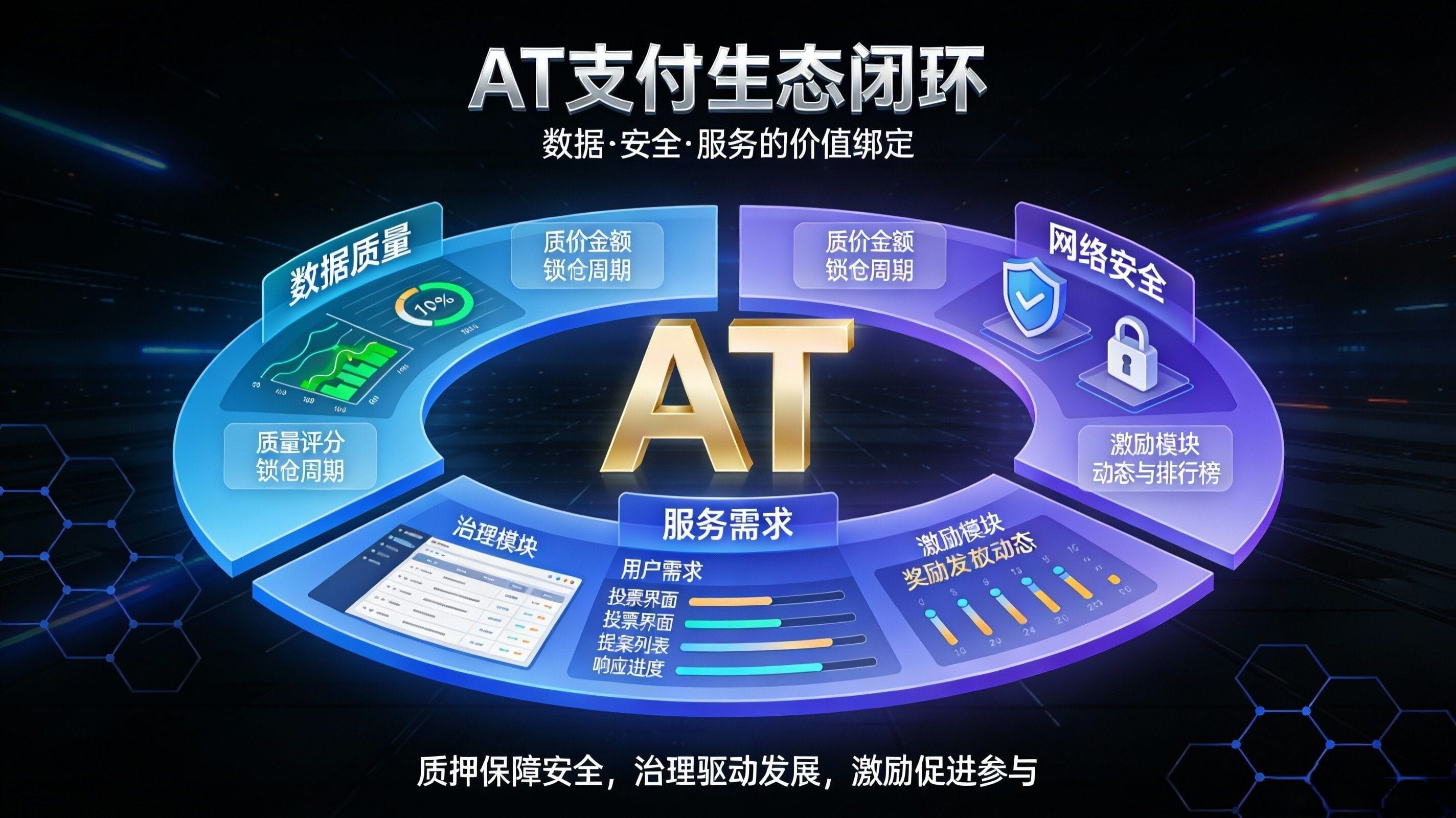
Finally, I will conclude with the 'Agent tasks—data requirements—AT payment imagination chain' you need, laying the groundwork for subsequent content: imagine the most realistic Agent task—it needs to perform dynamic hedging in perpetual contracts, reducing leverage when volatility expands, pausing trading when encountering abnormal data, and immediately lowering risk exposure when RWA collateral reserve changes. To accomplish this task, it needs three types of data in place simultaneously: trading-level real-time price and timestamp signature reports (preferably validated and executed in the same transaction), quality signals and conflict resolution results to identify 'rhythmic driving/abnormal spikes,' and reserve/record proof for RWA to ensure compliance and risk coverage. When this data shifts from 'optional' to 'essential,' payments will naturally follow the data: applications will pay for higher-grade data and validation services, and the costs will feed back into node staking, security budgets, and incentive structures; and since AT has been defined as the vehicle for staking, governance, and incentives, the narrative of 'using AT to bind data quality, network security, and service needs into a closed loop' will become self-evident—you can even summarize it more boldly: Agents are not paying for on-chain transactions; they are paying for 'credible inputs' because once the inputs are not credible, the Agent's automatic execution will only run the errors faster.


