
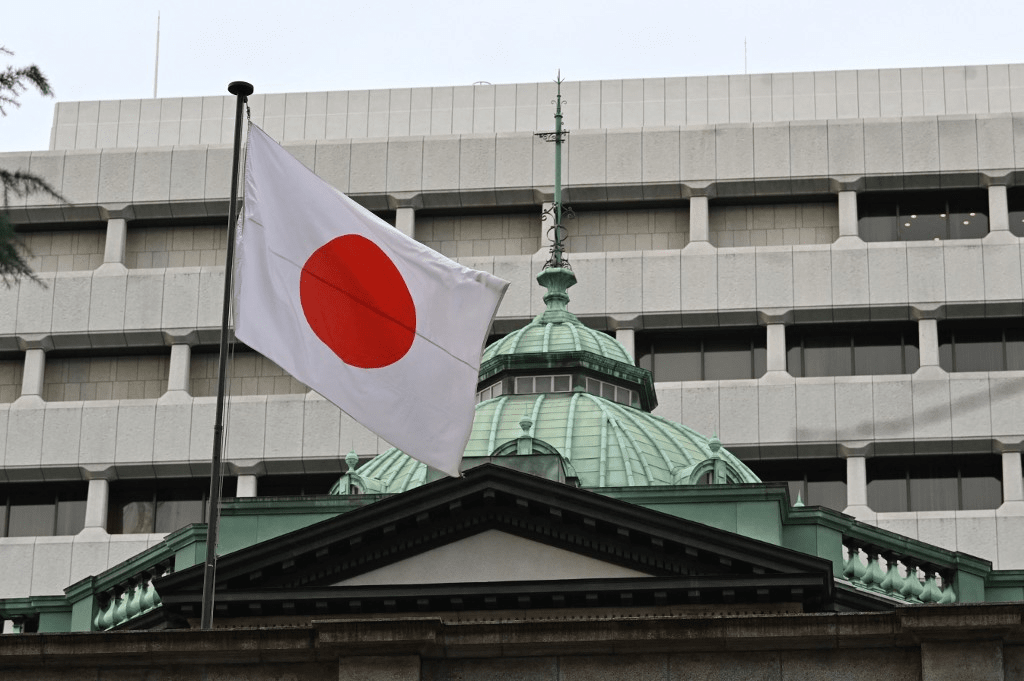
The Bank of Japan is set to raise interest rates to the highest level in 30 years on Friday, and has committed to continuing to increase borrowing costs. Despite facing resistance from U.S. tariffs and the impact of a dovish prime minister taking office, the Bank of Japan will complete two rate hikes within the year.
Following this rate hike, the Bank of Japan's policy rate remains low by global standards, but for Governor Ueda Kazuo, this will be another milestone in his efforts to normalize monetary policy — Japan has long been accustomed to unconventional easing policies and near-zero interest rates.
Due to high food costs, Japan's inflation rate has remained above the target level of 2% for nearly four consecutive years, and the market widely expects that at the conclusion of the two-day policy meeting ending on Friday, the Bank of Japan will raise the short-term interest rate from 0.5% to 0.75%.
Insiders revealed to Reuters that the Bank of Japan will also emphasize its determination to continue raising interest rates, although the pace of rate hikes will depend on the economy's response to each increase.
Finance Minister Satsuki Katayama stated to reporters on Tuesday that "there is no disagreement between the government and the Bank of Japan on the economic situation," indicating that the government is tolerant of raising interest rates to 0.75%.
Any such measures would highlight the Bank of Japan's increasingly firm belief that Japan is making progress in maintaining a virtuous cycle of rising inflation and steady wage growth—conditions it has set for rate hikes.
A rare temporary survey released by the Bank of Japan on Monday showed that due to a worsening labor shortage, most of its branches expect companies to continue significantly raising salaries next year.
Given that Kazuo Ueda's comments earlier this month have essentially committed to a rate hike in December, the market is focusing on what signals the governor will release about the future path of rate hikes during the post-meeting press conference.
Bank of Japan policymakers have indicated that they will proceed cautiously when pushing interest rates to what is considered neutral for the economy (the central bank estimates this range to be between 1% and 2.5%).
However, analysts say that Kazuo Ueda faces pressure to downplay hawkish signals to avoid triggering a new round of yen depreciation—the depreciation of the yen could push up import costs and overall inflation levels.
While a weaker yen helps boost exporters' profits, it may encourage retailers to pass on costs and raise product prices, placing greater pressure on households already affected by a decline in real wages.
According to a survey released last month by the Teikoku Databank, a private think tank, the number of food and beverage categories with price increases this year has exceeded 20,000, a 64.6% increase compared to 2024; however, this number may drop to over 1,000 by 2026.
However, analysts say that if the pace of yen depreciation accelerates, the number of price-increasing categories could surge, exacerbating inflation risks and complicating the Bank of Japan's interest rate decisions next year.
Japanese government officials stated that Japan is prepared to intervene in the foreign exchange market to prevent a sudden depreciation of the yen that disconnects it from fundamentals—an indication that both the government and the Bank of Japan oppose excessive yen depreciation.
Kei Fujimoto, a senior economist at SuMi TRUST, believes that since the market has already priced in expectations for a December rate hike, the yen is unlikely to appreciate significantly, and the recent weakness of the yen is mainly driven by concerns over the deterioration of Japan's fiscal situation.
"The weakening of the yen and rising interest rates could push up consumer prices, corporate production costs, and financing costs, which may in turn affect corporate confidence," he stated.