
#celo
celo
744,937 views
4,220 Discussing
Hot
Latest

·
--
Article
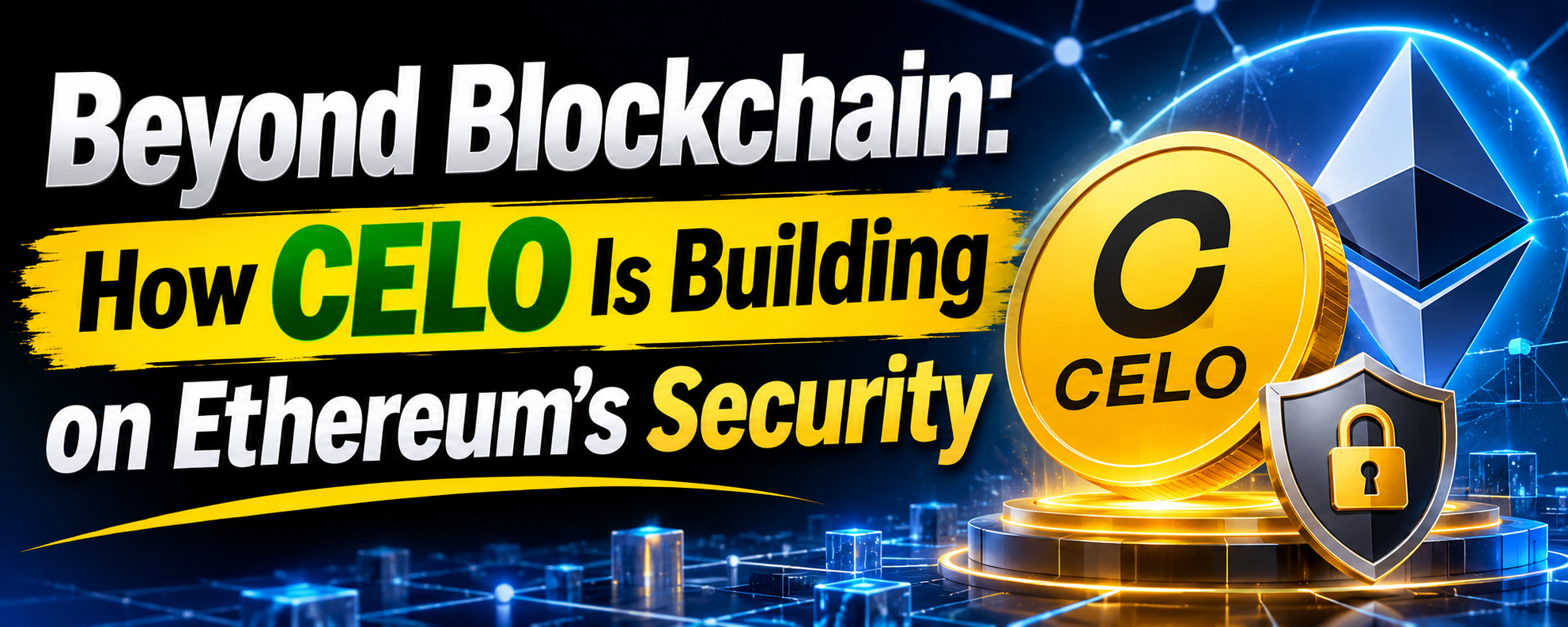
Beyond Blockchain: How CELO Is Building on Ethereum's SecurityThe blockchain industry is entering a new phase of development, where scalability, security, and real-world utility are becoming more important than ever. In this changing environment, CELO is taking an important step forward. CELO is now an Ethereum Layer 2, secured by Ethereum and built on the Superchain.
This transformation represents more than just a technical upgrade. It reflects a long-term vision to make blockchain technology faster, more accessible, and more useful for everyday financial activities.
One of the biggest advantages of becoming an Ethereum Layer 2 is the connection to Ethereum's established security and decentralized ecosystem. Ethereum has become one of the most important foundations of decentralized finance, and building on its infrastructure allows CELO to benefit from a broader network of developers, applications, and users.
CELO's integration with the OP Stack also connects it to the Optimism Superchain ecosystem. This creates opportunities for better interoperability, shared infrastructure, and collaboration across different blockchain networks.
But what makes CELO different is its focus on mobile-first financial experiences and global accessibility. Millions of people around the world use smartphones as their primary connection to the digital economy. However, many still face barriers when accessing affordable financial services.
CELO aims to address this challenge by supporting fast and affordable blockchain transactions. Its ecosystem is designed to make digital payments, decentralized applications, and financial services easier to access.
The Superchain vision is also important for the future of blockchain. Instead of operating as isolated networks, different chains can become part of a connected ecosystem. This can improve the overall user experience and create more opportunities for developers to build applications that reach a wider audience.
For developers, the Layer 2 transition provides access to Ethereum-compatible infrastructure and tools. For users, it creates the potential for more efficient transactions and improved access to decentralized applications.
However, the real success of this transformation will not be determined by technology alone. Long-term adoption, network activity, developer growth, security, and practical use cases will be important factors in measuring CELO's progress.
From an investment perspective, it is also important to remember that technological progress does not guarantee token price increases. Market conditions, competition, liquidity, and investor sentiment can all influence CELO's performance. Every trader should conduct independent research and manage risk carefully.
My perspective: CELO's move to Layer 2 is an important development because it combines Ethereum's security foundation, the flexibility of OP Stack technology, and the broader Superchain vision with a strong focus on financial accessibility.
CELO is not simply following blockchain trends. It is working toward a future where blockchain infrastructure can support real financial activity.
Secured by Ethereum. Built on the Superchain. Focused on real-world utility. CELO is building its next chapter.
@celo #CELO $CELO
Beyond Blockchain: How CELO Is Building on Ethereum's Security
The blockchain industry is entering a new phase of development, where scalability, security, and real-world utility are becoming more important than ever. In this changing environment, CELO is taking an important step forward. CELO is now an Ethereum Layer 2, secured by Ethereum and built on the Superchain.
This transformation represents more than just a technical upgrade. It reflects a long-term vision to make blockchain technology faster, more accessible, and more useful for everyday financial activities.
One of the biggest advantages of becoming an Ethereum Layer 2 is the connection to Ethereum's established security and decentralized ecosystem. Ethereum has become one of the most important foundations of decentralized finance, and building on its infrastructure allows CELO to benefit from a broader network of developers, applications, and users.
CELO's integration with the OP Stack also connects it to the Optimism Superchain ecosystem. This creates opportunities for better interoperability, shared infrastructure, and collaboration across different blockchain networks.
But what makes CELO different is its focus on mobile-first financial experiences and global accessibility. Millions of people around the world use smartphones as their primary connection to the digital economy. However, many still face barriers when accessing affordable financial services.
CELO aims to address this challenge by supporting fast and affordable blockchain transactions. Its ecosystem is designed to make digital payments, decentralized applications, and financial services easier to access.
The Superchain vision is also important for the future of blockchain. Instead of operating as isolated networks, different chains can become part of a connected ecosystem. This can improve the overall user experience and create more opportunities for developers to build applications that reach a wider audience.
For developers, the Layer 2 transition provides access to Ethereum-compatible infrastructure and tools. For users, it creates the potential for more efficient transactions and improved access to decentralized applications.
However, the real success of this transformation will not be determined by technology alone. Long-term adoption, network activity, developer growth, security, and practical use cases will be important factors in measuring CELO's progress.
From an investment perspective, it is also important to remember that technological progress does not guarantee token price increases. Market conditions, competition, liquidity, and investor sentiment can all influence CELO's performance. Every trader should conduct independent research and manage risk carefully.
My perspective: CELO's move to Layer 2 is an important development because it combines Ethereum's security foundation, the flexibility of OP Stack technology, and the broader Superchain vision with a strong focus on financial accessibility.
CELO is not simply following blockchain trends. It is working toward a future where blockchain infrastructure can support real financial activity.
Secured by Ethereum. Built on the Superchain. Focused on real-world utility. CELO is building its next chapter.
@celo #CELO $CELO
1
166

Article
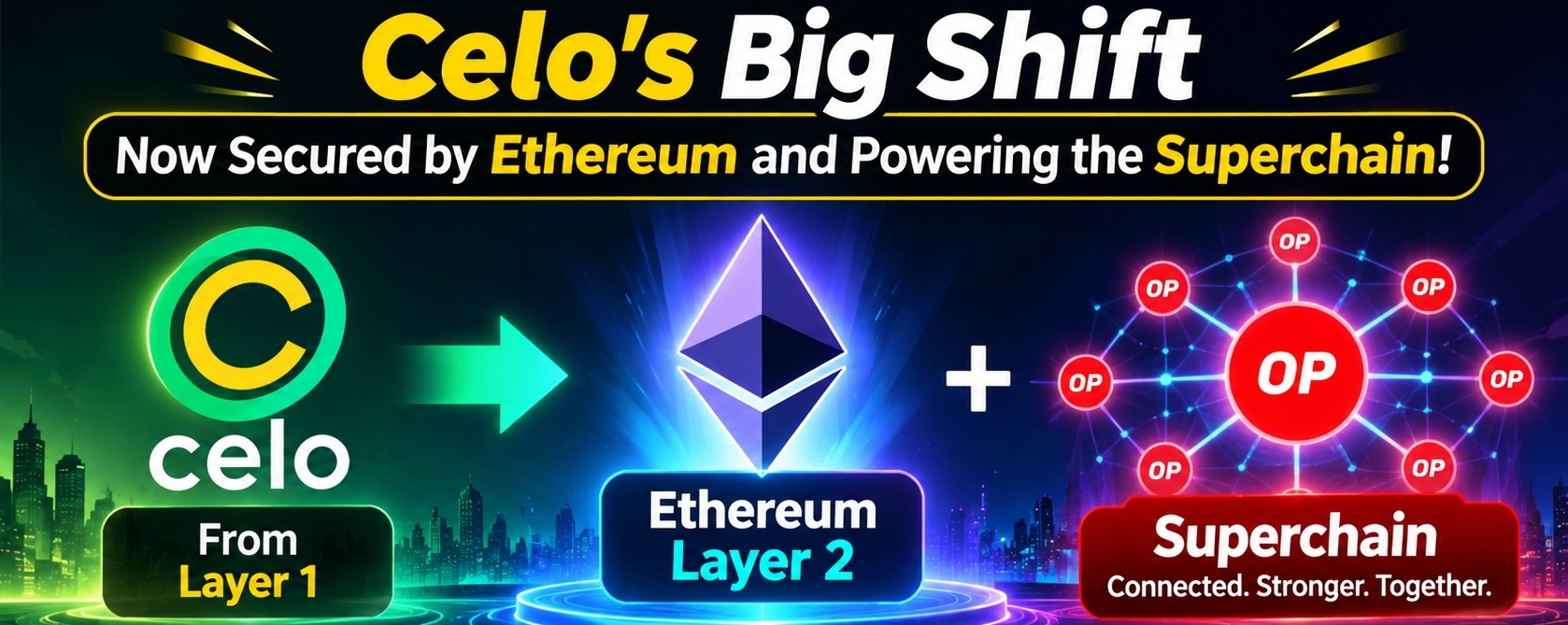
Celo’s Big Shift Now Secured by Ethereum and Powering the Superchain.The blockchain industry has never really stood still. Every few months, a new technology or network changes the way people think about crypto. But sometimes, the most interesting development is not a completely new project. It is an existing network making a major change to its direction. That is what makes Celo interesting to me. It has moved from being an independent Layer 1 to becoming an Ethereum Layer 2. Secured by Ethereum and built on the Superchain, Celo is taking a different approach while keeping its original focus on making blockchain more accessible.
I've noticed that Ethereum Layer 2 solutions are becoming an important part of the crypto conversation. As more people enter the ecosystem, transaction costs, network performance, and accessibility become bigger concerns. Nobody wants to spend more on transaction fees than the actual value they are transferring. Celo's transition reflects an effort to address these practical challenges.
One thing that stands out to me is its connection with Ethereum. Ethereum has a strong developer community, established infrastructure, and a large ecosystem of applications. By becoming an L2, Celo can build closer to this environment while benefiting from Ethereum's security model.
However, this transition is about more than technical infrastructure. Celo has always had a particular interest in mobile accessibility and everyday financial use cases. That original direction is still important.
Think about someone who wants to send money to another person using a stablecoin. They do not want complicated steps, expensive fees, or a confusing experience. They simply want the payment to arrive safely and quickly. From my perspective, this is where blockchain technology has a real opportunity to become useful outside the trading community.
Celo's focus on affordable transactions and mobile friendly experiences fits naturally into this idea. Making digital payments easier could help attract people who are interested in practical financial services rather than speculation.
Another interesting part is the Superchain. It connects different blockchain networks built using the OP Stack and provides a shared technical foundation. This approach could make collaboration between networks easier and give developers more opportunities to build applications across connected ecosystems.
The OP Stack connection is also worth understanding. Developers familiar with Ethereum tools can work in an environment that feels recognizable. This can reduce some technical barriers and make it easier for teams to explore building on Celo.
Still, joining a larger ecosystem does not automatically bring users or successful applications. A network needs genuine activity, useful products, dependable infrastructure, and enough liquidity to support its ecosystem.
Stablecoins could become an important part of Celo's growth. Digital dollars are already useful for payments, transfers, and accessing financial services. In regions where traditional payment systems can be expensive or inconvenient, affordable blockchain transactions may offer another option.
I've also started thinking about how the Layer 2 landscape might develop over the coming years. Instead of every blockchain trying to build everything independently, shared infrastructure could allow networks to focus on specific communities and use cases.
For Celo, that could mean combining Ethereum connectivity with its existing interest in mobile payments and financial accessibility. It is an interesting combination, but its success will depend on how well the technology works for actual users.
There are still important questions. Can Celo attract more developers? Will applications bring consistent activity? Can the network maintain reliability while expanding its ecosystem? These are the details that deserve attention beyond announcements and market excitement.
From my perspective, Celo's transition is worth watching because it represents a change in how blockchain networks can approach growth. Security, connectivity, and accessibility all matter, but none of them means much without people actually using the products.
Celo is now an Ethereum Layer 2 and part of the Superchain ecosystem. The real story, however, is what happens next. If it can turn this technical transition into better payment experiences and useful applications, it could establish a meaningful position in the wider Ethereum ecosystem.
Technology can attract attention, but real utility is what keeps people around. That is the part of Celo's journey I find most interesting.
@celo #Celo $CELO
{future}(CELOUSDT)
Celo’s Big Shift Now Secured by Ethereum and Powering the Superchain.
The blockchain industry has never really stood still. Every few months, a new technology or network changes the way people think about crypto. But sometimes, the most interesting development is not a completely new project. It is an existing network making a major change to its direction. That is what makes Celo interesting to me. It has moved from being an independent Layer 1 to becoming an Ethereum Layer 2. Secured by Ethereum and built on the Superchain, Celo is taking a different approach while keeping its original focus on making blockchain more accessible.
I've noticed that Ethereum Layer 2 solutions are becoming an important part of the crypto conversation. As more people enter the ecosystem, transaction costs, network performance, and accessibility become bigger concerns. Nobody wants to spend more on transaction fees than the actual value they are transferring. Celo's transition reflects an effort to address these practical challenges.
One thing that stands out to me is its connection with Ethereum. Ethereum has a strong developer community, established infrastructure, and a large ecosystem of applications. By becoming an L2, Celo can build closer to this environment while benefiting from Ethereum's security model.
However, this transition is about more than technical infrastructure. Celo has always had a particular interest in mobile accessibility and everyday financial use cases. That original direction is still important.
Think about someone who wants to send money to another person using a stablecoin. They do not want complicated steps, expensive fees, or a confusing experience. They simply want the payment to arrive safely and quickly. From my perspective, this is where blockchain technology has a real opportunity to become useful outside the trading community.
Celo's focus on affordable transactions and mobile friendly experiences fits naturally into this idea. Making digital payments easier could help attract people who are interested in practical financial services rather than speculation.
Another interesting part is the Superchain. It connects different blockchain networks built using the OP Stack and provides a shared technical foundation. This approach could make collaboration between networks easier and give developers more opportunities to build applications across connected ecosystems.
The OP Stack connection is also worth understanding. Developers familiar with Ethereum tools can work in an environment that feels recognizable. This can reduce some technical barriers and make it easier for teams to explore building on Celo.
Still, joining a larger ecosystem does not automatically bring users or successful applications. A network needs genuine activity, useful products, dependable infrastructure, and enough liquidity to support its ecosystem.
Stablecoins could become an important part of Celo's growth. Digital dollars are already useful for payments, transfers, and accessing financial services. In regions where traditional payment systems can be expensive or inconvenient, affordable blockchain transactions may offer another option.
I've also started thinking about how the Layer 2 landscape might develop over the coming years. Instead of every blockchain trying to build everything independently, shared infrastructure could allow networks to focus on specific communities and use cases.
For Celo, that could mean combining Ethereum connectivity with its existing interest in mobile payments and financial accessibility. It is an interesting combination, but its success will depend on how well the technology works for actual users.
There are still important questions. Can Celo attract more developers? Will applications bring consistent activity? Can the network maintain reliability while expanding its ecosystem? These are the details that deserve attention beyond announcements and market excitement.
From my perspective, Celo's transition is worth watching because it represents a change in how blockchain networks can approach growth. Security, connectivity, and accessibility all matter, but none of them means much without people actually using the products.
Celo is now an Ethereum Layer 2 and part of the Superchain ecosystem. The real story, however, is what happens next. If it can turn this technical transition into better payment experiences and useful applications, it could establish a meaningful position in the wider Ethereum ecosystem.
Technology can attract attention, but real utility is what keeps people around. That is the part of Celo's journey I find most interesting.
@celo #Celo $CELO
46

🦈 $CELO BUILDING THE INFRASTRUCTURE FOR INSTITUTIONAL ONCHAIN FOREIGN EXCHANGE DOMINANCE! ⚡
Smart money is quietly positioning beyond traditional dollar hegemony as $CELO orchestrates the new FX Alliance, uniting major issuers, infrastructure architects, and liquidity ramps into a unified onchain settlement matrix. 📊
With thirty-five local-currency stablecoins already anchored across twenty regional corridors, this foundational alignment builds genuine structural utility instead of relying on fleeting retail hype cycles. 💡
As institutional payment rails rapidly evolve toward multi-currency efficiency, are you accumulating network tokens ahead of the Q1 corridor expansion? 💬 👇
⚠️ Not financial advice. Always manage your risk. 🛡️
🏷️ #CELO #Stablecoins #OnchainFX #Crypto
🦈 ⚖️

$CELO IS FORGING A NEW FRONTIER IN ONCHAIN FOREX AS STABLECOINS BREAK FREE! 🌍🔥
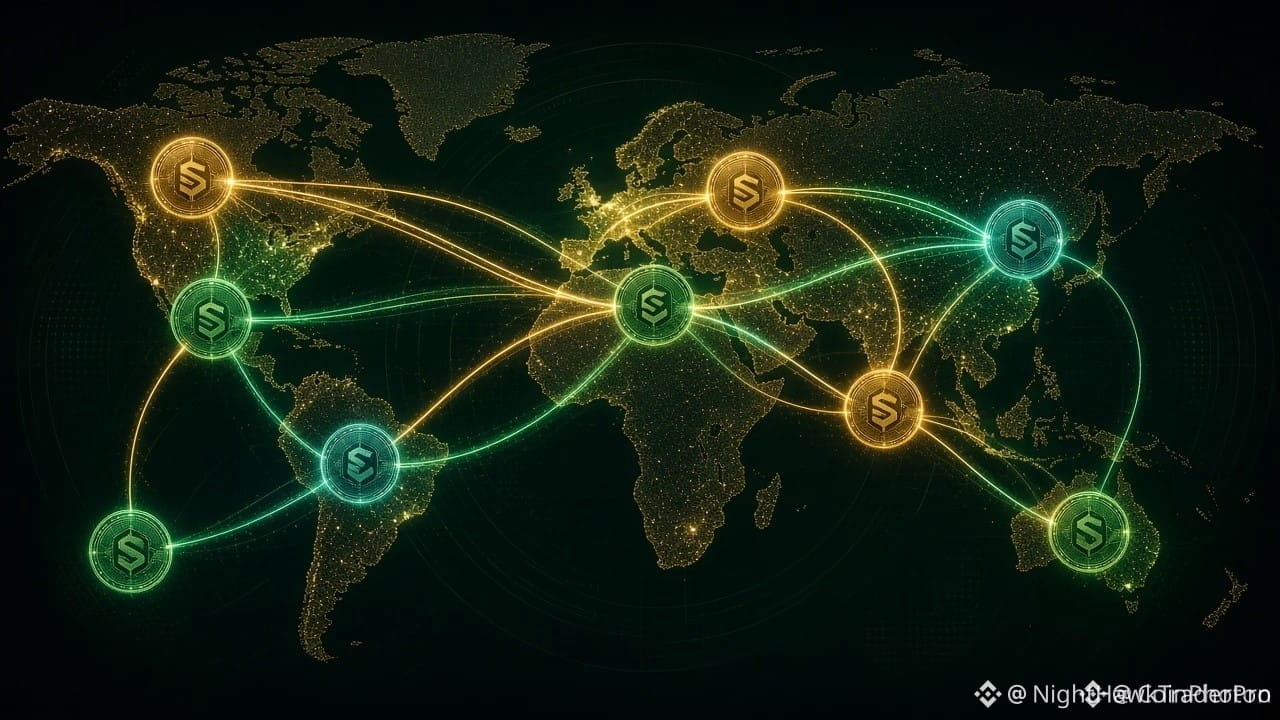
The latest FX Alliance unveiled at a premier global blockchain summit proves $CELO is quietly positioning itself as the undisputed settlement layer for cross-border digital cash. 📊 By uniting heavyweights like Frax and Opera to scale local-currency stablecoins across twenty different fiat rails, network utility is compounding right under the market’s nose. ⚡
Thirty-five live stablecoins and a roadmap tracking straight into 2027 show this isn't just retail hype, it is structural adoption biting deep into legacy payment systems. 💡 When payment networks pivot from single-currency dependence to multi-fiat agility, the underlying liquidity network captures massive long-term value. 🌊
💬 Are you tracking how real-world utility transforms network momentum during quiet market phases? 👇
⚠️ Not financial advice. Always manage your risk. 🛡️
🏷️ #CELO #Stablecoins #OnchainFX #Crypto #Altcoins
🔥 💎
5

·
--
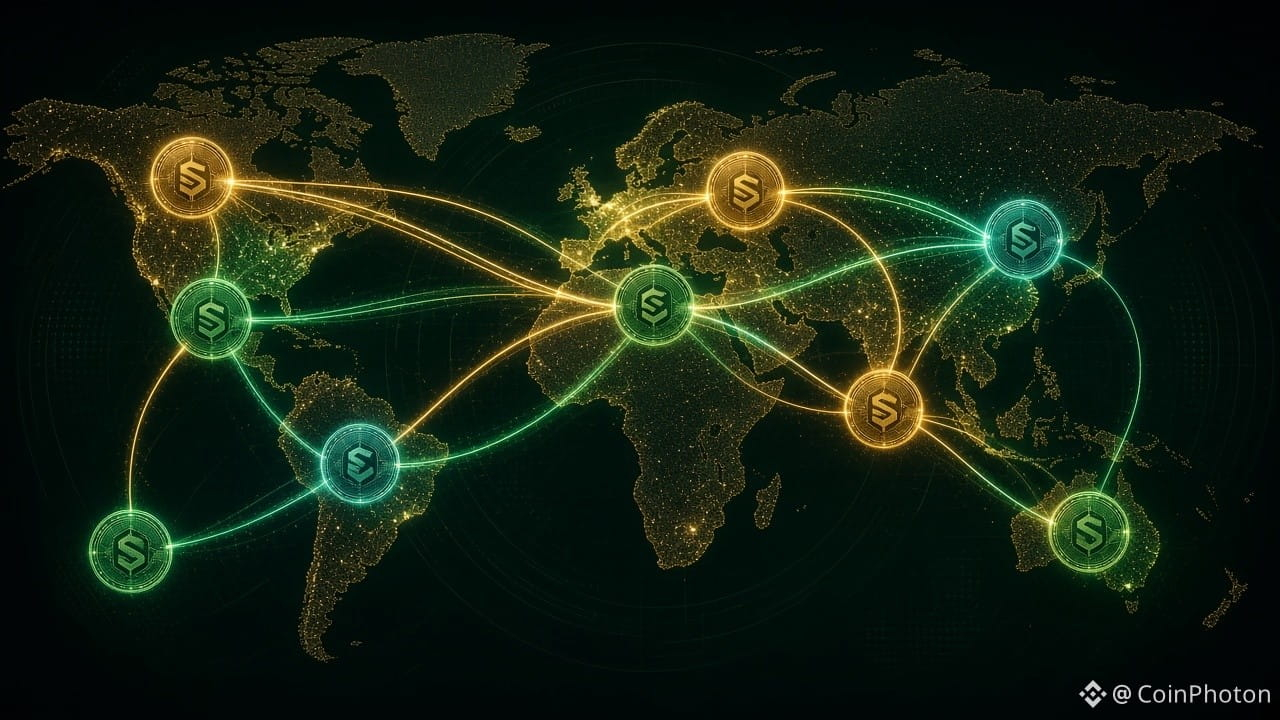
🌍 Celo launches FX Alliance for local-currency stablecoins
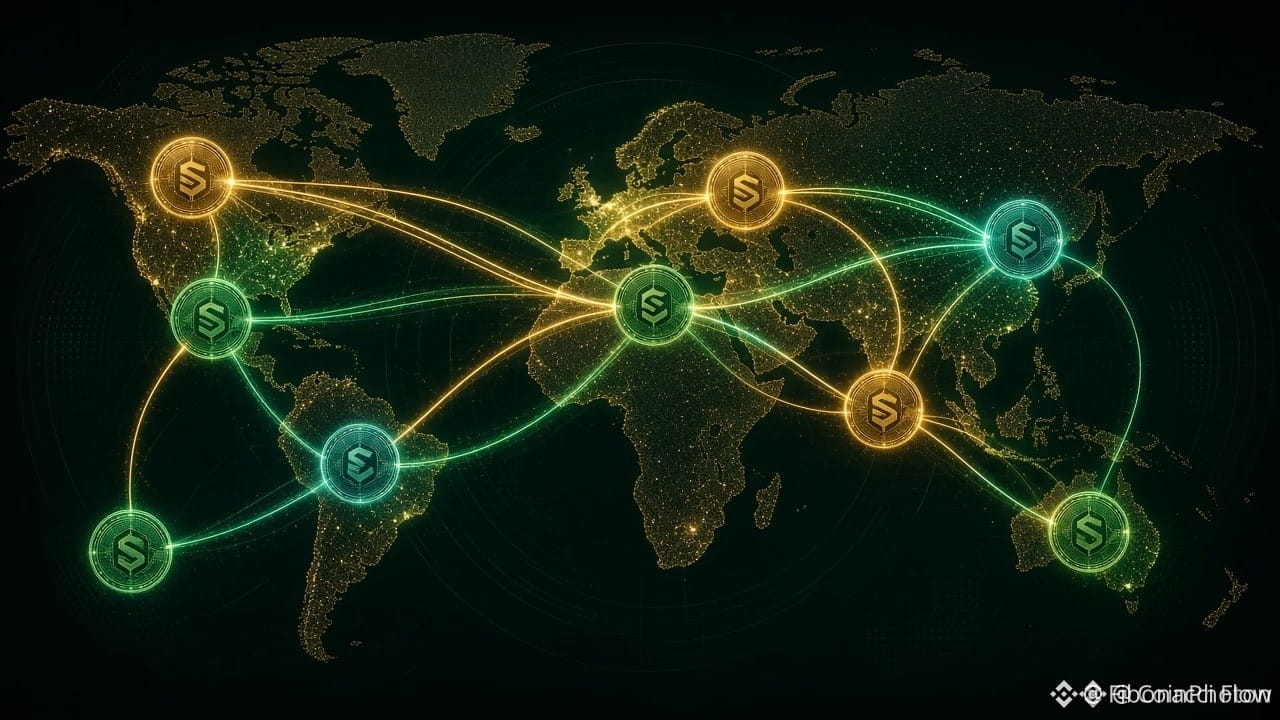
Celo Core Co. unveiled the Celo FX Alliance at Binance Blockchain Week on Nov. 28, bringing together stablecoin issuers, on/off-ramps, infrastructure firms and wallets to grow onchain FX between local-currency stablecoins. Founding members include Opera, Frax, Schuman Financial, VNX Global, Ripio, IDRX, cNGN, Minteo and Textile FX. Celo already hosts 35 stablecoins across 20 currencies and plans a public corridor dashboard and an onchain FX market report by the end of Q1 2027.
⭐ Stablecoins are spreading beyond the dollar, and onchain FX is shaping up as a new battleground for payment-focused chains.
#Celo #Stablecoins #OnchainFX
88

·
--
Article
The Problem Celo Wants to SolveThe Problem Celo Wants to Solve
For millions of people, sending money across borders is still expensive and complicated. Traditional payment services can involve high fees, slow transfers, and unnecessary steps. Crypto offers another option, but many blockchain networks are still difficult for ordinary users.
Celo is working to make this experience easier. Instead of focusing only on crypto trading, it is building financial infrastructure that supports everyday payments, digital dollars, and global money transfers.
MiniPay: Bringing Crypto Closer to People
One of the most interesting parts of the Celo ecosystem is MiniPay, a stablecoin wallet developed by Opera.
The idea behind MiniPay is simple: people should be able to send and receive digital money without needing deep knowledge of blockchain technology.
Users can access stablecoin payments through a mobile-friendly experience. This makes it easier for people to explore digital payments using their smartphones.
MiniPay has become an important part of Celo's adoption strategy. In November 2026, Celo highlighted an upgrade involving 20 million stablecoin wallets moving to Stripe-owned Privy wallet infrastructure.
This shows how Celo is trying to connect blockchain technology with products that people can actually use.
Stablecoins Are at the Center of Celo
Celo is not treating stablecoins as just another crypto asset. They are an important part of its financial vision.
Stablecoins are designed to maintain a relatively stable value, usually by following currencies such as the US dollar or euro.
For someone sending money to family, receiving international payments, or managing digital savings, price stability can be more useful than holding a highly volatile cryptocurrency.
Celo supports different stablecoins and has developed an ecosystem that also includes local-currency financial products.
This approach could help connect people with digital financial services in regions where traditional banking options are limited or expensive.
Paying Transaction Fees With Stablecoins
Another interesting feature is Celo's fee abstraction system.
On many blockchains, users need to hold the network's native token before they can make transactions. This creates an extra step for beginners.
Celo offers a different approach by allowing supported ERC-20 tokens to be used for transaction fees.
For example, users can pay gas fees using supported stablecoins instead of always needing CELO.
This may sound like a small technical improvement, but it solves a real problem. People can focus on sending money rather than first understanding how to purchase another token just to pay network fees.
Ethereum Connection and Network Development
Celo's migration to Ethereum Layer 2 in March 2025 was an important step in its development.
The network now uses the OP Stack and benefits from closer integration with Ethereum's ecosystem.
This gives developers access to familiar tools while allowing Celo to continue focusing on affordable payments and financial applications.
The combination of Ethereum compatibility and mobile-first design gives the project an interesting direction.
Where CELO Fits Into This Ecosystem
CELO remains an important asset within the network.
It has a role in governance, allowing holders to participate in decisions about the protocol's development.
It is also part of the network's economic structure and can be used for transaction fees. Celo's support for stablecoin gas payments provides additional flexibility for users.
However, investors should understand that the usefulness of a network does not automatically mean its token price will increase.
Challenges and Future Opportunities
Celo still faces competition from other payment networks, stablecoin platforms, and Ethereum Layer 2 projects.
Its long-term growth will depend on whether people continue using its applications, whether developers build useful products, and whether its payment services gain wider adoption.
There are also risks related to regulation, market conditions, security, and competition.
Final Thoughts
Celo is building around an important idea: digital money should be useful in everyday life, not just inside the crypto market.
Its work with MiniPay, stablecoins, mobile payments, and Ethereum infrastructure gives it a clear direction.
The real test will be adoption. If Celo can continue attracting users and supporting practical financial applications, it could become an important part of the global digital payment ecosystem.
This article is for educational purposes only and is not financial advice. Always do your own research before making investment decisions.
$CELO
{future}(CELOUSDT)
@celo #CELO $CELO
The Problem Celo Wants to Solve
The Problem Celo Wants to Solve
For millions of people, sending money across borders is still expensive and complicated. Traditional payment services can involve high fees, slow transfers, and unnecessary steps. Crypto offers another option, but many blockchain networks are still difficult for ordinary users.
Celo is working to make this experience easier. Instead of focusing only on crypto trading, it is building financial infrastructure that supports everyday payments, digital dollars, and global money transfers.
MiniPay: Bringing Crypto Closer to People
One of the most interesting parts of the Celo ecosystem is MiniPay, a stablecoin wallet developed by Opera.
The idea behind MiniPay is simple: people should be able to send and receive digital money without needing deep knowledge of blockchain technology.
Users can access stablecoin payments through a mobile-friendly experience. This makes it easier for people to explore digital payments using their smartphones.
MiniPay has become an important part of Celo's adoption strategy. In November 2026, Celo highlighted an upgrade involving 20 million stablecoin wallets moving to Stripe-owned Privy wallet infrastructure.
This shows how Celo is trying to connect blockchain technology with products that people can actually use.
Stablecoins Are at the Center of Celo
Celo is not treating stablecoins as just another crypto asset. They are an important part of its financial vision.
Stablecoins are designed to maintain a relatively stable value, usually by following currencies such as the US dollar or euro.
For someone sending money to family, receiving international payments, or managing digital savings, price stability can be more useful than holding a highly volatile cryptocurrency.
Celo supports different stablecoins and has developed an ecosystem that also includes local-currency financial products.
This approach could help connect people with digital financial services in regions where traditional banking options are limited or expensive.
Paying Transaction Fees With Stablecoins
Another interesting feature is Celo's fee abstraction system.
On many blockchains, users need to hold the network's native token before they can make transactions. This creates an extra step for beginners.
Celo offers a different approach by allowing supported ERC-20 tokens to be used for transaction fees.
For example, users can pay gas fees using supported stablecoins instead of always needing CELO.
This may sound like a small technical improvement, but it solves a real problem. People can focus on sending money rather than first understanding how to purchase another token just to pay network fees.
Ethereum Connection and Network Development
Celo's migration to Ethereum Layer 2 in March 2025 was an important step in its development.
The network now uses the OP Stack and benefits from closer integration with Ethereum's ecosystem.
This gives developers access to familiar tools while allowing Celo to continue focusing on affordable payments and financial applications.
The combination of Ethereum compatibility and mobile-first design gives the project an interesting direction.
Where CELO Fits Into This Ecosystem
CELO remains an important asset within the network.
It has a role in governance, allowing holders to participate in decisions about the protocol's development.
It is also part of the network's economic structure and can be used for transaction fees. Celo's support for stablecoin gas payments provides additional flexibility for users.
However, investors should understand that the usefulness of a network does not automatically mean its token price will increase.
Challenges and Future Opportunities
Celo still faces competition from other payment networks, stablecoin platforms, and Ethereum Layer 2 projects.
Its long-term growth will depend on whether people continue using its applications, whether developers build useful products, and whether its payment services gain wider adoption.
There are also risks related to regulation, market conditions, security, and competition.
Final Thoughts
Celo is building around an important idea: digital money should be useful in everyday life, not just inside the crypto market.
Its work with MiniPay, stablecoins, mobile payments, and Ethereum infrastructure gives it a clear direction.
The real test will be adoption. If Celo can continue attracting users and supporting practical financial applications, it could become an important part of the global digital payment ecosystem.
This article is for educational purposes only and is not financial advice. Always do your own research before making investment decisions.
$CELO
@celo #CELO $CELO
2
487

Verified

Article
How $CELO and MiniPay Are Making Blockchain Invisible Across 20M+ WalletsMass crypto adoption happens when users no longer have to manage seed phrases or separate gas tokens—and Celo ($CELO) is proving that model at scale through Opera's self-custodial wallet, MiniPay.
Key Verified Highlights:
Privy Wallet Infrastructure Upgrade: On November 19, 2026, MiniPay announced it is upgrading its 20 million+ activated wallets on Celo to Privy (acquired by Stripe in 2025)—letting users sign in via email, social login, or passkey without writing down seed phrases while preserving full self-custodyCumulative Real-World Scale: Since launching in 2023, MiniPay on Celo has surpassed 20 million+ cumulative wallet activations, 600 million+ transactions, and $2.3 billion+ in processed volume across 70+ countries, supported by 77 live Mini AppsStablecoin Gas & $CELO Utility: Celo’s fee abstraction lets users pay transaction fees directly in USDC, USDT, or local Mento stablecoins, while $CELO powers network governance, staking (4.78 million $CELO staked per the Q3 2026 update), and stablecoin reserve backing
Why It Matters for $CELO Watchers:
Web2 Simplicity, Web3 Ownership: Combining passkey sign-ins with stablecoin gas removes the two biggest onboarding barriers for everyday users across global markets.Everyday Payment Rails: Operating as an Ethereum Layer-2 built for mobile payments and stablecoins, Celo continues expanding practical on-chain utility.
Do you think passkey sign-ins and stablecoin gas are the key to onboarding the next 100 million users? Share your take below 👇
#CELO #Stablecoins #Web3 #CryptoAdoption #Layer2
(Disclaimer: Informational only; ecosystem metrics and crypto assets carry risk. DYOR—not financial advice.)
How $CELO and MiniPay Are Making Blockchain Invisible Across 20M+ Wallets
Mass crypto adoption happens when users no longer have to manage seed phrases or separate gas tokens—and Celo ($CELO) is proving that model at scale through Opera's self-custodial wallet, MiniPay.
Key Verified Highlights:
Privy Wallet Infrastructure Upgrade: On November 19, 2026, MiniPay announced it is upgrading its 20 million+ activated wallets on Celo to Privy (acquired by Stripe in 2025)—letting users sign in via email, social login, or passkey without writing down seed phrases while preserving full self-custodyCumulative Real-World Scale: Since launching in 2023, MiniPay on Celo has surpassed 20 million+ cumulative wallet activations, 600 million+ transactions, and $2.3 billion+ in processed volume across 70+ countries, supported by 77 live Mini AppsStablecoin Gas & $CELO Utility: Celo’s fee abstraction lets users pay transaction fees directly in USDC, USDT, or local Mento stablecoins, while $CELO powers network governance, staking (4.78 million $CELO staked per the Q3 2026 update), and stablecoin reserve backing
Why It Matters for $CELO Watchers:
Web2 Simplicity, Web3 Ownership: Combining passkey sign-ins with stablecoin gas removes the two biggest onboarding barriers for everyday users across global markets.Everyday Payment Rails: Operating as an Ethereum Layer-2 built for mobile payments and stablecoins, Celo continues expanding practical on-chain utility.
Do you think passkey sign-ins and stablecoin gas are the key to onboarding the next 100 million users? Share your take below 👇
#CELO #Stablecoins #Web3 #CryptoAdoption #Layer2
(Disclaimer: Informational only; ecosystem metrics and crypto assets carry risk. DYOR—not financial advice.)
1
1
126

·
--
$CELO $Current price: ~$0.0613
Daily trend: Bearish
4H trend: Bullish
RSI (Daily): 45.7
Support: $0.0602 / $0.0587
Resistance: $0.0627 / $0.0649
Market Outlook: CELO is showing a short-term recovery, but the higher-timeframe trend remains bearish. A breakout above $0.0627 could strengthen bullish momentum, while a breakdown below $0.0602 may indicate further weakness.
Conclusion: Mixed signals — wait for clear confirmation before choosing a direction.
#CELO #CELOUSDT #CryptoAnalysis #BinanceSquar
1
98

·
--
🦈 $CELO ON-CHAIN METRICS TELL A DIFFERENT STORY THAN RETAIL CHATTER 📊
Institutional order flow and on-chain metrics often diverge sharply from retail sentiment. Recent network telemetry highlights robust activity with hundreds of thousands of active addresses and expanding stablecoin liquidity backing the infrastructure. 📊
When traditional banking infrastructure and major payment rails integrate native assets directly, it signals deep institutional adoption beneath the surface. Smart money evaluates these fundamental settlement layers long before the broader market catches on. 💡
How do you classify $CELO within your portfolio strategy, and what primary metric guides your conviction? 🤔 👇
⚠️ Not financial advice. Always manage your risk. 🛡️
🏷️ #CELO #SmartMoney #OnChain #Crypto
🦈 🌊
1

·
--
Bullish
Thoughts on #CELO
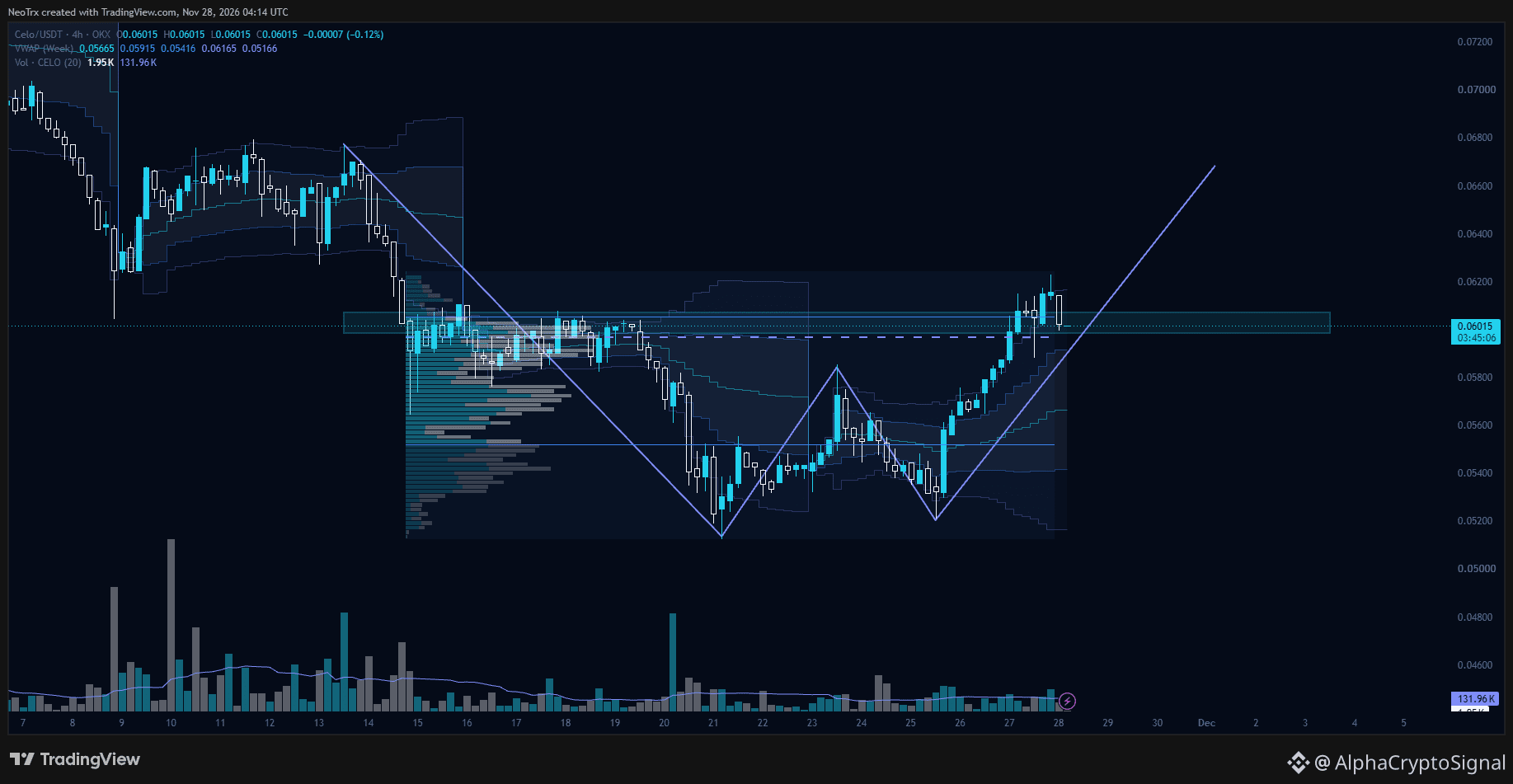
$CELO looks bullish. It formed a W reversal on the 4H, with lows near $0.0515 and $0.0522, and has broken out above the neckline and the VAH. $CELO is now retesting the horizontal support zone (~$0.0597-$0.0607), which lines up with the POC. The weekly VWAP (~$0.0567) is well below price, so it is trading in the upper bands.
If the retest holds, the next targets are the $0.0620 wick high and the $0.066-$0.067 area from the measured move. A 4H close back below $0.0597 turns the breakout into a fakeout, and losing the W lows invalidates this $CELO setup.
{future}(CELOUSDT)
Thoughts on #CELO
$CELO looks bullish. It formed a W reversal on the 4H, with lows near $0.0515 and $0.0522, and has broken out above the neckline and the VAH. $CELO is now retesting the horizontal support zone (~$0.0597-$0.0607), which lines up with the POC. The weekly VWAP (~$0.0567) is well below price, so it is trading in the upper bands.
If the retest holds, the next targets are the $0.0620 wick high and the $0.066-$0.067 area from the measured move. A 4H close back below $0.0597 turns the breakout into a fakeout, and losing the W lows invalidates this $CELO setup.
171

·
--

Article
Can Blockchain Help Build a Greener Financial Future?”I think one thing the crypto industry needs to talk about more is its impact on the environment. We often discuss transaction speed, fees, token prices, and adoption. But what about the energy used behind all these transactions?
This is where Celo caught my attention.
1. A Different Way to Think About Blockchain
When people talk about blockchain and the environment, Bitcoin's energy consumption often comes into the conversation.
But not every blockchain works in the same way.
Celo uses a Proof-of-Stannniensive mining process used by Proof-of-Work networks.
For me, this is an important starting point. A network should not only be judged by how many transactions it can process. Its environmental cost also deserves attention.,
2. Celo's Carbon-Negative Ambition
One thing I find interesting about Celo is its early commitment to becoming carbon negative.
In 2021, Celo shared details about its work with Project Wren, including funding carbon offsets to address the network's emissions.
The idea was simple: don't just build a blockchain and ignore its environmental impact. Take steps to deal with it.
But I also think we should be careful with these claims. Buying carbon offsets does not mean a network produces zero emissions. We need to know how emissions are measured, where the offsets go, and whether the environmental benefits can be verified.
3. What Is ReFi and Why Does It Matter?
ReFi stands for Regenerative Finance.
The idea is to use financial technology to support projects that can create positive environmental or social outcomes.
For example, imagine a local community working to protect a forest. A project could record verified environmental results on a blockchain and connect that work with people or organizations willing to fund it.
Celo has supported this kind of work through its Climate Collective and environmental asset initiatives.
I like this idea because it gives blockchain a purpose beyond trading. But the real impact must be measured in the physical world, not just counted in tokens.
4. Can Carbon Credits Become More Transparent?
Carbon credits are meant to represent measured reductions or removals of greenhouse gas emissions.
The problem is that buyers need confidence in what they are paying for.
Blockchain can help record transactions, ownership, and the movement of digital carbon assets. This can make some information easier to track.
Celo has also seen projects such as Toucan bring carbon-credit-related tools to its ecosystem.
Still, putting a carbon credit on a blockchain does not automatically prove that the environmental work happened. Independent verification is still important.
That distinction matters.
5. What I Think Celo Still Needs to Prove
I like the environmental direction, but I wouldn't accept every sustainability claim without checking the details.
There are a few things I would watch:
Actual energy consumption of the network.
Verified carbon emissions and offset records.
Real environmental projects supported by the ecosystem.
Evidence that funded projects create lasting benefits.
Transparency around how environmental funds are used.
Announcements are easy to make. Showing measurable results is harder.
6. My Personal View
I don't think a blockchain becomes environmentally responsible just because it uses Proof-of-Stake or supports carbon credits.
Both can help, but they are only part of the picture.
What interests me about Celo is its attempt to connect blockchain technology with environmental work. I would rather see fewer big sustainability promises and more public evidence of what has actually changed.
For me, the real test is simple: are forests being protected, are emissions being addressed, and are local communities benefiting from these projects?
My advice to anyone following Celo is to look beyond its green image. Check the environmental data, follow the projects, and judge the results rather than the promises.
Do you think blockchain networks like Celo can make a real difference in climate action, or does the industry still have more to prove?
$CELO @celo #CELO #Stablecoins #BinanceSquare $CELO #CeloFestival
{future}(CELOUSDT)
Can Blockchain Help Build a Greener Financial Future?”
I think one thing the crypto industry needs to talk about more is its impact on the environment. We often discuss transaction speed, fees, token prices, and adoption. But what about the energy used behind all these transactions?
This is where Celo caught my attention.
1. A Different Way to Think About Blockchain
When people talk about blockchain and the environment, Bitcoin's energy consumption often comes into the conversation.
But not every blockchain works in the same way.
Celo uses a Proof-of-Stannniensive mining process used by Proof-of-Work networks.
For me, this is an important starting point. A network should not only be judged by how many transactions it can process. Its environmental cost also deserves attention.,
2. Celo's Carbon-Negative Ambition
One thing I find interesting about Celo is its early commitment to becoming carbon negative.
In 2021, Celo shared details about its work with Project Wren, including funding carbon offsets to address the network's emissions.
The idea was simple: don't just build a blockchain and ignore its environmental impact. Take steps to deal with it.
But I also think we should be careful with these claims. Buying carbon offsets does not mean a network produces zero emissions. We need to know how emissions are measured, where the offsets go, and whether the environmental benefits can be verified.
3. What Is ReFi and Why Does It Matter?
ReFi stands for Regenerative Finance.
The idea is to use financial technology to support projects that can create positive environmental or social outcomes.
For example, imagine a local community working to protect a forest. A project could record verified environmental results on a blockchain and connect that work with people or organizations willing to fund it.
Celo has supported this kind of work through its Climate Collective and environmental asset initiatives.
I like this idea because it gives blockchain a purpose beyond trading. But the real impact must be measured in the physical world, not just counted in tokens.
4. Can Carbon Credits Become More Transparent?
Carbon credits are meant to represent measured reductions or removals of greenhouse gas emissions.
The problem is that buyers need confidence in what they are paying for.
Blockchain can help record transactions, ownership, and the movement of digital carbon assets. This can make some information easier to track.
Celo has also seen projects such as Toucan bring carbon-credit-related tools to its ecosystem.
Still, putting a carbon credit on a blockchain does not automatically prove that the environmental work happened. Independent verification is still important.
That distinction matters.
5. What I Think Celo Still Needs to Prove
I like the environmental direction, but I wouldn't accept every sustainability claim without checking the details.
There are a few things I would watch:
Actual energy consumption of the network.
Verified carbon emissions and offset records.
Real environmental projects supported by the ecosystem.
Evidence that funded projects create lasting benefits.
Transparency around how environmental funds are used.
Announcements are easy to make. Showing measurable results is harder.
6. My Personal View
I don't think a blockchain becomes environmentally responsible just because it uses Proof-of-Stake or supports carbon credits.
Both can help, but they are only part of the picture.
What interests me about Celo is its attempt to connect blockchain technology with environmental work. I would rather see fewer big sustainability promises and more public evidence of what has actually changed.
For me, the real test is simple: are forests being protected, are emissions being addressed, and are local communities benefiting from these projects?
My advice to anyone following Celo is to look beyond its green image. Check the environmental data, follow the projects, and judge the results rather than the promises.
Do you think blockchain networks like Celo can make a real difference in climate action, or does the industry still have more to prove?
$CELO @celo #CELO #Stablecoins #BinanceSquare $CELO #CeloFestival
5
472

·
--
Verified
In my assessment, crypto payments overlook a basic tension: the internet is global but money remains local. People earn pesos, reais, naira or rupiah. Forcing every blockchain transaction into US dollars adds cost, friction and exchange rate risk.
That is why Celo interests me. Instead of competing in dollar stablecoins, it is connecting local currencies to a shared network. Its October update lists 33 stablecoin assets across 20 currencies, including Argentine Pesos, Brazilian Reais and Nigerian Naira.
What I’m watching closely is Celo’s x402 facilitator. Simply put, x402 lets software pay for APIs, data or digital resources via HTTP payment responses, without accounts or manual subscriptions. By late October, it supported 10 stablecoins across eight currencies. An AI agent holding Brazilian Real stablecoins could pay for a service priced in that currency without dollar conversion.
Celo’s “buy” marketplace extends this logic. Launched in October 2026, it lets AI agents discover and pay for 700+ services using USDC, USDT or USA₮. Payment becomes part of an automated workflow, not a human managing subscription.
I think the combination matters: local stablecoins plus agentic payments could let a developer in Argentina run an AI application that pays for APIs in pesos, while businesses in Brazil or Nigeria manage costs in currencies they use.
But I’m not treating this as solved. Local stablecoins need liquidity, transparent reserves, redemption and merchant adoption. Agent payments need spending limits, permissions and accountability.
What I’m watching next: whether local stablecoins develop liquidity, whether x402 and buy generate recurring activity and whether agents can operate across currencies without excessive conversion or intervention.
My view is cautious: the next chapter may not be one global currency, but making existing local currencies work better together.
@celo
#CELO
$CELO
{future}(CELOUSDT)
In my assessment, crypto payments overlook a basic tension: the internet is global but money remains local. People earn pesos, reais, naira or rupiah. Forcing every blockchain transaction into US dollars adds cost, friction and exchange rate risk.
That is why Celo interests me. Instead of competing in dollar stablecoins, it is connecting local currencies to a shared network. Its October update lists 33 stablecoin assets across 20 currencies, including Argentine Pesos, Brazilian Reais and Nigerian Naira.
What I’m watching closely is Celo’s x402 facilitator. Simply put, x402 lets software pay for APIs, data or digital resources via HTTP payment responses, without accounts or manual subscriptions. By late October, it supported 10 stablecoins across eight currencies. An AI agent holding Brazilian Real stablecoins could pay for a service priced in that currency without dollar conversion.
Celo’s “buy” marketplace extends this logic. Launched in October 2026, it lets AI agents discover and pay for 700+ services using USDC, USDT or USA₮. Payment becomes part of an automated workflow, not a human managing subscription.
I think the combination matters: local stablecoins plus agentic payments could let a developer in Argentina run an AI application that pays for APIs in pesos, while businesses in Brazil or Nigeria manage costs in currencies they use.
But I’m not treating this as solved. Local stablecoins need liquidity, transparent reserves, redemption and merchant adoption. Agent payments need spending limits, permissions and accountability.
What I’m watching next: whether local stablecoins develop liquidity, whether x402 and buy generate recurring activity and whether agents can operate across currencies without excessive conversion or intervention.
My view is cautious: the next chapter may not be one global currency, but making existing local currencies work better together.
@celo
#CELO
$CELO
1
1.1k

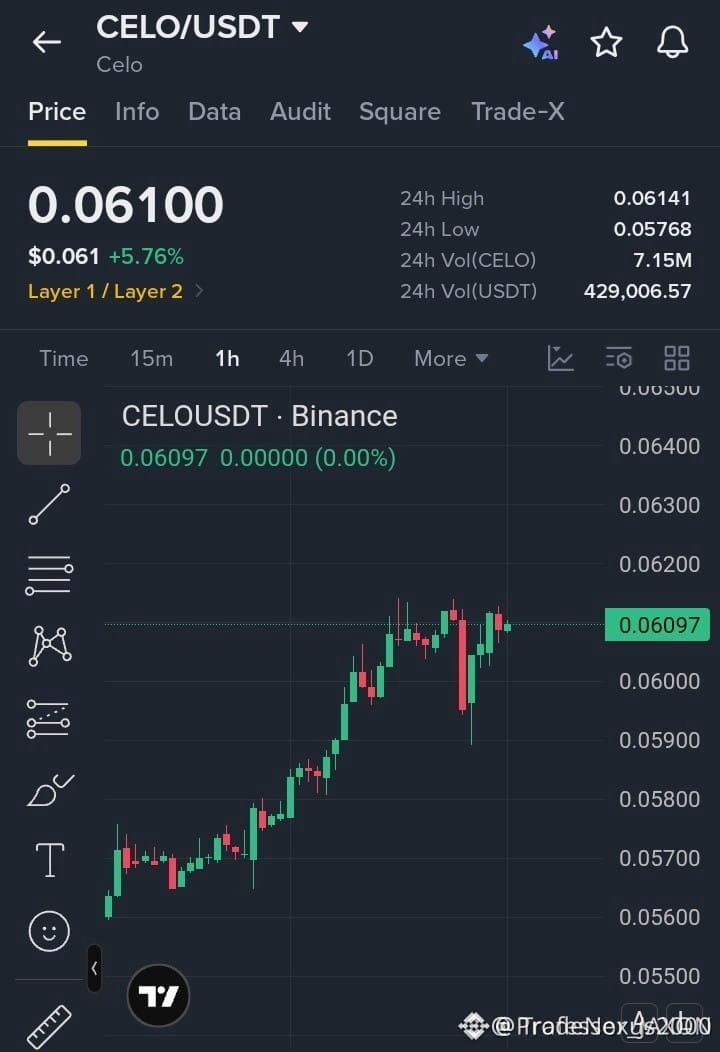
🚨 $CELO FORMING A CLEAN ACCUMULATION BASE JUST BELOW THE 0.0614 BREAKOUT LEVEL! 💥
Entry: 0.06050-0.06090 ⚡
Target: 0.06300 🚀
Stop Loss: 0.05950 ⚠️
Institutional order flow on the one-hour timeframe reveals aggressive buyer absorption defending higher structural lows following the recent impulsive expansion. 📊 Price is coiling tightly as smart money defends the local demand zone against incoming supply.
A decisive rotation above the 0.0614 liquidity cluster will invalidate resting sell-side pressure and unlock a swift acceleration toward higher overhead resistance. ⚡ Are you positioning ahead of the breakout or waiting for a retest of the range floor? 👇
⚠️ Not financial advice. Always manage your risk. 🛡️
🏷️ #CELO #LongSetup #SmartMoney #Breakout #Crypto
🔥 💎
2

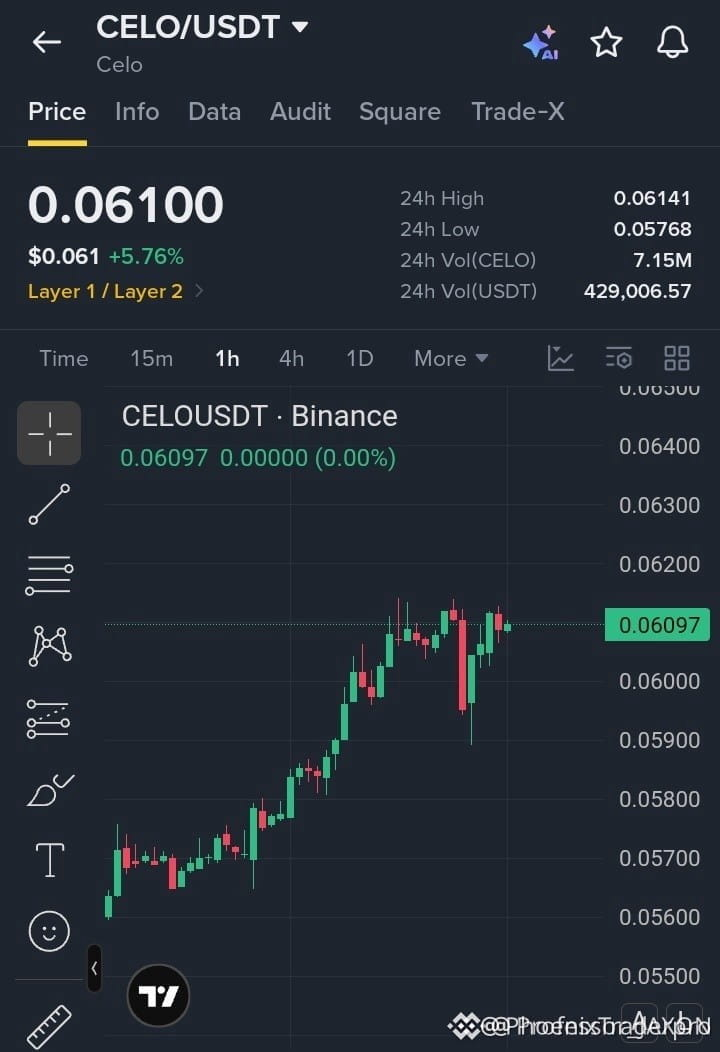
🚀 $CELO BULLS ARE TIGHTENING THE GRIP FOR AN EXPLOSIVE BREAKOUT ABOVE RESISTANCE! ⚡
Entry: 0.06050–0.06090 ⚡
Target: 0.06300 🚀
Stop Loss: 0.05950 ⚠️
Buyers are fiercely defending higher lows on the 1-hour timeframe, showing zero intention of letting bears take the wheel. 📊 Volume profiles confirm steady accumulation right inside the demand corridor while momentum indicators reset for the next leg up. ⚡
A clean slice through local resistance will likely spark aggressive short covering as trapped sellers scramble to cover. 💡
💬 Are you positioning ahead of the breakout or waiting for a confirmed retest? 👇
⚠️ Not financial advice. Always manage your risk. 🛡️
🏷️ #CELO #LongSetup #Crypto #Breakout #Altcoins
🔥 💎
4

·
--
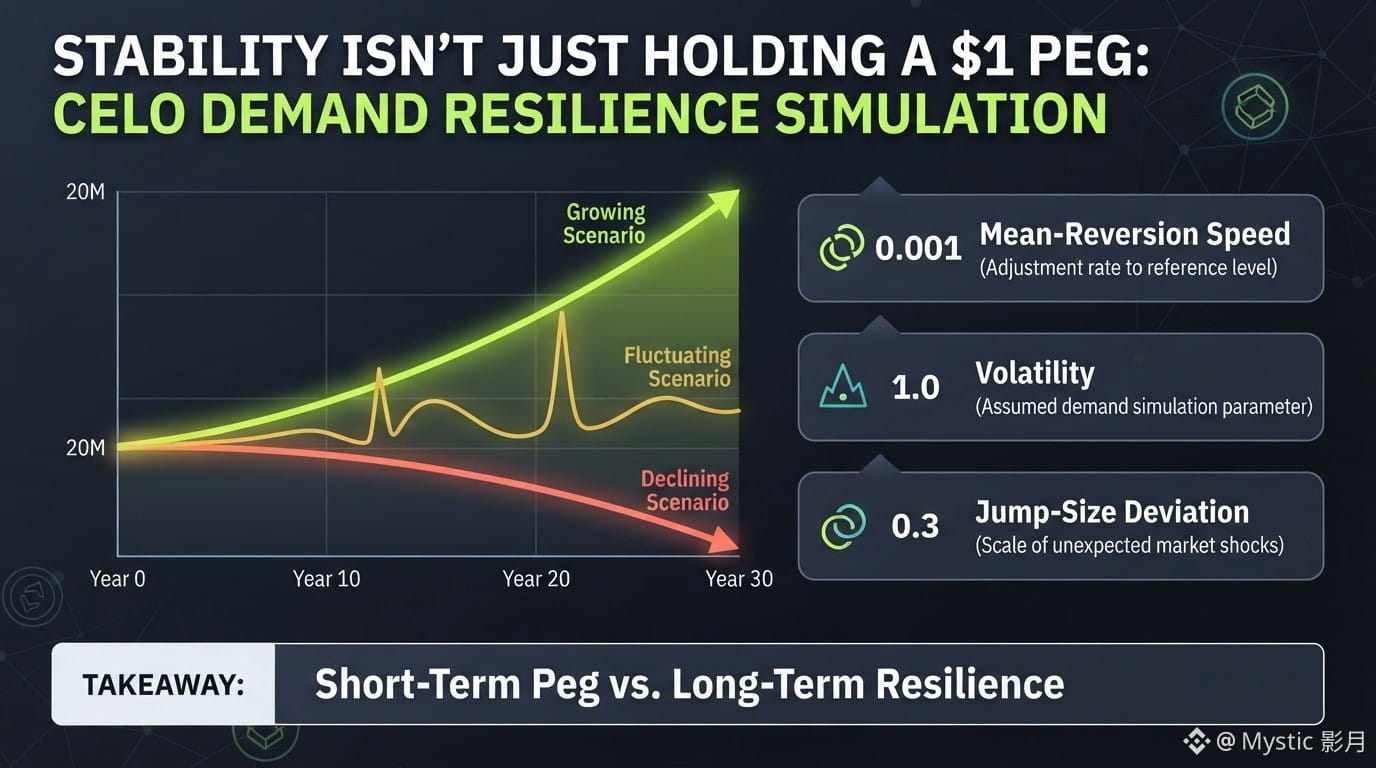
Stability Isn't Just About Holding a $1 Peg. There's More Behind It.
I've been looking at $CELO from a different perspective: what happens when market conditions become unpredictable?
One thing I find interesting is how demand behaviour volatility and unexpected market movements can influence a stablecoin's resilience.
Consider a model starting with an assumed demand of 20 million exploring different possible outcomes over a 30-year period.
A few mathematical details caught my attention:
🏷️- 0.001 mean-reversion speed: Represents how quickly the model adjusts towards its reference level.
🏷️- 1.0 volatility: The assumed volatility parameter used in the demand simulation.
🏷️- 0.3 jump-size deviation: Helps model the scale of unexpected movements.
The interesting part is that the model doesn't rely on one predictable market direction. It considers declining, fluctuating and growing scenarios, including sudden jumps.
I think this is an important perspective because markets rarely behave exactly as expected.
Of course, simulations aren't guarantees of real-world performance. But exploring different scenarios can help us understand potential risks more clearly.
For me, stability isn't only about maintaining a target value today; it's also about preparing for tomorrow's uncertainty.
What's more important to you: short-term stability or long-term resilience?
$CELO #CELO @celo
2
305

·
--
Verified
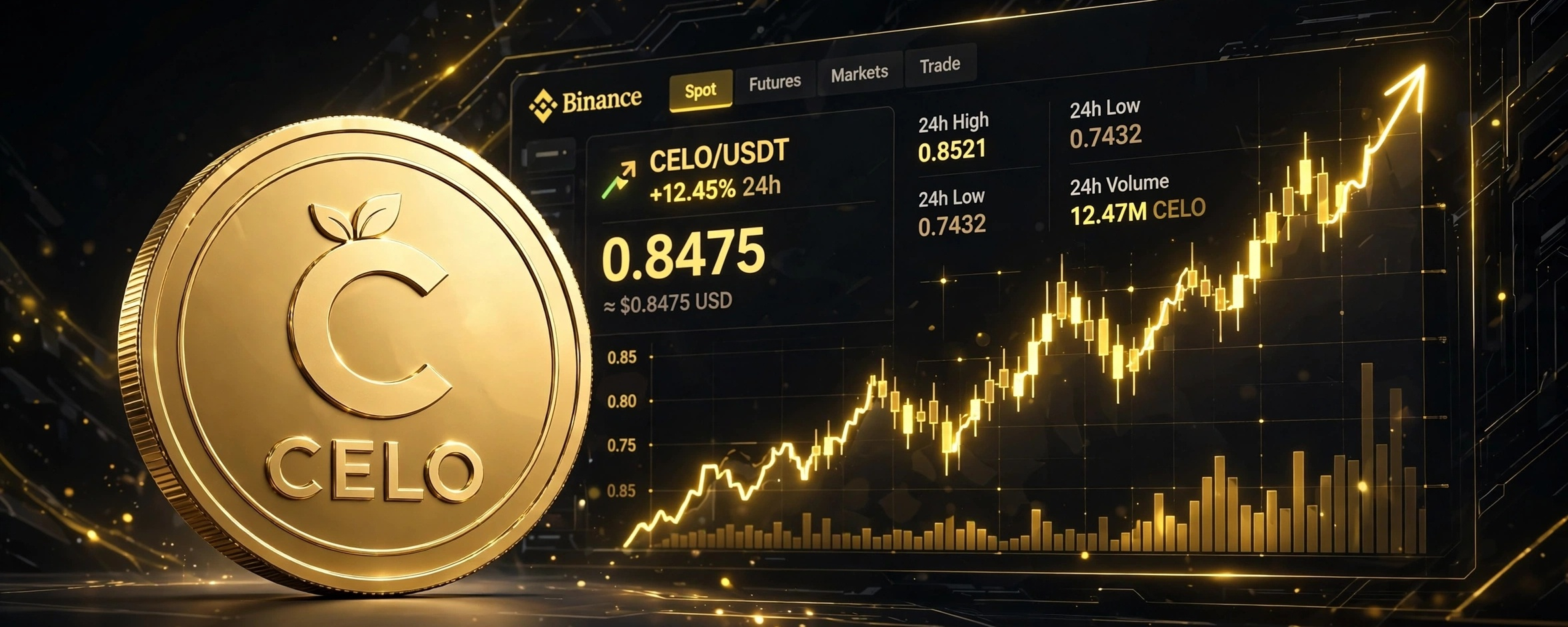
Article
Celo is now a Layer 2. Secured by Ethereum. Built on the Superchain. Built different.Celo is entering an exciting new chapter, and this time, the change goes much deeper than a simple network upgrade. It has officially moved from being an independent Layer 1 blockchain to becoming an Ethereum Layer 2, bringing its original vision closer to the wider Ethereum ecosystem.
What makes this transition interesting is that Celo hasn't forgotten why it was created in the first place. From the beginning, its goal has been to make financial services easier to access, especially through mobile devices, affordable transactions, and stablecoin payments. Now, it has a new technological foundation to take that vision further.
By becoming an Ethereum Layer 2, Celo is now connected to Ethereum's settlement and security infrastructure. This gives the network a stronger foundation and creates more opportunities for developers, applications, and users to interact with the broader Ethereum ecosystem. Celo also uses EigenDA for data availability, supporting its approach to scalability and cost efficiency.
Another important part of this transformation is the OP Stack. Celo is built using Optimism's open-source technology, which gives developers access to familiar Ethereum tools and infrastructure. Instead of building everything separately, Celo can benefit from technology and improvements shared across the OP Stack ecosystem.
And then there's the Superchain. This is where things become even more interesting. The Superchain brings together multiple OP Stack-based networks under a shared technological vision. Being part of this ecosystem creates opportunities for better connectivity, collaboration, and interoperability. Celo brings its own strengths to the table, particularly its focus on mobile payments and real-world financial applications.
Despite all these changes, affordability remains a major part of Celo's identity. The network supports approximately one-second block times, making transactions feel faster and more responsive. Its gas abstraction features also allow users to pay transaction fees using supported tokens, including stablecoins, rather than always needing CELO for gas.
Stablecoins are another reason Celo deserves attention. The network has consistently focused on making digital payments more practical. Through its ecosystem, including Mento and MiniPay, Celo is working toward making stablecoin transfers and mobile financial services easier to access. MiniPay, developed by Opera, is particularly interesting because it brings stablecoin payments into a mobile-friendly experience.
For developers, this transition also creates new possibilities. Ethereum compatibility, familiar development tools, and access to OP Stack infrastructure make Celo an attractive environment for building payment applications, DeFi products, and other onchain services. At the same time, the transition was designed to preserve the existing network history and ecosystem rather than forcing everything to start over.
What really makes Celo different is the combination of Ethereum's infrastructure, Superchain connectivity, and a clear focus on everyday financial utility. Many networks are competing to build faster infrastructure, but Celo has a broader goal: making blockchain useful for people who may not even think about the technology behind their transactions.
Of course, becoming an Ethereum Layer 2 doesn't guarantee future success. Continued development, real adoption, ecosystem growth, and a reliable user experience will determine how far Celo can go. But the foundation is now in place for a new stage of development.
Celo has taken a different direction without losing its original purpose. It is bringing its mobile-first financial vision into the Ethereum ecosystem, connecting with the Superchain, and creating more opportunities for people and developers.
That's what makes this transition worth watching.
@celo #CELO #celo $CELO
Celo is now a Layer 2. Secured by Ethereum. Built on the Superchain. Built different.
Celo is entering an exciting new chapter, and this time, the change goes much deeper than a simple network upgrade. It has officially moved from being an independent Layer 1 blockchain to becoming an Ethereum Layer 2, bringing its original vision closer to the wider Ethereum ecosystem.
What makes this transition interesting is that Celo hasn't forgotten why it was created in the first place. From the beginning, its goal has been to make financial services easier to access, especially through mobile devices, affordable transactions, and stablecoin payments. Now, it has a new technological foundation to take that vision further.
By becoming an Ethereum Layer 2, Celo is now connected to Ethereum's settlement and security infrastructure. This gives the network a stronger foundation and creates more opportunities for developers, applications, and users to interact with the broader Ethereum ecosystem. Celo also uses EigenDA for data availability, supporting its approach to scalability and cost efficiency.
Another important part of this transformation is the OP Stack. Celo is built using Optimism's open-source technology, which gives developers access to familiar Ethereum tools and infrastructure. Instead of building everything separately, Celo can benefit from technology and improvements shared across the OP Stack ecosystem.
And then there's the Superchain. This is where things become even more interesting. The Superchain brings together multiple OP Stack-based networks under a shared technological vision. Being part of this ecosystem creates opportunities for better connectivity, collaboration, and interoperability. Celo brings its own strengths to the table, particularly its focus on mobile payments and real-world financial applications.
Despite all these changes, affordability remains a major part of Celo's identity. The network supports approximately one-second block times, making transactions feel faster and more responsive. Its gas abstraction features also allow users to pay transaction fees using supported tokens, including stablecoins, rather than always needing CELO for gas.
Stablecoins are another reason Celo deserves attention. The network has consistently focused on making digital payments more practical. Through its ecosystem, including Mento and MiniPay, Celo is working toward making stablecoin transfers and mobile financial services easier to access. MiniPay, developed by Opera, is particularly interesting because it brings stablecoin payments into a mobile-friendly experience.
For developers, this transition also creates new possibilities. Ethereum compatibility, familiar development tools, and access to OP Stack infrastructure make Celo an attractive environment for building payment applications, DeFi products, and other onchain services. At the same time, the transition was designed to preserve the existing network history and ecosystem rather than forcing everything to start over.
What really makes Celo different is the combination of Ethereum's infrastructure, Superchain connectivity, and a clear focus on everyday financial utility. Many networks are competing to build faster infrastructure, but Celo has a broader goal: making blockchain useful for people who may not even think about the technology behind their transactions.
Of course, becoming an Ethereum Layer 2 doesn't guarantee future success. Continued development, real adoption, ecosystem growth, and a reliable user experience will determine how far Celo can go. But the foundation is now in place for a new stage of development.
Celo has taken a different direction without losing its original purpose. It is bringing its mobile-first financial vision into the Ethereum ecosystem, connecting with the Superchain, and creating more opportunities for people and developers.
That's what makes this transition worth watching.
@celo #CELO #celo $CELO
3
608

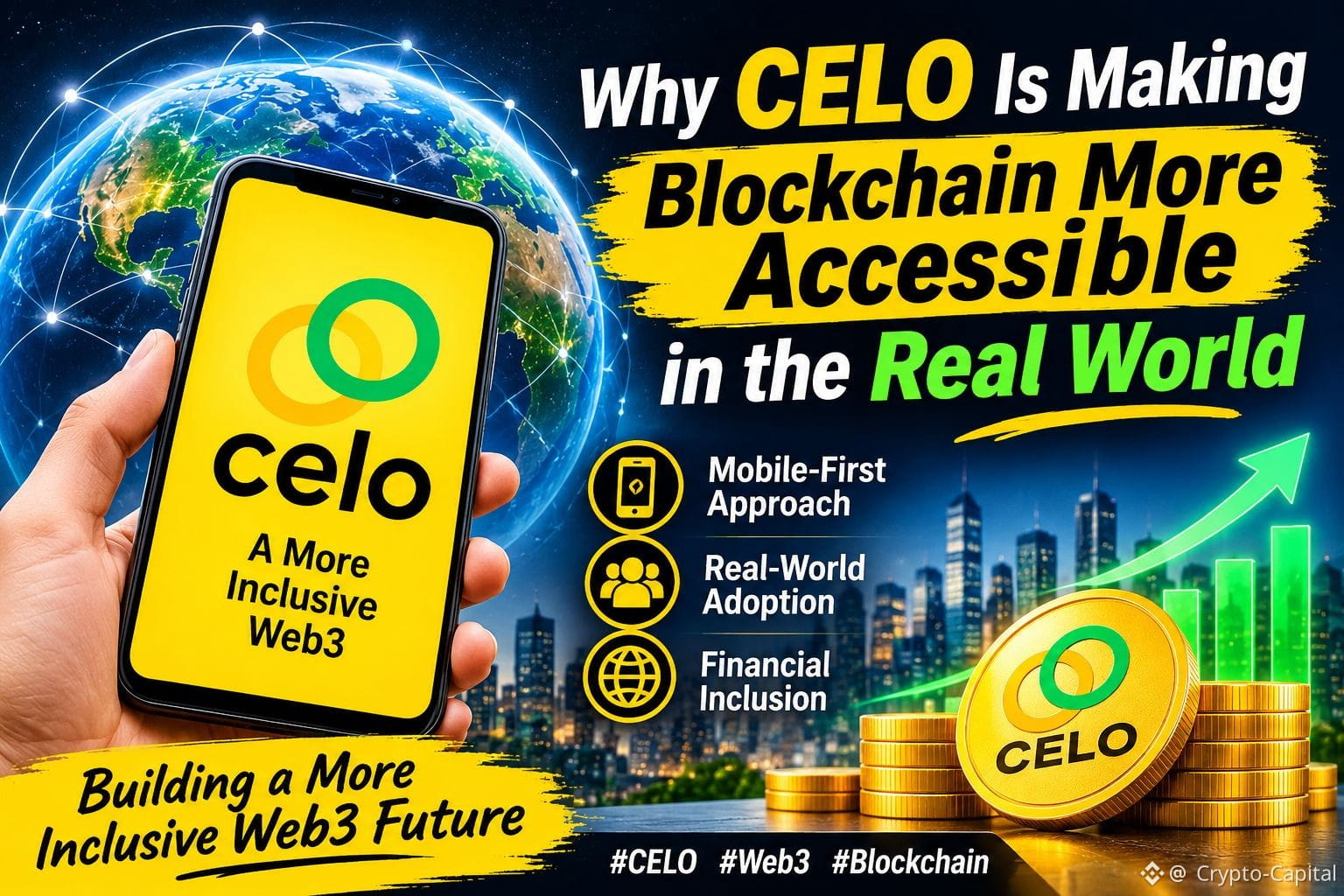
I've been looking at CELO lately, and what I like most is its focus on making blockchain easier for everyday people to use. I think crypto adoption isn't just about technology or tokens; it's also about making things simple and accessible.
CELO's mobile-friendly approach and focus on real-world use cases make it an ecosystem worth watching. If blockchain can become easier to use for payments and everyday digital services, that could open doors for more people.
I'm curious to see how CELO grows from here.
#CELO #Web3 #blockchain $CELO
{future}(CELOUSDT)
I've been looking at CELO lately, and what I like most is its focus on making blockchain easier for everyday people to use. I think crypto adoption isn't just about technology or tokens; it's also about making things simple and accessible.
CELO's mobile-friendly approach and focus on real-world use cases make it an ecosystem worth watching. If blockchain can become easier to use for payments and everyday digital services, that could open doors for more people.
I'm curious to see how CELO grows from here.
#CELO #Web3 #blockchain $CELO
CELO's mobile-friendly approach and focus on real-world use cases make it an ecosystem worth watching. If blockchain can become easier to use for payments and everyday digital services, that could open doors for more people.
I'm curious to see how CELO grows from here.
#CELO #Web3 #blockchain $CELO
2
741

·
--
Bullish
I spent some time comparing Celo’s stablecoin liquidity data, and one detail kept pulling my attention back to the same question: does having more stablecoins actually mean having better liquidity?
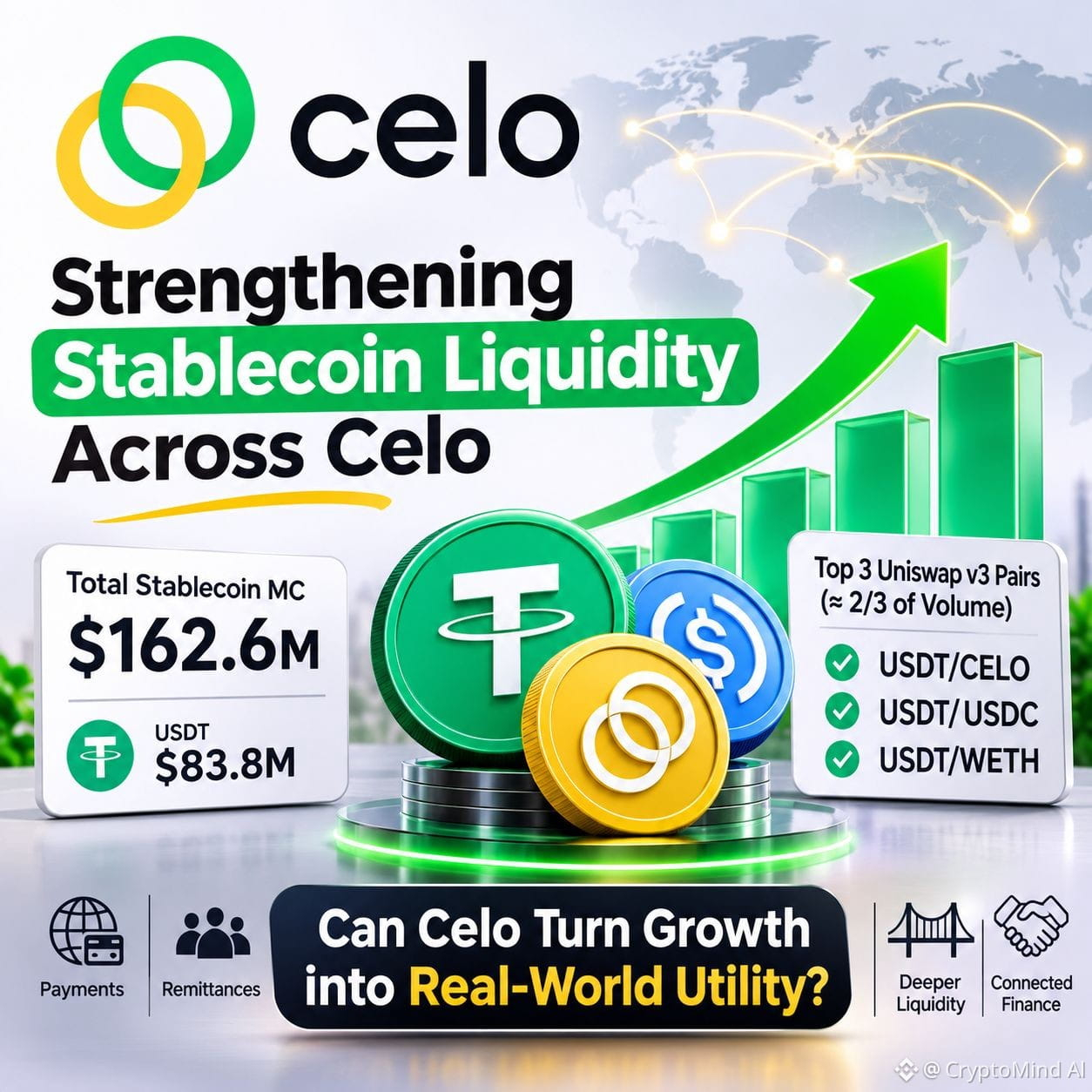
As of November 26, Celo’s total stablecoin market capitalization reached approximately $162.6 million, with USDT accounting for around $83.8 million. That is meaningful growth, but the distribution of liquidity tells a more interesting story.
What caught my attention was a recent update from Celo Core Co. According to its November 25 proposal, three Uniswap v3 pairs — USDT/CELO, USDT/USDC and USDT/WETH — generated roughly two-thirds of the network’s trading volume over seven days. Meanwhile, a considerable amount of capital remained in pools with relatively little trading activity.
That made me pause.
I see the real opportunity here as improving how existing capital moves rather than simply adding more liquidity incentives. Celo is working toward making USDT a central routing asset, with USDC/USDT serving as an important bridge. Local stablecoins such as BRLA, IDRX, wARS and cNGN could benefit from more connected trading routes.
There is a strong argument for this approach. Better-connected pools can reduce fragmentation, improve execution and make cross-currency transactions more efficient. That matters especially for a network positioning itself around everyday payments and global remittances.
But I also see something worth questioning. Trading volume alone does not prove sustainable demand. Liquidity needs to support actual users, payments and transfers, not just temporary trading activity or incentive-driven capital.
The overlooked part of this strategy is capital efficiency. I would rather see liquidity consistently used across meaningful payment corridors than impressive TVL sitting idle.
Can Celo turn its growing stablecoin ecosystem into genuinely connected financial infrastructure?
@celo $CELO #CELO
{spot}(CELOUSDT)
I spent some time comparing Celo’s stablecoin liquidity data, and one detail kept pulling my attention back to the same question: does having more stablecoins actually mean having better liquidity?
As of November 26, Celo’s total stablecoin market capitalization reached approximately $162.6 million, with USDT accounting for around $83.8 million. That is meaningful growth, but the distribution of liquidity tells a more interesting story.
What caught my attention was a recent update from Celo Core Co. According to its November 25 proposal, three Uniswap v3 pairs — USDT/CELO, USDT/USDC and USDT/WETH — generated roughly two-thirds of the network’s trading volume over seven days. Meanwhile, a considerable amount of capital remained in pools with relatively little trading activity.
That made me pause.
I see the real opportunity here as improving how existing capital moves rather than simply adding more liquidity incentives. Celo is working toward making USDT a central routing asset, with USDC/USDT serving as an important bridge. Local stablecoins such as BRLA, IDRX, wARS and cNGN could benefit from more connected trading routes.
There is a strong argument for this approach. Better-connected pools can reduce fragmentation, improve execution and make cross-currency transactions more efficient. That matters especially for a network positioning itself around everyday payments and global remittances.
But I also see something worth questioning. Trading volume alone does not prove sustainable demand. Liquidity needs to support actual users, payments and transfers, not just temporary trading activity or incentive-driven capital.
The overlooked part of this strategy is capital efficiency. I would rather see liquidity consistently used across meaningful payment corridors than impressive TVL sitting idle.
Can Celo turn its growing stablecoin ecosystem into genuinely connected financial infrastructure?
@celo $CELO #CELO
Michael John1:
As of November 26, Celo’s total stablecoin market capitalization reached approximately $162.6 million, with USDT accounting for around $83.8 million. That is meaningful growth, but the distribution of liquidity tells a more interesting story.
2
1
2
264

·
--
Article
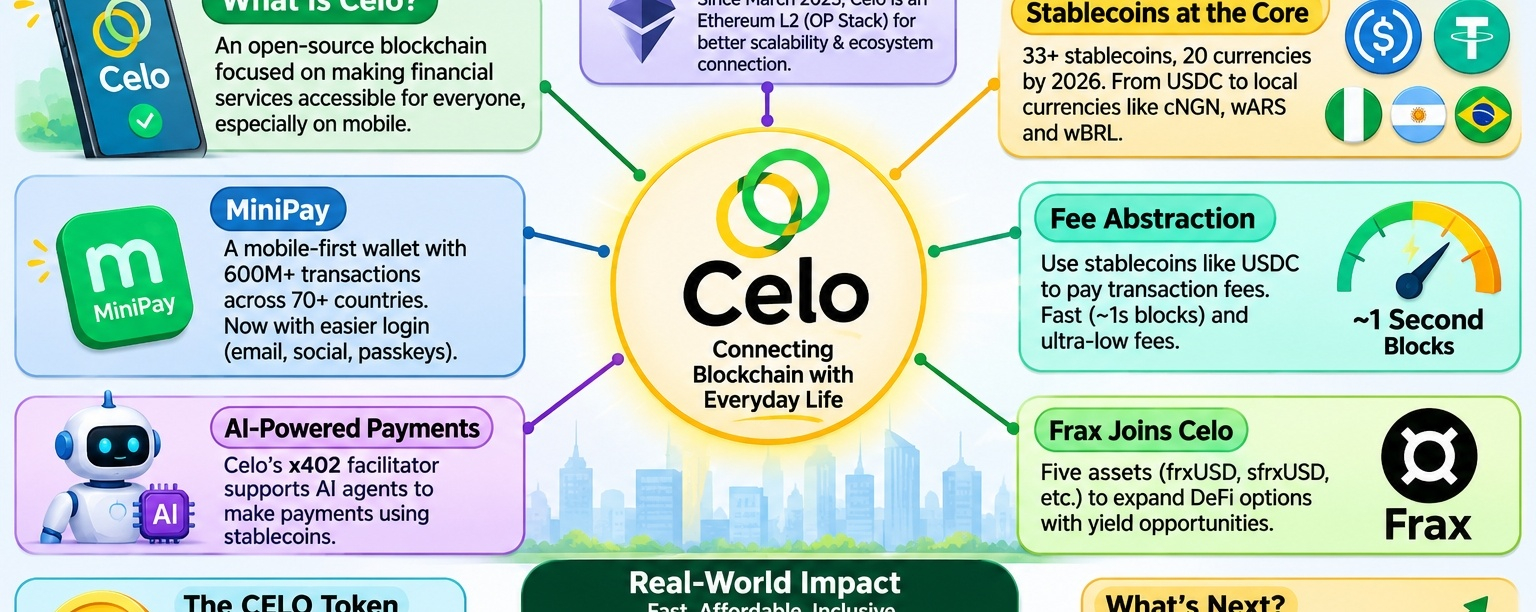
Celo Is Becoming More Than a Blockchain How It's Connecting Ethereum Stablecoins Real-World PaymentsWhen I look at the blockchain industry, one question keeps coming to mind: What happens when blockchain technology stops being something people simply invest in and starts becoming something they actually use in everyday life?
That's where Celo caught my attention.
Many blockchain projects compete over transaction speed, scalability, and new technologies. Celo is taking a slightly different direction. Its focus is on making digital money easier to access, transfer, and use, particularly through mobile devices and stablecoins.
But there is much more happening with Celo than its original mobile-first vision. Its transition to Ethereum Layer 2, growing stablecoin ecosystem, MiniPay expansion, and new infrastructure for AI-powered payments make it an interesting project to understand.
Let's explore what is changing and why it matters.
1. What Exactly Is Celo?
Celo is an open-source blockchain ecosystem designed to make financial services more accessible.
Its original vision was simple: people should be able to send, receive, and use digital money without needing complicated financial infrastructure.
Think about someone who wants to send money to family in another country. Traditional financial services can involve multiple intermediaries, delays, and expensive fees.
Celo aims to make these transactions faster and more affordable through blockchain technology.
It supports smart contracts, decentralized applications, stablecoins, and financial services while maintaining a strong focus on mobile accessibility.
One important thing to understand is that Celo is not just a payment application. It is the underlying infrastructure on which developers can build financial products.
2. The Biggest Change: Celo Became an Ethereum Layer 2
This is one of the most important developments in Celo's history.
On March 26, 2025, Celo officially transitioned from an independent Layer 1 blockchain to an Ethereum Layer 2 built using the OP Stack.
Why does this matter?
A Layer 1 blockchain operates with its own consensus and security infrastructure. A Layer 2 processes transactions separately while connecting to an underlying blockchain such as Ethereum.
By becoming an Ethereum L2, Celo gained a closer connection to Ethereum's ecosystem, including its developer infrastructure, interoperability, and settlement framework.
The migration also preserved Celo's existing network history and ecosystem.
But Celo did not simply copy another Layer 2.
It continued developing features that make its network different, especially around mobile payments, stablecoin transactions, and low transaction costs.
Its architecture also uses EigenDA for data availability and OP Succinct Lite for proof-based dispute resolution.
In simple terms, Celo is trying to combine Ethereum compatibility with infrastructure designed for everyday financial activity.
3. Stablecoins Are at the Center of Celo's Strategy
This is where I think Celo becomes particularly interesting.
Stablecoins are digital assets designed to maintain a relatively stable value, often by tracking a currency such as the US dollar.
Unlike Bitcoin or many other cryptocurrencies, stablecoins are not primarily designed around price appreciation.
Their usefulness comes from transferring and holding value.
Celo has been expanding its stablecoin ecosystem beyond dollar-based assets.
By September 2026, its ecosystem reported 33 live stablecoins representing 20 currencies.
That includes assets connected to different local markets, such as:
- USDC and USD₮ for dollar-based transactions.
- cNGN for the Nigerian naira.
- wARS for the Argentine peso.
- wBRL for the Brazilian real.
- IDRX for the Indonesian rupiah.
Why is this important?
Imagine a person in Nigeria receiving digital money in a currency relevant to their local economy, while another person in Brazil uses a Brazilian real-based stablecoin.
This creates opportunities for local payments and onchain currency exchange without forcing every transaction into the same financial system.
The bigger idea is to connect global digital money with local financial needs.
4. MiniPay: Bringing Blockchain Closer to Everyday Users
Technology becomes meaningful when people can actually use it.
That's why MiniPay deserves attention in the Celo ecosystem.
MiniPay is a self-custodial stablecoin wallet developed by Opera and built on Celo. It was designed to make sending and receiving digital dollars easier through a mobile-friendly experience.
In November 2026, MiniPay announced an important upgrade: its 20 million-plus activated wallets are moving to Privy, the wallet infrastructure company owned by Stripe.
What makes this development interesting?
Users will be able to access their wallets using familiar options such as email, social accounts, and passkeys instead of having to manage a traditional seed phrase.
Importantly, MiniPay remains self-custodial, meaning users retain control of their funds and can export their keys.
The announcement also reported more than 600 million transactions across over 70 countries and 77 Mini Apps.
This is an important distinction: blockchain adoption does not always begin with someone understanding smart contracts or gas fees. Sometimes it begins with a simple wallet that makes sending digital money easier.
5. Celo Is Making Transactions Easier Through Fee Abstraction
Here is another feature that deserves more attention.
On many blockchains, users need the network's native token to pay transaction fees.
For newcomers, this can create an unnecessary complication.
Imagine holding USDC but needing to purchase another cryptocurrency just to send it.
Celo addresses this problem through fee abstraction.
It allows supported ERC-20 tokens, including stablecoins, to be used for transaction fees.
This means users can interact with applications without always needing to maintain a separate balance of CELO for gas.
Celo also offers approximately one-second block times and sub-cent average transaction fees according to its current network information.
For payment applications, these details matter because users generally care more about completing a transaction smoothly than understanding the technical process behind it.
6. A New Direction: Celo and AI-Powered Payments
One of the newer developments I find particularly interesting is Celo's work around autonomous AI agents.
AI agents are software systems that can perform tasks and interact with other services.
In the future, some agents may need to purchase data, access APIs, pay for computing resources, or exchange services without requiring a human to approve every individual transaction.
But how would these agents make payments?
This is where payment infrastructure such as x402 becomes relevant.
Celo has developed a native x402 facilitator that supports stablecoin-based payments for agents.
In October 2026, Celo expanded this infrastructure to support 10 stablecoins across eight currencies, including US dollars, Nigerian naira, and several Latin American currencies.
This opens an interesting possibility: AI agents could potentially transact using digital currencies that better match the local markets they serve.
It is still an emerging area, but it shows that Celo is exploring use cases beyond traditional human-to-human payments.
7. A Fresh Development: Frax Joins the Celo Ecosystem
There is another recent development worth highlighting.
On November 24, 2026, Frax brought five assets to Celo:
- frxUSD
- sfrxUSD
- WFRAX
- frxETH
- sfrxETH
One particularly interesting asset is sfrxUSD, a yield-bearing stablecoin designed to provide a savings option within DeFi.
Celo Core Co. also announced an allocation of up to $9 million of reserve collateral into sfrxUSD, while Frax committed to buying and holding native CELO.
Why does this matter?
A healthy financial ecosystem needs more than payment infrastructure. It also needs ways to save, borrow, provide liquidity, and use assets across different applications.
Integrations like this can expand the financial products available to users and developers.
Of course, yield-bearing assets also come with smart-contract, liquidity, and market risks that users should understand.
8. What Is the Role of the CELO Token?
Understanding the network without understanding its native token would leave an important part of the picture missing.
CELO is the native token of the Celo ecosystem.
It has several roles, including:
- Participating in network governance.
- Supporting staking and network security.
- Paying transaction fees.
- Participating in the ecosystem's economic structure.
Celo's 2026 CELOccelerate tokenomics initiative also introduced changes aimed at connecting network usage with token economics.
According to Celo's September 2026 ecosystem update, net sequencer revenue is being converted into CELO through programmatic buybacks and directed to the Community Fund.
This creates an important question for anyone studying the project:
Can increasing network usage translate into sustainable economic value for the ecosystem and its token holders?
That is something worth following over time rather than assuming that more transactions automatically mean a higher token price.
9. What Should We Watch Next?
I believe Celo's next chapter should be judged by actual adoption, not just announcements.
There are several things worth watching:
Real stablecoin usage: Are people consistently using these assets for payments, savings, and transfers?
MiniPay growth: Can its growing wallet base translate into regular active users and meaningful financial activity?
Developer adoption: Are more applications choosing Celo because its infrastructure solves real problems?
AI payment activity: Can autonomous agents develop sustainable economic activity rather than generating temporary transaction numbers?
Network economics: Can the growing use of Celo create lasting value for its ecosystem and CELO token?
These questions will tell us much more about the project's long-term direction than promotional headlines alone.
Final Thoughts
What makes Celo interesting to me is that its story is gradually expanding.
It started with a vision of making financial services accessible through mobile phones. Today, it is building around Ethereum Layer 2 infrastructure, local-currency stablecoins, self-custodial wallets, DeFi integrations, and payments for AI agents.
The most important part is not how many technical features a blockchain can introduce. It is whether those features solve problems that people and businesses actually face.
Celo still has challenges to overcome, particularly around sustainable adoption, infrastructure security, and converting network activity into long-term economic value.
But its direction raises an important question for the wider industry:
What if the next major blockchain breakthrough isn't another complicated financial product, but making digital money so easy to use that people no longer need to think about the blockchain behind it?
That is the kind of evolution I will be watching from Celo.
#Celo #CELO @celo $CELO
{spot}(CELOUSDT)
Celo Is Becoming More Than a Blockchain How It's Connecting Ethereum Stablecoins Real-World Payments
When I look at the blockchain industry, one question keeps coming to mind: What happens when blockchain technology stops being something people simply invest in and starts becoming something they actually use in everyday life?
That's where Celo caught my attention.
Many blockchain projects compete over transaction speed, scalability, and new technologies. Celo is taking a slightly different direction. Its focus is on making digital money easier to access, transfer, and use, particularly through mobile devices and stablecoins.
But there is much more happening with Celo than its original mobile-first vision. Its transition to Ethereum Layer 2, growing stablecoin ecosystem, MiniPay expansion, and new infrastructure for AI-powered payments make it an interesting project to understand.
Let's explore what is changing and why it matters.
1. What Exactly Is Celo?
Celo is an open-source blockchain ecosystem designed to make financial services more accessible.
Its original vision was simple: people should be able to send, receive, and use digital money without needing complicated financial infrastructure.
Think about someone who wants to send money to family in another country. Traditional financial services can involve multiple intermediaries, delays, and expensive fees.
Celo aims to make these transactions faster and more affordable through blockchain technology.
It supports smart contracts, decentralized applications, stablecoins, and financial services while maintaining a strong focus on mobile accessibility.
One important thing to understand is that Celo is not just a payment application. It is the underlying infrastructure on which developers can build financial products.
2. The Biggest Change: Celo Became an Ethereum Layer 2
This is one of the most important developments in Celo's history.
On March 26, 2025, Celo officially transitioned from an independent Layer 1 blockchain to an Ethereum Layer 2 built using the OP Stack.
Why does this matter?
A Layer 1 blockchain operates with its own consensus and security infrastructure. A Layer 2 processes transactions separately while connecting to an underlying blockchain such as Ethereum.
By becoming an Ethereum L2, Celo gained a closer connection to Ethereum's ecosystem, including its developer infrastructure, interoperability, and settlement framework.
The migration also preserved Celo's existing network history and ecosystem.
But Celo did not simply copy another Layer 2.
It continued developing features that make its network different, especially around mobile payments, stablecoin transactions, and low transaction costs.
Its architecture also uses EigenDA for data availability and OP Succinct Lite for proof-based dispute resolution.
In simple terms, Celo is trying to combine Ethereum compatibility with infrastructure designed for everyday financial activity.
3. Stablecoins Are at the Center of Celo's Strategy
This is where I think Celo becomes particularly interesting.
Stablecoins are digital assets designed to maintain a relatively stable value, often by tracking a currency such as the US dollar.
Unlike Bitcoin or many other cryptocurrencies, stablecoins are not primarily designed around price appreciation.
Their usefulness comes from transferring and holding value.
Celo has been expanding its stablecoin ecosystem beyond dollar-based assets.
By September 2026, its ecosystem reported 33 live stablecoins representing 20 currencies.
That includes assets connected to different local markets, such as:
- USDC and USD₮ for dollar-based transactions.
- cNGN for the Nigerian naira.
- wARS for the Argentine peso.
- wBRL for the Brazilian real.
- IDRX for the Indonesian rupiah.
Why is this important?
Imagine a person in Nigeria receiving digital money in a currency relevant to their local economy, while another person in Brazil uses a Brazilian real-based stablecoin.
This creates opportunities for local payments and onchain currency exchange without forcing every transaction into the same financial system.
The bigger idea is to connect global digital money with local financial needs.
4. MiniPay: Bringing Blockchain Closer to Everyday Users
Technology becomes meaningful when people can actually use it.
That's why MiniPay deserves attention in the Celo ecosystem.
MiniPay is a self-custodial stablecoin wallet developed by Opera and built on Celo. It was designed to make sending and receiving digital dollars easier through a mobile-friendly experience.
In November 2026, MiniPay announced an important upgrade: its 20 million-plus activated wallets are moving to Privy, the wallet infrastructure company owned by Stripe.
What makes this development interesting?
Users will be able to access their wallets using familiar options such as email, social accounts, and passkeys instead of having to manage a traditional seed phrase.
Importantly, MiniPay remains self-custodial, meaning users retain control of their funds and can export their keys.
The announcement also reported more than 600 million transactions across over 70 countries and 77 Mini Apps.
This is an important distinction: blockchain adoption does not always begin with someone understanding smart contracts or gas fees. Sometimes it begins with a simple wallet that makes sending digital money easier.
5. Celo Is Making Transactions Easier Through Fee Abstraction
Here is another feature that deserves more attention.
On many blockchains, users need the network's native token to pay transaction fees.
For newcomers, this can create an unnecessary complication.
Imagine holding USDC but needing to purchase another cryptocurrency just to send it.
Celo addresses this problem through fee abstraction.
It allows supported ERC-20 tokens, including stablecoins, to be used for transaction fees.
This means users can interact with applications without always needing to maintain a separate balance of CELO for gas.
Celo also offers approximately one-second block times and sub-cent average transaction fees according to its current network information.
For payment applications, these details matter because users generally care more about completing a transaction smoothly than understanding the technical process behind it.
6. A New Direction: Celo and AI-Powered Payments
One of the newer developments I find particularly interesting is Celo's work around autonomous AI agents.
AI agents are software systems that can perform tasks and interact with other services.
In the future, some agents may need to purchase data, access APIs, pay for computing resources, or exchange services without requiring a human to approve every individual transaction.
But how would these agents make payments?
This is where payment infrastructure such as x402 becomes relevant.
Celo has developed a native x402 facilitator that supports stablecoin-based payments for agents.
In October 2026, Celo expanded this infrastructure to support 10 stablecoins across eight currencies, including US dollars, Nigerian naira, and several Latin American currencies.
This opens an interesting possibility: AI agents could potentially transact using digital currencies that better match the local markets they serve.
It is still an emerging area, but it shows that Celo is exploring use cases beyond traditional human-to-human payments.
7. A Fresh Development: Frax Joins the Celo Ecosystem
There is another recent development worth highlighting.
On November 24, 2026, Frax brought five assets to Celo:
- frxUSD
- sfrxUSD
- WFRAX
- frxETH
- sfrxETH
One particularly interesting asset is sfrxUSD, a yield-bearing stablecoin designed to provide a savings option within DeFi.
Celo Core Co. also announced an allocation of up to $9 million of reserve collateral into sfrxUSD, while Frax committed to buying and holding native CELO.
Why does this matter?
A healthy financial ecosystem needs more than payment infrastructure. It also needs ways to save, borrow, provide liquidity, and use assets across different applications.
Integrations like this can expand the financial products available to users and developers.
Of course, yield-bearing assets also come with smart-contract, liquidity, and market risks that users should understand.
8. What Is the Role of the CELO Token?
Understanding the network without understanding its native token would leave an important part of the picture missing.
CELO is the native token of the Celo ecosystem.
It has several roles, including:
- Participating in network governance.
- Supporting staking and network security.
- Paying transaction fees.
- Participating in the ecosystem's economic structure.
Celo's 2026 CELOccelerate tokenomics initiative also introduced changes aimed at connecting network usage with token economics.
According to Celo's September 2026 ecosystem update, net sequencer revenue is being converted into CELO through programmatic buybacks and directed to the Community Fund.
This creates an important question for anyone studying the project:
Can increasing network usage translate into sustainable economic value for the ecosystem and its token holders?
That is something worth following over time rather than assuming that more transactions automatically mean a higher token price.
9. What Should We Watch Next?
I believe Celo's next chapter should be judged by actual adoption, not just announcements.
There are several things worth watching:
Real stablecoin usage: Are people consistently using these assets for payments, savings, and transfers?
MiniPay growth: Can its growing wallet base translate into regular active users and meaningful financial activity?
Developer adoption: Are more applications choosing Celo because its infrastructure solves real problems?
AI payment activity: Can autonomous agents develop sustainable economic activity rather than generating temporary transaction numbers?
Network economics: Can the growing use of Celo create lasting value for its ecosystem and CELO token?
These questions will tell us much more about the project's long-term direction than promotional headlines alone.
Final Thoughts
What makes Celo interesting to me is that its story is gradually expanding.
It started with a vision of making financial services accessible through mobile phones. Today, it is building around Ethereum Layer 2 infrastructure, local-currency stablecoins, self-custodial wallets, DeFi integrations, and payments for AI agents.
The most important part is not how many technical features a blockchain can introduce. It is whether those features solve problems that people and businesses actually face.
Celo still has challenges to overcome, particularly around sustainable adoption, infrastructure security, and converting network activity into long-term economic value.
But its direction raises an important question for the wider industry:
What if the next major blockchain breakthrough isn't another complicated financial product, but making digital money so easy to use that people no longer need to think about the blockchain behind it?
That is the kind of evolution I will be watching from Celo.
#Celo #CELO @celo $CELO
1
180

Article
Celo’s Evolution: An Ethereum Layer 2 Built for Real-World AdoptionThe blockchain industry is moving toward a future where scalability, security, and real-world utility matter more than simply launching another network. Celo's transition from an independent Layer 1 blockchain to an Ethereum Layer 2 represents a significant step in that direction.
Rather than continuing to operate separately, Celo has chosen to build closer to Ethereum while maintaining its original vision of making financial services accessible, affordable, and easy to use.
Why Celo Made the Move to Layer 2
Celo officially transitioned to an Ethereum Layer 2 in March 2025, adopting the OP Stack and joining the Superchain ecosystem.
This transition brings Celo closer to Ethereum's infrastructure, developer community, and broader decentralized finance ecosystem. It also creates opportunities for improved interoperability and access to Ethereum-based applications.
For developers, Ethereum compatibility makes it easier to build and deploy applications using familiar tools. For users, the objective is straightforward: affordable transactions, a smoother experience, and access to a wider financial ecosystem.
Celo also uses EigenDA for data availability, an important part of its Layer 2 architecture. Its design combines Ethereum settlement with additional infrastructure rather than relying on Ethereum for every technical component.
Beyond Blockchain Technology: Real-World Payments
What makes Celo particularly interesting is its focus on practical financial applications.
Many blockchain networks compete around transaction speed and technical performance. Celo has a more specific direction: bringing digital payments and financial services to everyday users.
Stablecoin payments are central to this vision. Affordable transfers can make digital dollars more accessible, particularly in regions where traditional financial services are expensive or difficult to access.
MiniPay is another important part of the ecosystem. Its mobile-first approach aims to simplify stablecoin payments and make blockchain technology easier to use without requiring users to understand the technical details behind every transaction.
This focus on accessibility gives Celo a distinct position within the Ethereum ecosystem.
The Superchain Connection
Joining the Superchain expands Celo's position beyond its own network.
The Superchain brings together OP Stack-based chains under a shared technological vision. This creates opportunities for collaboration, interoperability, and a more connected experience across different networks.
For Celo, the advantage is the ability to combine its payment-focused ecosystem with the wider infrastructure and development activity surrounding Ethereum Layer 2 networks.
The long-term opportunity lies in making this connection useful for developers, applications, businesses, and everyday users.
What Could Drive Celo's Growth?
Several factors will determine whether this transition delivers lasting results:
- Increasing stablecoin payment activity and genuine user adoption.
- Continued growth of MiniPay and its mobile payment ecosystem.
- More developers building applications on Celo.
- Stronger DeFi participation and ecosystem liquidity.
- Greater interoperability with Ethereum and other Superchain networks.
The $CELO token also deserves attention, particularly regarding its role in network economics and ecosystem development. However, technological progress should not automatically be interpreted as a guarantee of token price appreciation.
Final Perspective
Celo's transition to Ethereum Layer 2 is more than a technical upgrade. It represents a strategic change in how the project plans to grow and compete.
By combining Ethereum alignment, OP Stack infrastructure, Superchain participation, and a strong focus on stablecoin payments, Celo is positioning itself around one of the most practical opportunities in blockchain adoption: making digital finance accessible to more people.
The real measure of success will not be the transition itself. It will be how many people use the network, how many developers build on it, and whether its payment ecosystem can generate sustainable demand.
Celo is building toward a future where blockchain technology becomes less complicated for users and more useful in everyday financial life.
#CELO @celo @Binance_Square_Official
$CELO
{future}(CELOUSDT)
Celo’s Evolution: An Ethereum Layer 2 Built for Real-World Adoption
The blockchain industry is moving toward a future where scalability, security, and real-world utility matter more than simply launching another network. Celo's transition from an independent Layer 1 blockchain to an Ethereum Layer 2 represents a significant step in that direction.
Rather than continuing to operate separately, Celo has chosen to build closer to Ethereum while maintaining its original vision of making financial services accessible, affordable, and easy to use.
Why Celo Made the Move to Layer 2
Celo officially transitioned to an Ethereum Layer 2 in March 2025, adopting the OP Stack and joining the Superchain ecosystem.
This transition brings Celo closer to Ethereum's infrastructure, developer community, and broader decentralized finance ecosystem. It also creates opportunities for improved interoperability and access to Ethereum-based applications.
For developers, Ethereum compatibility makes it easier to build and deploy applications using familiar tools. For users, the objective is straightforward: affordable transactions, a smoother experience, and access to a wider financial ecosystem.
Celo also uses EigenDA for data availability, an important part of its Layer 2 architecture. Its design combines Ethereum settlement with additional infrastructure rather than relying on Ethereum for every technical component.
Beyond Blockchain Technology: Real-World Payments
What makes Celo particularly interesting is its focus on practical financial applications.
Many blockchain networks compete around transaction speed and technical performance. Celo has a more specific direction: bringing digital payments and financial services to everyday users.
Stablecoin payments are central to this vision. Affordable transfers can make digital dollars more accessible, particularly in regions where traditional financial services are expensive or difficult to access.
MiniPay is another important part of the ecosystem. Its mobile-first approach aims to simplify stablecoin payments and make blockchain technology easier to use without requiring users to understand the technical details behind every transaction.
This focus on accessibility gives Celo a distinct position within the Ethereum ecosystem.
The Superchain Connection
Joining the Superchain expands Celo's position beyond its own network.
The Superchain brings together OP Stack-based chains under a shared technological vision. This creates opportunities for collaboration, interoperability, and a more connected experience across different networks.
For Celo, the advantage is the ability to combine its payment-focused ecosystem with the wider infrastructure and development activity surrounding Ethereum Layer 2 networks.
The long-term opportunity lies in making this connection useful for developers, applications, businesses, and everyday users.
What Could Drive Celo's Growth?
Several factors will determine whether this transition delivers lasting results:
- Increasing stablecoin payment activity and genuine user adoption.
- Continued growth of MiniPay and its mobile payment ecosystem.
- More developers building applications on Celo.
- Stronger DeFi participation and ecosystem liquidity.
- Greater interoperability with Ethereum and other Superchain networks.
The $CELO token also deserves attention, particularly regarding its role in network economics and ecosystem development. However, technological progress should not automatically be interpreted as a guarantee of token price appreciation.
Final Perspective
Celo's transition to Ethereum Layer 2 is more than a technical upgrade. It represents a strategic change in how the project plans to grow and compete.
By combining Ethereum alignment, OP Stack infrastructure, Superchain participation, and a strong focus on stablecoin payments, Celo is positioning itself around one of the most practical opportunities in blockchain adoption: making digital finance accessible to more people.
The real measure of success will not be the transition itself. It will be how many people use the network, how many developers build on it, and whether its payment ecosystem can generate sustainable demand.
Celo is building toward a future where blockchain technology becomes less complicated for users and more useful in everyday financial life.
#CELO @celo @Binance Square Official
$CELO
143
Log in to explore more content
Join global crypto users on Binance Square
⚡️ Get latest and useful information about crypto.
💬 Trusted by the world’s largest crypto exchange.
👍 Discover real insights from verified creators.
Email / Phone number
Trending Topics
1
#EvolveAtBinanceBlockchainWeek
1.7M views
17,335 Discussing
2
#ColdcardFlawLeadsToTheftOfAtLeast1789BTC
29,528 views
326 Discussing
3
#VitalikWantsWalletChipDesignsOpened
42,443 views
480 Discussing
4
#SECIssuesNoActionLetterOnMoleculeModel
4,068 views
55 Discussing
5
#ChainflipVaultTheftHaltsProtocol
28,031 views
429 Discussing
6
#MalaysiaFirstBitcoinETFToListOnDecember2
16,700 views
192 Discussing
7
#DowJonesAdds591.99Points
26,394 views
124 Discussing
8
#EthereumGlamsterdamKeepsStorageFeeChange
60,561 views
569 Discussing
9
#ClaudeAccusedOfDroppingUserPreferences
12,657 views
121 Discussing
10
#AnzaUrgesSolanaNodesUpgradeAgave
12,235 views
176 Discussing