
The Problem Celo Wants to Solve
For millions of people, sending money across borders is still expensive and complicated. Traditional payment services can involve high fees, slow transfers, and unnecessary steps. Crypto offers another option, but many blockchain networks are still difficult for ordinary users.
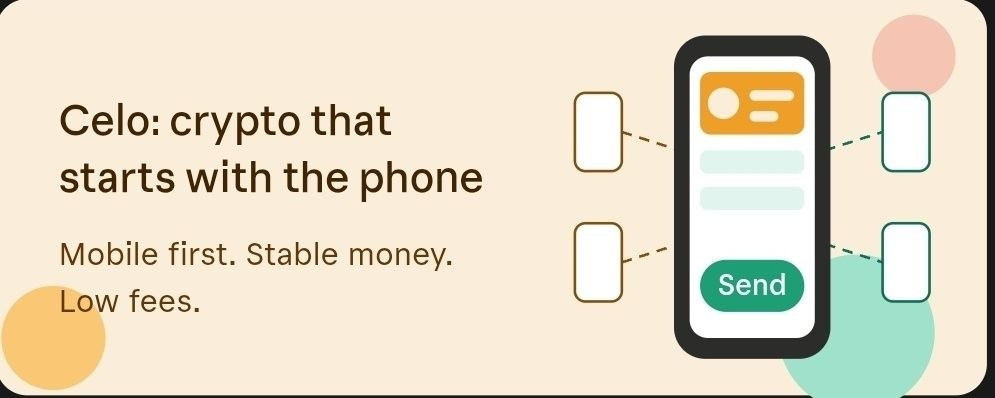
Celo is working to make this experience easier. Instead of focusing only on crypto trading, it is building financial infrastructure that supports everyday payments, digital dollars, and global money transfers.
MiniPay: Bringing Crypto Closer to People
One of the most interesting parts of the Celo ecosystem is MiniPay, a stablecoin wallet developed by Opera.
The idea behind MiniPay is simple: people should be able to send and receive digital money without needing deep knowledge of blockchain technology.
Users can access stablecoin payments through a mobile-friendly experience. This makes it easier for people to explore digital payments using their smartphones.
MiniPay has become an important part of Celo's adoption strategy. In November 2026, Celo highlighted an upgrade involving 20 million stablecoin wallets moving to Stripe-owned Privy wallet infrastructure.
This shows how Celo is trying to connect blockchain technology with products that people can actually use.
Stablecoins Are at the Center of Celo
Celo is not treating stablecoins as just another crypto asset. They are an important part of its financial vision.
Stablecoins are designed to maintain a relatively stable value, usually by following currencies such as the US dollar or euro.
For someone sending money to family, receiving international payments, or managing digital savings, price stability can be more useful than holding a highly volatile cryptocurrency.
Celo supports different stablecoins and has developed an ecosystem that also includes local-currency financial products.
This approach could help connect people with digital financial services in regions where traditional banking options are limited or expensive.
Paying Transaction Fees With Stablecoins
Another interesting feature is Celo's fee abstraction system.
On many blockchains, users need to hold the network's native token before they can make transactions. This creates an extra step for beginners.
Celo offers a different approach by allowing supported ERC-20 tokens to be used for transaction fees.
For example, users can pay gas fees using supported stablecoins instead of always needing CELO.
This may sound like a small technical improvement, but it solves a real problem. People can focus on sending money rather than first understanding how to purchase another token just to pay network fees.
Ethereum Connection and Network Development
Celo's migration to Ethereum Layer 2 in March 2025 was an important step in its development.
The network now uses the OP Stack and benefits from closer integration with Ethereum's ecosystem.
This gives developers access to familiar tools while allowing Celo to continue focusing on affordable payments and financial applications.
The combination of Ethereum compatibility and mobile-first design gives the project an interesting direction.
Where CELO Fits Into This Ecosystem
CELO remains an important asset within the network.
It has a role in governance, allowing holders to participate in decisions about the protocol's development.
It is also part of the network's economic structure and can be used for transaction fees. Celo's support for stablecoin gas payments provides additional flexibility for users.
However, investors should understand that the usefulness of a network does not automatically mean its token price will increase.
Challenges and Future Opportunities
Celo still faces competition from other payment networks, stablecoin platforms, and Ethereum Layer 2 projects.
Its long-term growth will depend on whether people continue using its applications, whether developers build useful products, and whether its payment services gain wider adoption.
There are also risks related to regulation, market conditions, security, and competition.
Final Thoughts
Celo is building around an important idea: digital money should be useful in everyday life, not just inside the crypto market.
Its work with MiniPay, stablecoins, mobile payments, and Ethereum infrastructure gives it a clear direction.
The real test will be adoption. If Celo can continue attracting users and supporting practical financial applications, it could become an important part of the global digital payment ecosystem.
This article is for educational purposes only and is not financial advice. Always do your own research before making investment decisions.